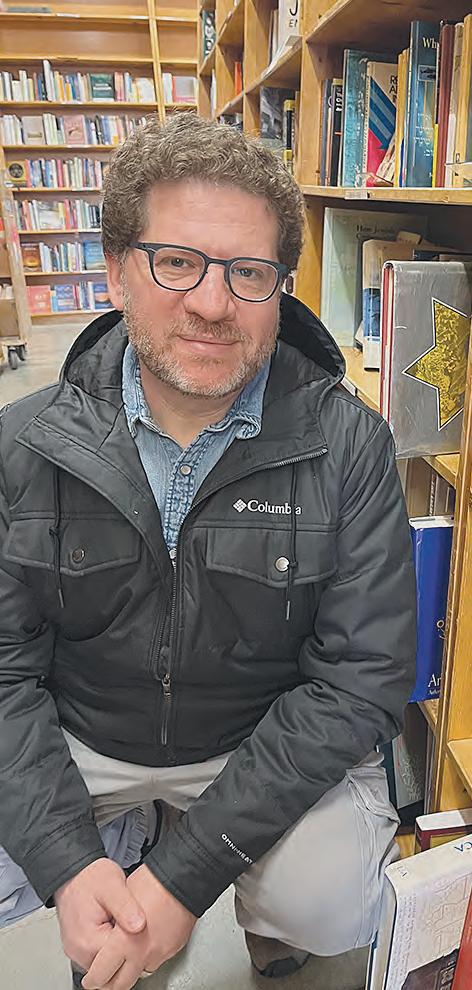
Marat Grinberg, PhD, has been named the next Philip M. and Ethel Klutznick Chair in Jewish Civilization and will join the Creighton College of Arts and Sciences Department of Modern Languages in July 2026.
Dr. Grinberg currently serves as a professor of Russian and humanities at Reed College in Portland, Oregon. At Creighton, he will primarily teach within the Honors Program and the Magis Core, bringing his expertise to students across the University.
Dr. Grinberg immigrated to the United States from Ukraine in 1993, graduated from the joint degree program between the Jewish Theological Seminary of America and Columbia University in New York City in 1999, and received his PhD in Comparative Literature from the University of Chicago in 2006.
Grinberg is a widely published scholar whose books include “I am to Be Read not from Left to Right, but in Jewish: from Right to Left’: The Poetics of Boris Slutsky, Aleksandr Askoldov: The Commissar, and, most recently, The Soviet Jewish Bookshelf: Jewish Culture and Identity Between the Lines He also translated and edited Mikhail See Klutznick Chair page 3
SHIRLY BANNER
JFO Library Specialist
Mark your calendars! On Thursday, Dec. 18 at 1 p.m., the Dorothy Kaplan Book Discussion Group will gather for its monthly meeting at the Staenberg Omaha Jewish Community Center in Conference Room
A. Join us in person or tune in on Zoom — either way, you’re in for a thought-provoking discussion.
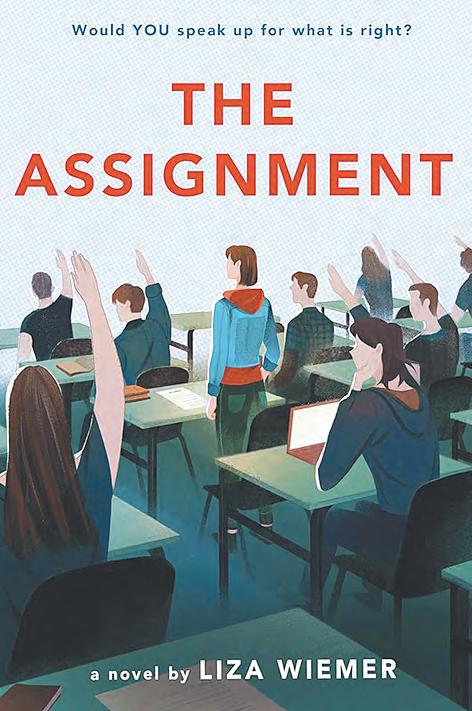
This month’s featured book is The Assignment by Liza Wiemer, a gripping novel inspired by the real-life
SETH SCHUCHMAN
NJHS Advisory Board member
Baseball has always held a special place for Jewish Omaha. Long before national broadcasts and the downtown stadium, our city watched the College World Series grow from a local event into a beloved American tradition. And from the beginning, the Omaha story has always included one unmistakable name.
Johnny Rosenblatt was born in South Omaha in 1907, the son of Jewish immigrants who believed in education, civic duty, and opportunity. He was a gifted athlete at South High and played semi-pro baseball before entering public life. When he became mayor in 1954, Rosenblatt was already deeply committed to improving parks and community facilities across the city. One of his major priorities was Omaha Municipal Stadium, which opened in 1948.
actions of two New York High School seniors who refused to stay silent when faced with a disturbing moral dilemma presented as a classroom assignment.
Logan March and her best friend Cade Crawford are members of Mr. Bartley’s History of World Governments class when they are given the assignment of debating the “Final Solution” from the Nazi point of view. Their work will be based upon reenacting the Wannasee Conference’s debate of the genocide of the Jewish people by means of extermination or by sterilization, ghettos, and work camps.
Logan and Cade aren’t Jewish, and no one in their small town appears to be See Kaplan Group page 3
When the College World Series was searching for a permanent home after brief stays in Kalamazoo and Wichita, Rosenblatt worked closely with civic leaders and the NCAA to bring it here. In 1950 the CWS arrived in Omaha, and in 1964 the stadium was renamed in his honor. For sixty summers Rosenblatt Stadium shaped life in this community. Jewish families filled the stands, worked concessions, and passed down memories from generation to generation. There are many wonderful Jewish baseball stories and players and choosing only a few was no easy task. But the men highlighted here represent the depth of our community’s impact on the sport and the lasting mark Jewish athletes have made on America’s game.
Hank Greenberg (1930–1947)Detroit Tigers Greenberg debuted in 1930 and became one of the most feared hitters of his generation. He finished with 331 home runs, more than 1,200 RBIs, a .313 career average, and two American League MVP awards.
He also endured persistent antisemitism. One widely documented See Jewish Stories in Sports page 2



Help us preserve the rich history of the Jewish Federation of Omaha!
We’re looking for a detail-loving professional to organize documents, photos, and artifacts that capture the heart of our community. If you enjoy uncovering hidden gems, keeping things beautifully organized, and bringing history to life, this role is for you.
Join us in honoring our past while supporting our future.
Part-time (20 hours per week)
$25 - $35 per hour


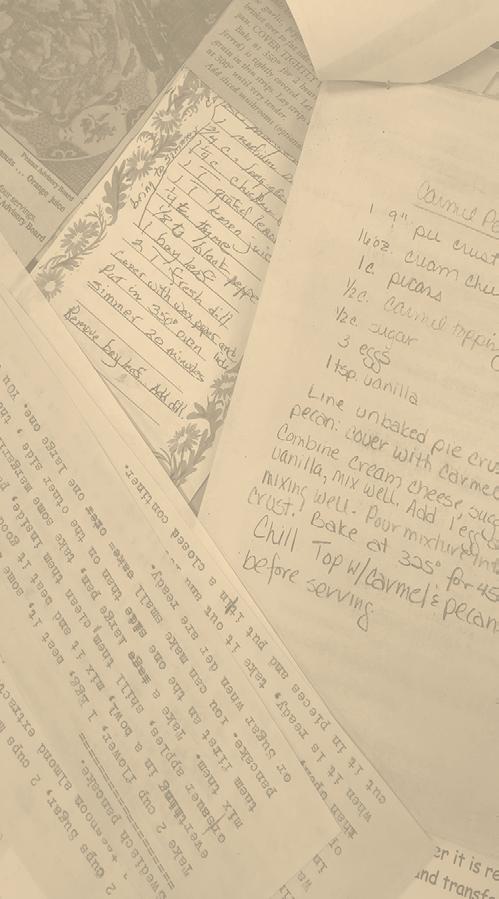
We are looking for your handwritten family recipes. Please contact Jane or Annette if you are willing to share: jrips@jewishomaha.org avandekamp@jewishomaha.org




Alex Bregman (2016–present)-Houston Astros







Continued from page 1 incident came during a 1938 game against the St. Louis Browns, when pitcher Bobo Newsom shouted slurs at him from the mound. Greenberg said later that he was furious but responded by lining a single off Newsom rather than escalating the confrontation.
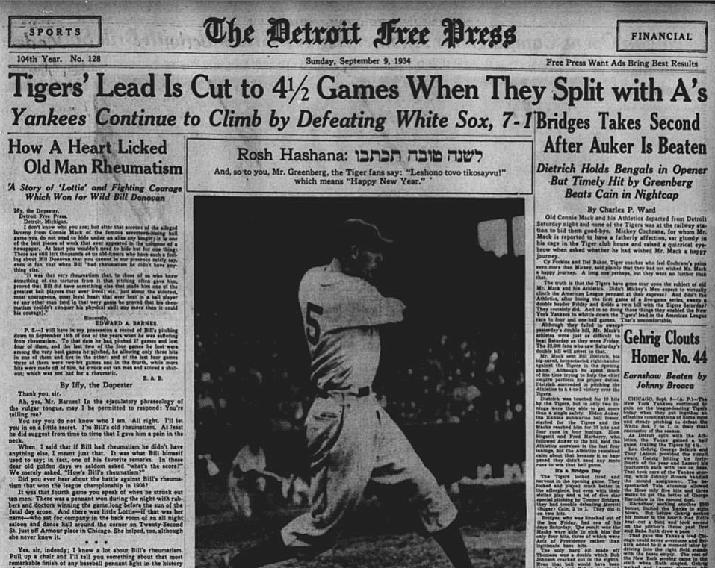
On Sept. 10, 1934, he hit two home runs on Rosh Hashanah, leading the Detroit Free Press to greet him with the headline, “Happy New Year, Hank.” Ten days later he refused to play on Yom Kippur. He became the first widely recognized Jewish sports hero in America.
Moe Berg (1923–1939)-Brooklyn Robins, Chicago White Sox, Cleveland Indians, Washington Senators, Boston Red Sox
Berg played more than fifteen seasons as a defensive catcher, posting a .243 career average. His legend, however, lies in his life away from the diamond.
During a 1934 baseball tour of Japan, he secretly filmed Tokyo harbor from the roof of a hospital. After joining the Office of Strategic Services in 1942, he conducted espionage missions across Europe. His most famous assignment came in Zurich in 1944, when he was ordered to evaluate whether Germany was close to a nuclear weapon. Berg’s intellect and courage made him one of the most unusual figures in baseball history.
Al Rosen (1947–1956)-Cleveland Indians
Rosen hit 192 home runs with a .285 career average, and his 1953 season (43 home runs, 145 RBIs) remains one of the greatest ever by a Jewish player. He confronted antisemitism directly during his career, including a notable 1953 incident at Comiskey Park in which he challenged an opposing player who had shouted a slur. Rosen became a symbol of Jewish strength at a time when few spoke up.
Orioles
Bregman has surpassed 170 home runs and 650 RBIs, winning World Series titles in 2017 and 2022. Raised in a Jewish family in Albuquerque, he celebrated his bar mitzvah at Congregation Albert and has remained connected to Jewish life ever since. In recent years he has spoken openly about antisemitism and the responsibility he feels as a Jewish athlete.
Dean Kremer (2020–present)-Baltimore
Kremer is the first Israeli-born Major League player. Early in his career he earned more than 20 wins and struck out over 300 hitters, pitching in the 2023 postseason. Fluent in Hebrew, he made headlines after his first big-league win when he thanked Israeli fans in Hebrew on a national broadcast — the first time Hebrew had been spoken on an official MLB interview. Finally, there is Nebraska’s place in the story. In addition to Johnny Rosenblatt, one of our Huskers also has a meaningful Jewish connection to Omaha’s baseball story.
Adam Stern and the 2001 College World Series
Born in London, Ontario, in 1980 and Jewish on his father’s side, Stern played for Nebraska from 1999 to 2001. In 2000 he hit .356, and in 2001 he stole 27 bases, helping lead the Huskers to their first-ever College World Series appearance at Rosenblatt Stadium.
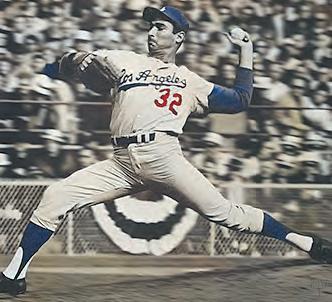
Sandy Koufax (1955–1966)-Brooklyn Dodgers and Los Angeles Dodgers
Koufax is widely considered the greatest Jewish athlete in American history. In twelve seasons he won 165 games, posted a 2.76 ERA, threw four no-hitters, and won three Cy Young Awards plus three World Series titles.
His defining moment came in 1965, when he refused to pitch Game 1 of the World Series because it fell on Yom Kippur. He then returned to win Games 5 and 7, closing with a complete-game shutout on two days’ rest. Koufax became an enduring symbol of dignity and Jewish identity.
Ken Holtzman (1965–1979)-Chicago Cubs, Oakland Athletics, Baltimore Orioles, New York Yankees
Holtzman won 174 games with a 3.49 ERA, threw two nohitters, and anchored the Oakland rotation during their three consecutive World Series championships from 1972 to 1974. A steady, reliable left-hander, Holtzman became the most accomplished Jewish pitcher after Koufax and a quiet source of pride for Jewish fans during the 1970s.
Kevin Youkilis (2004–2013)-Boston Red Sox, Chicago White Sox, New York Yankees
Youkilis hit 150 home runs, drove in more than 600 runs, and posted a .382 on-base percentage, one of the best of his era. His drawn-out “Youuuk” chant became a Fenway Park trademark, so distinctive that opposing fans often mistook it for booing. Youkilis embraced his Jewish heritage publicly and became one of the most visible Jewish players of the 2000s.
Ryan Braun (2007–2020)-Milwaukee Brewers
Braun hit 352 home runs, drove in 1,154 runs, and won the 2011 National League MVP. Nicknamed “The Hebrew Hammer,” he often spoke about being proud to represent Jewish fans, even though he had little formal Jewish upbringing. His career remains complicated by his PED suspension, but he was one of the most productive players of his era.
Joc Pederson (2014–present)-Los Angeles Dodgers, Chicago Cubs, Atlanta Braves, San Francisco Giants
Pederson has hit more than 180 home runs and delivered 12 postseason home runs, earning a reputation for clutch October performances. He represented Team Israel during the 2013 World Baseball Classic qualifying rounds and later rejoined the program in 2023.
He is also known for the pearl necklace he wore during the Braves’ 2021 championship run, a quirky fashion choice he described as “doing something different.” It became a fan sensation and later earned a place in Cooperstown.
That season captured the whole state’s imagination, and Stern later reflected on the pride of playing in front of a Nebraska crowd in a stadium named for a Jewish mayor. He went on to play in the majors and represented Canada in the World Baseball Classic and the 2004 Olympics.
These stories matter, because baseball has offered Jewish Americans a rare opportunity to see ourselves reflected on a national stage. From Greenberg’s quiet strength on Rosh Hashanah to Koufax’s Yom Kippur stand, from Al Rosen demanding dignity to modern players confronting antisemitism directly, these stories show that identity and excellence can coexist.
Jewish contributions to baseball stretch across eras and ballparks. The athletes in this story faced prejudice, overcame doubt, and played in ways that made Jewish families everywhere feel proud. Their achievements did not just advance the game; they pushed back against stereotypes and opened space for others to stand a little taller.
And even here in Omaha, far from major league lights, Jewish stories found a home. Johnny Rosenblatt built the stage. Adam Stern brought Husker baseball to it. Their presence reminds us that Jewish identity travels with us, shaping the communities we build and the stories we cherish.
In Jewish life there is a deep sense of am echad — one people, connected across time and geography. These baseball stories are part of that connection. They link fans who once read box scores in the paper with kids collecting cards today. They remind us that wherever Jewish athletes take the field, we carry their stories with us, and they carry our hopes with them.
Information for this article was drawn from the Nebraska Jewish Historical Society (NJHS) archival materials, as well as a number of other sources. The NJHS welcomes photographs, uniforms, scorebooks, and memories of Jewish baseball players from our community. Each piece helps preserve a story worth passing along for the generations to come. For more information about the NJHS, please visit nebraskajhs. com, or email NJHS executive director Jane Rips at jrips@ jewishomaha.org
Continued from page 1
Goldis’ Memoirs of a Jewish District Attorney from Soviet Ukraine, published earlier this year.
His essays have appeared in Tablet Magazine, Jewish Journal, Mosaic, the Los Angeles Review of Books and Cineaste. He is now working on a large study of Jewishness and the Holocaust in Russian, Ukrainian and East European speculative fiction of the Soviet era.
As the new holder of the endowed chair, he is excited to bring a wide range of Jewish studies scholarship to Creighton and the Omaha community. His plans include offering courses and organizing symposia in Jewish science fiction, early Yiddish cinema, the Soviet Jewish legacy and the classics of Jewish literature, Jewish literature of destruction and Jewish modernisms. A dedicated comparativist, he also looks forward to collaborating with colleagues across disciplines and partnering with students on research projects.
Dr. Grinberg’s appointment has been met with strong enthusiasm across campus and the broader Jewish community.
“Dr. Grinberg immediately stood out from a pool of remarkably talented applicants. The search committee was impressed by how intentionally he connected his work to Creighton’s mission. It’s rare to find a colleague with such a distinguished research profile who is also so deeply committed to undergraduate education and community outreach. Dr.
Grinberg exemplifies the teacher-scholar model we celebrate in the College of Arts and Sciences. I am very excited that he will be joining our faculty,” said Bridget Keegan, PhD, Dean, College of Arts and Sciences.
Community partners echoed that excitement. Bob Goldberg, CEO of the Jewish Federation of Omaha, stated, “On behalf of the Jewish Federation of Omaha, we are excited to welcome Dr. Grinberg to Omaha. His background and expertise make him the ideal choice to fulfill the vision of the Klutznick family to promote educational opportunities for the Jewish community in Omaha. Like his predecessors, Dr. Grinberg will further our partnership with Creighton to advance learning about Jewish culture and civilization. We were impressed by his strong record of community engagement, and we look forward to his leadership in the new role.”
Established in 1988 by Philip M. and Ethel Klutznick, the endowed chair supports an accomplished scholar who advances Jewish civilization through teaching, research and programming, while also leading interdisciplinary initiatives in Jewish Studies across the University. Additionally, the chair holder contributes to educational activities sponsored or supported by the Jewish community and the Jewish Federation of Omaha. There have been two previous chair holders: the inaugural appointee, Dr. Menachem Mor, and Dr. Leonard Greenspoon, who served from 1995 until his retirement last spring.
ABBY COREN
The past two and a half months have been filled with lots of programs and some exciting changes for the University of Nebraska Hillel. As we entered the downtime of Mar Cheshvan we were given the space to reflect on the previous months that have been very active.
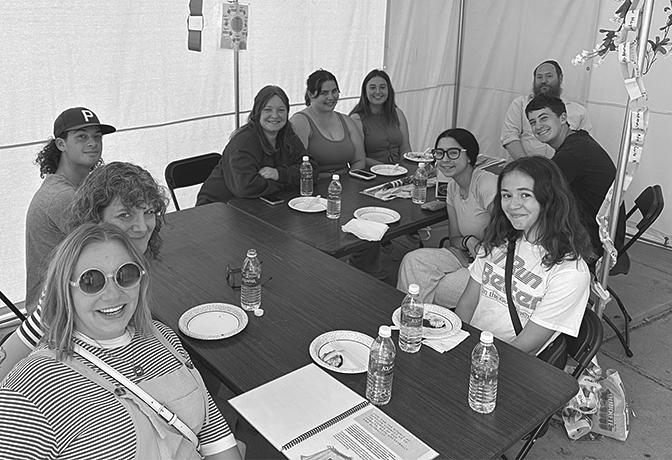
The University of Nebraska Hillel started the school year with a new professional staff member, a new student executive board, and new first year students eager to be involved with the Hillel community. Hillel made sure that its presence was visible at Nvolvement fairs (tabling events for student run organizations) on both City and East campuses. Hillel also coordinated with the new Kosher kitchen to celebrate its first Shabbat together on campus at the conclusion of the first week of classes.
Students continued to find their rhythm between classes, social activities, and the High Holidays as we moved into September. Hillel once again sponsored a Shabbat dinner, this time with an Israeli theme, prior to Rosh HaShanah. Arrangements were made between students to carpool to different synagogues in both Lincoln and Omaha for Rosh HaShanah and Yom Kippur services.
Hillel members also led a tashlich service close to campus for university students and members of the Lincoln Jewish Community. Hillel worked in coordination with the Kosher kitchen to ensure every student had a sweet New Year’s gift of homemade apple honey cakes, apples, and honey. The Kosher kitchen then made sure students had food before the beginning
Continued from page 1 either. But they immediately recognize the assignment as deeply inappropriate and harmful. Their discomfort turns to resolve as they first bring their concerns to Mr. Bartley, and then to Principal McNeil.
Offering a constructive alternative, the pair proposes a project focusing on the Safe Haven Museum and Education Center, which once sheltered European refugees during the Second World War. Though this alternative is technically approved and is to be presented to the class, it is done with little enthusiasm — “optional,” if students choose not to participate in the original assignment.
Ultimately Logan and Cade clash with several of their fellow seniors. Logan’s father suggests she and Cade get in touch with Lissa Chen from the organization Humanity for Peace and Justice to best garner guidance and support to handle the situation. As ill feelings grow between fellow classmates and friends, Logan and Cade clash with others in the community, public opinion, and are subject to threats, harassment, and finally vandalism of both Logan’s school locker and Cade’s family Lake Ontario Inn.
of Yom Kippur to help them have a meaningful observance. October quickly arrived with a flurry of Jewish holidays and activities sponsored by Hillel. Seven students braved the cold and rainy day to set up the sukkah outside of the Nebraska Union. After building the sukkah was complete, students decorated and held a private memorial service in commemoration of the victims of Oct. 7. The Kosher kitchen provided delicious soups on the evening of Oct. 9 when Rabbi Felch brought his lulav and etrog for students to fulfill the mitzvah. Hillel again hosted a Shabbat dinner, held in the sukkah, with chili and cinnamon rolls as the main dish, a truly Nebraskan dish.
Chabad of Omaha joined Hillel on Oct. 12 to make Sushi in the Sukkah which was an overall hit. To conclude the holiday Omaha’s new Israeli shaliach, Itay, joined Hillel on Oct. 16 to tell his personal story about being an active member of the IDF on Oct. 7, then he kindly stayed to help members take down the sukkah. To round out the month of October, the ADL Midwest sponsored a Shabbat dinner for Hillel and the Sammy fraternity members. Hillel alumni were invited to attend and new friendships developed. And of course we cannot forget about football at UNL. Sammy house brothers and Hillel members braved the early morning cold for Bagel Bin bagels and lox before the Northwestern University football game. The Huskers won the game and will be advancing to a college bowl, so it seems that this tailgate was well worth the early wake up. Overall, these past few months have been very successful for Hillel and we look forward to maintaining our momentum.
Should standing up against prejudice and antisemitism be a lesson that these two individuals need to learn and confront at such a young age? As Daniel, a friend of Logan and Cade who is gay says, “The Nazi mentality of hate is not something I can relate to nor do I ever want to. How was it that a society was brainwashed to believe such lies? Where is human decency? The Nazi’s Final Solution was not just aimed at Jewish people but rather people with disabilities, homosexuals, people of color;”essentially anyone who was not what Hitler considered to be a member of the Master Race.
Please feel free to join us on Dec. 18 at 1 p.m. in person or via Zoom when we are discussing The Assignment. The Dorothy Kaplan Book Discussion Group meets on the third Thursday of every month at 1 p.m. New members are always welcome.
The Group receives administrative support from the Community Engagement & Education arm of the Jewish Federation of Omaha. For information about the group and to join in the discussion, contact Shirly Banner at 402.334.6462 or sbanner@jewishomaha.org




On Oct. 16, Julie Platt, immediate past-chair of the Jewish Federations of North America, spoke to an Omaha audience at the Jewish Federation of Omaha Women’s Philanthropy event. Following is a portion of her speech.
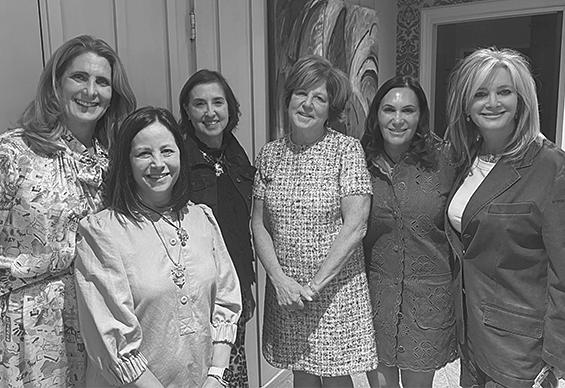
Thank you to Kimberly and Andrew Robinson for hosting us this evening in your beautiful home.
I want to recognize our event chairs — half a dozen extraordinary leaders on the National Women’s Philanthropy board, including Nancy Schlessinger, the immediate past chair of the Omaha Federation. Your commitment ensures the health and vitality of Jewish life, not just here in Omaha, but across the Jewish world.
As Rabbi Jonathan Sacks observed, “Simcha in the Torah is never about individuals. It is always about something we share.” This idea — that our strength is inherently collective — is the heart of why we are here tonight.
This community is extraordinary. Omaha’s Jewish community numbers roughly 6,000, yet your infrastructure and programming are aligned with communities ten times your size. You have 13,000 JCC members. Your skilled nursing facility has been renovated and expanded on this magnificent campus. Your efforts exemplify the spirit of Jewish communal engagement: ambitious, forward-looking, and deeply caring. Omaha’s commitment to day schools, preschools, and youth
Dr. Helene Lohman was recently honored by the Bloc Organization as being one of the recipients of the 50 over 50 award.
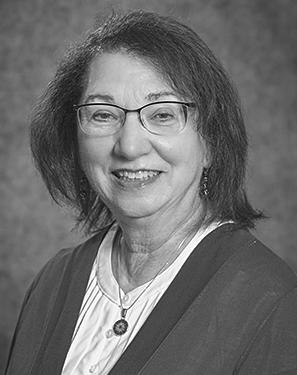
The Bloc's annual awards celebrate Nebraskans over 50 who have made significant contributions in five areas: Nonprofit, Healthcare, Business, Community, and Innovation. Dr. Lohman was honored in the Community category for her leadership, scholarship, and service in

programs — including BBYO, which was born right here a century ago — is important. Your investment in Jewish education is an investment in continuity.
Our national movement plays a vital role in supporting and protecting Jewish life across North America. Jewish Federations of North America collectively raise and distribute over $3 billion annually, supporting social welfare, education, and increasingly, safety and security.
Now, as the immediate crisis phase transitions, our next steps as leaders are clear: We must rebuild what has been damaged, both in Israel and here at home.
The Talmud teaches that our responsibility begins with our own community and then expands in concentric circles. Our response on Oct. 7th was the ultimate expression of this idea. It was mesorah — a tradition so deeply ingrained in us that we acted instinctively. As the saying goes, "when it rains on a Jew in Israel, a Jew in America puts up an umbrella." Through our Israel Emergency Campaign, we have raised over $908 million to date, to provide a lifeline of humanitarian aid and trauma support in Israel.
The Jewish Federation system has what I call "muscle memory." When Russia invaded Ukraine, we didn’t hesitate to mobilize; we bolted into action. For the first time in the history of the Jewish people, when a war broke out in Europe, every single Jew who needed rescue was saved, and every Jew who wanted to go to Israel was brought safely.
Omaha, like all local communities, is the bedrock of this system. Your programs, your volunteers, and your professionals are the levers through which we build continuity, engagement, and resilience. As Rabbi Nicole Guzik, my wonderful rabbi at Sinai Temple in Los Angeles, teaches, the greatest darkness a person can experience is when they cannot see the fellow human being standing right next to them and choose not to act. That is why your commitment to each other, to Israel, and to Jewish life in Omaha is so vital.
Tonight is a celebration of unity and strength. Omaha demonstrates what it means to build a resilient community, to respond to crises, and to care for one another.
Together, we celebrate our successes, we confront our challenges, and we sustain Jewish life in Omaha, in Israel, and around the world.
KERI WIGINTON
Depression and anxiety are common, and often go hand in hand. They don’t just affect your teen's mood, but can change how they think, sleep, eat, and connect with people.
Anxiety can make them feel tense or stuck in their head.
Depression can drain their energy and make it hard to enjoy anything. Both can leave your teen feeling physically off and mentally foggy.
It’s easy to blame stress, hormones, or just a bad day.
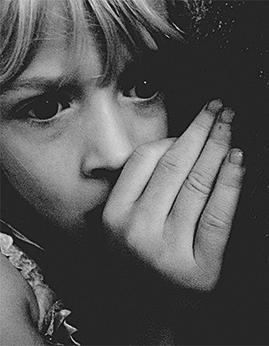
But if things don’t get better after a couple of weeks or if they start to affect your teen's daily life, it’s worth digging deeper.
Knowing what to look for can help you figure out what’s going on and how to get help for your teen. Here are some signs to watch for:
• Irritability or anger
• Worry that doesn’t go away
• Feeling hopeless or overwhelmed
• Low self-esteem
• Changes in focus, memory, and motivation
• Ruminating and repetitive negative thinking
• Behavioral Changes
Depression and anxiety can shift how your teen acts, connects with others, and moves through their day. Some of those changes are easy to miss, especially when your teen is just trying to get by. Here are some signs to watch for:
• Pulling away from people
• Losing interest in things they used to enjoy
• Risky or harmful behaviors
• Physical Changes
When something’s off emotionally, your teen's body often feels it first. These physical symptoms are real. And they don’t mean your teen is weak or doing something wrong. They mean their mind and body are asking for support. You might notice:
• Fatigue that doesn’t go away
• Trouble sleeping (or sleeping too much)
strengthening Nebraska's healthcare workforce.
Dr. Lohman has served in the faculty of Creighton University's Occupational Therapy Department for more than 35 years. A prolific scholar, Dr. Lohman has authored numerous book chapters and scholarly articles in occupational therapy education and research. She has co-authored and edited several textbooks, including the widely recognized "Introduction to Orthotics," which continues to shape healthcare education across the country. As a Fellow of the American Occupational Therapy Association and recipient of multiple teaching awards, her lifelong commitment to education has shaped generations of occupational therapists who now improve health and well-being in communities throughout the region and beyond.

• Appetite and weight changes
• Aches, pains, and tension
• Weird sensations
• Digestive trouble
• Flare-ups of other health conditions
How to Talk to Your Teen's Doctor About Depression and Anxiety
Now that you know what to look for, the next step is getting support. A good place to start is your teen's primary care doctor. You don’t need a diagnosis or the perfect words. You just need to tell them something is wrong with your teen and they need help.
Your doctor can rule out physical causes (like thyroid issues or vitamin deficiencies), talk through symptoms, and suggest next steps. That might include therapy, medication, lifestyle changes or a mix of all three.
For more information, please visit omahajewish press.com. Sponsored by the Jewish Press and Jennifer Beth Kay Mental Health Fund.

AMY BERNSTEIN SHIVVERS
JFO Foundation Executive Director
We are so fortunate to have such an amazingly generous Jewish community. I pray we always have our vibrant synagogues, our Jewish leaders, the Jewish Community Center, community programs, all the way to our later years and the Blumkin Home.
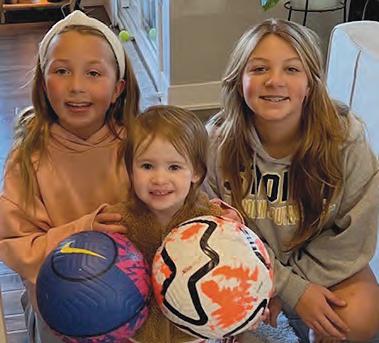
Having three granddaughters, I think about what I hope is available for them when they grow up and have families. I gave to Life & Legacy for my loves, Liat, Yael, and Elora. And for everyone’s little loves."
M’Lee Hasslinger’s gift to Life & Legacy is a heartfelt commitment to the future of Jewish Omaha. Like her, many of us cherish the institutions, traditions, and values that define our community. By making an after-lifetime gift, you can ensure that our synagogues, schools, social services, and cultural programs continue to thrive for generations to come — without impacting your finances today.
The first step is easy: complete a Letter of Intent, a simple document that expresses your commitment to our Jewish future. This letter can be updated anytime as your circumstances evolve.
Make your legacy one of love and generosity. Join M’Lee in ensuring a strong and vibrant Jewish life for our children, grandchildren, and beyond.
To learn more or to complete your Letter of Intent, contact Amy Bernstein Shivvers at ashivvers@jewishomaha.org
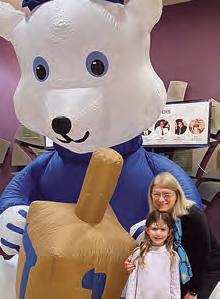
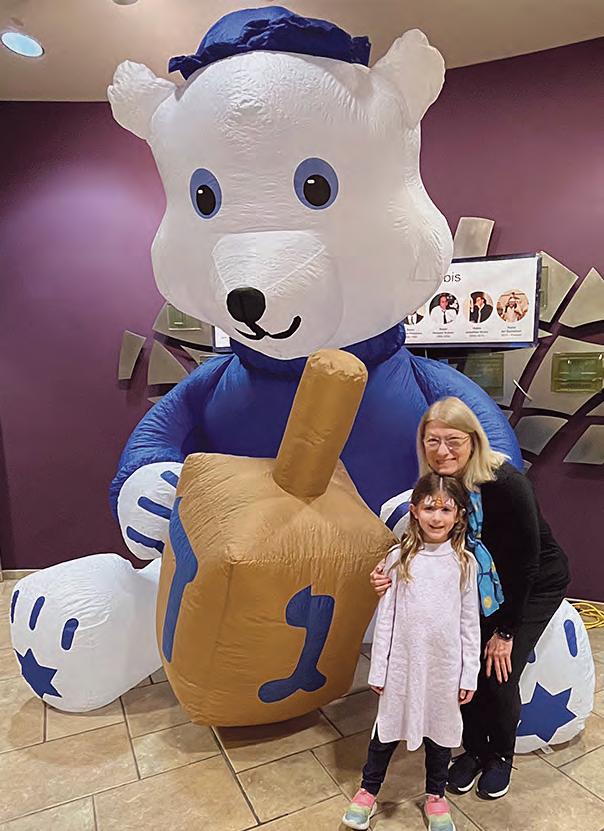
Games, music, food, prizes, face painting, crafts, balloon animals, and the inflatable obstacle course will again make Beth Israel’s Annual Hanukkah Carnival THE place to be on Monday, Dec. 15. The always popular inflatable Hanukkah bear, donated several years ago by Janet and David Kohll, will once again welcome everyone and is a fun spot for some great photos.
Rabbi Mordechai Geiger is looking forward to seeing the pleasure the carnival brings young and old alike. Hanukkah is about bringing light into the world, and our carnival lets us do that together as a community in the most joyful way. In addition to all the classics everyone loves there will be a few brand-new surprises that we cannot wait to share.”
"Hanukkah, a holiday in the Land of Israel, allows all of us to experience the uniqueness of Israel throughout the world,” shares Rabbi Eitan Ziv, Beth Israel’s youth director. “This year, we are happy to share with the community a dessert that is common in Israel during Hanukkah, called Moroccan donuts. Come and enjoy this new and delicious treat!”
The carnival, held in the Beth Israel Social Hall, will run from 5:30 to 7:30 p.m. Due to the generosity of several donors, the event is free of charge.
As a reminder, the first night of Hanukkah is Sunday, Dec. 14, with the final candle lighting the evening of Dec. 21. For more information on these or any other Beth Israel events, please visit the synagogue website or call 402.556.6288. The board and staff of Beth Israel wish everyone a Festival of Lights filled with light, laughter, and love. Happy Hanukkah!


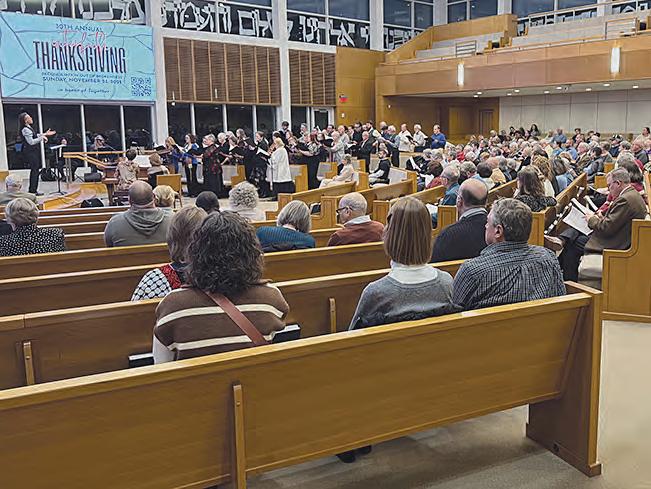

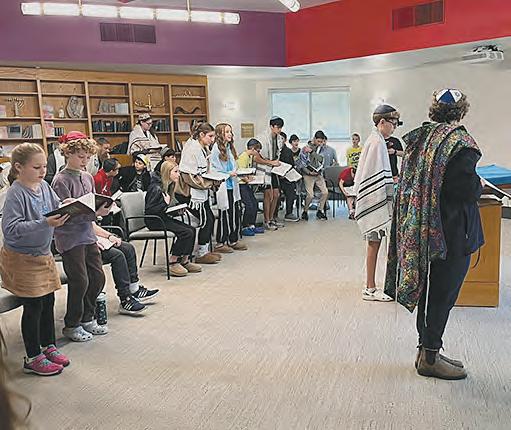
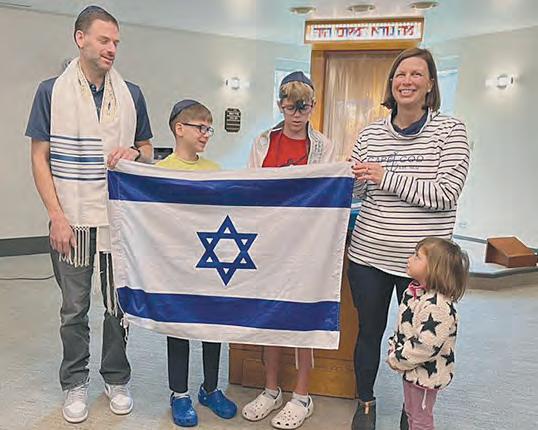
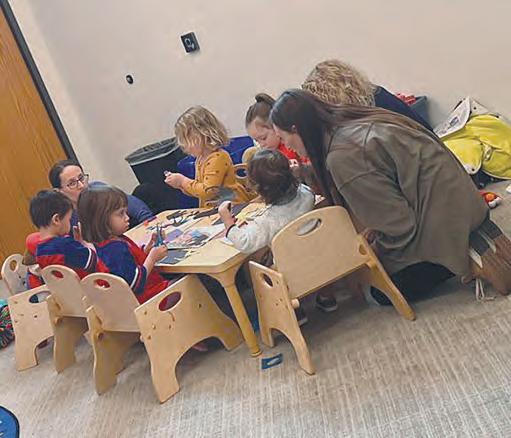
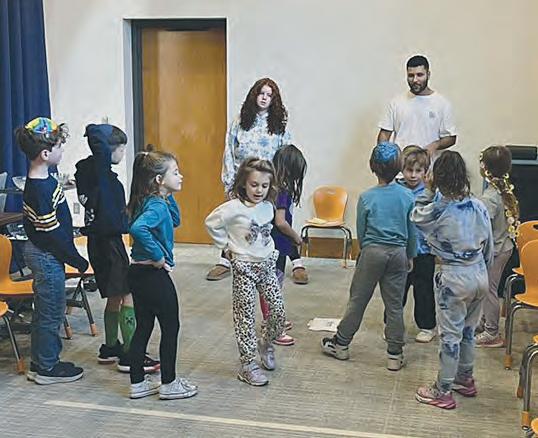
PHOTOS FROM RECENT JEWISH COMMUNITY EVENTS
SUBMIT A PHOTO: Have a photo of a recent Jewish Community event you would like to submit? Email the image and a suggested caption to: avandekamp@jewishomaha.org
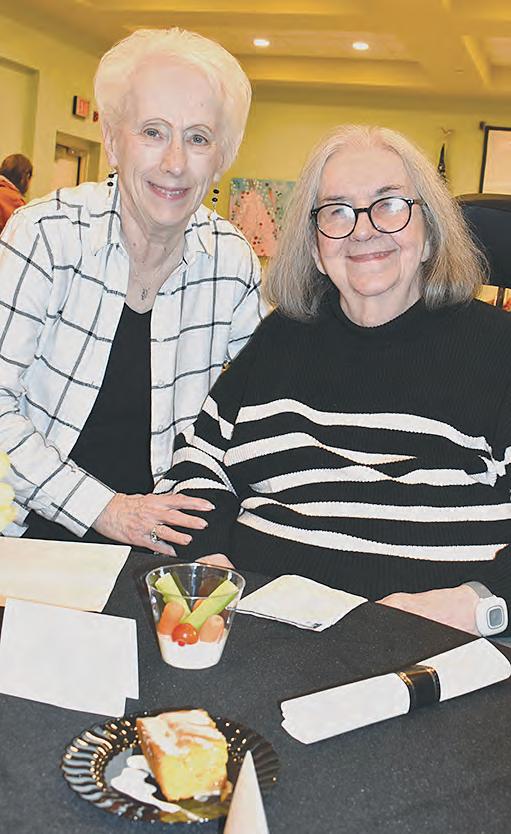
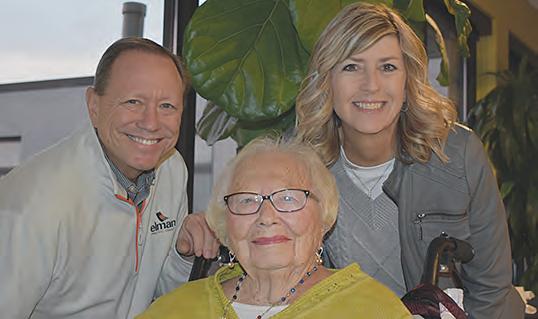
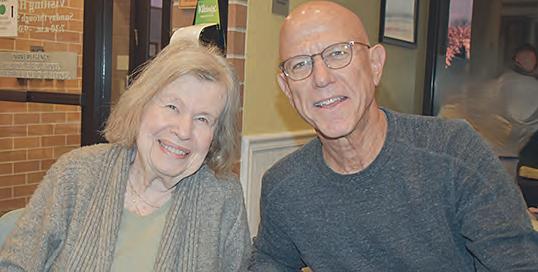
KATHY BEAUCHAINE
PlantNebraska's large green infrastructure projects tend to get the most public attention, but Sustainable Landscape Specialist Sarah Buckley often reminds us that our smaller grants can make dreams a reality, too.

"The $100-$1,000 grants are typically where I hear about the patiently planned, deeply personal visions that are made possible for people doing amazing things for their communities," Sarah says. "When we show up with our plants and encouragement, even if it's just to plant a handful of trees, the people involved feel seen and valued."
Such was the case with a recent tree planting at the TriFaith Initiative in Omaha. Just $900 provided seven oak trees that were carefully selected to honor the Jewish, Muslim, Christian and Indigenous faiths that participate in this unique collaborative community.
"I didn’t think this planting was going to really happen," said Bonnie, a volunteer with the Tri-Faith Initiative. "When I tell you that I have been dreaming about these trees on the commons for years now, it is not an overstatement."
It may seem like a small thing to plant seven trees, but plantings like these make a big difference for the people invested in these projects. "I wish all our donors could see the look on people’s faces when they finish working and step back to look at the completed project," says Sarah. "It really is so special."





JCC Performing Arts Music Coordinator
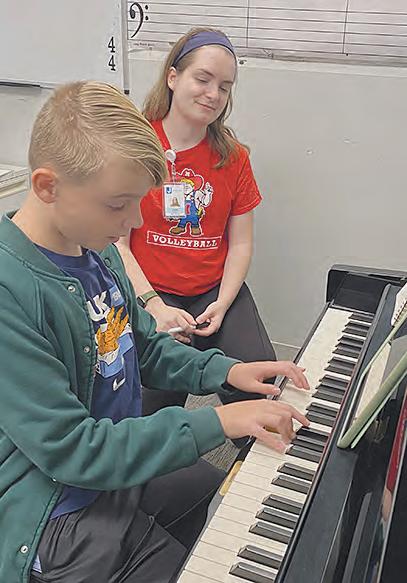
I love that song! What movie was that from? Who sings that? How long have you played? Do you teach?
Regardless of how the conversations at the piano start, they usually lead to the inquiring mind expressing disappointment over quitting or never having taken music lessons at all.

More than 50 years ago, my father drove me to my very first music lesson. I can still remember how nervous and incredibly excited I was to learn how to play. About a year later, my father drove a teary-eyed little girl away from what could have been her last lesson.
Long story short, my teacher and I were not a good fit. She seemed to want all her students to become Mozart or Beethoven, setting unrealistic expectations and expressing disappointment when those expectations weren’t met. To be honest, I just wanted to learn more about music in a comfortable and welcoming environment.
Weeks later, we found it. We found her. A kind and gentle soul who just wanted to share her time, talent, and patience with anyone and everyone she met. Her warm smile and genuine wave at the door, combined with an ability to meet me where I was, were the constants I looked forward to and, later in life, would come to value and appreciate.
A few short years later, I very reluctantly said good-bye to her. Like so many pre-teens, I had become too busy and had to start prioritizing my activities. Sadly, piano lessons didn’t make the cut.
For many people, that’s where the musical journey ends. Days turn into weeks. Weeks turn into months. Months turn into years. And years turn into… well, for some, regret. Fortunately, very fortunately, that wasn’t the case for me. I had a music teacher in school who recognized my talent but, more importantly, my passion to sing, play, act, and dance.
She became a mentor, creating opportunities to share my time and talent at Mass, in swing choir, for musicals, and See power of music page 8


all starts with Newspapers
Continued from page 7 – yes – even in the marching band. I played the trumpet during my senior year; second chair. Don’t get too excited. There were only two chairs.
While I still enjoy all the arts, these days I spend most of my time at the piano: at weddings, Von Maur, in senior living communities, and teaching here at the Omaha Staenberg JCC.
No matter where I go or what I’m doing, there’s usually an adult within earshot who has a ‘could’ve’, ‘would’ve’, ‘should’ve’ story about their musical journey, and how it was cut short or never really got started at all.
If you experience antisemitism, there are ways to report an incident or hate crime:
IF THIS IS AN EMERGENCY, MOVE TO A SAFE AREA AND DIAL 9-1-1
CALL the JFO’s Safety and Security Team 402-334-6446
EMAIL JCRCreporting@jewishomaha.org
SCAN the QR code below to fill out the Incident Reporting Form
We work directly with law enforcement, Secure Communities Network, and the Anti-Defamation League.
If you see something, say something.
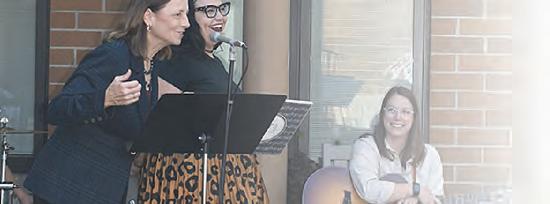
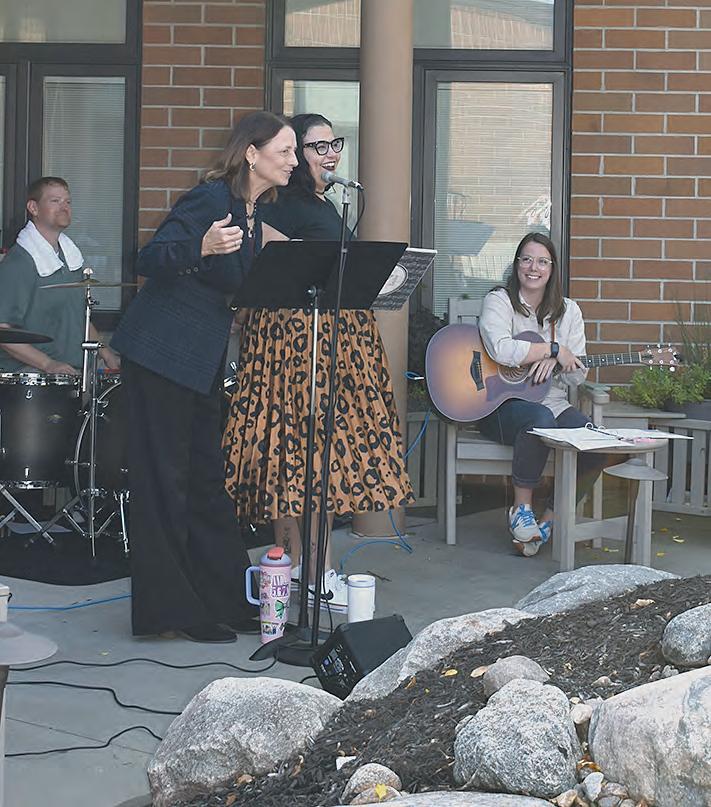
somed into an extraordinary relationship with the residents, their families, and the staff. We launched what is now called Music… in the Moment with a program in the fall of 2020.
As a fellow human being, I can empathize. As a teacher, I can offer assurance, adding it’s never too late to learn. As an older adult advocate, I can remind them of the incredible benefits that come from having music in our lives: improved cognition, reduced stress, and enhanced creativity and self-expression.
But don’t just take my word for it. Check out the results of this AARP-supported poll, called “Nine Health Benefits of Music as we Age.”
Nearly all older adults (98%) polled stated they get some health-related benefit from music:
• Stress relief and relaxation (75%)
• Joy (73%)
• Improves mental health, mood or attitude (65%)
• Sparks memories or helps recall life events (61%)
• Motivates or energizes (60%)
• Helps them feel a spiritual or religious connection (36%)
• Keeps the mind sharp (31%)
• Connects them with others (27%)
• Reduces pain (7%)
“The overwhelming consensus that music makes people feel better is something that we have to take “very seriously”, says Joel Howell, M.D., a professor of internal medicine at the University of Michigan Medical School and a co-author on the poll. “What else in the world can you get 98% agreement on?
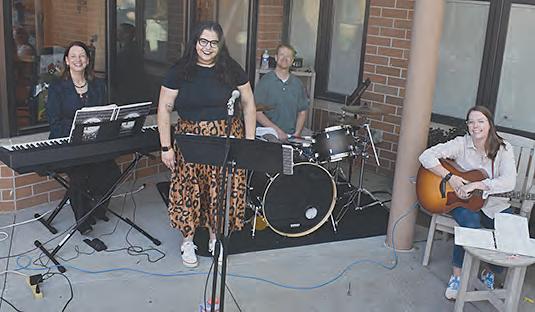
While we didn’t know this particular audience, both Taylor and I have backgrounds working with older adults and in music. We felt confident about the pieces we selected; however, because of the pandemic, we were uncertain as to how long this opportunity would last.
Five years later, that ‘audience’ has become our extended family. The songs we do are ones they request. We aren’t performing for them. We are simply using music as a tool to engage, to encourage, and to be present with them in that moment. It truly was powerful to finishing the song “Let’s Go Fly a Kite” only to hear Jane, who rarely spoke, singing it quietly from her wheelchair. We witnessed Annette’s reaction to “My Yiddishe Momme” in memory of her mother. We listened to Judy’s a-Capella rendition of “Moon River,” stood outside Jane’s door, a bedbound veteran, singing “America the Beautiful,” and watched toes tap to “Red, Red Robin”. We sat beside Maxine as she played a song she’d been practicing, and found out how unifying a simple tune like “You Are My Sunshine” can be. Then, there was Howard’s reaction when he finally got to hear his request, “Time to Say Goodbye”, after having to wait more than a year because of COVID.
No goodbyes here. In fact, Maggie, JCC Performing Arts Director Esther Katz and I are brainstorming ways to bridge the generations through music.
As an instructor, I recently brought a few of my piano students to the RBJH to play for the residents. While everyone truly enjoyed it, we all agreed, there just wasn’t enough time and that we should do something like that, again.

Please let the Jewish Press know in advance when you are leaving and when you are returning. Sometimes several papers are sent to your “old” address before we are notified by the Post Office. Every time they return a paper to us, you miss the Jewish Press and we are charged! Please call us at 402.334.6448 or email us at jpress@jewishomaha.org.

“While music doesn’t come up often in older adults’ visits with their usual care providers, perhaps it should,” poll director Jeffrey Kullgren, M.D., a primary care physician at the VA Ann Arbor Healthcare System, said in a news release. “The power of music to connect us, improve mood and energy, or even ease pain (like 7 percent of respondents said it does for them), means it could be a powerful tool.” (Source: (AARP-supported) University of Michigan National Poll on Healthy Aging)
My daughter, Taylor, and I witness the power which Dr. Kullgren speaks of first-hand every Sunday morning and on holidays at The Jewish Federation of Omaha’s very own Rose Blumkin Jewish Home.
What started as an information exchange with Maggie Conti, Director of Activities and Volunteer Services, has blos-
As music coordinator here at the JCC, we will. In early February, we are planning to bring ten music students - piano, guitar, and voice - to the RBJH for a program we’re calling Winter Wonderland 2026. I figured if we included a year, there would be a greater likelihood it would become an annual event. Stay tuned! In the meantime, we are busy recruiting music students: beginners / experienced – young / young at heart. In short, all are welcome at the J! And to think, none of this would have happened if that teary-eyed little girl had quit more than 50 years ago.
For magic to truly happen try asking… “How can I get started?!” You’ll get your pennies… only these will come from heaven.

‘Write With Us,’ our small and intimate writing workshop (no need to be nervous) continues in the winter and early spring. Upcoming workshops are scheduled for the following Thursdays: Jan. 29, Feb. 26, March 26 and April 30 from 5-7 p.m. in the Noshery at the Staenberg Omaha JCC. Register by contacting Jessi at jtaylor@jewishomaha.org or Annette at avandekamp@jewishomaha.org. There is no cost to attend, although donations are always welcome.
If you have wanted to write your family’s story, that great American novel, or you have always wanted to try your hand at poetry, join us! Maybe you are already an accomplished writer, but you would benefit from being in a room with other writers. Perhaps you have convinced yourself you can’t write at all, but would love to try. Everyone, from absolute beginner to professional, is welcome to attend. We will provide the kosher snacks and the writing prompts.
(Founded in 1920)
David Finkelstein
President
Annette van de Kamp-Wright
Editor
Will Fischer
Creative Director
Claire Endelman
Sales Director
Lori Kooper-Schwarz
Assistant Editor
Sam Kricsfeld
Digital support
Mary Bachteler
Accounting
Jewish Press Advisory Board
David Finkelstein, President; Margie Gutnik, Ex-Officio; Joseph Abrahams, Helen Epstein, Andrea Erlich, Ally Freeman, Dana Gonzales, Mary Sue Grossman, Hailey Krueger, Chuck Lucoff, Sara Rips, Stewart Winograd and Bob Yaffe.
The mission of the Jewish Federation of Omaha is to build and sustain a strong and vibrant Omaha Jewish Community and to support Jews in Israel and around the world. Agencies of the JFO are: Institute for Holocaust Education, Jewish Community Relations Council, Jewish Community Center, Jewish Social Services, Nebraska Jewish Historical Society and the Jewish Press Guidelines and highlights of the Jewish Press, including front page stories and announcements, can be found online at: www.jewishomaha.org; click on ‘Jewish Press.’ Editorials express the view of the writer and are not necessarily representative of the views of the Jewish Press Board of Directors, the Jewish Federation of Omaha Board of Directors, or the Omaha Jewish community as a whole. The Jewish Press reserves the right to edit signed letters and articles for space and content. The Jewish Press is not responsible for the Kashrut of any product or establishment.
Editorial
The Jewish Press is an agency of the Jewish Federation of Omaha. Deadline for copy, ads and photos is: Thursday, 9 a.m., eight days prior to publication. E-mail editorial material and photos to: avandekamp@jewishomaha.org ; send ads (in TIF or PDF format) to: rbusse@jewishomaha.org
Letters to the Editor Guidelines
The Jewish Press welcomes Letters to the Editor. They may be sent via regular mail to: The Jewish Press, 333 So. 132 St., Omaha, NE 68154; via fax: 1.402.334.5422 or via e-mail to the Editor at: avandekamp@jewishomaha.org.
Letters should be no longer than 250 words and must be single-spaced typed, not hand-written. Published letters should be confined to opinions and comments on articles or events.
News items should not be submitted and printed as a “Letter to the Editor.”
The Editor may edit letters for content and space restrictions. Letters may be published without giving an opposing view. Information shall be verified before printing. All letters must be signed by the writer. The Jewish Press will not publish letters that appear to be part of an organized campaign, nor letters copied from the Internet. No letters should be published from candidates running for office, but others may write on their behalf.
Letters of thanks should be confined to commending an institution for a program, project or event, rather than personally thanking paid staff, unless the writer chooses to turn the “Letter to the Editor” into a paid personal ad or a news article about the event, project or program which the professional staff supervised. For information, contact Annette van de Kamp-Wright, Jewish Press Editor, 402.334.6450.
Postal The Jewish Press (USPS 275620) is published weekly (except for the first week of January and July) on Friday for $40 per calendar year U.S.; $80 foreign, by the Jewish Federation of Omaha. Phone: 402.334.6448; FAX: 402.334.5422.
Periodical postage paid at Omaha, NE. POSTMASTER: Send address changes to: The Jewish Press, 333 So. 132 St., Omaha, NE 68154-2198 or email to: jpress@jewishomaha.org
Editorials express the view of the writer and are not necessarily representative of the views of the Jewish Press Advisory Board, the Jewish Federation of Omaha Board of Directors, or the Omaha Jewish community as a whole.
ANNETTE VAN DE KAMP-WRIGHT
Jewish Press Editor
This might be the most bizarre opening line I’ve read in a while: “Nick Fuentes says he feels snubbed by the controversial activist group StopAntisemitism, which neglected to include him among its finalists for ‘Antisemite of the Year.’”
The article, written by Andrew Lapin for the Jewish Telegraphic Agency, goes on to list past winners and current nominees; apparently you can only be nominated once and Fuentes already had his turn.
I am somewhat confused about the exact purpose. I assume it’s tongue-in-cheek, but I’m irritated and not 100% sure why. I guess I’m just not ready to joke about this mess? And that’s a whole thing, because I remember a time when we could make fun of antisemites, when all we had to do was mock them, and we didn’t have to worry so much. Then the world showed us how wrong we were to not take the hate seriously.
At the same time, haven’t we always known what was simmering just beneath the surface? Still, I spent years sticking my head in the sand, and I doubt I’m the only one. Not because I thought antisemitism was gone (it’s never been gone) but because I believed it was pushed to the margins enough that it wouldn’t affect us. Joke’s on me.
I don’t love the people at StopAntisemitism, so I won’t defend them. Every one of their so-called awards has gone to a person of color, and those optics are problematic. Second, let’s not give the haters more reason to spill their antisemitic nonsense online.
On the other hand, the organization is not going for popularity. There is no question they are doubling down. And that, I might be able to get behind. Because for years, we have done that, we’ve tried to be liked, we’ve tried to convince the world that we really aren’t that bad. As a people, we’ve assimilated, we’ve conformed; we dress, talk, celebrate, eat, move and act as if we are no different than our neighbors. Blending in, becoming part of the whole, has allowed us to think there is a “normal,” “acceptable” way to be. Jewish, but not too Jewish. For some of us, it almost became a part-time affair. Something we can park on the side whenever it isn’t convenient-something to compartmentalize. Instead of asking: What kind of Jew do I want to be? I find myself asking a different question entirely: What kind of Jew am I?
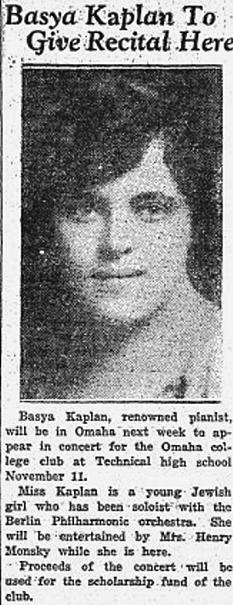
Switching gears: during a recent dig through the Jewish Press archives, I came upon a small announcement from Nov. 10, 1927. The pianist Basya Kaplan would perform at the Omaha college club at Technical high school.
“Miss Kaplan is a young Jewish girl who has been a soloist with the Berlin Philharmonic orchestra. She will be entertained by Mrs. Henry Monsky while she is here,” the story said. It stopped me from doing what I was doing. The girl in the accompanying photo looks lovely, the way they often do in old, fuzzy black and white newspaper print. But: she was with the Berlin Philharmonic in 1927, so what happened to her? It’s giving me goosebumps, reading stories like these, contemplating what the world at that time didn’t yet know. And now, I can’t get her out of my mind.
I tried to find her, but Basya Kaplan isn’t that unusual a name. I narrowed it down by looking for her as a member of the Berlin orchestra:
“It looks like there aren't many great matches for your search,” Google tells me. “Try using words that might appear on the page you’re looking for.
For example, cake recipes instead of how to make a cake."
That is uniquely unhelpful. Ancestry.com, chat GPT, Co-pilot, and other random and notso-random AI-powered search engines all leave me in the dark. There is no record of this specific Basya Kaplan ever existing, besides that little article in the Jewish Press. But we can guess what happened to her.
What kind of Jew am I? I am a Jew who knows that when we don’t take antisemitism seriously, a story like Basya’s will be repeated. Oct. 7 will be repeated. At the moment, I don’t care for satire, and I don’t think electing the “antisemite of the year” is amusing. Not worrying about the popularity vote, however, is something we could all embrace.
ISAIAH DAVIDSON
This article was produced as part of JTA’s Teen Journalism Fellowship, a program that works with Jewish teens around the world to report on issues that affect their lives | JTA
“I don’t know if I believe in God, but I think I like this Jewish thing.” I was in elementary school when I said this to my mother, a rabbi. She responded with something that would forever stick with me: “You don’t have to believe in God to be Jewish. For some people, Judaism is community.”
My sense of self has always been intertwined with Jewish community. As the son of a rabbi, who also attended a Jewish elementary school, my childhood was intrinsically connected with Judaism. However, after sixth grade, I left my insular Jewish community and moved to another city. Since then, I’ve been searching for my own Jewish community, one similar to that that I had left behind.
I had been blessed enough to attend a private Jewish day school. They provided an intimate space, with fewer than a dozen students per grade. Along with the incredible amount of one-on-one learning, student’s lives were centered around our Jewish identity. The bonds formed among our families added to this childhood spent engrossed in the Jewish way of life. My father still plays soccer with my elementary school classmates’ dads.
When I made the switch to a secular, private middle school, I lost most of those connections with other young Jews. My new city had a much smaller Jewish population, as did my mom’s new temple. All of these contributed to my religious drift during my middle school years.
As the new rabbi’s son, I found it hard to make friends. There are added pressures, both from the rabbi and the temple’s congregation. It can be isolating: You are the privileged kid with behind-the-scenes access, and you’re alone in that. There’s also the religious burnout one gets from being a quasi-assistant rabbi. Getting to the synagogue hours before a service, staying hours after, and still having to be that token temple child all take a toll. You’re left feeling both worn out and dolled up, like an overworked show pony.
A two-week summer camp in Southern California briefly gave me a sense of community between games of Mafia and gaga ball, but most of my new
friends lived in different cities, and by Rosh Hashanah, the Whatsapp groups had gone dead silent. This small taste of having a group of Jewish friends left me wanting more.
Halfway through eighth grade, there was a chance to rekindle old friendships with my former elementary school class on a two week-trip to Israel. Besides reconnecting with old friends, the trip also made me fall in love with Judaism again.
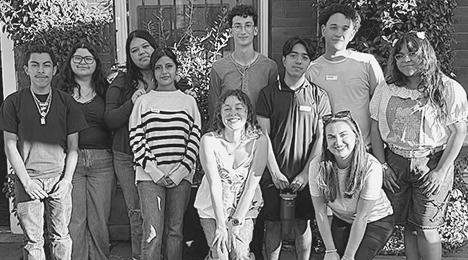
Isaiah Davidson, center, back row, poses with his peers at the close of training for the Anne Frank Youth Network-LA, Los Angeles, California, Nov. 9, 2025. Credit: Sofi Shield
Like many of my friends, I bought a silver and black Star of David necklace on the last day of the trip. After the atrocities of Oct. 7, that necklace came to represent the importance of community. My necklace reminded me of that peace and safety I had felt while with my old classmates. I began to crave a shared group space. One that could help both decompress and comfort me during those incredibly difficult times.
During this time of intense mourning and grief, I transferred to a public charter high school where I thrived. As a freshman, I was named the captain of the varsity basketball team, started a creative writing club and joined a youth circus. The Montessori environment welcomed and encouraged me to cultivate a positive community where I was a leader, a respected peer and a happier human being.
While the school didn’t have much of a Jewish community, I did learn that a few of my close friends had Jewish ancestors. I invited them to one of my mom’s Shabbats, eager to cultivate friends engaged in Judaism, in any sense. Whether they stayed culturally Jewish, or attended a few big holidays — anything was a step in the right direction. They didn’t react with the enthusiasm and vigor
that I had hoped for, but they didn’t reject Judaism either. I always figured that the Jewish community I longed for would see Judaism as a key piece of their identity. I thought I needed us all to be wholly and unequivocally Jewish teens. But it turns out I was wrong. My secular Jewish friends were engaged conversationalists and ponderers. Judaism might not be as integral to their sense of self as it is with me, but I had found a group of peers who would fast with me on Yom Kippur and gather together for Hanukkah. I had created a new community. One fully unique, and accepting of the people within it.
A community which judged not how you practiced Judaism, but how you showed up for your friends. After freshman year, my mom took a senior rabbi position at yet another temple in yet another city.
And while I adore the new community, there aren’t many kids my age. The fact that I live 70-plus miles away doesn’t help either. This is where my individual search for a community that exists both outside of and within a temple has become so important.
In an attempt to continue to grow my own Jewish community, I have now participated in two fellowship programs with the Union for Reform Judaism. While I didn’t make new lifelong friends, I have strengthened my relationships with some of my secular-Jewish friends from my high school, who came along with me.
Along with that, my vigor for carving my own space in the Jewish world has only increased as I’ve attended more and more events and programs. The Anne Frank Youth Network, and Anne Frank LA programs for young activists seeking to do good in the spirit of Anne Frank are just two more examples of these groups that have helped me to create this sacred, communal space.
I never thought my individual Jewish community would be where it is now: made up of non-practicing Jews, groups which highlight both Jewish and nonJewish teens, and my many middle-aged friends at my mom’s temple. What I have learned is that there is no defined path, and there is no guide map. I don’t know what my Jewish community will look like in a year, or five, but I do know, that it will only grow as I do. The views and opinions expressed in this article are those of the author and do not necessarily reflect the views of JTA or its parent company, 70 Faces Media.
B’NAI ISRAEL SYNAGOGUE
618 Mynster Street Council Bluffs, IA 51503-0766
712.322.4705 www.cblhs.org
BETH EL SYNAGOGUE
Member of United Synagogues of Conservative Judaism 14506 California Street Omaha, NE 68154-1980
402.492.8550 bethel-omaha.org
BETH ISRAEL
SYNAGOGUE
Member of Union of Orthodox Jewish Congregations of America 12604 Pacific Street Omaha, NE. 68154
402.556.6288 BethIsrael@OrthodoxOmaha.org
CHABAD HOUSE
An Affiliate of Chabad-Lubavitch 1866 South 120 Street Omaha, NE 68144-1646
402.330.1800 OChabad.com email: chabad@aol.com
LINCOLN JEWISH COMMUNITY:
B’NAI JESHURUN
South Street Temple
Union for Reform Judaism 2061 South 20th Street Lincoln, NE 68502-2797
402.435.8004 www.southstreettemple.org
OFFUTT AIR
FORCE BASE
Capehart Chapel 2500 Capehart Road Offutt AFB, NE 68123
402.294.6244 email: oafbjsll@icloud.com
TEMPLE ISRAEL
Union for Reform Judaism (URJ) 13111 Sterling Ridge Drive Omaha, NE 68144-1206
402.556.6536 templeisraelomaha.com
LINCOLN JEWISH COMMUNITY:
TIFERETH ISRAEL
Member of United Synagogue of Conservative Judaism 3219 Sheridan Boulevard Lincoln, NE 68502-5236 402.423.8569 tiferethisraellincoln.org
Monthly Speaker Series Service and Hanukkah celebration, Friday, Dec. 12, 7:30 p.m. featuring the return of the Bagel Boys. Our service leader is Larry Blass. Everyone is always welcome at B’nai Israel! For information about our historic synagogue, please visit our website at www.cblhs.org or contact any of our other board members: David Alloy, Renee Corcoran, Rick Katelman, Gail Kenkel, Janie Kulakofsky, Howard Kutler, Ann Moshman, Mary-Beth Muskin, Debbie Salomon and Sissy Silber. Handicap Accessible.
Services conducted by Rabbi Steven Abraham and Hazzan Michael Krausman.
IN-PERSON AND ZOOM MINYAN SCHEDULE: Mornings on Sundays, 9:30 a.m.; Mondays and Thursdays, 7 a.m.; Evenings on Sunday-Thursday, 5:30 p.m.
FRIDAY: Six String Shabbat 6 p.m. at Beth El & Live Stream; A Wing and A Prayer Dinner following services.
SATURDAY: Shabbat Morning Services, 10 a.m. at Beth El and Live Stream; Jr. Congregation (Grades K12), 10 a.m.; Kiddush sponsored by by the Goldsteins & Kelln Families; Havdalah, 5:35 p.m. Zoom Only.
SUNDAY: BESTT (Grades K-7), 9:30 a.m.; Adult B’nai Mitzvah, 9:30 a.m. with Hazzan Krausman; Torah Tots, 10:30 a.m.
TUESDAY: Mishneh Deot & Sefer HaMiddot, 10:30 a.m. with Rabbi Abraham; Board of Trustees Meeting, 7 p.m.
WEDNESDAY: BESTT (Grades 3-7), 4 p.m.; Hanukkah Dinner, 6 p.m.
FRIDAY-Dec. 19: Operation Grateful Goodies Drop Off 9 a.m.-3 p.m.; Kabbalat Shabbat 6 p.m. at Beth El & Live Stream
SATURDAY-Dec. 20: Simcha Shabbat, 10 a.m. at Beth El and Live Stream; Jr. Congregation (Grades K12), 10 a.m.; Havdalah, 5:35 p.m. Zoom Only. Please visit bethel-omaha.org for additional information and service links.
FRIDAY: Nach Yomi, 6:45 a.m.; Shacharit, 7 a.m.; Mincha/Kabbalat Shabbat/Candlelighting, 4:38 p.m.
SATURDAY: Shabbos Cafe, 8:30 a.m.; Shacharit, 9 a.m.; Tot Shabbat, 10:30 a.m.; Youth Class, 10:45 a.m.; Soulful Torah, 3:45 p.m.; Mincha 4:30 p.m.; Kids Activity/Laws of Shabbos, 5 p.m.; Havdalah, 5:42 p.m.; Glow Up Havdalah Party & Donut Decorating 5:42 p.m.
SUNDAY: Shacharit, 9 a.m.; Rabbi Geiger’s PreHanukkah Class, 9:45 a.m.; Mincha/Ma’ariv 4:40 p.m.
MONDAY: Nach Yomi, 6:45 a.m.; Shacharit, 7 a.m.; Monday Mind Builders, 4 p.m.; Mincha/Ma’ariv, 4:40 p.m.; Haunukkah Carnival 5:30 p.m.
TUESDAY: Nach Yomi, 6:45 a.m.; Shacharit, 7 a.m.; Mincha/Ma’ariv 4:40 p.m.
WEDNESDAY: Nach Yomi, 6:45 a.m.; Shacharit, 7 a.m.; Mincha/Ma’ariv, 4:40 p.m.; Board of Directors Meeting 6 p.m.
THURSDAY: Nach Yomi, 6:45 a.m.; Shacharit, 7 a.m.; Mincha/Ma’ariv, 4:40 p.m.; Smichat Chaver Men’s Class 7:30 p.m.
FRIDAY-Dec. 19: Nach Yomi, 6:45 a.m.; Shacharit, 7 a.m.; Mincha/Kabbalat Shabbat/Candlelighting, 4:40 p.m.
SATURDAY-Dec. 20: Shabbos Cafe, 8:30 a.m.; Shacharit, 9 a.m.; Tot Shabbat, 10:30 a.m.; Youth Class 10:45 a.m.; Soulful Torah, 3:45 p.m.; Mincha 4:30 p.m.; Kids Activity/Laws of Shabbos 5 p.m.; Havdalah, 5:44 p.m.
Please visit orthodoxomaha.org for additional information and Zoom service links.
Join classes via Zoom. Go to ochabad.com/academy. For more information or to request help, please visit www.ochabad.com or call the office at 402.330.1800.
FRIDAY: Shacharit, 8 a.m.; Lechayim, 4:30 p.m., go to ochabad.com/lechayim to join; Candlelighting, 4:37 p.m.
SATURDAY: Shacharit, 10 a.m. followed by Kiddush and Cholent; Shabbat Ends, 5:41 p.m.
SUNDAY: Sunday Morning Wraps, 9 a.m.; Hanukkah Kick-off, 5 p.m. at Stinson Park. RSVP at ochabad.com/chanukahrsvp
MONDAY: Shacharit, 8 a.m.; Personal Parsha, 9:30 a.m. with Shani; Intermediate Biblical Hebrew Grammar, 10:30 a.m. with David Cohen; Menoarah Parade in Sioux City, contact Mushka at mushka@ochabad. com for more info.
TUESDAY: Shacharit 8 a.m.; Aramaic Grammar, 10 a.m. with David Cohen; Hanukkah Skate Night, 4-8 p.m. at Heartwood Preserve, RSVP at HeartwoodPreserveEvents@gmail.com
WEDNESDAY: Shacharit, 8 a.m.; Introductory Biblical Hebrew Grammar, 10:30 a.m. with David Cohen; Parsha Reading, 11:30 a.m. with David Cohen; Menorah Lighting, 3 p.m. at the State Capitol, contact Mushka at mushka@ ochabad.com for more info.
THURSDAY: Shacharit, 8 a.m.; Latke Event at UNL, contact Mushka at mushka@ochabad. com for more info; Advanced Biblical Hebrew Grammar, 11 a.m. with David Cohen; Talmud Study, noon; Introduction to Alphabet, Vowels & Reading Hebrew, 6 p.m. with David Cohen; Code of Jewish Law Class, 7 p.m.
FRIDAY-Dec. 19: Shacharit 8 a.m.; Hanukkah, 3:30 p.m. at Heritage, contact Mushka at mushka@ocha bad.com for more info; Lechayim, 4:30 p.m., go to ochabad.com/lechayim to join; Candlelighting, 4:39 p.m.
SATURDAY-Dec. 20: Shacharit, 10 a.m. followed by Kiddush and Cholent; Shabbat Ends, 5:43 p.m.; Young Professionals’ Hanukkah Celebration, at Chabad after Shabbat, RSVP at ochabad.com/cha nukahrsvp
LINCOLN JEWISH COMMUNITY: B’NAI JESHURUN & TIFERETH ISRAEL
Services facilitated by Rabbi Alex Felch. All services offered in-person with live-stream or teleconferencing options.
FRIDAY: Shabbat Candlelighting, 4:41 p.m.; Kabbalat Shabbat Service, 6:30-7:30 p.m. led by Rabbi Alex at SST.
SATURDAY: Shabbat Morning Service, 9:30 a.m. led by Rabbi Alex at TI; Torah Study noon on
Parashat Vayeshev via Zoom; Havdalah, 5:45 p.m.
SUNDAY: LJCS Classes, 9:30 a.m.; Men’s Bike/Coffee Group, 10:30 a.m. at Rock 'N' Joe Coffee, 5025 Lindberg St, Lincoln. For more information or questions please email Al Weiss at albertw801@gmail. com; Pre-Hanukkah Latke Party, 11 a.m.-1:30 p.m. at TI.
WEDNESDAY: LJCS Hebrew School, 4:30-6 p.m.
FRIDAY-Dec. 19: Shabbat Candlelighting, 4:44 p.m.; Kabbalat Shabbat Service, 6:30-7:30 p.m. led by Rabbi Alex at SST.
SATURDAY-Dec. 20: Shabbat Morning Service, 9:30 a.m. led by Rabbi Alex at TI; Torah Study, noon on Parashat Miketz via Zoom; Havdalah, 5:48 p.m.; Family Potluck and Game Night, 6 p.m. at SST. Bring a dish to share for the potluck beginning at 6 p.m. Games are available to play, but feel free to bring one of your favorites! Games begin at 7 p.m.
FRIDAYS: Virtual Shabbat Service, 7:30 p.m. every first and third of the month at Capehart Chapel. Contact TSgt Jason Rife at OAFBJSLL@icloud.com for more information.
In-person and virtual services conducted by Rabbi Benjamin Sharff, Rabbi Deana Sussman Berezin, and Cantor Joanna Alexander.
FRIDAY: Drop-In Mah Jongg, 9 a.m. In-Person; Shabbat B’yachad Service with Grades 5 and 6, 6 p.m. In-Person & Zoom
SATURDAY: Torah Study, 9:15 a.m. In-Person & Zoom; Shabbat Morning Service, 10:30 a.m. In-Person & Zoom.
SUNDAY: Grades PreK-7, 9:30 a.m. In-Person; Coffee and Conversations with Board Members, 10 a.m. In-Person; Book Club, 10:30 a.m. In-Person & Zoom; YeeHaw-nukkah: Not Our First Rodeo, 5:30 p.m. InPerson.
TUESDAY: Mah Jongg Made Easy, 1:30 p.m. In-Person.
WEDNESDAY: Yarn It, 9 a.m. In-Person; Grades 36, 4:30 p.m. In-Person; Hebrew CHAI: Grades 8-12, 6 p.m. Offsite.
THURSDAY: The Zohar: Thursday Morning Class, 11 a.m. with Rabbi Sharff — In-Person & Zoom.
FRIDAY-Dec. 19: Drop-In Mah Jongg, 9 a.m. In-Person; Tot Shabbat, 5:45 p.m. In-Person; Shabbat B’yachad Service, 6 p.m. In-Person & Zoom
SATURDAY-Dec. 20: Torah Study, 9:15 a.m. In-Person & Zoom; Shabbat Morning Service, 10:30 a.m. InPerson & Zoom.
Please visit templeisraelomaha.com for additional information and Zoom service links.
UPDATED OBITUARY CHANGES
As of July 1, 2025, Obituaries in the Jewish Press are free of charge.
For questions, please email avandekamp@ jewishomaha.org. Obituaries in the Jewish Press are included in our print edition as well as our website at www.omahajewishpress.com
ANNETTE VAN DE KAMP-WRIGHT Jewish
Press editor
This message first appeared in the Dec. 7, 1928 edition of the Jewish Press. There is no byline, but we do know the business and managing editor at the time was David Blacker, and Irving Perlmeter was the editor. It’s possible one of them wrote it.
A note on the language of that time: “Judaistic” stood out as a term we don’t hear or use these days. The earliest evidence for use of the word is from 1829, in the writing of John Wilson, author and journalist. It fell out of use because of negative connotations; apparently Christians used it often to indicate practices that were outdated or just plain wrong. There was also a mention online that the word was used in the Christian bible to describe Jews who tried to bring new Christians back to Judaism, but I did not actually check that. Tonight, thousands of tiny candles in as many Jewish homes will flicker their messages of happiness. And strange though it may seem, these rather minute flames cast a glow so friendly and so bright,
that one begins to wonder about the source of their wondrous light.
It is true that the lighting of the Chanukah candles is reminiscent of the day over two thousand years ago when Judaism’s stalwart sons wrested their holy temple from the talonous [sp] grasp of the Syrians, and were greeted by the miracle of the one-day portion of consecrated oil that burned for eight days. But something far more significant and symbolic seems to emanate from the tiny lights. As they flicker brightly and in so cordial a manner, they seem to intimate that they have a great secret they are anxious to divulge. What that story is can only be guessed from the history of Chanukah and the Jewish race.
When the crafty King Antiochus Epiphanes of Syria conquered the defenseless Israelites, he was clever enough to realize that as long as Judaic idealism existed, his hold over its disciples was precarious. So, with demonaical [sp] cunning, he planned to impress Hellenic culture upon the Jews.
Had the latter been the dreaming kind of idealists only, their fate would have been sealed. But theirs was a practical idealism. Their faith translated itself into action and caused them to brazenly defy the mighty monarch, to ensure the ravages of war that followed, and to finally triumph.
It is twenty centuries since the Jews and the Syrians stopped battling, but the essential spirit of that encounter still exists. Practical idealism and materialism are still gripped in the throes of unrelenting war. However, throughout all the onslaughts, idealism, especially the kind embodied in Judaism, still lives and waxes stronger every day as enlightenment circles the globe. Perhaps that is what the Chanukah candles are trying to tell us. Perhaps their message is that, as right triumphed two thousand years ago, so will it in the future, and that the increasing of the number of candles from one to eight on the successive nights of Chanukah bespeaks a promise of the growing strength of the purifying influence of Judaistic ideals.
SOPHIE LEIGH SCHWARTZ
Amy and Luke Schwartz announce the Oct. 10, 2025, birth of their daughter, Sophie Leigh.
She has a sister, Maliya, 2 years old.
Grandparents are Jacki and Steve Saylan of Omaha, and Chris
and Marty Schwartz of Stanton, NE.
Great-grandparents are JoAnn and Milton Schwartz of Norfolk, NE, the late Edythe and Arthur Friedman, Rosalie and Milton Saylan, and Gene and Alice Sobotka.
ELANA SZTOKMAN
JTA
Susan Blumberg-Kason, a Jewish author whose work explores Jewish history and identity, was deep into a book about Golda Meir’s Milwaukee childhood when her literary agent abruptly dropped her early last year. The agent offered only a vague explanation, saying, “We can no longer champion your career.”
Blumberg-Kason was surprised at the 180-degree turn by an agent who had been with her for years. But she soon discovered three other Jewish writers in her online community also had been suddenly dropped by their agents with little explanation other than the same phrase she heard: “We can no longer champion your career.” It didn’t feel like coincidence.
of MFA programs for being ‘Zionists,’ bookstores refusing to stock books,” Firestone-Teeter said. “Things are not okay. This is not just the normal difficulty of publishing.”
In addition to the Jewish Book Council, UJA’s other five grants went to Artists Against Antisemitism, PJ Library, the Jewish Theological Seminary, the Jewish Life Foundation and 70 Faces Media (the parent organization of the Jewish Telegraphic Agency).
“It wasn’t just that she dropped me,” Blumberg-Kason said. “It was that suddenly several of us were hearing the exact same sentence. It felt coordinated. It felt like something had shifted under our feet.”
It turns out many other Jewish writers have had similar experiences over the past two years, since the beginning of the Oct. 7 war and the boom in anti-Israel and antisemitic ferment that followed. In writers’ groups and forums, Jewish authors describe a sense that their work is being railroaded because they are Jewish. They’ve lost agents, publishers and book events. Some report that editors have cooled the moment Jewish themes appeared in their work.
In May 2024, anti-Israel boycotters propagated a shared spreadsheet called “Is your fav author a Zionist?” that went viral, “outing” Jewish writers for any kind of connection to Israel.
Author Elissa Wald felt the anti-Jewish sentiment so strongly that she created the Never Alone Book Club for Jewish authors to give one another support. The group now has 3,500 members, a Facebook community and a Substack, and it hosts Jewish book events and shares resources for writers who no longer feel safe in mainstream literary spaces.
The challenging climate prompted UJA-Federation of New York to begin funding projects aimed at helping Jewish authors, awarding a total of $300,000 in grants to six organizations working in different areas of the literary ecosystem. The organizations receiving UJA grants are helping Jewish writers with everything from publishing logistics and visibility to offering emotional support.
“Jewish writers were being dropped, disinvited, and sidelined — and many were questioning whether they could continue writing Jewish stories,” said Rina Cohen, who manages strategy across UJA’s Combating Antisemitism portfolio. “By supporting them with tools and resources, UJA is sending a clear message: You deserve to create freely, and we’ll stand behind you as you do.”
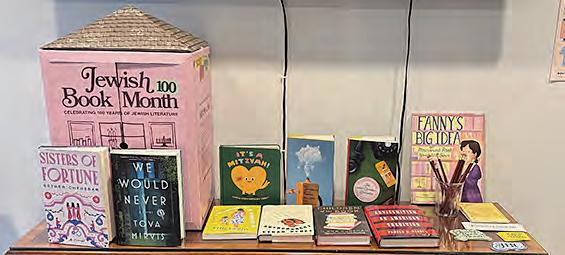
The Jewish Book Council used funding from UJA for a unique program to kick off the 100th anniversary of Jewish Book Month: The council designed and distributed 100 Jewish Book Kits to libraries and public spaces across New York City that offer a curated selection of Jewish literature, visual displays, QR codes and author highlights. The aim is to give librarians and community centers an accessible way to showcase Jewish books, helping make Jewish writing visible in the very spaces where many writers feared their work was being erased.
It’s not always clear that a Jewish writer’s professional setback stems from antisemitism. Publishing is a brutal industry, and even successful writers experience abrupt and opaque rejection. But many Jewish writers say that what they’re experiencing suggests something nefarious. They’ve felt their Jewishness was treated as suspect in classrooms, critique groups or conferences. They’ve felt pressure from editors to strip Jewish elements from their work.
When the Jewish Book Council opened a portal inviting Jewish writers to share incidents affecting their creative or professional lives, over 400 authors wrote in.
“Some of what we see is subtle and hard to pinpoint, and some of it is very direct: events canceled, students pushed out
Artists Against Antisemitism created a full-day gathering for 140 authors, the Jewish Writers Mifgash, that included pitch sessions with literary agents, professional development workshops, mentorship matching and mental health support.
Project Shema, a training and support organization focused on contemporary antisemitism, led a session at the conference on how to recognize antisemitism in creative spaces.
Elizabeth Berkowitz, one of the event’s organizers, said several authors came away with promising leads.
“Agents were asking, ‘Can you send me the full? I want to see more,’” Berkowitz said. “We definitely had some shidduchs made, real follow-ups between writers and agents who were actively seeking Jewish authors.”
Zeeva Bukai, a longtime editor who said she’d experienced open hostility in a professional editing group, said just being around others experiencing the same challenges was a welcome relief.
“I realized it’s not just me experiencing this; other are too,” she said. “That validation was just as important as the tools we learned to deal with it.”
That’s the point, said the Jewish Book Council’s CEO. “We want authors to know we’ve got you on the other side,” Firestone-Teeter said. “Your job is to keep writing. Our job is to deal with the industry issues and build a community that celebrates you and your work. Jewish writers need to feel confident writing the books only they can write.”

Star Deli dishes up (among other delights) overstuffed corn beef, pastrami and smoked turkey sandwiches, matzah ball soup, salad platters, Dr. Brown’s Assorted Sodas, plus toothsome desserts and sometime-specials like Prime Rib, Chicken Pot Pie, Smoked Brisket and Chili with Corn Bread. We also sell delectable glatt Kosher meats by the pound. The Deli welcomes everyone in the Jewish community and the larger Omaha area community to join us for lunch.
Friday December 19 from 11:30 a.m.-1 p.m.
Latke Reuben
For more information about Star Catering or to preorder take-out from the Kosher Deli at the Rose Blumkin Jewish Home, please email Jennifer Addison at jaddison@rbjh.com
CLASSIFIED ADVERTISING works! Place your 25 word ad into thousands of Nebraska homes for $225. Contact your local newspaper or call 1-800-369-2850.
HELLO NEBRASKA! Introducing www.nepublicnotices.com, a new public notice website presented as a public service by all Nebraska newspapers. Free access, fully searchable – because democracy depends upon open government and your right to know.
BANKRUPTCY RELIEF! Help stop Creditor Harassment, Collection Calls, Repossession and Legal Actions! Speak to a Professional Attorney and Get the Help You NEED! Call NOW 844-215-3629
AFFORDABLE PRESS Release service. Send your message to 155 newspapers across Nebraska for one low price! Call 1-800369-2850 or www.nebpress.com for more details.
FOR SALE – CELL PHONE
SWITCH AND save up to $250/year on your talk, text and data. No contract and no hidden fees. Unlimited talk and text with flexible data plans. Premium nationwide coverage. 100% U.S. based customer service. For more information, call 1-877-768-5892
FOR SALE - MEDICAL
PORTABLE OXYGEN Concentrator? May be covered by Medicare! Reclaim independence and mobility with the compact design and long-lasting battery of Inogen One. Free information kit! Call 855-385-3580.
PREPARE FOR power outages today with a Generac Home Standby Generator. Act now to receive a FREE 5-Year warranty with qualifying purchase. Call 1-402-899-2584 today to schedule a free quote. It’s not just a generator. It’s a power move.
DOES YOUR basement or crawl space need some attention? Call Thrasher Foundation Repair! A permanent solution for waterproofing, failing foundations, sinking concrete and nasty crawl spaces. FREE Inspection & Same Day Estimate. $250 off ANY project with code GET250. Call 1-844-958-3431
THE BATHROOM of your dreams in as little as 1 day. Limited Time Offer - $1000 off or No Payments and No Interest for 18 months for customers who qualify. BCI Bath & Shower. Many options available. Quality materials & professional installation. Senior & Military Discounts Available. Call Today! 1-855-451-2244
REPLACE YOUR roof with the best looking and longest lasting material steel from Erie Metal Roofs! Three styles and multiple colors available. Guaranteed to last a lifetime! Limited Time Offer up to 50% off installation + Additional 10% off install (for military, health workers & 1st responders.) Call Erie Metal Roofs: 1-888316-7713
WANTED TO
GRACE GILSON
JTA
Over 300 Jewish leaders, including women’s rights advocates and rabbis, urged the United Nations on Tuesday December 2 to remove Reem Alsalem, the U.N. rapporteur on violence against women and girls, for denying that rape occurred during Hamas’ Oct. 7, 2023, attack on Israel.
The letter, which was addressed to U.N. secretary-general Antonio Guterres, came two weeks after Alsalem claimed in a post on X that “No independent investigation found that rape took place on the 7th of October.”
In the letter, its signatories express their “horror and outrage” at Alsalem’s rhetoric, and cite two U.N. reports from March 2024 and July 2025 that concluded that there was “reasonable grounds” to believe that sexual violence had taken place during the attacks “in multiple locations, including rape and gang rape.”
Women’s Archives; Rabbi Irving Greenberg, the former chairman of the U.S. Holocaust Memorial Museum; Rabbi Deborah Waxman, the president of Reconstructing Judaism; and Hebrew College president Rabbi Sharon Cohen Anisfeld.
violence on Oct. 7.
In the X exchange that spurred the new letter, Alsalem was arguing with another user about the Israeli government’s prosecution of soldiers accused of abusing a Palestinian detainee.
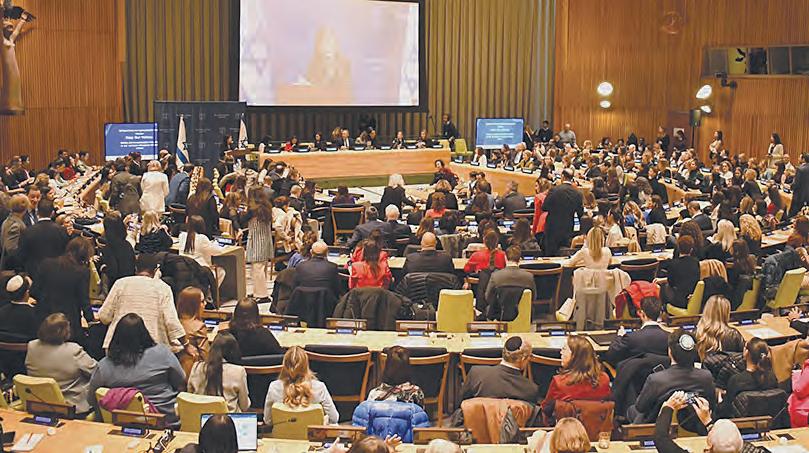
The petition was organized by Amy Elman, a professor at Kalamazoo College who has authored books on antisemitism and state responses to sexual violence, and Rafael Medoff, the director of the David S. Wyman Institute for Holocaust Studies. It was shared with the Jewish Telegraphic Agency soon after being sent to Guterres.
“The targeted sexual abuse of Israelis by Hamas and its supporters is one weapon in the arsenal of those seeking Israel’s obliteration,” Elman said in a statement. “It’s outrageous that deniers such as Reem Alsalem are aiding and abetting the sexual violence by claiming it never happened. These apologists should be ashamed of themselves.”
The letter’s signatories include Deborah Lipstadt, the former antisemitism envoy; Judith Rosenbaum, the head of the Jewish
Dispute over whether sexual violence took place as Hamas murdered about 1,200 people in Israel on Oct. 7 has solidified as a point of sustained interest for some of Israel’s staunchest critics who allege that Israel and its supporters are using claims of rape as propaganda. Even the United Nations, frequently maligned by Israel and its supporters over its record toward Israel, has drawn allegations of complicity in the propaganda campaign from pro-Palestinian voices — though the U.N. rapporteur on Palestinian rights, Francesca Albanese, who has faced her own calls for dismissal from the Trump administration, has also publicly questioned the claims.
In addition to the U.N. reports, independent reporting and research by an Israeli nonprofit have validated claims of sexual
A day later, Alsalem posted a link to a Substack podcast from October where she criticized the credibility of the March 2024 U.N. report and said she had sought contact with the Israeli government to confirm its findings but had not received a response.
“The media, certain organizations and the world basically fell into the trap that Israel set up, which is to project that there was barbaric sexual violence being committed by these barbarian Palestinian men, and it was spun around and disseminated and very much used in order to then justify the genocide,” said Alsalem on the podcast.
Medoff said in a statement that Alsalem’s continued employment reflected inconsistent standards when it comes to Israel and antisemitism.
“If a UN official made such a remark concerning rape victims from any other ethnic or religious group, there would be an international uproar,” he said. “The same standard should apply to Israeli Jewish women who were sexually assaulted by Hamas terrorists.”
From March 4, 2024: “The 24-page [U.N.]report, based on a 17-day investigation spanning January and February, supports a claim that Israel and its supporters have stressed in the months since Oct. 7: that rape and sexual assault were part and parcel of the atrocities committed by Hamas that day, and suffered later by the hostages it took to Gaza.” (Ron Kampeas)
Both the March 2024 and July 2025 report can be accessed at www.un.com.