HEADLINES | 4
TEACHING IN ROME
Martin-Springer Institute
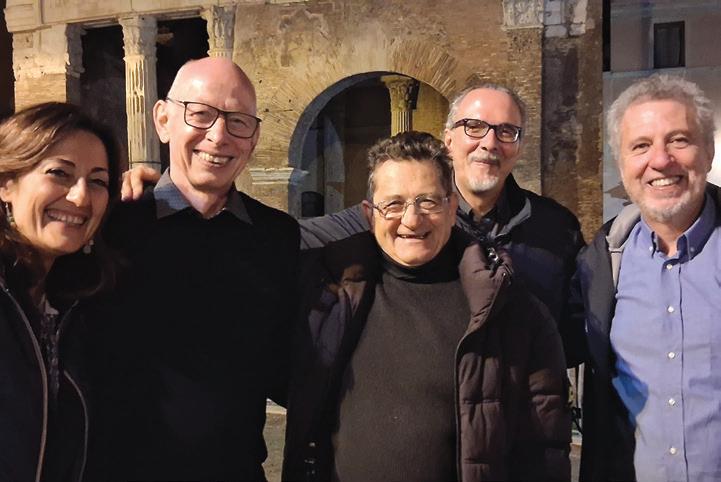
Director Björn Krondorfer
addressed students of Milan’s Shoah Center Initiative
SENIOR PULL-OUT
Lunch with an Israeli, checking in on aging adults and authors share their latest works

HEADLINES | 4
TEACHING IN ROME
Martin-Springer Institute
Director Björn Krondorfer
addressed students of Milan’s Shoah Center Initiative
SENIOR PULL-OUT
Lunch with an Israeli, checking in on aging adults and authors share their latest works
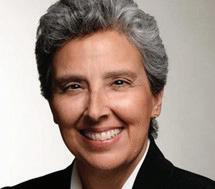
SOPHIE STERN
said Jon Meyers, director of ADDPC.
CONTINUED FROM PAGE 1
said Jon Meyers, director of ADDPC.
“Our hope is to create and promote opportunities for people to be embraced, become part of the community and find equitable opportunities wherever they might live,” he said.
about her Judaism with her fellow council members and speaking out for her rights and beliefs.
You count on us. And we count on you to help ensure that the Greater Phoenix Jewish community has quality, reliable news coverage every day. Please consider making a generous donation to support the Jewish News. Kindly fill out the form below, and return it with your check or credit card information in the envelope enclosed with this issue. We thank you, and the Greater Phoenix Jewish community thanks you!
Name or Company Name
Address
“Our hope is to create and promote opportunities for people to be embraced, become part of the community and find equitable opportunities wherever they might live,” he said.
Meyers first came to know Stern through her mother, Amy Silverman, who read her personal essays about raising a daughter with Down syndrome on KJZZ, National Public Radio’s Phoenix affiliate station.
Meyers first came to know Stern through her mother, Amy Silverman, who read her personal essays about raising a daughter with Down syndrome on KJZZ, National Public Radio’s Phoenix affiliate station.
Meyers was so captivated by the essays that he reached out to Silverman, and the two became friends.
City State ZIP
Meyers was so captivated by the essays that he reached out to Silverman, and the two became friends.
That’s how Stern first learned of the open council seat, but there’s no doubt she earned her position, Meyers said.
Home Phone Cell
❒ I/We wish to remain Anonymous
That’s how Stern first learned of the open council seat, but there’s no doubt she earned her position, Meyers said.
To become a council member, Stern had to apply and demonstrate that she had something valuable to contribute, he said.
To become a council member, Stern had to apply and demonstrate that she had something valuable to contribute, he said.
❒ Enclosed is my check to the Jewish News for $
❒ Charge my credit card the amount indicated in the box to the right:
❒ Visa ❒ MC ❒ Discover
Name as it appears on the card
Card #
“She’s on the council because she deserves to be on the council,” he said. Stern is creating a life and career as a member of her community, which makes her a great addition.
“She’s on the council because she deserves to be on the council,” he said. Stern is creating a life and career as a member of her community, which makes her a great addition.
Stern graduated from McClintock High School in Tempe last year and now attends Glendale Community College, with a focus on dance. She is a regular performer at Detour Company Theatre, a Scottsdale theatre company for adults with intellectual, developmental and physical disabilities.
Expiration Date (mm/yy) Security Code
about her Judaism with her fellow council members and speaking out for her rights and beliefs.
She already has some practice at advocating for herself.
“One time, I was in class and someone called me the R-word and I told him not to. The teacher was in the hallway and another student repeated the word,” she said. Rather than letting the situation go, she told her theater teacher, who was able to intervene.
She already has some practice at advocating for herself.
“One time, I was in class and someone called me the R-word and I told him not to. The teacher was in the hallway and another student repeated the word,” she said. Rather than letting the situation go, she told her theater teacher, who was able to intervene.
“If someone has a disability, saying the R-word is like saying the F-word,” Stern said.
Donations can also be made by major credit card by logging on to the Jewish News website at jewishaz.com/2025donation or by scanning the code below:
“If someone has a disability, saying the R-word is like saying the F-word,” Stern said.
While performing in the musical “Hairspray,” she had another occasion to tangle with the offensive word, which appears in the script.
While performing in the musical “Hairspray,” she had another occasion to tangle with the offensive word, which appears in the script.
“That’s really bad and my friend said it on stage. I was not OK with that, so I went to the director and told her it was a bad word for people with disabilities, but she wouldn’t take it out,” Stern said.
“That’s really bad and my friend said it on stage. I was not OK with that, so I went to the director and told her it was a bad word for people with disabilities, but she wouldn’t take it out,” Stern said.
She let her mother know about the conflict and they were able to convince the director of the need to remove the word from the script.
❒ Publisher's Circle $3,600
❒ Guardian $1,800
She let her mother know about the conflict and they were able to convince the director of the need to remove the word from the script.

22
5
12
19
Heart Can’t Even Believe It: A Story of Science, Love and Down Syndrome,” Silverman’s book about her daughter. When Gesher’s speakers’ bureau, Damon Brooks & Associates, was asked to find a speaker about Down syndrome for an event this spring, Hummell first asked Silverman to speak, thinking Stern might be too young.
10
Stern graduated from McClintock High School in Tempe last year and now attends Glendale Community College, with a focus on dance. She is a regular performer at Detour Company Theatre, a Scottsdale theatre company for adults with intellectual, developmental and physical disabilities.
❒ Macher $720
“My friend Al was next to me when I told the director and he gave me the biggest hug ever and said that he loved me so much,” Stern said. Sadly, Al died in a car crash on Oct. 24, 2021.
❒ Mensch $360
❒ Patron $180
“That was hard; it’s very hard to get emotions out and I was very, very upset,” she said.
“My friend Al was next to me when I told the director and he gave me the biggest hug ever and said that he loved me so much,” Stern said. Sadly, Al died in a car crash on Oct. 24, 2021.
❒ Sponsor $118
Heart Can’t Even Believe It: A Story of Science, Love and Down Syndrome,” Silverman’s book about her daughter. When Gesher’s speakers’ bureau, Damon Brooks & Associates, was asked to find a speaker about Down syndrome for an event this spring, Hummell first asked Silverman to speak, thinking Stern might be too young.
28
They decided instead that Stern should tell her own story; it’s a real bonus that she is not afraid of public speaking.
4
“That was hard; it’s very hard to get emotions out and I was very, very upset,” she said.
❒ Other Supporter $ Contributions are tax deductible
In fact, when Stern attended her first council meeting in January, she couldn’t wait to tell people of her involvement with Detour and share information about its upcoming shows.
In fact, when Stern attended her first council meeting in January, she couldn’t wait to tell people of her involvement with Detour and share information about its upcoming shows.
“There’s no question that she is going to thrive,” Meyers said. “She’s very gregarious and passionate about the things that matter to her.”
On the recent anniversary of his death, Stern made a cake and took it to the crash site.
“I don’t know how I did it without crying. I’m so proud of myself,” she said.
On the recent anniversary of his death, Stern made a cake and took it to the crash site.
Amy Hummell, executive director of Gesher Disability Resources, agreed that Stern is a good fit for ADDPC because of her ability to self-advocate.
“I don’t know how I did it without crying. I’m so proud of myself,” she said.
Stern looks forward to sharing insights
“There’s no question that she is going to thrive,” Meyers said. “She’s very gregarious and passionate about the things that matter to her.”
Stern looks forward to sharing insights
Hummell co-hosted a book event with Meyers a few years ago for “My
Amy Hummell, executive director of Gesher Disability Resources, agreed that Stern is a good fit for ADDPC because of her ability to self-advocate.
Hummell co-hosted a book event with Meyers a few years ago for “My
Phone: 602.870.9470 | Fax: 602.870.0426 | editor@jewishaz.com | advertising@jewishaz.com subscriptions@jewishaz.com | www.jewishaz.com
Phone: 602.870.9470 | editor@jewishaz.com | advertising@jewishaz.com subscriptions@jewishaz.com | www.jewishaz.com
PUBLISHER
PUBLISHER Jewish Community Foundation of Greater Phoenix
12701 N. Scottsdale Road, Suite 201, Scottsdale, AZ 85254 Phone: 602.870.9470 | Fax: 602.870.0426 | editor@jewishaz.com | advertising@jewishaz.com subscriptions@jewishaz.com | www.jewishaz.com
Jewish Community Foundation of Greater Phoenix
PUBLISHER
ASSOCIATE PUBLISHER Rich Solomon | 602.639.5861 rsolomon@jewishaz.com
ADVERTISING
SENIOR ACCOUNT EXECUTIVE Jodi Lipson | 602.639.5866 jlipson@jewishaz.com
Jodi Lipson | 602.639.5866 jlipson@jewishaz.com
Jewish Community Foundation of Greater Phoenix
GENERAL MANAGER Rich Solomon | 602.639.5861 rsolomon@jewishaz.com
MANAGING EDITOR
MANAGING EDITOR Mala Blomquist | 602.639.5855 mblomquist@jewishaz.com
GENERAL MANAGER Rich Solomon | 602.639.5861 rsolomon@jewishaz.com
Mala Blomquist | 602.639.5855 mblomquist@jewishaz.com
MANAGING EDITOR Mala Blomquist | 602.639.5855 mblomquist@jewishaz.com
STAFF WRITER Shannon Levitt | 602.639.5854 slevitt@jewishaz.com
STAFF WRITER Shannon Levitt | 602.639.5854 slevitt@jewishaz.com
STAFF WRITER
Shannon Levitt | 602.639.5854 slevitt@jewishaz.com
ADVERTISING SALES CONSULTANT Jodi Lipson | 602.639.5866 jlipson@jewishaz.com
SUBSCRIPTIONS 602.870.9470 x 1 subscriptions@jewishaz.com
SUBSCRIPTIONS 602.870.9470 x 1 subscriptions@jewishaz.com
GRAPHIC DESIGNER Ricki Urban | 602.870.9470 X 2 advertising@jewishaz.com
SUBSCRIPTIONS 602.870.9470 x 1 subscriptions@jewishaz.com
GRAPHIC DESIGNER Ebony Brown | 410.902.2333 ads_phoenixjn@midatlanticmedia.com
GRAPHIC DESIGNER Ebony Brown | 410.902.2333 ads_phoenixjn@midatlanticmedia.com
They decided instead that Stern should tell her own story; it’s a real bonus that she is not afraid of public speaking.
11
25
“It’s not the same when someone tries to tell a person’s story for them,” Hummell said.
“It’s not the same when someone tries to tell a person’s story for them,” Hummell said.
9
23
13
18
24 October 24 November 7** November 21 December 5
December 12
December 19
Additionally, helping people with disabilities find jobs was one of the reasons for acquiring the bureau. Unemployment in the disability community is upwards of 75% and of that percentage, 75% are ready, willing and able to work — but haven’t been given the opportunity, Hummell said.
Additionally, helping people with disabilities find jobs was one of the reasons for acquiring the bureau. Unemployment in the disability community is upwards of 75% and of that percentage, 75% are ready, willing and able to work — but haven’t been given the opportunity, Hummell said.
“People have it in them to speak up but don’t know how, and often they’re not cheered on. Sophie has family support
“People have it in them to speak up but don’t know how, and often they’re not cheered on. Sophie has family support


Each month, I’m reminded of how dynamic and diverse Jewish life in Greater Phoenix has become. New families arrive, longstanding institutions evolve, established programs grow and new initiatives take root. With so much happening across our community, having a central place that gathers, explains, shares and elevates these stories is more important than ever. That is why the Jewish News remains such a critical asset to all of us.
The value of the Jewish News today isn’t simply in reporting what happened last week. Its real contribution is helping
us understand ourselves. It highlights how our community is changing, where energy is emerging, why priorities are shifting and what conversations we need to have. Jewish journalism provides context, continuity and — at times — necessary challenge. It ensures that the issues shaping Jewish life in Arizona don’t go unnoticed or unexamined.
In recent years, we’ve all seen how quickly information spreads and how easily essential details can be distorted or drowned out. The Jewish News offers something increasingly rare: careful reporting grounded in genuine connection to the community it serves. When people want clarity instead of speculation, nuance instead of noise, this is where they find it.
Beyond the news itself, the Jewish News acts as a gathering space. It introduces us
to neighbors we haven’t met, highlights programs and leaders we may never have heard about and chronicles the creativity flourishing in synagogues, classrooms, charities and living rooms across the Valley. It helps weave many separate efforts into a shared communal story.
This kind of work doesn’t happen automatically. It requires skilled journalists as much as it requires time and investment. As we think about the future of Jewish life in Arizona, such as how we welcome newcomers, support current institutions, appreciate our seniors and nurture the next generation, it is clear that sustaining a strong Jewish News must be part of that vision. A well-informed community is a more resilient and engaged community.
At the Center for Jewish Philanthropy, we see the impact of the Jewish News every
I hope this issue of the Jewish News finds you well. And more importantly, I hope it prompts you to think about the role the Jewish News plays in our community today.
Many of us first encounter the Jewish News as a simple source of updates: a place to skim headlines, glance at photos, check community milestones or see which organizations are up to something new. But its impact reaches much further. The Jewish News quietly elevates the threads of Jewish life in Greater Phoenix, giving shape and visibility to stories
More than 130 newspapers in the United States have closed in the past year, according to a report by Northwestern University Medill School of Journalism, Media, Integrated Marketing Communications’ “The State of Local News Project.” News “deserts” are expanding and web traffic to the nation’s top newspapers has dropped markedly this decade, according to the report issued Oct. 20, 2025. Taking a step back for a broader look at the industry is even more troubling. Since
that might otherwise go unheard. In an era when reported information is immediate but often shallow, the Jewish News provides something steadier: careful attention to local life. Our reporters attend programs that rarely receive broader media coverage. They introduce readers to volunteers whose efforts transform lives but don’t make big-city headlines. They bring depth to celebrations, crises, aspirations and moments of reflection; the full spectrum of what it means to be part of a Jewish community.
A strong local paper doesn’t just record events; it strengthens the connective tissue between people. It helps a bat mitzvah in a small shul reach families across the Valley. It lifts up initiatives that deserve to be seen.
It creates an archive of our shared past, one that future generations will turn to when they want to understand who we were and what mattered to us.
We frequently hear from readers searching for a piece of their family’s history, whether it be a milestone announcement, a photo, a piece someone wrote, or a brief article that ties them to someone they loved. That kind of continuity is priceless, and only a community-centered publication can provide it.
But sustaining this work is not easy. The realities facing local journalism affect us as much as any other newsroom. We operate with a tight staff and limited resources, yet we remain committed to showing up wherever Jewish life is happening. Whether at a small gathering in someone’s living room or
day, and we are proud to support it. But its long-term strength depends on readers who recognize the difference a dedicated Jewish publication makes. When you contribute to the Jewish News, you help ensure that Jewish life in Arizona is documented, explored, shared and celebrated with the seriousness and care it deserves.
As we finish up 2025, I hope you will join us in fortifying this essential communal resource. The Jewish News does far more than report; it helps us stay connected to one another and to the story we are still writing together.
Thank you for helping keep that story alive. JN
Richard Kasper, CEO,
The Center for Jewish Philanthropy of Greater Phoenix
at a citywide event, we cover the news that matters to you.
As we approach the end of the year, I’m asking you to help ensure that the Jewish News can continue to serve as the heartbeat of Jewish life in Greater Phoenix. Your support allows us to deepen our reporting, expand coverage, and preserve the stories that define our community.
If the Jewish News has informed you, connected you, uplifted you or reminded you of the richness of Jewish life here, please consider making a contribution. Together, we can keep this essential source of community life growing and thriving. JN
Rich Solomon, associate publisher, Jewish News
2005, the number of newspapers published in the United States has dropped from 7,325 in 2005 to 4,490 now. Daily newspaper circulation that averaged between 50 and 60 million people at the turn of the century, now stands at just over 15 million.
The Jewish News of Greater Phoenix is the only Jewish community newspaper in print in Arizona. This newspaper exists because of the continued support of our readers, and for that, we are deeply grateful.
For 77 years, the Jewish News has chronicled our community’s achievements, milestones, challenges and changes. We’ve been a trusted source for news, both close to home and across
the globe, standing alongside our readers in moments of celebration and times of sorrow.
The Jewish News connects us to our past by documenting the lifecycle events of individuals and the gatherings of our institutions. It captures our community’s conversations and priorities: religious, political, cultural and beyond.
It also serves as a bridge to our future. Generations from now, readers will be able to explore our stories, whether through our digital platforms or our preserved print archives.
And every day, we connect our community to the present. From our calendar of programs and classes, to diverse opinion pieces, to stories highlighting those mak-
ing a difference locally and around the world, we reflect the richness and breadth of Jewish life today.
Through our biweekly print editions, daily online reporting and active social media presence, we work to meet you wherever you are. Our mission is to deliver the stories you want and need to read, and to continue finding new ways to keep you informed, engaged and inspired. Your generosity makes this work possible. Please consider supporting us so we can continue documenting and celebrating our community’s legacy for generations to come. Thank you.JN
Mala Blomquist, managing editor, Jewish
SHANNON LEVITT | STAFF WRITER
I
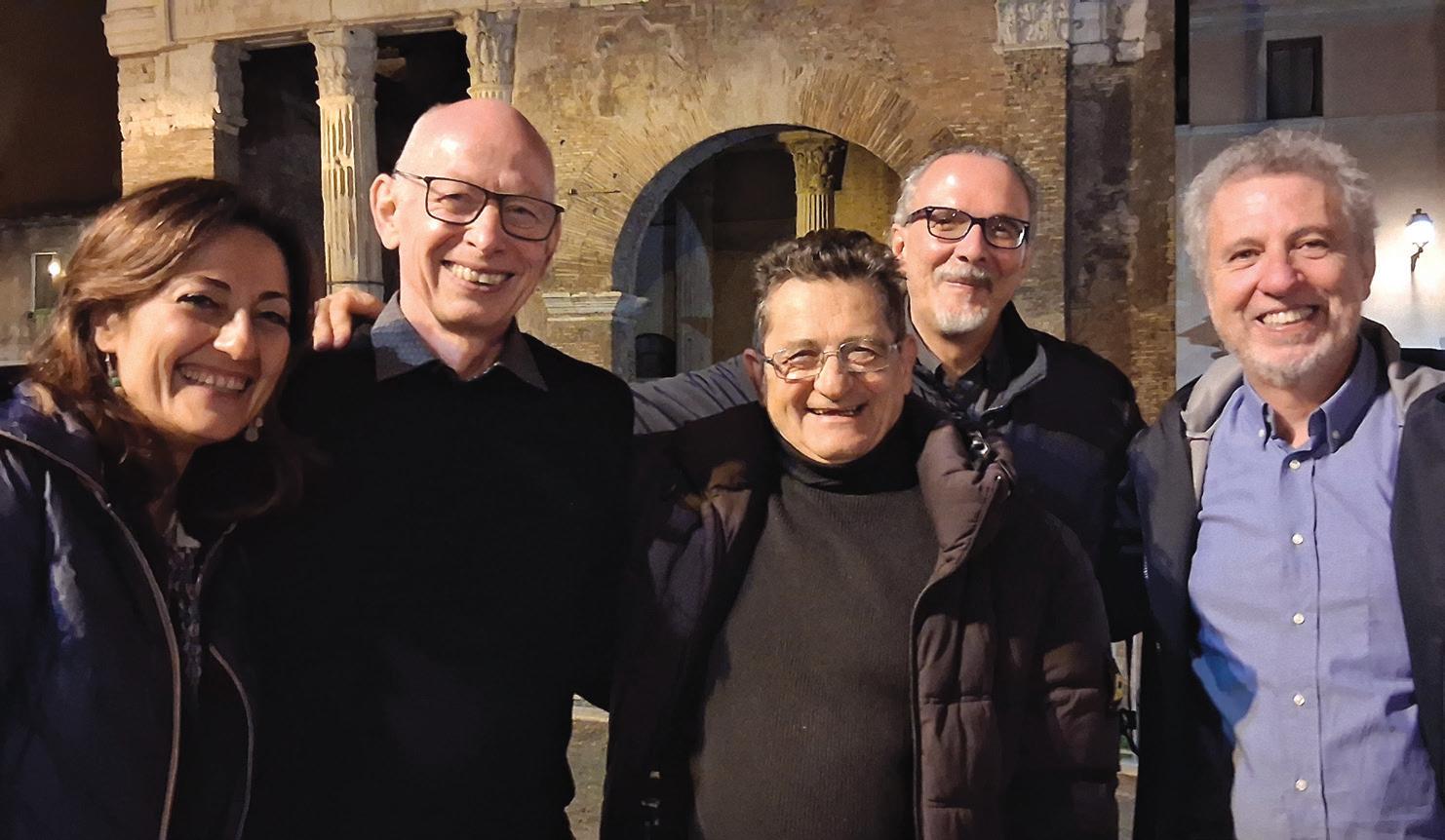
n October, Martin-Springer Institute Director Björn Krondorfer addressed a gathering of Italian students in Rome, offering an expansive and reflective framework for their upcoming yearlong Holocaust education program. Milan’s Shoah Center Initiative, which will bring the students from Rome to Berlin to explore themes of survival, resistance and justice, prompted Krondorfer to pose a challenging question at the core of his remarks: What does Holocaust education mean today, and what will it mean in 2045, one hundred years after the end of the genocide?
Speaking to a room filled with young people preparing to study one of history’s darkest chapters, Krondorfer emphasized that Holocaust education carries ongoing moral expectations, separating it from other historical subjects. “We may know that Nero or Caligula might have been the cruelest Roman emperors,” he said. “But we don’t really care that much. It
is different from the Holocaust because we are still affected by it.” Teaching and learning about the Shoah, he stressed, requires looking backward, but also assessing the present and imagining how its legacies will shape the future.
Krondorfer organized his talk around memory, trauma, reconciliation and empathy: four key themes to offer students a roadmap for the ethical challenges ahead.
He began with memory, drawing a sharp distinction between memory and history. Historical facts can be studied in classrooms, he said, but memory is something more personal, more vital. “Memory is something by which you can make history your own,” he noted. And as students encounter Holocaust sites in Rome and Berlin, he urged them to remember that monuments, though solid and permanent, are not memory itself. Memory “is malleable and dynamic,” shaped not only by what happened but by how individuals and communities continue to respond to the past.
Join us in January 2026 for two dynamic speakers!
The CRASH Talk
Rabbi Benay Lappe
Sunday, January 11, 2026
4:00 p.m.
Temple Solel
In times of profound disruption, how do we nd the tools and wisdom to navigate the challenges ahead and make transformational change? Join Rabbi Benay Lappe for The CRASH Talk, a paradigm-shifting exploration of how the Jewish traditions we recognize today originated from a singular, catastrophic moment of communal upheaval.
PASSAGES is
Holocaust memory, he added, is often painful and unsettling. Even 80 years after World War II, its echoes persist in families, cultures and public life. For this reason, Krondorfer encouraged the students to step into the role of “active memory bearers” rather than passive recipients of information. He asked them to be participants in a process of ethical and moral reflection.
difficulties, sharing trauma can also be “trust building.” Walls, both metaphorical and real, may remain standing, but the very act of listening to one another can become a bridge.
“In the psychotherapeutic world, we speak of ‘working through,’” he said. This kind of memory work means confronting inherited fears, distortions and denials, and allowing uncomfortable truths to surface. It involves listening to other voices and acknowledging that people often remember the same events very differently.
From memory, Krondorfer turned to trauma, which is an unavoidable dimension of Holocaust history. Traumatic memories, he explained, are challenging to both articulate and hear. Yet despite these
He acknowledged the immense difficulty of trauma work in the current political climate, particularly “after the Oct. 7 pogrom followed by the fullscale destruction of Gaza.” Under such conditions, he said, bringing Israelis and Palestinians together to confront individual and collective trauma “is close to impossible, although it is needed now more than ever.” His comments underscored that the lessons of the Holocaust do not remain sealed in the past; they resonate in contemporary conflicts.
Krondorfer also addressed reconciliation, cautioning students not to mistake it for forgetting and
Israel in Turmoil
Aryeh Green
Sunday, January 18, 2026
4:30 p.m.
Ina Levine Jewish Community Campus
A leading voice of centrist pragmatism in Israel, will share a personal perspective on current events, helping us to understand both what’s going on and how Israelis feel about it (in all their diversity). Join us for an informative and uplifting discussion of the most pressing issues facing Israel and the Jewish people today,
from
Baby University, to Hebrew High, to Adult Learning.





SHANNON LEVITT | STAFF WRITER
V
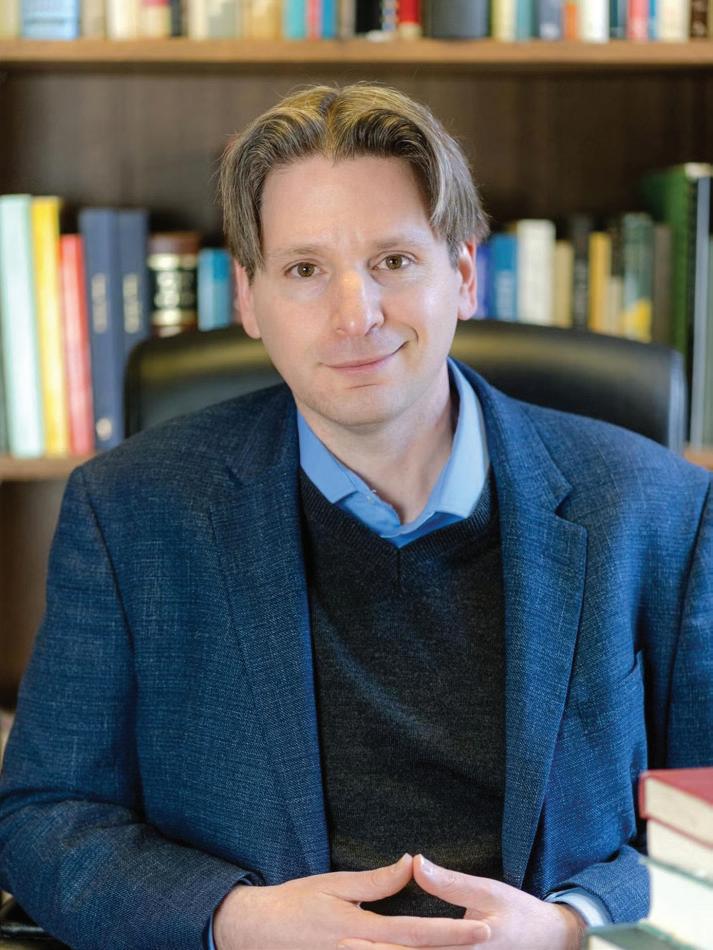
alley Beit Midrash in Scottsdale continued its series of programming meant to provoke with “Great Jewish Heretics,” a virtual lecture on Thursday, Oct. 6, featuring Elias Sacks, associate professor of religious studies and Jewish studies at the University of Colorado Boulder. Sacks led an exploration of the concept of heresy within Judaism, a topic he acknowledged can raise eyebrows.
“Sometimes when I share this topic with people, I get some pushback on the use of the term ‘heretics’ in the context of discussing Judaism,” he said. “A good working definition of a heretic is someone who doesn’t believe the normal way to believe, someone who believes something they ought not to believe. But when I say ‘Jewish heretics,’ people often respond, ‘Come on, Judaism doesn’t have heretics. Judaism gives you freedom to believe what you want.’ There’s some truth to that, but it’s a more complicated situation.”
Sacks, whose scholarship spans Jewish thought, philosophy of religion, JewishChristian relations and religious ethics, is the author of “Moses Mendelssohn’s Living Script: Philosophy, Practice, History, Judaism.” He has also written extensively on figures including Moses Maimonides, Baruch Spinoza, Hermann Cohen and Franz Rosenzweig, among others.
To begin his talk, Sacks invited participants to read aloud a series of Jewish texts, starting with the Shema: “Hear, O Israel, the Lord our God, the Lord is One.”
“Does this line seem comfortable with the idea that there might be two gods?” he asked. “Does it seem comfortable with the idea that God is worthy of hate or contempt?” The audience shook their heads. “Presumably, this line only makes sense if some people out there think otherwise,” he continued. “The Shema rules some beliefs in and others out. It’s saying: this is what you must believe, and those other ideas are wrong. That means Judaism does have boundaries of belief.”
Moving from biblical to rabbinic sources, Sacks turned to a passage in the Mishnah discussing “Olam Haba” (or the world to come), and those denied access to it. The text, he noted, excludes people who reject the resurrection of the dead or deny divine involvement in the world, sometimes labeled epikoros.
“These texts,” Sacks said, “seem very comfortable with the idea that someone can be a heretic. They draw boundaries around belief.”
From there, he posed a series of broader questions: “What does it mean to think about heresy in the history of the Jewish tradition? Who are some of the figures who have been called heretics? And what do we think about them and about heresy itself today?”
To illustrate the complexity of the issue, Sacks devoted much of his lecture to Moses Maimonides, the medieval philosopher and legal scholar whose ideas were so controversial that his works were banned, even burned, by fellow Jews after his death.
“Maimonides is one of the most important Jewish thinkers,” Sacks said. “He was a physician in the Islamic royal court in Cairo and a leader of the Jewish community. He wrote the Mishneh Torah, the first comprehensive code of Jewish law. But his views sparked fierce debate.”
Maimonides sought to reconcile religion with reason and science. According to him, Sacks explained, the first commandment is not to keep Shabbat or follow dietary laws, but “to know enough about astronomy, so that you know that God exists and is eternal and incorporeal.”
“In other words,” Sacks said, “your first obligation as a Jew is to be a religiouslyminded scientist and philosopher.”
Maimonides also insisted that all anthropomorphic descriptions of God, such as
references to God’s “hand” or “anger” must be understood metaphorically. He denied that God experiences emotion, arguing that emotions imply dependence on something outside of God.
“If you say God feels jealousy or happiness,” Sacks explained, “you’re saying something outside of God has power over God. For Maimonides, that can’t be true.”
This radical approach, Sacks noted, undermined much of the Bible’s personal, emotional portrait of God. “If there’s no God watching us, whose anger we can incur or whose rewards we can earn, why behave righteously?” he asked. “If God is utterly impersonal and distant, would such a God ever reveal a Torah to us?”
According to Maimonides, revelation was a human process. The Torah, he believed, was produced by Moses, a prophet with perfect intellect and imagination, capable of expressing truth in powerful, poetic language. “That implies the Torah wasn’t literally spoken by God,” Sacks said. “It was written by Moses, the ultimate human prophet.”
Such ideas, he noted, led many contemporaries to brand Maimonides a heretic. “He seemed to say that to be a good Jew, you must be a philosopher and that much of the Bible is metaphorical. Yet he remains one of Judaism’s most revered thinkers. His theology may be heterodox, but his legal code is foundational.”
Sacks concluded by returning to the broader implications of the topic.
“There’s a question about the limits of belief and what kinds of beliefs Judaism can support,” he said. “Another question is about the possibilities of belief and what new ways of thinking open up when we engage ideas like those of Maimonides. And finally, there’s the question of who decides. Who gets to say what counts as acceptable belief?”
He paused, then added, “I don’t know the answers to these questions. But I’m grateful to all of you for taking the time to think about them today.”
Through his careful reading of texts and historical insight, Sacks demonstrated that “heresy” in Judaism is not a simple matter of belief versus disbelief, but a centurieslong dialogue about what it means to think, question and believe within the Jewish tradition. JN
For more information, visit valleybeitmidrash.org.

SHANNON LEVITT | STAFF WRITER
O
n Sunday, Oct. 12, Beth El Phoenix filled with layered sounds of voice, instrument and insight for “Chamber in the Chapel: A Hoshana Rabbah LecturePerformance.” The evening, co-sponsored by Beth El, Arizona State University Jewish Studies and the Center for Jewish Philanthropy of Greater Phoenix, was both an exploration of Jewish music and a meditation on one of the Jewish calendar’s lesser-known, yet deeply symbolic, days.
Daniel Stein-Kokin (husband of Beth El’s Rabbi Nitzan Stein-Kokin) served as the evening’s guide and narrator, introducing what he called “the latest iteration of Beth El’s very occasional Chamber in the Chapel series.” The event was offered both in person and via livestream, with musical selections provided by the Jewish Music Research Centre at Hebrew University in Jerusalem.
“Apropos of that music, I very much appreciate the readiness from our performers to try this out with me,” Stein-
Kokin said, acknowledging the creative experiment of blending lecture, ritual interpretation and live performance.
The ensemble, which included vocalists (among them Beth El’s cantor) and instrumentalists, wove together ancient melodies and modern reflections to illuminate the evening’s theme: Hoshana Rabbah.
Hoshana Rabbah, “the great supplication,” is the seventh and final day of Sukkot, marking the close of the fall festival cycle. Though it is not named as a holiday in the Torah, it has taken on profound meaning as the last chance for judgment to be sealed before the conclusion of the High Holiday season.
Stein-Kokin structured his lecture around the seven circuits (hakafot) made in the synagogue on Hoshana Rabbah, using each symbolic circle as an opportunity to explore a different facet of the day.
He began by tracing the origins of the rituals, noting that Maimonides and other sages saw them as echoes of the Temple
service in Jerusalem. “The synagogue is understood as a miniature Temple,” he explained. “Many of the practices we carry out today are in memory of those ancient rites.”
But the meaning of the circling ritual may go even deeper. Drawing on the Jerusalem Talmud, Stein-Kokin shared another interpretation: that the seven circuits recall the Israelites’ march around Jericho.
“During every day of the siege of Jericho, the Israelites made a single circuit around the city, but on the seventh and final day, they made seven circuits, which caused the walls to topple,” he said. That idea, popular in medieval times, imbues Hoshana Rabbah with a sense of spiritual victory and release.
Each procession around the synagogue includes reciting hoshanot, prayers for deliverance, safety and prosperity, especially as the rainy season approaches in Israel.
“The world was understood to be judged for water at this time,” Stein-

Kokin explained. “God was determining how much rain would fall in the coming year.”
The willow branch (aravah), one of the four plant species used during Sukkot, takes center stage on Hoshana Rabbah. Because it grows near water, it has long been associated with the flow of life and fertility. “We use this plant connected with water to demand of the earth that it yield forth its fertility,” he said.
That association makes one of Judaism’s strangest customs all the more intriguing: the ritual beating of willow branches on the ground at the service’s conclusion.
“Maybe it’s actually a good thing that so few Jews come to Hoshana Rabbah services, because what do we do with the willow? We take it and we beat it five times on the ground until some of its leaves come off. Why do we do this? To be honest, I don’t know,” Stein-Kokin admitted with a smile.
Theories abound. Some say it represents shaking off sin; others see it as a symbolic plea for rain. Either way, the mystery seems part of the day’s allure.
In his research, Stein-Kokin has found that Hoshana Rabbah accumulated colorful folk customs across Jewish communities in Europe. In some Yiddishspeaking regions, for instance, families ate boiled cabbage because the phrase “Kol Mevasser” (a chant of the day) sounds, in Eastern Ashkenazi pronunciation, like “koyl mit vasser,” Yiddish for “cabbage with water.”
Other superstitions held that one’s shadow in the moonlight could foretell the coming year, or that baking an apple with a Hoshana branch could prevent toothaches. These touches of folk religion, Stein-Kokin noted, show how Hoshana Rabbah has always bridged the worlds of text, ritual and everyday life.
Throughout the event, the audience moved through the layers of meaning with music, prayer and interpretation, mirroring the sevenfold circling that defines the day itself. In that way, the performance was a classroom, where scholarship and song merged to celebrate a holiday that closes the spiritual arc of the High Holidays. Chamber in the Chapel sought to reveal Hoshana Rabbah as more than a footnote to Sukkot. Instead, it’s a day when water, willows and prayers connect Jews to the rhythms of the natural and divine. JN Jewish News is published by the Jewish Community Foundation of Greater Phoenix, a component of the Center for Jewish Philanthropy of Greater Phoenix.
MALA BLOMQUIST | MANAGING EDITOR
O
n Tuesday, Nov. 18, a federal grand jury in Phoenix returned a one-count indictment against Everardo Gregorio, 31, of Casa Grande, for the “Obstruction of the Free Exercise of Religious Beliefs by Fire.”
On March 5, 2025, Gregorio was arrested and charged with setting fire to Congregation Khal Chasidim, a Jewish community center in Casa Grande.
The fire occurred two days earlier and caused “significant damage” before being put out, according to a Casa Grande Police Department press release at the time. The police said they had “significant evidence” linking Gregorio to the crime.
Court documents stated Gregorio was spotted on surveillance video walking around the community center three times throughout the night of the fire. Gregorio claimed that he was not involved in the arson and was asleep, but investigators said he was wearing the same clothes as the ones seen in the police bodycam video.
The portion of the synagogue that was destroyed in the fire included the place where the Jewish community worshipped, as well as a kosher grocery store and restaurant that operated out of the building.
STUDENTS
CONTINUED FROM PAGE 4
forgiving. Instead, reconciliation involves ongoing “processes,” he said — openended attempts to build trust after deep injustices. It is not primarily preventative, but a response to relationships already ruptured.
“If we are walking together on a reconciliatory path,” he explained, “we are doing so cognizant of the fact that a deep injustice has occurred.” Reconciliation’s power lies in the willingness of individuals or communities to imagine a different future, even when full resolution may never be possible.
The final theme was empathy, which Krondorfer described as an “otherdirected orientation.” True empathy, he argued, is not about confirming one’s own beliefs, but about allowing the reality of another person to enter one’s own life, an experience that can be profoundly unsettling.
“When we encounter the other’s reality,” he said, “what I believed to be true about the world may be limited or self-serving.” Empathy requires
“This center has been a spiritual home and gathering place for the Jewish community of Casa Grande. While the building may have been reduced to ashes, our spirit and commitment to our community remain undiminished,” Rubin told Jewish News in an email at the time of the fire. The center has not been rebuilt.
A member of the synagogue told The Arizona Republic in March that “the building was burned down to the core,” but the sacred Torah scrolls were not in the building at the time of the fire.
Since 2016, Gregorio has piled up criminal charges and court appearances for a string of crimes ranging from giving police a false name to defacing property to third-degree burglary.
According to the statement from the U.S. Department of Justice, if convicted, Gregorio could face a maximum penalty of 20 years in prison, a $250,000 fine, or both. Gregorio has also been charged with arson by the Pinal County Attorney’s Office and is currently pending trial in that case.
The Federal Bureau of Investigation, the Bureau of Alcohol, Tobacco, Firearms and Explosives, and the Casa Grande Police Department are handling the investigation. Jewish Assistant U.S.
loosening one’s defensive posture and permitting oneself to be changed by someone else’s experiences.
He concluded with a story about a group of German Protestant ministers and Jewish American rabbis preparing to visit Buchenwald together. Both groups feared being misunderstood by the other, but after walking the camp grounds side



Attorney Ben Goldberg for the District of Arizona is handling the prosecution, in conjunction with the Department of Justice’s Civil Rights Division.
The fire at Congregation Khal Chasidim was not the only arson fire involving a religious institution in Casa Grande recently. Five months before the synagogue fire, St. Anthony of Padua Catholic Church was destroyed in an arson fire, leading to its demolition in July. Casa Grande police said surveillance video shows the man they believe set fire to the church, but he has yet to be identified or captured. The church is being rebuilt on the same site. JN
by side, a Jewish participant remarked, “I realize now that we, as Jews and Germans, are in this history together.”
This, Krondorfer told the students, is the hope for their own journey. “Walk together, talk together,” he said. “Accept that sometimes another person’s reality may confuse you or upset you. But keep walking, together.” JN













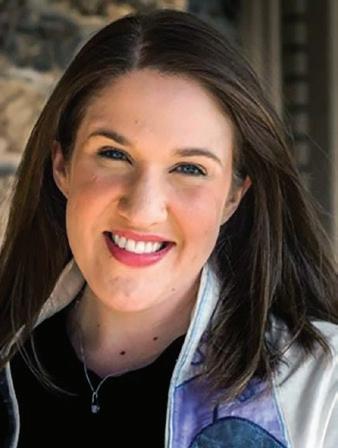
This week’s Torah portion, Vayishlach, deposits us into the dramatic ongoing narrative of Jacob’s life, as he prepares to reunite with his estranged brother Esau. The last time they saw each other they were just boys; Jacob had not only duped Esau out of his birthright, but Jacob had also tricked their father Isaac into giving him the all-important blessing at Isaac’s deathbed intended for the eldest son, Esau. In the time of our ancestors, blessings were believed to be powerful and potent, and Esau therefore vowed to kill Jacob, who fled for his life. Fast forward more than 20 years, as Jacob prepares to return to the land of his parents, aware he will encounter Esau again, but not knowing how that reunion will transpire. Is
Esau still harboring a grudge and bent on vengeance? Or have the years softened his anger, enabling Esau to forgive Jacob for the conflict in their past?
The beginning of our portion tells of Jacob’s preparation for their imminent meeting. When messengers report that Esau himself is coming to greet Jacob, bringing with him 400 men — the size of a military unit — Jacob fears that Esau is preparing for battle. Greatly distressed and afraid, Jacob makes preparations. First, Jacob divides up his groups into two camps, saying, “If Esau comes to the one camp and smites it, the other camp can escape.” Second, he prays to God, “Deliver me … from the hand of my brother Esau; for I fear him, lest he come and smite me, and the mothers along with the children.” Finally, he sends even more gifts ahead to Esau: goats, rams, camels, cows, bulls and donkeys.
The medieval French commentator Rashi draws attention to how Jacob prepared himself: preparing for battle, praying and
sending gifts. We can learn a great deal from these preparations. Jacob did what any leader must do, in fact what any of us must do, when considering what may lie ahead: considering the worst-case scenario; reminding ourselves of what is most important; and trying to create the best possible situation for ourselves and our families or communities.
Interestingly, Jacob spends the least amount of time dividing up his camp, appearing to do so simply as a precaution. Many more verses are devoted to Jacob’s prayer, and even more to the gifts he sends ahead to Esau and how the gifts were presented. The Torah’s economy of words in this circumstance teaches us that while it is worthwhile to prepare for the worst-case scenario and consider with concern the what if’s, we must not become paralyzed in that state. Rather we must align ourselves with our values and our hopes, and our prayers, and based on these we must focus on the gifts we can give, the future we can join together in creating for our commu-
nity. Over time, our short-term decisions add up and become our long-term decisions with long-term consequences.
Long ago, Jacob left behind the reactive, impulsive boy he once was; the years have not only passed but he has learned from his mistakes and matured. Jacob stands in our Torah portion as a leader who remains calm through possible crisis, planning and moving forward with wisdom. May we learn from Jacob’s example, taking proactive steps not only to address concerns, but to hold our values at our center, to create healing and give our gifts to each other and to the world. JN
Rabbi Emily E. Segal is the senior rabbi of Temple Chai in Phoenix and is the immediate past president of the Women’s Rabbinic Network.
MENACHEM Z. ROSENSAFT | JTA
Lost in the kerfuffle over whether the U.S. Coast Guard would no longer consider the swastika as a symbol of hate was a far more troubling development in antisemitism. The new U.S. ambassador to Poland, Thomas Rose, delivered a speech in which he absolves Poland, and by extension, the Polish people, of any responsibility whatsoever for the Holocaust.
This is a distortion that cannot be allowed to go unchallenged or unrefuted.
Addressing a conference on antisemitism in Warsaw organized by the International Association of Jewish Lawyers and Jurists, Rose declared categorically that Poland “has been burdened with the moral stain that was never its own, the persistent belief that Poland shares guilt for the barbaric crimes committed against it,” adding, for good measure, “It’s a grotesque falsehood and the equivalent of a blood libel against the Polish people and Polish nation.”
I do not write as a disinterested observer. My parents were Polish Jews who were incarcerated in the ghettos of their respective hometowns, Bedzin and Sosnowiec, and
then deported to Auschwitz, also in Poland, where virtually their entire families were murdered. In her memoir, my mother recalled that there were Poles and ethnic Germans (Volksdeutsche) who behaved altruistically and decently. “Many Poles, however,” she added pointedly, “were very happy about what was happening to the Jews.”
To be sure, as Rose correctly pointed out, “thousands of Poles died saving Jews.” He neglected to mention, however, that thousands of other Poles callously betrayed their Jewish compatriots and neighbors to the Germans or murdered them outright.
It is true that the machinery for the implementation of the Nazi “Final Solution of the Jewish Question” was established by Germans – not Poles. It is also true that more than 7,000 non-Jewish Poles have been recognized by Yad Vashem in Israel as Righteous Among the Nations.
Still, as the late historian Yehuda Bauer once noted caustically, “Even if we assume that the real figure [of righteous Poles] is 200,000, out of 21 million Poles, that’s only 1%. What about the other 99%?”
At the same time, let’s not lose sight of the many thousands of Poles who voluntarily assisted the Germans in carrying out the annihilation of Polish Jewry. And there is nothing “historically false and morally scandalous,” to use Rose’s own words, in recalling that there were in fact Poles who killed tens of thousands of Jews, perhaps as many as hundreds of thousands, during the years of the Holocaust.
Rose also seems to ignore — or may be unaware of — the thousands of members of the Polish police, known as the “Blue Police” because of the color of their uniforms, who assisted the Germans in rounding up Jews, often rousted Jews out of their hiding places, and stole Jewish property as perks of their job.
Then there were the szmalcowniks, the extortionists and blackmailers who preyed on Jews hiding outside ghetto walls.
A further highlight in the litany of things Rose chose not to mention in his speech was the horrific 1941 slaughter of hundreds of Jews by Poles in the eastern Polish town of Jedwabne. And then there was the post-
war 1946 pogrom in the city of Kielce in which a Polish mob killed 46 Jews who had survived the Holocaust.
I am not suggesting that Poland or the Polish people should be stigmatized by the Poles who took part in the persecution and murder of Jews during, and even after, the Holocaust. But neither should the nefarious roles of these Poles be glossed over or overlooked altogether.
Ambassador Rose was of course 100% on target when he said that the thousands of Polish Righteous Among the Nations “proved that even in their country’s bleakest night, multitudes of Poles chose conscience over fear and humanity over terror.” What he should not have done, however, and what neither he nor anyone else should do in the future, is distort Holocaust history and Holocaust memory by turning a blind eye to the dark legacy of those thousands of Poles who did the exact opposite. JN
The views and opinions expressed in this article are those of the author and do not necessarily reflect the views of JTA or its parent company, 70 Faces Media.

Maravilla Scottsdale, a retirement resort community nestled between the Champions Golf Course at TPC Scottsdale and the world-renowned Fairmont Scottsdale Princess, is expanding to offer even more high-end services and amenities.
SRG Senior Living announced the final phase of Maravilla Scottsdale is currently under construction with 47 new casitas and 115 new lodge homes, available for move-in now. Each home is meticulously designed to cater to residents who seek elegance and comfort in a vibrant, active community.
Maravilla Scottsdale is more than just a place to live — it’s a lifestyle. The community features an impressive array of amenities that make every day feel like a getaway. Residents enjoy the grand clubhouse, a central hub of activity and relaxation, complete with an indoor pool and resort-style locker rooms. Maravilla Scottsdale offers exceptional dining at the elegant Ironwood Grill and the casual Café del Sol. A new restaurant called Fore with expansive views of the TPC golf course will debut Summer 2026. Residents of Maravilla Scottsdale indulge in pampering at the full-service Sage & Citrus Spa or stay active with a variety of fitness classes and putting greens coming soon.
In addition to its remarkable offerings, Maravilla Scottsdale fosters a warm and engaging atmosphere where neighbors become friends through thoughtfully curated social events, lifelong learning opportunities, and cultural experiences tailored to residents’ interests. Whether discovering new passions in creative arts studios, participating in volunteer initiatives, or simply enjoying tranquil walks amid beautifully landscaped grounds, residents find countless ways to enrich their days and embrace a vibrant, fulfilling lifestyle at the heart of this extraordinary community.
Step into the world of Maravilla Scottsdale — where luxury, comfort and community come together. Private Casita Model Tours are available, and residents can move in and start living the Maravilla lifestyle. To learn more, visit MoreMaravillaScottsdale.com or call 480-269-1952.

SHANNON LEVITT | STAFF WRITER
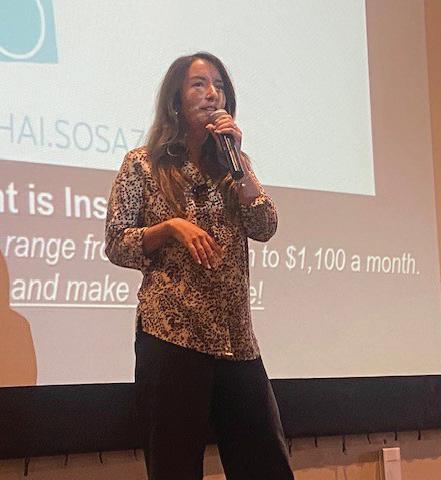
The Ina Levine Jewish Community Campus’ social hall buzzed with conversation on Wednesday, Oct. 5, as Valley seniors gathered for Smile On Seniors (SOS) monthly lunch-and-learn. Sapir Tiram, shlicha for the Center for Jewish Philanthropy of Greater Phoenix and Pardes Jewish Day School, came to share her experience of growing up in Israel. It was a chance to learn a little about the country through a person, rather than headlines or social media feeds.
Before inviting her to speak, SOS Director Rabbi Levi Levertov reminded attendees that while questions about geopolitics were welcome, the luncheon offered something deeper. “Sometimes it’s just nice to learn about the individuals and learn about the culture and about the people,” he said. “You can learn so much more about Israel than just the politics
that we see in the news every single day.” That sentiment set the tone for the afternoon as Tiram began to share her story, one rooted in community and a lifelong commitment to helping others.
Born in a small city outside Haifa, Tiram recalled a childhood that felt absolutely typical until age six, when her parents made a life-changing decision.
“One day, my dad said, ‘Sapir, you know how much we love the community and how important it is for us to give back. So, your mom and I want to live in a youth village, and you will be sharing your house with 13 other kids,’” Tiram recounted.
She laughed at the memory, still able to picture her younger self staring wideeyed at the gated compound, something she’d never seen before, before noticing






LUNCH
CONTINUED FROM PAGE B2
the cluster of children playing on the playground. That simple, familiar scene eased her fears.
The youth village, she explained, was similar to an orphanage. Many of the children living there had come from difficult family circumstances. Suddenly, the little house her family moved into had two doors: one that opened into her private space, and another that opened into a communal life with 13 other children who would become, in her words, “my brothers and sisters in every possible way.”
“It was a life-changing experience because it made an impact on how I saw how important both community and education are,” Tiram said. “Hearing about how important those things are is one thing, but to actually see those kids on a daily basis was another.” Two of them, she noted, later attended her wedding.
Her family lived in the youth village for 12 years. The work was demanding, both physically and emotionally, for her parents. But the experience shaped her worldview, centering her life around service and connection.
After high school, Tiram served two years in the Israeli Navy in Haifa. Once discharged, she traveled through North and

“SOMETIMES IT’S JUST NICE TO LEARN ABOUT THE INDIVIDUALS AND LEARN ABOUT THE CULTURE AND ABOUT THE PEOPLE. YOU CAN LEARN SO MUCH MORE ABOUT ISRAEL THAN JUST THE POLITICS THAT WE SEE IN THE NEWS EVERY SINGLE DAY.”
RABBI LEVI LEVERTOV
South America before returning to Israel with a renewed sense of purpose. She studied to become an English teacher, joking with the SOS crowd about the challenges of mastering English grammar. “The kids certainly don’t care,” she laughed.
She spent three years teaching junior high in what she called “the toughest age” in “the toughest area.” Her initiation into the job was abrupt. “Two weeks after I started my role, one of the kids decided that the lesson was not very interesting for him, so he just decided to flip a table on me,” she said. As someone “very short,” she added with a grin, it made quite an impression. “I’m pretty sure it made me stronger.”
Then everything changed again. On Oct. 7, 2023, Hamas launched its attack on Israel. Her husband, a military reservist, was called up. “I had to figure out how to teach a class when my head wasn’t
really in the classroom,” she said quietly. “It was the roughest time in my life.”
Determined to understand what the world was thinking about Israel at such a turbulent moment, she applied to the Jewish Agency for Israel, which places Israeli educators abroad. After passing her screening, she was offered a post in New Jersey, but admitted she panicked at the idea of winter. “We’re not built for this weather. I had never seen snow in my life,” she said, laughing.
Six months later, a new placement opened in Arizona. She knew only that the Valley was hot and full of cacti. But when she arrived, she discovered something far more meaningful. “The warmth of the people is like the warmth of the weather,” she told the audience. “I feel so lucky to be here.”
Several seniors had come specifically to hear from her.
It was the first SOS lunch for Ilene Galler, who told organizers to seat her “with yentas.” She wanted, she said, “to hear an Israeli perspective. I want to know the feelings of the people. The food’s good too!”
Regular attendee Bari Myden, who has family in Tel Aviv, was interested to hear Tiram describe life in Israel. Marcia Simon, a loyal participant at every SOS event, said she planned to ask about what might happen to Gaza after the war. Others, like longtime member Baila Spevak and enthusiastic supporter Jan Bell, came both because “SOS is very welcoming” and because they were eager to learn from Tiram.
Levertov, who always seeks to find engaging speakers for the seniors, said events like this are vital. “Israel is something the people want to talk about,” he said. “They want to know the people.” JN
For more information, visit sosaz.org.
Jewish News is published by the Jewish Community Foundation of Greater Phoenix, a component of the Center for Jewish Philanthropy of Greater Phoenix.















You’re invited to an afternoon of elegant holiday cheer as residents open their beautiful apartments for a special seasonal showcase. Tour uniquely decorated resident apartments while experiencing the vibrant lifestyle at Clarendale Arcadia.
Celebrate the season and experience:

• Live music by The Mistletones
• Festive drinks and hors d'oeuvres

• The inspiring spirit of a community that celebrates bold living –every day, in every way














BOB ROTH | COLUMNIST
W
e grew up hearing “the kids are alright,” a reassuring message that everything is fine, even when life is complicated, a line many of us remember from The Who’s 1966 hit of the same name. But today, many of us find ourselves asking a different question: “Is Mom alright?”
Just like the kids in that lyric, many older adults tell us they’re fine even when they’re struggling. They don’t want to worry us, and they don’t want to be a burden. But behind “I’m alright” can be loneliness, safety concerns, medication confusion, falls or simply the challenges of living alone as we age.
The refrain has changed, and now it’s our responsibility to look deeper than the words and make sure our aging loved ones truly are alright.
The holidays are one of the few times families gather under the same roof, slow down and really see one another. And for those of us with aging loved ones, this season gives us something we simply can’t get from phone calls or quick check-ins: a clearer sense of how they’re actually doing day to day.
In my work, I’ve seen older adults appear perfectly capable while quietly struggling with things they would never admit aloud. They may still be working, still driving, still sounding sharp, yet behind closed doors, life may be slipping in ways no one can detect from a distance. Sometimes it’s unpaid bills stacking up on the kitchen table or multiple credit cards opened during periods of confusion or stress. Sometimes it’s the growing vulnerability to scammers who prey on isolation and declining cognition. And often, the condition of the home tells you everything: a leak ignored, laundry piling up, lights burned out or simple repairs left untouched for months or even years. One of the biggest warning signs is when someone no longer wants visitors inside. They’ll meet you for lunch, they’ll talk on the phone, but they hesitate when you ask to stop by. That avoidance isn’t about privacy, it’s about fear, shame or not wanting you to see what has changed.
I’ll share this: my own family is facing this right now with someone we love deeply. From a distance, everything sounded fine. But being in the home, really taking things in, it was obvious the situation had been slipping for far longer than anyone understood. Even after decades in this field, it reminded me that nothing replaces showing up in person. That’s why the holiday season matters.
"IN MY WORK, I’VE SEEN OLDER ADULTS APPEAR PERFECTLY CAPABLE WHILE QUIETLY STRUGGLING WITH THINGS THEY WOULD NEVER ADMIT ALOUD."
When you’re together in person, even for a short visit, you start to notice the subtle signs, their energy, their pace, the way they follow a conversation or how they respond when you ask simple questions. You might see hesitation, confusion or a level of stress that doesn’t come through over the phone. And sometimes the most revealing clues show up in the way they talk — avoiding direct answers, changing the subject quickly, repeating themselves or becoming defensive in ways that aren’t typical for them.
As you spend time with family this season, it helps to think through a simple mental checklist:
Are they steady on their feet, or do you sense they’ve had near-falls they aren’t mentioning?
Are meals, bathing and dressing still happening on a regular routine, or does it feel like those habits have slipped?
Are they keeping up with the basics of daily life, or does it seem like everyday tasks have become harder for them?
Are bills paid and finances organized, or are you seeing confusion or surprising choices?
Do they understand their medications, what they’re taking and when?
And perhaps, most importantly, do they have regular social support, or has their world quietly shrunk?
These aren’t tests. They’re signals. They’re the small truths that help families understand what’s really going on.
If you notice concerns, start gently. Ask how they’ve been feeling. Listen without judgment. Give them room to talk openly. But trust what you see. If they avoid visitors, redirect simple questions or insist everything is fine when it clearly isn’t, that’s not the moment to step back, that’s when they need you most.
So, during this holiday season, take a moment to really observe how they’re moving, how they’re engaging, how they’re responding when you ask simple questions. And remember, I know how hard it can be to step into your parents’ lives. None of us wants to overstep or make them feel incapable. We want to
respect their independence, their pride, the life they’ve built. But there comes a point when love means trusting and also verifying.
Ask yourself the question that matters: Is mom alright? Is dad truly okay?
And if the answer feels uncertain, act. Show up. Step inside, if they allow it. Pay attention to what you can see and what you can sense. Trust your eyes, and trust your instincts, they’re often telling you what your parents won’t say out loud. In a season centered on being there for






the people we love, this may be the most meaningful gift you give, noticing the signs early and stepping in before a quiet struggle becomes a crisis. JN
the
Solutions.


















The greatest joy you experience could be giving yourself the gift of better hearing. Contact us to find out how. Phoenix • 4545 E Shea Blvd, Ste 174 602.254.6041
SHANNON LEVITT | STAFF WRITER
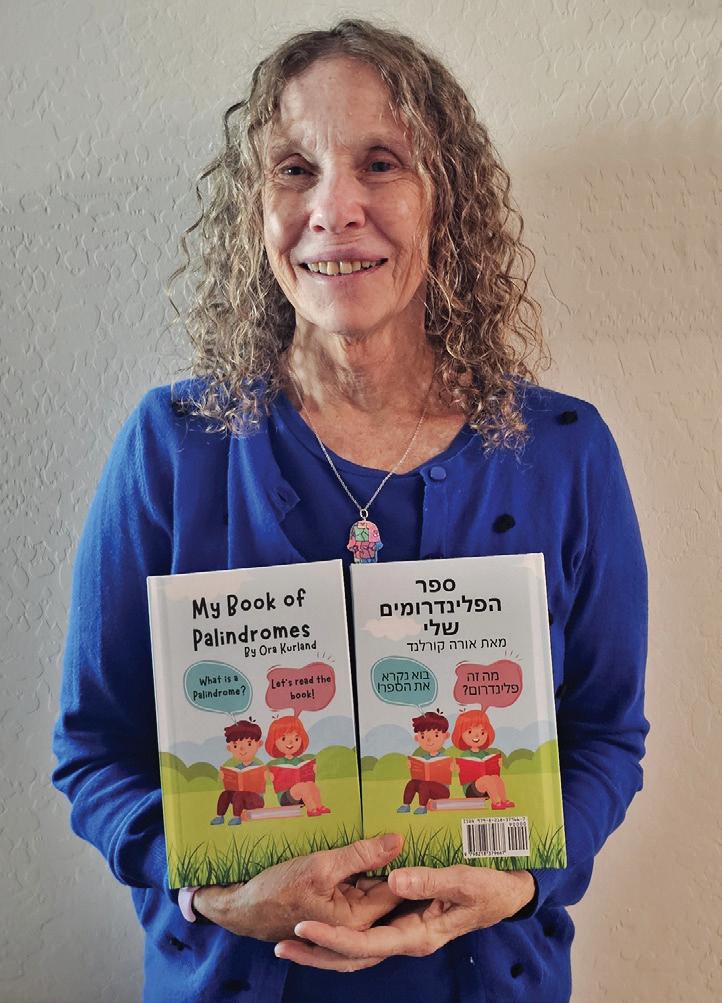
For retired Jewish educator Ora Kurland, teaching Hebrew has always been about sparking discovery. Whether she was creating curricula, teaching or tutoring, her mission has been to help Hebrew learners see the language as something they can delight in.
Last year, Kurland brought that ethos to a wider audience with the release of “My Book of Palindromes,” a bilingual children’s book that teaches both Hebrew and English through the “playful concept” of palindromes.
The book is, fittingly, a palindrome itself. Written in both English and Hebrew, it’s actually two books in one, each with its own cover and pages, flipped to meet in the middle. From the moment a child picks it up, they’re learning about directionality: Hebrew is read from right to left, while English is read from left to right.
Kurland, 69, began crafting her own teaching materials long before she authored a book. After studying to become a teacher in New York, she entered Jewish
education and never looked back.
“I did Jewish family education, tutoring, administration, preschool directing, a little bit of everything,” she said. “I was very involved with teaching basic Hebrew reading-readiness skills to children for many years.”
At the day school where she taught, she built an entire Hebrew learning center. She wanted young learners to explore the language physically and creatively. Students built Hebrew letters out of tactile materials, learning the shapes and directional strokes while also picking up basic math concepts. She developed flashcards, games and hands-on activities that made learning Hebrew multisensory and fun.
Kurland retired from classroom teaching in 2011, shortly after moving to the Valley, but she never stepped far from education. Through tutoring and community work, she continued supporting Hebrew learners and experimenting with teaching tools.
Her book grew out of another interest:
ambigrams, designs or words that retain meaning when viewed differently, often rotated 180 degrees.
It’s a visual type of palindrome that reads the same way forward and backward. The concept led her to think more broadly about palindromes and how useful they could be for early literacy.
“I thought the idea of palindromes was really interesting. So I decided to do a book about Hebrew and English palindromes because I think it’s a good reading-readiness tool,” Kurland said. “It’s a good language concept, and it’s good for young children.”
Readers seem to agree. One Amazon reviewer wrote, “My grandson loves this great bilingual book! A great way to practice reading English and Hebrew. And palindromes are a great way to help young readers focus on letters.” Kurland has also received heartwarming feedback directly.
“A friend sent me a little video of her reading it with her granddaughter,” she said. “It’s really cute and clever. The kids love it, because it just feels so great being able to read it, learn the words on their own, recognize things.”
“My Book of Palindromes” is a highlight of her lifelong commitment to Hebrew education, but her connection to the language runs deep. Her father was fluent, and she began learning Hebrew early. She studied it in college and spent time living in Israel.
“Hebrew is a very important part of my life,” she said. “I love listening to Hebrew music, reading whatever I can and listening to lectures.”


Today, Kurland is active in several Jewish communities across the Valley. She’s a member of the New Shul, participates at Congregation Kehillah and leads the Cave Creek Social Group, which she founded ten years ago. This Chanukah, the group will lead a menorah lighting at a Marriott in Phoenix. She also sells her book locally at Chanukah fairs and will be a vendor at the Bureau of Jewish Education’s early childhood educators’ conference in February. Still, what remains most meaningful to her is the spark of recognition in a child’s eyes. She remembers teaching one Hebrew letter each week to her kindergarteners and watching their excitement grow as they pieced together sounds and words.
“It was just a thrill for me, and for them,” Kurland said. JN
“My Book of Palindromes” is available on Amazon.
DR. RUCHA SHAH | SPECIAL TO THE JEWISH NEWS
In some parts of the world, burping after a meal is practically a compliment to the chef. In others, it’s the sort of thing that earns you a raised eyebrow across the dinner table. Wherever you stand on the etiquette scale, one thing’s for sure: burping is completely normal. It’s a sign that your body is doing what it’s designed to do by releasing excess gas from your stomach.
When we eat or drink, we swallow air along with our food. That air has to go somewhere, and most of the time, it heads back up in the form of a burp. A few gentle burps after eating are nothing to worry about. It becomes more concerning when the burping happens long after a meal, is frequent or brings up acid and discomfort.
As a gastroenterologist, I’ve seen how something as simple as a burp can tell us a lot about what’s going on inside. Sometimes it’s just a matter of everyday habits. Sparkling water and soda are common culprits. Those bubbles don’t just vanish when you swallow them. Add frequent straw use or endless gum
chewing and you’re practically running a small air pump in your digestive tract. These behaviors cause you to swallow extra air, a process called aerophagia. More air in means more burps out.
Food choices can also make a big difference. Some foods increase acid production or gas buildup, which can lead to more burping. Dairy products, citrus fruits, spicy dishes, tomatoes, chocolate, fried or fatty foods and even wine can all contribute. I often tell my patients that our digestive systems are like chemistry sets. Certain ingredients just bubble over more than others.
When burping comes with other symptoms like heartburn, chest discomfort or pain, it can signal something more serious. Gastroesophageal reflux disease, or GERD, is one of the most common reasons people see me. GERD happens when stomach acid flows back into the esophagus, the tube that carries food to the stomach. Some people feel it as burning, others experience bloating or persistent burping.
Gastritis, which is inflammation of the
stomach lining, can develop from too much acid or from conditions like GERD. Another issue is a hiatal hernia, which occurs when part of the stomach pushes up through the diaphragm and forms a small pouch. Gas and acid can get trapped there, creating discomfort that feels like endless pressure.
So, when should you be concerned?
A simple rule is this: if you’re having symptoms more often than you’re not, it’s worth getting checked out. If you need antacids throughout the day, or if you notice pain, vomiting, weight loss, black stool or bleeding, those are signs that should prompt a medical visit. Your stomach may be trying to send you an important message.
Luckily, there’s a lot you can do to keep burping under control. Start with small changes. Try to eat at least three hours before going to bed and avoid lying flat after meals. Elevate the head of your bed or use an extra pillow. A short walk after eating can help move gas along and improve digestion. Cutting back on carbonated drinks, gum and straw use can
also make a surprising difference. Taking an occasional antacid is fine. They can offer quick relief for mild acidrelated burping. But if you find yourself needing them multiple times a day or several times a week, it’s time to talk to your doctor. Relying on acid reducers long-term can mask an underlying issue. Sometimes we need to test for infections like H. pylori, review medications that irritate the stomach or even look inside the digestive tract with imaging or endoscopy to find the cause.
Burping may not be the most glamorous topic, but it’s one of those small, universal experiences that connects us all. It’s your body’s polite way of saying, “Excuse me, I’ve had enough.” But when that message turns into a full conversation, it’s time to pay attention.
Our digestive system is a lot like a good dinner guest. It thrives on balance, timing and moderation. Treat it kindly, and it will usually return the favor. JN
Rucha Shah, MD, is a board-certified gastroenterologist with HonorHealth.








Life doesn’t slow down when you reach retirement, and that’s why we strive to meet you where you’re at. We’ve created a holistic livingexperience anchored by our state-of-the-art Vida Center, ensuring seamless, personalized care and a full range of health andwellnessservices for every stage of life. Picture yourself exploring newhobbies, embarking on incredible adventures, andstarting every morning with a renewed sense of purpose. Embrace the possibilities of each newday at Royal Oaks




MALA BLOMQUIST | MANAGING EDITOR
Many of the books by local children’s author Judy Laufer (pen name J.E. Laufer) features a character facing a difficult problem and finding a positive solution.
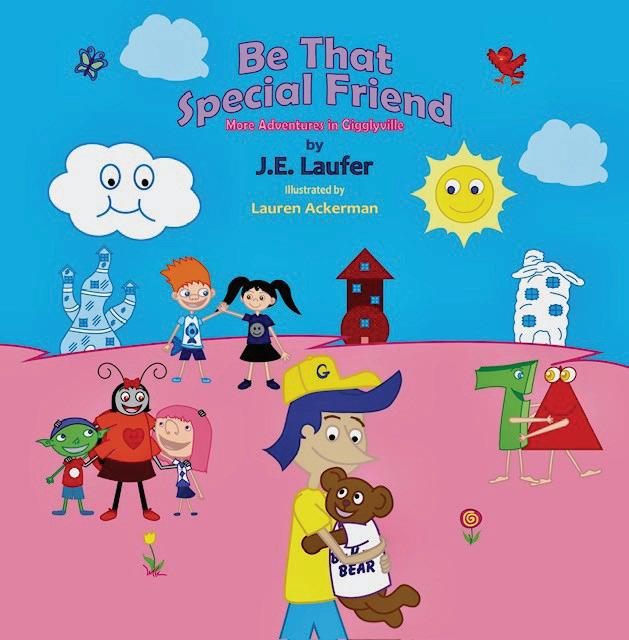
Earlier this year, she published “Be That Special Friend,” which followed the same formula. In the aftermath of Oct. 7, 2023, parents who already were familiar with her writing reached out, asking if she could create something to help young children navigate the confusion, fear and sadness surrounding the events in Israel.
She thought about what was helping her cope with the emotionally overwhelming situation, and realized it was having people to talk to.
“The idea is that you need to find someone, a trusted friend or family member, who you can talk about your feelings with and have them validated,” she said. “Then the other part of the story is sometimes you see somebody else who’s having an issue. You might have a friend
who you see is struggling, and you could be that special friend.”
Her books are done in rhyme, which Laufer feels gives heavier topics a lighter, more approachable feel. The setting for this story is Gigglyville, the imaginary town where many of her stories take place, and darkness has descended upon it.
“It’s vague in terms of something terrible is happening, but when you read it, you’ll see in the context of Oct. 7 how it all fits,” Laufer said.
Laufer is a member of Congregation Or Tzion in Scottsdale and was a kindergarten teacher before she wrote her first book, “Where Did Papa Go?” in 1991, which examined death from a young child’s perspective.
She has received calls from across the country from people who have read “Where Did Papa Go?” and from rabbis who use it in their grief counseling. She had an unusual recipient after the deadly shooting at Sandy Hook Elementary


School in Newtown, Connecticut — the Federal Bureau of Investigation.
“We sent that one and ‘Last Night I Had a Laughmare’ because they wanted something happy for the families, so we sent those two and it went through the FBI,” she said. “The FBI was actually doing counseling sessions, and they took the books, which was really great.”
She said she’s discovered that in writing children’s books, she is also reaching adults who are reading them and uncovering some challenges they haven’t addressed in themselves. She believes that if you read something in a children’s story that involves something uncomfortable to you, it may help you think about it in terms of yourself and the trauma you haven’t yet dealt with.
Another recent book by Laufer, “I Respectfully Disagree,” explores how divided the world has become. She listened to children who said, “We can’t go to so-and-so’s house because they’re red and we’re blue.”
“How confusing is that?” said Laufer. “The young kids don’t understand the political part. They think because they’re not on the same team, they can’t get together and I was like, ‘Are you kidding me?’”
She wanted to share the concept of being able to “agree to disagree” and still be able to remain friends.
“We may not be able to change the behavior of the older children because they’ve already been indoctrinated with this, but the younger ones haven’t, so we have a chance. We have the opportunity,” she said.
Laufer works with the Mesa-based nonprofit Kids Need to Read, which provides books to underfunded schools, libraries and organizations across the nation. They send Laufer’s books to places that usually wouldn’t have access to them because they could not afford to purchase sets of books.
“They now have books of mine all over the country,” she said. “They love the books because they address certain topics that other books don’t, and the parents seem to really want books like these.”
She refers to her books as “emotional literacy.” To help deal with some of the “tough abstract topics,” she has created a stuffed bear, “Be Kind Bear,” who is a main character in Gigglyville and the “special friend” in her latest book.
Parents can also purchase a stuffed bear from her website so children can have a Be Kind Bear to hold when they read stories
featuring the character.
She shared that all her stories provide a platform for discussion, because when you talk about the problems the character in the story is having, it can provide a connection to what the child may be thinking or feeling.
“It’s always much easier for us to solve someone else’s problem and it provides a little bit of distance from whatever problem you’re having and also the ability to look at it outside of yourself,” she said. “And then you start to reflect, ‘How are the difficult things that are happening to them similar to what I’m going through and how did they get through it?’”
She’s hopeful that’s the discussion that happens after reading “Be That Special Friend,” whether it’s with parents or in the classroom. The takeaway is that, in the end, you have the strength inside you to get through challenging situations. She was inspired by the strength that both the hostages and their families demonstrated over the last two years.
“You can climb any sort of difficult mountain if you have help, if you have a community behind you and if your friends are behind you,” she said. “And on the most difficult days, you will discover your inner strength.” JN
For more information, visit littleeggpublishing. com.
LEILA SALES | HEY ALMA
My 77-year-old mother does not like stuff. She abhors clutter. She reuses everything. If you were to buy her a bottle of nice olive oil as a hostess gift, it would sit unopened in her pantry for the next 20 to 40 years. When I ask what she wants for Chanukah, the answer is always the same: nothing.
But last December, my mother came to me with a specific request: She wanted eight lists of cultural recommendations, one per night. It turned out to be the best present I’ve ever given her.
The eight categories I selected were books, movies, TV shows, podcasts, musical albums, recipes, websites and longform articles. I listed eight items per category, and I annotated them, explaining why I thought my mom might like each one.
This project required a deep dive into my own consumption habits — for example, I read plenty of longform articles, but I don’t have a system for tracking them. I vaguely recalled reading a piece about bagel vendors once taking on the mafia, but who wrote it, and for what publication? (The answer turned out to be Jason Turbow, for New York Magazine.)
Barbara Shaw Gifts
More importantly, these eight nights of lists made me think carefully about my mother. What does she like? What media had she already consumed? How did she feel about it?
I didn’t want to recommend “The Marvelous Mrs. Maisel” to her because I knew she’d already watched it. What else was like that? Maybe “Crazy Ex-Girlfriend,”
I watched it, but I could imagine my mom liking it more. Maybe “Hacks,” which is also about female comedians? I hadn’t seen that one yet, but trusted sources (aka my friend Sarah who watches a lot of TV) had vouched for it. I ended up including all three of those on the TV list. “Only Murders” was the big winner for my mom. “Broad City,” on the other hand, did not make the cut — I’d absolutely adored it, but ultimately I decided not to include it on my mom’s TV list; I thought the humor might be “too millennial” for her.
I realized in doing this project that I could make eight lists for anyone in my life, and they would all be different. The point of gift-giving isn’t just to give your loved ones stuff that you like. If it were, Chanukah would be easy — I’d just buy everyone eight nights of single-origin chocolates and be done with it. The point is to give people stuff you like that you have reason to believe they will also like. At their very best, gifts feel personal: I am the only person who would have gotten this for you, and you are the only person I would have gotten it for.
That’s a high standard to maintain for every gift. If you need to find something for all your colleagues or cousins, it’s reasonable to get them some nice soaps on the theory that most people, sooner or later, will wash their hands.
Barbara Shaw Gifts offers curated products made locally in Jerusalem. From holidayfocused creations for Chanukah and Rosh Hashanah, to bar and bat mitzvah gifts and kitchen gear, like the Seven Species of Israel Chanan Mazal Placements, $19 (set of two), Barbara Shaw Gifts has handcrafted presents available for every person on your list. For more information, visit
But for those few special people where you want to get them something truly personal, I maintain that curated lists are one of the best options. A personalized list of recommendations says: I pay atten-

For a truly special and personal present, create a list of specific recommendations.
"LAST DECEMBER, MY MOTHER CAME TO ME WITH A SPECIFIC REQUEST: SHE WANTED EIGHT LISTS OF CULTURAL RECOMMENDATIONS, ONE PER NIGHT. IT TURNED
OUT TO BE THE BEST PRESENT I’VE EVER GIVEN HER."
and me, the segment of Venn diagram where our tastes align.
At a time when more and more people want intangible media or experiences, giving a list can be far better than giving a physical item. If you try this out for your own loved ones, feel free to use the eight categories that I gave to my mom, or create others more suited to the recipient: mobile games to play, cities to visit, local restaurants to eat at … the list for potential lists is endless.
items (figuring out how to listen to podcasts has proved elusive), but she always tells me when she engages with something I recommended.
She has shared her eight lists with her friends, and she tells me that they now all think she’s an extremely cool, finger-onthe-pulse sort of person. “They’ve never even heard of Haim,” my mother tells me with deep satisfaction, referring to one of the recommendations on the music list.
My mother has spent the past twelve months happily working her way through her lists. She still has plenty of untouched




As Chanukah approaches once again, I asked my mom what she wants this year. “I don’t want anything,” she said, like always. “Just add to my lists.” JN









HANNAH PAPERNO | THE NOSHER

Every year around Chanukah I am reminded of my time spent in Sunday school and the things we would do to prepare for the holiday. Learning songs, playing dreidel, eating piles of latkes and making arts and crafts were among some of my favorites, but there’s one thing that sticks out after all these years: making edible dreidels. When I was a kid, we made them with pretzel sticks, marshmallows, peanut butter and Hershey’s Kisses but now that I’m older and can buy my own groceries, I opt for different means of gluing the pieces together and adding my own twist to this classic activity. Thankfully, this quick and crafty recipe can be easily tailored to suit the needs of anyone’s palate or dietary restrictions. The saltiness of the pretzel is a welcome balance to the sweetness of the marshmallow, edible “glue” and Hershey’s Kisses. Depending on what type of chocolate and glue you opt to use, you can make
this simple treat with a wonderful depth of flavor. My personal preference is to use dark chocolate Hershey’s Kisses so that the bitterness adds to the sweet and salty elements, but they can be made to any individual taste.
Whether it’s a family gathering, a Sunday school class or even a temple service, taking a few minutes to make these cute, simple treats and share them with friends is something anyone can appreciate. Though this is definitely a project more tailored toward children, even as an adult, I’ve enjoyed making these — and eating them too. While they’re not exactly “playable” like a regular dreidel, they’re equally as fun for people of all ages. Using writing gel, though not necessary, gives you the ability to decorate your dreidels to make them artistic and unique before digging into this fun treat.
Total Time: 5 minutes










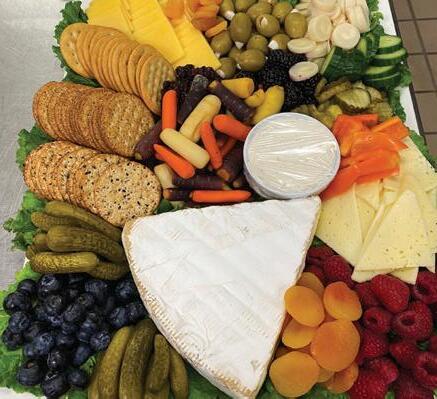


Yield: 12 dreidels
Ingredients:
• 12 pretzel sticks
• 12 regular-size marshmallows
• 4 tablespoons “glue” (nut butter, marshmallow fluff or frosting)
• 12 Hershey’s Kisses
• Edible writing gel (optional)
Instructions:
1. Placing the marshmallow in the palm of your hand so as not to squish the sides, press one end of the pretzel stick into the center of one end of the marshmallow, and push it three quarters of the way through.
2. Using your “glue,” put a peasized amount on the flat end of a Hershey’s Kiss before placing it in the center of the other end of the marshmallow.
3. Decorate with writing gel, if desired, and enjoy! JN
GAIL BAER | SPECIAL TO THE JEWISH NEWS
As we enter the giving season, many families are beginning to think about their year-end charitable donations. This year, however, planning ahead is especially important. Starting Jan. 1, 2026, new federal tax laws will change the way charitable deductions are calculated. This could potentially reduce the tax advantages that many donors currently enjoy.
While generosity is rarely driven by tax policy alone, understanding these changes can help ensure that your giving remains both impactful and efficient. Acting before the end of 2025 may allow you to take full advantage of today’s more favorable rules, while positioning yourself for continued philanthropy in the years ahead.
WHAT’S CHANGING

The 2026 changes affect both itemizers and non-itemizers, as well as high-income earners. Here are the three most significant updates:
1. Charitable deductions for non-itemizers
Starting in 2026, taxpayers who take the standard deduction will be able to claim a modest charitable deduction: up to $1,000 for single filers or $2,000 for married couples filing jointly. This new benefit applies only to cash gifts made directly to qualified charitable organizations, not to donor-advised funds or supporting organizations.
While this addition may sound like good news, the relatively low limits mean that non-itemizers will see only a small tax benefit compared to the flexibility available today through strategic giving and itemization.
2. A new “floor” for itemized charitable deductions
Beginning in 2026, individuals who itemize deductions can only claim charitable contributions that exceed 0.5% of their adjusted gross income (AGI). For example, if your AGI is $200,000, only the portion of your charitable gifts above $1,000 would qualify for a deduction.
This change effectively reduces the total amount of giving that can be written off each year, and it may discourage smaller or moderate donations from qualifying for tax benefits.
3. A cap on deductions for the highest earners
In 2026, the tax benefit for charitable deductions will be capped at 35%, even for those in the 37% bracket. To illustrate: under today’s system, a $1,000 donation by a taxpayer in the top bracket could generate a $370 tax savings. Under the new rules, that same gift would yield only $350 in savings.
This may seem like a small difference, but for philanthropically active families or foundations, it can add up quickly, especially when combined with the other changes.
WHAT YOU CAN DO NOW
The good news is that there is still time to act before these changes take effect. Here are several strategies to consider before the end of 2025: Accelerate future charitable gifts.
If you regularly contribute to charitable organizations, consider “bunching” multiple years of donations into 2025. By consolidating future gifts into one tax year, you may be able to take advantage of today’s higher deduction limits and greater tax efficiency.
ESTABLISH OR CONTRIBUTE TO A DONOR-ADVISED FUND (DAF).
A donor-advised fund allows you to make a charitable contribution in 2025, receive the full tax deduction this year, and recommend grants to your favorite causes over time. This is an especially effective way to pre-fund future giving while locking in current tax benefits before the new rules apply.
SEE GIVING, PAGE 20
Uniting the Valley for 100 years.
Since 1925, we’ve united the Valley’s giving spirit to tackle our community’s biggest challenges. Give today to help fight homelessness, improve education and healthcare, and help people find jobs.

At Good Shepherd Fund, our mission is to provide compassionate stewardship and lifelong support for individuals who need a trusted hand to guide them. For more than five decades, we’ve been dedicated to serving those who may not be able to manage their own personal or financial affairs, ensuring that everyone we help can live with dignity, stability, and peace of mind.
We serve as trustee, conservator, and advocate, helping individuals with disabilities, special needs, or limited resources protect their assets and maintain essential benefits like Social Security and Medicaid. Our team works closely with families, attorneys, and care providers to create plans built around one goal: long-term security and quality of life.
What makes our work truly meaningful is seeing the impact. Families rest easy knowing their loved one’s future is protected, and individuals can focus on living fully instead of worrying about daily challenges. Each trust, plan, and act of stewardship tells a story of care, stability, and hope.
Your donations make this possible. Every contribution helps us extend our reach, serve more individuals, and continue supporting our pro bono clients, those who need our services but lack the means to afford them. Donations fund fiduciary care, community education, and direct support for clients who depend on us most.
As Giving Tuesday approaches, we invite you to join us in our mission. Your generosity helps ensure that hardship never stands in the way of care and stability. You can support our work by visiting our website or scanning the QR code to make a donation today.
Together, we can continue building futures filled with compassion, protection, and peace of mind, one person at a time.


Donating appreciated stock, mutual fund shares or other long-term assets can offer a double benefit: you can claim a charitable deduction for the full fair-market value (if you itemize) and avoid paying capital gains tax on the appreciation. This is a powerful tool for those looking to make a larger impact while being tax smart.
Every financial situation is unique. Before making major decisions, speak with your tax preparer, financial advisor and philanthropy professional. Together, they can help you determine the best approach for balancing generosity, legacy and financial prudence.
Charitable giving is one of the most meaningful ways we express our values and strengthen our community. The Jewish tradition of tzedakah reminds us that philanthropy is not only about generosity, but also about justice and responsibility.
The Center for Jewish Philanthropy of Greater Phoenix is here to help. Our team works closely with individuals, families and advisors to develop giving strategies that are both tax-efficient and values-driven. Whether you’re considering establishing a donor-advised fund, contributing appreciated assets or creating a charitable legacy, we can help you navigate the options and maximize your impact.
With thoughtful planning in 2025, you can continue to make a meaningful difference for yourself, your loved ones and the entire Jewish community. JN
Gail Baer is the chief philanthropy officer for the Center for Jewish Philanthropy of Greater Phoenix. For more information about CJP, visit phoenixcjp.com. CJP does not provide tax, financial or legal advice. Please consult with your advisor before taking any of these steps.
Jewish News is published by the Jewish Community Foundation of Greater Phoenix, a component of the Center for Jewish Philanthropy of Greater Phoenix.
or visit





THURSDAYS
Ladies Torah & Tea: 10:30 a.m. Online. Learn about the women of the Torah with Mrs. Leah Levertov. Use this link: ourjewishcenter.com/ virtual. Cost: Free. For more information, visit chabadaz.com.
Talmud - Maakos: 11 a.m. Online. Learn with Rabbi Shlomy Levertov. Cost: Free. Use this link: JewishParadiseValley.com/YJPclass. For more information, visit chabadaz.com.
The Science of Everything: 11 a.m. Online. Explore the most fundamental work of Chassidut: the Tanya, with Rabbi Boruch. Use this link: zoom.us/j/736434666. Cost: Free. For more information, visit chabadaz.com.
Mindfulness Gatherings: 12 p.m. Online. Hosted by Hospice of the Valley via Zoom. Cost: Free. To join by phone, dial 1-253-215-8782, meeting ID 486 920 2119#, to get the Zoom link or for further questions contact Gill Hamilton at ghamilton@hov.org or 602-748-3692.
Weekly Mahjong: 1-3 p.m. Temple Solel, 6805 E. McDonald Drive, Paradise Valley. Join Temple Solel each Thursday afternoon for mahjong. Lessons available for beginners. Cost: Free. RSVP via email to dottiebefore@gmail.com so they know how many tables to set up.
Torah Portion Class: 7 p.m. Online or in person. Chabad Lubavitch of Fountain Hills, 16830 E. Avenue of the Fountains, Fountain Hills. Join Rabbi Mendy Lipskier for a discussion of the weekly parshah and gain new insights to the Torah. For more information, visit jewishfountainhills.com.
Teen Discussions: 7-8:30 p.m. Online. Learn with Rabbi Tzvi Rimler. Use this link: cteen.clickmeeting.com/east-valley. Cost: Free. For more information, visit chabadaz.com.
SATURDAYSSaturday Mindfulness Gatherings: 9:30 a.m. Online. Hosted by Hospice of the Valley. To join by phone, dial 1-253-215-8782, meeting ID 486 920 2119#. To get the Zoom link or for more information, contact Gill Hamilton at ghamilton@hov.org or 602-748-3692.
Book Discussion: 1:30-2:30 p.m. Online. Join Or Adam Congregation for Humanistic Judaism on the third Saturday of every month for a book discussion. For more information and to register, contact oradaminfo@gmail.com.
Shabbat
FRIDAYS
Tot Shabbat: 9:30 a.m. Ina Levine Jewish Community Campus, 12701 N. Scottsdale Road, Scottsdale. Join the Bureau of Jewish Education of Greater Phoenix monthly for music, parachute play, crafts and a family Shabbat experience. For more information, visit bjephoenix.org.
Welcome Shabbat: 11-11:30 a.m. Online. Celebrate Shabbat with the JFCS Virtual Center for Senior Enrichment. Each week a different guest host will lead the program with song and celebration. Cost: Free. For more information, visit jfcsaz.org/cse.
Shabbat at Beth El: 5:45 p.m. on Zoom; 9:30 a.m. at Beth El Phoenix, 1118 W. Glendale. Ave., Phoenix or livestreaming at tinyurl.com/beclivestream. Celebrate Shabbat with songs, blessings and teachings with Rabbi Stein-Kokin and Cantor Sarah Bollt. For more information or to join, visit bethelphoenix.com.
Erev Shabbat Service: 5:30 p.m. Online. Rabbi Alicia Magal will lead a service livestreamed for members of the Jewish Community of Sedona and the Verde Valley. Cost: Free. For more
information and to obtain the Zoom link, visit jcsvv.org/contact.
Shabbat Service: 5:30-6:30 p.m.; Oneg at 5 p.m. Temple B’rith Shalom, 2077 Brohner Way, Prescott. Join Temple B’rith Shalom for a musical and spiritual Shabbat service. For more information, visit brithshalom-az.org.
Shabbat Services: 5:30 p.m. nosh, 6:15 p.m. service; morning service has varying dates and times. Temple Chai, 4645 E. Marilyn Road, Phoenix. For more information, contact Joan Neer at jneer@templechai.com.
Pre-Shabbat Kiddush Club: 6 p.m. Online. Say Kiddush with Rabbi Mendy Levertov. Cost: Free. Use this link: ourjewishcenter.com/virtual. For more information, visit chabadaz.com.
Shabbat Services: 6 p.m.; 9:30 a.m.; followed by a light Kiddush lunch. Beth Emeth Congregation of the West Valley, 13702 W. Meeker Blvd., Sun City West. For more information call 623-584-7210 or visit bethemethaz.org.
Shabbat Services: 6 p.m.; 9:30 a.m. Congregation Or Tzion, 16415 N. 90th St., Scottsdale. Services are also live streamed at otaz.org/ livestream. For more information about services, events and membership, visit congregationortzion.org or call 480-342-8858.
First Friday Shabbat Services: 6:15 p.m.; Oneg at 7:15 p.m. Valley Unitarian Universalist, 6400 W. Del Rio St., Chandler. Join Congregation NefeshSoul for Friday night services the first Friday of each month in the sanctuary building of Valley Unitarian Universalist. For more information, contact Jim Hoffman at 480-329-3316.
Shabbat Services: 6:15 p.m.; 10 a.m. Congregation Beth Israel, 10460 N. 56th St., Scottsdale. Services held in the Goldsmith Sanctuary. Participants must pre-register by Thursday at 5 p.m. Priority will be given to members first and then guests. If there are more requests than available seats a lottery system will be used. For more information or to make a reservation, visit cbiaz.org/shabbat-services.
Kabbalat Shabbat and/or Shabbat morning service: 6:30 p.m.; 10 a.m.; dates vary. Congregation Kehillah, 5858 E. Dynamite Blvd., Cave Creek. Join Rabbi Bonnie Sharfman and cantorial soloists Erica Erman and Scott Leader either in person or via Zoom. For safety reasons, please register ahead of time. For dates, visit congregationkehillah.org/ event/. Register by emailing info@congregationkehillah.org.
Shabbat Services: 7 p.m. Temple Beth Shalom of the West Valley, 12202 N. 101st Ave., Sun City. Services are followed by an Oneg. Services are live-streamed on YouTube. For more information and to get the YouTube link, visit tbsaz.org or call 623-977-3240.
Shabbat Services in Sun Lakes: 7-9 p.m. Sun Lakes Chapel, 9240 E. Sun Lakes Blvd. North, Sun Lakes. Sun Lakes Jewish Congregation conducts Reform Shabbat services on the second Friday of each month. New members welcome. For more information, call 480-6124413 or 480-580-1592.
Shabbat Services with Beth Ami Temple: 7 p.m. Services held at Unitarian Universalist Congregation of Phoenix, 4027 E. Lincoln Dr., Paradise Valley. Join Beth Ami Temple Rabbi Alison Lawton and Cantorial Soloist Michael Robbins as they lead Shabbat services twice a month. For more information, visit bethamitemple.org.
Third Friday Shabbat: 7-9 p.m. Group meets at a North Scottsdale location. The Desert Foothills Jewish Community Association
hosts a Shabbat service followed by a program. Contact 602-487-5718 for more information.
MONDAYS
Fitness Xpress Series with Zoe: 11-11:30 a.m. Online. Presented by JFCS Center for Senior Enrichment. Workout features weight and band exercises as well as yoga poses. Exercises will be demonstrated standing, but can also be done sitting in a chair. Cost: Free. For more information, visit jfcsaz.org/cse.
Sip & Schmooze: 11 a.m. milk + honey, 12701 N. Scottsdale Road, Scottsdale. Sip on kosher coffee or tea, enjoy a pastry and schmooze every second Monday of the month. RSVP appreciated to chani@sosaz.org or 602-492-7670. For more information, visit sosaz.org.
Featured Presentation: 12:30 p.m. Online. Join Smile on Seniors Mondays and Wednesdays to learn from a variety of presenters about topical issues, like Q&As with medical professionals, entertainers and lectures. Cost: Free. For more information, visit sosaz.org/virtual or email Rabbi Levi Levertov at levi@sosaz.org.
TUESDAYS
Movie Discussion Group: 11 a.m. Online. Join Smile on Seniors on the third Tuesday of every month hosted by Issy Lifshitz. Cost: Free. For full details and the movie of the month visit sosaz.org/virtual or email Rabbi Levi Levertov at levi@sosaz.org.
WEDNESDAYS
Fitness Fun with Zoe: 10-10:45 a.m. Online. Presented by JFCS Center for Senior Enrichment. Workout features light chair exercises with optional weights. Cost: Free. For more information, visit jfcsaz.org/cse.
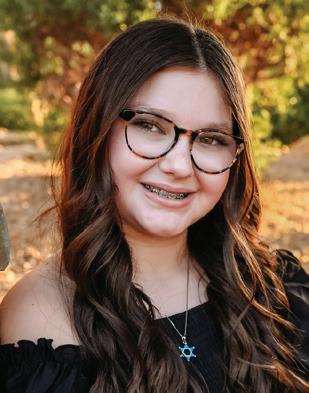
Chair Yoga with Zoe: 11-11:45 a.m. Online. Presented by JFCS Center for Senior Enrichment. 45-minute chair yoga class. No prior yoga experience required. Cost: Free. For more information, visit jfcsaz.org/cse.
THURSDAYS
Memory Cafe: 10-11 a.m. first Thursday; 1-2 p.m. third Thursday. Online. Presented by Jewish Family & Children’s Service. Program for those with changes in their thinking or memory, mild cognitive impairment due to Alzheimer’s disease or a related disorder, along with their care partners. For more information, visit jfcsaz.org/our-services/older-adult-services/ memory-cafe/.
In the Kitchen with Benita: 12:30 p.m. Join Smile on Seniors on the fourth Thursday of every month for some delicious cooking or baking fun! Cost: Free. For full details visit sosaz.org/virtual or email Rabbi Levi Levertov at levi@sosaz.org.
FRIDAYS
Welcome Shabbat: 11-11:30 a.m. Online. Celebrate Shabbat with the JFCS Virtual Center for Senior Enrichment. Each week a different guest host will lead the program with song and celebration. Cost: Free. For more information, visit jfcsaz.org/cse.
Sit or Stand Ballet Class: 12-12:45 p.m. Online. Presented by JFCS Center for Senior Enrichment. Jennifer Cafarella Betts and Friends from Ballet Theatre of Phoenix teach this class. Grab a chair or you can stand next to a chair or counter. Cost: Free. For more information, visit jfcsaz.org/cse.
Musical Friday: 12:30 p.m. Online. Join Smile on Seniors on the first Friday of every month for a musical presentation. Cost: Free. For full details visit sosaz.org/virtual or email Rabbi Levi Levertov at levi@sosaz.org. JN
Stella Francesca Brauner will become a bat mitzvah on Dec. 20, 2025, at Temple Solel. She is the daughter of Jennifer and Lyle Brauner of Phoenix.
Stella’s grandparents are Cindy and Mark Brauner of Scottsdale; Judy Segal of Phoenix; and the late Martin Segal. For her mitzvah project, Stella is supporting the Comfort Bears in a Catastrophe organization. This effort supports children impacted by disasters and allows opportunities to help these children by making cards, buying comfort bears or donating.
A student at Cocopah Middle School, Stella enjoys cheerleading, acting, babysitting, operating a nail business and playing bass clarinet in the band at school. JN
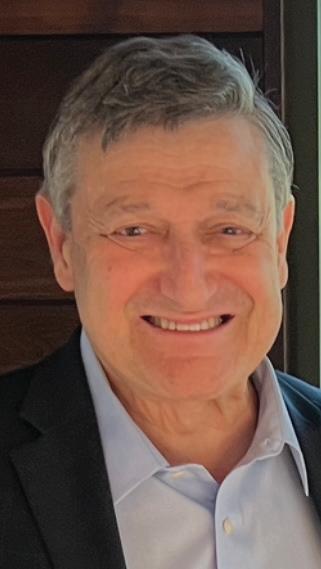
Howard Michael Zell, a cherished husband, father, zeida, brother and friend passed away peacefully, surrounded by loved ones on Oct. 1, 2025 in Scottsdale, at the age of 79. Howard was born on April 15, 1946, in the beautiful city of Cape Town, South Africa. He grew up surrounded by family and faith, and with a profound respect for education and hard work.
Howard’s life was a testament to his enduring love for his family and his unwavering faith in Judaism. He leaves behind a legacy of love with his devoted wife, Linda; their children Steven and his wife Debbie, Karin and her husband Eric and Lauren and her husband Joshua; his grandchildren, Sasha, Isabel, Samantha, Darren, Jake, Ella and Sarah will forever cherish the memories and the wisdom he imparted upon them.
A man of many interests, Howard found joy in the world of music, and his love for cars, ships, planes and trains spoke to his appreciation for the privilege and joy of travel. These passions reflected his zest for life and his curiosity about the world around him.
To those who knew him best, Howard was the epitome of love, kindness and thoughtfulness. His bold wisdom was a source of bright light in the lives of his family and friends. His guidance, often delivered with a warm smile and an open heart, will be profoundly missed.
In the spirit of Jewish tradition, we take comfort in knowing that Howard’s soul has returned to the Creator. As we say goodbye to a man who has left an indelible mark on our hearts, we embrace the words of the Mourner’s Kaddish, finding solace in our faith and the memories we hold dear.
Howard Michael Zell’s life was a blessing, his memory a treasure. He is loved beyond words and will be missed beyond measure. May his soul be bound up in the bond of eternal life, and may he rest in peace as we honor his memory with love and reverence. Baruch Dayan Ha’emet.