
Celebrating 105 years of The Chronicle
By Sam Kricsfeld Editor

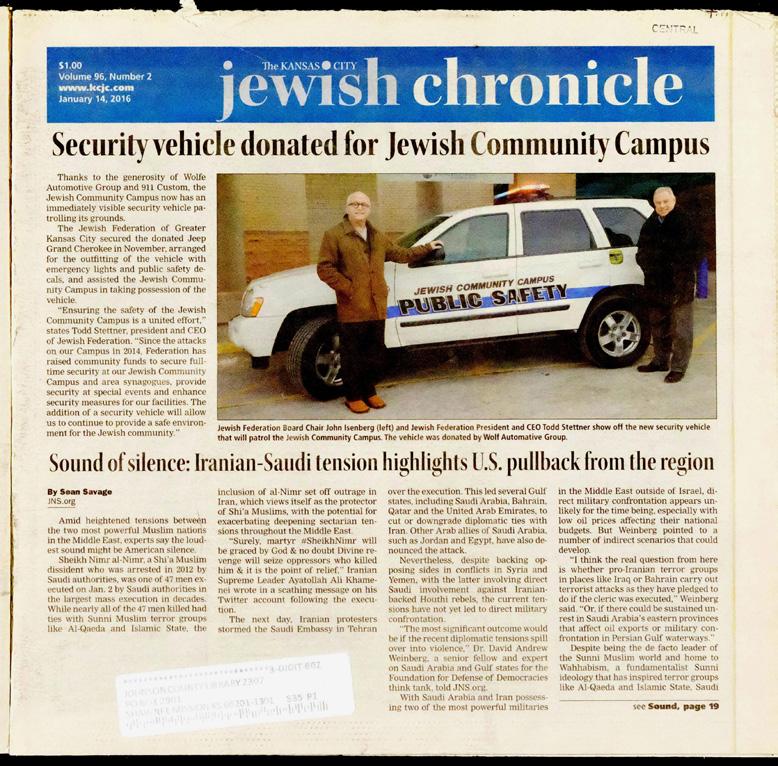
The Kansas City Jewish Chronicle is now 105 years old — one of the nation’s longest-running Jewish newspapers still in print. Many newspapers have risen and fallen over the past century — in fact, many empires have risen and fallen. Why is this publication still around when so much else isn’t?
Certainly, The Chronicle has seen its fair share of difficulties that could’ve torpedoed a weaker newspaper — the Great Depression, World War II, inflation, the internet and COVID-19, to name a few. In fact, not much at all has remained constant in its history. Only one external factor has always been there: the support of the Kansas City Jewish community.
The community’s spirit and encouragement continue to buoy The Chronicle unlike any other factor. Reader engagement and subscription revenue, two of the most important aspects of this paper’s continued existence, are solely facilitated by community members.
The transactional relationship between the community and The Chronicle, however, pales in comparison to the experiential relationship — a fact most effectively summarized by Rabbi Gershon Hadas upon The Chronicle’s 10th anniversary in 1930.
“That The Chronicle has rendered a great service to Kansas City Jewry is without question, but this service could not have been accomplished by its editor alone; it was due, in considerable
measure, to the constructive response of The Chronicle audience, the Jewish community of this city,” Rabbi Hadas wrote. “Our community is, therefore, clearly reflected in this, our paper. Whatever faults we may find in The Chronicle are our faults, whatever virtues are our virtues. It is clear, therefore, that we can serve the interest of each and all of the many groups constituting our community by strengthening the work of The Chronicle.”
Rabbi Hadas wrote that 95 years ago — it’s likely that no one alive to day read that upon publication, and yet its words still ring true. The state of The Chronicle is the state of the community, and vice versa.
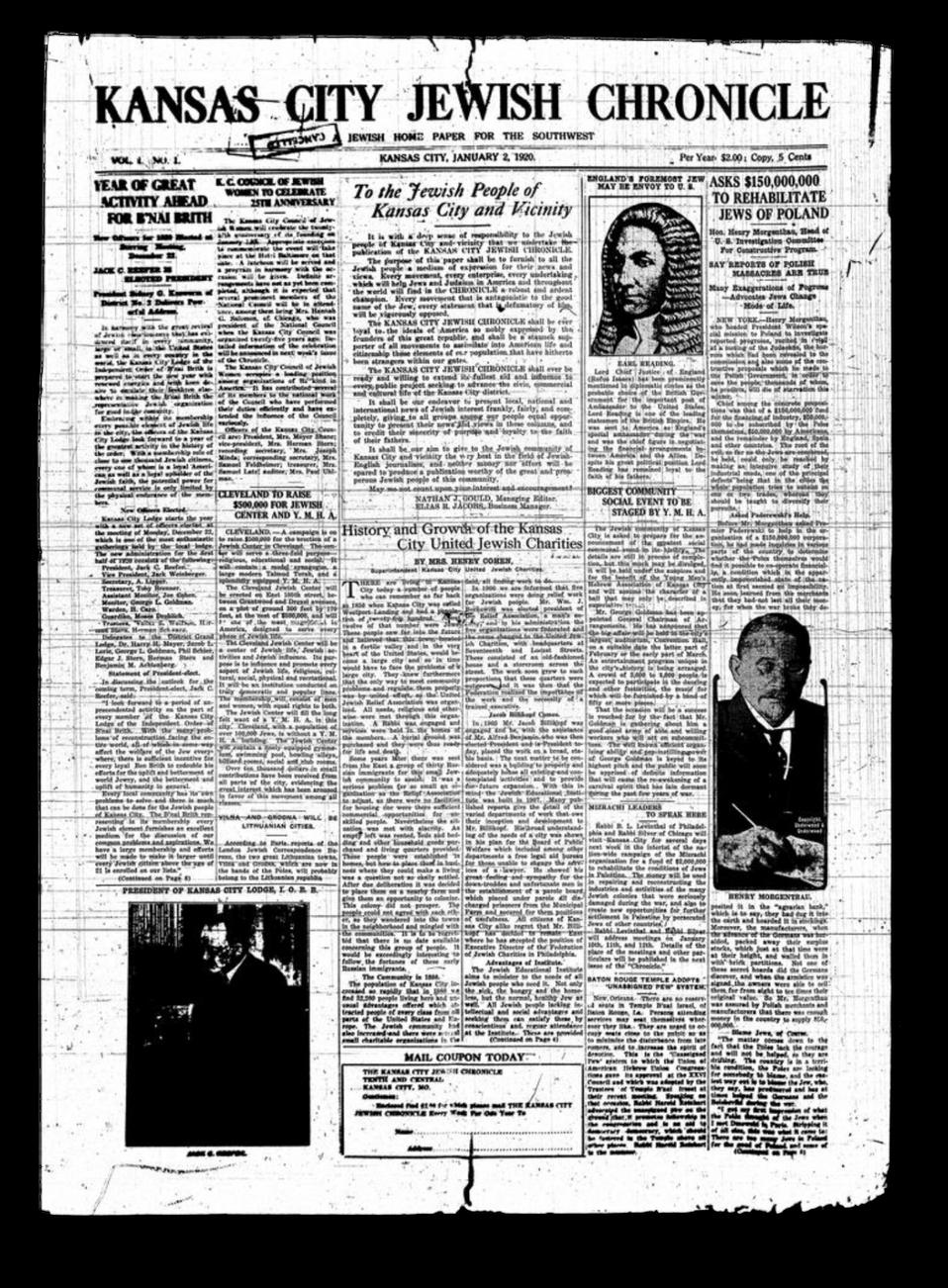
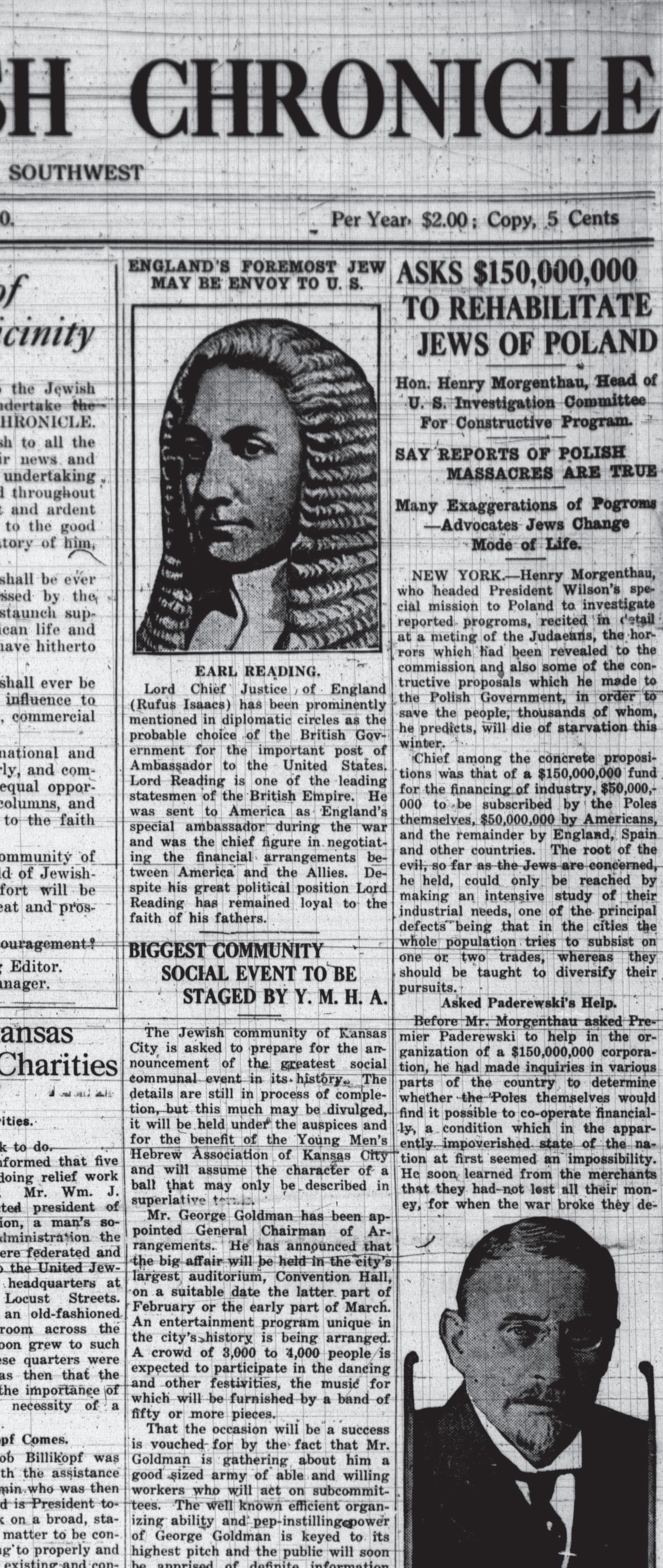
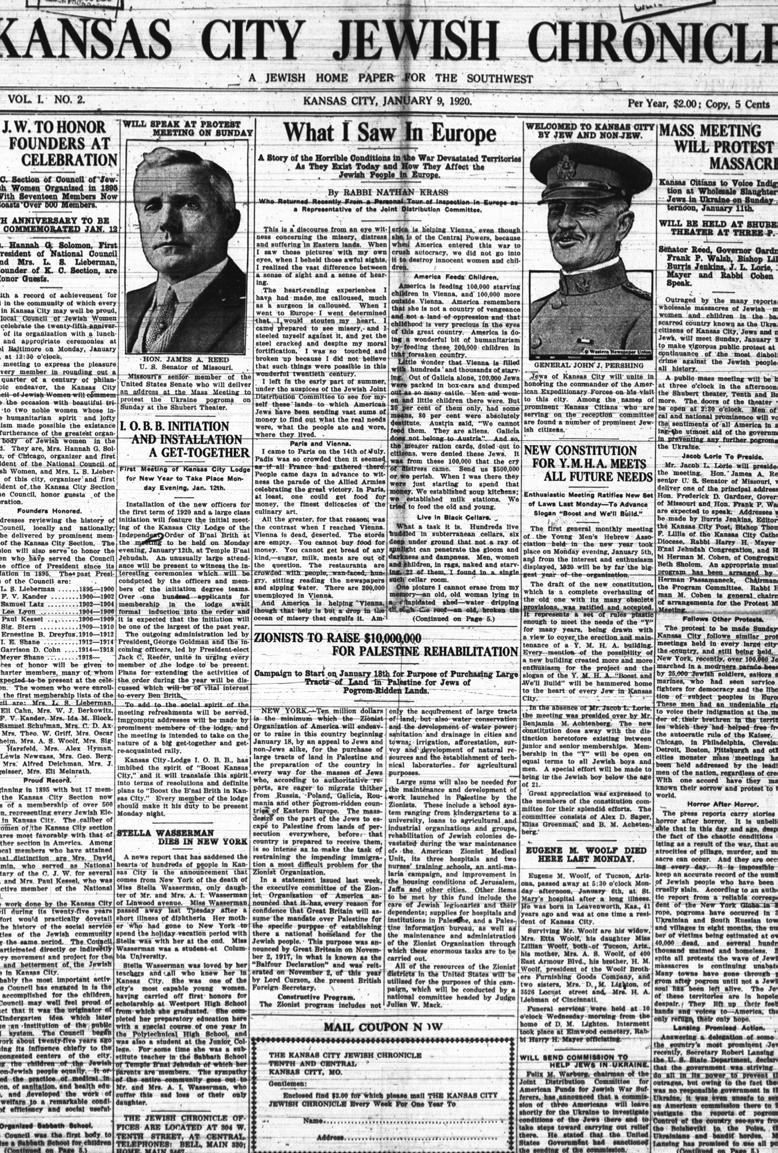
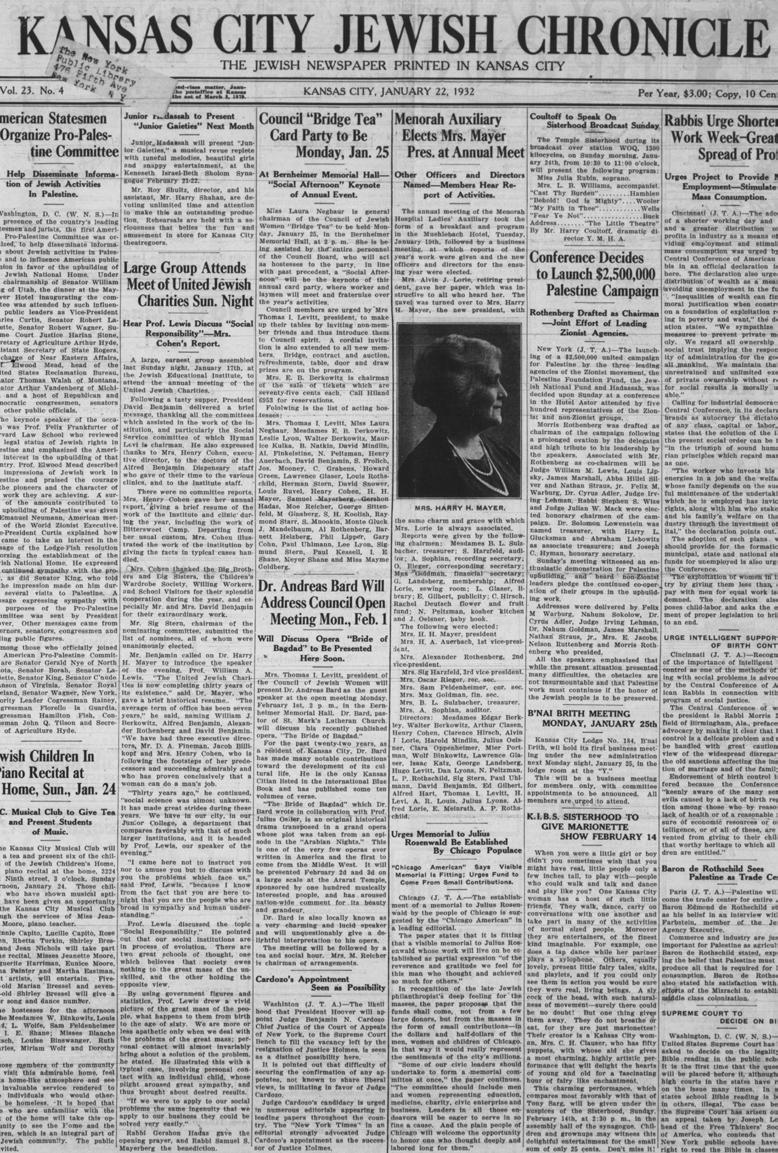
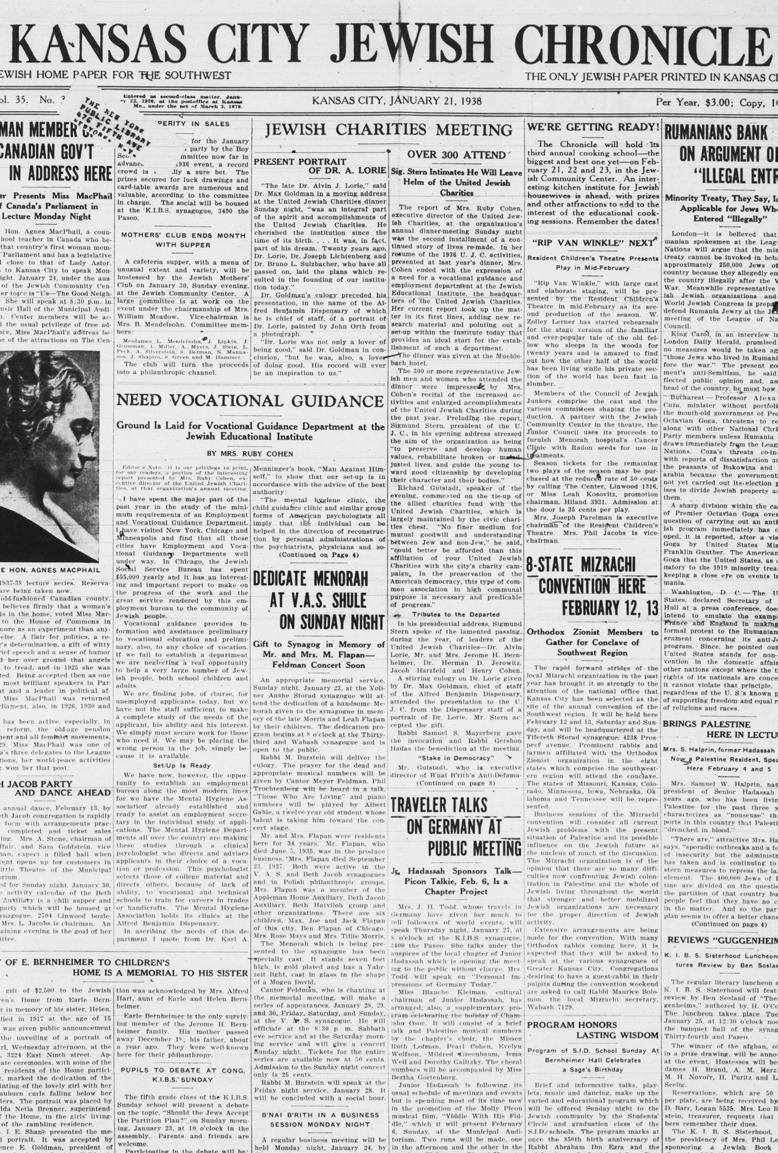
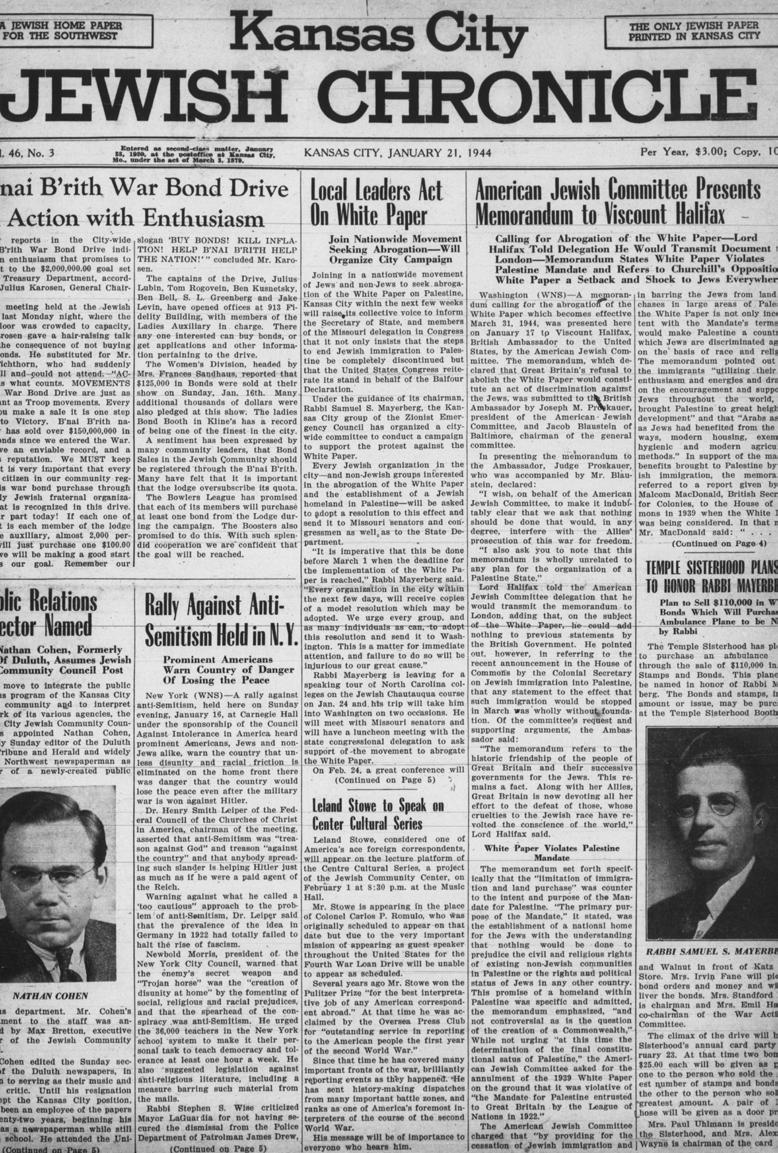
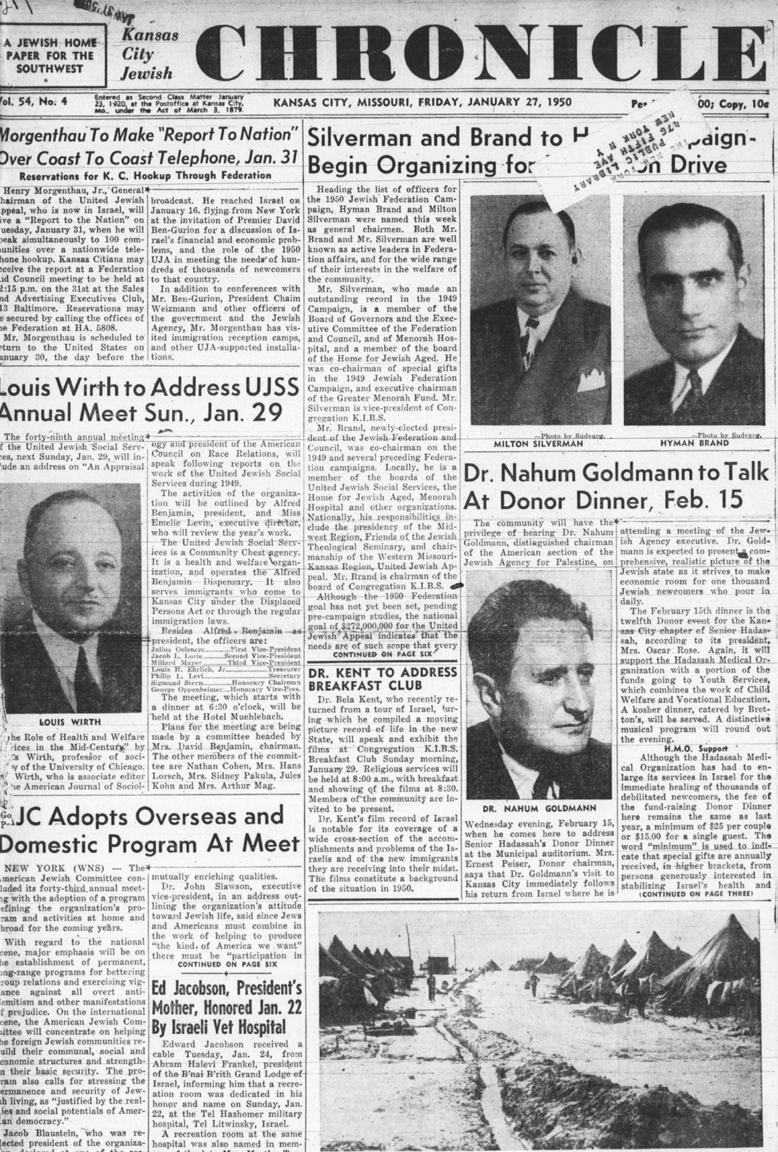
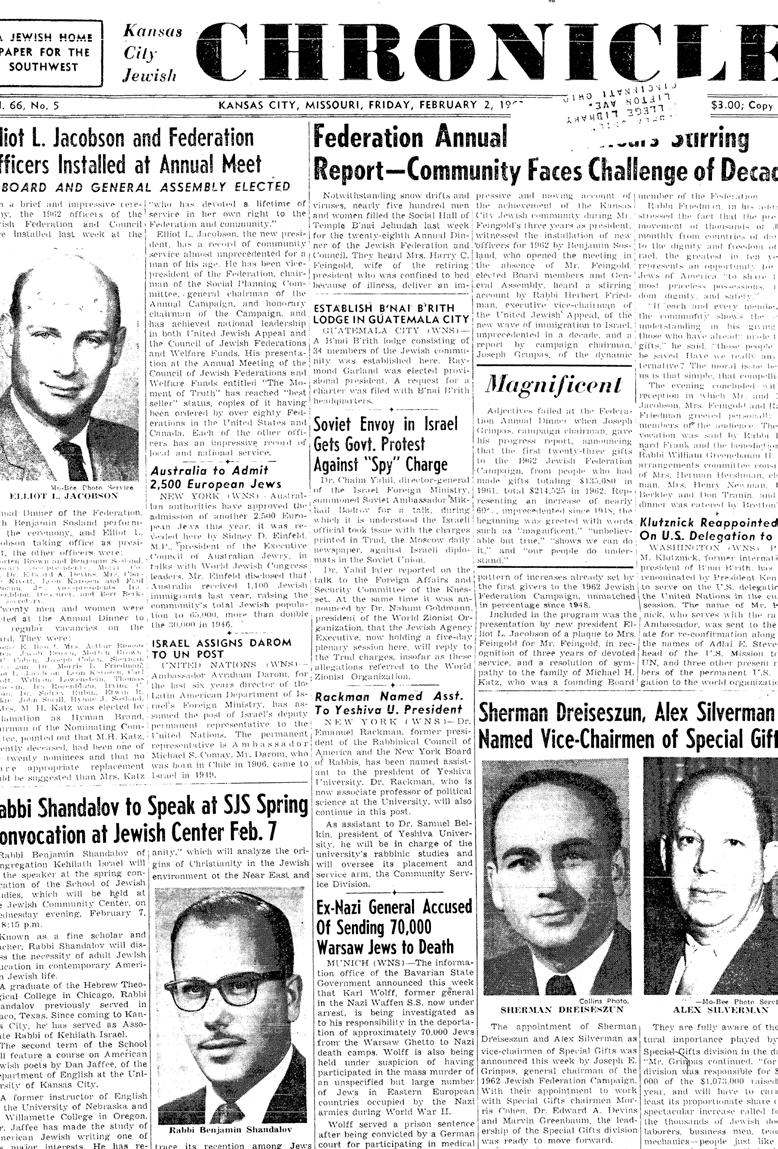
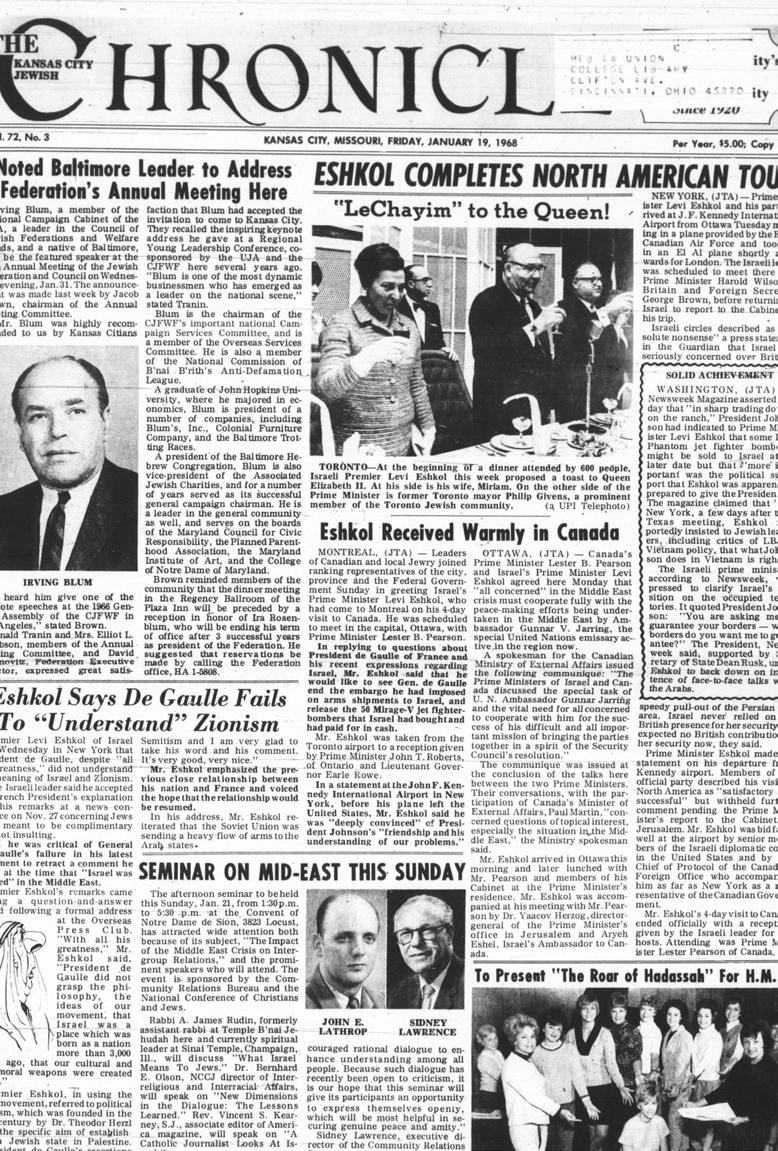
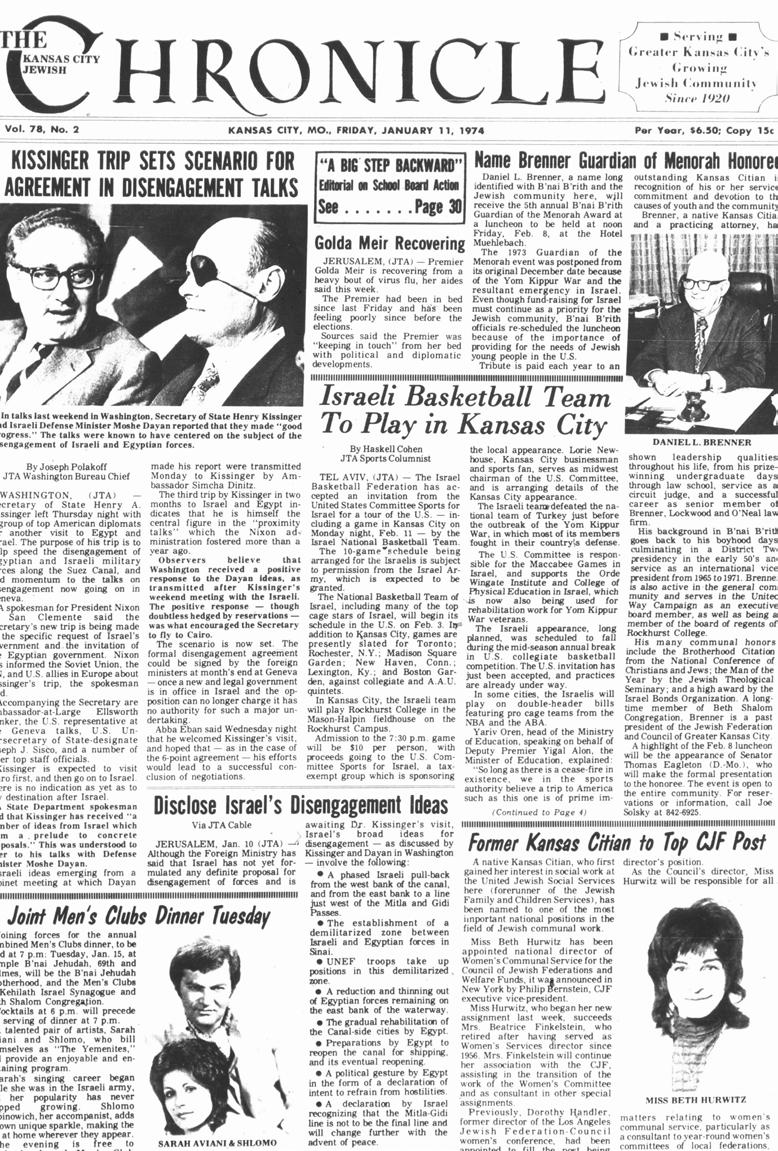
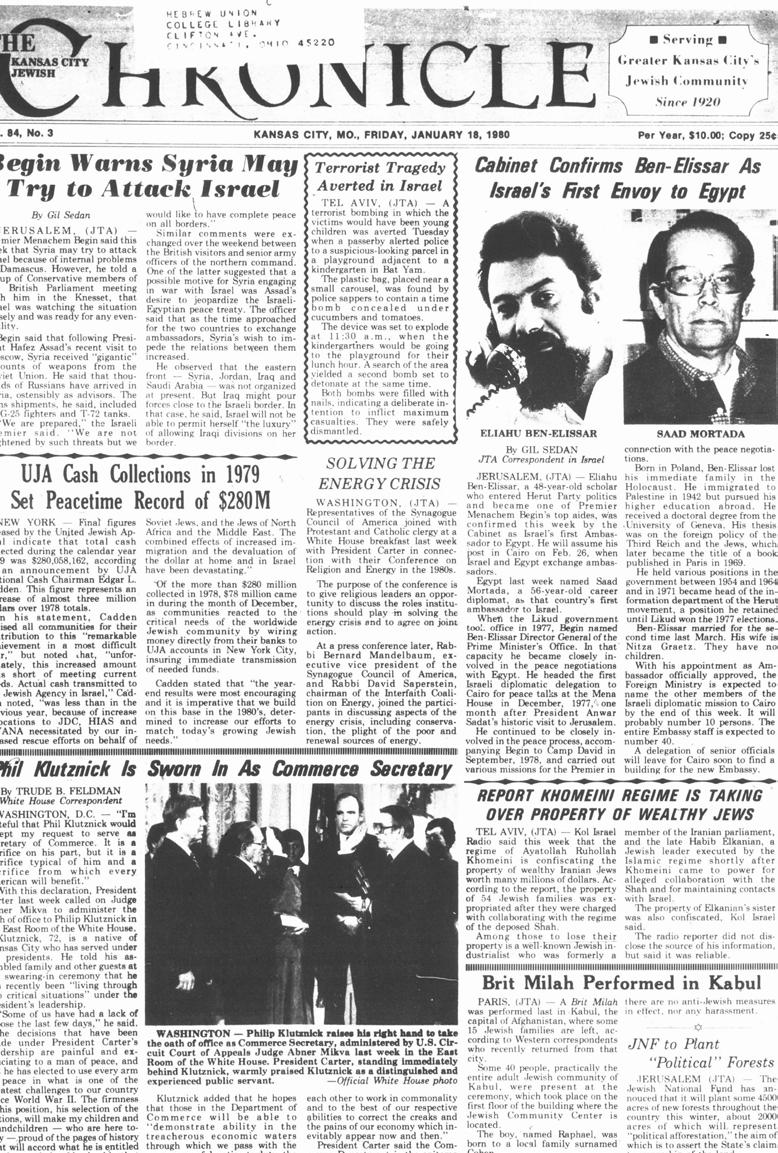
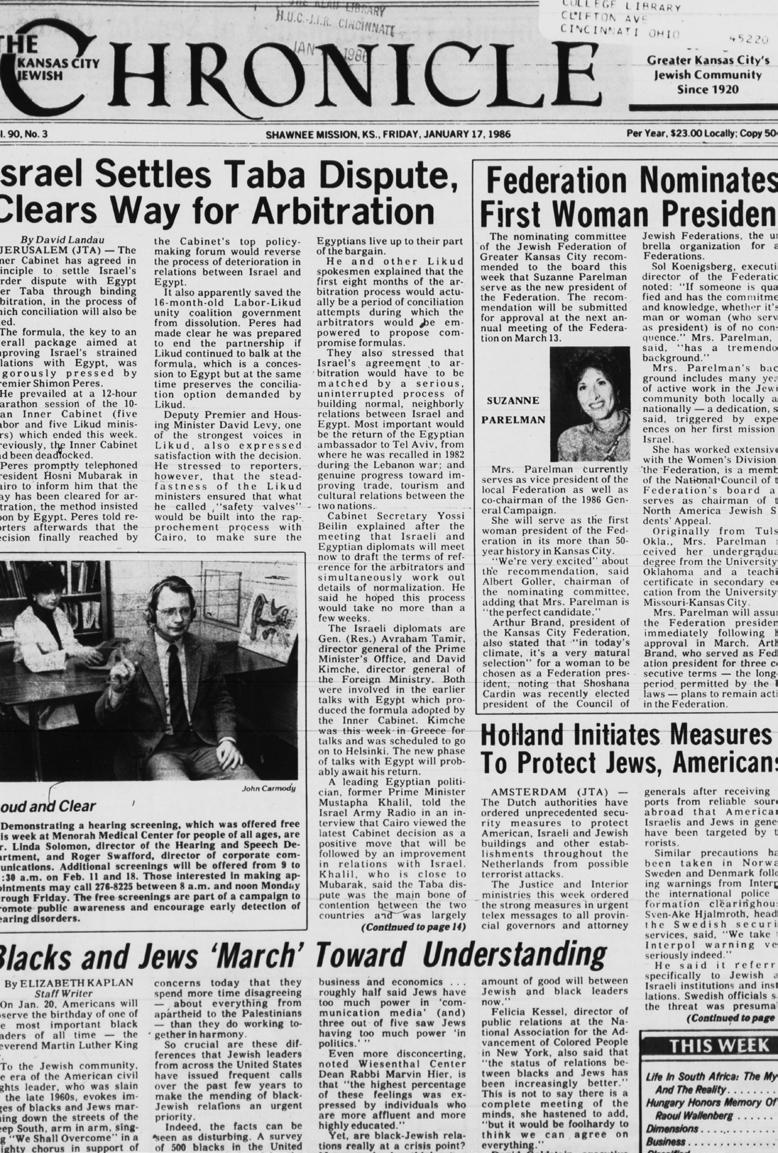
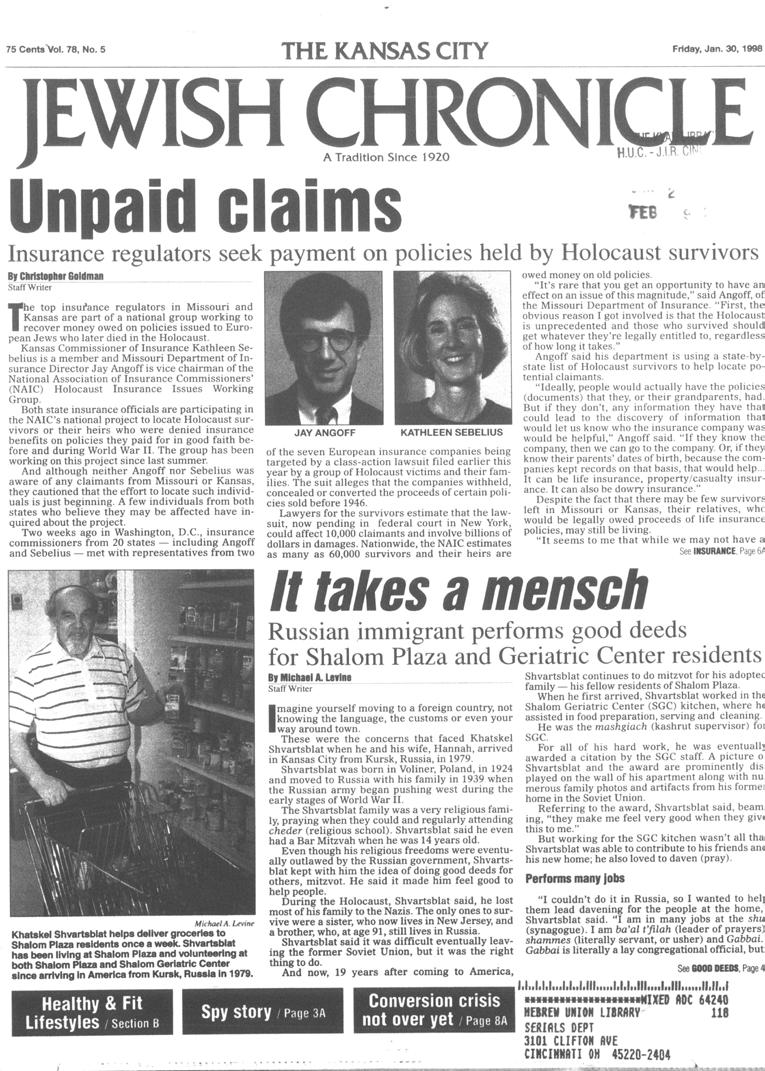
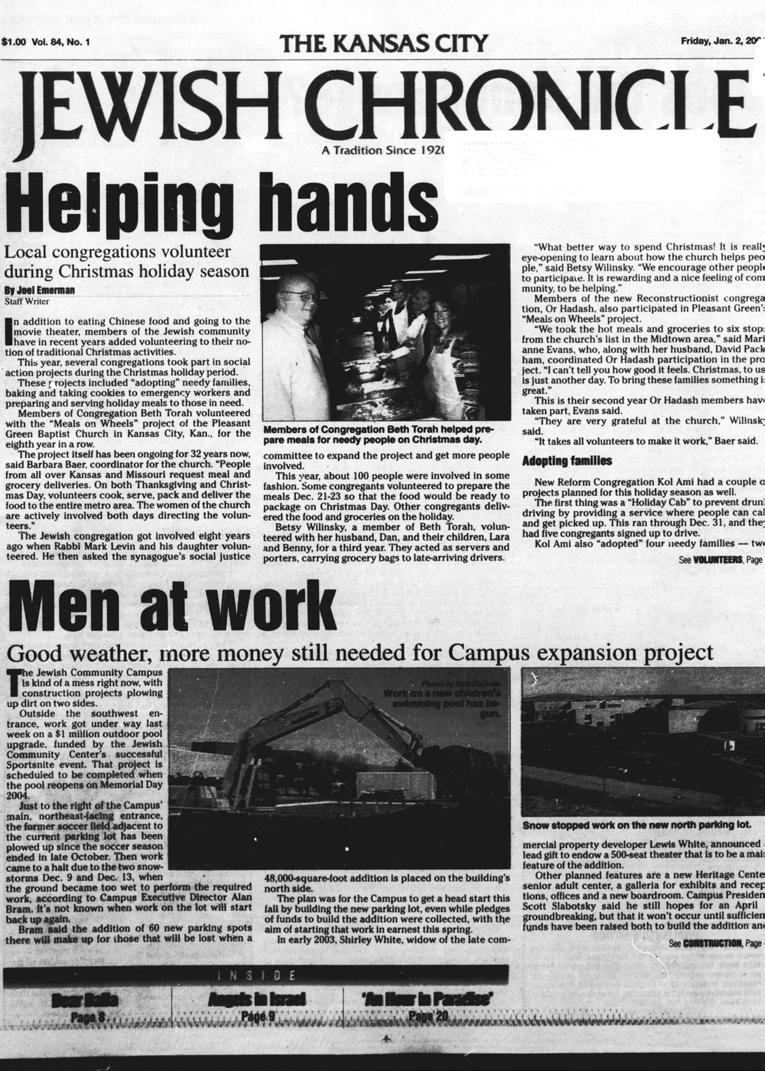
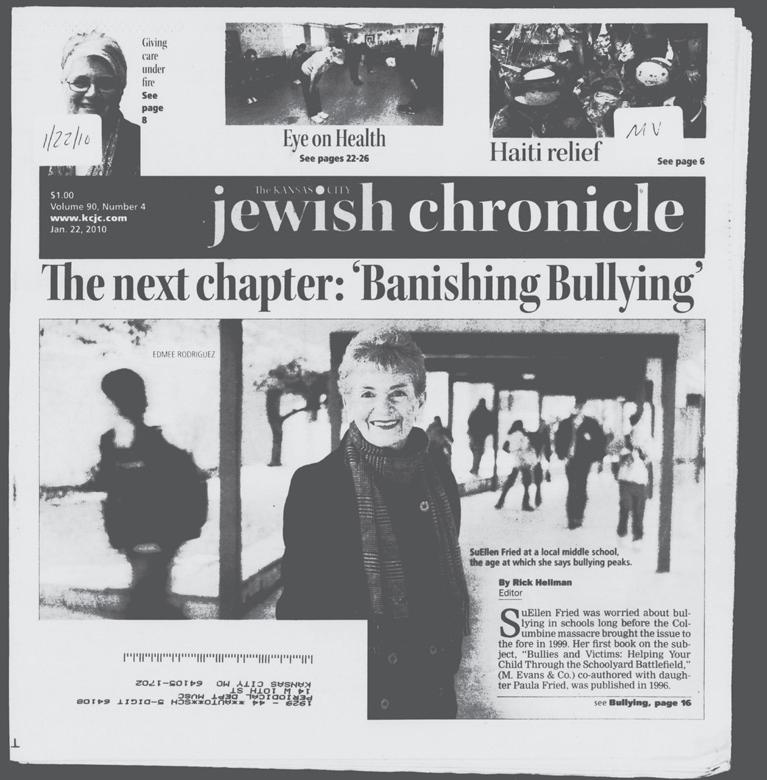
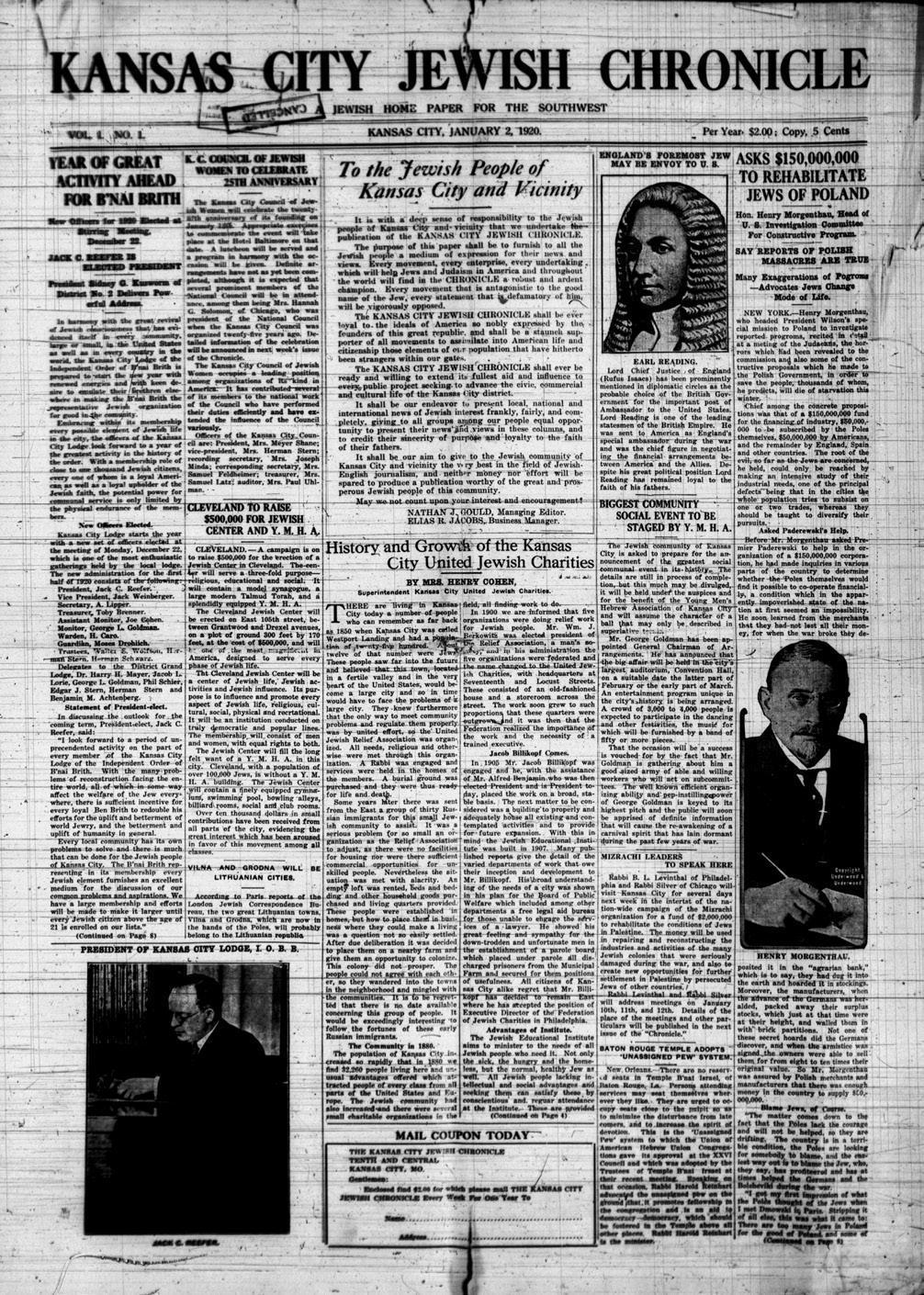
On the right side of this page is part of The Chronicle’s very first issue. In this paper’s special section, you will see a timeline of global, local and Chronicle milestones that filled the pages of our newspaper for the past 105 years (of course, we couldn’t cover everything, or else the timeline would become a history textbook). You will also find recollections from five of The Chronicle’s longest-serv ing editors who stewarded this paper throughout its long his tory.
We ask you to continue to support this paper, both through your subscription and at kcjc.com/donate, to help us survive and thrive for the next 105 years.
If we don’t cover the
Parashat Shlach
held hostage by Hamas:
The Chronicle — An American and Zionist publication
By Sam Kricsfeld Editor
It would be wrong not to acknowledge that for the past week, Israel has been at war — again — and in Gaza, Israeli hostages are still being held after more than 88 weeks of captivity. At the same time, many community members took part in (or condemned) the “No Kings” protests last Saturday. As Americans, Jews, and American Jews, we are in a complicated and stressful era.
As you will read in this issue’s 105th anniversary section, The Chronicle has stood with Israel since the country was founded in 1948. The Chronicle has also been around for more than 40% of the United States’ existence. It has always supported the ideals of Zionism and the U.S.’s founding principles.
Israel and the U.S. are two of the biggest reasons the Jewish people have any semblance of safety in the world. Nowhere
else have we been able to thrive and reestablish ourselves after we lost so many in the Holocaust. The possibility for religious freedom and safety here in the U.S., and the ability for us to have access to our spiritual and ancestral homeland in Israel, are two of the biggest miracles for the modern Jewish people. These miracles, however, seem to be under threat. Antisemitism is rising in the U.S., and Israel has been in a constant state of war since Oct. 7, 2023 (and frequently since its establishment).
Seeing Jewish people burned by a flamethrower-wielding terrorist in Boulder, Colorado, and then watching a barrage of Iranian missiles descend on Tel Aviv, was painful.
Losing Sarah Milgrim was painful.
Taking solace in the fact that both the U.S. and Israel have had hard times before and overcome them isn’t enough, and as I write this, the global effects of the
Israel-Iran war are yet to pan out. We’re in pain, and we don’t have the luxury of a crystal ball to know how we’ll be in a week, let alone a year.
We can’t see the end of the road we’re on, but we must remember where we set off. The ideals of the U.S. and Israel — the reasons The Chronicle continues to be a proud American and Zionist publication — remain stable. Though those ideals can become shrouded in fog, miles away, their existence is what we must cling to.
No matter where you land politically or what you feel about the state of the world, I hope you can understand why, despite everything, we’re still proud to be American and proud to support the State of Israel.
G-d bless America, and Am Yisrael Chai.



community news
Jonah Greene named The J’s new director of Arts & Culture
The J announced the appointment of Jonah Greene as its new director of its Arts & Culture department. In this role, Greene will oversee The Lewis & Shirley White Theatre and youth arts education programs to further advance The J’s commitment to enriching the community through diverse arts programming. Greene steps into the role after previous director Keith Wiedenkeller announced his retirement earlier this year.
“We are thrilled to welcome Jonah Greene to The J team as our new director of Arts & Culture,” said Carly Stein, chief operating officer of The J. “Jonah is deeply passionate about building community through the arts, and we are confident his leadership will be a powerful addition to our team. We look forward to seeing the impact he’ll make in the months and years ahead.”
Greene brings extensive experience leading innovative Jewish theater and arts initiatives. Currently completing his Ph.D. in Theater at the University of Kansas, Greene has an extensive background in Jewish American theater, having worked in Kansas;
Boston, Massachusetts; Jerusalem; and the state of Georgia. His academic research focuses on theatre performed in Jewish communal spaces, and he has published widely on Jewish American performing arts.
“I'm honored to be entrusted with leading the Arts & Culture department into the future,” Greene said. “I know that this job will be both personally and professionally fulfilling. I'm especially thrilled that I get to work alongside the excellent staff at The J and to work within an organization with a strong mission and core values.”
The J and The White Theatre leadership teams made the decision after an extensive search.
“We are very excited to have Jonah join our White Theatre team,” said Scott Slabotsky, producer at The White Theatre. “His brilliance, people skills and high energy will enhance the momentum and high standards that were established by Keith Wiedenkeller over the past eight years.”
Since moving to Kansas City more than three years ago, Greene has directed two productions at The White Theatre, including playwright Victor

Wishna’s “Tree of Life,” which was awarded the Jewish Federation of Greater Kansas City’s Program of the Year Award in 2024. His professional experience also includes directing and dramaturgy at professional and community theaters, universities, Jewish Community Centers, synagogues and Jewish summer camps.
“I'm particularly excited about the opportunity to produce high-quality arts programming with the goal of bringing community together and celebrating Jewish values, tradition and culture,” Greene said. “My goal is
to have our arts and culture programming reflect the core values of The J: to be welcoming and inclusive to all; celebrate Jewish culture and history; enrich mind, body and soul; and build community. Nothing brings people together more profoundly than the arts.”
Greene highlighted the strengths of Kansas City’s artistic and Jewish communities.
“Kansas City is a truly special place. The people here are kind, generous and deeply devoted to the wellbeing of the community as a whole. The theater and Jewish communities, in particular, are outstanding… The theater artists who work at The White Theatre — directors, designers, performers, crew and volunteers — are phenomenal, and The White Theatre staff have created an incredible culture. The bar has been set high, and my goal is to continue growing The White Theatre into one of the finest community theatres in the country.”
Greene officially stepped into his role this month. Wiedenkeller’s official last day will be July 5, and he has agreed to stay on as a contractor to assist with the transition.
JCRB|AJC to honor KU chancellor with Human Relations Award
The Jewish Community Relations Bureau | American Jewish Committee will honor University of Kansas Chancellor Dr. Doug Girod with its Henry W. Bloch Human Relations Award at its annual Human Relations Event.
JCRB|AJC’s Human Relations Award honors the legacy of Henry W. Bloch, whose leadership and integrity set a benchmark for community activism.
“Much like the namesake of the Henry W. Bloch Human Relations Award, Doug exemplifies principled leadership rooted in service, collaboration and a steadfast commitment to the greater good,” a JCRB|AJC statement about the award read. “A visionary leader and compassionate healer, Doug leads with humility, purpose and a deep commitment to lifting others. His rare blend of vision and compassion has elevated entire sectors, inspired countless others and strengthened the

Award.
Kansas City region.”
Dr. Girod is KU’s 18th chancellor, and during his tenure, KU has reached record-breaking enrollment, earned the highest national designation for its Cancer Center and increased research funding for nine consecutive years.
Prior to becoming chancellor in 2017, Dr. Girod served as executive vice
chancellor at KU Medical Center, having begun his KU journey in 1994 as a faculty member in otolaryngology. His medical and academic leadership has been recognized nationally, including as president of the American Head and Neck Society, vice chair of the American Association of Universities and chair of the Big 12 Conference.
In addition to his work with KU, Dr. Girod is a U.S. Navy veteran and former head-and-neck surgeon who lead international medical missions to countries such as Uganda and Guatemala. Locally, he serves on the boards of the Civic Council, MRI Global, and both the Lawrence and Greater Kansas City Chambers of Commerce. He is also a leader in the regional KC Rising initiative to promote long-term economic prosperity.
This year’s Human Relations Event is scheduled for Sunday, Nov. 23. It is
chaired by Dr. DeAngela Burns-Wallace; Howard Cohen; Marc B. Hahn, D.O.; Leigh and Tyler Nottberg; Bob Page; and Alejandro Quiroga, M.D., M.B.A.

Dr. Doug Girod, 2025 recipient of JCRB|AJC’s Human Relations
Jonah Greene
50th Anniversary
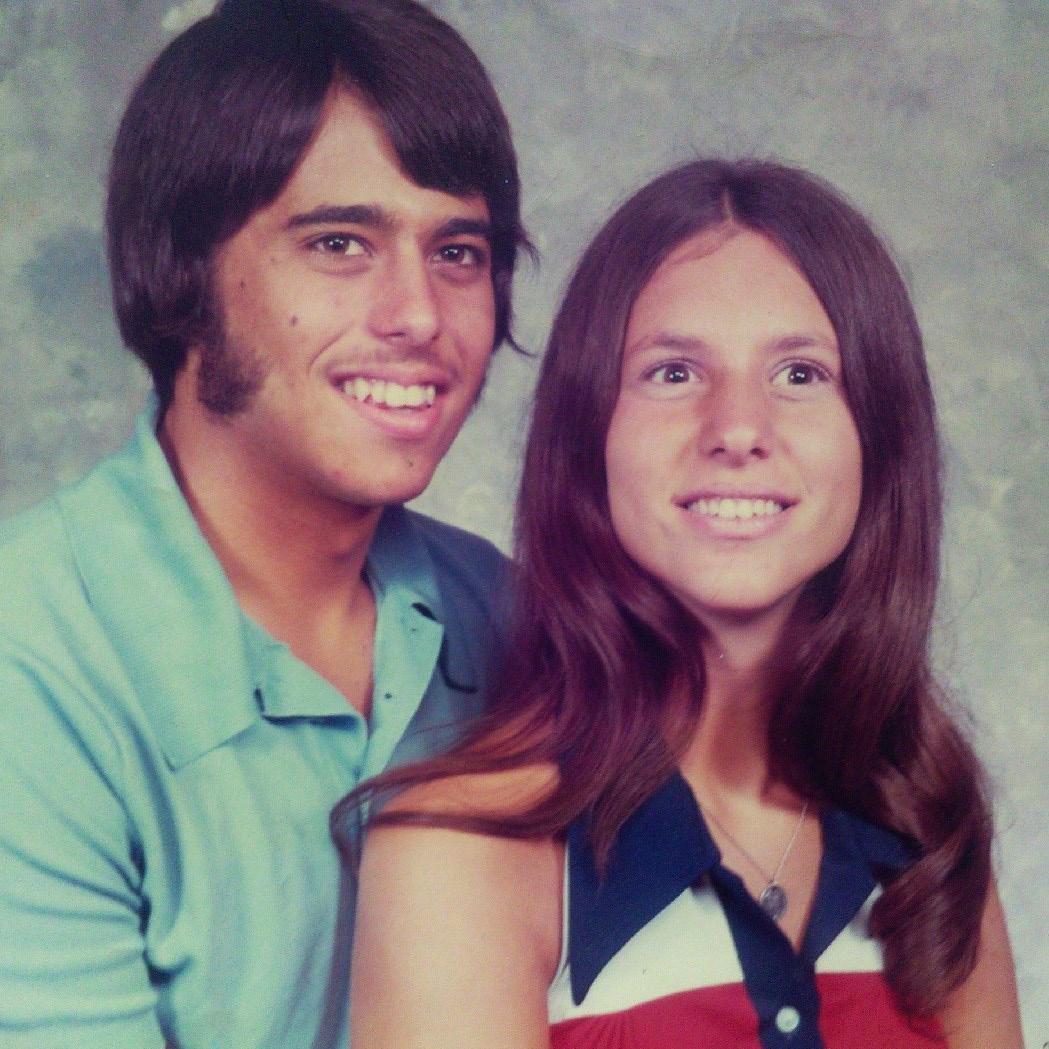
Michael and Nanci Myer
Michael and Nanci Myer of Overland Park, Kansas, will celebrate their 50th wedding anniversary on June 22. They are the parents of Miccole (Nathan) Bowen and Erin (Chad) Cox and have seven grandchildren.
Birth

Rose Stiefel Vinokur
Rose Stiefel Vinokur, daughter of Claire Elizabeth Stiefel and Edward Vinokur of Chester, New Jersey, was born on June 5.
Rose is the granddaughter of Marsha and Richard (z”l) Stiefel of Prairie Village, Kansas, and Anatoly and Rita Vinokur of Deerfield Beach, Florida.
NCJW installs new board, honors volunteers and members
The Kansas City section of the National Council of Jewish Women (NCJW) recently honored volunteers and community members at its annual Installation and Awards Program. Programming included an historical look into the Jewish community and NCJW’s past presented by Sam Kricsfeld and Lacey Storer of The Kansas City Jewish Chronicle. Layette items for the Baskets for Babies project were collected at the event.
Awards were given to Judy Sherry (Hannah G. Solomon Award), Annie Glickman (Community Service Award), Terri Miro (Emerging Leader Award) and Mirra Klausner (The Beti Weber Moskowitz Tzedakah Award).
In addition, board members and officers were recognized for their continuing commitment to the organization and their positions confirmed for the 2025-26 term. The standing board of directors consists of Lainie Decker, Judith Evnen, Milisa Flekier, Reva Friedman, Jane Girson, Amy Goldstein, Lynn Schweig and Kelly Somberg. Departing board members
Amy Both, Stephanie Herman, Nancy Kalikow Maxwell and Stacie Turtledove were recognized for their work during the past year and relieved of their positions.
The NCJW officers for 2025-26 are Carla Oppenheimer, president; Amanda Palan, vice president of fund development; Terri Miro and Sheryl Stein, co-vice presidents of community service; Jannie Cubbage and Mirra
Klausner, co-vice presidents of membership; Linda Stark, vice president of social; Barbie Rogoff, treasurer; and Staci Kahn, secretary.
Over the course of 2024-2025, NCJW has aided the community with multiple programs and projects, including:
• Assembling and delivering 400 Birthday Books to underprivileged children
• Suitcase to Start, providing 37
Applications open for 2025-26 JWV scholarships
Jewish War Veterans (JWV) MO-KAN Post 605 is currently seeking applications for college scholarships for the 2025-26 academic year. Post 605 offers scholarships annually.
JWV Post 605 scholarships are administered by a directive that states “the funds shall be used to initiate or further the education of needy or worthy students.” Funds for these scholarships may come from multiple sources. These scholarships are awarded annually to students who are in or entering college. High school seniors, college students at any level (including graduate school) may apply. The
primary requirement is that the applicant be related to a current or deceased member of Jewish War Veterans MOKAN Post 605 in good standing or who was in good standing at their time of passing. Applicants should be prepared to offer documentation that they are related to a current or deceased member of the Post, if requested by the Post Scholarship Committee.
Interested and eligible applicants should contact Joshua Goldfarb, Post 605 Scholarship Chairperson, at jwvpost605@outlook.com. Applications
should be submitted no later than June 30.
JWV MO-KAN Post 605 is active in community service in the Kansas City-Leavenworth area. Some of its community service programs include special awards to local Boy Scout troops, providing holiday gifts to hospitalized veterans, assisting local active-duty military personnel and their families, and providing honor guards and representing the Post at various ceremonies. The Post can be found on Facebook at facebook.com/ JWV-605-113534657113204.
suitcases to young people aging out of foster care or starting college
• Stacey’s Closet, providing more than 1,982 clothing items to 240 underprivileged students throughout the school year in four elementary schools
• Thelma’s Kitchen, preparing meals for hungry families
• Assembling 120 “Baskets 4 Babies” with necessities for new mothers, delivered via Operation Breakthrough
• Handing out more than 1,000 pieces of donated jewelry to underprivileged children at four local schools so they would have a gift for their mothers on Mother’s Day
• Period Project, distributing more than 431 makeup bags and 809 full packages of menstrual products to 15 elementary, middle and high schools in the Kansas City metropolitan area
• The Back to School Store, providing clothing and school supplies to 437 children last July
NCJW members also gather regularly for social events, including a cohort of retirees. More information about NCJW and how to join is available at kansascity.section.ncjw.org or by calling (913) 648-0747.
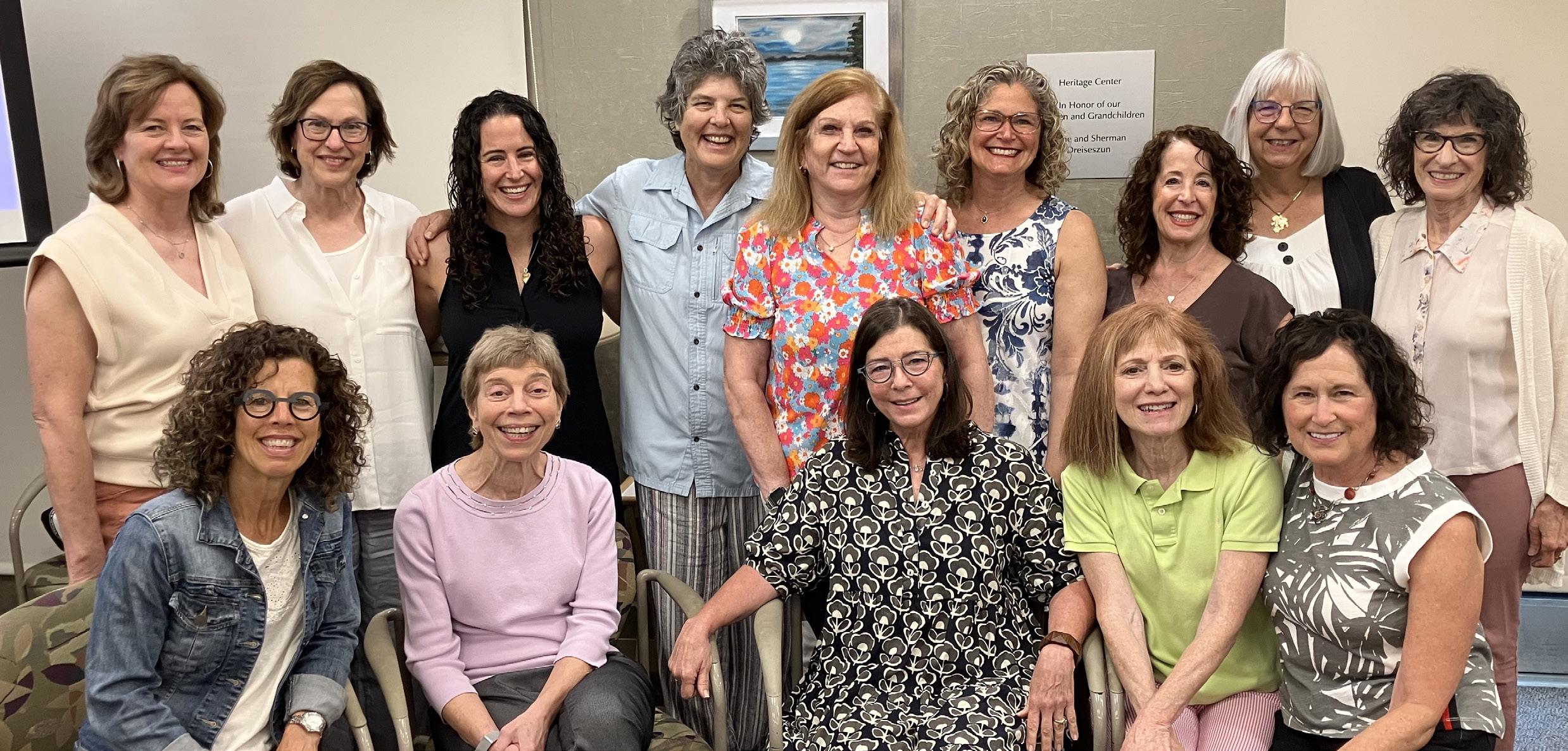
NCJW board members (back row, from left) Kelly Somberg, Judith Evnen, Sheryl Stein, Linda Stark, Jannie Cubbage, Amanda Palan, Staci Kahn, Barbie Rogoff, Reva Friedman; (front row) Milisa Flekier, Lynn Schweig, Jane Girson, Carla Oppenheimer and Terri Miro.
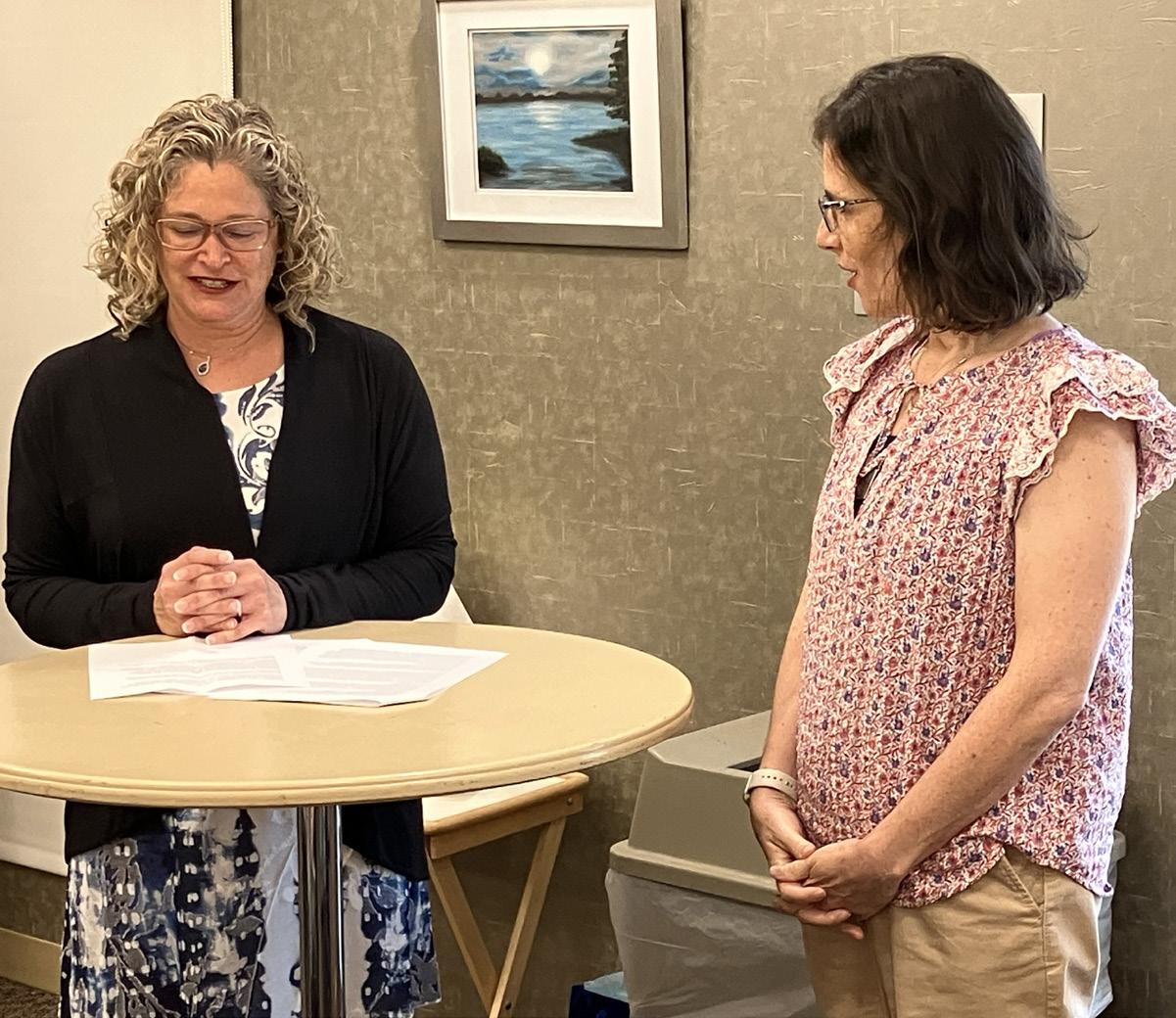
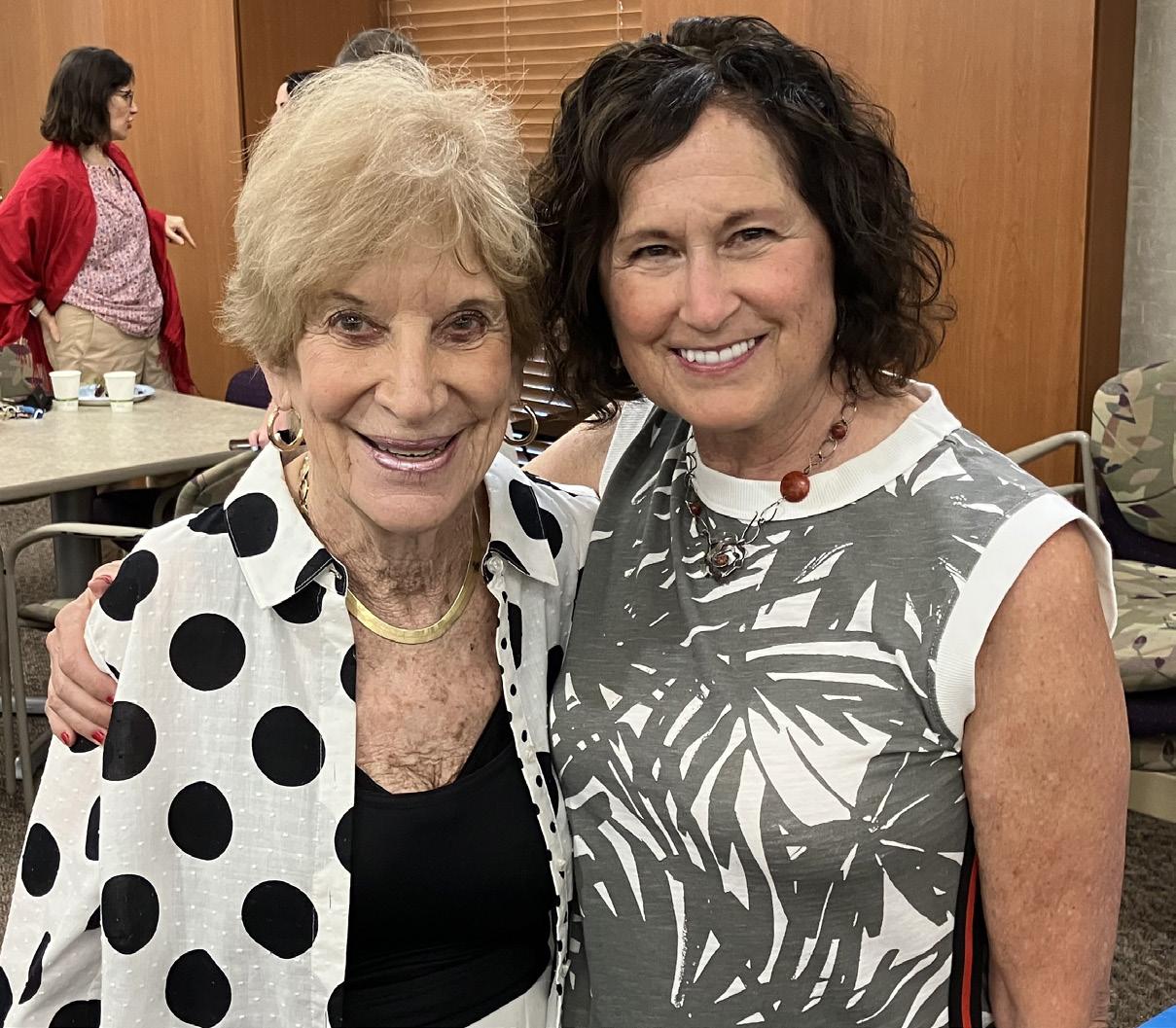
NCJW award recipients (from left) Amanda Palan and Annie Glickman; and Judy Sherry and Terri Miro.
Thank you to The Kansas City Jewish Chronicle for 105 Years of serving our community and to the Jewish Federation of Greater Kansas City for sustaining this important community asset
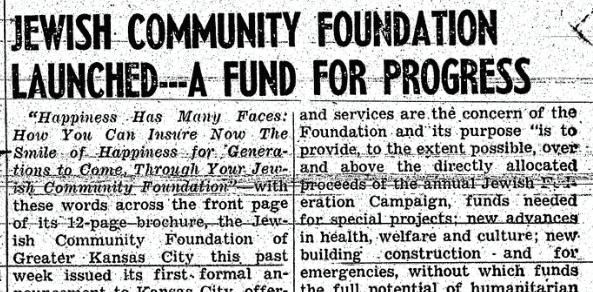
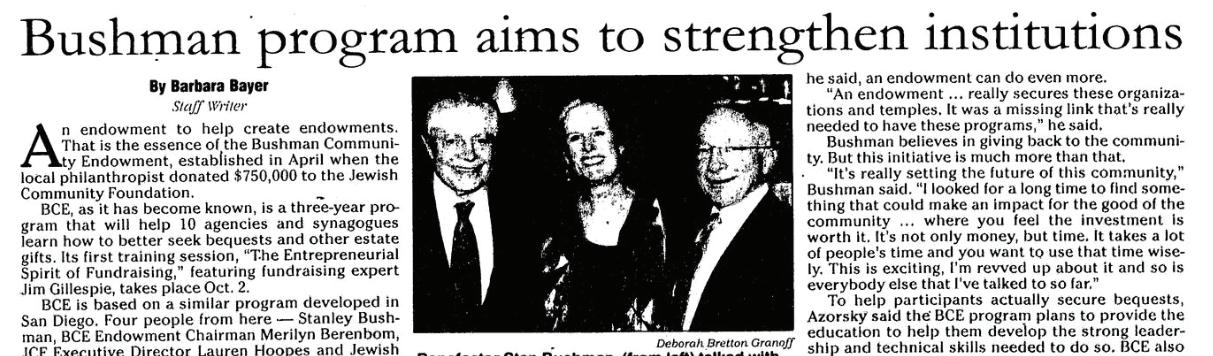

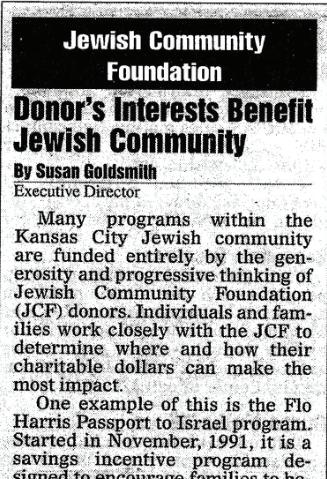
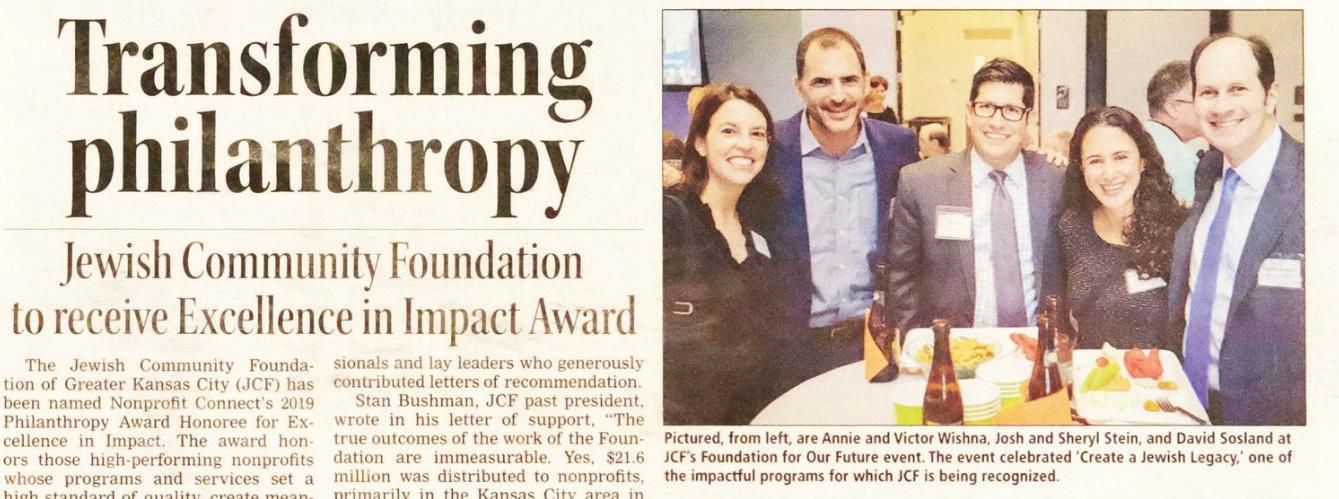
The Jewish Community Foundation is grateful to The Kansas City Jewish Chronicle for helping tell our story. We are honored to celebrate the Chronicle’s legacy and its impact on Jewish life.
JCF provides customized creative strategies to help individuals and families give smarter and to build charitable resources for our future. To learn more, visit jcfkc.org. Smarter Giving. Your Way.

This week in history
30 years
45 years
85 years
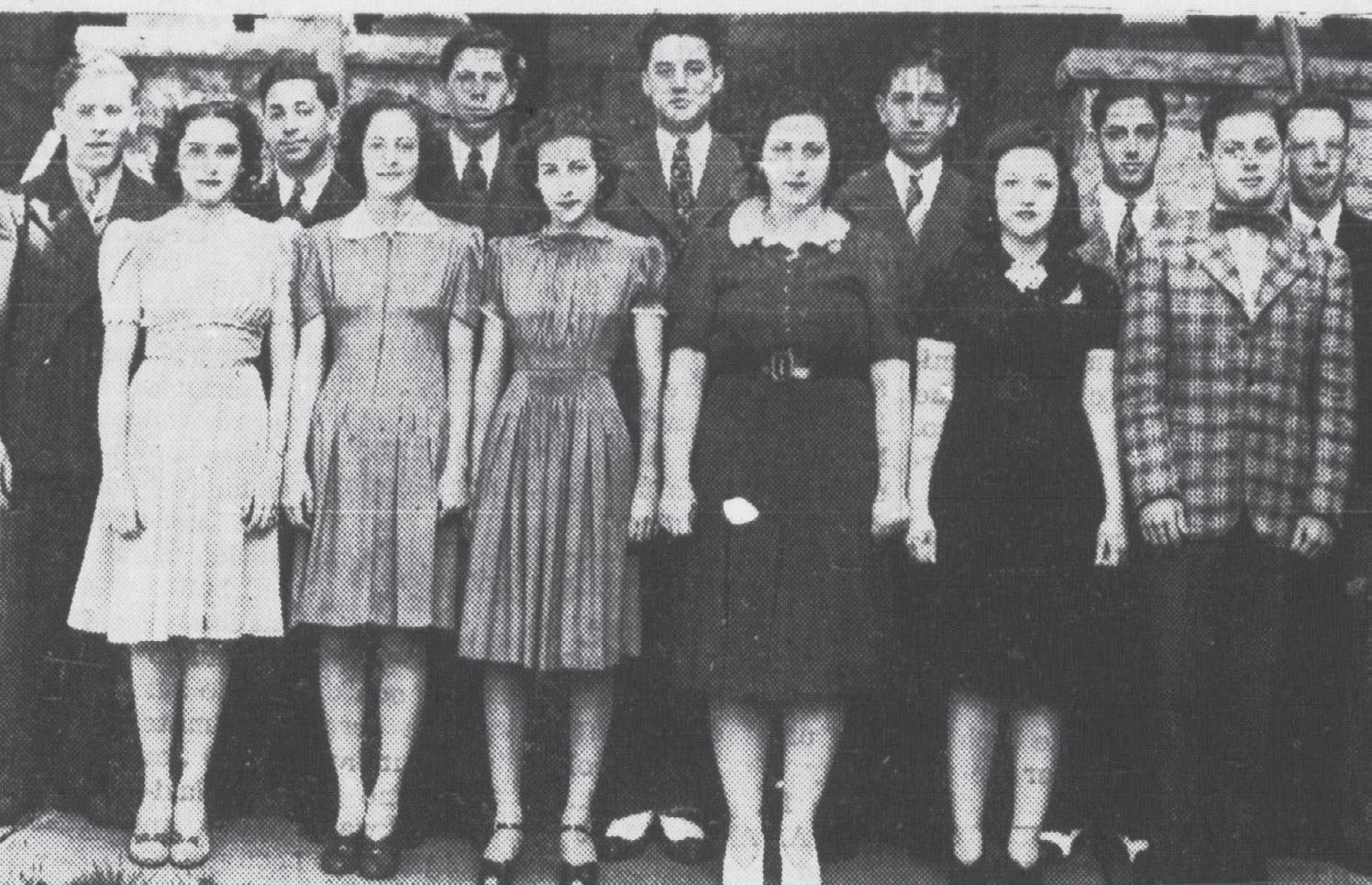
(back row) Faivel Dunn, Harold Tenenbaum, Earl Beiser, Arthur Kusnetzky, Lester Kessler, Jerald Gershon and Albert Agron.
Find these historical stories and more community history at kcjc.com/archive.

• Barbara Bayer (pg. 8B)
• Doug Girod (pg. 2)
• Milton Firestone (pg. 4B)
• NCJW board (pg. 4)
VICTORSLONE MILTONFIRESTONE RUTHBAUMBIGUS RICKHELLMAN BARBARABAYER JEWISHFEDERATION ROSEFAMILY SUPERSTAR DOUGGIROD REBECAAMEZCUAHOGAN JONAHGREENE JULIETS NCJWBOARD SUMMERTRIVIA THEWHITETHEATRE
• Jewish Federation (pg. 1B)
• Jonah Greene (pg. 3)
• JULIETs (pg. 8)
• Rebeca Amezcua-Hogan (pg. 9)
• Rick Hellman (pg. 7B)
• Rose family (pg. 5B)
• Ruth Baum Bigus (pg. 6B)
• Summer Trivia (pg. 8)
• SuperStar (pg. 9)
• Victor Slone (pg. 2B)
• The White Theatre (pg. 10)
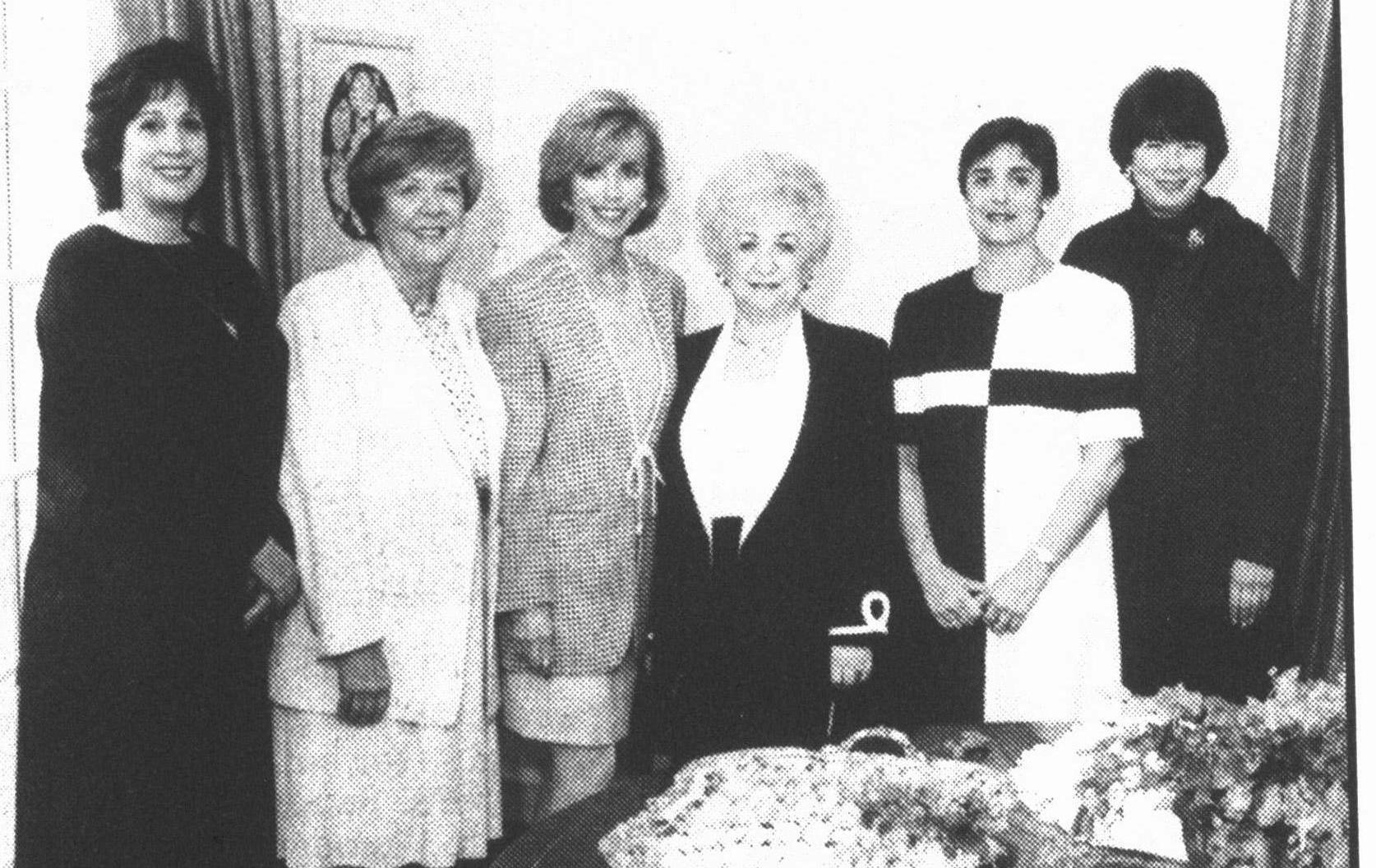
Jewish Federation Lion of Judah donors gather at the home of Miriam Scharf. Pictured are (from left) Sandy Leibsohn, Elaine Polsky, Sandra Lippy, Maria Devinki, Scharf and Patricia Uhlmann.
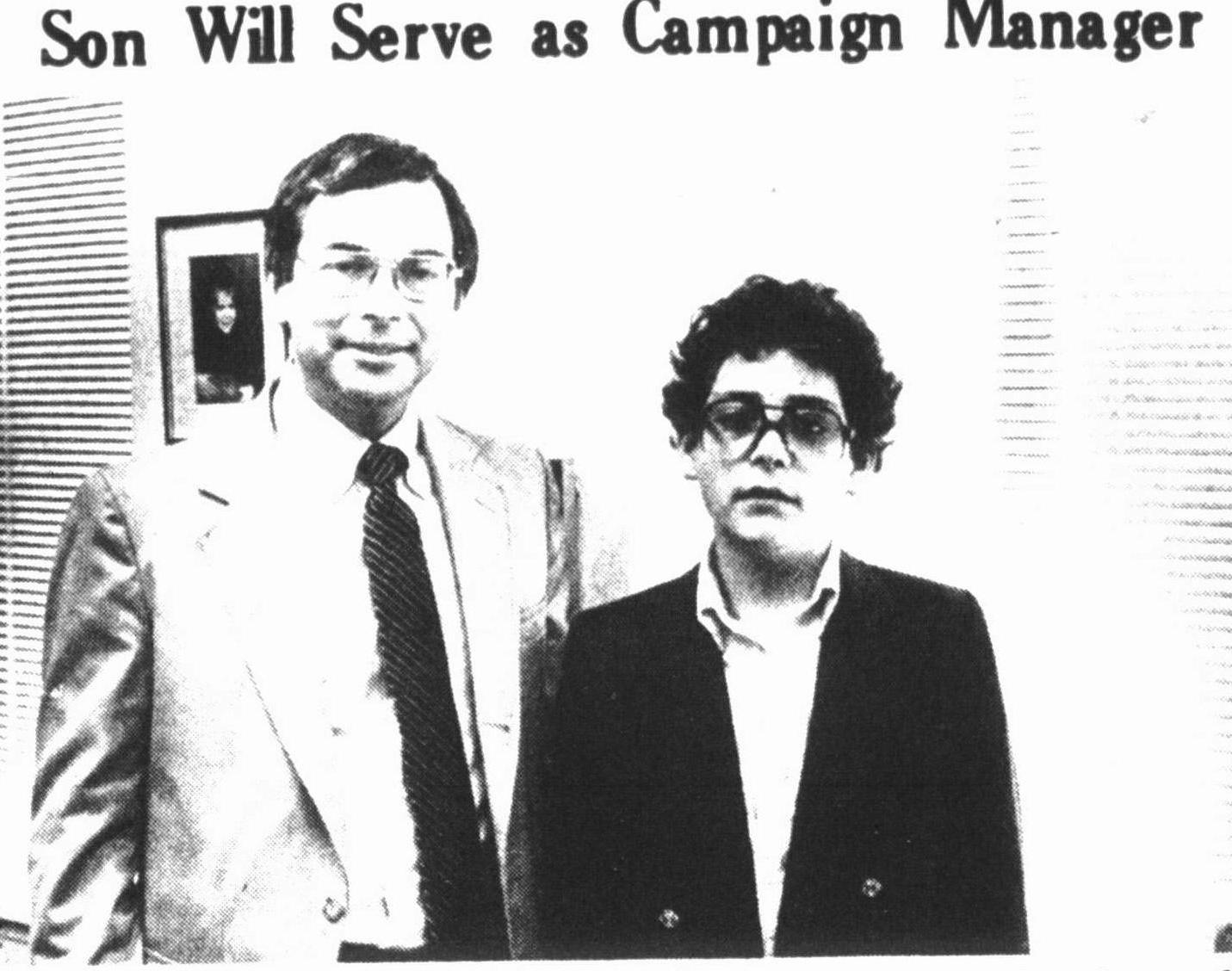
Missouri State Representative Hal Lowenstein (left) announces that his 13-year-old son, Marc, will manage his 1980 reelection campaign.
Graduates of the SIDBJ Hebrew and Sunday Schools included (front row, from left) Pauline Wang, Arline Peltzman, Ruth Myerowitz, Elsie Margolin, Anna Berkson, Melvin De Leve,
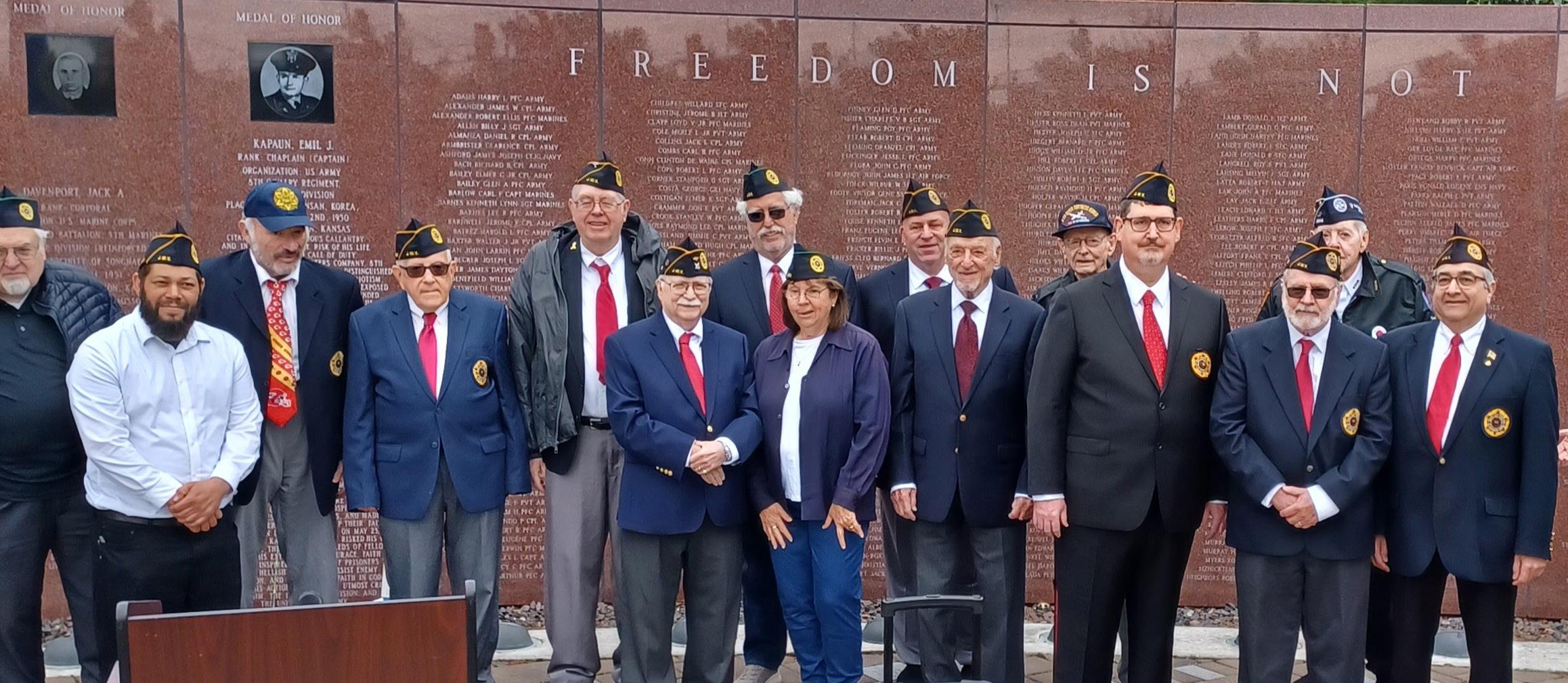
Above: Jewish War Vets Mo-Kan Post 605 gathered last month at the Korean War Memorial in Overland Park for a Memori-

Jim Sluyter, president and CEO of The J, and Jay Lewis, Jewish Federation’s president and CEO, put their pancake-flipping skills to work for a joint staff appreciation breakfast. More than 60 members of The J’s and Federation’s staffs got together for the event.

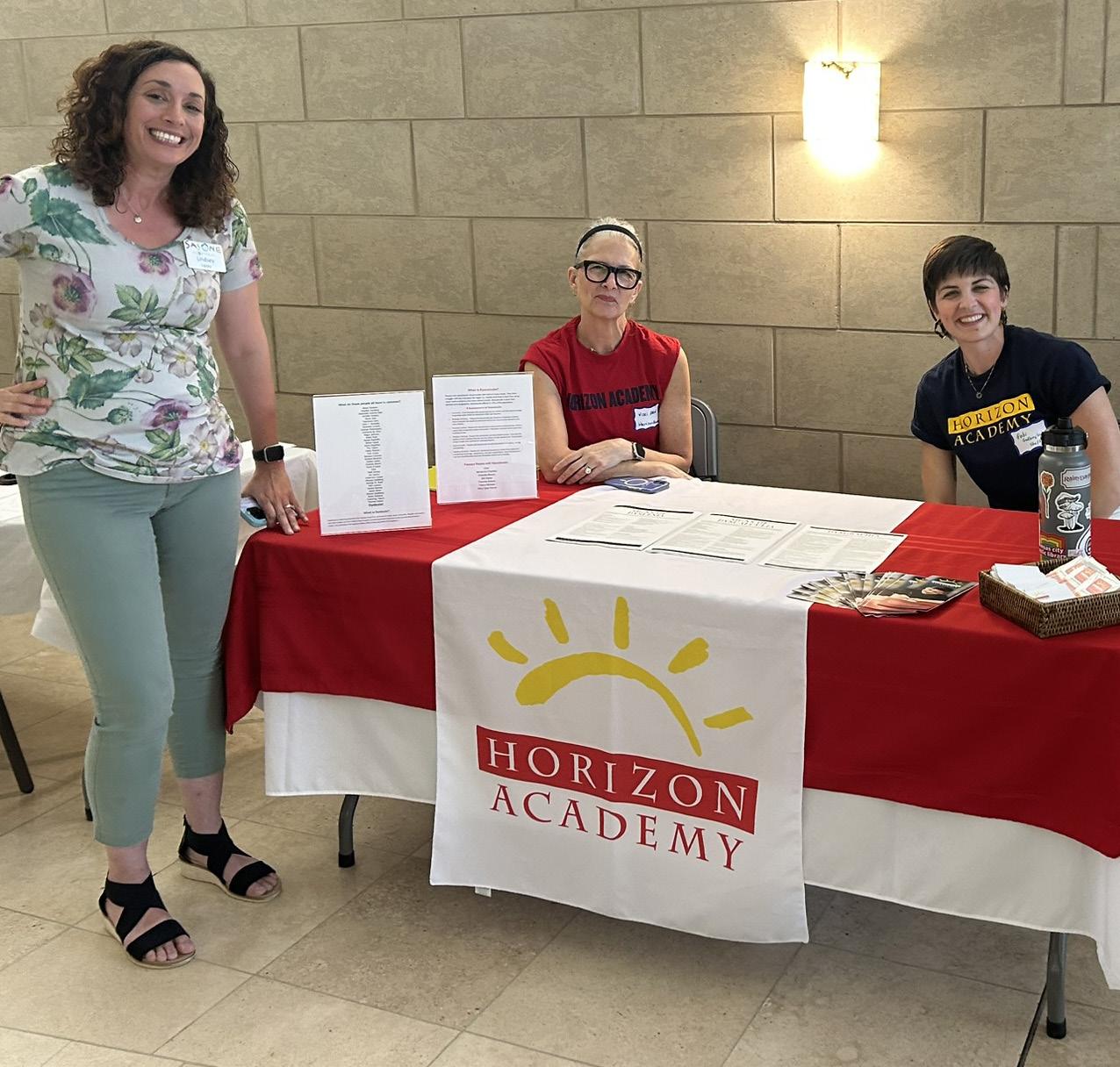
Congregation Beth Torah hosted its first Learning Disability Resource Fair on Sunday, June 8, in partnership with Sasone and Horizon Academy. Pictured are (from left) Sasone Director Lindsey Lipskey and Vicki Asher and Gabi Guillory Welsh of Horizon Academy.


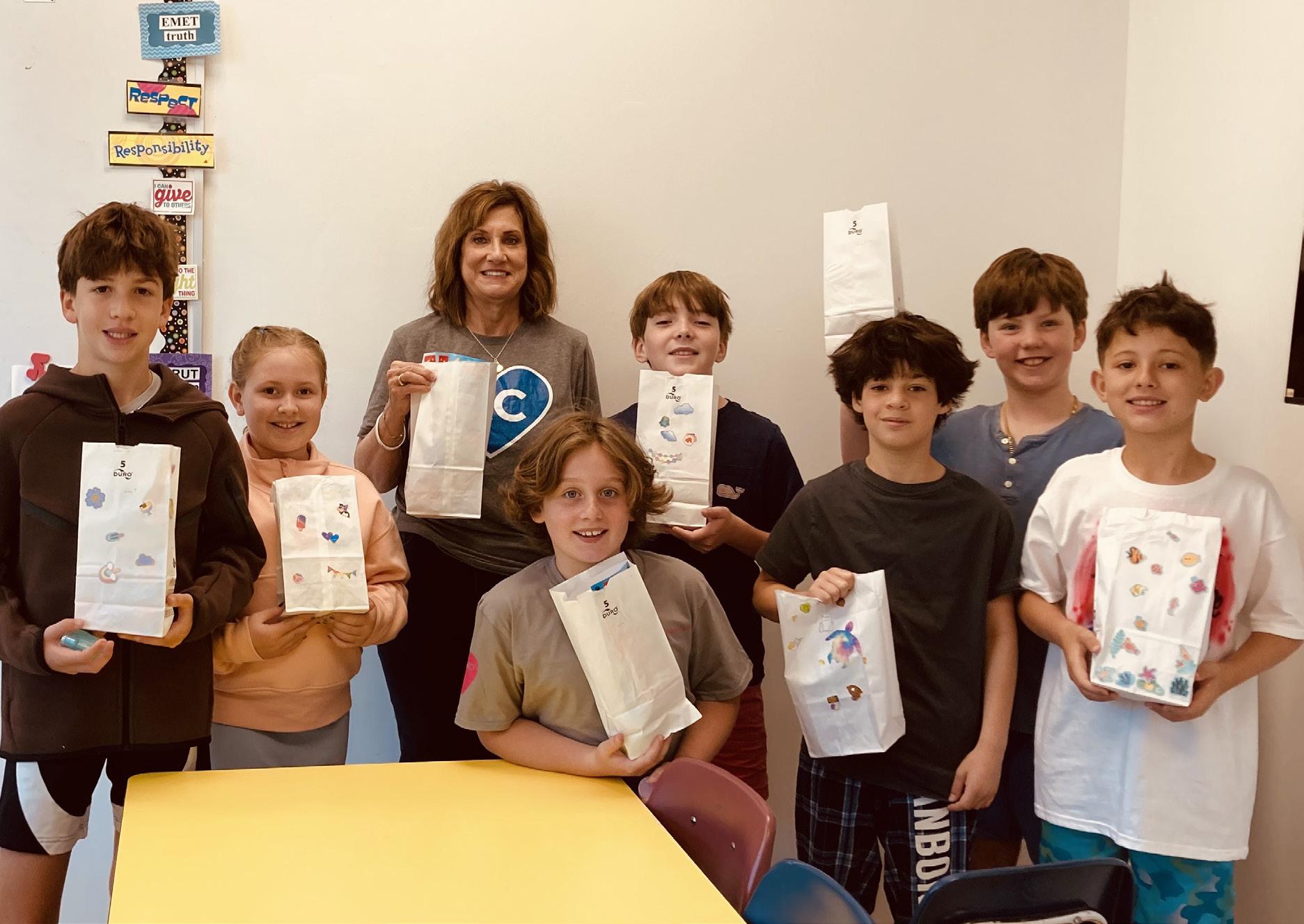
Above: Students in Denise Ellenberg’s 4th and 5th grade class at The New Reform Temple assembled children’s activity bags for KC Hospice House for an end-of-the-year mitzvah project. Pictured (from left) are Griffin Carlton, Aviva Enns, Denise Ellenberg, Mick Rosenbaum, Beachy Weinstein, Vaughn Copaken, Charlie Williams and Zeke Abelson.
Below: Community partners gathered at Jewish Family Service’s Brookside location last month to meet and socialize with new JFS Executive Director and CEO Angela DeWilde. JFS Meet & Greet




al Day ceremony. Memorial Day

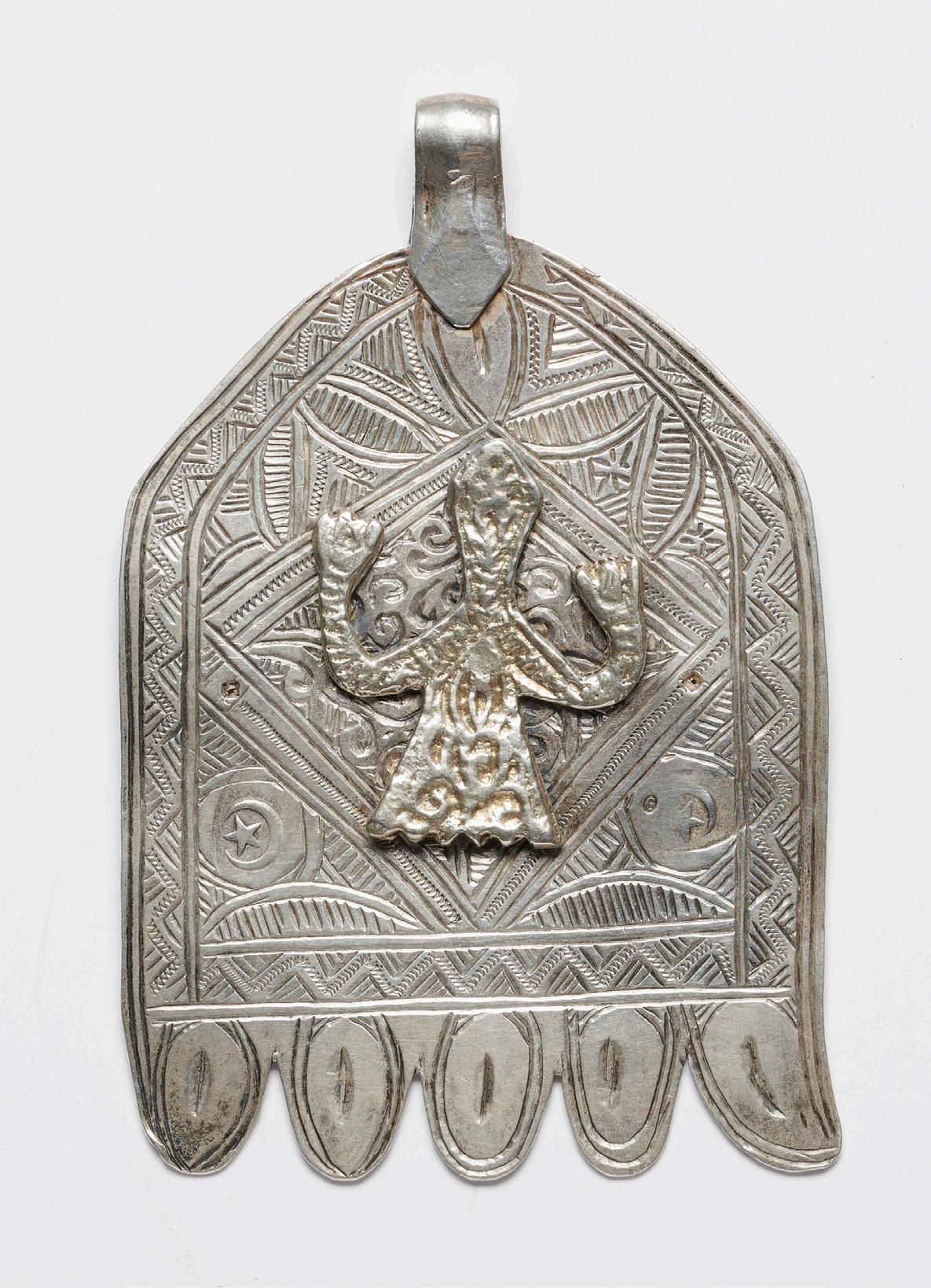
Hamsa amulet
By Ellie Holsten
Jewish amulets are often made in the shape of hands. This hand-shape is called a hamsa from khamsa, the
Arabic word for five. The first known hamsas were made in Mesopotamia to defend against the evil eye. While the symbol of a hand has been common in Jewish art since Biblical times, the hamsa-style of hand was not widely popular in Judaism until much later.
Hamsa shapes are commonly used for amulets, but they frequently appear on other types of ritual objects as well. The Klein Collection has examples of menorahs, Shabbat lamps and rimmonim that incorporate the hamsa shape. The majority of these pieces come from North Africa and Persia, where the shape is frequently incorporated in the popular styles of the non-Jewish population.
This hamsa amulet was made in Casablanca, Morocco, in the early 20th century. Its cast figure is meant to ward away Lilith, the demon feared for killing mothers and stealing babies.
More information about the Michael Klein Collection at the Temple, Congregation B’nai Jehudah can be found at kleincollection.org or by calling (913) 663-4050 to schedule a tour.
The Kansas City Jewish Chronicle and the Klein Collection are partneringtoshareandhighlightsomeofthe collection’suniquepieces.
JULIETs to learn about LUMI Neon Museum
All Jewish women are invited to attend the next Jewish Unforgettable Ladies Interested in Eating Together (JULIETs) event, which will feature a presentation about the LUMI Neon Museum. It will be held on Sunday, June 29, at 12:30 p.m. at Congregation Beth Torah (6100 W. 127th St., Overland Park, KS 66209).
In 2017, the LUMI Neon Museum was founded to save Kansas City’s vintage neon signage. Nationally recognized Kansas City photographer Nick Vedros decided to form a nonprofit organization to rescue, restore, preserve and display iconic neon signs, primarily from Kansas City area businesses. To that end, Nick assembled a team of prominent Kansas City business people to comprise the LUMI Board of Directors. From this initial vision, The LUMI Neon Museum was born.

The name “LUMI” was taken from the word “illumination.”
Every sign has a story, including the history, business ownership, donor credit and the restoration process. LUMI’s mission is to rescue, restore and illuminate the signs. Neon signs are often regarded as a form of urban art. The goal is to eventually have about 100 signs on display, and admission will be free to the public.
Women can reserve their seat by emailing Susie Klinock at Juliets.KC@ gmail.com by June 26. Admission is free.
Attendees should bring their lunch and arrive at least 10 minutes early to check in so the event can begin promptly. No synagogue affiliation is required to attend, and attendees should bring their own lunch or snack.
JULIETs event on the LUMI Neon Museum Sunday, June 29, at 12:30 p.m.
Beth Torah, 6100 W. 127th St., Overland Park, KS 66209
Summer Trivia returns to the LJCC
The Lawrence Jewish Community Congregation (LJCC) will hold two fundraising game nights this summer.
The first event is a Jeopardy!-style trivia night scheduled for Sunday, June 22, from 7 to 9 p.m. with the Lawrence-based trivia host, Will Averill. A second “Singo” (musical bingo) fundraiser is scheduled for the evening of July 31.
Tickets for each “Summer Trivia at the LJCC” will be available for purchase on the day of the event at the door. Prices and more information are available at ljcc.shulcloud.com/ event/trivia-fundraiser.html.
Tickets include snacks, beer, wine
LJCC Summer Trivia
and other non-alcoholic beverages for sale. For the trivia night, attendees are encouraged to come with a team of up to six people, but organizers tell guests to not be concerned if they don’t have a team ahead of time; they are happy to help set them up with teammates. While “Singo” isn’t team-based, the LJCC hopes that everyone will attend and bring their friends.
All proceeds from Summer Trivia at the LJCC go to support the LJCC Religious School, which is free of charge, given the congregation’s deep commitment to making Jewish learning open to all.
Sunday, June 22, and Thursday, July 31 LJCC, 917 Highland Dr., Lawrence, KS 66044

Peace of mind is pricele . v
Take a look inside Village Shalom to see our remarkable Long Term Care community. Private suites and the finest in comprehensive skilled nursing services give peace of mind to you and your loved ones.
Learn more at VillageShalom.org or call Lori Carter, Admissions Coordinator, at 913-266-8473 to tour our welcoming senior living community. We look forward to showing you what peace of mind looks like. Welcome to The Village.


Anniversary Section



From the publisher
By Derek Gale Vice President and COO of Jewish Federation
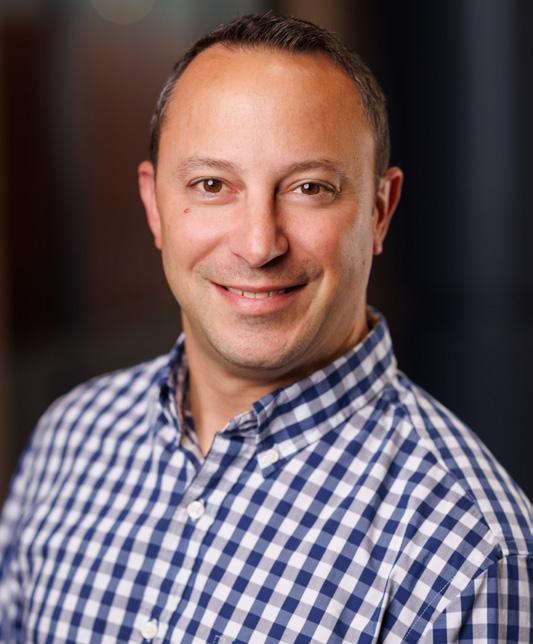
It is with great humility and also great pride that I write this column in celebration of 105 years of The Kansas City Jewish Chronicle — many of these years under the stewardship of the Rose family, and only more recently, five years under the stewardship of Jewish Federation of Greater Kansas City.
These last five years have been a whirlwind with many changes, including moving to publishing every other week in print, partnering to create a complete digital archive, and ramping up our digital presence with
social media content, e-newsletters and digital editions. Through it all, we have worked diligently to appreciate our loyal readers and bring you more local content, new features and to maintain The Chronicle as a true community news and information source.
When we spoke with Steve Rose about taking The Chronicle under the Federation umbrella, we assured him we had the right people on our team to do so — people with degrees and working backgrounds in journalism and business. Most of those people remain part of the Federation team today, including Assistant Editor Lacey Storer, who is integral to The Chronicle’s success, strategy and continued evolution. Meanwhile, we have one key addition to the team, who joined us part time in 2021 and full time in 2022, and who has proven his worth many times over: Chronicle
Editor & Business Manager Sam Kricsfeld.
Sam is what makes The Chronicle happen — quite literally. He interviews sources, writes articles, edits, writes headlines, designs the paper, manages subscriptions and — in partnership with Lacey — makes presentations around the community. I spent most of a decade working in journalism before my dozen years at Jewish Federation, and it is rare to find someone who not only can so capably do so much, but also who does it with the passion and dedication that Sam brings to our community.
I am privileged to work as a small part of the team that carries forward The Kansas City Jewish Chronicle brand, writing here or there, serving as a copy editor for our print editions and occasionally offering advice on ethics, budget or best serving our readership.
It gives me great joy to use my graduate education and journalism training in service of our Jewish community.
My pledge to our community is that The Chronicle will continue to be a trusted brand that informs our Jewish community, tells the stories of our community and quite literally chronicles how our community moves through this era of Jewish life. Just like our work at Jewish Federation, there is never a dull moment as we gather, report and share what’s happening in our Jewish community and Jewish world.
If 105 years of The Chronicle resonates with you, and you would like to invest in the future of this community news source, please reach out to me to find out how your investment today can have lasting impact: derekg@jewishkc.org.


YMHA/YWHA (later the
established
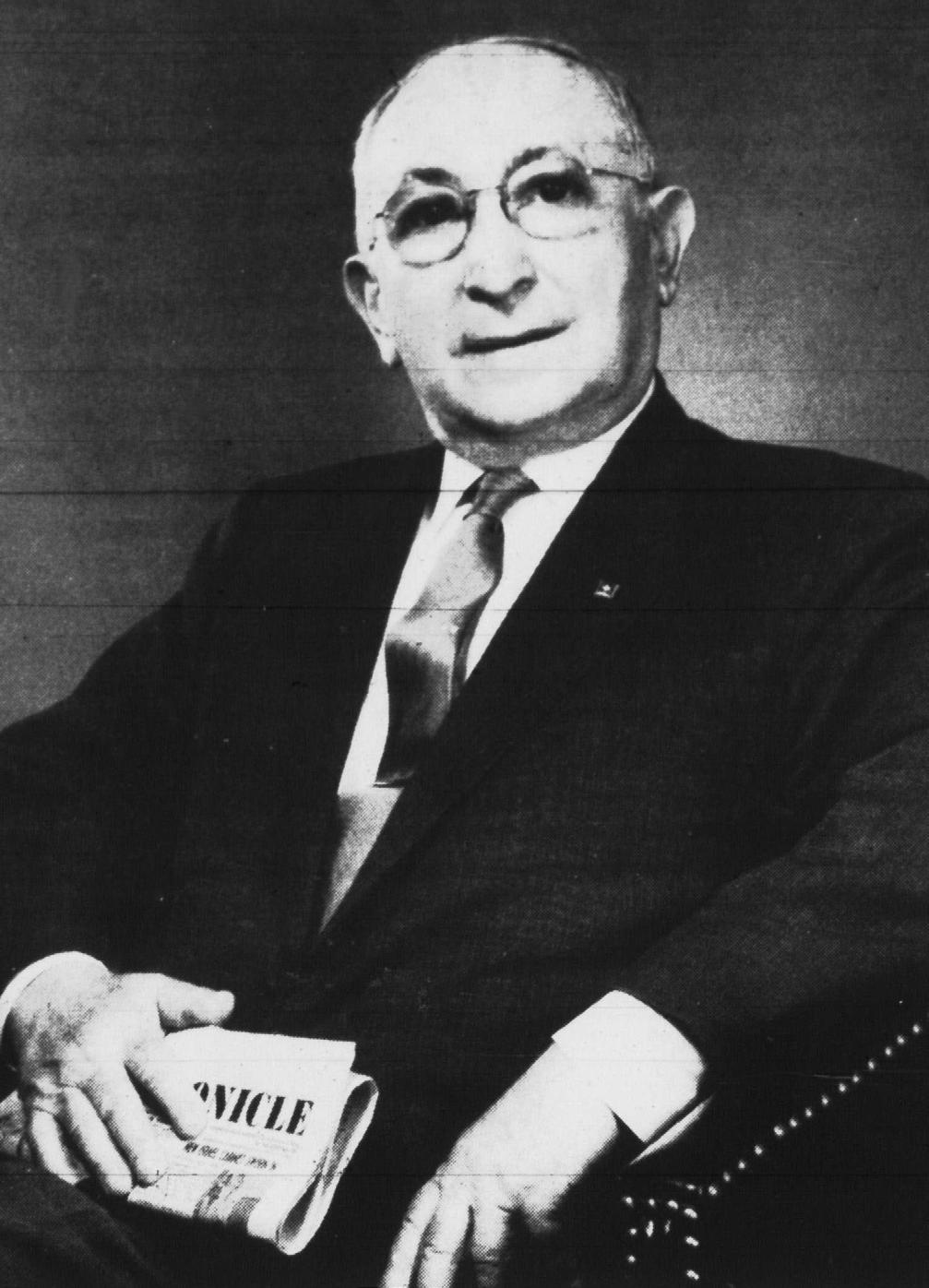
Thisisanabridgedversionofanarticle by Victor Slone, The Chronicle’s first editor and founder, that he wrote for the 50th anniversary issue of The Chronicle(Jan.30,1970).
Here in Miami Beach, Florida, where my wife and I have come to spend our retirement years, the New Year of 1970 brings back memories of old, when a half-century ago I, together with two colleagues, the late Nathan Gould of Milwaukee, Wisconsin, and Elias Rex Jacobs of Buffalo, New York, founded The Kansas City Jewish Chronicle and were among the pioneers in the Midwest in the American Jewish newspaper field.
Gould was already publishing the Detroit Jewish Chronicle when, in 1919, he was intrigued by the promotion of a nationwide campaign by the Chamber of Commerce extolling Kansas City, “The Gateway to the West,” as an ideal community business expansion…
The thought of inaugurating a chain of Jewish newspapers was exciting, but I was frightened about venturing into so extensive an enterprise. I was soon won over, however, as I was journalistically inclined…
In the Kansas City Jewish community of which I was about to become an integral part, I found some situations deplorable. There were three distinctly separate groups — the Orthodox, Conservative and Reform, each uninterested and uncooperative with one another. There prevailed an atmosphere of fear among Jews living in large apartment buildings as to how their Gentile neighbors might react if they saw “Jewish” mail in the mailboxes. “I would like to subscribe if only you would call the paper ‘The Chronicle,’” we were told. Some families in private residences hesitated to subscribe for similar reasons.
These fears proved to be unwar-
Victor Slone Editor, 1920-1963
ranted. The Kansas City Jewish Chronicle soon became well known throughout the community and was well received. Some non-Jews, unsolicited, became subscribers... It was inevitable that newly developing circumstances would bring about such a change in attitudes, and to me that is the most outstanding achievement which has taken place in this past half-century.
Since neither great wealth nor worldly position was in my prospects when I chose to enter the Jewish newspaper field, I pretty well evaluated myself and my potentials as a businessman. I knew I was not the go-getter type and that it would probably be necessary to devote longer, harder hours to this business of making a living than some others who were more aggressive might require.
This I had calculated correctly.
Working with a most limited staff, too frequently my entire 12-hour day was occupied within the framework of my business requirements. Fortunately, involved was a great deal of reading, which I loved; but, nevertheless, enforced reading under pressure can become irksome.
Since my personal life was to be so inextricably woven with my business life, I could combat drudgery only by working for an ideal, a motive. Everything that is capable of exciting or firing one with enthusiasm can usually sustain one’s energies above ordinary level. To promote better human relations would be my goal and, through our newspaper as a medium, I would strive towards this purpose and hope to be rewarded by the triumph of results.
I never lost awareness of that goal. I loved my work, and though I admit that frequently it was drudgery, through it I found my most powerful stimulus.
Also through my work I made a host of wonderful friends and had the opportunity to meet many interesting local, national and international personalities...
When in June of 1963 I relinquished my business interest and executive responsibilities, I stated that a continuously progressive Kansas City Jewish Chronicle in a thriving, harmonious community would be my greatest reward.
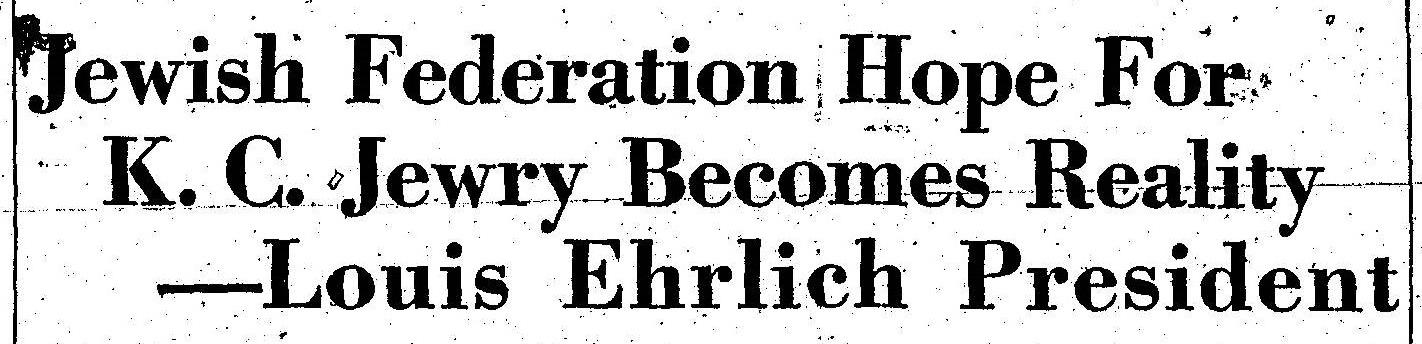
Victor Slone named editor The Chronicle is founded
Jewish Community Center)
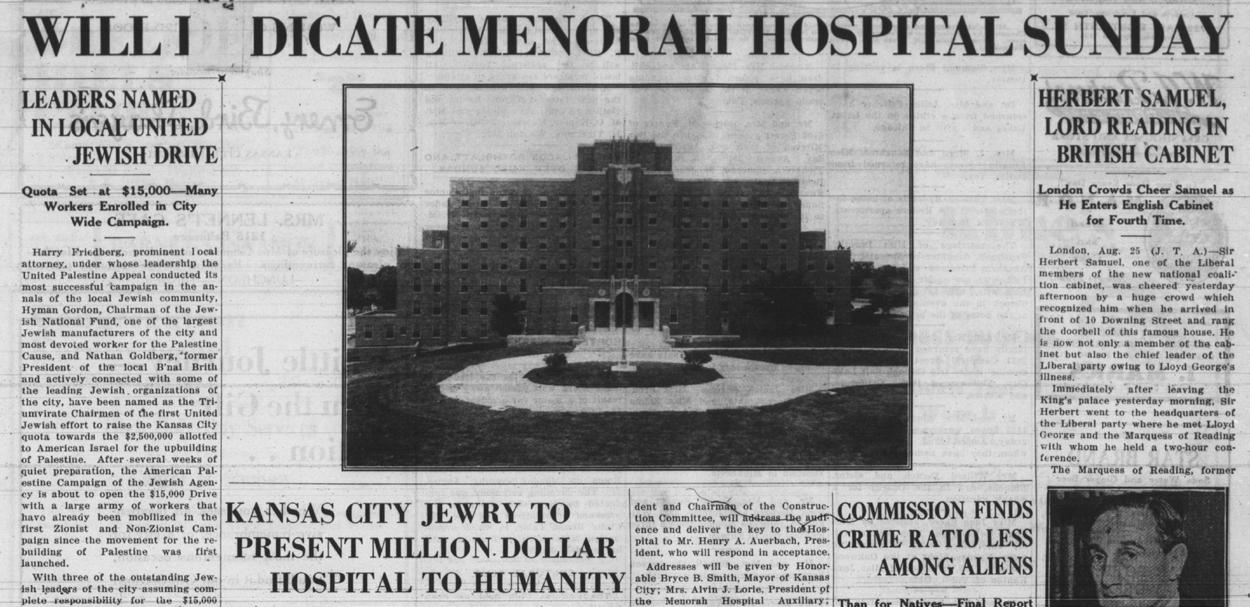
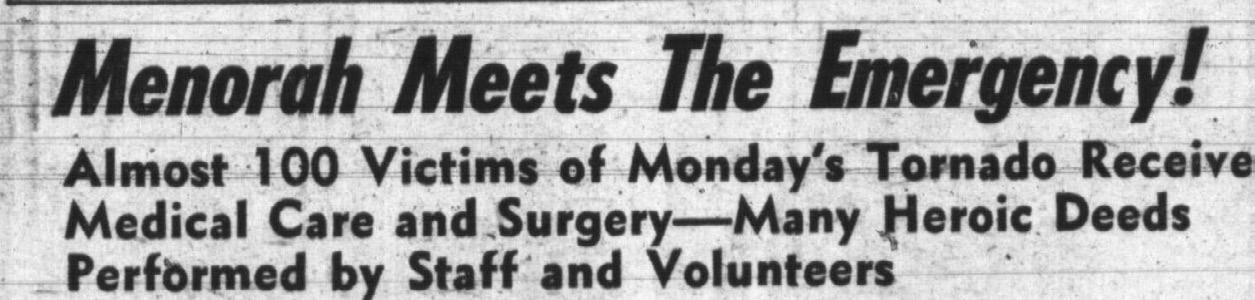
Menorah Hospital dedicated
Jewish Federation established
Victor Slone The first issue of The Chronicle, published on Jan. 2, 1920.
Henry Ford’s antisemitic rhetoric increases
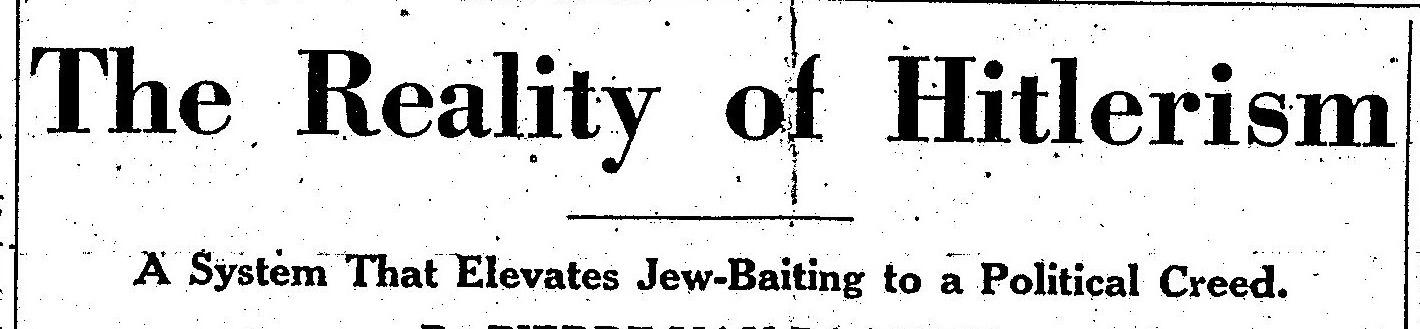
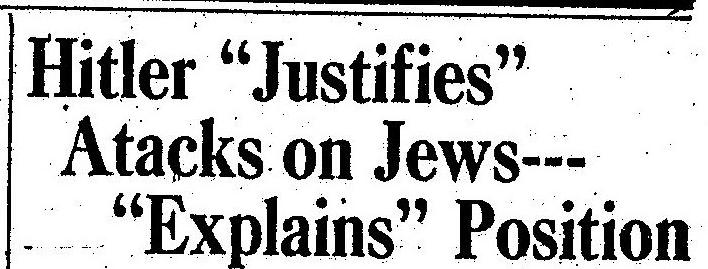
Adolf Hitler, Nazis come to power in Germany
Boy Scout Troop 61 founded
Greater Kansas City AZA #2 youth group founded
Temple Beth Sholom established in Topeka, Kansas
Congregation Ohev Sholom established
Wall Street Crash starts the Great Depression
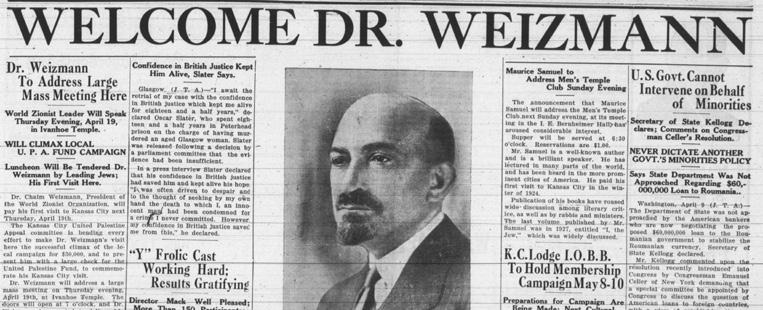
Dr. Chaim Weizmann speaks in Kansas City
President Warren G. Harding elected
President Calvin Coolidge elected
President Herbert Hoover elected
President Franklin D. Roosevelt elected
“The Jazz Singer” “talkie” features Jewish actor Al Jolson Liberty Memorial, dedicated to WWI veterans, opens
Antisemite Charles Lindbergh opens Municipal Airport
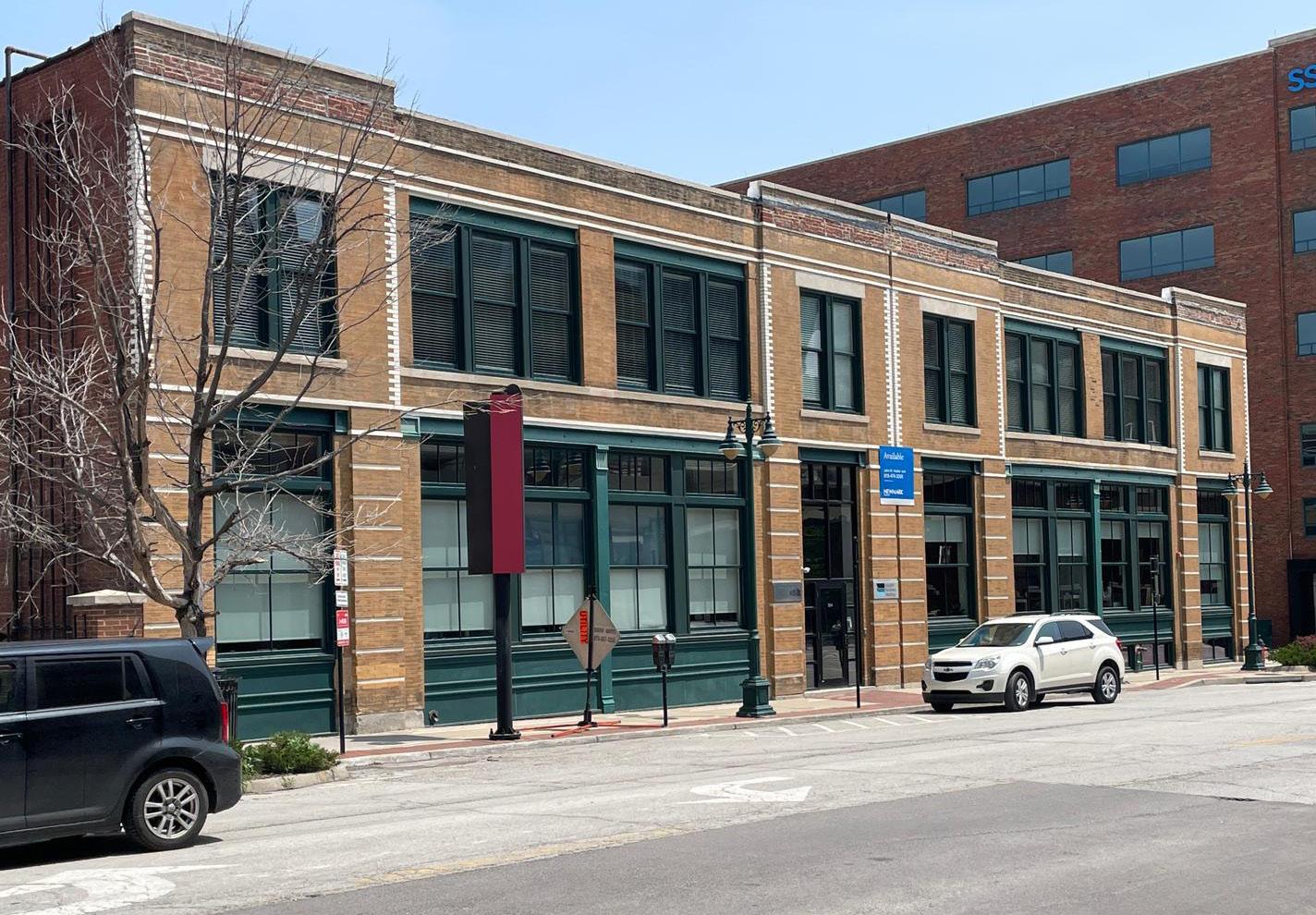
A gathering place for the community
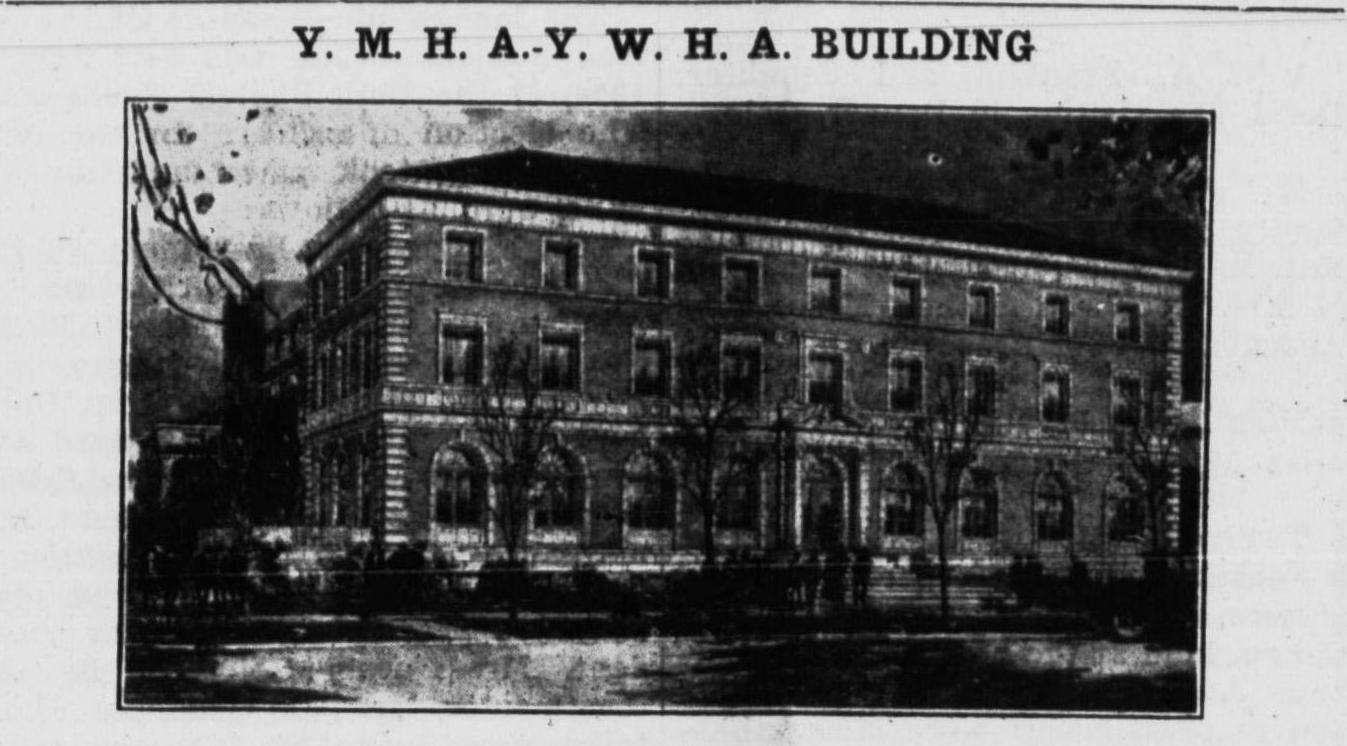
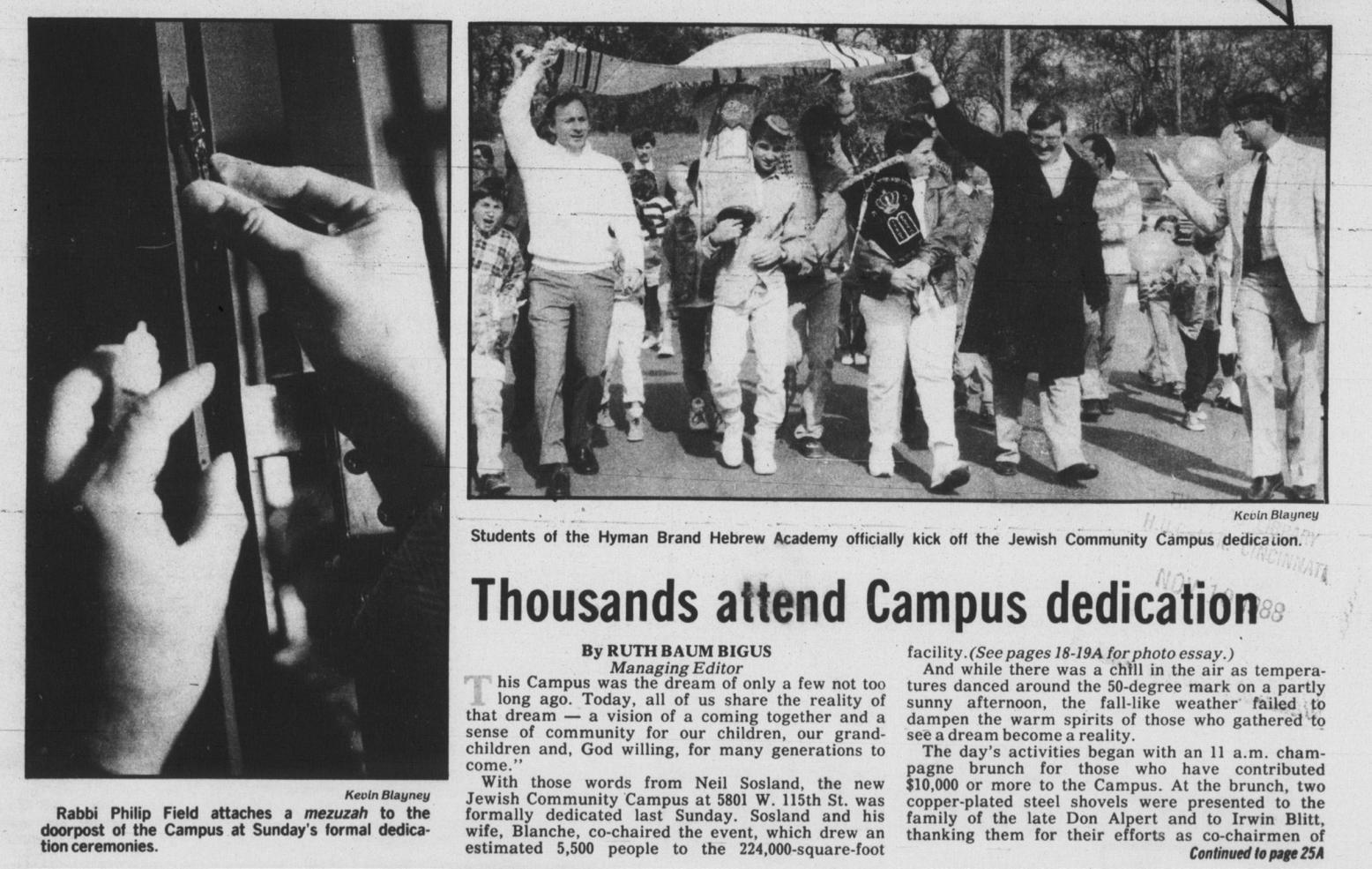
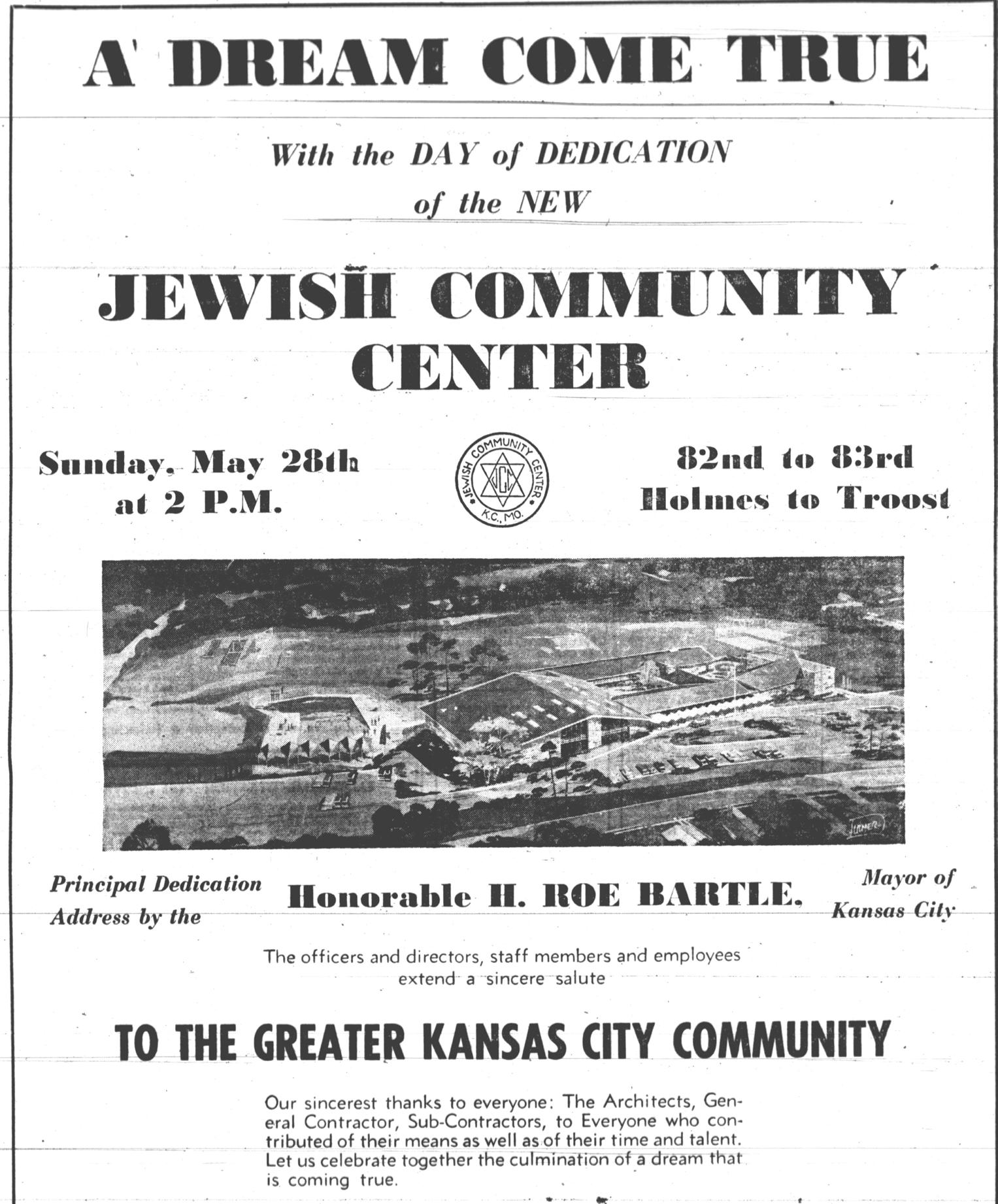
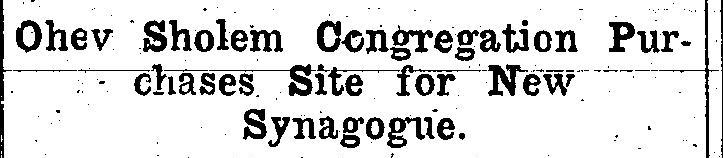
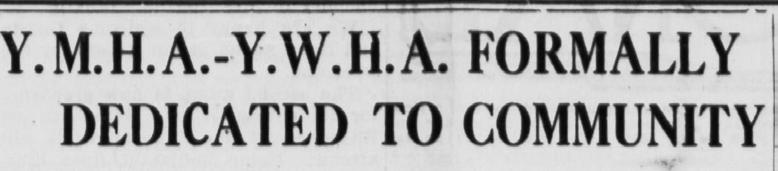
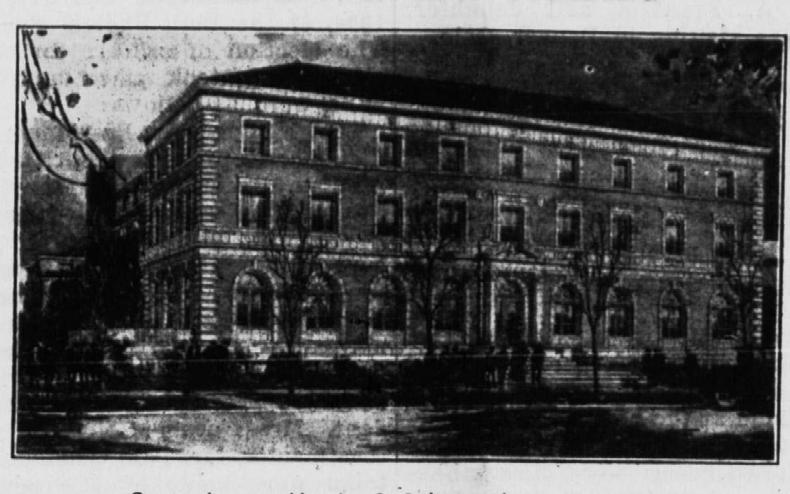
Pictured from The Chronicle archives are (top left) an image of the Young Men’s/Women’s Hebrew Association building from July 11, 1924; (above right) the announcement of the celebration of the Jewish Community Center’s relocation to 82nd and Troost on May 26, 1961; and (above left) the celebration of the opening of the Jewish Community Campus from Nov. 4, 1988.
The Jewish Community Center (and now the Jewish Community Campus as a whole) has been Kansas City Jewry’s main venue for gatherings
for more than a century. Since the Jewish Community Center’s founding as the Young Men’s/Women’s Hebrew Association in 1924, The Chronicle
has consistently shared about its news and events, from its events to its amenities to its youth activities and more.
Supporting Israel from the start
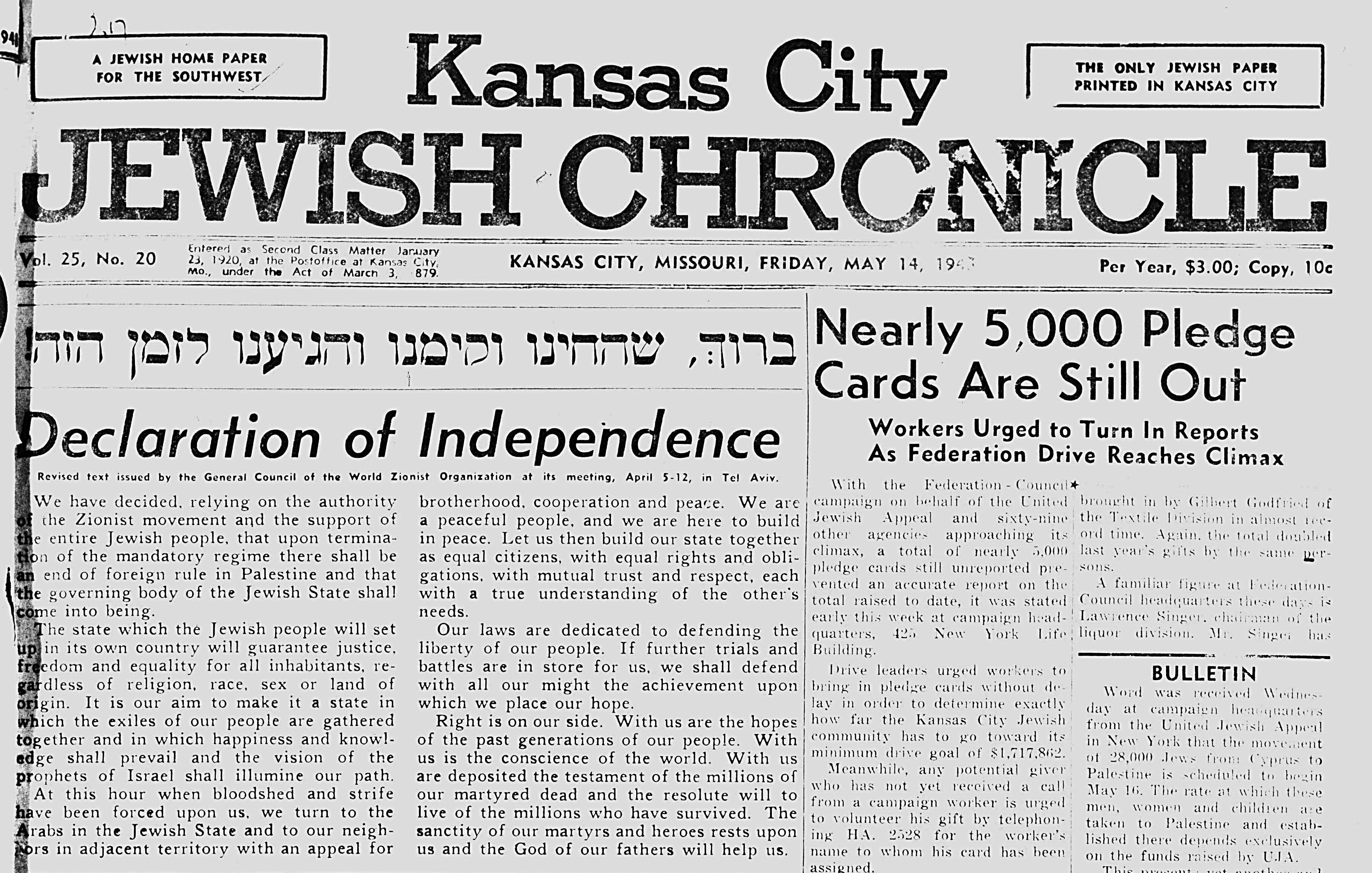
The front page of the May 14, 1948, issue of The Chronicle heralding the establishment of the State of Israel included the Shehecheyanu prayer in Hebrew and the Israeli Declaration of Independence.
The Kansas City Jewish Chronicle has been unreservedly Zionist since its founding. Up to and since the establishment of the State of Israel, The Chronicle has been steadfast in its support of Jewish self-determination.
Upon the announcement of Israeli independence on May 14, 1948, The Chronicle printed the Shehecheyanu prayer in Hebrew, blessing G-d, “who has kept us alive, sustained us and brought us to this season.” Right
below that, the entirety of the Israeli Declaration of Independence was printed. Throughout the May 14 issue were announcements of celebrations and prayer services held by synagogues and community organizations (including multiple organizations specifically dedicated to Zionism).
For years, especially under Milton Firestone’s editorship, Israeli politics and wars were frequent topics in The
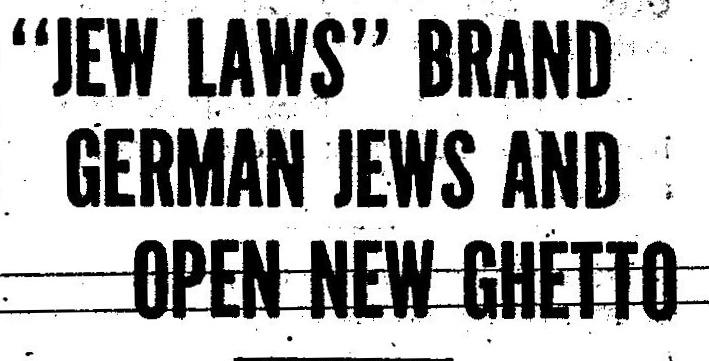
Nuremberg Laws passed in Germany
Nuremberg Laws passed in Germany
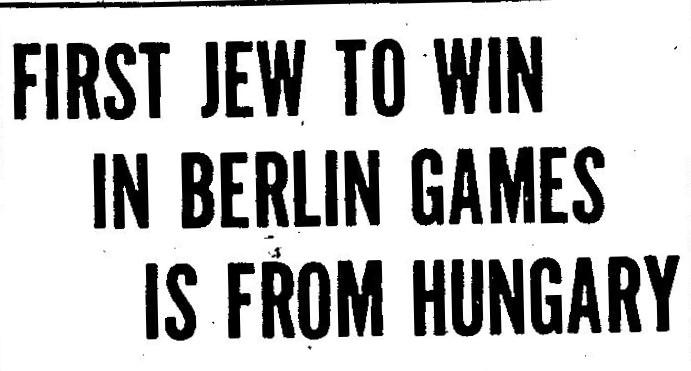
Nazi Germany hosts Olympics
Chronicle. Multiple Chronicle editors frequently traveled to Israel to report, and there were even Israeli correspondents who wrote specifically for The Chronicle (most prolifically, Sybil Kaplan).
Since the advent of 24-hour news and the internet, The Chronicle has pivoted towards reporting on the Kansas City community’s relationship with Israel more than its politics and wars.
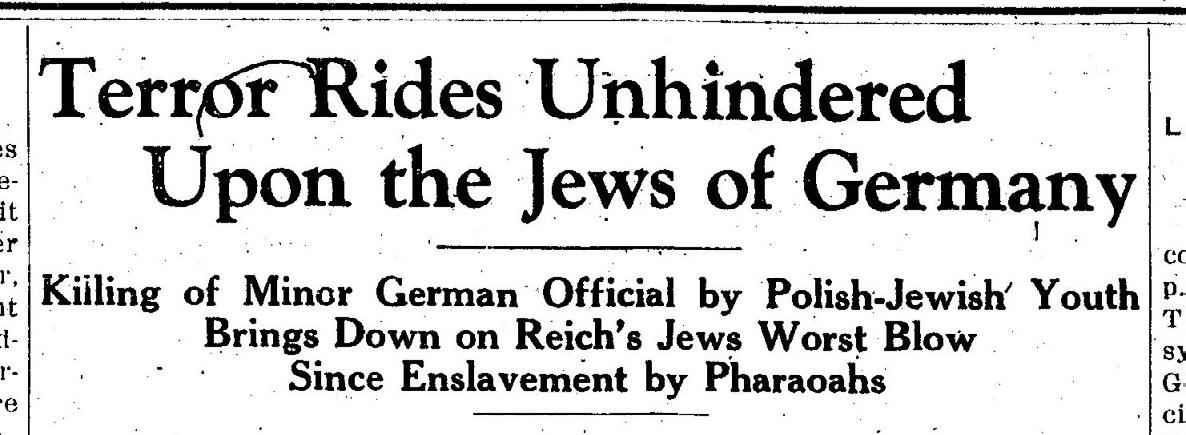
Nazi Germany hosts Olympics KristallnachtKristallnacht
Rabbinical Association formed
Germany invades Poland
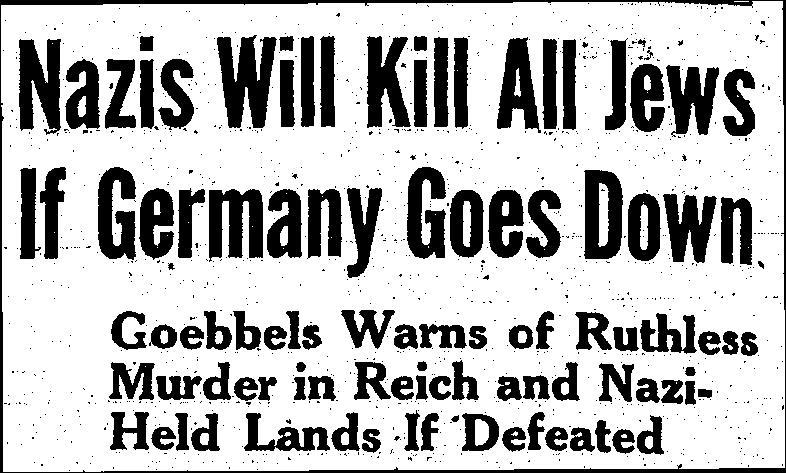
Nazis begin mass murders of Jews
Nazis begin mass murders of Jews
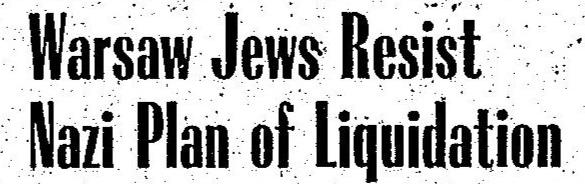
Attacks on Pearl Harbor; U.S. enters World War II Warsaw Ghetto uprising Warsaw Ghetto uprising

Jewish Community Relations Bureau established
President Harry S. Truman assumes office after death of FDR
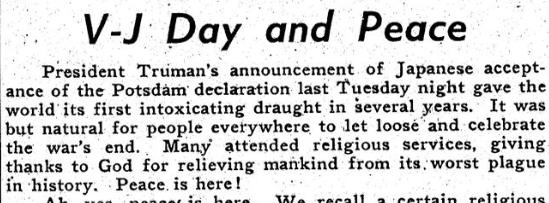
Germany surrenders, followed by Japan after nuclear bombing, ending World War II
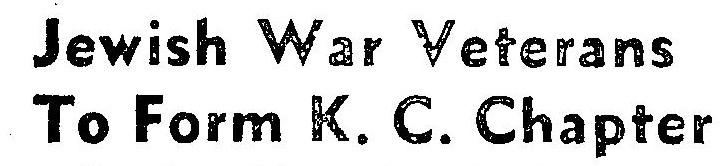
State of Israel established
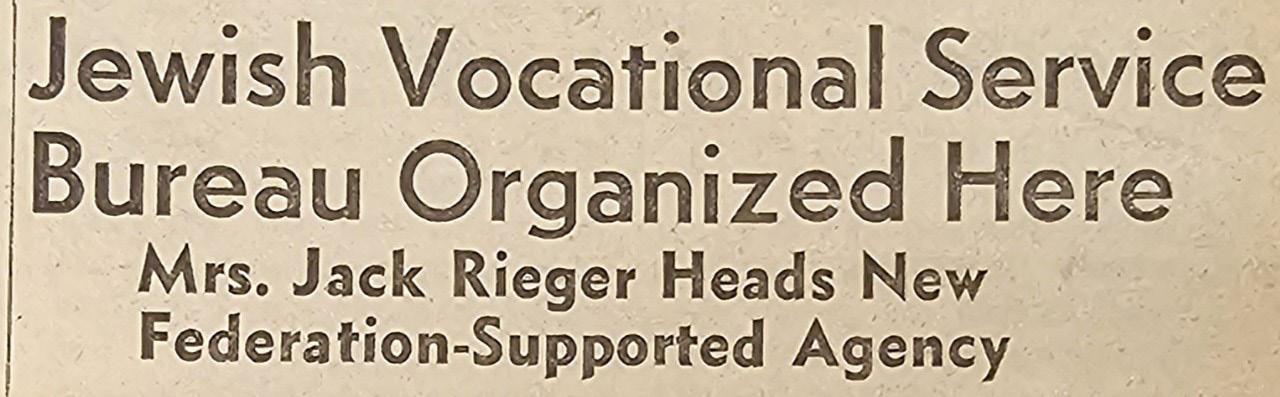
Jewish Vocational Service established

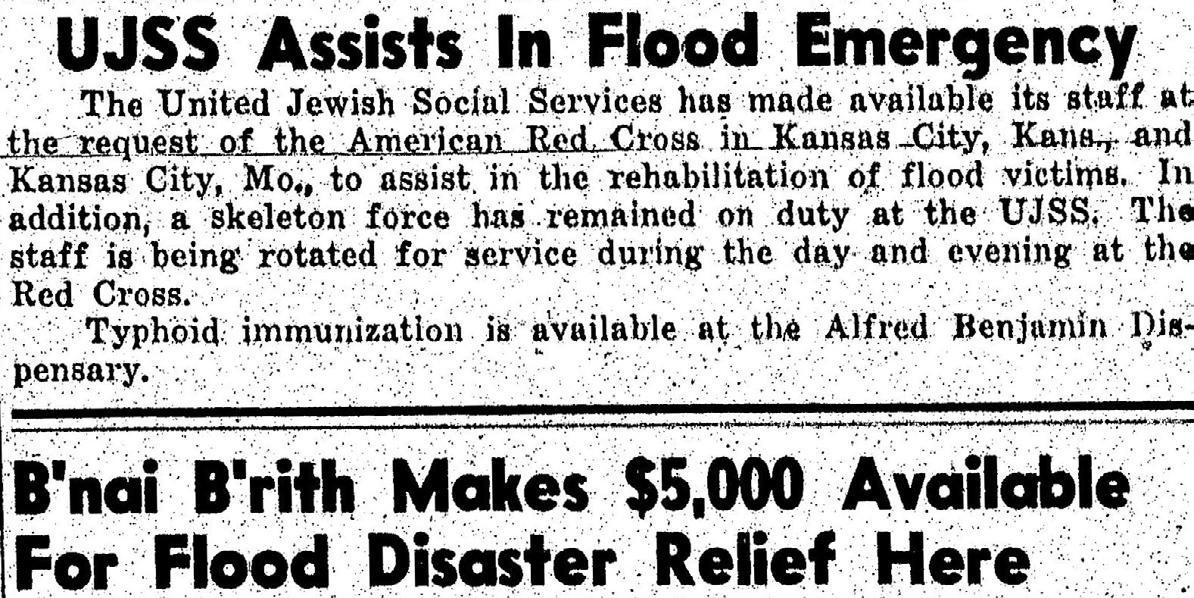

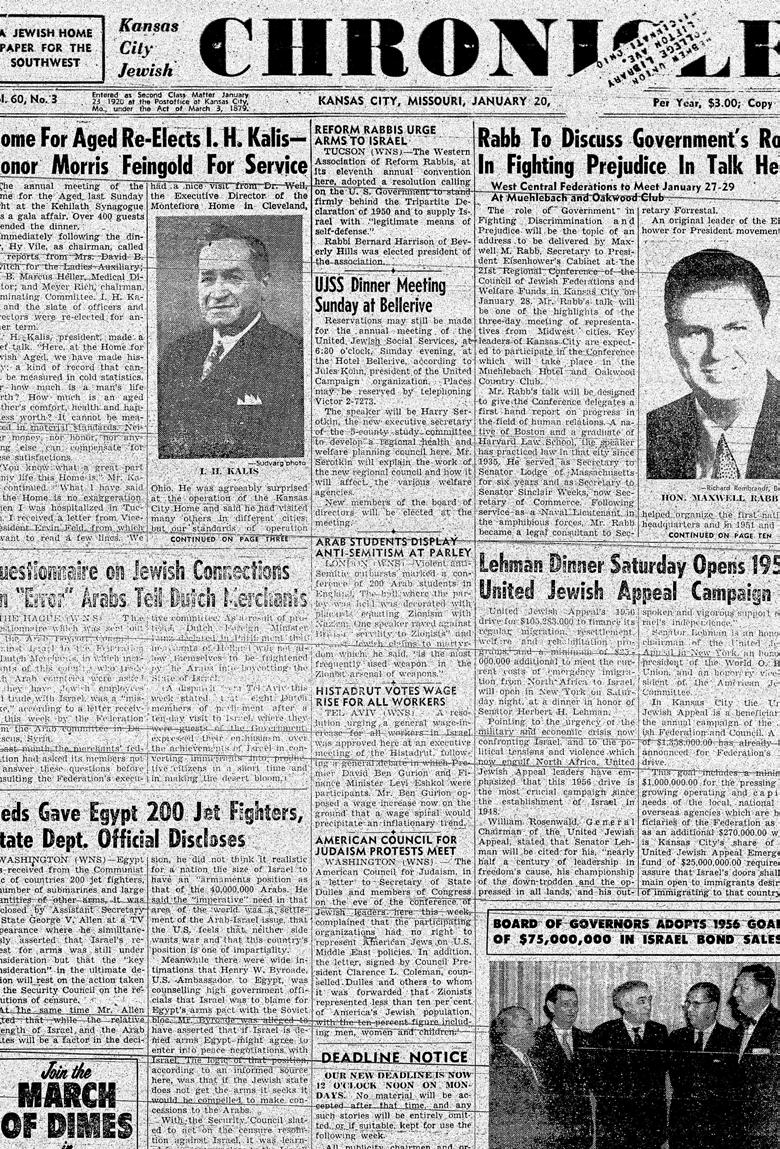
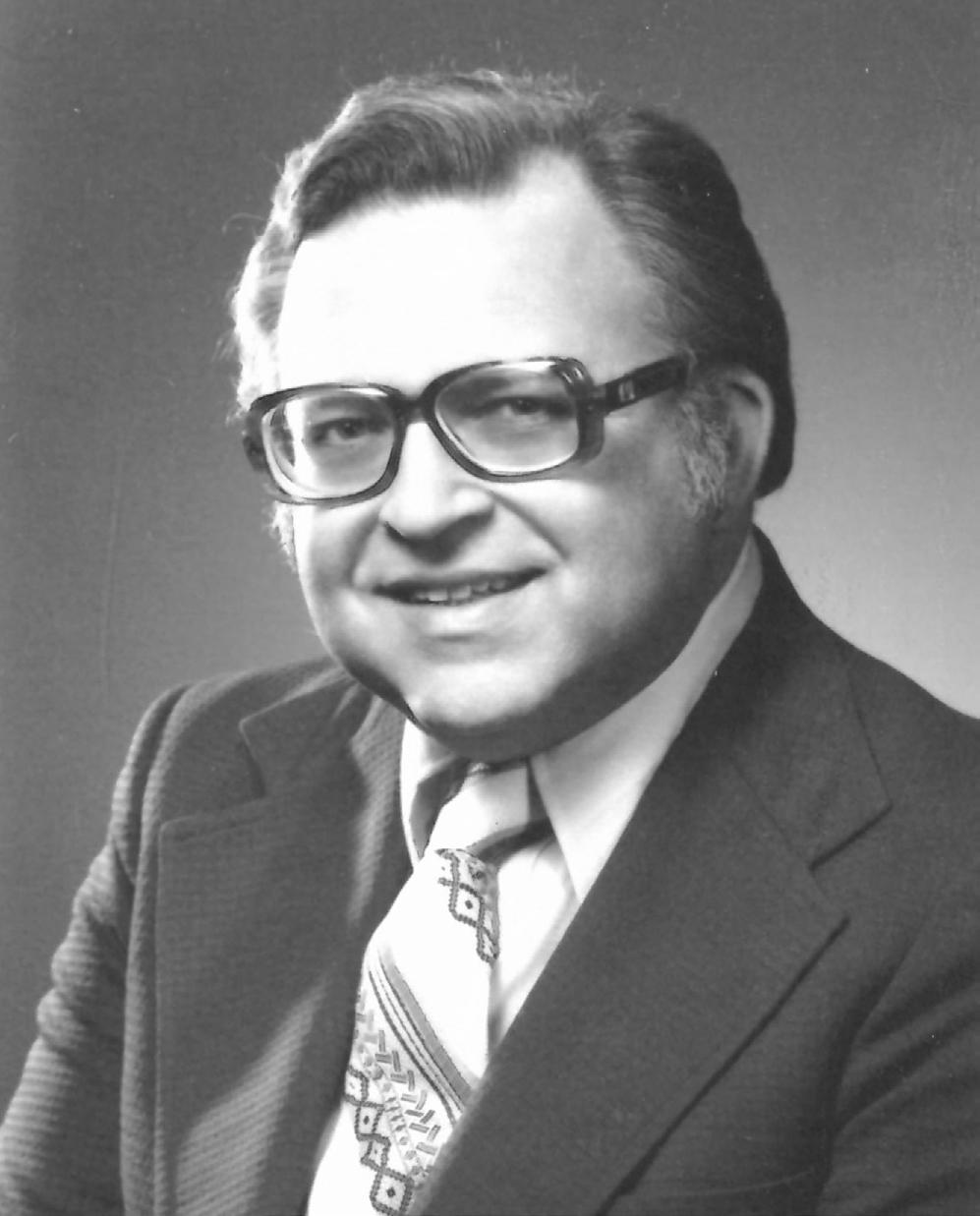
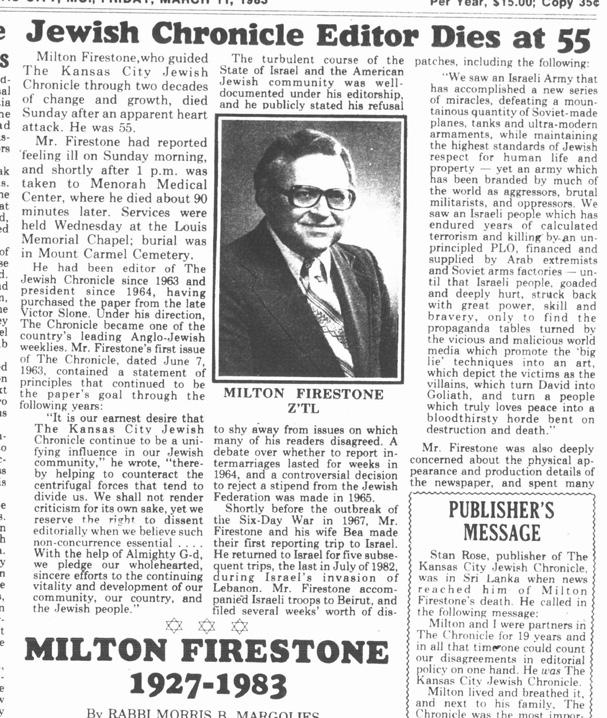
Milton Firestone Editor, 1963-1983
For 20 years, from 1963-1983, Milton Firestone was the dedicated steward of The Kansas City Jewish Chronicle, elevating its status to rival Jewish publications across the nation. Due to his unexpected death at age 55, he was never able to pen a retrospective on his career. Therefore, the following biography is assembled from the obituaries and memorials published in The Chronicle after his death.
Upon becoming The Chronicle’s editor and partial owner in 1963, Milton Firestone wrote that The Chronicle should “continue to be a unifying influence in our Jewish community, thereby helping to counteract the centrifugal forces that tend to divide us.”
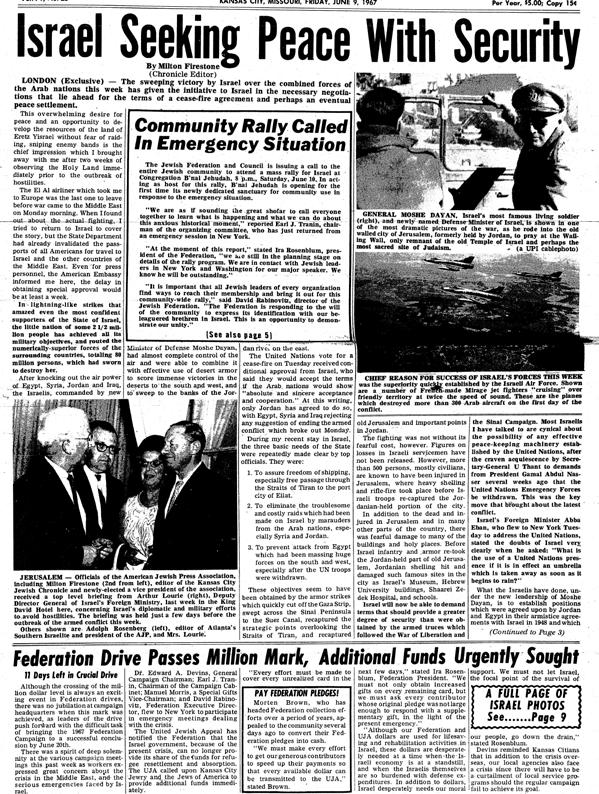
Firestone also was responsible for some of the region’s best Israel reporting — in 1967, shortly before the Six-Day War, he and his wife, Bea, traveled to Israel on a reporting trip. Firestone returned five more times, accompanying Israeli troops to Beirut, Lebanon, during Israel’s invasion.
In addition to his dedication to reporting, Firestone was deeply engaged with the paper’s production, involving himself in layout and copy editing.
Born in New York City in 1927, Firestone and his family moved to Kansas City the following year. His dedication to Judaism was cemented in his youth; he was involved in Congregation Beth Shalom’s religious school, and while at the University of Kansas, he served as president of the Jewish Student Union.
After his service in the Korean War, he married Bea Blumenthal

and worked at Columbia Glass and Window Co. until he purchased The Chronicle in 1963. Upon his purchase, he also became editor.
In 1966, he and Bea helped establish what would become Hyman Brand Hebrew Academy, serving on its boards and using The Chronicle to garner support.
In addition to his leadership at HBHA, he was involved with the American Jewish Press Association, Society of Professional Journalists, Congregation Beth Shalom, B’nai B’rith Lodge, the NAACP and more. Congregation Beth Shalom’s Rabbi Morris Margolies wrote in The Chronicle upon Firestone’s death that “he [revived the paper] by publishing the most significant Jewish news on the world scene. He did it by supporting every constructive Jewish enterprise in our community. He did it with an editorial fearlessness… for Israel no American Jew has had greater love.”
Stan Rose, then publisher of The
Chronicle, wrote that Firestone “was The Kansas City Jewish Chronicle. Milton lived and breathed it, and next to his family, The Chronicle was the most important thing in his life… No one will ever surpass his dedication and skill in interpreting Kansas City Jewish life and the events and values that are so important to our community.”
Upon his untimely death at age 55 from a heart attack, his wife, Bea, essentially became the acting editor of The Chronicle until Stan and Steve Rose’s Sun Publications bought the paper and Firestone’s successor, Diane Wolkow, was named managing editor.
Firestone’s dedication to the paper and deep involvement in Jewish journalism and the Kansas City Jewish community makes him one of the community’s best-remembered leaders of his era. For years after his death, Firestone was still listed among the staff of The Chronicle in memoriam.
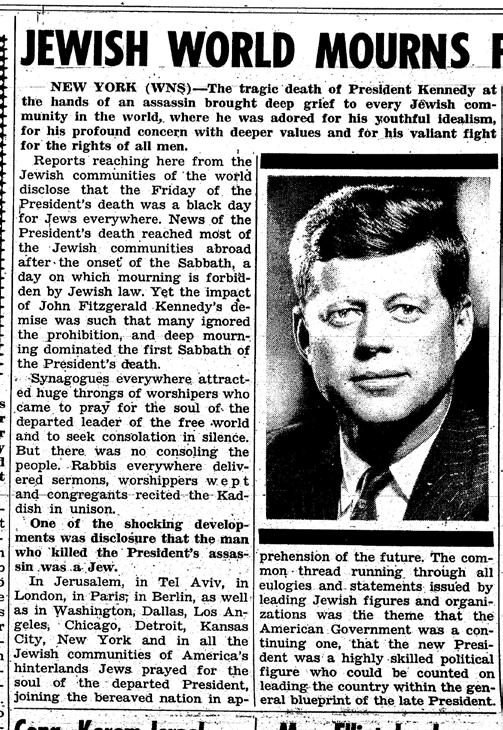

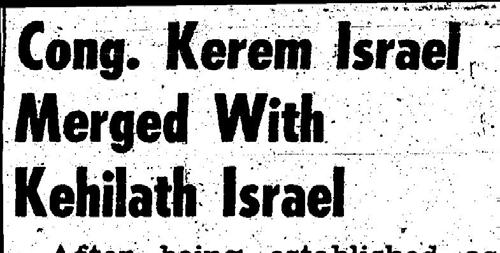


Milton Firestone named editor, heads corp. to buy The Chronicle
Stan Rose, Milton Firestone become sole owners of The Chronicle
Lawrence Jewish Community Congregation established
Synagogues merge to become Congregation Beth Israel Abraham and Voliner
President Kennedy assassinated; President Lyndon B. Johnson assumes office
Milton Firestone, editor from 1963 to 1983, pictured in 1978.
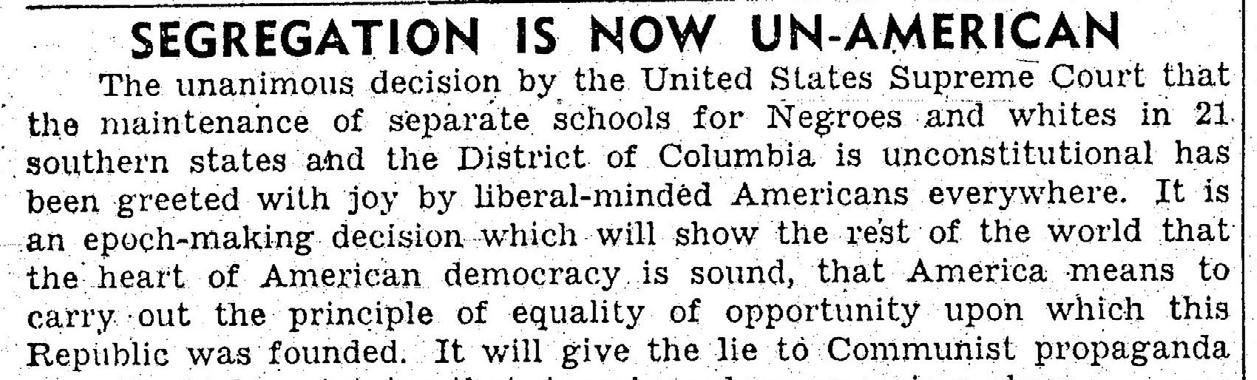
Brown v. Board of Education decision rules segregation unconstitutional
Suez Crisis Ruskin Heights F5 tornado kills 44 people
President Dwight D. Eisenhower elected
Bea Firestone, wife of editor Milton Fireston, pictured working at The Chronicle.
Supporting Jewish education
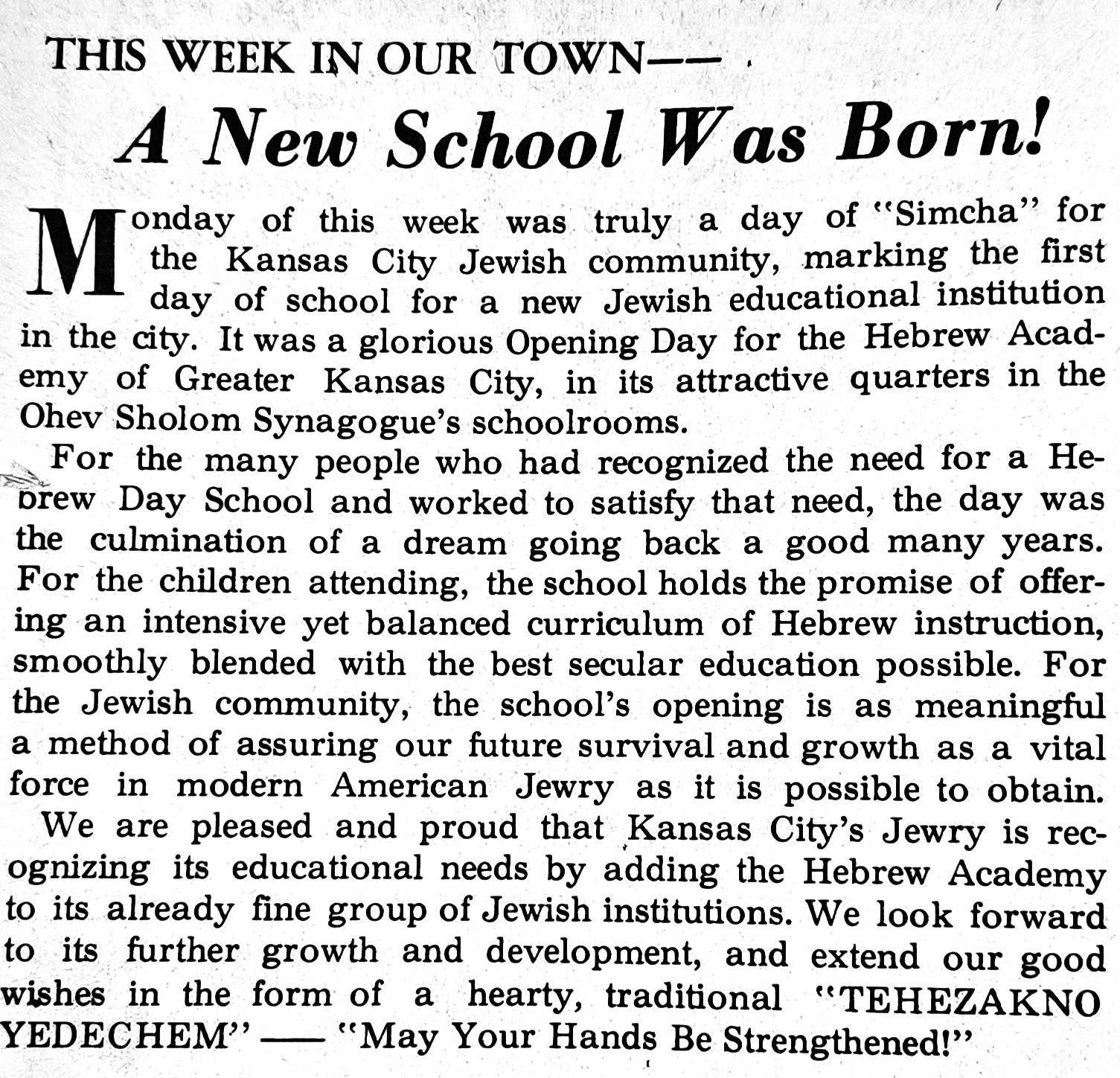
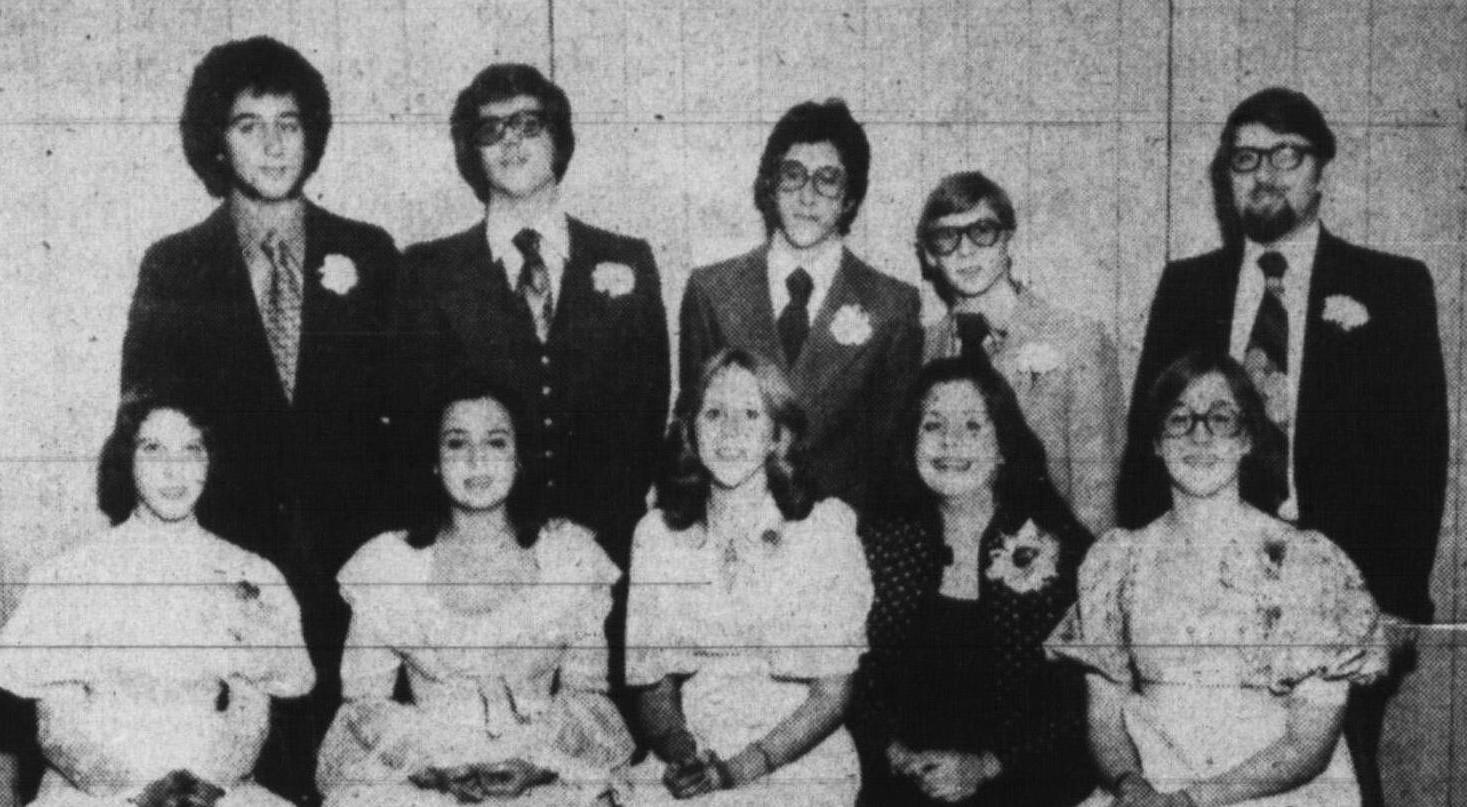
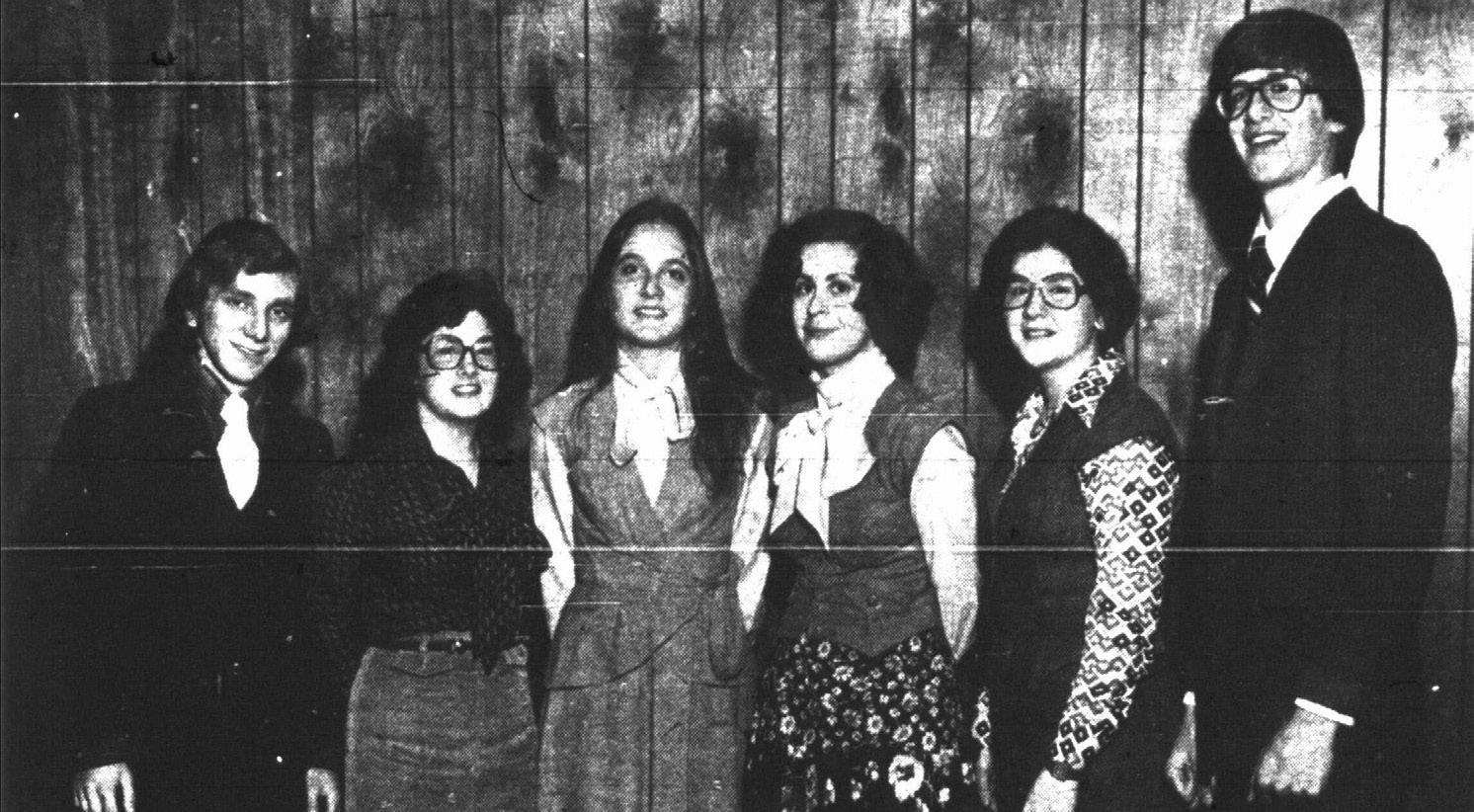
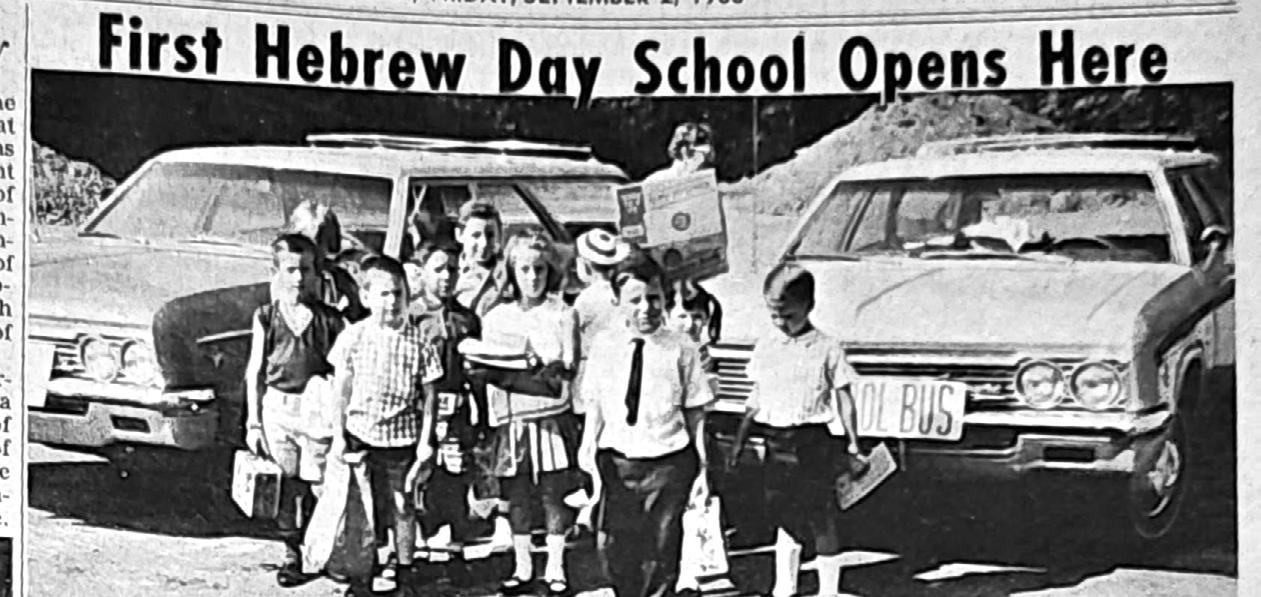
The creation of the Hebrew Academy of Greater Kansas City, now Hyman Brand Hebrew Academy (HBHA), was explicitly endorsed by Chronicle Editor Milton Firestone — he was involved with the school outside of his editorial duties as well. Many editorials by Firestone championed its importance and necessity for furthering Jewish education in Kansas City.
Since 1966, HBHA has been mentioned in The Chronicle more than 5,000 times. Its students, faculty, events, campaigns and more have been regularly covered by The Chronicle, and the strong relationship between The Chronicle and HBHA continues to this day.
Pictured are (left) the announcement of the founding of the Hebrew Academy in 1966, most likely penned by Editor Milton Firestone; (bottom left) the first graduating high school class of the Hebrew Academy in 1976; and (below) the 1978 HBHA graduates.
Messages from long-time readers
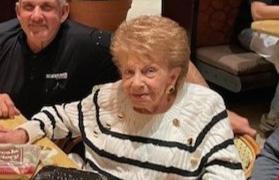
“The Chronicle has been a fixture in my household for over 75 years as my parents also took this paper. The Chronicle has kept me and my family updated in all aspects of KC Jewish community life and beyond. To another 105 years!”
-BobbiArenson(75+years)
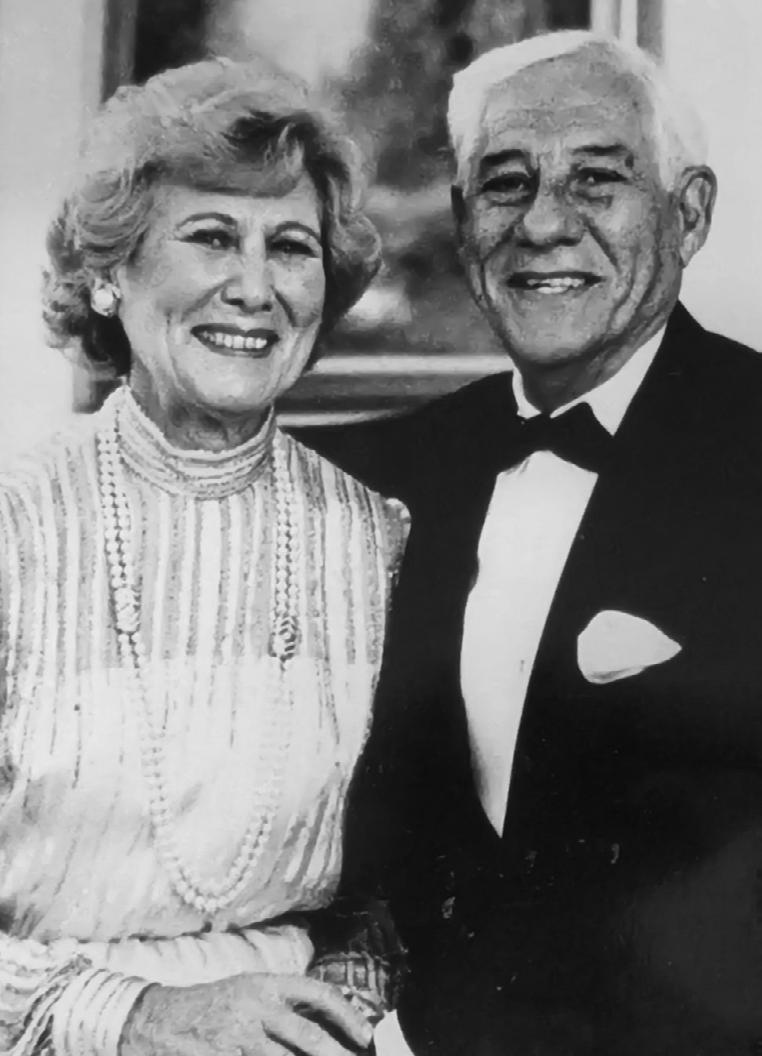
For 56 years, the Rose family were instrumental in the continued survival and success of The Kansas City Jewish Chronicle.
Stanley J. and Shirley Rose and their son Steve Rose led The Chronicle in various capacities between 1964 and 2020, holding positions such as president, executive editor and publisher.
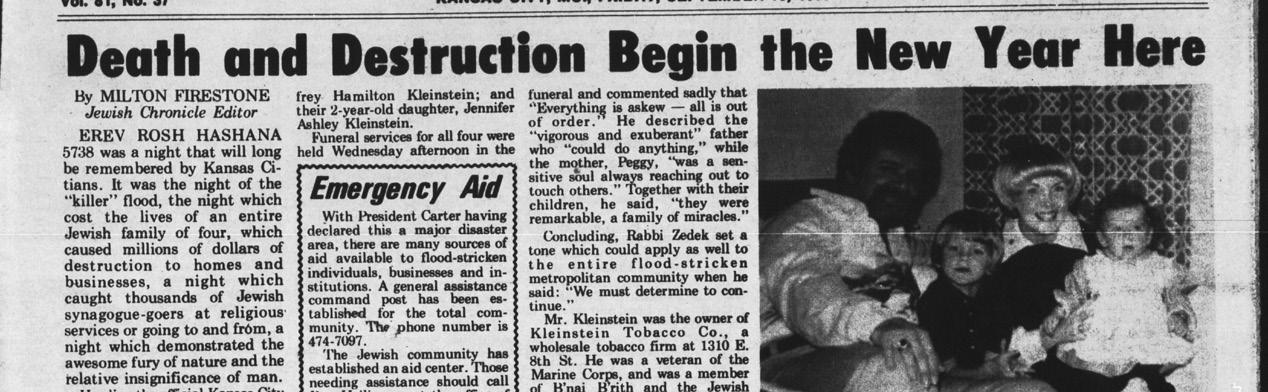
Stan Rose and editor
Milton Firestone became co-owners of The Chronicle in 1964. When Firestone died in 1983, the Rose family’s business, Sun Publications, acquired The Chronicle. Both Steve and Stan Rose held the positions of executive editor and co-publisher throughout the late 1980s, with Steve Rose eventually assuming full leadership.
Stan Rose was involved in Sun
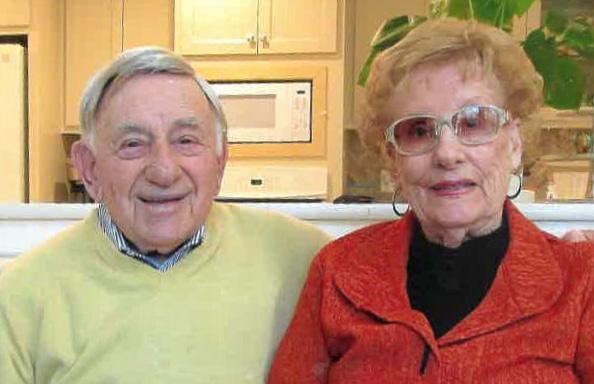
“Among the first things we did after our marriage in 1959 was to subscribe to The Kansas City Jewish Chronicle. We did so in order to receive world, national and local news about the Jewish community. No internet or Facebook then. Today, we look forward to receiving The Chronicle both by mail and digitally. Keep up your good work.”
-KathyandBobDeWitt(66+years)
The Rose family leadership
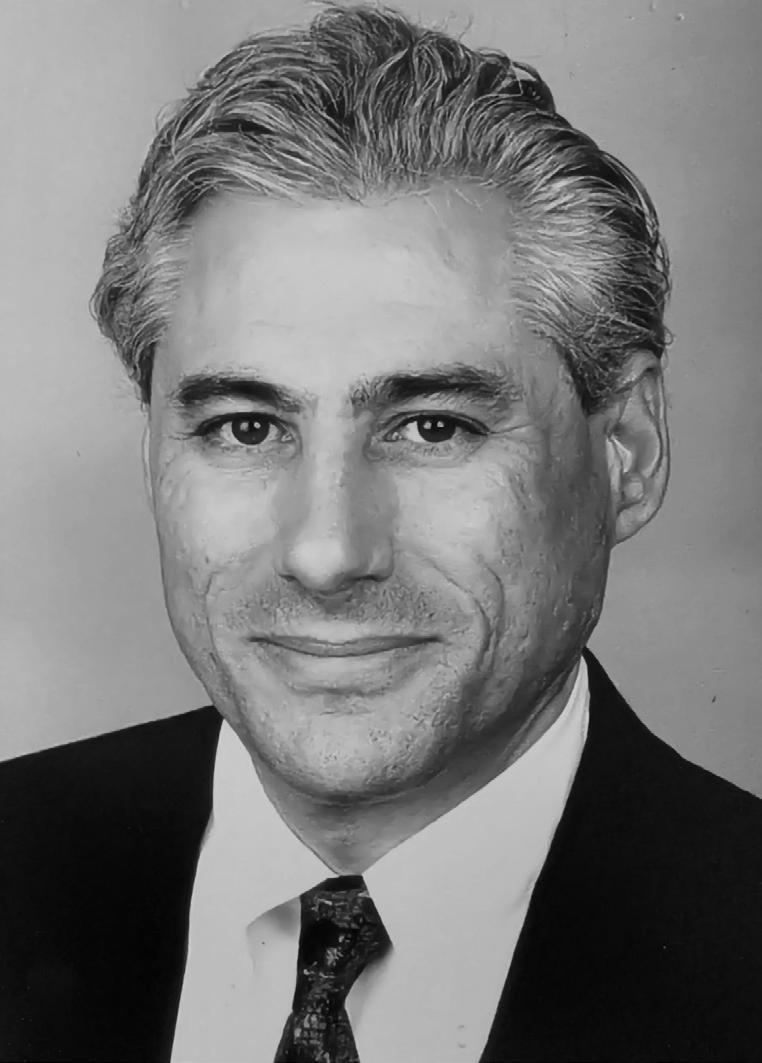
Publications until his death in 1997. His wife, Shirley, who also held many roles at the company, died in 2022. In 1998, Steve Rose sold the company’s publications but remained involved with The Chronicle through various leadership roles. He bought The Chronicle back in 2010, and two companies he led, MetroMedia and
later Rose Publications, stewarded The Chronicle until 2020.
In 2020, Steve Rose passed the reins of The Chronicle to Jewish Federation of Greater Kansas City.
“The history of The Chronicle is intimately tied to those of my family’s,” he wrote in the Sept. 10, 2020, issue of The Chronicle. “Handing over the reins stirs deep emotions and brings tremendous nostalgia, as well as appreciation for everything we have shared with the community we cherish.
“This is tempered by the knowledge that The Chronicle will be in safe, caring hands,” he continued.
“Thank you, Kansas City Jewish community, for everything. It has truly been a pleasure serving you for so many years.”
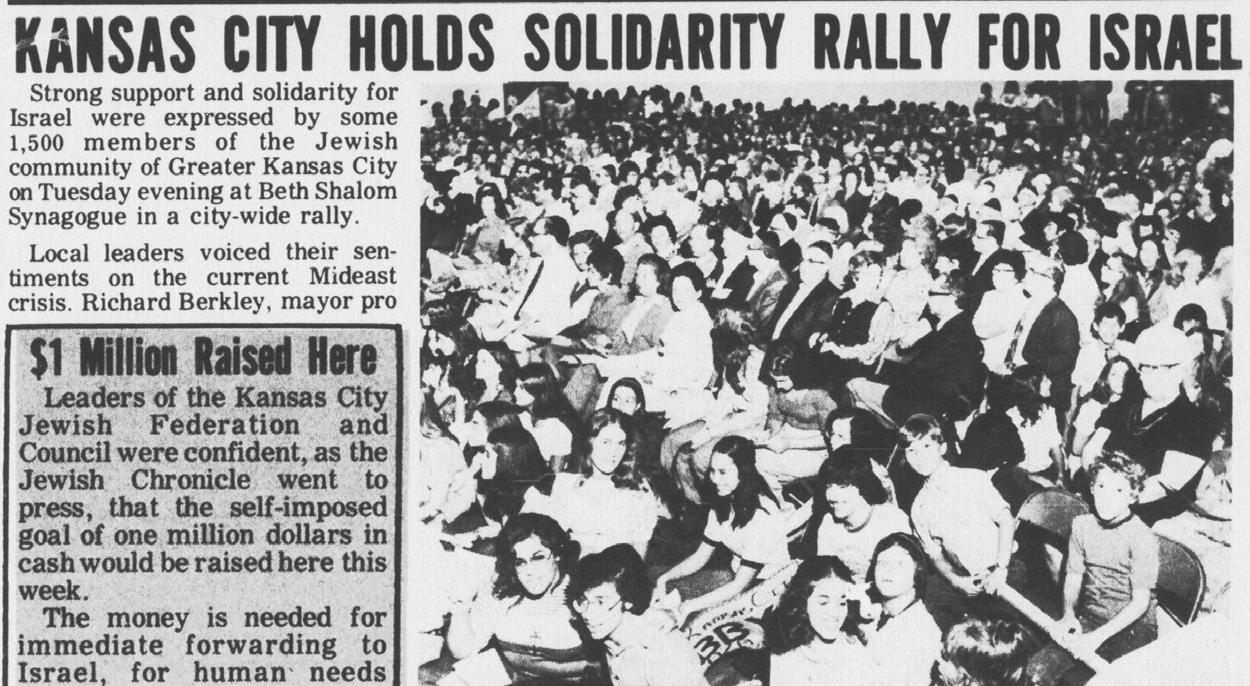
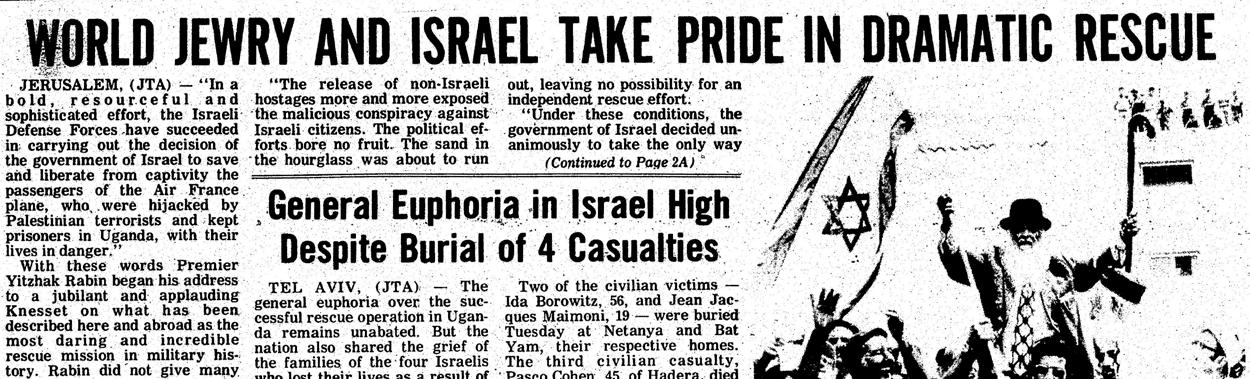
Yom Kippur War
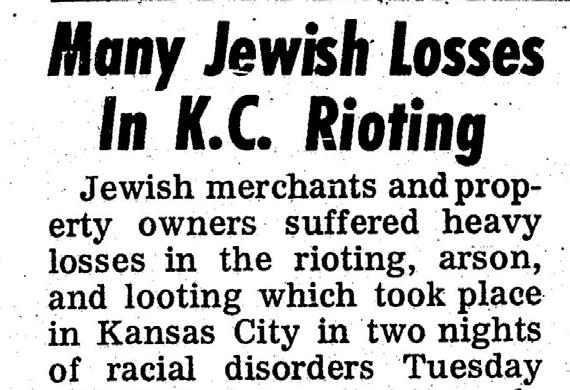
Martin Luther King, Jr. assassinated; riots break out in K.C.
Chabad House Center established
Munich Olympics Massacre
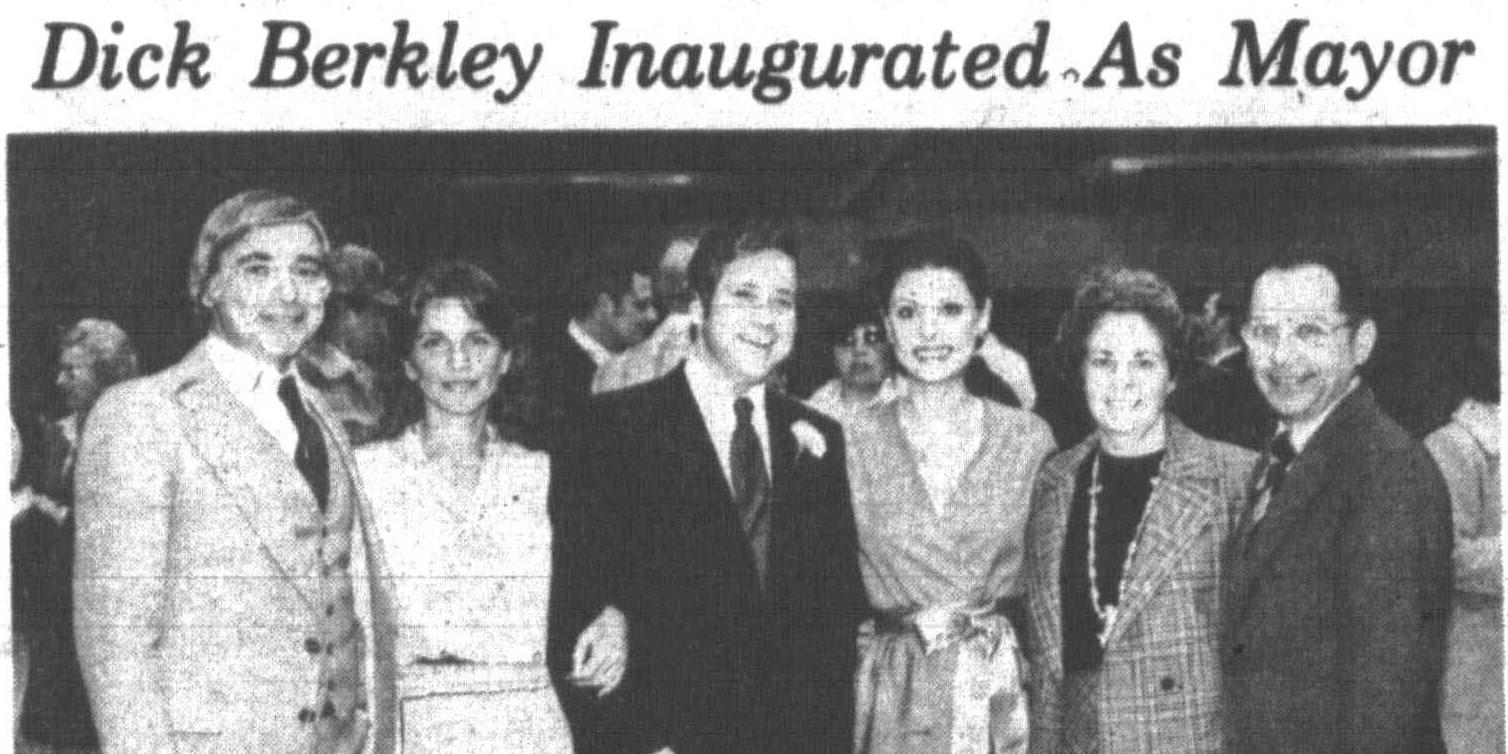
Richard Berkley elected mayor of Kansas City
David Accords commence
Yom Kippur War
State shootings
Shirley and Stanley J. Rose; and Steve Rose

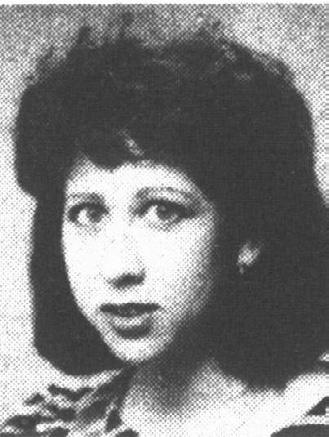

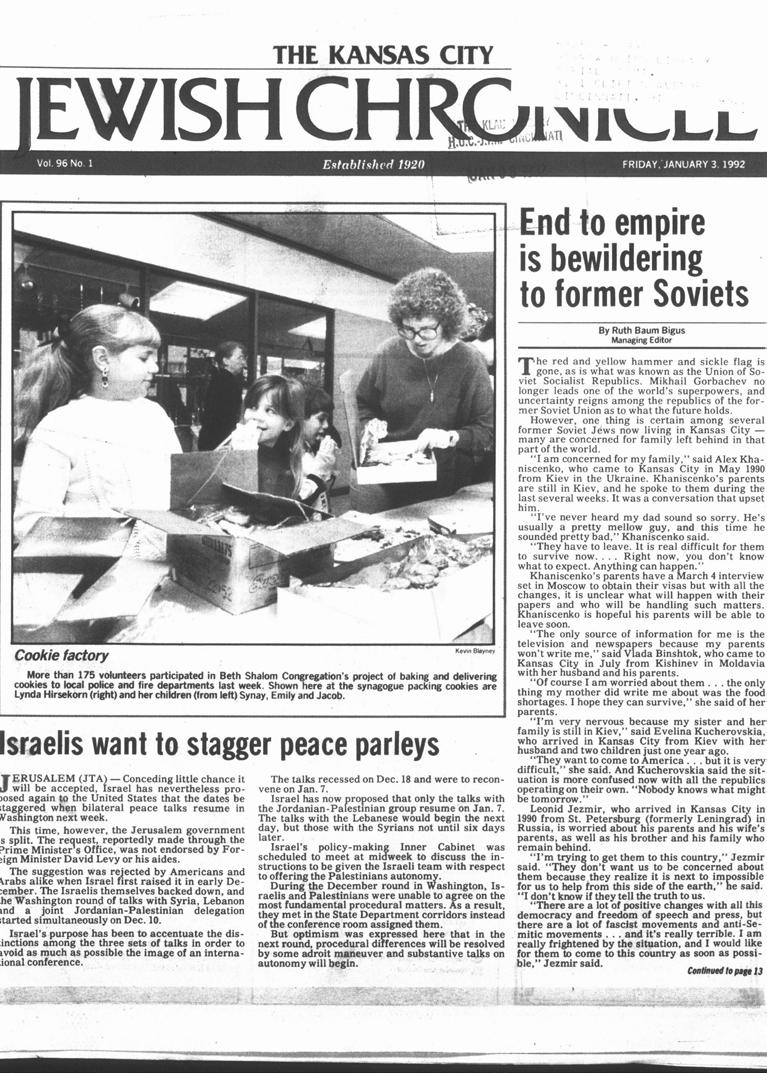
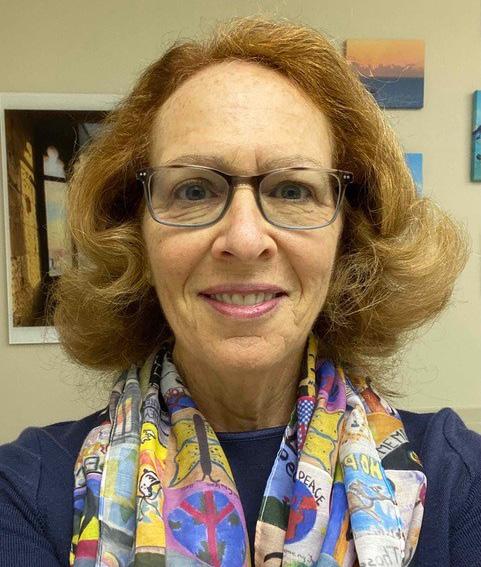
Ruth Baum Bigus Editor, 1987-1993
It’s hard to believe that The Kansas City Jewish Chronicle is celebrating its 105th birthday of keeping our community informed. So many stories, events, activities and simchas have been shared, along with all the people behind them.
I became managing editor in 1987 at the invitation of then-publisher Steve Rose, who needed someone to take the helm when my predecessor, Diane Wolkow, made Aliyah. Steve snatched me away from the world of broadcast journalism, guiding us into a new area of wide community coverage of all things Jewish and beyond. With the largest staff in its history, our team of six covered congregational news, community comings and goings, as well as simchas and deaths. A tremendous note of thanks to that team, which included Barbara Bayer, Rick Hellman, Mark Belingloph, Irene Goldstein, the late Bea Firestone and Sybil Kaplan. In fact, both Barb and Rick would go on to become editors of The Chronicle in later years.
Yet, we expanded our reach by writing stories about Jewish individuals and their impact within the broader Kansas City community. We explored business, cultural arts, food, books, health and more. We had two regular opinion columnists: Rabbi Morris Margolies and Hugh “Pat” Uhlmann, who brought varying perspectives on the most pressing issues facing our community.
Our weekly issues averaged 28 to 32 pages packed with news — local, national and international news from wire services and national columnists. For the holidays, those issues blossomed, with one Passover publication reaching 72 pages, thanks in part to the crackerjack advertising department. Hours were put into each issue, and we tried our best to
be informative and creative.
My tenure was also marked by active involvement with the American Jewish Press Association, where I served as the paper’s representative and was fortunate to attend several meetings and travel to Israel. The paper won several awards from AJPA — thanks to our great team. World events impacted our paper, two of which stand out in my mind. During the first Gulf War, when Iran fired scud missiles into Israel, we stopped the presses as Rick Hellman and I stayed up until the wee hours of the morning redesigning our front page to ensure it was as up-to-date as possible. Freed Soviet Jewish Refuseniks came to Kansas City to visit the congregation that had supported them for so long during their battle for religious freedom — it was a touching moment for so many in the community.
Locally, during my tenure, we worked on a special issue on the opening of the Jewish Community Campus, which has become a fixture of Kansas City’s Jewish community. We also shared the news about the establishment of the Midwest Center for Holocaust Education. Additionally, there was significant news in the
congregational arena when Congregation Beth Torah opened its doors. There were dozens of stories that it was my pleasure to share with our Jewish community. I will never forget seeing the blue numbers on a local Holocaust survivor’s arm as she recounted her personal story of tragedy and triumph. Writing about my first journey to Israel allowed me to share my thoughts and experiences of the Jewish homeland. I had the privilege of seeing then Prime Minister Yitzhak Rabin in his office at the Knesset, as well as welcoming new immigrants arriving at Ben Gurion Airport in the early hours of the morning to their new, free homeland. I conducted interviews with government officials, celebrities and community leaders. I talked with young Jewish schoolchildren at the Hyman Brand Hebrew Academy and with seniors living at Shalom Geriatric Center. There were so many stories to share.
I credit my years at The Chronicle with helping me grow in numerous ways. I attribute my time at The Chronicle to increasing my understanding of a vibrant faith and culture. I learned to bake challah for the first time with a local rabbi’s wife and studied Torah with my colleagues. On a personal note, our daughter Elizabeth was born during my tenure, and I learned to balance a demanding job with parenting young children. I worked alongside my sister, Barb, who was part of the advertising staff, and my mother, Dorothy Baum, worked nearby as the vice president of sales for Sun Newspapers, which owned the paper.
A big thank you to the Jewish community for embracing the paper and our team by sharing the rich stories of our time. Wishing The Chronicle another 105 years of sharing the news of our Jewish community!
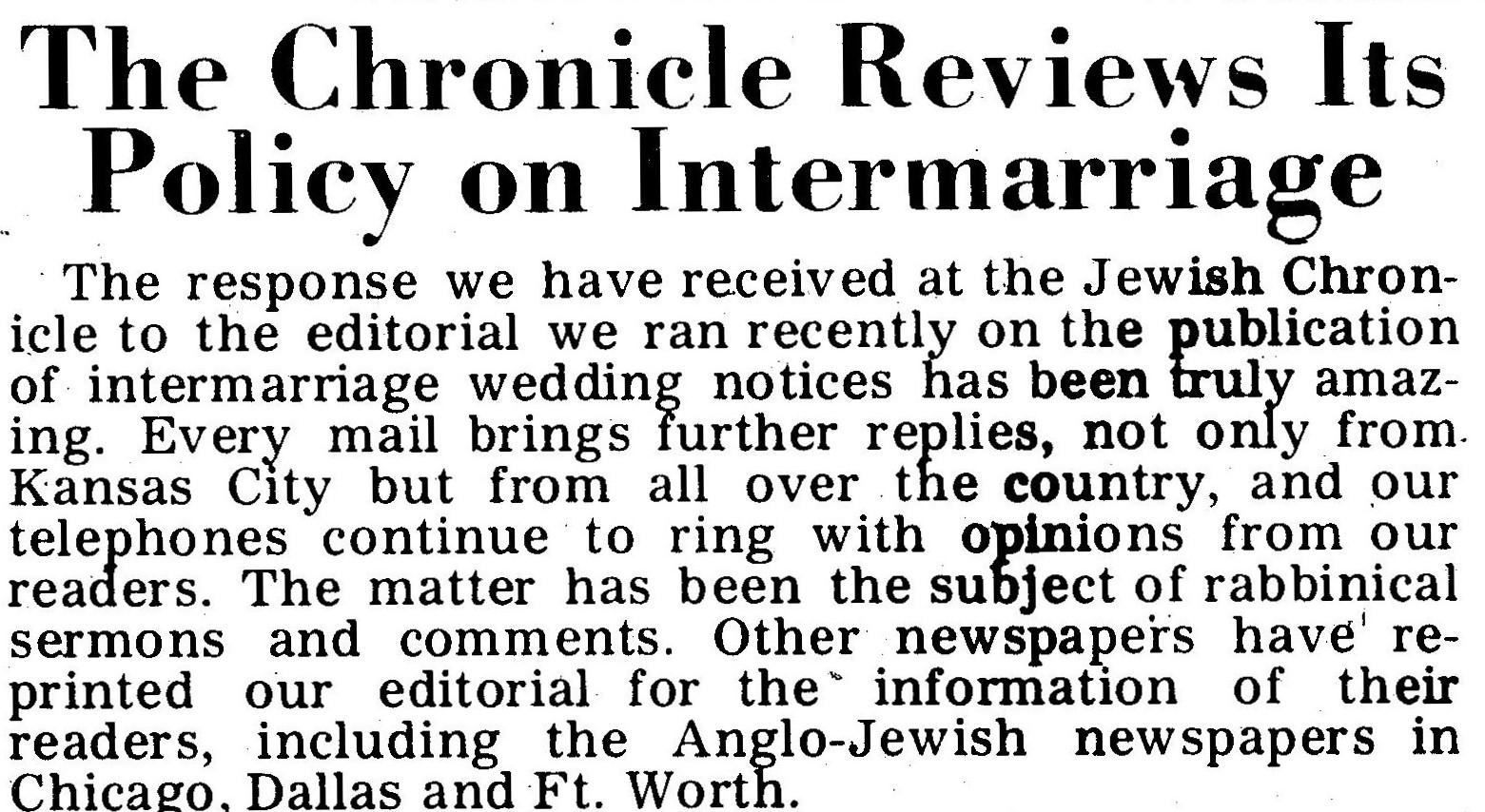
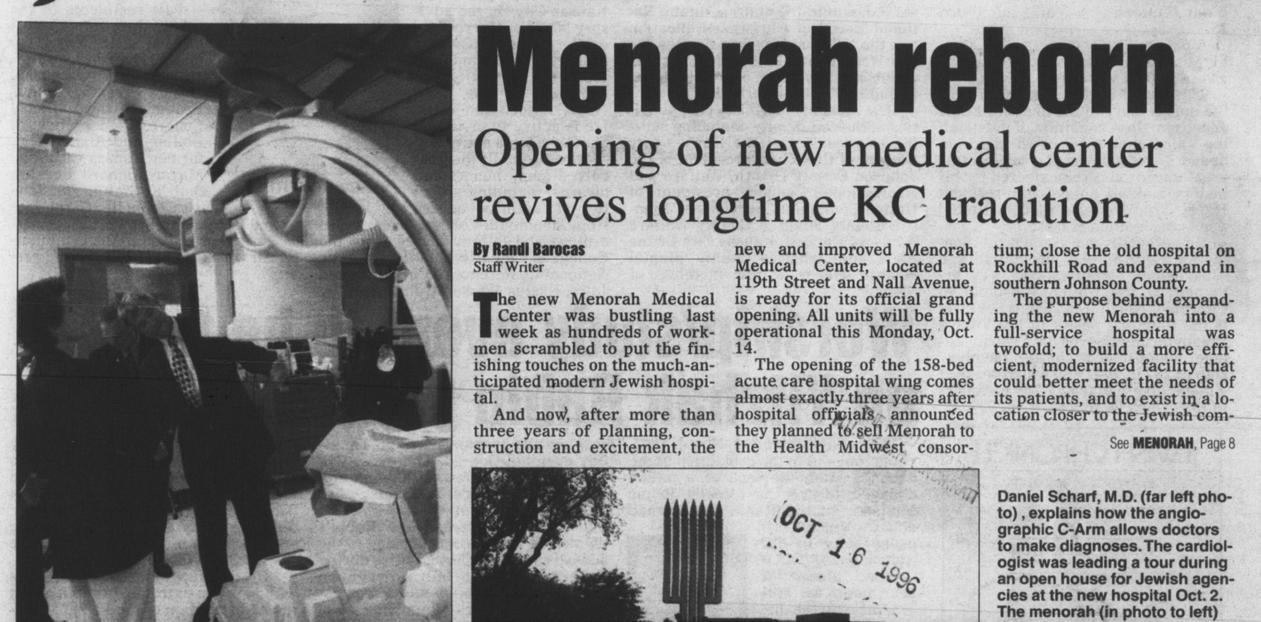
Touching on controversial topics

Milton Firestone dies, wife Bea Firestone becomes acting editor
Stan Rose/Sun Publications becomes full owner of The Chronicle
Diane Wolkow named managing editor
Ruth Baum Bigus named managing editor
Steve Rose named executive editor; Barbara Bayer named managing editor
Rick Hellman named managing editor
Congregation Beth Torah established Jewish Community Campus opens at current location Midwest Center for Holocaust Education established Hyatt Regency collapse
Flood of 1993
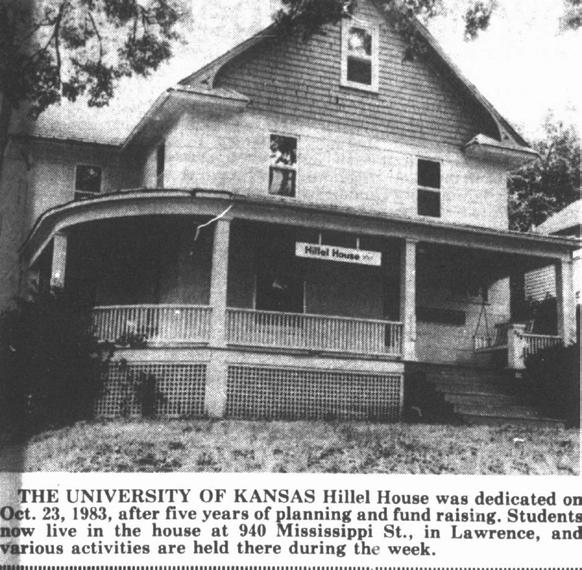
KU Hillel established
JCRB merges with local American Jewish Committee chapter to become JCRB|AJC
Soviet Union begins collapsing; emigrants arrive
First Jewish Arts Festival held in Kansas City
President Ronald Reagan elected
President George H. W. Bush elected
President Bill Clinton elected Gulf War begins
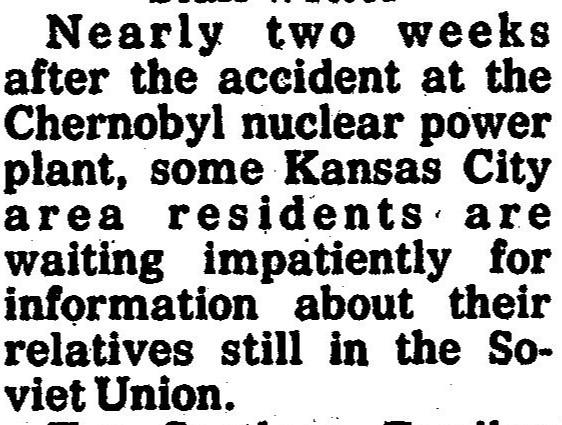
Chernobyl nuclear disaster
Space Shuttle Challenger explodes after liftoff
Operation Moses flies thousands of Ethiopian Jews to Israel
1982 Lebanon War begins
First Intifada begins
Israel annexes Golan Heights
Ruth Baum Bigus
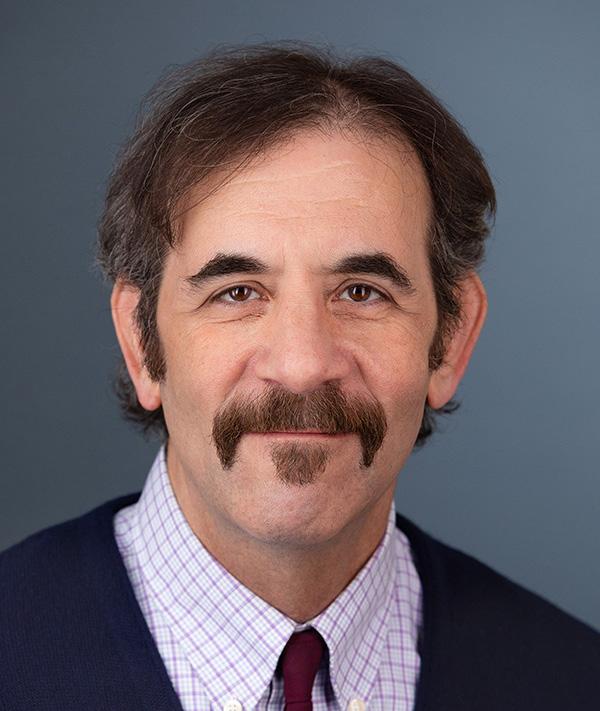
Rick Hellman Editor, 1994-2000,
Not only was it an honor to be The Jewish Chronicle’s editor, it was a great, fun job.
It was a license to run around town and stick my nose in people’s business. I started in 1988 as The Chronicle’s Business and Arts pages reporter, taking over as editor in 1994. That allowed me to rub shoulders with such eminent 20th century Jewish personalities as Elie Wiesel, Abba Eban and Henry Kissinger. I interviewed Sheldon Harnick, lyricist of “Fiddler on the Roof;” Chaim Topol, who starred as Tevye at Starlight Theatre; Howard Cosell, who spoke at the JCC’s Sportsnite fundraiser; and Kinky Friedman, satirical country singer turned satirical detective novelist.
Local boys who made it big in New York or Hollywood — Ed Asner, Calvin Trillin and Larry “Fats” Goldberg — were generous with their time.
I interviewed the men who created the most iconic Kansas City buildings: Kaufmann Center designer Moshe Safdie and the dean of local architects, and Clarence Kivett, whose Mid-Continent International Airport and Truman Sports Complex defined Mid-Century Modern hereabouts.
Whether it was my late Sun Newspapers colleague, Charles Ferruzza, sending me on movie junkets or performances in Kansas City, I got to interview such Jewish superstars as Woody Allen, Jerry Lewis, Milton Berle, Don Rickles and the Coen Brothers.
I remember hanging out one day at my West Plaza bachelor pad with visiting sculptor Donald Lipski, and another afternoon when I took two Russian Jewish emigre artists the Jewish Federation had brought to town out to a Kansas City Royals game. (They were bored and hated it!)
Far outnumbering the stars were
2000-2010
the hundreds of local artists, business people, civic leaders and others who let me into their lives and trusted me to tell their stories to and for the community. I think fondly of getting to know Lester Goldman, Norman and Elaine Polsky, Cynthia Levin, Allan Winkler, Sybil Kahn, Gail Lozoff, Barnett and Shirley Helzberg, Bert Berkley, Mark Edelman, Dan Jaffe, Stan Plesser, Abe Kopec, Sam Gould and Jan Fichman.
Once, for a story, I spent a night hanging out at the Louis Memorial funeral home with a dead body and a live member of the Chevra Kadisha. Another night I rode dog watch in the inner city with a Jewish KCMO cop.
I got to interview figures who helped the world understand the Holocaust — Nuremberg prosecutor Benjamin Ferencz and psychologist of political violence Robert Jay Lifton. I thank those who later became Kansas Citians and who helped me to understand their experiences at that world-shattering time, including Walter Stras, Geniek Mittelman, Lou Frydman, Frank Szasz, Judy Jacobs and, of course, Big Sonia Warshawski. The Chronicle covered the effort to preserve their stories and those of other survivors through the
establishment of the Midwest Center for Holocaust Education.
We chronicled the Soviet Jewish freedom movement and the emigres’ resettlement in greater Kansas City.
And I got to tell stories of the connections between KC and the Jewish State. I went on two Israel Ministry of Tourism-sponsored junkets: the first in 1996, following riots over the opening of an archaeological tunnel running along the Western Wall in Jerusalem, and the second after the outbreak of the Second Intifada in 2000. I also went on a Federation-sponsored community support mission the following year. I visited KC’s partner city, Kibbutz Gezer, and nearby Ramla with my guide, kibbutznik David Leichman. I interviewed visiting Israeli diplomats and historical figures and spoke in defense of Zionism at a local meeting of the pro-Arab Christian group Sabeel.
There was momentous technological change during my years at The Chronicle, some of it exciting, like establishing the kcjc.com website, and some of it challenging, as we were forced to learn new methods in order to do more with less money.
Above all, serving as Chronicle editor allowed me to form an adult relationship with the man responsible more than anyone else — apart from my immediate family — for forging my Jewish identity, even if I never belonged to his synagogue — Rabbi Morris Margolies. I grew up as a member of Boy Scout Troop 61 and KC United Synagogue Youth, both housed at his Congregation Beth Shalom, and I went on the eight-week 1975 Kansas City Youth Pilgrimage to Israel — a program he established. It was a pleasure to pick up his hand-written columns each week and type them up for Chronicle readers.
Thanks for the memories!
Entering the digital age



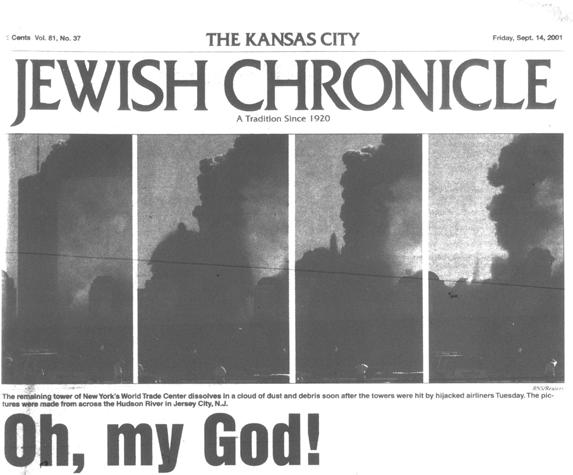

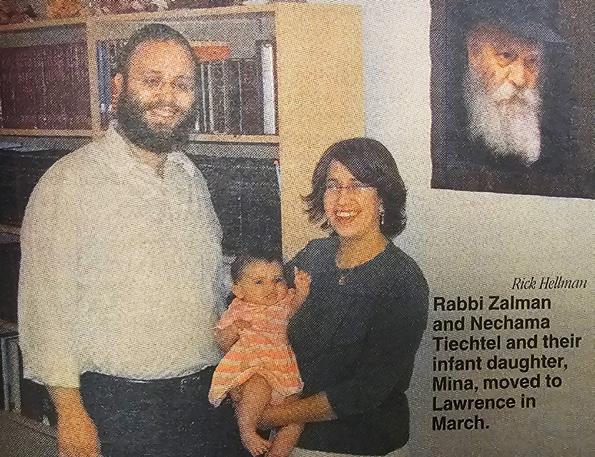
Rick Hellman
Israel disengages from Gaza
Deborah Ducrocq named managing editor

Tree of Life synagogue shooting in Pittsburgh

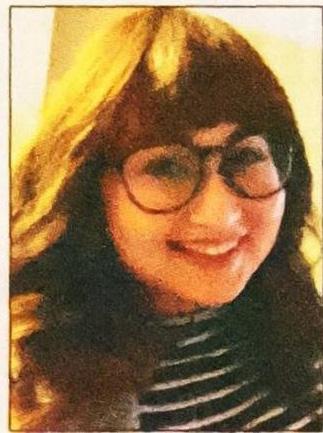
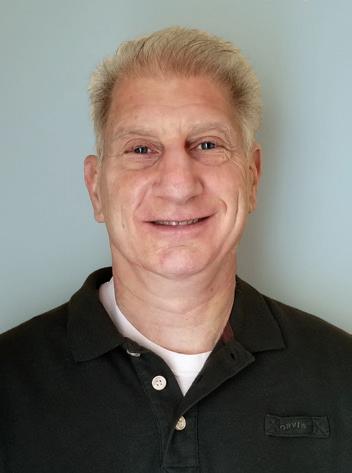
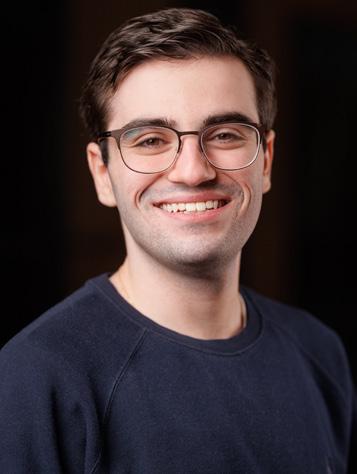
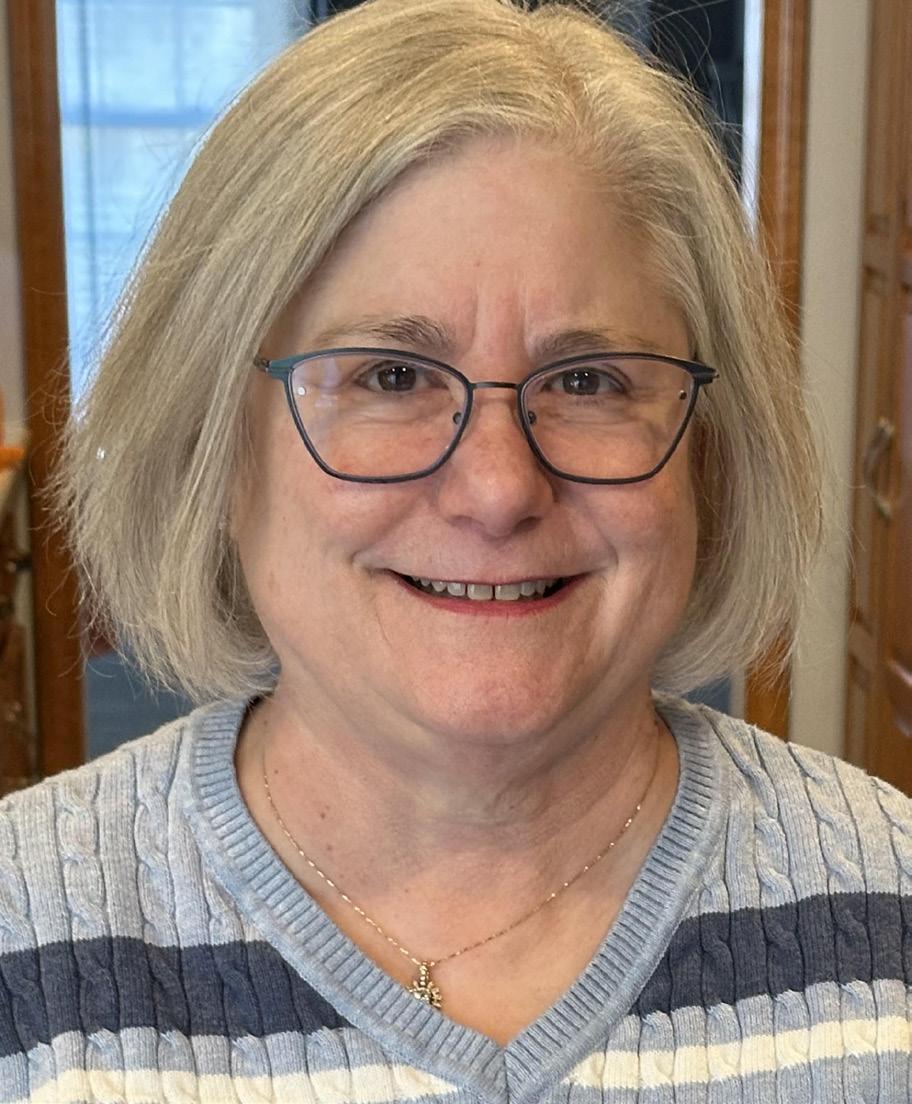
I fell in love with the Jewish Chronicle while I was in high school in the 1970s. I was an active member of BBYO, and when the paper arrived each Friday, I would check to see what was printed in the AZA/BBG news column. I became a subscriber, which I’ve been ever since, when I started college at the University of Kansas.
The Chronicle had a job opening when I was a new college graduate. However, then-editor Milton Firestone didn’t think my college experience in broadcast news and being a high school journalist matched what he needed in a reporter. Luckily for me it paid to keep up friendships and network, as a high school friend — Ruth Baum Bigus — was the paper’s editor a decade later when I was searching for employment. This time, Ruth and Publisher Steve Rose decided to take a chance on me. In a career that began in 1988 and spanned almost 35 years in either full-time or freelance roles, I served in a variety of capacities for the newspaper, its magazine and special projects including two stints as the paper’s editor.
A lot changed in the publishing world in my career as a Jewish journalist. In the late ‘80s and early ‘90s, using computers was just becoming the norm, and email for everyday use was mostly nonexistent. People who wanted to submit items to The Chronicle either hand-delivered them to our office or sent them through traditional mail.
The popularity and ease of using
the internet, email and 24-hour news channels changed the way we saw, and reported, the news. Our readers no longer depended on The Chronicle to tell them what was happening in Israel, or Jewish communities across the country. In the 2010s, we moved to more opinion-based stories about national and international events since the actual news quickly became old.
Locally, The Chronicle was still the major source of Jewish news happening in our congregations and our organizations, as well as the best way to celebrate our simchas and mourn our losses. All the while — and some undoubtedly would disagree — we did our best to be mindful of our Jewish values when we reported what was happening around us. It was my job to make sure what we chose to write about — and how we wrote about it — was fair, honest, respectful and trustworthy. Tough, and sometimes not popular, choices were occasionally made. Other
times, I felt we weren’t getting close to the real story no matter how hard we tried.
By far the most difficult story I had to report during all my tenures at The Chronicle was the shootings at the Jewish Community Campus and Village Shalom just days before Passover in 2014. It was a national story that literally happened in my backyard. I was able to depend on professional members of the Jewish community, who were also my friends, to help guide me as I determined how to cover this story in our newspaper. At home, my family also lent helping hands so I was able to host a Passover Seder a little more than 24 hours after the tragedy.
I became a bat mitzvah and was confirmed in my youth, but my real Jewish education came as an employee of The Chronicle. I liked learning about my religion and covering Jewish news in Kansas City. What I enjoyed the most was meeting people from the various sub-communities of the Jewish community — from Chabad to Orthodox to Conservative to Reform to those who “just identify as Jewish.” On the other hand, meeting those people could be the most frustrating thing about working for the Jewish Chronicle, as it was often difficult to rush through Hen House on a Friday afternoon without being stopped by someone who wanted to give me a story idea!
One thing is for certain. The friendships I made during my association with The Chronicle are what I cherish most about those times in my life.

Steve Rose, David Small buy The Chronicle under MetroMedia, Inc.
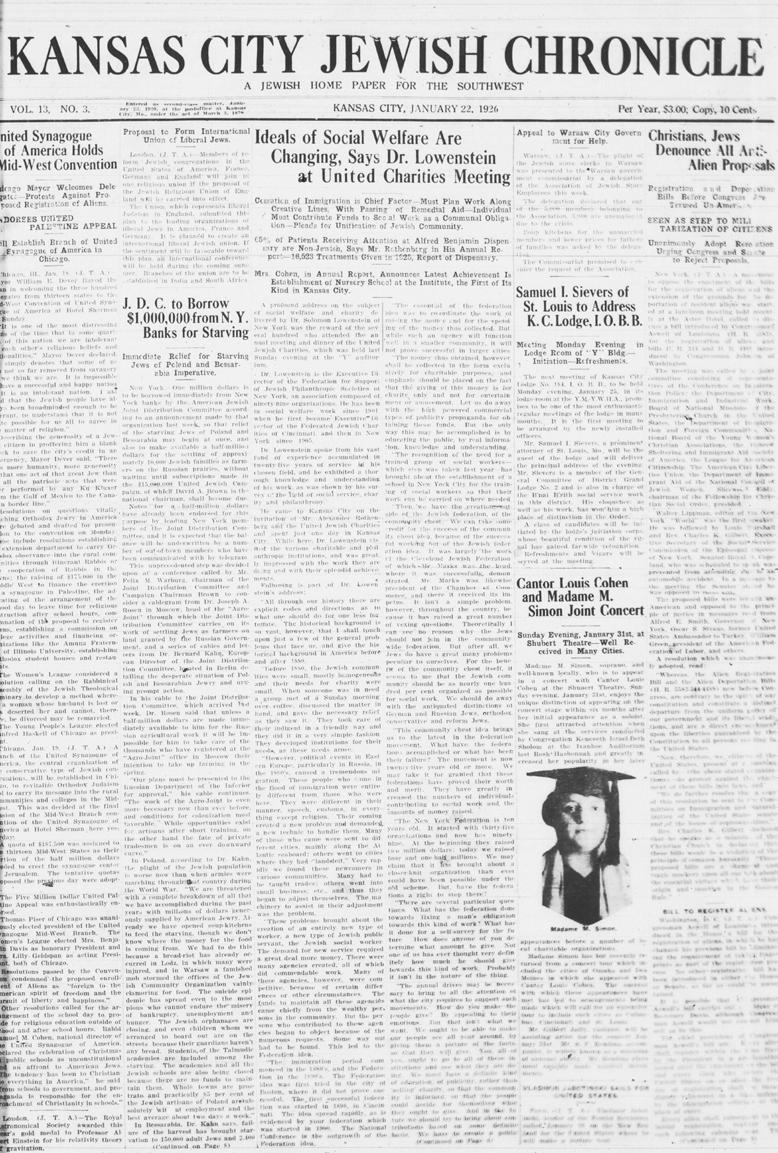
Barbara Bayer returns as editor
Meryl Feld named editor
Jewish Federation becomes owner of The Chronicle during its 100th year
Mike Sherry named editor
Sam Kricsfeld named editor COVID-19 shutdowns begin
Barbara Bayer
Colleyville synagogue hostage crisis in Texas
Steve Rose’s Rose Publications becomes owner of The Chronicle Chabad of Leawood established
Tree of Life synagogue shooting in Pittsburgh
Beit Echad established in St. Joseph, Missouri
Oct. 7 attacks on Israel, Israel-Hamas War begins President Donald Trump elected
Joe Biden elected
Donald Trump elected
Center and its Helzberg Hall open
Family Services’ food pantry opens
Capitol attacked by mob
“Big Sonia” film about
Warshawski debuts to global acclaim
HBHA seeks general studies teacher for Lower School
Hyman Brand Hebrew Academy (HBHA) is seeking a full-time Lower School general studies teacher for the 2025–26 school year. The position includes teaching English Language Arts, math, social studies and science.
This is an opportunity for an elementary educator to join “a mission-driven school community that values creativity, connection and the development of the whole child,” according to HBHA’s job listing.
The ideal candidate will bring experience working with elementary-aged students, strong classroom management skills and a passion for engaging young learners both academically and socially. Preferred candidates will be
flexible, imaginative and comfortable working in a Jewish environment where traditions and values are integrated into daily learning. An education degree is required; a master’s degree and teaching license are preferred.
HBHA says they offer competitive pay, professional development opportunities and “a supportive work environment where teachers are encouraged to grow in their craft.”
Those interested in applying can visit hbha.edu/about-us/employmentopportunities.cfm or mail a cover letter, resume and references to Hyman Brand Hebrew Academy, 5801 W. 115th Street, Overland Park, KS 66211.
Community member running for KC City Council seat
Jewish community member Rebeca Amezcua-Hogan is running for the Kansas City, Missouri, 4th In-District City Council seat.
Since launching her campaign, she has received early endorsements from more than 16 labor unions, and if elected, would become the first Latina and youngest woman ever elected to the City Council.
A member of New Reform Temple, Amezcua-Hogan cited a quote from Mishnaic sage Rabbi Tarfon that she said “drives her to action” and inspires her: “You are not obligated to complete the work… but neither are you free to desist from it.”
“I know that ‘tikkun olam’ is somewhat ever present in American Jewish circles these days, but I think that the continued emphasis on the role we have in bettering the world is a core principle for many American Jews,” she said. “The Mishnah specifically talks about mipnei tikkun ha-olam, ‘for the sake of the betterment of society,’ and a tradition of engaging in policymaking that is about our collective responsibility to do the work to bring about a more just world, in social and economic terms.”
Amezcua-Hogan said that rabbis understood that laws “had to be adjusted to accommodate for public welfare,” and that her approach to policy is sim-

ilarly guided.
“We have a moral responsibility to respond to the needs of the people,” she said. “We have a responsibility to imagine new, more just systems and to make those a reality. That extends from the need to address our housing crisis to providing language access resources to just reimagining better basic city services.”
The youngest child of immigrants from Mexico, Amezcua-Hogan graduated from Park University in 2018 and became involved in community organizing. She was named the 2024 Jackson County Young Democrat of the Year.
Amezcua-Hogan currently lives with her husband, Tristin, in the Westside. More information about her campaign is available at rebeca4kc.com.
2025 KC SuperStar finalists named

Ten high school vocalists from the Kansas City area have been selected as finalists for KC SuperStar, the region’s premier high school singing competition and the largest annual fundraiser for The J. The top 10 were chosen in front of a full audience at The Lewis & Shirley White Theatre at The J.
Former KC SuperStar finalists Maurissa Cunningham, John Long and Abby Parra were this year’s semifinals judges. All have ties to both the competition and the music industry. Patrick Lewallen served as the host for the semifinals.
“These 20 amazing, talented teens performed with such poise and confidence, making it difficult for our judges to choose just ten,” said Tammy Ruder, KC SuperStar director and producer. “Now, as they prepare for the finals and winning, we get to see the ten finalists grow as individual performers. I am sure the judges and audience will find it difficult to crown the next KC SuperStar.”
As part of this year's semi-final event, attendees showed their support for the community by donating more than two barrels of diapers to HappyBottoms, a local nonprofit dedicated to providing diapers to families in need.
KC SuperStar Finals will take place on Sunday, Aug. 24, at Yardley Hall in the Midwest Trust Center at Johnson County Community College. This year’s show will be hosted by Shoshana Bean, Grammy Award winner and two-time Tony-nominated performer.
Since its conception, KC SuperStar
has had high school-aged participants from across the metropolitan area compete, and several competitors have continued to perform professionally. KC SuperStar awards over $22,000 in scholarships annually to the top 10 finalists. In addition to a $10,000 scholarship for the winner, other singers will be awarded scholarships, including $5,000 for second place, $2,500 for third place, $1,000 for fourth place and $500 each for all other finalists.
This year’s finalists are Addison McLaughlin (Kansas City, Missouri), Addy Gardner (Lee’s Summit, Missouri), Aubree Smith (Lenexa, Kansas), Devin Fisher (Raymore, Missouri), Ethan Reed (Lenexa, Kansas), Jada Strother (Kansas City, Missouri), Matt Brun (Overland Park, Kansas), Miles McKinzy (Overland Park), Rayna Key (Gladstone, Missouri) and Shae Simpson (Liberty, Missouri).
As The J’s major fundraising event, KC SuperStar provides financial assistance to members so they can participate in its many services, including the Child Development Center, J Camp, health and fitness, and programming, meals and transportation for Heritage, The J’s Lifelong Learning program for Adults 55+. A portion of funds raised goes to The Reat Griffin Underwood Rising Stars Fund supporting performing arts education and training programs for youth ages 14-21.
Sponsorship opportunities are available; more information is available at kcsuperstar.org or by contacting Robin Levine at robinl@thejkc.org or (913) 981-8895.
Rebeca Amezcua-Hogan
Pictured (from left) are KC SuperStar finalists Miles McKinzy, Shae Simpson, Addison McLaughlin, Matt Brun, Addy Gardner, Ethan Reed, Jada Strother, Rayna Key, Aubree Smith and Devin Fisher posing after KC SuperStar semifinals on June 5 at The Lewis & Shirley White Theatre. (Photo by Nicole Scheier)

Using The Chronicle’s archives and community submissions, here are some recipes for you to try out. Email samk@ jewishkc.org with a recipe, and it might be published here!
From 105 years ago...

community news
The White Theatre at The J announces 21st season lineup
The Lewis & Shirley White Theatre at The J officially announced the 2025-2026 season schedule, which features a variety of fare including popular favorites and newer works to engage the entire Kansas City community.
Season tickets go on sale to the public Friday, June 27. More information about season tickets and the season lineup can be found at TheWhiteTheatre.org.
The season kicks off with “Hello Dolly,” a classic for the theatre’s 20th anniversary show (The White Theatre first opened in the fall of 2005 with “A Chorus Line”). Other popular productions for this season include “Rent,” which will be co-produced with KC Melting Pot Theatre; “The Play That Goes Wrong;” and, for what will be the first time since its Broadway Tour, “Disney’s Frozen,” a co-production with The Coterie Theatre.

Artists-in-residence Kinnor Philharmonic will return for two performances; Kansas City-based POP Project KC will present “Piano Party! The Hit Songs of Billy Joel, Lady Gaga, and Chappell Roan;” and Kansas City’s Moonlight Serenade Orchestra will bring Big Band back to the stage for “It Don’t Mean a Thing if You Ain’t Got That … Sving.”
Adding to the season’s variety, The Kinsey Sicks, featuring local Kansas City favorite Spencer Brown, will return to The White Theatre stage for “Oy Vey In a Manger;” Midwest Center for Holocaust Education will co-present the one man show, “Dedication;” and “The Jewish Nutcracker” will return for the holidays.
“We’re so proud to be able to continue the tradition of offering such a wide diversity of programming for the 21st season on The White Theatre’s stage,” said Keith Wiedenkeller, outgoing director of Arts & Culture for The J and artistic director of The White Theatre. “It’s great when we can bring people together from all walks of life in community, and this season is designed to do just that, offering everything from silly satire to serious soul-searching; this season has it all.”
The 21st season features three main “tracks” – the Theatre Series, Concert Series and Special Engagements.
The Theatre Series
• “Hello Dolly” (Nov. 1 to 23, 2025) — Bursting with humor, romance, energetic dance and some of the greatest songs in musical theatre history, this multiple Tony-award-winning classic is certain to thrill and entertain audiences of all ages. A perfect production to celebrate The White Theatre at The J’s 20th anniversary, this critically acclaimed Broadway classic is an all-American institution.
• “Rent” (Jan. 31 to Feb. 22, 2026), co-produced with KC Melting Pot Theatre — Follow a year in the life of a group of impoverished young artists and musicians struggling to survive and create during the height of the HIV/AIDS epidemic. Follow along as they defy convention, fall in love, find their voice and learn to live for today.
• “The Play That Goes Wrong”
(March 14 to 29, 2026) – Currently running off-Broadway, this Olivier Award-winning comedy is a hilarious hybrid of Monty Python and Sherlock Holmes. Welcome to opening night of ‘The Murder at Haversham Manor’ where things are quickly going from bad to utterly disastrous.
• “Disney’s Frozen” (July 8 to 26, 2026), co-produced with The Coterie Theatre — For the first time in forever, experience the musical phenomenon that has taken the world by storm! Based on the Academy Award-winning animated feature film, Disney’s Frozen includes all the film’s beloved songs along with new music written exclusively for the stage.
The Concert Series
• “Piano Party! The Hit Songs of Billy Joel, Lady Gaga, and Chappell Roan” (Oct. 11 and 12, 2025), co-produced with POP Project KC — Kansas City’s best vocalists and musicians bring the ultimate live piano party to the stage, celebrating the songs that have shaped generations. Featuring a multi-generational cast, this high-energy concert fuses storytelling, sing-alongs, and show-stopping anthems connecting Billy Joel to today’s biggest piano playing pop stars, including Lady Gaga and Chappell Roan.
• Kinnor Philharmonic (Jan. 1 and May 31, 2026) – The White Theatre’s artists-in-residence will present two special concerts. On New Year’s Day, this symphonic concert will kick off the New Year with a post-performance bubbly reception. Then start summer in style with Kinnor’s May 31 concert, as it performs incredible music ‘with a Jewish soul.’
• “It Don’t Mean a Thing if You Ain’t Got That … Sving” (April 26, 2026) – “Sving” (a transliteration of the Hebrew word for swing music) celebrates the contributions of Jewish composers, musicians and bandleaders to the big band era. Kansas City's own Moonlight Serenade Orchestra will thrill you with timeless hits by legendary artists, including Benny Goodman, Artie Shaw, and Willie Smith.
continued on next page
community news
continued from previous page
Special Engagements
• “The Jewish Nutcracker” (Dec. 7, 2025) – “The Jewish Nutcracker”returns for its fifth year, following Rebecca and the Nutcracker on their magical journey from Bubbe’s house to the Land of Nosh, encountering every ‘gelt-y’ pleasure, from ‘Mother Latke’ to a giant ‘Sleigh-del.’ Featuring almost 200 of our Encore dance students, this is a must-see holiday tradition for the whole family.
• “Oy Vey in a Manger Starring the Kinsey Sicks” (Dec. 20 and 21, 2025) – In “Oy Vey in a Manger,” Angel, Winnie, Trixie and Trampolina are trying to sell off their manger – yes, that manger – before it's foreclosed upon. Crises arise, secrets are revealed, Jewish-Gentile tensions surface, and mayhem ensues – all
K.I. in search
in glorious four-part acapella harmony. Not for the faint of heart, oh-so-serious, or easily offended.
• “Dedication” (April 13, 2026), co-presented with Midwest Center for Holocaust Education — Roger Peltzman’s one-person show, ‘Dedication,’ recounts his family’s tragic history fleeing the Nazis in war-torn Europe using drama, humor, powerful images and musical performances of everything from blues to Chopin.
Full details and performance times can be found at TheWhiteTheatre.org. Auditions for various musicals and plays produced by The White Theatre will be announced on the website as well as on Facebook.
Tickets for the remainder of the current (2024-2025) season are still on sale at the theater’s website.
of part-time program coordinator
Kehilath Israel Synagogue is searching for a part-time program coordinator with a strong commitment to Jewish values, cultures and traditions. The primary responsibilities of the program coordinator will be to design and implement a variety of programs, events and activities that cater to the diverse needs and interests of K.I.’s congregation to promote Jewish education, culture and tradition. The candidate would work with the synagogue’s clergy, lay leaders and other organizations to develop and implement programs; work with lay leaders on K.I.’s established fundraisers; and look at other revenue streams. Synagogue member engagement
will be important, as will reaching out to the wider community and other synagogues.
The synagogue would prefer applicants to have a bachelor’s degree or equivalent experience in this field. Applicants must be a “self-starter and have great interpersonal, communication and organizational skills as well as ability to manage multiple tasks and projects simultaneously.” The position will take place in a hybrid work environment and would be part time to start.
Interested applicants can contact K.I. Executive Director Shelley Palmarine at shelley@kisyn.org or (913) 6421880 x203.


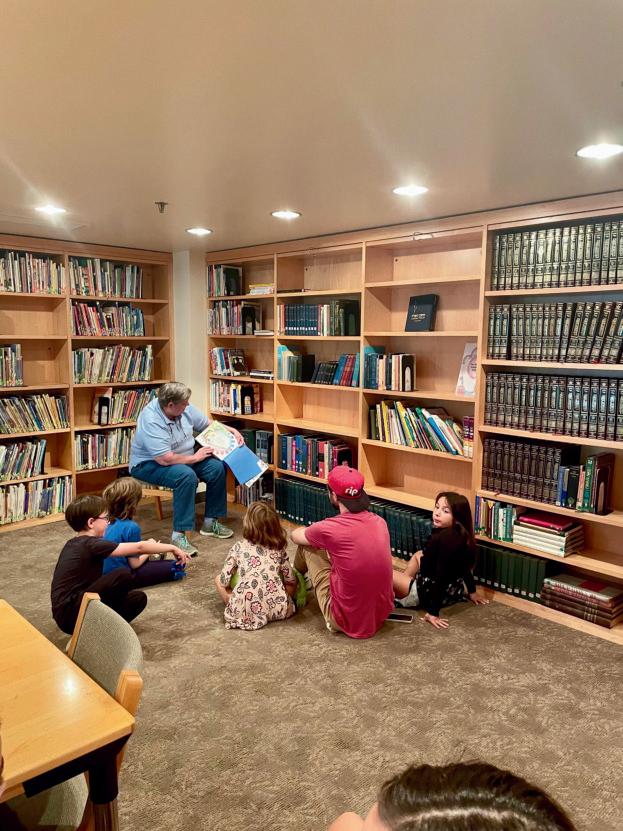
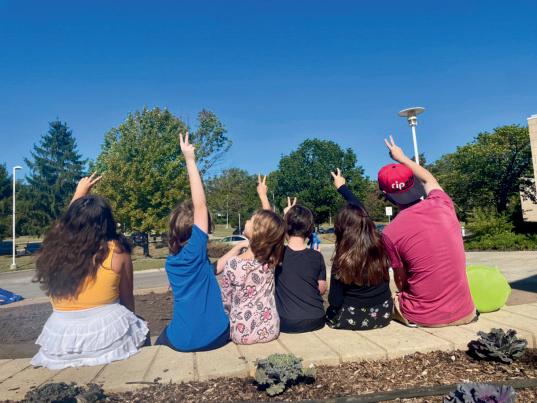
By Bridey Stangler PJ Library
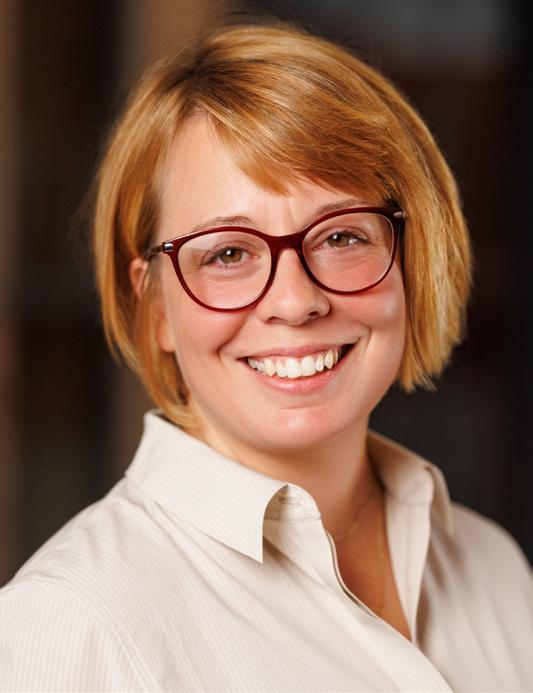
As the point person for our local PJ Library, I am proud to foster Jewish community everywhere. Playgrounds, pools, splashpads, coffee shops, community centers and the occasional escape room or movie theater: Jewish life happens wherever there are Jews. PJ Library hopes to empower you to teach your kids that, yes, you can bring in Shabbat beside the pool and yes, learning Judaism can be as easy as reading in the park. Being Jewish doesn’t have to be hard, and it doesn’t have to happen around a set table or in front of the ark.
I feel like I can hear our rabbis bristling at that last part. But I stand by it: if God is everywhere, let’s celebrate accordingly.
But this I stand by, too: nowhere can our children better see themselves in the flow of Jewish history than when standing within the four walls of our synagogues. Certainly, that sense of history is found in the scrolls of the Torah, in pages of our prayer books and even in the palpable energy created by generations of communal prayer. But nothing captures my kids’ attention quite as much as the walls of beautifully framed and utterly cringe-inducing confirmation photos.
Anyone who has stepped foot in a synagogue knows what I’m talking about: row upon row of sepia-toned teens dressed in their finest, frozen forever on the cusp of Jewish adulthood, ready and eager to fulfill the commandments, to join the board and to make the brisket. You – Harold of 1954: did you ever grow into your glasses? Betty of 1972, was your beauty underappreciated in your time? How cruel to immortalize a 15-year-old on the walls of our congregation, on display for haircut and tie choice critiques for
the rest of time! (Except for Stephanie of 1998: you’re perfect, never change.)
My older son and his friends laugh at the styles of generations past during kiddush luncheon, but I’d like to think that, also, they see themselves there. They see that only a few years down the road, their own pictures will hang beside those who came before them and may live beside them still. He can see himself as part of a living lineage that dates back to the start of these vital and storied institutions, our communal Jewish homes.
Confirmation photos of the past pay homage to the recent history of our people, and they’re far more relatable than the desert wanderings of our ancestors. The people on the walls are like any of us — they are handsome or awkward or hiding a gap in their teeth, they have braces and a smile that shines, carefully-coiffed hair, and some of them even look familiar. These people (we!) are the Jewish story.
And that sense of history isn’t one our kids feel so much in the active practice of Jewish community. Being together and being Jewish anywhere is a joy and duty we should teach our children and can do so easily (hurray for PJ Library!). But that we are on the same path as Moses, Maimonides, Meir and Morty of 1940? That is something only our synagogues are so very ready to do.
I struggle with synagogues as much as any membership-averse millennial out there: I like my personal spiritual practice, and I can light candles at home; money is tight, time is limited, and if I don’t like every policy and practice, then I think maybe none of it is worth it. But when I see those photos –mine included (oy vey) – I remember that my sons and I are only the most recent of a countless many, including Morty of 1940. And I’m happy to be in a place that remembers that history.


Top ten (and one-half) local Jewish gems
In honor of this 105-year anniversary edition, I was planning to list 105 Jewish “jewels” I have discovered since moving back to Kansas City. However, the entire Chronicle staff (meaning Sam and Lacey) thought that was a bit of an overreach. How about just 10.5, they suggested.
“Great idea,” I said (which is what you should always say to your boss’s suggestions). So that’s what I’ve done – compiled the top ten and a half delightful discoveries I’ve made since returning to the Kansas City Jewish scene. I apologize in advance for omitting your favorites, but they were probably among the 94.5 gems I had to leave out.
1. The Kansas City Jewish Chronicle
I’m not just saying this to suck up. While other Jewish papers such as the Forward and New York Jewish Week are no longer in print, our own little engine that could, The Kansas City Jewish Chronicle, keeps chugging along, with an entire staff of two.
2. and 3. JULIES and JULIETS
Like print newspapers, women’s organizations are folding. But in Kansas City, Jewish women’s groups not only survive, but grow.
JULIES (Jewish Union of “Retired” Ladies, Intelligent, Energetic and Sexy), the retired members’ cohort of the National Council of Jewish Women – Kansas City Section, are women of a certain age who monthly have fun kvelling and kvetching.
The similarly-named JULIETS (Jewish Unforgettable Ladies Interested in Eating Together) does more kvelling than kvetching. Their monthly gatherings have featured speeches from women judges, doctors, engineers (and the occasional man), which have definitely been pride-inspiring.
4. Kansas City Jewish Digital Archives
What? You didn’t know the history of Kansas City’s Jewish community is online? This rich resource contains digitized issues of The Chronicle and will soon add archives from the Jewish Community Center, NCJW and other Kansas City organizations, making this invaluable for both current and future Jews.
5. Johnson County Public Library
What is a public library doing on this list of Jewish gems? Their extensive collection of academic Jewish and religious titles earns them a spot on this list. And it didn’t hurt that they also purchased multiple copies of my book, “Typically Jewish.”
6. Michael Klein Collection
Trivia question: What U.S. cities house the largest Judaica collections? New York? Los Angeles? Overland Park? That’s right. One of the country’s most extensive Judaica collections is right here at The Temple, Congregation B’nai Jehudah, my go-to attraction for out-of-towners.
7. See KC
Costco knows the benefits of giving out samples, but so does See KC. This innovative program provides free samples of Kansas City life to young Jewish families considering relocating to Kansas City. Evidently, “Try it, you’ll like it,” works for both cities and cinnamon buns.
8. PJ Library
Not only do they mail free books to Jewish children — Dayenu — they also sponsor a Jewish grandparent’s group and organize intergenerational programming for Jewish families. Any one of those would be enough, but they do it all amazingly well.
9. Heritage at the Jewish Community Center
A Barbie movie party.
A psychiatric museum tour.
A (thankfully) short Passover seder.
These are just a few of the events I have attended at the Heritage at the J. And I got it all for a membership of only $84.00 a year. Such a deal!
10. Sichat Shabbat
The best part of this weekly gathering at Congregation Beth Torah is that there’s no rabbi. I have nothing against clergy, but at this Torahstudy-sans-rabbi, the participants select and present their own topics. One person — who shall remain anonymous — chose Sex in the Bible. No wonder I like this class.
10 ½. Strangers No More
This group of Jewish and Christian women meet regularly to learn about and celebrate each other’s religion. Since Jews make-up 50% of this group, I’ve designated them as one-half. If I had space for 105 entries, they would have gotten their own numbered gem.
Nancy Kalikow Maxwell is a Kansas City native and award-winning author. Her latest book, “Typically Jewish,” is available through the Jewish Publication Society or Amazon. Her website is kaliwellinc.com and email is nancykalikowmaxwell@gmail.com.
Editorials express the view of the writer and are not necessarily representative of the views of The Kansas City Jewish Chronicle staff, the Jewish Federation of Greater Kansas City, or the Kansas City Jewish Community as a whole.
A message from the outgoing KU JFSC president
By Dr. David Slusky Outgoing KU Jewish Faculty Staff Council President
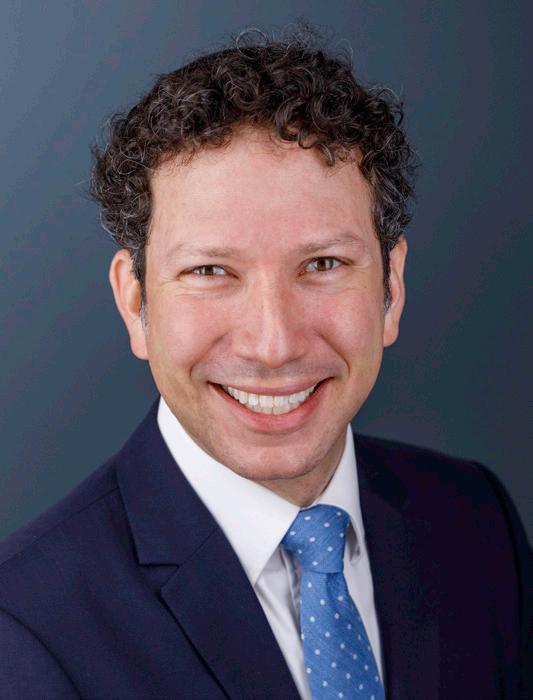
I have had the privilege over the past two years to serve as the president of the Jewish Faculty Staff Council at the University of Kansas, one of ten faculty staff councils for those based primarily on the Lawrence campus. These councils are open to anyone — no requisite that one is Jewish or another identity.
As previously covered in The Chronicle, these councils are part of a larger effort at KU to make everyone feel welcome, including the Jewish community.
It has been a tumultuous and challenging two years (even more so these past few months) for the KU Jewish community. In this role, though, I have been the recipient of tremendous private goodwill and consolation, from administrators and faculty colleagues across the university. I am truly grateful to all of those who reached out to me, both in a personal capacity and as the representative of KU’s Jewish faculty and staff.
This private support is emblematic of the environment on our campus. I am proud to say that it has also been a tremendously exciting and uplifting two years at KU. Despite the challenges, Jewish faculty and staff are thriving in Lawrence in several ways, large and small. While no institution is perfect, KU is both a home for Jews and a place where Jews are doing tremendously important teaching, learning and research.
We need to do whatever we can to support that work continuing. Higher education remains a tremendously important force for good in the American Jewish experience. It’s a crucial rite of passage for young Jewish adults to become the best they can be and have their maximal lifetime contribution to repairing the world, and it’s still a crucial cornerstone of our society, producing academic research and new discoveries that enable our government and society to be the best it can be.
The Jewish Faculty Staff Council draws individuals from across the university – administrators including deans, vice provosts, department chairs and program directors; faculty at all ranks, including distinguished professors; and staff who work as research support, administrative associates, advisors, mental health counselors, statisticians, and in public relations, athletics, admissions and more. We held numerous events over the past two years, often in partnership with other local Jewish organizations, including the Lawrence Jewish Community Center, KU Hillel and KU Chabad. Highlights included lunches with then KU Hillel Interim Executive Director Bailey Nakelsky and new Executive Director Ethan Helfand; co-sponsoring the Jewish Studies Program’s “Jews in the Americas” conference; lunch in the KU Hillel sukkah with KU Vice Chancellor for Strategic Communications and Public Affairs Karla continued on page 14
The Kansas City Jewish Chronicle has been there from the beginning to tell Jewish Federation of Greater Kansas City’s story...
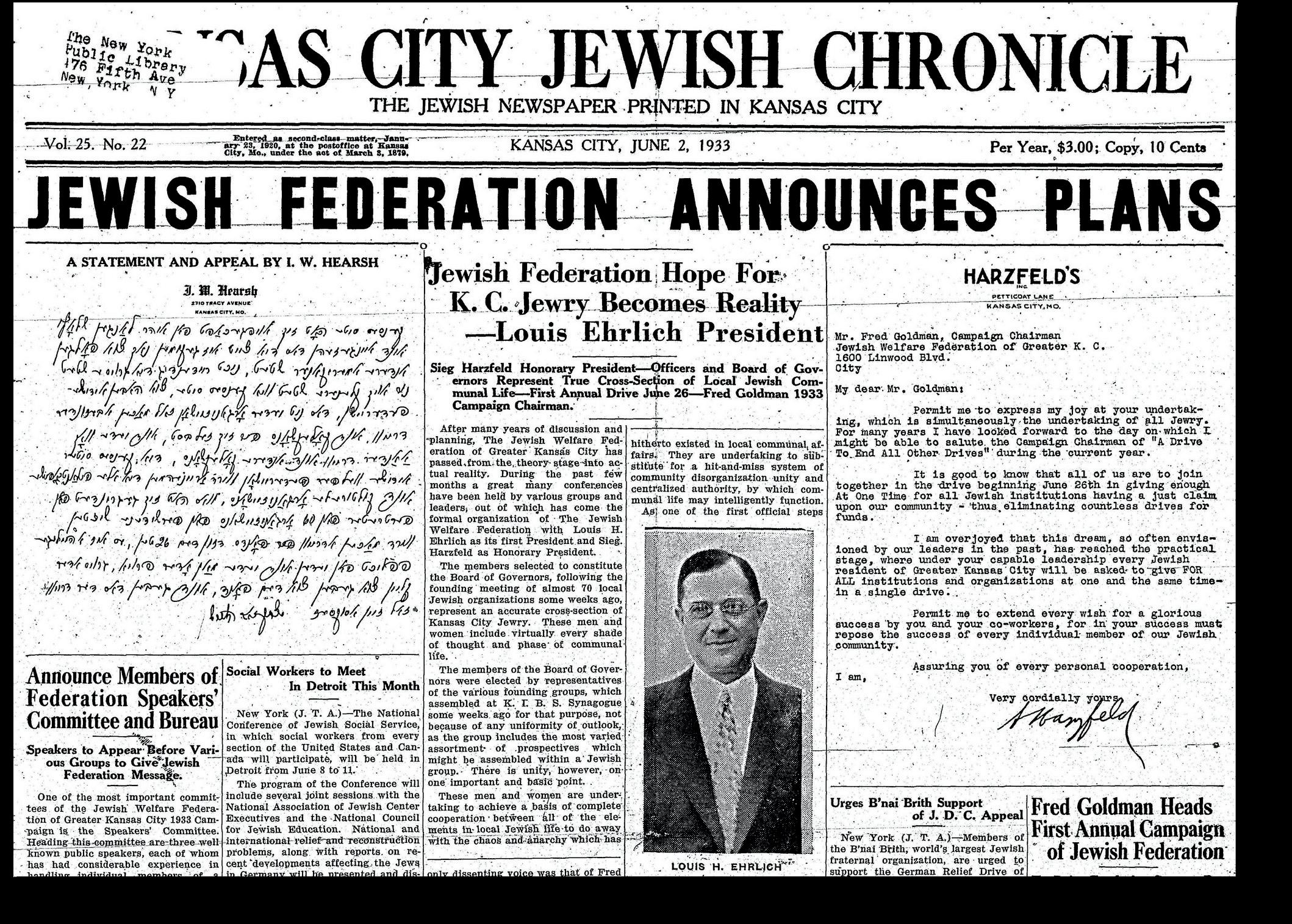
... and now we are so happy to be a part of The Chronicle’s story. Here’s to the next 105 years!
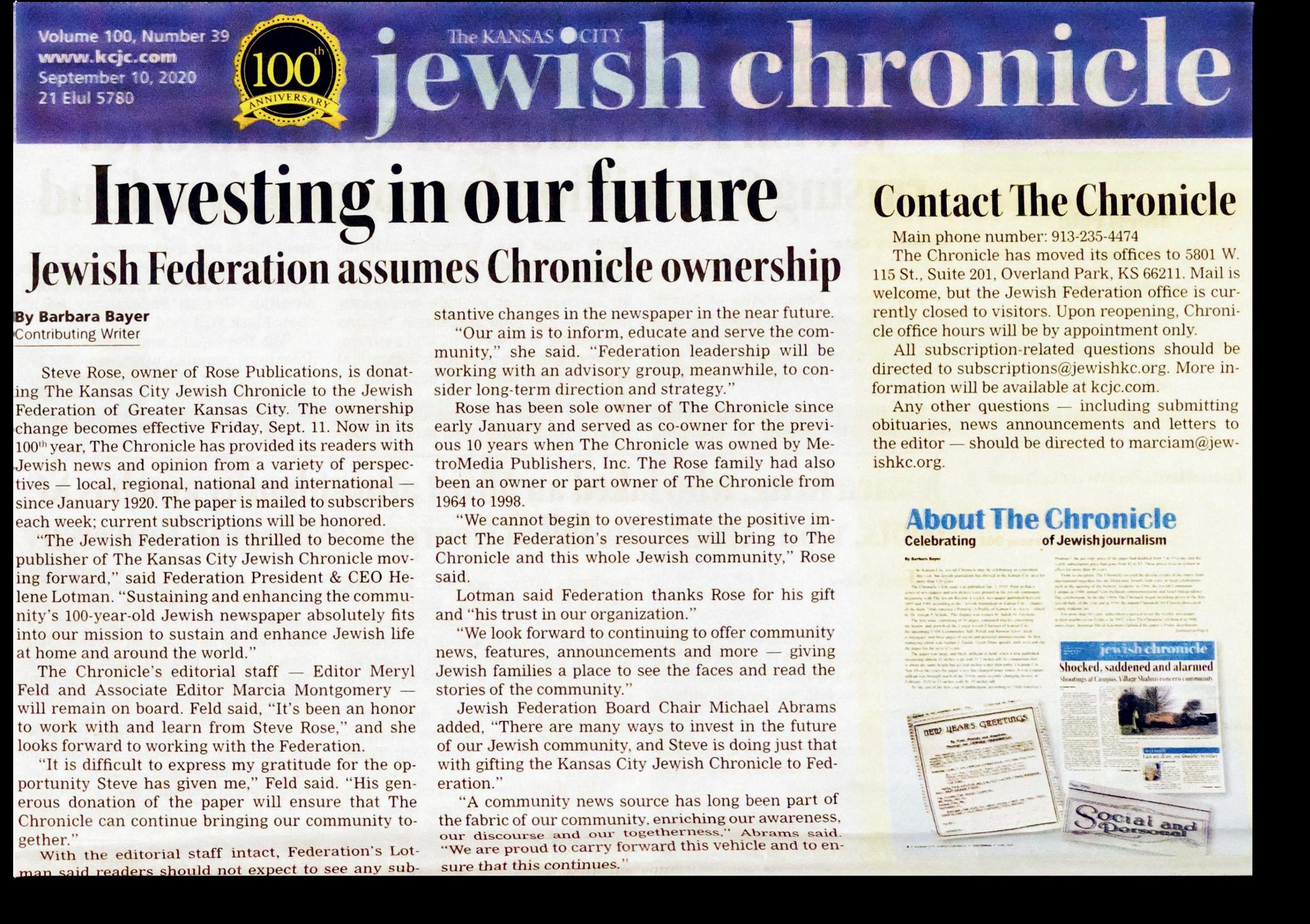

Proud publisher of The Kansas City Jewish Chronicle since 2020.
commentary
A message from the outgoing KU JFSC president
continued from page 14
Leeper; bagels at KU Hillel with Congregation Beth Israel Abraham and Voliner’s Rabbi Mark Glass; KU’s Dr. David Burnham on “Digging into Jewish Sources on Dinosaurs with a Rabbi and a Paleontologist;” and a tour of KU Chabad’s new facility with Rabbi Zalman Tiechtel.
We also partnered with KU’s Impact and Belonging team to organize a virtual event on “Interrupting Antisemitism” with Jonah Boyarin (author of New York City’s official training on fighting antisemitism and son of former KU Professor Jonathan Boyarin). And we worked on smaller but crucial efforts to make Jewish life on campus better for faculty and staff, including working with KU Dining on how to provide certified kosher meals at their catered events (using frozen meals they were already selling on campus) and ensuring major administrative events (e.g., Vice Chancellor for Research finalist campus visits) weren’t scheduled on Jewish holidays or alternatively had makeup days scheduled (e.g., College of Liberal Arts & Sciences Visioning Day). This latter effort made use of the list of religious holidays managed by The Office of Civil Rights & Title IX and their guidance that “To ensure that students, staff, and faculty are able to participate in University activities, we strongly encourage you to avoid scheduling in conflict with spiritual days of significance.”
Looking forward, I am optimistic about what the future will bring KU’s Jewish Faculty and Staff under the leadership of incoming President Carolyn Caine and incoming Vice President Professor Ari Linden, with KU’s senior leadership’s strong relationship with the Jewish community (e.g., the chancellor speaking at the Federation’s annual meeting), Ethan Helfand leading KU Hillel, and with the new KU Chabad building. Rock Chalk! David Slusky is a professor of Economics at the University of Kansas. This article represents his own opinions and perspectives and should not beinterpretedorassumedtobethose oftheUniversityofKansas.
Jacob Abramowitz
obituaries
Memorial Chapel on June 18, followed by burial at Mt. Carmel Cemetery.
philanthropic efforts.
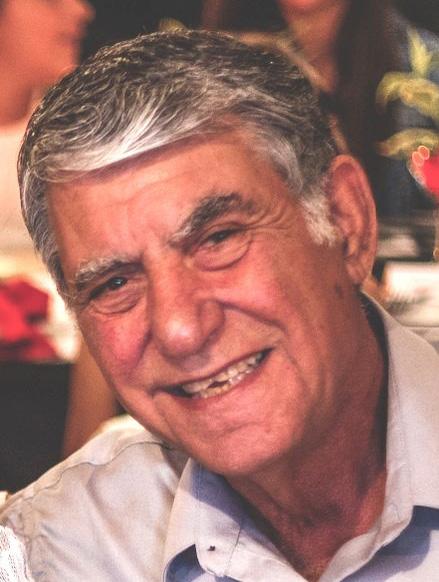
Jacob Abramowitz of Leawood, Kansas, entered into eternal rest on June 13 at his home. Born in Tel Aviv to Baruch and Bertha Abramowitz on Dec. 29, 1940, Jacob lived a life full of love, kindness and joy.
Jacob served in the Israeli Air Force as a paratrooper. Jacob started working for AB May in the mid 1960s where he learned the HVAC trade, allowing him to realize his dream of opening his own business in 1984, Karen Heating and Cooling, named for his beloved baby girl. Jacob built his company on a foundation of integrity, hard work and a deep commitment to serving others. He treated every customer like family. His dedication earned him a loyal following and a widely respected reputation grounded in trust and reliability.
In 1964, Jacob immigrated to the United States on a two-week voyage by ship to pursue the American Dream. He married Nilli Abramowitz (Levy) on Oct. 31, 1981. As immigrants, Jacob and Nilli did not realize the significance of the date, and the judge that married them had to take a break from trick-or-treating with his kids in order to perform the ceremony. This eventually became a bit of family lore that always brought delight in the telling.
Jacob is survived by his wife, Nilli; son Erez Bar (Ruti) and grandchildren Omer, Adi and Nadav; daughter Iris Nafshi (Oved) and grandchildren Sahar, Shai and Maya; daughter Inbar Carmel (Sharon) and grandchildren Yael, Anat and Michal; daughter Robin Abramowitz (Brian Thompson); daughter Beth O’Bryan (John) and grandchildren Sarah and Hallie; son Jason Abramowitz (Dolly Johnson) and grandson Tyler; and daughter Karen Cohen (Bryan) and grandchildren Noah and Ethan. He was preceded in death by his parents and sister, Esther.
Jacob was a devoted grandfather who loved spending time with all of his grandchildren. When Karen announced she was pregnant with Noah, Jacob tearfully told her, “I will have a new best friend,” a sentiment he felt for all his beloved grandchildren. Jacob will also be remembered for his humor, mastery of casino games and love of desserts.
Services were held at Louis
In lieu of flowers, the family suggests a donation to Variety KC or The National Kidney Foundation.
Ronald Fox Kahn
Ronald “Ronnie” Fox Kahn, 88, of Leawood, Kansas, passed away peacefully on June 2, in Rancho Mirage, California, where he had maintained a winter home for many years.
Born in Kansas City, Missouri, on April 4, 1937, to Lester and Ethel Kahn, Ronnie grew up in Butler, Missouri. He attended Wentworth Military Academy, graduating in 1955, and later pursued his education at the University of Illinois at Urbana-Champaign, where he was a member of the ZBT Fraternity. He proudly served in the United States Army, primarily stationed in France. Upon returning home, he married the late Barbara C. Kahn, his devoted wife of 65 years, who died in September 2024.
A successful entrepreneur and business leader, Ronnie was the principal owner and chairman of several transportation and logistics companies, including Kahn Transportation Company, Central States Thermo King (CSTK), Double Check Company, TriState Equipment Company and Velociti Inc.
A passionate Kansas City Chiefs fan, Ronnie was a longtime season ticket holder, having secured his seats on the first day they became available in 1963. He also served as a Chiefs Red Coater, embracing his love for the team and community. In retirement, he became an avid golfer and canasta player, and he spent much of his time traveling the world and visiting Michelin-starred restaurants with Barbara.
Throughout his life, Ronnie remained actively engaged in philanthropy and business leadership. He was a member of the Thermo King and Chevrolet Dealer Advisory Councils, as well as a director of Boatsmen Bank in Butler, Missouri, and Tamarisk Country Club. His dedication to charitable causes was reflected in his service and dedication to the Cystic Fibrosis Foundation (Kansas City), the Mayo Clinic (Phoenix) and Beit T’Shuvah (Los Angeles). In 2023, he and Barbara were honored with the Harriet Award for their longstanding
Ronnie was an unstoppable whirlwind of energy and mischief, delighting in playful antics and sparking joy in everyone he met.
Ronnie is survived by his children, Michael L. Kahn and Shelly Kahn Tessel; his grandchildren, Alexander “Sasha” Kahn, Lucie Tessel, Jonah Tessel and Teddy Tessel; his sisters, Lenita and Marcia (Mel); his brother-in-law, Edwin (Susan); and numerous nieces, nephews and cousins. He is survived by a wide circle of cherished friends. He was preceded in death by his beloved wife, his parents and his favorite dog, Bogie.
A private family burial took place at Rose Hill Cemetery on June 6, officiated by Rabbi Kramer of The Temple, Congregation B’nai Jehudah.
In lieu of flowers, memorial donations may be made to the Kahn Family Fund for AI Research and Innovation at the Mayo Clinic, a fund dedicated to Alzheimer research (Mayo Clinic, Department of Development, 200 First St. S.W., Rochester, MN 55905 or give.mayoclinic.org), or to Beit T’Shuvah (8831 Venice Blvd., Los Angeles, CA 90034 or beittshuvah.org/support/donate).
The family extends their heartfelt gratitude to Ronnie’s dedicated healthcare aides — Crystal, Lupe, Karen and Charlotte — his physician, Dr. Christopher Flores, and his nurse Jennifer at Mission Hospice Services for their compassionate care.
Online condolences for the family may be left at louismemorialchapel. com.
Steven Peter Sackin died on May 28 at the age of 75.

Steve was born on Feb. 4, 1950, in Kansas City to Marjorie and Eugene Sackin. He was the oldest of three with his brother, Ken, and sister, Nancy. He went to college and graduate school at the University of Missouri in Columbia where he studied child development and met his wife, Linda.
In Columbia, he worked as a social worker, led camps and built climbers with children out of rope and wood at head start schools in Central Missouri. He spent the majority of his life in Kansas City, where he worked for over 40
Steven Peter Sackin
years at the Harry J. Epstein Company, a fourth-generation family wholesale tool store started by Steve’s grandfather, Harry J. Epstein, in 1933.
Steve loved climbing mountains in Colorado; canoeing in Missouri and Arkansas; riding his bike the eight miles to work almost every day in any season; hitchhiking; coaching his sons’ baseball teams; writing poetry; making treasure hunts for his children and grandchildren; and reading. He was a vegetarian and religious school teacher at The Temple, Congregation B’nai Jehudah, and was deeply inspired by one of his student’s comments: “God is the surprise in me.”
He and his wife began a garden in the parking lot at Congregation Kol Ami in Prairie Village, Kansas, with the children of their religious school. With the help of Kol Ami, they then founded Manheim Gardens on Troost.
He has published two books of poetry which you can purchase on the Harry J. Epstein Company website.
Steve is survived by his wife, Linda; his sons Jacob and Jori; and his grandchildren, Gabriel and Casey.
Steve’s life can be honored by making a donation to Manheim Gardens or reading his books of poetry. Here is “Red Rocks,” one of his poems from his second book:
Upontopbysunrise.Surprisingcool breeze/forAugustinthedesertcomes from the West. / The sandy arid land belowshouldbeburntbrown,/butit’s palegreenduerecentrain.Thesun/is just moving above the horizon. Shadows / cast by the mountains appear in the distant West.
A crow has something to say. / The pleasant wind continues. / Shadows are already halfway across the valley. / Roosters trumpet from a nearby farm. / Dogs argue. The sun has gone from redtoyellow.
What is the source of loneliness? What does / the aching heart really need? Jacob is in India. / Jori in LA. Linda asleep at the hotel. /They are so deeplyembeddedliketheroots/ofthe mountain; like the scrub / holding the shapeofthedesert.

Now they must all go free to find their own / mountains to climb, knowing there is some kind / of well here whichtheycanalways/cometodrink.
Edwin Laurence Silverman
Edwin Laurence (Larry) Silverman, born on Nov. 7, 1938, in Kansas City, Missouri, to William (Bill) and Mildred Silverman, passed away peacefully on June 6, surrounded by his family and friends.
Funeral services were held on June 9 at the Louis Memorial Chapel. Interment was at Rose Hill Cemetery.
Larry was a devoted husband to Cheryl (Brodkin) Silverman, whom he married in 1968. Together they shared a lifetime of love, partnership and laughter. Larry is survived by Cheryl; their children, Billy (Ann Karty) and Shelly Kellner (Philip); grandchildren, Ariel Silverman (Sam Benson), Hannah Silverman and Joel Silverman; great-grandson, Levi Benson; a large extended family; his beloved cat, Sophie; and a community of dear friends.
He was preceded in death by his sister, Sandy, and brother-in-law, Joel Bock.
A proud veteran, Larry served in the United States Coast Guard and was honored for his service by the Jewish War Veterans Mo-Kan Post 605.
Larry had a lifelong passion for bowling, earning numerous trophies, sponsorships and serving as a B’nai Brith Bowling champion for many years. His dedication to the sport reflected his love of competition and camaraderie.
Larry found purpose and joy in his work, whether it was the 30+ years he dedicated to the restaurant supply industry or the more than 20 years he spent helping customers as a grocery sacker and ambassador at McKeever’s Price Chopper in Leawood, Kansas. He was always ready to help those in

need and brightened every day with his beautiful and friendly smile.
Larry was a dedicated member of the Kansas City Jewish community and longtime member of multiple congregations.
Larry will be deeply missed by all who knew and loved him. His legacy of kindness, generosity and dedication to family and community will continue to inspire all of the lives he touched.
He will also be fondly remembered for his collection of Folger’s coffee cans and drawers overflowing with pads of paper, pens, pencils, knives and flashlights. And, of course, for his ever-ready willingness to share “Papa Larry-isms” such as: “When you’re healthy, you’re wealthy,” and most famously “Good day today, better one tomorrow.”
Irene Strauss
Creek with a crane.
Her incredible will and tenacity was challenged again a few years later with the tragic, untimely death of her beloved husband, Alvin, leaving her a widow with her still-teenage daughter at home. Financial exigencies required her to find full-time employment, and she took a most challenging direction — she became a residential real estate agent. Her phenomenal will and grit kicked in, and she became extremely successful. However, tragedy struck again when fate brought her to the Hyatt tea dance the night of the skywalk collapse. Her companion was crushed before her eyes while she was left without a scratch.
Irene Strauss, an extraordinary woman, wife, mother and human being, passed away on June 6 after 98 years of family love, loyal enduring friendships and many laudable accomplishments.
Irene Strauss was a first generation American, the youngest of four siblings, and her early life was tempered by St. Paul, Minnesota, weather, the Great Depression and World War II.
After studying at the University of Minnesota, getting married and having three small children, Irene and Alvin moved to Johnson County, Kansas, away from her extremely close extended family but ready for the challenge of a new community. These early years found Irene as a homemaker and part-time executive assistant, taking advantage of her skills in shorthand and typing.
This perfect family dynamic abruptly ended when she was diagnosed with metastatic melanoma, a mortal diagnosis now, but especially back in 1968. As a last resort, she was enrolled in the first experimental immunotherapy trials at M.D. Anderson Cancer Center and remarkably was cured — the only one in her cohort to survive. As if that wasn’t enough, in 1977, the family was on the Plaza the night of the infamous flood in Kansas City. They barely got out of their car before it was swept away. The next morning it was pictured on the front page of the Kansas City Star being hoisted out of Brush
Through the subsequent years, she continued to pursue her hobby of duplicate bridge, traveling throughout the country to play in tournaments, as she was quite an expert player. She continued to sell real estate, working well into her 80s, and traveling the world. Incredibly, when she was in her 80s, she took her granddaughter, Emily, 15 years old at the time, on an African safari, even climbing Mt. Kilimanjaro.
She is survived by her three children whom she always encouraged to live up to the highest standard, and evidently they did. They are Dr. William Strauss, an eminent nephrologist/gerontologist physician in San Francisco, California; Amy Strauss Tranin, a nationally recognized oncology nurse geneticist; and Robert Strauss, a decorated fighter pilot. She is also survived by two grandchildren, Emily Tranin of Denver, Colorado, and Alex Tranin of Leawood, Kansas. They were the light of her life.
Irene had a love for life and a frankness that attracted friendships even with younger people, who always said “she is a lot of fun.” Irene taught those who knew her to speak up for themselves, live life with rigor and confidence and never give up. She will be sorely missed.
The family held a graveside service on June 8, 2025 at Mt. Carmel Cemetery, followed by shiva services on June 8 in the Chapel at Village Shalom where she spent her final years. The family requests no flowers.
Contributions in her memory may be made to the Sally Tranin and Irene Strauss Village Shalom Employee Education Fund at the Jewish Community Foundation or the charity of your choice.
Online condolences for the family may be left at louismemorialchapel. com.