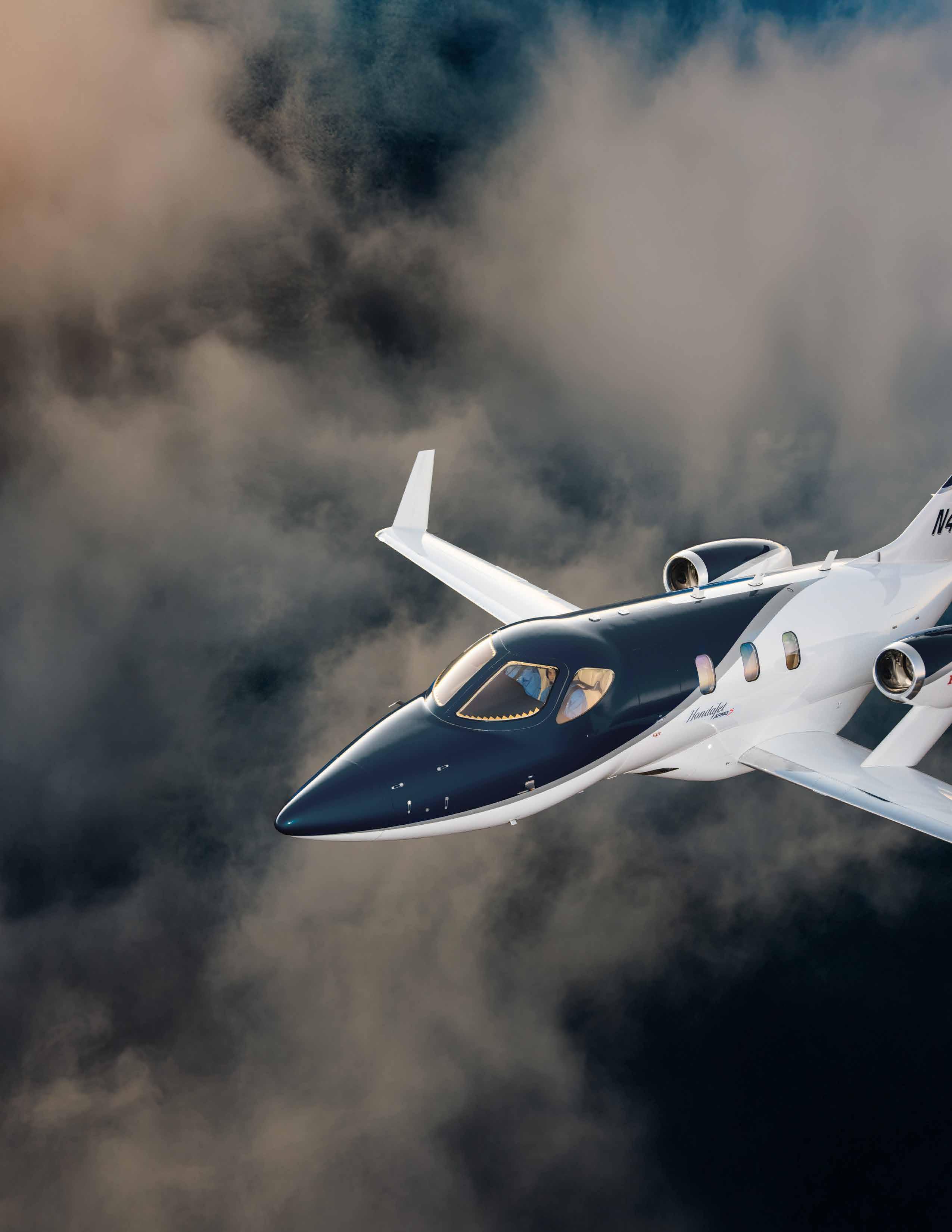
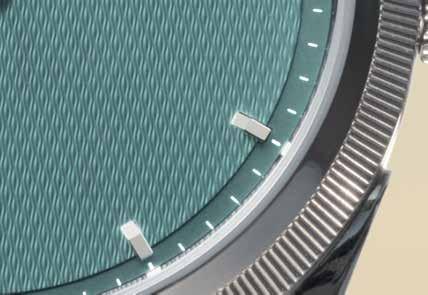
you fly close to the speed of sound, you can see a dawn that never ends.
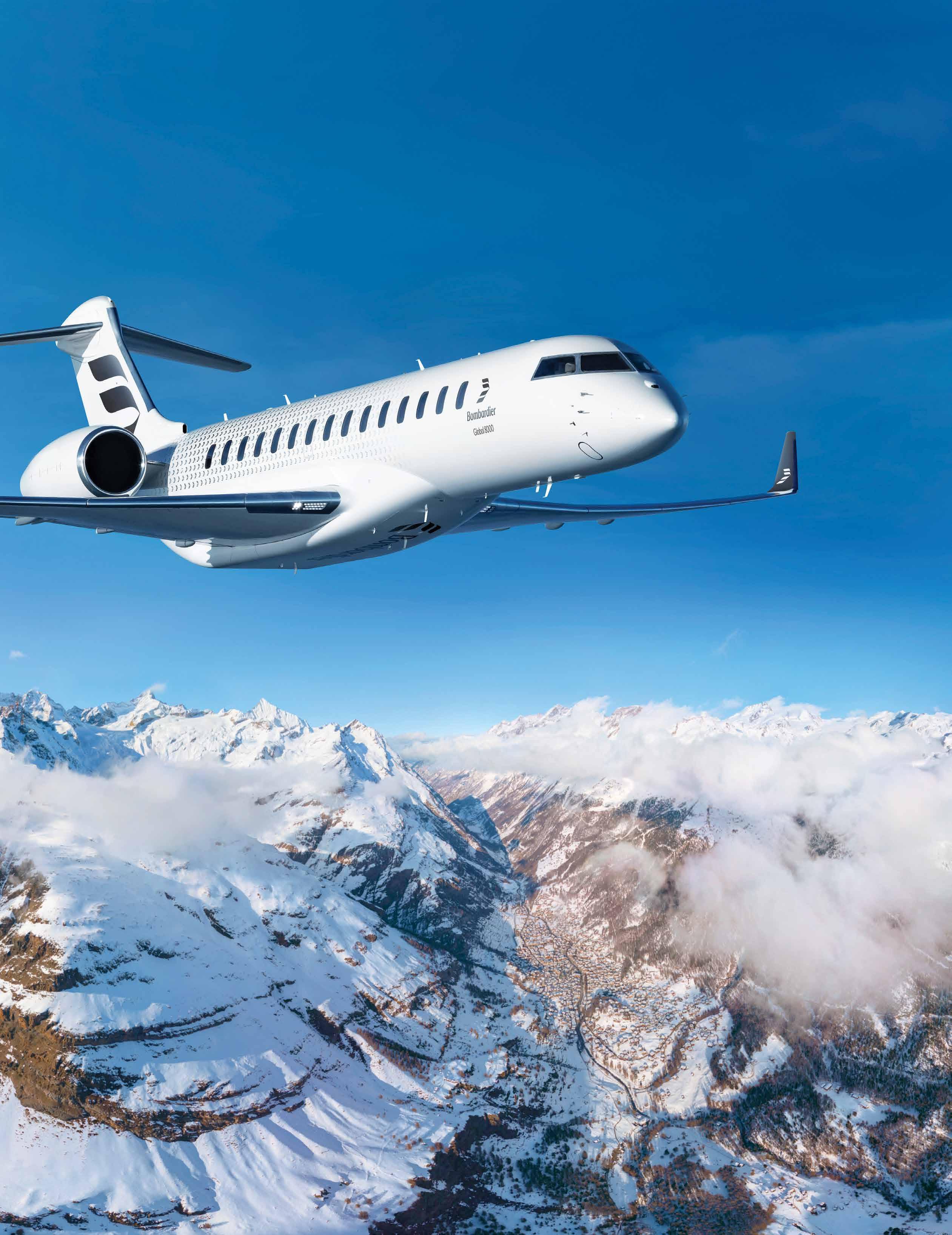
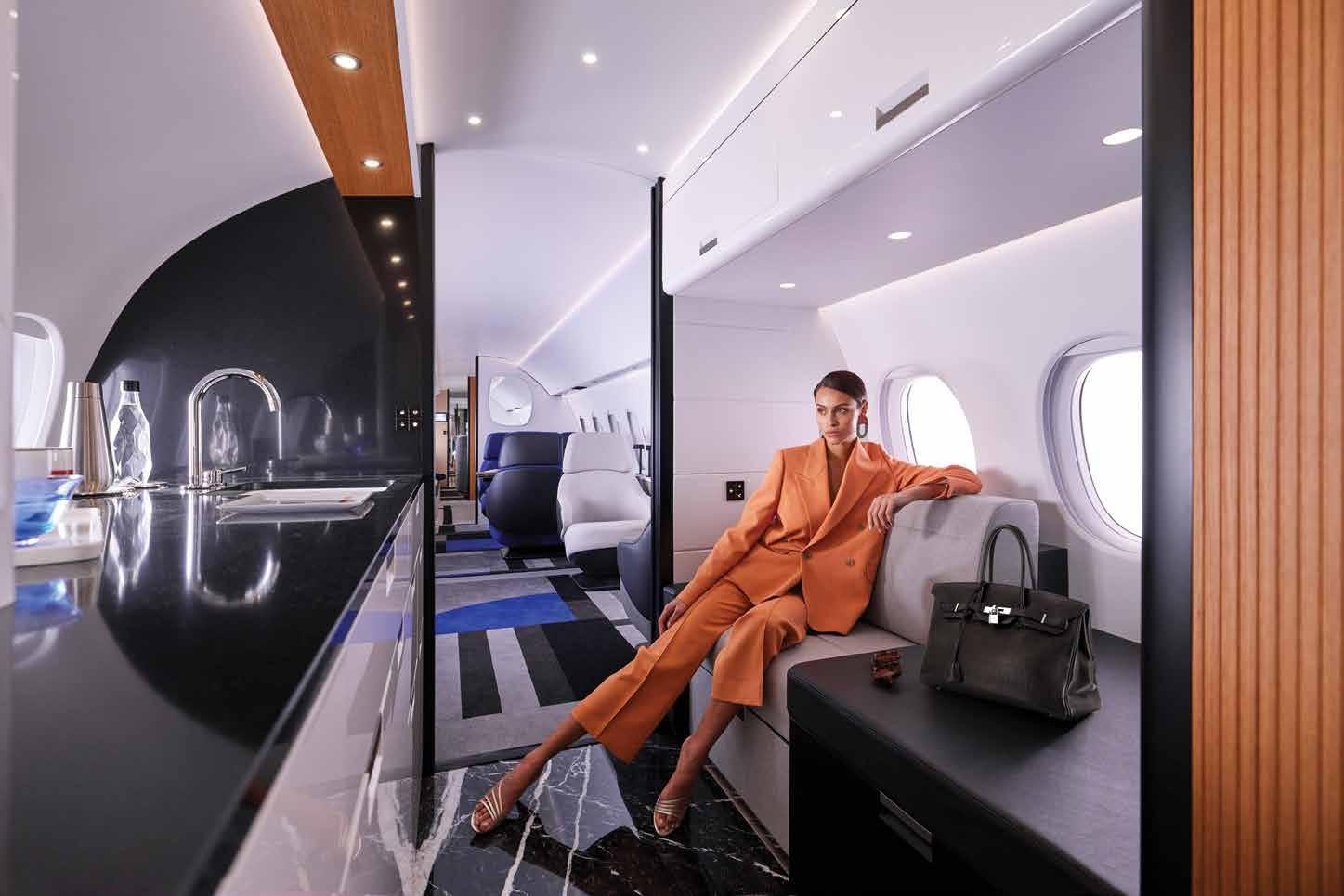
Introducing the Bombardier Global 8000
The world’s fastest private jet.
The fastest civilian aircraft since Concorde with a top speed of Mach 0.95, a range of 8000 nautical miles and the industry’s lowest cabin altitude.
PRIVATE JET TRAVEL
REVOLUTIONIZED
WHAT MAKES EYE IN THE SKY SO INNOVATIVE?
lying private has never been more accessible. Eye In The Sky is an exclusive marketplace with a verified community of private jet owners, operators and flyers where members can seamlessly buy and sell seats or empty legs, all on a single integrated platform.
WHO IS EYE IN THE SKY FOR?
Whether you’re a frequent first-class flyer looking to enjoy all the benefits and convenience of private aviation without the full cost of chartering an entire aircraft, or a private jet owner, charter customer or private jet card holder wanting to offset costs by offering your available seats, this platform is your one-stop shop.
Eye In The Sky doesn’t take a percentage or commission from any connections made or flights/seats sold; just a $65 monthly subscription with unlimited ability to transact.
Eye In The Sky is redefining private aviation —giving you full access to private air travel without the archaic barriers.
HOW DOES IT WORK?
Host and Flyer Accounts:
“Hosts” are the members who are posting existing flights hoping to fill empty legs or available seats.
“Flyers” are the members who are looking to purchase a flight or seat on those posted flights.
Search Posted Flights:
Hosts can post and Flyers can search all empty legs or available seats on existing flights in one easily searchable place—1,500+ flights on the platform daily!
Direct Communication:
Hosts and Flyers can communicate directly within the platform about details of posted flights; arrange payment, negotiate dates, time, pets, etc.
Interests:
Can’t find the flight you’re looking for? You can post an “Interest,” creating a group chat within the platform to connect with others of similar searches and needs—letting the demand create the supply!
Eye In The Sky brings the private aviation industry to one searchable and easy-to-use place, making it possible to search, buy, sell and transact all in the palm of your hand.
HOW DO YOU JOIN THE REVOLUTION?
Eye In The Sky is disrupting the industry by providing a greener, more accessible and more cost-effective flight path for all who use it. It’s time to embrace the ridesharing revolution of private aviation; 42% of private planes fly empty, Eye In The Sky aims to take that number to ZERO.
Eye In The Sky is not available to the public as it is by invitation only to continue to curate a dynamic and professional network. However, as a valued member of the Jetset Magazine community, you are invited to join this exclusive network and bypass the existing waitlist.
New Business Jets Are Connecting the World’s Distant City Pairs with a Single, Nonstop Hop
Three Napa Valley Estates, Three Stories, and the
Find Out Why the Aston Martin DBX S is the New Alpha in Town
Italy’s Frescobaldi Family’s 700-Year Link to Wine and Art
How High Tech is Influencing the World of High Jewelry
final descent
Eliminate the Stress Associated with Buying and Selling Private Aircraft
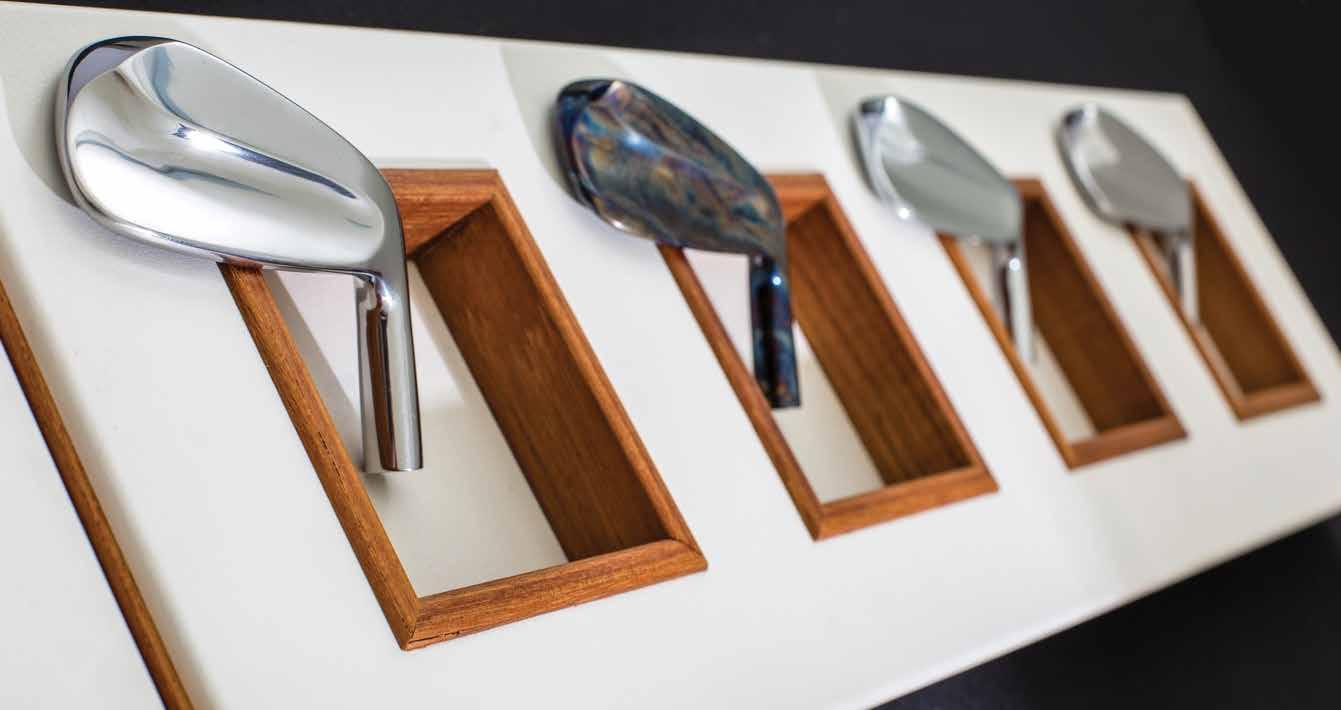
P53’s Christopher Griffin Revives the Lost Art of Forging Handcrafted Irons from American Steel
Private Wealth Transfer Can Create Fortunes—or Destroy Them
There’s Great Power in Learning to Turn Mistakes into Successes
What Could Bring Mortgage Rates Down in 2026?
86 HIDDEN ASSETS
How All Areas of Your Life Impact Your Well-Being and Financial Destiny
88
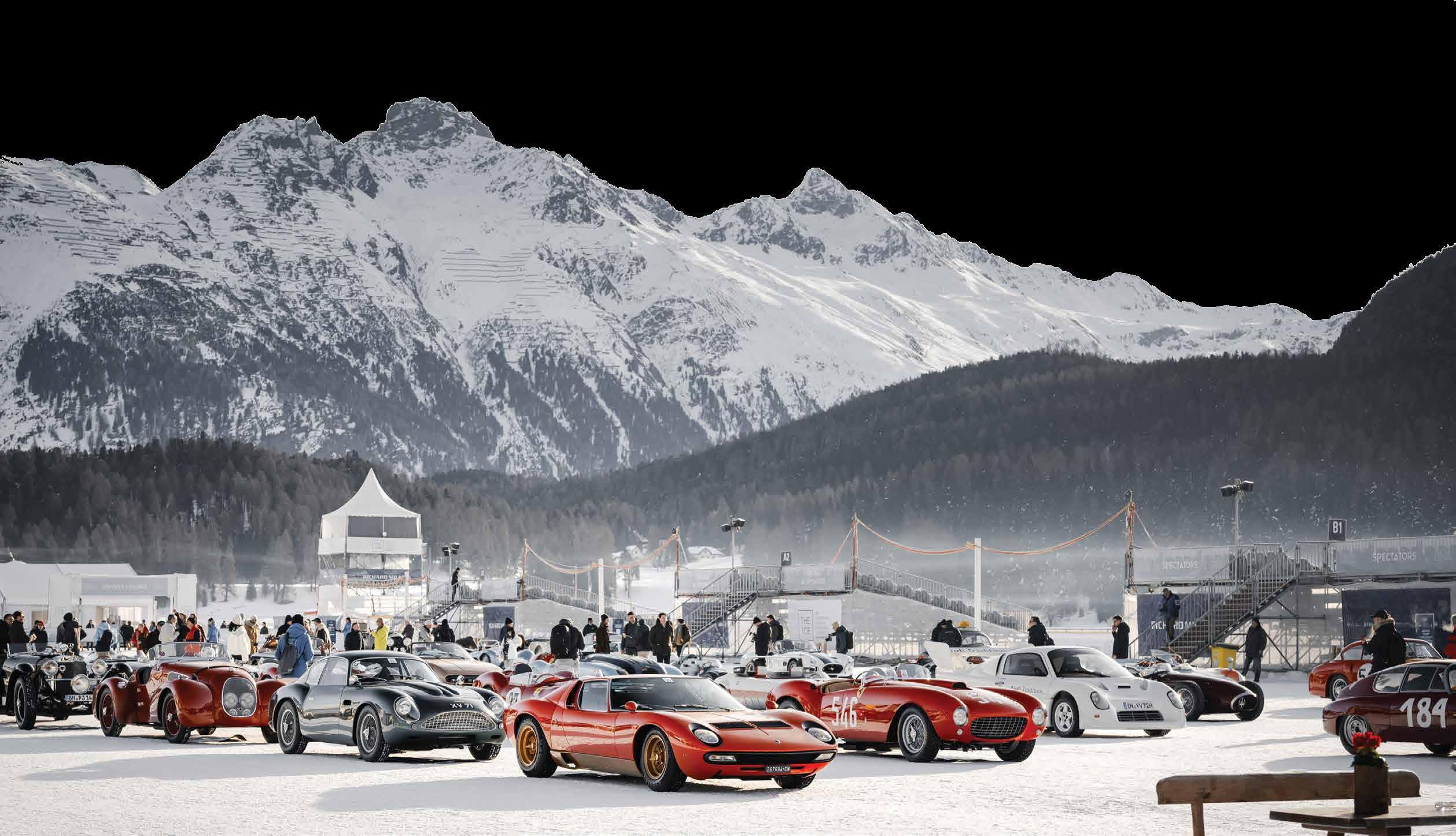
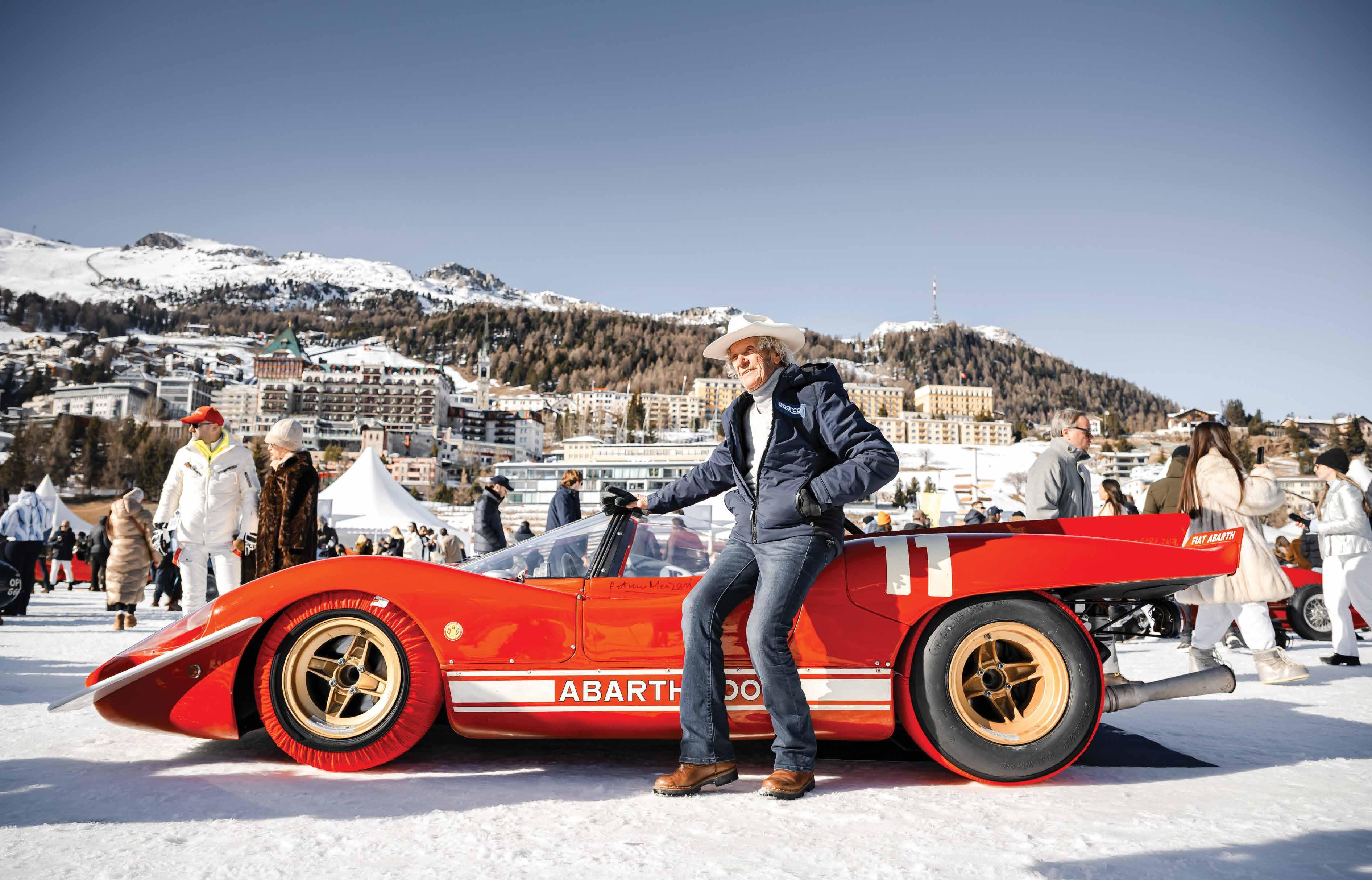
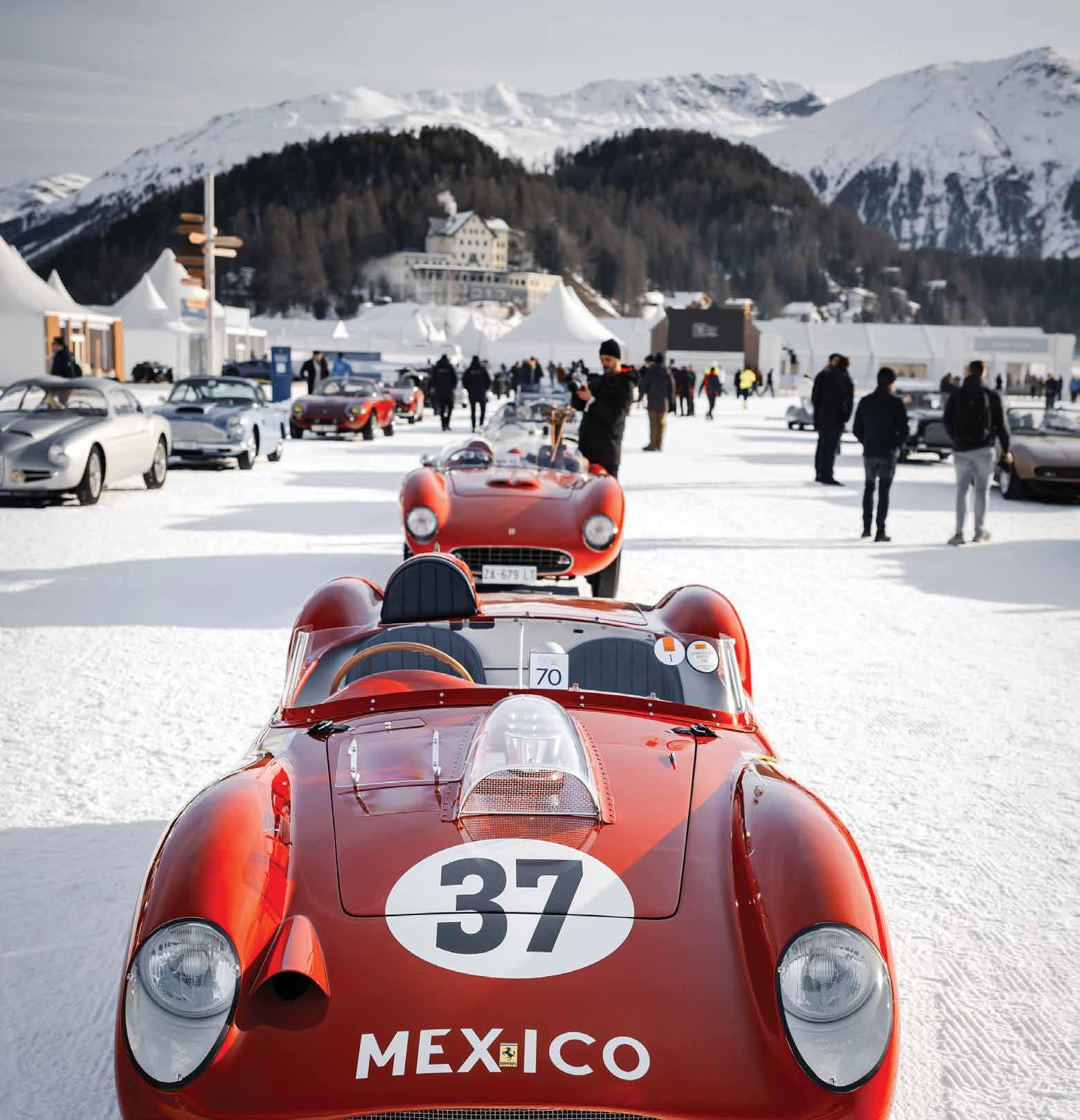
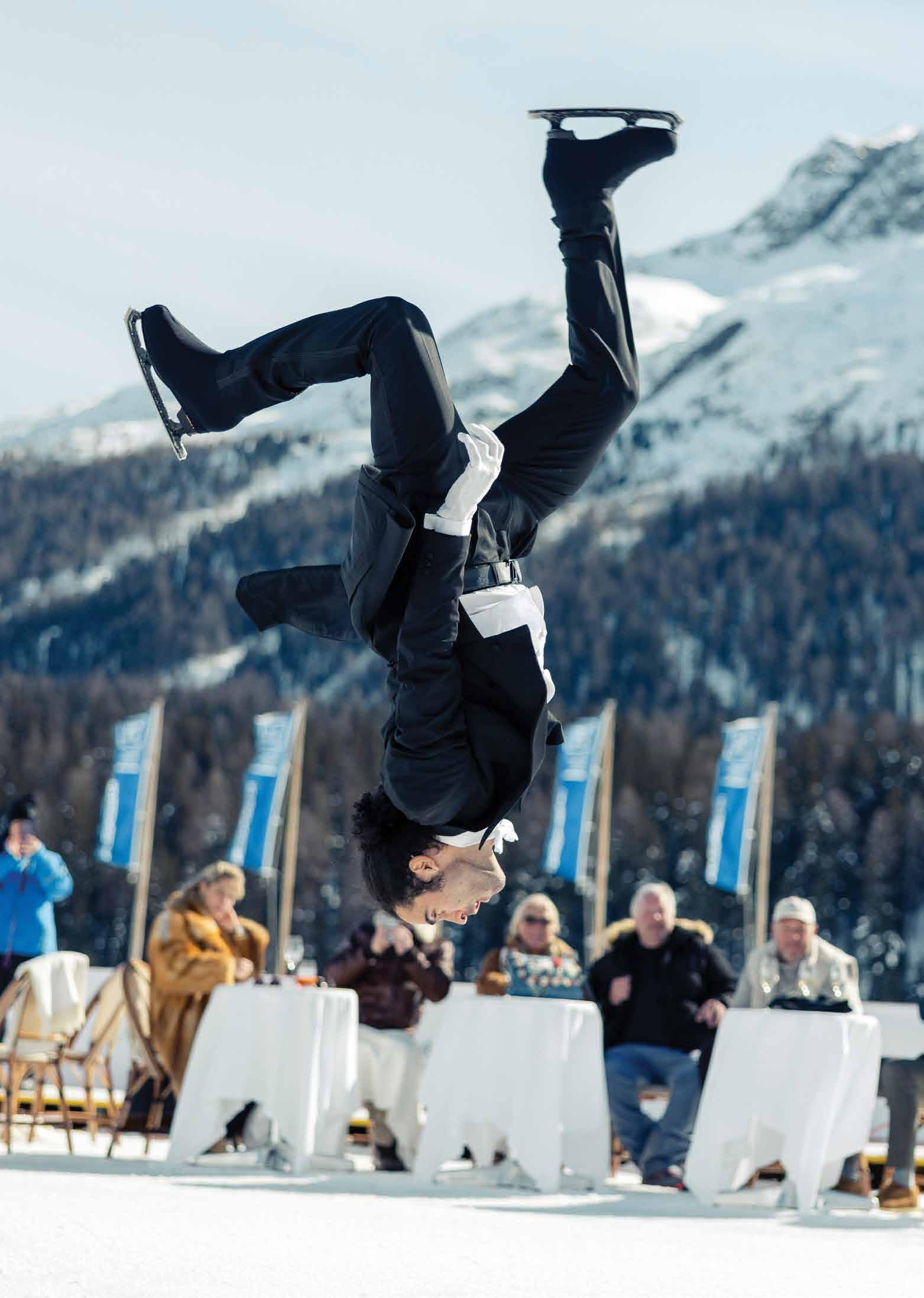
Inside St. Moritz’s Exclusive Icebound Car Event 92
Listing all of the “Must Attend” luxury events in the coming months
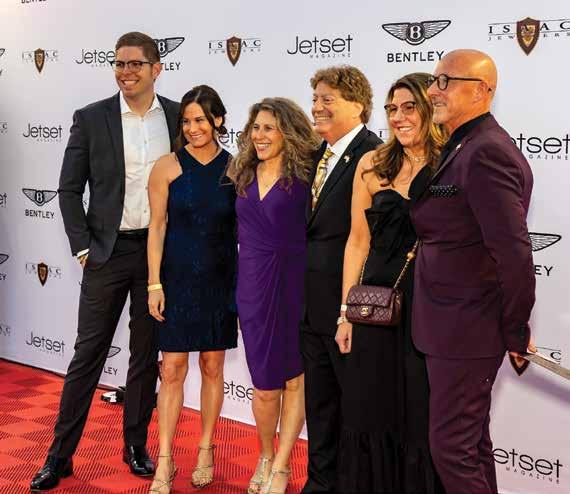
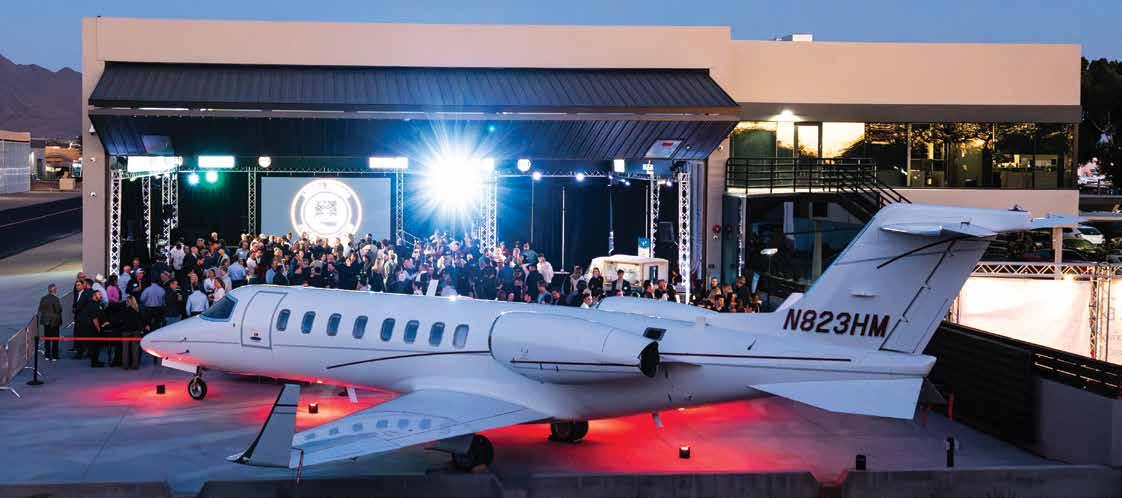
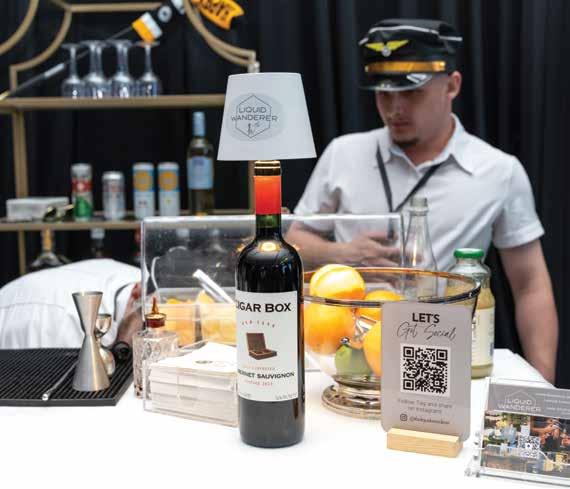
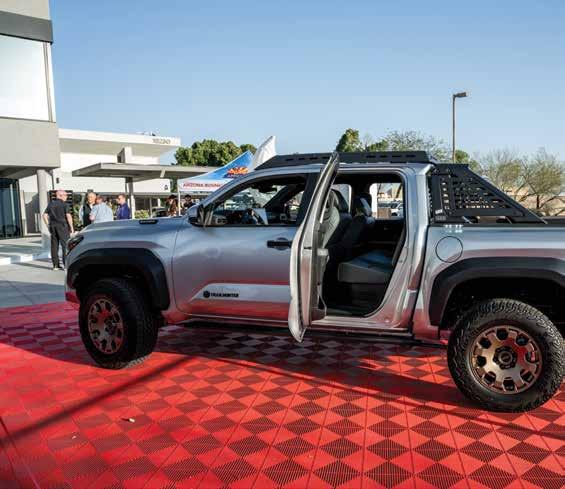
Experience the latest VIP events hosted at the Jetset hanger
FEATURES
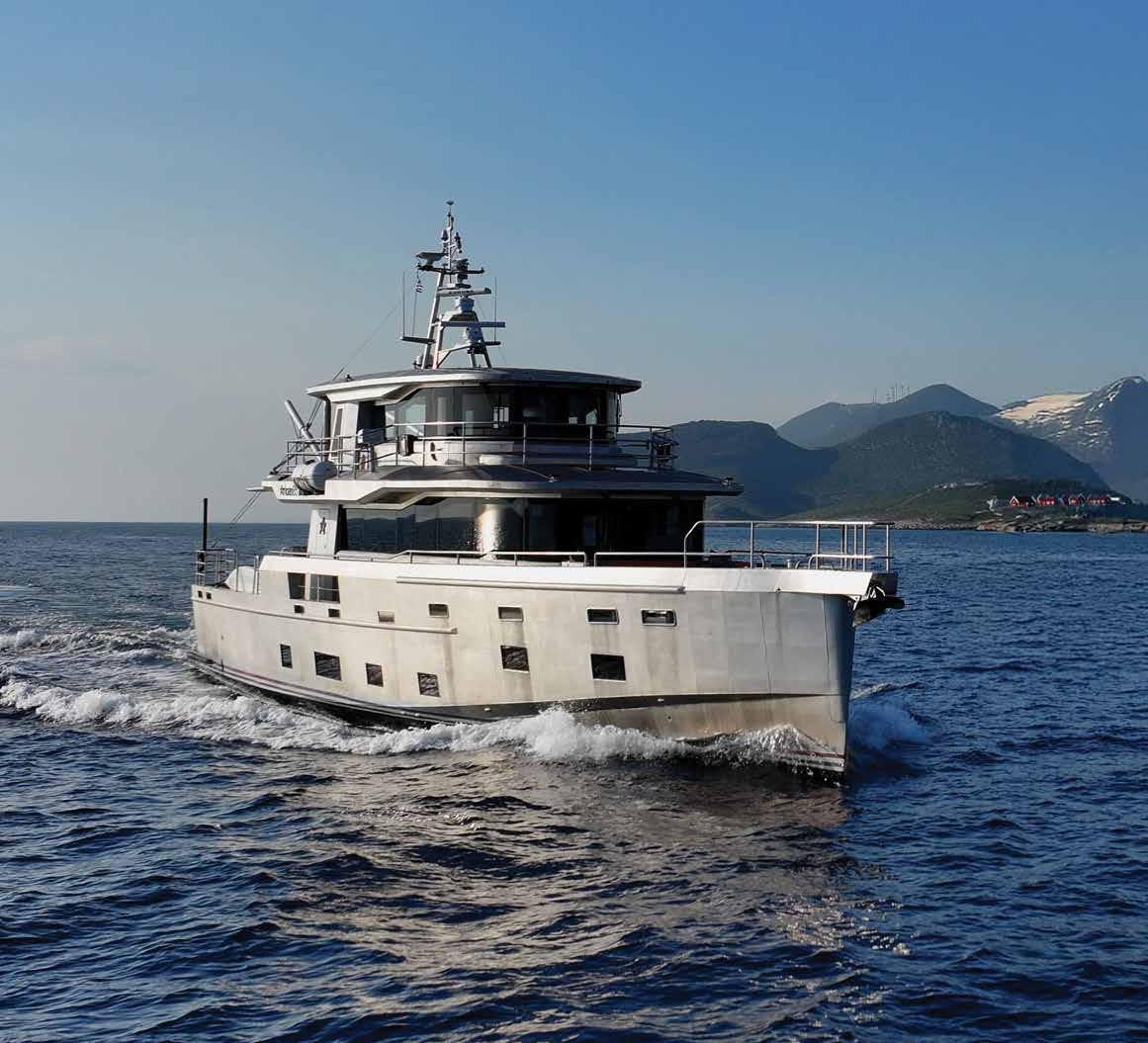
48 COMPASS FOR THE CURIOUS Arksen Boldly—and Sustainably—Revolutionizes Adventures by Land and at Sea
54 FORTE’S SECOND ACT
How One of the Last Great Old-World Hoteliers is Continuing His Family’s Legacy
58 HOLISTIC HARMONY
How the World’s NextGeneration Wellness Retreats are Focusing on Mind, Body and Spirit
64 THE VELOCITY DOCTRINE
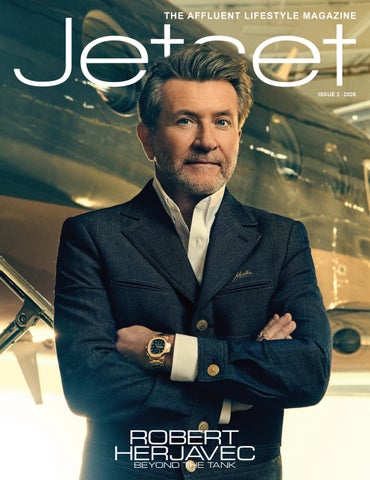
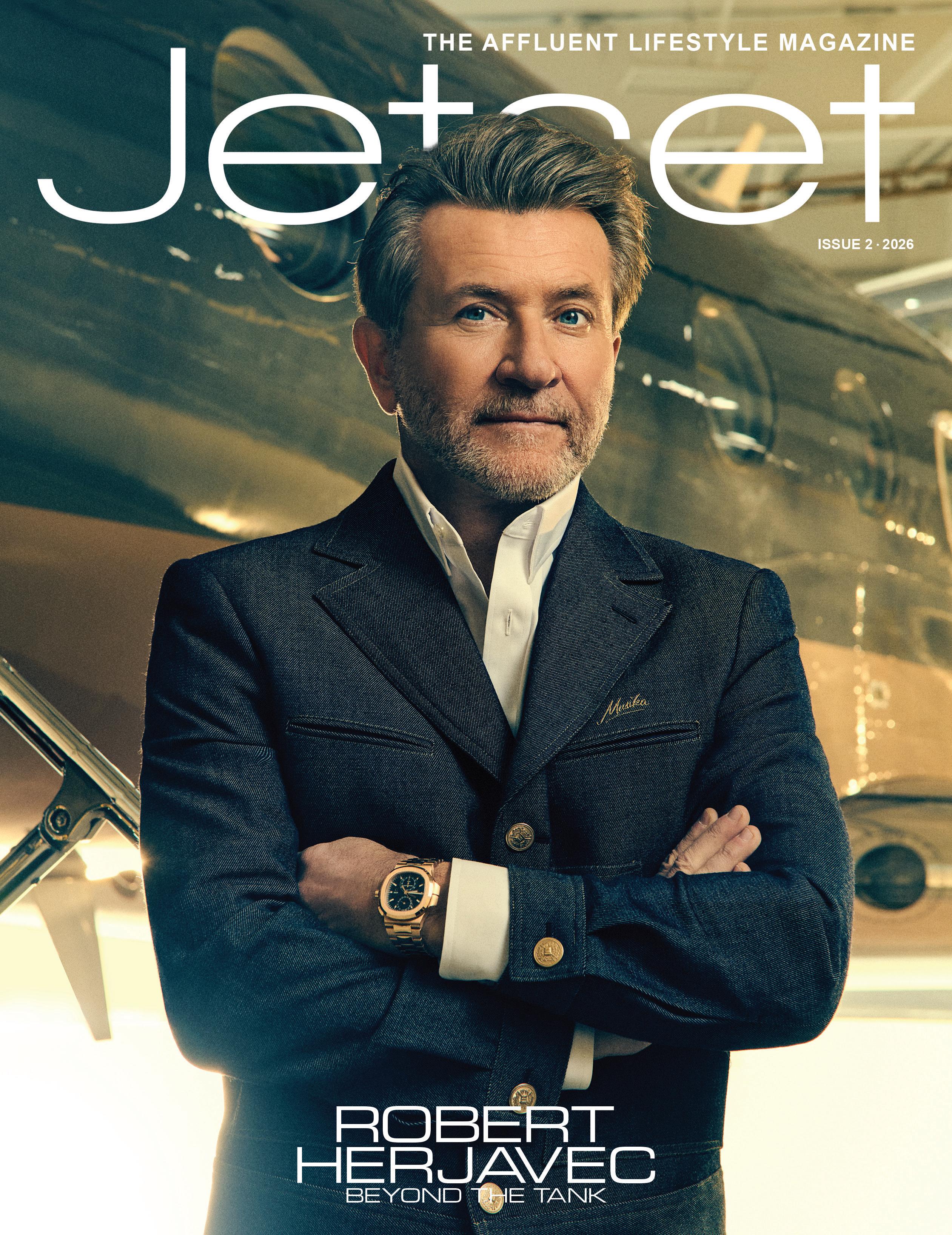
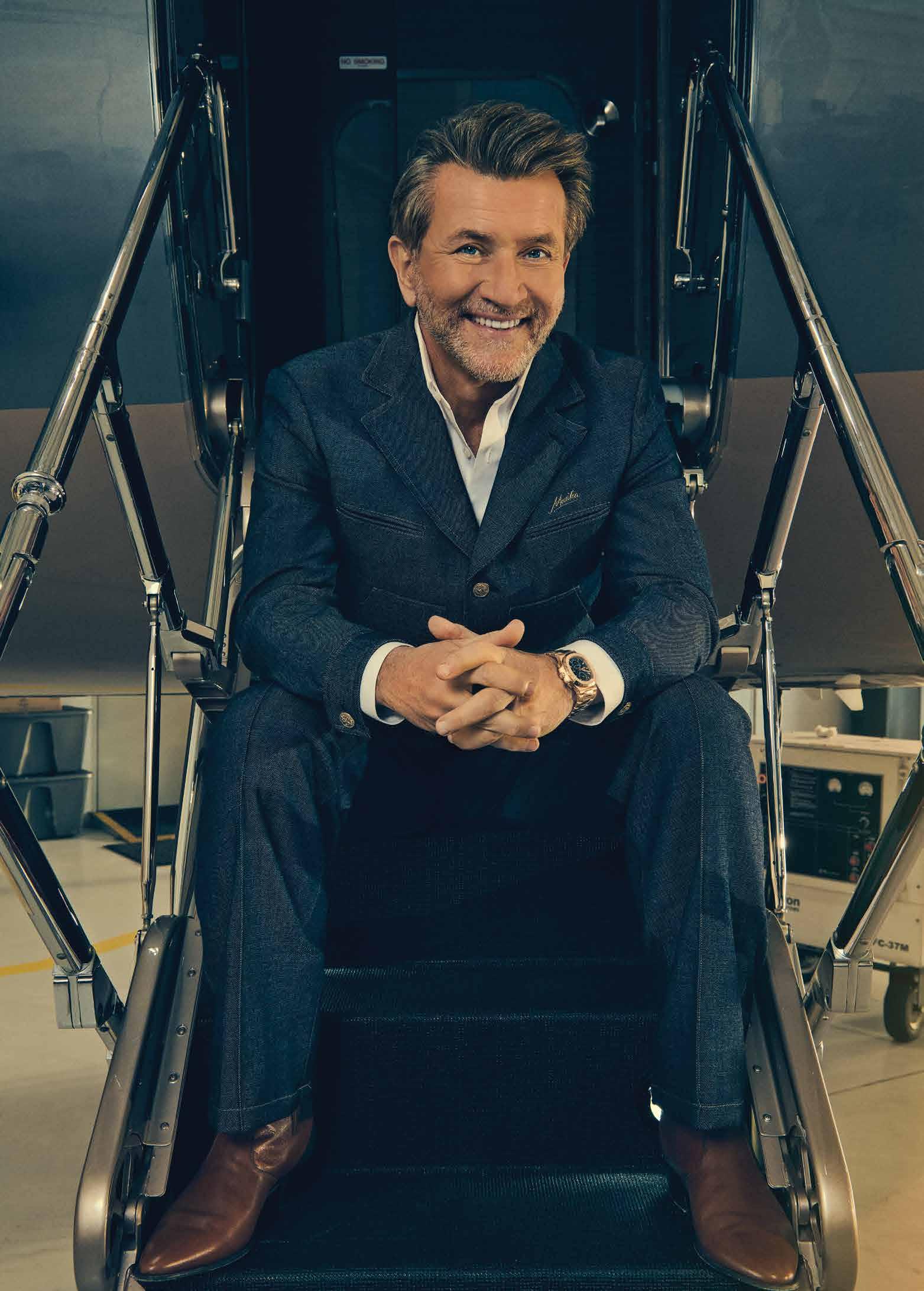
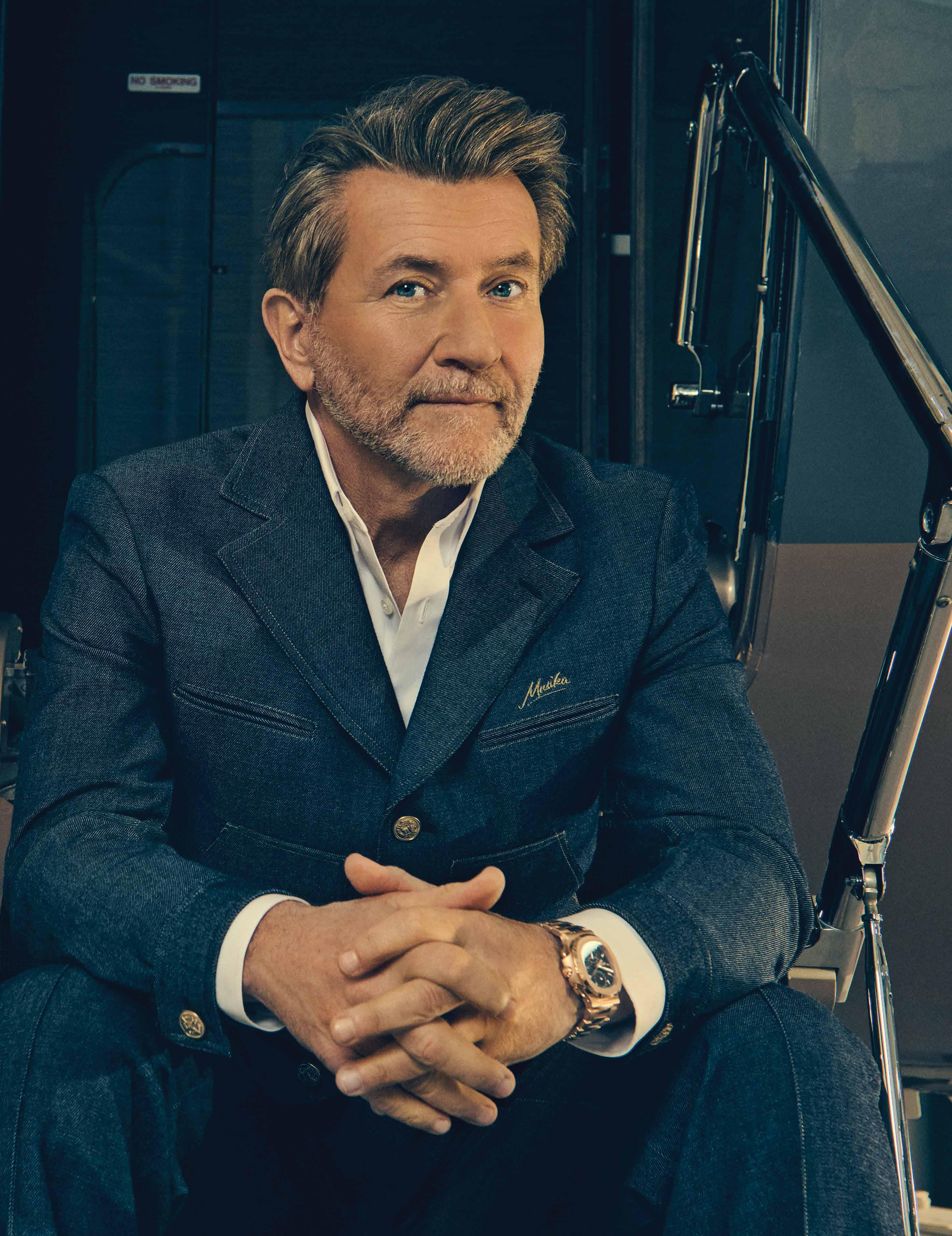
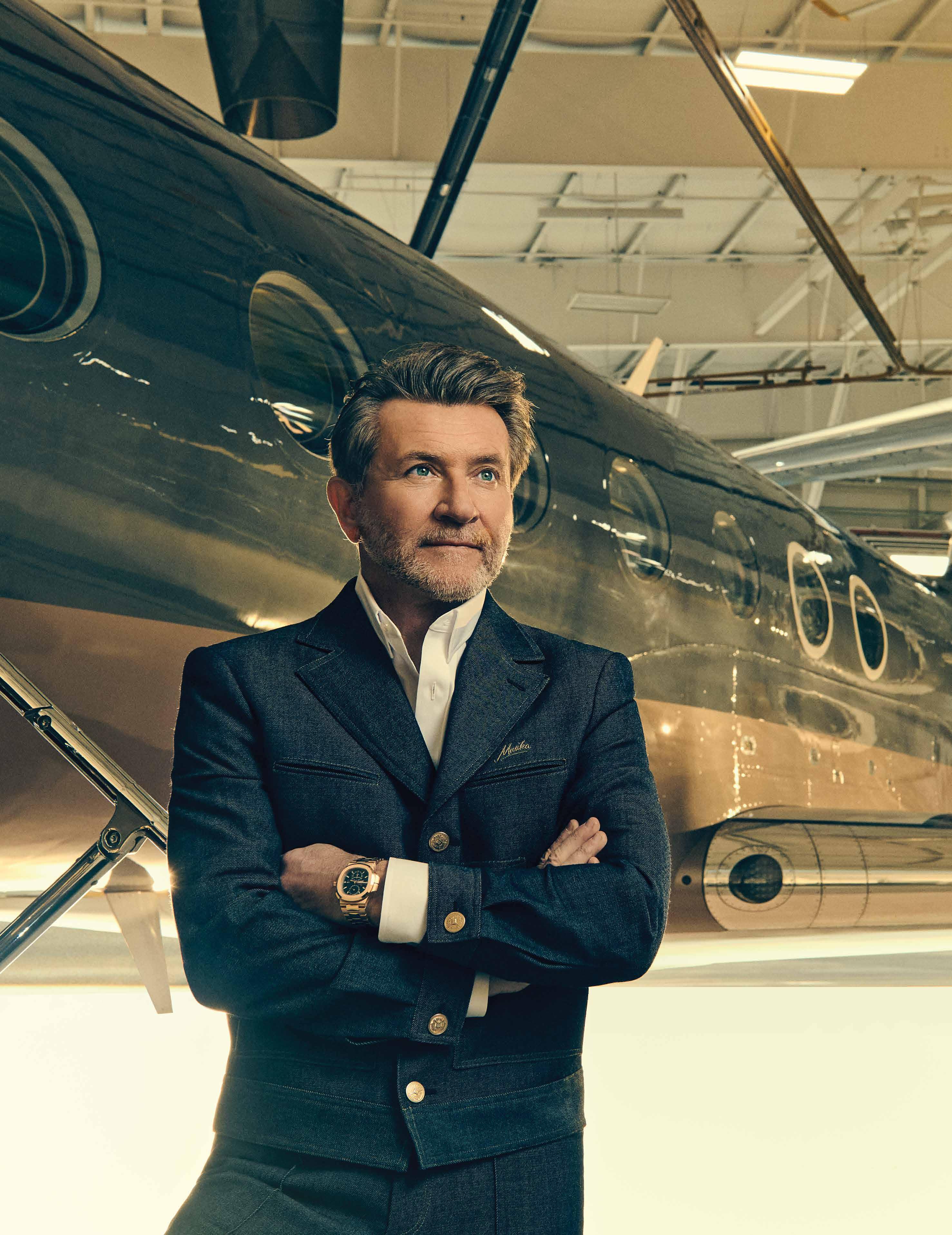
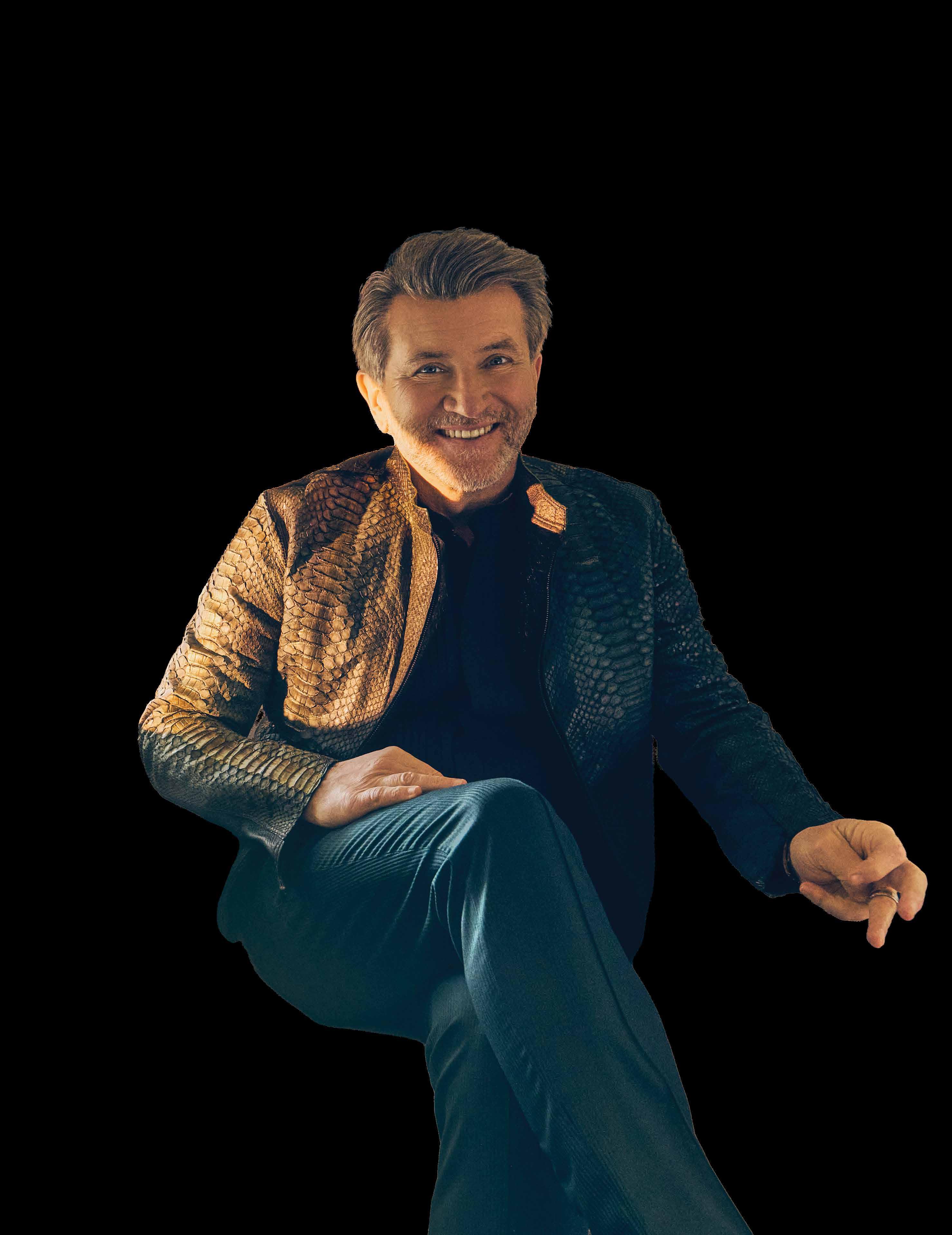
Robert Herjavec on Ambition, Stamina, and the Art of the Long Game
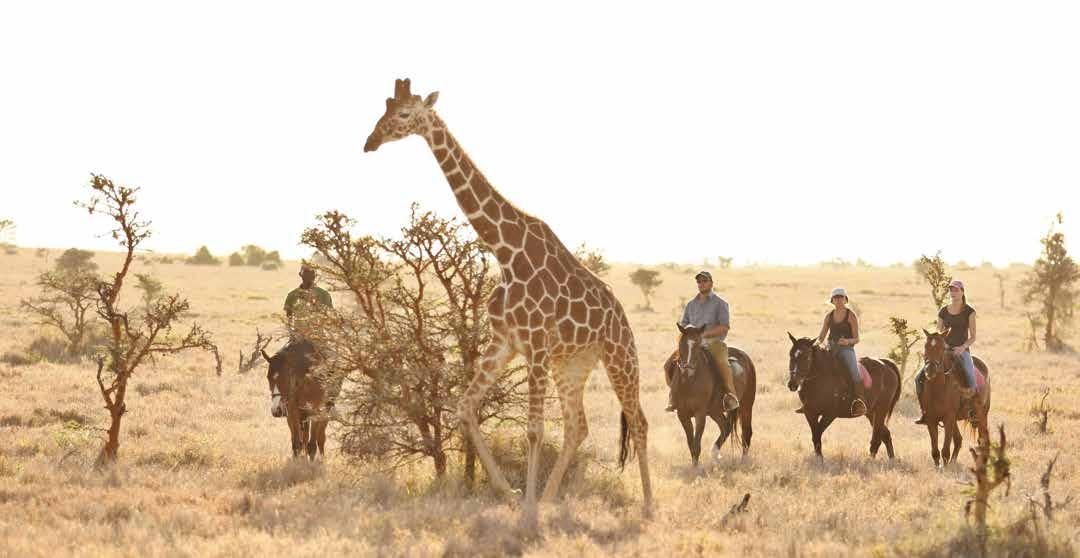
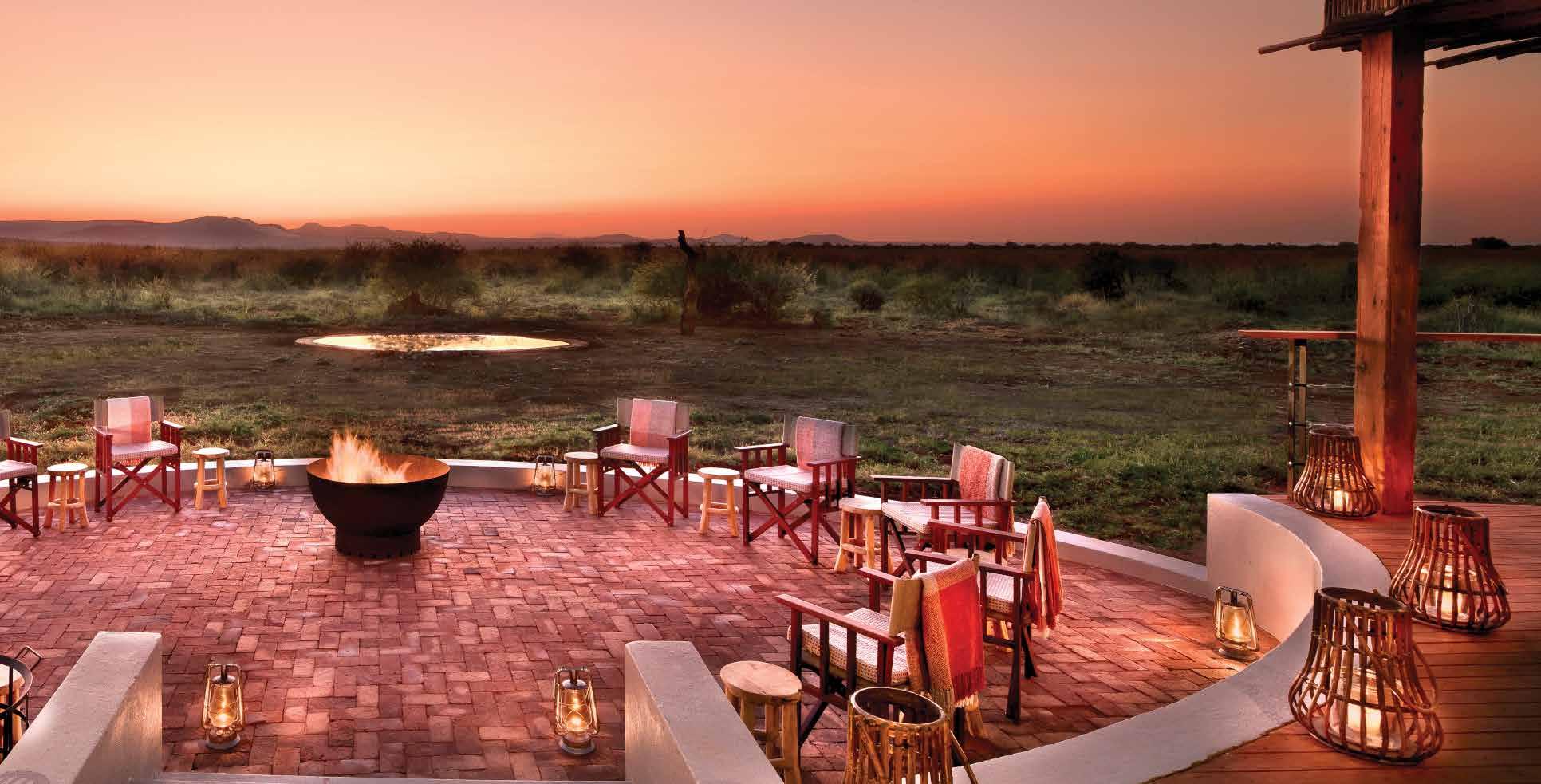
The Route du Bonheur Offers a Breathtaking Journey Through Cape Town, Winelands and on Safari 76 ALOHA, OAHU
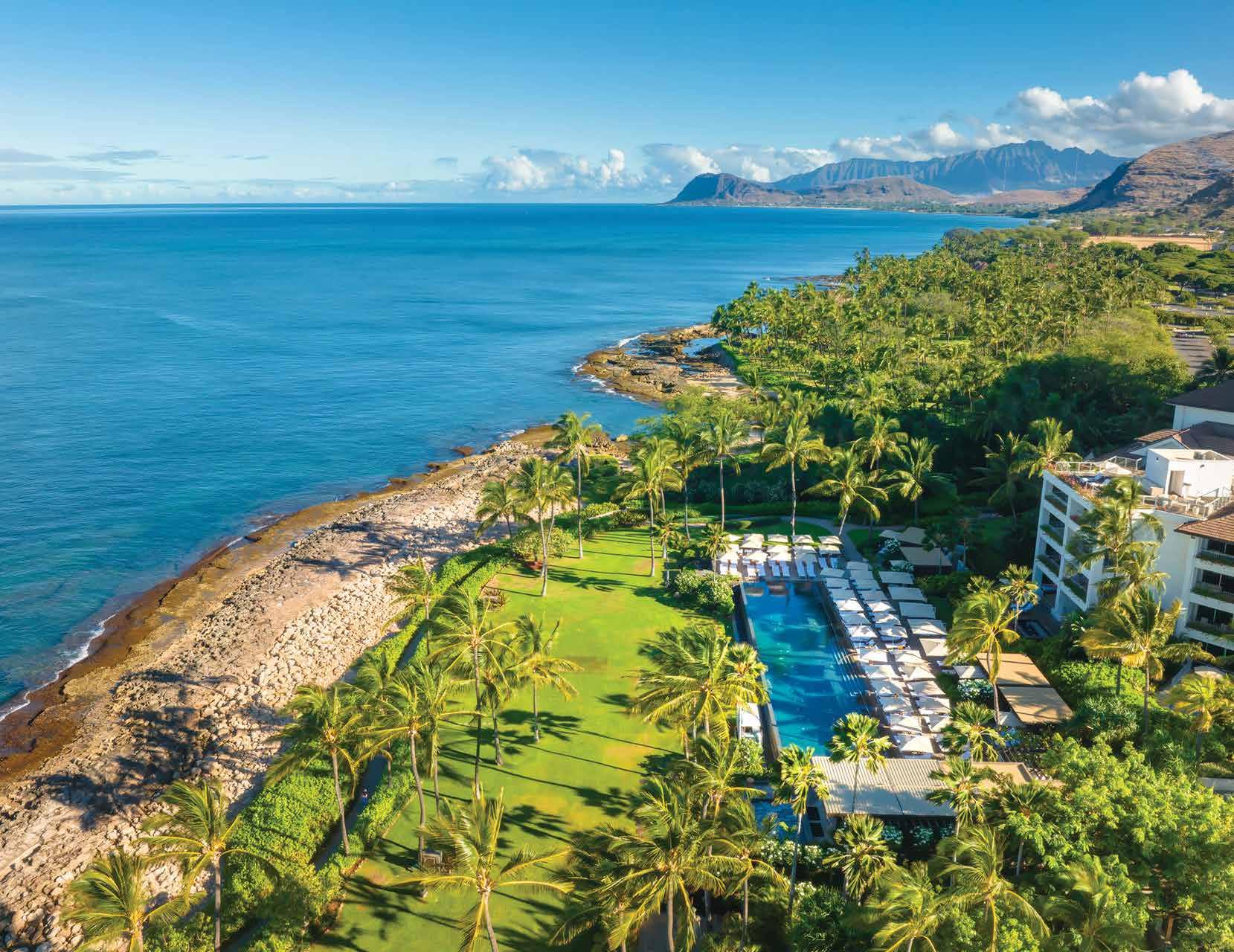
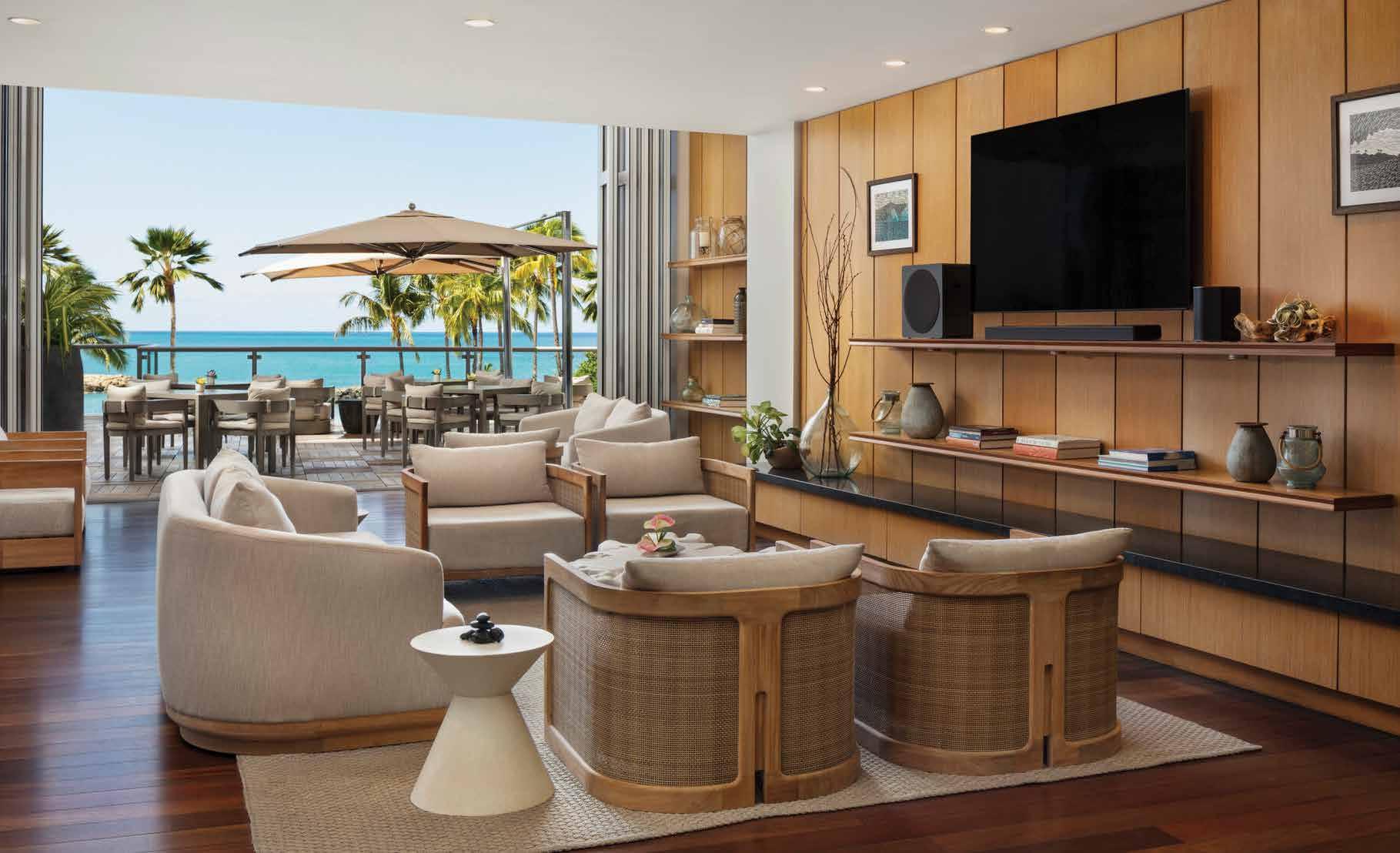
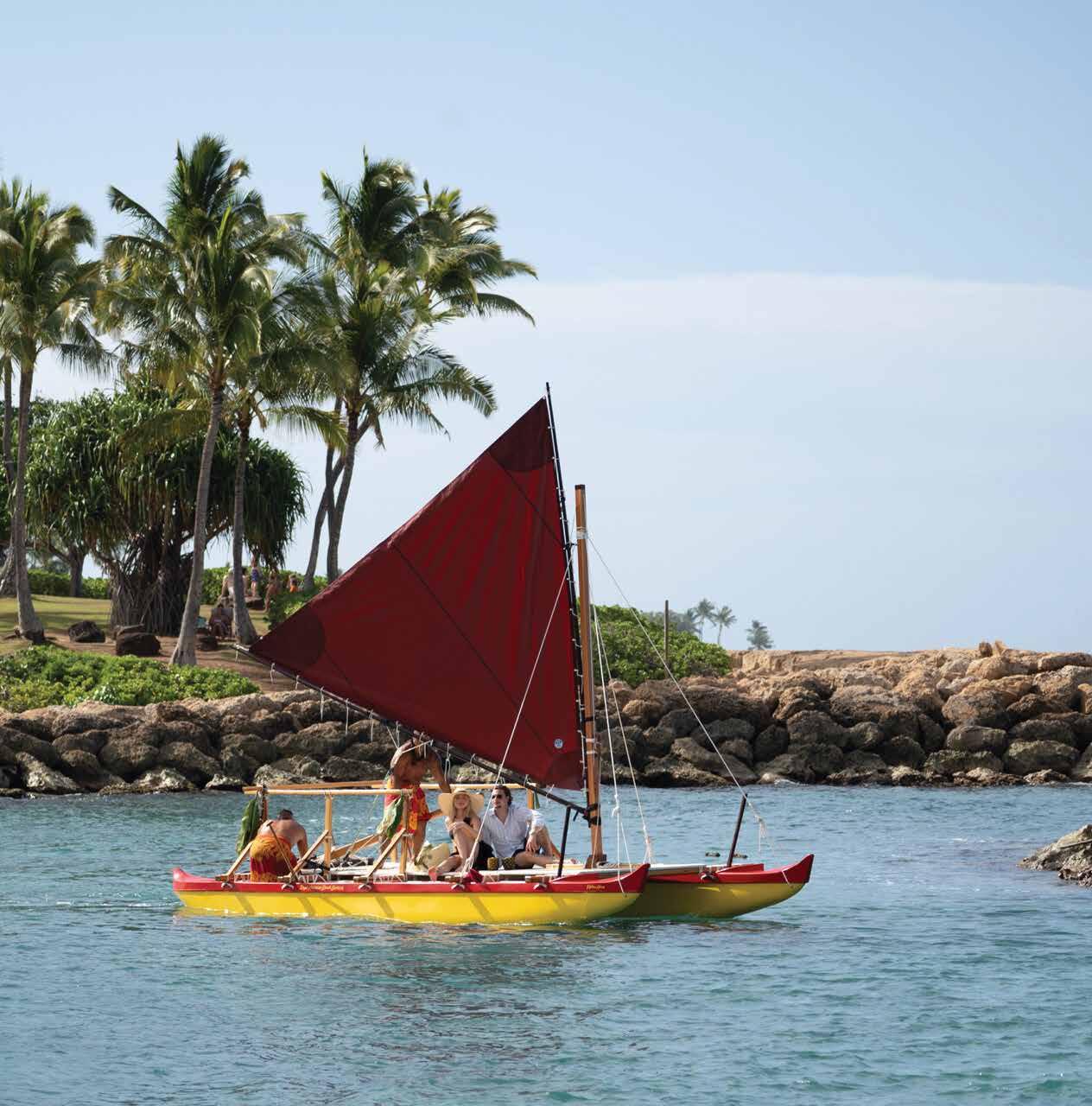
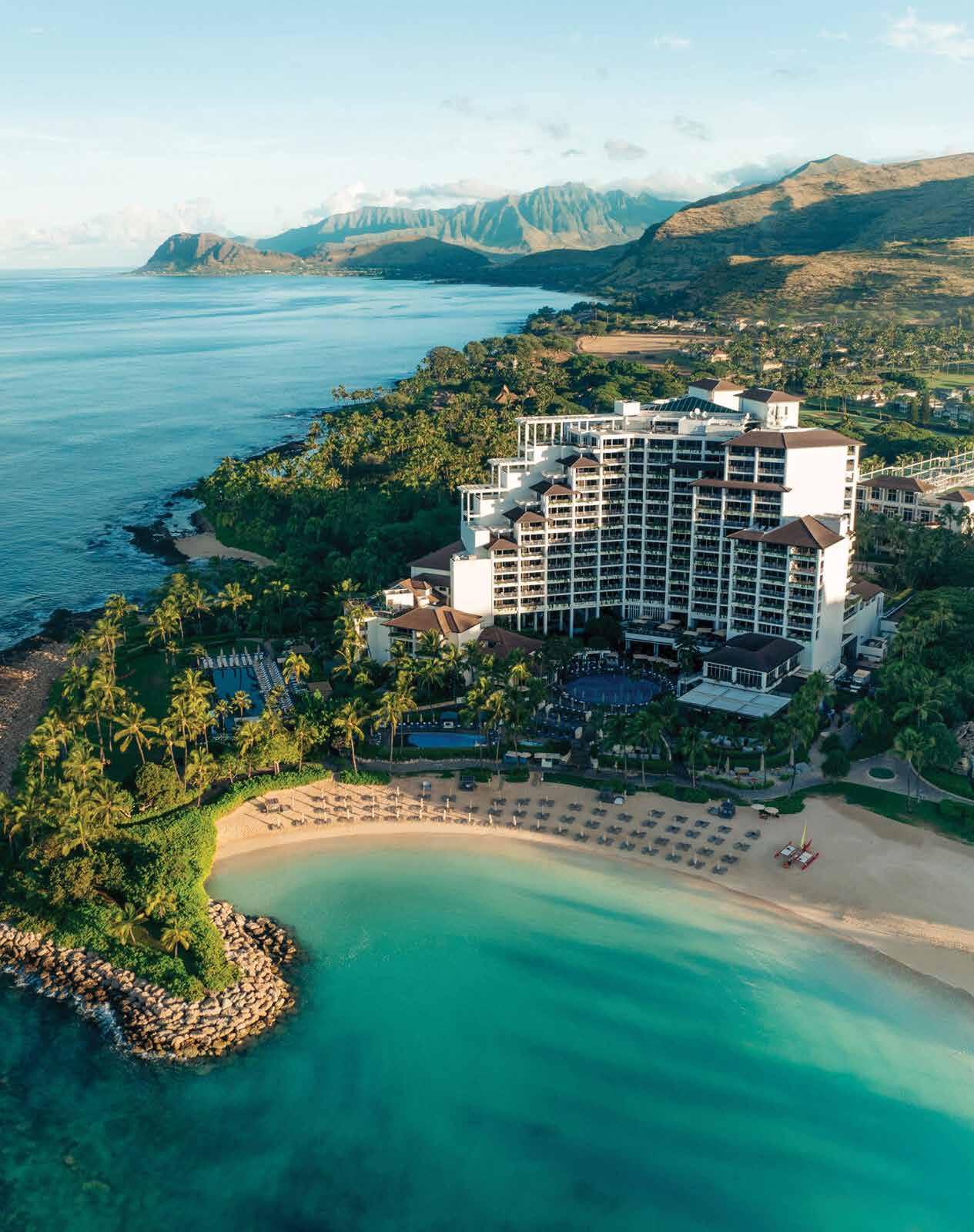
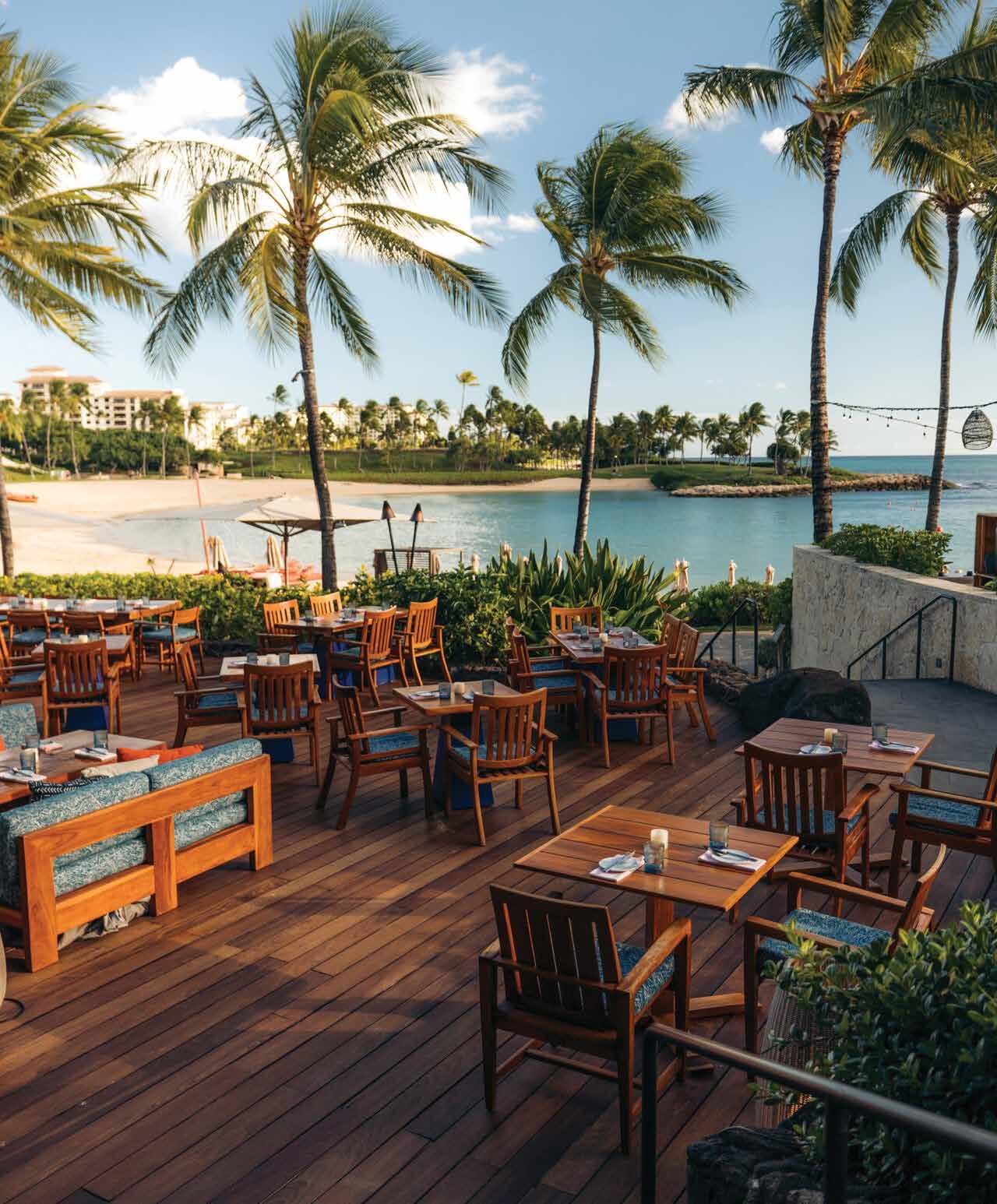
The Best Places to Stay, Play, Dine and Explore on this Captivating and Diverse Hawaiian Island
Ihave always found that regardless of the level of success you’ve achieved, there are always lessons to be learned from others who have followed a different path than you have. That’s why I encourage you to read our fascinating cover story on entrepreneur, cybersecurity expert and Shark Tank star Robert Herjavec. His path to success began when, as a young boy, he and his family fled to Canada from socialist Yugoslavia with only a single suitcase to their name. This lifechanging event motivated him to become who he is today. His story is truly inspiring.
Herjavec is also a big believer in the power of working while flying, and in this issue, we bring you some great news on the aviation front. Bombardier, Gulfstream and Dassault are each making great strides in ultra-long-distance travel by engineering new aircraft that can connect distant city pairs faster than ever before in a single hop.
In other transportation news, we introduce you to Aston Martin’s new DBX S. If you’ve never thought of yourself as the “SUV type,” our automotive writer Matt Chappell is on a mission to change your mind. Find out why he calls this incredible vehicle “the new alpha in town.”
If you’re feeling an urge to satisfy your spirit of adventure this year, you won’t want to miss our feature on Jasper Smith’s company, Arksen. You’ll discover how his company is boldly reimagining the world of marine and land exploration and how he is taking steps to protect this world for future generations while doing it.
And if golf is your game, you’ll enjoy our story about P53 Irons. These magnificent clubs are forged (not cast) from American steel and are meticulously handcrafted to meet your exacting standards.
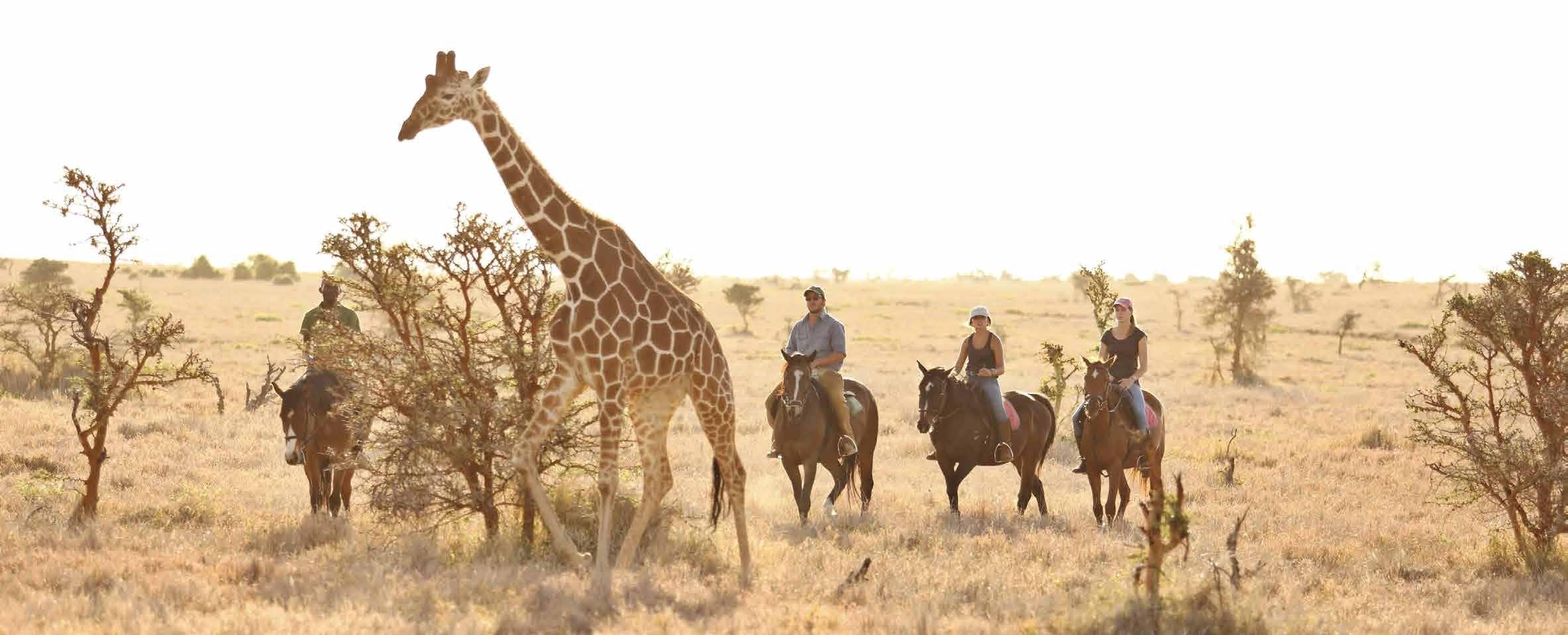
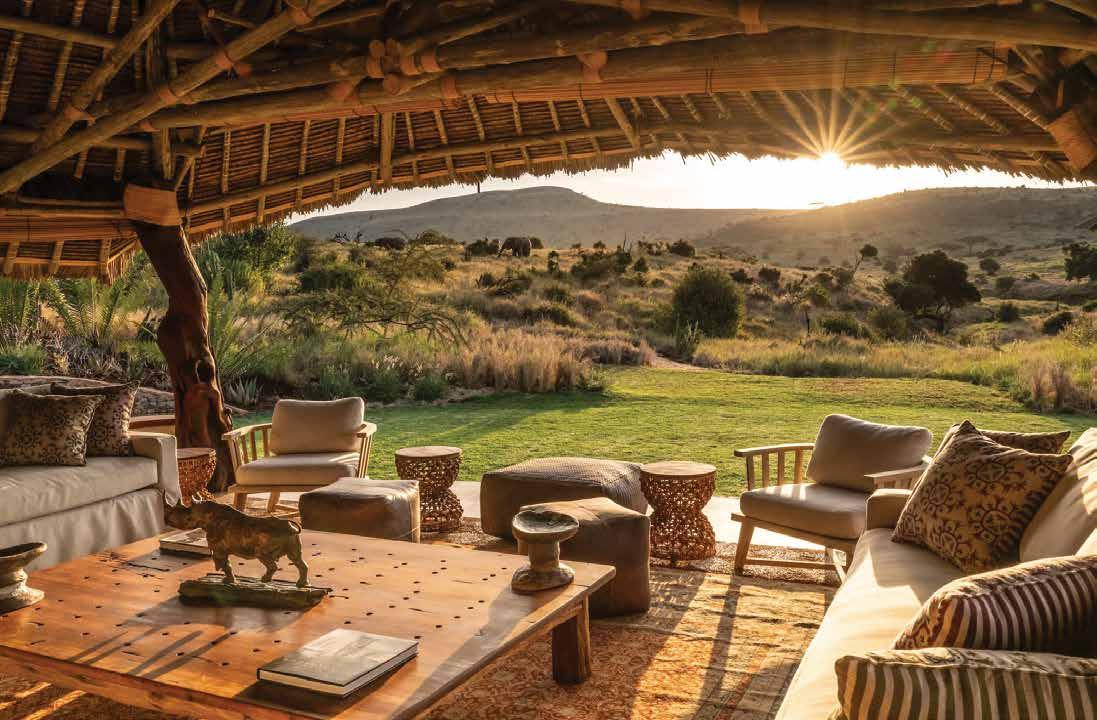
As in every issue of Jetset, we offer you some great travel options, from the wonders of Oahu to a journey through South Africa. You’ll also discover the secret of the best time to explore Napa Valley. And if it’s relaxation your soul is craving, be sure to see our feature on how the world’s next generation of wellness retreats is placing a new focus on nurturing the mind, body and spirit.
We hope that in these stories and the many others we’ve packed into this issue, you’ll find plenty of inspiration to guide you on the next exciting segment of your life’s journey.
With warm regards,
Darrin Austin CEO/Publisher, Jetset Magazine
CORPORATE
CEO/PUBLISHER CFO
Creative Director Editor-in-Chief VP of Business Development VP of Operations VP of Advertising
Advertising Inquiries: sales@jetsetmag.com Jetset Magazine Corporate Office 15220 N. 75th Street Scottsdale, Arizona 85260 Toll Free: 877.538.5738 . Phone: 480.991.8986
Fax:
EXECUTIVE EDITORS Member of
New Business Jets Are Connecting the World’s Distant City Pairs with a Single, Nonstop Hop
BY JESSE WINTER
In aviation, speed is the enemy of range. The faster an aircraft flies, the harder air molecules push back, forcing engines to burn more fuel to fight the drag. However, when an aircraft is designed to cruise at altitudes between 41,000 and 51,000 feet, the rules change. At these heights, the air thins and drag diminishes, allowing the aircraft to maintain high speeds and achieve long-range travel. This technological feat means that in the realm of private aviation, previously distant cities can now be connected via a single hop flight.
As of 2026, private and business aviation is poised for an intercontinental breakthrough with the introduction of Bombardier’s Global 8000 and Gulfstream’s G800. These jets, alongside Dassault’s forthcoming Falcon 10X, promise to connect international routes without the traditional trade-off of speed for range. The result: VIP travelers will spend less time flying and more time at their destinations, all while enjoying bespoke, customizable living spaces that resemble luxurious penthouses more than traditional aircraft cabins.
Going
theDistance
“The Global 8000 is the ultimate Time Machine,” Matthew Nicholls, senior advisor, communications and public affairs, told Jetset. With a range of approximately 9,206 miles (8,000 nautical miles (nm)) and a speed of about 729 miles per hour (mph) or Mach 0.95, Nicholls said Bombardier’s flagship jet will unlock routes like Dubai to Houston, London to Perth, and many others. Touted as the fastest business jet since the Concorde by Bombardier, the aircraft benefits from its smooth flex wing design, which enhances speed and contributes to a smooth ride. This wing is engineered to minimize drag during what Bombardier calls its “ultra-high-speed cruise” of around 705
mph (Mach 0.92). In testing, the Global 8000 even achieved supersonic speeds, breaking the sound barrier before earning certification to commence flying in late 2025.
The Gulfstream G800 boasts a slightly longer range of 9,436 miles (8,200 nm) with a maximum speed of 717 mph (Mach 0.935) and a cruising speed of 652 mph (Mach 0.85).
Certified for flight last year, the Gulfstream can save up to 40 to 60 minutes per flight on extended trips exceeding 6,905 miles (6,000 nm), according to Gulfstream. The G800 uses specifically designed winglets and high-thrust Rolls-Royce Pearl 700 engines to navigate the
skies. “It combines extended range and higher cruise speeds for true nonstop travel,” Scott Neal, senior vice president, worldwide sales, told Jetset. The jet achieved a city-pair speed record from Phuket, Thailand, to Dubai, United Arab Emirates, of just 5 hours and 38 minutes.
These next-generation jets, epitomized by the Bombardier Global 8000 and Gulfstream G800, excel in speed, range, and accessibility. Their designs incorporate high-lift aerodynamics and powerful engines, allowing access to shorter, more challenging airfields and helping to avoid congestion at major hubs like Heathrow and JFK. The Global 8000 has a takeoff distance of 5,750 feet and a landing distance of 2,220 feet, while the Gulfstream G800 requires a takeoff distance of 5,812 feet and a landing distance of 3,105 feet.
The shorter runway operability of both jets gives them greater mission flexibility by granting access to a wider array of airports. Importantly, they prioritize luxurious interiors tailored to the owner’s specific mission, offering living spaces designed for comfort and functionality. For those prioritizing spacious accommodations over optimal speed and range, the Falcon 10X—and even widebody Airbus business jets— present viable options as a restful environment for ultra-long-haul travelers.
RELAX, RECHARGE
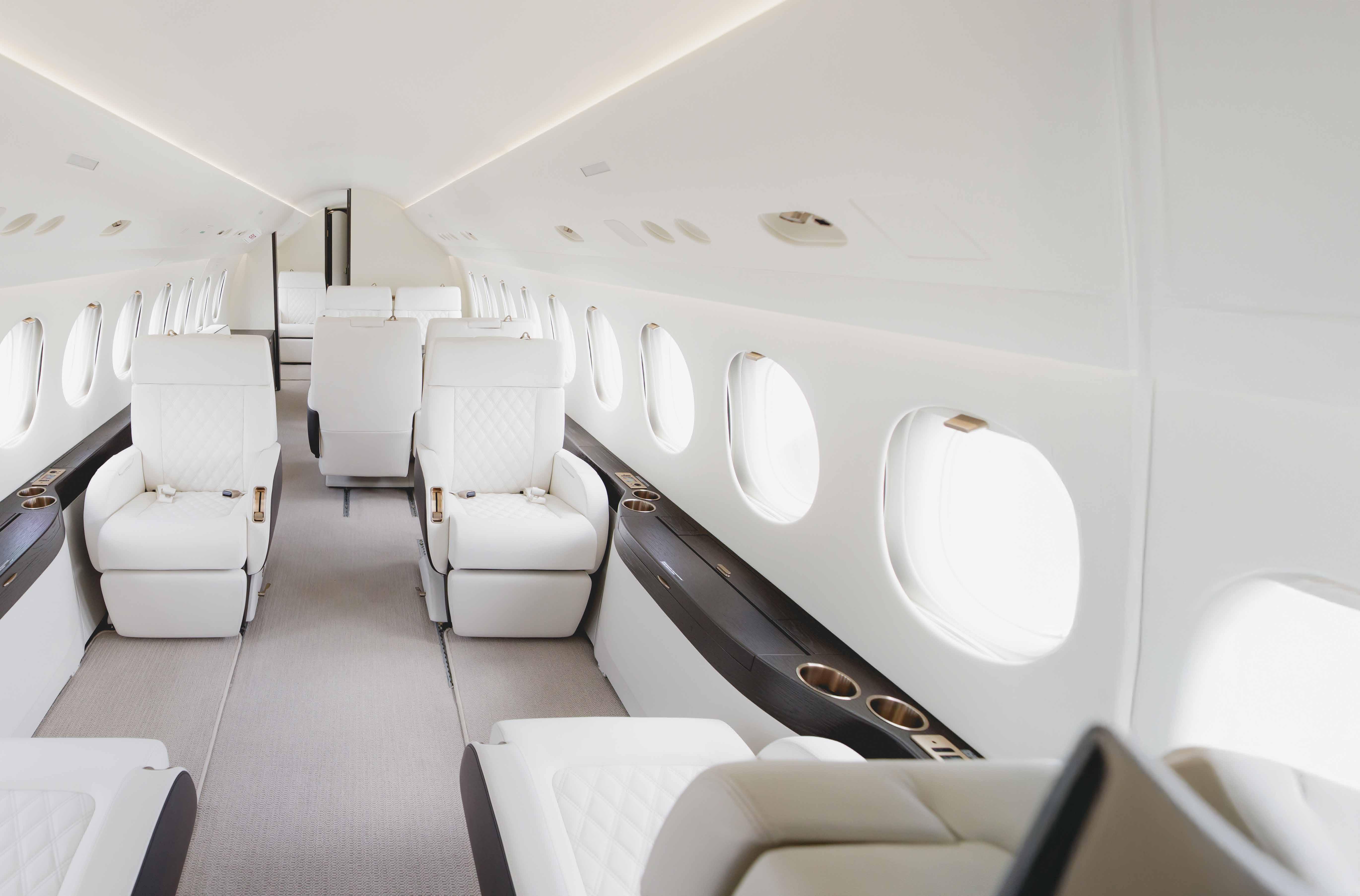
Upon entering the cabin of an ultra-long-range jet, passengers are greeted by an environment designed for relaxation. Fine leather seats recline to cradle the body while the aircraft soars between 41,000 and 50,000 feet, with less turbulence compared to commercial airliners flying at lower altitudes. The cabin air pressure is adjusted to simulate even lower altitudes, promoting a more natural state for passengers as expansive windows, circadian-friendly lighting, and a fresh air circulation system ensure passengers feel their absolute best.
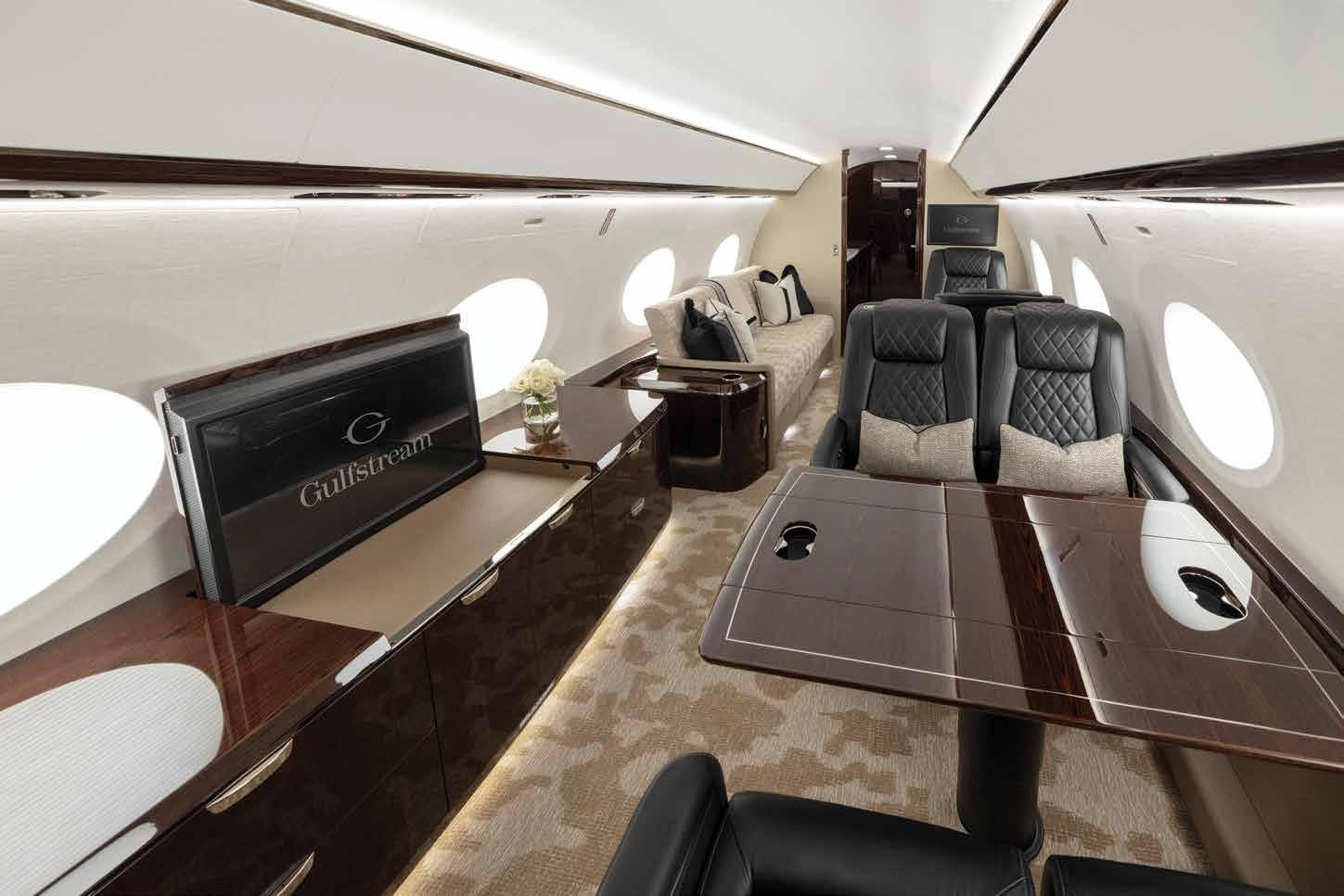
Inside the G800, passengers benefit from four living spaces designed for their comfort during extended flights. The cabin measures 6 feet 3 inches in height, 8 feet 2 inches in width, and 46 feet in length. It accommodates up to 19 passengers and provides sleeping space for 10, and dining in the G800 is supported by an “ultra galley,” according to Gulfstream, which provides ample counter space, refrigeration, and cooking appliances. Other features include a dedicated crew compartment, a private stateroom, and a shower. Also included is Gulfstream’s ultrahigh-definition circadian lighting system,
which mimics natural light by recreating sunrise and sunset. The cabin is equipped with 16 panoramic oval windows, and fresh air is continuously purified by a plasma ionization system, along with a pressurization system that maintains a low cabin altitude while flying at higher altitudes.
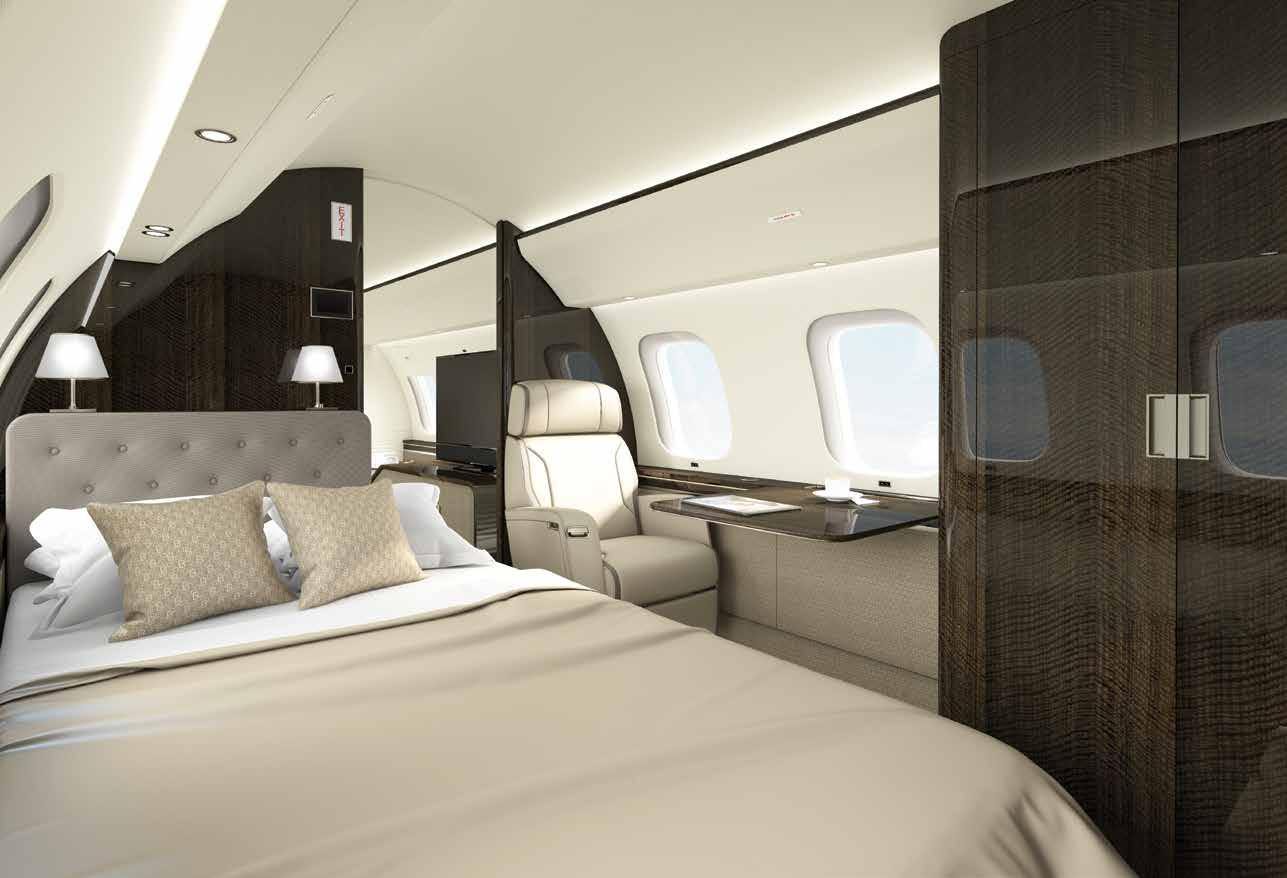
The Global 8000 features a spacious interior with a cabin height of 6 feet 2 inches, width of 8 feet, and length of 54 feet 5 inches, including four living spaces. Passengers will enjoy Bombardier’s “zero gravity seat” which reduces back pressure and optimizes weight distribution and blood circulation, according to Bombardier. Moreover, the cabin can feature a divan that transforms into a home theater with a 55-inch TV, and for business travelers, a six-seat suite is available, along with a bedroom and shower. Additional features include circadian rhythm lighting and a premier air filtration system, maintaining a cabin altitude equivalent to 2,691 feet. “This significantly reduced cabin altitude minimizes the physiological stress typically associated with high-altitude travel,” explained Nicholls. “This helps passengers arrive feeling refreshed, alert, and ready to perform.”
Dassault, a titan in the aerospace industry, is preparing to enter the ultra-long-range club
FALCON 10X
FALCON 10X
with the anticipated debut of its Falcon 10X in the next few years. Their jet will offer a speed of 709 mph (Mach 0.925) and a range of 8,631 miles (7,500 nm), surpassing the G800 in cabin space while still providing the necessary range for long-haul destinations, like New York to Hong Kong or Los Angeles to Sydney. The Falcon 10X’s cabin dimensions stand at 6 feet 8 inches tall, 9 feet 1 inch wide, and 53 feet 10 inches long, according to Dassault.
The Falcon 10X will compete with the Gulfstream G700 (the G800’s sister aircraft)
with its comparable specs. The G700 has a maximum speed of 709 mph (Mach 0.925) and a range of 8,631 miles (7,750 nm). Its cabin dimensions measure 6 feet 3 inches tall, 8 feet 2 inches wide, and 56 feet 11 inches long. Both jets are excellent alternatives for VIPs who do not require the industry-leading speed-andrange combinations offered by the Global 8000 and G800.
PALATIAL TRAVEL
Nonetheless, there is always the option to go bigger, as larger jets often provide an even
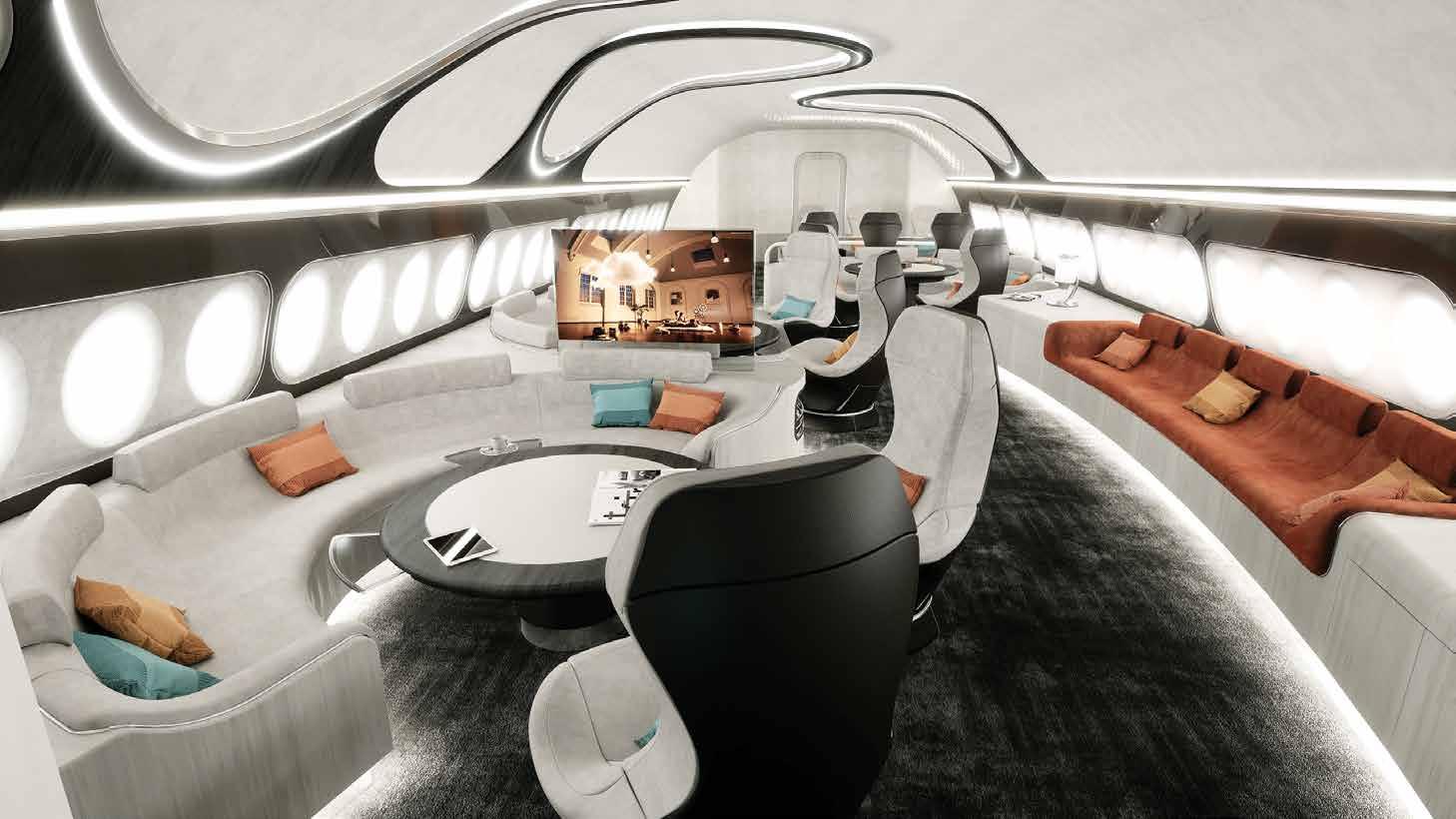
more exclusive experience. This is especially true for corporate teams or large royal families flying around the world, who expect a truly palatial experience. These VIP travelers may find themselves opting for their very own airliner, such as the Airbus ACJ330 Neo. This regal aircraft boasts an astronomical range of 11,737 miles (10,200 nm) with 21 hours of nonstop flight, according to Airbus. It is perfect for hosting corporate excursions or catering to elite VIPs and their large entourages within its massive cabin of 2,615 square feet.
Ultimately, time is the most precious commodity for any VIP traveler. Whether aboard an Airbus corporate jet or an ultralong-haul speed demon from Bombardier, Gulfstream, or Dassault, these uncompromising aircraft can cruise the globe with ranges and speeds not seen before in the world of business aviation. The result: saving time without sacrificing fuel, explained Bombardier’s Neal. “It’s not just about going fast—it’s about doing so with unmatched efficiency.”
AIRBUS ACJ330 NEO
AIRBUS ACJ330 NEO
THE SUPERLATIVE WORLDTIMER
Springtime Secret
Three Napa Valley Estates, Three Stories, and the Season Before the Rush
BY LAYNE RANDOLPH
Visiting Napa Valley in springtime is like finding out that Napa has been keeping a secret. With California’s Mediterranean climate, the valley is greener in spring than in summer, and the grapevines during budbreak are at their sweetest and most charming, as pops of baby chartreuse leaves reveal the first signs that the valley is waking up.
This is the wine season’s prelude. As the year unfolds, there will be weddings and warm nights and the rush of harvest, but spring is a glorious time that should not be missed.
Regardless of the season, some things always say Napa: history, terroir, and family. Enjoy all three while taking in the peace, beauty, and freshness of spring in Napa, with tasting appointments that reveal different sides of the valley.
BY ROB MCDONOUGH
PHOTO
LARKMEAD VINEYARDS
WHERE NAPA’S PAST LIVES IN THE PRESENT
Starting at the top of the valley between St. Helena and Calistoga, Larkmead Vineyards represents Napa’s incredible history. It was founded in 1895 and has been stewarded by the Solari-Baker family since 1948. The estate has found its own voice beyond its storied past, yet it remains one of Napa’s foundational estates.
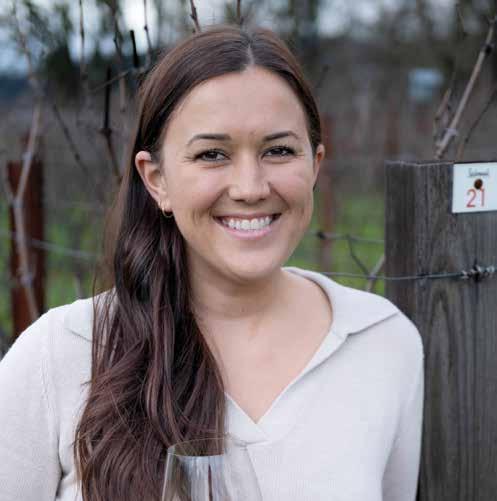
“Larkmead carries generations of history, yet it is very much alive and evolving.” –Samantha Silva, Larkmead Estate Director
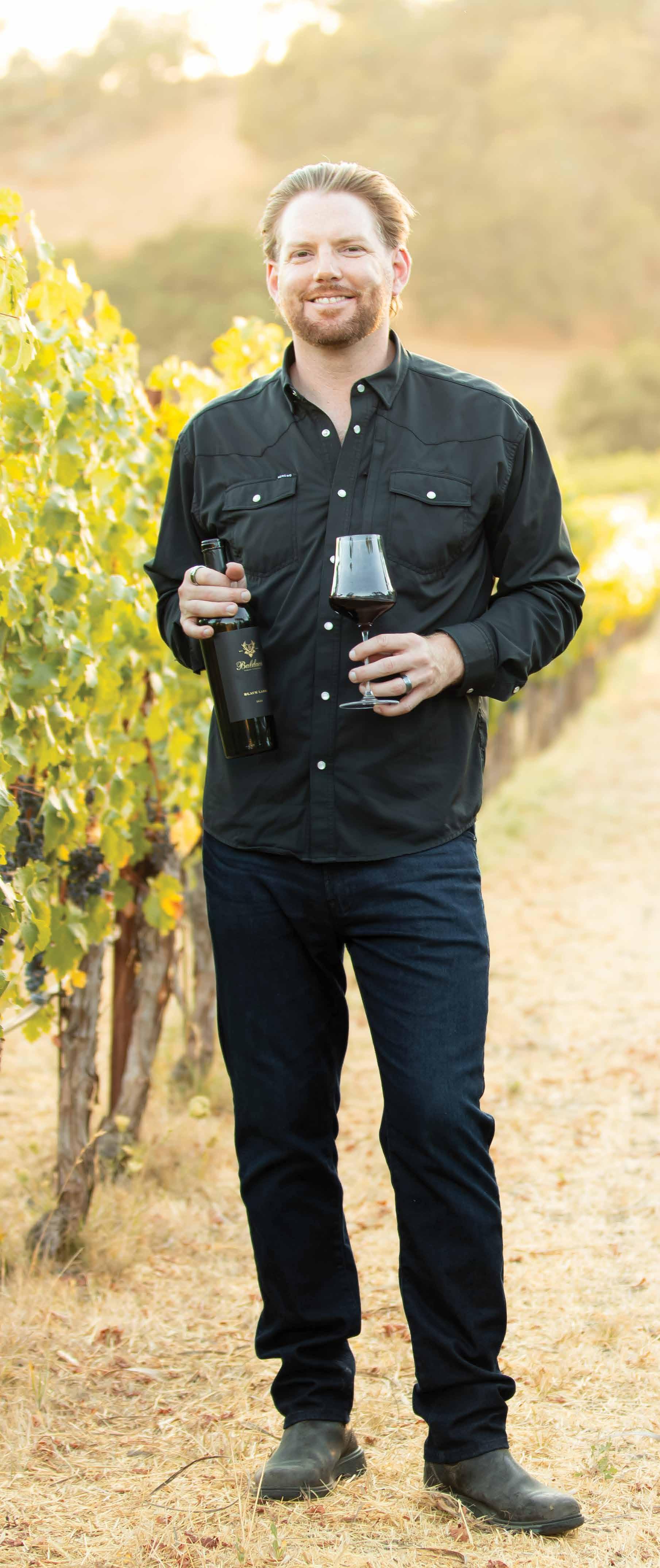
Larkmead’s is a classic luxury tasting, complete with vineyard guide, cellar visit, and a tasting with a view. A sweep of vineyards and quiet grandeur asks you to stop and take in the 115 contiguous acres of estate vineyards from which the blocks are farmed and vinified separately, then blended to honor the site’s complexity. And the sustainability story is real: the estate received CCOF organic status in 2023 and holds Napa Green Winery and Napa Green Land certifications.
The tasting experience often begins in The Gallery, where more than twenty original works by proprietor Kate Solari Baker showcase Napa Valley’s light and landscape. Her paintings don’t simply decorate the space; they orient you toward place and the details that make this valley feel alive.
Next, you step into the vineyard blocks that supply the estate’s wines, and the tasting becomes less about notes and more about connection. Seeing the rows up close—feeling the slope, the exposure, the subtle shifts from block to block—gives context to what’s in the glass.
“By walking through the vineyard blocks we harvest, and tasting wines in the place they are made,” Silva shared, “Guests begin to see the connection between the land, the seasons, and the care in every bottle.”
AVERY HEELAN, LARKMEAD WINEMAKER
BALDACCI FAMILY VINEYARDS
WHERE STAGS LEAP AVA REMAINS AN ODE TO CABERNET
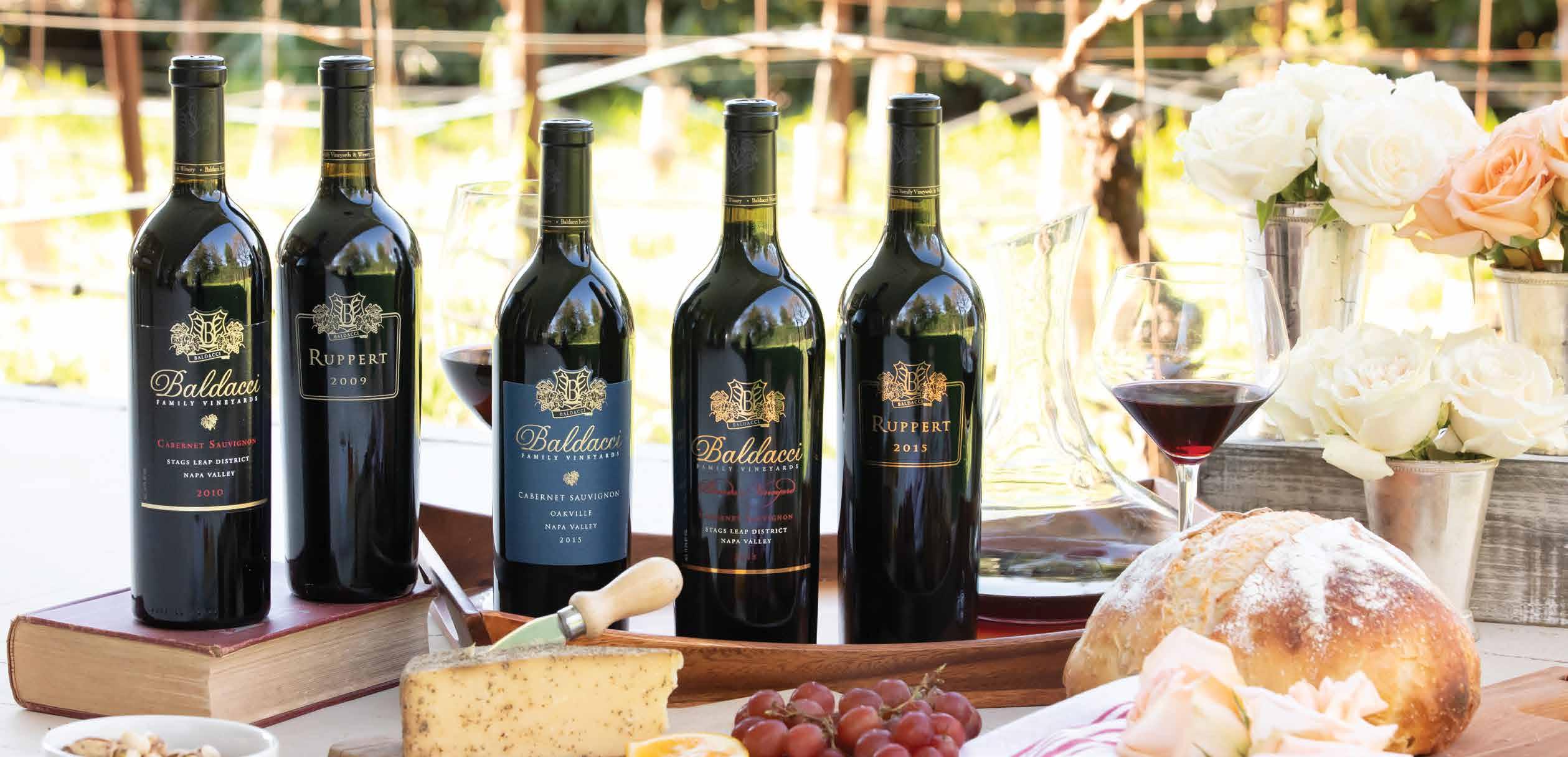
Traveling south, the road bends into the Stags Leap District, and Napa’s mood shifts—more sculpted and dramatic. At Baldacci Family Vineyards, the welcome is warm and contemporary. Baldacci’s Cave Tour & Estate Tasting was named No. 2 Best Winery Tour in the U.S. in USA TODAY 10Best Readers’ Choice Awards (2025)—and No. 1 in California.
“We want tastings here to feel comfortable, not scripted,” said secondgeneration winemaker Michael Baldacci. “You’re in our home—walking through the cave, tasting wine from the barrel, and seeing where the work actually happens—which changes how people understand what’s in the glass.”
The Stags Leap District AVA rose to international fame at the 1976 Judgment of Paris, a watershed moment for Napa Valley. With a terroir shaped by volcanic soils and cooling San Pablo Bay breezes, these refined Cabernets are known for dark cherry and black currant fruit, silky tannins, and a balance that favors precision over sheer force.
The family acquired their Stags Leap property in 1998, and today it includes an Estate House, a 19,210-square-foot wine cave, and 17 acres of organic vineyards planted primarily with Cabernet Sauvignon.
The signature experience begins with a sparkling hello—Baldacci’s Pops sparkling wine—before you settle into a conversational seated tasting with seasonal bites alongside the wines. If you choose the cave experience, you walk through the hush of the underground space, taste wine from the barrel, and return to the Estate House feeling like you’ve seen the estate and the wine from the inside out.
And for the traveler who likes the ultimate experience, the estate’s aged-wine programs add another layer—wines selected from a decade past, and a deeper library that can reach up to 25 years—because sometimes the most luxurious thing you can drink is time.
BY
PHOTO
HALEY WARNOCK
NAPA VALLEY WINES TO TRY
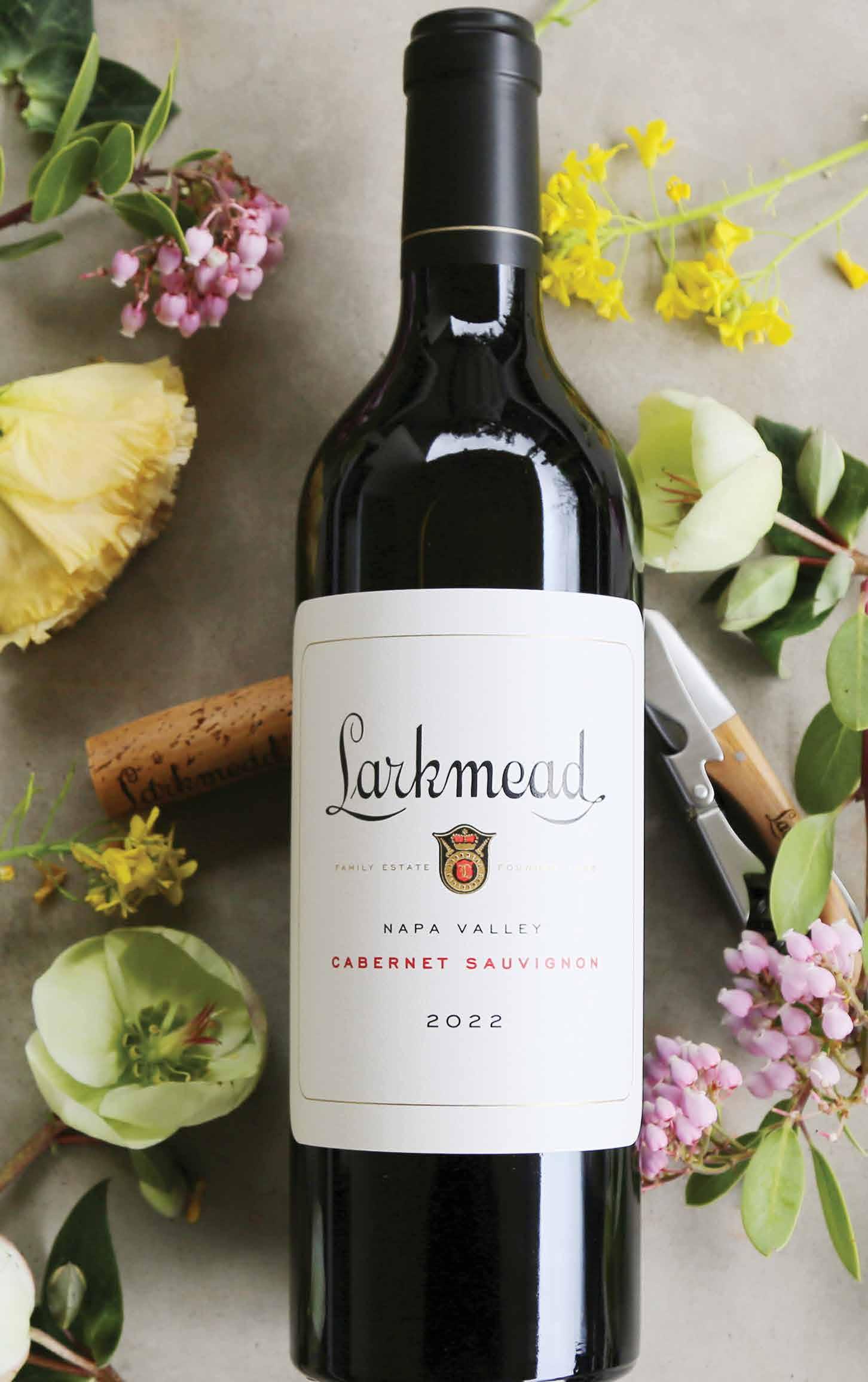
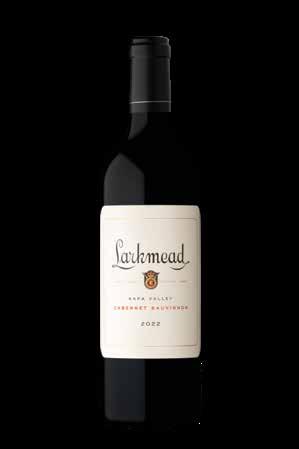
2022 Larkmead Estate Cabernet Sauvignon
Classic structure and notes of black fruits, baking spices, and dried tobacco.
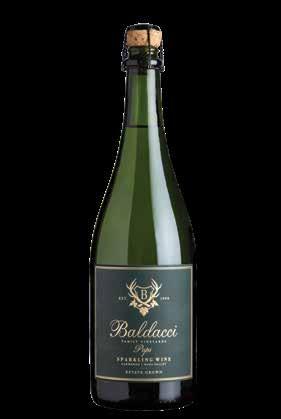
2022 Baldacci Pops Sparkling Wine
Traditional-method Pinot Noir and Chardonnay bubbles, sparkling with flavors of brioche, pear, and toasted almond.
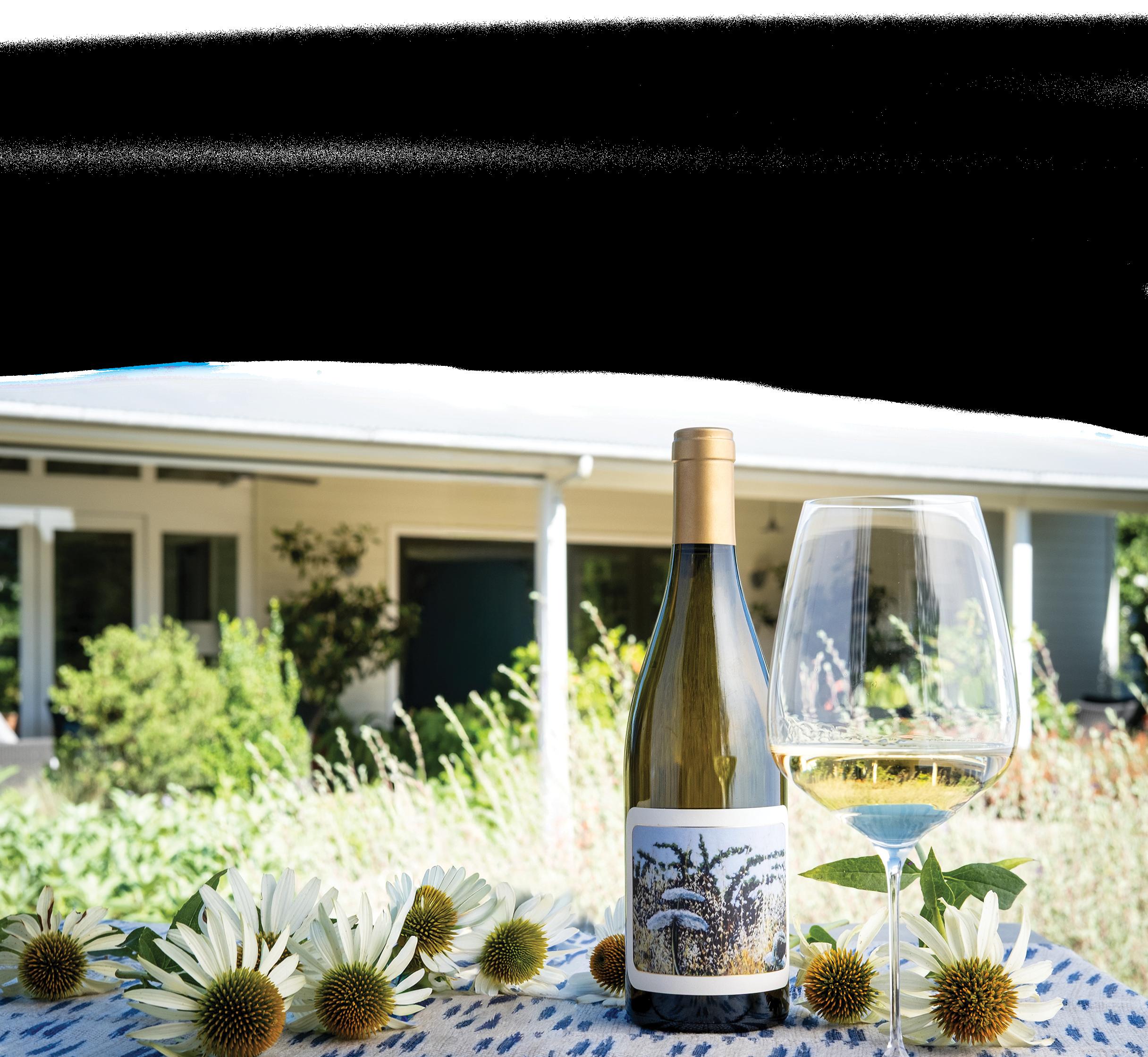
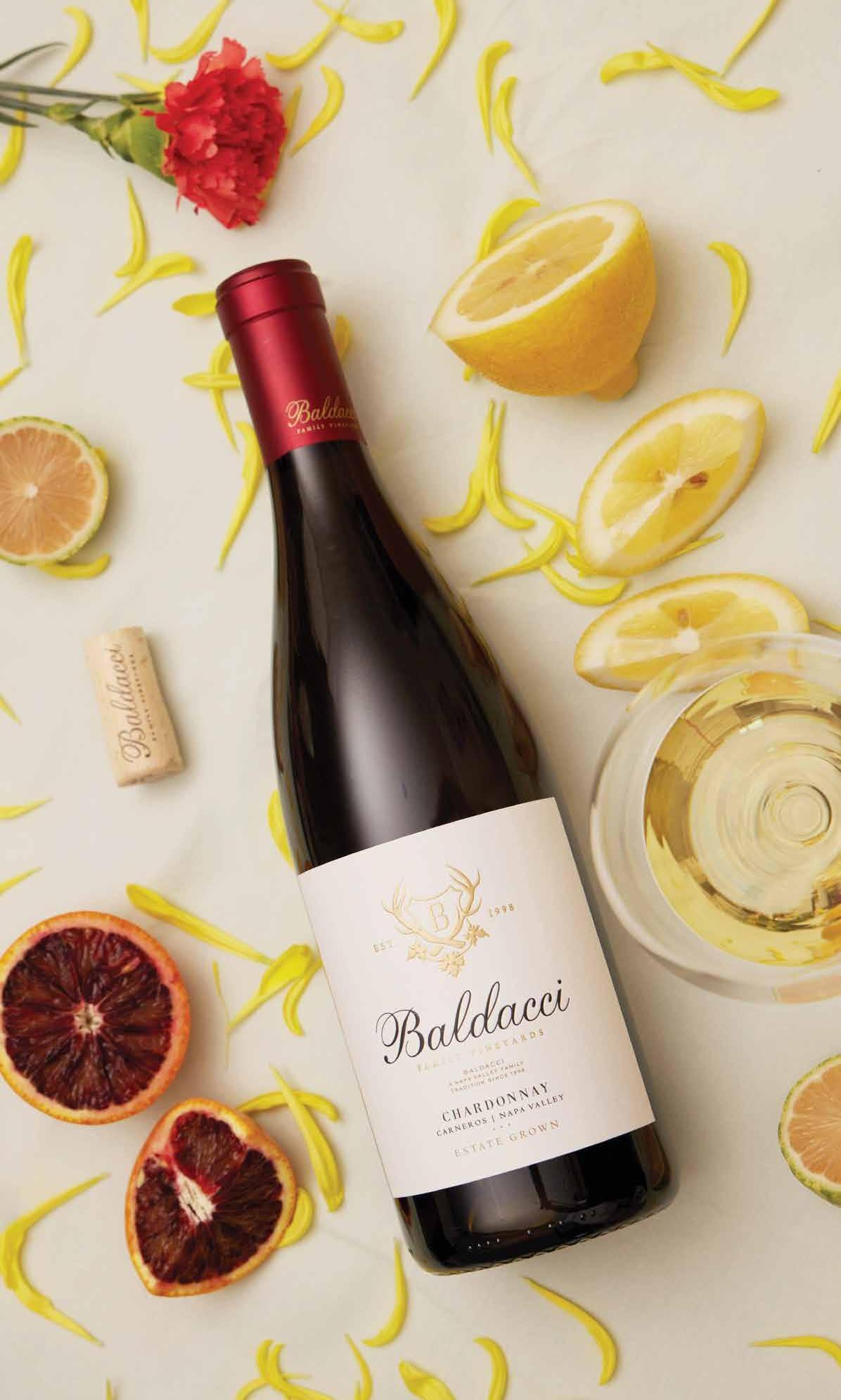
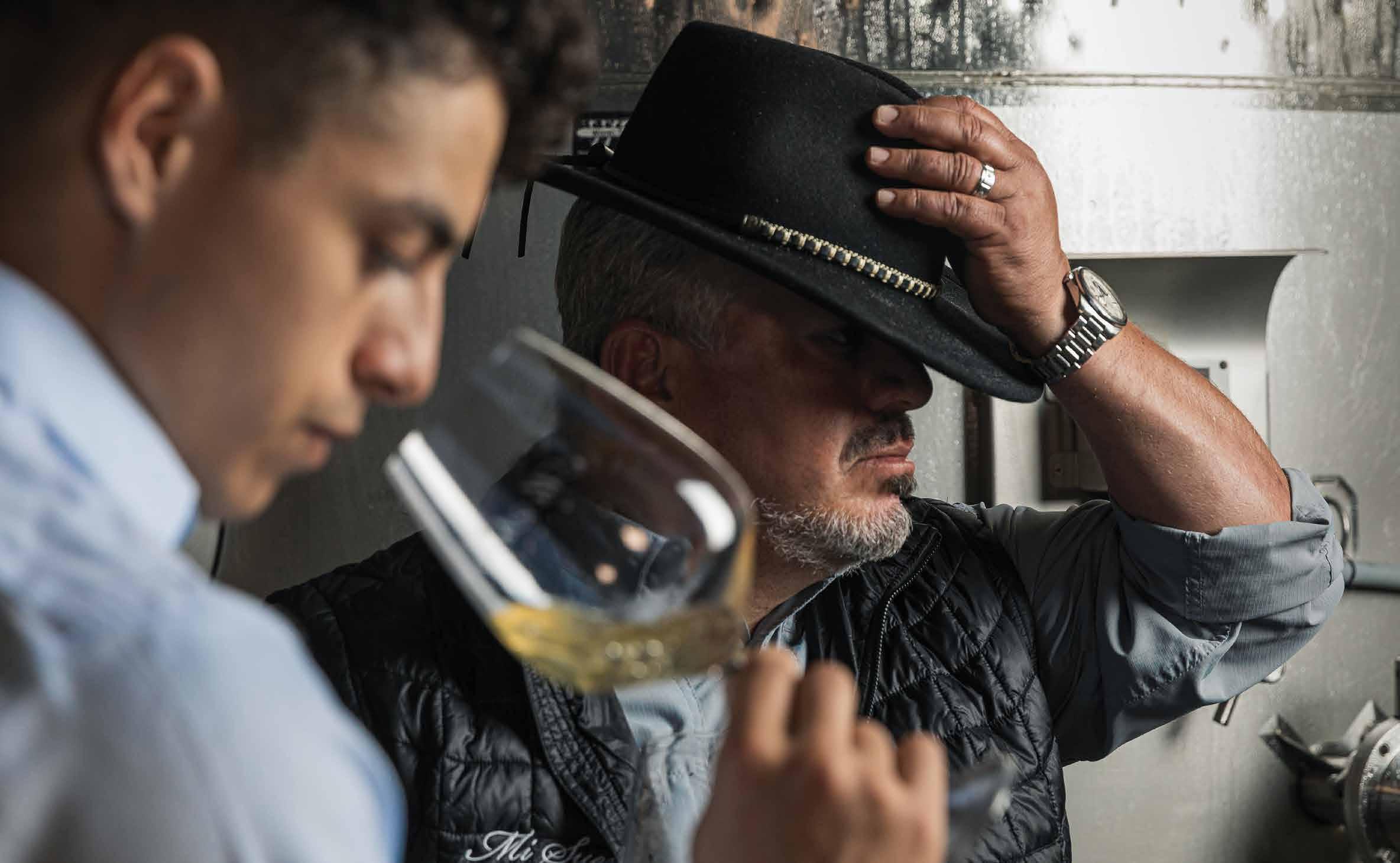
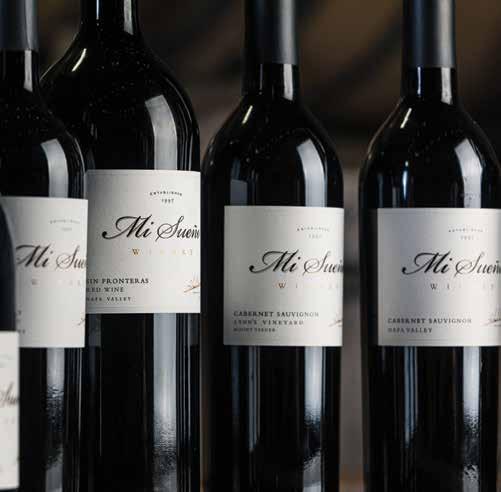
2021 Mi Sueño Los Carneros Chardonnay
Burgundian-style
Chardonnay with coolclimate precision, bright acidity, and creamy finish.
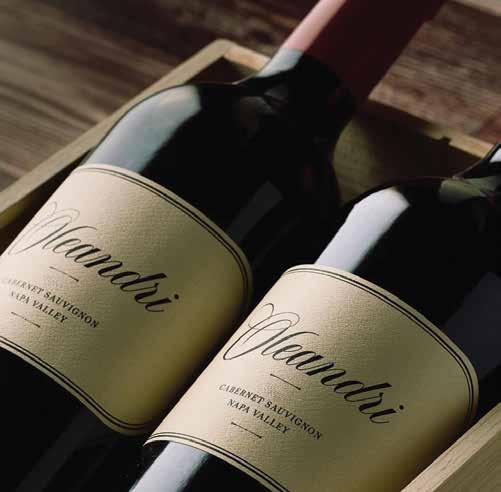
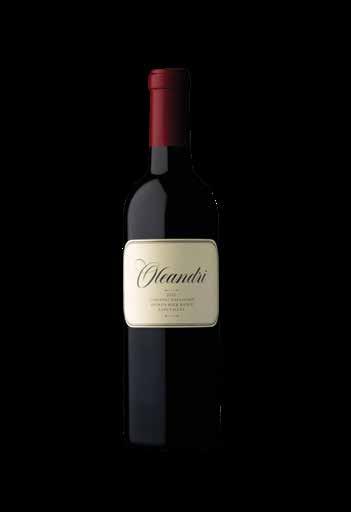
2022 Oleandri Broken Back Cabernet Sauvignon
Sourced from Bill Hill’s Broken Rock Ranch—an iconic Napa vineyard. Layers of black and red fruit wrapped in elegant structure and luscious tannins.
MICHAEL BALDACCI
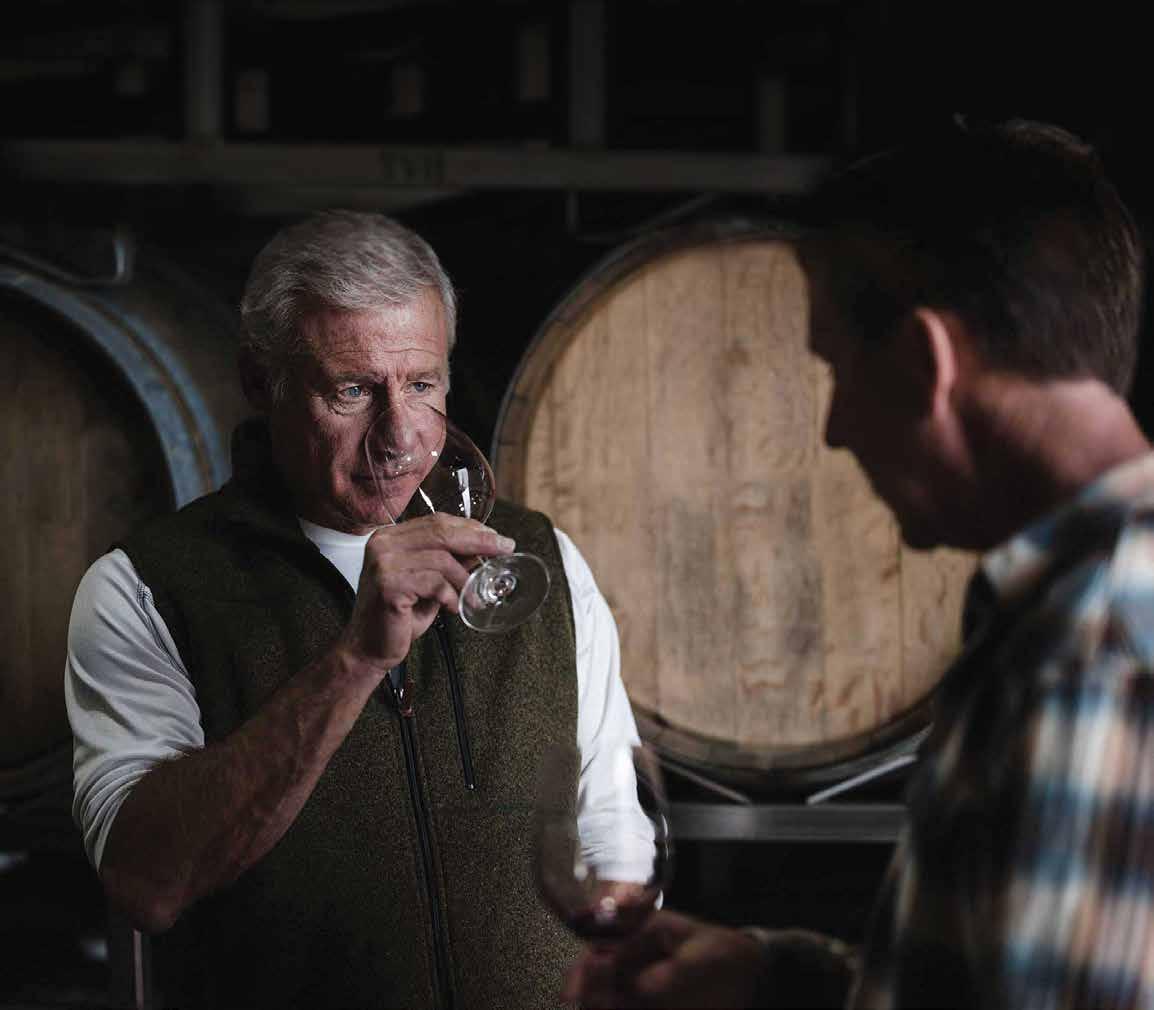
OLEANDRI PROPRIETOR FRED D’AMATO ( LEFT ) AND WINEMAKER PATRICK SABOE
MI SUEÑO WINERY
THE DREAM THAT BECAME A WINERY
For your final stop, you head near the town of Napa, where the story turns from land and legacy to something more intimate: a family’s dream made real.
Mi Sueño (“My Dream”) Winery was founded in 1997 by Rolando and Lorena Herrera and tells the story of Napa’s immigrant backbone. Rolando, born in Mexico, began as a dishwasher at Auberge du Soleil in 1982 and later rose through winemaking roles at Domaine Chandon and Beringer. His talents took his dream to new heights as Director of Winemaking at the world-renowned Paul Hobbs Winery, before he ventured out to found his own winery. Lorena, raised among the vines of Napa and Sonoma, brought deep viticultural roots to their endeavor.
“When people visit Mi Sueño, they’re tasting our life story—not just the wine.” –Rolando Herrera, Owner and Winemaker
Hospitality here is personal and proudly family-run. The Herreras have six children, all integral to the business and mentored into the next generation. “For me, success is knowing our guests feel the story behind the wines. We’re a family winery, and when people visit, we want them to feel that closeness—to feel welcomed, seen, and part of something personal,” Rolando shared.
Mi Sueño’s story begins in Napa’s southernmost AVA, Los Carneros, where spring carries a cooler, bay-influenced edge—marine air that keeps Chardonnay crisp and measured. From that first bottling of Chardonnay that put them on the map to their current lineup of Napa Valley Cabernet Sauvignon, Rolando and Lorena have built a winery known for quality and heart.
A tasting begins with an educational tour of the working winery, where the Herrera family shares their hands-on approach to winemaking and explains why each wine exists. Guests then transition to a seated tasting in the barrel room, sampling five curated wines paired with artisan chocolate truffles. The whole experience is relaxed and refreshingly unpretentious.
Rolando said, “I want guests to leave feeling inspired—like dreams really can grow over time.”
These three estates, forming a single arc from the north to the south of the valley, shine a light on some of Napa’s greatest offerings: Larkmead’s view of Napa’s history, Baldacci’s story of terroir and refinement, and Mi Sueño’s living, breathing proof that Napa’s future is still being written.
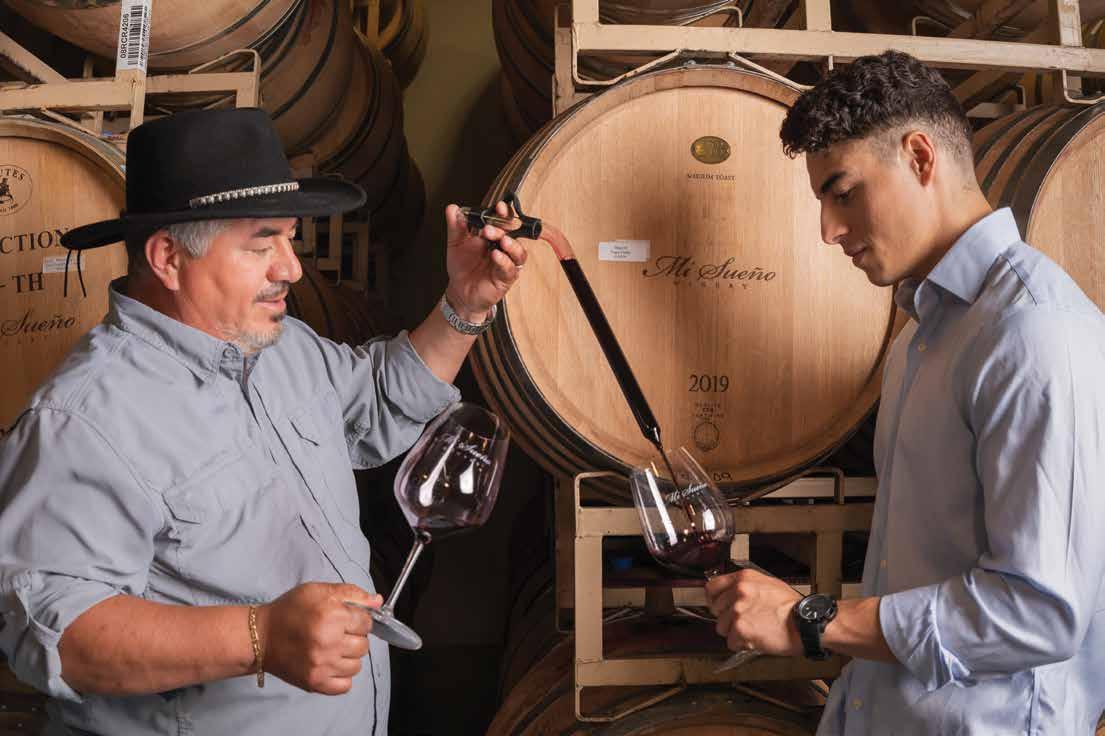
ROLANDO HERRERA AND HIS SON, ROLANDO JR.
A FLIGHT EXPERIENCE WITHOUT PARALLEL
Medieval Modern
Italy’s Frescobaldi Family’s
700-Year Link to Wine and Art
BY LAYNE RANDOLPH
PHOTOS COURTESY OF MARCHESI FRESCOBALDI
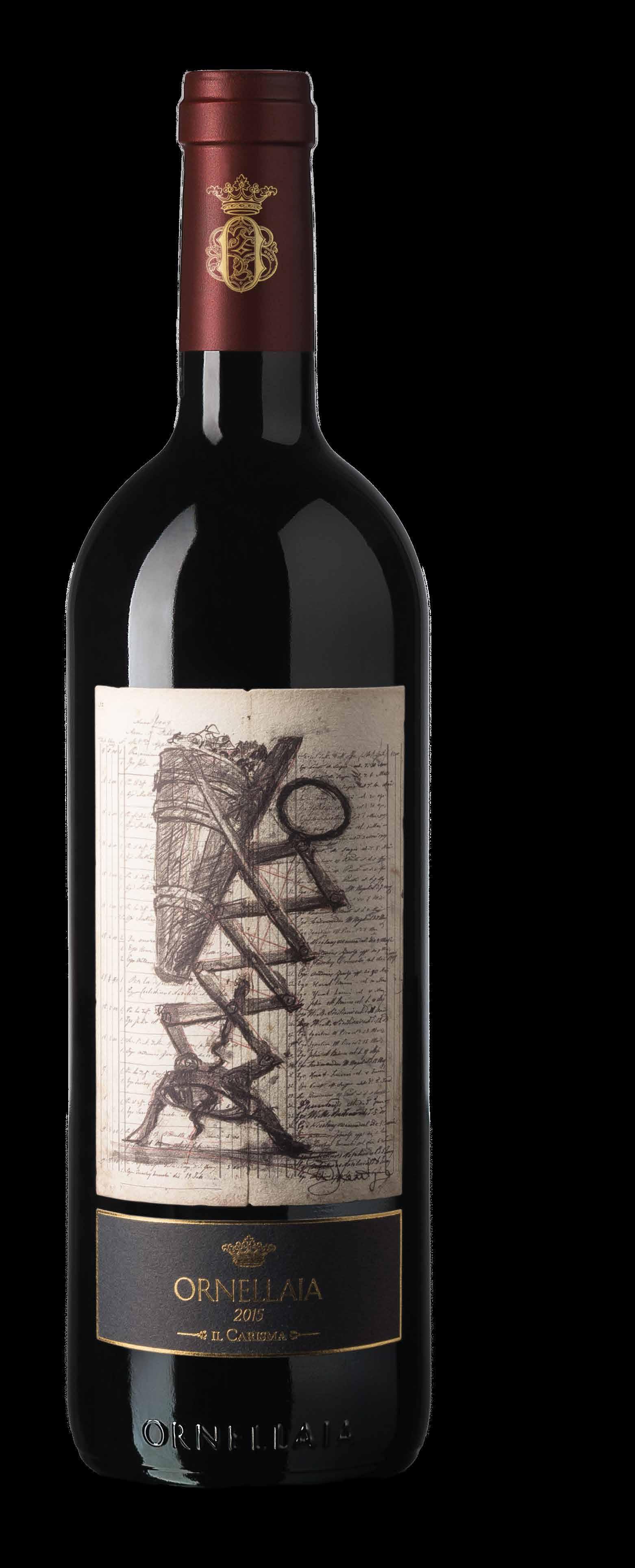
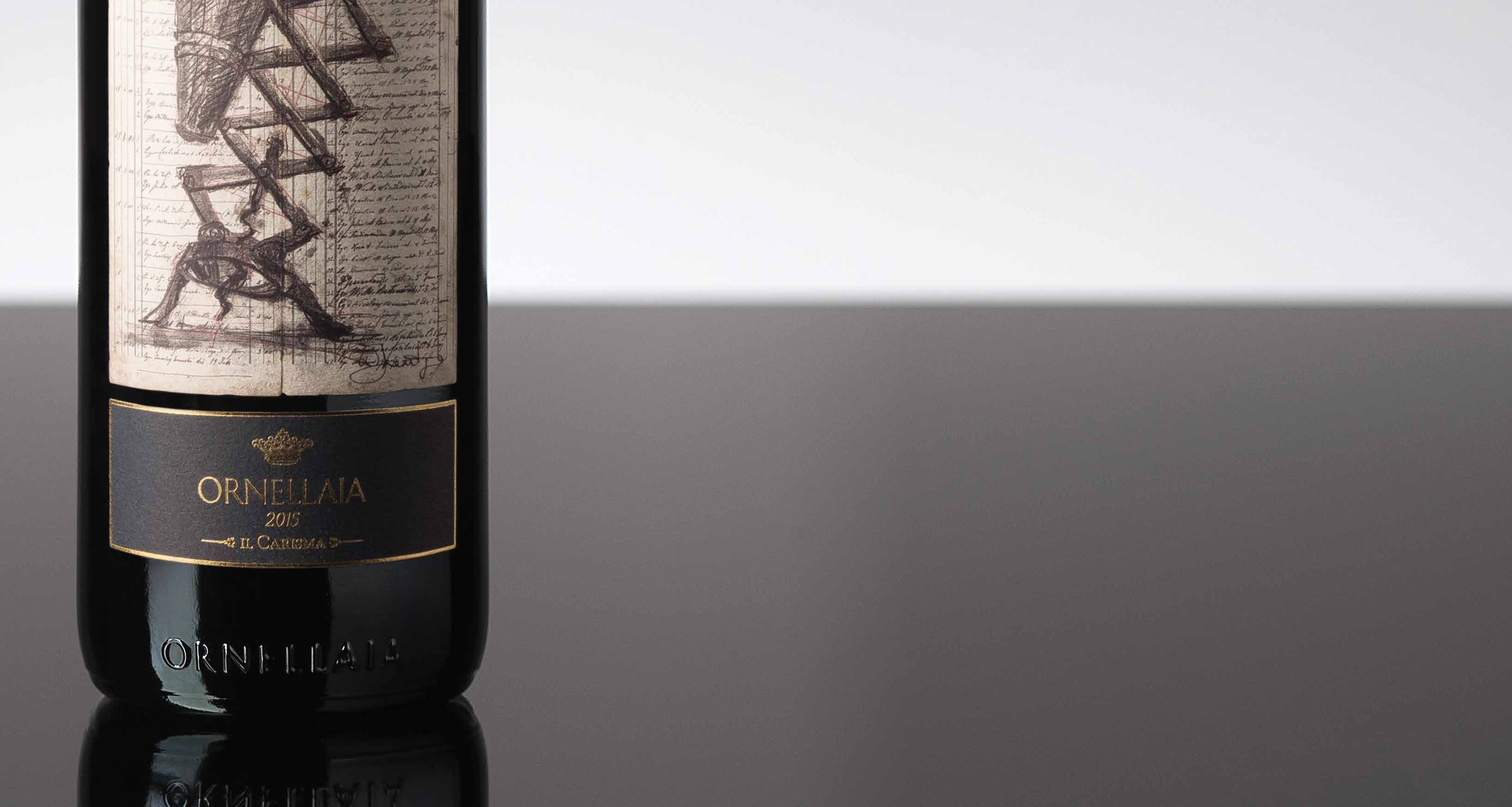
2015 ‘IL CARISMA’ WILLIAM KENTRIDGE
For more than 700 years, the Frescobaldi family has been a patron of both the arts and the vine. From Renaissance Florence—where they supported Brunelleschi and Michelangelo—to modern Tuscany, where they steward some of Italy’s most prestigious estates, the family has always seen art and wine as larger than commerce. They are culture and continuity. That ethos is today most visible in Vendemmia d’Artista, the family’s Ornellaia wine estate’s annual fusion of fine wine and contemporary art.
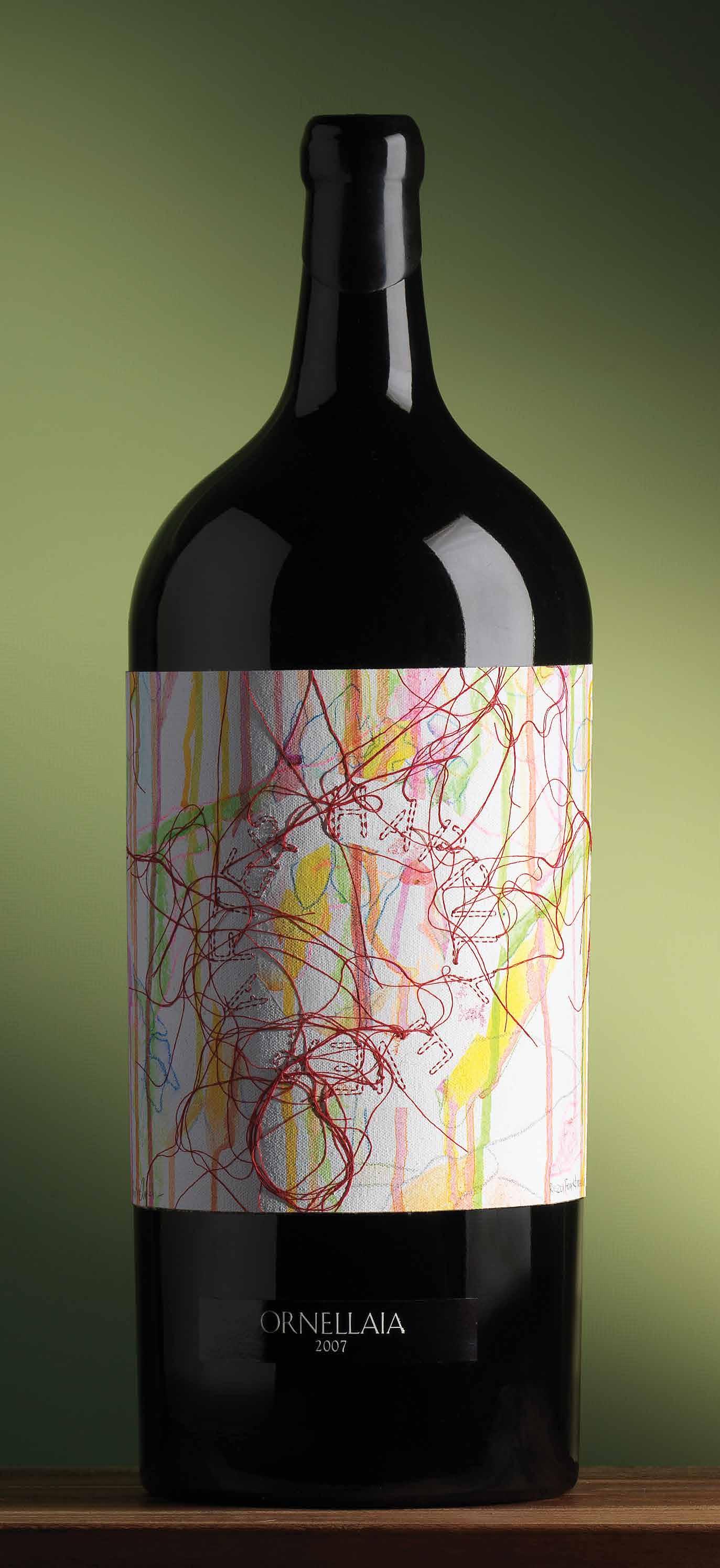
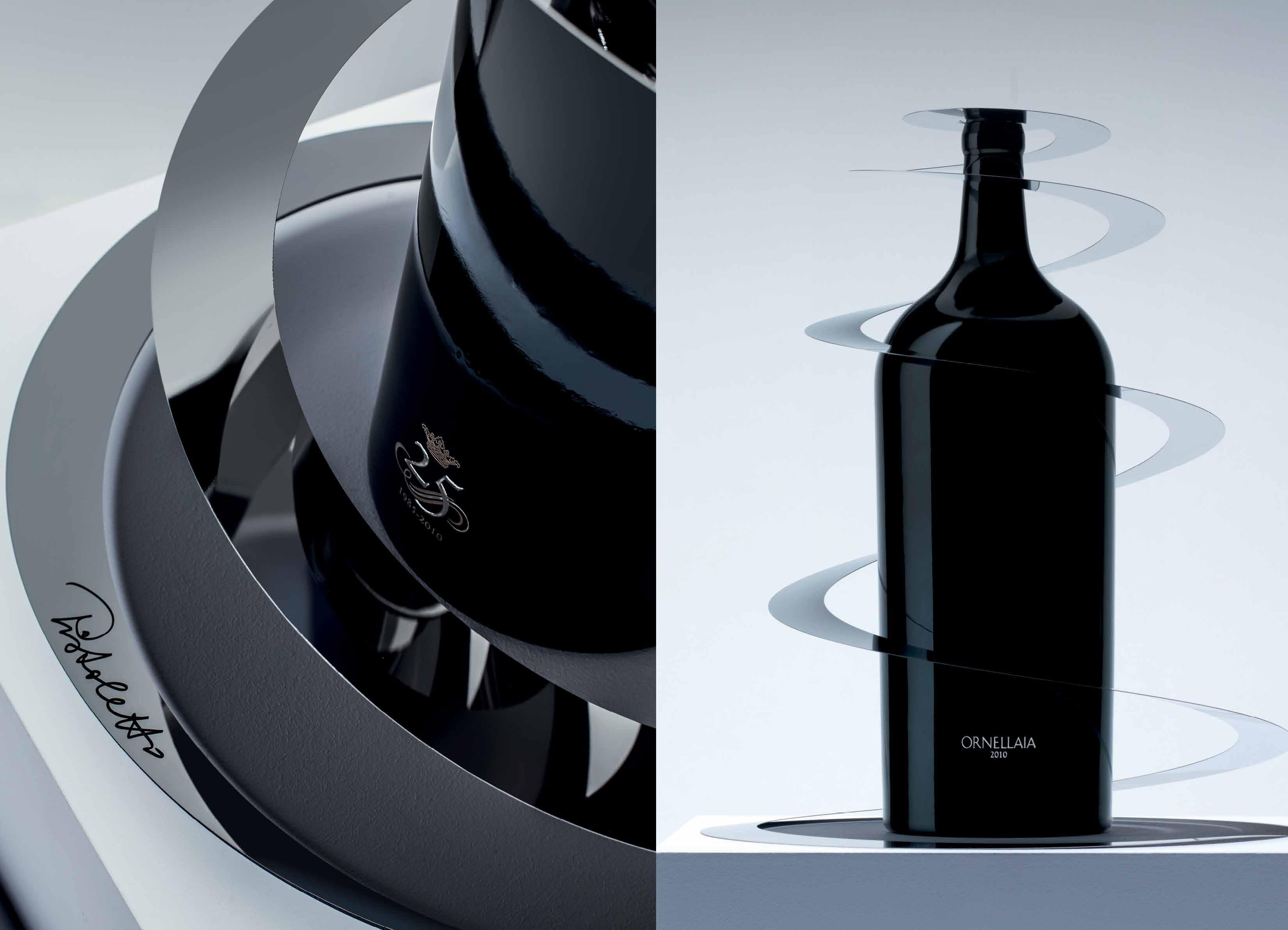
The project, launched in 2009, invites a renowned artist each year to interpret the character of the new vintage—literally giving the wine a visual identity. Ai Weiwei, Shirin Neshat, Tomás Saraceno, and Michelangelo Pistoletto have all left their imprint on Ornellaia’s large-format bottles, which are produced in minimal numbers.
Some of these works have become among the most coveted collectibles in the wine world. A nine-liter Salmanazar has surpassed €100,000 at auction, with proceeds funding cultural institutions such as the Victoria & Albert Museum, the Whitney, and, most recently, the Guggenheim’s conservation of works for its Modern European Currents exhibition.
To the casual observer, it might look like a brilliant marketing idea. But for the Frescobaldi family, the project is simply an extension of who they have always been.
A LEGACY WRITTEN IN WINE AND ART
To understand why an estate would hand its most celebrated wines to artists, you have to understand the family behind it.
The Frescobaldis settled in Florence in the 12th century, eventually shaping a swath of what is now the Santo Spirito quarter. Their archives— some dating back to the 1200s—record roles as poets, bankers, scholars, merchants, musicians, and politicians. In the 15th century, as Florence was igniting the Renaissance, Stoldo Frescobaldi commissioned Filippo Brunelleschi to build the Basilica di Santo Spirito.
In 1252, an earlier Lamberto Frescobaldi built a bridge over the Arno—today known as the Ponte Santa Trìnita—to connect his land to the heart of Florence. Later, the poet Dino Frescobaldi preserved the earliest cantos of Dante’s Divine Comedy. The family financed English kings during the Crusades and supplied wine to the papacy.
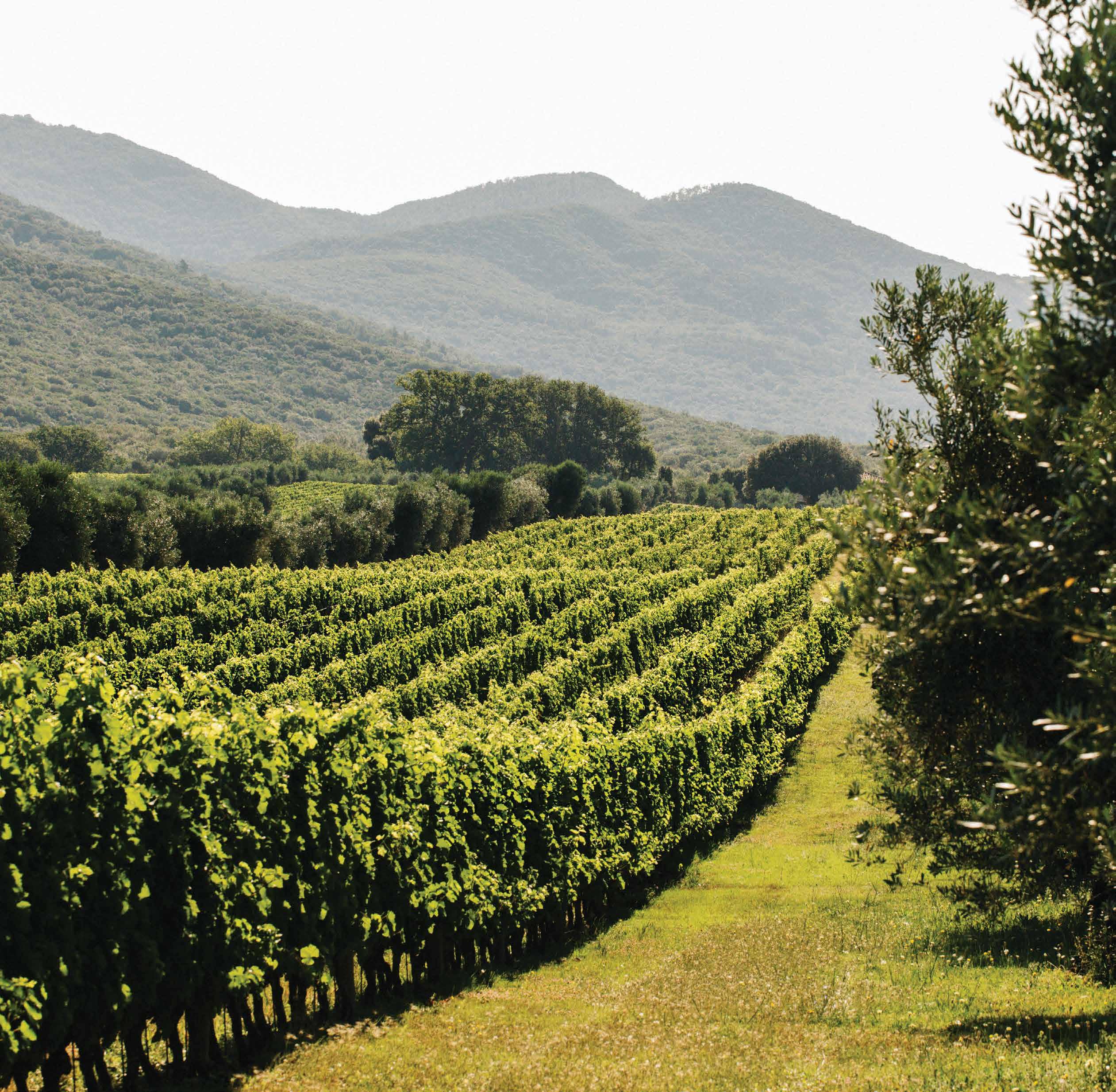
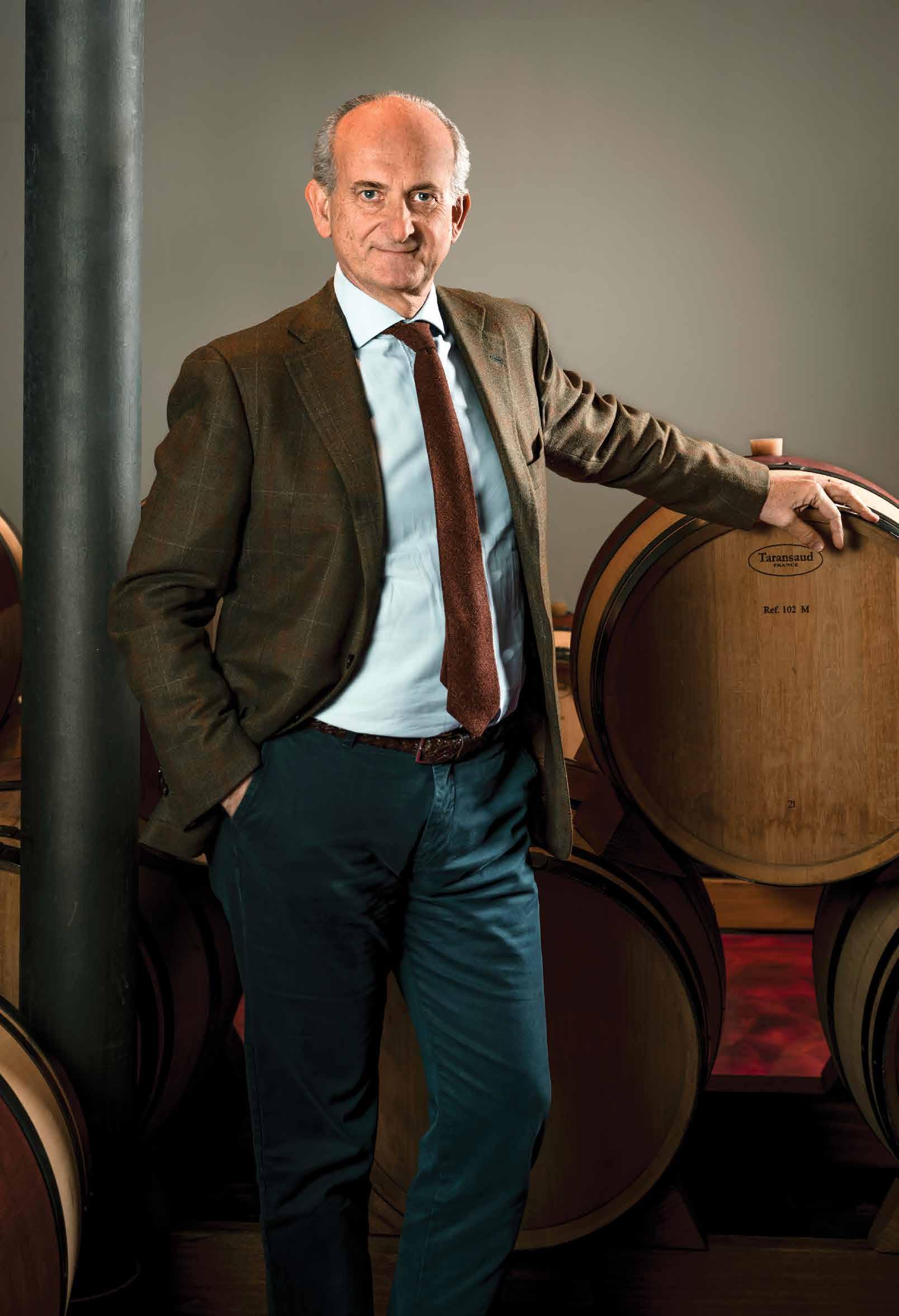
Today, Marchese Lamberto Frescobaldi, Marchesi Frescobaldi President since 2013, represents the 30th generation to work the land. With estates such as Tenuta CastelGiocondo in Montalcino, Attems in Collio, Tenuta Ammiraglia on the Tuscan coast, and Ornellaia in Bolgheri, the Marchesi Frescobaldi group now produces millions of bottles a year across Italy.
His leadership style is rooted in stewardship rather than preservation for its own sake. “Don’t sit on what you received, create more than what you are given,” he has said, articulating a philosophy that blends heritage with forwardlooking responsibility.
“We have centuries of documents showing my ancestors commissioning and supporting artists. Art and wine were always connected for us.”
HOW ORNELLAIA HELPED SHAPE BOLGHERI
Nowhere is that dynamic more visible than at Frescobaldi’s Ornellaia Estate in Bolgheri. When Ornellaia was founded in the 1980s, Bolgheri was not yet the globally recognized appellation it is today. The estate—and its Super Tuscan peers—played a decisive role in giving Bolgheri a distinct identity, separate from the broader, more diffuse image of coastal Tuscany or Maremma. American
LAMBERTO FRESCOBALDI
collectors, in particular, came to understand Bolgheri through estates like Ornellaia, whose trajectory helped solidify the reputation of this Denominazione di Origine Controllata e Garantita (DOCG) abroad.
And that influence continues. The estate’s creation of Ornellaia Bianco helped validate the idea that coastal Tuscany could produce world-class white wines, eventually contributing to the establishment and prestige of Bolgheri Bianco as a formal category.
The early adoption of Petit Verdot, now an increasingly important variety both for Ornellaia and the broader appellation, reflects an openness to evolution that aligns with Lamberto’s ethos: respect the land, but allow the blend—and the region—to grow.
VENDEMMIA D’ARTISTA: INTERPRETING A VINTAGE THROUGH ART
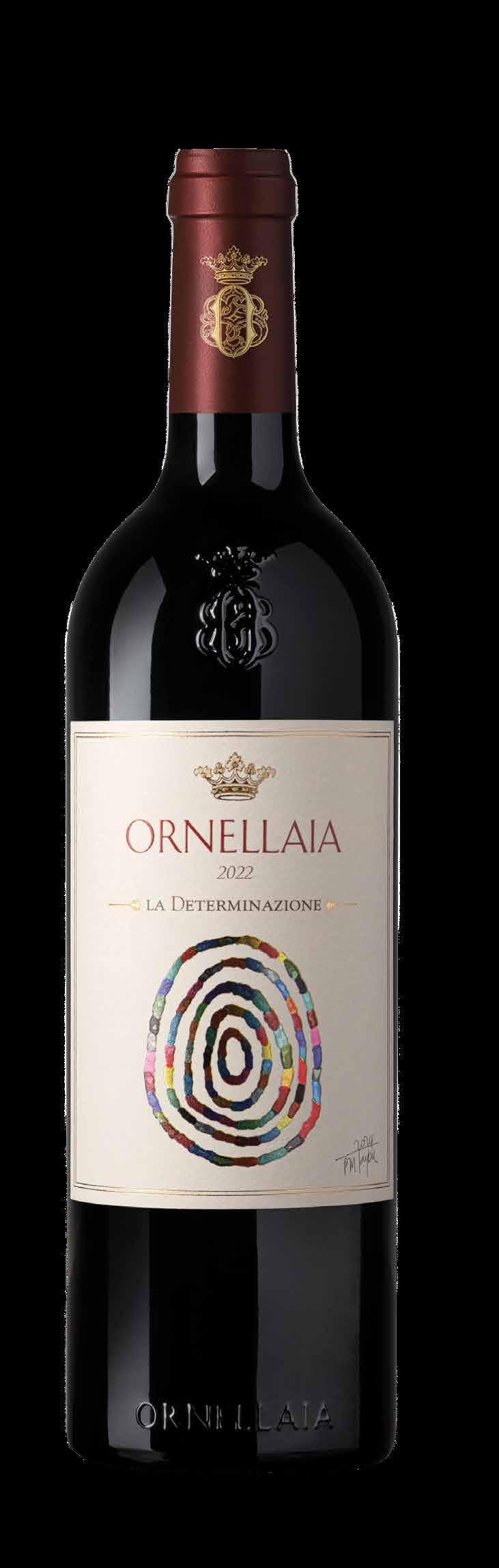
Vendemmia d’Artista extends that philosophy into the realm of culture. Each year begins with a single word—an encapsulation of the vintage’s “character”—which is given to an artist as a creative brief to design a site-specific work of art for the estate and a set of limited-edition labels inspired by the chosen word. The 2022 vintage, for example, was defined by La Determinazione, a reference to the vines’ resilience and the winemaking team’s focus during a season marked by heat and drought.
“We had a clear vision of what we wanted to do,” Lamberto said during the release.
“‘Determination’ has a double meaning. It represents the determination of our technical team to bring home this wine, which is so expressive, and the determination of the Ornellaia vineyards. In a situation that was a bit extreme, the vines showed great resilience.”
Over the years, the project has supported art institutions globally. The through line is not just philanthropy, but access—the idea that great art, like great wine, functions best when shared.
“As a family, we have always made sense of the world through art,” said Tiziana Frescobaldi at a wine event in London. She sees continuity between the family’s role in medieval and Renaissance Florence and its role today.
“One of the main reasons for creating our contemporary art initiatives was to link with our past,” she said. “The days when Florentine families were booming—the old days, when families like ours needed artists. We see it as a way of reviving this tradition.”
What emerges from Ornellaia’s annual artistic commission is something rare in the wine world: a project that is both local and global in scope. Local, because each vintage is anchored in the specificity of the Bolgheri landscape. Global, because the artworks travel far beyond Tuscany, raising funds to protect cultural heritage in some of the world’s most prestigious institutions.
THE FRESCOBALDI BRIDGE STILL HOLDS
The Frescobaldis have long described themselves as custodians of wine and art rather than entrepreneurs. They have held many roles in their long Florentine history, but—most enduringly—they have been winemakers and art patrons.
“Wine,” according to Lamberto, “is a bridge between people, between cultures, between centuries.”
And seven centuries later, the family continues to build bridges: between past and present, artist and vintner, Tuscany and the world.
ORNELLAIA 2022 LA DETERMINAZIONE
Cameroonian Artist Pascale Marthine Tayou created the 2022 labels for the Vendemmia d’Artista project.
In addition to the 750 ml and large format bottle labels for auction, one “La Determinazione” artistic label is included in every case containing six 750 ml bottles of Ornellaia 2022.
The 750ml labels feature concentric circles of multicolored markings, symbolizing the energy and strength that emerge when individual elements unite into a cohesive whole.
The double magnums (3L) show the gradual emergence of a resilient plant pushing through desert soil.
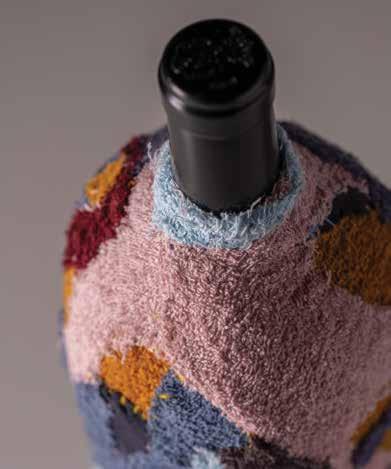
The Imperial (6L) and Salmanazar (9L) bottles are encased in one-of-a-kind patchwork covers made from vibrant, repurposed fabrics to express the joy and triumph of overcoming adversity.
Find Out Why the Aston Martin DBX S is the New Alpha in Town
BY MATT CHAPPELL
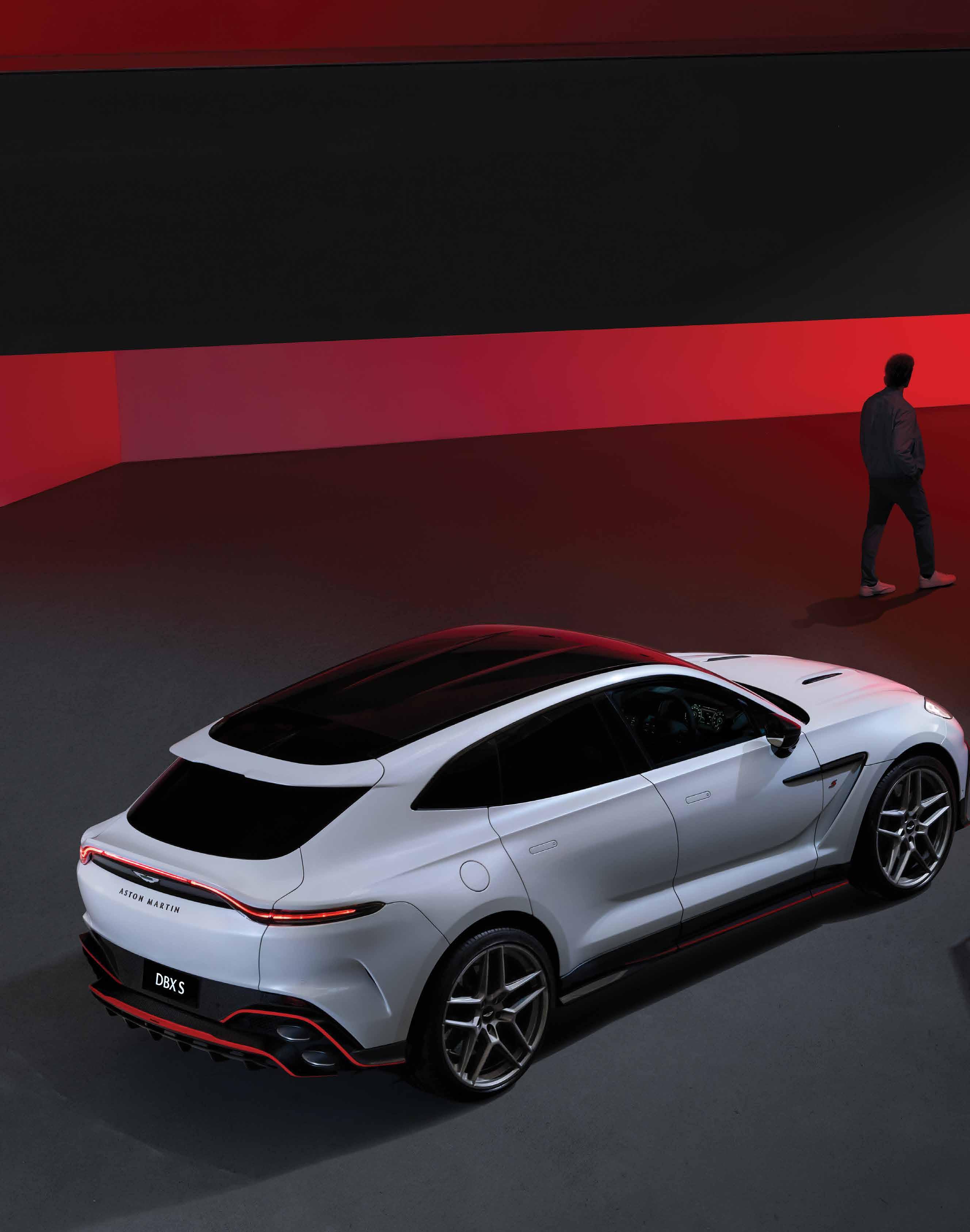
There was once a time when the idea of an SUV sent chills down the spine of any petrolhead, or anyone remotely interested in driving cars with character, performance or genuine sex appeal. That time is most certainly over. Want proof? Let’s talk about the new Aston Martin DBX S. Now probably the finest example of what super-SUV ownership should look and feel like.
It’s the latest in a long line to get the “S” badge treatment, signifying a “special, highperformance” version of an existing model. The thing is, the existing model in question is the DBX707—already highly lauded, highly powerful and uncompromisingly loved by its owners. So just how has Aston Martin made it even more special?
For starters, it’s whacked another 20PS into the engine, taking its total power to 727PS or 717bhp. That’s 2bhp more than the Ferrari Purosangue and, while only two, officially makes it the most powerful combustion-only SUV on the planet. That’s alpha talk. It does this by taking turbo tech directly from the forthcoming Valhalla supercar, delivering more shove at the top of the rev range. Speaking of which, the DBX S also produces a thumping 900Nm of torque from its Mercedes-born 4.0-liter biturbo “hot V” V8. And it feels utterly monstrous.
It shifts itself from 0-62mph in only 3.3 seconds. That’s supercar territory like Lamboghinis,
McLarens, Porsche 911s. Yet, remember, this is a two-ton SUV. We already know how deft at managing pitch and roll the DBX707 was, and this continues in the DBX S (more on this later), but Aston Martin has been busy innovating on new ways to remove weight, as well. For the first time ever on an SUV, you can now spec Magnesium wheels, 75 percent lighter than steel and half that of Titanium. You can also spec an entirely carbon fiber roof, saving 18kg from the highest point on the car and solidifying its center of mass.
That takes us to the handling, and it’s still just as devastatingly quick yet refined as before. Air springs and electronic dampers. Electronic roll control that keeps it to 1.5 degrees maximum, enough to feel a corner naturally but flatter than many two-seater sports cars today. In short: it barely flinches. It’s so good at what it does, you’d most likely find your own limit way before you find the car’s. Even then, this thing takes so much in its stride, it’s so planted, so bruisingly fast, you might not even notice. And on highways, around the city or at lower speeds—any time you want it to be “normal”— it blends in. It’s smooth, quiet and chilled. It’s luxuriously comfortable.
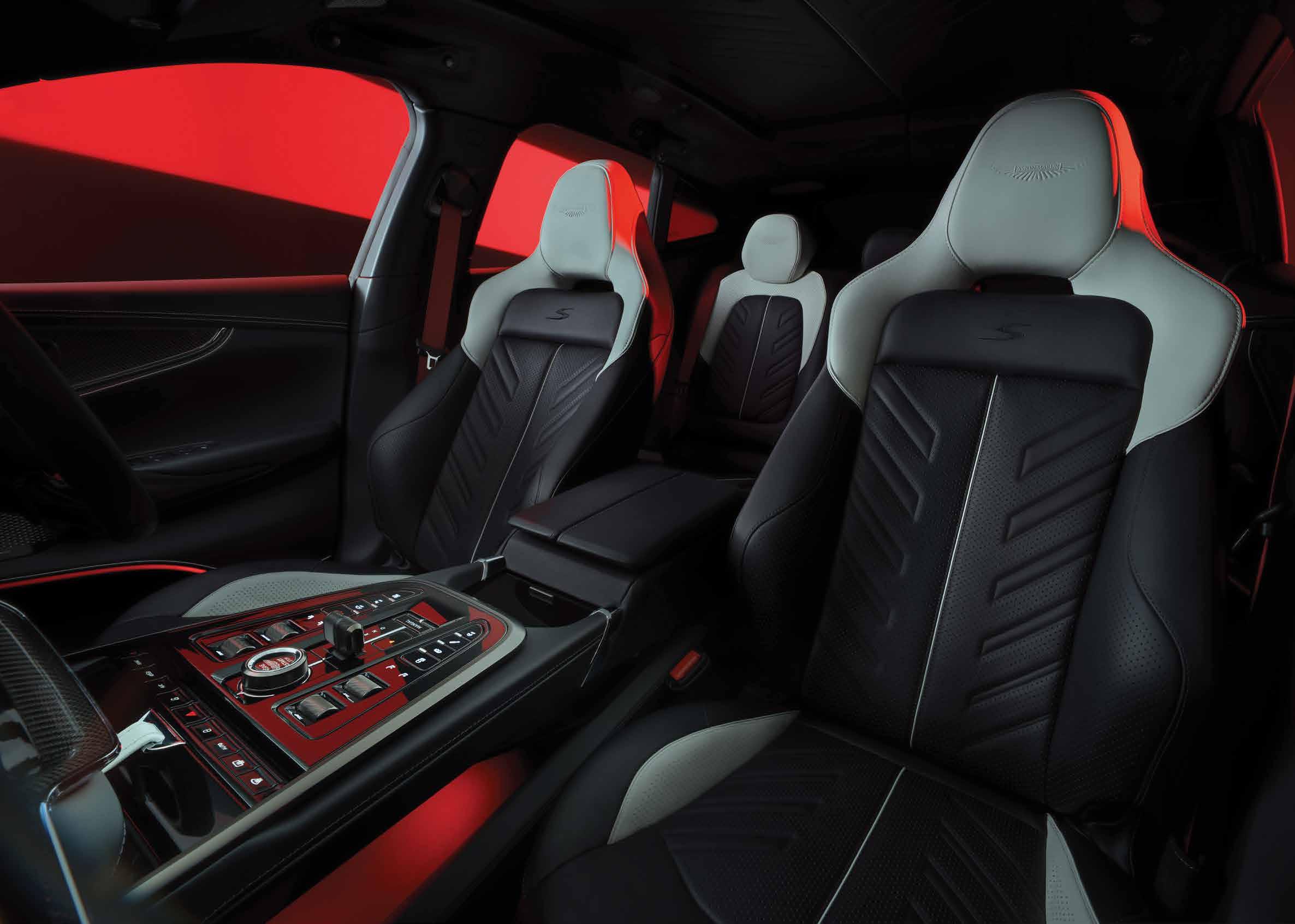
Inside the cockpit, it’s the same story. You get lightweight sporting Alcantara as standard, but you can choose semi-aniline leather if you want instead. There are “S” badges embossed and debossed with extreme pressure on the
seats for sub-millimeter precision, and it appears on the treadplates and engine plaque, too. Every material, every angle is a work of beautiful craftsmanship. It literally makes you feel good inside. Bad day? Go sit in the DBX S for half an hour.
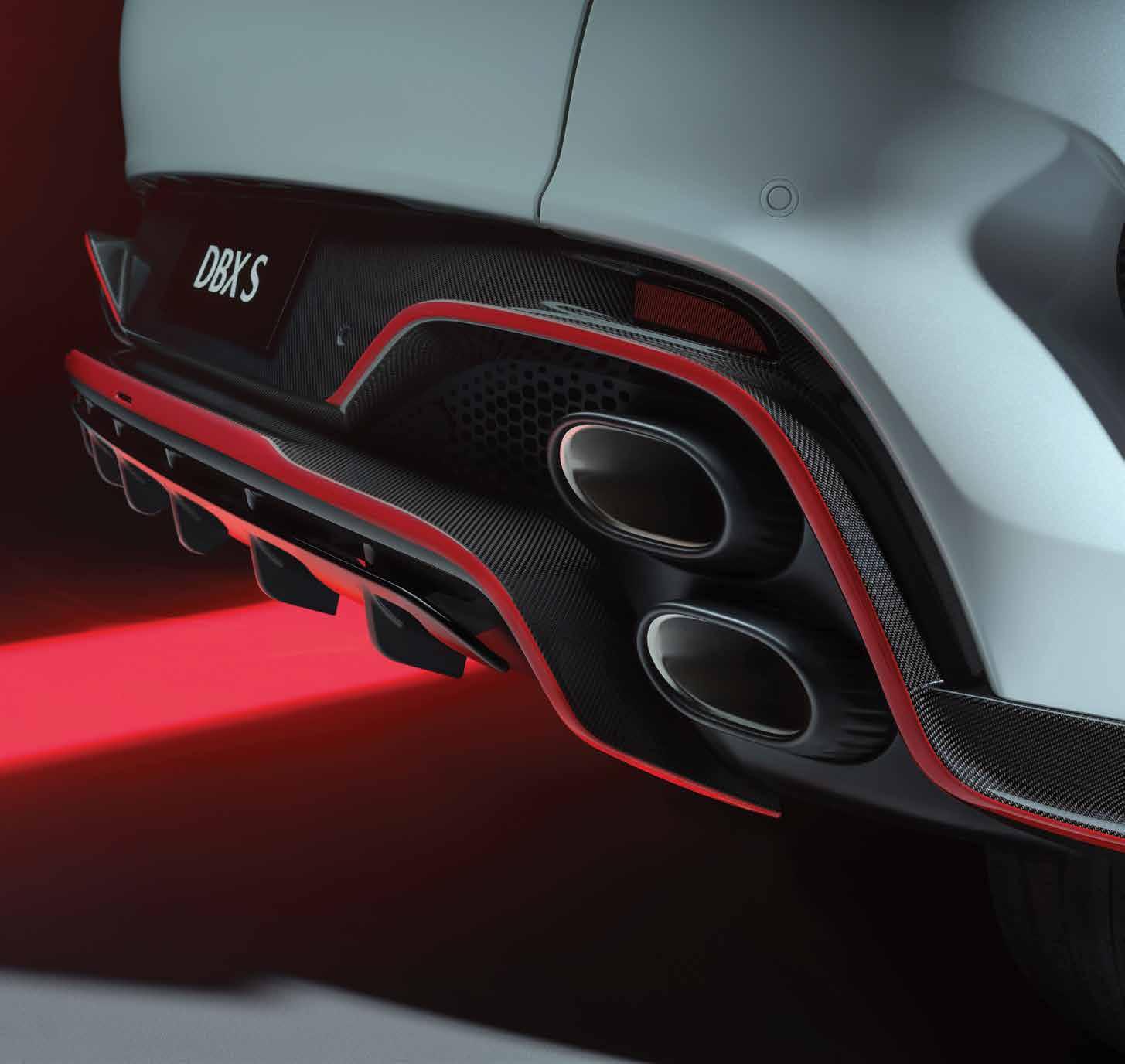
And there’s a 14 speaker Aston Martin audio system packed away inside, too, with the option to spec it up to a 23 speaker Bowers & Wilkins system acoustically designed to the interior shape and volume of the DBX S. That said, if you go hunting for the upper echelons of performance in the DBX S, using Sport or Sport+ modes, you’ll likely prefer to listen to the throaty engine note reverberating out its vertically stacked exhaust pipes at maximum attack. Also new to the S in either gloss or matte finishes.
This is another fine example of Aston Martin’s dedication to sheer, combustion-led beauty— thrills all day long, mesmerizing automotive design, total luxury at every touch. If driving an SUV can be like this every day, surely any petrolhead can convert. The SUV category is being redefined, and you’ve got front row seats to the new alpha in town.
Imagination
How High Tech is Influencing the World of High Jewelry
BY ANNIE STOPAK
n the last five years, there was quite an evolution in high jewelry. We praised maximalism through chunky cuffs and statement earrings. We explored better ways to customize our jewelry, and we recognized the benefits of sustainable and ethical transparency, causing a shift to labgrown diamonds, recycled metals, and traceable gemstones. We also witnessed the polarizing effects of artificial intelligence and how this technology plays a key role in luxury marketing and design. Today’s most sought-after jewelry houses are embracing AI and other technology not as a replacement for detailed craftsmanship, but as a way to find the actual humans who shop
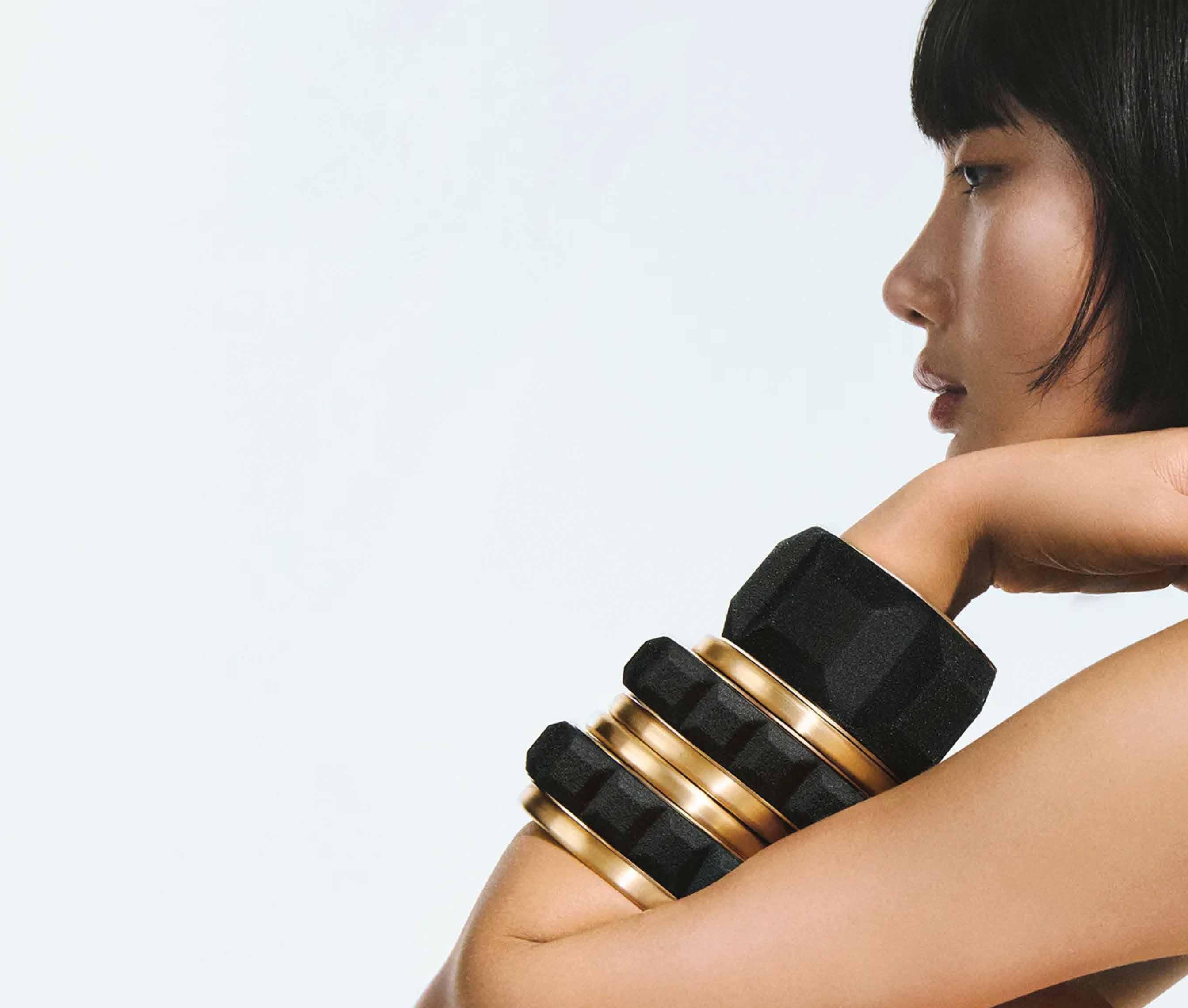
BOUCHERON QUATRE CUFF
for it. In 2026, we expect more cutting-edge improvements that feel deeply in-tune with buyers’ behavior.
With AI now seamlessly integrated into the design process, personalization has moved far beyond just engravings or bespoke services. Algorithms memorize a client’s aesthetic— drawing from past purchases, browsing habits, and social media—to reveal an intimate marketing approach that not only increases sales but captivates the consumer for good. This technology supports the creative process, giving designers an informed starting point for new ideas while keeping customers closely involved in each step. The result is a more engaging experience that strengthens loyalty and leads to jewelry that feels uniquely connected to the people who wear it.
Of course, much of the allure of high jewelry is nuanced—the careful eye, the steady hand, and the shades of meaning—as it shares a story that feels relevant yet somehow age-old. This is the timeless human element that many high jewelers strive to maintain. We know a piece is beautiful when we are inspired to ponder the deeper significance and become wrapped up in curiosity around its origin. New technology is less of a replacement for this human skill, and more of the first steps towards infinite possibility. This is where technology comes alive and reaches territory that humans always imagined but could never fully grasp.
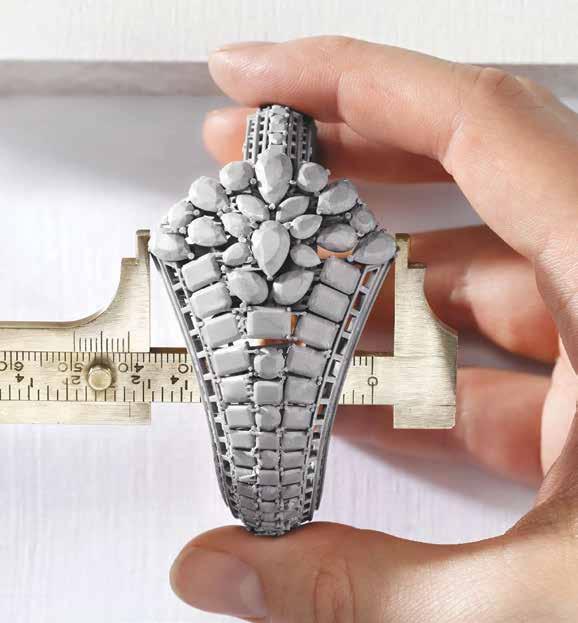
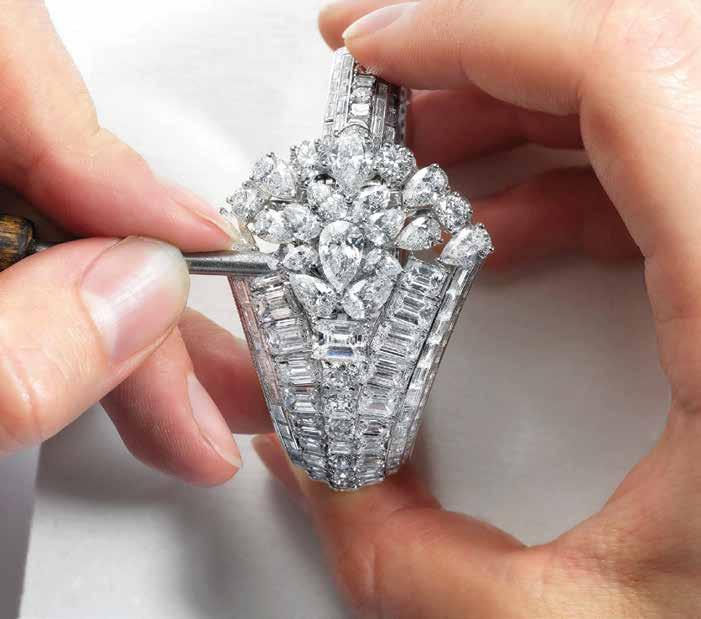
One such technological advancement that opens up this realm of possibility is the 3D printer. This method has become a popular way to bring life and tangible quality to an idea, and it helps test and produce intricate concepts quickly. This is especially important when speed and efficiency are part of the equation, and if high detail is required. With 3D printing, the model is designed digitally and then printed, allowing brands to adjust and finalize prototypes before mass production. This is a cost-efficient method, as it omits the need for human labor and strenuous carving by hand.
CHARLOTTE CHESNAIS FINE
CHARLOTTE CHESNAIS FINE
JEWELRY
Another similar and more niche concept for jewelry that may develop even further in the coming months is sand printing, which utilizes large-scale 3D printers to create sand molds directly from computer-aided design (CAD) software. The high jewelry maison, Boucheron, presented this technique last year with the Quatre Sand Cuff, an eight-layer bracelet which has a polymer glued to black sand in millimeterthick layers. The process increases strength and durability while maintaining the unique
gritty texture of the sand. The final product boasts an air of regality and an undoubtedly commanding aesthetic. This technique alludes to the experimental nature of Boucheron, with practices that are often unconventional and push boundaries.
Other high jewelry labels are using state-ofthe-art 3D printers and CAD, too. One of these brands is the iconic jeweler, Graff. The brand’s Oval Diamond Secret Watch offers the beauty
of a bracelet with the technicality of a watch. The piece is equipped with a petite octagonal dial, which is hidden behind an emerald-cut diamond. Each diamond is digitally examined using this process of computer-aided design to decipher size, shape, and orientation. In this way, the craftsmen are able to assess the gem on a larger scale and make more precise design decisions. Once the physical item matches the digital mock-up, it’s produced in resin using a 3D printer. The piece includes a striking number of glimmering stones, 44 carats to be exact, and is designed with this kind of precise technology to shed light on the exceptional intricacy.
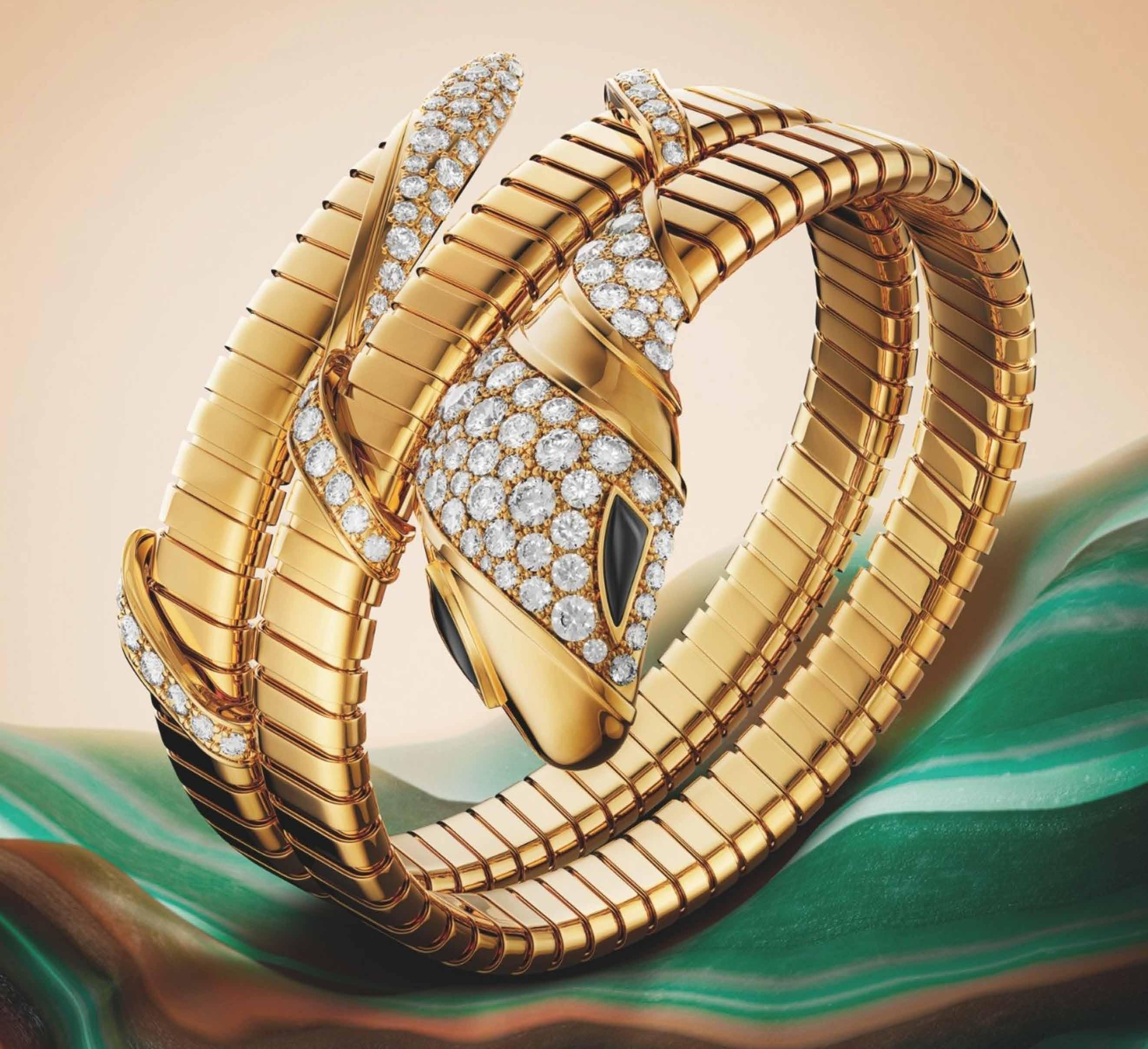
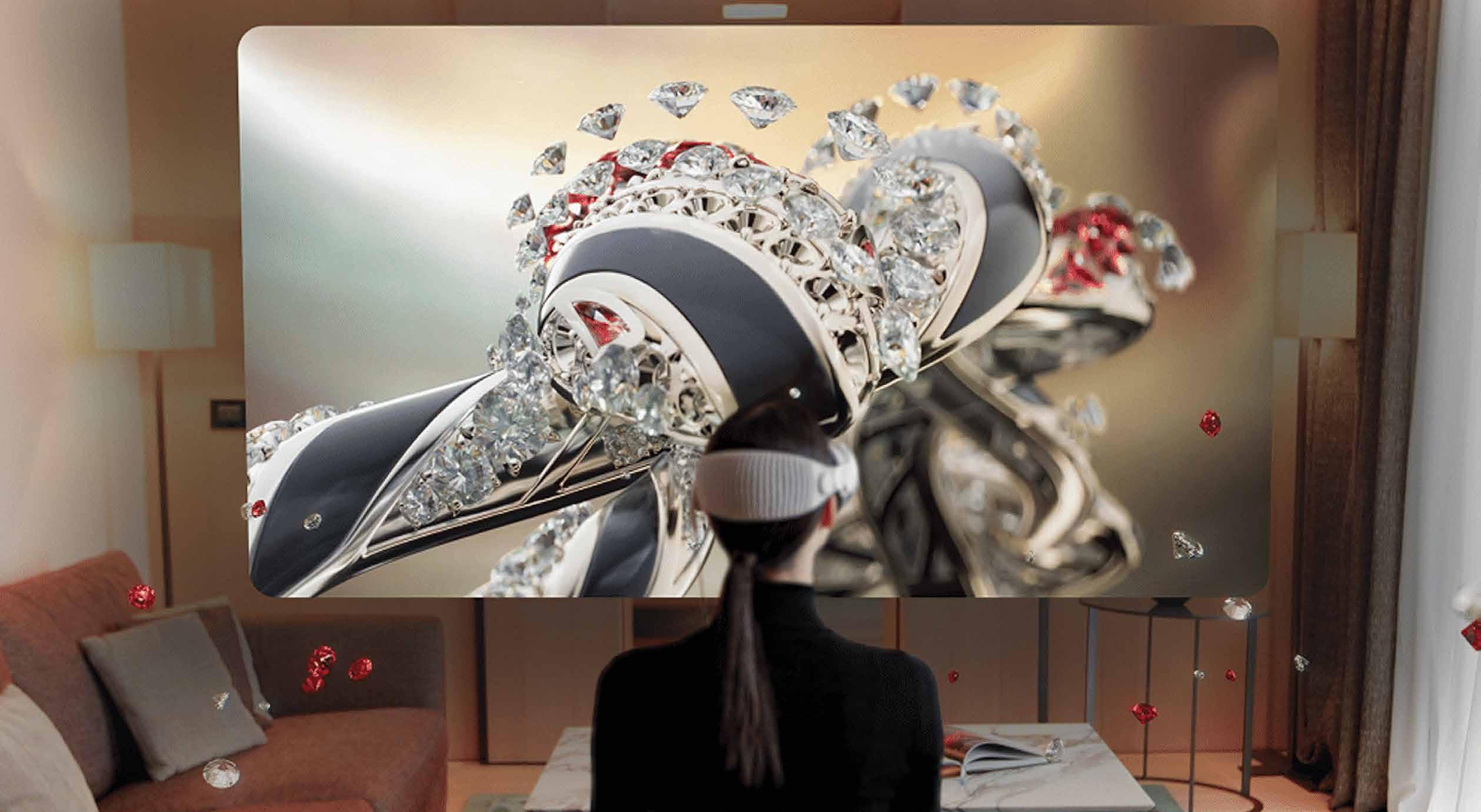
Other houses are incorporating sophisticated AI to enhance customer experience and increase engagement. Take the luxury powerhouse, Bvlgari, who just last year released their very own Infinito app on Apple Vision Pro. The app takes users through 360-degree videos, an interactive 3D experience, and stories around product creation. This process examines the initial sketch to the final concept with exciting visual elements. Their mythical collection, Serpenti Infinito, pays tribute to the year of the snake. Visionary artist Refik Anadil created a stunning piece for this collection which is available to explore on the app. It brings to life the duality of art and science through stunning use of AI.
Bvlgari also uses AI as a merchandising initiative to promote products and maximize
BVLGARI
GRAFF
sales and profitability. AI-powered audio snippets are inspired by Bvlgari directors but do not actually include their voices to save time and resources. It paints a picture for the shopper through a sensory experience on website landing pages, like the brand’s colorful and diverse Polychroma collection, which includes a unique blend of visual artistry and sound. By use of interactive storytelling, this experience involves the consumer to connect them to the deeper meaning behind each collection, and in the case of Polychroma, shares the rich tale of Roman roots.
Increasingly, consumers want reassurance that their diamonds are mined responsibly, so technology continues to be put in place around perfecting and refining this process. Diamond traceability is the current technology that supports this ethical transparency. Chaumet, the flagship luxury jewelry brand of LVMH, teamed with Sarine Technologies to provide customers with traceable gemstones. Using the brand’s state-of-the-art Diamond Journey™ software, it traces the diamond’s voyage from its rough stone to the polished gem. All tracking is provided to the customer with a QR code, and even includes an in-depth digital report of the gem’s individual features.
Augmented reality (AR) advertising has become yet another essential tool for luxury jewelry brands who seek next-level engagement. This detailed technique overlays digital content onto the user’s real-world environment, and is used most often in fine jewelry for customers to see what a product could look like on their very own hand. Swiss jewelry brand Piaget uses AR content in a unique way to bring products to life. The campaign, Interact to Discover, reached over 35 million people and included a detailed threetier approach across social media platforms. Snapchat promoted virtual try-ons, Instagram showcased a gamified filter in 3D, and TikTok saw a special twist—AR with the inclusion of cultural symbols, like the Korean heart, to engage a wider audience.
With advanced jewelry technology as abundant as ever before, experimentation has become a vital part of this process. In the coming months, we expect more ease, less glitches, and an overall tailored experience. The question will remain: Is this even AI? But perhaps this curiosity should excite us, as it means we are evolving and streamlining our processes. The sweet spot is in finding the balance between human connection and digital efficiency. In doing so, we can’t lose the emotional impact of good marketing, and high jewelry becomes a place where tradition and innovation can live together harmoniously.
Perfectly located in the heart of Houston. With over 60 global luxury brands, local boutiques, and fine dining, featuring
HERMÈS DIOR CARTIER
HARRY WINSTON
PATEK PHILIPPE AT DE BOULLE
DOLCE & GABBANA
VAN CLEEF & ARPELS
LORO PIANA
CAROLINA HERRERA LOEWE PUCCI
ALTUZARRA
STEFANO RICCI
BRUNELLO CUCINELLI ZIMMERMANN BRIONI
ADAM LIPPES
MAISON FRANCIS KURKDJIAN L’AGENCE
BIOLOGIQUE RECHERCHE HÄSTENS
LOVESHACKFANCY
MOREAU PARIS
DIPTYQUE
STEAK 48 LE COLONIAL AZUMI MAD
BARI RISTORANTE
TOULOUSE
LITTLE HEN
OJO DE AGUA
THE POST OAK HOTEL AT UPTOWN HOUSTON
Experience Texas’ only Forbes Five-Star Hotel and Spa. Enjoy true Southern hospitality with exclusive Shop & Stay packages and complimentary roundtrip transportation to River Oaks District. Learn more at ThePostOakHotel.com.
the District. It’s a movement.
Craftsmanship Love Letter A to
P53’s Christopher Griffin Revives the Lost Art of Forging Handcrafted Irons from American Steel
BY SIMON ROBERTS
The idea that you can purchase expensive, highly sought-after, custom-made products tailored to your singular specifications is a compelling story. It’s exactly the type of story you expect to read in this magazine. You may have even thought that I would wax rhapsodic about a new Porsche Sonderwunsch (that’s “special request” for you Porschephiles), an epically “limited edition” Patek Philippe encrusted with Painite (this is your cue to get your phone out and open up your Google app), or a Savile Row suit made from Tasmanian Golden Orb Spider silk and interstellar dust from a distant, dying star. Your instincts are not wrong. These pages are filled with exceptionally rare and beautiful objects made to order with the finest materials and manufactured with flawless precision. That is why, if you’re an avid golfer, you’ll be particularly interested in this story.
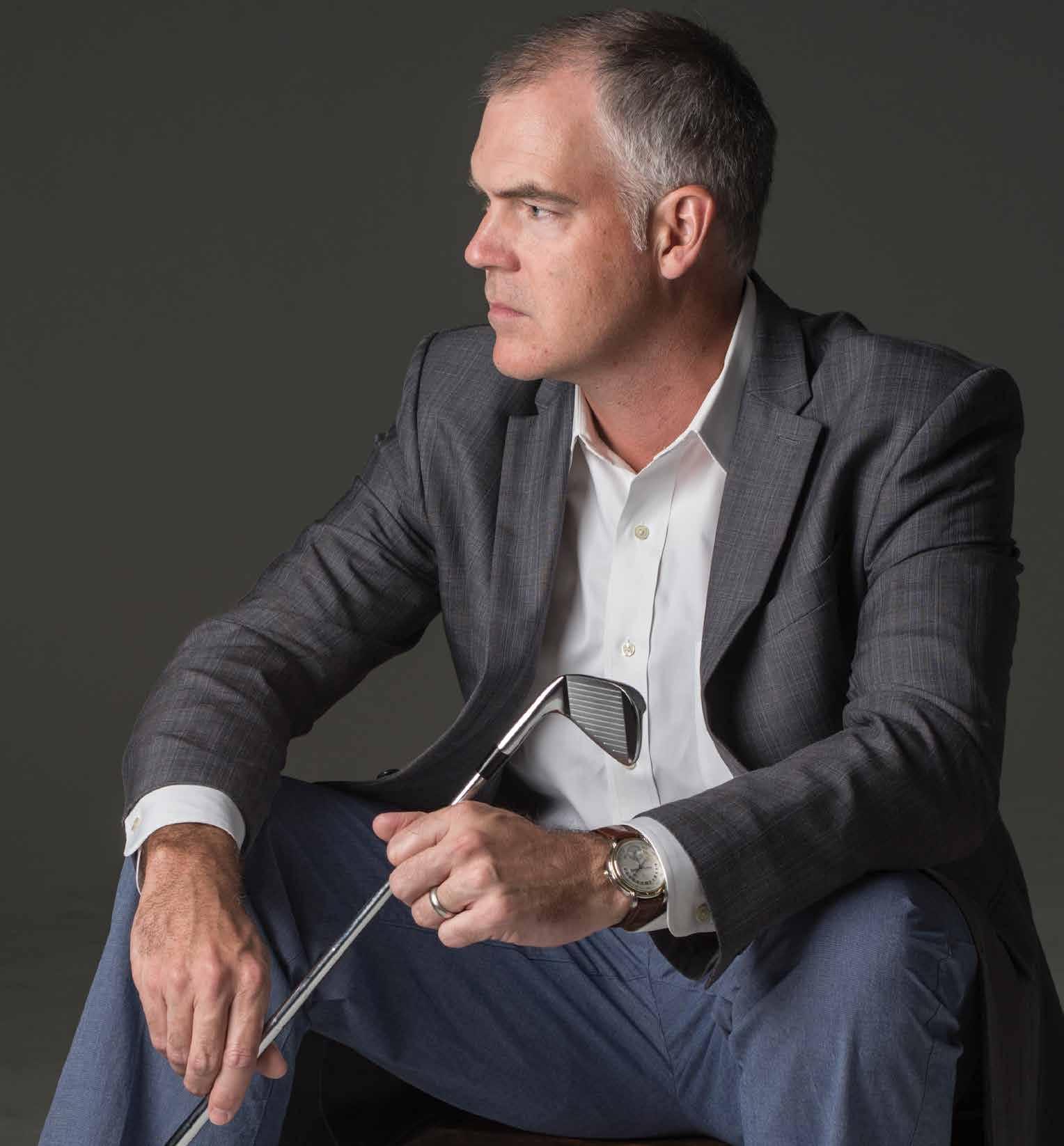
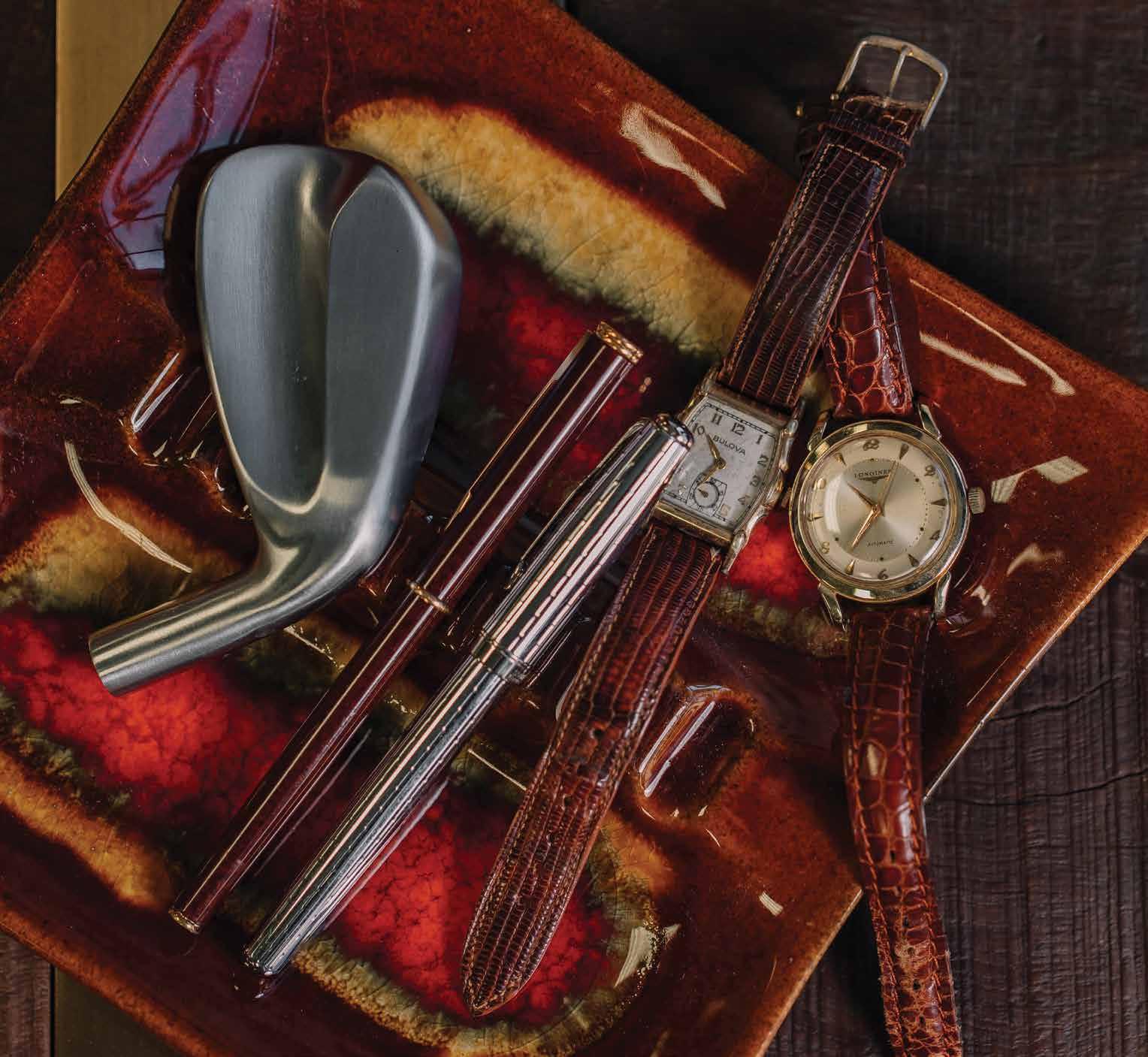
It begins with a seemingly unlikely guy, Christopher Griffin, (more about him later) who decided it was time to reclaim the lost American legacy of producing great American irons. Griffin founded P53 Irons in 2012 with the philosophy that beauty and functionality are not mutually exclusive. P53 Irons are not only beautiful and functional, but they are also world class, bespoke, handcrafted forged irons made exclusively here in the US from certified US steel. It’s something no other company has done for decades.
I can already hear the comments from readers who may be thinking, “I can have custom made golf clubs anytime I want, and I can get them from any one of a dozen US golf equipment manufacturers.” Yes, yes you can. As Griffin puts it, “for those who want custom irons, the world is full of them.”
But here’s the difference. While it is true that P53 makes irons sculpted from material that was produced here in the US, that is just half the story, and if you ask me, the less interesting half. What is intriguing is the why. Why go to all the trouble of forging irons? Most of the big boys in the equipment game cast their irons. Some offer a forged version for the low handicap, but the vast majority cast their irons for the obvious reason, which is that if you cast irons, you can crank them out in massive numbers, for the widest swath of players, in the most economical way.
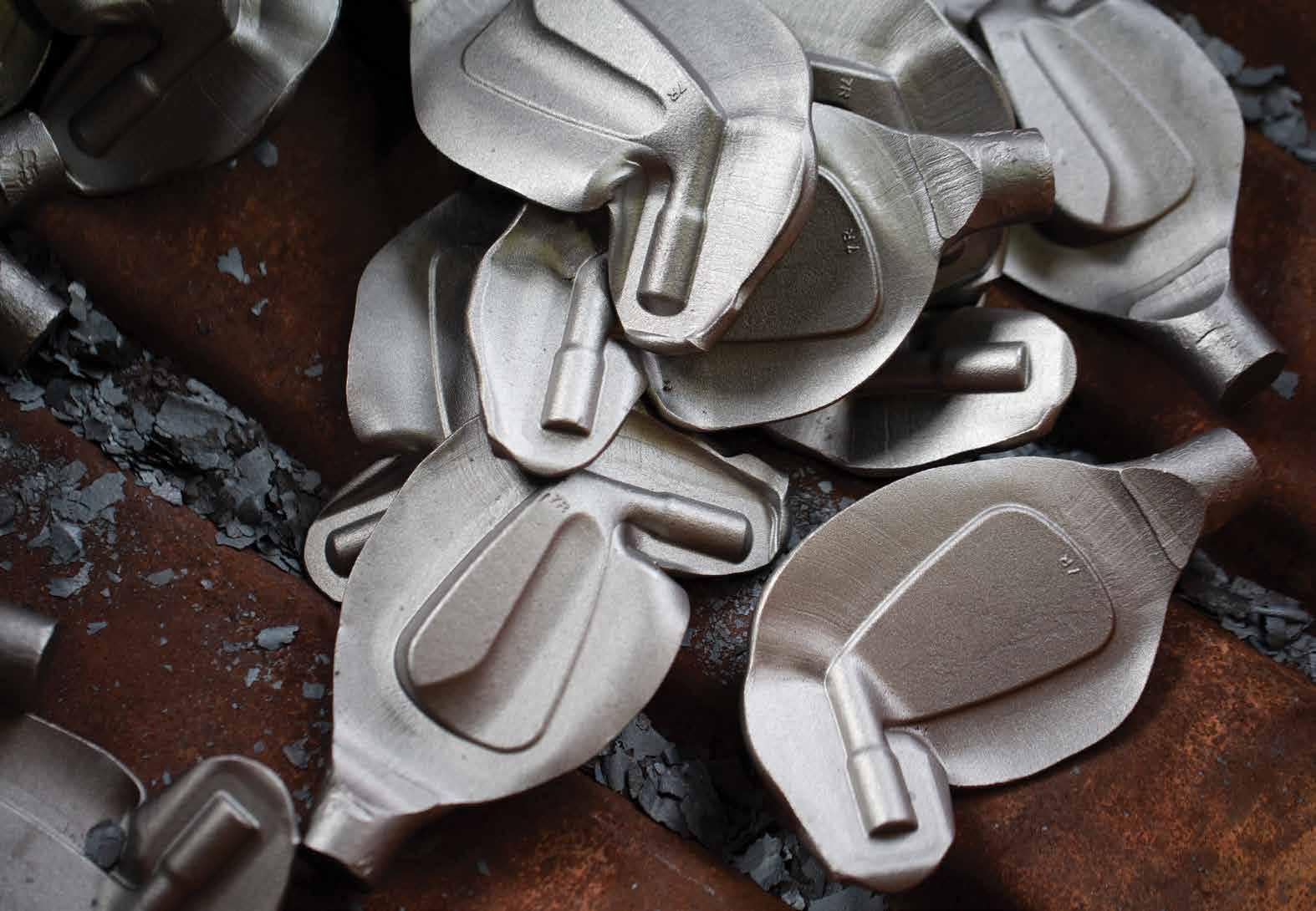
Instead, Griffin intentionally chose to craft one-off sets of irons for each of his clients. There are no two sets alike. These are truly bespoke works of art. He has chosen to do this
CHRISTOPHER GRIFFIN
because it is the best way to do it. Because it employs truly gifted craftsmen who press single billets of steel into glorious blades, to then be shaped and polished by expert hands until they become exactly what his client needs to play the beautiful game. P53 does things this way because it is the most beautiful, pure way to do it. This process is much slower, much more expensive, and has limits on growth.
The P53 process, from fitting each client to handcrafting their irons, can take up to a year. This is not the way to maximize profits or scale into becoming a huge player in the golf equipment sector. P53 is intentionally the opposite. I have seen descriptions of P53 as being akin to a Ferrari, or a Hermes Birkin bag because they are beautiful, expensive, and exclusive. The person who wrote those words has missed P53 raison d’être entirely. Hermes, and Ferrari utilize an LVMH strategy (LVMH=Louis Vuitton, Moet, Hennessy) to create a sense of exclusivity. These companies can turn up or down the dial on production at any time. P53 cannot produce more irons, because craftsmen don’t grow on trees. They can only produce as many irons as their artists can make.
That said, if you still believe that “custom” and “bespoke” are the same thing, get yourself down to Texas, and the man himself will be happy to explain the difference to you in person at P53’s private fitting headquarters in Fort Worth. You see, you can’t get bespoke irons, forged from US steel, here in the good old US of A unless you talk to the folks at P53.
This is the part of the story where my “seemingly unlikely” description of our protagonist comes in. When I think about who starts a golf club equipment company, it normally involves a couple of engineers, and a sales and marketing division that could fill a Madison Avenue office tower. As it turns out, P53 is not your typical golf equipment company. P53 was created from Griffin’s experience gained from years in the tech world, previous startups in the defense industry, a love for the game, and an esoteric and philosophical background that includes the organizing principle that you can make technically cuttingedge and aesthetically pleasing irons. Irons that look as good as they perform. This is not surprising for a man who famously built his own house because he wanted to understand his house, know where it came from, and have a
real connection to the process. Griffin also has a background in other philosophical pursuits like climbing, cycling, and actual philosophy (seriously, he has a degree in Philosophy).
Even the process by which you acquire a set of these irons is based in a philosophy. You can’t just rock up to the Fitting Headquarters, which is housed, ironically, or maybe not ironically, in the former Nike Golf facility and slap down your American Express Rare Earth Metals credit card and get a set. You don’t just get to buy your way in. At P53, you apply to become a client. After P53 has “sounded you out,” you may be invited to become a client. Among their clients, P53 counts the famous, and the everyman. Captains of industry, and the tradesman who built your home. According to Griffin, “Some clients deeply appreciate our unprecedented American sourcing and production. Others are simply focused on playing the best they can play. Some count memberships at the most prestigious golf clubs in the world. Others simply play wherever and whenever they can. Some compete. Others play for the joy of the game alone. In every case, we have met these individuals, sounded them out, and invited them to join us.”
When you work with P53, you are not simply buying something from them, you are collaborating with them to create something that no one else can produce. If you have the same values as the folks at P53, they have a place for you. If you believe in doing things the best way no matter the time or the cost involved, then maybe you are ready to join the craftsman at P53 and bring your own personal creation into the world.
Christopher Griffin didn’t just start a golf equipment company. In P53 Irons, Griffin wrote a love letter to craftsmanship, usefulness, and beauty. P53 is a great iron story, one that is authentically American.
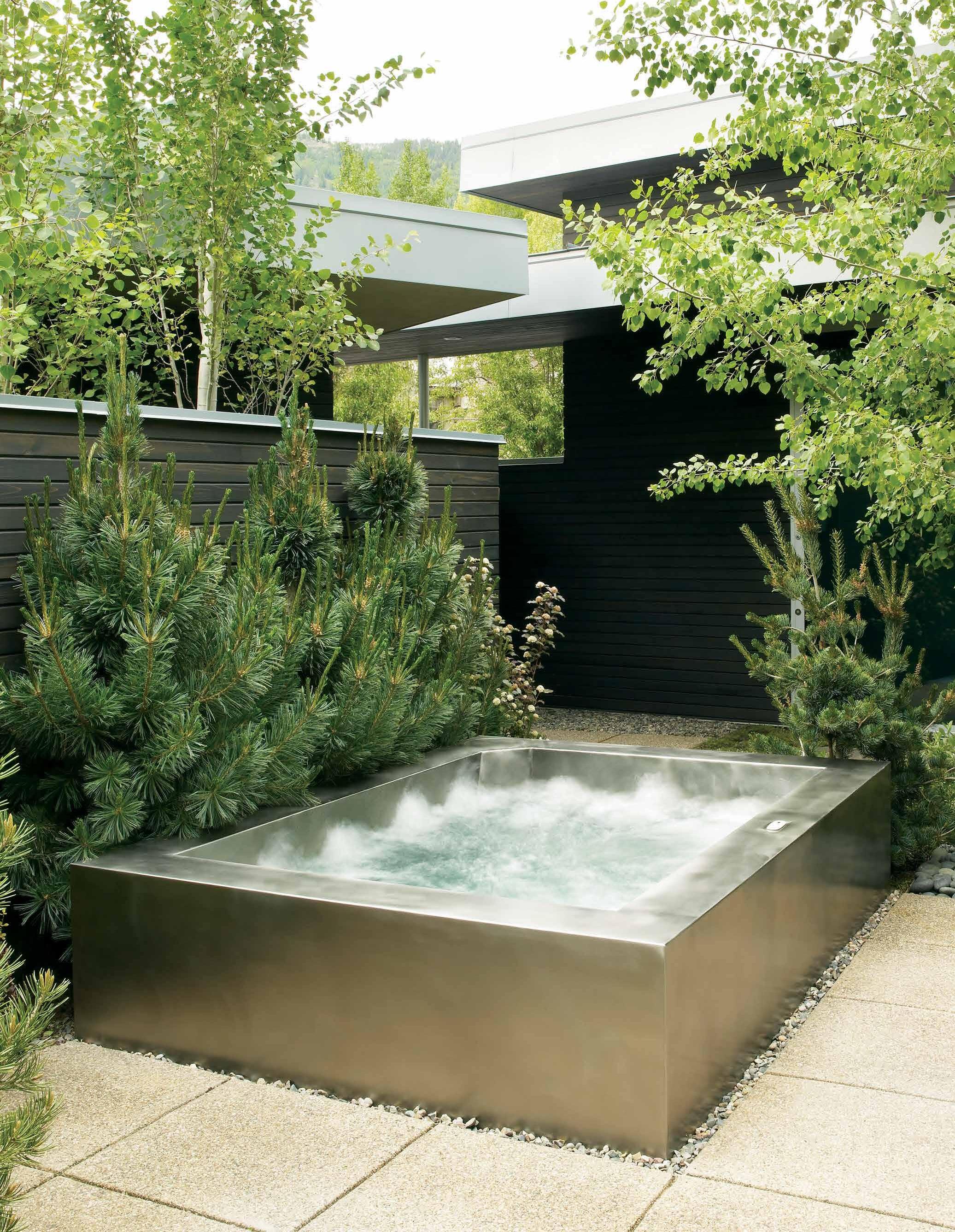
Water Features Luxury Custom Indoor & Outdoor Bath Fixtures
SPECIALIZING IN ELEVATED / ROOFTOP POOL & SPA INSTALLATIONS LIGHTWEIGHT & DURABLE
Business BREAK POINTS
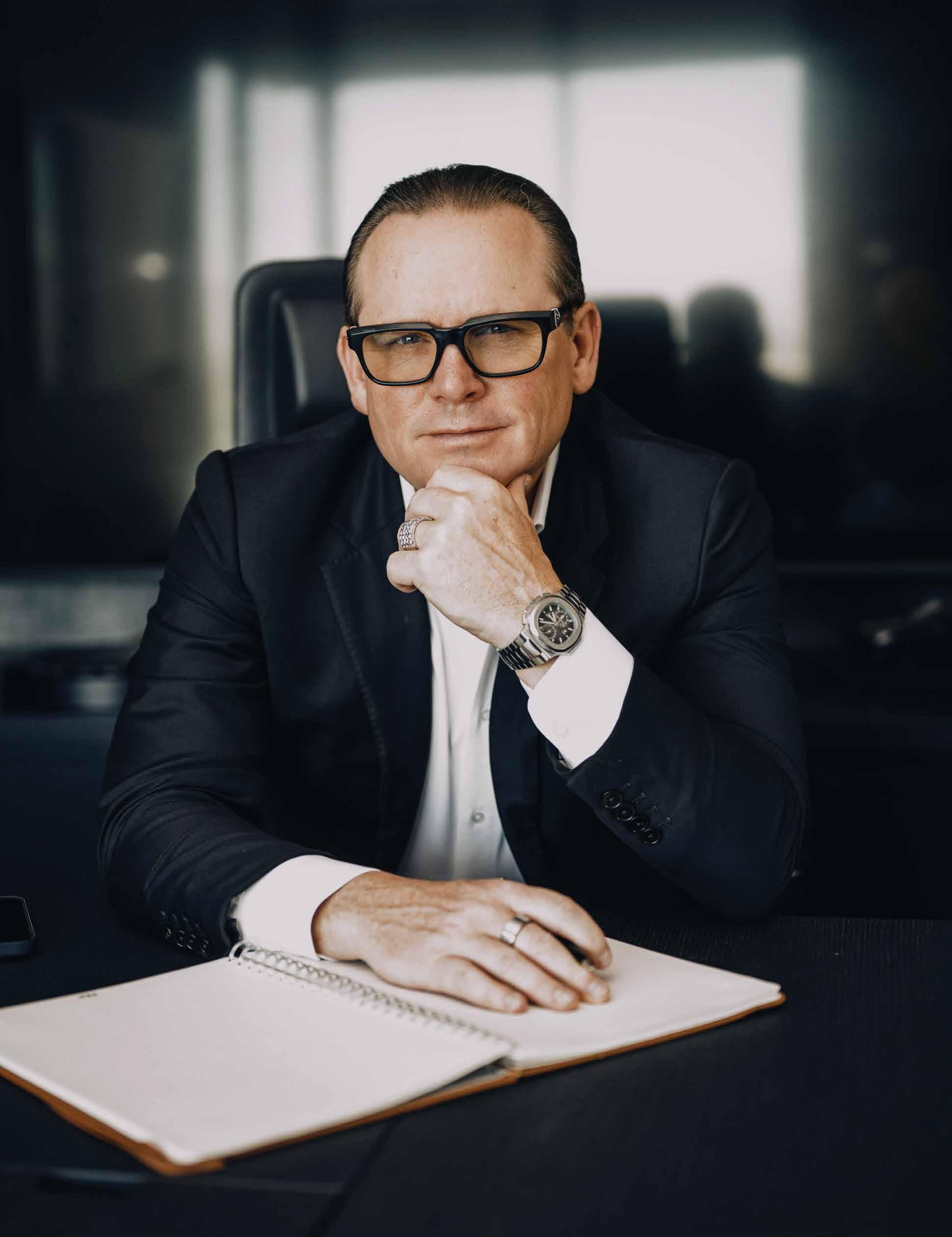
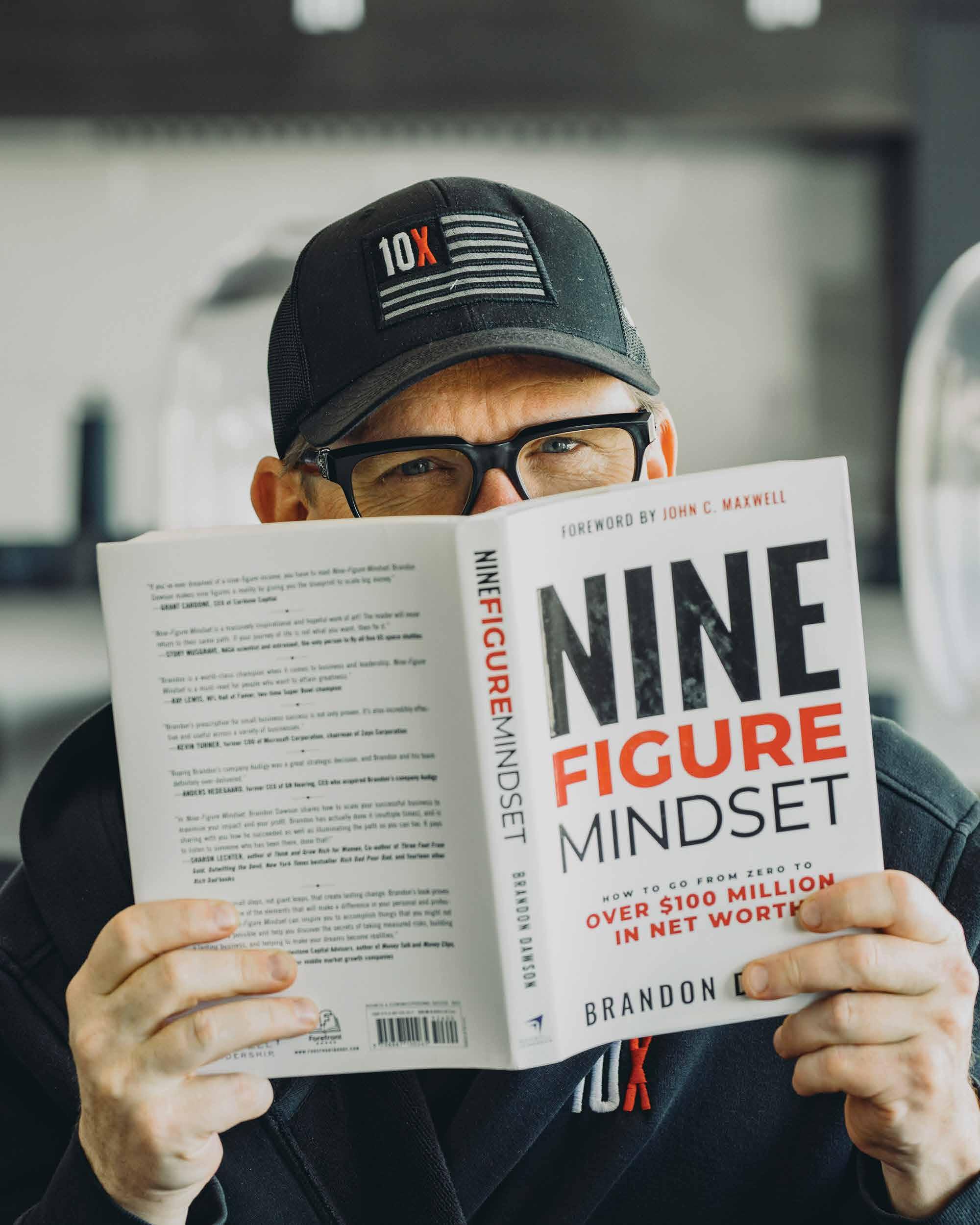
Private Wealth Transfer Can Create Fortunes—or Destroy Them
BY BRANDON DAWSON
We are living through the largest private-wealth transfer in modern business history.
Founder-led companies—profitable, established, and often under-optimized—are changing hands at a scale we’ve never seen before. Baby boomer entrepreneurs are exiting. Operators are fatigued. Capital is available. Sellers are motivated. And valuations, relative to future upside, remain compelling.
On paper, this looks like a once-in-a-generation buying opportunity. And it may be for some. In reality, most people who participate in this wave will fail; not because they chose the wrong businesses, but because they misunderstood what they were buying. Buying revenue is easy. But the reality of integrating is hard. Every acquisition comes bundled with three invisible assets that are either going to work for or against you: culture, operations, and people. Ignore any one of them, and the deal begins to erode value the
moment it closes. This is where sophisticated investors separate themselves from amateur accumulators. Growth through acquisition is not additive, it’s multiplicative complexity.
THE BREAKPOINT PROBLEM NO ONE TALKS ABOUT
As businesses scale, they encounter predictable stress points. Leadership overload. Communication breakdowns. Financial opacity. Cultural dilution. These aren’t anomalies. They’re structural. I call them breakpoints—moments where a company either professionalizes or collapses under its own success.
Add revenue without upgrading infrastructure and the organization bends. Add more and it breaks. Most buyers assume that if a business was profitable before the acquisition, it will remain profitable after. That assumption is wrong. Profitability is fragile when scale outpaces systems. This is where many acquirers get trapped. They believe they’re buying upside, when in reality, they’re buying latent strain.
Imagine you are constructing a building. You hire a reputable architect, pull the permits, and pour a foundation engineered precisely for a one-story structure. It’s done correctly. No shortcuts. The building goes up, and it performs exactly as intended. It’s stable, functional, and reliable. Years pass. Needs change. You decide to add another level. Then another. Each addition is beautifully constructed. Premium materials. Skilled labor. From the outside, the structure looks impressive—taller, more valuable, more substantial than it was before. But the foundation never changes. At first, there’s no obvious problem. Maybe a hairline crack here or there. A door that doesn’t quite close right. Things that seem cosmetic, manageable, easy to dismiss. Until one day, they aren’t. The foundation, never designed to carry this much weight, finally gives way. And when it fails, it doesn’t fail gradually. The collapse is sudden and complete. Not because the upper floors were poorly built, but because the base was never reinforced to support what the structure became.
That’s the risk most people underestimate when they pursue growth through acquisition. Each deal adds weight, structural weight. And if the foundation isn’t intentionally redesigned to carry it, the failure feels unexpected, even though it was inevitable.
INTEGRATION IS THE KEY
The most successful acquirers I’ve worked with don’t win on purchase price. They win on integration velocity—how quickly a newly acquired company is stabilized, standardized, and elevated. They don’t ask: “Can we buy this business?” They ask: “Can we absorb this business without breaking what already works?” That distinction is everything. Integration discipline is what turns acquisitions into engines of compounding value. It’s also what funds the jetset lifestyle without the burnout that so often follows aggressive growth.
I once worked with a services platform that acquired three companies in 18 months. On paper, it was a home run with topline revenue nearly doubled. But leadership remained centralized with the founder. The breakpoint came fast. Decision-making slowed. Bottlenecks formed. Executive fatigue set in. Missed client deliverables followed. Then senior leaders began to exit. Revenue grew but the organization cracked. The lesson was simple but painful: leadership and operating capacity must scale before revenue scales. Otherwise, growth amplifies fragility instead of strength.
Contrast that with a multi-entity platform that acquired five companies over three years using a standardized 90-day integration playbook. Breakpoints were anticipated before they surfaced—financial visibility, operational consistency, leadership depth. The outcome
was margin expansion, predictable scaling, and a leadership team that wasn’t perpetually on edge. That’s the difference between buying businesses and building a platform. Integration systems turn acquisitions from risk into leverage. In fact, this is the age old strategy of Private Equity—to build platform companies to buy smaller businesses at a discount. The problem is, most small business owners don’t know or understand what a platform company is and therefore completely misjudge the importance of having the proper resources to integrate the acquired revenues and operations, let alone the people.
I’ve seen this movie more times than I can count. A smart operator buys a great business. Then another. Then another. Revenue explodes. Complexity follows. Suddenly, the very growth they worked so hard to achieve becomes the thing that threatens to undo them. That’s not bad luck. That’s ignoring breakpoints. Every time you add revenue, you add pressure. Pressure on leadership, systems, and culture. If you don’t intentionally upgrade the business at each stage, the organization will snap under its own weight.
Acquisition doesn’t fail because deals are bad. It fails because the integration is amateur. If you don’t know how to properly merge people, processes, and financials, you don’t scale, you stack problems. Eventually, the business starts running you.
THE REAL OPPORTUNITY IN THIS WEALTH TRANSFER
There has never been a better time to buy a business. But opportunity doesn’t reward enthusiasm, it rewards experience and preparedness. This next wave of wealth transfer will favor those who ask harder questions of themselves before they ever sign a deal. Not what can I acquire, but what am I truly equipped to absorb? Before you pursue growth, look underneath it. At your leadership structure. Your operating cadence. Your financial visibility. Your culture. These are not supporting details, they are the foundation. Because when the next opportunity presents itself, and it will, the real advantage won’t be speed. It will be structural readiness.
So the question isn’t whether the opportunity is real. The question is: What are you doing right now to ensure your foundation can support what you’re about to build?
To better understand where your business is operating on the breakpoint spectrum, you can explore that through my Business Breakpoints Quiz at cardoneventures.com/breakpoint.
Compass Curious for the
Arksen Boldly—and Sustainably— Revolutionizes Adventures by Land and at Sea
BY SIMON ROBERTS
What happens when an adventurous soul is struck by a new idea on how to create luxury watercraft that voyage farther than the most prominent slips in Miami, and expedition vehicles that conquer more than the speed bumps at the Whole Foods?
If that adventurous soul is Jasper Smith, you get an idea for a company that is revolutionizing the way that people think about luxury and adventure, while at the same time having a strong commitment to the environment. This idea became Arksen, a company who seeks to reimagine the marine and land exploration world and how to protect this world for future generations while doing it.
In the waters off Greenland’s rugged coastline, a father and son sailed through a landscape of crystalline ice, towering mountains, and fjords carved by ancient glaciers. As Jasper Smith and his son navigated those pristine and increasingly vulnerable environments, they witnessed firsthand the breathtaking beauty and alarming fragility of our planet’s wild places. That family adventure planted the seed for a transformative idea: Arksen, a company that does not just blur the lines between adventure, engineering, and environmental stewardship—it has erased the lines altogether. What began as a moment of inspiration in one of Earth’s most remote corners has become what Smith calls an “adventure revolution.”
The Smith connection to adventure and exploration is foundational and familial, going back to an adventurous father. Smith’s father, Ron Smith, founded a company in 1965, specializing in supplying the iconic Mini Moke, a compact, rugged vehicle that was built with purpose, and that purpose was exploration (think a Mini with a Jeep body). Growing up in this environment, Smith developed not just a business acumen but a philosophy on all types of vehicles. His experience led him to an engineering philosophy that the best machines are those that remove barriers between people and transformative experiences.
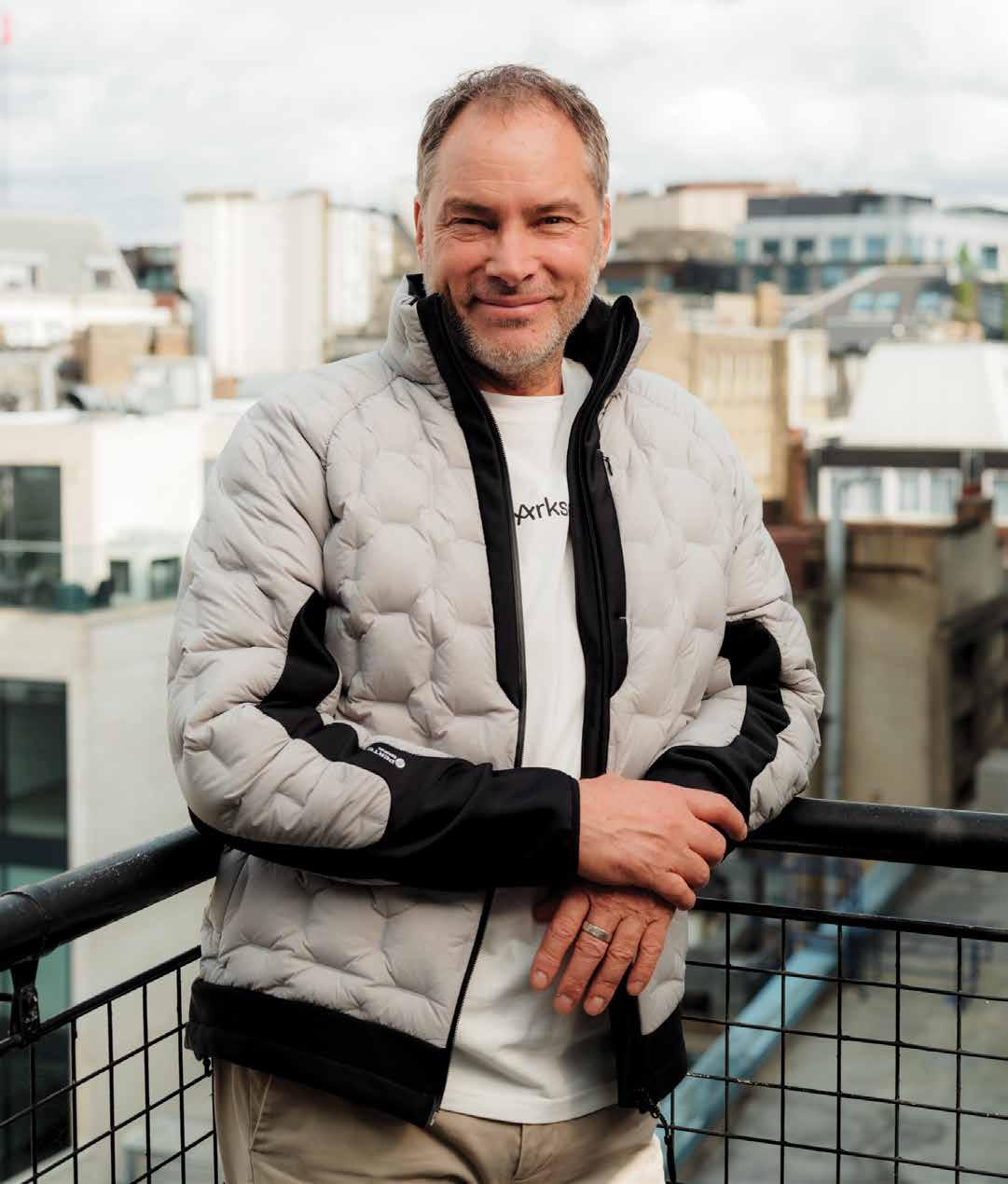
JASPER SMITH
Smith’s own words best describe his philosophy, “I have always been an adventurer at heart, climbing mountains inspired by legends like Doug Scott and Chris Bonington, sailing from Sydney to Alaska, and being captivated by the exploits of Thor Heyerdahl, Jacques Cousteau, and Bill Tilman. After 30 years of building tech companies, I wanted my next venture to be more profound. We began crafting a plan to develop this new movement: designing outstanding explorer vessels, creating lifechanging experiences, building a community that makes a real difference, and crafting apparel that goes the distance.” Smith realized that such lifechanging experiences shouldn’t be limited to the fortunate few. Arksen is an exercise in how to democratize adventure, removing some of the barriers to transformative journeys for a growing community of explorers. Again, Smith explains how Arksen’s philosophy explains evolving ideas about luxury, not just expedition vehicles and watercraft. “Luxury today is not about possessions; it is about meaningful experiences shared with the people you love. It is about enabling families and friends to explore confidently, with purpose, and without compromise. At its heart, adventure is the ultimate luxury, the pursuit of our own curiosity. And that is what Arksen aspires to be: a Compass for the Curious.”
At Arksen they believe that you can engineer emotion and create an environment for connection to the world, not separation from it. While other manufacturers only focus on specifications and performance metrics, the team at Arksen believe that the greatest products do something more than tick boxes on a rubric. They create moments that inspire, provide opportunity, and allow for greater connection to the world.
This approach draws inspiration from history’s legendary explorers: Jacques Cousteau, who revealed the ocean’s mysteries to millions; Fridtjof Nansen, who pushed into the Arctic’s heart; Thor Heyerdahl, who proved ancient peoples could have navigated vast portions of the oceans; and Bill Tillman, the mountaineer-sailor who embodied the ethos of small craft exploration. These pioneers shared common traits: curiosity and an unwillingness to compromise. “We design for the curious, engineer for the extremes and build with a complete lack of compromise,” Smith explains. “Because it is in our most freewheeling, untethered and challenging moments that we feel most alive.”
Arksen has created a series of luxury yachts designed for adventure, even though Smith has said that yachts are big, white, plastic, and seldom used. He prefers to say Arksen builds boats. Their lineup would suggest that luxury and adventure are mutually exclusive. Their offerings are broken into three segments: Explorer, Adventure, and Discovery.
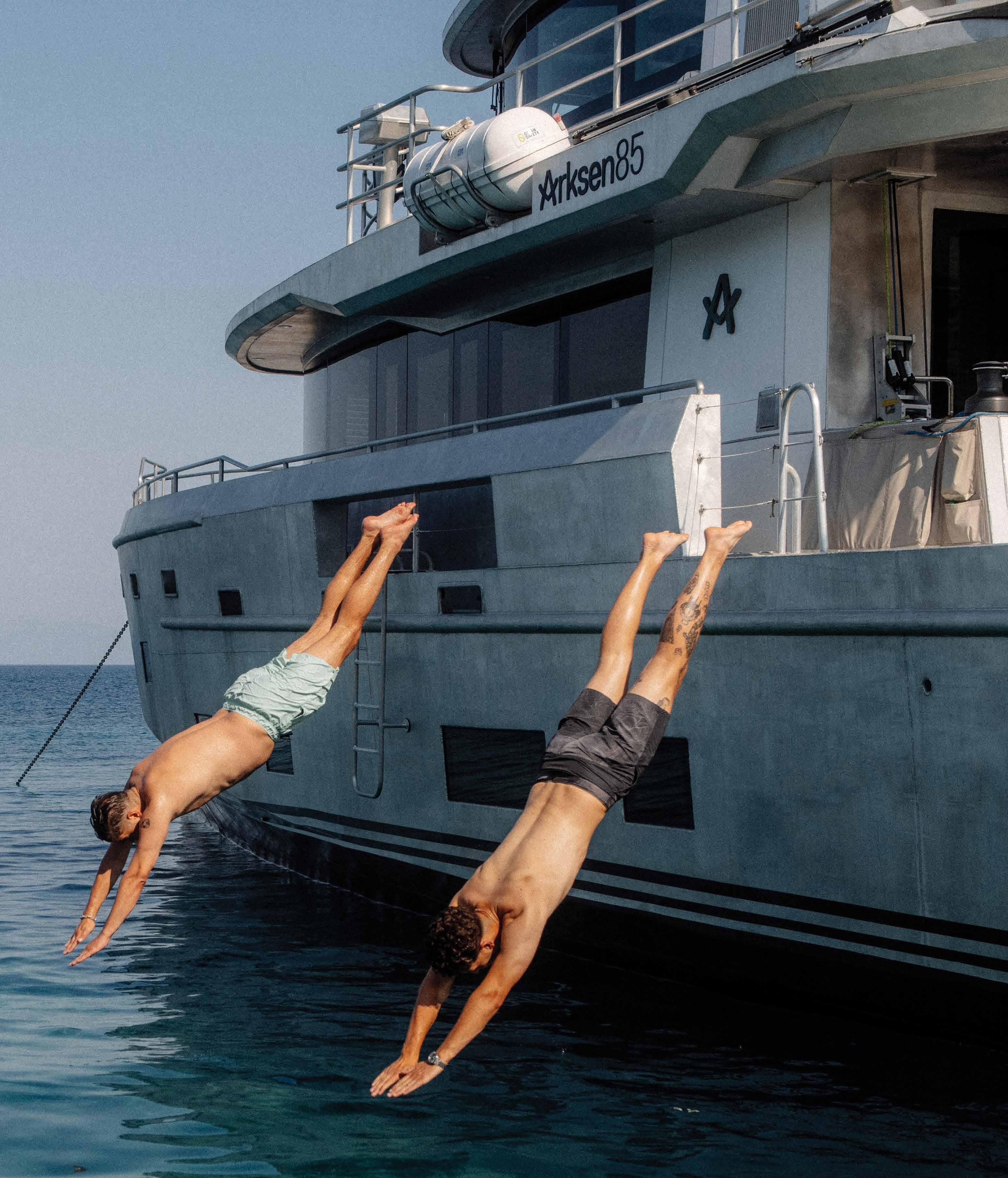
The Explorer Series forms the backbone of the Arksen brand, offering rugged aluminum yachts designed for global cruising. The Arksen 85 delivers an impressive range of up to 7,000 nautical miles. Built from aluminum with hybrid propulsion options, it is engineered for endurance, efficiency, and comfort on long-distance expeditions. The Arksen 65 offers similar capabilities in a compact, owner-operated platform. It combines long-range potential with simpler handling, making it suitable for small crews or families seeking extended adventures.
The Adventure Series is designed for shorter-range voyages and highperformance coastal exploration. This includes the Arksen 28 and Arksen 30 which feature deep-V aluminum hulls for seaworthiness and agility, capable of speeds exceeding 40 knots. The Arksen 45 offers greater range, interior volume, and comfort for multi-day expeditions, and flexibility in deck layout.
The Discovery Series introduces smaller, lightweight craft designed for near-shore adventure and support duties. The Discovery 8 represents Arksen’s durable design philosophy on a compact scale, appealing to owners seeking a capable, easy-to-operate platform for exploration or use as a tender vessel.
Arksen repeats this design ethos across its entire spectrum of business. The company’s Explorer yachts represent a groundbreaking vessel—purpose-built for extended expeditions yet refined enough for sophisticated tastes. Their overland vehicles are adapted for modern adventure needs and built on world-class vehicles from the Land Rover Defender and the Mercedes Unimog lines. Arksen also has created a line of performance apparel designed for extreme conditions. If that isn’t enough for one company to be involved in, they have also created carefullycurated adventure expeditions that anyone can join. From the likes of Mount Everest ascents to the Transat Ocean Race, Arksen has grand tours planned and ready to guide.
Despite being a relatively young company, Arksen punches well above its weight class, thanks to what Smith calls a “cross-industry design ethos.” The team roster reads like the circumnavigators club roster, with members who have crossed every ocean, summited the world’s highest peaks, and explored the planet’s deepest blue holes. The same can be seen in the partnerships with industry leaders representing centuries of combined experience. These partnerships are more than typical supplier relationships, instead representing a shared commitment to excellence and innovation. Together, they’re creating a new level of capability and guided by a commitment to the future.
For all its diversity in business, Smith and Arksen’s true lodestar is the ocean itself. This isn’t just marketing rhetoric; it is embedded in the company’s core. Smith frames the challenge in geological terms: “This is a world of extremes. Around 4.5 billion years ago, the Earth was bombarded by other planets, with temperatures reaching 2,000 degrees Celsius. Then, 234 million years ago, it rained. . . non-stop, for two million years.” Those rains created our oceans and the conditions for life itself. Now, driven by profound environmental and cultural change, the planet faces another transition. “We cannot prevent, but we can prepare for what comes next,” Smith says. “And we can relish the challenge.”
Preparation and conservation are prominent in Arksen’s innovative programs. Every product is engineered to seemingly outlast its user. They incorporate efficient hybrid technologies and sustainably, ethicallysourced materials. Their products are designed from concept to production for sustainability, reliability and recyclability at end of life. Obsolescence is not part of the equation.
One of Arksen’s most revolutionary initiatives is shaking up the luxury yacht industry with their “10% for the Ocean” program. Ten percent of the company’s revenues flow directly to ocean conservation. This program brings to bear the work of more than 70 global organizations and funds hundreds of projects worldwide. This represents one of the most ambitious corporate environmental commitments in the marine industry. If committing 10 percent of their revenue is not enough, Arksen takes it a step further and throws down the gauntlet to its yacht owners through their Sea Time Pledge. They boldly ask Arksen yacht owners to donate vessel time for scientific research. This pledge fulfills the intent of these luxury assets into platforms for discovery. This time allocation allows researchers access to remote locations that might otherwise be out of reach for their work.
As Arksen looks to the future, Smith sees the company as more than a manufacturer or expedition provider. It’s becoming what he calls “an entire adventure ecosystem for the next generation,” a community of explorers united by curiosity, environmental commitment, and the belief that our most challenging moments reveal who we truly are.
“As technology continues to advance, Arksen lives where the engineered meets the elemental,” Smith reflects. At this intersection of human innovation and natural wonder, between preparation, spontaneity, and courage, Arksen is charting a new course. A course that pays homage to the legacy of great explorers of the past while trying to ensure future generations inherit living oceans worth exploring. As we grow ever disconnected from nature, Arksen offers that our greatest adventures and our greatest responsibilities need not conflict, but can instead reinforce each other, creating experiences that transform both individuals and the planet they’re privileged to explore.
Forte’s SECOND ACT
How
One of the Last Great Old-World Hoteliers is Continuing His Family’s Legacy
BY LAYNE RANDOLPH // PHOTOS COURTESY OF ROCCO FORTE HOTELS
Sir Rocco Forte has seen a few things in his life. As a man now in his late eighties—born in Britain to an Italian father—he carries the long arc of European hospitality in his bones. He grew up inside one of the continent’s great hotel dynasties, worked his way from the ground up, and became an emblem of British hospitality, knighted by Queen Elizabeth II for his contributions to the industry. And then, in the 1990s, he lost the entire family empire in the crushing blow of a hostile takeover.
Many executives would have stepped aside at that point. Some might have accepted it as the natural end to a long career. Forte was in his fifties, old enough to retire gracefully and certainly entitled to do so. But he didn’t. He began again.
The next chapter became Rocco Forte Hotels. He built it on a sensibility he formed in childhood from working with his father and on the gift of his two cultural inheritances. “I always had the best of both worlds,” he says. The Italian side made hospitality instinctive— warm, embracing, a form of social intuition. The British side gave him rigor, discipline, and an understanding that service is a form of dignity.
That duality is the foundation of his life’s work.
MAINTAINING A SENSE OF PLACE
In the modern luxury landscape, sameness has become increasingly common. Guests are trained to expect uniformity: identical lobbies, identical patterns, identical experiences. The global industry has leaned heavily into predictability, smoothing out cultural particularities in the name of consistency.
Forte’s hotels reject that.
“Each hotel should have an individual personality that reflects its location,” he insists. The connecting thread is not décor or aesthetic but service—“simple, comfortable and straightforward,” grounded in warmth and attention rather than theatrics.
It’s not branding—it’s philosophy. His properties belong to their cities rather than conform to a corporate identity. In an era when luxury is engineered for replication, his insistence on context is quietly radical.
INHERITANCE, INTERRUPTION, AND THE WORK OF REBUILDING
The fall of the original Forte Group was both public and personal—a dismantling of a dynasty built by his father, Lord Charles Forte. But when
Rocco Forte speaks of that era now, he doesn’t focus on loss. He focuses on what survived.
“For my father, integrity was very important . . . how you treated staff, suppliers, customers,” he says. “He always had time for people.” When he and his sister, Olga Polizzi, founded Rocco Forte Hotels, those fundamentals stayed the same.
He began learning the ropes at the old Forte Group at the age of fourteen. Those early jobs grounded him in the mechanics of the business and shaped the way he guided his own children. Charles, Lydia, and Irene entered the company the same way: early exposure, hands-on roles, no shortcuts. “They took to it like a duck to water,” he says, with reserved but unmistakable pride.
THE PROPERTIES AS CULTURAL LANDMARKS
What stands out in his 15-property portfolio is how often his asset choices have involved historic preservation. The hotels, resorts, residences, and villas are located in some of the world’s great capitals, many housed in magnificent landmark buildings such as the Hotel Astoria in St. Petersburg and the Hotel Savoy in Florence. But across the collection, the unifying thread is not architecture but worldview: local identity, intuitive service, and a belief that elegance thrives in restraint.
“Guests don’t want to stay in an amorphous chain hotel and have exactly the same experience wherever they are in the world,” he says. “They want to gain a sense of place, try local flavors when they dine, and absorb the personality of the city where they’re staying.” Authenticity and individuality, in his view, are more important than ever.
A few properties illustrate this worldview clearly:
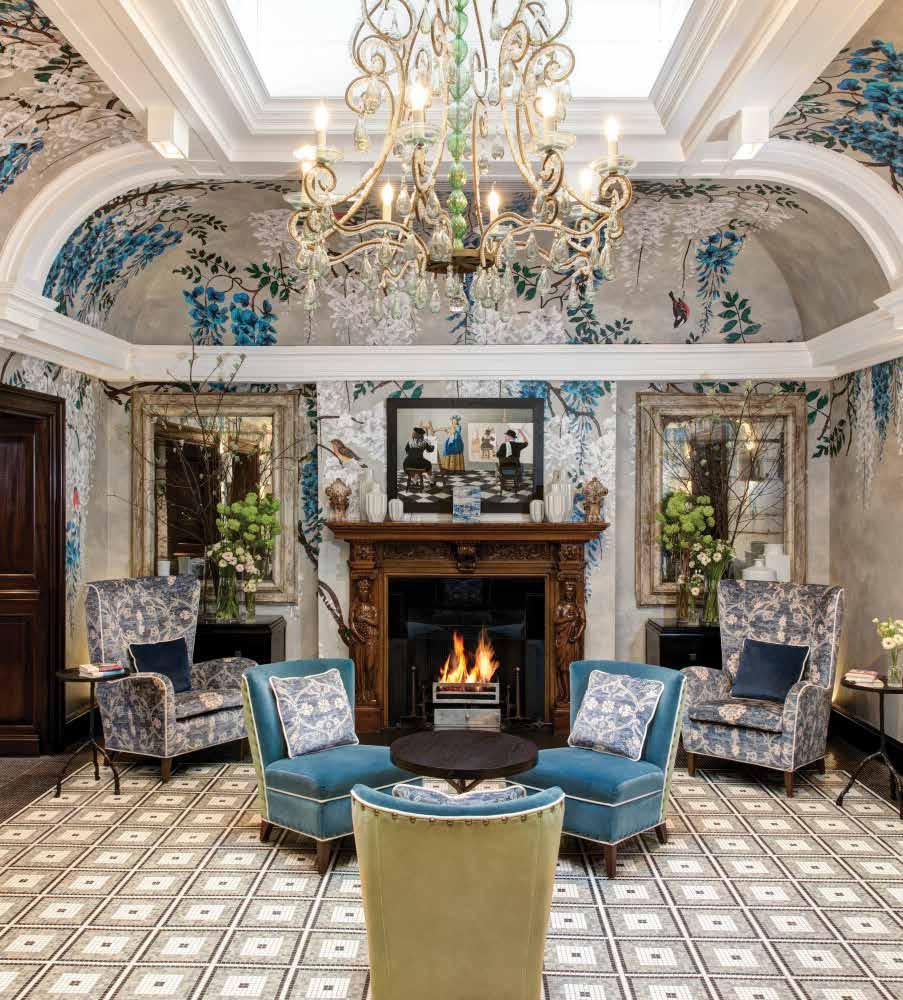
BROWN’S HOTEL — LONDON
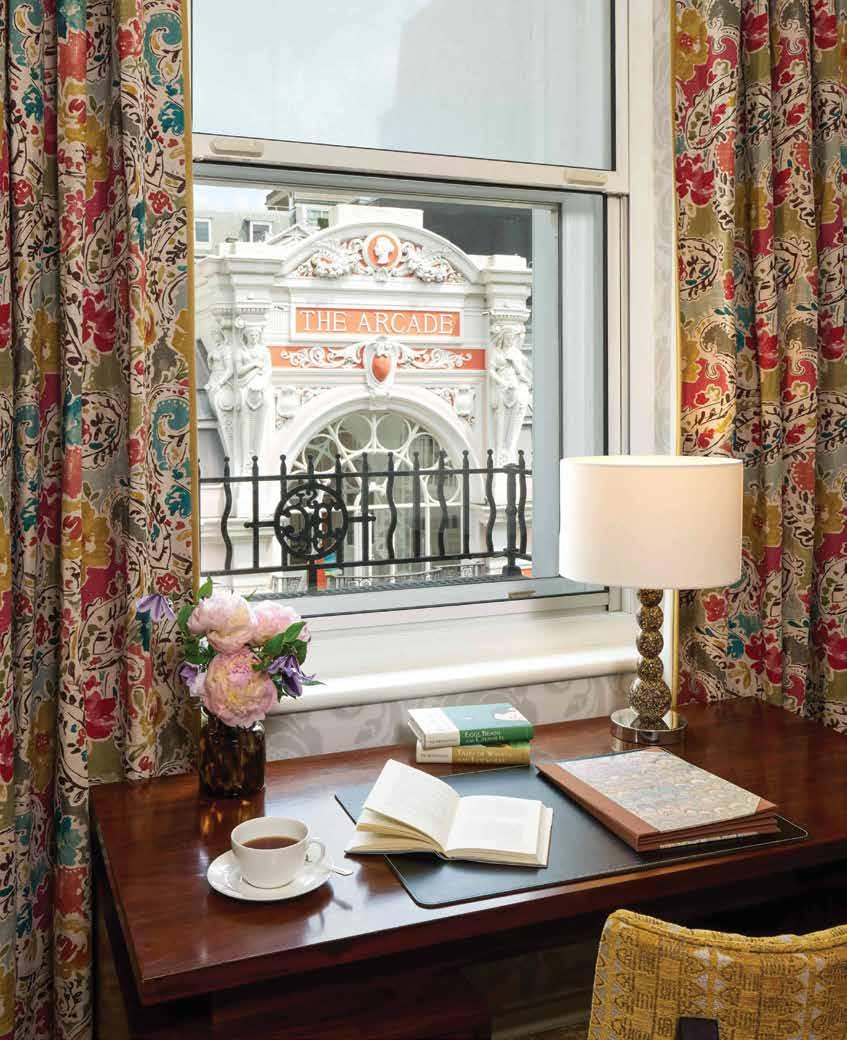
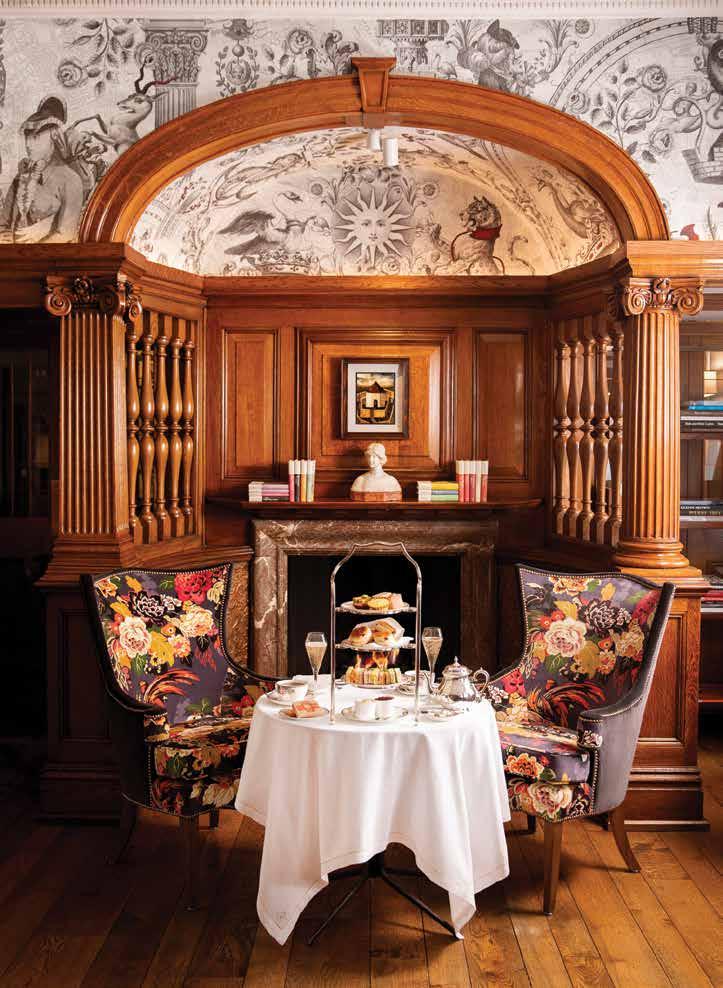
Founded in 1837, Brown’s is one of the archetypes of English luxury. Queen Victoria was known to visit for tea. Rudyard Kipling wrote The Jungle Book while staying there, and the Kipling Suite still commemorates that work. Brown’s reflects Forte’s British side: polished, discreet, steeped in literary and royal history.
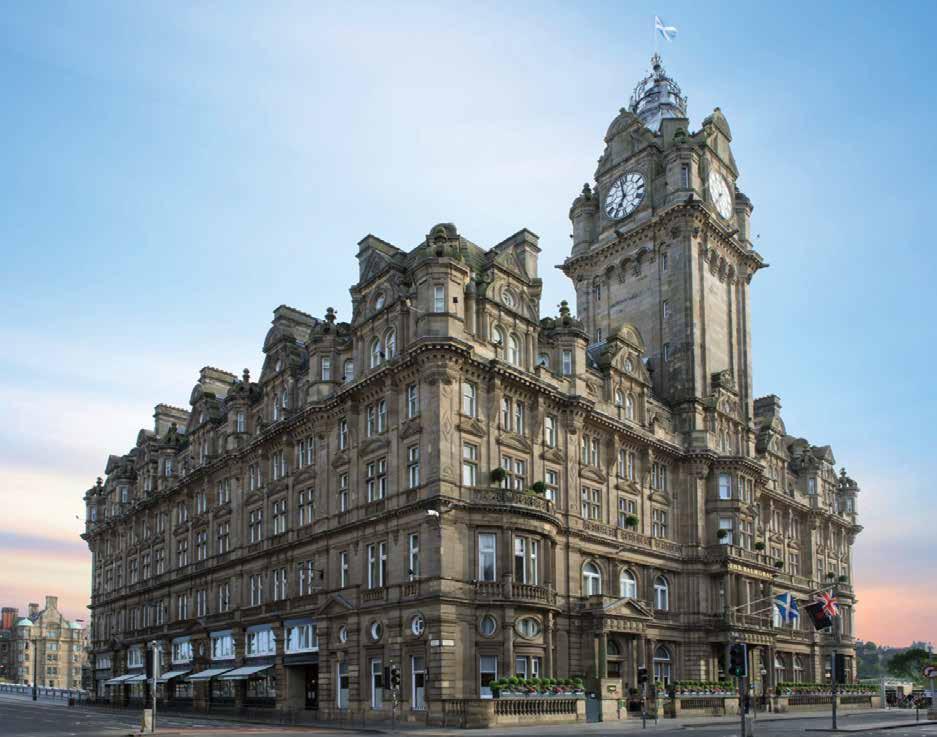
THE BALMORAL EDINBURGH
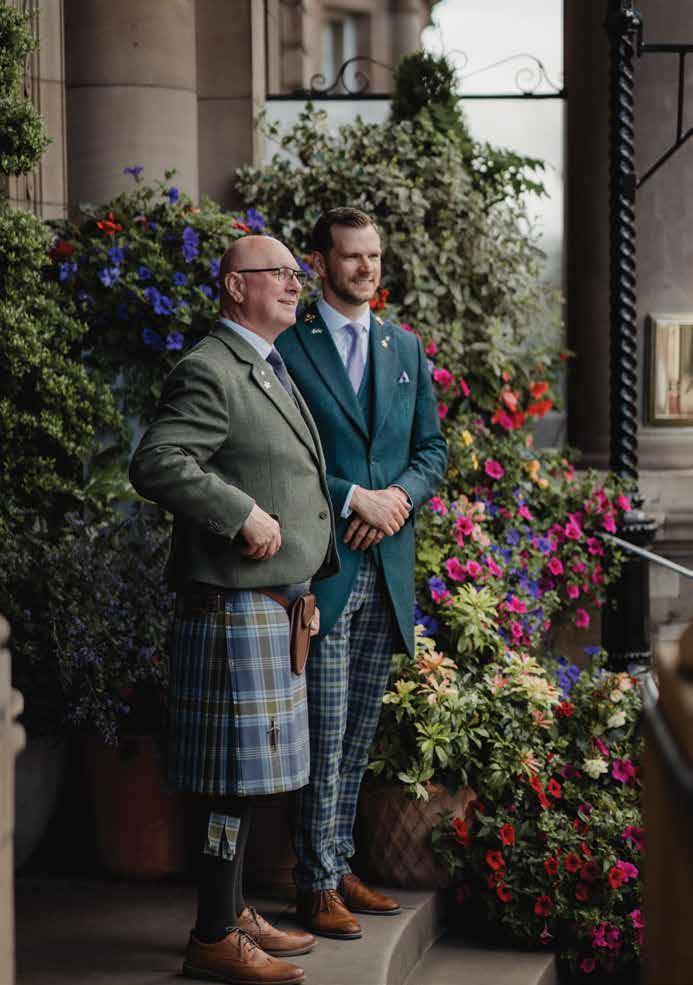
Opened at the turn of the twentieth century, The Balmoral stands among the great Victorian railway hotels. Its clock tower famously runs three minutes fast, a tradition meant to keep travelers punctual. Inside, Olga infused the rooms with Scottish character—tartans, textured fabrics, hues echoing the Highlands. The J.K. Rowling Suite, where she finished Harry Potter, remains the most sought-after room.
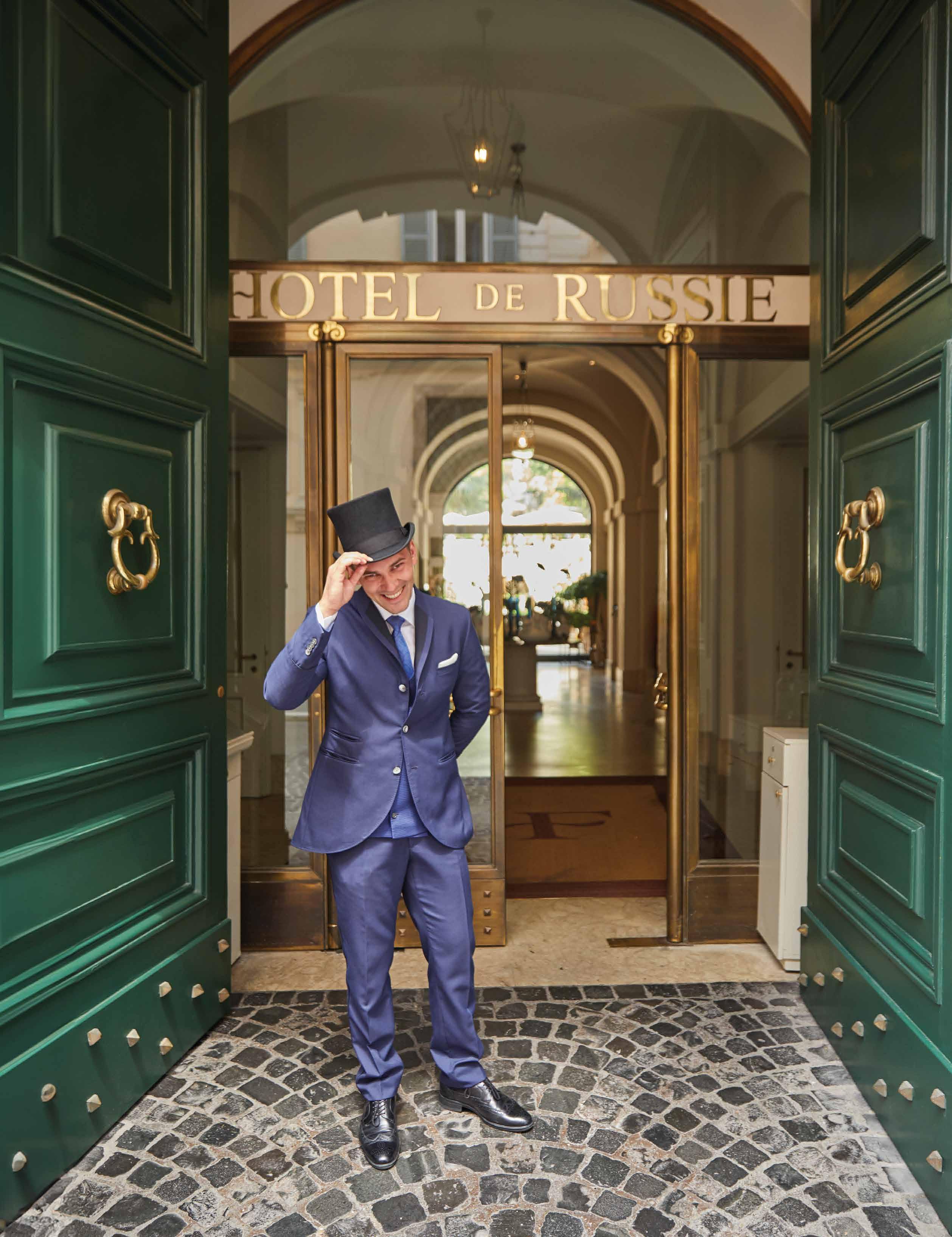
HOTEL DE RUSSIE — ROME
If Brown’s embodies Forte’s British heritage, Hotel de Russie is his Italian soul. Built in 1816 and revived by the Forte family after its acquisition in the late 1990s, it reopened in 2000 as a symbolic rebirth of the brand. Steps from Piazza del Popolo, long a haunt of artists like Picasso and Stravinsky, the hotel combines Roman history with contemporary
BROWN’S HOTEL
THE BALMORAL
MASSERIA TORRE MAIZZA
MASSERIA TORRE MAIZZA
BROWN’S HOTEL
clarity. Eighteenth-century Italian architect and urban planner Valadier’s terraced gardens were restored, and the interiors modernized without sacrificing the spirit of Rome.
VILLA IGIEA PALERMO
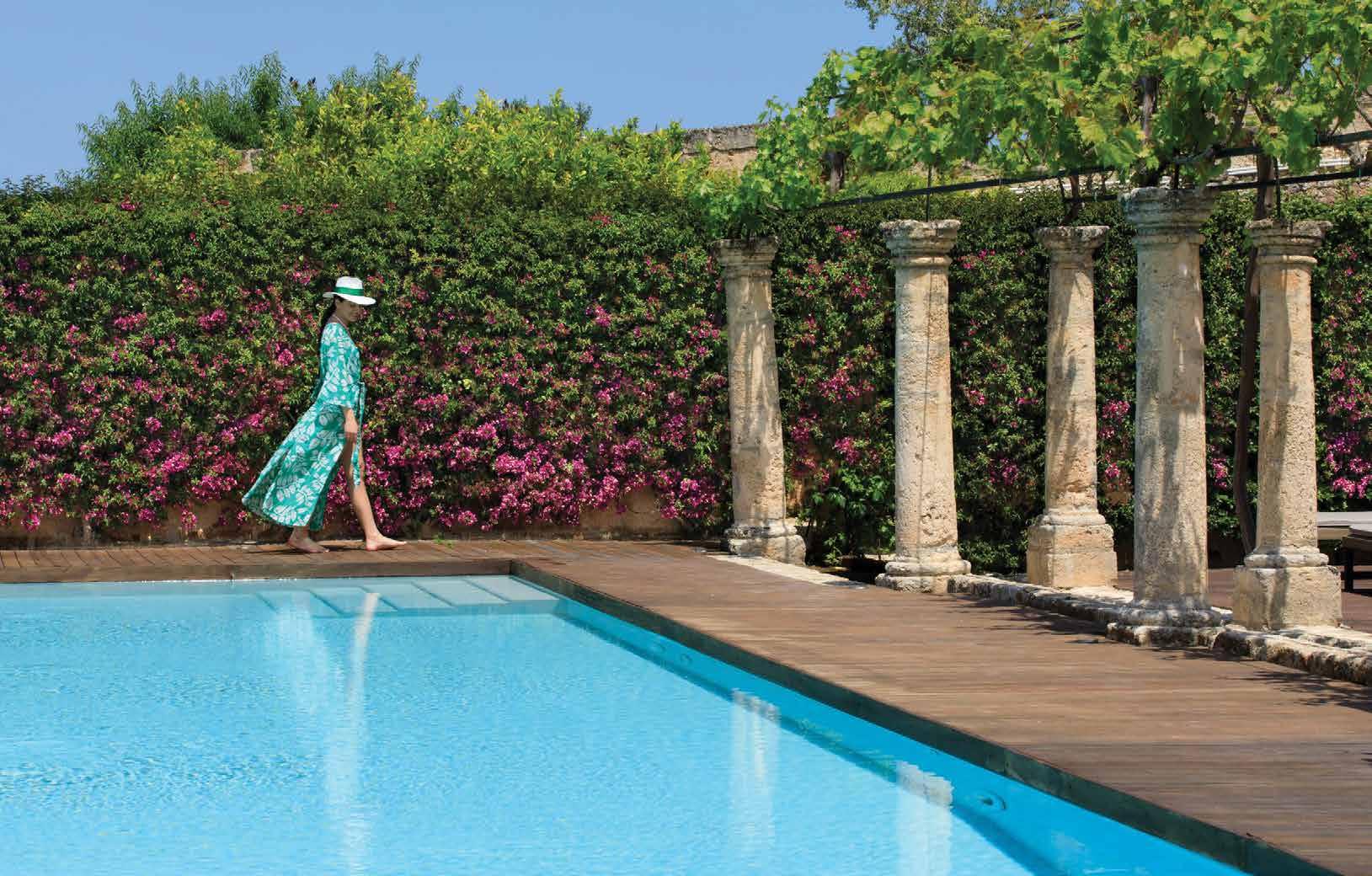
Once the jewel of the Florio family, Villa Igiea overlooks the Gulf of Palermo with Belle Époque grandeur. By the time Forte acquired it, the villa’s splendor had faded. Olga’s restoration revived Sicilian artisanship and preserved historical detail from frescoes and stonework to the style of the original gardens. It stands today as one of the finest examples of their philosophy and reverence for history.
Forte elaborates on their philosophy, saying, “There is now much more focus on local experiences than there was before. We are particularly good at these because of our local relationships with key people in each location. The basics have remained the same, the kindness, the will to serve and make all guests feel special have not changed.”
THE DUALITY THAT EXPLAINS EVERYTHING
Forte is British in the way that matters during a crisis—steady, composed, capable of absorbing the collapse of an empire without breaking stride. When the business was taken from him, it was the stiff upper lip England had taught him that propelled him forward.
But he is also unmistakably Italian in the way he orients himself toward family and joy. He rebuilt the business with his sister at his side. Later, he welcomed his children into the company, not as symbolic heirs but as contributors with distinct strengths. Charles leads development, Lydia oversees food and beverage, and Irene, who has launched her own skincare brand, guides wellness.
“It is a joy to see them developing as well as they have, taking on more and more responsibility. I am very lucky to be able to work with them,” Forte says.
There is nothing he seems to value more than working with them, watching them inhabit the world he has shaped.
THE CRAFT THAT REMAINS
Sir Rocco Forte has lived long enough to see an empire thrive, collapse, and re-emerge in a different, more meaningful form. In an industry prone to consolidation, he remains a steward of the old craft of personal hospitality by a familyrun business. He may not be the last great Old-World hotelier. But he is one of the few still practicing the craft in its classical form— personally, quietly, and with a conviction that true luxury cannot be mass-produced.
BROWN’S HOTEL
BERLIN HOTEL DE ROME
THE BALMORAL
VERDURA RESORT
How the World’s NextGeneration Wellness Retreats are Focusing on Mind, Body and Spirit
BY ALEXANDRA OWENS
Harmony Holistic
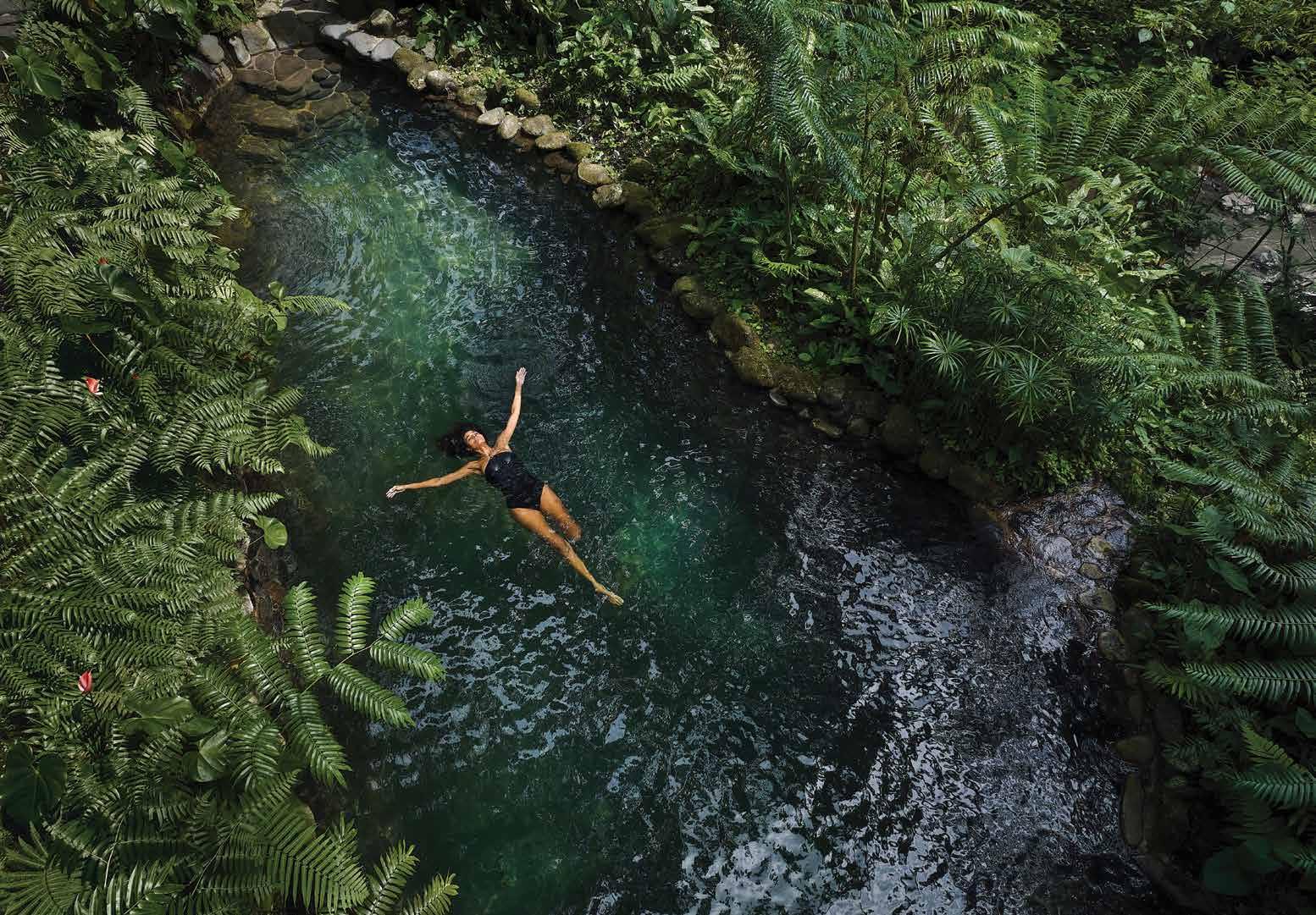
Long before wellness became a global, multi-trillion-dollar industry, Costa Rica— consistently ranked among the world’s happiest countries— quietly shaped its own approach to holistic living. Pura vida, the national saying meaning “pure life” which is woven into everyday conversation, has always expressed something deeper: A worldview rooted in presence, gratitude, and trust in the rhythm of nature. There, wellbeing isn’t a prescriptive regimen, but a way of moving through life with intention and joy.
“This philosophy naturally aligns with holistic wellbeing, where emotional, physical, and environmental harmony all play essential roles,” says Hotel Belmar Managing Director, Pedro Belmar.
As wellness tourism evolves beyond standard spa menus, Costa Rica feels ahead of its time. The country, home to the Nicoya Peninsula’s Blue Zone, helped shape the modern idea of integrated wellness by drawing on its most abundant resources—biodiversity, agrarian traditions, and a deep respect for the wild—and weaving them into authentic experiences that extend beyond the treatment room.
“Nature is the ultimate healer,” says Auberge Resorts Collection VP of Operations, Wellbeing, Vivianne Garcia-Tuñon, noting its ability to lower stress and activate the “happy four” hormones (dopamine, oxytocin, serotonin, and endorphins) in the brain.
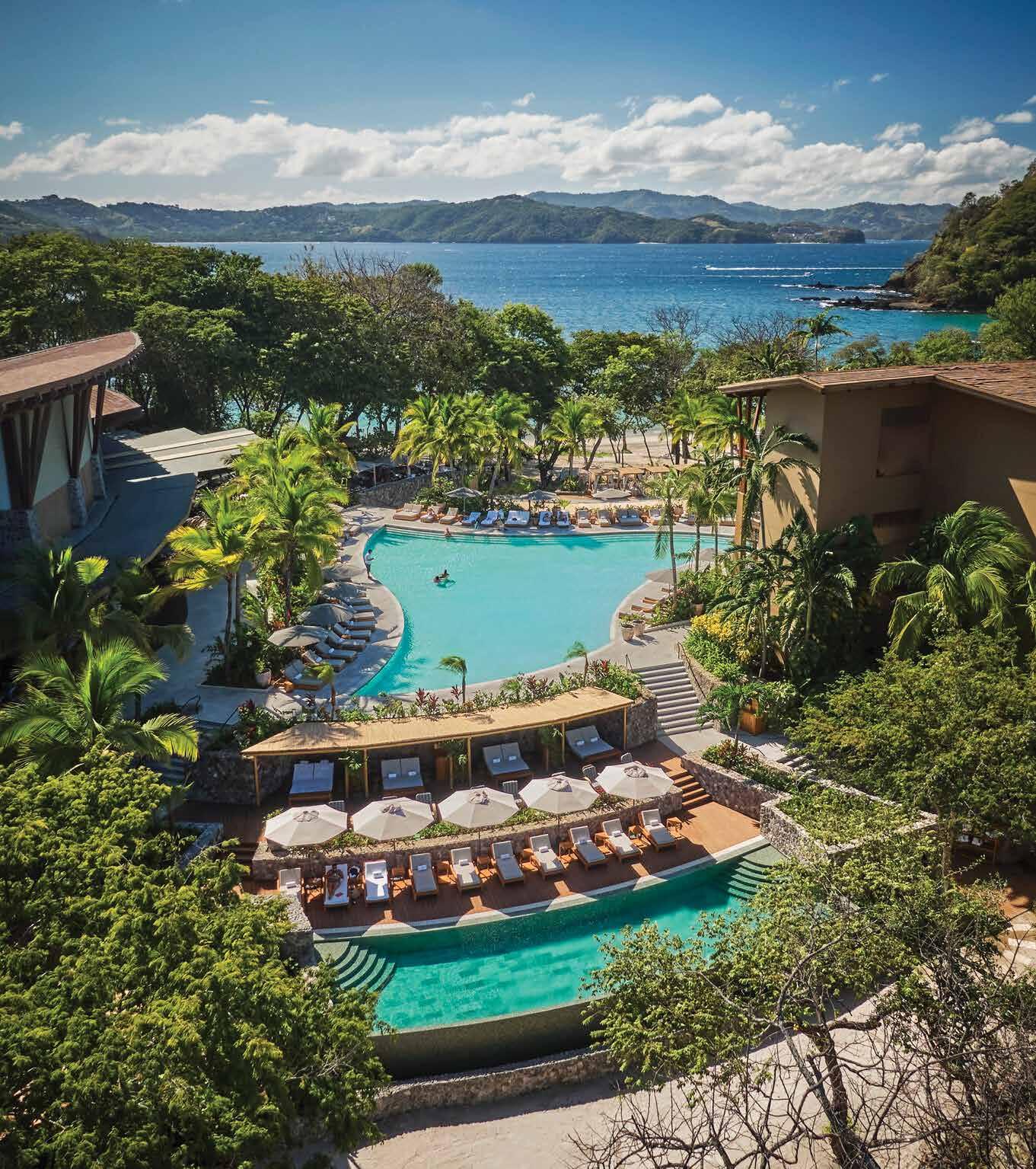
From Monteverde’s cloud forest to the beaches of the Peninsula Papagayo, Costa Rica continues to redefine what next-generation wellness looks like.
HACIENDA ALTAGRACIA, AUBERGE COLLECTION
COSTA RICA
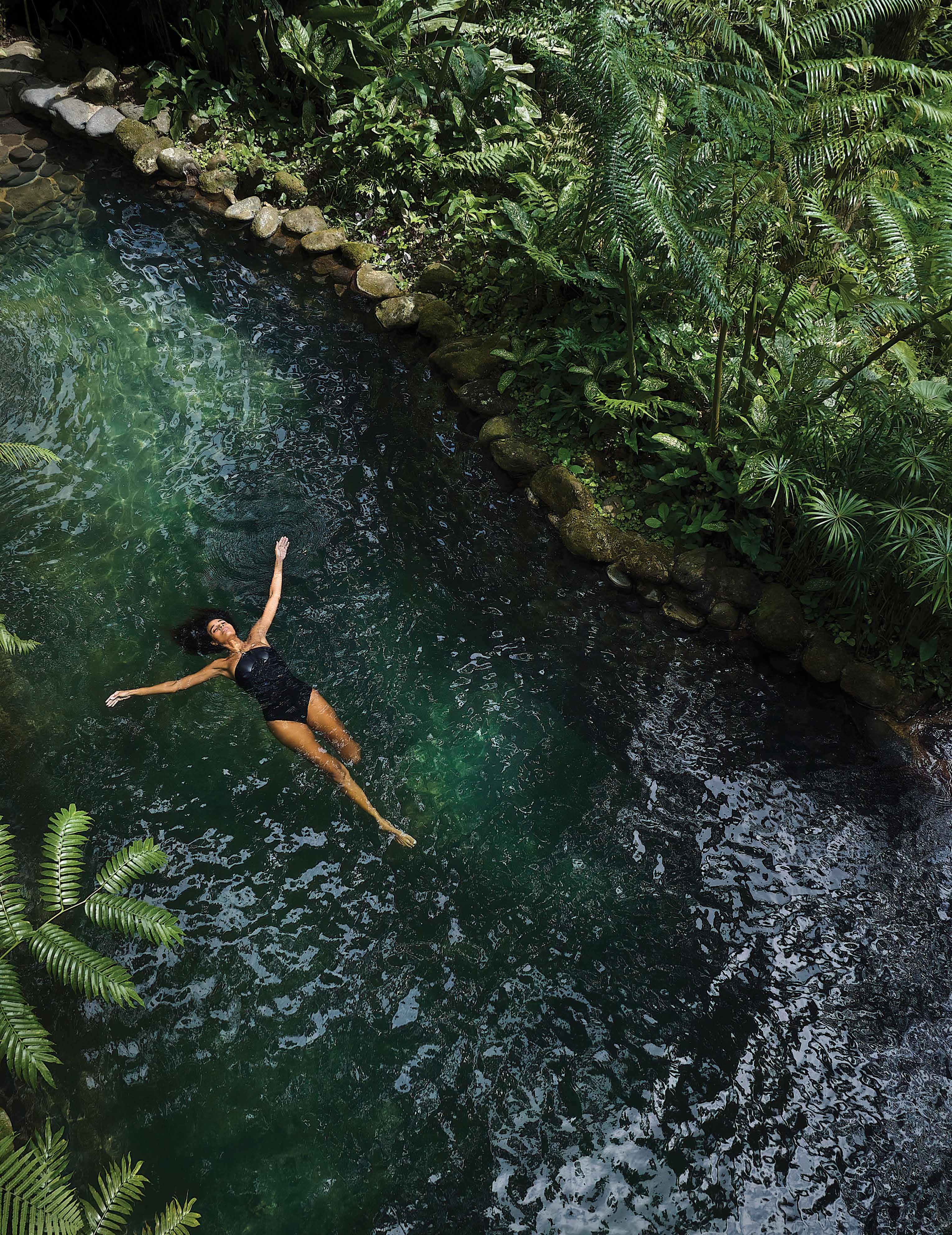
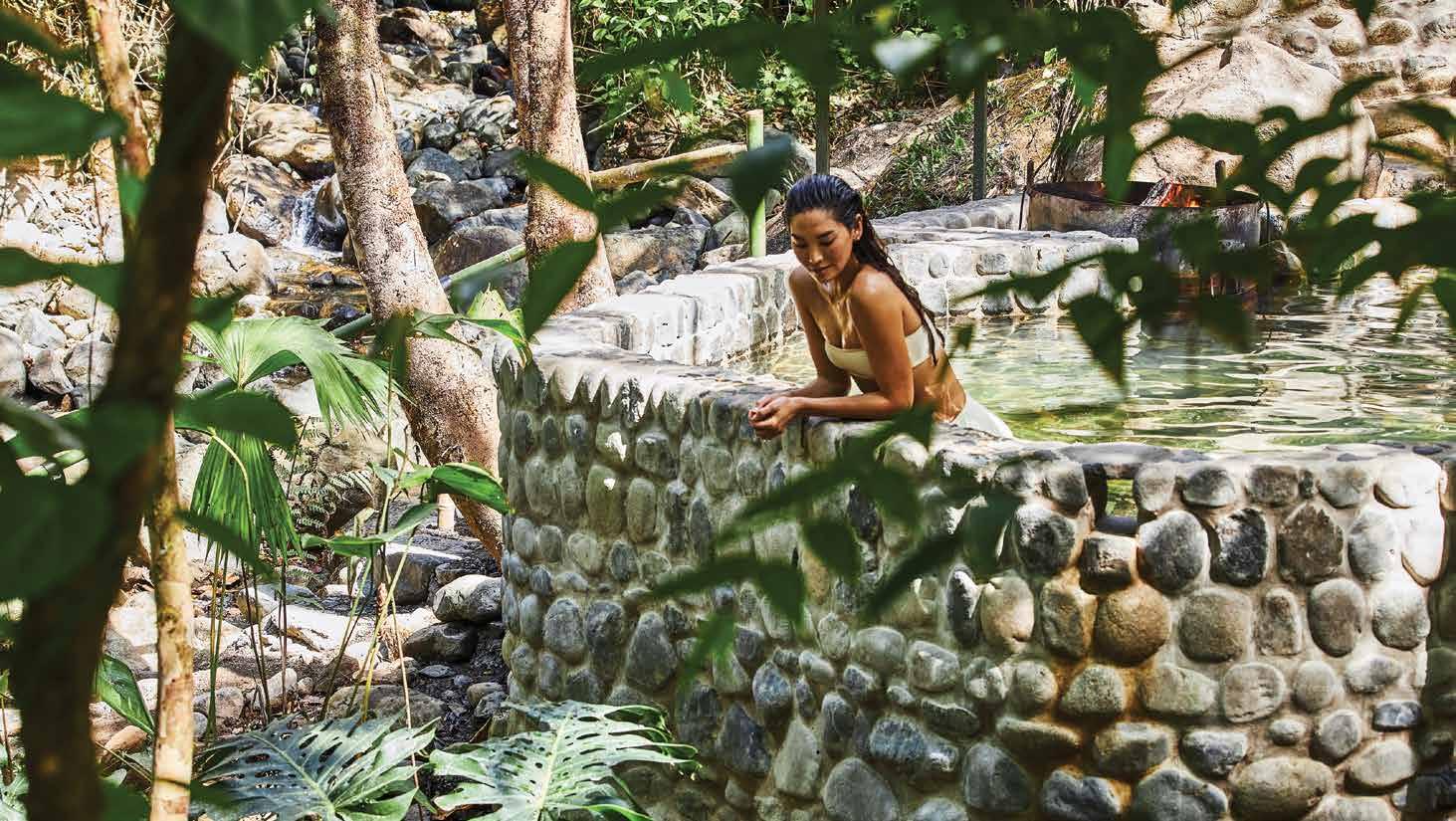
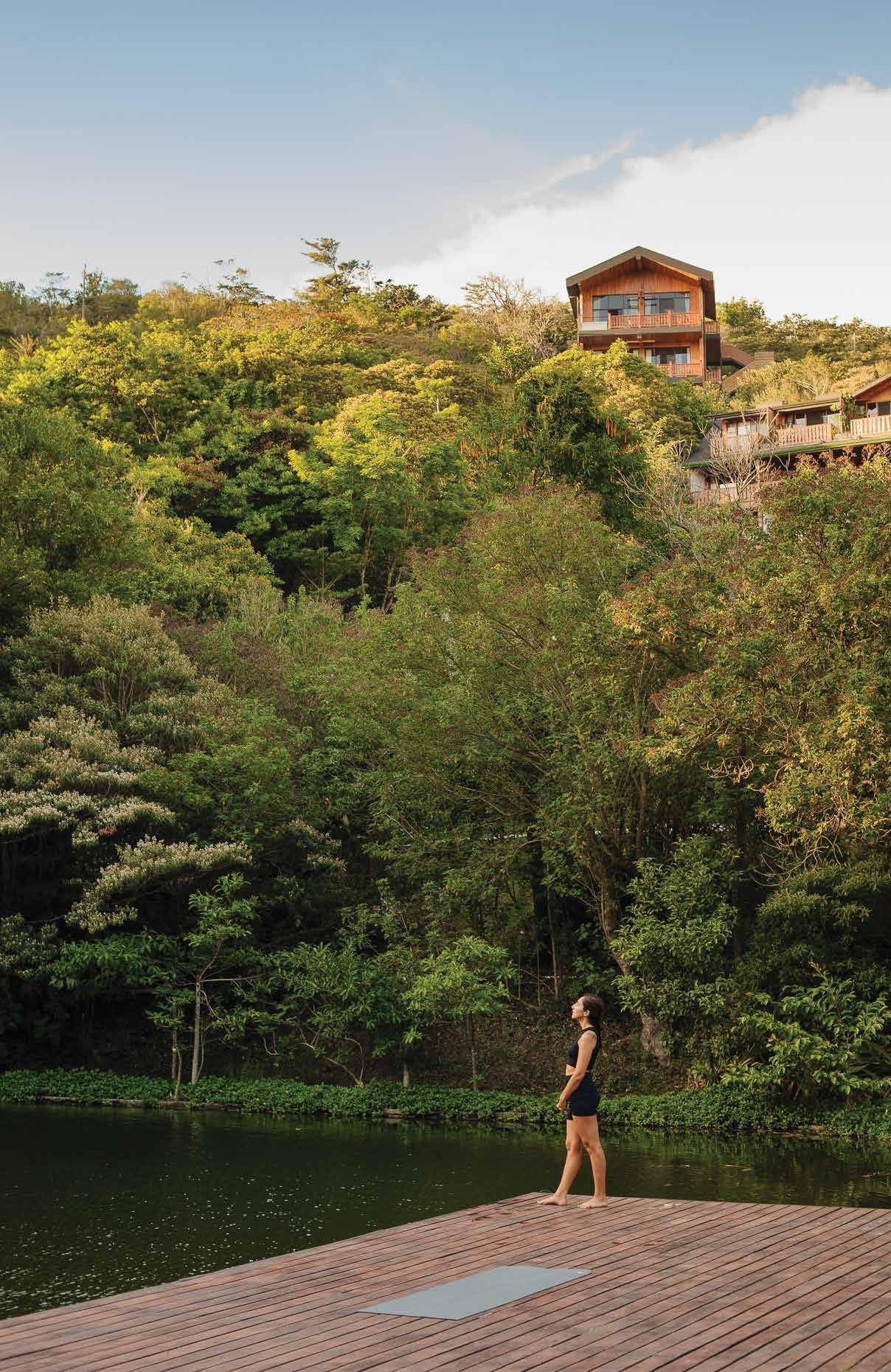
Tucked along 180 private acres in the foothills of the Talamanca Mountains, Hacienda AltaGracia, Auberge Collection embodies a philosophy shaped by the same principles that guide Costa Rican life. Here, nature isn’t a backdrop; it’s the healer, teacher, and heartbeat of wellness.
“Hacienda AltaGracia’s approach to wellness centers on the joy of wellbeing, achieved through a deep and reverent connection to Mother Earth,” says Garcia-Tuñon. “Each treatment, program, and experience honors ancient traditions and the natural rhythms of the land, creating transformative moments of awe.”
Every guest receives a consultation with an integrative health coach before arrival. These conversations inform personalized itineraries inspired by both best-in-class longevity science and Blue Zone wisdom. Casa de Agua—the largest spa in Central America—reflects this hybrid approach. Many treatments incorporate local ingredients—like volcanic stone and mineral clay—and unfold outdoors. The River Bath, one of the property’s most beloved experiences, leads guests into the forest to immerse in cold, crystalline mountain water and cleanse their aura followed by a detoxifying scrub and warm herbal soak.
Daily life serves as an invitation to reconnect with the land as well: Horseback rides along trails with sweeping views of the valley, open-air yoga classes, and dinners rooted in plantforward, Costa Rican home cooking all celebrate the region’s natural and cultural richness while inviting a deeper connection to nature and self.
HOTEL
BELMAR
COSTA RICA
Wrapped in the cool mist of the Monteverde cloud forest—where trees drip with orchids and birdsong seems to rise from every direction—you’ll discover Hotel Belmar. The family-owned, regenerative property sits within
HACIENDA ALTAGRACIA, AUBERGE COLLECTION
HACIENDA ALTAGRACIA, AUBERGE COLLECTION
HOTEL BELMAR
an exceptionally biodiverse ecosystem that naturally slows the body and resets the mind.
“Instead of focusing solely on traditional spa treatments, we emphasize rituals, encounters, and spaces that restore balance: Clean mountain air, farm-to-table nourishment, daily yoga, handcrafted natural beverages, and meaningful connections with the land through sustainable practices,” says Belmar. “Wellness here feels natural, unforced, and personal.”
At Hotel Belmar, guests are invited to visit Finca Madre Tierra, Costa Rica’s first carbon neutral farm, to grind sugarcane, pick coffee beans, and harvest their own lunch to be prepared by a chef back at the property. Garden-to-glass cocktail classes highlight herbs and botanicals grown steps away, while kombucha, vegetable juices, super-food smoothies, and even craft beer are made on-site in a nod to Costa Rica’s agrarian traditions.
Canopy walks in the hotel’s private reserve SAVIA immerse travelers in the quiet of nature, whether they’re watching the sunset from a towering suspension bridge or forest bathing along a trail that encourages stillness and presence of mind.
FOUR SEASONS RESORT PENINSULA PAPAGAYO
COSTA RICA
Flanked by sparkling Pacific waters, the 1,400acre Peninsula Papagayo has become the poster child of relaxation in Costa Rica, boasting fivestar resorts, uncrowded golden sand beaches, and pristine dry tropical forests. Here, Four Seasons Resort Peninsula Papagayo takes a
notably inclusive approach to wellness, designed to meet guests wherever they may be.
“Wellness should feel natural, not forced,” says Four Seasons Resort Peninsula Papagayo Senior
Director of Wellness, Spa, and Retail Arnaud Dieutegard. “Some guests seek deep inner work, others simply want to enjoy good food, family time, nature, or rest. For us, wellness is not about adding more—it is removing what gets in the way of feeling present and connected.”
In recent years, the resort has evolved from a traditional spa model into a full-spectrum experience grounded in both scientific innovation and ancestral practices. Biomarkerdriven programs, longevity consultations, and performance recovery sessions coexist with energy therapies, intention-setting rituals, and ceremonies rooted in Costa Rican culture.
But much of the wellness here happens far from treatment rooms. Guests surf or scuba dive along the peninsula’s coral-rich bays and paddle through the mangroves. Every room opens to the ocean breeze, creating an uninterrupted connection to the landscape. Meals celebrate fresh seafood and produce, emphasizing nourishment over restriction.
“Nature is the foundation,” Dieutegard says. “Being outdoors helps people regulate stress, slow down, and reconnect with themselves. It is not something we have to teach. Our role is to simply create the space for it to happen.”
HOTEL BELMAR
FOUR SEASONS RESORT PENINSULA PAPAGAYO
THREE MORE RETREATS LEADING A NEW ERA OF HOLISTIC WELLNESS
Costa Rica isn’t the only destination where wellness has outgrown predictable spa menus. Across the world, a new generation of holistic destinations is reshaping what a wellness journey can look like, fusing ancient wisdom with cutting-edge science and immersion in nature with design-forward luxury.
All three properties—COMO Shambhala Estate in Bali, Hotel Krallerhof in the Austrian Alps, and SHA Mexico on the Riviera Maya—offer distinct philosophies and atmospheres. Yet each resort embodies what today’s travelers are craving most: transformation that lasts long after the plane ride home.
COMO SHAMBHALA ESTATE, BALI
At COMO Shambhala Estate, healing flows from sacred landscapes and time-honored practices. Outside the town of Ubud and tucked into a lush jungle where the Ayung and Tibakauh Rivers meet, the 22-acre sanctuary has served as the resort flagship for the COMO Shambhala wellness brand for two decades. This year marks a new chapter for the property, which recently unveiled refreshed accommodations and reopened its Ojas wellness center—the resort’s therapeutic heart.
It all adds up to a retreat where healing is not only possible but inevitable, shaped as much by the land’s spiritual power as by the COMO Shambhala Estate’s modern approach to well-being. Outside structured programming, wellness is woven into daily life here—sunrise and full moon yoga sessions, jungle stretch classes, and Balinese purification rituals are offered as complimentary activities.
Aligned with four key Balinese temples, COMO Shambhala Estate occupies a spiritually significant site. Hydrotherapy facilities at Ojas are fed by The Source, a spring that’s a traditional place of purification in local culture. Guests will also find a new slate of hightech offerings, including Hyperbaric Oxygen Therapy, which boosts cognitive function and sleep, and an infrared sauna that encourages detoxification and boosts muscle recovery.
For travelers not ready to commit to a personalized Signature Retreat or Wellness Path— holistic, multi-night stays that combine diagnostics, diet, breathwork, and hands-on healing—COMO Shambhala Estate now offers one-to-two-day Wellness Programs, each designed around specific goals. The COMO Cleanse focuses on digestive reset while TechInspired Wellness uses personalized data to optimize systemic balance.
COMO SHAMBHALA ESTATE, BALI
COMO SHAMBHALA ESTATE, BALI
HOTEL KRALLERHOF, AUSTRIA
Perched high in the Austrian Alps, Hotel Krallerhof feels deeply rooted in the rhythms of mountain life even as it pushes the boundaries of modern wellness. In winter, guests step straight onto the slopes of the Saalbach Hinterglemm Leogang Fieberbrunn ski area, one of Austria’s largest networks with 270 kilometers of slopes. Come summer, the same terrain transforms into a playground for hikers, mountain bikers, and anglers.
But Krallerhof’s approach to wellness extends far beyond outdoor adventure. The resort’s flagship wellness space, Atmosphere, is an architectural showpiece that seamlessly blends with nature, including an Alpine Zen Garden and spring-filled swimming pond merged with an Olympic-sized infinity pool and whirlpool. Light-filled relaxation lounges, Finnish saunas, a yoga studio, and a coldplunge pool all frame panoramic views of the Leogang peaks.
Krallerhof leans into longevity, drawing on insights from performance science and biohacking. Guests can join multi-day retreats or craft individualized programs that might include Interval Hypoxia–Hyperoxia Therapy (IHHT), red-light sessions, forest bathing, nutritional guidance, and other regenerative treatments designed to recalibrate both body and mind.
SHA
MEXICO,
Set along the turquoise coastline of Costa Mujeres, SHA Mexico is the newest outpost of the renowned SHA wellness brand, considered a pioneer in longevity and integrative health. Its aim is both simple and ambitious: To help travelers live longer, healthier lives through a rigorously personalized and science-backed blend of Eastern and Western medicine.
Every stay begins with an in-depth health assessment, which maps out a custom program across nine core pillars, from healthy nutrition and natural therapies to preventive and healthy aging medicine and advanced aesthetics. Days might include acupuncture sessions, infrared heat therapy, Pilates, or even hypoxia training—short bursts of low-oxygen air designed to strengthen cardiovascular function.
With more than 1,000 treatments on offer and one-on-one access to medical specialists, SHA Mexico is less a traditional spa than a hightech wellness laboratory. Here, a beach escape can double as a meaningful reset.
RIVIERA MAYA
HOTEL KRALLERHOF, AUSTRIA
HOTEL KRALLERHOF, AUSTRIA
SHA MEXICO, RIVIERA MAYA
SHA MEXICO, RIVIERA MAYA
Velocity
The Doctrine
Robert Herjavec on Ambition, Stamina, and the Art of the Long Game
BY SI SI PENALOZA PHOTOGRAPHY BY GUERIN BLASK
CLOTHING : MUSIKA CROPPED DENIM JACKET, MUSIKA
DENIM PANTS, UNTUCKIT BUTTONED DOWN SHIRT
: MUSIKA
PHOTOGRAPHER : GUERIN BLASK @GUERINBLASK
PHOTOGRAPHY ASSISTANT: ETHAN COVEY @ETHANCOVEY
STYLIST: DARIUS BAPTIST
GROOMING : MICHELLE DEMILT @MICHELLEDEMILT
CLOTHING
CROPPED DENIM JACKET, MUSIKA DENIM PANTS, UNTUCKIT BUTTONED DOWN SHIRT
In an exclusive one-on-one with Jetset Magazine, Robert Herjavec — Shark Tank’s polymath investor with a gladiatorial grin, cybersecurity impresario, private aviation evangelist, and collector of rare machines — reveals what it means to outmaneuver destiny, outfly time, and outthink the technologies that now govern our inner most selves.
There are men whose biographies feel inevitable — a smooth narrative of dream, discipline, and destiny. And then there’s Herjavec: figures who refuse inevitability, who are instead born from tension, propelled by friction, and whose greatest legacies are the unfinished equations of risk and consequence. In our riveting conversation, Herjavec unspools a life lived at the intersection of velocity and vision — a life that turned fear into fuel and turned airborne hours into strategic advantage.
Where many captains of commerce narrate their beginnings as flashes of Promethean insight — the childhood codex of wealth and precocity — Herjavec’s earliest entrepreneurial impulse was decidedly prosaic: he simply didn’t want to be poor anymore.
“I don’t think there was a moment that foretold me being an entrepreneur,” he says, as though the word entrepreneur itself were less a destiny than a label we affix retrospectively. He recounts a dinner conversation that touched on childhood aspirations with Mark Cuban, who, at twelve, knew he’d be wealthy. Unlike Cuban’s futurism, Herjavec’s was almost Pavlovian in its simplicity: the absence of poverty as the first principle of becoming.
Where Cuban’s childhood certainty about wealth sounds like a boy already auditioning for capitalism, Herjavec’s counterpoint acquires a different timbre when set against the geopolitics of his early life. He was born in what was then socialist Yugoslavia, a federation already fissured by ethnic strain and ideological fatigue, a place where dissent could cost you more than social standing. His father had been imprisoned for speaking too freely against the regime; the family eventually fled, arriving in Canada in 1970 with a single suitcase and the sort of bureaucratic fragility that makes a child fluent in adult anxiety. The Balkans would later detonate in the brutal wars of the 1990s. Scarcity there was not merely economic; it was existential, political, ambient.
To say that young Robert did not dream of yachts but merely of solvency is to miss the undertow: poverty, for him, was not an abstraction but a condition braided with the knowledge that systems can turn on you and that security is never theoretical. In that light, his ambition reads less like acquisitiveness and more like architecture — a determination to construct, brick by disciplined brick, a life no regime, no recession, no random cruelty could so easily dismantle.
Seen through that lens, his life resembles not the hero’s journey but a series of preventive maneuvers — strategic retreats from deprivation, followed by calibrated advances into prosperity. There’s something uncannily modern in this — not the romantic myth of the self-made man, but the quantified self-made man.
And so it is perhaps no surprise that Herjavec ended up in cybersecurity — a field once as technocratic as filing cabinets and now as politically combustible as any national narrative. He didn’t build firewalls because they were sexy; he built them because they were necessary. What was once the province of bored undergraduates and disgruntled hobbyists has become a new kind of geopolitical theater, where data is not just currency but identity, and where the architecture of protection bleeds into the architecture of power.
“The real intersection now is between privacy, digital recognition, and security,” he says, in a moment that might double as an aphorism. “Do we care more about our security, or do we care more about our privacy? There’s no concrete answer.” That ambiguity is precisely the point. In our AI-infused present, where influence operations can masquerade as opinion and bots can embody outrage more convincingly than any human, the boundaries between fact and narrative have become as permeable as a sieve. “Cyber terrorism in the social space used to be about financial gain,” he continues, almost conversationally, “but now it’s being used to shape public opinion.” In this context, cybersecurity is less than a discipline and more an epistemology — a way of knowing what is real enough to believe.
Herjavec is a bullish defender of AI, not as a panacea, but as protection — an asymmetric response to asymmetric threat. His anxiety isn’t metaphysical dread. It’s the unease of someone who understands the territory too well: the fault lines between algorithm and agency, between convenience and capitulation.
If cybersecurity is the cartography of modern vulnerability, then Herjavec’s equal fixation focuses on the capitalization of time — and how to bend it to one’s will. His upgrade from a Bombardier Challenger 604 to a Gulfstream IV-SP and subsequently to a G550 and G650 is not an exercise in jet fetishism but of temporal management.
“The jet is literally the closest thing we have ever invented to a time machine,” he offers with the calm conviction of a man who has spent more hours at 40,000 feet than he has on solid ground. “Working on the plane
Apple didn’t invent the computer; Microsoft didn’t invent the operating system.” The distinction between genesis and craft, he insists, is the difference between folklore and legacy.
If there’s a trait that turns him off in entrepreneurs, it’s arrogance. “I won’t invest in anything I wouldn’t want my kids to see,” he says, not as a platitude but as a moral filter. Ego, in his view, is the silent killer of ventures — a species of blindness that flatters itself until it collapses under its own weight.
The conversation shifts, as these conversations often do, from strategy to interiority, and his reflections on Dancing with the Stars — the crucible where he met his future wife, Kym — are unexpectedly tender. “It’s the scariest thing I’ve ever done,” he declares, which, coming from someone who races Ferraris and skydives, is saying something. Live performance, he explains, has no buffer; if you flub your steps, the world sees it. In that vulnerability, he found a partner who steadied not just his feet but his resolve.
The emotional logic of that moment — performance yielding to presence — recurs when he talks about parenting his seven-year-old twins. “If you can maintain joy in your life, everything else falls into place,” he says, with a kind of moral lucidity that seems almost rarefied in the vocabulary of high achievement. Joy, for him, is not trivial. It is the emotional font of endurance.
Herjavec’s philosophy of focus finds its purest expression in his racing wisdom: when you’re hurtling toward a wall at 200 miles an hour, looking
“The jet is literally the closest thing we have ever invented to a time machine. Working on the plane reminds you that you better be creating more value per hour than it costs to fly.”
reminds you that you better be creating more value per hour than it costs to fly,” he says. There is something almost stoic in this — a Nietzschean inversion in which cost becomes compulsion and flight becomes a discipline rather than a luxury.
His role with ONEflight International and its BAJit platform reflects this philosophy with crystalline clarity. As inaugural ambassador, Herjavec has witnessed an industry that was once a rarefied enclave of privilege become a platform for efficiency. “Private travel used to be a logistics nightmare,” he observes. BAJit, with its consumer-facing simplicity underpinned by logistical sophistication, dissolves that friction. The result is not democratization so much as optimum mobility tailored to agency, a user experience that feels effortless because the orchestration behind it was formerly so Byzantine.
The same clarity animates his perspective on entrepreneurship. After nearly two decades on Shark Tank and Dragon’s Den, he dismisses the cult of the “once-in-a-generation idea” with the dry humor of a man who has seen this illusion stage five thousand times. “Good ideas are cheap,” he says. “It’s execution that’s rare. McDonald’s didn’t invent the hamburger;
at it ensures you hit it. “Drive goes where your focus goes,” he says, echoing a lesson that resonates beyond asphalt and into the more subtle circuits of life.
The cars in his garage — each a chapter in a sensuous biography of motion — are less trophies than cultural artifacts of desire and design. From Porsche 911 Speedsters to Lamborghini Countaches, from a 1956 Corvette to a 1,200-horsepower Mercedes AMG One, he admires each for its unmasked purity. “There’s no disguise in a Rolls-Royce,” he says. “It is what it is.”
There is an impulse here that borders on the phenomenological: the quest not for things that impress others, but for things that clarify oneself.
By the end of our conversation, it is evident that Herjavec is not merely a man of velocity but a man who has thought deeply about why velocity matters. In an age that fetishizes speed, Herjavec teaches us to consider direction. In a culture awash in novelty, he champions continuity. And in an era enthralled by innovation, Robert reminds us that what endures is not the flash of ideas but the long arc of execution.
CLOTHING : ANTON LEATHER CROCODILE JACKET, MUSIKA PLEATED SILK SHIRT, MUSIKA PRINTED PANT
South African TRIFECTA
The Route du Bonheur Offers a Breathtaking Journey Through Cape Town, Winelands and on Safari
BY TERRY WARD
Few cities come into focus with the bowlyou-over aesthetics of Cape Town. Its serrated-edge mountain tops crown some of the world’s most ancient peaks and plunge temptingly to verdant vineyards, with the crash of the Atlantic and Indian Oceans all around at Africa’s southernmost tip.
It is the arrival of arrivals from the air—but merely a harbinger of the breathtaking moments that await travelers who set their sights on discovering South Africa through some of its most storied properties along one of Relais & Châteaux Routes du Bonheur.
A Cape Town itinerary that kicks off at Ellerman House promises the softest of landings. Occupying a prime perch in Bantry Bay, the Edwardian mansion greets guests with the graciousness of a private residence, with a sparkling clifftop swimming pool and terraced gardens from which it’s possible to descend directly to the coast. More than 1,000 artworks housed inside the Relais & Châteaux property’s main building and adjoining contemporary art gallery offer a comprehensive overview of South Africa’s artistic evolution and most powerful societal themes. And the hotel’s 13 bedrooms and suites—all with private terraces for enjoying the ocean views—pair with two private villas staffed with their own chefs and butlers for a secluded stay like no other.
The city’s singular topography should really be savored from both altitude and at sea level, so let the concierge at Ellerman House arrange a day trip for basking in both. During private sightseeing flights with Cape Town Helicopters, visitors lift off from Miller’s Point for views of Table Mountain, Lion’s Head and Cape Agulhas where currents from two oceans collide, before touching down in South Africa’s oldest wine region, Constantia. There, an exquisite lunch at celebrated South African chef Peter Tempelhoff’s winelands tour de force, Beyond, unfolds at tables overlooking the vineyards. Indigenous ingredients star in multi-course degustations that feel like a love letter to South Africa, incorporating rare-breed meats and seasonal heirloom vegetables and herbs sourced from the Cape Town region’s fynbos—shrublands home to species that exist nowhere else on Earth.
The thrum of an approaching Harley-Davidson may sound out of place in such a serene, country setting. But it’s the signal to prepare to ride pillion on the back of a bike during a chauffeured meander along Cape Town’s most iconic route with West Coast Motorcycles. The journey rumbles west from Constantia south, past the golden beaches of Clifton and Camps Bay and along the 114 curves of the Chapman’s Peak Drive, considered among the most beautiful routes in the world. For the day’s denouement, Ellerman’s concierge can book another table to remember at Tempelhoff’s FYN Restaurant. Lauded as one of the 50 best restaurants in the world, it beckons in Cape Town’s city center with tasting menus that span the Western Cape’s land-to-sea diversity and preparations rooted in Japanese techniques.
A RAREFIED STAY AMONG THE VINES
There is no more atmospheric way to indulge in South Africa’s most prestigious wine region than from the Owner’s Villa at the Delaire Graff Estate, a Relais & Châteaux property on the slopes of the Stellenbosch mountains owned by billionaire diamantaire, Laurence Graff, the founder of Graff Diamonds.
His private, four-bedroom villa, available for exclusive hire, is fully staffed with a chef and butler and has its own wine cellar, terraced gardens, private balconies off the bedrooms shaded by African teak pergolas and more than 70 artworks on display from Graff’s personal collection. The home’s expansive picture windows frame views of Botmaskop Peak and Table Mountain, and a 45-foot-long heated infinity pool hugs the clifftop, beckoning for a sunset swim in absolute privacy.
Estate activities within the property’s mountainous-meetsmaritime terroir might see guests hiking through the surrounding vineyards planted with Bordeaux reds and Chardonnay grapes, enjoying a tutored wine experience at Delaire Graff’s Wine Lounge or settling at a table beneath an exquisite art installation, Swallows in Flight, at Hōseki, the property’s Japanese fine dining jewel.
In addition to the Owner’s Villa, the estate houses a collection of one and two-bedroom luxury lodges for overnight stays that open onto private decks and heated pools, from which a dip comes with vineyard views stretching to the horizon.
A SWEET PRIVATE SAFARI FINISH
No trip to South Africa should reach its denouement without time spent on safari, however brief or lengthy one’s schedule allows. It’s worth venturing beyond South Africa’s busier and better-known safari calling card, Kruger National Park, for pampered wilderness experiences in a private game reserve further west at one of the three, exclusive-use lodges within Relais & Châteaux’s Morukuru Family Madikwe collection. Along the border with Botswana and close to the Kalahari Desert, just a scenic hour’s flight north of Johannesburg, Madikwe Game Reserve owes its low poaching rate to staunch conservation efforts, effective anti-poaching units and a rhinonotching program, among other efforts. Established in 1991, the reserve is the culmination of a seven-year-long rewilding project that reintroduced more than 8,000 animals onto formerly decimated farmland and is one of the biggest conservation success stories in southern Africa.
Across nearly 300 square miles crossed by relatively view safari vehicles, rocky outcroppings and lone mountains stand sentinel amidst the private reserve’s open grasslands and bushveld plains. It’s par for the course here, over the course of the day, to observe elephants, zebra, rhinos, giraffes, lions and all manner of antelope, with the Big Five regularly ticked off. Exceptional sightings included Madikwe’s packs of wild dogs and roaming cheetah.
On a private concession within the reserve, the Morukuru Family Madikwe collection offers a bespoke, fully-staffed lodge for every luxury traveler, starting with the Morukuru Owner’s House, a two-bedroom private bush home along the Marico River that’s a favorite among couples and small families. For a connecting configuration for larger groups, a wooden walkway leads from there to the three-bedroom Morokuru River House, where the rooms all have gas fireplaces, outdoor showers and private decks. Both lodges re-emerged from full renovations in September 2025 after flooding earlier that year.
Morukuru Family’s crown jewel is the sprawling, five-bedroom Morukuru Farm House, a symphony of wood and stone where five suites surround a central courtyard and luxurious communal living space. Nearby, a boardwalk leads through the bush to an overlook where guests can dine or just relax with a book while gazing upon a watering hole that regularly attracts elephants to its edge.
The most memorable pleasure in these parts, however, might be the simplest. At an open-air sleep-out hide on a platform overlooking a watering hole within Morukuru Family’s private concession, it’s possible to sleep under a canopy of stars.
The distant roar of lions may be the morning’s alarm clock, or perhaps the cooing of Cape Turtle Doves at closer range. All around, South Africa casts its spell.
Aloha, Oahu
The Best Places to Stay, Play, Dine and Explore on this Captivating and Diverse Hawaiian Island
BY TOBY THOMPSON
When someone mentions the island of Oahu, the first place you probably think of is Honolulu.
After all, Hawaii’s bustling capital city is known for its extensive dining, shopping and entertainment offerings as well as for its legendary views of Waikiki Beach and Diamond Head. But there’s so much more to see and do on this captivating island, as I recently discovered.
To prepare for your trip to Oahu and to make the most of your visit, the first thing you’ll want to do is find the perfect place to stay to use as your home base for exploring all this amazing island has to offer. Hawaii Life, a locally owned company and an authority in the Hawaii vacation rental market, offers a wide choice of luxury vacation rentals, not only throughout the island of Oahu, but on Maui, Lanai, Kauai and the Big Island, as well. The company offers both short-term vacation rentals and many that are available for an extended stay. And if
during your visit to Oahu you fall in love with the island (which is not hard to do) and decide you want to purchase a home there, Hawaii Life can help you with that, too. The company has been named the top real estate brokerage in Hawaii by Hawaii Business Magazine and by REAL Trends. That means they have the depth of knowledge, insights into the market and experience to help you find the ideal property for your needs.
But seeing is believing, and the Lei Ali’i residence, located on Oahu’s magnificent North Shore, is just one example of the high caliber luxury properties Hawaii Life represents. This private, 6,000-square-foot, four-bedroom, four-and-a-half bath gated estate delivers breathtaking ocean views from every room and is available for monthly rental. The property’s many amenities include a gourmet chef’s kitchen, ultra-luxurious primary suite, and a media room with ultra-plush seating and an extra-large screen. All of the bedrooms are ensuite. Outdoors, there’s a shower, steam bath and ice bath—all just steps from the beach.
FOUR SEASONS O‘AHU
There’s also a private beachfront fire pit, hand carved from ancient lava rock. To preview all of the vacation rentals Hawaii Life has to offer, and to begin imagining and planning your luxurious Hawaiian getaway, visit vacations.hawaiilife.com.
The North Shore is probably best known for the world-famous Banzai Pipeline, a reef break that can generate waves of up to 30 feet in the winter and attracts surfers from around the world to test their skills and compete here. You can watch them catch these incredible waves from ‘Ehukai Beach Park.
The area is also a great place to get a real taste of Hawaiian culture. Your trip to the North Shore wouldn’t be complete without taking time to enjoy the quiet, laidback vibe of the charming beach town of Haliewa and to explore its boutiques, surf shops, and galleries. You certainly won’t go hungry there. At Haliewa Beach House, you can enjoy surf and turf, pupu platters, colorful cocktails and craft beers, all while enjoying the best dining views on the North Shore. Be sure to check out the famous
HAWAII LIFE - LEI ALI’I RESIDENCE
HAWAII LIFE - LEI ALI’I RESIDENCE
Giovanni’s Shrimp Truck, too, as well as the other popular food trucks in the area and the Banzai Sushi Bar, which has been voted one of Oahu’s best.
Hiking is another way to enjoy the scenic beauty of the North Shore. For an easy day hike, check out the Waimea Valley Falls Trail. It follows a paved path through the sprawling Waimea Botanical Garden and ends at the picturesque 40-foot Waimea Falls. For a more vigorous workout, tackle the ‘Ehukai Pillbox Trail. It climbs the cliffs of Pūpūkea to two World War II-era bunkers that overlook some of the most beautiful stretches of coastline in Oahu.
To experience another side of Oahu, head to the leeward side of the island, to Ko Olina in the southwest. There, you’ll find the Four Seasons Resort Oahu at Ko Olina ready to welcome you. In the Hawaiian language, Ko Olina means “place of joy,” which gives you an idea of what to expect. This oceanfront retreat not only occupies a white sand beach overlooking turquoise water, but it also offers a wealth of amenities, including two family pools, an adults-only quiet pool, onsite tennis and pickleball courts, the Naupaka Spa & Wellness center and a health club with an outdoor lap pool. Guests at the Four Seasons Oahu Ko Olina also enjoy special privileges at the Ko Olina Golf Club.
The Four Seasons Oahu Ko Olina Resort is also home to the largest Club Lounge in Four Seasons’ global portfolio. Reserved exclusively for guests staying in the Club Room and suite categories, the Club Lounge offers exclusive access to a dedicated Club Concierge, a daily curated breakfast, all-day refreshments, light afterhours d’oeuvres, and premium evening cocktails.
Once you’ve checked in to your luxurious room or suite, a great place to start to relax
FOUR SEASONS O‘AHU FOUR SEASONS O‘AHU
FOUR SEASONS O‘AHU
and unwind is with a visit to five | one | six, the resort’s rooftop bar located on the fifth floor. Here, you can enjoy Hawaiian-crafted cocktails and signature drinks while simultaneously drinking in stunning Pacific Ocean and sunset views. Then for dinner, head to Mina’s Fish House, a beachfront restaurant where James Beard Award-winning Chef Michael Mina offers his unique take on the traditional Hawaiian fish house, and guests can savor the freshest catch on Oahu under the guidance of the world’s first Fish Sommelier. Another great option for cocktails and bites is Mānolo Lounge. Its name is inspired by the Hawaiian word for “sweet water “ which is created when Oahu’s fresh mountain water merges with the salty ocean. The lounge’s menu celebrates Hawaii’s diverse mix of cultures.
To help you work up an appetite for these and the other excellent dining venues at the resort, there are a couple of experiences I highly recommend. The first one is the Private Moananuiakea Voyaging Experience. Led by certified watermen, you’ll take a serene journey aboard a double-hull canoe, an ancient Hawaiian sailing tradition, where you may even encounter humpback whales, dolphins and Hawaiian green sea turtles. If you’re a pickleball fanatic, you can arrange to take private lessons with Roberta Russo, a former world-ranking tennis professional. After your activities, you can unwind at the Naupaka Spa & Wellness Center, a four-level day spa that features indoor and outdoor treatment rooms.
Once you’re experienced all that Oahu has to offer, I think you’ll agree with me that the Hawaiian Tourism Authority has come up with the perfect mantra: Hawaii Stays With You. But you don’t have to take my word for it—it’s far better to discover that for yourself.
DR. MAI TAI’S
MINA’S FISH HOUSE
Above the
Clouds
Eliminate the Stress Associated with Buying and Selling
Private Aircraft
BY KELLIE SPEED
PHOTOS BY JOSH LAMBETH
If you have always dreamed of owning a private aircraft, Arcadia Jets is standing by ready to assist with all the details from the search process down to the negotiation to ensure a seamless transaction from concept to purchase.
Whether you are a first-time buyer seeking a top-of-the-line private plane with every luxurious onboard amenity imaginable, looking to sell your current aircraft, or need a business
jet for corporate travel, their experienced brokerage team will guide you through either the purchase or sale providing tailored solutions to meet your specific needs.
“The buying process is a complex transaction that I relate to buying a business,” said Adam Hahn, Arcadia Jets’ founder, president, and CEO. “There are multiple steps involved, but a broker is a single point of contact to make sure when you are buying an asset that it is
“The most satisfying transaction is more about working on something from the beginning to end of the buying or selling process and being ecstatically happy about the result.”
structured personally and you buy the right aircraft for the right mission.”
As a pilot and third-generation aviation entrepreneur having lived in the European Union for several years, Hahn knows firsthand what it takes to make Arcadia Jets stand out from their competition.
“It’s our relationship with our clients that sets us apart,” Hahn said. “We are a small boutique brokerage firm, so we have one-on-one touches throughout the entire experience. Ultimately, our company is relationship driven.”
For prospective buyers considering a first-time investment or experienced owners looking to sell, Hahn believes there are many steps that should be taken into consideration when finding the right broker. “Meet with the person representing you and understand if you are on the same page,” he advised. “This asset might be the most expensive asset you are ever going to buy, so it is important to know who you partner with.”
Hahn said one of the most important considerations in finding the right broker is identifying one who is not only experienced but also responsive and readily available. “You want to be able to call your broker and make sure they answer on a Sunday night,” he said. “You want to find a broker who will work for you any time of day. All good brokers will do that.”
For sales, the team at Arcadia Jets starts off discussing a client’s travel needs and preferences, destinations, and number of passengers. From there, they will tailor their search to locate a specific aircraft, offer price and amenity comparisons, provide financing options, and assist with FAA registration. Essentially, all of the tedious legwork is omitted for the consumer.
If you are looking to sell an aircraft, Arcadia Jets will manage every detail from providing a market valuation and offering global exposure through targeted listings down to the final contract negotiation and sale. Sellers have access to verified leads of pre-qualified, high net worth buyers actively searching for specific aircraft.
“In a transaction where we help someone purchase their first airplane and the client says, ‘I have been thinking of this moment my entire life,’ to actually owning an aircraft, it’s an incredible experience,” Hahn said.
Does Hahn believe there actually a right and wrong way of selling a private jet? “We never call anyone out for doing something different,” he said. “There is a preferred way for our clients, but people want to be in a relationship with a broker, so they trust that you have their best interest in mind.”
Giving back to the community has always been at the forefront of their business plan. Arcadia Jets donates a portion of their profits from every deal to Angel Flight West, a nonprofit organization made up of a network of volunteer pilots who provide free medical transportation to people in need.
“We wanted to build in philanthropy from the beginning and decided to partner with
Angel Flight West as a way to give back to the community and hopefully encourage others to follow suit,” Hahn said. “They are an incredible organization with great leadership and a noble cause. It brings doing good and aviation together. By partnering with Angel Flight West, Arcadia Jets hope it inspires others to get involved.”
Because Arcadia Jets prides themselves in offering clients access to a broad range of aircraft, they look forward to a bright future of continued growth while expanding the business to include even more clients and servicing their current clients even better. “We want to grow steadily and responsibly,” Hahn said. “As an aviation entrepreneur, I have learned from my past and my mistakes. Now, I surround myself with highly capable people to help get to the right decision.”
Hahn knows that every transaction is unique, so creating a trust-built relationship with clients founded on transparency has been the key to their success. When a client partners with Arcadia Jets, they set the groundwork to building a long-term relationship with an experienced aviation team.
“The most satisfying transaction is more about working on something from the beginning to end of the buying or selling process and being ecstatically happy about the result,” he said. “It is really fun to educate a person to becoming an aircraft owner and watching what it does to their life after.”
FAILING FORWARD
There’s Great Power in Learning to Turn Mistakes into Successes
BY BARRY LABOV
I’ve talked with many leaders and phenomenally successful people about their attitudes toward failure. Every single one of them has had an inspirational outlook on the concept of failing. In fact, many of them credit their failures as the impetus they needed to achieve their goals. Rather than letting it hold them back, they used roadblocks as learning opportunities that helped them pave the right path forward.
Jacob Brown, a transformational speaker, author, and former NFL player recently released a book titled Fail Forward Mentality. In it, he shares
the powerful message that we will all fail at some point in our lives, but we must use that failure as inspiration to move forward and improve. He described the fail forward concept, “If you are a running back and you need three yards for a touchdown, and you’re tackled after one yard—if you fall backward, you still have three yards to the goal. But, if you fall forward, you will gain another yard and be only two yards from the goal.” We must use our shortcomings as learning tools; otherwise, they are a waste.
Emmy Award-winning musician Ranaan Meyer tells how mistakes made during performances used to unhinge him to the point of feeling like he’d fallen off a cliff, continuing to “mess up.” He came to understand that when a fellow bandmate made a mistake, it was an opportunity for him to show support and even “riff” or play off that supposed mistake, having fun
with it and potentially creating an even more interesting composition.
Hollywood agent Matt Labov freely admitted to me that he’s made scores of mistakes in his career but has accepted them, undeterred in his quest to do “something great.” He implores his associates to attempt at all times “to be great” rather than playing it safe.
Cliff Goldmacher is a Grammy Award-winning songwriter and author. I talked with him about his journey in music and how he applies creativity and innovation to the business world. To him, failure is part of the creative process. He was writing songs for 20 years before he had one that made it to the Billboard charts. It took him 30 years to get a song on a Grammy-winning album. It’s all about taking chances. To Cliff, if you work and commit to what you’re doing, good things will happen—maybe not in the timeframe you’d like, but they’ll come your way.
When I interviewed bestselling author Seth Godin for my podcast, Difference Talks, I reminded him of a two-day seminar he hosted decades ago in New York that several of my team members attended. At the end of the first day, one of my employees called to inform me they were coming home early and that Seth was refunding the seminar cost. I asked why, and the response was, “Seth told us that he was not satisfied with what he was providing, apologized, and said he was issuing refunds.” What may have seemed like a negative turned out to be positive, as it revealed Seth’s integrity despite the allure of making money. Since that moment, I’ve been a loyal follower and fan of his.
FAILURE IS EXPECTED AND A NATURAL PART OF LIFE
For pet lovers out there, have you ever watched your dog stumble or fall while trying to jump in your lap? Animals show no embarrassment. I once heard my 16-year-old, mostly blind Maltipoo accidentally tumble into our swimming pool. I heard the sound and raced to save her. She was paddling away, head up and ready for a helping hand. That’s how we need to behave when we stumble.
SHOW GRACE. . . TO YOURSELF
I think it’s easier to support others through their failures than to show the same compassion to ourselves. Perhaps a little acceptance, as long as you fail forward, would go a long way.
All great leaders acknowledge they have and will continue to fall short, missing the mark. What makes them great is their ability to use their failures as a tool to inform future successes. Let’s join them in moving forward.
Adventure, comfort, and versatility come together in the Regal 34 SAV. With an inviting cabin below and an expansive space in the cockpit, it is built for everything from offshore runs to relaxed days with family and friends.
EXPLORE THE 34 SAV
INTEREST IN HOUSING
What Could Bring Mortgage Rates
Down in 2026?
BY KEN MCELROY
Trump has made it very clear his main objective with housing is lowering rates and increasing home prices. Mortgage rates have hovered in the mid 6 percent range, which is lower than the 7 percent peaks, but still high enough to strain affordability. As we head into 2026, everyone is wondering if Trump can actually get rates to go down.
The truth is Trump can’t wave a magic wand or propose a bill that gets rates down. Certain things have to happen within the markets and economy to make this a reality. Let’s break it down.
1
THE FEDERAL RESERVE CUTTING RATES
While the Federal Reserve doesn’t directly set mortgage rates, its control over the federal funds rate heavily influences bond markets, especially the 10-year Treasury, which mortgage rates closely track. If inflation continues cooling toward the Fed’s 2 percent target, policymakers could cut rates more aggressively in 2026.
Now that Trump has appointed Kevin Warsh as Federal Reserve Chair, markets are closely watching how monetary policy tone may shift. Warsh, a former Fed governor, has historically been viewed as more market-sensitive and skeptical of prolonged emergency-style monetary policy. His leadership could influence how quickly the Fed pivots if inflation continues moderating or if economic data weakens.
If inflation remains under control and economic growth cools modestly, a Warsh-led Fed in 2026 could support a steady, measured rate-cutting
cycle. That would likely bring mortgage rates down gradually rather than in a dramatic drop.
WHAT DOES THAT MEAN FOR HOME PRICES?
If rates move from 6.5 percent to 5.5 percent, purchasing power increases dramatically. A buyer approved for a $3,000 monthly payment could afford tens of thousands more in home price. More affordability equals more demand, and in supply-constrained markets, that could push prices higher again.
2 A SLOWING ECONOMY OR RECESSION
Mortgage rates often fall during economic slowdowns. If unemployment rises and consumer spending weakens, investors shift capital into safer assets like U.S. Treasuries. Increased bond demand lowers yields—and mortgage rates follow.
We’ve already seen corporate layoffs in sectors like tech and retail, including companies such as Amazon. If job weakness spreads, which I anticipate, rates could fall faster.
IMPACT ON PRICES?
• In a mild slowdown, lower rates could stabilize or lift prices.
• In a deeper recession with rising unemployment, demand may fall even if rates decline.
If buyers fear job loss, they don’t rush into the market — even with cheaper financing. In that case, price growth could stall or soften despite lower rates.
3
POLITICAL PRESSURE AND HOUSING POLICY
Trump has taken a creative approach to housing policy. He has been clear that his goal is to make it easier for Americans to enter the housing market without forcing home prices lower. Rather than focusing solely on lowering
interest rates, the strategy centers on expanding financing flexibility and unlocking new pathways to ownership.
There has been serious discussion around housing-specific tools such as:
• Expanded assumable mortgages
• 40- or even 50-year loan terms
• Allowing penalty-free use of 401(k) funds for down payments
These policies do not directly reduce mortgage rates. Instead, they increase affordability by lowering monthly payments, reducing upfront cash barriers, or expanding buyer qualification power.
In many ways, this approach mirrors elements of Canada’s housing finance system. In Canada, longer amortization periods and flexible qualification structures are already common tools used to keep buyers active in the market despite higher price levels. By extending loan terms, payments become more manageable, even if the overall home price remains elevated. The economic logic is straightforward: when affordability improves, demand increases.
So what happens to prices if more buyers suddenly qualify?
History provides a consistent pattern. When purchasing power rises quickly—whether from falling rates, extended loan terms, or looser lending standards—home prices often respond upward. More buyers enter the market. Competition intensifies. Inventory tightens. Sellers gain leverage.
MY PREDICTIONS FOR RATES IN 2026
The most realistic outcome heading into 2026 is a move into the mid-5 percent range. If inflation continues moderating and the Federal Reserve implements steady, measured rate cuts under its current leadership, mortgage rates easing into the mid-5s would reflect a cooling—but not collapsing—economy. That scenario strikes the balance between stability and relief, and in my view, it’s the most probable path forward.
Housing prices in 2026 will depend more on buyer demand than on rates alone. Demand is driven by job stability, which is not only unemployment, but also how secure people feel in their income. If rates fall into the mid-5 percent range and employment remains strong, demand could accelerate and support prices. If rates drop due to a recession and job insecurity rises, buyer confidence may weaken. It is more difficult to predict this part of the equation. That is why the key element I am watching into 2026 is the unemployment numbers.
HIDDEN ASSETS
How All Areas of Your Life Impact Your Well-Being and Financial Destiny
BY DR. JOHN DEMARTINI
Have you identified all of your hidden resources that you may currently have access to that could be converted into financial wealth-building assets? Are you fully capitalizing on these non-financial assets and taking advantage of transforming them into actual financial assets?
Your assets can come in many forms and can include financially-related assets or resources that you have actualized, or hidden assets that have potential future appreciable economic value that you may be unaware of.
The term “genuine wealth” is holistic and represents the measure of individual well-being or prosperity. It can be vastly greater in quantity than any of your current tangible, intangible, or contractual financial assets alone.
Genuine wealth can include meaningful assets stored in one or more of the seven primary
areas of your life: spiritual, mental, vocational, financial, familial, social, and physical.
Your unique set of life priorities, or values, determines where and in what form you store your variety of assets in. Whatever is highest on your list of values is where you will store most of your intangible or tangible assets. If someone offered you money to not do these actions you would possibly say no since these actions are too meaningful and fulfilling to not do them. So instead of saving or investing your income into classical financial assets you may prefer to continue investing into other assets that align most with your highest values. The amount someone would have to pay you to not do these fulfilling actions is the hidden financial amount they are worth to you that you are storing.
FOR INSTANCE
Your spiritual assets or wealth can include your spiritual awareness and any of its associated or corresponding actions. These may be donations
to spiritual charities, synagogues, temples, churches, mosques, to great spiritual education or texts, to leaders of spiritual meditation retreats, or for trips to places you consider sacred. The spiritual awareness, knowledge, or experiences from these actions is how you are storing your spiritual assets or wealth.
Your mental assets or wealth can include your mental training, awareness, or knowledge and intellectual property or your educational pursuits and experiences. If your mental quest is highest on your list of values, then when you receive your income it will probably be funneled proportionately into actions that fulfill whatever is most mentally meaningful or intellectually stimulating to you. The mental awareness, knowledge, experiences, or Intellectual property from these actions is how you are storing your mental assets or wealth.
Your vocational assets or wealth can include tangible or real physical business machinery, land, buildings, or intangible non-physical
business-related assets—business education, patents, trademarks, intellectual property or royalties.
Your vocational quest may involve reinvesting back into your business, attending business conferences, adding human capital, technologies, AI, or to whatever you perceive to be most vocationally fulfilling. The business awareness, knowledge, or experiences from these actions is how you are storing your vocational assets or wealth.
Your financial assets or wealth can include contractual cash or cash equivalents, bank deposits, certificate of deposits, fixed income securities (bonds), mutual funds, equities (stocks), REITs, commodity-linked securities, or real-estate holdings.
Your financial quest may involve investing your profits back into your own business, or other newly or well-established businesses, real estate holdings, or development, or into whatever you perceive to be most financially fulfilling. If this quest aligns with your highest values, instead of saving and then investing your income into forms of assets in the other six areas of life, you would prefer to continue investing into viable and appreciating financial assets. This is the primary form that many people associate with financial independence and ultra-highnet worth—although, all of the other forms of assets or wealth are still important portions of genuine wealth.
Your familial assets can include the value you place on your children and immediate or extended family members and/or your home, furniture and family lifestyle. If your familial quest is highest on your list of values, then when you receive your income, it will probably be funneled proportionately into actions that fulfill whatever is familially most meaningful and fulfilling to you.
These actions may involve buying or remodeling your home, replacing furniture, children’s education, activities, and entertainment, clothes, travel vacations, lifestyle, or whatever you perceive to be familially most fulfilling. The family experiences and lifestyle choices from these actions is how you are storing your familial assets or wealth. The amount someone would have to pay you to not do these familial actions is the hidden financial amount they are worth to you and that you are storing.
Your social assets or wealth can include the value you place on friends or colleagues that you have access to, that have influence and that you can network and socialize with.
Your social quest may involve dinners, parties, gatherings, adventures, or travel or whatever you perceive to be most socially fulfilling. Instead of saving or investing your income into actively or passively managed financial assets you would prefer to continue investing into social assets that align most with your highest value. The social experiences and lifestyle choices from these actions is how you are storing your social assets or wealth.
Your physical assets or wealth can include physical fitness, specialized sports skills, strength, stamina, vitality, longevity, or physical attractiveness.
Your quest may involve your physical fitness activities, gyms, workouts, marathons, yoga classes, sports, sporting events, cosmetic and longevity hacks or procedures or foods and supplements or stem cell or surgical procedures, or whatever you perceive to be physically fulfilling. So instead of saving and then investing your income into actively or passively managed financial assets you would prefer to continue investing into physical assets. The physical experiences and healthy lifestyle choices from these actions is how you are storing your physical assets or wealth.
If you do not have a true high value on building financial assets or wealth, then you may feel financially strapped and burdened even though
you could be storing or sitting on a vast fortune of the other six forms of assets or genuine wealth.
Until you raise the value you place on building financial assets and wealth, where it ends up higher or highest on your list of values, at least to within the top four values, you will probably continue to manifest the other six areas of assets and wealth yet remain financially burdened.
Although financial assets and wealth are generally considered more versatile and more easily convertible into the other forms than any of the other six forms of assets and wealth, ultimately genuine wealth includes the fulfillment of whatever set of values and forms of wealth storage you actually hold. Trying to build financial assets and wealth without placing a truly high value on them will be frustrating and often futile. The hierarchy of your values dictates your financial destiny. Money circulates through the economy from those who value it least to those who value it most.
So it is wise to discover your hidden assets and either honor them or shift your hierarchy of values and allow them to become converted into more financially viable forms.
Dr. John Demartini, founder of the Demartini Institute, is an educator, international bestselling author and business consultant. drdemartini.com
The hierarchy of your values dictates your financial destiny.
On the I.C.E.
BY NICOLA
PHOTO
“Maintaining exclusivity while offering a real experience is one of the hardest balances to strike.”– RONNIE KESSEL
At the end of January, it’s winter in St. Moritz, and for a few days the frozen lake becomes the venue for the International Concours of Elegance, known as The I.C.E. St. Moritz, where historic and contemporary automobiles are driven, not just displayed. Founded in 2019, the event takes place entirely on the ice, with altitude and conditions informing how the cars are prepared, moved, and viewed at close range, rather than kept behind ropes.
The I.C.E. was founded by Marco Makaus and Ronnie Kessel, whose backgrounds reflect the balance between curation and competition. The choice of St. Moritz makes perfect sense, too, as long before the event existed, the town had developed a culture in which sport, art, and leisure coexist, and it’s a balance that’s shaped its international reputation for decades. “For us, the automobile belongs naturally in that environment,” says Makaus. From the outset, his intention was to present cars not simply as engineering achievements, but as objects shaped by design, history, and use.
The frozen lake, framed by the surrounding mountains, has become synonymous with the event, imposing practical limits that cannot be negotiated away. After all, ice restricts numbers
by necessity. “The lake is St. Moritz’s crown jewel,” Makaus says. “We are guests there for only a few days.” That principle informs every aspect of The I.C.E., with participation tightly controlled in terms of both cars and people, reflecting long-standing lake traditions in St. Moritz that have operated under similar constraints. The emphasis remains on quality over quantity, with fewer cars, higher standards, and a respect for conditions.
Curation follows the same principle, with owners considered part of the entry and the relationship between the two carrying weight. “A car on its own can be a cold piece of metal and rubber,” Makaus says, “what makes the difference are the people who have lived with it.” Limiting scale also heightens standards, “having a limited quantity, we always try to increase the quality,” he adds.
In previous editions, the awarded cars have spanned eras and disciplines, from the 1957 Ferrari 500 TRC Scaglietti in the Barchettas on the Lake category, a 1934 Bugatti 59 among the open-wheel entries, and an Alfa Romeo 6C 1750 GS Aprile from 1931 recognized among concept cars and one-offs. Later decades have been represented by cars such as a 1966 Ferrari 275 GTB/4, a 1971 Porsche 908/03, and historically
significant outliers including the McLaren M1A Oldsmobile from 1965, the Abarth 1000 Record Pininfarina from 1960, and the Audi quattro Group S prototype from 1986. Each reflects the event’s preference for provenance, originality, and mechanical integrity.
The I.C.E.’s partnership with Richard Mille reflects a shared approach, and since aligning with the event in 2023, the watchmaker has remained involved through a common interest in engineering, performance, and design that’s informed by motorsport. Known for technical innovation and an emphasis on lightness and precision, Richard Mille’s work aligns with an event that treats mechanical objects as things intended to be used. Peter Harrison, CEO of Richard Mille EMEA, says, “Marking our fourth year with The I.C.E. St. Moritz, we are delighted to continue supporting an event that embodies elegance, precision, and the spirit of excellence. This partnership mirrors the craftsmanship and innovation at the heart of our brand, and we are proud to celebrate it once again.”
VistaJet’s involvement reflects a similar alignment. Founded by Thomas Flohr, the private aviation company has long been associated with international sporting and cultural events and operates within the same
luxury ecosystem long associated with St. Moritz. For an audience accustomed to moving between alpine resorts, major cultural centers, and seasonal events, VistaJet’s presence underscores the global, mobile nature of The I.C.E.’s clientele, where access and exclusivity are treated as givens.
While Makaus oversees the work of the jury and remains closely involved in the Concours of Elegance itself, Kessel focuses more on the event’s cultural dimension and serves as an ambassador for the automotive world in St. Moritz. For Kessel, the lake itself is what distinguishes The I.C.E. from any traditional concours. “For eight months of the year, this place doesn’t exist,” he says. “That changes how people behave.” The temporary nature of the surface introduces a level of focus absent from permanent venues, shaping how cars are driven and how risks are judged.
Cars are prepared carefully, and the experience is shared by drivers and spectators alike. Here, expect historic racing cars sliding across the ice with movements exaggerated by the surface, making grip, balance, and weight transfer visible, adding a dash of drama to the occasion. It’s this focus on motion that separates The
BY
PHOTO
ANDREA KLAINGUTI
PHOTO BY ANDREA KLAINGUTI
“For us, the automobile belongs naturally in that environment.”
– MARCO MAKAUS
I.C.E. from events that treat automobiles as untouchable, delicate artifacts. Instead we see a car’s character revealed through use, even in the trickiest of conditions that expose limitation.
Discretion also extends to those asked to judge what takes place on the ice. The international jury draws together figures from architecture, design, motorsport, and the wider cultural world, reflecting the range of disciplines the event engages. Recent jurors have included Norman Foster, whose relationship with St. Moritz is both architectural and personal, Jay Ward, whose work bridges automotive culture and film, and Fabrizio Giugiaro, representing a design lineage that continues to influence contemporary automotive form. The prizegiving for 2026 was overseen by Amanda Stretton, whose background includes both competition and broadcasting.
St. Moritz itself reinforces the event’s character, having long operated at the intersection of art, sport, and international culture, a balance that provides context without drawing focus away from the cars on the ice. “Elegance, creativity, and a sense of timeless exclusivity are part of this place,” Kessel says. “Those values define The I.C.E. as much as the cars.”
Since its founding, the event has grown beyond the traditional collector audience, a development that’s brought with it a familiar challenge, maintaining intimacy while allowing broader access. “Maintaining exclusivity while offering a real experience is one of the hardest balances to strike,” Kessel admits. The response has been considered, with the lake remaining the focus, supported by partners such as Richard Mille, whose presence reinforces the event’s alignment with discretion and a distinctly international sense of glamour.
LUXE CALENDAR
MAY 1 - 2
THE KENTUCKY DERBY
Louisville, Kentucky
Billed as “The Most Exciting Two Minutes in Sports,” the Kentucky Derby has been held at the famous twin-spired Churchill Downs since 1875. The derby takes place on Saturday, and the Kentucky Oaks, the premier race for three-year old fillies, is run the day before. The derby is limited to a field of 20 starters, and the winning horse is draped in a blanket of over 400 red roses, inspiring the phrase, “Run for the Roses.” Derby week begins on April 25 and is packed with festive events.
MAY
13 - 17
FRIEZE NEW YORK
New York City, New York
This leading international art fair will return to The Shed for the sixth consecutive year it will be held at this renowned cultural center. The fair’s 14th edition will bring together a world-class community of artists, collectors and galleries, with a significant Latin American presence. Approximately 70 galleries from around the world will showcase ambitious solo, group and themed presentations by pioneering artists. This is an opportunity to not only discover up-andcoming talent but to also engage with some of art history’s most important figures.
MAY 15 - 17
CONCORSO D’ELEGANZA
VILLA D’ESTE
Cernobbio, Italy
With its rich tradition and exclusive atmosphere on the shores of beautiful Lake Como, the Concorso d’Eleganza Villa d’Este is a highlight on the automotive calendar.
Since 1929, this prestigious gathering has brought together the world’s rarest and most beautiful automobiles. What began as a celebration of classic cars has evolved over the years. Today, cutting-edge concept cars take center stage alongside historic treasures. Each year, more than 50 exceptional automobiles are carefully selected to be displayed on the grounds of the historic Villa d’Este.
JUNE 4 - 6
AUCTION NAPA VALLEY
Napa Valley, California
Throughout this festive weekend, passionate wine and food lovers from around the globe will come together to celebrate what makes Napa Valley so unique. It’s an opportunity to experience exceptional wines and meet their makers. Participants can enjoy intimate, vintner-hosted dinners on Thursday and Friday, connect with more than 100 winemakers at Friday’s Napa Valley Barrel Auction and participate in the excitement
of the live auction and dinner celebration. Sponsored by Collective Napa Valley, this event supports health and wellness initiatives for the youth of Napa Valley.
JULY 9 - 12
GOODWOOD FESTIVAL OF SPEED
Chichester, West Sussex, United Kingdom
Held in the beautiful parkland surrounding Goodwood House, Festival of Speed presented by Mastercard is motorsport’s ultimate summer garden party, an intoxicating celebration of the world’s most glamorous sport. Iconic machines from across the motor racing spectrum fill the paddocks, launch themselves up the hill climb, blast round the Forest Rally Stage and tackle the Off-Road Arena in this great celebration of motorsport. New this year will be the FOS Fan Zone where dedicated supporters can share their love of motorsport through exclusive insider access.
The Kentucky Derby
Frieze New York
Goodwood Festival of Speed
CASINO NIGHT MAR - A - LAGO
FEBRUARY 28, 2026
Guests were transported to a Mar-a-Lago–inspired casino night complete with professional dealers, roulette wheels, and signature cocktails. The evening culminated in a spirited live auction featuring an exclusive private jet night flight experience donated by Jetset Magazine and fine jewelry generously donated courtesy of Isaac Jewelers.
AZBAA
MARCH 5, 2026
Aviation leaders gathered on March 5th, 2026 in Scottsdale for the 24th Annual Golf Benefit hosted by the Arizona Business Aviation Association. The reception event at the Jetset Magazine Hangar, highlighted industry collaboration while raising vital support for AZBAA’s Scholarship and Grants Program, helping fund education, training, and career pathways for the next generation of aviation professionals across Arizona.
BY
PHOTOS
JOHN BAZAY
SUPER BOWL
2026
FEBRUARY 8, 2026
Jetset welcomed guests to our corporate hangar for a Super Bowl celebration where attendees gathered to watch the big game on the big screen. The evening unfolded with red carpet arrivals, craft cocktails and curated bites, and an electric atmosphere as guests came together to celebrate football’s biggest night.
Introducing Four Seasons Deer Valley, a world-class mountain resort, at the heart of the most exciting new alpine destination in North America—Deer Valley East Village.
The Four Seasons Private Residences Deer Valley features 123 ski-in/ski-out luxury condominiums and a collection of exclusive amenities—envisioned by world-renowned architect ODA, realized by Extell Development Company, and perfected by Four Seasons service to create a truly legendary lifestyle.
One- to Six-Bedroom Mountainside Condominium Residences from $3.75M