jg
García Melo, Jesús Daniel Ibagué, Colombia, December 15th 1997
Graduate student in Architecture

Universidad de Ibague, Colombia
Master architecture student in Sustainable Architecture
NTNU, Norway
table of contents NTNU projects - MSc Sustainable Architecture Universidad de Ibague - Bachelor in Architecture åpenhet - renovation school workshop 2022 institute of sustainable technologies workshop 2016 the collective - student housing workshop 2021 integral development of uraba workshop 2016 the sustainable coffe school workshop (thesis) 2017 01 04 03 05 02
The aim of the project was related to the Life-cycle assessment (LCA) of a building and how to reduce the impact of materials, construction, operation, and demolition.
01 åpenhet renovation project
MSc Sustainable Architecture spring 2022
Verdal, Norway professor: Patricia Schneider
In this case, refurbishment appears as one of the solutions to mitigate this impact, considering preserving a structure, lingering its existence and avoiding the use of new materials and processes. In that sense, the main task of the AAR4545 course is to analyse an existing building and its life cycle and propose an architectural solution that improves the quality of space without creating an entirely new building (use a refurbishment program), having in mind the benchmark of emissions of the further intervention should not be more than the emissions of the demolition and construction of a whole new building.
In this case, refurbishment appears as one of the solutions to mitigate this impact, considering preserving a structure, lingering its existence and avoiding the use of new materials and processes. In that sense, the main task of the AAR4545 course is to analyse an existing building and its life cycle and propose an architectural solution that improves the quality of space without creating an entirely new building (use a refurbishment program), having in mind the benchmark of emissions of the further intervention should not be more than the emissions of the demolition and construction of a whole new building.
GSEducationalVersion Building A Building E Building F BuildingK1 Building A BuildingK1 Building E Building F Building A Building E Building F BuildingK1 Building A BuildingK1 Building E Building F what
it is what could be
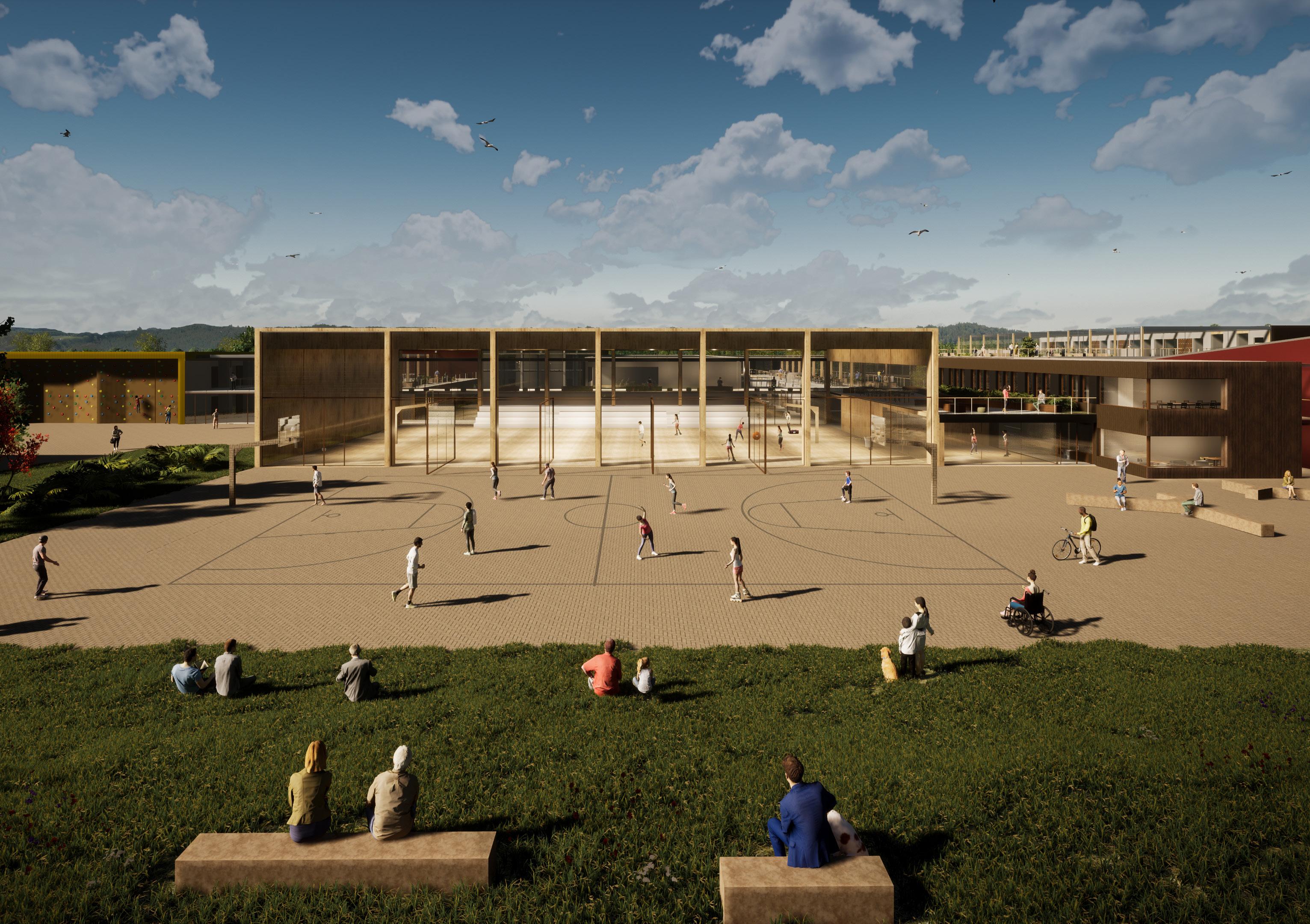
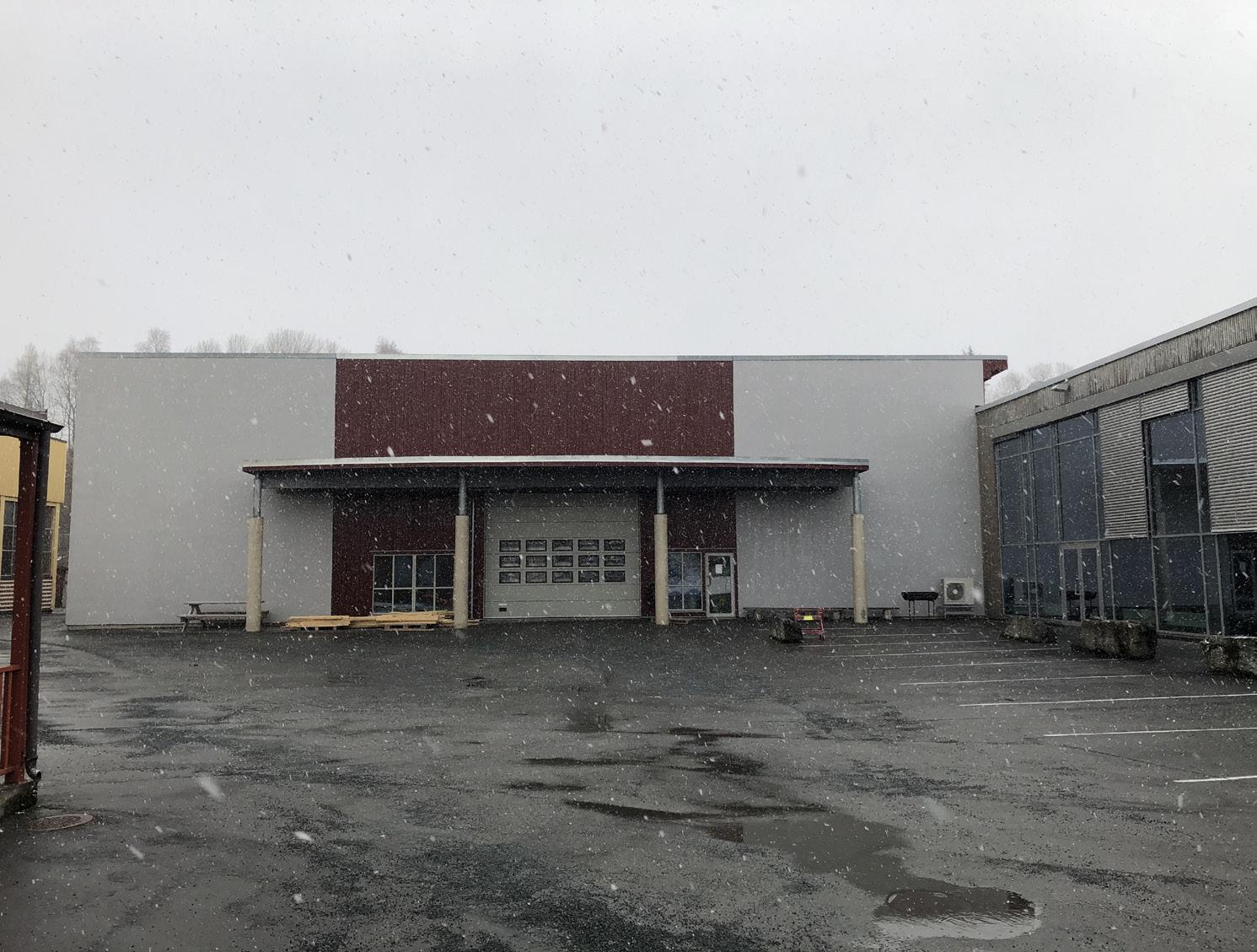
The main concpetual challenge in this bulidng is the disorganize and complex circulation net in the buildin. It results difficult to orient and arrive to certain parts of the building. Clear the circulations is one of the priorities and expand them to not just have corridors but gathering spaces. Unfortunately this narrow corridors cannot give that quality.
The second architectural challenge is to give some spaces natural light and ventilation to cramped spaces in between of two areas
It is even considered to open the spaces with atriums or galleries that can improve comfort on the external areas to give them light and ventilation as well from the internal part.
The main premise considered in this project is to create a separation of functions, which facilitates the process of giving an architecture identity to the project. Separating functions also ensures flexibility, shifts and different users that can use the school facilities simultaneously.
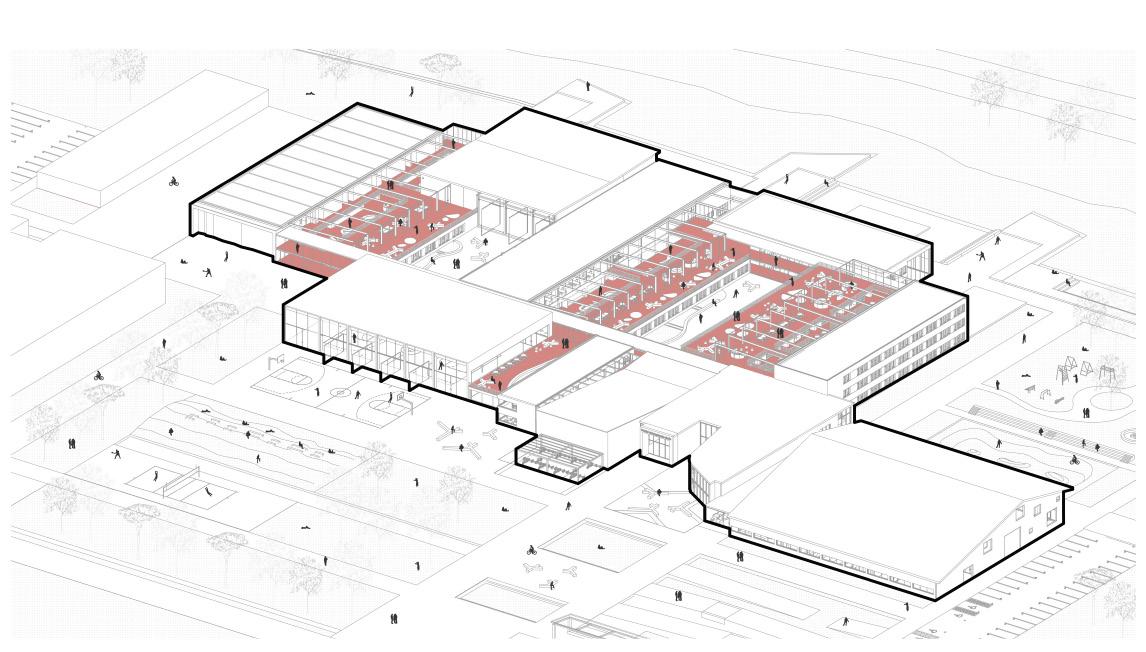
The second aspect that can extend the life of the building is modularity. Modules can distribute the spaces efficiently, creating direct and indirect relations through lighter elements that can join or separate areas. The most challenging premise to adapt is compactness knowing how spread this school is. It is feasible that previous premises can help organise a more compact and assembled building.


33 EVO1Axonometry 1:1000 EVO2Axonometry 1:1000 EVO3Axonometry 1:1000 EVO4Axonometry 1:1000 EVO5Axonometry 1:1000 EVO6Axonometry 1:1000 Atriums
Transparency Terraces Courtyards Heights composition
Circulations
GSEducationalVersion Atrium Teacher New Sports Hall Hall Extention Workshop Atrium Hal Auditorium W C W C Main Entrance Existing Sports Hall Workshop kitchen Courtyard Nurse Print room W C Workshop Workshop Canteen Wardrobe Changing Room Changing Room Courtyard W C Music room Industrial Design Performance Hal Dancing room Storage Coffe shop Classroom Classroom Classroom Classroom Bicycle shelte Lab Lab Lab Lab Workshop Workshop Atrium Workshop Sports Room Storage Staff Room Hal W C Dressing Room W C W C W C Dressing Room Classroom Classroom Classroom Classroom Workshop Sports Room W C W C Climbing Wal Platform Health and Housing Cente S 0 3 S 0 3 S 0 2 S 0 2 S01 S01 26 20 First floor (ok) 1 500
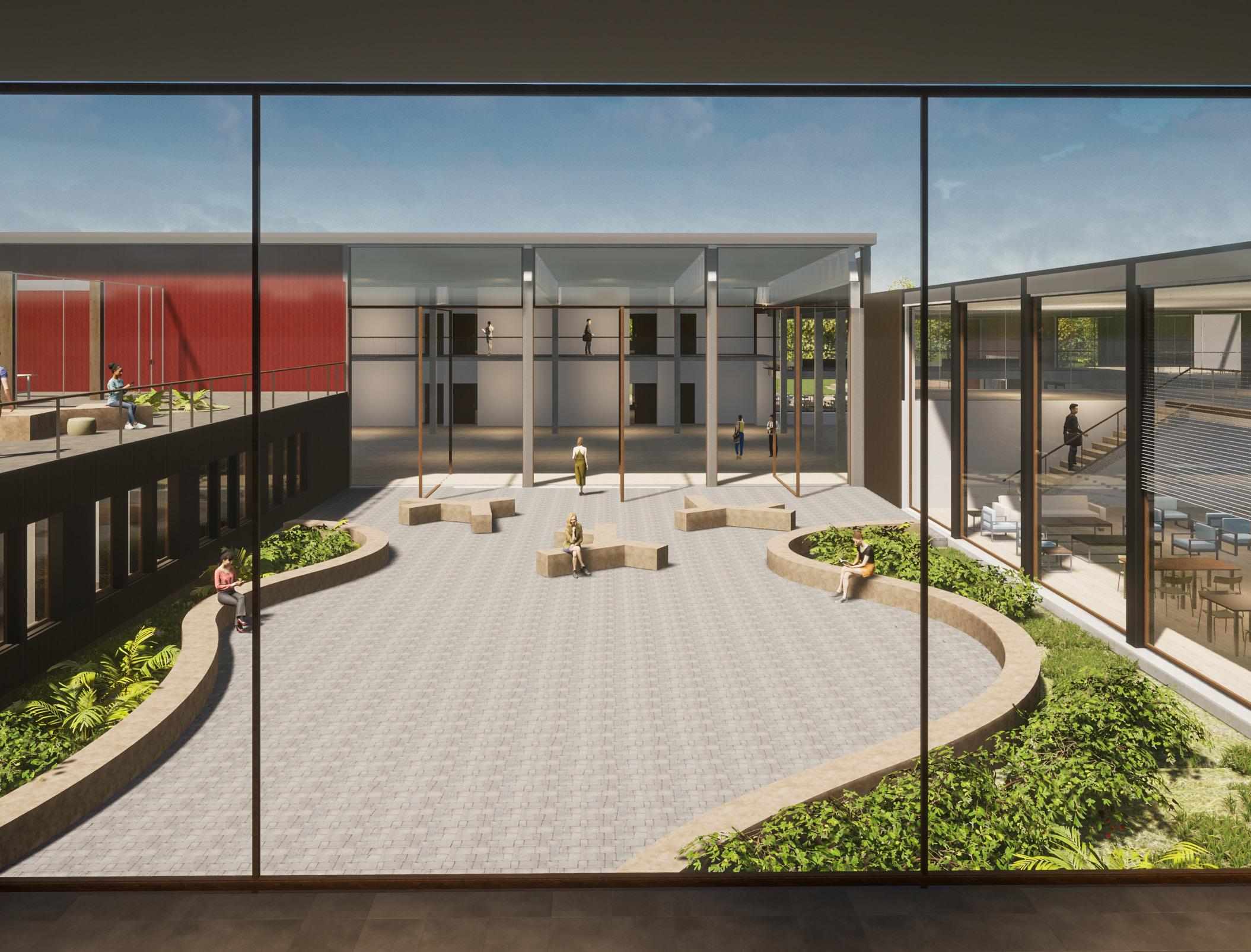
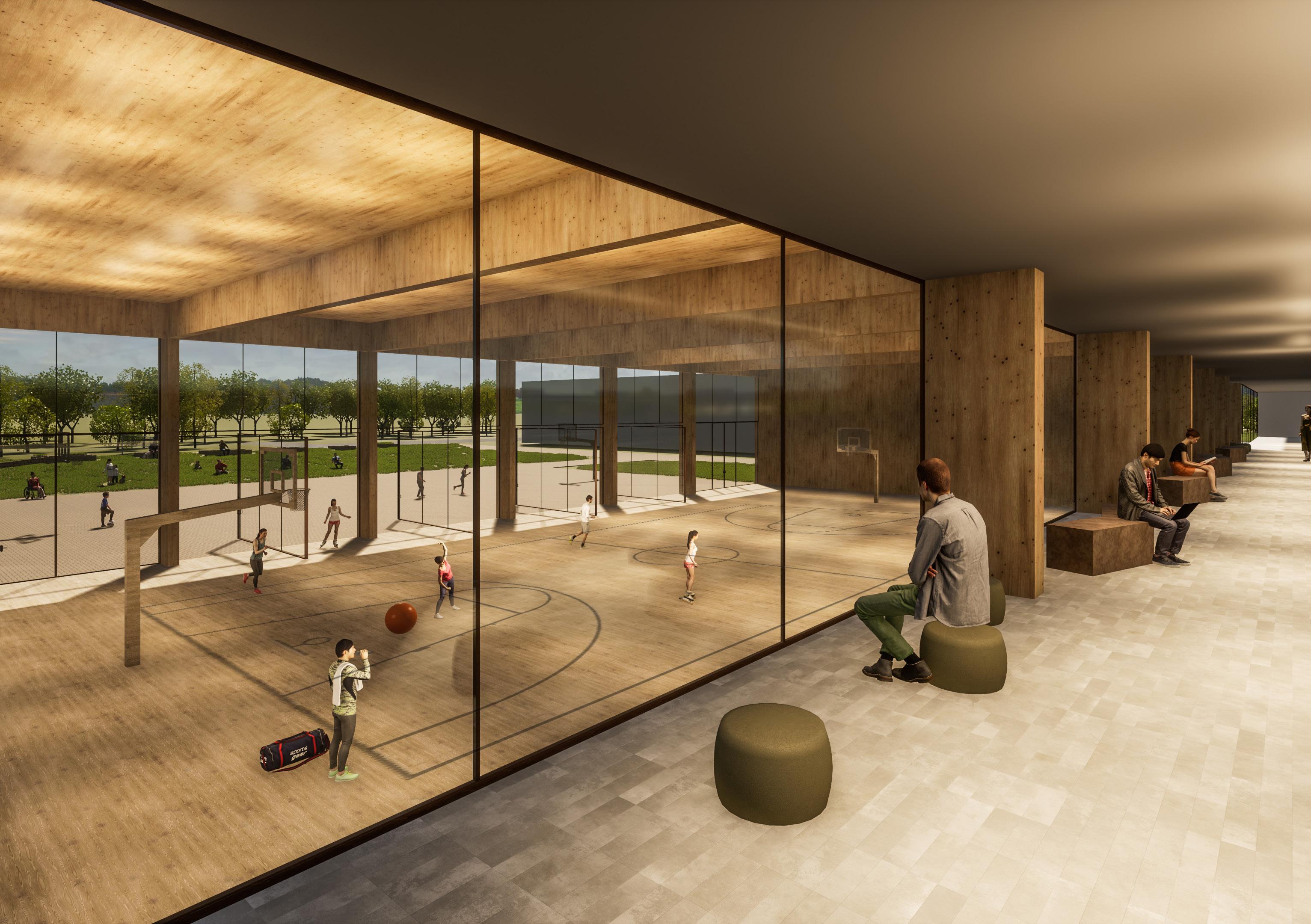
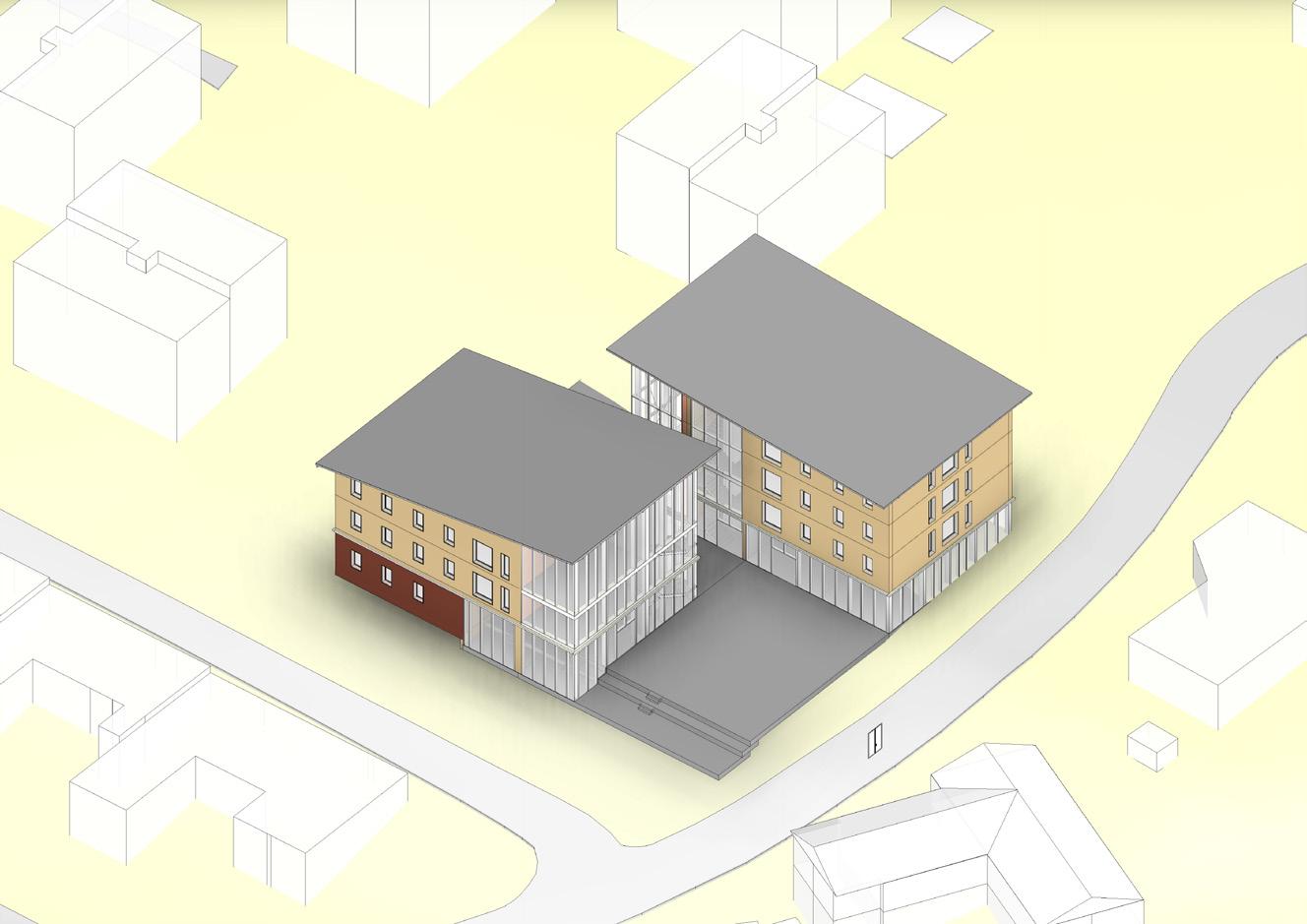
Perhaps the most visible feature of our proposal is the atriums. In this project, these are spaces used as a connector to create a more joint school. But it also can give spatial qualities to the project, improving the comfort for users. There are three atriums with different qualities, intentions, and results.
It is a solution to the low ceiling and narrow and long corridors in
that area. There was no visual connection between one and the other side of the building. This strategy also helped create spaces for students to gather before or after classes without going anywhere else. Finally, the most significant improvement was in the access of light. With corridors without natural daylight, the atrium gives the necessary transparency and allows sunlight to the firstfloor areas.

GSEducationalVersion Building K2 Building A Building E Building B Building S2 Building Y New Sports Hal Hal Workshop Workshop S02Building Section 1:500 S-05Building Section 1:500
01
02 GSEducationalVersion Building A Building S2 Building S1 Building V New Building V1 Teachers Workshop Workshop Workshop Classroom New Building A Classroom Classroom Classroom Classroom Skatepark / Ice skating Loading and unloading S-01Building Section 1:500 01 02
Section
Section
The spatial qualities indicator shows an 81% improvement in comfort compared to the quality of space of the existing building by the interventions done during the refurbishment process. According to the numbers, the design benefits the functionality, the flexibility, and the relation between indoors and outdoors.
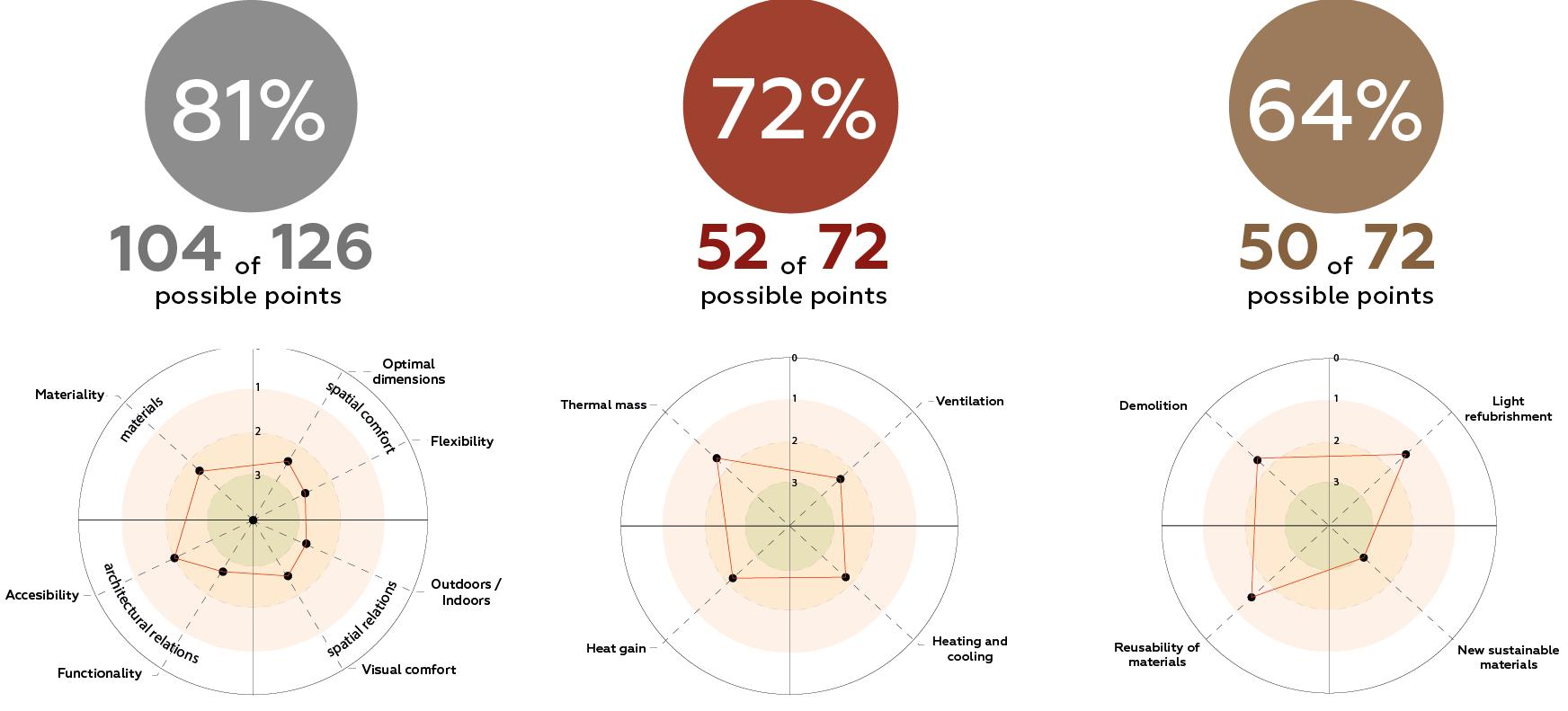
The design strategies indicator has a 72% benefit in the energy efficiency area. In this case, a deeper assessment was made of specific parts of the buildings, considered the most important and more significant impact on the project. However, the detailed
design allowed to evaluate different phases of the refurbishment. In that case, the trend shows an equal benefit from heat gain and ventilation strategies.
In the Life cycle assessment indicator, there is a 64% of positive impact on emission savings strategies for embedded emissions. It is evident in the result that the focus of this intervention was centred on the use of new, more sustainable materials for the latest developments. It was possible to save most of the structure in some buildings and do the light refurbishment.
the collective student housing
MSc Sustainable Architecture
Autumm 2021
Trondheim, Norway professor: Neil Alperstein
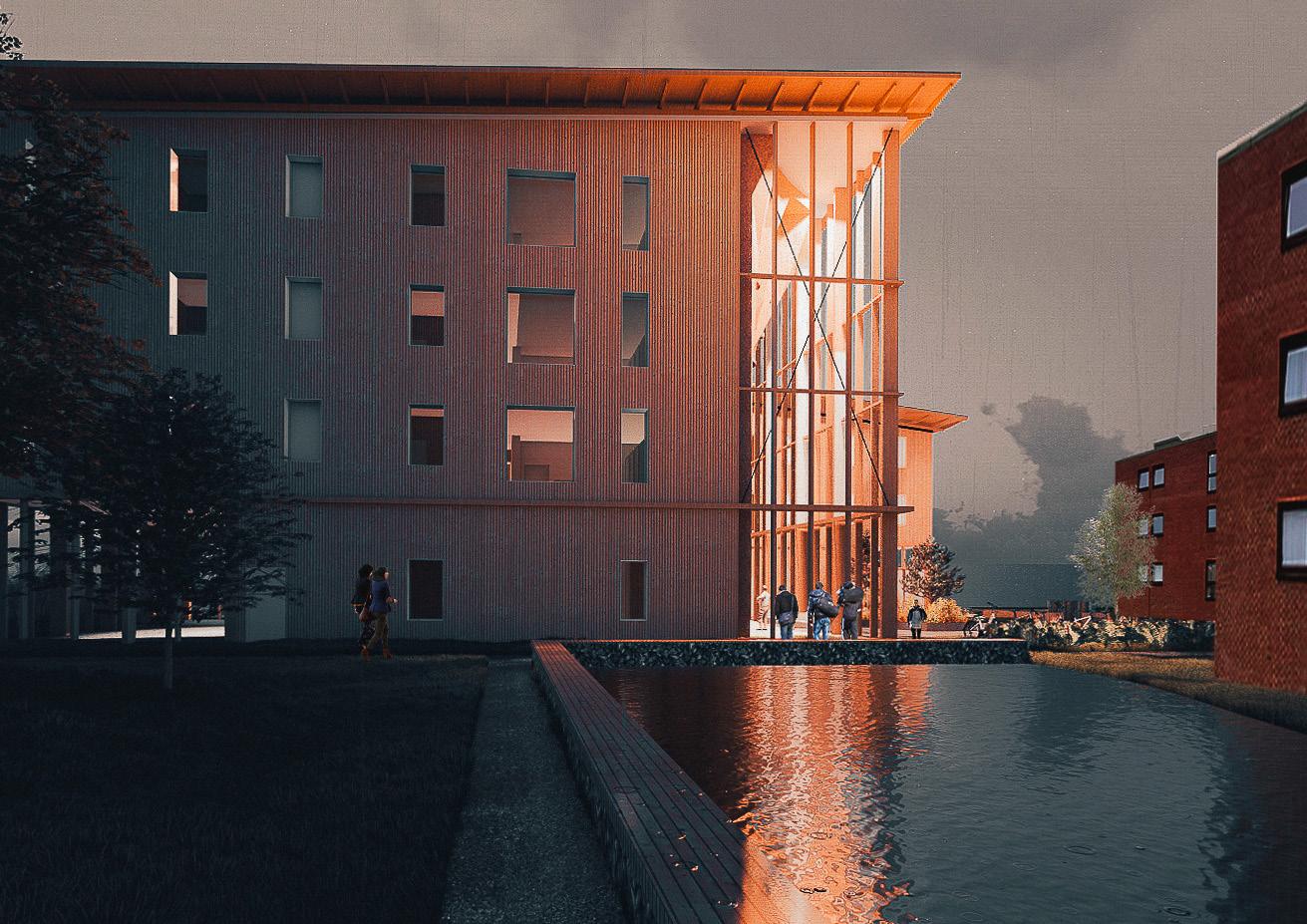
The main objective of this project was to create a student housing which improves student life quality and at the same time correspond to the climate conditions to be sustainable. In this case the building followed the passive house standards considerations.
The main drivers for the concept are strengthening the sense of community, tilbudet of activities, great shared spaces both indoors and outdoors. We wanted to focus on these four main points in order to tilby students moving to Trondheim and Moholt to offer them more than just a place to eat, sleep and work but a place where they can unfold their personalities, have a true arena for social activities and activities in general. Being a student is all about exposing yourself to new experiences, people and thoughts and this we created in our project.
The temperate-continental climate from Trondheim demands buildings to have a particular configuration to prevent intensive use of heating and higher energy consumption. In this sense, the main challenge for this project is to reduce the heat load through different techniques and technical features. The climatic and comfort study aims to keep comfortable temperatures inside and from a passive perspective, without any active heating. When referring to this approach, it is necessary to consider optimization and simplicity without losing architectural features and necessities.
02
In the Life cycle assessment indicator, there is a 64% of positive impact on emission savings strategies for embedded emissions. It is evident in the result that the focus of this intervention was centred on the use of new, more sustainable materials for the latest developments. It was possible to save most of the structure in some buildings and do the light refurbishment.
However, the main purpose is to provide students with a wide range of personalities and backgrounds with a social arena where exposure to new experiences, people, ways of thinking, knowledge, and thoughts is encouraged. The focus on social issues enriches students’ lives alongside university life.
Climbing wall Study room Co ecorner Engangi n g com m u n i t y oC lvigni nehctikoC ecarretoC niaR nedrag kraP desaercnI b i do i ev r s i t y S kap tepark Gamingpark Community ecapsderahS roodtuO Activities Community

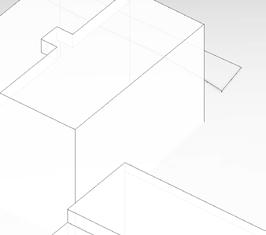
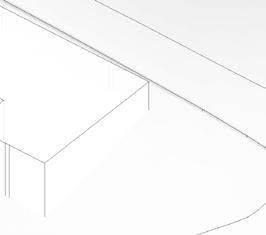
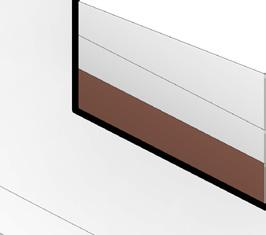



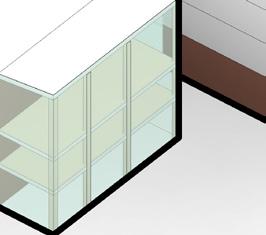






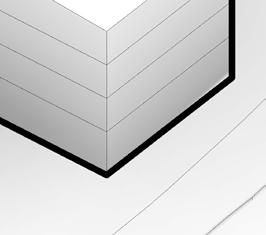


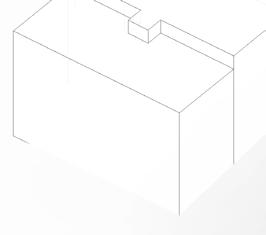
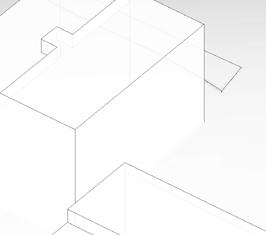




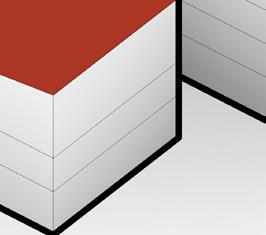


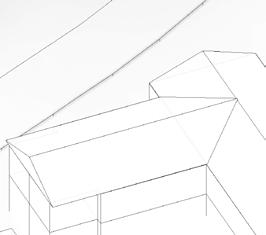








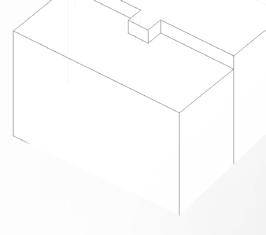
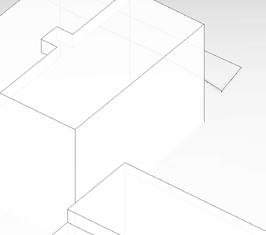
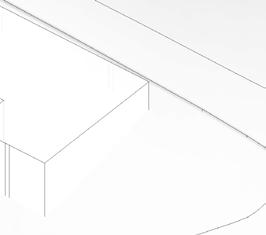
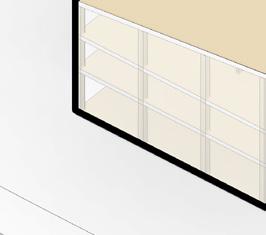



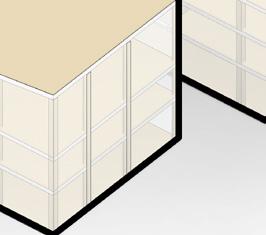
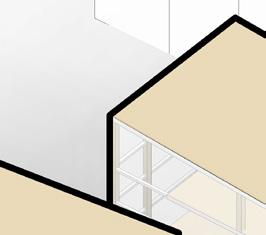

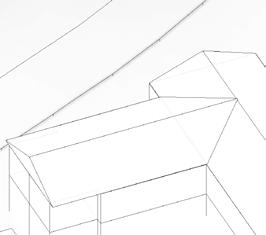
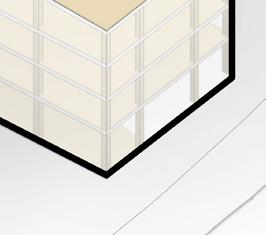
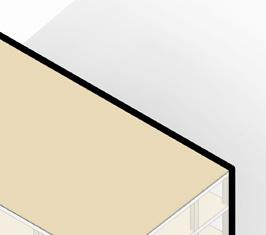










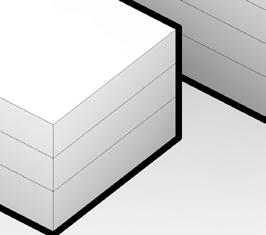
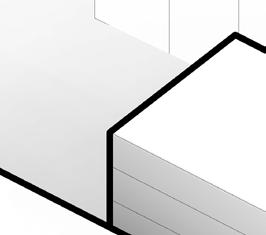

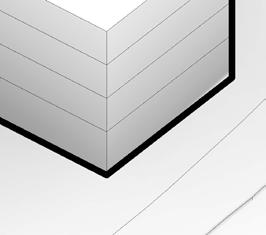




 STEP 1 - VOLUME
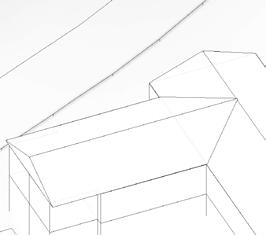
STEP 2 - PITCHED ROOF
STEP 3 - TIMBER STRUCTURE
STEP 4 - GLAZING + THERMAL MASS STEP 5 - RAMMED EARTH
STEP 6 - COMPLETE
STEP 1 - VOLUME
STEP 2 - PITCHED ROOF
STEP 3 - TIMBER STRUCTURE
STEP 4 - GLAZING + THERMAL MASS STEP 5 - RAMMED EARTH
STEP 6 - COMPLETE
Bike repair workshop Bike repair storage Storage Laundry Coffe shop Coffe storage Climbing wall Changing rooms Laundry Reading room 5 6 7 8 D' E' F' G' D C' C B A 1 2 3 4 E
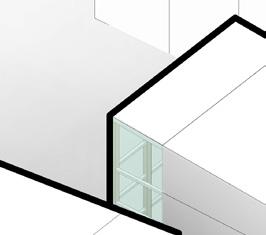
Also, considering the high impact of south radiation in the building, we decided to have thermal storage through heavier materials. In this sense, most glazing is located towards the south, exposing
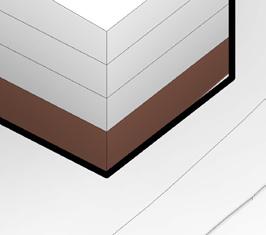
the walls behind and allowing thermal mass storage. Heat will be stored by materials like rammed earth, which by its natural characteristics can collect heat and release it slowly during night periods.
Finally, while the south facade can be used as passive heat input, it is necessary to consider the heat losses that significantly affect open spaces and external facades in less radiated areas. For the north facade and the roof it is vital to create buffer zones that separate the living spaces and the cold temperatures outside. This example, not require heated areas as a climbing wall, works as a buffer between apartments and the north side. Even though it is not a heated indoor space, the difference with temperatures outside is higher, especially in winter, keeping more pleasant temperatures in student units.
1/200 1m 10m Thermal insulation
Heating
Climbing wall (Buffer zone from north facade) Thermal mass (Rammed earth wall)
release
Glazing (south facade) Natural ventilation
Pitch roof (major radiation allowance)
One of the main strategies for an efficient passive house is to keep the building compact; hence the use of heat is lower, and thermal mass gain can be more effective. We decided to have a primary premise of compactness for the design of this project. The building has a small area and height, with simple, geometrical and well-oriented shapes. For better understanding, the compactness standards mentioned that multifamily units stand in a range of 0.2 to 0.5 value indicating the surface area of exterior walls divided by the heated volume. The final numbers of the project go around 0.30 for both buildings, revealing good compact performance.
Flexible room for each student

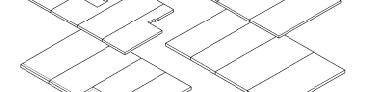
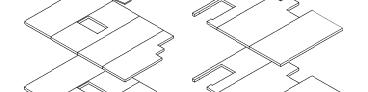
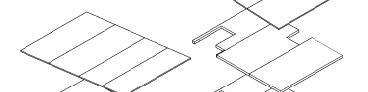
The private rooms are all identically furnished. A built-in shelf on the façade wall provides space for personal belongings and study materials. The attached window sill can not only be used as a storage area but also serves as a bench. Students can thus passively participate in what is happening on the plaza, the inner courtyard, the rain garden, or in the neighborhood even in their rooms. An already built-in wardrobe avoids the need to purchase a new wardrobe when moving in. This saves resources, student savings, and time. However, to be able to grant personal freedom of design, a bed and desk can be brought along individually. Residents who usually work outside their own four walls can also choose other furniture such as a chest of drawers or a reading chair instead of a desk.

Cross Laminated Timber Cross Laminated Timber Concrete Steel cable Beams and Columns Purlins Metal roof covering
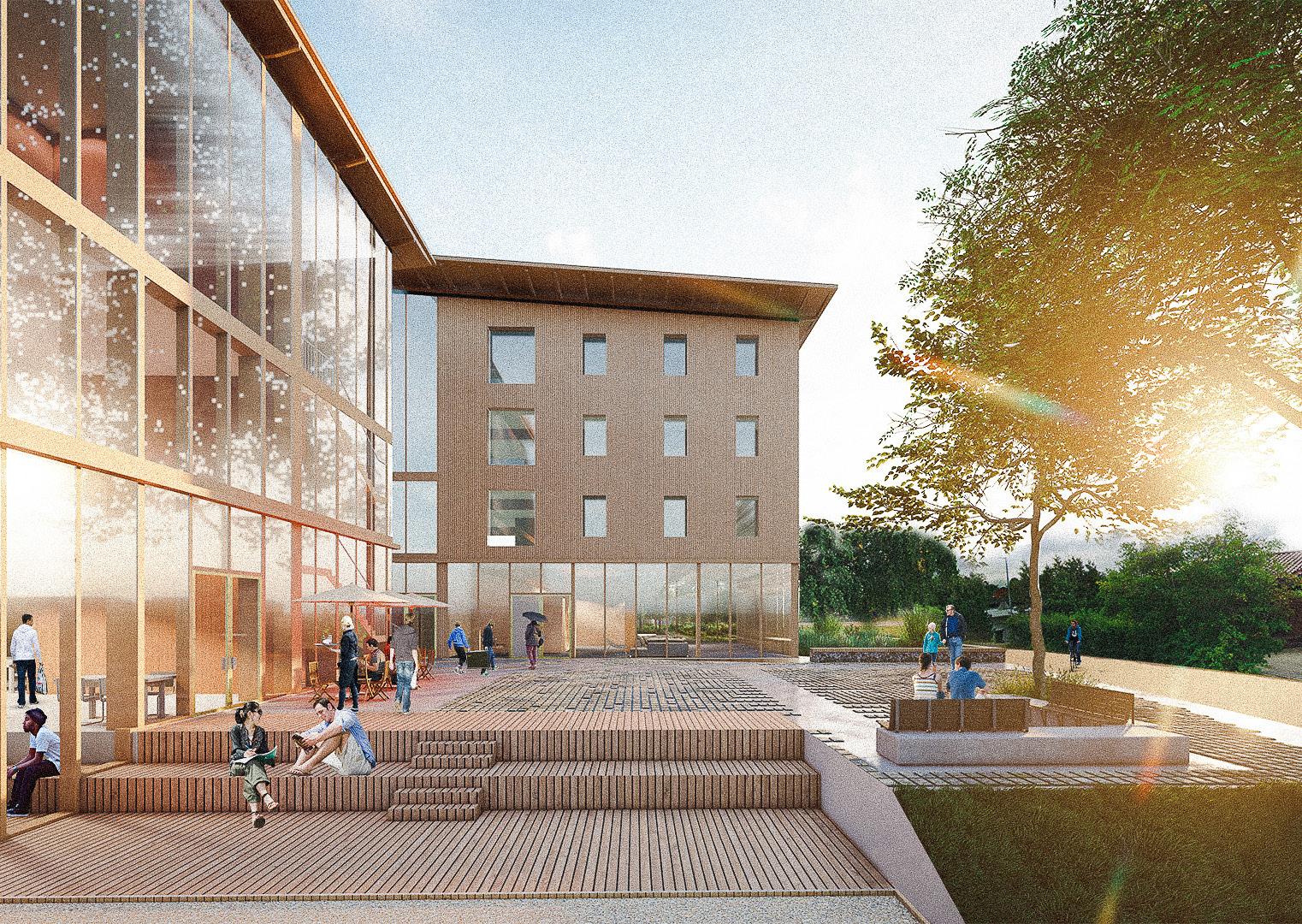
icononzo the sustainable coffee school
thesis / 2017 sustainable territorial planning - building architecture - landscape professor: william ariza universidad de ibagué ibagué, colombia
03
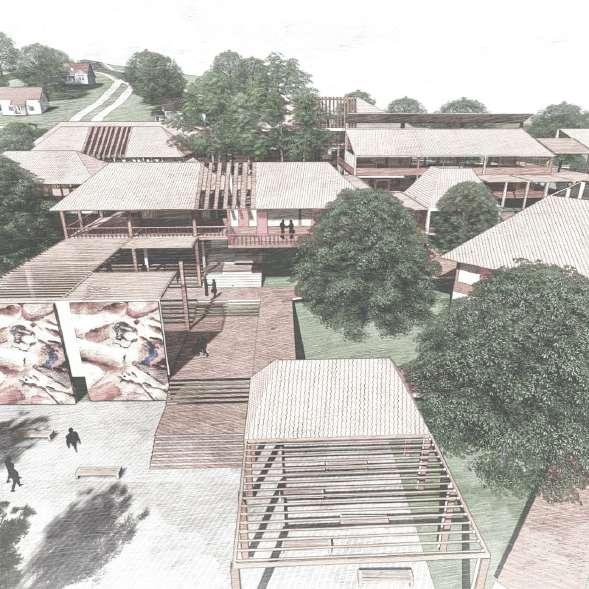
The thesis consisted in the design of an educational architectural equipment focused on the biotechnification of sustainable coffee, as a structuring axis of the proposal to revitalize the coffee cultural landscape of the municipality, to reduce the socio-economic segregation of the young and adult population reinserted from groups outside of the law and victims of the conflict in the urban area of the municipality of Icononzo.
The intention of the architectural project arises from two very clear problems, the first is the lack of identity and cultural and architectural character of the municipality of Icononzo, and its departure from the influences and dynamics of the nearby areas so it seeks to link it with homogeneous elements to find your identity.
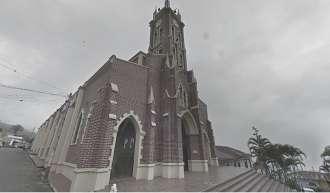
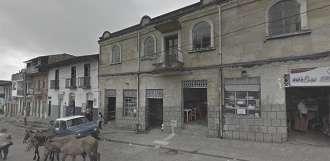
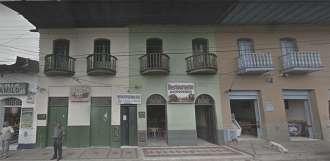
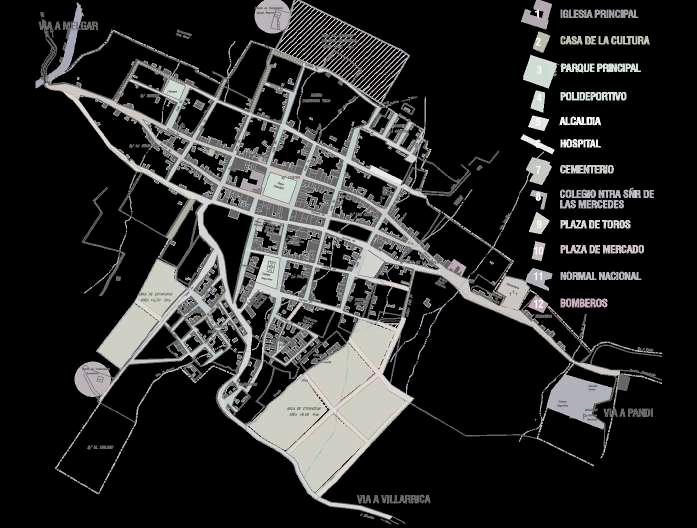
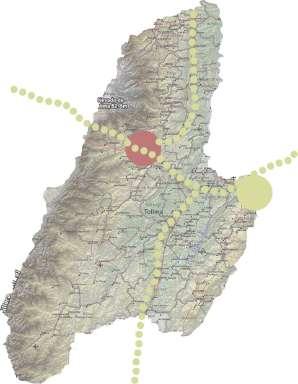
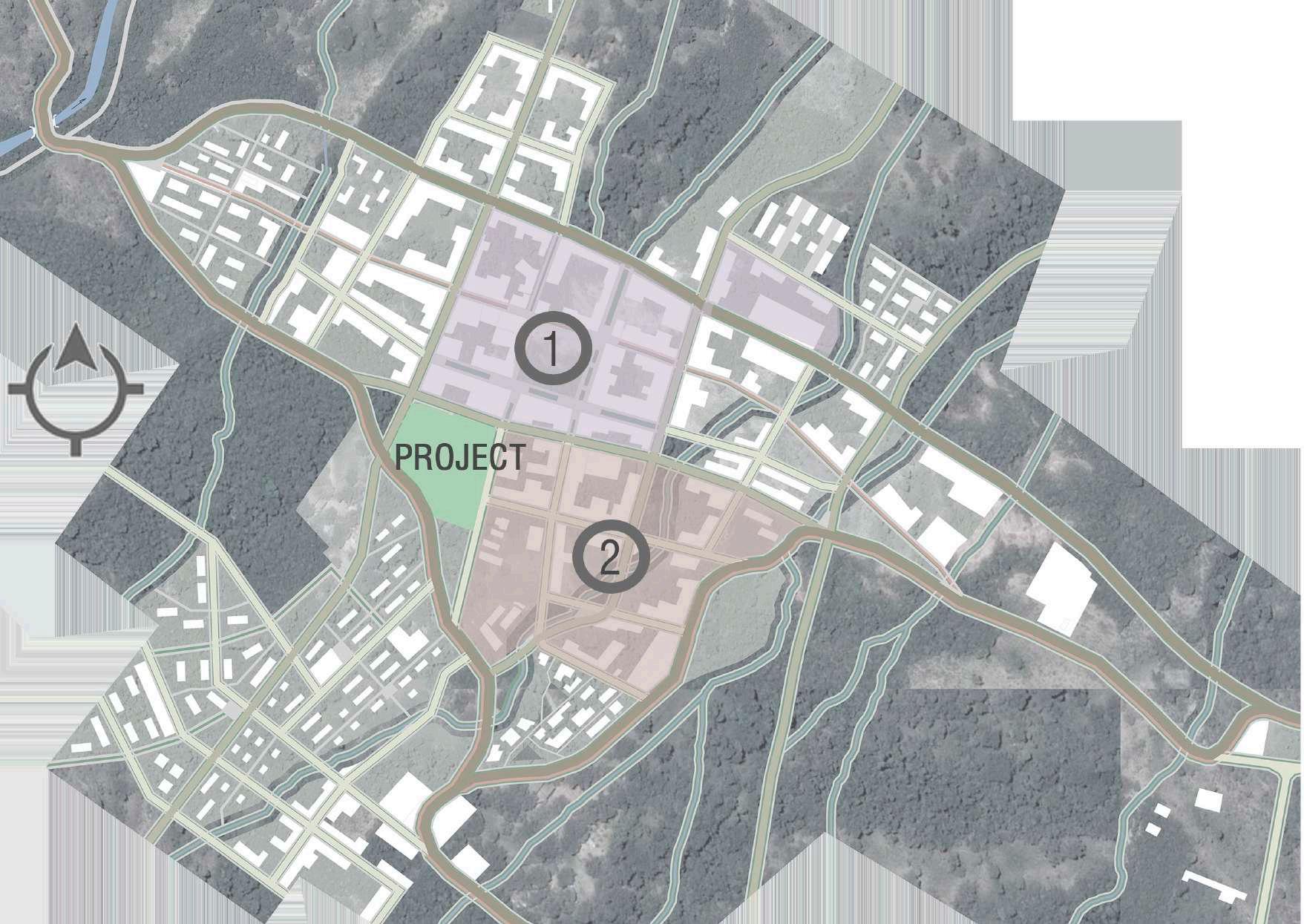
The territorial intervention in the municipality of Icononzo, Tolima consists mainly in revitalizing its agricultural image through strategies at 3 scales, regional, municipal and urban which will determine the conditions to recreate an image that is characteristic of the area. The intervention was carried out through the parameters that the Coffee Cultural Landscape dictates, which marks some characteristics to highlight in the intervention, which have to do with architectural typologies, facades, social and economic conditions, conservation areas, and public space.
URBAN PROPOSAL
The general proposal conceives the different structuring systems mobility, public space, equipment and green areas.
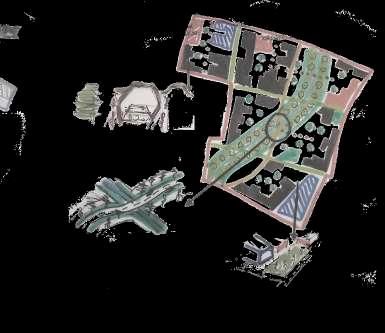
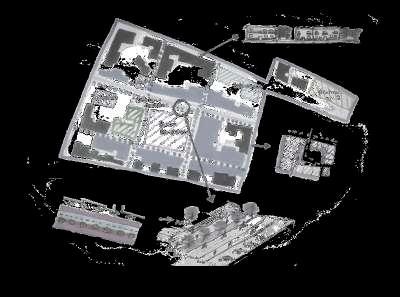

What was sought was to integrate the systems to generate a communication network between the systems, to provide integral connectivity through the roads and road profiles, the connection between the uses of the equipment, and the integration of the landscape with the public space.
The proposal also sought to characterize the types of existing housing to be able to conceptualize it and generate an identity.
The intention of the architectural project arises from two very clear problems, the first is the lack of identity and cultural and architectural character of the municipality of Icononzo, and its departure from the influences and dynamics of the nearby areas so it seeks to link it with homogeneous elements to find your identity. For this reason, the concept of landscaping will be developed in a greater sense to support the search for character, through strategies that support the coffee cultural landscape and that positively transform the municipality.
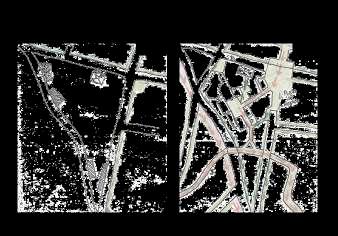
partial plan 1
partial plan 2
"full and empty"
mobility system
facilities system and ground uses
public space system legal proposal for ground uses
system
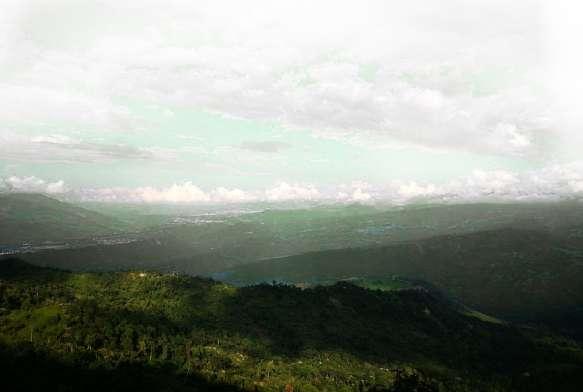
icononzo's landscape
COFFEE CULTURAL IDENTITY
The Sustainable Technologies Institute has the aim to collaborate with a wide range of social actors the creation of technologies, allowing economic competitivity, social wellness and beneficial natural impacts. In countries like Colombia, where natural resources are a mainstay of economic and social growth, the implementation of educational standards concerning the natural environment is substantial in development; therefore, it is argued that spaces, where communities can be instructed, are facilities for segregated communities, often excluded by educational and economic barriers.
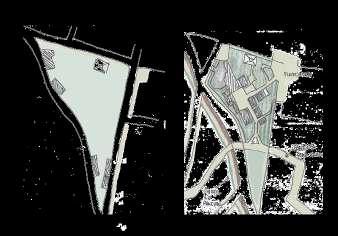
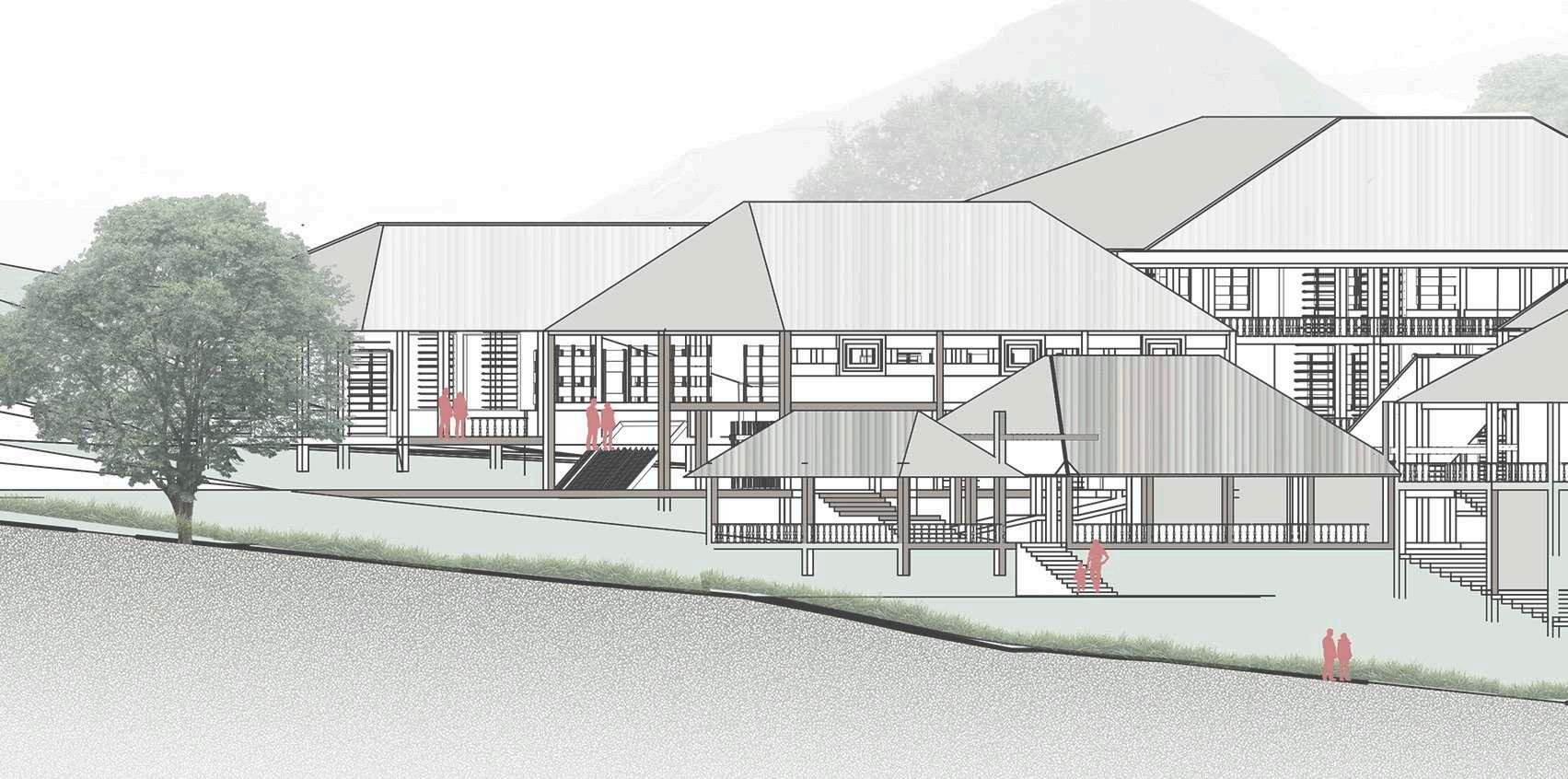
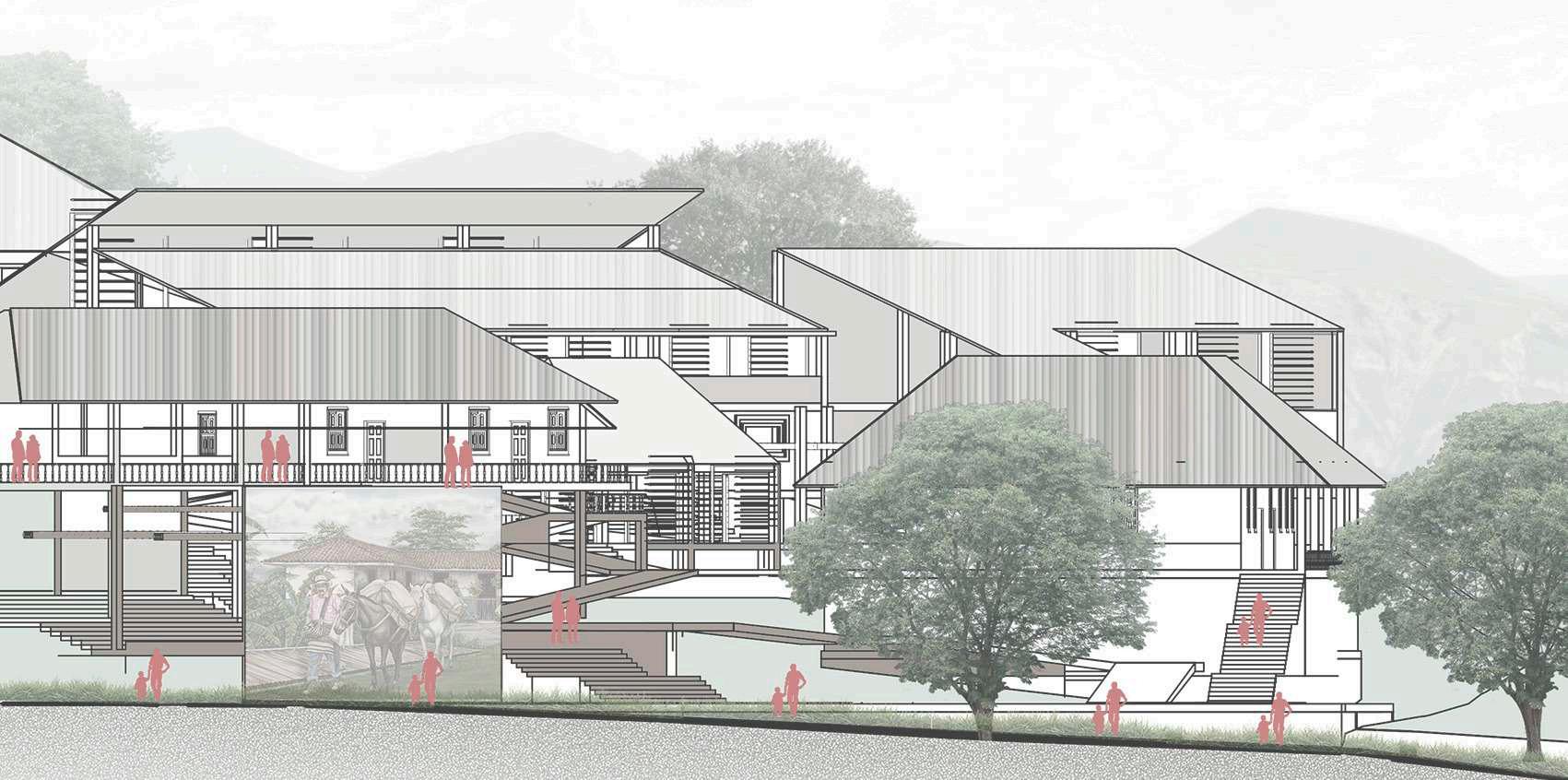
The transformation in the public space is that the terrain is the connecting node between the raised pedestrian connections, integrating them and generating a route through the project.
As for the topography, it was not modified much since the palaphitic construction system allows the current uneven terrain to be preserved. The only area intervened is the loading and unloading sector which was levelled.

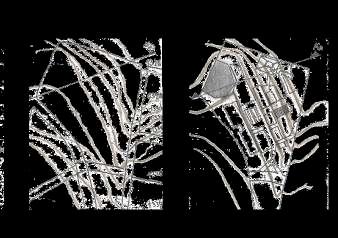
The urban intervention that is generated with the pedestrian connections, directs the flows connecting the project with the urban proposal. This delimits the uses of the project to match the flows.
 public space topography
pedestrian flows
lineal type "L" type "U" type
public space topography
pedestrian flows
lineal type "L" type "U" type
The development of the project is divided into two parts, the first in an urban scale, for which an intervention of the municipality was developed, through a characterization of homogeneous areas in different areas to be able to highlight elements of importance of each sector, thus solving them. Problems that were identified generate a connection between these areas and generate a clear urban proposal related to the cultural and architectural identity existing in the municipality.
Based on this intervention, the most suitable terrain was chosen for the development of the architectural proposal. To this end, different criteria were taken into account in terms of identity and context that were consistent with the design of the proposal.
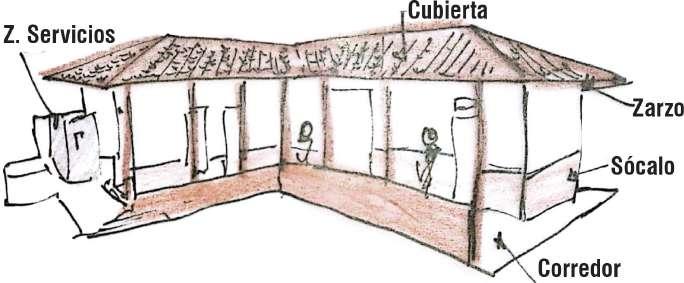
Inside the project's idea, these elements are reflected so that the project is part of the identity and language handled, such as the reinvention of elements such as the baseboard which frames certain accesses and has a correct relationship with the environment. Also, the roof is an important element in the project since the characteristics of coffee houses reflect these intentions.consistent with the purpose of the proposal.
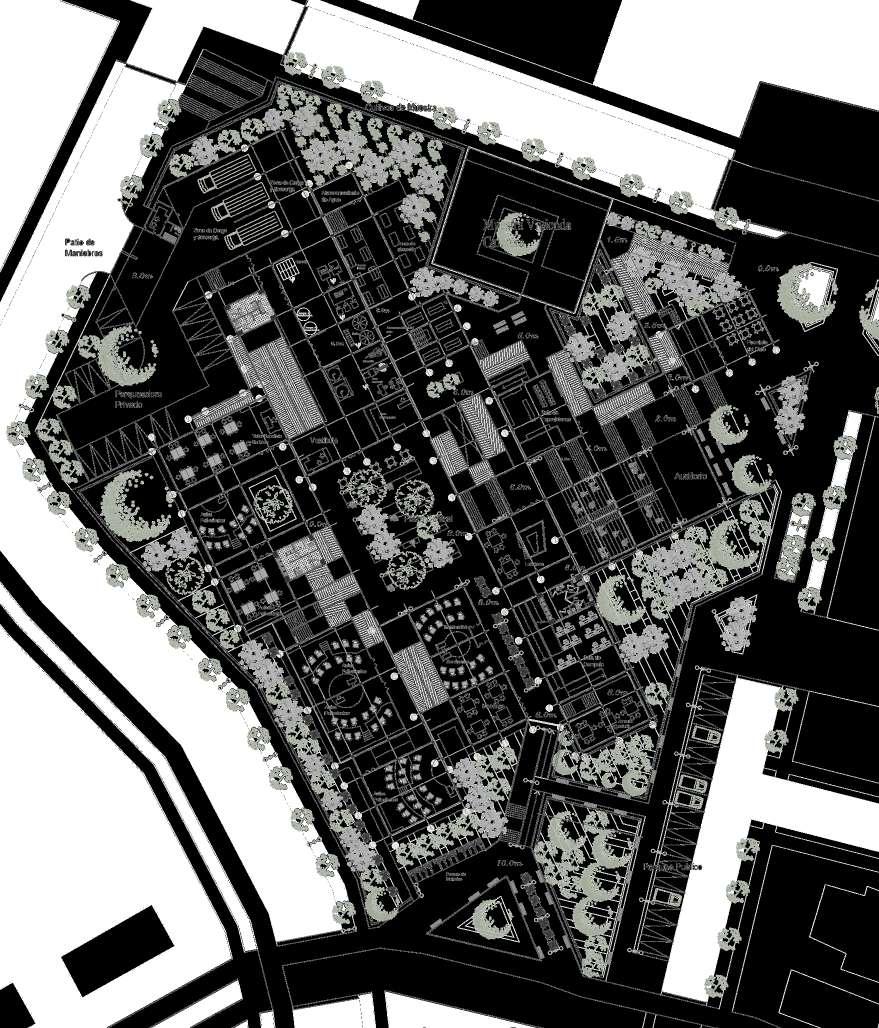
first floor design
CONCEPTUALIZATION
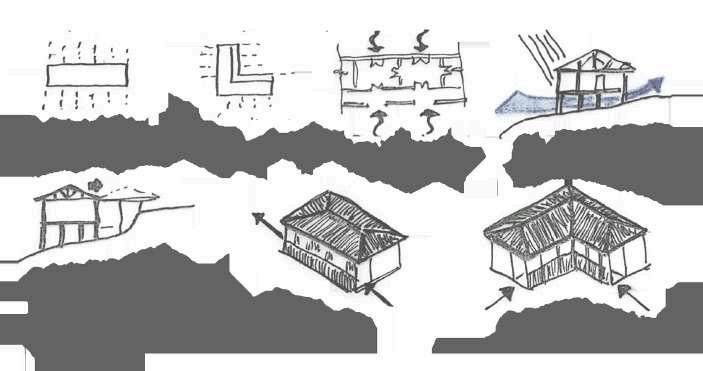
This premise of horizontality focuses on the condition of the terrain which favors so that the rectangular typologies adapt easily to the slopes and directions of the terrain.
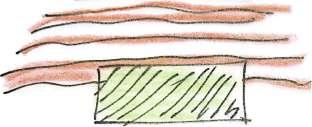
Also this type of constructions allow that there is a visual continuity and it is something that the project is sought, that a very wide range of vision can be generated and that likewise, there are no constructions that affect the visual of the highest construction.
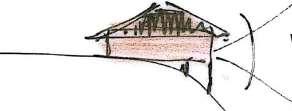
horizontality unobstructed visual
These 3 materials used are used in the project because of the great importance they have for the context in which they are framed. They are part of the identity of the municipality. They also have different premises in terms of design. These materials also allow the architecture to be a little more flexible and the spaces change over time.
The coffee cultural landscape is a premise related to a landscape intervention where elements such as the basement of the houses, the repetition of elements such as doors and windows, the roofs and the colour of the facades must be integrated with vegetation that will allow a balance between the natural and the built.
The topography in the project is an important design criterion and this is reflected as an important landscape element that generates the unevenness of the project, resolving it with an implementation of platforms generates, which make rhythm in terms of heights in the volume allowing the visual continuity of some spaces.
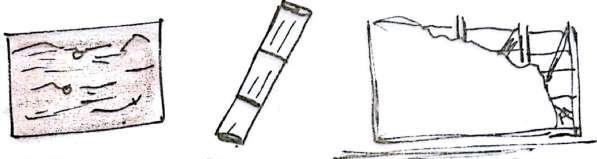
unobstructed visual
wood bamboo bahareque
UTILITY MODULE
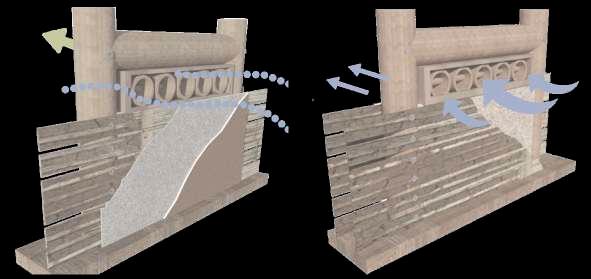
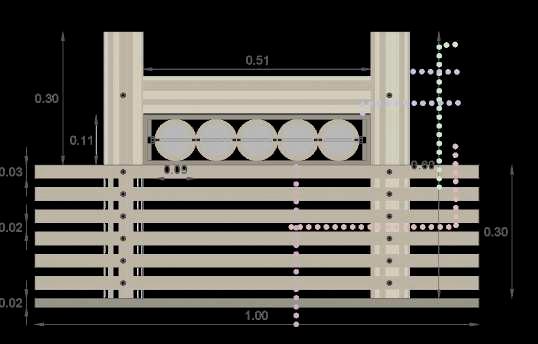
The utility module considered will be focused on a bahareque wall facade enclosure of the coffee storage space that needs certain specific climatic conditions achieved through the exploration of other materials that allow ventilation and dehumidification of the space, which can be achieved with the same bamboo mat and wood chip. The intention is to regulate the temperature at 19 ° indoors and approximately 65% humidity.
The utility module is characterized by the transformation of the common bahareque wall, through a ventilation system in the lower part of the wall that allows the entry of the greatest possible air flow, thus ventilating the space in a better way. The other component is to dehumidify the air for which a wicker fiber system and sawdust shavings that absorb moisture is used, allowing it to regulate it in space. In addition to these systems, the identity characteristic is blamed with the use of native and contextual materials in the coffee landscape.
ESTRUCTURAL DESIGN
thermoacoustic roof
bamboo mat
columns and sills
bamboo straps
bamboo straps
wood sill ceiling
wooden shutter
drip cutting board
structural framework in bamboo and landfill
structural framework in bamboo and landfill
plywood floor
concrete plattform
wooden slats
bamboo sticks
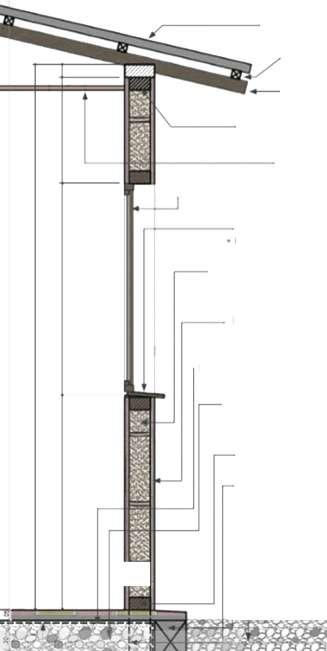
This is a constructive detail of a bahareque wall, which can be varied for the palata construction system. Replacing concrete blocks to cement the wall using screeds in guadua to anchor them to the foundation beams or the plate and concrete and wood.
SOLERA INFERIOR DE MADERA SOLERA SUPERIOR DE MADERA TUERCA CON RONDADNA PARA ANCLAJE DE VARILLA MADERA. CABALLETE PRINCIPAL LAMINA GALVANIZADA MCA. IMSA MODELO "TEJA CAMPESTRE" DISTANCIA ENTRE APOYOS ((VIGAS MADRINAS DE BAMBU) EN EL SENTIDO DESCENDENTE @ 100.0 cms.C.C., DISTANCIA DE ELEMENTOS TRANSVERZALES O LARGUEROS @ 60.0 CMS. C.C. DETALLE DE UNIONES DE MUROS EN PLANTA SOLERA INFERIOR PIE DE RECHO CONECTOR CAŃUTOS CON MORTERO SOLERA INFERIOR PIE DE RECHO CONECTOR CAŃUTOS CON MORTERO UNION SENCILLAUNION EN "L"UNION EN "T"UNION EN CRUZ DETALLE DE SOBRECIMIENTO
clay mix element for ventilation and dehumidification of the space ventilation control of humidity utility module 85% 60%
wooden frame for ventilation element
turbo integral development of urabá
workshop viii / 2016 sustainable territorial planning - building architecture - landscape professor: fabio gonzalez universidad de ibagué ibagué, colombia
04
Develop a municipal planning project that establishes a supra-municipal study where the region is integrated with the department, taking into account its strategic position and all the potential to advance in the development of Urabá, through the construction of a system integrated proposals based on urban development in which the agricultural, industrial, social, economic, maritime and environmental sectors can be potentiated to contribute to the articulation of sustainable progress in the region.
STRATEGIC COMPONENTS
1. SOCIO-CULTURAL DEVELOPMENT
- Promotion of social, economic and cultural rights.
- Strengthening and support of ethnic communities in the context of their territories.
2. THE SEA AS AXIS OF DEVELOPMENT
- National and international projection and promotion of economic activities.
- Infrastructure for competitiveness.
- Education, science, technology and innovation for capacity building.
3. SUSTAINABLE TERRITORIAL ORDERING
- Territorial planning of special areas
- Generation of integrating and articulating spaces with the environment (public space).
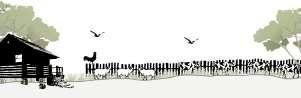
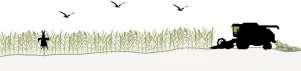
 agroindustrial cuttler rancher cluster
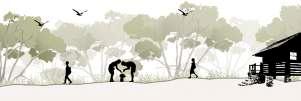
AREA SECTION
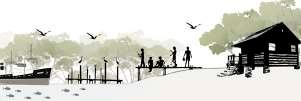
fish farm cluster
forest cluster
For the development of the proposal, strengthening the potentializing aspects of Turbo, articulating elements of equipment, public space and green areas are proposed.
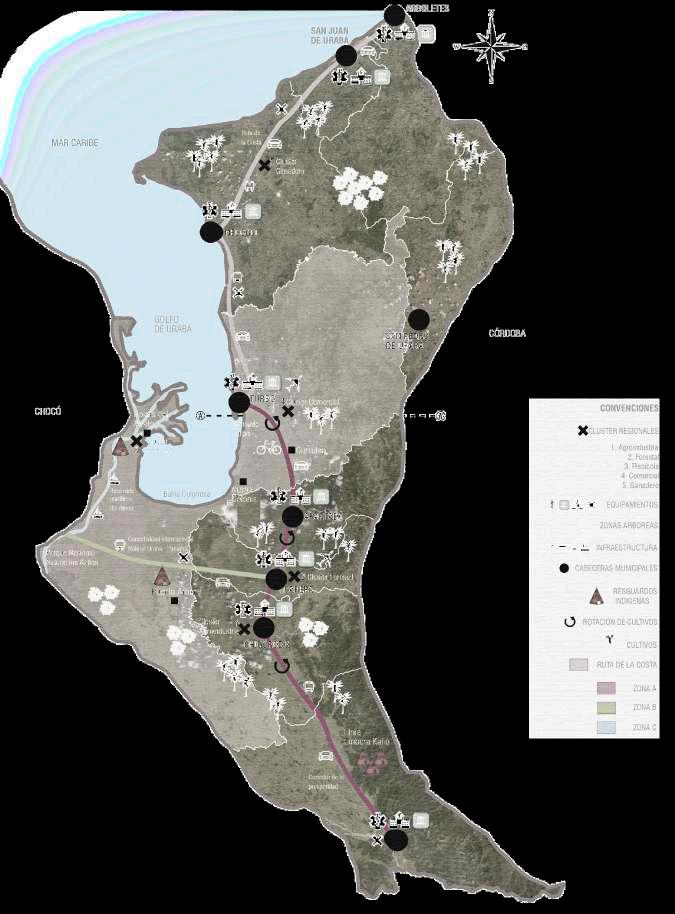
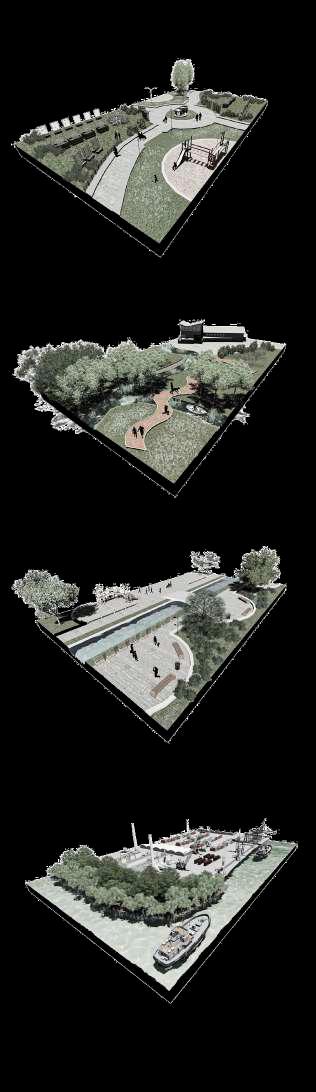
Protection zones are taken into account, such as mangroves and from these, connections are created that generate public space. For this, an ecological axis is proposed that starts from the beach, connect the commercial area, runs along the Veranillo pipe, passes through the universities and ends in the rural area, in this way connecting the latter with the urban area, in addition, this axis is complemented for a bike.
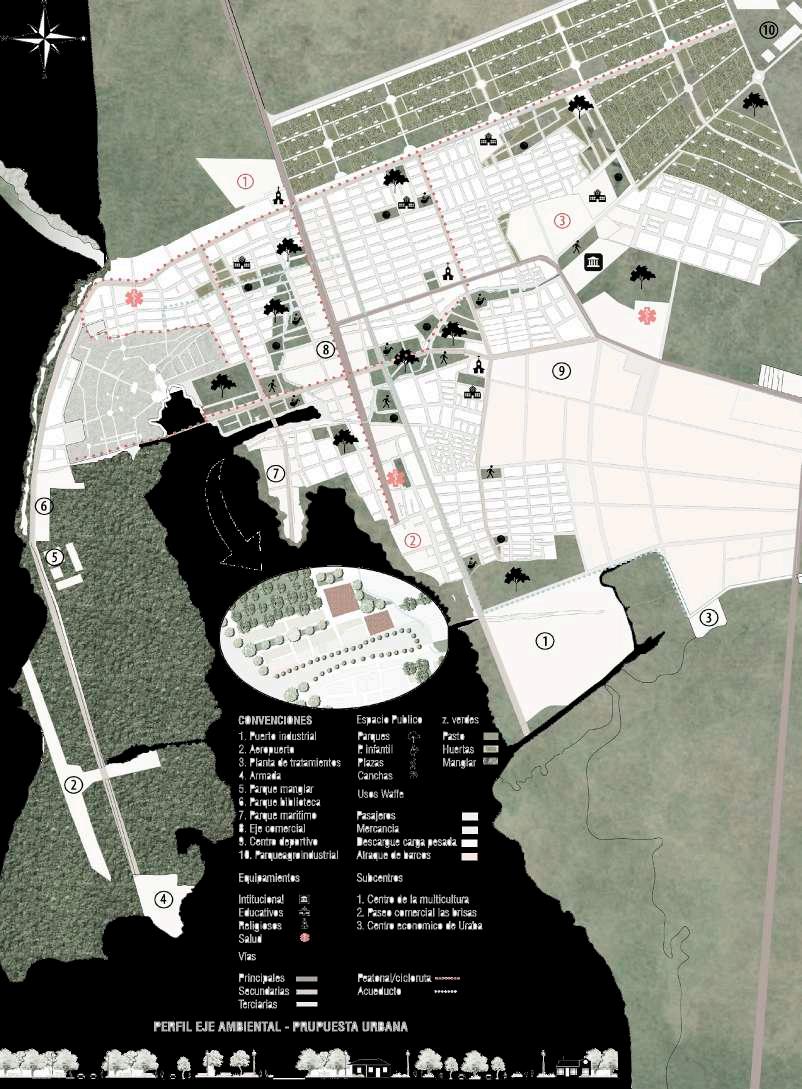
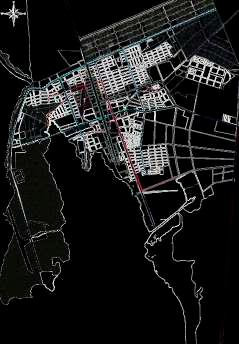
As for the infrastructure, according to the “Turbo PMI”, a road ranking is carried out. As main roads, the 10th and 19th avenues were marked north-south, because they are the ones that have the best connection and have a constant urban activity and in the east-west direction they are framed on 115 and 101 streets, also for their connectivity, in addition to your relationship with the trunk. Library Park is located, with a focus on educating communities about the importance of mangroves. To strengthen trade and tourism, an agro-industrial tourist park and urban


2016 2023
MODELS 2030
GROWTH
To improve the connections and transition zones between the urban and the rural part, pedestrian connections integrate both aspects, in addition to the creation of green transition zones that integrate the characteristics of a rural and urban environment, through small crop areas accompanied by recreational spaces such as parks or sports areas.
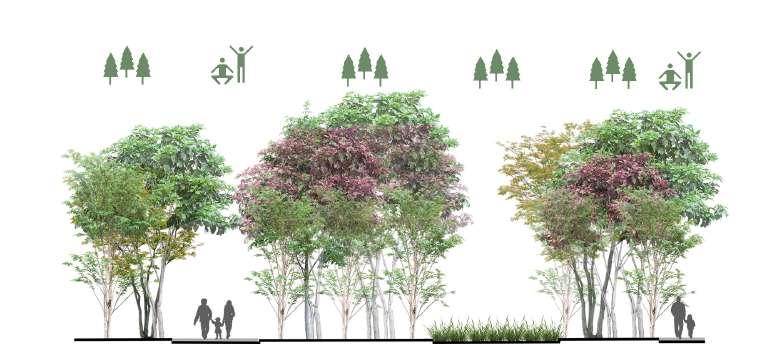
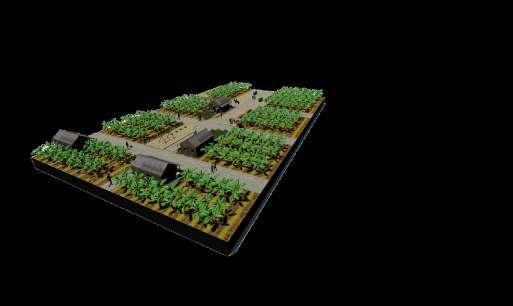
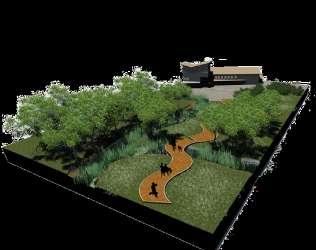
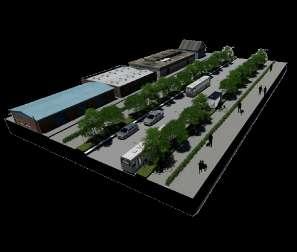
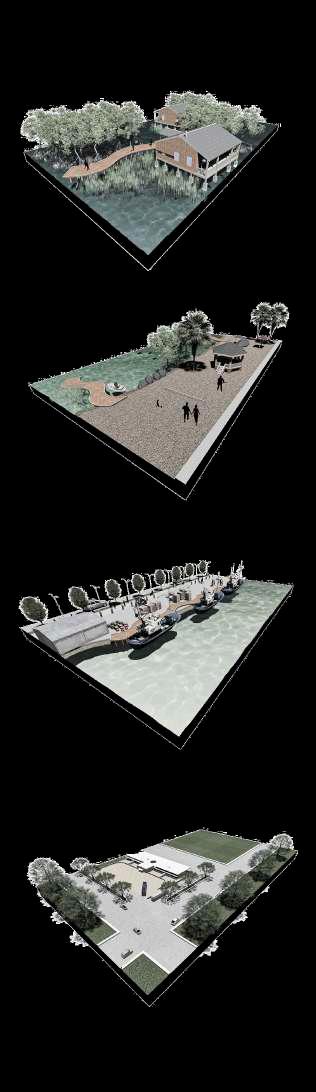
Likewise, these spaces are integrated by the bike path where people who live in the urban area can travel to the rural part, feeling identified with the external part of the municipality, giving greater importance to the inhabitants of the countryside and at the same time, a greater use of the bike paths.
 TRANSITIONAL DEVELOPMENT
TRANSITIONAL DEVELOPMENT
TRANSITIONAL DEVELOPMENT
2030
public space
the beach
"waffle" harbour
public space
expansion zone
"waffle" drain
URBAN industrial port
13
SUB-URBAN RURAL
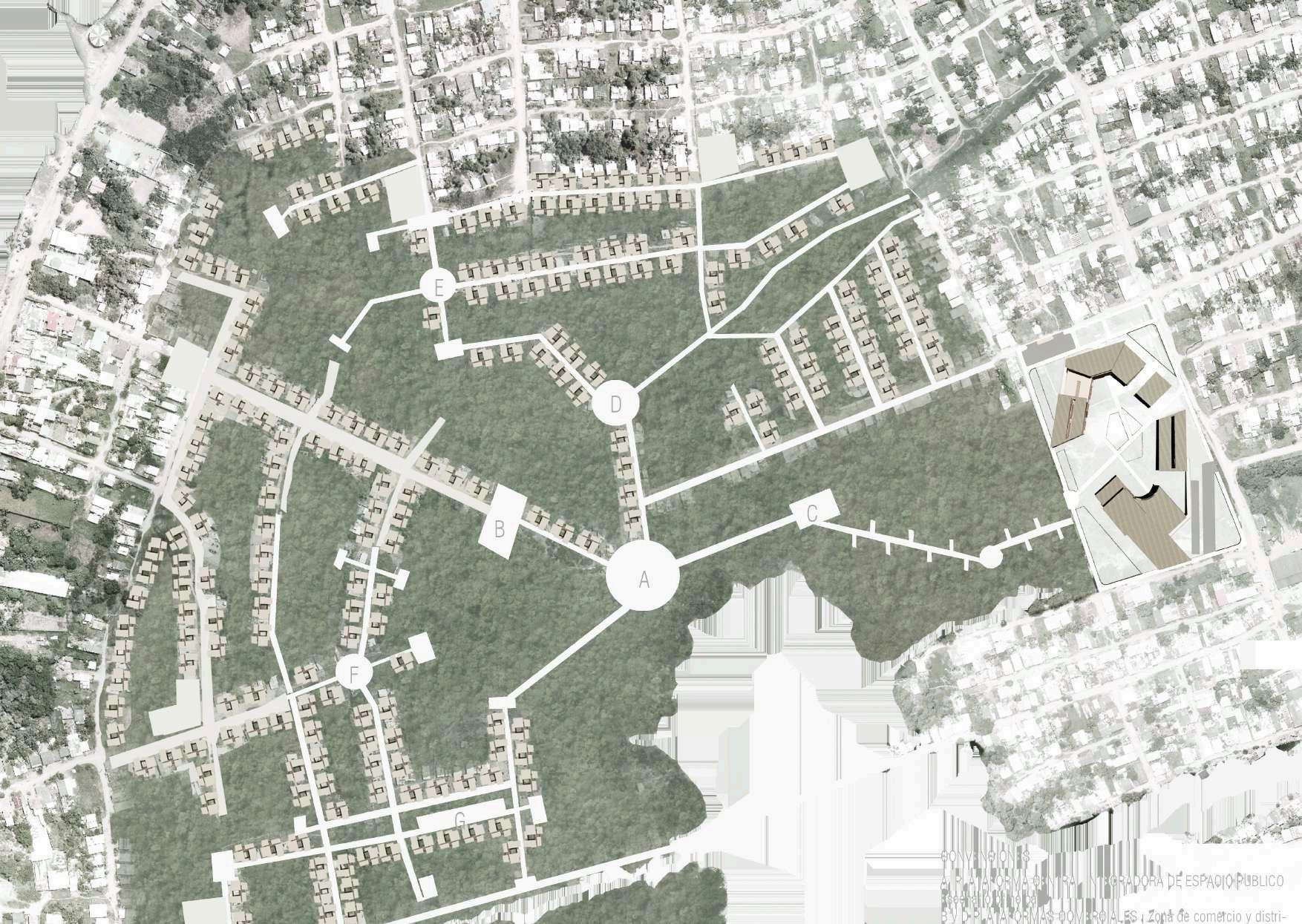
The main objective for the municipal development was to propose an initiative that generates new ways of living in equilibrium, guaranteeing the protection of the mangrove zone, harmoniously articulating integration strategies of the region and visualizing the future using efficiently natural and economic resources, without damaging the cultural identity of the area. This solution focuses on the recognition of environmental and cultural wealth, concerning their traditional spatial practices and techniques.
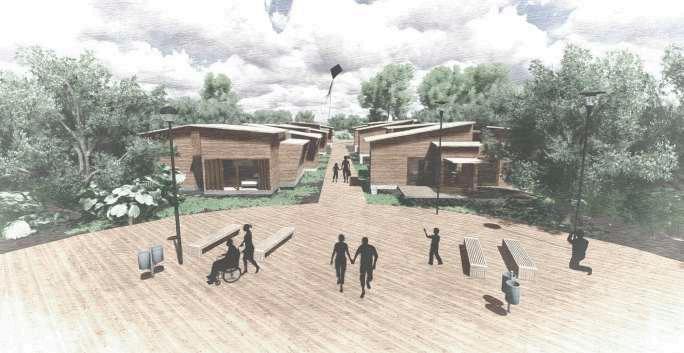

The basis of the design of the housing proposal was the Turbo PMI, in which the palaphitic houses existing in the sector and those affected by floods that are not palaphitic were analyzed. The typologies of resident families of the sector where different cultures converge were also taken into account:
Mainly the cluster definition can be specified as an integration system of hierarchical elements that make up a system that is supported between each of them. This concept is composed of the goals to be achieved for Pescadores sector along with 4 integrating components for this area.

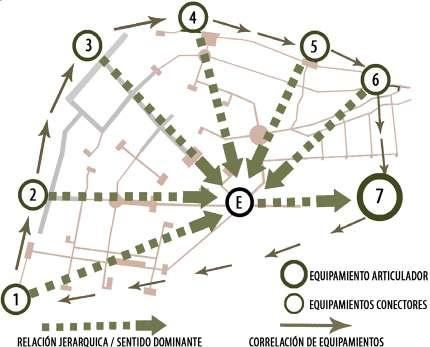
ARTICULATING FACILITIES
IMPLEMENTATION OF ALTERNATE CROPS
BASIC SERVICES EQUIPMENT SYSTEMS
COMMUNITY CULTURE SYSTEMS
CLUSTER INMPLEMENTATION MODEL
1. Choco 2. Cordoba 3. Caribbean 4. Andean Region
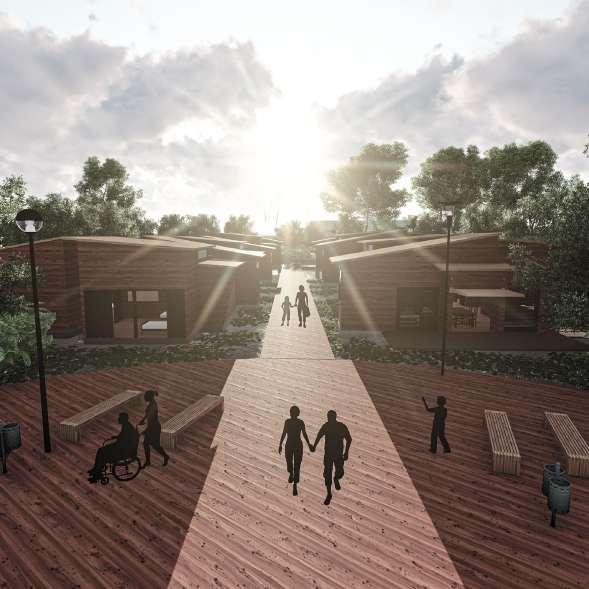
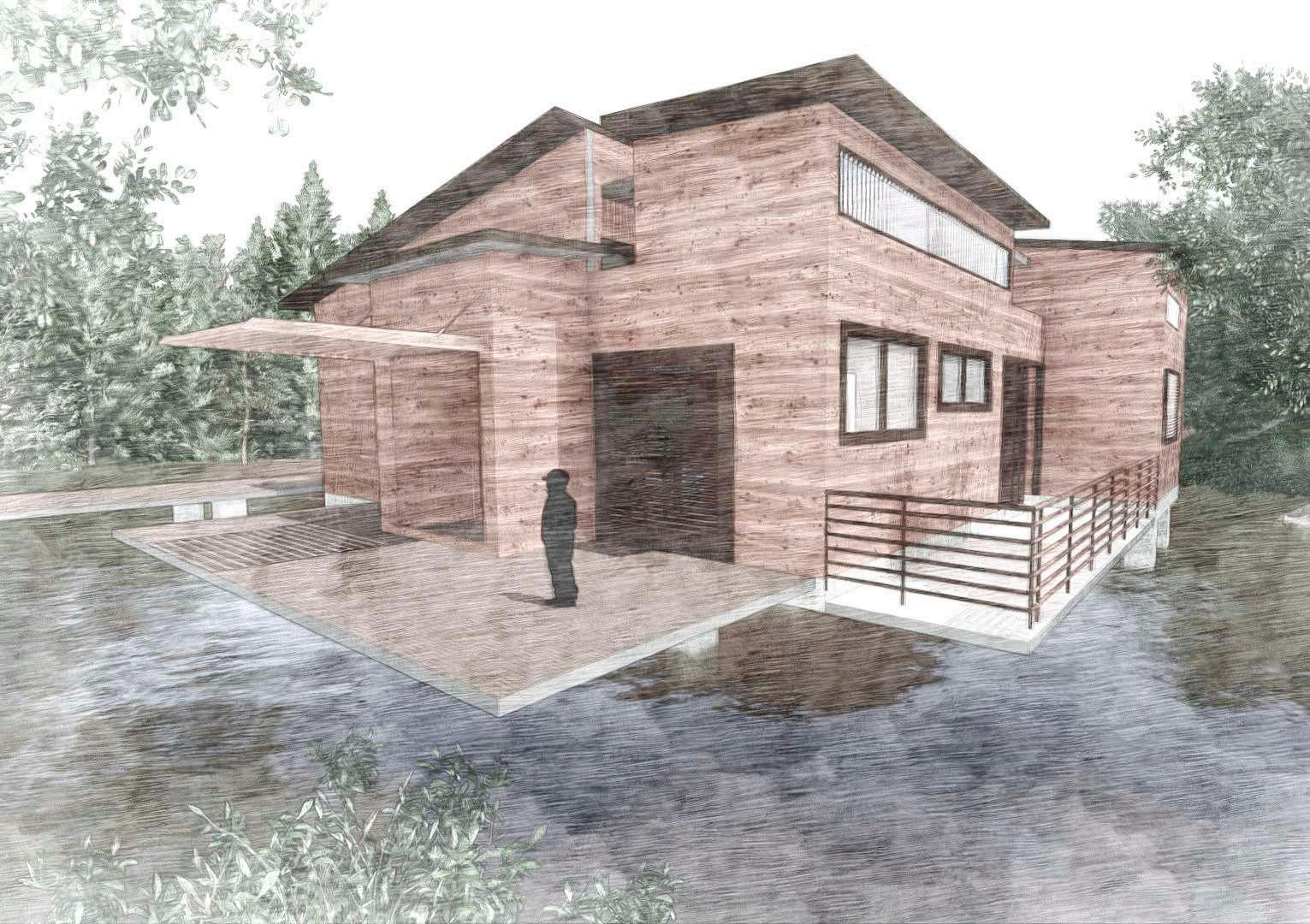
The aim was to intervene the Fishermen District of the municipality of Turbo, through the housing approach “VIDAS” (Self-built and Sustainable Housing of Turbo), which is an architectural proposal that will guarantee the balance between habitat, infrastructure and nature, positioning the sector as a transition from amphibious habitat to a dry habitat as a basis for the development of communities, where the comfort of the population is ensured taking into account an environment, and a social and economic base, directed towards the concept of “Healthy Housing”.
The cluster concept applied in the housing unit, facilitates the grouping of spaces, through a hierarchical element that allows distribution and correlations between the different places of the house.
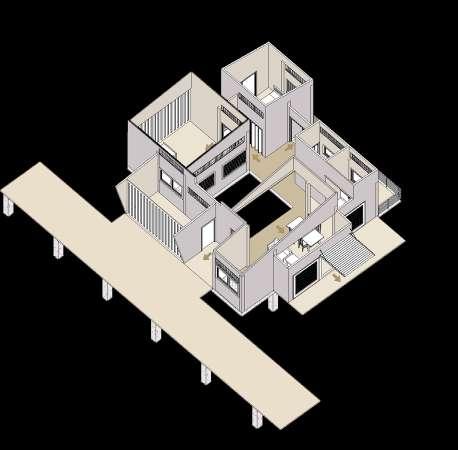
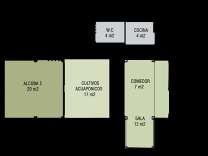
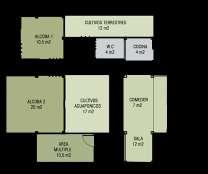
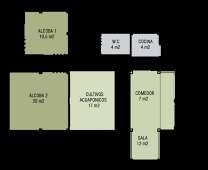
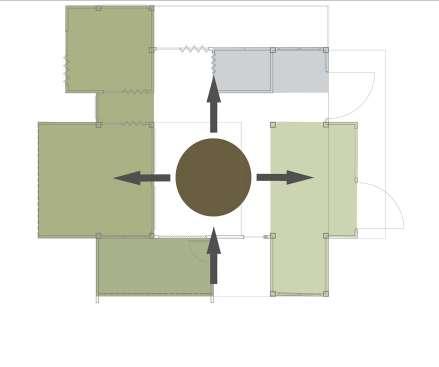
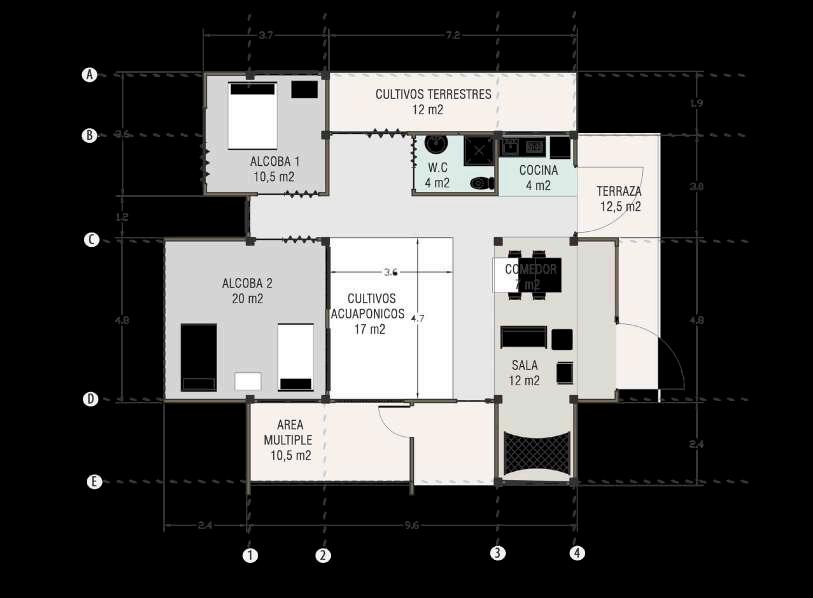
SERVICES SOCIAL PRIVATE MULTIPLE
concept aerial
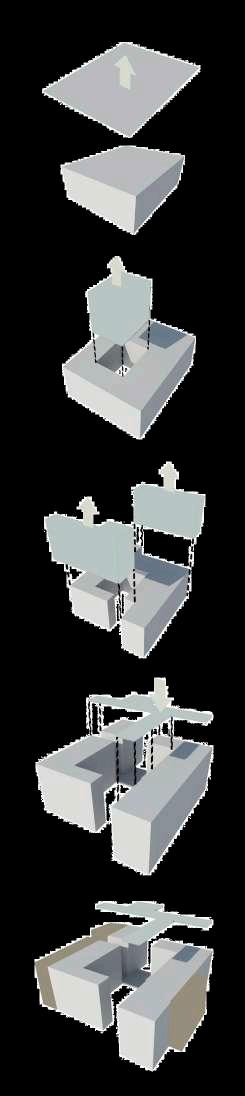
circulation addition external addition
AREA volume extrusion
view central substraction lateral subtraction


ibagué sustainable technologies institute
workshop vii / 2016 building and landscape architecture professor: william ariza universidad de ibagué ibagué, colombia
05
The Sustainable Technologies Institute has the aim to collaborate with a wide range of social actors the creation of technologies, allowing economic competitivity, social wellness and beneficial natural impacts. In countries like Colombia, where natural resources are a mainstay of economic and social growth, the implementation of educational standards concerning the natural environment is substantial in development; therefore, it is argued that spaces, where communities can be instructed, are facilities for segregated communities, often excluded by educational and economic barriers.
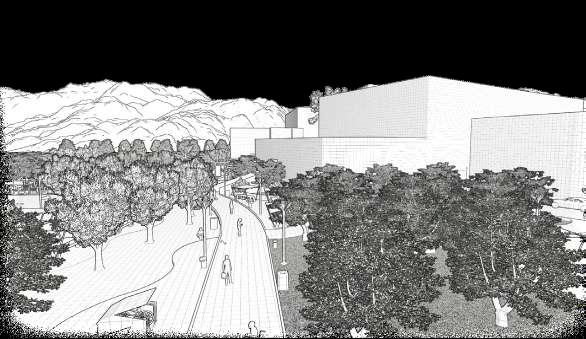
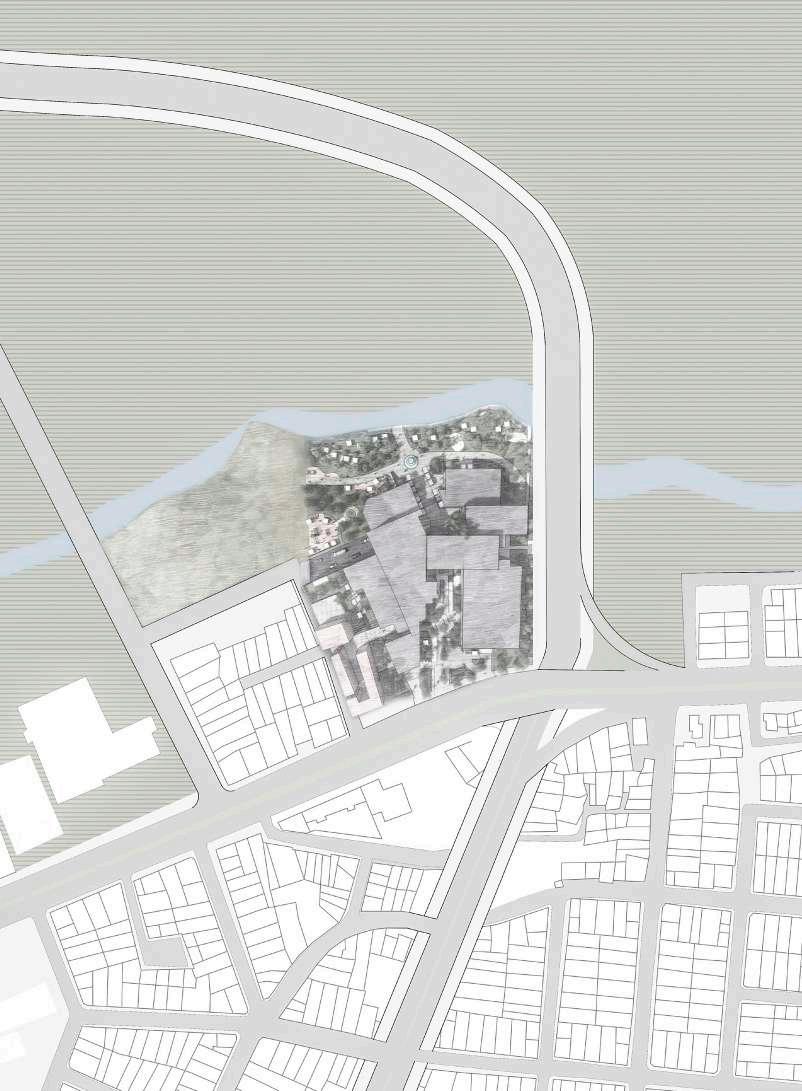
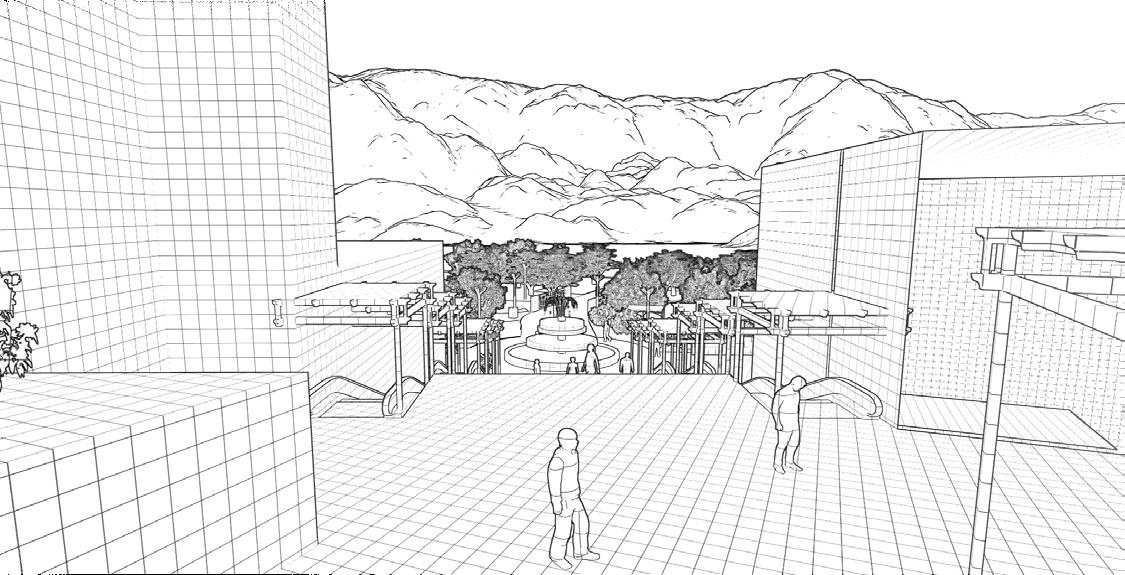
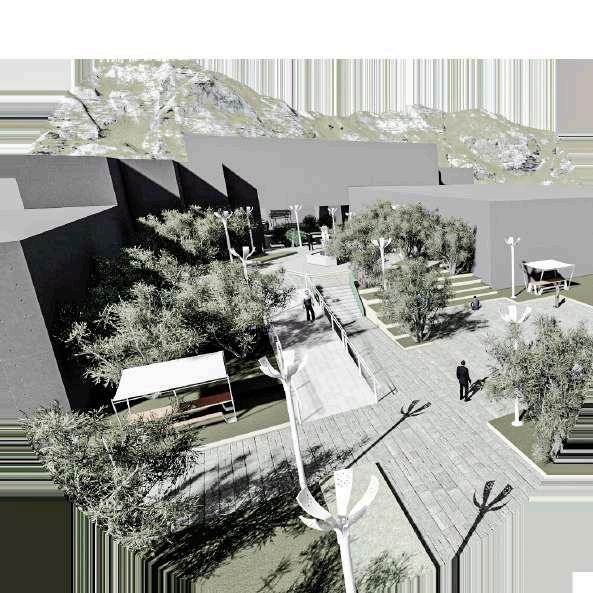
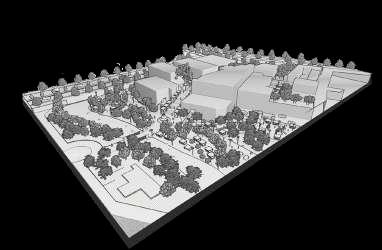
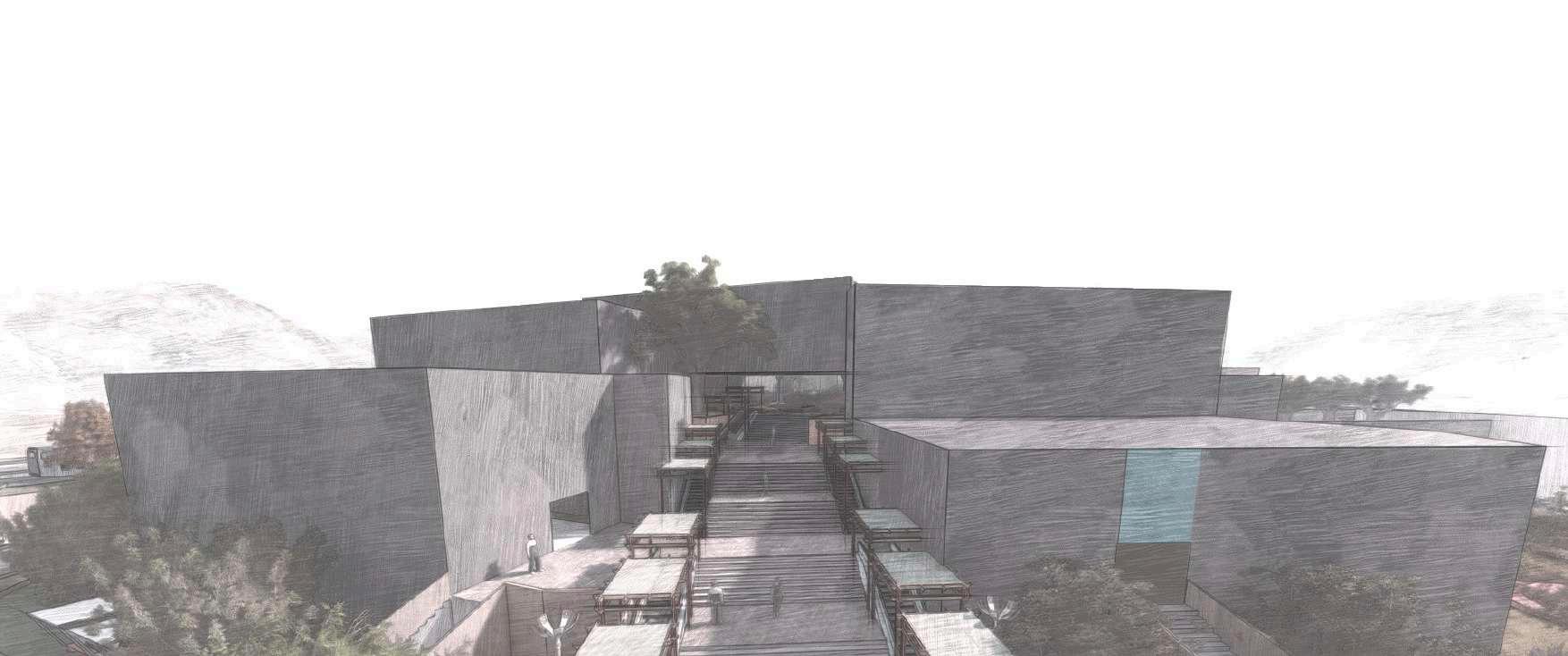
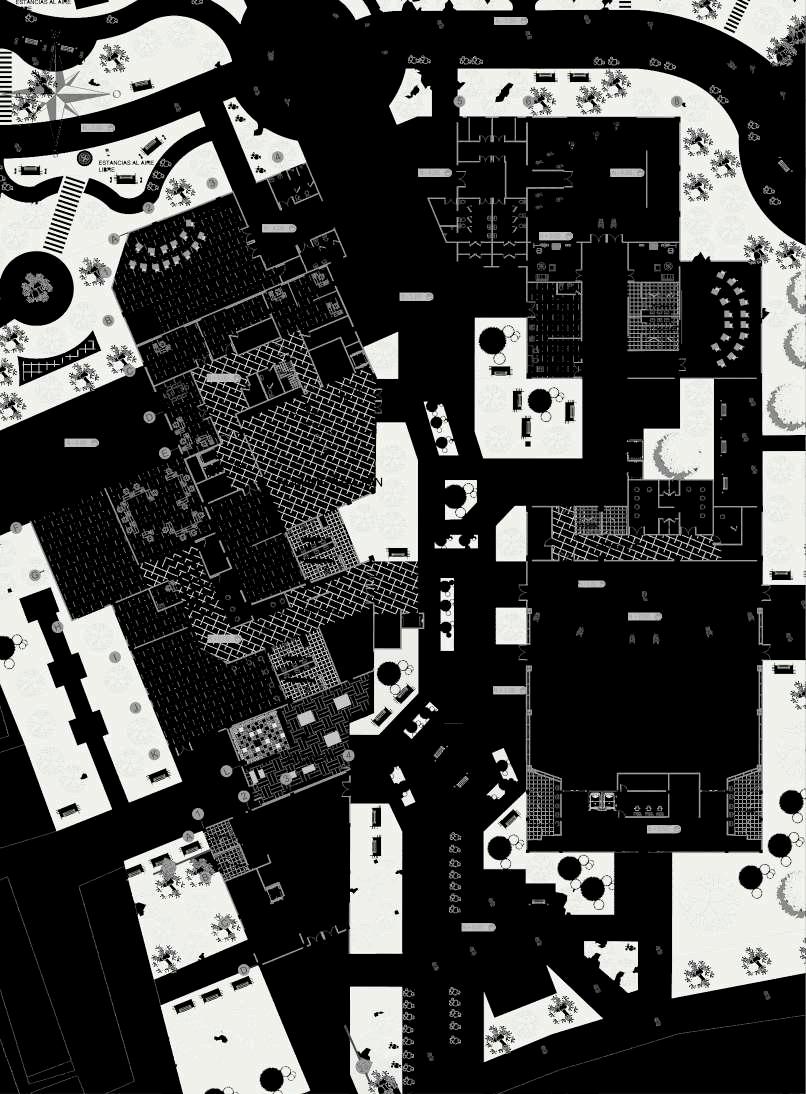
The general concept of the project was generated from different parameters established in the diagnosis of the space to intervene. Among these is the parallel, which was used at the time of arranging the volumes together with the inclination of the land, generating uninterrupted terraces and visuals.


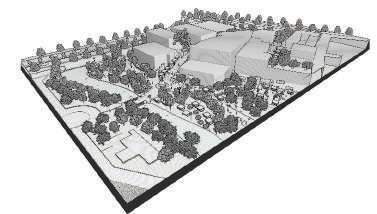


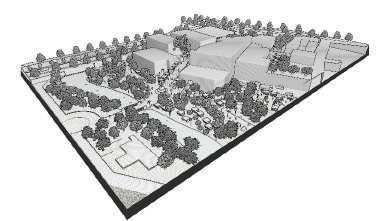
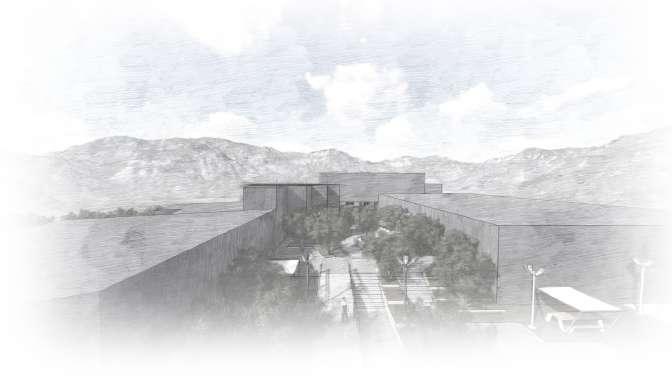
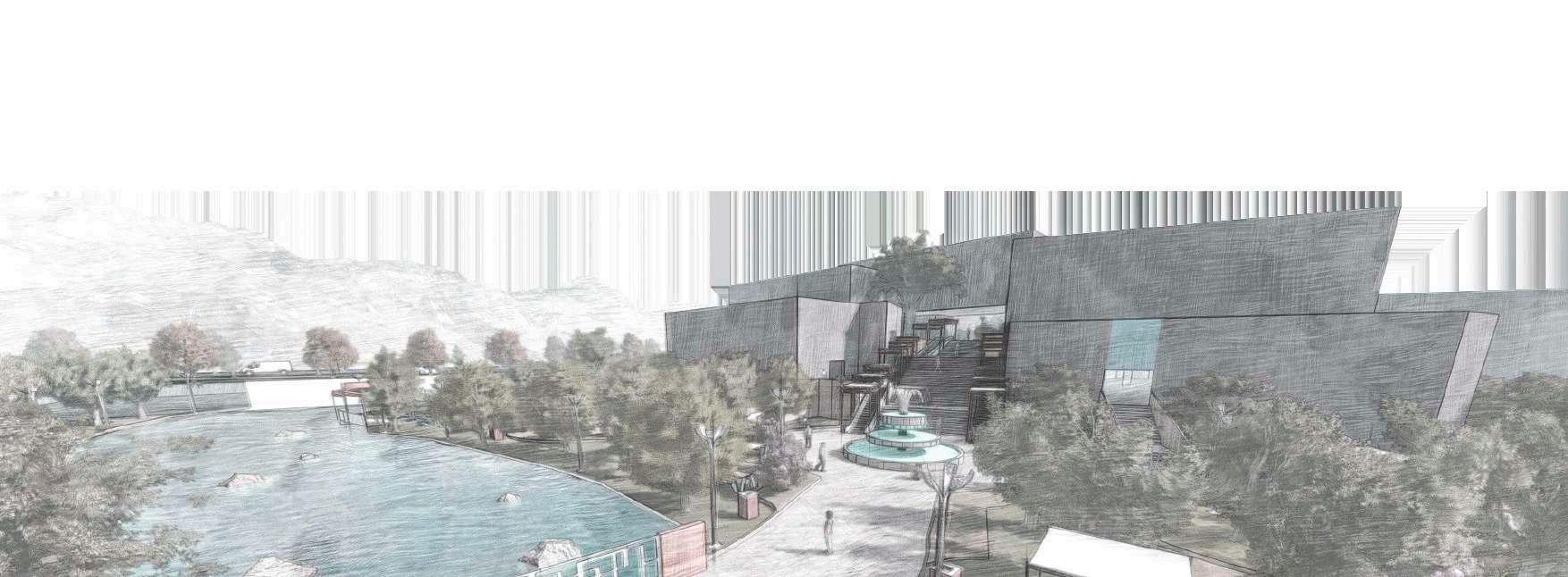
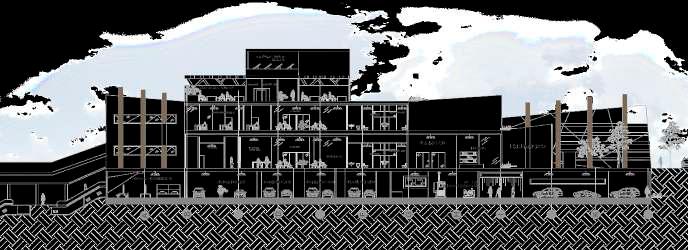
The second parameter that was used is related to the connectivity between two essential points, the entrance platform to the project and the proposed linear park along the existing riverbank. This generated that the project had transparency on the first level, connecting through the upper floors.




4
main circulations unobstructed visuals green areas
section 1
section 2
classrooms laboratories
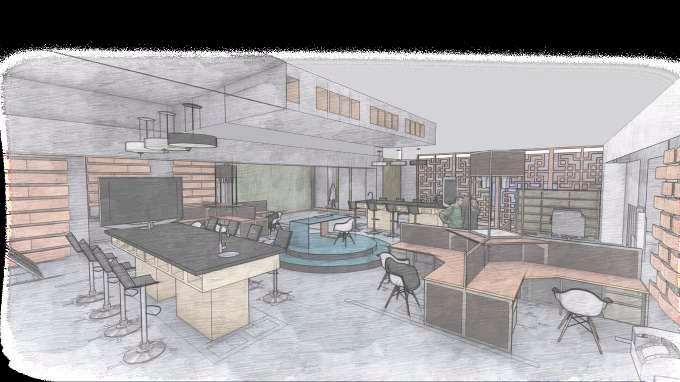
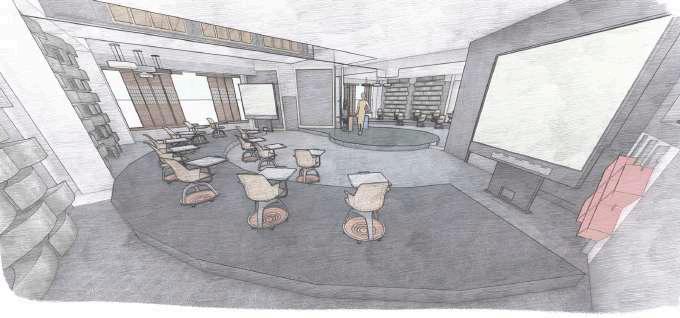
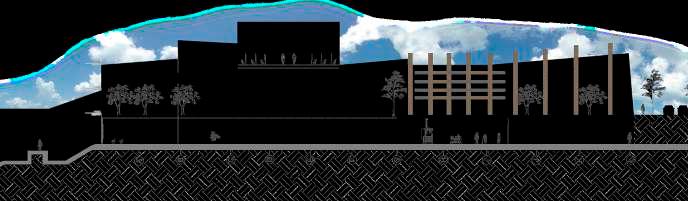
he main objective of the creation of an institute focused on sustainability is mainly due to the city's proposal regarding education in alternative technologies.
Architecturally, the project had laboratories, workshops and multipurpose classrooms which, through a design that respected LEED standards, with characteristics of “open spaces” and based on the reduction of energy and water consumption, in their respective phases of development. Additionally, the arrangement of the volumes takes into account natural characteristics such as the intensity and direction of the sun, the use of winds, in addition to the implementation of solar panels and a treatment plant to regenerate the course of the adjacent river.
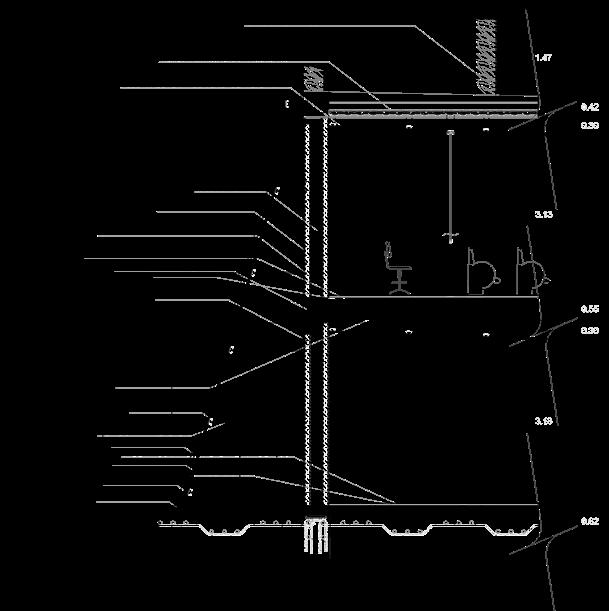
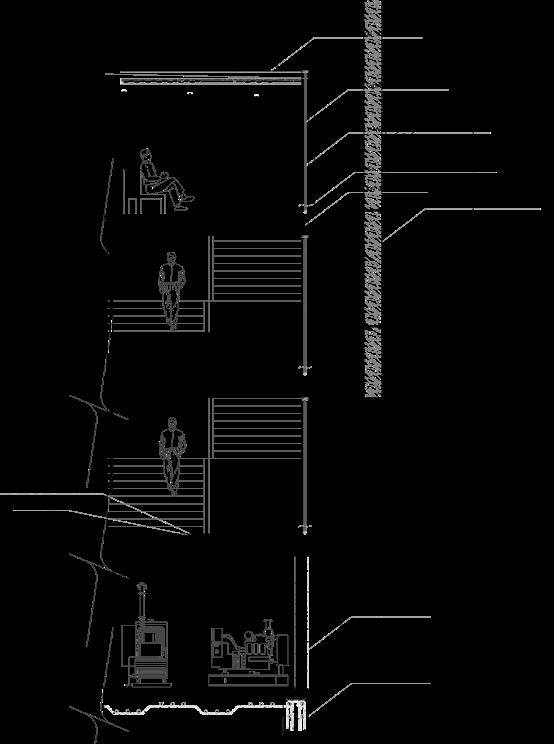
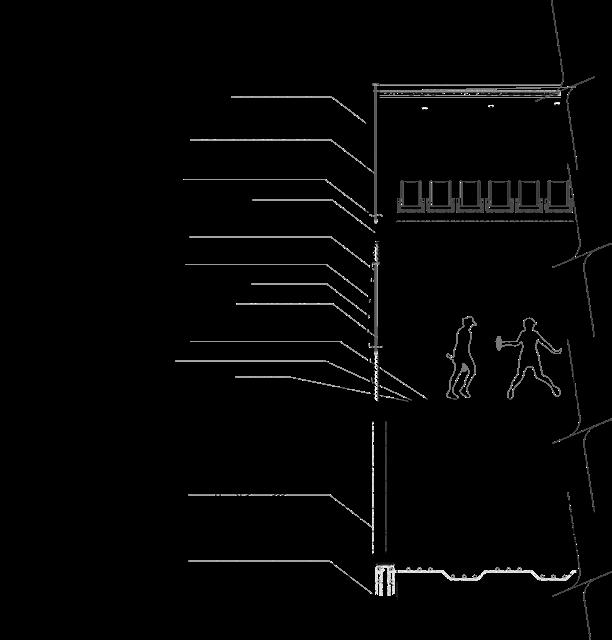
 constructive detail facade
constructive detail facade
administrative zone auditorium
classrooms and laboratories
constructive detail facade
constructive detail facade
constructive detail facade
administrative zone auditorium
classrooms and laboratories
A global solution of project and design architectural one of the elements constitutive, called also punctual project. In this, spaces were established for the continued permanence of the community and also to be flexible.