SELECTED DESIGNERS & INITIATIVES
DESIGN IMPACT
DELTA DESIGN BUILD WORKSHOP
BLINKLAB
INWARDS Healt h Policy Immigrants
Planningkplace Design Researc h Cr iminal Justice Design Training Design Ser vices Economic Development
“The inherent stigma/discomfort that most people have discussing race explicitly.”
trust & history
“Building the trust that has been lost between residents and city government. Also, showing the immense knowledge that residents in our local neighborhoods [have].”
Economic S ability
There were a number of common themes and topics addressed Common themes and topics addressed by the initatives are represented here. Larger text size indicates a more common theme within the initiatives.
systems change & complexity
When asked what their biggest challenge with regard to their initiative was, the respondents cited some specific common in addition to more general challenges such as finding funding or staff time.
Public Sa ety PAGE 1 OF 1
Is a design consultancy which recently published ‘Metathemes: Designing for Equitable Social Change,’ which brings together insights around inequity which emerged across dozens of projects the firm has completed. It generated a framework for equity work in the social sector.
Provides design-build services to primarily black communities in the Mississippi Delta, partners with black leadership in the area, and hires the the local population through construction apprenticeships.
Is a firm which specializes in architecture, materials and fabrication technologies and has an initiative working with asset-rich/ income-poor families of color who might have inherited a house but lack resources to build an income-generating secondary unit on their lot.
Enterprise Community Partners and Impact Design Hub convened an online ideas exchange which featured three initiatives working in different ways for greater racial equity. The recording of this conversation can be viewed here: www.enterprisecommunity.org/resources/live-online-event-design-racial-equity-recording-20191
THE DESIGN FOR EQUITY MEAL KIT
PAGE 2 OF 2
Yes Both No Working on It Unclear External Internal 44% 11% 10% 35% 57% 6% 37%
culture change
OR OUTWARDS FOCUS?
& THEMES
YOU TRACK QUANTATIVE DATA? CHALLENGES Wor
“One of our largest challenges comes in working with State and Federal agencies to help them understand the intricate and place based nature of these issues and how systems change is necessary to support effective solutions.“ Representation Par ticipation Ar ts
Enterprise Community Partners designed a multi-course intentional meal for offices, project teams, and communities to discuss issues racial equity in the design field, each of our own individual experiences with issues of race in design work, and how to be greater agents of racial equity through design. The meal kit can be downloaded here: www.designforequity.org/meal-kit.html
INTERVENTION POINTS
HEALTH ACTION PLAN











Boston Highlights









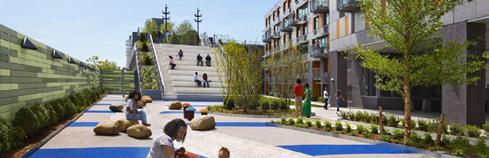
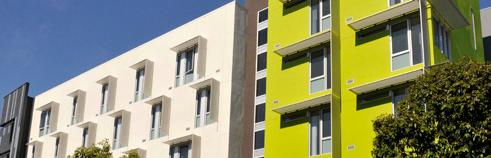
Health Action Plan Pilot Programs 2016, the Health Action Plan was piloted in five cities across the country as part of a process evaluation performed by Enterprise Community Partners. For the pilot, Enterprise observed how groups implemented the Health Action Plan, tracked time and costs associated with the process, and measured organizational capacity changes as result of performing Health Action Plan. Health Action Plan Process CHICAGO, IL HAMMOND, LA LOS ANGELES, CA NEW YORK, NY ATLANTA, GA As detailed in the Enterprise Green Communities Criteria, the Health Action Plan process consists of two major steps 1) Development of a Health Action Plan and 2) Implementation and Monitoring over time. The Health Action Plan Framework process is illustrated below. As developers, we are not service providers so we don’t think about what kind of room could be best for delivering services or how space can welcome people. Before this pilot, we didn’t realize that place and design can intersect to increase the health and wellness of our residents. - Mercy Housing Southeast “ DEVELOP A HEALTH ACTION PLAN IMPLEMENT & MONITOR 1 2 SELECT which strategies will be implemented and identify how will be implemented, including who is responsible for implementation. the impact of the Health Action Plan by developing monitoring plan that includes identification of performance metrics and parties responsible for collection. MONITOR COMMIT to embedding health into the project life cycle, including design, construction and operation. PARTNER with public health professionals who have expertise in public health and/or community health assist with data collection, community, engagement and future monitoring of outcomes. COLLECT & ANALYZE community health data by using existing data sources, new qualitative research and/or public meetings to understand how this information can influence design. ENGAGE community stakeholders to prioritize health needs by outlining health issues of the resident population to maximize health outcomes and receive input on strategies for addressing health needs. IDENTIFY design and intervention strategies that can be implemented within the project’s design, construction or operation to address the prioritized health needs of the community. ✓ How We Work Together The National Initiatives Enterprises’ National Initiatives consists of teams holding expertise in the areas of building sustainable organizations, equitable transit-oriented development, design leadership, resilience, health and housing, culture & creativity, economic mobility, green communities, and rural and Native American housing. To leverage the most of this expertise, teams work collectively on projects throughout the country to create opportunity for lowand moderate-income people through affordable housing in diverse, thriving communities. The highlights below are examples of our collective work. Partnership with Baltimore’s Bon Secours Hospital In this 20-year partnership between Enterprise and Bon Secours Hospital, the two entities have worked together to set deep roots in west Baltimore. Enterprise has helped Bon Secours fulfill its role as an anchor institution through affordable housing development leading to the development of over 800 affordable homes. Enterprise, through its Building Sustainable Organizations (BSO) Initiative also helped Bon Secours improve their asset management allowing for more informed decision making and financial security. Additionally, Bon Secours is currently hosting an Enterprise Rose Architectural Fellow on their staff for 2017 –2019. BALTIMORE, MD Health Action Plan Pilot To promote positive health outcomes in affordable housing design the Green Communities team worked with the Health & Housing team to integrate the Health Action Plan framework into the 2015 Green Communities Criteria. SKA Marin of East Harlem, NY is community development organization which was selected to pilot the implementation of the Health Action Plan for a 152 rental unit project located in East Harlem. Several strategies were adopted to help address the health concerns of their residents. Some of the strategies include: including design of an outdoor playground, a garden, inviting staircases to promote increased exercise, bicycle storage, and musical programming for social cohesion. NEW YORK, NY Rose Fellow: Jamie Blosser Time-frame: 2000-2003 Host Organization: Ohkay Owingeh Housing Authority Jamie spent her Rose Fellowship working with the Ohkay Owingeh Housing Authority where she worked with tribal members to develop Tsigo Bugeh Village a 40-unit rental development that incorporated community participation and storytelling about the life in the plaza. In 2009, after nearly decade of commitment to providing better housing for native communities, Jamie founded SNCC (Sustainable Native Communities Collaborative), where she continues to advance culturally and environmentally responsive housing within the American Indian communities. Today, the Rural & Native American Initiative works closely with SNCC to stay better connected to issues surrounding native communities. ETOD HOLD SANTO DOMINGO, NM SANTO DOMINGO, NM + Asset Management Best Practices & Strategies We help partners establish tools and processes for the ongoing asset management of their real estate portfolios. + Organizational Financial Analysis We assess partners’ organizational financial health, identify challenges and provide recommendations for future growth or operations. + Portfolio Financial Analysis We can help unravel the tangle of financial statements and audits to give owners and operators true sense of how individual properties are impacting their organization’s bottom line, and help think through strategies to improve portfolio performance. + Board Governance & Best Practices We are available to train nonprofit boards of directors on a variety of topics, including best practices in board governance and oversight. + Development of New Business or Program Lines We help nonprofits interested in exploring new program or business lines, strategize potential options, analyze the financial impact of different scenarios, and assemble business case. + Collaborations through Joint Ventures, Mergers & Matchmaking We provide guidance to nonprofits considering formal partnerships to ensure they have the knowledge and tools required to be successful. + Preservation Strategies The BSO team works with owners facing preservation challenges to understand their options, share best practices from elsewhere in the country, and explore strategies for their portfolio. + Strategic Business Planning We complete strategic plans and business plans to help position organizations for a strong and sustainable financial future. How We Work Together Enterprises’ National Initiatives consists of teams holding expertise in the areas of building sustainable organizations, equitable transit-oriented development, design leadership, resilience, health and housing, culture & creativity, economic mobility, green communities, and rural and Native American housing. To leverage the most of this expertise, teams work collectively on projects throughout the country to create opportunity for low- and moderate-income people through affordable housing in diverse, thriving communities. Asset Management University The Initiatives team provided technical assistance to nonprofit groups that had recently completed the New York office’s Asset Management University” program. BSO staff teamed up with colleagues on the Green & Resiliency teams to connect groups resources and toolkits for energy and water utilization benchmarking, resiliency planning, utility bill review, and other support. AMU would not have been possible without Enterprise’s BSO team and their holistic approach to asset management. Energy and utility use, along with resiliency planning are important aspects of asset management was great to be able to bring expertise in those topics to our partners. - Jenny Yang, Enterprise Program Officer New York, NY NEW YORK, NY
Provided “ Where the BSO team has worked Rose Fellow: Jamie Blosser Time-frame: 2000-2003 Host Organization: Ohkay Owingeh Housing Authority Jamie spent her Rose Fellowship working with the Ohkay Owingeh Housing Authority where she worked with tribal members to develop Tsigo Bugeh Village 40-unit rental development that incorporated community participation and storytelling about the life in the plaza. 2009, after nearly decade of commitment to providing better housing for native communities, Jamie founded SNCC (Sustainable Native Communities Collaborative), where she continues to advance culturally and environmentally responsive housing within the American Indian communities. Today, the Rural Native American initiative works closely with SNCC to stay better connected to issues surrounding native communities. SANTO DOMINGO, NM The Fellowship Become a Fellow Benefits of Being a Rose Fellow Benefits of Being a Rose Fellow Host Host of Fellow Applicants must have an accredited architecture degree in order to be considered for the fellowship: of fellows stay at their organization post fellowship Nonprofit place-based organizations may apply to host Rose Fellow and must be able to demonstrate the following: + NAAB-Accredited Professional Architecture degrees (B.Arch, M.Arch) are accepted for ALL positions + LAAB-Accredited Professional Landscape Architecture degrees (B.La, M.La) are accepted ONLY for the positions specified + Applicants must be eligible to work in the U.S. for the entire fellowship period + 2-year fellowship position + Annual stipend and benefits + Two annual, week-long fellowship retreats + Professional development allowance and opportunities + Ability to bring best practices in community-engaged design to affordable housing development + 2 years of capacity building assistance in development and community engagement + Integration into a national network of organizations sharing innovative practices + Commitment to excellence in design, sustainable building principles, affordable housing and meaningful community engagement + Track record of completing projects that benefit low-income families + Sufficient projects and pipeline to provide challenging assignments + Ability to mentor and provide effective training and supervision + Strong working relationship with local or regional Enterprise offices is desirable but not required 73% Where Rose Fellows have Worked How We Work Together Enterprises’ National Initiatives consists of teams holding expertise in the areas of building sustainable organizations, equitable transit-oriented development, design leadership, resilience, health and housing, culture creativity, economic mobility, green communities, and rural and Native American housing. To leverage the most of this expertise, teams work collectively on projects throughout the country to create opportunity for low- and moderate-income people through affordable housing in diverse, thriving communities. Architects working within community development spheres at such an integrated level means that we are impacting youth education, workforce development and training, and health factors as well. hope that in seeing the deep work we are doing in collaboration that design can be seen as a tool to help the entire community development industry move forward. - Jamie Blosser “ States that incentivize Enterprise Green Communities certification through various affordable housing finance programs States with certified Enterprise Green Communities properties States without Enterprise Green Communities Certification + Technical Assistance & Capacity Building We provide technical assistance directly and through robust network of consultants to plan for, or implement, sustainable practices of affordable housing organizations, community development corporations, and local and state governments. + Green Communities Criteria Certification The Enterprise Green Communities Criteria provides a clear and cost-effective framework to develop affordable housing that well-designed and environmentally sensitive. The Criteria grouped into the following categories: + State and Local Policy Work We work with state and local government agencies to promote and implement the green building practices within the affordable housing sector. Currently, 25 states have integrated the Enterprise Green Communities Criteria into their Qualified Allocation Plan (QAP) as an incentive for affordable housing tax credits. See our website for our Policy Toolkit + Guideline and Toolkits The Green Communities team has robust online resources center to help affordable housing organizations implement green best practices in areas of community engagement, effective design processes/charrettes, construction, operations & maintenance, green retrofits, resiliency and research in green building and affordable housing. + Innovative Capital Products As an affordable housing financial intermediary, Enterprise pairs our capital expertise with best practices in green affordable housing. Opportunities exist across our traditional capital products (LIHTC, Loan Fund, Multifamily Mortgage) as well as through innovative pilot programs. + Research and Public Speaking/Workshops + Enterprise’s comprehensive research and evaluation efforts seek to demonstrate the health, economic and environmental benefits of affordable housing developed and preserved to the Enterprise Green Communities Criteria Through this effort, we aim to prove that green homes are more affordable and healthier as a result of lower energy and water consumption and healthier living environments, thus enhancing the quality of life of residents. + The Enterprise Green Communities team is available for speaking engagements, typically delivering 40 workshops a year. How We Work Together Enterprises’ National Initiatives consists of teams holding expertise in the areas of building sustainable organizations, equitable transit-oriented development, design leadership, resilience, health and housing, culture & creativity, economic mobility, green communities, and rural and Native American housing. To leverage the most of this expertise, teams work collectively on projects throughout the country to create opportunity for low- and moderate-income people through affordable housing diverse, thriving communities. Health Action Plan Pilot To promote positive health outcomes in affordable housing design the Green Communities team worked with the Health & Housing team to integrate the Health Action Plan framework into the 2015 Enterprise Green Communities Criteria. SKA Marin of East Harlem, NY is a community development organization which was selected to pilot the implementation of the Health Action Plan for 152 rental unit project located East Harlem. Several strategies were adopted to help address the health concerns of their residents. Some of the strategies include: including design of an outdoor playground, a garden, inviting staircases to promote increased exercise, bicycle storage, and musical programming for social cohesion. Through participating in the pilot, I learned a lot about asthma triggers and about the health situation in East Harlem. I am sure that this process will lead to understanding how our buildings impact health. - Javier Garciadiego-Ruiz, SKA Marin NEW YORK, NY Services Provided “ Integrative Design Location + Neighborhood Fabric Site Improvements Water Conservation Energy Efficiency + Materials + Healthy Living Environment + Operations, Maintenance Resident Engagement The Green Communities Team handles the certification process and assists developers in achieving their green goals.
Services
Alma Balonon-Rosen Director, Relationship Management ABalonon-Rosen@enterprisecommunity.org Contact + Enterprise Rose Architectural Fellowship There have been five Rose Fellows based in Boston since 2012, more than in any other city across the country in the program’s 18-year history of over 70 fellows nationwide. These emerging architectural designers have brought more inclusive practices to the development of affordable housing and been able to innovate areas of designing for health and other population outcomes. The Fellows in Boston have specifically focused on work in the areas of: transit-oriented development, aging populations, and integrating creative placemaking into project design. + Creative Placemaking One of our local Rose Fellows was a recipient of our creative placemaking pilot grants in 2014. Since then, we’ve had four more recipients of the highly in-demand $5,000 Collaborative Actions grants to foster action-oriented, creative and collaborative projects that create positive outcomes and future neighborhood investment. + Housing for Older Adults Housing for older adults continues to be major program focus of Enterprise in Boston. Anticipating the major increase in the senior population, Enterprise has partnered with several local organizations to create the Senior Housing Learning Collaborative which will help identify and understand the unique housing needs of these aging adults and help address the major affordability gap experienced by several of Boston’s senior residents. + Design for Equity In 2014, we first conceived of Design for Equity as part of the Bruner Loeb Forum to convene host of local partners to fuel ideas and solutions to achieve equitable cities through design and community development. Since then, we have iterated on the concept to include 2015 curated blog series, and a 2016 gathering as a conference-within-a-conference at the Architecture Boston Expo (ABX) that highlighted where and why inequities exist in Boston and across the nation, and heard from innovative young designers on actual interventions that they were taking to address them. Now, in its latest form, the Design for Equity Meal has become vehicle in which communities and designers can address racial equity in their field and each contribute individual experiences with issues of race in their work especially the design profession – through an intentional meal. 100 Resilient Cities Better City + Asian CDC + Boston Architectural College + Barr Foundation + Beyond Walls Black in Design African American Student Union the GSD + Boston Department of Neighborhood Development + Boston Planning and Development Agency Boston Private Bank Boston Society of Architects + CHAPA + Codman Square NDC + Dorchester Bay Economic Development Corporation Fairmount CDC Collaborative Graduate School of Design at Harvard University + Harvard Mellon Urban Institute + Hebrew Senior Life Homeowners Rehab, Inc. Housing Innovation Lab + Jamaica Plain NDC + Jewish Community Housing for the Elderly + Joint Center for Housing Studies at Harvard University Just Start Lawrence Community Works + Madison Park Development Corporation + Massachusetts Association of Community Development Corporations MASS Design Mel King Institute + Neighborhood of Affordable Housing + Northeastern University + North Shore Development Corporation + NOAH, Inc. Nuestra Comunidad Development Corporation + One Square World + Mel King Institute + Santander Bank South Boston NDC Southwest Boston CDC Sustainable Solutions Lab at UMASS Boston + The Boston Foundation + The Neighborhood Developers Tufts Health Foundation Urban Edge Our Partners in Boston + Capacity Building for Non-Profit Partners Enterprise has been providing pre-development support for our partners for affordable housing since 2012 in wide variety of areas including staff and/or consultant support for both family and senior housing, resident services assessment, cost-control processes, asset management systems analysis, net-zero capacity building, and towards ground breaking studies and pilot programs linking senior housing and services. Client: Enterprise Community Partners Date: December 2017 Summary: Developed graphic styling and information for six fact sheets for the various initiatives of Enterprise Community Partners. Health Action Plan and the Green Communities Criteria: To encourage implementation of the Health Action Plan in affordable housing development, Enterprise included the Health Action Plan in Enterprise’s 2015 Green Communities Criteria as an optional criterion for certification. The optional criterion requires developers to 1) create a Health Action Plan and 2) develop a plan for implementing and monitoring their health-improving activities and programs. Enterprise Green Communities widely accepted and used in the affordable housing industry. In 2016 alone, Enterprise Green Communities certified 164 buildings. In an effort to improve the health of Americans through the built environment, Enterprise developed the Health Action Plan in partnership with the USGBC and The Health Impact Project The Health Action Plan is an innovative process for affordable housing developers to intentionally integrate resident health into the design and development or rehabilitation of their housing. Implemented through the Enterprise Green Communities Criteria this process pairs affordable housing developers with public health professionals to learn about and prioritize the health needs of their community through data analysis and community engagement. Armed with this knowledge, the developers and public health practitioners are then positioned to create Health Action Plan detailing the design and programmatic strategies that will be undertaken to improve the health needs of the residents they aim to serve. To follow through with these strategies and measure their impact, developers will then create an Implementation and Monitoring Plan. The Issue An estimated 70 percent of differences in health status are associated with people’s social and physical environment which includes housing. Therefore, the quality, affordability, stability and location of a person’s home can dramatically affect an individual’s health status. As result we are seeing striking disparities that adversely affect low-income communities. The Health Action Plan helps address this issue by outlining a process to identify key health concerns of resident populations and also improve the overall quality of affordable housing. Krista Egger Director, National Initiatives kegger@enterprisecommunity.org Contact
An integrative process for health promotion through affordable housing development. Residents & Community Stakeholders, Public Health Professionals and Affordable Housing Developers all central to the Health Action Plan process and their participation key to creating healthy, affordable homes. Healthy Home Who the Plan is For: The Health Action Plan framework was created specifically for use by affordable housing developers who seek to create healthier affordable homes for the residents they serve. The plan and resulting implementation strategy meant to serve the residents of affordable housing through improved health and wellness. What We Offer Enterprise is a willing partner of developers interested in pursuing a Health Action Plan in their next project with a range of services and resources including: + Technical Assistance + Partnership Facilitation + Research/Pilot Evaluation Findings + Monitoring Resources It Takes a Village Cultivating innovative solutions for thriving communities nationwide. To fulfill on Enterprise’s mission, the Initiatives team supports stakeholders working at all scales to build solutions that connect residents to opportunities that foster full and rich lives, and to support the development and preservation of diverse, equitable and thriving communities. We accomplish this through leadership in programmatic development, technical assistance, always with a resident’s first approach. We strive to link our work with the capital products and policy efforts of the greater Enterprise Solutions team in order to provide our stakeholders with seamless and additive solutions. The National Initiatives The National Initiatives team supports organizations across the country by providing technical assistance the following areas: Health & Housing Helping our partners promote healthy communities through innovative design, cross-sector collaborations and creative financing. Rural & Native American Housing Need tagline. eTOD Connecting affordable housing and transit. Building Sustainable Organizations Helping our nonprofit partners grow healthy and sustainable businesses for the long-term. Design Leadership Need tagline. Green Communities Making green the standard in affordable housing. Economic Mobility Need tagline. Culture & Creativity Need Tagline. Resilience Ready to respond. NATIONAL INITIATIVES How We Work: ENTREPRENEURIAL SPIRIT We look for ways to address the needs of our partners and champion flexibility which allows us to respond to the everevolving housing and community development eco-system. GETTING TO KNOW YOU We look for ways to recognize the people who are impacted by developmentas individuals and communities rather than abstract populations. LEVERAGE NATIONAL RESOURCES We seek out national resources that will help support the National Initiatives Team, local Markets and our internal partners. WORK WITH OUR MARKETS We look our partners the markets to provide us the invaluable insight provided by deep relationships on the ground. At the same time we seek out cutting-edge solutions that can be cultivated and deployed at the local level. PROGRAMS We work with the Market teams turn cultivated solutions into programmatic resources that have multiplicative value on the local and national level. XXXX XXXX XXXX Contact BUILDING SUSTAINABLE ORGANIZATIONS Helping our nonprofit partners grow healthy and sustainable businesses for the long-term. Enterprise’s Building Sustainable Organizations (BSO) initiative helps nonprofit developers, operators, and owners of affordable housing ensure a financially strong future. The BSO team can assist in business and strategic planning, improving portfolio performance, protecting public investment, and maintaining programs and assets that are important to the communities they serve. The Issue Much of the county’s affordable housing inventory developed, operated, and owned by nonprofit affordable housing organizations. After the recession, financial hardship hit many of these organizations and several were forced to shut their doors, resulting in lost homes and opportunities for low- and moderateincome populations. Our goal is to help nonprofit housing organizations maintain a strong financial future and to ensure the continued development and preservation of affordable homes. Since 2014, Enterprise has helped 35 organizations, owning over 28,000 housing units, improve their financial positions and affordable housing stewardship. & 35 Who We Help What We Offer The BSO initiative provides technical assistance services to in-need nonprofit institutions through grants and program development. We offer: + Asset Management Best Practices & Strategies + Organizational Financial Analysis + Portfolio Financial Analysis + Strategic Business Planning + Preservation Strategies + Collaborations through Joint Ventures, Merges and Matchmaking + Board Governance & Best Practices + Development of New Business or Program lines + Affordable housing developers and owners with mission to maintain safe, healthy and energy-efficient housing with access to opportunity for residents + Community-based organizations working on behalf of residents to build affordable and inclusive neighborhoods + Social service agencies that serve communities, improving outcomes for low-income residents Carrie Wagner Program Director cwagner@enterprisecommunity.org Contact =1,000 affordable housing units organizations The National Initiatives The BSO initiative is part of Enterprise’s National Initiatives team whose goal is to support organizations across the country by providing technical assistance in the following areas: Design Leadership Green Communities eTOD Economic Mobility Culture & Creativity Resilience Health & Housing Rural & Native American Housing Building Sustainable Organizations Elevating health and social outcomes for residents through design and engagement. The Need for Rose Fellows Communities of opportunity that are thoughtfully and sustainability designed a goal for many of our place-based nonprofit partner organizations. However, the reality is that budgets and limited resources can prevent these organizations from realizing the full potential of their physical interventions many of which represents the biggest capital investments in their respective communities. The Rose Fellowship offers an opportunity for host organizations to increase their capacity in design, while also being stretched to reconsider their fundamental approach to the design and development process that is centered on the inclusion of residents they serve. The innovative model of the Enterprise Rose Architectural fellowship embeds architectural designers in place-based community development organizations who are committed to improving the quality of design, sustainability and community engagement within their projects and throughout their organization. Fellowship Services Fellows provide additional capacity to community development organizations in the following areas: + Design: Fellows use their architectural skills to develop buildings, site designs, and neighborhood plans that improve economic, social, cultural, health, and environmental outcomes. + Community Engagement: Fellows engage residents, local leaders, advocates, and government officials in community-based design that reflects residents’ needs and desires. + Sustainability: Fellows integrate Enterprise’s Green Communities Criteria and other leading sustainable building methods to transform the design, location and building of affordable homes for people of low-income. The National Initiatives The Rose Fellowship part of Enterprise’s Design Leadership initiative. Enterprise’s National Initiatives teams work to support organizations across the country by providing technical assistance in the following areas: Design Leadership Green Communities eTOD Economic Mobility Culture & Creativity Resilience Health & Housing Rural & Native American Housing Building Sustainable Organizations THE ROSE FELLOWSHIP Raymond Demers Senior Director rdemers@enterprisecommunity.org Contact 2001 2018 The Rose Fellowship in Numbers Over 18 years there has been 73 fellows that have been hosted over 45 different cities nationwide and who have partnered with 81 host organizations to design and develop more than 90 communities facilities and over 11,000 units of affordable housing. Making green the standard in affordable housing. Enterprise’s Green Communities initiative is fundamentally changing the way that developers, investors, builders, and policymakers make the transition to a green future for affordable housing. To achieve this, Enterprise launched the Enterprise Green Communities Criteria which offers a clear, cost-effective framework to incorporate green building practices into affordable housing developments. The Criteria was created in consultation with the nation’s leading environmental, public health and green buildings experts in hopes to ensure that people living in affordable housing are healthier, spend less on utilities and have more opportunities through their connections to transportation, quality food and health care services. The Issue Low-income families and individuals are the most vulnerable to and most negatively impacted by environmental hazards, especially by threats found building materials. And still many affordable housing developments are constructed without measures to improve environmental, health and social impacts due to the perception that doing so would increase project costs. The Green Communities team provides a roadmap for affordable housing developers to extend the economic, health and environmental benefits of green building to the communities they serve without compromising affordability. As of 2017 projects have been certified under the Enterprise Green Communities Criteria and require or incentivize certification to the Enterprise Green Communities Criteria as a condition of affordable housing financing. What We Offer We offer a range of services to help developers, investors, builders, and policy makers transition to green future for affordable housing. This includes: + Green Building Certification + Technical Assistance Capacity Building + State and Local Policy Work + Innovative Capital Products + Guidelines/Toolkits + Public Speaking/Workshops and Research Who We Help + Nonprofit Affordable Housing Owners, Developers, Operators + Designers, Builders and Operators of Affordable Housing + Public Entities Government and Municipalities + Housing Finance Agencies Krista Egger Director, National Initiatives kegger@enterprisecommunity.org Contact The National Initiatives The Green Communities initiative part of Enterprise’s National Initiatives team whose goal is to support organizations across the country by providing technical assistance in the following areas: Design Leadership Green Communities eTOD Economic Mobility Culture Creativity Resilience Health & Housing Rural Native American Housing Building Sustainable Organizations GREEN COMMUNITIES 799 states & municipalities 25 9
A laboratory for innovative, green, resilient, equitable, and healthy design in affordable housing. Enterprise in Boston In Boston Enterprise works alongside innovative partners to pilot, test and discuss some of the leading, national best practices in areas of housing and services for older adults with the goal of providing seniors with the ability to age in their community, and affordable housing that is designed to be green, healthy, resilient, and equitable for Boston’s residents. Our work in Boston especially significant given pressures of high cost housing market resulting from an extremely strong economy combined with a community development landscape characterized a strong desire to collaborate and implement solutions. Our History in Boston Jim Rouse, developed Fanueil Hall nearly a decade before he founded Enterprise in 1982. At that time Boston was perceived to be in urban decline and the newly developed festival marketplace was seen as an innovation, later replicated in cities and towns across the country. When Enterprise increased its activity in Boston starting in the late 2000s, initially through tax credit investments for rehab and new construction, the Boston economy had become one of the most expensive real estate markets in the country. During the past 10 years, Enterprise has worked with many community development corporations in and around the City of Boston, as well as local municipal governments, to finance and help design, green, equitable and resilient affordable housing. Who We Work With + Nonprofit community development organizations who seek to improve the quality and availability of their affordable housing especially in areas of design, sustainability, and equity + City and local government agencies committed to housing, community development, equity and resilience + Affordable housing developers who want to ensure their current and future residents have opportunity to move towards economic self-sufficiency and the ability for seniors age in the community. + Health care providers and local hospitals who are dedicated to improving health and well-being for residents and aging adults in the region + Universities and colleges that offer and support programs in design + Philanthropic organizations with a commitment to equitable community development, and especially affordable housing At a Glance 5 Rose Fellows hosted in Boston since 2012 4 Collaborative Action Grants awarded from Enterprise to help foster action-oriented, creative and collaborative projects $363M Awarded in Green Charette grants to advance development projects Greater Boston $126M That has been invested by Enterprise through the LIHTC program resulting in development 871 units Provided help build capacity within Boston area CDCs serve the needs of the aging population $280K How We Work + Grant support – We have provided grant support to our partners to work with Enterprise Green Communities, for pre-development activities + Leadership Opportunities We have convened together our partners in the fields of affordable housing, green communities, aging populations, equity, and design to explore new opportunities and best practices that can be implemented within greater Boston region and nationwide + Technical Assistance Our Staff in Boston has been able to connect our local partners with expertise in financing affordable housing, green communities, design, resiliency, culture & creativity, and healthy housing to further support opportunity for Boston’s low and moderate income residents We accomplish much of our work through grant support, leadership opportunities and technical assistance.
OUR WORK IN BOSTON
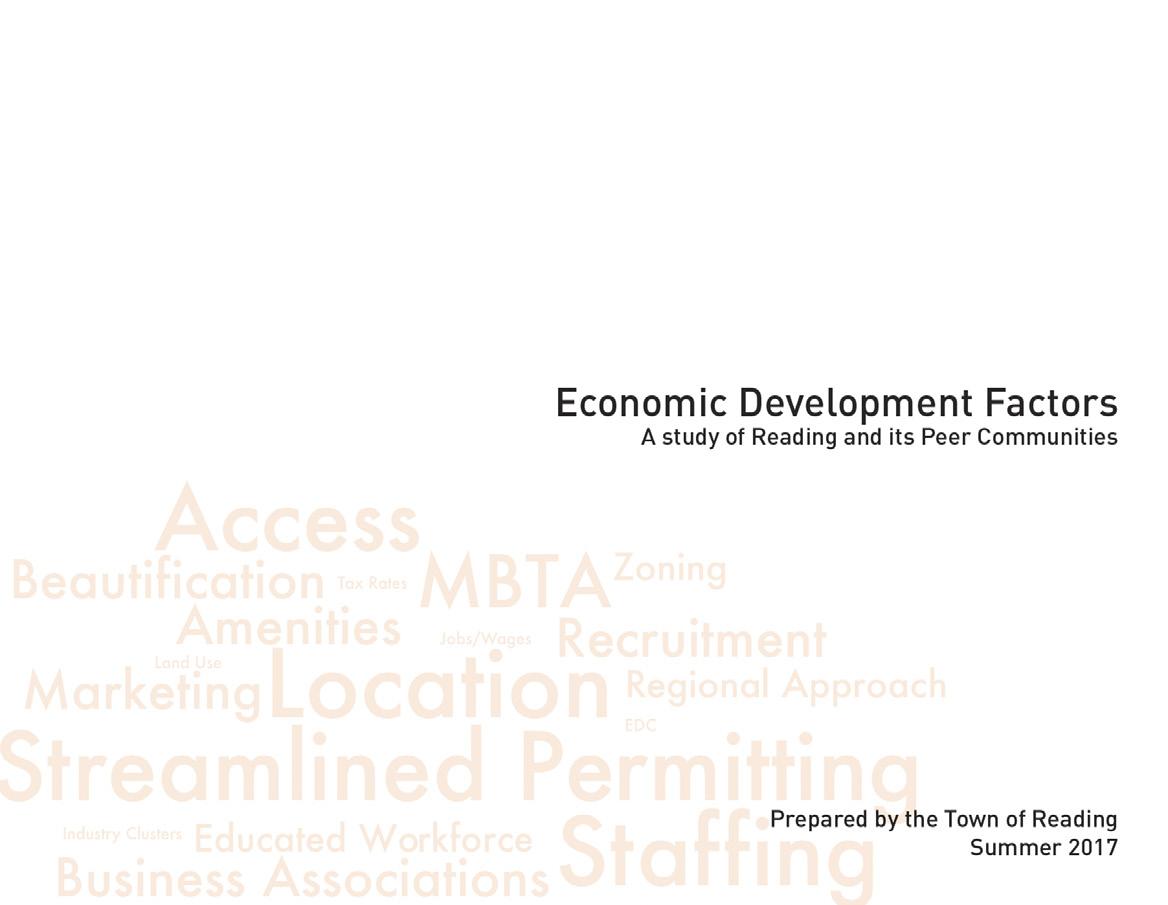
Client: Town of Reading
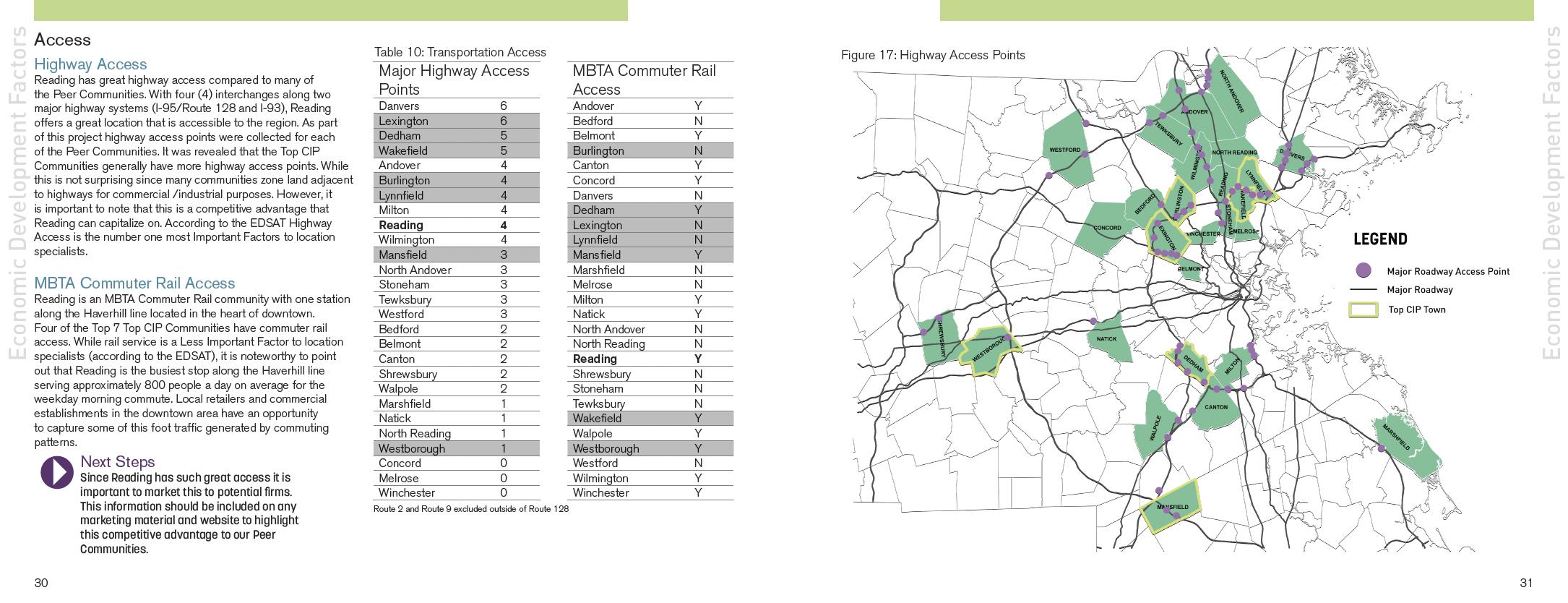
Date: 2016-2017
Summary: Through research and data collection identified economic development factors that influence growth among Reading’s 26 Peer Communities.


Client: CSS, Boston
Date: Summer 2016
Chapter 3: Land Use and Zoning Comprehensive Master Plan 3.5 Prior to 1940 1950-1959 1960-1969 1940-1949 1970-1979 2000-2009 2010-Present 1990-1999 1980-1989 l e g e n d Building Construction Year N 0 0.5 1.0 1.5 miles XX/2016 Development History Route 9 Route 9 Speen Street Speen Street Cottage Street Oak Street MassPike MassPike Eliot Street Eliot Street Route 27/ Main Street Route 27/ Main Street Route 135/ Central Street Route 135/ Central Street FISK POND DUG POND NONESUCH POND PICKEREL POND LAKE COCHITUATE LAKE COCHITUATE JENNINGS POND LAKE COCHITUATE Framingham wayland Weston wellesley dover sherborn Map 3.2: Development history Well Protected by Article 97 State Owned Municipal Owned Private/Non-Profit Owned Chapter 61, 61A, 61B Status Conservation Restrictions Conservation Comm. Owned Agricultural Preservation Restriction Non-Profit Owned Unknown Article 97 Protection Municipal Owned - No Protection State Owned - No Protection L e g e n d Level of Protection Well Protected by Management Well Protected by Restriction Limited Protection by Status/Restriction Route 9 Route 9 Speen Street Speen Street Cottage Street Oak Street MassPike MassPike Eliot Street Eliot Street Route 27/ Main Street Route 27/ Main Street Route 135/ Central Street Route 135/ Central Street Framingham wayland Weston Wellesley Dover Sherborn Level of Protection Well Protected by Article 97 State Owned Municipal Owned Private/Non-Profit Owned Chapter 61, 61A, 61B Status Conservation Restrictions Conservation Comm. Owned Agricultural Preservation Restriction Non-Profit Owned Unknown Article 97 Protection Municipal Owned - No Protection State Owned - No Protection L e g e n d Level of Protection Well Protected by Management Well Protected by Restriction Limited Protection by Status/Restriction Route 9 Route 9 Speen Street Speen Street Cottage Street Oak Street MassPike MassPike Eliot Street Eliot Street Route 27/ Main Street Route 27/ Main Street Route 135/ Central Street Route 135/ Central Street Framingham wayland Weston Wellesley Dover Sherborn Level of Protection FISK POND DUG POND PICKEREL POND REED POND LAKE COCHITUATE MUD POND JENNINGS POND MORSES POND PAINTSHOP POND LAKE COCHITUATE LAKE WABAN Dav sBrook BoulderBrook Course Broo k Charles River Conservation Neighborhoods within 1/4 Mile of Publicly Open Space Conservation Municipal Non-Profit Land Trust Private State Minor Trail Alternative Trail Main Trail Proposed Trail Rail Trail Unmarked Trail Other Town Trail Trail Head Historical/Cultural OWNERSHIP Trails Route 9 Speen Street Speen Street Cottage Street Eliot Street Eliot Street Route 27/ Main Street Route 27/ Main Street 135/ Street Route 135/ Central Street N 0 0.5 1.0 1.5 miles wellesley dover sherborn COCHITUATE AQUEDUCT COCHITUATE STATE PARK HUNNEWELL TOWN FOREST J.J. LANE PARK PEGAN COVE SASSAMON-TRACE GOLF COURSE TIMOTHY COOLIDGE HILL COOLIDGE HILL COOLIDGE WOODS BROAD’S HILL BLUEBERRY HILL PEGAN HILL BROADMOOR WILDLIFE SANCTUARY MUMFORD WILDLIFE FOREST SUDBURYAQUEDUCT EISENMENGERTRAIL TAKAWAMBPAITTRAIL SOUTHNATICK DAMTRAIL MIDDLESEX PATH FUTURE COCHITUATERAIL TRAIL EASEMENT TRAIL MATHWORKS/ SARGENT FIELD LOOKOUT FARM NATICK COMMUNITY ORGANIC FARM Map 7.2 open space by level of protection FISK POND DUG POND DUDLEY POND NONESUCH POND PICKEREL POND REED POND LAKE COCHITUATE LAKE COCHITUATE MUD POND JENNINGS POND MORSES POND PAINTSHOP POND LAKE COCHITUATE LAKE WABAN B B o k D Bro B l o o k Bou d Bo k Bould rB ook Cou B o k Cha les Rive B v a B ok l e g e n d Conservation Recreation Agriculture Water Utility School Neighborhoods within 1/4 Mile of Publicly Accessible Open Space Recreation& Conservation Municipal Non-Profit Land Trust Private State Minor Trail Alternative Trail Main Trail Proposed Trail Rail Trail Unmarked Trail Other Town Trail Trail Head Historical/Cultural pRIMARY PURPOSE OWNERSHIP Trails Route 9 Speen Street Speen Street Cottage Street MassPike MassPike Eliot Street Eliot Street Route 27/ Main Street Route 27/ Main Street Route 135/ Central Street Route 135/ Central Street N 0 0.5 1.0 1.5 miles Framingham wayland Weston wellesley dover sherborn WINTER WOODS COCHITUATE AQUEDUCT PINE HILL COCHITUATE STATE PARK HUNNEWELL TOWN FOREST J.J. LANE PARK MORENCY WOODS PEGAN COVE SASSAMON-TRACE GOLF COURSE TIMOTHY COOLIDGE HILL COOLIDGE HILL COOLIDGE WOODS BROAD’S HILL BLUEBERRY HILL PEGAN HILL BROADMOOR WILDLIFE SANCTUARY MUMFORD WILDLIFE FOREST SUDBURYAQUEDUCT EISENMENGERTRAIL AKA A BPAITTRAIL SOUTHNATICK DAMTRAIL MIDDLESEXPATH FUTURE COCHITUATERAIL TRAIL NSTAR EASEMENT TRAIL NSTAR EASEMENT TRAIL MATHWORKS/ SARGENT FIELD LOOKOUT FARM NATICK COMMUNITY ORGANIC FARM HULTMAN AQUEDUCT existing open space Comprehensive Master Plan Chapter 7: Open Space, Recreation and Natural Resources 7.13
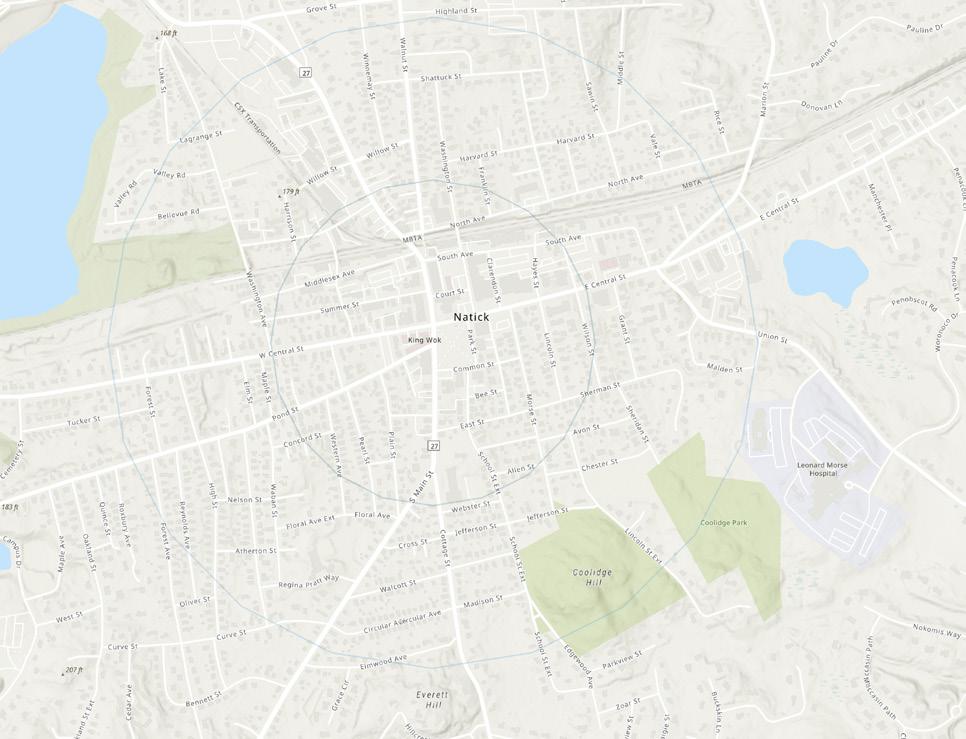
Summary: Performed GIS mapping and analysis as part of the Natick Master Plan. Over 15 maps developed in topics of housing, conservation, recreation, land use, zoning, public services, geology, and historical assets.