EDITOR’S NOTE: N’Kenge’s That’s Love The Dorothy Dandridge Musical , featured on the cover of the February Jersey Jazz , has decided to extend its development timeline to ensure the production meets the artistic and technical scope of the story. The production had been scheduled for February 19-March 8 at the Axelrod Performing Arts Center in Deal, NJ.
CORRECTION: Pianist Michele Rosewoman’s name was misspelled in the Editor’s Choice column in the February Jersey Jazz.
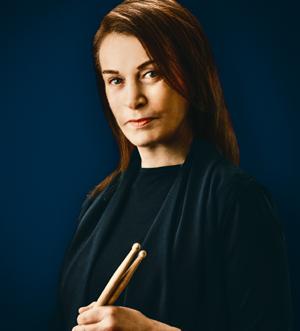
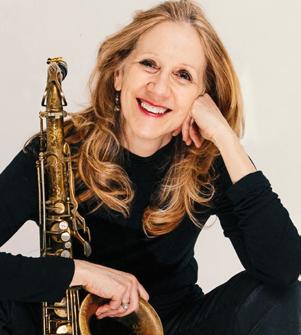
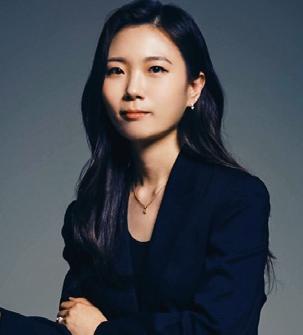
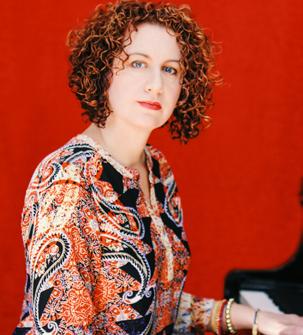
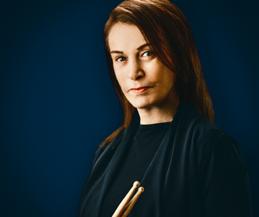
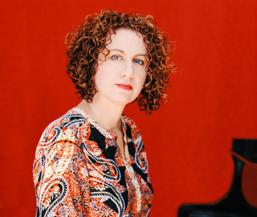
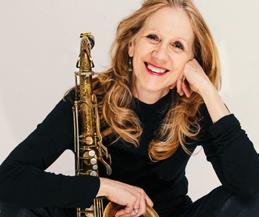
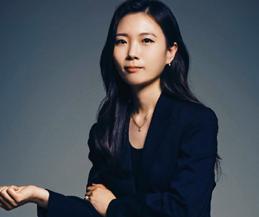
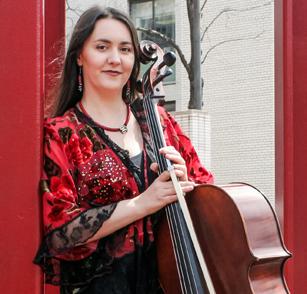
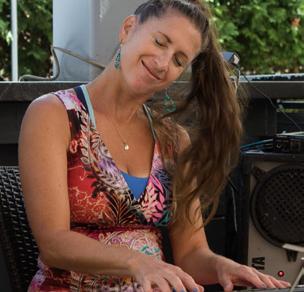
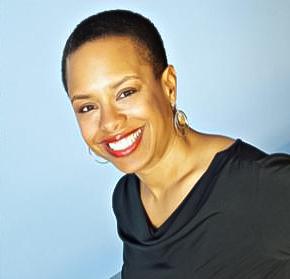
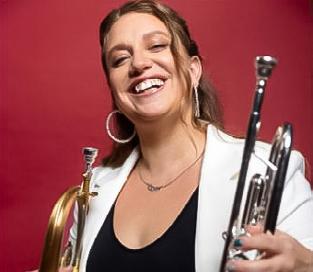
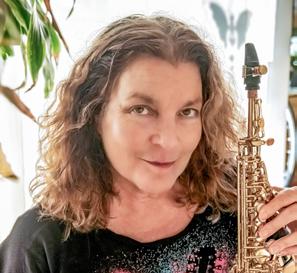
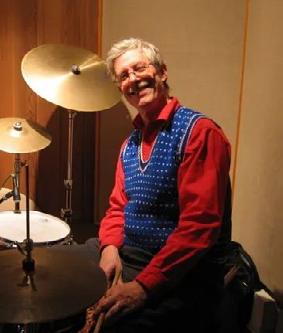
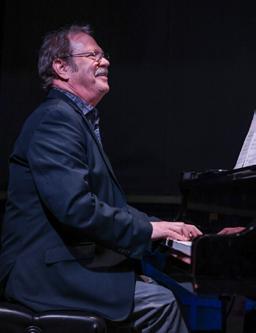
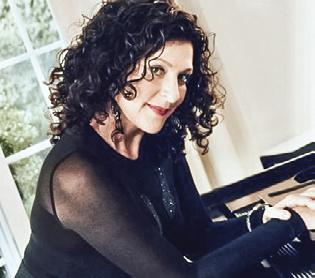
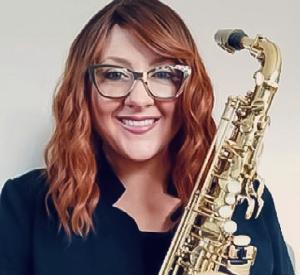
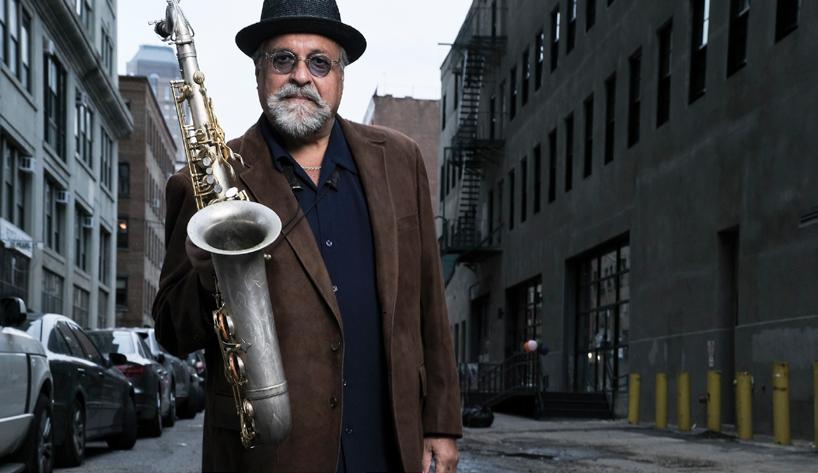
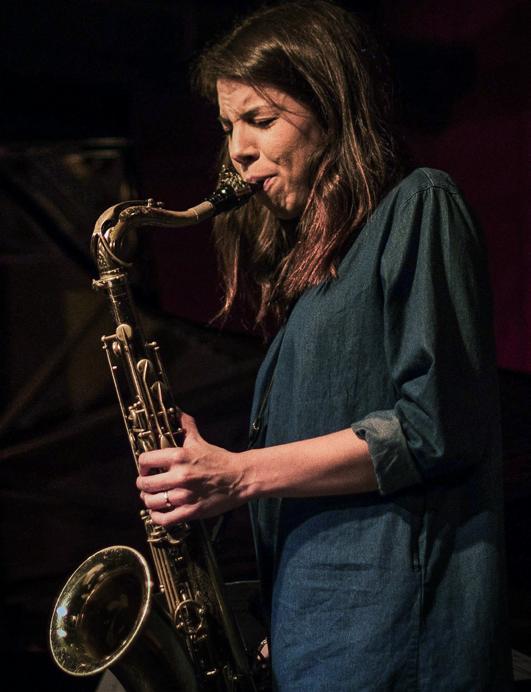
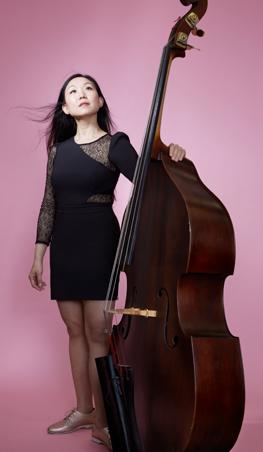
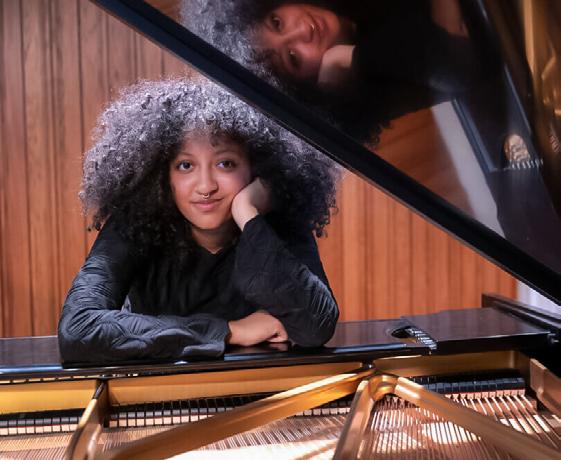
ON THE COVER _ The Jazzwomen! Clockwise, from top left: Drummer/leader Kim Peralta, tenor saxophonist Maria Lazarro, pianists Ellie Lee, and Roberta Piket.
ALL THAT’S JAZZ
BY CYDNEY HALPIN
March is Women’s History Month. Please join me in acknowledging and celebrating the vital role of women throughout history, and more specifically recognizing the great contributions women have made and ARE making to the art of jazz.
The culture and conditions the have historically existed for women within the genre of jazz are well documented, and I recommend the following materials for all who wish to learn more about women’s historic place in the jazz lexicon: 1.) The article focused on the ‘20s, ‘30s & ‘40s titled “The Best of the All-Women Swing Bands” by William Ewanick for medium.com. 2.) the 2011 documentary The Girls in the Band directed by Judy Chaikin— which presents the untold stories of female jazz and big band instrumentalists and their journey from the late 1930’s to the present day. 3.) Sherrie Tucker’s book Swing Shift chronicling the forgotten history of the all-girl
big bands of the World War II era.
But we want to take women out of the history books and highlight the extraordinary influence women are having on today’s jazz scene. As noted by music critic David Hajdu, “Some fearless women plowed through with machetes so that another generation can say, ’This is possible. Maybe there’s a place for me.’ Women as performers, composers, and innovators is the story in jazz today.”
This issue of Jersey Jazz highlights a host of fierce, fabulous, female artists. Know their names and know how they’ve influenced and will continue to enrich the art of jazz.
This month celebrate Her-story. Celebrate Her-story in jazz!!
There is money to be won! NJJS’s 2026 Juried Scholarship Competition—which will award a $1,000 and a $500 prize in three categories: Jazz Instrumental Performance,
Jazz Vocal Performance, and Original
Composition—is accepting entries.
The competition is open to all students currently enrolled in a New Jersey college undergraduate music program, as well as to Jersey residents currently enrolled in an out of state college undergraduate program. Proof of residency is required for Jersey applicants in out of state schools.
Along with the cash award, winners will receive guidance, mentorship and the opportunity to perform with an industry professional, and coverage in Jersey Jazz.
This competition will once again be judged by our prestigious panel of professional musicians, educators and industry leaders comprised of:
» Don Braden: World class tenor saxophonist, flutist, composer and educator
» Mariel Bildsten: Trombonist, bandleader, sidewoman, and educator
» Ted Chubb: Princeton University Lecturer of Music - Jazz Trumpet, compos-
er, educator, and arts administrator
» Jason Olaine: Vice President of Programming, Jazz at Lincoln Center
Submission deadline is Friday March 27, 2026, 11:59 p.m. Visit njjs. org/competition for complete details.
The Board and I would like to thank Nan Hughes Poole and NJJS Board Members Cynthia Feketie, Mike Katz, and Jackie Wetcher for their generous support of this initiative.
If you’d like to support the growth of our prize offerings, donations can be made via our website njjs.org/Donate. Please note “Scholarship Fund” where indicated. Donations can also be mailed: NJJS, 382 Springfield Ave., Ste. 217, Summit, NJ 07901. Don’t hesitate to contact me at pres@ njjs.org if you have any questions.
If you haven’t yet attended one of our Jersey Jazz LIVE! events, you’ve been missing out on some spectacular music!
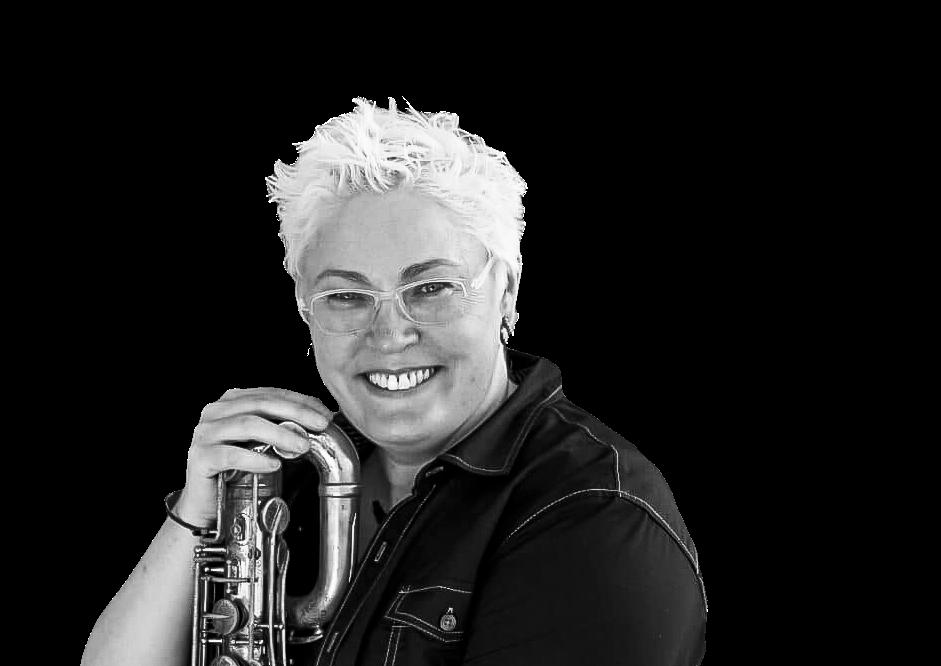
Please join us Sunday, March 1st as we celebrate Women in Her-story Month featuring baritone saxophonist Lisa Parrott in celebration of Gerry Mulligan. The program will include some Mulligan tunes, jazz standards, and some original tunes by Parrott.
The Rising Stars Opening Act will showcase the Lana Roberto Trio, with Roberto on piano, Damian Jiosi on alto saxophone, and Claire Badani on vocals.
For more information about this event, please see njjs.org/lisa-parrott-quartet-at-march-jersey-jazzlive. For advance tickets please visit: ticketleap.events/tickets/new-jersey-jazz-society/jersey-jazz-live-lisa-parrott-celebrated-gerry-mulligan.
Additional funding for this concert has been provided by The Gerry & Franca Mulligan Foundation. The Board and I thank the Foundation for its support. Thank you to Board Member James Pansulla for his continued patronage of the Rising Stars initiative.
Jersey Jazz LIVE! is held at Madison Community Arts Center, 10 Kings Road, Madison, NJ. $15 Members, $20 Non-Members, $5 Children/Students w/ID. Doors open at 2:30PM. This event is likely to be well attended, plan accordingly. Free street parking.
If you’d like to support a Jersey Jazz LIVE! concert or our Rising Stars/Opening Act initiative—in part or in full—providing performance opportunities for the next generation of jazz musicians, please contact me at pres@njjs.org or at 973.229.0543.
Save the date Sunday, April 12th for Jersey Jazz LIVE! featuring the duo of Caelan Cardello & Rufus Reid—Two generations of Jazz. For more information about this concert and these artists, please see page 09. To purchase advance tickets: events.ticketleap.com/tickets/new-jersey-jazz-society/jerseyjazz-live-caelan-cardello-rufus-reid
There’s still time to donate. While NJJS is very grateful for program funding, in part, from Morris Arts and The Summit Foundation, the majority of our operating expenses and initiatives are financed by membership dues and donations. The board and I would like to thank all the donors who’ve donated to our 2025 “Setting New Standards in Tradition!” annual appeal campaign to date. So many of you are patrons who’ve generously supported our work year after year, and your commitment to NJJS has both sustained us through difficult times and fostered growth. We truly can’t do what we do without you!
If you haven’t yet contributed to this campaign, please consider helping NJJS continue its performance and educational initiatives by donating today online at njjs.org/donate. There’s also a red “Donate” button conveniently located on our home page for easy giving. Would you like to maximize the
impact of your gift? Many of you work for employers that have a matching gift program that will double the impact of your gift for free by completing and submitting a simple form. Check with your Human Resources Department for further information. You can also make a tax-efficient gift from your IRA today! Qualified Charitable Distributions (QCDs), also known as IRA Charitable Rollovers, are the savviest way for individuals age 70½ or older to use their IRAs to maximize their charitable giving. Your IRA donation is a generous way to fulfill your required minimum distribution for the year. Gifts generated directly from your IRA will save you on taxes while helping NJJS fulfill its mission to promote and preserve jazz.
We’re counting on you to partner with us and keep this uniquely American art form swingin’. You make it all possible!
“Well behaved women seldom make history.”—Eleanor Roosevelt
BY SANFORD JOSEPHSON
Mona Hinton: The Only Woman Who Traveled with Cab Calloway’s Big Band
Irecently received a copy of More Music, a wonderful jazz memoir written by music producer/ photographer/author Hank O’Neal. One of the chapters was about the late bassist Milt Hinton and his wife, Mona. I interviewed Milt Hinton in 1985. Though I never met Mona, Milt told me how she helped him and other members of the Cab Calloway Band cope with the difficulties African-American jazz musicians faced while traveling on the road in the 1930s and ‘40s.
O’Neal said, “If someone asked me to sum up Milt in one word, it would be ‘generous’ or possibly ‘thoughtful.’ If they allowed two words, they might be ‘superb musi-
cian.’ Mona Hinton was equally generous and thoughtful, but if given two words to define her, the two words would be ‘business woman’ because she took care of the business so Milt could spend his time being a superb musician, just as she looked after all those guys in Cab Calloway’s band.”
Mona Hinton was the only woman who traveled with Calloway’s band when it toured across the country.
On the trip west, the band rented a Pullman train car because it was so difficult for Black musicians to get good hotel rooms. The band members would sleep on the Pullman before hooking up with the next day’s train in order to get to the next big city. But on the way back, that wasn’t possible be-
cause the band was playing in smaller towns where there wasn’t any train service. The band would have to travel by bus, and Mona would take care of finding sleeping accommodations.
“She would go through the town,” Milt told me, “and meet some nice Black lady, and she’d say, ‘I’m married to one of the musicians who’s playing at the dance tonight, and the fellows don’t have any place to stay. Can you help me find some rooms in the neighborhood?’ The lady would say yes and get on the phone. Then, my wife would say, ‘Look, if I go to the store and get about six or eight chickens, and if I give you $5, will you help me cook ‘em?’ And I’ll make some potato salad because the boys haven’t had a thing to eat.’
“When intermission came, Mona would have two or three ladies with her with a basketful of chicken and ham and potato salad. And, she’d
have a list—‘Now, Bob, you’re staying over at Miss Jones’ house, and Charlie, you’re over here at Miss Smith’s house.’ And, she’d have this whole list made out. And this is how we survived the one-nighters in the South.”
Trumpeter Warren Vache played with Milt Hinton’s quartet in the late 1980s and early ‘90s. “Mona,” he said, “called me one of her kids.” The other band members were pianist Ralph Sutton and drummer Gus Johnson, and sometimes the quartet would become a quintet with the addition of clarinetist Kenny Davern. “When we’d go out on long trips,” Vache said, “Mona would go shopping, and she’d always come back with something for the musicians. It might have cost 50 cents or a dollar, but she’d always come back with something.”
This is Women’s History Month, and I thought Mona Hinton deserved some extra recognition.
ABOUT NJJS
Founded in 1972, The New Jersey Jazz Society has diligently maintained its mission to promote and preserve America’s great art form—jazz. To accomplish our mission, we produce a monthly magazine, Jersey Jazz ; sponsor live jazz events; and provide scholarships to New Jersey college students studying jazz. Through our outreach program Generations of Jazz, we provide interactive programs focused on the history of jazz. The Society is run by a board of directors who meet monthly to conduct Society business. NJJS membership is comprised of jazz devotees from all parts of the state, the country and the world.
MEMBER BENEFITS
You become an integral part of the NJJS community, and the history and future of jazz
Access to 11 Digital Issues of our Award Winning Jersey Jazz Magazine
— Featuring Articles, Interviews, Reviews, Events and More
Discounts to our Jersey Jazz LIVE! Sunday Concerts
Discounts at NJJS Sponsored Concerts & Events.
MUSICIAN MEMBERS
FREE Listing on NJJS.org “Musicians List” with Individual Website Link
FREE Gig Advertising in our Monthly eBlast
THE RECORD BIN
Visit www.njjs.org or email info@njjs.org for more information on our programs and services
A collection of used CD’s & LP’s available at reduced prices at specific events and through mail order njjs.org/shop
JOIN NJJS
Family/Individual $45
(Family includes to 2 Adults and 2 children under 18 years of age)
Family/Individual 3-Year $115
Musician Member $45 / 3-Year $90 (one time only, renewal at standard basic membership level.)
Youth $15 - For people under 21 years of age. Date of Birth Required.
Give-A-Gift $25 - Members in good standing may purchase unlimited gift memberships. Applies to New Memberships only.
Fan $75 - $99
Jazzer $100 - $249
Sideman $250 - $499
Bandleader $500+
Corporate Membership $1000
Members at Bandleader level and above and Corporate Memberships receive special benefits. Please contact Membership@njjs.org for details. The New Jersey Jazz Society is qualified as a tax exempt cultural organization under section 501(c)(3) of the Internal Revenue Code, Federal ID 23-7229339. Your contribution is tax-deductible to the full extent allowed by law. For more Information or to join, visit www.njjs.org
Magazine of the New Jersey Jazz Society
VOLUME 54 • ISSUE 03
org
Jersey Jazz (ISSN 07405928)
is published monthly for members of The New Jersey Jazz Society
382 Springfield Ave., Suite 217, Summit, NJ 07901 973-229-0543 • info@njjs.org
John Abbott, Michael J. Friedman, Jimmy Katz, Joe Ross, Annemone Taake, Robyn Twomey, Pablo Valle, George Wein
WEBMASTER
Christine Vaindirlis
WEBSITE DESIGN
Prism Digital
Advertising
DIRECTOR OF ADVERTISING
Cydney Halpin, advertising@njjs.org
ADVERTISING RATES
Full Page: $135, Half Page: $90, 1/3
Page: $60, 1/4 Page: $30
For reservations, technical information and deadlines contact advertising@njjs.org or visit njjs.org/Magazine/Advertise . Make a payment online at njjs.org/advertise via the red Submit Payment button, or via check made payable to NJJS, 382 Springfield Ave., Suite 217, Summit, NJ 07901.
New Jersey Jazz Society, Officers 2026
PRESIDENT
Cydney Halpin, pres@njjs.org
EXECUTIVE VP
Elizabeth Kavlakian, vicepresident@njjs.org
TREASURER
Mike Katz, treasurer@njjs.org
VP, MEMBERSHIP membership@njjs.org
VP, PUBLICITY
Sanford Josephson, sanford.josephson@gmail.com
VP, MUSIC PROGRAMMING music@njjs.org
RECORDING SECRETARY
Irene Miller
CO-FOUNDER
Jack Stine
IMMEDIATE PAST PRESIDENT
Mike Katz
DIRECTORS
Jay Dougherty, Cynthia Feketie, Paul Flexner, Pete Grice, Carrie Jackson, Caryl Anne McBride, Robert McGee, James Pansulla, Stew Schiffer, Elliott Tyson, Jackie Wetcher
ADVISORS
Don Braden, Mariel Bildsten, Ted Chubb, Al Kuehn, Jason Olaine
Two Generations of Jazz: Pianist
Caelan
Cardello and Bassist Rufus
Reid
“For One So Young, Caelan Cardello’s Playing Will Take Your Ears Where They Have No Right to Go”
I find it wonderfully satisfying and enjoyable to make music with Caelan. The evening will go like the wind, and it is unfortunate we have only one set, but there will be more opportunities. Don’t be late!”
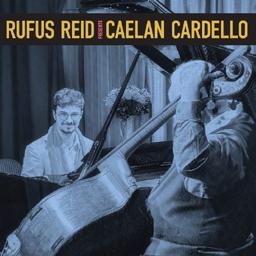
Those were the comments of bassist Rufus Reid prior to a January 2023 concert performed by him and pianist Caelan Cardello at the Klavierhaus piano store in New York City. The concert was also recorded as an album: Rufus Reid Presents Caelan Cardello. If you missed that concert, you’ll have an-
other opportunity to hear Cardello and Reid play together, at 3 p.m. on Sunday afternoon, April 12, at the New Jersey Jazz Society’s Jersey Jazz LIVE! concert at the Madison (NJ) Community Arts Center.
The 25-year-old Cardello was a Jersey Jazz Rising Star in February 2022, and his debut album as a leader, Chapter One on Jazz Bird Records, was released in August 2025 to very positive reviews. The 82-year-old Reid is a jazz legend. In November 2022, he was the honoree at the South Orange Performing Arts Center’s
Jazz Giants concert, and in March 2024 he received Wharton Arts’ Lifetime Achievement Award. A former member of the Thad Jones/Mel Lewis Orchestra, Reid has played with a long list of jazz luminaries including trombonist J.J. Johnson, pianist Kenny Barron, and tenor saxophonist
Stan Getz. As an educator, he helped build the Jazz Studies program at William Paterson University, directing it for 20 years—from 1979 to 1999.
Reviewing the Klavierhaus concert, Audiophilia Magazine wrote:
“From the opening notes of Thad Jones’ ‘Mean What You Say’, you’ll
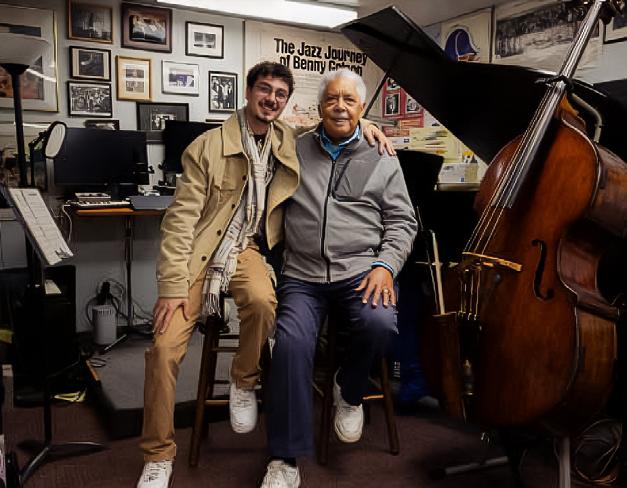
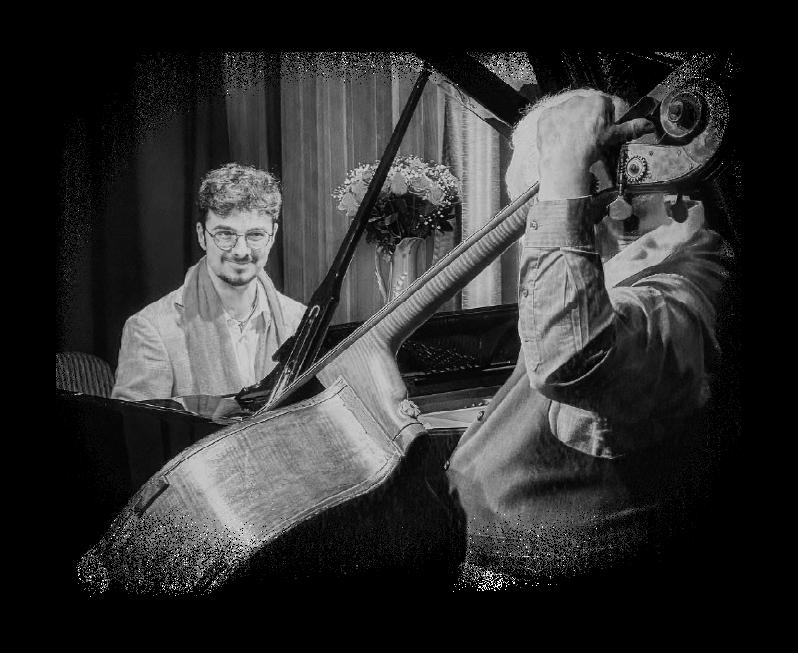
Caelan Cardello, left, and Rufus Reid
know you’re in the hands of a master. Actually, two masters. Cardello’s opening phrasing is so beautiful, accompanied by a perfectly-voiced left-hand chordal accompaniment. And when either Cardello or Reid solo, it’s tasteful, song appropriate and always leaves you satisfied. Superb musicianship.
“Reid,” the review continued, “demonstrates his gorgeous tone and controlled vibrato on Tadd Dameron’s ‘If You Could See Me Now’, with more tasteful Cardello comping ... For one so young, Caelan Cardello’s playing will take your ears where they have no right to go.”
Cardello received his Master of Music degree from Juilliard in 2025 after earning his Bachelors Degree in Piano Performance from William Paterson University, where he studied with pianists Dave Kikoski and Bill Charlap. “Out of all my students and the young pianists I’ve heard
Rufus Reid Presents Caelan Cardello is a recording of a live concert at NYC’s Klavierhaus piano store in January 2023.
in the last few years,” Kikoski told Jersey Jazz, “Caelan Cardello is the brightest star. He just keeps getting better and better at an amazing rate!”
Reviewing Chapter One for Jersey Jazz, Joe Lang wrote that “Cardello has the three things that set the primo players apart: great chops, a wide imagination, and exquisite taste. His playing grabs your attention and never lets it go.”
In an interview with Jersey Jazz’s Jay Sweet prior to the Giants of Jazz concert, Reid recalled his experiences with Stan Getz. “Playing with Getz,” he said, “was special for me. We did a tour with (pianist) Kenny Barron and (drummer) Victor Lewis. We did two recordings together, which we made in one day at the club Jazzhus Montmartre in Paris in 1987 (Anniversary and Serenity, both on EmArcy). Stan had a golden sound, and we knew we had to play well with him.”
“Rufus,” said Cardello, “has taught me a lot about writing, performing, and a couple of life lessons as well. It seems there are fewer and fewer bass/piano duos these days, but I appreciate Rufus for keeping that beautiful tradition alive, and choosing to do so with me.”
Cardello and Reid will be preceded by a Rising Stars opening act featuring student jazz musicians from the County College of Morris in Randolph, NJ.
: The Madison Community Arts Center is located at 10 Kings Road in Madison, NJ. The Jersey Jazz LIVE! concerts begin at 3 p.m. Admission is $15 for NJJS members and $20 for non-members. Student admission is $5 with valid ID. There will be light refreshments for purchase. To order tickets in advance, log onto events.ticketleap.com/tickets/ new-jersey-jazz-society/jersey-jazzlive-caelan-cardello-rufus-reid.
: Funding for Jersey Jazz Live! has been made possible, in part, by funds from Morris Arts through the New Jersey State Council on the Arts/Department of State, a partner agency of The National Endowment for the Arts. Additional funding has been provided by The Summit Foundation. Additional funding for this concert has been provided by the Gerry and Franca Mulligan Foundation.
Adam Moezinia Trio to Play Jazz Arrangements of Great American Songbook Standards
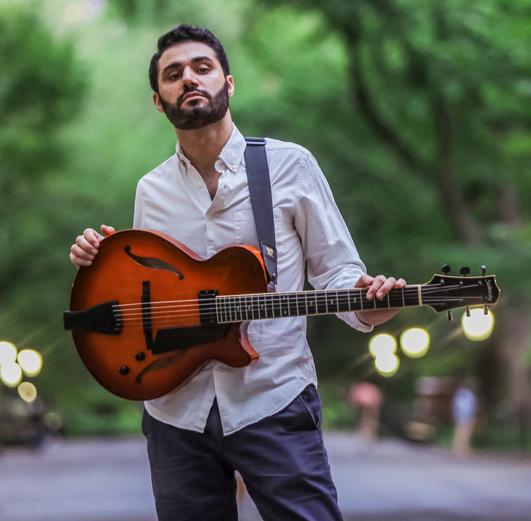
Moezinia’s Guitar Influences Include Herb Ellis, Jim Hall, Barney Kessel, and Joe Pass
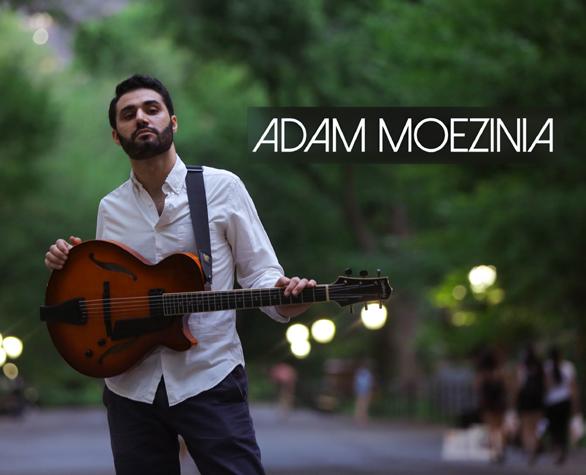
The Adam Moezinia Trio is a straight-ahead jazz group rooted in the tradition of swing, blues, and the Great American Songbook. When the group appears Sunday afternoon, March 22, at the Jay and Linda Grunin Center for the Arts in Toms River, NJ, the focus will be on fresh arrangements of popular standards by composers such as George Gershwin, Cole Porter, and Richard Rodgers.
Guitarist Moezinia, who has a Master’s Degree in Jazz Studies from Juilliard, has been influenced by jazz giants like Herb Ellis, Jim Hall, Barney Kessel, and Joe Pass. When asked by Jazz Guitar Today’s Joe Barth to single out the three most influential jazz guitar albums, he listed: The Poll Winners Ride Again (Contemporary: 1958) featuring Kessel with bassist Ray Brown and drummer Shelly Manne; the
JAZZ ON A SUNDAY AFTERNOON
Joe Pass/Herb Ellis duo album, Two for the Road (Pablo: 1974); and Jim Hall’s Live (A&M/Horizon: 1975).
Pass and Ellis are “so in sync” on Two for the Road, Moezinia said, that “it almost sounds like one person.”
Originally from Los Angeles, Moezinia moved to New York in 2010 to attend Juilliard. He has appeared with jazz artists such as trumpeter Wynton Marsalis, vocalist Cecile McLorin Salvant, and multireedists Will and Pete Anderson at venues like Birdland, the Blue Note, and Jazz at Lincoln Center.
The other members of Moezinia’s trio at the Grunin Center will be bassist Alec Safy and drummer Pete Van Nostrand. Safy, a native of Buffalo and current Bronx resident, has studied with bassists Scott Colley, Todd Coolman, and Doug Weiss and has performed with artists such as baritone saxophonist Gary Smuly-
an, trumpeter Jon Faddis, and pianist Pete Malinverni. Van Nostrand grew up in Binghamton, NY, and received bachelors and masters degrees, respectively, from Rutgers University and Juilliard. He has performed with trumpeter Jeremy Pelt, tenor saxophonist Jimmy Heath, and pianists Eric Scott Reed, Jeb Patton, and Kenny Barron.
: Jazz on a Sunday Afternoon is made possible through funding from the Wintrode Family Foundation, the Ocean County College Foundation, and support from the New Jersey Jazz Society. The Jay and Linda Grunin Center for the Arts is located at College Drive in Toms River, NJ.
The Adam Moezinia Trio Jazz on a Sunday Afternoon concert begins at 3 p.m. For more information or to order tickets, log onto grunincenter.org or call (732) 255-0500.
Jazz, Global, Gospel & more
Yasmin Williams
"One of the best acoustic guitarists in the world!" – Guitar World Magazine Inspired by a wide range of artists from Chuck Brown to Jimi Hendrix, WIlliams incorporates instruments like the kora, harp guitar, and banjo.
Thu, Mar 12 at 7:30PM
Ravi Shankar Ensemble
Curated by Sukanya and Anoushka Shankar, the Ravi Shankar Ensemble is a multi-generational collective of world class musicians dedicated to the masterful compositions and enduring legacy of the uniquely legendary musician, Ravi Shankar.
Wed, Mar 18 at 7:30PM
WRTI Welcomes Coltrane 100: Both Directions at Once
Featuring Joe Lovano, Melissa Aldana, Nduduzo Makhathini, Linda May Han Oh and Je "Tain" Watts
2026 marks the centennial of iconic saxophonist John Coltrane's birth. This show o ers audiences a rare chance to join this historic moment. An all-star lineup join together to pay tribute to one of the most inspirational artists.
Wed, Apr 8 at 7:30PM
Angélique Kidjo
Five-time GRAMMY Award winner is one of the most powerful voices in global music today. blending West African rhythms with American R&B, funk, jazz, and Latin in uences to create music that is as joyous as it is visionary.
Sat, Apr 11 at 7:30PM
John Malkovich in The Music Critic
Created and Conceived by Aleksey Igudesman
Aleksey Igudesman has created a sardonic mix of the most evil music critiques of the last centuries written about some of the greatest works of music.
Equipped with a frivolous potpourri of musical insults, John Malkovich slips into the role of the evil critic.
Fri, Apr 17 at 7:30PM
SWEET HONEY IN THE ROCK
“Celebrating 50 & Beyond”
For more than ve decades, Sweet Honey in the Rock has created music that is both socially conscious and spiritually uplifting. The ensemble bridges generations and genres, blending gospel, blues, jazz, and African rhythms into a singular and soulful experience.
Fri, Apr 24 at 7:30PM
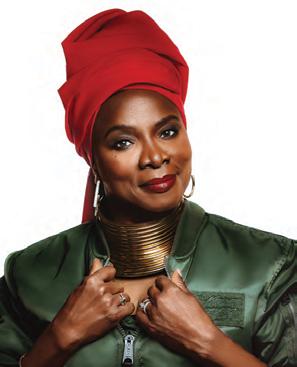
Angélique Kidjo. Photo Credit: Brantley Gutier.
Kirk Whalum: A Blend of Longtime Favorites and Newer Songs from Epic Cool
“My Biggest Influence was Hank Crawford. Growing Up in Memphis, Hank was Such a Big Deal”
BY JAY SWEET
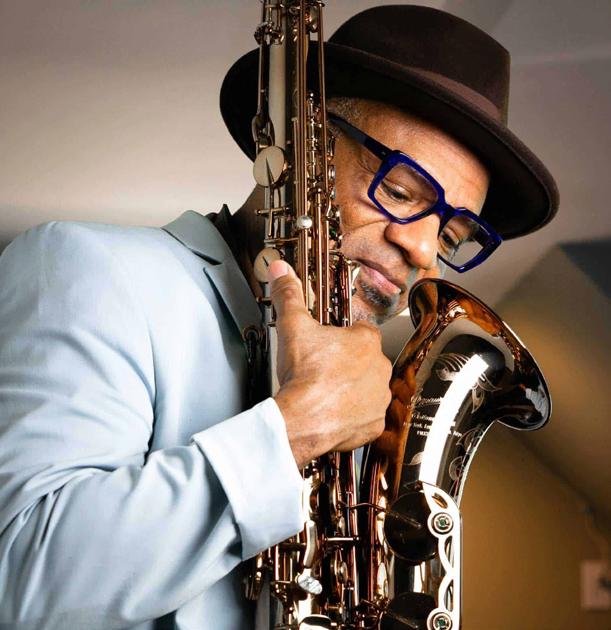
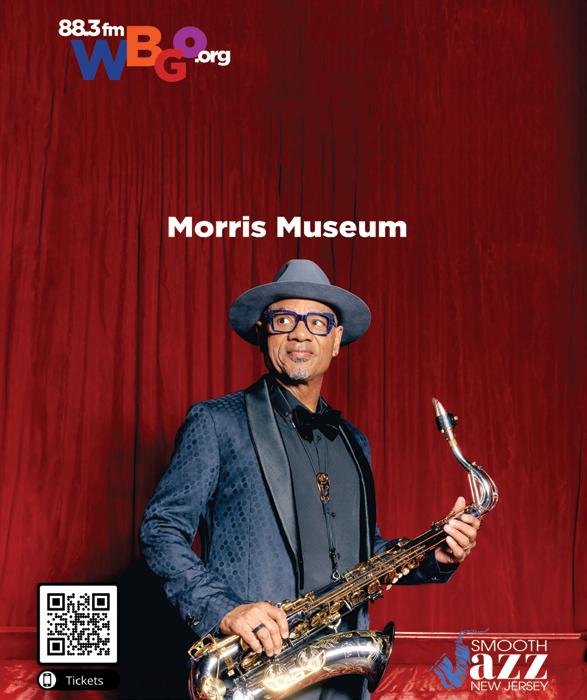
Saxophonist Kirk Whalum represents one of the finest voices on the contemporary jazz scene. A Grammy Award winner with a career spanning more than four decades, Whalum has successfully blended jazz, gospel, R&B, and soul. He has released numerous acclaimed solo recordings, toured internationally, and appeared and recorded with some of the biggest names popular music has ever produced. On March 14, he will bring his talents to Morristown’s Morris Museum, performing longtime favorites blended with
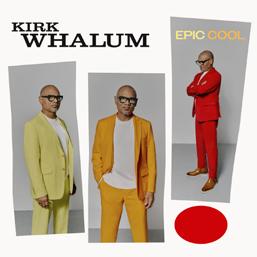
selections from his newest release, Epic Cool (Artistry Music: 2024).
“It feels like we’ve really hit a stride with Epic Cool,” he said. “The theme behind the record is something I think a lot of people can relate to, especially those of us in our 60s—I’m 67. So, I’m firmly in that category. There’s a certain gravitas that comes with age. At some point, you have to own it and say, ‘Yes, I’m not young anymore, but that doesn’t mean I’m not cool.’ There’s something powerful about having lived long enough to have made most of
your mistakes already and, hopefully, learned from them. That perspective carries over into the music.
“When you’re younger, you’re often trying to prove something. You’re worried about competition, about being flashy, about being the coolest person in the room. But with time, you learn to be more economical. You learn to play what truly matters. That’s what this tour is about.”
Born in Memphis on July 11, 1958, Whalum grew up in a religious and musical household. “Both of my grandmothers were musicians,” he said. “One was classically trained and played pipe organ—very formal, very structured. My maternal grandmother was a domestic worker, but in church she was fierce, straight-up gospel. She sang in the choir and brought that fire every time. So, between classical discipline and gospel soul, all of that is in our DNA. I also had
an uncle who was Dean of Music at Morehouse College, where Dr. Martin Luther King Jr. went to school. The uncle who really set me on the path with the saxophone was a St. Louis jazz fixture—Hugh ‘Peanuts’ Whalum. We called him Peanuts because he was 5’5”, but he was a dynamo, an incredible saxophone player. I’ve even featured him on a few of my records.
“On this current record,” he continued, “it’s been especially meaningful to have my son Kyle playing bass. My brother Kevin is amazing as well. And now there’s yet another generation of Whalums making their mark. All three of my nephews were connected to the Grammys this year.
Kameron plays with Bruno Mars and is on this record, too. Kenneth is an incredible saxophonist, singer, and songwriter; he performed during the tribute to Roberta Flack. And Kyle was onstage with Sabrina
“Bob James (left) was the first big gig, the big transition, the big break.”
Carpenter. So, it really is a family affair, and I don’t take that lightly.”
For Whalum, early on, the church was everything, and it is no surprise that his sound and approach to the saxophone carries a lyrical and sermonic quality. “In most Black families in this country, the church is foundational, and that was definitely true for me. My dad was a pastor, so I grew up right there in the choir.
When I started playing sax at 12, I was literally in the choir loft with my horn. But hearing my uncle play— that changed everything. I knew he played saxophone, but he lived in St. Louis, so I hadn’t really heard him in person. Then in seventh grade, when we got to try out different instruments at school, the saxophone just felt like it was calling my name.”
A couple of months after he start-
ed playing, his uncle happened to come to Memphis. “He said, ‘Let me hear you play.’ I played my little tune, thinking I sounded pretty good. Then he said, ‘That’s great—now let me try it.’ Same horn, same mouthpiece, same setup. It was humbling, but in the best way. This beautiful, warm sound came out, like a human voice that just wraps around you. When you hear someone who has put in years of work, fought through all the technical struggles and found their sound, it shows you what’s possible. At that moment, I realized, ‘Oh… that’s what this instrument is supposed to sound like. It sounded like somebody singing, and singing is the ultimate form of communication. I think the goal of a great instrumentalist is to sing through the instrument.”
Moving beyond gospel and his uncle’s influence, Whalum began exploring the music and approach of other noted saxophonists during
this period of development.
“My biggest influence was Hank Crawford. Growing up in Memphis, Hank was such a big deal. Of course, he lived in New York most of his life, but he actually passed away in Memphis, and I was able to play at his funeral. He was probably the biggest early influence for me. His daughter and I even graduated high school together. Then in high school, I started hearing The Crusaders and Ronnie Laws, so Wil-
ton Felder as well. That contemporary sound really grabbed me before I was introduced to John Coltrane, Gene Ammons, and Sonny Stitt. I came to the more traditional jazz players later, early college, really. That’s when I started shedding the more traditional bebop language and working on solid technique. Virtuosity was the goal, and that’s beautiful; I still work on it.”
His path and training then landed Whalum at Texas Southern University, an Historically Black College and University (HBCU) in Houston. “It just so happens that Ronnie Laws, Wilton Felder, Hubert Laws— all those guys—went there. I didn’t even know that when I chose the school. It was meant to be. I ended up hanging out with Joe Sample and even recording with him. I was now listening to Arnett Cobb, the great tenor saxophonist, kind of the vice president of what we call the Texas
Tenor sound. Illinois Jacquet would be the president. That huge Texas sound influenced me tremendously. Texas Southern was really where it coagulated for me. Playing with their famed marching band, the Oceans of Soul, was very hard but super instructive about teamwork, a common goal, and working really hard—physically hard, being in good shape. All of that factored in, and just being tapped into that stream of Black music.”
The journey from student to professional began in Houston’s vibrant early- to mid-1980s scene. “Fortunately for me, I happened to be in Houston in the early to mid-’80s. The oil economy in Texas created a rich environment of musical and artistic opportunities. Because the money was flowing, we could perform all the time. There were all these clubs with live bands. I was able to perform regularly, especially at a place called
Cody’s, where I played songs primarily that I had written or arranged. That became like a workshop for me, not just musically, but in learning how to perform and how to be a good host in a club environment. You’ve got 100 or 150 people there, and you’re the guy. You’ve got to figure it out. At the time I was listening to The Crusaders, Ronnie Laws, Hubert Laws, Spyro Gyra, David Sanborn, and Grover Washington Jr. I naturally gravitated toward that area of music.”
Whalum’s first taste of national notoriety came when he joined Bob James. “Bob James was the first big gig, the big transition, the big break. I was still playing at Cody’s in Houston when I was hired to open a theater show for Bob James. We knew it was a big deal. We were like, ‘Let’s just do our best. Maybe we’ll get to meet the guy.’ And we did.”
Two days later, Whalum received
a call from James’ manager. “He said, ‘Bob wants to know if you’ll come to New York and play on his record.’ And the rest is history. Once I did that, we really hit it off, not just musically, but as people; and that relationship turned into years of touring and recording together. That was the first time I had toured nationally and internationally. Within the year, I was recording in New York, then touring all over the country, then in Japan and Europe. It was crazy how that could happen. You’re struggling along, and this is a good message for young musicians: Don’t get hung up on trying to make a break happen. Just be really, really good at what you’re doing. That’s the thing that’s ultimately going to open the door for you. Somebody’s going to hear you in that context.”
Whalum’s association with James led to solo recordings. “My solo career came out of the relationship with
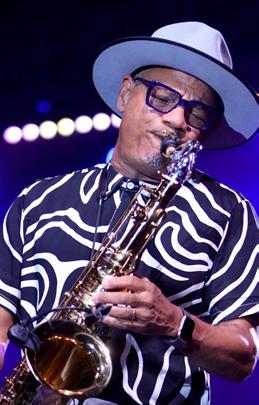
The 67-year-old Whalum thinks a lot of people in their 60s will relate to Epic Cool. “There’s a certain gravitas that comes with age,” he said.
Bob. Within a year of that, he had inked a deal for me through his label and Columbia Records. He produced my first three records: Floppy Disk (1985) And You Know That (1988) and The Promise (1989). Whalum’s solo career produced chart-topping albums, most of which reached the
Top 10 on contemporary jazz charts.
In addition to his solo recordings, Whalum began working with pop icons, including Whitney Houston. He performed one of the most famous saxophone solos of all time on the mega hit “I Will Always Love You,” featured in The Bodyguard film (1992).
“When I joined Whitney Houston, I was a young husband and father. I thought, ‘This might be that moment where we actually know where our check is coming from every month.’ I couldn’t even conceptualize that. “That stability meant everything. It was incredible. And, she was amazing to work for. I can’t even make up something negative to say about her. Whitney was just a loving, genuine, incredible person.
“When it came to The Bodyguard, Houston insisted, against the will of the producer, that her touring band play live on set while she sang live. It was against every rule in film-
making, sonically speaking. But she had such gravitas. When they told her no, she basically said, ‘Oh wow, okay—well, you have a problem.’
“My solo was improvised. We had a couple of rehearsals and runthroughs, but nobody said, ‘Here’s exactly what you’re going to play.’ You just let the music move you. It was one of those ‘jump and the net will
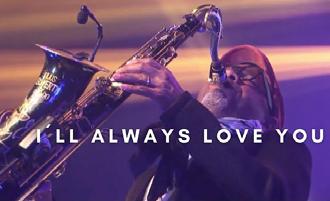
Working with Whitney Houston, Whalum performed one of the most famous saxophone solos of all time, “I’ll Always Love You,” featured in the movie, The Bodyguard.
appear’ moments—trusting God for the right notes. When I listen back now, there’s one note that’s a little sharp, intonation-wise. I wanted to go back and fix it. But Clive Davis basically put the track in a lockbox. Nobody was touching it. There was no post-production on that track.”
Another megastar Whalum worked with was Luther Vandross. “Playing with him was great because Luther was very particular about the musical environment created around his voice. He knew the sound of his voice, so it had to be just right. We would get in the studio, play the track, and he would sculpt his voice around what I played. In the end, it was like a collaboration. He didn’t have a lot of saxophone on his records.
He told me once, ‘I don’t really like the saxophone.’ I didn’t know how to take that. Then he said, ‘But I like you because you play like a singer.’”
Sunday, March 22 • 3:00pm
Click on the QR code to purchase tickets.
New Jersey Jazz Society
The New Jersey Jazz Society is pleased to announce the
2026 JURIED SCHOLARSHIP COMPETITION
This competition will award three $1000 prizes and three $500 prizes in three categories: Jazz Instrumental Performance, Jazz Vocal Performance, and Jazz Composition. The competition is open to all New Jersey college students currently enrolled in a college undergraduate music program, as well as to New Jersey residents currently enrolled in an out-of-state college undergraduate program. Proof of residency required. Along with the cash award, winners will receive guidance, mentorship and the opportunity to perform with an industry professional, and coverage in Jersey Jazz.
SUBMISSION DEADLINE: Friday, March 27, 2026, 11:59 PM Eastern Time Visit NJJS .org/Competition for details.
This competition is generously supported by NAN HUGHES POOLE, CYNTHIA FEKETIE, MICHAEL A. KATZ, and JACKIE WETCHER
The Jazzwomen! Raising Visibility and Increasing Opportunities
“This Group Brings Together High-Level Musicianship with Genuine Mutual Support”
BY SANFORD JOSEPHSON
During most of her adult career, Kim Peralta was a rock/pop singer, songwriter, and bandleader. But, she pointed out, “I always had a drum set at home because I needed it for rehearsals. One day, I just sat down at the drums, and I had this revelation. I felt like I was six years old again. It was so much fun, and that was it. I said, ‘I want to learn to play the drums,’ so I went to Cuba to study.”
From 2018-2021, Peralta studied with drummer Alejandro Aguiar Rodriguez at the Havana Music School. “It was basic instruction,” Peralta
said. “’This is how you hold the sticks. This is how you sit on the stool.’ Stick control exercises and a very, very basic Cuban beat, like cha cha, mambo, cascara, and Afro-Cuban. I never did any jazz or funk or rock and roll or anything like that with him.”
When Peralta came back to the States after the last set of lessons, “Somebody said, ‘They need a drummer at the SUNY Jazz Ensemble (at Orange County Community College in Middletown, NY).” Peralta wasn’t a jazz drummer, but she learned from the SUNY Musical Director Christo-
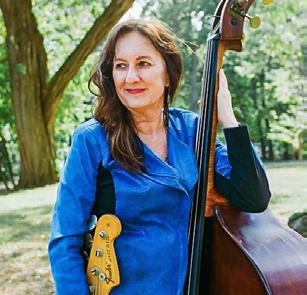
Clockwise from top left, bassists Mary Ann McSweeney and Jennifer Vincent, and pianists Bev Poyard and Sarah Jane Cion.
WOMEN’S HISTORY MONTH
pher Parker, a pianist and composer.
“He’s not a drummer but he knew exactly what a drummer has to do. And, he taught me jazz. When you study Latin drums, it’s a very easy transition; it just leads you naturally into jazz.”
Peralta, who lives in Warwick, NY, stayed with the SUNY Jazz Ensemble for three years and also became the house drummer for the Kings-
ton, NY, Jazz Jam, “a monthly gig.”
She also began taking lessons from Art Lillard, a New York City-based drummer who has led his Heavenly Big Band since 1987. Peralta, Lillard said, “had good musical instincts and good leadership qualities. When you start that late, it’s difficult, but she had drive and a love for the music.”
In March 2024, Lillard intro-
duced Peralta to pianist Sarah Jane Cion “and two days after that, he called me and asked if I wanted to play with bassist Linda E. Brown (an upright bassist Peralta knew from the Kingston Jazz Jam), and Sarah at La Zingara in Bethel, CT, because they had a cancellation. So, that was the first jazz gig.” Then, in August 2024, Peralta got another gig at the Warwick Library, and “I reached out again to Linda and Sarah.”
Lillard then introduced Peralta to bassist Jennifer Vincent and to other women horn players and pianists, and Peralta started booking groups as The Hudson Valley Jazz Women. Eventually, the name was changed to The Jazzwomen “because the women I’m playing with now are in the city or in other locations.” After the Warwick and Bethel, CT, gigs, Peralta said, “I got to the point where I could now cold call people and just say, ‘We’re The Jazzwomen. Would you
like us to play for you?’ I’m the kind of person that I just get a gig and then decide who’s going to play later on.”
In the next month and half, there are three gigs in New Jersey: Sunday, March 22, at the Ridgewood Public Library with tenor saxophonist Maria Lazarro, pianist Roberta Piket, and bassist Mary Ann McSweeney; April 4 at the Madison Community Arts Center with tenor saxophonist/flutist Jenny Hill, Piket, and McSweeney; and Thursday, April 9, at Clements Place in Newark with pianist Ellie Lee, Hill, and Vincent.
But that’s just the tip of the iceberg. From March 8 through April 16, The Jazzwomen have 11 performances. The others are all in New York, mostly in libraries but also at the Hurleyville Performing Arts Center’s Tango Cafe and the Beanrunner Cafe in Peekskill, And, on Sunday, November 15, Peralta will be leading a quintet at Our Lady of Consolation Church
From left, trumpeter Rachel Therrien and tenor saxophonist/flutist Jenny Hill
WOMEN’S HISTORY MONTH
in Wayne, NJ with trumpeter Rachel Therrien, Hill, Piket, and McSweeney.
The current Jazzwomen roster has about 15 people, but Peralta is continually adding to it. “I’m overflowing with pianists,” she said. “I’m always looking for more horn players, and, especially, upright bassists. I will not use electric bass. I don’t want that sound.” Peralta, though, is the only drummer. “This enables me to become a better musician because I get to play with people who are vastly more experienced than me. As long as I get the gigs and they’re available, they graciously come and play with me. Our mission is to raise visibility, increase opportunities and honor the contributions of women in jazz, resulting in enrichment for all.”
As for the band’s musical style, “We’re firmly in the swing, bebop and Latin categories—straight-ahead. We do a lot of standards, and just
about everyone in the band composes. For Women’s History Month, Roberta is going to do a solo piece of her own. During Women’s History Month, we will put in more compositions by women, sprinkling them into our regular set.”
McSweeney and Piket will make their first Jazzwomen appearance on March 8 as part of the Carnegie Concert Series at the Nyack, NY, Library. That date will feature the same combination that will be playing in Madison, NJ, on April 4. “This will be my debut with Kim,” Piket said, “but I’ve known and played with Mary Ann McSweeney and Jenny Hill since the ‘90s. I’m amazed that Kim has only been playing jazz drum for about six years. She’s got all the important stuff, a great groove, and knows how to support the soloists.”
After Piket was a finalist in the 1993 International Thelonious MonkBMI Composers Competition, Mari-
an McPartland invited her to appear on her National Public Radio program, Piano Jazz (the first of three appearances). In 2016, Piket released an album called One for Marian on the Thirteenth Note Records label. Reviewing it for AllAboutJazz, Karl Ackermann wrote, “It’s not likely anyone could do justice to McPartland’s compositions more effectively than Piket has here. These are arrangements that are rich, full of life and reflect McPartland’s diverse tastes covering artists from John Coltrane
to the Beatles...” Piket is also performing with baritone saxophonist Lisa Parrott’s quartet on March 1 at the New Jersey Jazz Society’s Jersey Jazz LIVE! concert in Madison.
McSweeney has performed with Dizzy Gillespie, Bucky Pizzarelli, and Lee Konitz, among others, and played at the White House with the Eli Yamin Quintet. For the past two years, she has been participating as one of the industry professionals at concerts showcasing NJJS’ Scholarship winners. Patty Slezak, Reference
Art Lillard, left, and Christopher Parker were instrumental in helping Kim Peralta learn to be a jazz drummer.
WOMEN’S HISTORY MONTH
Librarian at the Wayne, NJ, Public Library who runs the Lady of Consolation Church concerts with pianist Caelan Cardello and trumpeter Jonny Gittings, met McSweeney at the NJJS Scholarship winners concert in November 2024 and “had the honor to interview her for the Wayne Public Library jazz interview series.
Kim Peralta connected with me later that year, and it all fell into place.
We are fortunate to present The Jazzwomen Quintet in November.”
In 2023, tenor saxophonist/flutist Hill, who has performed with Nancy Wilson, Clark Terry, and Dave Brubeck, received a Performance Plus grant from Chamber Music America,
a National Endowment for the Arts Jazz Studies grant with tenor saxophonist Joe Lovano, and an Arts Alive grant from the Westchester Arts Council. “I’m so happy to be performing with an all-female jazz group,” she said, “in order to show young girls that they can play jazz, too!”
After graduating from the Berklee College of Music, tenor saxophonist Maria Lazarro was awarded an NEA grant to study with tenor saxophonist George Coleman. She has shared the stage with such jazz artists as pianist Bruce Barth, guitarist James Chirillo, and trumpeter Bill Mobley. “I am grateful to Kim,” she said, “for bringing together so many amazing women musicians.”
Pianist Ellie Lee grew up in Seoul, South Korea, and earned a Bachelor of Music in Classical Piano Performance from Sookmyung Women’s University there. She
moved from classical music to jazz because “I’ve always had a desire to play music freely without being constrained by rules.” The transition to jazz was helped by a scholarship to Boston’s Berklee College of Music where she received a Professional Diploma, followed by a Master of Music in Jazz Performance degree from William Paterson University.
“I’m really looking forward to performing with Jazzwomen at Clements Place,” she said. “Being part of this group is deeply meaningful to me because it creates a supportive and empowering space for women instrumentalists and bandleaders in the jazz community. I love that this group brings together high-level musicianship with genuine mutual support. I hope our collaboration can inspire younger musicians to see what’s possible when artists come together and lift one another up.”
From left, pianist Janice Friedman and alto saxophonist Kate Anderson.
‘Two
Joe Lovano and Melissa Aldana:
Different Saxophonists Trying to Be One’
“Coltrane’s Feeling of Expression is What We’re Going to Offer — From His Earliest Times to the Latest Times”
BY SANFORD JOSEPHSON
Joe Lovano learned about John Coltrane in the basement of his Cleveland home. “My dad played saxophone,” he said, “and he loved Coltrane. His record collection was full of Coltrane recordings from the earliest Bethlehem records, all the Prestige, into Atlantic, and, of course, the Impulse! period.”
Joe Lovano: “I grew up, not only with an appreciation, but a love of the different directions that Coltrane played throughout his career.”
Melissa Aldana grew up in Santiago, Chile, and she learned about Coltrane from her father, also a saxophonist. “I first heard Coltrane when I was very young, through my father,” she recalled. “At that time, I didn’t fully understand what he was doing, but I felt the intensity immediately. There was an urgency and honesty in his sound that really struck me. As I grew older, I began to understand how deeply personal his music was and how his technical mastery was always in service of something bigger.”
On Wednesday, April 8, at the McCarter Theatre Center in Prince-
COLTRANE 100
ton and Saturday, April 18, at the New Jersey Performing Arts Center in Newark, Lovano and Aldana will be, in Lovano’s words, “two different saxophones and two different personalities, trying to be one. That’s going to be an exciting exploration for us, not to be reading parts but to be creating music.”
Lovano is Artistic Director of Coltrane 100, a nine-venue tour celebrating John Coltrane’s centennial birthday, which falls on September 23, 2026. In addition to McCarter and NJPAC, there will be two performances in Phoenix and one each in Houston; Seattle; Berkeley, La Jolla, and Davis, CA; and Dublin, Ireland. The Coltrane 100 quintet will feature a rhythm section of pianist Nduduzo Makhathini, bassist Linda May Han Oh, and drummer Jeff “Tain” Watts. Coltrane passed away in July 1967 at the age of 40.
Among the albums that Lovano’s father liked to play were Med-
itations (Impulse!: 1965), A Blowin’ Session with Johnny Griffin, Hank Mobley, and Lee Morgan (Blue Note: 1957); and Tenor Conclave with Mobley, Al Cohn, and Zoot Sims (Prestige: 1958). A Blowin’ Session, Lovano said, “was a big record for me growing up, with them playing off of each other, giving each other inspiration as they played.” The same was true of Tenor Conclave—“hearing those personalities. Those things were ingrained in my development.”
For Aldana,”The Coltrane compositions that resonate most are the ones that leave room for exploration, where the music can evolve naturally in the moment. That approach feels like the most meaningful way to honor his legacy.” Aldana said it is “hard to choose a favorite (Coltrane) period because each phase of his evolution feels essential. A Love Supreme (Impulse!: 1965) is absolutely
Melissa Aldana: “The Coltrane compositions that resonate most are the ones that leave room for exploration, where the music can evolve naturally in the moment.”
COLTRANE 100
a masterpiece—not only musically, but spiritually and conceptually. I also have a lot of appreciation for Ole Coltrane (Atlantic Records: 1961), a fascinating album in his later exploratory period. It’s full of open textures and unusual instrumentation, and it really captures his curiosity and willingness to take risks. It is an interesting record because it shows Coltrane experimenting with space, textures, and ensemble colors. I love how daring and imaginative it is—you can hear him pushing boundaries while still staying deeply expressive. For me, it’s a reminder of the endless possibilities of his music.”
AllAboutJazz’s Marc Davis, reviewing A Blowin’ Session, wrote: “If you’re a sax fan, this one’s for you— not one, not two, but three red-hot tenors, plus one scorching trumpet, and the legendary Art Blakey smashing the drums behind them. Three tenors. How did that happen? Pure
serendipity. Johnny Griffin, the young, new, super-fast saxman, was on his way to record at Rudy Van Gelder’s studio in New Jersey one day in 1957 when he ran into John Coltrane. ‘Come along,’ Griffin suggested. ‘Sure,’ Coltrane replied.”
The result? “Coltrane and Griffin are the stars, blowing long, complex passages at supersonic speed. Trumpeter Lee Morgan keeps pace with his own exciting solos. The third tenor, Hank Mobley, has a slightly different sound—definitely bop, but slightly more relaxed and bluesy. Blakey, naturally, is the frantic, inventive timekeeper.”
According to AllMusic’s Lindsay Planer, “The complicated rhythm patterns and diverse sonic textures on Olé Coltrane are evidence that John Coltrane was once again charting his own course. His sheer ability as a maverick—beyond his appreciable musical skills—guides works
such as this to new levels, ultimately advancing the entire art form. The assembled musicians worked within a basic quartet setting, featuring Coltrane on soprano and tenor sax, McCoy Tyner on piano, and Elvin Jones on drums, with double-bass chores held down by Art Davis and Reggie Workman. Added to that are significant contributions and interactions with trumpeter Freddie Hubbard and
Eric Dolphy on flute and alto sax.” Lovano heard the Coltrane Quartet with McCoy Tyner in 1965, pointing out that “They played in Cleveland in the earlier ‘60s, too, when Eric Dolphy came. I grew up, not only with an appreciation, but a love of the different directions that Coltrane played throughout his career. I was hearing it all as one. I was also listening to all the cats that
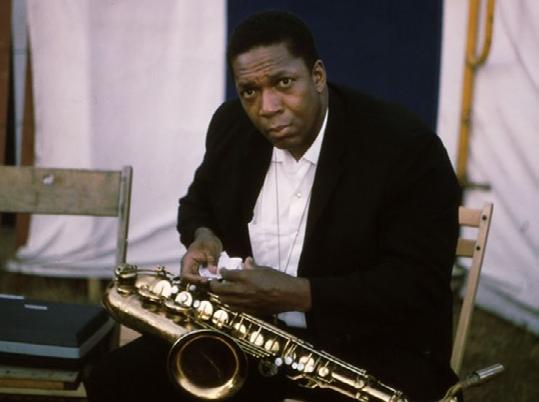
John Coltrane, backstage at the Newport Jazz Festival.
COLTRANE 100
he came up with and hearing how they all had their own personalities: Johnny Griffin, Hank Mobley, Gene Ammons, Dexter Gordon, Coleman Hawkins—people who were in my dad’s record collection also.
lar Space and The Olatunji Concert. The latter two albums were recorded in 1967 but not released until 1974. The Olatunji Concert was Coltrane’s last live recording.
Another Coltrane alum that Lovano got to play with was drummer Elvin Jones, who performed in Cleveland “a year before I moved to New York. He had a quartet with Steve Grossman on saxophone, Roland Prince on guitar, and Milton Suggs on bass. I played opposite them in Cleveland, and I got friendly with Elvin and Steve and ended up sitting in with them. So, when I moved to New York, Elvin was playing at the Vanguard and other places. I went with my horn and sat in and started a relationship with Elvin. In 1982, I got a call to sub for Pat LaBarbera in his band, and that led to a nine-week European tour in 1987 with Elvin’s band, The Jazz Machine.” Jones made several albums with Coltrane including Ole Clockwise, from left, the Coltrane 100 rhythm section: bassist Linda May Han Oh, drummer Jeff ‘Tain’ Watts, and pianist Nduduzo Makhathini.
“And, through my career, I played with a lot of players who played with Coltrane. I moved to New York in 1976, in my early 20s. One of the first places I went to was Ali’s Alley, drummer Rashied Ali’s loft on Greene Street in Soho. I was also playing some with (pianist) Albert Dailey, who was playing with Ali. Albert said I should come down, and I did and brought my horn. Reggie Workman was playing bass, and there were two saxophonists, Jimmy Vass on alto and Marvin Blackman on tenor. I ended up sitting in and starting a relationship with Rashied through the years.”
Ali played with Coltrane on Meditations as well as on such other Impulse! albums as Interstel-
COLTRANE 100
Coltrane, A Love Supreme, Ballads (Impulse!: 1963), and My Favorite Things (Atlantic Records: 1961).
In 1999, Lovano joined McCoy Tyner’s band “and played quite a few gigs and recorded with him through the years.” A special album was Live at Yoshi’s (McCoy Tyner Music: 2006) with Christian McBride on bass and Jeff “Tain” Watts on drums. “That’s the connection with ‘Tain’,” Lovano pointed out. “We’ve recorded with McCoy together. This is the 20-year mark for that release. I’m so thrilled that ‘Tain’ can make this tour with this special quintet. ‘Tain’ is going to fuel the fire and contribute in his way as part of the front line and the rhythm section.
“At this concert,” he continued, “Coltrane’s feeling of expression is what we’re going to offer—from his earliest times to the latest times. He only recorded as a leader for about 12 years—from about 1954 or 5 until he
passed in ‘67. And, he covered a lot of ground. There’s a box set of Coltrane’s Prestige recordings where he recorded over 100 songs, and only a handful of them are his originals. They were all songs that he loved to play, that fueled his ideas, that developed his compositions, intervals, harmonic sequences, rhythmic explorations.”
Pianist Makhathini, Lovano said, “is definitely a McCoy Tyner disciple. Linda May Han Oh is playing bass and has a beautiful approach about melody and rhythm. We’re going to have some definite beautiful, spontaneous exchanges. Melissa Aldana on tenor is a young, beautiful voice that’s emerging today.”
Aldana said Lovano “has put together a program that draws from a broad range of John Coltrane’s repertoire. What I really value about Joe’s vision is that the goal isn’t to recreate or imitate Coltrane, but to approach the music in the spirit in which it was
COLTRANE 100
created.” In 2005, Aldana met pianist Danilo Perez while he was on tour in Chile, and he invited her to play at the Panama Jazz Festival. He also helped her get auditions with music schools in the United States, and she received a full scholarship to Boston’s Berklee College of Music, graduating in 2009.
Last month, Aldana released her third Blue Note album, Filin, featuring a collection of songs drawn from Cuba’s filin music tradition. The word filin means feeling, and the music is romantic, combining Cuban styles like bolero with American jazz harmonies. The new album, Aldana said, “is a very personal project for me. Originally, I wanted to record an album of American Songbook ballads, but (pianist) Gonzalo Rubalcaba introduced me to filin music, and that completely opened up a new world for me. I realized these songs from the Cuban filn-music tradition had this incredible emotional depth and lyrical beauty.”
“Coltrane’s Ballads,” she added, “was certainly an influence, too, especially in terms of sound, space, and intimacy.” Aldana will be appearing at the Jersey City Jazz Festival on May 31 and at Birdland from June 19-21. On the February 19th JazzWeek chart, Filin had the highest debut, at Number 48.
A concerto called “A Raft, The Sky, The Wild Sea”
was written for Lovano by the guitarist/composer Douglas Cuomo and commissioned by the Fort Worth Symphony, the London Philharmonic, and the Winston-Salem Symphony. A January 2025 concert performance of it by the Winston-Salem Symphony was released last month on Blue Cloud Music. From April 28-May 3, Lovano will be leading a quartet at New York’s Village Vanguard with pianist Marilyn Crispell, bassist Ben Street, and drummer Andrew Cyrille, who, Lovano pointed out, “had a relationship with Coltrane. We’re going to be playing original music from my Trio Tapestry album (ECM: 2019), and we’re also going to be celebrating the centennial birthdays of Coltrane and Miles Davis.”
: The McCarter Theatre Center is located at 91 University Place in Princeton, NJ. The Coltrane 100 concert will begin at 7:30 p.m. on April 8 in the Matthews Theatre. For more information or to order tickets, log onto mccarter.org or call (609) 258-2787. The New Jersey Performing Arts Center is located at 1 Center Street in Newark, NJ. The Coltrane 100 concert begin at 7:30 p.m. in the Victoria Theater. For more information or to order tickets, log onto njpac.org or call (1-888 696-5722).
Kristin Field: Inspired by Cannonball, Charlie Parker, and Paul Desmond
“I Always Find It Beautiful When Players Almost Sing Through the Horn”
The first time I saw her play I was sure, at some point, she would be a lead alto sax player.” That was the initial reaction of North Hunterdon High School Jazz Ensemble Director Perry Andrews when he saw Kristin Field’s freshman year audition in the fall of 2019.
A Jazz Studies major at Rutgers University’s Mason Gross School of the Arts, the 21-year-old Field also remembers that audition. Andrews, she said, “was a voice I could trust. He was very supportive, very kind, and
very encouraging. I remember he said, ‘You have such a lead alto sound.’”
Field began playing the saxophone when she was 10 years old. “My fifth grade English teacher had the band teacher in one day to show us different instruments. I think I just chose it because it looked cool, but when I started playing it, I really enjoyed it. When I was in seventh grade, I joined the school’s jazz band, and that kind of kicked it off for me. I also want to shout out to Fred Czarnecki (retired music teacher in the Mill-
burn, NJ, School District). He was my private teacher from seventh grade to the end of high school. He taught me so much about what I know about this music, and he helped push me to become the best version of myself.”
Czarnecki, who now lives in Jupiter, FL, said Field “happens to be one of
my favorite students of all time, and I was teaching privately and in the classroom for over 40 years with a full load of private students of 25 a week during all those years.” In addition to alto saxophone, “she also took clarinet lessons from me and started flute later on. She loved playing in the jazz band in the
Pianist
“ ONE OF MY FAVORITE STUDENTS OF ALL TIME, AND I WAS TEACHING FOR OVER 40 YEARS. ”
middle school and high school and also loved playing in the pit orchestra in high school for the school plays.”
Field didn’t “really became serious about jazz until my junior year of high school. I did a jazz summer camp at Moravian University in Bethlehem, PA. Then, I really got into improvisation and playing in combos and stuff like that.”
On March 10, Field will be the Emerging Artist in the New Brunswick Jazz Project’s “In the Key of Akiko Women in Jazz” series celebrating Women’s History Month at
Tavern on George. She will be joined by tenor saxophonist Matt Estabrook, trombonist Kyle Courter, and baritone saxophonist Ed Crisonino. The series was previously called “March Women in Jazz”, but it will now be dedicated to the jazz organist, Akiko Tsuruga, who passed away in September. “Akiko performed every year for our series,” explained NBJP’s Virginia DeBerry. (See “Akiko Tsuruga: ‘One of the Best Organ Players in the World’, October 2025 Jersey Jazz).
Field graduates from Rutgers this spring, and her senior recital will be
Seraphina Taylor, who is performing at Tavern on George on March 3, will be part of Kristin Field’s senior recital band on March 29.
RISING STAR
held March 29 at the University’s Shindell Hall. At the recital, she plans to play “some combo tunes such as ‘Blue Rondo a la Turk’. That song has always really stuck with me. I also want to play ‘My Favorite Things.’ I love the Coltrane arrangement of that, and it also ties in with my love of musical theater. And I also want to do an arrangement I wrote of ‘The Girl from Ipanema”, plus two original songs I’ve written.”
The senior recital will feature fellow students, Seraphina Taylor on piano, Jeff Andolaro on bass, and Logan Bogdan on drums. “I’m also planning to have a horn section,” she said. (Andolaro, a graduate of Shawnee High School in Medford, NJ, was a member of the 2024 New Jersey All-State Jazz Ensemble. He performed with guitarist Sally Shupe’s quintet in the Rising Stars opening act at the March 2024 Jersey Jazz LIVE! concert in Madison, NJ).
At Rutgers, Field has studied with saxophonists Abraham Burton and Ralph Bowen. Burton, she said, “is incredible, a joy to work with. He inspires you to get inside of the music. At first, when I was in early high school, I didn’t know if I wanted to go to Rutgers because it was so close. But I did research, and I found that the faculty with the jazz program was world class. My first two years I took lessons with Ralph Bowen. He has so much wisdom and so much knowledge. It’s been truly a blessing to work with this faculty.”
Her alto saxophone heroes of the past include Julian “Cannonball” Adderley, Charlie Parker, and Paul Desmond. “As of late, I’ve really dug Cannonball,” she said. “His sound and the way he played is truly awesome. The energy he brings—every time I hear him play, it makes me want to move. Even when he’s playing more
technically, there’s still a lot of spirit. It’s like he’s singing through the saxophone. His tone is really beautiful.
“Charlie Parker, of course, particularly Charlie Parker With Strings. That was really beautiful.” Desmond, she added, “was one of the first jazz saxophonists I got into. I’ve kind of grown up in the classical school.
Jazz was not the first style I learned. His sound has that classical vibrato-y resonance, a bit like the tone you hear from Johnny Hodges in the swing era. I really like the way he plays, mostly the lyricalness of it. I’ve always gravitated more toward lyrical rather than technical playing. I always find it beautiful when play-
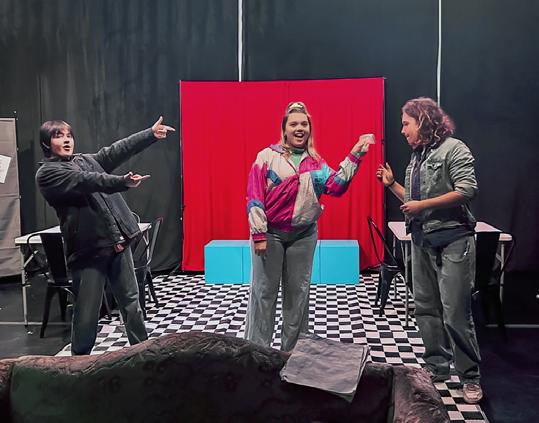
Field was the writer, composer, and lyricist for Five Nights at Freddy’s, which won NJACT’s Perry Award for Outstanding Production of a Musical.
ers almost sing through the horn.”
In addition to her jazz prowess, Field is a theatrical composer and pit instrumentalist. She was the writer, composer, and lyricist for Five Nights at Freddy’s: The Unofficial Musical, based on a video game. The musical was performed last June at the Ferrell Studios in Metuchen, NJ. It won the New Jersey Association of Community Theaters (NJACT) Perry Award for Outstanding Production of an Original Musical. The video game, Field explained, “was basically about a haunted Chucky Cheese (called Freddie Fazbear’s Pizza in the musical). It was originally a passion project produced by a bunch of college students. The whole project made me realize how much I liked composition, writing, and putting motifs together.”
After graduation, Field would like to combine her love for jazz and musical theater, staying in the greater New York area. Although alto is
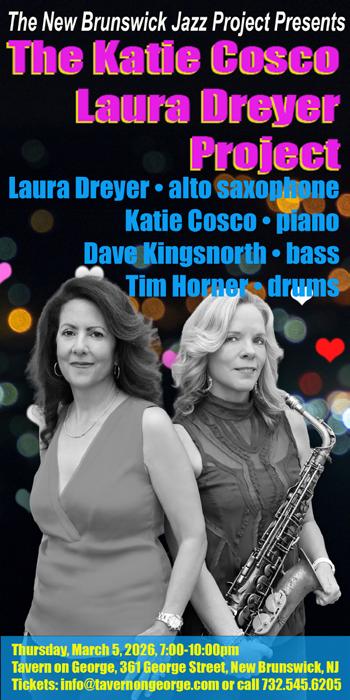
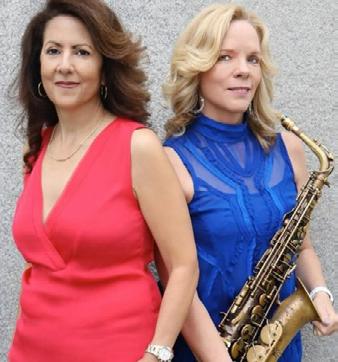
Keyboardist Katie Cosco, left, and saxophonist/flutist Laura Dreyer
her main instrument, she has learned flute, clarinet and the other saxophone instruments, making her a doubler who could play in Broadway pit orchestras as well as jazz combos.
For Perry Andrews, “It’s great to find out that Kristin’s still active in music,” pointing out that he usually doesn’t get to see “the finished project” with regard to his students. He also added that he, too, is a Rutgers graduate. — SANFORD JOSEPHSON
In The Key of Akiko Women in Jazz Schedule
All concerts begin at 7 p.m. at Tavern on George, 361 George St., New Brunswick, NJ
TUESDAY, MARCH 3 » Pianist Seraphina Taylor
THURSDAY, MARCH 5 » Keyboardist Katie Cosco and saxophonist/flutist Laura Dreyer
TUESDAY, MARCH 10 » Alto saxophonist Kristin Field
THURSDAY, MARCH 12 » Vocalist Marianne Solivan
TUESDAY, MARCH 17 » Trumpeter Violet Mujica
THURSDAY, MARCH 19 » Vocalist Kate Curran
TUESDAY, MARCH 24 » Saxophonist Ariana Hartunian-Sowa
THURSDAY, MARCH 26 » Organist Leonieke Scheuble (tribute to Akiko Tsuruga)
TUESDAY, MARCH 31 » Alto saxophonist Ginger Meyer
SARASOTA JAZZ FESTIVAL
John Pizzarelli to Perform Songs from His
New Album, Dear Mr. Bennett
“It’s Good to Go to Sarasota to Do This One. I’ve Been to Sarasota Many Times Throughout the Years”
Firefly” was a song written by Cy Coleman and Carolyn Leigh in 1958, as an audition for the musical Gypsy. It was not included in the show, but it was recorded on three albums by Tony Bennett: In Person with Count Basie (Columbia: 1959), The Playground (Sony Music: 1998), and Cheek to Cheek with Lady Gaga (Columbia: 2014).
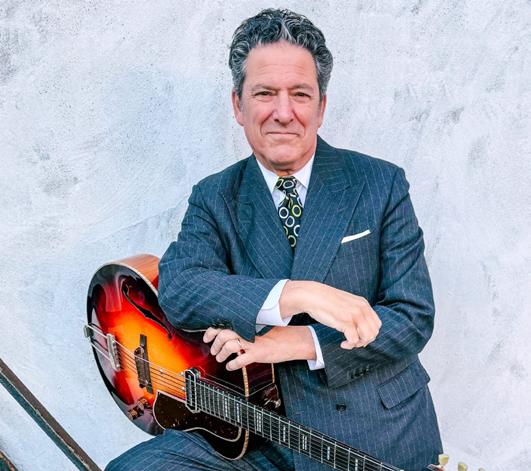
It’s one of 12 songs on John Pizzarelli’s new Green Hill Music album, Dear Mr. Bennett, to be released on March 3. Music from that album will be performed by Pizzarelli at New York’s Birdland, from March 3-7 and then on Friday, March 13, at the Sarasota Jazz Festival.
“It’s good to go to Sarasota to do this one,” Pizzarelli said. “I’ve been in Sarasota many times throughout the years.” This is the year of Bennett’s centennial birthday (August 3), and, said Pizzarelli, “the materi-
al’s so interesting to me. It’s so much fun to research things. One of the first things we do is Cy Coleman and Carolyn Leigh’s ‘The Best is Yet to Come.’ Tony was so close with Cy Coleman. We did a bunch of Cy Coleman things, songs from his albums with Bill Evans, and a bunch of his hits—‘Rags to Riches’, ‘Boulevard of Broken Dreams’, and ‘Because of You.’”
The selections from the Tony Bennett/Bill Evans albums were Evans’ “Waltz for Debby”, “Young and Foolish”, and “When in Rome.” The recording also includes such jazz and popular standards as Michel LeGrand and Norman Gimbel’s “Watch What Happens”, Duke Ellington and Bubber Miley’s “It Don’t Mean a Thing If It Ain’t Got That Swing.” And, of course, there’s the song most associated with Tony Bennett, “I Left My Heart in San Francisco” (George Cory/Douglass Cross).
“The Best is Yet to Come” was
SARASOTA JAZZ FESTIVAL
first recorded by Bennett on the 1962 Columbia album, I Left My Heart in San Francisco. Reviewing it for AllMusic, William Ruhlmann pointed out that Bennett made the song a standard, adding that, “Frank Sinatra didn’t do it until two years later.”
For Pizzarelli, Dear Mr. Bennett is “just part of the series of honoring the people that I really enjoyed listening to over the years—Dear Mr. Cole, Dear Mr. Sinatra, my Paul McCartney and Beatles records.” But Bennett is special because John’s father, the late guitarist Bucky Pizzarelli, was a frequent Bennett sideman and performed on such Bennett albums as To My Wonderful One (Columbia Records: 1960) and I’ve Gotta Be Me (Columbia Records: 1969).
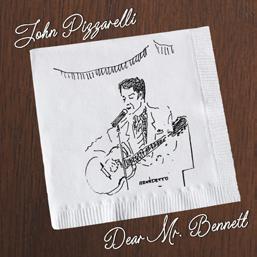
Bennett often attended John’s performances, and, during a John Pizzarelli engagement at Feinstein’s at the Regency, Bennett sketched Pizzarelli’s likeness. That sketch is the cov-
er of the new album. Bennett, Pizzarelli recalled, “was always showing up at people’s gigs, which was very sweet. He was such a New Yorker, and he was just a very open and kind person.”
Pizzarelli last appeared at the Sarasota Jazz Festival in 2022, performing “Billie & Blue Eyes” with vocalist Catherine Russell—their concert celebrating the music of Billie Holiday and Frank Sinatra. At that performance, Pizzarelli recalled coming to his first Sarasota Jazz Festival as a 19-year-old with his father in 1980. “My father brought his classical guitar and his Benedetto guitar,” he said, “and the classical guitar got damaged on the airplane. Fortunately, Bob Benedetto (no relation to Anthony Benedetto, aka Tony Bennett) fixed it.”
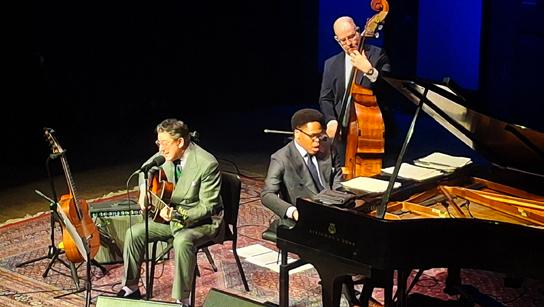
In Sarasota this year, Pizzarelli will again be joined by his regular musical partners, bassist Mike Karn and pianist Isaiah J. Thompson. Karn has been with Pizzarelli for more
than 10 years, and Thompson joined his trio in 2019, having been discovered by Pizzarelli when Thompson was a teenager playing in Montclair’s Jazz House Kids program. Thompson was featured as the Rising Star in the November/December 2020 issue of Jersey Jazz, and, in that article, Pizzarelli recalled the first time he saw the young pianist perform.
“He was 16 and part of Jazz House Kids,” Pizzarelli said. “I never forgot him. I’ve always been attracted to his love for the music and dedication to the right sounds. He puts such fire
and thought into his solos. He is also a great listener and makes the other guys on the stand listen better and react. I’m looking forward to making more music with him for a long time.”
The trio’s last album before Dear Mr. Bennett was Stage & Screen (Seven Strings: 2023). The recording featured several standards from Broadway and the movies including “Too Close for Comfort”, written by Jerry Bock, Larry Holofcener, and George David Weiss for the musical, Mr. Wonderful; Herman Hupfeld’s “As Time Goes By,” made famous in
From left, Pizzarelli, Isaiah J. Thompson, and Mike Karn, performing in February at the John G. Shedd Institute for the Arts in Eugene, OR.
the 1942 film, Casablanca; and “Tea for Two”, composed by Vincent Youmans and Irving Caesar for the Broadway musical, No No Nanette.
In his review of Stage & Screen for Jersey Jazz, Joe Lang pointed out Pizzarelli’s “keen sense of humor” on such songs as Jason Robert Brown’s “I Love Betsy” from the Broadway musical, Honeymoon in Vegas, and Kander and Ebb’s “Coffee in a Cardboard Cup” from the musical, 70 Girls 70. “Once again,” Lang wrote, “Pizzarelli has produced a winner of an album that oozes pleasure.”
On the recent Jazz Cruise, Pizzarelli appeared with the clarinetist/ tenor saxophonist Ken Peplowski, who passed away on the cruise’s final night. “We played together,” Pizzarelli said, “and one day they showed a little clip of Zoot Sims for about a half hour; and then Kenny and I spoke about Zoot for a while. Even if
During a John Pizzarelli engagement at Feinstein’s at the Regency, Tony Bennett sketched Pizzarelli’s likeness. That sketch is the cover of Dear Mr. Bennett.
we hadn’t seen each other in a while, Kenny and I always picked up wherever we left off. We talked about the Beatles a lot. He was a big Beatles fan. We always talked about Benny Goodman. He played on a lot of my records and on my wife Jessica’s records—
Pentimento (PS Classics: 2022) and A Good Day (PS Classics: 2003). There was nobody like him.” (See “Ken Peplowski: ‘A Pioneer of the Clar-
Sarasota Jazz Festival Schedule
MONDAY, MARCH 9
7:30 P.M.
TUESDAY, MARCH 10 5:30-9:30 P.M.
WEDNESDAY, MARCH 12 7:00 P.M.
» Danny Sinoff Jazz Cabaret
Court Cabaret-Florida Studio Theatre
» Jazz Trolley Pub Crawl
Van Wezel Parking Lot
» Terell Stafford Quintet
Florida All State High School Jazz Band
Sarasota Municipal Auditorium
THURSDAY, MARCH 13
7:00 P.M.
FRIDAY, MARCH 14 7:00 P.M.
» John Pizzarelli Trio
Sammy Figueroa
Sarasota Municipal Auditorium
» Arturo Sandoval Band
Michael Ross and the SRQ All Star Band
Sarasota Municipal Auditorium
SARASOTA JAZZ FESTIVAL
inet and a Gentle Soul’, page 49).
In Sarasota, Pizzarelli will be preceded by percussionist Sammy Figueroa, who has played with such jazz giants as Sonny Rollins and Miles Davis and whose 2023 Ashe Records album, Searching for a Memory, was dedicated to the memory of his father, singer Charlie Figueroa. Other stops on Pizzarelli’s Dear Mr. Bennett tour include Philadelphia’s Chris’ Jazz Cafe on March 27 and 28 and William Paterson University on March 29.
On Thursday night, March 12, trumpeter Terell Stafford, the Festival’s Music Director, will lead a quintet, preceded by the Florida All State Jazz Band. Stafford is Chair of the Jazz Studies program at Temple University’s Boyer School of Music, and the Temple Jazz Band recently took first place in a two-day invitational competition organized by Jazz at Lincoln Center. Temple also won Outstanding Rhythm Section
and Outstanding Trumpet Section.
The third Main Stage concert at the Sarasota Jazz Festival will feature trumpeter Arturo Sandoval, preceded by Michael Ross and the SRQ All-Star Band.
Reviewing Sandoval’s December 2025 concert at SF Jazz’s Miner Auditorium in San Francisco, AllAboutJazz’s Steven Roby wrote: “At 76, Arturo Sandoval remains a teacher, a provocateur, and a bandleader who knows how to make a room feel alive. He can lecture, testify, and lead a dance floor—sometimes all in one tune.” Sandoval is a Kennedy Center honoree and a 10-time Grammy winner.—SJ
: The Sarasota Jazz Festival Main Stage concerts will begin at 7 p.m. at the Sarasota Municipal Auditorium, located at 801 North Tamiami Trail. For more information or to order tickets, log onto sarasotajazzfestival.com or call (941) 260-9951.
BY VINCENT PELOTE
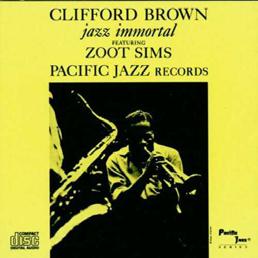
Welcome March! After what has to be considered a brutally cold winter in the Metropolitan New York area we finally come to the month that brings us spring. Personally, not only do I welcome longer daylight hours and warmer weather, but it gives me the opportunity to dig out my favorite jazz tunes about spring and tunes that have spring in the title. Leading the list is trumpet great Clifford Brown’s “Joy Spring”, and my favorite version can be found on the album Clifford Brown: Jazz Immortal (Pacific Jazz). Recorded in Los Angeles on August 12, 1954, it is the second recording of Brownie’s jazz standard composition featuring himself (trumpet), Zoot Sims (tenor saxophone), Bob Gordon (baritone saxophone), Stu Williamson (valve trombone), Russ Freeman (piano), Joe Mondragon (bass) and Shelly Manne (drums), with some excellent arrangements by Jack Montrose.
Next is “Springtime” by flutist/ alto saxophonist/bass clarinetist Eric Dolphy from the last recording before his death in Paris on June 11, 1964. It can be found on the album Unrealized Tapes on the German West Wind label. I have two favorite versions of trumpeter Freddie Hubbard’s jazz waltz, “Up Jumped Spring.” The instrumental version first appeared on Art Blakey & The Jazz Messengers’ 1962
album Three Blind Mice (United Artists). That edition of the Messengers featured the front line of Hubbard on trumpet, Curtis Fuller on trombone, and Wayne Shorter on tenor sax. Vocalist Abbey Lincoln added lyrics and recorded the song with tenor saxophonist Stan Getz on a marvelous 1991 Verve album, You Gotta Pay the Band. Speaking of vocalists, one of my favorites is Betty Carter. In my opinion she recorded the definitive version of Fran Landesman’s and Tommy Wolf’s standard “Spring Can Really Hang You Up the Most.” She performed it live with her trio at San Francisco’s Great American Music Hall in 1979, and her riveting performance was recorded and issued on her own Bet-Car label as The Audience with Betty Carter. Richard Rogers and Lorenz Hart composed “Spring is Here” for the 1938 musical I Married an Angel.
Luckily the song was noticed and performed by numerous jazz artists, but the one I most associate this song with is pianist Bill Evans who recorded it several times in his career with my favorite version being issued on the 1959 Riverside album Portrait in Jazz. That version features the classic trio of Evans, bassist Scott LaFaro, and drummer Paul Motian. The first of two more spring selections from the Great American Songbook is Frank Loesser’s “Spring Will Be a Little Late This Year” which was written for and introduced in the 1944 film Christmas Holiday. The other is
“It Might as Well Be Spring” by composer Richard Rodgers and lyricist Oscar Hammerstein II for the 1945 musical film State Fair. Oddly enough my favorite versions of both tunes appear on vocalist Sarah Vaughan’s 1955 Columbia album Sarah Vaughan in Hi-Fi. Of course, there are other interpretations of all the tunes mentioned that I like but I chose to list a few of my personal favorites. March allows us to say good-bye to winter, and I hope I’ve given you some suggestions for music to help you usher in spring with some great jazz. Welcome March and welcome spring!
“ I HAVE TWO FAVORITE
VERSIONS OF TRUMPETER
FREDDIE HUBBARD’S ‘UP JUMPED SPRING.’ ”
Whalum Sat. March 14 at 5 & 8 PM at the
Classic V-Disc Big Band Jazz Sessions
Various Artists
BY JOE LANG
During World War II, a series of recordings was made for distribution to servicemen. They were made by a large variety of artists who contributed their artistry without compensation, recordings that were not available commercially. Many of these recordings were outstanding big band jazz sessions, often with vocalists. These records, distributed to front-line troops, were produced on thin black flexible plastic and were supposed to be destroyed after the war, but many survived and found their way into the hands of collectors. The good folks at Mosaic
Records have recently released a 10disc set, Classic V-Disc Big Band Jazz Sessions (Mosaic – MD10-284), a set that contains sessions gathered from a variety of sources, original discs, compilations on LPs and CDs, and tapes made from the original discs.
This collection includes tracks by big bands led by Woody Herman, Chubby Jackson, Les Brown, Charlie Barnet, Mal Hallett, Clyde Lucas, Ted Fiorito, Hal McIntyre, Stan Kenton, Boyd Raeburn, Kay Kyser, Johnny Blowers, Gene Krupa, Buddy Rich, Harry James, Claude Thornhill, Count Basie, Lionel Hampton, Yank Law-
son, Glen Gray, Sam Donahue, Jimmy Dorsey, Tommy Dorsey, Glenn Miller, Randy Brooks, Jimmie Lunceford, Don Redman, Charlie Spivak, Lee Castle, Tony Pastor, and Bill Heathcock, plus four service bands. Many of the tracks are ones that were also recorded commercially by the bands, but there are also a plethora of tracks that were never commercially recorded.
DISC ONE » Is all Woody Herman with vocals by Frances Wayne and Woody Herman. One track has Chubby Jackson leading the Herman band with a vocal by Martha Raye, DISC TWO » Has two more tracks by the Jackson-led band, Les Brown with a vocal by Doris Day, Charlie Barnet with vocals by Kay Starr and Peanuts Holland, Mal Hallett, Clyde Lucas
Disc One is all Woody Herman
with vocals by Jean LaSalle and Clyde Lucas, and one track by Ted Fiorito.
DISC THREE » Hal McIntyre with vocals by Al Noble, Gloria Van and Ruth Gaylor, Stan Kenton with vocals by June Christy and Ray Wetzel, Boyd Raeburn with a vocal by Dorothy Claire, Kay Kyser and Johnny Blowers with a vocal by Dottie Reed.
DISC FOUR » Gene Krupa with vocals by Anita O’Day and Buddy Rich with vocals by Linda Larkin and Buddy Rich.
DISC FIVE » Harry James, Claude Thornhill and Count Basie.with vocals by Jimmy Rushing and Earl Warren.
DISC SIX » Count Basie with vocals by Jimmy Rushing and Earl Warren, and Lionel Hampton.
DISC SEVEN » Yank Lawson, Glen Gray with a vocal by Fats Daniels, the combined bands of Jimmy and Tommy Dosey, Jimmy Dorsey and Tommy Dorsey with a vocal by Charlie Shavers.
DISC EIGHT » Glenn Miller with vocals
by Johnny Desmond, Ray McKinley and the Crew Chiefs, The Curtis Bay Coast Guard Training Station
Dance Band, Sy Warnoker and the U.S. Maritime Service Training Station Band with a vocal by Pee Wee Hunt, Johnny Messner and the Army Service Forces Band, the 344th Army Services Orchestra, the Majors & Minors and Randy Brooks.
DISC NINE » Sam Donahue and The Navy Dance Band with a vocal by Don Jacoby.
DISC TEN » Jimmie Lunceford, Don Redman with a vocal by Dolores Brown, Charlie Spivak with a vocal by Irene Day, Lee Castle, Tony Pastor with a vocal by Tony Pastor, and Bill Heathcock with vocals by Anita Boyer.
Interspersed throughout are introductory commentaries by the various bandleaders. Alternate takes are included at the end of most of the discs.
As is evident by the variety of
bandleaders, the music is eclectic. While Big Band Jazz is the overall designation of the music, it is mostly straight-ahead swing with a lot of jazz influence along the way. The result is a consistency of sounds that will find you tapping your feet, snapping your fingers, swaying your body, and perhaps seeking out a dance partner. Regardless of your response, you will certainly have a smile on your face as you listen to this collection. As usual, Mosaic has done an outstanding job of get-
ting the maximum sound quality from sources of various quality. All in all, for these ears, this is one of the most exciting sets to come from Mosaic. Almost every significant big band from the mid-1940s is represented, the most notable exceptions being Benny Goodman and Duke Ellington. This music holds up well, with many of the charts feeling as fresh today as they did when they were penned and recorded. Thank you Mosaic for this uplifting set of music! mosaicresords.com
Buddy Rich, left, and Gene Krupa are featured on Disc Four.
OTHER VIEWS
BY JOE LANG
The Interplay Jazz Orchestra has been swinging around Long Island for more than a dozen years. Bite Your Tongue (Bigtime Records) is its fifth album. The nine selections are arranged by members of the band—trumpeters Damien Pacheco and Gary Henderson, trombonist Joey Devassy, who also wrote three of the selections, “Bite Your Tongue,” “The Downside Up” and “Blues for Adrian” and baritone saxophonist Chris Scarnato, who wrote the tune that he arranged, “Go Figure.” The charts are at the heart of the music, each well-constructed with a lot of movement with each solo being set up logically. The support for each soloist is creative and often surprising. The program incorporates several styles from swing to hard bop to hints of jazz-rock rhythms. Despite the variety of arrangers, the band has a consistent feeling throughout the
program. There are also a few standards such “My Foolish Heart,” “It’s Been a Long, Long Time” and “Night and Day,” arranged with new perspectives. The band often performs at the Jazz Loft in Stoney Brook Village located on the North Fork of Eastern Long Island (thejazzloft. org ), a jazz museum and performance venue with a terrific schedule of programs. This album is available at Amazon and other digital platforms.
With the wealth of musical talent in the Los Angeles area, it is a natural inclination for the folks who have spent much of their professional lives writing compositions and arrangements for film and television to develop a desire to organize a big band providing an outlet to explore their own efforts divorced from the rigid demands of their studio work. One example is the leader of the Dave Slonaker Big Band.
When you look at the lineup of players on Slonaker’s latest recording, Shifty Paradigms (Origin Records – (82944), you find reedmen Bob Sheppard, Brian Scanlon, Rob Lockart, Tom Luer and Adam Schroeder; trombonists Alex Iles, Charlie Morillas, Ido Meshulam’ and Bill Reichenbach; trumpeters and flugelhornists Wayne Bergeron, Dan Fornero, Clay Jenkins, and Ron Stout; and a rhythm section
of Ed Czach on piano, Adam Waddell on guitar, Edwin Livingston on bass, Peter Erskine on drums, and Brian Kilgore adding occasional accents on percussion. To challenge this group, Slonaker has written charts for eight of his original compositions, each with a different source of inspiration as he explains in his liner notes. There is also one standard, “Bye Bye Blues.” daveslonaker.bandcamp.com/album/shifty-paradigms
One constant for Red Norvo was that no matter what size group he was leading—from a big band to a trio—his music was always swinging. When he lost many of the players on his newly formed big band, in 1942, he decided to take a new approach with a smaller unit. It was from this period that the music on The Secret Sessions (Dot Time -8023) was recorded. The recording was done on
OTHER VIEWS
acetates at a private session at the home of George T. Simon. Trombonist Eddie Bert, who kept a record of each gig on which he participated, had these acetates in his possession.. The band included Norvo on xylophone, Shorty Rogers on trumpet, Eddie Bert on trombone, Aaron Sachs on alto sax and clarinet, possibly Hank Kahout on piano, Clyde Lombardi on bass, and Specs Powell on drums. Among the 10 songs on the album are “One Note Jive,” “Speculatin’,” and I May Be Wrong.” The arrangements were tight but leave plenty of solo space for the musicians, all of whom shine. What you will hear is a mainstream jazz at its finest with a roster of musicians who, from the leader to the drummer, was an empathetic bandmate as well as an outstanding soloist. dottimerecords.com
Pianist/alto saxophonist Chris Hopkins
was born in Princeton, NJ, but has spent the greater part of his career based in Germany. He has grown from one of the young hotshots on the jazz scene to someone who has been putting together and mentoring groups of young European musicians and creating lots of swinging music.
On Chris Hopkins Meets the Young Lions: Live! Vol. 2 (ESOP – 4515) Hopkins has a quintet with himself on piano and alto sax, Thimo Niesterok on trumpet and cornet, Tijn Trommelen on guitar and vocals, Cris Hermes on bass, and Mathieu Clement on drums. The program is pretty much made up of standards.. The exceptions are the opener, Milt Jackson’s “Bags’ Groove,” and “Sweets” Edison’s “Jive at Five.”
The balance of the program includes“These Foolish Things,” “Stardust,” and “Night and Day,” among others. There are two with smooth
vocalizing by Trommelen: “Just You, Just Me” and “I’m Confessin’ (That I Love You).” chrishopkins.com
There is a cocktail lounge in New York City named The Rum House where the music is early jazz.. One group that has appeared there is led by clarinetist Ricky Alexander. His compatriots for these gigs have been pianist Conal Fowkes, bassist
Rob Adkins, and drummer Kevin Dorn. The special musical empathy that had developed among them suggested that the next logical step was to make a recording. To supplement their traditional ragtime and other early jazz forms for the album, they invited banjoist Jerron Paxton to participate. The result is a delightful collection dubbed Ragology (Turtle Bay Records - 26001). Alexander is a dexterous player who has a magnificent tone and a fertile imagination. This recording gives folks a nice dose of the robust keyboard talent of Fowkes. Dorn and Adkins provide solid support and occasional opportunities for individual statements. A special shoutout goes to Colin Hacock who wrote the informative liner notes. Ragology is a feast of goodtime music played by those who love what they are doing. turtlebayrecords.com
OTHER VIEWS
Trumpeter/flugelhornist Joe
Magnarelli has been active on the New York City scene for about 40 years, and has released more than a dozen albums as a leader since 1995. Decidedly So (Cellar Music – 031825) is his latest offering and features him with trombonist Steve Davis, pianist Jeremy Manasia, bassist Clovis Nicholas, and drummer Rodney Green. They give their considerable talents to five Magnarelli originals plus “This Nearly Was Mine,” “When I Grow Too Old to Dream” and ‘When I Fall in Love.” Magnarelli has chosen his musical partners well as the group is tight, each of them capable of quality soloing when given the opportunity. Naturally, the most prominent soloist is Magnarelli, who has roots in bebop and hard bop but has developed into a well-rounded and wonderfully creative player. Davis is one of the major voices on trombone in jazz today. Magnarelli’s original tunes are clev-
erly constructed and serve as springboards for the solos inspired by the basic themes. cellarmusicgroup.com
In 2012, the Doug MacDonald Trio played a gig for the Beverly Hills Art Show. Guitarist MacDonald was joined by bassist Lou Shoch and drummer Billy Paul, and the performance was recorded by Paul. Listening to the recording all these years later, MacDonald was impressed with the special feeling and spirit that came through and decided to release the music on his label. Now we all can share these magical musical moments on Live in Beverly Hills (Dmac Music – 28). There are seven selections, Luis Bonfa’s “Samba De Orfeo,” two MacDonald originals, “Unimpressed” and “Mall Blues,” “The Night Has a Thousand Eyes,” “Early in the Morning,” featuring a vocal by Shoah, “Baubles, Bangles and Beads” and “Yesterdays.”
All three players are simply magnificent. It is a treat when an unexpected gem like this concert becomes available. Thanks to MacDonald for his wise judgement in making it happen. dougmacdonald.net
For a performer who has been singing professionally since her teenage years, 97-year-old Marilyn Maye has been seriously under-recorded. She has only released about a dozen or
so albums, all of them out of print. Now Maye has released her first live album, The Magic of Marilyn Maye: Live at Jazz at Lincoln Center (Blue Engine Records). The opening track, “Mercer Medley (Day In, Day Out/ Too Marvelous for Words/You Must Have Been a Beautiful Baby/Jeepers Creepers/Come Rain or Come Shine)” from April 2017 finds her backed by the Jazz at Lincoln Center Orchestra. Four tracks, “Guess Who I Saw Today,” “My Romance/Why Did I Choose You/ That’s All,” “Lush Life” and “Ellington Medley (Do Nothing ‘Til You Hear From Me/Don’t Get Around Much Anymore/Satin Doll)” were recorded at Dizzy’s on September 2016 and February 2018 with Tedd Firth on piano, Rod Fleeman on guitar, Tom Hubbard on drums and Eric Halvorson on drums. The remaining six selections, “Fifty Percent,” “Put on a Happy Face,” “Don’t Nobody Bring Me No Bad News,” “It’s Today,”
OTHER VIEWS
“Secret of Life” and “Here’s to Life” are from the Appel Room in October 2017 with a big band led by Firth. Maye is her dynamic self throughout these performances, with a full voice and her individualistic approach to each song, whatever the instrumental support may be. While these tracks were recorded eight to 10 years ago, her current performances continue at this high level. Grab this music and dig a one-of-a-kind star. This recording is available as a download only on all major digital platforms.
Another nonagenarian, vocalist/pianist Betty Bryant, has a new album, ‘nothin’ better to do (bry-mar music). This nine-tune collection has a stellar lineup of Southern California musicians—Bryant on piano and vocals, Robert Kyle on reeds, Richard Simon or Hussain Jiffry on bass, and Kevin Winard or Aaron Serfaty on drums, with guest appearances by
trumpeter Tony Guerreo, guitarist
Kleber Jorge, violinist/violaist Luanne Hozmy, and cellist Niall Taro.
The songs are under the radar gems such as “You Are Not My First Love,” “I Can’t See for Lookin’,” “Time Was,” “Thanks for You” and “Winter Warm, plus two originals by Bryant, “He May Be Your Man,” and “Mama Sue” with “Awrite Then,” written by Kyle. Bryant has an understated approach to vocalizing that infuses each lyric with an intimacy that brings the listener close. Her self-accompaniment is similarly soft and perfectly supportive. The other musicians complement Bryant’s style, with Kyle a particular standout. bettybryant.com
Vocalist Maria Muldaur has been on the scene for more than 60 years in a variety of styles—folk, blues, country, and jazz. One of her mentors and inspirations was the legendary blues singer, Victoria Spivey. One
“
MARIA MULDAUER
HAS BEEN
SINGING BLUES
ON AND OFF FOR HER ENTIRE CAREER. ”
Hour Mama: The Blues of Victoria Spivey (Nola Blue Records – 044) finds Muldaur addressing a dozen songs associated with Spivey. She is supported by James Dapogny’s Chicago Jazz Band on three tracks, “My Handy Man,” “One Hour Mama” and “T-B Blues;” by Tuba Skinny on two selections, “Organ Grinder Blues” and “Funny Feathers;” and a group comprising saxophonist Johnny Bones, guitarist Danny Caron, pianists Neil Fontano and David K. Matthews, bassist Steve Height and drummer Beaumont Beaul-
lieu for the rest including “What Makes You Act Like That,” Don’t Love No Married Man,” and Dreaming of You.” Muldaur has been singing blues on and off for her entire career, and Spivey took her under her wing when they first met at the start of Muldaur’s career, giving her advice about all aspects of performing. That Muldaur learned her lessons well is evident on this fine collection. Muldaur’s voice has aged a bit, but is still strong and full of passion. Spivery would surely have given Muldaur a nod of approval if
OTHER VIEWS
she had been around to hear the finished product. nolabluerecords.com
For about 50 years, vocalist Donna Byrne has been a welcome presence on the New England jazz scene. Her new album, It’s All About Love (Challenge Records – 73612) demonstrates that she is still in fine voice and her choice of material is sublime. Her backing musicians are Tim Ray on piano, Marshall Wood on bass, and Les Harris Jr. on drums and percussion, plus special guests Scott Hamilton on tenor sax and Gray Sargent on guitar. Listening to her move through the 16-song program is to discover one delight after another. Yes, there are familiar songs such as“I’ll Close My Eyes,” “Day by Day,” “All Alone,” “You Are My Sunshine,” “My Buddy,” “Deed I Do” and “All the Things You Are,” and each of them is performed in ways that gives them renewed freshness. It is when she takes you to vis-
its with some lesser heard gems that Byrne shows how she can take rarely heard material and make it feel like an old friend when she sings it. These selections include “About Love” by British vocalist Judith Owen; “Soul Eyes,” the classic jazz tune “Moanin’” with music by Bobby Timmons and lyrics by Annie Ross, a feature for Lambert, Hendricks and Ross; “Blackberry Winter,” a lovely Alec Wilder tune with lyrics by Loonis McGlohan; and “Do Wrong Shoes,” a hip tune by Donald Fagan and Hirth Martinez. On each selection, Byrne’s jazz-influenced phrasing gives the material a special dimension that is always spot on. Having the support of this musical crew gives Byrne a perfect bed for her superb vocalizing. Byrne took a respite from performing several years ago, but the lure of the music was too strong to resist. It’s All About Love is sure to find a welcome place in your music library. donnabyrne.com
BIG BAND IN THE SKY
Reprinted from the Latest News section of njjs.org
Ken Peplowski: “A Pioneer of the Clarinet, and a Gentle Soul”
“His Sound Was Just So Warm and Beautiful and Inviting and Caressing”
Arguably the three greatest jazz clarinetists on the planet—Anat Cohen, Paquito D’Rivera, and Ken Peplowski—played together several times on the recent Jazz Cruise. Peplowski, who had once been a tenor saxophonist with Benny Goodman, recalled to Cruise Consultant Lee Mergner “the huge rivalry” between Goodman and Artie Shaw. “Those days are gone now,” Peplowski said, “because we realize there’s few enough of us, so we need to support each other and just get up there and have fun.”
The 66-year-old Peplowski
passed away on February 2, the final night of the cruise. He was diagnosed with multiple myeloma in 2021 but had continued to perform regularly as he battled the disease. According to his brother, Ted Peplowski, cause of death, pending an autopsy, was an apparent heart attack.
“We did a bunch of three-clarinet things this week, and he sounded amazing,” Cohen told WRTI Radio’s Nate Chinen. “Then on Monday morning, he and I had what they call a Coffee Talk. So, basically at 9:45 in the morning, we sat down on the
Peplowski, far right, on the Jazz Cruise with Anat Cohen and Paquito D’Rivera
BIG BAND IN THE SKY
stage and about 100 people came out of their rooms to ask us questions, just chit-chatting about life and the clarinet. Then he said, ‘I have a gig this afternoon,’ and went to his cabin to rest. He never made it to the gig.”
Members of the jazz community have responded with shock, of course, recalling not only his virtuosic playing but his warm sense of humor.
“We lost a true giant today,” pianist Emmet Cohen told DownBeat’s Michael J. West. “A brilliant musician, a pioneer of the clarinet, and a gentle soul, he touched so many people through his artistry. Ken contained a quirky, comedic genius and would light up any room or stage.”
Bassist/vocalist Nicki Parrott (on Facebook) said, “His ability to make you laugh right as you were counting off the time was a rare and natural gift that he possessed. Ken always brought his best to the bandstand,
and I’ll never forget his generosity, humor, and that warm beautiful tone.”
Anat Cohen pointed out that Peplowski “comes from the classical tradition of the clarinet. His sound was just so warm and beautiful and inviting and caressing. When we talked Monday morning in front of the public, I actually asked him: ‘Is it true that you practice classical clarinet mostly?’, and he said that he did. That’s what I adored: he had an impeccable technique, but he never played for the sake of technique. He used it for the expression.”
Originally from Cleveland, Peplowski went on the road with the Tommy Dorsey Orchestra led by trombonist Buddy Morrow in the late 1970s. In a December 2012 interview with Jersey Jazz’s Schaen Fox, he reminisced about those days. “I was 19 or 20 years old. I was in the lead alto chair, and he (Morrow) gave me a 10-15 minute feature on clarinet with just the rhythm section on every show. He really encouraged me as a player and gave me a lot of advice about playing lead in the sax section.
“I stayed with that band for two
or two-and-a-half years. After that, Buddy convinced me to move to New York. He said, ‘If you are going to leave, you shouldn’t go back to Cleveland and be a big fish in a small pond. You should go where you are going to be challenged.” Peplowski said he was in New York “for three or four months before I got a real paying job. What you had to do was sit in every place you could, like Condon’s and Jimmy Ryan’s. Ed Polcer was really nice to me back then. He used to have me sub at Condon’s all the time. The older musicians were
“ HIS MUSIC COVERED SO MUCH BEAUTIFUL TERRITORY—SWINGING, LYRICAL, TASTEFUL. ”
BIG BAND IN THE SKY
really really kind to us all and very helpful. Milt Hinton, Bucky, Buddy Tate, Flip Phillips all helped me a lot.”
Fox asked Peplowski about his well-known sense of humor, and he replied that “Some of my heroes were some of those old humorists from The New Yorker—S.J. Perelman, Thurber, and Robert Benchley. Also, I’m really into older comedy, like The Jack Benny Show with all those great writers. I’ve been putting things down on the road in notebooks and trying to see what comes out.”
The New Jersey Jazz Society, Peplowski told Fox,”gave me some of my first breaks. I remember we used to play those really fun weekends out at Waterloo Village with Jay McShann, Buddy Tate ... I met a lot of good friends out there. That music we made was old friends getting together and having fun.”
Another important mentor was
pianist Dick Hyman. I saw them play together twice at the Sarasota Jazz Festival—in 2017 and 2022. At the 2022, concert, Hyman asked Peplowski, ‘How long have we been doing this?’ Peplowski responded, ‘Since the early ‘80s.’ Then, he told the audience that Hyman “did a fiendish thing to me at the Piano Spectacular at Waterloo Village. Someone was late, and Dick said, ‘Ken, I need you to play for 15 minutes.’ I said, ‘Who am I playing with?’ And, he said, ‘No one.’”
Peplowski’s first album as a leader, Double Exposure, was released on the Concord label in 1987. Reviewing it for AllMusic, Scott Yanow wrote: “Peplowski comes across as a superior swing specialist, particularly on such numbers as ‘I Would Do Anything for You,’ ‘Jubilee’, and ‘Careless Love.’ A superb start to an important career.”
Since then, he has released more than 70 albums as a leader or co-leader.
Two of his more recent albums were Unheard Bird, released in April, 2024 on Arbors Records and Live at Mezzrow, released in July 2024 on the Cellar/SmallsLIVE label. Unheard Bird included string arrangements written for Charlie Parker but never recorded by him. In addition to a five-piece string section, Peplowski is joined on the record by trumpeter Terell Stafford, pianist Glen Zaleski, bassist Peter Washington, and drummer Willie Jones III. Reviewing it for Jersey Jazz, Joe Lang wrote that, “Peplowski, Stafford, and the rhythm section bring their own aesthetic visions to the music, capturing the spirit of Parker while putting forth their individuality as jazz improvisers.
Live at Mezzrow features Peplowski, pianist Ted Rosenthal, bassist Martin Wind and drummer Jones III playing standards such as Jerome Kern’s “All The Things You
Are”, Johnny Mandel’s “The Shadow of Your Smile”, and Duke Ellington’s “Who Knows.” Peplowski, JJ’s Lang wrote, “is always creative in his playing, no matter the tempo, and his sound is a sheer delight to hear on both of his instruments.”
Rosenthal, upon hearing of Peplowski’s death, posted this on Facebook: “I am heartbroken to learn of the sudden passing of my dear friend and musical collaborator. I’ve known Ken for 40 years, and we’ve done so many musical projects together—recordings, NYC gigs, and touring to places near and far. His music covered so much beautiful territory—swinging, lyrical, tasteful. His quick wit also made him a consummate entertainer.”
In addition to his brother, Peplowski is survived by his girlfriend, Pam Stark; and a son and daughter, Marty and Juliana Peplowski, who live in Sweden.—SANFORD JOSEPHSON
Trombonist Willie Colon: Best Known for His Breakthrough Salsa Record, Siembra
Siembra, a studio album released by Fania Records in 1978, was the best-selling salsa record in history. Trombonist Willie Colon, who collaborated with Panamanian vocalist Ruben Blades on the recording, passed away Feb-
ruary 21, 2026, at the age of 75.
The album, according to The New York Times’ Derrick Bryson Taylor and Adam Bernstein, “was widely considered a genre landmark.” Reviewing it for AllMusic, John Bush wrote that, “Siembra exploded on the salsa scene in 1978 and has never been forgotten by fans. Beginning with a minute of playfully deceptive quasi-disco arrangements, Colon and his band slip into a devastating salsa groove for the opener, ‘Plastico,’ on which Blades criticizes America’s throwaway society and then brings all of Latin America together with a call to unity.”
All of the songs except one were written by Blades, who posted the following on Facebook: “I just confirmed what I was resisting to believe: Willie Columbus is indeed dead. Later, and calmly, I will write about Willie and his vital and important musical legacy.”
Colon was born in the South Bronx on April 28, 1950, and raised
by his grandmother, who familiarized him with the music of her Puerto Rican homeland and gave him a trumpet for his 11th birthday. Three years later, he switched to trombone, saying he loved its “roar.”
In 2004, Colon received the Latin Recording Academy’s Lifetime Achievement Award, and, in 2025, Billboard Magazine named him one of the 30 most influential Latin artists of all time. He was nominated for 10 Grammy Awards
The Guardian’s Garth Cartwright, writing two days after Colon’s death, described him as being to salsa “what Elvis Presley was to rock’n’roll—the fearless teenager whose loose, fast, rough interpretation of the music he heard on the streets helped create a genre that grew into the dominant Latin dance music.”
Colon is survived by his wife, Julia Craig, but a complete list of survivors was unavailable at presstime.
THANK YOU and welcome to all who have recently joined or renewed their memberships. We can’t do what we do without you!
Your membership is vital to NJJS’s mission to promote and preserve America’s great art form— JAZZ!