Inspiring a zerocarbon future
Annual Report and Accounts 2025

At Jersey Electricity (‘the Company’), we are committed to delivering energy that is safe, reliable, sustainable and affordable to our Island community.
Safety is at the heart of our operations, protecting our employees, customers and the wider community.
Reliability ensures homes and businesses have the energy they need, every day.
Sustainability drives our investment in low-carbon technologies and shapes how we manage our energy network .
Affordability ensures our services remain accessible and competitively priced for all.

Help us cut paper
Printing of this Annual Report is carbon balanced, with trees planted to help offset the climate impact of its production.
While Jersey Electricity Plc has sought to reduce the environmental impact of this publication as far as possible, we encourage readers to opt out of receiving printed copies and make use of our website, jec.co.uk/investors, to reduce material and resources used.
Chair’s review

In 2025, Jersey Electricity has demonstrated how innovation, strategic investment and sustainable growth can power a resilient future. By embracing new technologies and strengthening our infrastructure, we continue to deliver value for our stakeholders while advancing Jersey’s journey towards a low-carbon, secure energy system
GROUP REVENUE
£146.2m
FY24: £135.7m
PROFIT BEFORE TAX
£14.2m
FY24: £15.1m
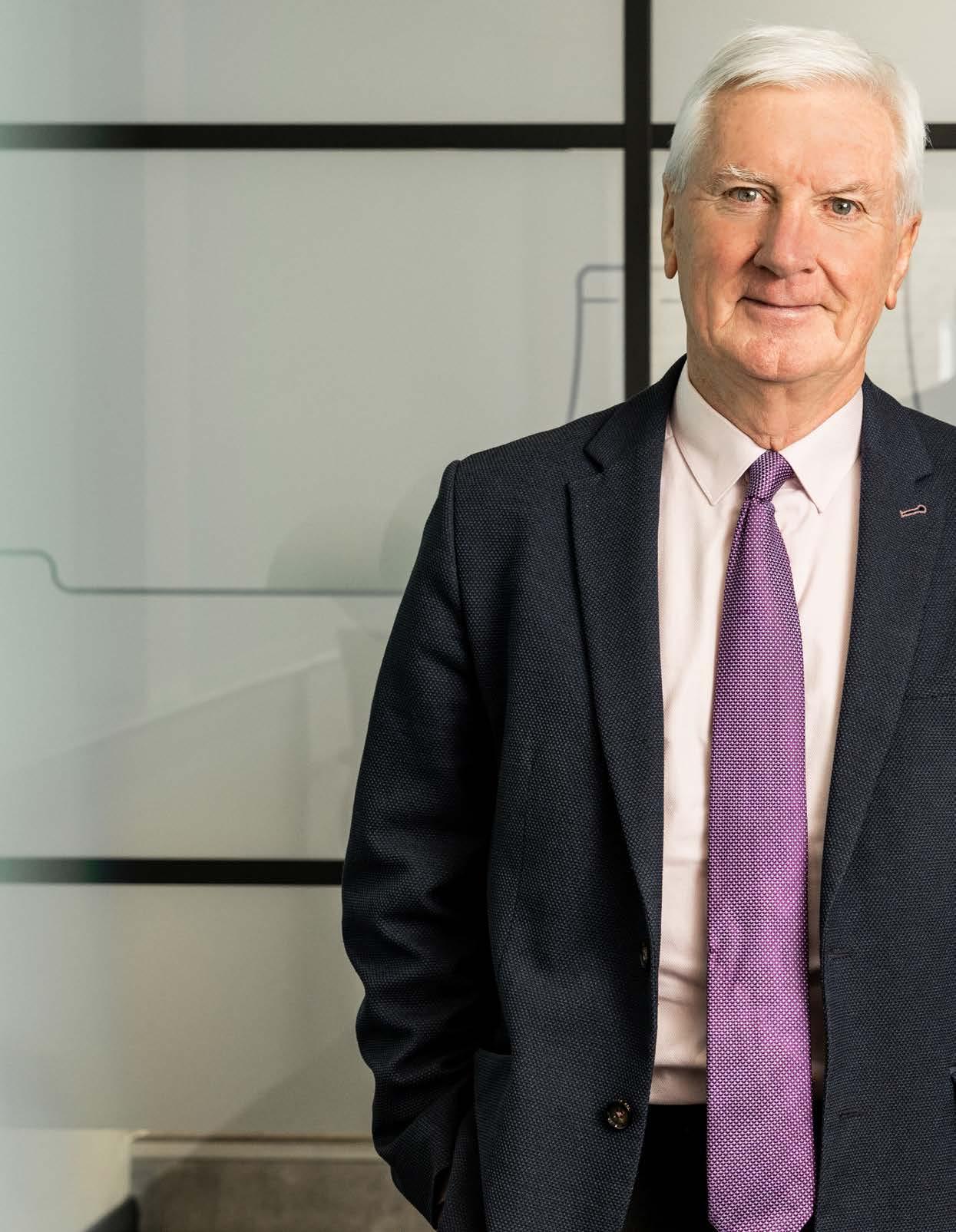
Phil Austin MBE leads a Board comprising experienced Executive and independent Non-Executive Directors. Together, they provide strategic direction and strong corporate governance to ensure the long-term success and sustainability of the Company.
Strategic investment: Powering Jersey’s net‑zero transition
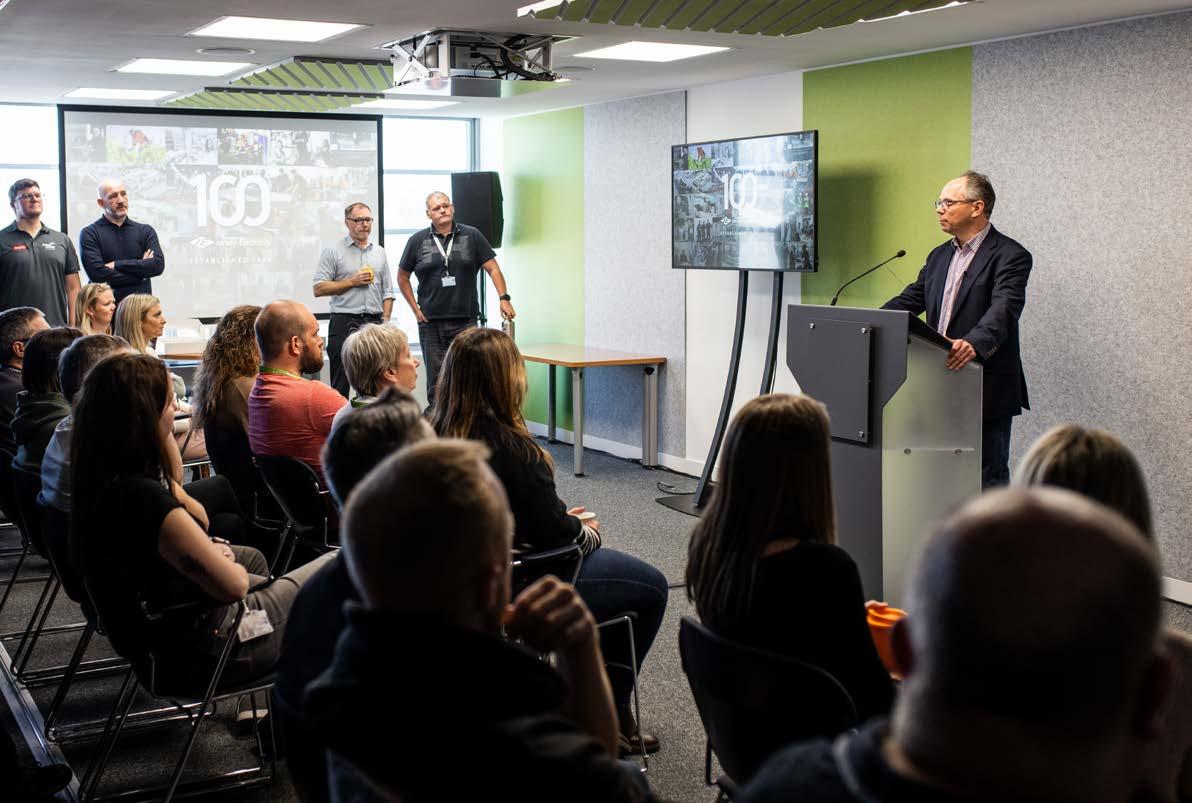
Following the celebration of our centenary in 2024, 2025 has been a year of continued investment and progress. The year began with a centenary stakeholder dinner, attended by a cross-section of employees, pensioners, suppliers, partners and Government representatives, marking both a celebration of the Company’s heritage and a shared commitment to Jersey’s energy future. It set a fitting tone for a year defined by collaboration, ambition and progress.
It has also been a demanding period, reflecting our sustained focus on building a modern, efficient and resilient energy system for the Island’s future. Our ambition remains clear: to accelerate Jersey’s transition to net zero while delivering secure, reliable, sustainable and affordable energy for all customers. Progress has been evident across the business. We have strengthened network reliability and net zero readiness, invested in new skills and technologies, and deepened collaboration with Government, stakeholders and the wider community to advance the Island’s sustainability goals.
During the year, we reached key milestones on three major initiatives central to our long-term strategy. The Big Upgrade, our £120m programme to modernise and reinforce Jersey’s electricity network, remains on schedule, replacing ageing assets, increasing capacity and preparing the grid for an all-electric future.
In parallel, the £30m La Collette Resilience Programme has continued to enhance on-Island backup generation, improving the resilience of Jersey’s energy supply.
Commissioning the St Clement Solar Farm in spring 2025 marked a significant milestone: the Island’s first utility-scale renewable generation project. This development represents an important step towards energy independence and lays the groundwork for further renewable growth.
Together, these projects demonstrate Jersey Electricity’s long-term commitment to strategic investment, operational excellence and responsible leadership. Our approach
balances the need for infrastructure modernisation with affordability and environmental responsibility, ensuring sustainable benefits for customers, shareholders and the Island.
Performance
The Group delivered a solid performance in 2025, underpinned by disciplined management and continued investment. The easing of wholesale electricity markets provided some relief, and we welcome a period of relative stability in wholesale energy prices after several years of severe volatility.
Revenue increased to £146.2m, up 8% on the prior year, driven by steady unit sales growth and the continued transition to electric heating and transport. Profit before tax was £14.2m, lower than the previous year primarily due to the revaluation of the property portfolio and a one-off past service pension liability.

Our commitment to innovation and investment is about more than strengthening today’s network, it’s ensuring Jersey has the secure, sustainable energy infrastructure it needs for generations to come.
Our Energy business achieved a 6.4% return on assets, maintaining robust performance on a five-year rolling basis. Other divisions performed in line with expectations.
We remain well positioned for the future, with a strong balance sheet, clear strategic direction and demonstrable progress against our long-term objectives. The current pricing structure continues to offer good value and stability for customers while supporting the investment required to deliver Jersey’s energy transition.
The Board has recommended a final dividend of 20.82p per share, an increase of 5% on the previous year, payable on 13 March 2026. This reflects our solid financial position and ongoing commitment to sustaining shareholder value, while investing at record levels in Jersey’s energy future.
As we look ahead, our focus remains clear: to lead Jersey’s transition to a net zero future with responsibility, foresight and purpose. We are building not only an energy system, but a legacy of reliability and sustainability for our Island.
Corporate governance
Strong governance is central to our success. The Board is committed to the highest standards of corporate governance, ensuring all innovation and investment activity is delivered responsibly, transparently and in line with stakeholder expectations.
In accordance with the UK Corporate Governance Code 2018, the Board identified two key areas of focus for FY25:
1. Progress towards Jersey’s net zero goal while further reducing our own carbon footprint.
2. Support customers through energy efficiency initiatives, ensuring our services remain safe, reliable, affordable and sustainable.
You can read about the good progress we have made in both areas on pages 32 to 35.
The Board determined its key areas of focus for FY26 as follows:
1. Continue to ensure secure, resilient, affordable and clean electricity supply for Jersey, investing in core infrastructure to underpin economic growth and meet the needs of current and future customers.
2. Provide oversight on our major infrastructure projects – the Big Upgrade, La Colette Resilience Programme, the Normandie 2 submarine cable replacement and, internally, the Smart Upgrade, the Enterprise Resource Planning (ERP) project, with particular emphasis on resource management and cost control.
Board changes
In October 2024, we welcomed two new independent Non-Executive Directors, Iman Hill and Roger Blundell, whose expertise further strengthens the Board as it oversees the Company’s delivery and strategic programme.
During the year, Lynne Fulton, Chief Financial Officer, stepped down from the Board and will leave the Company in February. On behalf of my colleagues, I extend our sincere thanks to Lynne for her contribution and wish her every success in the future. The search for her successor is underway, and the Board is focused on appointing a candidate who will continue to strengthen the Company’s financial leadership and support our long-term strategic objectives.
As part of our succession process, I am delighted to announce the appointment of Paul Savery as a Non-Executive Director, effective 1 December 2025. Paul brings extensive director experience and a strong commercial background, which will be invaluable in supporting our continued growth and strategic direction.
I would also like to express my appreciation to my fellow Directors, the leadership team and all employees across the Group. Their professionalism, commitment and integrity help drive our progress and underpin our success.
Summary
2025 has been a defining year for Jersey Electricity, one that demonstrates how disciplined investment, sound management and responsible innovation can deliver resilience and progress. We have strengthened our foundations, advanced key strategic projects and maintained strong financial performance while upholding our responsibilities to customers, shareholders and the community.
As we look ahead to FY26 and beyond, the Board remains confident in the Company’s direction and its ability to lead Jersey’s energy transition with responsibility, foresight and purpose.
Phil Austin MBE Chair
In a year defined by a scaling up of investment, significant steps have been taken to ensure solid foundations, structures and processes are in place to deliver safe, reliable, affordable and sustainable power. ENERGY REVENUE
£118.4m
FY24: £108.1m
£12.7m
FY24: £13.0m
Foundations for sustainable growth
In a year defined by the scaling up of investment behind a new business plan, we have taken significant steps to establish new foundations, structures and processes that will help us deliver safe, reliable, affordable and sustainable power.
Our business is already delivering strong operational outcomes and these new foundations provide a platform to support our customers, shareholders and community while contributing to the Island’s net zero ambitions.
The challenge of decarbonising Jersey is significant if we are to achieve it while also maintaining safety, affordability and security. Our commitment to sustainability is driving investment across every part of our business, from grid modernisation and the integration of renewables to customer solutions, digitalisation and technology innovation.
The progress outlined in this report is testament to the efforts of our team who have collectively embraced the need for change – to be more focused on customers than ever before, and to do so efficiently and innovatively.
Their dedication and expertise are the cornerstone of this year’s achievements, and I thank our whole team for this.
Strategic priorities
We have made solid progress this year, further developing our planning process which has led to our most ambitious business plan yet. This has provided a north star to guide our business activities, and a real cadence around our headline projects. We have seen encouraging progress, marked by improving performance alongside foundation-setting for the future.


Chief Executive’s review
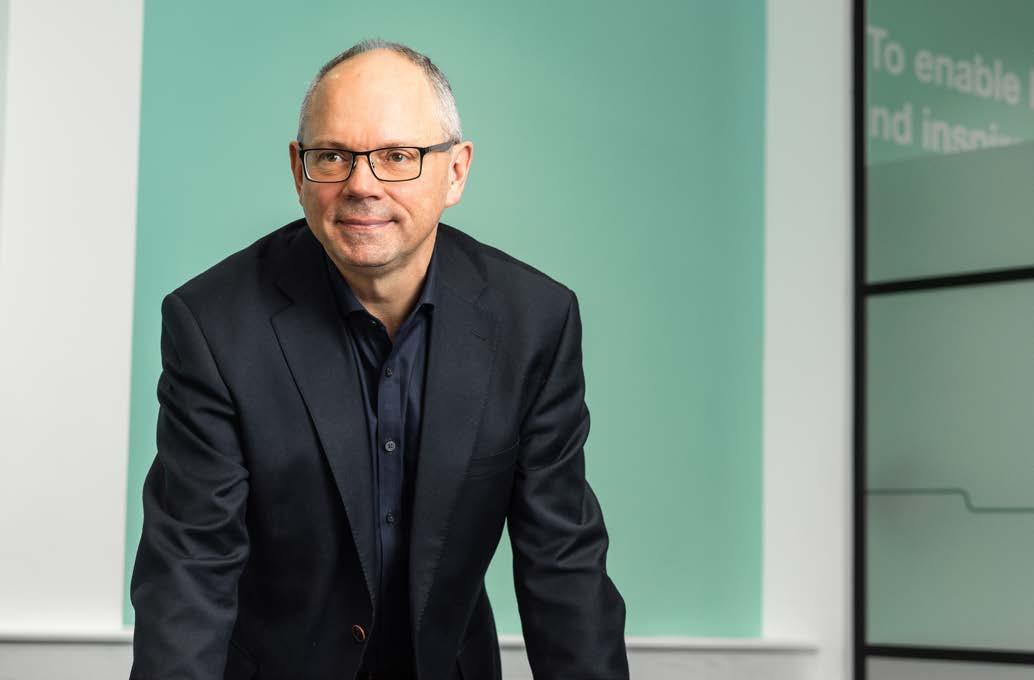
People
With new projects delivering locally-generated power to the grid for the whole community, solar is becoming increasingly affordable, stable and complementary to our imported power from France
Our people are integral to our success, helping us to deliver on our strategic priorities. This year we created a Business Leadership Team (BLT) to empower senior talent to step up and take stronger ownership for eight key strategic programmes of work.
Our People & Culture strategy aims to develop a culture of engagement and empowerment, where employees are encouraged to lead their workstream activities as if it were their own business. The BLT structure has created a strategic leadership space for eight employees exemplifying these values to take responsibility and influence the delivery of our key objectives.
Progress in our employee engagement is reflected in strong return rates in our surveys and high-quality engagement around the Company, putting JE in the top quartile on engagement for another year.
Supply security and resilience
Jersey Electricity will formally adopt an enhanced Security of Supply Standard by summer 2028. Work is underway to build further security in the network, reflecting the Island’s increased reliance on electricity as its primary energy source.
Jersey Electricity’s positive record of supply security continues with an industry-leading customer minutes lost score, although we narrowly missed our target due to planned isolations required as part of major works. Maintaining
secure electricity supplies is paramount to supporting Jersey’s economy and encouraging customers to switch to electric heating and transport.
The £30m La Collette Resilience Programme has made significant strides, safely demolishing the 50-year-old steam turbines and associated infrastructure. The next stage is to run a tender process for new generators which would provide an additional 50 MW of on-Island fast start backup generating capacity.
Setting the foundations for the electricity network of the future is driving our largest ever investment into the network, known as The Big Upgrade. This £120m investment over five years will ensure we can meet the forecasted 25% increase in peak demand to achieve the Island’s net zero target, while providing customers with the flexibility to access the power they need. Our innovative use of smart metering data has enabled us to identify parts of our infrastructure that are capacity constrained and ensure we deploy capital in the most targeted and efficient way.
Working with Guernsey Electricity as part of our Channel Islands Electricity Grid partnership, we’re advancing the replacement of Jersey’s oldest subsea cable. This project began at the end of 2024, and we have made good progress defining our technical requirements and planning for consent in both Jersey and France, and have moved well into the tendering process.
Long‑term clean, green energy
Jersey currently imports around 94% of its electricity from France through a supply contract with EDF. Our current contract expires at the end of 2027 and we are pleased to report good progress in negotiations. While there will be some structural changes to the new contract, we are confident it will provide the framework for us to continue to deliver competitively priced power and good outcomes for our customers. Meanwhile, we are well placed with our current hedged position, which remains in place until our incumbent contract expires.
Our strategy to import competitively priced low-carbon power from nuclear and certified hydro-electric sources, while diversifying our energy mix with locally sourced renewable power, continues to serve the Island well. It has resulted in a market-leading average carbon intensity of distributed energy, and highlights a major advantage of electricity as the Island’s predominant energy source.
Customers report that pricing is one of the most important attributes of our service, and we are proud to have successfully sheltered them from significant increases over recent years, when European wholesale markets have spiked upwards. While prices elsewhere have eased, electricity is still substantially cheaper in Jersey than in many countries in Europe.
Fuel switching momentum built towards the end of the financial year, as we refocused our efforts to ensure we meet customers’ needs and have the right low-carbon technologies in place for the long term.
Our ‘heat pump first’ approach combined with government incentives drove strong levels of domestic fuel switches and we saw our strongest set of heat pump sales, suggesting a shift in consumer sentiment. We continue to partner with Government to support policy outcomes and provide administration services for their Carbon Neutral Roadmap initiatives.
The commercial sector has delivered particularly encouraging results – well ahead of historic performance – concluding in our most positive year in a decade for switches outside of the post-covid high.
Further investment in our sustainable transport strategy has supported the adoption of electric vehicles (EV) and ensures we prepare the Evolve public charging network for future flexibility and resilience. We invested in upgrades at several strategic locations to provide more rapid charging options, and installed new ultra-rapid chargers in Gorey and St Aubin. We have also made progress with the next generation of home-charging technology.
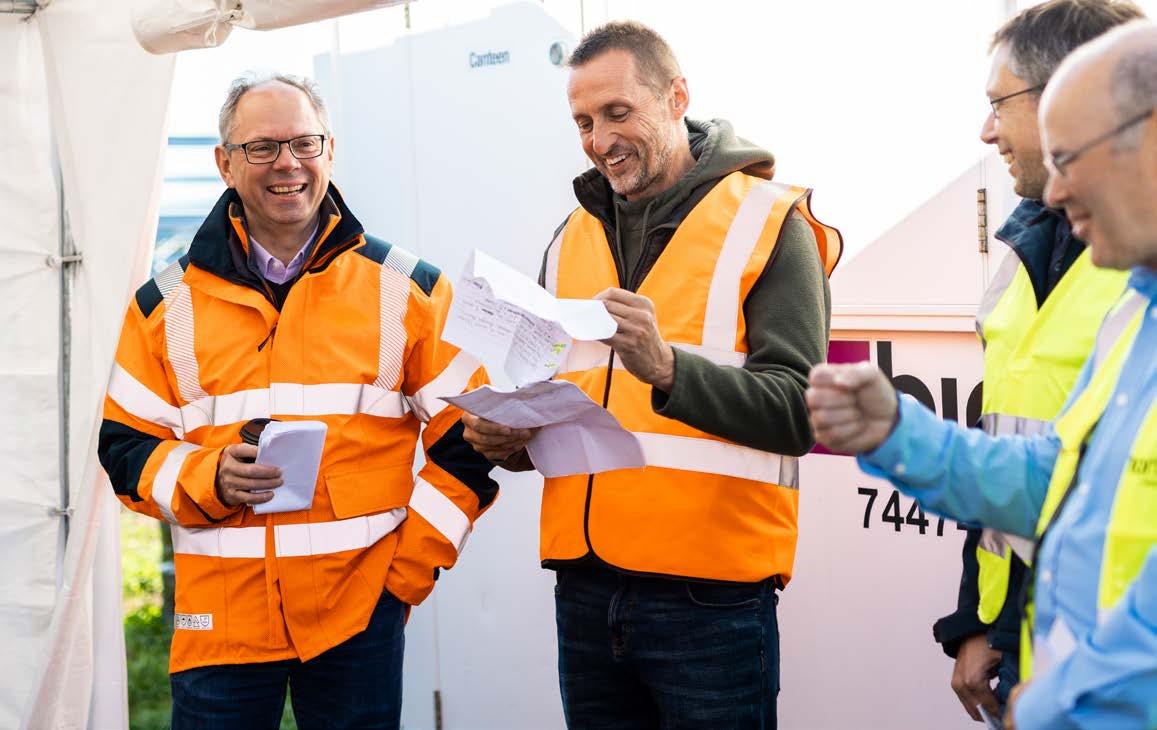
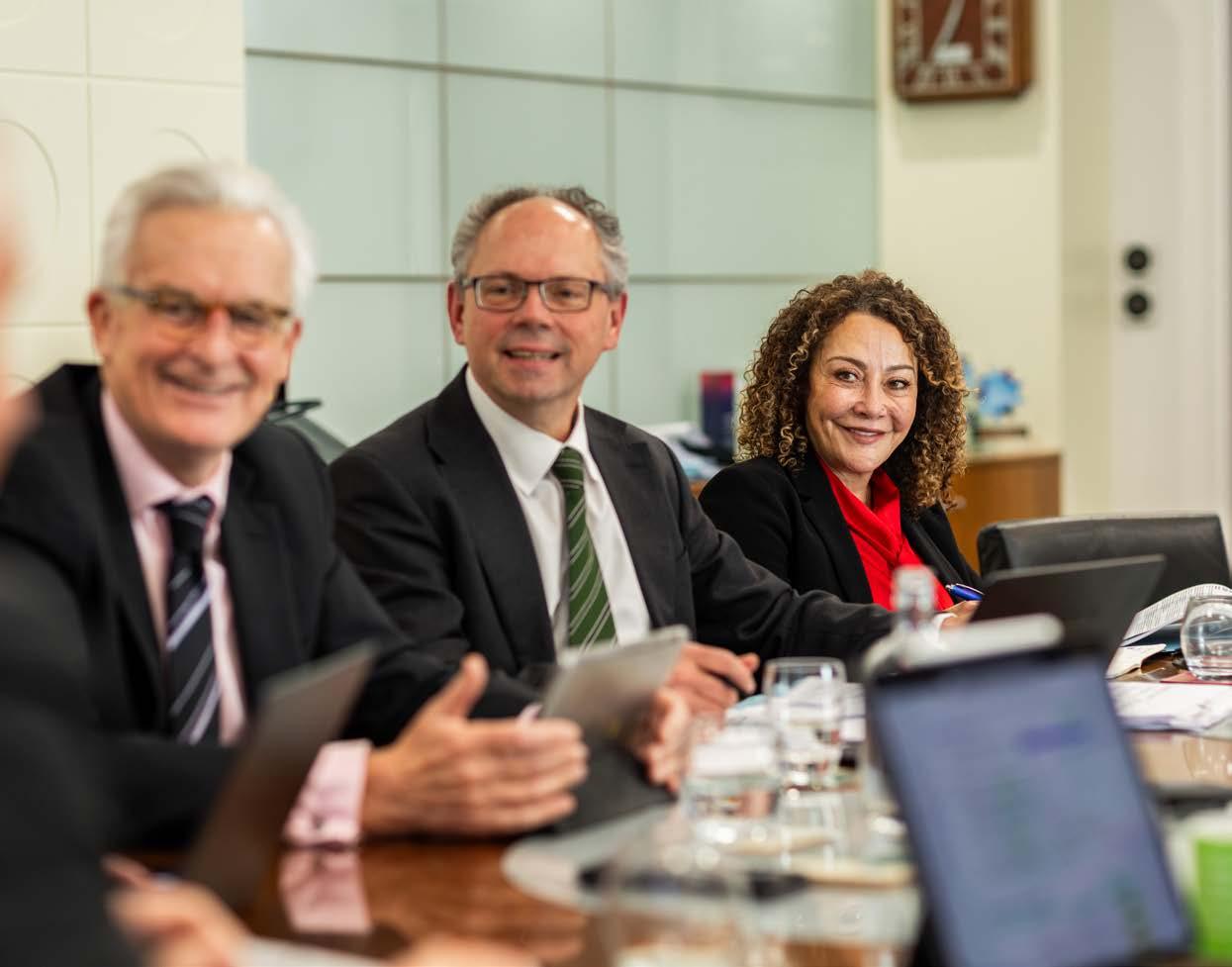
JE stands at a pivotal moment. Building on this year’s momentum, we are shaping a future of energy innovation, climate leadership, and sustainable growth. Our platform is set to deliver lasting value for our Island, our customers and our community
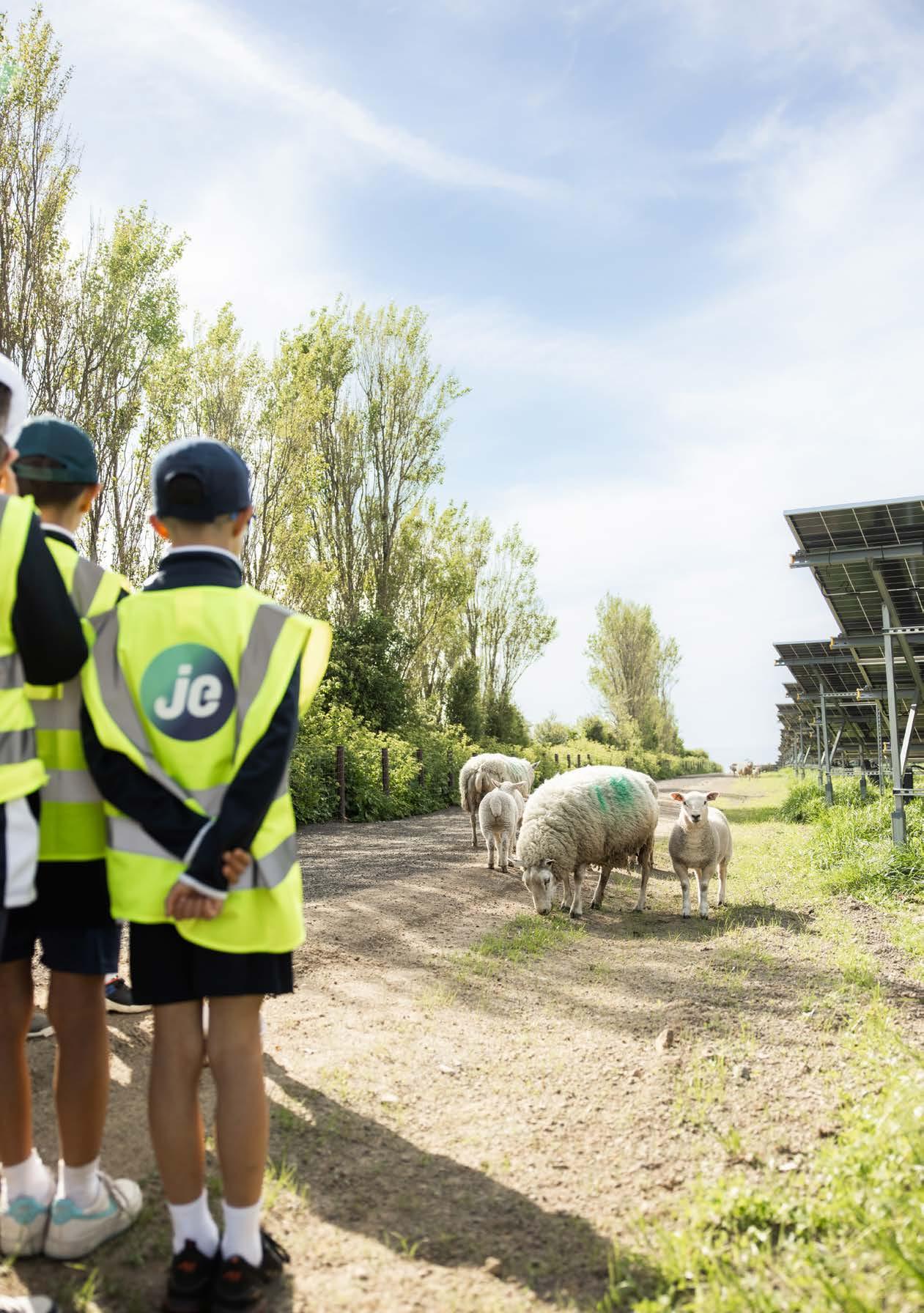
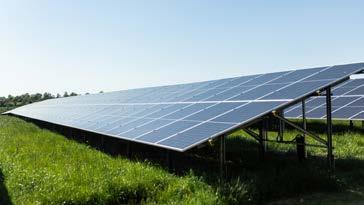
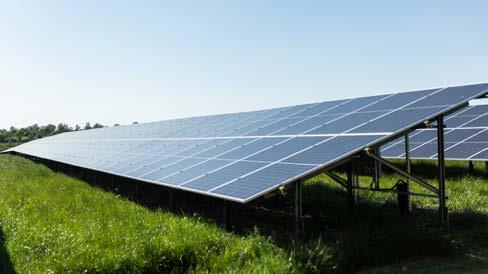
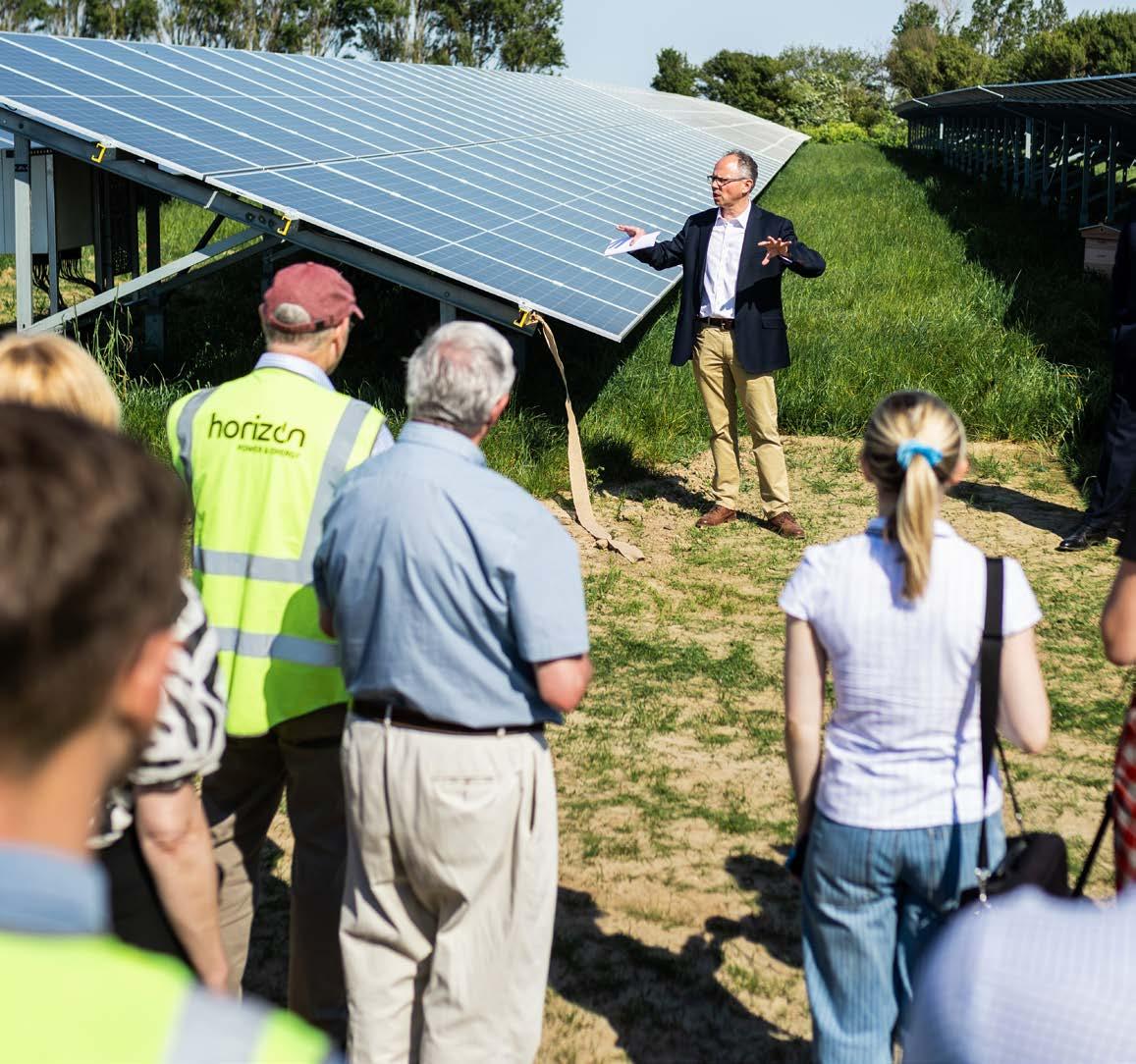
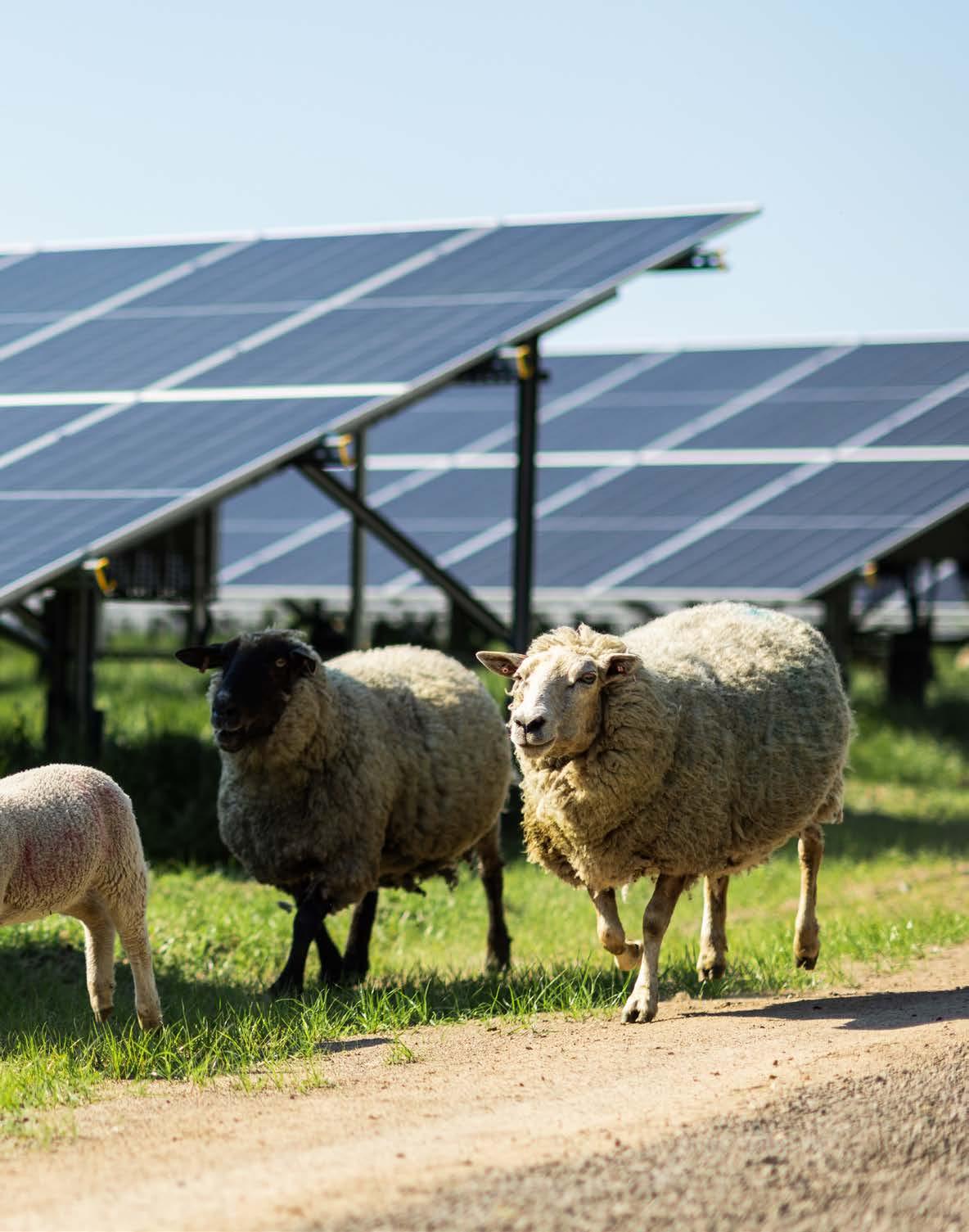
Through our Solar 5000 project, we’re working to power the equivalent of 5000 homes with locally generated solar by 2030. We reached a key milestone this spring, cementing our commitment to energy diversification, when Jersey’s first solar farm was commissioned. Moulin à Vent is a 4 MW project in St Clement – home to over 100 sheep who graze beneath the solar array – and has materially outperformed expectations this year (see page 44).
We have also seen positive progress on two significant ground-mount solar farms which will be connected to the local grid in early 2026, with consultations in progress on two further sites. Rooftop solar projects remain a vital part of our local energy generation strategy, with sites at the airport and St Clement’s Parish Hall due to be commissioned in FY26.
We remain supportive of Government as it considers offshore wind, and we continue to explore the role JE can play in its development.
Technology
Supporting our business portfolio as well as our customers with innovative technology is a strategic priority. One core outcome has been a major transformation programme focused on simplifying processes, eliminating technical debt and implementing best-in-class applications through the strategic use of technology.
This includes a shift toward secure, scalable, cloud-delivered systems that improve efficiency and resilience while seamlessly connecting business areas. We are now finalising plans and establishing key partnerships, ready to deploy the new enterprise resource planning system next year. Good progress has also been made to the rollout of advanced metering infrastructure, marking a critical step toward a smarter, more connected energy future.
We continue to invest in our current energy efficiency platforms, and have developed a new commercial platform, My JE for Business. This year, we held a successful pilot scheme with the business community to help companies manage their electricity usage across multiple sites. Supplementing the app for residential users, this is an important part of our strategy to encourage customers to use resources more efficiently.
Customer
Customers remain the lifeblood of all we do. Acutely aware of our monopoly heritage, we are working harder than ever to better serve customers’ needs now and into the future.
Our Group-wide initiative Think Customer has further improved our processes, skills and systems. As part of this, we held workshops with every employee in the Company this year to challenge them to consider how their role impacts customer experience, even if they’re not in a traditionally customer-facing role. We want to empower our colleagues to ensure engaging with JE and its businesses is as straightforward as possible.
Think Customer is helping build our customers’ trust in both the Company, and the quality of our products and services.
Our Institute of Customer Service Survey Score maintains our position in the upper quartile for utilities and our customer satisfaction score also paints a positive result. This is a great achievement, putting JE towards the top of the pack alongside strong international performers.
Financial performance
FY25 was an ambitious year with the launch and implementation of key infrastructure projects that will define JE’s activities for the long term. Against this significant agenda, we delivered a positive year of performance outcomes.
Group revenue for the year to 30 September 2025 rose 8% to £146.2m (FY24: £135.7m), while profit before tax declined 6% to £14.2m (FY24: £15.1m).
The Energy business delivered a 6.4% return on assets, sustaining strong performance on a five-year rolling basis. Electricity unit sales reached 616 million kWh, a slight increase on the prior year, driven by colder winter conditions and continued electrification trends in heating and transport.
Following significant instability, the wholesale energy markets have been broadly settled this year. This stability meant we were able to announce a sub-RPI tariff increase of 2.5%, implemented from 1 March 2026 – after the winter period to protect customers. This is encouraging news, particularly given the current cost-of-living pressures, the strategic investments we’re making, and the work underway to strengthen our foundations for future growth.
Outlook
With several strategic projects making great headway, we end the year in a strong position. The critical groundwork we delivered this year creates a resilient platform for delivering long-term value to our customers, community and stakeholders.
The coming 12 months will present challenges and opportunities, as we strive to balance short-term projects with longer-term investments.
Our agenda is broad and ambitious. From the springboard we have invested in this year, JE is well-positioned to deliver continued sustainable growth, support the Government in its Carbon Neutral Roadmap ambitions and remain the energy partner our Island deserves, while delivering fair returns to shareholders.
After a difficult period of market volatility, during which our focus has been to support and protect Islanders, we remain in a good position with a new import contract with France nearing completion.
We will continue to invest significantly in our core network, strengthen our position in renewable energy across Jersey and implement new approaches to accelerate the decarbonisation of homes and businesses – most notably in heating, cooling and transport.
Our significant investment programme calls for additional financing. We are confident this can be secured in a manner that creates value for consumers in a risk-managed way. This will continue to be a focus into next year.
Our people, assets and processes, and the way they come together, will be central to our promise to deliver safe, reliable, affordable and sustainable services to our community and shareholder value for the long term.

Chris Ambler Chief Executive
Purpose, vision and values
Jersey Electricity (JE) powers the lives of around 54,000 homes and businesses across Jersey. We’re a vertically integrated power company, meaning we manage everything from importing and generating electricity to transmitting, distributing and supplying it safely and reliably.
Our goal is simple, to provide safe, reliable, affordable and sustainable energy for everyone and every business in Jersey now and long into the future. Listed on the London Stock Exchange, we’re proud to play a central role in supporting the Island’s community and economy.

Our purpose
To enable life’s essentials by providing the energy that powers homes, businesses and communities across Jersey.
Today, around 94% of the electricity we supply comes from low-carbon sources in France, roughly two-thirds nuclear and one-third hydroelectric, delivered through three undersea supply cables. This clean energy mix has allowed us to virtually eliminate carbon emissions from Jersey’s electricity supply. The remaining energy comes from Jersey’s Energy from Waste plant, on-Island solar generation and from test running our thermal generation plant.
Beyond electricity, our businesses include retail (Powerhouse), IT advisory (Jendev), building services (JEBS), environmental engineering and property, offering a range of services that support customers and the wider community.
At Jersey Electricity, we’re committed to enabling life’s essentials today and inspiring a zero-carbon future.

Our vision
To inspire a zero-carbon future by delivering safe, reliable, sustainable and affordable energy.
Our values
Our six core values shape our culture and guide how we work together to achieve our vision.
Safety
We do everything safely and responsibly – or not at all. Nothing is more important than the safety of the public, our customers and our people.
Customer focus
We listen to our customers and seek to understand and respond to their needs, treating them the way we would wish to be treated, with respect and honesty.
Teamwork
We value diversity and respect, and value our colleagues as individuals. We believe we are stronger as a team, leading to better solutions and a more enjoyable and rewarding work life.
Reliability
We are trustworthy, dependable and reliable, delivering on our commitments and always there when our customers need us.
Excellence
We continually strive to work in a way that is both innovative and simple to deliver cost-efficient solutions.
Responsibility
We accept responsibility for everything we do, safeguarding the natural environment and the local community, as well as the interests of our customers and people.
Our business model
Jersey Electricity operates through three core business pillars, each playing a vital role in delivering safe, reliable, affordable and sustainable energy solutions for Jersey while supporting innovation and long-term growth.
We aim to achieve an attractive risk adjusted return to shareholders, at the same time as delivering attractive products and services for customers now and into the future.
JE Energy
Our vertically integrated energy business is self-regulated and responsible for generating, importing, transmitting, distributing and supplying electricity to around 54,000 customers across Jersey. This model ensures secure, affordable and low-carbon energy for the Island.
JE Home & Business
JE Home & Business focuses on beyond-the-meter solutions for homes and businesses, provides fuel switching services, small-scale solar installations, building services, property for rent and energy efficiency advice, and operates The Powerhouse retail store. The Powerhouse retails home appliances, health and wellbeing products, and smart home technologies, supporting the Island’s transition to sustainable living.
JE Technology
The technology business drives digital innovation and transformation across the Group, JE Technology develops and commercialises technology solutions that enhance operations and customer experience. From app development and data-driven insights to sustainable transport platforms, this pillar enables efficiency, innovation and the potential to leverage best-in-class technology platforms into new markets.


Our strategy framework

Our strategic objectives
We measure our success through four key objectives that reflect the value we deliver to Jersey:
To deliver on these objectives, we have a strategy that defines the strategic choices we have made and guides our allocation of resources:

Import low-carbon energy and accelerate on-Island renewables to ensure a reliable and sustainable supply when economically viable.
Develop cost effective low-carbon customer solutions for transport and heat to support Jersey’s energy transition.
Leverage fully integrated business model and technology to drive innovation and efficiency.
Together, our objectives and strategic priorities ensure that Jersey Electricity continues to provide essential energy today, while shaping a safe, sustainable and affordable energy future for the Island.
Our strategic priorities
Key work programmes
Our work programmes are central to delivering Jersey Electricity’s purpose, powering a zero carbon future for Jersey through a safe, reliable, affordable and sustainable electricity supply. In FY25, we advanced key infrastructure programmes that underpin the Island’s transition to net zero and enhance the resilience of our energy network for generations to come.
Business enablement programmes
Delivering Jersey’s energy transition means we need to invest not only in physical infrastructure, but also in the people, systems and culture that will sustain it. Our business enablement programmes strengthen how we operate –enhancing customer experience, improving efficiency and digital capability, and investing in the people and skills that will shape our future. By focusing on our customers, leveraging technology and empowering our people, we are building a resilient organisation ready to lead Jersey’s transition to a sustainable, all-electric future.
The Big Upgrade
Futureproofing Jersey’s network with a £120 million investment in our electricity infrastructure.
Supply Security and Resilience
Strengthening supply resilience and enhancing on-Island generation with the £30 million La Collette Resilience Programme.
Long-term Green, Clean Energy
Accelerating Jersey’s renewable transition with a goal to power 5,000 homes from solar energy by 2030 through a £30 million commitment to Solar 5000, and enabling access to cost effective, risk managed, imported energy.
Think Customer
Designed to deepen our understanding of customer needs, improve every interaction and ensure our products and services deliver real value and satisfaction.
The Smart Upgrade
Brings together three major programmes, advanced metering infrastructure, enterprise resource planning and retail transformation, to modernise how we work and how customers experience our services.
People Power
Our long-term commitment to developing the capability, culture and leadership needed to thrive in a rapidly evolving energy sector.
Our performance
Jersey Electricity sets clear key performance indicators (KPIs) to show how we are meeting our commitments to customers, the community and Jersey’s energy future. These measures help guide our decisions, inform our plans and keep us focused on providing safe, reliable, affordable and sustainable energy.
Financial Performance FY25
Non‑Financial Performance FY25
Environment
and Safety Performance FY25
FY23 £125.1m
FY24 £135.7m Growth driven by tariff increase, higher demand due to colder winter conditions and fuel switching.
FY24 609m Increase as a result of colder winter conditions and continued electrification in heating and transport, offset by improvements in energy efficiency.
FY23 608m
FY24 15.1m Decrease in profit due to revaluation of property portfolio and a one-off pension cost.
FY23 14.9m
FY24 19.8p Dividend growth reflects JE’s focus on sustainable, predictable returns while supporting ongoing investment.
FY23 18.8p
FY24 6.3% Showing sound operational results while effectively managing the Company’s investment programme.
FY23 6.2%
FY24 9.5 Planned network interruptions for the Big Upgrade impacted CMLs slightly.
FY23 4.0
FY24 77.5 A slight decrease linked to the timing of the tariff increase, has been offset by improved complaint handling and overall customer experience.
FY23 80.3
FY24 34 Employee engagement declined marginally amid major organisational transformation driven by strategic and digital initiatives.
FY23 39
FY23 25.30
FY24 24.85 Carbon intensity remains low, supported by low-carbon imports and on-Island renewable generation.
FY24 1 Continued focus on safety has kept workplace incidents at a very low level, the one lost time injury recorded was not serious.
FY23 3
Understanding our stakeholders

Stakeholder
Engaging meaningfully with our stakeholders is central to building relationships and strengthening trust. Their feedback and insight help us anticipate future needs, focus our resources and deliver solutions that create lasting value – for today, and for generations to come.
Chris Ambler Chief Executive
engagement in FY25:
Unlocking innovation, long‑term investment and growth
Strong stakeholder relationships underpin our strategy for innovation, long-term investment and sustainable growth in the Island. As we progress our vision to inspire a zero-carbon future, open and constructive engagement ensures our plans are informed, inclusive and impactful.
Stakeholder objectives
1. Build trust
Provide reliable, affordable and low-carbon energy with excellent service and clear communication.
2. Empower our people
Create a safe, inclusive and high-performance culture where people feel confident to engage and thrive.
3. Lead Jersey’s energy transition
Work with partners to accelerate electrification and achieve a sustainable, net zero future.
Informing investment through dialogue
Regular engagement between Board members, senior leadership and Government supports our alignment with national policy goals, including the Carbon Neutral Roadmap and Jersey’s 2050 net zero target. This ongoing collaboration reinforces confidence among investors, suppliers and partners that Jersey Electricity is a stable, forward-thinking business equipped to lead the transition.
Delivering our strategy relies on strong relationships with all those whom we serve and work with:
Employees
Our success depends on the talent, diversity and commitment of our people, who drive innovation and bring our strategy to life. (See pages 22 to 24)
Customers
We’re committed to delivering a safe, reliable, affordable and sustainable service that meets customer needs today and into the future. (See pages 26 to 27)
Communities
and NGO’s
The support of our communities is essential to achieving a fair and sustainable energy transition, that is respectful of our Island. (See pages 28 to 29)
Government
As both policy maker and shareholder, a strong partnership with Government is key to maintaining strategic momentum. (See page 30)
Shareholders
Prudent financial and risk management enables us to deliver stable, risk-adjusted returns and fund future investment. (See page 31)
Partners,
suppliers and contractors
We rely on healthy on and off-Island supply chains that can support our strategy and that are committed to our success.
People power
By investing in people, innovation and future skills, we are building a resilient workforce and strengthening our role as a trusted employer in Jersey’s energy transition.
Andrew Welsby People & Culture Director
Investing in people: Growth, innovation and strategic commitment
In FY25, we continued to build momentum with our People & Culture strategy, delivering a year of meaningful progress across employee development, organisational innovation and strategic investment. These efforts reflect our belief that sustainable business growth is inseparable from the wellbeing, capability and engagement of our workforce.

Growth through talent development
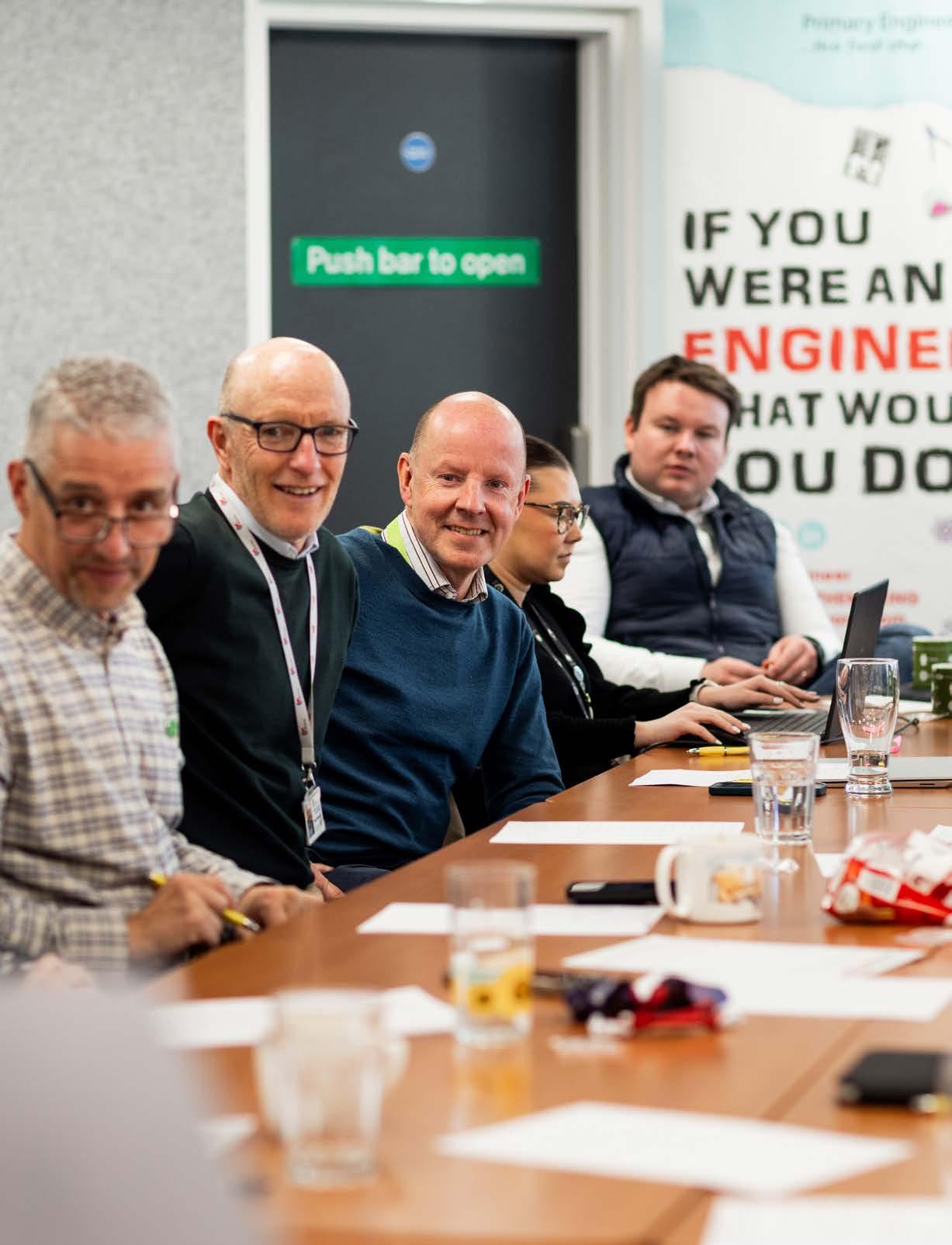
A cornerstone of our growth strategy this year was the expansion of our early careers pipeline through targeted outreach and community engagement. Our support for the Primary Engineer programme enabled more than 1,000 Jersey pupils to participate in a hands-on engineering competition, sparking interest and gender diversity in STEM careers and strengthening our presence in local schools. JE employees volunteered as judges and mentors, and the judging and grading was hosted on-site, reinforcing our role as a community-minded employer.
In parallel, our bursary scheme continued to support aspiring engineers and technicians through financial assistance and mentoring. This initiative has helped build long-term relationships with students and institutions, while also ensuring a steady flow of talent into the business. The bursary programme is a key part of our ‘grow our own’ philosophy, and several recipients have gone on to join JE in permanent roles.
We also made strides in succession planning. The creation of the Business Leadership Team, a group of high-potential senior leaders, has accelerated development for future executive roles. This initiative will increase leadership capability and establish a robust succession pipeline, reinforcing our commitment to internal growth.
Innovation in people strategy
Innovation was a defining theme in our people agenda this year. We introduced several forward-looking initiatives that reflect our commitment to continuous improvement and creative thinking.
One such initiative was the launch of WeCare, a digital health and wellbeing platform offering 24/7 access to virtual GP consultations, mental health support and fitness programmes. Over 30% employees engaged with the platform at launch, and feedback has been overwhelmingly positive. This investment in employee wellbeing complements our existing healthcare benefits and demonstrates our duty of care in a tangible, modern way.
Internally, we implemented the HiBob HR system to modernise performance management. This digital tool has streamlined appraisals and improved alignment between individual objectives and Company goals. Managers were trained in goal-setting and feedback, reinforcing a high-performance culture. Alongside this, we completed work to allow for the outsourcing of payroll commencing in October 2025 and developed a business case for a new learning management system – both steps in our ongoing HR digital transformation.
Building a culture of engagement and inclusion
Employee engagement remained strong throughout the year. Our June 2025 survey saw 85% participation and an employee Net Promoter Score (eNPS) of +31, placing us in the top quartile for engagement of similar organisations surveyed. These results reflect a culture of listening and continuous improvement, supported by employee-led enhancements across departments.
We also rolled out Recognize, a peer recognition platform that logged more than 476 instances of kudos. This initiative, coupled with the launch of semi-annual awards judged by a leadership panel, has fostered a culture of appreciation and boosted morale.
Inclusion was another priority. We refreshed our four-year diversity, equity and inclusion (DEI) strategy, trained leaders in inclusive hiring and established an inclusion forum. JE sponsored Pride and other diversity events, contributing to a more inclusive workplace and earning positive external recognition. These efforts are helping to build momentum around our inclusive culture and align with our values as a responsible employer.
Community engagement and outreach
We launched a new employee value proposition, supported by internal communications, an external careers site and a multimedia apprentice campaign. These efforts have unified our employer brand with strong engagement across digital channels and local outreach.
The FY25 period has been marked by purposeful investment in our people, underpinned by innovation and strategic foresight. From expanding our early careers pipeline and modernising HR systems, to launching wellbeing platforms and exploring external partnerships, we have laid the groundwork for a resilient, future-ready workforce.
These initiatives reflect our belief that growth is not merely a function of financial performance but of organisational enablement and vitality. By investing in our people, we are investing in the long-term success of Jersey Electricity and the community we serve.
IN FOCUS

Business Leadership Team
As part of delivering Jersey Electricity’s Company Business Plan (CBP), we introduced a new governance and leadership structure in the form of the Business Leadership Team (BLT). The initiative establishes eight strategic workstreams: Tariffs, PPAs & Supply Contract, Island Electrification, Strategic Planning & Performance, Business Management Meeting, Culture, Business Transformation, Governance, and Sustainability. Each workstream is responsible for delivering a key element of the CBP.
This approach was designed to create greater alignment, accountability and empowerment by delegating ownership of core strategic areas. The initiative encourages outcome-focused delivery, deeper engagement into the organisation, cross-functional collaboration and commercial thinking.
BLT members are stepping up to lead strategically significant work, supported by the Executive Leadership Team (ELT), allowing the ELT to focus more on strategy and longer-term planning. The workstreams are also fostering a stronger culture of collaboration and leadership development, helping SLT members become more promotable to ELT roles in future.
Ultimately, this new structure is helping Jersey Electricity grow more leaders, not just managers – tapping into the organisation’s latent potential, strengthening collective purpose and ensuring that every level of leadership contributes directly to delivering our strategic outcomes.

Our customers
A great customer experience is delivered by great people, because at Jersey Electricity, customer experience isn’t just a department, it’s part of who we are.
Kate Gosson Head of Customer Experience
We launched Think Customer in November 2024, following insight from more than 1,096 customer survey responses. This research identified 22 key expectations from customers across various touchpoints – from choosing a tariff and managing their account, to resolving issues and accessing advice.

These expectations shaped a practical, people-led framework built on three core customer promises:
y We find brilliant solutions
y We’re on it
y We look out for you
Since launch, we’ve delivered 32 internal workshops to embed these principles across the business. Teams are empowered to listen actively, take ownership and respond with empathy and action.

Think Customer in action
We actively recognise exceptional customer experience across our business and have many examples where our customer-centric approach is reflected in how our people go above and beyond every day. From making an unscheduled in-person house visit to a vulnerable customer while their supply was being restored, to going the extra mile with a customer going through a heating upgrade, we are putting Think Customer into action.
Looking ahead
As we grow and innovate, Think Customer is central to how we invest in our people and improve our services. We’ve built new processes to keep our promises front of mind and will continue refining the framework through ongoing feedback, coaching and insight.
Our priorities for the year ahead include:
y Embedding Think Customer principles into major business projects and digital initiatives.
y Expanding tailored advice and support for our most vulnerable customers.
y Continuing to empower our people to own and improve the customer experience – every day, for every customer.
By investing in our people, listening to our customers and embracing innovation, we’re building the foundations for long-term, sustainable growth – delivering a customer experience that’s as reliable and forward-thinking as the energy we provide.

2 nd OUT OF 35 UTILITIES Institute of Customer Service (ICS)
75.4 CUSTOMER SATISFACTION SCORE
Community and NGOs
100 Projects That Matter is about supporting the people and organisations making a real difference in our community, turning local ideas into lasting impact.
Adam Caerlewy-Smith Head of Marketing & Communications
100 Projects That Matter
In November 2024, we officially launched 100 Projects That Matter, a community impact programme inspired by our centenary year and dedicated to creating meaningful and lasting change across Jersey. Built on four pillars supporting education, health, the environment and diversity, equity and inclusion, the initiative aligns with our values and reinforces our long-term commitment to supporting the community we serve.
In its first year, the programme supported 31 projects, investing £83,469 to create meaningful impact in the areas that matter most to Islanders. Each project represents a story of collaboration, innovation and investment in our community’s future.

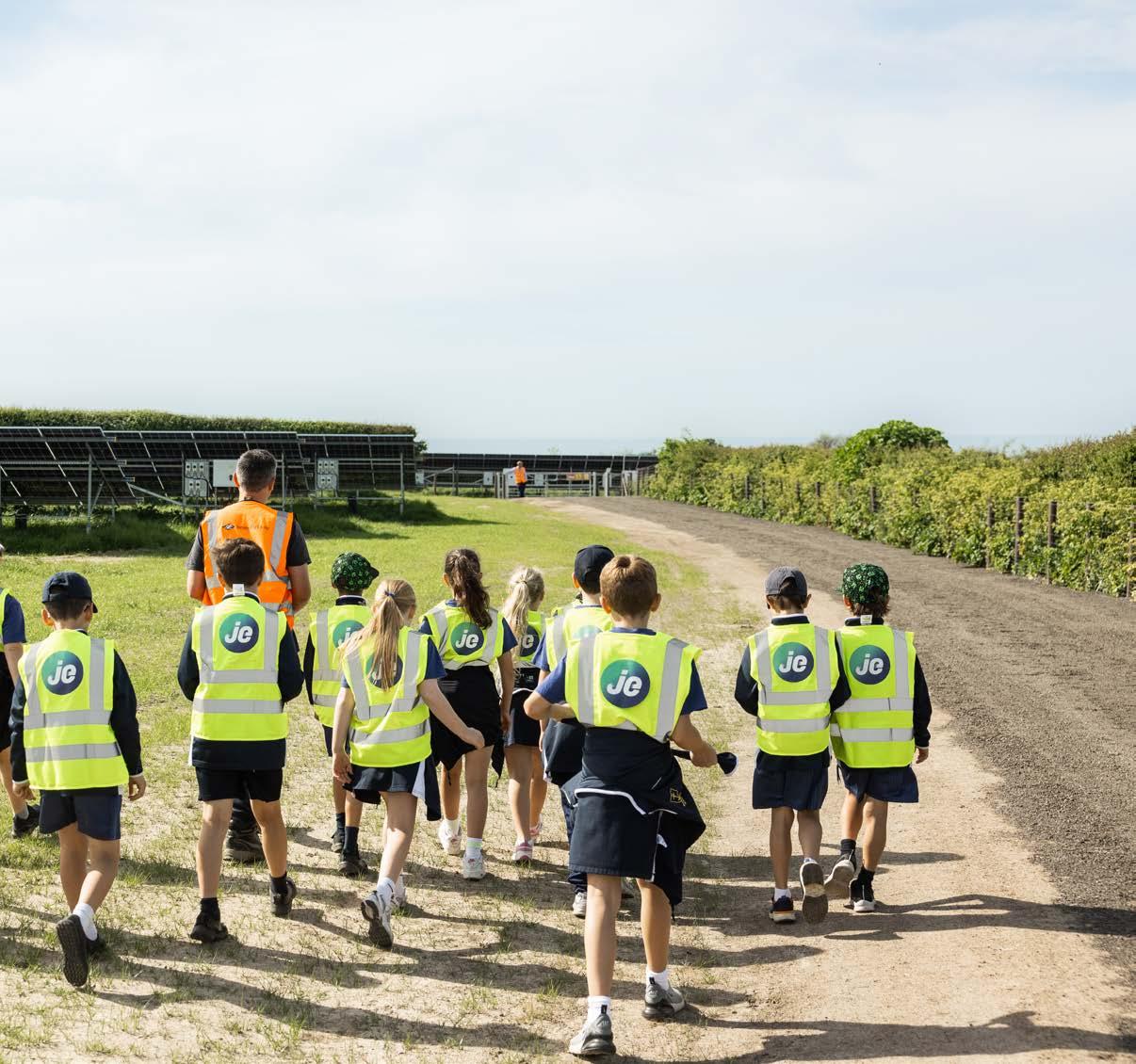

By focusing on these four pillars and supporting diverse initiatives, 100 Projects That Matter is helping Jersey grow stronger, healthier and more inclusive. As the programme develops, we will continue to invest in local causes, ensuring our growth as a business translates into shared benefits for the wider community.
IN FOCUS

Dementia Jersey empowering carers through accessible support
Dementia Jersey provides vital support to Islanders living with dementia and their families. Through 100 Projects That Matter, we supported the charity’s initiative to produce a series of 12 educational videos designed to help carers navigate the challenges of supporting loved ones with dementia.
The videos answer frequently asked questions and provide practical advice to build carers’ understanding and confidence. Hosted on Dementia Jersey’s YouTube channel, the videos offer easily accessible, trusted information at any time.
This project strongly aligns with our health and education pillars, promoting wellbeing through accessible learning and community empowerment. Our panel was inspired by the initiative’s potential to make a meaningful difference to carers across the Island, and we are proud to support it.
Government
Throughout FY25, we have continued to work closely with the Government of Jersey across a wide range of initiatives. Together, we play an instrumental role in helping Jersey address the challenges of achieving net zero and delivering on the commitments set out in the Carbon Neutral Roadmap.
We administer and support the Government of Jersey’s Low Carbon Heating Incentive and Electric Vehicle Charging Infrastructure schemes as part of our broader decarbonisation and electrification strategy. These programmes are essential to enabling Islanders to make the transition to low-carbon technologies with confidence.
This collaboration has been central to helping Islanders take practical steps towards reducing their carbon footprint. By combining investment, innovation and strong partnership, we are helping to ensure that Jersey moves closer to its net zero ambitions, while creating long-term value for our customers and the wider community.
Shareholders
Meeting the needs of our shareholders is central to our ability to attract finance to invest, innovate and grow sustainably. By maintaining financial resilience and a disciplined approach to investment, we can balance shareholder returns with long-term value for all stakeholders.


Our governance framework and approach to risk management are set out on pages 70 to 80. Our vertically integrated business model, from generation and importation through to supply and customer services, enables efficiency and stability throughout the value chain. This integrated structure, underpinned by prudent financial management and continuous innovation, provides a strong foundation for future growth and ensures that our investment decisions are aligned with Jersey’s long-term energy needs.
During the year, we continued to invest strategically in major infrastructure and renewable projects, including The Big Upgrade and the commissioning of the St Clement solar farm, while maintaining a stable financial position and delivering on
performance targets. These investments are strengthening the Island’s electricity network, expanding renewable generation and supporting the transition to net zero, creating sustainable growth for shareholders and the wider community.
Delivering a stable and reliable risk-adjusted return for shareholders is an integral part of our long-term investment strategy. Our Return on Assets for our Energy business for the year was 7.4%, and 6.4% on a five-year rolling basis, in line with target. The Board has recommended a final dividend of 20.82p per share, representing a 5% increase on the previous year.
Sustainability: More than achieving net zero

Investing in a sustainable future through growth and innovation
In 1987, the United Nations Brundtland Commission defined sustainability as “meeting the needs of the present without compromising the ability of future generations to meet their own needs.” This principle continues to guide Jersey Electricity’s long-term strategy as we invest in a cleaner, smarter, fairer and more resilient energy system for Jersey, now and into the future.
For us, sustainability is about more than achieving net zero. It’s about creating lasting value now and into the future, for our customers, employees, shareholders and the wider community, while ensuring that the way we grow today strengthens the Island’s environmental, social and economic future.
Our Sustainability Framework
The UN Sustainable Development Goals (SDGs) remain the global blueprint for a sustainable world. At Jersey Electricity, the most material goals to our business are embedded within our own Sustainability Framework, which aligns directly with our core purpose: to provide energy that is safe, reliable, affordable and sustainable.
This framework extends beyond environmental stewardship. It shapes how we innovate, invest and collaborate – ensuring that every decision contributes to a cleaner, smarter, fairer energy future. From decarbonising our operations and enabling the transition to electric heating and transport, to supporting our people and customers through change, sustainability is woven into the fabric of how we do business.
Driving measurable progress
Over the past year, we have continued to enhance our data-driven approach to sustainability, expanding the range of indicators we track and integrating this insight into operational and investment decisions. This approach allows us to identify efficiencies, manage our environmental impact and measure progress transparently.
Looking ahead
As we move forward, sustainability will remain central to our growth strategy, driving innovation, guiding responsible investment and ensuring Jersey Electricity continues to play a leading role in building a sustainable, prosperous future for the Island.
Our Island
We will be leaders, working collaboratively with others in the drive to Jersey’s net zero future.
Our footprint
We will achieve net zero emissions by 2040 and inspire excellence in environmental stewardship.
y We will seek to deliver an affordable, secure and sustainable energy supply for all Islanders.
y We will provide solutions and services to enable customer and community transitions to net zero.
y We will contribute to the regeneration of the Island's ecosystem.





y We will reduce emissions from our operations.
y We will reduce waste and drive sustainability across our business wherever we can.
y We will build a more sustainable supply chain.

y We will create champions of sustainability through our culture and values.
Our people
We will build a sustainable, diverse and inclusive culture, equipping our people to thrive into the future.
y We will celebrate diversity, equity and inclusion in our organisation.
y We will embed health, safety and wellbeing in all we do and develop our people to be the best they can be.




Our Island
As a company, we continue to demonstrate leadership in Jersey’s transition to a net zero future. Our commitment to achieving net zero across scopes 1, 2 & 3 by 2040 is closely aligned with the Island’s 2050 target. This ambition is reflected in both our strategic planning and practical action.
A major milestone this year was the completion of the first utility-scale ground-mounted solar array at St Clement. Moulin à Vent is Jersey’s first operational ground solar farm. Planning and construction for additional solar farms is progressing well. (See pages 43 to 44)
We are also exploring innovative approaches to land use and biodiversity, incorporating agrivoltaics, which combine solar generation with agricultural activity to enhance both energy production and biodiversity. In addition, Geographic Information Systems (GIS) mapping of Company assets against sensitive ecological areas has begun, laying the groundwork for a biodiversity framework aligned with the Taskforce on Nature-related Financial Disclosures (TNFD).
Community engagement remains a core value. We have launched 100 Projects That Matter, a community impact programme designed to make a tangible and lasting difference across Jersey. (See pages 28 to 29)
We have played an active role in government schemes to promote low-carbon heating and electric vehicle adoption, further embedding sustainability in the Island’s daily life.
During the year we continued to sponsor the National Trust for Jersey’s Education Officer to support the delivery of educational workshops to help children and young people across the island understand climate change and how they can be a positive force.


Our footprint
Reducing the environmental impact of our operations remains a central focus. We made progress in decarbonising our own activities, particularly through the electrification of our vehicle fleet.
By the end of the financial year, we had completed our fleet transition from fossil-fuelled vehicles to electric, a year ahead of schedule and c. £1m under budget due to favourable market conditions. Due to specific operational needs, some vehicles used by our field-based teams don’t currently have an EV alternative, so the remaining vehicles run on hydrotreated vegetable oil (HVO) biofuel and will be replaced when a viable electric equivalent is available.
Efforts to transition on-Island generation away from marine gas oil (MGO) to alternative fuels such as HVO and hydrogen have advanced, with feasibility studies completed. However, the formal transition plan is still in development and is expected to be finalised in the coming year. We also made progress in phasing out sulphur hexafluoride (SF6) from our switchgear, completing the research phase and taking initial steps to explore procurement of SF6-free equipment for future use.
A comprehensive baseline for internal energy consumption has been established, which will enable us to target energy reduction strategies. Waste audits were conducted across the business, identifying opportunities for increased recycling and the possibility of packaging return schemes. Circularity principles are being embedded in procurement and asset management, with frameworks under development for end-of-life product management.
On the reporting and standards front, Jersey Electricity has fully implemented the Workiva ESG platform for sustainability data capture and TCFD reporting. We have also undertaken work to align our Environmental Management System with ISO 14001 – reinforcing our commitment to environmental stewardship – with further work planned for the coming year.
Our climate related disclosures (TCFD) can be found on pages 81 to 90.
Our people
Our people remain central to our sustainability strategy. Nearly all employees, including senior leaders, have completed Carbon Literacy Training, with sustainability modules now integrated into onboarding and ongoing internal engagement.
A network of sustainability champions is being formalised to promote green initiatives across the business. We continue to advance diversity, equity and inclusion, with 27 nationalities represented across our workforce, and maintain a strong focus on health, safety and wellbeing.
Investment in people development remains high, with expanded apprenticeship and bursary programmes, a focus on digital skills and structured succession planning to build future leadership.
In FY25, Jersey Electricity made significant progress in delivering on its sustainability strategy. We continue to build strong foundations for biodiversity, circularity, and global standards alignment, ensuring sustainability remains embedded across our operations, our culture and our contribution to Jersey’s sustainable future.



JE Energy

JE Energy delivered another strong year of performance, with stable operations and no major incidents, reflecting the strength and resilience of our infrastructure and our people.
Mark Preece Chief Operating Officer
JE Energy’s performance has continued to be strong and thankfully we have not experienced any major incidents this year, such as Storm Ciaran in November 2023.
Performance
Unit sales were 616 million units, almost 5.5 million units ahead of last year driven by slightly cooler conditions in the autumn and winter. Peak demand was 155 MW, which was below last year’s 163 MW.
Importation from France continued to be the main source of energy, with this being 94% of the Island’s requirements. Local generation accounted for 1%, from the Moulin à Vent solar farm, which was commissioned in February, accounting for the majority of this. The Energy from Waste plant, provided the balance of 5%.
Security of supply
There has been an improvement in supply security during FY25, with customer minutes lost reduced to 7.7 (FY24: 9.5). This is also reflected in customer interruptions of 13.7 (FY24: 19.3). Underline fault performance has been extremely good, even with the additional planned customer interruptions as part of The Big Upgrade to enable higher capacity connections. These key measures remain significantly lower than other jurisdictions and are reflective of investment over many years.
As advised last year, we completed a review of the Security of Supply Standard. Enabling works for the La Collette Resilience Programme have progressed significantly with the demolition of the redundant steam generators, with work due to be completed in spring 2026. We have embarked on provisioning 50 MW of new generators at the site, with a further 25 MW capacity being considered to replace an ageing gas turbine at our Queen’s Road site. It is possible that the selected units could run on multiple fuels such as HVO and hydrogen, thus improving the sustainability of this contingency.
IN FOCUS

The Big Upgrade
Investing in a cleaner, smarter, fairer energy future
Over the past year, we have strengthened our commitment to innovation and sustainable growth through The Big Upgrade – a transformative £120m, five-year investment programme designed to futureproof the Island’s electricity network for a low-carbon future.
Harnessing 100% smart meter coverage, advanced data analytics and a digital twin of the electricity network, The Big Upgrade enables highly targeted, efficient investment, ensuring the network evolves in step with customers’ needs and Jersey’s transition to clean energy.
Building the foundations for growth
The programme includes the upgrade of 100 km of new low-voltage cabling, 20 new substations, a major subsea cable upgrade and 50 MW of additional backup generation capacity. These investments are strengthening network resilience and preparing for increased demand from electric heating, transport and emerging technologies.
Driving innovation and efficiency
The integration of a geographic information system (GIS) with our asset management system has transformed network planning, providing near real-time visibility of infrastructure capacity and customer connections. By combining GIS insights with smart meter data, we are creating dynamic demand models that inform strategic reinforcement planning aligned with Jersey’s Carbon Neutral Roadmap.
This data-driven approach has delivered tangible efficiencies:
y A 50% increase in planning output without additional headcount.
y Reduced capital investment requirements through precision targeting.
y Improved service delivery and network reliability for customers.
Collaboration and delivery
Collaboration across internal teams and with external partners has been central to the success of The Big Upgrade. To date, we have initiated 40 individual projects, representing £5.2m of investment and 11 km of new cabling:
y Twenty two completed
y Six in progress
y Seven programmed (subject to permissions)
y Five in active planning
The Big Upgrade exemplifies how strategic investment, digital innovation and collaboration can deliver operational excellence, customer value and environmental progress, laying the foundation for a smarter, more resilient and sustainable energy future for Jersey.

Work also continues on the replacement of Normandie 2, our oldest submarine cable to France, currently forecasted for installation in 2028. To date we have commenced the required Environmental Impact Assessment surveys as well as the procurement process for the new cable contract, which we anticipate awarding in FY26, allowing time for detailed design and installation planning.
Over the year, we have been engaged in ongoing discussions with our current energy supplier, EDF, regarding our new supply contract. We expect to finalise and sign this agreement in early 2026. The new contract will commence in 2028 and ensure Islanders continue to benefit from stable, competitive pricing and a secure supply of low-carbon, reliable electricity.
Enhanced Security of Supply Standard
Our enhanced Security of Supply Standard, effective from Summer 2028, sets a new benchmark for resilience in the Island’s electricity system. The standard ensures that Jersey’s network is capable of meeting demand reliably, even under extreme and unlikely circumstances.
It is designed to deliver sufficient capacity to meet a 1-in-20year winter peak demand, providing confidence that supply can withstand exceptional conditions. In a 1-in-3-year winter scenario, the system could meet 99% of all demand, even if we simultaneously lost all imported supplies from France and the Island’s largest generator.

13.7
CUSTOMER INTERRUPTIONS vs 19.3 in FY24
7.7
CUSTOMER MINUTES LOST vs 9.5 in FY24
Accelerating solar deployment
Harnessing the sun for everyone
As part of our Solar 5000 strategy, which aims to deploy 25 MWp of solar capacity and power the equivalent of 5,000 homes by 2030, we have made significant strides in expanding both rooftop and ground-mounted solar generation across Jersey.
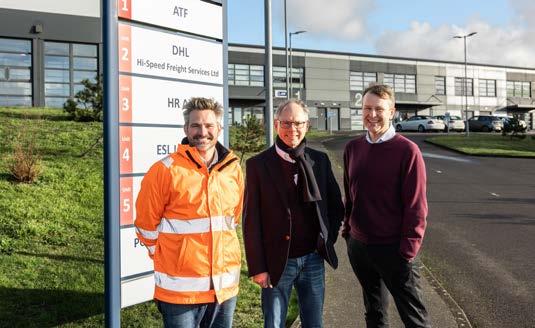

5.8m units
GENERATED vs. 1.1m units in FY24
Rooftop solar
We commenced installation of a 350 kWp array on the roof of the Jersey Airport Cargo Centre, which is nearing completion, and successfully installed a smaller rooftop system at St Clement Parish Hall, integrated with a fuel switch to support low-carbon heating and EV charging.
A landmark agreement with Albert Bartlett is now in place, enabling what will be the Channel Islands’ largest rooftop solar array at their Peacock Farm facility. In parallel, we are progressing detailed discussions with the Government of Jersey to deliver a series of large-scale rooftop projects, starting with Le Rocquier School and the La Collette bus depot. These installations form part of the Jersey Property Holdings framework agreement, which supports the rollout of solar across publicly owned buildings, including schools and commercial sites.
Ground-mounted solar
We have also made strong progress in delivering groundmounted solar. Our Moulin à Vent solar farm (4.3 MWp) is now operational and has exceeded initial energy production forecasts by 25–30% to date, primarily due to optimised layout of the site, improved solar panel efficiencies and favourable weather conditions. Construction is approximately 60% complete on two additional ground-mounted sites in St John and St Mary, which will add a further 6.6 MWp of installed capacity.
Our long-term plan includes up to six ground-mounted installations. This year, we announced a major new site at Belle Fontaine, and expect two further sites to progress to the planning application in FY26.
IN FOCUS
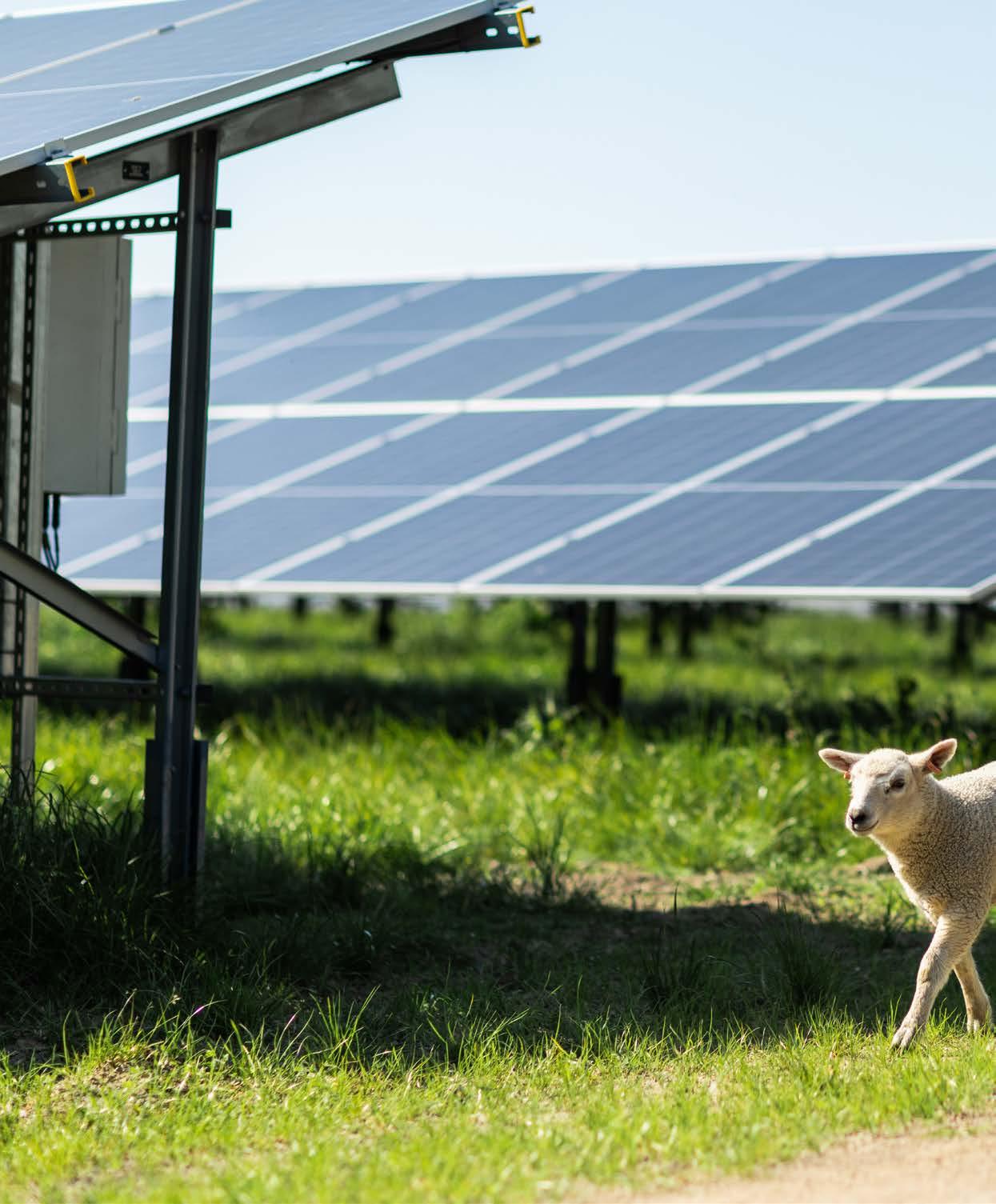
Moulin à Vent solar array
A renewable energy milestone
On 30 April 2025, Jersey marked a major milestone with the official switch on of Moulin à Vent, the Island’s first operational groundmounted solar array. Located in St Clement, this pioneering site is a cornerstone of Solar 5000 and a significant step towards Jersey’s net zero ambitions.
The installation comprises 7,436 panels across two solar fields, generating around 5 GWh of electricity annually – enough to power 1,200 homes. Early results show the site performing 25-30% above generation forecasts, demonstrating the potential of local renewable energy to deliver strong, reliable returns.
Designed for sustainability
Delivered on time and within budget, Moulin à Vent reflects effective collaboration between Jersey Electricity, local contractors and landowners. A key partnership was formed with local farmer Jeremy Hughes, whose flock now grazes the land beneath the panels year-round. This agrivoltaics model supports biodiversity, soil regeneration and the continued agricultural use of the site, proving that clean energy and farming can thrive together.
To further enhance ecological value, we planted 900 metres of hedgerow and 40 new trees, strengthening habitats and improving local biodiversity.
Impact and legacy
With a lifespan of up to 40 years, Moulin à Vent provides predictable energy costs, strengthens energy security and reduces carbon emissions. The project has also created skilled local jobs in engineering, installation and maintenance, with training programmes underway to expand renewable energy expertise across the Island.
Looking ahead
Moulin à Vent is more than Jersey’s first solar farm, it’s a symbol of progress – demonstrating how innovation, investment and collaboration can accelerate the transition to a cleaner, more resilient energy future. As the first in a series of ground-mounted solar arrays under Solar 5000, it sets a benchmark for what’s to come.
Health, safety and wellbeing
A strong safety culture underpins everything we do, ensuring our people can perform their roles confidently, safely and effectively while supporting the reliable delivery of energy to the Island
Ross Muir Head of Health, Safety & Sustainability

Embedding a culture of care, responsibility, and continuous improvement
Continuous improvement
In FY25, we continued to strengthen our approach to health and safety by focusing on continuous improvement and external validation. We appointed an independent health and safety consultancy to conduct a comprehensive audit of our management system, including site visits, Safe System of Work reviews, policy assessments and team interviews.
The audit outcome was highly positive, noting: “a robust and conscientious approach to risk identification and control, strong management practices across the organisation, and clear senior leadership commitment to health and safety”.
The findings are informing our roadmap to align with ISO 45001 in the year ahead, an important milestone in our ongoing commitment to excellence in health and safety management.
Recognising that effective safety extends beyond compliance, we have launched a safety culture assessment to underpin a new behavioural safety transformation programme. This initiative focuses on proactive risk awareness, leadership engagement and embedding positive safety behaviours across all levels of the business.

Mental health and employee wellbeing
In FY25, responsibility for our mental health strategy moved to the Health, Safety & Sustainability team, reflecting the importance of integrating wellbeing into our wider safety culture. Working with a specialist provider in Jersey, we expanded our employee wellbeing support and developed new initiatives planned for launch in FY26, including events marking World Mental Health Day.
We now have 11 trained mental health first aiders (MHFAs) across the business, supported through quarterly forums and dedicated resources.
These programmes help ensure our people receive the support they need, especially during periods of change. Looking ahead, we will continue to expand wellbeing initiatives through targeted workshops, learning sessions and enhanced MHFA support.
Safety performance
During the year, we recorded one lost time injury, which was not serious, but resulted in 24 lost working days. Our overall incident rate remains low and reflects our ongoing investment in risk management, training and safety systems within a complex operational environment.
Looking ahead
Our priorities for FY26 include the full rollout of the behavioural safety training programme from December 2025, continued alignment with ISO 45001 and ISO 14001, and further updates to our health and wellbeing strategy.
By embedding health, safety and wellbeing into every part of our business, we continue to invest in our people, enhance operational excellence, and ensure we deliver energy safely, reliably and sustainably to the Island community.

JE Home & Business
Fuel switching gained strong momentum in FY25, with a fivefold increase in heat pump sales, clear evidence that Jersey’s transition to low-carbon heating is accelerating.
Peter Cadiou Business Development Director
Fuel switching performance
Fuel switching gained strong momentum in FY25, delivering more than 246 fuel switch acceptances, including a fivefold increase in heat pump adoption. Leveraging the Government of Jersey’s Low Carbon Heating Incentive, heat pumps are one of our core growth priorities, highlighting their efficiency and potential to reduce household energy costs and emissions. Enhanced marketing, strong follow-up processes and customer support have boosted conversion rates and raised awareness of the benefits.
Looking ahead, fuel switching will remain central to our business development strategy, supported by innovative financing, bundled services and continued government collaboration. We will deliver the Fuel Switching Acceleration Programme, streamlining the customer journey and scaling adoption to drive Jersey’s transition to a zero-carbon future.
Investing in training, digital tools and service innovation positions us as a trusted advisor in the clean energy market. By anticipating evolving customer needs and leveraging new technologies, we are creating scalable pathways for growth and reinforcing our leadership in the energy transition.
Supporting customers through growth, innovation and investment
Our commitment to growth, innovation and investment is giving Islanders greater choice, improved efficiency and the tools to cut their carbon footprint.
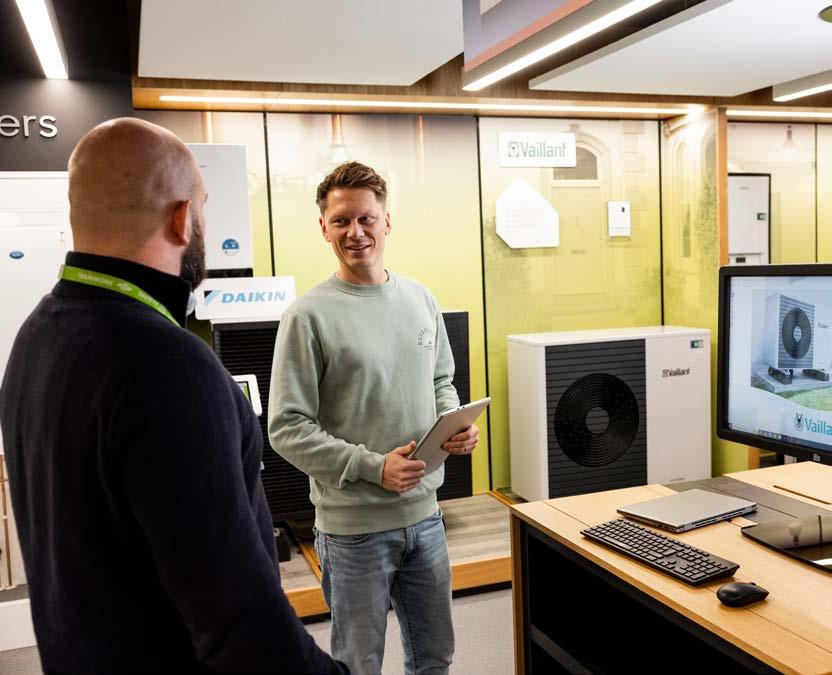
The Smarter Living initiative at the Powerhouse is a dedicated hub where customers can explore sustainable technologies, access advice and connect with incentive programmes. This service is complemented by home energy advisors, who provide personalised home visits with practical recommendations to reduce bills and emissions.
Innovation is also evident in new products and digital tools, including domestic solar, advanced heating solutions and the online fuel switching tool, which links directly to schemes such as the Low Carbon Heating Incentive, Electric Vehicle Purchase Incentive and the Electric Vehicle Charging Incentive.
Product development and innovation
Beyond fuel switching, we have strengthened our product portfolio and service model. Hybrid heat pumps, the online fuel switching tool and heating as a service exemplify customer-focused innovation, while industry partnerships ensure supply chain resilience and installation excellence.
Initiatives such as the thermal camera programme, alongside investment in training, digital infrastructure and streamlined processes, are making low-carbon adoption easier and more accessible.
Through continuous improvement and proactive engagement, JE is reinforcing its role as a trusted energy partner, supporting customers today while preparing for Jersey’s sustainable energy future.
IN FOCUS
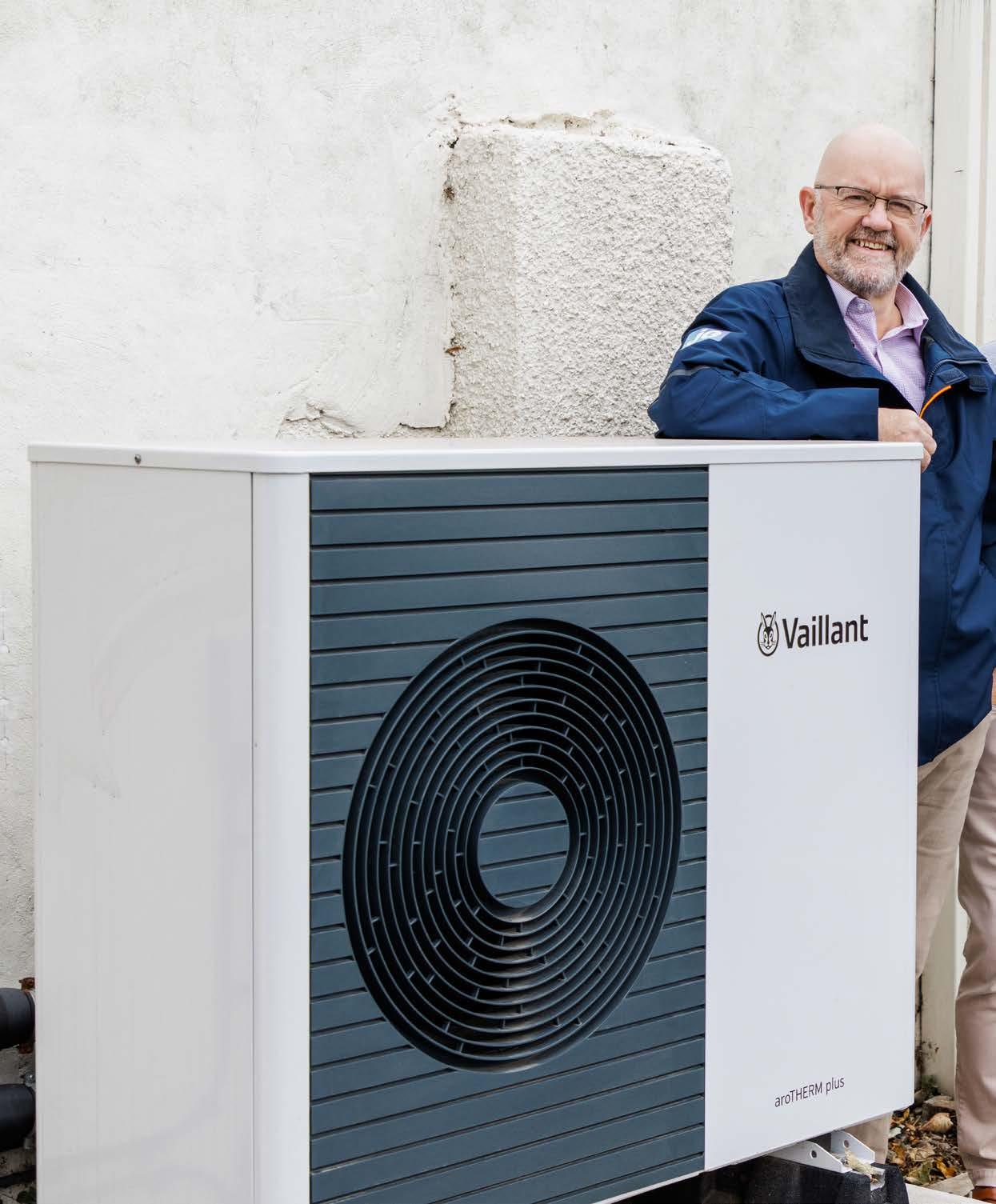
Heat pumps powering low‑ carbon growth
Fuel switching gained strong traction in FY25, with more than 246 customers making the shift to electric heating and a fivefold increase in heat pump adoption year-on-year. This rapid growth reflects rising customer demand, effective use of targeted incentives and our commitment to investing in clean, smart technologies.
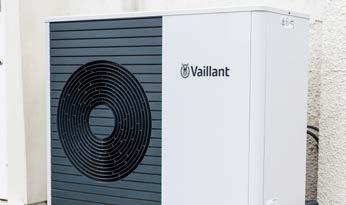
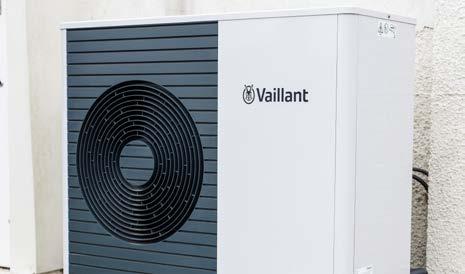
Heat pumps are a central pillar of our low-carbon growth strategy. By delivering up to four times more energy than they consume, they offer a highly efficient, cost-effective, and networkfriendly alternative to fossil fuel heating. Customers benefit from reduced energy bills, improved comfort and significantly lower emissions.
This growth has been enabled by strong collaboration with the Government of Jersey, leveraging the Low Carbon Heating Incentive and sustained investment in marketing, customer support and installer partnerships. These efforts have boosted awareness, improved conversion rates and built trust in heat pump technology as a scalable, future-ready solution.
Looking ahead, heat pumps will remain a key innovation focus as we expand Jersey’s all-electric future, delivering on our vision for decarbonisation, resilience and sustainable growth.

Electric mobility
Evolve
In FY25, we completed the administration of the Electric Vehicle Grant Scheme ahead of schedule, marking a key milestone in our partnership with the Government of Jersey to deliver low-carbon transport initiatives.
Our EasyCharge home EV charging subscription service continues to perform strongly, offering customers a simple, all-inclusive home charging solution. EasyCharge also supports network efficiency by enabling smart load shifting from peak to off-peak periods, optimising energy use and reducing costs. Since its launch in May 2022, installations have grown to 436, up from 308 in FY24, demonstrating sustained customer confidence and demand.
We also strengthened engagement with key stakeholders through events for vehicle dealers and commercial fleet operators. These sessions enhanced collaboration across the sector and reinforced our leadership in supporting Jersey’s transition to electric transport.
Looking ahead, development is underway on the next generation of home charging technology, with launch planned for FY26. The new system will build on the success of EasyCharge, incorporating advanced features to meet evolving customer needs and support Jersey’s carbon neutrality ambitions.
116
CHARGING POINTS vs 110 in 2024
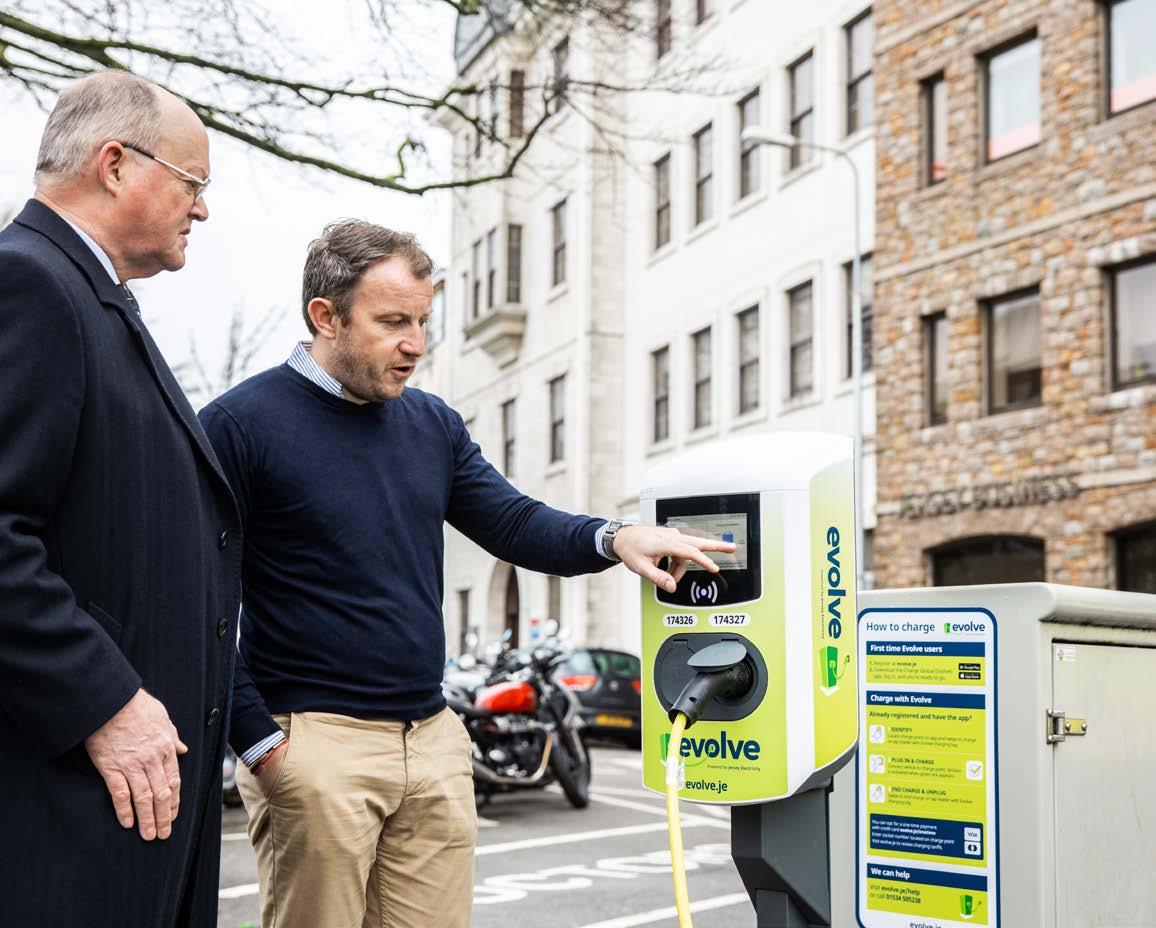

Public charging
In FY25, we continued to expand and enhance Jersey’s public EV charging network, reinforcing our role as a reliable enabler of the Island’s electrification journey. We now operate 116 charging ports across Jersey, providing wide access to dependable charging infrastructure for residents, businesses and visitors.
Our partnership with Virta continues to extend the reach of our network. Through roaming agreements, customers can access tens of thousands of charging points across the UK and Europe using the same app or charging tag.
Two dual 150 kW ultra-rapid chargers were commissioned during the year, in the east and west of the Island, complementing our existing unit at the Powerhouse. These installations provide faster charging for newer vehicles with larger batteries and form part of our ongoing investment in ultra-rapid and rapid charging capacity.
Improving reliability and availability remained a key focus, and we have made targeted investments in charger connectivity and uptime to enhance customer experience and network performance.
We also achieved accreditation for hardware support and installation, strengthening our technical capabilities and service standards.
A major milestone was the commissioning of the largest fleet charging installation at La Collette Power Station, supporting our growing electric vehicle fleet. This investment improves operational resilience and supports our wider decarbonisation strategy.
Other businesses
Powerhouse
Digital transformation and systems integration
We have made significant progress this year on two major technology initiatives designed to strengthen Powerhouse’s digital and operational performance. The migration to Adobe Commerce will enhance online sales capabilities and improve the customer shopping experience, while the implementation of LS Central is set to deliver greater operational efficiency, improved stock accuracy and a more seamless end-toend service.
Service expansion and capability building
Powerhouse’s servicing capability has grown meaningfully, laying the foundation for a comprehensive in-house appliance servicing offer. This development included recruitment planning, vehicle investment and process improvements to support the delivery, installation and repair of appliances – strengthening the Powerhouse’s ability to provide full lifecycle customer support.
Electric bike market growth
The first full year of trading within the expanded electric bike sales area delivered Powerhouse’s best-ever performance in e-bike sales, despite broader market pressures. The improved showroom layout and dedicated space significantly enhanced customer engagement and conversion, cementing the Powerhouse’s position as the Island’s leading e-bike retailer.
Showroom enhancements and customer experience
The refreshed showroom has allowed us to introduce new brands and a wider product range, alongside dedicated demonstration set-ups that help customers experience the latest technology first-hand. These enhancements have elevated both the educational and experiential aspects of the customer journey.
Financial performance
Powerhouse reported an operating profit of £0.3m, compared to £0.6m in the previous year. The reduction reflects exceptional costs linked to ongoing transformation projects, which are expected to deliver long-term commercial and operational benefits.
Jendev
Jendev delivers digital enterprise resource planning solutions across our business domains, serving both internal and external clients. Building on its expertise in Microsoft NAV, Jendev is now focused on a strategic transition to the Microsoft Business Central stack. This evolution supports billing platform customers in moving to modern cloudbased environments, aligning with industry trends and customer expectations.
A key priority is the ongoing development of the Jenworks billing platform, ensuring it remains robust, scalable and adaptable to future needs. Jendev is also supporting Jersey Electricity’s next-generation ERP platform, which will enhance operational efficiency, accuracy and decision-making capabilities across the organisation.
Through this forward-looking strategy, Jendev is expanding its digital capabilities and reinforcing its commitment to delivering integrated, cloud-ready solutions that meet the evolving demands of the energy sector and beyond.
JEBS
Operational performance and fuel switching
JEBS continued to support Jersey’s transition to a low-carbon future by helping customers switch from fossil fuel heating systems such as oil and gas to efficient all-electric alternatives.
This year, we completed a total of 246 fuel switch acceptances, including 47 air source heat pump (ASHP) installations. The strong growth in ASHP adoption reflects rising customer demand for economical, low-energy solutions that reduce emissions and support Jersey’s decarbonisation goals.
EV charging infrastructure development
JEBS has also expanded the Island’s electric vehicle (EV) charging network, with major installation projects including:
y 150kW ultra rapid chargers installed at St Aubin and Gouray Hill.
y 50kW rapid charger installed at Goose Green Car Park in St Peter.
y 128 home EV chargers installed across the Island, supporting the increasing number of customers transitioning to electric mobility.
Fleet electrification and infrastructure enhancement
To strengthen Jersey Electricity’s own charging capabilities, we installed 44 EV charging points (ranging from 7kW to 50kW) at the La Collette site. This infrastructure supports both the Company fleet and staff vehicles, reflecting JEBS’s commitment to leading by example.
The JEBS fleet is now fully electric, with the exception of the Amenity Lighting MEWP vehicle, for which there is currently no suitable electric alternative. The transition has delivered significant savings in running and maintenance costs compared to the previous diesel fleet.
Jersey Energy
Consultancy growth and financial performance
Jersey Energy successfully completed the first year of its new five-year business growth plan. The business reported an increase in income, exceeding budgeted profit margins on the prior year. This growth was driven by new client relationships across Jersey and Guernsey, improved team productivity and more efficient project delivery.
Service diversification and market expansion
We launched two new services this year: a drone surveying service and a Mechanical, Electrical, and Plumbing (MEP) Computer Aided Design (CAD) service for contractors, which have strengthened our market position and broadened our service offering. Marketing activities included a refreshed company brochure and enhanced social media presence, with a new website planned for next financial year.
Organisational development and skills investment
We introduced a comprehensive skills programme to support professional growth, with high participation across the team. Training covered areas such as power generation, electrotechnical engineering and leadership. Our recruitment efforts successfully added a trainee and a qualified electrical design engineer, enhancing our capacity to deliver complex projects.
Project delivery and technical excellence
Jersey Energy maintained its leadership in MEP consultancy across the Channel Islands, delivering major projects including:
y The Limes – 127 new apartments and refurbishment of 15 units for Andium Homes.
y Telecoms Data Centre – major refurbishment supported by advanced 3D modelling.
y Jersey Water HQ – ongoing design and site work.
y Ports of Jersey – plant upgrades and electrical infrastructure improvements.
Innovation in tools and technology
Investments in advanced surveying equipment, including energy logging tools and a thermal imaging drone, have further enhanced our technical capability and service quality. These developments reflect our commitment to innovation and sustainable engineering solutions.
Property
The Group’s property interests include the B&Q store and medical centre located at the Powerhouse retail and administration site on Queen’s Road, along with 29 privately rented houses and flats. We also have Majestic, Orchid Care, Café Zone and Sure as commercial tenants. In FY25, the Property division delivered a profit of £1.3m, excluding revaluation movements, up from £0.9m in the previous year. The overall value of the portfolio fell by £0.9m to £25.8m, reflecting broader trends in the local property market.


JE Technology


Our technology investments are driven by our goal to deliver smarter, more connected and more efficient services that create lasting value for our customers.
Werner Bornman Technology Director
Our technology strategy continues to evolve with purpose and precision. This year has been marked by bold investment, strategic innovation and operational transformation – each initiative designed to deliver tangible benefits to our customers, enhance internal capabilities and secure our digital future.
Customer benefits
We’ve made significant strides in enhancing customer experience through digital platforms and data-driven insights. The deployment of My JE for Business marks a pivotal moment in our commercial customer engagement strategy. This platform empowers multi-site account holders with real-time visibility into energy consumption, enabling smarter decisions and improved sustainability outcomes.
Our Customer 360 model offers a unified view of customer interactions, driving personalised engagement and service excellence.
Leveraging infrastructure, empowering people
This year marked another step forward in how we harness our corporate infrastructure to support both strategic ambitions and day-to-day operations. Building on the foundation of our upgraded network and cloud-ready architecture, we extended our investment into end-user systems and toolsets that empower our people and enhance productivity.
We invested in additional infrastructure resilience, ensuring a more stable and responsive digital environment for our teams. Our investment in cloud computing and planning for migration to modern data integration platforms reflects our commitment to future-ready platforms.
Safeguarding our systems
In an increasingly complex cybersecurity landscape, we’ve adopted a proactive and adaptive approach. Implementing Zero Trust Network Architecture and adopting the NIST Cybersecurity Framework during the year have elevated our security posture.
We strengthened our data protection capability with additional resources, established a cross-organisational data governance oversight function and enhanced incident response protocols. Cybersecurity and data protection training completion reached 92%, reflecting our commitment to preparedness and resilience.
Our investment in a modern meter data management platform strengthens resilience, creates future flexibility, and ensures customers have access to accurate data to enable energy efficiency opportunities.
Internal operational benefits and efficiency
FY25 saw strong progress in preparing for the rollout of our next-generation ERP system, Business Central, across the business.
We established a technology design authority to ensure architectural cohesion and prevent duplication of investment. This governance structure has enhanced change reporting and risk management by integrating enterprise asset management into our oversight processes.
Our infrastructure refresh programme laid the groundwork for seamless cloud adoption. Upgrades to our corporate fibre network, advanced storage and processing capabilities have reinforced our operational backbone, maintaining uptime at 99.95% for FY25.
We achieved further efficiency gains by aligning with ITIL service management principles, vendor consolidation, cost reduction initiatives and centralised technology spend.

Looking ahead
Strategic technology priorities for FY26
As we look to FY26, our technology roadmap is shaped by a clear commitment to innovation, resilience and customercentric transformation. The following initiatives will be our key areas of focus:
ERP replacement
Building on the foundational work completed in FY25, including pilot deployment and production environment setup, we will continue to roll out Business Central across Jersey Electricity. This next phase will focus on user training and full operational integration, enabling scalable and efficient enterprise operations.
Next-generation smart meter investment
We will advance our next-generation smart meter programme. This investment will unlock future energy efficiency opportunities and enhanced service options for our customers, supported by the new technology platform solutions.
Evolve public network expansion
Continued investment in the Evolve public network will support the growth of our electric vehicle infrastructure, reinforcing our commitment to sustainable transport and accessible charging solutions.
Launch of Evolve Home
FY26 will see the launch of Evolve Home, designed to bring smart energy solutions directly into customers’ homes.
Cybersecurity and data protection investment
Through our established roadmaps, we will continue to strengthen our cybersecurity posture and data protection practices. This includes implementing the updated security framework aligned to future risk detection and prevention, enhancing incident response capabilities, and building on our adoption of the NIST Cybersecurity Framework and Zero Trust Architecture.

IN FOCUS

The Smart Upgrade Programme
Building a smarter business
The Smart Upgrade Programme is a strategic investment to modernise the backbone of our business. By upgrading our ERP system, retail point of sale, metering and billing infrastructure and further improving our asset management tools, we’re laying the foundations for a digital organisation that’s more efficient, responsive and ready for the future.
This is more than a systems upgrade; it’s a business transformation. We’re redesigning how we work, serve customers and manage our operations to support long-term growth and resilience.
A key part of this transformation is the rollout of advanced metering infrastructure, which will enable more flexible tariffs and pricing options, helping us better meet the evolving needs of our customers. These investments are not just about improving operations today. They’re about future readiness: creating the digital infrastructure that will support AI-driven technologies, smarter energy delivery and more personalised customer experiences across our lines of business.
The Smart Upgrade Programme reflects our commitment to innovation, growth and long-term value, for our customers, employees, shareholders and the Island.


Financial review

Our financial performance in FY25 remained resilient in the face of ongoing market challenges, supported by strong revenue growth and a robust balance sheet. Our power procurement and hedging strategy continued to protect customers from wholesale market volatility.
GROUP REVENUE
£146.2m
FY24: £135.7m DIVIDEND
20.82p
GROUP PROFIT BEFORE TAX
£14.2m
FY24: £15.1m ENERGY BUSINESS PROFIT
FY24: £19.80p NET CASH
£8.7m
FY24: £19.2m
£12.7m
FY24: £13.0m
£3.1m
FY24: £3.4m
Financial performance
Group revenue
Group revenue for the year ended 30 September 2025 was £146.2m (FY24: £135.7m), an increase of 7.7% on the prior year. This growth was primarily driven by a stronger performance in our Energy business, where revenue rose to £118.4m (FY24: £108.1m), reflecting the tariff adjustments implemented in January 2025, fuel switching and increased customer demand following a colder-than-average winter.
The overall economic landscape for our non-energy businesses remained challenging. Revenue in the Powerhouse retail business increased by approximately 1.7% to £18.1m (FY24: £17.9m), reflecting modest growth as inflationary pressures continued to influence consumer spending and operating costs.
Property revenue increased by £0.3m to £3.3m (FY24: £3.0m), driven by the letting of additional commercial space at the Powerhouse site and near full occupancy of our residential portfolio by year-end. Revenue from JEBS, our building services business, was £4.7m (FY24: £4.8m). Other business segments collectively reported a small operating loss of £0.2m on revenue of £3.6m (FY24: £3.8m), reflecting ongoing technology investment and lower-than-anticipated sales during the period.
Cost of sales and operating expenses
Cost of sales for the year totalled £92.7m (FY24: £83.2m), reflecting an increase in manpower, costs associated with the Smart Upgrade and general inflation across materials and operating inputs.
Operating expenses increased to £38.7m (FY24: £37.3m); however, this increase includes a £3.0m one-off ex-gratia past service cost of the Group’s defined benefit pension scheme. Excluding this non-recurring charge, operating expenses reduced, reflecting efficiencies delivered across the business and the increase year-on-year capitalisation of labour associated with major programmes. These underlying improvements were achieved while continuing to invest in the systems, people and infrastructure needed to support the Group’s decarbonisation and digital transformation objectives.
Group profit before tax
Group profit before tax for the year ended 30 September 2025 was £14.2m (FY24: £15.1m), representing a (6)% change year on year. The overall result reflects strong operational performance in the Energy business, partially offset by higher cost pressures across the Group.
Business unit performance Energy business
The Energy business delivered a robust performance during the year, with revenue of £118.4m (FY24: £108.2m) and profit before tax of £12.7m (FY24: £13.0m). The year-on-year improvement reflected the January 2025 tariff adjustment, higher customer demand during the colder winter period, and continued efficiency gains. These factors contributed to a return on assets employed within the Group’s long-term target range of 6 to 7% on a rolling five-year basis.
Electricity unit sales increased slightly year on year to 616 million kWh (FY24: 609 million kWh). The Group continued to source the majority of its electricity from low-carbon imports, with approximately 93.7% supplied from France, 5.3% from Jersey’s Energy from Waste plant, and 1.1% generated locally through oil-fired and solar generation.
Property
The Property division reported a profit, excluding investment property revaluation movements, of £1.3m (FY24: £0.9m). The value of the Group’s property portfolio decreased by £0.9m to £25.8m, reflecting broader conditions in the local property market.

Powerhouse
The Powerhouse retail business reported a profit of £0.3m (FY24: £0.6m), reflecting higher allocations of Group technology-related costs and continued investment in key transformation projects. During the year, the business enhanced its showroom offering to support growth in electric bike sales and improve the overall customer experience, while also expanding its capabilities through the establishment of an in-house appliance servicing operation.
JEBS
JEBS, the Group’s building services division, recorded a break-even result of £nil (FY24: £0.2m). Performance was affected by the one-off realignment of annual leave entitlement for employees and weaker-than-expected results in amenity lighting.
Other business units
Other business units – including Jersey Energy, Jendev, Jersey Deep Freeze and fibre-optic lease rentals – reported a small combined loss, primarily due to the reallocation of internal costs.
Financial position and cash flow
Net interest costs
Net interest costs for the year were £0.3m (FY24: £0.8m), reflecting the net balance between interest income on deposits and the cost of long-term borrowings. The taxation charge was £3.1m (FY24: £3.4m), consistent with the underlying profit performance.
Earnings per Share and Dividends
Basic and diluted earnings per share were 35.90p (FY24: 37.92p). Dividends paid during the year, net of tax, totalled 20.82p (FY24: 19.80p). The proposed final dividend of 12.60p (FY24: 12.00p) represents a 5% increase on the prior year, maintaining a dividend cover of 1.7 times (FY24: 1.9 times).
Cash flow and liquidity
Net cash at the year end was £8.7m (FY24: £19.2m), comprising £30.0m of borrowings offset by £38.7m of cash and cash equivalents. The £10.5m reduction in net cash during the year primarily reflects increased capital investment to support the delivery of the Group’s strategic infrastructure and technology programmes.
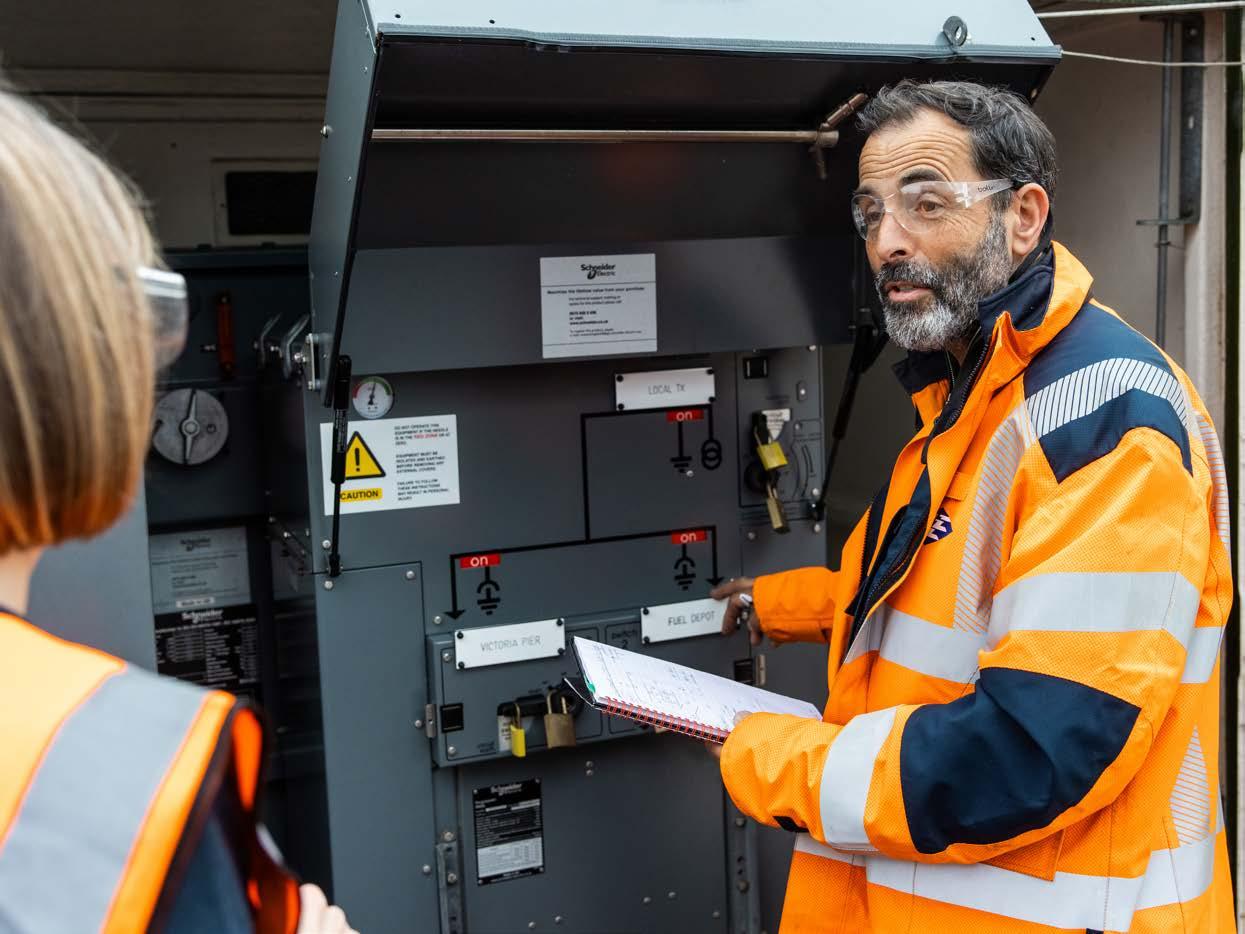
Wholesale energy market
Market conditions
Global wholesale electricity markets have experienced sustained volatility in recent years, with prices peaking in 2022 following disruptions to European energy supplies caused by the Russia–Ukraine conflict. While prices have moderated, they remain elevated relative to historical norms, influenced by geopolitical uncertainty, generation costs, and the recovery of demand across Europe.
During 2024, while wholesale electricity prices stabilised from the extreme peaks of 2022, they remained significantly elevated compared with pre-crisis levels. Market dynamics continued to be influenced by carbon pricing, weatherdependent renewable generation, and broader macroeconomic factors, including interconnector maintenance and supply constraints.
Group exposure and mitigation
As the sole electricity supplier in Jersey, the Group imports approximately 94% of the island’s electricity from Électricité de France (EDF) via the Channel Islands Electricity Grid (CIEG). While local demand remains relatively stable, the Group is indirectly exposed to European wholesale price volatility and foreign exchange movements, as electricity purchases are denominated in euros. The current EDF supply agreement runs until December 2027, with a new contract expected to commence in January 2028.

The Group’s treasury function manages financial risks arising from wholesale electricity purchases, foreign exchange, interest rates, liquidity, and counterparty exposure. Electricity purchases for 2026 and 2027 are now materially hedged, providing significant protection against price volatility. A rolling three-year foreign exchange hedging programme manages the currency risk and supports long-term tariff planning. Interest rate exposure is limited through a conservative debt profile, including a fixed-rate £30m private placement, while liquidity is actively managed via short-term deposits, committed committed facilities, and a £10m revolving credit facility.
Tariff management
In response to sustained wholesale price pressures and inflation, a 7.5% tariff increase was implemented in January 2025 and a 2.5% tariff rise announced to come into effect in March 2026.
These measures have enabled the Group to maintain standard domestic retail electricity prices approximately 20% below the UK average1, ensuring stable and affordable energy for customers despite elevated wholesale market conditions.
Looking ahead
The current EDF supply contract runs until December 2027. JE is actively preparing for contract renewal to maintain long-term affordability and reliability.
The treasury and hedging framework will continue to evolve to address potential risks from future market volatility or macroeconomic shifts.
Continued monitoring of wholesale electricity prices, foreign exchange exposure, and market dynamics will inform tariff planning and risk mitigation strategies.

1 Mott MacDonald, “Channel Islands Electricity

Defined Benefit Pension Scheme arrangements
As at 30 September 2025, Jersey Electricity’s Defined Benefit Pension Scheme continues to be closely monitored due to its sensitivity to financial market movements. The Scheme surplus under IAS 19 remains strong at £27.3m (FY24: £28.0m) before deferred tax and £21.8m (FY24: £22.4m) net of deferred tax. During the year, Scheme liabilities decreased by approximately 7.7% while assets decreased by 6.4%, contributing to a net decrease in the surplus of £0.6m.
The Scheme continues to employ a liability-driven investment strategy to mitigate mismatches between asset and liability values caused by changes in interest rates and inflation. The discount rate remains a key actuarial assumption; small changes can materially affect reported liabilities –for example, a 0.5% change would adjust liabilities by approximately £6m.
The latest triennial actuarial valuation, effective 31 December 2024 and finalised during FY25, confirmed a surplus of £11.7m, reaffirming the scheme’s robust funding position. The final salary scheme remains closed to new members (since 2013), with new employees offered defined contribution arrangements.
During FY25, the Trustees proposed a one-off increase to pensions in payment of 3 to 12% (dependent on the date of retirement), approved by the Board. The resulting Past Service Cost, estimated at approximately £3.0m, has been recognised as a one-off charge to the FY25 income statement under IAS 19. The Scheme continues to be prudently managed, with the current Company contribution rate maintained at 20.6% until December 2025 and regular actuarial oversight providing a resilient framework for long-term obligations.
The next triennial actuarial valuation is scheduled with an effective date of 31 December 2027. Overall, while the Scheme remains exposed to market fluctuations, the combination of prudent funding, disciplined LDI management and ongoing actuarial review continues to support the long-term sustainability of the pension arrangements.
Returns to Shareholders
62% of the Ordinary share capital of the Company is owned by the Government of Jersey with the remaining 38% held by around 600 shareholders via a full listing on the London Stock Exchange. Of the holders of listed shares, Huntress (CI) Nominees Limited owns 5.4m (46%) of our ‘A’ Ordinary shares representing 17% of our overall Ordinary shares and around 5% of voting rights. This nominee company is held within the broker firm Titan Wealth (CI) Limited which has placed our stock with a number of private clients, and a fund, residing largely in the Channel Islands.
During the year, the ordinary dividend paid increased by 5%, rising from 19.80p in FY24 to 20.82p.The proposed final dividend for FY25, at 12.60p, represents a 5% increase on the previous year’s final dividend of 12.00p and remains consistent with the Group’s policy of delivering sustained real growth in shareholder returns over the medium term.
Inflationary pressures in Jersey have continued to moderate from the elevated levels seen in 2022 and 2023, with the local Retail Price Index (RPI) now trending towards more stable levels. The Board remains committed to maintaining a progressive and sustainable dividend policy while supporting the Group’s ongoing investment in infrastructure and energy transition initiatives.
Over the past 15 years, the ordinary dividend (excluding special dividends) has risen from 5.85p to 20.82p in FY25, reflecting a consistent record of long-term value creation for shareholders.
At 30 September 2025, the Company’s share price was £4.70 (FY24: £4.30), giving an implied market capitalisation of approximately £144m compared with net assets of around £254.1m. The share price performance reflects the continued illiquidity of the Company’s shares, primarily due to the presence of a single large majority shareholder and the relatively limited number of shares in public circulation. These factors restrict management’s ability to influence short-term share price movements.
To enhance transparency and improve understanding of the Group’s performance and value proposition among the wider investment community, the Company continues to engage Edison, an independent investment research firm, to produce regular analysis and commentary on its financial and operational performance.
Over the past 15 years, the Company’s share price has increased from £2.31 to £4.70, reflecting long-term value creation despite limited trading activity.
Viability statement
In accordance with Provision 31 of the UK Corporate Governance Code, the Directors have assessed the prospects and long-term resilience of the Group over a five-year period to 30 September 2030. This period is consistent with the Group’s five-year Company Business Plan and reflects the timeframe over which the Board principally assesses strategy, capital investment requirements and key operational programmes, including the Smart Upgrade, subsea cable replacement strategy, on-island solar generation and the transition to the new EDF supply contract from January 2028.
Assessment process and governance
The assessment was undertaken as part of the Group’s established risk management and internal control framework, supported by detailed financial modelling and scenario analysis. Management’s analysis was reviewed by the Audit and Risk Committee, which challenged key assumptions, scenario design and mitigation plans before recommending the assessment to the Board. The Board also considered the Group’s current financial position, liquidity resources, debt structure, investment commitments and access to funding markets.

Key assumptions and financial resilience
The five-year Plan incorporates the Group’s vertically integrated user-pays tariff structure and Return on Assets (ROA) model, which supports efficient recovery of operating costs and wholesale electricity procurement while maintaining competitive tariffs. The plan reflects forecast electricity demand and customer behaviour, expected investment phasing, hedging strategies, and the Group’s robust balance sheet position, including committed long-term debt funding and prudent liquidity management. The Group also retains the ability to defer discretionary capital expenditure if necessary without compromising operational capability or security of supply.
Scenario analysis and stress testing
The Directors considered a range of severe but plausible downside scenarios reflecting the principal risks facing the Group. These included:
y Adverse movements in wholesale electricity prices
y Reductions in electricity volumes driven by customer energy efficiency or slower-than-expected switching from gas/oil heating to electric solutions
y Inflationary pressures and supply chain delays affecting key capital programmes
Under all scenarios modelled, the Group maintained adequate liquidity and financial headroom. The ROA tariff model and user-pays framework continued to support cost recovery even under scenarios of reduced consumption, while the Group’s capex phasing flexibility provided a further contingency should conditions deteriorate.
Limitations and severe but remote scenarios
The Board also considered circumstances that could challenge the Group’s longer-term viability. These would require a combination of events significantly more extreme than the severe but plausible downside scenarios modelled, including concurrent constraints on the Group’s ability to adjust tariffs, significant failures in electricity procurement mitigation, and prolonged wholesale electricity market dislocation. The Board considers the likelihood of such conditions occurring simultaneously within the assessment period to be remote.
Conclusion
Based on this assessment, the Directors have a reasonable expectation that the Group will be able to continue to operate and meet its liabilities as they fall due over the five-year period to 30 September 2030. This statement is not a guarantee of future performance but is intended to provide shareholders with an informed assessment of the Group’s forward-looking resilience.
Katy McBride Interim Finance Director

Group risk management
Effective risk management is key to delivering our strategic objectives and protecting long-term shareholder value. By actively considering risk in every decision, we can embrace opportunities while mitigating potential threats.
The Board recognises that risk management is designed to provide reasonable, but not absolute, assurance against material loss or misstatement.
Governance – Board responsibility
The Board retains overall accountability for our risk management and internal control systems. Key responsibilities include:
y Defining risk appetite: Establishing the nature and level of risk we are willing to accept to achieve our strategic objectives.
y Assessing principal and emerging risks: Conducting robust evaluations to understand potential impacts on strategic delivery.
y Reviewing mitigation plans: Ensuring appropriate controls and response plans are in place.
y Identifying emerging risks: Maintaining oversight of new threats and opportunities.
y Approving disclosures: Ensuring the annual report presents a transparent summary of principal risks, mitigations and internal controls.
Governance – Audit and Risk Committee (ARC) responsibility
The ARC supports the Board by monitoring the effectiveness of the risk management framework and internal controls. Its responsibilities include:
y Reviewing principal and emerging risks, including aggregate, bottom-up risk assessments.
y Approving the annual internal audit plan and evaluating reports on internal control effectiveness.
y Conducting deep dives on high-priority risks and emerging matters.
y Monitoring management’s implementation of audit and risk recommendations.
Five Lines of Responsibility model
During FY25, the Board approved an upgrade to the Group’s risk governance structure, evolving from the traditional Three Lines of Defence model to a Five Lines of Responsibility model. This change reflects the view that risk management is the responsibility of the entire Company and provides a clearer structure for accountability and oversight.
Line of responsibility
First Line Operational management
Second Line Risk management and compliance functions
Third Line Independent assurance
Fourth Line ELT and ELT risk sponsor
Fifth Line Board of Directors and ARC
Description
Owns and manages risks. Executes day-to-day activities, identifying, assessing and managing risks arising from business operations, processes and systems.
Policy setting, oversight and risk insights. Monitors operational management, supports compliance and ensures prudent risk-taking.
Internal Audit co-ordinates with other functions to provide objective assurance to the Board, ARC, and ELT on the effectiveness of risk management, controls and governance.
Sets the tone and approach to risk management, balancing value creation with operational efficiency and effective risk ownership across lines 1 to 3.
Provides oversight and governance in the best interest of JE and our shareholders. The ARC has delegated responsibility to ensure the effectiveness of the risk management framework.
Note: Reporting lines are directional and collaborative, ensuring alignment across all five lines.
This model strengthens accountability, clarifies roles and embeds risk management across all levels, from operational management through to Board oversight, reinforcing a risk-aware culture and enabling us to respond effectively to emerging challenges and opportunities.
Fifth Line
JE Board of Directors
Governance and oversight
Provides oversight of management in the best interests of the Company and shareholders
Audit and Risk Committee (ARC)
Governance and oversight
Delegated responsibility from the Board for ongoing governance and oversight of the risk management framework
Fourth Line
Executive Leadership Team (ELT)
Sets the Company’s tone and approach to risk management
Balancing value creation with operational efficiency and effective risk ownership across lines 1 to 3.
• Defines and recommends the risk appetite framework and principles to the Board.
• Are exemplars of risk management.
• Identifies principal and emerging risks.
• Responds and monitors company risks.
First Line
Operational management
Owns and manages the risks
Executes day-to-day activities, identifying, assessing and managing risks arising from business operations, processes and systems.
Second Line
Risk management & compliance functions
Policy setting, oversight & risk insights
Monitors operational management, supports compliance and ensures prudent risk-taking.
Fourth Line ELT risk sponsor
Sets the Company’s tone and approach to risk management
Balancing value creation with operational efficiency and effective risk ownership across lines 1 to 3.
• Established and owns risk management policy and processes.
• Provides updates to the ELT, ARC and Board.
Third Line
Independent assurance
Provides independent assurance
Internal audit co-ordinates with other functions to provide objective assurance to the Board, ARC, and ELT on the effectiveness of risk management, controls and governance.
External third-party assurance
Provides the highest form of impartial assurance.
Risk management framework
The Group’s risk management framework provides a consistent, end-to-end approach to identifying, assessing, managing and reporting risks.
Key steps include:
y Identify risks: Business units identify risks affecting daily operations and escalate material issues to ELT.
y Assess and evaluate: Each risk is evaluated for likelihood and potential impact, considering current controls.
y Mitigate: Executive risk owners ensure that treatment plans reduce risks to within agreed appetite.
y Monitor and report: ELT reviews consolidated risks, emerging threats and opportunities and submits to ARC and the Board for challenge and approval.
y Assure: Independent verification through internal audit and external assurance activities supports robust risk governance.
Risk appetite
The Board has established risk appetite statements for the Group’s principal risks, which guide decision-making and reflect the balance between opportunity and acceptable exposure:
Appetite level Description
Adverse Only the lowest level of risk is acceptable; preferred for low-risk delivery options.
Cautious Low-level risks accepted where likely impacts are minor – reward potential is modest.
Moderate Exposure to moderate risks acceptable to achieve worthwhile outcomes.
Open Willing to take calculated risks for high likelihood of successful delivery and meaningful value.
Enterprise Ambitious, innovative approach accepting greater uncertainty to achieve transformational outcomes.
Our principal risks and uncertainties
During the financial year ended 30 September 2025, the Board and ELT undertook a comprehensive review of the Group’s risk register, incorporating fresh perspectives from newly appointed Non-Executive Directors. This process included refining risk descriptions, reassessing the effectiveness of mitigating controls and factoring in current internal and external business drivers. The outcome of this review informed movements across most principal risks, reflected in updated ratings and heatmap positioning.
Two risks have increased from medium to high because, although our controls reduce the likelihood of an incident, the potential impact remains significant. For health, safety and environment, the probability of a serious event is rare, but the potential consequences are severe due to the inherent hazards associated with our operations. Similarly, cyber threats continue to grow in sophistication. Despite robust protective measures, a successful cyber-attack could substantially disrupt our operations result in a financial loss and cause reputational damage, meaning the overall risk rating has increased.
Risks with increased rating:
y Health, safety and environment – medium to high The likelihood of a serious incident is low, but the consequences would be significant.
y Cyber threat and information security – medium to high The potential impact of a successful cyber-attack remains high despite strong controls.
y Pace of change (formerly energy market share growth) – low to medium. Accelerating market change and innovation pressures have increased exposure.
y Disruptive technology and innovation (formerly strategy and disruptive technology) – low to medium. Rapid technological shifts and digital or AI-enabled business models heighten competitive pressure.
Risks with decreased rating:
y Political policies and regulatory change – high to medium. The regulatory review concluded without material findings, creating a more stable environment.
y Market volatility and tariff prices – high to low Easing wholesale prices and our hedging strategy have reduced exposure.
y Defined Benefit Pension scheme – medium to low Regular valuations and active oversight by the pension scheme Trustees enable the Group to closely monitor the scheme’s funding position and manage its long-term commitments responsibly.
Introduction of new risk:
y Supply chain – new. A new principal risk has been introduced to reflect increasing global and local dependencies. Factors such as geopolitical instability, climate impacts and supply shortages have increased the Group’s exposure.

Group risks and strategy
These tables present the Group’s principal risks, including a description of each risk, the risk owner, the risk trend, the risk appetite and key mitigating actions. The Board considers these to be the most significant risks that could materially affect the Group’s financial position, operational performance and ability to achieve its strategic objectives.
These risks do not represent the entirety of risks faced by the Company, nor are they listed in order of priority. Other risks, whether currently unknown or considered less material, may also have an adverse effect on the business.
The Group’s principal risks are closely linked to our strategic objectives of delivering safe, reliable, affordable, and sustainable energy. Each risk has the potential to influence the successful delivery of these objectives. The Board ensures that mitigating actions are in place to reduce the likelihood of adverse events or limit their potential impact. By actively monitoring and managing these risks, we aim to protect operational performance, maintain stakeholder confidence and support long-term strategic priorities. This includes the transition to low-carbon energy, investment in technology and infrastructure and the delivery of customer-focused initiatives.

We categorise our risks into four areas to provide the appropriate level of governance and oversight to effectively manage them, as summarised in this table.
Risk category: Strategic risks
of change
Description Failure to innovate, grow market share in home heating solutions, or respond to shifting consumer demands may result in strategic underperformance and the need to adjust pricing structures to maintain financial viability.
Risk owner Business Development Director
Failure to adopt or respond to emerging energy technologies, or disruptive business models enabled by digitalisation and AI, leads to loss of market relevance and missed growth opportunities. Risk that climate change increases operational costs, disrupts infrastructure, and requires ongoing investment to maintain a resilient and sustainable energy system.
Movement Increasing Increasing Stable
Risk appetite Open Open Cautious
Key mitigating actions
y Promoting low-carbon and renewable energy – Highlight JE’s low-carbon and renewable credentials to differentiate products and support the energy transition.
y Stakeholder engagement – Strengthen relationships with key stakeholders, including the Government of Jersey, to inform decisions and influence market developments.
y Innovation and service development – Drive new product development through the NPD team, streamlining processes like Enhanced Service Experience, and improving customer experience.
y Capacity and strategic alignment – Expand JEBS operations and set Groupwide objectives to support growth, electrification, and our three-year strategic ambitions.
y Focus on growth and technology – Regularly review growth opportunities and technological advancements to remain competitive.
y Strategic innovation initiatives – Implement key strategic projects to drive innovation and support business growth.
y Economic and risk monitoring – ELT tracks macroeconomic factors and evaluates growth opportunities against risk appetite, values and Company principles.
y Governance and oversight –PMO oversight of projects and formal AI governance ensures ethical, secure, and compliant use of technology.
y Low-carbon energy system –Well-invested infrastructure capable of supporting a zero-carbon future.
y Renewable energy and EV support – Commit to government environmental objectives through renewable projects and expanded EV charging infrastructure.
y Climate integration across operations – Embed energy transition and climate considerations into supply chain, procurement and business processes.
y Sustainability oversight –Sustainability Steering Committee coordinates Company-wide initiatives and monitors performance.
Risk category: Financial risks
Description Risk that future regulation or energy policy changes misalign with the business model, disrupting operations and impacting our stakeholders.
Risk that adverse movements in market conditions will negatively impact tariffs causing reputational damage and making it difficult to compete against other energy providers.
Risk that market volatility or changes in actuarial assumptions impact the scheme’s valuation and financial reporting, while errors in pension calculations or administration could lead to incorrect payments and member dissatisfaction.
Key mitigating actions
y Balanced strategic objectives – Ensure the Group meets its role as the primary energy provider while addressing the needs of diverse stakeholders.
y Transparent stakeholder communication – Maintain open and regular dialogue with key stakeholders and policymakers.
y Performance benchmarking – Compare operational and financial performance against peer jurisdictions using key industry metrics.
y Political and legislative monitoring – Track and respond to regulatory and policy developments, including the Government’s Energy Plan.
y Power purchase agreement –Secure contract with EDF in place until 31 December 2027.
y Treasury and hedging oversight – Annual review and Board approval of hedging and treasury policies.
y Regular monitoring and reporting – Continually review financial risks and hedging positions, providing updates to management, the ARC and the Board.
y Tariff management – Monitor pricing daily to align tariff adjustments, where feasible, with Jersey RPI levels.
y Closed to new members –The Defined benefit scheme has been closed to new entrants since 2013.
y Ongoing oversight and actuarial review – Trustees regularly monitor scheme funding, with independent actuarial assessments at year-end.
y De-risking and LDI strategy –The Trustees have implemented a Liability-Driven Investment (LDI) strategy to reduce exposure to movements in the value of pension liabilities, complemented by sensitivity analysis on key assumptions.
y Formal triennial valuation –Every three years, a formal valuation reports on scheme performance and funding position.
Risk category: Operational risks
Reliable and secure supply of energy Health, safety & environment
Description Risk that we are unable to effectively manage and maintain the energy grid and network assets resulting in frequent disruption to supply, including an Island-wide power outage, causing reputational damage, potential loss of customers and/or calls for regulation.
Risk owner Chief Operating Officer
The risk of harm to people, property, or the environment resulting from the business’s operations, including the potential for incidents that could affect wellbeing, cause serious injury or death, compromise asset integrity, or damage ecological conditions.
Chief Operating Officer
Movement Stable Increasing
Risk appetite Cautious Averse
Key mitigating actions
y Robust processes and preventive procedures – Established processes and protocols minimise unplanned outages and service interruptions.
y Import supply resilience – Three subsea cables to France provide redundancy for imported energy.
y Supplier engagement – Ongoing dialogue with suppliers monitors developments that could affect security of supply.
y On-Island generation and asset management – Local generation capacity reduces reliance on a single fuel source or technology, supported by a continuous repair and maintenance programme to optimise asset life.
y Proactive safety and environmental culture –Nurture culture across the organisation with safety representatives, regular site inspections and ongoing role-specific training.
y Performance monitoring and Board reporting –Health, Safety & Environment team track HSE performance and present as a dedicated agenda item at each Board meeting.
y Incident reporting and analysis – Record accidents, incidents and near misses and analyse trends and root causes to inform continuous improvement.
y Standards and compliance oversight – HSE policies and procedures set standards and ensure ongoing compliance across all operations.
Risk category: Operational risks
Description Risk that the business is unable to attract, develop and retain a skilled, diverse, and responsible workforce and leadership team, or maintain a culture that supports employee wellbeing, ethical behaviour and effective decision-making.
Risk owner Director of People and Culture
Disruptions to the availability, reliability or cost of critical goods and services could impact our ability to maintain operations and deliver services effectively.
Chief Operating Officer
Movement Stable NEW
Risk appetite
Key mitigating actions
y Workforce planning and succession – Longrange planning and annual succession reviews for leadership and critical roles are supported by replacement charts to anticipate leavers and skill gaps.
y Talent development and engagement – School engagement programmes, apprenticeships, the JE careers website, and a skills manager will encourage STEM careers and support training initiatives.
y Diversity and inclusion – Our ongoing strategy to build diversity across all roles and levels is supported by global recruitment and inclusive hiring practices.
y Culture and values – A continuous focus on Company values and culture is reinforced through codes of conduct, speak up policies, and other HR frameworks to align with the Group’s purpose.
y Supplier evaluation and oversight – Formal due diligence and performance monitoring ensure suppliers meet JE’s standards and contract obligations.
y Procurement and sourcing strategies – Long-term framework agreements, alternative suppliers and minimum stock levels secure critical goods and services.
y Supply chain risk assessment – Periodic reviews identify emerging geopolitical, logistical and environmental risks.
y Integration with business continuity – Supply chain resilience is incorporated into crisis management plans, supported by monitoring of global markets and commodity trends.
Risk category: Technological risks
Data loss or regulatory breach
Description Data loss, release or misuse of personal and confidential information could result in regulatory breaches, highly publicised investigations, fines and reputational damage.
Cyber threat and information security
Loss or disruption to critical systems could cause major impact to operations and malicious actions resulting in system breaches (including data breaches), financial loss, system outages, publicised investigations, fines and reputational damage.
Risk owner Director of Technology Director of Technology
Movement Stable Increasing
Risk appetite Averse Averse
Key mitigating actions
y Dedicated oversight – Appointed a data protection officer and established an internal privacy governance structure.
y Policies and compliance – Maintain welldocumented processes, policies and ongoing compliance programmes, including data library reviews, and monitor retention and destruction schedules.
y Risk assessment and monitoring – Combine enhanced Data Protection Impact Assessments with continuous risk monitoring.
y Staff awareness and training – Undertake ongoing training to recognise that breaches are often non-technical, making awareness the first line of defence.
y Threat prevention and detection – Install antivirus, malware protection, firewalls, email scanning, internet monitoring and systems to identify and block malicious domains and IPs.
y Access and network security – Maintain policies for administrator, privileged and service accounts, as well as multi-factor authentication for core applications, and regularly monitor network activity.
y Cybersecurity testing and awareness – Undertake penetration testing, phishing simulations and regular cyber awareness training across the Group.
y Partnerships and expertise – Expand cybersecurity partnerships and deliver ongoing training for technology teams to stay ahead of emerging threats.

Emerging risks
We continue to monitor emerging threats and opportunities, including:
y Supply chain dependencies – reflecting global and local material supply vulnerabilities.
y Competition in energy market – potential new entrants and changing market structure.
y Extreme weather events – climate-driven operational disruption.
y Talent attraction and retention – workforce shortages and demographic pressures.
y Mental health and wellbeing – affecting productivity and operational safety.
y Disruptive technology – accelerating renewable energy innovation and digitalisation.
y Sophisticated cyber threats – rapidly evolving attack vectors and AI-enabled threats.
Preparation for Provision 29 of the UK Corporate Governance Code
The Audit and Risk Committee oversees enhancements to our internal control and assurance framework. In anticipation of Provision 29 of the 2024 UK Corporate Governance Code – which will apply to the Group’s financial year commencing 1 October 2026 – we have initiated preparatory work to ensure we are ready.
At this stage, we have identified the material controls which are adequately documented. We recognise further work will be required as this process develops and will continue to monitor progress throughout FY26 to ensure we are well positioned for full compliance in FY27.
Climate‑related disclosures
Jersey Electricity has been reporting under the guidelines established by the Task Force on Climate-related Financial Disclosures (TCFD) since 2022, and we continue to follow these principles in this annual report.
The International Sustainability Standards Board (ISSB) is responsible for the TCFD framework. The ISSB’s International Financial Reporting Standards for sustainability (IFRS S1 and S2), are in the process of being endorsed in the UK. UK Government consultations ended on 18 September 2025 with final standards are expected in late 2025. Implementation will likely begin for financial years starting in 2026 or early 2027, depending on the outcome of the consultation process.
The table below reflects our Compliance Statement.
A. Describe the Board’s oversight of climate-related risks and opportunities
B. Describe management’s role in assessing and managing climaterelated risks and opportunities
A. Describe the climate-related risks and opportunities the organisation has identified over the short, medium, and long term
B. Describe the impact of climate-related risks and opportunities on the organisation’s businesses, strategy and financial planning
A. Describe the Board’s oversight of climate-related risks and opportunities
B. Describe management’s role in assessing and managing climaterelated risks
A. Disclose the metrics and targets the organisation uses to assess climaterelated risks and opportunities in line with its strategy and risk management processes
B. Disclose scope 1, 2, and if appropriate scope 3 greenhouse gas (GHG) emissions and the related risks
C. Describe the resilience of the organisation’s strategy taking into consideration climaterelated scenarios including a 2°C or lower scenario
C. Describe how processes for identifying, assessing and managing climaterelated risks are integrated into the organisations overall risk management
C. Describe the targets used by the organisation to manage climate-related risks and opportunities and performance against targets
Governance
The Board has overall responsibility for climate-related risks and opportunities and monitors progress of our strategic priorities, ensuring our actions and responses to climate change risks are proportionate.
Our Governance reporting structure
JE PLC Board
Oversight of company strategy and the long term success of JE
The Board delegates certain matters to its principal committees
Reporting Informing
Audit & Risk Committee
Nominations Committee
Remuneration Committee
Informing Reporting
Reported at each ARC and Board meeting
Chief Executive and Executive Leadership Team
Responsibility for the development and implementation of JE’s strategy and objectives rests with the Chief Executive, who is supported by the ELT
Reporting
CEO and ELT meet every two months to review
Sustainability Steering Group
Executive and senior management oversight of sustainability performance against our Sustainability Framework
Informing
Disclosures and Reporting Group
Ensure compliance with disclosure obligations. Considering materiality, reliability, accuracy and timeliness of information disclosed and assessment of assurance received
Meets monthly
Informing Reporting
Sustainability Committee and Working Groups
Senior level sponsors and subject matter experts sets and measure performance
Role of the Board
The Board’s vision and strategy include achieving net zero and supporting Jersey’s energy transition. Two members bring ESG and risk expertise, strengthened through ongoing engagement at conferences and seminars and through regulators. The Audit and Risk Committee has oversight of climate-related risks.
Management role
The CEO is ultimately responsible for Jersey Electricity’s preparedness for adapting to climate change and driving our strategy. Our Corporate Scorecard measures our overall performance and is used to measure remuneration for the ELT.
Our Interim Finance Director has executive responsibility for risk management and has established short, medium and long-term planning horizons to ensure we have adequate resources to understand and respond to climate-related risks.
Our governance framework enables the ELT to understand climate-related risks and opportunities and ensure we remain on track to meet our climate change targets.
Sustainability Steering Group
The Sustainability Steering Group, comprising all ELT members except the CEO, oversees sustainability efforts and ensures they align with strategic goals. It receives input from the Environment and Sustainability Committee and has delegated authority to approve decarbonisation projects supporting climate targets.
Disclosure reporting Group
The Group is responsible for consistent, accurate and reliable regulatory and climate-related disclosures across the business. It assesses data materiality, manages climate risk reporting (TCFD and in future TNFD, and UK SDS), validates sustainability metrics and engages with external stakeholders.
Strategy
Our planning horizons
We plan for short, medium and long-term horizons to deliver our purpose and vision in a sustainable way.
Our integrated approach to business planning considers:
y The material issues for stakeholders and how they affect the way value is created.
y Our assessment of risks and opportunities.
y Our sustainability commitments, including transition to net zero.
Short-term planning for the next financial year sets annual performance targets for financial and operational performance, while considering how to deliver our mediumterm goals.
Medium-term planning covers the next five years and helps us work toward our long-term delivery. It is focused on maintaining our excellent operational performance, while enhancing our capability and resources, ensuring we fulfil our purpose.
Long-term planning up to 2040 is for assessing and managing risk and opportunities such as climate change, population movements and changes in environmental regulations, while providing an affordable and stable electricity supply and a modern, responsive service.
When conducting scenario impacts relating directly to climate change, we have used historic temperatures provided by the Jersey Met Office as well as flood risk reports prepared for Government, where the basis has been the Intergovernmental Panel on Climate Change RCP8.5 scenario.
Our risk and opportunity assessment
This table lists some of the primary climate-related risks and opportunities we have identified
Risk/opportunity type
Physical risks –extreme weather (short, medium and long-term)
Transitional (transition to a low carbon economy) risks (short, medium and long-term)
Risk description
Acute weather events and chronic changes to climate could impact operations and insurance costs, for example:
y Increased intensity of rainfall and resultant flash flooding could significantly damage assets and equipment.
y Strong winds could damage power lines or delay construction projects.
y Lack of water for cooling nuclear plants may disrupt equipment function.
y Changes in regional weather patterns could threaten to impact renewables.
These risks may increase operating costs:
y Changing policies, regulations and legislation.
Unknown changes in demand (medium to long-term)
Opportunities (short to medium-term)
y Fluctuations in unit sales due to higher demand caused by subsidies to switch to low carbon heating, adoption of EVs, requirement for energy efficient homes, which may result in larger than anticipated network reinforcement.
y Milder winters and energy-efficient technologies could result in loss of unit sales and therefore under-recovery against assets installed to fortify the network.
y Moving to a low-carbon economy, driven by heating switches, more efficient homes and the adoption of EVs, may lead to higher demand of unit sales which would potentially benefit stakeholders.
y Increased heatwaves during summer could drive growth in domestic cooling solutions, which could lead to a change in the demand profile.
Strategic response
y Undertake flood surveys to identify assets at risk in conjunction with the Government of Jersey.
y Replace overhead cables with underground cables.
y Monitor weather patterns and receipt of timely warnings from Jersey Met and Government.
y Working with the Government of Jersey in their decarbonisation strategy.
y Monitor the evolution around sustainability disclosures to ensure full compliance with the standards.
y Broaden our recruitment horizons and leverage off our work with diversity, equity and inclusion to be an employer of choice.
y Actively engaging with schools and colleges to encourage careers in the green economy.
y Recruiting people with the critical skills required to deliver our goals (e.g. engineers to carry out reinforcement works or fuel switches).
y Modelling to enhance our understanding of the impact of rising temperatures has demonstrated that these are already having an impact on unit sales.
y Our medium-term planning assumes that on a weather corrected basis, unit sales will remain stable with growth being offset by efficiency.
y Next generation smart meters will provide more data to allow for appropriate network management strategies.
y Transport – provide a network of reliable public charging stations for EVs.
y Heating efficiencies – support low-carbon heating systems with financing options to meet customer needs.
y Air-to-air heat pump systems can work in reverse as air-conditioning in summer.
y Low carbon lifestyles – help our customers reduce emissions and become more energy efficient – use of My JE app.
y Renewables – further establishment of solar PV.
Jersey already has a highly resilient, low-carbon grid, with spare capacity at all voltages. However, the growth in electricity usage to meet the Island’s net zero target is forecasted to increase peak demand by 25%.

Our strategy is to ensure our business is resilient to climate change and Jersey has the infrastructure to support and accelerate the transition to net zero. Our climate change strategic actions focus on saving our customers energy through The Big Upgrade, long-term, green and clean energy, home and business solutions, and a wider EV charging network.

Planning assumptions and scenario analysis
Our planning assumes JE will reach net zero by 2040 and Jersey by 2050, which is aligned with the Government’s Carbon Neutral Roadmap. These targets guide our business planning across investment, workforce and supply chain needs.
Impacts of a warming climate on unit sales and tariffs
As we expand our awareness of climate change, we have looked at the impact of a warming island on our electricity sales.
Our tariff planning assumes a ‘user-pays’ model, setting tariffs to achieve the stated long-term average return on our energy asset base of between 6 to 7%. Increasing unit sales can help mitigate tariff rises, while falling unit sales could result in an increased cost per unit for our customers. Additionally, sales volatility can have a negative impact on import costs where hedging positions become less predictable.
Over the last five years, temperatures in Jersey have averaged 0.7°C above the most recent long-term average (1991 to 2020). This is estimated to be between 1.5°C and 1.9°C above pre-industrial temperatures and provides a reminder that local temperature rises may significantly exceed the global average temperature targets stated in the Paris 2015 agreements. By analysing historical unit sales and temperature data – adjusted for load growth and efficiency – we’ve estimated how temperature deviations from the long-term average impact sales and the tariff increases needed to offset lost revenue.
We estimate that one degree of warming above the current long-term average results in a reduction in unit sales of around 20 million units over a year, translating as circa £4m in lost revenue. This assumption appears to fit our observations where average monthly temperatures during our financial year ending 30 September 2022 met one degree above the long-term average, while 2025 was +0.9°C above the long-term average.
Risk management
Understanding and managing our climate‑related risks
The Board retains overall accountability and responsibility for the Group’s risk management and internal control systems.
Climate-related risks are incorporated within our risk management framework and are identified, assessed and managed in the same way as other risks. Furthermore, we integrate climate-related risks and opportunities within our business planning process so we can align our strategic priorities and the potential impacts of net zero with various climate change scenarios.
When considering new or replacement assets, we look at climate and weather-related risks, including previous extreme weather events and research from the World Weather Attribution Group.
As a part of our risk and strategy review, we have explored the impact of potential flooding on our assets that climate modelling predicts. These include the increasingly frequent and intense overtopping of coastal defences during storm events, general long-term sea level rise, and changes to precipitation rates and patterns arising from changes in the energy balance of the earth’s atmosphere, known as radiative forcing.
This table lays out the risks and opportunities we have considered in relation to climate change, including physical risk to our assets. In terms of operational resilience, we have identified the primary risks relating to Energy assets as follows:
Location Assets
La Collette Power station, switchgear, critical inventories
Island-wide Substations and EV charging infrastructure
Island-wide Overhead powerlines
Archirondel
Shore-end subsea cables, critical substation
Primary risk
Coastal flooding
Depending on location, coastal or general flooding
Windstorms
Coastal flooding
Understanding how flooding will affect our assets
Data from government reports allows us to map various flooding risks, broken down by time horizons and recurrence intervals (also known as return periods). This data has been incorporated into our own ArcGIS (geographic information system) with risk areas clearly highlighted on maps against our energy assets. We are also working to highlight biodiversity on this system to increase our knowledge of our impact in this area.
Mitigation
Seawalls, monitoring controls located at Queen’s Road
No substations below ground level, use of flood risk mapping in decision making, network can be rerouted
Continued replacement of overhead lines with underground cables as part of the network upgrade
This site has been independently assessed and is considered sufficiently above existing sea-levels
This has enabled us to review both the nature and likely recurrence of flood risks including the continuity of business and energy supply to our customers, direct risk to our assets and potential insurance risks. This information will form a significant part of planning when replacing and locating future asset sites.

Metrics and targets: Pathway to net zero
Understanding our greenhouse gas emissions
We report emissions in accordance with the Greenhouse Gas (GHG) Protocol, which groups emissions into three scopes:
Scope 1: Direct emissions from sources that we own or control, such as fuels used for our own on-Island generation and in our vehicles.
Scope 2: Indirect emissions, including electricity consumed in operational and non-operational buildings and our own network distribution and transmission losses.
Scope 3: Further indirect emissions that occur in the wider value chain, arising from the procurement of goods and services, including capital purchases by both the Group and our customers, as well as the transportation of materials and employee commuting and travel. Scope 3 emissions would typically be (proportionally) the scope 1 emissions of the counterparty.
This table shows our actions and targets over the short, medium and long term, defined by the three scopes, to achieve our net zero ambition. We have agreed that 2040 is our net zero target year.
Building on work conducted previously, we have started to model our decarbonisation plan, given the increase in the scope 3 categories we have captured and reported.
Category Short-term (3 years)
Scope 1 100% electric vehicle fleet by 2025/26 (where suitable vehicles are available). 100% (FY24: 90%) of our fleet is now fully electric.
Complete construction of a total of 25 MWp of solar generation on-Island by 2028. 5.8m units of solar were generated in 2025 (FY24: 1.1m).
Scope 2 Implement a ‘no regrets’ tactical reduction in our own energy usage.
Scope 3 Continue to work with our supply chain on the data they can provide, particularly as we develop new procurement systems and processes.
Biodiversity
Medium-term (up to 2035)
Zero marine gas oil (MGO) will be used by 2030.
Long-term (up to 2040)
Integration of offshore energy production to the grid. Continue solar penetration where possible. On-Island solutions including hydrotreated vegetable oil and short-term storage solutions. Achieve a minimum of 5% solar generation.
Asset standards include up-todate industry best practice in driving efficiency of losses in network assets.
Only work with suppliers who have committed to a net zero transition with tender submissions, including an environmental statement.
Plan for all upgrading, building and demolition to apply circularity principles in tendering, procurement and waste management.
Plan for 100% recycling of end-of-life products.
We understand the importance of nature and take our role in managing this on-Island seriously – an excellent example is our solar projects which improve the biodiversity net gain principles. We have started to collate the internal information and plan to disclose against the Task force for Nature-related Financial Disclosures in our next annual report.
Climate‑related metrics
Statement on increase of scope 3 emissions
We want to improve our reporting year on year by collecting more complete data.
This year we undertook a scope 3 materiality assessment that highlighted which of the 15 categories were relevant to us. We have started to collect data for seven of these categories, one of which we have previously reported as our importation figures, from EDF and Energy from Waste. As part of this review, we completed the boundary-setting exercise and have a documented methodology for our work to date.
The basis to our methodology includes:
Category 1 – Purchased goods and services have been calculated using the spend methodology using the appropriate DEFRA factor according to the products and services procured from our vendors.
The same methodology has been applied to Category 2 – Capital goods, which includes investment in solar generation, removing solar from where it had previously been disclosed under scope 1.
Category 3 – Fuel and energy-related activity (not already captured under scopes 1 and 2) is calculated based on known emissions factors of our imported energy from EDF and an estimated emissions factor for energy from the Energy from Waste facility.
Category 4 – Upstream transport and distribution is calculated based on spend for logistics of transporting goods to our warehouse, and the appropriate DEFRA factor.
Category 5 – Waste generated in operations is calculated based on spend and the appropriate DEFRA factor.
Category 6 – Business travel data is obtained from our third-party travel partner.
Category 7 – Employee commuting data is calculated based on a staff survey, applying appropriate factors for mode of transport and distance travelled and extrapolating this to the entire workforce.
We have included comparative figures for FY24 based on the methodology above. In future we will work to refine the quality of our data, which will provide an increasingly accurate picture, and increase the scope of our reporting further.
The hard work undertaken this year means we should be in a position to complete accurate modelling and start on our SBTi journey.


Board of Directors
Phil Austin MBE
Independent Chair
Tenure on Board
Appointed 12 May 2016 and Chair from 28 February 2019
Committee memberships
NC R
Experience
Financial services background and board level experience across a wide range of listed and private companies
Relevant skills
y Extensive experience in leadership and management
y Deep understanding of governance standards and requirements
y Good communication skills
y Governance, including compliance with Corporate Governance Code for listed companies, risk management and oversight of ESG and sustainability
External appointments
Chair of Octopus Renewables Infrastructure Trust Plc

Chris Ambler Chief Executive
Tenure on Board
Appointed as Chief Executive 1 October 2008
Committee memberships
N
Experience
Chartered Engineer in various leadership and general management roles in blue chip multinationals
Strategy consultancy experience with MBA (INSEAD)
Broad experience across global utility, chemicals and industrial sectors
Relevant skills
y Leadership and management
y Strategy development
y M&A and corporate finance
External appointments
Foresight Solar Fund Ltd (resigned 17 June 2025)
N Member of the Nominations Committee
R Member of the Remuneration Committee
A Member of the Audit & Risk Committee
C Chair of the Committee
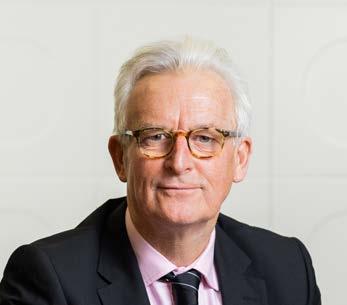
Tony Taylor
Senior Independent Director
Tenure on Board
Appointed 21 September 2017
Committee memberships
A N
Experience
Senior management roles in leading global advertising agencies
Relevant skills
y Strategic planning and growth
y Customer experience
y Stakeholder engagement
y Marketing and communications
External appointments
Non-Executive Director of Jersey Milk Marketing Board
Chair of Channel Radio Ltd

Kayte O’Neill
Non-Executive Director
Tenure on Board
Appointed 3 March 2022
Committee memberships
N RC
Experience
Executive leadership roles in strategy, regulation, markets and large-scale transformation
Extensive experience working with policymakers and regulators to develop and implement frameworks and business models to support energy transition
Designing and operating electric systems and markets in the UK
Relevant skills
y Leadership and management
y Strategic planning
y Stakeholder engagement
External appointments
Executive Director on the Board of National Energy System Operator (NESO)

Amanda Iceton
Non-Executive
Director
Tenure on Board
Appointed 1 June 2020
Committee memberships
A R Experience
Executive leadership experience as Chair and Managing Director of global management consultancy Accenture UK/Ireland Plc
Extensive experience of chairing audit and risk committees across UK Government and listed companies
Relevant skills
y Digital and cyber skills developed through work with CPNI and NCSC
y Familiarity with UK and US GAAP accounting
y Strategy leadership
y Preparation/approval of UK Government and company accounts internationally, including USA and South Africa
External appointments
Non-Executive Director of Paragon ID

Roger Blundell
Non-Executive
Director
Tenure on Board
Appointed 1 October 2024
Committee memberships
AC R Experience
Chartered accountant with significant experience as an executive and non-executive on public and private company boards.
Relevant skills
y Business and financial leadership
y Strategy development and delivery
y Capital transactions and the raising of finance in the public and private markets
y Governance, including compliance with the Corporate Governance code for listed companies and risk management
External appointments
Non-Executive Director and Chair of the Audit Committee at Supermarket Income Reit Plc
Non-Executive Director and Chair of the Investment Committee at the Government Property Agency
Member of the Council and Chair of the Finance Committee at University College London
Trustee and Deputy Chair at the National Portrait Gallery and Chair of the Audit Committee
N Member of the Nominations Committee
R Member of the Remuneration Committee
A Member of the Audit & Risk Committee
C Chair of the Committee

Iman Hill
Non-Executive Director
Tenure on Board
Appointed 1 October 2024
Committee memberships
A N
Experience
C-suite executive roles, P&L and Functional, in Oil and Gas Exploration and Production Companies
CEO of Oil Industry Association, including:
y Extensive experience working with policymakers and regulators to develop and implement frameworks and business models to support energy transition.
y Input to European Commission on the Fit for 55 package and Green Deal
Relevant skills
y Leadership and strategy development & execution
y P&L and liquidity management
y Business plan development and delivery, including capital allocation
y Risk management and safety oversight
y Business turnarounds and stakeholder engagement
y Managing joint ventures and regulatory compliance
y M&A and creating growth
External appointments
Non-Executive Director of United Oil and Gas
Advisory Board Member of The International Institute of Leadership and Safety Culture (IILSC)
Directors’ report for the year ended 30 September 2025
The Directors present their annual report and the audited financial statements of Jersey Electricity Plc (“the Company”) and Jersey Deep Freeze Limited (together “the Group”) for the year ended 30 September 2025.
Principal activities
The Company is the sole supplier of electricity in Jersey. It is involved in the generation and distribution of electricity importing power for both Islands. It also engages in retailing, property management, building services and has other business interests, including software development and consulting.
Preference dividends
Ordinary dividends
Ordinary and ‘A’ Ordinary Shares
Interim paid at 8.82p net of tax for the year ended 30 September 2025 (2024:8.40p net of tax) 2,701,751 2,573,096
Final proposed at 12.60p net of tax for the year ended 30 September 2025 (2024: 12.00p net of tax) 3,859,645 3,675,852
Re-election of Directors
All Directors seek re-election annually at each AGM.
Directors’ and Officers’ insurance
We maintained liability insurance for our Directors and Officers throughout the year.
Policy on payment of creditors
It is Group policy to settle the terms of payment with suppliers when agreeing each transaction, to ensure they are made aware of the terms of payment and to abide by those terms. The number of creditor days in relation to trade creditors outstanding at the year-end was 5 days (FY24: 11 days).
Substantial shareholdings
As at 17 December 2025 the Company has been notified of the following holdings of voting rights of 5% or more in its issued share capital.
Ordinary shares
The Government of Jersey holds all of the Ordinary shares, representing approximately 62% of the total issued share capital and 86.4% of the voting rights. This holding is accounted for as a strategic investment in the Government’s balance sheet and is not consolidated into its financial statements.
‘A’ Ordinary shares
‘A’ Ordinary shares are listed shares and entitle the holder to 1 vote for every 100 shares held whereas the Ordinary shares carry voting rights of 1 vote for every 20 shares held. Huntress (CI) Nominees Limited is the largest registered shareholder
of our listed shares and hold 5,045,604 ‘A’ Ordinary shares which represent 5% of the total voting rights. It is understood that the underlying owners of these shares are substantially private investors, and a fund based in the Channel Islands.
Section 172 (1) statement
Section 172 of the Companies Act 2006 is not applicable to a Jersey incorporated company, however the Board considers that it has acted in good faith and in a manner it believes promotes the continued success of the Company, for the benefit of all its stakeholders. In addition to its shareholders, the Board engages with Government, local parishes, suppliers, customers and employees
Company Secretary
On 24 July 2025, Andrew Welsby resigned as Company Secretary and Non Owen was appointed as Company Secretary.
Auditor
A resolution to re-appoint PricewaterhouseCoopers CI LLP as auditor will be proposed at the next Annual General Meeting.
BY ORDER OF THE BOARD

N. Owen Secretary
15 December 2025
Corporate Governance
The Directors are committed to maintaining a high standard of Corporate Governance in accordance with The UK Corporate Governance Code 2018 (“the Code”), as incorporated within The Listing Rules, issued by the Financial Conduct Authority. The Listing Rules require the Company to set out how it has applied the main principles of the Code and to explain any instances of non-compliance. In accordance with Listing Rule (“LR”) 9.8.4 R, the agreement related to ‘Independent business’ required by LR 9.2.2A (2) (a) R has been entered into with the Government of Jersey, with effect from 17 November 2014. The Company has complied with the independence provisions included in the agreement during this financial year and believes the majority shareholder is also compliant. The other applicable information required by LR 9.8.4 R (5)/(6) is disclosed in external appointments.
The Directors have reviewed, and applied, the latest UK Corporate Governance Code applicable to accounting periods beginning on or after 1 January 2019, together with the supporting Guidance on Board Effectiveness within these financial statements. The Code is available at: www.frc.org.uk
Statement of Compliance
At the time of signing off the 2024/25 Annual Report the Board considers that it has complied with the Code, except for Provision 38 (executive pensions aligned with the workforce) and this is explained in the Remuneration Report.
The Board
The Board provides effective leadership and currently comprises six Non-Executive and one Executive Director. They are collectively responsible for the long-term success of the Company and bring together a balance of skills, experience, independence, and knowledge.
The Chairman and the Chief Executive roles are divided with the former being appointed by the Directors from amongst their number. Tony Taylor is Senior Independent Director.
Independence
The Non-Executive Directors serving at the Balance Sheet date were Phil Austin, Tony Taylor, Amanda Iceton, Kayte O'Neill, Roger Blundell and Iman Hill and they were all considered independent. On appointment to the Board the required time commitment is established and any significant changes to time commitments are notified to the Board.
An induction process is in place for all newly appointed Directors. The Board is responsible to the Company’s shareholders for the proper management of the Company. It meets regularly to set and monitor strategy, review trading performance, perform a robust assessment of the principal
risks that could threaten the business model, future performance, solvency, or liquidity (see Principal Risks section on pages 70 to 80), examine business plans and capital and revenue budgets, formulate policy on key issues and review the reporting to shareholders.
Board papers are circulated, with reasonable notice, prior to each meeting to facilitate informed discussion of the matters at hand. Members of the Board hold meetings with major shareholders to develop an understanding of the views they have about Jersey Electricity.
Table A below sets out the number of meetings (including committee meetings) held during the year under review and the number of meetings attended by each Director.
Table A No. of meetings Board Audit and Risk Remuneration Nominations
P. J. Austin 5/5 3/51 4/4 2/2
C. J. Ambler 5/5 4/51 4/41 2/2
R. Blundell 5/5 4/42 1/1 1/12
A. A. Bryce 1/1 1/1 0/0 1/1
W. Dorman 3/3 3/3 0/0 1/1
L. G. Fulton 4/4 4/41 3/31 0/0
I. Hill 4/5 3/4 0/0 1/12
A. Iceton 5/5 5/5 4/4 0/0
K. O’Neill 5/5 4/5 4/4 0/0
T. Taylor 5/5 1/12 3/3 2/2
1 Attended as observer
2 Attended one additional meeting as observer
Performance evaluation
The effectiveness of the Board is vital to the success of the Company. Policy states an external review will take place every three years and internal reviews will be undertaken in the intervening period. During the year, the Board conducted a self-evaluation of its performance, which included a review of the Chair and all Board Committees as part of the process. A questionnaire was issued to all Board Members followed by a 1:1 meeting between the Chair and each Board Member to discuss the responses and any areas of concern including individual performance. In parallel the Senior Independent Director led a process to assess the performance of the Chair. The Chair tabled a discussion to the September Board meeting in order to review the status of the previous external review recommendations to ensure progress has been made and the Board agreed three recommendations as part of this internal review. The implementation and status of the same will continue to be monitored by the Board.
During the year there was also a review of the Board Terms of Reference which subject to rebranding remain fit for purpose.
Workforce engagement
During 2020, a workforce Culture and Engagement Forum was established with representatives from across the Company. At least one Non-Executive Director attends each meeting of this forum which provides an opportunity to gain first-hand feedback from the workforce. In addition, the maintenance of the right culture within Jersey Electricity remains a priority. The use of staff surveys to collect data, the promotion of people development (through our ‘Living Leader’ and other management development programs) and a continued focus on the safety of both our employees and customers are key tools in the delivery of this objective.
The key procedures which the Board has established to provide effective controls are:
Board reports
Key strategic decisions are taken at Board meetings following due debate and with the benefit of Board papers circulated beforehand. The risks associated with such decisions are a primary consideration in the information presented and discussed by the Board who are responsible for determining the nature and extent of the risk it is willing to take to achieve the strategic objectives. Prior to significant investment decisions being taken, due diligence investigations include the review of business plans by the Board.
Management structure
Responsibility for operating the systems of internal control is delegated to management. There are also specific matters reserved for decision by the Board. A Board Charter detailing the matters reserved and the roles and responsibilities of the officers of the Company is available on our website (www.jec.co.uk). A summary of the key types of decision made by the Board are as follows:
Strategy and Management including:
y Approval of the Company’s long-term objectives and commercial strategy
y Approval of the annual operating and capital expenditure budgets and any subsequent material changes to them.
Changes in structure and capital of the Company Financial reporting and controls including:
y Approval of the Annual Report and Financial Statements.
y Declaration of the interim dividend and recommendation of the final dividend.
Internal controls/Risk Management
y Reviewing the effectiveness of the internal control and risk management systems. An external review of the risk management process is conducted every three years.
Approval of contracts
y Including material contracts, investments, capital expenditure and bank borrowings.
Board membership and other appointments
y Approval of changes to the structure, size and composition of the Board and key committees, following recommendations from the Nominations Committee.
Remuneration
y Determining the remuneration policy for the Directors and other senior management, following recommendations from the Remuneration Committee.
Corporate governance matters
y Undertaking a formal and rigorous annual evaluation of its own performance, that of its committees and individual Directors. Review of the Company’s overall corporate governance arrangements.
Approval of key Company policies
y These include policies on health and safety, share dealing and diversity.
Internal audit/risk management
There is a permanent internal audit function involved in a continuous structured review of the Company’s systems and processes, both financial and non-financial. Internal Audit manage the process of strategic and operational risk reviews and facilitate risk review workshops with departmental managers. The Head of Internal Audit has direct access to the Audit and Risk Committee Chair and attends ARC meetings, at which risk based internal audit plans are discussed and approved.
Personnel
The Company ensures that personnel can execute their duties in a competent and professional manner through its commitment to staff training, regular staff appraisals and organisational structure.
Budgetary control
Detailed phased budgets are prepared at profit centre level. These budgets are approved by the Board, which receives sufficiently detailed financial data to monitor the performance of the Company with explanations of any material variances.
Audit and Risk Committee
The Audit and Risk Committee (ARC) reviews the effectiveness of the internal control and risk management processes throughout the accounting period as outlined above. In addition, it conducts “deep dive” reviews on specific identified risks to test assumptions on the substance of such risks and their mitigation.
More detail on the Group’s principal risks, and how they are managed, is provided in this report (see the Principal Risks section on pages 70 to 80).
The ARC also reviews and monitors the independence of the external auditors and the non-audit services provided to the Group.
Stakeholder engagement
The Company maintains an active dialogue with its largest shareholders and meetings with Government of Jersey (which owns 62% of our Ordinary share capital) include both the Non-Executive Chairman, Chief Executive and Interim Finance Director. The primary responsibility for relationship matters with listed shareholders lies with the Interim Finance Director who reports to each Board meeting on investor relations. Jersey Electricity also has several other important stakeholders including Government, the local parishes, suppliers, customers and employees, and regular presentations are provided to the Board on how such relationships are managed and can be developed.
Going concern statement
The Directors have assessed the Group’s ability to continue as a going concern for a period of at least twelve months from the date of approval of these financial statements. This assessment was carried out within the Group’s established financial forecasting, risk management and governance framework and included detailed review, challenge and approval by the Board and the Audit and Risk Committee.
Assessment process and governance
The Board’s review considered the Group’s current financial position, cash flow forecasts, liquidity profile, access to financing, and the Group’s strategic and operational plans as set out in the approved Five-Year Company Business Plan to 30 September 2030. The Five-Year Plan is refreshed annually so that assumptions reflect current market and operational conditions. The Audit and Risk Committee reviewed the key assumptions, scenario results and proposed mitigating actions, and reported its findings and recommendations to the Board, which approved the going concern assessment.
Financial forecasts, assumptions and mitigations
The Five-Year Plan reflects forecast investment, the Group’s hedging policy for electricity procurement and linked foreign exchange exposures, committed and planned debt, and projected operating costs and customer tariff evolution
under the Group’s Return on Assets (ROA) tariff model. The Group maintains a strong balance sheet, prudent liquidity management and material headroom in available cash and committed facilities. The Group has engaged constructively with lenders in advance of planned additional financing to enable delivery of our strategic initiatives. The Board retains discretion to phase discretionary capital expenditure and implement other management actions to preserve liquidity if required.
Consistent with the Group’s vertically integrated, user-pays business model, a reduction in unit volumes alone is mitigated by the ROA tariff framework and by active customer conversion initiatives (including switching customers who currently use gas/oil heating to all-electric solutions). A dedicated team is pursuing these initiatives. As a result, the Board has comfort that reasonably foreseeable, volume-related demand reductions do not, in isolation, create a going concern risk.
Scenario analysis and reverse stress testing
The Directors considered a range of severe but plausible downside scenarios aligned to the Group’s principal risks, including prolonged wholesale price volatility, sustained adverse foreign exchange movements, significant but plausible reductions in customer demand, supply chain disruption and delays to strategic programmes. For each scenario the Board assessed the impact on liquidity, covenant headroom and the ability to recover costs through the ROA tariff mechanism.
Given Jersey Electricity’s user-pays model, the primary focus of reverse stress testing was on identifying circumstances in which the Group’s normal cost recovery mechanisms and mitigations would be constrained or unavailable — for example where a combination of regulatory constraints on tariffs, simultaneous failure of hedging strategies, and an extreme, prolonged market dislocation prevented timely pass-through of wholesale cost increases to customers. The analysis showed that for the Group to be unable to continue as a going concern, multiple such, highly adverse and concurrent events would need to occur. The Board considers the likelihood of that combination to be remote.
Conclusion
Having considered the results of the forward and reverse scenario analysis, the Group’s financial position, liquidity and committed funding, and the range of realistic mitigating actions available to management, the Directors have not identified any material uncertainties that cast significant doubt on the Group’s ability to continue as a going concern for at least twelve months from the date the financial statements are approved. Accordingly, the Directors have adopted the going concern basis in preparing these financial statements.
Nominations Committee
Our committee is dedicated to shaping strong leadership for the future, guiding board composition, strengthening succession pathways, and championing meaningful progress in diversity, equity, and inclusion.
Committee purpose
The Committee’s purpose is to provide recommendations to the Board regarding Board composition, appointments and succession planning for senior leadership roles, and to assist the Board with diversity, equity and inclusion initiatives.
Committee duties
The Terms of Reference for the Committee and the Terms of the Appointment of Non-Executive Directors (NEDs) are available on our website: www.jec.co.uk
To summarise, the Committee’s key duties are to:
y Regularly review the structure, size, balance and overall composition of the Board, and to recommend any changes, with due regard to the skills needed for the future.
y Consider the pipeline of succession at Board and Executive Leadership Team levels, and to lead the process for any appointments to the Board.
y Support the annual Board evaluation process and make recommendations, including the annual reappointment of NEDs.
y Support the Board to lead Company culture in pursuit of greater diversity, equity and inclusion.
Membership and meetings
I am pleased to report on the work of the Nominations Committee for the financial year ended 30 September 2025.
The Committee comprises a majority of independent Non-Executive Directors, the Chair of the Board and the CEO.
After the resignation of Alan Bryce on 31 December 2024, I assumed the chairmanship of the Committee and its membership was restructured to reflect the changes in the Board throughout 2024/25.
The Committee met twice (17 December 2024 and 23 July 2025), with attendance as recorded below.

Phil Austin MBE Chair
Attendance
I.Hill
(appointed to the Committee 01 January 2025)
R. Blundell (appointed to the Committee 01 January 2025, resigned from the Committee 24 July 2025)
K. O’Neill (appointed to the Committee 24 July 2025)
Dorman (resigned June 25)
(resigned Dec 24)
Board structure and composition
As previously reported, Alan Bryce and Wendy Dorman left the Board in December 2024 and June 2025 respectively, and their replacements, Iman Hill and Roger Blundell, have settled in well.
Lynne Fulton, CFO, has stepped down from the Board and will leave the Company at the end of February 2026, after nearly three years’ service. Preparations are underway to begin the recruitment process for her successor.
During the period, the Committee maintained oversight of the Board structure, composition and effectiveness.
As part of its succession process, I am pleased to announce the appointment of Paul Savery as a Non-Executive Director with effect from 01 December 2025.
The Committee engaged an independent search organisation to support the campaign and engage with potential candidates. A short list was considered by the Board to agree candidates for interview. A panel comprising of Members of the Nomination Committee interviewed candidates during summer 2025.
This table shows the skills and diversity among Board members and reflects our position at the period end on 30 September 2025.
In addition to our consideration of Board structure, composition, skills and succession, as a committee we maintain oversight more broadly of the succession pipeline and plans at the Company’s senior management levels. These comprise the six-strong Executive Leadership Team (ELT) and around twenty members of the Senior Leadership Team (SLT).
Throughout the year, we have monitored the progress of our SLT development programme. We introduced a new iteration for nine SLT members seeking greater responsibility, forming the Business Leadership Team (BLT). This team holds both functional responsibilities at the SLT level and cross-functional duties from a BLT perspective. The BLT selection process matched potential with ambition for further development and responsibility. The development of the BLT helps us build internal ‘bench’ strength for ELT succession planning.
At our December meeting each year, we review the overall progress of our ELT, BLT, and SLT development programmes, with an emphasis on succession planning and identifying potential. The Committee continues to support initiatives designed to create developmental opportunities throughout the organisation.
Our approach to senior management succession remains a mix of external appointments and internal promotions.
Board evaluation
Following the external board evaluation conducted by Boardroom Dialogue during 2024, we facilitated an internal review of the performance of the Board, its committees and the Chair during 2025.
In July we appointed Non Owen as Company Secretary. Andrew Welsby, our People and Culture Director, had been covering the role on an interim basis and we thank Andrew for his diligence during this period.
Non joined JE from High Speed 2 and has a wealth of company secretary experience.
In line with listing rules on Board diversity, we make the following statements for the period end:
y We comply on gender diversity with at least 40% of our Board being women.
y We comply on ethnic diversity, as one member of our Board is from a minority ethnic background.
Each Director completed a questionnaire covering a range of Board-related topics, before a 1:1 meeting with the Chair and a Board discussion to consider the overall conclusions and recommendations. The Senior Independent Director also led a similar process to assess the performance of the Chair.
The results were very positive. The Directors feel the Board is performing well, it is effectively carrying out its role and there are no significant concerns.
In total, there were three main recommendations, and the Chair will work with the Company Secretary in the months ahead to implement them.
Diversity, equity and inclusion
Our commitment to diversity, equity and inclusion (DEI) continues to be a cornerstone of our culture and strategic direction. We recognise the importance of fostering an inclusive environment that reflects the communities we serve and empowers every colleague to thrive.
This year, we refreshed our DEI Strategy for 2024–2029, setting out our ambition to progress from Bronze to Silver in the Inclusive Employers Standard by 2027. Our strategy is built around six pillars: inclusive leadership, diverse talent pipelines, equitable processes, employee voice, community impact, and data-driven accountability. It is reviewed regularly at Board and Executive Leadership Team (ELT) level, with clear ownership and measurable outcomes.
Gender balance
Company
First Line Reports
Senior Leadership Team
74% 26%
75% 25%
75% 25%
Executive Leadership Team 83% 17%
Board 50% 50%
Overall, the Company’s gender balance has remained relatively stable over the last 12 months, reflecting a stable workforce with low turnover in leadership roles.
Gender pay gap
Our mean gender pay gap has decreased significantly over the past four years, from 21.4% in 2022 to 8.3% in 2025. The median gap has also improved, falling from 19.2% to 9.7% over the same period. This sustained progress reflects our ongoing focus on inclusive hiring, targeted development and transparent pay practices, supporting our ambition to close the gap further in the years ahead.
DEI impact assessment
Primary Engineer is a UK STEM programme that engages primary school children with engineering through practical projects and problem solving. Jersey Electricity has supported this initiative for seven years, promoting early STEM interest and gender diversity in engineering. Over 1,000 local children participated this year, with over 70% of entrants being girls, reflecting progress in challenging stereotypes and fostering future engineers. This partnership highlights our ongoing commitment to diversity and talent development.
Our bursary scheme offers financial support, paid work experience, and professional mentoring to students from a variety of backgrounds who are interested in careers in the energy sector. Since 2021, six female STEM bursary students have participated in the programme and now make up the majority of the current cohort. These students have worked on engineering, digital, and sustainability projects within the organisation, contributing different perspectives and
supporting various initiatives. The programme aims to promote gender diversity and develop a diverse talent pipeline for the future.
In March, we hosted a fireside talk to mark International Women’s Day, bringing together colleagues to reflect on progress, share lived experiences, and explore how we can continue to build an inclusive workplace. The event was well attended and received positive feedback, reinforcing the value of open dialogue and visible leadership.
We were delighted to sponsor Channel Islands Pride for the second time, following our involvement the year before last, as the event alternates locations across the Channel Islands. This continued support reflects our ongoing commitment to LGBTQ+ inclusion and community engagement. Our sponsorship included vibrant internal awareness campaigns and an engaging webinar on the significance and history of Pride, which was attended by around 10% of our workforce. Supporting Channel Islands Pride underscores our dedication to fostering a culture of belonging and respect both within our organisation and the wider community.
Internally, we launched a DEI Resource Library to support learning and development. The library includes curated materials on inclusive leadership, unconscious bias, and allyship, and is used by teams across the business to inform discussions and drive change. We also introduced a supplementary DEI impact assessment for business cases, ensuring that inclusion is embedded in decision-making.
We remain active in sector-wide benchmarking and best practice sharing with Inclusive Employers, participating in the Inclusion Measurement Framework.
Looking ahead, we will continue to build on our progress, guided by data, employee voice, and our ambition to be a truly inclusive employer. DEI is not a standalone initiative –it is integral to our purpose, our performance, and our future.
Board apprenticeship
We have continued to run our Board apprenticeship programme this year, which is designed to encourage greater diversity on the Boards of companies and other public bodies, especially those based in Jersey. Elenor Bouchet, who joined us in September 2024 as our fourth Board Apprentice, provides valuable contribution and insights to our discussions. Elenor runs her own marketing consultancy business in Jersey and supports clients with their marketing and business strategies.
P.J. Austin MBE Chair
15 December 2025

Audit and Risk Committee
Our focus this year was clear: uphold the highest standards of governance, review and refresh the Company principal risks, and provide the Board with clear, independent insight to guide sound decision-making.
Committee
report
Membership and meetings
All members of the Committee are independent NonExecutive Directors.
During the year, there were several changes to Committee membership. Iman Hill and I joined the Committee on 1 January 2025, with Iman succeeding Alan Bryce after his resignation from the Board in December 2024. In June 2025, Wendy Dorman stepped down after completing her highly valued tenure as Chair of the Committee. The Board extends its sincere thanks to Wendy for her strong leadership, sound judgement, and significant contribution to strengthening the Committee’s effectiveness during her time in the role. Following her departure, I assumed the position of Chair. Kayte O’Neill stepped down in July 2025 to take up the role of Chair of the Remuneration Committee, with Tony Taylor appointed as her successor.
On behalf of the Board, I would like to express my sincere appreciation to Alan and Kayte for their outstanding contributions to the Committee throughout their tenures.
The current members of the Committee are Amanda Iceton, Tony Taylor, Iman Hill, and myself. The Board is satisfied that the current membership brings the appropriate range of skills and experience, including recent and relevant financial experience as well as industry knowledge, safety, digital and cyber expertise.
You can read the members’ biographies on pages 92 to 95.
Five scheduled meetings were held during the year. The meetings provided a forum for discussions with company management and the external and internal auditors.

Roger Blundell Chair
Meetings are attended by invitation and include the Chair of the Board, Chief Executive, Chief Financial Officer, Interim Finance Director, Director of Technology, as well as members of both the external and internal audit teams. The company secretarial function offers support to the Committee. After each meeting, an update is provided to the Board that outlines areas discussed, topics of note, and recommendations arising from meetings. All recommendations from the Committee during the year were accepted by the Board.
The role of the Committee
The key responsibilities of the Committee are to:
y Oversee the independence, effectiveness and remuneration of the external auditor and the quality of the audit together with overseeing policy on the engagement of the external auditor to supply non-audit services.
y Monitor the integrity of the financial statements and report to the Board on key judgements and significant issues.
y Consider, on behalf of the Board, whether the annual report and accounts, taken as a whole, are fair, balanced and understandable, and provide the information necessary for shareholders to assess the Company’s position and performance, business model and strategy.
y Review and challenge the effectiveness of the Company’s internal control framework and risk management processes.
y Monitor and review the effectiveness of the internal audit function.
y Monitor principal and emerging risks and the robustness of the risk management framework.
y Review and assess management’s oversight of cyber security risk to systems, assets, data capabilities and data privacy.
y Review and assess management’s oversight of climaterelated risks and opportunities including the impact of climate change on strategies, reputation, operations, asset values and capital.
Key activities during the year
The Audit and Risk Committee (ARC) fulfilled its responsibilities under the Corporate Governance Code, providing oversight of financial reporting, internal controls, risk management, and non-financial disclosures. Specific areas of focus during the year included:
y Risk Management Framework: Oversaw the refresh of the Group’s Risk Management Framework, including the introduction of an evolved five-lines-of-responsibility model.
y Internal Control Environment: Reviewed the effectiveness of the Group’s internal controls and observed progress across the Code of Conduct and Whistleblowing Policy, governance and accountability.
y Financial Reporting and External Audit: Oversaw the external audit, including independence, scope, key findings, and the rotation of the audit engagement partner.
y Internal Audit and Assurance: Approved the annual Internal Audit Plan and monitored outcomes from internal assurance work covering financial, operational, technology, customer, and governance processes.
y Sustainability and Non-Financial Reporting: Reviewed TCFD disclosures and preparatory work for TNFD reporting, monitoring progress on climate-related and biodiversityrelated impacts.
y Data Protection and Cybersecurity: Received updates on cyber risk management, data-protection compliance, and ongoing improvements to the data-governance framework.
The Committee continued to provide review and challenge on principal risks, mitigation strategies, and management action plans. Details of principal risks and associated mitigation measures are provided on pages 70 to 80.
Whistleblowing policy
The Committee is tasked with reviewing the Company’s Whistleblowing and Speak Up policy, as well as management’s responses to concerns raised. During the year, we conducted a review of the policy. Two concerns were reported within the period, and in each instance, assurance was provided that appropriate investigative and remedial procedures had been duly followed.
External auditors
The Committee holds primary oversight responsibility for the Group’s relationship with its external auditors, PricewaterhouseCoopers CI LLP (“PwC”). This includes conducting annual evaluations of PwC’s performance, effectiveness, quality and objectivity. For 2025, we concluded that the audit was both effective and of high quality.
Throughout the year, we also met independently with the external auditors, without management present, to discuss the effectiveness of the audit process and address any matters the auditors wished to raise.
In accordance with the Company’s Non-Audit Services Policy, all non-audit services provided to the Group require prior approval from the Audit Committee chair, in addition to PwC’s internal conflict checks. As noted in Note 5 to the Financial Statements, no non-audit services were provided to the Group by PwC during the year.
In accordance with professional standards, the audit engagement partner is required to rotate after a maximum term of five years. This year, James De Veulle succeeded Lisa McClure as our audit partner. We will continue to monitor the rotation of other team members, who are subject to a seven-year limit, and review as appropriate.
The Committee will maintain ongoing oversight of all matters pertaining to the external auditor relationship and start the next tender process at a suitable juncture, taking into account the elapsed time since the last tender.
We continually evaluate the effectiveness of the external audit, primarily through ongoing discussions with the external auditor and the finance team regarding the maintenance of audit quality, as well as through reports submitted by the audit team in connection with the yearend audit. Additionally, an annual meeting is held each January to review key insights from the recently concluded audit process for the previous year. During the audit process, PwC formally confirmed their independence.
The Committee has approved the external auditor’s remuneration and terms, and is satisfied with their performance, objectivity, challenge and independence.
UK Corporate Governance Code
As a company with a premium listing, we are required to report under the Corporate Governance Code 2018, which you can view on the website of the Financial Reporting Council – www.frc.org.uk. We continually strive to meet the expectations of public company reporting and enhance the quality of stakeholder communications.
The Committee has reviewed the changes incorporated into the revised Corporate Governance Code issued in 2024. The revised code contains additional provisions regarding disclosure in the annual report of the effectiveness of material controls at the balance sheet date. Although this provision is not effective for our Company until the year ending 30 September 2027, we have begun initial preparations in advance.
Sustainability‑related disclosures
The FCA listing rules require premium listed companies to make disclosures under the TCFD framework for accounting periods beginning on or after 1 January 2021. This is the fourth year we have been required to make such disclosures. The Audit and Risk Committee has monitored TCFD reporting status throughout the year. Efforts to comply with scenario analysis, review organisational resilience have continued as well as progressing baselining and understanding of scope 3 emissions.
We also continue our readiness for disclosures under the TNFD.
Further information is available on pages 81 to 91.
Fair, balanced and understandable
As part of the review of the annual and interim financial statements, the Committee reviews any significant issues and in particular any critical accounting judgements and estimates the Company has identified and discussed with the external auditor, which are disclosed in Note 2 to the Financial Statements (Critical Accounting Judgements and key sources of estimation uncertainty). Comprehensive position papers on each key area are produced by the Finance team at both the half and full year. We review any year-on-year changes in methodology for reasonableness and assess the impact of any new accounting standards.
We are also responsible for monitoring the controls in force (including financial, operational and compliance controls and risk management procedures) to ensure the integrity of the financial information reported to stakeholders. The Committee considers reports from the internal and external auditors and from management and provides comment on salient issues to the Board.
On behalf of the Board, the Committee considered whether the 2025 annual report and financial statements, taken as a whole, are fair, balanced and understandable, and whether the disclosures are appropriate. We reviewed the Group’s procedures around the preparation, review and challenge of the report and consistency of the narrative sections within the financial statements and the use of alternative performance measures and associated disclosures.
We also considered any potential inconsistencies raised by the external auditor.
Following its review, the Committee is satisfied that the annual report is fair, balanced and understandable, and provides the information necessary for shareholders and other stakeholders to assess the Company’s position and performance, business model and strategy. We have advised the Board accordingly.
Internal control and risk management
The Board is responsible for establishing and maintaining the Company’s system of internal control and managing risk. Internal control systems are designed to meet the needs of the business and the risks to which it is exposed, and by their nature can provide reasonable but not absolute assurance against material misstatement or loss. Oversight of the risk management framework and internal controls is delegated to the Committee.
Internal audit
In my capacity as chair of the Committee, I have regular meetings with Internal Audit to evaluate both performance and any impediments that would constrain their work.
The Head of Internal Audit has a direct reporting line to me, and reports operationally to the Interim Finance Director.
The Committee approves the programme of work on an annual basis and monitors results and follow-up actions, reporting to the Board on any significant findings. The Committee reviews Internal Audit reports and monitors how management responds to findings, which reassures the Committee and the Board that internal controls are functioning effectively.
Our Internal Audit team carries out internal audit activities, with some audits outsourced to third-party suppliers and overseen by the Head of Internal Audit. The scope of internal audit reviews is appraised at the start of each review which has allowed us to identify areas in which controls can be strengthened.
In FY25, JE’s assurance framework delivered a comprehensive programme of internal audit reviews and strengthened management oversight. The Internal Audit team reviewed a broad range of financial, operational and compliance areas, providing assurance on key systems, controls and emerging risks.
Reviews addressed areas including fraud prevention, cybersecurity, new product development, property management and regulatory scheme administration. The programme identified opportunities to strengthen controls, enhance monitoring and improve governance, with management implementing a series of improvements to address findings and support ongoing risk management. The Committee maintained robust oversight of risk, control and assurance activities throughout the year. These reviews identified some moderate and high-priority issues, which led the Company to strengthen control processes, review strategy and reorganise responsibilities.
Risk management
During the year, the Board conducted its annual review of the Company’s risk appetite and aligned it with principal risks.
In June, we held an offsite meeting with Board members and senior management to facilitate an in-depth discussion on risk management. We undertook a thorough evaluation of principal risks and associated mitigation strategies, and assessed emerging risks in the context of geopolitical events, climate change and the macroeconomic environment. The rapid pace of change within the energy sector and its effects on people development, skills, innovation and technology were also considered.
This review resulted in us updating the definitions and mitigating actions for certain principal risks, as well as adding a new principal risk relating to the supply chain.
Further details on risks and mitigation measures can be found in the Group risk management section on pages 70 to 80.
Several follow-up actions concerning longer-term strategic risks are being incorporated into our long-term business plans and scenario analysis.
In recent years, we have communicated the potential risks to our business arising from volatility within the wholesale energy market. While market conditions have become more stable since their peak in 2023, we have substantially hedged our electricity purchases through to 31 December 2027. Although we continue to monitor short-term market developments, our focus has now shifted to strategic planning for the period beyond 2027. This includes preparations for negotiating a new supply contract and ongoing efforts to mitigate future risks associated with market volatility.
I would like to thank members of the Committee, management and PwC for their continued support throughout the year.

Roger Blundell Chair
15 December 2025
Remuneration Committee
We aim to maintain a remuneration framework that motivates leaders to deliver our strategic priorities while upholding strong governance and accountability.
Committee report
On behalf of the Board, I am pleased to submit the Remuneration Committee’s report for the financial year ended 30 September 2025.
Committee changes
In July, Tony Taylor resigned as Chair of the Remuneration Committee. Upon assuming the role of Chair, I was pleased to welcome Roger Blundell to the Committee. I extend my sincere appreciation to Tony for his leadership during his tenure, as well as to our Committee members, Phil Austin, Amanda Iceton, and Roger Blundell, for their dedication, perspectives and significant contributions throughout the year in supporting our work.
Meetings
Four meetings took place during the last financial year, with 100% attendance by all Committee members.
Note: Terms of Reference for the Committee are updated annually, in line with UK Corporate Governance Code and are available on the Company’s website (www.jec.co.uk).
Remuneration policy
Acting under the authority delegated by the Board, the Committee establishes the Company’s Remuneration Policy and is charged with determining the remuneration terms and employment conditions for the Executive Directors.
We also assess the remuneration framework for senior management and review the overall compensation policy for the broader workforce to ensure it aligns appropriately throughout the organisation.
JE’s remuneration policy is structured to ensure the executive compensation framework effectively attracts, motivates and retains the talent essential to achieve the Company’s long-term objectives.

Kayte O’Neill Chair
We set remuneration packages for Executive Directors that are aligned with market standards for comparable positions, ensuring equitable compensation for their contributions to the Company’s performance across both short and longterm horizons.
Remuneration packages consist of a base salary and benefits, complemented by a variable element in the form of an annual performance-based bonus.
Benefits for Executive Directors principally consist of membership of a pension scheme, a car allowance and private health care.
When determining executive remuneration, the Committee consults pertinent local and international benchmarks.
Our methodology
We set targets and review Executive Directors’ pay to ensure performance aligns with key business objectives. Over the past two years, we have refined our business planning model, improving the format and content of our Corporate Scorecard.
The Executive Annual Bonus Scheme aims to support both our short-term and long-term objectives and encourages advancement towards achieving our vision and strategy.
Bonuses for Executive Directors and ELT members are determined according to performance, measured against the Corporate Scorecard and individual objectives. The Committee establishes these criteria, which receive Board approval prior to each financial year.
Our Business Plan is structured around delivering safe, reliable, affordable and sustainable services, with an overarching focus on customer experience. The Corporate Scorecard aligns with these outcomes and tracks key metrics including customer service and satisfaction, employee engagement, health and safety, financial results and progress on strategic objectives.
Strategic objectives involve developing JE’s future energy supply and demand plans, sourcing energy from France, and implementing a broader network investment programme aimed at increasing system resilience and supporting Jersey’s progress toward net zero emissions.
The scorecard reflects our sustainability and TCFD objectives by facilitating the implementation of our renewables and network investment programme. It is communicated clearly throughout the organisation, outlining strategic priorities and creating a line of sight for all colleagues on their individual contribution to overall company performance.
We review the salary and benefits for the Executive Team each October. In November 2024 both Executive Directors were awarded increases of 5.0% on base salary.
Each Executive Director is subject to a maximum limit on their total variable compensation. These maximum awards are granted exclusively in recognition of exceptional performance.
In 2018, the bonus scheme was revised to let the Committee defer up to 50% of an award for two years, with payout linked to share price changes before vesting. The deferred portion is subject to malus and clawback rules.
The basic salary/fees and bonuses paid in year, as well as the deferred bonus attributable to the 2022/23 financial year paid in year, to Directors for the year ended 30 September 2025 was as follows:
Non-Executive Directors
1 The basic salary and bonus paid to L.G. Fulton represents the full-year remuneration, including the period after stepping down from the Board in August 2025.
Service contracts
The service contracts for Executive Directors specify a notice period of 12 months, with annual re-election required at each Annual General Meeting. Non-Executive Directors have service contracts with no unexpired term at the point of election or re-election at the AGM.
Pension benefits
We have two pension plans: a defined benefit scheme, which has been closed to new entrants since 2013, and a defined contribution scheme that is accessible to all staff. Under the defined benefit scheme, the employer contributes at a rate of 20.6%, while the employee’s contribution rate is 6%.
The defined benefit pension scheme does not provide for contractual increases to pensions currently in payment. Upon Mr Ambler’s appointment to the Company, the Board resolved that he would be entitled to participate in a non-contributory version of the defined benefit scheme (refer also to page 97, Statement of Compliance section).
Outlined on the next page are the pension benefits to which Mr Ambler is entitled. These benefits are limited to the scheme in which he accrued pension rights during his service as a Director and include benefits relating to both pre-directorship and post-directorship service, as well as any service transferred into the scheme from previous employment.
1 The nominal increase in accrued pension during the year represents the additional accrued pension entitlement at the year-end compared to the previous year-end, which can be seen in last year’s Directors Disclosures paper
2 The pension entitlement shown, calculated using the data provided by Jersey Electricity Plc on 6 October 2025, is that which would be paid annually on retirement at age 60 or at date of calculation if over NRA, based on service at the year-end.
3 The transfer values have been calculated using the basis and method appropriate at each reporting date. It is assumed that the deferred pension commences from the earliest age at which the member can receive an unreduced pension. The transfer values include the value of any accrued AVC pensions.
4 Along with all other Scheme members, Directors have the option to pay Additional Voluntary Contributions (AVCs) to the Scheme to purchase additional final salary benefits. AVCs paid by the Directors during the year were nil.
5 The increase in transfer value over the year is after deduction of contributions made by the Director and transfers-in during the year.
CEO pay ratio
This table shows the CEO pay ratio since 2021. This reflects how the CEO’s total remuneration compares to the rest of the employees in the organisation at the 25th, 50th, and 75th percentiles.
The CEO pay ratio has remained unchanged from the previous year and is consistent with that of comparable publicly listed companies of a similar size.
Share schemes
At the 2011 AGM, we authorised an all-employee share scheme. Four tranches of shares have since been allocated, with up to 400 shares vesting per employee. The final tranche of 100 shares distributed in the 2020 financial year vested in September 2023.
The Company does not operate other share-based incentives such as option schemes or long-term incentive plans. The Committee may defer up to 50% of the performance bonus for Executive Directors for two years, with payment subject to changes in the listed share price prior to vesting.
Non‑Executive Directors’ remuneration
Employee engagement
Employee engagement is a key element of the Corporate Scorecard and is reinforced through ongoing initiatives and the Workforce, Engagement and Culture Forum. This forum provides a structured platform for employees to communicate feedback and suggestions directly to senior management, with Non-Executive Directors in attendance to convey relevant insights to the Board.
During the year, the Workforce Engagement and Culture Forum met four times, on matters such as workplace culture and wellbeing, facilities, sustainability and internal communications.
The Company routinely administers employee surveys that yield important insights into engagement levels across multiple dimensions, such as compensation.
The remuneration of the Non-Executive Directors (NED) is determined by the Executive Directors, with the assistance of independent advice concerning comparable organisations and appointments and considering the Committees in which they are involved.
Following a review and benchmarking of NED fees, valid from 1 April, adjustments were made in 2025. These are shown on page 109.
External appointments
We encourage Executive Directors to broaden their experience by accepting Non-Executive appointments to organisations outside the Group. Such appointments are subject to prior approval by the Board, having taken into consideration the expected time commitments and, the Board also determines the extent to which any fees may be retained by the Director. During the year, the external appointments held by Executive Directors, excluding those directly connected with their employment by the Company, were as follows:
C. J. Ambler Foresight Solar Fund Ltd (resigned 17 June 2025)
The total fees were £38,073 of which £7,615 was retained by the Company.
Directors’ loans
At the time of hiring the Executive Director and relocating them to Jersey, the Company provided an interest-bearing secured loan to assist with the purchase of a residential property on the Island. Since then, the Executive Director has made substantial repayments, and the balance on the loan was:
C. J. Ambler
Directors’ share interests
The Directors’ beneficial interests in the shares of the Company at 30 September 2025 were as shown in this table:
There have been no other changes in the interests set out above between 30 September 2025 and 15 December 2025.

K. O’Neill Chair
15 December 2025

Financial statements
Directors’ responsibilities for the Financial statements
The Directors are responsible for preparing the Annual Report and Accounts and the audited financial statements in accordance with applicable law and regulations.
Companies (Jersey) Law 1991 (“Company Law”) requires the Directors to prepare Financial Statements for each financial year. The Directors are required by the International Accounting Standards (IAS) Regulation to prepare the Group Financial Statements under International Financial Reporting Standards (IFRS) as adopted by the European Union. The Financial Statements are also required by Company Law to give a true and fair view of the state of affairs of the Company and of the profit or loss of the Company for that period.
IAS 1 requires that financial statements present fairly for each financial year the Group’s financial position, financial performance and cash flows. This requires the faithful representation of the effects of transactions, other events and conditions in accordance with the definitions and recognition criteria for assets, liabilities, income and expenses set out in the IAS Board’s ‘Framework for the preparation and presentation of financial statements’. In virtually all circumstances, a fair presentation will be achieved by compliance with all applicable IFRS. However, Directors are also required to:
y Properly select and apply accounting policies;
y Present information, including accounting policies, in a manner that provides relevant, reliable, comparable and understandable information;
y Provide additional disclosures when compliance with the specific requirements in IFRS are insufficient to enable users to understand the impact of particular transactions, other events and conditions on the entity’s financial position and financial performance; and
y Make an assessment of the Company’s ability to continue as a going concern.
The Directors are responsible for keeping proper accounting records that disclose with reasonable accuracy at any time the financial position of the Company and Group and enable them to ensure that the financial statements comply with the Companies (Jersey) Law 1991. They are also responsible for safeguarding the assets of the Company and Group and hence for taking reasonable steps for the prevention and detection of fraud and other irregularities.
The Directors are responsible for the maintenance and integrity of the corporate and financial information included on the Company’s website. Legislation in Jersey and in the United Kingdom governing the preparation and dissemination of Financial Statements may differ from legislation in other jurisdictions.
The Directors consider that the Group has adequate resources to continue in operational existence for the foreseeable future. The Financial Statements are therefore prepared on a going concern basis. Further details of the Group’s going concern review are provided in note 1 of the financial statements on page 124.
Having taken advice from the ARC, the Board considers the Annual Report and financial statements, taken as a whole, to be fair, balanced and understandable and that they provide the information necessary for shareholders to assess the Company’s and Group’s performance, business model and strategy.
Responsibility
statement
We confirm that to the best of our knowledge:
y The financial statements, prepared in accordance with International Financial Reporting Standards as adopted by the European Union, give a true and fair view of the assets, liabilities, financial position and profit of the Company and the undertakings included in the consolidation taken as a whole; and
y The management report includes a fair review of the development and performance of the business and the position of the Company, and the undertakings included in the consolidation taken as a whole, together with a description of the principal risks and uncertainties that they face.
By order of the Board
C. J. Ambler Chief Executive
15 December 2025
Independent Auditor’s Report to the members of Jersey Electricity plc
Report on the audit of the consolidated financial statements
Our opinion
In our opinion, the consolidated financial statements give a true and fair view of the consolidated financial position of Jersey Electricity Plc (“the Company”) and its subsidiaries (together “the Group”) as at 30 September 2025, and of their consolidated financial performance and their consolidated cash flows for the year then ended in accordance with International Financial Reporting Standards as adopted by the European Union and have been properly prepared in accordance with the requirements of the Companies (Jersey) Law 1991.
What we have audited
The Group’s consolidated financial statements comprise:
y The consolidated balance sheet as at 30 September 2025;
y The consolidated income statement for the year then ended;
y The consolidated statement of comprehensive income for the year then ended;
y The consolidated statement of changes in equity for the year then ended;
y The consolidated statement of cash flows for the year then ended; and
y The notes to the consolidated financial statements, comprising material accounting policy information and other explanatory information.
Basis for opinion
We conducted our audit in accordance with International Standards on Auditing (“ISAs”). Our responsibilities under those standards are further described in the Auditor’s responsibilities for the audit of the consolidated financial statements section of our report.
We believe that the audit evidence we have obtained is sufficient and appropriate to provide a basis for our opinion.
Independence
We are independent of the Group in accordance with the ethical requirements that are relevant to our audit of the consolidated financial statements of the Group, as required by the Crown Dependencies’ Audit Rules and Guidance. We have fulfilled our other ethical responsibilities in accordance with these requirements.
Our audit
approach
Audit scope
y We conducted our audit work in Jersey.
y We tailored the scope of our audit taking into account the operations of the Group, the accounting processes and controls and the industry in which the Group
operates. The Group is based solely in Jersey and the consolidated financial statements are a consolidation of the Company, Jersey Deep Freeze Limited and Jersey Offshore Wind Limited.
y Our audit work was focused on the Company as it contributes substantially all of the Group’s total assets and profit from operations before taxation. A lower level of focus was placed on balances and transactions at the subsidiaries, based on our risk assessment and their minor contribution to the Group’s profit from operations before taxation.
Key audit matters
y Recognition of energy and retail revenue.
y Assessment of pension assumptions applied in the valuation of the defined benefit obligation.
Materiality
y Overall Group materiality: £711,150 (FY24: £756,300) based on approximately 5% of profit from operations before taxation.
y Performance materiality: £533,300 (FY24: £567,200).
The scope of our audit
As part of designing our audit, we determined materiality and assessed the risks of material misstatement in the consolidated financial statements. In particular, we considered where the directors made subjective judgements; for example, in respect of significant accounting estimates that involved making assumptions and considering future events that are inherently uncertain. As in all of our audits, we also addressed the risk of management override of internal controls, including among other matters, consideration of whether there was evidence of bias that represented a risk of material misstatement due to fraud.
Key audit matters
Key audit matters are those matters that, in the auditor’s professional judgement, were of most significance in the audit of the consolidated financial statements of the current period and include the most significant assessed risks of material misstatement (whether or not due to fraud) identified by the auditor, including those which had the greatest effect on: the overall audit strategy; the allocation of resources in the audit; and directing the efforts of the engagement team. These matters, and any comments we make on the results of our procedures thereon, were addressed in the context of our audit of the consolidated financial statements as a whole, and in forming our opinion thereon, and we do not provide a separate opinion on these matters.
This is not a complete list of all risks identified by our audit.
Key audit matter
Recognition of energy and retail revenue
Refer to note 1 (Accounting policies) and note 3 (Business segments) to the consolidated financial statements.
The Group recognised £118.4m of energy revenue and £18.1m of retail revenue.
Revenue from the energy segment comprises charges for the consumption of electricity by customers and service connections.
Revenue from the retail segment is derived from the sale of consumer products in the Company’s “Powerhouse” store and online.
We identified this as a key audit matter because energy and retail revenue are material to the consolidated financial statements and revenue recognition was identified as an area of focus in the audit plan we presented to the Audit and Risk Committee.
How our audit addressed the key audit matter
We obtained an understanding and evaluated the overall control environment around the recognition of revenue from the energy and retail segments.
We assessed the accounting policy for compliance with the accounting framework.
We materially matched revenue from the general ledger system to receipts in the bank statement using data analytics and investigated material unmatched items.
For energy revenue:
We evaluated the operating effectiveness of the IT General Controls surrounding the smart meter, billing and general ledger systems.
We traced data from the meter reading systems to the general ledger system.
We applied approved tariff rates to the readings from the general ledger system and recalculated the expected revenue.
We materially reconciled the expected revenue to the invoices raised to customers from the general ledger system.
For retail revenue:
We performed a margin analysis between cost of sales and revenue based on the data obtained from the general ledger. The margin analysis was based on tests of detail performed on the cost of sales by agreeing a sample of expenses to supporting documentation.
Based on the work detailed above, we had no material matters to report to those charged with corporate governance.
Assessment of pension assumptions applied in the valuation of the defined benefit obligation
Refer to note 1 (Accounting policies), note 2 (Critical Accounting Judgements and key sources of estimation uncertainty), and note 16 (Pensions) to the consolidated financial statements
As at the year-end, the Group recognises a surplus in the defined benefit pension plan of £27.3m. This net surplus comprises £109.7m of plan assets less £82.5m of estimated plan liabilities.
We consider the valuation of the defined benefit obligation liabilities to be a key audit matter as the valuation requires significant levels of judgement and technical expertise including the use of an actuarial assessment to support the directors in selecting appropriate assumptions. Changes in a number of key financial and demographic assumptions (including discount rates, salaries increase, inflation, and mortality rates) can have a material impact on the calculation of the pension obligation.
The Group used an independent qualified actuary to assess the defined benefit obligation at year end.
We obtained an understanding and evaluated the overall control environment around the defined benefit obligation.
We assessed the accounting policy for compliance with the accounting framework.
We confirmed that the Group’s actuarial experts are qualified, appropriately affiliated to third party industry bodies, and are independent of the Group.
We confirmed the existence of the pension asset by obtaining confirmation from the custodians
We revalued the pension asset as at year end to verify the accuracy of the fair value of the asset.
We engaged our auditor’s experts to evaluate the assumptions made in relation to the valuation of the scheme liabilities.
We compared the various assumptions used to our internally developed benchmarks.
We considered the consistency and appropriateness of methodology and assumptions applied compared to the prior year end and the most recent actuarial valuation available as at the year end.
We tested the completeness and accuracy of the retirement benefit obligation disclosures.
Based on the work detailed above, we had no material matters to report to those charged with corporate governance.
How we tailored the audit scope
We tailored the scope of our audit to ensure that we performed enough work to be able to give an opinion on the consolidated financial statements as a whole, taking into account the structure of the Group, the accounting processes and controls, the industry in which the Group operates, and we considered the risk of climate change and the potential impact thereof on our audit approach.
Materiality
The scope of our audit was influenced by our application of materiality. We set certain quantitative thresholds for materiality. These, together with qualitative considerations, helped us to determine the scope of our audit and the nature, timing and extent of our audit procedures on the individual financial statement line items and disclosures and in evaluating the effect of misstatements, both individually and in aggregate on the consolidated financial statements as a whole.
Based on our professional judgement, we determined materiality for the consolidated financial statements as a whole as follows:
Overall Group materiality
£711,150 (FY24: £756,300).
How we determined it Approximately 5% of profit from operations before taxation
Rationale for benchmark applied
We believe that the Group's profit from operations before taxation is the most appropriate benchmark because this is the key metric of interest to members. It is also a generally accepted measure used for companies in this industry
For each component in the scope of our Group audit, we allocated a materiality that is less than our overall Group materiality. The range of materiality allocated across components was up to £700,000.
We use performance materiality to reduce to an appropriately low level the probability that the aggregate of uncorrected and undetected misstatements exceeds overall materiality. Specifically, we use performance materiality in determining the scope of our audit and the nature and extent of our testing of account balances, classes of transactions and disclosures, for example in determining sample sizes. Our performance materiality was 75% (FY24: 75%) of overall materiality, amounting to £533,300 (FY24: £567,200) for the Group financial statements.
In determining the performance materiality, we considered a number of factors – the history of misstatements, risk assessment and aggregation risk and the effectiveness of controls - and concluded that an amount at the upper end of our normal range was appropriate.
We agreed with the Audit and Risk Committee that we would report to them misstatements identified during our audit above £35,550 (FY24: £37,815) as well as misstatements below that amount that, in our view, warranted reporting for qualitative reasons.
Reporting on other information
The other information comprises all the information included in the Annual Report and Accounts 2025 (the “Annual Report”) but does not include the consolidated financial statements and our auditor’s report thereon. The directors are responsible for the other information.
Our opinion on the consolidated financial statements does not cover the other information and we do not express any form of assurance conclusion thereon.
In connection with our audit of the consolidated financial statements, our responsibility is to read the other information and, in doing so, consider whether the other information is materially inconsistent with the consolidated financial statements or our knowledge obtained in the audit, or otherwise appears to be materially misstated. If, based on the work we have performed, we conclude that there is a material misstatement of this other information, we are required to report that fact. We have nothing to report based on these responsibilities.
Responsibilities for the consolidated financial statements and the audit
Responsibilities of the directors for the consolidated financial statements
As explained more fully in the Directors’ Responsibilities for the Financial Statements, the directors are responsible for the preparation of the consolidated financial statements that give a true and fair view in accordance International Financial Reporting Standards as adopted by the European Union, the requirements of Jersey law and for such internal control as the directors determine is necessary to enable the preparation of consolidated financial statements that are free from material misstatement, whether due to fraud or error.
In preparing the consolidated financial statements, the directors are responsible for assessing the Group’s ability to continue as a going concern, disclosing, as applicable, matters related to going concern and using the going concern basis of accounting unless the directors either intend to liquidate the Group or to cease operations, or have no realistic alternative but to do so.
Auditor’s responsibilities for the audit of the consolidated financial statements
Our objectives are to obtain reasonable assurance about whether the consolidated financial statements as a whole are free from material misstatement, whether due to fraud or error, and to issue an auditor’s report that includes our opinion. Reasonable assurance is a high level of assurance, but is not a guarantee that an audit conducted in accordance with ISAs will always detect a material misstatement when it exists. Misstatements can arise from fraud or error and are considered material if, individually or in aggregate, they could reasonably be expected to influence the economic decisions of users taken on the basis of these consolidated financial statements.
Our audit testing might include testing complete populations of certain transactions and balances, possibly using data auditing techniques. However, it typically involves selecting a limited number of items for testing, rather than testing complete populations. We will often seek to target particular items for testing based on their size or risk characteristics. In other cases, we will use audit sampling to enable us to draw a conclusion about the population from which the sample is selected.
As part of an audit in accordance with ISAs, we exercise professional judgement and maintain professional scepticism throughout the audit. We also:
y Identify and assess the risks of material misstatement of the consolidated financial statements, whether due to fraud or error, design and perform audit procedures responsive to those risks, and obtain audit evidence that is sufficient and appropriate to provide a basis for our opinion. The risk of not detecting a material misstatement resulting from fraud is higher than for one resulting from error, as fraud may involve collusion, forgery, intentional omissions, misrepresentations, or the override of internal control.
y Obtain an understanding of internal control relevant to the audit in order to design audit procedures that are appropriate in the circumstances, but not for the purpose of expressing an opinion on the effectiveness of the Group’s internal control.
y Evaluate the appropriateness of accounting policies used and the reasonableness of accounting estimates and related disclosures made by the directors.
y Conclude on the appropriateness of the directors’ use of the going concern basis of accounting and, based on the audit evidence obtained, whether a material uncertainty exists related to events or conditions that may cast significant doubt on the Group’s ability to continue as a going concern over a period of at least twelve months from the date of approval of the consolidated financial statements. If we conclude that a material uncertainty
exists, we are required to draw attention in our auditor’s report to the related disclosures in the consolidated financial statements or, if such disclosures are inadequate, to modify our opinion. Our conclusions are based on the audit evidence obtained up to the date of our auditor’s report. However, future events or conditions may cause the Group to cease to continue as a going concern.
y Evaluate the overall presentation, structure and content of the consolidated financial statements, including the disclosures, and whether the consolidated financial statements represent the underlying transactions and events in a manner that achieves fair presentation.
y Obtain sufficient appropriate audit evidence regarding the financial information of the entities or business activities within the Group to express an opinion on the consolidated financial statements. We are responsible for the direction, supervision and performance of the Group audit. We remain solely responsible for our audit opinion.
We communicate with those charged with governance regarding, among other matters, the planned scope and timing of the audit and significant audit findings, including any significant deficiencies in internal control that we identify during our audit.
We also provide those charged with governance with a statement that we have complied with relevant ethical requirements regarding independence, and to communicate with them all relationships and other matters that may reasonably be thought to bear on our independence, and where applicable, related safeguards.
From the matters communicated with those charged with governance, we determine those matters that were of most significance in the audit of the consolidated financial statements of the current period and are therefore the key audit matters. We describe these matters in our auditor’s report unless law or regulation precludes public disclosure about the matter or when, in extremely rare circumstances, we determine that a matter should not be communicated in our report because the adverse consequences of doing so would reasonably be expected to outweigh the public interest benefits of such communication.
Use of this report
This report, including the opinions, has been prepared for and only for the members as a body in accordance with Article 113A of the Companies (Jersey) Law 1991 and for no other purpose. We do not, in giving these opinions, accept or assume responsibility for any other purpose or to any other person to whom this report is shown or into whose hands it may come save where expressly agreed by our prior consent in writing.
Report on other legal and regulatory requirements
Company Law exception reporting
Under the Companies (Jersey) Law 1991 we are required to report to you if, in our opinion:
y We have not received all the information and explanations we require for our audit;
y Proper accounting records have not been kept; or
y The consolidated financial statements are not in agreement with the accounting records.
We have no exceptions to report arising from this responsibility.
Corporate governance statement
The Listing Rules require us to review the directors’ statements in relation to going concern, longer-term viability and that part of the corporate governance statement relating to the Company’s compliance with the provisions of the UK Corporate Governance Code specified for our review. Our additional responsibilities with respect to the corporate governance statement as other information are described in the Reporting on other information section of this report.
Based on the work undertaken as part of our audit, we have concluded that each of the following elements of the corporate governance statement, included within the Group Risk Management, the Financial Review, and the Directors’ Responsibilities for the Financial Statements sections of the Annual Report, is materially consistent with the consolidated financial statements and our knowledge obtained during the audit, and we have nothing material to add or draw attention to in relation to:
y The directors’ confirmation that they have carried out a robust assessment of the emerging and principal risks;
y The disclosures in the Annual Report that describe those principal risks, what procedures are in place to identify emerging risks and an explanation of how these are being managed or mitigated;
y The directors’ statement in the consolidated financial statements about whether they considered it appropriate to adopt the going concern basis of accounting in preparing them, and their identification of any material uncertainties to the Group’s ability to continue to do so over a period of at least twelve months from the date of approval of the consolidated financial statements;
y The directors’ explanation as to their assessment of the Group’s prospects, the period this assessment covers and why the period is appropriate; and
y The directors’ statement as to whether they have a reasonable expectation that the Company will be able to continue in operation and meet its liabilities as they fall due over the period of its assessment, including any related disclosures drawing attention to any necessary qualifications or assumptions.
Our review of the directors’ statement regarding the longerterm viability of the Group was substantially less in scope than an audit and only consisted of making enquiries and considering the directors’ process supporting their statements; checking that the statements are in alignment with the relevant provisions of the UK Corporate Governance Code (the “Code”); and considering whether the statement is consistent with the consolidated financial statements and our knowledge and understanding of the Group and its environment obtained in the course of the audit.
In addition, based on the work undertaken as part of our audit, we have concluded that each of the following elements of the corporate governance statement is materially consistent with the consolidated financial statements and our knowledge obtained during the audit:
y The directors’ statement that they consider the Annual Report, taken as a whole, is fair, balanced and understandable, and provides the information necessary for the members to assess the Group's position, performance, business model and strategy;
y The section of the Annual Report that describes the review of effectiveness of risk management and internal control systems; and
y The section of the Annual Report describing the work of the Audit and Risk Committee.
We have nothing to report in respect of our responsibility to report when the directors’ statement relating to the Company’s compliance with the Code does not properly disclose a departure from a relevant provision of the Code specified under the Listing Rules for review by the auditors.
Other matter
The Company is required by the Financial Conduct Authority Disclosure Guidance and Transparency Rules to include these consolidated financial statements in an annual financial report prepared under the structured digital format required by DTR 4.1.15R – 4.1.18R and filed on the National Storage Mechanism of the Financial Conduct Authority. This auditor’s report provides no assurance over whether the structured digital format annual financial report has been prepared in accordance with those requirements.

James de Veulle
For and on behalf of PricewaterhouseCoopers CI LLP
Chartered Accountants and Recognised Auditor Jersey, Channel Islands 15 December 2025
Consolidated Income Statement
for the year ended 30 September 2025
The notes on pages 124 to 150 form an integral part of these accounts. The independent auditor’s report is on pages 114 to 118.
Consolidated Statement of Comprehensive Income
for the year ended 30 September 2025
All results in the year have been derived from continuing operations.
The notes on pages 124 to 150 form an integral part of these accounts. The independent auditor’s report is on pages 114 to 118.
Consolidated Balance Sheet
at 30 September 2025
Approved by the Board on 15 December 2025

C.J Ambler P.J Austin Director Director
Consolidated Statement of Changes in Equity
for the year ended 30 September 2025
1 ‘Other reserves’ represents the foreign currency hedging reserve. The notes on pages 124 to 150 form an integral part of these accounts. The independent auditor’s report is on pages 114 to 118.
Consolidated Statement of Cash Flows
for the year ended 30 September 2025
IAS 7 ‘Statement of Cash Flows’ requires the explanation of both cash and non-cash movements in assets and liabilities relating to financing activities. See notes 7 and 15. Of the £38.7m cash and cash equivalents at 30 September 2025, £28.0m (FY24: £35.0m) is on fixed term deposits with an average of 116 days remaining (FY24: 93 days).
The notes on pages 124 to 150 form an integral part of these accounts. The independent auditor’s report is on pages 114 to 118.
Notes to the Consolidated Statements
for the year ended 30 September 2025
1 Accounting policies
Basis of preparation
The Group’s accounting policies as applied for the year ended 30 September 2025 are based on all International Financial Reporting Standards (IFRS) issued by the International Accounting Standards Board (IASB) which have been adopted by the EU, including International Accounting Standards (IAS) and interpretations issued by the International Financial Reporting Interpretations Committee (IFRIC). The principal accounting policies which have been applied consistently are:
Basis of accounting
The consolidated financial statements have been prepared under the historic cost convention as modified by the revaluation of investment properties and derivative financial instruments.
Basis of consolidation
The Group’s consolidated financial information for the year ended 30 September 2025 comprises the Company and its subsidiaries.
The Company’s subsidiaries are the entities over which the Company has control. Control is determined by the Company’s power over the investee, its exposure, or rights, to variable returns and its ability to use its power over the investee to affect the amount of the returns to the Company.
Non-controlling interests in the net assets of consolidated subsidiaries are identified separately from the Group’s equity therein. Non-controlling interests consist of the amount of those interests at the date of the original business combination and the non-controlling interest’s share of changes in equity since the date of the combination.
The consolidated financial information includes the Group’s share of the post-tax results and net assets under IFRS of the jointly controlled entities using the equity method of accounting. Equity accounting is a method of accounting by which an equity investment is initially recorded at cost and subsequently adjusted to reflect the investor’s share of the net profit or loss of the investee. Jointly controlled entities are those entities over which the Group has joint control with one or more other parties and over which there must be unanimous consent by all parties to the strategic, financial, and operating decisions.
Under Article 105 (11) of the Companies (Jersey) Law 1991 (“the Law”), the Directors of a holding company need not prepare separate financial statements if consolidated accounts for the Company are prepared, unless required to do so by the members of the Company by ordinary resolution. The members of the Company had not passed a resolution
requiring separate financial statements and, in the opinion of the Directors, the Company meets the definition of a holding company as set out in the Law. As permitted by the Law, the Directors have elected not to prepare separate financial statements.
Going concern
The Group’s business activities, together with the factors likely to affect its future development, performance and position are set out in the Chair’s review (see page 2). The financial position of the Group, its cash flow and its liquidity position are described in the Financial review (see pages 62 to 68). In addition, note 21 to the financial statements includes the Group’s objectives, policies, and processes for managing its capital; its financial risk management objectives; details of its financial instruments and hedging activities; and its exposures to risks. The Group has sufficient financial resources together with many customers both corporate and individual. Therefore, the Directors believe that the Group is well placed to manage its business risks successfully. The Directors have a reasonable expectation that the Group has adequate resources to continue in operational existence for the foreseeable future. For this reason, they continue to adopt the going concern basis in preparing the financial statements and in making the viability statement on page 68.
Foreign currencies
The functional and presentational currency of the Company is Pounds sterling. Transactions in currencies other than sterling are recorded at the rates of exchange prevailing on the dates of the transactions. At each balance sheet date, monetary assets and liabilities that are denominated in foreign currencies are translated at the rates prevailing on the balance sheet date. Non-monetary items carried at fair value that are denominated in foreign currencies are translated at the rates prevailing at the date when the fair value was determined. Non-monetary items that are measured in terms of historical cost in a foreign currency are not retranslated. Gains and losses arising on translation are included in net profit or loss for the year.
Revenue
The Group recognises revenue from the following services:
i) Energy sales
Energy sales revenue is recognised on the basis of energy sold to customers during the period as well as fixed daily charges. Revenue from energy sales is therefore accounted “over time” according to data received from the live smartmeters. Where meters have a temporary break in communication, it may include an estimated assessment of energy supplied to customers during the period of broken communications, using historical consumption patterns.
Service connections revenue is derived from the provision of a connection to an existing mains cable, laying required infrastructure to the boundary of a customer’s property and connecting to their domestic supply. Management considers that the combination of these activities comprises a distinct performance obligation to the customer. Service connection income is recognised at the point in time that the service is complete.
Capital contributions arise where a property developer is charged for the provision of a first-time supply to the property/properties. These charges cover the immediate infrastructure requirements as well as future investment needed to meet the additional demands placed on existing network infrastructure from new connections. Management considers that the obligation to invest in the network is highly interrelated with the ongoing and future obligation to provide electricity supply services, particularly to maintain continuous supplies into the future. The investment in the network from the infrastructure charges enables the Group to continue providing value to the customer through the supply of electricity. The associated asset arises from the investment in the network and therefore the Group recognises infrastructure income through revenue on a straight-line basis over the life of the associated asset. Capital contributions are initially recorded within deferred income and recognised over the life of the investment to which they relate.
ii) Retail
Revenue resulting from the sales of goods within our retail business is recognised on sale to the customer at that point in time, as this is the point at which the Company recognises the transfer of risks and rewards. Retail additionally sells service contracts to customers where the obligations to the customer are recognised as revenue on a monthly basis for the duration of the service contract.
iii)
Building services
Revenue within JEBS, our contracting and building services business, is recognised as the service is provided. JEBS recognises the revenue over time driven by the stage of completion for each contract, which is usually assessed by reference to costs incurred over the same period.
iv) Property
Rental income is accrued monthly on a straight-line basis over the term of the rental agreement.
v) Other IRU
Indefeasible rights of use (IRU) sales are recognised as the service is provided over the term of the contract.
Through Jersey Electricity’s interest in submarine cables, the Group has the ability to sell dark fibre to telecom network operators seeking to extend their own networks through IRU agreements. Income from IRUs where an IRU agreement does not transfer substantially all the risks and benefits of ownership to the buyer or is deemed not to extend
for substantially all of the assets’ expected useful lives, is recognised on a straight-line basis over the life of the agreement. Where agreements extend for substantially all the assets’ expected useful lives and transfer substantially all the risks and benefits of ownership to the buyer, the resulting profit/ (loss) is recognised in the consolidated income statement as a gain/(loss) on disposal of fixed assets.
Jendev
Revenue from Jendev arises from ongoing support contracts and implementation and development contracts. Revenue from ongoing support contracts is recognised on a straightline basis over the term of the contract. Revenue from implementation and development contracts is recognised based on the stage of completion for each contract driven by the cost of work performed.
Jersey Deep Freeze
Jersey Deep Freeze is a 56% (FY24: 51%) controlled subsidiary. Revenues are derived from the provision of goods and service contracts. Revenue from the provision of goods is recognised at point of delivery to the customer. Revenue from service contracts is recognised on a straight-line basis over the term of the contract.
vi) Interest free financing
Both retail customers and those wishing to fuel switch to electric heating can qualify for interest free credit terms. Where financing is provided, repayment terms are typically up to five years. As such a deemed interest charge is calculated on an annual basis and offset against revenue.
Taxation
The tax expense represents the sum of tax currently payable and deferred tax. The tax currently payable is based on taxable profit for the year. Taxable profit differs from net profit as reported in the income statement because it excludes items of income or expense that are taxable or deductible in other years and it further excludes items that are not taxable or deductible.
Deferred tax is the tax expected to be payable or recoverable on the difference between the carrying amounts of assets and liabilities in the balance sheet and the corresponding tax bases used in the computation of taxable profits. Deferred tax is accounted for using the balance sheet liability method. Deferred tax liabilities are recognised for all taxable temporary differences and deferred tax assets are recognised to the extent that it is probable that future taxable profit will be available against which deductible temporary differences can be utilised.
Deferred tax is calculated at the tax rates that are expected to apply in the period in which the liability is settled or the asset is realised, on a non-discounted basis, and is recorded in the income statement, except where it relates to items recorded to equity via other comprehensive income, in which case the deferred tax is also dealt with in that statement.
Intangible assets
The costs of acquired computer software are capitalised based on the costs incurred to acquire and bring to use the specific software and are amortised over their useful lives.
Costs directly associated with the development of computer software programmes that will generate economic benefits over a period in excess of one year are capitalised and amortised over their estimated useful lives. Costs include employee costs relating to software development and an appropriate proportion of directly attributable overheads. Amortisation is charged on a straight-line basis over its expected useful life which is estimated to be up to four years.
Property, plant and equipment
Property, plant and equipment (“PPE”) excludes investment property and is stated at cost less accumulated depreciation and impairment losses.
For assets under construction, all costs incurred which are directly attributable to bringing the asset into use, including direct materials and labour costs are capitalised as incurred.
Assets are depreciated on the straight-line method to their expected residual values over their estimated useful lives. Property, plant and equipment under the course of construction is not depreciated until it is commissioned.
Owner-occupied property is classified within PPE.
Depreciation is charged as follows:
Buildings
Plant, mains cables and services
Interlinks
Other, which includes:
Fixtures and fittings
Vehicles
Computer equipment
Up to 50 years
Up to 60 years
Up to 30 years
Up to 15 years
Up to 10 years
Up to 4 years
The gain or loss arising on the disposal or retirement of an asset is determined as the difference between the sales proceeds and the carrying amount of the asset and is recognised in the consolidated income statement.
Customer contributions in respect of additions to plant are treated as deferred income within trade and other payables which is classified between current and non-current liabilities and released to the income statement over the estimated operational lives of the related assets.
Right of use assets
Right-of-use assets are measured at cost, less any accumulated depreciation and impairment losses, and adjusted for any remeasurement of lease liabilities. The cost of right of use assets includes the amount of lease liabilities recognised, initial direct costs incurred, and lease payments made at or before the commencement date less any lease incentives received and an estimate of costs expected to be incurred to dismantle and remove the underlying asset, and restoring the site or asset to its original condition under the terms of the lease. Where a modification to a lease agreement decreases the scope of the lease, the carrying amount of the right of use asset is adjusted and a gain or loss is recognised in proportion to the decrease in scope of the lease. All other modifications to lease agreements are accounted for as a reassessment of the lease liability with a corresponding adjustment to the right of use asset.
Impairment of property, plant, equipment and intangible assets
At the end of each reporting period, the Group reviews the carrying amounts of its PPE and intangible assets to determine whether there is any indication that those assets have suffered an impairment loss. If any such indication exists, the recoverable amount of the asset is estimated in order to determine the extent of the impairment loss (if any). When it is not possible to estimate the recoverable amount of an individual asset, the Group estimates the recoverable amount of the cash-generating unit to which the asset belongs. When a reasonable and consistent basis of allocation can be identified, assets are also allocated to individual cash-generating units, or otherwise they are allocated to the smallest group of cash-generating units for which a reasonable and consistent allocation basis can be identified.
The recoverable amount is the higher of fair value less costs of disposal and value in use. In assessing value in use, the estimated future cash flows are discounted to their present value using a pre-tax discount rate that reflects current market assessments of the time value of money and the risks specific to the asset for which the estimates of future cash flows have not been adjusted.
If the recoverable amount of an asset (or cash-generating unit) is estimated to be less than its carrying amount, the carrying amount of the asset (or cash-generating unit) is reduced to its recoverable amount.
Where an impairment loss subsequently reverses, the carrying amount of the asset (or cash-generating unit) is increased to the revised estimate of its recoverable amount, so that the increased carrying amount does not exceed the carrying amount that would have been determined had no impairment loss been recognised for the asset (or cashgenerating unit) in prior years. A reversal of an impairment loss is recognised immediately in the consolidated income statement, unless the relevant asset is carried at a revalued amount, in which case the reversal of the impairment loss is stated as a revaluation increase.
Investment properties
Investment properties are stated at fair value at the balance sheet date. Gains or losses arising from changes in the fair value of investment properties are included in the consolidated income statement for the period in which they arise. The Group’s policy on freehold properties is to classify it as an investment property both when the property is held for capital appreciation or rental purposes and when it is fully occupied by external tenants.
Investment in joint arrangement
The results, assets and liabilities of the joint arrangement are incorporated using the equity method. Investment in the joint arrangement is therefore carried in the consolidated balance sheet at cost as adjusted by changes in the Group’s share of net assets, less any impairment.
Inventories
Inventories are stated at the lower of cost and net realisable value. Cost comprises direct materials and, where applicable, direct labour and overheads that have been incurred in bringing the inventories to their location and condition at year end. Cost is calculated using the weighted average method. The net realisable value represents the estimated selling price.
Financial instruments
Cash and cash equivalents
Cash and cash equivalents comprise cash and short-term deposits with an original maturity of three months or less.
Short-term investments
Short-term investments comprise cash deposits which are readily convertible to a known amount of cash, subject to an insignificant risk of change in value.
Trade and other receivables
Trade receivables are initially recognised at invoice value which is deemed to be fair value and do not carry any interest and are reduced by appropriate allowances for estimated irrecoverable amounts.
The Group applies the IFRS 9 simplified approach to measuring expected credit losses which uses a lifetime expected loss allowance for all trade receivables. The Group’s
assessment for calculating expected credit losses is made by reference to its historical collection experience, including comparisons of the relative age of the individual balance and the consideration of the actual write-off history. The provisioning rates applied in the calculation are reviewed on an annual basis to reflect the latest historical collection performance data and management’s expectation of future performance and industry trends. Furthermore, where the Group has assessed a known risk of recoverability relating to known customers these balances are provided for in full.
Trade and other payables
Trade and other payables are initially recognised at invoice value which is deemed to be fair value and are not interest bearing and are subsequently stated at their amortised cost. Amortised cost is considered by the Directors to be equivalent to invoiced value.
Borrowings
Borrowings are measured at amortised cost using the effective interest method. Interest expense is recognised by applying the effective interest rate.
Derivative financial instruments
Derivatives are initially recognised at fair value at the date a derivative contract is entered into and are subsequently remeasured to their fair value at each balance sheet date. Changes in the fair value of derivative financial instruments which are designated as highly effective hedges of future cash flows are recognised directly in other comprehensive income and any ineffective portion is recognised immediately in the consolidated income statement. When hedges mature that do not result in the recognition of an asset or a liability, amounts deferred in other comprehensive income are recognised in the consolidated income statement in the same period in which the hedged item affects net profit or loss.
Changes in the fair value of derivative financial instruments that do not qualify for hedge accounting are recognised in the consolidated income statement as they arise.
Hedge accounting is discontinued when the hedging instrument expires or is sold, terminated or exercised, or no longer qualifies for hedge accounting. Until that time, any cumulative gain or loss on the hedging instrument recognised in other comprehensive income is kept in equity until the forecasted transaction occurs. If a hedged transaction is no longer expected to occur, the net cumulative gain or loss that has been recognised in other comprehensive income is transferred to the consolidated income statement.
Following the adoption of IFRS 9 and as permitted by this standard, the Group has elected to continue to apply the hedge accounting requirements of IAS 39. This policy choice will be periodically reviewed to consider any changes in our risk management activities.
Borrowing costs
Borrowing costs directly attributable to the acquisition, construction or production of qualifying assets, which are assets that necessarily take a substantial period of time to get ready for their intended use or sale, are added to the cost of those assets, until such time as the assets are substantially ready for their intended use or sale. Investment income earned on the temporary investment of specific borrowings pending their expenditure on qualifying assets is deducted from the borrowing costs eligible for capitalisation. All other borrowing costs are recognised in the consolidated income statement in the period in which they occurred.
Dividends
Dividends are recorded in the Group’s financial statements in the period in which they are approved by the Company’s shareholders. Interim dividends are recorded in the period in which they are paid.
Share capital
Ordinary shares are classified as equity. Mandatorily redeemable preference shares are classified as liabilities. Incremental costs directly attributable to the issue of new shares or options are shown as a deduction, net of tax, from the proceeds.
Provisions
Provisions are recognised when the Group has a present obligation (legal or constructive) as a result of a past event, and where it is probable that an outflow of resources embodying economic benefits will be required to settle the obligation and a reliable estimate can be made of the amount of the obligation. Provisions are reviewed at each balance sheet date and are adjusted to reflect the current best estimate. Provisions are included within Trade and other payables.
Retirement benefits
The Company provides pensions through both a defined contributions scheme and a defined benefit scheme. In the latter the cost of providing benefits is determined using the projected unit credit method, with full actuarial valuations being carried out at a minimum every three years. Actuarial gains and losses are recognised in full, directly in retained earnings in the period in which they occur and are shown in the statement of comprehensive income. The net figure derived from the current service cost element of the pension charge, the expected return on pension scheme assets and interest on pension scheme liabilities, including past service cost, is deducted in arriving at operating profit. Retirement benefits recorded in the balance sheet represent the net financial position of the Group’s defined benefit pension scheme.
Under the Scheme regulations, following settlement of the final obligation by the Trust, any remaining surplus held by the fund would be passed back to the Company.
Share-based payments
Equity-settled share-based payments to employees and others providing similar services are measured at fair value of the equity instruments at the grant date. The fair value excludes the effect of non-market-based vesting conditions. Details regarding the determination of the fair value of equity-settled share-based transactions are not separately disclosed due to their immaterial value.
The fair value determined at the grant date of the equitysettled share-based payments is expensed over the vesting period, based on the Group’s estimate of equity instruments that will eventually vest. At each balance sheet date, the Group revises its estimate of the number of equity instruments expected to vest because of the effect of non-market-based vesting conditions. The impact of the revision of the original estimates, if any, is recognised in the income statement such that the cumulative expense reflects the revised estimate, with a corresponding adjustment to equity reserves.
Accounting developments
In preparing these Consolidated Financial Statements, the Group has applied all relevant IFRS, IAS and Interpretations issued by the IFRIC which have been adopted by the EU as of the date of approval of these Consolidated Financial Statements. The following new accounting standards, amendments to existing accounting standards and/or interpretations of existing accounting standards are mandatory for the current period and have been adopted by the Group. All other new standards, amendments to existing standards and new interpretations that are mandatory for the current year have no bearing on the operating activities and disclosures of the Group and consequently have not been listed. The Group has not adopted any new standards or interpretations that are not mandatory.
New standards, amendments and interpretations effective or adopted by the Group
Amendment to IAS 1 – ‘Non-current liabilities with covenants’ became effective from 1 January 2024 (1 October 2024 for the Group). The revised standard sets conditions to the classification of current versus non-current liabilities were covenants are in place. The covenant terms relating to the Group’s loan of £30m are already disclosed in note 15. The amendment to the Standard does not change disclosures related to this loan.
Amendment to IAS 7 and IFRS 7 – ‘Supplier finance’ also became effective from 1 January 2024 (1 October 2024 for the Group) and requires disclosures to enhance the transparency of supplier finance arrangements and their effects on an entity’s liabilities, cash flows and exposure to liquidity risk. It was ascertained that the Group does not have any financing agreements that meet the scope of these amendments.
New standards, amendments and interpretations issued, but not yet adopted by the Group
A number of standards, amendments and interpretations have been issued but not yet adopted by the Group within these financial statements, because application is not yet mandatory or because EU adoption remains outstanding at the date the financial statements were authorised for issue, including:
IFRS 18, ‘Presentation and Disclosure in Financial Statements’, was published in April 2024 and is scheduled to take effect from 1 January 2027 (or 1 October 2027 for the Group), subject to EU endorsement. This new standard will replace IAS 1, ‘Presentation of Financial Statements’. It does not change
recognition or measurement principles, so the Group’s financial results will remain unaffected. However, it will alter how the consolidated financial statements are presented, particularly the Consolidated Income Statement.
Amendments to IFRS 9, ‘Financial Instruments’, and IFRS 7, ‘Financial Instruments: Disclosures’, have also been issued, addressing classification and measurement of financial instruments. A further amendment relates to contracts referencing nature-dependent electricity. These changes will apply from 1 January 2026 (or 1 October 2026 for the Group). While the assessment of these amendments is ongoing, they are not expected to have a material impact on the Group’s consolidated financial statements
2 Critical accounting judgements and key sources of estimation uncertainty
In the application of the Group’s accounting policies, which are described in note 1, the Directors are required to make judgements, estimates and assumptions about the carrying amounts of assets and liabilities that are not readily apparent from other sources. The estimates and associated assumptions are based on historical experience and other factors that are considered to be relevant. Actual results may differ from these estimates.
The estimates and underlying assumptions are monitored on an ongoing basis. Changes to accounting estimates are recognised in the period in which an estimate is revised if the modification affects only that period (or also in future periods if applicable).
Critical accounting judgements
The following are the critical judgements, that the Directors have made in the process of applying the Group’s accounting policies and are considered to have a significant effect on the amounts recognised in financial statements.
i) Hedge accounting
The Group utilises currency derivatives to hedge a proportion of its future purchases of electricity from France which currently extend to the next three calendar years. Judgement is applied in establishing the quantum of these future foreign exchange commitments as the volume and price of imported electricity vary annually. All such currency derivatives are fair valued, based on market values of equivalent instruments at the balance sheet date.
ii) Decommissioning
A judgement has been made that the Company does not meet the recognition criteria (set out in IAS 37 Provisions) as it does not have any set obligation to decommission any of our material assets, but a risk exists that costs may be incurred in the future. The assets concerned are our power station at La Collette, which is leasehold with a current end date of 2056, and our submarine cables to France and Guernsey. None of the assets have a definitive planning or legal obligation to decommission at the end of life but obligations
could develop over time, for example, for environmental reasons. There are varying external opinions as to whether subsea cables should be left in place, or removed, at the end of their useful life as over time the interconnector asset becomes part of the marine infrastructure.
iii) Impairment testing and valuation
The Group reviews the carrying amounts of various noncurrent assets included within property, plant and equipment and intangible assets to determine whether any impairments need to be recognised against their carrying value in accordance with IAS 36, impairments of assets. Where an indicator of impairment or impairment reversal exits, a review of financial outcomes and probability is used to inform the appropriate carrying value of the impaired asset.
Key sources of estimation uncertainty
The key assumptions concerning the future, and other key sources of estimation and uncertainty at the reporting date that may have a significant risk of causing a material adjustment to the carrying amounts of assets and liabilities within the next financial year are disclosed below.
Retirement benefit obligations
The Group provides pensions through a defined benefits scheme for a number of its employees which is accounted for in accordance with IAS 19 ‘Employee Benefits’. The benefit obligation is discounted at a rate set by reference to market yields at the end of the reporting period on high quality corporate bonds. Significant judgement is required when setting the criteria for bonds to be included in the population from which the yield curve is derived. The most significant criteria considered for the selection of bonds include the issue size of the corporate bonds, quality of the bonds and the identification of outliers which are excluded. The discount rate used in 2025 was 5.9% (FY24: 5.1%).
3 Business segments
The business segments below are those reported to the Directors for the purposes of resource allocation and performance assessment:
1 The Other segment includes the divisions of Jersey Energy and Jendev, operating profit from IRU contracts as well as Jersey Deep Freeze Limited, the Group’s sole subsidiary.
Materially, all the Group’s operations are conducted within the Channel Islands. All transfers between divisions are on an arms-length basis. Revaluation of investment properties is shown separately from Property operating profit.
Revenues disclosed by the business segments above are recognised both on a point in time and over time basis. The treatment of revenue recognition in accordance with IFRS 15 is detailed for each of these business segments in note 1 to these financial statements.
4 Directors and employees
Detailed information in respect of Directors’ shareholdings and emoluments, pensions and benefits is given in the Remuneration Committee Report on pages 108 to 111. The number of persons (full time equivalents (‘FTEs’) employed by the Company at 30 September was as follows:
The
costs of these persons were as follows:
1 The pension costs above relate to the defined benefit pension scheme note 16. The contributions recognised as an expense relating to the defined contribution scheme are included within wages and salaries and amount to £1.4m (2024 £1.2m).
2 Capitalised manpower costs as described in note 1 are those employee costs attributable to bringing assets (PPE and intangibles) into use, see note 9 and 10.
5 Group operating profit
Operating profit is after charging:
6 Taxation
The differences between the total tax charge shown above and the amount calculated by applying the
rate of Jersey Income Tax to the profit before tax is as follows:
The following outlines the major deferred tax (assets)/liabilities recognised by the Group and Company:
The Company is taxed solely in Jersey as it has no legal presence in any other jurisdiction. The applicable rate of income tax for utility companies in Jersey is 20%. There are no current indications, political or otherwise, that these rates are expected to change in the foreseeable future. The effective tax rate on pre-tax profits is 22% (FY24: 23%) due to the way capital allowances are applied in place of depreciation expenses which are included in the pre-tax profit figure. As the tax liability rests with the Government of Jersey, the right to offset assets and liabilities allows the balance sheet to show the net deferred tax liability position.
There is no tax impact on the Group arising from the proposed dividend shown in note 7.
7 Dividends paid and proposed
Equity:
and ‘A’
The proposed dividend is subject to approval at the forthcoming AGM and has not been included as liabilities in these financial statements. These dividends are shown net of 20% tax.
Dividends paid out to non-controlling interests in relation to Jersey Deep Freeze Limited are disclosed in note 18.
8 Earnings per Ordinary share
Earnings per Ordinary and ‘A’ Ordinary share (basic and diluted) of 35.90p (FY24: 37.92p) are calculated on the Group profit attributable to the owners of the Company, after taxation, of £11.0m (FY24: £11.6m), and on the 30,640,000 (FY24: 30,640,000) Ordinary and ‘A’ Ordinary shares in issue during the financial year and at 30 September 2025. There are no share options in issue nor any impact arising from the vesting of the employee share option scheme and therefore there is no difference between basic and diluted earnings per share.
9 Intangible assets
The above amortisation charges are included within operating expenses in the consolidated income statement.
The gross carrying amount of intangible assets with a net book value of zero at 30 September 2025 was £2.8m (FY24: £1.7m).
10 Property, plant, equipment, right of use assets and investment properties
1 A review of asset classifications was undertaken during the period and assets with a net book value of £4.7m, being cost of £12.9m net of depreciation of £8.4m, have been reclassified from the classes of ‘Other’ and ‘Plant’ to ‘Mains Cables and Services’. The change was mainly related to the Metering asset class. 2 Impairments during the prior year include £1.5m against N2 (the oldest of the subsea cables connecting France and Jersey), which is planned for replacement as part of the Group’s capital investment programme
The consideration of climate change and its impact on property, plant and equipment has been considered and no impairment is deemed necessary.
Property, plant and equipment
Depreciation is included in operating costs in the consolidated income statement. No depreciation is charged on freehold land. The gross carrying amount of property, plant and equipment still in use with a net book value of zero at 30 September 2025 was £81.7m (FY24: £75.2m).
Right of Use assets
The Group leases land and buildings as part of its Energy business, classified as right of use assets. In addition to the depreciation expense relating to right of use assets of £366k (FY24: £136k), the finance costs included in the consolidated income statement arising from the lease liability was £160k (FY24: £155k). The maturity analysis of lease liabilities is presented in note 15.
Of the £5.3m (FY24: £4.6m) right of use assets, £0.8m (FY24: £0.5m) relates to provisions provided for to meet future obligations to dismantle equipment and restore leased premises to their original condition under the terms of the leases.
Investment properties
Investment properties are made up of a portfolio of commercial and residential properties.
Two commercial leases are held with B&Q and The Medical Centre. The B&Q lease is a fully repairing lease with a 48-year term from May 2000 and a tenant-only break option, which in March 2021 deferred to May 2038. A variation of the 2005, 51 year lease for the Medical Centre was signed in December 2023 which waived the previous break options, with the next available break option date being May 2035. The Company is obliged to keep the Medical Centre wind, watertight and structurally sound, whilst no obligations exist to the Company with regards to the B&Q lease which is fully repairing.
The residential properties comprise 29 units which are let out on licences or leases with terms no greater than one year.
The investment properties were valued as at 30 September 2025 by independent professionally qualified valuers who hold a recognised relevant professional qualification and are based in Jersey with knowledge of the local market. The properties are held for investment purposes, primarily in freehold ownership and thus the valuation is of the freehold interests based on market value, in accordance with the latest edition of the Royal Institution of Chartered Surveyors (RICS) Valuation – Global Standards, January 2022 (the “Red Book”). Market value is defined in the Red Book as “The estimated amount for which an asset or liability should exchange on the valuation date between a willing buyer and a willing seller in an arm’s length transaction after proper marketing and where the parties had each acted knowledgeably, prudently and without compulsion. At each financial year-end the finance department verifies major inputs to the independent valuation report, assesses property valuation movements and holds discussions with the independent valuer.
Commercial properties have been valued on a basis of Net Initial Yield of 7.19% and a Reversionary Yield of 6.63% based on our Headline Rent / ERV assessment of the Property for the B&Q site. Health plus has been valued on a basis Net Initial Yield of 7.20% (on Net passing rent) a Reversionary Yield of 7.92% (on Net anticipated rent as at the 16/05/26 rent review) and a Reversionary Yield of 7.42% on the Net ERV of the Property. If yields were 50 basis points higher, the valuation of commercial properties would decrease by £0.9m. If yields were 50 basis points lower, the valuation of commercial properties would increase by £1.2m.
Movement in valuation of investment properties
In the case of residential properties, the valuation is based on market value assuming vacant possession. The valuation is based on the comparable method, by reference to recent local market transactions of similar properties and is therefore deemed to be of level 2 fair value.
The rental income arising from commercial properties during the year was £1.8m (FY24: £1.5m) with maintenance and repair costs of £331k (FY24: £339k). Under the terms of the lease arrangements with residential tenants, the Company is obliged to keep the rented premises in a good state of condition and repair.
In accordance with IAS40 investment properties are not depreciated. The minimum lease payments receivable are detailed in note 21.
11 Other investments
Principal Group investments
The Company has investments in the following subsidiary undertakings and joint arrangement which principally affected the profits or net assets of the Group.
Joint arrangement:
Channel Islands Electricity Grid
Subsidiary undertaking:
Channel Islands Electricity Grid Limited (CIEG)
CIEG is a 50%/50% joint venture between Jersey Electricity Plc and Guernsey Electricity Limited. The principal activity of the business is to administer the ongoing operations of the cable links between France, Jersey and Guernsey.
The Company’s interest in CIEG is accounted for as a joint arrangement under IFRS 11 ‘Joint arrangements’.
Jersey Deep Freeze Limited
The Company owns 56% (FY24: 51%) of the issued Ordinary share capital of Jersey Deep Freeze Limited, a Jersey company whose principal business is the sale and maintenance of refrigeration equipment to commercial businesses.
The results are consolidated into these Group financial statements, as the Group is considered to exert control under IFRS 10.
Jersey Offshore Wind Limited
This wholly owned subsidiary was incorporated on 29 March 2023. The entity was set up in support to JE’s exploration of offshore wind.
12 Inventories
The amounts attributed to the different categories within inventories are as follows:
During the year £14.8m (FY24: £14.6m) was recognised directly in cost of sales in respect of inventories sold or used in operations or production.
13 Trade and other receivables
Amounts receivable after more than one year:
Included within trade receivables is £3.3m (FY24: £2.7m) that will be due and received in more than 12 months from the balance sheet date.
These amounts represent receipts or payments from customers relating to hire purchase agreements that are within the normal operating cycle of the Company.
Unbilled revenues included within trade and other receivables at 30 September 2025 are £7.5m (FY24: £7.3m).
The secured loans comprise a loan to a Director.
The fair value of trade and other receivables is considered by the Directors to be equivalent to its carrying value.
14 Trade and other payables
The fair value of trade and other payables is considered by the Directors to be equivalent to its carrying value.
15 Borrowings
A long-term loan of £30m was drawn down on 17 July 2014 via a private placement and is in place with Pricoa Capital Group (an affiliate of Prudential Financial, Inc). The loan consists of two tranches:
a. £15m for 20 years at a fixed rate coupon of 4.41%
b. £15m for 25 years at a fixed rate coupon of 4.52%
The terms of the loan contain financial covenants which require a net debt to regulated asset value ratio of less than 50% and an EBITDA to borrowings cost ratio greater than 4, as defined in the loan agreement. The calculations are carried out based on the Group’s interim and annual performance and position. The Group continues to meet these covenants.
Until July 2024, borrowings were supplemented by an unsecured five year £10m revolving credit facility (RCF) with the Royal Bank of Scotland International Limited (RBSI). The facility was renewed in August 2025 for a further two year period. This facility continues to bear the same financial covenant restrictions as the private placement above.
A one year £2m overdraft facility also exists with RBSI, which renews annually.
Right of use assets recognised under lease arrangements are detailed within note 10.
The maturity of future lease liabilities are as follows:
The fair value of the loan obtained from the private placement at 30 September 2025 is considered to be £25.0m (FY24: £26.3m) based on the interest rate offered by UK 15 and 20 year bonds as a proxy to the risk free rate at this date coupled with the deemed credit risk margin included within the overall rate at the inception of the loan. The loan is classified as level 2 in the fair value hierarchy.
16 Pensions Introduction
The Company sponsors a funded defined benefit pension scheme for qualifying Jersey employees – the Jersey Electricity Pension Scheme. The Scheme is administered by a separate board of trustees, which is legally separate from the Company. The trustees are composed of representatives of both the employer and employees. The trustees are required by law to act in the interest of all relevant beneficiaries and are responsible for the investment policy for the assets and the day-to-day administration of the benefits.
Under the Scheme, employees are entitled to annual pensions on retirement at age 65 of one sixtieth or one eightieth (depending on the category of membership) of final pensionable salary for each year of service. Pensionable salary is defined as the best successive 12 months’ salary in the past three years. Benefits are also payable on death and following other events such as withdrawing from active service. No other post-retirement benefits are provided to these employees.
Profile of the Scheme
The Defined Benefit Obligation (DBO), which closed to new members in 2013, includes benefits for current employees, former employees and current pensioners. Broadly, about 39% of the DBO is attributable to current employees, 9% to deferred pensioners and 53% to current pensioners. The Scheme duration is an indicator of the weighted-average time until benefit payments are made. For the Scheme as a whole, the duration is around 15 years at 30 September 2025 reflecting the approximate split of the defined benefit obligation. 15 Borrowings (continued)
Funding requirements
The last funding valuation of the Scheme was carried out by a qualified actuary at 31 December 2021 and showed a surplus of £17.1m. The Company has agreed to pay contributions of 20.6% (26.6% for non-contributory members) of pensionable salaries in respect of current accrual, with contributory members paying a further 6% of pensionable salaries. The funding valuation at 31 December 2024 is currently in progress.
Risks associated with the scheme
The Scheme exposes the Company to some risks, the most significant of which are:
Asset volatility
The DBO is calculated using a discount rate set with reference to corporate bond yields. If assets underperform this yield, this will create a deficit.
The Scheme holds a significant proportion of growth assets (equities and diversified growth funds) which, though expected to outperform corporate bonds in the long-term, create volatility and risk in the short-term. The allocation to growth assets is monitored to ensure it remains appropriate given the Scheme’s long-term objectives.
Changes in bond yields
A decrease in corporate bond yields will increase the value placed on the Scheme’s DBO for accounting purposes, although this will be partially offset by an increase in the value of the Scheme’s bond holdings.
Inflation risk
A portion of the Scheme’s DBO is linked to inflation, and higher inflation leads to a higher DBO. Most of the assets are either unaffected by or only loosely correlated with inflation, meaning that an increase in inflation may also increase the deficit.
Life expectancy
The majority of the Scheme’s obligations are to provide benefits for the lifetime of the member, so increases in life expectancy will result in an increase in the DBO.
Risk management
The Company and trustees have agreed a long-term strategy for reducing investment risk as and when appropriate. This includes an asset-liability matching policy which aims to reduce the volatility of the funding level of the Scheme by investing in assets which perform in line with the liabilities of the Scheme.
The trustees insure certain benefits which are payable on death before retirement.
Reporting at 30 September 2025
The results of the latest funding valuation at 31 December 2021 have been adjusted to the new balance sheet date, taking account of experience over the period since 31 December 2021, changes in market conditions, and differences in the financial and demographic assumptions. The present value of the Defined Benefit Obligation, and the related current service cost, were measured using the projected unit credit method.
The principal assumptions used to calculate the liabilities under IAS 19 are as follows:
Main financial assumptions
The financial assumptions reflect the nature and term of the Scheme’s liabilities.
Main demographic assumptions
Post-retirement mortality base table
Post-retirement mortality future improvements
Value at 30 September 2025 Value at 30 September 2024
SAPS “S3P” (All) tables for males and SAPS“S3P” (Mid) tables for females with 95% scaling
CMI 2024 projections (A = 0.0%, H=1.0) with long-term improvements of 1.25% p.a.
CMI 2022 projections (A = 0.0%, Sk = 7.0, w2020, w2021 = 0% and w2022 = 25%) with long-term improvements of 1.25% p.a.
DB transfers 0% of deferred members are assumed to transfer out 0% of deferred members a re assumed to transfer out
A male member is assumed to be 3 years older than his wife/partner. A female member is assumed to be 1 year younger than her husband/partner.
A male member is assumed to be 3 years older than his wife/partner. A female member is assumed to be 1 year younger than her husband/partner.
Proportion married
Cash commutation
Assets
85% of male members and 62.5% of female members are assumed to be married at retirement or earlier death.
Active and deferred members commute 25% of pension at a rate equivalent to 100% of the value of the member's pension
85% of male members and 62.5% of female members are assumed to be married at retirement or earlier death.
Active and deferred members commute 20% of pension at a rate equivalent to 90% of the value of the member's pension
The Scheme assets are invested in the following asset classes. All assets have a quoted market value in an active market.
Reconciliation of funded status to balance sheet
Changes in Defined Benefit Obligation over the year
Changes to fair value of the Scheme assets during the year
Analysis of amounts recognised in OCI
Sensitivity analysis
The tables below set out the impact to the balance sheet and profit and loss from changes to some of the key assumptions in the discount rate, salary increases, inflation and mortality.
17 Share capital
‘A’
5p each (2024: 5p each)
5p each (2024: 5p each)
Equity shares
‘A’ Ordinary shares entitle the holder to 1 vote for every 100 shares held whereas the Ordinary shares carry voting rights of 1 vote for every 20 shares held. At 30 September 2025 there were 11,640,000 ‘A’ Ordinary and 19,000,000 Ordinary shares in issue (no change from 30 September 2024).
Preference shares
Preference shares are classified as financial liabilities under IFRS. Dividends paid to preference shareholders in the year were £9,000 (FY24: £9,000) and are recorded in finance costs in the consolidated income statement. 5% preference shares carry voting rights of 1 vote per 5 shares and 3.5% preference shares carry voting rights of 1 vote per 10 shares.
ESOP reserve
The Jersey Electricity Employee Benefit Trust was established on 24 May 2012 when the Company introduced a new employee share scheme for eligible employees of the Group based on a three-year vesting period. As at 30 September 2025, 7,900 remain within the Trust as unallocated shares with a combined valuation of £37,000 representing a market value of £4.70 per share. These shares are expected to form part of a future employee share scheme. The Trust was funded by way of an interest free loan and for accounting purposes is seen as an extension of the Group.
18 Non‑controlling interests
Non-controlling interests represent 44% (FY24: 49%) ownership of the issued ordinary share capital of Jersey Deep Freeze Limited.
19 Financial commitments
1 Although this sum is approved in principle it is still subject to formal business cases being reviewed in due course.
20 Leasing
Operating leases with tenants
The Group leases out all its investment properties and certain other freehold properties under operating leases. The future aggregate minimum rentals receivable under non-cancellable operating leases are as follows:
21 Derivatives and financial instruments and their risk management
(i) Categories of financial instruments
The carrying values of the financial assets and liabilities of the Group are as follows:
The primary financial risk faced by the Group is foreign exchange exposure as the largest single cost in the consolidated income statement is the importation of electricity from Europe that is denominated in Euros.
The Group’s currency exposure at 30 September 2025, taking into account the effect of forward contracts placed to manage such exposures, was £3.0m (FY24: £2.5m) being the translated Euro liability due for imports made in September but payable in October.
All financial instruments for which fair value is recognised or disclosed are categorised within the fair value hierarchy. This hierarchy is based on the underlying assumptions used to determine the fair value measurement as a whole and is categorised as follows:
y Level 1 financial instruments are those with values that are immediately comparable to quoted (unadjusted) market prices in active markets for identical assets or liabilities;
y Level 2 financial instruments are those with values that are determined using valuation techniques for which the basic assumptions used to calculate fair value are directly or indirectly observable (such as to readily available market prices); and
y Level 3 financial instruments are shown at values that are determined by assumptions that are not based on observable market data (unobservable inputs).
The derivative contracts for foreign currency shown are classified as level 2 financial instruments and are valued using a discounted cash flow valuation technique. Future cash flows are estimated based on forward exchange rates (from observable forward exchange rates at the end of the reporting period) and contracted forward rates, discounted at a rate that reflects the credit risk of various counterparties.
(ii) Foreign exchange risk
The Group utilises currency derivatives to hedge the payment of a proportion of its future purchases of power from France which currently extend to the next three calendar years.
Due to the nature of the Euro denominated purchases being largely underpinned by contracted amounts the Group has accurate expectations of the values and timings of future liabilities, reducing the risk of exposure to hedge against ineffectiveness which would arise if units imported were to vary by more than 20% from established patterns.
Foreign exchange hedging instruments are contracted to mature as the liabilities fall due and so minimise any timing or other uncertainties of future cash flows.
At the balance sheet date, the total notional amount of outstanding forward foreign exchange contracts that the Group has committed are as below:
The fair value of currency derivatives that are designated and ineffective as cash flow hedges amount to £nil (FY24: £nil). In the current period amounts of £4.6m net were credited (FY24: £3.5m debit) to equity, being £5.2m fair value gain (FY24: £3.2m fair value loss) and £0.6m debit (FY24: £0.3m debit) recycled to the consolidated income statement. Gains and losses on the derivatives are recycled through the consolidated income statement at the time the purchase of power is recognised.
The table below provides the reconciliation for the cashflow reserve: Hedging Reserve
in fair value recognised in other comprehensive income
on items recorded in other comprehensive income
Given the limited exposure to foreign exchange rate risk at the year-end no sensitivity analysis has been presented.
21 Derivatives and financial instruments and their risk management (continued)
(iii) Commodity risk power purchases
The Group has power purchase agreements with EDF in France. As at 30 September 2025, the import prices, but not volumes, have been substantially fixed for 2026. The Group entered into a 10-year framework agreement with EDF on 1 January 2013 which has a commitment to procure around 35% of expected volume requirements at known prices. During 2017 this agreement was extended by a further 5 years to 2027. The remainder of the requirement will be decided by a market pricing mechanism, but with no volume commitment, with a goal to deliver a degree of stability in tariff pricing to our customers.
(iv) Credit risk
The Group’s principal financial assets are cash and cash equivalents, short-term investments and trade and other receivables. The Group’s credit risk is primarily attributable to its trade and other receivables. The amounts presented in the consolidated balance sheet are net of allowances for expected credit losses which are set out below. The trade and other receivables at 30 September 2025 outside agreed credit terms are as follows:
The credit risk on liquid funds and derivative financial instruments is limited because the counterparties are banks with high credit ratings assigned by international credit-rating agencies. The Group monitors its credit exposure to its counterparties via their credit ratings and through its treasury policy, thereby limiting its exposure to any one party to ensure that they are within Board approved limits and that there are no significant concentrations of credit risk.
For trading related receivables, the credit worthiness and financial strength of customers is assessed at inception and on an ongoing basis. Payment terms are set in accordance with industry standards. Deposits are requested where credit knowledge of the customer is limited. The Group works closely with its customers to assist them in effectively managing their bill payments.
The Group has no other significant concentration of credit risk. Exposure is spread over a large number of counterparties and customers with a maximum credit exposure of £24.4m (FY24: £23.1m).
Expected credit losses provision
The Group applies the IFRS 9 simplified approach to measuring expected credit losses which assesses if a material expectation exists for lifetime expected loss allowances against all trade receivables based on historical realised write-downs. Where specific customers are viewed to be at risk of default due to known or expected economic circumstances, their receivable balances at the balance sheet date are provided for in full.
An explanation of the Group’s assessment for calculating expected credit losses and balance write-offs is detailed in note 1.
An expected credit losses provision is recorded against assets which are past due but for which no individual provision is made. This is calculated based on historical experience of levels of recovery.
Movements in the provision for expected credit losses were as follows:
of impaired receivables (by age) is as follows:
(v) Capital management
Strong capital management is an integral part of the Directors’ strategy to achieve the Group’s stated objectives. The capital managed by the Group consists of borrowings, cash and cash equivalents and equity of the Group. The Directors review financial capital KPI’s on a monthly basis. The £30m private placement drawn down in July 2014 provides long-term funding to the Group. Liquid funds are managed daily and placed on short-term deposits maturing to meet liabilities when they fall due. The Group is subject to externally imposed capital requirements in respect of the borrowing facilities detailed in note 15. The Group has complied with these requirements throughout the year.
(vi) Liquidity risk
The Group maintains a strong liquidity position and manages the liquidity profile of its assets, liabilities and commitments so that cash flows are appropriately balanced and all financial obligations are met when due.
Financial liabilities shown above include interest payments payable on the £30m private placement.
Borrowing facilities
The Group had undrawn borrowing facilities at 30 September 2025 of £12.0m (FY24: £2.0m) in respect of which all conditions precedent had been met. The overdraft facility of £2.0m is annually renewable, and the Revolving Credit Facility was renewed in August 2025 for a period of two years.
Maturity of financial assets and liabilities
The financial assets of the Group comprise deposits placed with banks which all expire in less than one year. The maturity profile of the Group’s financial assets and liabilities at 30 September was as follows:
Maturity of financial assets at 30 September
Interest rate risk
Interest rate exposure on the £30m of private placements borrowing is managed by having fixed coupons.
22 Ultimate controlling party and related party transactions
Government of Jersey (“GoJ”)
Under IFRS 10, an investor controls an investee only if all three elements of control identified in the standard are present. Although the GoJ holds the majority voting rights, the Directors have concluded that two of the three elements to establish control are not present, and as a result we do not consider that the GoJ should be considered an ultimate controlling party. The two elements and the basis for our conclusions are set out below:
1. That an investor has control if it has power over the investee, i.e., the investor has existing rights that give it the ability to direct the relevant activities (the activities that significantly affect the investee’s returns) IFRS 10. The GoJ do not have control over Jersey Electricity’s operating activities and there are no representatives on the Board from the Government of Jersey. Pursuant to Rule 9.2.2 of the Listing Rules, a Relationship Agreement was signed in 2014 to ensure the GoJ understands the implications of the listed status of Jersey Electricity and that it cannot control the Company’s operating activities despite their majority ownership.
2. That an investor has control if it has the ability to use its power over the investee to affect the amount of the investor’s returns IFRS 10. The Jersey Electricity Board set the dividend policy for the Company, and only data that is available to all shareholders is shared with the GoJ.
The Company has elected to take advantage of the disclosure exemptions available in IAS 24 (paragraphs 24 and 25) with regard to the reporting of;
• the amount of the transactions,
• the amount of outstanding balances, including terms and conditions and guarantees,
• provisions for doubtful debts related to the amount of outstanding balances,
• expense recognised during the period in respect of bad or doubtful debts due from related parties,on the basis that the GoJ, despite not being a controlling party, has significant influence by virtue of holding the majority voting rights and by means of legislation, specifically the Electricity (Jersey) Law 1937.
All transactions are undertaken on an arms-length basis in the course of ordinary business.
Energy from Waste Plant
Jersey Electricity signed a 25-year agreement in 2008 with the Government to purchase electricity produced by the EFW plant and to share existing facilities with EFW. This agreement gives rise to the high value transactions with the Government during the year with the value of electricity purchased from the facility during the year being £3.1m (FY24: £2.7m) whilst the value of services provided to the plant was £0.1m (FY24: £0.1m).
Remuneration of key management personnel
The remuneration of key management personnel of the Group (which is defined as the Executive and non-Executive Directors) is set out below.
employee benefits are made up as follows:
Five Year Group Summary
1 The reported number of customer minutes lost in 2024 was adjusted to exclude the impacts of Storm Ciaran (78 CMLs).
Alternative performance measures
The tables below provide details for the alternative performance measures disclosed within the annual report.
Return on energy assets
The return on energy assets is defined as the return on capital employed by the Energy Division.
Dividend cover
The Dividend cover measures the number of times a company can pay its current level of dividends to shareholders.
Financial calendar
2 January 2026 Preference share dividend
20 February 2026 Record date for final dividend
5 March 2026 Annual General Meeting
13 March 2026 Final dividend for year ended 30 September 2025
4 June 2026 Interim Management Statement – six months to 31 March 2026
12 June 2026 Record date for interim ordinary dividend
26 June 2026 Interim dividend for year ending 30 September 2026
1 July 2026 Preference share dividend
16 December 2026 Announcement of full year results
Annual General Meeting
The Annual General Meeting will be held at the Powerhouse, Queens Road, St. Helier, Jersey on Thursday 5 March 2026 at 2:00pm. Details of the resolutions to be proposed are contained in the Notice convening the Meeting.
Press releases and up-to-date information on the Company can be found on the Company’s website (www.jec.co.uk).
Shareholder information
Non-Executive Directors
Phil Austin MBE
Tony Taylor
Amanda Iceton
Kayte O’Neill
Iman Hill
Roger Blundell
Executive Directors
Chief Executive
Christopher Ambler
Secretary
Non Owen
Registered office
Queen’s Road, St. Helier
Jersey JE4 8NY
Registration No.
67
Place of incorporation
Jersey Electricity Plc (‘the Company’) and Jersey Offshore Wind Limited and Jersey Deep Freeze Limited (together ‘the group’) are incorporated in Jersey.
Independent Auditors
PricewaterhouseCoopers CI LLP
37 Esplanade
St. Helier
Jersey JE1 4XA
Bankers
Royal Bank of Scotland International Limited
71 Bath Street
St. Helier
Jersey JE4 8PJ
Brokers
Canaccord Genuity Wealth Management
PO Box 3
37 The Esplanade
St. Helier
Jersey JE4 0XQ
Registrar
Computershare Investor Services (Jersey) Limited
13 Castle Street
St. Helier
Jersey JE1 1ES
Tel: 01534 505460
Fax: 01534 505565 email: jec@jec.co.uk www.jec.co.uk