VERTICAL VILLAGE
Site: Siteless
Type: Prototype Study for Housing
Tutor: Mr GAO, Yan
Collaboration: KOK, Sheung-yi, ANNA Semester Project
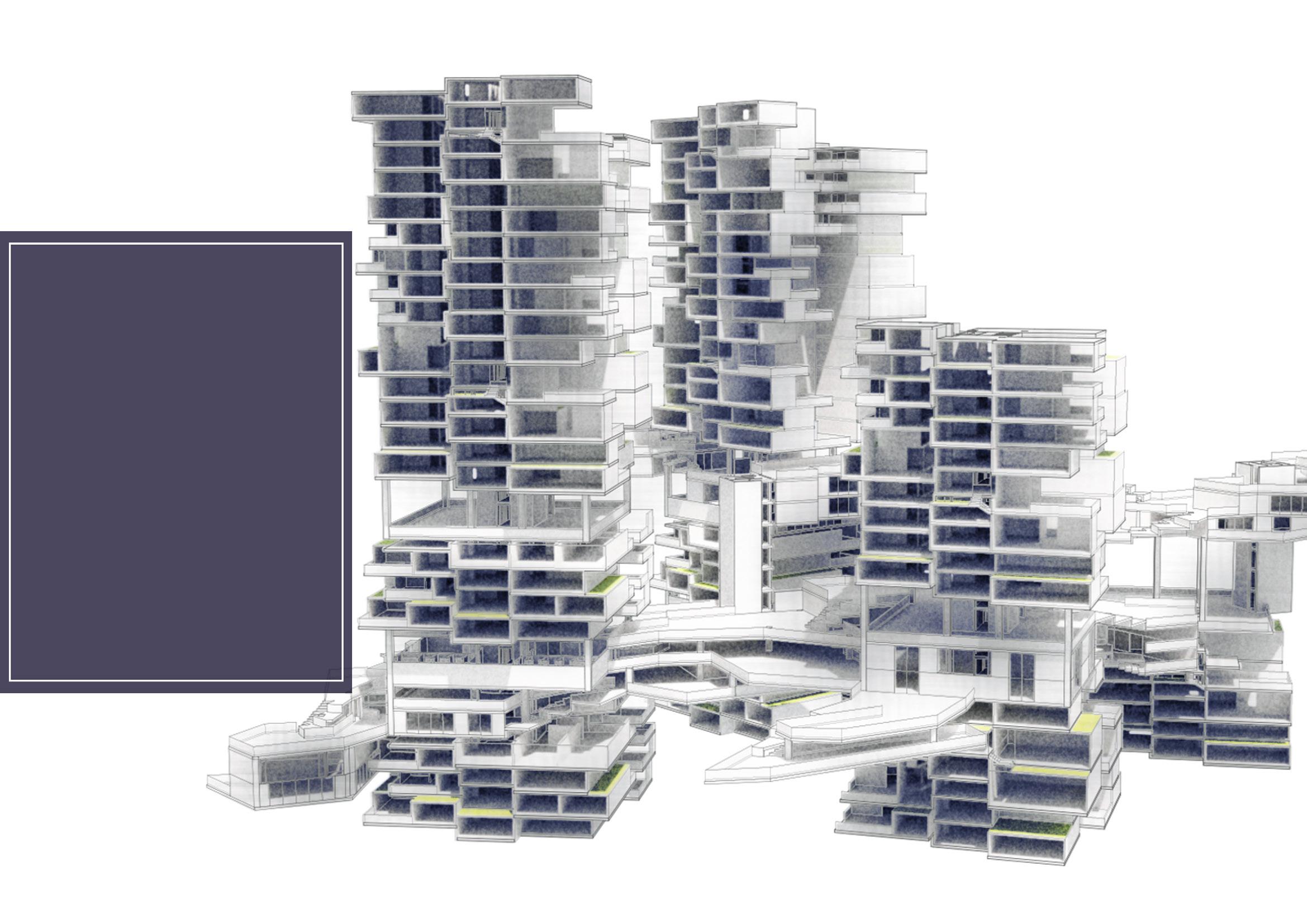
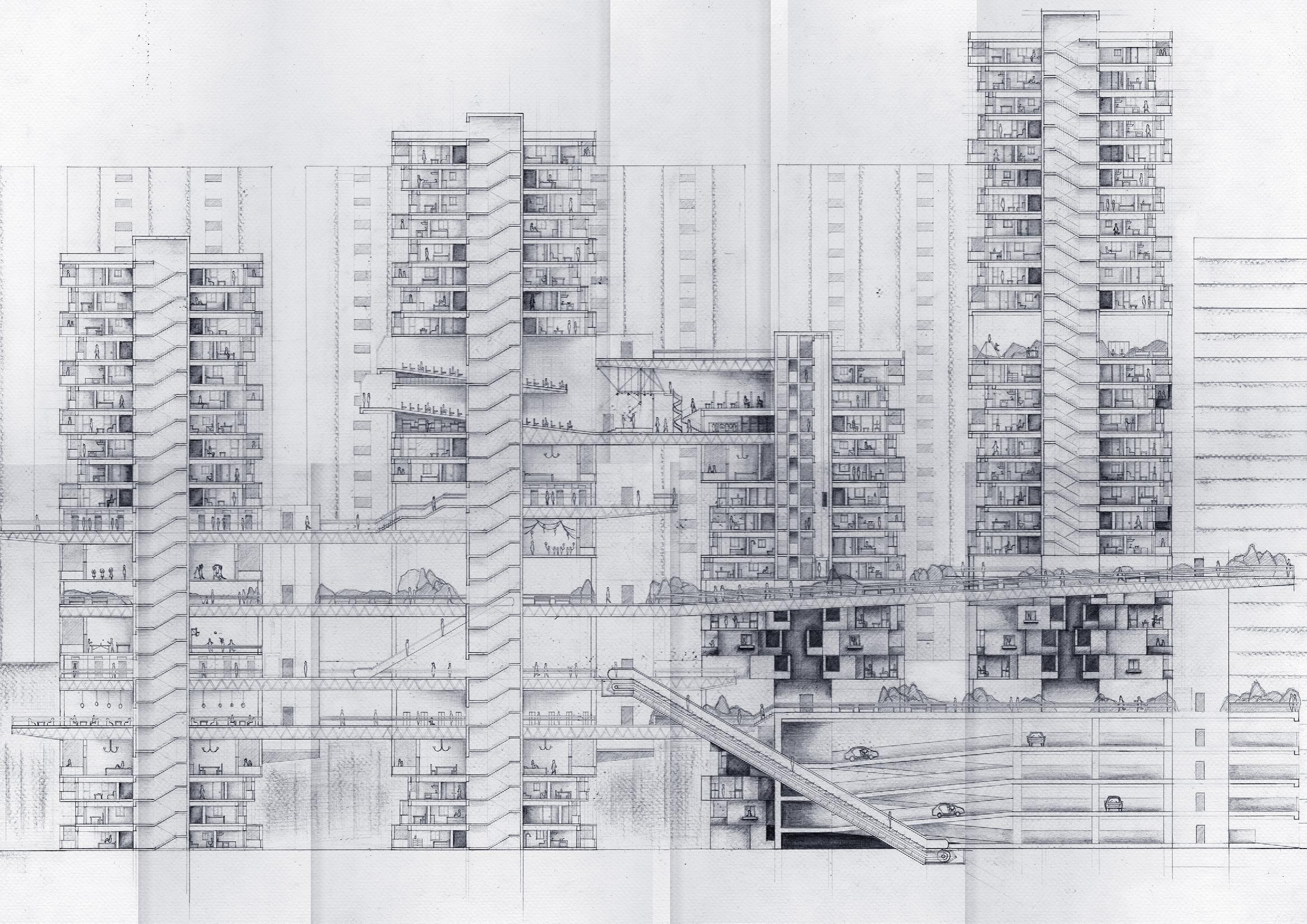
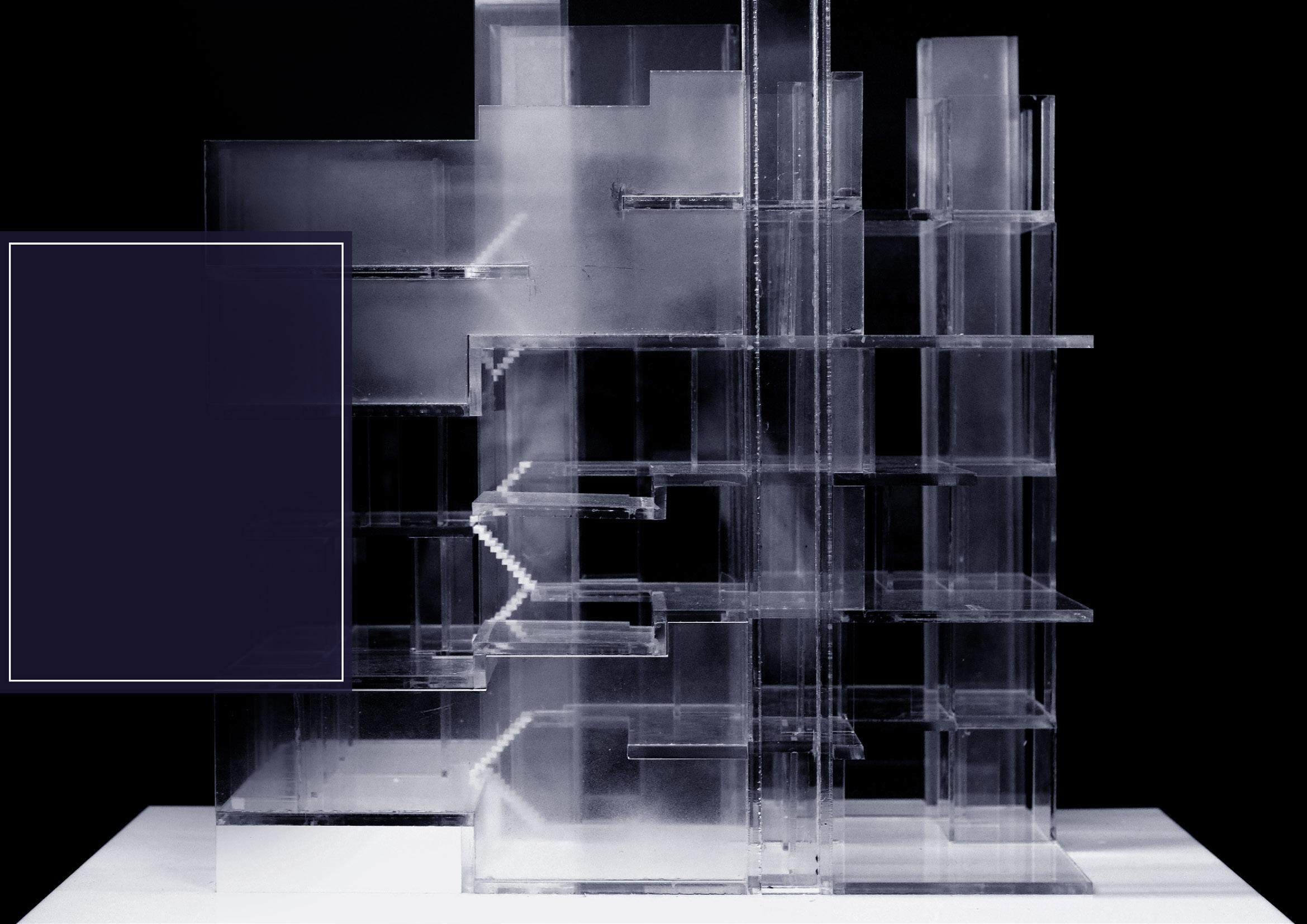
What is the language of a “Village”? Is a high-rise building capable of translating the language and what will be its translation? My semester project was to examine horizontal elements in a village on a flat ground and look into details that foster a close neighborhood. By inspecting various factors that maintain connections between people both visually and physically, a long main “street” is translated into a central continual void with optimized balcony arrangements in a vertical high-rise.
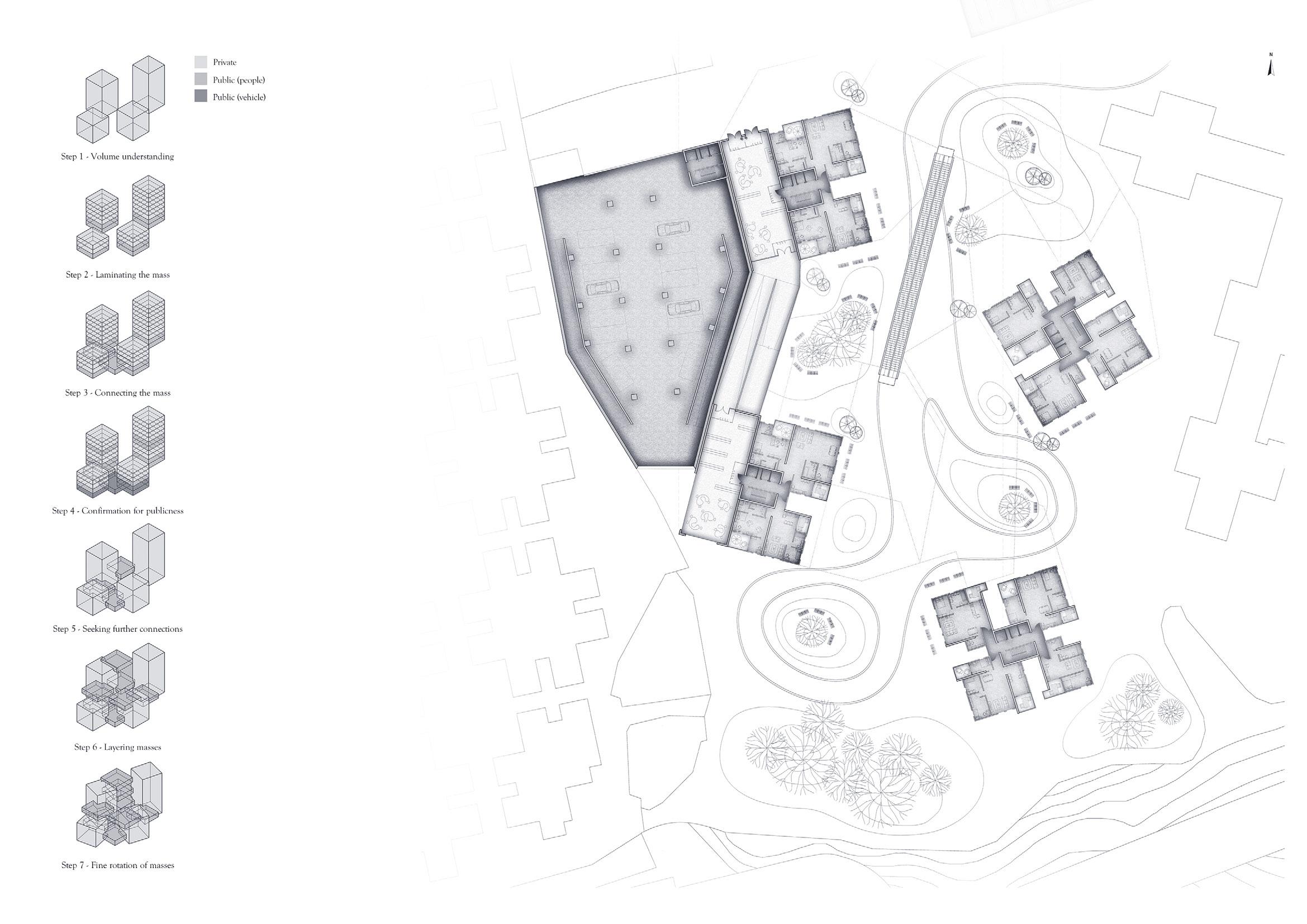
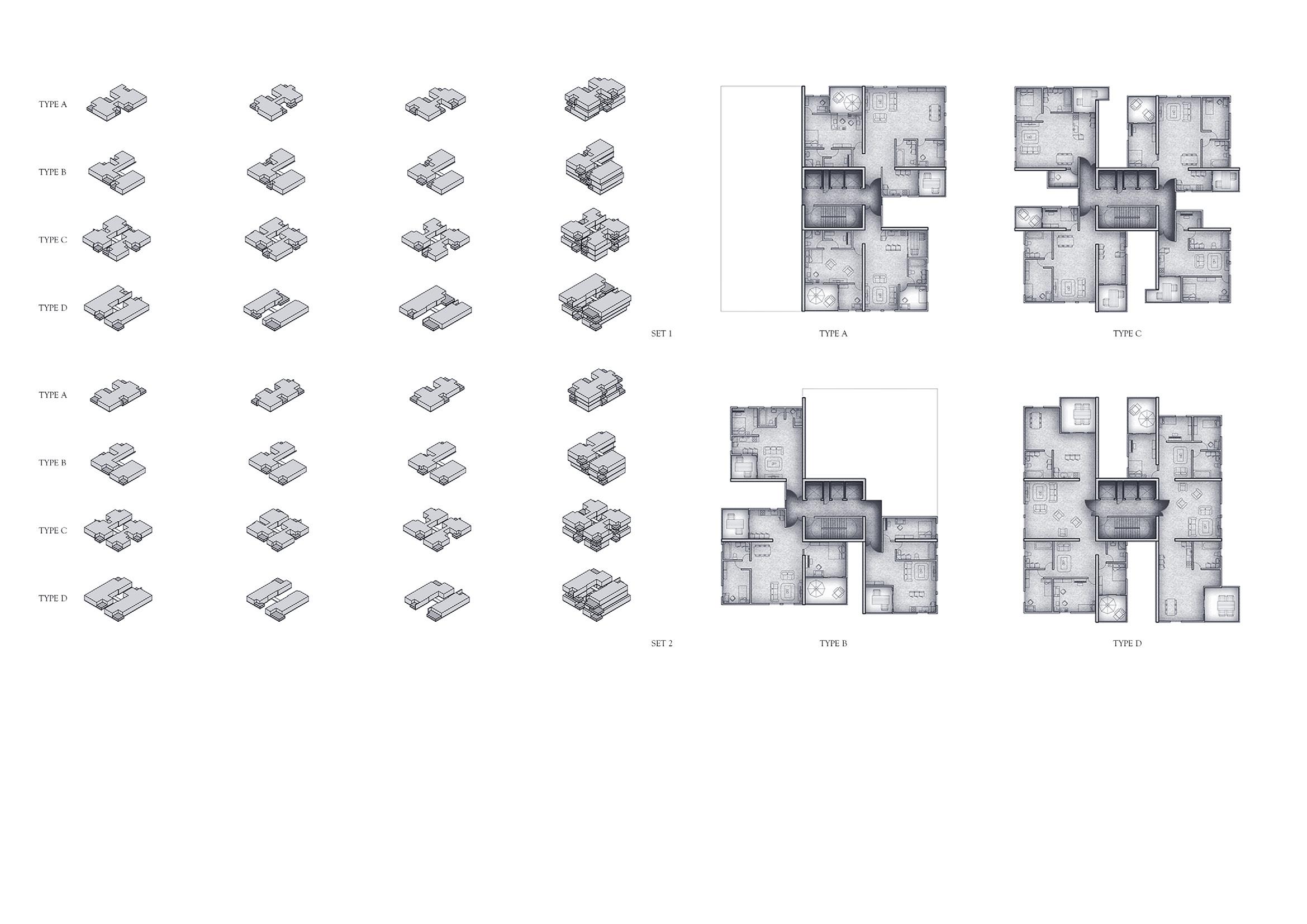
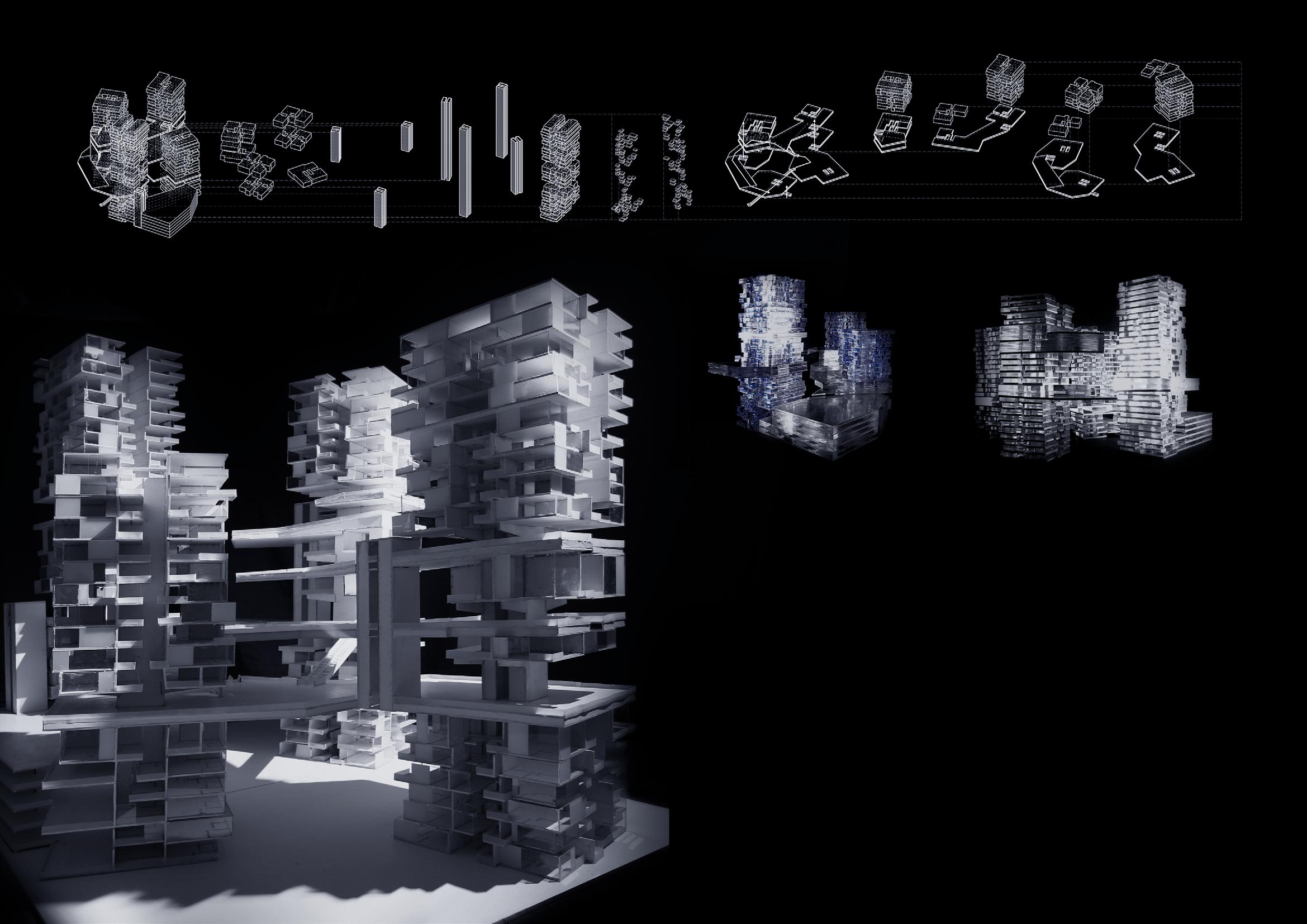
Buildings are not merely repetitive sets of stacked-up flats. My definition of a good building is the compliance with several systems that make up the whole building. In this semester, I was working on a building system that works for a vertical village. I was designing sets of housing typology with generic unit types that are adaptive to any site conditions. Two main systems run though my building to give the general form and a totally height of eighty meters. They respond to unit compounds and communal zones in the building, in support of a major shear wall

system going through the facade of my building accommodating for four family sizes. Three floors make up one compound.
Within the three floors, there are units with slight balcony arrangement difference so that a common void is formed when they are stacked up and compounded. Balcony locations are justified by the exposure to sunlight, security of privacy and connections with neighborhood. Communal zones are inserted between compounds. These common areas are connected to the compounds both physically and visually. Residents can perform their leisure activities in the communal zones such as library, playground, gymnasium, etc. The mega shear wall system ties back to the central service core and gives support in the periphery of the building. It also helps with the partitions of the interior in the unit and adds credits to the aesthetic side of the building. The highlights of communal areas in a high-rise argue itself against a traditional horizontal village.
LAMBORGHINI ROAD MONUMENT
Site: Bologna, ITALY
Type: Monument
Collaboration: LUI, Ho-yin, HOHO
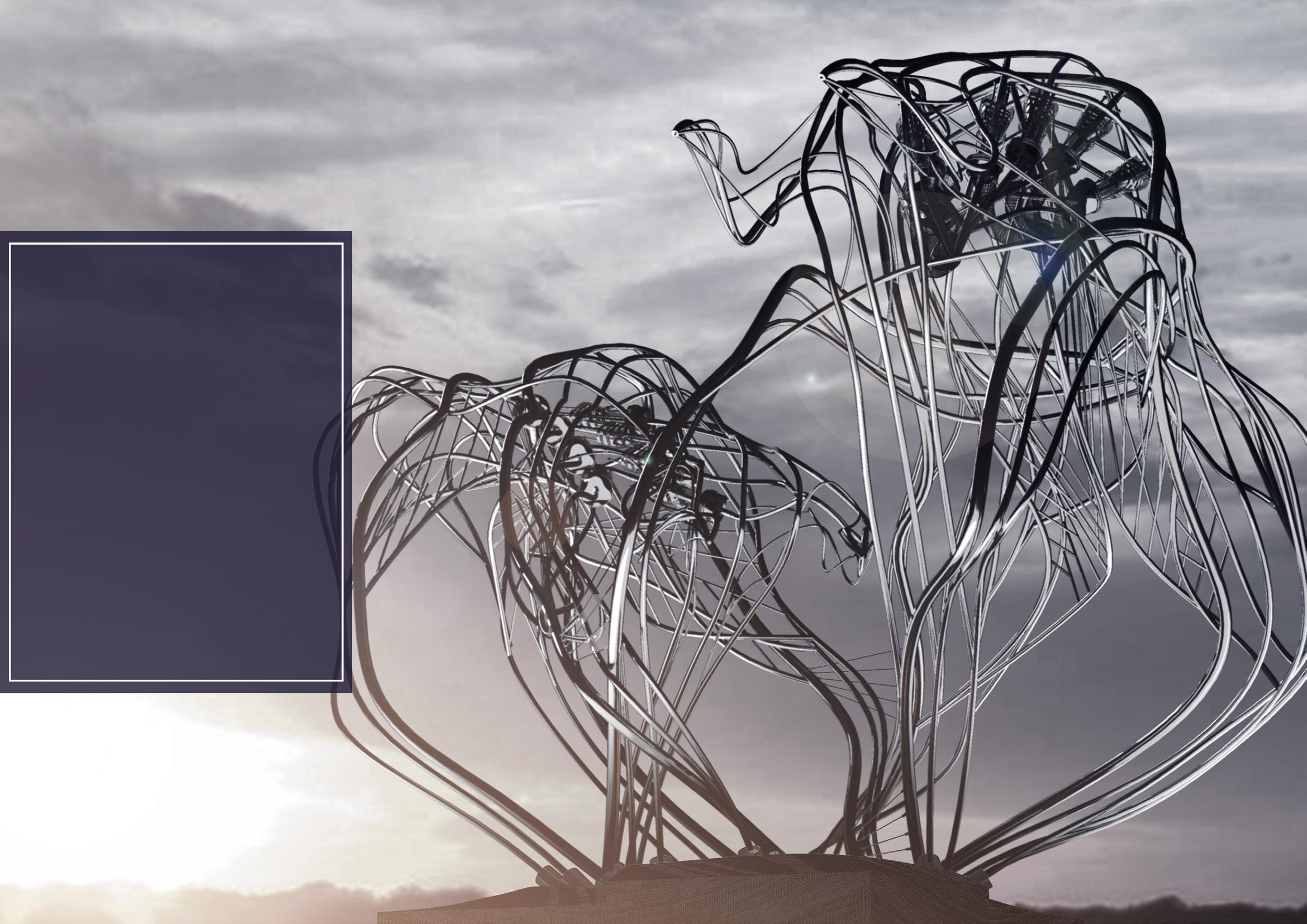
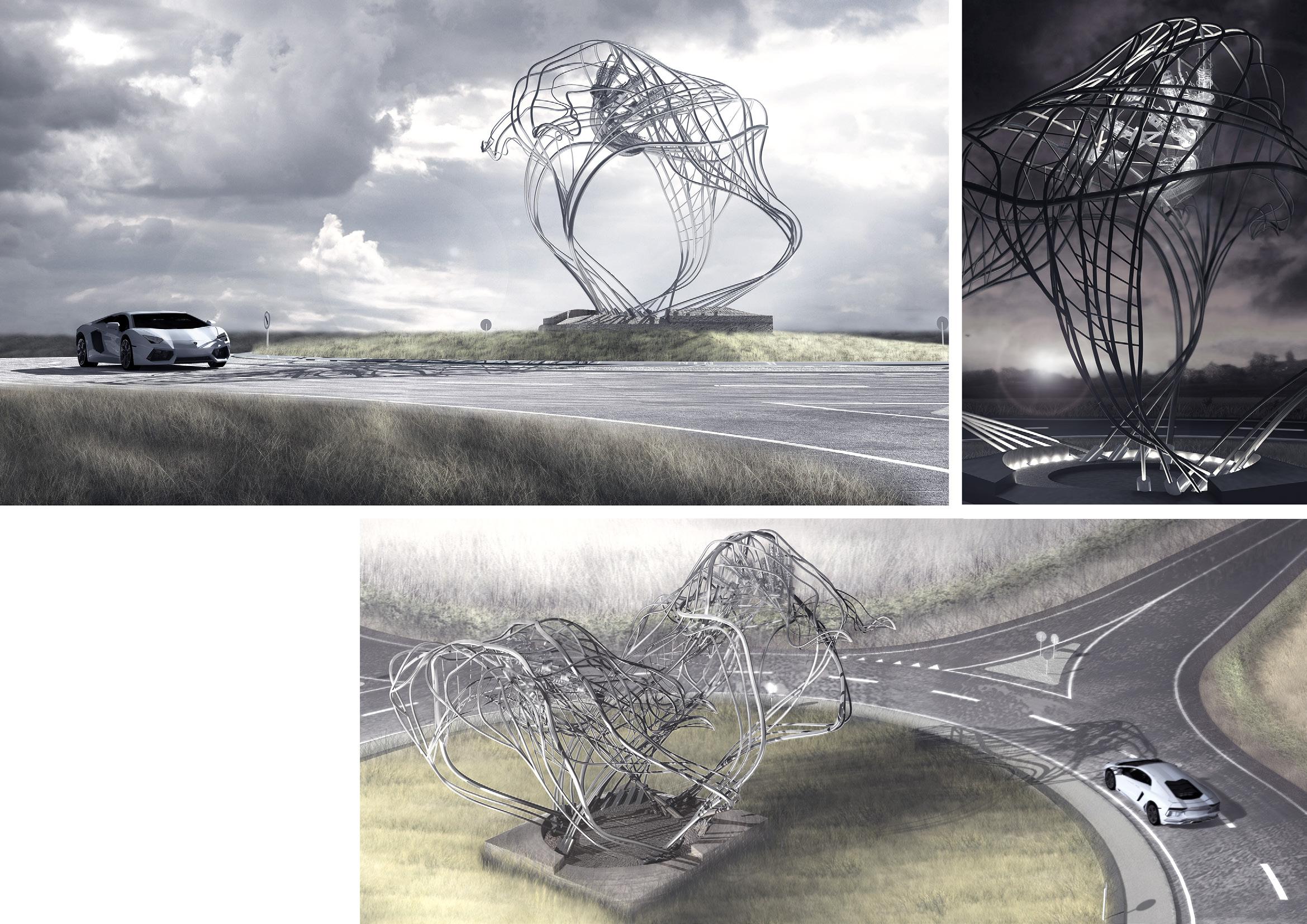
Bull, icon of the supreme automobile company, represents the verb - “Power”. Design of two roundabout monuments should present the brand as an abstraction of power that symbolizes “Lamborghini”. An engine core gives speed and energy to a sports car, and the form of a bull shall reflect the brand. From understanding the physics of motions of bulls, to depicting a translation of languages is the fundamental process for the design. “Gain, Balance and Charge” best describes three motions that suit Italian bulls.
The ultimate goal of our project is to successfully present and use stainless steel pipes to provide ground-visions of energized “bulls” from different angles. A truss-type structure in “Bull” simulates the “Spine” system of a vertebrate.
Visually, we want to maintain the transparency all around the roundabouts, allowing natural light to penetrate through the body structure of bulls. As an effect to cast an image of “power” onto the ground, shadow created by projection of light shall simulate Lamborghini “running” on ground.
Structurally, body is framed by curved steel pipes. Stainless steel is a long-lasting material. The truss-type system supports the engine while the core functions as light at night, a feature as power source giving momentum to the bull. The structural system is also beneficial to horizontal loads, as 80% of void created to counter-balance the wind load, which made the bulls a sustainable design.
Site: Bologna, Italy
Type: Factory Redevelopment
Collaboration: LUI, Ho-yin, HOHO
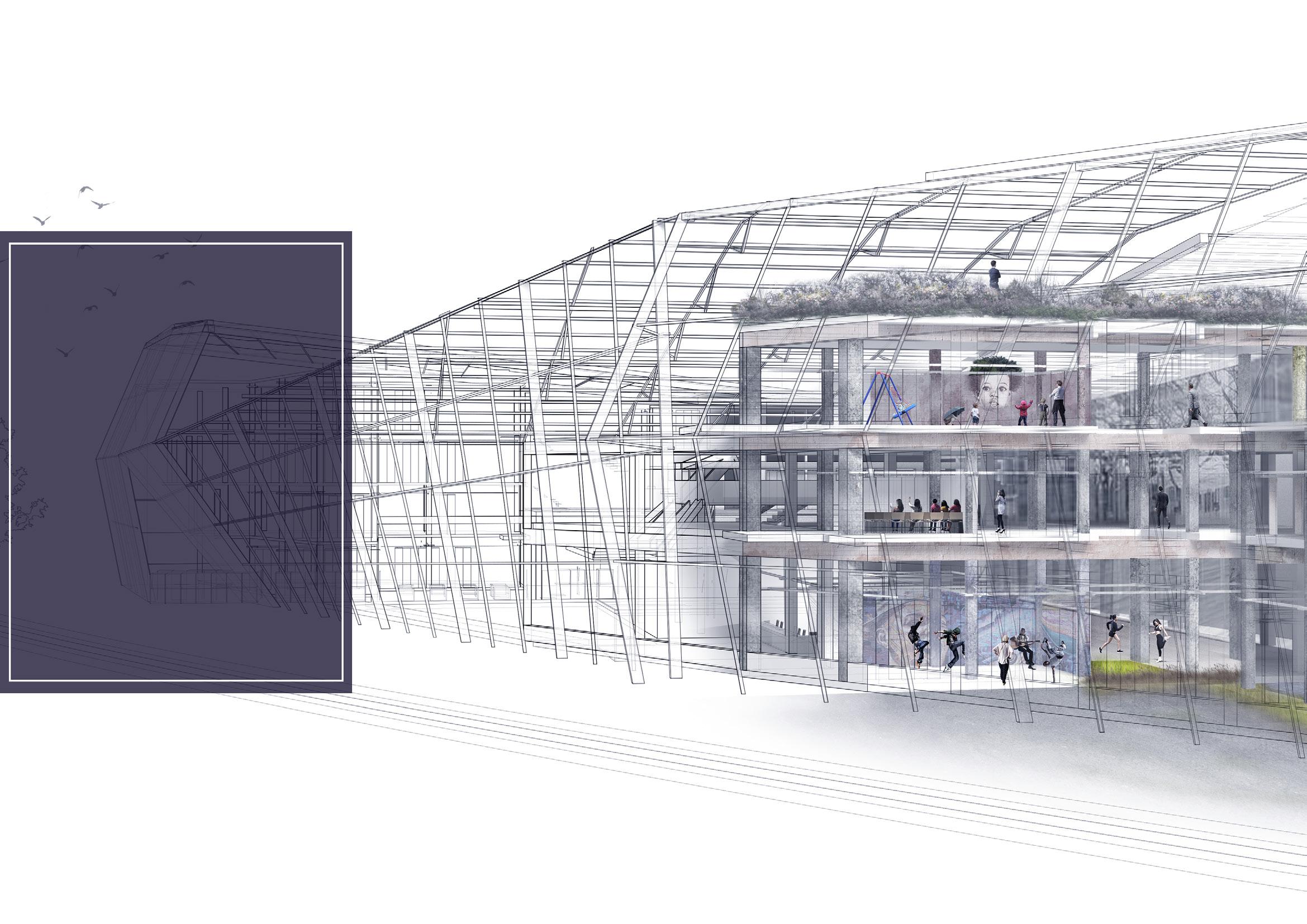
Transformation of an old paper factory requires understanding of its structural core. To create a flexible and sustainable environment while preserving and adapting to the existing column system is the ultimate goal of the project. With the movable module system in the existing architecture, flexible space is created making the design proposal economically sustainable. Sustainability is also introduced to the design to foster the sense of environmental awareness.
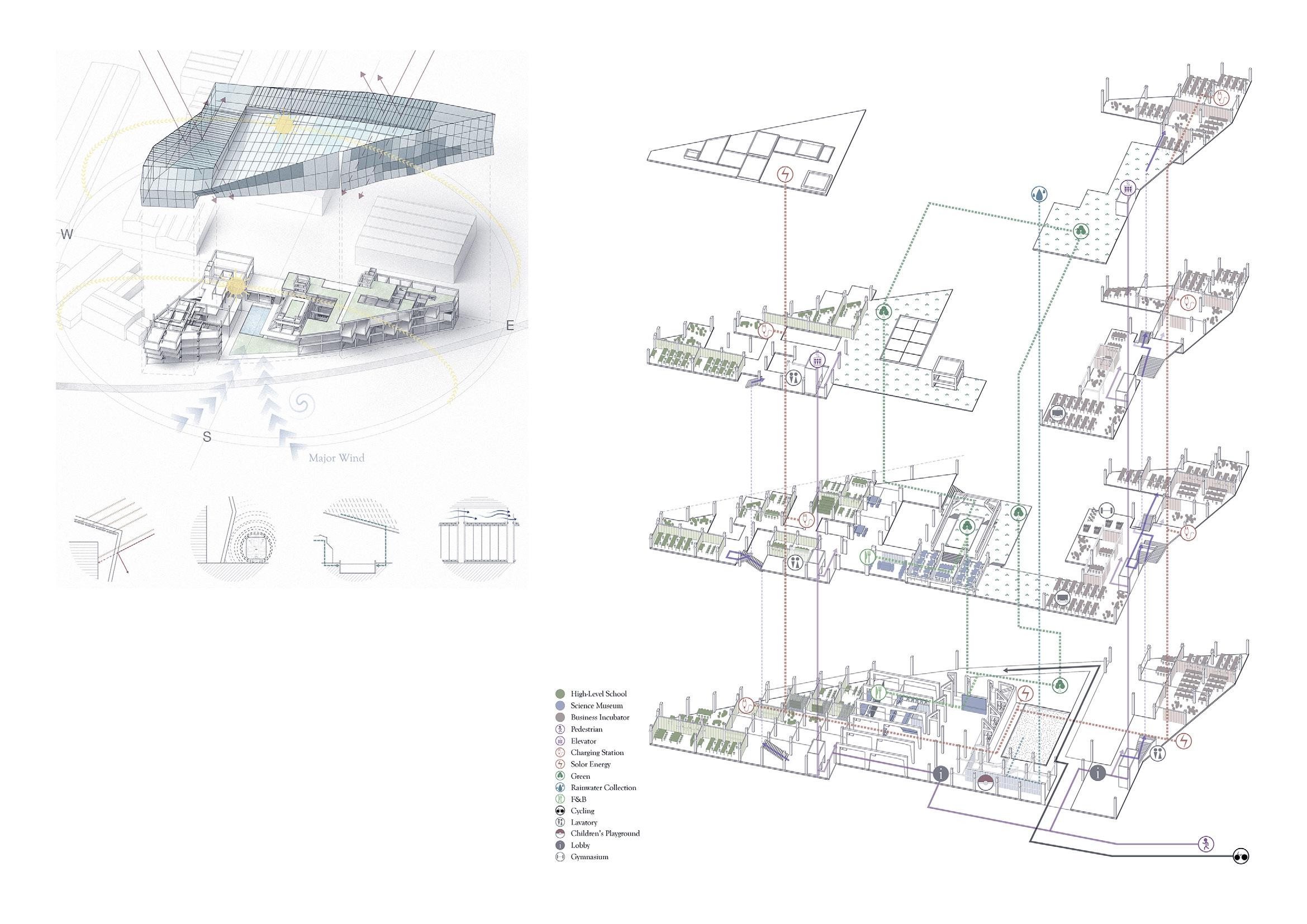
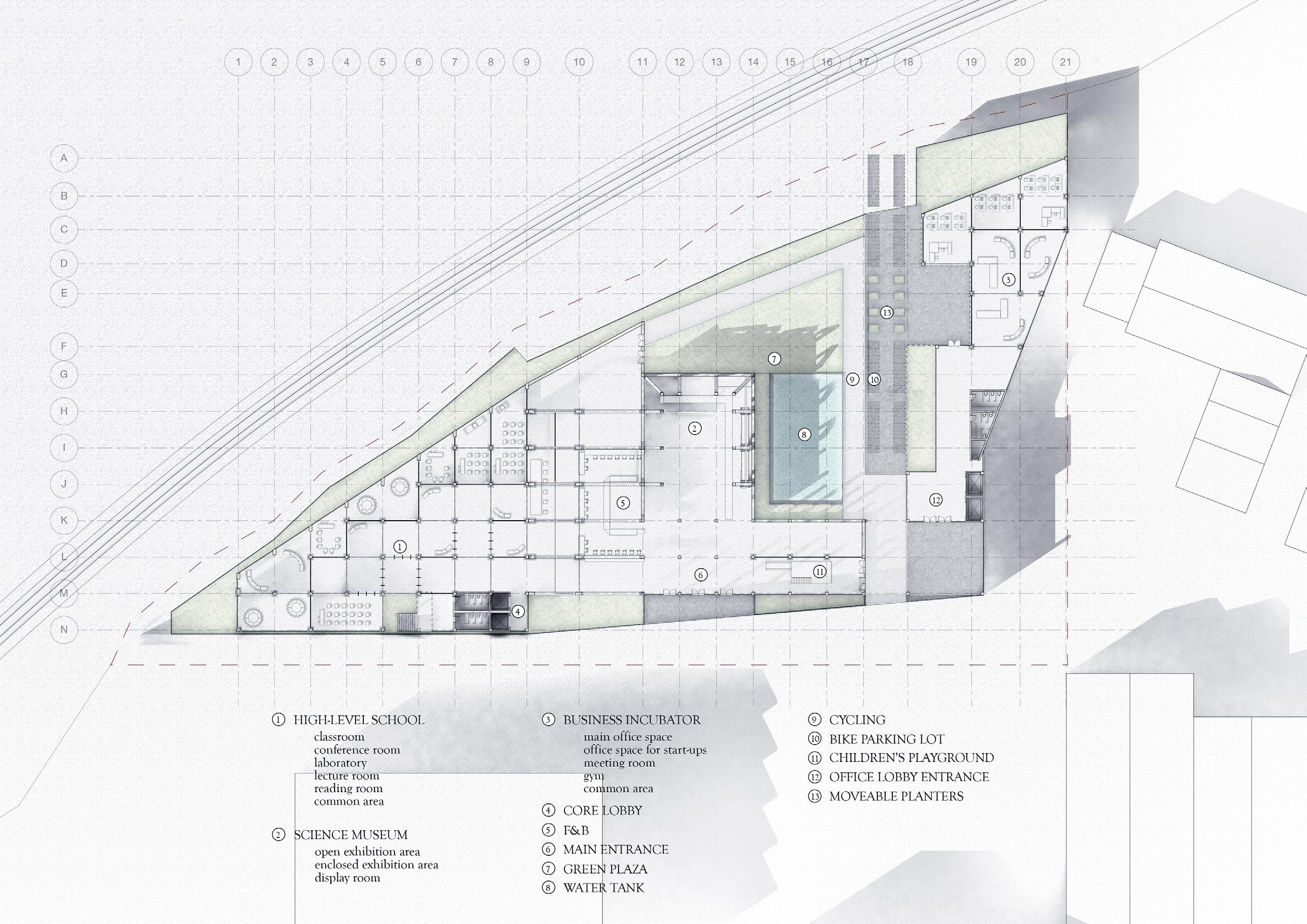
Taking into consideration the core value of the plan and feasibility of the proposal, the design proposal focuses on creating a flexible use of space while adapting to the existing solid rigid reinforced concrete frame structure. Besides renovating the existing architecture, a new block is introduced on the West side of the existing block serving as a business incubator. In between the new and old is a cycling path and bike parking lots which connect the North and South sides encouraging the use of eco-friendly transports.
While the flexible module system introduces a new sustainable way of space using, different sustainable elements are also programmed to the proposal to bring out the sense of environmental awareness. This includes the utilization of sunlight and wind flow, rationalization of water and energy resources, integration of green areas as well as a double-skin envelope.
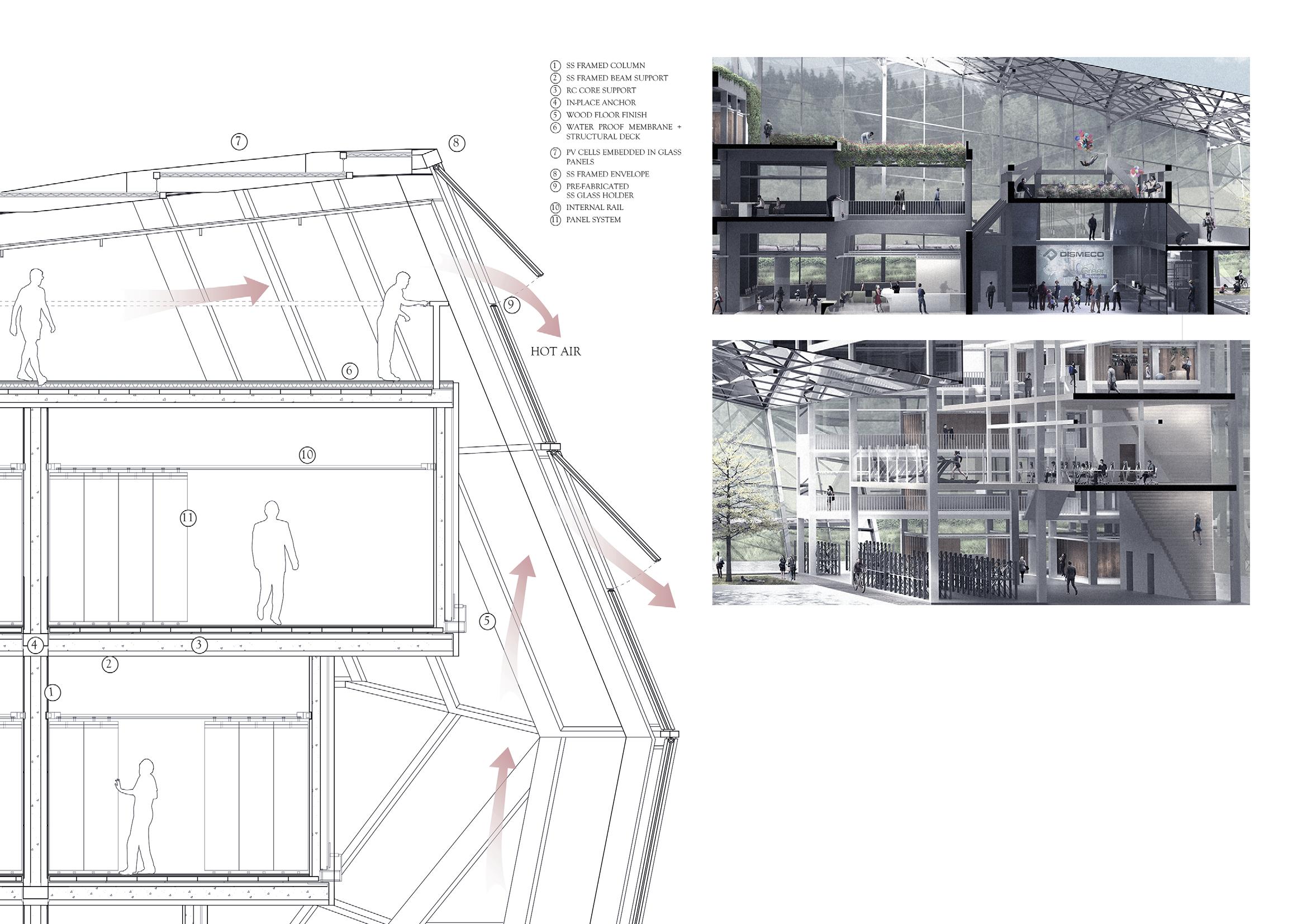
Outside the building structure, a glass envelope is introduced to cover both the old and new blocks, providing a continuously-covered shelter for users. A ventilated air cavity is thus generated between the interior glazed wall and the exterior glass envelope, which forms a natural thermal buffer. During summer, the air ventilation brings hot air out and keeps the interior space cooler than the outdoor environment. During winter, the air cavity serves as a thermal insulation by trapping air in the cavity and allowing it to be heated by the sun.
With the use of a double-skin envelope, the cooling and heating load can efficiently be reduced during the peak summer and winter times creating a more desirable interior environment.
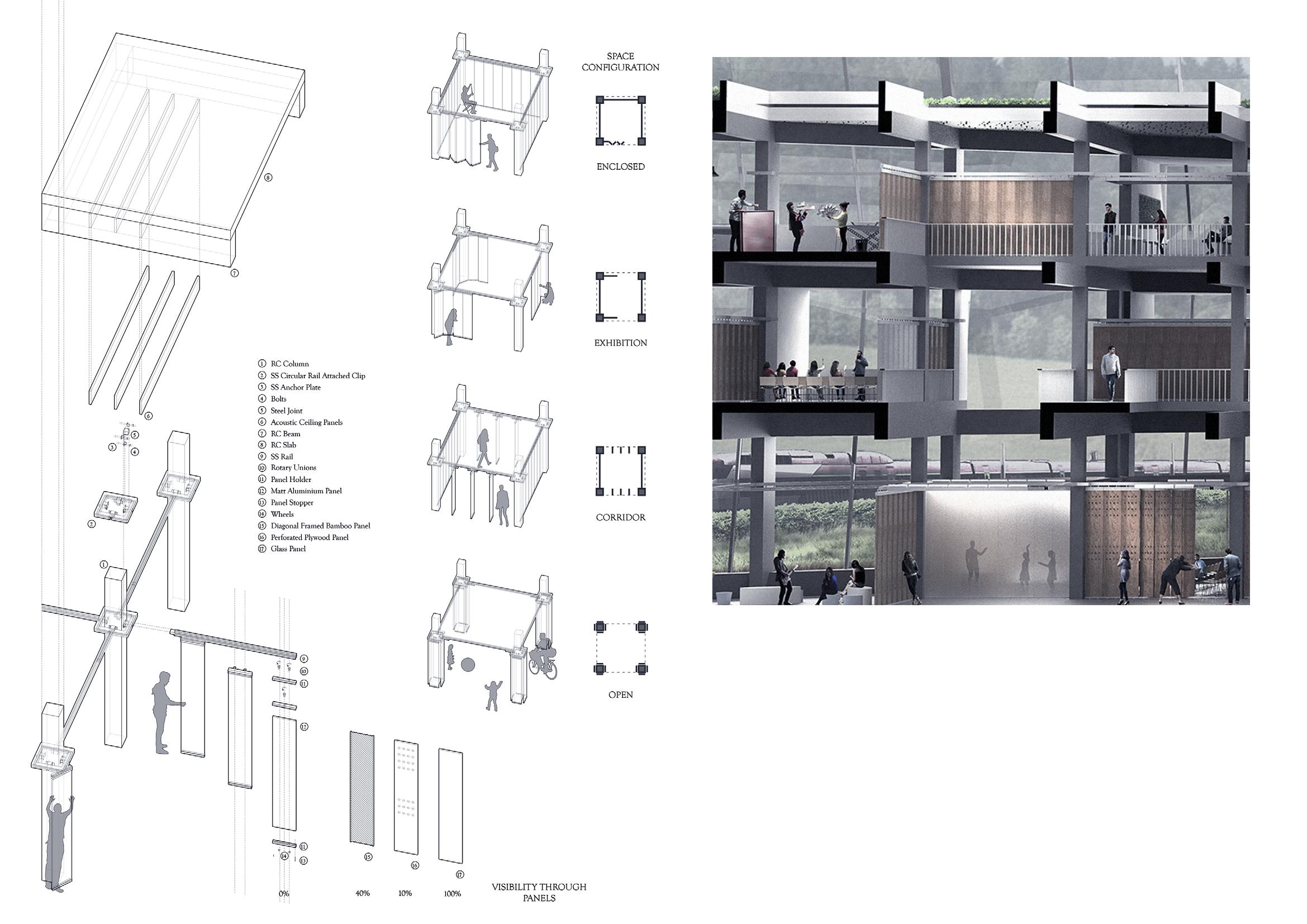
In the wide free space without the non-structural elements, a module system is introduced which replaces fixed partition walls with movable panels. They facilitate full utilization of space which can transform based on the function needs, from a small meeting room to a widely opened exhibition space. This allows flexible space use resulting in economic sustainability.
Taking into account the history of the architecture, the existing solid rigid reinforced concrete frame structure is preserved and only the non-structural partition walls are demolished to avoid excessive external influences on the architecture. Modules are introduced to the large volume creating a hierarchy of space for different program needs.