SPACE RESEARCH TODAY

JANUARY 2026
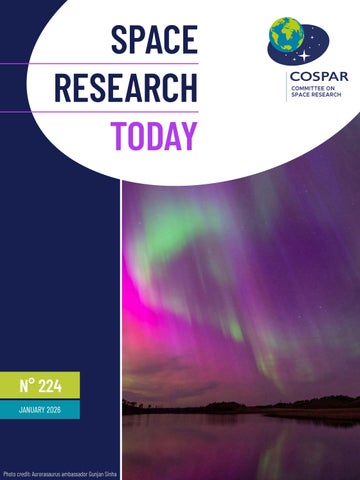
Photo credit: Aurorasaurus ambassador Gunjan Sinha
JANUARY 2026
As the year comes to a close, the COSPAR Secretariat and I are pleased to extend our warmest season’s greetings to the entire COSPAR community. This has been a year marked by collaboration, scientific achievement, and steady progress in advancing space research and ensuring its responsible use.
The 6th COSPAR Symposium in Nicosia, held early November in Nicosia, Cyprus was a notable milestone. Bringing together approximately 300 scientists, agency leaders, and industry representatives from close to 50 countries, the Symposium reinforced COSPAR’s role as a trusted global forum for cooperation. Cyprus’s growing role as a regional centre for space science was clearly demonstrated by the continued development of the Cyprus Space Research and Innovation Centre, C-SpaRC— one of COSPAR’s Centers of Excellence—and by the country’s progress toward launching its first domestically developed satellite in 2026. During the Symposium important scientific results were shared, including new insights into space-weather hazards, planetary protection and the community-supported space exploration roadmap. Public outreach events, such as the Space Science Street Festival and hands-on education activities, further illustrated the value of engaging and inspiring society.
This year also saw significant progress within COSPAR’s scientific programmes. The release of the Heliophysics Guidelines established shared international principles for studying the Sun and its effects, supporting global efforts to improve preparedness for space-weather risks. Commission
Pascale Ehrenfreund

A issued a statement ahead of COP30 reaffirming the importance of sustained space-based climate observation for adaptation and mitigation strategies. Our partnerships continued to expand, with new agreements and collaborative initiatives linking agencies, academia, and an increasingly active commercial space sector. The Panel on Capacity Building pursued its mandate dynamically with the organization of four workshops on various topics in Argentina, Cameroon, India, and at the International Centre for Theoretical Physics in Italy, as well as engaging in other collaborative efforts to promote its objectives.
Looking ahead, preparations for the 46th COSPAR Scientific Assembly in Florence are advancing well. We are confident that our community will once again deliver a programme of depth, quality, and international engagement. Together, we will continue to strengthen a global space ecosystem built on cooperation, scientific integrity, and shared purpose.
We extend our sincere thanks to all of you for your contributions, dedication, and collaboration throughout the year. Your work drives COSPAR’s mission and reinforces our ability to address the challenges ahead.
Wishing you and your loved ones a peaceful holiday season and a bright year to come.
Season's Greetings
This issue has a wide range of reports and articles covering numerous activities and topics. However, one intriguing mini-theme on offer this time could be entitled ‘visitors’. Specifically, I am referring to an article by Darryl Seligman on the interstellar object known as 3I/ATLAS that has been passing through the Solar System, to the article by Patrick Michel on the near-Earth passage of asteroid Apophis in 2029, and to comments made in the ‘What Caught the Editor's Eye’ column. The 3I/ATLAS and Apophis articles are fascinating reports on topics of interest to scientists and to the general public, alike.
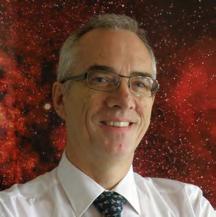
Our President Pascale Ehrenfreund’s excellent message, that opens this issue, contained two phrases that struck me in particular, in light of back-stories related to one of these articles. She said “advancing space research and ensuring its responsible use”, and talked about “continuing to strengthen a global space ecosystem built on cooperation scientific integrity, and shared purpose”.
Whilst the scientific community has taken full advantage of the passage of 3I/ATLAS through the Solar System, making unique observations of an interstellar visitor for only the third time, there have been many reports in the media that have been wildly inaccurate and misleading (as reported in the ‘What Caught the Editor’s Eye’ column). So, as well as maintaining scientific ‘integrity’ and ‘responsible use’ in our own work, how can we influence reporting of our field? One way is for us to ensure good communication by our scientists, and the 3I/ATLAS article in this issue is published in exactly that spirit. We must make sure that we tell our 'stories' to the public on a regular basis, to counter any misguided reporting. However, controlling those outside our field
Richard Harrison
is another matter. Thinking out of the box, does this mean that in future COSPAR will be spearheading strategies to tackle fake news, poor and exaggerated reporting, including the mis-use of AI, of our field?
Of course, a recurring theme of SRT issues is the reporting of COSPAR business and, in that respect we have quite a 'heavyweight' issue that includes, amongst other things, an updated Planetary Protection Policy, reports on the COSPAR International Reference Atmosphere Task Group, on Scientific Commission C (Space Studies of the Upper Atmosphere of the Earth and Planets, including Reference Atmosphere) and on the Panel on Early Careers and International Space Societies.
On another matter, it is always sad to say goodbye to a colleague and on this occasion we note the departure of Diego Altamirano, who has served as an Associate Editor for some years. Of course, the Associate Editor role is a voluntary role, and in Diego's case his active and busy university and research career are such that it was time for him to move on, but I would like to thank him for his enthusiastic approach and contributions to SRT over the years.
Finally, I must point out that the SRT publication dates have changed. Since I took on the role of General Editor in 1991, we have always published in April, August and December of each year. This will now change to January, May and September to avoid poor timing with regard to holidays and the COSPAR Scientific Assemblies. Please check the modified dates for your submissions to our journal on page 83
— Richard Harrison, General Editor
5
8
50 57 15 17
COSPAR Community Space Snapshots
COSPAR Business
Editorial
COSPAR Policy on Planetary Protection
67
COSPAR Policy on Planetary Protection
69
75
Meetings
Research Highlights
80
COSPAR Extended Abstracts
COSPAR Publication News
What Caught the Editor's Eye
News in Brief
Letter to the Editor
Submissions to Space Research
In this section we include profiles of COSPAR personalities, principally officers, and other articles relevant to persons active in COSPAR’s affairs.
We are delighted to present the newest member of the COSPAR Secretariat, Isabella Marchisio.
Isabella is a space industry professional bringing with her more than ten years of international experience in project management, communications and external relations. Originally from Rome, Italy and based in Paris, France, she spent over a decade at the International Astronautical Federation (IAF), contributing to the coordination of major complex initiatives and global conferences, while fostering strategic partnerships across space agencies, industries and international organizations.
She holds a Bachelor’s Degree in Political Science and International Relations from La Sapienza University of Rome, and a Master’s degree in Space and Telecommunications Law from the Paris-Saclay University (former Paris Sud XI), as well as an Executive Space Course certification from the International Space University.
Multicultural, mission-driven, and fluent in four languages, Isabella joined COSPAR in September 2025, bringing her diplomatic approach and passion for impactful collaboration to the global scientific community.

The COSPAR Secretariat will be setting up several specific Slack channels to facilitate communication, remote collaboration and storage of documents for COSPAR business. These will be attributed to Scientific Commissions, Panels and Task Groups upon request to the Secretariat, and according to availability. Contact isabella.marchisio@cosparhq.cnes.fr
Here is the new logo for COSPAR. Stemming from recent adjustments, the "inclusive Earth" demonstrates COSPAR's commitment to building a stronger world-wide forum for space scientists. The ellipse-shaped view of the sky adds a modern and more dynamic touch, suggesting an eccentric planetary orbit. What do you think of it? Let us have your feedback!
COMMITTEE ON SPACE RESEARCH
* Slack is a trademark and service mark of Slack Technologies, Inc., registered in the US and in other countries.
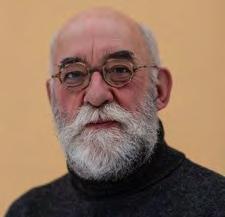
Professor Hermann Josef Opgenoorth passed away in his home in Uppsala on 19 May 2025. He was born in Bottrop, Germany on 30 December, 1951. He started his university studies in the University of Munster and received the Master’s degree in Geophysics in 1978. His most active university study period occurred during the International Magnetospheric Study (19761979) when the University of Munster was heavily involved in running the Scandinavian Magnetometer array, a network of 42 temporary, high-resolution ground-based magnetometer stations. Students were responsible for running the network and Hermann was one of the key players in this heavy and demanding task.
In 1978, awarded a grant by the German DAAD funding agency, Hermann moved to Finland to work at the Finnish Meteorological Institute where he had access to the vast Auroral All-Sky camera data from Finland and the recently established STARE ionospheric radar data. Together with the magnetometer array data he was able to work out a method to study the ionospheric current systems in three dimensions. In 1983 he defended his doctoral thesis ”Three-dimensional current systems associated with active aurora” at the Uppsala University. Finland was unable to provide Hermann with a permanent job in geophysics so in 1981 he applied for an open position at the Uppsala Ionospheric Observatory in Sweden which became his permanent base for many years to come.
In Uppsala he continued his interest in the ionospheric electrodynamics and there was a good reason since in 1981 a completely new facility, EISCAT, started in northern Scandinavia, providing lots of opportunities for new science. He was the Research Director of EISCAT in the period 1991-1994 and continued as chairman of the EISCAT council until 2000. Working with EISCAT and ground-based instrument networks, Hermann developed as an expert in combining ground and space-borne data. In 1991 he was invited to become the coordinator of the ground-based observations associated with the ESA Cluster mission. The first set of four Cluster satellites was destroyed in launch in 1996, but the new set launched in 2000 was very successful and operated until recently. For his activities and achievements in the Cluster program he was awarded in 2018 the International Marcel Nicolet Award and in 2023 the Julius Bartels Medal from the European Geophysical Union (EGU), both mainly for his contributions to space weather science.
ESA decided to start a Mars mission named “Mars Express” Hermann was invited in 1998 to participate in the instrument peer review and selection work since many (7) of the instruments proposed dealt with atmospheric and ionospheric electrodynamics close to Hermann’s special expertise. This turned out to be his gateway to planetary science and his brilliant tenure at ESA. He was first invited to serve as an advisor for Planetary Plasma Physics and later he was offered the position of Head of the ESA Planetary Division at ESTEC, a position that he held from 2003-2009. During his tenure he made a fundamental contribution to the consolidation of the Solar System exploration program and was a brilliant and paternal guide to the scientists working in his division.
After retiring from ESA, he continued to be a pillar of the space plasma community and his contribution to this science culminated with the creation of the Mars Upper Atmosphere Network. This new activity led him to establish proficient working relations with the Cyprus scientific community and was instrumental to the first meeting of this group in Cyprus. Unfortunately, his health conditions did not allow him to pursue further activities of this working group with the enthusiasm and energy that always characterized his life.
Hermann’s career in space science lasted for more than 40 years. During this time he published over 200 peer-reviewed scientific papers. He got full professorship in space physics in 1994. He was member and chair of many committees and working groups. In 1998-2003 he was director of the Solar and Terrestrial Physics program at his home institution IRF in Sweden. After the 2003-2009 period in ESA, he acted as the Chair of the ESSC Panel for Solar System Science and Exploration in 2015-2021. From 2019 on he acted as Professor Emeritus at Umeå University.
Promoting international collaboration was one of the highlights of Hermann’s scientific work. International Living With a Star (ILWS) was one of his most remarkable contributions to the space
weather research. This work has been continued as a member in the United Nations’ Expert Group on Space Weather. He also acted as co-chair of the ESF/ESSC Space Weather Working Group and was a key figure in and Vice-Chair of COSPAR’s Panel on Space Weather. Hermann’s main legacy to science is the joy of making new innovations and understanding the importance of education and mentoring. Hermann is deeply missed by his wife Lena and three children with their families, a vast amount of colleagues, collaborators and students.
[by Risto Pellinen Professor Emeritus, Finland and Marcello Coradini, Former Coordinator Solar System Missions and Head of Exploration Department, ESA]
Abstract Submission ends on 13 February 2026!
Check the Call for Abstracts, and read carefully the instructions on submitting abstracts.
Other useful information can be found at https://www.cospar-assembly.org/ and more details about the Scientific Programme and Special Events will be updated as they become available.
The Local Organizing Committee website https://cospar2026.org/ provides logistical information about the Assembly venue, accommodation, travel, and registration.

[Sean Bruinsma, CIRA Chair (CNES), France, Marcin Pilinski, CIRA Co-Chair (Laboratory for Atmospheric and Space Physics-LASP University of Colorado, BO, USA)]
The COSPAR International Reference Atmosphere (CIRA) Task Group aims at developing and improving upper atmosphere models that are compatible with use in an operational environment, notably for satellite drag calculation. However, the scope of research is expanded in
order to cover all topics that contribute to thermosphere model quality and performance, especially density data consistency and quality, and model drivers. This is schematically displayed in Figure 1, which shows the main ingredients for satellite drag calculation, i.e., for objects in Low Earth Orbit (LEO).
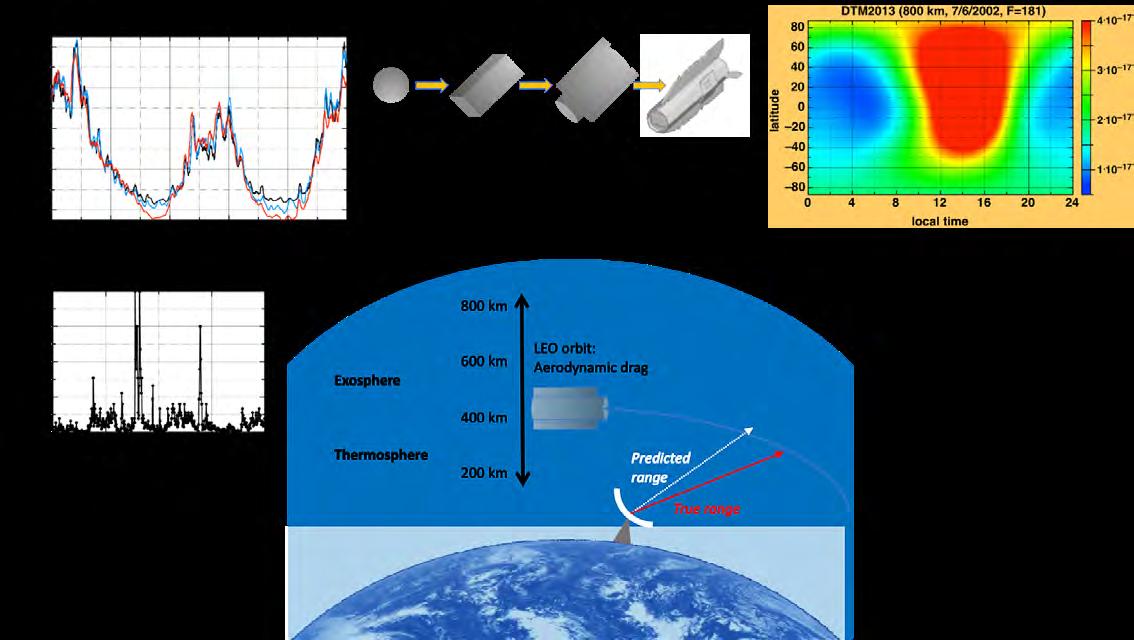
▲ Figure 1: CIRA is impacted by a web of relevant interactions. This includes the interactions of solar and geomagnetic drivers (upper left) with the Thermospheric state (upper right), the interaction of the thermospheric gas with satellite surfaces (upper center), and the effect this aerodynamic interaction has on satellite trajectories (lower center).
Thermospheric neutral density is normally thought of as the component of a reference atmosphere that is most relevant to satellite drag. However, the aerodynamic interaction of atmospheric gases and satellite surfaces is also driven by free stream temperature and composition.
Neutral winds can also impact satellite drag magnitudes although they tend to have little impact on satellite drag in an orbit-averaged sense. All of these atmospheric properties (mass density, composition, temperature, winds) form a comprehensive description necessary for operations and are desirable
components of a reference atmosphere.
Empirical upper atmosphere models have been and are still used in orbit operations, and the current CIRA models are all empirical (NRLMSIS, JB2008 and DTM). Relatively recently physics-based whole atmosphere models and General Circulation Models (GCM) are being developed or adapted, which probably are suitable for use in an operational orbit prediction environment in the near future. Examples are WAM-IPE at NOAA/SWPC, or TIE-GCM in the AENEAS software at the UK Met Office. The assessment of model performance is the basis for selection as CIRA model. The performance must be quantified according to a standard testing procedure and metrics, which is implemented at NASA/CCMC
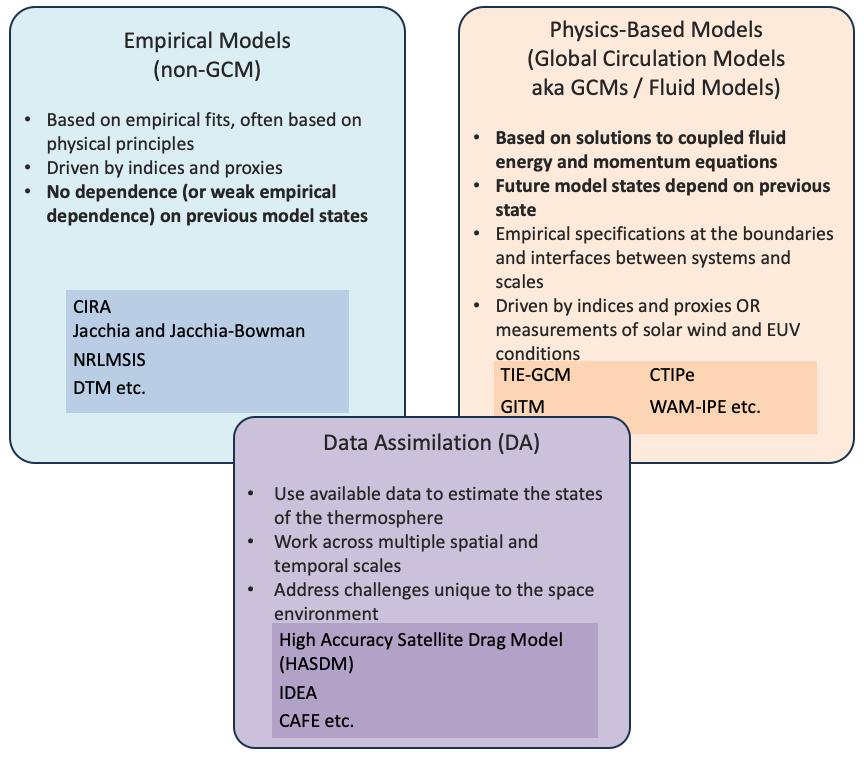
(https://ccmc.gsfc.nasa.gov/itmap/) in a collaborative effort with COSPAR/ISWAT’s (https://iswat-cospar.org) Atmosphere Variability cluster. Carefully selected and continuously updated density datasets are used to compare to model predictions, and a model benchmark can be calculated. An example of performance testing, albeit on a short time scale, can be seen in recent work by Mutschler et al. 2023. Figure 2 summarizes the three main approaches for specifying the thermospheric state. Examples of models/tools in each category are provided and are not intended to be comprehensive. ML-based models, and notably reduced order models, are not listed here even if it is an active research topic in the community. None of these type of models runs at CCMC and their performance is uncertain.
New temperature, composition, but primarily permanent and uninterrupted total mass density observations are needed for model development and assessment, and to enable the estimation of model corrections through near real time data assimilation. The absolute value but also the variations in the total densities inferred from the most precise source, spaceborne
accelerometers, depend on the implemented aerodynamic model. However, presently the community does not have a standard or generally-accepted aerodynamic model, and this leads to inconsistencies between datasets of different providers. This is illustrated in Figure 1 (upper center) showing the same spacecraft, whose shape and aerodynamics are modeled
realistically. Before fitting and comparing thermosphere models to density data, these inconsistencies must be handled. Because of the essential relation between data quality and model quality, the Task Group will work also on improving and standardizing aerodynamic drag modeling. This includes the specification of aerodynamic coefficients and the underlying gas-surface interaction parameters underpinning them. Since the beginning of the space age, most attempts at modeling spacecraft aerodynamic have employed diffuse reflection (cosine) scattering with either complete or incomplete energy accommodation. Recent work investigating gas-surface interactions in the LEO environment (Bernstein and Pilinski 2022), in first-principles scattering models (Anton et al., 2025), and the laboratory (Xu et al., 2025) paints an emerging picture about scattering in the LEO environment. Evidence suggests that broad scattering lobes with relatively high energy accommodation coefficients are accompanied by narrower scattering distributions concentrated between the surface normal and the specular direction. This suggests that a hybrid approach to satellite area dynamics is needed that captures both the broad backscattering component along with the narrow “quasi-specular” scattering. Much more work is still needed to understand the level of both energy and momentum accommodation and how it relates to surface adsorption phenomena and free-stream composition.
The solar and geomagnetic drivers are essential but imperfect inputs because they are proxies for the heating of the thermosphere due to solar EUV emissions and solar wind – magnetosphere interactions, respectively. New proxies are being tested every so often, but most do not comply (yet) to operational rules such as redundant sensors (e.g., the F30 solar radio flux), or they do not lead to improved model performance (e.g., the geomagnetic Km index). A new operational geomagnetic index, tested successfully, is Hpo (https://kp.gfz.de/en/hp30-hp60). F30 is also being followed closely, because a fully operational observation system is being developed now that its superior performance compared with F10.7 is demonstrated. The Anemomilos Dst index nowcast and forecast has been used as the primary geomagnetic driver for Jacchia-Bowman models. Space Environment Technologies (SET) is currently integrating machine learning (ML) algorithms into its existing operational six-day Dst forecast system. Two ML models developed by the University of Colorado Boulder are being incorporated. The first is a six-hour deterministic ML Dst forecast model that shows a 25% improvement under quiet geomagnetic conditions and a 45% improvement during storm conditions when compared to SET’s current operational Dst forecast algorithm, Anemomilos, over 2019–2024. The second is a two-day probabilistic ML Dst forecast model that reduces false positives by 90% while maintaining a relatively low false negative
rate when compared to Anemomilos over the same time period (2019–2024). Integration of both the six-hour and two-day ML Dst forecast models into SET’s operational environment is expected to be completed by Summer 2026.
While many of the approaches above capture long-term climatological trends or qualitatively representative responses to external inputs and emergent phenomena (esp. in the case of fluidic or GCM models), their ability to reproduce day-to-day or hour-by-hour space-weather variability accurately remains elusive in the thermosphere. This is partly due to the uncertainties in the external drivers described above (solar, geomagnetic, and lower atmosphere coupling) and partly due to the inexact mapping between those drivers and the real energy input for the thermosphere. The ability of any atmospheric model to represent the state of the thermosphere given a set of ideal inputs is also a challenge. This is associated with the quality and quantity of data represented in an empirical model and the ability of a GCM to simulate the coupled physical equations in the thermosphere. One approach for addressing these challenges is the fusion of models with on-orbit data through various forms of Data Assimilation (DA).
Approaches for thermospheric DA focus primarily on ensemble techniques like IDEA, DART, or Dragster (Sutton 2018, Chen et al. 2016, Laskar et al. 2022, Pilinski et al. 2016). The use of a model ensemble stems from the impracticality of solving the covariance and other matrices required for inversion analytically. The highly nonlinear nature of the thermospheric system resists many of the linearization techniques that would normally be applied in analytical approaches. One notable exception to this is the High Accuracy Satellite Drag Model which reduces the atmospheric state to a manageable set of temperatures in the lower and upper thermosphere. DTM_nrt (Choury et al. 2013) is currently being updated and assimilates global mean exospheric temperature, which effectively decreases the global mean density bias, and a neural network to predict it up to 72 hours out. In the case of assimilation with GCM’s, the time-evolution of the system must be taken into account when comparing forward-modeled measurements with the energy inputs that are sometimes solved (IDEA).
One aspect that drives thermospheric DA performance and design is the fact that the thermosphere is a strongly externally forced system. In such a system, the future states (like density and temperature) depend more on external drivers like geomagnetic and solar forcing than they do on initial states. Therefore, estimating the drivers or driver-corrections can provide much of the benefits of a DA system while keeping the
size of the state-vector relatively small. Several DA tools have adopted this technique including IDEA, Dragster, Solari, and CAFE. Table 1 shows one year of performance metrics for two of these DA techniques, CAFE and IDEA along the models used to construct their ensembles (MSIS and TIE-GCM) respectively. A version of CAFE that estimates density corrections on a coarse grid along with the driver corrections is also included (CAFE DC). Results are computed in logarithmic density space for one and ¼ orbit averages along the orbits of two satellites (Swarm-A and
-B) which were not assimilated into either of the tools. The best results for each satellite is highlighted in green. As the results demonstrate, Thermospheric DA reduces nowcast density errors by a factor of 2 or more. The ensemble technique using a GCM model performs similarly to the technique relying on the nonGCM (empirical) model. Including density corrections directly in the state estimate in addition to driver estimates only marginally improves the results.
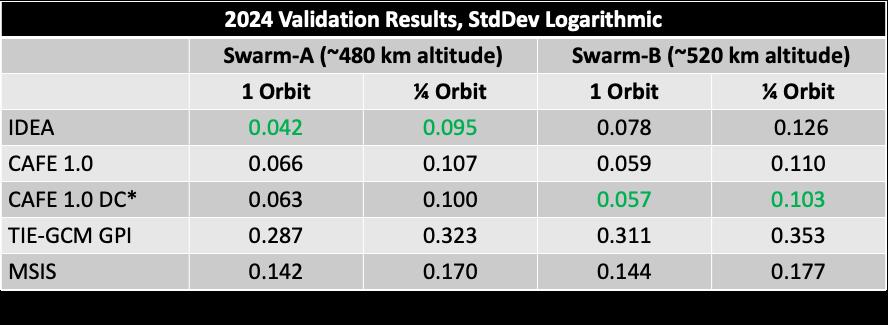
▲ Table 1: Example of DA (IDEA and CAFE) performance compared to the respective background models (TIE-GCM and MSIS respectively). The DA reduces errors by a factor of two in this example.
Active development of several DA tools is currently ongoing across the world. Figure 3 lists several of these efforts along with their home institutions and measurements being assimilated.
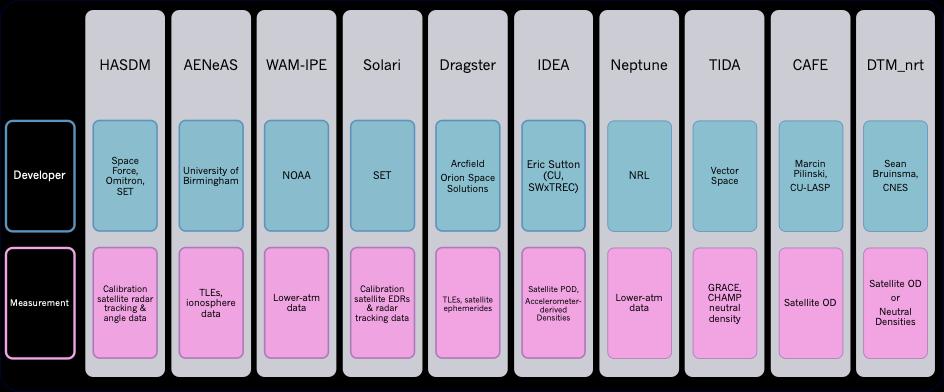
Examples of DA techniques being developed during the time of this report’s publication.
• Bernstein V., Pilinski M. Drag Coefficient Constraints for Space Weather Observations in the Upper Thermosphere. Space Weather. 2022 May 06; 20(5). Link here
• Chen, C. H., C. H. Lin, T. Matsuo, W. H. Chen, I. T. Lee, J. Y. Liu, J. T. Lin, and C. T. Hsu (2016), Ionospheric data assimilation with thermosphere-ionosphere-electrodynamics general circulation model and GPS-TEC during geomagnetic storm conditions, J. Geophys. Res. Space Physics, 121, 5708–5722. Link here.
• Choury, A., S. Bruinsma, P. Schaeffer (2013) Neural networks to predict exosphere temperature corrections, Space Weather, Vol. 11, 592–602. Link here
• Laskar, F. I., Pedatella, N. M., Codrescu, M. V., Eastes, R. W., & McClintock, W. E. (2022). Improving the thermosphere ionosphere in a whole atmosphere model by assimilating GOLD disk temperatures. Journal of Geophysical Research: Space Physics, 127, e2021JA030045. Link here
• Mutschler S., et al., A Survey of Current Operations-Ready Thermospheric Density Models for Drag Modeling in LEO Operations, Proceedings of the Advanced Maui Optical and Space Surveillance Technologies Conference, 2023. Link here
• Pilinski, M.D., G. Crowley, E. K. Sutton, and M. Codrescu. Improved orbit determination and forecasts with an assimilative tool for satellite drag specification. Proceedings of the Advanced Maui Optical and Space Surveillance Technologies Conference, 2016. Link here
• Sabin-Viorel Anton, Bernardo Sousa Alves, Christian Siemes, Jose van den IJssel, Pieter N.A.M. Visser, A wave scattering approach to modelling surface roughness in orbital aerodynamics, Advances in Space Research, Volume 76, Issue 2, 2025, Pages 811-864, ISSN 0273-1177. Link here
• Sutton, E. K. A new method of physics-based data assimilation for the quiet and disturbed thermosphere. Space Weather 2018, 16, 736–753. Link here
• Xu C., Caracciolo A. , Jorge P., Gouzman I., Pilinski M.D., Minton T.K. Inelastic Scattering Dynamics of Hyperthermal O Atoms on Engineering Surfaces Relevant to Satellites in Low Earth Orbit. Research Square. 2025 March 17. Link here


[Rosa Doran, Chair of COSPAR Panel on Education]
In beautiful Recife, where the horizon and the green waters meet, a vibrant community of space experts met again. This year’s SPACE Nordeste was devoted to “Expanding Horizons in the Space Sector”. More than 250 participants from various Brazilian states enriched the atmosphere.
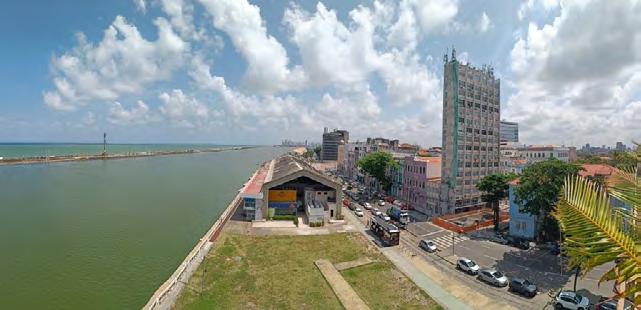
Once again, the COSPAR Panel of Education was present, bringing cutting-edge tools and resources for space education to the hands of a group of very talented teachers and university students. The educational program started with a round-the-table introduction of all participants, a perfect mix of educators and students from various domains, different expertise and expectations.
The program had a total of 15 pedagogical hours where participants had the opportunity to learn about student-centred methodologies, innovative assessment, the importance of inclusion and diversity in the classroom, interdisciplinary learning and digital innovation as a way to engage the students and bring enthusiasm to their learning experience.
Shifting from traditional teaching is never an easy task. To break the ice, a nice activity was introduced to exemplify the scientific method in the classroom. Participants were invited to explore a collection of mystery boxes. The boxes were all closed and could not be open or damaged. Teachers worked very hard to discover
the contents, in groups, in information exchange moments. At the end of the workshop the connection of this activity with the scientific method was presented. They were all very frustrated that the boxes were not going to be open, but very happy to learn an activity that so gracefully introduces the students to the thrill of a scientific discovery.
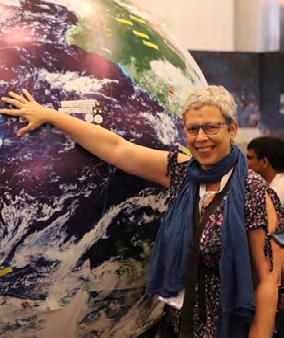
Interdisciplinary learning was introduced with a series of images spread on the floor. Participants had to, collaboratively, come up with a story where all images could be put together in a coherent manner. The participants were now the kids in the room. They had a lot of fun and in the end a very interesting fictional story was assembled. They had then to associate the story with the content they had to teach in the next three months. Everything found a spot, no content was left behind. The team was now converted to interdisciplinary story-based learning.
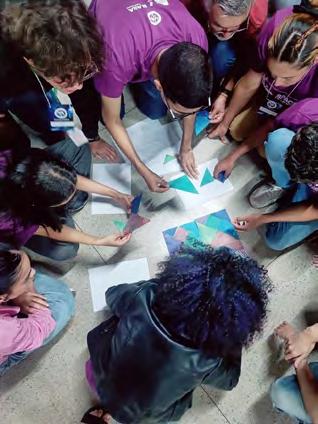
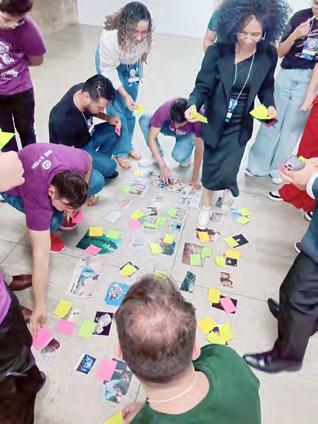
Several projects, inviting students to become researchers, were also presented to the audience. Namely:
AstroJourneys – introducing the participants to the big Ideas in astronomy and how to use artificial intelligence to create astronomy-related scenarios. The participants were invited to explore the ideas, and in groups come up with interdisciplinary scenarios. The challenge was presented to them: create inclusive scenarios using the universal design for learning, choose a series of competencies to be improved, and use AI to help identify the cross-correlation between all these ingredients, and to find interdisciplinary and innovative opportunities to involve their students in authentic research experiences.
StAnD – a project where students are invited to discover meteorites and asteroids. During the workshop, participants had a short introduction to these objects. The practical activity was to discover a micro-meteorite in the balcony of the building hosting the event. Luck was on the participants’ side and a very good candidate was discovered.
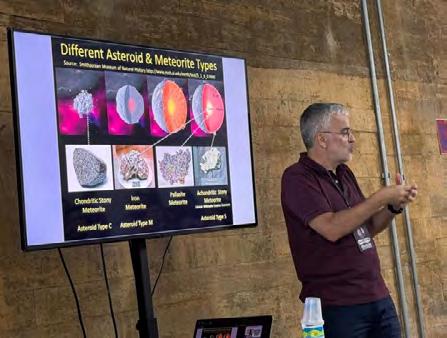
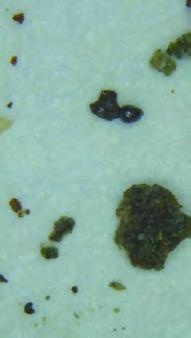
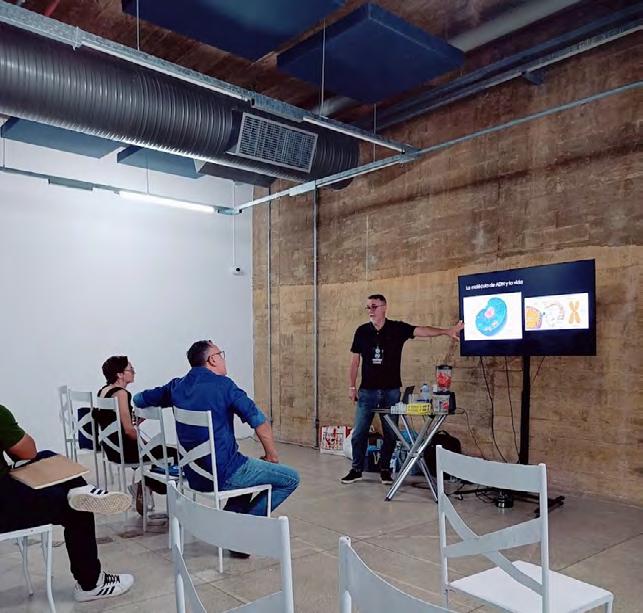
At the end of the event participants were invited to share in words the meaning this short experience had for them. A short survey showed that the participants were very happy with the course and all of its components.
EXPLORE – a project where students are invited to simulate a mission to Mars. During this part of the workshop a group discussion was conducted, related to the importance of space exploration in our lives and how projects like EXPLORE can ignite the interest of students in STEAM subjects and beyond.
The educational initiative CESAR, from the European Space Agency in Madrid was also presented to the participants who greatly appreciated learning about life on Earth and the Universe.
During the last afternoon of the event, a roundtable to discuss the COSPAR space education roadmap was organised. Experts from the INPE (National Institute for Space Research), the Brazilian Space Agency, EOLLAB - Universidade Federal do Ceará, Rede Space Farming Brazil, Universidade Estadual Paulista, and Dipteron UG, helped enrich the ideas presented and provided very valuable inputs to the construction of this crucial document. Next year, we will move to another state in the northeast of Brazil. A new team of inspiring educators awaits our return. Slowly, space is occupying the minds and lives of educators and students in this important area of Brazil. The beauty of the people and their culture only makes our determination to empower the new generation stronger.
We introduce here a new version of the International COSPAR Policy on Planetary Protection which is maintained and updated by the COSPAR Panel on Planetary Protection. The former 2024 version of the COSPAR Policy on Planetary Protection was validated by the COSPAR Bureau on 20 March 2024 and published in the COSPAR journal Space Research Today in July 2024 ( SRT 220, pp. 14-36). That version constituted a comprehensive editorial revision of the Policy compared to the earlier version from 2021. With the 2024 version, the Policy represented a modern instrument for contemporary implementation and application. In that revision process the COSPAR Panel on Planetary Protection decided to wait with substantive changes concerning missions to the outer Solar System bodies. It was agreed to pause with such revisions until full consensus was reached, including by scientific publication, scientific community review, and Panel considerations of those results. The introduction of "Icy Worlds" into the Policy has been a dedicated process within the Panel, including comprehensive discussions and interactions with all stakeholders at the Inaugural COSPAR Planetary Protection Week in London in April 2024 and at the subsequent Planetary Protection Week in Cologne in April 2025.
Upon endorsement of the new 2026 version of the Policy by Panel members on 6 October 2025, the text was submitted to
With regard to Icy Worlds (for which a new definition is now implemented in the Policy1), the previous COSPAR Policy on Planetary Protection focused specifically on Europa and Enceladus, which were assigned to Category III because their subsurface liquid water oceans are thought to be relatively close to the surface and in contact with a silicate core, increasing their potential habitability and accessibility. New findings from extended data analysis from several space missions indicate that other Icy Worlds could be of concern in these regards, even though their subglacial oceans may be deeper (such as on Ganymede and Titan) or ancient (like for Ceres). However, the former Policy did
the COSPAR Bureau for validation and was approved on 7 November 2025. Below is a brief explanation to the introduction of “Icy Worlds” into the new version of the Policy, which is published hereafter in this issue of Space Research Today

The new 2026 version comprises a number of editorial changes relative to the 2024 version to improve consistency, readability, understanding and application of the Policy, and substantive new guidelines for missions to Icy Worlds. The latter is a groundbreaking new introduction into the Policy instrument.
To support the implementation of the Policy, additional tables and appendices have been introduced to enhance the clarity and usability of this instrument. These include a new updated Figure 1 on planetary protection process overview in establishing the planetary protection categorization and resulting guidelines and mission documentation definition; a new Table 2 on planetary protection categories sorted by Target (note that Table 1 is retained in the Policy, thus in combination sorting the categorization by categories and by target bodies). Figure 2 is new and constitutes a flow diagram of first steps in determining categorization of an Icy World. Appendix D is also new and contains a list of known Icy Worlds.
not reflect this diversity or provide sufficient clarity for mission planners designing landers, orbiters, or sample return missions.
A specific Icy World categorization in the new Policy provides sufficient clarity for mission planners designing landers, orbiters, or sample return missions. We have introduced a formal definition of Icy Worlds which captures bodies that were previously unclassified or assigned Category II with special requirements for final assignment (commonly referred to as Cat. II*) within the Policy’s existing hierarchy (Mars, Moon, planets, Europa, Enceladus, small bodies), and developed a corresponding
1Icy Worlds in our Solar System are defined as all bodies with an outermost layer that is predominantly water ice by volume and that have enough mass to assume a nearly round shape [Doran et al. 2026].
categorization framework. Our new approach, where all Icy Worlds are by default assumed a category III unless a mission team can justify reclassification to Category II, addresses these concerns and removes the need for the previous and cumbersome II* process in the Policy.
While the new framework draws from the existing Europa and Enceladus guidelines, we replaced the original “trigger” for concern from the presence of water to temperature. Because no known Earth organism can replicate below –28°C, temperature serves as a clearer boundary for potential biological activity. On Earth, some brines remain liquid below –40°C but are still uninhabitable due to extremely low water activity. Thus, relying solely on the presence of liquid water risks misidentifying regions that could not actually support Earth life. Using temperature as an index allows us to more accurately define where terrestrial
Pascale Ehrenfreund (COSPAR President), Jean-Claude Worms (COSPAR Executive Director), Athena Coustenis (COSPAR Panel on Planetary Protection Chair, LIRA, Paris Observatory-Paris Science Letters Univ., France), Peter Doran (COSPAR Panel on Planetary Protection Vice-Chair, Louisiana State Univ., USA), Niklas Hedman (COSPAR Panel on Planetary Protection Vice-Chair, COSPAR General Counsel) and the COSPAR Panel on Planetary Protection 2025 members: Omar Hassan Al Shehhi (UAE Space Agency, UAE), Eleonora Ammannito (ASI, Italy), Masaki Fujimoto (JAXA-ISAS, Japan), Olivier Grasset (Nantes Univ., France), Timothy Haltigin (CSA, Canada), Alex Hayes (Cornell Univ., USA), Vyacheslav Ilyin
organisms might proliferate in outer Solar System bodies and to base contamination probability calculations on scientifically meaningful limits. The Policy now includes guidance on sample return from these bodies which was previously absent even for Europa and Enceladus.
By providing a definition of Icy Worlds, incorporating new thresholds for biological activity (e.g., the lower temperature limit for life), establishing probability-based contamination assessments, and guidelines for sample return from these bodies, COSPAR can better ensure that planetary protection offers a structured, evidence-based approach that adapts to new discoveries. There was also the benefit of removing II* from the Policy which was often deemed unclear and difficult to implement. Note that the new Policy does not apply to missions already en route or in advanced stages of development.
(Inst. For Biomedical Programs, RAS, Russia), Praveen Kumar Kuttanpillai (ISRO, India), Christian Mustin (CNES, France), Karen Olsson-Francis (UKSA, UK), Jing Peng (CNSA/CAST, China), Olga Prieto Ballesteros (Centro de Astrobiología, Spain), Francois Raulin (LISA, Univ. Paris Est Créteil, Univ. Paris Cité, CNRS, Créteil, France), Petra Rettberg (DLR-Inst. of Aerospace Medicine, Germany), Elaine Seasly (NASA, USA), Mark Sephton (Imperial College, UK), Silvio Sinibaldi (ESA), Yohey Suzuki (Univ. of Tokyo, Japan), Jeremy Teo (New York Univ., UAE), Lyle Whyte (McGill Univ., Canada), Kanyan Xu (CAST, China), Maxim Zaitsev (IKI, RAS, Russia) .
Noting that COSPAR has concerned itself with questions of biological contamination and spaceflight since its very inception,
Noting that Article IX of the Treaty on Principles Governing the Activities of States in the Exploration and Use of Outer Space, Including the Moon and Other Celestial Bodies (also known as the Outer Space Treaty of 1967) states that [United Nations 1967]:
“States Parties to the Treaty shall pursue studies of outer space, including the Moon and other celestial bodies, and conduct exploration of them so as to avoid their harmful contamination and also adverse changes in the environment of the Earth resulting from the introduction of extraterrestrial matter and, where necessary, shall adopt appropriate measures for this purpose.”
Noting that Article VI of the Treaty on Principles Governing the Activities of States in the Exploration and Use of Outer Space, Including the Moon and Other Celestial Bodies (also known as the Outer Space Treaty of 1967) states that [United Nations 1967]:
“States Parties to the Treaty shall bear international responsibility for national activities in outer space, including the Moon and other celestial bodies, whether such activities are carried on by governmental agencies or by non-governmental entities, and for assuring that national activities are carried out in conformity with the provisions set forth in the present Treaty. The activities of non-governmental entities in outer space, including the Moon and other celestial bodies, shall require authorization and continuing supervision by the appropriate State Party to the Treaty.”
Therefore, to guide compliance with the Outer Space Treaty, COSPAR maintains this Policy on Planetary Protection (hereafter referred to as the COSPAR Planetary Protection Policy) for the reference of spacefaring nations as an international voluntary and non-legally binding standard for the avoidance of organic-constituent and biological contamination introduced by planetary missions.
COSPAR,
Referring to COSPAR Resolutions 26.5 and 26.7 of 1964 [COSPAR 1964], and COSPAR Recommendation 3/2002 [COSPAR 2003],
Notes with appreciation and interest the extensive work done by the COSPAR Panel on Standards for Space Probe Sterilization and its successors the COSPAR Panel on Planetary Quarantine and the current COSPAR Panel on Planetary Protection, and
Accepts that for certain missions, controls on contamination should be imposed in accordance with a specified range of guidelines, based on the following policy objectives:
The scientific investigation of the process of chemical evolution and/or the origin and evolution of life must not be compromised. In addition, the Earth must be protected from the potential hazard posed by extraterrestrial matter carried by a spacecraft returning from a planetary mission.
Emphasises, therefore, that all entities conducting space activities beyond Earth orbit must implement controls commensurate with the mission type and targeted body’s significance for understanding the process of chemical evolution and/or the origin and evolution of life in the Solar System, and the potential for adverse impacts to the Earth’s biosphere.
Recognises that, for specific missions, controls can be tailored allowing the mission to accomplish its science objectives while still meeting planetary protection objectives.
COSPAR has established the Panel on Planetary Protection (hereafter referred to as the COSPAR PPP) to develop, maintain, and promote the COSPAR Planetary Protection Policy and associated guidelines for the reference of spacefaring nations and to assist them with compliance with the Outer Space Treaty, specifically with respect to protecting against the harmful effects of forward and backward contamination. The COSPAR PPP includes a number of agency representatives and experts in various fields attached to planetary protection such as astrobiology, planetary sciences, geology and geophysics, microbiology, aerospace engineering and operations, contamination control, space law and space policy, among others, and relies on information brought forward by the various communities through workshops and peer-reviewed studies [Coustenis et al. 2019, 2023].
The COSPAR PPP’s main function is to regularly review the latest available, peer-reviewed/expert scientific knowledge that is provided by external groups or by a subcommittee of the COSPAR PPP. Based on this information, the COSPAR PPP will produce recommendations to the COSPAR Bureau and Council as to whether a change in the COSPAR Planetary Protection Policy is required. Such recommendations, when validated by the COSPAR Bureau and Council, are then implemented into the Policy.
To increase transparency and promote inclusion, the activities and reports from the COSPAR PPP such as meeting minutes, presentations, subcommittee reports, and panel peer-reviewed journal articles are made available on the COSPAR PPP’s website as appropriate.
The COSPAR PPP encourages the entities conducting activities in outer space to seek guidance/assistance from the COSPAR PPP on the interpretation of this COSPAR Planetary Protection Policy as necessary.
The COSPAR PPP also supports States, on their voluntary request, in performing mission-specific review and assessment to encourage international cooperation in planetary protection matters.
4.1. Exploration Assumptions
To meet the objective of protecting the future search for life [e.g. Coustenis et al. 2025], the preferred approach is to limit the probability of contamination when that contamination could be harmful for understanding of the process of chemical evolution and/or the origin and evolution of life in the Solar System.
The probabilities of viable terrestrial microorganisms proliferating on a Solar System body during planetary missions are extremely low. This directly reflects the fact that most surface and shallow sub-surface environments at these bodies appear hostile to all known biological processes (although pockets or regions may exist that are compatible with, or could support growth of terrestrial microorganisms). These environments do not preclude the possibility of extinct or extant indigenous life forms.
The search for life is a central objective in the exploration of the Solar System [e.g., Coustenis et al. 2025].
The organic chemistry of these bodies remains of paramount importance to our understanding of the process of chemical evolution and its relationship to the origin and evolution of life.
The study of the processes of the pre-biotic organic syntheses under natural conditions should not be compromised.
4.2. Environmental Conditions for Replication
Given current understanding, the limiting physical environmental parameters in terms of water activity and temperature thresholds that should be satisfied at the same time to allow the replication of terrestrial microorganisms are [Rummel et al. 2014, Kminek et al. 2016 and Doran et al. 2024]:
• Lower limit of water activity (LLAw): 0.5
• Lower limit of temperature (LLT): -28°C
Both of these limits include margins below the reported limits of terrestrial biology [Rummel et al. 2014, Kminek et al. 2016].
4.3. Bioburden Constraints
All bioburden constraints for Mars missions are defined with respect to the number of mesophilic, heterotrophic, aerobic microorganisms that survive a heat shock of 80°C for 15 minutes (hereinafter “spores”) and are cultured on Tryptic-Soy-Agar (TSA) at 32°C for 72 hours [National Academies of Sciences, Engineering, and Medicine 2021, Olsson-Francis et al. 2023].
Rationale: Bacterial spores were selected as a biological indicator early in the Viking Mars Program due to their general hardiness to survive harsh environmental conditions and resistance to sterilization processes like dry heat microbial reduction [National Aeronautics and Space Administration 1967].
4.4 Period of Biological Exploration
The period of biological exploration (PBE) is the period in which contamination sensitivities are considered a driving importance to preserve the native state of a planetary body for initial biological exploration.
The PBE for Icy Worlds (see definition in Section 6.1.2.1) is 1000 years; this period should start at the beginning of the 21st century [National Research Council 2012, Kminek et al. 2019, COSPAR 2020].
The PBE for Mars is defined to be 50 years from spacecraft launch [COSPAR 1969, National Academies of Sciences, Engineering, and Medicine 2006].
4.5 Life Detection and Sample Return "False Positives"
A "false positive" could prevent distribution of the sample from containment and could lead to unnecessary increased rigour in the guidelines for all later missions.
4.6 Crewed Missions to Mars
The intent of planetary protection is the same whether a mission to Mars is conducted robotically or with human explorers. Accordingly, planetary protection goals should not be relaxed to accommodate a human mission to Mars. Rather, they become even more directly relevant to such missions - even if specific implementation guidelines should differ [Beaty et al. 2005, Criswell et al. 2005, Hogan et al. 2006, Kminek et al. 2005, Race et al. 2008, National Research Council 2002, Spry et al. 2024]. General principles include:
• Safeguarding the Earth from potential back contamination is the highest planetary protection priority in Mars exploration.
• The greater capability of human explorers can contribute to the astrobiological exploration of Mars only if human associated contamination is controlled and understood.
• For a landed mission conducting surface operations, it will not be possible for all human-associated processes and mission operations to be conducted within entirely closed systems.
There are five categories for target body/mission type combinations and the assignment of categories for specific mission/body combinations is to be determined by the best multidisciplinary scientific advice. Planetary protection categorization is a risk-informed decision-making process involving scientific consensus to assess the risk of planetary missions introducing harmful contamination of a target body or the possibility that extraterrestrial materials returning to Earth could have adverse impacts on the terrestrial biosphere (Figure 1). The type of mission and the target body type are the key parameters to establish a mission category. The type of mission includes flyby/orbiters (this term is used hereafter and includes gravity assists) where there is less likelihood for the scientific investigation of 1) the process of chemical evolution and 2) the origin and evolution of life becoming compromised, compared to a
probe/lander coming into direct contact with the target body. The target body type is evaluated on the potential for indigenous life and the significance that the scientific investigation of the process of 1) chemical evolution and 2) the origin and evolution of life would be compromised. Planetary protection guidelines and reporting to COSPAR recommendations can then be identified through the categorization process. The main categories are subdivided in some cases in order to allow for more precise guidelines.
Category I concerns all types of missions to a target body which is not of direct interest for understanding the process of chemical evolution and/or the origin and evolution of life.
Category II concerns all types of missions to those target bodies where there is significant interest relative to the process of chemical evolution and/or the origin and evolution of life, but where scientific consensus provides a remote1 chance of contamination by organic or biological materials which could compromise future investigations of the process of chemical evolution and/or the origin and evolution of life.
Category II for Earth’s Moon is subdivided into II, IIa, and IIb [COSPAR 2021]:
• Category II. For orbital and flyby missions.
• Category IIa. Landed missions not accessing a Permanently Shadowed Region (PSR) and/or the lunar poles, which are defined as locations in particular south of 79°S latitude and north of 86°N latitude [National Academies of Sciences, Engineering, and Medicine 2020].
• Category IIb. Landed missions targeting a PSR and/or the lunar poles, which are defined as locations in particular south of 79°S latitude and north of 86°N latitude [National Academies of Sciences, Engineering, and Medicine 2020].
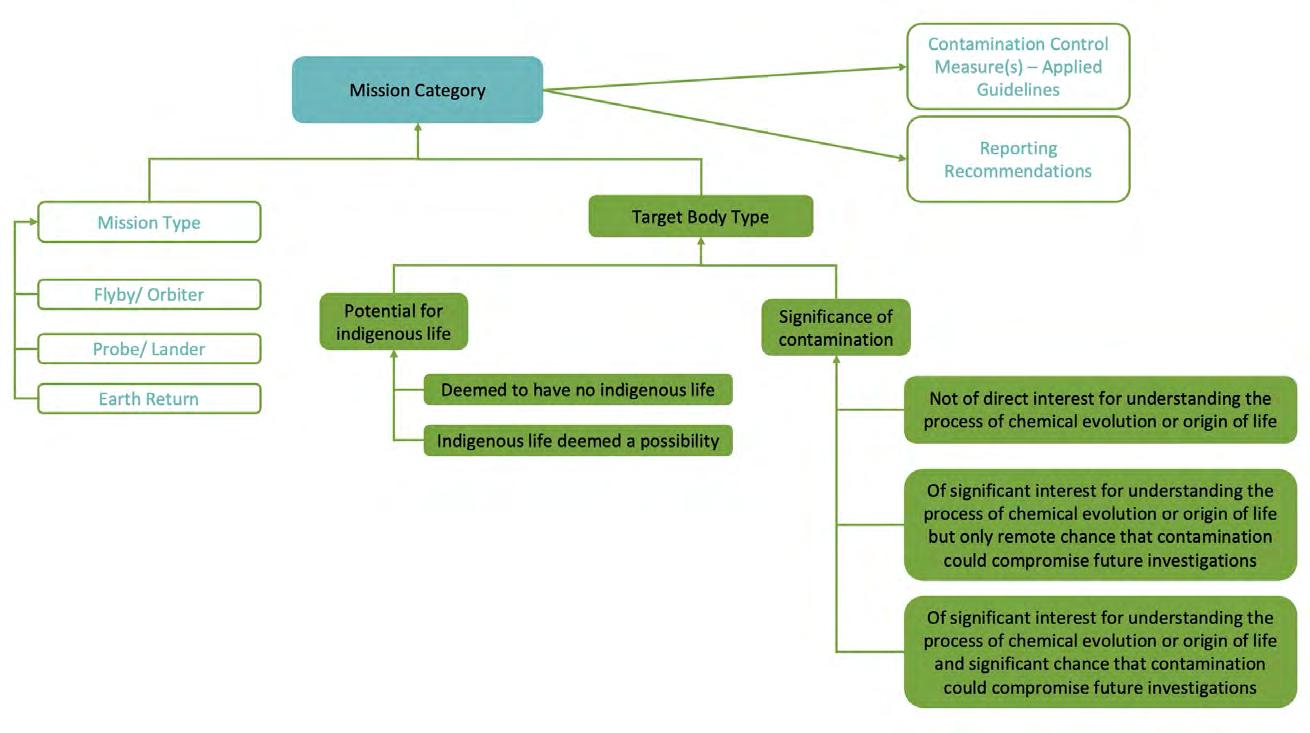
▲ Figure 1: Planetary protection process overview in establishing the planetary protection categorization and resulting guideline and mission documentation definition.
1 “Remote” here implies the absence of environments where terrestrial organisms could survive and replicate, or a very low likelihood of transfer to environments where this could occur.
The guidelines are for documentation of the mission's organics and trajectory, as applicable. Preparation of a short planetary protection plan is required for these flight projects primarily to outline intended or potential impact targets, brief Pre- and Post-launch analyses detailing impact strategies, and a Post-encounter and End-of-Mission Report which will provide the location of impact if such an event occurs. Solar System bodies considered to be classified as Category II are listed in Tables 1 and 2.
NOTE: The small bodies of the Solar System not elsewhere discussed in this COSPAR Planetary Protection Policy represent a very large class of objects. Imposing forward contamination controls on these missions is not warranted except on a case-by-case basis, so most such missions should reflect Categories I or II [National Research Council 1998, National Academies of Sciences, Engineering, and Medicine 2021, COSPAR 2021, Coustenis et al. 2023].
Category III concerns certain types of missions (flyby/orbiter) to a target body for which scientific consensus provides a significant1 chance of contamination by organic or biological materials compromising future investigations of the process of chemical evolution and/or the origin and evolution of life.
Guidelines will consist of documentation (more involved than Category II) and some implementing procedures, including trajectory biasing, the use of cleanrooms during spacecraft assembly and testing, and possibly bioburden reduction. Although no impact is intended for Category III missions, an inventory of bulk constituent organics is required if the probability of impact is significant.
Category IV concerns certain types of missions (mainly probe/lander) to a target body for which scientific consensus indicates a significant chance of contamination by organic or biological materials, which could compromise future investigations of the process of chemical evolution and/or the origin and evolution of life.
Category IV for Mars is subdivided into IVa, IVb, and IVc:
• Category IVa. Lander systems not carrying instruments for the investigations of extant Martian life.
• Category IVb. For probe/lander systems designed to investigate extant Martian life.
• Category IVc. For missions which investigate Mars Special Regions (see definition in Appendix A), even if they do not include life detection experiments.
Guidelines imposed require rather detailed documentation (more extensive than for Category III), including bioassays to enumerate the bioburden, a probability of contamination analysis, an inventory of the bulk constituent organics and an increased number of implementing procedures. The implementing procedures required may include trajectory biasing, cleanrooms, bioburden reduction, partial sterilization of the direct contact hardware and a bioshield for that hardware.
Category V concerns all missions returning samples to the Earth-Moon System (hereafter we only refer to Earth return) and is assigned in addition to the outbound (I-IV) categorization. The concern for these missions is the protection of the terrestrial system, the Earth and the Moon. The Moon should be protected from backward contamination of other celestial bodies to ensure unrestricted Earth-Moon travel. For Solar System bodies deemed by scientific consensus to have no indigenous life forms, a subcategory "Unrestricted Earth return" is defined. For all other Category V missions, a subcategory is defined as "Restricted Earth return".
For missions assigned Category V "Unrestricted Earth return", planetary protection guidelines are on the outbound phase only, corresponding to the category of that phase (typically Category I or II).
For missions assigned Category V "Restricted Earth return" the highest degree of concern is expressed by the absolute prohibition of destructive impact upon return, the need for containment throughout the return phase of all unsterilized returned hardware which directly contacted the target body and of unsterilized material from the body, and the need for containment of any unsterilized sample collected and returned to Earth. Post-mission, there is a need to conduct timely analyses of any unsterilized sample collected
1 “Significant” here implies the presence of environments where evidence of chemical evolution would be compromised by terrestrial contamination or where evidence of the origin or evolution of life could be corrupted by the introduction of terrestrial organisms to an environment where they could survive and replicate, and some likelihood of transfer to those places by a plausible mechanism.
and returned to Earth, under strict containment, and using the most sensitive techniques. If any detection of the existence of a non-terrestrial replicating entity is found, the returned sample should remain contained unless treated by an effective sterilizing procedure. Category V concerns are further reflected in guidelines that encompass those of Category IV plus a continuing monitoring of project activities, studies and research (i.e., in sterilization procedures and containment techniques).
6.1
The objective for biological control of missions is to provide a means of reducing the probability of contamination that might harm future scientific investigations. Biological control for a mission can either be addressed through a probability of contamination calculation or direct measurement of the biological cleanliness of an outbound mission.
▼ Table 1: Planetary Protection Categories in relation to target bodies. Please note that target body lists and categorizations are updated as needed to reflect new discoveries and the most current scientific understanding.
Category Mission Type
I
II
III
Target Body
Flyby1/Orbiter, Probe/Lander Undifferentiated, metamorphosed asteroids; Io
Flyby, Orbiter, Probe/Lander
Flyby/Orbiter
IV Probe/Lander
Venus2; Moon (Cat. II, IIa & IIb); Comets; Carbonaceous Chondrite Asteroids; Jupiter; Saturn; Uranus; Neptune; Icy Worlds3; Kuiper-belt objects that are not classified as Icy Worlds
Mars; Icy Worlds3
Mars (Cat. IVa, IVb,&.IVc); Icy Worlds3
V "Unrestricted Earth return" - Venus; Moon; Small Solar System Bodies and Icy Worlds without an answer of “no” or “uncertain” to all 6 questions in section 6.5.2
V "Restricted Earth return" - Mars; Small Solar System Bodies and Icy Worlds with an answer of “no” or “uncertain” to all 6 questions in section 6.5.2
1 “Flybys" include gravity assist manoeuvres.
2For the categorization of Venus, see Zorzano-Meier et al. [2023].
3By default, missions to Icy Worlds are considered either Cat. III (Orbiter) or Cat. IV (Lander). Assignment of these missions to category II must be supported by an analysis that determines the probability of introducing any component of the spacecraft into >LLT environments that may exist beneath their surfaces within the PBE of 1000 years. See Section 6.1.2.1 for more details.
▼ Table 2: Planetary Protection Categories sorted by Target. Please note that target body lists and categorizations are updated as needed to reflect new discoveries and the most current scientific understanding.
MERCURY Mercury
VENUS Venus2
EARTH Moon
MARS Mars
ASTEROID BELT Undifferentiated, metamorphosed asteroids
Carbonaceous Chondrite Asteroids
Icy Worlds – Ceres3
Flyby1/Orbiter, Probe/Lander I
Earth sample return V Unrestricted
Flyby/Orbiter, Probe/Lander II
Earth sample return V Unrestricted
Flyby/Orbiter, Probe/Lander II, IIa, IIb
Earth sample return V Unrestricted
Crewed missions II, IIa, IIb
Flyby/Orbiter III
Probe/Lander IVa, IVb, IVc
Earth sample return V Restricted
Crewed missions See Sections 4.6 and 6.6
Flyby/Orbiter, Probe/Lander I
Earth sample return V Unrestricted
Flyby/Orbiter, Probe/Lander II
Earth sample return V Unrestricted / Restricted
Flyby/Orbiter II / III
Probe/Lander II / IV
Earth sample return V Unrestricted / Restricted
OTHERS To-be-defined (TBD) All
GIANT PLANETS Jupiter, Saturn, Uranus, Neptune
TBD
Flyby/Orbiter, Probe/Lander II Io
Flyby/Orbiter, Probe/Lander I Icy Worlds3 - Moons
Flyby/Orbiter II / III
Probe/Lander II / IV
Earth sample return V Unrestricted / Restricted
Irregular moons
TRANSNEPTUNIAN REGION4 Comets
Icy Worlds3 - Transneptunian objects
Icy Worlds3 - Dwarf planets & their moons
Kuiper-belt objects that are not classified as Icy Worlds
Flyby/Orbiter, Probe/Lander II
Earth sample return V Unrestricted / Restricted
Flyby/Orbiter, Probe/Lander II
Earth sample return V Unrestricted / Restricted
Flyby/Orbiter II / III
Probe/Lander II / IV
Flyby/Orbiter II / III
Probe/Lander II / IV
Flyby/Orbiter, Probe/Lander II
OTHERS To-be-defined (TBD) All
1Flybys include gravity assist manoeuvres.
2For the categorization of Venus, see Zorzano-Meier et al. [2023].
TBD
3By default, missions to Icy Worlds are considered either Cat. III (Orbiter) or Cat. IV (Lander). Assignment of these missions to category II must be supported by an analysis that determines the probability of introducing any component of the spacecraft into >LLT environments that may exist beneath their surfaces within the PBE of 1000 years. See Section 6.1.2.1 for more details.
4Trans-Neptunian Region refers to the vast expanse of the Solar System beyond Neptune where, for example, the Kuiper Belt is located.
▼ Table 3: An example of the guidelines that may be considered based on planetary protection categories.
II (II,IIa, & IIb)
Only outer planets and their satellites; refer to Section 6.3
IIa & IIb; refer to Section 6.2.1
(IV,IVa, IVb, IVc)
V "Unrestricted Earth return"
To the degree that numerical guidelines are used to support the overall policy objectives of this document, and except where numerical guidelines are otherwise specified, the guideline to be used is that the probability that a planetary body will be contaminated during the PBE should be no more than 1 x 10⁻³. The PBE can be assumed to be no less than 50 years after a Category III or IV mission arrives at its protected target. While there is no specific format for probability of contamination calculations, a performance-based, riskinformed, safety case assured approach such as probabilistic risk assessments or assurances cases may be considered [National Academies of Sciences, Engineering, and Medicine 2021, Olsson-Francis et al. 2023].
6.1.2.1
Icy Worlds in our Solar System are defined as all bodies with an outermost layer1 that is predominantly water ice by volume and that have enough mass to assume a nearly round2 shape [Doran et al. 2026]. A list of currently known Icy Worlds appears in Appendix D.
By default, missions to Icy Worlds are considered either Category III (Flyby/Orbiter) or Category IV (Lander/Probe). Icy Worlds may be classified as a Category II mission but must be substantiated by an analysis that demonstrates that the probability of introducing any component of the spacecraft into >LLT environments within the PBE of 1000 years is <1 x 10⁻⁴ (Figure 2). This analysis should address both the existence of such environments as well as the prospects of accessing them. This probability calculation should include, at a minimum:
• The probability of the spacecraft reaching the surface of either the target body or any other body of interest in the target system (e.g., another satellite in a Giant Planet system);
• Worst-case assumptions for impact conditions (angle, velocity, etc.) with the target body, and;
• The mechanisms and timescales of transport to an environment where temperatures exceed LLT.
Note: While the effects of transient thermal anomalies caused by landing or inadvertent impact should be considered in this assessment, if they do not cause a connection to presumably deeper environments with in situ environmental temperatures > LLT, they will not be considered a contamination risk.
For guidance on best-practices for determining the above parameters, see the NASA (https://ntrs.nasa.gov/api/ citations/20240016475/downloads/PlanetaryProtection_Hdbk_2024_Final_For508ing_comp.pdf) or International (https:// cosparhq.cnes.fr/assets/uploads/2021/02/PPOSS_International-Planetary-Protection-Handbook_2019_Space-ResearchToday.pdf) handbooks. Examples of calculations that have supported the assignment of Category II to Icy World missions include Grasset et al. [2013] for the JUICE mission to Ganymede, and Lorenz et al. [2026] for the Dragonfly mission to Titan. Grasset et al. [2013], in particular, demonstrated that transport to in situ environments in Ganymede’s ice shell with temperatures > LLT would take at least 7,000 years for a range of impact conditions.
The potential presence of shallow subsurface water pockets and plumes on Europa [Schmidt et al. 2011, Sparks et al. 2016] and Enceladus [Hansen et al. 2006, Postberg et al. 2011] suggest that it would be very difficult to successfully demonstrate that the probability of introducing any component of the spacecraft into >LLT environments within the PBE of 1000 years is < 10-4. For missions to these bodies, the default assignment of Category III (flyby/orbiter) or Category IV (probe/lander) will likely be maintained and planetary protection measures such as bioburden reduction would then be necessary. Such missions will require the use of cleanroom technology, as well as the monitoring of spacecraft assembly facilities to understand the bioburden and its microbial diversity, including specific relevant organisms. Relevant organisms are Earth organisms potentially present on the spacecraft that could survive the spaceflight environment, the environment at the icy moon and can replicate in Icy Worlds subsurface >LLT environments. Specific methods should be developed and validated to identify, enumerate and eradicate problematic relevant organisms as necessary to achieve the 1 x 10⁻⁴ requirement.
For the purposes of this Policy, Ceres is included as an Icy World. While current knowledge suggests that there are regions of Ceres’ surface and near-subsurface that may not be predominantly composed of water ice [Kurokawa et al. 2020, McCord et al. 2022] and water activity may be below LLAw, the general community consensus is that Ceres is an icy body with an outermost layer that is greater than 50% water ice by volume [Park et al. 2020] and which shows evidence for the presence of regional, possibly extensive liquid at depth, and local expressions of recent and potentially ongoing activity [Castillo-Rogez et al. 2025]. From a Policy perspective, categorizing Ceres as an Icy World represents a conservative approach.
1 “Outermost layer” here refers to the shell of the body, or what would canonically be considered the crust of a terrestrial planet. We are explicitly excluding thin extrinsically derived veneers, such as the organic regolith on Titan or meter-scale dark dust that covers Iapetus.
2Here “nearly round” refers to a shape that is consistent with hydrostatic equilibrium, i.e., a body that has sufficient mass such that self-gravity has overcome rigid body forces.
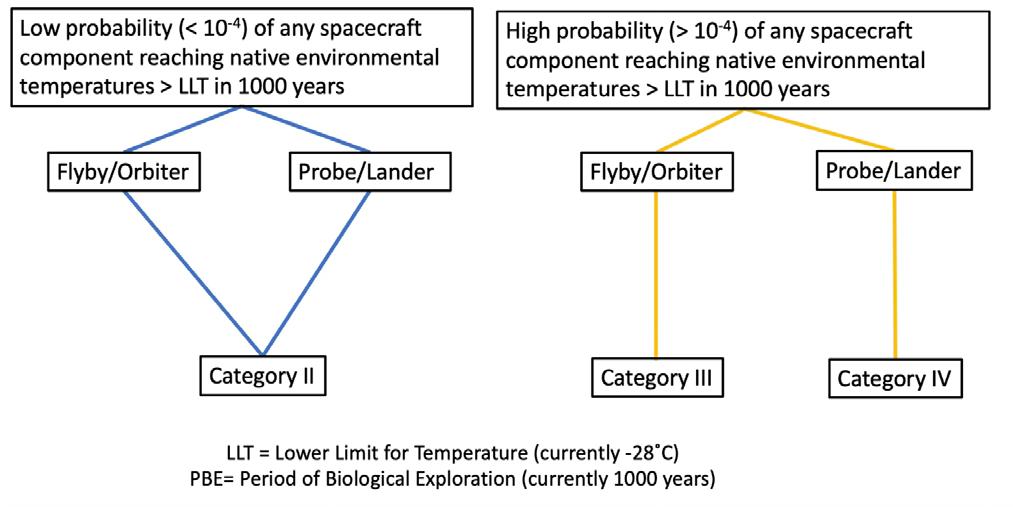
▲ Figure 2: Flow diagram of first step in determining categorization of an Icy World [from Doran et al. 2026].
6.1.2.1.1
Category III missions to Icy Worlds must demonstrate that the probability of introducing a viable terrestrial organism into environments with T>LLT (i.e., creating a potential biological inoculation event) within the PBE of 1000 years is <1 x 10⁻⁴. This analysis should expand upon the calculations in Section 6.1.2.1 used for categorization that assessed the probability of the spacecraft accessing >LLT environments and include a conservative estimate of poorly known parameters and address factors such as:
• Bioburden at launch;
• Cruise survival for contaminating organisms;
• Organism survival in the space environment adjacent to the target body;
• The probability of contaminating organisms surviving landing/impact, and;
• Organism survival and proliferation before, during, and after subsurface transfer.
Category IV missions to Icy Worlds should demonstrate compliance with the following bioburden cleanliness constraints:
• All of the constraints listed for Category III missions to Icy Worlds in Section 6.1.2.1.1 above, and;
• In the case that an environment with temperature > LLT is accessed through horizontal or vertical mobility we note that the entire landed system must meet the 10-4 probability of contamination over the PBE. For any subsystems that directly contact the environment with temperature > LLT, the probability calculation must consider potential recontamination during the mission prior to accessing the region.
6.1.2.2 Missions to Mars
6.1.2.2.1 Category III for Mars
Category III flyby/orbiter missions to Mars should demonstrate contamination avoidance of Mars through one of the following approaches [DeVincenzi et al. 1996, European Cooperation for Space Standardization 2019];
• A probability of impact on Mars by any part of a spacecraft of ≤ 1 x 10⁻² for the first 20 years after launch and ≤ 5 x 10⁻² for the time period from 20 to 50 years after launch, for nominal and non-nominal flight conditions, OR;
• Bioburden constraints for a Category IVa mission as detailed in Section 6.1.2.2.2.
Note: In addition to Mars-targeted missions, inadvertent impact calculations/considerations as described in this section are also applicable to any mission (Category I, II, III, IV) where the primary target is not Mars, but with risk to unintentionally introduce parts of the flight system into the Mars environment (as a result of Mars gravity assist manoeuvres or flybys in nominal and credible nonnominal flight trajectory scenarios).
6.1.2.2.2 Category IVa for Mars
Category IVa missions to Mars should demonstrate compliance with the following bioburden cleanliness constraints:
• A total bioburden of the spacecraft on Mars, including surface, mated, and encapsulated bioburden, is ≤ 5 x 10⁵ bacterial spores;
• The surface bioburden level is ≤ 3 x 10⁵ spores, and;
• An average of ≤ 300 spores per square meter.
Note: the values indicated in this section for spore density and total number of spores are a result of the evolution of a probabilitybased approach over the years to ascertain a probability of 1 x 10⁻⁴ of suitable growth conditions at Mars [National Research Council 1992, National Academies of Sciences, Engineering, and Medicine 2021].
6.1.2.2.3 Category IVb Life Detection and Sample Return Missions for Mars
All of the guidelines of Category IVa apply, along with the following requirement:
• The entire landed system is restricted to a surface bioburden level of ≤ 30* spores, or to levels of bioburden reduction driven by the nature and sensitivity of the particular life-detection experiments, OR;
• The subsystems which are involved in the acquisition, delivery, and analysis of samples used for life detection should be sterilized to these levels, ≤ 30* spores and a method of preventing recontamination of the sterilized subsystems and the contamination of the material to be analyzed is in place.
6.1.2.2.4 Category IVc Special Region Access for Mars
All of the guidelines of Category IVa apply, along with the following requirement:
• Case1. If the landing site is within the special region, the entire landed system is restricted to a surface bioburden level of ≤ 30* spores.
• Case 2. If the special region is accessed through horizontal or vertical mobility, either the entire landed system is restricted to a surface bioburden level of ≤ 30* spores, OR the subsystems which directly contact the special region should be sterilized to these levels, and a method of preventing their recontamination prior to accessing the special region should be provided.
NOTE: *This value considers the occurrence of hardy organisms with respect to the microbial reduction modality. This specification assumes attainment of Category IVa surface cleanliness, followed by at least a four order-of-magnitude reduction in viable organisms. Verification of bioburden level is based on pre- microbial reduction bioburden assessment and knowledge of reduction factor of the modality.
6.2 Organic Inventory
The objective for an organic inventory from hardware is to capture knowledge of the hardware materials for use by future scientific investigators as a reference to avoid any misinterpretation of terrestrial organics as indigenous biosignatures. While these guidelines do not preclude organic constituents for planetary protection, they do identify mission documentation parameters where organics may be perceived as a potential risk of harmful contamination.
An organic inventory should be provided for Category II, III & IV missions. For missions to the Moon, some exceptions apply (see Section 6.2.1).
6.2.1 Category II, IIa and IIb Missions to the Moon
Category II. Orbiter and flyby missions to the Moon should provide only the planetary protection documentation described in Appendix C. There is no need to provide an organic inventory.
Category IIa. All missions to the surface of the Moon whose nominal mission profile does not access areas defined in Category IIb should provide the planetary protection documentation and an inventory of volatile organic material, propellant residuals and combustion products that remain or have been released into the lunar environment by the propulsion, attitude control and other spacecraft systems.
Category IIb. All missions to the surface of the Moon whose nominal profile accesses Permanently Shadowed Regions (PSRs) and/ or the lunar poles, in particular latitudes south of 79°S and north of 86°N should provide the planetary protection documentation and a complete organic inventory (greater than 1 kg), which should consider contributions from all spacecraft hardware elements including subsidiary payloads that may be present in nominal and credible off-nominal scenarios. This is in line with Section 7 [National Academies of Science, Engineering and Medicine 2020, COSPAR 2021].
Note: Category IIb applies to all PSRs, irrespective of latitude, and non-PSR regions in particular within the latitudes south of 79°S and north of 86°N [National Academies of Sciences, Engineering, and Medicine 2020]
6.2.2 Category III and IV Missions
A spacecraft organic inventory includes a listing of all organic materials carried by a spacecraft that are present in a total mass greater than 1 kg.
6.3 Cleanroom
The objective of utilizing a cleanroom during hardware assembly, integration and testing is to manage contamination and recontamination thereby minimizing the potential risk of harmful contamination.
To manage contamination of hardware COSPAR recommends the use of cleanroom technology (ISO 8 or better) for all category III and IV missions, see table C1 [International Organization for Standardization 2004].
6.4
The objective of trajectory biasing through mission design considerations is to prevent unwanted contamination from launch vehicle components. Launch vehicle end-of-mission disposal should be considered by each mission so as not to be an additional source of harmful contamination.
The probability of impact on Mars by any part of the launch vehicle should be ≤ 1 x 10⁻⁴ for a time period of 50 years after launch. For Icy World impact considerations see note in Section 6.1.2.1.
The objective of the restricted Earth return guidelines for missions is to ensure missions have a means of handling high-risk extraterrestrial samples, and decreasing adverse impacts to the Earth’s biosphere.
6.5.1
• Unless specifically exempted, the outbound leg of the mission should meet outbound category-specific organic and biological contamination control (or Category IVb for Mars surface missions) guidelines. This provision is intended to avoid "false positive" indications in a life-detection and hazard-determination protocol, or in the search for life in the sample after it is returned.
• The mission should provide a method to "break the chain of contact" with the target body. “Break-the-chain of contact” should apply to any hardware or sample that is exposed to an unsterilized extraterrestrial particle originating from the target body.
• For unsterilized samples returned to Earth, a program of life detection and biohazard testing, or a proven sterilization process, should be undertaken as an absolute precondition for the controlled distribution of any portion of the sample.
Note: determination of universal biohazard testing, proven sterilization processes or general risk management measures might not be credible without evaluating evidence of extinct or extant life on the samples. More realistic and tailored protocols can be developed once specific studies are performed on a detected extraterrestrial life form [Kminek et al. 2022].
If during the course of a Category V mission there is a change in the circumstances that led to its classification, or a mission failure, e.g.:
• New data or scientific consensus that would lead to the reclassification of a mission classified as “Unrestricted Earth return” to “Restricted Earth return,” and safe return of the sample cannot be assured, OR;
• The sample containment system of a mission classified as “Restricted Earth return” is thought to be compromised, and sample sterilization is impossible,
then in either case the sample to be returned should be abandoned, and if already collected the spacecraft carrying the sample should not be allowed to return to the Earth or the Moon.
Missions to small Solar System bodies and Icy Worlds should determine if a mission is classified "Restricted Earth return" or not. Such a mission assessment should be undertaken with respect to the best multidisciplinary scientific advice, using the framework presented in the 1998 report of the US National Research Council’s Space Studies Board entitled, Evaluating the Biological Potential in Samples Returned from Planetary Satellites and Small Solar System Bodies: Framework for Decision Making [National Research Council 1998]. Specifically, such a determination should address the following six questions for each body intended to be sampled:
1. Does the preponderance of scientific evidence indicate that there was never liquid water in or on the target body?
2. Does the preponderance of scientific evidence indicate that metabolically useful energy sources were never present?
3. Does the preponderance of scientific evidence indicate that there was never sufficient organic matter (or CO2 or carbonates and an appropriate source of reducing equivalents) in or on the target body to support life?
4. Does the preponderance of scientific evidence indicate that subsequent to the disappearance of liquid water, the target body has been subjected to extreme temperatures (i.e., >160°C)?
5. Does the preponderance of scientific evidence indicate that there is or was sufficient radiation for biological sterilization of terrestrial life forms?
6. Does the preponderance of scientific evidence indicate that there has been a natural influx to Earth, e.g., via meteorites, of material equivalent to a sample returned from the target body?
For containment procedures to be necessary (“Restricted Earth return”), an answer of "no" or “uncertain” needs to be returned to all six questions.
Implementation guidelines for human missions to Mars include [Hogan et al. 2006, Kminek et al. 2005, Race et al. 2008]:
• Human missions will carry microbial populations that will vary in both kind and quantity, and it will not be practicable to specify all aspects of an allowable microbial population or potential contaminants at launch;
• Once any baseline conditions for launch are established and met, continued monitoring and evaluation of microbes carried by human missions will be required to address both forward and backward contamination concerns;
• A quarantine capability and protocols for the crew should be provided during and after the mission, in case potential contact with a Martian life-form occurs;
• A comprehensive planetary protection protocol for human missions should be developed that encompasses both forward and backward contamination concerns and addresses the combined human and robotic aspects of the mission, including subsurface exploration, sample handling, and the return of the samples and crew to Earth;
• Any uncharacterized Martian site should be evaluated by robotic precursors prior to crew access. Information may be obtained by either precursor robotic missions or a robotic component on a human mission;
• Any pristine samples or sampling components from any uncharacterized sites or Special Regions on Mars should be treated according to current planetary protection Category V, Restricted Earth return, with the proper handling and testing protocols;
• An onboard crewmember should be given primary responsibility for the implementation of planetary protection provisions affecting the crew during the mission;
• Planetary protection guidelines for initial human missions should be based on a conservative approach consistent with a lack of knowledge of Martian environments and the possibility for extinct or extant life, as well as the performance of human support systems in those environments, and;
• Planetary protection guidelines for later missions should not be relaxed without scientific review, justification, and consensus.
COSPAR recommends that entities conducting activities in outer space provide to authorizing entities a reasoned argument that planetary protection objectives will be or have been satisfied.
COSPAR further recommends that entities conducting activities in outer space publish and share with the COSPAR PPP their approaches, certain mission parameters, and lessons learned for the benefit of future missions.
COSPAR recommends that such entities share with COSPAR their mission planetary protection plan for review and feedback prior to launch. It is further recommended that such entities provide information to COSPAR within a reasonable time not to exceed six months after launch about the procedures and computations used for planetary protection for each flight and again within one year after the end of a solar-system exploration mission about the areas of the target(s) which may have been subject to contamination.
Reports should include, but not be limited to, information regarding applicable guidelines for bioburden, organic inventory, and probability of impact. Appendix B provides the recommended reporting elements. Reports are made available in an open-source repository for the reference of the COSPAR PPP, mission implementers, and members of the science community.
Appendix C (with Tables C1 and C2) refers to mission documentation expected elements. These documents are intended to be captured as part of the internal mission documentation and not necessarily expected to be reported to COSPAR.
Beaty, D.W., Snook, K., Allen, C.C., Eppler, D., Farrell, W.M., Heldmann, J., Metzger, P., Peach, L., Wagner, S.A., Zeitlin, C. 2005. An Analysis of the Precursor Measurements of Mars Needed to Reduce the Risk of the First Human Missions to Mars. Unpublished white paper, 77 p, posted June, 2005 by the Mars Exploration Program Analysis Group (MEPAG) at http://mepag.jpl.nasa.gov/reports/index.html.
Beaty, D.W., Buxbaum, K., Meyer, M., Barlow, N., Boynton, W., Clark, B., Deming, J., Doran, P. T., Edgett, K., Hancock, S., Head, J., Hecht, M., Hipkin, V., Kieft, T., Mancinelli, R., McDonald, E., McKay, C., Mellon, M., Newsom, H. 2006. Findings of the Mars Special Regions Science Analysis Group. Astrobiology 6 677-732
Castillo-Rogez, J., Quick, L., Neveu, M., Scully, J., Nordheim, T., Clement, B., Newlin, L., Schmedemann, N., Hendrix, A., Raymond, C Rayman, M. 2025. Informing Planetary Protection Policies for the Future Exploration of Ceres: State of Understanding after the Dawn Mission. Astrobiology 25, Number 1, DOI: 10.1089/ast.2024.0066
COSPAR, 1964. COSPAR RESOLUTION 26.5, COSPAR Information Bulletin, 20, 25-26.
COSPAR, 1969. COSPAR DECISION No. 16, COSPAR Information Bulletin, 50,15-16.
COSPAR, 1984. COSPAR INTERNAL DECISION No. 7/84, Promulgated by COSPAR Letter 84/692-5.12.-G. 18 July 1984.
COSPAR, 1994. COSPAR DECISION No. 1/94, COSPAR Information Bulletin, 131, 30.
COSPAR, 2003. COSPAR RECOMMENDATION No. 3/2002, COSPAR Information Bulletin, 156, 24-25.
COSPAR, 2020. COSPAR Policy on Planetary Protection. Space Research Today, 208, pp. 10-22. DOI: 10.1016/j.srt.2020.07.008
COSPAR, 2021. COSPAR Policy on Planetary Protection. Space Research Today, 211. https://doi.org/10.1016/j.srt.2021.07.009
COSPAR, 2024. COSPAR Policy on Planetary Protection. Space Research Today, 220, pp. 14-36. https://issuu.com/ cosparspaceresearchtoday/docs/space_research_today_220
Coustenis, A., Kminek, G., Hedman, N., Ammannito, E., Deshevaya, E., Doran, P.T., Grasset, O., Green, J., Hayes, A., Lei, L., Nakamura, A., Prieto-Ballesteros, O., Raulin, F., Rettberg, P., Sreekumar, P., Tsuneta, S., Viso, M., Zaitsev, M., Zorzano-Mier, M.-P. 2019. The COSPAR Panel on Planetary Protection Role, Structure, and Activities, Space Res. Today, August.
Coustenis, A., Hedman, N., Doran, P.T., Al Shehhi, O., Ammannito, E., Fujimoto, M., Grasset, O., Groen, F., Hayes, A., Ilyin, V., Kumar, K. P., Morisset, C-E., Mustin, C., Olsson-Francis, K., Peng, J., Prieto Ballesteros, O., Raulin, F., Rettberg, P., Sinibaldi, S., Suzuki, J., Xu, K., Zaitsev, M., 2023. Planetary Protection: an international concern and responsibility. Front. Astron. Space Sci. 10:1172546. doi: 10.3389/ fspas.2023.1172546
Coustenis, A., Doran, P.T., Olsson-Francis, K., Prieto-Ballesteros, O., Raulin, F., Rettberg, P., Grasset, O., Hayes, A., Mustin, C., Hedman, N., Al Shehhi, O., Ammannito, E., Fujimoto, M., Haltigin, T., Ilyin, V., Peng, J., Praveenkumar, K., Sephton, M.A., Sinibaldi, S., Suzuki, Y., Teo, J., Whyte, L.G., Xu, K., Zaitsev, M., 2025. The quest for habitats in the outer Solar System and how to protect exotic pristine environments. Acta Astronautica 233, August 2025, 330-343. https://doi.org/10.1016/j.actaastro.2025.04.003
Criswell, M.E., Race, M.S., Rummel, J.D., Baker, A. (Eds.). 2005. Planetary Protection Issues in the Human Exploration of Mars, Pingree Park Final Workshop Report, NASA/CP-2005-213461. NASA Ames Research Center, Mountain View.
DeVincenzi, D. L., Stabekis, P.D. Barengoltz, J.B. 1996. Refinement of planetary protection policy for Mars missions, Adv. Space Res., 18, #1/2, 311-316.
Doran, P.T., Hayes, A., Grasset, O., Coustenis, A., Prieto-Ballesteros, O, Hedman, N., Al Shehhi, O., Ammannito, E., Fujimoto, M., Groen, F., Moores, J.E., Mustin, C., Olsson-Francis, K., Peng, J., Praveenkumar, K., Rettberg, P., Sinibaldi, S., Ilyin, V., Raulin, F., Suzuki, Y., Xu, K., Whyte, L.G., Zaitsev, M., Buffo, J., Kminek, G., Schmidt, B. 2024. The COSPAR Planetary Protection Policy for missions to Icy Worlds: A review of history, current scientific knowledge, and future directions. Life Sciences in Space Research, 41, Pages 86-99. https://doi. org/10.1016/j.lssr.2024.02.002
Doran, P.T., Hayes, A., Coustenis, A., Grasset, O., Prieto-Ballesteros, O, Xu, K., Haltigin, T., Hedman, N., Al Shehhi, O., Ammannito, E., Fujimoto, M., Mustin, C., Olsson-Francis, K., Peng, J., Praveenkumar, K., Rettberg, P., Ilyin, V., Raulin, F., Sephton, M.A., Suzuki, Y., Teo, J., Whyte, L.G., Zaitsev, M. 2026. Proposed updates to the COSPAR planetary protection policy for missions to Icy Worlds. Philosophical Transactions of the Royal Society A. in press
European Cooperation for Space Standardization, 2019. Planetary Protection 13/14 Standard, ECSS-U-ST-20C, 1 August 2019.
Grasset O., Bunce, E., Coustenis, A., Dougherty, M.K., Erd, C., Hussmann, H., Jaumann, R., Prieto-Ballesteros, O. 2013 Review of exchange processes on Ganymede in view of its planetary protection categorization. Astrobiology, 13 (10), 991-1004, doi: 10.1089/ ast.2013.1013.
Hansen C.J., Esposito, L., Stewart, A.I.F., Colwell, J., Hendrix, A., Pryor, W., Shemansky, D., West, R. 2006. Enceladus' Water Vapor Plume. Science 311,1422 1425(2006), doi:10.1126/science.1121254.
Hogan, J.A., Race, M.S., Fisher, J.L., Rummel, J.D.. 2006. Life Support and Habitation and Planetary Protection Workshop Final Report, NASA, Ames Research Center, Moffett Field CA, NASA/TM-2006-213485.
International Organization for Standardization 2004. Cleanrooms and associated controlled environments – Part 5: Operations. ISO 14644-5:2004.
Kminek, G., Rummel J., Race M. 2005. ESA WPP-276. Joint ESA/NASA Workshop: Planetary Protection and Human System Research and Technology. ESA/ESTEC May 19-20, 2005, Noordwijk, The Netherlands.
Kminek, G., Rummel, J.D., Cockell, C.S., et al. 2010. Report of the COSPAR Mars Special Regions Colloquium, Adv. Space Res., 46, 811829, 2010.
Kminek, G., Hipkin, V.J., Anesio, A.M., et al. 2016. COSPAR Panel on Planetary Protection Colloquium Report, Space Res. Today, 195.
Kminek, G., Fellous, J-L, Rettberg, P., Moissl-Eichinger, C., Sephton, M.A. Royle, S.H., Spry, A., Yano, H., Chujo, T., Margheritis D.B, Brucato, J.R., Haddaji A.J., 2019. The International Planetary Protection Handbook. Space Research Today, 205, Supplement, Pages e1e120 (October 2019). https://doi.org/10.1016/j.srt.2019.09.001
Kminek, G., Benardini, J. N., Brenker, F. E., Brooks, T., Burton, A. S., Dhaniyala, S., Dworkin, J. P., Fortman, J. L., Glamoclija, M., Grady, M. M., Graham, H. V., Haruyama, J., Kieft, T. L., Koopmans, M., McCubbin, F. M., Meyer, M. A., Mustin, C., Onstott, T. C., Pearce, N., Pratt, L. M., Sephton, M. A., Siljeström, S., Sugahara, H., Suzuki, S., Suzuki, Y., van Zuilen, M., Viso, M. 2022. COSPAR Sample Safety Assessment Framework (SSAF). Astrobiology, 22, Supplement 1, http://doi.org/10.1089/ast.2022.0017
Kurokawa, H., Ehlmann, B.L., De Sanctis, M.C. 2020. A Probabilistic Approach to Determination of Ceres' Average Surface Composition from Dawn Visible-Infrared Mapping Spectrometer and Gamma Ray and Neutron Detector Data. J. Geophys. Res. Planets 125, Issue12, doi: 10.1029/2020JE006606.
Lorenz, R., MacKenzie, S., Ballarott, O.M., Hibbard, K., Turtle, E. 2026. Planetary Protection Considerations for Dragonfly at Titan. Philosophical Transactions of the Royal Society A. in press.
McCord, T.B., Combe, T.B., Castillo-Rogez, J.C., McSween, H.Y., Prettyman, T.H. 2022. Ceres, a wet planet: The view after Dawn. Geochemistry, 82(2), doi: 10.1016/j.chemer.2021.125745.
National Academies of Sciences, Engineering, and Medicine. 2006. Preventing the Forward Contamination of Mars. Washington, DC: The National Academies Press. https://doi.org/10.17226/11381
National Academies of Sciences, Engineering, and Medicine, 2020. Report Series: Committee on Planetary Protection: Planetary Protection for the Study of Lunar Volatiles. Washington,DC: The National Academies Press. https://doi.org/10.17226/26029
National Academies of Sciences, Engineering, and Medicine, 2021. Report Series: Committee on Planetary Protection: Evaluation of Bioburden Requirements for Mars Missions. Washington, DC: The National Academies Press. https://doi.org/10.17226/26336
National Aeronautics and Space Administration.1967. Standard procedures for the microbiological examination of space hardware, NHB 5340.1. Washington: The Administration.
National Research Council,1992. Biological Contamination of Mars: Issues and Recommendations. Washington, DC: The National Academies Press. https://doi.org/10.17226/12305
National Research Council, 1998. Evaluating the Biological Potential in Samples Returned from Planetary Satellites and Small Solar System Bodies: Framework for Decision Making. Washington, DC: The National Academies Press. https://doi.org/10.17226/6281
National Research Council, 2002. “Safe On Mars”: Precursor Measurements Necessary to Support Human Operations on the Martian Surface. National Academy Press, Washington, D.C., www.nap.edu
National Research Council, 2012. Assessment of Planetary Protection Requirements for Spacecraft Missions to Icy Solar System Bodies. Washington, DC: National Academies Press.
Olsson-Francis, K., Doran, P. T., Ilyin, V., Raulin, F., Rettberg, P., Kminek, G., Zorzano Mier, M.-P., Coustenis, A., Hedman, N., Al Shehhi, O., Ammannito, E., Bernardini, J., Fujimoto, M., Grasset, O., Groen, F., Hayes, A., Gallagher, S., Kumar K, P., Mustin, C., Nakamura, A., Seasly, E., Suzuki, Y., Peng, J., Prieto-Ballesteros, O., Sinibaldi, S., Xu, K., Zaitsev, M. , 2023. The COSPAR Planetary Protection Policy for robotic missions to Mars: A review of current scientific knowledge and future perspectives. Life Sciences in Space Research, 36:27-35. Park, R.S., Konopliv, A.S., Ermakov, A.I. 2020. Evidence of non-uniform crust of Ceres from Dawn’s high-resolution gravity. Nature Astronomy, Vol 4 pp 748–755 (doi: 10.1038/s41550-020-1019-1)
Postberg, F., Schmidt, J., Hillier, J., Kempf, S., Srama, R. 2011. A salt-water reservoir as the source of a compositionally stratified plume on Enceladus. Nature, 474(7353), 620-622.
Race, M., Kminek, G.. Rummel, J.D. 2008. Planetary protection and humans on Mars: NASA/ESA workshop results, Advances in Space Research, Volume 42, Issue 6, Pages 1128-1138, https://doi.org/10.1016/j.asr.2008.03.003
Rummel, J. D., Ehrenfreund, P., Peter, N. 2009. Report of the COSPAR Workshop on Planetary Protection for Outer Planet Satellites and Small Solar System Bodies, COSPAR, Paris, France.
Rummel, J.D., Beaty, D.W., Jones, M.A., Bakermans, C., Barlow, N.G., Boston, P.J., Chevrier, V.F., Clark, B.C., de Vera, J.-P.P., Gough, R.V., Hallsworth, J.E., Head, J.W., Hipkin, V.J., Kieft, T.L., McEwen, A.S., Mellon, M.T., Mikucki, J.A., Nicholson, W.L., Omelon, C.R., Peterson, R., Roden, E.E., Sherwood Lollar, B., Tanaka, K.L., Viola, D., Wray, J.J. 2014. A new Analysis of Mars "Special Regions": Findings of the Second MEPAG Special Regions Science Analysis Group(SR-SAG2), Astrobiology, 14, 887-968, 2014.
Schmidt B.E., Blankenship, D.D., Patterson, G.W. 2011. Active formation of ‘chaos terrain’ over shallow subsurface water on Europa, Nature, doi: 10.1038/nature10608.
Sparks, W.B., Hand, K.P., McGrath, M.A., Bergeron, E., Cracraft, M., Deustua, S.E. 2016. Probing for evidence of plumes on Europa with HST/STIS. Astrophys. J., Volume 829, Number 2, doi: 10.3847/0004-637X/829/2/121.
Spry, J.A., Siegel, B., Bakermans, C. 2024. Planetary Protection Knowledge Gap Closure Enabling Crewed Missions to Mars, Astrobiology, 24, No. 3 https://doi.org/10.1089/ast.2023.0092
United Nations, 1967. Treaty on principles governing the activities of states in the exploration and use of outer space, including the moon and other celestial bodies, U.N. Doc. A/RES/2222/(XXI) 25 Jan 1967; TIAS No. 6347.
Zorzano-Meier, M. P., Olsson-Francis, K., Doran, P., Rettberg, P., Coustenis, A., llyin, V., Raulin, F., Kminek, G., Hedman, N., Al Shehhi, O., Ammannito, E., Bernardini, J., Fujimoto, M., Grasset, O., Groen, F., Hayes, A., Gallagher, S., Kumar, P., Mustin, C., Nakamura, A., Seasly, E., Suzuki, Y., Peng, J., Prieto Ballesteros, O., Sinbaldi, S., Xu, K., Zaitsev, M., 2023. The COSPAR Planetary Protection Requirements for Space Missions to Venus. Life Sciences in Space Research, 37, 18–24. https://doi.org/10.1016/j.lssr.2023.02.001
Bioassay. A collection and analysis of biological contamination with a specific procedure.
Bioburden. Number of viable organisms on or in spacecraft materials measured with a defined bioassay.
Biological Inoculation Event. Introduction of a viable organism to an environment within a Solar System body that is potentially capable of providing nutrients and environmental growth conditions such that the organism can replicate. For the purposes of this document, such an environment is defined as one with temperatures > LLT and water activity > LLAw.
Break the Chain of Contact. Prevent the transfer to the Earth-Moon System of all materials from another habitable world that are not either sterilized or contained.
Earth-Moon System. The Earth and the Moon (including artificial objects in orbit around either body) is considered as a single environment for planetary protection purposes in considering return from restricted return bodies (Mars, Europa, Enceladus, others to be determined) to protect the unrestricted travel within the system.
Encapsulated bioburden. Bioburden inside the bulk non-metallic materials not manufactured with additive layer manufacturing. Examples are bioburden inside paints, conformal coatings, thermal coatings, adhesives, composite materials, closed-cell foam, bulk liquids and bulk gasses.
Extant life. Form of life, or signatures thereof, whether metabolically active or dormant.
Extinct life. Form of life, or signatures thereof, that is unambiguously no longer metabolically active or dormant.
Exposed surfaces. Internal and external surfaces free for gas exchange.
False positive. In a life-detection and/or hazard-determination protocol, it is any unwanted organic contamination introduced to the sampling process. As a consequence of cross contamination in the sample under analysis, validity of the sample and associated scientific results will be affected. This may also be the case for future missions.
False negative. In a life-detection and/or hazard-determination protocol, it is any mis-characterization of sample content failing to identify evidence of biological entities and processes.
Mated surfaces. Surfaces joined by fasteners rather than by adhesives.
Non-nominal. These scenarios cover cases where some condition could occur that results in the system performing in a way that is different from normal. This includes failures, low performance, unexpected environmental conditions, or operator errors that would affect compliance with the probabilistic guidelines.
Organic Material. All carbon-containing compounds excluding carbides, carbonates, cyanides and simple oxides of carbon (i.e., CO and CO2).
Organic Inventory. A complete organic inventory should consider contributions from all spacecraft hardware elements (greater than 1 kg), including subsidiary payloads that may be present in nominal and credible off-nominal scenarios inventory should include organic products that may be released into the environment of the protected Solar System body by propulsion and life support systems (if present) and this includes a quantitative and qualitative description of major chemical constituents and the integrated quantity of minor chemical constituents present. For Category IIa the organic inventory should only consider the volatile organic material, propellant residuals and combustion products that remain or have been released into the lunar environment by the propulsion, attitude control and other spacecraft systems.
Period of Biological Exploration (PBE). The anticipated period of time (decades to centuries) during which a Solar System body is explored for signs of the origin and evolution of life and the history of prebiotic chemistry based on current scientific understanding. For Mars the PBE is 50 years and for Icy Worlds it is 1000 years. The wide range in PBE between these bodies is caused by projected frequency of missions to them.
Planetary Protection Category. Category assigned to reflect the interest and concern that terrestrial contamination can compromise future investigations, and depends on the target body and mission type.
NOTE: Different requirements are associated with the various categories.
Probability of contamination (Pc). Probability of introducing into the environment of a Solar System body unwanted material present on or in the spacecraft.
Sample. Any intentionally collected or unintentionally adhering physical material (including solids, liquids, and gases) that is present on a spacecraft returning to the Earth-Moon system from another Solar System body.
Special Region. A Special Region is defined as a region within which terrestrial organisms are likely to replicate. Any region which is interpreted to have a high potential for the existence of extant Martian life forms is also defined as a Special Region. Spacecraftinduced Special Regions are to be evaluated, consistent with these limits and features, on a case-by-case basis. Identified Mars limits, features, observational evidence and additional case-by-case evaluation considerations are further captured in Beaty et al. [2006], Kminek et. al. [2010], and Rummel et. al. [2014]. In the absence of specific information, no Special Regions are currently identified on the basis of possible Martian life forms. If and when information becomes available on this subject, Special Regions will be further defined on that basis [Kminek et. al. 2010].
Water activity. Ratio of the vapour pressure of water in a material to the vapour pressure of pure water at the same temperature. Often referred to as the biologically available water.
The following points provide the kind of information that is recommended to be described within a reporting to COSPAR [COSPAR 1969, COSPAR 1984, COSPAR 1994, Rummel et al. 2009], as explained in Section 7.
• The estimated bioburden at launch, the methods used to obtain the estimate (e.g., assay techniques applied to spacecraft or a proxy), and the statistical uncertainty in the estimate (Category III, IV and V missions, as appropriate):
• The biodiversity, the probable composition (identification) of the biological contaminants, for Category IV missions, and for Category V "Restricted Earth return" missions.
• Methods used to control the bioburden, decontaminate and/or sterilize the space flight hardware.
• The organic inventory, as specified in Section 6.2.
• Intended minimum distance from the surface of the target body for launched components, for those vehicles not intended to land on the body.
• Approximate orbital parameters, expected or realized, for any vehicle which is intended to be placed in orbit around a Solar System body.
• For the end-of-mission, the disposition of the spacecraft and all of its major components, either in space or for landed components by position (or estimated position) on a planetary surface.
It is recommended that each mission provides documentation to ensure that Planetary Protection requirements are identified and to capture the mission’s planning and execution throughout the project life cycle. Examples of the documentation and expected
elements are listed in Table C1 and C2. Details within the missions internal documentation are not nessessarily expected to be reported to COSPAR, but may be used to satisfy reporting recommendations or capture reporting details to COSPAR as outlined in Appendix B.
▼ Table C1: An example of a mission's documentation and deliverables that may be considered based on a mission's categorization.
Type of Mission
Target Body
Any but Earth Return Any but Earth Return No direct contact (flyby, some orbiters)
See Category-specific listing
None
Degree of concern
See Category-specific listing
Record of planned impact probability and contamination control measures
End of mission scenario
See Category-specific listing
Limit on impact probability
End of mission scenario Passive bioburden control
Direct contact (probe/ lander, some orbiters)
See Category-specific listing
Limit on probability of non-nominal impact
Limit on bioburden (active control)
Earth Return
See Category-specific listing
If restricted Earth return:
No impact on Earth or Moon; Returned hardware sterile; Containment of any sample
Representative Range of Mission Documentation and Deliverables
None
Documentation only (all brief):
PP plan;
Pre-launch report; Post-launch report
Post-encounter report End-of-mission report
Implementing procedures such as: Cleanroom (only outer planets and their satellites; refer to Section 6.3)
Organic inventory (as necessary); for the Moon refer to Section 6.2.1
Documentation (Category II plus):
Contamination control Organic inventory (as necessary)
Implementing procedures such as:
Trajectory biasing
Cleanroom Bioburden reduction (as necessary)
Documentation (Category II plus):
Pc analysis plan
Microbial reduction plan
Microbial assay plan
Organic inventory
Implementing procedures such as:
Trajectory biasing Cleanroom Bioburden reduction
Microbial reduction of contacting hardware (as necessary)
Bioshield
Monitoring of bioburden via bioassay
Outbound
Same category as target body/ outbound mission
Inbound
If restricted Earth return:
Documentation (Category II plus):
Pc analysis plan
Microbial reduction plan
Microbial assay plan
Implementing procedures such as:
• Trajectory biasing
• Sterile or contained returned hardware
• Continual monitoring of project activities
• Project advanced studies and research
If unrestricted Earth return: None
▼ Table C2: An example of the objective and expected elements for a mission's documentation throughout a mission life cycle.
Document type
Planetary protection plan
Pre-launch planetary protection report
Post-launch planetary protection report
Post encounter report
End-of-mission report
Objective
To provide information on planned measures to implement planetary protection programs. It describes the "how".
To provide evidence that mission meets planetary protection requirements prior to launch.
To provide information of post launch activities and any potential impact of these on pre-launch planetary protection measures.
To provide evidence of continued compliance with planetary protection requirements.
To provide evidence of compliance with planetary protection requirements throughout the complete mission.
To document the organic material on the spacecraft.
General mission description, implementation approach, i.e. how planetary protection requirements are intended to be met.
Results of analysis, probability of impacts / contamination, bioburden & contamination measures, as applicable for a given mission category.
Description of launch activities and post launch events within the deployment and in orbit commissioning timeframe.
Updates (if any) on probabilities of impact and contamination (as applicable), deviations (if any) from planetary protection requirements and plan.
Disposition of all launched flight hardware either orbiting in space or landed/ impacted on target body; any update on probability/analysis as applicable.
Identity; Chemical composition; Usage, with respect to product tree; Mass estimate; Outgassing properties (i.e RML - recovery mass loss, TML - total mass loss, CVCM - collected volatile condensable material); Supplier for each item.
▼ Table D1: List of known or suspected Icy Worlds
Body Object Class
2002 MS4 Dwarf Planet1, Cubewano2 (TNO3)
Ariel Moon of Uranus
Callisto Moon of Jupiter
Ceres Dwarf Planet
Charon Moon of Pluto
Dione Moon of Saturn
Enceladus Moon of Saturn
Eris Dwarf Planet, Scattered Disk Object (TNO)
Europa Moon of Jupiter
Ganymede Moon of Jupiter
Gonggong Dwarf Planet, Scattered Disk Object (TNO)
Haumea Dwarf Planet, Haumeid (TNO)
Iapetus Moon of Saturn
Body Object Class
Makemake Dwarf Planet, Cubewano (TNO)
Mimas Moon of Saturn
Miranda Moon of Uranus
Oberon Moon of Uranus
Orcus Dwarf Planet, Plutino (TNO)
Pluto Dwarf Planet, Plutino (TNO)
Quaoar Dwarf Planet, Cubewano (TNO)
Rhea Moon of Saturn
Salacia Dwarf Planet, Cubewano (TNO)
Sedna Dwarf Planet, Sednoid (TNO)
Tethys Moon of Saturn
Titan Moon of Saturn
Titania Moon of Uranus
Triton Moon of Neptune
1Dwarf Planets are based on the list of 10 bodies designated as being Dwarf Planet with “near certainty” at https://web.gps.caltech.edu/~mbrown/dps.html as of January 24, 2024.
2Classical Kuiper Belt Object.
3Trans-Neptunian Object.

To address a strategic imperative set by the Bureau and President Pascale Ehrenfreund, at the annual business meetings in March in Rome the Bureau approved the creation of the Panel on Early Careers and International Space Societies (PECISS). It is an honour to have been appointed to serve as PECISS Chair through to 2029. The PECISS roster includes 20 members representing seven countries.
As stated in the PECISS Terms of Reference, the Panel expects to help open new areas of collaboration involving a variety of scientists from different disciplines in natural and social sciences. For social sciences and humanities communities PECISS will offer a larger audience and visibility for their work and provide opportunities for novel research in a highly dynamic field and the benefit of recognition of their key role in promoting interdisciplinary research and collaboration.
PECISS will liaise with the Panel on Education (PE) and Panel on Capacity-Building (PCB) to foster a common vision within the COSPAR community on the need to strengthen research collaboration worldwide and in the interest of future generations. Further, PECISS will reach outside COSPAR to collaborate with established space societies such as the Space Generation Advisory Council (SGAC), the American Institute of Aeronautics and
Astronautics (AIAA), Women in Aerospace-Europe (WIA-E) and others.
The first organized PECISS session took place on 6 November at the COSPAR Scientific Symposium in Nicosia, Cyprus. Speakers representing academia, industry and space societies discussed topics on how science education can be applied in various ways in the industry marketplace, from research and development to quality control, environmental sustainability, data analysis, regulatory compliance, and consulting. PECISS is already looking ahead to Florence in 2026 and will announce planning on LinkedIn early in 2026 (see photo below).
If you have an interest in joining PECISS, please email me: mary.snitch@lmco.com
▶ The first PECISS event was a discussion panel held during the 6th COSPAR Symposium, featuring (left to right) Aura Roy (Lockheed Martin Space, Moderator), Angelo Iasiello (AIAA), Marius Anger (Aalto University), Isi Casas Del Valle P.(SGAC), George Troullias (Kition Planetarium and Observatory), with Mary Snitch (Lockheed Martin).
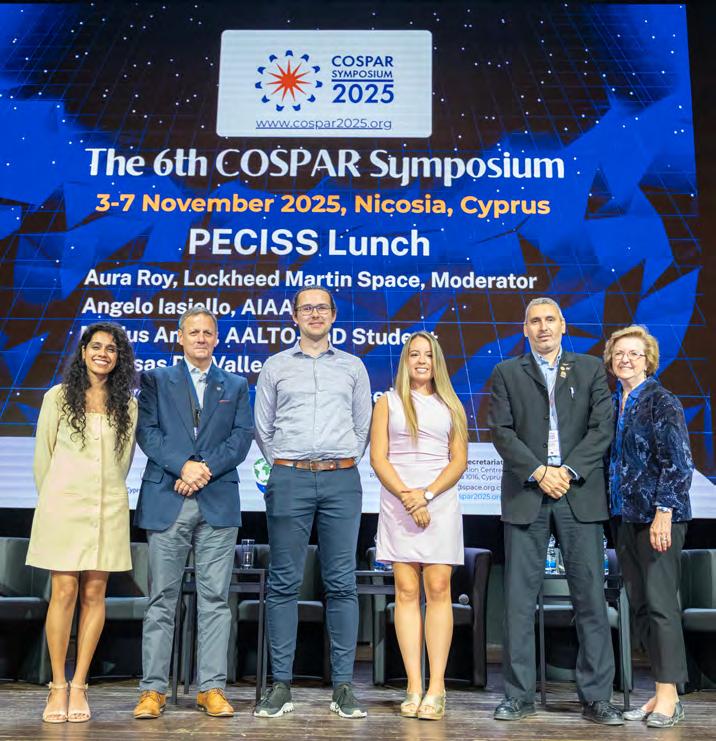

[Duggirala Pallamraju, Senior Professor & Dean, Physical Research Laboratory, India, Chair of Scientific Commission C, and Indian Representative to COSPAR Council]
Scientific Commission C of COSPAR relates to “Space Studies of the Upper Atmospheres of the Earth and Planets Including Reference Atmosphere”. This large canvas of science is covered under four SubCommissions and three Task Groups. This commission not only focusses on the behaviour, dynamics, composition, energetics and coupling of atmospheric, ionospheric and magnetospheric regions of Earth and planets under varying solar flux and solar activity conditions, but also solar planetary interactions and space weather. The Earth receives differential amounts of energy with latitude, longitude, local time, solar zenith angle, seasons, and solar activity. The wavelength and amount of absorption of ionizing solar radiation varies with altitude thereby creating altitudinal structures in plasma composition. For magnetized planets like the Earth, the plasma neutral interactions vary along and across the direction of magnetic fields. The exponential decrease in number densities of molecules/atoms with height enable the amplitudes of waves that are generated in the lower atmosphere to grow in amplitude (to conserve energy) as they propagate upward. These differential nature of energy inputs with latitude, longitude, altitude and time gives rise to a host of phenomena that are unique to equatorial-, low-, mid-, and high latitudes. All these dynamics, phenomena, interactions, couplings can be investigated by ground, balloon, rocket, and satellite measurements. The measurement techniques used for these investigations vary in all the range of the electromagnetic spectrum from the X-rays to radio waves. In optical domain they cover low- to high-spectral resolutions and small to large fieldsof-view; very low frequency (VLF) to giga hertz in radio; and magnetometers.
The Sub-Commissions are focussed on Earth’s upper atmosphere and ionosphere; the Earth’s middle atmosphere
and lower ionosphere; planetary atmospheres and aeronomy; and theory and observations of active experiments. Scientific Commission C also has three Task Groups that focus on several of the modelling aspects. The three Task Groups are Reference Atmospheres of Planets and Satellites (RAPS); International Reference Ionosphere (IRI); and COSPAR International Reference Atmospheres, including ISO WG4 (CIRA). In combination, the SubCommissions and the Task Groups comprehensively address both the science and modelling aspects related to the topic of SC-C: “Space Studies of the Upper Atmospheres of the Earth and Planets Including Reference Atmosphere”
A brief description of the focus areas of Sub-Commissions and Task Groups are given below:
Sub-Commission C1:
The Earth’s Upper Atmosphere and Ionosphere
The Ionosphere, Thermosphere, and Mesosphere (ITM) is the region that extends between approximately 90 and 1000 km in altitude and it continues to be an arena of active international space-based and ground-based research. The density, composition, and dynamics of this region are highly responsive to direct energy inputs and their variations from the Sun, the magnetosphere (high latitudes), and the middle atmosphere. The ionosphere is created by the interaction of solar extreme ultraviolet (EUV) radiation with the upper atmosphere and it extends from about 60 km above the Earth’s surface to several thousand km. At high latitudes, energetic electrons precipitate
into the lower ionosphere and create additional highly variable ionized regions. The ionized and neutral gases are closely linked through collisions and dynamics, responding to energy and momentum forcing from both, the magnetosphere above, and the atmosphere below.
Sub-Commission C2:
The Earth’s Middle Atmosphere and Lower Ionosphere
The “Middle Atmosphere and Lower Ionosphere (20 – 110 km)” is the focus of extremely active research, involving groups in all the major nations of the world which engage in atmospheric and space research. Much of the work is coordinated with, or is consistent with, global research programs. As this region contains the ozone layer, and will be involved in all aspects of Global Climate Change, this research is of enormous significance. The dominant themes are wave energy incoming from the lower atmosphere, wave interactions and momentum/energy dissipation within the region, and solar/magnetospheric influences from above; and the changes in chemical and physical aeronomy resulting from these dynamical processes.
Sub-Commission C3:
Planetary Atmospheres and Aeronomy
COSPAR Sub-Commission C3 addresses the study of planetary atmospheres (including lower and upper neutral atmospheres, ionospheres, and magnetospheres) and associated aeronomical issues. An appropriate emphasis is placed upon recent spacecraft datasets and corresponding model simulations that assist in the interpretation of the measurements. As our exploration of the solar system expands, the comparison of common features and processes across several planetary bodies is emerging as an important objective of this sub-commission.
Sub-Commission C5/D4:
Theory and Observations of Active Experiments
The Sub-Commission on Active Experiments promotes research involving the active perturbation of laboratory plasmas as well as space plasmas to enhance the understanding of the natural space plasma environment and the interaction of space vehicles with this environment. Some of the active perturbations used in these investigations include (1) tethered satellites, (2) VLF transmitters, (3) charged particle beam injections, (4) chemical releases, and (5) high-power radio waves. A wide variety of diagnostics are used to isolate physical processes found in actively perturbed space plasmas. Ground-based space plasma experiments rely heavily on radar and optical observations. Space-based experiments rely on diagnostics, such as in situ electric field and charged particle measurements. Important physical processes in space plasmas studied with active experiments include plasma turbulence,
wave-particle interactions, wave-wave interactions, and plasma resonances. Physical processes studied associated with spacecraft environmental interactions include vehicle charging and plasma wakes and turbulence produced by vehicles passing through the charged media in space.
(RAPS)
This Task Group focuses on developing and standardizing atmospheric models for planets and their moons. Its primary aims include creating models compatible with operational environments (like satellite drag calculation), standardizing atmospheric modelling procedures, and encouraging the use of advanced, physics-based models for better accuracy in scientific and technical applications.
URSI/COSPAR Task Group on the International Reference Ionosphere (IRI)
The Working Group was initiated in 1969 jointly by the Committee on Space Research (COSPAR) and the International Union of Radio Science (URSI) with the goal of establishing an internationally accepted standard for the description of the most important parameters of Earth’s ionosphere. COSPAR’s prime interest is in a general description of the ionosphere as part of the terrestrial environment for the evaluation of environmental effects on spacecraft and experiments in space. URSI’s prime interest is in a reference model for defining the background ionosphere for radio wave propagation studies and applications. Both organizations requested that the model should be primarily based on experimental evidence using all available and reliable ground and space data sources. Theoretical considerations can be helpful in bridging data gaps and for internal consistency checks. At present this working group consists of a team of 68 ionospheric experts from 29 countries. More information on the current status of the model can be obtained by visiting the IRI homepage (http://irimodel.org/).
COSPAR/URSI Task Group on Reference Atmospheres, including ISO WG4 (CIRA)
The Task Group aims at developing and improving atmosphere models that are compatible with use in an operational environment, notably for satellite drag calculation. Presently, empirical upper atmosphere models are still used, but recently physics-based whole atmosphere models are being developed that potentially can be used in the near future. Temperature, composition, neutral density observations are necessary for model validation and assessment, in addition to data assimilation techniques. The derivation of the densities, and notably the
aerodynamic modelling, must ideally be done according to a standard procedure in order to reduce, if not eliminate, inconsistencies when developing and evaluating models. This Task Group will work on improving and standardizing modelling of aerodynamic drag. The uncertainty of the predicted neutral density should, in the future, be provided as part of the model output. The model performance must be quantified according to an adopted standard testing procedure and metrics, such as that provided by NASA/CCMC, taking the uncertainty into account. Carefully selected and continuously updated density datasets are used to compare our model predictions. The assessment is the basis for selection as CIRA model.
All the Sub-Commissions and the Task Groups have been actively engaging with the scientific community at large by carrying out workshops, schools, in promoting the science related to their respective domains (sub-commissions) in addition to proposing scientific sessions in the COSPAR Scientific Assembly, COSPAR Symposium, and international meetings organized by other thematic bodies of International Science Council (ISC), such as, SCOSTEP (Scientific Committee on Solar Terrestrial Physics), SCAR (Scientific Committee on Antarctic Research), and WCRP (World Climate Research Program) and members of ISC, such as IUGG (International Union of Geodesy and Geophysics) / IAGA (International Association of Geomagnetism and Aeronomy), and URSI (International Union of Radio Science), among others.
of the Scientific Commission-C of COSPAR
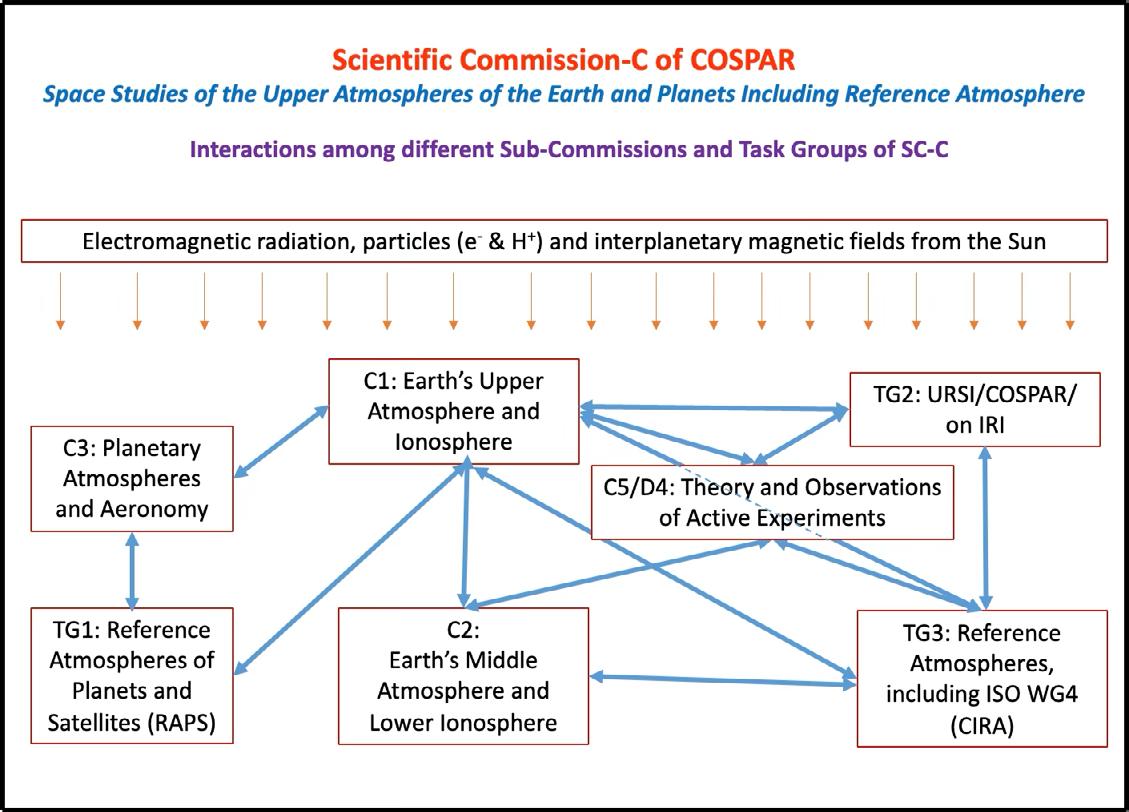
▲ Figure 1: Schematic depicting the science domains (sub-commissions and Task Groups) of Scientific Commission-C along with interactions among them.
The schematic shown above captures the various aspects and the inter-relationships between the sub-commissions and task groups. As detailed above, relationship with regard to effects on the upper atmosphere due to solar flux influence is mainly pertinent to the sub-commission C1. The Earth’s upper atmosphere include the upper ionosphere, the thermosphere, and magnetosphere of the Earth. The measurements obtained in this domain contribute to improving the empirical models of ionosphere and atmosphere, and, thus, to the Task Group 2 (IRI) and Task Group 3 (CIRA), as depicted in the arrows in Figure 1.
The Sub-Commission C2 deals with the Earth’s middle atmosphere and lower ionosphere. This region hosts several wave phenomena, sharp gradients in neutral temperatures (both positive and negative), greatly varying plasma conductivities, boundary of homogenized mixing of gases to altitude distribution with respect to the masses of individual gases, region of wavebreaking, among other unique features. In the aftermath of the prolonged solar minima centred in the year 2009, over the past two decades, several results demonstrated a significant influence of atmospheric behaviour lower below on phenomena and dynamics that occur at this altitude region relevant to the scientific aspects of Sub-Commission C2. These phenomena have been shown to be not only affecting the behaviour and dynamics at these altitudes but also on those pertaining to SubCommission C1. The understanding gained in C2 is also relevant to be captured in the model pertaining to TG3.
Combined, Sub-Commissions C1 and C2 also serve the broader domain of Vertical Coupling of Atmospheres of Earth.
Sub-Commission C3 pertains to the field of Planetary Atmospheres and Aeronomy. The phenomena prevalent in the planetary atmospheres could be understood based on the understanding gained from the studies of “Earth’s Upper atmosphere and ionosphere (sub-commission C1)”. In similar lines of the interaction of C1 to Task group 3, C3 has a direct interaction with the Task Group 1 (TG1) on the reference atmospheres of planets and satellites. C1 and TG1 are also related in the same manner as that of C1 and C3.
Sub-Commissions C5 and D4 (of Scientific Commission D) deal with theory and observations of active experiments, may it be ground-based or space (balloon-, rocket- or satellite-) based. These theory and observations help in the understanding of the science covered in C1 and C2 and the knowledge gained in terms of plasma-neutral behaviour can be captured in the models relevant to TG2 and TG3.
Several national/international level meetings and workshops on the SC-C science are being organized by several of officers of COSPAR SC-C, in addition to convening scientific sessions in the COSPAR Scientific Assembly and COSPAR Symposium.
The officers of all the Sub-Commissions of SC-C, listed below, are very active and energetic in preparing a platform and engaging with the community in order to bring out meaningful and insightful understanding of science related to Scientific Commission C through convening of scientific sessions in the COSPAR Scientific Assemblies.
• COSPAR Scientific Commission-C
Chair: Duggirala Pallamraju, India
Vice-Chairs: R.P. Fagundes, Brazil; David Themens, UK; Erdal Yigit, USA
• Sub-Commission C1 on the Earth's Upper Atmosphere and Ionosphere
Chair: Yuichi Otsuka, Japan
Vice-Chairs: Claudia Stolle, Germany; Shunrong Zhang, USA; Kavutarapu Venkatesh, India
• Sub-Commission C2 on the Earth's Middle Atmosphere and Lower Ionosphere
Chair: Irina Strelnikova, Germany
Vice-Chair: Robin Wing, Germany
• Sub-Commission C3 on Planetary Atmospheres and Aeronomy
Chair: Syed Haider, India
Vice-Chair: Takeshi Kuroda, Japan
• Sub-Commission C5/D4 on Theory and Observations of Active Experiments
Chair: Asti Bhatt ; USA
Vice-Chair: Eliana Nossa, USA
• Task Group on Reference Atmospheres of Planets and Satellites (RAPS)
Chair: Hilary Justh, USA
Vice-Chair: Roland Young, UAE
• URSI/COSPAR Task Group on the International Reference Ionosphere (IRI)
Chair: Vladimir Truhlik, Czech Rep
Vice-Chairs: Ivan Galkin, USA; Andrzej Krankowski, Poland
• COSPAR/URSI Task Group on Reference Atmospheres, including ISO WG4 (CIRA)
Chair: Sean Bruinsma, France
Vice-Chair: Marcin Pilinski, USA
The information above on the scientific aspects covered under the Scientific Commission C of COSPAR is meant to provide the international readership with a flavour of the domains of research and the inter-relationships between the various sub-commissions and task groups that this commission pertains to. This brief article is also aimed at encouraging cross-disciplinary interactions of researchers from other commissions with the Scientific Commission C.
Acknowledgement: I acknowledge the active participation of the leadership of SC-C for their steadfast commitment to the cause of the science covered under the Scientific Commission-C. I would like to thank Dr. Richard Harrison, General Editor, COSPAR Space Research Today for providing me with this opportunity through his kind invitation to write a brief article on COSPAR’s Scientific Commission C.
[
At the recently concluded 6th COSPAR Symposium held in Nicosia, Cyprus, COSPAR officially released the “Heliophysics Guidelines”, a set of unified global principles for the scientific study of the Sun and its effects throughout the solar system. Heliophysics is the science that studies solar and magnetospheric physics, space physics and aeronomy, and space weather, the latter posing a significant threat to modern life.
As a cross-disciplinary field which benefits from complementary measurements, for example by combing ground- and spacebased observations, Heliophysics is a prime candidate for international cooperation and coordination.
With its long history of enabling and facilitating such activity, COSPAR is the perfect platform for this community.
The initiative was supported by a growing number of organizations, including China’s National Space Science Center, the Space Studies Board of the US’ National Academies of Science, Engineering, and Medicine, the Solar Physics Division of the American Astronomical Society (SPD-AAS), the Space Physics and Aeronomy Section of the American Geophysical Union (SPA-AGU), the Cyprus Space Exploration Organisation (CSEO), the Canadian Space Agency, and Italy’s INAF, with NASA also evaluating adoption.
The Guidelines can be consulted here
[Erick Lansard, Nanyang Technological University, Singapore, and Vice-Chair of Scientific Commission A]

2025 will be remembered as a bad year with regard to the impacts of climate change and geo-hazards on the world population. More specifically, tropical countries such as the Philippines, Thailand, Indonesia, Malaysia and Sri Lanka have recently paid a heavy tribute in November-December with several thousand people killed and more missing after major thunderstorms, flooding and landslides.
Many satellites of different cost and performance have been deployed by several countries over the years to better understand the environmental phenomena that are impacting our planet, in a context of increasing number of extreme events due to climate change, and also harmful geo-hazards in more populated areas. However, although many scientific polar sun-synchronous satellites are orbiting our planet, there are still critical blind spots over the Equator and the Tropics regarding remote sensing of critical environmental parameters.
Because of these blind spots, any effort to globally model harmful environmental phenomena, like extreme events related to climate change, for example, will unfortunately be hampered considerably until these knowledge gaps are filled by new, indispensable satellite data. How to fill these critical knowledge gaps and data gaps is a challenge in which COSPAR can play a key role.
During the recent, successful 2025 COSPAR Symposium in Cyprus, it was decided to create a new Sub-Group on the Equatorial Belt of the Panel on establishing a Constellation of Small Satellites (PCSS-SGEB) with the mission to conduct indepth review, detailed analysis and to propose solutions based on small or very small satellites. This Sub-Group will be led by Erick Lansard, from Nanyang Technological University, Singapore. The
members of this Sub-Group will be confirmed during the coming 2026 COSPAR Scientific Assembly in Florence at the end of the A0.1 session that will tackle this very specific topic: “What are the remaining scientific challenges over Equatorial/Tropical regions? How could (very) small satellites fill the knowledge gaps?” The output of this A0.1 session will naturally feed the work of this new PCSS-SGEB.
For memory, the objectives of the COSPAR 2026 A0.1 Session will be (i) to review the remaining scientific challenges above equatorial and tropical regions (e.g.: Atmosphere and Troposphere; Marine and Coastal; Solid Earth and Land; Ionosphere and Space Weather), (ii) to review how small satellites could improve the current situation, at different levels (e.g.: Systems and sensors; Data processing and modelling; Applications and Services), to significantly enhance the scientific value of existing satellites.
Although significant scientific progress has been made over the years, it appears that many equatorial and tropical phenomena are not yet fully understood, and that models and forecast are not accurate enough to mitigate the risks (e.g.: Tropical thunderstorms; Atmospheric propagation of volcanic ashes, aerosols, GHG and other pollutants; Tsunamis, earthquakes, landslides, wildfires; Coastal erosion and flooding; Ionospheric and magnetospheric anomalies etc.). This is mainly due to the lack of data over the equatorial and tropical regions that are poorly covered by polar satellites.
For example, exploiting the complementarity between high performance/poor revisit polar satellites and mid-low performance/high revisit small/very small satellites might allow a disruptive design of low-cost, fast and sober solutions with potentially high scientific value, for the mutual benefit of both equatorial and non-equatorial countries.
3-7 November 2025, Nicosia, Cyprus
The third interstellar object 3I/ATLAS was discovered traversing the Solar System on July 1 2025 (L. Denneau et al. 2025). The discovery was made during operations of the Asteroid Terrestrial-impact Last Alert System (ATLAS) survey (J. L. Tonry et al. 2018). The ATLAS survey images in which 3I/ATLAS was discovered are shown in Figure 1. The red circle indicates the location of the object which was rapidly moving across the sky, and spotted by Larry Denneau. In this bulletin, I will provide a summary of what is known about 3I/ATLAS to date, and give some context on the state of knowledge of interstellar interlopers prior to the discovery of this third interloper.
Prior to the discovery of 3I/ATLAS, we already knew that a ubiquitous and galactic wide population of interstellar interlopers existed. The first interstellar interloper 1I/‘Oumuamua was discovered in October of 2017 (G. V. Williams et al. 2017). This represented the first of an entirely new class of astrophysical object. The interstellar objects are fundamentally defined by their hyperbolic trajectories, as opposed to the bound trajectories of known Solar System objects. This hyperbolic trajectory indicates that the object could not have originated in our Solar System; in other words, its motion tells us that it formed elsewhere. It also fundamentally means that every time we discover an interstellar interloper, we only have one shot at characterizing it. This makes every single observation of such an object extremely time sensitive and critical to obtain.
▶ Figure 1: Cutout images from the first and fourth discovery observations of 3I/ATLAS from the ATLAS Chile, spanning approximately one hour. 3I/ATLAS is moving at 0.49 deg/day against the stellar background. The cardinal directions and direction of motion are indicated with arrows, and 3I/ATLAS is identified within the red circle.
(a) Un-background subtracted image from 05:15:11 UT; (b) Un-background subtracted image from 06:20:31 UT. Taken from D. Z. Seligman et al. (2025)
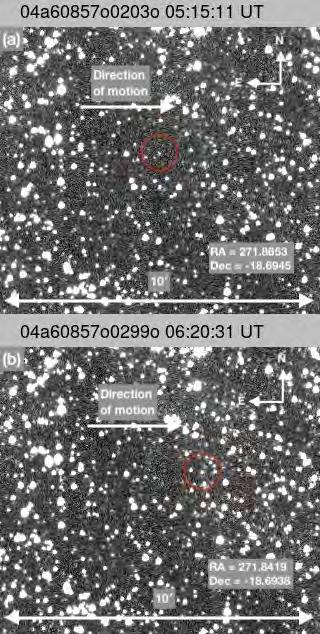
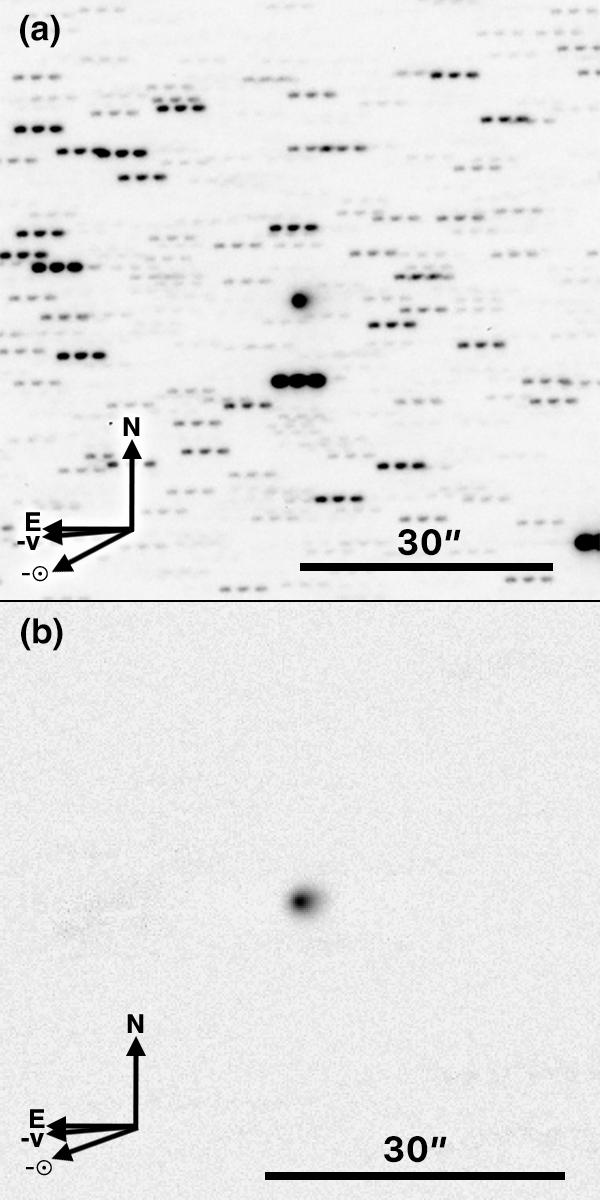
▲ Figure 2:
(a) Stacked gri-band image cut-out from CFHT on 2025 July 2 and (b) R-band composite image from VLT on 2025 July 4, both showing faint activity. Background objects were removed from the VLT stack. Arrows indicate the directions of North (N), East (E), the anti-solar vector as projected on the sky (− ), and the negative heliocentric velocity vector as projected on the sky (−v).
Prior to the discovery of 1I/‘Oumuamua, astronomers had predicted that the galaxy should abound with interstellar comets (D. Jewitt & D. Z. Seligman 2023). We already knew that from the structure of our own Solar System, that during its formation and subsequent evolution the Solar System likely ejected about 30 earth masses worth of material into a population of interstellar comets. These objects would have formed in a very similar way to the objects that populated the Kuiper belt and Oort cloud. Therefore, it is not a significant extrapolation to hypothesize that similar processes occurred in exoplanetary systems, and that these systems also ejected interstellar comets into the galaxy. However, one subsequent hypothesis from this assertion is that the interstellar comets should be icy objects that behave like the comets in our own Solar System. And this was what made 1I/‘Oumuamua so mysterious.
Observations that were taken with telescopes following the discovery of 1I/‘Oumuamua indicated that there was no hint of a dusty cometary tail, like we see in Solar System comets (K. J. Meech et al. 2017; D. Jewitt et al. 2017; Q.-Z. Ye et al. 2017). However, it also had a comet-like nongravitational acceleration (M. Micheli et al. 2018). Typical Solar System comets have nongravitational accelerations when the sublimation of ices (the process by which ice converts to a gas) produces a rocket like recoil on the surface during the tail formation. In other words, 1I/‘Oumuamua moved like a comet, but had no comet tail.
While 1I/‘Oumuamua is long gone, our first interstellar interloper told us that this nongravitational acceleration along with no visible dust coma can occur. Since then, and somewhat thanks to 1I/‘Oumuamua, we have identified a new population of small bodies in the Solar System called dark comets. These are a population of asteroid-looking small bodies in the near-Earth environment, which have no cometary tail but accelerate in the ways that comets do (D. Farnocchia et al. 2023; D. Z. Seligman et al. 2023, 2024). It is not entirely clear what is driving the accelerations, but our best guess is that the dark comets and Oumuamua have ice in them, but do not produce dust tails.
The second interstellar interloper was very different from 1I/‘Oumuamua. The second object was discovered in 2019 and was called 2I/Borisov (G. Borisov et al. 2019). This object displayed a definitive comet tail (D. Jewitt & J. Luu 2019), and was more in line with Solar System comets than 1I/’Oumuamua and the dark comets. However, it had a somewhat anomalous composition as compared to Solar System comets. The primary driver of activity in Solar System comets is water, but 2I/Borisov was enriched with carbon monoxide compared to water (M. A. Cordiner et al. 2020; D. Bodewits et al. 2020). This could be telling us that
2I/Borisov formed in a much colder region of an exoplanetary system than the comets in our Solar System, because freezing carbon monoxide requires much colder temperatures than for freezing water.
Finally, 3I/ATLAS was discovered in 2025 almost six years after the previous discovery of 2I/Borisov. And 3I/ATLAS has been well worth the wait. Immediately upon discovery, astronomers all across the globe pointed their telescopes to look at the object. In Figure 2, I show images that were obtained within days of the discovery of 3I/ATLAS. These images were taken with the Canada France Hawaii Telescope (CFHT) and with the Very Large Telescope (VLT). Both images are the composite of several images taken at different times stacked together on top of each other. In the CFHT image the background stars are also shown. The trails of the stars demonstrate that the object was moving rapidly across the sky. In the VLT image, the stars have been removed. Apparent in both images is the existence of a cometary tail slightly in the westward direction.
Several other teams of astronomers obtained images of 3I/ATLAS near-discovery, all of these images also revealed the existence of cometary activity (D. Z. Seligman et al. 2025; C. Opitom et al. 2025; T. Kareta et al. 2025; T. T. Frincke et al. 2025; D. Jewitt & J. Luu 2025a;M. R. Alarcon et al. 2025; M. Belyakov et al. 2025;W. B. Hoogendam et al. 2025). This was an exciting development because the object was close to the distance of Jupiter from the Sun at discovery, when these early images were obtained. This implied that the activity may be driven by something different than water, like carbon monoxide. Observations of the brightness
of 3I/ATLAS following the discovery show that the activity was sustained as 3I/ATLAS moved closer to the Sun. Interestingly enough, 3I/ATLAS was also apparent in several facilities before its discovery - and had not been identified (D. Jewitt & J. Luu 2025b; J. Tonry et al. 2025; R. de la Fuente Marcos et al. 2025). Specifically, pre-discovery observations revealed 3I/ATLAS’s presence in the Rubin Observatory LSST images (C. O. Chandler et al. 2025), NASA’s Transiting Exoplanet Survey Satellite TESS images (A. D. Feinstein et al. 2025; J. Martinez-Palomera et al. 2025) and the Zwicky Transient Facility (Q. Ye et al. 2025). This strengthened the idea that 3I/ATLAS’s activity was driven by an ice different than water.
Spectroscopic observations have confirmed that, like 2I/Borisov, 3I/ATLAS appears to have a composition that is somewhat different from those of typical Solar System comets. Specifically, JWST (M. A. Cordiner et al. 2025) and SphereX (C. M. Lisse et al. 2025) observations revealed a strong presence of CO2 in the coma, and water production was also detected (B. Yang et al. 2025; Z. Xing et al. 2025). This may imply that 3I/ATLAS formed at a colder region in its protoplanetary disk. However, it is also possible that the processing of the surface and near surface of 3I/ ATLAS during its travel through the interstellar medium altered the composition of the ices (R. Maggiolo et al. 2025). 3I/ATLAS was not observable during its perihelion from Earth, but nearperihelion observations from solar observatories revealed that the object has brightened post perihelion (Q. Zhang & K. Battams 2025). Future observations will reveal more information about our third interstellar visitor.
Darryl Z. Seligman completed his undergraduate degrees in Mathematics and Physics at the University of Pennsylvania in 2015. He completed his Ph.D. at Yale University in Astronomy in 2020, and was awarded the Yale University Dirk Brouwer Memorial Prize for Outstanding Ph.D. Thesis. He was the TC Chamberlin Fellow at the University of Chicago Department of the Geophysical Sciences after completing his Ph.D. He was a Simonyi-NSF Scholar at Cornell University and Michigan State University from 2023-2025, an NSF Astronomy and Astrophysics Postdoctoral Fellowship award made in recognition of significant contributions to Rubin Observatory’s Legacy Survey of Space and Time. He is currently an assistant professor in the Department of Physics and Astronomy at Michigan State University. His research interests include Minor Bodies, Exoplanets, Plasma Physics, Nonlinear Dynamics, Fluid Dynamics and Neuroscience.

• Alarcon, M. R., Serra-Ricart, M., Licandro, J., et al. 2025, Deep g’-band Imaging of Interstellar Comet 3I/ATLAS from the Two-meter Twin Telescope (TTT), The Astronomer’s Telegram, 17264, 1.
• Belyakov, M., Fremling, C., Graham, M. J., et al. 2025, Palomar and Apache Point Spectrophotometry of Interstellar Comet 3I/ATLAS, Research Notes of the American Astronomical Society, 9, 194. Link here
• Bodewits, D., Noonan, J. W., Feldman, P. D., et al. 2020, The carbon monoxide-rich interstellar comet 2I/Borisov, Nature Astronomy, 4, 867. Link here
• Borisov, G., Durig, D. T., Sato, H., et al. 2019, Comet C/2019 Q4 (Borisov), Central Bureau Electronic Telegrams, 4666, 1.
• Chandler, C. O., Bernardinelli, P. H., Juríc, M., et al. 2025, NSF-DOE Vera C. Rubin Observatory Observations of Interstellar Comet 3I/ ATLAS (C/2025 N1), arXiv. e-prints, arXiv:2507.13409. Link here
• Cordiner, M. A., Milam, S. N., Biver, N., et al. 2020, Unusually high CO abundance of the first active interstellar comet, Nature Astronomy, 4, 861. Link here
• Cordiner, M. A., Roth, N. X., Kelley, M. S. P., et al. 2025, JWST Detection of a Carbon-dioxide-dominated Gas Coma Surrounding Interstellar Object 3I/ATLAS, ApJL, 991, L43. Link here.
• De la Fuente Marcos, R., Alarcon, M. R., Licandro, J., et al. 2025, Assessing interstellar comet 3I/ATLAS with the 10.4 m Gran Telescopio Canarias and the Two-meter Twin Telescope, A&A, 700, L9. Link here
• Denneau, L., Siverd, R., Tonry, J., et al. 2025, 3I/ATLAS = C/2025 N1 (ATLAS), MPEC.
• Farnocchia, D., Seligman, D. Z., Granvik, M., et al. 2023, (523599) 2003 RM: The Asteroid that Wanted to be a Comet, PSJ, 4, 29. Link here
• Feinstein, A. D., Noonan, J. W., & Seligman, D. Z. 2025, Precovery Observations of 3I/ATLAS from TESS Suggest Possible Distant Activity, ApJL, 991, L2. Link here
• Frincke, T. T., Yaginuma, A., Noonan, J. W., et al. 2025, Near-Discovery SOAR Photometry of the Third Interstellar Object: 3I/ATLAS, MNRAS. Link here.
• Hoogendam, W. B., Shappee, B. J., Wray, J. J., et al. 2025, Spatial Profiles of 3I/ATLAS CN and Ni Outgassing from Keck/KCWI Integral Field Spectroscopy, arXiv e-prints, arXiv:2510.11779. Link here
• Jewitt, D., & Luu, J. 2019, Initial Characterization of Interstellar Comet 2I/2019 Q4 (Borisov), ApJL, 886, L29. Link here
• Jewitt, D., & Luu, J. 2025a, Interstellar Interloper C/2025 N1 is Active, The Astronomer’s Telegram, 17263, 1.
• Jewitt, D., & Luu, J. 2025b, Pre-perihelion Development of Interstellar Comet 3I/ATLAS, arXiv e-prints, arXiv:2510.18769. Link here
• Jewitt, D., Luu, J., Rajagopal, J., et al. 2017, Interstellar Interloper 1I/2017 U1: Observations from the NOT and WIYN Telescopes, Astrophysical Journal Letters, 850, L36. Link here
• Jewitt, D., & Seligman, D. Z. 2023, The Interstellar Interlopers, ARA&A, 61, 197. Link here.
• Kareta, T., Champagne, C., McClure, L., et al. 2025, Near-discovery Observations of Interstellar Comet 3I/ATLAS with the NASA Infrared Telescope Facility, ApJL, 990, L65. Link here
• Lisse, C. M., Bach, Y. P., Bryan, S., et al. 2025, SPHEREx Discovery of Strong Water Ice Absorption and an Extended Carbon Dioxide Coma in 3I/ATLAS, Research Notes of the American Astronomical Society, 9, 242. Link here
• Maggiolo, R., Dhooghe, F., Gronoff, G., de Keyser, J., & Cessateur, G. 2025, Interstellar Comet 3I/ATLAS: Evidence for Galactic Cosmic Ray Processing, arXiv e-prints, arXiv:2510.26308. Link here
• Martinez-Palomera, J., Tuson, A., Hedges, C., et al. 2025, Pre-discovery TESS Observations of Interstellar Object 3I/ATLAS, arXiv e-prints, arXiv:2508.02499. Link here.
• Meech, K. J., Weryk, R., Micheli, M., et al. 2017, A brief visit from a red and extremely elongated interstellar asteroid, Nature, 552, 378. Link here
• Micheli, M., Farnocchia, D., Meech, K. J., et al. 2018, Non-gravitational acceleration in the trajectory of 1I/2017 U1 (’Oumuamua), Nature, 559, 223. Link here
• Opitom, C., Snodgrass, C., Jehin, E., et al. 2025, Snapshot of a new interstellar comet: 3I/ATLAS has a red and featureless spectrum, MNRAS, 544, L31. Link here
• Seligman, D. Z., Farnocchia, D., Micheli, M., et al. 2023, Dark Comets? Unexpectedly Large Nongravitational Accelerations on a Sample of Small Asteroids, PSJ, 4, 35. Link here.
• Seligman, D. Z., Farnocchia, D., Micheli, M., et al. 2024, Two distinct populations of dark comets delineated by orbits and sizes, Proceedings of the National Academy of Science, 121, e2406424121. Link here
• Seligman, D. Z., Micheli, M., Farnocchia, D., et al. 2025, Discovery and Preliminary Characterization of a Third Interstellar Object: 3I/ ATLAS, ApJL, 989, L36. Link here
• Tonry, J., Denneau, L., Alarcon, M., et al. 2025, ATLAS Photometry of Interstellar Object 3I/ATLAS, arXiv, e-prints, arXiv:2509.05562. Link here
• Tonry, J. L., Denneau, L., Heinze, A. N., et al. 2018, ATLAS: A High-cadence All-sky Survey System, PASP, 130, 064505. Link here.
• Williams, G. V., Sato, H., Sarneczky, K., et al. 2017, Minor Planets 2017 SN 33 and 2017 U1, Central Bureau Electronic Telegrams, 4450, 1.
• Xing, Z., Oset, S., Noonan, J., & Bodewits, D. 2025, Water Production Rates of the Interstellar Object 3I/ATLAS, ApJL, 991, L50. Link here
• Yang, B., Meech, K. J., Connelley, M., Zhao, R., & Keane, J. V. 2025, Spectroscopic Characterization of Interstellar Object 3I/ATLAS: Water Ice in the Coma, ApJL, 992, L9. Link here
• Ye, Q., Kelley, M. S. P., Hsieh, H. H., et al. 2025, Prediscovery Activity of New Interstellar Object 3I/ATLAS: Rapid Brightening from 6 to 4 au, ApJL, 993, L31. Link here
• Ye, Q.-Z., Zhang, Q., Kelley, M. S. P., & Brown, P. G. 2017, 1I/2017 U1 (‘Oumuamua) is Hot: Imaging, Spectroscopy, and Search of Meteor Activity, Astrophysical Journal Letters, 851, L5. Link here.
• Zhang, Q., & Battams, K. 2025, Rapid Brightening of 3I/ATLAS Ahead of Perihelion, arXiv e-prints, arXiv:2510.25035. Link here


[Patrick Michel, CNRS Côte d’Azur Observatory, France, University of Tokyo, Japan, ESA]
On November 27, 2025, the Council at Ministerial Level of the European Space Agency (ESA) concluded with major news for planetary defense and asteroid science: the RAMSES mission secured the funding needed to continue its development toward a spring 2028 launch and a rendezvous with the asteroid Apophis in March 2029, in partnership with the Japan Aerospace Exploration Agency (JAXA).
RAMSES stands for Rapid Apophis Mission for SpacE Safety. Why is this such big news?
First, RAMSES is ESA’s second planetary defense cornerstone mission. It follows directly after the Hera mission to the asteroid Didymos—ESA’s first cornerstone mission—which contributes to the world’s first asteroid deflection experiment alongside NASA’s DART mission. Hera was approved in November 2019, launched in October 2024, and is set to arrive at Didymos in autumn 2026. RAMSES will then fly to Apophis and arrive in August 2029.
This means that the first two planetary defence cornerstone missions will have been developed, launched, and fully accomplished within just a decade. That’s not only a record—it’s exactly what the planetary defense roadmap calls for: the ability to rapidly implement and launch reconnaissance missions when needed. For Apophis, and for any potentially hazardous asteroid, the tempo is set by the asteroid itself!
Second, as we pointed out in previous COSPAR bulletins, an encounter with an asteroid the size of Apophis (325–380 meters) at only 32,000 km from Earth is estimated to occur once every 7,000 years. This extraordinary event offers a unique opportunity to observe how a small asteroid responds to Earth’s tidal forces. Apophis will pass close enough that Earth’s gravity could trigger surface motion, alter its rotation state, or even lead to internal restructuring.
What happens depends on the asteroid’s physical properties— its strength, cohesion, and how such a low-gravity body reacts
to external stresses. Linking these properties to an observed response is the only way to truly understand these objects, validate our numerical models, and ultimately design robust mitigation strategies. Past missions involving surface sampling or artificial impacts have shown just how unpredictable small asteroids can be: an apparently boulder-rich surface might suggest structural integrity, yet upon contact the entire body may behave like a cohesionless cloud of grains. How strange is that?
We believe we are beginning to understand the behaviour of these bodies in their low-gravity environment, thanks to lessons learned from past and ongoing missions. But science does not operate on belief, and asteroids have a long record of surprising us. Science may welcome surprises—planetary defence does not. This ongoing tension explains why the overlap between science and mitigation is so beneficial. To protect Earth, we must identify hazardous asteroids early (the role of survey observatories) and understand them deeply (the role of flyby and rendezvous missions).
RAMSES is a rendezvous mission. Its main spacecraft builds upon the Hera platform, allowing for a rapid reconfiguration tailored to Apophis. The payload includes two visual cameras (wide and narrow angle), a JAXA thermal infrared imager, a highresolution color and polarimetric camera, a hyperspectral imager, and a plasma spectrometer—enabling the first-ever study of how Earth’s magnetosphere affects an asteroid during a close approach.
RAMSES also inherits Hera’s architecture: two cubesats carried by the mother spacecraft. They will be released near Apophis before its closest approach. One cubesat will host a dust detector and analyzer plus a low-frequency radar identical to Hera’s, capable of probing Apophis’s interior. The second cubesat is planned to land on Apophis a few days before closest approach, carrying a gravimeter and a seismometer—marking the first attempt at asteroid seismology. Earth’s tidal forces can influence the propagation of seismic waves, revealing details about Apophis’s
internal structure. Radioscience and inter-satellite links will further refine measurements of the asteroid’s gravity field.
It is equally important to underline that the H3 launcher will carry both RAMSES and JAXA’s DESTINY+ mission. While DESTINY+ targets the active asteroid Phaethon, the shared launch also enables a flyby of Apophis a few days or weeks before RAMSES arrives. This early reconnaissance will help accelerate RAMSES’ approach and allow rapid onset of scientific operations.
International cooperation is therefore central to RAMSES and to the broader Apophis investigation campaign. NASA’s APEX mission is also set to study Apophis in detail for about 10 months after its closest approach. Together, DESTINY+, RAMSES, and APEX will provide continuous in-situ observations from months before to months after the 2029 flyby, offering an unprecedented view of Apophis’s short- and long-term tidal response. Private initiatives may also join this coordinated effort if their plans materialize.
Apophis’s close approach is unique—and it was not going to wait for us to be ready. This awareness motivated several mission concepts; RAMSES has now secured funding through ESA–JAXA international cooperation and is now passing its Critical Design Review. APEX is en route. DESTINY+ will fly by. Additional projects
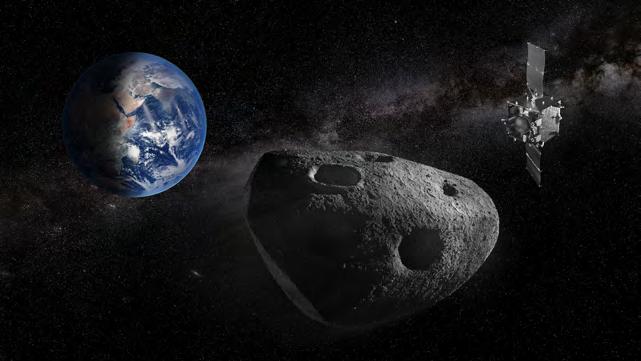
▲ Image credit: ESA-Science Office
may follow. COSPAR has supported the creation of the SMPAG Apophis Flight Missions Working Group (AFM-WG) to facilitate coordination among all participants.
While the world will be watching—or at least hearing about it— these Apophis investigations will let us demonstrate international cooperation and coordination at their very best, even in a complex geopolitical context. They will advance planetary defence while taking us a major step forward in our understanding of these fascinating small worlds.
Patrick Michel is an international expert of asteroids. He is Director of Research at CNRS (French Scientific Research National Center) at the Lagrange Laboratory of the Côte d’Azur Observatory in Nice, Global Fellow (non-resident Professor) of the University of Tokyo (Japan) and Project Scientist at the European Space Agency (ESA). With more than 250 publications in international peer-review journals, he develops numerical simulations of the impact process between asteroids and of their surface and interior. He is the Principal Investigator (PI) of the ESA Hera mission, which contributes to the first asteroid deflection test with the NASA DART mission. He is co-PI of the CNES-DLR IDEFIX rover onboard the Phobos sample return mission MMX (JAXA), which will be the first rover to be deployed and rove on a Martian moon to investigate its surface properties. He is ESA Project Scientist for the ESA-JAXA RAMSES mission to Apophis, Co-Investigator of the two asteroid sample return missions, Hayabusa2 (JAXA) and OSIRIS-REx (NASA) and collaborator on Lucy (NASA) to the Trojan asteroids.
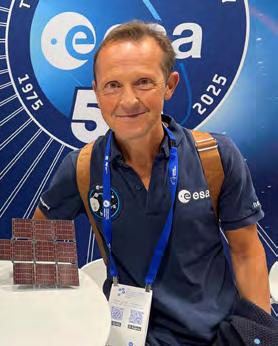
He is President of the Near-Earth Object Working Group of the International Astronomical Union (IAU), a Steering Committee member of the International Asteroid Warning Network (IAWN) and Member of the International Academy of Astronautics. He was awarded the Carl Sagan Medal by the American Astronomical Society for Excellence in Public Communication, the NASA Silver Achievement Award, the Paolo Farinella 2013 Prize, the Young Researcher 2006 Prize of the French Society of Astronomy and Astrophysics (SF2A), the Gold Medal of the City of Nice and of the City of Saint-Tropez and was appointed to the rank of Knight in the French National Order of Merit in 2025. The asteroid (7561) Patrickmichel is named after him.
Astronomers have used observatories around the world, including the European Southern Observatory's Very Large Telescope (ESO’s VLT), to study the asteroid 1998 KY26, revealing it to be almost three times smaller and spinning much faster than previously thought. The asteroid is the 2031 target for Japan’s Hayabusa2 extended mission. The new observations offer key information for the mission’s operations at the asteroid, just six years out from the spacecraft’s encounter with 1998 KY26.
“We found that the reality of the object is completely different from what it was previously described as,” says astronomer Toni Santana-Ros, a researcher from the University of Alicante, Spain, who led a study on 1998 KY26 published today in Nature Communications. The new observations, combined with previous radar data, have revealed that the asteroid is just 11 metres wide, meaning it could easily fit inside the dome of the VLT unit telescope used to observe it. It is also spinning about twice as fast as previously thought: “One day on this asteroid lasts only five minutes!" he says. Previous data indicated that the asteroid was around 30 metres in diameter and completed a rotation in 10 minutes or so.
"The smaller size and faster rotation now measured will make Hayabusa2’s visit even more interesting, but also even more challenging,” says co-author Olivier Hainaut, an astronomer at ESO in Germany. This is because a touchdown manoeuvre, where the spacecraft ‘kisses’ the asteroid, will be more difficult to perform than anticipated.
1998 KY26 is set to be the final target asteroid for the Japanese Aerospace eXploration Agency (JAXA)'s Hayabusa2 spacecraft. In its original mission, Hayabusa2 explored the 900-metre-diameter asteroid 162173 Ryugu in 2018, returning asteroid samples to Earth in 2020. With fuel remaining, the spacecraft was sent on an extended mission until 2031, when it’s set to encounter 1998 KY26, aiming to learn more about the smallest asteroids. This will be the first time a space mission encounters a tiny asteroid—all previous missions visited asteroids with diameters in the hundreds or even thousands of metres.
Santana-Ros and his team observed 1998 KY26 from the ground to support the preparation of the mission. Because the asteroid is very small and, hence, very faint, studying it required waiting for a close encounter with Earth and using large telescopes, like ESO’s VLT in Chile’s Atacama Desert*.
*Aside
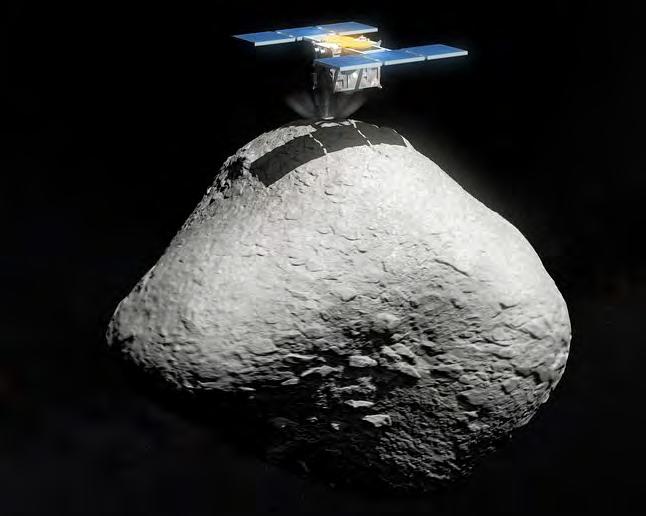
The observations revealed that the asteroid has a bright surface and likely consists of a solid chunk of rock, which may have originated from a piece of a planet or another asteroid. However, the team could not completely rule out the possibility that the asteroid is made up of rubble piles loosely sticking together. “We have never seen a ten-metre-size asteroid in situ, so we don't really know what to expect and how it will look,” says SantanaRos, who is also affiliated with the University of Barcelona.
“The amazing story here is that we found that the size of the asteroid is comparable to the size of the spacecraft that is going to visit it! And we were able to characterise such a small object using our telescopes, which means that we can do it for other objects in the future,” says SantanaRos. “Our methods could have an impact on the plans for future nearEarth asteroid exploration or even asteroid mining.”
“Moreover, we now know we can characterise even the smallest hazardous asteroids that could impact Earth, such as the one that hit near Chelyabinsk, in Russia in 2013, which was barely larger than KY26,” concludes Hainaut.
Read more here
(from DLR release, December 2025)
Recently processed images captured by the HighResolution Stereo Camera (HRSC) reveal a distinctive type of crater in the lowlands of Mars' northern hemisphere. Developed by DLR, the camera experiment on ESA's Mars Express mission has been in operation since January 2004. Researchers are using the image data to generate high-resolution digital terrain models and a global topographic map, providing valuable insights into the origin and development of our neighbouring planet.
The images show an area between the Tempe Terra highlands and the lowland plains of Acidalia Planitia and Chryse Planitia. Nearby lies Idaeus Fossae – a complex system of linear, branching troughs or channels. Just a few kilometres further southwest, the Kasei Valles outflow channel emerges. At 1600 kilometres in length, this is one of the largest dried-up outflow systems on Mars.
Also close by, south of the mouth of the Kasei Valles estuary and the area depicted here (see regional overview), is the landing site of NASA's Viking 1 mission – the first probe to successfully conduct experiments on the planet over a long period of time.
A few kilometres southwest of the HRSC images, the 'dichotomy boundary' between the southern Martian highlands and the northern plains appears as a striking, steep escarpment with a two-kilometre drop. Known as Nilokeras Scopulus, it is located at the mouth of the large Kasei outflow channel.
Standing at the top of its edge would offer a view reminiscent of the Grand Canyon, the difference being that the Martian cliff is almost twice as long and much wider. The opposite slope, beyond the 100-kilometre-wide Sharanov crater, would be barely visible on the horizon. The steep escarpment was probably formed by a combination of tectonic faulting and erosion caused by extremely large masses of water rushing through Kasei Valles over a very short period of time.
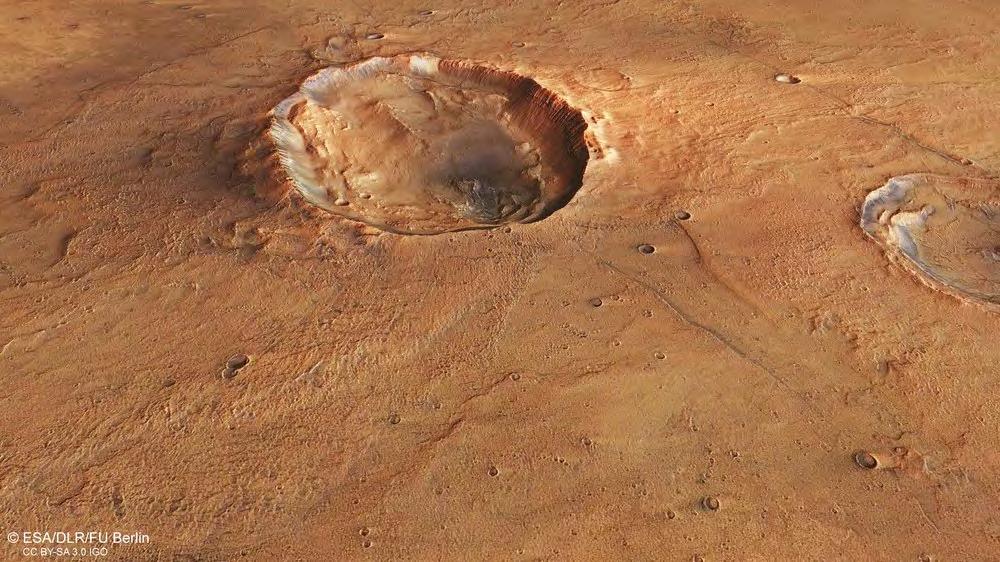
The image is dominated by predominantly flat terrain dotted with darkedged table mountains, mesas, and an unusually shaped impact crater. The reddish-brown surface gradually gets darker from south (left in the 'bird's eye' view) to north (right). Several lighter, slightly lowerlying areas are scattered across the image.
▲ This perspective view shows a crater in the Idaeus Fossae region on Mars, which is slightly elliptical with diameters of 20 km and 15 km. This distinguishes it from the mostly circular impact craters on the surfaces of Earth-like planets with solid crusts. This suggests an impact at a shallow angle of five to ten degrees relative to the surface. The ejecta material is predominantly deposited on both sides of the crater, transverse to the direction of flight. This is reminiscent of the shape of butterfly wings. [Image credit : ESA/DLR/FU Berlin (CC BY-SA3.0 IGO)]
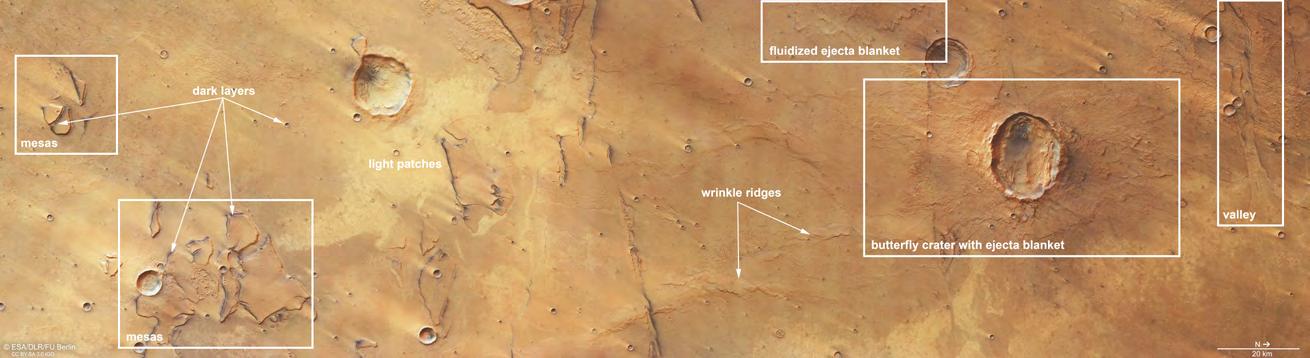
▲ At first glance, the Idaeus Fossae region in the north-western tip of the 'Golden Plain' Chryse Planitia, at the transition from the Martian highlands to the northern lowlands, appears monotonous. On closer inspection, however, interesting landforms can be recognised. From south (left) to north, these include: table mountains (mesas) more than a thousand metres high; layers of dark deposits (dark layers); strikingly bright areas (light patches); wrinkle ridges formed by folding and thrusting as lava cools; fluidised ejecta blankets at impact craters; a crater almost 1500 metres deep with an asymmetrical ejecta blanket (butterfly crater with ejecta blanket); and a valley that was probably formed through extensional tectonics.
[Image credit: ESA/DLR/FU Berlin (CC BY-SA3.0 IGO)]
Together with the linear valleys, they form part of a larger geological structure known as Idaeus Fossae–a system of valleys that lies just a few kilometres west of the highlighted image section.
At first glance, the Idaeus Fossae region in the north-western tip of the 'Golden Plain' Chryse Planitia, at the transition from the Martian highlands to the northern lowlands, appears monotonous. On closer inspection, however, interesting landforms can be recognised. From south (left) to north, these include: table mountains (mesas) more than a thousand metres high; layers of dark deposits (dark layers); strikingly bright areas (light patches); wrinkle ridges formed by folding and thrusting as lava cools; fluidised ejecta blankets at impact craters; a crater almost 1,500 metres deep with an asymmetrical ejecta blanket (butterfly crater with ejecta blanket); and a valley that was probably formed through extensional tectonics.
On the northern (right-hand) side of the image, an elliptical impact crater stands out. It measures approximately 20 kilometres from east to west and 15 kilometres from north to south. While primary impact craters produced by bodies
striking the solid surface of planets in the Solar System are almost always circular, the elliptical shape of this crater suggests an impact at a shallow angle in relation to the surface. Laboratory experiments with high-speed projectiles have shown that impact craters take on an elliptical form when the impact angle is below 15 degrees. At extremely shallow angles of five to ten degrees, 'butterfly craters' are formed.
In such cases, ejecta are mainly deposited on both sides of the crater at a right angle to the direction of flight. In the example shown here, the two 'butterfly wings' are arranged north and south of the crater. To the east and west – along the projectile's flight path – no ejecta was deposited due to the ballistic geometry of the impact.
The ejecta blanket also shows characteristics of liquefied material, which forms when impact debris mixes with subsurface water or ice. Due to the high energy released in such an event, ice liquefies immediately. Even typically rigid, solid rock then behaves like a viscous liquid. Such ejecta formations often display overlapping layers and a clearly rounded outer margin (visible in the top right of the image). ―
Read more here
Launched in July 2025 by the Vega-C rocket from the Guiana Space Centre, the four satellites of the CO3D constellation, developed by Airbus, are delivering their first three-dimensional data. Using satellite data, processing chains provided by CNES generate two-dimensional images with a resolution of 50 cm per pixel, which are then converted into relief maps called digital surface models (DSMs). The accuracy achieved with this initial data is approximately 2 metres. However, once the calibration and qualification phases currently underway are complete, it will be in the order of one metre. This will provide a more accurate view of these highaltitude glacial and snow-covered environments.
To observe these scenes in three dimensions, the satellites rely on their synchronised acquisition capabilities within each pair of satellites. This innovation makes it possible to map moving objects such as cars, boats and volcanic smoke plumes in three dimensions.
Often difficult for scientists to access, glaciers are key indicators of climate change. Found at high altitudes all over the world, they
release the equivalent of three Olympic swimming pools every second as a result of global warming. Their melting has multiple consequences.
“Glaciers are an essential link in the water cycle because they are natural water towers,” explains Étienne Berthier, a CNRS glaciologist at the Laboratory for Space Studies in Geophysics and Oceanography (LEGOS). “During the winter, they store large quantities of water in solid form, which they then release at the start of summer to irrigate ecosystems and populations when they need it most. Some arid valleys and their populations even depend on this meltwater, as in the Andes and Central Asia, but the decline in glacier mass is jeopardising this balance."
Each CO3D satellite will be equipped with a unique optical instrument, with a spatial resolution of 50 cm in the visible red, green, blue and near infrared bands. After specific ground processing of the results, they will provide 3D maps of all the land areas of the globe, called digital surface models (DSMs) with an altimetric resolution of around one metre.
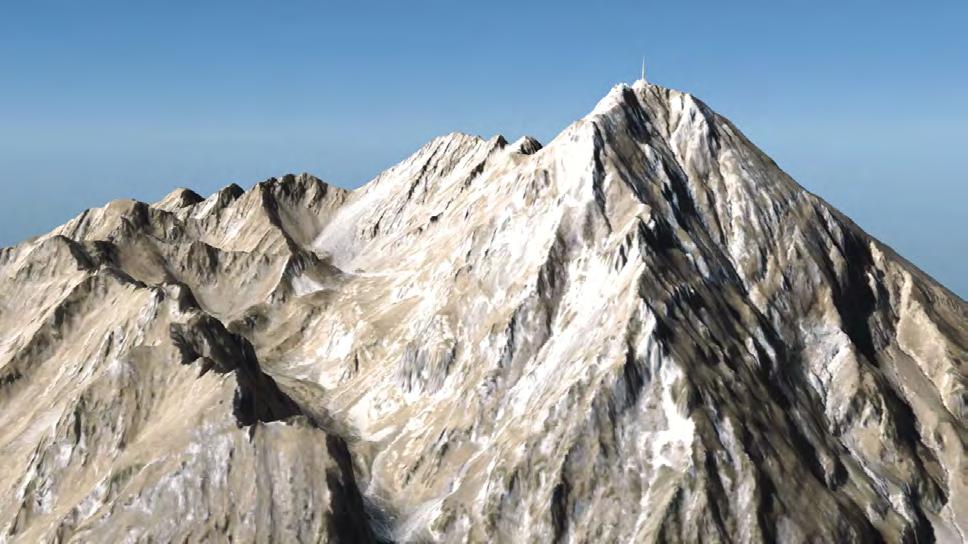
The DSM produced will represent approximately 25 million km² per year, a rate of accuracy that is unique in the world. They will be used by defence and civil society but should also open up new perspectives for start-ups or established companies that use them for commercial purposes. The entire globe should be covered within 5 years, and depending on the needs of certain specific users (glaciologists, snow scientists, geologists, etc.) certain areas will be remodeled every few months.
(from
P. Pintus, H. Wang, S.
Srinivasan,
S. Pinna, D. Huang, Y. Shoji, C. A. Ross, J. E. Bowers, G. Moody, “Integrated magneto-optic based magnetometer: classical and quantum limits,” Optica 12, 2025, DOI: 10.1364/OPTICA.577791)
Ateam of researchers from the University of California, Santa Barbara (UCSB) and the University of Cagliari, Italy, have made a significant progress in magnetic field sensing technology with the development of a compact, high-sensitivity magnetometer based on silicon photonics. This innovation promises to revolutionize applications ranging from geo-positioning and medical imaging to space exploration.
Traditional high-precision magnetometers, such as superconducting quantum interference devices (SQUIDs) and nitrogen-vacancy (NV) centres, often suffer from limitations like bulky size, high power consumption, or the need for cryogenic operation. The new magnetometer, detailed in a recent study, overcomes these challenges by leveraging silicon integrated photonics combined with a magneto-optic thin film.
The device detects magnetic field fluctuations through
The Austrian Space Forum (OeWF) invites the scientific community to submit experiment proposals in the fields of geosciences, engineering & robotics, planetary surface operations, and life sciences including astrobiology, human factors in a 2-stage call: a draft summary proposal to be sent to amadee27@oewf.org by 24 January 2026; a full proposal to be sent no later than 23 February 2026.
Full details here
a nonreciprocal phase shift in an integrated photonic interferometer. By bonding a thin layer of cerium–yttrium iron garnet (Ce:YIG) onto a silicon photonic chip, the sensor achieves over 80 dB of dynamic range and exceptional sensitivity at room temperature. This approach not only reduces the size, weight, and power requirements but also enables seamless integration with on-chip lasers, detectors, and quantum elements for enhanced performance.
The study also highlights the potential for further sensitivity improvements through techniques like squeezed light injection, analogous to those used in advanced gravitational wave detection systems.
This breakthrough represents a significant advancement in magnetic field sensing technology, offering a versatile and efficient solution for scientific research and industrial applications. ―
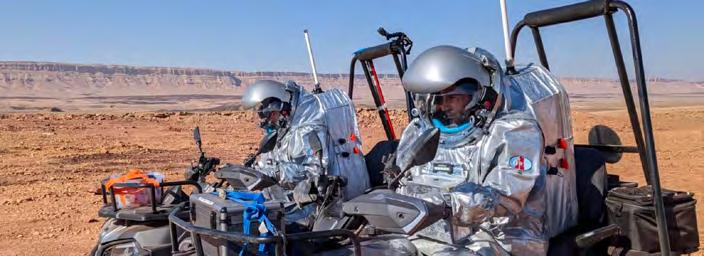
Particle collisions at the Large Hadron Collider (LHC) can reach temperatures over one hundred thousand times hotter than at the centre of the Sun. Yet, somehow, light atomic nuclei and their antimatter counterparts emerge from this scorching environment unscathed, even though the bonds holding the nuclei together would normally be expected to break at a much lower temperature. Physicists have puzzled for decades over how this is possible, but now the ALICE collaboration has provided experimental evidence of how it happens, with its results now published in Nature
Researchers at ALICE studied deuterons (a proton and a neutron bound together) and antideuterons (an antiproton and an antineutron) that were produced in high-energy collisions of protons at the LHC. They found evidence that, rather than emerging directly from the collisions, nearly 90% of the deuterons and antideuterons were created by the nuclear fusion of particles emerging from the collision, with one of their constituent particles coming from the decay of a short-lived particle.
“These results represent a milestone for the field,” said Marco van Leeuwen, spokesperson for the ALICE experiment. “They fill a major gap in our understanding of how nuclei are formed from quarks and gluons and provide essential input for the next generation of theoretical models.”
These findings not only explain a long-standing puzzle in nuclear physics but could have far-reaching implications for astrophysics and cosmology. Light nuclei and antinuclei are also produced in interactions between cosmic rays and the interstellar medium, and they may be created in processes involving the dark matter that pervades the Universe. By building reliable models for the production of light nuclei and antinuclei, physicists can better interpret cosmic-ray data and look for possible darkmatter signals.
The ALICE observation provides a solid experimental foundation for modelling light-nuclei formation in space. It shows that most of the light nuclei observed are not created in a single thermal burst, but rather through a sequence of decays and fusions that occur as the system cools.
The ALICE collaboration came to these conclusions by analysing the deuterons produced from high-energy proton collisions recorded during the second run of the LHC. The researchers measured the momenta of deuterons and pions, which are another type of particle formed of a quark–antiquark pair. They found a correlation between the pion and deuteron momenta, indicating that the pion and either the proton or the neutron of the deuteron actually came from the decay of a short-lived particle.
This short-lived particle, known as the delta resonance, decays in about one trillionth of a trillionth of a second into a pion and a nucleon, i.e. either a proton or a neutron. The nucleon can then fuse with other nearby nucleons to produce light nuclei such as a deuteron. This nuclear fusion happens at a small distance from the main collision point, in a cooler environment, which gives the freshly created nuclei a much better chance of survival. These results were observed for both particles and antiparticles, revealing that the same mechanism governs the formation of deuterons and antideuterons.
“The discovery illustrates the unique capabilities of the ALICE experiment to study the strong nuclear force under extreme conditions,” said Alexander Philipp Kalweit, ALICE physics coordinator.
Read more here
(from ESA release, December 2025)
ESA’s two-spacecraft Proba-3 mission, launched from India in December will perform precise formation flying down to a single millimetre, as if they were one single giant spacecraft. To demonstrate their degree of control, the pair will produce artificial solar eclipses in orbit, giving prolonged views of the Sun’s ghostly surrounding atmosphere, the corona.
Fourteen ESA Member States including Canada came together on this mission, set to demonstrate game-changing European technology in the areas of autonomous operations and precision manoeuvring by delivering never-before-seen science results.
Proba-3 lifted off on a four-stage PSLV-XL rocket from Satish Dhawan Space Centre in Sriharikota, India, on 5 December. Stacked together, the two satellites separated from their upper stage about 18 minutes after launch. The pair will remain attached together while initial commissioning takes place, overseen from mission control at the European Space Security and Education Centre, ESEC, in Redu, Belgium.
Proba-3 mission manager Damien Galano adds, “Today’s liftoff has been something all of us in ESA’s Proba-3 team and our industrial and scientific partners have been looking forward to for a long time. I’m grateful to ISRO for this picture-perfect ascent to orbit. Now the hard work really begins, because to achieve Proba3’s mission goals, the two satellites need to achieve positioning accuracy down to the thickness of the average fingernail while positioned one and a half football pitches apart.”
Up around the top of their orbits the Proba-3 Occulter spacecraft will cast a precisely controlled shadow onto the Coronagraph spacecraft around 150 m away, to produce solar eclipses on demand for six hours at a time.
“Despite its faintness, the solar corona is an important element of our Solar System, larger in expanse than the Sun itself, and the source of space weather and the solar wind,” explains Andrei Zhukov of the Royal Observatory of Belgium, Principal Investigator for Proba-3’s ASPIICS (Association of Spacecraft for Polarimetry and Imaging Investigation of the Corona of the Sun) coronagraph. “At the moment we can image the Sun in extreme ultraviolet to image the solar disc and the low corona, while using Earth- and space-based coronagraphs to monitor the high corona. That leaves a significant observing gap, from about three solar radii down to 1.1 solar radii, that Proba-3 will be able to fill. This will make it possible, for example, to follow the evolution of the colossal solar explosions called Coronal Mass Ejections as they rise from the solar surface and the outward acceleration of the solar wind.”
If Proba-3’s initial commissioning phase goes to plan, then the spacecraft pair will be separated early in the new year to begin their individual check-outs. The operational phase of the mission, including the first observations of the corona through active formation flying, should begin in about four months.
(Academician Yuanxi Yang, Chinese Academy of Sciences, Zhetao Zhang, University of Melbourne, Australia and Hohai University, China)
The development of an Integrated Real-Time Precise Point Positioning (InRPPP) system leveraging BeiDou Navigation Satellite System (BDS) B2b, B2a, and B1C services has significantly enhanced satellite-based positioning accuracy. By resiliently utilizing these augmentation messages, the InRPPP system corrects satellite orbit and clock errors and mitigates ionospheric delays, outperforming traditional methods. Experimental results from both static and kinematic conditions demonstrate superior performance, showing improved positioning accuracy, faster convergence times, and greater stability in challenging environments. This breakthrough offers potential for applications in real-time navigation, precision positioning, and disaster monitoring, with a broader impact on
industries requiring reliable and continuous positioning data.
Satellite-based navigation systems, like the Real-Time Precise Point Positioning (RTPPP), are crucial for many industries that require accurate location data. However, these systems face limitations in areas with weak Internet connectivity or signal interference. BeiDou’s satellite augmentation services, namely B2b, B2a, and B1C, have emerged as a promising solution. Yet, integrating these services into one cohesive system for optimal performance remained unexplored. This study pioneers the Integrated InRPPP system, which integrates all three services including correcting satellite clock, orbit errors, and ionospheric delays, unlocking new levels of positioning accuracy. The results from this research address critical limitations in current satellite-based positioning technology, setting the stage for real-world applications in complex environments.
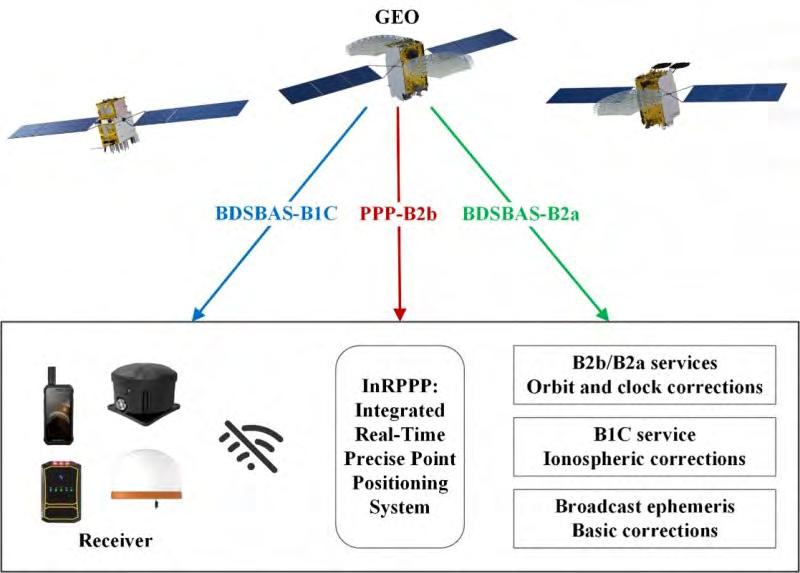
In a 2025 Satellite Navigation publication (DOI: 10.1186/ s43020-025-00172-x ), researchers from the State Key Laboratory of Geo-Information Engineering and Key Laboratory of Surveying and Mapping Science and Geospatial Information Technology of MNR, State Key Laboratory of Spatial Datum, and Hohai University, China, introduced the InRPPP system, a new approach that leverages the B2b, B2a, and B1C services of the BDS.
By combining these services, the InRPPP system corrects satellite orbit and clock errors while mitigating ionospheric delays. With enhanced accuracy, stability, and faster convergence times, this system has the potential to transform satellite-based positioning, offering more reliable and continuous service in realtime applications, especially in environments where traditional positioning systems struggle to perform.
The InRPPP system brings a new level of precision to satellite navigation by combining the best of BeiDou's B2b, B2a, and B1C services. Through this integration, the system corrects satellite orbit and clock errors with B2b and B2a services, while B1C handles ionospheric delays. This resilient approach allows the system to deliver superior performance, even in high-occlusion or remote environments. The static experiments showed the InRPPP system surpasses other methods, with a 59.6% improvement in positioning accuracy and a 65.9% reduction in convergence time compared to using B2b, B2a, or B1C individually. In dynamic conditions, the system demonstrated enhanced stability and reduced signal interruptions, achieving up to a 34.3% improvement in accuracy. The integration of these services increases the number of visible satellites, enhancing the Position Dilution of Precision (PDOP) values and ensuring better satellite geometry. This integrated approach not only improves accuracy but also ensures continuous, reliable solutions, making it a game-changer for fields like geodesy, navigation, and disaster monitoring.
Academician Yuanxi Yang of the Chinese Academy of Sciences, the lead researcher behind the InRPPP system, remarked, "The ability to integrate multiple BeiDou augmentation services into a single real-time positioning system represents a major breakthrough. By leveraging B2b, B2a, and B1C, our system offers a more reliable and accurate solution than anything available today. In both static and kinematic tests, the InRPPP system has outperformed traditional positioning methods, demonstrating its robustness and resilience in environments where signal conditions are far from ideal. This system is already applied in real applications and has potential to reshape industries reliant on satellite navigation and positioning."
The implications of the InRPPP system are vast, with applications spanning multiple sectors that depend on high-precision satellite navigation. From autonomous vehicles and precision agriculture to disaster management and geospatial services, the enhanced accuracy and stability offered by InRPPP can support real-time decision-making in critical environments. This system also promises to improve the resilience of navigation systems in regions with poor satellite visibility or signal interference. As technology advances, the InRPPP system could pave the way for even more robust solutions, advancing global sustainability goals and improving disaster response capabilities by offering uninterrupted, reliable positioning data.
For the first time, a Canadian rover will explore the Moon and help in the international search for water ice, a key component needed for the future of human space exploration.
The Canadian rover will land on the south pole of the Moon. It will have an onboard suite of scientific payloads: several Canadian and one American. Thanks to a close and ongoing collaboration between NASA and the Canadian Space Agency (CSA), the Canadian lunar rover will fly as part of NASA's Commercial Lunar Payload Services initiative.
Building on the success of past scientific instruments, academia and industry will once again have the chance to showcase Canadian know-how and innovation. The project is a technology demonstration meant to set the foundation for future Canadian lunar exploration. For decades, as part of Canada's plan for robotic space exploration, the CSA has been actively working on refining rover designs and building Canadian expertise in rover technologies.
Rovers provide the mobility to help gather geologic and mineralogic information on samples at different locations, and send data back to Earth, as opposed to landers that can only analyze in one location. Using their tools and instruments, they can help scientists learn more about the important resources on the Moon that will be needed to establish a long-term presence there and eventually send humans farther into space.
In November 2022, Canadensys Aerospace Corporation (Canadensys) was selected to build the Canadian lunar rover as well as to integrate the Canadian payloads and the NASAprovided instrument. The company will work with organizations from industry and academia.
The rover will explore a region of the lunar south pole. With the help of its scientific payloads, it will gather scientific data to help find water ice and allow scientists to better understand the lunar geology and environment.
The objectives of the Canadian lunar rover are to: travel on the surface of the Moon to understand how the various engineering systems perform; showcase the possible applications, feasibility and performance of new technologies; make scientific measurements that will help determine the amount of hydrogen present in the Moon soil, which is one of the best indicators of water ice, while defining at which temperatures it is detected; analyze the lunar soil to better understand the geology and mineralogy of the site; assess how much lunar surface radiation future astronauts will be exposed to.
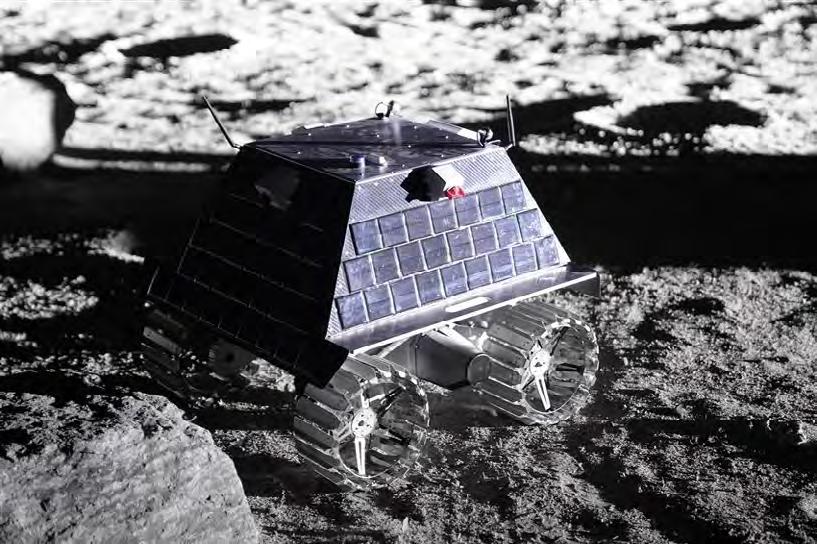
(from ESA release, December 2025)
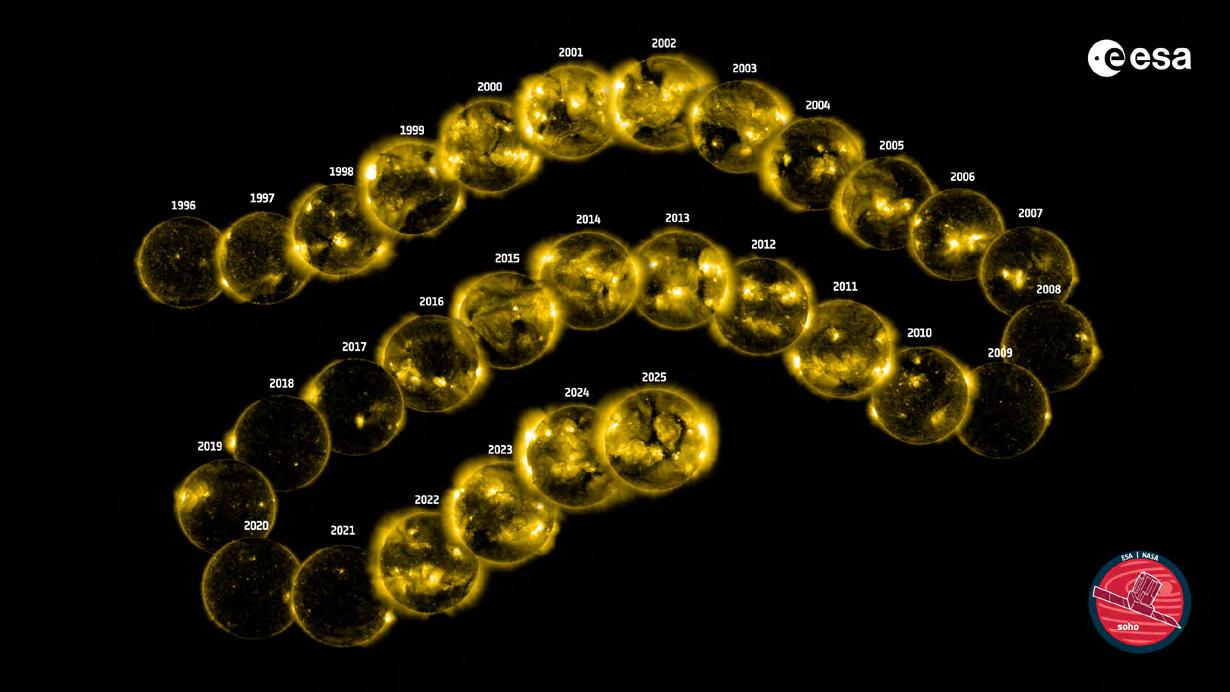
▲ Image credit: SOHO (ESA & NASA)
The ESA/NASA Solar and Heliospheric Observatory (SOHO) has been observing the Sun for 30 years. In that time, SOHO has observed nearly three of the Sun’s 11-year solar cycles, throughout which solar activity waxes and wanes.
This montage of 30 images captured by the spacecraft’s Extreme Ultraviolet Imaging Telescope provides a snapshot of the changing face of our Sun. The brightest images occur around the time of solar maximum, when the Sun’s magnetic field is twisting and
reshaping itself. Thanks to this magnetic activity, the Sun shines more brightly in extreme ultraviolet light, and also sends out streams of charged particles into space more often.
The individual images were taken at a wavelength of 28.4 nanometres and show gas with a temperature of about two million degrees Celsius in the Sun’s atmosphere, or corona.
Read more here
(from ESO release, July 2025)
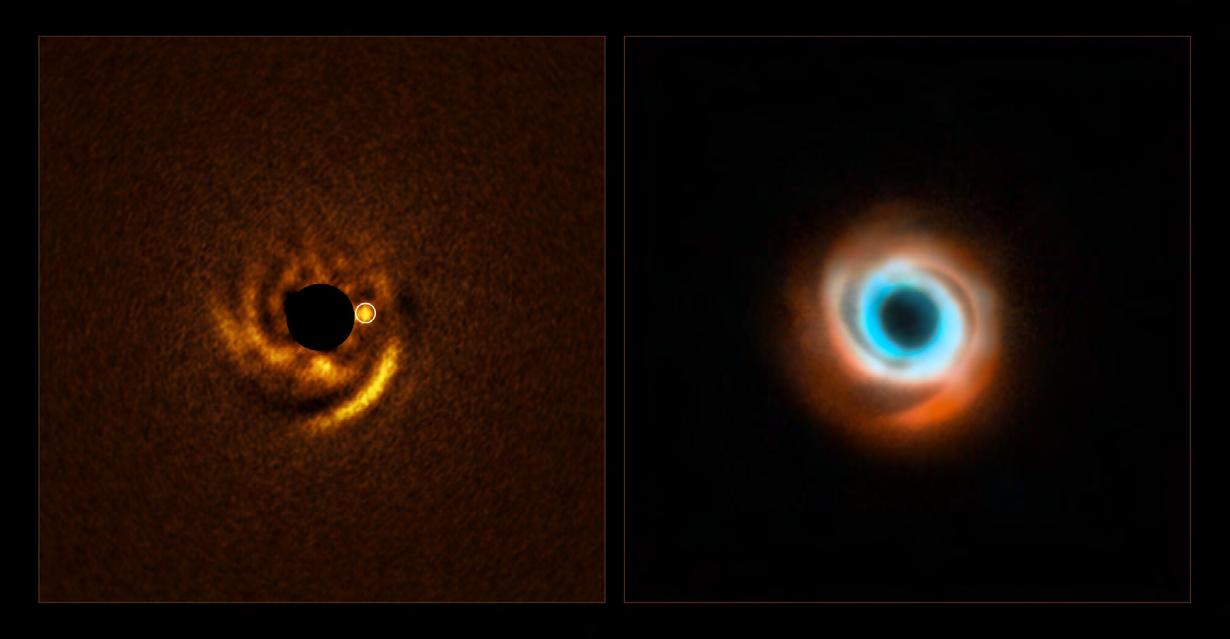
▲ Image credit: ESO
Astronomers may have caught a still-forming planet in action, carving out an intricate pattern in the gas and dust that surrounds its young host star. Using ESO’s Very Large Telescope (VLT), they observed a planetary disc with prominent spiral arms, finding clear signs of a planet nestled in its inner regions. This is the first time astronomers have detected a planet candidate embedded inside a disc spiral.
The potential planet-in-the-making was detected around the star HD 135344B, within a disc of gas and dust around it called a protoplanetary disc. The budding planet is estimated to be twice the size of Jupiter and as far from its host star as Neptune is from
the Sun. It has been observed shaping its surroundings within the protoplanetary disc as it grows into a fully formed planet.
Protoplanetary discs have been observed around other young stars, and they often display intricate patterns, such as rings, gaps or spirals. Astronomers have long predicted that these structures are caused by baby planets, which sweep up material as they orbit around their parent star. But, until now, they had not caught one of these planetary sculptors in the act.
Read more here
18-20 March 2026
Leiden, The Netherlands
2nd Conf. on Earth-Space Sustainability : Law, Stewardship, Equity
5–9 January 2026
Mumbai, India
ISWI-SCOSTEP International School on Space Weather
8-10 April 2026
Munich, Germany
5th Symposium on Space Educational Activities
25-29 January 2026
Houston, TX, USA
23rd Conference on Space Weather, American Meteorological Society
9-13 February 2026
Liberia, Costa Rica
17th International Symposium on Equatorial Aeronomy (ISEA-17)
16–20 February 2026
San José, Costa Rica
United Nations/Costa Rica/COSPAR Workshop on Machine Learning applied to Space Weather and Global Navigation Satellite Systems (GNSS)
2-6 March 2026
Noorwijk, the Netherlands
3rd Heliophysics in Europe Meeting
13-16 April 2026
Vienna, Austria
Hubble & Webb “Enriching the Universe” Conference
1-5 June 2026
Thessaloniki, Greece
SCOSTEP 16th Quadrennial Solar-Terrestrial Physics Symp.
9-12 June 2026
Mariehamn, Finland Space Climate 10
14-19 June 2026
Bath, UK
17th International Solar Wind Conference
Meetings organized or sponsored by COSPAR are pinned and shown in bold face. You can find more information by clicking on the events names.
4-11 July 2026
Toronto, Canada
25th ISPRS Congress: From Imagery to Understanding
23-30 July 2026
Philadelphia, USA
ICM 2026 International Congress of Mathematicians
6 October 2026
Libreville, Gabon
NewSpace Africa Conference
1-9 August 2026
Florence, Italy
46th COSPAR Scientific Assembly
15-19 December 2026
New Orleans, USA
2025 AGU Annual Meeting
11-18 August 2026
Calgary, Canada
International Union of Crystallography Triennial Congress
15-22 August 2026
Krakow, Poland
36th URSI General Assembly and Scientific Symp. 2026
24-28 August 2026
Kiruna, Sweden
22nd Int. EISCAT Symp./ 49th Annual European Meeting on Atmospheric Studies by Optical Methods
8-16 July 2028
Dubai, UAE
47th COSPAR Scientific Assembly
Be sure to consult the Call for Abstracts HERE, and please read carefully the instructions on how to submit your abstract HERE.
If you are a Main Scientific Organizer (MSO) or a Deputy Organiser, you are strongly advised to read the 2026 Guidelines for MSOs particularly if this is your first time as an MS/DO at a COSPAR Assembly.
Other useful information can be found HERE and more details about the Scientific Programme and Special Events will be updated as they become available.
The Local Organizing Committee website provides logistical information about the Assembly venue, accommodation, travel, and registration, for example.
Looking forward to Florence, from Nicosia!
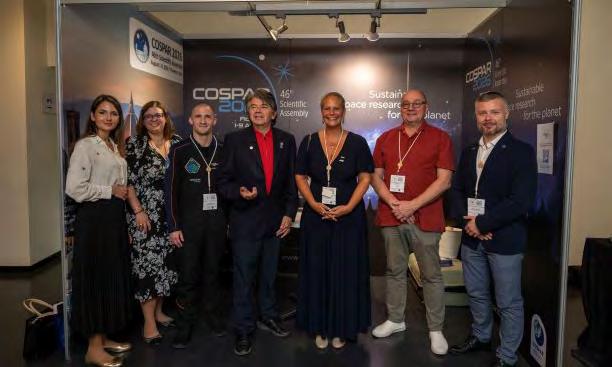
That COSPAR documents up to 2021 can now be consulted at the Historical Archives for the European Union (HAEU), in Florence, Italy? Previously, most documents and files were stored underground in the Paris region and were not easily accessible. In 2021 the COSPAR Secretariat transferred all archive material to the HAEU, part of the European University Institute (EUI). This material has now joined this vast repository where it has been preserved, digitized when possible, and organised, making it accessible to any interested researcher.
https://www.eui.eu/en/academic-units/ historical-archives-of-the-european-union
The Villa Salviati, Florence, Italy, home to the HAEU archives—and now COSPAR archives.
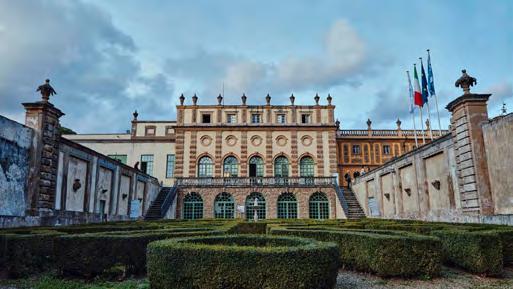
Origins 2026, a joint meeting organized by the International Society for the Study of the Origins of Life – The International Astrobiology Society (ISSOL), and the Astro-biology Commission of the International Astronomical Union (IAU) will take place 5-10 July 2026 in Paris, France. This event will bring together experts from diverse fields including chemistry, biology, planetary science, and astrophysics, to explore the origins of life and habitability on Earth and beyond.
Registration and abstract submission is open here
To apply for a new ISSOL membership, please go to the society website.
1-5 June 2026 (school on 30-31 May 2026), Makedonia Palace Hotel, Thessaloniki, Greece
The Scientific Committee on Solar-Terrestrial Physics (SCOSTEP) organizes the Solar-Terrestrial Physics (STP) symposium once every four years. SCOSTEP is engaged in three major activities: long-term scientific programs, capacity building, and public outreach. The scientific programs are of an interdisciplinary nature, involving scientists from around the world. They are designed to advance our understanding of the solar-terrestrial relationship using space- and ground-based observations, cutting-edge models, and theory. Under what ways the Sun affects the Earth and its environment over various time scales is the underlying theme of the scientific programs pursued under SCOSTEP. The predictability of those phenomena has been addressed during the recently concluded Predictability of the variable Solar-Terrestrial Coupling (PRESTO) in 2020-2024.
The SCOSTEP’s new program COURSE in 2026-2030 will address cross-scale coupling processes in the solar-terrestrial system. The SCOSTEP 16th Quadrennial Solar-Terrestrial Physics Symposium (STP-16) aims to gather eminent scientists from solar, magnetospheric, ionospheric, and atmospheric physics communities to discuss and deliberate on the cutting-edge sciences pertaining to STP, especially the cross-scale coupling processes as a focus area in each of the traditional topics deliberated upon during the earlier STP meetings. A series of tutorials/lectures by eminent scientists will be provided two days prior to the STP-16 symposium, i.e., on 30-31 May 2026, for students and early-career scientists on topics of solar-terrestrial physics.
Abstract submission: 10 January 2026
Financial support request: 10 January 2026
Notification of acceptance/rejection of abstracts: 15 February 2026
Early Bird registration: 31 March 2026
Conference School: 30-31 May 2026
Conference dates: 1-5 June 2026.
[Niklas Hedman, Vice-Chair of COSPAR Panel on Planetary Protection, Silvio Sinibaldi, ESA Planetary Protection Officer, Guido Kreck, Deputy Team Leader Cleanliness Technology at Fraunhofer IPA]
The annual 2025 ESA international planetary protection training course was again held at the Fraunhofer IPA in Stuttgart, Germany, on 30 September to 2 October 2025. The host was the Department of Ultraclean Technology and Micromanufacturing at the Institute for Manufacturing Engineering and Automation. The course covered a wide range of topics on planetary protection, including training sessions in a cleanroom and bio lab. Trainers included experts from Fraunhofer IPA, ESA, JAXA, DLR, University of Graz, Airbus Defence and Space, Thales Alenia Space, and COSPAR.
A snapshot of lectures covered the basics of microbiology; space law, policy and governance of outer space activities; the COSPAR Policy on Planetary Protection and the Panel
on Planetary Protection (PPP); the ECSS standards for planetary protection; planetary protection requirements and implementation at ESA, and JAXA; planetary protection approaches for ExoMars, including the Mars Organic Molecular Analyser and Earth Return Orbiter; Mars sample return and curation; Bioburden data analysis; Cleanroom and Laboratory techniques and practices with corresponding training sessions at the Fraunhofer IPA cleanroom and laboratory facilities.
The planetary protection training course was organized by Silvio Sinibaldi, ESA Planetary Protection Officer and member of the COSPAR Panel on Planetary Protection (PPP), together with Udo Gommel, Guido Kreck and colleagues at Fraunhofer IPA.
To give a historical context, the training course series was initiated in 2015 to provide hands-on, interdisciplinary training for scientists and engineers involved in planetary missions. The course aims to ensure participants understand the principles and practical requirements of planetary protection, including microbiology, contamination control, legal frameworks, and mission-specific implementation. It offers a unique opportunity to gain practical experience in cleanroom and laboratory techniques while networking with experts from ESA, space agencies, industry, and academia.
The training content has evolved over the past few years to meet the demand of increasingly sophisticated missions and consider the needs of private and commercial entities. New lectures have therefore been introduced since 2022. These include information about innovative toolkits being developed, i.e. molecular biology, organic contamination modelling and risk-informed decision frameworks, as well as an overview of space governance and the legal framework. As a consequence, the attendees have shifted from being purely planetary protection practitioners or lab technicians, to include more space program managers, astrobiologists and space lawyers.
Course website
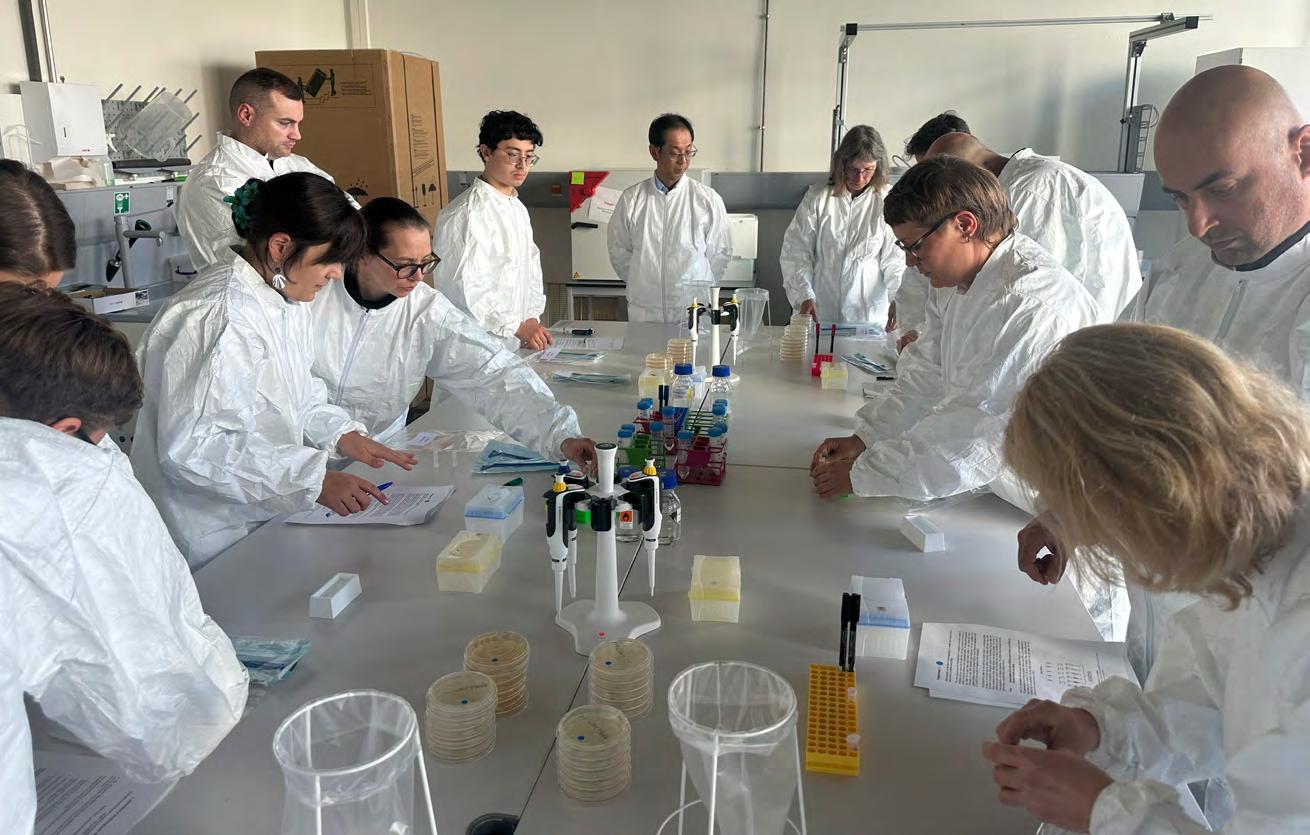
▲ PPP Participants and instructors in the lab.
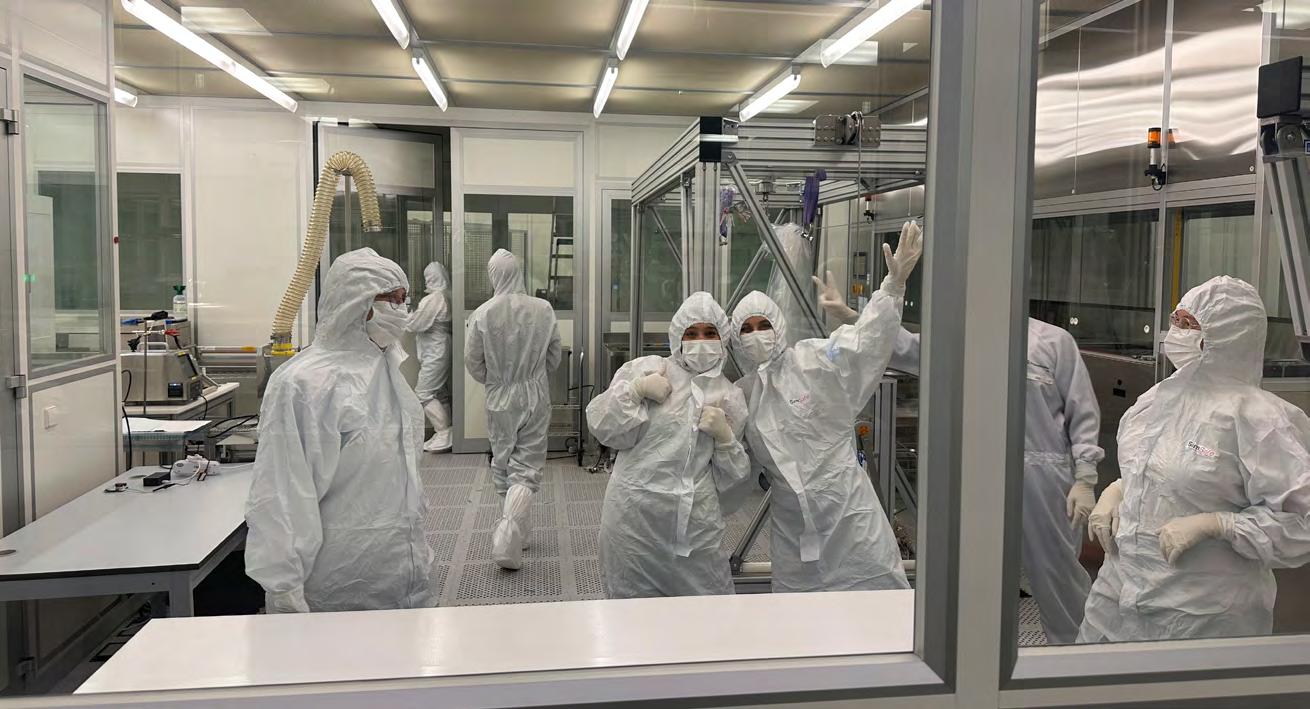
▲ PPP Participants in the cleanroom.
COSPAR publishes scientific papers in both Advances in Space Research (ASR) and Life Sciences in Space Research (LSSR). In this regular section we invite the author or authors of one or more recent papers that have been particularly significant in terms of scientific impact to write extended abstracts that summarise these papers.
Here we invite Achille Zirizzotti to summarise their paper "AISP programmable ionosonde" by Zirizzotti, Kumar, Sciacca, Scotto, Zuccheretti, Baskaradas, which was published in ASR n°76, 269 (2025) ; at this link
— Richard Harrison, General Editor, SRT.
[Achille Zirizzotti, Istituto Nazionale di Geofisica e Vulcanologia (INGV), Italy, Bala Viswanth Ganesh Kumar, SASTRA University, Thanjavur, India, Umberto Sciacca, INGV, Italy, Carlo Scotto, INGV, Italy, Enrico Zuccheretti, INGV, Italy, James Arokiasamy Baskaradas, SASTRA University, Thanjavur, India]
Introduction
Ionospheric monitoring has always been a central component of space research, navigation, and telecommunications. The ionosphere, as a highly variable medium influenced by solar activity and geomagnetic conditions, requires continuous observation through ground-based and space-borne instruments. Among these, ionosondes remain one of the most widely adopted ground-based radars for real-time ionospheric diagnostics (Bibl, K. 1998).
The Advanced Ionospheric Sounder (AIS), designed and built at the Istituto Nazionale di Geofisica e Vulcanologia (INGV), represented an important step in modernizing ionospheric sounding capabilities. Deployed across multiple observatories located in different countries, including Italy, Argentina, Vietnam, and Kenya, it has provided critical data for both scientific research and operational space weather monitoring. Nevertheless, the AIS design was conceived more than two decades ago. Rapid advancements in radio frequency electronics, digital signal
The AISP ionosonde adopts the principles of monostatic pulse radar while incorporating advanced coding and digital processing techniques. Traditional ionosondes rely on short pulses within the HF band (1–30 MHz) to determine ionospheric reflection
processing, and Software-Defined Radio (SDR) technologies have since transformed the landscape of radar systems. This evolution has enabled more compact, reconfigurable, and versatile platforms. The AISP (Advanced Ionospheric Sounder – Programmable) is conceived as the natural successor to AIS (Zuccheretti, Arokiasamy, B.J., et al. 2002), integrating SDR-based architecture with modern coding techniques, advanced digital processing, and automated data analysis. The motivation behind AISP lies in three main needs: (1) reducing the size and hardware complexity of ionosondes, (2) enabling full programmability of operational parameters, and (3) enhancing the accuracy and reliability of ionospheric data retrieval. This extended abstract provides a comprehensive overview of AISP, detailing its methodology, hardware/software architecture, validation tests, results, and perspectives for future developments in the framework of space weather research and ionospheric monitoring.
heights. However, these pulses are often limited by tradeoffs between range resolution, transmitted power, and noise rejection. AISP overcomes these limitations by employing pulse compression techniques over several choices: Barker code, Golay
complementary codes or FM-CW (“chirp” radar) (Farnett and Stevens, 1990; Golay, 1961).
Coded pulses are subdivided into sub-pulses with specific phase modulations, allowing long-duration signals with high energy to be compressed into narrow pulses upon correlation. This method enhances resolution without requiring extreme transmitted power. Furthermore, sidelobe suppression is achieved through complementary coding, minimizing spurious detections (Blake, 1990). The signal chain begins with transmission of coded pulses generated numerically by the personal computer (PC) and transformed in analogic signal by the SDR. Reception employs in-phase and quadrature (I/Q) sampling, which retains both amplitude and phase information of echoes. Coherent correlation of received signals improves the signal-to-noise ratio by factors up to 46 dB in tests (Zirizzotti et al., 2021). Software Defined Radio technology is central to this design. Instead of dedicated analog
The hardware design of AISP (sketched in Fig. 1) is remarkably simplified compared to AIS due to the extensive reliance on digital processing. The Ettus USRP N210 with LFRX/LFTX daughter boards was selected for its suitability in the 1–30 MHz range and 25 MHz instantaneous bandwidth (Ettus Research, web reference). The receiver front-end includes a limiter and
circuitry, SDR devices allow the synthesis of oscillators, filters, and coding correlators (Rouphael, 2009; Stewart et al., 2015) with programmable frequencies and bandwidth. The Ettus Research USRP family provides the required bandwidth and flexibility, with Ethernet-based communication ensuring real-time transfer of digitized signals to a PC for processing. The AISP software suite, developed in C++ with additional Python analysis routines, configures SDR parameters, manages waveform generation, and processes received traces. Ionograms are automatically scaled and further processed using the Autoscala algorithm (Scotto and Pezzopane, 2002; Pezzopane and Scotto, 2007), enabling automatic detection of critical ionospheric parameters such as foF2, foF1, and foEs, as well as electron density profiles (Scotto, 2009). This software integration ensures that AISP is not only a measurement tool but also a real-time diagnostic system for space weather applications.
switch controlled by SDR GPIO (General Purpose Input Output) lines to protect the receiver during transmission (“blind time”). The minimum detectable signal was about -90 dBm, which is sufficient for observing ionospheric reflections (Gilli et al., 2018). An external RF power amplifier boosts the signal to ensure sufficient penetration into the upper ionosphere.
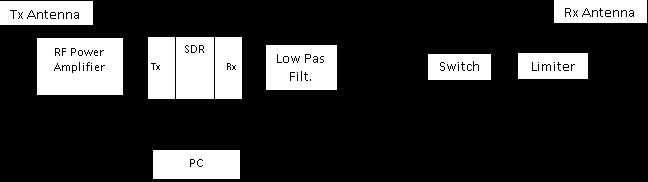
▲ Figure 1: Block diagram of the AISP ionosonde.
The processing computer is an Intel i7-based system running Linux Ubuntu, providing sufficient computational power for realtime SDR management and digital correlation. Data transfer rates of up to 1 Gbit/s ensure that digitized signals can be streamed
at the required bandwidth without distortion. Field tests at the Rome ionospheric observatory (Ionospheric Station of Rome, web reference) compared AISP with AIS ionograms recorded minutes apart (Figures 2 and 3). Results showed that AISP produced
cleaner ionograms with clearer scattered reflections and reduced noise floor, even with comparable transmitted power. Resolution as fine as 4.5 km was obtained using complementary coded pulses. Process gains reached 40–46 dB depending on coding schemes, enabling detection of weaker echoes (Farnett and Stevens, 1990; Zirizzotti et al., 2021). These results confirm that SDR-based designs can rival traditional hardware while offering superior versatility and compactness. AISP programmability
allows dynamic adaptation to different experimental setups and geophysical conditions. For instance, users may configure longer averaging times for improved noise reduction during quiet ionospheric conditions, or faster repetition rates for dynamic storm-time observations. This adaptability is critical for space weather services that demand robust yet flexible observation strategies.
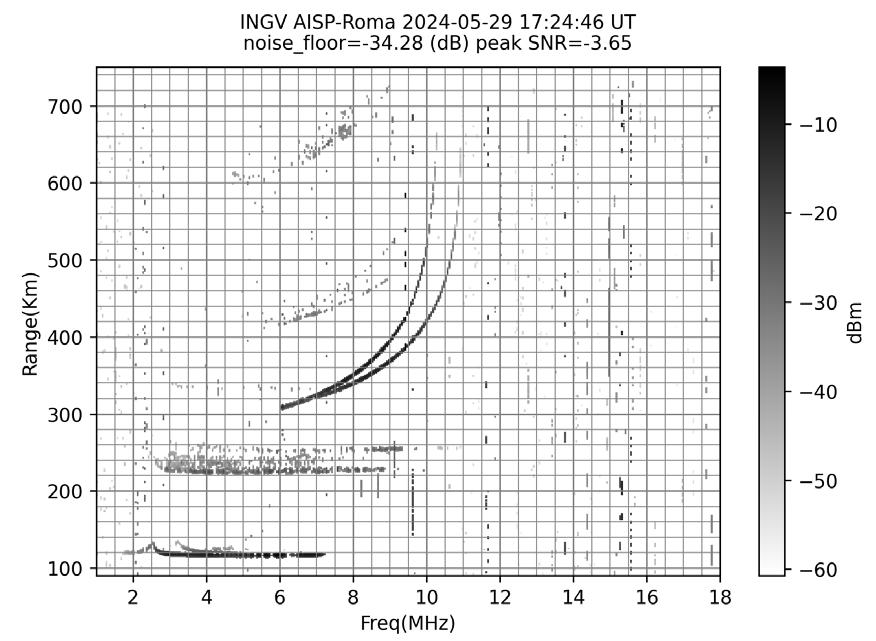
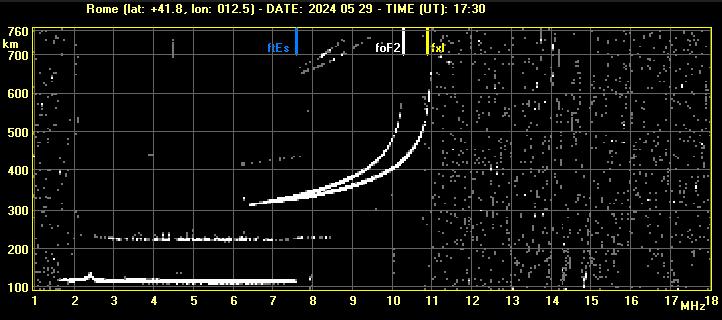
Future improvements to AISP focus on synchronization, polarization, and network deployment. Implementing GPSdisciplined oscillators (GPSDO) will enable synchronization with remote ionosondes to conduct oblique soundings. This technique, widely used in modern radar systems, requires sub-microsecond precision to correlate transmitter and receiver signals separated by large distances (Alter and Coleman, 2008).
Another planned development is the introduction of dualpolarization reception.
By employing orthogonal receiving antennas and multiple SDR channels, AISP will be able to separate ordinary and extraordinary wave components in ionograms. Finally, the compactness and cost-effectiveness of AISP make it an ideal candidate for deployment in dense observational networks. A global network of programmable ionosondes could provide near-real-time data to assimilative ionospheric models, contributing to improve forecasting of ionospheric disturbances and their impact on satellite navigation and HF communication systems.
• Alter, J.J., Coleman, J.O. (2008). Digital Signal Processing, in Radar Handbook, 3rd Ed., Skolnik M.I. (Ed.), McGraw Hill.
• Arokiasamy, B.J., et al. (2002). The new AIS-INGV ionosonde: design report, INGV Internal Technical Note. Link here
• Bibl, K. (1998). Evolution of the ionosonde, Annals of Geophysics, 41 (5-6). Link here
• Blake, L.V. (1990). Prediction of RADAR range, in Radar Handbook, 2nd Ed., Skolnik M.I. (Ed.), McGraw Hill.
• Farnett, E.C., Stevens, G.H. (1990). Pulse Compression Radar, in Radar Handbook, 2nd Ed., Skolnik M.I. (Ed.), McGraw Hill.
• Gilli, L., Sciacca, U., Zuccheretti, E. (2018). Calibrating an Ionosonde for Ionospheric Attenuation Measurements, Sensors, 18(5), 1564. Link here
• Golay, M.J.E. (1961). Complementary series, IRE Trans. Inf. Theory, 7, 82–87.
• Pezzopane, M., Scotto, C. (2007). Automatic scaling of foF2 and MUF(3000)F2, Radio Science, 42, RS4003. Link here
• Rouphael, T.J. (2009). RF and Digital Signal Processing for SDR, British Library.
• Scotto, C. (2009). Electron density profile calculation technique, Advances in Space Research, 44(6), 756–766. Link here
• Scotto, C., Pezzopane, M. (2002). A software for automatic scaling, Proc. URSI XXVII General Assembly, Maastricht, The Netherlands.
• Stewart, R.W., Barlee, K.W., Atkinson, D.S.W., Crockett, L.H. (2015). Software Defined Radio using MATLAB & Simulink and the RTL-SDR, Strathclyde Academic Media.
• Zirizzotti, A., Bagiacchi, P., Baskaradas, J.A., Sciacca, U., et al. (2021). Ionosonda SDR per sondaggi obliqui, Rapporti tecnici INGV, 431. Link here
• Zuccheretti E. et al. (2003). The new AIS-INGV digital ionosonde. Annals of Geophysics, vol. 46, n.4. Link here
Ettus Research Products: https://www.ettus.com/products/
Ettus Research UHD Manual: https://files.ettus.com/manual/index.html
Ionospheric Station of Rome: http://ionos.ingv.it/Roma/latest.html
Achille Zirizzotti received his Master’s degree in Physics from University of Rome La Sapienza, Italy, in 1991 and joined the Istituto Nazionale di Geofisica e Vulcanologia (INGV) in 1997. He is currently a Senior Research Technologist at INGV. Since 1997, he has been working on glaciological radar systems as a technologist at INGV. His main research interests include environmental geophysics, glaciology, and radar science applied to geophysics
and glaciology. He has served as principal investigator or co-investigator in five Italian Antarctic research projects, developing Radio Echo Sounding (RES) systems widely used by the Italian Antarctic research community, and as the principal coordinator of the Italian Radio Echo Sounding Database (IRES). He participated in eleven Antarctic expeditions between 1997 and 2015, collecting more than 30,000 km of radar data within several projects, including ice mass balance evaluation, identification of the EPICA drilling site, investigation of bedrock conditions at Dome C, and exploration of subglacial lakes. He is currently involved in the development of ionospheric radar systems for IonoNet, a European network of oblique ionosondes.

Carlo Scotto was born in Orbetello, Italy in 1965. He holds an MSci in Physics from the University of Rome La Sapienza, Italy and a PhD in Polar Science from the University of Siena, Italy. He attended a threeyear Scholarship for Specialization in Geophysical Disciplines and is currently a senior researcher at INGV, the Italian National Institute of Geophysics and Vulcanology. He has taken part in two

Enrico Zuccheretti has been Senior Technologist at the Istituto Nazionale di Geofisica e Vulcanologia (INGV), Upper Atmosphere Physics Department, since 1996. He got his MSc in Physics at “La Sapienza” University of Rome, Italy. His main research interests are mainly focused on ionospheric measurement techniques, radio
Antarctic campaigns and completed a research appointment at the University of Western Ontario, Canada, during the academic year 2009-2010. Other activities include studies on atmospheric gravity waves, sporadic E layer, irregularities in the F2 region, probability of occurrence of the F1 layer, and contributions to the International Reference Ionosphere model. He introduced a method for the inversion of ionogram traces and is the main author of the Autoscala software for the automatic interpretation of ionograms. To date he has published about 60 papers in peer-reviewed journals.
wave propagation in the ionosphere, HF radar design, electronics, and vertical ionospheric soundings. He is one of the designers of the Advanced Ionospheric Sounder-INGV presently operating in many observatories in Italy and abroad.
The following are recently or soon to be published / free to read Special Issues of Advances in Space Research:
• The Powerful Solar-Terrestrial and Space Weather Event in May 2024: Observations, Data and Preliminary Analysis, Vol. 76, Number 12, edited by Margaret Ann Shea.
• Ionospheric Imaging: Recent Advances and Future Directions, Vol. 76, Number 7, edited by Marcio T. A. H. Muella and Fabricio S. Prol.
• Science and Applied Research with Small Satellites, Vol. 75, Number 9, edited by Loren C. Chang and Margaret Shea.
• International Reference Ionosphere – Improved Real-time Ionospheric Predictions with Ground and Space Data, Vol. 75, Number 5, edited by Dieter Bilitza and Yong-Ha Kim.
• Information Theory and Machine Learning for Geospace Research, Vol. 74, Number 12, edited by Georgios Balasis and Simon Wing.
• Progress in Cosmic Ray Astrophysics, Vol. 74, Number 9, edited by Igor V. Moskalenko and Eun-Suk Seo.
Abstract Submission Deadline: 13 February 2026
Call for Papers here
Abstract Submission here
Information about the scientific programme for COSPAR 2026 and special events is available here
Details for registration, accommodation and other practical matters can be found here.
[Richard Harrison, Space Research Today, General Editor]
Ithink that one of the joys of science is seeing progress in scientific research areas that are not your own. As a research scientist you are immersed in your own research field, diving into incredible detail, but you are aware of the major issues in other fields of space physics, even if you are not familiar with the detailed physical issues and processes. So, half an eye is on what is happening elsewhere, and one source of frequent excitement is the many observations and results of the James Webb Space Telescope.
A particular report that really struck me recently was entitled ‘Mapping Dark Matter’. Not so long ago it was clear that both dark matter and dark energy were major concepts that were required to explain the observations of galactic motions, but they were enigmatic. Again, as someone outside the field to now see researchers using, in this case the James Webb Space Telescope and the NASA Chandra X-ray Observatory, to actually map the distribution of dark matter (NASA release, 14 November 2025) within the Bullet Cluster, which is made up of two large galaxy clusters, is absolutely mind blowing! The observations, interpretation and results were presented in a paper by Sangjun Cha et al. (Astrophysical Journal Letters 2025, vol 987, L15; doi: 10.3847/2041-8213/add2f0) and, of course, I must refer you to them to provide the details.
In contrast, another thing that has caught my eye in the last few months, in terms of news items, has been a lot of rather questionable reporting of the nature of the interstellar visitor, 3I/ATLAS. I have seen reports making claims about it being an alien spacecraft, about 'scientists being stunned' by the antics of the object as it came into the inner Solar System, and even one misguided report of the Sun ‘sending a beam’ to intercept the object (which, I believe is just a coronal mass ejection). All of this does make you think about how we, as the professional space research community, can ensure that our reports, observations, results etc are reported to the wider community accurately and without outrageous interpretation. Some elements of this kind of mis-reporting are not new, but there seems to be an increase in conspiracy theories, misinformation and fake news, and I can see COSPAR, in the near future, attempting to tackle this as a growing issue that requires some strategic thinking and action. That said, as far as 3I/ATLAS was concerned, I was anxious that we should include a proper, sober report on the Solar System visitor and was delighted to receive the article by Darryl Seligman.
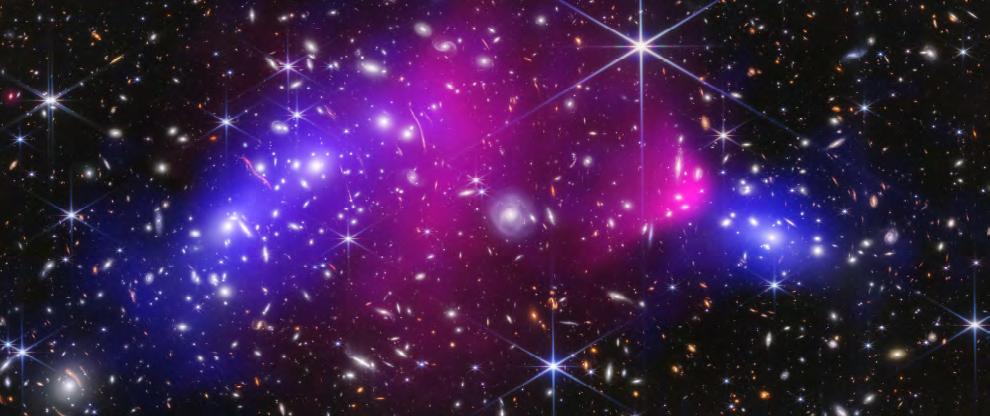
▲ Mapping dark matter. Image credit: NASA, ESA, CSA, STSCl, CXC
Finally, one of the big news items in the last week or so (as I type) was the 30-year anniversary of the launch of SOHO, the ESA/NASA Solar and Heliospheric Observatory, and this was the subject of an ESA news release on 2 December. Like the James Webb Space Telescope, SOHO is a multiinstrument observatory used by numerous research scientists world-wide, and in this case, the mission is geared toward solar and solar wind physics. SOHO has been a huge part of my own career, so it is wonderful to see the spacecraft reach this milestone, still making unique observations, and to read about some science highlights of the mission.
The NoRCEL Institute has entered an exciting new phase of collaboration with South Africa’s National Research Foundation (NRF) to advance astroscience outreach education in Cape Town, South Africa. This partnership reflects NoRCEL’s broader mission to expand scientific literacy, inclusivity, and opportunity across the Global South.
Building on more than a decade of educational engagement across Africa, NoRCEL has already demonstrated impact through school visits, teacher training, public lectures, and the recent installation of telescopes in Malawi and Zambia. The new programme in South Africa marks a significant step forward: a five-year outreach initiative embedded with longitudinal studies to measure the real impact of astroscience education on learners.
In parallel, the NoRCEL will also deliver its pioneering “Motivational Astroscience” programme, a distinctive blend of scientific exploration and motivational psychology. This dual approach aims not only to spark curiosity about the universe, but also to empower young people with the confidence, resilience, and ambition to pursue careers in astrobiology—as well as in
South Africa provides a unique environment for this initiative. As home to world-leading astronomy facilities such as the Square Kilometre Array (SKA), the country offers an unparalleled platform for students to connect local opportunities with global science. The NRF partnership ensures that outreach is deeply embedded within the national education framework, maximising sustainability and impact.
NoRCEL’s Founder and Chairman, Dr Sohan Jheeta, has expressed a strong desire to visit Cape Town later this year to gain first-hand understanding of the educational landscape. This preparatory visit will help ensure that the programme is fully aligned with the needs of South African learners, educators, and communities.
The collaboration also exemplifies NoRCEL’s broader vision as articulated in its recent transformation into The NoRCEL Institute. With the launch of the NoRCEL Education and Research Academy (ERA), the organisation is positioning itself as a transnational hub of education and outreach, advancing its work not only across the African continent but also in Latin America and beyond.
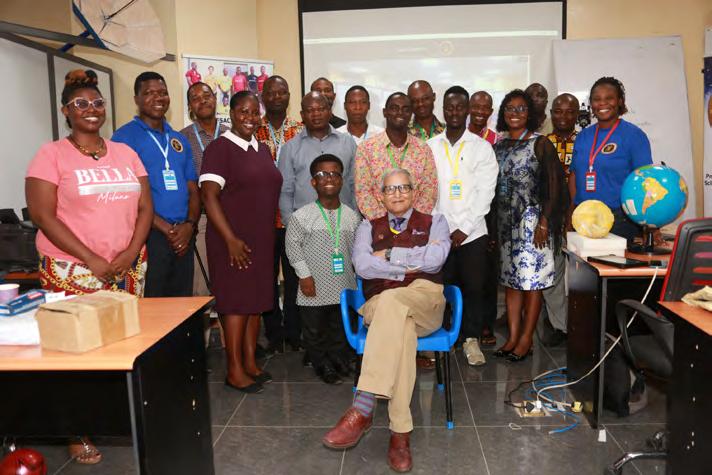
▲ Empowering Inclusive Learning at GRAO, Ghana — Teacher training session to communicate with partially blind students for astronomy studies (2024)
By combining cutting-edge astroscience with motivational education, and by embedding its efforts within national frameworks through the NRF, The NoRCEL Institute is helping to inspire the next generation of scientists and innovators— ensuring that Africa is at the forefront of global discovery and exploration. ―
(from Sohan Jheeta, Founder and Chairman, Deepnil Ray, Deputy CEO of NoRCEL Institute)
Anyone is welcome, indeed encouraged, to submit an article or news item to Space Research Today. As we are the main information bulletin of COSPAR, we are particularly focused on issues and news related to COSPAR business, to space research news and events, including meetings, around the world. In the spirit of a bulletin publication, we aim to be as flexible as possible in the submission procedures. Submission should be made in English, by e-mail to any member of the Editorial Team (see contact details given earlier).
Submissions may be made in (i) e-mail text, with attached image files if required, and (ii) As Word files with embedded images (colour is encouraged). Other formats can be considered; please contact the editorial team with your request. If you are submitting an article, please include ‘about the author’ information, i.e. a paragraph about yourself with an image.
The nominal deadlines are 1 March for the May issue, 1 July for the September issue, and 1 November for the January issue, but material can be submitted at any time.
The editors will always be pleased to receive the following types of inputs or submissions, among others:
RESEARCH HIGHLIGHT articles: These are generally substantial, current review articles that can be expected to be of interest to the general space community, extending from two pages to over five pages, with figures and images (again, colour encouraged). These could be reports on space missions, scientific reports, articles on space strategy or history.
IN BRIEF articles: short research or news announcements up to three pages, with images as appropriate.
COSPAR BUSINESS and COSPAR COMMUNITY: articles related to COSPAR business, reporting on particular activities, meetings or events.
SNAPSHOTS: striking space research related images (e.g. a spacecraft launch, a planetary encounter image, a large solar flare, or a historical image, particularly related to COSPAR) for which we require the image and a single paragraph caption, plus the image credit.
In Memoriam submissions: Articles extending to a few pages, including an image, about a significant figure in the COSPAR community.
LETTERS to the EDITOR: Up to two or three pages on any subject relevant to COSPAR and space research in general. These can cover news, opinions on strategy, or scientific results.
MEETING ANNOUNCEMENTS: meeting reports and book reviews all welcome.
Articles are not refereed, but the decision to publish is the responsibility of the General Editor and his editorial team.
Furthering research, exploration, and the peaceful use of outer space through international cooperation
COSPAR was established by the International Council of Scientific Unions (ICSU), now the International Science Council (ISC), in October 1958 to continue the cooperative programmes of rocket and satellite research successfully undertaken during the International Geophysical Year of 1957-1958. The ICSU resolution creating COSPAR stated that its primary purpose was to "provide the world scientific community with the means whereby it may exploit the possibilities of satellites and space probes of all kinds for scientific purposes, and exchange the resulting data on a cooperative basis".
Accordingly, COSPAR is an interdisciplinary scientific organization concerned with the promotion and progress, on an international scale, of all kinds of scientific research carried out with space vehicles, rockets and balloons. COSPAR’s objectives are carried out by the international community of scientists working through ISC and its adhering National Academies and International Scientific Unions. Operating under the rules of ISC, COSPAR considers all questions solely from the scientific viewpoint and takes no account of political considerations.
COSPAR Members are National Scientific Institutions, as defined by ISC, actively engaged in space research and International Scientific Unions federated in ISC which desire membership. The COSPAR Bureau manages the activities of the Committee on a day-to-day basis for the Council – COSPAR’s principal body –which comprises COSPAR’s President, one official representative of each Member National Scientific Institution and International Scientific Union, the Chairs of COSPAR Scientific Commissions, and the Finance Committee Chair.
COSPAR also recognizes as Associates individual scientists taking part in its activities and, as Associated Supporters, public or private organizations or individuals wishing to support COSPAR’s activities. Current members in this category are Airbus Defence and Space SAS, Center of Applied Space Technology and Microgravity (ZARM), Germany; China Academy of Launch Vehicle Technology (CALT), China; China Academy of Space Technology (CAST), China; Groupement des Industries Françaises Aéronautiques et Spatiales (GIFAS), France; the International Space Science Institute (ISSI), Switzerland; Korea Aerospace Industries, Ltd., S. Korea, L3Harris, USA; United Launch Alliance, USA.
COSPAR also has an Industry Partner programme to encourage strategic engagement with relevant industries who wish to be involved in the activities of COSPAR and support its mission.
The current Industry Partner is Lockheed Martin Corporation, USA.

COSPAR Bureau (2022-2026)
President: P. Ehrenfreund (Netherlands/USA)
Vice Presidents: C. Cesarsky (France), P. Ubertini (Italy)
Other Members: V. Angelopoulos (USA), M. Fujimoto (Japan), M. Grande (UK), P. Rettberg (Germany), I. Stanislawska (Poland), C. Wang (China)
COSPAR Finance Committee (2022-2026)
Chair: I. Cairns (Australia)
Members: C. Mandrini (Argentina), J.-P. St Maurice (Canada)
COSPAR Publications Committee
Chair: P. Ubertini (Italy)
Ex Officio: P. Ehrenfreund (Netherlands/USA), J.-C. Worms (France), R.A. Harrison (UK), T. Hei (USA), M. Shea (USA), P. Willis (France)
Other Members: A. Bazzano (Italy), M. Klimenko (Russia), G. Reitz (Germany), M. Story (USA), P. Visser (Netherlands)
COSPAR Secretariat
Executive Director: J.-C. Worms
Associate Director: A. Janofsky
Administrative Coordinator: L. Fergus Swan
Accountant: A. Stepniak
Administrative and Marketing Coordinator: Isabella Marchisio
COSPAR Secretariat, c/o CNES, 2 place Maurice Quentin
75039 Paris Cedex 01, France
Tel : +33 (0) 1 44 76 74 41
E-mail: cospar@cosparhq.cnes.fr
Web: https://cosparhq.world
Visit
J. Benveniste (France, Chair)
E. Lansard (Singapore)
SC A on Space Studies of the Earth's Surface, Meteorology and Climate
D. Pallamraju (India, Chair)
P.R. Fagundes (Brazil),
D. Themens (UK),
E. Yigit (USA)
H. Yano (Japan; Chair)
B. Foing (Netherlands), R. Lopes (USA)

SC B on Space Studies of the Earth-Moon System, Planets, and Small Bodies of the Solar System
SC C on Space Studies of the Upper Atmospheres of the Earth and Planets, Including Reference Atmospheres
I. Papadakis (Greece; Chair)
E. Churasov (Germany),
B. Schmieder (France), W. Yu (China)
SC E on Research in Astrophysics from Space
N. Vilmer (France, Chair)
A. Gil-Swiderska (Poland), J. Zhang (USA)

SC D on Space Plasmas in the Solar System, Including Planetary Magnetospheres
T.K. Hei (USA; Chair)
G. Baiocco (Italy), J. Kiss (Germany), P. Rettberg (Germany), Y. Sun (China)
SC F on Life Sciences as Related to Space

M. Avila (Germany; Chair)
K. Brinkert (UK),
K. Li (China)
J. Porter (Spain),
A. Romero-Calvo (USA)
SC G on Materials Sciences in Space

M. Rodrigues (France; Chair)
O. Bertolami (Portugal), S. Hermenn (Germany), P. McNamara (ESA/ESTEC)
SC H on Fundamental Physics in Space
J.C. Gabriel (Spain; Chair)
D. Altamirano (UK), J. Benvéniste (ESA), D. Bilitza (USA), M. C. Damas (USA), N. Kumar (India), D. Perrone (Italy), R. Smith (USA), M. Tshisaphungo (S. Africa)
(PCB) Capacity Building

D. Baker (USA; Chair)
A. Chandran (USA)

(PCSS) Establishing a Constellation of Small Satellites
R. Doran (Portugal; Chair)
S. Benitez Herrera (Spain), G. Rojas (Portugal)

(PE) Education
C. Frueh (USA; Chair)
C. Pardini (Italy)
M. Snitch (USA; Chair)
TBD

(PECISS) Early Careers and International Space Societies

(PEDAS) Potentially Environmentally Detrimental Activities in Space
L. Giulicchi (ESA/ESTEC; Chair)
TBD
M. Blanc (France; Chair)
B. Foing (Netherlands), C. McKay (USA), F. Westall (France)

(PEX) Exploration

(PIDEA) Inclusion, Diversity, Equity, and Accessibility Initiative
P. Brandt (USA; Chair)
S. Barabash (Sweden), E. Provornikova (USA) (PIR) Interstellar Research

Y. Shprits (Germany; Chair)
TBD
(PMLDS) Machine Learning and Data Science
A. Coustenis (France; Chair)
P. Doran (USA),
N. Hedman (UNOOSA)

(PPP) Planetary Protection
M. Abrahamsson (Sweden; Chair)
V. Dubourg (France), H. Fuke (Japan), E. Udinski (USA)

(PSB) Technical Problems Related to Scientific Ballooning
E.H. Smith (USA; Chair)
G. Danos (Cyprus)
(PoIS) Innovative Solutions
Y. Miyoshi (Japan; Chair)
A. Brunet (France), Y. Shprits (Germany), Y. Zheng (USA)

(PRBEM) Radiation Belt Environment Modelling
A. Jäggi (Switzerland; Chair)
K. Sosnica, (Poland)
X. Mao (China), F. Topputo (Italy)

(PSD) Technical Panel on Satellite Dynamics
M. Bisi (UK; Chair)
J.E.R. Costa (Brazil), S. Gadimova (UNOOSA), N. Gopalswamy (USA), K. Yoon (S. Korea)
(PSW) Space Weather

(IRI) URSI/COSPAR Task Group on the International Reference Ionosphere
Chair: Vladimir Truhlik (Czech Rep.), 2022–2026
(CIRA) COSPAR/URSI Task Group on Reference Atmospheres, including ISO WG4 Chair: Sean Bruinsma (France), 2021–2024
(RAPS) Task Group on Reference Atmospheres of Planets and Satellites Chair: Hilary Justh (USA), 2021–2024
(TG GEO) Task Group on the GEO Chair: Suresh Vannan (USA), 2022–2026
(PCSS -SGRB) Sub-Group on Radiation Belts
Chair: Ji Wu (China), 2021–2025
(TGIGSP) Task Group on Establishing an International Geospace Systems Program Chair: Larry Kepko (USA), 2021–2025
Advisory board: Committee on Industry Relations
Chair: Alison Nordt (Lockheed Martin, USA)
▶ You can find more information by clicking on the Task Groups names
Space Research Today Editorial Officers
General Editor: R.A. Harrison, Rutherford Appleton Laboratory, Harwell, Oxfordshire OX11 0QX, UK. E-mail: richard.harrison@stfc.ac.uk
Executive Editor: L. Fergus Swan (leigh.fergus@cosparhq.cnes.fr)
Associate Editors: J.-C. Worms (France; cospar@cosparhq.cnes.fr), Y. Kasai (Japan; ykasai@nict.go.jp), E.C. Laiakis (USA; ecl28@georgetown.edu), H. Peter (Germany; heike.peter@positim.com)
SPACE RESEARCH TODAY PUBLISHING INFORMATION
Copyright © COSPAR 2026
ISSN: 2647:9933
Page design and layout provided by Illustrator and Graphic Designer: Line
Space Research Today (3 issues per annum) is published by COSPAR and can be freely viewed or downloaded from the COSPAR website https://cospar.world. No part of this publication may be reproduced, stored in a retrieval system or transmitted in any form or by any means, electronic, electrostatic, magnetic tape, mechanical, photocopying, recording or otherwise, without permission from the publisher or the copyright holders. COSPAR does not necessarily agree with opinions expressed in articles in Space Research Today.