Joseph Solorio PORTFOLIO
My name is Joseph Solorio and I am currently a fourth-year student at California Polytechnic State University, San Luis Obispo pursuing a bachelor of Architecture with a minor in City and Regional Planning. I was born and raised in Santa Maria, CA, and I aspire to become a licensed architect in the state of California.
This portfolio is composed of selected studio projects showcasing plans, sections, renders, digital models, physical models, and axonometric projections. I believe my work demonstrates my mentality for learning and my ability to create functional designs.
Professor
Professor
Professor
Professor
CONTENTS Habitat 10 The Tracing House Carizzo Research Center Embarcadero Microhousing Otter Wellness Center NOAA Headquarters
Carmen Trudell |Fall 2023
Keith Wiley |Winter 2022
Keith Wiley |Winter 2022
Professor
Michael Lucas | Spring 2022
Stacey White | Fall 2022
Margaret Pedone | Spring 2023 04 10 18 24 32 38
Professor
4| Otter Wellness Center
OTTER WELLNESS CENTER
Professor Stacey White |Fall 2022 Marina, CA
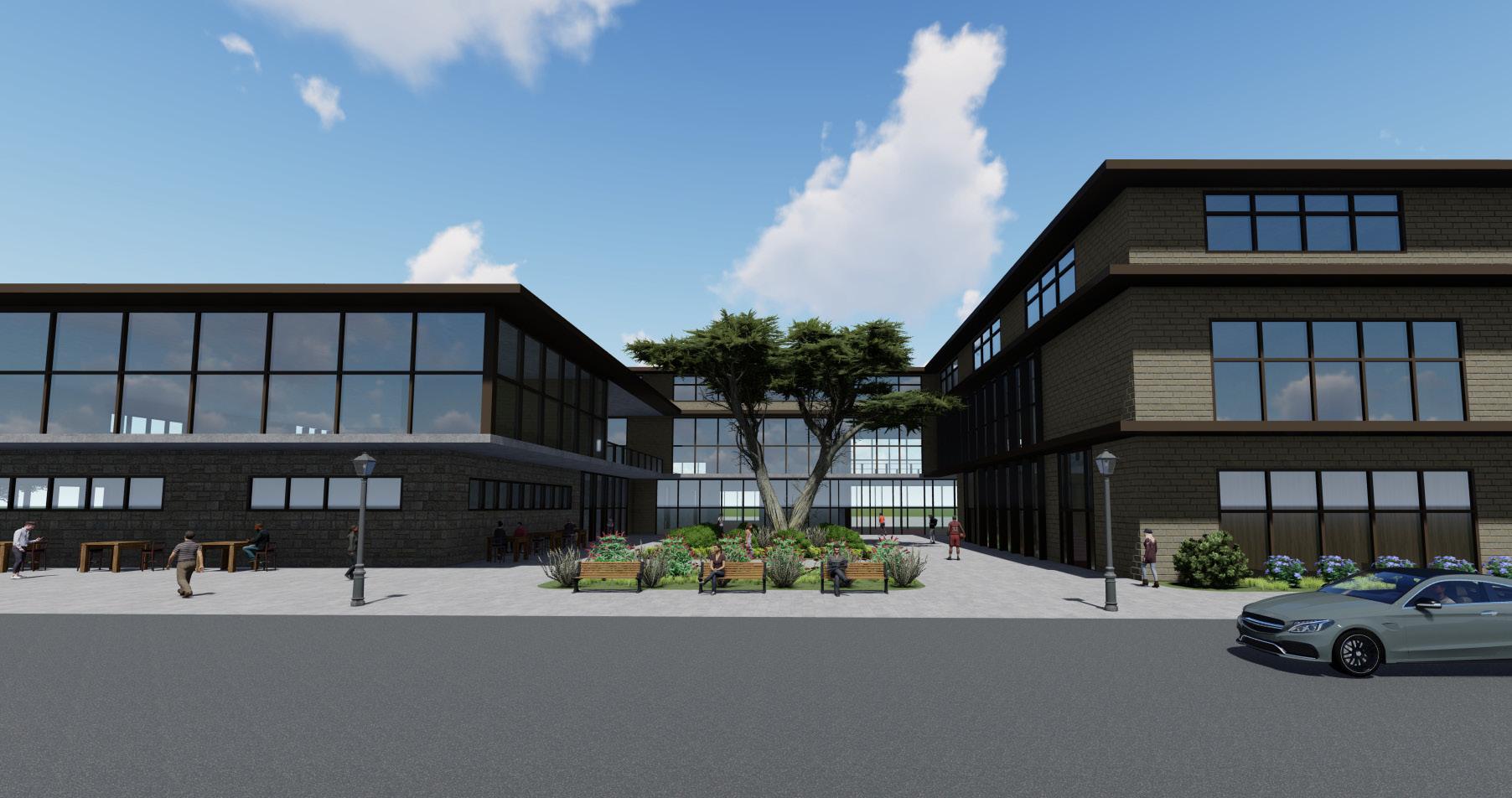
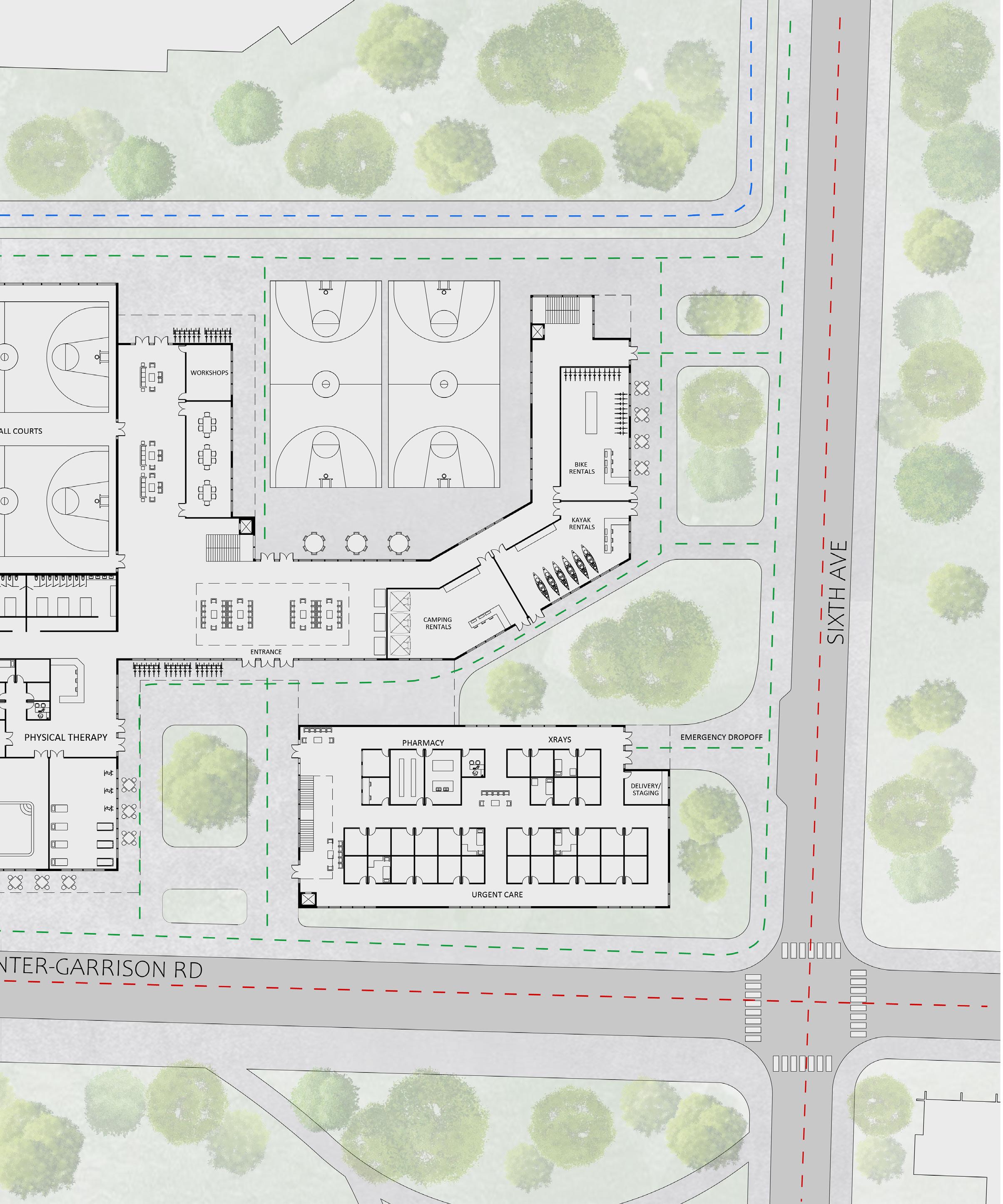
Located on the corner of Sixth St and InterGarrison Rd, this wellness center serves to provide the students of CSU Monterey Bay with a space that encourages inclusivity and healthy lifestyles. The complex consists of recreational spaces, a physical therapy center, a health and well-being center, health care services, and mental health services all in one building.
With recreational and medical spaces providing different experiences and emotional atmospheres, they are separated on the first floor but are unified on the second and third floors with mental health spaces. This serves as a literal and metaphorical bridge between different aspects of physical wellbeing. Additional space for renting outdoor recreational equipment connects students to their environmental wellness. With programs spanning from large communal spaces to smaller private rooms, the center seeks to integrate these programs in a cohesive manner that connects students to different aspects of wellness and destigmatizes healthcare and mental health services.
|5
Fall 2022
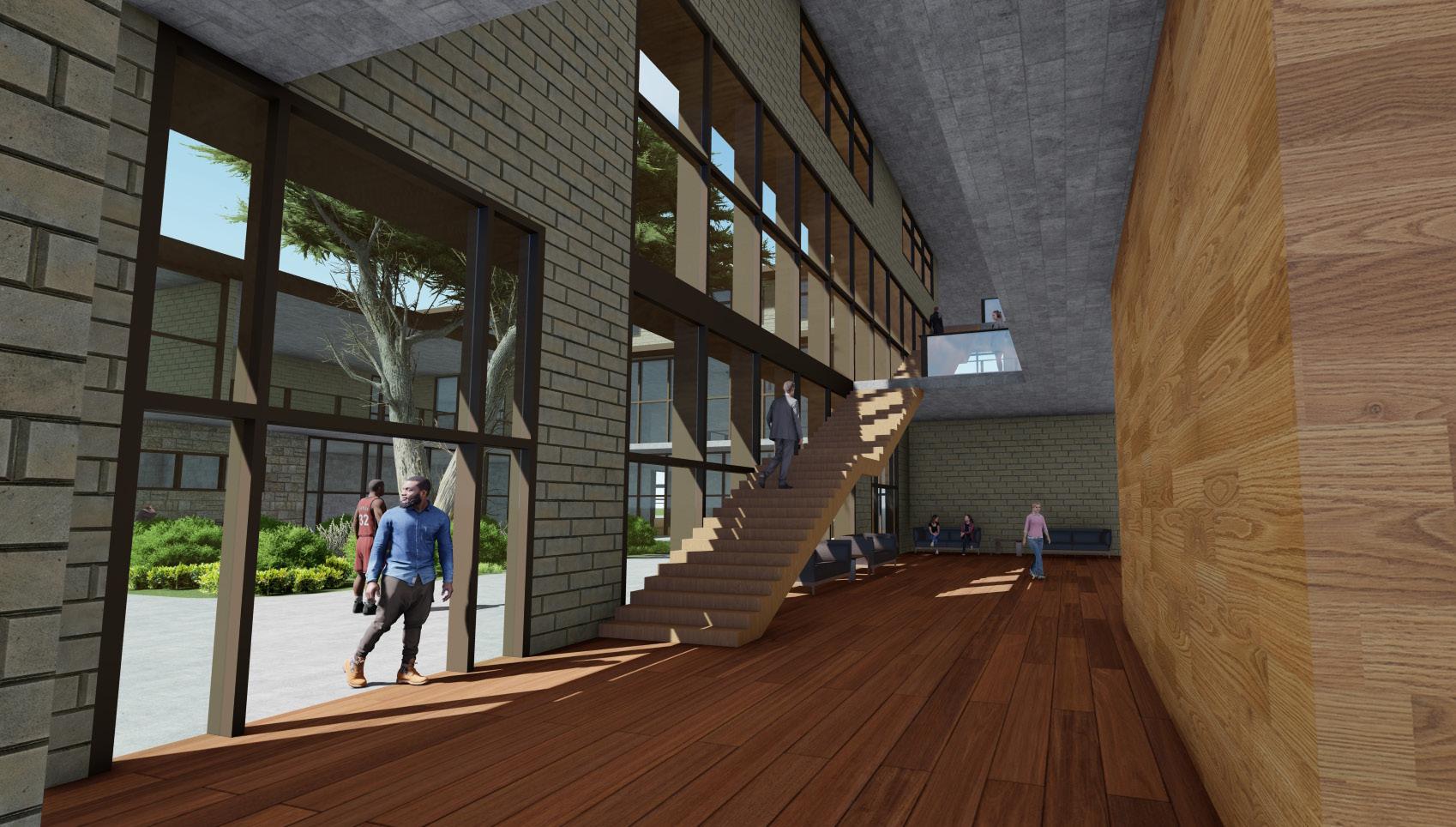
Renderings displaying the materiality and human scale of the complex.
6| Otter Wellness Center
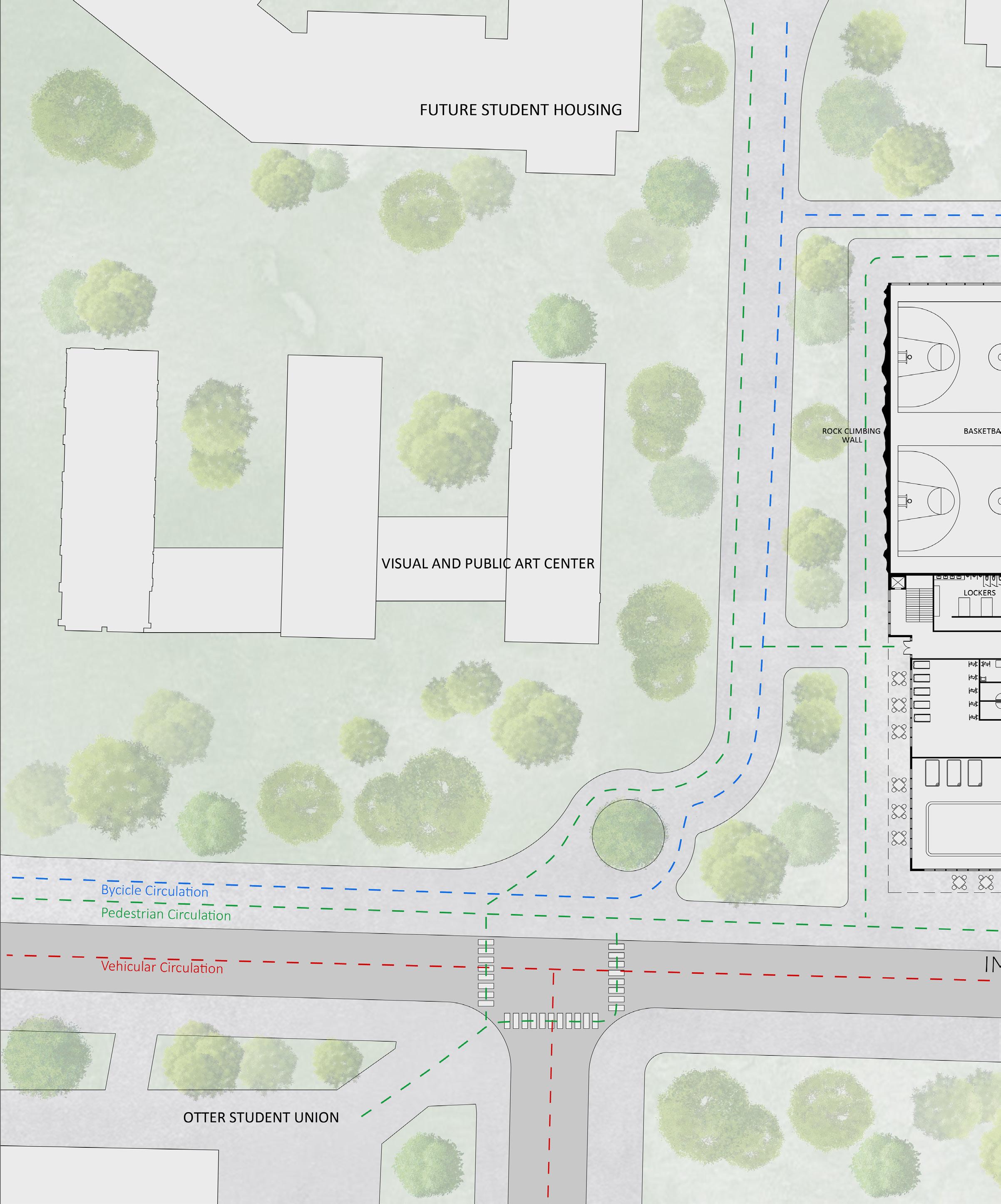
Site plan displaying the ground level of the complex in relation to the surrounding environment.
|7 Fall 2022
8| HEALTH EDU. GROUP FITNESS LAB INDIVIDUAL THERAPY PROVIDERS OUTDOOR FITNESS GROUP THERAPY ADMIN WEIGHTS AND CARDIO N 1/32" = 1'-0" 56' 40' 24' 16' 8' 104' 88' 72' 1/32" = 1'-0" 56' 40' 24' 16' 8' 0' 104' 88' 72' N 32' 0' 32' Second Floor Plan Third Floor Plan HEALTH EDU. GROUP FITNESS LAB INDIVIDUAL THERAPY PROVIDERS OUTDOOR FITNESS GROUP THERAPY ADMIN WEIGHTS AND CARDIO N 1/32" = 1'-0" 56' 40' 24' 16' 8' 0' 104' 88' 72' N 32' Third Floor Plan Otter Wellness Center
North-south section displaying recreational and physcial therapy spaces.
SOUTH
NORTH
EAST WEST SOUTH
NORTH
EAST WEST
East-west section displaying physical therapy, medical, mental health spaces.
|9 0' 1/32" = 1'-0" 72' 40' 32' 24' 56' 104' 8' 16' 88'
0' 1/32" = 1'-0" 72' 40' 32' 24' 56' 104' 8' 16' 88'
Fall 2022
10| Embarcadero Microhousing
EMBARCADERO MICROHOUSING
Professor Michael Lucas |Spring 2022
Morro Bay, CA
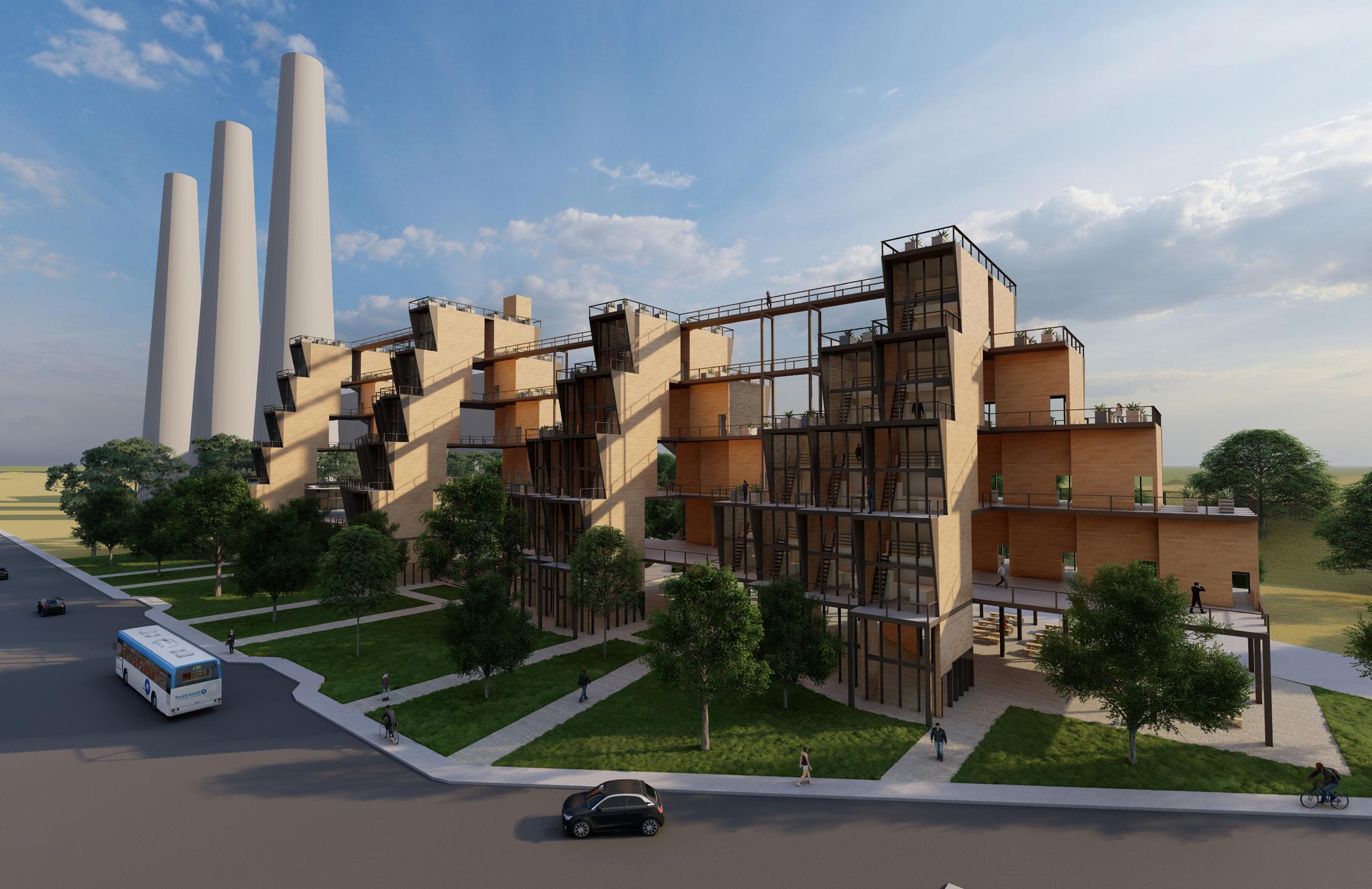
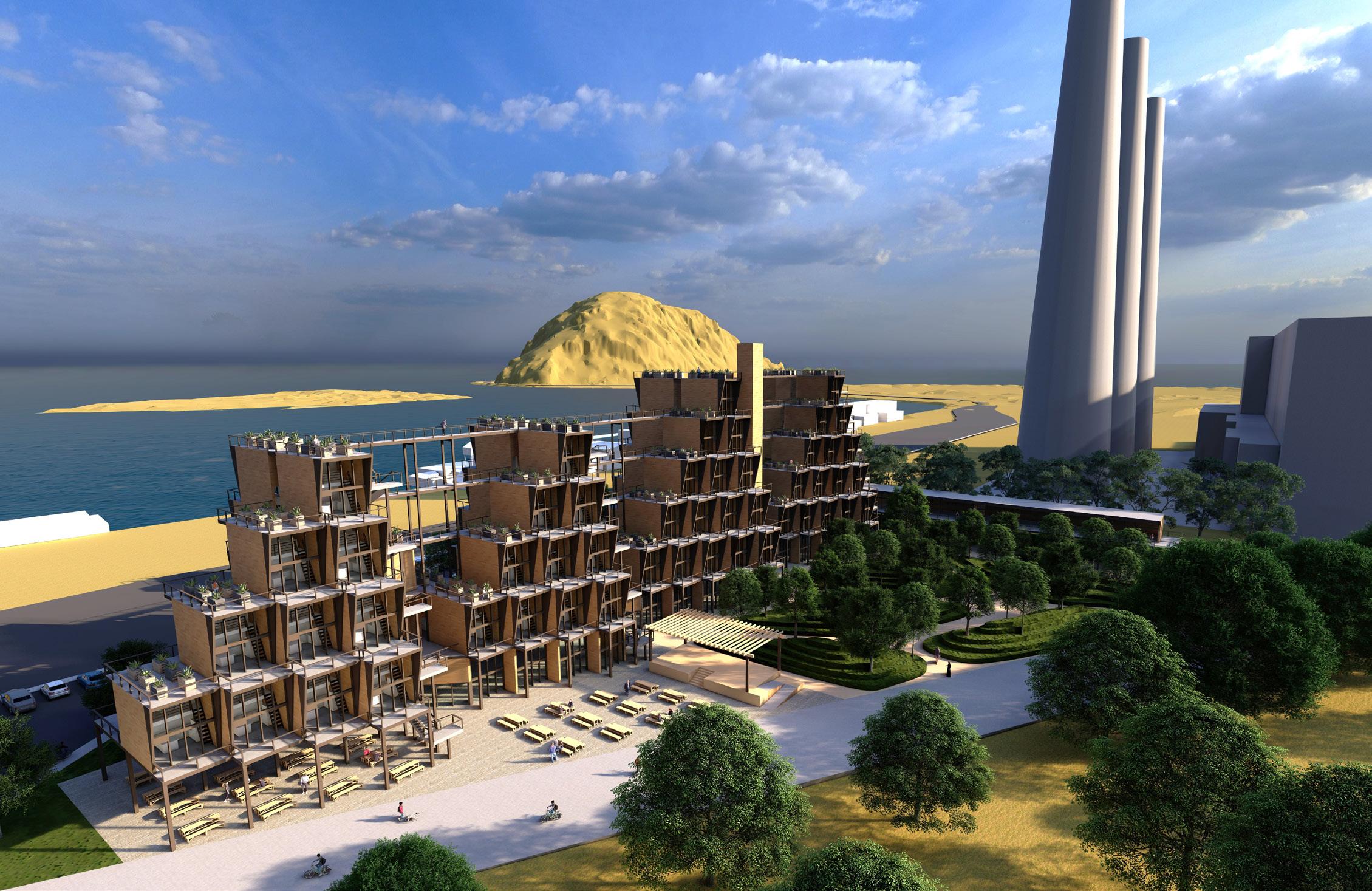
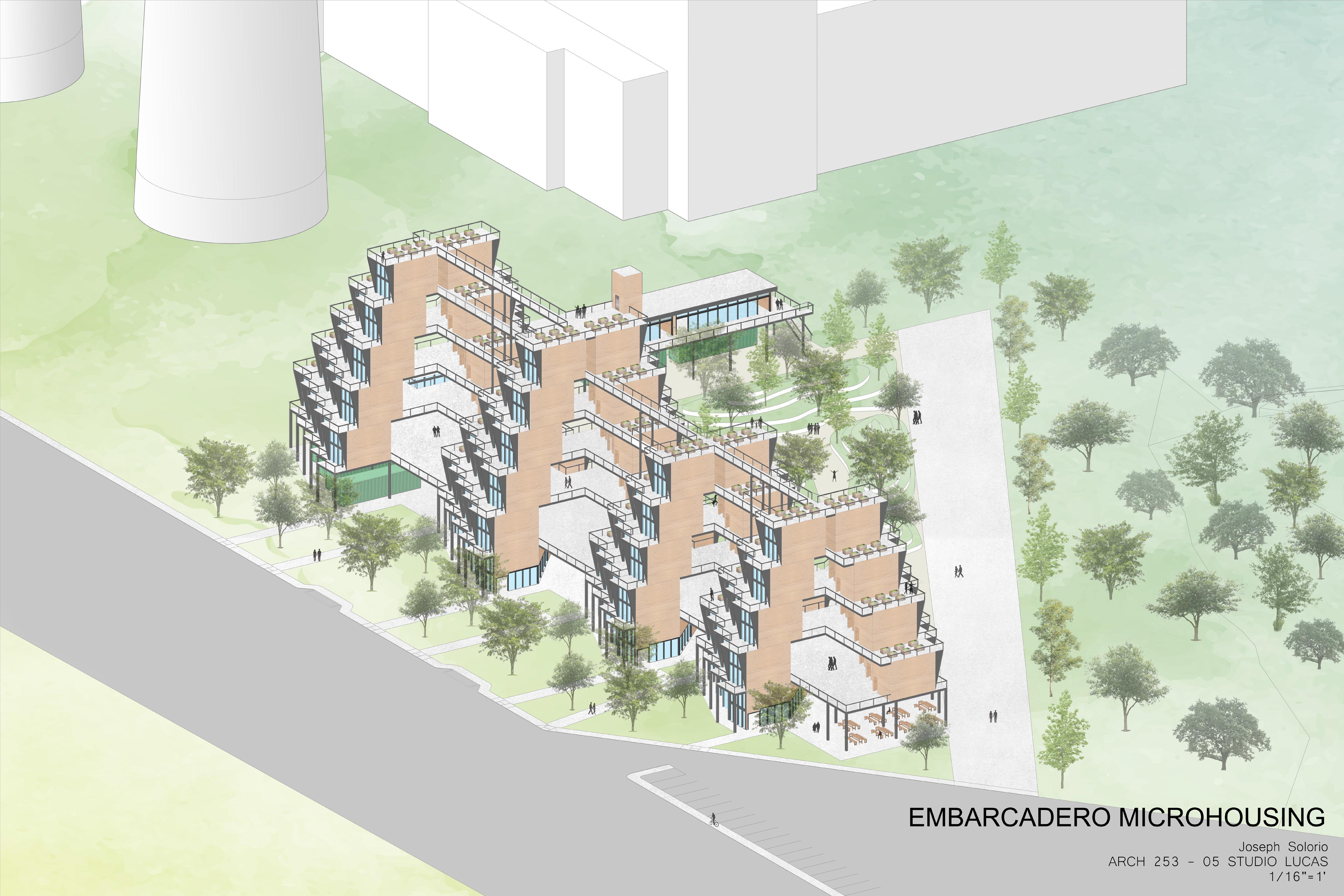
This complex takes the form of a dense urban edge bounded by the embarcadero to the west, a knoll to the east, and a power plant to the north. Public spaces are located at the ground level, inviting onlookers from the embarcadero towards the site. Large corridors on the ground level create a porous atmosphere allowing onlookers to easily access public spaces beyond the complex.
All residential units are located on the upper levels to promote a sense of privacy for the inhabitants. The western units of the complex have views out into the bay, ocean, and the embarcadero while the eastern units have views of the neighboring knoll and urban forest. The terraced formation of the complex results in a sense of openness on the lower levels of the complex and a sense of compression on the upper levels. This formation also provides private terraces for each unit with two lines of sight.
|11
Spring 2022
Digital model displaying the scale of the complex in relation to the surrounding context.
12| EMBARCADERO EMBARCADERO 2% 2 3 5 4
6. Urban Forest
5. Storage Containers
4. Recreation Space
2. Restaurant
120' 80' 40' 0' N 1/16" = 1'-0" 6
1. Beer Garden
Embarcadero Microhousing
3. Fish Market
Ground level floor/site plan.
|13 EMBARCADERO 1 2 1/16" = 1'-0" 0' 40' 80'
1. Housing Unit
2. Urban Gardens
120' N 3 Spring 2022
3. Community Spaces
Second level floor plan.
14| Embarcadero Microhousing
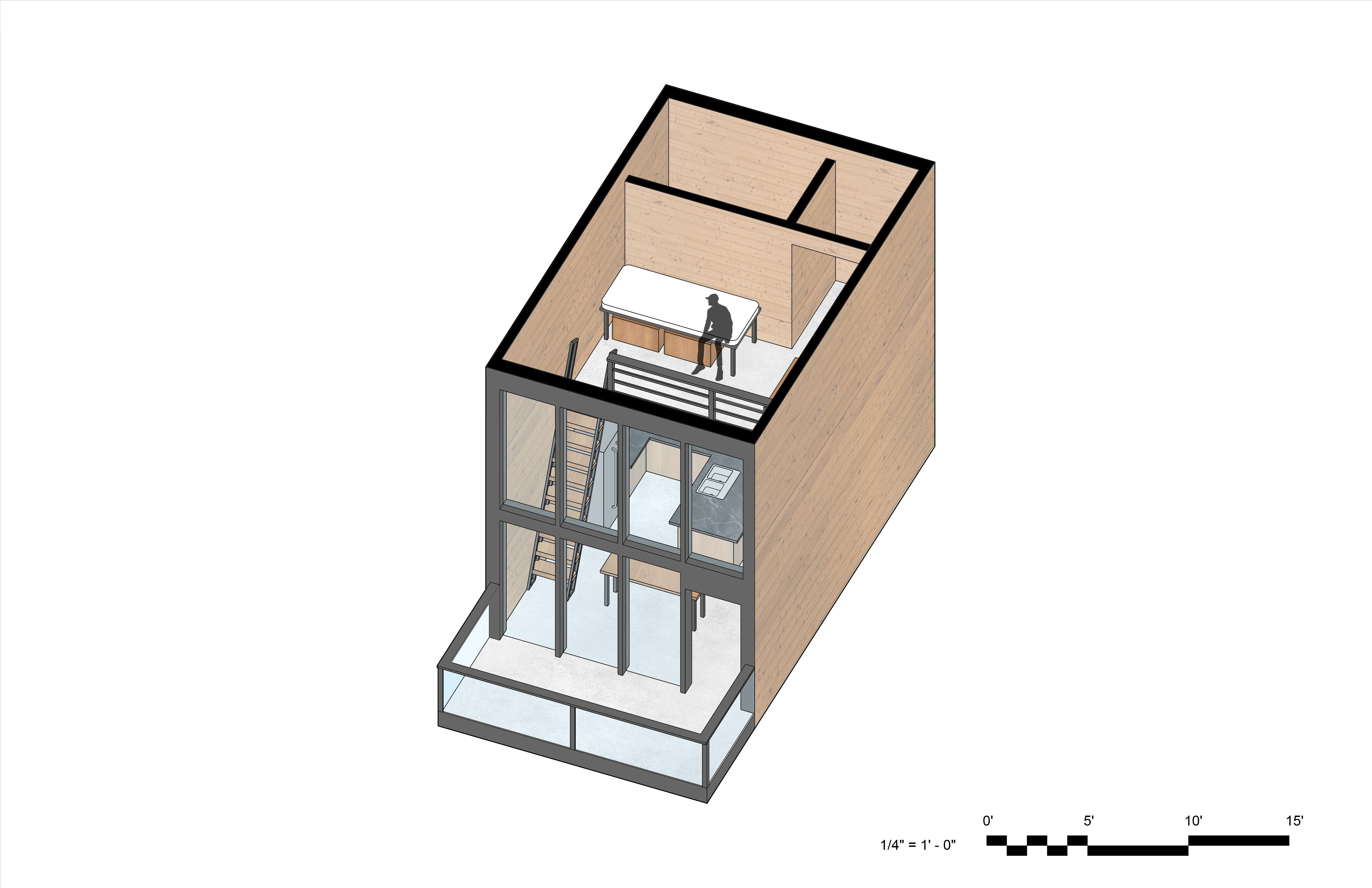
Axonometric of a housing unit showing materiality and human scale.
|15 1/4" = 1' - 0" 15' 5' 0' 10' Loft Floor 1 Section A Section B 15' 10' 5' 0' 1/4" = 1' - 0" Unit Sections Section A Section B 15' 10' 5' 0' 1/4" = 1' - 0" Unit Sections 1/4" = 1' - 0" 5' 0' Loft Floor 1 Unit Floor Plans Spring 2022
First level floor plan of a residential unit.
Loft floor plan.
Embarcadero Microhousing
Spring 2022
18|
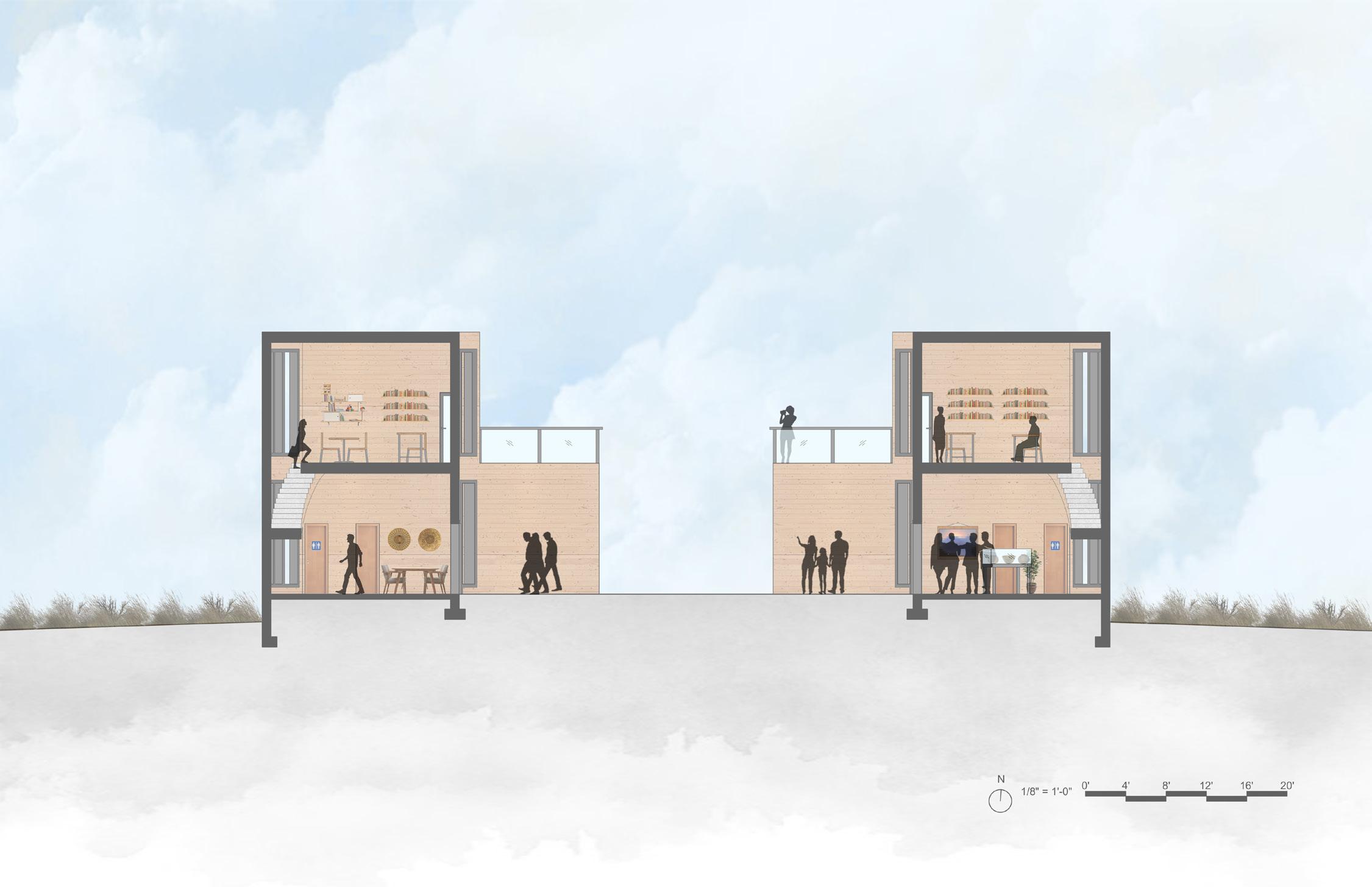
Chumash Arts and Culture Center experiential section.
Carrizo Research Center
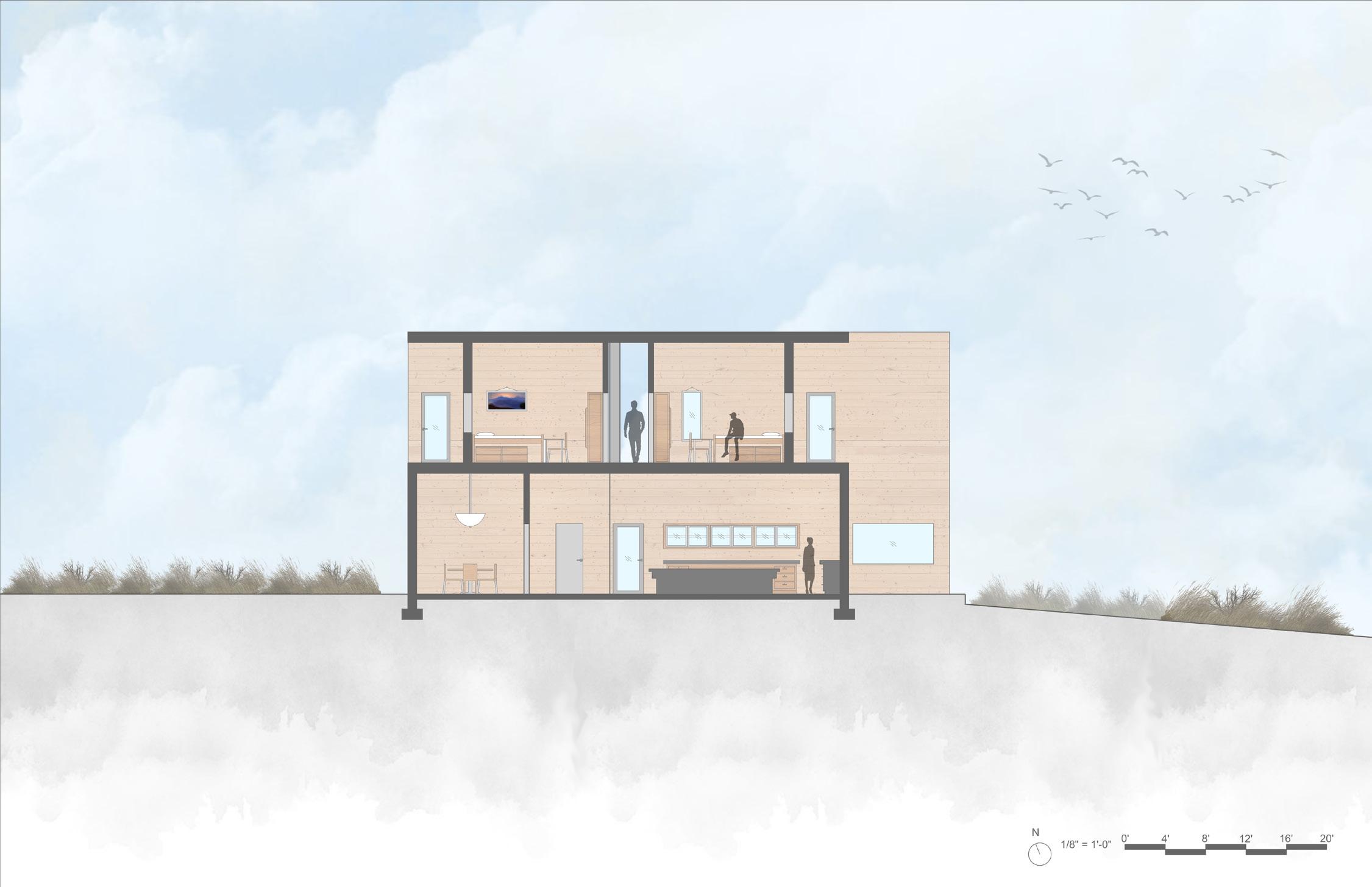
Geological Research Center experiential section.
CARRIZO RESEARCH CENTER
Professor Keith Wiley |Winter 2022
Carizzo Plains National Monument, CA
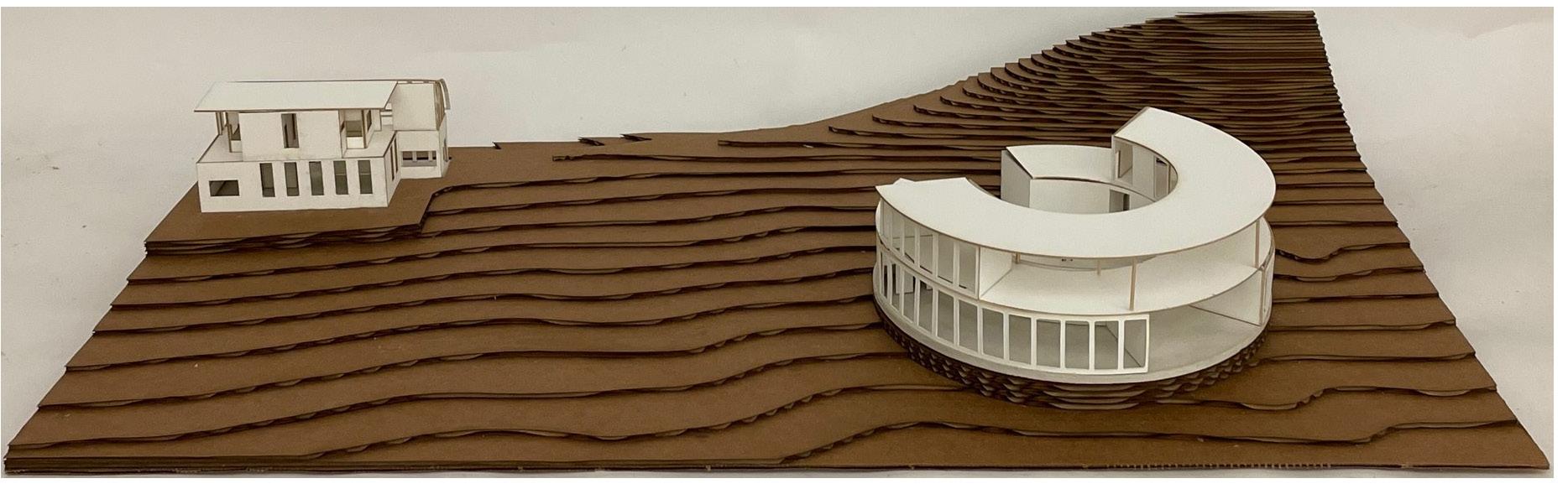
Situated in the heart of the Carrizo Plains National Monument, this complex provides visitors, researchers, and educators a space to learn about the natural vegetation of the site, the geological significance of the site, and Chumash arts and culture. The complex consists of a geological research lab and an arts and cultural center dedicated to the indigenous Chumash people.
The Geological Research Center is located along Wallace Creek, which lies on the San Andreas Fault, allowing researchers to monitor seismic activity at a close distance. The Chumash Arts and Cultural Center is oriented to face the distant Painted Rock, which houses Chumash cave paintings. These cave paintings, which prevalently feature circles, inspired the circular form of the Arts and Cultural Center.
|19
Winter 2022
1/8” =1’ -0” site model
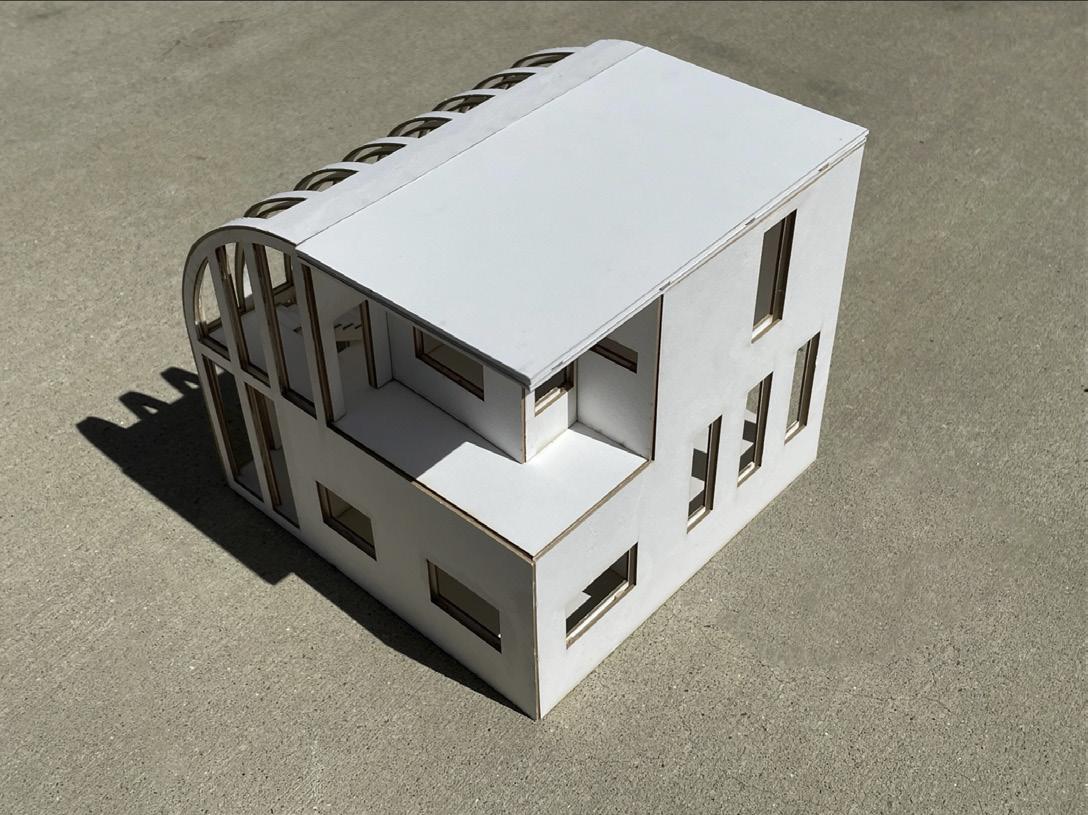
Geological Research Center second level showing researcher residence.
Geological Research Center first level showing lab spaces, break room, and storage.
Carrizo Research Center
20| 1/8"
4' N 0' 4' 0' N 1/8" = 1'-0" 1/8" = 1'-0" 4' N 0' 4' 0' N 1/8" = 1'-0" 1/8" = 1'-0" 8' 16' 0' 4' 20' N 12'
= 1'-0"
Chumash Art and Cultural Center second level showing classroom spaces and occupiable roof spaces.
Chumash Art and Cultural Center first level showing exhibition spaces and archives.
|21 N 16' 8' 1/8" = 1'-0" 4' 20' 0' 12' Winter 2022
N 16' 8' 1/8" = 1'-0" 4' 20' 0' 12'
22| Carrizo Research Center
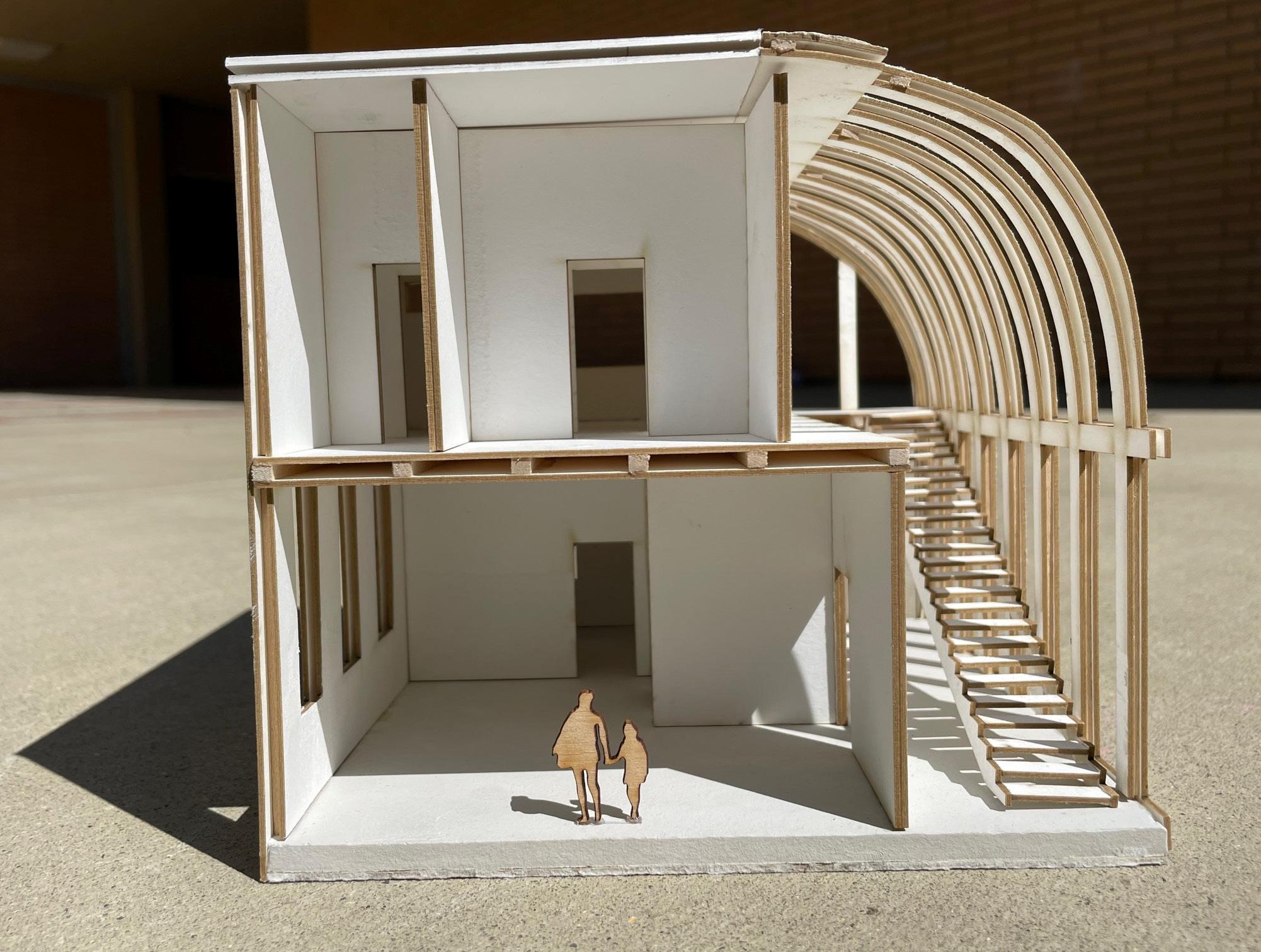
1/4” = 1’-0” section model of the Geological Research Center.
|23 Winter 2022
24| Habitat 10
HABITAT 10
Professor Carmen Trudell | Fall-Spring 2023-24 Alhambra, CA | Partnered with Juliana Bernal
*In Progress
In 300 years, California will have undergone drastic changes that require humans to reconsider how suburban areas are designed. Overpopulation and lack of affordable housing will continue to challenge the state, especially in urban areas. With a lack open land for future development, residents must find innovative solutions to develop new projects within existing city limits.
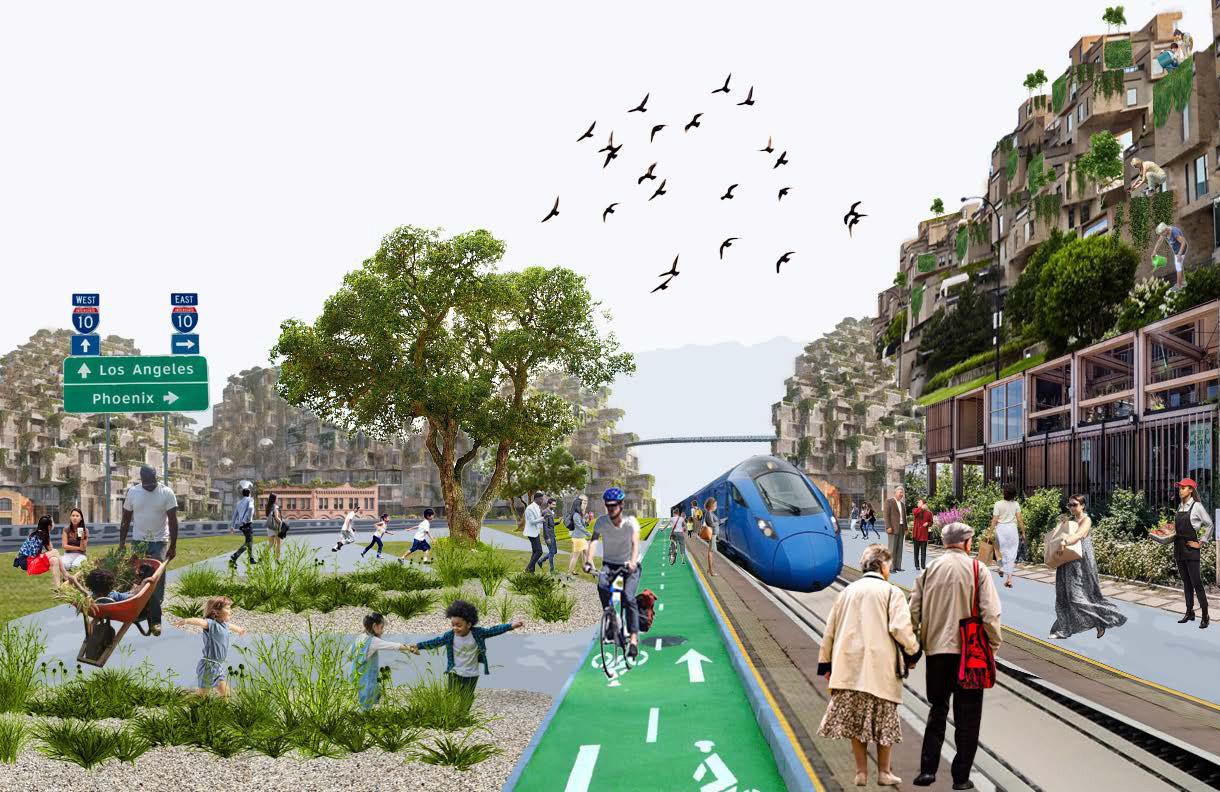
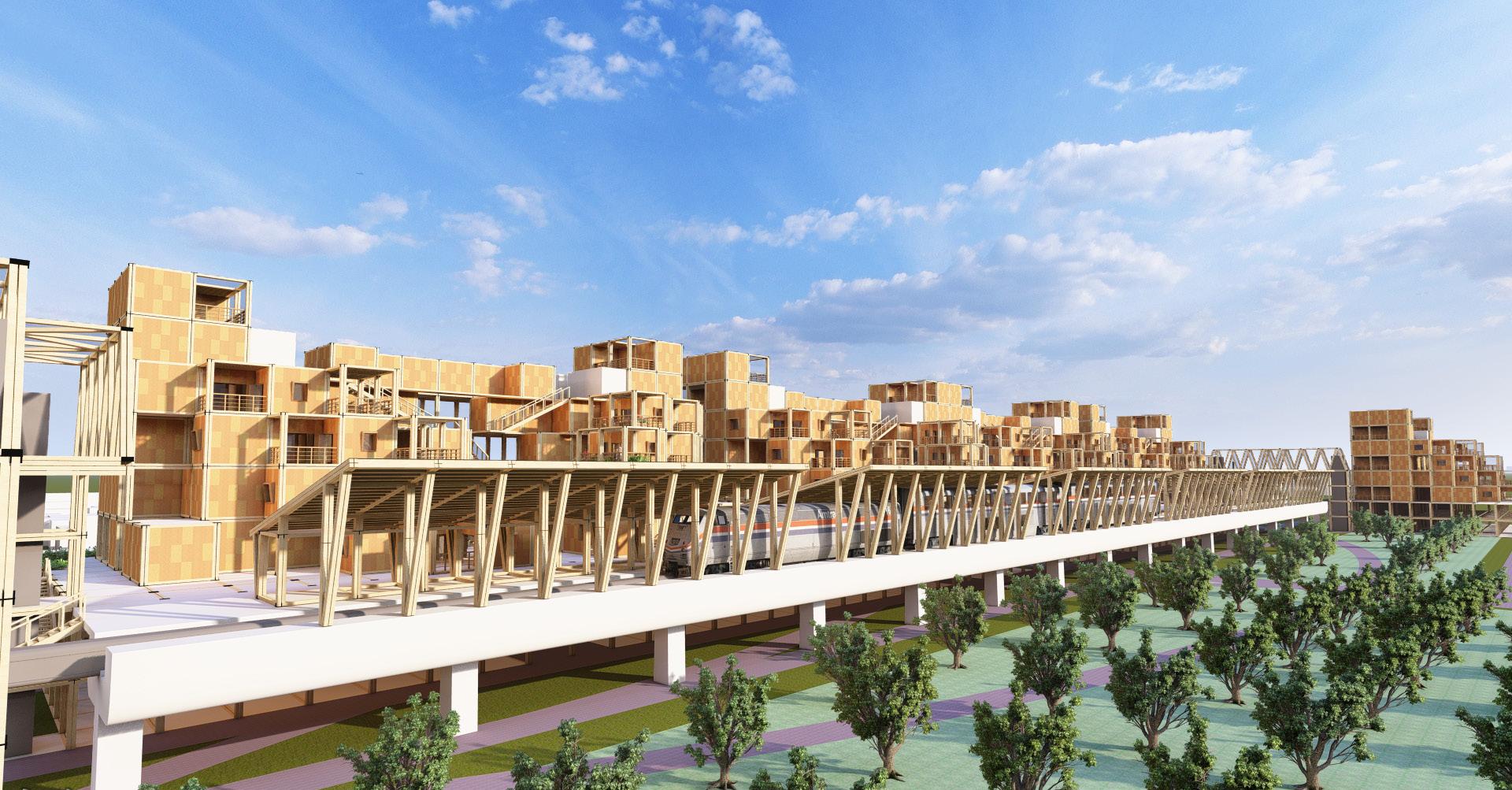
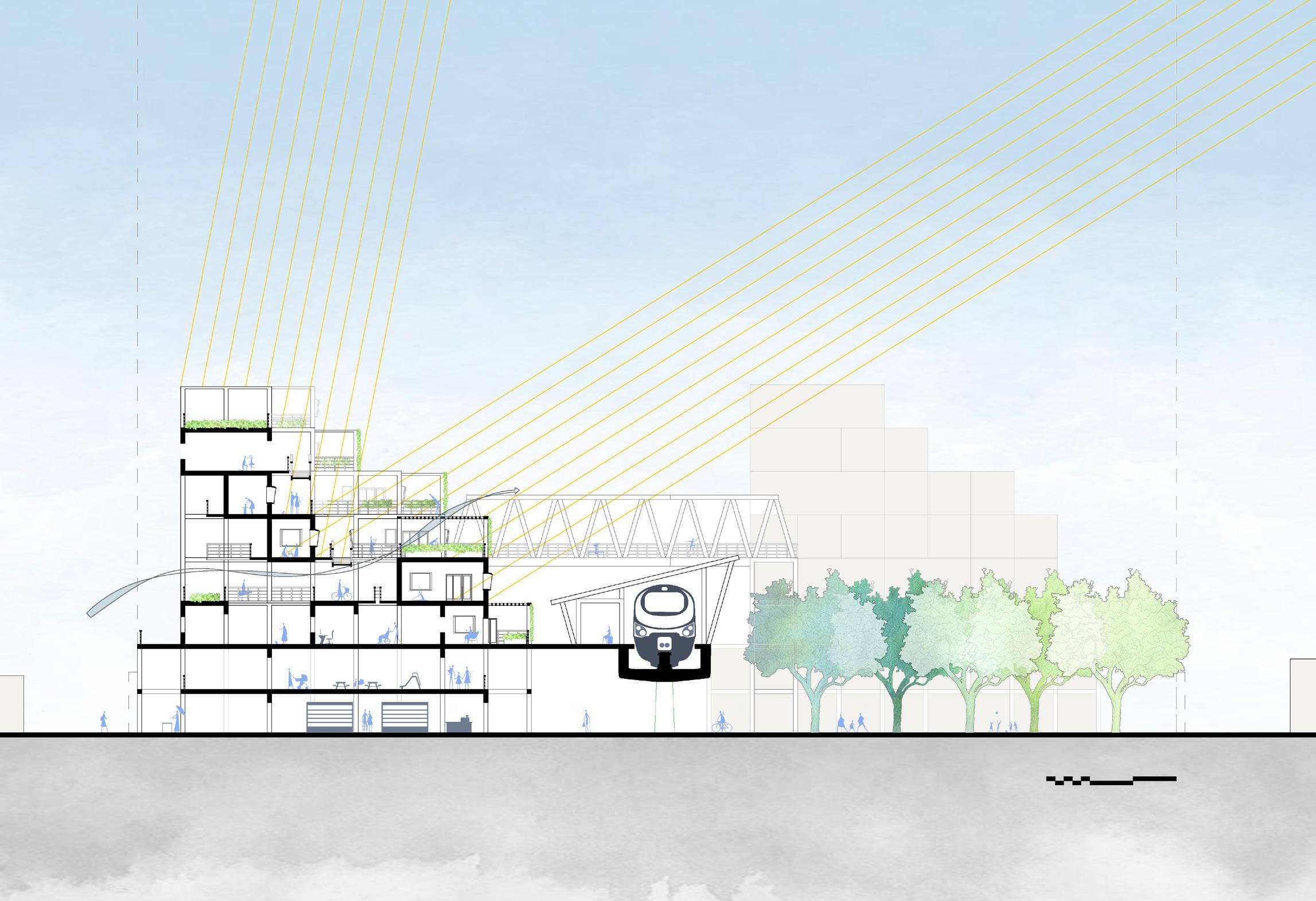
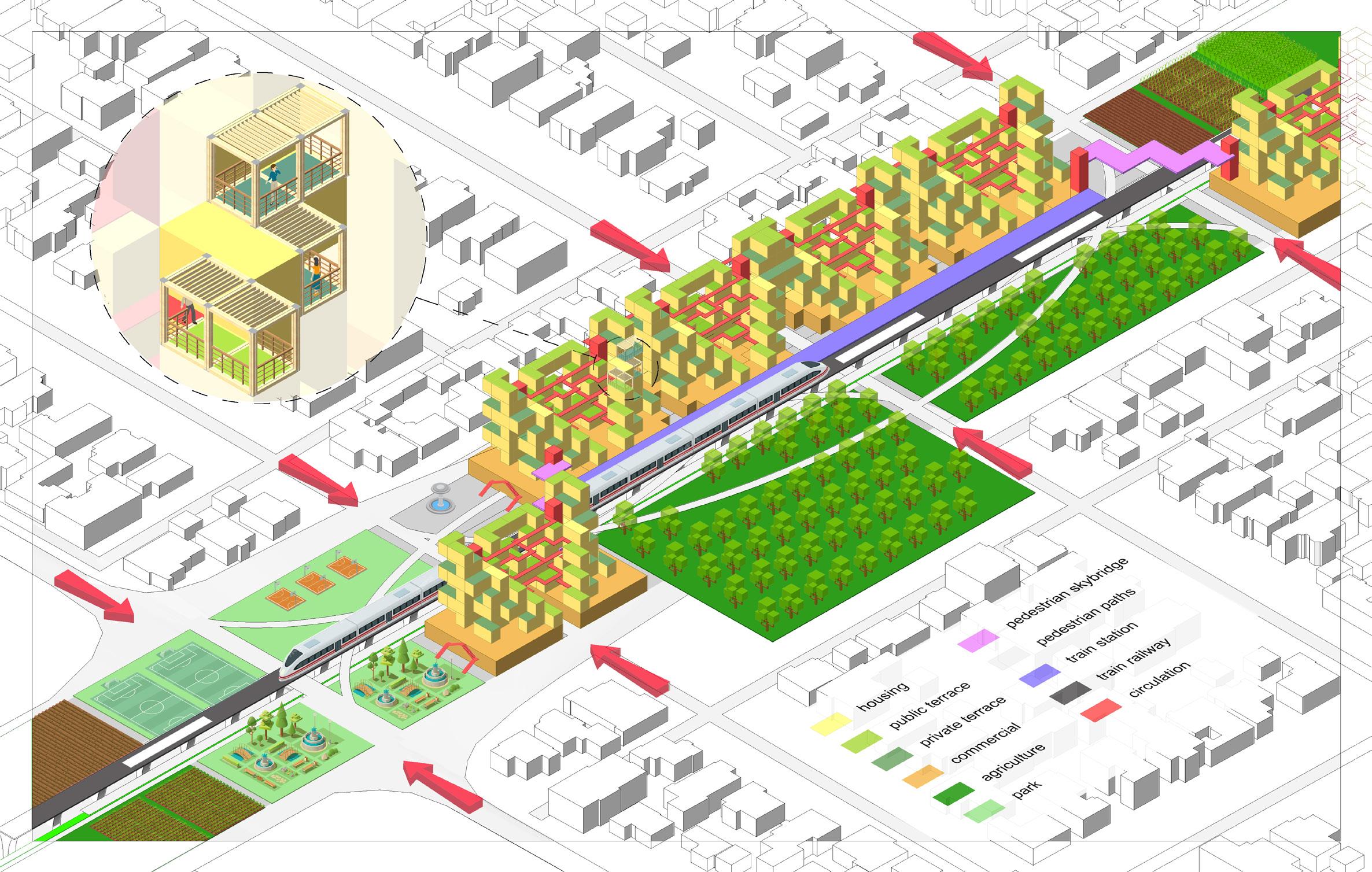
In this hypothetical future, magnetic rails will become the new primary source of transportation for passengers and cargo. This has resulted in a future where cars become obsolete, leaving the vast expanses of freeways to become prime real estate for future development. Reclaiming existing freeways will further connect suburban neighborhoods that have historically been divided following the construction of freeways. These new developments will act as communal veins that span the lengths of metropolitan areas, establishing a sense of connectivity rather than the sense of an impermeable barrier caused by current-day freeways. Magnetic rails will be built along the centerlines of existing freeways, with further development consisting of residential units, commercial spaces, agriculture, and communal spaces being constructed on the remaining land and acting as “urban stations” built along the lengths of the rails.
|25
Final exterior rendering displaying the train station, residential units, orchards, and communal spaces.
Fall 2023
Initial conceptual collage displaying communal spaces, railway, bike paths, commercial spaces, and residential units.


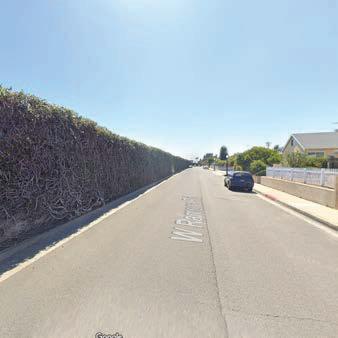
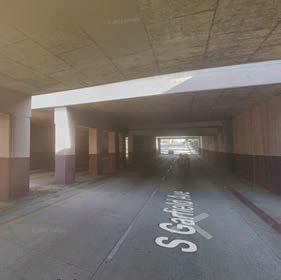
Site analysis of present day Alhambra and Monterey Park
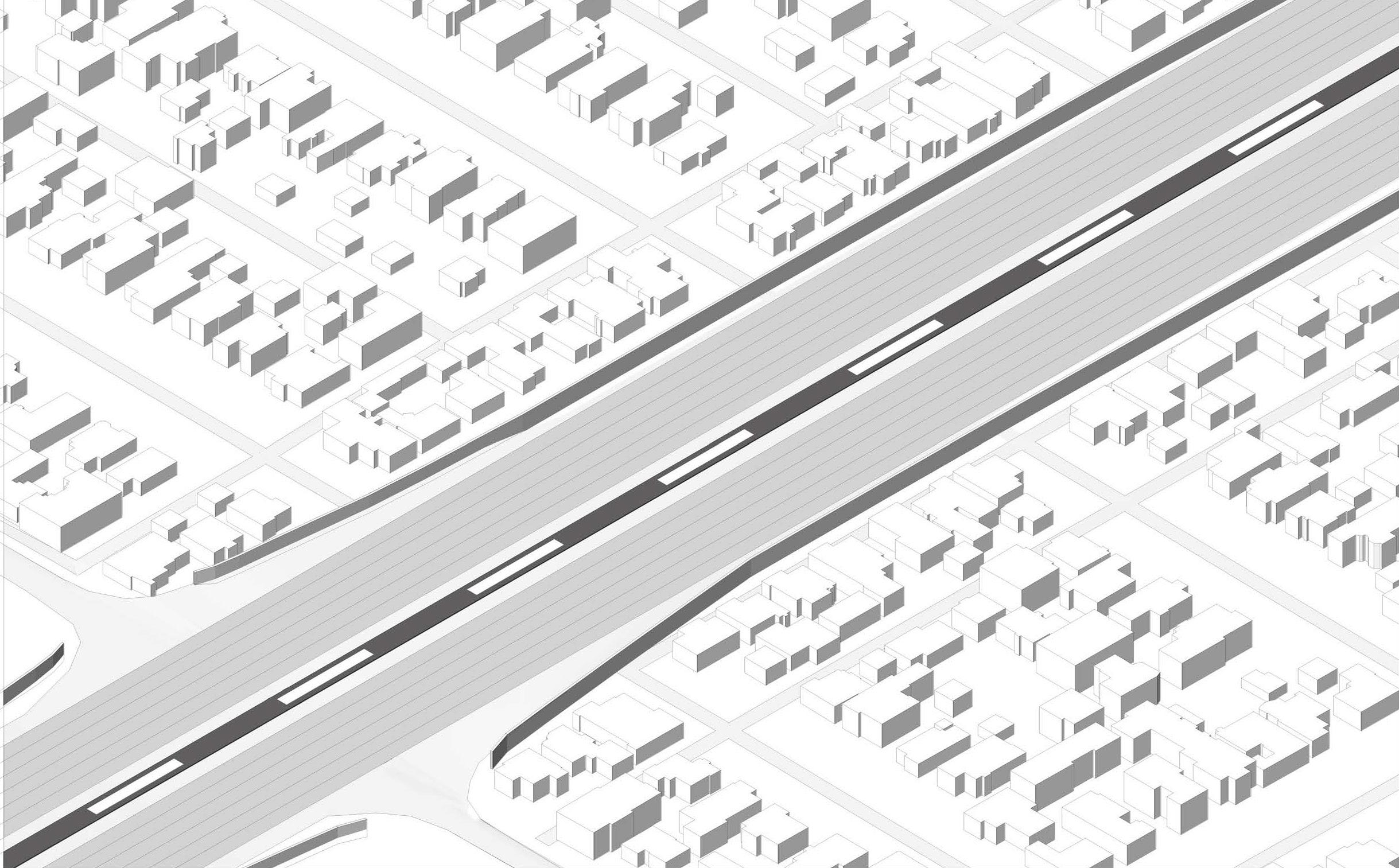
Axonometric view of Interstate 10 in the present day. Note the separation of the neighborhood due to the freeway.
26| BUS ROUTES SCHOOLS WALKING BIKING HOSPITAL SENIOR LIVING SHOPPING/GROCERY WALKING RADIUS BIKE RADIUS STREETS TRAIN TRACK HIGHWAY 9th Street Norwood Pl Glendon Way Ramona Rd 5 m ns TUNNEL UNDER FREEWAY I-10 AND TRAIN TRACK BUS WEST RAMONA RD 10 mins 15mins 5mins I-10 Metro Express Lanes San Bernardino Freeway W Ramona Rd W Hellman Ave Hampton Ave Hillard Ave Garcelon Ave Avondale Ave W Emerson Ave 8th Street 7th Street 6th Street 5th Street Fourth Street McPherson Ave Ynez Ave N Moore Ave N Chandler Ave N Huntington Ave N Baltimore Ave 3rd Street 2nd Street ALHAMBRA GRID MONTEREY PARK GRID FIGUREGROUND & GRIDS HOUSEHOLD INCOME HIGH INCOME AVERAGE INCOME LOW INCOME ASIAN BLACK HISPANIC WHITE RACIAL DEMOGRAPHIC SINGLE-FAMILY RESIDENTIAL (R-1) LANDUSE MEDIUM-MULTIPLE RESIDENTIAL HIGH-DENSITY RESIDENTIAL (R-3) NEIGHBORHOOD SHOPPING (N-S) SHOPPING CENTER (S-C) CENTRAL BUSINESS COMMERCIAL (C-B) REGIONAL SPECIALTY CENTER (R-S) COMMERCIAL SERVICES (C-S) COMMERCIAL/PROFESSIONAL (C-P) OPEN SPACE (O-S) PRIVATE LOTS PUBLIC LOTS SCHOOLS SENIOR CARE LIVING SPECIFIC PLAN (SP) I-10, ALHAMBRA, AND MONE TEREY PARK The Interstate 10 is a transcontinental highway spanning about 2,500 miles from California to Florida. The Metrolink San Bernadino also runs along the train tracks in the middle of I-10. The highway runs inbetween W Ramona Rd and Ramona Rd, acting as a large wall that denies access to the other side Many bus routes stop along these neighborhoods such as Route 1, Route 2, and Route 4, as well as the 76 and 70 Bus. For most neighborhoods along the Interstate 10 and other highways, these large transportation roads can act as a barrier within suburbs. However, there is some allowed access across the I-10 through street that run below the highway. JOSEPH SOLORIO & JULIANA BERNAL ARCH 451-03 | CARMEN TRUDELL Habitat 10



|27 Fall 2023
Axonometric view 300 years in the future. Note the porous nature of the development through the use of communal spaces.
Three unit sizes are provided to accomodate differing sizes of families, couples, or single occupants. The frugal nature of the units minimizes the footprint of each occupant, but still provides all necessities that occupants need. Private terrace spaces also provide occupants the ability to connect with the outdoors.
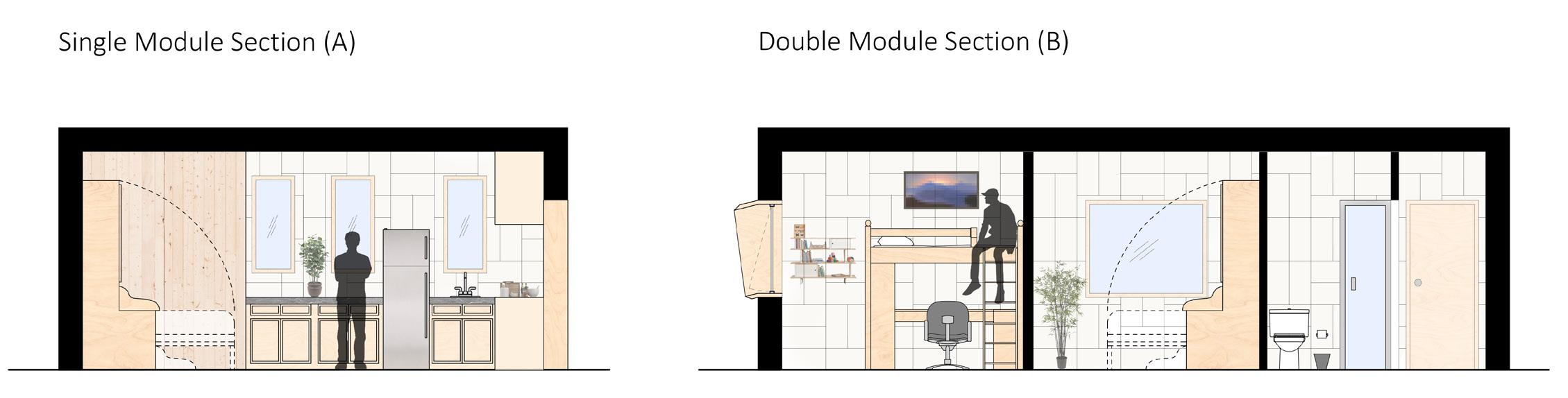
With the frugal nature of the units, multipurpose furniture and storage spaces ensure efficient use of interior space. Daylighting and warm interior finishes also provide a sense of comfort.
28| Habitat 10 10' Single Module Floor Plan Joseph Solorio + Juliana Bernal | ARCH 451 | Fall 2023 5' 0' N Double Module Floor Plan A B A 3/16" = 1' - 0" B Single Module Floor Plan Double Module Floor Plan A B A B 10' Single Module Floor Plan Joseph Solorio + Juliana Bernal | ARCH 451 | Fall 2023 5' 0' N Double Module Floor Plan A B A 3/16" = 1' - 0" B
(200 Sqft) (400 Sqft) 1-2 Occupants 3-4 Occupants
Module Floor Plan Joseph Solorio + Juliana Bernal | ARCH 451 | Fall 2023 0' N Double Module Floor Plan A B A 3/16" = 1' - 0" Single Module Floor Plan Joseph Solorio + Juliana Bernal | ARCH 451 | Fall 2023 0' N Double Module Floor Plan A B A 3/16" = 1' - 0"
Single
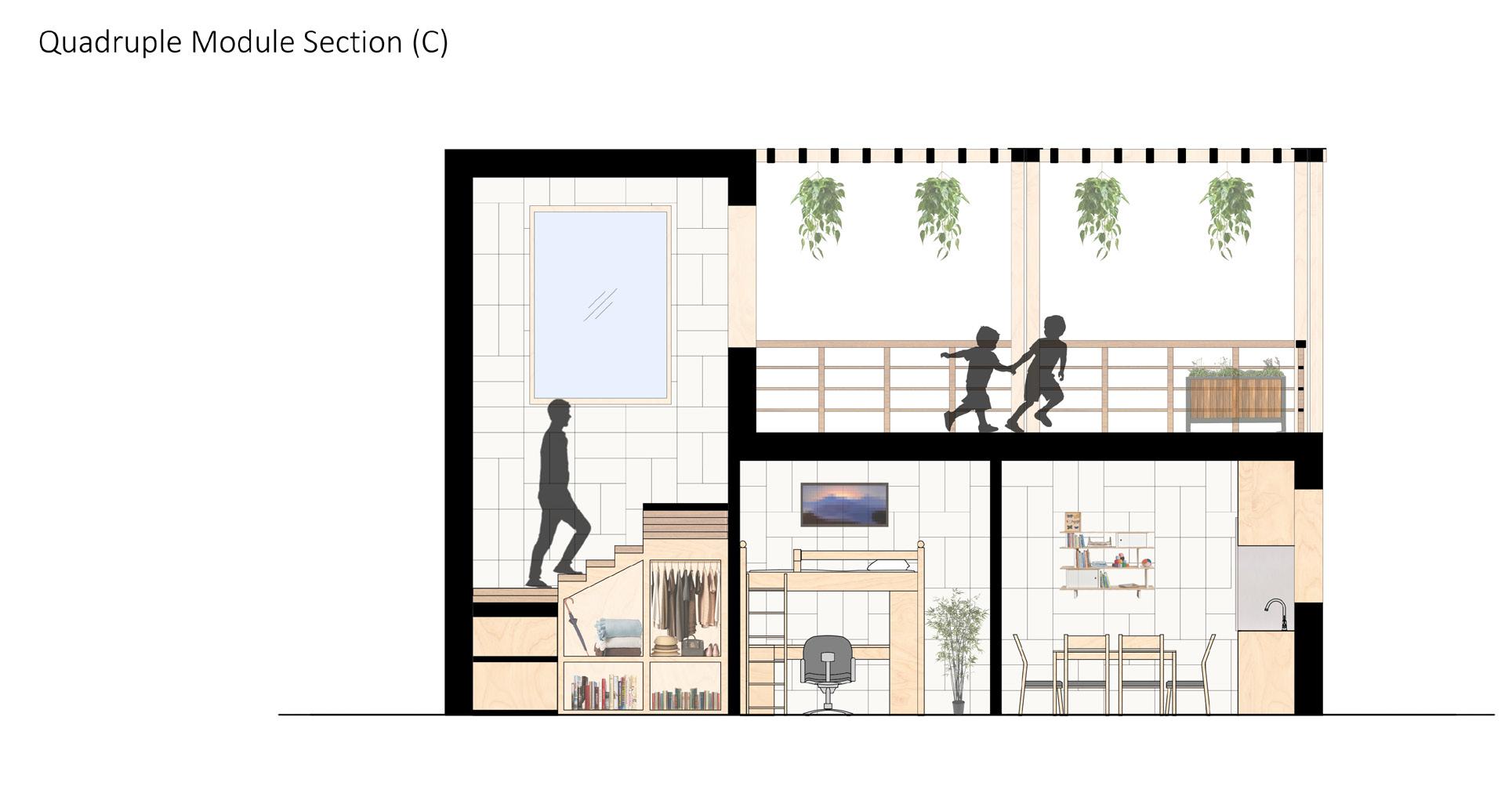

|29 10' Quadruple Module First Floor N 5' Quadruple Module Second Floor 0' Joseph Solorio + Juliana Bernal | ARCH 451 | Fall 2023 C C C 3/16" = 1' - 0" C Fall 2023 10' Quadruple Module First Floor 15' N 5' Quadruple Module Second Floor 0' Solorio + Juliana Bernal | ARCH 451 | Fall 2023 C C 3/16" = 1' - 0" 10' Quadruple Module First Floor 15' N 5' Quadruple Module Second Floor 0' Solorio + Juliana Bernal | ARCH 451 | Fall 2023 C C 3/16" = 1' - 0" 10' Quadruple Module First Floor N 5' Quadruple Module Second Floor 0' Joseph Solorio + Juliana Bernal | ARCH 451 | Fall 2023 C C C 3/16" = 1' - 0" C 10' Quadruple Module First Floor 15' N 5' Quadruple Module Second Floor 0' Solorio + Juliana Bernal | ARCH 451 | Fall 2023 C C 3/16" = 1' - 0" (400 Sqft) (400 Sqft) 5-6 Occupants Total 5-6 Occupants Total
HARDWOOD FLOORING
MYCELIUM INSULATION
WOODEN I-JOIST @ 16" O.C.
5/8" PLYWOOD
TIMBER FRAME
STEEL CONNECTIONS
SOLAR SHADING DEVICES
EXTERIOR CORK PANELS INTERIOR MYCELIUM FINISH
PLYWOOD BOARD (SIP)
MYCELIUM INSULATION (SIP)
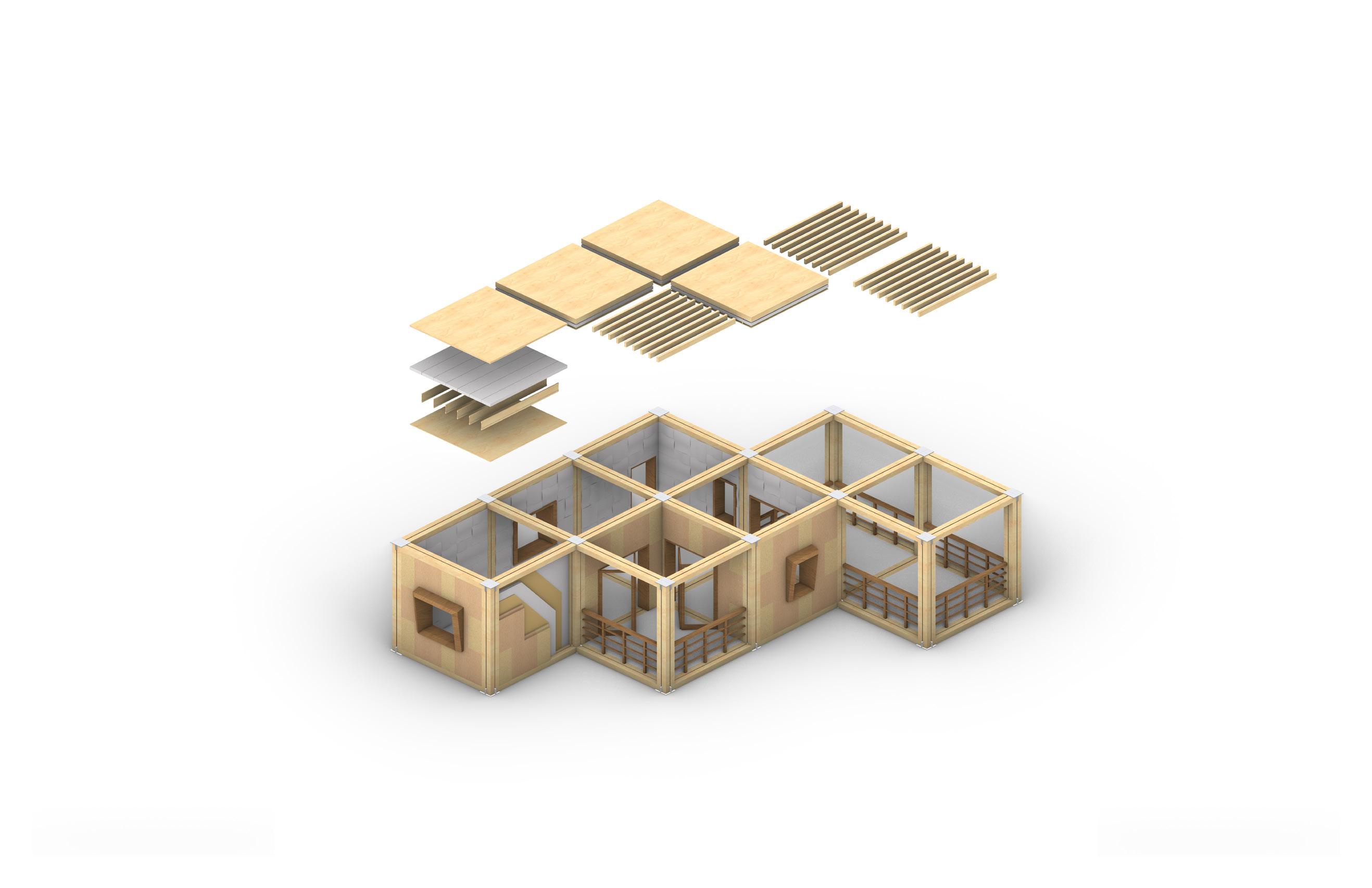
Assembly diagram of a double unit.
ASSEMBLY LIFE CYCLE DIAGRAM

2

2

1.

2

2

PERGOLA RAFTERS
EXTERIOR WOODEN RAILING
FOLDING DOORS
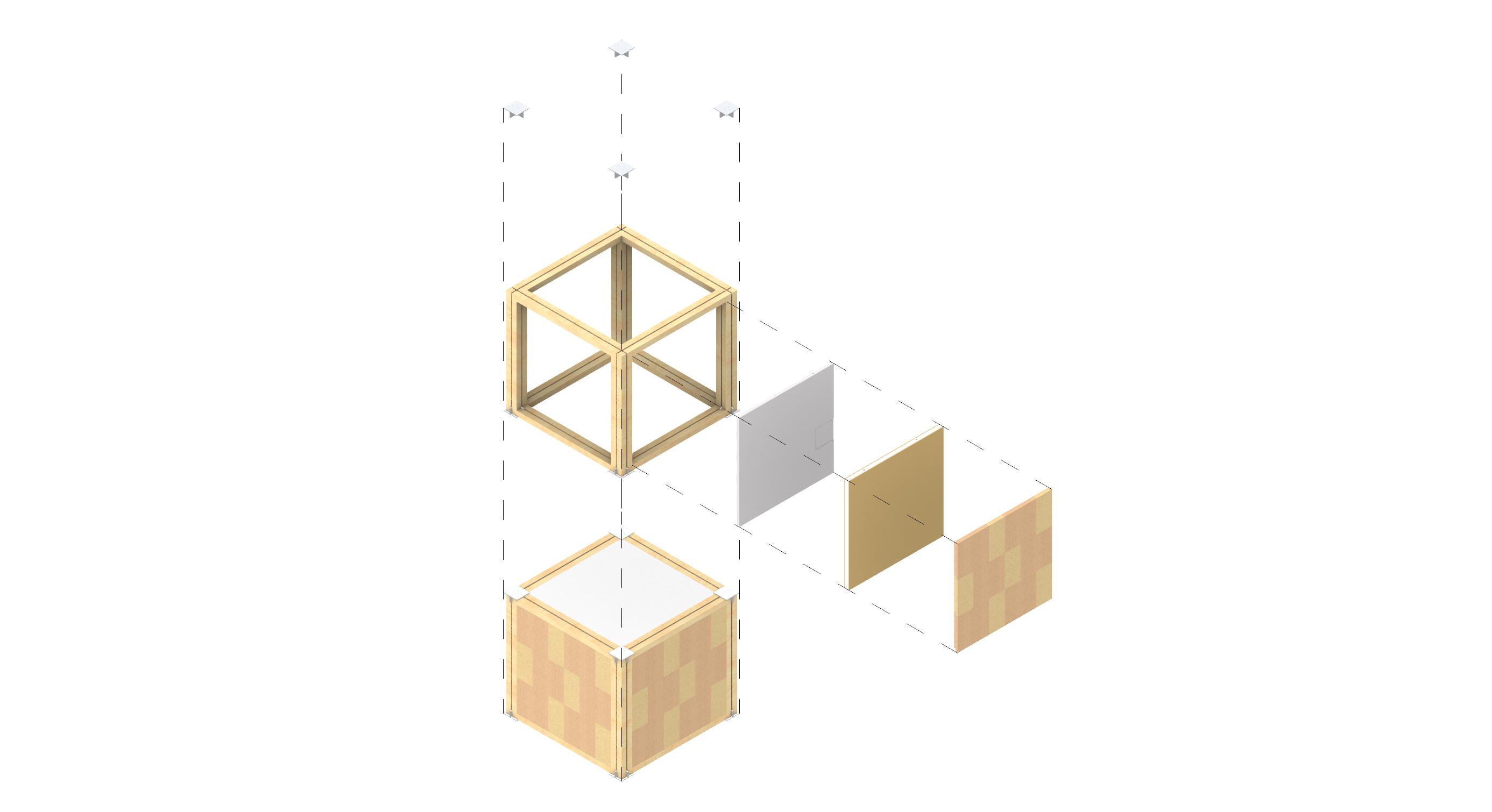
STEEL CONNECTIONS TIMBER FRAME
MYCELIUM INTERIOR
MYCELIUM SIP
CORK PANELS
FULL ASSEMBLY
FULLASSEMBLY
. D I SASSEMBLE:CORK PANELS
. D I SASSEMBLE:MYCELIUM STRUCTURALLY INS U L L DETA SLENAP
2
. D I SASSEMBLE:MYCELIUM
. D I SASSEMBLE:STEEL CONNECTIONS
. D
SASSEMBLE:TIMBER
Cork panels can be reused as an exterior cladding for other buildings or walls or can be recycled to be used in different ways. Mycelium panels can be removed and reused again. It is a biogenic material that can be returned to the earth once the panels are no longer needed. Steel connec�ons can be reused again, or recycled to create new steel components. Wood frames are connected by steel plates and bolts and can be reused as both a system or individual wood pieces. The insula�on is a Structural Insulated Panel consi�ng of wood boards that sandwich a layer of mycelium. This SIP can be reused as a system for other walls or buildings or can be taken apart and recycled or biodegrated as separate materials or individual wood pieces.
I
FRAME
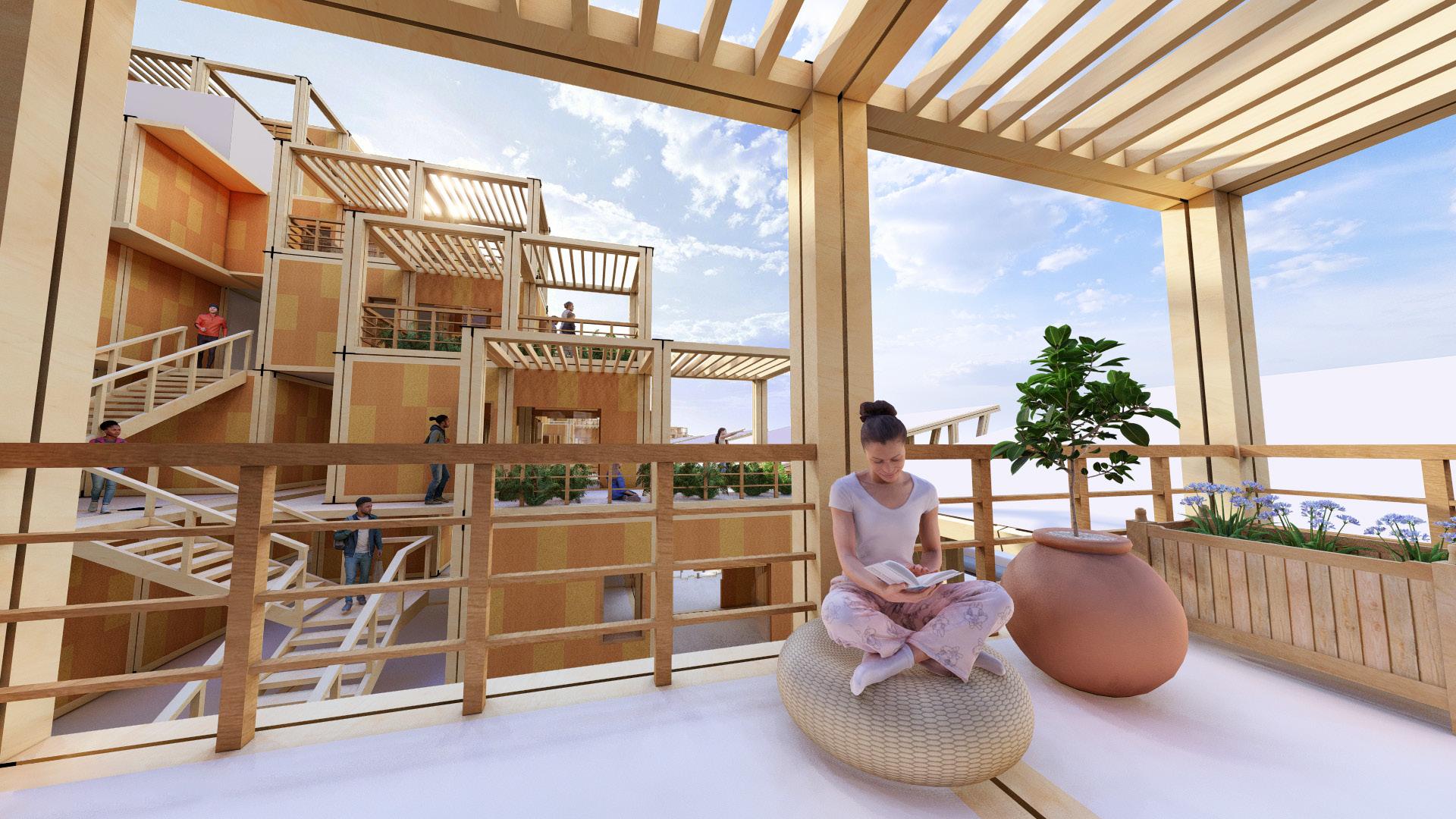
|31
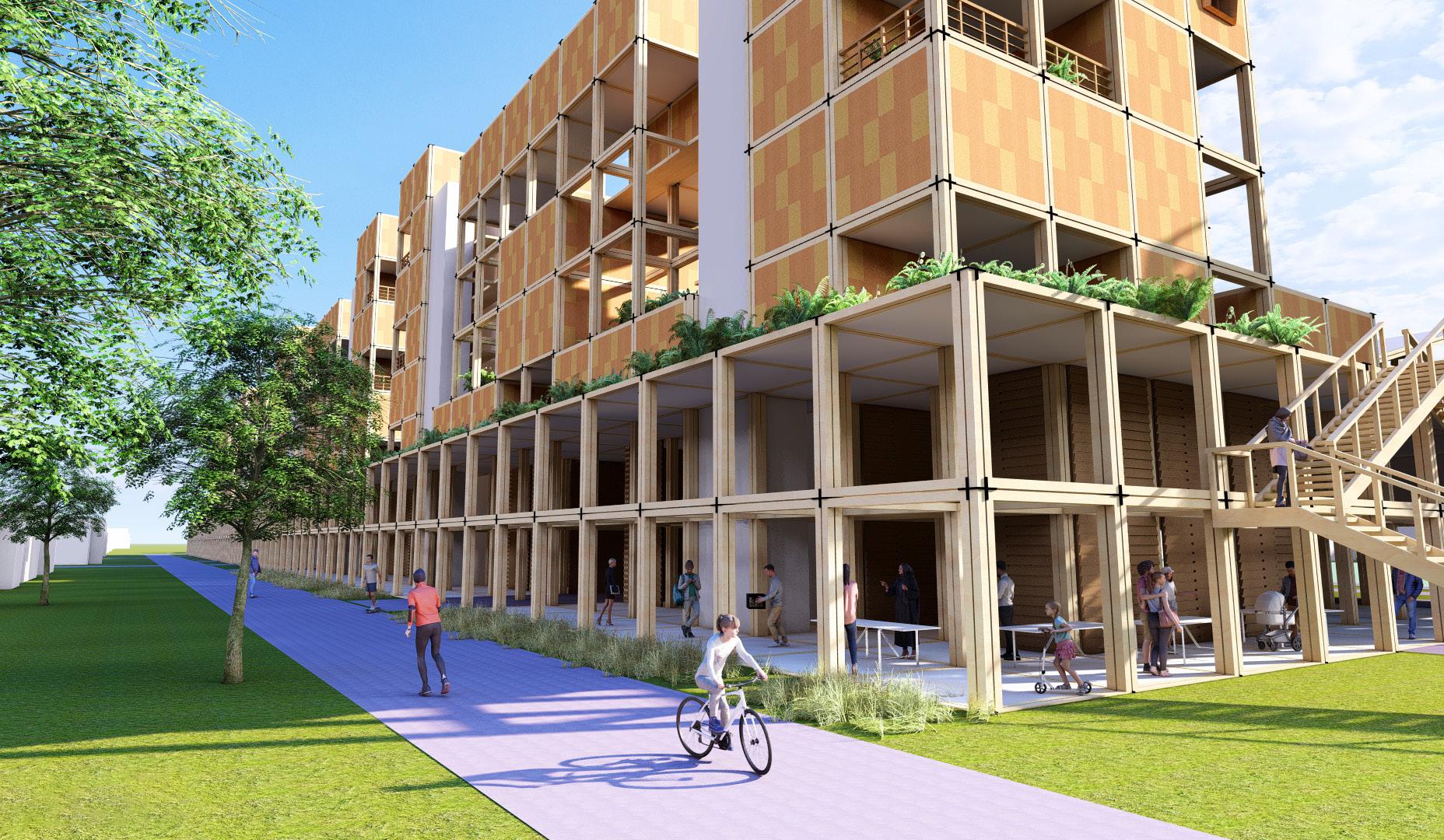
Ground level street view from Ramona Rd.
nature Fall 2023
Unit terrace view displaying the complex’s
communal
32| The Tracing House
THE TRACING HOUSE
Professor Keith Wiley |Winter 2022
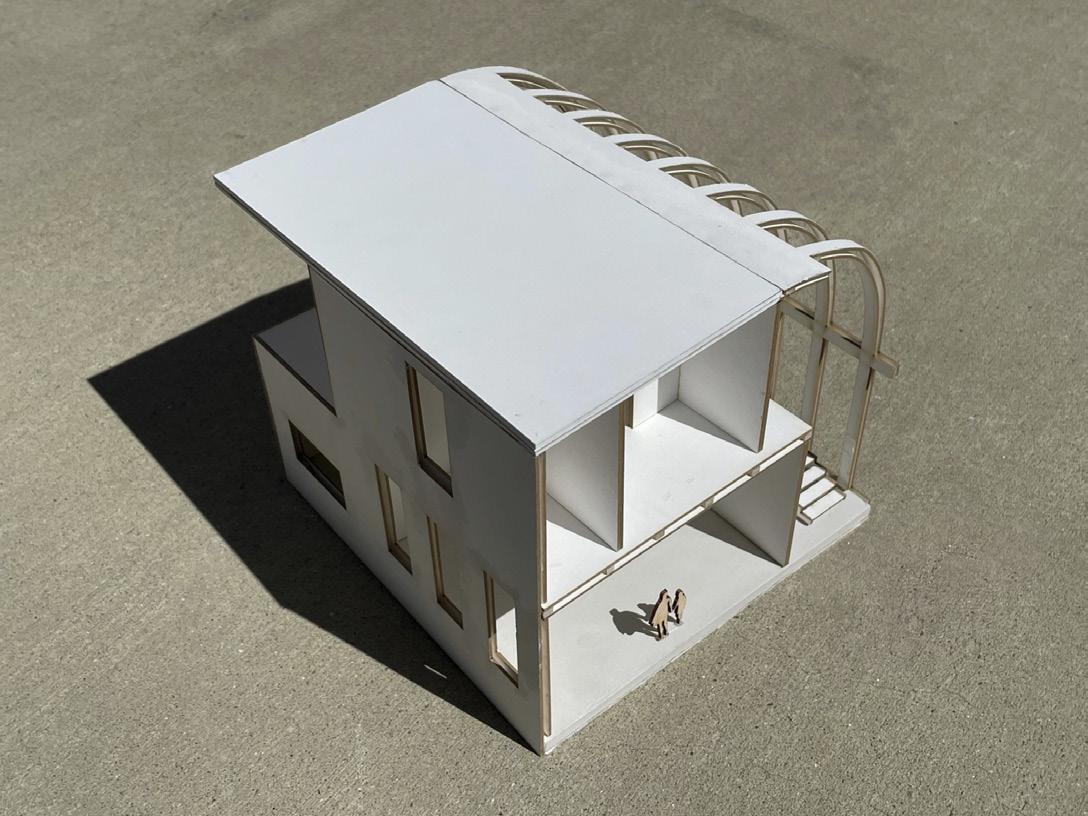
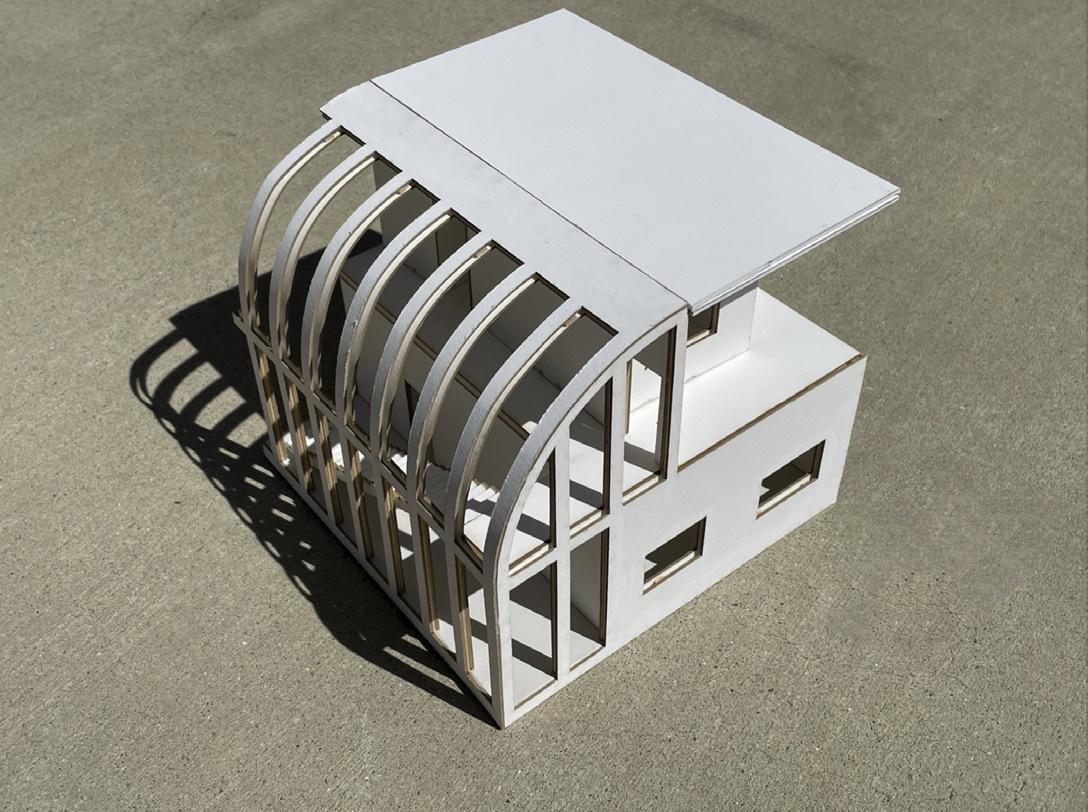
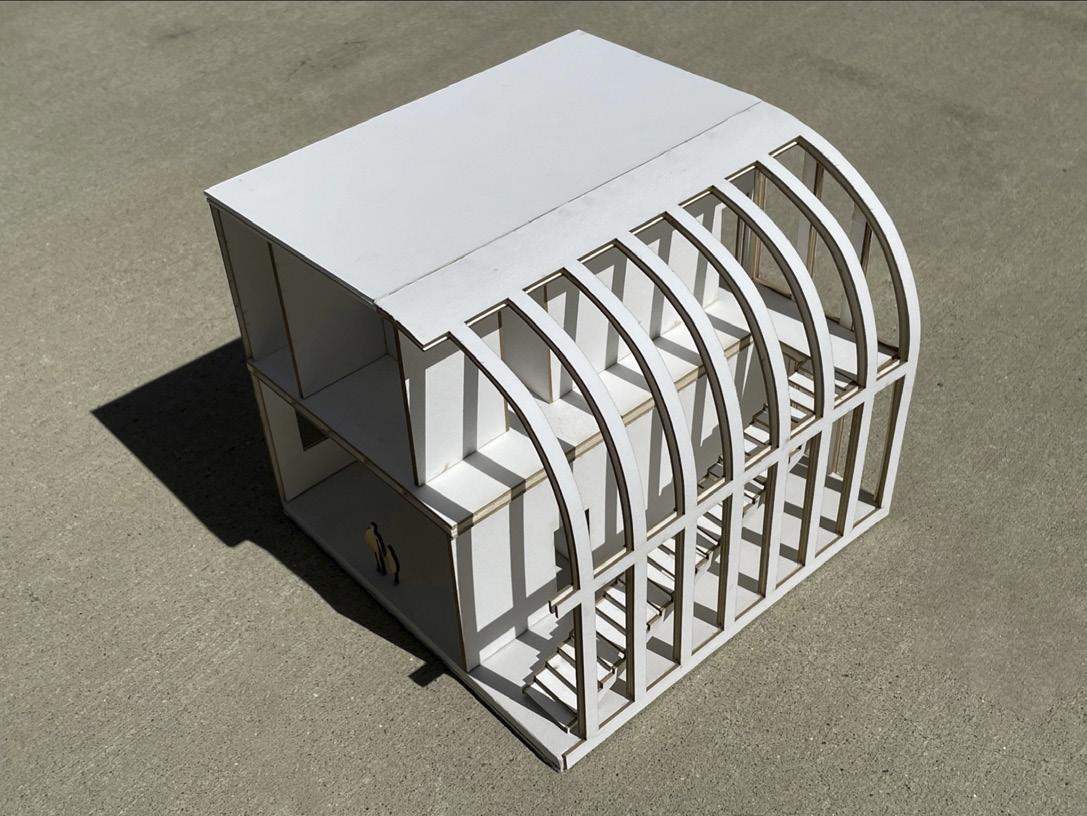
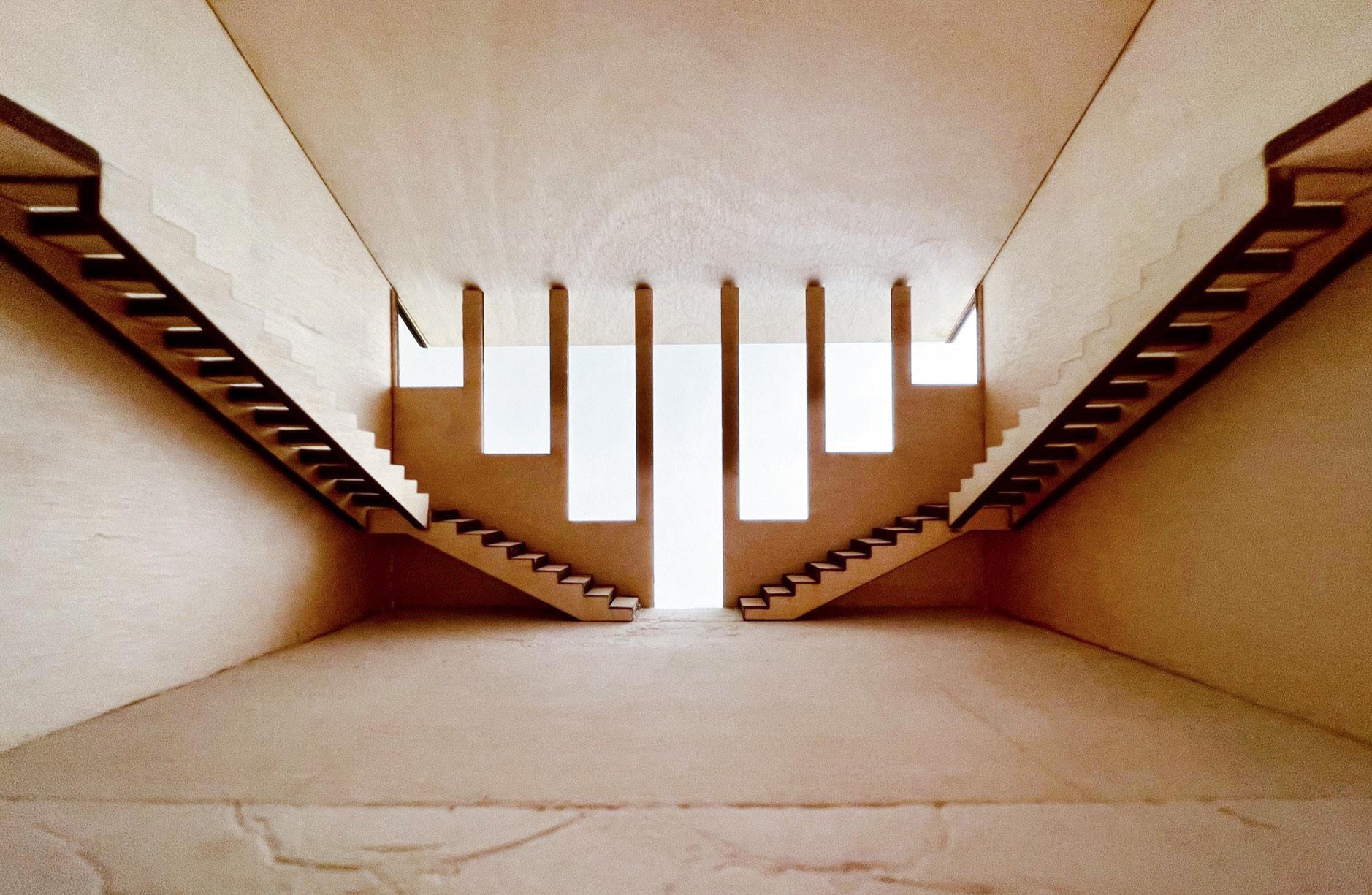
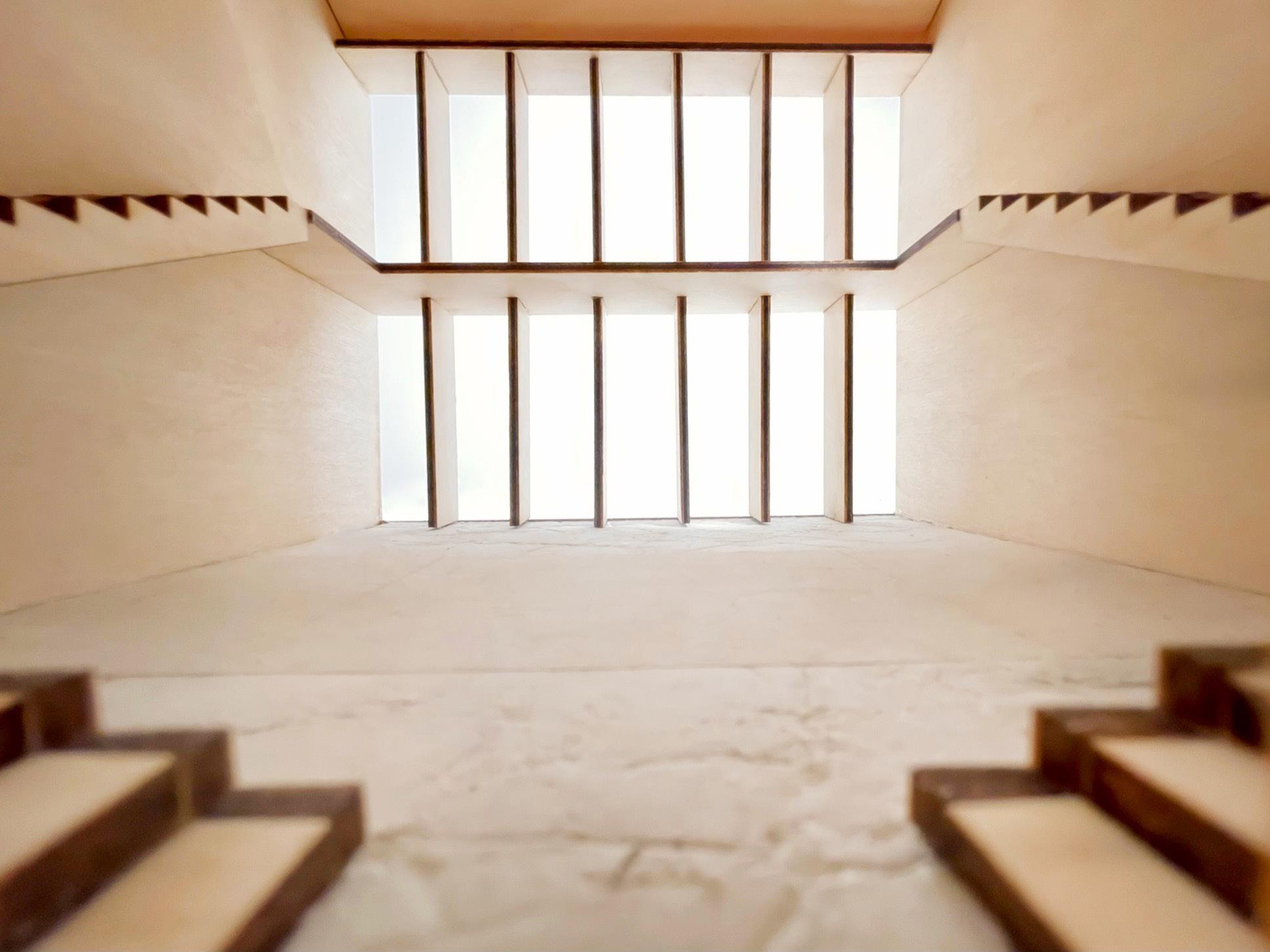
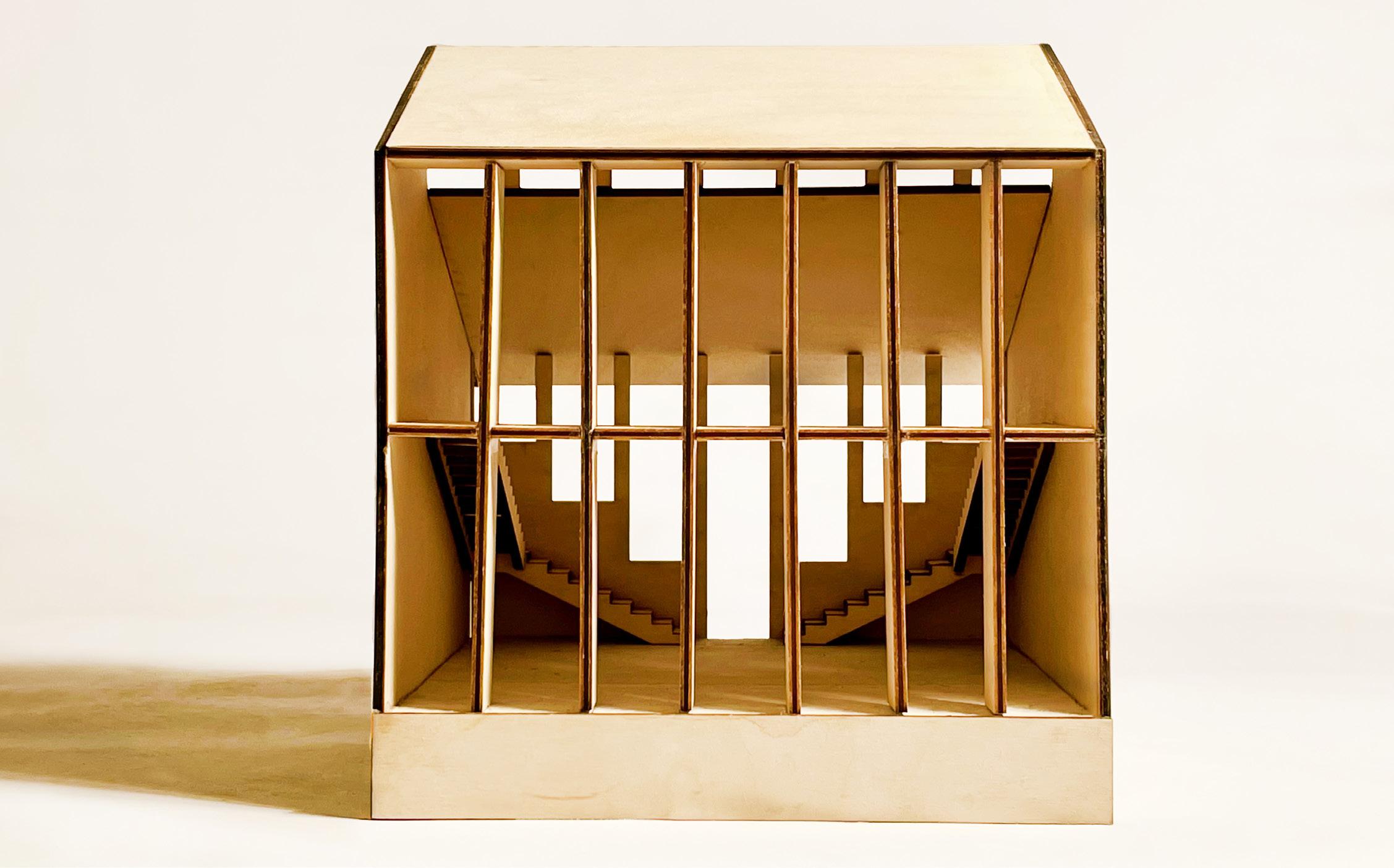
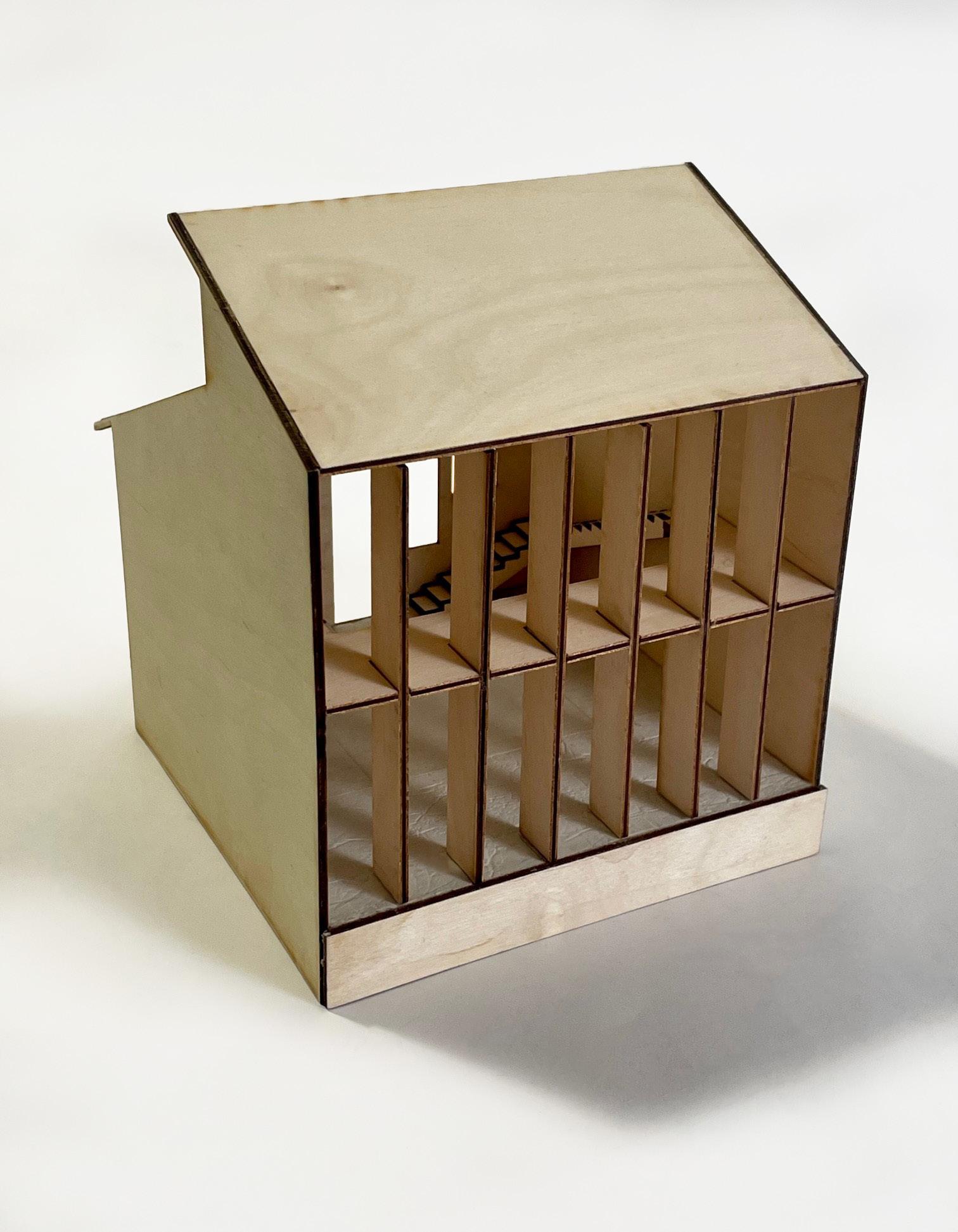
Inspired by plaster tracing floors found in York Minister, The Tracing House offers artists and visitors the ability to see the design practices of medieval masons. This space contains a large plastered floor that can be used by designers to draw design elements to scale, highlighting the relationship between drawing and architecture.
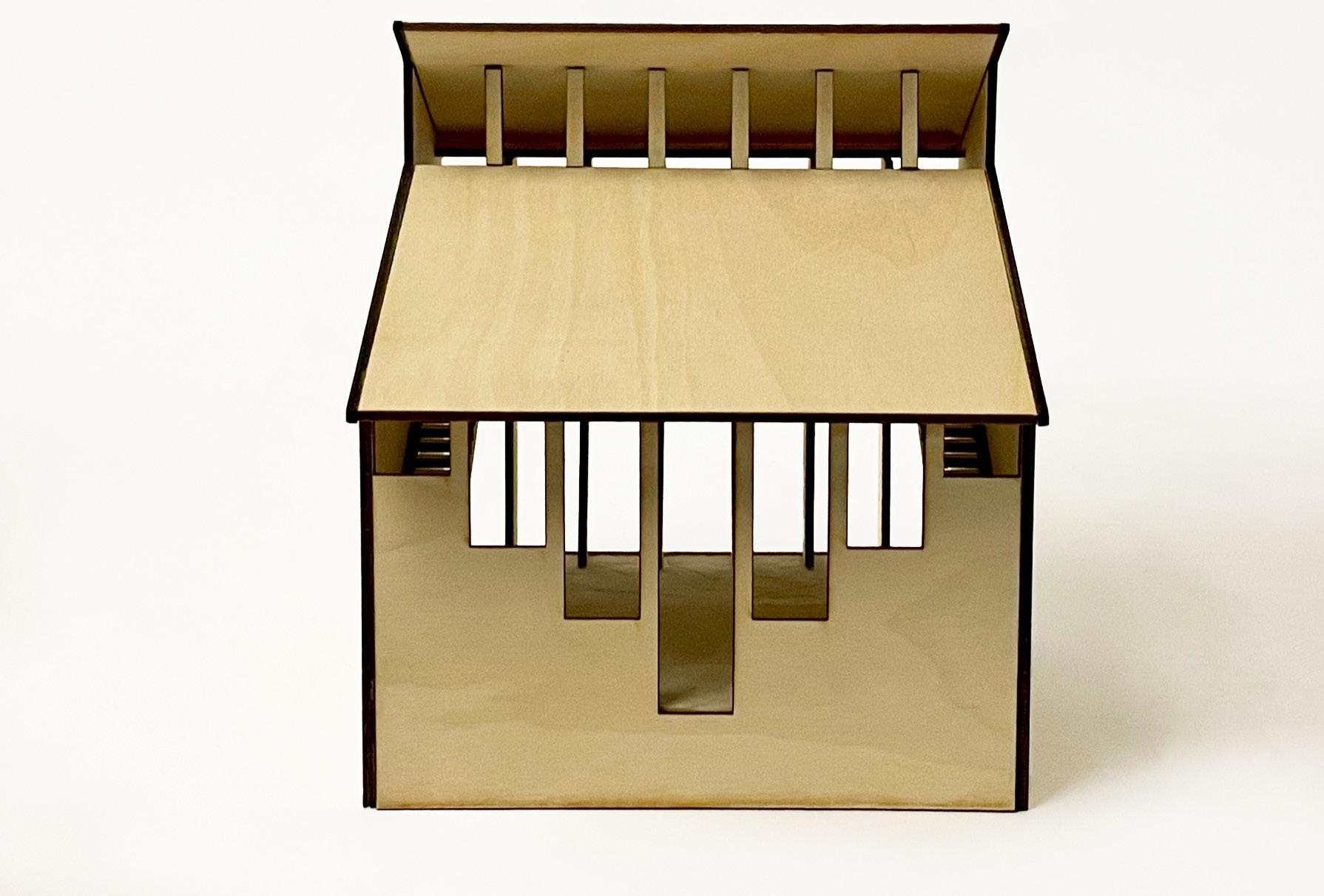
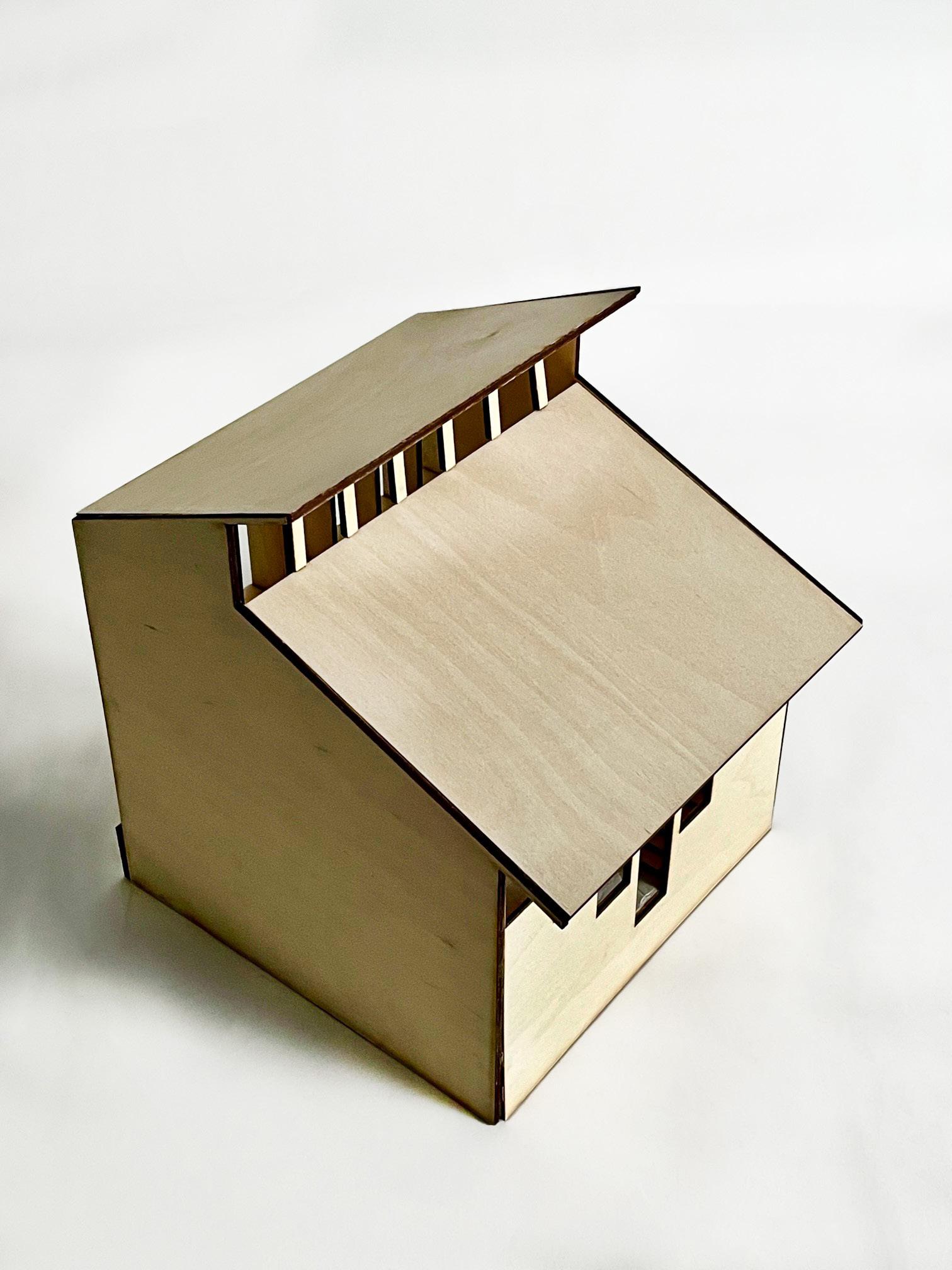
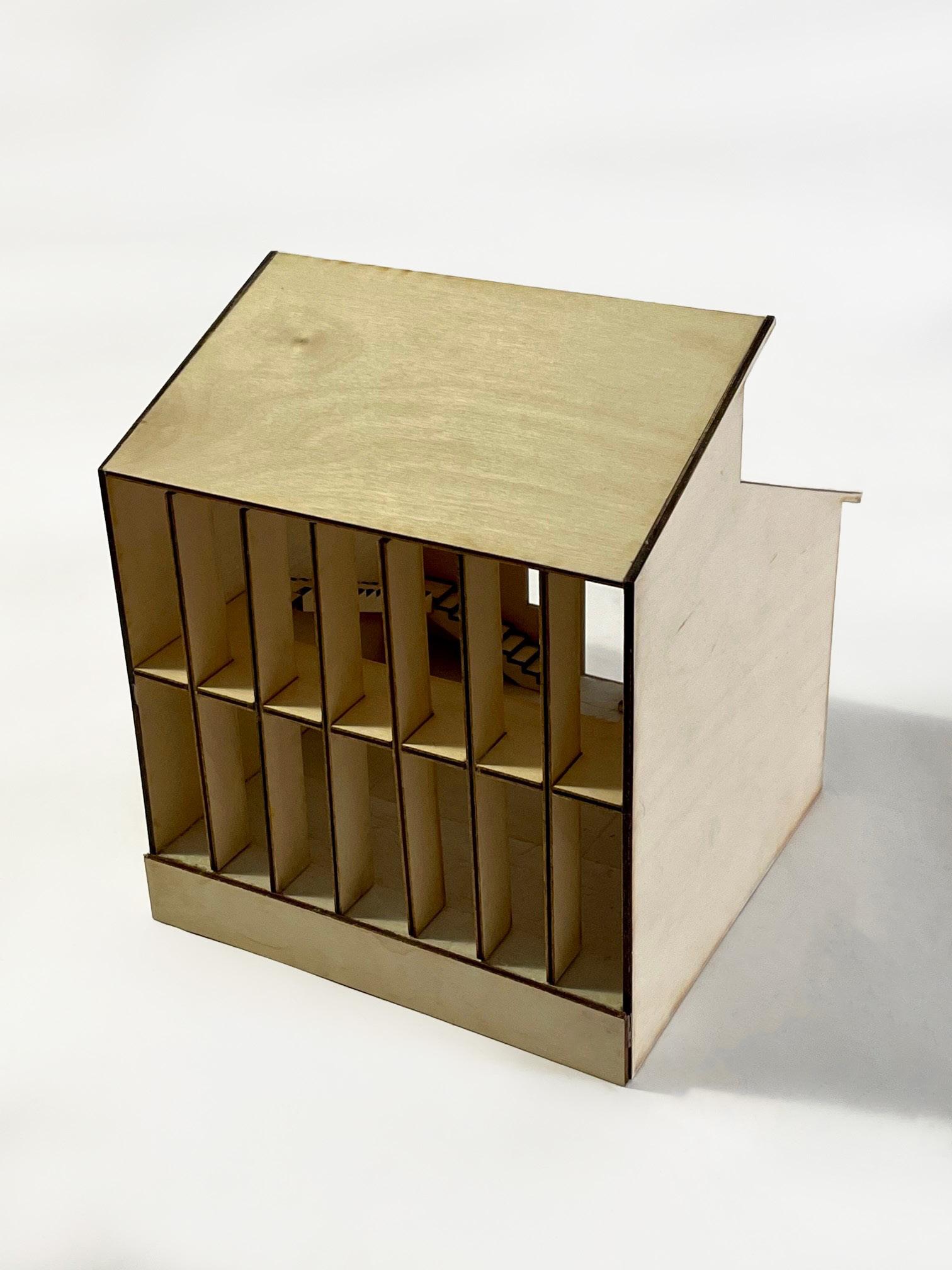
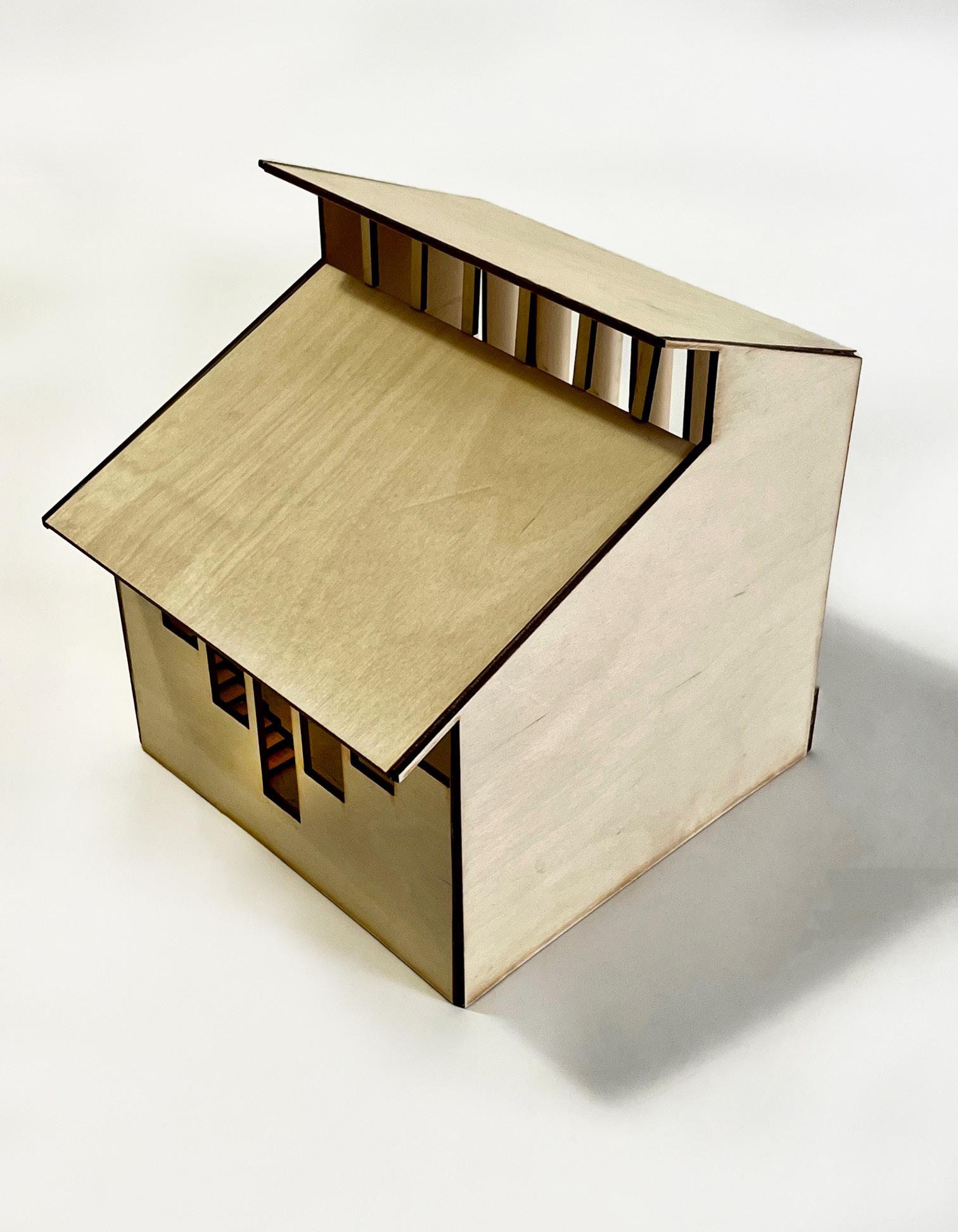
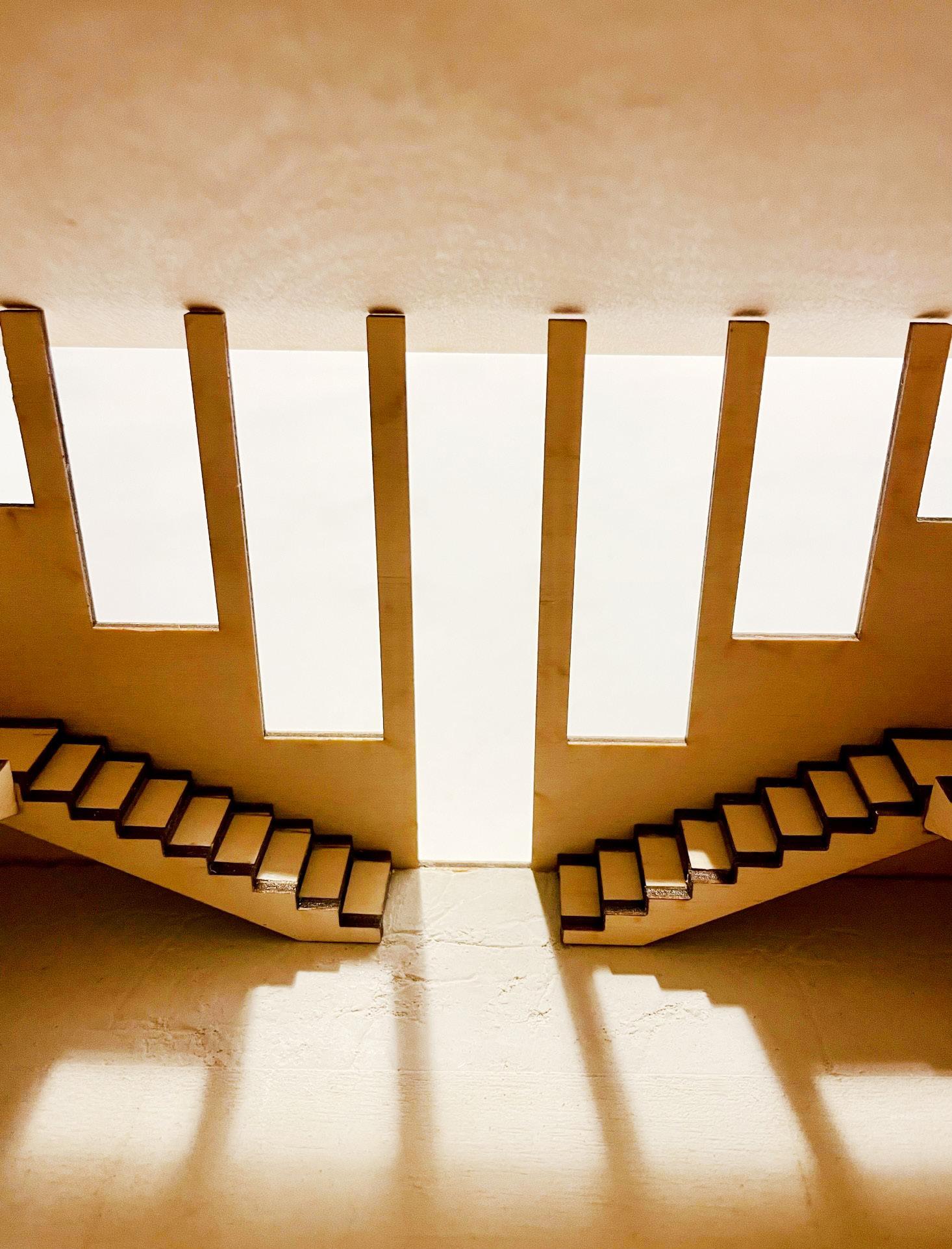
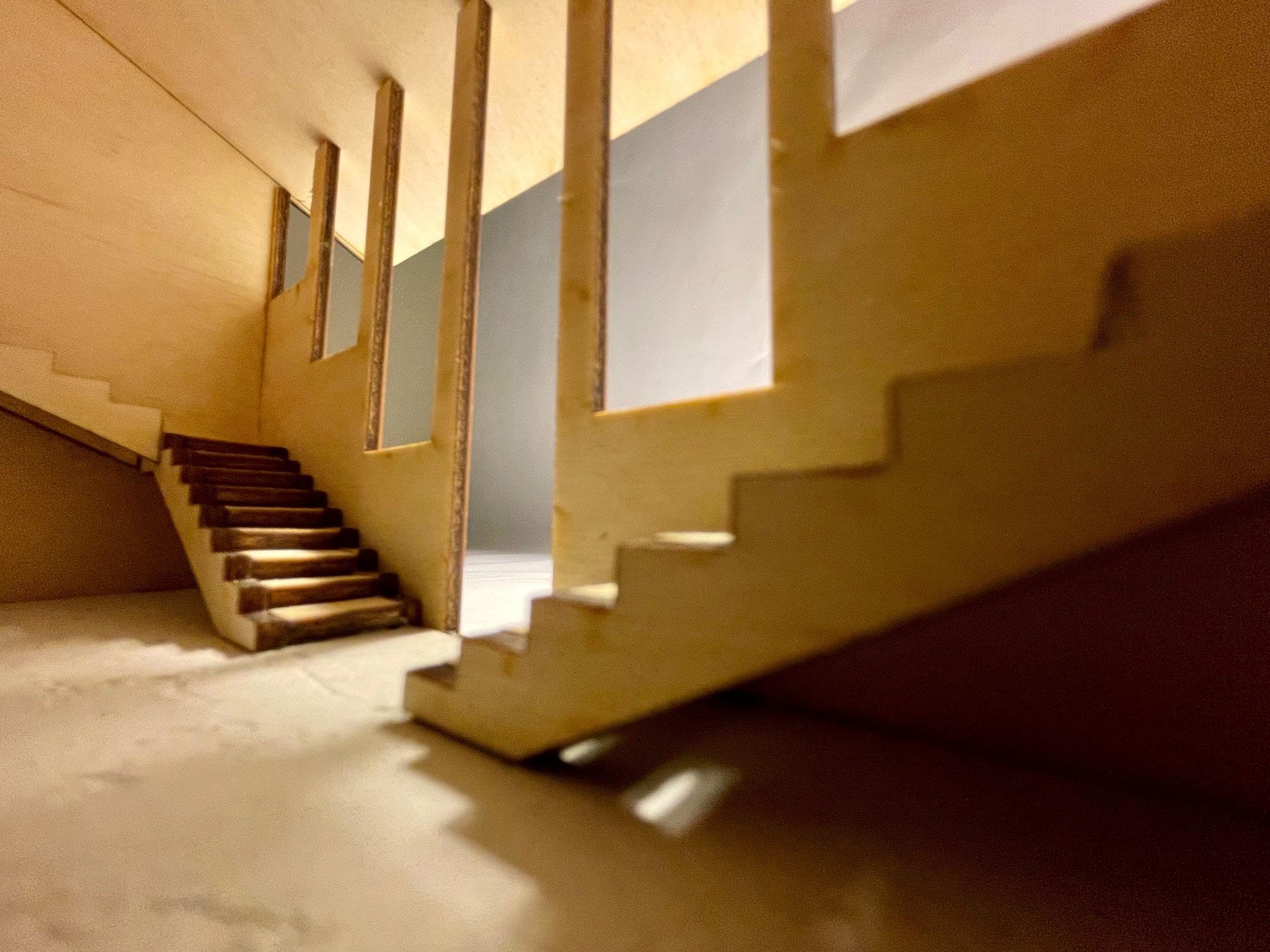
The northern facade utilizes a large windowto-wall ratio and vertical fins to allow diffuse natural lighting to enter the interior space. Overhangs cover southern-facing windows to protect the plastered floor from unwanted exposure to sunlight. A pair of symmetrical staircases provide onlookers the ability to see objects traced on the plastered floor from various heights across the floor’s entire perimeter.
|33
Winter 2022
1/4” = 1’-0” model interior photos
34| The Tracing House
North Elevation
South Elevation
|35 Winter 2022 Corner Views
36| The Tracing House
Interior mood photos displaying interior lighting conditions

|37 Winter 2022
38| NOAA Headquarters
NOAA HEADQUARTERS
Professor Margaret Pedone |Spring 2023
San Francisco, CA | Partnered with Pablo Mora
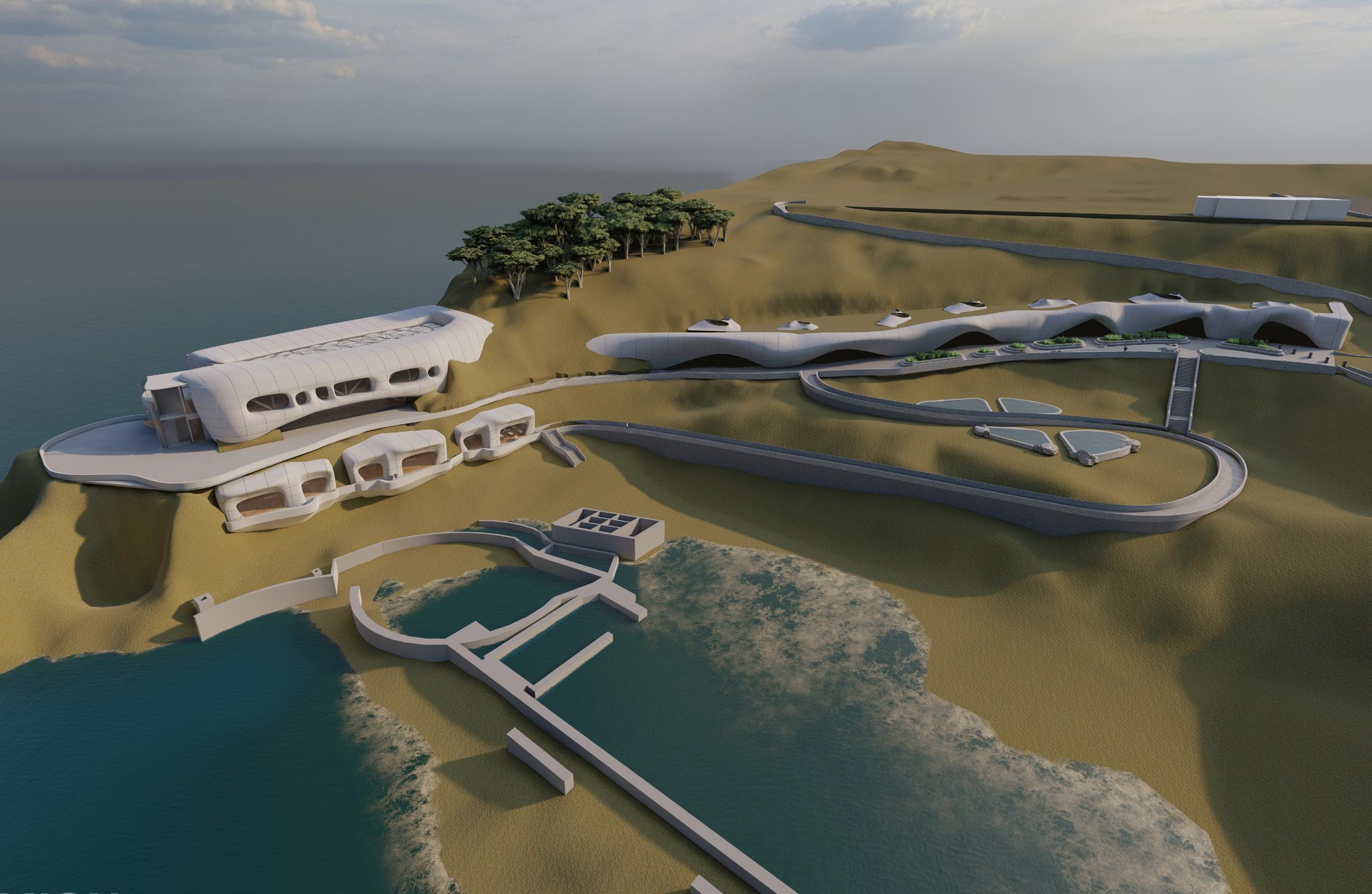
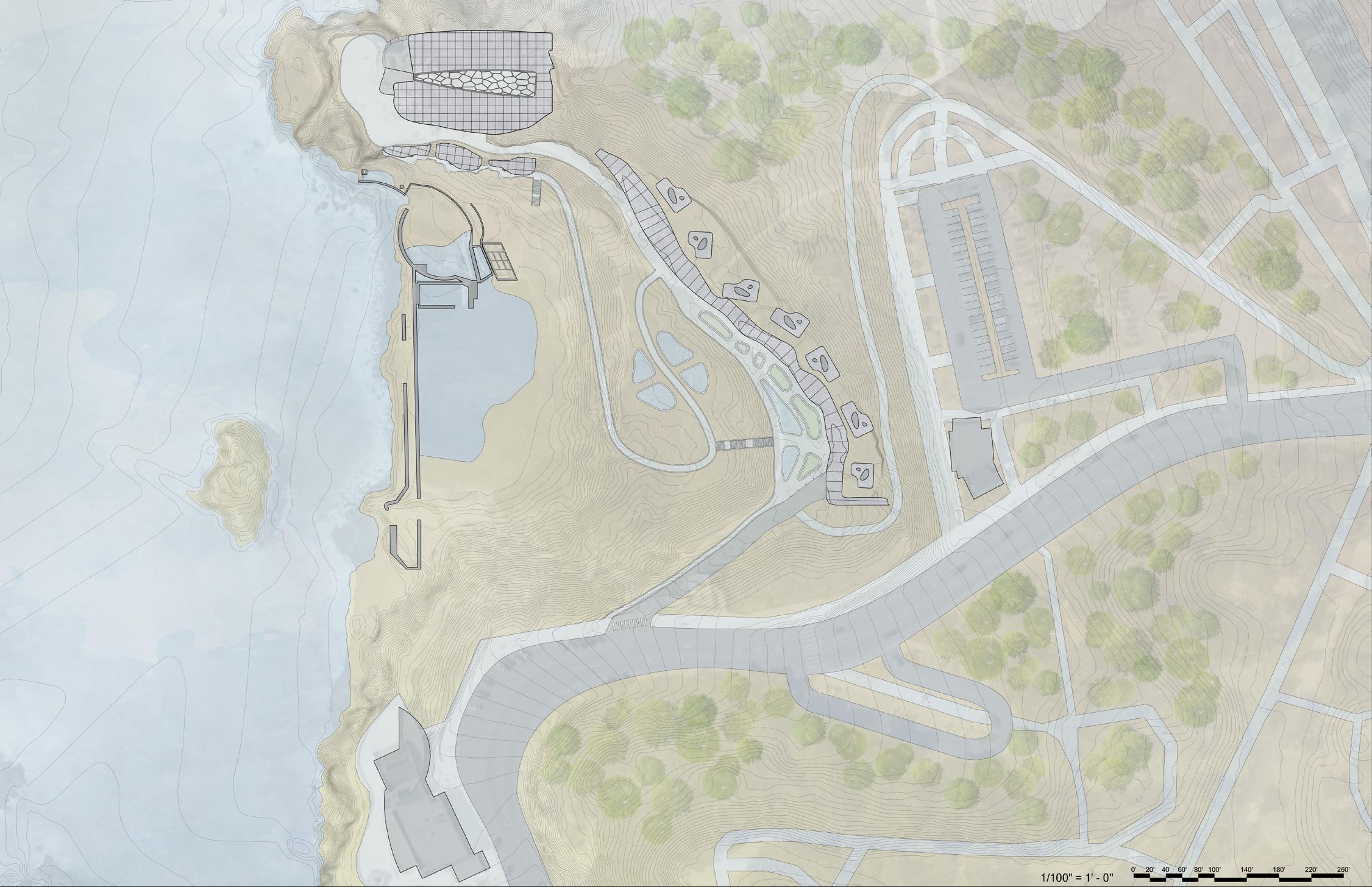
Situated on a ridge overlooking the historical Sutro Baths, the NOAA California Center for Research and Rescue offers researchers, educators, and visitors a space to learn about marine life and activity. The complex is meant to create a sense of wonder, the same way a child may experience while visiting a tide pool. The site is designed in a way that respects the baths and offers optimal views.
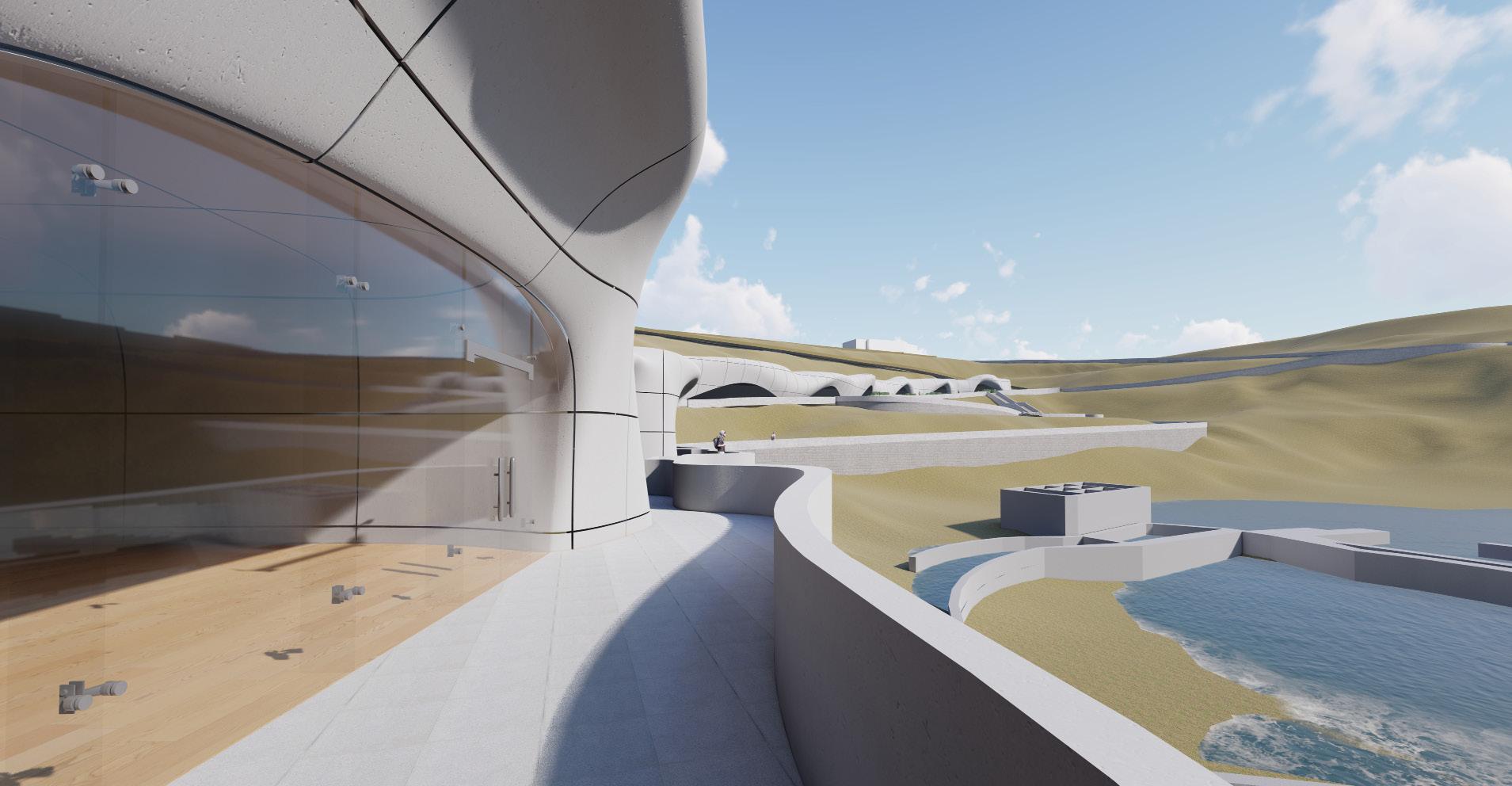
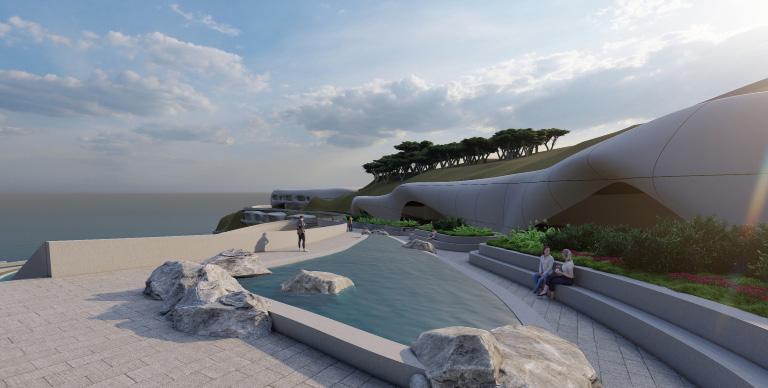
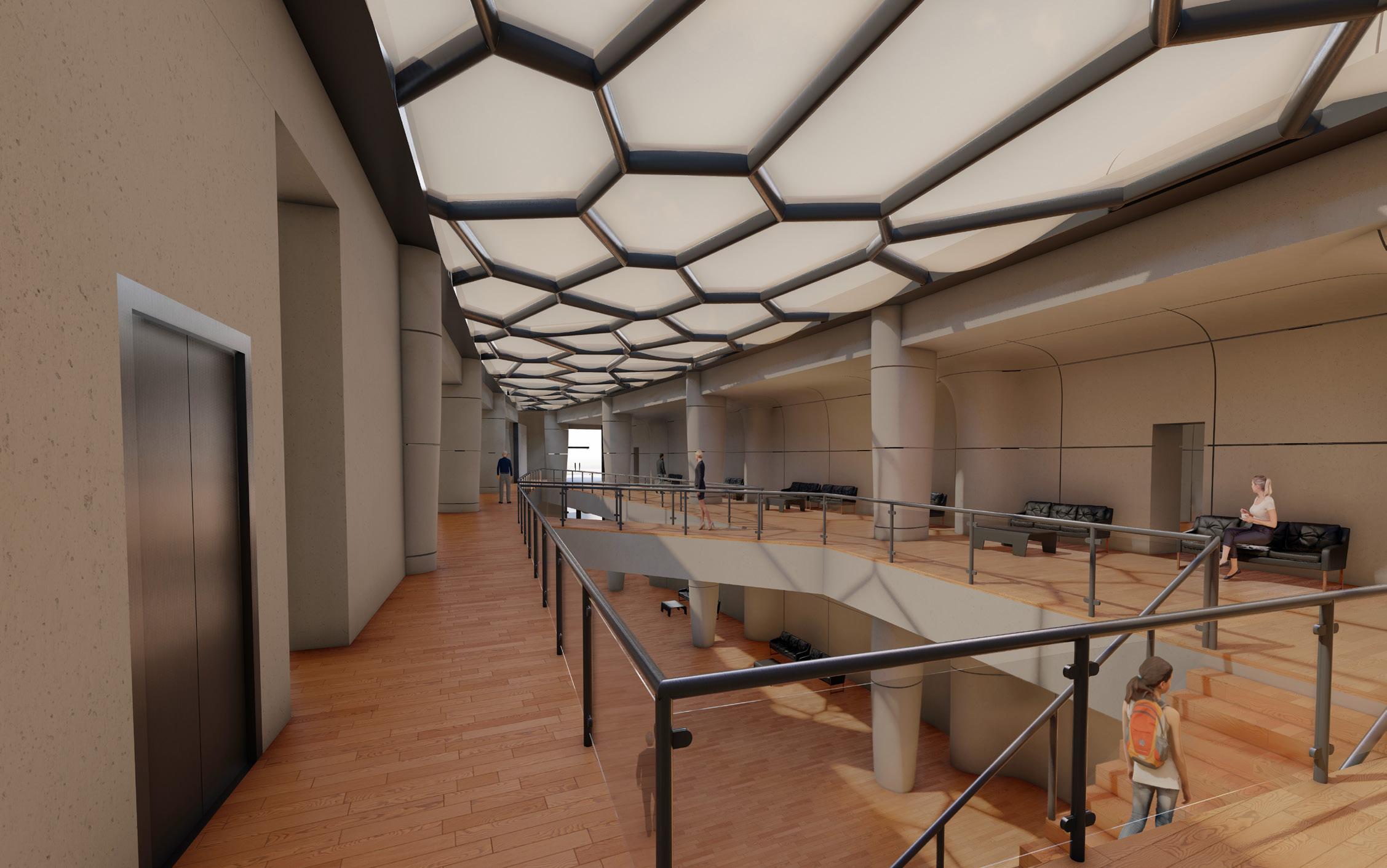
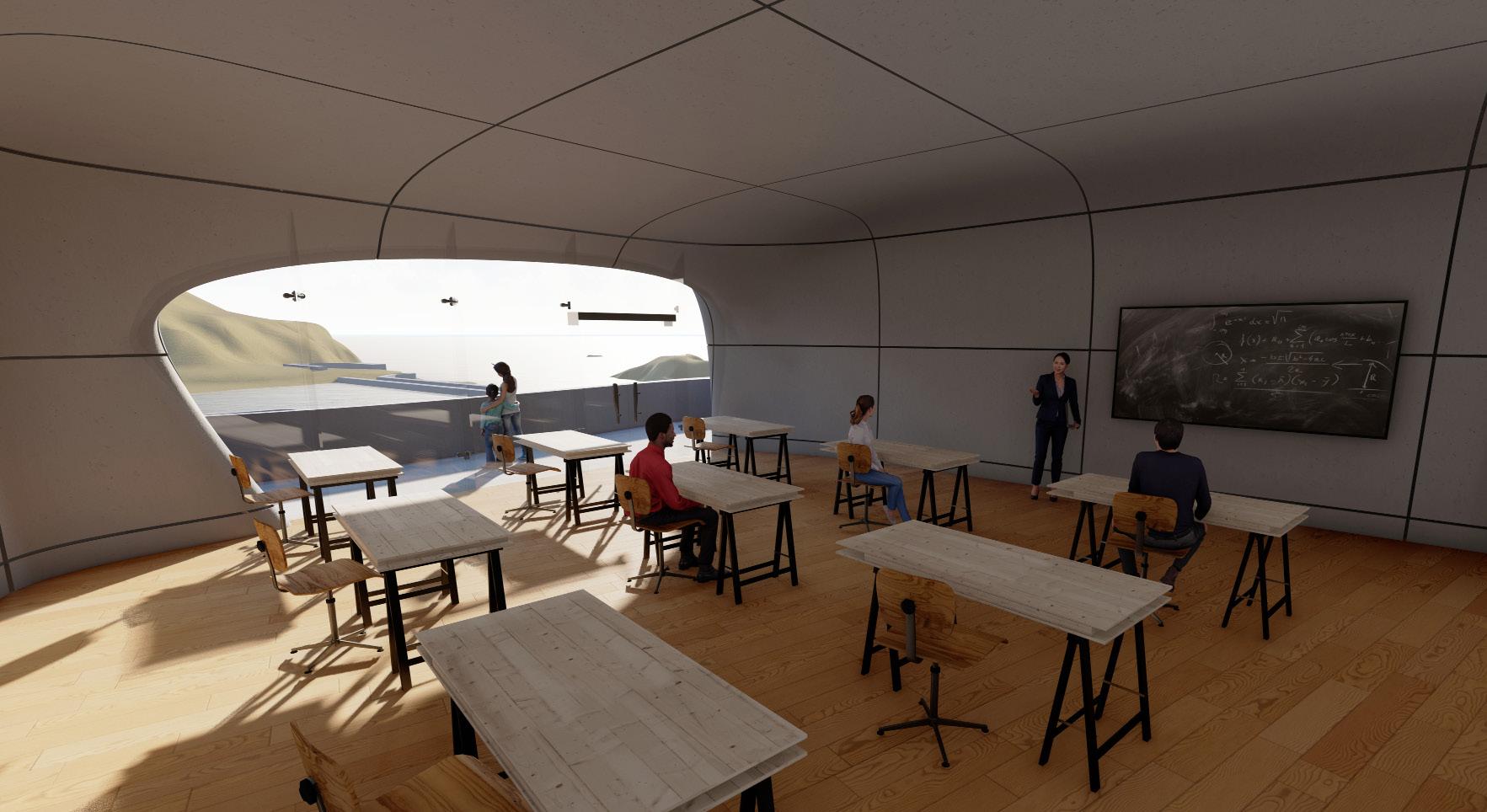
The form of this research center is inspired by “hag stones”, which are stones containing smooth, circular apertures caused by burrowing clams, worms, and other marine life. To mimic this form, GFRC panels are utilized to create a more organic “rock-like” appearance. This material selection was inspired by projects designed by Zaha Hadid, which used GFRC panels to create a more organic form. The ground level is composed of educational and storage spaces that are almost entirely below grade, with classroom “pods” protruding out of the ridge. The upper levels are composed of office spaces for researchers. This facility utilizes high window-to-wall ratios on its southern facade, offering optimal views of the Sutro Baths and the Pacific Ocean while also allowing sunlight to enter the interior space for daylighting and passive heating. A large central atrium space acts as the main circulation space while also allowing natural ventilation to occur.
|39
Spring 2023
Exterior rendering and site plan showing the surrounding context.
40| NOAA Headquarters
Exterior render depicting landscaping, parking, and circulation.
Exterior render depicting classroom balconies and landscaping
|41 Spring 2023
Interior render of a classroom and exterior views of the baths
Interior render of the central atrium space and gallery areas
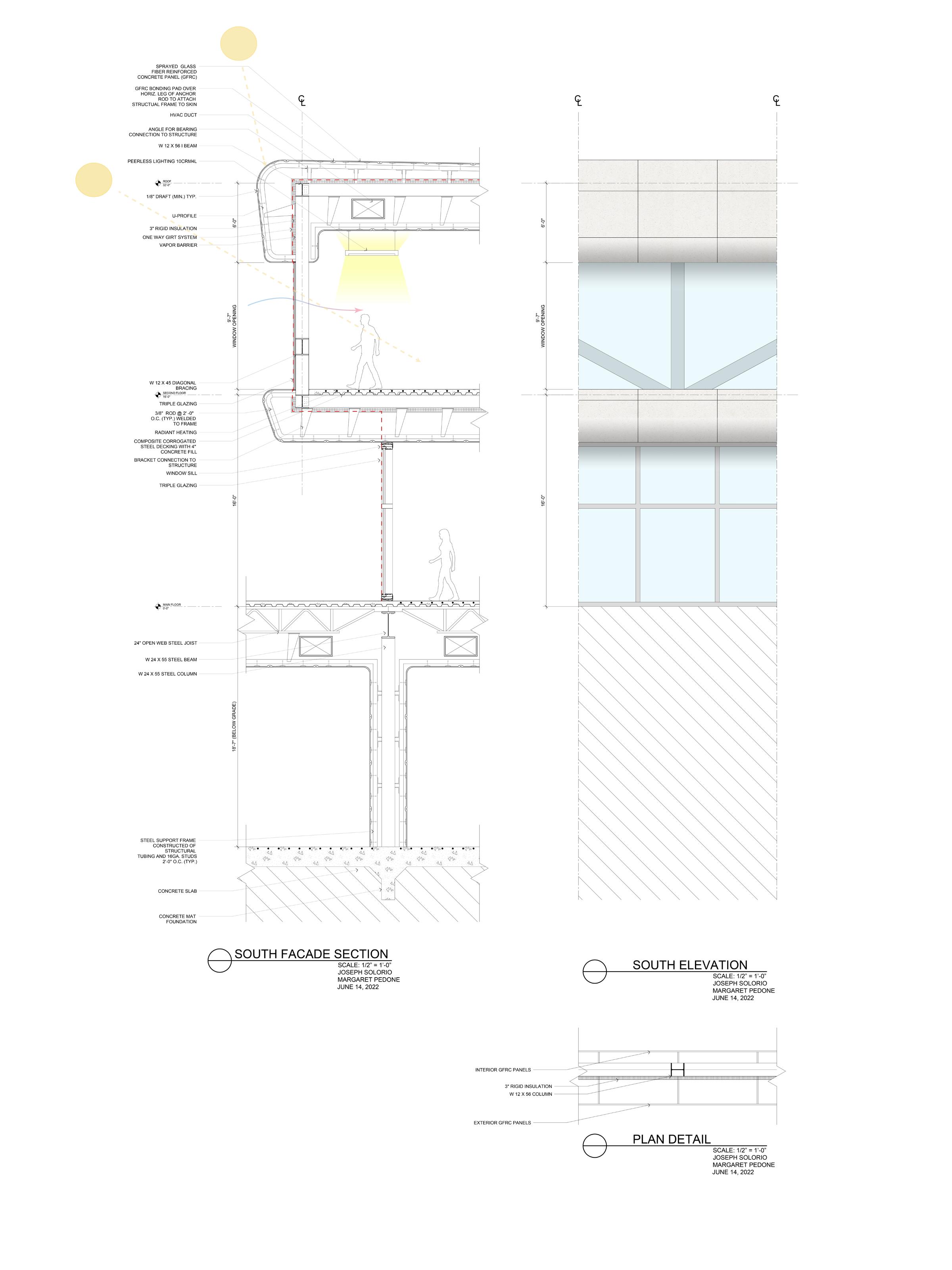
Integrated wall section, elevation view, and plan detail displaying GFRC cladding in relation to the primary structure, passive and active systems, and lighting.
0' 4' 10' 5' 1' 0' 3' 5' 2' 3' 1' 4' 0' 2' 10' 10' 2' 3' 1' 5' 4' JOSEPH SOLORIO JOSEPH SOLORIO JUNE 12, 2022 PLAN DETAIL JUNE 12, 2022 MARGARET PEDONE SOUTH FACADE SECTION SOUTH ELEVATION JOSEPH SOLORIO MARGARET PEDONE JUNE 12, 2022 MARGARET PEDONE NOAA Headquarters
Second
|43 32' 0' 72' 40' 16' 8' 56' 24' 1 Oceans and Coast 2 Fisheries 3 Marine Avia�on 4 Sanctuaries 5 Satellites 6 Weather 7 Climate 8 M/E Room N 1/16" = 1'- 0" 8 5 1 2 3 4 5 6 7 16' 8' 72' 32' 56' 0' 40' 24' 1/16" = 1'- 0" 1 Gallery and Lobby 2 Administra�on 3 Educa�on 4 Restaurant 5 Bathrooms 6 Mechanical/Loading 7 M/E Room 8 Parking Dropoff 7 5 1 6 2 3 4 8 N 72' 56' 1/16" = 1'- 0" 32' 24' 8' 0' 16' 40' 1 2 3 4 5 6 6 7 1 Data Storage 2 Lecture Hall 3 Large Classroom 4 Small Classroom 5 Bathrooms 6 Storage 7 M/E Room N Spring 2023 First Floor Plan (Below Grade)
Floor Plan (Main Level) Third Floor Plan
