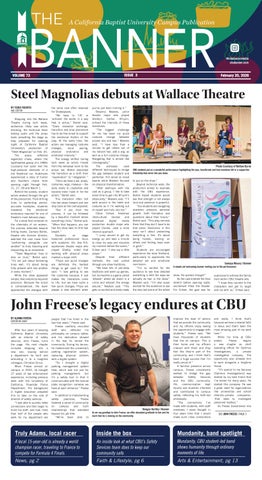
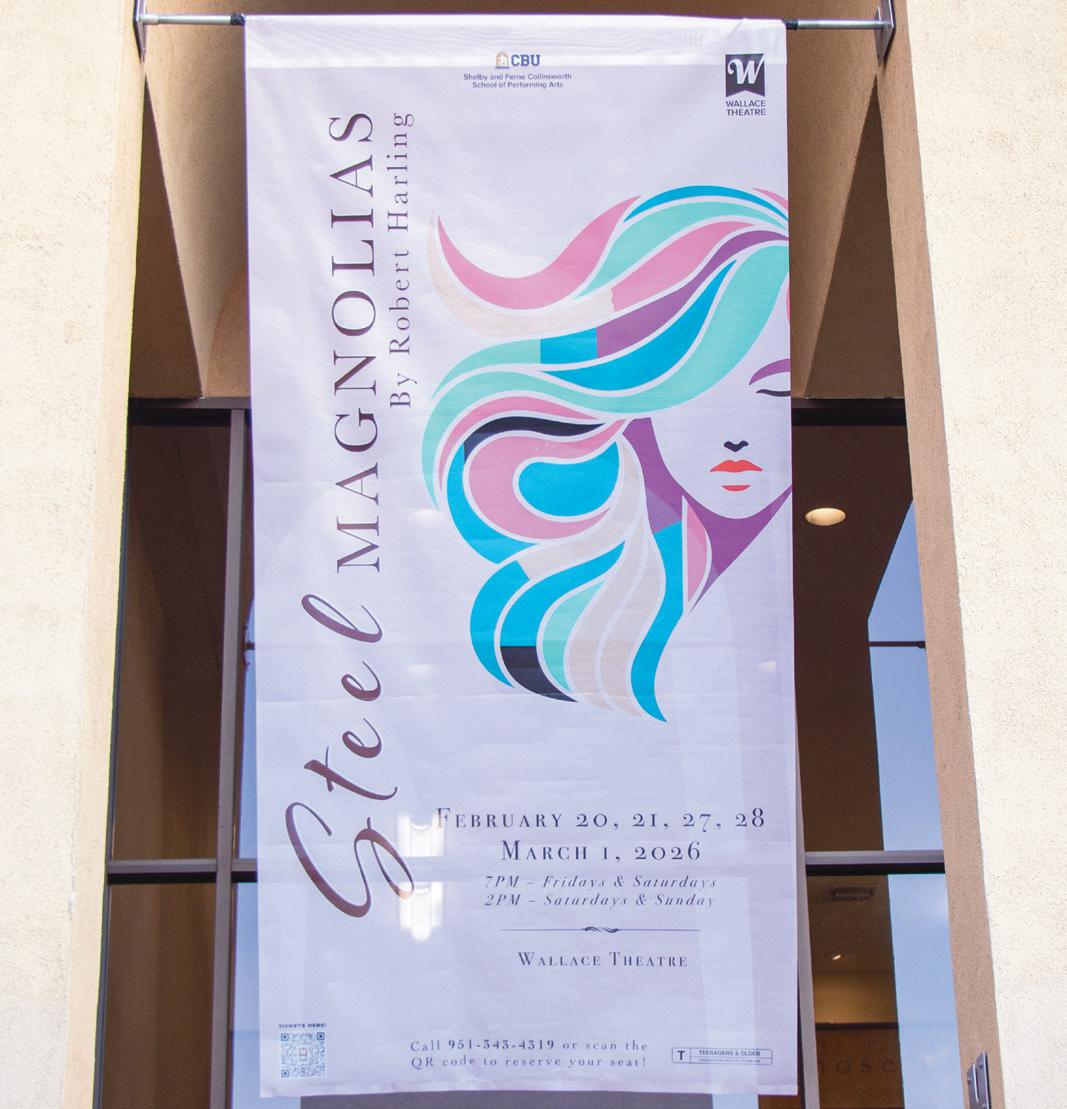
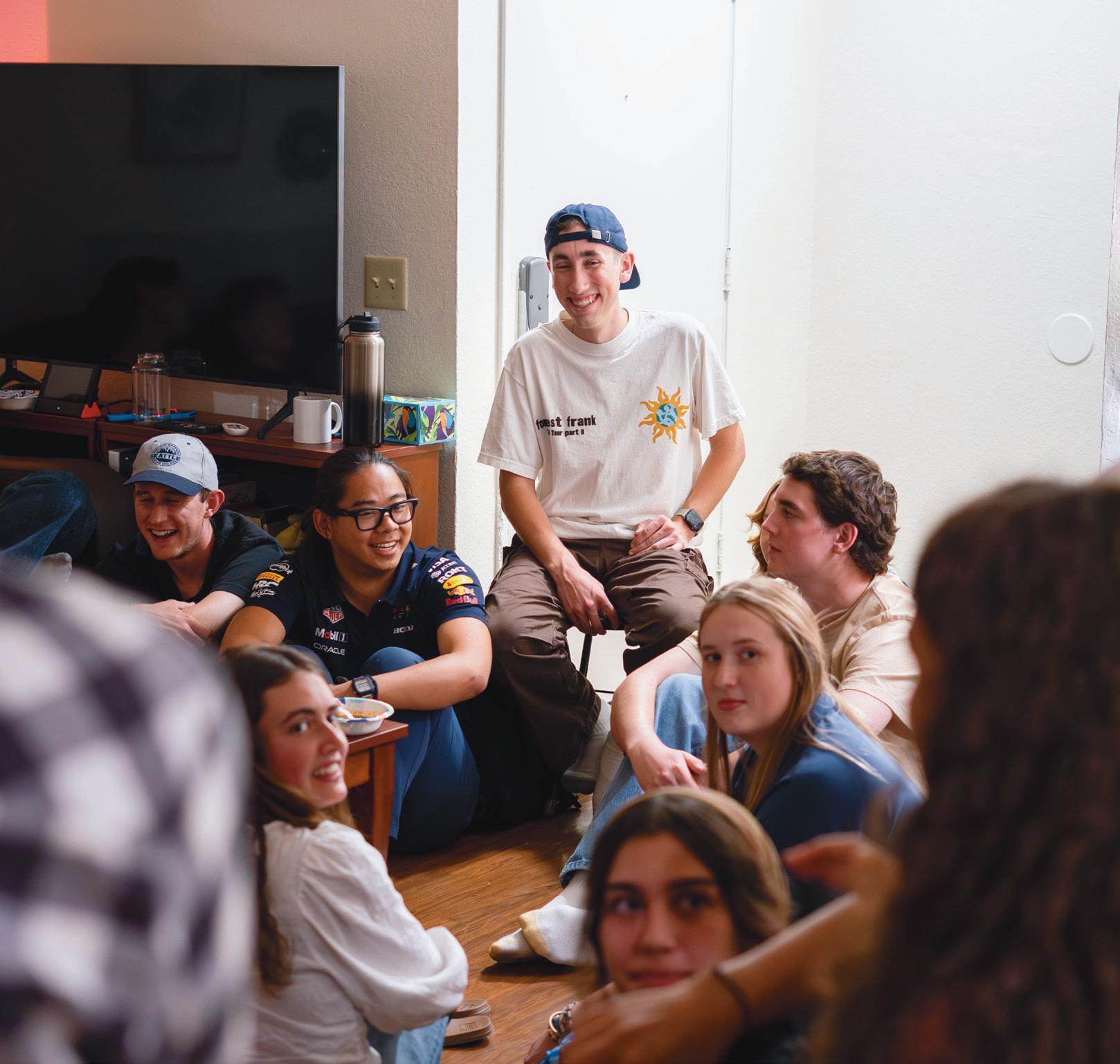
Stepping into the Wallace Theatre during tech week, audiences likely saw actors blocking, the technical team testing audio and the props team presetting the stage as they prepared for opening night of California Baptist University’s production of “Steel Magnolias” on Feb. 20.
The space reflected organized chaos, where the lighthearted gossip of a 1980s Louisiana hair salon met the high-pressure demands of a live theatrical run. Audiences experienced a story of humor and Southern charm from opening night through Feb. 21, 27, 28 and March 1.
Behind the scenes, student actors worked through the grit of the production. From drilling lines to perfecting periodaccurate hairstyles, students mastered the emotional endurance required for one of theater’s most beloved plays.
For a show that centered on the chemistry of six women, the process extended beyond hitting marks. Zachary Bortot, theatre arts division director, watched the cast move from “performing alongside one another” to truly listening and responding as an ensemble.
“’Steel Magnolias’ lives or dies on trust,” Bortot said.
“It’s not just about delivering lines well, it’s about being fully present with one another in every moment.”
While the show appeared simple, that simplicity required precision. Because the script is conversational, the team approached the dialogue with
the same care often reserved for Shakespeare.
“We have to ‘lift’ or ‘activate’ the words in a way that is active,” Bortot said.
“Every character exchange, transition and prop placement has to be fine-tuned to support the emotional rhythm of the play. At the same time, the actors are managing costume changes, vocal pacing, physical endurance and emotional intensity.”
The energy shifted during tech week as actors moved from the rehearsal room to the actual set. Bortot described the transition as a shift from “exploration” to “integration.”
“Once we have a set, props, costumes, wigs, makeup— the story starts to crystallize and become more ‘lived in’ for the actors,” Bortot said. This transition often felt like two steps forward and one step back as the cast adjusted.
“But if you trust the process, it can be followed by a beautiful moment where everything clicks,” Bortot said.
“When that happens, you can feel the show take its first real breath.”
Students on stage balanced professional focus with academic life.
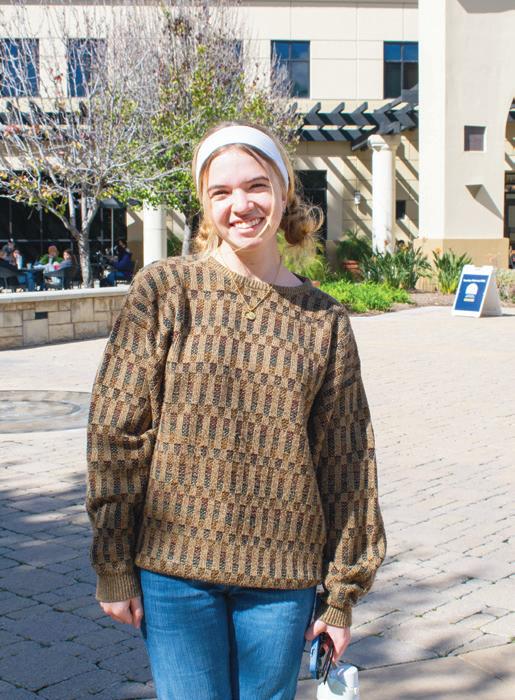
Ava Hill, sophomore theatre major who played Shelby, noted that working with physical props marked a major shift.
“Props and quick changes are definitely the hardest things to get used to,” Hill said. “I love getting to see the costumes because it just makes the characters come to life, but we have quite a few quick changes. Props are always a new element when
you’ve just been miming it.”
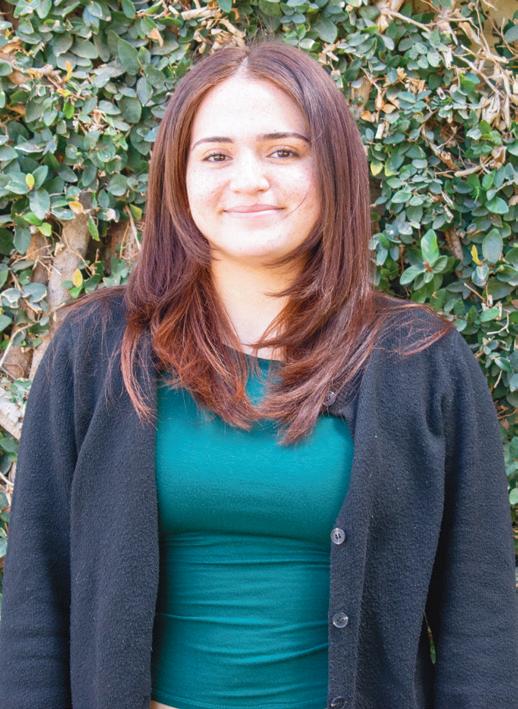
Breanna Masters, junior theatre major who played Shelby’s mother, M’Lynn, echoed the intensity of those transitions.
“The biggest challenge for me has been my quick costume change between scenes one and two,” Masters said. “I have less than a minute to get rollers out of my natural hair, add a wig, as well as a full costume change. Navigating that is almost like choreography.”
The actresses used different techniques to bridge the gap between student and performer. Hill relied on mood boards while Masters focused on physical transformation.
“After warmups with the cast as a group, I like to take some time to get into M’Lynn’s physicality,” Masters said. “I’ll walk around in the heels and costume as if I’m walking out of myself and fully into her.”
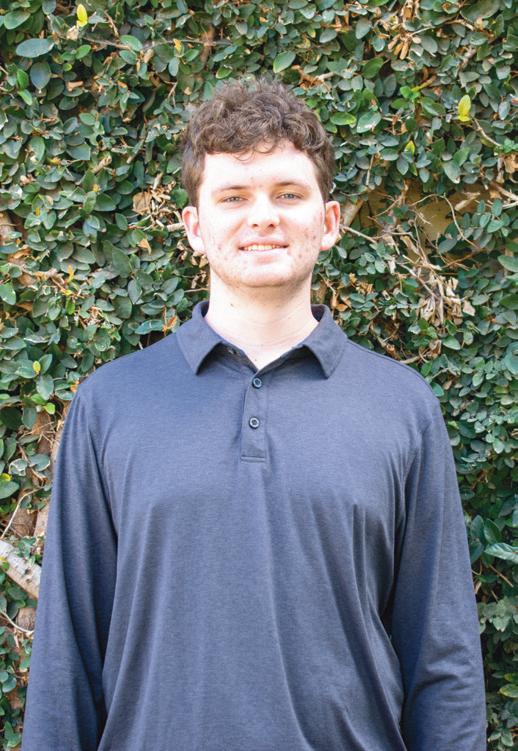
Chloe Critser, freshman intercultural studies and broadcast digital media production double major who played Clairee, used a more internal approach.
“I jump around to get my energy up and take a minute to close my eyes and visualize my moment before the scene,” Critser said. “I also say a little prayer.”
Despite their different methods, the cast united through pre-show traditions.
“We have lots of pre-show traditions and warm up games, but my favorite is a game called ‘whoosh’ where we stand in a circle and whoosh the energy around,” Masters said. “This gets us excited and really ready
to put on the show.”
Beyond technical work, the production aimed to resonate with the CBU experience. Bortot hoped students would see that strength is not always loud and presence is powerful.
“Our students are navigating academic pressure, personal growth, faith formation and questions about their future,” Bortot said. “This play reminds them that they don’t have to do that alone. Resilience in this story isn’t about pretending everything is fine. It’s about being honest, leaning on others and finding hope even in grief.”
Students are encouraged experience the story firsthand, particularly to appreciate the detailed set and emotional conclusion.
“I’m so excited for the audience to see how detailed everything is with the ways we actually do hair in the show,” Masters said. “I’m also super excited for the audience to see the very last scene of the whole
show. No spoilers though!”
As the cast entered the final stretch before opening night, excitement filled the theater.
For Critser, the goal was for
audiences to
“I
John Freese’s legacy endures at CBU
BY ALANNA RIVERA
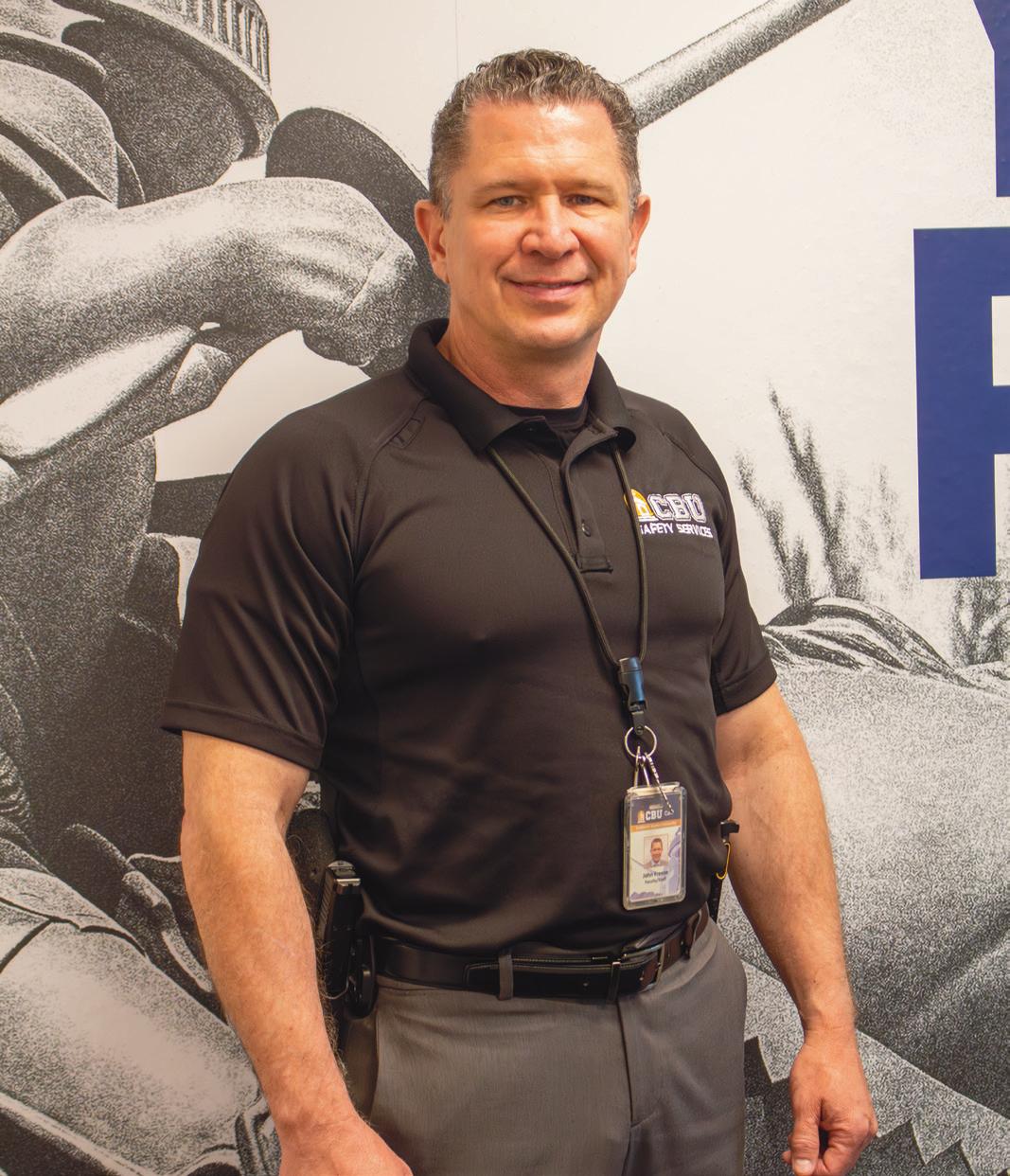
After four years of keeping California Baptist University safe as director of safety services, John Freese, turns the page. His next chapter includes stepping into a new role, leaving behind a department he built and entrusting it to a longtime colleague, Christian Dinco.
When Freese arrived on campus in 2022, he brought 27 years of law enforcement experience, including previous work with the University of California, Riverside Police Department. His background in higher education prepared him to take on the role of director of safety services.
“I was able to quickly make connections and then begin to build my staff, and now, more than half of the people who work for my department are
people that I’ve hired in the last four years,” Freese said.
Freese carefully recruited staff who reflected his philosophy on campus safety, and his dedication showed in the way he served the community. During his tenure, he modernized the university’s parking registration system, replacing physical stickers with a digital system.
“So I brought a digital parking management system here, which was not just for parking management, but it’s a safety tool in that it communicates with the license plate recognition cameras we have at each entrance,” Freese said.
In addition to implementing safety practices, Freese fostered a sense of community on campus and built relationships that extended beyond his job title.
“We’ve been able to
improve the level of service that we provide the community and my officers enjoy seeing the opportunity to engage with students,” Freese said. “We have thousands of students that live on campus. This is their home and my officers interact with them and they feel like they’re part of the community, and I think that’s been a huge success that I’m really proud of.”
A familiar presence across campus, Freese consistently worked to bridge the gap between Safety Services and the CBU community. His communication kept faculty and students informed and contributed to campus safety, reflecting his faith-led philosophy.
“The connections I’ve made with students, with staff members; I never thought in four years time that I would make such close connections
and really, I think that’s because we have a shared faith in Jesus and that’s been the most amazing part of my work here.”
While his time at CBU ended, Freese begins a new chapter as chief operating officer for Optimus Investigations, a private investigative company. The opportunity also allowed him to work alongside a longtime friend.
“It’s special to me because [Optimus Investigations] was started by my best friend that I’ve known for many years. He started this company. He saw a great need for organizations like universities and school districts--private companies-that need to investigate personnel matters.” As Freese transitioned into
Sumaya Khoury | Banner
simple yet welcoming banner inviting you to the performance.
Photo Courtesy of Nathan Byrne
CBU students put on a wonderful performance highlighting the joys, heartbreak and true emotions felt in a supportive friendship that never lets you down.
EDITOR-IN-CHIEF
Keegan Hartley | Banner
Sunday brunch attendance grows at ADC
BY BENJAMIN HARLAN ASST. S&W EDITOR
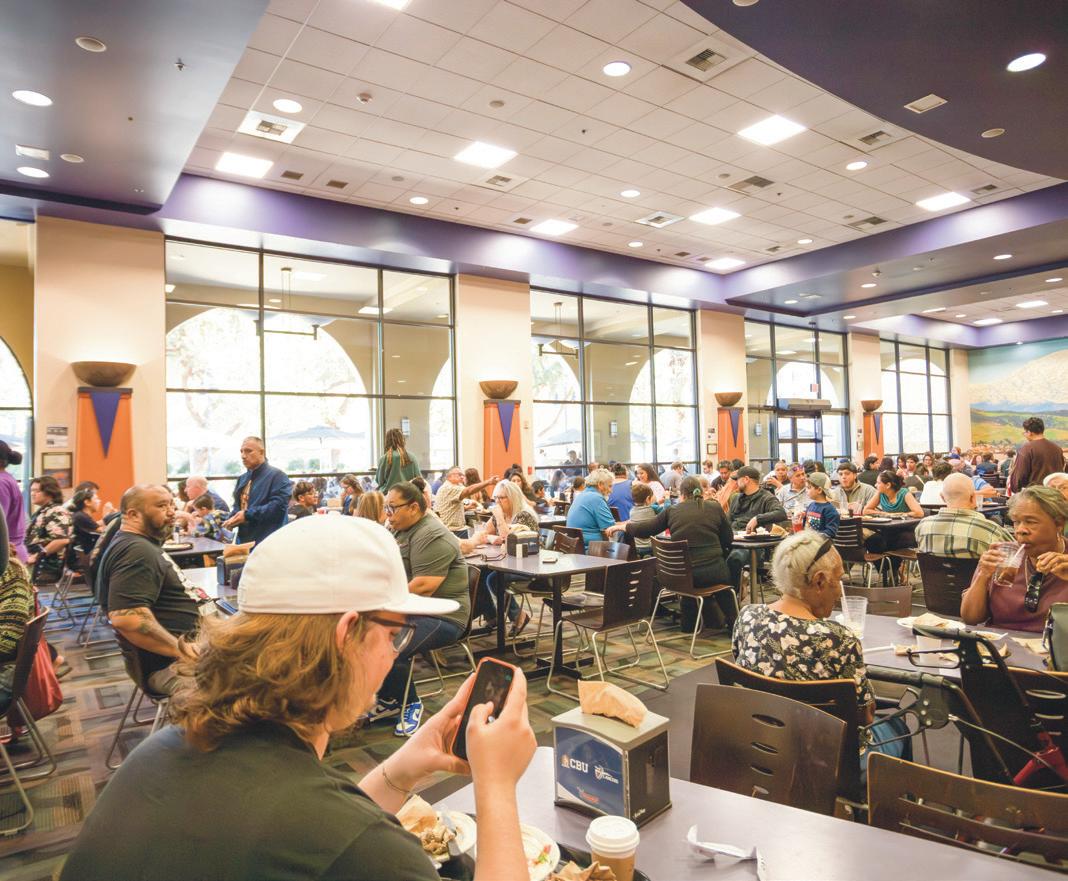
California Baptist University’s Sunday brunch remains a quiet campus tradition enjoyed by students, families and staff each weekend. Over the past few weeks, however, the Alumni Dining Commons filled with members of the Riverside community and visitors from beyond the area.
On Jan. 1, social media influencer @ whatsupwithriverside posted a video on TikTok and Instagram that reached more than 1 million combined views. The post brought increased attention to the brunch and attracted new visitors to campus on Sundays.
Students who live on campus and stay on weekends were familiar with CBU’s Sunday brunch.
Thomas Staub, junior psychology and Christian studies double major, said he enjoyed both the food and the company.
“I enjoy the food, I enjoy seeing all my friends... everyone goes on Sundays,” Staub said.
While the brunch fostered community, its growing popularity created both benefits and challenges.
“It’s more difficult to find a seat... but it’s cool that it’s becoming more popular,” Staub said.
Students expressed
excitement about the university’s growing visibility, though increased crowds presented challenges. To address congestion, staff posted a sign outside the dining commons creating two separate lines, one for students and one for guests. The system gave students priority entry.
The diversity of attendees reflected the broader Riverside community, creating opportunities for connection between students and people from a wide range of backgrounds.
“I think its affected Riverside a lot... how vast the demographic is cause you have like young families with little kids all the way up to elderly couples,” Staub said.
The community also included alumni returning to campus, according to Cori Gomez, the Alumni Dining Commons manager.
“The students enjoy interacting with people, getting the fellowship with previous alumni,” Gomez said. Sundays offered students opportunities to connect with different generations of the CBU community and reflect on how the university has evolved.
Gomez said one of the main benefits of public attendance was giving visitors a chance to experience the campus.
“Most outside guests don’t realize how beautiful the campus is until you get here,” Gomez said.
She said many visitors drove
past the university without realizing what it offered until they experienced it in person, which often encouraged them to return.
Gomez added that guests from outside the university “get to interact with the students and get that fellowship.”
For many Riverside residents, the brunch served as an informal introduction to CBU, offering a glimpse into campus culture and student interaction. CBU also stood out for its buffet-style brunch, which offered guests a wide variety of options.
Destiny Jara, senior business administration major, said that feature contributed to the brunch’s appeal.
“It’s a buffet-style, and a lot of buffets ever since COVID have been removed,” Jara
said.
The format set CBU apart not only through its campus culture but also through its dining experience.
“So for it to be a loved spot in Riverside and then for it to have pretty good pricing and it be pretty friendly for like any allergy or any member, any age... I think that why it draws people to actually wanna try CBU dining,” Jara said.
Sunday brunch allowed CBU to serve the Riverside community by offering an affordable and accommodating all-you-can-eat option.
As the brunch continued to grow in popularity, the university strengthened connections with both students and guests while serving the broader Riverside community.
NEWS BRIEFS
WRITTEN BY CADYN EADES
TENSION
IN
IRAN AS PRESIDENT TRUMP CALLS FOR NEGOTIATIONS
President Donald Trump sought negotiations to halt Iran’s nuclear program. U.S. officials said that if diplomatic efforts failed, the U.S. military would prepare for a potential strike against Iran’s nuclear facilities as soon as Saturday, Feb. 21. The USS Abraham Lincoln aircraft carrier group and a unit of warships were already in the region, and a second carrier group was en route to the Middle East.
SPACEX LAUNCHED
SATELLITE ROCKET ON VALENTINE’S DAY
SpaceX launched a Falcon 9 rocket on the evening of Feb. 14, lighting up night skies across Southern California. The rocket lifted off from Vandenberg Space Force Base between Santa Barbara and Santa Monica. The Falcon 9 carried 24 satellites into orbit, marking the fourth of seven SpaceX Falcon 9 launches scheduled for the month.
EIGHT CASUALTIES FROM AVALANCHE NEAR LAKE TAHOE
An avalanche near Lake Tahoe on Feb. 17 killed eight people, authorities confirmed, as crews continued searching for one more missing person. The group of skiers was concluding a three-day trek when the avalanche struck. The Sierra Avalanche Center had issued a warning, though officials said it was unclear whether the group received it before heading out. Authorities described the incident as one of the deadliest avalanches in the United States in nearly 50 years.
Professors enforce Artificial Intelligence policies in classrooms
BY ELIJAH HERNANDEZ STAFF WRITER
With the rise of artificial intelligence, educational institutions and workplaces adapt to navigate the technology. Across California Baptist University, regulations on AI varied based on professor preference.
Professors approached AI regulations in different ways, ranging from encouraging its use in specific contexts to prohibiting it entirely. Regardless of individual beliefs, more professors established guidelines for how students used AI in the classroom.
Regarding the use of AI in academic work, CBU’s Honor Code provided guidance for both professors and students.
“If use of AI is approved by the instructor, then the Student must include an acknowledgement statement noting which AI tools were used and stating that certain portion of the work the AI created.
For example, the title of this paper was generated using suggestions from ChatGPT,” Section 21.1.12.
Artificial intelligence serves as a valuable resource, but students remain responsible for the work they produce. AI tools such as ChatGPT function similarly to Google or Wikipedia. Students need to apply critical thinking skills when evaluating AI-generated content.
Dr. Dan Wilson, professor
Front jump
Continued from Page 1
his new role, Safety Services prepared for its own leadership change. Christian Dinco, former assistant director of safety services, was named director of safety services, effective Feb. 16, 2026.
With 30 years of law enforcement experience,
of biblical studies, shared his perspective on students using AI for assignments.
“I expect students to interact with the assignment themselves and not just let AI do the assignment the way they want to....What I feel is important in regards to college level work is somebody can do the thinking that’s involved. If AI is doing the thinking for you then it takes away what the assignment is all about,” Wilson said.
Wilson explained that his classroom policies allowed students to use AI as an editing tool, such as Grammarly, and in senior-level courses, as a resource for locating sources. He encouraged students to double-check sources to ensure accuracy.
Dr. Laura Veltman, associate dean of the division of arts and letters and professor of English, described her approach to developing AI policies for students.
“My AI policy is what does the student need to learn, and is AI going to be helpful? If so, how will it be helpful? So what can I do to create boundaries for that particular assignment that will enhance their learning rather than inhibit when using AI,” Veltman said.
Veltman said she experimented with different AI policies depending on the course.
“There’s not a one size fits all... I’m trying different things. Some classes pretty much don’t use AI and some
including 27 years with the Riverside Police Department, Dinco was well known in the Riverside community. After working alongside Freese for four years, Dinco described him as a close friend.
“When I’ve been here over the last four years, it’s been wonderful working with John,” Dinco said. “We have very similar personalities when it comes to the working
classes we’re going to dip our toe in. You have to use AI and these are the ways you can do it,” Veltman said.
Haley Nesbihal, freshman business administration major, supported finding a middle ground between banning AI and allowing unrestricted use.
“I think AI has its place in academic settings, but the use of AI should be regulated and not abused. Like students should not have AI writing essays and I believe professors should be more adamant on the difference between using AI in neutral ways, such as Grammarly, rather than using AI to write papers for students,” Nesbihal said.
AI offers benefits such as speed, convenience and accessibility. Challenges included loss of authenticity, unreliability and unrestricted access. As AI use expanded, campuses worldwide worked to establish appropriate guidelines for the technology.
As AI gained popularity, students continued to debate whether it functioned as a tool or a crutch. Some viewed AI as a helpful resource, while others believed it undermined learning.
Ava Hill, sophomore theatre major, approached AI from a creative perspective.
“I am not a big fan of AI since I am an artist, so in the arts I’m particularly very antiAI,” Hill said. “As for school stuff, I’ve never really used it — maybe last year for coming up with ideas or summarizing
environment and our approach and attitudes so, it’s been a good fit.”
While leadership transitions often presented challenges, Safety Services aimed to ensure continuity and stability.
“[Dinco] knows every part of my operations and it will be a very smooth transition,” Freese said. “He’ll be an excellent director to carry on my philosophy of community
things. I think people often use it as a crutch to do work for them, which destroys creativity.”
Professors communicated AI policies either before assignments or on the first day of class. Some argued that
engagement and really being here to support students and their success as students here.”
Over the past four years, Safety Services operated with a renewed emphasis on professionalism and faithdriven service under Freese’s leadership. Although Freese stepped away from his role at CBU, the impact of his work remained.
AI use should be discouraged unless explicitly permitted, citing concerns about plagiarism and learning loss.
When computers and smartphones entered classrooms, educators and employers faced similar
challenges. AI introduces new complexities tied to technological advancement. As technology continues to evolve, educational institutions adapt policies to keep pace and maintain academic integrity.
Ami Nhawkar | Banner
CBU welcomes a diverse crowd of people to Sunday brunch at ADC.
Illustration by Sophia Sunga | Banner
Keegan Hartley | Banner John Freese, reminiscing on his time as director of safety services.
BYALANNARIVERA EDITOR-IN-CHIEF
on campus VISION
ly evolved into a vibrant reflection of the community the club nurtured on campus. As a student-led organization dedicated to creating a safe space for students of all disciplines, Art Club opened doors for creative expression regardless of major or skill level.
Lauryn Hall, junior fine art major and CBU Art Club president, supports the group in creative endeavors and beyond. Hall described the community as small but mighty and pointed to the impact of participation in Art Club and other campus organizations.
"Many of our members have made long lasting friendships through the club," Hall said. "We also strive to create a place where students can connect and build experience in the arts while maintaining a casual approach."
By offering opportunities for students to connect through creative events, the club nurtured an environment where anyone could belong. From creating collages to paint nights, the club hosted events designed for participants of all skill levels.
"There are also opportunities to outreach beyond the club, most of which promotes connection, creativity, and collaboration within our club members as well as outside," Hall said.
Among campus organizations, Art Club became more than a gathering place for students. It developed into a creative environment where community continued to grow every day.
BY MARIA LUIZA SILVA B&T EDITOR
shared how college clubs contributed to campus culture.
“The clubs that are formed, whether it be the Latino Student Union or Black Student Union, these clubs not only bring a safe space but also a space for everyone wanting to learn more about each other’s culture and showing up for one another,” Gonzalez Lopez said.
In addition to offering a welcoming environment, the Latino Student Union sought to inspire and encourage students to grow.
“College clubs help to inspire students to know that even if they’re an introvert or extrovert, God can use them for any purpose and opportunity that comes up,” Gonzalez Lopez said. “Clubs are what help students to get out of their comfort zone. We are never truly alone. God is here guiding us, strengthening us, and most importantly, reminding us to do this in community as well. I pray and hope that students within LSU can grow in ways that they never imagined.”
BYEMILYAFFLECK F&LEDITOR
Designed by Lorelei Arriola, Design Editor
organization that works to protect people living in poverty from sexual abuse, forced labor, human and therapy for trafficking survivors, IJM emphasizes long-term relationships and sustained efforts as key ways to combat human injustice.
trafficking and criminal organizations. By strengthening justice systems and creating spaces for relief
At California Baptist University, the IJM Chapter echoed this mission. Ella Noyes, senior intercultural studies major and president of CBU’s IJM Chapter, shared how IJM enabled students to engage
in meaningful change.
"IJM gives students a way to have real tangible experience and make impact on our campus,"
Noyes said.
The club organized fundraisers, global prayer meetings and advocacy efforts to educate the campus about human trafficking. At the time, the chapter included 96 members.
"[Human trafficking] is a $50 billion industry annually and has 50 million people enslaved around the world." Noyes said, "Our generation has the power to make meaningful change.
Even small actions on our campus contribute to real impact around the world."
BYCAYANNALIGON S&WEDITOR
Club
Grace
of CBU’s AAPI Club, organized activities to keep students engaged through both fun and spiritual experiences.
"During my freshman year, there wasn't an AAPI club here at CBU. But within that first year of college, I knew I wanted to build friendships that embraced culture and faith,"said Purba.
Purba’s goal to establish a supportive club quickly expanded to 50 members, who formed new friendships and built a strong sense of community.
"Every other week we hold a Bible study, and for the weeks in between we host events for community building such as game nights, karaoke nights, and more,"Purba said.
Purba took her role as president seriously and emphasized the importance of bringing people together. She said teamwork defined AAPI as both a club and a community.
"On top of that, AAPI encourages growth through our events that embrace different cultures and embrace the differences in our backgrounds," she said.
students did too. Whether living on campus far from home or commuting between places, the Botany Club welcomed anyone interested in finding community on campus.
"The Botany Club is a social club on campus that is centered around the community’s love for plants and how we can steward God’s
creation," said Aria Kaiser, senior environmental science major and president of the Botany club.
As club president, Kaiser organized monthly events that offered more than gardening skills. From hands-on crafts to learning how to care for the on-campus garden, the club created space for students to connect with one another and with God’s creation.
For Kaiser, the most rewarding part was not just the "free plants" members received but the confidence they gained along the way.
"I think our club speaks to a lot of quieter students who are often hesitant to get involved on campus," Kaiser said. "I have personally experienced many of these students find their voices and connect with like-minded peers."
Students joined the club through CBUConnect’s email chain or followed the club’s Instagram account to stay informed.
Whether experienced gardeners or beginners seeking inspiration, members found a welcoming and engaging community of plant lovers.
The Botany Club encouraged students to branch out, find their voices and build a sense of belonging on campus.
at California Baptist University built friendships and community while honoring both faith and culture. The club focuses on creating community, exercising faith and enjoying time together through bonding activities.
Purba, sophomore nursing major and president
BY YEDID FUENTES A&E EDITOR
FAITH & LIFESTYLE
Students navigate theological authenticity
BY LIZZY LIVINGSTON ASST. F&L EDITOR
In an era where phrases such as “be yourself” and “be authentic” dominated conversations, students at California Baptist University navigated self-discovery during a pivotal season of transition. As students adjusted to college life, many worked to find their place in the world and clarify what they hoped to achieve.
Many viewed college as a time of independence and personal exploration.
Scripture. While phrases such as “be yourself” and “be authentic” were not inherently harmful, students and faculty emphasized the importance of grounding identity in biblical principles.
Maria Striplin, counseling ministry graduate student, described her spiritual and personal growth as closely connected.
“ If there’s something that I want to grow in personally, I look at that under the idea of like a spiritual exploration.
Dr. Sandra Romo, director of strategic communication program
For Christian students, that process sometimes included discerning what aligned with Christ-like living and what reflected worldly influence.
Christian teaching emphasized living in the world without being shaped by it.
Students were encouraged to approach self-discovery through a Christian worldview, remaining authentic not only to themselves but also to
“I believe that … every problem, every trial that we have in life,” Striplin said, “we should always be looking to … the Bible and back to the Lord.”
Striplin said returning to Scripture and seeking God supported her spiritual growth during the college transition. She said opportunities at CBU and involvement in biblical community both on and off campus helped her navigate the common cultural messages.
“Asking friends to get ... deeper understanding of why they live their lives in those certain ways,” Striplin said,
prompted her own faith to grow.
She said turning to other followers of Jesus within a biblical community strengthened her foundation in Scripture.
Dr. Sandra Romo, professor of communication and program director for the strategic communication program online, shared a similar view of growth.
“If there’s something that I want to grow in personally, I look at that under the idea of like a spiritual exploration,” Romo said.
Romo said personal growth occurred when she adopted and lived out a Christ-like perspective. She emphasized the importance of maintaining a strong biblical foundation while navigating a secular culture. Romo also said being intentional about media consumption supported spiritual and personal growth.
“I try to consume as much content as I can that keeps me grounded in biblical truths and principles,” Romo said. She said resources such as podcasts, worship music and
church attendance helped her remain confident in her faith.
Programs such as chapel also played a role in student growth at CBU. Romo and Jade Mukenge, freshman political science major, said chapel provided support for students still discovering their identity.
“And I feel like having those ... weekly chapels is something that helps with... what you might be going through,” Mukenge said, “because they don’t know what you’re going through, but they’d be talking about things
that resonate with you.”
Students said balancing spiritual growth and self-discovery required intentional effort amid outside pressures.
Approaching personal development through a biblical lens allowed students to grow in faith while discovering who they were becoming. For many college students, self-discovery involved remaining consistent in their faith. As students practiced Christlike attitudes, those behaviors became a more natural part of daily life.
CBU helps students develop friendships into family
BY KYLE CASON STAFF WRITER
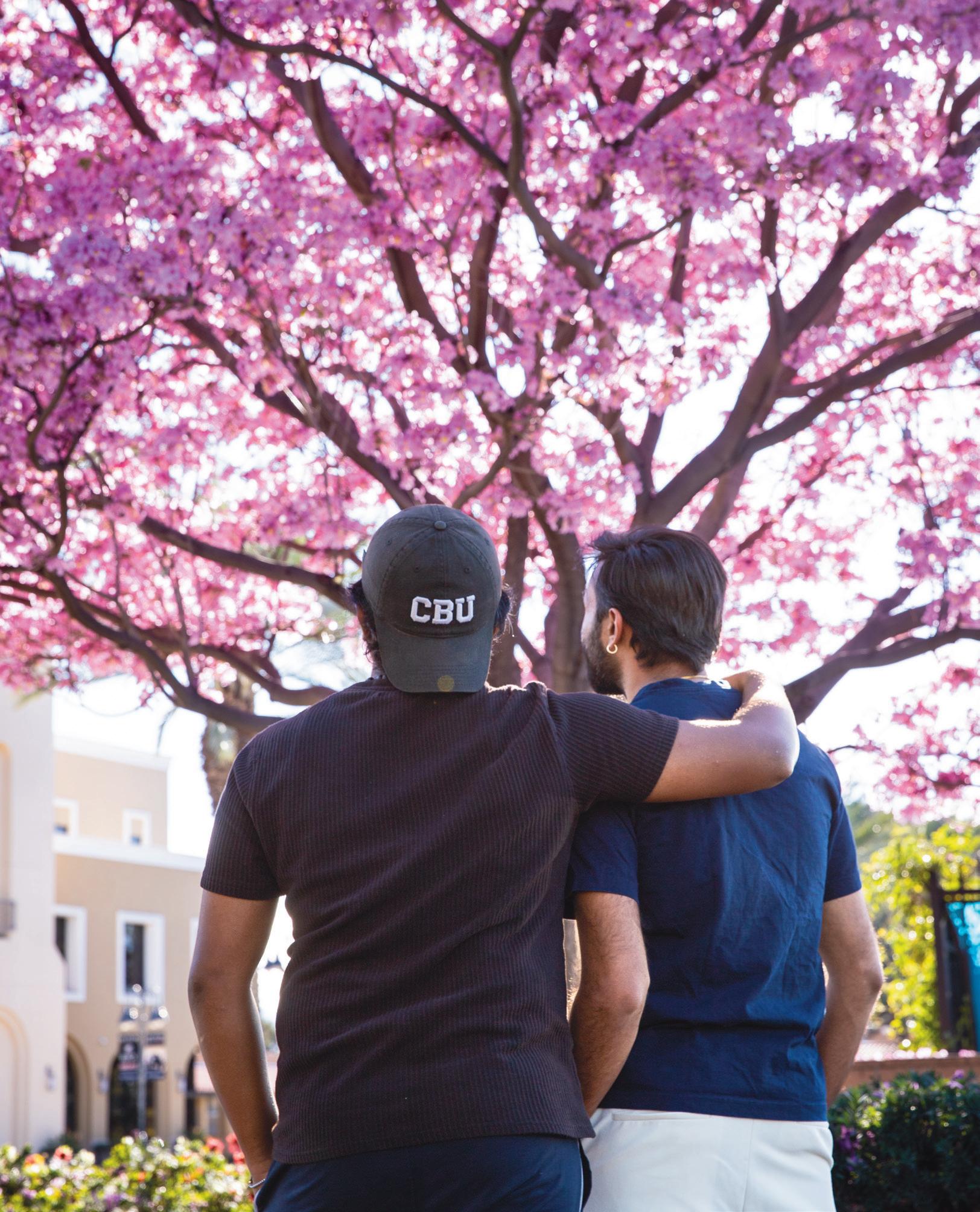
Tight-knit friendships often turn into family-like bonds. At California Baptist University, companionship pushed some friendships beyond the usual, creating spaces where friends supported one another through challenges and hardships.
The Harbor friend group built deep bonds by cooking big meals every Thursday, exploring thought-provoking discussion questions and engaging in spiritual talks that helped them grow closer.
Annabelle Bruzas, sophomore psychology and Christian studies double major, said her friend group uplifted her.
“My friends really encouraged me and my strengths and also helped me know my weaknesses,” Bruzas said.
That encouragement boosted Bruzas’ motivation and confidence. She said her friends helped her recognize areas for improvement, both within her friendships and in how she interacted with others.
Bruzas also described a mo-
ment that showed the depth of their commitment. Her friends got up early to help her reach the airport on time.
“They took me to the airport at 3 a.m. so I could catch my flight home last year and I genuinely don’t know if I ever felt more loved,” Bruzas said.
Bruzas said those selfless acts showed how love strengthened their friendships and created relationships that mirrored family ties. Forming inner circles that encouraged deeper connections gave friends room to express themselves in meaningful ways.
Jeremy Wong, sophomore health science and Christian studies double major, said his friend group helped him move beyond surface-level relationships.
“This whole entire friend group as a whole has taught me what it looks like to be open to everyone and to go a little bit deeper than surface level,” Wong said. Wong said his group built family-like connection by communicating, listening and reconciling after disagreements and hardships.
“I’ve grown in this friendship just through the ways that I get to learn to listen to others and I get to place myself inside of their perspectives,” Wong said.
Jordan Serrato, sophomore architecture major, shared similar feelings about the impact of close friendships.
“It’s been great to learn with each other and develop with each other and be honest, be kind,” Serrato said, “stand up for each other and humble and always acting in love.”
Serrato said his friend group created a space where people uplifted one another to grow and thrive.
“I feel like primarily, it all forms one big family because we’re united under God,” Serrato said.
Tight-knit friendships brought people together and formed strong bonds. These fellowships motivated friends to communicate and love one another through hardship, creating ties that reflected family.
Elissa Garcia | Banner
Karson Wieser, sophomore business administration and intercultural studies double major, leading discussion for Harbor Thursday night meeting.
Photo Illustration by Sumaya Khoury | Banner Navigating
Building community through Christ
Photos by Sumaya Khoury
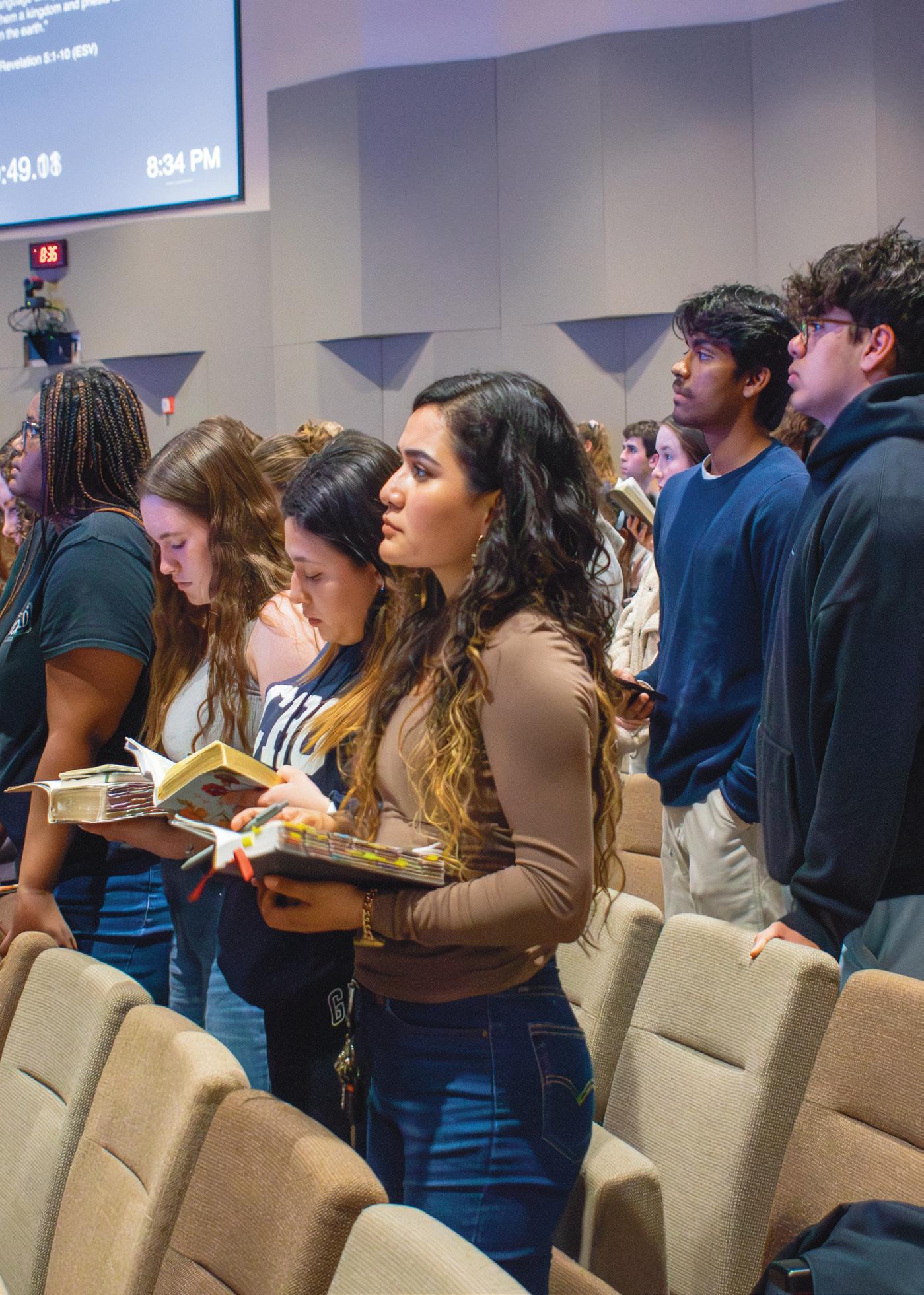
1. Guest speaker Julius Tennal came to CBU SL Night spreading the mission of God, highlighting Revelation 5:1-10.
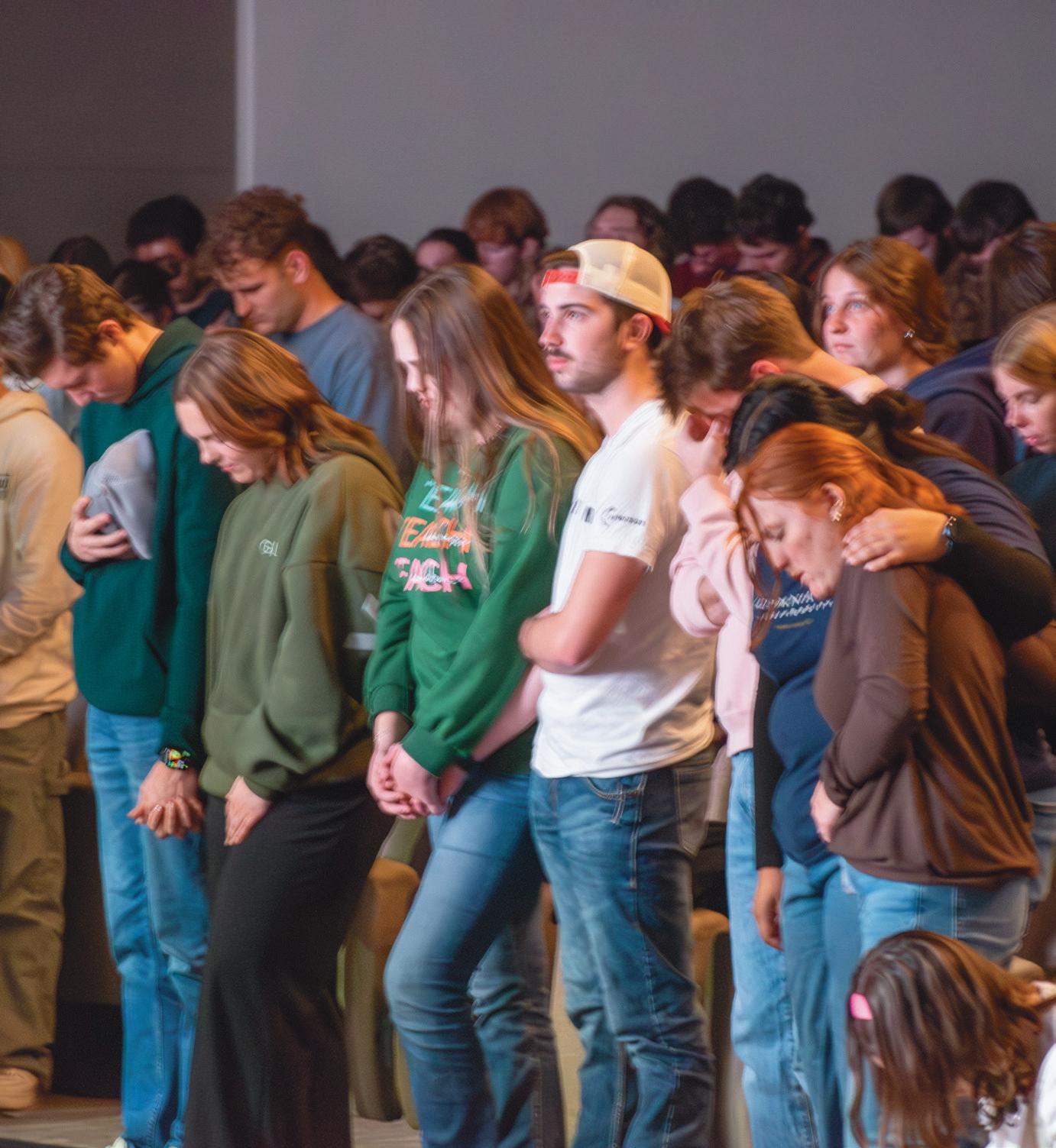
2. Students bow their heads to the Lord in a moment of silence during prayer.
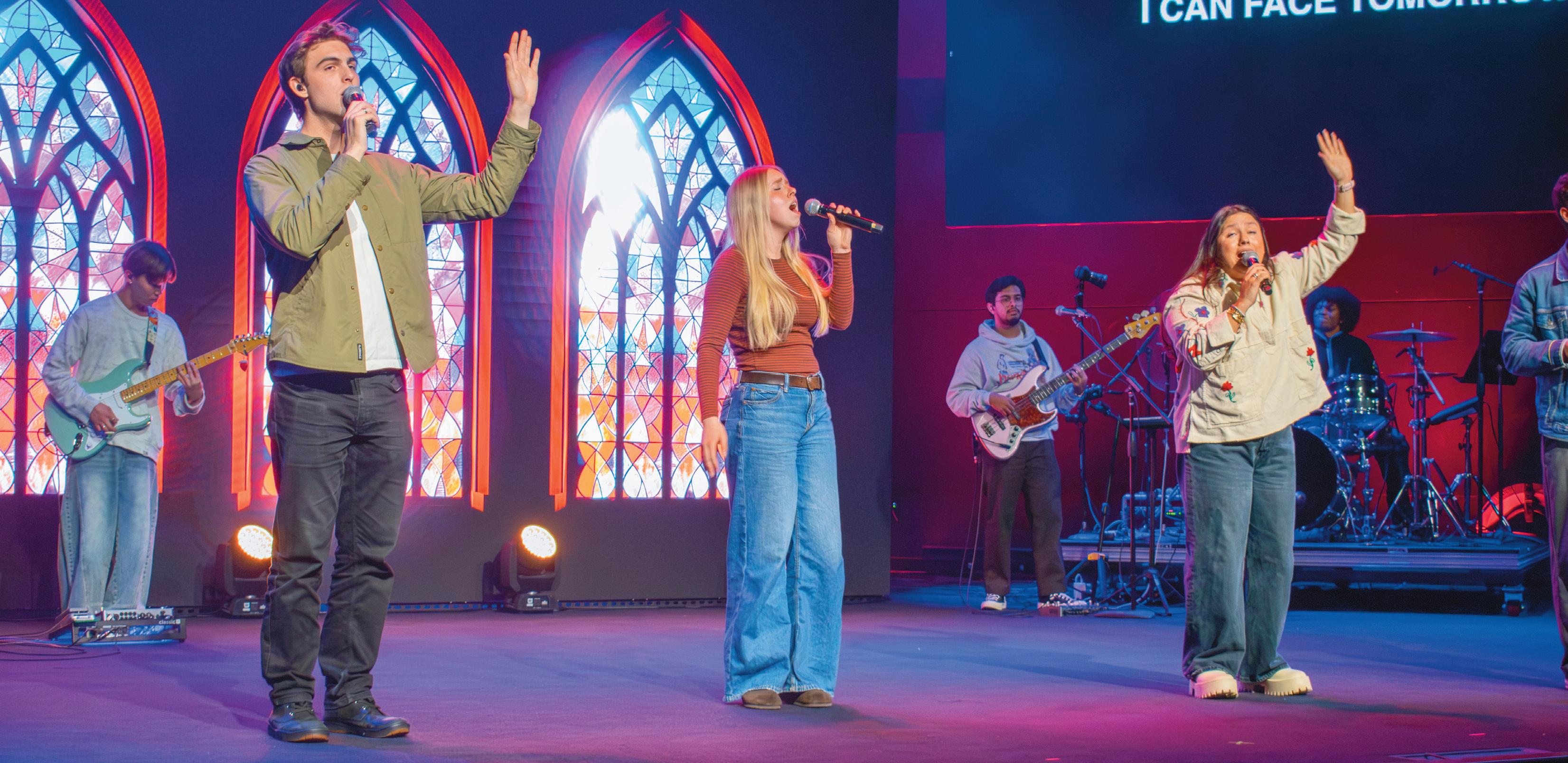
3. Elliot King, junior music for worship arts and ministry major, Hannah Langford, freshman applied theology major and Damaris Paz, assistant director of chapel, performing worship songs as we come together as a community to praise the Lord.
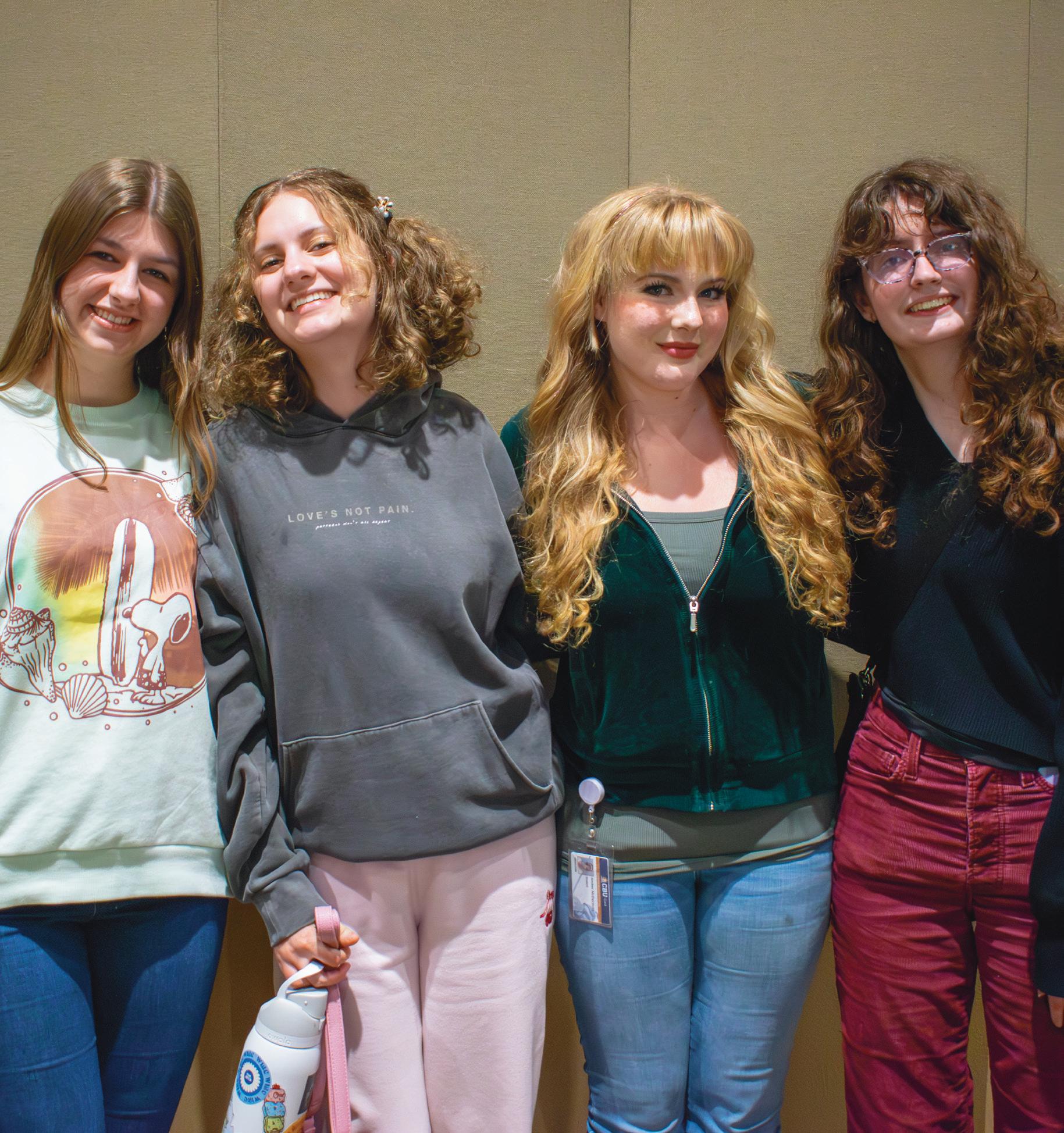
4. Cara Hitchcock, sophomore communication sciences and disorders major, Naomie Wagner, freshman music education major, Amber McDermott, freshman commercial performance major and Clara Booher, freshman music major, celebrate friendship at SL Night.
5. Delilah Ruiz, senior exercise science major and Ashley Zapata, junior social work major, dive deeper into scripture.
The value of doings things by yourself
BY CADYN EADES
NEWS EDITOR
One of the most memorable interactions during my first week as a freshman was walking up to the door of my dorm and seeing a girl standing in front nervously holding a pack of Oreos and raising her hand to knock. It ended up being a girl who lived next door and was coming by to introduce herself. We got to talking and ended up having lunch with each other. Fast forward a full semester, and she’s one of my
closest friends here at CBU.
What I love most about this memory was my friend’s courage to do something by herself. Too often I find that people, and myself for that matter, will only go to events or try new things when they know someone who will also be there. There’s definitely moments to do things with friends, but think of the times you’ve said no to doing something out of fear of going alone. Maybe there was an event on campus, a new coffee shop opening or even the idea of going for a picnic. You had an internal battle with yourself on whether or not to do the thing and ultimately lost to fear. Fear of looking weird by yourself. Fear of not knowing what to do. While those fears are valid, we have to remember what 2 Timothy 1:7 says, that God did not give us a spirit of fear, but one of power found in Him. Philippians 4:6 also tells us to pray to God about our anxieties. God doesn’t want us to live a life of worry, whether that worry is stepping into a differ-
ent environment or talking with someone new. In most situations, getting out of your comfort zone even brings you more opportunities to share God’s love and goodness with others. You may be saying, “This is all great, but I’m an introvert. I’d rather not interact with many people, much less people I don’t know.” I hear this, and while I’m personally more of an extrovert, I understand where you’re coming from. However, doing things on your own is not something that just extroverts can do. If you don’t enjoy going out unless you’re with someone you know, I’d encourage you to start small. Doing something by yourself doesn’t have to be something big. Different people have different beginning points and different paces, and that’s okay.
Once you take that first step though, and then a few more, the amount of new experiences you’ll have and the new people you’ll meet will only continue to grow. And isn’t that one of the amazing things about college? Exploring new hobbies
and places, making friends from different cities and cultures.
CBU has cultured a great environment to try doing things on your own. No matter what CBU event, place or experience you go to, you’ll find friendly people who are just as excited and nervous as you are to do something different. Inramurl games, ComLife events and events within your own major are great places to start.
I personally went on the learn to surf trip with CBU Outdoor Adventure not knowing anyone. I was extremely nervous walking up to the meeting spot that morning, but my nerves were put to ease almost as soon as one of the girls began talking with me. Not only did I walk away with fun memories, but also with new friends I get to see around campus.
I truly believe that venturing out and trying new things on your own is a valuable skill to have. It’s nerve racking to begin, but the confidence and experiences you have from doing so are worth it all.
Is 2026 the new 2016 or just a trend?
BY YEDID FUENTES
A&E EDITOR
In the fast-paced world of social media, trends often began with a single video that went viral overnight and lasted for days. This year, however, felt different as a wave of nostalgia swept across TikTok and Instagram, with users collectively yearning for a specific year: 2016.
From music to aesthetics, there is a loud movement to “bring back” the vibes of a decade ago.
In 2016, social media felt different. It marked the era of the “Instagram Aesthetic”. Think high-contrast filters, great movies, catchy songs and the rise of “streetwear” culture. Unlike the polished, influencer-dominated feeds of today, 2016 felt unfiltered. For many of my students here at CBU, 2016 represents the bridge of their middle or early high school years. So bringing back these trends isn’t just about the clothes, it’s about reclaiming a sense of uncomplicated fun. We see it in the return of physical media, like disposable or Polaroid cameras, all the things that offer a break from our increasingly internet-based lives.
In order to bring “back” 2016, you have to talk about
the music. It was a year of great hits, we had Twenty One Pilots’ “Ride”, Justin Bieber’s “Love Yourself” and the peak of the Musical.ly songs which ranged anywhere from “Panda” to “Cheap Thrills,” that was on every playlist. For students today, these albums are core memories during a year full of creativity and nostalgia.
When we see 2016 trends returning, it’s often the music that leads the way. There is a comfort in the familiar beats of a decade ago that helps us de-stress from reality.
Psychologically, the 10year mark is a significant turning point. It’s long enough for things to feel “vintage” but short enough that we still remember how they made us feel. Just like the old trends of “Damn Daniel” or “The Mannequin Challenge” or the use of the “Valencia” & “Claren-
don” filters and using white borders around photos.
Using the idea that 2016 should be back is to fill a void in a world that often feels heavy or uncertain, and looking back at this year provides a blanket of nostalgia. It was a year that felt vibrant, loud and connected in a way that feels rare today.
While it’s fun to buy a pair of white Vans or blast a 2016 playlist, the real lesson in this trend is about renewal.
For students navigating a stressful semester, 2016 can serve as a reminder that our culture is always evolving. We don’t need a time machine to create a “golden era” in our lives; we just need to lean into the things that bring people together.
The year 2016 is a great reminder that the things we loved then still have the power to make us smile now.
Bill Belichick should be a Hall of Famer
News from the NFL shocked sports fans around the world.
Six-time Super Bowl champion Bill Belichick will not be a
first-ballot Hall of Famer.
The prevailing belief is that he should be inducted into the Hall of Fame this year. This does not mean he cannot make it next year, but it is a significant honor to be inducted into the Hall of Fame in your first year of eligibility.
You can quite easily compare him to coaches like Don Shula, who is a first-ballot Hall of Fame coach. I do not think anyone could argue that Shula was a better coach. If many believed that Belichick was a shoo-in as a first-ballot Hall of Famer, what happened in that voting room to lead to him being snubbed?
I believe that a significant amount of bias infected the objectivity of the voting. Be-
lichick was never kind to the media and rarely answered questions.
Almost all the voters are members of the media from various football cities across the country. Why aren’t people who played or coached given majority power to vote? They know better than anyone who deserves to be among the greatest NFL players of all time.
The Hall of Fame said it would take action if voters violated the bylaws, but did not conduct a formal investigation.
This huge decision calls into question the Hall of Fame’s credibility, as it leaves out such an accomplished coach. With just how qual-
ified he is, it makes it clear to me that the voters could not be objective. If one of the most qualified candidates cannot get in on his first try, then who is allowed in?
I hope that this forces changes from the Hall of Fame and its voting system. How it works right now clearly shows bias against a person rather than judging their accomplishments and impact on the game.
Although it was not overturned, I believe there is unanimous agreement that Belichick was robbed and that there needs to be a change in the future to address personal biases. Either way, this may go down as the biggest Hall of Fame snub in sports history.
Disclaimer: Any opinions, findings, conclusions or recommendations expressed in this material do not necessarily reflect the views of California Baptist University.
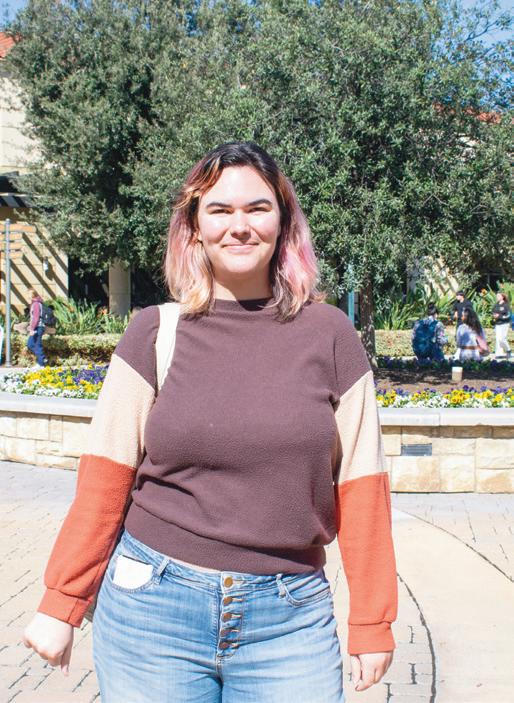
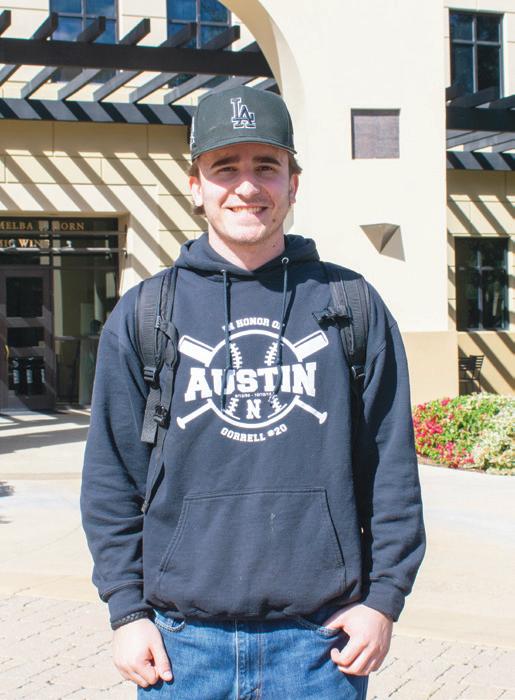
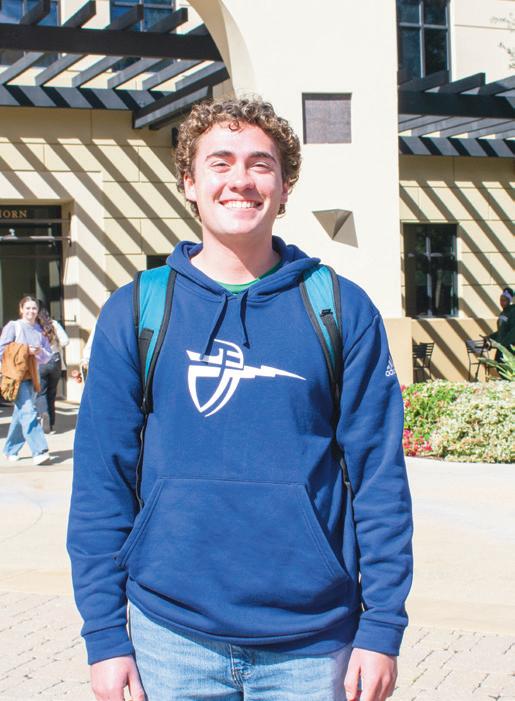
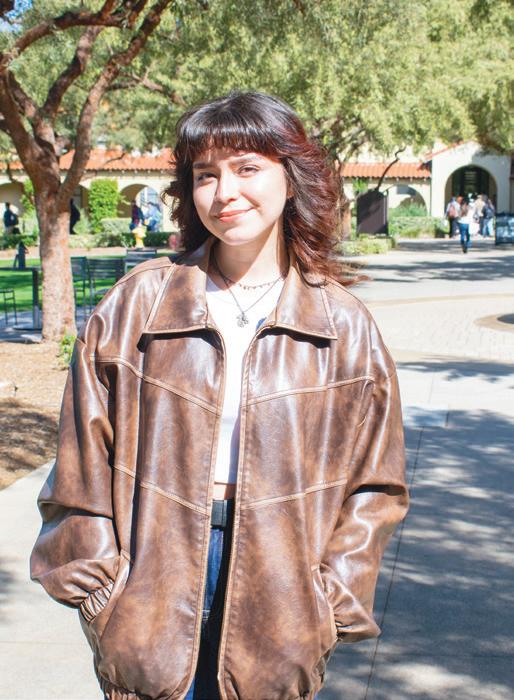
“Carnations, because one time I had a science project in the fourth grade where I put dye in carnations water and it turned them pink, it was really cool.”
“I
a rose because it’s classy, you could never go wrong with a rose.”
look cool.”
“I would be a wildflower, I just think they’re so pretty and they’re just random, they just kind of flow in the wild and they’re just cool.”
Rylee Nyberg Senior English
“Carnations, because they are my favorite.”
Zipporah Marse Senior Creative Writing
Jackson Penunuri
“I would be a hibiscus flower, because they just
Lucas Burton Freshman Political Science and History
would be
Aracely Muñoz Senior Film
BY BENJAMIN HARLAN ASST. S&W EDITOR
Freshman Mechanical Engineering
BUSINESS & TECH
Major artists’ tours bring back ticketmaster war
BY ALANNA RIVERA EDITOR-IN-CHIEF
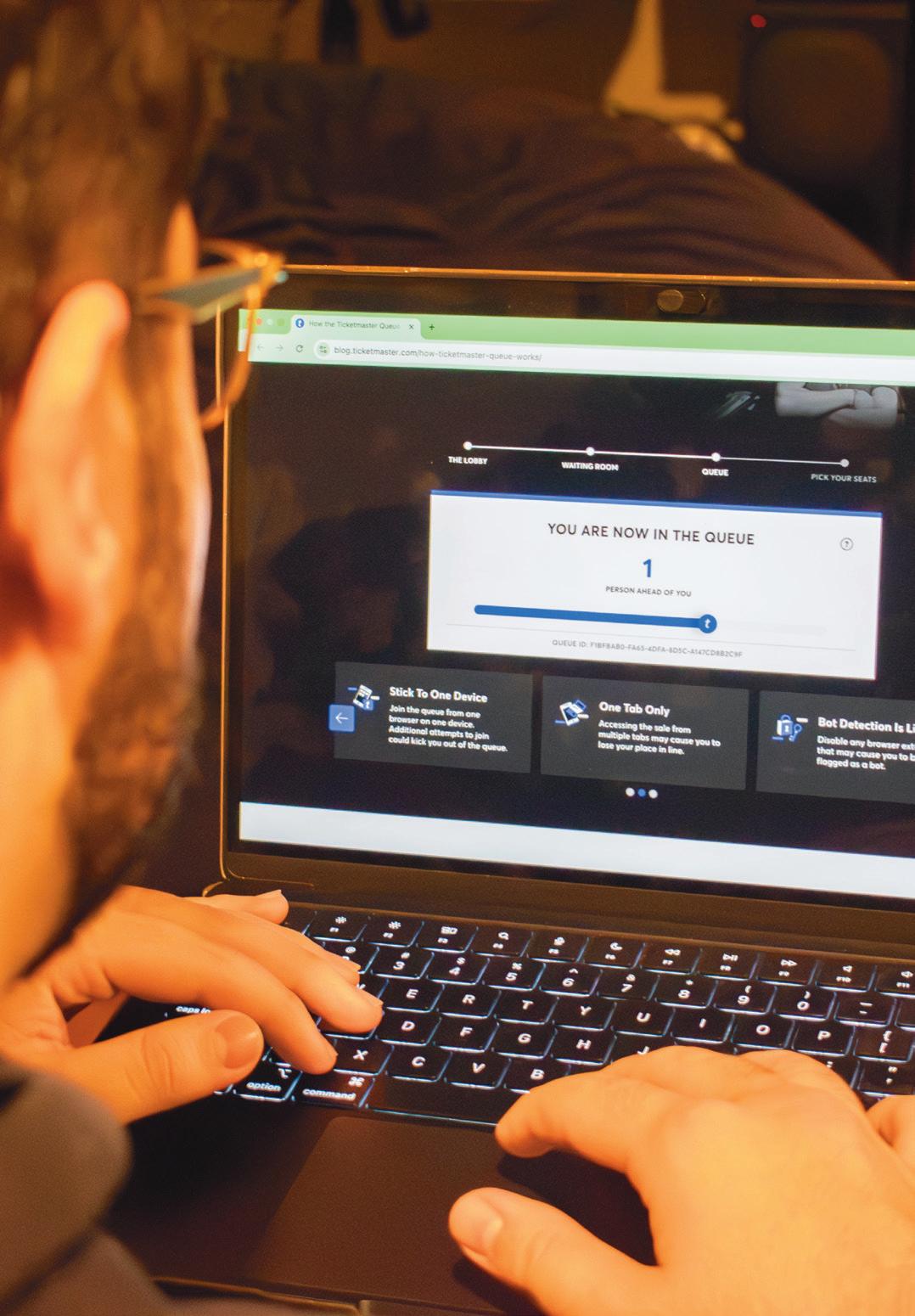
For many concertgoers, buying tickets became more of a battle than an exciting experience rooted in appreciation for music. Ticketmaster, a ticket sales and distribution company, served as the arena for that conflict, where fans competed with bots, resellers and rising prices for seats in venues.
As major artists returned to touring, including Harry Styles, Noah Kahan and BTS, demand for concert tickets increased.
As one of the leading ticket platforms, Ticketmaster partnered with these artists to market tours and sell tickets to fans worldwide.
Despite its prominence in the industry, Ticketmaster received public backlash from fans and artists. When tickets for Olivia Dean’s “The Art of Loving Tour” went on sale, fans quickly turned to social media to express frustration over limited face-value tickets and unaffordable resale prices. Dean addressed the
concerns by posting a statement on Instagram criticizing Ticketmaster’s business practices.
““Every artist and their team should be granted the option to cap resale at face value ahead of on sale, to keep the live music space accessible for all,” Dean wrote. “The secondary ticket market is an exploitative and unregulated space and we as an industry have a responsibility to protect people and our community.”
Every artist and their team should be granted the option ... to keep the live music space accessible for all.
Olivia Dean
Users continued to call for change, citing issues such as dynamic pricing, bots dominating sales and system errors that caused long wait times. Mackenzie Head, senior graphic design and visual experience major, urged Ticketmaster to reevaluate its ticket-buying process.
“Cracking down on presale codes. I think you should have to have a specific presale code to your account that you have to enter before getting in the queue. That way it stops people without presale codes to get into the queue and slow down the entire thing,” Head said. “The obvious answer is also ticket pricing. I recently tried four times for Harry Styles tickets and by the time I got in to get tickets, the prices were almost a thousand dollars— insane.”
While frustrations persisted, Ticketmaster emphasized its commitment to fairness in a press release.
“Ticketmaster believes artists should control how tickets are sold and resold. To support artists who want to keep concerts affordable, Ticketmaster is committed to: 20% Concert Resale Caps … No-Fee Face Value Exchange … Verified Resale,” Ticketmaster
wrote. Whether Ticketmaster would uphold these practices remained uncertain. Despite concerns surrounding transparency and fairness, the company continued to dominate the global ticket marketplace due to its reliability.
Tessa Palmer, senior public relations major, explained why she planned to continue using the platform.
“That’s crazy because out of anything, I trust it the most… Yes, I have felt wronged for pricing or knowing that resellers are crazy, but I’ve never been wronged by Ticketmaster,” Palmer said. “They’ve never messed up on my end because I know I’m gonna get my tickets and once I have my tickets, I have no issues.”
Buying tickets remains a process that requires patience and persistence.
As Ticketmaster promotes its commitment to fair user experiences, fans hope the challenge would prove worthwhile with the promise of live entertainment at the end.
App Review: ‘LinkedIn’ brings connection and community
BY MARIA LUIZA SILVA B&T EDITOR
In the modern era, where people struggle to find the right place to build connections and pursue new job opportunities, LinkedIn serves as a useful tool to help boost a career.
After users create an account and add contact information, LinkedIn functions as a resume-building platform that allows them to track their career journeys while adding sections such as languages spoken, specific skills, volunteer experience and more.
As users build their profiles, they also keep their accounts active by creating posts about developments in their academic and professional lives. They share promotions, awards, academic achievements and other activities that demonstrate involvement in business and university settings.
The more active a user is, the easier it becomes to find connections and followers. For that reason, users benefit from
staying active on their profiles to attract the attention of employers seeking new hires.
Once the algorithm identifies what users are
responsibilities, helping them prepare for the application process.
“One fo the most important decisions we made early on LinkedIn was having a north star.”
Reid Hoffman, Co-Foundrer of LinkedIn “
looking for, LinkedIn suggests professional profiles for them to connect with.
According to its description on the App Store, the platform also offers tools such as job alerts for local, remote or outof-state positions, allowing users to stay informed about opportunities in their fields.
Users gain insights into companies and job
LinkedIn also allows users to upgrade to a premium account, which provides access to advanced tools and additional networking opportunities with other premium users.
The platform helps users think and communicate in ways that capture industry attention, opening doors to new opportunities.
Reid Hoffman. LinkedIn cofounder explained that from day one, the main goal was to save people time, not waste it.
“One of the most important decisions we made early at LinkedIn was having a north star,” Hoffman wrote in the post.
While preparing newcomers to pursue career opportunities, LinkedIn connects users with people who promote academic and professional growth.
In a society where many platforms focus on competition, LinkedIn builds a community where users support one another through idea sharing and networking.
How international experience can enhance your business
BY MARIA LUIZA SILVA B&T EDITOR
Exchanging ideas and experiences helped businesses grow, and international experience played a role in that process.
When entrepreneurs explored other cultures and applied what they learned to their companies, they often gained new opportunities and avoided staying confined to one niche.
Dr. Christina Gonzalez, associate professor of marketing, said international experience supported business growth and competitiveness.
“It doesn’t depend on certain industries; it goes across all industries. Having international access can allow companies to expand their growth. Let’s say they are an American business and that particular service or product they provide here doesn’t yet exist in another country, which allows the business to be able to extend its reach and grow its revenue and profitability,” Gonzalez said. “Sometimes, the opposite happens as well.
Maybe companies here in the U.S. have very mature and established products in other countries, allowing an opportunity for those businesses to take a modified approach so they can grow and expand.”
International expansion pushed entrepreneurs to think creatively about how to present and sell products across cultures.
Adriana Mack, senior business administration major, said international exposure encouraged companies to innovate.
“I think we can see a good example of how international exposure contributes to innovation by looking at recent changes in the U.S. food and snack industry. As consumers become more aware of how similar products are made in other countries, and as the demand for cleaner ingredients grows, companies are being pushed to innovate,” Mack said. “They are reformulating products, updating manufacturing practices, and exploring new ingredient options to stay relevant...
A globe displays the many diverse
better understanding of the lives of
International exposure really encourages, and sometimes even forces, companies to improve.”
As global markets expanded, companies needed to make strategic decisions to stay competitive.
Sharon Park, junior business administration and intercultural studies double major and an international student from South Korea, said living in the U.S. helped her
understand strategic decisionmaking in different contexts.
“Living abroad taught me that every country operates differently - different communication styles, regulations and customer needs. This perspective helps companies make more flexible and informed decisions instead of assuming one strategy works everywhere,” Park said. Gonzalez said cultural understanding helped
businesses connect with customers and strengthen marketing.
“There is this book I love to recommend called ‘Culture Consequences’ by Geert Hofstede, where, among other topics, he measured time and how impactful time was to that particular culture,” Gonzalez said. “From a marketing perspective, knowing these cultural differences before you engage with the community
helps. Also, knowing who your customer is allows you to better prepare and speak to their needs.”
International experience also helped students develop transferable skills such as communication, leadership and confidence. Park said her experiences shaped how she worked with others.
“As an international student, I’ve become more adaptable, culturally aware and confident in communicating with diverse groups. Working at the Study Abroad office also taught me how to support students from different backgrounds,” Park said. “These skills help me to understand global customers better and bring a more open, global mindset to any business role.”
International experience helps strengthen businesses and broaden their perspective. By being willing to learn from other cultures and applying those insights at home, students from any major, entrepreneurs and future professionals may build connections that support growth in a global marketplace.
Josiah Alvarado | Banner
countries where people can gain global experience and a
those who live around the world.
Photo Illustration by Sumaya Khoury | Banner Ticketmaster brings a whole new meaning to patience.
Illustration by Lorelei Arriola | Banner
The challenges students face after after graduation
BY MARIA LUIZA SILVA B&T EDITOR
When students started school, they often saw a clear path ahead: middle school, high school and then university.
During college, uncertainty about what came next often weighed on juniors and seniors.
No formula dictated what students should do after graduation, but many faced similar challenges. Many struggled to find a job after earning a degree. Some secured connections and started working right after graduation, while others spent months searching for a place to build their skills.
Vladimir Peter, first-year computer science graduate student, said an oversaturated job market made it harder for recent graduates to get hired.
“Mainly because the job market is oversaturated, so the demand for inexperienced [recent graduates] workers
is low,” Peter said. “So as a graduate, you find yourself competing with people who have years of experience in that field, either because they have been laid off or they want to change jobs for higher pay or better work-life balance.”
As technology changed, the job market shifted with it.
Ellen Kaminski, associate professor of business, said conditions looked different than they did a few years ago, which affected job searches for new graduates.
“A few years ago, COVID stimulus money was still flowing through the economy, which increased the flexibility of many employers with hiring and investing in new talent. As that money has dried up, so have the plethora of opportunities,” Kaminski said.
“Additionally, technological advancements in Artificial Intelligence have decreased the need for some jobs,” she said.
“However, even stable jobs endure periods of growth and change. Wherever students end up, the key to finding stability also involves their willingness to be flexible.”
Students also faced competition within their fields. When a market grew more competitive, students often found it harder to land a position. Many worked to keep developing as professionals to stay competitive.
Laura Smith, business administration graduate student, said job market competition pushed students to approach their skills differently.
“I think that the job market is needing students to be more creative in how they apply [their skills] because jobs now are very different compared to how they were in the past, especially with the rise of AI in so many sectors,” Smith said. Kaminski encouraged
students to prepare early.
“Students preparing to graduate need to build their network while they are in college. This includes going to job fairs, career center events, and attending their major’s clubs on campus if available. Building as much experience with internships while in college often provides the smoothest transition to a full-time position,” Kaminski said. “Students also should be confident in the person God created them to be. Remain focused on Him, pray for guidance, and stay true to how He made us, He will open doors. We just need to make sure we are doing the work needed to walk through them.”
As the market changed, graduating students continued to develop their skills and professional habits as they pursued their goals. Many said they met uncertainty by treating challenges as opportunities
for personal and professional growth. In the end, students should always try to find the best versions of themselves
Stray Dogs coffee brings community together in Riverside
BY MISCHA MATHIEU ASST. B&T EDITOR
Stray Dogs Coffee, a Christian-owned coffee shop in Riverside, California, brings a distinct presence to the local coffee scene.
Christian Ponce, a shift supervisor who has worked at Stray Dogs Coffee since it opened in February 2025, shared what set the shop apart.
“I think a lot of coffee shops aim at trying to be communitycentered, and I’ve worked at a few different shops throughout the city. I think Stray Dogs in particular tries to really engage with [the] community. And then generally just giving back. 10% of our proceeds go to Foster Army every month,” Ponce said.
“That’s part of the mission statement of Stray Dogs. So, knowing that we’re trying to actively help out the animal community, specifically the stray dogs community,” Ponce explained.
“And then trying to help out just anyone in the community who comes through and try to
make this a haven that they can kind of feel at home. I think it is a really central part of the mission of this shop.”
California Baptist University students said the shop stood out both for its faithbased mission and its drinks. Allison Nordquist, junior elementary education major explained why she frequented the shop.
“Obviously, the matcha is really good. I would say it’s the best in the town, and I think it’s also cool [they are a] Christian company, and so they always have Christian posters, worship nights [and] Bible studies. I also like the vibes there,” Nordquist said.
Customers described the atmosphere as welcoming, with worship music playing throughout the space. Students often used the shop to study or spend time with friends.
“
“...we’re trying to actively help out the animal community, specifically the stray dogs community.”
“I mean, if [CBU students] want a space to do Bible studies at, that would be a huge thing for them. [Stray Dogs is] always open for that kind of place,” Ponce said.
Christian Ponce, shift supervisor from Stray Dogs Coffee
“On Monday nights, the owners host this thing called ‘Stray Nights,’ where they invite people from all around the community, students or whoever to come through.”
Ponce shared Stray Nights included worship, Bible reading and discussion, offering faithbased programming for the community.
“So Monday nights you do that, and then in general [if] you just want a spot that’s
Networking aids students in connection and career growth
BY MARIA LUIZA SILVA B&T EDITOR
Networking played a crucial role for students entering an industry.Building relationships increased the likelihood of reaching career goals, and few professionals succeeded without support or guidance from others.
Forming connections opened doors to internships, jobs and professional growth. Sharon Park, junior business administration major, said networking helped students gain opportunities and insight.
“Networking is really important, especially for students, because it helps open doors to opportunities like internships and jobs. Many positions come from connections and referrals, not just online applications,” Park said. “It also helps students to learn more about their career paths and get real advice from people already in the field.”
Many students felt anxious about approaching professionals. Some worried about what to say or how to guide conversations, which limited their ability to build meaningful connections.
Michael Vass, junior
accounting and creative writing double major, shared advice on making networking more approachable.
“[The advice would be] finding easy ways to do it, in a sense. For me, some easy ways are to connect with my classmates, especially in my major classes, because these are the people you could be with for a while, and then they might end up in the industry you want to be in,” Vass said. “Maybe you’ll run into work later, or they’ll have tried things that you might be interested in and have access to knowledge that you need to access.”
““[Networking] is an interpersonal communication where you can talk face to face”.
try to stay off of the phone while you’re making that first introduction, unless it’s something urgent and make eye contact. Even if it goes silent for a moment, try to feel comfortable in your own skin by politely wrapping it up, but always smiling at them and being grateful,” Pearson said.
Pearson also emphasized the value of personal connection in a digital world.
Dr. Mary Ann Pearson, professor of communication
While students benefited from networking, experts said they should avoid common mistakes. Dr. Mary Ann Pearson, professor of communication and leadership studies, encouraged students to stay present during interactions.
“Although we have our phones with us [all the time],
“I think that the best part of networking is that in a world where everything is online, [networking] is an interpersonal communication where you can talk face to face,” Pearson said. “It’s actually a great way to share, to support one another, give encouragement and to share your faith.”
Networking remained a key step in career and personal development. Students who embraced these opportunities built relationships and connections, supported one another and gained confidence as they prepared for professional life.
laid back and you can feel a bit more at ease about being Baptist or being Christian, this is a space that welcomes all,” Ponce said.
Lauren Williams, a senior business administration major, encouraged others to visit the shop. Just one visit there left her hooked and wanting more. She shared that she got their Melona Matcha, which is infused with a house-made melon-flavored syrup for a unique flavor unlike anything you have ever tried.
“Honestly, I feel like you should just go try Stray Dogs. That’s probably the one thing I can leave you with is like just go try it for yourself and try their awesome matcha and other drinks,” Williams said.
Since opening, Stray Dogs Coffee built a communitycentered space in Riverside, offering a Christian-owned business that welcomed students and residents alike, a place where they feel at home. Therefore, this is the type of place that everyone should at least visit once in their time here in Riverside.
Luke Vaughn | Banner
Stray Dogs, a community hub for great coffee and authentic connections.
Photo Illustration by Ami Nhawkar| Banner
The mentors that we meet and work with along the way help us gain insight and build community in the world as we embark into our future.
Baptist University
Zac Smith | Banner
While it is common to feel uncertain as you graduate you never know what the next chapter has in store for you.
ARTS & ENTERTAINMENT
February 20, 2026 · Volume 73 ·
Finding excitement as a fan in 2026 music comebacks
BY YEDID FUENTES A&E EDITOR
As the new year began, the music industry followed suit with fresh momentum. The year 2026 shaped up to be a major one for music, marked by long-awaited tours, new releases and high-profile returns that fans anticipated for years.
Artists including Harry Styles, Ariana Grande, BTS, Bruno Mars, Florence + The Machine and Olivia Dean returned energy to live music and gave listeners renewed excitement.
According to Rolling Stone, 2026 ranked among the most anticipated years for album releases, with major artists returning after extended breaks and reigniting fan enthusiasm.
Bruno Mars continued to generate excitement with the announcement of his upcoming album, “The Romantic,” and a sold-out tour. Rising artists also gained attention, including Grammy-nominated Olivia Dean, who launched a tour following the success of her album “The Art of Loving,” released late last year.
One of the most anticipated tours of the year was Ariana Grande’s “The Eternal Sunshine Tour,” her first major tour in several years following the release of “Eternal Sun-
shine.” For many students, her return carried a sense of nostalgia. Her music often centered on love, healing and emotional growth, themes that resonated with young listeners navigating change.
While Grande’s return excited fans, many viewed Harry Styles’ comeback as the most anticipated album release of the year. Styles returned after a four-year hiatus, reigniting a fan base that first followed him during his One Direction years.
Music played a consistent
role in student life, helping listeners de-stress, stay focused and cope with challenges.
For students, these comebacks felt personal. Gabriela Arreguin, sophomore exercise science major, described how music fit into her daily routine.
“Personally, whenever I am studying or trying to focus on my work, I always need to have music playing in my headphones, and Harry’s Fine Line album is my favorite album to listen to to get me into the zone and I genuinely always get my work done whenever
there music is playing,” Arreguin said. “I don’t know why it works, but it does.”
Emily Hurtado, senior graphic design and visual experience major, adds to the appeal of Styles’ music.
“I do believe his music helps students get through tough times because it gives us something to look forward to, and a change in pace to our probably stressful student lives,” Hurtado said.
Hurtado reflected on Styles’ return and its significance.
“Harry Styles’ comeback means the most to me because he hasn’t come out with music since I was a senior in high school, and it’s really interesting to see how much I have changed and how I still love his music even though I’m in a completely different stage of my life,” Hurtado said. “I’m most excited just for the experience of something new, like when you’re deep into the album, you never really get that same initial excitement as the first listen.”
BTS reunited after completing military service and announced new music along with a sold-out world tour ahead of their 10th studio album, “Arirang,” set for release March 30. Arreguin described the excitement surrounding multiple returns.
“Personally, the fact that both Harry Styles and BTS came back around the same time was so overwhelmingly exciting for me. What this means to me is a new era of music, and seeing how fans come together to bond over the same music and emotions this music makes us feel. I’m so excited to go see BTS in LA, and I’m super excited to listen to the rest of Harry Styles’ new album, “Kiss All the Time. Disco, Occasionally’” Arreguin said.
“
said. “Because this artist and their music is tied to memories, emotions, and different phases of your life, whenever they make a comeback, it gives me some kind of nostalgia and excitement, and curiosity about what other kind of music this artist has for their fans.”
Hurtado shared a similar sentiment.
“I also feel that for some fans who personally resonate with the artist, it feels almost like a catch-up with someone you haven’t heard from in a while and miss them,” Hurtado said.
I think that musical comebacks after such a long time are so important to fans...
Gabriela Arreguin, sophomore exercise science major
Students described musical comebacks as emotional milestones rather than simple releases.
“I think that musical comebacks after such a long time are so important to fans because it feels like reconnecting with a part of your life that was so meaningful,” Arreguin
Music also strengthened community among students. Discussing new releases, planning concerts and sharing favorite songs helped build connections beyond academics. For many creative students, seeing artists return and evolve inspired their own artistic pursuits.
Variety reported that moments of anticipation deepened emotional connections to music and fostered shared experiences across communities.
As artists released new work and returned to the stage, 2026 emerged as more than a milestone year for the music industry. For students and fans, it became a year defined by connection, renewal and emotional resonance.
Theaters are experiencing resurgence in age of streaming
BY ROSA DIAZ CONTRIBUTING WRITER
Movie theaters are experiencing a resurgence as artists, filmmakers and viewers work to preserve the theatrical experience following a decline in attendance driven by the growth of streaming services.
Many in the film business believe that films were intended to be viewed on a large screen and viewers, particularly younger ones, are increasingly agreeing.
Due to the creative and cultural significance of movies being screened in theaters, performers and filmmakers tend to favor theatrical releases over streaming services. A growing number of movie enthusiasts are canceling or reducing their streaming subscriptions in favor of going to the movies in person.
Katie Barrett, freshman public relations major, explained that streaming plat-
forms make films feel more accessible but lack the intentional design of a theatrical experience.
“The way that they market makes it feel like it’s more at your fingertips than maybe going to a movie is,” Barrett said. “But films in theaters are nostalgic because that is how we originally designed movies to be.”
“You’re with an audience that you don’t have at home.
Katie Barrett, freshman public relations major
Barrett emphasized that movies are created with a massive screen and a shared audience in mind.
“You’re with an audience that you don’t have at home,” Barrett said. “You can take
a group of people that have nothing to do with each other, and they get to bond over this emotional or hilarious movie and have that moment together.”
Streaming services, howev-
er, have reshaped how audiences consume films. Ashley Villarreal, freshman political science major, said streaming has made watching movies more accessible.
“I’m able to pause the video
whenever I want and rewind,” Villarreal said. “Being able to watch it anywhere at any time is very convenient.”
Despite that convenience, Villarreal emphasized that films often feel more valuable in theaters.
“They allow us to have 3D films or have the film feel like you are part of it,” Villarreal said.
She also noted that theaters provide a social space that streaming cannot replicate, such as meeting friends, watching movies with family and enjoying arcade areas offered by some theaters.
Written by Kyndall Cunningham in a Vox article, it is evident that Gen Z audiences are contributing to this sudden resurgence.
“In recent years, Gen Z has shown their willingness to splurge on live events, like concerts and sports, partially for a fear of missing out,” Cunningham wrote. The article
also notes that theaters have adapted by making movie-going “its own sort of unique outing that consumers want to be a part of.” Barrett said post-pandemic social isolation may also be contributing to the renewed interest in theaters.
“Post-COVID, a lot of people are more interrelating,” Barrett said, noting that many popular books are being adapted into films, encouraging audiences to return to theaters.
Still, Villarreal believes the resurgence may be temporary, as many films are released on streaming platforms shortly after theatrical debuts. “People can watch whenever they have time and as many times as they want,” Villarreal said. As the debate continues, theaters are reclaiming their place not just as places to watch movies, but as shared cultural spaces where audiences can experience stories together.
Breaking the music habit: Try playing a new genre of music
BY YEDID FUENTES A&E EDITOR
Each year, people set goals for the new year. Some aim to break habits while others seek adventure by trying new things. Many, however, continued listening to the same music they had replayed for years, raising the question of whether listeners explored new genres at all.
Streaming algorithms largely drove music consumption by keeping listeners in familiar patterns. As a result, musical tastes often stayed confined to a narrow range of genres that proved difficult to escape. Rather than relying on the same playlists, listeners benefited from intentionally exploring unfamiliar sounds.
Stevo Evans, program director of Commercial Music, said he understood the comfort of repeated playlists. While streaming services offered convenience, Evans said they could also limit creativity.
“Algorithms make us efficient because they’re systems-oriented, but they make
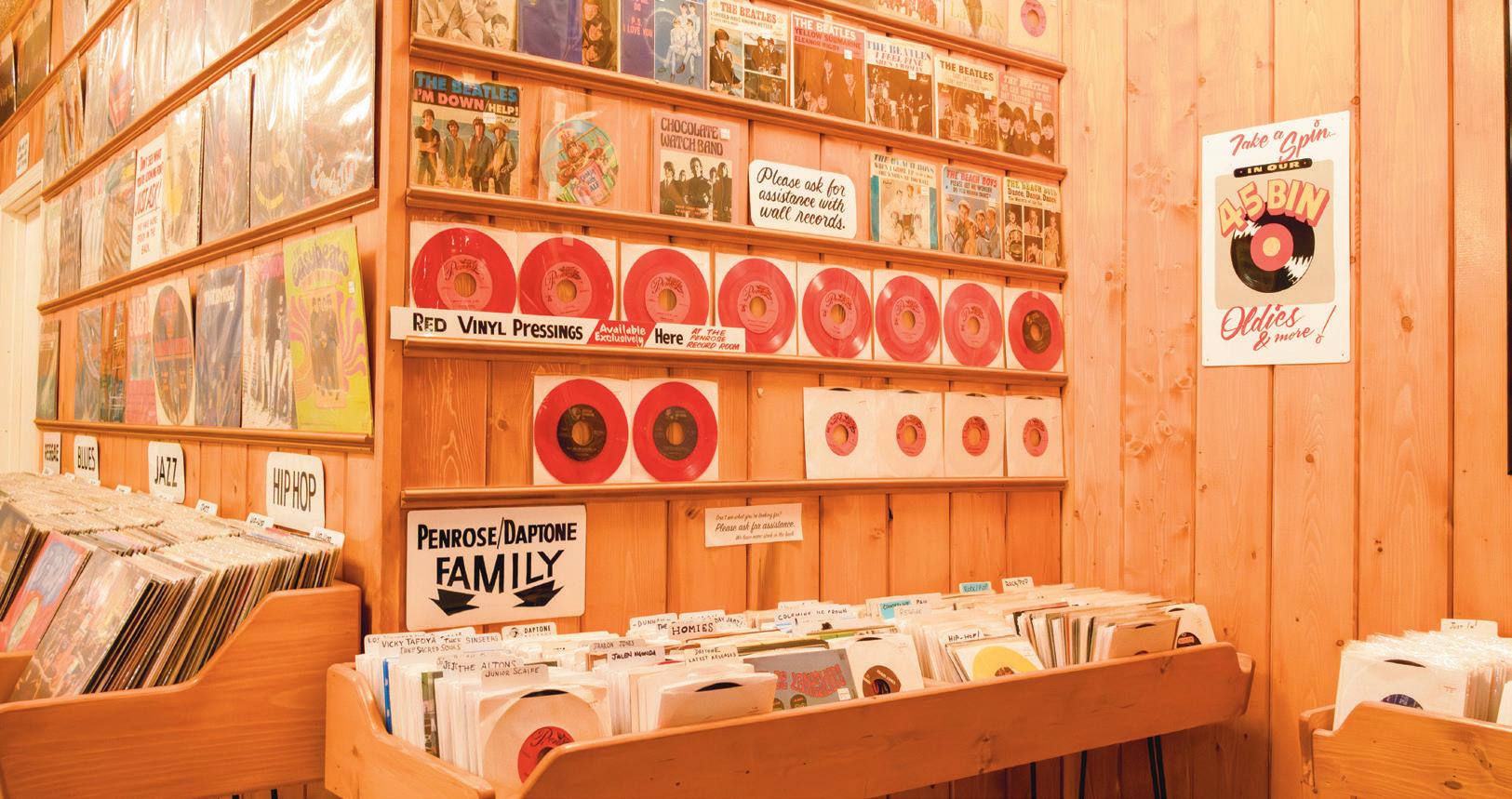
Penrose Record Room, a vinyl store in Downtown Riverside,
to dive into new music.
us narrow as well,” Evans said. Before the rise of “Made For You” playlists, music discovery required active effort. Evans recalled searching through CDs and vinyl, where one discovery often led down a “rabbit hole” of artistry. He said intentionally breaking habitual listening patterns became one of the most creative acts modern students could perform.
“The creatives are the ones who hunt for sounds that aren’t being served to them,” Evans said.
Exploring new music extended beyond being eclectic and encouraged mental flexibility. Evans, who taught a multicultural student body, said fluency across genres such as country, jazz and urban music prepared students for real-world creative work.
He compared the moment a student grasped a complex genre to a physical reflex.
“I think about it like going to the doctor’s office and when they take the gavel and hit your knee your reflex kicks in,” Evans said. “Your ears do that with certain music flavors.”
Evans said once the “light bulb” switched on, students discovered confidence and identity beyond a single genre.
“Their voice doesn’t have to live in one box,” Evans said.
For Logan Ohara-Wilson, freshman history major, music discovery focused more on connection than academics. While exploring “Dad Rock” and folk, he viewed music as a bridge between people.
“Some of my best friends to this day were made bonding over similar music tastes,” Ohara-Wilson said.
Ohara-Wilson encouraged fellow students to take risks with their listening habits. Be adventurous.
“Get out of your comfort zone. You might find something that will literally change your life,” Ohara-Wilson said.
Ohara-Wilson said switching genres reshaped how listeners understood the world, as different sounds reflected different human experiences. Often, the journey into new music began with a single “anchor” artist.
Kate Beld, who worked at Penrose Record Room in Riverside, Calif., described the process as a domino effect. Raised in a musical family and
drawn to goth and alternative styles, Beld said genres constantly influenced one another.
“You find one band, you listen to someone similar, and it just goes from there,” Beld said.
Beld encouraged students to explore subgenres, noting that even within one category, listeners could discover a wide range of artists and communities.
As the spring semester began, students were encouraged to use the search bar as a tool for exploration rather than a shortcut to familiar sounds. Whether sparked by a jazz chord or a new record store discovery, trying new music became about more than expanding a playlist. It reflected a refusal to remain defined by habit.
“Equipping yourselves with tools of fluidity adds feathers to your cap,” Evans said. Rather than pressing shuffle, listeners were encouraged to seek out sounds that challenged what they already knew.
Vanessa Ruezga | Banner
offers a variety of vinyls with a diverse selection
Illustration by Lorelei Arriola | Banner
Illustration by Sophia Sunga | Banner
ARTS & ENTERTAINMENT
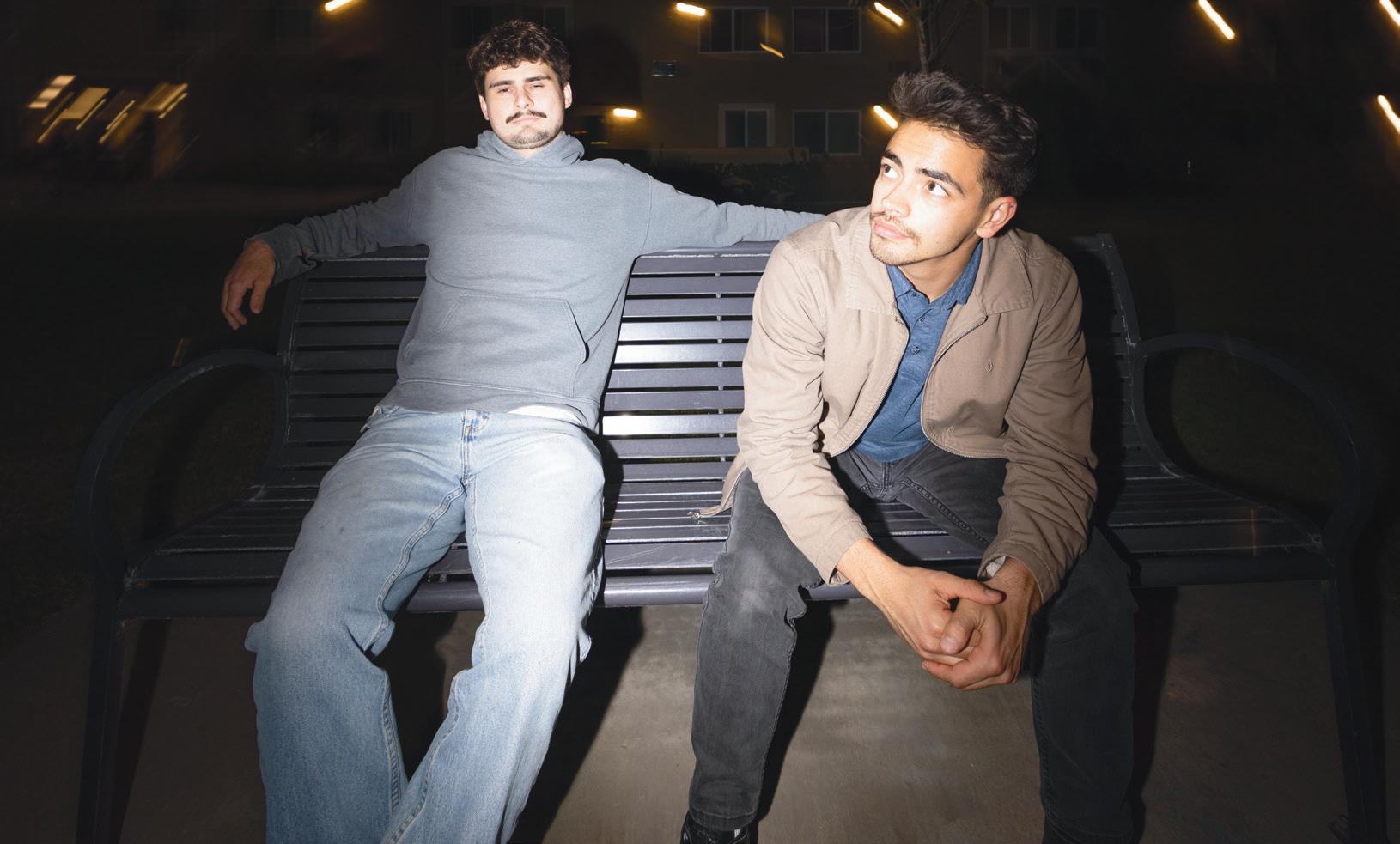
Mundanity: Te newest band under the spotlight
BY RIA SHARP ASST. A&E EDITOR
Mundanity, a student-led band at California Baptist University, built its identity around showing humanity through the ordinary moments of life reflected in its music and relationships.
The band’s name combined the words mundane and humanity. Gabriel De La Rosa, senior Christian studies major, explained the meaning behind the name.
“[It is] reminiscing on things of the past in a way that brings gratitude. Gratefulness is how I strive after contentment in seasons of uncertainty,” De La Rosa said.
Mundanity blended influences from ’90s alternative and grunge rock. Nolan Seeger, a member of the band, described the group succinctly.
“It’s a collection of controlled chaos,” Seeger said.
De La Rosa, Seeger and Luke Lamberth, a 2024 alumnus with a degree in applied theology, formed the band.
De La Rosa and Lamberth had played music together for 10 years. Three years earlier, Seeger said he felt called by God to step away from his previous band, Juniper Park.
“I honestly thought I would
never make music again in a band setting,” said Seeger.
A few months later, Seeger met De La Rosa at church. Their friendship grew out of shared “desires to glorify God in the music we write,” Seeger said. The group formed about a year earlier and consisted of four members.
The band held practices in the garage of De La Rosa’s family home. Rehearsals began with the members checking in with one another, followed by a prayer led by De La Rosa. The group practiced original and cover songs by experimenting with timing and tempo before moving into recording sessions. The band worked on an album of original songs scheduled for release soon.
“I write from a place of searching, but I try to land on Christ as my unshakable foundation,” De La Rosa said.
Members said being part of Mundanity strengthened their relationship with God.
“It has impacted my walk with Christ by giving potential opportunities for evangelism with other guys around the city who perform as well. This stretches me to reach those who are lost and need the hope of Christ,” Lamberth said. The band members said
their friendships encouraged spiritual growth.
“Since forming our band it’s been so refreshing to make music with a group of guys that I also know love the Lord and want nothing more than to see me to continue to grow in my relationship with Christ,” Seeger said.
The band adjusted its set list frequently during performances, requiring quick preparation before taking the stage.
“We prepare with practice and syncing up creatively and musically by playing other songs that aren’t ours,” Lamberth said.
Before shows, De La Rosa said he drank tea to protect his voice and ate a familiar meal.
“I always have Chick-fil-A before every show,” De La Rosa said.
Mundanity previously performed at events including the Colony Carnival, held in an upperclassman living area, and Condron Coffee.
The band members balanced music with careers outside the group, which limited how often Mundanity performed locally. The band scheduled its next official show for April 17 at The Barn at the University of California, Riverside.
Bad Bunny breaks barriers for Latin community
BY ALANNA RIVERA EDITOR-IN-CHIEF
Benito Antonio Martínez Ocasio, famously known as Bad Bunny, is redefining the music industry in a year full of firsts for the global superstar.
Born and raised in Puerto Rico, Bad Bunny’s identity has remained rooted in his culture, honoring his upbringing through the music he created. Rather than adjusting his sound and performance to meet global expectations, Bad Bunny brought his love and pride for Puerto Rican culture to the mainstream audience on his own terms.
This raw authenticity is one that resonated with fans across borders, uniting people through nostalgic lyrics and a beautifully unique sound that blends Latin trap, reggaeton, pop and more. This sound has been recognized on large stages throughout the music industry with Bad Bunny winning 17 Latin Grammys, 16 Billboard Music Awards and 6 Grammys, among other accolades.
At the 2026 Grammy Awards, Bad Bunny made history as the first artist to win Al-
FILM REVIEW
bum of the Year, the most coveted award of the show, with a Spanish-language album for “Debí Tirar Más Fotos.” This album served as a meaningful homage to his hometown of Puerto Rico, emphasizing the importance of protecting culture in its raw form.
Just as his album broke barriers as the first entirely Spanish album to win in that category, Bad Bunny accepted his award with a speech delivered primarily in Spanish.
“Puerto Rico. Believe me when I tell you that we are much bigger than just 100 by 35 and there is nothing we cannot achieve… Thank you Mami for giving birth to me in Puerto Rico. I love you,” Ocasio said.
He swiftly switched to English to communicate a powerful message to everyone watching the award show.
“I want to dedicate this award to all the people who had to leave their homeland, their country to follow their dreams,” Ocasio said.
To speak directly to these people, Bad Bunny continued speaking in his native language.
“This award is for you
guys,” Ocasio said. “Thank you for so much love. I love you.”
Not only does this award open doors for Latin artists everywhere, but it challenges the notion that English-language music is a requirement for success in the music industry. Alyssa Lockwood, a junior behavioral science major, acknowledges the weight of this success as a fan.
“As a fan of Bad Bunny, him winning album of the year was monumental,” Lockwood said. “To me, this was a beautiful acknowledgment of the expansion of musical genres and overall representation.”
This representation carried onto another one of music’s biggest stages: the Apple Music Super Bowl Halftime Show stage. It was announced that Bad Bunny would carry on this
highly anticipated tradition in September, becoming the first Latin artist to perform a predominantly Spanish-language show. Following the announcement, the NFL received nationwide backlash for choosing a global artist to be the face of a traditional American pastime.
Despite criticism, Bad Bunny went on to deliver an authentic homage to his own
By Ria Sharp | Asst. A&E Editor
Real Steel, the 2011 film starring Hugh Jackman, highlights the relationship between a father and son through the sci-fi lens of robot boxing. The story follows Charlie Kenton (Jackman), a former boxer whose sport has been replaced by machines. After a highstakes bet goes wrong in a dirt arena, Kenton finds himself broke and tasked with the temporary guardianship of his estranged 11-year-old son, Max. While scavenging a junkyard for parts, Max discovers Atom, a second-generation sparring bot who can mimic human actions. As the trio wins fights, they gain attention from the champion robot, Zeus. Through multiple rounds
culture while recognizing the melting pot of cultures that make up America. Emily Hurtado, a senior graphic design and visual experience major, shared her thoughts on the performance.
“I loved his halftime performance. I even got emotional when all the people came out with the flags because it was a moment where everyone was being recognized in one place,” Hurtado said. “I’m just proud to be Latina and be a fan of someone who advocates for our community and emphasizes love above hate.”
Bad Bunny left the audience with a brief yet impactful message, holding a football that read, “Together, we are America.” In that moment, his music was not just about entertainment, but it was a statement about unity in a fractured world.
While his 2026 is off to a historic start, Bad Bunny continues to transcend the boundaries of music. His dedication to his craft marks the larger cultural shift happening in the music industry, creating a space where artists of all cultures can let their voice be heard unapologetically.
of boxing, there is metal smashing metal. Atom’s sound system fails causing the robot to mimic Kenton. The wide-angle shows Kenton punching the air while he is on he ground, and Atom in the ring fighting. Slow-motion shots of Max looking at his father with admiration show the love he has for his dad. Although the ref declares Zeus the winner, Atom earns the title “People’s Champion.” This futuristic movie quickly captivated my attention. However, I wish the storyline showed the relationship between Atom and Max. Even though the story is primarily about the son and father, Atom played a role in how
they bonded. There could have been more scenes of their friendship and how they have grown together. The courageous act from the main characters invites the audience to explore their own goals and fears. Max displays courage by choosing to believe in Atom when no one else did. While, Kenton moves from cowardice to bravery by stepping into an unknown fatherly role. The color in the movie is significant. Blue and grey were prominent while there were hints of warmth indicating the audience to feel emotions. Overall, I enjoyed the film and the importance of courage and the imperfect father-son dynamic.
Courtesy of The Hollywood Report and GETTY IMAGES FOR THE RECORDING ACADEMY
Sophia McGilvray | Banner
Gabriel De La Rosa, senior Christian studies major and Nolan Seeger, band member of Mundanity, express
ordinary moments of life through music.
Courtesy of DreamWorks Pictures
SPORTS & WELLNESS
Plastics and pollution on the rise
BY CAYANNA LIGON S&W EDITOR
Plastic increasingly posed a threat to environmental and human health. From food packaging to clothing, plastic persisted in ways that often went unnoticed.
Scientists identified microplastics in many store-bought products. Some dairy brands, including Great Value and Chobani, faced recalls tied to contamination concerns.
According to the Plastic Pollution Coalition, “At least 25% are already officially classified as hazardous. A few concerning plastic chemicals include hormone-disrupting and cancer-causing phthalates, PFAS, and bisphenols; asbestos and toxic heavy metals such as lead and arsenic; and much more.”
Plastic contaminated many everyday items, including water bottles and food containers. At California Baptist University, some students who prepared meals used plastic tubs, though growing awareness of health risks led others to switch to glass containers.
Destiny Perez, senior biomedical sciences major, said she avoided plastic water bottles and instead used a stainless steel bottle. She also transitioned to glass containers when preparing meals for her commute to CBU.
“I try not to use a plastic water bottle, so I just use a regular one,” Perez said.
As Perez made personal changes, she noticed businesses attempting to reduce plastic use, though she questioned some alternatives.
“I don’t know, cause of the paper straws, I feel like they just disenegrate and I feel like that’s also just as bad, if not worse, I feel like than plastic, so I’m not sure,” Perez said. Perez said she believed the country would eventually adopt better environmental solutions as people sought healthier and more sustainable practices.
Mary Moreno, freshman pre-nursing major, noticed grocery stores charging for plastic bags to discourage their use.
Moreno said many of the products she and her family purchased came packaged in plastic. After learning about food recalls, she realized how common plastic packaging had become.
“That’s probably really bad for like, the health of just like, honestly, everyone, just because it’s hard to find food these days, that’s not like plastic packaging; and I really don’t know any, like sources of food where like you can find it, like without plastic, I guess, so that’s bad,” Moreno said.
Moreno said plastic pollution also affected animals and ecosystems.
“I love watching documentaries, so like watching about global warming and climate change because of like plastic consumption and like how
it ends up in the ocean is like really sad,” Moreno said.
She said using plastic water bottles wasted resources, particularly when people failed to recycle. Moreno switched to a steel water bottle to keep her water cold and reduce plastic use. She said collective action remained essential in addressing environmental concerns.
“But I think it’s just like a collaborative effort to try and reduce plastic use because it is up to each person to make that effort,” Moreno said.
Students are encouraged to remain aware of the plastics they consumed or used each day. Small changes in daily habits, such as recycling and reducing plastic use, contributed to protecting human health and reducing harm to wildlife
affected by pollution. Plastic increasingly posed a threat to environmental and human health. From food packaging to clothing, plastic persisted in ways that often went unnoticed.
Scientists identified microplastics in many store-bought products. Some dairy brands, including Great Value and Chobani, faced recalls tied to contamination concerns.
According to the Plastic Pollution Coalition, “At least 25% are already officially classified as hazardous. A few concerning plastic chemicals include hormone-disrupting and cancer-causing phthalates, PFAS, and bisphenols; asbestos and toxic heavy metals such as lead and arsenic; and much more.”
Plastic contaminated many
everyday items, including water bottles and food containers. At California Baptist University, some students who prepared meals used plastic tubs, though growing awareness of health risks led others to switch to glass containers.
Destiny Perez, senior biomedical sciences major, said she avoided plastic water bottles and instead used a stainless steel bottle. She also transitioned to glass containers when preparing meals for her commute to CBU.
“I try not to use a plastic water bottle, so I just use a regular one,” Perez said.
As Perez made personal changes, she noticed businesses attempting to reduce plastic use, though she questioned some alternatives.
“I don’t know, cause of the paper straws, I feel like they just disenegrate and I feel like that’s also just as bad, if not worse, I feel like than plastic, so I’m not sure,” Perez said. Perez said she believed the country would eventually adopt better environmental solutions as people sought healthier and more sustainable practices.
Mary Moreno, freshman pre-nursing major, noticed grocery stores charging for plastic bags to discourage their use.
Moreno said many of the products she and her family purchased came packaged in plastic. After learning about food recalls, she realized how common plastic packaging had
become.
“That’s probably really bad for like, the health of just like, honestly, everyone, just because it’s hard to find food these days, that’s not like plastic packaging; and I really don’t know any, like sources of food where like you can find it, like without plastic, I guess, so that’s bad,” Moreno
Moreno said plastic pollution also affected animals and ecosystems.
“I love watching documentaries, so like watching about global warming and climate change because of like plastic consumption and like how it ends up in the ocean is like really sad,” Moreno said.
She said using plastic water bottles wasted resources, particularly when people failed to recycle. Moreno switched to a steel water bottle to keep her water cold and reduce plastic use. She said collective action remained essential in addressing environmental concerns.
“But I think it’s just like a collaborative effort to try and reduce plastic use because it is up to each person to make that effort,” Moreno said.
Students are encouraged to remain aware of the plastics they consumed or used each day. Making small changes in daily habits, such as recycling and reducing plastic use, contributed to protecting human health and reducing harm to wildlife negatively affected by pollution.
Vitamin consumption impacting the immune system
BY CAYANNA LIGON S&W EDITOR
People consumed vitamins daily, often without realizing it. Whether through capsules, food or sunlight, individuals absorbed nutrients that supported their immune systems.
How people cared for their bodies significantly affected immune health. Students said maintaining healthy habits helped strengthen the immune system over time.
Some individuals supported their immune systems by prioritizing fruits and vegetables rather than taking vitamin capsules.
Celeste Guzman, junior elementary education major, said she preferred vegetables such as asparagus, celery, broccoli and carrots instead of supplements.
Broccoli contained vitamins C and K, carrots provided vita-
min C and asparagus supplied vitamin B9. Students said regular consumption of these nutrients contributed to overall health.
“I feel like it’s gotten better because I like, I changed my diet a little bit,” Guzman said.
Students said consistent intake of vitamins supported immune strength, vision and tissue repair. Many said vitamin use depended on individual health goals.
Guzman also said she incorporated tea into her routine, choosing varieties she believed helped cleanse her body.
Vitamins provided both short-term and long-term benefits, including helping prevent illness or reduce its severity depending on nutrient content.
Yahaira Barboza, senior elementary education major, said she relied on fruit to maintain her immune health. She said she noticed improved energy
and overall wellness.
“I don’t really get headaches or like stuff, but sometimes, like I do get sick easily, but it’s not like something contagious like a cold, or like a symptom,” Barboza said.
Barboza said she typically became sick once or twice a year but continued seeking habits that supported longterm health.
“I just feel like paying more attention to what I eat, and just getting like a healthy nutrition, and also be more active because I feel like the healthier you are, you do get sick, but you don’t have to worry,” Barboza said.
While many relied on food for nutrients, others turned to herbs and supplements.
Dr. Niyoni Johnson, owner of Raw Regimen, sold herbs and supplements designed to address nutritional deficiencies and support health needs.
“We carry 350 to 400 different herbs here,” Johnson said.
Johnson began her career as a biochemist in pharmaceutical manufacturing before addressing her own health concerns and shifting toward holistic care.
“The Raw Regimen, the name itself, is because with my health conditions, I was just not interested in some of the side effects I would get with the pharmaceutical medicine. Not that I’m opposed to pharmaceutical medicines, but I just didn’t want that,” Johnson said.
Johnson said her approach blended natural remedies with respect for traditional medicine. At Raw Regimen, she offered products for concerns ranging from colds to chronic conditions.
“People come in for all types of stuff; they want to support
weight gain, weight loss, they could want to support blood pressure, proper blood sugar, they come in for heart health; it’s just across the board,” Johnson said.
Students and community members said both herbal remedies and traditional vitamins played roles in supporting health. As individuals focused on healthier lifestyles, students said intentional eating and self-care helped improve quality of life. Whether through supplements or whole foods, prioritizing health remained central to supporting long-term well-being.
Holistic practices promote mental and physical wellness
BY TAYLOR ECKLES ASST. S&W EDITOR
Infrared saunas and cold plunges, once rarely mentioned, became prominent across social media, advertisements and wellness centers throughout the United States. Salt and Light Wellness, located in Southern California, is one of many wellness centers offering infrared saunas and cold plunges. Athletic and wellness centers worldwide increasingly adopted infrared saunas and cold plunges, drawing interest to their growing popularity. Both offered short- and long-term benefits aimed at enhancing physical and mental well-being.
According to Mass General Hospital, infrared saunas differed from conventional saunas by heating the body from the inside out. Instead of warming the body at the surface level,
infrared rays penetrated the body’s core, raising internal temperature and allowing users to experience its benefits.
The increased body temperature supported detoxification by releasing heavy metals and cleansing the skin. Infrared sauna use also boosted the immune system by increasing white blood cell production, strengthening the body’s defense against toxins. In addition to detoxification and immunity, infrared saunas provided pain relief and relaxation. Increased circulation during sauna sessions reduced inflammation and contributed to a pain-relieving effect. With consistent use at temperatures between 120 and 150 degrees, the benefits increased and supported recovery and physical preparedness.
Cold plunges offered a contrasting but complementary wellness practice. According
to Plunge, cold plunges performed at temperatures below 60 degrees benefited circulation, muscle recovery, immunity and mental health.
Cold plunging caused blood vessels to constrict and dilate rapidly, limiting swelling and allowing oxygen- and nutrient-rich blood to circulate in the body. This process supported muscle recovery by reducing inflammation and returning nutrients to the muscles following immersion in cold water.
Cold plunges also offered mental benefits. By training the body to tolerate extreme cold, participants strengthened mental resilience and willpower over time.
The controlled discomfort promoted mental clarity and calm, which often carried into other areas of life. Cryotherapy served as another form of cold shock therapy but lacked
physical contact, making it a less effective option than submersive cold plunges.
David Treto, junior construction management major, said he was familiar with cold plunges and similar treatments.
“While I’ve never done a cold plunge, I’ve heard of it
along with cryotherapy, and that cold plunge is better than cryotherapy,” Treto said.
Cold plunges triggered the release of neurotransmitters such as dopamine and norepinephrine, increasing alertness, focus and mood.
Whether through infrared
Photo Illustration by Ami Nhawkar | Banner
The presence of plastic in our society is leading to the downfall of our health and producing a rise in pollution.
Keegan Hartley | Banner
Salt and Wellness Center salt bath, allowing for calmness and relaxation when experiencing mental fog.
saunas or cold plunges, both wellness practices offered benefits without requiring extreme commitment. Those seeking to improve health, enhance athletic performance or support recovery found these methods provided holistic options for physical and mental care.