E.T.S. Architecture - Technical University of Madrid
2022 2023 2024 2025
Master’s Degree in Architecture
Luis Vidal + Architects
Luis Vidal + Architects
Luis Vidal + Architects
Internship
Internship
Istanbul Teknik Universitesi
Erasmus+ in Istanbul, Türkiye
Junior Architect
LUSCOFUSCO
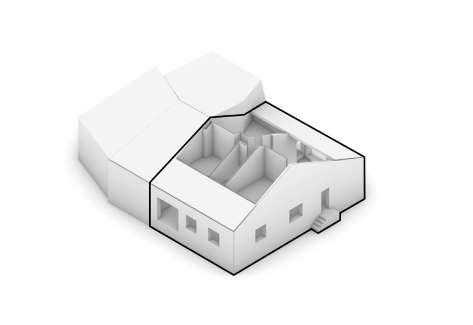
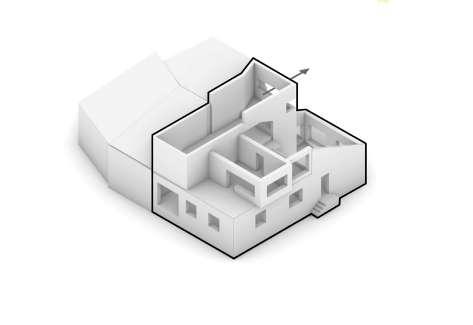
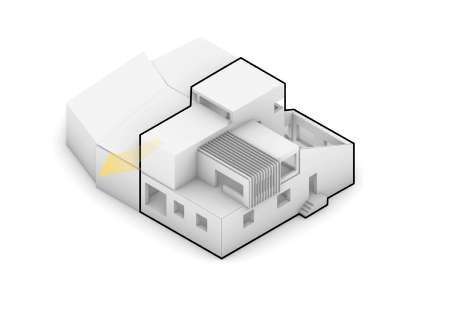
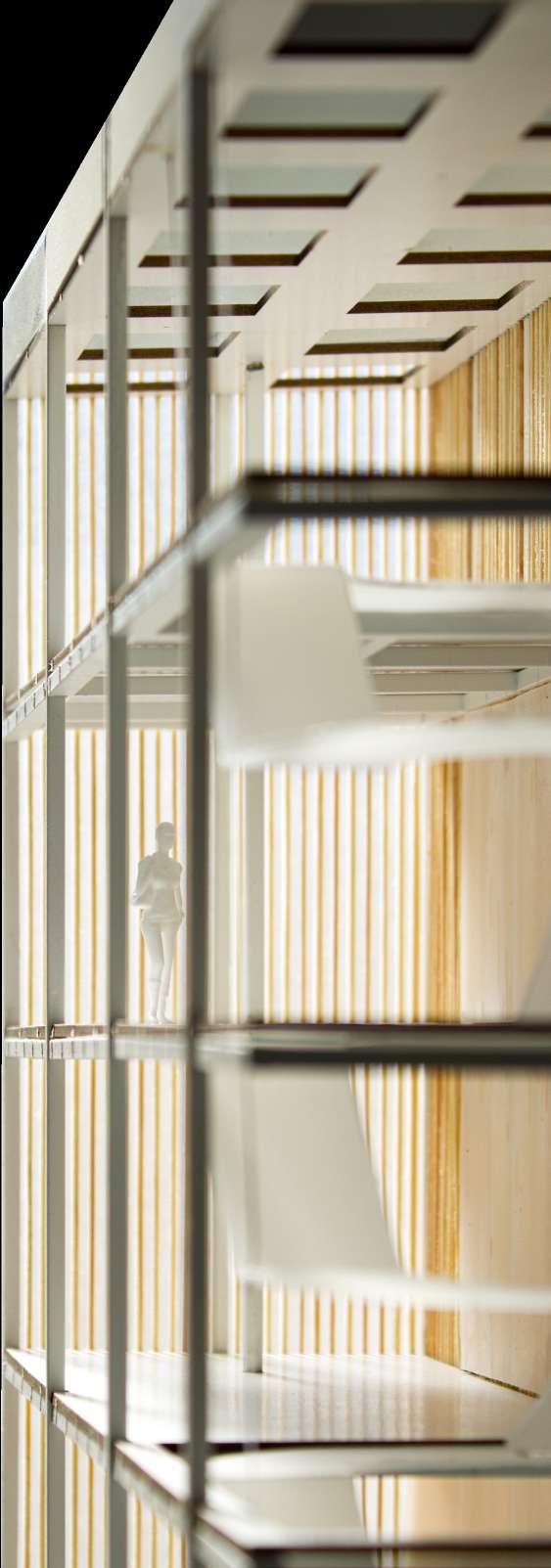
SINGLE-PERSON ISOLATION PLACE CORUXO, VIGO
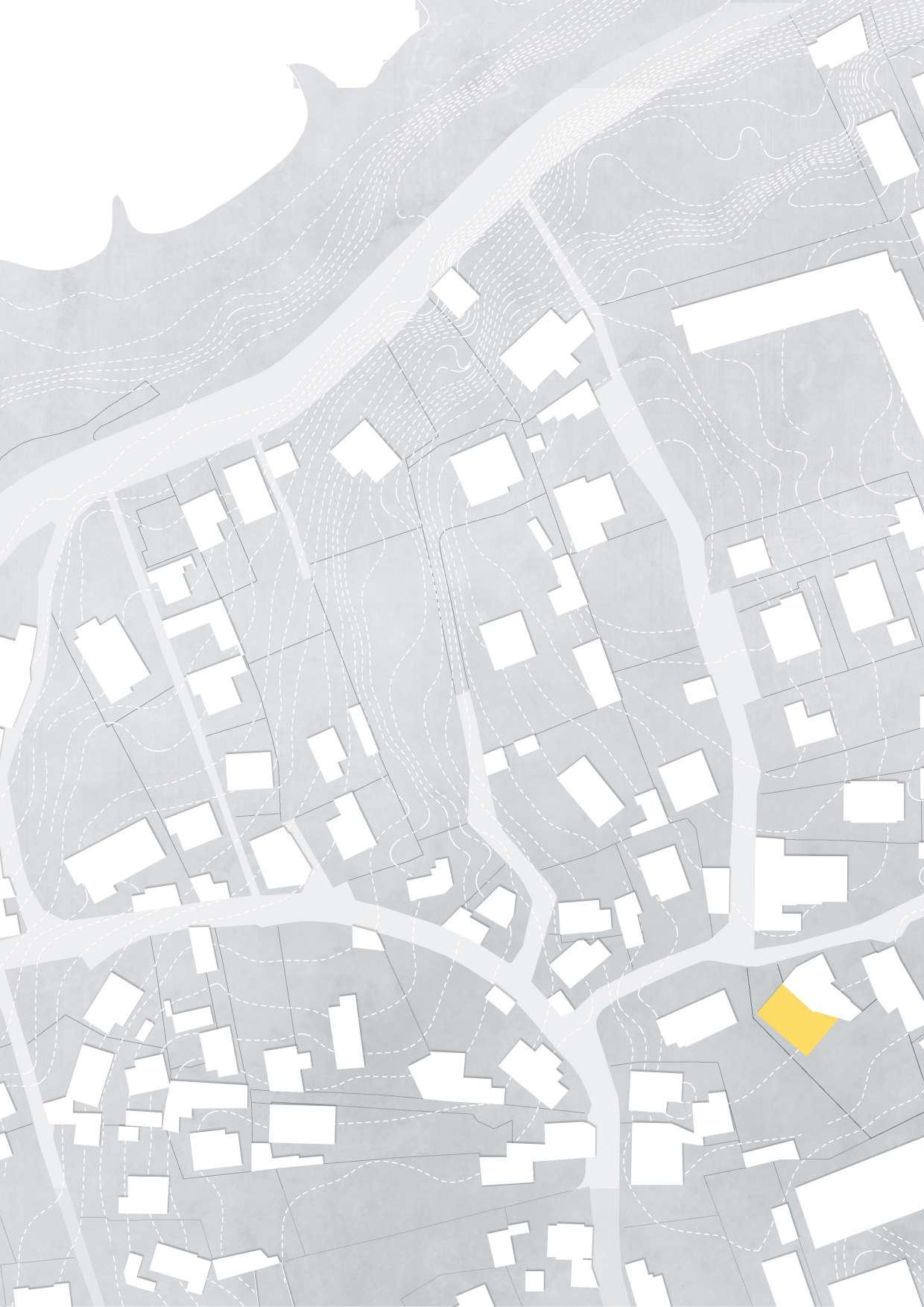
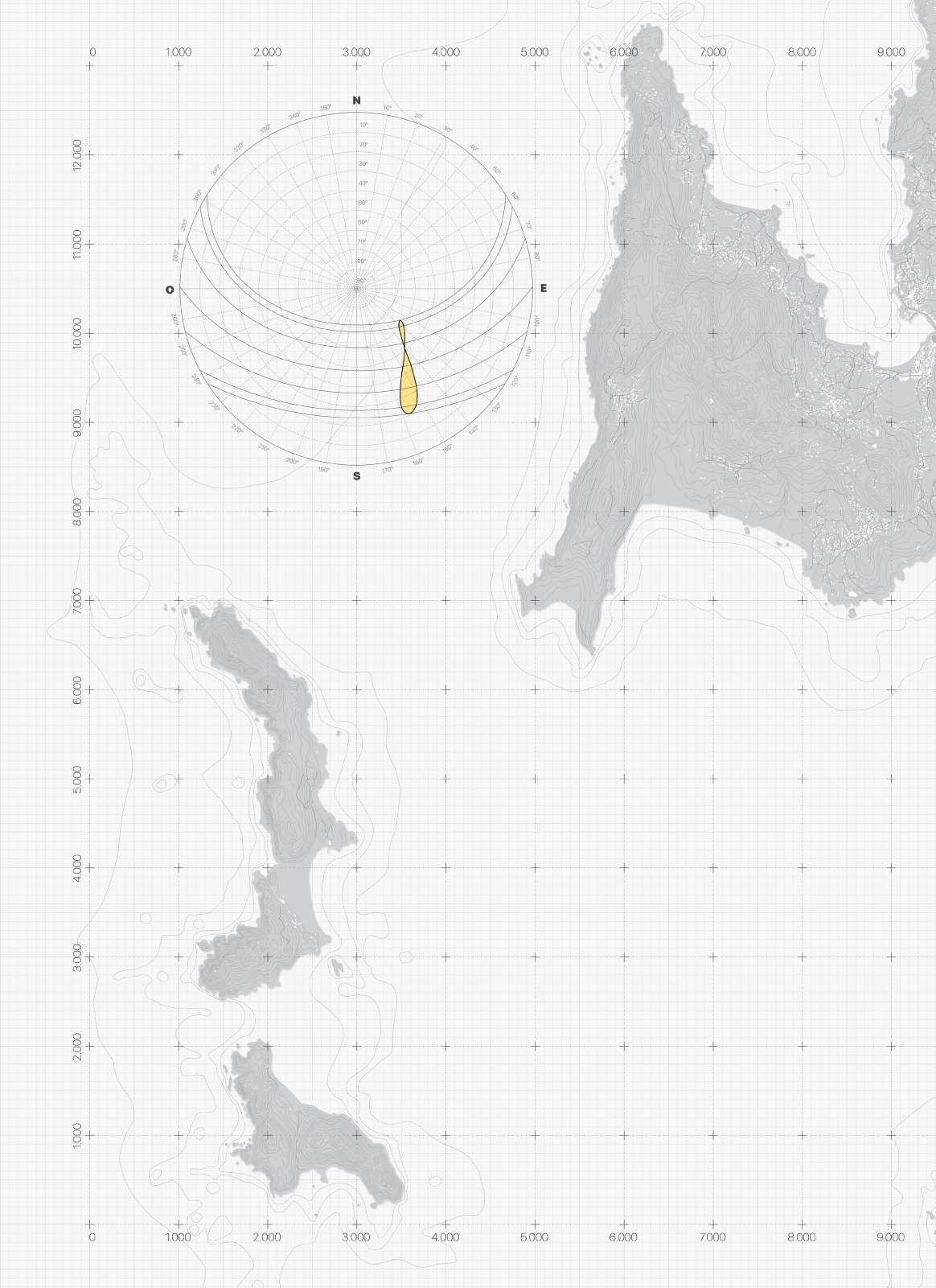
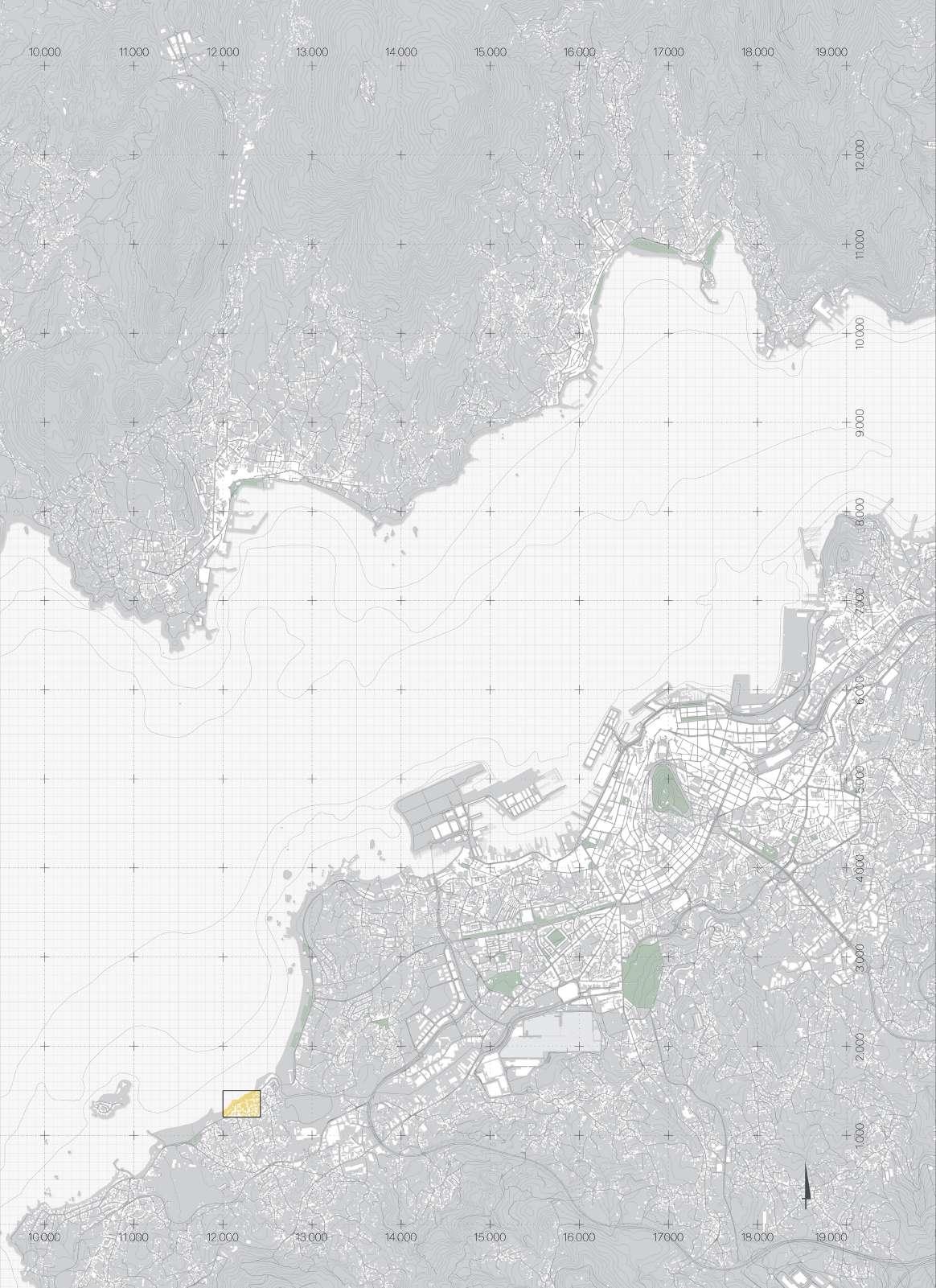
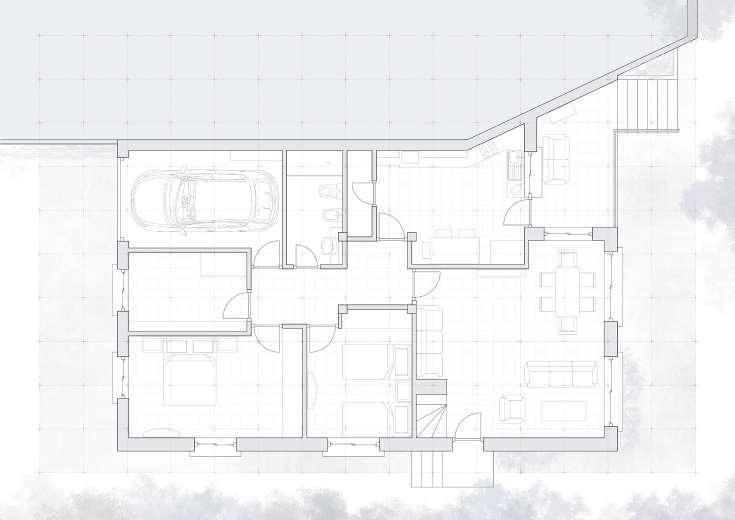
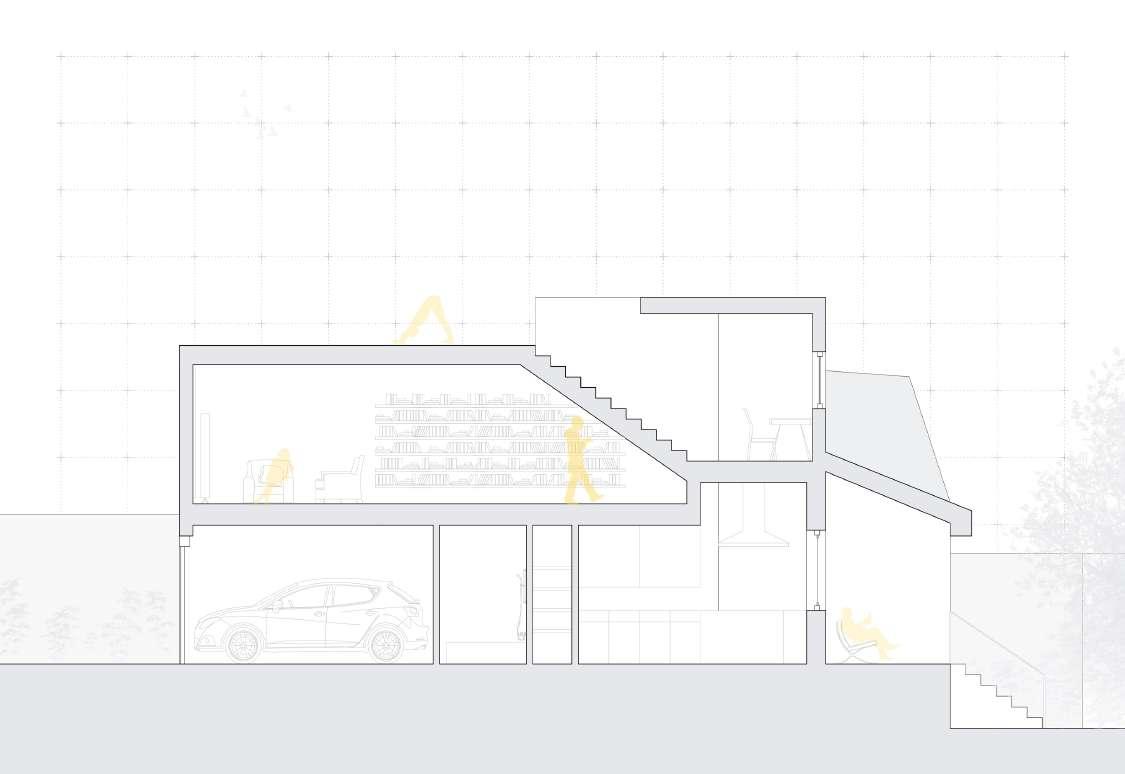
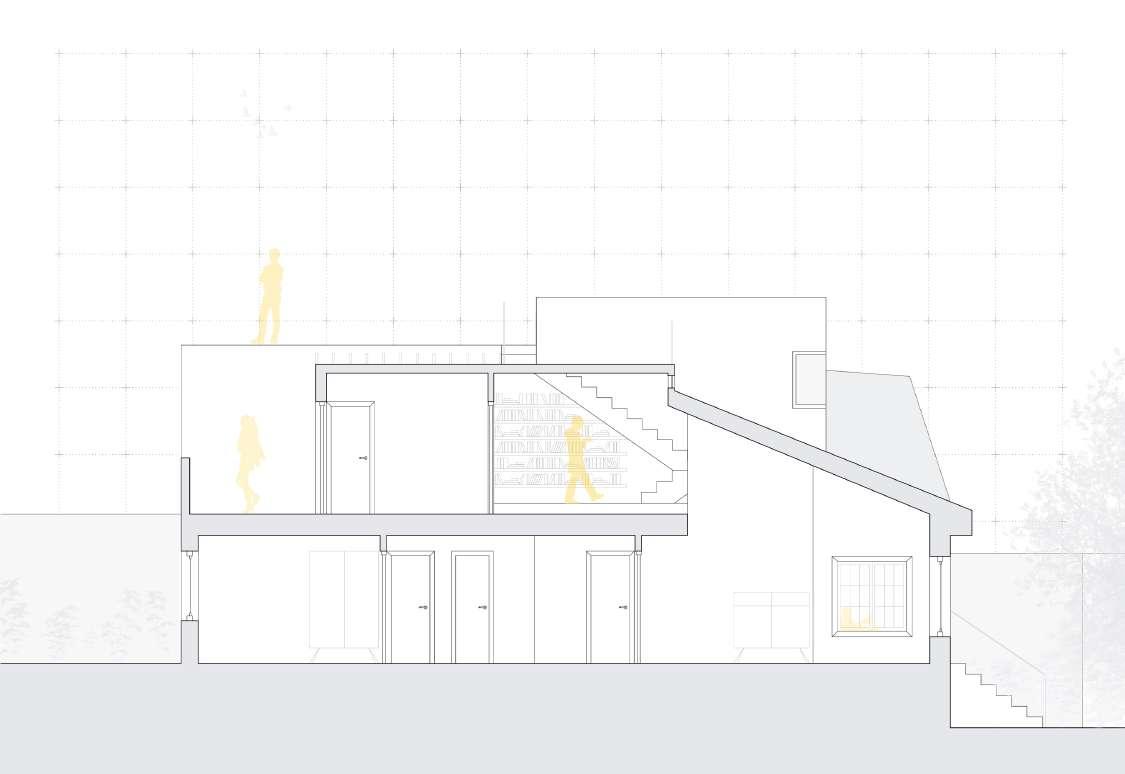
Analyzing the enclave where the project is located, I came to the conclusion that the strengths of the pre-existing house were the light and the environment, due to its proximity to the sea and its close horizon towards the mountains surrounding the city. Thus, the project starts from the idea of recolonizing the upper floor of the house in order to create an open and ample space of personal isolation.
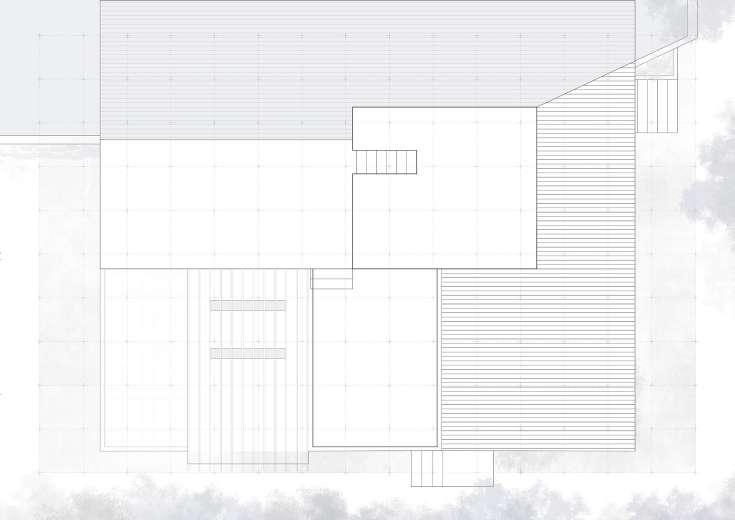
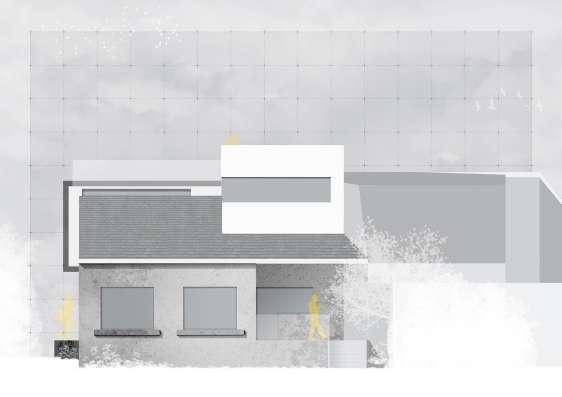
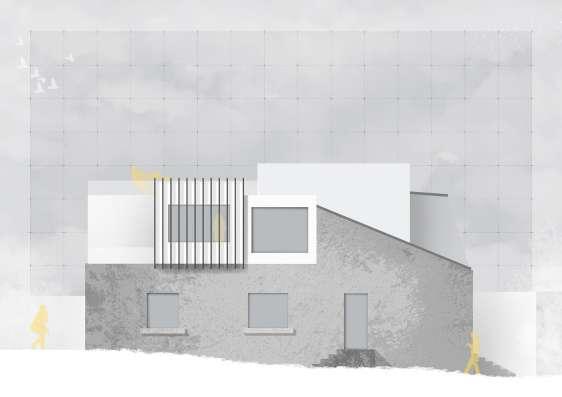
For this, the first decision of the project was to remove the north sloping roof to eliminate the attic space of the rooms, but keeping the south roof, as it creates a transition space between the floors and the garden.
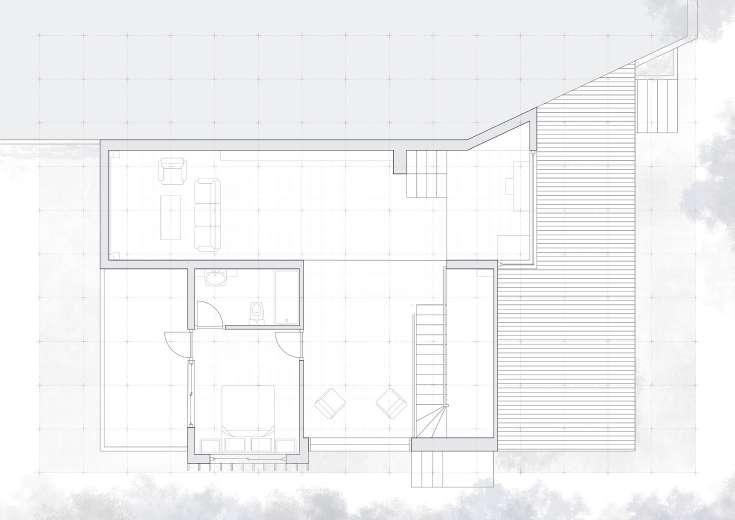
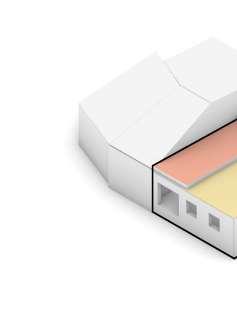
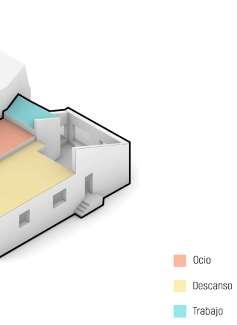
Taking into account the past experience of confinement during Covid-19 and with the purpose of creating an efficient and pleasant space; the upper floor is divided by horizontal planes that differentiate the spaces, instead of partitions. Therefore, the work, leisure and rest areas merge together to create an open space that enhances the feeling of freedom.
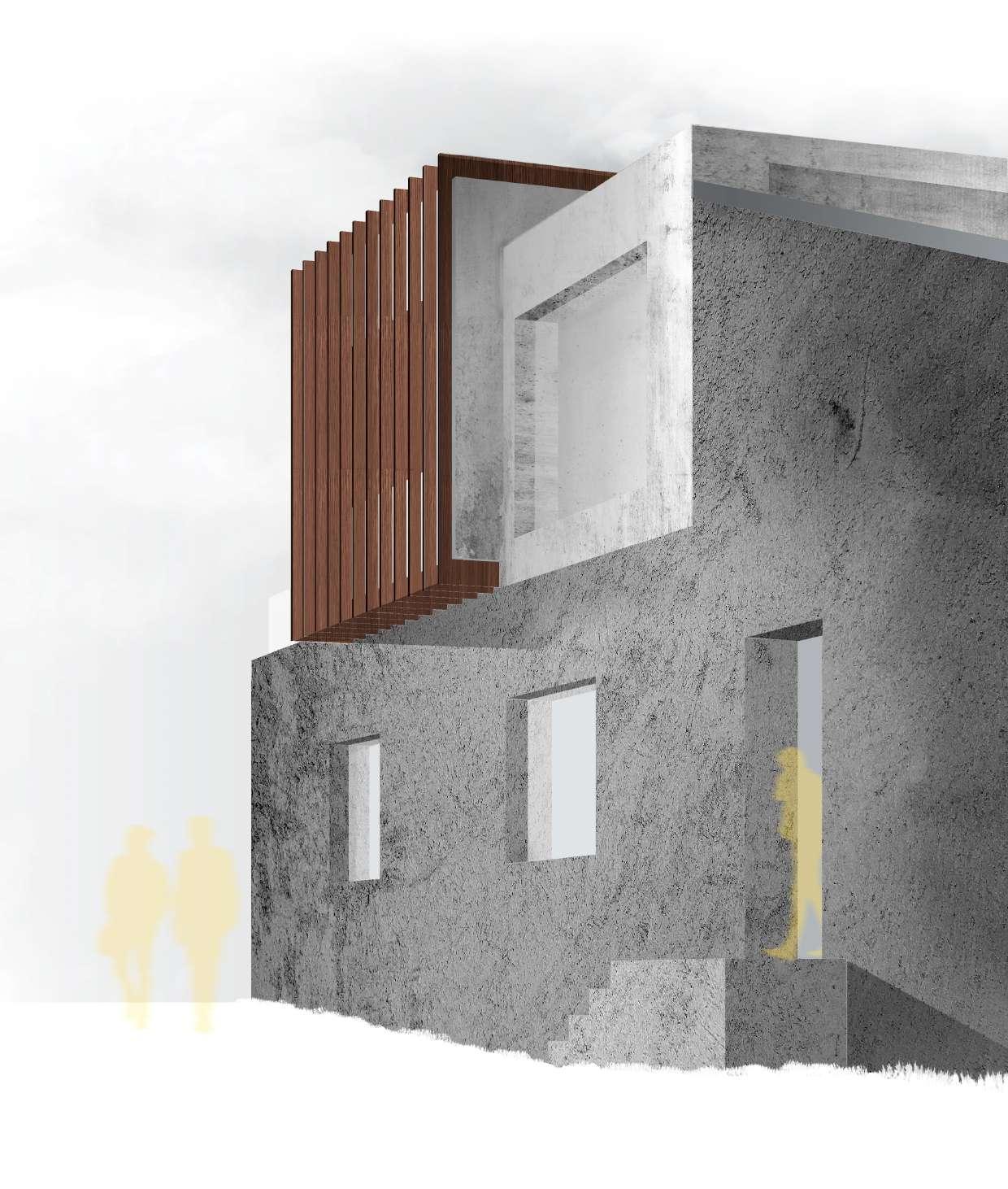
As a result of the changes in floor height, the upper slabs are staggered and allow controlled access to natural light throughout the space, which is regulated in the rest area by wooden slats, and is suppressed in the leisure area to create a cinema room.
On the other hand, this difference in horizontal planes causes the appearance of new horizons of vision that aim to enhance the beauty of the site. Thus, in the work area, a gap is created that frames the line of hills to the southeast, previously hidden behind a residential building. Similarly, at the end of the tour through the planes, the upper deck appears as a plane that frames the distant horizon of the Cíes Islands, creating a spatial link between the house, the estuary and the coast.
m
GROUND
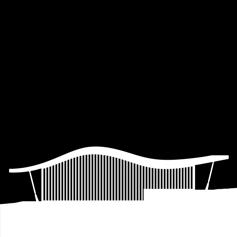
FRONT ELEVATION
SIDE ELEVATION
AMONG THE RUINS FLAMENCO FESTIVAL FACILITY
BAELO CLAUDIA, TARIFA
36° 05’ 24’’ N - 5° 46’ 29’’ O
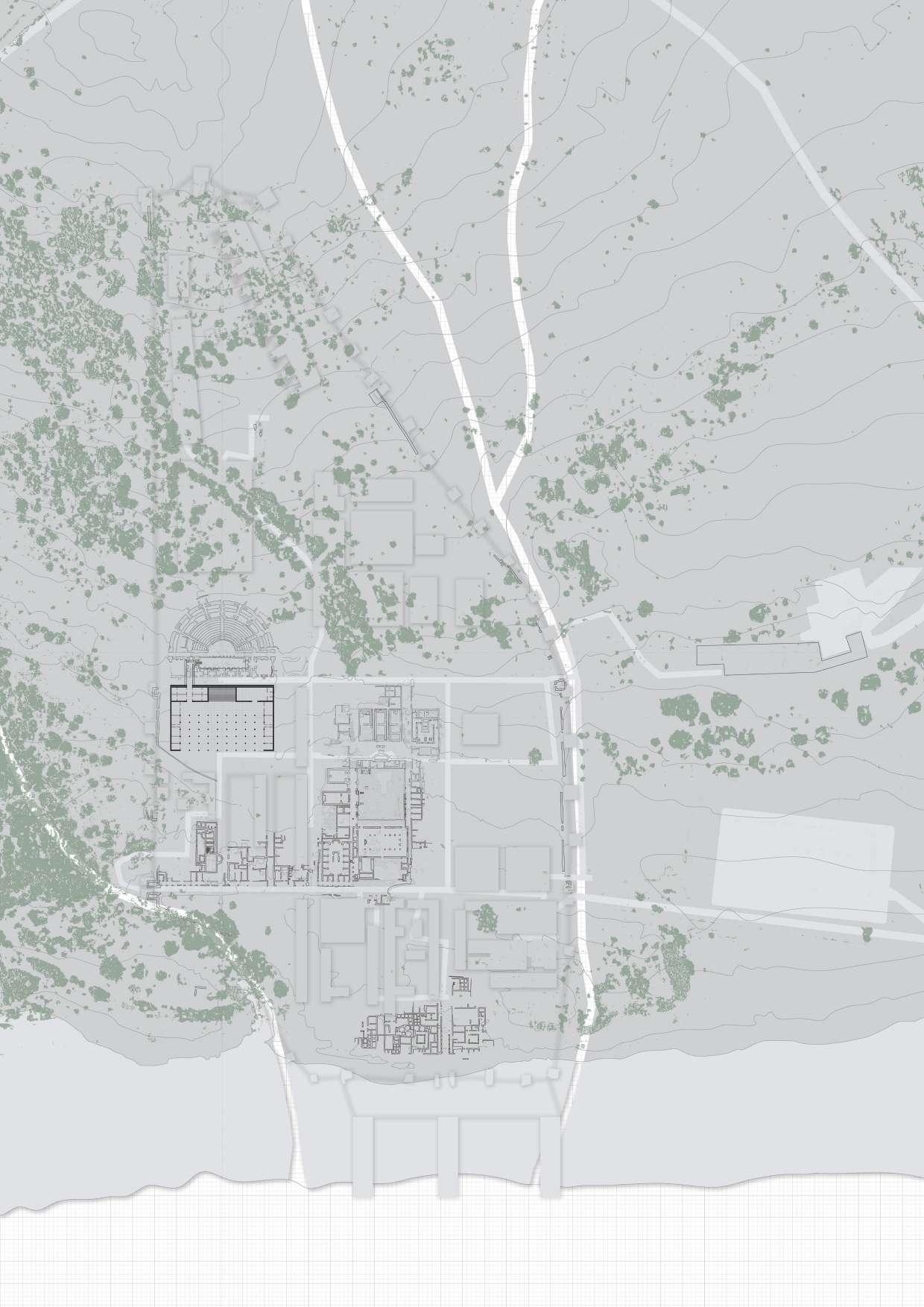
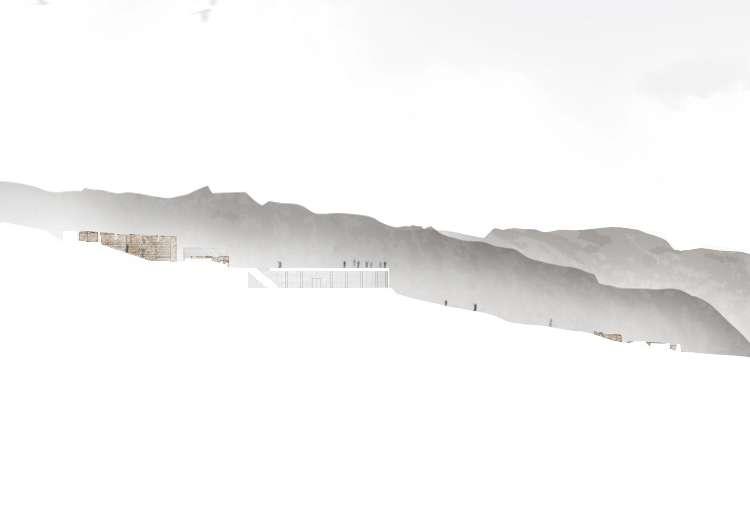
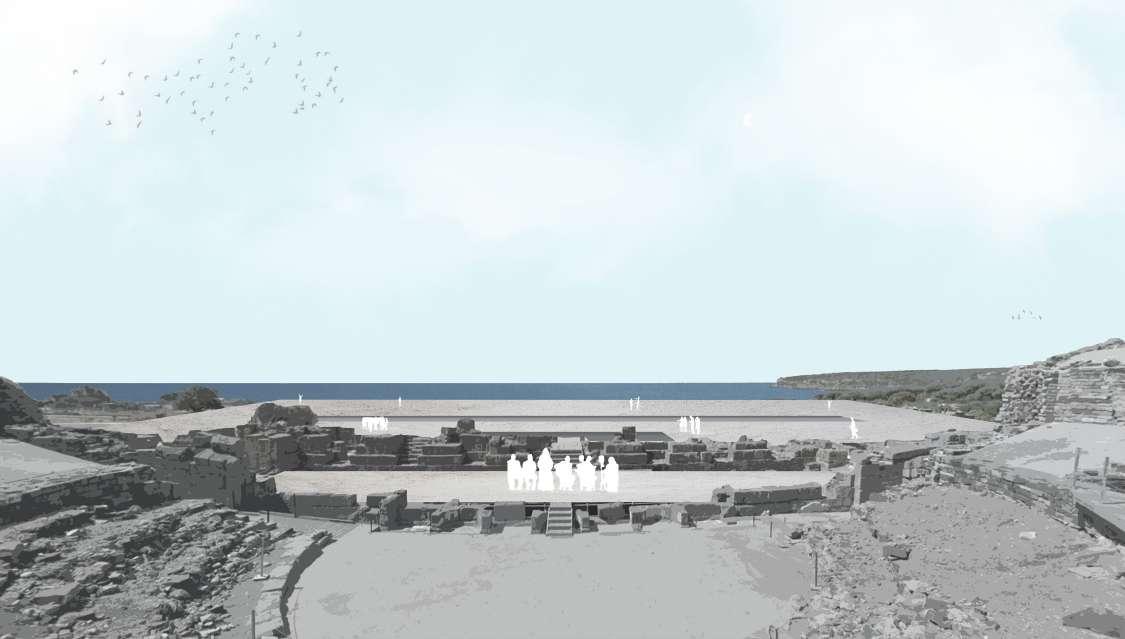
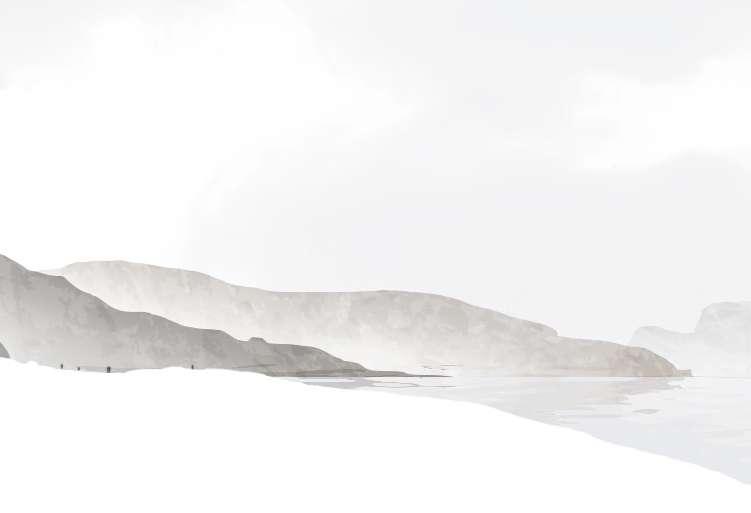
Studying the site where the project is located and, specifically, the surroundings of the ruins of Baelo Claudia, it is striking the unique relationship that is generated between land and sea, as if the sea and the horizon were an extension of the ancient Roman city.
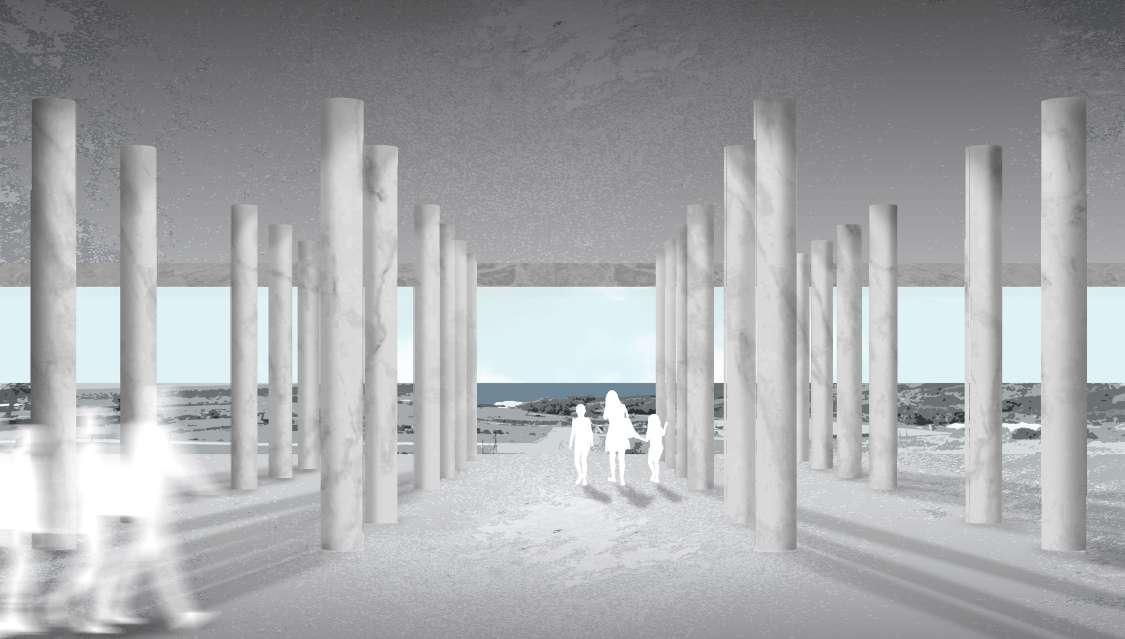
In response to this relationship, the project is generated as a large square at the foot of the Roman theater that functions as the nerve center of the complex and frames the sea and the horizon from the theater’s vault. In this way a relationship is established between the flamenco show, the sea and the sky.
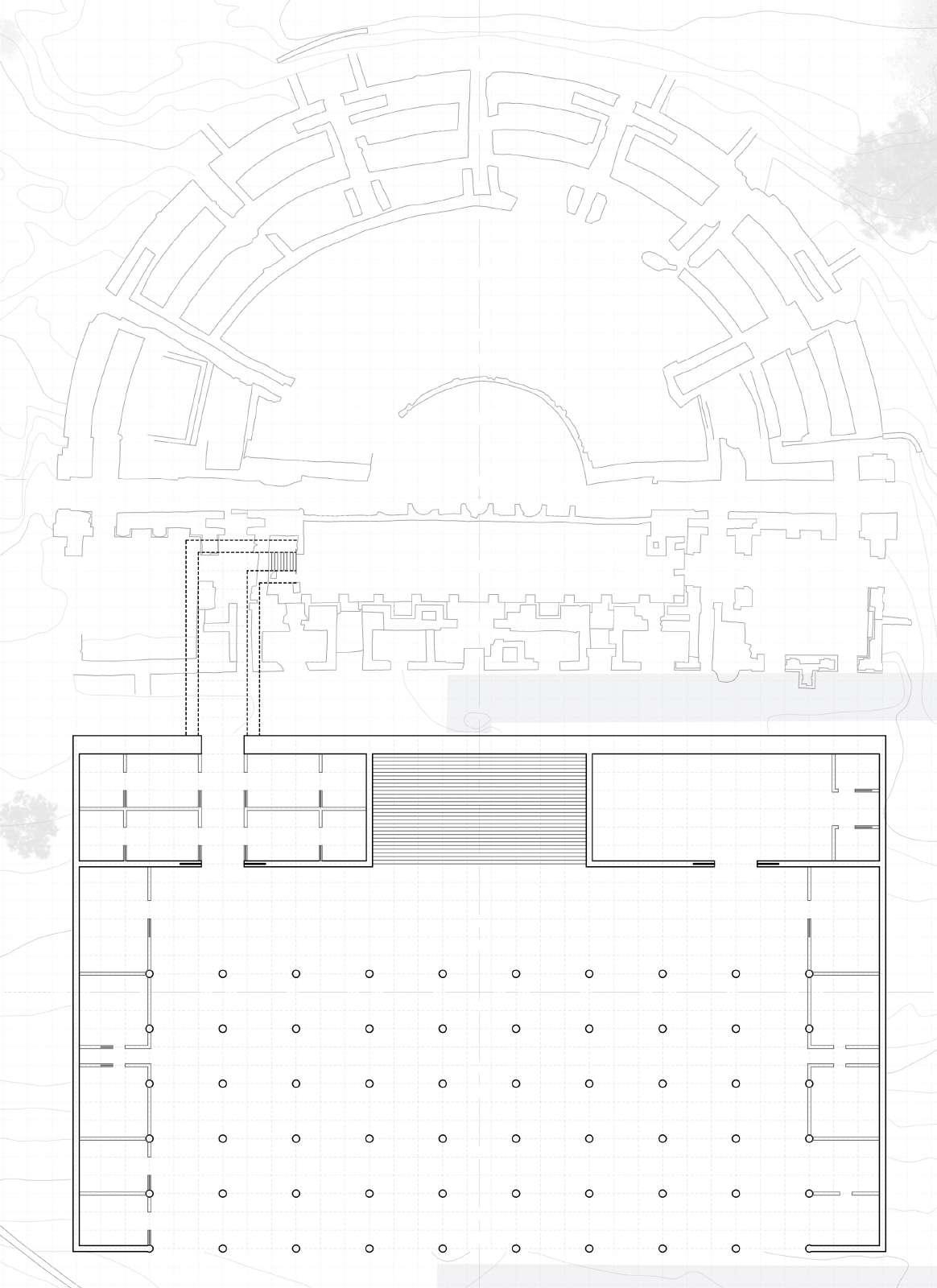
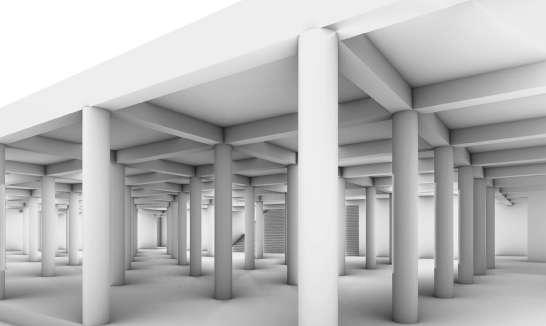
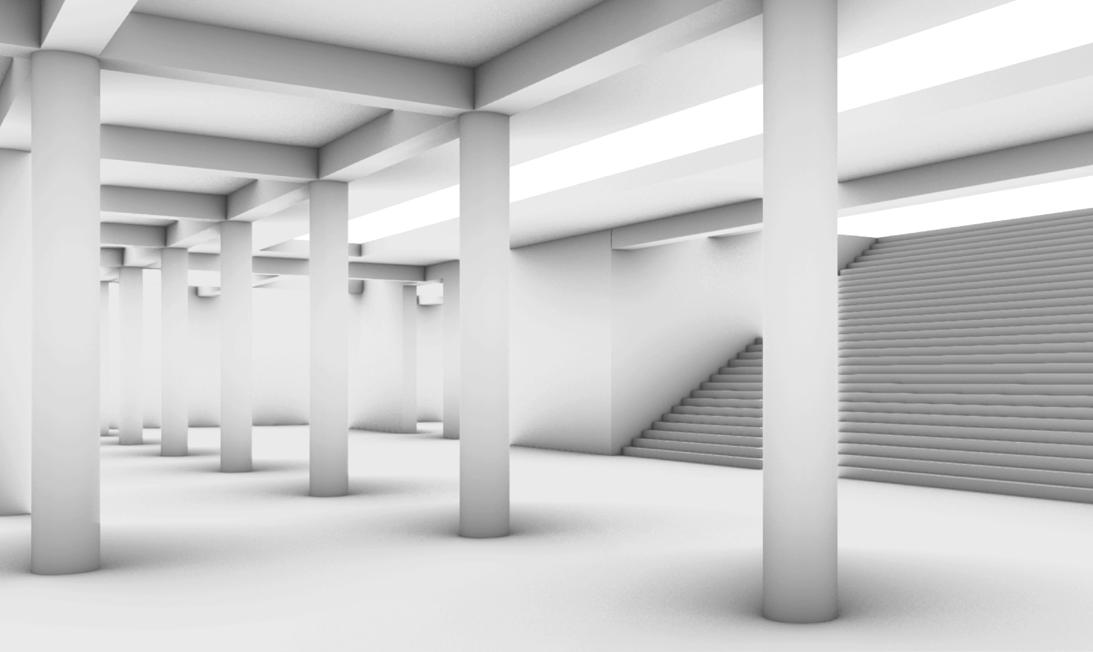
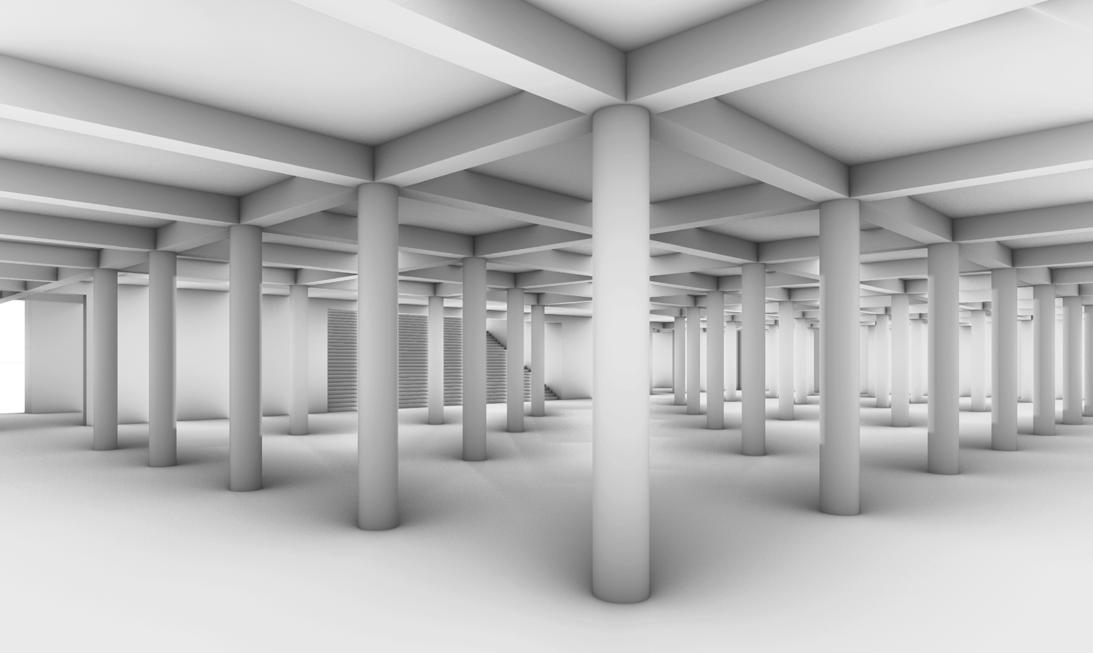
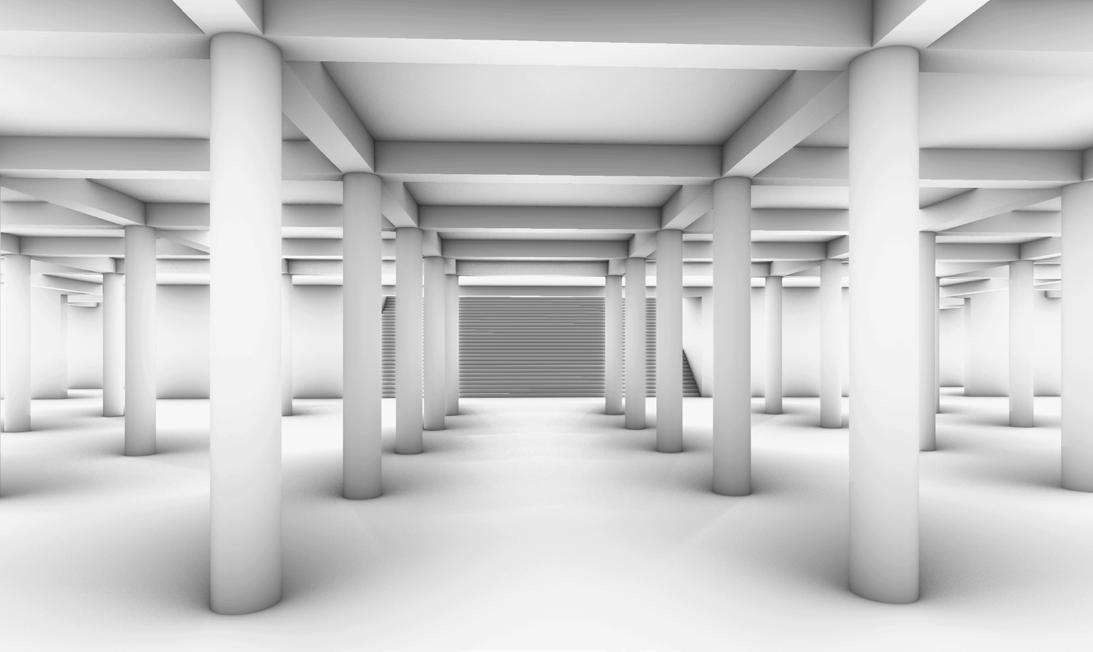
Under the large square are located the necessary useful spaces to supply the festival, around a large hypostyle hall that serves as a transition between the upper space and the rest of the city. In the part closest to the theater are the spaces for private use: dressing rooms and rehearsal room.
To the west of the hypostyle hall there is a compartmentalized space dedicated to storage and technical rooms for the festival. On the other side of the hall is located another compartmentalized space with the ticket sales office, the cloakroom and public toilets.
The main space of the lower hall is the large central hypostyle hall, which acts as a curtain between the staircase and the rest of the route to the city. This creates a large open space, with multiple possible uses, such as exhibitions or flamenco tablaos.
Rehearsal Room
Storage Room
Control Booth
Translation Booth
Public Restrooms
Ticket Sales
Cloakroom
hONDA MUSIC SCHOOL
COLONIA MANZANARES, MADRID
40° 25’ 38.0” N - 3° 43’ 58.2” W
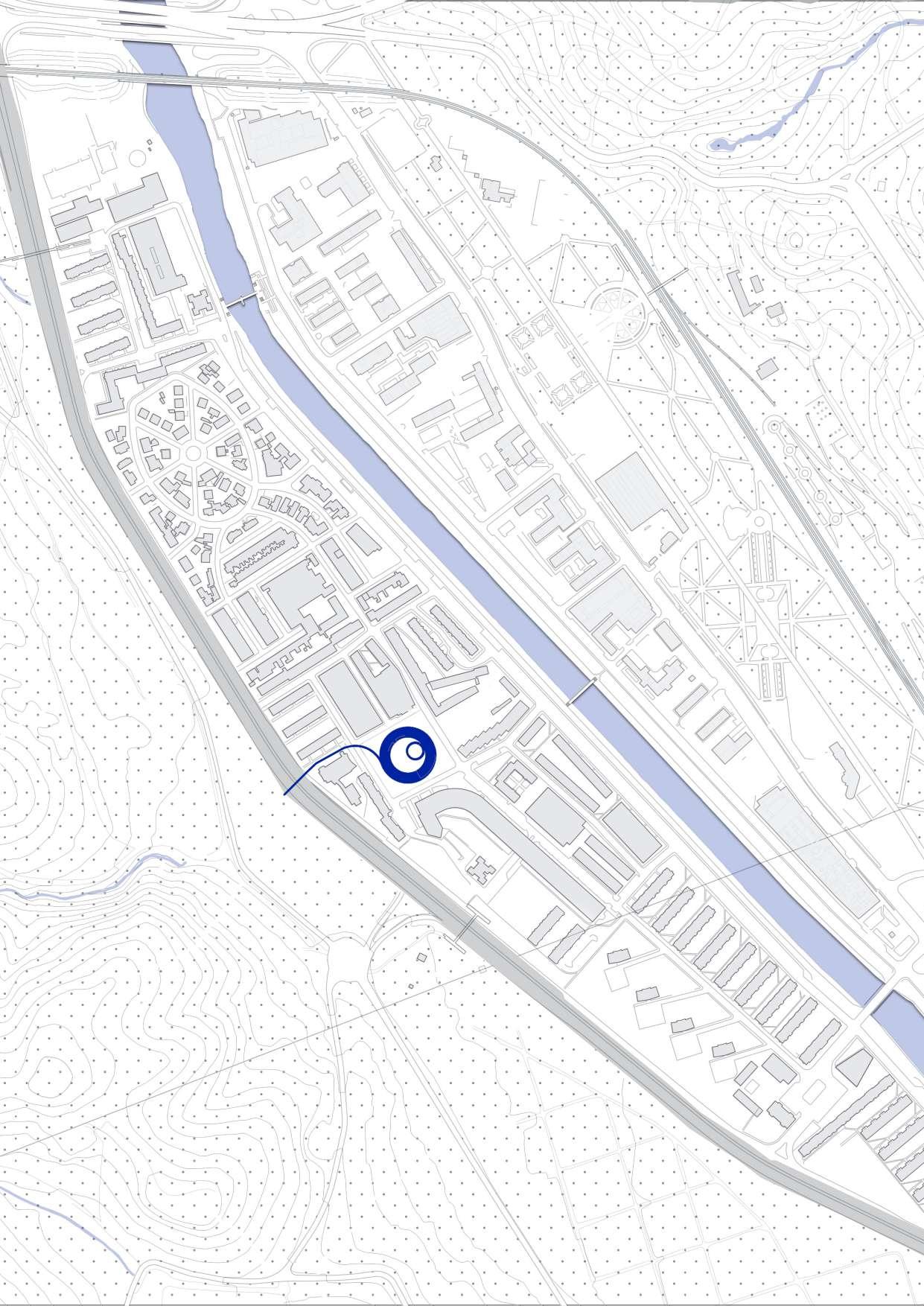
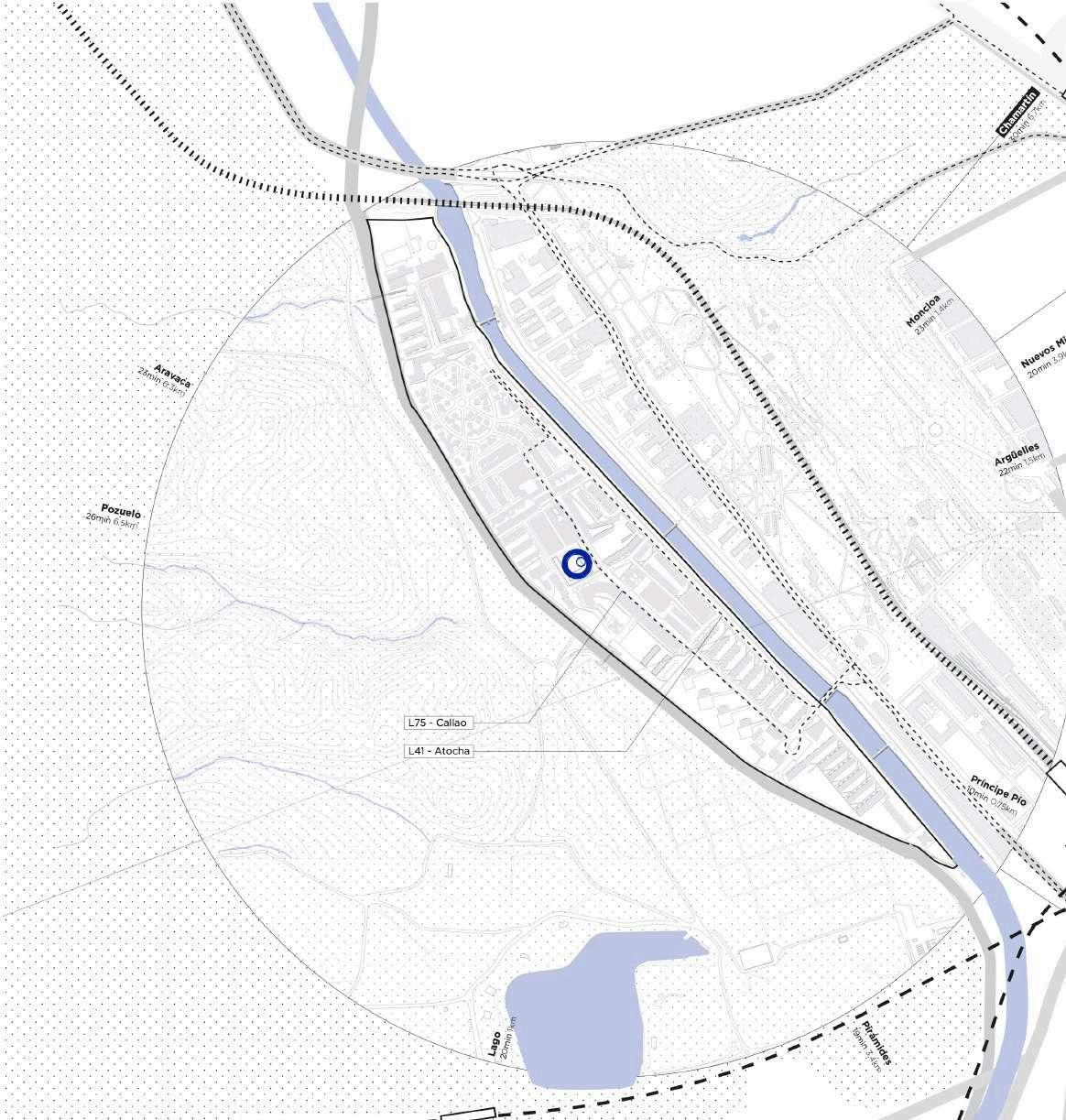
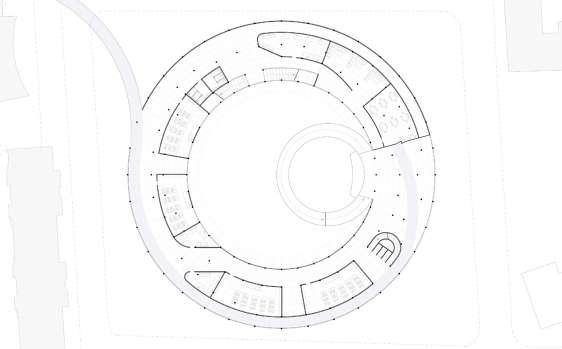
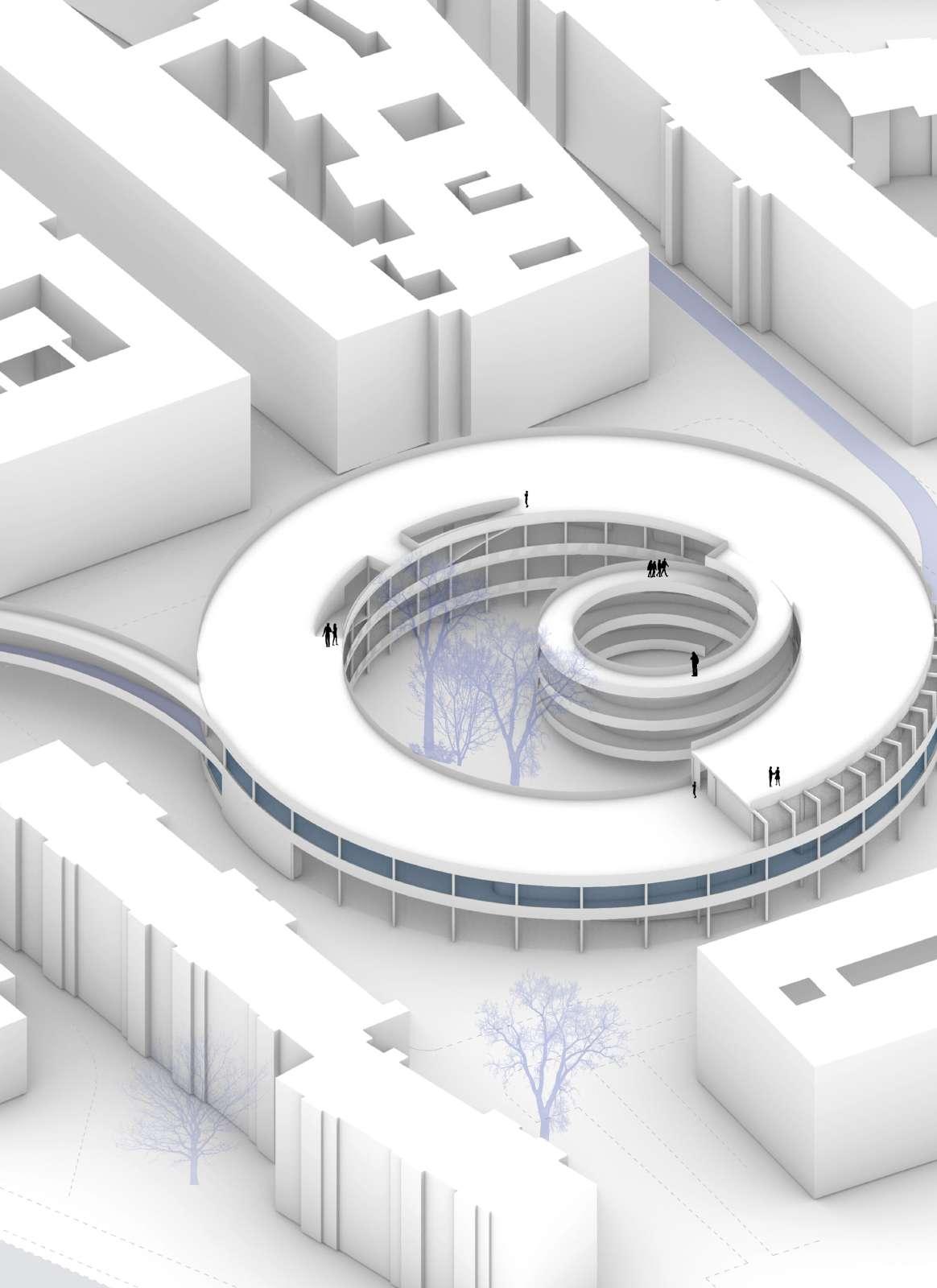
The project proposes the design of a music school in the neighborhood of Colonia Manzanares in Madrid, which functions both as a hub of activity and improvement of urban space.
Analyzing the lack of public space in the neighborhood and the need to improve the connection of the city with the Casa de Campo, the project is based on two directly related premises: the idea of core as a backbone of the city and the idea of tour as an urban experience. These two concepts converge in a single element: hONDA. A project that is both street and square, matter and void.
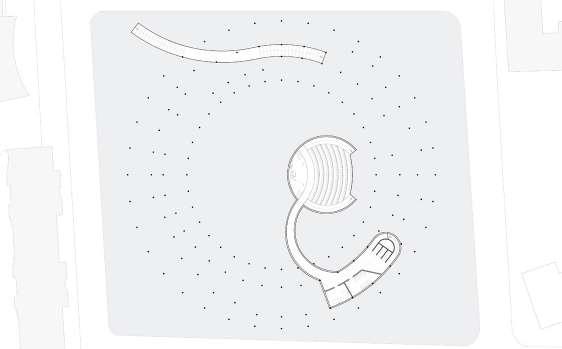
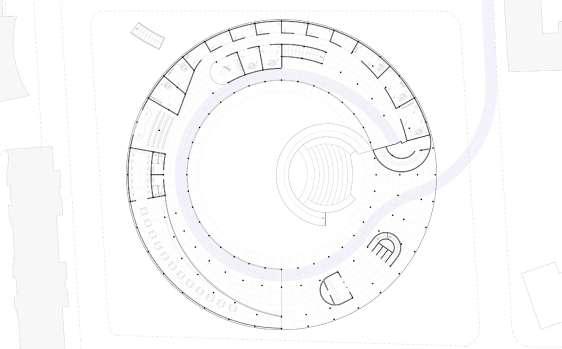
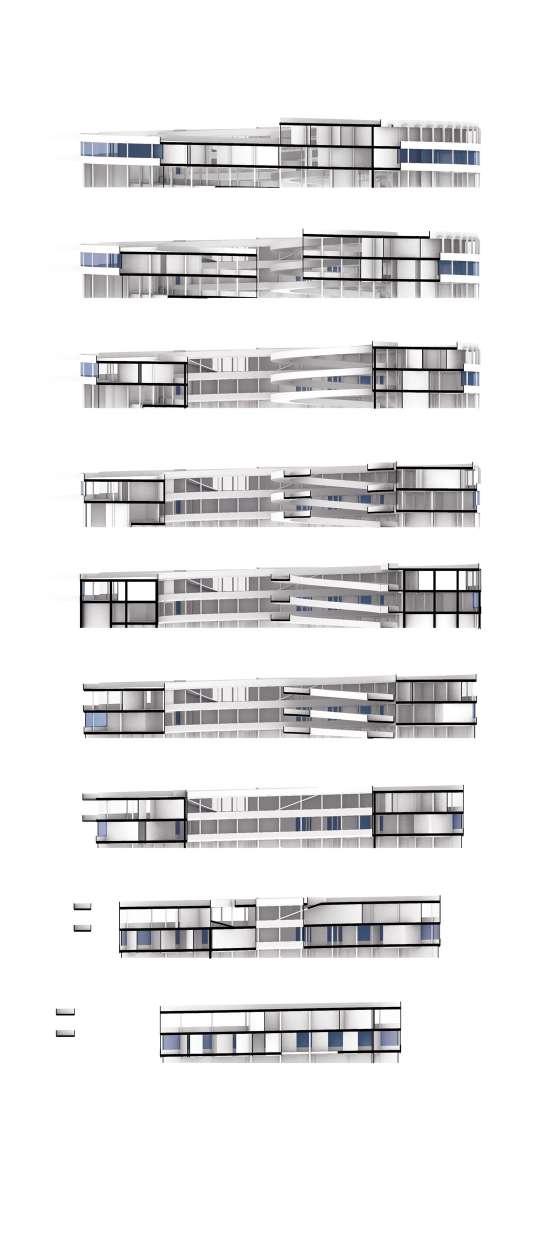
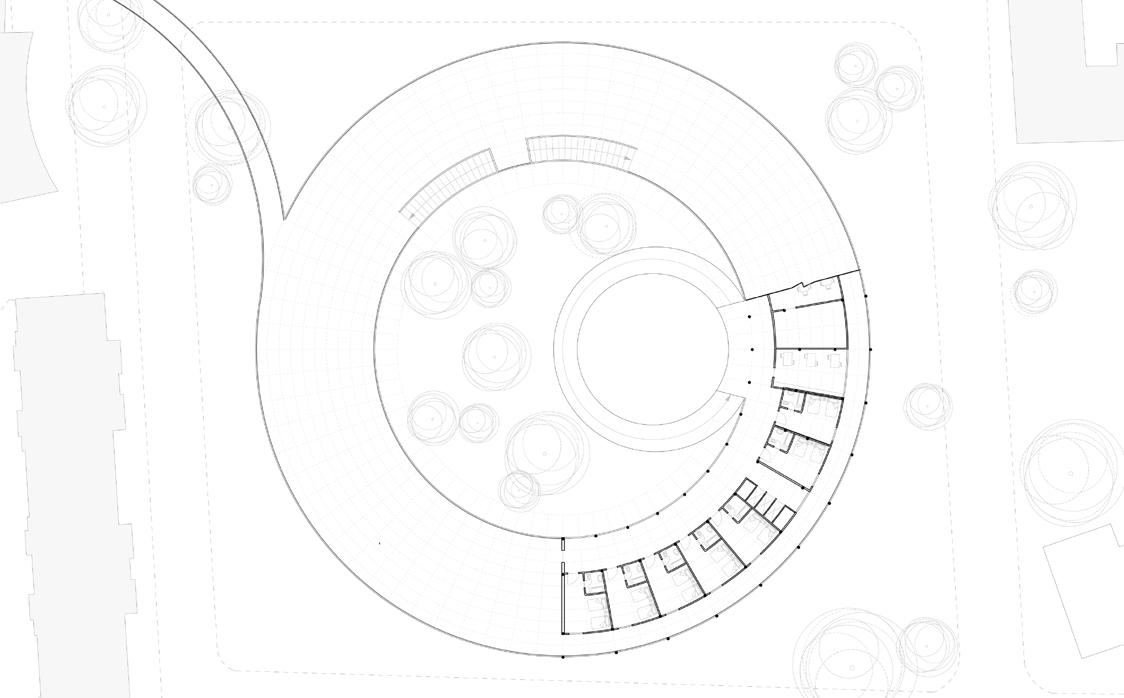
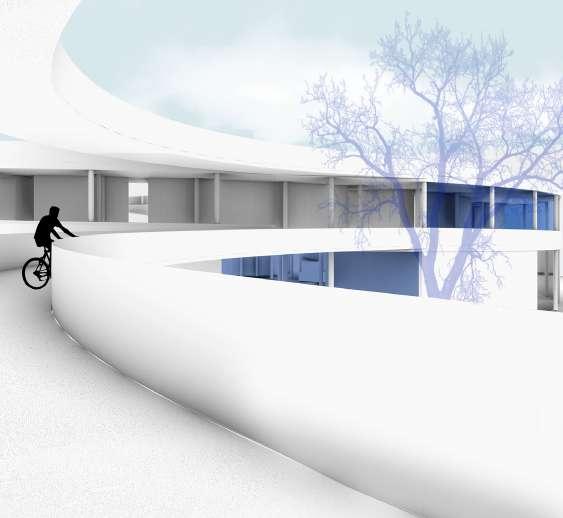
The project begins in the southeast and ascends through a continuous space that leads you through it. As you ascend the route, you pass through the different uses of the music school, which are configured around it. In this way, the entire path and space is in permanent contact with sound. When you reach the student residence, the path forks to distinguish public and private spaces. Once this section is crossed, the route leads to the roof of the building, where the configuration of the roof directs you either towards Casa de Campo, continuing the green axis proposed by the new footbridge over the M30; or towards the public square that is created in the interior.
On the other hand, the project proposes a bicycle route that links up with the Madrid Infrastructure Network and runs through the space parallel to the pedestrian route. In this way, another walkway is created under the crosswalk that crosses the M30 at the same point.
Inside the central public space, an auditorium is created, taking advantage of the unevenness of the terrain, with a capacity for more than 200 people, which is part of the musical complex. In this way, the whole building constitutes a balance between public and private space, the space for walking and the space for staying.
HOUSE IN CHAMBERÍ
HOUSE, GALLERY AND STUDIO FOR AN ARTIST
C/SAGUNTO, 5, MADRID
40° 26’ 01.3’’ N - 03° 42’ 00.7’’ O
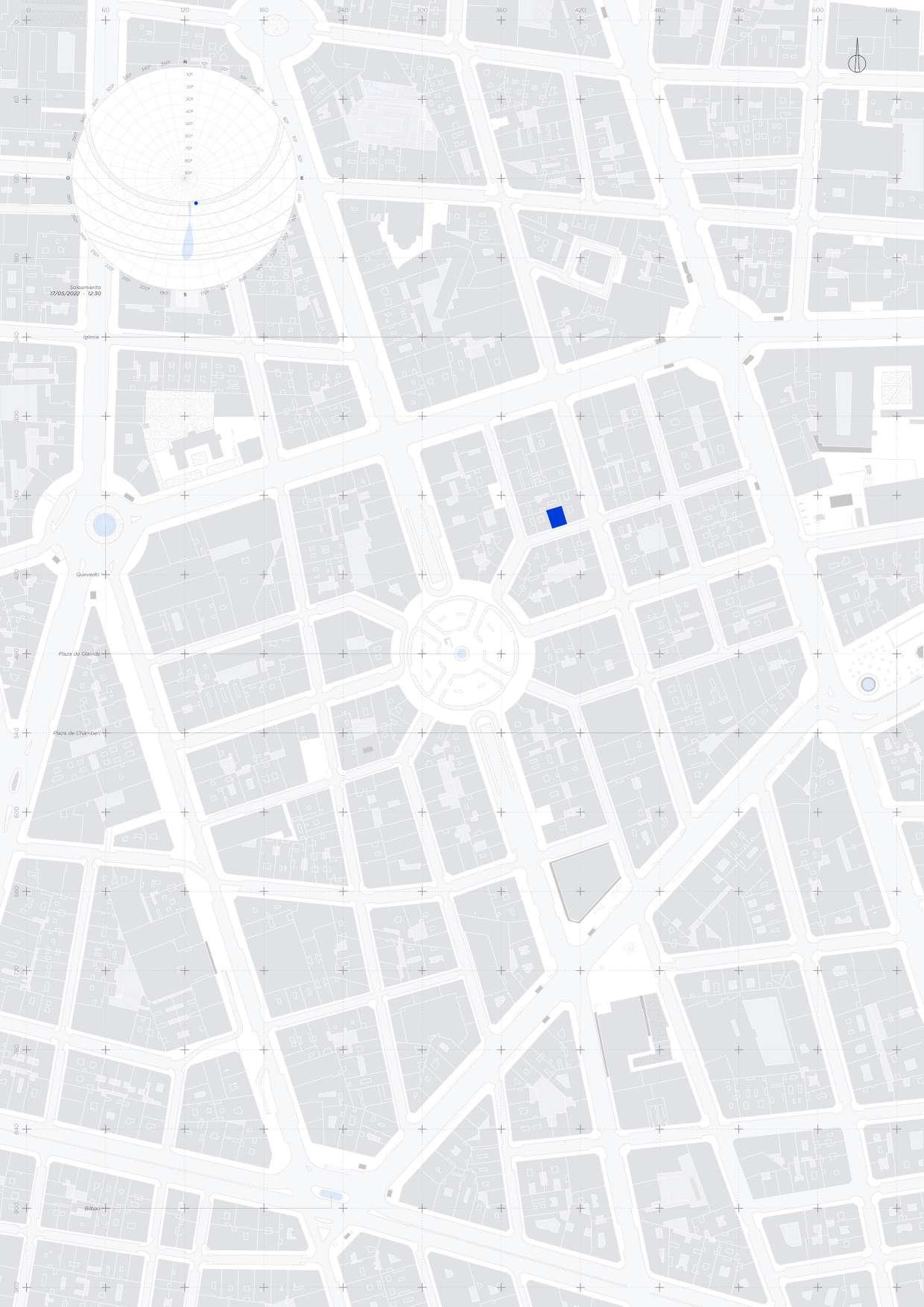
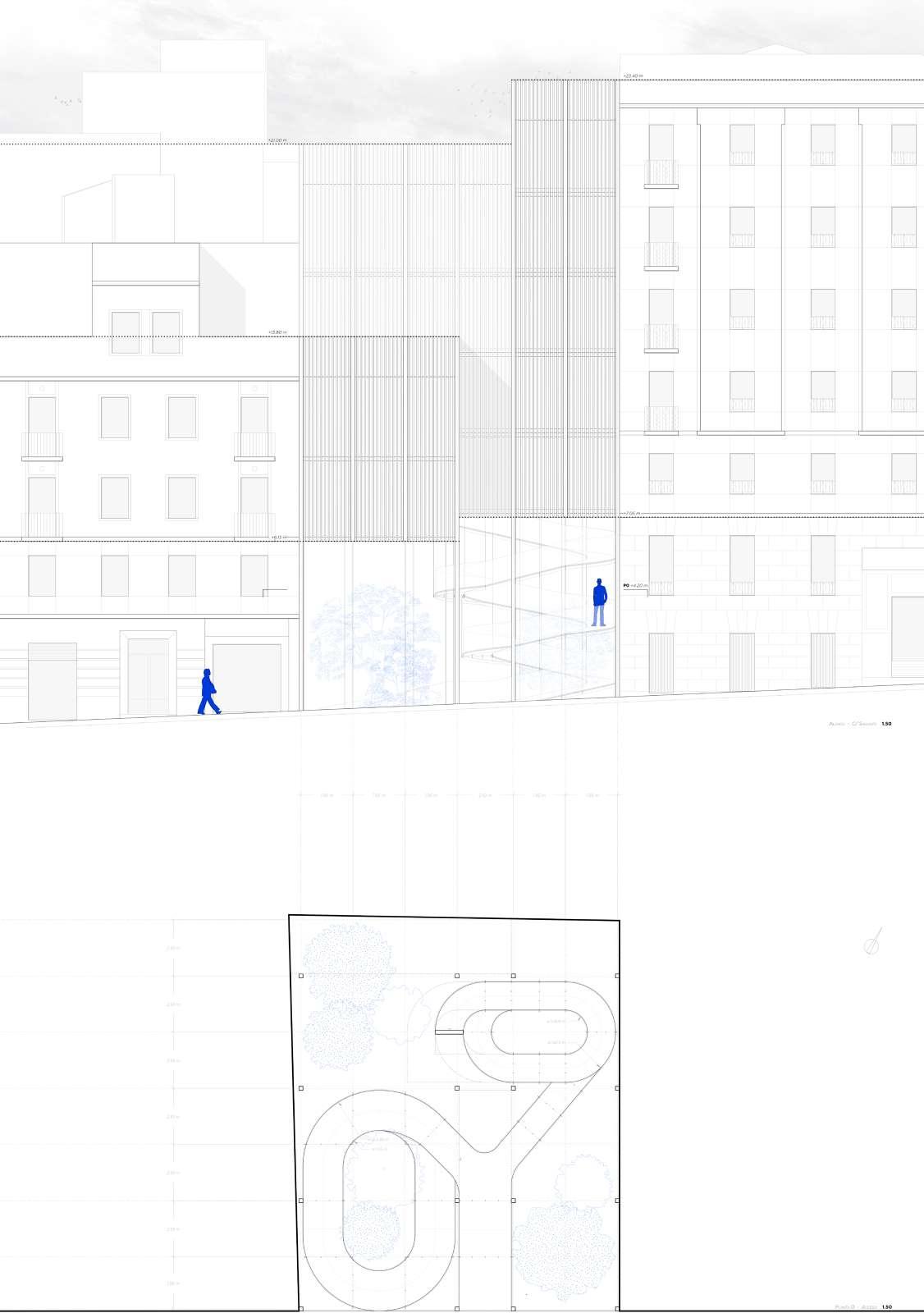
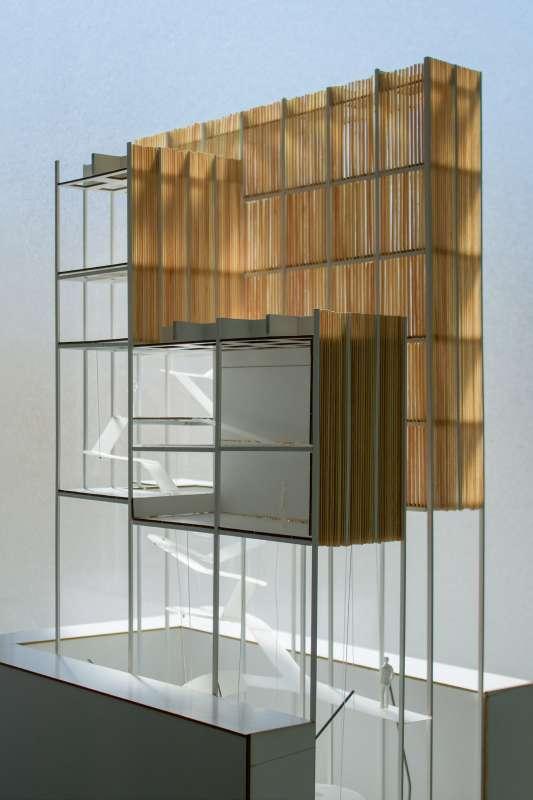
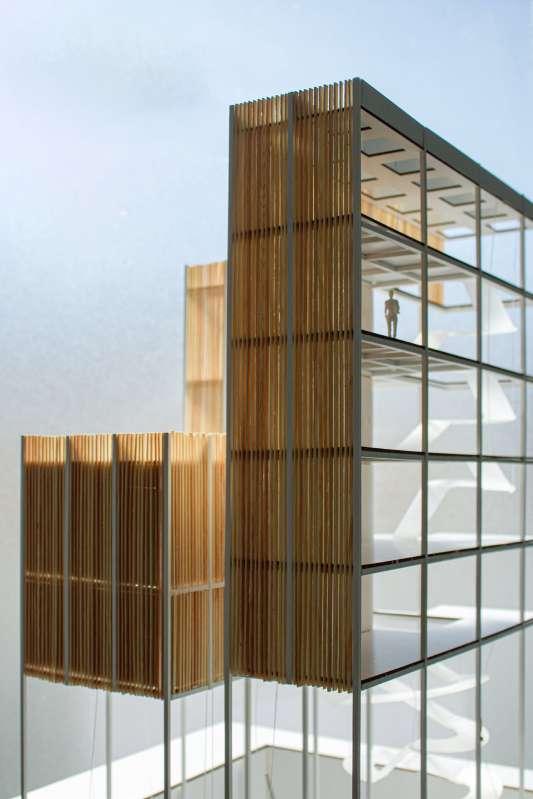
The project is located at 5 Sagunto Street, near Plaza de Olavide in the Chamberí neighborhood of Madrid. The design of a building on the site is proposed to serve as a home, workshop and gallery for an artist, and should have as many floors as deemed necessary, including 6 meters deep for the basement.
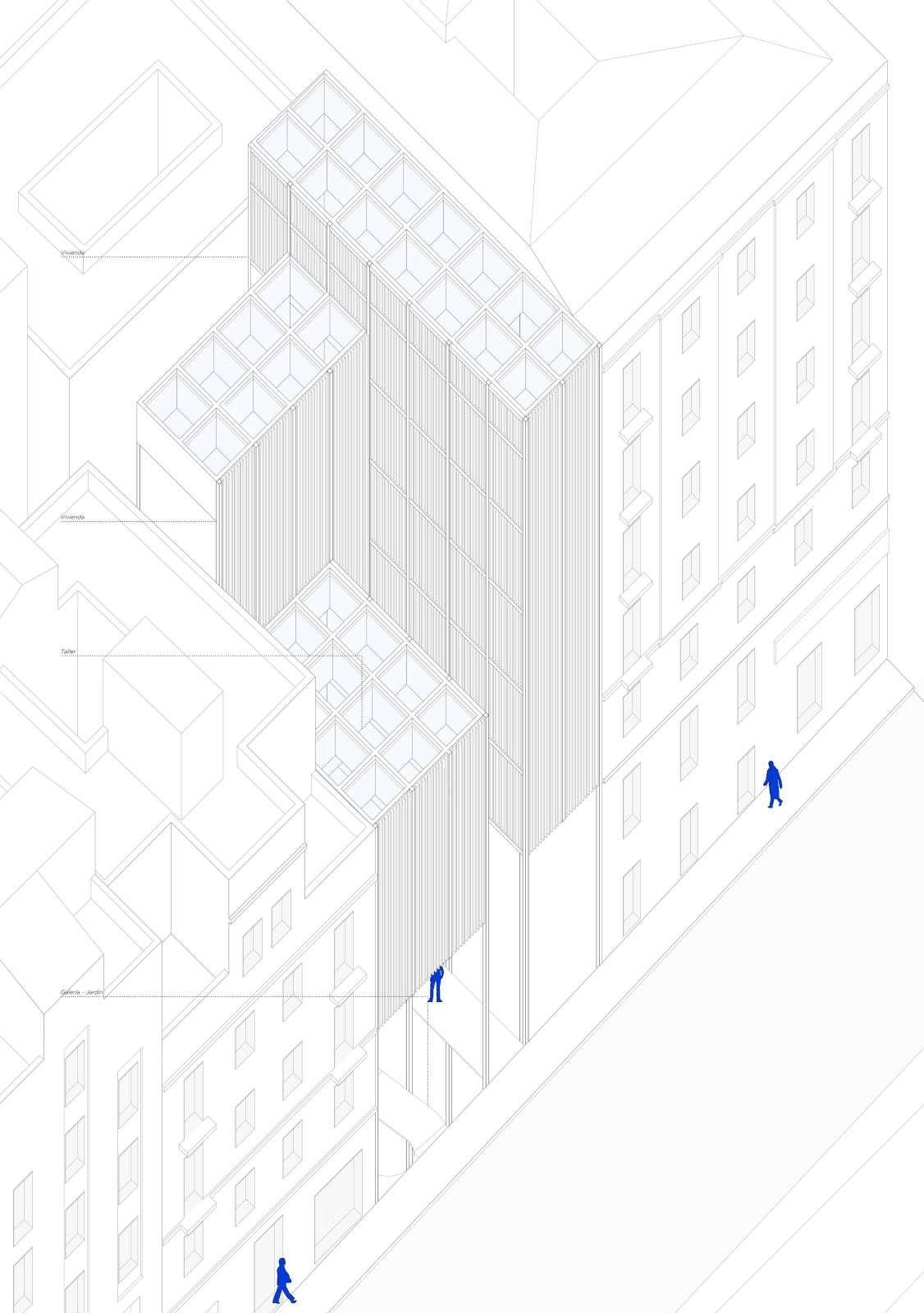
From this statement, the house is based on the need to stitch the city through the facades, as there is a significant difference in height between the residential buildings on the east and west of the site. To this end, the plot is geometrized in 15cm modules and three large volumes are generated that are aligned with the three adjacent buildings and are separated by a gap of 2 meters that will allow the entry of light to the basement.
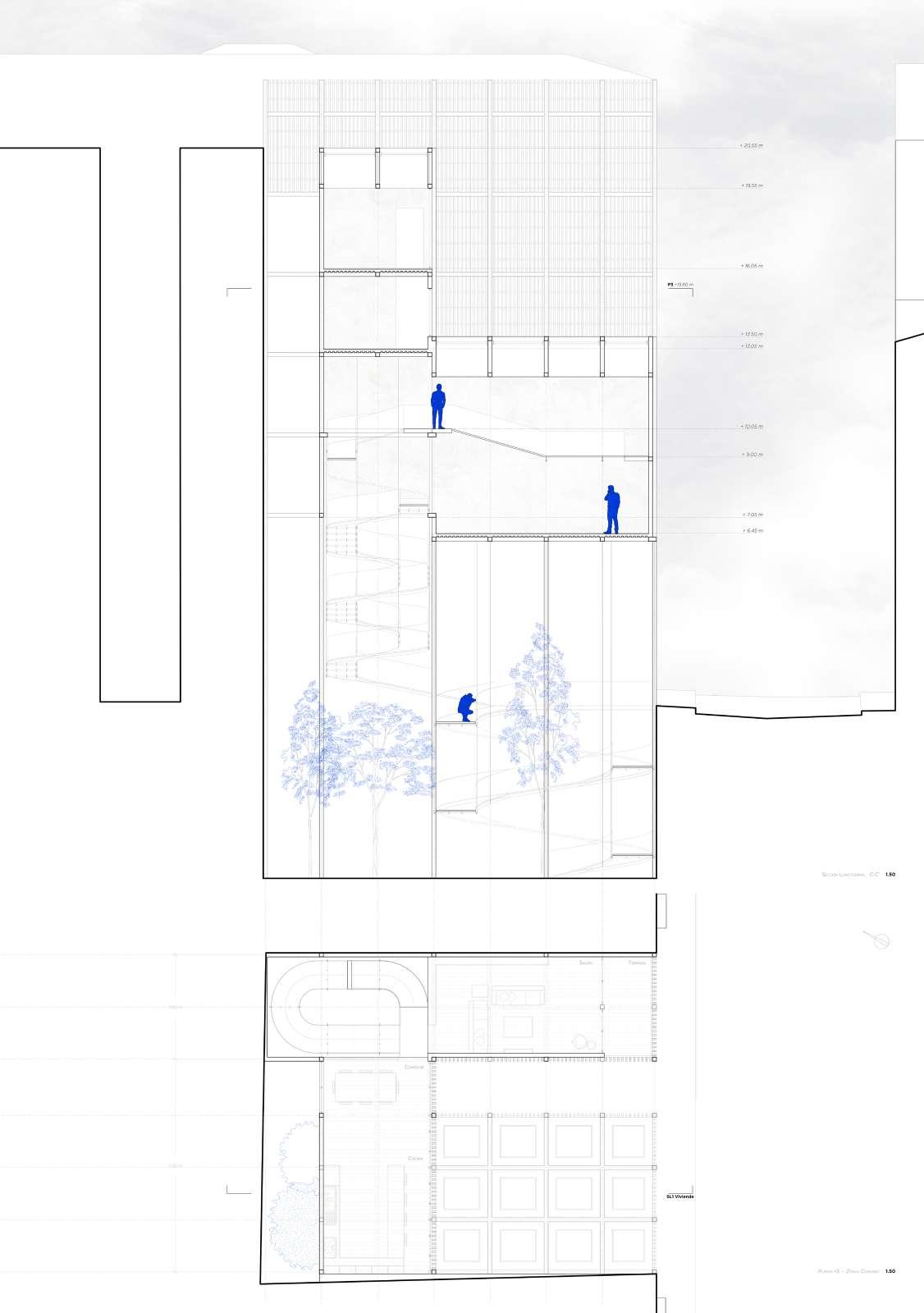
Light is an indispensable part of the project, since raising the three volumes about 6 meters from the basement generates a south-facing opening that, together with the gap, creates a perfectly lit space in the basement. This is where the artist’s gallery is established, forming a public garden below ground level where he can exhibit his works.
In the upper volumes, the artist’s studio and living quarters are established, generating an ascending progression between public and private space. Thus on the second floor we find the workshop in the west volume, and as you go up, you go through the house until you reach a private garden on the top floor.
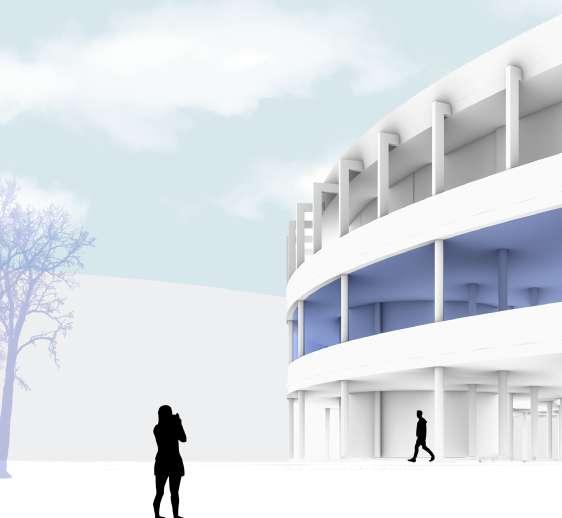
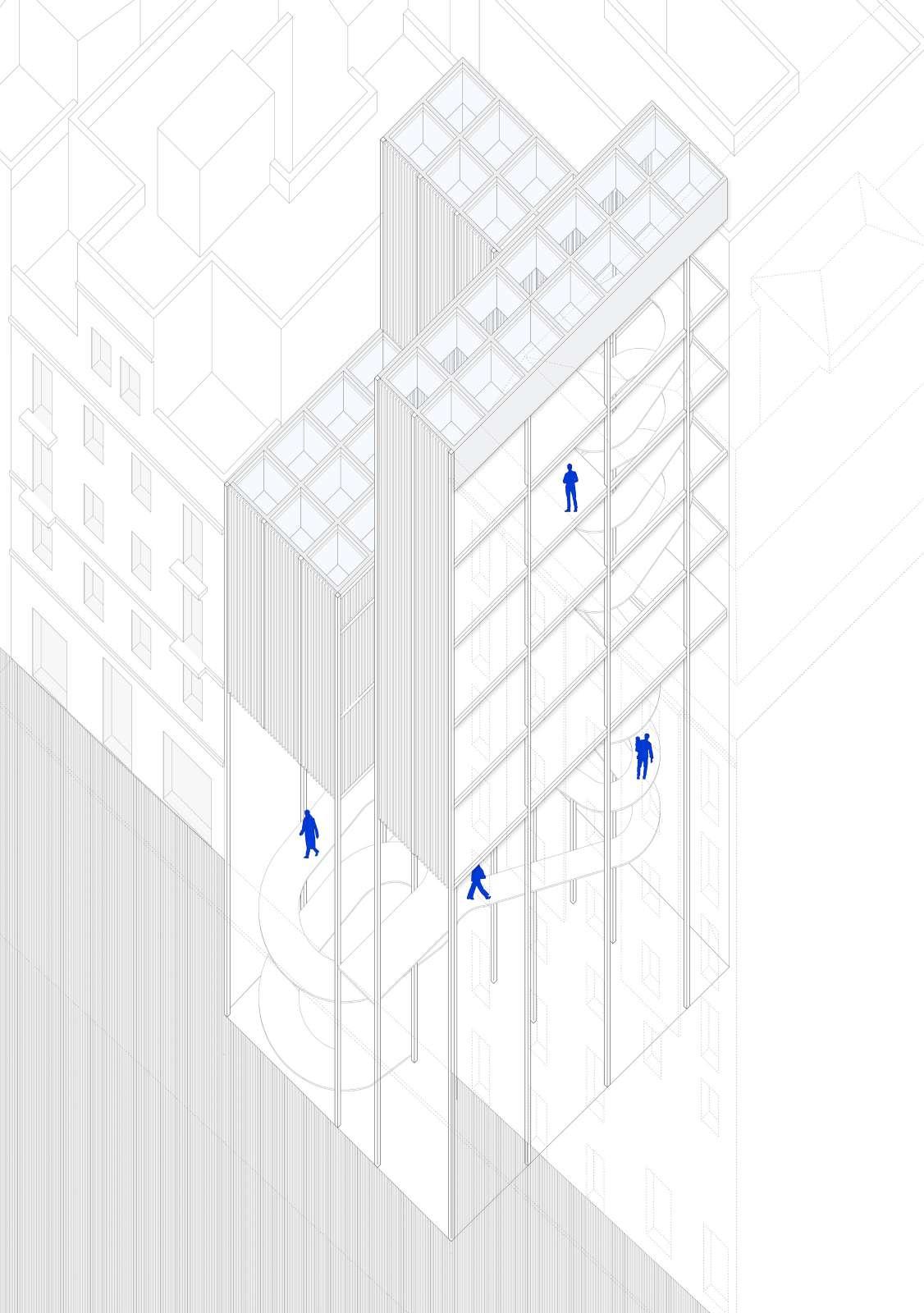
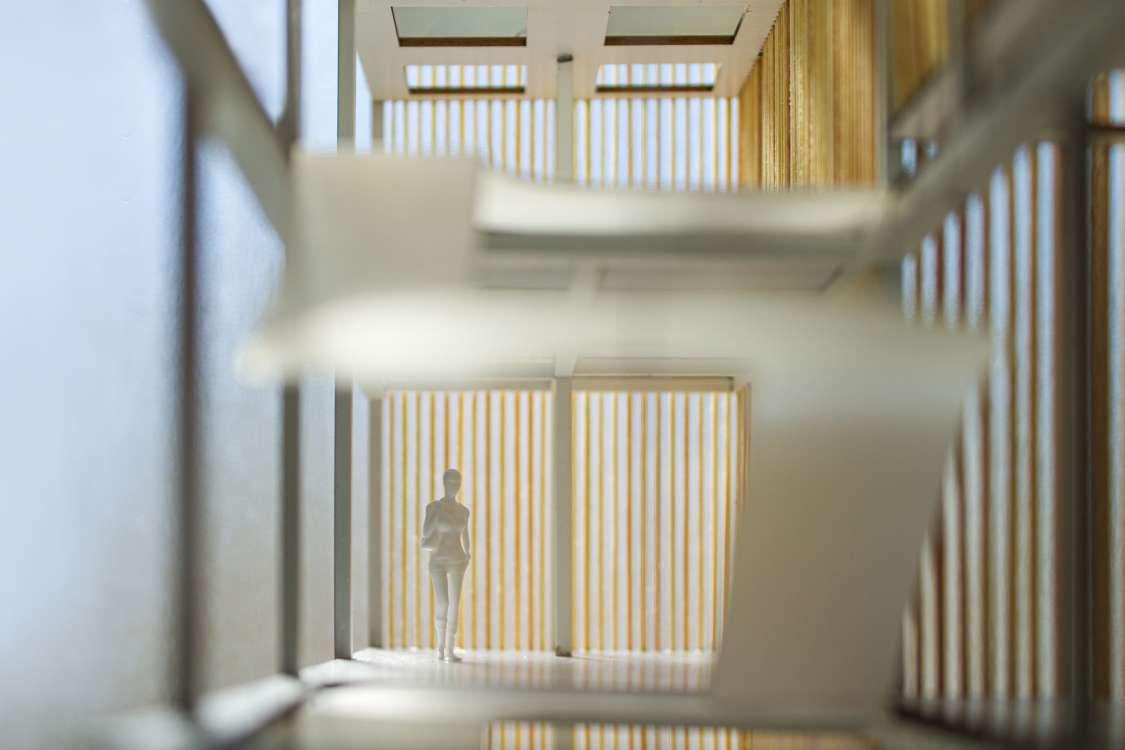
The vertical connection between spaces is designed as a continuous route of spiral ramps, which allows us to understand the whole building as a fluid space in which living, creating and exhibiting become the same activity.
Eyüpsultan
HALIÇWATERCLEANINGPLANT
Fatih
Beyoglu
Golden Horn
Sisli
Kaghitane
Gaziosmanpasa Zeytinburnu
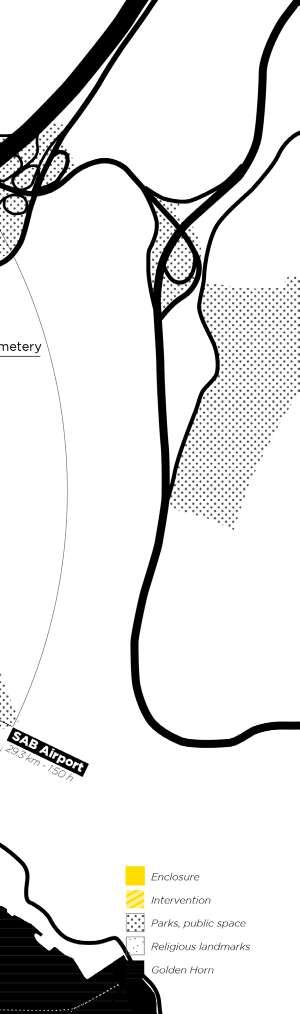
GOLDEN SPOT
WATER CLEANING AND MIXED-USE PLANT
GOLDEN HORN, HALIÇ, ESTAMBUL
41° 2’ 45.32’ N - 28° 56’ 30.35’’ O
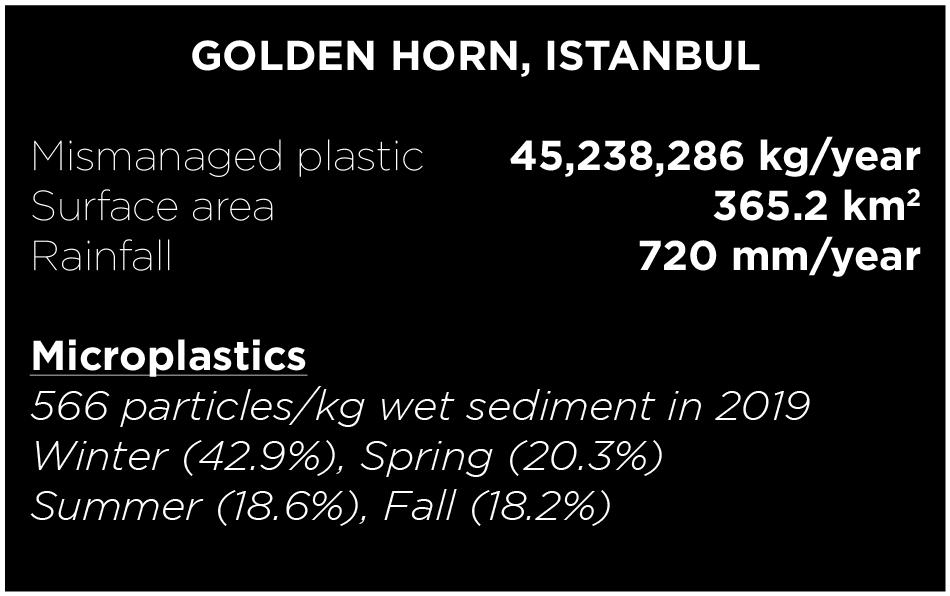
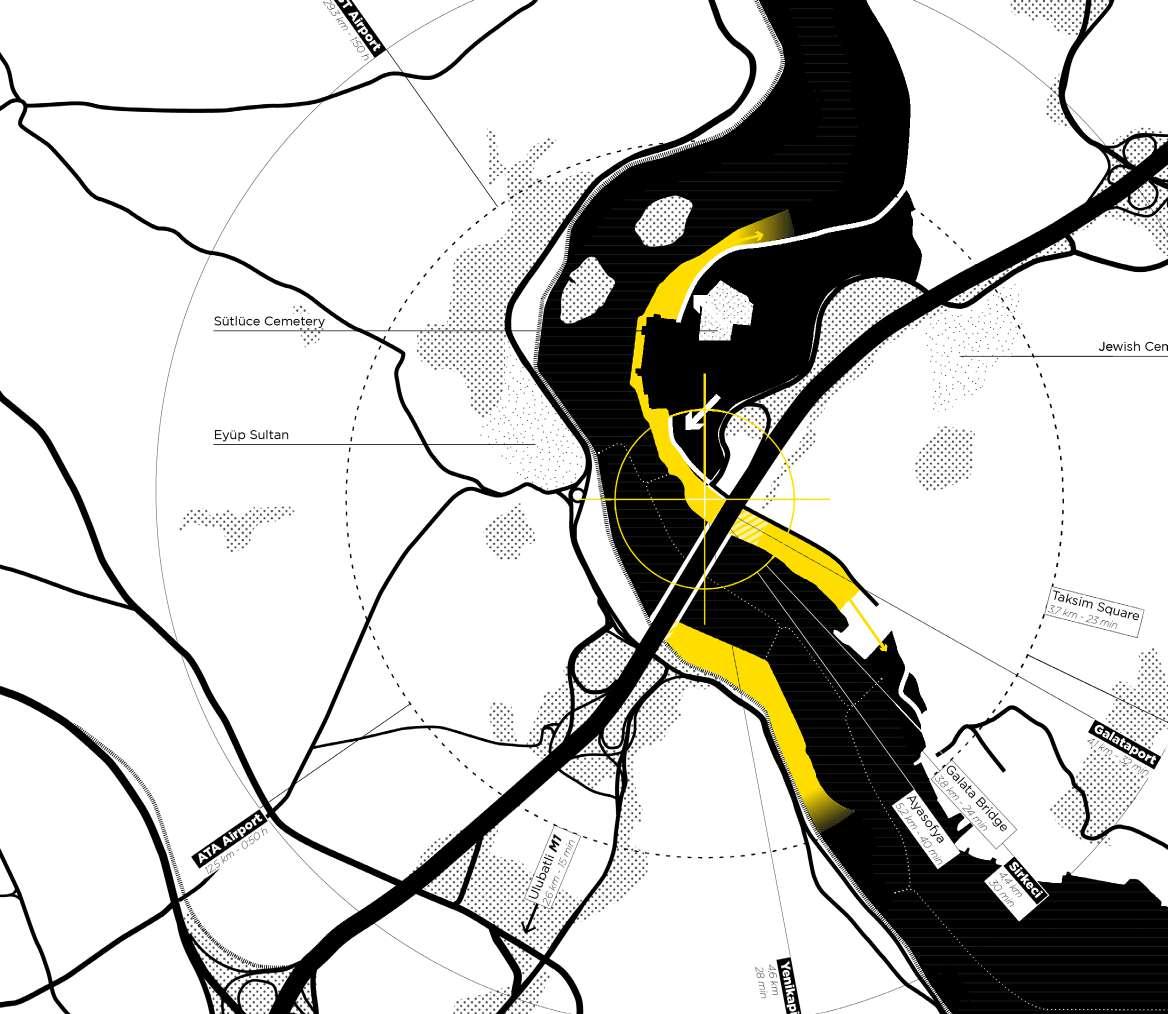
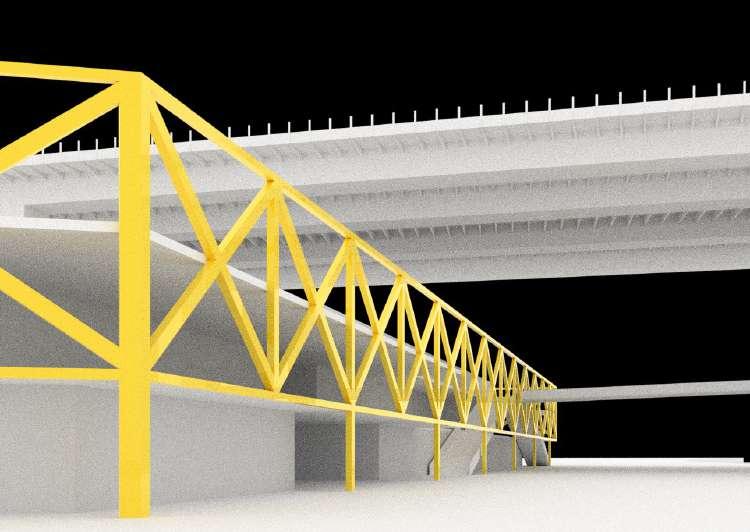
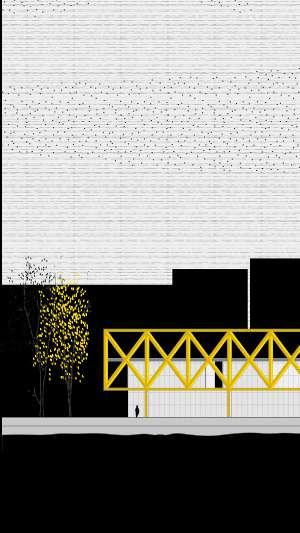
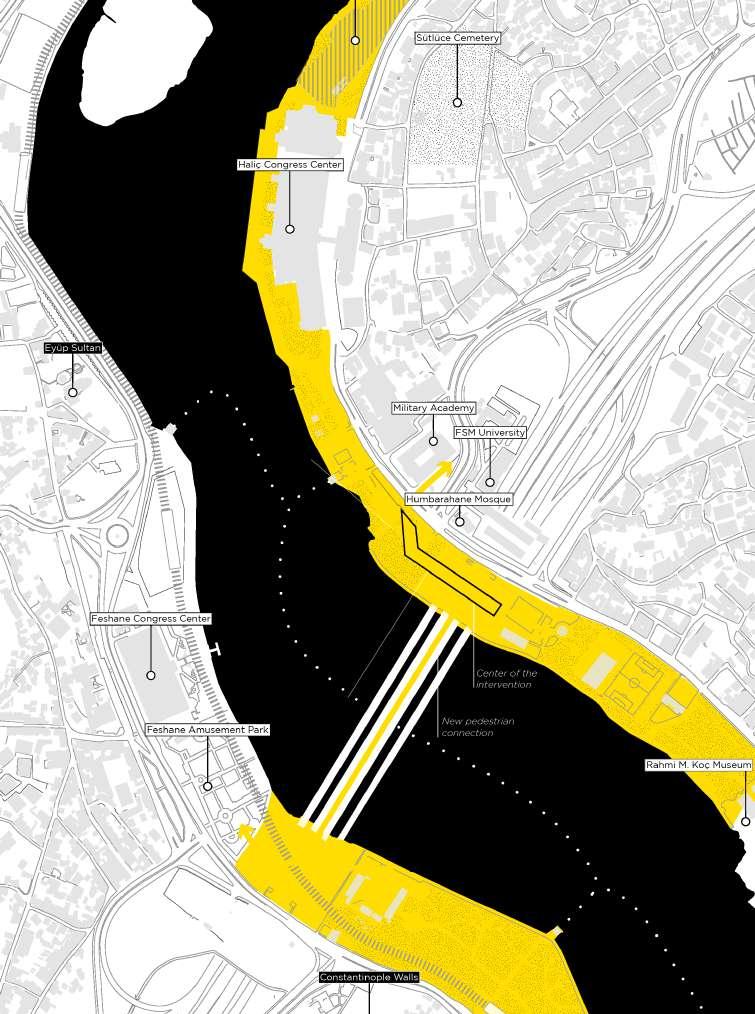
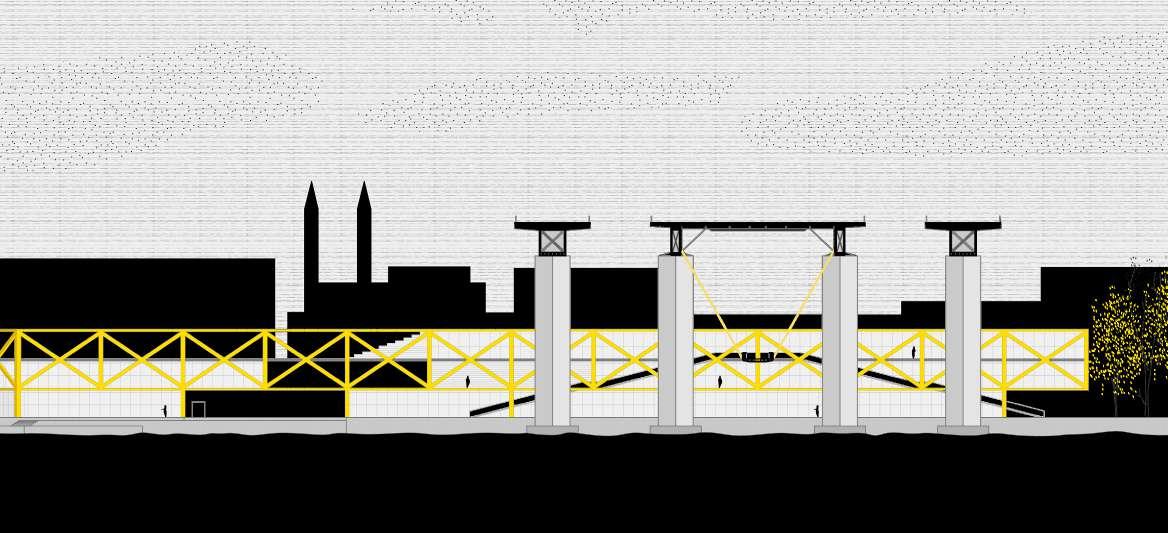
Golden Spot emerges as a major architectural project in Haliç, Istanbul, paying eloquent homage to the towering steel structures that define the iconic bridges spanning the Golden Horn. This ambitious undertaking is presented as a mixeduse development, meticulously conceived to merge an advanced water cleaning facility, a diversity of public spaces and a strategic urban intervention on the banks of the Golden Horn.
The building’s design not only seeks to be aesthetically modern, but is also geared towards sustainability, incorporating significant elements that highlight its commitment to the environment. Among these outstanding features are an openair public swimming pool that draws from the directly clean waters of the Golden Horn thanks to the proposed power plant; a picturesque pedestrian promenade that harmoniously connects both banks; and an imposing steel crossbeam structure that not only serves as an additional bridge, but also harmoniously merges the legacy of the past with future aspirations.
This project not only stands as an iconic addition to the urban fabric of the area, but goes beyond its intrinsic functionality, standing out for its unique combination of practicality and public engagement. Golden Spot, at the same time, positions itself as a transformative agent, not only in terms of infrastructure, but also as a means to raise awareness about the vital importance of maintaining clean waters and preserving the Golden Horn’s natural resources. In addition, it is projected as a key catalyst for urban development, promoting planned and sustainable growth and coherent connectivity, which benefits both the local community and the city as a whole.
CHALLENGE ADAPTATION
MUSEUM OF HISTORY
120 HOURS: CYCLES A
STORY ABOUT THE USES OF A BUILDING
INTERNATIONAL COMPETITION
https://www.120hours.no/archive
The 120 hours international competition is one of the largest architecture competitions for students in the world. Its dynamics consists of tackling a yearly changing statement and solving it in a period of 5 days, equivalent to 120 hours, by presenting a proposal on two horizontal panels.
During my Erasmus exchange experience in Istanbul, I participated in this contest with my colleague Giuseppe Aversano, student at the Università Vanvitelli in Naples.
The brief for the 2023 edition was to write a biography of a building using 4 images, one of its birth, one of its youth, one of its maturity and one of its death. This narrative had to be accompanied by a reflection on the sustainability of buildings throughout their useful life.
In this way, the proposal showed a narrative of 4 images of a fictitious building presented in a loop, re-reading each of these periods of the building’s life and presenting them as an endless cycle of uses. In this context, the birth of the building was presented as a rebirth, youth as its period of maximum use, maturity as the challenge of maintaining itself in the face of changes in the needs of use, and death as a reincarnation, where the building adapts to the environment and evolves so as not to be destroyed.
The intention of the proposal was to show that, under ideal conditions, any building should adjust to external conditions and required uses to be always reused. In this way, the costs of new construction could be reduced, resources could be preserved by avoiding waste and the importance of cultural heritage could be highlighted.
URBAN PLANNING AND ARCHITECTURE
FACING GALICIAN FEÍSMO
END-OF-DEGREE
THESIS
TUTOR:
JOSÉ CARPIO PINEDO
https://oa.upm.es/79806/
Landscape is the canvas on which human beings have developed throughout their existence, the starting point for architecture and urban planning and their most essential conditioning factor. According to the European Landscape Convention, ratified by Spain in 2004, landscape is a key element of individual and social wellbeing, and its protection, management and planning implies rights and duties for all.
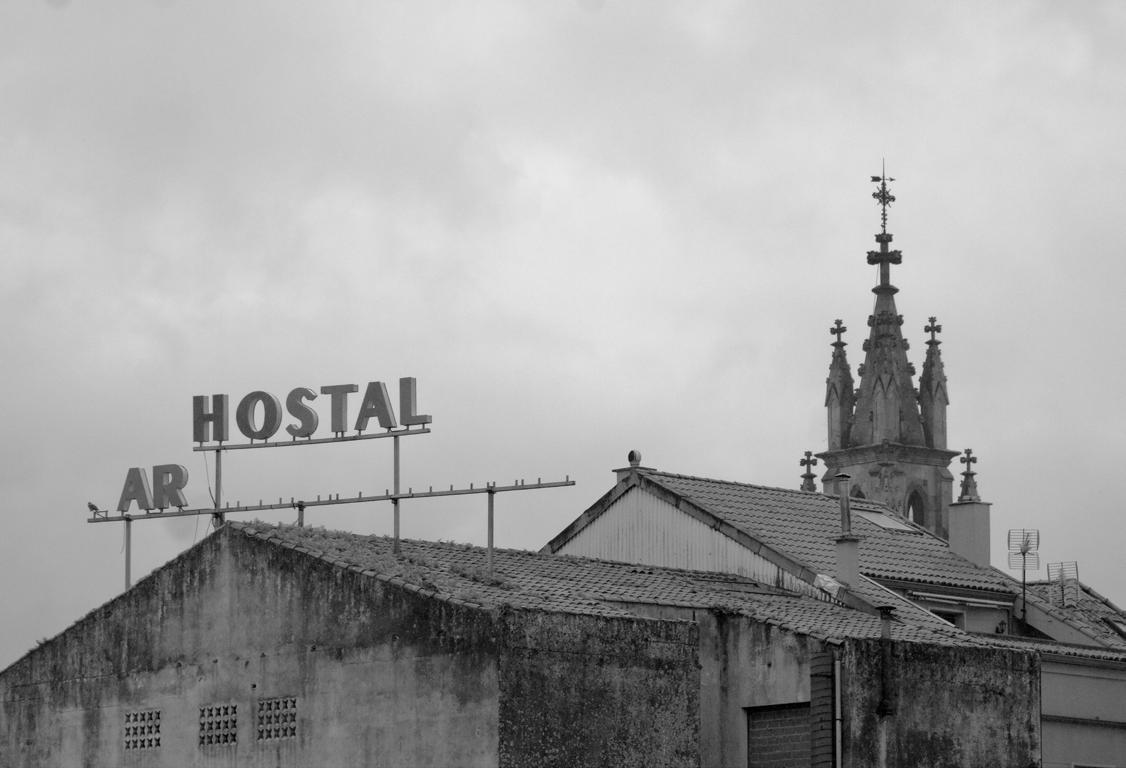
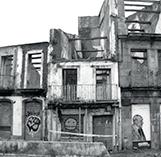
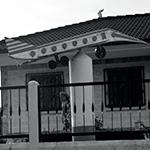
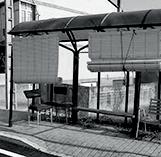
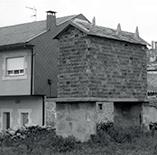
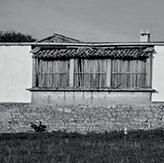
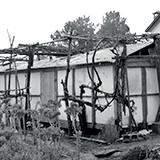
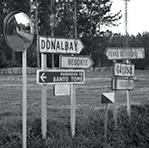
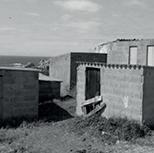
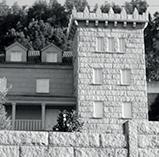
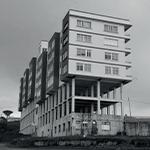
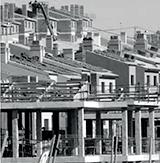
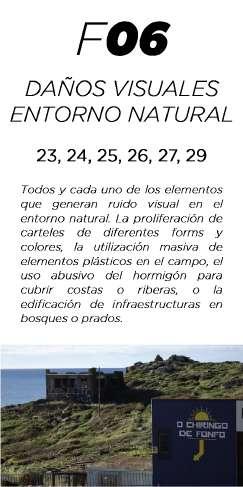
In Galicia, a rupture with the landscape began in the 1960s, generating what we know today as feísmo
In this sense, this work is based on the concern to unravel the causes of Galicia’s feísmo, an autochthonous reality in this region of Spain, and to analyse in what sense society as a whole is responsible, and in what sense the legislators who were unable to stop the problem with appropriate measures to prevent the deterioration of the landscape are responsible.
To this end, an opposition is established between the characteristics of ugliness and the aggressions on the landscape; and the new architectural currents that place the qualities of the landscape before the needs of the project.
In this way, some lines of action are deduced in order to repair the phenomenon of ugliness in the region: good urban planning and good architecture are an indispensable part of this necessary repair of the territory.
01. METHODOLOGY AND GOALS
The work is developed as a temporal account from the mid-19th century to the present day, and a vision towards the future, in order to analyse why feísmo has developed so much in Galicia in recent times.
The goals of the work are the following:
A. To determine the main causes of Galician feísmo.
B. Identify possible solutions.
C. Collect and analyse good practices in urban planning and architecture projects.
To this end, a four-phase approach was followed, beginning with a review of the literature on the issue. From there, identifying the main actors responsible, a series of semi-directed interviews were carried out with experts involved in some way in the object of the study: Antonio Maroño Cal, Teresa Táboas, Juan Creus, Carlos Seoane y César Portela.
Based on these interviews, a compilation and identifcation of architectural projects and other solutions suggested by these experts begins. Finally, it identifes why these good practices have worked against Galician feísmo. With this, through a series of analysis of each project, a guide of references for its implementation in Galicia is obtained, taking as a starting point the respect for the landscape and the care of the territory.
Entrevistas a expertos
Bibliografía
DERIVA FOTOGRÁFICA 02
Rías de Arousa y Muros
07.01.2024
DERIVA FOTOGRÁFICA 01
Península del Morrazo
30.12.2023
Buenas prácticas
Análisis de casos
Ciudad Vieja, A Coruña Juan Creus + Covadonga Carrasco 01.12.2023
Ciudad de la Cultura, Santiago de Compostela Antonio Maroño 28.11.2023
Madrid-Galicia (online) César Portela 09.01.2024
Café Moderno, Pontevedra Teresa Táboas 30.11.2023
Vigo-Londres (online) Carlos Seoane 26.12.2023
From the naming of the term “feísmo”, thanks to several articles in the newspaper La Voz de Galicia, an era began in which the population used social networks to characterise this reality on the landscape. In this way, a section appeared in the same newspaper in which users uploaded photographs of examples of ugliness, denouncing this phenomenon.
In 2015, the authors Pablo Ramil-Rego and Javier Ferreira da Costa decided to produce the “Guía de campo para a interpretación do feismo na paisaxe galega”, a document in which a series of typologies were established to differentiate and characterise this phenomenon.
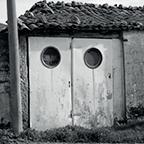
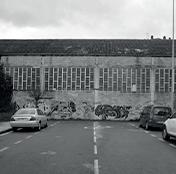
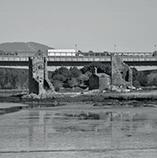
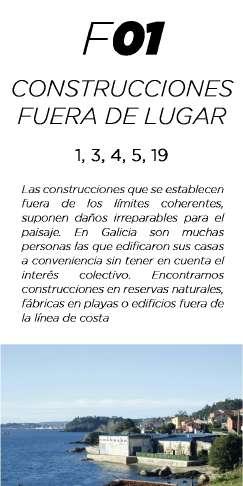
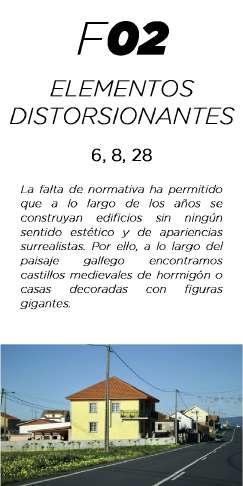
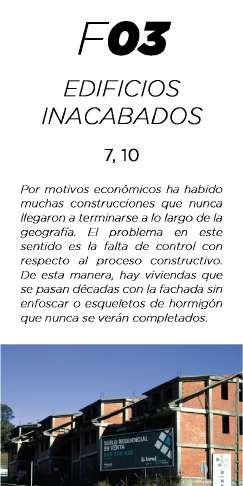
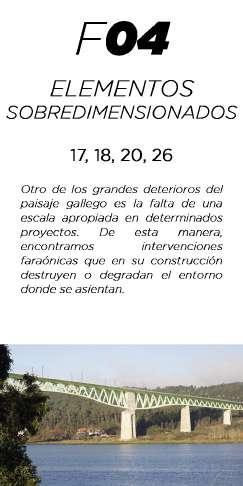
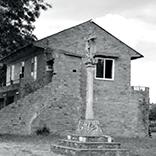
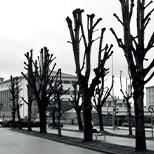
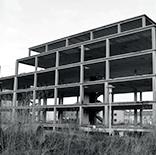
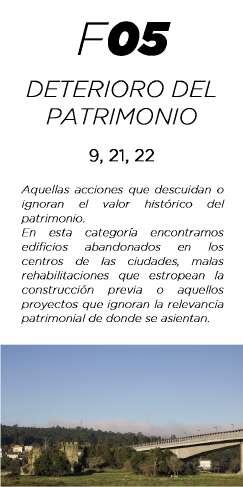
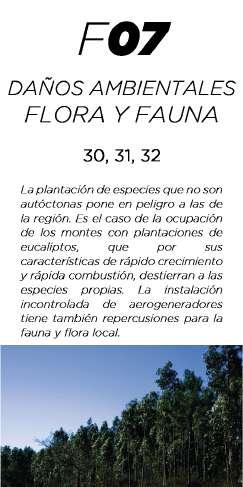
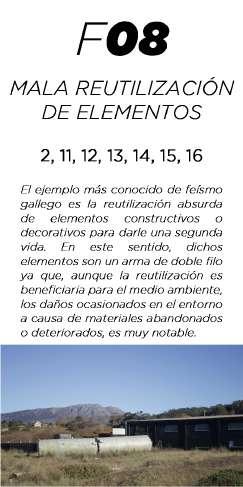
In this sense, we can observe constructions built in places where they should not be; buildings with unfnished façades, or even just the structure; elements that do not adapt to the heritage and hide or attack it; oversized developments for the landscape in which they are established; camoufaged, reconverted or mixed buildings without any functional or aesthetic sense; distorting elements in areas with great landscape value; or invasive species that banish the native fora.
These examples are in addition to other more general urban planning phenomena that have led to images of urban disorder and noise in most cities and towns. In this way, 8 categories of ugliness are established, in order to analyse how the good practices studied in the work combat this phenomenon.
CULTURA
LEGISLACIÓN PLANEAMIENTO MEDIO
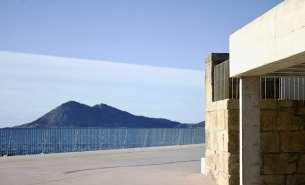
MUSEO DEL MAR DE GALICIA
A LDO ROSSI , CÉ SA R PORTE LA
CASA EN CORRUBEDO DA VI D CHI PPE RF I E LD
RESTAURACIÓN DEL PAZO DE LESTROVE
A NTONI O A MA DO
EQUIPAMIENTO DEL PUERTO DE BELUSO I RI SA RRI + PI ÑE RA
Fuente: Elaboración propia, Fotografía propia 2023
Fuente: Elaboración propia, Fotografía propia 2023
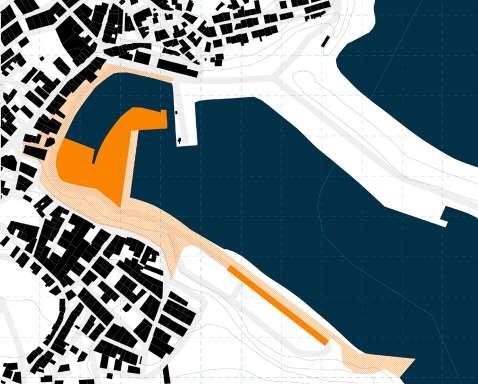
REMODELACIÓN DEL PUERTO DE MALPICA
CR E US E CA R R A SCO
MIRADOR PEDRA DA RÁ CA R LOS SE OA NE
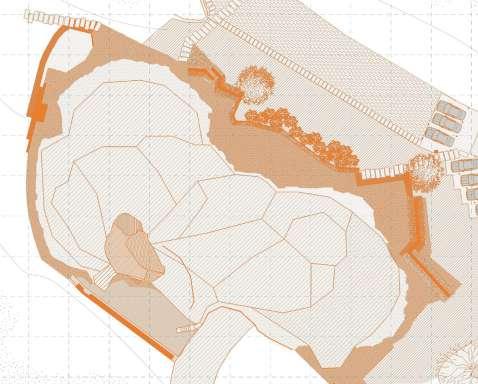
BORDE PORTUARIO DE PORTO DO SON
CR E US E CA R R A SCO
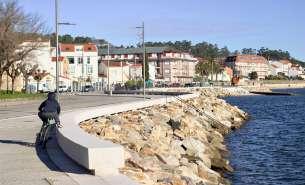
PASEO DE PALMEIRA
Galovart Martínez
Fuente: Elaboración propia, Fotografía propia
RESTORATION OF A SEAFOOD CANNING FACTORY MASTER’S FINAL
PROJECT
ONGOING
PART 1. SITE ANALYSIS
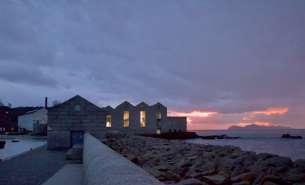
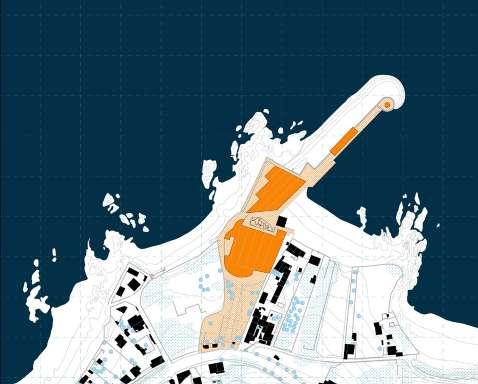
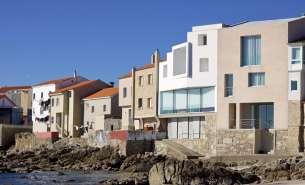
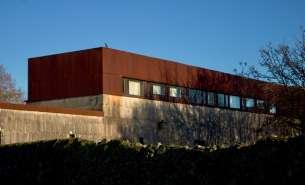
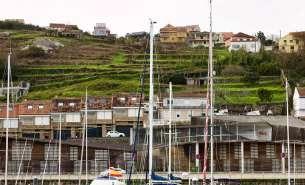
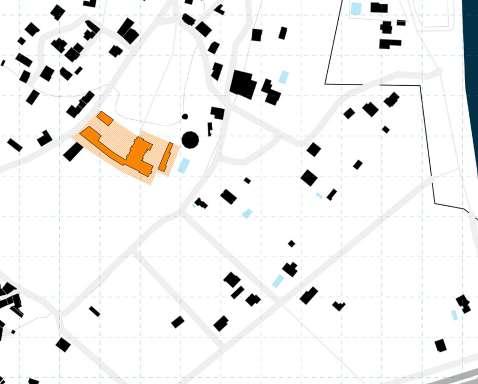
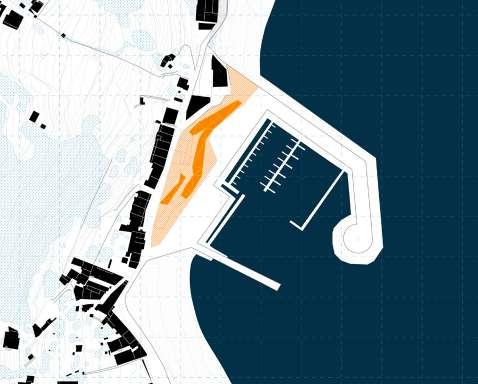
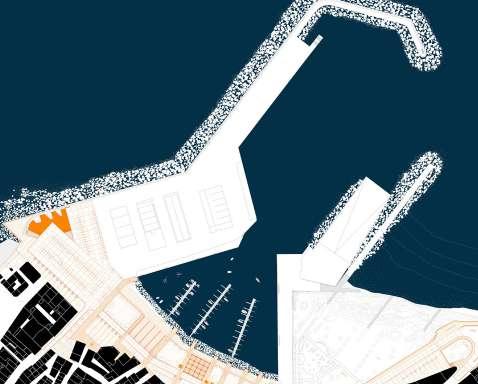
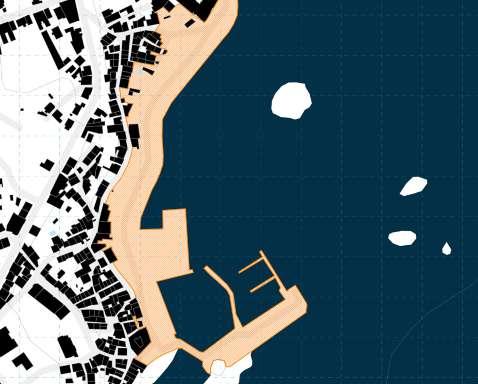
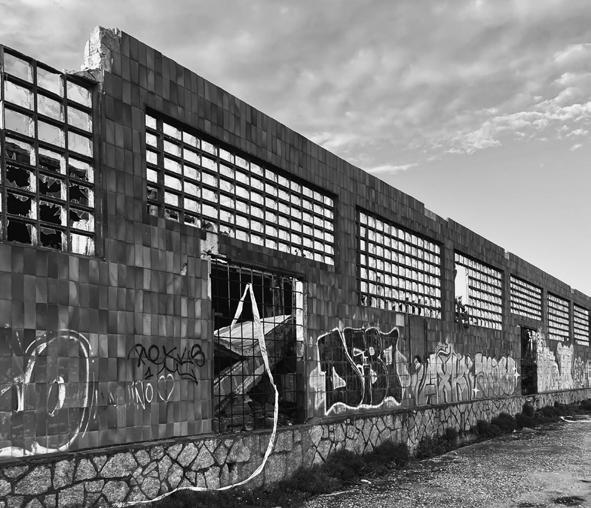
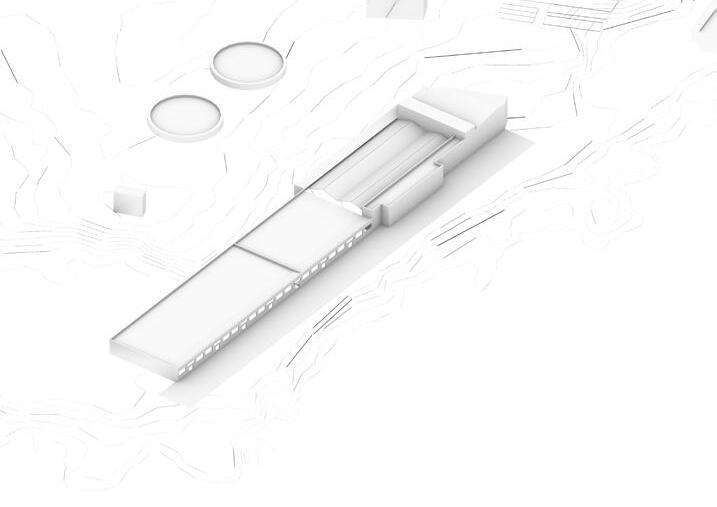
Nestled along the picturesque coastline of Aguiño, Galicia, the restoration of this historic canning seafood factory is a key component of a larger intervention aimed at reconnecting the area’s coastline—both visually and physically. This ambitious project seeks to breathe new life into the existing structure while preserving its industrial heritage and transforming it into a vibrant, multi-functional community hub.
The restored factory will feature a diverse array of spaces, including a restaurant, a market, a café, a small museum for exhibitions, a library, and a coworking space. By repurposing the existing structure, the design emphasizes sustainability and adaptive reuse, ensuring the building serves as a bridge between its historical past and its contemporary future.
Aligned with the broader vision of the intervention, the project enhances public accessibility by facilitating pedestrian pathways that connect the entire coastline, inviting both locals and visitors to engage with the natural beauty of the area while fostering a sense of community through thoughtfully designed spaces.