Maldives
Spirit of Maldives & Sun Siyam Resorts
Wreck search
Hands-on science
Tested
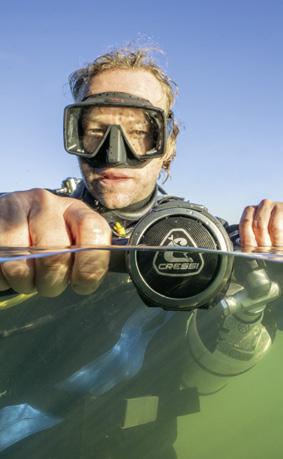
Mobile phone case and regulator
Mauritius
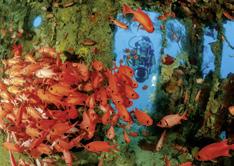
Island 1,000 Colours
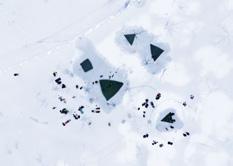
Anniversary 30 years of Mövenpick El Quseir Apnoea Ice bathing
Maldives
Spirit of Maldives & Sun Siyam Resorts
Wreck search
Hands-on science
Tested
Mobile phone case and regulator
Mauritius
Island 1,000 Colours
Anniversary 30 years of Mövenpick El Quseir Apnoea Ice bathing
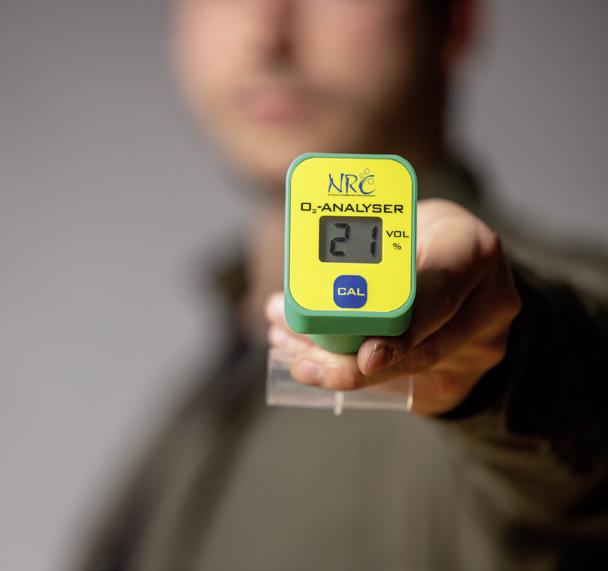
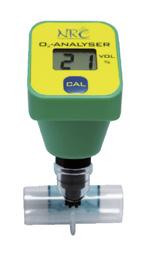
Höchste Qualität und Standards. Kompaktes Gerät zur Messung der Sauerstoffkonzentration

Sicherheit für Taucher durch einzigartiges Rettungssystem. Immer im Blick durch Echtzeit-Tracking
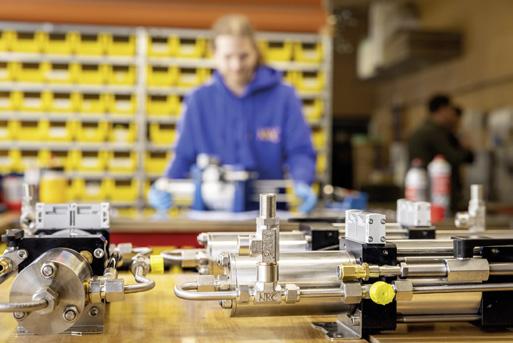
Sämtliche Booster sind für die Verwendungmit 100% Sauerstoff ausgelegt


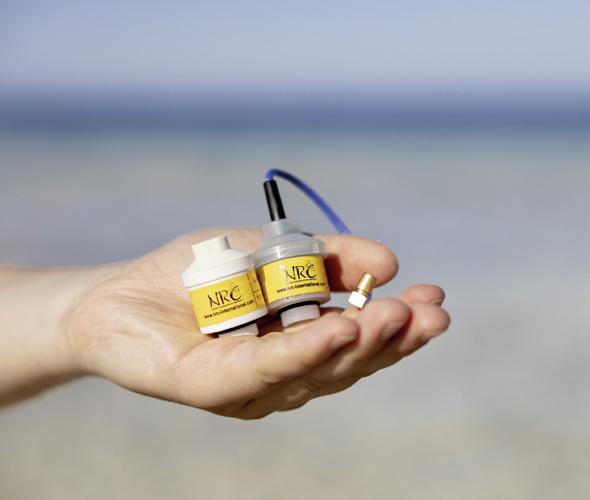

Garantiert höchste Qualitätssicherung und kurze Lieferzeiten. Made in Germany


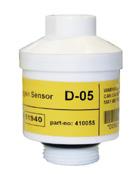





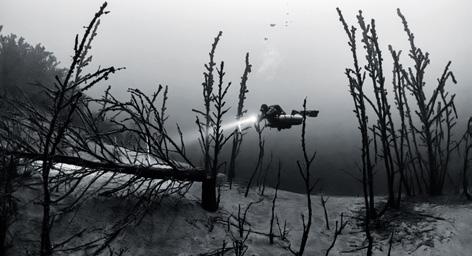
Yesterday (19 November 2025), we went to the lake to test diving equipment. At first, the conditions seemed like something out of a brochure: magnificent visibility and a water temperature of 6 °C, which felt almost tropical compared to the 4 °C air temperature. The first dive went smoothly – almost too smoothly. The second dive was supposed to be the icing on the cake, the grand finale for perfect "cover photos". But the lake apparently had other ideas.
New dive site, same lake. Visibility was still fantastic, but unfortunately spread across completely different depths. Between five and ten metres: crystal clear, like in an aquarium. Between 20 and ...: also fantastic. In between: thick fog. The shallow area? Dull. The deep area? Dark. Photo ideas? Gone straight into the water.
But that wasn't all: an invisible force promptly sent us into an area we had never dived in before. We ended up somewhere in the "green-blue water", curious as two confused otters, wondering where the way back was hidden. So we leisurely returned to five metres... or so we thought. But the invisible force probably thought, "Nope!" and pulled us back out into the lake. Two minutes without looking at the compass – and already on course for "somewhere, but definitely not the exit". When that happens to a diver – fine, tick it off. When it happens to a buddy team independently of each other – then it starts to get
mystical. Of course there are explanations. Physical, logical, correct ones. But honestly, that wasn't what it was about for us. When we reached the shore, we agreed: the lake was simply in a bad mood. Bitchy, uncooperative, unruly – in short, a real diva dive. Have you ever felt that way? Let me know.
The following pages offer a less cold and more "sweet" experience. Our authors' warm-water destinations invite you to plan your next holiday. I hope we have provided you with a few useful tips. And take a look at our reader trips. Great destinations at great prices. And finally, don't forget: Merry Christmas, a Happy New Year and take part in our Advent calendar – it's worth it.
Thank you for your loyalty. All the best to you and your families in 2026.

Alexander Kaßler Editor-in-chief, TAUCHEN alexander.kassler@tauchen.de
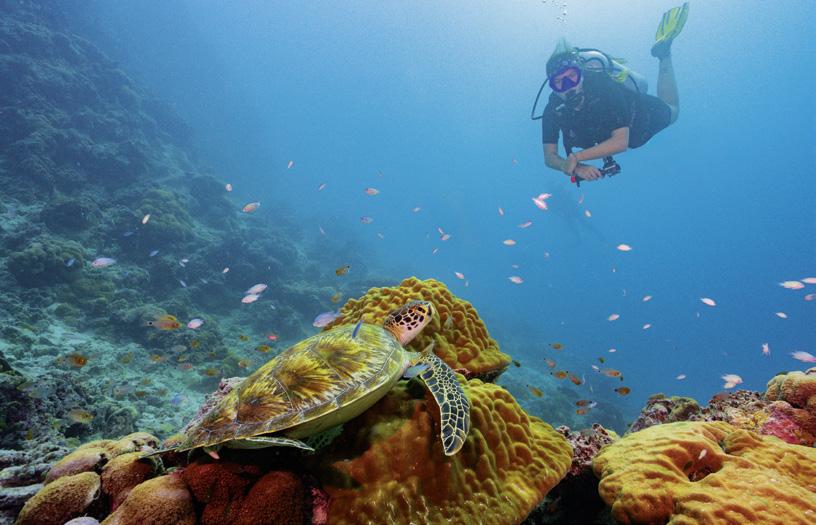

Photos: Anja Kuschel, Wolfgang Pölzer, Benjamin Schulze, Nik Linder, Timo Dersch, Jake Wilton,
Cressi
Consultation: Pregnant and diving?
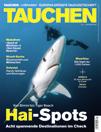
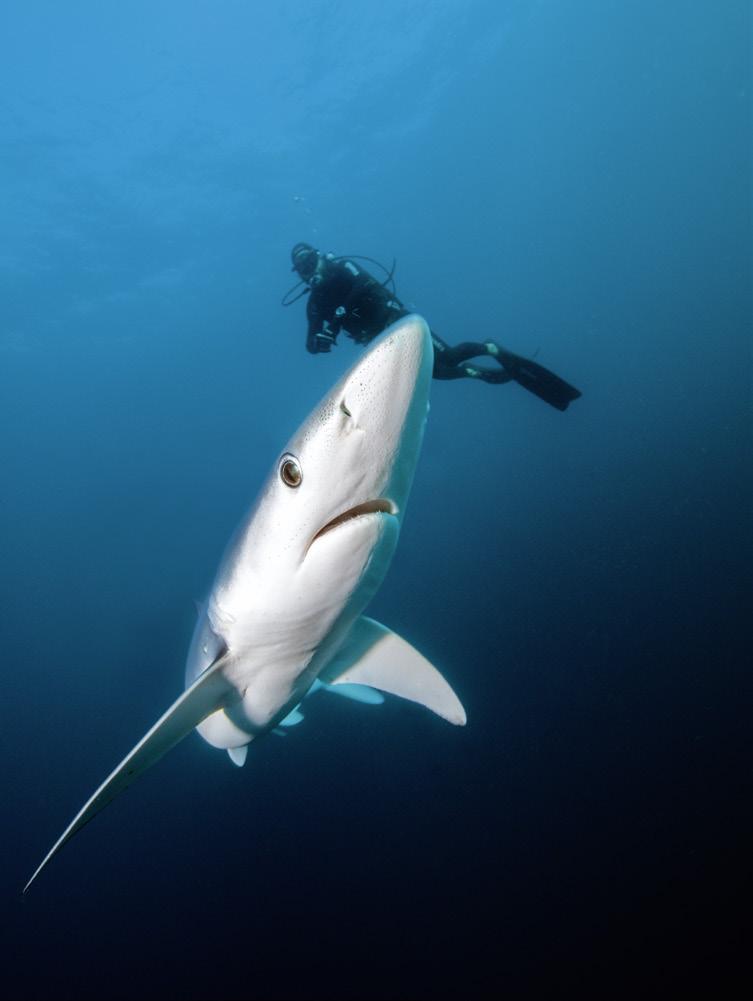
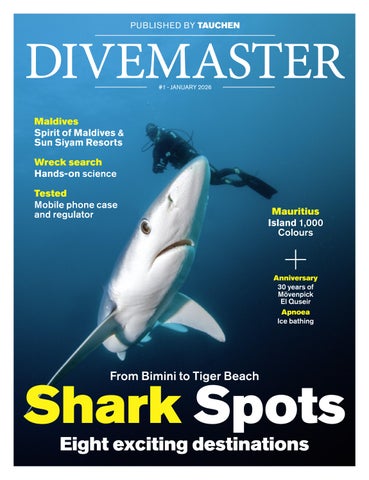
Our cover photo shows a blue shark (Carcharhinus glaucus) captured by Alexander Kaßler near Simon's Town on the coast of South Africa in the Western Cape province.
EDITORIAL TEAM
Jahr Artopé Media GmbH & Co. KG Bajuwarenring 9, 82041 Oberhaching Tel. 089/5 52 41-0, Fax 089/5 52 41-244 E-mail: redaktion@tauchen.de
DISPLAY
089/5 52 41-225
Email: sales@tauchen.de
DIVING
Tel. 040/5555 7991, email: jam@dpv.de DIGITAL DIVING www.tauchen.de/epaper

Did you know that TAUCHEN is also available in the digital world? This includes our social media channels Facebook and Instagram as well as our website and our YouTube channel. And on our podcast channel there is „something to listen to“. Just drop by and listen. Just follow the links below. Do you want to read TAUCHEN digitally? Then download our TAUCHEN app for iOS and Android onto your end device. We look forward to hearing from you.


• Webseite: tauchen.de
• Facebook: facebook.com/ tauchenmagazin
• Instagram: instagram.com/ tauchen.magazin/
• Podcast: podcaster.de/podcasts#/ podcast/tauchen-talks
• Youtube: TAUCHENDASMAGAZIN
• TAUCHEN-App: Android & iOS
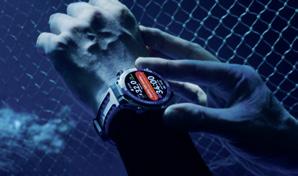
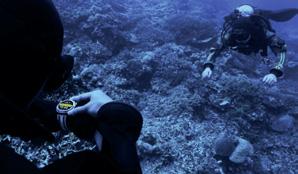
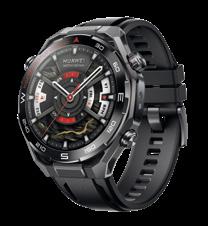
The world's first smartwatch with sonar-based underwater communication is revolutionising diving.
Anyone who spends a lot of time underwater knows the feeling – the tranquillity, the vastness, the complete focus on the moment. But since the new HUAWEI WATCH Ultimate 2 arrived on the wrist, this experience has changed fundamentally. This watch not only measures precisely – it creates connections, even where radio waves have long since fallen silent. A technological masterpiece for adventurers, athletes and deep-sea enthusiasts who refuse to compromise.
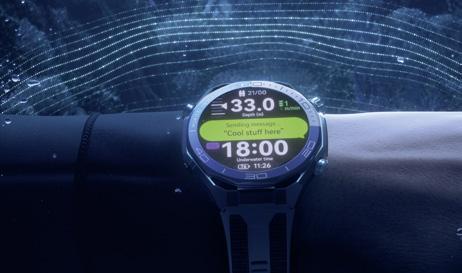
Sonar communication down to a depth of 150 metres – safety you can feel HUAWEI WATCH Ultimate 2 is considered the first smartwatch that makes it pos-
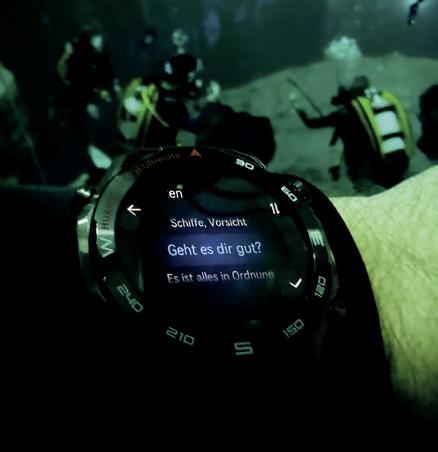
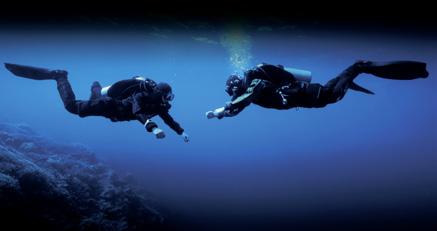
sible to send messages underwater. Thanks to innovative sonar technology, you can communicate with other HUAWEI WATCH Ultimate 2 devices at depths of up to 150 metres – over a distance of 30 metres. A signal or a short message –and you stay connected, even at depth.
The underwater SOS function is particularly impressive. With a range of up to 60 metres, help can be summoned in a flash in an emergency – a function that you hopefully will never need, but which creates safety and confidence. It shows that diving with modern technology can not only be more fascinating, but also safer.
Precise navigation thanks to gap antenna & Sunflower positioning Underwater, reliability is more important than anything else. The Sunflower Positioning System in the WATCH Ultimate 2 uses
dual-band technology and five satellite systems to deliver accurate location data even in challenging environments. The gap antenna system ensures a stable connection – even in rocky coastal regions or remote expeditions. On the surface, the eSIM function turns the watch into a fully-fledged communication device. Phone calls, messages or music – everything works without a smartphone. Thanks to AI-powered noise cancellation, every conversation remains clear, whether on the beach, on a boat or in wind and waves.
Safe on the road – technology that thinks for itself
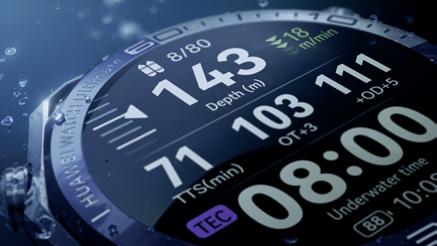
Whether you're on an adventure, climbing mountains or diving, the HUAWEI WATCH Ultimate 2 thinks for itself. Fall detection, emergency SOS and altitude monitoring are integrated safety features that react in time when it matters. This makes the watch a silent but attentive companion in all situations.
Built for depth – and for life
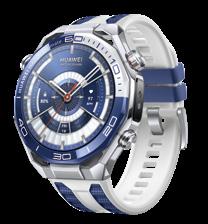
You can feel it as soon as you put it on: this watch is made for extremes. The zirconi-
um-based metal case is lightweight, robust and corrosion-resistant. It withstands pressure, salt water and shocks – and remains water-resistant to 150 metres. The two-tone bezel made of nanocrystal ceramic and the sapphire crystal give the watch an elegant, sporty look. Worn in blue or black, it looks equally elegant and powerful – a rare balance of design and function.
Health checks – even under pressure
Body awareness is crucial when diving. The TruSense system in the HUAWEI WATCH Ultimate 2 provides accurate measurements for 11 health metrics, including heart rate, oxygen saturation (SpO₂), stress levels and sleep quality. The Health Glance feature lets you keep an eye on all your important metrics in real time, even underwater. This not only gives you peace of mind, but also helps you manage your training and recovery. Energy for long adventures
It's not just the technology that's impressive, but also the endurance. In energy-sa-
ving mode, the HUAWEI WATCH Ultimate 2 lasts up to 11 days, and in standard mode it still lasts 4.5 days. This means it can accompany you on diving trips or adventures lasting several days without interruption – a clear advantage when there's no power socket in sight.
As versatile as the sea
The HUAWEI WATCH Ultimate 2 performs just as well on land as it does underwater. HD golf course maps, precise outdoor tracking modes and smart training analyses make it an all-rounder for sports, everyday life and leisure. But its true home remains the sea – where technology, trust and fascination merge.
The HUAWEI WATCH Ultimate 2 is no ordinary smartwatch. It is a tool for explorers – powerful, precise and reliable. With sonar communication, accurate navigation, robust construction and intelligent health and safety management, it sets new standards in diving. Those who dive with it will experience what innovation really means: confidence at any depth.
Many stories begin with these words. This is also true of the story of the Flensburg Diving Museum Association, which we are focusing on in our series of presentations here.
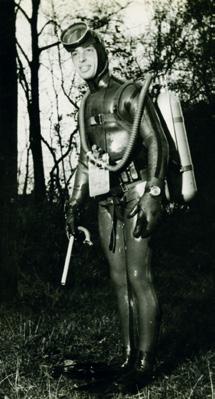
The diving centre of the Förde-Tauchschule Flensburg has been located in anidyllicsetting directly on the beautiful Flensburg Fjord with a view of Denmark since 1998. Divers felt at home here and enjoyed the thorough, solid training provided by CMAS*** diving instructor Peter Kopsch. Safe diving and socialising were equally important to him. After handing over the diving school to a successor, Peter Kopsch remained actively involved in diving. He had been involved since the 1950s – at the beginning of the recreational diving boom. His first attempts at diving in a rubber suit and with homemade rebreathers in Wannsee, later as a member of DUC Berlin, a successful international competitor in fin swimming and distance diving, a founding member of
UC Baltic Flensburg and its chairman for 25 years, as well as an honorary instructor of the VDST – all this characterises his impressive career in diving.
So it was no surprise that over 60 years, a lot of diving equipment had accumulated. What to do with it? It was too good to throw away. So in October 2016, the "Little Diving Museum" was created – just like the former diving school, located directly on the Flensburg Fjord on a property owned by the city of Flensburg.
The "Little Diving Museum" quickly became a magnet for visitors, especially older and former divers. Many were happy to donate their collected diving equipment, underwater cameras and everything else that once made divers' hearts beat faster. A
dynamic of its own developed: the museum grew larger and more attractive – here, diving history could be experienced and touched!
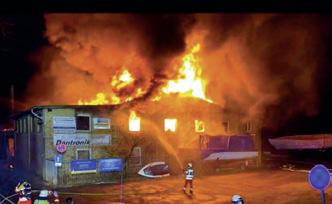
In April 2018, the "Kleines Tauchermuseum" (Small Diving Museum) became the Tauchermuseum Flensburg e.V. (Flensburg Diving Museum), which has since been run as a non-profit association with Peter Kopsch as its chairman. 23 February 2021 was a dark day for the museum: a major fire on the property destroyed a former aircraft hangar. It was engulfed in flames. Fortunately, the surrounding buildings were spared. Nevertheless, the entire property had to be cleared. Where to go with the diving museum now? Rental spaces in the city were too expensive or unsuitable.
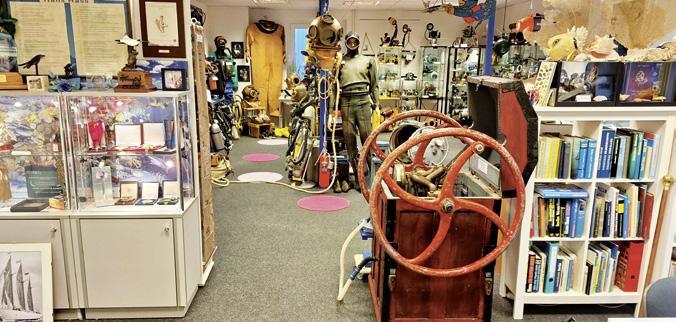
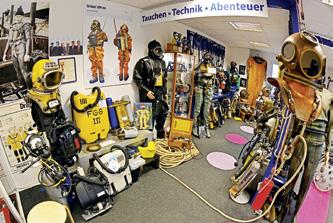
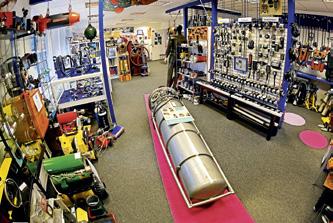
Then came the offer from Dantronik to move into the building at Batteriestraße 63 in Flensburg as a subtenant. The reopening was celebrated on 15 May 2022. Since then, visitors have been able to marvel at the many diving exhibits once again: historical diving equipment from various countries, curious homemade underwater cameras, a telescopic pressure chamber, old compressors, rebreathers, diving helmets and an original hand pump. There are also numerous artefacts from the sea, including amphorae that are over 2000 years old. The exhibition is complemented by an extensive collection of historical diving magazines and books. In a cosy reading corner, visitors can leaf through the first German diving magazine "Delphin" (April 1954) or browse through issues of the magazine TAUCHEN from its first edition in April 1978 to the present day. On 16 December 2022, the diving museum was awarded the "Kleine Museen" (Small Museums) seal of approval by the Schleswig-Holstein Muse-
um Association. The history of diving goes back many thousands of years – long before the birth of Christ. At the Flensburg Diving Museum, you can experience this history up close!
Whether you are a diving enthusiast or a technology fan, a visit to the museum is interesting, exciting and educational.

Contact: Flensburg Diving Museum Association
Batteriestraße 63 – 24939 Flensburg
Telephone: +49 461 63552
Mobile: +49 170 775 3630
Email: info@tauchermuseum-flensburg.de Web: www.tauchermuseum-flensburg.de
Would you like to introduce yourself to? Are you an association, club or diving club? Then write to: alexander.kassler@tauchen.de
With a diving certificate from 2025, you can attend the boot trade fair for free!
Experience the fascination of the world's largest water sports fair in Düsseldorf – free of charge with your diving certificate. Did you obtain your diving licence in 2025? Then a special highlight awaits you: visit boot Düsseldorf 2026 free of charge and discover the fascinating world of diving in all its facets! boot is not only the world's largest water sports fair, but also the most important meeting place for everyone who loves the water. In diving halls 11 and 12, the latest equipment, exciting destinations and fascinating lectures await you at the Dive Centre. You also have the opportunity to book a free accompanied dive in the four-metre-deep diving tower in Hall 12. Whether you are just starting out or want to deepen your passion, here you will find inspiration, know-how and the latest trends in diving. Secure your free ticket now and immerse yourself in a world full of adventure. Become part of the international water sports community!
How do I get a free ticket?
The following groups of people are eligible to receive a free ticket to boot 2026. Holders of a certificate issued in the calendar year 2025: 1-star diver // Open Water Diver (OWD) // Freediver (1 star).
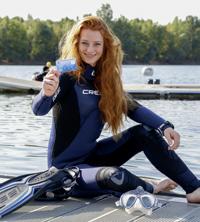
Simply register online at the boot ticket shop and show your diving certificate at the ticket office during boot 2026 (17 to 25 January 2026). With this promotion, boot Düsseldorf would like to thank everyone who obtained their diving licence in 2025. Together with the associations of the Diving Sports and Industry Association (IAC, PADI, SSI, VDST) and the exhibiting associations at boot 2026, newcomers to diving will receive a free one-day ticket to the trade fair. boot.de
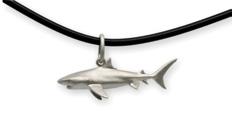
Stefan Wiessmeyer's scuba collection celebrates its 30th anniversary in 2025 – an occasion for new jewellery designs. One of these is the tiger shark pendant: designed by Stefan and handmade in 925 silver, it is also available in 585 yellow gold on request. For over three decades, the scuba collection has combined a passion for diving with artistic craftsmanship and is available exclusively in the online shop. wiessmeyer.de

Impressive donation total at InterDive 2025
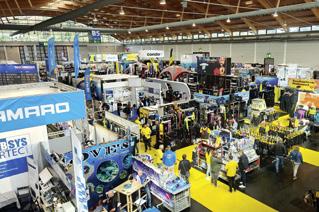
This year's fundraising campaign at InterDive Friedrichshafen 2025 was a complete success! At the auctions, visitors had the opportunity to bid on attractive travel and non-cash prizes while doing good at the same time. Numerous exhibitors provided a wide range of offers, including diving packages from Emperor Divers, stays at Lembeh Resort, Temple Point Resort and Lahami Bay Beach Resort, a diving safari with the M/Y Red Sea Explorer, and high-quality equipment from Cressi and Mares. At the end of the event, an impressive sum of €5,800 was raised for charity. The donations went to various aid organisations: among other things, a contribution saved 2,000 square metres of rainforest in Borneo through the Pelorus Jack Foundation of actor Hannes Jaenicke, who was also a guest at InterDive. Other recipients included Sea Shepherd, in support of the campaign against illegal octopus fishing in the Mediterranean, as well as Ocean Heroes and Mama Earth. Trade fair director Walter Harscher generously rounded up the donation amount and added a large sum from his own pocket. "We are delighted with the sensational success of this campaign," said Harscher. "A big thank you goes to the exhibitors and visitors who contributed to this with their participation. As trade fair organisers and operators of Extra Divers diving centres, the protection of our oceans is particularly close to our hearts." The next InterDive will take place from 24 to 26 September 2026. inter-dive.de
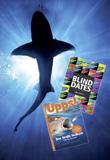
Recklessness towards sharks is on the rise: more and more divers are losing respect due to frequent encounters. Dangerous behaviour occurs during feeding: sharks are touched, pulled or held for photos. Experts warn: anyone who harasses sharks is acting negligently and risks injury. Even small species such as blacktip reef sharks can react unpredictably in groups. Conclusion: keep your hands off sharks! Respect is paramount. Who would stroke a strange Great Dane in the woods?
One of the many pieces of information about sharks from the exciting shark books by Sharkproject founder Gerhard Wegner. Oops! The Big Shark Book (ISBN 978-3982149127) and BLIND DATES – Encounters with Sharks ( ISBN 978-000436765). If you want to do something good for marine conservation, buy from the charity bookshop: ocean-heroes. shop. Otherwise, buy from Amazon.
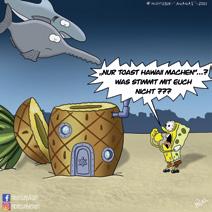
More from artist Michel Ley can be found at: Facebook/michels.imbaerium, Instagram ("michels.imbaerium") and www.michels-imbaerium.de


The pirate's grave
Author: Gerhard Wegner
From €14.95, ODYSSEE-Abenteuer Verlag, ISBN: 978-3-98214913-4
A maritime adventure full of history and secrets. Wegner combines fact and fiction to create an exciting treasure hunt that captivates readers with its authentic characters.
Sharkpedia – The amazing world of sharks
Author: Daniel C. Abel
20 euros, Mairisch Verlag, ISBN: 978-3-94872249-4
A fascinating reference work on sharks that combines knowledge and aesthetics. Precise facts and striking illustrations make it both educational and entertaining.
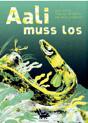
Aali has to go.
Authors: Dita Zipfel & Finn-Ole Heinrich 20 euros, Mairisch Verlag, ISBN: 978-3-94872248-7
A poetic young adult novel about freedom and self-discovery. Zipfel and Heinrich write in a cheeky, profound style with unmistakable language.
Breathing is overrated
Author: Herbert Nitsch
29.95 euros, OA OA Company, ISBN: 978-2-95940644-7
Scubago will go online in early 2026 –the first global marketing and booking platform for the diving industry. The aim is to connect diving centres, resorts and divers worldwide. Scubago combines a modern booking system with inspiring travel content and professional marketing tools. At launch, the portal will offer over 10,000 dive site descriptions, 1,100 destinations, 150 wildlife pages and 4,000 registered dive centres. Courses, dive packages, "Dive & Stay" programmes and eco-events will be offered – from scuba diving to freediving. Scubago operates on a subscription basis with no commission and is aimed at providers worldwide. Official launch: January 2026, material available at www.scubago.com. Trade fair dates : Salon de la Plongée, 8 to 11 January 2026, Paris; boot Düsseldorf, 17 to 25 January 2026 in Hall 12, Booth A69.
The diving community mourns the loss of Hubert (Hubsy) Sinzig, who passed away suddenly and unexpectedly at the age of 69. For many decades, Hubsy was a fixture in German diving – as an instructor, service technician, expert and friend. His seminars were legendary: with humour, openness and deep expertise, he conveyed even complicated technical concepts in an understandable way. His name was inextricably linked with the topic of breathing air compressors. Wherever diving technology was put to the test, Hubsy was never far away – committed, helpful and always with a smile. With his death, the diving community has lost one of its most influential personalities. His passion, his knowledge and his straightforward manner will never be forgotten.
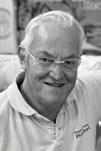
Our thoughts are with his family.
The editorial team at TAUCHEN
Nitsch recounts his life with breathing difficulties and extreme free diving in a humorous and honest manner.
A touching book about courage, humour and joie de vivre despite limitations.
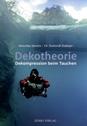
Decompression theory – decompression during diving
Authors: Veronika Sievers & Dr Dominik Elsässer
38 euros, Zeisig Verlag, ISBN: 978-3-94737703-9
Sievers and Elsässer show how decompression works in practice and theory. A reference work for deep divers, but also for shallow divers with an interest in the subject.
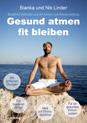
Breathe healthily – stay fit: proven methods from apnoea and breathing training
Authors: Nik Linder & Bianka Linder
9.90 euros, Naglschmid Verlag, ISBN: 978-3-89594924-1
A compact guide with simple breathing exercises from apnoea training. Clearly explained and suitable for everyday use –ideal for reducing stress and improving performance.
Mermaids – A Short Handbook for Mermaids and Nixies
Author: Daniela Rodler
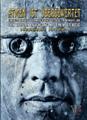
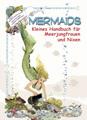
14.90 euros, Stephanie Naglschmid Publishing House, ISBN: 978-3-89594-935-7
An imaginative handbook for mermaid fans with lovely illustrations. It playfully imparts knowledge and inspiration about mermaiding.
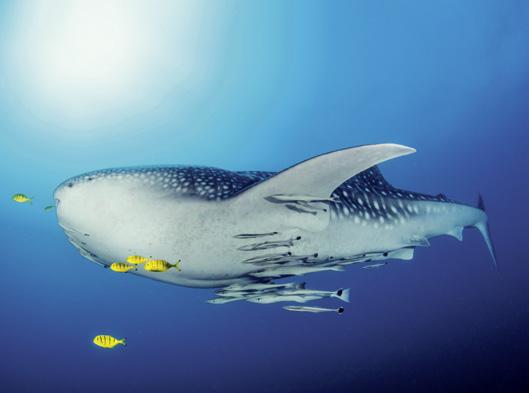
Mozambique is still considered an insider tip among diving enthusiasts – yet this country on the east coast of Africa has everything an explorer could wish for: endless palm-fringed beaches, turquoise waters and fascinating underwater worlds. Around Vilanculos, colourful reefs and remote islands that can only be reached by boat beckon. In Tofo, visitors can expect a lively diving scene with the chance to encounter manta rays and whale sharks. Those who prefer more adventure will find unspoilt nature, endless sand dunes and warm hospitality in the south at Ponta d'Oro. Mozambique – now included in Belugareisen's travel programme – is not only exciting underwater. On land, cultural encounters, authentic cuisine and unforgettable safari experiences await in the nearby Kruger National Park. belugareisen.de
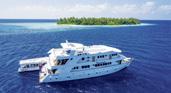
If you want to experience diving in the Maldives at its finest, the M/V Keana is the place for you. With a maximum of 16 guests, there is plenty of space on board and a personal atmosphere –perfect for relaxing and enjoying the legendary reefs of the Maldives. All cabins are above the waterline and offer sea views. Thanks to a modern photovoltaic system, the generator is almost always switched off at night. The Keana is run with great passion under German management. One of the owners is always on board. sub-aqua.com
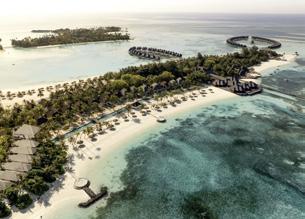
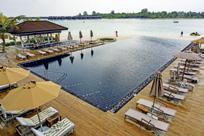
Sun Siyam Olhuveli Maldives combines comfort, diversity and tropical lifestyle on three interconnected islands in South Male Atoll: Olhuveli, Dream Island and Romance Island. The spacious four- to five-star resort offers several restaurants, three spas and a comprehensive range of sports and leisure activities – ideal for couples and families who want to combine relaxation and activity. With 24-hour all-inclusive service, white sandy beaches and the longest pool in the Maldives (210 metres), Olhuveli sets new standards. The house reef is ideal for diving and snorkelling, while top spots such as Kandooma Thila and Cocoa Corner are only minutes away. Whale shark excursions and nurse shark dives are also on the programme. Now bookable through the diving tour operator Sub Aqua. sub-aqua.de
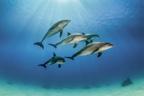
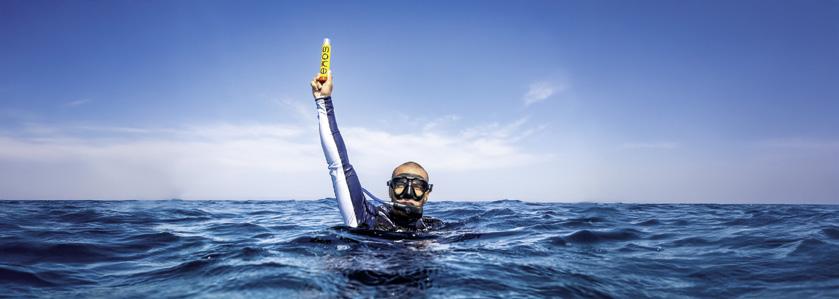
Join us from 9 to 16 July 2026 on an extraordinary dolphin safari with the M/Y Independence III from Hurghada! Together with marine biologist Angela Ziltener and her organisation Dolphin Watch Alliance, we will experience dolphins up close. The week combines diving and snorkelling and provides insights into the behaviour of marine mammals and how to interact with them responsibly. Price: €1,349 (including full board, nitrox, guide and ENOS system). Information & registration: redaktion@tauchen.de, keyword: dolphin safari.
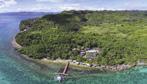
Together with the Magic Oceans Resort, TAUCHEN is inviting readers to an exclusive trip to Bohol from 29 July to 8 August 2026. In addition to ten dives at the famous house reef and spectacular boat trips, participants can look forward to special highlights: a chocolate tour, a Filipino cooking class and a sightseeing tour of the Tarsier Sanctuary, Loboc River and Chocolate Hills. The idyllic resort with a pool, restaurant and comfortable cottages offers the best conditions for divers and families. Special prices: €1,965 for divers, €1,785 for non-divers, children from €350. Flights from €1,100. Minimum number of participants: 16. Information & booking: redaktion@tauchen.de
In November 2026, Reisecenter Federsee is offering an extraordinary combination of cultural trip and diving safari
Part one of the round trip (15 to 21 November 2026) takes you from the dunes of Wahiba Sands via Jebel Shams to Ras al Hadd – with the Sultan Qaboos Mosque, Muttrah Souq, Al Alam Palace and the UNESCO fortresses of Nizwa, Jabreen and Bahla. One night in a Bedouin camp is included. The second part (21 to 28 November 2026) takes you aboard the Oman Explorer to the Daymaniyat Islands, Fahal Island and Bandar Khayran with up to four dives a day, including warm temperatures, intact reefs with turtles, leopard sharks and schools of fish. Price per person: from 3085 euros. Booking & information: c.schimon@reisecenter-federsee.de, reisecenter-federsee.de
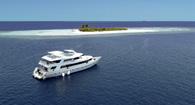
Experience the Maldives at its most beautiful: aboard the Amba, one of the island nation's most renowned liveaboard dive ships. It stands for first-class dives, a personal atmosphere and service that inspires. Comfortable cabins, good cuisine and a well-coordinated team ensure relaxation between dives. Diving takes place at the highlights of the Maldivian central atolls – varied, professionally planned and with the best chances of seeing manta rays, sharks and other marine life. Every tour with the Amba promises moments of true well-being. If you want to experience the Maldives intensively and enjoy yourself in a relaxed manner, this is the place for you. aquaactive.de
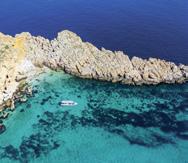
Why come to the Mirko Diving centre on the Croatian island of Rab? Quite simply: Rab is known as the island of love – perhaps you too will fall in love with this island. In any case, you can look forward to a holiday in a family atmosphere with plenty of time for yourself. Everything moves a little slower on Rab – perfect for switching off and finding peace and quiet. The Adriatic Sea around the island is crystal clear and offers excellent visibility for unforgettable dives. The season starts in April, but with the right equipment you can also dive in winter. In addition to attractive prices, there are family and group discounts of up to 20 per cent. mirkodivingcenter.com
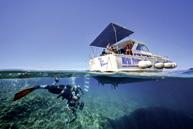
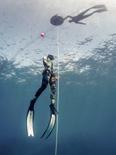
Freediving highlights in 2026 at Manta Diving Madeira: In 2026,the diving centre will present two special freediving events on the flower island in the Atlantic. From 22 to 26 May 2026, the freediving event with English record holder Gary McGrath will take place for the first time. Under the motto "Equalisation & Depth Training Days", the focus will be on pressure equalisation techniques and safe deep diving. Just a few weeks later, from 18 to 25 June 2026, the legendary Freediving Camp with author and instructor trainer Nik Linder will take place for the 11th time. This classic event offers intensive training, practical workshops and breathing sessions in a relaxed atmosphere. mantadiving.com
"City, Country, Diving": With this new free game, Aqua Active Agency brings holiday vibes and diving humour to the gaming table. Inspired by the classic game City, Country, River, it is the perfect companion for diving trips, boat days or cosy evenings at the resort – dive in playfully, without any decompression stops! aquaactive.de
Tauchsafaris 2026
BEGLEITETE GRUPPENREISE Rundreise & Tauchsafari Oman Explorer
15. - 28.11.2026
ab/bis Muscat –inklusive Rundreise & Tauchsafari mit Carolin Schimon
ab 3.085 € pro Person
Highlights:
• Muscat mit Moschee, Souq & Palast
• Nizwa, Jabreen & UNESCO-Fort Bahla

• Wüste Wahiba Sands & Wadi Bani Khalid
• Schildkröten in Ras al Hadd
• Tauchen an den schönsten Spots
SPECIAL RCF-VOLLCHARTER OMAN EXPLORER Tauchsafari im Sultanat Oman
26.09. - 03.10.2026 ab/ bis Sifah
ab 1.150 € pro Person (zzgl. lokale Gebühren)
Wir haben das Safarischiff Oman Explorer exklusiv für euch gechartert.

Das heißt: Tauchen unter Gleichgesinnten, in entspannter Atmosphäre mit anderen deutschsprachigen Gästen.
reisen@reisecenter-federsee.de
www.rcf-tauchreisen.de rcftauchreisen tauchreisen_rcf
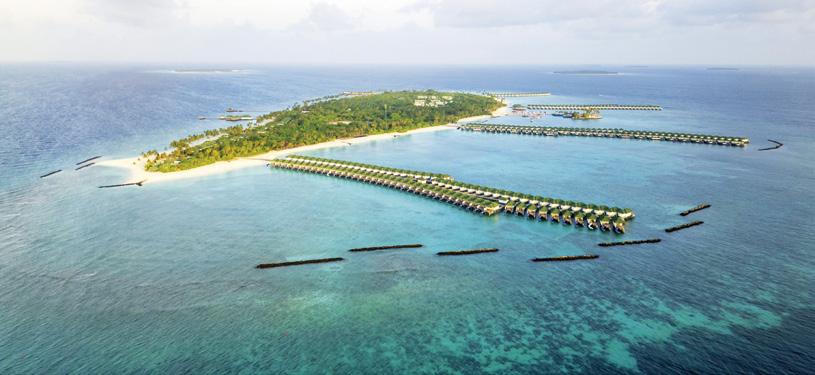
Behind the name Sun Siyam lies a Maldivian-owned resort chain. It operates five islands that could not be more different. We visited the two largest ones.
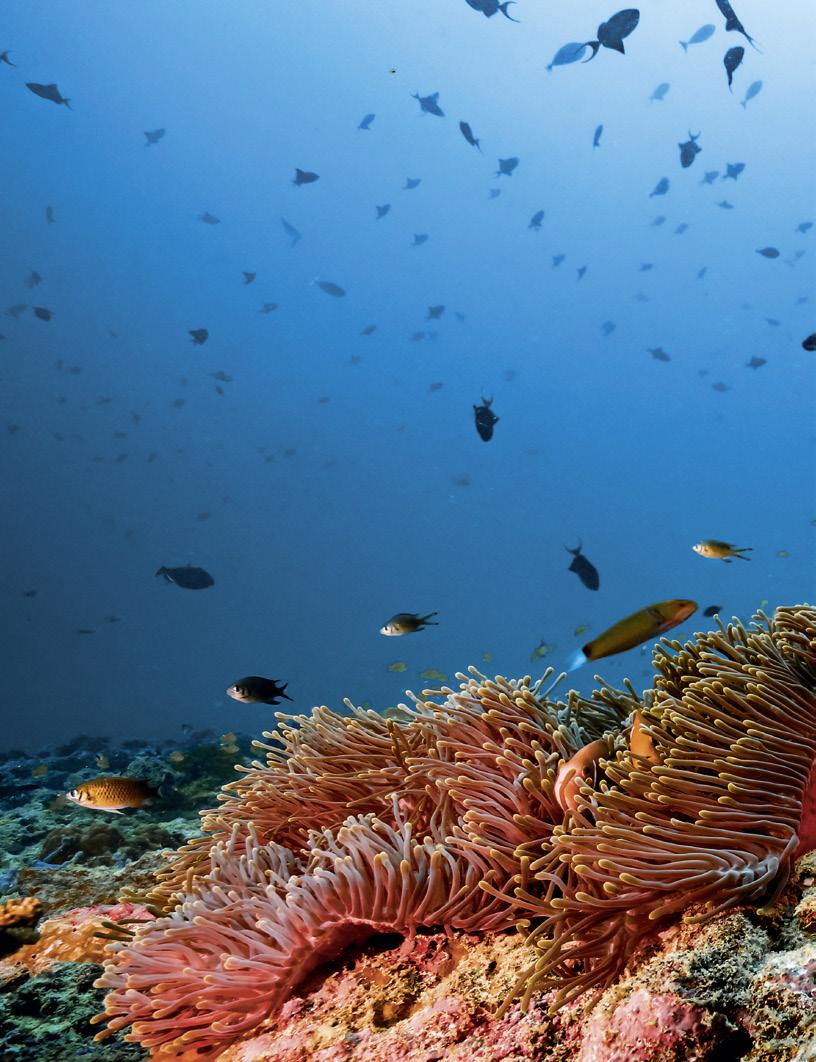
Itis late afternoon as the plane gains altitude over Frankfurt. The start of a journey that will take me to two islands that are similar yet have their own unique characteristics. What they have in common is that unmistakable Maldivian magic –tropical and exotic, surrounded by turquoise waters, vibrant reefs and the endless Indian Ocean.
I still have a few hours of flying ahead of me. I fly via Dubai to the international airport in Malé, the capital of the Maldives. Six hours after take-off, the lights of Dubai come into view. Despite the long distances involved, the transfer proves to be straightforward, with a train taking me directly to the next terminal. About four hours after take-off in Dubai, we land in Malé. My anticipation turns to joy at being almost at my destination.
I haven't quite arrived yet. Our small group of travel experts and I gather in the bustling terminal of Velana International Airport –the official name of the airport. Outside, tropical rain patters on the roof, warm and relentless. The Sun Siyam team takes our luggage to the speedboat, which is already waiting at the jetty.
The crossing only takes about 40 minutes, but the Indian Ocean is showing its lively side today. The boat bobs gently but steadily in the waves, spray lashes against the plastic window covers, and the view outside ends in a swirling grey of rain, sea and horizon.
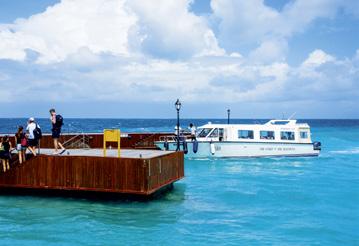
As the outlines of Sun Siyam Olhuveli finally become visible through the rain, the three islands appear like a promise waiting to be fulfilled. White sand, palm trees, a huge lagoon – just hidden for now behind a veil of warm tropical rain.
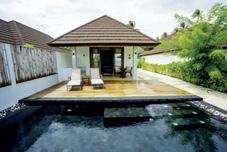
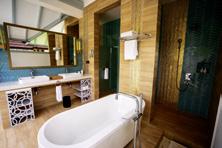
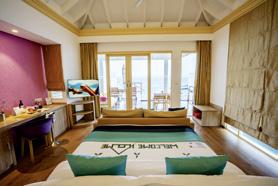
My beach villa on Olhuveli is one of the highlights of this trip. A spacious, light-filled room, with a semi-open bathroom at the back, direct access to the beach at the front – and my own pool, reflecting the morning sunlight. I wake up with the patio door open, the Indian Ocean murmuring softly. The rain has now given way to sunshine – for the moment.
The archipelago is so extensive that a dedicated bus service transports guests
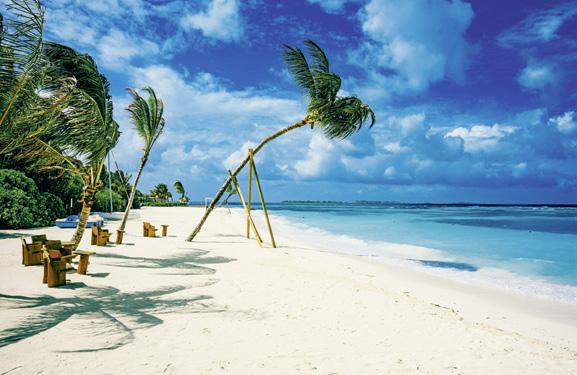
across the three islands in small electric shuttles. The nearest stop is less than two minutes away from my beach villa. The bus takes me to the breakfast buffet, which is being served indoors today due to the strong wind. It really leaves nothing to be desired.
Despite an occupancy rate of over 80 per cent, Olhuveli feels surprisingly peaceful. The numerous pools, beaches, bars and restaurants spread the guests out. Even in changeable weather, there is never a feeling of crowding. Olhuveli is large, but never overwhelming – rather versatile. Requests are accommodated flexibly, and the offerings range from snorkelling and water sports to atmospheric beach dinners.
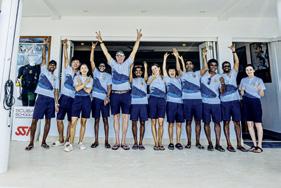
The diving centre team is professional and warmly welcoming. The rental equipment is in very good condition, the process is well thought out, and the team remains calm even when things get busy. The training room seems a little cramped and the changing rooms could be larger – but a renovation is already planned. Koen Zuurbier, manager of all Sun Siyam diving cen-
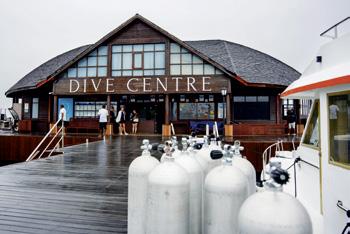
tres and active in the Maldives for decades, confirms this: "We have our sights set firmly on renovating the Olhuveli centre. It will be larger, with more space for training."
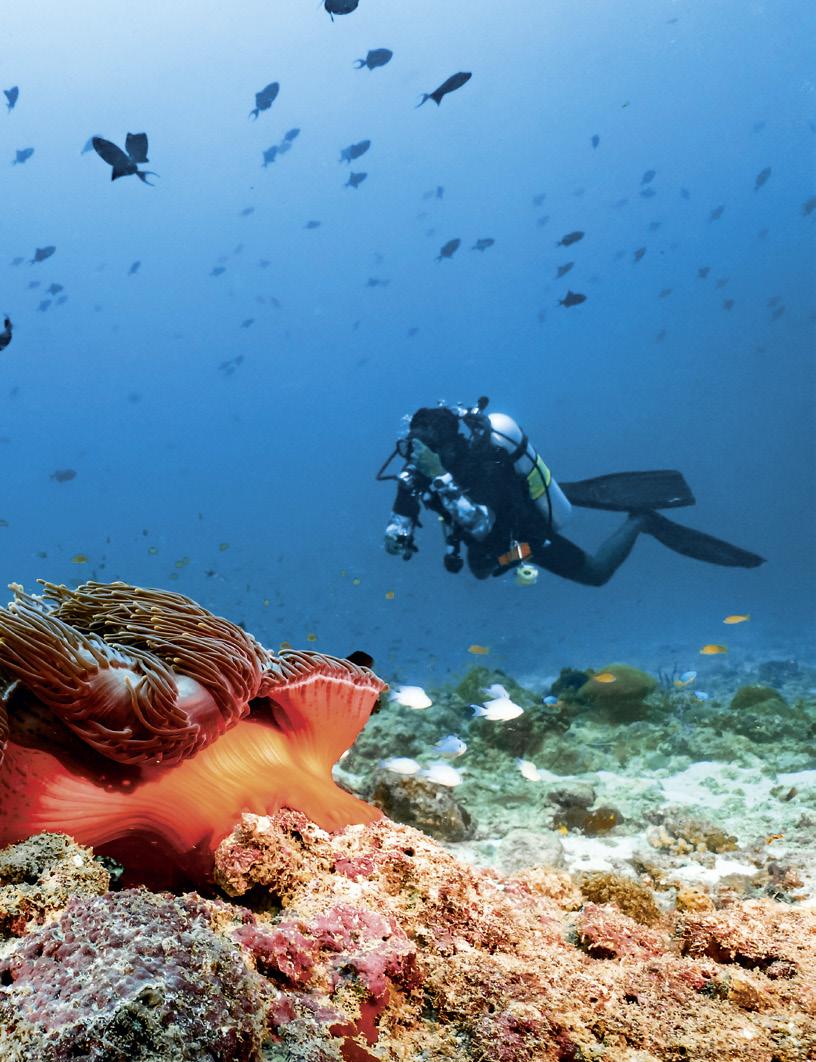
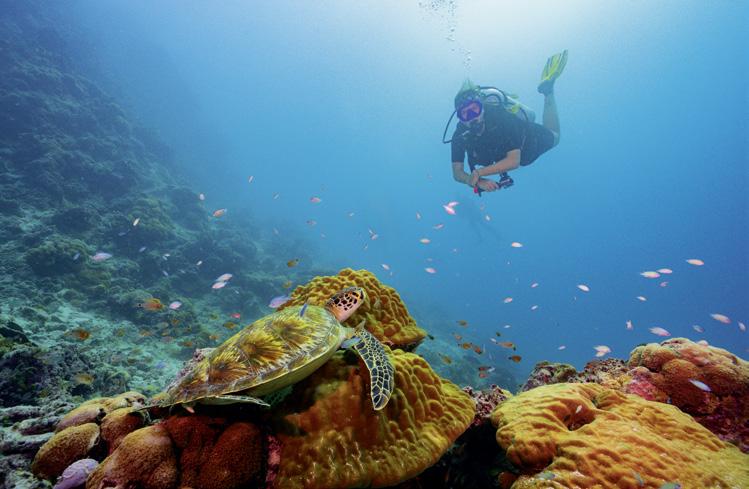
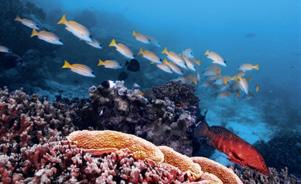
Our first dive begins directly behind the base at the jetty – a convenient entry point to the house reef. Immediately after descending, a reef opens up with predominantly healthy corals, native turtles and many typical schooling fish such as triggerfish, snappers, butterflyfish and reef perch. Small blacktip reef sharks also make an appearance – but only in the next few days
while snorkelling. The house reef is varied, and the boat trips sensibly expand the programme with two additional dives. The following day, the crew on the fast dive boat impresses with their attentiveness and care. The guide is experienced and shows us the most important highlights.
One dive site that is definitely worth visiting is Kandooma Thila – one of the most famous spots in South Malé Atoll. Koen Zuurbier sums it up: "Kandooma Thila is one of the most beautiful dive sites in the Maldives and worldwide, as you can expect to see all kinds of large fish here." There
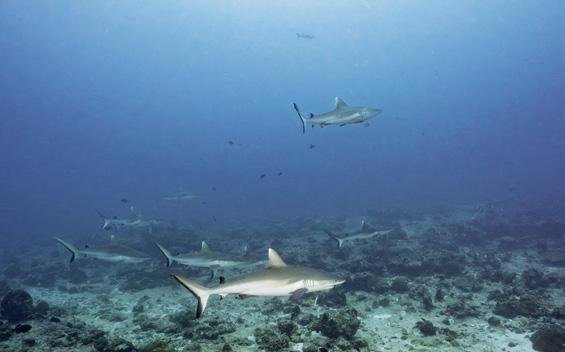
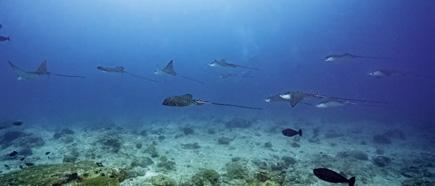
are usually strong currents there, which is why reef hooks are used for diving. The fish stand in the current, and Kandooma is one of the most reliable places for large schools of grey reef sharks and eagle rays, which regularly pass by the thila.
During our visit, however, the current remains unusually weak. This makes the use of reef hooks unnecessary, but it does make it more difficult to find large groups of fish, as sharks and rays are more active in these conditions – they need the current to breathe efficiently. Nevertheless, we see both: an impressive school of grey reef sharks and a passing group of eagle rays. A moment that once again confirms the class of this dive site. Underwater, Olhuveli displays the typical mix of South Malé Atoll: soft corals, large fish moments and a peaceful, lively reef scene.
Between activities, there is time to chat with different people. Chaminda Upul Kumara, Sustainability Project Manager, ex-
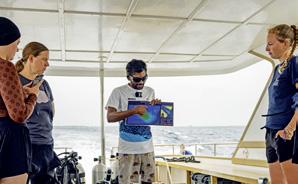
plains to me what measures Olhuveli and the entire Sun Siyam Group are pursuing in terms of sustainability. "We plan to cover a third of our energy needs with solar panels in the next few years," he says. By 2026, the target is around 2.7 megawatts of power. In addition, there are projects to combat food waste and manage water and grey water –such as cisterns for irrigating green spaces and the use of grey water for toilet flushing. On the sister island of Siyam World, there is also a new plastic recycling plant that recycles plastic waste on site – the first of its kind in the entire Maldives.
The social component is also important to Upul: under the "Siyam Care" programme, the group supports local communities by building schools, sports fields and mosques. "We have invested around one million US dollars in this over the past four years," he says. In addition, there is an apprenticeship programme that makes it easier for young Maldivians to enter the tourism industry.
Later, I meet Hassan Adil, Managing
Director of Sun Siyam Olhuveli. He sums up the brand's philosophy very clearly: "We want to pass on the cultural heritage and spirit of the Maldives to our guests in our hotels," he says. "Our culture thrives on genuine hospitality, openness and a deep connection to the sea."
To change islands, we first return to Malé. From there, we fly by seaplane to Noonu Atoll in the north. The rattling of the propellers, the smell of kerosene, a short briefing, and then the small plane takes off. Atolls pass beneath us. We fly just below the low-hanging cloud cover. The rain has caught up with us again. Forty-five minutes later, the plane touches down off Dhigurah. We are greeted with music, umbrellas and warm words.
PRICE EXAMPLE LOW SEASON
For a week at Sun Siyam Olhuveli in the off-season (e.g. in May) in the Beach Pavilion with full board, including flight from Germany and speedboat transfer, prices currently start at around €1,710 per person. The speedboat transfer costs around USD 250, but is already included in many package deals.
SUN SIYAM OLHUVELI – DIVING PRICES
(including taxes and fees)
Single dive: €67.50; 5-dive package : €305.80; 10-dive package : €562.60; 13-dive package : €636.00; Boat trips : €29.40 (morning) / €20.70 (afternoon); full-day trip: €57.60; Open Water course: €641.60; complete equipment rental per day (2 dives): approx. €40 (*Conversion from US dollars to euros was based on the exchange rate in November 2025)
TRAVEL INFORMATION
Location: Sun Siyam Olhuveli is located in the South Malé Atoll of the Maldives, about 40 minutes by boat from the capital Malé. The sprawling island offers white sandy beaches, turquoise lagoons and a house reef with varied spots for divers of all experience levels. The resort spans three parts of the island, which are connected by footbridges, and offers both quiet areas and a wide range of water sports and leisure activities for days when you don't feel like diving.
Getting there: From Germany, you can fly to Malé with Emirates, Qatar Airways, Lufthansa or Etihad via their respective hubs. At Velana International Airport, you will be transferred directly to the resort by speedboat. The transfer is organised by the resort. Flights usually
arrive in Malé in the morning or early afternoon, so that the connecting transfer can take place without any waiting time.
Diving: Diving is offered by the resort's own diving centre. You can expect fast-flowing channels, thilas with dense fish life, steep walls and cleaning stations where grey reef sharks and whitetip reef sharks regularly pass by. Encounters with eagle rays, turtles and, seasonally, manta rays or whale sharks are typical. Diving is usually done from a boat, often in small groups with experienced guides. Nitrox is available for a fee. The house reef also offers great experiences: turtles, blacktip reef sharks and many other reef fish can be discovered while snorkelling.
Catering: The resort has several restaurants serving international and Asian-inspired cuisine. In addition to large buffets, there are à la carte restaurants. Curries, light salads and grilled dishes dominate the menu. The bars at the main pools are ideal for snacks between meals. As Sun Siyam is a Maldivian-owned resort chain, many traditional dishes from the island nation are also on offer.
Large and full of possibilities
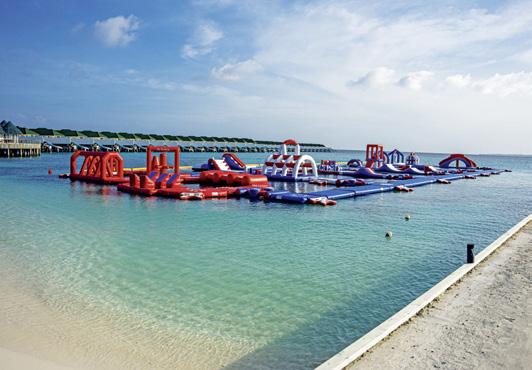
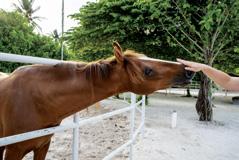
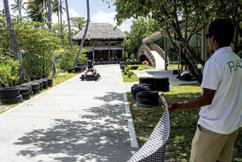
Dhigurah Island is huge. 54 hectares, 469 villas, all with their own pool, all water villas with their own slide directly into the sea, beach villas behind palm trees and gardens. Siyam World, which only opened in 2021, is a universe unto itself. A floating water park – the largest in the Maldives. Plus its own full-size football pitch, a gokart track, the first horse farm in the Maldives, numerous restaurants, bars and activities. A resort that appeals to families, couples and groups alike. Those seeking peace and quiet will find it away from the main paths. Those seeking entertainment will find it everywhere.
The Water Villa with its own pool and water slide – which, of course, must be used every time – which I am allowed to move into despite my early arrival, offers space, light and direct proximity to the sea. It welcomes me with a bottle of champagne, exotic fruit and fine pastries. The seaplanes taking off are audible, but only for a brief moment – and with the open view of the horizon and my own water slide, I am forgiving of many things.
Siyam World surprises with remarkable sustainability projects. Basil grows in the herb garden, which now covers >
around 25 per cent of the kitchen's needs –in a few months, this figure is set to rise to 50 per cent. Mushrooms, sprouts, chillies, tomatoes, lettuce and bananas are also grown. The cultivation areas are constantly being expanded. Wajeeh, the gardener of the herb and vegetable garden, explains: "The garden has only been in existence for just under three months. We grow tomatoes, lettuce and much more, and production capacities are increasing." His goal is clear: "We want to offer our guests more island products and thus reduce imports somewhat. Of course, demand is much higher than what we can grow here. But every step counts."
A composting plant for processing organic waste and producing fertiliser is also under construction – another piece in the puzzle of a growing sustainability strategy.
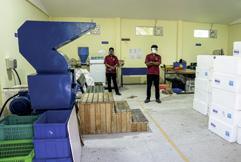
Even more exciting is the new recycling station, funded by the World Bank and supported by local NGOs. There, plastic is not simply recycled, but upgraded. Zaheen, who oversees the project, describes the process as follows: "We can't recycle all types of plastic, but we can recycle a lot – for example, detergent bottles or broken transport boxes." These materials are used to make functional items for the islands of the Sun Siyam Group, such as benches, rubbish bins and simple building components. "We don't actually recycle," he says, "we upcycle. Old plastic is turned into something that lasts longer and can be used immediately."
PRICE EXAMPLE LOW SEASON
For a week at Siyam World in the off-season (e.g. in May/June), including all-inclusive and seaplane transfer, the following current examples apply (per person):
• Water Villa with Pool & Slide: from 2480 euros, with flight from Munich from 3136 euros.
• Sunset Pool Beach Villa: from 2633 euros with flight from Frankfurt from 3286 euros. The regular seaplane transfer costs around 490 USD, but is already included in many package tours through Free Seaplane Offers and is therefore not listed separately.
SIYAM WORLD – DIVING PRICES
(including taxes and fees) Single dive: €74.90; 5-dive package : €325; 10-dive package : €597.50; 13-dive package : €836.60; Boat trips : €29.40 (2 tanks) / €20.70 (1 tank); Full-day trip: €135.80; Open Water course: €641.60; Complete equipment hire per day (based on 2 dives): €40 (*Conversion from US dollars to euros was based on the exchange rate in November 2025)
TRAVEL INFORMATION
Location: Siyam World is located on the large island of Dhigurah in Noonu Atoll, approximately 170 kilometres north of Malé. The island is around 1.5 kilometres long and surrounded by an extensive house reef and sprawling beaches. The region is known for its wide thilas, untouched hard coral areas and frequent encounters with manta rays and pelagic species. For non-diving days, the island offers a particularly wide range of leisure activities, from wellness and (water) sports to cycle paths through the lush vegetation.
Getting there: After your international flight to Malé, you will continue your journey by seaplane, which takes around 45 minutes. This is
coordinated by the resort, ensuring that baggage transfer at Malé Airport and transfer to the seaplane terminal run smoothly and stressfree.
Diving: The island has a modern, professionally run diving centre that organises daily boat trips to over 60 spots in Noonu Atoll. Drift dives along the channels are just as much a part of the programme as relaxed reef entries and thila dives. The marine life is rich in sharks, rays and colourful shoals of fish. Hard corals, soft corals and pristine reef structures offer additional highlights. Rental equipment, nitrox (at an additional cost) and courses for various training levels are available.
Catering: There is a wide selection ranging from international buffets to fish and grill restaurants and Asian cuisine. Several bars and beach restaurants are available for snacks or a light lunch. Thanks to the size of the island, you can find places for quiet evenings as well as lively areas with entertainment.
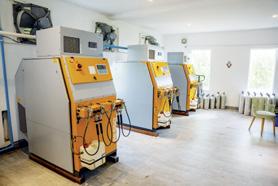
The diving centre at Siyam World is a dream come true for every diver: spacious, modern and well equipped. From here, you can visit the many diving spots in Noonu Atoll.
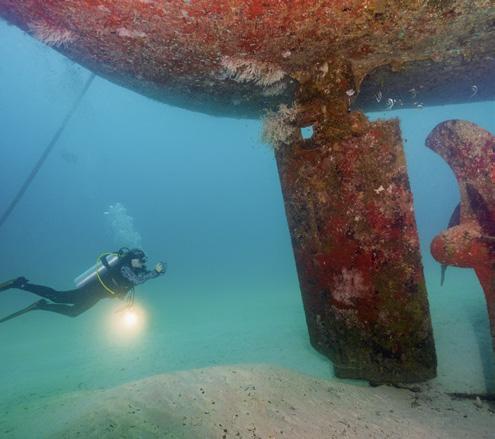
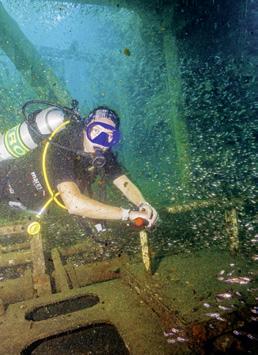
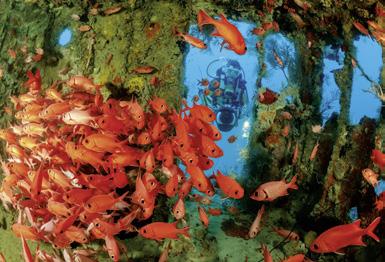
The in-house wreck is a real special feature –large, freshly sunk and already teeming with life. It lies directly off the west coast of the island and forms a new artificial reef, which has quickly become home to an impressive number of species: schools of glassfish flit around the superstructure, batfish swim above, and individual tuna repeatedly chase each other around. The structure is varied, with wide decks, passageways and shaded areas. Anyone who can dive with good buoyancy control is allowed to enter. The ship's propeller marks the deepest point of the wreck. It lies at around 26 metres.
Koen Zuurbier, manager of the Sun Siyam diving centres, is also here with us in the water. He explains how much work has gone into this project: "The wreck did tip over when it was sunk, but with a lot of effort we managed to right it again. Now it's safe to explore the inside."
den dhoni – plenty of space, stable platforms, comfortable, holiday-like relaxation. For many, this is exactly what a typical Maldives experience is all about.
The first trip takes us to Shark Point, a reef in the middle of the atoll. Koen later explains how this spot was found: "We were specifically looking for a place with lots of sharks. We had had our eye on this reef for a long time. When we dived here for the first time, we were lucky and immediately found some grey reef sharks."
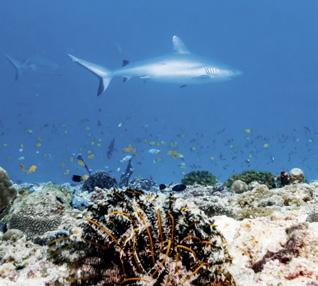
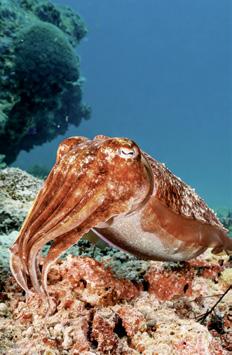
Shark Point is a wide plateau between approximately 25 and 30 metres deep, often with a gentle current that supplies the reef with fresh nutrients. In addition to the typical whitetip reef sharks and grey reef sharks, we encounter turtles and two cuttlefish that approach us curiously. The journey takes about an hour – and is well worth it.
The second spot, Christmas Tree, shows a completely different side of the atoll. The reef is colourful, full of soft corals and with many small overhangs. Between the corals sit wrasse, bannerfish and shoals of small reef fish, which
The boat trips take you to other varied locations. The crew works attentively and calmly. Diving takes place from a large traditional woo- >


stand out colourfully from the reef depending on the light. Koen explains the name: "When you look at the spot from above, with its overhangs and interlocking reef structures, it looks like a Christmas tree." The light plays in the dive-throughs, small openings and overhangs – a dive site that creates atmosphere and is spectacular. The small steep wall at the end and a flat plateau at five metres make the spot ideal for ascending. It is one of those places you want for the last dive of the day. It is balm for the diving soul.
The island's restaurant scene is impressive. International cuisine alternates with barbecue and fish restaurants, Asian concepts and relaxed beach bars. The quality of the food and beverage area is high, and the selection is enormous. Traditional Maldivian dishes are also served. The rest of the programme is also extremely varied: all kinds of water sports, pools, spa, fitness facilities, horse riding tours. Jogging here is quite an experience, as a full loop around the island covers four kilometres.. Siyam World is about twice the size of an average resort island in the Maldives.
As I spend my last few hours on Dhigurah between beaches, restaurants and lagoons, I realise how different the two is-
lands on this trip are – and how much they have in common. Both are large, diverse and full of possibilities. With staff who are friendly, attentive and proud of their Maldivian roots. And yet Olhuveli and Siyam World could hardly be more different: here we have three parts of an island connected by footbridges and shuttle buses, and there we have a huge single island that can be explored by bicycle. Olhuveli is reached by
speedboat, Siyam World by seaplane. Their diving centre is more modern, larger, with a newly sunk wreck right on its doorstep. When the seaplane finally docks for the return journey, the circle of this trip is complete: what began above the clouds in Frankfurt now ends back in the air. This time in daylight, above the turquoise islands of Noonu Atoll.


TRAVEL TIME: The South Malé Atoll and Noonu Atoll enjoy warm temperatures all year round. The best time for calm seas, good visibility and stable weather is between January and April. Water temperatures remain between 27 and 30 degrees Celsius throughout the year. From May to October, the south-west monsoon occasionally brings stronger winds and sporadic rainfall, but encounters with large fish are particularly frequent during this period. Visibility varies seasonally between 15 and 30 metres. November and December are also good months to travel, as they represent a transitional phase with mostly very pleasant conditions.
COMMUNICATION: Dhivehi is spoken in the Maldives. English is the main language of communication in the resorts and diving centres, and the staff speak it very well. Other languages, including German, are also frequently spoken, so communication is always easy.
PAYMENT OPTIONS: In the Maldives, almost all payments at resorts are made cashless. All major international credit cards such as Visa, Mastercard and American Express are accepted. Expenses for restaurant visits, excursions, spa treatments or the diving centre are conveniently charged to your room and only paid for when you check out. Cash is rarely needed, except for tips or small purchases at the airport. Both resorts also offer digital payment options, so you can enjoy your stay completely cash-free.

30 years of five-star comfort:
The legendary Mövenpick Resort in El Quseir, Egypt, is celebrating its anniversary. Reason enough for another visit.
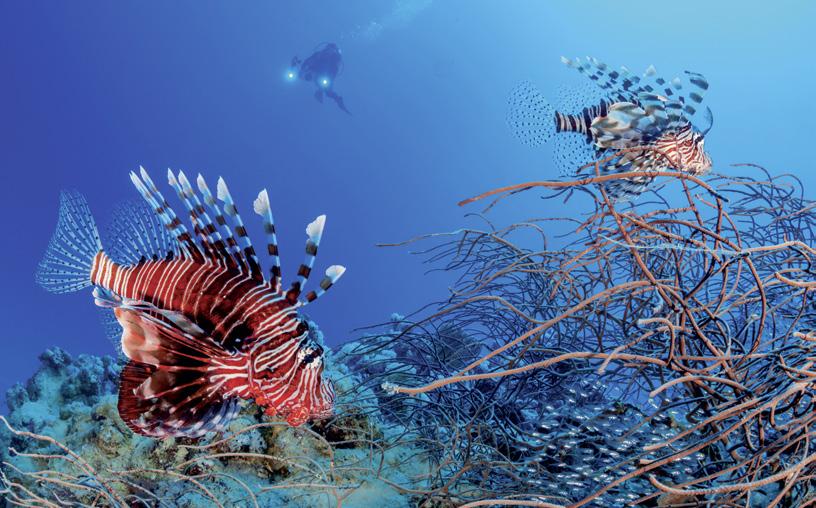
If yousearch long enough, you will eventually find your perfect place. For many, the Mövenpick Hotel in El Quseir, Egypt, affectionately known as "Möpi", is just such a paradise. As soon as you arrive, you feel right at home. Friendly faces, a family atmosphere and numerous regular guests define the atmosphere. Anyone who has been here once understands why this Red Sea resort occupies a special position among Egypt's diving hotels: it offers not only luxury, but also a genuine sense of well-being. And fantastic diving opportunities.
Wreck exploration in the making?
In terms of diving, everything is business as usual in the El Quseir region. But since the sinking of the VSG Glory at the end of November 2024, the place has been the talk of the town. The approximately 100-metrelong cargo ship ran aground on a fringing reef south of the bay and sank ten days later after oil and fuel had been pumped out. The cargo of 4,000 tonnes of wheat bran
began to ferment inside the ship and, months later, briefly lifted the hull back to the surface – before it sank again in the same place. The bran sacks drifted with the current, and some even reached the bay, but were immediately recovered. Important to note: this was a biodegradable natural product, not hazardous material. The wreck of the VSG Glory now lies stable on the sloping outer reef far south of the bay and is currently not open for diving (as of August 2025). This has no impact on the house reef dives. Should the wreck be opened to divers in the future, it is likely to be an impressive addition to the region. Until then, the Glory remains at least an exciting topic of conversation. It is too far away to reach illegally.
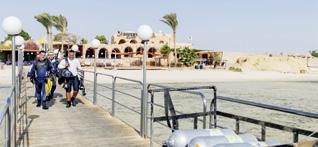
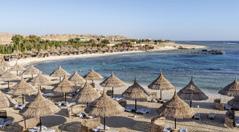
The heart of the Mövenpick Resort is its sheltered bay with its own jetty. Here you will often encounter schools of young barracuda or hunting giant trevally. The house reef delights with its varied topography: small caves and caverns, reef crevices, gent-
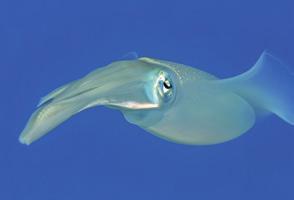
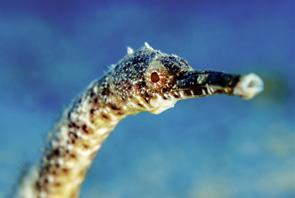
ly sloping steep walls and coral towers teeming with life. Bizarre snake eels, dwarf winged horses, delicate shrimp and perfectly camouflaged sand dwellers can be found here, as well as the occasional dolphin paying a flying visit. Night diving from the jetty is particularly impressive, with hunting cuttlefish, giant moray eels, crocodile fish and Spanish dancers.
If you want to explore beyond the house reef, a speedboat will take you to the macro paradise off the coast of El Quseir in just a few minutes. Amongst the sea grass, Halimeda and fan algae, a tiny wonderland reveals itself with "Shaun the Sheep" snails ranging in size from a pinhead to four millimetres. Larger creatures are also present: moray eels, turtles, shrimp and clownfish offer variety. Suitable for super macro photography even in stronger waves.
A day trip to Tobia Arbaa near Safaga provides a change of scenery. Seven tower- >
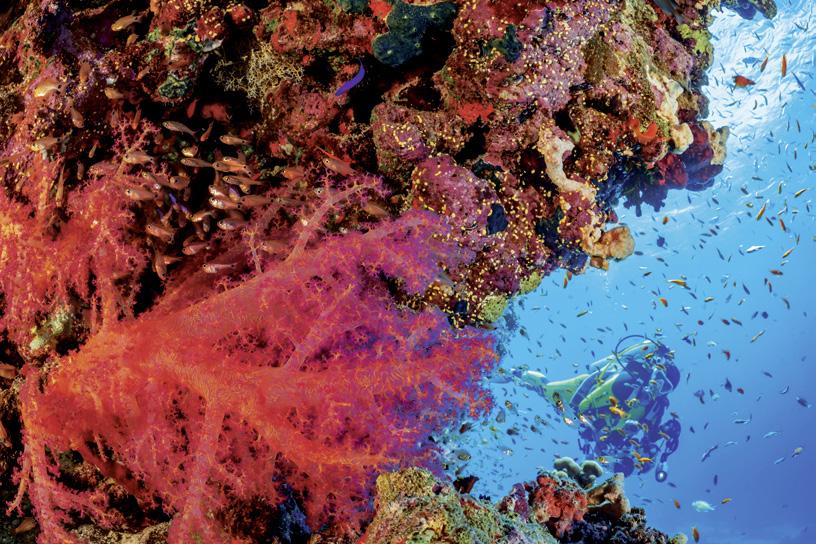
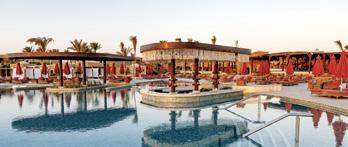
Best Buddies: The Mövenpick Resort El Quseir and the Extra Divers centre complement each other perfectly with their great location, excellent facilities and friendly staff.
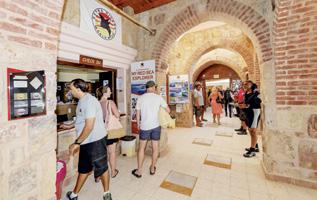
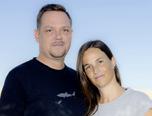
BASE LEADERS: Swiss-German couple Tanja Eichenberger and Stefan Österreich.
TRAINING: according to SSI from OWD to TL, as well as all standard speciality courses. Children's diving from eight years of age, Nitrox 32 for free.
DIVING: With up to 25 logged dives, only with a guide, then independently in a buddy team. Certified solo diving is possible at the house reef. In addition to the extensive house reef, which can be extended with its own Zodiac (up to six divers), two spacious speedboats (up to eight divers) are also available for a handful of dive sites to the south. Half-day bus tours and boat tours are also offered from Safaga or even from Port Ghalib – a total of around 30 different dive sites within 10 to 120 minutes' distance.
Prices: A speedboat trip (including tank and weights) costs €58, a package of 10 house reef dives costs €380. Surcharge for house reef zodiac: €5/dive. Surcharge for night dive: €9. Surcharge for day trip including lunch: €65. OWD course (including certification):
€564. All prices are subject to Egyptian entertainment tax.
Snorkelling: The fish-rich house reef bay with its surrounding reefs is perfect for this. Half-day and full-day snorkelling tours are available several times a week.
Best diving time/season: all year round. The lowest water temperatures are between January and March at 22 degrees Celsius, and the highest between July and September at over 30 degrees. Recommended wetsuit: 3 mm in summer, 5 to 7 mm in winter.
Contact & Information:
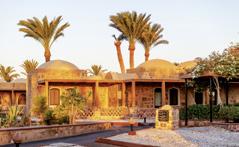
taurant is currently being renovated. The hotel has 250 rooms in five different categories and can accommodate up to 550 guests. The generously appointed rooms, built in Nubian style, are tastefully furnished and have air conditioning, minibar, coffee maker, drinking water, safe, flat-screen TV, telephone and a large bathroom/ WC and terrace or balcony. In addition to four restaurants, bars and pools, there are also plenty of sports and wellness facilities. Sustainability: The hotel provides drinking water in glass bottles. Fruit and vegetables are grown in the hotel's own garden.
More information about the hotel:
To the diving centre information tour on our YouTube channel:
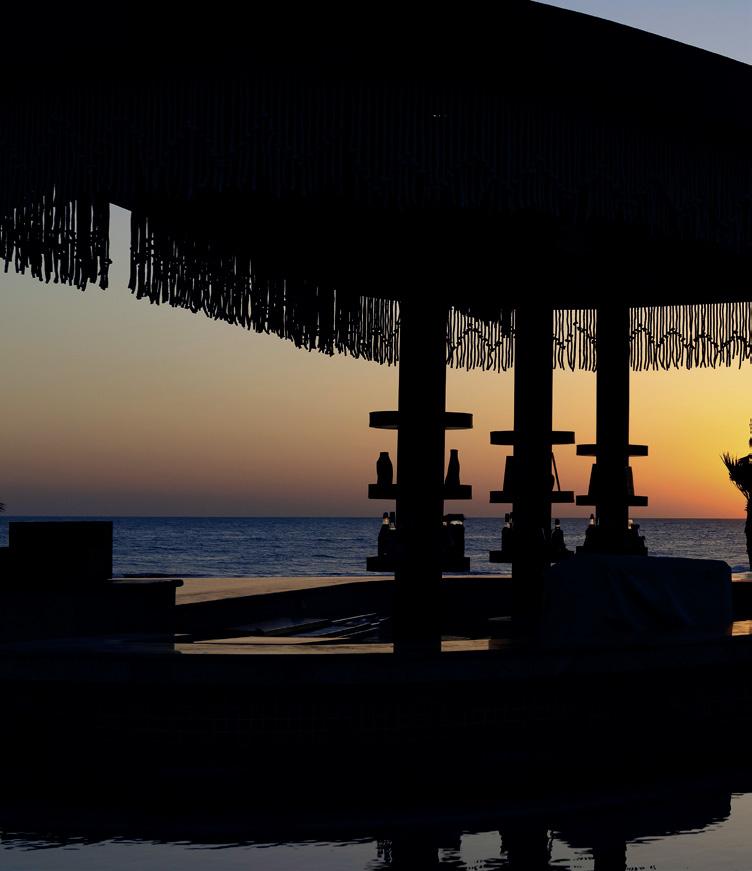
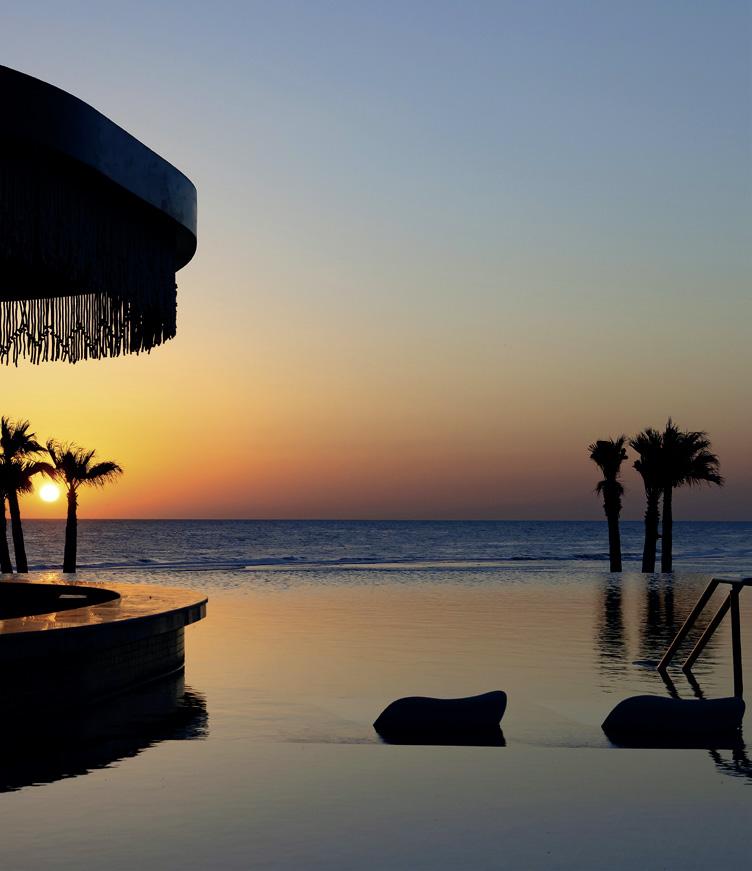
ACCOMMODATION: The Mövenpick Hotel, which has been in existence since 1995, is located on a low rocky plateau with a beautiful bay, about six kilometres north of El Quseir. The spacious five-star resort has been freshly renovated and now features a brand new heated infinity pool at the newly designed Al Fresco Restaurant. The second pool at the main res-
INFORMATION & BOOKING
Organiser: Reisecenter Federsee, telephone 07582 - 932 07 90 www.rcf-tauchreisen.de
Price example (from Reisecenter Federsee):
Seven nights at the five-star Mövenpick Resort El Quseir in a double room with half board, including direct flight from/to Germany to Marsa Alam and transfers, cost from €830 per person. Six house reef dives (including tank & weights) from €220.
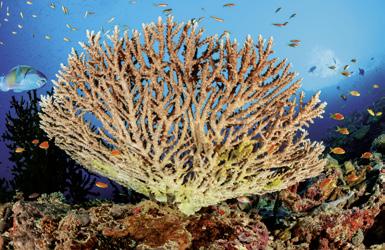
like coral blocks rise just below the water's surface there. As soon as you dive down, curious batfish swim in formation and silvery shoals of mackerel glide elegantly through the blue. The towers are covered in colourful coral and are wonderful to slalom around. Despite the coral bleaching of recent years, the reef looks like a living aquarium. Bannerfish swirl around the tips, while butterflyfish, angelfish, moray eels and dwarf cichlids frolic in the deeper areas. A cleaning station with batfish and Arabian angelfish attracts attention, as do octopuses, pufferfish and blue-spotted stingrays. An eagle ray makes an appearance, and swarms of glassfish shimmer in a small cavern.
When the sea is calm, we take the opportunity to visit the Salem Express, one of the most famous but also most controversial wrecks in the
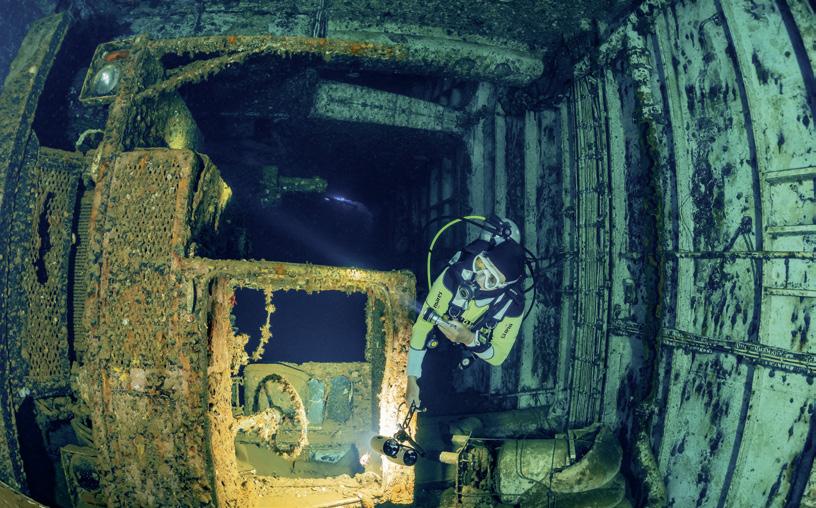
Red Sea. The 110-metre-long ferry sank in 1991 on a stormy December night with hundreds of pilgrims on board. A tragedy that still commands respect from visitors. The wreck lies on its starboard side at a depth of ten to 30 metres. Ideal for divers, but also visible to snorkellers. In perfect visibility, we float along the deck, past lifeboats, superstructures and the bridge to the enormous stern door. Everywhere is teeming with life; we discover stone corals, sponges, batfish and bannerfish. The large cargo holds can now be dived in accompanied by a guide. The open stern access allows you to explore the interior: a huge, silent tunnel with rusted vehicles and scattered belongings. On the outside, the Salem Express now presents itself as a thriving artificial reef. But on the inside, it serves as a memorial to its tragic history.
See, goodness is so close at hand!
We spend the last few days of our holiday back at the house reef, diving at a leisurely pace without any time pressure or groups. We see a goby and its blind mantis shrimp at work, young cleaner wrasses in a family business, and clownfish defending their anemones. Here, you can linger instead of rushing – that's the true freedom of a great house reef. Those who wish to can dive out to the outer reef to look for mackerel, tuna or eagle rays in the blue water. After diving, the comfort of the resort beckons. And over a sundowner in the Top of the Rock Bar, you can already start planning your next holiday. Because there will definitely be another one. Where else would all the regulars come from?
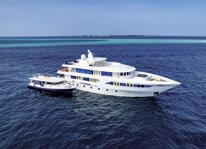
Comfortable and spacious: The M/Y "Spirit of Maldives", a new addition to the Maldives, has what it takes to be a real dream ship. With it, we travelled to the northern atolls to see schools of fish and whale sharks.
Whenwe board the M/Y Spirit of Maldives in the well-protected harbour of Hulhumale, we are thrilled. Whether it's seating, storage or reclining space, there is more than usual of everything on the four different decks. The huge saloon is a mixture of lobby, restaurant, bar and several chill-out areas. And it deserves its name just as much as the indoor camera charging station, which not only has large, non-slip storage surfaces, but also finally has enough power sockets. The spacious, tastefully furnished cabins are just as impressive as the high safety standards on board, with countless smoke detectors, a state-of-the-art fire alarm system and a practical evacuation drill with life jackets after boarding. Between dives, we will be treated to a buffet featuring a mix of traditional Maldivian and international cuisine. A complimentary beer or glass of wine with dinner is easy on the holiday budget, as is the daily happy hour after the last dive, where you can get two drinks for the price of one. Ideal for a sundowner on the sun deck or in the heated whirlpool in the bow area.
After a two-day delay due to windy conditions, we set off for Ari Atoll and continue north. Along the way, we pass legendary Maldivian classics such as Fishhead, Fesdhoo Wreck and Maaya Thila, which are still top spots for fishing.
The tiny Rasdhoo Atoll provides us with a diverse highlight as we pass by: after starting off with several grey reef sharks on a
steep wall on the outer reef, a huge manta ray suddenly glides smoothly by. Obviously curious and completely unimpressed, it circles our diving group three times, undisturbed by loud air bubbles or bright video lights, before disappearing just as smoothly back into the deep blue. Just a few minutes later, a school of trevally honours us with its presence, passing by at lightning speed, but above all close to us, accompanied by two grey reef sharks.
The following day, despite persistent winds, we set off for the Baa Atoll far to the north, where large numbers of trevally, glassfish and other silvery, finger-length juvenile fish are still present at this time of year. At the foot of steep walls, in overhangs, but also on shallow reef edges, they form huge shoals and dense clouds in which you cannot see your hand in front of your eyes. So we crouch down for 20 minutes in a niche of broken coral and simply watch the millions of little fish swimming around. Anyone who thinks this would quickly become boring is very much mistaken! Grey and white-tipped reef sharks circle both the steep wall in front of us and along the reef roof above us. However, most of them can only be glimpsed through the dense wall of young fish. Sometimes, though, the cloud opens up and a shark glides past us as if through a silver tunnel.
Almost within sight of the famous Hanifaru Bay, we explore the area from the dhoni. Snorkelling with hundreds of manta >
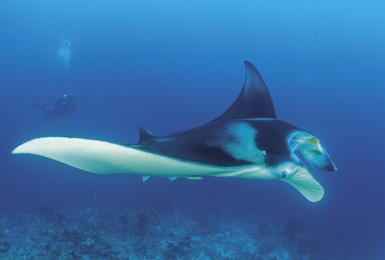
rays feeding on plankton is probably at the top of most divers' wish lists – and of course ours too. The now strictly protected bay, designated a UNESCO World Heritage Site, is guarded by rangers and can only be visited by snorkelers. However, as the wind has picked up again and is blowing at almost 20 knots, Hanifaru Bay is closed until further notice. The rangers also assure us that the unusual weather conditions mean that there are no manta rays in the small bay. Natural phenomena cannot be changed. And you can't force anything anyway. So we make the best of it and content ourselves with individual manta sightings on almost every dive.
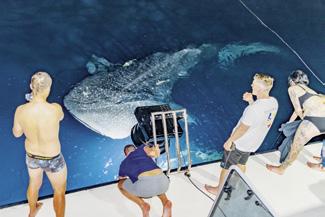
Since whale sharks are also regularly found in the region, the captain switches on the Spirit of Maldives' powerful stern spotlight in the evening to attract plankton and, as a result, possibly one of the large plankton eaters. The hours pass, the plankton arrives. Even the most persistent among us fall into bed exhausted shortly after dinner. But shortly after three in the morning, while we are in the deepest REM sleep, there is a sudden knock on the cabin door and cries of "Whale shark, whale shark!" Sleepy but curious, we crawl out of our beds and can indeed see two huge whale sharks right behind our ship! So we quickly grab our masks, snorkels and fins and slip as quietly as possible into the water from the dhoni moored alongside. A few strokes of the fins and the first whale shark is already in sight! Completely relaxed, it glides towards us, floating in the spotlight of the otherwise pitch-dark night and sucking masses of plankton into its huge mouth. Almost as if on cue, it suddenly sinks down and makes room for its buddy, which is dragging a huge amount of ship anchors with it. Taking turns, the sea giants swim small circles beneath us, then swim back into the bright beam of light at exactly the right angle from below. We could have watched this impressive spectacle for hours if we hadn't had to constantly paddle against the increasing current to maintain our position. The first snorkellers were already giving up when suddenly another large shadow floated into view from deep below. Much faster, more agile and significantly smaller. A dugong! It only makes a brief guest appearance, but unfortunately doesn't venture into the light. The current becomes even stronger, a tropical downpour accompanied by strong winds suddenly sets in, and we just manage to make it back to the dhoni. What an experience in the middle of the night! Excited but happy, we quickly return to our warm beds on board the Spirit of Maldives.
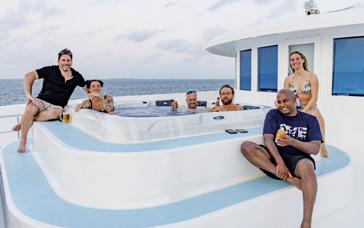
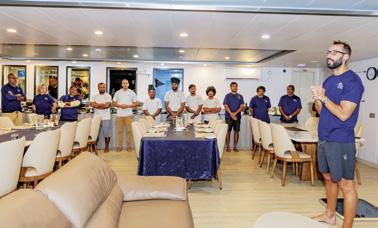
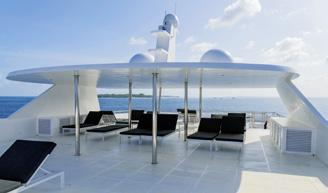
THE SPIRIT OF MALDIVES (the name is M/Y Aqua Queen, but the ship is marketed as Spirit of Maldives) is a strikingly wide ship with plenty of space on four decks. The main deck impresses with its huge lobby, which combines a restaurant, bar, several sofa areas and a strikingly spacious indoor charging station with plenty of storage space. The upper deck offers additional seating areas and a heated whirlpool in the bow area. The sun deck is extremely spacious and has a large number of comfortable sun loungers.
Year of manufacture: December 2024.
Length/width: 40 m/13 m
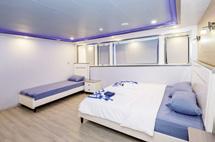
Type of vessel: wooden motor yacht, coated with GRP. Cabins: 13 double cabins in four categories for a maximum of 26 guests: seven lower deck cabins, two suites on the main deck, and two suites and two cabins on the upper deck. All cabins are very spacious, with a generous bathroom/WC and individually adjustable air conditioning. With the exception of one lower deck cabin, all cabins have three beds. Crew: 13 crew members plus four dive guides (all diving instructors)
DIVING: All dives are conducted from the accompanying 20-metrelong diving dhoni, which also
houses the compressors and the nitrox membrane system. The dhoni has camera tables, several sinks, two freshwater showers and a sun deck. 12-litre DIN/INT aluminium tanks (no adapter required) are available, as well as 15-litre aluminium tanks on request for an additional charge of €75 per week. In addition, ten complete sets of rental equipment are available for €150 per week, subject to advance booking. Diving usually takes place three times a day in four guided groups or, for experienced divers, in buddy teams on request. There is one night dive per tour. Recommended wetsuit: 3 mm. Water temperatures vary throughout the year between 28 degrees Celsius in December and 30 degrees in April.
SNORKELLING: Many diving spots are also suitable for snorkellers; private snorkelling tours and family safaris are available as full charter group bookings.
Best diving time/season: The Maldives is a year-round destination. The best time to travel and high season is from December to April (northeast monsoon). From May to November, the southwest monsoon prevails, bringing short rain showers, longer cloudy skies and higher plankton density – meaning more whale sharks and manta
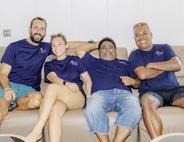
New, modern, comfortable: the Spirit of Maldives has it all, from plenty of space and comfortable cabins to delicious meals and a cosy whirlpool on the sun deck. And as an added bonus: a fantastic and motivated crew.
rays. Most precipitation occurs during the monsoon transition. Underwater visibility varies between ten and 30 metres, mainly due to currents.
Minimum requirements: OWD and 50 dives for central atolls, AOWD and 100 dives for southern tours. Experience with currents is an advantage.
Prices: Nitrox 32% free of charge. The AOWD course costs 270 euros, the Nitrox course 150 euros.
Tip: Bring reef hooks and decorative buoys.
Sustainability: Service water is produced on board. Free drinking water is available from several water dispensers.
Tours: Throughout the year, with the exception of June and July (dry dock), tours are usually offered for ten days, but seven- and twelve-day tours are also available. Most tours start and end in Malé. The southern tours alternate between Malé and Gan. Tours to the northernmost part of the Maldives are in the planning stage.
Contact and further information: www.spiritliveaboards.com
GETTING THERE: for example, with Etihad Airways via Abu Dhabi to Malé (total flight time approximately ten hours). At the airport, you will be picked up by the crew in a diving dhoni.
ENTRY: A passport (valid for at least six months) is required. The entry visa is free of charge and valid for 30 days. However, the Traveller Declaration must be applied for using the following online form within 96 hours prior to departure: https:// travel.immigration.gov.mv/. This will be checked at the airport!
Direct booking: Spirit Liveaboards www.spiritliveaboards.com
PRICE EXAMPLE FROM SPIRIT LIVEABOARDS: Ship costs from/to Malé Airport: Ten-night tour "Wonders of the Northern Atolls" on the Spirit of Maldives, lower deck cabin (double occupancy) with full board, free drinking water, tea, coffee, snacks, three dives per day including tank, weights, guide & nitrox, transfers and all taxes, harbour and marine park fees and fuel surcharge: from €3442 per person (flight must be booked separately).
With no improvement in the weather forecast for the following day, and our planned disembarkation in Malé fast approaching, we slowly make our way back to North Male Atoll. Another top spot along the route is the dive site "Hudhuran Fushi Corner", which is known as the "Aquarium" for good reason. As is often the case, a striking block of hard coral serves as a cleaning station here. We are also on the outer reef, at the entrance to a channel on the eastern edge of the atoll. This means free access to the open sea with plenty of currents and plankton – depending on the tides.
With the tide coming in gently, we drift along a coral slope with a slight tailwind. Individual turtles, schools of fusiliers, triggerfish and surgeonfish – everything seems to be growing with the current. There, finally, after a few minutes of swimming, easily recognisable,isa huge formation of yellow-brown Porites corals, enveloped in a cloud of fish. Soldierfish and groupers loiter under smalloverhangs, while schools of snappers, sweetlips and butterflyfish mingle in the open water. Just a few moments later, a huge manta glides silently towards us and spreads its gill slits for inspection. Immediately, several cleaner wrasses rush to the big customer to rid it of parasites and skin de-
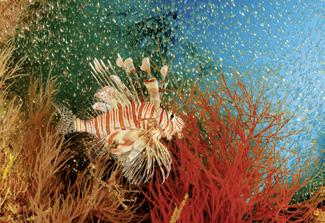
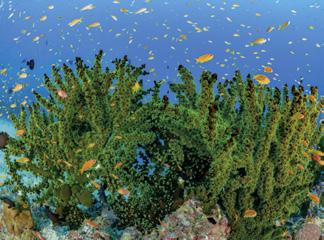
bris from small wounds. However, the spectacle is short-lived! The next customer in need of hygiene measures is already floating towards us. Slightly smaller, but to our great delight, lingering much longer. When calm returns to the cleaning station, it's finally time for a few fish portraits before a Napoleon wrasse, followedby two eagle rays, catches everyone's attention. But this scenario also lasts only a short time, as an increasingly loud melody of squeaks and whistles steals our attention. Sounds like dolphins. Before I can even turn around, they are already there! The silhouettes of a huge school stand out more and more clearly against the blue water on the horizon. They approach at lightning speed, whistling, squeaking, eyeing us from a distance, swimming past at a distance of just under ten metres and disappearing again a little later.
Manta ray spectacle
Even the last dive of our safari offers everything once again. It is even suitable for guests with an early flight the next morning, as you don't even have to go down to a depth of ten metres. In front of a fish factory not far from
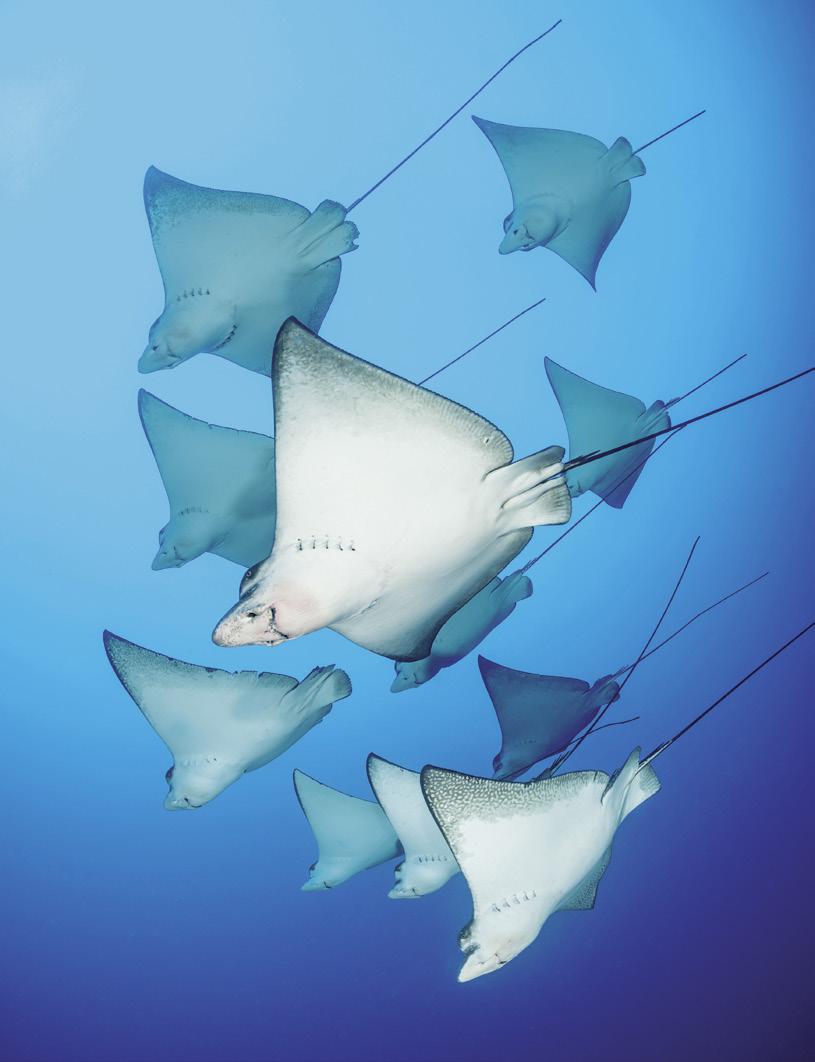
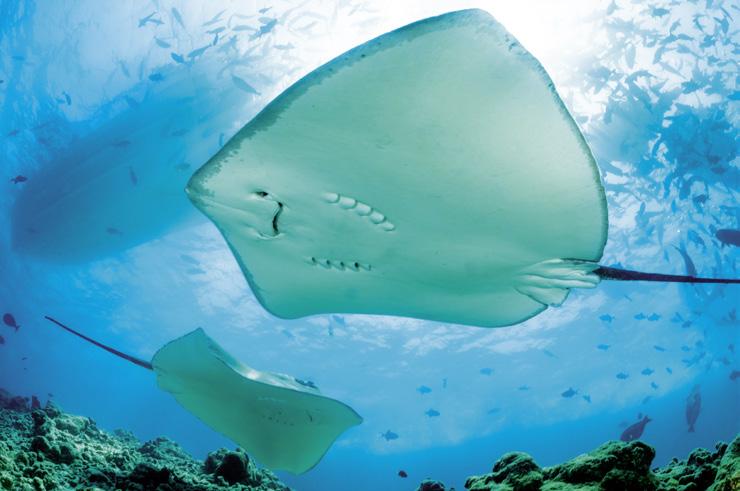
the international airport, stingrays are fed fish waste, making them an attraction for snorkellers. The action really gets going on a narrow sandy plateau at a depth of three to five metres. Twenty, thirty or sometimes even twice as many stingrays gather for a free meal.
We are lucky and don't have to wait long for the animals. Out of nowhere, stingrays suddenly appear from all directions, swimming just above the seabed, but also, unusually, in the open water next to the small steep wall, on top of each other, side by side, criss-crossing in several layers! Any shyness towards divers or snorkellers is forgotten. We bubble creatures are associated with food donations and are therefore repeatedly approached with hope. Physical contact is avoided, but does happen occasionally – however, it is always gentle and never aggressive. There is no need to fear the poisonous sting on the stingray's tail – at least if you don't try to hold one. What a final dive to round off this impressive diving safari!

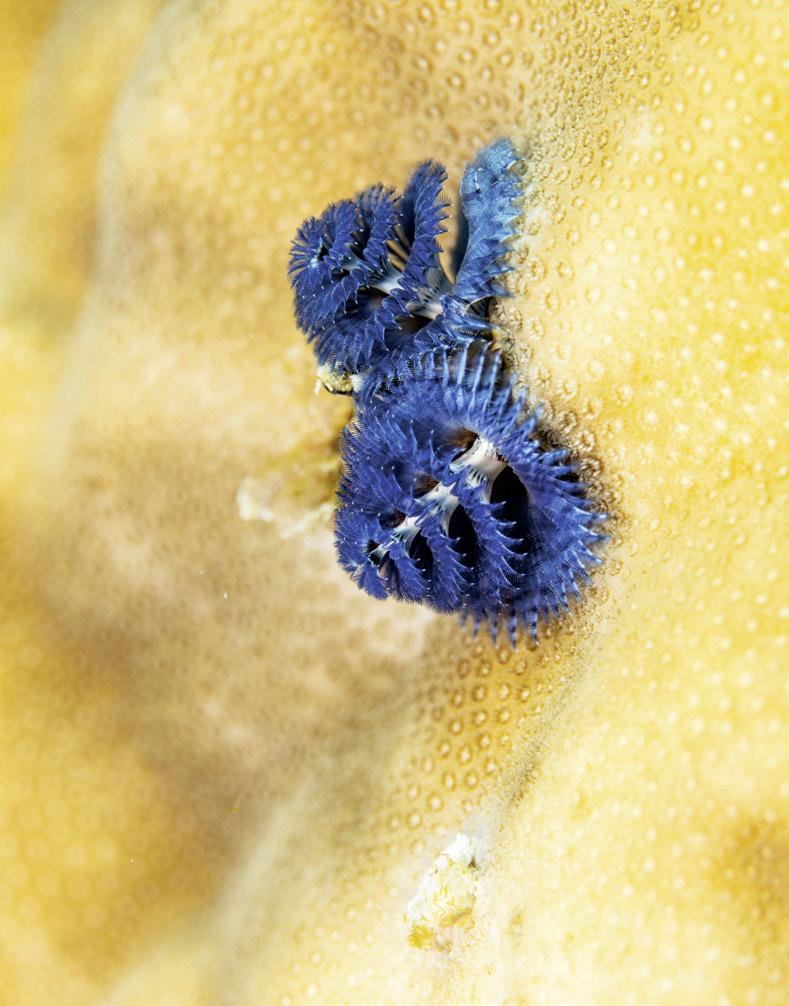
Between colourful reefs, mysterious wrecks and vibrant diversity, Mauritius offers a varied diving holiday experience –with the north and west coasts standing out in particular. We visited Euro Divers at both locations.
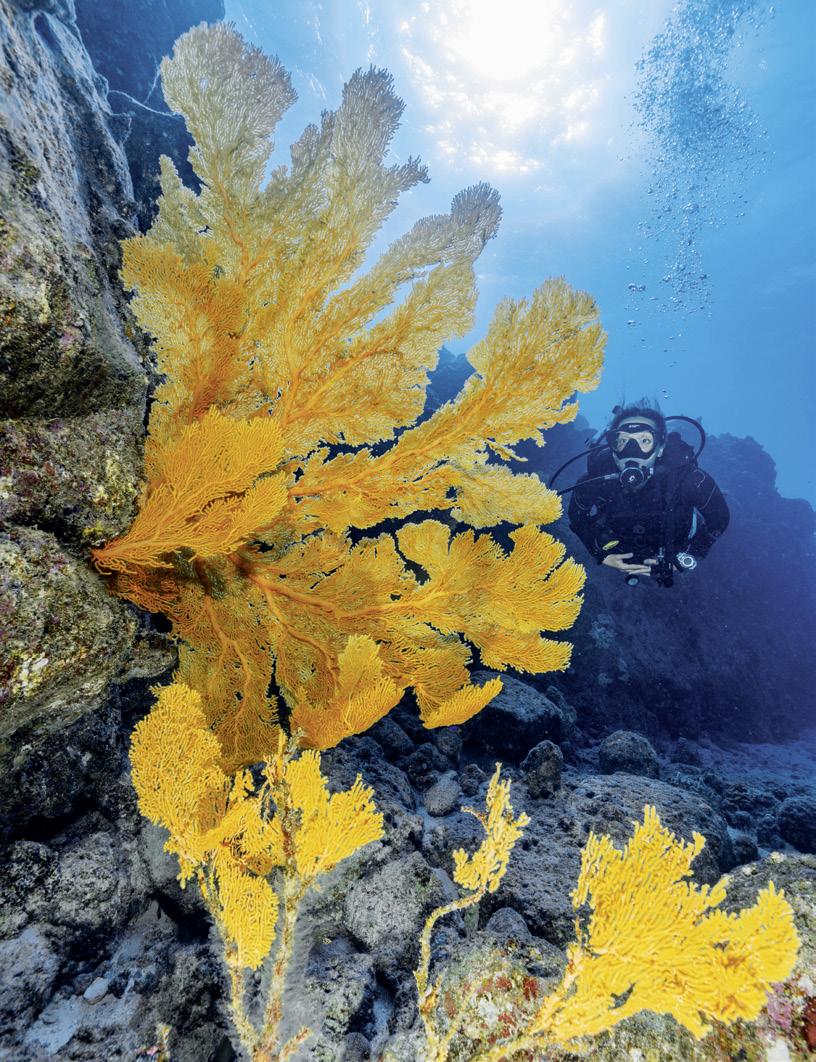
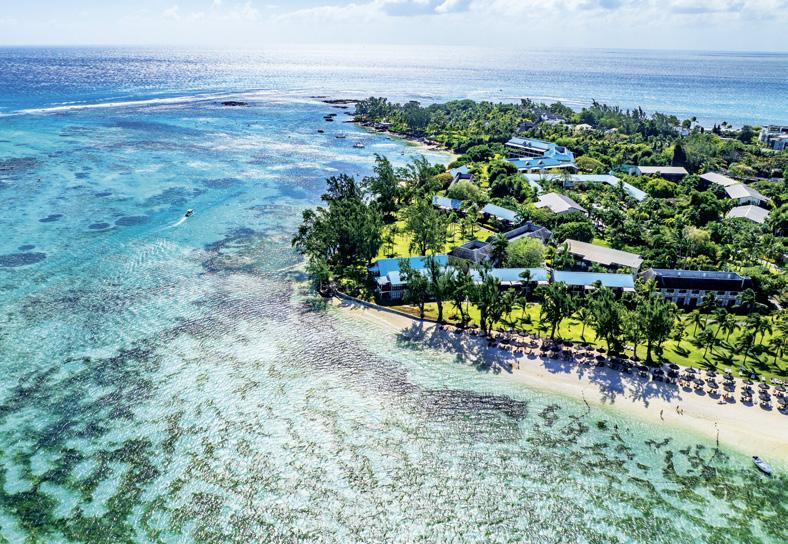
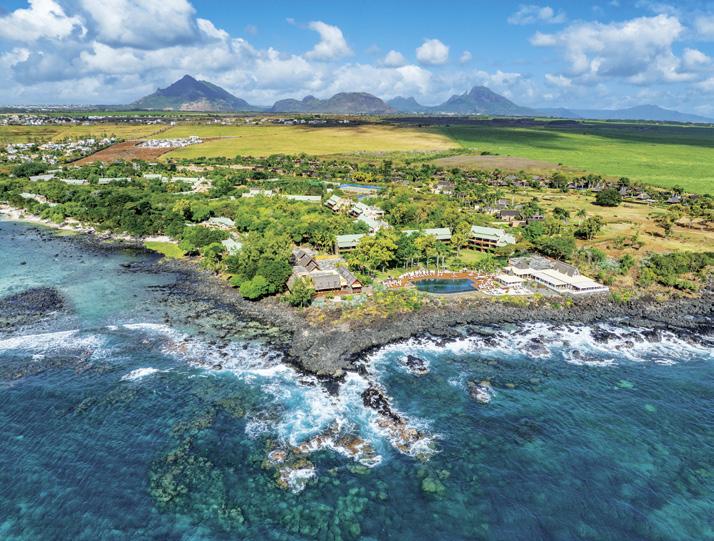
The name conjures up images of white beaches, turquoise waters and palm trees swaying in the breeze. As you descend, the paradise cliché is confirmed: rugged peaks rise out of lush greenery, endless sugar cane fields characterise the plains, and snowwhite sandy beaches line the coast. And beyond that: reefs as far as the eye can see. The volcanic island lies in the middle of the Indian Ocean and is almost completely surrounded by a fringing reef. Not only does it protect the coast, it also creates a habitat for a remarkable diversity of species –one of the main reasons to visit the island.
The north: wrecks, walls, volcanic rock
Around Grand Baie and Pereybère, the north reveals itself as a multifaceted diving area. The sites can be reached quickly by boat, and the water is mostly calm – ideal for beginners and experienced divers alike.
"One of the highlights is the wreck of the Stella Maru, a Japanese fishing vessel
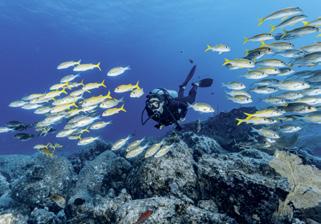
that was deliberately sunk," says base manager James, the son of an Englishman and a Mauritian woman, who has been diving around the island since he was a child. Today, he says, the ship is inhabited by yellow blue-backed fusiliers (Caesio teres), bannerfish (Pseudanthias squamipinnis), bluespotted stingrays (Taeniura lymma), scorpionfish (Scorpaeninae) and stonefish (Synanceia verrucosa). After diving down, it becomes clear that James knows what he is talking about – all the species mentioned are there, and a few more besides. It is possible and advisable to carefully dive into the steel ship. But be careful! There are sharp edges. At the stern, near the winch for the former nets, a huge scorpion fish has marked its territory – unimpressed by visitors, but photogenic.
"Don't expect anything big at the reef," James had said beforehand, "the macro lens is the right choice." The recommendation hits the mark: the macro life of the Indian
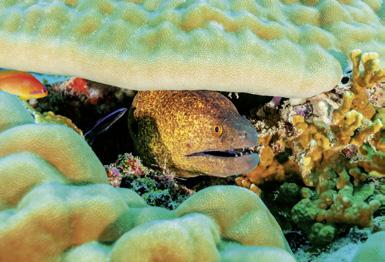
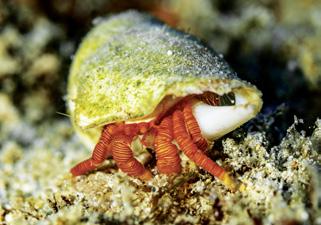
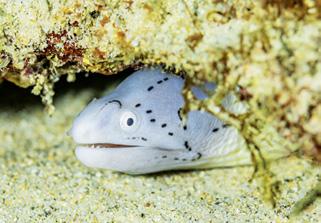
Ocean inspires with its abundance: nudibranchs (Nudibranchia) in many colours. A Spanish dancer (Hexabranchus sanguineus) in bright orange. Mantis shrimp (Stomatopoda), which you quickly grow fond of because of their lively and curious nature. Leaf fish (Taenianotus triacanthus), which deceive with their swaying leaf imitation. Peacock-eye anemone shrimp (Ancylomenes brevicarpalis, formerly Periclimenes) sit in anemones; in some, the eggs shimmer through their transparent bodies. With a bit of luck, you may find a porcelain crab (Porcellanidae) under the anemone. Cleaner shrimp (Lysmata spp.) are also common – especially with moray eels: From giant (Gymnothorax javanicus) to leopard (Scuticaria tigrina) to zebra moray eels (Gymnomuraena zebra), many species of these predatory fish are represented here. What diver doesn't enjoy tracking them down in their crevices and caves?
The abundance of reef fish is also not to
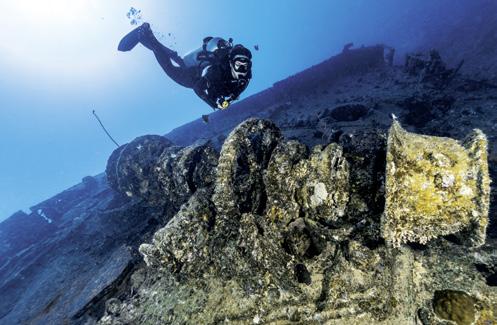
Wrecks, macro life, large mammals: there is plenty of variety around
Special highlight: the
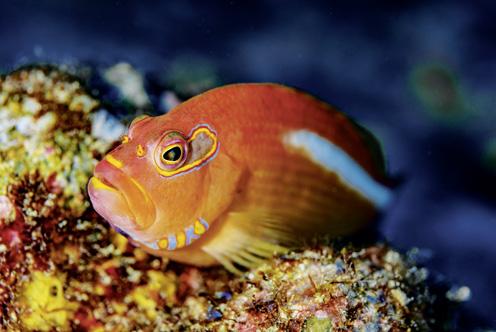
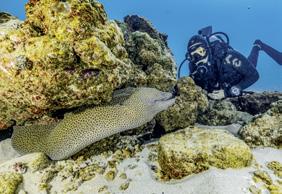
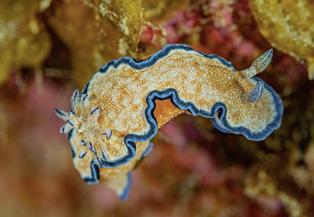
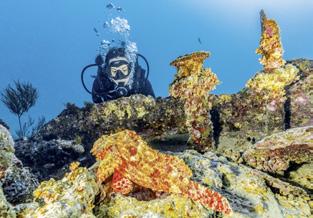
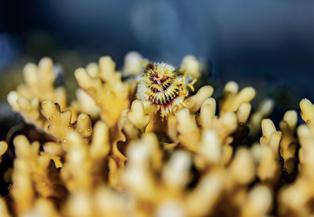
be overlooked: butterflyfish (Chaetodon auriga), angelfish (Pomacanthus imperator), reef fish (Dascyllus aruanus) and many more. But Mauritius is not just about macro: at the volcanic rock dive site "Lost Anchor", hawksbill sea turtles (Eretmochelys imbricata) frolic at the volcanic rock dive site "Lost Anchor". Majestic gorgonian fans add striking accents. Blue-striped snappers (Lutjanus kasmira) delight wideangle photographers. And when a school of bluefin trevally (Caranx melampygus) swims by, the dive is perfect.
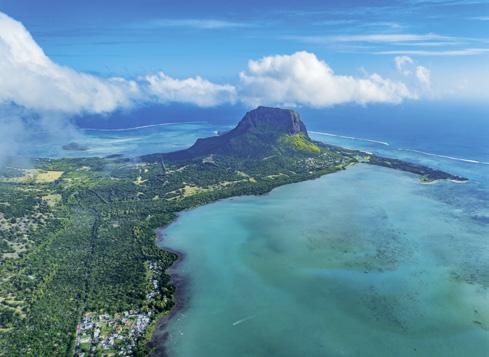
Those who prefer more adventure will find what they are looking for in the west. Around Flic-en-Flac, Tamarin and Le Morne, the underwater world is somewhat rougher. The rocky coastline offers overhangs, small caves and archways. On the
outer reefs, you may encounter eagle rays (Aetobatus narinari) and whitetip reef sharks (Triaenodon obesus). Euro-Divers in Albion is a good starting point. Although visibility is not great everywhere, the macro life is just as good as in the north.
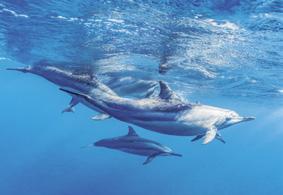
Particularly impressive: the west coast is home to large marine mammals. Spinner dolphins (Stenella longirostris) and bottlenose dolphins (Tursiops truncatus) live here and are often seen on snorkelling trips. With a little luck, sperm whales (Physeter macrocephalus) can also be spotted. Over the years, local researchers have identified around 230 individuals and estimate a resident subpopulation of about 25 animals. They hunt for squid at depths of up to 1,000 metres and come to the surface to breathe and socialise. Many providers allow guests to snorkel with whales – officially, this is not permitted. The diving centre itself does not offer these tours, but can organise them
at the house beach. Important: choose an experienced skipper who adheres to the code of conduct. Boats must not harass the animals. Whether in the water or on deck, being close to these animals is an unforgettable experience.
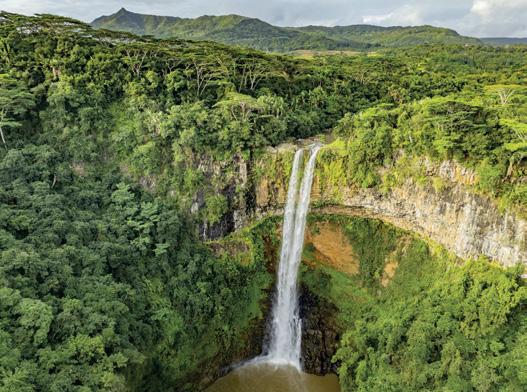
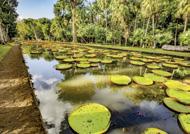
The island nation also has a lot to offer on land: colonial plantation houses, Hindu temples and a multicultural cuisine featuring curries, fresh seafood and exotic fruits. The SSR Botanic Garden in Pamplemousses is considered one of the oldest botanical gardens in the southern hemisphere. A day trip to Black River Gorges National Park is a must: sweeping views, waterfalls, jungle trails. In Chamarel, the "seven-coloured earth", a geological play of colours, is fascinating. Aldabra giant tortoises (Aldabrachelys gigantea) live there – although not native (originally from the Seychelles), they
are impressive and the second largest species after the Galapagos giant tortoises. In the mountains, you can also see Javanese monkeys (Macaca fascicularis).
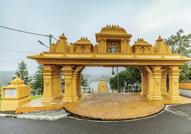
The route through the mountains leads to the Hindu temple complex Grand Bassin (Ganga Talao) with its huge statue of the god Shiva. The tea fields and the sacred lake exude a quiet, spiritual atmosphere, especially when wisps of fog drift through the peaks in the morning. Round off the evening with one of the many types of rum made from sugar cane – today with passion fruit. Cheers!
Mauritius is an island nation in the southwestern Indian Ocean, located approximately 870 kilometres east of Madagascar. In addition to the main island with the capital Port Louis, Rodrigues, the Cargados Carajos Islands, the Agalega Islands and, since May 2025, the Chagos Archipelago also belong to the national territory. The population is around 1.3 million. The most important economic sectors include sugar cultivation, the textile industry and tourism.
Getting there: Non-stop flights from Frankfurt, seasonally also from Munich. From other cities via Paris/Istanbul. Continue by taxi or hire car (note: drive on the left).
Best time to visit: April to June and September to December.
Water temperature: 23 to 28 degrees Celsius, depending on the season.
Safety: Decompression chamber in the greater Port Louis area.
Accommodation: in the north, for example, Club Med La Pointe aux Canonniers (or numerous alternatives in the region). In the west, Club Med La Plantation d'Albion.
Diving: The Euro Divers bases at La Pointe and Albion are professional; the guides know the macro hotspots and plan relaxed dives. In the north, you start closer to the spots than from Pier Grand Baie, while in the west, you can use the only base in Albion even without staying at a resort. Information: www.euro-divers.com.
Hotel information: clubmed.de/
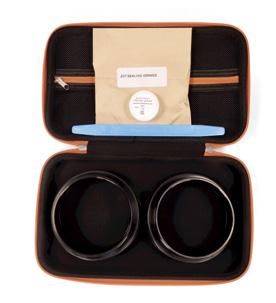
Fourth Element presents the PSI Press Lock Dryglove System, a robust, intuitive dry glove system made of anodised aluminium, designed for cold waters. The gloves are attached to the existing Si-Tech PU ring using a bayonet-style twist lock, making them compatible with Ellipse, QCS Oval, Rolock and Ultima systems. The colour-coded rings allow for quick clicking in and out. The set comes in a protective bag and also includes O-ring grease and a tool for loosening the O-rings. Price: 287 euros. fourthelement.com
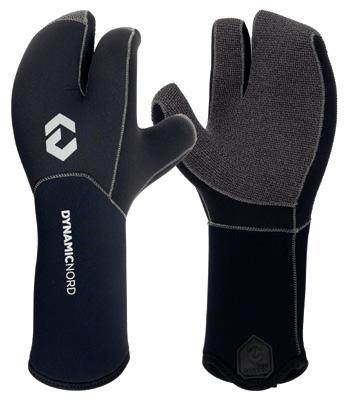
Dynamicnord presents new seven-millimetre-thick three-finger diving gloves that combine high cold protection with robust protection. The gloves are reinforced with Kevlar on the palms and fingers, offering reliable grip and withstanding even intensive use. An ergonomic cut, flexible neoprene materials and cleanly bonded seams ensure high wearing comfort and dense thermal insulation. Developed and designed in Germany. Price: 99 euros. dynamicnord.com
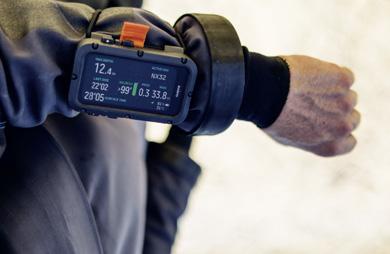
Suunto is launching two new dive computers, the Nautic and Nautic S, which are the first to use the Bühlmann ZH-L16C algorithm, enabling more precise control of decompression profiles. With its large 3.26-inch AMOLED display, up to 120 hours of battery life, 200 metres of water resistance and features such as trimix, multi-gas and sidemount support, the Nautic is clearly aimed at demanding divers. The more compact Nautic S in watch format offers a 1.43-inch AMOLED display, up to 60 hours of battery life and 100 metres of water resistance. It is also suitable for use above water as a versatile allrounder with modern navigation via GPS and offline maps. The Nautic S is priced at £499, while the Nautic costs between £699 and £725, depending on the model. With a pressure transmitter, the package costs 999 euros. suunto.com
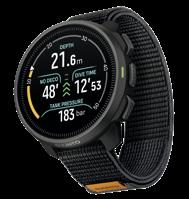


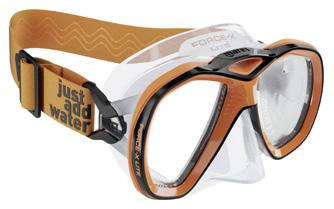
The new Mares Force-X Lite mask offers an exceptionally wide field of vision, high robustness thanks to its stainless steel frame, and a comfortable, reliable fit. With its lightweight and elastic fabric mask strap, slim profile frame and quick-change lenses, it is the ideal choice for demanding, modern divers. Price: 79.95 euros. mares.com
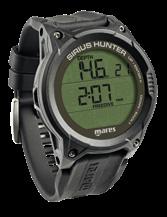
The new Mares Sirius Hunter is a particularly robust dive computer for freediving and has been specially developed to meet the requirements of ambitious freedivers. With a large mineral glass display, intuitive two-button navigation and extensive freediving and training functions, it offers reliable performance in any environment. Logbooks and updates can be conveniently transferred to the Mares app via Bluetooth. Price: 250 euros. mares.com

Mares introduces the new Dive App for the Apple Watch Ultra, transforming the smartwatch into a fully-fledged dive computer. The app is based on the proven Bühlmann ZH-L16C algorithm, offers GPS tracking, a digital logbook, Nitrox functionality and an integrated compass, and can be updated directly via the Mares app. The app is available free of charge in the App Store. The Ultra Dive functions are unlocked via in-app purchase. Prices: 9.99 euros per month or 79.99 euros per year. mares.com
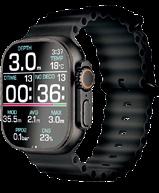




NEU: auch mit DUI Zip-Seals verfügbar!





Erlebe beste Bewegungsfreiheit und absolute Bequemlichkeit. Die innovativen Trockentauchanzüge der DG-Serie garantieren höchsten Komfort.
Hochwertiges 350 g/m² Ripstop Material für Flexibilität und äußerste Robustheit / Smarter Schnitt für optimale Bewegungsfreiheit / Erstklassiger TiZip-Reißverschluss / Hochleistungsfähige Ein- und Auslassventile / Zwei feste Beintaschen mit Bungees / Konische Manschetten aus hochfestem Latex an den Handgelenken / 3 mm Neopren Halsmanschette und 5 mm Neopren Kopfhaube für besten Komfort / 3 mm Füßlinge
Link zum Produkt

Benjamin Schulze
A test under real conditions: cold water, high cylinder pressure, simulated out-of-breath situation. The Cressi Zen Pro
remains calm. The warm water octopus does not.
Ihave beentesting cold water regulatorsfor a very long time. I was allowed to participate in my first test as an intern and assistant at this magazine in 2008 –always in open water under realistic conditions. My experience: it is possible to make any regulator blow off. It is only a matter of time and manoeuvres. How does Cressi's new Zen Pro cold water regulator perform?
The combination of Cressi MC-11 (first stage) and Zen Pro (second stage) is a cold water certified regulator combination which, according to the manufacturer, is characterised by its environmentally sealed first stage and consistently easy breathing. Two targeted dives in real cold water conditions in Blausteinsee near Eschweiler showed how well these features work in practice.
Impressions and breathing characteristics
The Zen Pro is very small, compact and lightweight. It is extremely comfortable to breathe through: the breathing resistance is light without tipping over into inflation, and at the same time so controlled that there is no feeling of sucking for air. The breathing effort feels consistent, both
in a normal diving rhythm and when changing breathing and diving depths. The Venturi lever, available from Cressi as a "PreDive" or "Dive" lever, has a clearly noticeable effect.
At depths of around 20 metres or more, when listening intently, a quiet working noise could be heard from the first stage: a muffled, rhythmic sound, as is familiar from highly balanced diaphragm systems. It was not disturbing, but it showed that the system was actively overcompensating and controlling its pressure equalisation. The breathing sensation remained constant and there was no loss of air supply.
The test was carried out using compressed air from a Bauer compressor belonging to the German Sport University Cologne. The system is regularly serviced; moisture levels in the breathing air were not measured separately. A seven-litre composite cylinder filled to 270 bar served as the gas supply and was used as a stage cylinder. A sevenlitre double cylinder with a proven cold water system was also used on the back as a safety reserve.
The Cressi Zen Pro was brand new and was connected without prior breathing performance testing. In addition to the main
stage, the Zen octopus, which is not suitable for cold water, was also installed. Before diving, both regulators were set from "Pre-Dive" to "Dive" on the Venturi lever. In addition, an inflator hose with a nozzle was fitted, which was operated regularly to simulate inflator use during breathing. The water
A cold water regulator is designed to function reliably even at water temperatures below 10°C. It is crucial that neither the first nor the second stage freeze.
KEY FEATURES:
• Membrane-controlled, encapsulated first stage to separate the internal components from cold water.
• Additional heat exchangers or fins on the second stage.
• Large internal cross-sections to allow the gas to flow freely
• Low pressure differences and materials with good thermal conductivity.
• Test mark according to EN250:2014, which permits operation in cold water – printed on the product.
Testing regulator performance in cold water requires preparation, planning and experience. We recommend that you do not carry out such tests yourself without the appropriate knowledge.
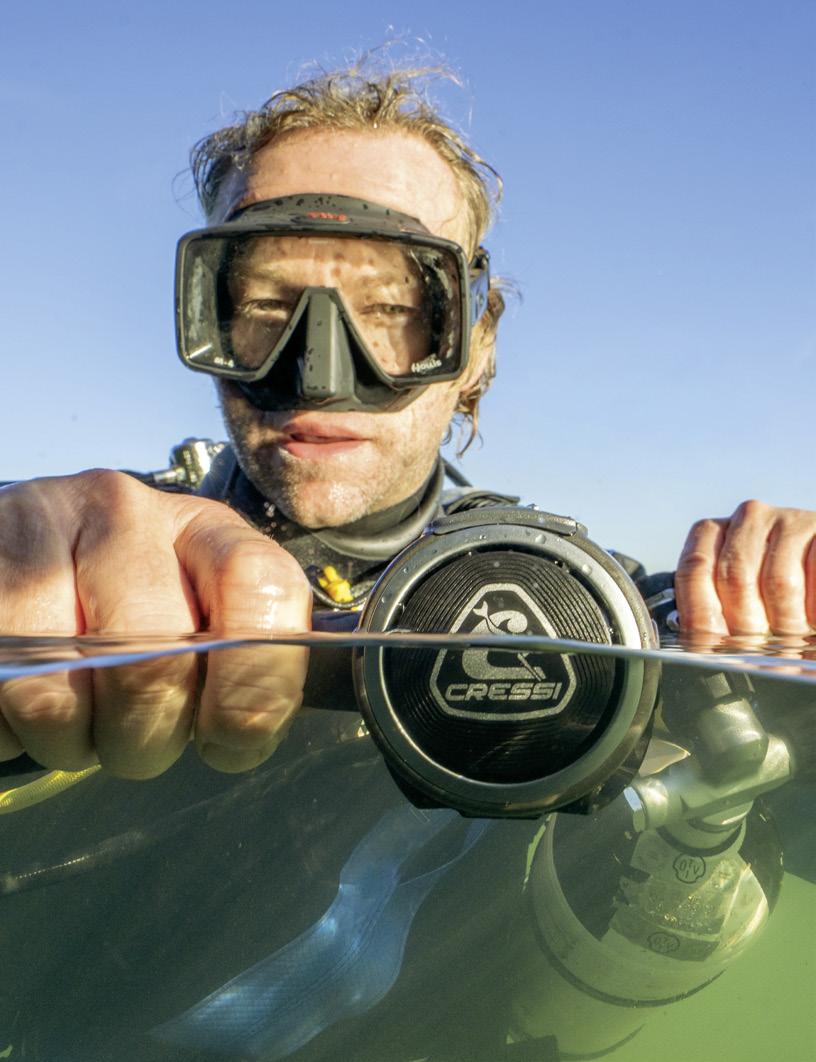
>
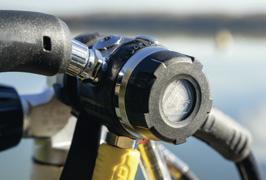
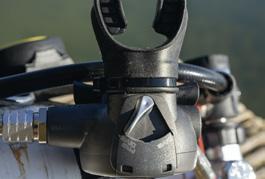
In the first stage of the breathing regulator, breathing gas is reduced from up to 300 bar to medium pressure (approximately 8 to 10 bar above ambient pressure). This process is highly endothermic: the gas cools down abruptly, in some cases by more than 60°C. Temperatures as low as -30°C are possible in the first stage.
In water temperatures below 10°C, this cooling can cause condensation to form inside the first stage more quickly, which then freezes on components such as the valve seat, spring or balance chamber. This impairs the mechanics and is referred to as internal icing.
The consequences affect individual components – not the entire regulator – and lead to different malfunctions depending on where the icing occurs:
• Ice on the high-pressure seat: valve does not close completely, medium pressure rises → freeflow/blowdown.
• Ice on the spring or balancing chamber: delayed or incomplete opening/closing → free flow/blow-off.
• Ice in the second stage: diaphragm reacts sluggishly, valve remains slightly open → Free flow / blow-off.
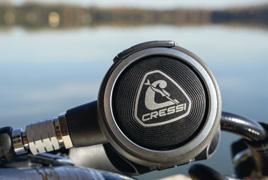
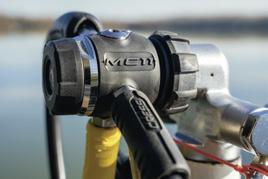
• Blocking icing: If a valve no longer opens at all, this can lead to a severe lack of air or even a complete interruption in the air supply. This is less common, but also very critical.
Free flow leads to rapid gas loss, while blocked gas flow leads to acute breathing problems. In both cases, the only solution is to close the cylinder valve and switch to the redundant system. If the valve cannot be closed during free flow, it is still possible to breathe from the venting regulator.
AGGRAVATING FACTORS:
• high breathing effort and inflator/ valve operation
• Moisture in the diving cylinder
• Inadequate maintenance
• greater diving depth (dense gas)
• Bottle size and material
COUNTERMEASURES:
• Use diaphragm-controlled, encapsulated first stages.
• Calm, steady breathing and clean buoyancy control.
• Diving with two independently shut-off first and second stages.
• Practise free-flow and valve drills regularly.
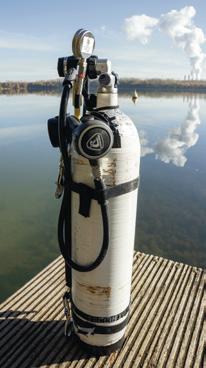
The encapsulation of the first stage is clearly visible. It prevents moisture and dirt from entering, which protects against internal icing.
The second stage Zen Pro is very compact, but has a very large air shower.
The test was carried out using a composite bottle – a steel core wrapped in carbon mats – for thermal reasons.
When diving, the Venturi lever was set to "Dive", which is intended to prevent rapid deflation.
Despite its relatively small dimensions, the MC11 has six outlets: 4 medium pressure and 2 high pressure.
temperature was five degrees Celsius at a depth of 27 metres.
Procedure and manoeuvres
During the dives, various breathing situations were simulated in order to replicate practical stress conditions: normal breathing, breathing while using the inflator, deep sighs, rapid stress breathing and – in the first dive – simultaneous breathing via the main regulator and octopus (simulated by briefly activating the air shower). During dive one, the last condition resulted in the octopus, which is not suitable for cold water, deflating uncontrollably in less than ten seconds, while the Zen Pro remained stable and did not show any uncontrolled
Breathing regulators belong to PPE category III, as they protect wearers from mortal danger (drowning, oxygen deficiency).
THIS MEANS:
→ The manufacturer must have an EU type examination carried out by an approved testing body.
→ The product receives a CE marking with the four-digit number of the testing centre.
→ Regular quality checks are mandatory.
air release. The entire test lasted just under five minutes at a depth of 27 metres during the first dive.
A second dive – this time without an octopus, i.e. exclusively with the Zen Pro and the encapsulated, hypercompensated MC11 – resulted in a significantly longer endurance time. Under comparable conditions, the test ran for nine minutes and 53 seconds before a free flow began. This was only triggered by pressing the air shower for ten seconds. This is a load that practically never occurs in normal diving operations.
The free flow of the octopus in the first test is revealing, but cannot be interpreted conclusively. Since the octopus was not suitable for cold water, the blow-off process may be due to ice build-up in its valve or to an increase in medium pressure as a result of a partially frozen first stage. Without measuring the medium pressure and temperature at the MC-11, this remains unclear.
The selected test parameters – small composite cylinder with high pressure, varying breathing patterns and additional inflator load – deliberately create an extreme scenario that promotes cold conditions. Measurements taken by Roland Schmitz (Airscan) show that composite cylinders generate particularly low temperatures in the first stage, thus creating an unfavourable environment for icing.
The second test, on the other hand, shows the performance of the Zen Pro and MC11 combination more clearly: without
the hot water-oriented Octopus, the setup lasted almost twice as long and only reacted negatively under an artificially extended maximum load. This speaks for the high thermal reserve of the MC11-Zen Pro combination.
The overall picture is consistent: the free flow in the first test was significantly influenced by the weaker second stage. The second test shows what the cold water system is actually capable of.
The Cressi Zen Pro impresses in cold water with its stable air delivery, comfortable breathing characteristics and overall smooth performance, even under stress. The test series also shows how important it is to have a complete system that is fully suitable for cold water – especially when choosing an octopus.
Both tests together provide a realistic picture of actual cold resistance: the Zen Pro with MC11 works reliably for a long time and only reacts under conditions that far exceed what is to be expected in normal diving operations. For cold water divers, one thing remains clear: a coordinated setup and regular valve training are key safety factors. <<
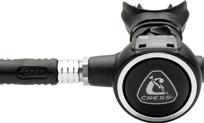
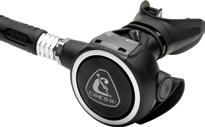
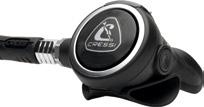
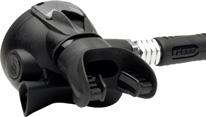
The combination of MC11 (first stage) and Zen Pro (second stage) has been completely redesigned to make it suitable for cold water according to the EN250 standard. The breathing characteristics can be adjusted using "PreDive" or "Dive".
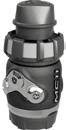
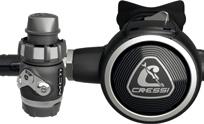
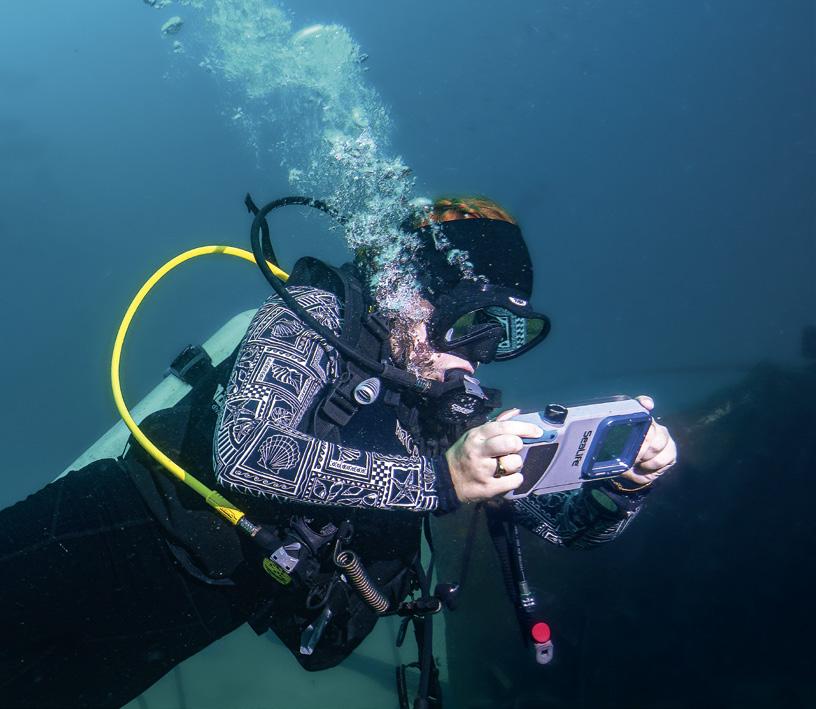
Using your smartphone underwater – is it reliable, easy and safe?
We tested the SeaLife SportDiver S during five dives, in tropical reefs and in cold inland lakes. The results show that this small housing is a clever companion for holiday divers and photo and video enthusiasts.
T & F BenjaminSchulze
Lisa takes the hand pump. She pulls air out of the housing, the indicator light turns green – everything is ready. This is how her dive with the SeaLife SportDiver S begins. No complicated technology, no special knowledge required. The smartphone sits securely, the housing feels sturdy, and the operation is self-explanatory. With the SportDiver S, SeaLife promises a robust pointand-shoot system for anyone who wants to use their mobile phone underwater – without fear of water damage and with the convenience of having the images directly on the device.
When unpacking, it is clear that someone has thought this through. The housing comes in a sturdy carrying case with plenty of room for all the parts. Replacement Orings for the housing and vacuum pump, silicone grease, batteries, a moisture absorber and a hand strap are included. This means that the set is ready for immediate use. Optional accessories such as red filters, light arms or attachment lenses are available, but these are not essential for typical holiday use. Three ¼-inch threads on the underside allow brackets or lamps to be attached, making the system flexible.
The housing itself is made of robust polycarbonate with stainless steel and glass elements. The workmanship appears solid, and the weight feels comfortable in the hand without being bulky. In water, the SportDiver S behaves slightly negatively, which most divers prefer.
The setup is simple and well thought out. The smartphone is secured with small rubber pins so that it sits securely – you don't even have to remove a thin protective case. This is extremely practical and gets a big thumbs up for ease of use. The SportDiver app (iOS and Android) guides you step by step through the process: insert the battery, pair via Bluetooth, create a vacuum, check for leaks.
The vacuum is created using a hand pump. Then you have to wait three minutes. If the LED lights up green and the pointer in the app remains green, the housing is sealed. The first time you set it up, this takes about five minutes. After that, it goes much faster. The quarter-turn closure clicks into place clearly and feels secure.
even with 5 mm gloves. The controls are large enough to be easily felt. This is a detail that counts for more in everyday use than technical refinements.
The app itself is functional and clearly laid out, even if it is not perfectly optimised. Some settings – such as white balance or switching between automatic and manu-
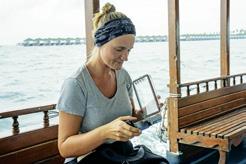
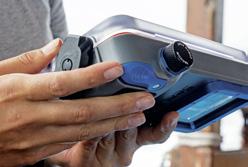
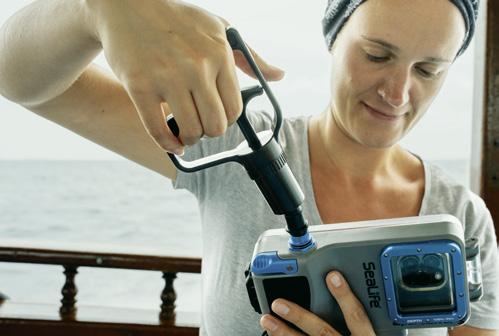
It is controlled using four buttons on the right-hand side: menu, up and down, and confirm. The shutter release is easy to reach and provides pleasant feedback. However, you need both hands to change menus, as you have to hold the housing with one hand to navigate through the menus with the other. During the test dive in a cold German lake, everything worked perfectly
al – are somewhat hidden deep in the menu. Viewing images is also relatively cumbersome, requiring several button presses. Switching from photo to video, on the other hand, is quite quick, as this option is located at the top of the menu structure. The option to take photos in RAW format (DNG) is a good feature. This allows for solid post-processing later on.
One wish remains: freely assignable
"It's fun because you can just get started. The app
explains everything.
You know that your mobile phone is secure – and you have the pictures right there with you."
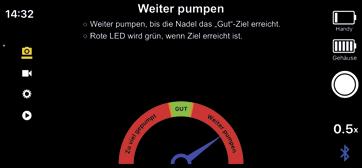
quick access buttons or custom profiles to prepare the camera for typical underwater situations (macro photography, backlighting, blue water, green water). TThis would offer a real boost in usability, especially for ambitious users.
During four dives in the Maldives and another in a lake, the case proved its robustness. No leaks, no false alarms, no moisture ingress. The leak warning system responded accurately but was not overly sensitive. The Bluetooth connection remained stable even after prolonged use.
Safety first: By "vacuuming" the mobile phone case with the , it is virtually impossible to open it accidentally , and you know before you enter the water whether the case is leaking. The preliminarycheck takes just over three minutes.
The menu is clearly laid out. However, navigating to some items is somewhat cumbersome, for example when selecting lenses.
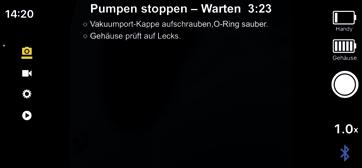
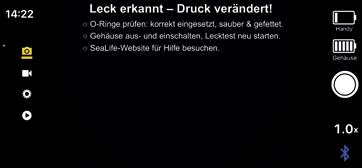
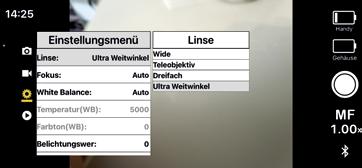
Lara, another user, sums it up after her dive: "It's fun because you can just get started. The app explains everything. You know that your mobile phone is safe – and you have the pictures right there with you." The images taken with an iPhone 13 Pro impressed with their clear colours and good sharpness. In shallow water with natural light, the system delivers amazingly balanced results. At greater depths, the physical limitations become apparent: without an additional lamp, there is a lack of red and contrast – typical for any smartphone camera underwater.
The SportDiver Ultra is the larger sister model. It allows dives to depths of up to 40 metres (instead of 30 metres with the S) and comes with a red filter. So if you dive deeper or use large smartphones, you will benefit from the Ultra.
In everyday use, however, the SportDiver S is handy, lightweight and easy to store – ideal for travelling and spontaneous use. It is perfectly adequate for recreational users and snorkellers.
The biggest criticism remains the app. It is reliable and runs smoothly, but it is so-
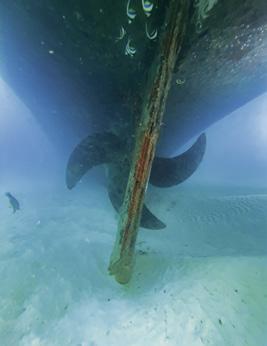
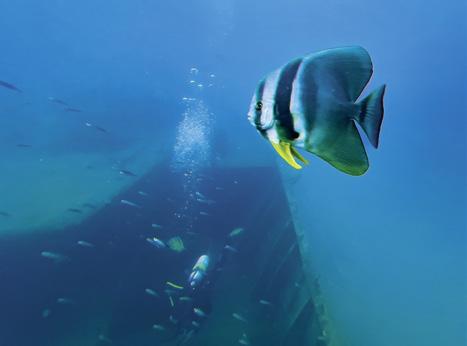
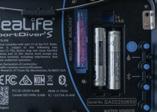
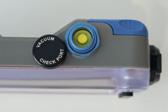
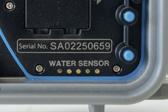
mewhat cumbersome to use. A faster option for viewing images and quicker lens changes would be helpful. When filming, direct access to the white balance would be great. Menu handling with one hand is also limited. You usually need both hands to change settings. On the positive side, the button mechanism seems durable, and the feedback remains consistent even after several uses.
Conclusion
The SeaLife SportDiver S is not a tool for professionals – but that is precisely its strength. It is aimed at anyone who wants to capture their holiday experiences easily and safely without having to deal with complex systems. The housing impresses with its simple operation, reliable sealing and useful scope of delivery. The app could
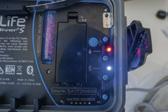
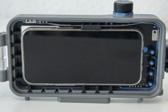
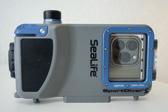
SportDiver S universal smartphone case all iOS and many Android smartphones up to 30 metres
operation
window
in grams
of delivery
in euros
Polycarbonate, stainless steel and optical glass simple O-ring mechanical buttons via Bluetooth and app high-quality real glass window 1/4-inch tripod thread, eyelet for hand strap approx. 206 x 113 x 61 mm approx. 641 g (on land) two AAA batteries for Bluetooth module Sealife SportDiver app (iOS/Android)
Moisture alarm, vacuum leak test, silicate compartment Bag, vacuum pump, spare O-ring, Grease, wrist strap, batteries, silicate 269 sealife-cameras.com
be more intuitive, but the overall concept is coherent. Particularly pleasant: the feeling of being able to use your smartphone directly – without risk, but with the usual
comfort. At the end of the test, Lara sums it up: "It's just nice to be able to view and use the pictures you took underwater just a short while ago, right there on the boat."
33% Rabatt auf 12 Ausgaben TAUCHEN +Chance auf einen von drei Reisegutscheinen im Wert von je 1.500 €
Bestellung online: www.tauchen.de/33 Bestellung telefonisch: 040/38906-880 (bitte die Nr. 2184966 angeben) Lies 12 Ausgaben TAUCHEN für nur 79,60 EURO und erhalte die Chance auf einen von drei Reisegutscheinen. Die Gewinner werden Ende Januar mit dem Goldenen Ticket benachrichtigt. Es besteht ein 14-tägiges Widerrufsrecht. Anbieter des Abonnements ist JAHR Artopé GmbH & Co. KG. Belieferung, Betreuung und Abrechnung erfolgen durch DPV Deutscher Pressevertrieb GmbH als leistender Unternehmer. scan me
The GEOMAR Helmholtz Centre for Ocean Research Kiel is currently conducting expeditions with the research vessel ALKOR to investigate old munitions stocks in the Baltic Sea. The aim is to better understand the impact of conventional and chemical munitions from the world wars on the marine environment and to evaluate the effectiveness of initial clearance operations. To this end, autonomous and remote-controlled underwater robots are being used to map the seabed, water and objects, as well as to analyse samples directly for pollutants such as TNT and RDX. The investigations are focusing primarily on areas in Polish and Danish waters where large quantities of munitions were dumped, as well as areas in the Bay of Lübeck where munitions were recovered in the summer of 2025. The expeditions support major research projects such as CONMAR and MuniRisk, the results of which will be incorporated into national and European strategies for dealing with munitions contamination.
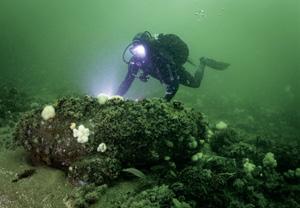
Hundreds of thousands of tonnes of conventional and chemical munitions have been lying on the seabed of the North Sea and Baltic Sea since the world wars. After decades in salt water, the metal casings corrode and release toxic substances.
The research vessel ALKOR at the pier at the fish market in Kiel on the day before the research trip. Before an expedition, all research equipment must be loaded onto the ship. The autonomous underwater vehicles AUV Abyss and AUV Luise are waiting to be loaded at the pier.
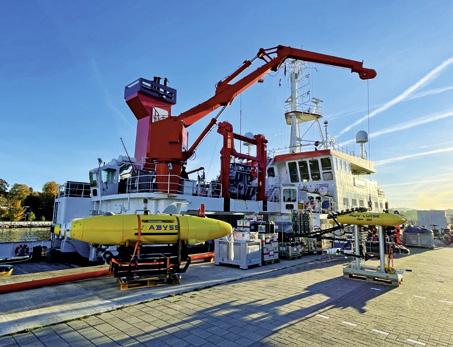
An international research team led by Bettina Meyer from the Alfred Wegener Institute (AWI) has presented a new concept for the sustainable management of krill fishing in the Antarctic. The aim is to involve the fishing industry directly in scientific data collection in order to better protect krill stocks. Antarctic krill, with a biomass of up to 500 million tonnes, is the main food source for many animals in the Southern Ocean, including seals, penguins and whales. If intensive fishing threatens to reduce the krill population, the entire Antarctic ecosystem would be at risk. The new management concept provides for scientific observers on all fishing vessels to collect biological data and systematically incorporate it into monitoring. Thanks to modern technology such as pump systems and echo sounders, extensive information on the size and distribution of krill swarms and their predators can be collected on a daily basis. Fishing boats thus become research platforms and provide important data that individual research vessels would not be able to collect to the same extent. This allows sensitive regions to be identified and protective measures to be planned in a more targeted manner.
OUR EXPERT

DR FLORIAN HUBER reports every month on the latest news from the scientific underwater world. He himself is an underwater archaeologist and research diver. (florian-huber.info).
A new study led by German marine research centres, including GEOMAR Kiel, shows that hydrothermal vents on the seabed deliver surprisingly large amounts of iron over long distances into the oceans and are thus a previously underestimated source of nutrients. Contrary to previous assumptions, some of the iron does not immediately settle on the seabed as a solid, but remains dissolved and can be transported by currents to distant marine regions, influenced by microbes and organic molecules. As iron is scarce in many parts of the oceans, this input increases the productivity of plankton and thus CO₂ sequestration in the sea. According to the study, these processes play an important role in the climate and global nutrient cycles.
A hydrothermal vent on the Mid-Atlantic Ridge. Hot, mineral-rich fluids are distributed throughout the ocean via the dispersion cloud – known as the plume. The photo was taken during the M190 research expedition with the MARUM-QUEST4000 diving robot. The arm of the diving robot holds a temperature lance in the vent plume, to measure the temperature there.
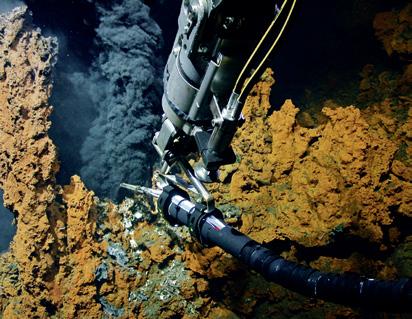
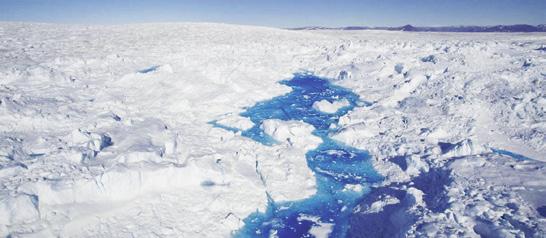
Florian Huber has collaborated with a large number of authors to create a work that is much more than just a picture book about wrecks. It is a journey to sunken ships and to the people who once mustered great courage and set sail into the unknown with a zest for action – and at the same time, it offers a compelling glimpse into the vulnerable world of the deep sea. A book that is definitely worth reading and looking at! (Archaeology in Germany, AiD)
The UNESCO estimates that there are around three million shipwrecks in our oceans, many of them at depths that can only be found and explored using high-tech equipment. Reports such as the discovery of the Titanic, the Bismarck or the Endurance in Antarctica – Ernest Shackleton's legendary expedition ship – made headlines around the world. In the Black Sea, archaeologists found Roman ships over 2,000 years old that are perfectly preserved. Why have wrecks become thriving oases of life? What techniques are used to explore the deep sea and document finds? This volume answers these and many other questions and provides insights into the exciting world of deep-sea archaeology. An international team of authors reports on their work. Spectacular images bring the shipwrecks and their stories to life.
The European Research Council is funding an international project that is investigating the runoff of meltwater on the Greenland ice sheet and the role of firn in this process. This is because the firn layer acts like a sponge: it absorbs the meltwater in summer, thereby protecting the ice masses beneath it. As temperatures rise, more and more meltwater penetrates the firn, changing its structure and reducing its ability to retain water. An international research team led by the Alfred Wegener Institute (AWI), the Geological Survey of Denmark and Greenland, and the Universities of Fribourg and Utrecht is now investigating in the FirnMelt project how these changes affect the entire ice sheet and may accelerate its runoff into the ocean. Innovative field studies, aerial and satellite measurements, new 3D models and AI-based simulations are being used to track the path of meltwater from the firn to the base of the ice sheet. The findings will help to model the hydrology of the ice sheet in greater detail than ever before, enabling better predictions about Greenland's future in the context of sea level rise. The project is funded by the European Research Council with £13 million and will provide important data for future reports by the Intergovernmental Panel on Climate Change (IPCC).
Meltwater lake on the 79 North Glacier
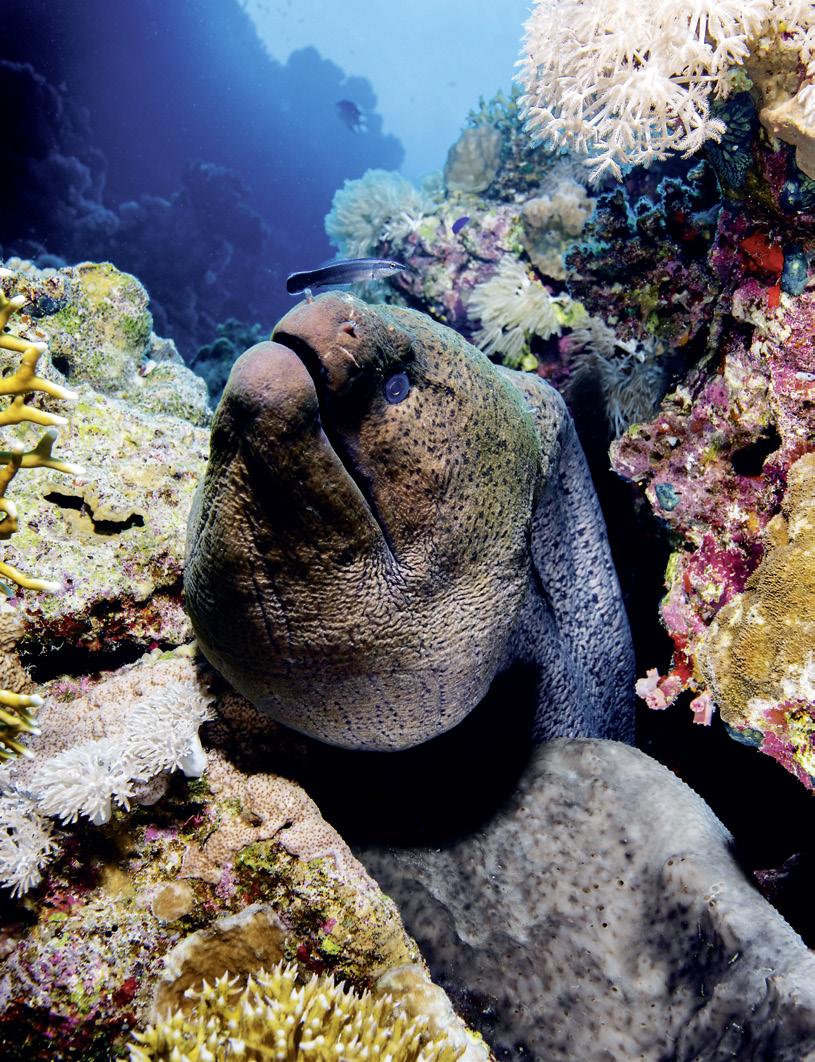
T
& F Richard Aspinall
Richard Aspinall was out and about with Aggressor Adventures and gives ten general tips on how to get the best underwater shots through good planning and preparation.
Cominghomewith memory cards full of colourful reef images, atmospheric wreck shots and videos of impressive encounters with marine life is a wonderful feeling. Whether you like to share your photos on social media or plan to make large-format prints for your walls, a photography trip is an investment. And we all want our time and money to be well spent. A diving trip often takes up a large part of the holiday budget. Every dive is valuable, because every minute underwater can provide an opportunity for an unforgettable picture. The last thing you want is to experience something extraordinary and then have your camera break down. From accidentally selecting the wrong focus mode to total failure due to water ingress, nothing ruins a diving holiday faster than a camera problem.
Such mishaps can never be completely avoided. But with careful planning, good preparation and a professionally run dive boat and crew, the chances of getting the best picture of the trip increase considerably.
When you choose an adventure with Aggressor Adventures – whether it's a liveaboard, river cruise or lodge stay – you're choosing a brand with an excellent reputation. Aggressor can arrange flights, transfers, hotels and onward travel on request. This all-inclusive package ensures peace of mind and security: you arrive relaxed and ready to enjoy your first dive. Here are my recommendations – in no particular order – to ensure your photography trip with Aggressor Adventures runs smoothly.
1. Maintenance, spare parts and care
We often plan our holidays well in advance and check our diving and camera equipment several weeks before departure. Spare parts sometimes take time to arrive or have to be ordered from abroad. There are often professional photographers on board the Aggressor yachts who can help in an emergency. But it's best to make sure everything
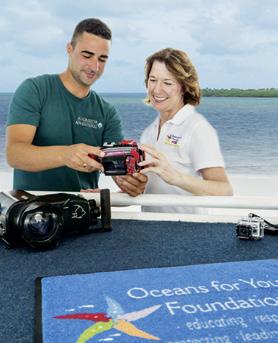
is working before you board. Don't forget simple maintenance: clean and grease Orings. I always carry spare O-rings, silicone grease, superglue and a small tool kit with me, because it's better to be safe than sorry.
2. Check dives
The boat crew usually chooses a simple dive site for the first dive, known as the check dive. It may sound crazy, but it might be better to leave your camera on board for your first jump into the water. A check dive serves to check buoyancy, weight and equipment. This ensures that you are well prepared for later, more demanding dives with your camera in hand. After a good check dive, you can concentrate on the subject and your buddy.
3. Communication with the crew
Aggressor crews are highly trained in handling photographic equipment – from compact cameras to professional DSLR rigs. When handing over the camera from the Zodiac or on the ladder, the equipment is treated with the utmost care. If you have any special requests, simply speak to the crew. Normally, the crew rinses and places the cameras on the camera table, but individual procedures are possible. The
3
crew works hard. Helping them helps you: it makes the day more relaxed for everyone.
4. Practice makes perfect
If possible, practise using your camera before you travel. An hour in the pool can work wonders! Take photos of a plastic Nemo toy in shallow water. This will help you practise image composition, focus, exposure and switching between photo and video mode.
Many situations can also be simulated on land. For example, my dogs often have to serve as seals or turtles at home.
5. Leak detector
The best investment I ever made was a vacuum leak detector. This small device uses a pump to create negative pressure in the
housing and warns you with an LED and an audible signal if something is wrong. This way, you know on deck that the housing is watertight – before you jump into the water.
All Aggressor yachts feature large, dry storage and work areas – ideal for checking your photographic equipment at your leisure. Avoid assembling your complex camera equipment in a hurry or in confined spaces. Take advantage of the time and space available.
6. Ask the professionals
The Aggressor team is happy to help you take better photos. But of course, the crew is busy with many guests. If you want to learn more intensively, book one of the "Mike & Mike Underwater Photography Charters".
's diving safaris with the Aggressor fleet are particularly appealing to underwater photographers.
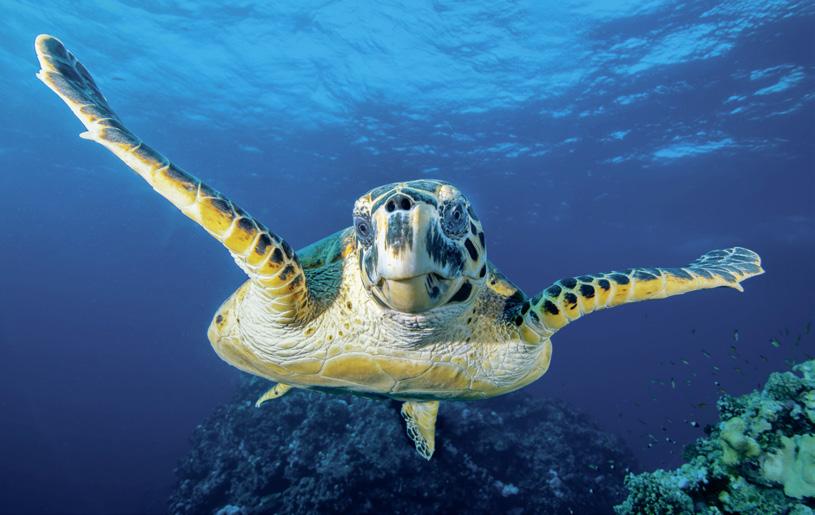
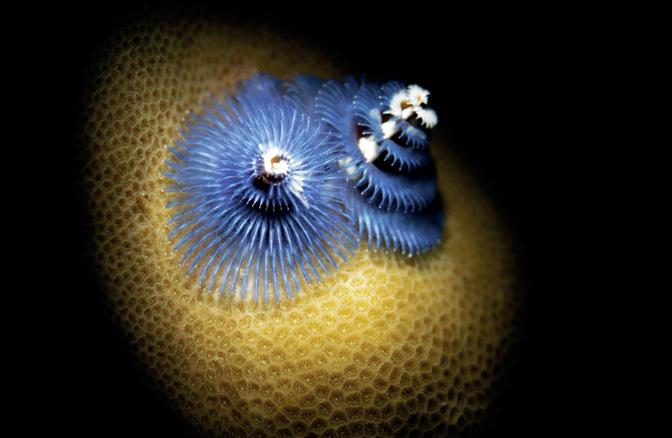
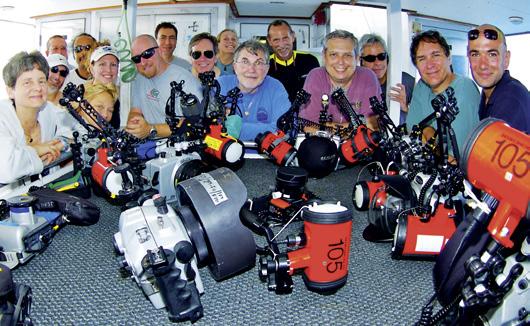
The professionals offer week-long workshops on the Aggressor yachts in the Caribbean – including image composition, shooting techniques and digital post-processing.
7. Correct setup underwater Often underestimated: the way you carry your camera. My large "equipment" is always secured with a carabiner so that it doesn't dangle or touch the reef and doesn't get in the way when setting the
signal buoy. Buoyancy also plays an important role: some camera systems have a strong positive or negative buoyancy, which makes work more difficult – especially in macro photography. Different ports or flash arms can change buoyancy or weight. Small counterweights or floats can help to achieve balance. Make sure that the equipment fits snugly against your body to avoid damage or snagging.
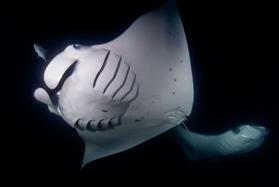

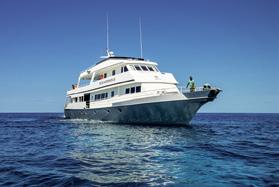
8. Fit for diving?
I've talked a lot about equipment so far. But are you ready yourself? Three or four dives a day are exhausting, especially if you're not regularly active. Try to keep yourself physically fit before the trip. And: Aggressor yachts are not the place for diets! The food on board is excellent. There are plenty of snacks, as well as soft drinks and alcoholic beverages. Enjoy it – but drink in moderation and never before a dive.
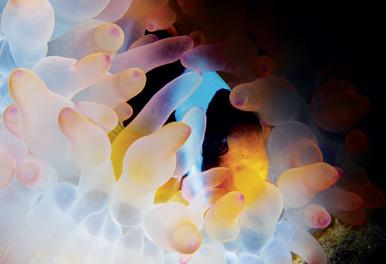
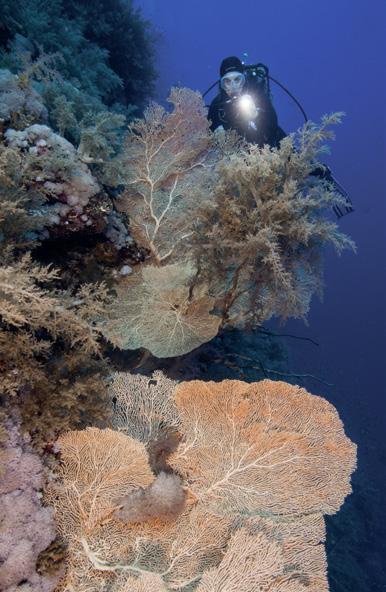
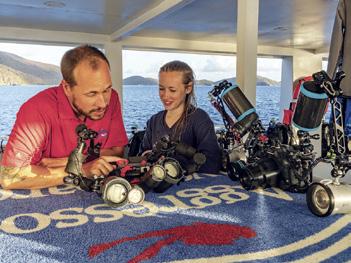
More information about Aggressor trips: www.aggressor.com
9. Destination and briefings
Find out about the destination in advance. The Aggressor guides give excellent briefings, but it's always worth doing a little research on your own about the history, culture or wrecks. I love marine biology and often study books about the endemic species of a region – those that are only found there. Ask the guides about the day's schedule so you can choose the right lens and port setup. Many diving instructors with a photographer's eye are happy to give tips on whether a spot is more suitable for wide angle or macro photography.
10. Love your buddy
My last – and perhaps most important – piece of advice: appreciate your diving partner! A photo buddy often needs patience when waiting minutes for the perfect shot. Some buddies like to play spotter or model. But don't take that for granted. Even if both of you have cameras with you, the diving rules still apply. Show that you are safe and competent – then the guide will trust you and give you more freedom. And: having your camera with you doesn't mean forgetting about safety!
Conclusion: Whether it's a land trip, a diving safari or a combination of both, a photography trip like mine with Aggressor Adventures can change your life – especially if you're just starting out on your diving career. Experienced divers and photographers choose Aggressor time and time again because they know they can expect service, safety and quality they can rely on.






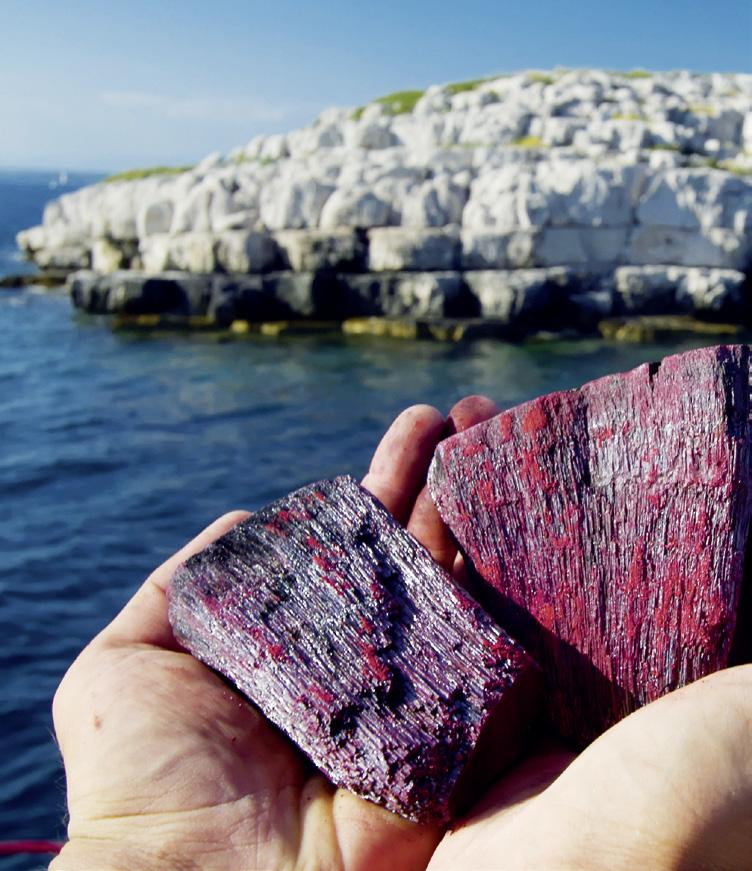
T Marijan Vrdoljak
Instead of a beach holiday with cocktails and sun loungers, German divers are diving deep into Croatia's history – literally. As volunteer excavation assistants , they are supporting underwater archaeologists in their exploration of centuries-old wrecks in the Adriatic Sea.
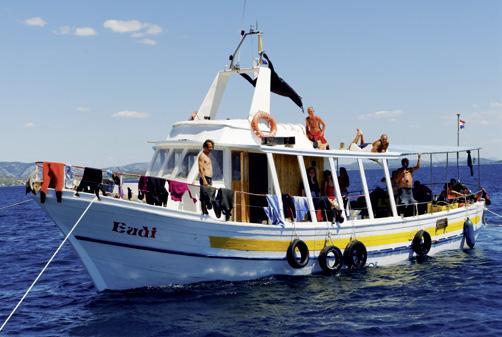
Swimsuits, sunscreen, beach reading – that's how the typical holidaymaker packs for a trip to the Adriatic coast. Christa and Herbert Siepenkötter, however, pack much more: compressors, fire pumps, diving tanks, several kilos of lead weights – and a whole lot of curiosity. The couple are passionate recreational divers with a particular fondness for Croatian waters. But they are not interested in the usual diving spots – they are searching for hidden treasures. For more than ten years, they have been supporting Croatian underwater archaeologists and volunteering to help explore centuriesold shipwrecks.
History hidden in the sea
Christa Siepenkötter waxes lyrical when she talks about her unusual hobby: "When you're down there, working on the wreck is almost meditative. We're uncovering history – there are things buried in the sediment that people used centuries ago. You never know what you'll find in the sand next. That makes it very exciting. And our hobby contributes to scientific research."
Experts estimate that there are hundreds, if not thousands, of archaeological sites in the Adriatic Sea, ranging from Stone Age settlements to sunken modern yachts and crashed aeroplanes. One of Croatia's leading underwater archaeologists is Dr Irena Radić-Rossi from the Uni-
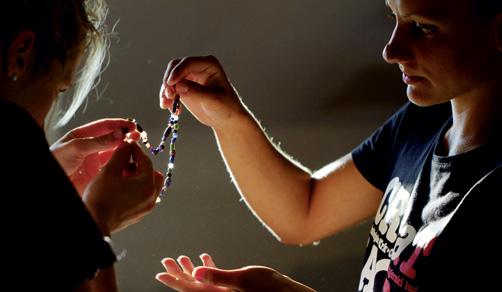
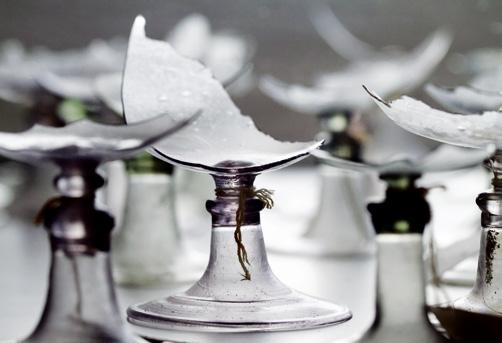
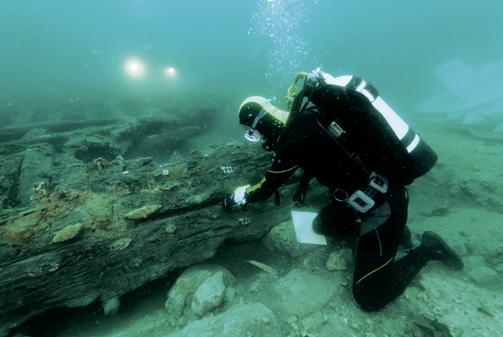
Underwater archaeology usually involves hard physical work. You spend the whole day in the water, hauling countless diving tanks on board and removing sand and sediment from the sites using long hoses connected to pumps. Coins or other valuables are rarely found, and treasures are almost never found. In the case of the wreck of the "Gagliana Grossa" near the island of Gnalić, a Venetian merchant ship from the 16th century, divers are still recovering parts of the cargo to this day.
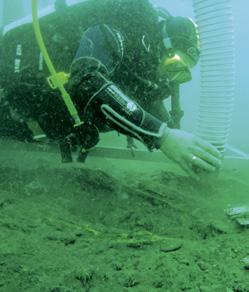
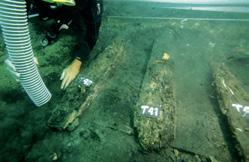
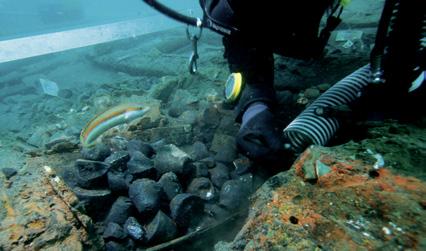
ARCHAEOLOGIST IRENA RADIC-ROSSI HAS DEDICATED HER CAREER TO THE ARCHAEOLOGICAL SITES OF THE ADRIATIC SEA. FOR YEARS, SHE HAS BEEN UNCOVERING SILENT WITNESSES TO HISTORY.
Marijan Vrdoljak
versity of Zadar – she has dedicated her career to the sites of the Adriatic Sea. For years, she and her students have been uncovering silent witnesses to history, layer by layer, beneath the sea's surface.
The wreck of the Gagliana Grossa
She is particularly fond of ships from the 16th and 17th centuries, a golden age of shipbuilding in the Mediterranean. "I am often asked which wreck is my favourite. That's difficult to answer. But if I had to choose, it would probably be the Gagliana Grossa site near the island of Gnalić," reveals the archaeologist. This is a Venetian merchant ship that transported goods from Venice to Istanbul at the end of the 16th century and was shipwrecked off the Croatian coast. "The cargo is listed in the Venetian archives in as much detail as the entire history of the ship and its crew at the time of the shipwreck. This gives us a fascinating insight into Venetian trade and shipbuilding at the end of the 16th century," en- >
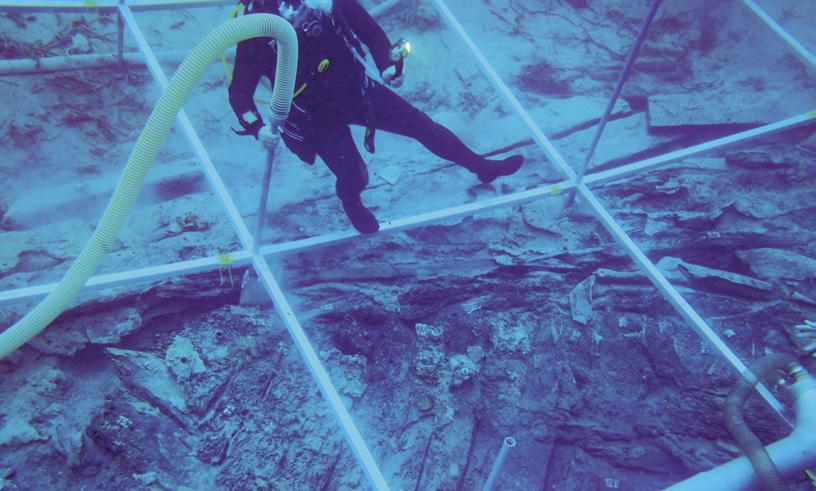
For the purpose of systematic investigation and recovery, sites are divided into quadrants – as in the case of the wreck of the Gagliana Grossa near the island of Gnalić, which sank off the Croatian coast at the end of the 16th century.
Ambitious and trained recreational divers such as Christa and Herbert Siepenkötter assist underwater archaeologists in their painstaking work. In addition to expertise and manpower, they also contribute equipment and finances, thereby helping to keep excavation campaigns alive for which the Croatian state provides only limited funding.
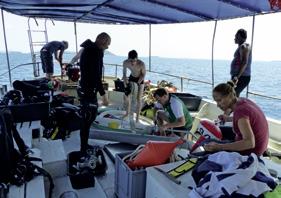
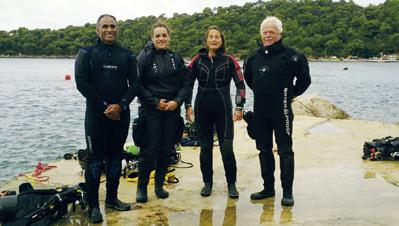
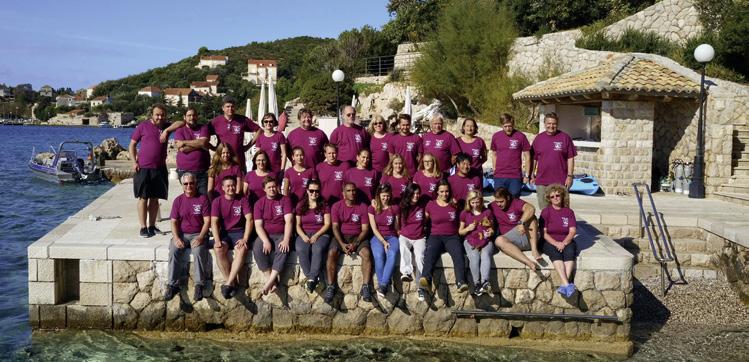
thuses Radić-Rossi. The Gagliana Grossa had a cargo capacity of 720 tonnes. So it is not surprising that even today, almost 60 years after the wreck was discovered, parts of the cargo are still being recovered.
However, anyone hoping to find gold chests and coins like in pirate films will be disappointed – the real treasures are often inconspicuous. Christa Siepenkötter now knows that sometimes the most bizarre finds cause real excitement among archaeologists: "The pirate ships are not a reality. Every now and then, coins are actually found, but that's not the exciting part. My husband Herbert once came up with something that looked like a lump of mud to me, but which caused a doctoral student to become very excited. It contained colour pigments that she had been searching for for a long time. To the untrained eye, it was just mud, but to the expert, it was the crucial clue that would advance her doctoral thesis."
And mud is indeed the dominant theme, because the main task of the recreational divers is to remove as much sand and debris from the site as possible using long hoses connected to pumps. You can imagine it as oversized underwater vacuum cleaners that are used to uncover the wreck piece by piece. Depending on the depth, this
can take several hours and is hard work, far removed from the Indiana Jones glamour that one might imagine.
"The work of underwater archaeologists often sounds romantic – but it is hard, physically demanding reality. They are in the water all day and have to handle heavy hoses and pumps. You have to carry huge amounts of diving tanks on board and back down again, and you are constantly on the move. It is physically very strenuous. You have to be really enthusiastic to still enjoy an expedition like this after a few days," says underwater archaeologist Radić-Rossi.
Christa Siepenkötter and her fellow divers from the Koblenz diving centre are certainly not lacking in enthusiasm: "One task I really enjoyed was finding and marking nail holes in the wood. We are far from being able to classify this professionally, as we are excavation assistants. But as recreational divers, we can make an important contribution to the archaeological investigations." A modest claim that hides a great deal of commitment.
The support provided by the amateur divers from Koblenz has long since become indispensable for the scientists in Croatia –and not just because of the extra hands. In addition to expertise and manpower, the
enthusiastic recreational divers also bring equipment and funding. "With a small team and limited funds, we might only be able to work for a week. With a larger team and more financial resources, which we provide, an excavation campaign can be carried out for a little longer," says Christa Siepenkötter. This is because the Croatian Ministry of Culture can only finance such excavations to a limited extent. And even then, only through tenders in which they compete with other cultural preservation projects.
For these reasons, Dr Radić-Rossi welcomes any enthusiastic recreational diver who offers to help with the investigations: "If you would like to experience the magic and passion of underwater archaeology first-hand, you are welcome to join us –provided you have the necessary diving experience and are not afraid of physical work." So if you're willing to squeeze into a wetsuit, suck up masses of sand underwater and inspect old wooden planks with passion, you can experience this special form of cultural preservation for yourself. A completely different kind of holiday in Croatia – profound and guaranteed to be full of discoveries. <<
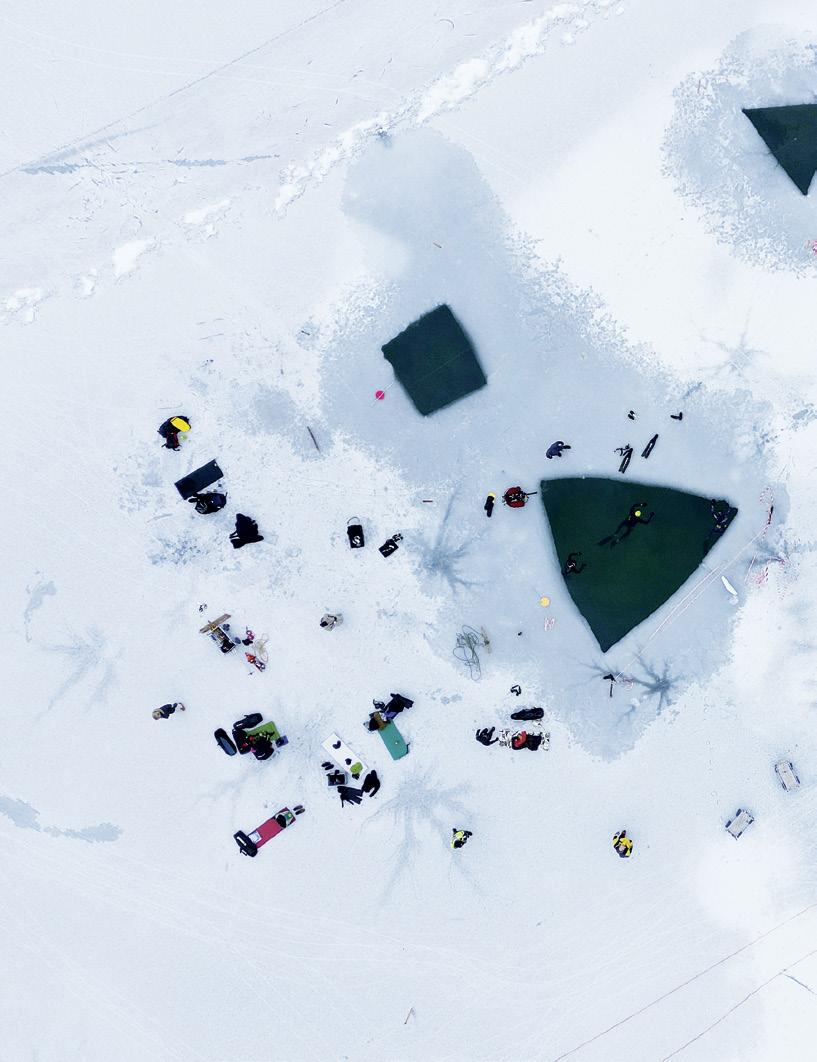
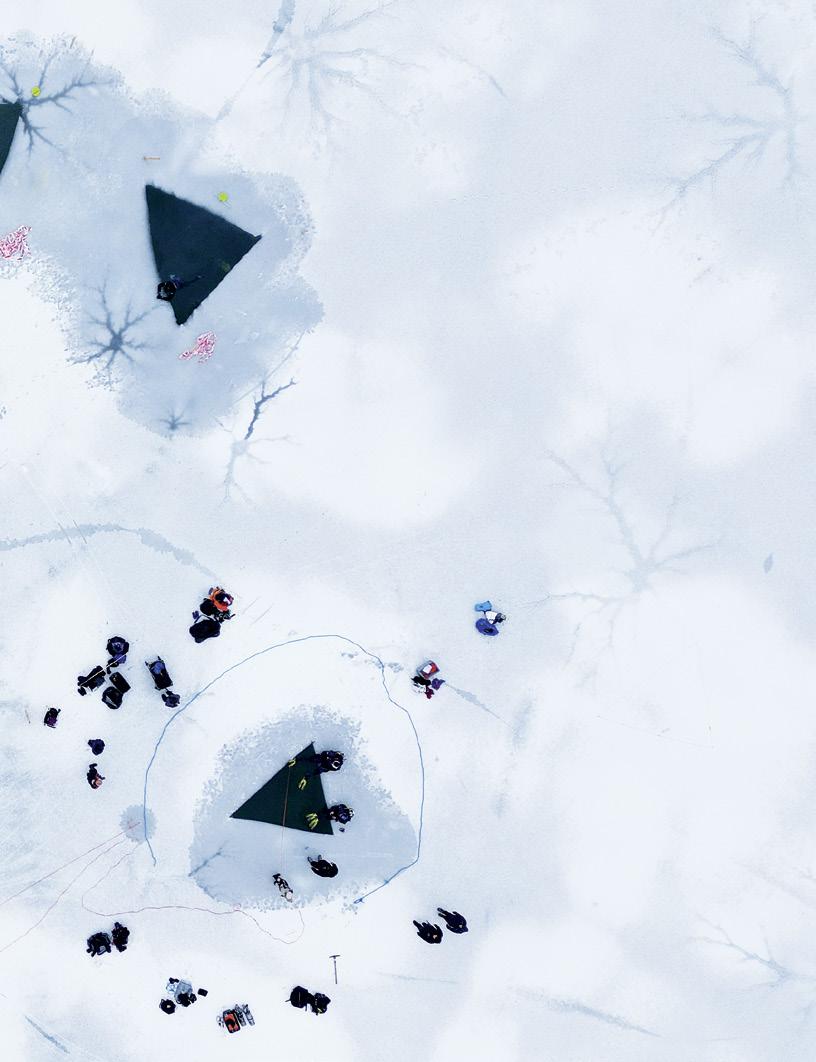
T Nik Linder
Cold water does notdeter our author. The positive effects of cold have been proven. One of the most famous pioneers in this field would be over two hundred years old today.
Agrey November day. I am standing at a quarry pond near Freiburg, wrestling with myself. I actually consider myself disciplined, strong-willed and tough – but today, little of that seems to remain. The plan: ice bathing. Not for pleasure, but out of obligation. An ice bathing organisation hired me after reading about my successes in apnoea diving under ice. They said I was "perfectly suited for breathwork training" – as a breathing coach and world record holder under ice, I was practically predestined for it. And as always when someone flatters me, I find it hard to say no. Besides , I'm tempted by the idea of being one of the " tough guys" who brave the cold without neoprene.
Wim Hof and the whole thing with breathing Wim Hof is as popular as he is controversial among ice bath enthusiasts. He has made ice bathing famous worldwide and broken numerous records in dealing with cold temperatures. His method is based on controlled hyperventilation – a technique that
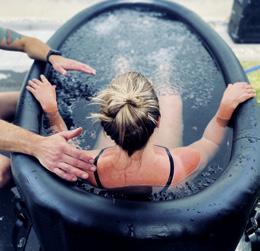
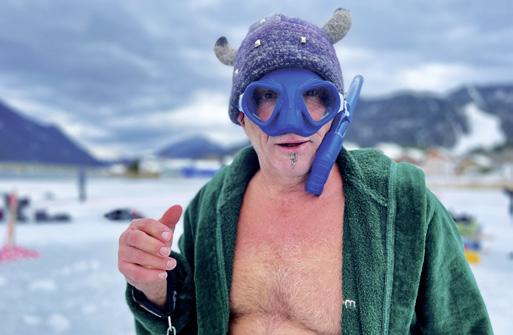
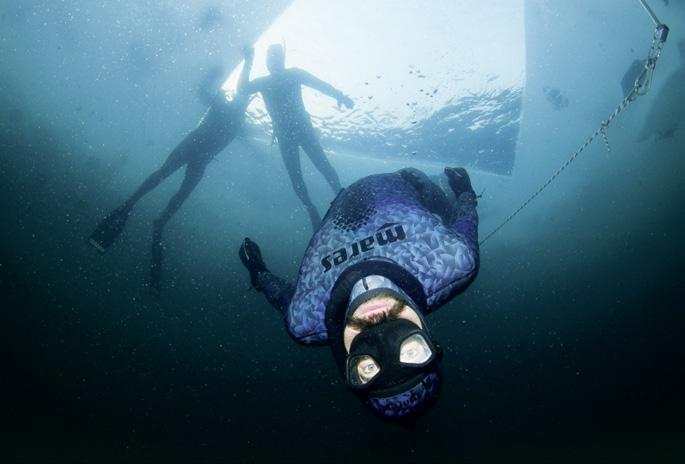
Special safety and precautionary measures apply to apnoea diving under ice.
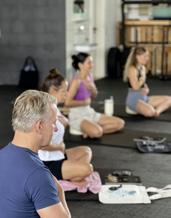
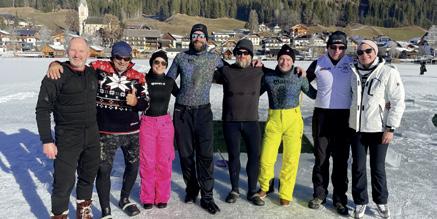
reduces pain sensitivity and generates short-term warmth through stress hormones. But hyperventilation has its downsides: dizziness, blackouts and physiological disadvantages. As a freediver, you reject it –it increases your pulse, changes the pH value of your blood and impairs oxygen supply to your tissues (Bohreffekt). Freediving, on the other hand, aims to activate the parasympathetic nervous system – the state of calm and relaxation. Hyperventilation has the opposite effect: alarm mode.
Accept the cold, don't fight it
When I take over the breathing part of the training, one thing is clear to me: it's not about defeating the cold, but accepting it. Will my breathing technique work? I have no idea. That's exactly why I'm standing here at the quarry pond – and would prefer to just drive home and claim that I went swimming.
Medically proven
Cold stimuli have been proven to have positive effects on the immune system. They promote the formation of immunoglobulins, stimulate blood circulation, lower blood pressure and reduce inflammation. They also increase stress tolerance. And the good feeling of having achieved something that took effort is priceless. Modern cold water therapy dates back to Sebastian Kneipp, who would have celebrated his 200th birthday in 2021.
The practice by the lake
Wearing only my swimming trunks, I stand on the shore, shifting from one foot to the other. "Yes, yes, cold water is healthy." Then Kneipp's words come to mind: "Weaklings should start with water treading or knee affusions." I don't want to be one of them –so in I go. I breathe according to my met-
Ice diving also requires preparation in the form of breathing exercises. Some participants in the event even chose not to wear a wetsuit in the two-degree water at.
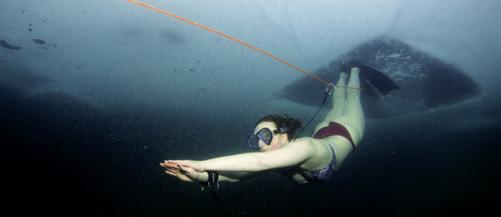
hod: four seconds in – four seconds hold –eight seconds out. With each exhalation, I go deeper step by step. Breathing through the nose filters, moistens and warms the air. I make sure that my face and body remain relaxed. Because: a relaxed body = a relaxed mind.
The power of habit
I find countless like-minded people on Instagram. Comedian @wigaldboning has been swimming every day for over 1,200 days, and @peti.goes.swim for four and a half years. These so-called streaks – uninterrupted series of daily activities – are impressive. After my first ice bath, I knew that making it a habit was the key.
I started in 2024 and kept going throughout the season until spring 2025. The cold water became my friend. I trained with my freediving group even in winter, while others took a break. We enjoyed the peace and quiet of the lake, the clear visibility and the feeling that the season would never end.
• Adjust slowly: If you continue diving in autumn, you will gradually get used to the falling temperatures.
• Suit selection: Open-cell wetsuits (5 to 7 mm) offer the best protection.
• Convenient to change: A sleeping mat protects you from the cold ground when changing. Warm water makes rinsing easier.
• Warmth from within: tea or broth in a thermos flask helps before and after the dive.
• Adjust your dive time: don't overdo it – shivering is a warning sign.
• Safety aspect: Do not attempt to achieve personal bests in cold water.
• Calm breathing: steady abdominal breathing keeps your pulse and nervous system in balance.
• Organisation: Store car keys and dry clothing so that they are quickly accessible.
• Suit: 5 to 7 millimetre open-cell apnoea suit.
• Protection for the extremities: 5 mm neoprene socks and gloves.
• Head area: Pull the hood tightly over the mask. Avoid leaving any part of the forehead exposed.
• After diving: terry cloth poncho makes it easier to change in the wind.
• Clothing: Warm socks, shoes, gloves and hat. Merino wool keeps you warm even when wet.
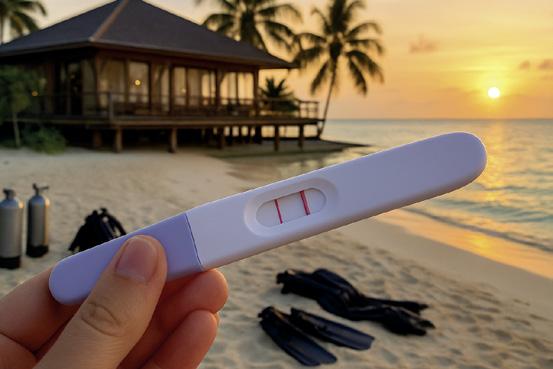
In this column, we answer readers' questions about diving fitness. This section deals with diving during pregnancy. Dr. Philipp Stahl, Deputy Medical Director MHW/aqua med Medical Board
Hey Doc, we're going on a diving holiday next month. At the beginning of the week, I found out that I'm pregnant. I'll be 10 weeks pregnant during the holiday. Should I cancel my diving package or is it safe for me to go diving?
The topic of "diving during pregnancy" has been the subject of intense debate in diving and hyperbaric medicine for decades. Whi-
le there are differentiated recommendations regarding diving fitness for many internal or cardiopulmonary pre-existing conditions (see previous articles in this column), the data available on diving during pregnancy is extremely sparse. Prospective, controlled studies do not exist for obvious ethical reasons. The available evidence is therefore based on retrospective surveys,
observational studies and case reports. Nevertheless, epidemiological analyses, animal experimental data and pathophysiological considerations allow for a clear risk assessment. All relevant professional associations, including the GTÜM (German Society for Diving and Hyperbaric Medicine), UHMS (Undersea and Hyperbaric Medical Society), SPUMS (South Pacific
Underwater Medicine Society) and EUBS (European Underwater and Baromedical Society) advise against diving during pregnancy and even during the phase of planning to have children.
Observations of pregnant divers show that the rate of miscarriages and malformations can be increased, especially during deep and long dives. Retrospective surveys indicate an increased frequency of premature births and miscarriages, although the results are somewhat contradictory. The Japanese ama, traditional free-diving pearl divers, have attracted particular attention. No increased rate of malformations could be detected in this population. However, the newborns had significantly lower birth weights. This observation suggests subtle but relevant effects of repeated dives on foetal growth. Individual analyses suggest that dives to depths of up to approximately 20 metres have no clearly discernible negative effects on pregnancy. However, given the small number of cases, the retrospective designs and the multitude of potential confounding factors, the significance of these studies remains limited. In summary, there is no reliable evidence to prove that diving during pregnancy is safe.
Pathophysiological considerations
The risks to the unborn child arise from several factors:
Maternal gas exchange changes: Fluctuations in oxygen and carbon dioxide partial pressures may occur during diving. The foetus is particularly sensitive to hypoxia (oxygen deficiency) as it is already at the lower limit of oxygen supply under physiological conditions.
Bubble formation in the foetal circulation: Since the foetus has physiological right-to-left shunts (including the foramen ovale), microbubbles can enter the systemic circulation unfiltered and potentially trigger embolic events.
Mechanical and haemodynamic stress: Cold temperatures, increased respiratory effort and peripheral vasoconstriction can reduce uteroplacental blood flow. This carries the risk of insufficient supply to the child. Decompression physiology: The foetus is not integrated into the maternal decompression system. The foetal circulation does not have a "lung filter" for microbubbles. Even if the mother does not develop clinical decompression sickness, microbubbles or hypoxic damage may occur in the foetus.
These considerations illustrate that even unremarkable dives carried out in accordance with the rules
can pose a relevant risk, as the foetal circulatory system is particularly susceptible to gas bubbles.
Recommendations from international professional associations
Based on the limited data available, all major diving medicine societies issue a clear recommendation: The GTÜM recommends avoiding all diving during pregnancy.
■ The UHMS and EUBS classify pregnancy as an absolute contraindication for recreational diving.
■ The SPUMS also points out that if you are planning to have children, it is advisable to refrain from diving as a precautionary measure in order to prevent diving during an undetected early pregnancy. There is agreement that accidental diving during the first few weeks of pregnancy is not an indication for termination of pregnancy. Instead, close gynaecological monitoring should be carried out.
In contrast, according to current knowledge, there are no objections to diving during breastfeeding. Inert gases are not released into breast milk in relevant quantities, so the newborn is not exposed to any risk. However, diving should only be resumed after complete postpartum recovery.
The scientific data on pregnancy and diving is limited, but the available evidence and pathophysiological considerations suggest a significant risk. In particular, the possibility of gas embolism in the foetal circulation and increased susceptibility to hypoxia justify the clear position taken by all international professional associations.
Recreational diving is absolutely contraindicated throughout pregnancy. This answers the reader's question very clearly. There are no restrictions during breastfeeding. Women who wish to become pregnant are advised to refrain from diving as a precautionary measure.
OUR EXPERT

is a specialist in internal medicine, emergency medicine, diving medicine, travel medicine aqua med is the medical emergency call centre for divers and can look back on over 20 years of experience in medical assistance. Behind the well-known brand is the dedicated team at Medical Helpline Worldwide (MHW) in Bremen. Whether it's organising an ambulance, providing a hyperbaric chamber in an emergency or personal medical advicethe team of assistants and doctors is there for divers around the clock.
In our new column "Hey doc, am I fit to dive with this?" aqua med is now answering medical questions about diving fitness. Dr Dr Philipp Stahl, deputy medical director at aqua med, will be leading this column and is looking forward to answering readers' questions and providing well-founded insights. Send us your questions to: redaktion@tauchen.de, keyword "Hey Doc".
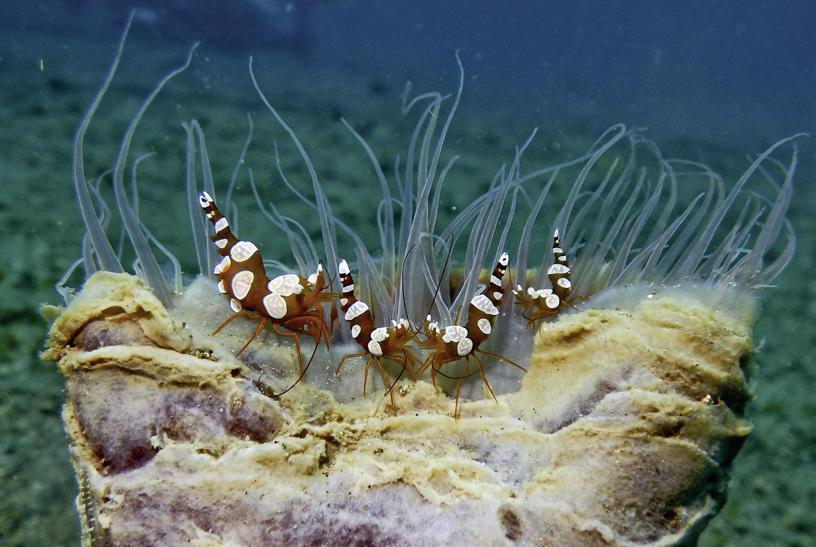
They are nimble, clever and surprisingly diverse: crabs, prawns and other crustaceans populate every reef – sometimes brightly coloured, sometimes perfectly camouflaged. Those who know their shapes and tricks will discover a fascinating underwater world full of movement, symbiosis and surprising encounters.
With quick claws, dazzling colours and often astonishing camouflage, they populate reefs and sandy areas. Crabs, prawns and other crustaceans are true survival specialists. Some clean fish, others lie in wait for prey with lightning speed, and still others carry anemones as weapons. Identifying them requires observation skills, patience and an eye for detail.
Crustaceans belong to the huge group of arthropods – like insects, but adapted to life in the sea. Their bodies are surrounded by an exoskeleton, the carapace, which is regularly shed and renewed. They breathe through gills, have jointed legs and usually two pairs of antennae. The decapods (Decapoda) are interesting: they include crabs, prawns, hermit crabs and mantis shrimp. Despite their diversity, they can be distinguished by a few characteristics: body shape, claw structure, eye position and lifestyle. Hermit crabs can be recognised by their soft, spiral-shaped abdomen.
Crabs can be recognised by their stocky bodies and flattened claws. Their broad shells protect their soft parts, and their legs are adapted for walking sideways.
Coral reefs are home to countless small species, often sheltering among other animals: porcelain crabs hide among the arms of anemones, trapezoid crabs in corals. Boxer crabs carry anemones like little pom-poms on their claws – a curious but effective form of protection.
Typical distinguishing features: shell shape (round, trapezoidal, jagged), claw ratio (same or different size) and the position of the eyes.
Shrimps are more delicately built, with a long abdomen and fan-shaped tail. Many live hidden in rock crevices, anemones or cleaning stations. The best-known species is the cleaner shrimp Lysmata amboinensis, easily recognisable by its white longitudinal stripes and red body colour. They clean parasites off fish – a fascinating spectacle that divers can often experience up close. Snapping shrimp (Alpheus spp.) are also striking: one of their claws is greatly enlarged and can produce a loud snap when closed – a pressure surge that stuns prey.
One of the most impressive crustaceans is the mantis shrimp (Stomatopoda). Despite their name, they are not actually crabs, but a separate group with complex eyes and lightning-fast grasping tools. There are two types: 'spearers', which catch fish with their spiny tentacles, and 'smashers', which can even crack open mussel shells with their club-like arms. Their colourful appearance and behaviour make them a favourite subject for many underwater photographers. But be careful: their striking power is so strong that they can even shatter glass.
Many crustaceans are masters of camouflage. They take on the colour of their surroundings or imitate the structure of coral branches, sponges or algae. Some, such as partner shrimp (Periclimenes), live in symbiosis with sea anemones or sea urchins.
Behaviour also helps with identification: cleaner shrimp move their antennae rhythmically to attract fish. Crabs display threatening gestures with their claws raised. Mantis shrimp lie motionless in wait in front of their burrows.
Observe movement patterns and habitat: Is the animal sitting in the open or hidden? On sand, sponge or coral? The shape of the claws, carapace structure and eye position are often more decisive than colour. For photos, the following applies: stay calm, use low focus light output and gentle illumination. Many crustaceans are sensitive to bright light or movement. Close-ups with side lighting show off structures to their best advantage.
Not everything with claws is a crab. Hermit crabs, also decapods, can be recognised by their spiral-shaped abdomen, which they insert into empty snail shells. Their claws are often uneven. Shrimp larvae or juvenile forms can also be misleading – it is worth checking the number of legs and the shape of the shell.
1. Cleaner shrimp (Lysmata amboinensis): A classic at the reef station: the cleaner shrimp Lysmata amboinensis removes parasites from fish – a fascinating example of symbiosis in action.
2. Typical snapping lobster (Synalpheus sp.): With its oversized claws, it produces a loud snap that stuns its prey – an acoustic trademark of tropical sandy bottoms.
3. Boxer crab (Lybia tessellata): It carries sea anemones like little pom-poms on its claws – these serve as a defence mechanism and as an aid to catching prey.
4. Trapezia rufopunctata: This little skilled climber lives in the protection of corals – mostly in Pocillopora or Stylophora colonies. It actively de-
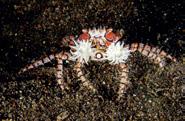
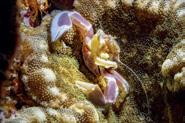
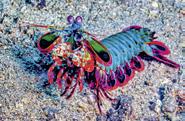
fends its host against predators such as crown-of-thorns starfish.
5. Mantis shrimp (Odontodactylus scyllarus): The strikingly colourful mantis shrimp is notorious for its lightning-fast strikes and fascinating eyes. Its English name, mantis shrimp, is also very common.
Preview Part 7: Sponges & Sedentary Animals – Who Lives There Permanently Attached?
The next part is about the silent inhabitants of the reef: Sponges, sea squirts and other immobile creatures, which filter their surroundings and display a variety of shapes where you would hardly expect them.
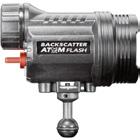
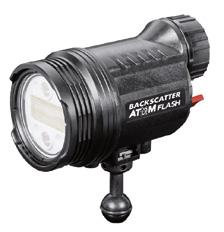
The new Backscatter Atom Flash combines compact design with an exceptional underwater guide number of 28 and ensures even illumination from wide-angle to macro subjects. Its 110-degree beam, optional diffusers and compatible Optical Snoot OS-2 allow precise control of the light pattern. With Smart Control TTL for OM System and Sony, high-speed sync, wireless remote control and eleven manual power levels, it offers professional features in a travel-friendly format. The bright, automatically rotating LCD display makes it easy to use, while over 600 flashes per charge ensure long-lasting performance. With fast charging times, integrated focus lights and a sealed battery compartment, the Atom Flash is a versatile lighting solution for ambitious underwater photographers. Price: €700.
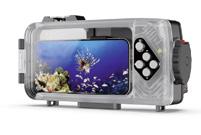
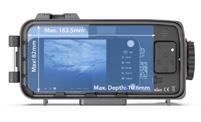
The new WFH07 Smart Housing Pro offers an improved vacuum system, secure sealing and flexible lens selection – without any mandatory subscription. The housing is compatible with almost all iOS and Android smartphones and connects via Bluetooth to the app, which allows lens changes, zoom, filters and watermarks for depth and temperature. An electric vacuum pump with a clear progress indicator, humidity sensor and integrated battery ensures reliable protection and prevents fogging. In addition, the app supports photo, video and diving functions, including professional algorithms and mode selection – all features will be available at no additional cost from 16 November 2025. Compatible video lamps can also be controlled via a fibre optic cable connection. Price: €479
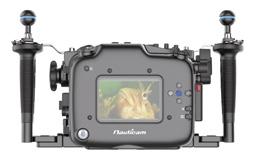
The new INON ZD-mount lens complements the popular SD-mount series and is compatible with Insta360 Ace Pro recordings in 8:7 full-frame format. It is suitable for action cameras with larger, high-quality image sensors, thus expanding the creative possibilities. The ZD Mount lens is aimed equally at ambitious amateurs and semi-professional users. Price: €55.
More products and information at panocean.de
Nauticam now offers a new focus ring for the Sony 100 mm macro lens, which enables manual focus control in the underwater housing. The precisely tuned mechanics ensure smooth, direct transmission of the rotational movement and expand creative control during macro photography. The focus ring is available for €230.
The new Nikon ZR is a compact full-frame cinema camera developed in collaboration with RED, offering 6K60 video in REDCODE R3D, N-RAW or ProRes RAW, as well as 32-bit float audio and fast autofocus. Aimed at filmmakers of all experience levels, it combines rugged construction, a modern sensor and AI autofocus with a bright, movable 4-inch display and practical workflow features such as LUT preview and Frame.io integration. Nauticam's NA-ZR, the new underwater housing for this camera, complements it with ergonomic operation, a vacuum check system and professional optical support for versatile underwater use. Price: €2,700.
Our professional photographer shares his favourite places on Earth to encounter sharks.
1 Galapagos – The realm of hammerhead sharks (Sphyrna lewini)
Wolf and Darwin, the northernmost islands of the archipelago, lie within the warm influence of the Panama Current. Here, huge schools of scalloped hammerhead sharks gather – almost exclusively females, marked by scars and bite marks from mating rituals. Why this is so remains a mystery. These animals follow the seasonal "Golden Triangle Route" between the Galapagos, Malpelo and Cocos, using the shallow island waters as protection and cleaning zones.
The current helps with "cleaning": while the sharks drift gently in it, angelfish (Pomacanthidae) and surgeonfish (Bodianus diplotaenia) rid their skin and gills of parasites. Even whale sharks (Rhincodon typus) come here to be cleaned – a quiet, almost sacred moment in the open sea.
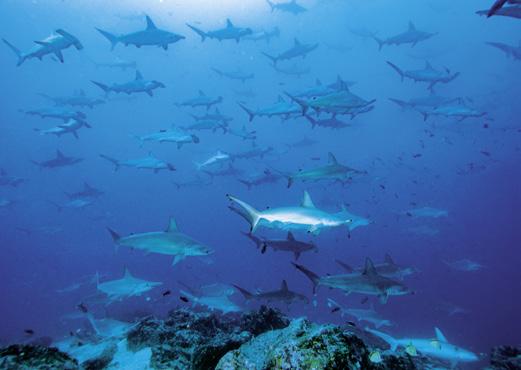
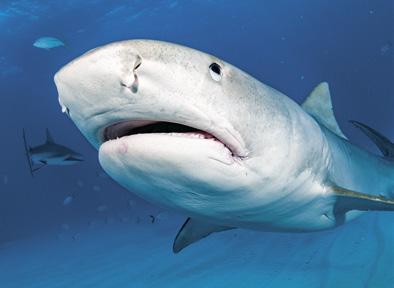
2 Tiger Beach, Bahamas –The magic of encountering the tiger shark (Galeocerdo cuvier)
There is hardly any other place that brings divers so close to sharks. Tiger sharks and Caribbean reef sharks (Carcharhinus perezi) glide elegantly through the clear water. Even though feeding is controversial, the coronavirus pandemic break showed that the animals remain flexible: without boats, they hunted independently again. The relationship between divers and sharks is particularly impressive. Experienced guides recognise individual animals – and vice versa. Some sharks follow certain people like old acquaintances. The trust between both sides makes Tiger Beach a place of peaceful coexistence.
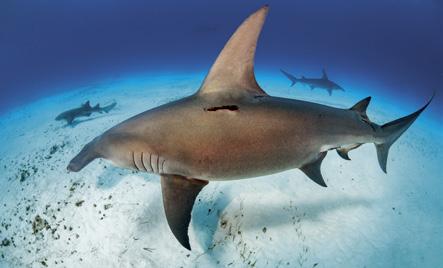
3Bimini, Bahamas –
Winter home of the great hammerhead sharks (Sphyrna mokarran)
Only here can you regularly encounter the world's largest hammerhead sharks. Some individuals migrate to the US east coast in summer. With their broad heads, they sense electrical fields in the sand and move it almost like a sensitive sensor. Their elegance and power make hammerhead sharks true symbols of oceanic beauty.
4 Wolf Rock, Australia –The sanctuary of the Sand tiger sharks (Carcharias taurus)
Off the coast of Queensland, a single rock rises from a depth of 40 metres. Between shoals of mackerel (Carangidae) and large
rays such as the peacock ray (Taeniura meyeni), dozens of grey nurse sharks – or more precisely sand tiger sharks – glide leisurely through the gorge. In the distance, the song of migrating humpback whales (Megaptera novaeangliae) can be heard. Mother and calf rest near the rock. Wolf Rock is a quiet refuge full of life and legend.
5 Canyon, Revillagigedo Islands, Mexico – The realm of the silvertip sharks
Off San Benedicto, adult silvertip sharks that grew up here and are not afraid of humans frolic in the waters. They patrol
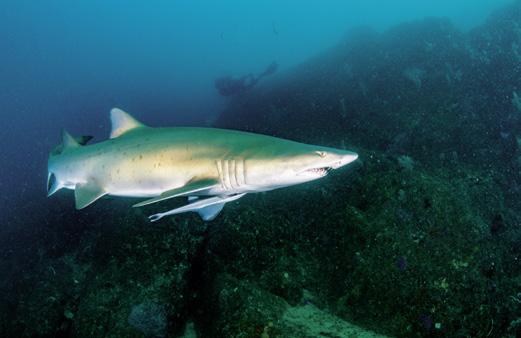
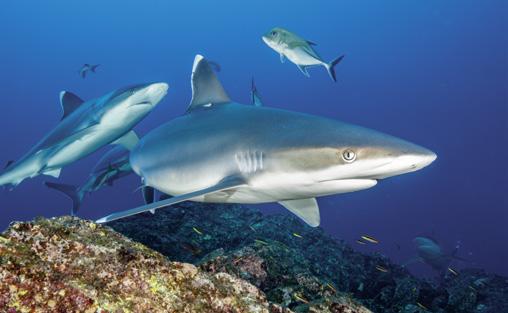
curiously among photographers, accompanied by dominant Galapagos sharks (Carcharhinus galapagensis) and shy scalloped hammerhead sharks (Sphyrna lewini) in the haze of the depths. The cleaning station at a depth of 24 metres is an enticing magnet for shark fans and photographers.
6
Fakarava, French Polynesia – Current of the Grey reef sharks (Carcharhinus amblyrhynchos)
The southern passage of Fakarava is a natural amphitheatre of sharks. Dozens of grey reef sharks use the incoming tide to breathe and hunt effortlessly. When the current increases, they move threateningly close to the divers – curious, not aggressive. In June and July, spawning groupers such as marble groupers (Epinephelus polyphekadion) and potato groupers (Epinephelus tukula) attract hordes of hungry sharks. A natural drama in crystal-clear water.
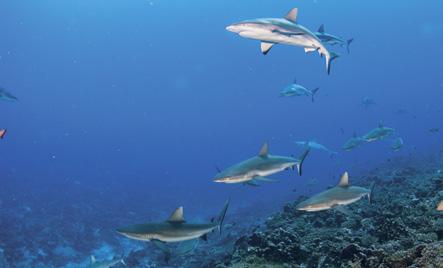
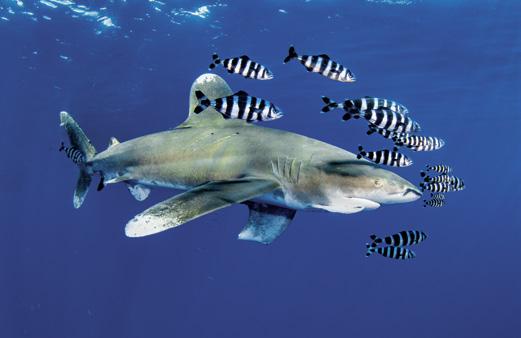
7 Brother Islands, Egypt –The last whitetip reef sharks (Carcharhinus longimanus)
In the past, encounters with up to six of these pelagic sharks were commonplace. However, accidents and subsequent culling drastically reduced the population. Today, sightings are rare but possible – especially at the Brother Islands and Daedalus Reef, where these elegant long-finned hunters occasionally appear in the depths.
CONCLUSION: From the volcanic Galapagos to the coral reefs of French Polynesia, these places show that sharks are not monsters, but sensitive, fascinating creatures – from the majestic whale shark (Rhincodon typus) to the feared tiger shark (Galeocerdo cuvier). Anyone who encounters them underwater understands how important it is to protect them – for the balance of the oceans and for the wonder of humankind.
8
Cocos Island, Costa Rica –The Cathedral of the Hammerhead sharks (Sphyrna lewini) Cocos is the heart of the "Golden Triangle". In places like Dirty Rock or Alcyone, hundreds of hammerhead sharks circle above the divers' heads. If you breathe quietly and lower your camera, you will experience a spectacle of grace and elemental power. One of the most intense shark encounters in the world!
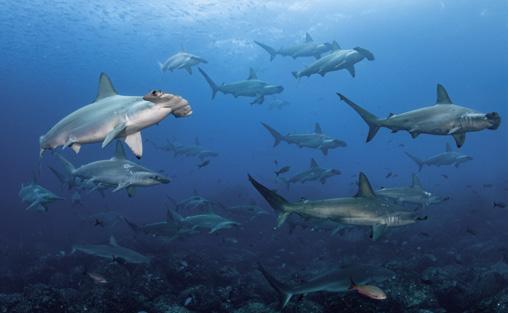
FOCUS ° PHOTO SCHOOL
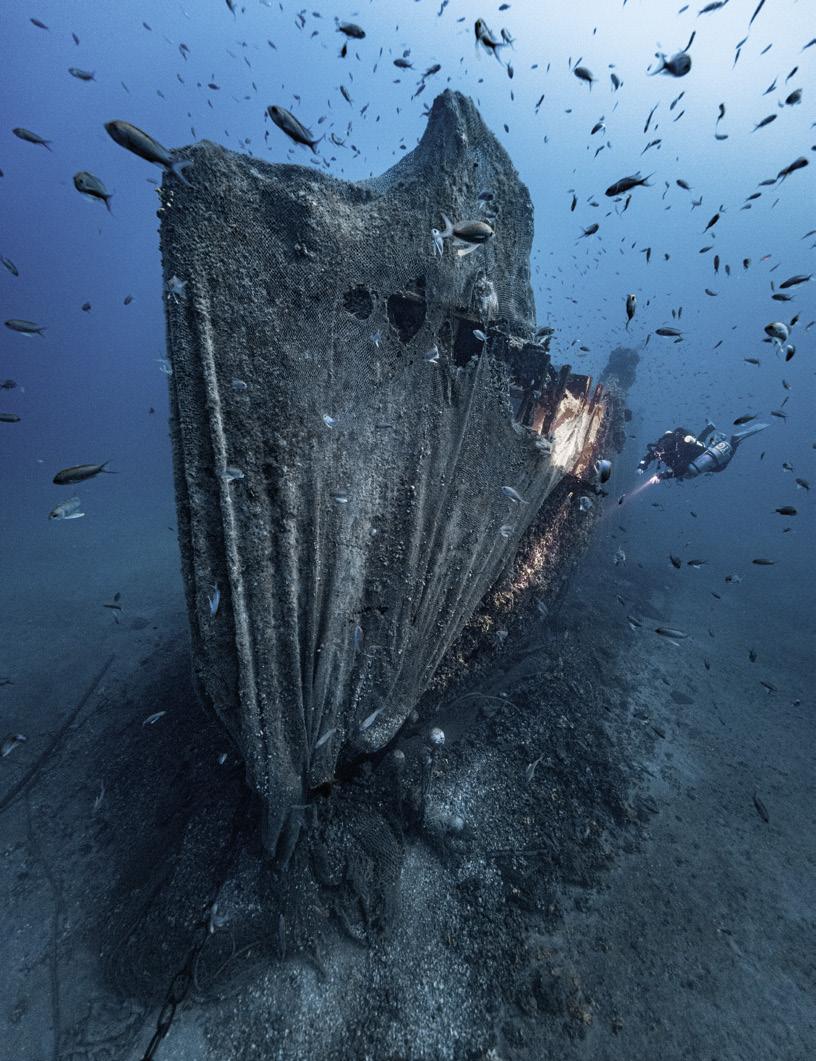
T
OUR EXPERT Competitive photography poses particular challenges. Our professional explains what matters and "how he does it".

has been photographing the wonders of the underwater world for years and shares his experiences. He has won several prizes and awards for his photographs (aquasphere.sk).
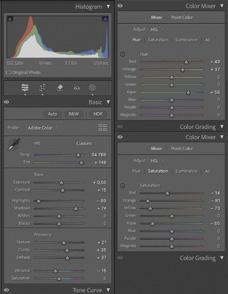
Photo competitionsare events in which participants must demonstrate their full range of skills directly in the field. Their diving skills must be so confident that no restrictions on movement in the space hinder them. It goes without saying that they must also have a high level of technical mastery of the camera. There is no room for hesitation when it comes to image composition or camera settings. Since the subject in our case is a wreck, the conditions are similar for all participants, which places even greater emphasis on creativity and originality. Therefore, you should develop a clear photographic concept to follow in the water. The less improvisation underwater, the better the result.
Some real-time competitions offer a trial dive before the actual shootout. This is the most important moment of the entire event! During this dive, you should explore the wreck with your eyes open and your intuition on high alert. Approach it first as a diver and storyteller – not as a photographer – and develop your image idea. If there is no trial dive, gather as much information about the wreck as possible in advance. Research photos and videos online or in other sources tounderstand the location, orientation, structure and size of the shipwreck.
Location: Gallipoli, Turkey
August 2025
Camera: Canon R5, Canon RF 10-20 mm f/4 @ 10 mm
Housing: Seacam with 9" Superdome port
Light: external 30,000-lm Big Blue lamp, placed inside the wreck Settings: f/8, 1/50 s, ISO 3200
Exploring the wreck during the trial dive, developing an idea and implementing it in clearly defined image sections during the follow-up dive is the best strategy for success.
However, if the shootout dive is the only one, you have to define some composition templates in advance and apply them in a targeted manner. These include shots of the bow or stern from specific angles, which clearly determine the position of the photographer and the underwater model. During the dive at the Minesweeper, I used a bow template, where I had to find the right balance between depth of detail and wide-angle effect. Details add complexity to the story, while the right wide angle gives the bow its majestic presence. The most important guideline remains the story – or, more precisely, its focal point. For example, if you choose the anchor as your central motif, compose your image accordingly: let the lines converge on this point, direct the diver's gaze and light beam towards it. There cannot be multiple focal points in a story!
Without working with an experienced underwater model, the chances of getting a winning shot are slim. The diver in the picture enhances the shot in many ways. The model must not only understand the photographic concept, but also perceive the scene with a "photographic eye". Communication is crucial here:
Important points:
• Coordination between body posture, line of sight and light beam.
• Your gaze and spotlight should be directed at the centre of the story.
• Depict divers without air bubbles if possible – or in such a way that no bubbles touch their heads.
• Place the diver in negative space, isolated against a blue background.
• The diver should swim into the frame, not out of it. Their body, gaze and beam of light must lead into the frame. For a clear, defined beam of light, a shutter speed of 1/40–1/50 s is recommended.
Ambient light plays a crucial role in wreck photography. My goal was to expose the bow of the Minesweeper as precisely as possible in the camera. The fewer corrections you need to make in post-processing, the better. Therefore, consider all factors that influence your camera settings, check the histogram and assess the exposure in real time.
Conditions don't always allow for a particularly creative concept. But interesting phenomena in the moment can add that special something. In my case, it was small fish around the bow that gave the image this effect. I just had to make sure they didn't interfere with the diver's silhouette. Another effect was created by an external light source inside the wreck that was directed at the diver.
Plan two or three motifs instead of attempting a complex scenario and failing to implement it.
Every month, a new photo competition takes place at TAUCHEN.de, in which every underwater photographer can take part. You decide who wins.
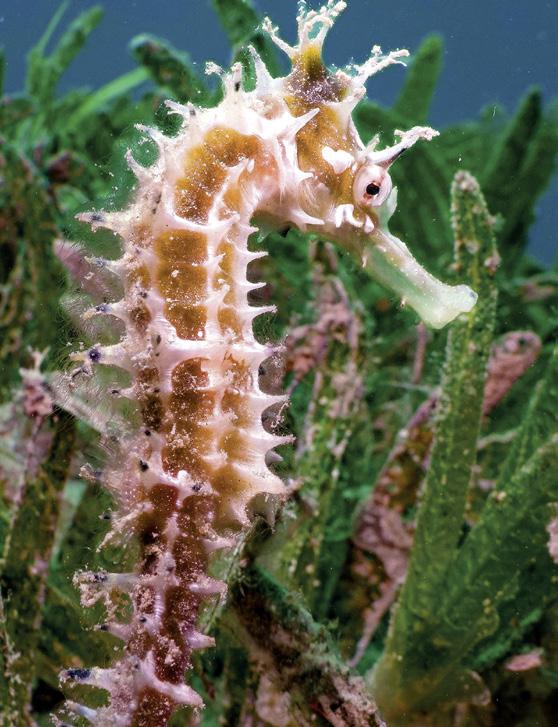
FIRST PLACE
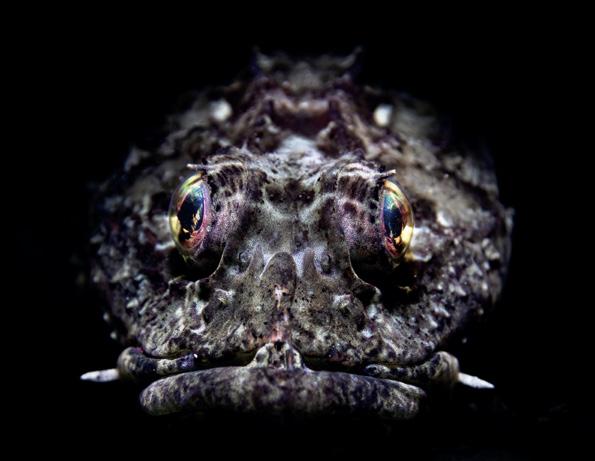
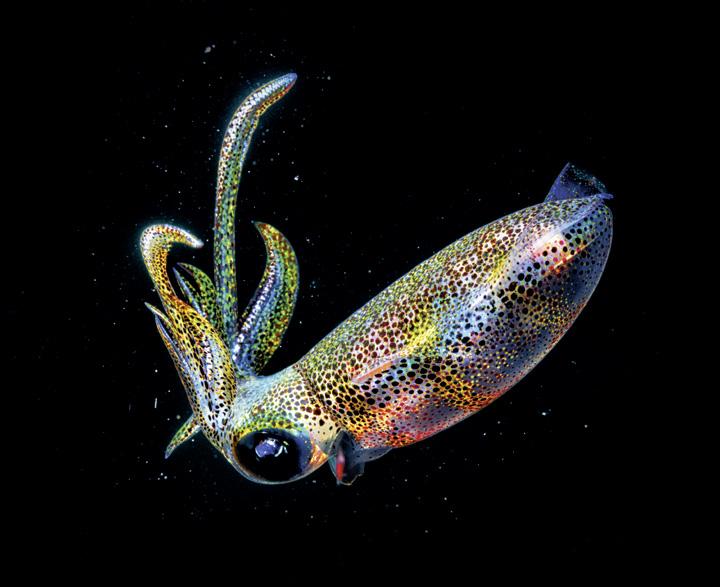

The new poncho from Camaro can be personalised with an embroidered name on request.
THE PRIZES! FOR the WINNER OFTHE JURY EVALUATION: a poncho from Camaro that is incredibly comfortable to wear. Thanks to the 100% zero-twist cotton, it is super soft and dries quickly. Ideal for quickly throwing on after diving, or when the day at the beach ends with a bonfire. Suitable for the beach, boat, surfing and balmy summer nights on the beach. Available in three colours (blue/grey/baia) and sizes Regular (poncho – for adults) and Longer (longer poncho – for adults).
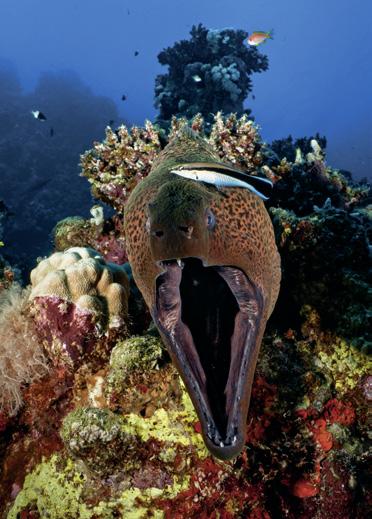
SIMON WITH "SEAHORSE WITH HEART"
Taken with a Sony RX100 in the Red Sea in Makadi Bay, Egypt.
1/125 sec., f10, ISO125
PHILIPP EILERS
COVER PHOTO
Taken with a Sony Alpha 7C II in the Red Sea, Egypt.
1/125 sec., f13, ISO100
The WINNER OF THE READER VOTE , can look forward to re ceiving the practical "Smarty Multi Tool" from Mares (mares.com). This small, useful helper combines a bottle ope ner, Allen key, various hex keys and a screwdriver in one tool (10 cm). Value: €29.
JOIN IN! Our reader photo vote is open to all underwater photographers – regardless of camera model and image motif! You can upload your photo to www.tauchen.de (www.tauchen.de/foto-voting/teilnehmen) for a whole month . Voting will take place the following month, and all users are invited to participate. In addition, a jury, which includes editor-in-chief Alexander Kaßler, will select a monthly winning photo. The jury winner will receive a poncho from Camaro (see above) as a prize. Why not take a look?
TAUCHEN says: Discovered in the seaweed bed, the seahorse pictured here presents itself in all its splendour. A fantastic, detailed shot with excellent lighting. The optimal image composition could have used a little more space so that this magnificent specimen could have been captured in its entirety. Nevertheless, it deserves first place in the "reader" vote. Congratulations!
ANAIS NIESBACH
"SQUID DURING NIGHT DIVE"
Taken with a Sony Alpha 7RII off Amed/Bali in Indonesia.
1/200 sec., f16, ISO250
TAUCHEN says: Placing the brightly coloured motif on a black background and NOT erasing some of the floating particles as a shaping "frame" – what a wonderful idea, which emphasises this great shot.
TAUCHEN says: If you open your mouth wide enough, you'll get a free wash – or so you might think. In fact, this is a typical posture when moray eels are being cleaned. Here, the photographer captured the perfect moment, had the right touch for sharpness and exposure, and thus deservedly made it into the top 3. Great!
CHRISTOPH DÖRNEMANN
"THE GLOWING SCORPION"
Taken with an Olympus O-EM1 MKII in Grevelingenmeer, Netherlands.
1/250 sec., f6, ISO200
TAUCHEN says: According to the data log, there were 30 centimetres between the subject and the camera lens. Shot with a zoom lens. The result: a gem. Brilliant exposure, optimal focus range, perfect framing, great colours. Print it out and hang it up!

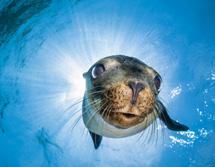
Ihre Tauchbasis oder Ihr Hotel bestens präsentiert im


Weststraße 51 – 32657 Lemgo Telefon 05261/6251 info@atemreglerservice-owl.de www.atemreglerservice-owl.de
Öffnungszeiten: Mo.–Fr. 14.00–18.00 Uhr
Breite x Höhe 56 x 105 mm nur € 300,- pro Anzeige
Ihre Ansprechpartnerin für Anzeigen: Tanja Karg dispo@tauchen.de +49 (0) 89 55 241-222 DIVE MARKET
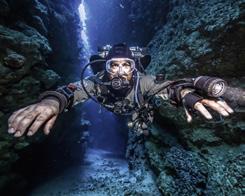
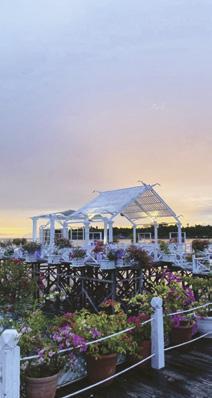
Atemregler-Revision Instandhaltung Flaschenventile Flaschen-TÜV









FRÜHBUCHER FÜR
CLUBS & VEREINE
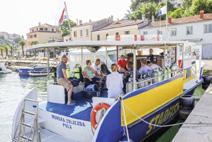
Hol Dir den TOP Deal bis zu 25% für deine Gruppenreise 2025 !
April - Juni, September - Oktober Schiff für 25 TaucherInnen gültig bei Reservierung inkl. Anzahlung bis 31.12.2024
Baron Gautsch
Coriolanus
Banjol
selbst ausbilden
Hausbucht
Seepferdchen


… ein Erlebnis über und unter Wasser


ÄGYPTEN, Safaga, Rotes Meer DEUTSCHE TAUCHBASIS
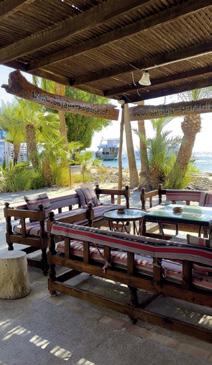
familiäre Atmosphäre traumhafte Riffe wie Panorama, Abu Kafen & Tobia Arba deutschsprachiges Team täglich Bootstauchen á 2 TG Hausriff mit Schildkröten SSI Tauchkurse seit über 40 Jahren in Safaga

BESUCHE UNS UNTER www.safaga-paradise.de

Niederauer Str.39, 01662 Meißen Tel.: 0172-3725914 tauchbasis-riesenstein.com.

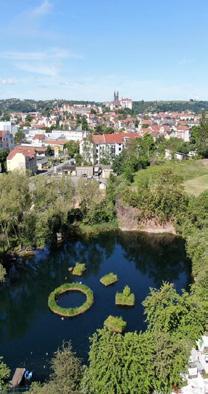
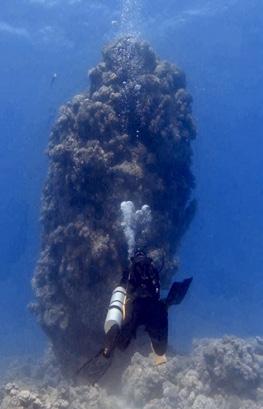

Inh. Kai-Uwe Reifgerste Redtenbacherstr.6 69126 Heidelberg Tel:06221 3950582
Luft 24/7, Nitrox, Trimix, Argon
Technischer Service
Atemreglerservice m. Prüfbankausdruck
Tauchshop
Kurse
www.Fuellstation-Heidelberg.de Öffnungszeiten: April - Okt. Mo-Fr 8:00 -18:00 Sa. 10:00 -16:00 Nov - März Mo-Fr 8:00 -16:00 Sa. 10:00 -14:00

Tauchschule Hochrhein
• Schwimm-, Schnorchelund Tauchzubehör
• Tauchausbildung vom Anfänger bis zum Profi
• Service, Verleih und Verkauf von Tauchausrüstung
• Verleih von StandUp Boards
Tauchschule Hochrhein im „Gasthaus zum Loewen“ Hauptstraße 36 D-79801 Hohentengen a. H. +49 77 42 / 92 16 20 info@tauchschule-hochrhein.de www.tauchschule-hochrhein.de


Taucher beraten


Tauchausbildung
• OC-Tec (BM & SM) bis Full Trimix
• CCR (rEvo-SF2-JJ) bis Full Trimix


• SCR (Horizon)


Füllstation
• Luft – Nitrox - Trimix

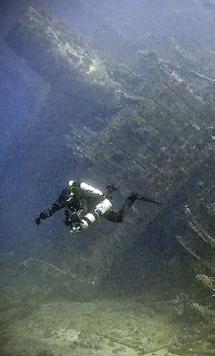

Service

• Beratung – Verkauf – Revision (Apeks Atemregler / CCR Geräte) Wir tauchen ab

• in Berlin/Brandenburg, bundesweit, Ägypten, Kroatien, Sardinien


www.die-dicken.tekkies.com lars@die-dicken-tekkies.com


Charly Reisen GmbH
Sperbersloherstr 60 90530 Wendelstein gegründet 1998



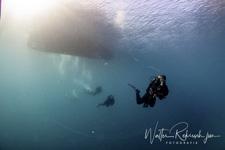
Nachttauchen
Gruppenangebote

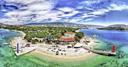





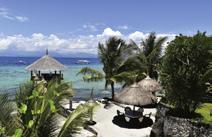

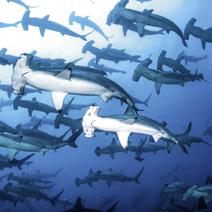
Flug, Hotel, Transfer & Tauchen TAUCHREISEN WELTWEIT
ÄGYPTEN MEXIKO
SRI LANKA KENIA Safaga, Marsa Alam, El Quseir, Sinai, Tauchsafari Süd-Tour 26 Socorro, Cabo San Lucas, San José del Cabo Bentota, Passikudah Watamu
Safaga Tauchreise inkl. Flug, 4*Hotel HP, Transfer & Tauchen ab 680 €

www.volkert-touristik.de 09357/97490


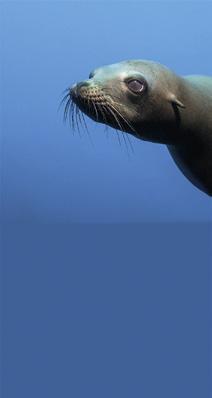











35 Jahre Nero Sport In gemütlicher Atmosphäre familienfreundliches Tauchen im Ionischen Meer erleben.
• Kostenlose
• Eigene Appartements
• Taverne „Dive Inn“
• Direktflüge

• Einzel-/Doppel-/Tagesfahrten Telefon: 02361-32041

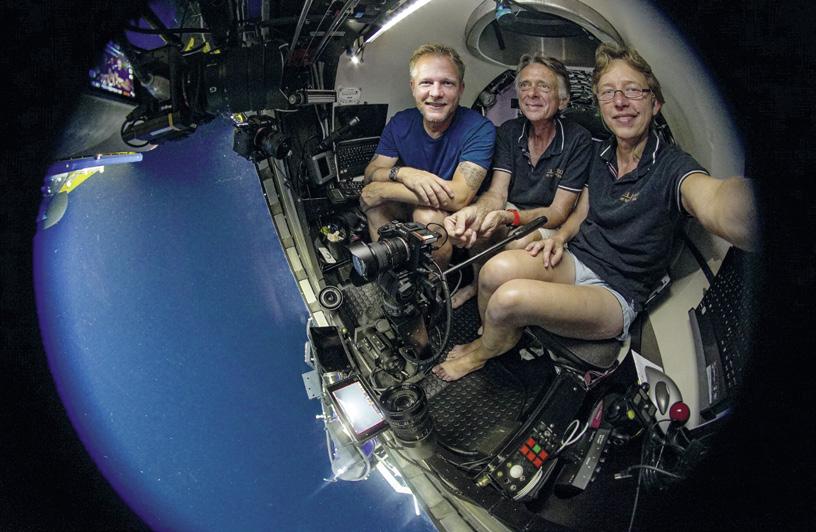
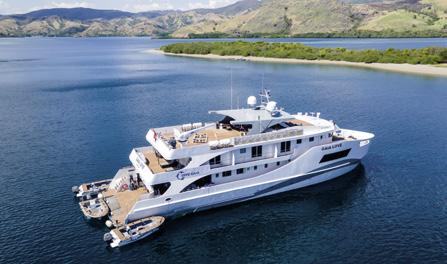
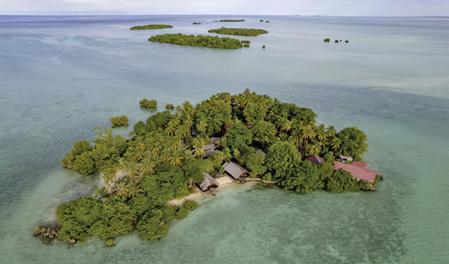
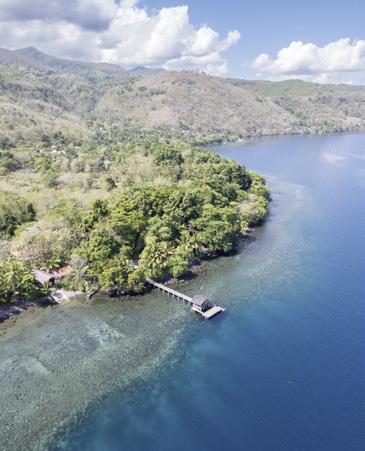
Florian Huber (1), Claudia Weber-Gebert (1), Wolfgang Pölzer (1), Jan Finsterbusch (1), David Benz (1)
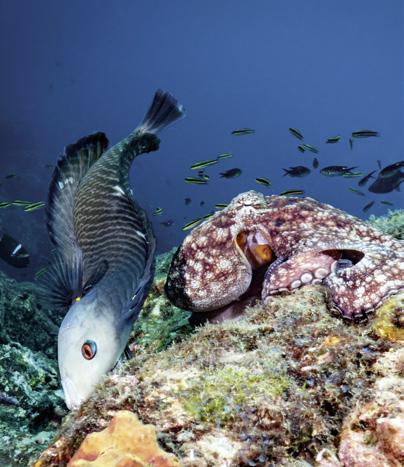
DISAPPEARED WORLDWIDE
• Top spots in Germany
• Komodo: Duyung Baru & M/Y Gaia Love – two safari ships, one destination
• Alor: In the wild south of Indonesia
• Maratua Atoll: Nunukan & Nabucco
• Panama: A visit to Coiba Island
TECHNICAL TEST
Divevolk Sealink
PRACTICE
Residual air time: Why and what's behind it – an attempt at an explanation.
REPORTS
• LULA1000: Diving off Madeira
• Diving in Antarctica
boot PRELIMINARY REPORT
What can visitors look forward to? An overview and preview of , the world's largest water sports trade fair in January.
TAUCHEN °2.2026 WILL BE AVAILABLE AT YOUR NEWSAGENT FROM TUESDAY, 13 JANUARY 2026.
Address Editorial office & publisher
JAHR Artopé Media GmbH & Co. KG
TAUCHEN
Management: Alexandra Jahr, Philip-A. Artopé
Bajuwarenring 19, 82041 Oberhaching
Phone: 089/5 52 41-0, Fax: 089/5 52 41-2 44
Publisher: Alexandra Jahr
Editor-in-chief: Alexander Kassler (responsible for the content)
Art Director: Achim Matschiner
Editors: Lars Brinkmann, Benjamin Schulze
Freelancers: Tobias Friedrich, Heike Gehrmann, Rose & Udo Kefrig, Dr Florian Huber, Barbara & Wolfgang Pölzer, Martin Strmiska
Marketing/Cooperation: Kathrin Stapelfeld, Tel. 040/38 906 269, e-mail: kathrin.stapelfeld@jahr-tsv.de
Advertising marketing: JAHR Artopé Media GmbH & Co. KG
Bajuwarenring19, 82041 Oberhaching
Advertising sales: Tel. 089/5 52 41-225, E-mail: sales@tauchen.de
Advertisement scheduling: Tanja Karg, Tel. 089/5 52 41-222, E-Mail: dispo@tauchen.de
Valid advertising price list: Price list 2025 from 1 November 2024
Production management: Ilja Badekow, Sybille Hagen, Andreas Meyer
Design: JAHR Artopé Media GmbH & Co KG; Conny Anders, Kerstin Meister
Printed by: Walstead Central Europe, ul. Obr. Modlina 11, 30-733
Kraków
Prices:
Subscription price: 12 issues, Germany: 118.80 euros incl. postage, Austria: 130.80 euros, Switzerland: 194.40 sFr, other European countries (land route): 144,- Euro, other European countries (by air): 186,- Euro, non-European countries: 211,20 Euro. Ordering single issues: Only against bank or credit card debit, (total price: number of issues times issue price of 9.90 euros plus postage) from the diving subscription service or e-mail: abo@tauchen.de, Internet: www.tauchen.de
Distribution:
Retail distribution: DMV Der Medienvertrieb GmbH & Co. KG, Meßberg 1, 20086 Hamburg, www.dermedienvertrieb.de
Subscription distribution: DPV Deutscher Pressevertrieb GmbH, Postfach 57 04 02, 22773 Hamburg, www.dpv.de
Retail price single issue: 9,90 Euro
Rights: © TAUCHEN, unless otherwise stated. TAUCHEN is a joint venture between TAUCHEN and UNTERWASSER, published by JAHR Artopé Media GmbH & Co KG since September 2020. TAUCHEN may only be carried in reading circles with the publisher‘s authorisation. Diving may only be exported and distributed abroad with the publisher‘s authorisation. The magazine and all articles and illustrations contained therein are protected by copyright. Utilisation without the publisher‘sconsent is punishable by law. The editors reserve the right to shorten and edit contributions. The publisher and editors accept no liability for unsolicited manuscripts, CD-ROMs, photos and illustrationssent in. There is no entitlement to cancellation fees or archive fees. In cases of force majeure, there is no entitlement to delivery or reimbursement of the subscription price. Place of fulfilment and jurisdiction is Munich.
ISSN 0170-4001









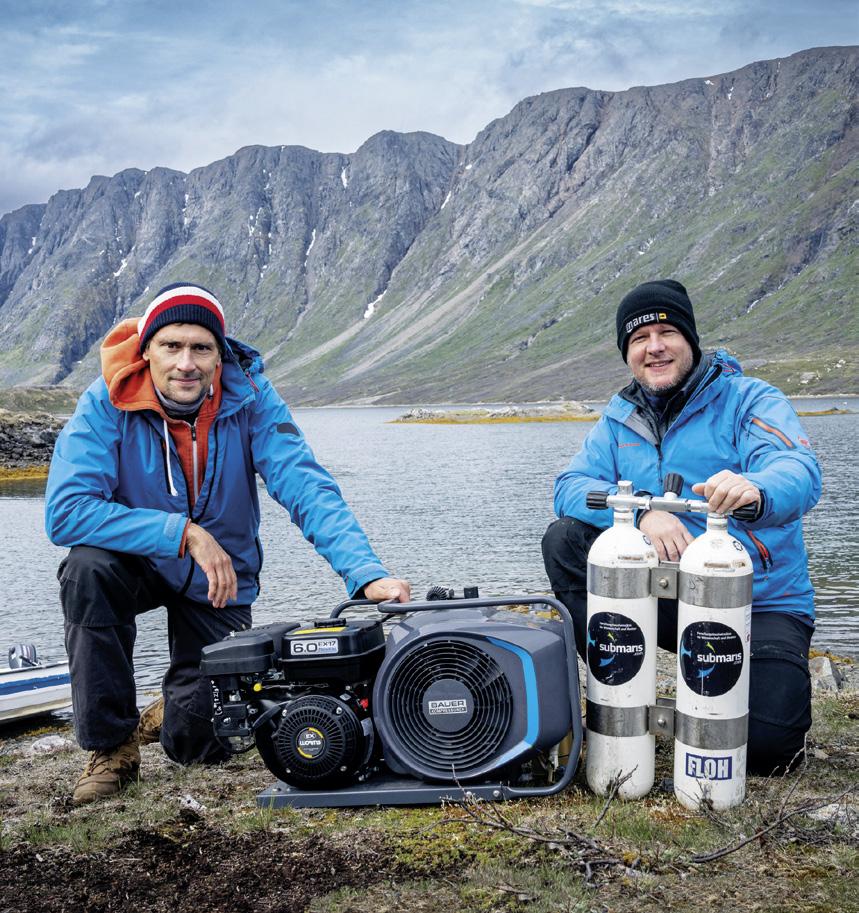
Auf unseren JUNIOR II können wir uns zu 100 Prozent verlassen.
Uli Kunz (links) und Dr. Florian Huber Forschungstaucher der Kieler Firma Submaris ▸ submaris.com