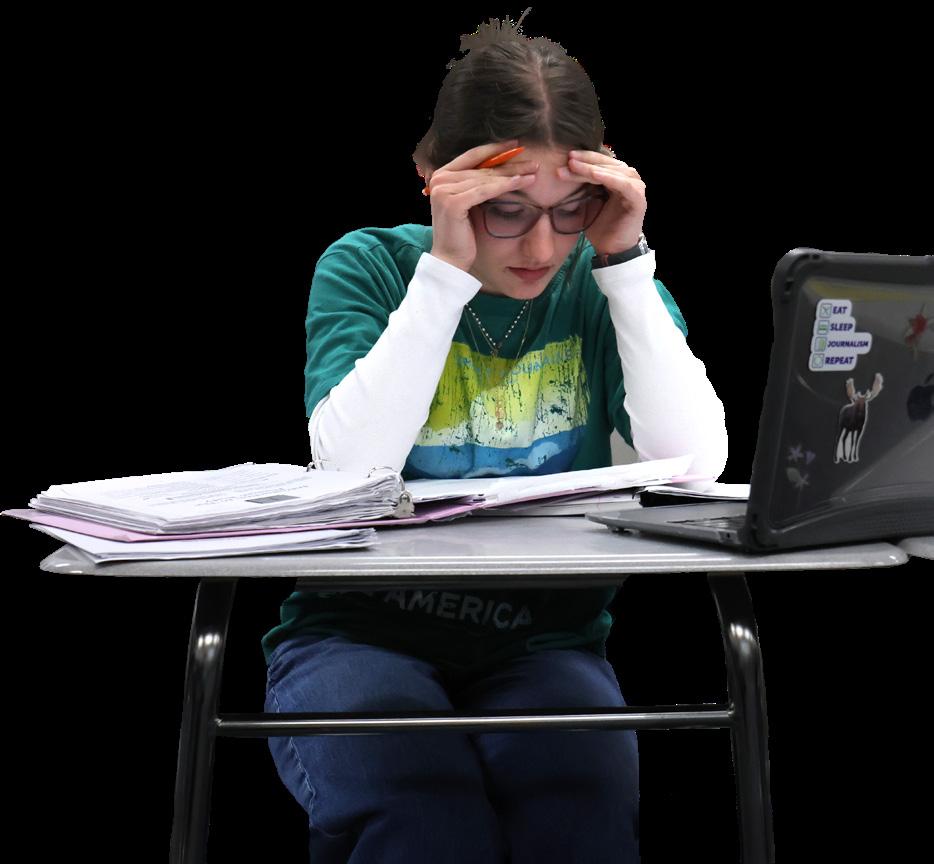
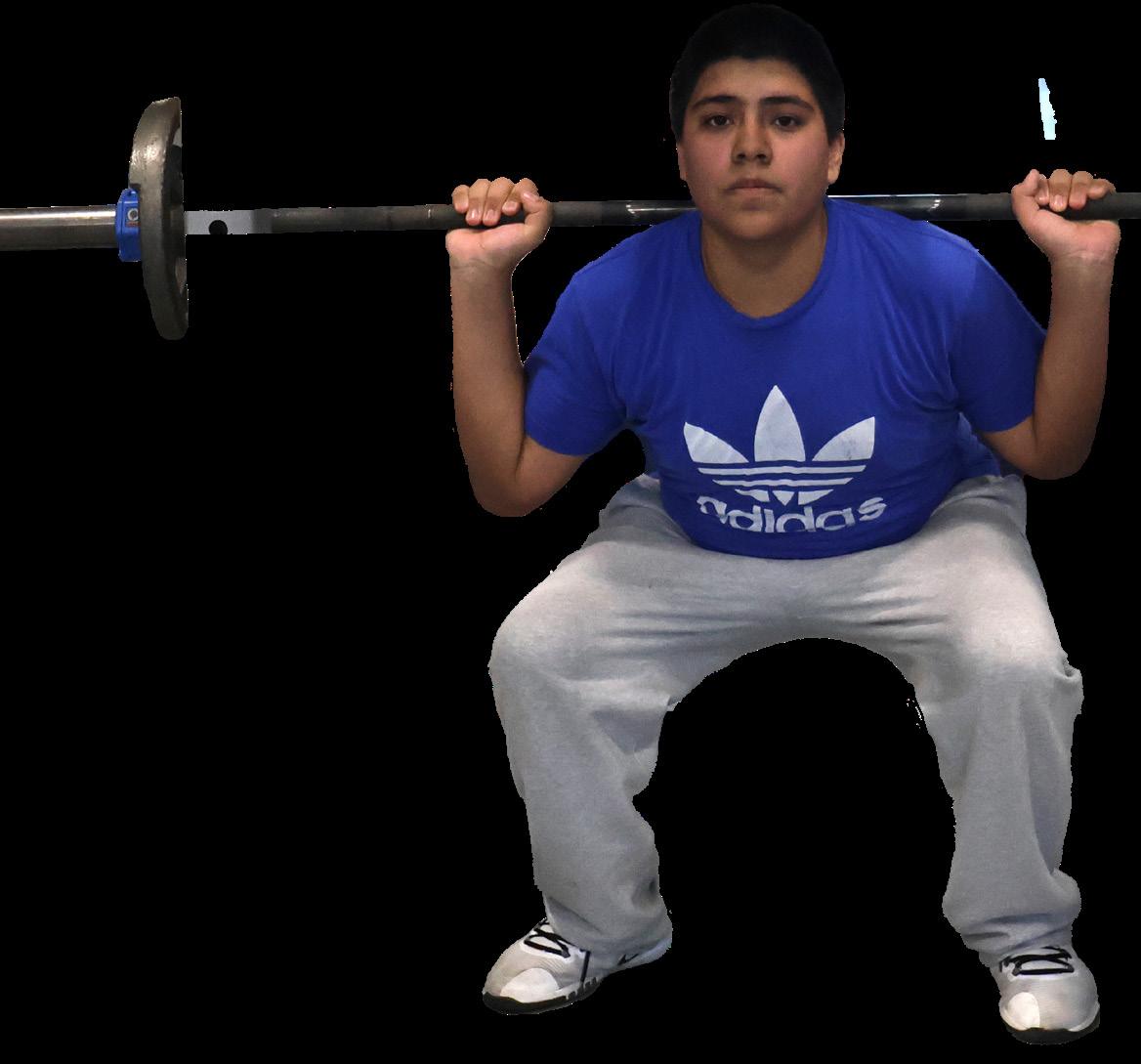
Our first issue on staff three years ago was centered around the success culture at the school. Back then, we observed how students felt pressure and this issue we wanted to put a more positive spin on the subject. We wanted to highlight how students were managing their many commitments and finding a balance.
This issue really resonated with us as overcommitted seniors. We’ve had to juggle clubs, classes and preparing for college, all while still making deadlines. We needed to find a balance.
When discussing this topic with our staff, we realized how universal the struggle of making time for yourself is. We were shocked at how many of our staff and other students let school and
other responsibilities overshadow what brings them joy.
In this issue, we aimed to focus on a piece of students’ lives that might not always be recognized by the school. We have experienced this as we engaged in our hobbies, activities and interests outside of school. These activities have given us a needed break from school and helped us find the balance we dearly need ed.
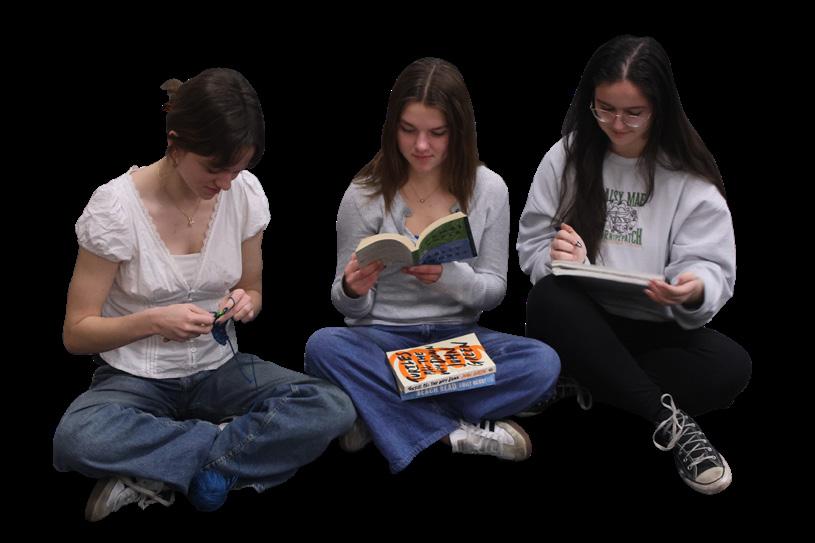
We hope we have struck a bal ance between important issues and lighthearted topics and mo tivate students to make time for non school-related activities in their lives. Whether it’s starting a new book or building a LEGO set, we wanted to make an issue that would inspire readers to re connect with what they love.
2025-26 JAGWIRE STAFF
Editors in Chief
avery clement
editor in chief
maddie martin
editor in chief
quinlyn peters
editor in chief
Online Editors in Chief
maddie martin
online editor in chief
evan leroy online editor in chief
Photo Editor
eva hernandez
photo editor
Copy Editors
madelyn mulryan copy editor
kennedy botkin copy editor
Managing Editors
natalia castillejos ramírez managing editor
gracyn schreiber managing editor
Analytics Manager
oliver feiring analytics manager
@millvalleynews1
@MillValleyNews
Staff
doreen mahugu writer/photographer
mya franco writer/photographer
ryan bloomer writer/photographer
cal bierl writer/photographer
asher clement writer/photographer
emma cooper writer/photographer
kady coulibaly writer/photographer
avery curry writer/photographer
bella davidson writer/photographer
jason sweany writer/photographer
lucas pennel writer/photographer
JagWire Office
5900 Monticello Road
Shawnee, KS 66226
Phone: (913) 422-4351
Email: jagwirenewspaper@gmail.com
Website: www.mvnews.org
Adviser: Kathy Habiger khabiger@usd232.org
JagWire, a monthly publication of Mill Valley High School, is printed by Valley Offset Printing
Censorship Policy
The Kansas Student Publications Act guarantees the same rights for student journalists as are guaranteed for professional journalists. These rights include, but are not limited to, all First Amendment rights, including the rights of freedom of speech and the press, insofar as published items may not contain libelous, slanderous or obscene statements, may not incite or promote illegal conduct and may not cause a substantial disruption to normal school activity. This law also prevents censorship of any kind by the adviser, building or district administration.
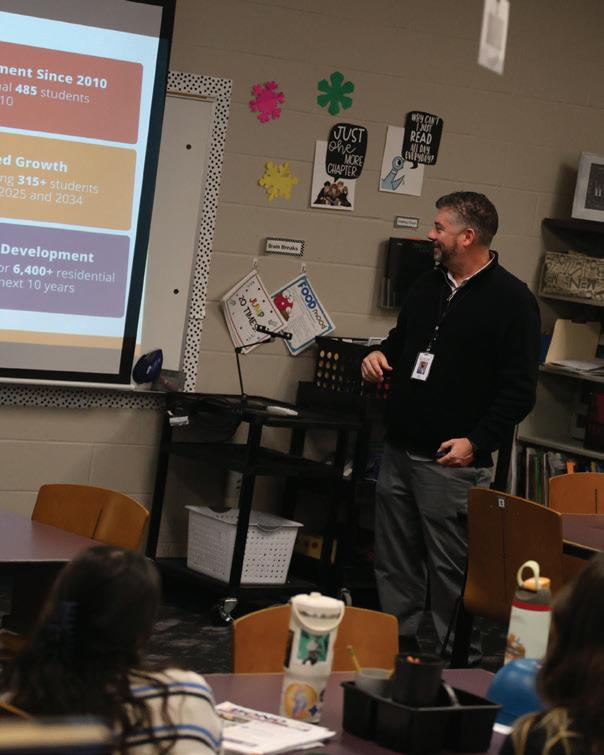
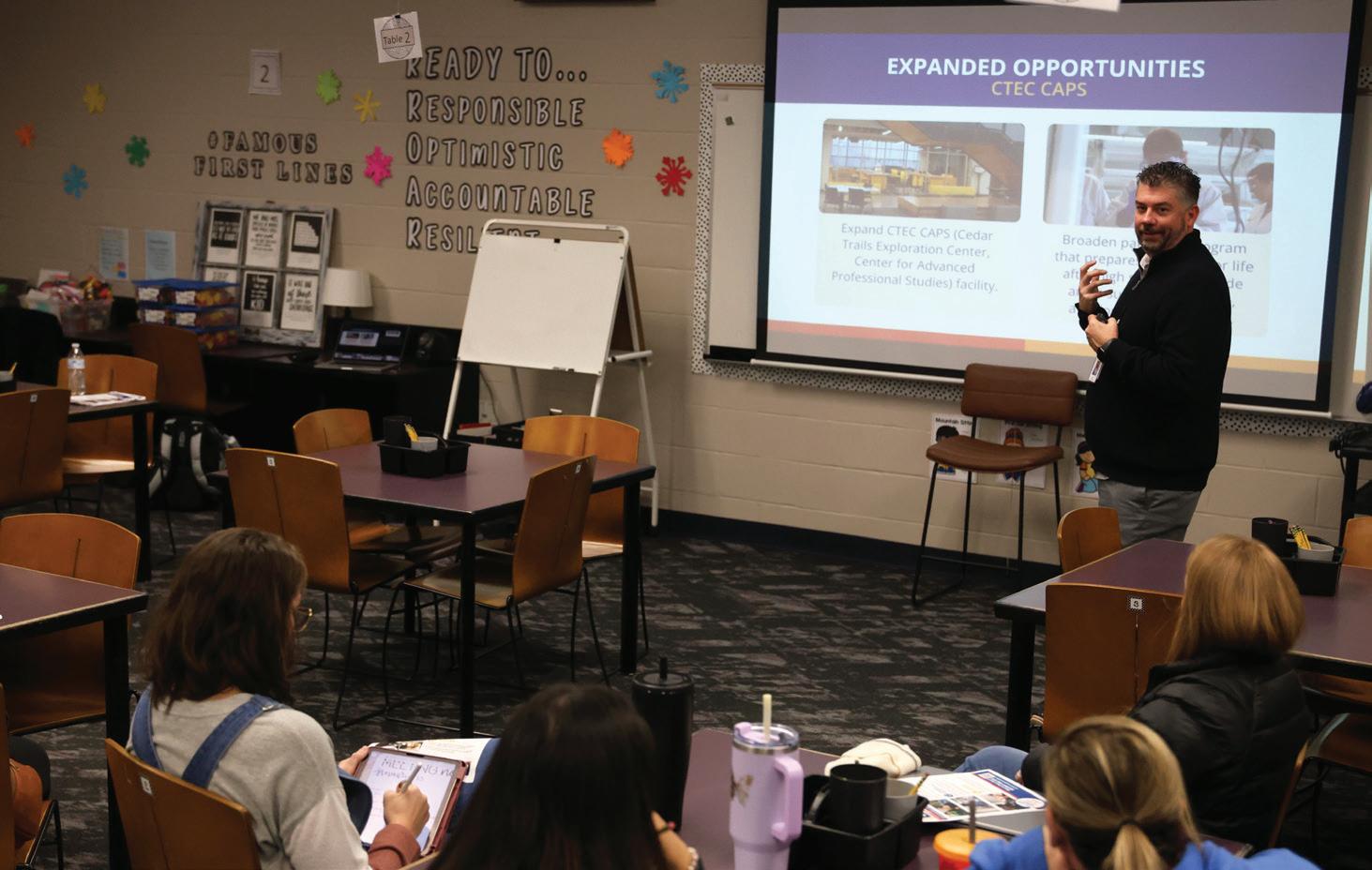
Superintendent Dr. Cory Gibson discusses the new safety measures will be included in the upcoming bond, Thursday Jan. 17. photo by kady coulibaly
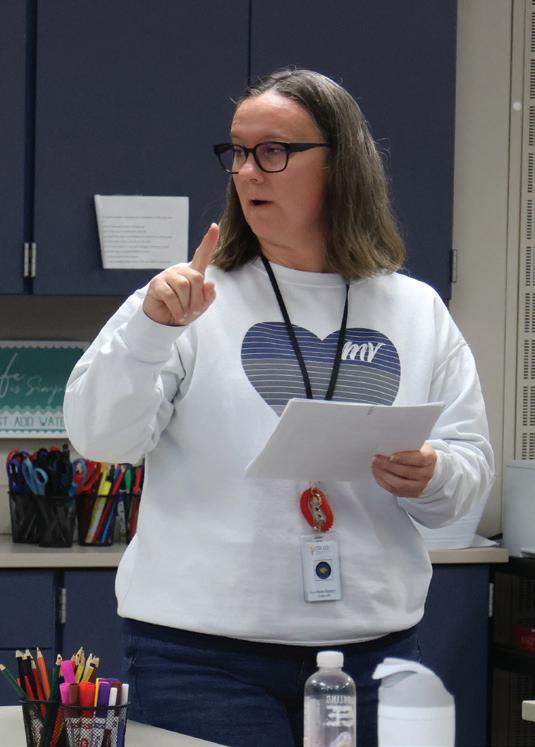
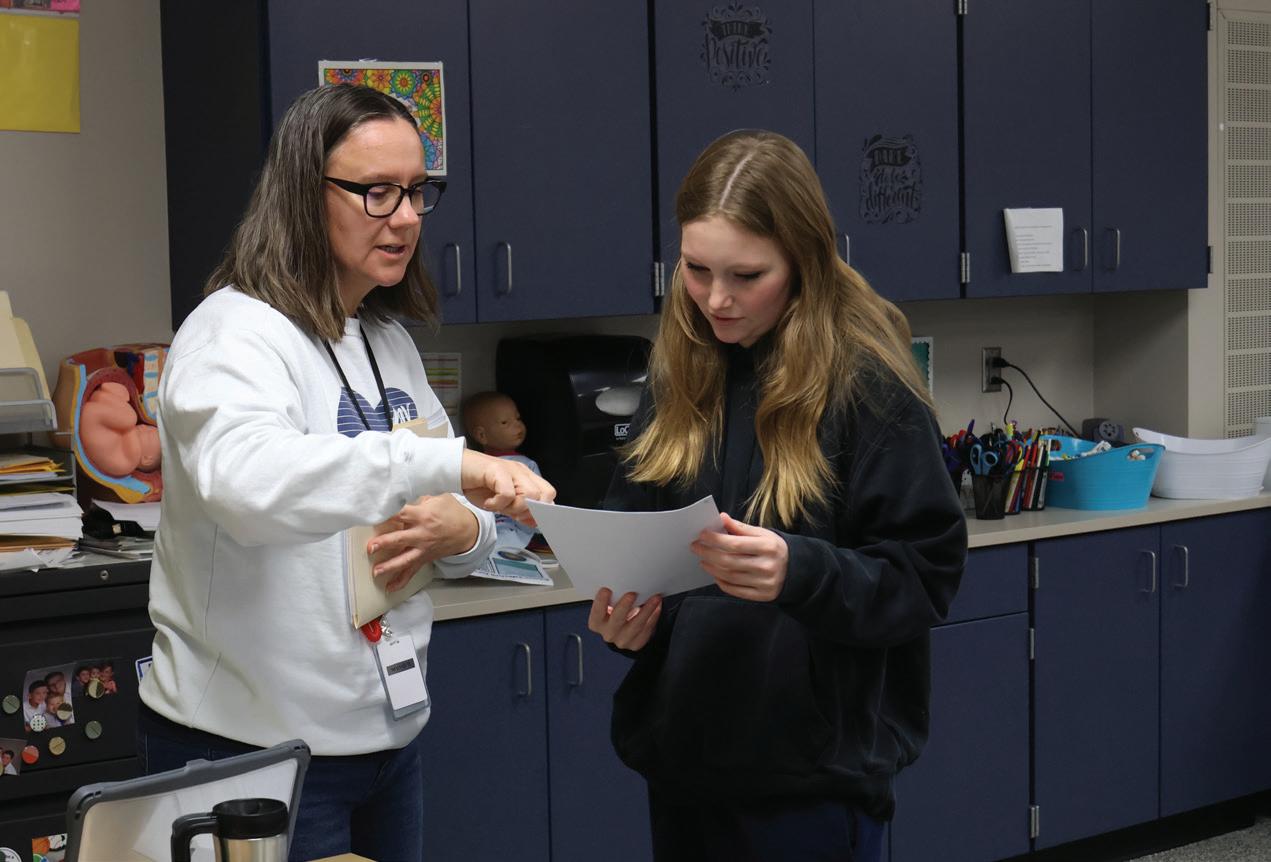
Giving instructions, substitute Heather Keeler shows the class how to do the assignment for human growth and development, Friday, Jan. 16. photo by eva hernandez
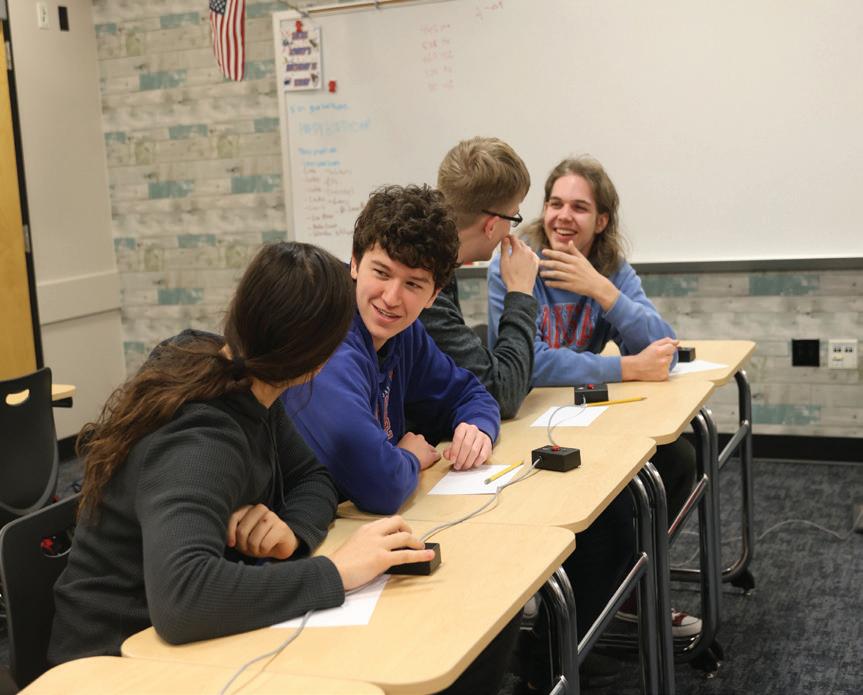
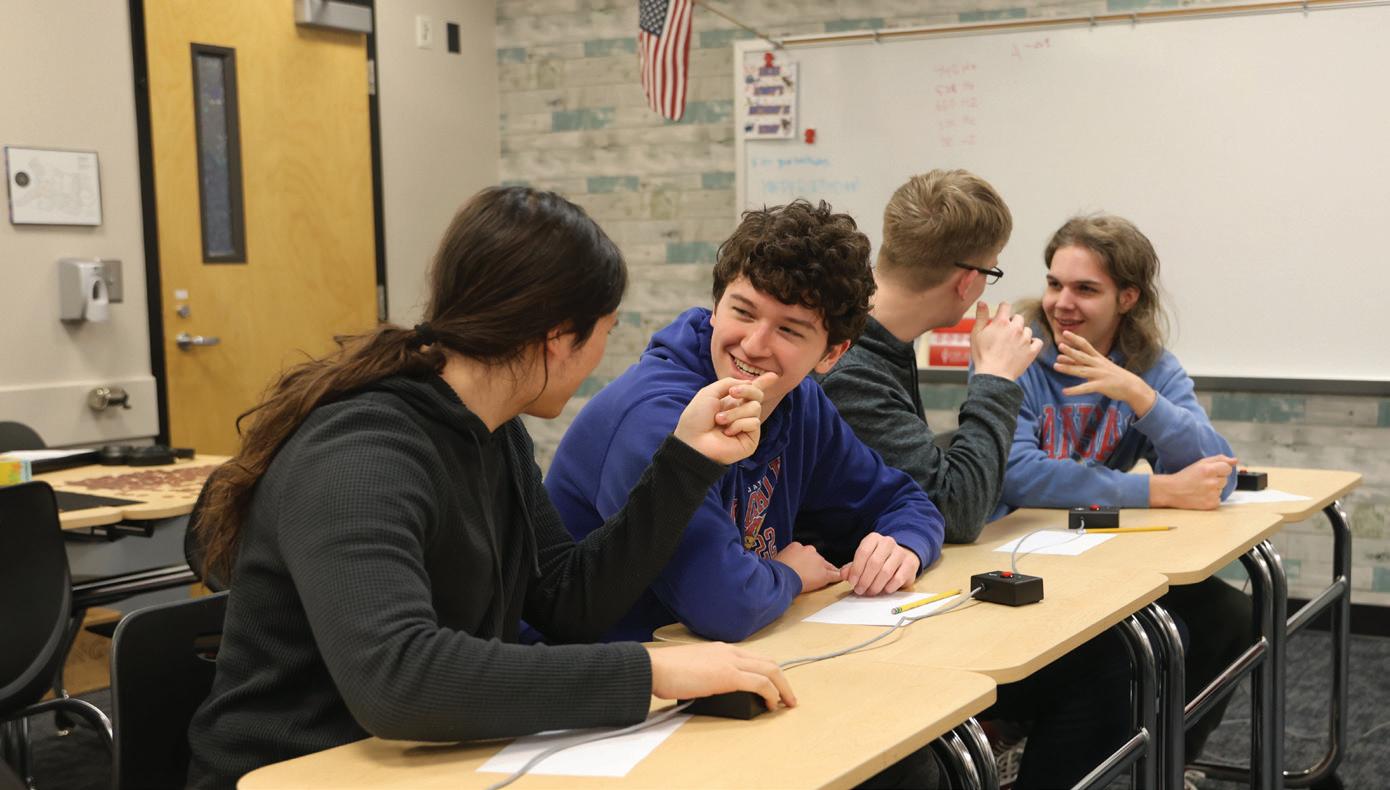
As the Scholars Bowl teammembers get ready to answer a question about history, seniors Fabian Hernandez, Nathan Turvey, Sam Bowling and Will Scheiber discuss the answer, Wednesday Feb. 4. photo by kady coulibaly
PURPOSE THROUGH PASSIONS
by jagwire staff
Recognizing the importance of hobbies for mental health is the first step to a balanced student life
Lots of students have hobbies and activities outside of school they care about, but often school can interfere with students’ ability to do them.
According to a survey of 113 students done by the JagWire, 85% of students reported their schoolwork interferes in some way with doing the activities that are important to them. While it can be easy for stu- dents to get caught up in the stress of school and other responsibilities, they should still make time to do the things they enjoy, because it can be beneficial to their mental health. In order to do this, students should view their hobbies in a positive light so they can prioritize balancing responsibilities with hobbies.
According to an article from the National Institute of Health, hobbies can be helpful to decrease symptoms of anxiety and depression because they bring relaxation and pleasure. This same article noted that hobbies can also bring a sense of community which furthers the
mental health benefits of participating.Doing an activity that brings them joy, even if it’s for less than an hour a day, can help students decompress and even reduce stress levels.
Students feel stress for a number of reasons, such as an upcoming test or a struggling friend- ship. Taking time each day to do something that brings them joy, even something as simple as doing a puzzle, playing an instrument or working on a painting can help decrease the effect of daily stressors.
However, it can be easy for students to diminish their hobbies, viewing them as a waste of time or taking away from their responsibilities. Oftentimes hobbies feel less important com- pared to schoolwork, but they can be useful to decompress from the stress that schoolwork can cause.
This is why it is important for stu - dents to
understand the benefits of their hobbies because acknowledging the positives of hobbies gives students the motivation to fit them into their busy routines.
Finding time within their schedules can mean something different for every person, it might be 10 minutes or an hour a day, but taking a small step toward prioritizing hobbies can help students find that balance between stressors and stress relievers.
While it is easy to see hobbies as inconsequential compared to responsibilities, they can be just as important. Students should set aside time, whether that’s 10 minutes a day or one day a week, dedicated to decompressing with an activity. A small effort can make a big difference when it comes to improving students’ mental health.
ROOM TO GROW
The plans for an upcoming district bond and how it could affect the school if passed
DWHAT IS A BOND?
The only legal way in Kansas to fund major facility projects Bonds are locally funded through property taxes
The funds cannot be used for:
Salaries Operations
Instructional costs
If a bond does not pass, the board has to:
Delay or cancel planned improvements
Go ahead with very limited funding
Postpone maintenance
Possibly return to voters with another bond later
by mya franco writer/photographer
istrict patrons will be voting on March 3 whether or not to approve a $99 million bond issue. This bond focuses on three main objectives: enhanced safety, expanded opportunities and improved facilities. The board approved the bond ballot at its Dec. 1, 2025 meeting.
If approved, the money would be used to build fencing around elementary playgrounds, install key cards for exterior doors, and build storm shelters at each middle school. It would also expand CTEC’s Center for Advanced Professional Studies facility, expand the early childhood facility at CTEC, add an orchestra room to all secondary schools, improve special education facilities and assess future middle school growth. According to superintendent Dr. Cory Gibson at a meeting about the bond, it will not increase taxes because the district paid off previous bonds early, meaning they do not have to pay as much interest.
Although it has just recently been made public, Gibson and the school board have been talking about this potential bond
A BRIEF HISTORY
The goals of the last five bonds the district passed
by natalia castillejos ramírez managing editor
for years.
“We talked about going to a bond one to two years ago, but I’m so glad we waited,” Gibson said. “We need to have more data to determine what our needs would be, particularly at the elementaries going forward.”
The bond was only recently announced because the board wanted to see how much growth the district was projected to have. Gibson and the district were surprised by the increasing enrollment that the district predicted and decided to move forward with proposing the bond.
“Based on an outside consultant who studies [growth in communities] for a living, they predicted a year ago that we will probably increase another 315 students for the next nine school years,” Gibson said. “That’s an anomaly, because most of the state of Kansas is actually declining enrollment because birth rates are dropping.”
Due to this, the district waited to propose this bond in order to make these renovations happen at a reasonable time. While these improvements are helping ev-
eryone in the district, the school will also see big changes.
According to Gibson, the high schools will be able to send more students to CTEC because of the potential expansion. With this expansion, CTEC programs would be able to allow students to develop skills beyond the classroom. However, senior Zachary Chang, who currently goes to CTEC, is concerned about proper staffing.
“The big thing is that because sophomores are coming into CTEC next year, they definitely need more space,” Chang said. “A lot of classes are already full, like Digital Electronics, Blueprint Reading and Welding. By expanding more class space, you have more classes, but then the challenge becomes, who’s going to be teaching those classes?”
Along with the expansions to CTEC, according to Gibson, the possible fine arts expansions in the bond will give students access to new programs, such as an official orchestra program with facilities in schools and an increased instrument storage area.
Underclassmen in orchestra, such as sophomore Ellise Elliot who has been in orchestra for a year, are excited about the opportunities that come along with the program’s potential expansions.
“Having an opportunity for
other people, like young musicians, to be involved helps them know if that’s something they want to pursue later,” Elliot said. “It helps them dive into that skill and have a sense of community.
The elementary schools are expected to get a lot of improvements. Parents, such as Horizon PTA president Megan Bryant also emphasized, via email, that additional space could benefit all students because it improves learning conditions.
“Providing enough space for students is not only important for their learning, but for those around them as well,” Bryant said. “When the needs of all students are met, it can help eliminate distractions.”
Special education teacher Sara Evans agrees that these improvements will help everyone as long as there is good communication between the district and the teachers within the schools, specifically for the special education department.
“I am hopeful that the proposed bond took both the current and future needs of the program into consideration,” Evans said. “I also believe it will be important to include current staff in the planning process to ensure that the spaces and resources are well-aligned with the realities of the program”
2026 BOND
The changes the proposed 2026 bond will bring if passed
AT THE SCHOOL SAFETY
Potentially removing locker banks and remodeling for maker spaces/Catty Shack, etc
Transform Special Education secondary facilities to better support students
Renovate facilities at all secondary schools to support orchestra programs
Add security fencing for elementary playgrounds and recreational areas and install key card access to all exterior doors
Build storm shelters at each middle school
CTEC
Expand CAPS facility to provide more CTE opportunities such as healthcare, aviation and agriculture
Expand Early Childhood facility to increase capacity and decrease waiting list
DISTRICT GROWTH
Address current needs of middle school spaces and prepare for growth
Address future growth by adding elementary school classrooms
Superintendent Cory Gibson discusses multiple new safety measures that will be included in the upcoming bond, Thursday Jan. 17. photo by kady coulibaly
A LIFETIME OF LEARNING
In light of the Public Broadcasting Service’s recent struggles with financial support, childhood memories from watching the network’s television shows, such as “Wild Kratts” and “Odd Squad”, are nostalgic for many students because of the lasting impact on their interests and life skills.
Following the end of US Federal Government funding, the Corporation for Public Broadcasting ceased operation in January 2025. The CPB funded local broadcasting stations, including the nonprofit PBS, which offers educational programming to the general population.
PBS now only relies on regional support, but it has not completely shut down due to the significant individual contributions from viewers of this well known media source.
students. “Wild Kratts” is known for its engaging lessons about animals and other aspects of zoology. Junior Benedicte Rios developed a similar interest after being inspired by the program in
Sophomore Tierney Gilmore” ” ” ”
What goes in your mind at a really young age predicts how you’re going to turn out in the future.
his youth.
One PBS show that recently celebrated its 15th anniversary stood out in popularity among
“I watched a lot of Wild Kratts. I enjoyed that show when I was younger,” Rios said. “I’m not sure if it’s at fault, but [now] I like archeology.”
Along with introducing vari-
by cal bierl writer/photographer
ous passions to explore, PBS has taught children lifelong lessons. PBS supplemented sophomore Tierney Gilmore’s foundational math skills at a young age, which benefited her problem-solving ability in everyday life.
“It helped me with math. That’s what Odd Squad was [about], and when I eventually got into school, I understood how it actually worked and how to apply it to the real world,” Gilmore said.
Since public broadcasting can benefit childhood development, there is support for raising money to preserve this form of entertainment. Gilmore believes educational entertainment should be supported.
“Children’s TV shows can get pretty out of hand [and] not be educational anymore,” Gilmore said. “It’s important to fund the educational ones, because what goes in your mind at a really young age predicts how you’re going to turn out in the future.”
TAKING A PIC
Reasons why students pick their digital cameras over their phones
II think the photos turn out better and you can adjust more settings than on a phone.”
n the past 30 years, cell phone cameras have become increasingly better, eliminating the need for clunky, large cameras. Despite this, growing groups of teenagers have begun carrying a separate digital camera for capturing moments with a nostalgic twist.
Junior Nicole Cooper said digital cameras are just one part of a larger trend of teenagers buying vintage and nostalgic items.
“People are saying that 2026 is the new 2016 and honestly, I totally agree with that,” Cooper said. “There’s a bunch of old trends coming back, and that includes the use of physical cameras over iPhones.”
Cooper began using a digital camera because she found it fun to use her mom’s old camera.
“I was seeing a lot of people online using [digital cameras],” Cooper said. “I thought my mom had a
JUNIOR NICOLE COOPER
“ “
It makes everything look more nostalgic and the memories feel more real.”
couple of those, so I looked around in her stuff, and I found a bunch of her old cameras. I took the SD card out and made it my own.”
Many students use them to photograph their friends, but sophomore Paige Lowe uses hers to photograph nature.
“I got it for Christmas,” Lowe said. “It was on my wish list because I like to travel, and it’s cool to have a small, accessible camera just to take photos of scenery.”
Similar to Lowe, Cooper has expanded the use of her camera to practice her skills in photography.
“I started by just taking pictures of group functions,” Cooper said. “Then I started using it more and more, and now I also use it for actual photography.”
Senior Mackenzie Clifton likes to use her digital camera, sharing that the photos she takes on an Instagram account she made for
GOING DIGITAL
by evan leroy online editor in chief
The growth in popularity of digital cameras caused a shift in how students take photos
her camera. I thought that it would be fun to post what I’m doing and [share] what my friends and I did when we were going out,” Clifton said. “I wanted somewhere to put it besides my main Instagram, because it’s more casual.”
photos by jason sweany
SUPERSTAR SUBS
Substitutes are constantly relied on by teachers and offer support in the absence of the regular teacher
Whether a teacher’s absence is because of illness, vacation or maternity leave, long and short-term substitute teachers are a crucial aspect of the school.
While substitute teachers are usually in charge of only leading the class for a day or two, many substitute teachers choose this job because of that. Substitute teacher Steven Bock likes subbing because of its flexibility.
by maddie martin editor in chief by kennedy botkin copy editor
history teacher Angie DalBello, prefer to rely on substitutes who are familiar with the school.
“I like people who are in the building somewhat regularly, who have a good rapport with students, so they’re not coming
and also [know] the ways that Mill Valley works.”
Many students, such as sophomore Myra Chamberlain, also like substitute teachers who are comfortable with the school and its students.
””
“Being an elementary school P.E. teacher was a very time-consuming job,” Bock said. “Subbing was fun. I got to work all the time and it was enough. My busiest time of the year [now] is June because I run [tennis] camps.”
Despite substitute teachers only being in classes for a short amount of time, teachers, such as
STEVEN BOCK
I’m about ready to ramp up again. I think [Substitute of the Year is] in reach at the middle school. I had some good momentum going over there [but] I don’t think I’m going to win this year.
There’s so little time, so to miss a chunk of time is so hard, so I’m here to keep things going.
Substitute teacher
Heather Keeler
in blind,” DalBello said. “[I like when] they have a relationship or a familiarity with students
“I [like] a sub that knows what they’re doing,” Chamberlain said. “They’re helpful, they’re nice, and they don’t just read out the directions and sit there. They’ll explain it to you; they’re there for you.”
Many substitute teachers believe that making a good learning environment allows students to still get work done despite the teacher being absent. Substitute teacher Cimony Mahoney believes that those environments are the best to sub for.
“I love showing up and kids are happy to see me,” Mahoney
TEACHING TRIUMPH
Substitutes Steven Bock and Cimony Mahoney both won Substitute of the Year and continue competing for the achievement
“ “ “ “
CIMONY MAHONEY
A joke that I have with Bock is that every year I say, ‘This is my year, Bock. Don’t even try.’ It was a competition we had between the two of us. He would joke because he won it several times, but eventually I got it.
said. “That’s the best feeling. [I love] when I can teach a lesson where the kids are having fun and learning, and we incorporate good conversation and group work.”
Even if they aren’t teaching in the same way a teacher would, substitute teacher Heather Keeler believes it is the sub’s job to prevent teachers and students from falling behind.
“The purpose [of a sub] is to keep the ball rolling in class, do the best you can to stay on track for the teacher while they’re gone,” Keeler said. “There’s so little time, so to miss a chunk of time is so hard, so [that’s why] I’m here to keep things going.”
Chamberlain also believes substitute teachers are important because they can be relied on when a teacher is absent.
“I think teachers need breaks too, or have emergencies happen,” Chamberlain said. “Having available subs is always such a great thing, especially good subs, because teachers need someone to take the class for them.”
Substitute teachers are especially needed when teachers need to take a longer period of time off. Mahoney is currently
English teacher, Victoria Byrd-Wright’s long-term substitute, and has noticed the difference in short term subbing.
“Subbing for day to day, the teachers always have great plans already ready for you,” Mahoney said. “But long term, you are now the one making the plans, doing the grading, doing the conferences and making sure the grades are done. It’s definitely more responsibility, but the teachers always leave a good outline on where [the class] should be and what we should cover, and the team that I work with is always really helpful.”
Since long term subs are in the same class for so long, many build a connection with their students. Although Keeler enjoys short term subbing, she misses having a class she can see every day.
“I miss getting to know a classin it,” Keeler said. “It’s special to have your own class; when you’re a sub, you don’t get that little glimpse.”
THE IDEAL SUPPORT
Teachers and students’ different aspects of their ideal substitute
of teachers look for a sub that follows sub plans closely
Survey of 112 students and 32 teachers of students like a sub that is energetic and engaged in the class
About 17 in 32 teachers have a list of preferred subs on Frontline, the sub agency website
Helping junior Rylee Slaven, long-term sub Heather Keeler shows what to do on the assignment for Human Growth and Development, Friday, Jan. 16 photo by eva hernandez
photos by eva hernandez
INTERNSHIPS EXPANDED
by doreen mahugu writer/photographer
The growth of the internship program provides more opportunities for students by cal
bierl writer/photographer
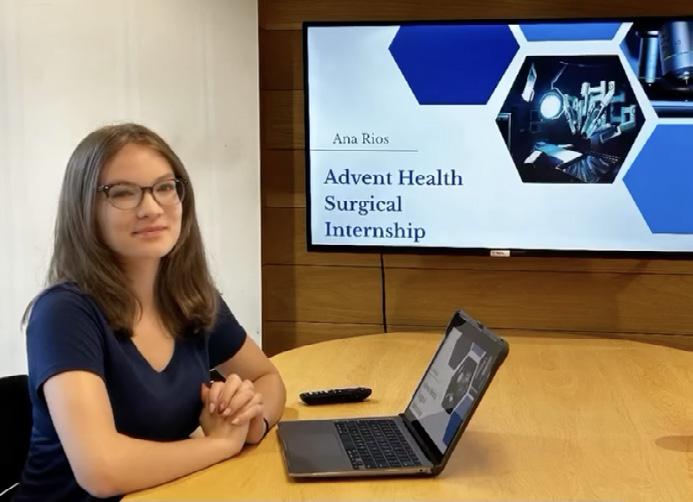
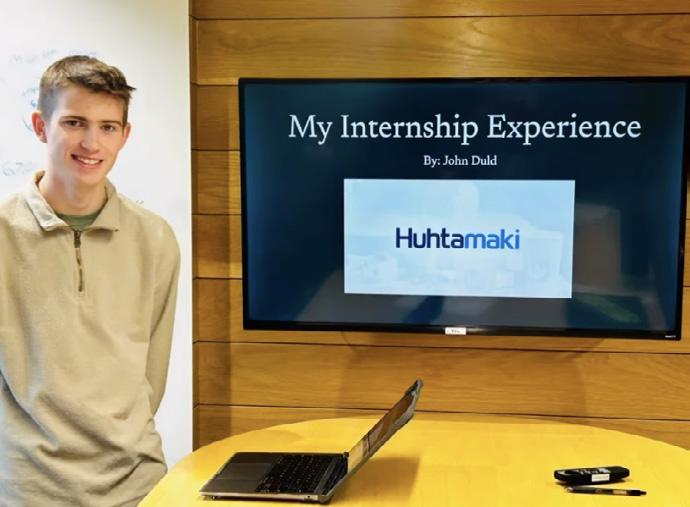
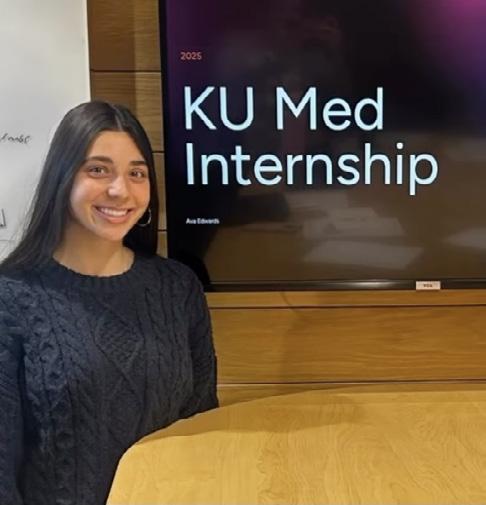
The number of students at the school with internships has more than tripled since last year. This growth was been helped in part by the efforts of the district’s secondary curriculum coordinator, Dr. Ceresa Schaffer, who arranges internships for students. These internships, ranging from law to real estate, give the district’s seniors and juniors a glimpse into what their futures could look like by gaining real world experience.
This year, Schaffer has focused on advertising the program online, especially through their Instagram, @232futurereadyintern-
ships.
“I know that I can put it out in newsletters, I know I can put up fliers. I can do all of those things, but where most students look for information is on social media,” Schaffer said.
As internship coordinator, Schaffer facilitates communication between students and the organizations they want to intern at, using a large network of connections to plan the internships.
“[Internships] develop in several different ways,” Schaffer said. “One way is through relationships that I’ve already built. [I ask them] for referrals of oth-
To help promote the internships program, Dr. Ceresa Schaffer uses the Instagram account to encourage students to pursue internship opportunities.
er people that may be interested in having an intern, and I reach out to them. Sometimes students bring to me someone or a business that they’re interested in, and I will reach out to them to see if they would like to have an intern.”
The procedure is highly personalized, and for some students, very simple. According to senior Scott Houghton, his process was fast, and unplanned appointments with Schaffer were welcome.
“It was honestly pretty easy,” Houghton said. “Schaffer is at CTEC. I just walked in there and
SENIOR GUS GOETCH
MARKETING INTERNSHIP
I’m learning how to connect with people different than me and really understand through their perspective what they would like.”
SENIOR HIYA SOOD
LAW INTERNSHIP
I think I’ll be able to understand the law enforcement side more because I think it’s important to look at the law outside of court. Being able to understand the amendments [will] be important for my career.”
photo submitted by @232futurereadyinternships
SENIOR ROHEY CEESAY
REAL ESTATE INTERNSHIP
“
I get to communicate with a lot of people, so I think my communication is getting better.”
SENIOR SCOTT HOUGHTON
TEACHING INTERNSHIP
I get to meet a bunch of new people at De Soto. I get to see what the other drama departments are like, which are very different from ours. [It] helps you realize that not everywhere is going to be like Mill Valley.”
told her what all my interests were, and she said she would look for something. By the beginning of this semester, she set something up with De Soto.”
Even though the process is easy for some, it can be hardespecially those seeking more uncommon internships. Senior Hiya Sood describes the long process behind getting her internship at the Shawnee sheriff’s department.
“We had several emails back and forth about where my internship could possibly lead,” Sood said. “That process was the hardest because almost every week, I’d get a different email saying, ‘this isn’t gonna work,’ or ‘this law firm’s not gonna work,’ but then eventually we got my internship.”
These internships go beyond government and education. For
senior Gus Goetsch, interning at Denni Jo Style Lounge has given him valuable marketing and entrepreneurship knowledge.
“I’ve learned a lot about marketing that she’s taught me especially how to tune into the demographic, catering to specific demographics’ needs and approaching store layouts differently,” Goetsch said.
Despite the program’s efforts, it sometimes struggles to place every student into an internship, especially students seeking the same one. Senior Rohey Ceesay, who interns at the real estate company Real Broker, LLC, supports the district’s internship program but also recognizes that it is still lacking in this area.
“The bad part is [that] sometimes there will not be enough places,” Ceesay said. “In my opinion, trying to get a medical
internship is hard because I feel like a lot of people want them, so it’s difficult for everyone to get one.”
Nevertheless, the program aims to help students with their future career decisions. Sood believes the internship program is a helpful tool that allows students to gain hands-on experience with the career they intend to pursue and help them decide what they do and do not want like about their possible future careers.
“It’s important that teenagers are able to get into something through the district and try something that they might want to do in the future,” Sood said. “If you’re doing something and you realize, maybe this is not what I want to do, you’re going to save some money in college from switching majors and saving yourself some time.”
TIME
WELL SPENT
Hobbies give students a break from stresses
Cby avery curry writer/photographer
rammed with school work, sports, clubs and other intensive extracurriculars, it can be difficult for students to find enough time for their hobbies. Though focusing on school-related activities may seem crucial for leading a successful future, it can be just as important to spend time on personal interests and passions.
There are an abundance of activities to choose from that teens can enjoy. Hobbies are a great way for students to unwind after stressful days and clear their minds from the overbears of school work, according to senior Rachel Joseph.
“It is important to have hobbies, because if you’re too focused on your school work and you don’t have time for anything else, you can be really prone to burnout,” Joseph said. “I think hobbies are a good way to relax.”
According to National Heritage Academies, a surplus of school work can cause overwhelming stress to students. Having a gratifying hobby to enjoy can help alleviate some pressure. Senior Hannah Stephenson
reaps the benefits of her hobbies, which are theater and swimming.
“My hobbies get me through the day because if I have a bad day at school, or if I take a bad test, I think, ‘Oh, well, at least I get to go to rehearsal,’” Stephensen said. “My hobbies also motivate me to do well in school because you have to have good grades in order to swim or perform in a show.”
Research from Rasphil Academy states that hobbies provide students with structured time away from academic demands,
Juggling school and activities, students often struggle to find a working school-life balance
allowing for mental breaks during busy schedules. With so many opportunities for students, it is important to find a balance between school and personal life. History teacher Jeff Wieland believes that savoring school life is important, but having activities outside of school can be just as rewarding.
“You have to set reasonable expectations for yourself, and it is important to get the most that you can out of school,” Wieland said. “But it is also important to have experiences beyond that. It is a matter of figuring out and prioritizing.”
CARRYING IT ALL
Screens make it more challenging for teens to manage their time
by madelyn mulryan copy editor
T” ”
he Pew Research Center claims that out of the average five and a half hours that teens take each day for themselves, about two thirds of that time is spent on screens. This leads to wasted time that could be spent on hobbies that are more fulfilling.
Armstrong Family Counseling Psychiatrist, Sarah Berke, has seen this happen with her younger clients whose only hobby is scrolling.
“Kids don’t want to do anything else besides sit on their phone and it’s so disheartening to me,” Berke said. “It’s so important to have something outside of technology, because all that technology does is just put you in this freeze like state where you’re not feeling any of your emotions. You think that you’re having a good time, but you’re just sitting there, trying to get a dopamine hit when you’re scrolling and it’s short bursts of dopamine.”
Students like junior Addison Richter agree, that phones can be a huge distraction and stops her from getting things done.
“[When] your brain says you want a break, you go on your phone and you get distracted,” Richter said. “Then an hour later, you have nothing done.”
Stephensen finds that her phone is the biggest problem that can lead her to not being productive.
“If I am being distracted by my phone, I’ll temporarily delete Instagram because that’s my main distraction,” Stephensen said.
My hobbies motivate me to do well in school because you have to have good grades in order to swim or perform in a show.
Senior Hannah Stephensen
”
While screen time can be a distraction for most students, freshman Alberto Anaya uses his phone to help be productive.
“[Technology] can be a burden, but it can also help,” Anaya said. “It’s a good way to communicate with your friends for anything, to set up hangouts or study sessions. It’s a great way to not experience burnout.”
However, Wieland thinks students need to learn over time how to balance all of their activities in order to have a better grip on their lives.
“A lot of [finding balance] is learning time management skills and recognizing that if you’re go-
ing to try to challenge yourself in school and take difficult classes and be involved in school extracurricular activities, or you want to have more personal time, it’s almost impossible today to do all three,” Wieland said. “I think kids pick two, and they emphasize them.”
Even without phones as distractions, most students, like Joseph, focus harder on school work over their hobbies.
“I prioritize school [over hobbies] because there’s more of an incentive to do good in school and have good grades so you can get into a good college,” Joseph said.
photos by eva hernandez
Rising expectations leave students with less time for pressure free hobbies
FUTURE FOCUSED FRESHMAN
by natalia castillejos ramírez managing editor
In the past, students could focus mainly on grades and still be successful. Now, teens are expected to do everything at once, which can feel overwhelming and stressful. Society pushes students to use every moment wisely and build a pathway toward their future, but sometimes this creates more harm than help.
ALBERTO ANAYA
Hobby: Weightlifting
” ”
School Secretary Amber Richter, who is also Addison Richter’s mother, notes that higher levels of education have more expectations for students.
“Colleges are more competitive,” Amber said. “You have to have the higher grades in addition to the outside activities and the honor societies.”
Expectations for colleges have increased over time. Teens are no longer
I would recommend finding a hobby you love and [learn ing] to manage your time and make sure you have free time for yourself so you never feel burned out.”
judged just on academics, but also on how involved they are. This kind of pressure did not exist as much in the past. Research from the National Institute of Health shows that early specialization and a lack of balance can lead to burnout and loss of motivation in adolescents. Nutrition and Wellness teacher Ellen Gray discusses how sports have changed, explaining how kids now must commit to one sport at a young age with intense sched- ules and travel.
“When I was growing up, even on the higher level teams, you wouldn’t travel as much [to play a sport], and you didn’t miss school to do it. You only went to practice for three days or maybe two
days,” Gray said.
Additionally, she notes the downsides of society encouraging intense commitment for sports and beyond.
“We’re making all the kids put too much into one activity when they’re younger, and not encouraging them to be more well rounded, like playing a variety of sports or doing a variety of activities.”
The NIH notes that always being busy affects teens’ socially. This leads to increased screen time and less in person interaction which later contribute to higher stress levels and loneliness for teens.
Amber has seen those exact behaviors in her daily life as a parent.
“Kids come home and get right on their phones, and they don’t talk, they go to their rooms and don’t interact,” Richter said.
Everything now feels competitive, even hobbies, making it harder to find low-pressure activities according to Amber.
“Now it’s become a whole thing of just trying to find those [hobbies] without the pressure,” Amber said.
MAKING TIME
Finding balance means prioritizing mental health by pursuing stress reducing hobbies
In order to find a healthy balance between school and life, students should find a schedule that works with both school and their hobbies. There is a thin line between having hobbies and taking on too many things at once.
You don’t have to do everything. It’s better to do fewer things and do them better.
History teacher Jeff Wieland
by mya franco writer/photographer
feel stress and lots of pressure, even though I am learning,” Joseph said. “I want to do my hobbies, like baking, so I feel more relaxed. It really helps calm me down, because I can focus on something and go step by step.”
It is also important to take into account students’ mental health when it comes to balance as well. According to a study by the National Library of Medicine, low social leisure time activity is related to increased incidence of any psychiatric disorder, but particularly to anxiety and behavioral disorders.
” ”
Joseph found her balance by doing her hobbies for at least an hour a day. Because of this, she can feel the difference in how she feels doing her school work and her hobby, baking.
“[When doing schoolwork] I
On the other hand, it can also be easy for students to overestimate their capacity and have too many hobbies. According to a study from the University of Georgia, having too many extracurriculars can cause more stress for students.
Having hobbies and other activities outside of school can help alleviate stress from school, but having
SENIOR RACHEL JOSEPH
Hobby: Baking
I
want to do my hobbies, like baking, so I feel more relaxed. I can focus on something and go step by step and put in like detail, and it takes my mind off school.”
STARTING SMALL
Tips for starting and sticking to a new hobby
Break it down into small steps
Write out all steps neccesary
Make it a habit
Schedule times to practice
Find an accountability partner
A person to motivate and work with you
Enjoy it
Find joy disconnected from performance
Reconnect with why it matters
Keep your purpose and end goal in mind
the opposite effect, then they are not worth the time, according to Stephensen.
“Try [new hobbies], and if you can’t handle it, or if the hobbies don’t bring you that much joy, it’s not worth pursuing because you should prioritize your mental health over doing too much,” Stephensen said.
Since an overpacked schedule can only lead to more stress, Wieland believes the issue could be solved by students being more self aware in their decision making.
“Some of [finding balance] is being able to be comfortable with who you are and the decisions you made and recognize you don’t have to do everything,” Wieland said. “It’s better to do fewer things and do them better. My advice is to be comfortable in the decisions that you made.”
photos by eva hernandez
Source: Blurb Blog
WHAT A
MARVEL
by ryan bloomer writer/photographer
AJagWire reporter Ryan Bloomer believes Marvel’s refreshing comic book style, interesting themes and consistent cinematic universe put it miles above DC
s a kid, I loved DC. I was obsessed with the Justice League and Batman in particular. But as I grew older, I felt I could align more with Marvel’s storytelling and themes.
Marvel is built on the idea of ordinary people becoming heroes. Marvel’s characters are written extremely well and kept grounded to be more relatable. While DC heroes are made to be gods among men, Marvel characters are made to embody the idea that characters could be ordinary people.
In addition, Marvel’s use of the multiverse and alternate dimensions provides a wide variety of character types and additional variants of characters that always result in new and fresh stories, which keep me interested and wanting more content. This, combined with their ability to create characters that are relatable, has given me a really sentimental connection to the franchise.
ized comic books with their unique art styles. Their comics use format changes on their pages to show more artwork instead of keeping the same dimensions.
Marvel’s world building and message appeal to me in a way that no other media has been able to.
JagWire
their different media programs. Marvel Studios has a wide variety of distinct programs that specialize in unique mediums of storytelling like animation and video games.
reporter Ryan Bloomer ” ” ” ”
This is thanks to legendary Marvel comic artist and writer Jack Kirby, who shaped the way comics look today.
In addition, the DC movies don’t even begin to rival the Marvel Cinematic Universe. Marvel is responsible for the most successful superhero movies ever made, according to audience ratings on CinemaScore that gave 18 Marvel projects an ‘A’ rating. Marvel has also won multiple Academy Awards for “Black Panther,” “Avengers Endgame” and “Guardians of the Galaxy Vol. 3.”
Marvel has also revolution-
Another area that I believe DC comes in second is the quality of
Unlike the DC universe Marvel has been able to make their movies and TV fit into their own dimension in the comics without making it feel repetitive or dull. Marvel’s world building and message appeal to me in a way that no other media has been able to, that is why Marvel’s heroes and stories will mean so much to me and many others.
IN A LEAGUE
OF ITS OWN
by emma cooper writer/photographer
JagWire reporter Emma Cooper thinks DC’s animated and live action series cover themes and tell stories that can connect more with their audience than Marvel’s
Since seeing James Gunn’s interpretation of “Superman” last summer, I’ve become a Detective Comics (DC) nerd. Whether it was amazing visuals or the connection to the real world, that movie got me hooked. Since then, I have read many comics and watched live action and animated movies, and I am very set in my opinion that DC is better than Marvel.
ly good as Marvel’s, their animation makes up for it, especially in series like “Justice League,” “Batman: The Animated Series” and “Young Justice.” When it comes to cinema, DC is unmatched in storytelling and impact.
Aside from films, DC also has
” ”
For a majority of my life, I have read and watched Marvel, mainly because nobody in my life really talked about, read or even watched DC, apart from The Dark Knight Trilogy. After getting into the world of DC, it is really clear that the DC characters and storylines have been made with much more depth and meaning than Marvel.
While Marvel has some amazing movies, the DC Universe and largely the DC Animated Universe capture more emotion and purpose, consistently outshining Marvel. While DC’s live action movies may not be as consistent-
DC truly stands out because of the deep storytelling and real world connections they make.
JagWire reporter Emma Cooper
ingful and touching to readers. My personal favorite example of this is Wonder Woman, whose impact on women in comics led the comic industry to start incorporating women in their comics.
The School Journal Library says that Wonder Woman’s ropes and chains are symbols of patriarchy and the use of drama showcases her ability to break the male domination they symbolize, showing how DC was trying to break through stereotypes. On the other side of things, Marvel typically focuses on action and humor, which is great, but DC makes their comics more serious and relatable to the real world.
” ”
amazing comics. DC has always used its comics to help deal with real world issues. DC often explores topics like mental health and inequality, using symbols, making the stories more mean-
At the start of my DC journey I was invested because of the superheroes, but now having more knowledge of this universe, I’m invested not only in the superhero but also the deeper meanings. Overall, while both DC and Marvel have amazing films and comics, DC truly stands out because of the deep storytelling and real world connections they make.
REACHING OUT
Between limited school programs and lack of staff support, JagWire editor in chief Maddie Martin feels seniors are discouraged to go to out of state colleges
Ever since I could think about college, I have always wanted to go out of state. I looked almost exclusively at out of state schools and eventually decided on Southern Methodist University in Dallas, Texas.
While I couldn’t be more excited about going to college, the process of applying to college made me realize how little my high school experience had prepared me for the next stage of my life.
I will always be grateful for my experience at the school, that doesn’t mean it was perfect and there are ways the school could have prepared me and can help prepare future students who want to go out of state.
Plenty of students have strong enough resumes and academics to get into good schools, but the school could be doing more. The school currently has 25 Advanced Placement classes available, which is the vast majority
of classes available. However, I always wished the school offered AP Research and/or AP Seminar. These classes allow students to explore new opportunities, learn how to research and be able to work independently.
As well, other districts have unique opportunities that prepare students for college. One program available in the Blue Valley District is called Advancement Via Individual Determination (AVID). This program gives students the opportunity to develop test and note taking skills and time management, which are valuable skills to have going into college.
However, it’s not just the programs a school offers that can help students with college, it is also about the support staff provided to students. Most out of state schools require letters of recommendation. I had no idea how to ask for one going into my senior year. Finding scholarships
by maddie martin editor in chief
for out of state students can be hard as well. I had to do it on my own, spending hours scrolling through school websites.
Emotional support through the whole process is an important factor in helping students achieve their goals. I felt ignored by many of my teachers and received shocked or confused reactions from teachers and peers when I expressed my interest in going out of state. Not every teacher or every peer had this reaction, but it was enough to make me doubt my choice. It was enough to make me wonder if I had made a mistake.
There is no way to help every senior have a good experience with college, and I understand counselors and staff are used to students staying in state. However, help is always appreciated, and a better understanding of the struggles of students going out of state could help avoid students doubting their decision.
BUZZING IN
Scholars Bowl keeps breaking records and improving each year
by evan leroy online editor in chief
The last time Scholars Bowl won a Kansas State High School Activities Association state competition was in 2015. 10 years later, the team got the closest they’ve been to that title since, placing second in the 6A competition last season. This season, the team placed first at regionals on Thursday, Feb. 4, getting them closer to winning the state title.
Senior Ian Weatherman has been on the team for four years and is really proud of the progress the team has made since he joined.
“It was the culmination of a really cool year,” Weatherman said. “We got a ton of first place finishes at meets last year. It was really awesome to prove that our team could do really well. Getting second at state was an awesome feeling to be able to prove that we were as good as the top teams there.”
For Weatherman, the biggest change the teams made was the introduction of a new sponsor
two seasons ago, social studies teacher Tina Keith.
“When Keith took over, she really put an emphasis on bringing together the team and working,” Weatherman said. “She really had a passion for [Scholars Bowl] that the teacher before didn’t have.”
Keith wanted to coach Scholars Bowl because of the special connection she has to it.
“My son had been on the Scholars Bowl team when he went to school here, and I knew how much it meant to him. Seeing him be successful in Scholars Bowl, I wanted to do the same thing,” Keith said.
Weatherman’s time on the team hasn’t just been about com-
peting, but also building stronger friendships with his teammates.
“I’ve gotten to know more people on the team, and it’s just been a really cool experience to be able to watch over those four years as we get better as a team,” Weatherman said.
In his third season on the team, senior Will Schieber loves being able to apply what he learns in school in a fun way.
“I can learn something and [although] I may not need it going into college or my career, but I can use it for Scholars Bowl, and that’s good enough, because it’s really fun,” Schieber said.
Last year
SCHOLARS SPOTLIGHT
Each with their own specialty, the 2025 team is preparing for state
As the Scholars Bowl team members get ready to answer a question about history, seniors Fabian Hernandez, Nathan Turvey, Sam Bowling and Will Scheiber quickly discuss the answer to beat their opponents, Wednesday, Feb. 4 photo by kady coulibaly
at state, varsity Scholars Bowl placed
Will Schieber
photos by kady coulibaly
CARRYING THE WEIGHT
by avery curry writer/photographer
Girls powerlifting has grown in both numbers and skill this season
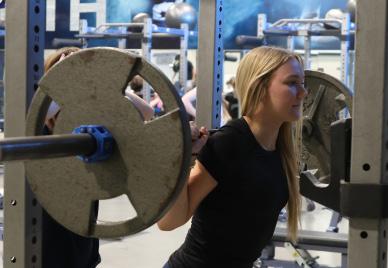
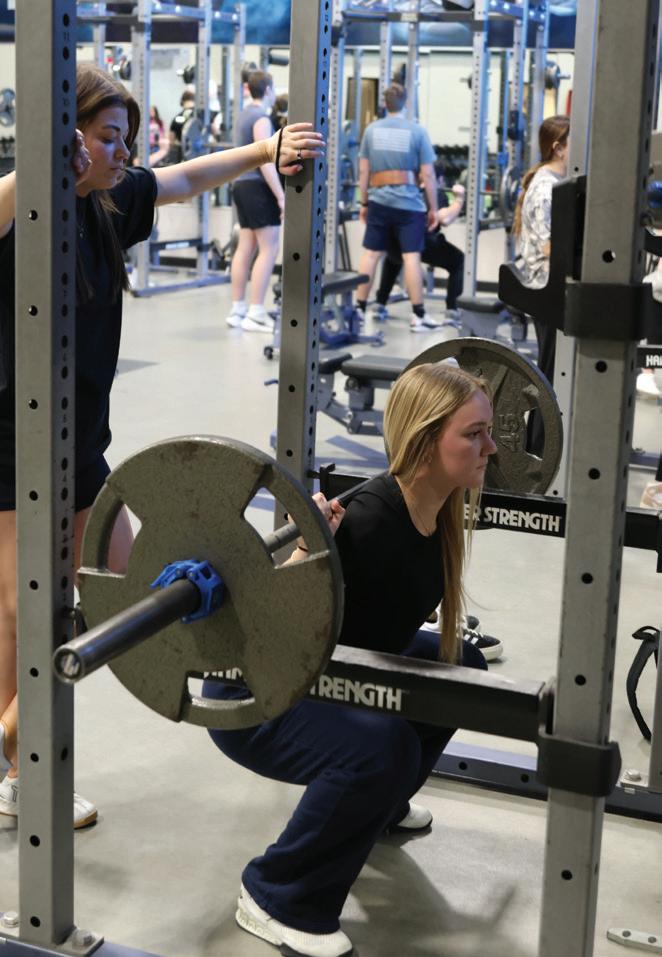
The girls powerlifting team began its season on Monday, Dec. 8, and has seen a lot of growth in the number of members on the team.
Since the powerlifting team’s addition to the school’s athletic program in 2022, it has seen a steady increase in popularity. One athlete who has noticed this rise is junior Avery Huber, a leader among the girls on the team.
“I think the idea of women’s empowerment has become bigger,” Huber said. “More girls are starting to realize that it’s okay to do sports like that if you’re good at it.”
Powerlifting consists of three core lifts: bench press, hang clean and squat, which the team spends time refining at practice to train for the heavy lifting on
competition days.
The weight room provides access to quality equipment, which is one reason sophomore Isabel Leblanc wanted to join the team.
“Over the past couple years of taking the school’s [Athletic Development and Performance program] and strength and conditioning made me interested in lifting more,” Leblanc said. “My gym doesn’t have free weights where you could hang clean and
SETTING THE BAR
Some of the team’s personal bests they try to improve at meets
venture.”
As the team continues to advance in numbers, powerlifting coach Tim Thomas observes the mental growth in the lifters.
“Confidence is a big thing,” Thomas said. “Feeling comfortable under that bar, whatever that lift is, and once they get a feel for that, they start pushing themselves a little bit more and finding out just how strong they are.” JUNIOR AVERY
Hang clean: 160lbs
Squat: 275lbs
Squat: 260lbs
Hang clean: 85lbs
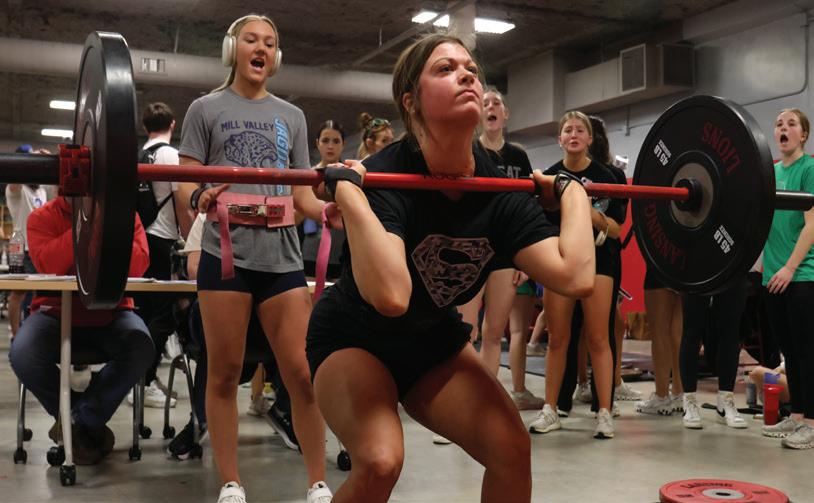
Doing a hang clean of 135 lbs, senior Mia Bollella has supportive powerlifters around cheering her on, Saturday, Feb. 7. photo by eva hernandez
Getting warmed up, junior Avery Huber squats 135, Wednesday, Jan. 21. photo by lucas pennel
SIDELINE MVP
by ryan bloomer writer/photographer
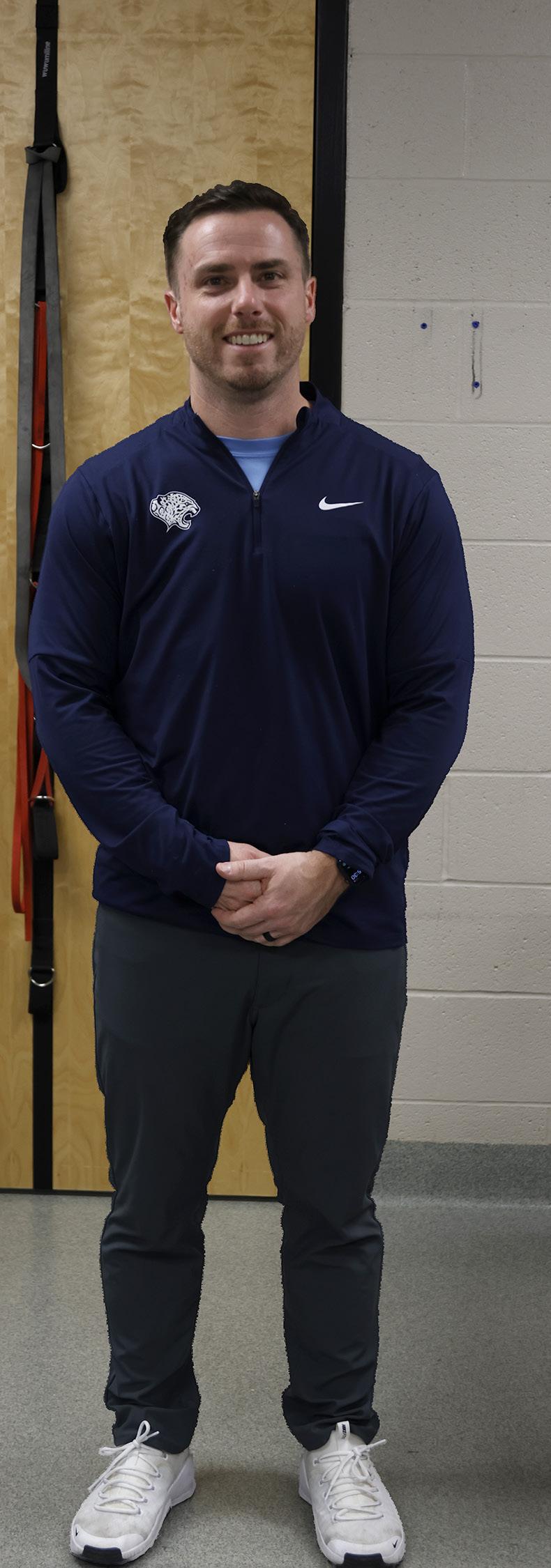
Athletic trainer Jacob Brownback has many duties ranging from physical support and advice for students who need him, to building close relationships with the athletes who visit him
Being an athlete requires students to be in incredible shape and stay in peak physical health, which is why it is essential to have medical per- sonnel and trainers to help play- ers through injuries. The school’s athletic trainer, Jacob Brownback, is constantly working to help athletes perform at their highest levels.
Brownback’s responsibilities range from taping athletes before practices to filling out paperwork and keeping track of player
Making sure that we’re all caught up on injuries and what those look like, checking in with coaches and making sure they know who’s available.”
“Practice and games are only a very small part of being an ath- back said. “I think this stuff is a toward after practices and tivities and Documentaa big thing healthdustry.
Brownback works with every sports team at the school, and students like senior cross country runner Jordan Schierbaum see him for cupping and taping.
“I go once every three weeks or so to get a cupping,” Schier- baum said. “I’ve always had a lot of little nicks, but he gives me stretches and exercises to recover from those. If I’m suffering from blisters, he’ll get those bandaged and make sure that those are not hurting while I’m running.”
Being the only athletic trainer at the school means Brownback has become very popular with
CAREER KICKOFF
University of Kansas Bachelor of Science
the school’s athletes. Students, such as Schierbaum, like how Brownback builds relationships with the athletes who visit him.
“Having a professional eye on what you’re going through is really nice to have because you need to determine how long you’re going to be out,” Schier- baum said. “[Brownback is]a great guy. He’s a good guy to be around, and he does a lot for the school’s athletics programs. I ap- preciate him a lot.”
Brownback’s various experience and education
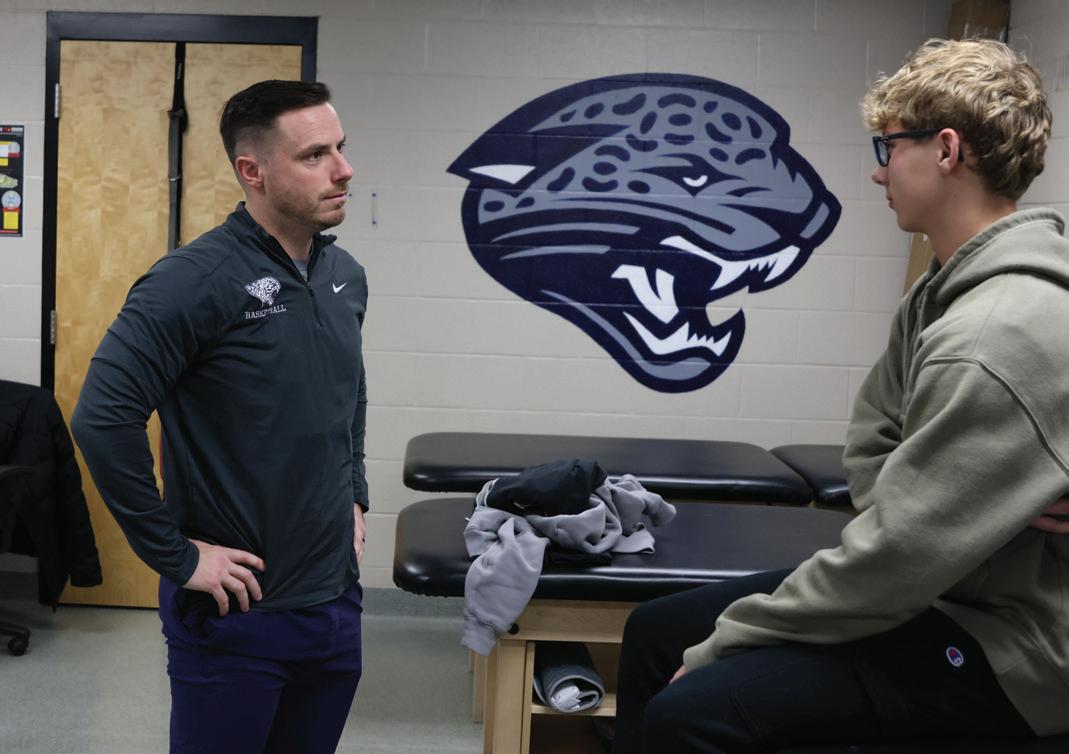
Junior Jacob Thomas speaks about his shoulder injury with athletic trainer Jacob Brownback photo by lucas pennel
Emporia State University Bachelor of Science
Sporting Kansas City Assistant Athletic Trainer
Nashville Soccer Club Head Athletic Trainer
I AM MV is a series that showcases students at the school and their unique interests, hobbies and talents
In September 2025, junior Avery Royer spoke in front of thou- sands of individuals at Cancer Fest in Washington D.C., to advocate for pediatric cancer and future research for families, like hers, who had a family member battle cancer.
In 2024, Avery’s sister, McKenna Royer, passed away at 11 years old from diffuse midline glioma, a form of pediatric cancer. After McKenna’s death, Avery and her family started the Brave Like McKenna Foundation.
“We had to take our heartbreak and our anger and turn it into something positive so that we were honoring my sister and helping other people,” Avery said. “We [took] our brokenness and our hurt and turned it into something that’s going to help other people find their way in the same exact situa-
Janell Royer, the founda- tion helps uphold McKenna’s“Welegacy.took something that was super painful, and when you go through something like that, you have to find purpose and meaning in it,” Janell said.
MV I AM
CARE KITS
The Royers make specialized care kits for the kids and their families
“Turning our love into action means continuing McKenna’s light and being a beacon of hope for all of the families that come after us.”
Avery knows she is hon- oring her sister and uses her every time she steps up as an advocate for those battling pediatric cancer.
“I’m able to do something so powerful and I have an opportunity that a lot of other people don’t,” Avery said.
As Avery continues speaking at cancer awareness events and working as a junior board member for the Brave Like McKenna Foundation, she has learned invaluable lessons.
“I have learned I can do hard things and be a person that people could look up to,” Avery said. “[I can] help them realize that just because you’re a teenager doesn’t mean you can’t do anything about it. Everybody has a voice, and it just depends on how you want to use it.”
In the future, Avery hopes to continue to use her voice for the benefit of others by working on research treatment care and expanding opportunities for pediatric patients. This de- sire comes from the pediatrics
STUFFED ANIMALS
TOYS
she encountered during her sister’s treatment.
“I remember what it was like being in the hospital with my sister and seeing the positivity come from these pediatric work- ers and how positive it made their experience,” Avery said. “I would kill to give that back to someone else.”
Despite her hopes for her fu- ture, the most important thing that Avery carrys with her isade- termination to help others.
“Helping other people is prob- ably one of the most important things that you could do here on this earth,” Avery said. “Every- body has different struggles, but there’s always something that you can do to help another person.”
AVERY ROYER
by natalia castillejos-ramírez managing editor
Junior Avery Royer’s family foundation carries on her sister’s legacy
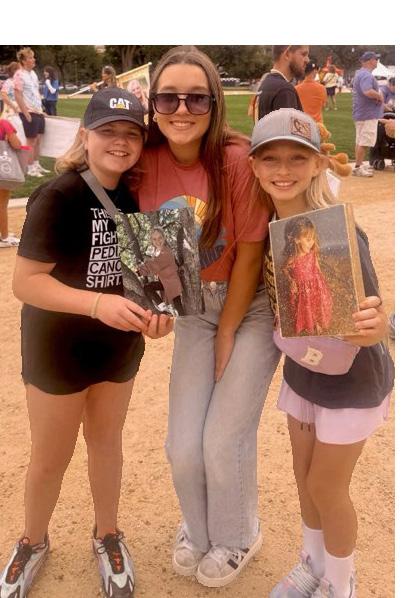
Junior Avery Royer poses with two young girls as she brings awareness to pediatric cancer. photo submitted by avery royer