In our three years on staff, we have always been hesitant to cover stories that require anonymous sources. Whenever some- one pitched an idea that would have used anonymous sources, we either pushed it to the back burner or figured out a way to work around using them.
For this issue, we knew it was unavoidable. We saw our peers’ sports betting, but our staff was divided on whether we could actually cover it. Our staff observed how sports betting defined student culture and formed shared bonds. Still, some of our staff members had concerns about it, but our advisor empowered us to look past our fears because of this topic’s prevalence at our school.
Due to sports betting’s illegal
nature we knew we would need anonymous sources, which gave us the fear of losing our credibility. We encouraged our staff members to pursue the story despite our worries. They stepped up to the challenge and impressed us with their perseverance.
In writing our special section, we wanted to find a balance between sports betting’s positives and its inherent negatives. We wanted to honor how it brings students together without glossing over the dangers of addiction.
Our goal for this issue was to present a neutral stance on a highly divided topic. We hope that in reading this, you are able to broaden your perspective on sports betting and its effects on high schoolers. with
2025-26 JAGWIRE STAFF
Editors in Chief
avery clement
editor in chief
maddie martin
editor in chief
quinlyn peters
editor in chief
Online Editors in Chief
maddie martin
online editor in chief
evan leroy online editor in chief
Photo Editor
eva hernandez
photo editor
Copy Editors
madelyn mulryan copy editor
kennedy botkin copy editor
Managing Editors
natalia castillejos ramírez managing editor
gracyn schreiber managing editor
Analytics Manager
oliver feiring analytics manager
@millvalleynews1
@MillValleyNews
Staff
doreen mahugu
writer/photographer
mya franco writer/photographer
ryan bloomer writer/photographer
gwen ansell writer/photographer
cal bierl
writer/photographer
asher clement
writer/photographer
emma cooper writer/photographer
kady coulibaly writer/photographer
avery curry writer/photographer
bella davidson writer/photographer
jason sweany writer/photographer
lucas pennel writer/photographer
JagWire Office
5900 Monticello Road
Shawnee, KS 66226
Phone: (913) 422-4351
Email: jagwirenewspaper@gmail.com
Website: www.mvnews.org
Adviser: Kathy Habiger khabiger@usd232.org
JagWire, a monthly publication of Mill Valley High School, is printed by Valley Offset Printing
Censorship Policy
The Kansas Student Publications Act guarantees the same rights for student journalists as are guaranteed for professional journalists. These rights include, but are not limited to, all First Amendment rights, including the rights of freedom of speech and the press, insofar as published items may not contain libelous, slanderous or obscene statements, may not incite or promote illegal conduct and may not cause a substantial disruption to normal school activity. This law also prevents censorship of any kind by the adviser, building or district administration.
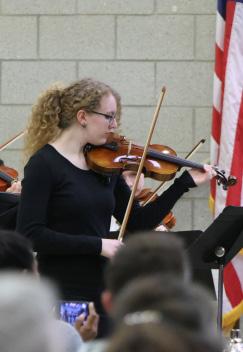
Senior Madison Davied preforms in a small ensemble for the district orchestra on Wednesday, Nov. 19. photo by lucas pennel
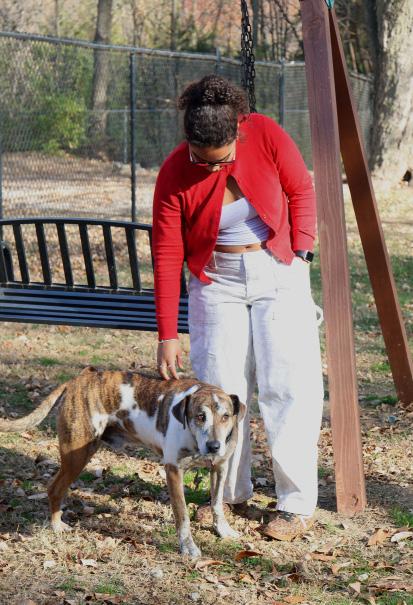
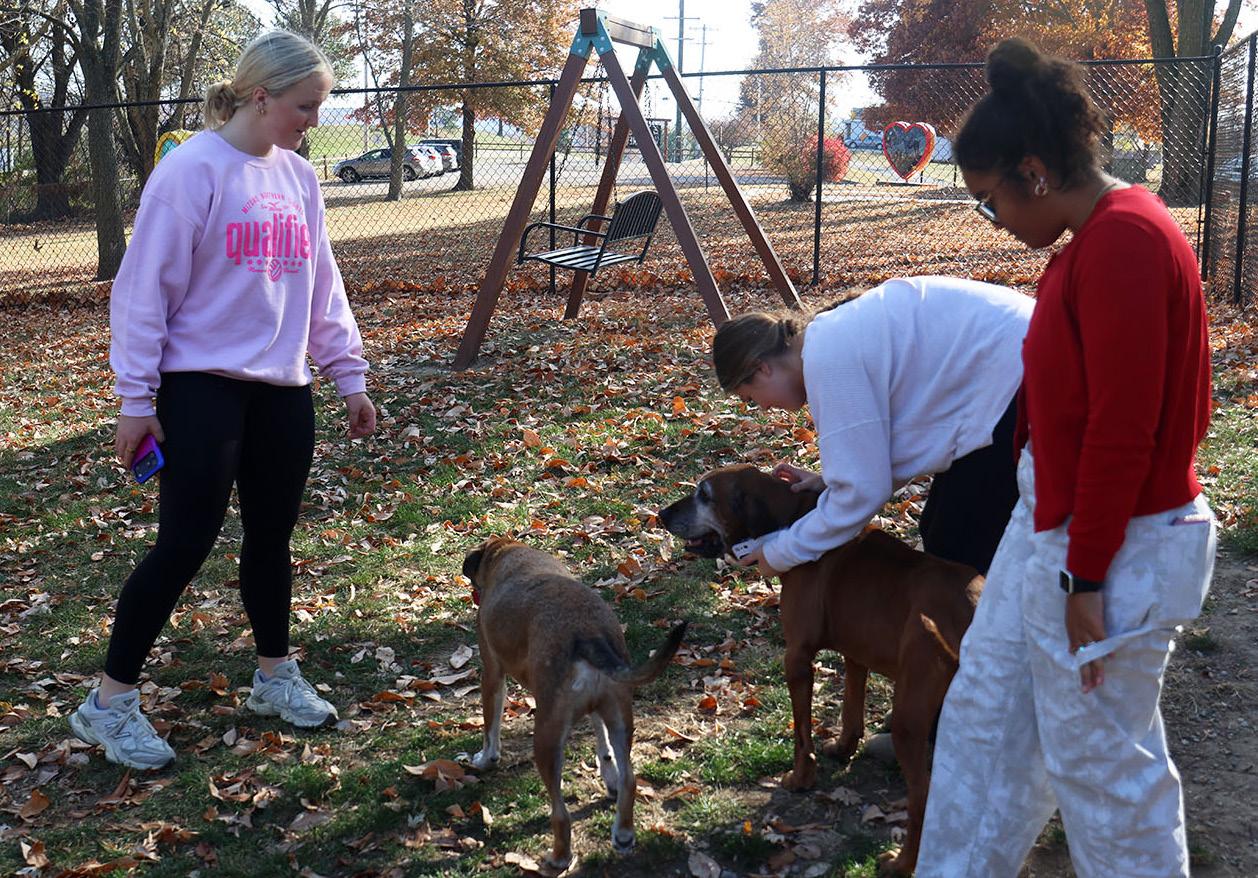
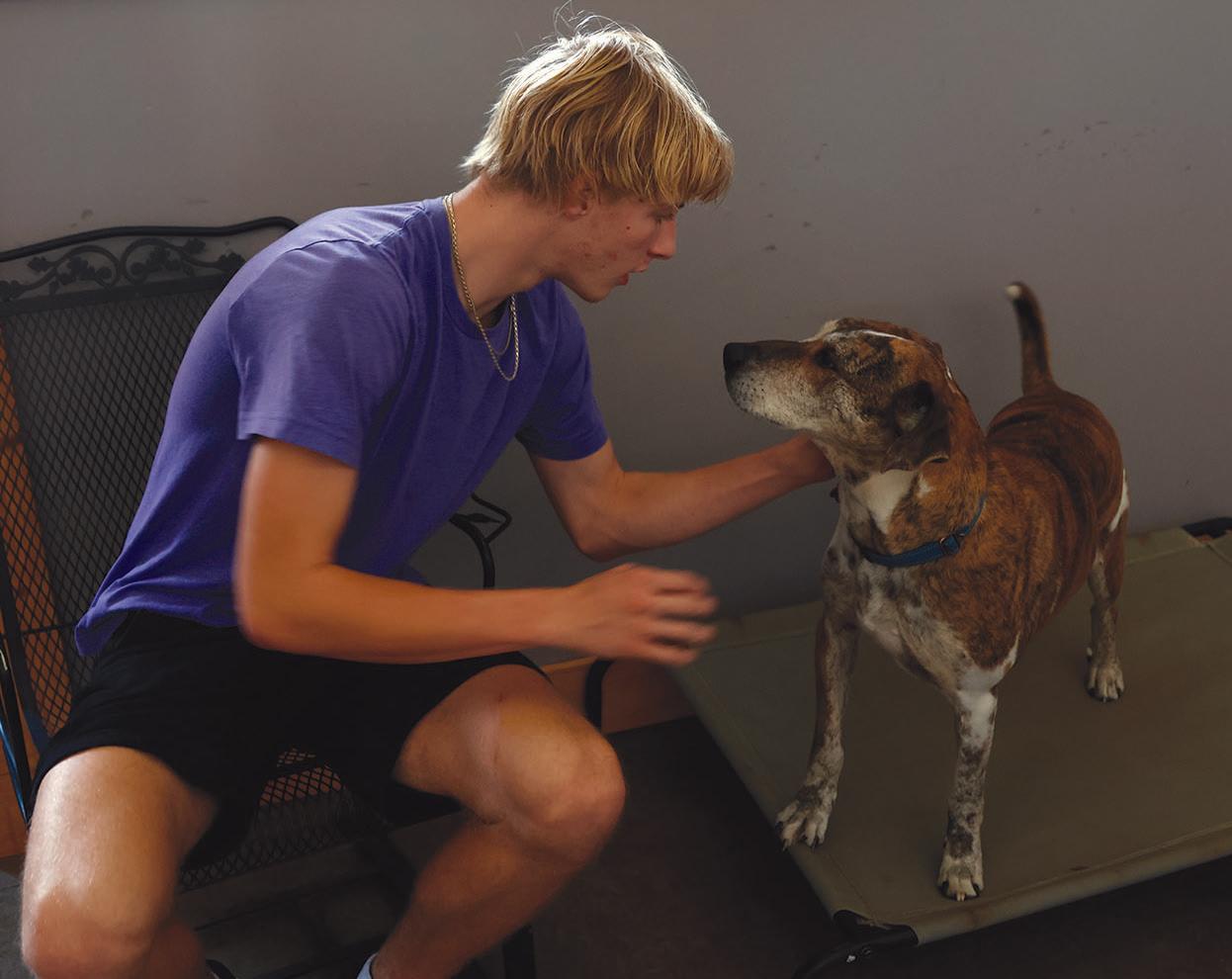
Senior Riley Thomas pets a dog named Buddy at Imagine Furever Ranch on Friday, Oct. 14. photo by jason sweany
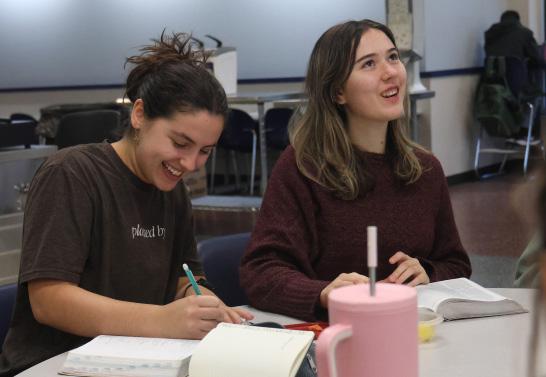
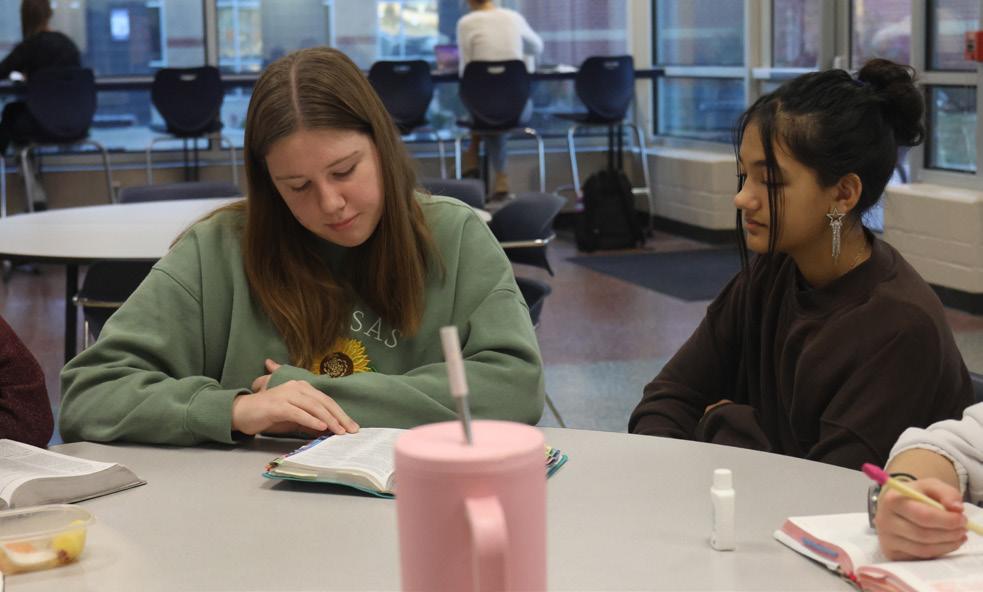
Senior Kaitlyn Shinkle shares with junior Lacy Jennings and the rest of the bible study group what activities she has done in the past week, Wednesday, Nov. 11. photo by doreen mahugu
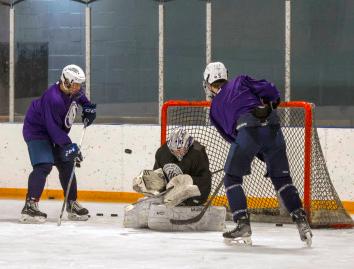
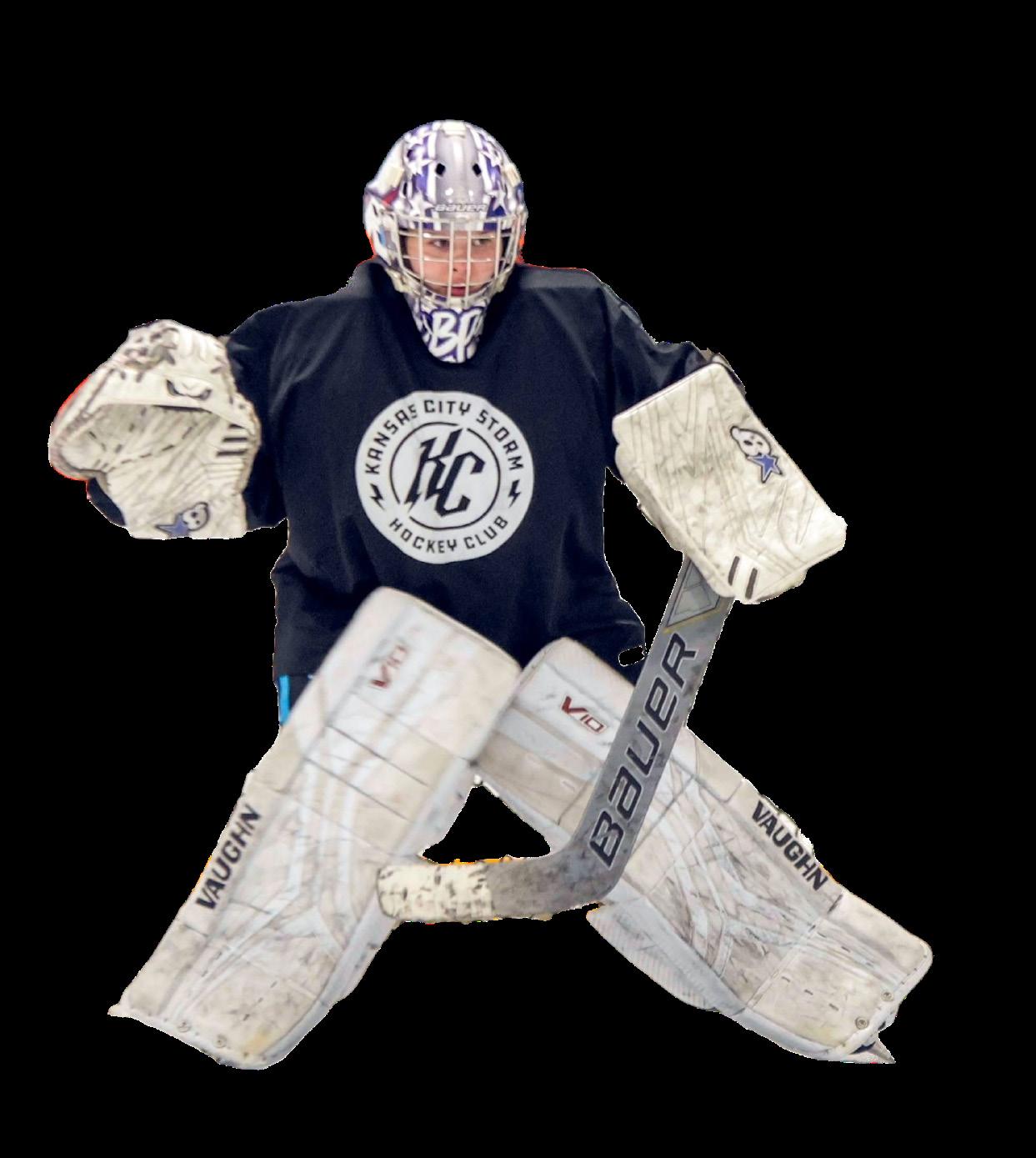
Senior Bianca Pepe blocks shots taken at her during hockey practice on Thursday, Nov. 20. photo by evan leroy
WORTH THE RISK?
Sports betting shouldn’t be treated as a taboo topic, open conversation and education about betting will allow underage betters to gamble more safely
The recent legalization of sports betting in Kansas has led to massive growth in people gambling on sports. According to the Beacon, the number of people sports betting has almost tripled since 2017. However, it is not just adults who are betting. Many students have started sports betting illegally without understanding the full risks of doing so.
Although it is illegal for people under the age of 21 to sports bet in Kansas, treating sports betting as a taboo topic will not deter high schoolers from wanting to do it. The more that teenagers are educated on the topic and its risks, the better they understand how it could impact them. Students need to be informed and aware of the risks and understand their personal limits when betting.
Sports betting appeals to students in different ways, with a major reason being its appearance as a quick and easy way to win mon-
ey. Not only is it popular online, which makes it accessible and more convenient to bet, it also acts as a conversation starter and a way to bond with others over a shared topic. These factors may draw high schoolers in and keep
Students need to be informed and aware of the risks and understand their personal limits when betting.
JagWire Staff
them betting.
Despite its popularity and convenience, sports betting is still gambling, which gives students the illusion of control and acts as a pipeline to other addictions. The Addiction Center states that sports betting can
by jagwire staff
act as a reward system for the brain, behaving similarly to addictive substances.
Students should be able to understand their limits for spending to avoid addictive behaviors. They should give themselves a maximum amount of money to bet, and be able to cut themselves off to avoid spending too much. Placing limits can help them avoid losing too much money or falling into these harmful, addictive patterns.
Along with that, students should also be open to having conversations about betting, whether that be with friends or family, to avoid the shame that could surround the topic. Being informed and open about the subject allows for conversation and removes the forbidden appeal of betting.
For those who illegally sports bet, it’s important to place hard limits and stay educated on the risks of doing so to prevent harmful behaviors and avoid potential addiction.
A FINAL CHOICE
School expands a policy that allows students to opt out of up to two of their semester finals
Starting this semester, a revised school policy will allow students to opt out of up to two semester final exams, given that they meet certain grade and attendance requirements.
The inspiration for this new option originated from a conversation between principal Dr. Gail Holder and the school board about student workload.
“We do want students to have some experience each semester taking finals,” Holder said. “But the question presented itself, ‘Is it necessary for students to take eight finals to get the experience, or if students take six finals and they’ve worked hard to earn A’s and have those opt outs, would that be an equal trade off and reward for students who have done what they needed to do?’”
The form required to partic-
by mya franco writer/photographer
ipate in the finals opt out was available for students in the counseling office Dec. 1. According to the school’s general requirements, students can opt out of two finals, given they have an A in each class and three or fewer third quarter absences. Grades and attendance in the opted out class must be maintained until the date of the final exam. Holder explains that there are exceptions to these absences that will be excluded from this maximum of three.
“Excused absences would include any school events, religious observances and funerals,” Holder said. “It’ll be case by case with a few of our students for sure. I don’t want to be put in the position of deciding what is important and what is not.”
The original opt out policy started last spring for seniors only and was expanded to in-
TEACHERS’ CHOICE
SARAH SIDES
by cal bierl writer/photographer
clude all students this semester. It was originally started to address declining attendance rate among students. The hope was that the lure of being able to opt out of a final would encourage students to attend class regularly. Holder explains that they decided to do a test run last year to make sure it worked.
“We kind of wanted to pilot it [last year],” Holder said. “We were having a little bit of a challenge with attendance and so when your attendance goes low, you try to put something in that’s a positive reinforcement for having really good attendance. We did see a really good outcome from that. We saw that students were attending more often than they had and earning A’s in order to be eligible for the opt out.”
The policy dictates that each individual teacher can decide whether or not to allow their stu-
Teachers can choose whether their finals can opted out of and can the change criteria for opting out of a final
I am allowing my students to opt out of my final because it’s a good incentive to come to school and keep those grades up. My unofficial observation is that it seems to be working, I’ve had one test and haven’t had any students absent.”
PETER SHULL
I’m not using that policy in my class because I only teach Advanced Placement seniors, and I need my seniors to take a final first semester so I can see where they’re at to guide my instruction for second semester.
REACHING REQUIREMENTS
The school’s general requirements needed to opt out of semester finals
To opt out of a final, you must:
Have an “A” in the class for the semester
of students plan to opt out of two finals 61 %
Survey of 145 students
dents to opt out of the final. Math teacher Jessica DeWild plans to offer the opt out because her AP and college classes have a similar exam during the second semester.
“Since my students will be taking a final in May that has first semester content on it, taking a final in December is really testing them twice with the same content,” DeWild said.
Junior Matthew Peterson thinks that students who are taking multiple hard classes will benefit the most from this policy.
“A student that’s taking a lot of hard classes, like a lot of APs or honors, [benefits] because those finals tend to be harder than the regular classes,” Peterson said. “It’s easier for them to do well on their finals if they can opt out of two of them.”
In contrast, English teacher Peter Shull will require his AP students to take a final in order to prepare them for the AP exam and future college classes because he believes that the goals of the new policy aren’t as necessary for advanced classrooms.
“Advanced Placement students are usually highly self motivated to begin with, and
Been absent from the class less than three times in second quarter
Fill out the finals opt-out form available Dec. 1-5
they don’t need the incentive of getting out of a final to get them to come to school,” Shull said. “That incentive program works more for students who aren’t as enthusiastic about school, who want to get out of their regular class.”
You can spend time studying on those [other finals] and perform better, rather than having to distribute your time between all of the tests.
While Shull is only teaching AP Language and Composition this year, he has taught English 11 and English 12 in the past, leading him to be more inclined to have let those students have a final opt out.
“If I was teaching a regular
class, I would talk to the other English 11 teachers or English 12 teachers and I would be inclined to allow the opt out, but I would only do it if the other English 11 or English 12 teachers were doing the opt out,” Shull said.
Even though this policy is new, teachers like DeWild have been waiting for it to be this policy to be at the school for a long time.
“I and a lot of the math teachers have wanted to have this option for several years, and it just hasn’t been on the table,” DeWild said. “I like the idea of theopt out and I think that it gives an incentive for students to do their best throughout the year to be in class.”
While teachers are trying to find their footing with the new policy, Peterson thinks this policy will only relieve some stress from finals.
“A lot of the finals are all in the span of a couple days, so it’s pretty hard to study for all of them,” Peterson said. “So I think opting out of two can be really helpful. You can spend time studying on those [other finals] and perform better, rather than having to distribute your time between all of the tests.”
Junior Matthew Peterson
TREND SHIFT
MULTIPLE METHODS
Preferred
During this academically intense period before semes- ter finals, students are increasingly using AI to study and prepare for exams.
The use of generative artificial intelligence is becoming more common in school: according to Pew Research Center, about a quarter of US teens have used ChatGPT for schoolwork as of January 2025.
Other various generative arti- ficial intelligence platforms exist, but ChatGPT is the most popular for its role in education. Sopho- more Jon Riley uses the app to prepare for tests such as final exams.
“I mostly use ChatGPT to study,” Riley said. “I take the review guides that our teachers give us, and then it explains how you get to the answers. AI is real- ly helpful.”
Senior Landon Vincent also uses AI to better understand top- ics, especially when he is unable to find someone to help, but he uses from multiple different applications.
“[I use] Chat GPT, [and] sometimes SnapAI or Copilot.” “When I don’t have a teacher or an answer key, I can use AI so I know I’m [studying] right,” Vincent said.
However, there must be caution to avoid engaging in aca- demic misconduct while obtaining assistance from these tools, Riley points out.
“They [might say] that you’re cheating by using AI,” Riley said. “You just have to use it responsibly. You don’t use it for getting answers on homework. [AI] is just for studying on your own time.”
Depending on the subject, some teachers approve of gener- ative AI usage in their classrooms when used in a certain way. En- glish teacher Michael Strack sup- ports a moderate use of AI when it is on a smaller, more technical scale.
“In my subject area, if you take a small portion of what you write and you want some more concise wording and plug it into AI to get some feedback, that’s appropriate,” Strack said. “[However,] I would urge students to resist putting their entire writing into AI to get Regardlessfeedback.” of how AI is used, its effect on education is still developing. Strack stresses the im- portance of true learning without these engines due to how uncer- tain the future of AI is.
“[AI is] ever changing, and it’s really challenging,” Strack said. “Ultimately, I want kids generating their own thoughts as much as possible, but AI is not going away, and obviously it’s going to be a part of education moving forward. We have to figure out how we can teach kids to use it in a way that benefits them and doesn’t just replace their thinking.”
SMART STUDYING
The growth of artificial intelligence has lead students to begin using engines like ChatGPT to study and understand difficult concepts
by cal bierl writer/photographer
SYMPHONIC
New district orchestra allows high schoolers to play despite orchestra not being being offered as a class
BEGINNINGS
For the first time ever, the district introduced an orchestra that high school students can participate in. The district-wide orchestra, Camerata, allows students from both Mill Valley and De Soto to work with the middle schoolers.
The introduction of the orchestra was aided by parents and students who have advocated for it in the past as well as the hiring of orchestra teacher Elena Kolbrek De Leon who teaches at all three distrcit middle schools.
“There were a lot of families who have been asking for orchestra to be an option for students for a long time,” Kolbrek De Leon said. “Some of those families who advocated really hard for that their kids are now in high school, and so it’s just a small way that they can be involved, because they missed the window to really get to have it as a class.”
Junior Natalie Long, who plays the cello in the orchestra, is one student who has pushed to
have an opportunity to play for the school.
“I was always kind of surprised that a district like ours that was really well off and has nice programs didn’t have something that was kind of basic,” Long said. “I’ve been helping make it happen and I was involved so of course I’m gonna be a part of it.”
While the introduction of a district-wide orchestra was exciting for many, with only four high schoolers involved they have to work with the middle schoolers which, according to Kolbrek De Leon, is a good opportunity for the middle schoolers.
“The high schoolers have a better idea of what it takes to commit to playing an instrument, because it’s something that they’ve done without being in an orchestra,” Kolbrek De Leon said. “They also understand carrying the responsibility of being part of a group.”
Long agrees with Kolbrek De Leon that the high schoolers areimportant to be leaders in the program.
PERFECT TUNES
FAVORITE SONG: “Coffee Dance”
by maddie martin editor in chief
“It’s really nice especially when you’re learning music and you’re a bit newer to the instrument, if in an orchestra setting to have those people you can kind of follow and listen to while you play,” Long said.
Orchestra members’ favorite piece to play on their instrument
FAVORITE SONG: “The Ice Dance”
FAVORITE SONG: “Jupiter”
FAVORITE SONG: “Waltz of the Flowers”
Senior Madison Davied plays “Waltz of the Flowers” at the first district orchestra concert on Wednesday, Nov. 19. photo by lucas pennel
ELISE ELLIOT
NATALIE LONG
MADISON DAVIED
photos by lucas pennel
by kennedy botkin copy editor
CAMPUS COLLECTIONS
From skulls to tea, students at the school enjoy curating collections of items they find interesting
Collecting items allows people to spend time doing a hobby they enjoy while curating an assortment of pieces they are proud of. These things can be anything from normal trading or sports cards to vintage clothing items.
One of the most common things people like to collect is sports cards or other various trading cards. Junior Lucas Comer has collected Pokémon cards since he was five, and he has continued to do so because collecting them has helped him build a community where he can play with others.
“[Collecting things is] a great way
to get into a new community, meet new people and do something fun,” Comer said. “I’ve played [Pokémon] regularly on Fridays at a local store, and I’ve met a lot of people there. I have a few friends that I go [to the store with], and I’m starting to know the people that work there.”
SOPHOMORE NIK AYERS
Items Collected: Animal
Years Collected: 3 years
Collection’s Value: $150
Size of Collection: 110 items
Comer enjoys playing at the store because he can meet and bond with
“I feel a sense of community because we all collect the same thing, and we all have different favorite [cards],” Comer said. “At the end of the day, we all just collect Pokémon for the
Unlike collecting more common
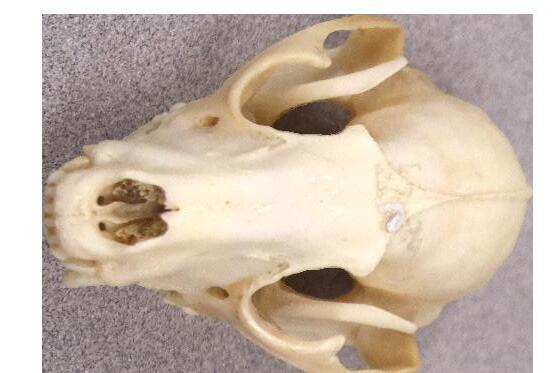
items like trading cards, sophomore Nik Ayers collects various animal bones and crystals.
“I first started collecting bones when I was in seventh grade,” Ayers said. “I was at a Renaissance fair, and I saw a seller who had a bunch of different taxidermy and animal skulls. I talked to them about the idea of honoring an animal in their past lifetime. For me, it’s a way of paying [my] respects towards the life that those animals had.”
Ayers collects animal bones because he feels it is important to memorialize an animal’s past life.
“In my opinion, choosing to honor the animal by appreciating them even past their life is worth more than seeing it raw, alone in a pile,” Ayers said.
Although collecting animal bones may be more unusual than collecting items like shoes or vinyls, Ayers still believes it’s important for people to collect the things that one likes.
“Even if you don’t understand what someone is interested in, it’s
JUNIOR LUCAS COMER
be unfamiliar with.
always fun to have a hobby, and it’s interesting to learn about other peo ple’s hobbies,” Ayers said.
Ayers has a process of cleaning and disinfecting the bones he finds to collect them safely. Through a cy cle of washing, cleaning and soaking in hydrogen peroxide, Ayers makes sure what he collects is free of germs and looks appealing to take care of them.
Freshman Lillian Sickel also takes care of and collects her language books, like dictionaries and thesau ruses, that she finds at book sales. Sickel started collecting because of her great grandpa.
“My great grandpa was a lover of words, so I think I probably got [my love for collecting] from him,” Sick el said. “He was never alive when I was alive, but I would always get told stories about what he would do, and it’s a lot like what I do now.”
Sickel enjoys collecting these dif ferent language books because she is interested in them, and they help her learn more about words she might
“It makes me feel very satisfied,” Sickel said. “It’s really fun to compare them from different years, because there will be different words from different years that they classify.”
This is similar to sophomore Jacob Lowry, who started collecting loose-leaf teas and bone china because he had an interest in the subject.
“I traveled abroad to Canada, and we went to an afternoon tea there,” Lowry said. “That got me very interested in [collecting tea]. It was very interesting to talk with [the wait staff], because they have a lot of insight on the different types of teas, where they come from [and] what they’re made of.”
To share his collections with others, Lowry frequently
hosts afternoon teas for himself and his friends. Not only does collecting teas help him bond with others, Lowry also enjoys collecting because he is fascinated with the subject of tea.
“I would say it’s something for me to spend my time on,” Lowry said. “I find it interesting. I like learning about it, I like reading about it. I think it’s a good use of my time.”
Many students collect items for different reasons, but Ayers believes people collect things out of instinctive human nature.
“I think collecting things helps us cope and gives us an outlet for our human tendency to hoard certain items,” Ayers said. “A collection of one thing can prevent hoards of trash. Instead of people keeping cups and paper bags, they are more likely to think about what they’re collecting because of the cost or about the significance of the items.”
FRESHMAN LILLIAN SICKLE
Items Collected: Language books
Years Collected: 3 years
Collection’s Value: <$50
Size of Collection: 20 books
by mya franco writer/photographer
PRICE CHOPPER
OVERALL: 5/5
by bella davidson writer/photographer
PICKIN’
CHICK-FIL-A
OVERALL: 4/5
OVERALL: 3/5
3/5 4/5 5/5
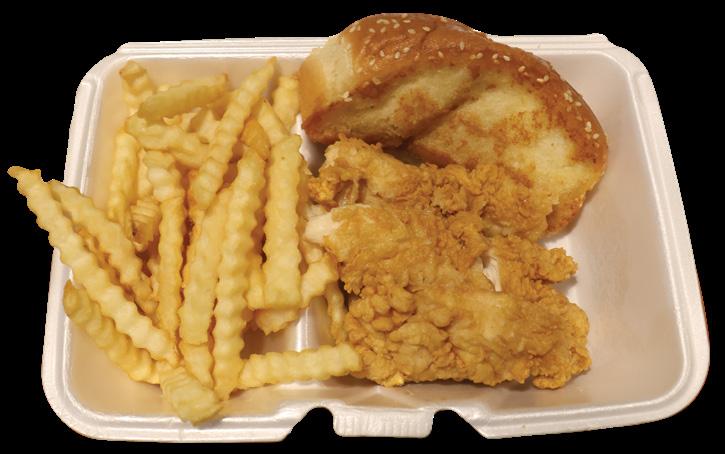
PROS: The chicken strips were an amazing mix of crispiness and juiciness, without being soggy. And the flavor, along with the size, helped make them even better.
CONS: The box they came in did not look very appetizing.
PROS: The length of the chicken was more than sufficient while retaining its crunchy nature. And even though it was crunchy, it didn’t lose any juiciness in the strip.
CONS: While there was a flavor to the chicken, it wasn’t strong and it was slightly bland. And while the length of the chicken was sufficient, it was very skinny.
“I think [Popeyes] has a really nice spice to it, but it’s not overwhelming.”
PROS: It had great, sweet flavoring to it, while also having a great crunch to it. The presentation of the overall meal made it look even more appetizing as well.
CONS: While the flavor was unique, it lacked the normal taste of chicken that Chick-fil-A is known for. The size of it was also lacking compared to the other strips.
VIOLET
“I really like ChickFil-A because it’s really easy to find, and then their chicken is really good.”
CHICKEN
SLIM CHICKENS
OVERALL:
JagWire staff reviews the quality and flavor of chicken from local restaurants
KENTUCKY FRIED CHICKEN
3.5/5
PROS: The size and crispiness of the strips helped raise the overall rating. The strong flavor of the breading helped make the chicken itself taste better.
CONS: The strips were rather dry, they lacked the juiciness of good chicken. The look of the chicken was not very appealing.
STUDENT PICKIN’S RAISING CANE’S
Survey of 145 students
OVERALL: 2.5/5
PROS: The strips were a really good size and the presentation they gave with the chicken and fries was great.
CONS: The chicken was in need of more flavor and crispiness. And the juiciness of it made the bread soggy.
OVERALL: 1/5
1/5 2.5/5 3.5/5
PROS: The look of the strips when they came out of the kitchen made them look very appetizing at first. The juiciness of it also made it slightly better.
CONS: While the juiciness was a pro, it is also a con because it made the overall strip very soggy and there was little to no crunch on the chicken. And the cut of the strips were not very lean so there were certain bites where it was just fatty
CHASING CHANCES
Many teens today participate in sports betting as it has become easily accessible through apps
THE BETS ARE ON
Sports betting is more common than ever among teens. This growth has been aided by the legalization of sports betting in 40 states, including Kansas where it became legal for adults 21 years and older in 2022.
Now, sports betting isn’t just legal, it’s common even among students who aren’t of legal age to bet. In 2023, The National Council of Problem Gambling reported that 60-80% of high school students had gambled at least once. A 2023 study by the NCAA revealed that 60% of 1822 years olds have bet on games. Online sports betting sites
HISTORY THROUGH POLICY
flourished as people began to bet from the comfort of their own homes which allowed easier access for people to bet. In a 2025 Kansas Gambling survey, over 36% of people said they bet on sporting events at least once a month
Marketing teacher Kurt Golubski agrees that sports betting rose in popularity due to more advertising by online sports betting sites.
“When I was younger, I remember seeing the lines before sports games, I just didn’t know what it meant,” Golubski said. “But then, as soon as online gam-
bling became a thing, it almost seemed like everywhere I turned commercials were about it. As soon as it became legal, I definitely noticed it becoming a major part of our society.”
Psychology teacher Kirsten Jones agrees that sports betting is commonly pushed to high schoolers through their phones.
“It’s on every social media feed, every commercial break and inside the apps people already use,” Jones said. “For teens especially, anything that feels competitive, social and just a little risky can seem incredibly appealing.”
2019 2019
2018 2018
Source:
Kansas discusses sports betting bills before national ban ends. One of the first states asked to include an integrity fee for sports leagues.
Betting discussions stall as lawmakers fail to agree on whether the state or the casinos should control sports betting
The Senate approves a casino focused betting plan, but issues with the House, racetrack groups and COVID stop it from moving forward
The history behind sports betting in Kansas
Sports betting is more common than ever with because of betting apps by asher clement writer/photographer
With the accessibility of sports betting apps, betting can happen anywhere and anytime even in school.
photo illustration by jason sweany and avery clement
LOOSE LEGALITY
Despite sports betting laws in Kansas,
In the state of Kansas, individuals have to be over the age of 21 to place wagers on sports. Wagers have to be placed either in one of the state’s 10 legal casinos or online through the six allowed sports gambling apps, including BetMGM, FanDuel, Caesars, Fanatics, Bet365 and DraftKings.
According to the American Gaming Association, in-person sports betting decreased in 2024 while mobile sports betting increased by around 50% and generated around $10.4 billion in revenue.
Despite sports betting being illegal for high school students, 16% of the 143 students surveyed have admitted to participating in some form of sports betting.
Despite not being of legal age, many high schoolers place bets with the help of their parents. Eric, a student who asked to remain anonymous because he participates in illegal sports betting, started betting after his parents introduced him to it.
“My mom doesn’t bet. She’s not into sports, but she’s fine with it,” Eric said. “[My dad and I] actually haven’t put in any of our own money. The second is that we get into a deficit margin where we’re actually losing mon-
by evan leroy online editor in chief
ey, then we’ll stop for a while.”
Other students interviewed for this story admitted that their parents provided them with a legal age ID or a Social Security number necessary to create betting accounts to pass age verification tests.
BETTING BASICS
Common terminology used when sports gambling
SPREAD:
The expected final score difference between two teams. If the spread is three points, the team that is the favorite to win gets -3; the underdog gets +3.
MONEY LINE:
OVER/ UNDER:
PARLAY:
PROP BET:
JUICE:
Because parents are typically the ones who help their teens get started betting, Jones thinks parents and Advertisements are responsible for the teen gambling problem.
According to a study by The National Council on Problem Teen Gambling, about 5% of all young people between 11 and 17 meet at least one of the criteria for a gambling problem.
“[The apps] are designed to
A bet in which the point spread is replaced by odds, so a favorite needs only to win the game, while an underdog must win it
The sportsbook sets a line, and betters choose whether the final score will go over (more than the posted total) or under (less than the posted total).
A wager in which multiple teams are bet, either against the spread or on the money line. For the wager to win (or pay out), all of them must cover/win
A propositional bet is a bet on a specific event within a game. For example, a team prop could be offered for which team will score first. Called a “game within a game
The juice or vigorish is the money the sportsbook charges for taking a bet, such as 10%.
Sources: ESPN and FOX Sports
hook users, including young ones,” Jones said. “The responsibility falls on these companies, but it also falls on the adults around teens to help them navigate it. As much as it’s a crisis of corporate greed, it’s also a crisis of parenting and governance.”
Prairie Band Casino opens the first tribal sportsbook, lawmakers try to ban online betting ads
WHERE IT GETS STARTED
by ryan bloomer writer/photographer
LEADING PLATFORMS
Percentage of sports betting students who use top sportsbook apps
In an age where technology is fighting for everyone’s attention, it’s natural to see a shift in how gambling platforms utilize modern marketing strategies. One of the most commonly seen strategies is advertising through social media. These advertisments specifically target young and impressionable audiences.
Teenagers are already jumping at opportunities to start sports betting after seeing ads. Without fully developed minds, it’s possible some teens do not understand how addictive online gambling can be, according to marketing teacher Nicole Porter. Porter believes that sports betting ads can be misleading for teens.
“I think it’s still more serious than a regular game, even if teens perceive it the same way because of maturity,” Porter said. “I don’t think the apps clearly explain what sports betting really is, so teens might view it like strategy gaming instead of gambling.”
Gambling, like many oth
Advertising of sports betting through social media and draws teens in
bination to discuss with friends and family who can determine their gambling outlook. For anonymous student source Eric, different factors encouraged him to start gambling, especially online advertisements primarily through social media platforms.
“There are definitely influences with that, especially TikTok ads; they do get me by putting these big deals out, and then I’ll go for that,” Eric said.
Another reason why sports gambling is gaining so much popularity is because of how easy it is for underage people to sign up and get access to money that apps provide to users in order to get them to place bets.
On most of the leading sports gambling apps, there is often a bonus for signing up, giving free money to place bets. This makes it a lot easier for those who don’t have an income to start gambling without feeling like they have spent their personal money. Ernest, who also asked to be anonymous because he bets on
photos by jason sweany
WHAT ARE THE ODDS
?
Statistics and information on gambling addiction in the U.S. today
Introduction of retail sportsbooks led to a increase in gambling addiction help seeking services
Signs one may be addicted to gambling:
Introduction of online sportsbooks led to a increase in gambling addiction help seeking services 33% 61% . . .
Needing to gamble more for same excitement
Often preoccupation with gambling thoughts . . .
Trying and faling at lessening gambling
Gambling to avoid negative emotions
Lying to family or friends about gambling
Returning to gambling to win back lost money
A RISKY GAMBLE
The reality of sports betting is that when it is taken too far, the desire to win can eventually blur out the potential negative mental health and legal consequences.
A study by the National Library of Medicine concluded that young adults ages 18-29 had higher scores of depression, anxiety, loneliness and stress as a result of sports betting. Young adults, who were already sensitive to the negative mental health effects, could be more impacted by the potential negative effects of sports betting.
When sports betting the reward of winning releases dopamine, which according to Jones, creates a reinforcement and makes students more likely to continue betting. In this way it makes betting similar to other forms of addiction.
“When someone wins, even a small amount, the brain releases dopamine,” Jones said. “That reward signal creates a powerful “do that again” message in our
Reach out:
National Problem Gambling Helpline:
KATHERINE HESS
School Social Workers: 1-800-GAMBLER __ @katherine.hess@usd232.org
JENNIFER MUNROE
__
@jmunroe@usd232.org
Students balance their betting as it can lead to addiction
brain circuitry and chemistry. Engaging in sports betting and borderline or full addiction sets up our students to struggle more later in life as these patterns they are creating in the brain can be lasting and determine future brain processing.”
You really can’t stress the importance enough to teens on how to be careful with [sports betting].
Marketing teacher Kurt Golubski
However, for some students such as Greg, a student source who asked to remain anonymous because he illegally sports bets, the extent to which he bets prevents him from falling into
by natalia castillejos ramírez managing editor
addictive patterns.
“I haven’t gotten addicted to [sports betting] and it definitely makes watching sports more fun,” Greg said. “If I won a lot more, I would definitely get more addicted to it.”
For John, an anonymous student source, he uses his mom’s ID to create his online wager account and keeps a monthly cap helps him stay in control.
“I only deposit like $200 a month in my account,” John said. “If I go over that, then I just stop doing it for that month.”
However, even with students placing limits on themselves, Golubski has observed how students may struggle to see the negatives of sports betting and encourages students remain cautious.
“I don’t think teenagers really understand the consequences of getting trapped into it that young,” Golubski said. “You really can’t stress the importance enough to teens on how to be careful with it.”
Ilove the holiday season. I love the colorful lights, sleeping in and the food we eat. But nestled behind the rolls, pies and casseroles is the real reason I treasure this time of year: my family is together, making memories in the same ways we always have. The traditions we share each year are what continues to make the holidays special, even after growing up.
According to Psychology Today, traditions improve children’s perceptions of the holidays because they amplify family closeness and
involvement. Traditions, no matter what form they take in a family, encourage children’s minds to form significant memories. I know this worked for my family; when I think about the holidays, my first holiday associations are the insaide jokes and moments I share with my family that were made possible by our traditions.
My family has a lot of small traditions that make up the holiday season for me. On Christmas Eve, we wear matching Christmas pajamas and read the same childhood books. Every year, my siblings work together to decorate our very own tree with elementary school handmade ornaments while our mom organizes the big one how she likes. To finish the big tree, everyone hangs an ornament with their initials on it. My initial, “Q”, is nearly impossible to find a proper ornament for, so every year I gleefully hang up a letter “O” ornament with a twist tie attached. The traditions we have reflect us: imperfect and earnest.
As we’ve gotten older, my sisters have gone to college and the way my family celebrates has changed. The time I spend in person with them has become special, and the traditions we share have transformed into a way for my family to connect with each other.
Family traditions we started as kids have become even more important now.
Our kid’s tree has started to look more adult, but the time we spend decorating it feels the same as it did a decade ago. Our pajamas may not be based on cartoons anymore, but the feeling when we’re all smushed together on the couch reading stories aloud in them is when it really feels like Christmas.
TRANSFORMING TRADITION
by quinlyn peters editor in chief
JagWire reporter Quinlyn Peters writes about how important tradition is and why
PUPPY LOVE
Every day around 1:30 p.m., groups of students from the school’s community service class arrive at Imagine Furever Ranch in Shawnee, Kansas to spend their last block helping the dogs living at the ranch.
Imagine Furever Ranch’s mission is to provide a safe and lovinghome for senior dogs. This mission is one of the reasons senior Emma Brooks chooses to volunteer her times there during her community service class period.
Community service class helps at Imagine Furever Ranch by maddie
martin editor in chief
“I think [Imagine Furever Ranch] is unique because they are giving older dogs a chance,” Brooks said. “[Old dogs] don’t usually get adopted from shelters that hold younger dogs.”
Senior Grace Holland was encouraged to volunteer because she has a dog at home and enjoys spending time with animals.
“I wanted to be more involved with my community and do more outside of school,” Holland said.
“I heard that you get to leave class and go hang out with dogs,
FURRY FRIENDS
Two of the many dogs that live at Imagine Furever Ranch
BAILEY
Breed: Terrier Mix
Gender: Female
Story: Bailey is new at Furever Ranch. She was rescued from a hoarding situation by another rescue. Furever Ranch team claims she is very sweet.
BELLA
and that sounded like a good opportunity.”
During the time they volunteer, the students walk and play with the dogs. According to senior Riley Thomas, volunteering at the ranch is very rewarding.
“[It feels good] knowing you’re doing something that’s helping other people,” Thomas said. “Knowing that you’re putting in the work, helping others, seeing the dogs every day, and when they get adopted, seeing those people happy.”
Breed: Mastiff Mix
Gender: Female
Story: Found as a stray in Topeka, KS. Previous owners report she is a sweetheart who wants to be near you.
Senior Dylan Everhart pets King during the Sociology of Community Service, on a silver day Thursday, Oct. 13. photo by jason sweany
Blue days group of volunteers take JJ and King out to go to the bathroom at Imagine Furever on Friday, Oct. 14. photo by jason sweany
GROWING
Christian students grow their relationship with God through bible study and prayer every Wednesday
by natalia castillejos ramírez managing editor
Every Wednesday at 7:30 a.m., a small circle of students meet in the senior café to read the bible, share prayer requests and keep each other accountable in their faith. The study began last spring, after senior Katlyn Shinkle and junior Lacey Jennings decided they wanted a smaller, close-knit bible study group.
“I wanted a small group of girls that I could connect with on a deeper level, and I get the chance to lead them in the Gospel, to have those deeper conversations about God’s word,” Jennings said.
The group meets at 7:30 on Wednesdays in the commons. Shinkle shares how they normally take advantage of the early morning.
“Usually we get there and start
by saying how our week was, how we saw Jesus, then we get into reading by breaking [the passages] into verses around the table,” Shinkle said. “After we read, Lacey will have some questions for us, and we’ll talk about the questions, what we read, and our thoughts. Then after, we’ll have prayer requests, do a quick prayer, and go to class.”
Senior Kylie Stegner sees the bible study as an example of the importance of growing faith as a young person, which is something she cares deeply about.
“Building faith from a young age is important [to me] because it brings so much joy to my lifeThere’s nothing like it,” Stegner
STUDYING SPIRITUALLY
How junior Libby Pennel annotates her bible to understand her relationship with God
Highlighting text
Pennel highlights phrases that stand out to her as something to remember
Underlining text
Pennel underlines what the text describes as a wicked person
Writing notes
Pennel writes short notes that help her remember the meaning behind the text
said. “Building your faith early makes it easier later because you already know [God].”
Overall, the bible study has been a wonderful opportunity to dive deeper into their faith, which is why Jennings hopes that it can continue.
“I hope that our Bible study will grow here at Mill Valley, and I just really hope that we can find ways to serve here at Mill Valley and to spread the gospel,” Jennings said.
Junior Libby Pennel and freshman Alice Daniel follow along in their bible as another group member reads the book of First Kings Wednesday, Nov. 19. photo by doreen mahugu
photos by kady coulibaly
CURRENT
Opinions from students on all things candles
CANDLES
I started making [candles] with my mom because we wanted to have another thing to bond over, and it’s turned into something that is really good. It’s a good way to destress from the week [because] when I make candles, I don’t have to think as much.
by avery curry writer/photographer
TOP SCENTS
Students’ favorite candle scents
SOPHOMORE AVA MUNSEY “ “
Making the Candles
1. Measure wax
2. Find wax ratios
3. Melt waxes
4. Add colors and scents
5. Wait 2 weeks to cure
Percentage of students who buy candles from each location: of students own 7 or more candles + 25% 66% 61% 43%
YOUR NEXT SCENT
Your ideal weekend: A: Cozy on the couch
B: Exploring new bookstore C: Out in nature
D: Hosting friends for food
Take this quiz to find out what candle scents best fit you based off your interests and personality type VANILLA 1. 1. PUMPKIN SPICE
Pick a dream vacation:
Snowy cabin by fire place
European city
Tropical island
Music festival
Color that represents you:
Warm beige
Soft blue
Sunny yellow
Deep Red
2. 2. SANDAL WOOD
3. 3.
Survey of 145 students
Your go-to pick-me-up: A: Something sweet
B: Time alone
C: Fresh air and movement
D: Hanging with friends
RINK FEVER
gwen ansell writer/photographer
Despite being less widespread than in the north, hockey still finds relevance among students by
While Kansas isn’t known for hockey like Minnesota or Michigan, there are still students at the school who play on hockey teams.
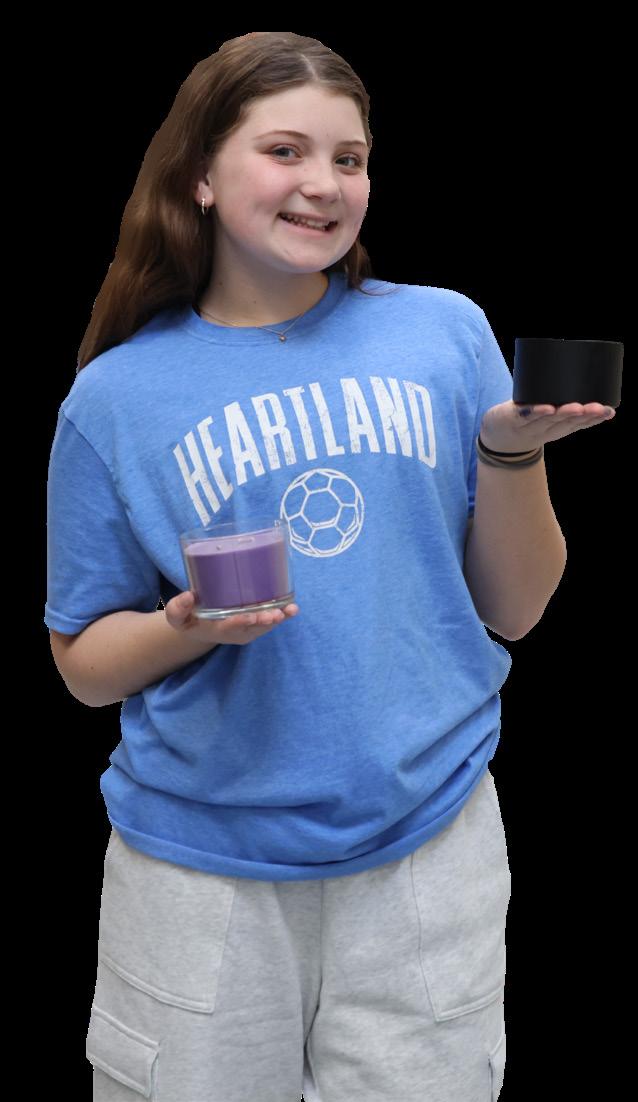
Freshman Mary Cowen has played for several club teams, including the Kansas City Stars, Kansas City Star Gold and Kansas City Storm. Cowen began playing hockey after being a figure skater at a young age.
“I started when I was three [and] went till I was 12,” Cowen said. “When I was six years old, I decided I wanted to play hockey. I told my parents and I begged them for weeks until they let me play when I was seven.”
Senior Bianca Pepe has played hockey for many years and is currently playing for the Kansas City Storm. Pepe got into the sport because of her dad.
Source: eathealthy365
“My dad played hockey, so I just grew up with him always being surrounded by the sport,” Pepe said. “I figured I’d try it too, and I just stuck with it. [My dad] was a goalie, now I’m a goalie. He’s helped coach me [from] his own personal experiences.”
Pepe enjoys being a goalie because her dad was one but also because she stays separated from the rest of the game.
“As a goalie, I’m isolated, so I think it’s just like being a leader,” Pepe said. “It’s such a different position, so I get a different view of the game and I think that’s what
I like so much about it.”
According to Cowen, the lack of clubs in the area can make it hard to get into the sport.
“People who want to play hockey here don’t have as many opportunities because there’s not as many teams for girls,” Cowen said. “The closest girls’ team is two hours away. [Whereas] up north, it’s very popular; they have rinks everywhere.”
Pepe enjoys playing hockey because of how uncommon it is in Kansas.
“With Kansas having a lot of major other sports, it’s kind of hard to fit hockey in,” Pepe said. “[I like it] because it’s a different sport, not as popular, especially living in Kansas. I think it’s cool not playing a big, popular sport.”
Despite the challenges of playing the sport, Cowen appreciates all the valuable connections she has made.
“Once you play hockey, you have all these relationships that you would never have had before,” Cowen said. “I see all my teammates everywhere [and] I’m always hanging out with them.”
The average cost of different hockey equipment Helmet:
Senior Bianca Pepe prepares to block a shot during practice on Thursday, Nov. 20. photo by evan leroy
‘TIS THE SEASON
With the winter sports season starting in the coming weeks each sport looks to expand on their successes from last year by avery curry writer/photographer
BOYS SWIMMING
Last year junior Andrew Martin placed fourth at state for the 100-yard backstroke, while the rest of the team finished 22nd overall
I motivate myself by seeing my teammates pushing through. That helps me get through a difficult set.
- Sophomore Cole Hansen
Coming up for air, sophomore Turner Bruce competes in the 100 yard breaststroke. photo by audri
BOYS AND GIRLS BOWLING
The girls bowling team placed fourth place at state with a total score of 2297. The girls won many of their meets, with the boys team also placing high
Our team’s goals this year are to win the Cat Cup against DeSoto, and then to potentially make it further up in regionals than we did last year.
- Senior Chase Jackson “ “
Using the two hand bowling method, junior Jake Brown focuses onto the pins for a strike, Jan. 23, 2025. photo by emma ronning
BOYS AND GIRLS POWERLIFTING
Last year, senior Max Bolan and sophomore Gavin Welch placed fourth in hang clean and sixth in bench press. Junior Avery Huber placed second in the 132-pound weight class
We’re hoping to grow a lot this year and maintain that chemistry that makes a good team.
- Powerlifting Coach Tim Thomas
First year on the powerlifting team, freshman Callie Caldwell finishes a hang clean, Dec. 8, 2022. photo by jules shumaker
BOYS AND GIRLS
WRESTLING
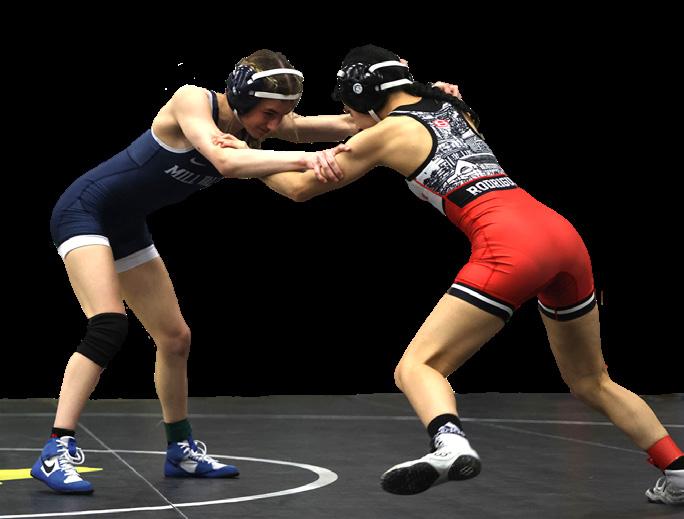
The boys wrestling team placed seventh at state. Four of the 12 athletes placed in the top six. Though the girls team did not qualify, senior Finley Rose qualified as an individual
BOYS AND GIRLS BASKETBALL
Ranking 7th in Kansas, the boys basketball team concluded their previous season with an 18-5 record, while the girls team finished at 12-10
- Girls Basketball Coach Carter Sebasto “ “
Our goal is to perform better than we did last year, and then improve individually at each level. I think the most important thing is if we improve, then the wins will follow us.
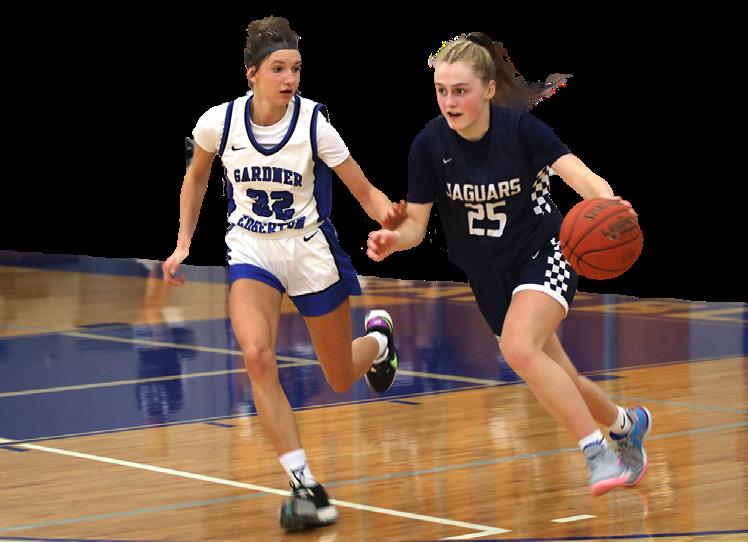
Looking to pass the ball to her teammate, freshman Riley Marshall attempts to rush past her opponent, Dec. 8, 2023. photo by alonnah gage
[Wrestling] really changes you as a person, mentally and physically. It’s a tough sport, and a lot of people are scared to do it, but it’s really fun.
- Sophomore Aniya Sood “ “
Searching for her opponent’s weaknesses, junior Finley Rose prepares for a takedown, Jan. 29, 2025. photo by stella harryman
I AM MV is a series that showcases students at the school and their unique interests, hobbies and talents
TOP HITS
MV I AM
From song writing to playing on stage, sophomore Waylon Binkley has seen everything his band, Steer Away, produces from start to finish. He received a scholarship to play music at River City Rock Camp during the summer after eighth grade, where he met his bandmates and first got the idea to start the band. Since it was Binkley’s idea to start the band, he has put in a lot of work to make the band runs as smoothly as it can and become successful.
“Everything that’s online from our band, I wrote,” Binkley said. “I played all the instruments and sang because the band formed after I already had the songs. I recorded, mixed, played all the instruments, sang all the songs and posted them on Spotify. I write all the music and the band
Binkley’s bandmate and gui- tarist, Charlie Corwin, has been with the band since the begin-
“After that camp was over, Waylon and I still wanted to play together,” Cor- win said. “He told me he had a project, Steer Away, and asked if I was interested in joining. I joined because I thought it’d be fun and I didn’t have much going on in my musical career.”
Binkley got interested in mu- sic when he was five because he listened to music with his dad, and his passion hasn’t dimmed
WAYLON BINKLEY
by mya franco writer/photographer
since.
“[Playing music] makes me feel like this is my purpose, and it helps me convey stories and different messages,” Binkley said. “A lot of my songs have pretty deep meanings, and some of the lyrics are nonsensical, but they have a deeper meaning than they seem. Playing music is my way of storytelling and express- ing myself.”
Steer Away has also recently started performing live. Binkley has played five gigs since the band started, mostly at smaller venues like bars, outdoor events and festivals.
Despite these music events be- ing on the smaller side, making Binkley and the band nervous performing at first, after gaining more experience the entire band has become comfortable being on stage.
“When I played my first couple shows, I was really nervous and we had a nervous energy on stage,” Binkley said. “We were all nervous, but we played well. Over time, I learned to enjoy it, and I don’t really feel nervous anymore, it’s more like excite- ment.”
These gigs vary from place to place, and students such as ju- nior Elijah Brungardt have even gone to support the band.
“I have [been to a gig] in To- peka,” Brungardt said. “We had a great time. Waylon was good, and It was nice to see him play and [have] all his hard work pay off.”
The top songs of Steer Away’s 150+ Spotify followers
Sophomore Waylon Binkley plays the guitar and produces music for his band Steer Away
Spotify code to Steer Away
“Greenmind”
“Waste of Space”
“Close Minded”
Sophomore Waylon Binkley performs his most recent song, “Consumerism,” on Nov. 16, 2025 photo by ryan bloomer