portfolio
Dhruv Jadhav
1
2
3

1
2
3
In collaboration with Gabe Eggerling and Hannah Puerta-Carlson
In North London, the current remains of the old Highgate train station are in a precarious position of restriction for humans and nonhumans alike. The barriers along the vicinity of its premises block both humans from circulating across it, as well as flora and fauna from migrating across its pre-existing eco corridor. In addition, this site’s history as the longest uninterrupted greenspace in London holds tons upon tons of valuable urban soil that is widely unknown and scarcely protected.
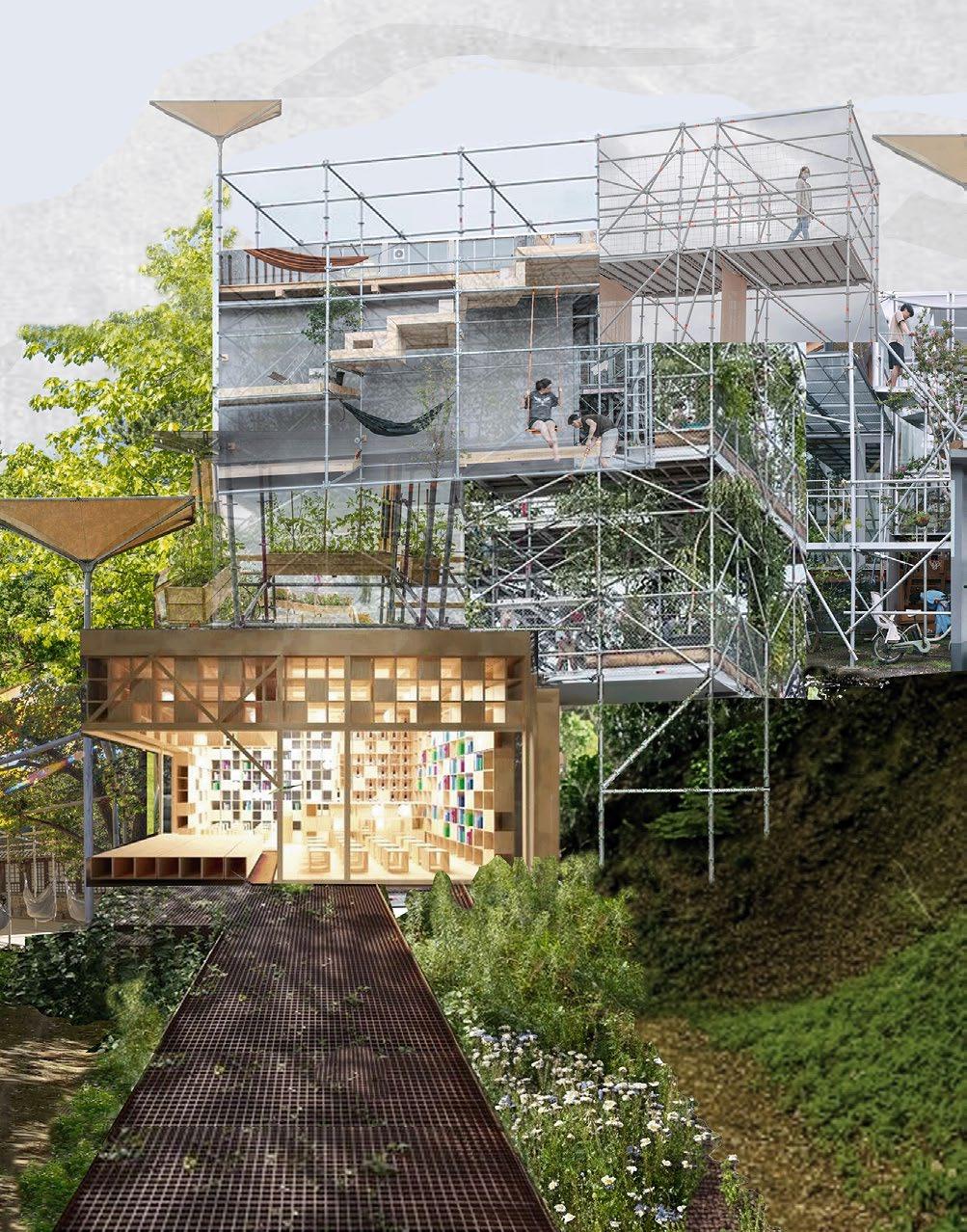
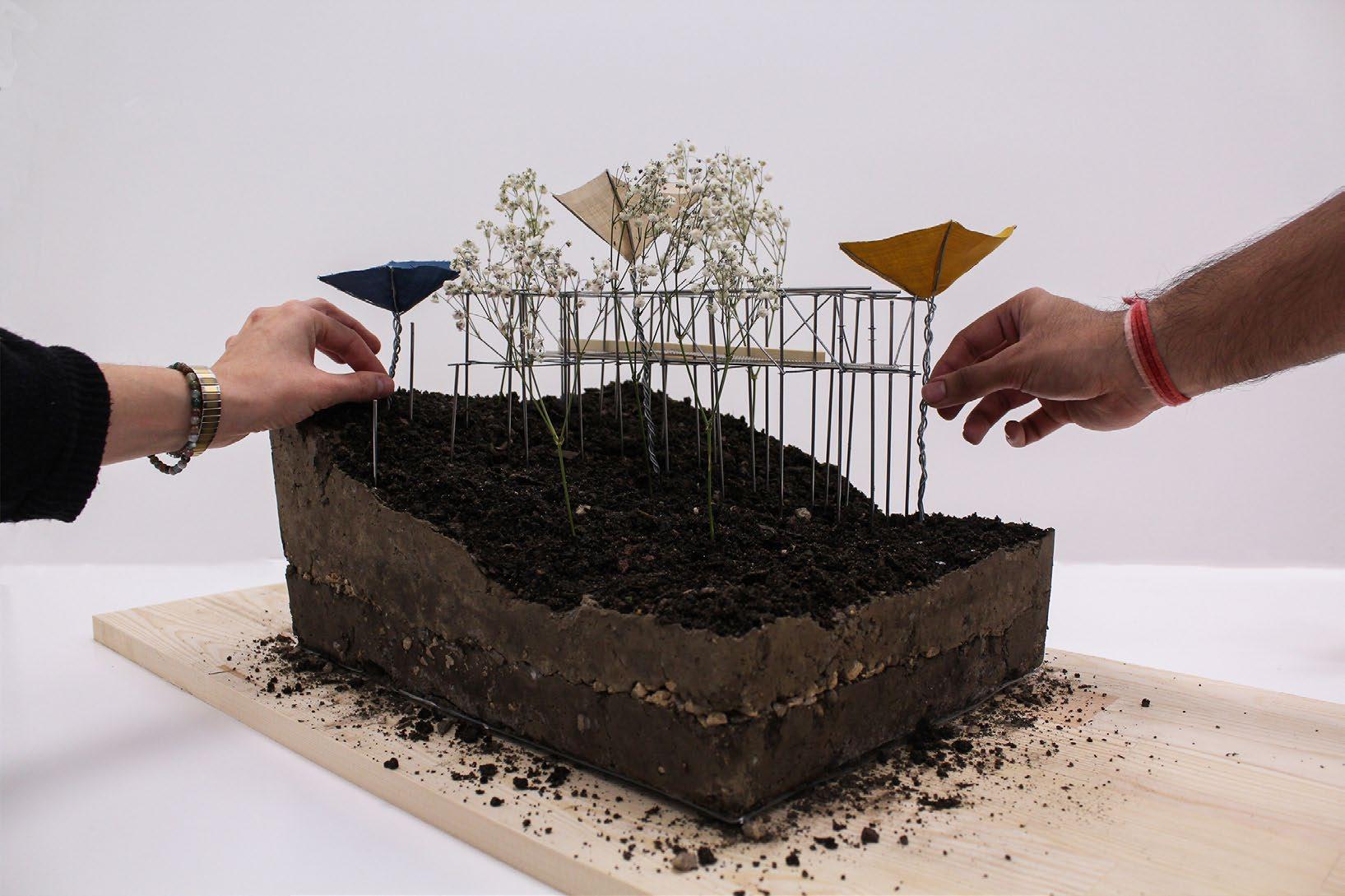
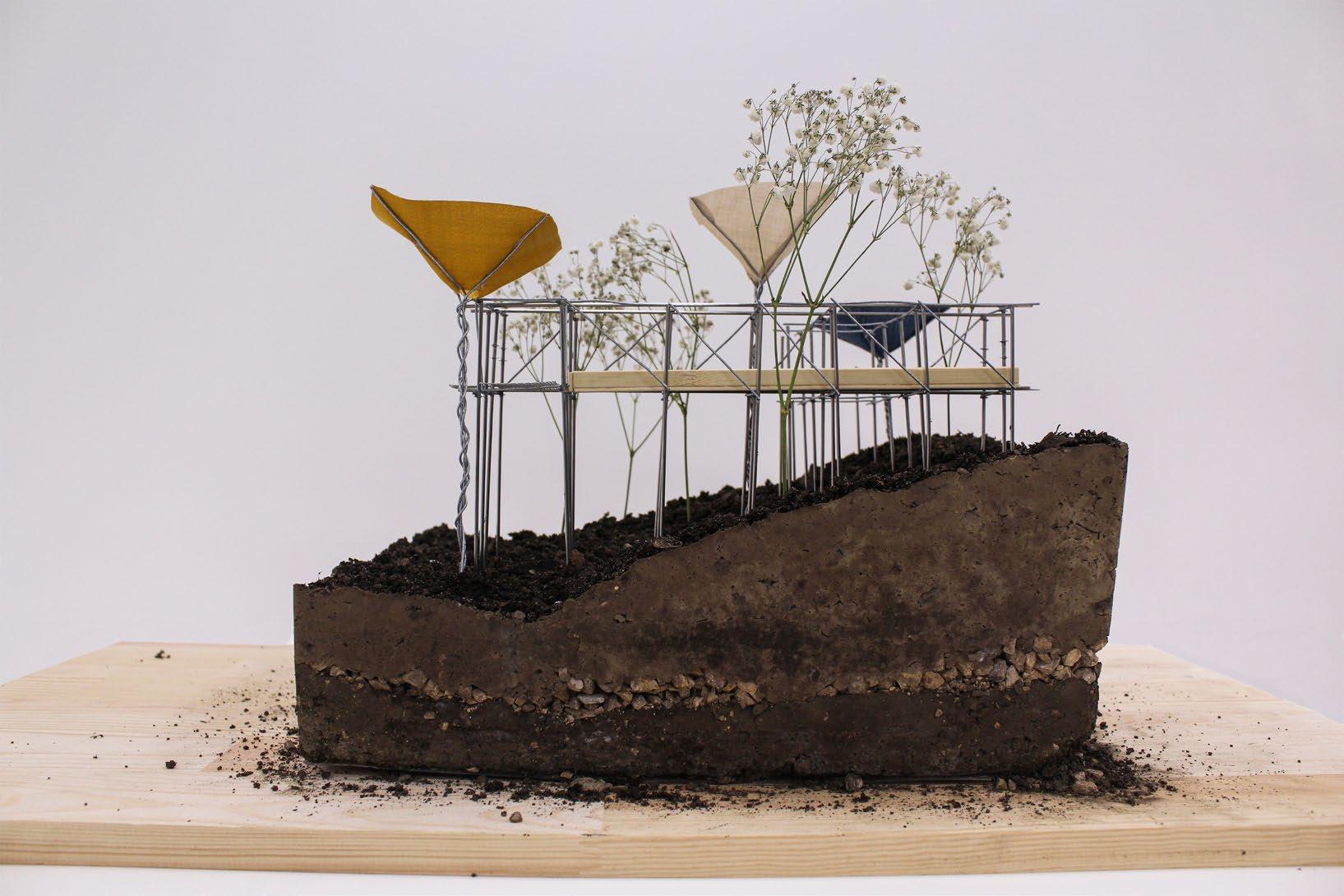
Therefore, this HOW TO guide is a response to the current known and unknown needs of the site, and how said response may organically grow and evolve over decades of climate change-induced volatility. Our three pronged proposal includes a re-use of the current concrete conditions in-situ to create a permanent central heart for low-tech soil research and education to take place, a repurpose of common scaffolding systems for low-impact and temporary circulation + allotments across the site, and redevelopment of agricultural soil and water collection technology to be applied in the urban context.
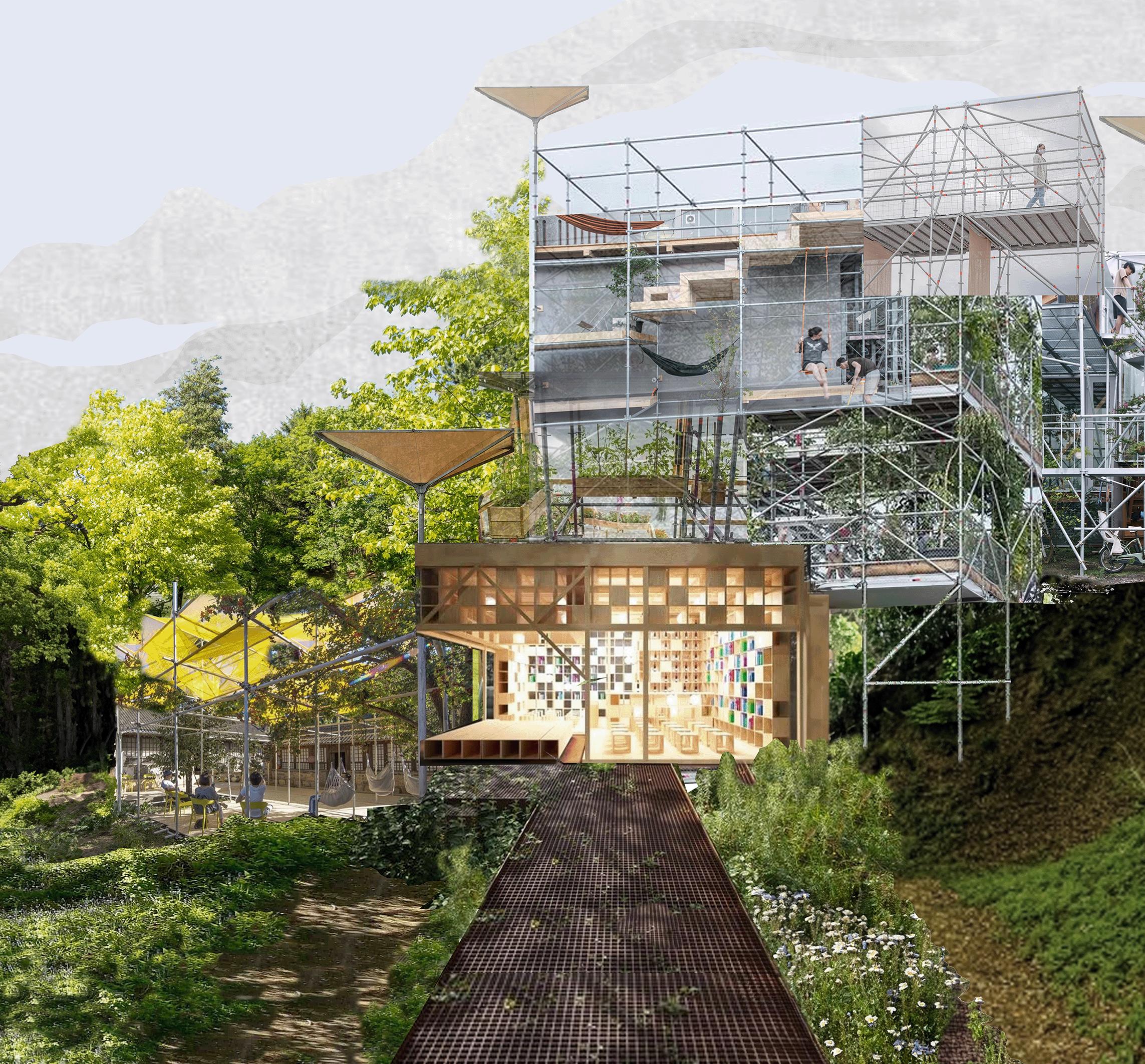
The abandoned highgate station creates a space which interrupts two paths of travel. After the shutdown of the station, human and animal site ceased. The ecological corridor that once thrived, is now fragmented and has created pockets of flora and fauna living in isolation. For high street to the residential area requires a long inaccessible walk.
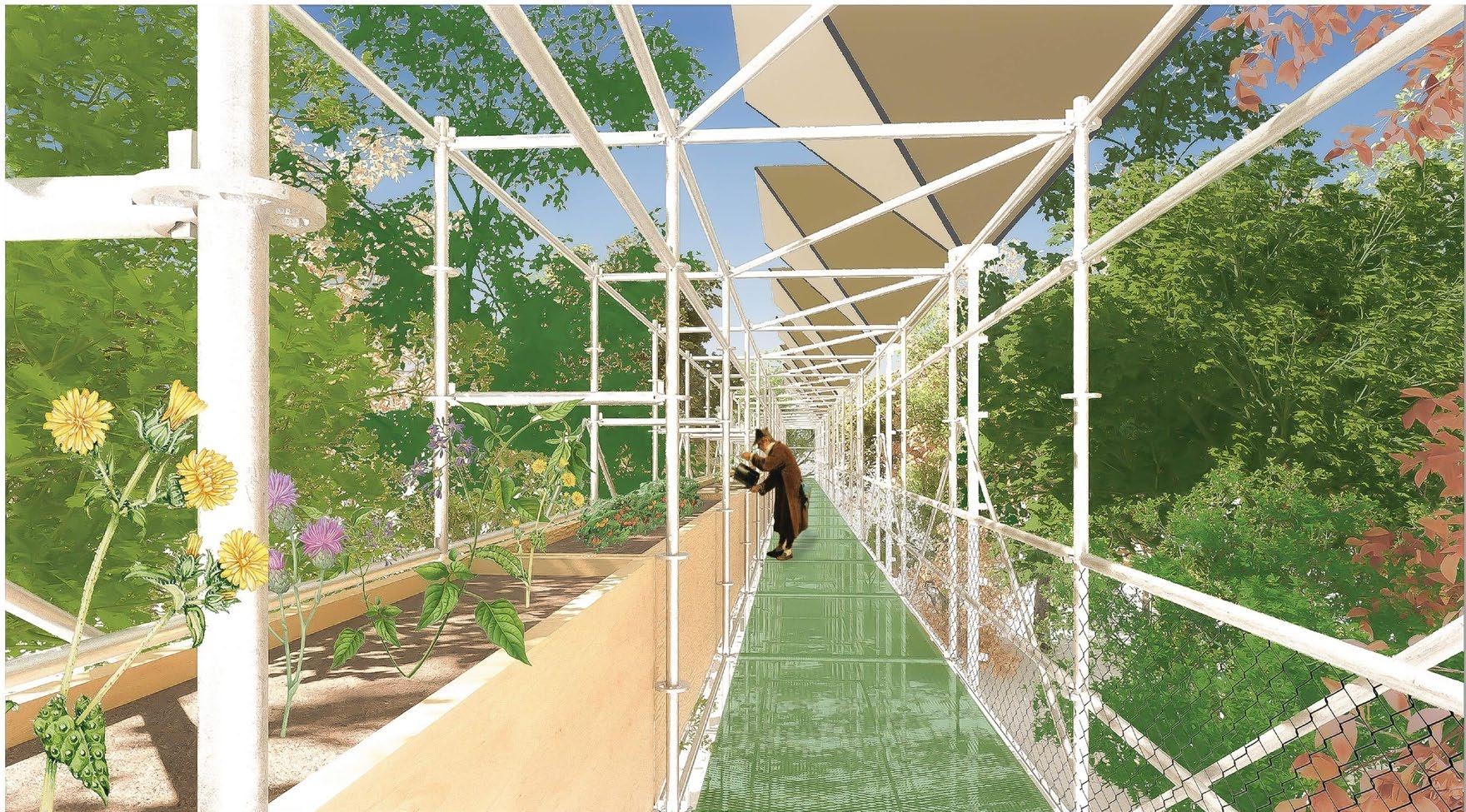
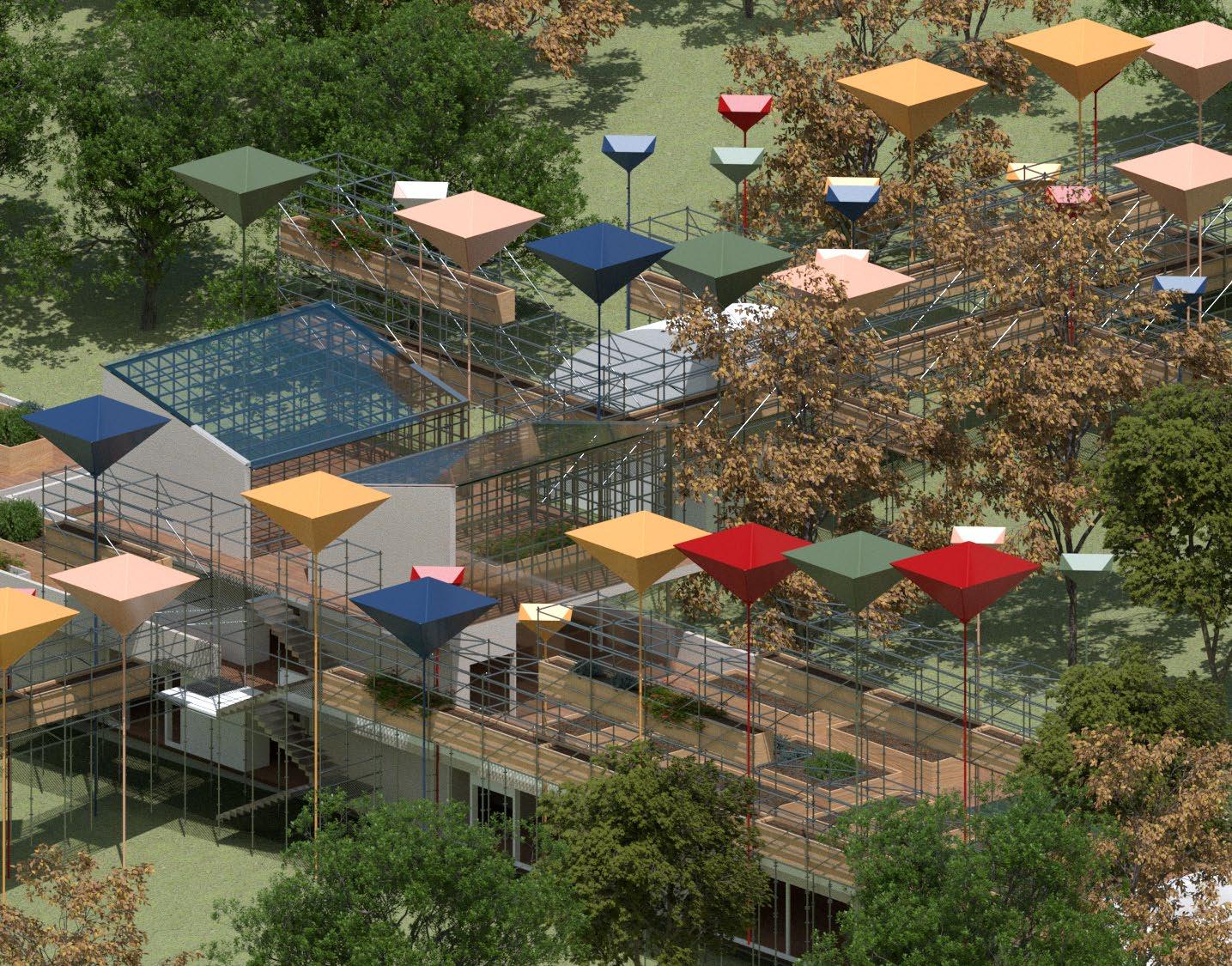
To create an accessible connection while also allowing for plants and animals to move freely, the platform is repurposed, while a shiftable branches out, creating the human corridor above the animal one. This allows for the only permanent structure to be built on top of an existing Underneath the scaffolding structure, animals will be able to move freely through the space.
Attached to this scaffolding structure is a system of allotments. Housing in London lacks private garden space- making allotments a desired provide a multilevel public service, circulation and allotments help the community access and utilize the once abandoned site.

animal movement through the For humans, going from the
scaffolding structure existing concrete foundation.
desired commodity. In order to
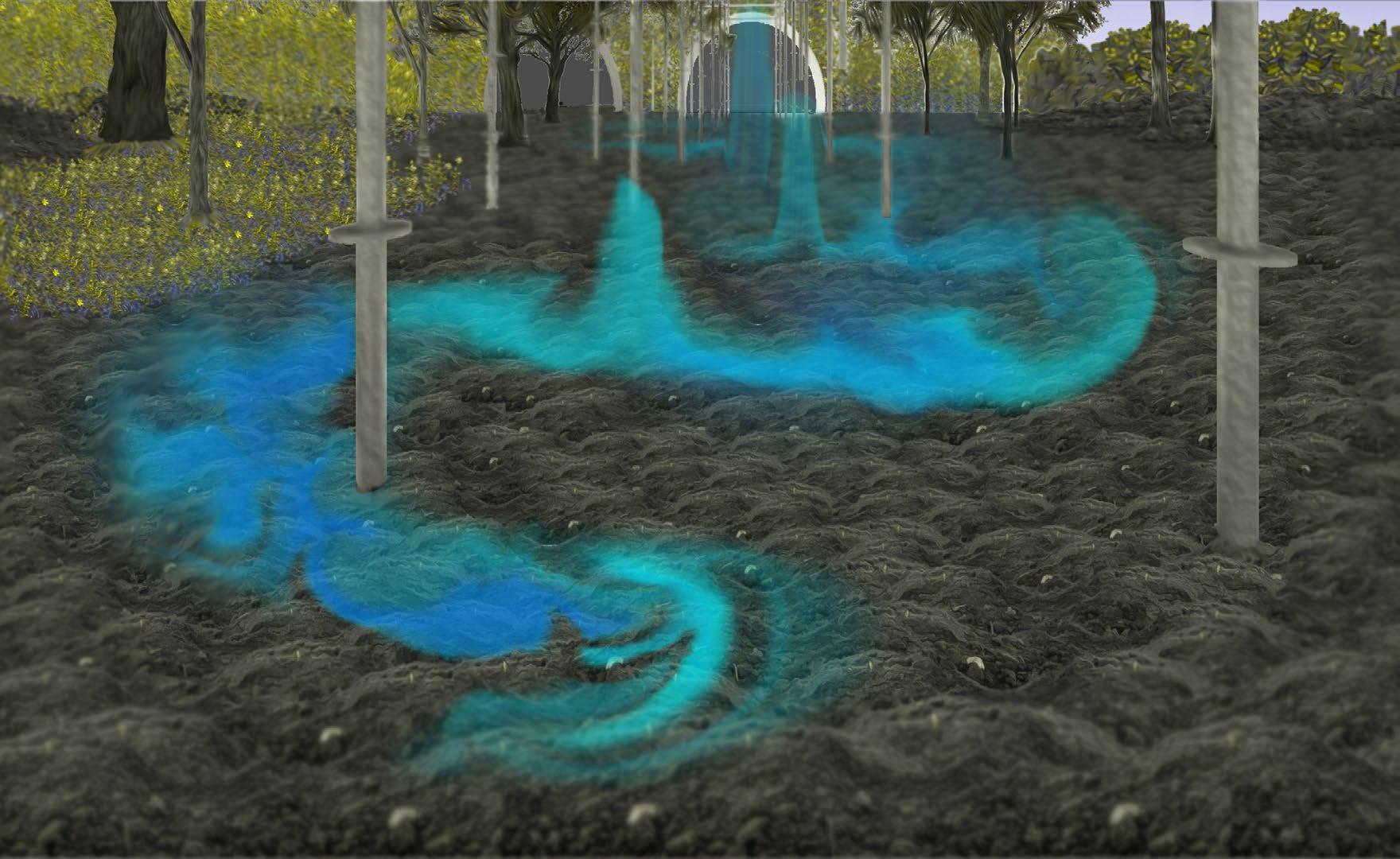


Reversing soil degradation its effects of cultivated agriculture. Urban green
The built elements branching structural system operates the site.
The platform is repurposed tech labs using data
These colorful canopies energy is used to power uneven and wild site
degradation and restoring fertility by 2030 is a goal of the UK government. Current soil research is greatly focused on agricultural space and cultivated space. Soil compaction affects soil fertility and water resources- leading to higher flooding risks. This risk of erosion is not limited to green spaces are greatly under threat to changing soil conditions.
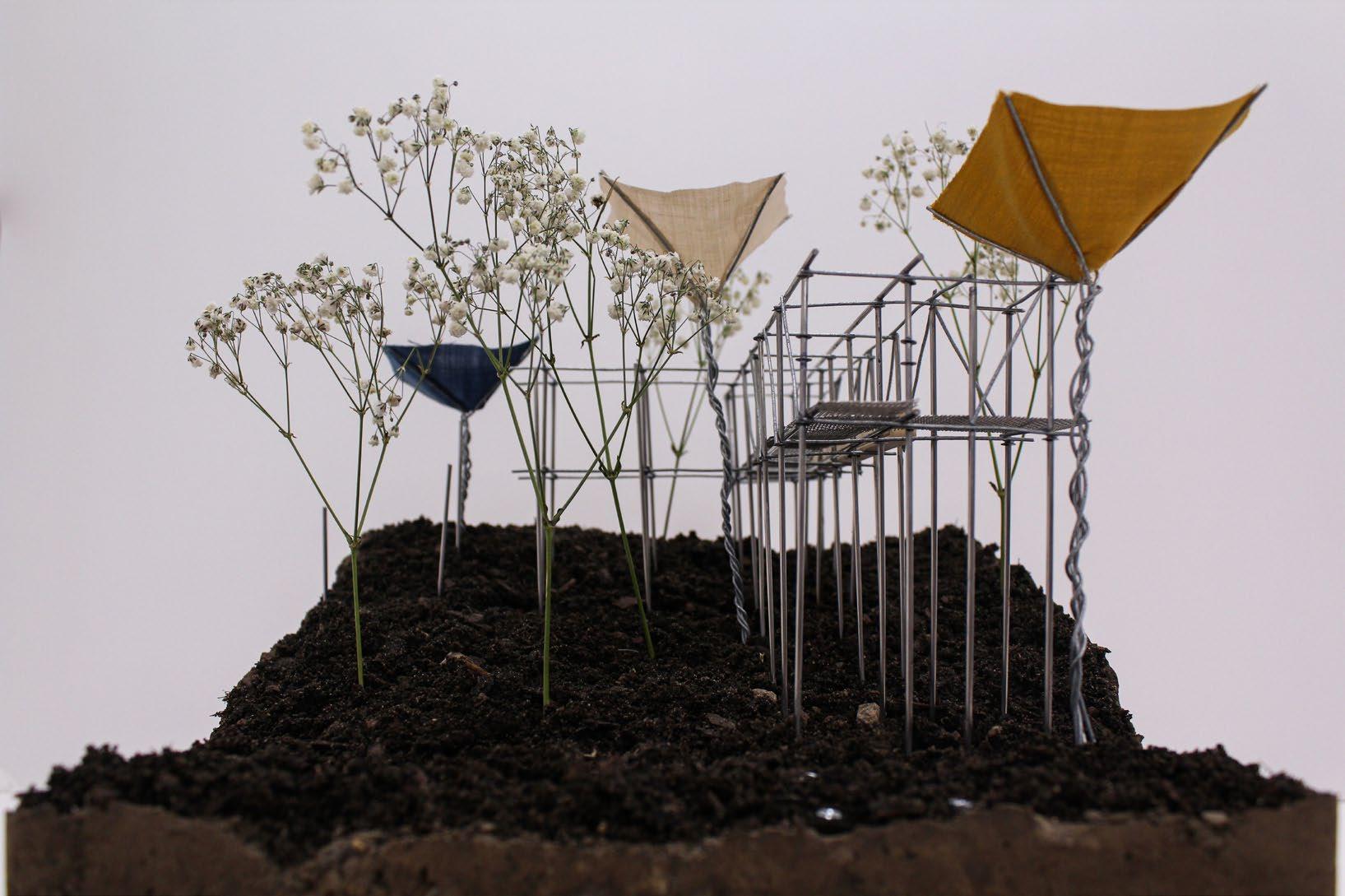
branching off the platform can expand and contract according to the needs of the soil researches, as well as those of the community. The operates with scaffolding that attaches to helical pile foundations, which can easily be removed, creating minimal impact on the ground of
repurposed as a permanent soil research and education center. Within the research center, soil from the surrounding site is monitored in low collected from sensors throughout the site.
canopies are rain catchers, which collect water for reuse while also harvesting downpipe energy through turbines built into the pipes. This power soil sensors which are inserted into the soil. This system easily attaches to any structural element- making it easy to implement on an site such as this.
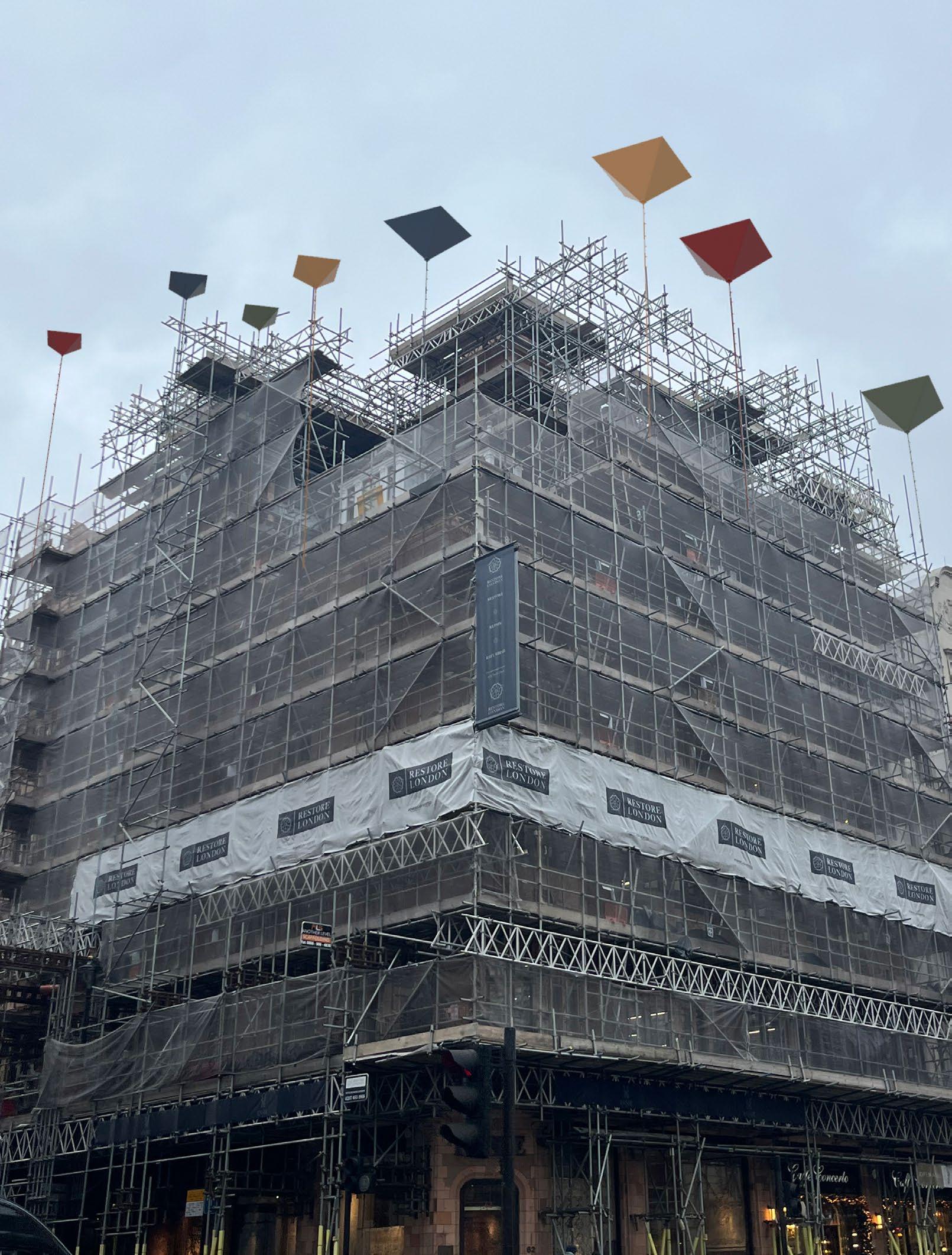
Soil degradation from wind and water erosion is an issue not only on the highgate site, but also throughout Greater London Area. The scaffolding system is one found throughout London. Attaching soil sensors areas can help soil research expand and learn more about urban soil as well as understand the ways changing throughout the city.
The scaffolding structure is a simple assembly which can be done by as few as two people- making it implement in sites which might warrant soil research or allotments. Near Highgate, the Parkland Walk Wood are sites which can benefit from soil research or expanded allotment space.

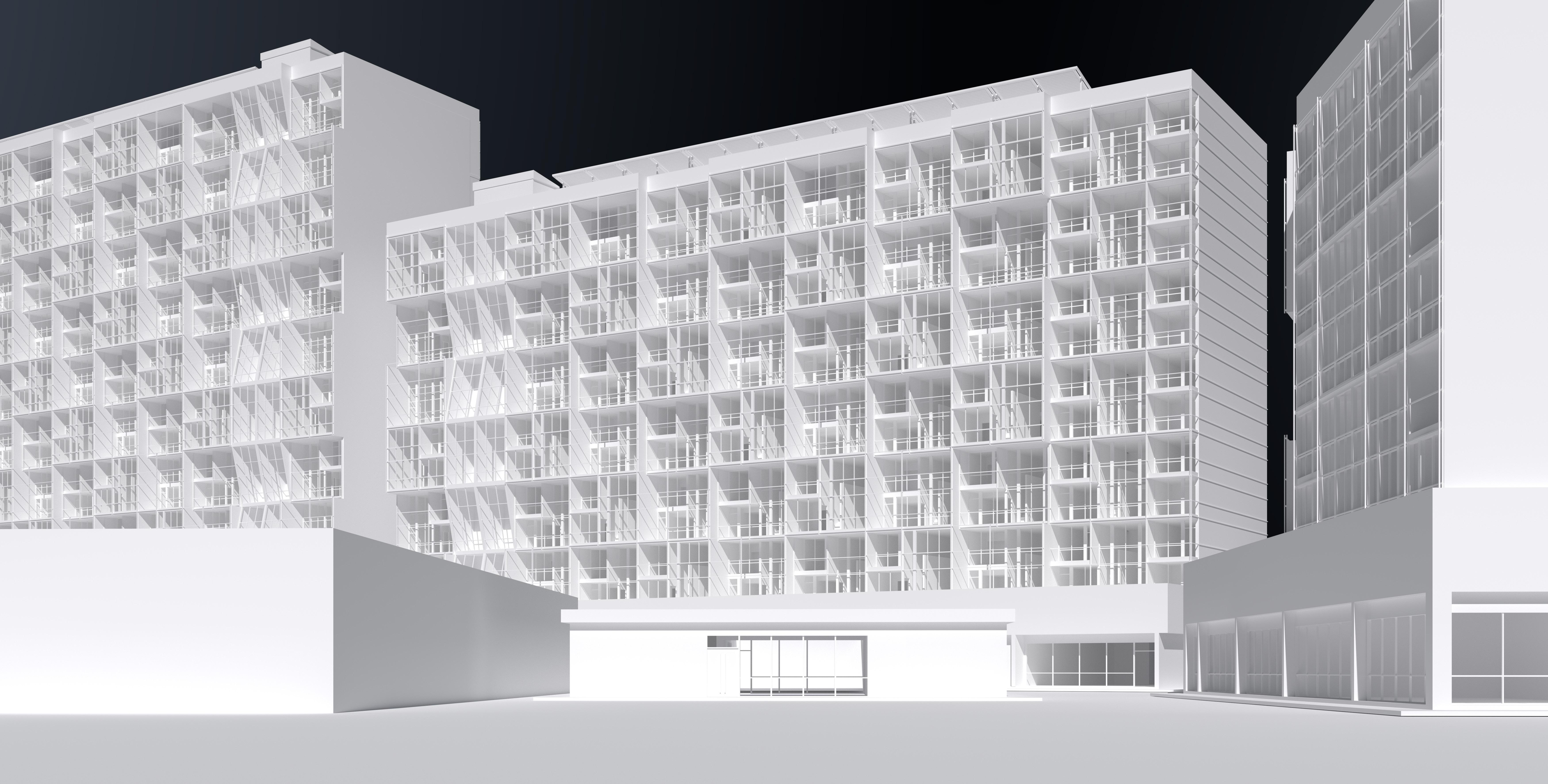
In the heart of downtown Syracuse, New York the famous Niagara Mohawk building sits as a statement piece that represents the city. This building, although known for its art-deco style, is part of an electric company campus. National Grid, operating in the US and UK, has a large office building located on this site. In order to accommodate the workers of this company, a large-scale housing project is built to create a complete company and urban campus for National Grid and the city of Syracuse.
The urban campus is created by modifying the current fabric of the city by using massing to create significant spatial voids in the city. Inspired by medieval cities and the historical density of downtown Syracuse, the National Grid campus creates an opening in the fabric which emphasizes the Niagara Mohawk building. This built campus creates a relationship with the existing Clinton Square which forms a balanced double-void campus for the whole city. The campus is enclosed on three sides by roads and on one side by the Onondaga Creek.
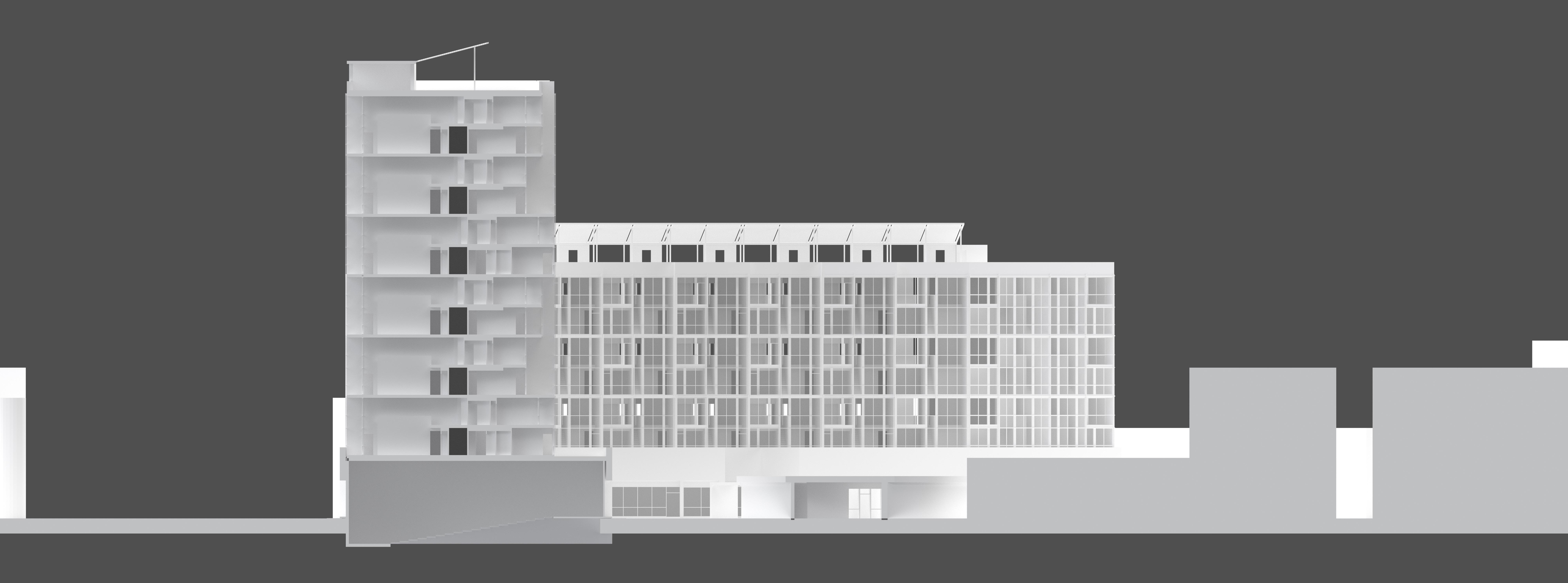
The housing itself is for workers and their families and contains various public commercial programs on the ground floor. The project is split up into 3 buildings. The largest building is on the edge of the campus, next to the creek as it creates views of the whole city for the residents. As the buildings move away from the creek, each is smaller. This creates a taper which gives priority to the mass of the Niagara Mohawk Building.
first residential floor
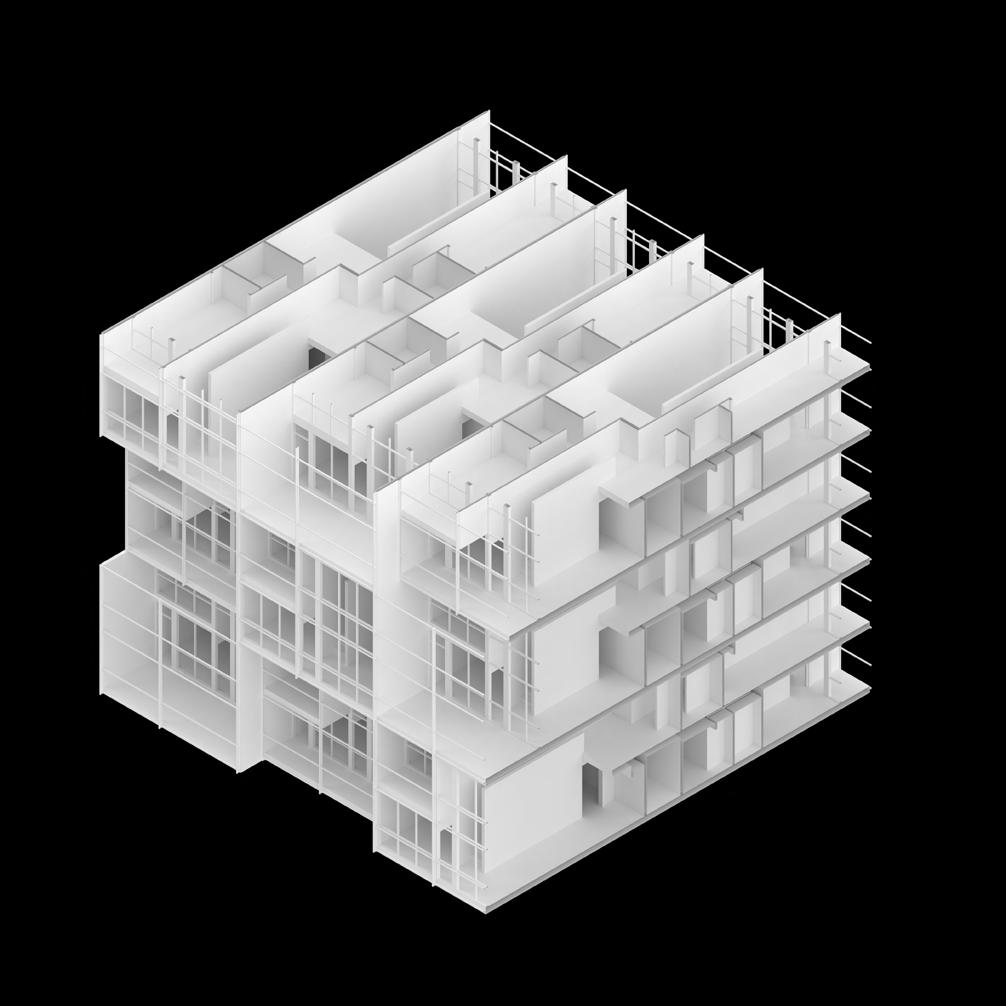
All units consist of a two key into each other. Units
floor plan
two story interlocking system in which units which are opposite on the first level are adjacent on the second level- the units Units were designed to prioritize natural light and cross ventilation.
urban figure ground
To create a true urban campus, the city of Syracuse was altered to create more fabric and clear openings within it. Over time, the city has much of the density it once had. Bringing this back creates a more clear campus.
Clinton Square still remains the largest void and is connected with the National Grid Campus
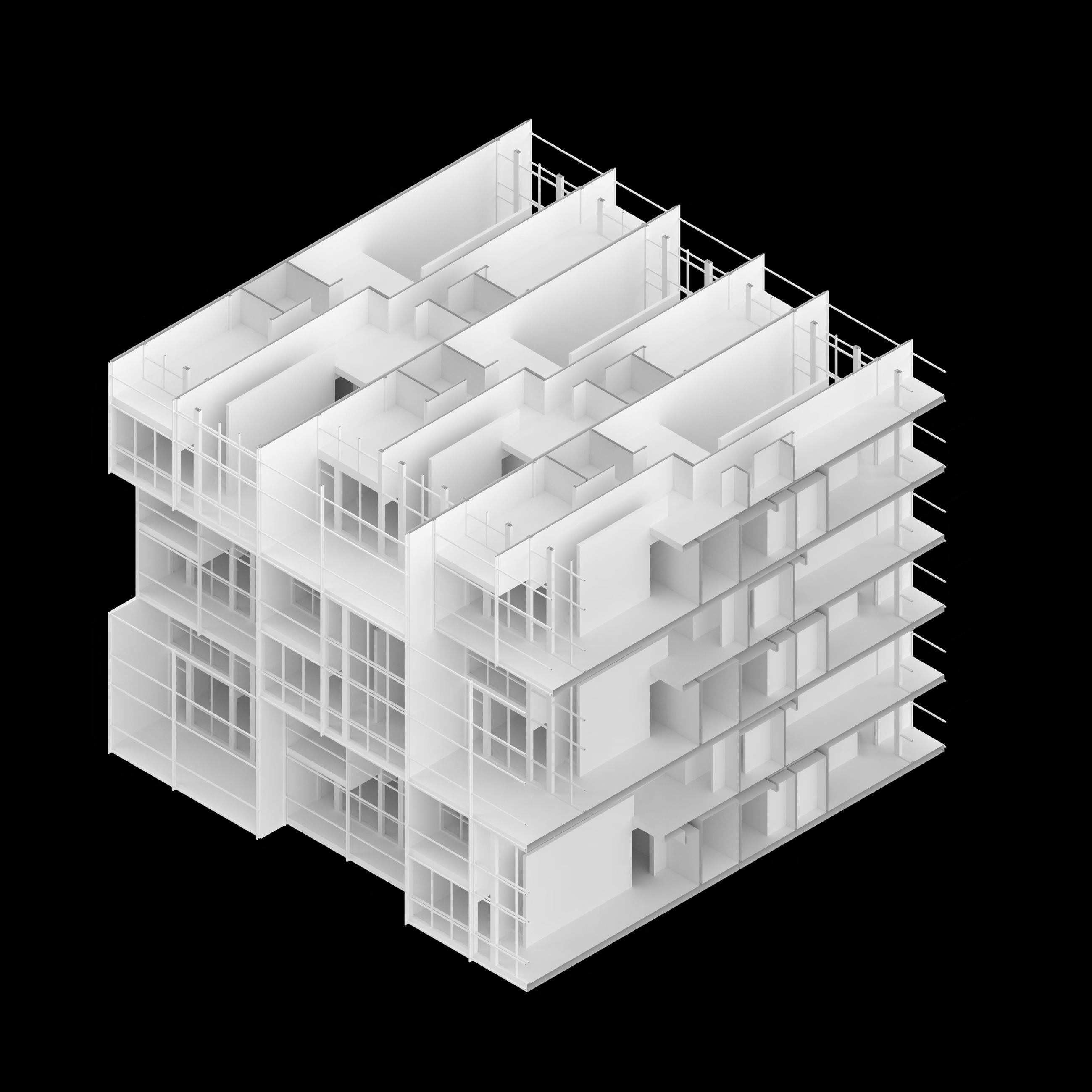
All units in each building come from a base 6 unit set. An 18 unit cube is the total repeated unit package on all three buildings. The units were designed to create a shiftingfacade on the interior of the campus and a repetitive surface on the street edge.
In collaboration with Max Walewski
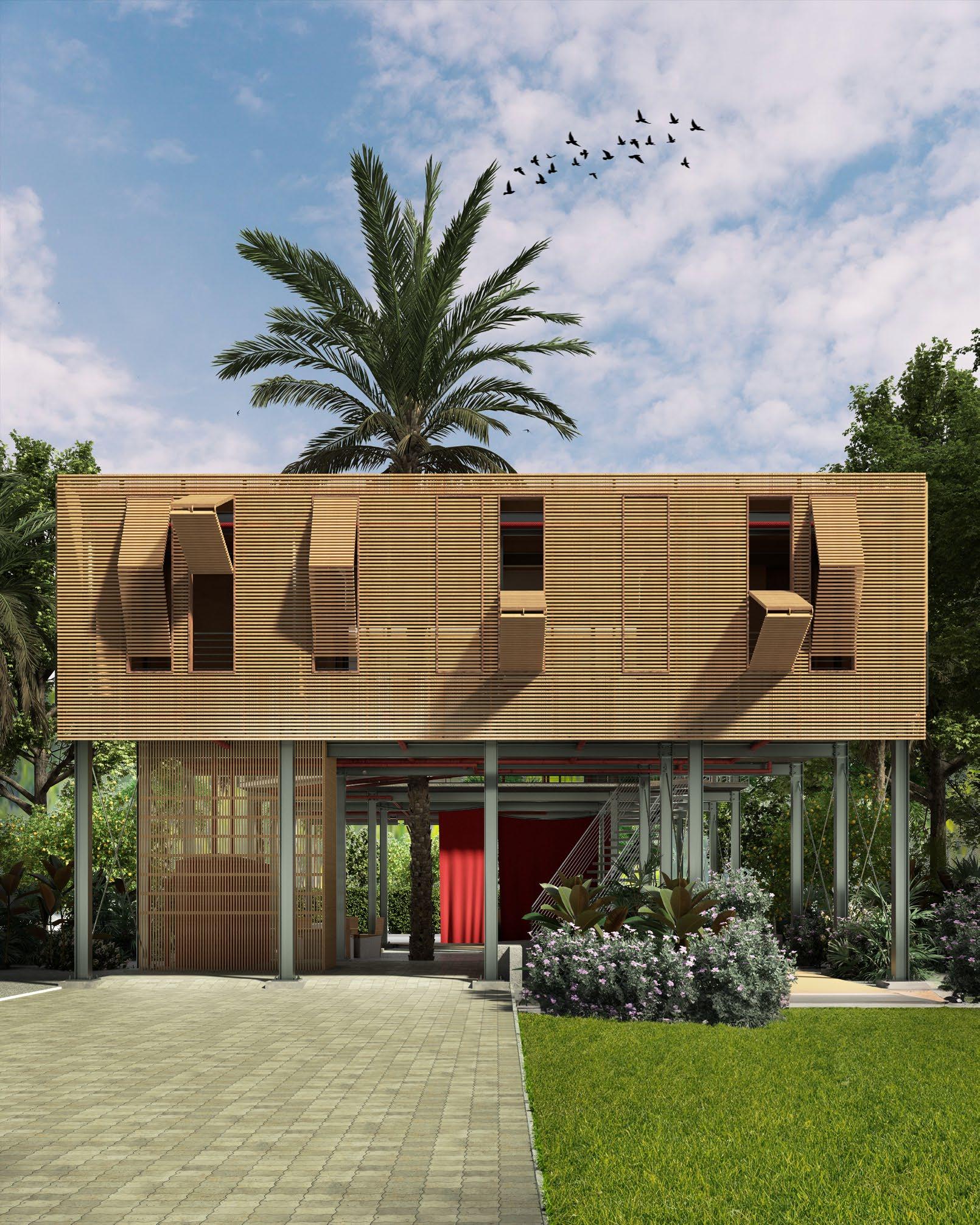
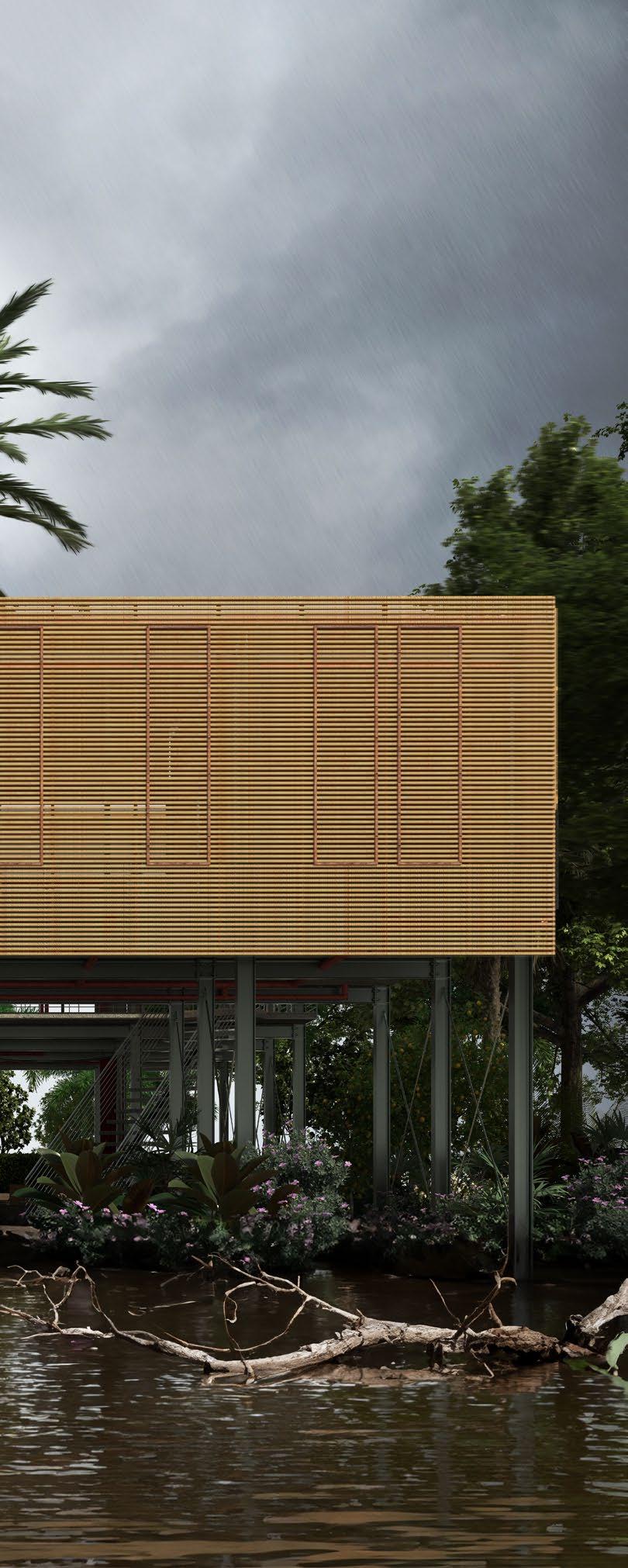
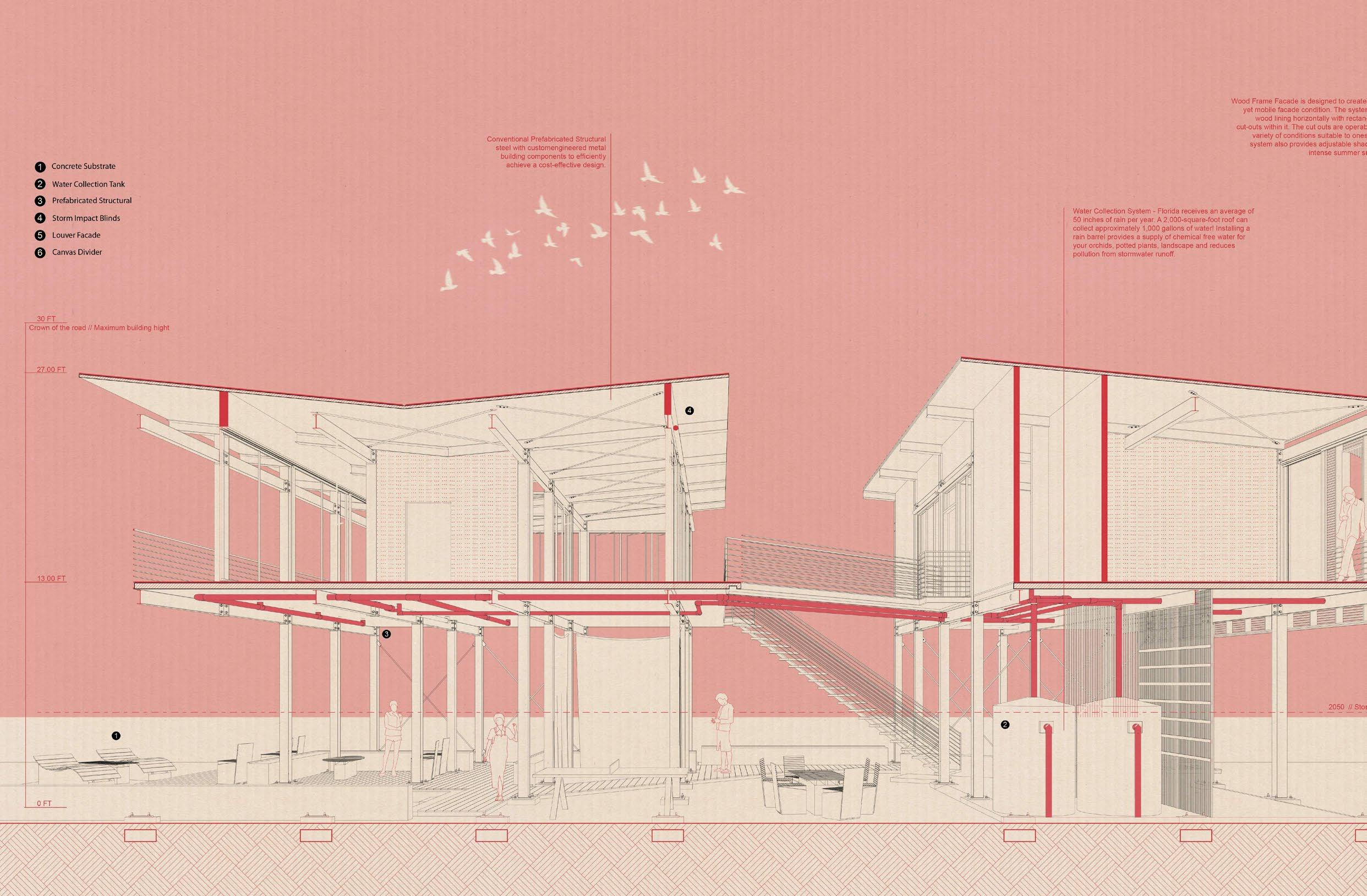
Surfside is a suburban town near South Beach Miami. Much of Florida is dealing with concerns of seal level changes as well as exponentially increasing storm surges. The standard home in surfside is a low single level designed with little environmental interest. Current new construction aims to maximize space within the zoning ordinances that limit height- creating tall, unenthusiastic homes. The goal of this project is to explore a third typology, one that might connect the suburban scape while responding to environmental issues.
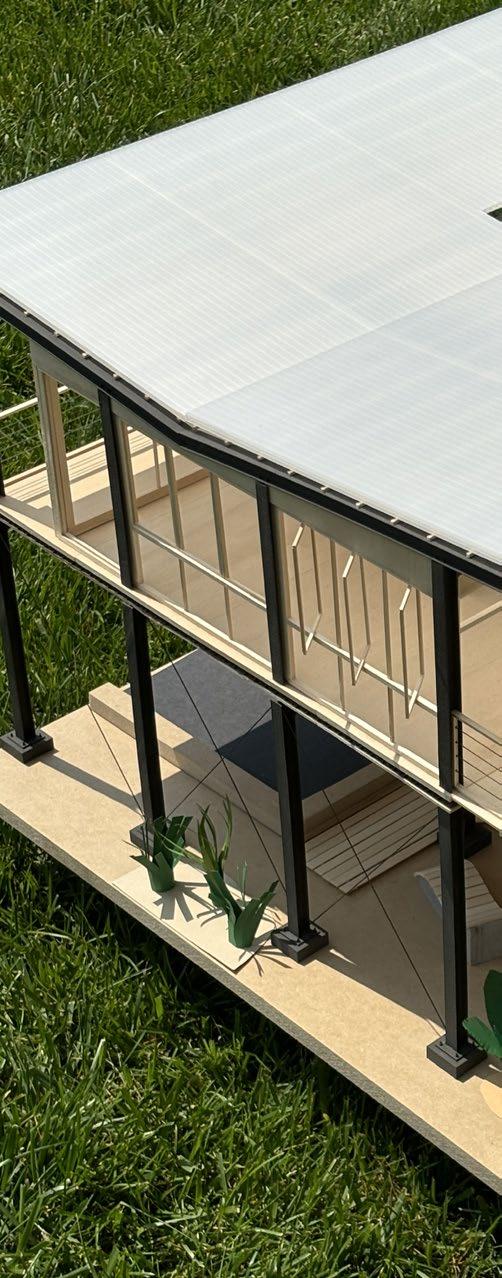
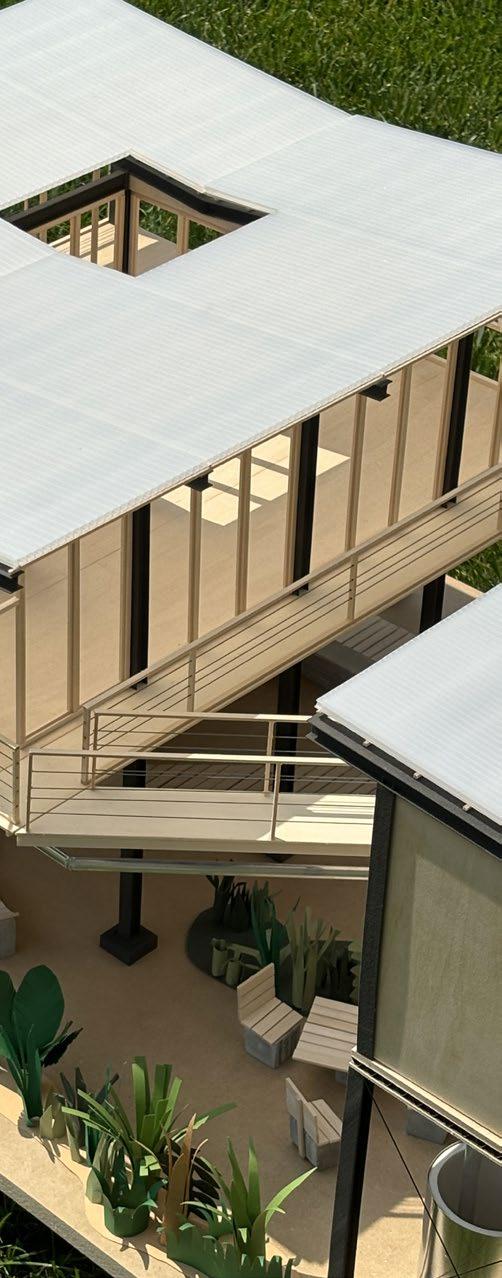
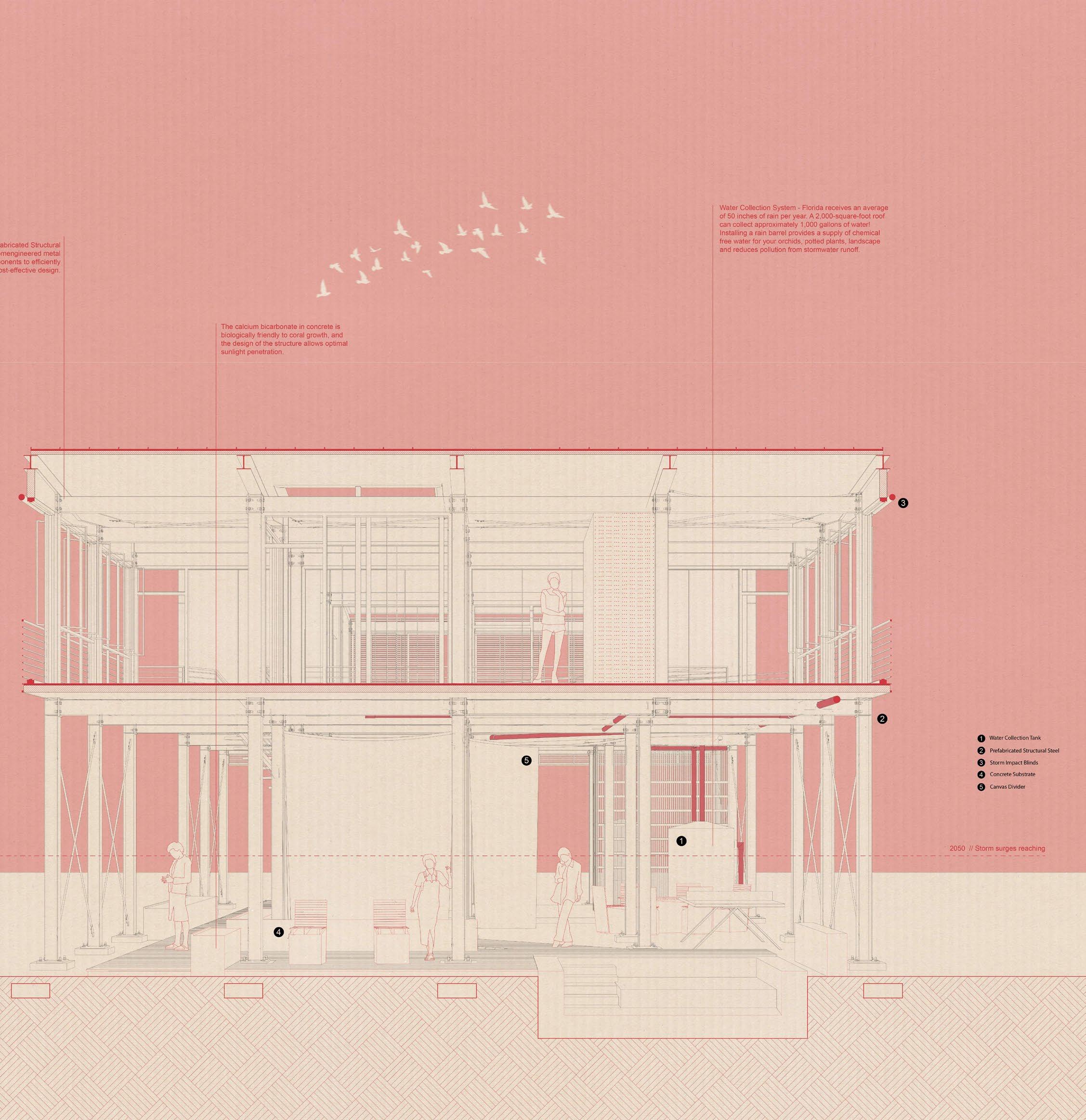
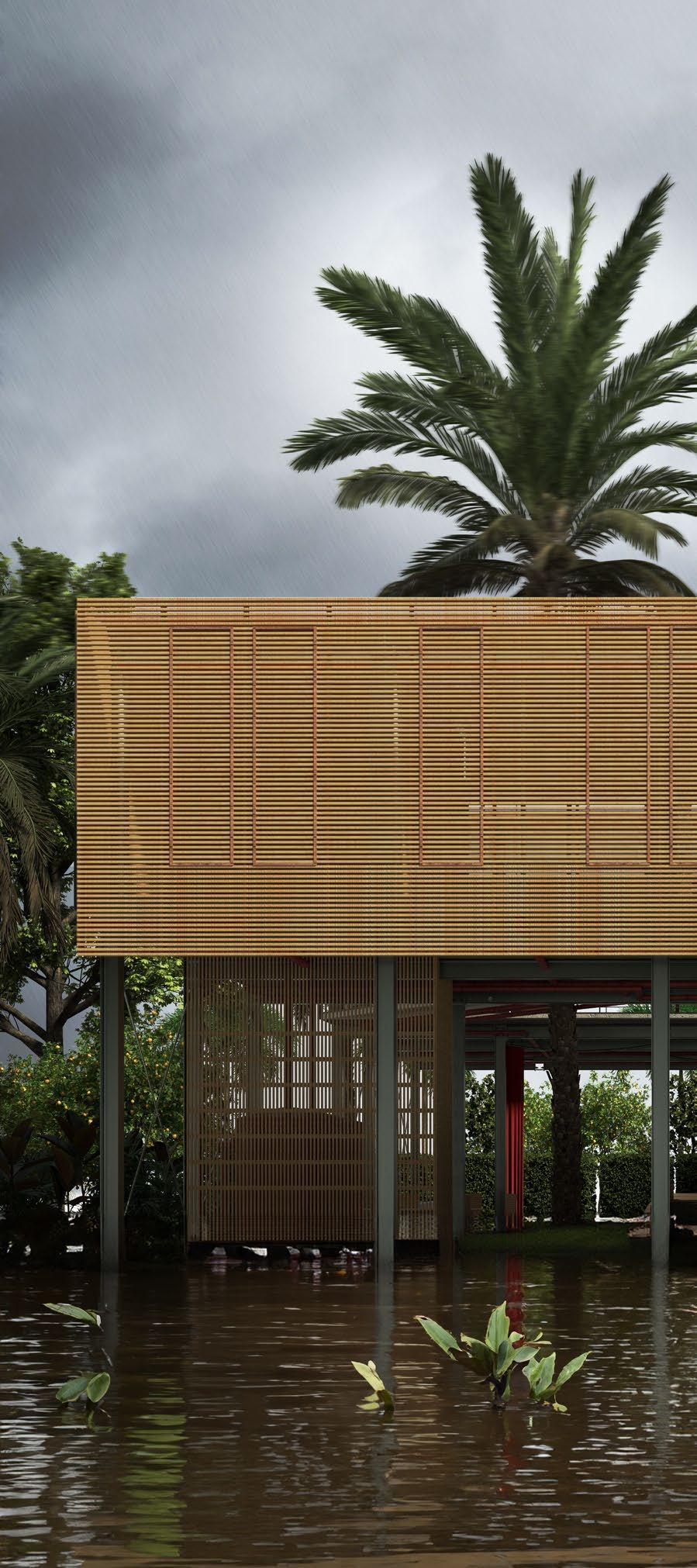
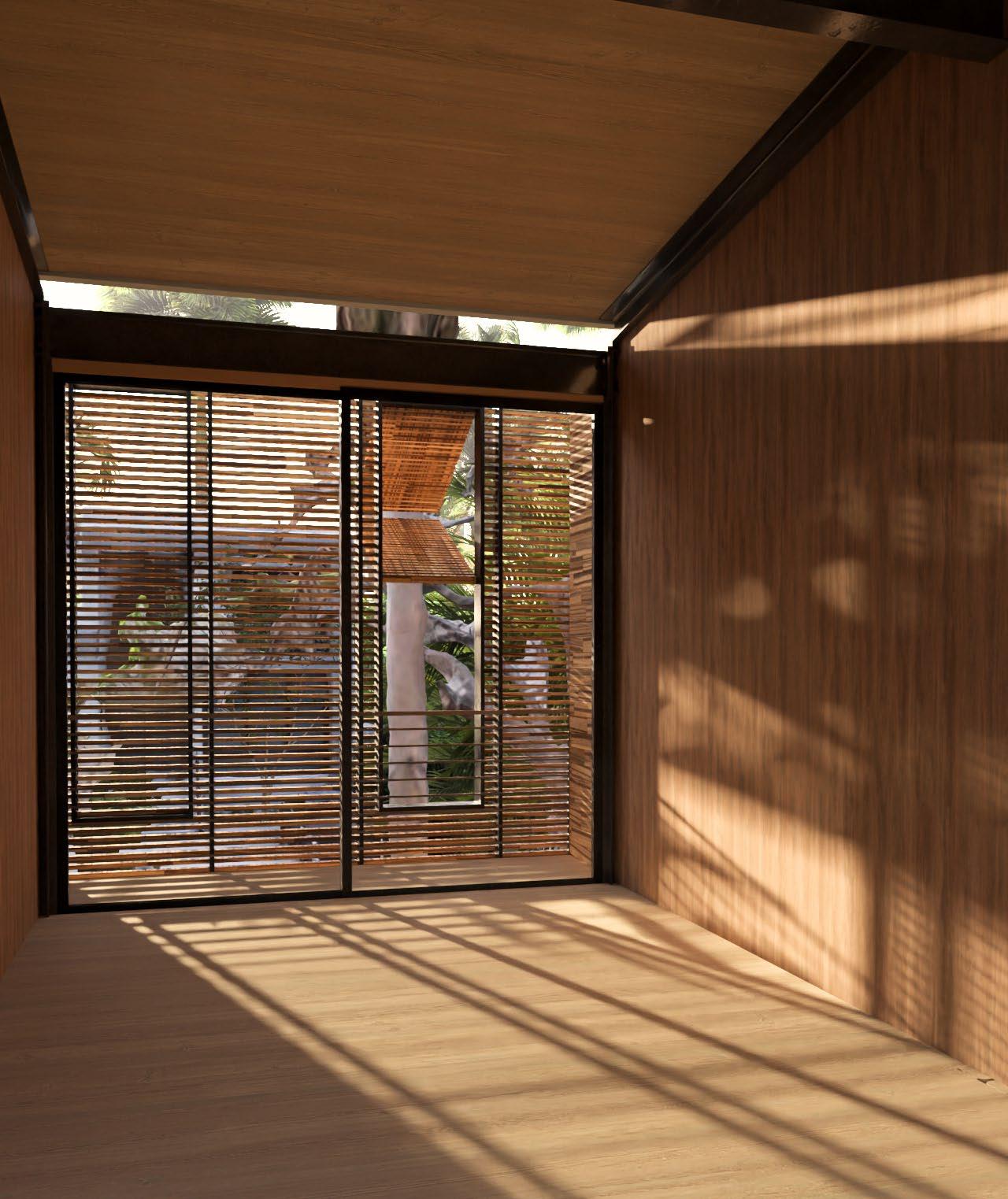
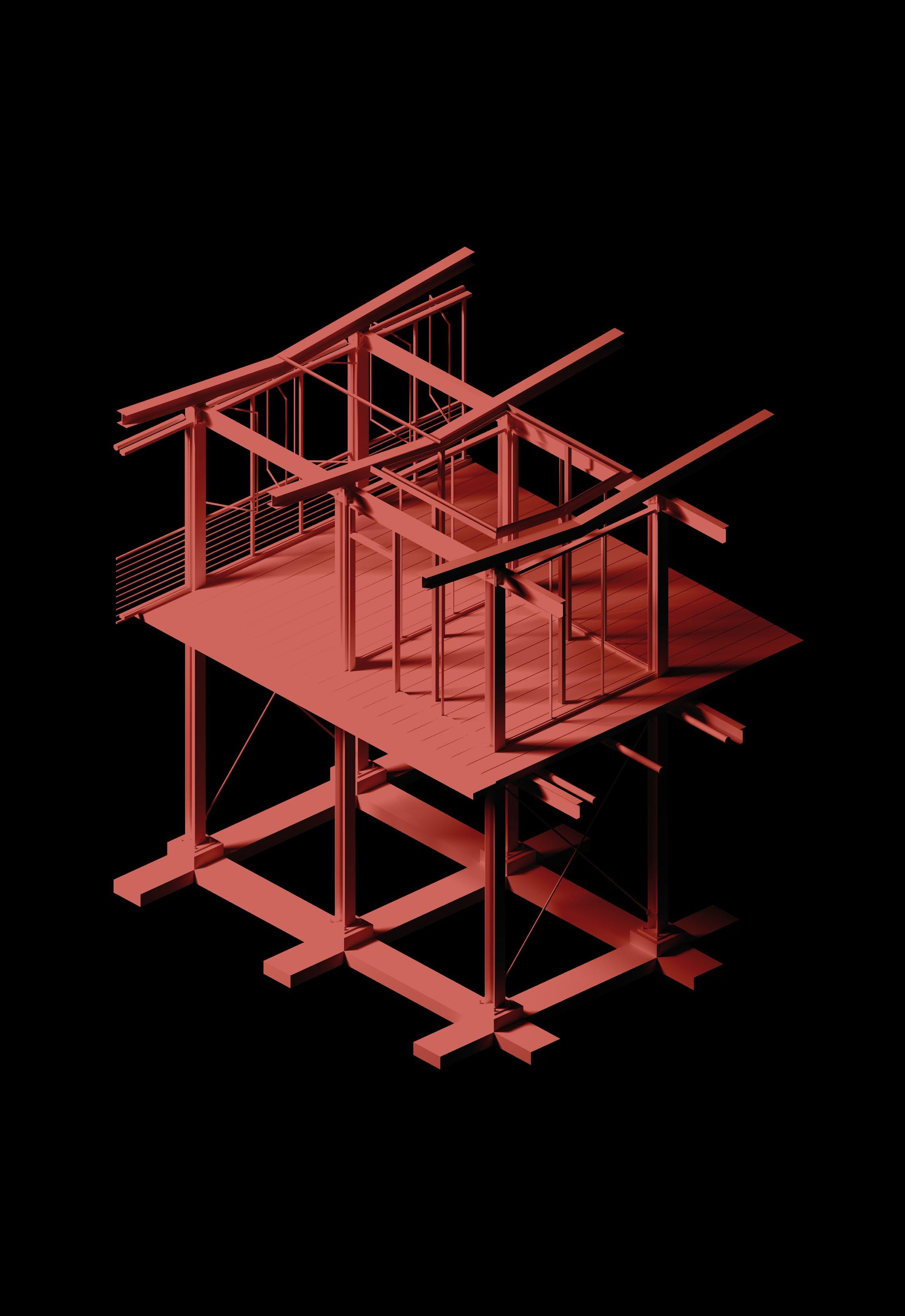
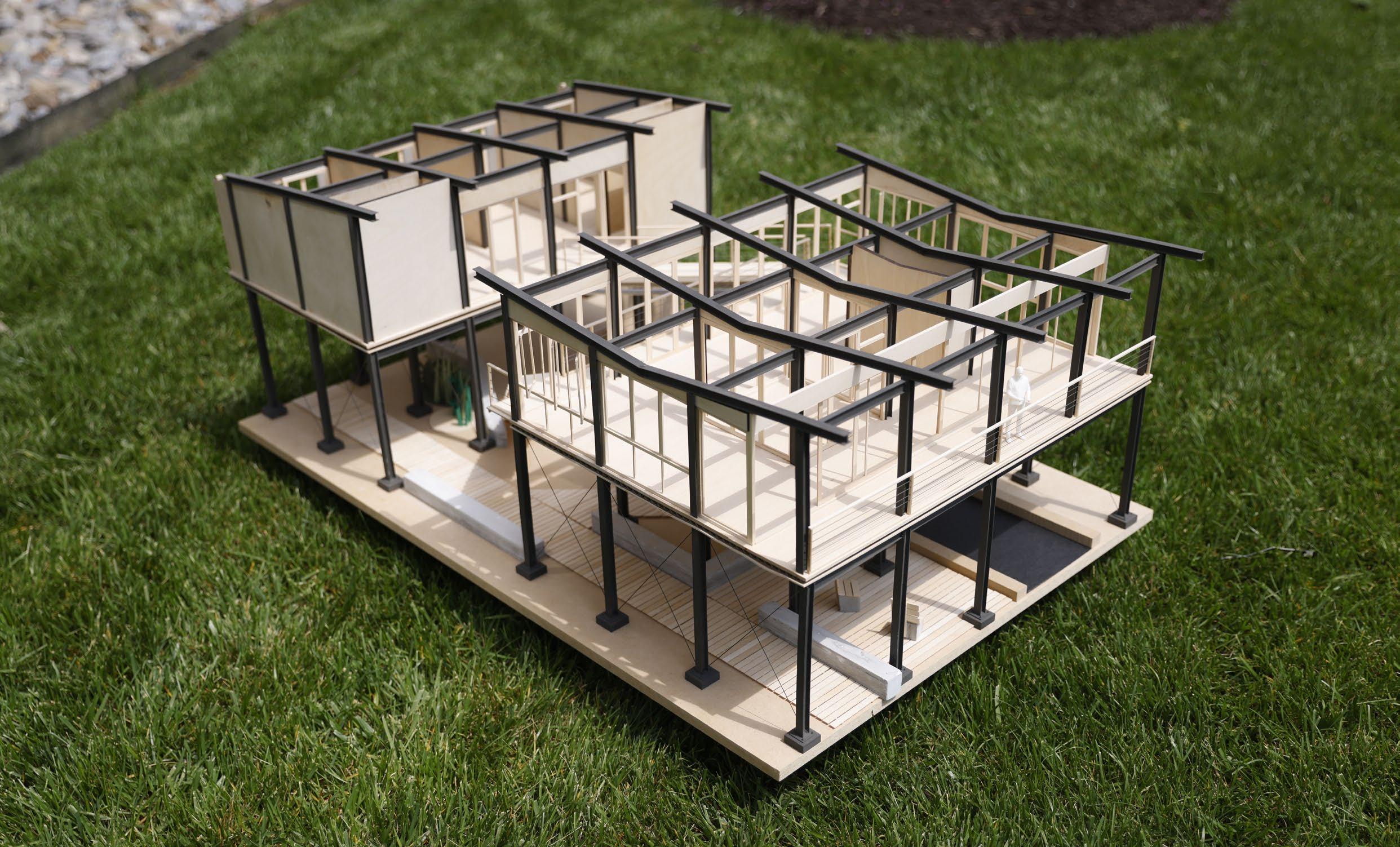
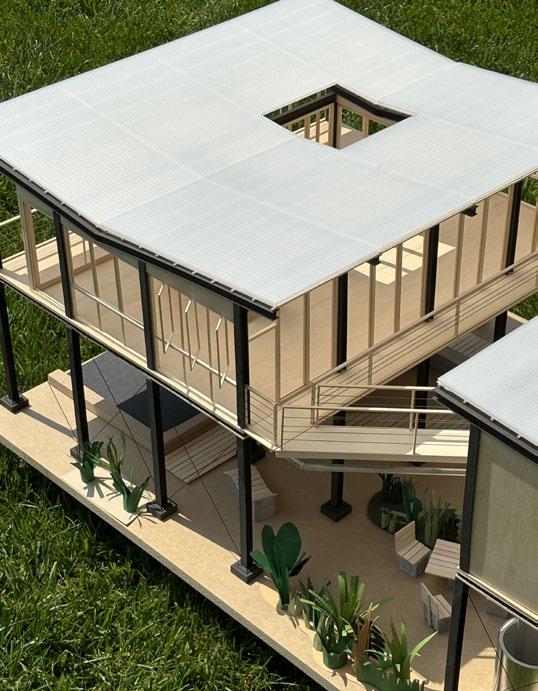
This elevated platform is created with the idea of raising the level of the house as high as possible and creating a compact living space, as well as a flexible and spacious understory. In order to do so, we explored a strong steel structure that can keep the figure light but also strong. This structure is supplemented by a strong concrete slab, clt walls, and hurricane grade windows. Designing for strength also means designing for easy replacement. The steel structure is based on boat storage structures found in the area and hurricane grade windows are used in new constructions in the area. The more solid materials of the house will be unphased by various storm scenarios and the looser elements are designed with replacement in mind- keeping individual and insurance costs low.
Houses in Surfside value privacy- to do this we created this panel facade which blocks most of the view from the outside in, but creates a light and free-flowing understory. There is a heavy and protected front bedroom space and a light and open living space in the back. The living space consists of an open plan with a courtyard, kitchen, and bathroom in the middle; this creates soft spatial zones that work with the structural grid.
The public entrance leads into the understory while the more hidden staircase takes you into the home. This allows for a composition which hides the public program behind the private program. The understory is a space for community activities such as workshops or exhibition space.
The long term ambition is for the building to be modified over time as storm damage occurs. Once the sea level rises to an uncomfortable level, the house can be stripped, and the structure can potentially revert to being a boat structure. As the sea level inevitably takes over the whole space and deems it uninhabitable for humans, it will become a part of the biome.































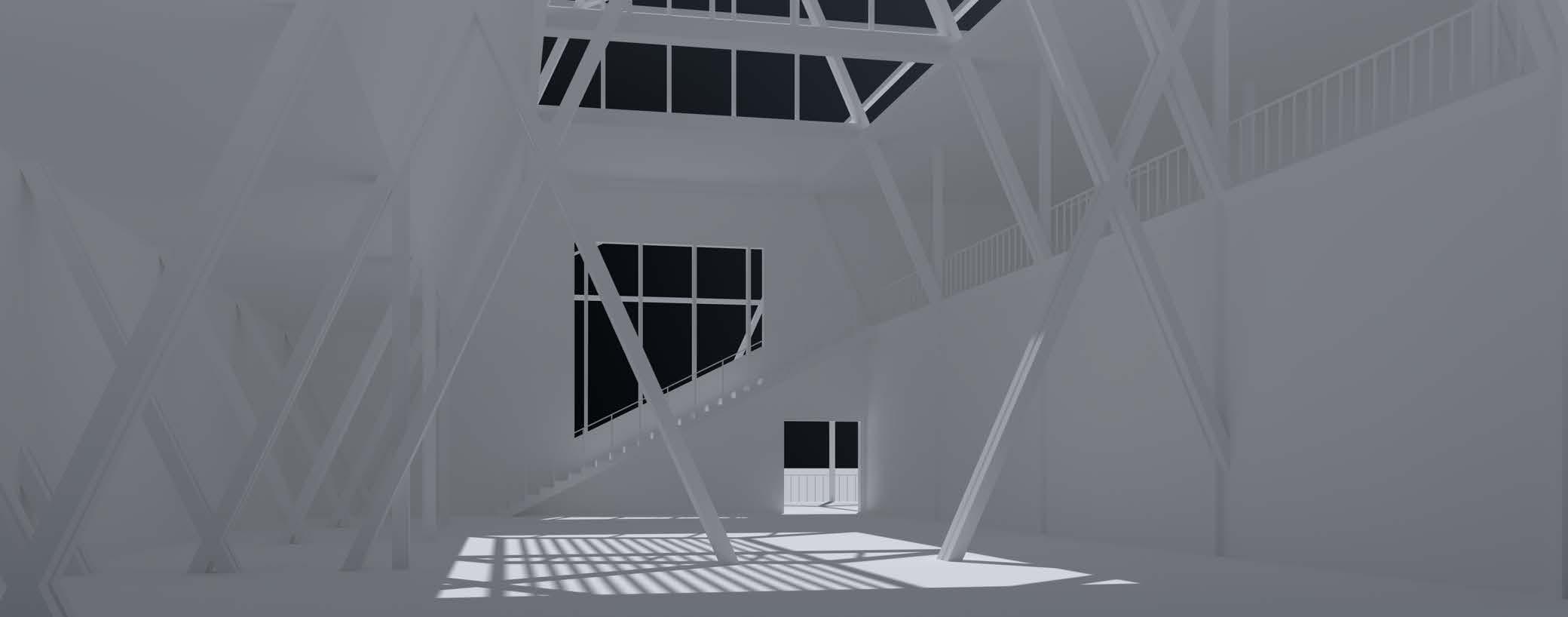
This educational center is an addition to the campus of the Art Academy of Cincinnati. The building is a space for studios, classrooms, and galleries. The first floor is programmed to be a gallery and accommodate school services. The second floor is dedicated to a second gallery level and three large studio spaces. This level also connects to the outdoor spaces. The third level is for classrooms as well as an outdoor patio on top of the building. The exterior space serves as gathering space for students as well as space for larger exhibitions. There is a large flat exterior space as well as an outdoor gallery with pockets cut out of the hill which create spaces for exhibition.
The modular frame system is based on the historical Cincinnati Inclines that once traversed the hills of the city. The frames run across the hill from street to street. The tectonic system is designed for modularity, for the spaces to shift and move as needed for the various programs. The frames, as well as being structural, create a natural guide for walls and windows. On the top of the building are various skylights, which act as a distinct feature as well as utilizing a shutter system to filter the light let into the building. The school is balanced with both large indoor and outdoor space which is necessary for various artistic endeavors.
The smallest floor in the building is dedicated entirely to classrooms, farthest away from the various public programs, creating a more focused and studious environment.
in collaboration with Shiori Green guided by Perry Kulper
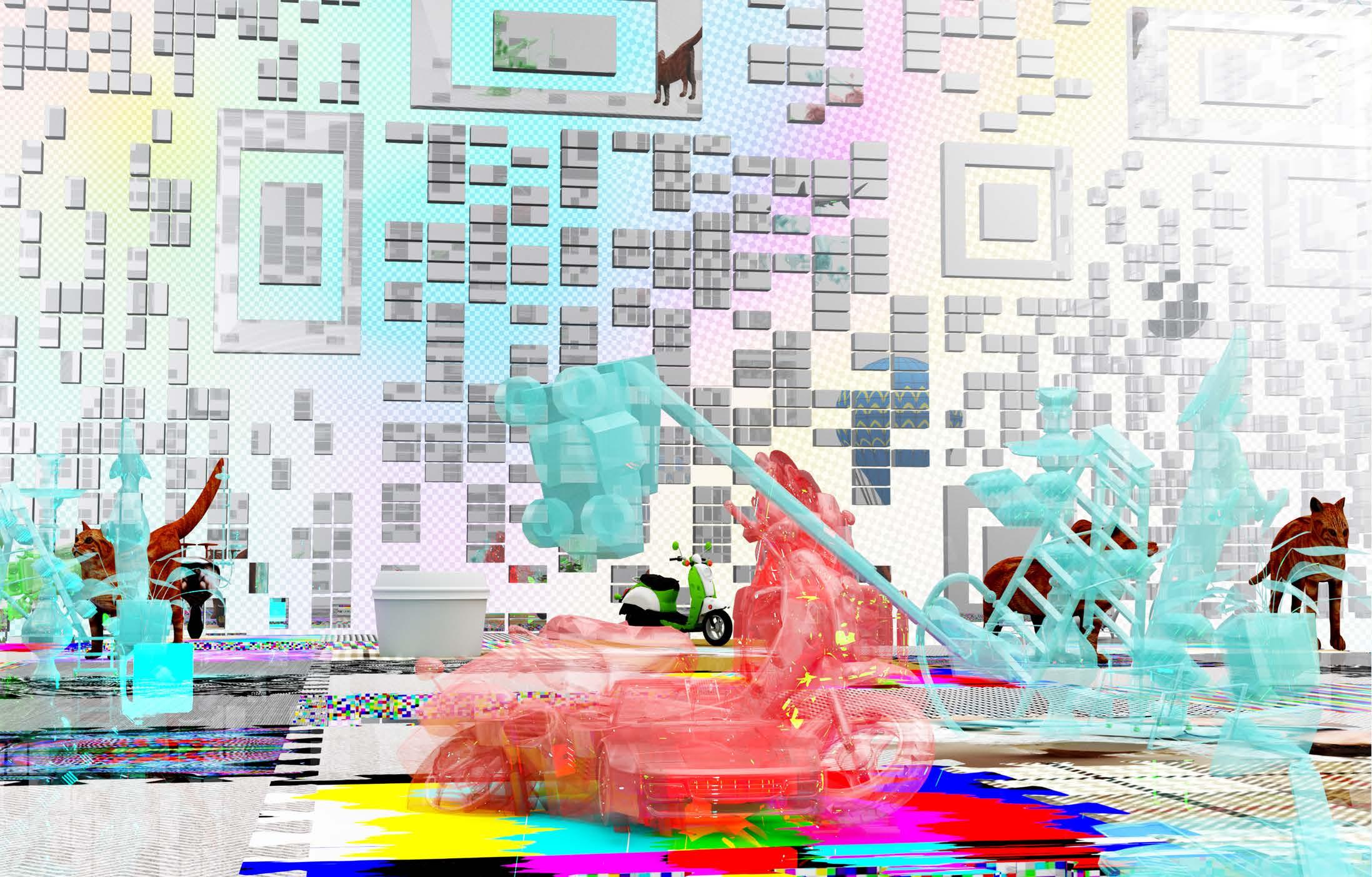
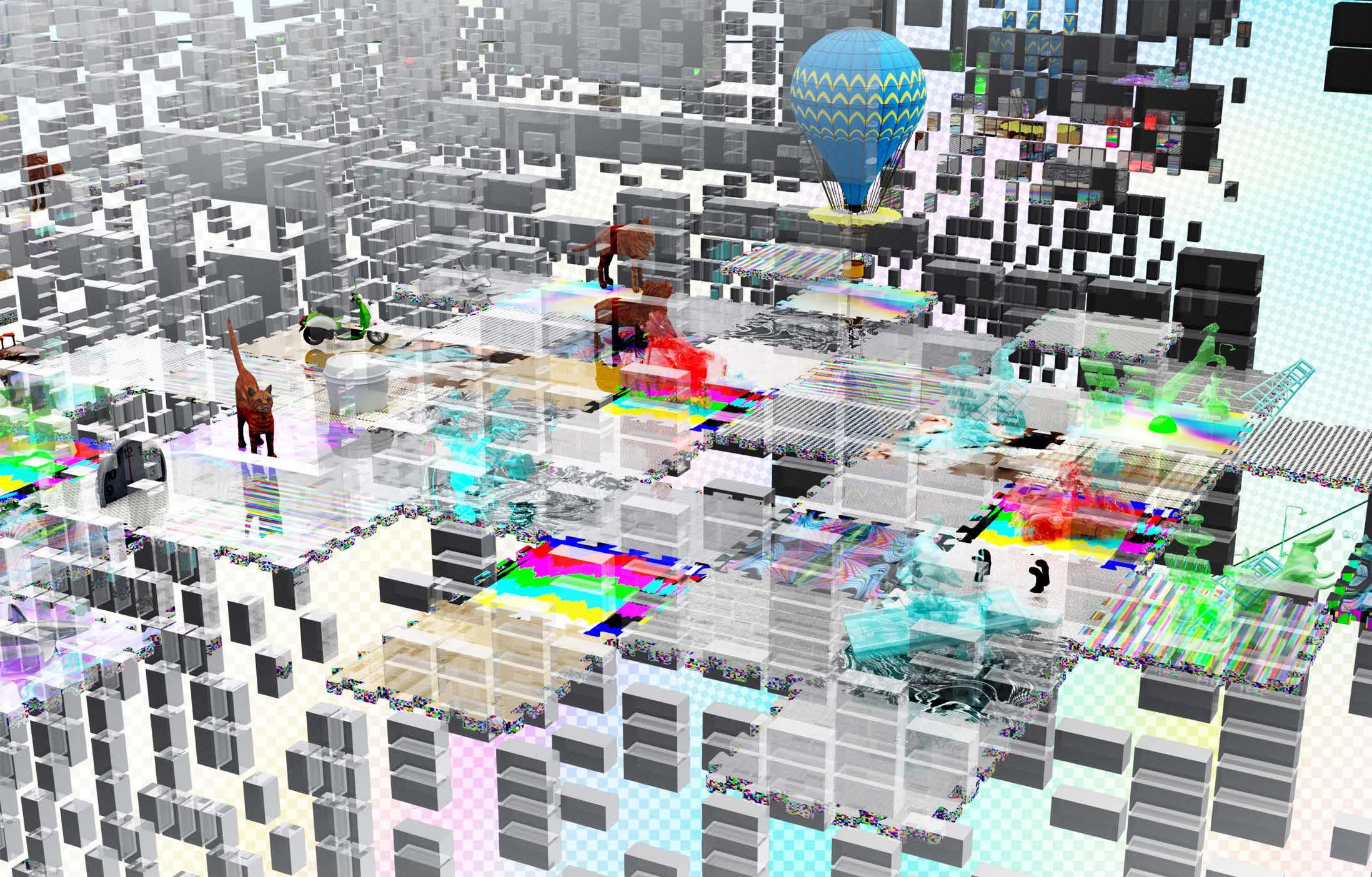
This fantasy world is a world in which common everyday objects are playing a game with defamiliarized digital amalgamations. The checker-boarded play mat is the surface where they play their game, a game that investigates the tension between digital modes of play and fabrication and simpler physical and “real” modes of play and fabrication. Although the real is not really real, they are extremely identifiable compared to the many transparent and reflective objects they are surrounded by. This contrast illustrates our current conundrum in which the real is not really real but still familiar. Objects and images seen through a screen will never be “real” and the multiple reflective deconstructed QR codes work to further defamiliarize and confuse conceptions of reality in regards to the identifiability of an object. Objects we see in the sky are reflected and mirrored versions of what we see on the ground, creating new characters living in a secondary layer of digital screen.
portfolio | Dhruv Jadhav
djadhav.myportfolio.com
djadhav@syr.edu