Thebest time
to Jackson State be at
24) The best time to be at Jackson State
Jackson State University is enjoying a level of success that’s never been reached in its 133-year history. Enrollment and graduates are at an all-time high. The campus and neighborhood are exploding with development. And for the first time, JSU has captured more federal research dollars than any other Historically Black College or University in the nation.

8) Campus NAACP president proves new era
Jackson State students elected Michael Teasley to lead the campus NAACP. He is the first white president of an NAACP chapter at an HBCU.

14) Iranian health care model moves to Delta
Public health professor Dr. Mohammad Shahbazi is importing an approach to rural health that’s been successful in a country where Americans don’t normally do business: Iran.

28) Interim president touts JSU’s impact
A longtime educator, public servant and civil rights advocate and expert, Interim President Leslie Burl McLemore considers Jackson State a “sleeping giant.”

38) Lost Boys of Sudan graduate
Three Sudanese refugees fled their war-torn country for a better life in the United States. Their path led to Jackson State, where they each recently earned a bachelor’s degree.

40) U.S. Education Secretary visits campus
U.S. Secretary of Education Arne Duncan visited Jackson State’s Kids Kollege during his tour of successful American schools.
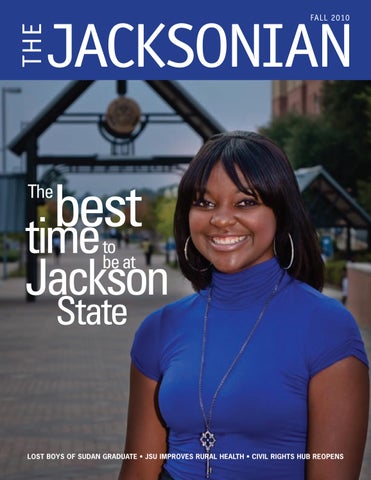
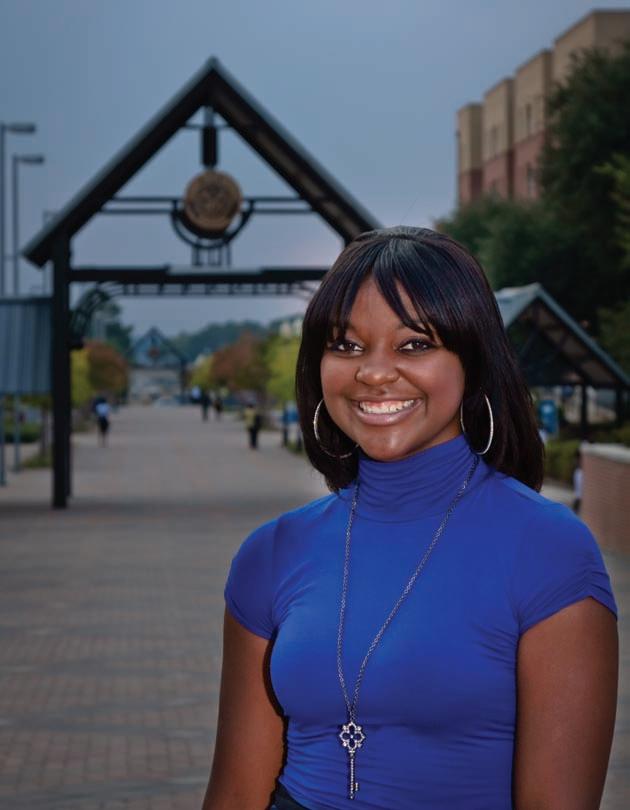
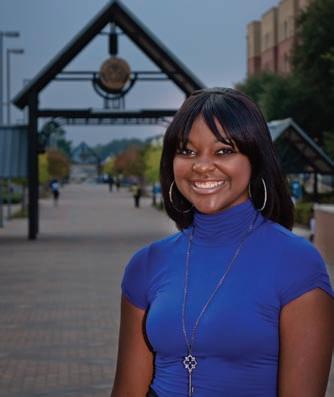
ON THE COVER: Senior mass communications major Marissa Simms is from Jackson, Miss. Photo by Frank Wilson Jr.

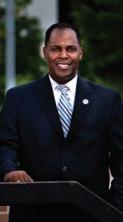

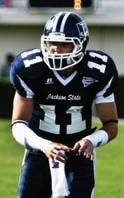

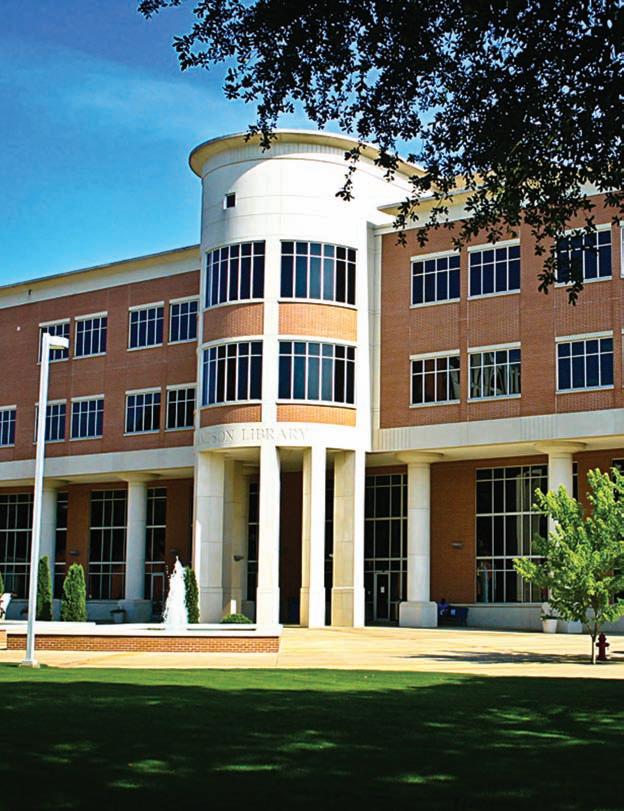
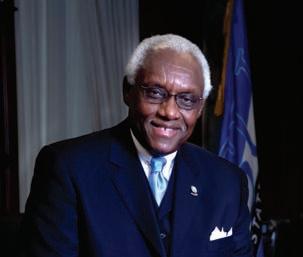
Dear Jacksonians:
Now is truly the best time to be at Jackson State University. Our students are among the best and brightest in the nation. Our faculty is world class. Our staff has never been more committed. And we’ve all worked together with our alumni and friends to make Jackson State one of the top-ranked institutions of higher learning in the country.
In this issue of The Jacksonian, you’ll read about outstanding students such as Derrick Truss, a Jackson, Miss., native who’s poised for success as an opera singer, and Jarrett Claiborne, a future meteorologist who landed a major scholarship award from the U.S. Department of Defense. You will learn about public health professor Dr. Mohammad Shahbazi, who is working to improve health care in the Mississippi Delta with an approach that’s been successful in his native country of Iran. We will also show you how Jackson State is continuing our legacy of social justice with the reopening of Mississippi’s civil rights headquarters, the Council of Federated Organizations.
We’re especially proud of our alumni featured in this issue. You’ll meet Carlton Reeves, selected by President Barack Obama this year to become a federal judge, and Malcolm Jackson, whom the president named to a post at the Environmental Protection Agency. Other alums featured are leading colleges and universities and excelling in their professions as engineers, educators, lawyers and institutional leaders.
You’ll see we haven’t let up on our commitment to being a bridge to a brighter tomorrow. I invite you to learn more about the great things that are happening at Jackson State University. Our campus is open to the world.
Sincerely,
Leslie Burl McLemore, Ph.D. Interim President, Jackson State University
OPERA student poised for international stage
by Gina P. CarTer-SimmerS
Tenor Derrick Truss Jr. got a career boost when a renowned opera singer singled him out after a performance in Jackson, Miss., which garnered him the support of three anonymous sponsors for his opera training after college.
Friday, Jan. 29, 2010, is the cliché “night to remember” for Truss, a Mississippi Opera Chorus member and Jackson State University senior in the music department. That’s the night he performed at Thalia Mara Hall alongside the most famous soprano in the opera world, three-time Grammy Award-winner Renee Fleming. Truss was one of 13 local vocalists invited to audition for the concert. After the performance, Fleming praised Truss’ vocal ability touting him as someone opera lovers would come to know in the future. She also encouraged concertgoers to financially support this art form by sponsoring performers like Truss. As a result, Truss will have the financial backing of three donors while he pursues opera beyond Jackson State.
A percussionist in his high school marching band, Truss couldn’t have imagined a singing career if it weren’t for him eavesdropping during his girlfriend’s choral practice at Jim Hill High School in Jackson.
“Just from standing outside listening,” he says, “I began to sing and kind of play around to what I was hearing them do.” After listening to Truss’ impromptu performance, Jim Hill’s concert choir director encouraged him to audition. Truss soon joined
the singing group, which enabled him to travel to England and Italy. After hearing a recitalist in Italy, Truss knew he wanted to pursue singing professionally. “Getting started so late in high school, there were fundamentals that I had missed,” says Truss, who credits Jackson State with bringing him up to speed. “There’s a general comprehensive entrance exam given by the music department here. It wasn’t the best exam that I’d ever taken. But I was still encouraged to sing and get the fundamentals down as soon as possible.”
Truss says other schools don’t offer the same opportunities as JSU.
“Had it been one of your major conservatories, I would have been turned down based on my entrance exam score,” he says. “Because it was Jackson State, they said, ‘Let’s see what this guy can do.’ I was disciplined in my studies. I think they were willing to give me a shot based on that.”
As a member of the Mississippi Opera, Truss has performed in productions including Rossini’s “Barber of Seville,” Gluck’s “Orfeo ed Euridice” and Puccinni’s “Tosca.” As a student, the tenor performs in annual productions with the opera workshop ensemble at JSU. He was part of the cast called to revive the regional performance company Opera/South, playing one of the slaves of Monostatos in Mozart’s “The Magic Flute.” The senior also is a member of the Mississippi Chamber Singers.
“Derrick Truss is a prime example of why we must not overlook and neglect the students who are not a part of the mainstream form of entertainment,” says JSU’s Opera Workshop Program director Phyllis Lewis-Hale. “We too have precious gifts that must be nurtured and supported.”
In December, Truss will become the seventh person to earn a vocal performance degree from JSU since the opera program restarted in the 2003-2004 academic year. Phyllis Lewis-Hale, applied voice instructor and the director of the Opera Workshop Program, says so few graduate because the program is very selective.
The vocal performance students audition with classical songs or opera arias in English, Italian, French, Spanish or German. They are rated on their vocal ability, voice quality, stage presence, foreign-language skills, acting skills, musical sight-reading skills, knowledge of music terminology and overall performance. Truss credits Lewis-Hale for his success at the university.
“While it is very much so selective, they have instructors who are willing to take all the necessary time to cultivate and help you find your way,” Truss says. “And that’s what Mrs. Hale has done for me. When we met, I didn’t know what my voice was capable of doing at that time. She sat me down and said, ‘This is what you are going to have to do if you want this.’ ”
Despite his hard work, Truss says stardom is not his goal. He merely wants to tell stories through music – whether he remains in Mississippi or branches out to new places. After graduation, Truss hopes to continue his studies in perfor-
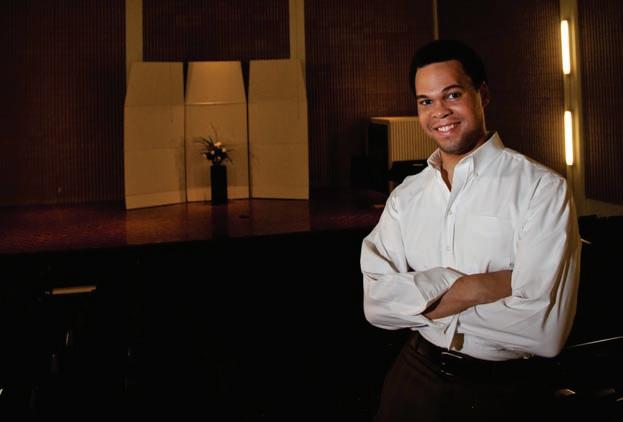
Opera student Derrick Truss Jr. of Jackson, miss., credits Jackson State with helping him cultivate his voice for the centuries-old art form.
mance at the highly competitive Academy of Vocal Arts or the Curtis Institute of Music, both located in Philadelphia, Penn. His back-up plan is to pursue a computer engineering degree at Jackson State.
Truss says he’s really going to miss the experiences he has had at Jackson State, and he praises the department for helping him find himself as an individual outside of music. His wish for the music department is that it continues to grow, and that Opera/South comes back to Jackson State at a level that surpasses its past greatness. To make this happen, the community needs to get behind the department 100 percent, he says. The tenor also would like the music department to be known for more than the Sonic Boom of the South marching band.
Lewis-Hale agrees and has worked tirelessly to ensure that classical performers are not the forgotten artists of this generation.
“We still have a voice that needs to be heard even though the masses are not as familiar with this genre these days,” she says. “Derrick Truss is a prime example of why we must not overlook and neglect the students who are not a part of the mainstream form of entertainment. We too have precious gifts that must be nurtured and supported.”
In her passion to preserve and promote the classic arts, JSU’s Opera Workshop Program director Phyllis Lewis-Hale is planning the production, “From Mozart to Motown,” along with the Jackson State Vocal Jazz Ensemble for the spring of 2011. The concert will honor opera, musical theater, jazz and the Motown sound. “There will be something for everyone to enjoy,”
Lewis-Hale says.
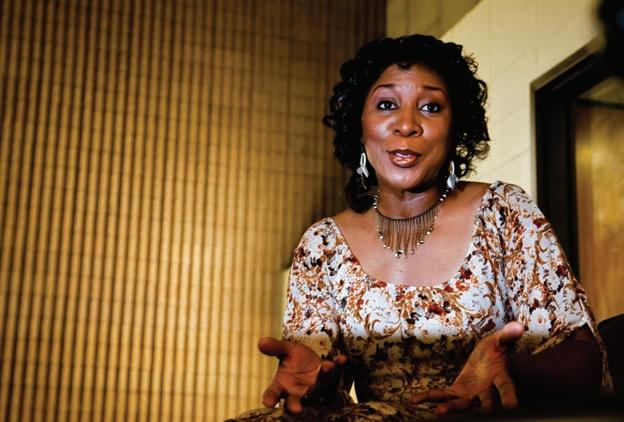
Opera Workshop Program director Phyllis Lewis-Hale revived opera at Jackson State in 2003.
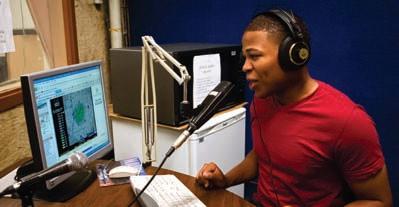
meteorology major Jarrett Claiborne forecasts the weather for WJSU 88.5 Fm and the campus television station, JSU-TV. earlier this year, the U.S. Department of Defense awarded him a prestigious scholarship and an internship.
meteorology student turns phobia into
passion, earns national award
by mOniCa aTkinS
While most students pick their major because they like the subject, Jarrett Claiborne did just the opposite. “I chose meteorology because as a child I was afraid of every storm that came past,” the 21-yearold Lorman, Miss., native says. “I was shaking in my pants because of my fear of the weather.”
Claiborne’s phobia turned into his passion after he joined Jackson State’s meteorology program. Now a senior at the top of his class, Claiborne was rewarded this year with a Science, Mathematics and Research for Transformation (SMART) Award from the U.S. Department of Defense. The future meteorologist was one of 175 recipients selected from 2,000 applicants.
“The only place where success comes before work is in the dictionary,” says Claiborne, who is the weather forecaster for WJSU 88.5 FM and the campus television station, JSU-TV.
Claiborne’s award includes tuition, books, health insurance and $25,000. The honor, which enabled Claiborne to intern at the U.S. Army Corps of Engineers in Vicksburg, Miss., also guarantees a job in his field.
“The meteorology program is designed to enhance the number of minority professional meteorologists and boost the number of those professionals available to pursue advanced studies within the atmospheric sciences,” says Dr. Quinton Williams, who chaired
JSU’s Department of Physics, Atmospheric Sciences and Geoscience before being promoted in July to interim provost and vice president for academic affairs and student life.
Established in 1975, Jackson State’s meteorology program is the first of its kind at a Historically Black College or University. The program has produced 25 percent of the nation’s African-American meteorologists, including Paul Williams on Jackson’s NBC affiliate WLBT and the Weather Channel’s Vivian Brown. “This is a serious program where we train our students to be equipped, whether to be researchers or go into broadcasting,” Williams says.
While maintaining a 3.65, Claiborne stays active around campus by being a part of several organizations including the Army ROTC, the Air Force ROTC, the Chi Epsilon Pi Meteorology Club, the American Society of Engineering Education, the W.E.B. DuBois Honors College and Kappa Alpha Psi, where he serves as community service director and chaplain.
“Since everything revolves around weather, my job is very essential to the safety and planning of the community,” the senior says. Upon graduation in May 2011, Claiborne hopes to become a broadcast meteorologist for CNN and continue serving the community by shedding light on the cloudy days. “It’s a rewarding profession and I’m geared up.”
JSU NAACP president proves new era in mississippi ississippi
by SPenCer mCCLenTy
When Tim Fizer was elected into Jackson State’s NAACP chapter, he invited his best friend – a white rural Rankin County, Miss., native whose grandparents refuse to allow blacks into their home – to witness the meeting. “I told him he could sit in the back,” says the 21-yearold biology major, who grew up steps from JSU’s campus. “He was very, very nervous.”
Three years later, the campus civil rights group elected Fizer’s friend as its president, making him the first white leader of an NAACP chapter at a Historically Black College or University. “I’m a true sign of progression in Mississippi,” says Michael Teasley, a senior political science major. “My parents understood that just as devastating as segregation and racism have been to black people, in their own way, they’ve been stifling to white people as well.”
Teasley’s path to Jackson State has not been smooth. Family troubles and his mother’s poor health caused him to drop out of school at age 15. He later got involved in selling drugs and had brushes with the law on and off through adulthood. Despite his days as a “juvenile delinquent,” Teasley grew up fast when his girlfriend got pregnant. The birth of his son prompted him to get his GED, find legitimate work and get married (the couple has since divorced). The young father worked for UPS and later built a career as a real estate specialist in the telecommunications industry.
By the time he reached his 30s, Teasley left the corporate world to pursue his first love: music. A songwriter and guitar player, he applied to JSU hoping to study music. Though he was not accepted into the music program, Teasley still enrolled at JSU.
Teasley got involved in Jackson State’s NAACP chapter when then-presidential canditate Barack Obama campaigned on campus. He joined the NAACP’s voter-registration drive to help get Obama elected. “It wasn’t about black or white,” Teasley says. “It was about change.”
Teasley and JSU’s NAACP chapter registered 1,700 voters, including a 98-year-old man Teasley met selling balloons outside a Tigers football game. “He had never voted because he couldn’t read or write,” Teasley says. The man called him later in tears of joy because he helped elect the nation’s first black president. Despite Teasley’s passion for civil rights, some students are
skeptical of having a white NAACP president. “It’s the same as when you go to a black history museum and the tour guides there are white,” says Monica Atkins, 21, an English/journalism major. “It doesn’t seem like he would be able to relate to the things the NAACP fights for.”
However, whites have had prominent roles in the NAACP since its founding in 1909. In fact, the idea for the organization came from a group of white liberals who issued a call for a meeting about racial justice. Of the nearly 60 people who answered, only seven were African American. The group’s first president was white.
“I understand the whole thing with me being the president and me being Caucasian, but I would like to get this out there first and foremost,” Teasley says, “as Dr. (Martin Luther) King said, don’t judge me by the color of my skin but by the content of my character. I see my state suffering. We rank very high in high school dropout rates, heart attacks, teen pregnancies, teen STDs and teen incarceration. That’s why I’m looking for change.”
State NAACP leaders have been very supportive of Teasley. “Michael has been very dedicated to the wok of the NAACP,” says Derrick Johnson, president of the Mississippi State Conference NAACP. “He’s always first to show and last to leave, never seeking attention, always making sure the basics get done. We definitely appreciate having him on board.”
As Jackson State’s NAACP chapter president, Teasley says his main goal is to lead a campaign to change Mississippi’s state flag, which incorporates the Battle Flag of the Confederacy. “It’s no longer a symbol of heritage,” says Teasley, whose right arm is tattooed with a poem his mother wrote about him before she died. “It’s a symbol of hate. And people use that symbol all over the world to promote hate.”
As for his goals on campus, Teasley has a long list. “I want an agenda that gets students involved politically,” he says, such as extending dorm visitation hours and holding sensitivity training for security guards. “These are issues that are real to us as a student body.”
Fizer, who is vice president of JSU’s NAACP chapter, says Teasley’s leadership proves the organization has moved beyond black and white. “We’re supposed to view ourselves as human beings, not as our color,” he says. “We’re for civil rights for all people.”
“I’m a true sign of
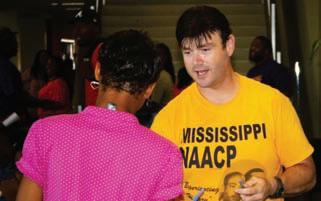
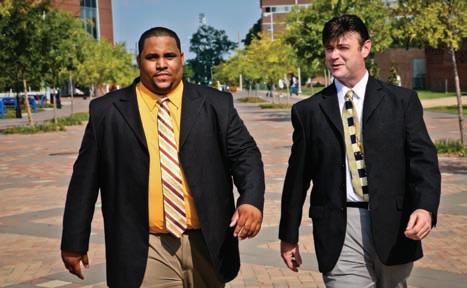
progression in Mississippi,” says Michael Teasley, new president of the JSU NAACP chapter.
political
is the first white per-
to lead an naaCP chapter at a Historically black College or University.
Teasley joined JSU’s naaCP chapter after his friend Tim Fizer (below left) invited him to a meeting. The pair now lead the chapter.
michael
Senior
science major michael Teasley
son elected
Secret Life of Noel Didla:
English instructor moved to dance
by JEaN GorDoN Cook
s a child in India, Noel Didla would often recruit her grandparents to sit in her play classroom, where the 3-year-old taught school with the help of her blackboard and the family Bible. “It was kind of natural for me,” the Jackson State University English instructor says. “My grandmother and mother were teachers, and my father was an academic.”
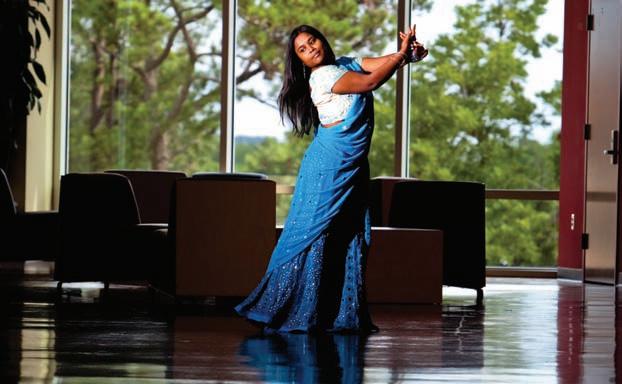
A third-generation educator, Didla says it’s no surprise that she grew up to be a teacher. But when she’s not grading English composition papers or helping her students learn about American history through literature, Didla devotes her time to another passion – dancing. “If I had my way, I would have become a professional dancer,” Didla, 37, says. “I had a calling in
dance and I knew that.”
Since age 4, Didla has been practicing the classical South Indian dance form kuchipudi. The centuries-old dance is known for its graceful movements and dramatic narratives that tell stories in praise of Hindu gods. Throughout her school years, Didla trained daily and performed in frequent competitions and at holiday celebrations. In college, she danced at civic events.
Didla says her parents encouraged her to take up the Hindu-inspired dance, because as Christians in a Hindu-majority country, they wanted their daughter to be exposed to the fullness of Indian culture. “My dad thought it would make me a well-rounded Indian,” she says. “The tradition gave us a sense of discipline and tolerance and understanding.”
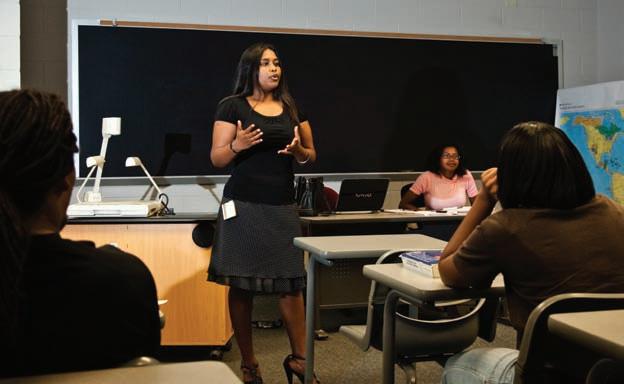
JSU English instructor Noel Didla encourages her students to learn about the world’s cultures.
because of her interest in multiculturalism, Noel Didla was one of 17 Jackson State instructors selected to take part in
Global Inquiry Faculty Training. During the summer program, the educators met for daily seminars on topics ranging from the rise of Islam to the global economic meltdown. The scholars, who came from a variety of disciplines, then drafted a new curriculum for the course University Success, which is mandatory for freshmen. The new curriculum, which aims to give students a global approach to life, is being piloted during the fall semester.
Though Didla’s parents encouraged her to dance, they expected her to take up a more practical career. That’s why she pursued studies in English and English literature, which ultimately brought her to Jackson State. Here she teaches English composition and a course on the literature of science, in which she selects books that tell stories about scientific and technological advancements in American history.
As an Indian immigrant who has found success in the United States, Didla feels she can be a role model for her students. “Being a foreigner teaching them English, students look up to me,” says Didla, who is in the process of earning her Ph.D. in education.
Along with providing students with inspiration, Didla nurtures her students with home-cooked food and by exposing them to a global world view. “Noel is a really, really good teacher,” says Anas Alfarra, a Palestinian exchange student in Didla’s University Success course. “She understands the difference between people and knows how to motivate students really well.”
Alfarra says he especially appreciates how Didla gave him the chance during class to share his story about life in the besieged Gaza Strip. “I came here to see this part of the world,” the 19-year-old says. “I think it’s good that I can take other students to my part of the world.”
Didla enjoys learning about other cultures herself –
a value she inherited from her mother and her father, a former university vice president who frequently hosted exchange students from such countries as Iran, Sudan, Germany and the United States.
Jackson State’s Division of International Studies director Dr. Ally Mack helped recruit Didla to the university after the pair first met in India. “I saw her as an individual who was really committed to education and she really worked hard,” Mack says. “Because of that, she was invited to our education Ph.D. program.”
Despite her busy academic career, Didla always finds time to dance. Along with kuchipudi, she enjoys many types of dance, including African and other styles. “I’m really good at popular Indian Bollywood dancing,” Didla says. “And I’m a regular at the African Student Association parties.”
Though Didla has not had many opportunities to perform traditional Indian dance while in the United States, she often practices some of the moves at a local Mediterranean restaurant, which makes room for her during its Friday night belly dance show. She’s also working with a local dance teacher on a multicultural ballet performance that she hopes will première at colleges around Jackson within a year or so.
“When I dance, I feel liberated,” she says. “That’s when I feel who I am.”
Jackson State’s
University celebrates decades of service
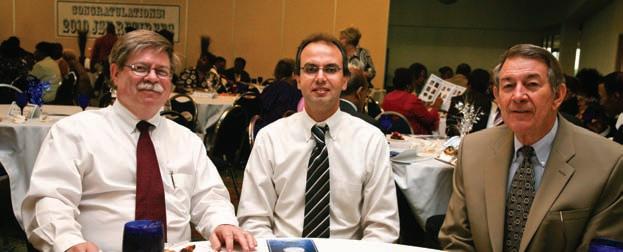
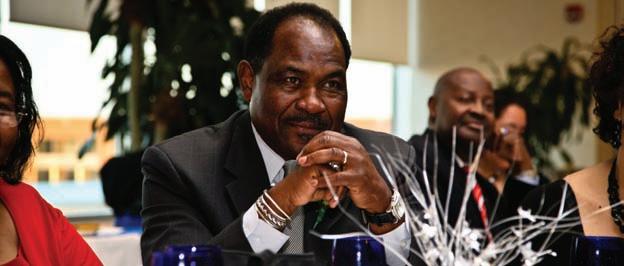
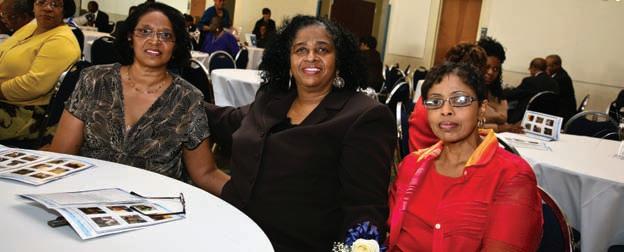
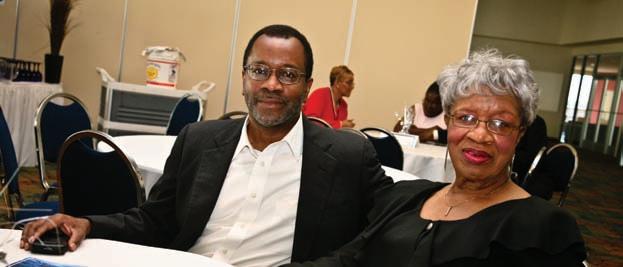
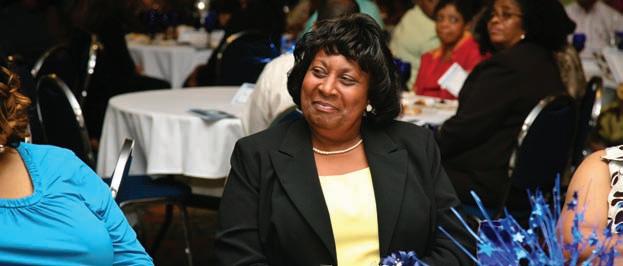
Jackson State University paid tribute to 31 faculty and staff who retired from the university during the spring 2010 retirement dinner. Pictured: (1) Dr. Gordon Skelton (left), director of the Center for Defense Integrated Data at JSU, and Dr. Khalid H. Abed, assistant professor of computer engineering, celebrated the retirement of Dr. William Blair as chair of the Graduate Engineering Program. (2) Dr. Hill Williams retired from JSU after 33 years. He served as chair of the Department of Health, Physical Education and Recreation. (3) Dr. Dorothy Whitley (center), with sisters Beverly Johnson and Carolyn Johnson, celebrated her retirement as coordinator of the Career Service Center. (4) Ruth Irvin celebrated her retirement from Food Services with her nephew Herbert Irvin. (5) Viola Reese retired from Jackson State after 38 years. She was the executive assistant to the provost.
From Iran to the Mississippi Delta: Health care approach improves lives
by JEaN GorDoN Cook
“The same diseases that killed my siblings and relatives long ago in Iran are still subjecting my fellow Americans in rural Mississippi to preventable suffering and death,” says Jackson State public health professor Dr. Mohammad Shahbazi.
With its soaring rates of obesity, diabetes and hypertension, the Mississippi Delta is one of the unhealthiest places in the United States. And with generations of poverty and poor access to health care, people in the Delta have the lowest life expectancy in the nation.
To help reverse that trend, Jackson State University public health professor Dr. Mohammad Shahbazi is importing an approach to rural health that’s been successful in a country where Americans don’t normally do business: Iran.
“My view has been, let’s just put the politics aside and work together to improve people’s health,” he says.
Shahbazi, who grew up in a pastoral nomadic tribe in southern Iran, has teamed up with rural health pioneer Dr. Aaron Shirley and the Oxford International Development Group in Oxford, Miss., to create a network of community health centers in Mississippi’s poorest
region. Called “health houses,” the model is credited with reducing infant deaths in rural Iran by 70 percent over the last two decades.
“The infant mortality rate is one of the globally recognized indicators of health,” says Shahbazi, who is chair of the Department of Behavioral and Environmental Health in Jackson State’s School of Health Sciences.
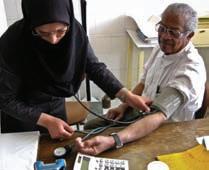
The health house approach uses workers from the community who are trained to monitor people’s basic health needs. The workers take blood pressure, track children’s growth and make referrals for medical treatment when needed. They also go door to door to make sure people eat right and take their medications. The goal of the health houses is twofold: to prevent diseases that can be prevented, and to get people treated for their illnesses before their conditions worsen.
Shahbazi, who moved to the United States in the early 1980s, has seen the impact that
Iran’s rural health care system has had on the people of his tribe. When he returned to his tribal region in 1999, he learned there had been no mother or infant deaths, previously caused by preventable diseases, in more than a decade. Part of his current research focuses on how Iran’s policy of encouraging nomads to settle has affected their health outcomes.
Mississippi’s first health house was established in Greenwood in 2009. Shahbazi and his colleagues have been working over the past year on raising $30 million for a pilot project to set up 15 health houses in Mississippi.
Shirley, who is chairman of the Jackson Medical Mall Foundation in Jackson, expects health houses to show far better results than the federally funded health care programs that have poured millions into the Delta over the years with limited results. “This can put Jackson State in the forefront as an HBCU that’s really making a difference at the community
level and actually taking the lead in reducing health disparities,” says Shirley, who became Mississippi’s first black pediatrician in 1965.
The model also will save hospitals money because it will reduce the need for using emergency rooms for routine medical care, Shirley says. “We don’t need new drugs,” he says. “We need new ways of using what we have.”
Clifton Williams, who is chairman of the LeFlore County Health Center Group in Greenwood, says the health house model will be successful because the health workers – who are trained as Certified Nursing Assistants and Community Health Workers – come from the community where they work. Jackson State administrators have been very supportive of this endeavor, Shahbazi says. “If you get somebody who lives in the community who everybody knows, there’s more of an opportunity for people to open up to them,” says Williams, whose organization works with the Green-
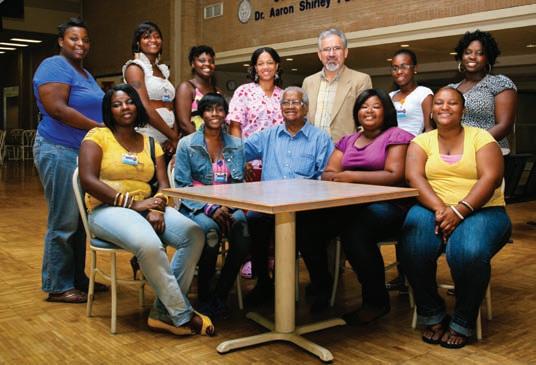
train community health workers
communities.
Dr. aaron Shirley of the Jackson Medical Mall (seated) and Dr. Mohammad Shahbazi (standing) of Jackson State University are leading an effort to
to staff health houses in Mississippi’s poorest

wood health house.
Before launching Mississippi’s first health house, Shahbazi established ties with Shiraz University of Medical Sciences in Iran, which manages more than 1,000 urban and rural public health facilities in Iran’s Fars province. There are about 17,000 health houses throughout Iran. The Iranian university agreed to sponsor a visit in May 2009 from Shahbazi, Shirley and James Miller, director of the Oxford International Development Group. “I asked if they could help us with our situation in Mississippi,” Shahbazi says. “All of them were very, very open and responsive and told us what we needed to do.”
During the trip, a Shiraz University official approved a memorandum agreeing to a collaboration between the Jackson State University team and the Shiraz University of Medical Sciences to adopt Iran’s health house model and to set up educational exchange programs and joint research projects. The U.S. Treasury Department and the National Institutes of Health welcome the partnership. “Jackson State is the research and academic partner, the Jackson Medical Mall is the community partner and Oxford International is the business partner,” Shahbazi says. “Jackson State University is the only American university that has made such an agreement with an academic institution in Iran since the 1979 revolution in Iran that ended the two nations’ cordial political relations.”
The next step came when the Iranian experts visited Mississippi in October 2009 to present their country’s rural health care model at a health disparities conference at the Jackson Medical Mall. Shahbazi’s team will travel to Iran in the late fall with a group of American medical and public health professionals for hands-on training in rural health care delivery. With support from Jackson State, the team is now in the process of establishing a program to train community members to staff Mississippi’s health houses.
Raising $30 million to fund the state’s first 15 health houses will be challenging, Shahbazi admits, but the professor is used to hard work and working from modest means.
He left his tribespeople for the city at age 14 after finishing fifth grade in a tent school. He later moved to the United States to complete his education and earned degrees in mechani-
cal engineering, computer/education, a Ph.D. in cultural anthropology and completed postdoctoral training in international health at UCLA. He was drawn to public health because he believed it could provide solutions to the conditions that led to the death of many women and children in his tribe, including his own siblings.
“The same diseases that killed my siblings and relatives long ago in Iran are still subjecting my fellow Americans in rural Mississippi to preventable suffering and death,” he says. “Such poor health conditions must not exist in the U.S.A. if we apply common sense and engage the community in what matters to them, not what is good for us financially or otherwise.”
At Jackson State, Shahbazi was one of three faculty members who helped start the university’s public health program 10 years ago, operating from a trailer on the main campus. The now-thriving program offers an accredited master’s degree and the only doctorate of public health in Mississippi.
Shahbazi’s spot in that trailer has expanded into a roomy department chair’s office at the Medical Mall, though he still prefers to work from his cramped faculty office across the hall. The room is decorated with photos and memorabilia from his travels and outfitted with a dorm-sized refrigerator, a microwave and an 18-inch-wide upholstered bench, which he sleeps on after late nights at work.
The professor points to a 13th-century Persian-Iranian poem by Sa’adi Shirazi that hangs on his wall to explain his commitment to improving health care in rural Mississippi and globally. The same poem is posted at the entrance of the Hall of Nations at United Nations headquarters in New York.
“Human beings are members of a whole, In creation of one essence and soul.
If one member is afflicted with pain, Other members uneasy will remain.
If you have no sympathy for human pain, The name of human you cannot retain.”
“I would like to see Jackson State continue to take a lead position in serving the community,” Shahbazi says. “Regardless if we get money or not for the health house project, we’re going to do it, it will just be on a smaller scale.”
Dr. aaron Shirley of the Jackson Medical Mall visited Iran to learn about the country’s approach to rural health.
Health houses in rural Iran are credited with reducing infant deaths by 70 percent over the last two decades.
Art professor inspires, supports young artists
by Sidney CollinS
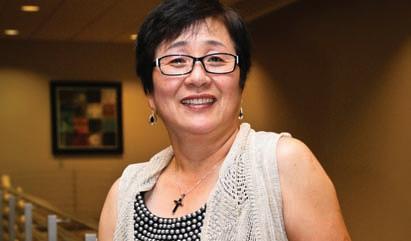
As a young artist in South Korea, Hyun Chong Kim took inspiration from her high school art teachers and an 80-year-old master potter, who taught her how to express the beauty of her culture through ceramic art. Now an accomplished sculptor, Kim is inspiring a new generation of artists through her work as an art professor at Jackson State University.
“Working with the students is a job that I have always enjoyed doing,” says Kim, who joined the faculty in 1997 after graduating from Indiana State University. “I try to always motivate my students to be the best that they can be.”
Kim’s dedication to her students earned her the 2010 Humanities Teacher Award from the Mississippi Humanities Council. The award, which comes with a $500 prize, is given annually to one humanities faculty member at each institution of higher learning in the state. “Winning this award for the second time was a total surprise to me,” says Kim, who earned the same award in 1999.
Kim teaches art appreciation and ceramics classes in the Department of Art, which enrolls 150 art majors. Art department chair Charles Carraway nominated Kim for the award. “Pro-
fessor Kim has been with us for many years and she has been responsible for many of the ceramic pieces in the department and many of the flower arrangements and artwork for campus events,” Carraway says. “She is full of so much energy.”
Chauncey Wade, a senior graphic design major from Flora, Miss., says Kim has motivated him to become the best at his craft. “Mrs. Kim always listens to us, she always has an encouraging word for us and she makes the class fun,” Wade says. “Mrs. Kim really deserves the award that she won because she works really hard to help her students.”
Along with teaching, Kim leads student competitions and trips, including the annual National Council on Education for the Ceramic Arts conference, and she runs a scholarship program. “I wanted to start a program to help students with scholarship money because most students’ problem is money,” Kim says. “I try so hard to support students who are struggling financially.
“I believe that the students should be our first priority,” she says. “If we don’t have students, how will we teach?”
Art professor Hyun Chong Kim won the 2010 Humanities Teacher Award from the Mississippi Humanities Council.
you! Thank
Jackson State University could not operate without the men and women who work hard every day to maintain and improve the campus and to feed the students, staff and community. Thank you members of the Department of Facilities and Construction Management and the Department of Food Services!
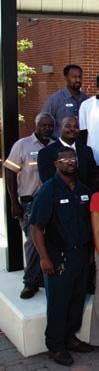

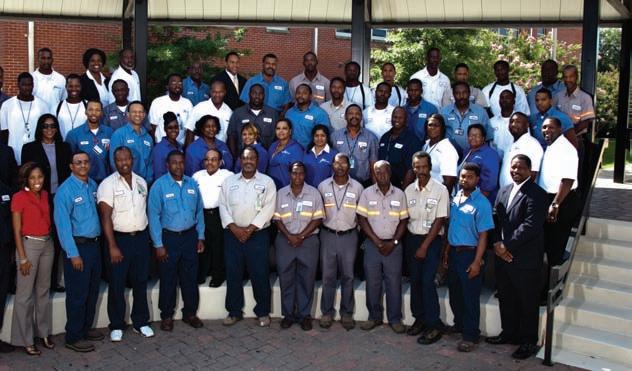
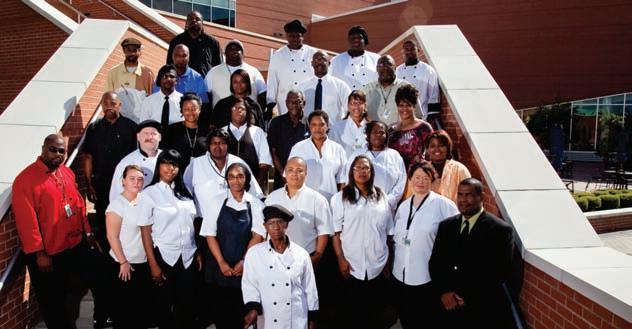
The department of Food Services provides nearly 45,000 meals each semester to students on the campus meal plan and caters university and community events.
The department of Facilities and Construction Management maintains 2 million square feet of space throughout JSU’s 200-acre main campus.
“I knew about my offer before I left my summer internship,” says 2008 graduate Sparsula Simmons. “That felt good – and safe.”
State Farm taps JSU grads for computer careers
By JeAn GorDon Cook
Before starting her senior year at Jackson State, computer science major Sparsula Simmons already had plans to head to Bloomington, Ind., immediately after graduation to work at the headquarters of State Farm Insurance.
“I knew about my offer before I left my summer internship,” the 2008 graduate says. “That felt good – and safe.” Simmons, 25, credits the partnership Jackson State has cultivated with the insurance giant for helping her land her job as a systems analyst – which carries an annual starting salary of $56,000 to $60,000. For more than a decade, Jackson State’s Computer Science Department has supplied State Farm with qualified recruits, and the insurance company has supported the department with more than $100,000 in grants.
“Jackson State is one of our target schools,” says State Farm systems manager Rob Wilburn. “The university has been on our priority list for many, many years.”
Wilburn says Jackson State graduates are a good fit for State Farm because the
computer science curriculum keeps current with today’s business world. And the university reliably produces computer science graduates whose skills are highly sought by American industries. Currently, about 30 Jackson State alums work at State Farm’s headquarters in Bloomington.
“It’s in the central path of just about every business you look at,” Wilburn says about computer expertise.
Despite the growing demand for computer programmers and software engineers, the number of people graduating with computer science or computer engineering degrees has declined nearly 40 percent over the past decade. And while the number of students enrolling in programs is starting to pick up – there was an 8.5 percent increase in computer science majors in the United States in 2009 – the need for programmers keeps outpacing the supply. According to the U.S. Bureau of Labor Statistics, jobs for computer programmers and software engineers are projected to increase by 21 percent through 2018, which is much faster than

Jackson State graduate Sparsula Simmons (above, left) parlayed her summer internship at State Farm’s headquarters in Bloomington, Ind., into a career as a systems analyst. The 2008 graduate is pictured at work with JSU computer science majors Alex Moncrief (left) and Jesse Harris, who interned at the insurance company’s headquarters over the summer.
Computer Science Department chair
Dr. Loretta Moore has strengthened the computer science program by cultivating corporate and international partnerships.


Graduate student Ilin Sunny S. Dasari (left) works with senior computer science major James Sims in the computer lab. Students who graduate from Jackson State’s computer science program with good grades have no trouble finding jobs with starting salaries close to $60,000, says department chair Dr. Loretta Moore.
the average for all occupations.
Jackson State’s Computer Science Department enrolls close to 200 undergraduate and graduate students, and the number of entering freshmen in 2010 has remained steady since last year. The bachelor of science degree program in computer science is accredited by the Computing Accreditation Commission of ABET (formally known as the Accreditation Board for Engineering and Technology).
State Farm’s most recent gift of $50,000 aims to lure more students into high-tech careers. The Computer Science Department is using the grant to help establish a State Farm scholarship program, a computing innovation lab and a computational thinking course.
“With computer science, a lot of companies go in and out over the years, but with State Farm, it’s been continuous,” says Jackson State’s Computer Science Department chair Dr. Loretta Moore about the university’s relationship with the insurance company.
The new course, which is set to launch in the spring of 2011, is geared toward students from all majors and will teach students how to integrate computational thinking within their respective disciplines, Moore says. For example, criminal justice majors can learn how computer forensics helps solve crimes,
biology students can learn how bioinformatics help manage biological data, and music students can get introduced to the emerging field of music informatics.
Money for the computing innovation lab will be used to purchase hardware and software for students to create their own technologies, which could include robotics, smartphone apps or applying gaming techniques for educational purposes.
“We want to attract students who are thinking about being innovators,” Moore says. “We want them to think creatively.”
Senior James Sims, 24, believes Jackson State’s computer science program is giving him a firm foundation for a career as a software engineer.
“I definitely think it prepares you and gives you a strong basis for what’s going on in the actual workforce,” says Sims, who spent three years playing baseball for the minor league team, the Colorado Rockies. “I’ve actually heard that from students who graduated and from employers who have hired Jackson State students.”
With his JSU education, Sims expects to get a job offer before he graduates.
“I think I have what it takes to land a job pretty easily,” he says. “I’m really confident about that.”

JSU forms partnerships in India
By JeAn GorDon Cook
Jackson State’s Computer Science Department expanded its reach when chair Dr. Loretta Moore traveled to southeast India over the summer to start a partnership with Koneru Lakshmaiah University, known as KLU.
During the three-week trip, Moore led daily lectures and met with colleagues at the Indian university to draft plans for JSU and KLU to work together. “The ultimate goal is for a faculty and student exchange,” Moore says. “If we can do that now at JSU, then we’ll be ahead of other institutions.”
Moore says her colleagues at KLU want to learn how to secure funding for research, in the same way that Jackson State has done through its many research centers. In turn, she would like to learn more about KLU’s approach to learning. “Students are in school six days a week and have formal tutorial and recitation hours,” she says. “And there’s a real dedication and pride among the faculty.”
Within a year, Moore hopes JSU students will be interning in India – even if they start out with two- or four-week assignments. “We have to get our students an international experience so they can demand top dollar,” she says. “That will keep them globally competitive.”
Moore’s visit to KLU was the first of three department chair trips to India planned for 2010, says JSU associate provost Dr. James Maddirala, who leads Global Academic Diversity and Budget and Finance for the Office of Academic Affairs. Maddirala says Jackson State is in the process of creating partnerships with six other universities in India. Those linkages will make it easier for JSU students to study in India, he says, and increase the number of international students at Jackson State.
The partnerships are part of the university’s ongoing work to collaborate with universities around the world. To date, Jackson State has formal links with institutions in close to 40 countries.
“We want to make students global citizens,” Maddirala says.
Associate provost Dr. James Maddirala leads Global Academic Diversity at JSU.
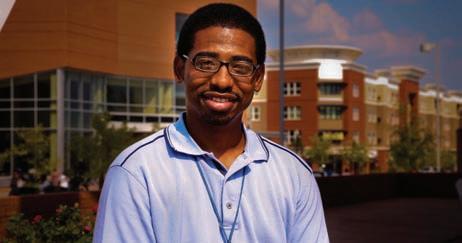
Jackson State, Hinds Community College partner to step up transfer enrollment
By SpenCer MCCLenTy
This semester, senior business administration
major Ivan Henton is taking courses at Hinds Community College and Jackson State University thanks to a new program that allows Hinds students to transfer credits more easily to JSU. “I love the arrangement,” Henton says. “I wish it had happened sooner.”
The partnership was set up in the spring of 2010, when Dr. Pricilla Slade, a visiting professor of business and special assistant to the vice president for research, arranged a meeting between the presidents of JSU and Hinds Community College. The meeting led to the creation of the new Academic Partnership Program between the two schools.
Launched this fall, the program simplifies the process for students transferring from Hinds to JSU to complete an undergraduate degree. “When you’re a student at Hinds, you want a clear-cut path that states which courses will transfer and which ones won’t,” says Henton, 32, who holds two associate degrees from Hinds and will earn his bachelor’s from JSU.
Slade says the agreement spells out the courses students need to take at the freshman and sopho-
more levels at Hinds so all of their credits will transfer to JSU.
The agreement also allows faculty and staff at JSU and Hinds to take tuition-free courses at each other’s institution. “There are those who think that maybe this shouldn’t be part of an academic agreement, but it is,” says Hinds Community College president Dr. Clyde Muse, who has led the institution for 32 years. “It’s a very vital part of this agreement.”
Other goals of the Academic Partnership Program are to improve student access and degree attainment, and to better use the resources of both institutions.
“Part of this agreement provides for Hinds to send us names and contact information of their graduates,” Slade says. “Imagine that you’re a student, you’ve just graduated from community college and you’re trying to determine what you’re going to do with your life, and here comes a letter in the mail that says, ‘Congratulations, you have been accepted as a student at Jackson State University.’ So I believe that we will get a number of students entering JSU next year who otherwise wouldn’t have had we not sent them that letter.”
Ivan Henton started his studies at Hinds Community College and will finish at Jackson State.
Thebest time to Jackson State be at
by Jean Gordon Cook
As Jackson State prepares for its new president, the university is enjoying a level of success that’s never been reached in its 133year history. Enrollment and graduates are at an all-time high. The campus and its neighborhood are exploding with development. And for the first time ever, Jackson State is ranked No. 1 among all Historically Black Colleges or Universities in obtaining federal research dollars. These achievements and others, say university leaders, have positioned Jackson State as America’s No. 1 public HBCU.

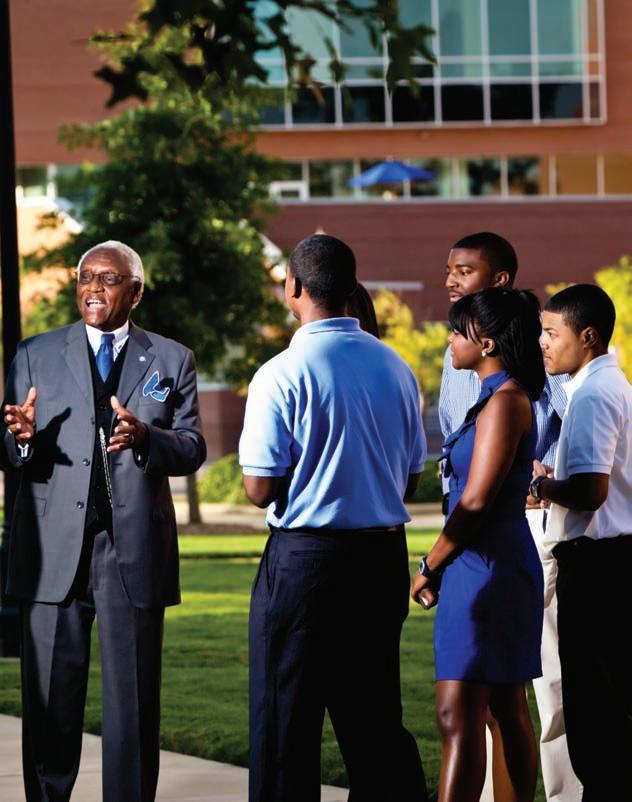
Interim President Leslie Burl McLemore says Jackson State attracts some of the nation’s top students.

“I have the good fortune to come in when Jackson State is on the move,” says Interim President Leslie Burl McLemore. “We’re on the rise.”
A JSU professor for nearly 40 years, McLemore, 70, came out of semi-retirement over the summer to take the helm of Mississippi’s “urban university.” The former Jackson city councilman set to work immediately on what he describes as “building up on the legacy of people who have come before me.” One of his first orders of business was assembling a team of top administrators – all Jackson State alums – who share his passion for the university.
“All of us love this place and are in awe of the folks we have to work with,” says McLemore’s senior adviser Robert Walker, who is the former mayor of Vicksburg, Miss. “We couldn’t have asked for anything better.”
Walker, who taught history at Jackson State in the 1970s and was the City of Jackson’s chief administrative officer when McLemore served on the city council, says he’s thrilled
about joining JSU’s administration during a boom time for Jackson. In just the past few years, downtown development has been spreading toward campus with the construction of the Jackson Convention Complex, the reopening of the historic King Edward hotel, the renovation of the Standard Life building and the completion of Metro Parkway, which connects Jackson State to downtown Jackson.
Other projects underway include the revitalization of Farish Street and the next phase of University Place of Jackson – a 50-acre residential and commercial development that will transform the community between campus and downtown Jackson.
“Both Dr. McLemore and I were part of much of the development that’s taking place right now,” Walker says. “Jackson State is so critical in furthering the progress of this city.”
Along with development on- and off-campus, Jackson State is increasingly recognized as the region’s intellectual hub. With 37 master’s, four specialist and 11 Ph.D. programs, the
Robert Walker
One University Place opened at the intersection of Dalton Street and John R. Lynch Street in September 2010. The building houses luxury apartments and retail space and is the first phase of University Place of Jackson. The 50-acre residential and commercial development is expected to transform the community between campus and downtown Jackson.
university offers more advanced degrees than any other institution in Mississippi’s capital area. And the accredited programs in public health and urban and regional planning offer the only master’s and doctoral degrees in the state in those disciplines.
The university’s stature has grown nationally and internationally because of the work of its scholars and researchers.
“We really have put our name on the map,” says Dr. Quinton Williams, interim provost and vice president for academic affairs and student life. “That’s a testament to the quality of faculty who have been brought in.”
Williams, who served as chair of the university’s Department of Physics, Atmospheric Sciences and Geoscience before being promoted to provost, says Jackson State is “immensely different” than his days as a JSU student in the 1980s. At that time, research was just emerging in the science- and technology-related departments.
“Fast forward to 2000, and we have become a high research activity university,” Williams says about the Carnegie Foundation designation that put Jackson State in the same category as the University of Mississippi, George Mason University and Howard University. And for the first time in history, Jackson State in 2010 secured more federal research dollars – $68 million – than all Historically Black Colleges or Universities in the country.
Williams says all of the gains Jackson State has made has assured him that the university will sail through its reaffirmation of accreditation process with the Southern Association of Colleges and Schools (SACS), which will culminate with a site visit in the spring of 2011.
“I recently met with the SACS leadership team and they were very pleased by what they saw,” he says. “I’m feeling very confident that we’ll come through with reaffirmation.”
With the university on such strong footing, students are reaping the most benefits, Williams says.
“Students are getting enrolled in highly competitive graduate programs and graduates are competing in their fields of discipline,” he says. “There’s just a lot of good academic quality and output that we’re seeing. We’re always getting better and better at what we do.”
Biology and pre-med major Andross Milteer is confident Jackson State is laying a solid foundation for a career in medicine.
“Academically we’re great,” says Milteer, who aspires to become a pediatric psychiatrist and one day lead a hospital. After graduation, the 21-year-old senior plans to pursue his master’s in biology, attend medical school and earn an M.B.A.
Along with helping him prepare for his future career, Milteer, who is Jackson State’s Student Government Association president, credits the university with helping him mature into the man he is today.
“Jackson State has taught me core values that will stick with me for my whole life,” the Long Beach, Calif., native says. “I love it here.”
During Milteer’s three years at Jackson State, enrollment has grown to an all-time high of 8,700, and the campus has been transformed by the construction of a new Student Center, the School of Engineering building and the renovation of Gibbs-Green Plaza.
To be sure, fiscal challenges loom large for public universities across the country, but Michael Thomas, interim vice president for business and finance, says he’s putting cost-savings systems in place that were successful during his tenure as deputy superintendent for operations with Jackson Public Schools.
A 1985 JSU graduate, Thomas says “the university is in a great place,” and he’s thrilled to finally be working for his alma mater.
“This is the fulfillment of a career dream,” he says. “I wanted to come here.”
While McLemore acknowledges that all of the state’s public universities face a budget crunch, he says Jackson State is used to operating – and even thriving – on a tight budget.
“I’ve inherited a situation where there’s not chaos at all,” he says, citing the quality of JSU’s faculty, administration and students, “just a lack of money.”
And the university’s budget constraints have not diminished McLemore’s drive to invest in the area around campus. Two of his earliest initiatives include the establishment of a human capital development division to work in the nearby Washington Addition neighborhood and laying the groundwork for a civil rights corridor along John R. Lynch Street.
With a career that includes a stint as interim mayor of Jackson, McLemore says he plans to make the most of his time as Jackson State’s leader.
“Being here is much closer to me personally,” he says. “This is a personal labor of love.”
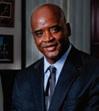
Dr. Quinton Williams
Michael Thomas
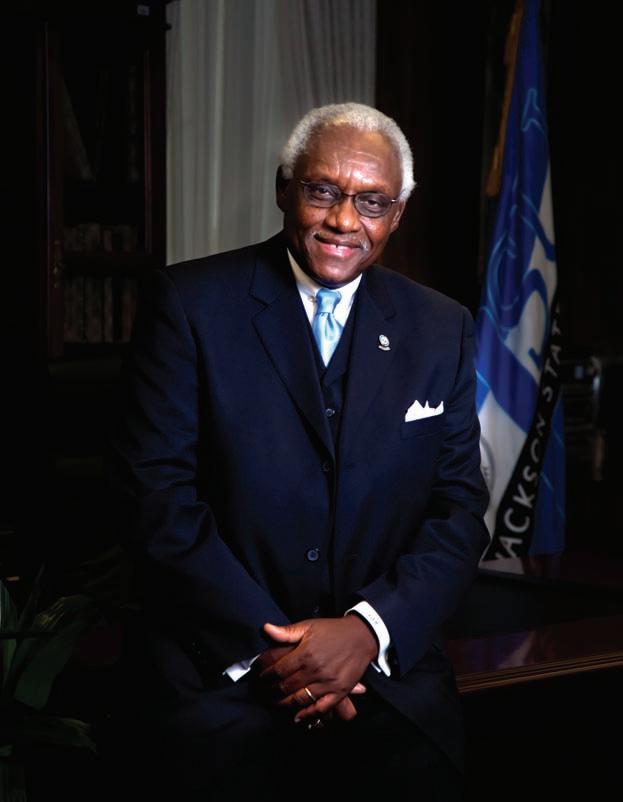
Jackson State University Interim President Leslie Burl McLemore
The Jacksonian interview with Interim JSU President Leslie Burl McLemore
by anthony dean
Dr. Leslie Burl McLemore became interim president of Jackson State University in July 2010. A longtime educator, public servant and civil rights advocate and expert, McLemore considers Jackson State a “sleeping giant.” He spoke with The Jacksonian about how JSU is a transformative institution.
JACKSONIAN: You’ve spent your career as an educator and in public service. How has that equipped you to lead Jackson State University?
MCLEMORE: I started off at Jackson State as an associate professor of history and political science. Then I was elevated to the chairmanship of the Political Science Department in 1972. I was dean of the Graduate School, director of Research Administration and acting director of the University Center. I co-founded the Fannie Lou Hamer National Institute on Citizenship and Democracy. I think all of these positions have equipped me to serve as the interim president of Jackson State.
JACKSONIAN: What are the top priorities you want to tackle while in office?
MCLEMORE: We have a financial issue that we need to deal with at Jackson State. We need to figure out a way to increase the revenue for the university. We need to figure out a way to pay our bills in a timely fashion. I’m really concerned about that, so what I have done is appoint Mr. Michael Thomas to be the vice president for business and finance. His responsibility is to look at the numbers and help us work through ways that we can have a balanced budget every year.
Of course I want to ensure that we continue to provide the finest education for the men and women who come to Jackson State. I also want to continue to recruit world-class faculty members in all areas at the university and provide them with the compensation that is competitive amongst universities in the Southeast.
We also want to reach out to the community in a systematic way that President Ronald Mason Jr. had begun to do, and we want to make sure that is institutionalized. So whoever is president, if we can institutionalize some of these good things and the lessons learned from working with the
community and working with other partners, it’s going to be a plus for Jackson State.
Then I have some special initiatives. I want to make sure that we develop a program to attract, recruit and retain young black men on the campus of Jackson State. I want to reach into the public school system starting with Jackson Public Schools and other systems across the state to ensure that we can help with the dropout issue. I want to see more of the Jackson State University faculty and staff members volunteering to mentor and to work with young men and women in Jackson Public Schools because this is our laboratory. I literally want to see a Jackson State presence in every nook and cranny in this city and this state. We are a state institution, we are a national institution, and our presence should be felt overwhelmingly.
JACKSONIAN: Where do athletics fall within your priorities?
MCLEMORE: I believe what former JSU President James Hefner said repeatedly, there is no contradiction at all between good academics and good athletics. There is no contradiction between winning in the classroom and winning on the football field. So I want to see us win – whether it’s volleyball, golf or football – but I think we always have to make sure we get our priorities straight. These student-athletes are students first, athletes second. I am absolutely in favor of us doing all the things that we need to do in order to produce winning teams and build character amongst our young women and men. But I know as an academician that we are here fundamentally to educate these men and women who come to Jackson State. I am going to work very closely with the athletic director and the coaches to ensure that we first make sure that we have a good academic support system for the athletes.
JACKSONIAN: Are you working with them to employ some special initiatives to increase their academic progress report? As you know, we did fall below the NCAA’s Academic Progress Rate threshold.
MCLEMORE: We are going to solve that problem by pulling together a multifaceted academic support system for the athletes. We won’t see that again, at least during my watch. We are going to do whatever we can because athletes can learn as well as anybody else. The second-ranking guy in my high school class was an outstanding football player named Isaiah Madison. He now teaches in the Political Science Department at Jackson State and was the first lawyer to file the Ayers case. He was a football player par excellence and a scholar in the classroom. I know if Isaiah can do it, these guys can do it too.
JACKSONIAN: In most universities, athletics is a big business and can support the university. Do you envision our athletic department getting to the level that its financial challenges won’t be a burden on the university?
MCLEMORE: I think we need to move in that direction and clearly football has the possibility of making a profit, as does basketball. We’ve got to get people in the stadium and the Lee E. Williams Athletics and Assembly Center. I’ve been talking to the athletics director about ways to attract more people to come to games. I want us to generate some excitement around this football team, around the basketball team, around the tennis team. I want young people to be competitive, saying, “I want to be on the tennis team. I want to be on the golf team, I want to be on the volleyball team.” We also have to encourage young people to be competitive in the classroom.
JACKSONIAN: What will happen with the New Academy under your administration?
MCLEMORE: It was not going to be implemented until the next academic year, based upon current plans. I’m going take advantage of this year when we’re working on SACS reaffirmation of accreditation and have an ongoing dialog about the New Academy. Hopefully, when the new president comes on board, she or he can move forward with implementing aspects of it that are deemed appropriate.
JACKSONIAN: You spent three decades teaching at Jackson State. How has that influenced your approach to leading this university?
MCLEMORE: You have to look at the total student. We’re teaching, but also exposing students to the larger world.
One of the things that I tried to do when I chaired the Political Science Department was not only teach the students, but take them to professional meetings, whether on the local, state, regional or national level. We have to get young people accustomed to seeing professors at work. Show them what you do in mass communications. Show them what you do in physics. Show them how you present a paper. Show them how you exchange ideas with colleagues. That multifaceted role has served me well. And I know this is the era of high technology, but there is nothing like a book in a student’s hand and learning from that book. We are going to make sure, from my bully pulpit, that this idea of reading and traveling and learning from your experiences is really pushed.
JACKSONIAN: How important is Jackson State to the development that is going on in Jackson, particularly downtown?
MCLEMORE: It is profoundly important. Again, we are a sleeping giant. We don’t really recognize what power we have. Just recently I told the dean of the College of Business that we need to publish an annual report that shows the economic impact of Jackson State University on the city of Jackson and the metropolitan area. That way we can talk about our impact when we go to a merchant in this city and say that we are looking for a $100,000 donation to Jackson State. We have had this capital campaign going, and we need to have money coming in from the local community and the statewide community because we are a statewide and nationwide institution.
JACKSONIAN: What do you believe are Jackson State’s greatest assets, and how can you build upon them?
MCLEMORE: That’s easy, our students and our faculty. We have some of the best students you’ll find any place in the country. We have world-class faculty members. It’s just a question of building on that and replicating the good and positive things we have. We have some of the best students coming from places that you never ever heard of in Mississippi or in other places across the country. We need just to continue to be that beacon where young people and older people come to Jackson State to get an undergraduate education or a graduate education.
JACKSONIAN: After your tenure, what are your plans?
MCLEMORE: To go back to the Hamer Institute and make it the best institute that I can.
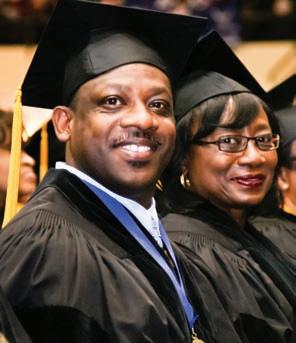
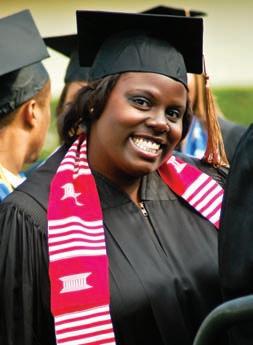
Graduates receive degrees as JSU earns top rankings
Close to 1,300 graduates received their degrees during Jackson State University’s 2010 spring undergraduate and graduate commencement exercises. The graduates have reason to be especially proud this year. In 2010, Washington Monthly magazine ranked Jackson State among the top 50 universities in the nation for social mobility, research and service. And U.S. News and World Report ranked Jackson State among the top 20 Historically Black Colleges or Universities in the country.
Jazz ensembles prove talent with release of three new CDs
by LarISSa C. HaLE
While many college classes use tests and term papers to measure learning, Jackson State’s Jazz Program employs a more audible approach: musical recordings. “CDs are our ‘Book of Knowledge,’ ” says Dr. Russell Thomas Jr., JSU’s director of jazz studies. “It is our form of assessment.”
Since 1988, the program has been recording student performances as a way of documenting the work of its ensemble classes. And for the first time this academic year, all three of the program’s jazz ensembles have produced albums that are being offered for sale.
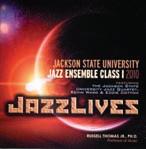
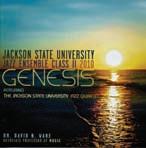
The CDs include “The Jazz Experience,” by JSU’s Vocal Jazz Ensemble, featuring the JSU Jazz Quartet; “Genesis,” by the Jazz Ensemble Class II, featuring the JSU Jazz Quartet; and “Jazz Lives,” produced by the Jazz Ensemble
Class I, featuring the JSU Jazz Quartet, trombonist Kevin Ward and guitarist Eddie Cotton. “These recordings were created for the education of jazz music,” says Dr. David Ware, who guides the Jazz Ensemble Class II.
Ware’s class delves into the many variations that fall under the jazz umbrella, including big band, swing, bop, Latin, funk and fusion. The ensemble performs on campus, participates in local and regional jazz festivals and has toured northern Mississippi and in Memphis, Tenn. The group recently received the Outstanding Performance Award at the Alabama Jazz Hall of Fame Jazz Band Festival in Birmingham.
Thomas leads the award-winning Jazz Ensemble Class I, which explores the big band sound of such jazz greats as Dizzy Gillespie, Clark Terry, Jimmy Heath and the Count Basie
and the Outstanding Jazz Ensemble award at the University of North Carolina/Charlotte Collegiate Jazz Festival.
Dr. David Ware leads the Jazz Ensemble Class II.
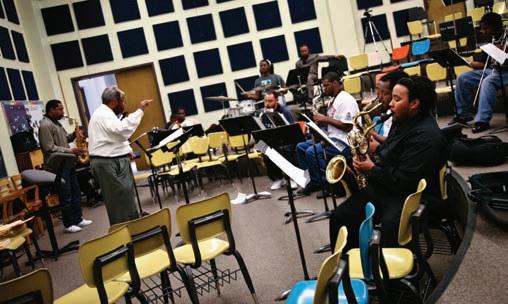
Dr. russell Thomas (left) leads the JSU Jazz Ensemble I in rehearsal. The group’s accolades include the Dr. M.E. Hall award (Festival Outstanding Jazz Ensemble) at the University of North Texas –North Texas Jazz Festival; Festival Outstanding Jazz Ensemble award and the Festival Outstanding Jazz Combo award at the Memphis State University Collegiate Jazz Festival;
Purchase the Jackson State University Jazz Ensemble CDs from the Jackson State University Bookstore, the JSU Department of Music or online from www.cdbaby.com.
Orchestra. The ensemble has performed at the New Orleans Heritage and Jazz Festival, the International Association for Jazz Educators, the Music Educators National Conference, the Mississippi Music Association and the Mississippi Bandmasters Association.
The new kid on the block, the JSU Vocal Jazz Ensemble, directed by Dr. Loretta Galbreath, began in 2005. Since then, the ensemble has participated in events including the International Association for Jazz Educators, the National Association for the Study and Performance of African American Music, the International Choral Festival in Verona, Italy, and numerous jazz festivals and jazz master classes.
“What signifies a successful musician is having a passion for the art and having an understanding of the history,” Galbreath says, “and being able to have your audience understand what you are saying.”
Junior Tiffany Williams, who is pursuing a double major in vocal and piano, is a featured soloist on the Vocal Jazz Ensemble CD. The 20-year-old has been singing since age 3, and took up the piano a short time later. “We did a good job,” she says about the recording. “It took a lot of practice and nitpicking, but overall the result came out well.”
Jackson State’s jazz ensembles have cultivated some of the most talented musicians and singers, like Grammy Award-winning singer Cassandra Wilson, saxophonist Andre Delano and trombonist Kevin Ward.
The three jazz groups consist of music and non-music majors, many of whom have had no experience with the genre before entering
Jackson State. “We encourage our students to stick it out,” Ware says. “We make sure our students listen to a lot of different genres of music and artists, while at the same time, we have them focus on a particular musician or artist they are trying to emulate.”
Dr. Quinton Williams, interim provost of Jackson State, is a former JSU student who “stuck it out” as a jazz ensemble member. Under Thomas’s direction, Williams played the lead tenor saxophone and got to share the stage with jazz legends including trombonist “Slide” Hampton, saxophonists Hank Crawford and David “Fathead” Newman, guitarist Andrew White, and trumpeter Donald Byrd. “Dr. Thomas is a master teacher,” Williams says. “He was a mentor and a friend to us. He taught us many life lessons.”
A Fulbright Scholar, educator and renowned saxophonist, Thomas has toured the world and performed with an array of artists and groups, including the Lionel Hampton Big Band, the Temptations, the O’Jays, Ray Charles, jazz trumpeters Clark Terry and Dizzy Gillespie, tenor saxophonist Joe Henderson and the Mississippi Symphony Orchestra. He also leads the Russell Thomas Jazz Quartet. Thomas has written books about music education/jazz pedagogy, created jazz programs for colleges and universities and is the founder of the Jazz In The Schools program, which teaches jazz history and jazz improvisation concepts from kindergarten through high school.
“What signifies a successful musician is repetition, having a goal, and studying,” Thomas says.

JSU Development Foundation provides lifeline to students in need
by JEaN GOrDON COOk aND SpENCEr MCCLENTy
andrew Nomura was 15 years old when he met his mother for the first time. That’s when his grandmother, who had raised him since birth, passed away. Without anyone to care for him, the teen moved from Los Angeles to Atlanta, where he reunited with his mother.
Things didn’t go smoothly. Nomura clashed frequently with his mother, which caused him to move out by age 17. He finished his senior year drifting among the homes of a coach and some friends, with college seemingly out of his reach.
“When it was time to go to college, my mother wanted nothing to do with me,” Nomura says. “I didn’t have any support at all.”
But thanks to his high school economics teacher, a JSU alum who suggested the senior apply to her alma mater, Nomura found his way to Jackson State University.
“I hadn’t heard of Jackson State,” the sophomore mass communications student says. “The first time I was on campus was freshmen movein day.”
Nomura has been paying for his education
through a combination of Pell grants, student loans, a work-study job at the Walter Payton Recreation and Wellness Center and funding from the Jackson State University Development Foundation – which bridges the gap between his resources and his tuition bill. The foundation provides critical support to students whose financial situation can push them to the verge of dropping out.
“There are a lot of people in the same situation, who don’t have family support,” says David Howard, a development officer in JSU’s Office of Development. “Some of them don’t have very much to lean on.”
The foundation is administered by JSU’s Office of Institutional Advancement, which leads the university’s private fundraising efforts. Through the Office of Development, Jackson State solicits annual donations, major gifts and planned giving.
“It’s our job to create opportunities for alumni and friends to invest in JSU,” says Linda Daniels, director of the Office of Development. “And we work to maintain strong relationships with ex-
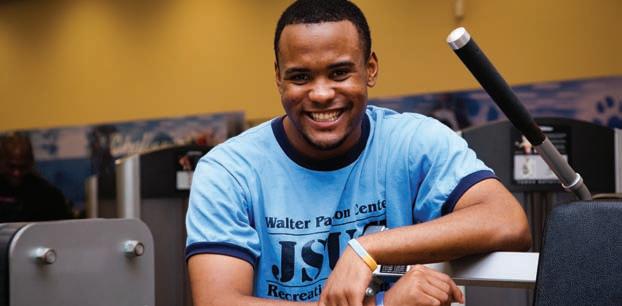
Sophomore mass communications major andrew Nomura pays for his education through a combination of pell grants, student loans, a job at the Walter payton recreation and Wellness Center and funding from the Jackson State University Development Foundation.
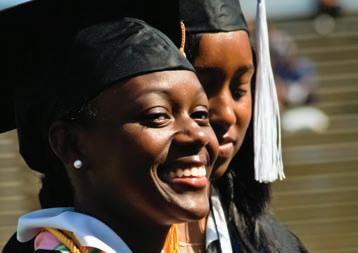
isting donors and also seek out new donors.”
Private fundraising has become more crucial to the university in recent years as state funding has continued to decrease.
“In fiscal year 2009, Jackson State’s state appropriations were cut over 9 percent,” Daniels says. “In fiscal year 2010, an additional 5 percent will be cut, and an additional 10 percent is projected for the following year. These percentages equate to a loss of almost $12 million over the next two years. Private support is key to Jackson State’s ability to fulfill its mission and vision, and build on its centers of excellence.”
The biggest challenge facing many institutions of higher learning, particularly Historically Black Colleges and Universities, is the unprecedented level of uncertainty about the direction of the economy, says Evangeline Robinson, executive director of the Office of Institutional Advancement.
“It’s almost 2011, and the U.S. economy remains unstable,” Robinson says. “Because of this, people and organizations have clearly changed the way they prioritize their giving.”
Another challenge is increasing the level of giving by alumni, which is critical to the success of Jackson State. The alumni giving rate fluctuates between 5 and 7 percent, while nationally the alumni giving rate is between 10
and 20 percent. The Office of Development wants to raise that percentage by changing the culture of giving.
“A lot of it has to do with building the case for giving to Jackson State and giving people more opportunities to give,” Robinson says. Those opportunities are now more plentiful that ever. Gifts to Jackson State may include annual donations, endowment funds, memorial gifts, bequests, the purchase of a legacy brick displayed on campus or the donation of such items as artwork, books or athletic equipment.
Donations support the university as a whole or may be earmarked specifically for scholarships.
Nomura, whose mother passed away over the summer, wouldn’t have been able to stay in school without help from the Development Foundation. He shows his appreciation by working hard and setting his goals high. Since arriving at Jackson State, he has achieved a 3.6 grade point average, has become active in the Tiger P.R.I.D.E. student organization and has cofounded a Christian student group. After graduation, he hopes get a job as a broadcaster at a major news network
“God has placed people in my life so I can do better,” he says. “I’m ready to make a life of my own.”
In 2010, the foundation provided $460,000 in scholarships to 450 students.
“A lot of people do a lot of talking,” says JSU National Alumni President Terry Woodard.
“It is time for everyone to put their money where their mouth is.”
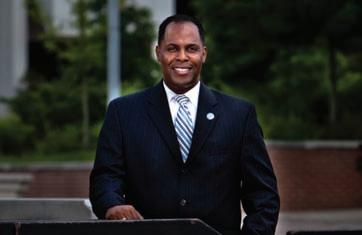
Election to president of JSU’s alumni association fulfills graduate’s dream
By ToMMIEA P. KINg
Terry Woodard admits he didn’t choose Jackson State University for academic reasons. “Being from Gloster, Miss., everything for us was pretty much Alcorn State University. My sophomore year in high school, I went to a JSU vs. Alcorn football game at Alcorn,” says Woodard, pausing to laugh. “I remember saying, ‘Whichever band does the best, that is where I was going to school.’ And I tell you, the Sonic Boom showed out!”
That day started Woodard’s lifelong love for Jackson State. Today, Woodard, a 1988 business administration graduate, is the newly minted president of JSU’s National Alumni Association. As president, he represents more than 60,000 graduates and 65 alumni chapters. Woodard says he’s been preparing for this role since he first joined the association 22 years ago.
“This has been a long time coming,” says the 44-year-old district manager for Sodexo, Inc. “I can remember looking on the wall of the Jacksonian Lounge and hoping my name would be on one of those huge plaques for major donors and Alumni of the Year.”
Woodard has done that and more. In addition to serving as the Houston Area and
Metro Atlanta Alumni chapters president in 1992-1993 and 2001-2005 respectively, Woodard was the Atlanta chapter’s Alumnus of the Year in 2003 and 2005. The national association recognized him for the same honor in 2005. Taking over the position vacated by Dr. Hilliard Lackey after six years, Woodard says he has big shoes to fill. “You would never meet a person who represents JSU more than Dr. Lackey,” he says. “Working with him has probably inspired me more than anything.”
Woodard’s priorities for strengthening the alumni association include increasing alumni membership and financial support and educating alumni on the importance of active involvement and contributions to JSU. “We’ve made good growth over the past 10 years,” Woodard says. “It’s time to go to new heights and invite all to get involved.”
With more than 1,500 alumni added each year, Woodard sees user-friendly technology and a strong online presence as vital in attracting and maintaining alumni support.
“Anything you can walk in an office to do –such as paying dues or changing your address – you should be able to do online, 24/7.”
www.
group of mostly young alums who organized this year to raise money for the university. Using Facebook and other online strategies, the group asks each member to donate $150. Woodard hopes to bring together other affinity groups such as the Blue Bengals, the Alumni J-Settes, the Tiger Fund and Legend Football Players to pool their resources to better serve JSU.
JSU National Alumni President Terry Woodard believes there is strength in numbers. He recently joined JSU AIM (Alumni in Action,
jsums.edu/aim), a
President obama selects JSU grads for top positions
By ToMMIEA P. KINg
Carlton Reeves is used to speaking before large audiences. As an attorney for nearly 20 years, he’s tried hundreds of cases and delivered many passionate speeches. But Reeves choked up a bit on a Thursday afternoon in July inside the Senate Dirksen Office Building in Washington, D.C. President Barack Obama had nominated Reeves for the U.S. District Court, Southern District Mississippi, and Reeves was about to deliver a speech before the Senate Committee on the Judiciary.
“I want to thank the president for nominating me for this job,” Reeves said as his family and friends looked on. He went on to thank U.S. senators Thad Cochran and Roger Wicker of Mississippi for the bipartisan nature in which they worked with U.S. Rep. Bennie Thompson of Mississippi, with whom Reeves interned 25 years ago while a student at Jackson State.
“He obviously saw something in me and has stuck with me from that day to this one,” Reeves says.
Upon confirmation by the full Senate, Reeves, 46, will become the first African American named to a federal judgeship in Mississippi since President Ronald Reagan nominated Judge Henry T. Wingate in 1985.
A 1986 graduate of Jackson State, Reeves
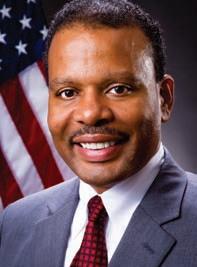
earned his law degree at the University of Virginia School of Law and is a founding partner of Pigott, Reeves and Johnson Law Firm in Jackson, Miss. He also has served as assistant U. S. attorney for the U.S. Department of Justice and law clerk and staff attorney for the Mississippi Supreme Court.
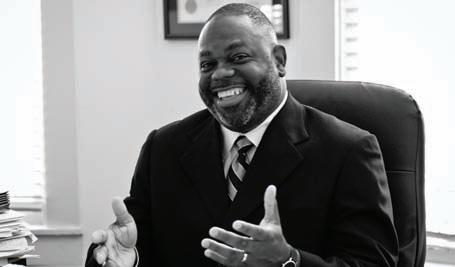
Reeves is not the only Jackson State alum whom Obama selected this year for a high-level government post. Jackson State 1980 graduate Malcolm Jackson took on the position of assistant director of the Office of Environmental Information after the president nominated him in April 2010. Jackson reports directly to Environmental Protection Agency administrator Lisa Jackson and leads the EPA’s effort to implement innovative information technology and information management solutions.
In addition to an industrial technology degree from Jackson State, Jackson holds an M.B.A. from the Northwestern University-Kellogg School of Management. Jackson’s previous work includes positions as chief information officer for corporate systems at Cigna, director of information technology at Monsanto and leadership posts at Searle, Quaker Oats, General Dynamics and Shell Oil Corp.
President Obama appointed JSU grad Malcolm Jackson (below, left) this year to a top position at the U.S. Environmental Protection Agency. The president also named Jackson State alum Carlton Reeves (below, right), to a federal judgeship. Watch Reeves at his July 2010 hearing with the Senate Committee on the Judiciary at: www. jsums.edu/pressroom2/ article.cfm?id=1877
‘lost
boys of sudan’ graduate, look toward brighter of sudan’
future
By JEAN gordoN CooK
John Ayiik’s parents never held his hand as a child on his first day of school. They missed his high school graduation. And they didn’t watch him walk across the stage at Jackson State’s spring 2010 commencement.
That’s because the new graduate hasn’t seen his mother or father since the day two decades ago when militiamen attacked his Sudanese village. The soldiers slaughtered families, burned homes and drove all the young boys left alive into the wilderness.
Ayiik was only 6 years old when he joined the throng of 15,000 other children who hiked 1,000 miles to Ethiopia to escape civil war in southern Sudan. Along the way, thousands died from hunger, dehydration or militia attacks. Many were eaten by wild animals. With no parents or elders to care for them, the boys earned the name “Lost Boys of Sudan.”
“I lost a lot of people in my generation,” Ayiik, 26, says. “No one knew if they would survive.”
Not only has Ayiik survived, he has thrived. Working full time to pay his way through college, Ayiik has become one of the first three “Lost Boys” to graduate from Jackson State. Armed with his accounting degree, he is now saving money to make his first trip back to Su-
dan to reunite with his family. “When I first talked to my family, my mama was crying, she couldn’t talk,” says Ayiik, who spent most of his life unsure whether his parents were dead or alive. “She didn’t know I was able to survive.”
Ayiik’s journey to Mississippi started in 2000, when a United Nations resettlement program brought some 4,000 Sudanese refugees to the United States. The boys had been living for years in a Kenyan refugee camp along with 63,000 other displaced people. Through the work of Catholic Charities, 70 “Lost Boys” were placed in homes in Jackson.
To get through high school, the teens had to overcome language obstacles and learn how to navigate American culture. Many got jobs as soon as they were old enough. “I pay my bills and whatever is left I send back home,” says Ayiik, who works as a pharmacy technician at the University of Mississippi Medical Center in Jackson. “My parents keep cattle and are farmers. If there is war, it is hard for you to be a farmer.”
Ayiik and friends Peter Malual and Gabriel Ajak, also Sudanese refugees who work as pharmacy technicians at UMC, say they chose to attend JSU in part because of its proximity to their job. “It’s tough working full time and go-
“I lost a lot of people in my generation,” says Sudanese refugee and recent JSU graduate John Ayiik. “No one knew if they would survive.”
ing to school full time, but we had no choice,” says Malual, a spring 2010 graduate. “I needed to keep my job because I have siblings in Uganda and Kenya, and I’m paying for their school as well.”
Malual, 27, is now making plans for graduate school. He wants to attend pharmacy school or study public health at Jackson State. He hopes to use his degree to help people back in Sudan.
The country’s two-decades-long civil war, which ended in 2005, left 2 million people dead and displaced 4 million others. Many of the “Lost Boys” weren’t able to reconnect with their families until after they relocated to the United States. “One of the reasons I want to be in the health field is because people were suffering when I was there,” says Malual, who made his first trip back home last year. “I want to get educated to know what we can do to try to prevent disease.”
Malual, who transferred to Jackson State from a community college, says he enjoyed his time at JSU because he had good professors and made a lot of friends. “It’s very diverse and I was able to meet other international students who came out of their countries as well,” he says.
JSU English instructor Sherry Rankin says she knew Malual and fellow student Ayiik were from Sudan, but had no idea what they had endured as children. “They never mentioned any of that,” she says.
Rankin says their achievement sets an ex-
ample for other students. “It really shows American youth what you can accomplish if you are determined,” she says.
Gabriel Ajak, 28, is the first “Lost Boy” to earn a degree from Jackson State. The 2009 graduate wants to continue his graduate studies in accounting at JSU and is making plans for his first trip back home to Sudan. “I didn’t want to leave and go home until I finished school,” he says. “Now I can show my mother that I was doing something that was good.”
Like Ayiik and Malual, Ajak attended community college before transferring to Jackson State, which granted him an academic scholarship. He says he didn’t know the history of the university until he attended his first Founder’s Day Convocation. “When I realized the history of Jackson State, I said, ‘Wow,’ ” he says. “At a historically black college you have to go to your roots. That meant a lot to me.”
Ayiik hopes to make his trip back to Sudan before the end of the year. Meanwhile, he’s studying for the Certified Public Accountant exam and applying to M.B.A. programs. “My family feels I will be the one to make a difference because I got an education and will find a good job,” he says. “They are so proud of me.”
Ayiik, who stands 6-foot-5, looks forward to celebrating his graduation with his family and showing them the man he has become. “When they last saw me, I didn’t have facial hair and I wasn’t tall,” he says. “When they see my height now, people are going to look up.”
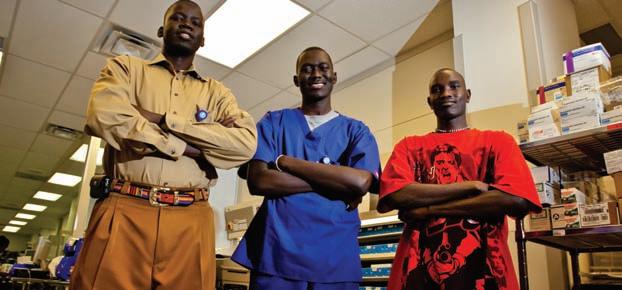
John Ayiik (left), Peter Malual and gabriel Ajak are the first three “Lost Boys of Sudan” to earn degrees from Jackson State University. The graduates helped pay their way through school by working as pharmacy technicians at the University of Mississippi Medical Center.
U.S. education secretary visits campus
Acrowd of children dressed in matching blue T-shirts cheered and waved signs as a motor coach carrying U.S. Secretary of Education Arne Duncan arrived at Jackson State University’s campus on Aug. 27, 2010. The children, all students at a Children’s Defense Fund Freedom School housed at Jackson State’s Kids Kollege, clapped and chanted as the education secretary made his way toward Jackson State’s College of Education and Human Development. Duncan visited Kids Kollege, an after-school and summer program staffed by JSU educators and students, as part of a tour of schools that are models of success. Duncan’s tour also included stops in Arkansas, Louisiana, New York, Massachusetts, New Hampshire and Maine.


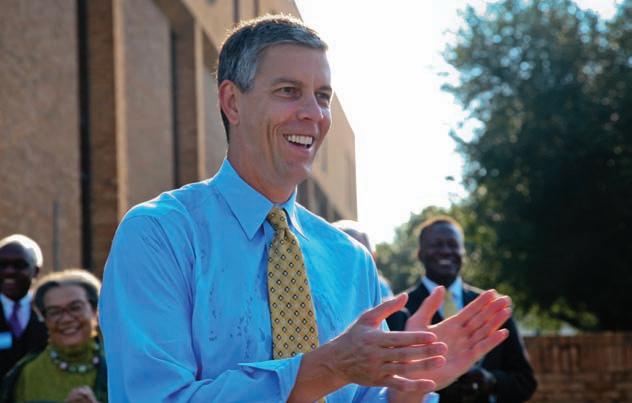
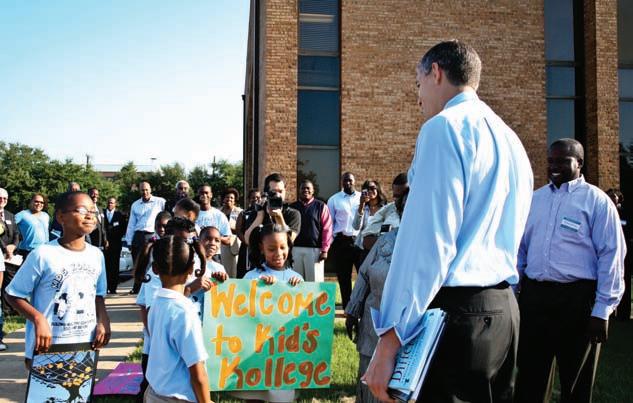
SURVIVORS MARK GRIM AnnIVeRSARy OF 1970 cAMpUS ShOOtInG
BY L.A. WArren
Jackson State College student Gladys Johnson watched in horror from the top window in Alexander Hall as bodies were being trampled by panicked students fleeing lawmen’s gunfire. Moments later, she was struck in the back with bullet fragments and glass.
“It was just like … watching a war movie, and you hear hundreds of guns shooting,” says Johnson, who is one of the survivors of the 1970 shooting at Jackson State that left two young men dead. “And when we realized we were being fired upon, we turned and fell to the floor. I remember feeling something hot hitting my back.”
On April 29, 2010, Jackson State University observed the 40th anniversary of the campus tragedy that killed Phillip Lafayette Gibbs, 21, and James Earl Green, 17, and injured a dozen others. Although the circumstances surrounding the shootings may never be fully known, memories of the decades-old event linger for victims and witnesses, who share their experiences in hopes of preserving the legacy of the slain and wounded.
Johnson, now an associate professor of education at JSU, sometimes cries while walking past the bulletscarred Alexander Hall. She remembers the tragedy as if it were yesterday. In fact, it happened May 15, 1970, just 11 days after four students at Kent State University in Ohio were killed during anti-war protests over the escalation of the Vietnam War and the deaths of thousands of U.S. troops and millions of Asians in Cambodia.
In contrast, the incident in Jackson had over-
whelming racial overtones. There’s no consensus as to what precipitated the boiling cauldron that led state troopers and the city’s police to unload more than 400 rounds of gunfire on a women’s dormitory. But, one indisputable fact is that the bodies of Gibbs and Green lay mortally wounded on the campus when the shooting ended.
One theory suggests the chaos erupted after students became fed up with years of heckling by white motorists cutting through campus via Lynch Street, a major downtown thoroughfare. Others cite war protests along with the continued fight for civil rights. Law enforcement officials, however, claimed to have been defending themselves against a male sniper firing from an upper floor of the women’s dormitory. Other witnesses say the sound of a broken bottle might have spurred a nervous officer to start shooting.
“I had a tape recorder on my side, one of these little cheap cassette tape recorders,” says Bert Case, a white journalist who was on campus reporting for the local WJTV-TV when the shooting began. “It was rolling the whole time. And right prior to the shooting beginning, you can hear the bottle break very clearly, and then there is ‘pop, pop, boom, boom, boom, boom, boom’… 29.2 seconds they went.”
So, what do other survivors and witnesses remember about that deadly period?
“The drama started on May 14, so May 15 was when we heard the marching,” says James “Lap” Baker, who was a senior at the time and was not injured during the chaos. “You have to understand that the authorities – the city, the mayor at that particular time, and
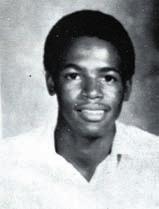
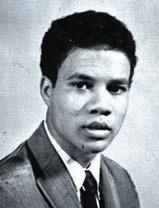
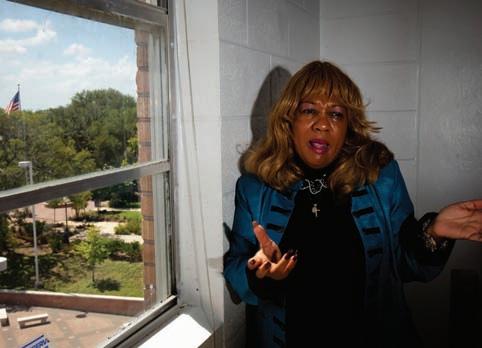
JSU education professor Dr. Gladys Johnson (below) sometimes cries when walking past the bullet-scarred Alexander Hall. She is one of the survivors of the 1970 shooting outside the dormitory that left two young men dead.
James earl Green (left) and Phillip Lafayette Gibbs (right) were killed during the 1970 police shooting on JSU’s campus.
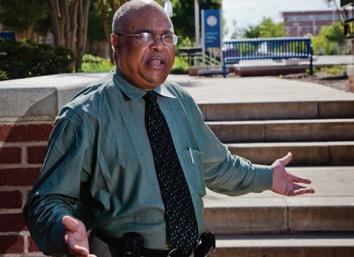
the governor of this state – didn’t like what had gone on. We were black students. And, if I may, I will say very intelligent students – but students who were not afraid of the system or of other people who cause harm to you.”
Baker remembers watching Gibbs die after two shots to the head, one beneath his left eye and another to his armpit. “I’d never seen anything like that before in my life,” he says.
Once the shooting finally stopped, 12 other students were injured. They overcame their physical pain, but mental scars were left untreated. Students were forced to carry on with their lives without a psychological evaluation or grief therapy, which is why the pain for some lingers 40 years later.
Gloria McCray, the sister of slain teenager Green, describes the long suffering her family endured. She believes the motive of law enforcement was to kill “anything black that moved.” For her, it was purely racial – and agonizing. “I see the pain in my mom after all these years,” McCray says. “She has lost her mother, father, sister and every one of her brothers. She is the only sibling left out of 10. Of all the deaths she has felt and lost, she said none compared to the loss of her child.”
Constance Slaughter-Harvey, then a 23-
year-old attorney, spearheaded a lawsuit against authorities on behalf of the victims and their families. She believed the plaintiffs had an open-and-shut case. “We had identified several of the people who were supposed to have fired, she says. “The Supreme Court had accepted that this was not a riot, that the shooting was unjustified and unwarranted.”
Yet, despite corroborating statements from credible sources, the plaintiffs still lost. She cited the unfairness of an all-white jury and fabricated testimony from state highway patrolmen and police officers.
Johnson, the injured student who went on to become a JSU professor, laments that grief counseling eluded the wounded. And she’s outraged that no one ever apologized to survivors or family members of the deceased.
Another regret that she and students had is that seniors never had a commencement ceremony because the semester ended abruptly after the shooting. But, like Johnson, many in the Class of 1970 excelled to become educators, doctors, lawyers, researchers and entrepreneurs. And these successful professionals vow to continue meeting annually to tell their stories for history – and for healing.
Finally.
“The drama started on May 14, so May 15 was when we heard the marching,” says James “Lap” Baker, who was a senior at the time and was not injured during the chaos.
James “Lap” Baker, a JSU senior in 1970, watched James earl Gibbs die after getting shot:
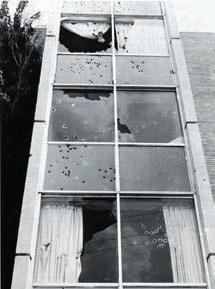
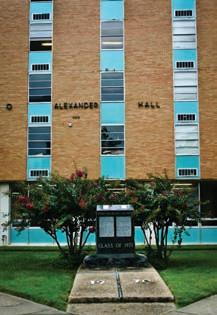
Gibbs-Green timeline
May 13, 1970: Students rally on Lynch Street for civil equality; Gov. John Bell Williams commands the state highway patrol to establish order at Jackson State College.
May 14: President John A. Peoples Jr. meets with students to listen to their concerns.
May 14 (9:30 p.m.): Students hear rumors that Fayette, Miss., Mayor Charles evers, brother of slain civil rights activist Medgar evers, is assassinated; students protest; rOTC building set afire; bonfire built; white motorists call police to complain of rockthrowing; about 75 law enforcement officers arrive and cordon off the university; unarmed Guardsmen assemble on the west end of Lynch Street; about 100 students face off with lawmen, some shouting at the officers.
May 15 (12:05 a.m.): Police open fire for approximately 30 seconds outside Alexander Hall; Phillip Lafayette Gibbs, 21, and James earl Green, 17, are mortally wounded; 12 JSC students injured.
June 13: President richard nixon forms Commission on Campus Unrest.
June 25: Commission meets; Jackson City Council votes to permanently close Lynch Street to through traffic.
March 1973: Jackson City Council adds the initials “J.r.” to street signs to denote John r. Lynch, Mississippi’s first black congressman.
1995: Demetrius Gibbs, son of deceased Phillip Gibbs, receives his degree from Jackson State University.
Source: Associated Press
Alexander Hall after the shooting
Alexander Hall today


Camp Tiger Tails ends with a splash
every summer, the Walter Payton Recreation and Wellness Center at Jackson State runs Camp Tiger Tails for children ages 6 to 16 from the Jackson Public School District and the neighborhood surrounding campus. During the fiveweek program, 115 participants play sports, learn about nutrition and practice teambuilding. This year, campers ended their summer with a homemade boat race and a dip in the pool at the T.B. Ellis Gym.
Campers
Jalante Young (left) and Olivia Brown stay afloat as they paddle their way across the pool.
Counselor/life guard Donnell Washington helps a new swimmer get comfortable in the pool.
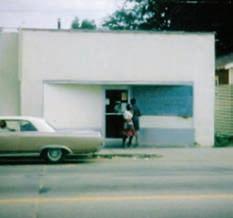
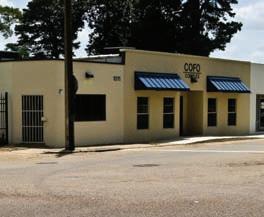
JSU revives historic civil rights headquarters
BY CUrniS UPkinS iii
At the intersection of Rose Street and John R. Lynch Street in Jackson, Miss., are three small buildings that are so close that they appear to be one. These structures have housed pool halls and nightclubs — places that some say served as liberation from a long day at work. However, there is one building among these structures that served as the headquarters of liberation for African Americans during the civil rights movement. That building is 1017 John R. Lynch St.
That address housed Mississippi’s Council of Federated Organizations – known as COFO – from 1961 to 1965. COFO was established as a coalition of organizations including the Congress of Racial Equality, the National Association for the Advancement of Colored People, the Southern Christian Leadership Conference and the Student Nonviolent Coordinating Committee.
Through this coalition, COFO proved to be a strong civil rights organization, focusing on gaining voting rights for African Americans. It established freedom schools and community centers, and became active with the Mississippi Freedom Democratic Party.
One of COFO’s most recognized efforts included the 1963 Freedom Vote – a statewide mock election in which 80,000 African Americans cast votes for Mississippi Freedom Democratic Party running mates Aaron Henry and the Rev. Ed King. Henry, a black man, was the president of the Mississippi NAACP and appeared on the ballot as the candidate for governor. King, who is white and served as chaplain at Tougaloo College, was listed as the
candidate for lieutenant governor.
COFO’s highest-profile campaign was the 1964 Mississippi Summer Project, better known as Freedom Summer. This effort attracted multitudes of students from out of state who worked alongside local leaders to promote voter registration and youth education.
There are several initiatives underway that seek to highlight the importance of COFO. One effort includes the renovation of the organization’s former headquarters to be reused as a civil rights education center and studentrun business. Jackson State University has been awarded $500,000 from the U.S. Small Business Administration to lead this project. Thanks to the JSU Center for University-Based Development, renovations have recently been completed and program planning for the building is underway. The center raised the profile of the COFO building when it hosted a historical marker unveiling in March 2010. The marker was secured through the Mississippi Department of Archives.
Another effort seeks to tell the story of COFO’s women through film. Directors Marlene McCurtis and Susan Carney are creating a documentary named Wednesdays in Mississippi. The movie’s title pays homage to an effort initiated in 1964 by Dorothy Height and Polly Cowan, who brought women from such cities as Boston, New York and Chicago to Mississippi during COFO’s Freedom Summer. On Wednesdays, the women – later known as “Wednesday’s Women” – delivered support and supplies to the rural communities of Mississippi.
COFO complex today
COFO headquarters in the 1960s
JSU Tigers start season with a roar
JSU opened the 2010 football season with a roaring start on Sept. 4, 2010, when the Tigers defeated Delta State University 32-17 in the third annual W.C. Gorden Classic at Mississippi Veterans Memorial Stadium. During his first game playing for the Tigers, quarterback Casey Therriault (below right) threw for 404 yards and three touchdowns, earning JSU its first season-opening victory since 2006. The next week, running back B.J. Lee (top right) and the Tigers offense gained 422 yards to win 33-26 against Tennessee State University in the Southern Heritage Classic, beating the Nashville team for the first time in eight years.
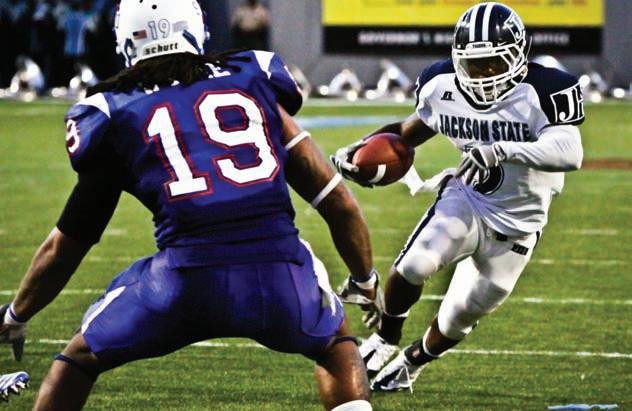
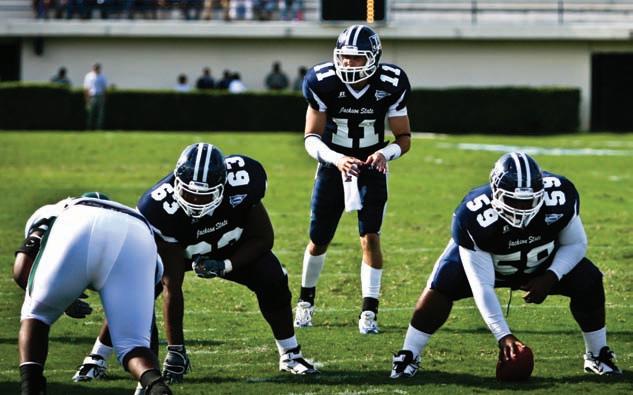
Class Notes
‘60s

Dorothy Stewart (’60) was one of six people to receive the 2010 Fannie Lou Hamer Humanitarian Award in April 2010 at Jackson State University. The award recognizes Mississippians for their contributions in service and leadership in pursuit of social, economic, political and environmental justice and equality. Stewart is a former public school teacher and the founder of Women for Progress, an organization focused on bettering Jackson through awareness and advocacy of political, economic and educational issues. In February 2010, Stewart began co-hosting the group’s new talk radio program, “Women for Progress Radio,” which is broadcast on WMPR 90.1 FM.
‘70s

Dr. Charlotte Patterson Morris (’70) has been appointed interim president of Tuskegee University. The Kosciusko, Miss., native was also named associate dean/professor of management in the College of Business and Information Science. She will assume those roles when her interim presidency ends. She is the first woman to lead Tuskegee University.

Dr. Rosie Little Thompson Pridgen (’70), superintendent of the Mississippi School for the Blind, graduated from the 23rd class of Leadership Greater Jackson in May 2010. The organization is a community-wide leadership program that develops existing and emerging leaders.
Dr. Bettye Henderson Neely (’70 master’s) is board president of the Mississippi Trustees of State Institutions of Higher Learning. A Grenada, Miss., resident, she serves as the assistant superintendent of district testing and federal programs in the Grenada School District. Neely
holds four degrees from Mississippi’s institutions of higher learning, including a bachelor’s in English from Mississippi Valley State University, a master’s in elementary education from Jackson State University, an education specialist in administration and supervision from Delta State University and a doctorate from Mississippi State University.

Bob Owens (’73), a member of the Board of Trustees of Mississippi State Institutions of Higher Learning, is leading the search for Jackson State University’s president. Owens has served on the board since 2004. He is a partner in the law firm of Owens Moss, PLLC in Jackson. The Mississippi attorney earned his Juris Doctorate degree from Florida State University College of Law.
Edward Seals (’74, ’80 master’s) was appointed executive director of Coahoma Opportunities, Inc. Seals earned his bachelor’s and master’s degrees in English education from Jackson State and his master’s in educational leadership and supervision from the University of Mississippi.
Ken Bacchus (’74) was recognized by the City Council of Kansas City, Mo., for his years of service on the council. The former councilmember was first elected for the Fifth District-At-Large in 1991 and was reelected for his second term in 1995. He is presently a principal of the Urban Initiatives Group, LLC, in Kansas City, which is an urban economic development and consulting company.
Dr. Michelle B. Releford (’78) has been named interim vice chancellor for student affairs at Winston-Salem State University in North Carolina. Releford has more than 25 years’ experience on college campuses in areas including student development, enrollment management and student services.
‘80s

Cordina Barber (’80) was honored at the 2010 BET Awards for her role in helping expose problems in the Sunflower County School District.
The Ruleville, Miss., native and teacher for 28 years was awarded $10,000 from BET, which she plans to divide among Sunflower County’s seven schools for student supplies.
Dr. Reginald Sykes (’80, ’81
Dr. Bettye Neely
Dorothy Stewart
Dr. Charlotte Morris
Dr. Rosie Pridgen
Bob Owens
Dr. Reginald Sykes
master’s) assumed the post of president of Alabama Southern Community College in Monroeville in July 2010. He is the former assistant commissioner for community and junior college relations with the Mississippi Trustees of State Institutions of Higher Learning. Sykes holds a doctorate from Mississippi State University.

Dr. Robert Franklin (’81, ’83 master’s), received four top honors at the Omaha Press Club 2010 Excellence In Journalism Awards including best photo essay, best feature story for television, best service to community (radio) and best radio commentary. Franklin is director of media operations at the University of Nebraska-Omaha. He received his Ph.D. from Arkansas State University.

Dr. Joyce Jenkins (’84, ’86 master’s, ’92 education specialist) was named dean of Career-Technical Education at Hinds Community College, Raymond Campus. Jenkins joined the faculty in 1988 and has served as assistant dean since 2005. She received a doctorate degree in technology education from Mississippi State University.
Dr. Juanita Sims Doty (’85 Ph.D.), the Southeastern director of Alpha Kappa Alpha Sorority, Inc., presented $20,000 to the Jackson State University Development Foundation earlier this year on behalf of the sorority. Through the sorority, Doty has contributed approximately $40,000 to Jackson State over the past four years.
Shirley Tucker (’89) was selected as one of six recipients to receive the 2010 Preceptor Award from the Association of Leadership Professionals for her work as executive director of Leadership Greater Jackson and Youth Leadership Jackson. The award is the organization’s highest honor.
Dionne Cook Glass (‘92) was named principal of the Brookview Elementary School by the Fulton County School System in Georgia. She received her master’s degree in educational leadership from Georgia State University.

Trent Walker (’91, ‘95 master’s) is an attorney with Schwartz and Associates. The Brandon, Miss., native earned his law degree from Tulane University. In
2008, Walker was appointed to serve an 11-month stint as special circuit court judge in Hinds County.
C. Jermaine Brown (‘96) assumed the presidency of the Mississippi Association of Athletic Administrators. Currently, he is employed as an assistant principal and director of student services for the Forrest County School District in Hattiesburg, Miss. Brown holds a master’s of sports administration degree and an education specialist degree from the University of Southern Mississippi and is currently pursuing a Ph.D. in educational administration at USM.

Dwayne Buckingham (‘96) was the guest speaker at Jackson State’s 30th annual School of Social Work Month Celebration in March 2010. Buckingham is an author, psychotherapist and wellness expert. He provides therapy to individual and married military personnel at the National Naval Medical Center in Bethesda, Md., and is founder and C.E.O. of R.E.A.L. Horizons Consulting Service, LLC. He is the author of three books, including “A Black Man’s Worth: Conqueror and Head of Household,” which he also made into a film.

Dr. Tahirih Charryse Lackey (’97) represented the U.S. Army Corps of Engineers Engineer Research and Development Center during a trip to Beijing in September 2010. While in China, the environmental engineer lectured and consulted on water usage, conservation and preservation. She earned her master’s and doctorate from Georgia Tech. Lori J. Stewart (’99, ’04 master’s) received the 2010 Distinguished Leader Award from the Association of Leadership Professionals, which recognizes graduates of leadership programs who exemplify the spirit and goals of civic involvement. Stewart serves as president of the Leadership Jackson Alumni Association and is director of student life communications and outreach at Jackson State. She also was selected by the “Mississippi Business Journal” as one of Mississippi’s 50 Leading Business Women for the Class of 2010.

Cobby Mondale Williams (’99) recently launched the Mississippi-based nonprofit organization, CMW-Community Development Corp. (www.cobbymondalewilliams.org), which will provide services including youth mentoring, after-school programs, child care develop-
Dr. Robert Frankin
Dr. Joyce Jenkins
Dionne Cook Glass
Dwayne Buckingham
Lori J. Stewart
Cobby Mondale Williams
ment, summer camp, entrepreneurship training, G.E.D. certification classes and academic enrichment. Williams received his M.P.A. from Howard University and is a procurement specialist for Wards 3 and 4 in the District of Columbia government in Washington, D.C.

Dr. John Young (’99, ’02 M.A., ’09 Ph.D) has accepted reassignment to the Office of Housing, Office of Multifamily Housing programs in the department’s St. Louis, Mo., office. Young is a community planning and development representative for the U.S. Department of Housing and Urban Development.
‘00s

Amanda Green Alexander (’00 master’s) was named the 2010 Young Lawyer of the Year by the Mississippi College School of Law. The Kokomo, Miss., native is a shareholder of Alexander & Watson, P.A., in Jackson, Miss., where she represents self-insured employers, insurance companies and businesses in the area of worker’s compensation and employment law. Alexander received her master’s degree in public policy and administration from Jackson State and her law degree from Mississippi College.

Christopher W. Robinson (’06) is a recipient of the “2010 Fab 40 Under 40 Award” presented by the “New Pittsburgh Courier.” Published in Pittsburgh, Penn., the “New Pittsburgh Courier” is one of the oldest black newspapers in the country. Robinson is a founding brother of the Delta Psi chapter of Iota Phi Theta Fraternity, Inc. He is also a 2006 Jacksonian Award of Excellence recipient.

Chloe’ Ashley (’09) has joined the Jackson Convention and Visitors Bureau in Jackson, Miss., as sales coordinator.
Ebony Brown (’10) was hired as a teacher at Bates Elementary School in Jackson, Miss.
Bridgette Morgan (’10) has been accepted into the Southern University Law Center in Baton Rouge, La.


Joshua C. Etchison (’10) is an associate engineer in the Leadership and Technical Development Program for Caterpillar, Inc., in Mossville, Ill.
Filmon Berhe (’10) works as a firmware engineer for HewlettPackard Co. in Boise, Idaho.
Jessica Kennedy (’10) is a test engineer for the civilian side of NAVSEA (Naval Sea Systems Command) at the Naval Surface Warfare Center Dahlgren Division in Dahlgren, Va.
Dr. Daniel Wentland (’10 Ph.D.) has published two books, “Organizational Performance in a Nutshell” (2009, Information Age Publishing) and “Strategic Training: Putting Employees First” (2007, Human Resource Development Press). A faculty member at Holmes Community College, Wentland earned an M.B.A. from Mississippi College and a master’s in distributive (marketing) education from the State University of New York College at Buffalo. He has also written articles for “The Ivey Business Journal,” “Advanced Management Journal,” “Compensation and Benefits Review,” and “Education.”
The Jacksonian WANTS TO HEAR YOuR NEWS!
PLEASE SEND YOuR SuBMiSSiONS to the Class Notes section to: The Jacksonian, Jackson State University Office of University Communications, P.O. Box 17490, Jackson, MS 39217, or e-mail them to publicrelations@ jsums.edu. Digital pictures are welcome.
Dr. John Young
Amanda G. Alexander
Christopher Robinson
Chloé Ashley
Joshua C. Etchison
Jessica Kennedy
Dr. Daniel Wentland
In Brief

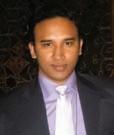
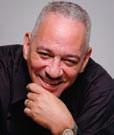
Dr. Serguei Goupalov was named a KITP scholar by the Kavli Institute for Theoretical Physics at the University of California, Santa Barbara. An assistant professor of physics in the Department of Physics, Atmospheric Sciences and Geoscience, Goupalov conducts research in physics of low-dimensional systems such as carbon nanotubes and semiconductor quantum dots.
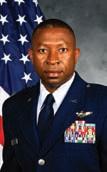
The Jackson State university Concert Chorale, under the direction of Willenham Cortez Castilla, performed in concert at New York’s Carnegie Hall in March 2010. Later in the year, four members of the chorale participated in the 105 Voices of History Choir during a September performance at the Kennedy Center in Washington, D.C.
Graduate chemistry student Musabbir A. Saeed won first place in the poster competition at the annual meeting of the Mississippi Academy of Sciences held in February 2010. Saeed’s poster presented two unusual complexes of methanol with cryptand-based molecules and represented the first examples of trapped methanol in solid states.
The Rev. Jeremiah Wright spoke at the fifth annual conference of the Veterans of the Mississippi Civil Rights Movement in March 2010. Based at Jackson State University, the organization preserves the history of the civil rights movement in Mississippi and connects young people to those who fought for freedom, justice and equality.
New AFROTC leader
Lt. Col. Kevin C. Wilson joined the universit y in June 2010 to ser ve as the Professor of Aerospace Studies and Commander, Detachment 006, Air Force Reser ve Officer Training Corps (AFROTC). Wilson is the senior Air Force officer on campus with dual responsibilities as detachment commander and chair of the
Department of Aerospace Studies. He commands, directs and manag es an AFROTC unit that administers a colleg e-level officer training program He is responsible to the universit y president and to the commander of AFROTC for recruiting , training , educating and motivating Air Force officer candidates. A graduate
of Tuskeg ee Universit y, Wilson received his commission throug h the ROTC program. Prior to assuming his current position, he ser ved as deput y chief, Plans and Scheduling Division, Office of the Inspector General, Headquarters Air Mobilit y Command, Scott AFB, Ill. He is a senior pilot, having log g ed more than 2,800 hours in airlift aircraft.
Physics professor named KiTP scholar
Chorale performs at Carnegie Hall
Photo credit: © Jeff Goldberg / Esto
Grad student wins competition
Jeremiah Wright speaks at civil rights conference

Civil rights vets honor March on Washington
The Veterans of the Mississippi Civil Rights Movement commemorated the 47th anniversary of the March on Washington for Jobs and Freedom in August 2010 at the newly renovated COFO Complex near Jackson State’s campus. During the program, Hollis Watkins (left), president and co-founder of the Southern Echo, freedom singer Emory Harris and Frankye Johnson-Adams, chair of the Veterans of the Mississippi Civil Rights Movement, joined together in song.

professor earns summer fellowship
For the second year in a row, assistant professor of technology Dr. Jessica L. Buck was selected for the Women’s Institute in Summer Enrichment Fellowship Program, which is affiliated with the Center for the Team in Research for Ubiquitous Secure Technology. Buck was one of 20 professors and graduate students who gathered at Vanderbilt University in Nashville, Tenn., to learn about the development of cyber security science and technology.
Orlando Kilcrease, a third-year Ph.D. student in the College of Public Service’s Department of Public Policy and Administration, has been appointed by the Obama administration chairman of the Mississippi Farm Service Agency State Committee. Kilcrease served eight years as a senior agriculture loan specialist for the U.S. Department of Agriculture, and worked for nine years as an agricultural management specialist for the Mississippi Farm Service Agency.
Data center aids tornado recovery
The Center for Defense Integrated Data (CDID) deployed a team to help recover y efforts after the devastating tornado that ripped throug h Yazoo Count y and other Mississippi communities on April 24, 2010. Staff from JSU and its partner, R adiance Technolog ies, Inc., provided onsite technical support including developing detailed GIS maps
to aid with disaster assessment.
Working with data from the National Weather Ser vice and the Mississippi Emerg enc y Manag ement Ag enc y, CDID g enerated tornado track maps for affected counties. These maps were produced using CDID’s Disaster Response Intellig ent System (DRIS), which is a computer appli-
Cierra Robinson (’08) won the top prize at Howard University’s 2010 Entrepreneurship, Leadership and Innovation Institute’s Business Plan Competition. Robinson’s winnings included $12,000 for “The Pet Stop,” a kiosk that would sell dog food, treats and toys in major parks. The business plans were judged by the National Association of Investment Companies. Robinson also was selected for the summer 2010 District of Columbia Public Schools’ Urban Education Leadership program.
cation funded throug h the Southeast Reg ion Research Initiative of the U.S. Department of Homeland Securit y and Oak Ridg e National Lab. The tornado track maps were particularly useful to early responders who were not familiar with the area . “ The maps are vital to the local emerg enc y operations response in the provision of ser vices and the mitig ation of the damag e,” said CDID director Dr. Gordon Skelton.
Technology
Obama administration taps JSu Ph.D. student
Alum wins Howard univ. business plan contest
Photo credit: Joe Ellis/The Clarion-Ledger
CDID director Dr Gordon Skelton traveled to Yazoo County, Miss., in April 2010 to help early responders navigate the tornado-stricken area.
Learning institute presents research
The Mississippi Learning Institute (MLI) Collaborative Growth Team, along with the Academy for Educational Development and a representative from the Mississippi Institutions of Higher Learning, presented the results of a four-year research project at the American Educational Research Association 2010 Annual Meeting in April and May 2010 in Denver, Colo. The research is titled, “Strategic Alliances to Improve Instruction and Learning: A PreK-20 Partnership in Jackson, Mississippi.”
Div. of Graduate Studies earns award
The Division of Graduate Studies was selected for the 2009-2010 Council of Historically Black Graduate Schools/Educational Testing Service Award for Excellence and Innovation in Graduate Admissions. The award recognizes outstanding contributions in graduate admission practices and excellence and innovation in graduate admissions. The division was cited for increasing the diversity of applicants to graduate programs and using technology to communicate and contact prospective applicants. The award included $2,500.
Jacksonians intern at top ad agencies
Mass communications graduate Ciera Tabb (’10) and senior Lakiesha Herman were awarded internships at two top advertising agencies through their participation in the Center for Excellence in Advertising’s Next Generation Advertising Boot Camp in June 2010 at Howard University. The two women were among 21 minority students selected for the program. Tabb earned an internship at Crispin Porter + Bogusky, and Herman was awarded a spot at Wieden + Kennedy.
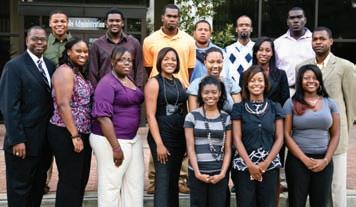
Eight entrepreneurship majors in the College of Business’ Department of Entrepreneurship and Professional Development each received a $5,000 Coleman Entrepreneurial Scholarship for the 2010-2011 academic year. The scholarship is sponsored by GlobalHue, one of the nation’s largest minorityowned multicultural advertising agencies. The JSU students – who garnered eight out of the 10 scholarships awarded – include Brittany Brown, Zulina Brown, Alicia Crudup, Arlinda Fair, Monique Jackson, Clemon Redmond III, Ebony Robinson and Nicholas Ross. Entrepreneurship majors earn scholarships
Future scientists earn scholarhips
Faculty from Jackson State University and Penn State University selected 16 JSU students to receive a $5,500 award through the Future Geoscientists for a Sustainable Earth Environment (FGSEE) scholarship program. Funding for the scholarships, which total $88,000, comes from the National Science Foundation’s Opportunities for Enhancing Diversity in the Geosciences program, which seeks to increase the number of African Americans and other minorities in geoscience careers.
Pictured: (back row, left to right) Jarrett Claiborne of Lorman, Miss.; Wade L. Jackson Jr. of Raymond, Miss.; John Moore III of Centreville, Miss.; Britton Mosley Jr. of State Line, Miss.; Alvin Presley of Jackson, Miss.; Brandon Norwood of Jackson, Miss.; (middle row, left to right) Interim Provost Dr. Quinton Williams, Breawna Kirkpatrick of Detroit, Mich.; Alexius Elam of Holly Springs, Miss.; Dereka Carroll of Dallas, Texas; Tamika Shannon of Jackson, Miss.; Joya Anthony of Belleville, Ill.; Interim Chair, Department of Physics, Atmospheric Sciences and Geoscience Dr. Wilbur Walters, (front row, left to right) Alyssa Louis of Greenville, Miss.; Sarah Brown of Jackson, Miss.; and Niquita Armfield of Chicago, Ill. Not pictured: Warith Abdullah of Jackson, Miss., and Carcia Carson of Terry, Miss.
NBC holds town hall meeting at Jackson State
Jackson State hosted NBC’s “Finishing the Dream” town hall meeting at the Rose Embly McCoy Auditorium in July 2010. Sponsored by NBC, WLBT and JSU’s Fannie Lou Hamer National Institute on Citizenship and Democracy, the event featured a panel of civil rights pioneers for discussions about the murders of civil rights workers in Philadelphia, Miss., the 1970 Jackson State campus shooting, James Meredith’s enrollment as the first black student at the University of Mississippi and the shooting death of Medgar Evers.
Launched in May 2010, “Finishing the Dream” is a series of town hall meetings held in Jackson, Chicago, Atlanta and Detroit about the next steps in the civil rights movement. The meetings will make up part of a “Finishing the Dream” telecast on NBC later this year.
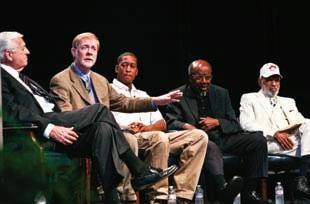

Lead
October 11, 1950

February 6, 2010 Henry
May 13, 1953
August 9, 2010

iN M EMOR i AM
jackson state university extends sincere condolences to the family and friends of jsu staff who passed away in 2010.
The “Finishing the Dream” town hall panelists at JSU included Ken Dean (left), chairman of Civic Communications; Jerry Mitchell, investigative journalist for “The Clarion-Ledger;” Albert Sykes, lead organizer for the Young People’s Project, Inc.; Dr. John M. Perkins, leader of the John M. Perkins Foundation for Reconciliation and Development; and James Meredith, the first African American to enroll at the University of Mississippi.
Jackson State University Honor Roll of Donors 2009-2010
TheHonor Roll is the Jackson State University Development Foundation’s opportunity to recognize and thank those donors who made financial contributions to benefit Jackson State University. The gifts contained in this report reflect contributions that were made to the Jackson State University Development Foundation from July 1, 2009, through June 30, 2010.
Every effort has been made to ensure that donors’ names are listed accurately. Occasionally, however, mistakes and omissions occur. If you notice an error, please accept our apology and contact Angela Tripp at 601-979-2946 or by mail at the JSU Office of Development, P.O. Box 17144, Jackson, MS 39217.
Thank you for investing in Jackson State University.
$100,000 and above BankPlus
Entergy Charitable Foundation
Lumina Foundation
Robert M. Hearin Foundation
Henry T. Sampson Jr.
The Mississippi Common Fund Trust
Tommy Ramey Foundation, Inc.
$50,000 to $99,999
Blue Bengal Athletic Association
Howard D. and Danella B. Catchings
Jackson Medical Mall Foundation
State Farm Insurance Companies
The Eli and Edythe Broad Foundation
$25,000 to $49,999
AMIE
Blue Cross & Blue Shield of Mississippi
Ernst & Young Foundation
Fellows Alumni Foundation of JSU
Charles G. Johnson
John W. McGowan
The Cellular South Charitable Foundation
Thurgood Marshall Scholarship
Union Pacific Foundation
$10,000 to $24,999
Alpha Kappa Alpha Sorority, Incorporated
American Urban Radio Networks
Bill’s Dollar Store, Inc.
Cellular South
Susan D. and James K. Clifton International University of Nursing
Jackson Municipal Airport Authority
JSU Nashville Alumni Chapter
Jerry L. Kennedy
Willem Lamar
Porter’s Insurance Agency
The Foundation for Education & Economic Development
The Skillman Foundation
Luther W. and Ruth G. Williams
$5,000 to $9,999
Capital City Beverage Co.
Collegiate Pan Hellenic Council
jackson state university honor roll of donors
Lawrence B. Gordon
Patricia Coats Jessamy
JSU National Alumni Association
KPMG Peat Marwick, LLP
McTeer Foundation
My Joy, Inc.
Payton Family Foundation, Inc.
Robert Branson Trust
Saatchi and Saatchi North America
Simmons and Simmons, PLLC
The Links Inc., Jackson Chapter
Worth Thomas
Walmart
Watkins Ludlam Winter & Stennis
$2,000 to $4,999
100 Black Men of Jackson
5-Star Sports
American Honda Motor Co.
Percy Anderson
AT&T
AT&T Foundation
Atmos Energy
Darsene Baggett
Baker, Donelson, Bearman, Caldwell
Ben C. Bell
Bill Dickey Scholarship
James D. Brownridge
Byrd & Associates
William M. Cooley
Downtown Jackson Partners
Educational Testing Services
Tellis B. Ellis
Willie S. Farmer
E.C. Foster
Frito Lay, Inc.
Garrett Construction
Harrell Contracting Group, LLC
Cecil L. Hill
IMS Engineers
Jackson Area Federal Credit Union
Jimmie James
Roy and Michealle Jones
JSU Chicago Alumni Chapter
JSU Class of 1963
JSU Greater Washington D. C. Area
JSU Hattiesburg Alumni Chapter
JSU Jackson-Hinds Alumni Chapter
JSU Memphis Alumni Chapter
JSU Meridian Alumni Chapter
JSU Metro New York
Alumni Chapter
JSU Milwaukee Alumni Chapter
JSU Scott County Alumni Chapter
Kelly Construction, Inc.
Robert E. Kelly
LeFleur’s Bluff Chapter of the Links
LG Business Ventures, LLC
Lockheed Martin
M3A Architecture, PLLC
Mahaffey’s Quality Printing
Ronald F. Mason, Jr.
Mississippi Sports Medicine & Orthopedic
Mullen
My Brother’s Keeper
Nspirational Communications Group
Byron D. Orey
Bob Owens
Procter & Gamble
Rupert H. Johnson Jr. Foundation
Pasquale A. Slaughter
John A. Smith
Leroy Smith
Eugene F. Stewart
Sysco Food Services of Jackson
The Dayton Foundation
The Links of Jackson, Inc.
The National Bowling Association
Byron A. Turner
Dessie B. White
Darrel Wilson
Xpress Tax Service
Freddie Zeigler
$1,000 to $1,999
8th Episcopal District of the African Methodist Episcopal Church
Jean-Claude Assad
AT&T United Way
EmployeeGiving
Fred L. Banks
Barksdale Cadillac
George E. Barnes
Evola C. Bates
Willie C. Bell
Malcolm M. Black
Carolyn Boutte’
BP West Coast Financial
Lorenzo Breland
Garry Bridgeman
Sandra R. Bridgeman
Geraldine K. Brookins
Mary A. Brookins
Brown Bottling Group, Inc.
Willie G. Brown
C & B Enterprises
Katherine L. Cage
Valerie Campbell
Harry E. Cantrell
Billy E. Carcamo
Catchings Insurance Agency
Chamberplus
Chevron U.S.A., Inc.
Cisco Systems
Robert G. Clark
Mary D. Coleman
Comcast
Community Foundation of Greater Memphis
Robert L. Cook
Cowboy Maloney
Meredith W. Creekmore
Crystal Springs Booster Club
Ella J. Davis
Dixon Interior Finishing
Kenya M. Dotson
Enterprise, Inc.
ExxonMobil Foundation
Farm Credit Bank of Texas
First Commercial Bank
Forest Community Arts
General Missionary Baptist State Convention
Roosevelt Gentry
Jennie B. Griffin
Obra V. Hackett
Jimmie L. Harmon
Harrison & Flowers, PLLC
Health Assurances, LLC
Hemphill Construction Co, Inc.
Solomon Henderson
Hilton Garden Inn Jackson
Downtown
Hindu Temple Society of Mississippi
Lindsey Horton
Malcolm D. Jackson
Jackson Marriott
Jackson Street M.B. Church
Lori J. Jackson-Stewart
Maxine O. Johnson
JSU Los Angeles Alumni Chapter
Margaret W. Kelly
Hyun C. Kim
Law Offices of Danny E. Cupit
Leo W. Seal Family Foundation
Robert K. Long
Luckett Communications, LLC
Linda F. Mark
Auwilda Mason Polk
Brenda L. Matthews
Cynthia Melvin
Merrill Lynch
Howard F. Miller
Minact, Inc.
Mississippi Blood Services
Mississippi Farm Bureau
Mississippi Power Co.
National Black College Alumni
Narah V. Oatis
Marie O’Banner-Jackson
Old Capitol Inn
Calvin and Barbara Ousby
Hugh Parker
Peachez, Inc.
Pearl Street A.M.E. Church
Brenda K. Rascoe
Edith S. Rayford
Reddix Medical Group, PA
Marcus K. Reed
Carlton W. Reeves
Rissah Temple No. 130
A.E.A.O.N.
George W. Roach
Inger Robert
Evangeline W. Robinson
Rolling Fork Homecoming
Ernestine Ross
Alix Sanders
Scehermann & Jones, LLC
Raphael Semmes
Gordon W. Skelton
Nathan Slater
Jimmy L. and Etta Smith
Mary G. Smith
Robert Smith
Southern AgCredit
St. Luke Baptist Church
Stamps & Stamps Attorneys at Law
Troy A. Stovall
Eric Stringfellow
Mildred J. Stuckey-Butler
Tatum & Wade
TCL Financial & Tax Services
Telesouth Communications
The Allstate Foundation
The Summit Group, Inc.
Francine Thomas
Lottie W. Thornton
Charles H. Tillman
Beverly G. Toomey
Andre Towner
Trustmark National Bank
James K. Turner
Marvel A. Turner
Annie Ulmer
W.G. Yates & Sons Construction
Waffle House
Walgreens
Michael L. Walker
Watson Quality Ford
Clemontine Whitaker
Joann A. White
Mary M. White
Anthony Wilcher
Bobbie J. Wilson
William F. Winter
$500 to $999
Tom Adams
American Deli
ARC Thrift Stores
Della Archie
Rosie H. Austin
AXA Foundation
James Q. Bacchus
Barron Banks
Robert Banks
Beauty Plus
Barbara M. Blackmon
Demetrica B. Bookart-Nixon
Quinton Booker
Robert L. Braddy
Eric Bradley
Rowena Burke
Chris Burkett
Cade Chapel M.B. Church
Thomas C. Calhoun
Canton United Methodist Church
Gwendolyn Caples
Jacqueiline M. Carmichael
Gina Carter-Simmers
Central Mississippi Health Services
Marcus Chanay
Charles K. Chiplin
James Coffey
Community Foundation of Greater Jackson
Cooke-Douglass-Farr-Lemons
Linda J. Daniels
Emerson Davis
Nathaniel Davis
Anthony Dean
Delta Sigma Theta Sorority, Inc.
Jabberwock
Diamond Jacks Casino
Julie D. Dockery
Matthew D. Dockins
Domino’s Pizza
Family Memorial Funeral Services, Inc.
Tommie Farmer
Fellowship of Christian Athletes
Carolyn S. Fletcher
Jacquelyn Fortson
Bobby D. Gaines
Eva Gaines
Richard Gaines
Virgia D. Gambrell
Zachariah Z. Gaye
Gleaner Devin, LLC
W. C. Gorden
Maury Granger
Johnnie P. Gray
Greater Bethlehem Temple Church
Greater Fairview M.B. Church
Jean D. Griffin
Thomas E. Guillot
Bonita L. Harris
Bennye S. Henderson
Mark G. Henderson
Higginbotham Automobiles
Hinds County Human Resource Agency
Coretta V. Holmes
Deborah J. Holt
D’An M. Howard-Carter
Sherman E. Jackson
Jackson State Alumni Organization
Jackson-Hinds Comprehensive Health Center
Rose J. Jenkins
Donald R. Johnson
Inez K. Johnson
Wilton J. Johnson
Aaron Jones
Kristopher Jones
JSU Detroit Alumni Chapter
JSU Gulfport Alumni Chapter
JSU Natchez Alumni Chapter
JSU Warren-Vicksburg
JVC Enterprises
Norman P. Katool
Defronia M. Kelly
Douglas and Gladys S. Langdon
Barbara J. Large
LeFleur’s Bluff Golf Course
Roosevelt Littleton
C.P. Lucas
Belinda D. Mason
Mayo Mallette, PLLC
Barnie A. McGee
Mel Luna Saw Company, Inc.
Mike Naylor Enterprises, LLC
Mississippi Minority Business
Alisa Mosley
Mt. Zion M.B. Church
Picasso I. Nelson
Robert Nevels
New Hope M.B. Church
Nina Packer & Associates
Nissan North America
Once for All, Inc.
Robert T. Penn
Pfizer Foundation
Della R. Posey
Regions Bank
Kelvin W. Richardson
Nolan Richardson
Nana Rusling
Sanderson Farms, Inc.
Larry Sehie
Royce Smith
Southern Beverage Co.
Charles Spann
Statewide General Insurance
Alberta L. Stokes
Subway JSU
T & J Collins Group
Nelson Tate
The Koerber Co., P.A.
Dominic T. Thigpen
Henry G. Thomas
Myranette Thornton Robinson
Thriftco of Mississippi No.1
Trust
Travis Turner
Venture Technologies
Lester Walls
Watkins Partners
Larry Weems
Kendrick C. Wilson
Terry L. Woodard
Alberta Yeboah
Jeff Zubkowski
$100 to $499
A & L Heating and Air
Aja Abai
Timothy L. Abram
Cheronda Adeyemo
African Christian Fellowship
McKinley Alexander
Thomas W. Alexander
James Allen
Michael M. Allen
Mildred J. Allen
Pauline Almeida
Alpha Kappa Alpha Sorority, Inc., Southeastern Region
Alpha Kappa Alpha Sorority, Inc., Upsilon Psi Omega Chapter
Anderson & Associates
Amel Anderson
Esterlene M. Anderson
John R. Anderson
Libby Anderson
Ronza Anderson
Maria Andrade
Jacqueline F. Andrews
Florence Anthony
Rosalyn Anthony
Archie R. Smith Insurance Agency
David Atkins
Milton Austin
B.C. Sports, Inc.
Joyce Y. Baggett
Clemon Baker
Ezra J. Baker
Ricardo M. Baker
Darlita R. Ballard
Baltimore Child Abuse Center
Baltimore City State’s Attorney Bank of America Foundation Bank of Anguilla
Oree Barnes
Joseph J. Bartee
Webster F. Bartee
Bernadine O. Beasley
Tawayna Bell
Mary E. Benjamin
Tarita L. Benson-Davis
Khalipha Bility
Carrine H. Bishop
Joan Bishop
BKD, LLP
Stanley Blackmon
Robert Blaine
Aubrey R. Bland
Joan Blanton
Juanita S. Bluntson
Bobby Boone
Mary Ann Bosley
Ronald Boyd
Douglas M. Breland
Lenard G. Brent
Annie S. Brew
May F. Bridges
Gene A. Bright
Janie M. Brister
Ivory E. Britton
Phillip J. Brookins
Brotherhood Bible Class
Loria A. Brown
Lovetta Brown
Sydney L. Brown
Wanda G. Brown
Yolanda Brown
Trey Brunson
Jimmy Buchanan
Buck Sullivan Repair Shop, Inc.
Elissa R. Buckley
Luther B. Buckley
Myra B. Buckley
Louis E. Bullard
Brenda Bunley
Randall C. Bunley
Kymyona C. Burk
Shirley Burnett
Robert Burney
Margaret T. Burns
Ronnie D. Burton
Billy Bush
Charles C. Butler
Isaac K. Byrd
Ronald J. Byrd
Mark Cagle
Eva-Elissie J. Caldwell
Flora A. Caldwell
Kawanda R. Caldwell
Peggy H. Calhoun
Brenda C. Campbell
Joseph Campbell
Leon Campbell
Mary Kay Campbell
Paul Campbell
Lee P. Camper
Matthew Canada
Autumn Cannon
Janie L. Carey
Rosemary Cargin
Hazel L. Carlos
Lora Carmicle
Janice F. Carr
Michael A. Carraway
Alfred J. Carter
Marietta A. Carter
Artrie L. Caston
Edna Caston
Renee’ Catchings
Robert E. Cathey
Catholic Charities
CBS Interactive
Central Mississippi Personal Care Home
Jean Chamberlain
Milton J. Chambliss
Danny R. Chandler
Linda G. Channell
Cherry Grove M.B. Church
Leon Chestang
Hyonsong Chong
Christ Tabernacle Church
Georgvell Christian
Laura Claiborne
James and Pearl M. Clark
Cardealiur Clay
LaPearl Clayton
Booker Coats
Annie C. Coleman
Carolyn D. Coleman
Carolyn S. Coleman
Catherine N. Coleman
Cynthia R. Coleman
Coleman Hammons Construction Concepts, Inc.
Rebecca J. Coleman
Collateral Non-Support Division
College Hill Baptist Church
Anthony Collier
Patrick R. Collins
Ricardo C. Comegy
Comfort Zone by Val Comtemporary Pediatrics, P.A. Consigment House
Vickie M. Cook
Toni D. Cooley
Willie Cooper
John W. Cope
Robert E. Cordle
Cosma USA, Inc.
Michael Cottingham
William H. Cotton
Rosia Crisler
Larissia Crosby
Theodore N. Cross
Billy L. Crowther
Alleane Currie
Mercidee Curry
Roy C. Curry
Najwa Dali
Mary Dampier
Bobbie W. Daniels
Colena Daniels
Patsy J. Daniels
Jerry L. Danner
Benjamin F. Davis
Dawn L. Davis
Ethel R. Davis
James T. Davis
Ronald P. Davis
Roosevelt Davis
Yolanda Davis
Stacy M. Davison
Mark A. Dawson
Katie M. Dearborn
Johnny R. Demyers
Steve Denham
Rod Denne’
Dorothy J. Dennis
Dorcas G. Denton
Nedra DeSavieu
Kalpana Rani Dey
Q.R. Dillon
Reuben E. Dilworth
Carolyn K. Divinity
Lynn M. Dixon
Maronda Dixon
Trevell Dixon
Lawrence Doan
Joe T. Dockins
Carolyn D. Donerson
Gwendolyn Dooley
Geraldine M. Dorsey
Saul B. Dorsey
Julie A. Drake
Keilani V. Drake
Frances M. Draper
Frank E. Drayton
Dream Building, LLC
Lessie Ducksworth
Linda Dunson
Dynastics, Inc.
Mable Easley
East Lakeland OB/GYN Associates
ECHO
LaTonya B. Edmond
Catherine Edwards
Edwards Electric Service, LLC
Eli Lilly and Company
Foundation
Bobbie N. Ellis
Janice M. Ellis
Johnnie B. Esters
Debra Estes
Melvin I. Evans
Tracey B. Evans
Dianne D. Everett
ExxonMobil Development
Fidelis Ezeala Harrison
Fred D. Feazell
Eltorry Ficklin
Flagstar Construction Co., Inc.
Lucy Flanagan
Stewart B. Fleming
Marvell Foard
Cecil I. Forbes
Sunyetta M. Foster
Velvelyn Foster
Willie E. Foster
Richard Fountain
Shawanna Fowler
Golda Franklin
Jacquelyn C. Franklin
Fraternal Order of Police Balt
Hillman T. Frazier
Patricia A. Freeman
French Properties, LLC
Sunny Fridge
Algaria Funches
Dorothy M. Funches
Glenda Funchess
Hongman Gao
Bonnie B. Gardner
Timothy L. Gates
Joe Gibbs
Joel Gibson
Jonathan Gibson
Giles and Associates, Inc.
Loretta Gilmore Aaron
Brenda Gilmore
Maxine O. Gilmore
Gilmore Professional Dental Corporation, Inc.
Paul D. Gipson
Lynda D. Glover
Angela M. Gobar
Percy Goodwin
Wayne J. Goodwin
Ranetta L. Goss
Sarah Grafton
Adrienne Graham
Dennis M. Grant
Bettye R. Graves
Tiffiney R. Gray
Peggy A. Green
Clara L. Gregory
Denise J. Gregory
Brian C. Grizzell
Gulf South Construction Company
Rameshwar D. Gupta
H.P. Jacobs Steering Committee
Richard Hackney
Haddox, Reid, Burkes, & Calhoun
Alphonso L. Hall
Benjamin Hall
Al M. Hamilton
James S. Hammond
Lee E. Hammond
Jo-Ann A. Hammons
Hamp’s Place
Anissa R. Hampton
Norman W. Handy
Deborah D. Hardy
Larry Hardy
Maggie T. Harper
Patrice Harper-Todd Hatches Consulting, LLC
Chong Heard
Cynthia G. Heard
Manisha Heard
Cheryl M. Hearn
Cedell Hendricks
Suann Hereford
Herrin-Gear Autoplex
Derrick Herrington
Charles E. Hicks
James T. Hill
John E. Hill
Margaret H. Hill
Nicholas Hill
Thelma J. Hill
Hinds Hornets
Caroline M. Hoff
Charles E. Holbrook
Patricia L. Holliday
Charles H. Holmes
Sungbum Hong
Darryl Hooks
Kim Horton
Lula P. Hoskin
Rosella L. Houston
Bailey E. Howell
Adrian Hughes
Felton Hughes
Cecilia Hunt-Bowie
Florida C. Hyde
ING
Jackson District Congress of Christian Education
Dorothy M. Jackson
Jackson Street Baptist Church
Tommiea P. King
Jackson Touchdown Club, Inc.
William L. Jackson
James Griffin Concrete Contractors
Mavis L. James
Floressa J. Jefferson
Bridgette L. Jenkins
Doris E. Jenkins
Mildred D. Jenkins
Phyllis Jennings
Alberta R. Johnson
Annette Johnson
Carolyn R. Johnson
Linda D. Johnson Carson
Curtis W. Johnson
Harvey Johnson
Lem J. Johnson
Marlene L. Johnson
Marsha S. Johnson
Glenda M. Johnson-Marshall
Mary L. Johnson
Patsy Johnson
Peder R. Johnson
Amelia Johnson Phillips
Theresia Johnson Ratliff
Rita L. Johnson
Waldo E. Johnson
Clarence J. Jones
Jones County Junior College
Cynthia H. Jones
Irene T. Jones
Linda I. Jones
Shanta Jones T. Marshall Jones
Verna Jones
Vera Jones-Wilkins
Tommy R. Jordan
JSU Cleveland Alumni Chapter
JSU Indianapolis Alumni Chapter
JSU Tupelo/North MS Alumni Chapter
Ella T. Keller
Mildred B. Kelley
Tangelia T. Kelly
Rosie M. Kersh
Alexander Kessie
Robert J. Kincaid
Janice L. Kindall
Ella P. King
Sandra King
King Solomon M.B. Church
Carl E. Kinnard
Antoinette A. Kirkwood
Riqiea Kitchens
Ollie M. Knight
Angela M. Kupenda
Hilliard L. Lackey
LAD Engineering Technologies
Lake Arbor Dental Associates
Kelvin W. Lattimore
Lauricella Land Co.
Donna LaVigne
Constance V. Lawson
Louise Lawson
Wardell T. Leach
Yvonne M. Leacock
Claudia S. Lee
Jonathan Lee
Junghye Lee
Zelma D. Leflore
Evelyn J. Leggette
Rita Lett
Alice A. Lewis
Augustine Lewis
Jimmie L. Lewis
Joan Lightfoot Powell
Celeste Lindsey
Robert List
Little Rock A.M.E. Church
Sylvanus O. Lloyd
William Love
B. Anne Lovelady
Robert E. Luckett
Douglas Ludwig
Carolyn Lumpkin
Lynch St. C.M.E. Church
M & P Construction Inc.
M.L. Jones Services
James Maddirala
Madison House
Rebecca MaGee
Mama Hamils Southern Cooking & BBQ
Linda D. Mann
Mahmoud A. Manzoul
Sharon Marcheal Davis
Mariel’s Greek Shoppe, LLC
Carl L. Marks
Clifton L. Marshall
MARTA Employees Charity Club
Audrey K. Martin
Etta L. Martin
Jobie L. Martin
Valeria Martin-Davis
Maryland State’s Attorneys’ Association
Brenda Matthews
Mildred L. Matthews
Robert E. McCallum
Annie H. McCants
Patricia R. McCarty
Vershun L. McClain
Spencer McClenty
Kathy McColumn
Luther E. McEwen
Debra McGee
McGee’s Express Lube, Inc.
Alice F. McGowan
Claude L. McInnis
Sidney McLaurin
Leslie B. McLemore
Patricia McPhearson-Davis
LaSaundra F. McQuitter
Donald R. McWilliams
Cynthia S. Melton
Debrah A. Michael
Andrea Michalkova
Mississippi College
George Mitchell
James Q. Mitchell
Iely B. Mohamed
Andrew L. Moncure
Betty J. Moncure
Monday Evening Club
Erika Montgomery
Sadye M. Montgomery
Augustine Moore
Charlie L. Moore
Dorothy Moore
Eltease Moore
Emma G. Moore
Marva Moore
Pamela D. Moore
Viola Morgan
Inez R. Morris
Michael G. Morris
Tommy A. Morris
Wilma Morris
Patrick J. Motsay
Mt. Gallilee Baptist Church
Mississippi Consortium for
International Development
Mt. Olive Baptist Church
Benevolent Fund
Vikki Mumford
Clyde Muse
Music and Christian Arts
Ministry
Sedric Myers
Roscoe Nance
Walley Naylor
Neel-Schaffer, Inc.
Ada P. Nelson
Dewanda J. Nelson
Jerlen Nelson
Casey Nesbit
New Dimensions Ministries
Gladis V. Nichols
Andrelle Nicholson
Nine Iron Golf Club
Wilfred R. Noel
Earlexia Norwood
Emmanuel C. Nwagboso
Emeka Nwagwu
Josephine Obamwonyi
Sule Ochai
Felix A. Okojie
Joyce Olutade
James L. Otis
John Oudu
Annie L. Owens
Denise Owens
Josephine O. Paige
Roderick R. Paige
John N. Palmer
Stanley L. Parker
Kattie C. Partee Frazier
Gil Patterson
Arthena Peavy
George H. Peebles
George D. Penick
Pennington & Trim Alarm Service
John A. Peoples
Doris Perkins
Katherine B. Persson
Gladys Peters
Wesley Peterson
Pharmacia
Alice Phelps
Anna Phillips
Bernice Phillips
Sherry Pickens
Sandra Polanski
Jo Lynn Polk Bridges
Janie Polk Hobbs
Norris Polk
Gailya M. Porter
Bonita Powell
Nicholas Powell
Djenaba Prater
Kenneth R. Preston
John M. Proctor
Project Rehab
Vicki Prosser
Rosemarie Pryce-Washington
Will C. Pugh
Mitchell A. Purdy
Pure Elegance Styling Salon
Edwin H. Quinn
Nola T. Radford
Linda Raff
Seshadri Raju
Gwendolyn Rakes
Dharam S. Rana
Ora C. Rawls
Dorothy B. Reddix
Remata S. Reddy
Betty J. Reed
Bonita D. Reed
Demetria D. Reed
Walter Reed
Bennie L. Reeves
Lelia G. Rhodes
Norman C. Rhymes
Earl S. Richardson
L. Douglas Richardson
Ruby D. Richardson
Willie Richardson
Elizabeth A. Ritter
Edward Roberson
Dollye M. E. Robinson
Forestine Robinson
Michael A. Robinson
Julia Rodgers
Rogue
Porter L. Ross
Janet Samuel
Lou H. Sanders
Calvin Scott
Karen Selestak
Sandra F. Sellers
Mary C. Sharpe
Lester Shaw
J. Robert Shearer
Valerie J. Shelby
Shell Oil Company Foundation
Jessie L. Sherrod
Billy E. Simmons
Candace S. Simms
Euvester Simpson
James E. Sims
Patricia A. Sims
Siwell Middle School Band
Pamela M. Skipper
Roy W. Slater
William C. Smiley
Claude Smith
Evelyn H. Smith
Harold T. Smith
Herman D. Smith
Jay Smith
Joe H. Smith
Laura M. Smith
Mary P. Smith
Royce M. Smith
Sharion Smith
Sharolyn D. Smith
Steve Smith
Mary L. Smith Stowe
Luis Solis
Carleaner Spann
Audrena Spence
K. Spencer
St. Philip A.M.E. Church
Stamps Funeral Home, Inc.
Edgar Stanton
James M. Staples
Peggy Stapleton
Marzell Starks
Michelle A. Stone
Talya Straughter
Eric C. Strothers
Suburban Sugar Land Women
Hursie D. Sullivan
Esther Sutton
Mary E. Sutton
Rashard Sutton
SWAC Alumni
Edward D. Swaggard
Lori T. Swanier
Lester Swanigan
Alma R. Tanksley
Ada F. Taylor
Dowell T. Taylor
Gladys Taylor
Patricia L. Taylor
Vivian B. Taylor
Deborah Taylor-Shannon
George D. Terry
Loretta Terry-Epps
The Barthwell Group
The Clorox Company Foundation
The Jackson Advocate
The Ladies of Distinction
The May Law Firm, PLLC
The McGraw-Hill Companies
The Mississippi Chorus
Palaniappan Thiagarajan
Beray Thigpen
Damian Thomas
Fennoyee Thomas
Lena M. Thomas
Marvin W. Thomas
Prince Thomas
Bernice Thompkins
Aaron J. Thompson
Linda Thompson Adams
Hugh R. Thompson
Joyce Thornton
Arnetta Tillman
Lewis D. Tillman
C. Tipton
TLJ Partners, Inc.
Nellie W. Tolliver
Tom Joyner Foundation
Oliver B. Tomlin
Tricia Properties, Inc.
Jacqueline Triplett-Spires
Geraldine Trotter
TSUNAA Jackson Mississippi Chapter
Allen L. Turner
Cathy D. Turner
Earnestine Turner
Ruby L. Turner
Twelfth Baptist Church, Inc.
George Tyler
Union Pacific Fund for Effective Government
United Technologies
United Way
Patricia A. VanDecar
Charles Vincent
Vineyard Professional Lawncare
Gerard B. Violatile
W B Consolidated
Elma M. Wade
Paul Wade
Maggie J. Walker
Beverly Wall
Charlotte Wallace
Donna Walls
Jonathan Ward
Larry Ward
Neari F. Warner
Kenya Washington
Otis Washington
Daniel Watkins
Vera D. Watson
Kenneth Watts
Marcia L. Weaver
Irena L. Webster
Prenita Welch
Wells Fargo Foundation
Educational Matching Gift
T. Calvin Wells
Bertha D. West
Robert W. Whalin
Davie White
Don L. White
Ashley N. Wicks
Dean S. Wiley
Sharlyn L. Wilkinson
Daniel Williams
Dorothy P. Williams
Germaine D. Williams
Hill J. Williams
Isaiah Williams
Janet Williams
Jimmie L. Williams
Kelvin M. Williams
Martha G. Williams
Mary H. Williams
Michael L. Williams
Monica D. Williams
Quinton L. Williams
Ray Williams
Shadric Williams
T.W. Williams
Adrian Wilson
David Wilson
Linda Wilson
Pamela B. Wilson
Sharlene Wilson
Winston-Salem State University
Bruce D. Wise
Jack P. Witty
Cecil G. Wolfe
Sarah I. Woodall
Margaret Woods
Dionne J. Woody
Woolley Brothers, Inc.
Joyce L. Wright
Xiaojun Wu
Victor T. Wyatt
Samuel A. Yee
Helen Young
Hongtao Yu
Zeta Amicae of Mississippi
Zeta Phi Beta Sorority
Zeta Phi Beta Sorority, Inc.
Southcentral Region
$1 to $99
8th District Y.P.D.
James Adams
Keysha Adams
Jamea Adams-Ginyard
Chuks L. Agusiegbe
Eunice Akoto
Joyce Alexander
Allison L. Almason
Allie L. Almore-Randle
Claudette D. Anderson
Denise S. Anderson
Linda D. Anderson
Sara Anderson Anonymous
Johnny Anthony
Donna Antoine
Tracie P. Archie
Elaine Armour-Ward
Barbara B. Armstrong
Janice M. Armstrong
Lolita Armstrong
Zikri Arslan
Fred Atkins
Rosemary Atkinson
Sreelatha Avanaganti
Mario Azevedo
Renisha A. Baggett Greer
Robbie Bailey
Baltimore Chapter of The Links
David Bandi
Shanice N. Banks
Judith K. Barber
Rims Barber
Bettye R. Barnes
Lauretta H. Barnes
Mary Barnes
Dorothy Bascom
Bertha L. Bass
Michael L. Beane
Donald Beard
Donna Beasley
Cardelle Beauchamp
Vinnie Beckley
Clarenece W. Bell
Josephine Bell
Thelma Bell
James O. Belton
Roslyn D. Benjamin
Deabra Bennett Feaster
Lou Bennett
Mark A. Bernhardt
David L. Berry
Claude Beverly
Kimberly Birden
Gloria M. Bivins
Gregory Black
Joyce Blackburn
Sammie L. Blake
Edna Blasini Nazario
Tasha L. Blevins
Perry M. Boler
Darryl M. Bowen
Steve Boyd
Vicky Boykins
Sarah Y. Bozeman
Dois H. Bradley
Glynn A. Bradshaw
Jose Bravo
Mario C. Bravo
Ron Brewer
Helen Brinson-Brown
Courtney W. Brookins
Dwight Brooks
Lawain Brooks
Marie Brooks
Owen H. Brooks
Percy Lee Brooks
Albert L. Brown
Arthur Brown
Barbara J. Brown
Ben Brown
C. Jerome Brown
Christopher Brown
Clara L. Brown
Delicia D. Brown
Enora R. Brown
J.P. Brown
Jocelyn D. Brown
Mary K. Brown
Maudene W. Brown
Robert L. Brown
Thomasine M. Brown
Yoluanda N. Brown
Cathy J. Bryant
Bobbie L. Buchanan
Mary-Ann R. Burkhart
Damarr M. Butler
Latonya Butler
Ethel Calhoun
Willie M. Campbell
Kimber L. Camper
Ron Carbo
Jacqueline Carothers
Shevon Carr
Dionne H. Carroll
Alvin Carter
Edith B. Carter
Susie J. Carter
Edelia J. Carthan
Reginald Castilla
Willenham C. Castilla
Julia Cauthen
Latashia C. Chambers
Clara Chapman
Luddie Chapman
Greg Chatman
Farah Christmas
Odessa Clark
Jennifer Clinton
Nerma Cockrell
Clyde Coleman
Mary H. Coleman
Shanta Collier
Melissa L. Collins
John Colonias
Clarece D. Coney
Phillisa R. Conner
Eugenia R. Cook
Jean Gordon Cook
Michael E. Cook
Henry L. Cotton
Ollie Cox
Raymond Cox
William Cox
Danny C. Crisler
Emmett J. Crockett
Marcus Crowley
McKenzie
Crump
Eugene Dattel
Diane T. Davaul
Reno V. Davis
Davis, Goss & Williams, PLLC
Lawrence Day
Crystal Deetz
Andre Denard
Belton Dent
Dependable Source Corp. of Mississippi
Bassirou Diatta
Logie G. Dismuke
Eric R. Dockery
Tiffany H. Dockins
Norman D. Douglas
Malena W. Dow
Karen V. Dudley-Smith
Sophia B. Dunning
Monica N. Dupree
Elizabeth V. Eccles
Lonnie Edwards
Michele L. Edwards
Edwards Tigers
Valerie Edwards
Sheila Eley
Cleta Ellington
Alta F. Ellis Babino
Deloris A. Elridge
Darlene E. English
Charles Trent Epperson
Jennifer Etheridge
Evans & Evans Counseling & Consulting
Ayanna N. Evans
V. Lynn Evans
Leora Everett
Jan Evers
Michael Ezell
Mehri Fadavi
Robert Fassett
Cynthia M. Fields
Minnie W. Finley
Shakealia Finley
Sarah Fisher
Kay L. Fitzsimons
Cathy Ford
Toya N. Ford
Elizabeth M. Ford-Howard
Juanita R. Forkner
Franshell M. Fort
Foster Insurance Agency
Jimmie Foster
Betty J. Frazier
Lee A. Frison
Ida L. Fulgham
Jeannette R. Fusco
Theodore Fykes
Harold Gaines
Mike Gaines
Kris Gautier
Keith E. Gayden
Russell L. Ghoston
Donald Giblin
Miriam J. Gibson
Johnny Gilbert
Mary E. Gilbert
Devera Gilden
Christopher M. Glasper
Tatiana Glushko
Lisa H. Goldberg
Helen Golden
Ashley Gordon
Jolyn Gordon
Tatiana Goupalov
D.L. and Helen Govan
Lillie B. Grady
Monica L. Granderson
Summer Graves
Wesley Gray
Greater Jackson Arts Council
Earnest A. Green
Shorty Green
Steven Gregory
Deborah Griffin
Lakitshia R. Griffin
Bill Grissiths
Stephanie A. Guice
Frank Hagelberg
Michael Hall
Delores S. Hamilton
Linda Hamilton
Dewey A. Handy
Joseph N. Handy
James J. Hannah
Trizell L. Hardin
John E. Hardy
Kemper Hardy
Debra Harmon
Edna Harrell
Lisa M. Harrell
Shelia Harrell-Gay
Perry Harrington
Tiffany Harrington
Carolyn Harris
Catherine M. Harris
Dorothy S. Harris
Ronnie S. Harris
Shirley C. Harris
Tracy L. Harris
Tiffany C. Harrison
Beverly Harris-Williams
Eunetta C. Hart
Leo Hartfield
Maria L. Harvey
Anthony Harvill
Kevin Hayes
Johnnie F. Haygood
Will Hebron
Hemingway Circle Community Fund
Jacqueline Henry Burns
Conclive Henry
Charles E. Herron
Tamara R. Herron
Freida Hess
Lucy Hicks Anderson
Kenneth Hill
Roberta H. Hill
Earnestine Hilliard
Malanie T. Hodge
Hollandale Nutrition Advisory
Lowell A. Hollinger
Allan Hollis
Sherrill T. Holly
Sherree Hooker
Yvonne Horton
Cherylynn N. Hoskin
Ketrina W. Hoskin
Clauetta S. Howard
David Howard
Gerard L. Howard
Frances Howze
Joyce Hudson
Miguel Huertas
Shawn Huges
Favetia Hughes
Hosea B. Hughes
Jerry Hughes
Alene Hunt
Doris Hunt
Clarence Hunter
Carolyn Husbands
Huey-Min Hwang
Carole Ireland
Jousha Irvin
Angelica H. Jackson
Anita L. Jackson
Dontai Jackson
Ernestine E. Jackson
Melvin Jackson
Myra W. Jackson
Beverly R. James
Charles James
Dorothy A. Jamison
George Wilbert Jamison
Alice Jefferson
Arthur B. Jefferson
Thomas Jenkins
Jerry Jerdine
Clara Jernigan
Patricia Ann Jernigan
Michael Jessamy
Annette G. Joe
John M. Perkins Foundation
A.J. Johnson
Armo Johnson
Carla Johnson
Carrie Johnson
Chondra Johnson
Frankye M. Johnson
Johnson Funeral Home, Inc.
Hazel Johnson
James Johnson
James Johnson
Melba J. Johnson
Rene’ Johnson
Roosevelt Johnson
Judy Johnson-Evans
Delores H. Jones
Glinda M. Jones
Jeffery W. Jones
Johnny A. Jones
Kimberly Jones
Martha D. Jones
Michael D. Jones
Roger Jones
Travis Jones
Willie Jones
Willie I. Jones
Joyce M. Jordan Gooden
Rachel W. Jordan
JSU Birmingham Alumni Association
JSU Rankin County Alumni
Chapter
Hoonshin Jung
Omadare B. Jupiter
Esther Keller
Monica Kelly
Robert E. Kelly
D. Nichole Kennebrew
Amanda Kennedy
Joanne Kenner
Mae King
Pamela J. King
Peggy H. King
Ouida C. Kinnard
Roslyn Knox-Lockett
Inessa Y. Korovyakovskaya
Deborah Kose
Sharon Lacy
Yvonne LaGrone
Lainer JROTC
Earlean Landing
Ruby L. Larkin
Glenda S. Lattimore
Laura Felts Unit II
Laurel Felt Missionary Society
D.E. Lawson
Lashinda Lawson Washington
Robert Lawyer
Janice Lazard
Lee A. McCord and Associates
Davetta Lee
Raymond Lee
Claudette H. Lehew
Alfonso Leon
Hailong Li
Yadong Li
Anna M. Lileck
Patricia Lindsey
Lauren R. Lipscomb
Thomas Little
Pamela H. Livingston
Galina A. Lobodina
Stanley Lomax
Odom Longino
Harold L. Loving
Shirley D. LuAllen
Barbara J. Luckett
Gloria Luckett
Jeanne B. Luckett
Nakeesha Luckett
Robert E. Luckett
Luretha F. Lucky
M.W. King Hiram Grand Lodge
Ally F. Mack
Isaiah Madison
D.E. Magee
Oksana G. Mahecha
Willie Major
Susan Maneck
Derrick Manogin
Robin Marshall
Bernice V. Martin
Ella H. Martin
Vertie Hill Martin
MasterCard Worldwide
Ida Matthews
Nelly Maynard
Catherine A. McAbee
Larry McAdoo
Lannie S. McBride
Kelvin McCree
Mark McCullough
Bridgett McDade Clayton
Preselfannie W. McDaniels
Charlotte McFarland
George C. McFarland
Javis McGee
Susan L. McGee
Anise McLemore
Bessie McLin
Shanika McNair
Bonnie G. McNeal
Mary McNeil
Patricia Mead Deros
Linda H. Meisner
Hal A. Merritt
J. Theresa Middlebrook
Cindy H. Middleton
Mabel P. Middleton
Richard T. Middleton
Charles D. Miller
Joseph Miller
Melvin A. Miller
Mississippi Fire
Casie M. Mitchell
Donnie Moncure
Marcus T. Monger
Perry Montgomery
Joyce Moorehead
Tamika Moorehead
Morning Star Baptist Church
Clemeteen Morris
Kim Morris
Shineka Y. Morris
Versie L. Morris
Glory J. Moses
Mary B. Myles
Careal Nash
Charles C. Nash
National Coaltion of 100 Black Women
Janice K. Neal
New Horizon Church
Sandra Nimox
Patricia M. Norman
Timothy Norris
Norwood Medical Supply
Bettina Okafor
Alexis Olive
Mari Omori
Mary L. O’Neal
Only the Best, Inc.
Joyce Q. O’Quinn
Bessie B. Otis
Elizabeth A. Overman
Jacob J. Owens
Owens Moss, PLLC
Shirley R. Owens
Barbara M. Owings
Robin M. Pack
Carolyn Palmer
Hyung Park
Douglas Parker
Mary J. Parks
Cathy L. Patterson
Charles E. Patton
Stephanie L. Payne
Pearl Street Church Sanctuary
Minnie E. Peggs
Frankie Pellerin
Patricia L. Perryman
Janice L. Peyton
Rodney A. Phillips
Picasso Nelson Agency, LLC
Mei-Chi C. Piletz
Pleasant Green Baptist Church
David R. Polk
Mary Porter
Dian M. Powell
Keeshea H. Pratt
Tamara Preston
Clyde E. Proctor
Progress for Mississippi
Valerie A. Purry
Perry J. Purvis
Karen F. Quay
Dion D. Quinn
Jennifer Rallo
Sherry L. Rankin
Bakhtiyor Rasulev
Carl M. Reddix
Lola Redmond
Christopher Reed
James A. Reed
Kaye B. Reed
Lamar Reed
Maria B. Reed
Viola Reese
Patricia L. Reeves
Delores Remond
Ricky Nations Agency
Shelley C. Ritter
Jeannette L. Roberes
Yolanda M. Roberson
Priscilla T. Robinson
Sonja W. Robinson
Shedrick Rodgers
Terilyn C. Rodgers
Christian S. Rogers
Lenwood Rogers
Allen P. Ross
Larry D. Ross
Irene D. Ruberto
Linda F. Rush
Rosa Rush
Christopher Russell
Mary W. Russell
Alesha K. Russey
Karen Saddler
Edna A. Salter
Addie Sanders
Donald M. Sanders
Jeffrey Sanders
Janeen L. Saul
Doris E. Saunders
Philomena R. Scalia
Jennifer Scott-Gilmore
Seafood Plus
Jasmin S. Searcy
David Seymour
Ruby Shadow
Mohit Sharma
Billye J. Sharp
Patricia A. Shaw
Tai Shelby
Ray E. Shenefelt
Sheppard Treating Service
Carole R. Sibel
Connie Siggers-Parker
Julius Silvestri
Lisa Simien
Rennina Simmons
Anthony Simon
Sharon Simpson
Georgia Sims
Kathy R. Sims
Lawrence Sledge
Antonio Smith
Betsy Ann Smith
Dedrick D. Smith
Doris N. Smith
George S. Smith
J. Mike Smith
Jackie L. Smith
LaTosha Smith
Mary M. Smith
Noland Smith
Sharolyn Y. Smith
Shirley Smith
Stephanie C. Smith-Jefferson
Renee P. Smoot
Annie Solomon
Eddie L. Spencer
St. John M.B. Church
Linda Stegall
Jerutha S. Steptoe
Angelo Sterling
Larry Steverson
Ollie M. Steward
Bertha E. Stewart
Brenda Stewart
Debra B. Stewart
Dorothy T. Stewart
Janita R. Stewart
Tina Stewart
Anjanette Stiff
Taronta Stokes
Henry L. Stovall
Nettie B. Stowers
Mandy P. Strong
Carolyn W. Strothers
Janet E. Suggs
Stephanie Suttles
Cheryl Swain
Margaret Swinney
Ollie Sykes
Stanley Sykes
Denise Taylor
Frank Taylor
Murlene T. Taylor
Ozie M. Taylor
Richard Taylor
Sharon Taylor
Nancy Tenhet
Tabatha Terrell-Brooks
The Dubois Circle
The Forward Group
The Tire Depot
Faith Thomas
Rita Thomas
Brenda K. Thompson
Cornelius Thompson
Tyler R. Thompson
DeAnna Thompson-Blaliak
Robert W. Tisdale
Melinda Todd
Earl Travillion
Annie L. Travis
Gneir Travis
Dorothy C. Triplett
Angela L. Tripp
Gean Tucker
Pat Tucker
Adoris S. Turner
Minnie Yvette Turner
Quilly E. Turner
Will P. Turner
Jermon R. Tyler
United Way of Southeastern Pennsylvania
Universal Impact, LLC
University Press of Mississippi
Louise Vaughn
Doris R. Vickers
Walker Group, PC
Majoria W. Walker
Rosetta G. Walker
Jolivette Wallace
Albert Walls
Wilbur L. Walters
David N. Ware
Kemba Ware
Larry Ware
Lee A. Warren
George C. Washington
Roy Washington
Marcellus Watkins
Janet Watson
Christopher K. Watts
Marilyn S. Weakley
Barbara Weathersby
Curtis J. Wells
Wen Weng
Bertha M. Wesley
Kimberly Whalen
Frances White
James White
Janice White
Dorothy J. Whitley
Ossie Wilkes
Alfred Williams
Barry G. Williams
Cleotha Williams
Don Williams
Floyd Williams
George H. Williams
Georgia B. Williams
Hilliard C. Williams
Juanita Williams
Pablo F. Williams
Pat Williams
Shirley L. Williams
Charissa A. Wilson
Monica Wilson
Janieth Wilson-Adams
G.Y. Windfield
Amber J. Wise
Patricia Wooten
Word of Life Church
Darlean Wright
Singleton Wyche
Alexander Yankelove
Jennifer K. Young
Yazhou Zhang
Ying Zheng
*Deceased