Blues, BBQ and blessings: Homegrown Harvest strengthens support for seminarians
By Joanna Puddister King
MADISON – The spirit of faith and generosity filled St. Francis of Assisi Parish on Saturday, Oct. 11, as nearly 300 guests gathered for the sixth annual Homegrown Harvest Festival – an evening of blues, barbecue and support for the future priests of the Diocese of Jackson.
The event raised a record $189,000, with donations still coming in. Funds from the night directly support the diocese’s 12 seminarians and the Office of Vocations’ efforts to promote priesthood.
For the first time, the event featured a live auction led by EJ Martin, who energized the crowd with a “raise your paddle” appeal. Guests pledged at various levels helping the live auction alone bring in $15,400.
“It was a wonderful evening,” said Father Nick Adam, diocesan director of vocations. “We had a record number of guests and raised a record amount for our
seminarians. Every dollar supports our twelve current seminarians and our efforts to continue to promote the priesthood throughout the diocese.”
Father Nick noted that three additional men are currently applying for seminary next fall. “We would love to hit $200,000, which was our goal heading into the night,” he said. “If we do, that amount would help educate four of our seminarians for a year.”
The silent auction was another highlight of the evening, featuring dozens of donated items, including 12 themed baskets created by the families of each seminarian. The baskets reflected the personalities and favorite pastimes of the seminarians – from sports teams to snacks, and even a few with bottles of their favorite spirits.
“One of the greatest gifts of the evening was seeing our seminarian parents having such a great time and working together in support of our men,” said Fa-
– Continued on page 6 –
Love for the poor is hallmark of faith, pope says in first exhortation
By Cindy Wooden
VATICAN CITY (CNS) – Many Christians “need to go back and re-read the Gospel” because they have forgotten that faith and love for the poor go hand in hand, Pope Leo XIV said in his first major papal document.
“Love for the poor – whatever the form their poverty may take – is the evangelical hallmark of a Church faithful to the heart of God,” the pope wrote in “Dilexi Te” (“I Have Loved You”), an apostolic exhortation “to all Christians on love for the poor.”
Pope Leo signed the document Oct. 4, the feast of St. Francis of Assisi, and the Vatican released the text Oct. 9.
The document was begun by Pope Francis, Pope Leo said, but he added to it and wanted to issue it near the beginning of his papacy “since I share the desire of my beloved predecessor that all Christians come to appreciate the close connection between Christ’s love and his summons to care for the poor.”
The connection is not new or modern and was not a Pope Francis inven-



tion, he said. In fact, throughout the Hebrew Scriptures “God’s love is vividly demonstrated by his protection of the weak and the poor, to the extent that he can be said to have a particular fondness for them.”
“I am convinced that the preferential choice for the poor is a source of extraordinary renewal both for the Church and for society,” Pope Leo wrote, “if we can only set ourselves free of our self-centeredness and open our ears to their cry.”
As he has done from the beginning of his papacy in May, the pope decried the increasing gap between the world’s wealthiest and poorest citizens and noted how women often are “doubly poor,” struggling to feed their children and doing so with few rights or possibilities.
Pope Leo also affirmed church teaching since at least the 1960s that there are “structures of sin” that keep the poor in poverty and lead those who have sufficient resources to ignore the poor or think they are better than them.
When the church speaks of God’s preferential option for the poor, he said, it does not exclude or discriminate against others, something “which would be impossible for God.”
But the phrase is “meant to emphasize God’s actions, which are moved by compassion toward the poverty and weakness of all humanity,” he wrote.
“Wanting to inaugurate a kingdom of justice, fra-

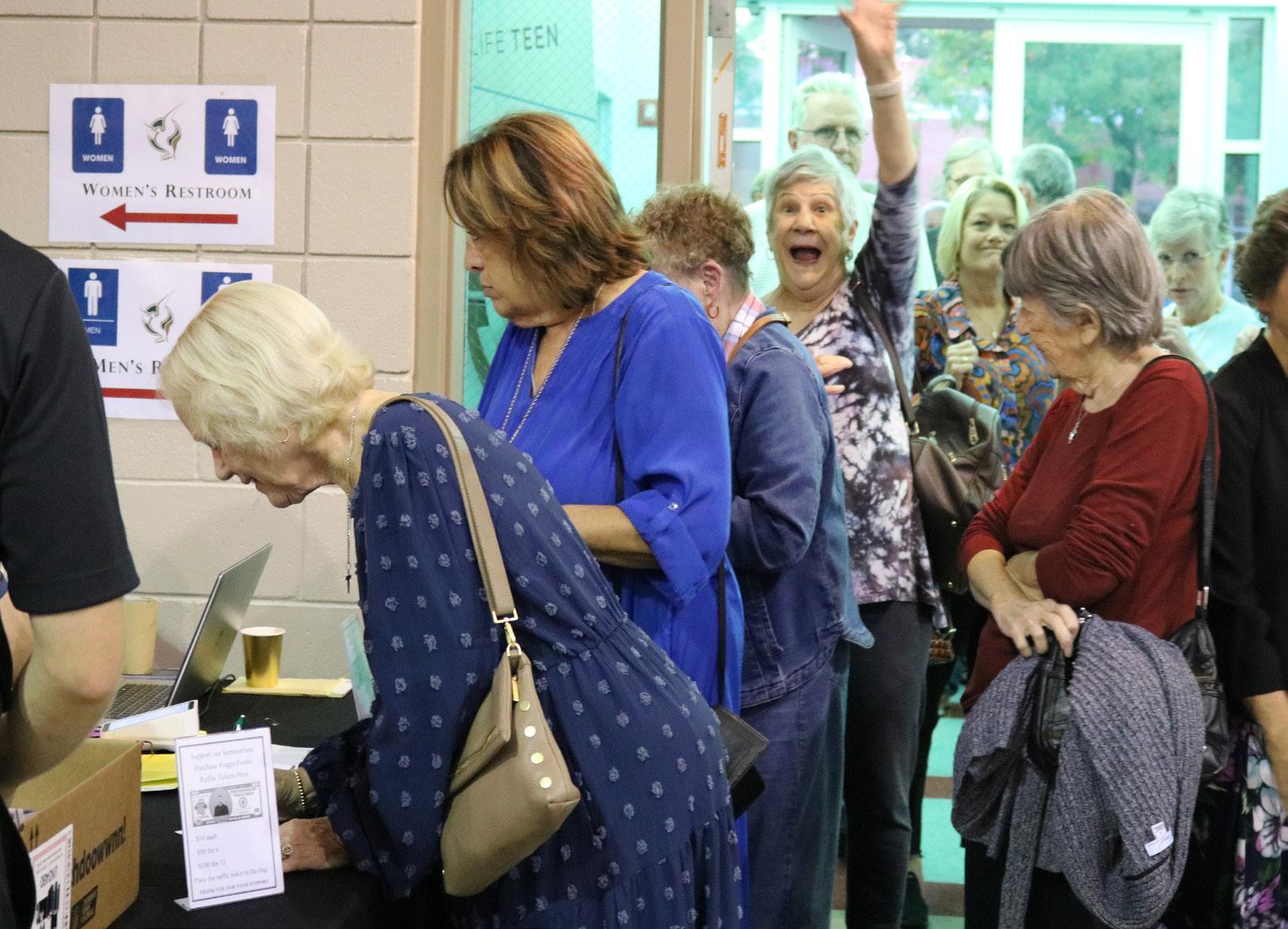
MADISON – Jo Ann Foret (center) waves with excitement as guests arrive for the Homegrown Harvest Festival at St. Francis of Assisi Parish on Oct. 11. The event celebrated the diocese’s seminarians and future priests. (Photo by Joanna King)
SPIRITUAL ENRICHMENT
DIOCESE/MADISON – Fall Faith Formation Day, Saturday, Nov. 15 at St. Francis, Madison from 10 a.m. to 3 p.m. The Department of Faith Formation welcomes all formation leaders and volunteers for a keynote by Robert Feduccia and a variety of breakout sessions to with the theme “Pilgrims of Hope Journeying Together.” Cost: $10. Register at https:// bit.ly/FFFDay2025. Deadline is Nov. 5. Details: email fran.lavelle@jacksondiocese.org.
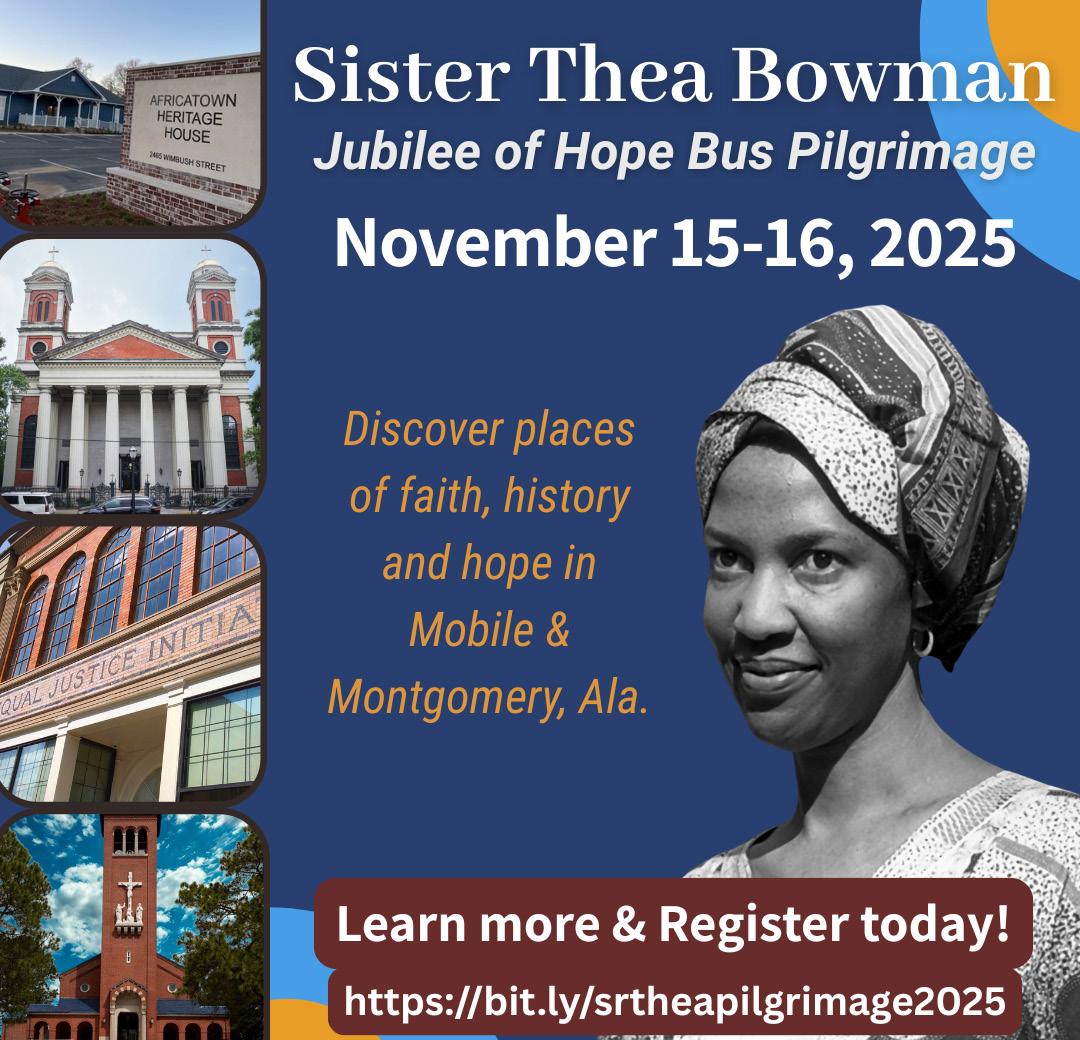
DIOCESE/MOBILE, Ala. – Sister Thea Bowman Jubilee of Hope Bus Pilgrimage, Nov. 15-16 to Mobile and Montgomery, Ala., for a powerful journey of faith, history and fellowship. Highlights include visits to the Africatown Heritage Center, the Equal Justice Initiative and more. Details: Visit https://bit.ly/ srtheapilgrimage2025 for more info and to register.
DIOCESE/NATCHEZ – Diocesan Young Adult Pilgrimage to St. Mary Basilica in Natchez, Nov. 8. Register by Nov. 1. Cost $25. Fee does not include transportation, meals or optional overnight stay. Details: https://jacksondiocese.flocknote.com/signup/222556 or email amelia.rizor@jacksondiocese. org.
DIOCESE/CLINTON – Diocesan Youth Adult Day of Reflection “Prepare the Way,” Saturday, Dec. 6, from 10 a.m. to 2 p.m. at Camp Garaway, Clinton. Register at https://bit.ly/YAReflection25. Details: amelia.rizor@jacksondiocese.org.
CLINTON – Holy Savior, Parish Ladies Retreat, Saturday, Nov. 1, 8:30 a.m. to noon. Join us for a time of fellowship, reflection and prayer. Retreat includes Mass, presentations and lunch. Details: Register at https://bit.ly/HSLadiesRetreat112025.
GLUCKSTADT – St. Joseph, Millions of Monicas – Praying with confidence for our children, each Tuesday from 6:30-7:30 p.m. in the church. Join with
other mothers and grandmothers as we pray for our children’s faithful return to the church. Details: email millionsofmonicas@stjosephgluckstadt.com.
PARISH & YOUTH EVENTS
BROOKHAVEN – St. Francis, Trunk or Treat, Wednesday, Oct. 29 at 6 p.m. on the parish playground. Details: church office (601) 833-1799.
CLINTON – Holy Savior, Fall Festival/Trunk or Treat, Wednesday, Oct. 29 from 6-7:30 p.m. in the upper parking lot. Details: church office (601) 924-6344.
GREENVILLE – St. Joseph, Trunk or Treat, Wednesday, Oct. 29 at 5:30 p.m. in the Our Lady of Lourdes parking lot. Details: Katherine at (662) 8366108.
JACKSON – Cathedral of St. Peter the Apostle, Parish Gala, Saturday, Nov. 1 at 6 p.m. at the Capitol Club Rooftop. Join us for this no tie occassion to raise funds for the Cathedral kitchen and promote community in the parish. Details: church office (601) 969-3125.
MADISON – St. Francis, Parish Mission “Hope and Pilgrimage,” Oct. 26-27 from 5:30-7:45 p.m., with speaker and author Joan Watson. All are welcome. Please RSVP. Details: church office at (601) 856-5556. St. Francis, Trunk or Treat, Wednesday, Oct. 29, from 6:30-8 p.m. Details: church office (601) 586-5556.
NATCHEZ – St. Mary Basilica, Trunk or Treat and Halloween Carnival, Thursday, Oct. 30 in the parking lot on Union Street across from Memorial Park. Details: church office at (601) 4455616 or secretary@stmarybasilica.org.
PEARL – St. Jude, Remembrance Mass, Wednesday, Nov. 5 at 6 p.m. Come for a special celebration in memory of our loved ones that have gone before us. Details: office@stjudepearl.org.
SOUTHAVEN – Christ the King, Hallow-
FEATURE PHOTO: ... Pray for Saltillo mission ...
een Bash, Friday, Oct. 31 from 6-8 p.m. Games, concessions and more. Cost of entry: one bag of candy. Details: church office (662) 342-1073.
STARKVILLE – St. Joseph, CYO Garage Sale, Saturday, Nov. 15 from 8-11 a.m. in the parish hall. Details: church office (662) 323-2257.
EMPLOYMENT
JACKSON – Diocese of Jackson seeks a Facilities Manager to support parishes and schools. Oversees contract review, construction, and diocesan property/life-health-safety policies; manages maintenance and repairs for the Chancery and diocesan sites. Bachelor’s/associate degree in facilities or construction preferred; CFM preferred; 5+ years facilities/ construction management required. Email résumé and cover letter to Cathy Pendleton at cathy.pendleton@jacksondiocese.org.
CATHOLIC SCHOOL ADMINISTRATOR POSITIONS – The Diocese of Jackson seeks qualified, faith-filled leaders to serve as administrators in our Catholic schools. Positions available at St. Joseph School, Madison (Grades 7–12), St. Joseph School, Greenville (Grades PK3–12), and St. Elizabeth School, Clarksdale (Grades PK3–6). Applicants should be practicing Catholics with leadership experience, strong communication skills, and a commitment to Catholic education. For details and applications, visit jacksondiocese.org/administrator-employment.

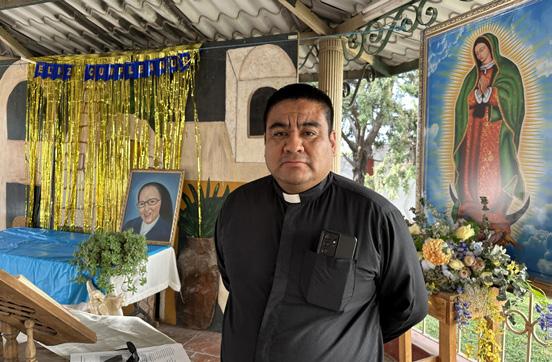
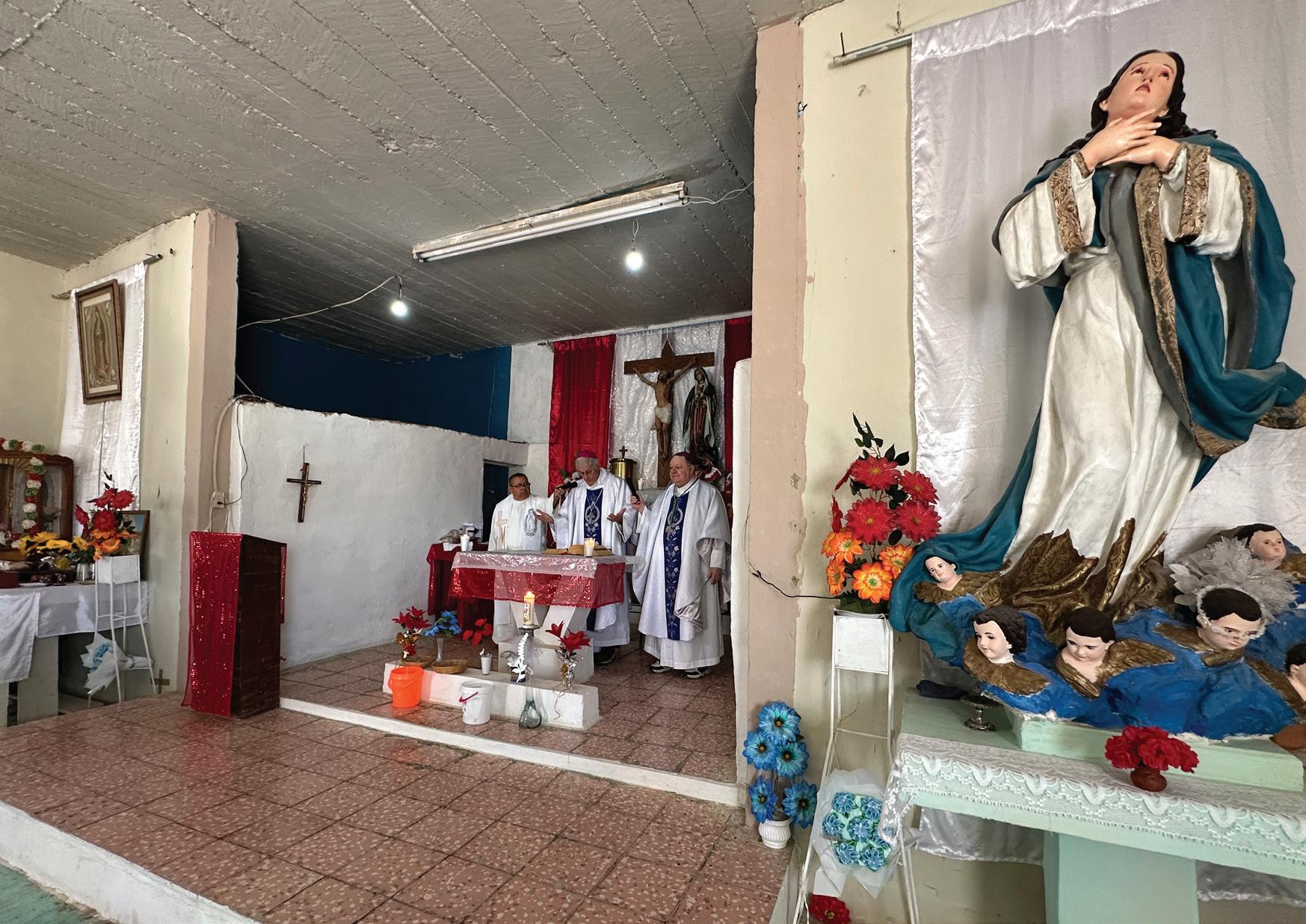
GARAMBULLO, MEXICO – Bishop Joseph R. Kopacz of Jackson (center) concelebrates
Mass with Father David Martínez Rubio (left) and Bishop Louis Kihneman of Biloxi (right) during a visit to mission communities in the remote Saltillo region. The annual diocesan mission trip by the bishops continues the work begun decades ago by Father Patrick Quinn. (Photo by Tereza Ma)
Faith, hope and the dignity of every human person
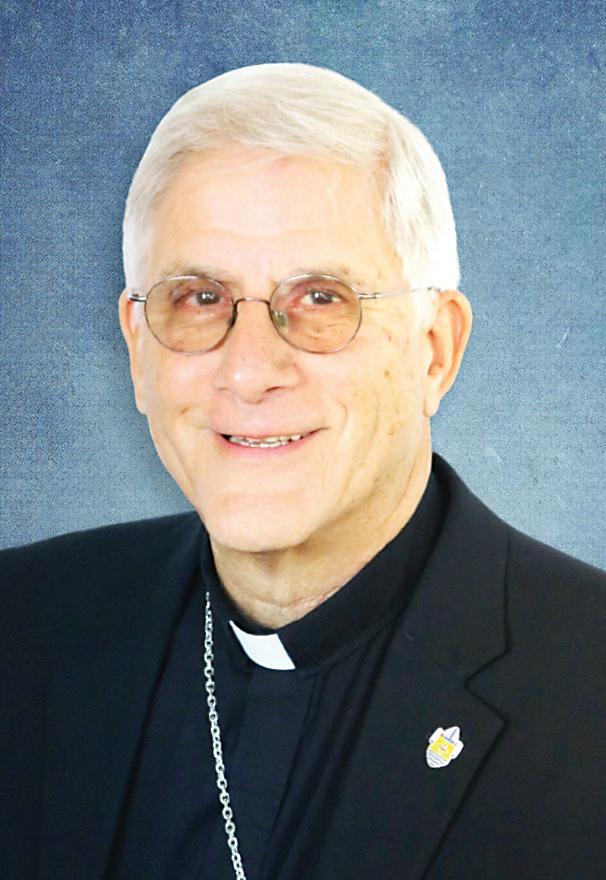
By Bishop Joseph R. Kopacz, D.D.
Let us not forget that we are in the Jubilee of Hope with the pressing invitation to bring the light of the Gospel to every corner of our lives.
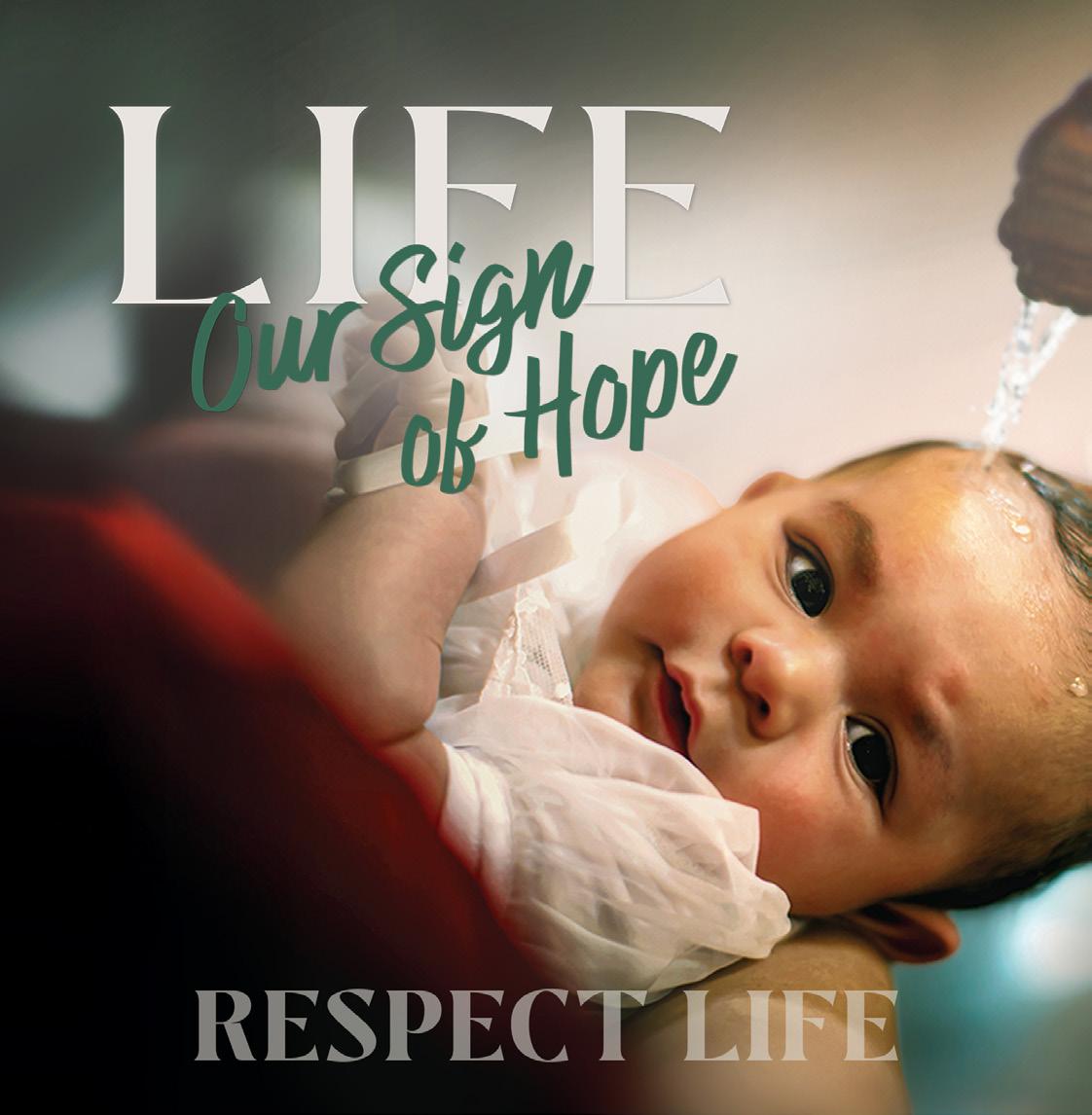
Therefore, “with great joy we celebrate October as Respect Life Month amid the church’s Jubilee Year of Hope. This Jubilee Year offers us the opportunity to appreciate anew, and with immense gratitude, the gift of the new life that we have received in baptism, a life capable of transfiguring death’s drama. The life, death and resurrection of our Lord Jesus Christ is the foundation of our hope. Through Christ, our sins are forgiven, death is overcome, and life is victorious,”
Bishop George Thomas, USCCB said.
The refrain for the Jubilee Year, “hope does not disappoint” unveils an endless horizon beyond this world while at the same time anchoring us more securely in our daily routines and responsibilities. Because the love of God has been poured into our hearts through faith awakening the dignity of every human person made in God’s image and likeness, the church’s respect for life from the moment of conception to natural death remains unwavering.
May the scales fall from our eyes to see the beauty of life all around us – from the conception and birth of a child, in the daily sacrifices of parents and caregivers who give their all for the well-being
of their children, for the blessings of education, recreation, family and community. For the elderly who have borne the heat of the day and who are cared for until the end in the bosom of family or centers of care that accompany the family during the twilight years, we celebrate and give thanks.
“Yet, the daily headlines remind us of how desperately our world is thirsting for the hope that only God can provide. Every day we witness the overwhelming disregard for human life: through rising rates of abortion and assisted suicide; the killing of innocent schoolchildren, even at prayer; the mistreatment of our immigrant sisters and brothers as they endure an environment of aggression; and political and ideological violence inflicted against unsuspecting victims. These attacks threaten life precisely when it is most vulnerable and in need of protection,” Bishop Thomas said.
Despite these realities, the gift of human life exists as a sign of hope to our world today, defying the powers of darkness and the culture of death. Pope Francis in the Bull of Indiction inaugurating the Jubilee Year reminded us that hope is love in action that responds to the suffering at our doorsteps. This life-giving virtue is to be enkindled in the fragile hearts of our youth, in the sick, the forsaken elderly, those in crushing poverty, victims of violence and war, exploited exiles, refugees, and immigrants, and the list goes on.
can be a force for good or evil. In harmony with recent Holy Fathers, Leo has raised up the dignity of the human person at the center of greater solidarity and unity across the globe.
Happy Ordination Anniversary
October 24
Father Marvin Gyasie, SVD
St. Mary Vicksburg & St. Joseph Port Gibson
November 10
Deacon Mark White
Queen of Peace Olive Branch
However, the church and many of its parishes, schools and ministries can and do call down the life of heaven through the power of faith, hope and love. In fact, this is a daily reality, and for this we give thanks.
November 19
Father Jack Kurps, SCJ Catholic Parishes of Northwest Mississippi
November 27
Father Tim Murphy St. James Tupelo & St. Christopher Pontotoc
Thank you for answering the call!
P.O. Box 2130 Jackson, MS 39225-2130 Phone: 601-969-3581 E-mail: editor@jacksondiocese.org
Volume 71
Number 17 (ISSN 1529-1693)
Publisher Bishop Joseph R. Kopacz
Communications Director Joanna Puddister King
Production Manager Tereza Ma
MISSISSIPPI CATHOLIC is an official publication of the Diocese of Jackson, 601-969-1880, 237 E. Amite St., Jackson, MS 39201. Published digitally twice per month January – April and September – December; once per month June, July and August. Mississippi Catholic mails 14 editions per year – twice per month in December and January; and once per month February – November. For address changes, corrections or to join the email list for the digital edition, email: editor@jacksondiocese.org. Subscription rate: $20 a year in Mississippi, $21 out-ofstate. Periodical postage at Jackson, MS 39201 and additional entry offices. POSTMASTER: Send address changes to Mississippi Catholic, P.O. Box 2130, Jackson, MS 39225-2130.
Website: www.mississippicatholic.com w www.jacksondiocese.org
With regard to respect for life, Pope Leo XIV has cited the emerging power and potential of artificial intelligence, which
At the second annual international Artificial Intelligence Conference in Rome, during a session intentionally held at the Apostolic Palace of the Vatican, the Holy Father shared the following thought: “Authentic wisdom has more to do with recognizing the true meaning of life, than with the availability of data.”
In this light, the Holy Father expressed his hope that the conference’s deliberations “will also consider AI within the context of the necessary intergenerational apprenticeship that will enable young people to integrate truth into their moral and spiritual life, thus informing their mature decisions and opening the path towards a world of greater solidarity and unity.”
BISHOP’S SCHEDULE
October 25-November 3 – Jubilee of Hope Pilgrimage to Rome
Sunday, November 9, 10:30 a.m. – Mass and Blessing of Sister Clare Hogan Hall, St. Francis, Madison
November 10-14 – USCCB Fall General Assembly, Baltimore
Thursday, November 20, 8:30 a.m. – School Mass, Annunciation School, Columbus
Wednesday, November 19, 5 p.m. – Deanery IV Jubilee Year Celebration/Adoration, St. Elizabeth, Clarksdale
Sunday, November 23, 9 a.m. – Feast of Christ the King Mass and Celebration, Christ the King, Jackson
Sunday, November 23, 3 p.m. – Mass and Re-dedication of Sanctuary/New Building, St. Paul, Flowood
Saturday, November 29, 10:30 a.m. – Diaconate Ordination of Will Foggo, Cathedral of St. Peter the Apostle, Jackson
All events are subject to change. Check with parishes, schools or organizations for further details.
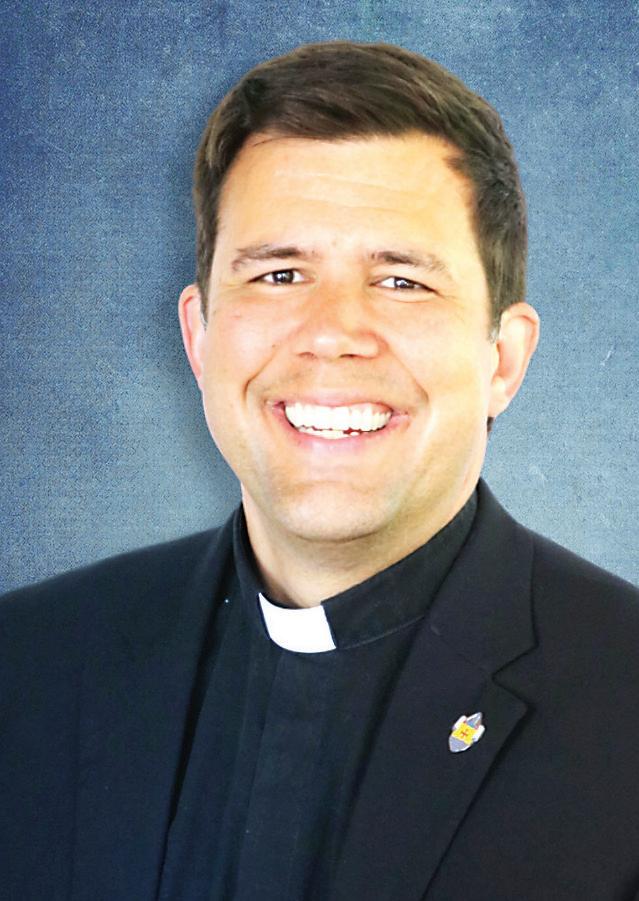
By Father Nick adam
It was a wonderful evening at the sixth annual Homegrown Harvest Festival. We had a record number of guests and raised a record amount for our seminarians. At last count, we brought in about $190,000, all of which will support our 12 current seminarians and our efforts to continue promoting the priesthood throughout the diocese.
Currently, we have three men applying for the seminary for next August. We would love to hit $200,000 – our goal heading into the night – so if you haven’t given and would like to, please contact Rebecca Harris in the diocesan Development Office at (601) 969-1880. Thanks to everyone who worked so hard to make this night a huge success.
One of the greatest gifts of the evening was seeing our seminarian parents having such a great time and working together in support of their sons. We have a diverse group of young men, and their parents have really grown together in the past several months as they walk with them on this journey.
The silent auction included 12 baskets put together by each seminarian’s family. The baskets were filled with items that each seminarian enjoys. For instance, Eli McFadden’s basket was full of St. Louis Cardinals items because his grandparents are from St. Louis, and he loves the team. Our parents are also considering starting a prayer group among themselves to pray for their sons, for more seminarians and for me – which I greatly appreciate.
It is also a joy to see more supporters feeling called to join our cause. We’ve had several families supporting seminarians for many years, and now we are seeing an increase in that support, which is a great blessing. Our new poster will be delivered in the next couple of weeks with all of our guys’ smiling faces, and I think that will be another witness to our diocese of the good work being done and the Lord’s blessings being bestowed on us.
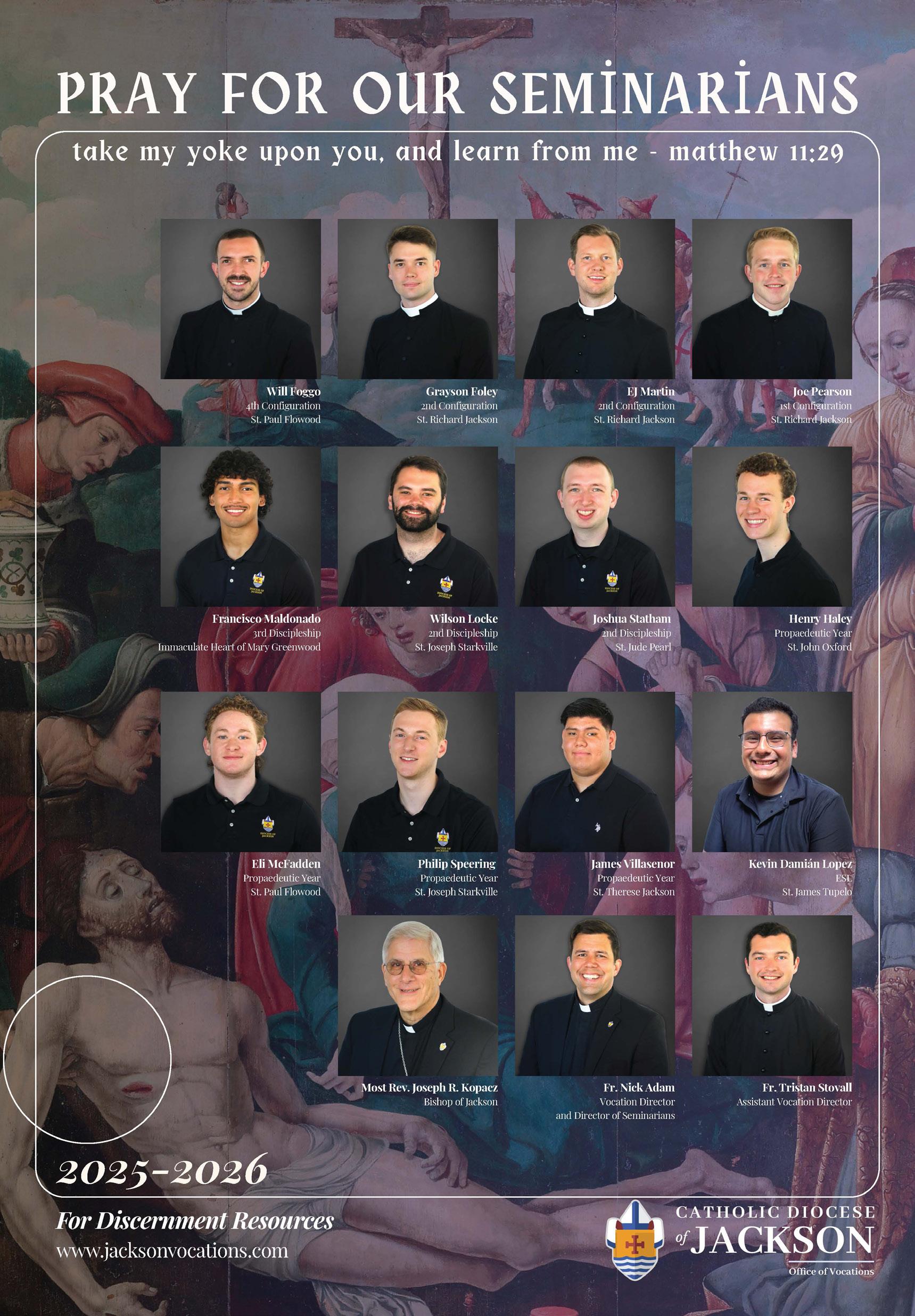
This year’s 2025–2026 Seminarian Poster highlights the 12 men currently preparing for the priesthood in the Diocese of Jackson. Please keep them in your prayers as we continue to encourage more young men to discern their vocation. Join us in prayer that more will answer God’s call to serve.
The work of calling forth more young men to consider the priesthood is continuing. Our discernment groups are ongoing, and I was blessed to take three young men down to St. Joseph Seminary College right after Homegrown Harvest. The guys had a great time and, as usual, were amazed by how “normal” all the seminarians were. I think they saw themselves in those seminarians – which is exactly why we take those trips.
Thank you for your prayers and support. God bless our diocese.
(For more information on vocations, visit jacksonvocations. com or contact Father Nick at nick.adam@jacksondiocese.org.)

Father Nick Adam
The world will be saved by beauty
IN EXILE
By Father ron rolheiser, oMi
In the movie “The English Patient” there’s a very heartwarming scene.
A number of people from various countries are thrown together by circumstance in an abandoned villa in post-war Italy. Among them are a young nurse, attending to an English pilot who’s been badly burned in an air crash, and a young Asian man whose job is to find and defuse landmines. The young man and the nurse become friends and, one day, he announces he has a special surprise for her.
He takes her to an abandoned church in which he has set up a series of ropes and pulleys that will lift her to the ceiling where, hidden in darkness, are beautiful mosaics and wonderful works of art that cannot be seen from the floor. He gives her a torch as a light and pulls her up through a series of ropes so that she swings like an angel with wings, high above the floor and is able with the help of her torch to see beautiful masterpieces hidden in the dark.
For her, the experience is one of exhilaration; she has the sensation of flying and of seeing wonderful beauty all at the same time. When she’s finally lowered back to the floor she’s flushed with excitement and gratitude and covers the young man’s face with kisses, saying over and over again: “Thank you, thank you, thank you for showing this to me!”
And from her expression, you see too that she is expressing a double thanks: “Thank you for showing me something that I could never have come to on my own and thank you for trusting me enough to think that I would understand this, for trusting that I would get it!”
There’s a lesson here?
The church needs to do for the world exactly what this young man did for his nurse friend; it needs to show the world where to look for a beauty it would not find on its own, a beauty that is hidden in darkness. And it needs to trust that people will “get it,” will appreciate the richness of what they are being shown.
Where might the church find such hidden beauty? In the deep rich wells of its own history, and in nature, in art, in science, in children, in the energy of the young, and in the wisdom of the old. There are treasures of beauty hidden everywhere. The church’s task is to point these out to the world. Why?
Because beauty has the power to touch and transform the soul, to instill wonder and gratitude in a way that few things have. Confucius understood this. That’s why he suggested that beauty is the greatest of all teachers and why he based his philosophy of education on beauty. People can doubt almost anything, except beauty.
Why can’t beauty be doubted? Because beauty is an attribute of God. Classical Christian philosophy and theology tell us that God has four transcendental properties, namely, God is “One, True, Good and Beautiful.” If this is true, then to be touched by beauty is to be touched by God; to admire beauty is to admire God; to be shown beauty in hidden places is to be shown God in hidden places; to be in awe of beauty is to be in awe of God; and to feel that awe is to feel a homesickness for heaven.
The renowned theologian Hans Urs Von Baltasar highlighted how beauty is a key component in how God speaks to us and how that should color how we speak about God to the world.
However, we shouldn’t be naïve in our understanding of this. Beauty isn’t always pretty in the way that popular culture perceives it. Granted, beauty can be seen in the spectacular colors of a sunset, or in the smile and innocence of a child, or in the perfection of a Michelangelo sculpture, but it can also be seen in the wrinkles of an old woman and in the toothless smile of an old man.
God speaks through beauty and so must we. More-
The Pope’s
Corner
over, we must believe enough in people’s sensitivity and intelligence to trust that they, like the nurse in “The English Patient,” will appreciate what they are being shown.
In a famous line (often quoted by Dorothy Day) Russian novelist Fyodor Dostoevsky writes: The world will be saved by beauty.
What’s the logic here? How might beauty cure the many ills which beset us?
Here’s Dostoevsky’s algebra: In the face of brutality, what’s needed is tenderness; in the face of hype and ideology, what’s needed is truth; in the face of bitterness and curses, what’s needed are graciousness and blessing; in the face of hatred and murder, what’s needed are love and forgiveness; in the face of the kind of familiarity that breeds contempt, what’s needed are awe and wonder; and in the face the ugliness and vulgarity that pervades our world and our evening news, what’s needed is beauty.
(Oblate Father Ron Rolheiser is a professor of spirituality at Oblate School of Theology and award-winning author. He can be contacted through his website www.ronrolheiser.com.)
Real faith changes the way Christians live, treat each other, pope says
By Carol Glatz
VATICAN CITY (CNS) – Christians must avoid using their faith to label those who are different –often the poor – as enemies to be avoided and rejected, Pope Leo XIV said.
“Some forms of worship do not foster communion with others and can numb our hearts,” he said in his homily during Mass in St. Peter’s Square Oct. 12 for the Jubilee of Marian Spirituality.
“Mary’s path follows that of Jesus, which leads us to encounter every human being, especially the poor, the wounded and sinners,” Pope Leo said in his homily. “Because of this, authentic Marian spirituality brings God’s tenderness, his way of ‘being a mother,’ to light in the church.”
Members of movements, confraternities and various Marian prayer groups were invited to Rome for their Oct. 11-12 Jubilee, which included an evening prayer service in the square Oct. 11 with Pope Leo in the presence of the original statue of Our Lady of Fatima.
way we inhabit the earth.”
When some forms of worship fail to foster communion with others, he said, “we fail to encounter the people God has placed in our lives. We fail to contribute, as Mary did, to changing the world, and to share in the joy of the Magnificat.”
“Let us take care to avoid any exploitation of the faith that could lead to labelling those who are different – often the poor – as enemies, ‘lepers’ to be avoided and rejected,” he said.
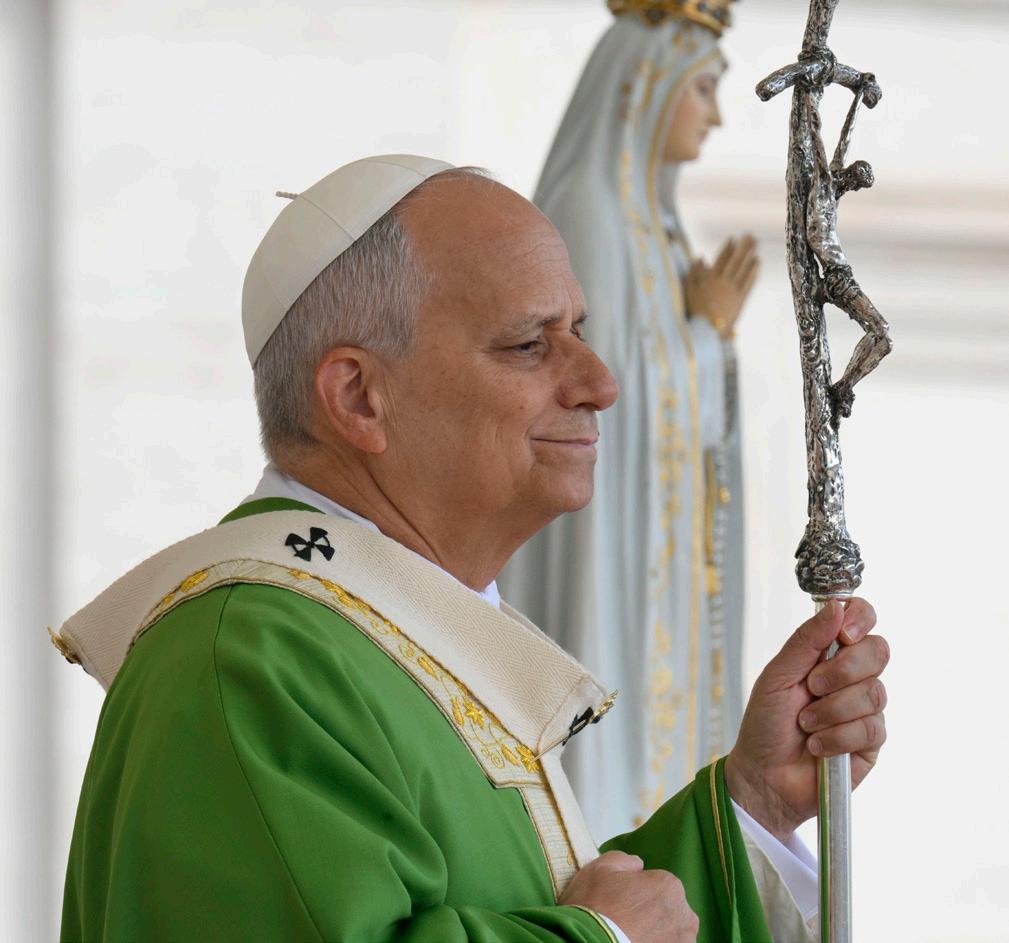
Pope Leo XIV stands with his crosier while in the background can be seen the original statue of Our Lady of Fatima during Mass as part of the Jubilee of Marian Spirituality in St. Peter’s Square at the Vatican Oct. 12, 2025. (CNS photo/Vatican Media)
The statue, brought from the Shrine of Our Lady of Fatima in Portugal, also was on display during the Oct. 12 Mass.
Marian spirituality, “which nourishes our faith, has Jesus as its center,” Pope Leo said in his homily. Remembering Jesus Christ is what matters.
“The celebration of Sunday, therefore, should make us Christians,” he said. “It should fill our thoughts and feelings with the burning memory of Jesus and change the way we live together and the
“Marian spirituality is at the service of the Gospel” because “it reveals its simplicity,” he said.
“Our affection for Mary of Nazareth leads us to join her in becoming disciples of Jesus,” he said, and “it teaches us to return to him and to meditate and ponder the events of our lives in which the Risen One still comes to us and calls us.”
Marian spirituality “helps us to see the proud being scattered in their conceit, the mighty being cast down from their thrones and the rich being sent away empty-handed,” he said, referring to the Canticle of Mary (Lk 1:51-54). “It impels us to fill the hungry with good things, to lift up the lowly, to remember God’s mercy and to trust in the power of his arm.”
Just as God asked Mary for her “yes,” he said, “Jesus invites us to be part of his kingdom.”
“Dear friends, in a world seeking justice and peace, let us revive Christian spirituality and popular devotion to the events and places blessed by God that have changed the face of the earth forever,” he said.
‘ ... My life is not my own – it’s completely yours ...’
– Continued from page 1 –
ther Nick. “They’ve really grown together over the past several months as they walk with their sons.”
A new touch this year were special buttons and ribbons worn by seminarian mothers, a visible sign of their pride and their sons’ ongoing discernment. Many families spoke about forming a prayer group to lift up their sons, Father Nick and future vocations.
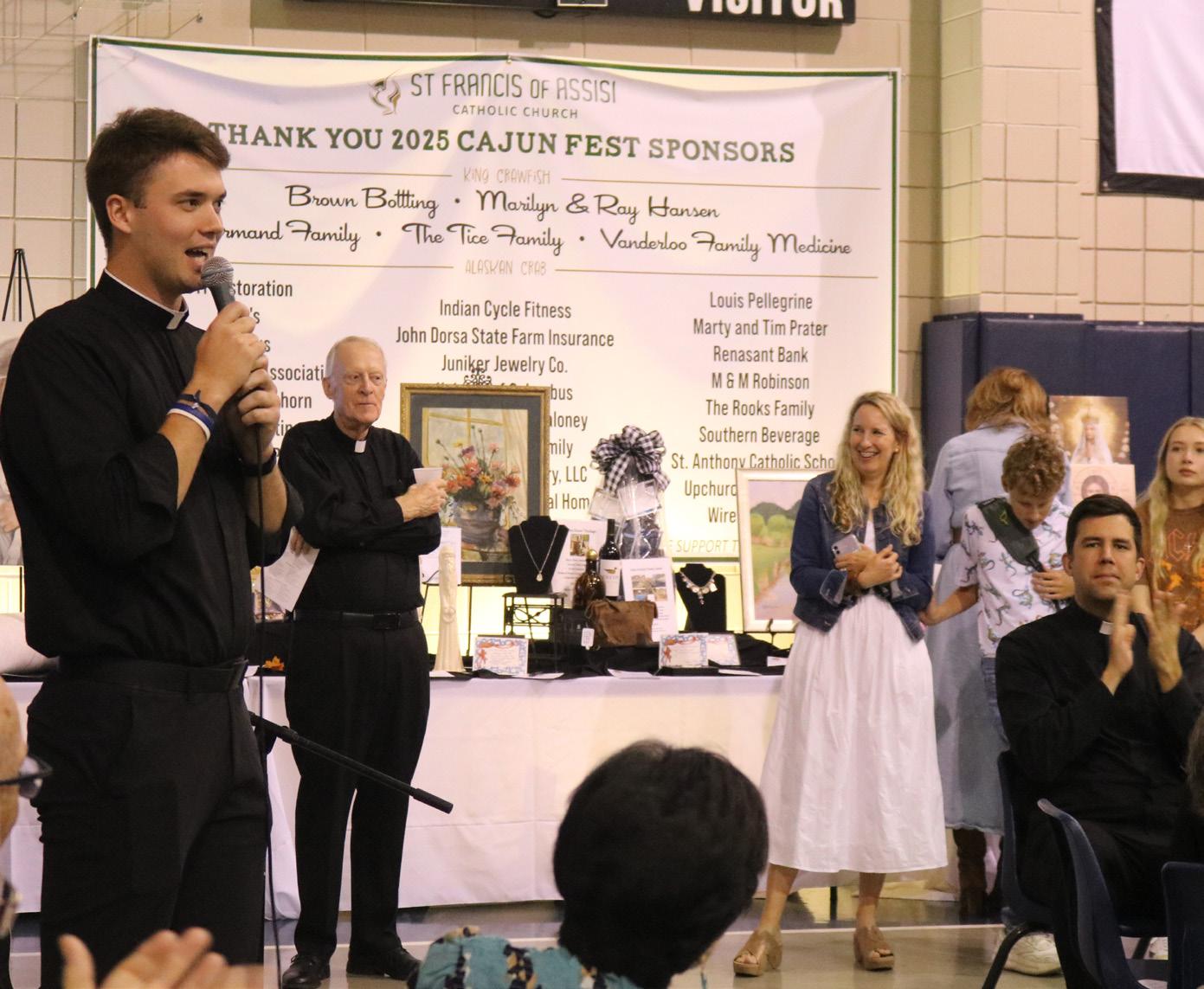
Seminarian Grayson Foley, a graduate of St. Joseph School in Madison, drew laughter and applause when he shared his vocation story with the crowd. Using humor and heartfelt honesty, Foley told how God spoke to him through his love of basketball.
“I had an experience in adoration where I saw the Lord face to face,” he said. “I prayed, ‘Thy will be done,’ and for the first time I really meant it. I thought I was giving up basketball, but the Lord gave it back a hundredfold.”
Foley explained how he met then-Deacon Nick Adam on a basketball court years ago, where the two bonded over the sport that would later lead Foley to discern seminary. “Ev-
‘... A church that sets no limits to love ...’
– Continued from page 1 –
ternity and solidarity,” Pope Leo said, “God has a special place in his heart for those who are discriminated against and oppressed, and he asks us, his Church, to make a decisive and radical choice in favor of the weakest.”
That choice, he said, must include pastoral and spiritual care as well as education, health care, jobs training and charity – all of which the church has provided for centuries.
The document includes a separate section on migrants with the pope writing, “The Church has always recognized in migrants a living presence of the Lord who, on the day of judgment, will say to those on his right: ‘I was a stranger, and you welcomed me.’”
The quotation is from the Gospel of Matthew 25:35, which is part of the “Judgment of the Nations” in which Jesus clearly states that his followers will be judged on how they care for the poor, the sick, the imprisoned and the foreigner.
“The Church, like a mother, accompanies those who are walking” in search of a better, safer life for themselves and their families, Pope Leo wrote.
“Where the world sees threats, she (the church) sees children; where walls are built, she builds bridges,” he continued. “She knows that her proclamation of the Gospel is credible only when it is translated into gestures of closeness and welcome.”
The church knows, he said, “that in every rejected migrant, it is Christ himself who knocks at the door of the community.”
In his exhortation, Pope Leo went through biblical references to the obligation to love and care for the poor and cited saints and religious orders throughout history that have dedicated themselves to living with the poor and assisting them.
A section of the document focuses on the “fathers of the church,” the early theologians, who, he said, “recognized in the poor a privileged way to reach God, a special way to meet him. Charity shown to those in need was not only seen as a moral virtue, but a concrete expression of faith in the incarnate Word,” Jesus.
Of course, for Pope Leo, an Augustinian, St. Augustine of Hippo was included in the document. The saint, “The Doctor of Grace, saw caring for the poor as concrete proof of the sincerity of faith,” the pope wrote. For Augustine, “anyone who says they love God and has no compassion for the needy is lying.”
And while the pope wrote that “the most important way to help the disadvantaged is to assist them in finding a good job,” he insisted
erything we do is for you,” Foley told attendees. “My life is not my own – it’s completely yours.”
Among the seminarians recognized was Will Foggo, who will be ordained to the transitional diaconate on Nov. 29 at Cathedral of St. Peter the Apostle in Jackson. Foggo, the most senior of the group, will serve as a deacon at St. Joseph Parish in Starkville until his priestly ordination in May 2026.
The cost of education, room and board for each seminarian runs close to $50,000 per year, underscoring the importance of continued support from across the diocese.
“The work of calling forth more young men to consider priesthood is continuing,” said Father Nick. “We still have our goal of 33 seminarians by the year 2030. I know it sounds crazy, but with God, anything is possible.”
The night’s joyful fellowship, generous giving and laughter from stories like Foley’s showed that the seeds of that vision are already taking root.
(To support seminarian education, contact Rebecca Harris in the Office of Stewardship and Development at (601) 969-1880 or rebecca.harris@jacksondiocese.org.)
that when that is not possible, giving alms to a person asking for money is still a compassionate thing to do.
“It is always better at least to do something rather than nothing,” Pope Leo wrote.
Still, the pope said, Christians cannot stand idly by while the global economic system penalizes the poor and makes some people exceedingly wealthy. “We must continue, then, to denounce the ‘dictatorship of an economy that kills,’” he said, quoting a phrase Pope Francis used.
“Either we regain our moral and spiritual dignity, or we fall into a cesspool,” he wrote.
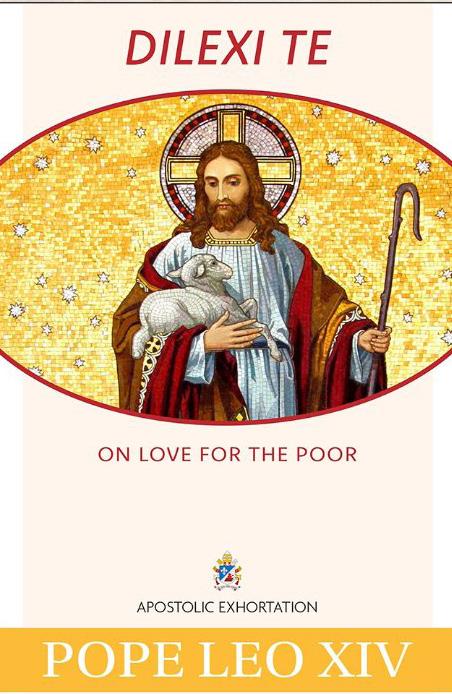
“A Church that sets no limits to love, that knows no enemies to fight but only men and women to love,” Pope Leo said, “is the Church that the world needs today.” OCTOBER 24,
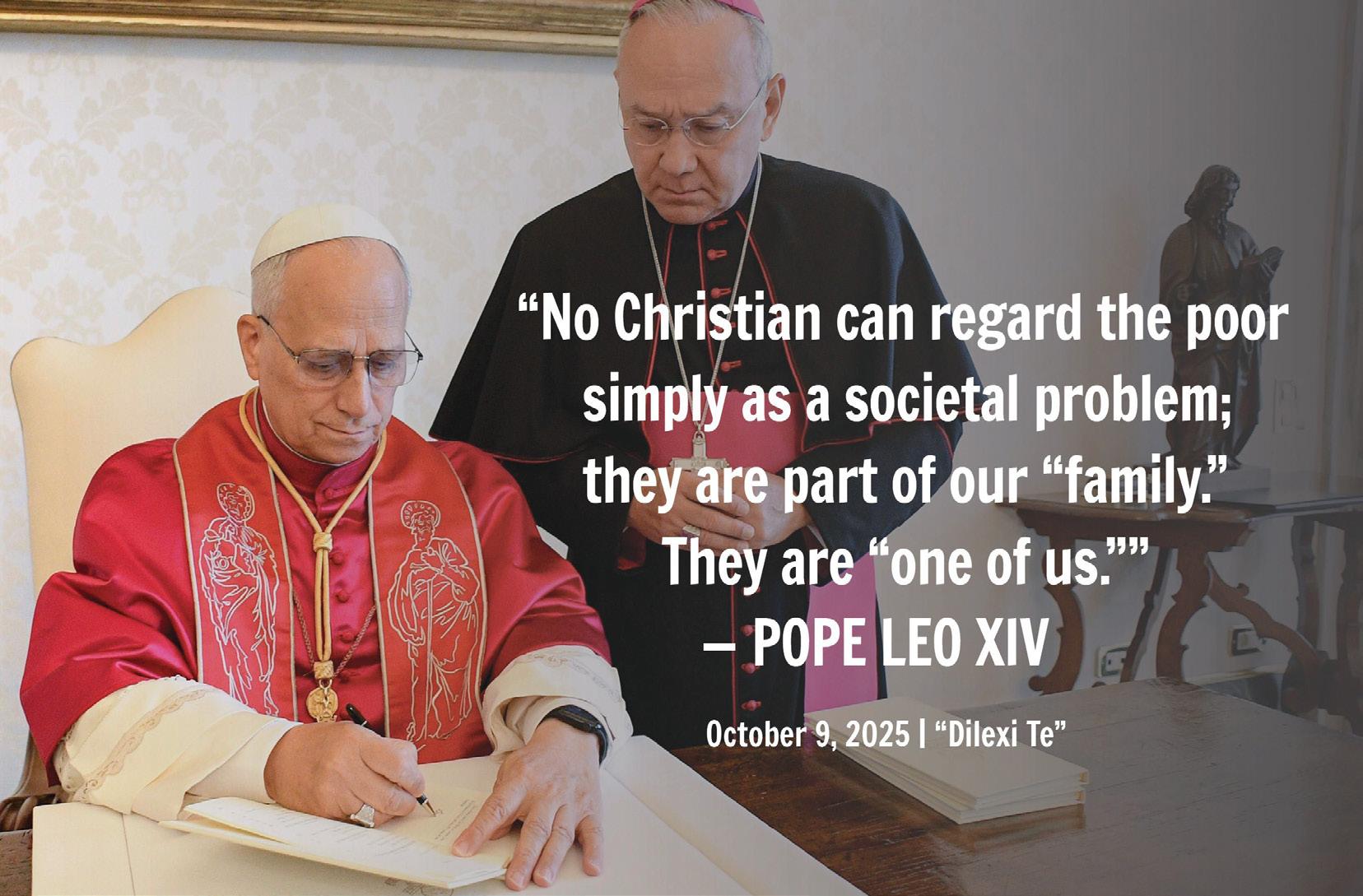
This is a quote from “Dilexi Te,” Pope Leo XIV’s first apostolic exhortation which promulgated Oct. 9, 2025. (OSV News graphic/Megan Marley)
MADISON – Seminarian Grayson Foley speaks to guests at the Homegrown Harvest Festival at St. Francis of Assisi Parish on Oct. 11, sharing how God used basketball to lead him to discern the priesthood.
(Photo by Joanna Puddister King)
ICE enforcement impacts immigrant priests, seminarians and religious in the US
By Kate Scanlon
WASHINGTON (OSV News) –
Immigrant priests, seminarians and religious in the U.S. are among those impacted by immigration enforcement policy, advocates and analysts told OSV News.
Bishop Joseph J. Tyson of the Diocese of Yakima in central Washington wrote in a recent newsletter that several seminarians in the diocese were among them, including one who was born in the U.S. but left to be with his parents, who had self-deported to Mexico.
In an interview with OSV News, Bishop Tyson said many of the priests and seminarians in his diocese come from immigrant backgrounds.
“I know how hard it is to keep my priests and my seminarians in status,” he said. “I can only imagine what it’s like for parishioners who don’t have a fleet of lawyers.”
Bishop Tyson cited a joint report released earlier this year by the National Association of Evangelicals, the U.S. Conference of Catholic Bishops’ Migration and Refugee Services, the Center for the Study of Global Christianity at Gordon-Conwell Theological Seminary, and World Relief, which found many of those vulnerable to deportation themselves – or those who have a family member vulnerable to deportation – are Christians.
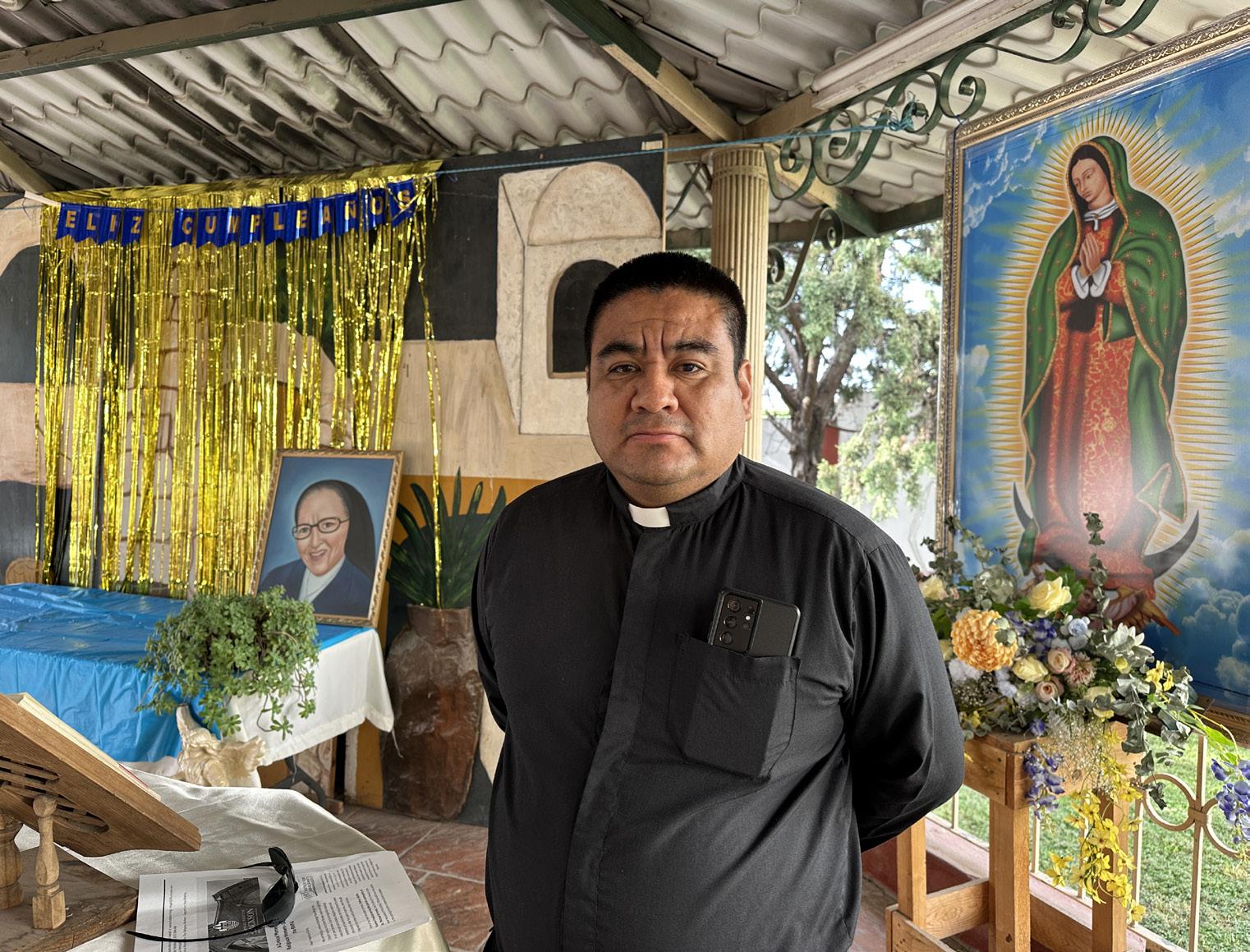
Father Adolfo Suarez-Pasillas, a priest of the Diocese of Jackson, is pictured in Mexico, where he returned earlier this year due to immigration backlogs affecting religious worker visas. He had faithfully served the parish community of St. Michael in Forest, Mississippi, but was unable to remain in the United States after his R-1 visa expired. The proposed Religious Worker Protection Act (RWPA) would help ministers like him continue serving U.S. parishes while awaiting permanent residency. (Photo by Tereza Ma)
with someone who is.
More than 10 million Christians living in the U.S. would be vulnerable to deportation under Trump administration policies implemented in 2025, the report said. Christians account for approximately 80% of all those at risk of deportation, it added, and the Christians most at risk of deportation were Catholics, 61% of the total. The report found one in six Catholics (18%) are either vulnerable to deportation or live
J. Kevin Appleby, senior fellow for policy at the Center for Migration Studies in New York and former director of migration policy for the USCCB, told OSV News, “I think priests and religious from other nations are in a challenging situation, caught between looking after their flock here and perhaps also being a target of enforcement, even if they have legal status.”
The Diocese of Jackson has launched a third-party reporting system that will enable all diocesan employees, volunteers and parishioners to anonymously (or named if preferred) make reports. Examples of this activity include fraud, misconduct, safety violations, harassment or substance abuse occurring at a Catholic parish, Catholic school or at the diocesan level. The system is operated by Lighthouse Services.
To make a report visit www.lighthouse-services.com/jacksondiocese or call 888-830-0004 (English) or 800-216-1288 (Spanish).
The Association of Priests of the Dioceses of Jackson and Biloxi provide a small pension to our retired priests. As you consider your estate plans, please remember these faithful servants by making a donation or leaving a bequest to the Association of Priests. Our parish priests dedicate their lives to caring for us, their flocks. Let us now care for them in their retirement. Donations can be made payable to the Association of Priests and can be mailed to:
Diocese of Jackson, P.O. Box 22723, Jackson, MS 39225-2723
“They can play an important role, however, in ministering to immigrants and their families, as they have a shared experience with them and understand the fear they are feeling,” Appleby said. “When push comes to shove – and loyal to their ministry – they will stand with their immigrant brothers and sisters and be a great asset to the church in the U.S. at this troubling time.”
The National Study of Catholic Priests –released in 2022 by The Catholic University of America’s Catholic Project – indicated 24% of priests serving in the U.S. are foreign-born, but the study didn’t record visa or green card status.
Of these priests, 15% were ordained outside the U.S., while others are foreign-born priests who came to the U.S. as seminarians, were ordained in the U.S. and are also subject to visa renewals, it said.
The consequence of immigration enforcement to the maximum degree, Bishop Tyson said, would mean “we have parishes without priests immediately.”
The U.S. bishops have offered their support to bipartisan congressional legislation that would ease some immigration restrictions on religious workers from other countries. The legislation, titled the Religious
Workforce Protection Act, would permit religious workers already in the U.S. on temporary R-1 status with pending EB-4 applications to stay in the U.S. while waiting for permanent residency.
An April letter from the USCCB to lawmakers about the Religious Workforce Protection Act said, “Simply put, an increasing number of American families will be unable to practice the basic tenets of their faith if this situation is not addressed soon. Likewise, hospitals will go without chaplains, schools will go without teachers, and seminaries will go without instructors.”
Catholic groups are among those urging the Trump administration to address the backlog in the R-1 visa category.
Bishop Tyson said that legislation would help ease some of the challenges presented by ensuring his priests’ legal status remains in good order.
“Foreign-born religious workers play a vital role in serving immigrant communities in the U.S., often providing services in the languages people know best and offering a sense of home and support,” Miguel Naranjo, director of religious immigration services at the Catholic Legal Immigration Network, commonly known as CLINIC, told OSV News.
“With the end of the protected locations policy, we have seen growing fear in immigrant communities about ICE presence in houses of worship – and even greater risks to the religious workers themselves,” Naranjo said. “Many now carry proof of status at all times, aware of the heightened enforcement climate. Immigrants are increasingly afraid to leave home, attend services, or risk being separated from their families. Yet, despite these challenges, foreign-born religious workers remain steadfast. Their courage and commitment to their ministry have only deepened, knowing their role in serving immigrant communities is more critical than ever.”
Asked about Pope Leo XIV’s recent comments calling on the U.S. bishops to speak with a unified voice on migration issues, Bishop Tyson said, “I think we’ve got to somehow find a way of reclaiming the pulpit, because I think there’s voices outside the bishops’ conference that are very loud on this, and we have Catholics in public life that teach things that are incorrect about the human person.”
“I think that’s kind of where we the bishops really have to figure out how we’re going to work with the social media landscape, TikTok, Facebook, Instagram – the plethora of people that launch things and tend to minimize the weight of our teachings in general on Catholic social teaching, very specifically around immigration,” he said.
Catholic social teaching on immigration balances three interrelated principles – the right of persons to migrate in order to sustain their lives and those of their families, the right of a country to regulate its borders and control immigration, and a nation’s duty to regulate its borders with justice and mercy.
(Kate Scanlon is a national reporter for OSV News covering Washington. Follow her on X @kgscanlon.)
October highlights American archives
FROM THE ARCHIVES
By Mary WoodWard
American Archives Month is national celebration led by the United States National Archives every October to promote the importance of archives in preserving cultural heritage and historical records. It’s a time when archives nationwide open their doors to highlight their collections, showcase stories, and celebrate the value of public records.
For the past five years through this column, we have been highlighting in various ways our diocesan archives. We have shared sacramental records dating back to the 1790s, stories from the travels of our bishops at home and abroad, our diocesan connection to the Gulf South region, unique characters and historical tidbits. A huge thank you to Bishop Richard Oliver Gerow who meticulously maintained our collection for more than 40 years.
Our archive collection is full of American history and church history. We currently are in a clean and reorganize mode. Papers and artifacts are getting a new look. Therefore, the vault is closed to any outside professional research at this time.
As much as we would like to allow visits to the archives, it simply is not the nature of the beast. Visits to our archive collection are reserved for professional scholars researching historical topics for dissertations and journal publications. We do not allow independent genealogical research among our records or the well-intentioned history buff.
With that understanding, we have tried to break open some of our cherished history for you to give you an image of how our Catholic faith has developed over the past 300 years in this little corner of God’s Kingdom. So, in celebration of American Archives Month let me feature a few of our favorite images from the collection.
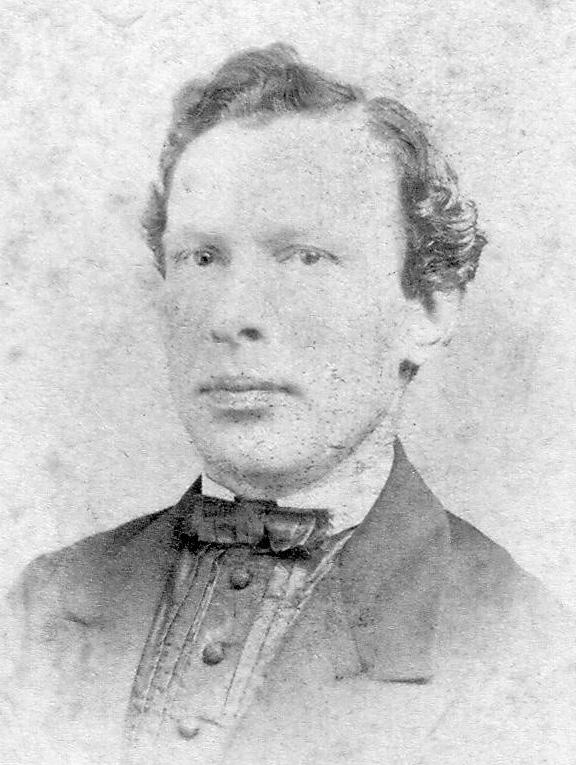
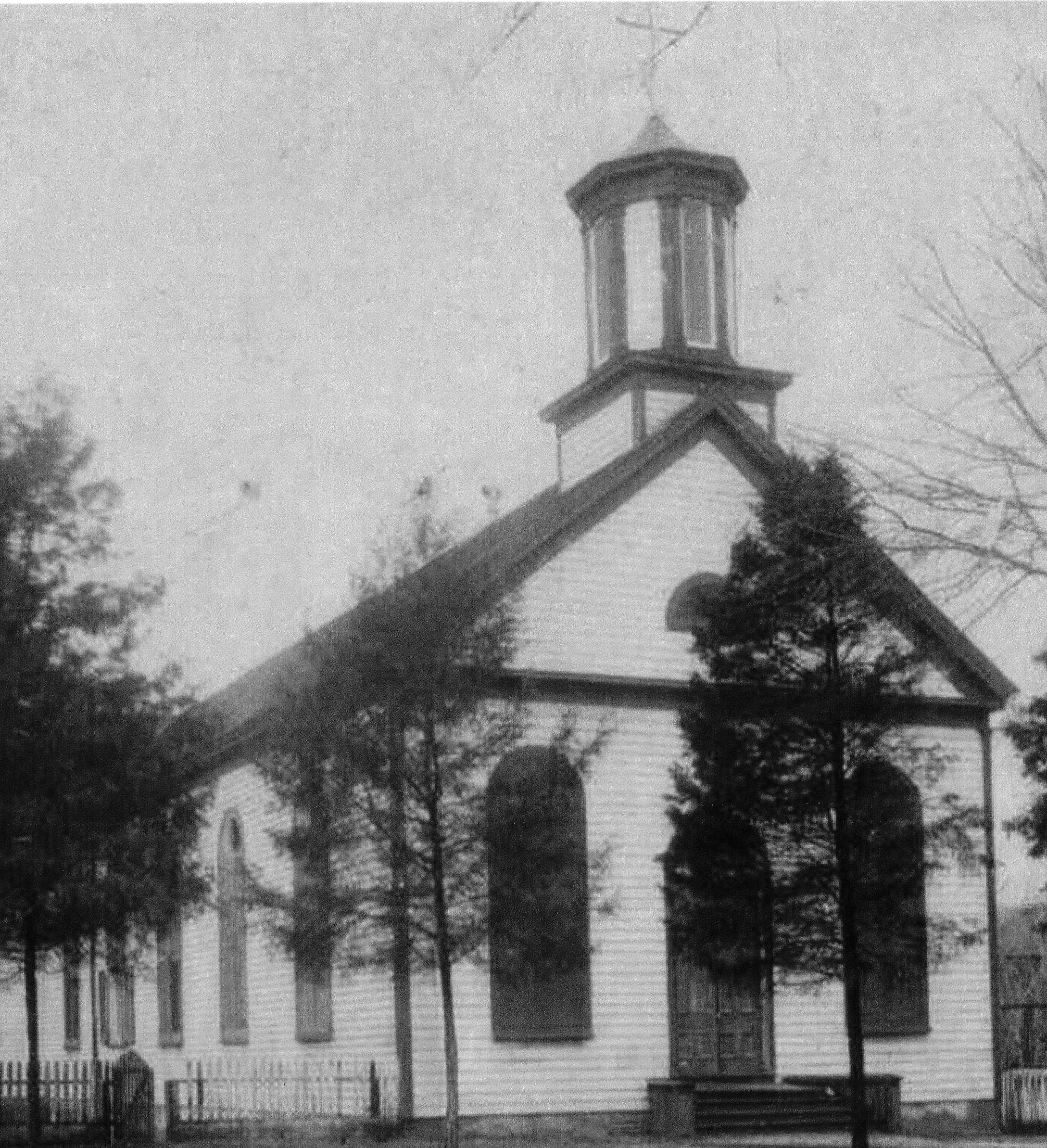
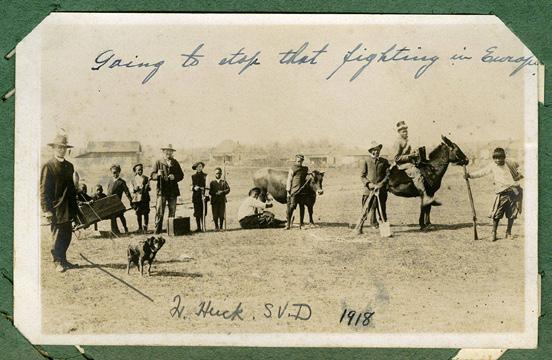
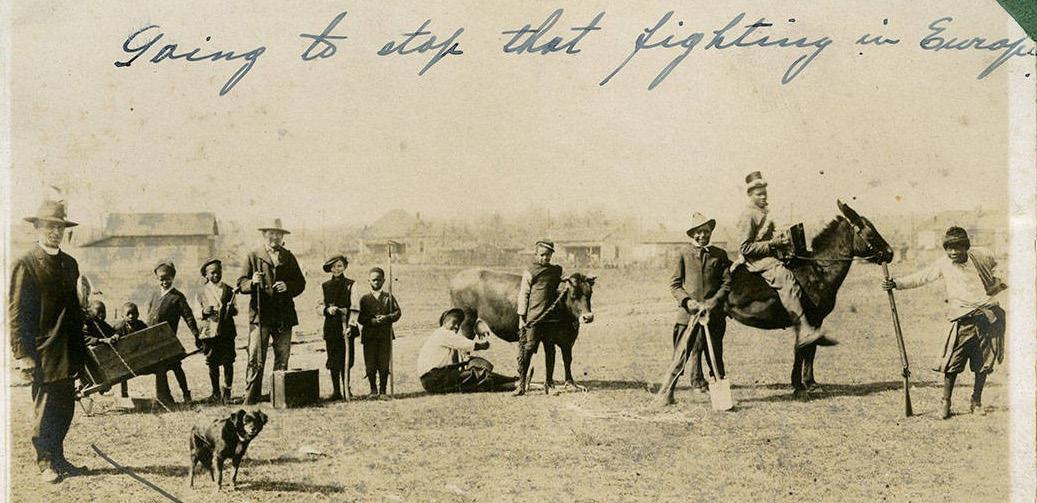
In celebration of American Archives Month, the diocesan archives shares several treasured images that tell the story of Catholic life in Mississippi. Inset: Father Jean Baptiste Mouton, who designed several churches in the mid-1800s, including Annunciation Church in Columbus. He died of yellow fever in 1878 along with five other priests serving in the state. At right, an undated photograph shows the second St. Peter Church in Jackson. Below, Father Aloysius Heick, SVD, stands at far left in a 1918 image from Bishop Richard Gerow’s collection labeled in his handwriting. Together, these photos reflect the history, sacrifice and ministry preserved in the Diocese of Jackson Archives. (Photos from archives)
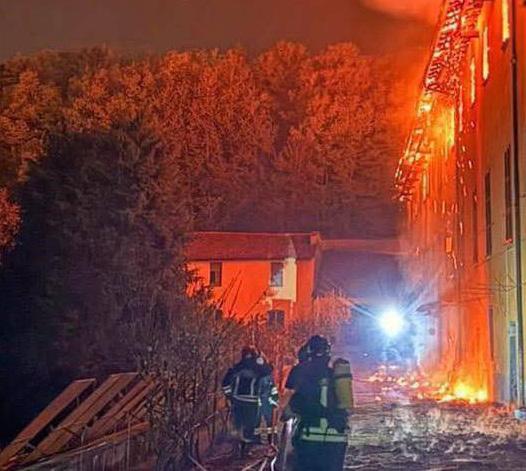
A 17th-century monastery in northern Italy where recently canonized St. Carlo Acutis received his first Communion is seen in flames as firefighters try to contain the fire Oct. 11, 2025. The Bernaga Monastery, located in the La Valletta Brianza municipality in the Lombardy region, was home to 22 Ambrosian-rite cloistered nuns, all of whom survived the devastating blaze. (OSV News/courtesy Lombardy firefighters)
NATION
WASHINGTON (OSV News) – As the U.S. military carried out another strike on Oct. 16 against what it said was a suspected drug vessel in the Caribbean, a Notre Dame Law School expert warned that type of action, without authorization from Congress, could set the stage for the government to conduct strikes closer to home with virtually no guardrails. First reported by Reuters, the Oct. 16 strike is believed to be the first out of at least six such strikes that left survivors among the crew. Nearly 30 people have been killed in the strikes. Mary Ellen O’Connell, a professor at Notre Dame Law School who specializes in international law and conflict resolution, expressed concern that Trump “played a critical role in winning a ceasefire in Gaza only to turn around to use lawless military force in the Caribbean.” On Jan. 20, Trump issued an executive order designating certain international cartels and other organizations as “foreign terrorist organizations.” The Catechism of the Catholic Church states legitimate authorities are entrusted with preserving the common good by “rendering the unjust aggressor unable to inflict harm,” but specifies strict conditions for the use of military force including the exhaustion of all other efforts to stop such damage. O’Connell said the strikes have no justification in U.S. or international law, and there is nothing in the president’s executive order that prevents him from using this kind of lethal force in Lake Michigan, a waterway accessible from Canada but fully within U.S. territory.
ANCHORAGE (OSV News) – Catholic dioceses in Alaska are calling for prayer and support, after flooding from a recent typhoon devastated several coastal communities. The remnants of Typhoon Halong struck the state’s western coast over the Oct. 11-12 weekend, killing at least one. Two other individuals remain missing, and hundreds of stranded residents have been airlifted to Anchorage for safety, with many watching their homes float away. According to state officials, some 1,800 Alaska residents from just under 50 communities had been displaced. In an Oct. 14 letter posted to Facebook, Bishop Steven J. Maekawa of Fairbanks asked parishioners to “pray for the people of western Alaska who were affected by the typhoon and storms this past week. For those who lost their lives and for their families and friends. For those whose homes and businesses were destroyed or damaged. For those communities that are without power, heat, and water. For the people working in the rescue and relief efforts.”
VATICAN
VATICAN CITY (CNS) – Pope Leo XIV met with a coalition of survivors of abuse and victims’ advocates for the first time at the Vatican Oct. 20. Members of the board of Ending Clergy Abuse met with the pope for about an hour in a closed-door meeting that was later confirmed by the Vatican. “This was a deeply meaningful conversation,” Gemma Hickey, ECA board president and survivor of
clergy abuse in Canada, said in a press release. “It reflects a shared commitment to justice, healing and real change.” “Survivors have long sought a seat at the table, and today we felt heard,” Hickey said in the statement. “Pope Leo is very warm, he listened,” Hickey said at a news conference, according to Reuters. “We told him that we come as bridge-builders, ready to walk together toward truth, justice and healing.” While the group of six people representing ECA met with the pope, video clips from the Vatican also showed a separate meeting between Pope Leo and Pedro Salinas, a Peruvian journalist and abuse survivor. Salinas, a former member of Sodalitium Christianae Vitae who suffered physical and psychological abuse by the movement’s founder, Luis Fernando Figari, is seen in the footage giving the pope a copy of his new book, “The Truth Sets Us Free,” in Spanish.
VATICAN CITY (CNS) – Sacramental marriage and traditional family life increase joy in the good times, give strength during hard times and are a path to true holiness, Pope Leo XIV said. Marking the 10th anniversary of the canonization of Sts. Louis and Zélie Martin, the parents of St. Thérèse of Lisieux, Pope Leo said the couple “bears witness to the ineffable happiness and profound joy that God grants, both here on earth and for eternity, to those who commit themselves to this path of fidelity and fruitfulness.” The pope’s comments came in a message to Bishop Bruno Feillet of Séez, France, the home diocese of the Martin family. The message was released at the Vatican Oct. 18, the date of the anniversary of the Martins becoming “the first couple to be canonized as such,” the pope said.
WORLD
MEZCALA, Mexico (OSV News) – Another Catholic priest has been murdered in Mexico’s violence-stricken Guerrero state. Father Bertoldo Pantaleón Estrada, pastor of San Cristóbal Parish in Mezcala, was found dead Oct. 6 – two days after disappearing. According to press reports, he was shot twice in the neck, and federal officials have named his driver as the prime suspect. “At this time, we have no indication that the father was involved in anything wrong,” Federal public security secretary Omar García Harfuch said Oct. 7. Father Pantaleón’s death underscores the growing danger for clergy in cartel-controlled regions. Guerrero, once a hub for heroin production, remains plagued by organized crime, extortion, and kidnappings. The Diocese of Chilpancingo-Chilapa, where the priest served, has suffered multiple clergy killings in recent years. The Mexican bishops’ conference condemned the violence, calling for a full and transparent investigation. Since 2006, at least 52 priests have been killed in Mexico – making it the deadliest country in the world for Catholic clergy.
LA VALLETTA BRIANZA, Italy (OSV News) – A devastating fire has gutted a 17th-century monastery in northern Italy where newly canonized St. Carlo Acutis once received his first Communion. The blaze broke out on Oct. 11 at Bernaga Monastery in La Valletta Brianza, reducing much of the wooden structure to ruins. Thankfully, all 22 cloistered nuns inside survived, with one sister raising the alarm just in time. Archbishop Mario Delpini of Milan expressed deep sorrow, calling the fire a tragic loss of sacred heritage and personal belongings. The monastery had just marked the Jubilee of Consecrated Life and was preparing to celebrate St. Carlo’s first official feast day on Oct. 12. A first-class relic of the young saint – a lock of his hair – was saved from the flames, though a crucifix gifted by St. Paul VI remains missing. Authorities suspect an electrical short circuit may have sparked the fire. Investigations are ongoing as the faithful rally in prayer and support. According to the archdiocese, from a young age, St. Carlo was “fond of the nuns” at the monastery. It was there that he was introduced to Bishop Pasquale Macchi. It was Bishop Macchi, the archdiocese said, that informed St. Carlo’s parents that the 7-year-old future saint was ready for his first Communion.
Encouragement in ordinary time
ON ORDINARY TIMES
By Lucia a. SiLecchia
Pope Leo XIV recently released the first extensive document of his papacy, “Dilexi Te,” an apostolic exhortation on love for the poor.
Almost immediately, pundits responded – some thoughtfully and others with partisan “hot takes” that pulled a mere line or two from the document to illustrate how it aligned perfectly with their viewpoints. Others turned immediately to critique, while some praised provisions they liked and ignored those they did not.
This did not surprise me. I have taught courses in Catholic social teaching and understand the instinct and temptation to view this teaching through political frameworks, ordering it to the “sides” we are used to taking.
Yet this exhortation warrants more. As an apostolic exhortation, “Dilexi Te” is less formal than an encyclical letter. Yet “exhortation” is an interesting term. Its root means “to encourage” or “to urge.” “Dilexi Te” is, therefore, encouragement or a summons to action. It is, in Pope Leo’s words, a summons to “appreciate the close connection between Christ’s love and his summons to care for the poor.”
In reading “Dilexi Te” and seeking to appreciate this “close connection,” three things challenged and – as an exhortation should – encouraged my heart most deeply.
First, the opening line, “I have loved you,” encourages prayerful reflection. It is traditional to name papal documents with the Latin translation of their opening words. Hence, “Dilexi Te” is simply the translation of the short sentence that launches the exhortation. Yet these four words (or two in Latin’s efficiency) convey a profound truth both fundamental to Christianity and largely unfathomable. To know that God says, “I have loved you,” can take a lifetime to ponder. “Dilexi Te” encourages readers to center their lives and relationships on this truth and to draw from it the inspiration for the love that should motivate care for those living with poverty.
Second, “Dilexi Te” encourages readers to see that many of our sisters and brothers live in poverty – and that this can take many different forms. Certainly, it includes material poverty. Yet “Dilexi Te” encourages a broader view. It invites readers to see that deep poverty can afflict those who suffer from many deprivations, including the sorrows of being “socially marginalized,” lacking “means to give voice to their dignity and abilities,” experiencing “moral,” “spiritual” or “cultural” poverty, being weak or fragile, or lacking “rights,” “space” or “freedom.”
Acknowledging poverty in this broader way invites and encourages us not to see “the poor” as merely “others” but to recognize that, in some way, each of us will know poverty sometime in our lives. To know this is to know deeper solidarity with those whose suffering might otherwise seem distant and easier to ignore.
Third, in what may be its most challenging yet encouraging section, “Dilexi Te” presents an extensive history of the church’s service to the suffering. The challenge embedded here is for each of us to join our ancestors in faith who lived lives in so many ways of loving service. They recognized, as Pope Leo explained, that “no sign of affection, even the smallest, will ever be forgotten, especially if it is shown to those who are suffering, lonely or in need.”
Pope Leo described the service missions of the earliest deacons of the church, who served those in need. He then pointed to some of the earliest Church Fathers – including the familiar Saints Ignatius of Antioch, Justin, John Chrysostom, Ambrose and Augustine – who taught vehemently about serving the poor and seeing how intimately intertwined are love of God and love of neighbor.
This cannot remain mere theory. Pope Leo continued by describing how care of the sick and suffering has, through the centuries, been close to the heart of the church. This has been accomplished both through the leadership of well-known saints and through the love of so many religious women who labored anonymously through the ages to offer “comfort, a listening ear, a presence, and above all, tenderness” to those in their care.
Pope Leo spoke of the generous hospitality offered by those in monastic life, under the guidance of Saints Basil the Great, Benedict of Norcia and Bernard of Clairvaux. He spoke of leaders who established religious orders to minister to those who were captured and suffering imprisonment – and of their followers, whose names may be remembered only by God. He also highlighted the ways in which religious orders such as the Franciscans, Dominicans, Augustinians and Carmelites embraced poverty for the sake of bringing others closer to God.
more recent centuries to offer education as a particular way of assisting those in need. He again acknowledged the often underappreciated work of women religious who devoted their lives to this, recognizing knowledge as both a “gift from God and a community responsibility.” In a similar way, he acknowledged the labors of religious orders who cared for those who migrate and those who ministered to “the poorest of the poor.” He also acknowledged those who lived lives in service to persons living with disabilities of all kinds.
This journey through the centuries is not merely a history lesson. It is an invitation to see this radical caring love as integral to our faith.
Because “Dilexi Te” is a new document from a new pope, it will get much attention. But more than attention, it deserves reflection on what it tells each of us – not others – to do. And, at its heart, it encourages us to love others as God has loved us, in all the days of our ordinary times.
(Lucia A. Silecchia is Professor of Law at the Catholic University of America’s Columbus School of Law. “On Ordinary Times” is a biweekly column reflecting on the ways to find the sacred in the simple. Email her at silecchia@cua.edu.)
At length, Pope Leo spoke of orders founded in
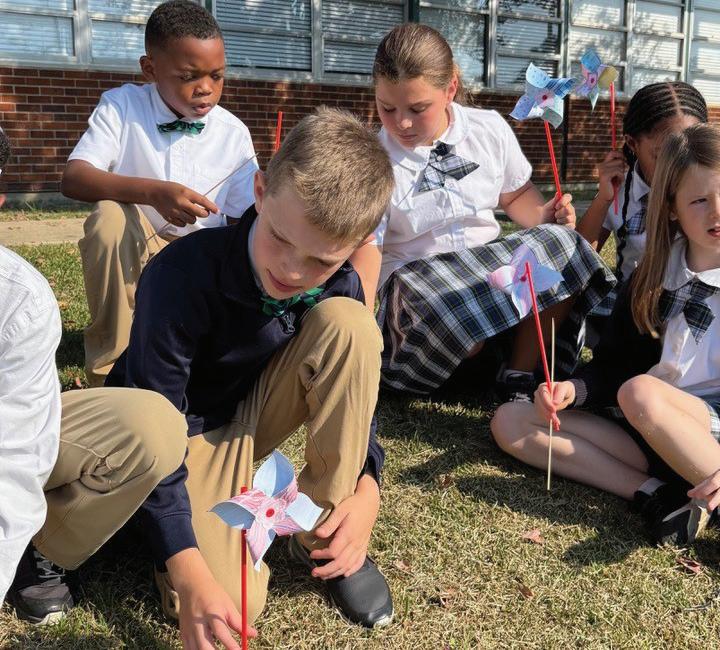
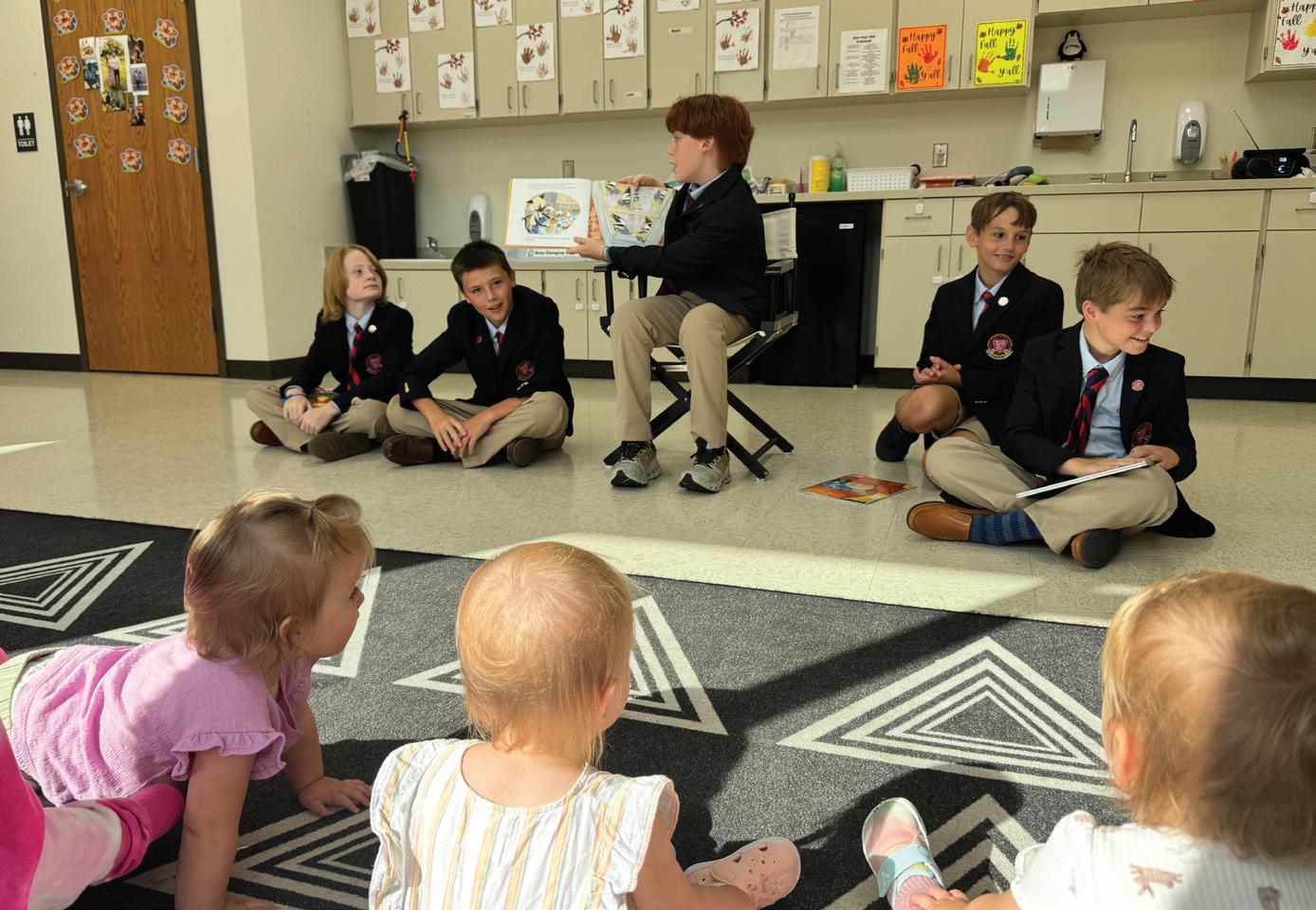
time reading and playing with students in different classrooms. (Photo by Celeste Saucier)

– The Vicksburg Catholic School Lady Flashes and the St. Joseph Catholic School Lady Bruins meet on the court for a volleyball match on Oct. 7. (Photo by
– (left) St. Patrick Catholic School students Myles Owen, foreground, Josiah Rogers and Carolyn Augustine plant pinwheels on Sept. 18 in observance of the International Day of Peace. (Photo by
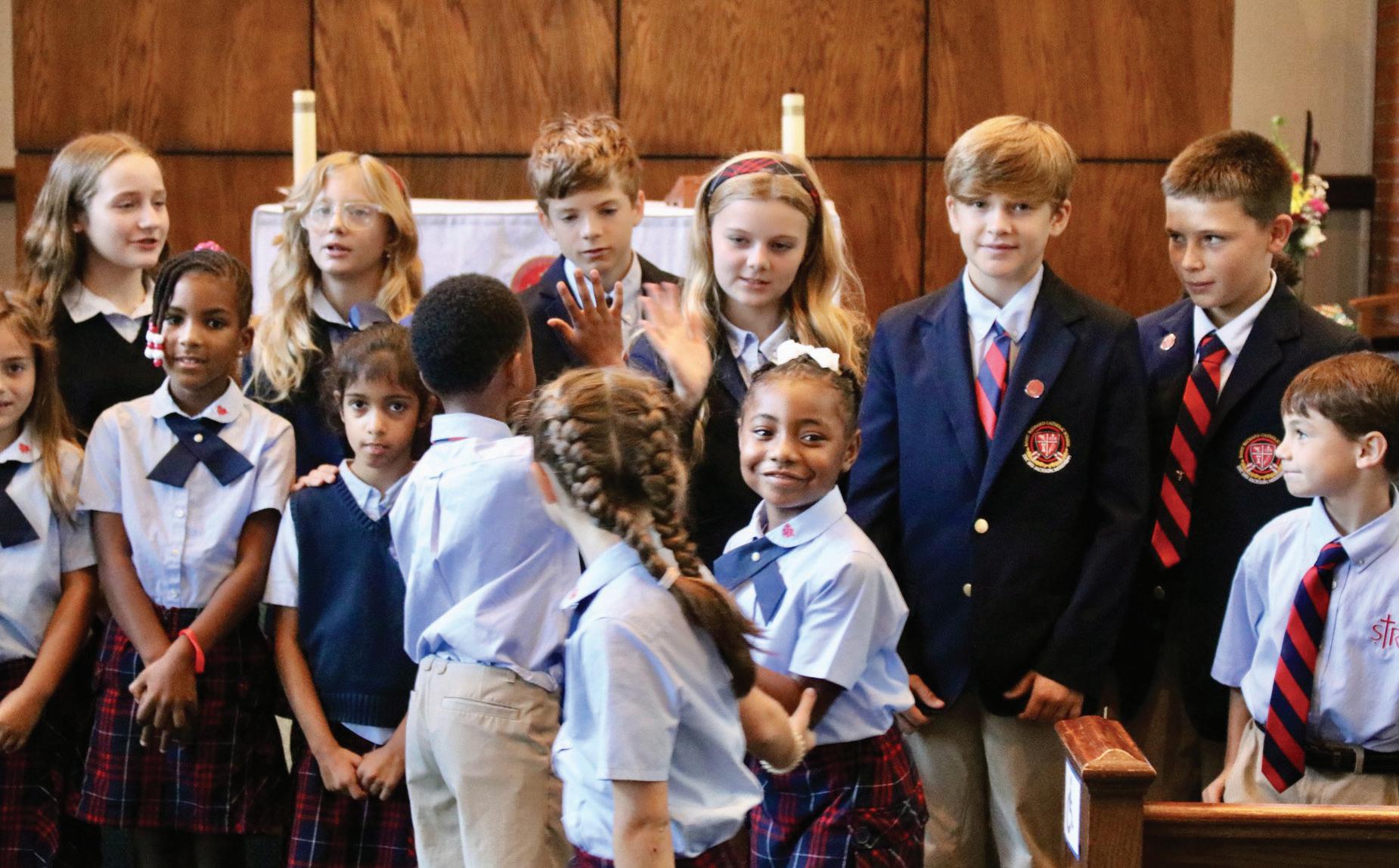
– St. Richard Catholic School second graders are paired with sixthgrade “Guardian Angels,” who serve as guides, mentors, prayer buddies and friends throughout the year as the younger students prepare for First Reconciliation. Pictured (back row, from left) are Rachel Jones, Addy McKay, Cody Gage-Spencer, Addy Boteler, Thomas Ueltchsey and Masters Neel; (front row, from left) Marilee Nelson, Malia Owens, Corinne Thomas, Isaiah Bost, Cecilia Brown, Marleigh Walker and Thomas Morisani. (Photo by Celeste Saucier)
– Vicksburg Catholic School student
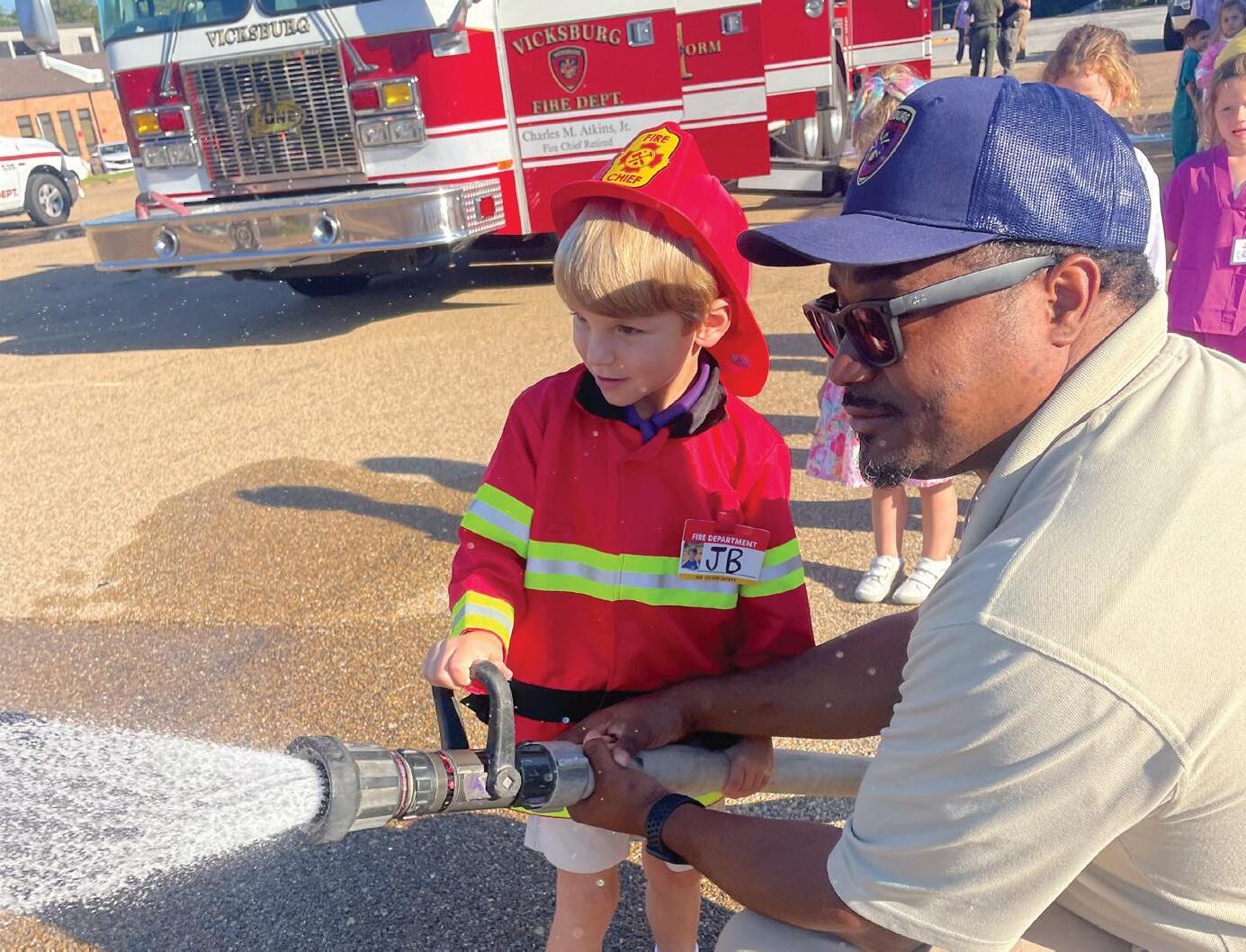
JB Barnes learns how to use a fire hose with help from a local firefighter during Community Helper Day. (Photo by Laura Kidder)

JACKSON – St. Richard Catholic School sixth graders Reeves Buckley, Masters Neel, Andrew Compretta, Jackson LeBlanc and Drew Simmons visit the St. Richard Early Learning Center, spending
VICKSBURG
Tereza Ma)
VICKSBURG
MERIDIAN
Helen Reynolds)
JACKSON
New saints highlight power of faith amid spiritual, personal challenges
By Junno Arocho EstEvEs
(OSV News) – When Pope Leo XIV raised three women and four men to the altar on Oct. 19, he canonized a diverse group of religious and lay men and women, all bound by the virtue of holding on to their faith amid spiritual and external challenges.
The canonizations, which were announced by the Vatican June 13 during the pope’s first ordinary public consistory, elevated to sainthood seven candidates who hail from Venezuela, Turkey, Papua New Guinea and Italy.
St. María Carmen Elena Rendiles Martínez, who was born without a left arm, overcame physical challenges and founded a religious congregation, the Servants of Jesus of Caracas, which was dedicated to pastoral ministry and education.
St. Maria Troncatti, an Italian Salesian, dedicated her life as a missionary to Indigenous peoples in the Amazon rainforest, earning her the informal title of “doctor of the jungle,” while St. Vincenza Maria Poloni dedicated her ministry to the sick and the poor, whom she deemed as “our masters.”
Others, such as St. Ignazio Choukrallah Maloyan, an Armenian Catholic archbishop, and St. Peter To Rot, were martyred for their faith.
Among the most well-known is St. Bartolo Longo, a former Satanist priest who, after his conversion, dedicated his life as a Dominican tertiary to promoting the rosary and Marian devotion.
For Dominican Father Joseph Anthony Kress, promoter of the rosary for the Province of St. Joseph and associate director of the Dominican Friars Foundation, the example of the challenges faced by St. Longo and the other six sainthood candidates shows “that this earthly pilgrimage is not a sanitized experience.”
Speaking to OSV News Oct. 10, Father Kress said that like Christ, who stumbled and fell “on his way to making that supreme sacrifice,” Christian lives reflect the same struggle.
“We don’t need to try to perfect or sanitize our lives before we offer them to Jesus, but we can invite him into the suffering and the struggle,” he said.
“All of these saints experienced different elements of struggle throughout their lives: physical struggles, psychological struggles, spiritual desolations. But in the midst of all of that, they maintained a constant relationship with the Lord and invited
him into those moments.”
“That’s where holiness is,” Father Kress added. Another notable aspect of some of the candidates is the fact that they were lay members of the Catholic Church. St. Longo was a lay member of the Dominican order, while St. José Gregorio Hernández Cisneros of Venezuela was a Franciscan tertiary. St. Peter To Rot, a martyr from Papua New Guinea, was married and served as a lay catechist.
Father Kress told OSV News that those like Sts. Longo and Hernández prove that “we can still be inspired by the great charisms of these religious orders in the Catholic Church, and to be unafraid to pursue that; to be unafraid of committing to that.”
“We live in a society, man, that is just so fraught and afraid to make any kind of commitment to a specific thing,” he said. “And some of these saints who have been tertiaries have made those commitments, and it’s a great message of hope and confidence in the Lord, and confidence in our individual humanity and personalities to say, ‘This charism is something that attracts me, and I want to participate in that in ways that make sense.’”
Below are brief summaries of the church’s seven newest saints:
St. María Carmen Elena Rendiles Martínez was a Venezuelan religious sister and founder of the Servants of Jesus of Caracas. Born without a left arm, her life exemplified overcoming physical challenges. She established the Servants of Jesus of Caracas in 1965, dedicating her community to education and spiritual outreach. She died May 9, 1977, in Caracas. She is Venezuela’s first female saint.
St. José Gregorio Hernández Cisneros was a Venezuelan physician and scientist known widely as the “Doctor of the Poor.” Born Oct. 26, 1864, in Isnotú, Venezuela, he was instrumental in introducing modern medical science to the country and founded its first bacteriology laboratory. A devoted layman and Franciscan tertiary, he provided free medical care to the poor throughout his career. He died June 29, 1919, in Caracas after being struck by an automobile while running an errand for a sick patient.
St. Ignazio Choukrallah Maloyan was the Armenian Catholic archbishop of Mardin. Born April 19, 1869, in Mardin, Ottoman Empire (now Turkey), he was consecrated as archbishop in 1911. During the Armenian Genocide in 1915, he was arrested by
Ottoman authorities who demanded he renounce his Christian faith and convert to Islam. He refused and was subsequently tortured and martyred on June 11, 1915.
St. Peter To Rot was a married father and lay catechist from Papua New Guinea. Born in 1912 in Rakunai, he took on a vital leadership role when Japanese forces imprisoned missionaries during World War II. He became the sole spiritual guide for his community and strongly defended Christian marriage against the Japanese-promoted return of polygamy. For this opposition, he was arrested. He was martyred in a Japanese prison camp in Rakunai, Papua New Guinea, in July 1945.
St. Vincenza Maria Poloni (born Luigia Poloni) was an Italian religious sister and co-founder of the Sisters of Mercy of Verona. Born Jan. 26, 1802, in Verona, she dedicated her life to works of charity. She helped establish the congregation in 1840 to care for the sick, the poor, and orphans, emphasizing merciful love for the marginalized. She famously referred to the poor as “our masters.” She died Nov. 11, 1855, in Verona.
St. Maria Troncatti was a Salesian nun and nurse who served as a missionary in the Amazon rainforest. Born Feb. 16, 1883, in Corteno Golgi, Italy, she arrived in Ecuador in 1922 and spent nearly five decades working among the Indigenous Shuar people. Known as the “doctor of the jungle,” she ministered to physical and spiritual needs, notably promoting the dignity of women and reconciliation among tribal groups. She died Aug. 25, 1969, in Sucúa, Ecuador, in a small plane crash while traveling to a retreat.
St. Bartolo Longo was an Italian lawyer and lay Dominican tertiary. Born Feb. 10, 1841, in Latiano, he experienced a dramatic conversion after a period of involvement with a spiritualist cult, which included being consecrated as a satanic priest. He devoted his life to promoting the rosary and serving the materially and spiritually poor peasants near Pompeii, where he founded the Shrine of Our Lady of the Rosary of Pompeii and several charitable institutions for children. He died Oct. 5, 1926, in Pompeii.
(Junno Arocho Esteves writes for OSV News from Malmö, Sweden.)
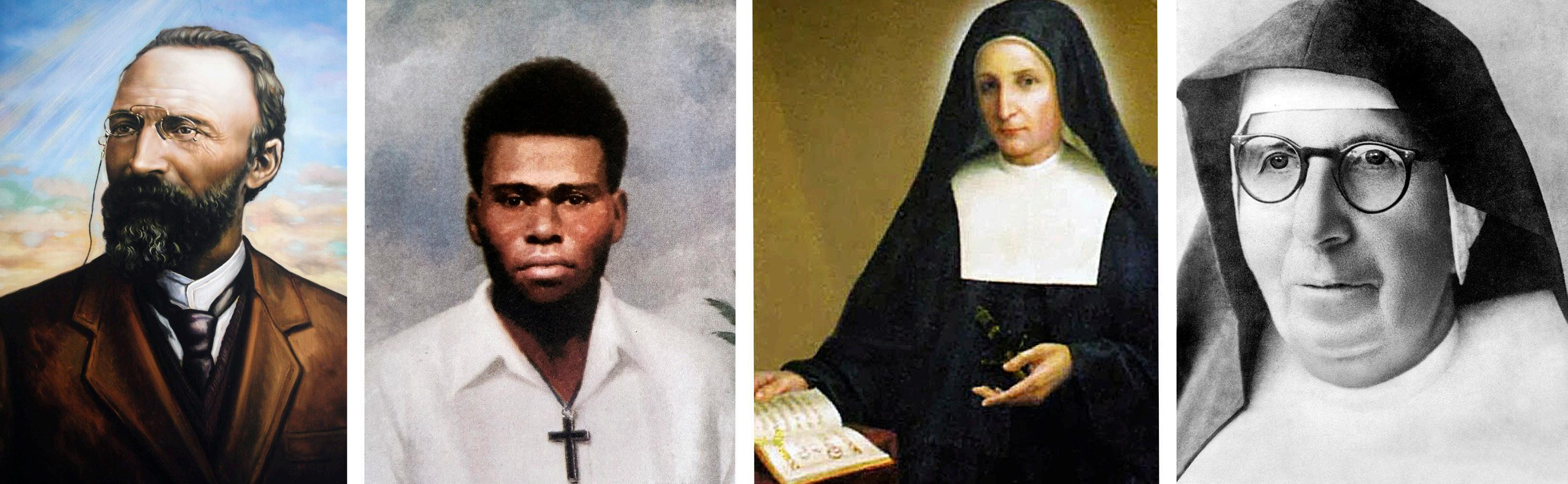
A combination photos shows Sts. Bartolo Longo, an Italian lawyer and lay Dominican tertiary; Peter To Rot, a married father and lay catechist from Papua New Guinea; Vincenza Maria Poloni (born Luigia Poloni), an Italian religious sister and co-founder of the Sisters of Mercy of Verona; and Maria Troncatti, a Salesian nun and nurse who served as a missionary in the Amazon. They are four of the seven people from diverse backgrounds that Pope Leo XIV canonized at the Vatican Oct. 19, 2025. (OSV News photo/Catholic Press Photo)