![]()


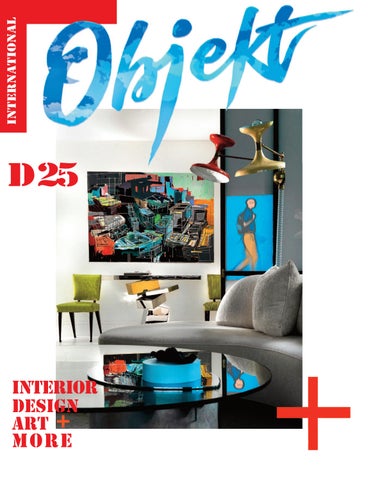
It’s the end of 2025, and vast hordes are gearing up for their annual pilgrimage to the ski slopes. OBJEKT International is joining the fun with a series of productions featuring remarkable ski chalets
The crackling fireplace may not come as a surprise, but the opulent interiors overflowing with sumptuous fabrics and lavish colors certainly will raise an eyebrow or two.
And while parts of the world are freezing solid, others are still basking in sunshine
“On the Caribbean island of Curaçao, we highlight the results of an extensive restoration in which a couple has transformed a traditional plantation house into a tropical paradise infused with a distinctive South-of-France flair.”
This edition of OBJEKT International is all about art and design especially the way they integrate within a space Here, art isn’t mere decoration; it’s the ultimate game-changer that defines the entire vibe.
The same goes for design, though design needs the right context to truly come alive
While a large part of the affluent world still gravitates toward glitter and glamour, another part prefers clean lines in off-white and beige Since its start in 1991, OBJEKT International has tried to follow its own path and in this edition, we think we’ve managed to do just that With the beauty of imperfection in mind

OBJEKT© INTERNATIONAL Living in Style no D25 winter 2025
HF Publications Willemstad Curacao
Creator: Hans Fonk
Publisher amd editor-in-chief: Alaïa Fonk
CFO: Izabel Fonk Alaïa@objekt-international.com
Head Office the Netherlands Raadhuislaan 22-B NL-2451 AV Leimuiden - Netherlands t:+31 172 509 843 www objekt-international com
Head Office Berlin, Germany Rneé Wilms
Unique Company Group Oberwallstraße 14 D-10117 Berlin, Germany
Contributing writers: Izabel Fonk, Sasha Josipovicz, Milosh Pavlovic, Ruud van der Neut, Lorenza Dalla Pozza, Robyn Prince, Raphaëlle de Stanislas, Rene Wilms, Sonja Tijanić
Contributing photographers: Filippo Bamberghi, DePasquale+Maffini, Ivan Erofeev, Faile, Alaïa Fonk, Hans Fonk, Walter Herfst, Jason Ingram, Dejan Jovanovic,Polina Kanis, Agata Kurzela, Jared Kuzia, Simon Leung, Scott Norsworthy, Clemens Poloczek, Pauline Prinsen, Ishita Sitwala, Rachael Tarravechia, Goran Tijanic, Brad Walls, J Wilson
For this issue
Graphics: Hans Fonk Studio
Art directors: Hans Fonk, Alaïa Fonk Video productions: Alaïa Fonk
FACEBOOK: @OBJEKT INTERNATIONAL
INSTAGRAM: @OBJEKTINTERNATIONAL
YOUTUBE: @OBJEKTINTERNATIONAL
TWITTER: @OBJEKT INT VIMEO: @OBJEKTINTERNATIONAL
PINTEREST: @OBJEKT


BLUE VOYAGE THE RELIEF
CURAÇAO SUB ZERO COOL
ART HOUSE TORONTO DUBAI F1 LOUNGE
LOVE AT FIRST SIGHT - THE COTTAGE
PEARL OF THE DOLOMITES
EMBASSY GARDENS PENTHOUSE PIET OUDOLF
DESIGN MIAMI/PARIS ROYAL TOUCH
ARTS ON THE MOVE
PENNYROYAL TEA
RETURN TO SOOS TRONTO THE SNOWS OF VERBIER
ALPINE VISIONS SKI QUEBEC
RETURN OF THE NOMAD


With Backstories, photographer and video-director Alaïa Fonk uses the fem body to let you into her world. Hoping you find a piece of yours. The book is a hardcover ar t book curated, photographed and designed by Alaïa Fonk. This collector's edition features exclusive photography and content created across the globe, showcasing diverse expressions of beauty, sensuality, and feminine myster y www.backstoriesbook .com


Between self-destruction and self-love, comfort for the in-between.
Dry Your Tears Club creates soft, story-driven comfort wear and lifestyle pieces.


Fonk Spor thorses - Top Quality Horse Training and Breeding
www.fonkspor thor ses.com


Bl ue Voyage draws its inspi ration from the nearby Gul f at Jumei rah M arsa Al Arab i n Dubai. Its sw eepi ng, curved form s evoke the rhythm of ocean waves, whil e intri cate surface patterns reveal them sel ves upon cl oser vi ew –flowi ng li nes and l ayered ridges that i nteract dynam icall y wi th l ight and shadow throughout the day.
The project was concei ved and real ized by Studi o RAP, a Dutch archi tecture and desi gn studi o renowned for its i nnovative use of digital fabricati on. The install ati on compri ses two m onumental ceram ic wal ls, each measuring six m eters in hei ght and ni ne meters in l ength. In total , Studio RAP desi gned and 3D-printed approximately 900 uni que cerami c ti les, each generated through parametri c design and produced in-house at the studi o’s facil ity in Rotterdam. Thi s ful ly i ntegrated process ensured precise control over form, fit, and materi al quali ty at every stage of production.
Bl ue Voyage stands as one of the l argest 3D-pri nted cerami c architectural i nstal lations ever created, exem plifying the seaml ess fusion of advanced di gital technology and artisanal craftsmanshi p.


The Relief by Tarik Kiswanso and presented at the Swedish Institute in Paris showed how to use sculpture and video to give form to the central questions of his practice. The artist examines memor y, trauma, and regeneration, asking how the darker chapters of our collective past will shape the present, what they reveal about the human condition, and how we confront and rebuild after trauma.
The multidimensional practice of Kiswanson spans sculptural installations made from both found and fabricated objects, as well as video and sound works In his exhibitions, he dissolves the boundaries between the architectural space and the artwork, unsettling our sense of place.
Through a material archaeology of memory, the artist recovers and reinterprets the language of objects to address what has happened even the unspeakable.
Rather than resolving historical contradictions, he renders them visible His work underscores the shared human experiences of loss, migration, exile, and reconstruction His pieces offer a passage through it, creating spaces of transformation in which remembrance becomes active and ar t becomes a means of insight, resistance, and healing


Top left: The Relief, 2023 by Tarik Kiswanson (R. Gabriel 1945) in the Swedish Institute in Paris. In the foreground ‘Foresight’, 2024. A 1945 chair by George Nakashima—an architect interned in detention camps in the Idaho desert during the Second World War intersects with a chair from the same year designed by Adolf Gustav Schneck, a German architect affiliated with the Nazi Party.
Center : The Wait - Provas Materiais - Museu de Arte Contemporânea de Serralves, 2025
Courtesy of the artist and Fundaçao Serralves
Above: Steinway Victory Vertical (1944), an upright piano designed by Steinway & Sons in New York to provide psychological relief to soldiers during the Second World War. Parachuted across Europe and carried by soldiers across borders, the piano embodies the conviction that creativity. Courtesy of the artist and Sfeir-Semler
Photos: Edward Greiner


The place exudes the atmosphere of southern France and the Caribbean
On the tropical island of Curaçao, Jean Marc des Bouvrie and Marytsa Schoester restored the old plantation house Siberië (Siberia), bringing it into the 21st century without compromising its historic charm
Above: part of the Siberië Plantation House on the Caribbean island of Curaçao: a partially completed restoration project by Jean Marc des Bouvrie and Marytsa Schoester. The lush gardens evoke an almost Southern French ambiance, except for the presence of parrots and cacti.
Photos: Hans Fonk


The plantation Siberië is one of the many plantation houses on the Caribbean island of Curaçao It owes its name to the Venezuelan immigrant Silberio Cafiero, who settled there in 1784. As early as the late 17th century, maize, cotton, and i ndigo were cultivated on this site The Siberië Plantation House is believed to date from the mid-18th century The plantation produced cotton and supported livestock farming At one point, it also housed one of the island’s largest orange greenhouses (orangeries), used for local liqueur production.
The architecture of the manor house is characteristic of the period: a colonial residence built on an elevated terrace, featuring a central section flanked by galleries. Various outbuildings once surrounded it. A long plantation wall still marks the boundaries of the property and serves as a reminder of its history of slavery In later years, the plantation lost its original economic purpose. The manor house eventually became private property and was converted into a residence. Is outbuildings, including the ‘loft’ and the “carriage house, has since been used as a vacation homes on the estate
In 2019, Jean Marc des Bouvrie and Marytsa Schoester purchased Landhuis Sibrië. At that time, the estate was in a state of disrepair, burdened by years of deferred maintenance The previous owners had furnished the property in a rustic, country style, which likewise required substantial redesign.


Top left: from right to left: Jean Marc des Bouvrie, Marytsa
and Hans Fonk (photo: Pauline Prinsen)
Above: the kitchen located on one of the short sides of the main house. The architectural forms have been carefully preserved, while the interior design has been given a modern touch.
Left: Artist’s impression of Plantation House Siberië in earlier days.


Previous pages: the former carriage house, with its most striking feature: the pool that extends from the botanical garden directly into the living area.


With remarkable drive, they set to work, initially concentrating on converting several outbuildings into modern, appealing residential units. The gardens surrounding the main house were completely reimagined and, within a relatively short period, transformed into an oasis with an almost Southern French ambiance Only the calls of parrots reveal that this is, in fact, a tropical paradise. The main house itself received only limited attention at first, aside from essential adjustments to suit the new owners’ needs.
The estate is encircled by Curaçao’s natural landscape: the kunuku, with its gnarled tropical trees, cacti, and low vegetation dotted with formidable thistles, stretches as far as the eye can see.
Jean Marc explains: “What we encountered was a yellow-painted country house with outbuildings lacking air conditioning and modern comforts They were beautiful structures, but substantial work was required to bring them up to our standards and tastes All the buildings were decorated in a cottage style rural, and not suited for hosting guests. The coach house, for example, was an uninhabitable ruin that needed drastic intervention.”
These pages: the interior of the carriage house was created by Marytsa and Jean Marc, who combined modern and organic materials Left: the bedroom directly behind the living area. Behind it, is the bathroom; and the living area itself with the striking pool.


“Our plan was to restore all the outbuildings, install air conditioning, and convert them into holiday homes. We live in the main house, which we renovated on a modest scale to improve our own living comfort.”
One of the larger outbuildings has now been transformed into a loft: a rustic holiday residence for four guests Thick walls keep much of the tropical heat at bay. It contains two bedrooms, each with an en-suite bathroom, one of which also includes an outdoor shower. Directly adjacent lies an expanded outdoor area with a plunge pool, outdoor shower, lounge terrace, and barbecue area
Between the main house and the loft stands the fully renovated coach house. Its centerpiece is a pool that extends from the exterior into the living room, complemented by tall windows with iron grilles The entire space is nestled within a botanical garden that includes an outdoor shower, dining area, spacious daybed, and a hammock beneath the trees
On the opposite side of the plantation house is a restored guest house a compact studio in which indoor and outdoor spaces merge seamlessly. Its breezy porch features a dining and lounge area as well as a plunge pool.

These pages: the Loft, a larger and more industrial building on the property. It is divided into two sections: the living area with its high ceiling, and the section containing the kitchen and the mezzanine. One bedroom is located behind the kitchen, while the other is one floor higher. The Bunny artwork in the background is a collaboration between Patrice Aaftink and Jean Marc des Bouvrie.


Jean Marc describes their future plans: “We will soon begin work on the main house itself, installing a new roof with dormer windows. We will also continue developing the gardens to create as many trees, natural spaces, and shaded areas across the entire property as possible Our goal is to cultivate an oasis of flora and fauna and, ultimately, to live largely from what the garden provides.”
Currently under construction, nestled among remnants of old walls, is a wellness center Another partially decayed structure on the property is also slated for extensive restoration
Jean Marc des Bouvrie is a free-style designer and architect, and the son of renowned Dutch interior and furniture designer Jan des Bouvrie. Before settling on Curaçao, he designed projects and private residences across the globe. His passion for art has inspired him to create striking furniture, lighting, and functional art pieces
Marytsa Schoester holds a Bachelor of Fine Arts in fashion design. Born in Rotterdam and raised in Curaçao, she has family roots in both Curaçao and Bonaire After spending several years in the Netherlands, she returned to the island in 2017. With experience in hospitality and a wide range of creative endeavors styling, teaching at art academies, commissioned design work, and more she also pursues her personal fashion label, Mytsa Her creative output spans conceptual photographic work to transforming discarded objects and natural materials into refined artistic expressions


These pages: directly adjacent to the Loft is the extended outdoor area featuring a plunge pool, an outdoor shower, a lounge terrace, and a BBQ area. The image highlights the thickness of the walls, which help keep much of the tropical heat at bay.

The house is like an oyster: it reveals its richness only once it has been opened. The leafy avenues of this posh area of Toronto, Canada, are lined with homes built largely in classical English styles, punctuated occasionally by a more contemporary silhouette. Though modern in architectural expression, this house’s true character emerges only within, where a world of art unfolds.


These pages: center piece in the formal living is Matt
These pages: the formal living room on the front side of the house with fur niture by Vladimir Kagen and a video work by Julian Opie, Academic , 2014.
The old Steinway & Sons piano from 1892, played a major role in a Hollywood movie. Studio Pyramid from Toronto was engaged to oversee the interior choreography.


Toronto’s architectural identity is a textured mosaic shaped by successive periods of growth, waves of immigration, and shifting ideas about urban living. The result is a city where heritage and innovation coexist with ease.
In Toronto’s posh suburbs, where streets curve with quiet intention, the houses carry stories in their beams and brickwork Yet behind many façades, contemporary life reveals itself continuously inspiring architects and interior designers.
This house, too, keeps its secrets hidden from the outside Once inside, a sequence of bright, fluid, and interconnected spaces unfolds, unified by an impressive collection of modern art
The property was acquired with the assistance of the clients’ real-estate advisor, Donna, by a young family seeking additional outdoor space and a more child-friendly ground-floor layout. Because the clients were not willing to undertake renovations, the search quickly narrowed to only a handful of suitable homes
Once they stepped into the architectural masterpiece by Reigo & Bauer, architects of record, many remaining uncertainty vanished they knew instantly this would be their new home.
Beyond the front door, a generous hallway extends all the way to the rear garden Midway along sits a sculptural staircase, and at the far end the kitchen and dining room open seamlessly onto the garden.
To the left of the hall are the formal living room and, toward the back, a slightly sunken family room
On the second floor are the primary suite with its bathroom and walk-in closets, as well as the children’s and guest rooms.
Directly beneath the roofline of the top floor is a spacious office and the private fashion atelier of the homeowner.
Pyramid Studio, also long-time friends of Donna,

Above: the formal living room and dining room with on the left photo ‘Artesian Well’ by Paterson Ewen, 1971. Over fireplace a self portrait by Robert Maplethorpe, 1986. Video work is by Julian Opie, Academic, 2014 Behind dining table 800’ Hose by Gerald Ferguson, 2002 Sofa is by Vladimir Kagan Emmemobili Ufo dining table with an Ochre Celestial Pebble chandelier above.
Right: view from the formal living room to the hallway with a table by Hervé van der Straeten from Ralph Pucci, New York and an artwork by Denyse Thomasos, Courtyards in Surveillance, 2007.


These pages: the family room with on the left Freezing Rain by Paterson Ferguson’s,, 1989 Behind the two white chairs is Gerald Ferguson’s, Drop Cloth No. 2, 2002. Sculpture in window is by Michael Snow, Sideways, 1962.
was engaged to oversee the interior choreography. The team spent several months re-contextualizing the clients’ art and furniture collections and adding a curated selection of new key pieces a dream assignment for the studio
Sasha Josipovicz, Creative Director of Pyramid Studio,explains:
“We inherited from the architects a true tabula rasa, an open and fluid architectural canvas in which every angle and vista had been curated to perfection We moved slowly and respectfully, aligning closely with our clients’ vision for the placement of their art, offering direction only when invited. Over more than 30 years of working with art collectors including those with private museums and foundations in New York we have learned that the process must be intensely personal and guided by passion. These environments leave no room for decorators’ small talk or superficial layering tricks. The art is paramount and must never be obstructed. Our role is to support the art, not the other way around.
The lessons we have learned, sometimes the hard way, are now part of the knowledge we pass on to those beginning their collections It is all about uncompromising passion ”
The clients’ existing collection of Vladimir Kagan furniture was refreshed with sleek upholstery. Pyramid Studio added an Emmemobili Ufo dining table with an Ochre Celestial Pebble chandelier above. Iconic international pieces from Ralph Pucci New York received special prominence through strategic placement Subtly colored wool-and-silk rugs from W-Studio were selected to ensure they never competed with the art, instead providing plush, understated surfaces that enhance acoustics.
In the primary bedroom, the Spanish-designed LFZ lighting from Casa di Luce softens the refined, structured aesthetic of the Holly Hunt bedroom suite By thoughtfully integrating the art from the outset, the designers enabled the home to become a work of art in its own right.
These page top: the bedroom suite with a Holly Junt bed and ‘Earth, Space, Weather’ artwork by Paterson Ewen, 1973. The red lounge chair, The Edge, is by Richard Tuttle, 1998. The Spanishdesigned LFZ lighting is from Casa di Luce Below that: the master bathroom. Top right: close up of the formal dining area with the old Steinway & Sons from1892 and an artwork by Gerald Ferguson.


From


Raw concrete meets polished metal, scorched by the Dubai sun. Engines thunder past as rough tarmac grips rubber tires, leaving black streaks in their wake. The air carries the unmistakable scent of competition. The Formula 1 race is a multisensory spectacle–an experience that fueled the creative process behind Agata Kurzela Studio’s design for the new F1 Lounge, located within the narrowing cylinder of the Shams Tower.


Strategically positioned along the axis of the finishing line, the lounge is reserved for distinguished guests of the event It spans two indoor floors topped by a panoramic terrace, shaded by a tent-like canopy. While all levels offer 360-degree views along the tower’s elliptical footprint, the prime vantage point faces the Yas Marina Circuit’s finish line.
The design brief posed a dual challenge: to create a space that captures the intensity and drama of Formula 1 while expressing Emirati hospitality, design, and art in a distinctly contemporary language.
The ground-floor reception is defined by a curved blackened steel desk. The contrast between the sleek metal surface and the tactile, gravity-defying artwork
Th ese p ages: the F 1 L oun ge at t he Sh ams To wer of th e Yas Marin a circuit i s strategical ly positio ned al ong t he axis of t he fin ish ing lin e. It spans two indoo r floors topp ed by a panoram ic terrace, shaded by a t ent- like canopy. All levels of fer 36 0-d egree views alo ng th e tower’s el lipti cal foo tprint . Iconic pieces from M oroso, Matt iazzi, and Mogg complement the work of local and regional d esigners. In the middle d esigner Agata Kurzela.
of renowned Emirati artist Afra Al Dhaheri creates visual tension. In a playful nod to the race, a Carrara marble sculpture resembling a tire is the work of local sculptor Shaikha Al Mazrou.
At the main lounge level is a gleaming black console crafted from papyrus-based biomaterial by Aya Moug and a suspended installation made from recycled car tires set the tone Beyond this, the space opens into a generous majlis, furnished with locally produced tumbled-stone tables arranged for pre-race meetings and social gatherings.
Sand Pearls a sculptural installation by T Sakhi Architecture and Design defines the boundary between the majlis and the dining area. As Tessa


Sakhi explains, the seven interconnected spheres, strung together with twisted silk rope, evoke prayer and meditation beads found across cultures
Enlarged to architectural scale, the work embodies versatility and playfulness, serving as seating or tables in endlessly adaptable configurations.
The west-facing section of the lounge maximizes views of the circuit, yet the design resists rigid scenography Each piece was selected for its flexibility, to follow the action unfolding across different sections of the track
Throughout, the design emphasizes creative reuse, regional craftsmanship, and material innovation.
Iconic pieces from Moroso, Mattiazzi, and Mogg complement the work of local and regional designers, who take center stage Collaboration with Omar Al Gurg produced modular elements that function as both seats and side tables
Accents by celebrated regional talents enrich the space: the Takiya stool and bench by Aljoud Lootah, Braided armchair by Latifa Saeed, and Liminal table crafted from salt crystals by Hala Al Ani for Tanween by Tashkeel sit alongside international design icons such as Che Pakko by Mogg, inspired by stacks of paper bound with rope, and cocoon-like creations by Tokujin Yoshioka for Moroso Smaller works by Alia Hussain Lootah and Nada Debs for Irthi add further layers of regional authenticity.


These pages: co llaboratio n with Omar Al Gurg
p ro duced m odul ar element s f or the F1 loun ge t hat f uncti on as bo th seats and sid e tables. Accent s b y celebrated regio nal t alents enrich the space.

l ove at f i r st s i g ht

e water-access-only cottage on Whitestone lake is perched on large boulders in a uniquely prominent position. it was love at first sight for Jasmina and goran tijanić of toronto when they visited the property in 2019.
ey understood that much work would be required to expand it without disturbing the trees, and to make it suitable for all seasons while preser ving its appearance from the lake. eir daughter, architect sonja tijanić, together with her partner, Paul Kozak, collaborated on all aspects of the project.
Above: The cottage on Whitestone Lake, north of Toronto, occupies a prominent location. It was recently expanded and winterized without altering its appearance from the water.
Photos: Hans Fonk


These pages: The interior of the cottage was designed to feel clean and tranquil, yet warm and inviting. The walls are finished in a combination of white European oak and painted white shiplap. Dark, custom-built millwork provides a striking contrast, enhanced by hot-rolled steel hardware. The wood-burning fireplace is by Renaissance.
Sculptural rock formations, lush vegetation, and a picturesque bay define the landscape. Whitestone Lake a hidden gem in Ontario’s cottage countr y is situated between Parr y Sound and Magnetawan, just north of the renowned Muskoka region e lake offers 70 kilometers of shoreline and spans more than 1,200 hectares of pristine wilderness, dotted with islands and partially bordered by Crown land.
e local community is welcoming with neighbors always ready to lend a hand particularly valuable for cottages accessible only by water, such as this one.
A family of architects and designers embraced the opportunity to create a lakeside retreat of their own.
Architect Sonja Tijanić, principal of Studio Uji, collaborated closely with her partner, Paul Kozak, and her parents, Jasmina and Goran both accomplished architectural designers on ever y aspect of the project.
Beside th at: S onja Tijanic, O. A. A. , M. Arch, CPHD, owner of Studio Uji, Toronto. Right-hand page: The kitchen features a pass-through window to the Muskoka room.

“ What began as a modest idea to extend a small existing cabin gradually evolved into the construction of an entirely new home,” said Sonja, who led the project
e g uiding principle was to maintain the scale and roofline of the original lake-facing façade. Important was not to touch the trees is approach ensured that the new structure harmonized with the natural surroundings and preser ved views from the water e taller volume of the home was strategically positioned at the rear of the property, while cascading rooflines create a dynamic and balanced silhouette that seamlessly merges the original form with the new
Constructing a home on such rugged, rocky terrain presented considerable challenges, further complicated
by the property ’ s water-only access Ever y material, piece of furniture, appliance, and fixture had to be transported by boat or barge e cottage is built on pillars that had to be precisely placed and anchored into the rock. To ensure it could be used year-round, the structure required extensive insulation.
e completed cottage offers 1,700 square feet of living space, including three bedrooms and two bathrooms. Determined to maximize functionality, Sonja designed a cozy lo overlooking the living room to provide additional sleeping space
In keeping with Ontario cottage traditions, the home features a Muskoka Room a three-season, screened-in porch Skylights bring abundant natural light into the


Above: the primary bedroom with windows framing views of nature
The fan is by Big Ass. Beside that: the primary bathroom custom concrete sinks and big size porcelain slabs are softened by the warmth of European oak. The corridor leading to the main entrance Right: the Muskoka room.


space, while a pass-through window connects it directly to the kitchen
e interior was designed to feel clean and serene, yet warm and inviting Walls are clad in a combination of white European oak and painted white shiplap, contrasted by dark, custom-built millwork accented with hot-rolled steel hardware.
e wood-burning Renaissance fireplace is clad in local Muskoka granite. In the bathrooms, custom concrete sinks and big size porcelain slabs are soened by the warmth of European oak.
To capture the beauty of the surrounding landscape, the bedroom windows were carefully positioned to frame
both forest and lake views, creating a tranquil retreat Colorful textiles and decorative details many heirlooms from Paul’s grandparents add character and warmth throughout the home.
Contributors
Groundbreaking Foundations Inc constructed the foundation on the challenging terrain All custom interior millwork and carpentr y were expertly craed by Line to Line e hot-rolled steel was supplied by C ORE Metal. e brass dining room chandelier is by Concord Custom Lighting and the moose art is by local artist Guy St. Julien.


These pages: the tearoom of Hotel Ancora in Cortina at the heart of Corso Italia. The interior design of the renovation was entrusted to Vicky Charles, former Design Director of Soho House. P E A R L O F T H E D O L O M IT

Above: the bar tells the story of the mountains with alpine botanicals and selected spirits Beside that: part of the spa featuring a Hammam, sauna, Turkish bath, cryotherapy, cutting-edge beauty treatments, and relaxation areas. Right: the outdoor terrace of one of the suites.
Founded in 1826 and long considered a symbol of hospitality in Cortina, Hotel Ancora has been r evitalized through the vision of Renzo Rosso, founder of the OTB fashion group. His inter vention restores the hotel to its pivotal role in the life of Cortina : a place of connection, culture, and aesthetic identity at the heart of Corso Italia
Departing from traditional hospitality standards, Ancora Cortina is conceived with a strong sense of character and identity, maintaining an dialog ue with the surrounding landscape and local histor y
For nearly two centuries, Ancora has stood a special lodging facility ; it has been a central presence in the town ’ s social life and a meeting place across seasons With its reopening in 2025, the hotel reasserts its relevance in the city : an active participant in a transformative moment for the entire destination.
Cortina is entering a new, more dynamic and i nternational phase in anticipation of the 2026

Winter Olympic Games Within this context, the hotel seeks to contribute to redefining the destination’s identity by giving renewed prominence to a place that has long been both its backdrop and its protagonist.
At the core of the project was Renzo Rosso’s a mbition to shape Ancora into more than a hotel : a space in which ever y detail reflects a balance of creative energ y and refined design, marked by an unmistakable stylistic signature. is vision aims to restore a historic building to prominence and transform it into a vibrant, contemporar y landmark
e project has been conceived as an open, dynamic environment, where ever y space ser ves a function while preser ving a distinct spirit. Interior design was entrusted to Charles & Co, led by Vicky Charles, former Design Director of Soho House. e studio used natural materials wood and stone warm color palettes, and furniture that reflect a personal, contemporar y style.


These pages: the interior design was entrusted to Vicky
former design director of
He envisioned natural materials, wood and stone, warm colors, and furniture choices reflecting a personal style.


Each g uest room is unique, defined by refined details, curated objects, and materials that echo the surrounding environment All rooms face the Dolomites, offering a warm, intimate atmosphere throughout.
e bar, open throughout the day, celebrates the mountains through alpine botanicals and carefully curated spirits e terrace overlooking Corso
Italia long a hallmark of the hotel has been reimagined as an open-air lounge, offering a setting for socializing , meetings, and relaxation from breakfast to aperitivo.
At the heart of the hotel lies the spa : more than 200 sqm featuring a Hammam, sauna, Turkish bath, cr yotherapy, advanced beauty treatments, and dedicated relaxation areas. Additional amenities include
a Technog ym-equipped fitness area and a space for yoga and breath work .
Molteni&C played a central role in the hotel’s refurbishment, craing all built-in woodwork for the g uest rooms including doors, ceilings, wardrobes, headboards, freestanding wooden furnishings, as well as shower enclosures and glass partitions.
e fixed furnishings in the common areas also bear the hallmark of the company : doors, wall paneling , ceilings, partitions, bar and reception counters, and all supporting wooden elements, including corridor paneling and entrance doors.
Renzo Rosso additionally selected Molteni&C for the interior design of his private apartment and the hotel’s main suite
These pages: Hotel Ancora Cortina is designed with character, identity and eye for history. The colors reflect an ongoing dialogue with the surrounding landscape and history.
Italian furniture specialist
& C. contributed to the renovation.


Previous pages: t he livin g wi th a great view o f parts of Lo ndon , England . The whit e fabric sof a by Paola Navon e for Casamilano , an Islan d 3 coff ee table by Albedo and a Pesce b owl from An toni no Scio rt ino. The Carré Cushion is in L es Intrigu es Jacqu ard Fabric an d th e l'Opifici o Palm aq uamarine and black floor lam p is by Mario n.
This pages:
Above: designer Róisín L afferty.
Right : th e din ing with a mon umen tal t raverti ne marble table by Mo nitil lo-1 98 0 surrounded by sculpt ural uph olstered chairs. The geom etric smok e brown glass chan delier is by Bot tega Veneziana an d th e Cu oio Vase #1 is by Ant onino Scio rt ino.
F ollowing p ages: part o f th e living Wall s an d ceilin gs are in warm , earthy tones.
Scu lptural furnishings and statem ent li ghtin g bring d ram a and scale. The mo dular sofa is b y F ran co Ferri. The 4-d oors sid ebo ard is by Ultramo bili, the vases are by K ose Milano and the lam p is by L ampex It aliana. In the fo regrou nd a Walnut Coffee Tab le by Carabot tino and the side t able is by L aura Meron i.


Occupying the 17th and 18th floors of Embassy Gardens, the penthouse commands sweeping, uninterrupted views of Big Ben and the London skyline. Inside, the design presents a masterful study in tonal harmony, tactility, and modern refinement
In pursuit of its mission to showcase the excellence of Italian craftsmanship on a global stage, it is here that Artemest has unveiled its first fully furnished penthouse in London.
Designed by acclaimed Dublin-based designer Róisín Lafferty, the residence at Embassy Gardens exemplifies elevated living where contemporary sophistication meets timeless artistry. Every space has been meticulously appointed with furniture, lighting, and décor crafted exclusively by Italian artisans, honoring Italy’s rich design heritage while envisioning its future.
Inspired by the shifting hues of the sky and the city’s ever-changing light, the color palette transitions seamlessly from room to room. Walls and ceilings in warm, earthy tones evoke calm and cohesion, while sculptural furnishings and statement lighting introduce drama and dimension.
Rich timbers, soft bouclés, and artisanal finishes sourced through Artemest convey authenticity and contemporary elegance, softened by rose-tinted accents and organic silhouettes.
Abundant natural light animates the interiors, enhancing textures and deepening the connection to the city beyond


Top left: a mo dular sofa b y
F ran co Ferri an d a large walnut coff ee tab le by Carabott ino Th e brown ben ch is by Dai nelli St udio /Somaschin i and the beige arm chair is by L ibero Rut ilo/Mo rel ato.
Below t hat: the b ar area wit h roun d po ufs by M antellassi (1 92 6) and rou nd co ffee tab le with bronze resin top by Disain (1 97 1). The bar stool s are b y Em ilio Nan ni/ TrabA'.
Top righ t: t he ki tchen wit h a Mo lteni st ove. Belo w t hat: th e out door d eck with brown armchai rs by Talen ti
F ollowing pages: the mast er bed ro om with a Bodem a bed and a lamp by S ervo muto . On the righ t th e room adjacent to b edroom wi th a chair an d vase from Stu dio Past ina Chairs & Mo re.
The dining area is centered around a monumental travertine marble table, surrounded by sculptural upholstered chairs and illuminated by a chandelier that delicately refracts light across the room.
In the living spaces, rounded seating in neutral tones creates an inviting, cocoon-like atmosphere layered with rugs, tactile textiles, and accents of Murano glass, ceramics, and lacquered iron.
Curated artworks and accessories lend personality, ensuring the interiors feel cultivated and lived-in rather than staged
The bedrooms continue the home’s dialogue of understated luxury. Muted tones, tactile fabrics, and bespoke Italian craftsmanship define serene sanctuaries, while floor-toceiling windows frame cinematic views of London. Artisanal lighting and intricate detailing heighten the sense of tranquility and sophistication.
Outdoors, a private terrace wrapped in lush greenery offers panoramic views of the Thames and the skyline beyond Extending the design philosophy of the interiors, it serves as a serene al fresco retreat suspended above the city.
Every detail of this penthouse embodies the dialogue between Italian craftsmanship and contemporary design. The collaboration between Róisín Lafferty and Artemest has resulted in a residence that transcends the notion of home becoming instead a sanctuary of modern luxury and a celebration of creativity, culture, and craft


P i e t O u d o l f
P i e t O u d o l f
D R E A M S C A P E D R E A M S C A P E


S Sa
The internationally renowned Dutch garden designer, nursery man, and author Piet Oudolf creates gardens composed of grasses and perennials that inspire wonder in every season. In autumn 2025, Kunstkerk Dordrecht, the Netherlands, honored the artist with Dreamscapes: an exhibition that brought his universe to life through drawings, sketches, photography, and film
Dreamscapes was organized in response to one of his latest gardens in the Hofkwartier district of Dordrecht, situated at the entrance to Kunstkerk Impressive projects were presented, including the High Line in New York; Oudolf Field at Hauser & Wirth Somerset in England, where he collaborated with architects Peter Zumthor and Chilean architect Smiljan Radić; and the Oudolf Garten on the Vitra Campus in Germany. Selecting the works was no simple task, as his portfolio spans much of the world.
In the United States alone, he designed, among others, the Master Plan for Battery Park in Manhattan, New York. He is responsible for the Gardens of Remembrance and the Bosque, a 6,000-square-meter plane-tree grove; the aforementioned High Line in New York; the new Goldman Sachs headquarters in New York; the Lurie Garden in Millennium Park in Chicago (in collaboration with Gustafson Guthrie Nichol and Robert Israel); and an urban park in Detroit. These projects demonstrate how Piet Oudolf transforms existing sites into gardens full of tranquility, openness, and romance dreamscapes that reveal nature at its most beautiful.
Each of his visions begins on paper Using colored pencils, felt-tip pens, and markers, he develops his designs Every plan includes a key with colorful symbols dashes, circles, crosses, and dots each representing a specific plant These drawings show how experience, knowledge, and sensitivity to atmosphere converge in shaping the dream landscapes that continue to inspire across the globe.
Piet Oudolf (1944) grew up in the Dutch city of Haarlem and evolved into one of the world’s most influential landscape designers. In 1982, he moved with his wife Anja to an old farmhouse in Hummelo, where they established a nursery and trial garden. This place became a foundational setting for their ideas on garden design and, for many years, they attracted visitors from around the world. His gardens combine ecology with aesthetics and reveal the beauty of every season. Oudolf ’s private garden (4,000 m²) in Hummelo belongs to the farmhouse known as De Koesterd. The farmhouse dates from 1850 and once operated as a guesthouse. The adjoining nursery was managed primarily by Oudolf ’s wife Anja. The Oudolfs specialized in ornamental grasses and were key pioneers in popularizing their use in gardens worldwide.
Oudolf is also one of the founders of Future Plants, a company dedicated to selecting, cultivating, and protecting plants that are both useful and possess all the necessary qualities for landscape architecture and public green spaces


From the sun-drenched shores of Miami Beach to the storied streets and stately façades of Paris Each year, Design Miami/Paris makes the bold leap across the Atlantic to establish itself in the French capital never short on culture, and never shy about showing it. It’s a celebration of the seamless (and occasionally surprising) pairing of historic French heritage with contemporary design


Center: at Design Miami. Paris, in the prestigious setting of the Hôtel de Maisons, Galerie Patrick Sequin exhibited a selection of furniture and lighting designed in the 1950s by Jean Royère. Combining creativity and rigor, Jean Royère’s creations are as expressive as they are exacting, uniting elegance of form, constructive ingenuity and freedom of inspiration. Among the pieces to be shown, the ‘Forme Libre’ table that fully embodies this approach.
Above: Galerie Mitterand (Paris) presented highlight works by Claude and François-Xavier Lalanne and Julie Hamisky. The works were placed in dialogue with remarkable pieces by the iconic design duo, Claude and François-Xavier Lalanne, placing a spotlight on exquisitely refined craftsmanship passed through generations.
Photos: Ivan Erofeev.
Coinciding with Art Basel Paris, Design Miami Paris celebrated its third edition in 2025 with a return to L’Hôtel de Maisons in the French capital As in previous years, the fair was complemented by additional gallery presentations across the city A defining feature of the French edition is its seamless integration of historic French heritage with contemporary design From Modernist masters to today’s trailblazing creators, L’Hôtel de Maisons was transformed into a living narrative of design, celebrating the past, present, and the future
The third edition of Design Miami.Paris welcomed a record number of more than 25 international galleries, each presenting rare and exceptional examples of historic and contemporary collectible design throughout the rooms and gardens of L’Hôtel de Maisons, as well as in partner galleries across Paris
Design Miami’s CEO, Jen Roberts, stated: “We are thrilled to be in Paris once again, in the magnificent residential setting of L’Hôtel de Maisons As we celebrate our 20th anniversary this year, we are delighted to see our engaged community continue to grow, with Design Miami Paris establishing itself as an essential fixture in the design calendar each October We look forward to sustaining this creative momentum as we bring Design Miami to life in a setting so deeply rooted in the architecture and community of this cultural capital.”
Across the fair’s diverse presentations, several key thematic threads emerged:
Material Narratives
This year’s program featured works that explore storytelling through materiality,


Left: Yves Macaux Gallery (Vienna) showcased Viennese masterpieces, spanning the ornamental exuberance of the Wiener Werkstätte to the restrained elegance of early modernist design.
Above: Morentz Gallery, located in the Netherlands, was founded in 2006 with the aim of highlighting the value of every piece in its extensive collection. Built on a deep appreciation for twentiethcentury design, it operates as a gallery and as a craft workshop.

Center: Galerie Meubles et Lumières (Paris) presented one of the three Face à Face chairs designed by Pierre Paulin. In the late 1960s, as part of new developments at the Louvre Museum, the Mobilier National called on Paulin to consider a contemporary reimagining of seating designs. This resulted in a small series of chairs designed between 1967 and 1969 by the Atelier de Recerche et Création of the Mobilier National. Two models in particular stood out, encapsulating Paulin’s talent, audacity, and refinement. These chairs are complementary in their design, one created for conversation (Face à Face) and the other designed to encourage a quiet contemplation (Dos à Dos).
Center: Friedman Benda (New York) presented an array of contemporary designers, architects, and artists who are boldly redefining the boundaries of the discipline through diverse visual languages and rigorous research.


highlighting designers who use materials to craft compelling visual narratives in a true celebration of material mythmaking Masters of Modernism
The gallery presentations included several exhibitors whose showcases honored the enduring legacy of Modernism and its transformative influence on the evolution of collectible design.
A number of this year’s participants i lluminated the allure of metallic design, presenting historic and contemporary works featuring gleaming golds, polished bronzes, and other lustrous finishes
Several galleries explored the dynamic interplay of geometry, material, and spatial form, presenting striking examples of dimensional and architecturally informed design.
Design Miami and Apple jointly unveiled
Designers of Tomorrow, a new initiative spotlighting four emerg ing design talents and their creative practices, powered by iPad: Atelier Duyi Han (Shanghai, China), Jolie Ngo (Santa Barbara, USA), Marie & Alexandre (Paris, France), and Marco Campardo (London, UK)
Curated by Rodman Primack, the presentation showcased the seamless integration of the iPad into each d esigner’s process, illustrating how technolog y can empower and elevate creativity from innovative research and development to the realization of final works Beyond the designs exhibited, the initiative underscores the strength of each designer’s broader practice, offering a distinctive platform for visibility, connection, and future opportunities within the global design community.
e e t s
Inspired by the intricate beauty of Udaipur’s City Palace in Rajasthan, India, this maximalist New England residence emphasizes flexible, welcoming spaces enriched with layers of soft velvets, silks, leather, custom rugs, marble accents, and jewel-toned palettes
Folk-art motifs are reinterpreted to create a warm, contemporary expression of luxury within striking interior settings. The interior design is by Vani Sayeed Studios.


Located in the MetroWest area of Boston, Massachusetts, the home belongs to Padmaja Kumari Parmar, a descendant of the House of Mewar one of the world’s oldest dynasties, founded in 734 A.D. in Udaipur, India.
In 2013, she established Friends of Mewar, a Boston-based nonprofit focused on preserving cultural heritage, expanding access to preventive healthcare, and promoting education.
Her husband, Dr. Kush Parmar, a physician and entrepreneur, shares Indian heritage but was raised in Mexico. Their mutual appreciation for vibrant color, art, and pattern reflecting the duality of both cultures served as a foundation for the home’s design vision
According to Vani Sayeed, Principal of Vani Sayeed Studios, “ The home’s style blends influences and elements from around the world a thoughtful mix we like to call Global Chic ”
Situated on the East Coast of the United States, the 1920s Georgian brick house visually narrates the story of its owners: one side of the family traces its roots to India’s House of Mewar, while the other carries warm influences from Mexico.
The clients asked the design team to transform the 1920s Georgian home set on 2 61 acres (1 hectare) of lush grounds into a residence that honors their heritage while remaining inviting and contemporary. Drawing from the family’s art collection, the design incorporates rich layers,

Previous pages: the formal dining room showcases a curated collection of handcrafted Mexican Talavera pottery displayed in a China cabinet. Glossy blue paneling, an elephant motif wall coverings and a gilded ceiling meet contemporary art.
These pages
Above: interior designer Vani Sayeed, Principal at Vani Sayeed Studios Beside that: a celebration of the vibrant connection between Mexican and Indian cultures. Right: the house is located beside conservation land. The garden has a pool and a tennis court. Photography: Jared Kuzia. Styling: Sean Donovan. Builder : Adams + Beasley Associates.


jewel tones, and luxurious finishes to evoke a curated, globally inspired ambiance.
By cultivating a micro-culture rooted in international sensibility, the home strikes a balance between global s ophistication and ease stylish and expressive, yet deeply personal, warm, and welcoming.
Vani Sayeed notes: “I had the privilege of collaborating with this young i nternational family to craft a home that is both charming and comfortable, grounded in our shared appreciation for beautiful historic homes. This project tells their story reflecting their heritage, their travels, and their global perspective ”
Spread across four levels, including a basement, the home sits beside conservation land and is designed with both beauty and functionality in mind. It includes a pool and a tennis/sport court. A central oval staircase connects the main living areas with family spaces, while flexible interiors such as the living room with three adaptable seating zones accommodate gatherings of all sizes
Building on the home’s architectural foundation, the renovation achieves a seamless blend of tradition and modern comfort. In collaboration with Adams & Beasley Associates, the design team expanded and upgraded key architectural elements including fireplaces, custom millwork, windows, and HVAC systems, with heated floors installed for cold New England winters.
Previous pages: vibrant blue detail of the dining room Glossy blue paneling meets contemporary art.
This page: the kitchen with reupholstered chairs in Jiun Ho fabric. During the remodeling of the house, the designer achieved a seamless blend of tradition and modern comfort.
Next pages: the living room consists of three seating areas that adapt for gatherings, with movable chairs, window seats, and a custom leather fireplace bumper. The Pichhwai painting (ancient but vibrant expression of faith and artistic talent) above the living room fireplace inspired the palette for the entire home. The artwork was commissioned by the homeowners for this space.


Adams & Beasley also resolved structural challenges by leveling walls and ceilings to achieve flawless finishes.
A major highlight of the renovation is the conversion of a deteriorating porch into a four-season room featuring tall windows, radiant marble flooring, and a fluted marble fireplace inspired by the City Palace in Udaipur.
New arched doorways echo the home’s original architectural details, with meticulous craftsmanship ensuring continuity throughout.
The primary en-suite bathroom was completely redesigned and expanded to include custom storage, his-and-hers vanities, an enclosed water closet, a steam shower, and a freestanding soaking tub.
The home’s color scheme was inspired by the Pichhwai painting an ancient but vibrant art form commissioned by the homeowners for the living room and positioned above the fireplace. Its palette informed the color story of the entire residence
The interiors are richly layered with materials such as soft velvets, silks, leather, custom rugs, high-gloss paint finishes, and marble accents, all selected to bring depth, texture, and sophistication to the home.
“ We began with rich creamy neutrals and subtle metallic accents to establish a calm, elegant foundation,” explains Vani Sayeed “ We then layered in deep jewel tones to introduce contrast and character.”

Above: the master bedroom. Benjamin Moore’s Rich Cream on wood paneling pairs with a Phillip Jeffries grass-cloth wall coverings, set the stage for a custom emerald green velvet bed from Designer Guild and Rani Pink lounge chairs. The homeowner envisioned a clean, glossy white spa-like primary bathroom with a meaningful nod to her home state of Rajasthan. A custom accent wall featuring Makrana marble quarried in Rajasthan is inlaid with mirrors in a mandalainspired pattern (called ‘Mandana): a traditional folk art form. Crafted in India and shipped to the U.S., the tile anchors the tub wall fuse heritage with modern elegance.


pa r i s
n e w y o r k

a m s t e r d a m

b e r l i n
pa r m a
t o k y o

A SPACE IS TRANSFORMED THE MOMENT ART IS INTRODUCED MUCH LIKE A COURTEOUS GUEST WHO SUBTLY, YET DECISIVELY, ALTERS THE ENTIRE AMBIANCE. ART LENDS DISTINCTION, WHILE COLOR RESHAPES THE ATMOSPHERE WITH QUIET INTENTION.
MOVEMENT EMERGES THROUGH THE DELIBERATE PLACEMENT OF PATHWAYS AND FURNISHINGS.
GENTLE CURVES ENCOURAGE INTUITIVE CIRCULATION AND INTIMATE MOMENTS OF GATHERING, ALLOWING THE LAYOUT TO SUGGEST A CONTINUOUS, UNSPOKEN RHYTHM DIMENSIONS FINALIZE THE INTERIOR COMPOSITION. TEXTURES, LAYERED MATERIALS, CONSIDERED LIGHTING, AND THE SCALE OF THE ARTWORKS CREATE DEPTH, ALLOWING THE ROOM TO FEEL MORE EXPANSIVE THAN ITS PHYSICAL LIMITS. EACH AREA ASSUMES ITS OWN CHARACTER WHILE CONTRIBUTING HARMONIOUSLY TO A UNIFIED WHOLE.
OBJEKT INTERNATIONAL SELECTED SOME SHINING EXAMPLES
Production: Hans Fonk.
Todd Merrill Studio presented recently in Paris a curated exhibition of Contemporary Fine Art and Collectible Design. The studio proposed an environment characterized by a smoky, sultry ambiance, featuring antiquegilded wallpaper by Phillip Jeffries, a white sisal rug from Patterson Flynn, and deep black walls paints by Farrow & Ball and fabric sby Dedar
The result was a cohesive setting defined by exceptional craftsmanship, with each piece meticulously handmade and selected to reflect the gallery’s distinctive blend of s ophistication and material innovation.
Todd Merrill Studio has been a leading voice in redefining what ‘design gallery”‘means: not just vintage furniture or decorative objects, but a platform where contemporary artists and craftspeople experiment with materials and forms producing objects that are simultaneously functional and e xpressive. Its willingness to embrace risk supporting emerging artists, custom commissions, and pieces that challenge traditional design has helped broaden what collectors, museums, and the design community consider worthy of attention
On the photo: a full house with a pair of Orphic Trellis Vessels, by Christopher Russell, USA, a round table by Djivan Schapira, a Bean Bag Chairs by Jirah Joshua, Freeform Series light sculpture XLIX by John Procario, black chair and console by Markus Haase, a lamp by Maarten Vrolijk, a golden Power artwork by Molly Hatch, USA, a side table by Morten Stenbaek, Sea Anemone lamps and Wall Sculpture by Pia-Maria Raeder and a coffee table by Yun Hwan Kim.
Photos: Simon Leung, Courtesy of Todd Merrill Studio.


b e a u t y o f m o v e m e n t
Passé: aerial minimalism meets classical ballet in a series of movement sequences that read like a quiet meditation on performance, intimacy, and admittedly the art of seeing things from a very different angle. Brad Walls’ most ambitious project to date was recently unveiled at 347 Broome Street in New York. The immersive exhibition, staged in a resolutely monochromatic red environment, reimagined ballet from an overhead vantage point because sometimes the best way to appreciate tradition is to hover politely above it
Three years in the making, Passé involved what may be one of the largest choreographed ballet photo shoots ever attempted: 60 dancers, a 10-person crew, and one heroic, eight-hour shooting session A football field–sized red carpet covered the warehouse floor, while an equally oversized light bounce was suspended above to bathe the entire scene in impeccably even light More than 20 compositions were carefully storyboarded; eight ultimately cooperated with reality.
Choreographer Ian Schwaner was central to the project, developing movement sequences that married classical rigor with a graphic designer’s eye for geometry. The cast featuring dancers from New York City Ballet, American Ballet Theatre, Joffrey Ballet School, and Ballet East brought together some of the most accomplished performers in the country


Pa l a z z o M a r c h i , Pa r m a
S t e f a n o A r i e n t i


Previous and these pages right: Stefano Arienti’s ‘Coltivazioni erbacee’ installation and installation view of ‘Composizione chimica degli elementi’,, Palazzo Marchi, Parma, 2025. Images courtesy Palazzo Marchi.
This page: Palazzo Marchi without the art installation showing a completely different ambiance.
Palazzo Marchi, a historic noble residence in the heart of Parma, hosted Coltivazioni Erbacee, the solo exhibition by Italian artist Stefano Arienti curated by Elena Bray. The exhibition centered on one of the defining threads of Arienti’s career: his manipulated books. It also demonstrated how the integration of powerful artworks can transform architectural spaces, endowing them with new character and dimension.
Arienti’s works originate from existing books, which he reshapes into artworks through the repetition of minimal, simple, yet deliberate gestures perforation, folding, erasure. Through these interventions, the book simultaneously relinquishes its original function and acquires new meaning, offering viewers an alternative perspective
The artist’s transformations evoke, by analogy, the life cycles of plants, revealing a shared foundation of change and renewal and underscoring a theme that closely connects artistic practice with life itself. Palazzo Marchi likewise embraces the notion of regeneration. Through this project, it continues its mission to open its historic spaces to contemporary art, pursuing an experimental approach that revitalizes an environment rich in tradition and memory.
Arienti’s artistic journey began in the 1980s with a series of works characterized by simple, repetitive

procedures reminiscent of everyday actions. In the following decade, he turned to extra-pictorial materials, working with reproductions of classical paintings and ordinary posters, which he covered with malleable substances such as plasticine or silicone During this period, he also began incising and perforating materials drawn from popular culture
Palazzo Marchi
Palazzo Marchi (formerly Palazzo Grillo) stands in the heart of Parma’s historic center, overlooking the city’s main thoroughfare. Owned by the Marchi family since 1859, the building has undergone extensive restoration and enhancement over time.
Today, its interiors host a museum itinerary developed in collaboration with ArcheoVea Impresa Culturale.
The palace was originally commissioned by Scipione Grillo, Duke of Monterotondo and Anguillara, who was invited to Parma as part of a broader cultural initiative aimed at establishing the duchy as an international center of the arts an effort that coincided with the founding of the Accademia di Belle Arti.
Construction began in 1770 under the direction of architect Giovanni Isidoro Furlani, while the interiors were adorned by the renowned Ticinese stucco artist Giocondo Albertolli. Its most significant artwork is Saint Roch in the Landscape, painted by Parmigianino in the early 1530s.


b r u t e m a j e s t y o f n a t u r e


Ralph Pucci (New York) presented Glacier Girls by Gail LeBoff, a photographic series featuring minimalist compositions of solitary figure skaters set against stark natural landscapes The serene imagery subtly conceals the remarkable conditions under which the photographs were created.
Reflecting on her work, Gail LeBoff shared: “I bring all of my personal history into my work it’s inseparable from whome I am. I was drawn to Iceland after artist friends suggested it, knowing I was searching for more atmospheric, moody environments The landscape reminded me of my childhood, gazing out the window and daydreaming as the weather shifted. That sense of longing is the essence of this series the unfulfilled dream of becoming a figure skater and the way that loss has stayed with me.”
Ralph Pucci is internationally recognized for its luxury furniture and lighting, developed in collaboration with leading artists and renowned designers
Ralph Pucci: “Gail’s Glacier Girls capture not only the majesty of the natural world but also the emotional endurance behind the creative process Each image conveys a quiet strength and grace ”
These pages: section of the Ralph Pucci gallery, New York with photographs by Gail LeBoffGlacierGirl/GlacierBlue (left) and Skuggamynd Girl at Pucci New York as part of her Glacier Girls exhibition. The vases are by Amy Dov and the vignettes, lighting and furniture are by Sebastien Leon. The red sofa is designed by Kevin Walz.


H e a v e n S e n t
R a c h a e l T a r r a v e c h i a


a r t i s t i c va l u e s d i f f e r e n t a n g l e s
Politics of Rotation, by Polina Kanis, examined the strip club as a modestly lit microcosm of authoritarian power complete with dance poles, velvet curtains and the occasional disco ball.
Curated by Katia Krupennikova, the exhibition set out to trace the uneasy link between sexualized bodies and state authority, prompting thoughtful conversations about body politics (and, inevitably, about who gets to call the shots) The project began as a durational performance staged in Moscow in 2022, during

which Kanis spent three months working as a pole dancer an u nconventional research residency, to say the least
After Russia’s full-scale invasion of Ukraine, Kanis by then a Russian artist living in the Netherlands found her practice profoundly shaken. Opposed to the violence carried out by the Russian state in her name, she looked for a response that was both personal and artistic
“Politics manifests itself through the control of bodies My per-


formance research aimed to investigate and resist the positioning of my (female) body within an authoritarian state rooted in p atriarchal violence. The strip club became a microcosm of this system a space where power dynamics were both exposed and enforced,” she explained.
“Immersing myself in this experience allowed me to reconsider my artistic values from a different angle. I became subject and object my body a vessel for research, resistance, and artistic inquiry ”

Opposite: Voices Vessel 03, Cloud White by Rive Roshan, 2023. Limited edition 1/20. Materials: 3D printed sand, resin, oil based pigment.
Beside that: Visions of the Lake by Estefanía de Ros. Crafted in collaboration with expert artisans Luisa Tacaxoy Ajtujal, Micaela Cali, Magdalena Tziná Tuch, Rosa Sosof Magdalena Guoz, María Victoria García.
Right-hand page: free interpretation of Bus Stop Benches by Rooms Studio in collaboration with artist Max Machaidze, 2018. Limited Edition of 10 Materials: Dacite stone, spray paint.
Photos: Clemens Poloczek.


i n t e r v e n t i o n s i n b e r l i n s pa c e


On the occasion of Berlin Art Week 2025, Bocci and Wilhelm Hallen presented Crafting Community, an exhibition showcasing an international roster of designers and artists who celebrate community through exceptionally crafted objects. Curated by the American-born, Berlin-based curator and writer Anna Carnick, the exhibition offered a compelling example of how art can transform and reimagine space
The exhibition took place at The Foundry, a 1,680-square-meter creative hub launched last year by the design and manufacturing company Bocci Located within the historic Wilhelm Hallen an early 20thcentury iron casting factory re-envisioned for contemporary use the venue provided a fitting backdrop for the show: an good example how art and art objects can change places in a profound way
The works featured in Crafting Community explored design and art as vehicles for celebration, preservation, and even activism


m o v e m e n t t h r o u g h c o l o r a n d m u s i c


In the autumn of 2025, Paris hosted the major exhibition The Immersive City of Fables: an immersive, sensory journey into the world of Jean de La Fontaine and his famous creatures.
Spanning more than 1,000 m², a lush scenography was created featuring striking installations and sets, special effects, cuttingedge immersive technologies, and a wide range of interactive games. Designed for all ages, the exhibition offered a fresh, accessible interpretation of the literary heritage through a fully playful, educational, and immersive experience.
Prominent actors from the French stage took part, including Laurent Stocker of the Comédie-Française, Alexandre Astier, Arielle Dombasle, Charles Berling, and Marie S’Infiltre The musical direction was provided by the collective Bon Entendeur, creating a remarkable visual and auditory voyage


i n b e t w e e n s h e e t s f a i l e i n a m s t e r d a m
Faile, the Brooklyn-based artistic duo comprising Patrick McNeil (1975) and Patrick Miller (1976), was founded twenty-five years ago and has since achieved international recognition for its mixedmedia practice. Between the Sheets, the first major museum presentation of Faile’s work in the Netherlands, represented a significant milestone for the STRAAT Museum for Street Art and Graffiti, located in a vast former warehouse on the NDSM Wharf in Amsterdam


Above: ‘Perilin Paradise’ and beside that ‘Happens’. Right-hand page: ‘There Were No Words’. All works by Faile.
Between the Sheets reflects on Faile’s early years working in the streets and the lasting impact of those formative experiences on their studio practice an influence that readily translates into interior and artistic contexts worldwide.
From early stencil campaigns and wheat-pasted posters to monoprints, handcrafted prints, and site-responsive installations, the exhibition traces a clear line from the duo’s early urban i nterventions to their contemporary work
The title Between the Sheets references Faile’s origins in print making, a discipline first shaped through their handmade posters and stencils installed in public space. Their method of layering, remixing, and recontextualizing imagery evolved into a means of participating in a broader visual dialogue with the city one defined by processes of constructing, peeling back, and revealing meaning over time. The title also alludes to the conceptual “in-between” spaces their work often occupies: between authorship and collaboration, high and low culture, nostalgia and critique


Pennyroyal Tea, a garden sanctuary situated on the tranquil eastern coast of Tamil Nadu, India, stands as a testament to inclusive design and sustainable craftsmanship
Conceived by MOS, a contemporary studio dedicated to inventive, stylistically driven design, in collaboration with more than 200 highly skilled artisans from across India, the residence celebrates cultural heritage, empowers local communities reimaginig the principles of conscious construction.
Developed over two and a half years, the project harmoniously integrates traditional craft with contemporary design, with nearly 80% of its furniture, lighting, and artworks custom-made for the space. The result is an immersive, wonder-filled environment that reflects the depth of Indian culture while offering a distinctly modern perspective.
Guided by a commitment to sustainability, Pennyroyal Tea prioritizes the use of locally sourced natural stone and solid wood, thereby reducing environmental impact and enhancing indoor air quality. Through custom design, the project significantly minimized waste and reduced dependence on massproduced materials.
End-of-life considerations were incorporated from the outset, enabling components to be reused or recycled and lowering embodied and operational carbon footprints
Pennyroyal Tea ultimately emerges as a living canvas a place where heritage and innovation converge. From its intricate mosaic flooring and brass installations to its handcrafted furnishings, every element tells a story of artistry, culture, and environmental stewardship The project stands as a lasting reminder of how thoughtful design can uplift communities, honor tradition, and contribute to a more sustainable future for all.


Th ese p ages: Pen nyroyal Tea is a beacon of inclusive design and craftsmanship. Created by a co llective of over 20 0 h ighly skilled art isan s f ro m across Ind ia, the residence celebrates Ind ian herit age, em powers comm uniti es an d redefines wh at it means to buil d consciously.


Soos has earned its reputation in Toronto as the destination for Malaysian-inspired, authentic Nyonya street food. After fifteen successful years as a beloved family restaurant, the second generation has taken over bringing with them a refreshed vision for the space, but without losing the original spirit that made Soos special.
The original interior was designed by Studio Pyramid, who were once again invited to reinterpret the space for this new chapter.
Alexander “Sasha” Josipovicz, Creative Director of Studio Pyramid, recalls:
“We explored a caravan of ideas at one point even imagining the restaurant as a carriage from the Oriënt Express, something entirely removed from Toronto. Eventually, we landed on the concept of an imaginary Malaysian restaurant on Paris’ Left Bank. It should carry that unmistakable French sense of understated nonchalance, evoking the warmth and vibrancy of Nyonya street food.”
And so it came to life. Guests enter through a heavy brown velvet curtain into an exotic Asian bistro setting—complete with a long green banquette, wall coverings by Élitis that emphasize an Oriental touch, and tables opposite.
The bar continues the narrative, featuring a brass countertop and large brass-hued pendant lamps. At the far end of the space lies the private dining room, adorned with Christian Lacroix wallpaper reminiscent of traditional Portuguese tiles. A long communal table invites guests to share and savor Soos’ signature dishes now slightly reimagined under the guidance of the new generation. Notably, one day each week is dedicated entirely to vegetarian Malaysian cuisine.
In summary: If Mata Hari’s dance of seven veils was reinterpreted through a nation’s cuisine and interior design, its capital would surely be Soos, Toronto, Canada.

i l l evo k i n g t h e w a r m t h a n d v i -
b r a n c y o f N yo nya s t re e t fo o d .
B e h i n d t h e h e av y b row n ve l ve t c u r-
t a i n i s a n ex o t i c A s i a n b i s t ro s e t t i n g
w i t h a l o n g g re e n b a n q u e t t e , w a l l
c ove r i n g s by É l i t i s . B e l ow t h a t : p a r t o f
t h e p r i v a t e d i n i n g i n t h e b a c k .
N ex t p age s : t h e p r i v a t e d i n i n g s e e n
f ro m t h e b a r w i t h a l o n g t a bl e , o l d
A s i a n d e c o r a t i ve e l e m e n t s a n d
C h r i s t i a n L a c ro i x w a l l p ap e r re m i n i s -
c e n t o f t r a d i t i o n a l Po r t u g u e s e t i l e s .
P h o t o : H a n s Fo n k .


In the celebrated mountain village of Verbier, Switzerland, renowned interior designer Marianne Tiegen transformed a former historic hotel into a private residence. She used furniture and architectural elements from antique markets, second-hand dealers, and reclaimed construction sites. Her approach extended far beyond aesthetics, embracing principles of regeneration, reuse, and local collaboration.


A b ove : i n t e r i o r d e s i g n e r M a r i a n n e T i e ge n .
R i g h t : b e s p o ke s o f a s w i t h A l p i n e N a i l s a c c e n t s
a n d i n s p i re d by t h e 1 9 3 0 ’s c h a i r s , re c e p t i o n
d e s k s , o t t o m a n s , l i b r a r i e s a n d a r m c h a i r s .


Interior designer Marianne Tiegen completed the renovation of a former hotel in Verbier, Switzerland, transforming it into a private residence for a family based in London. Located in the heart of the Swiss Alps, the 1,000-square-meter property has been redesigned as a seasonal retreat with a focus on reclaimed materials and bespoke detailing.
Existing architectural elements were carefully preserved; vintage furnishings were sourced and restored; and durable, natural materials were favored over synthetic or disposable alternatives. By engaging artisans, suppliers, and craftspeople from the region, Tiegen fostered a local ecosystem of reuse and craftsmanship, reducing reliance on new production and reinforcing community ties.
From reupholstered Scandinavian club chairs in sheepskin to vintage Persian rugs and reclaimed-wood mirrors in the spa, every piece tells a story reducing waste while enriching the emotional and environmental value of the space. These layers of history reflect Tiegen’s enduring commitment to circularity,
These pages: throughout the project, the materials have been selected to age naturally over time . The walls are covered in mineral-based limestone paint and finished with cladding from dismantled alpine barns. The palette includes a range of neutral tones, with an emphasis on ear th browns and soft creams.

celebrating the beauty of imperfection and the longevity of materials rather than concealing them.
The interiors feature bespoke furnishings inspired by 1930s-era motifs seen in rug patterns, headboard nail details, shelving, and reception seating that converse with primitive alpine forms and vintage ski photography.
Iconic designs by Jacques Adnet, Pierre Chareau, and Guillerme et Chambron blend seamlessly with custom-made pieces, creating a timeless, tactile narrative that blurs the boundary between restoration and reinvention.
For Tiegen, circular design is not a limitation but a creative framework. “We wanted to evoke a bygone era without reproducing it,” she explains. “By working with reclaimed and vintage materials, we give them new life creating something beautiful, relevant, and rooted in place.”
From the bespoke alpine-nailed sofas in the lobby to the organic Belgian linen benches in the spa, Hôtel de Verbier now stands as an invitation—to slow down, to reconnect with nature, and to embrace a more circular vision of luxury:


one that values time, craftsmanship, and continuity as the truest forms of sustainability.
Nestled in the Swiss Alps in the canton of Valais, Verbier has become a symbol of world-class skiing and luxury mountain living. Its transformation from a humble village to a premier ski destination began in the 1930s, when a few pioneers recognized its potential. In the early days, skiers had to hike up the mountain to access the slopes, The installation of the first ski lift in 1951 marked a turning point, and by the 1960s, Verbier had gained international acclaim.
Today, with over 90 lifts and 410 kilometers of runs including the Mont Fort cable car reaching 3,330 meters Verbier ranks among Switzerland’s largest ski areas. Despite modern growth, the town retains its historic charm, with architecture dating back to the 12th century Traditional chalets, windmills, chapels, and alpine stables still dot the landscape, offering a glimpse into its pastoral past.
Visitors can also explore Verbier’s cultural heritage through its museums and galleries, such as the Musée du Vieux-Pays, the Oreiller Forge, the Grinding and Saw Mills, and the Alpine Museum.
Previous pages: Tiegen’s approach for the bathrooms avoided mass produced and standard products.They now feature restored basins, vintage mirrors and stone surfaces.
These pages: the bedroom with reclaimed beams and antique textiles define the atmosphere.They have been furnished with a mix of French antiques from the 18th and 19th centuries, mid-centur y American and European design, and vernacular alpine objects.
Right: a Knoll desk and mercur y mirror collage in the study.The kitchen has reclaimed oak cabinetry and a concrete countertop.


The se pages: th e spa area is a tribut e to th e surrou nding m ou nta in s.


These pages: a strong d ecora tive d etail in Tiegen’s p roject. The force of na ture tra nslated into ab solu te be auty.


The project reinterprets the traditional Alpine chalet for a new era, combining authentic materials, bold forms, and refined detailing to create an architecture deeply rooted in its landscape.
The Barcelona-based Astet Studio has designed a contemporary Alpine chalet in Val d’Ayas, a mountain valley in Italy’s Aosta region for Aethos Monterosa.
These pages: fo r the d esign of t he in teriors of Aet hos Mo nterosa the desi gners ch oose mat erial s, text ures, patterns and pieces th at created an atmo sp here that feel l ike a natu ral part of th e valley.
Classic Alpine features, such as steep roofs, deep-set openings, and warm interiors were reimagined and distilled into architectural gestures defined by clean lines and balanced proportions. Surfaces are reduced to their essentials, resulting in spaces that feel both serene and tactile.
Timber, stone, and forged metal form the core material palette, reflecting the natural colors and textures of the surrounding valley These elements not only shape the interior atmosphere but also establish a seamless dialogue between the building and its environment.
“Our starting point was the landscape,” explain Ala Zreigat and Oscar Engroba, founders of Astet Studio. “Every material, texture, and detail has been carefully selected and crafted to create interiors that feel naturally integrated with the valley.”
The relationship between the architecture and its setting was central to the design approach. Expansive windows frame the mountain views, while earthy tones echo the hues of the valley. Outdoor spaces extend the interior experience, complemented by a newly landscaped garden and a panoramic pool. Craftsmanship played a vital role throughout the project. Custom timber joinery, stone bases, and finely detailed metalwork lend the hotel its distinctive identity.
Each element was considered for its material integrity, texture, and contribution to the architectural language The result is an Alpine retreat defined by local materials, precise detailing, and a deep connection to its surroundings.
The chalet forms part of the redesigned Aethos Monterosa, which includes a new wing with 23 suites and the complete reimagining of the hotel’s existing interiors. Astet Studio’s concept draws directly from the natural beauty and character of Val d’Ayas.

O pposite t he cofoun ders o f th e st udio : archit ect Ala Zreigat (l eft) and archi tect an d interior d esigner O scar Engroba.


These pages: th e living room in o ne of the suites of Aethos in dark earthy tones. L arge windo ws frame the mo untai n views, natu ral to nes mirror the colors of the valley.


These pages: the chalet’s main living area, kitchen, and dining space. The palette features an ear thy architectural foundation enriched with vibrant bur nt orange accents, sage greens, classic plaids, and textured neutrals—culminating in a cozy, mountain-inspired atmosphere. The space was envisioned as a welcoming hub for a family to gather under one roof.


Nestled in the hear t of Quebec’s Laurentian Mountains also known as the Laurentians or Laurentides this home sits in a tranquil ski town offering year-round outdoor recreation, including skiing , snowboarding , hiking , and biking.
e interior was recently remodeled by ACD O, the design studio co -founded by Abe Chan and Sam Khouvongsavanh. eir vision was to create warm, inviting spaces that evoke a sense of comfor t and harmony with nature. Featuring natural wood and earthy tones, the home was designed to blend with its surroundings, becoming a st ylish and serene alpine ref uge.

Nestled in the heart of Quebec ’ s Laurentian Mountains also known as the Laurentians or Laurentides this home sits in a tranquil ski town offering year-round outdoor recreation, including skiing , snowboarding , hiking , and biking .
e interior was recently remodeled by ACD O, the desig n studio cofounded by Abe Chan and Sam Khouvong savanh eir vision was to create warm, inviting spaces that e voke a sense of comfort and harmony with nature Featuring natural wood and earthy tones, the home was desig ned to blend seamlessly with its surrounding s, becoming a st ylish and serene alpine ref ug e.
Set ag ainst a dramatic mountain backdrop, the chalet orig inally built bet ween t wo and three decades ag o embodies a thoug htf ul balance bet ween modern desig n and rustic character Its wooden structure, a tribute to both contemporar y crasmanship and enduring natural materials, was conceived to integ rate effortlessly into the landscape.
e home comprises t wo main le vels plus a basement and an outdoor living area . e upper floor includes three bedrooms and three bathrooms, providing ample space for comfort and privac y.
“Recent enhancements, such as the refreshed wood siding and a new metal roof desig ned to withstand the reg ion’s sig nificant snow loads, reinforce the chalet’s timeless appeal and strong connection to its rug g ed setting , ” explain desig ners Abe Chan and Sam Khouvong savanh.
“ We envisioned the chalet as a g athering place where an entire family could come tog ether


These pages: the sleeping quar ters, where wood finishes and natural tones continue the seamless fusion of moder n design and rustic authenticity. The design team incorporated raw materials wire-brushed plank flooring used as wall cladding, hammered stone in the outdoor areas, and cerused oak paired with metallic bronze millwork—to echo the surrounding natural beauty.
a holiday home spacious enoug h to host fourteen people yet intimate and welcoming , ” the desig ners note.
e desig n team approached the renovation with precision and intention, reimag ining the existing structure as a cohesive whole. Ever y square meter was caref ully reorg anized to ensure clarit y of purpose and f unction
“ e result is a home that, while preser ving its orig inal spirit, feels entirely renewed a sophisticated alpine retreat where each space contributes to a unified and thoug htf ully curated experience.”
e color scheme features an earthy architectural foundation accented with burnt orang es, sag e g reens, and plaid patterns layered with textured neutrals, e voking a cozy mountain aesthetic.
Natural materials play a central role : wire-brushed plank flooring clads the walls, hammered stone defines the outdoor spaces, and cerused oak with metallic bronze detailing enriches the millwork chosen to reflect the surrounding landscape.
e recent transformation extends the home’s communal areas into a covered, heated outdoor space, fostering a seamless connection bet ween interior comfort and the wilderness be yond. e redesig ned landscape f urther dissolves the boundar y bet ween indoors and out
“Our g oal was to achie ve balance introducing bold, contemporar y g estures while honoring the home’s orig inal structure, ” say Chan and Khouvong savanh, both of whom pre viously worked at the renowned desig n firm Yabu Pushelberg .


These pages: the chalet’s refreshed alpine vision, designed to harmonize with its rugged environment. Generous communal areas extend to a covered, heated outdoor space, fostering an effor tless connection between the interior and the wilder ness beyond.
St Moritz Switzerland


These pages: Frosted Mirror Syriacus by Christian Pellizzari and Nulifar Nomad, the curated design fair in St Moritz, takes place every February.
This presentation highlights works from the 2025 edition as well as earlier iterations of Nomad. The next edition will be held in February 2026.

Left-hand page: Nomad presentation by Galleria Rossana Orlandi. Lampadario gold lamp is by Alessandro Ciffo and the Amnion Limen bath by Line Dansdotter Murken Beside that: Grace La Margna St. Moritz, Nilufa. (Photo: DePasquale+Maffini)
Top right: Galleria Rossana Orlandi at Nomad 2025 with table and seat by Aline Asmar d’Amman and side tables by Lucas Recchi.


At the heart of St. Moritz, Switzerland where snow-capped peaks shake hands with impossibly blue skies stands Villa Beaulieu. Once known as Klinik Gut, it has now become the latest stop in Nomad’s ever-evolving journey
Once a hub of medical innovation, this storied building undergoes a curious metamorphosis every February, transforming into an avantgarde stage for art, design, jewelry, and the lively conversations they inspire.
True to Nomad’s ethos, the ongoing dialogue between place and creation has become a defin-
ing feature of St. Moritz’s cultural landscape, drawing an international constellation of collectors, curators, and creatives year after year.
Villa Beaulieu honors Swiss heritage with carefully chosen furnishings sourced from historic hotels and private villas, now recontextualized throughout the space
The result is a graceful tension between tradition and transformation: a setting simultaneously sophisticated and quietly subversive a salon-like haven of calm intensity, human in scale and intimately personal in experience


Curation is at the core of this globally renowned, niche fair for art and collectible design. Equally crucial is the selection of its architectural host be it historic residences, grand palaces, or hotels mid-renovation.
Each location promises a touch of enchantment
The former Klinik Gut is no exception. St. Moritz’s reputation as a place of healing dates back to the mid-19th century, when its mineral springs were rediscovered, prompting a surge in visitors and the construction of Villa Joos in 1868.
Renamed Villa Beaulieu, it was acquired by Dr Paul Gut in 1941 and transformed into a ten-bed medical clinic, later expanded significantly notably during the 1948 Winter Olympics and the post-war tourism boom
Above: Frosted Mirror Syriacus by Christan Pellizzari from the air Beside that: Nicolas Bellavance-Lecompte co-founder of Nomad with Giorgio Pace.
Right-hand page
Top: Officine Saffi Milan with artworks White Platform by Mia E Göransson and Figures from drawing by Gippeum Roh. Nomad 2020. Photo: Filippo Bamberghi.
Below: Galleria Valentina Bonomo with works by M’Barek Bouhchichi and Julian Opie.
Photo: Ivan Erofeev.
Today, the 2,000-square-meter building r etains the grandeur of its past lofty ceilings and sweeping windows framing the alpine panorama while welcoming bold contemporary visions
Each room tells its own story, weaving together history, experimentation, and unapologetic creativity The result is a living narrative in which minimalist interventions and immersive installations blur the lines between space and sensation.
More than a venue, Villa Beaulieu has becomes a co-conspirator in the Nomad experience a place where past, present, and possibility converge with effortless charm and just a hint of mischief


OBJEKT©International is the authoritative and bespoke title for the upscale urban modernist with a passion for interiors, art & antiques, modern design and outstanding architecture.
Thanks to the general concept, unexpected topics, the selection of designers, and quality of the photos,
OBJEKT©International has gained the highest authority in its field. The magazine was first published end of 1991.