



L
INTERIOR DESIGN ART + M O R E d16
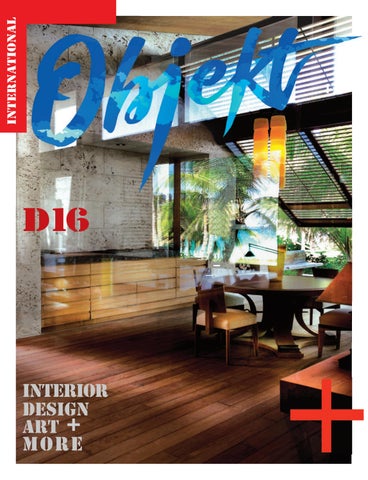
Living with the arts has always been a major thing for OBJEKT International. This is especially true in a time when the world of interior design has drastically changed from highly individual creations to social media adapted decors
It's all the sadder, that two of the greatest designers and great personalities have passed away in the last period: Thierry W Despont and Rodolfo Dordoni
Thierry W. Despont was a gentleman and a genius He was not only one of the exclusive groups of top interior designers/architects, but, with his art, he was also successful worldwide.
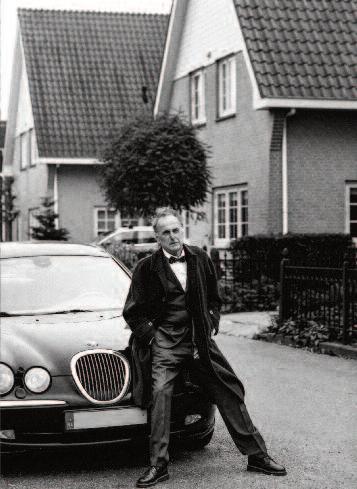
“I see myself as a dreamer of houses I want to make beautiful houses and interiors, but certainly, no fancy statements,” according to t he maestro
Alaïa and me visited him regular, photographed many of his outstanding creations throughout the USA, the Bahamas and Europe, photographed the Edmond J. Safra Synagogue and contributed to his books
Born in Milan, architect and designer Rodolfo Dordoni served as the art director for a number of Italian design brands including: Artemide, Cappellini and Minotti. He left his mark on Italian design and thus on the rest of the world, creating ‘timeless classics’.
As the art director for Italian furniture company Minotti from 1998, he redefined the modern interior on a global scale.
OBJEKT© iNTERNATIONAL
Living in Style no. D16, spring 2023
Published by HF Publications Willemstad Curacao
Founder and editor-in-chief: Hans Fonk
Editor-in-chief: Izabel Fonk
Head Office the Netherlands
Raadhuislaan 22-B
NL-2451 AV Leimuiden - Netherlands
t:+31 172 509 843 www objekt-international com
Head Office Berlin, Germany Rneé Wilms
Unique Company Group Oberwallstraße 14 D-10117 Berlin, Germany
Head Office North America
Alexander Sasha Josipovicz, Studio Pyramid Inc. Honorary editor in chief USA and Canada 1232 Yonge Street, Toronto, ON, M4V 1E4 sasha@studiopyramid com
OBJEKT International A S I A / C H I N A Cora Feng Xi Tang Art Center No 2 Xi Ba He Road, Chaoyang district, 100028 Beijing, China
Contributing writers: Izabel Fonk, Sasha Josipovicz, Susan Grant Lewin, Milosh Pavlovic, Ruud van der Neut, Lorenza Dalla Pozza, Robyn Prince, Raphaëlle de Stanislas, Rene Wilms.
Contributing photographers: Ludovic Balay, Biderbost, Nicolas Bouriette, Danielle Buffet, Ed Caraef, David Corio, Antoine Doyen, Alaia Fonk, Hans Fonk, François Halard, Harry Hammond, Stephen Morgan, Houston Rogers, Ricardo Labougle, Ray Main, James McDonald,Kevin Scott, Mark Sullivan, Lillie Thompson’
Graphics: Hans Fonk Studio
Art directors: Hans Fonk, Alaïa Fonk
Video productions: Alaïa Fonk
Illustrations: Eveline Puijk
FACEBOOK: @OBJEKT INTERNATIONAL
INSTAGRAM: @OBJEKTINTERNATIONAL
YOUTUBE: @OBJEKTINTERNATIONAL
TWITTER: @OBJEKT INT
VIMEO: @OBJEKTINTERNATIONAL
PINTEREST: @OBJEKT
INTERIOR DESIGN A
ARTS, ANTIQUES GARDENS, YACHTS
Honorary ambassadors OBJEKT International OBJEKT USA-CANADA
George Beylerian
Eric Booth
Martyn Lawrence Bullard
Tony Chi
Massimo Iosa Ghini
Jacopo Etro
Mar va Griffin Wilshire
Ralf Ohletz von Plettenburg
Glenn Pushelberg
George Yabu
Rene Wilms

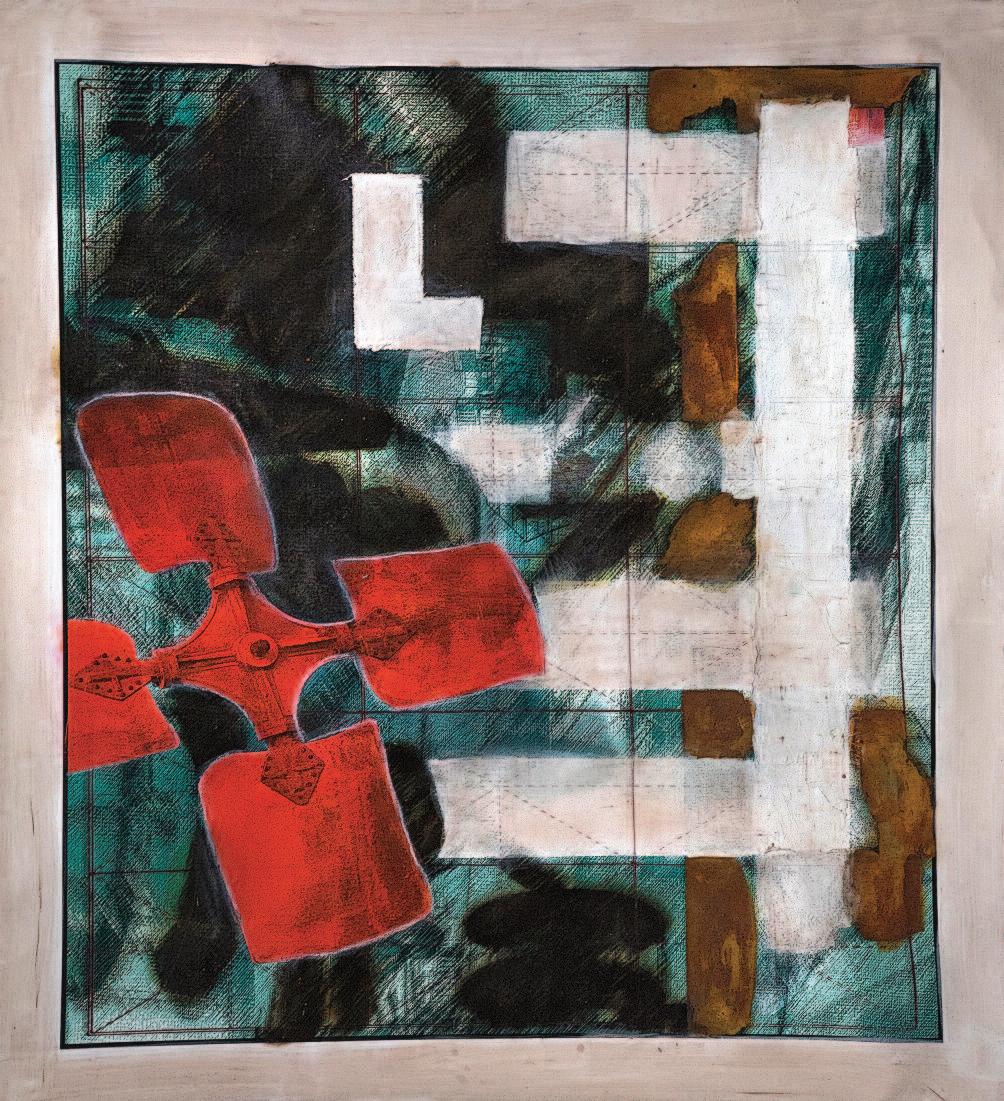 beijing 798 art # 5 by HANS FONK
PHOTO printed canvas - painted with ancient pigments
beijing 798 art # 5 by HANS FONK
PHOTO printed canvas - painted with ancient pigments

Izabel Fonk on Impress
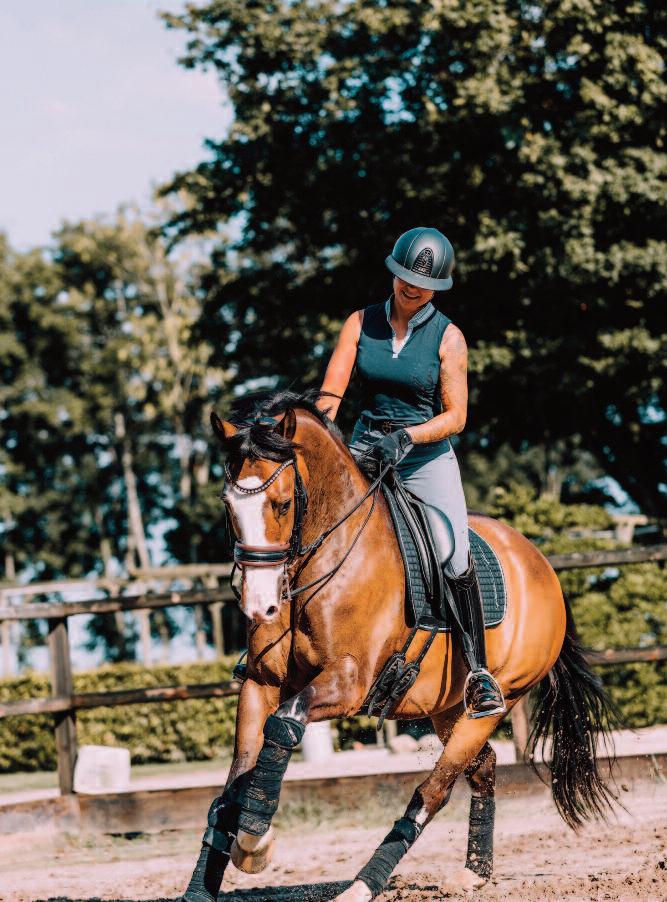
Wynton x Osmium - Gelding, 2013
Fonk Sporthorses - Top Quality Horse Training and Breeding
www.fonksporthorses.com

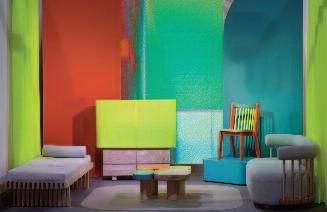
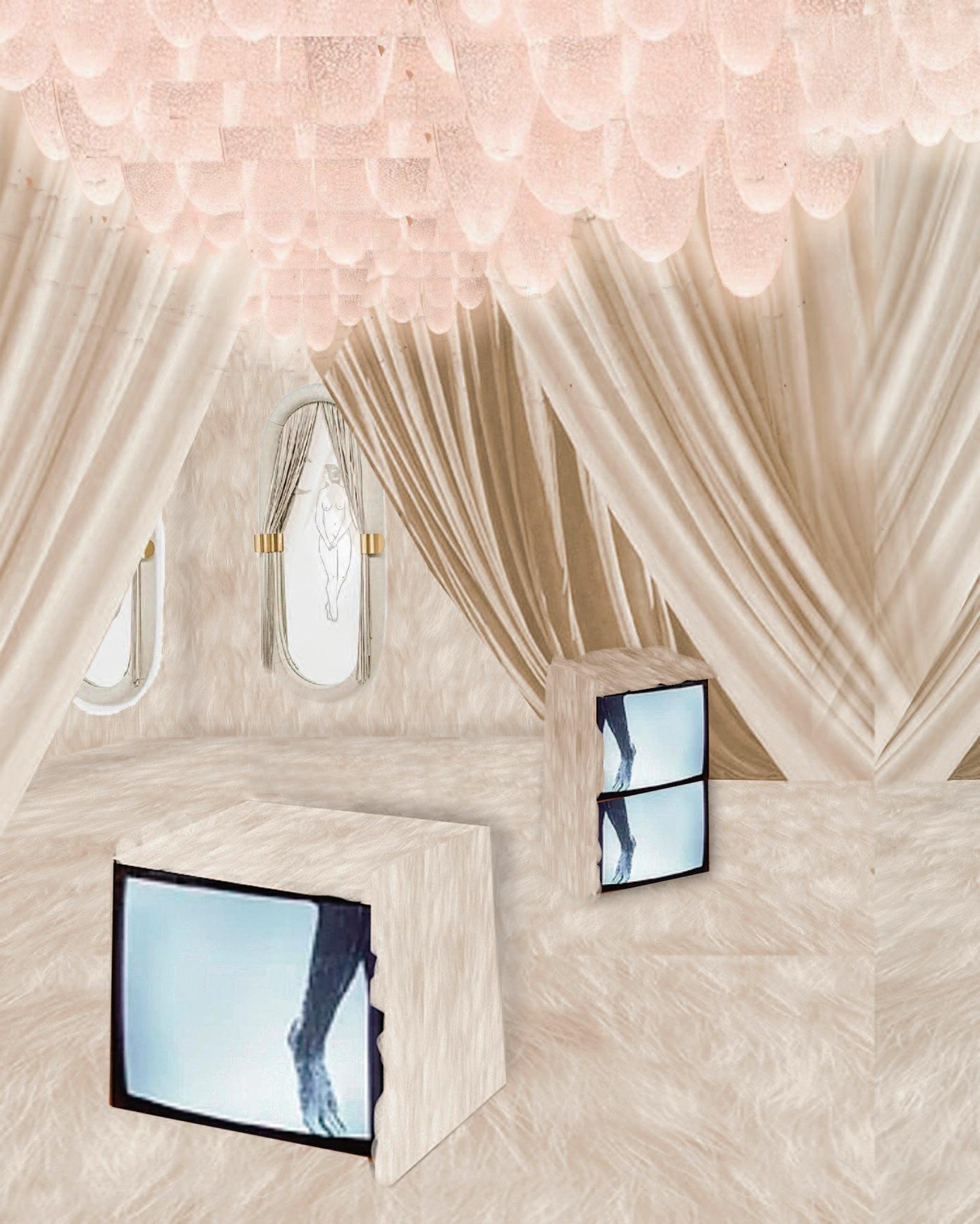
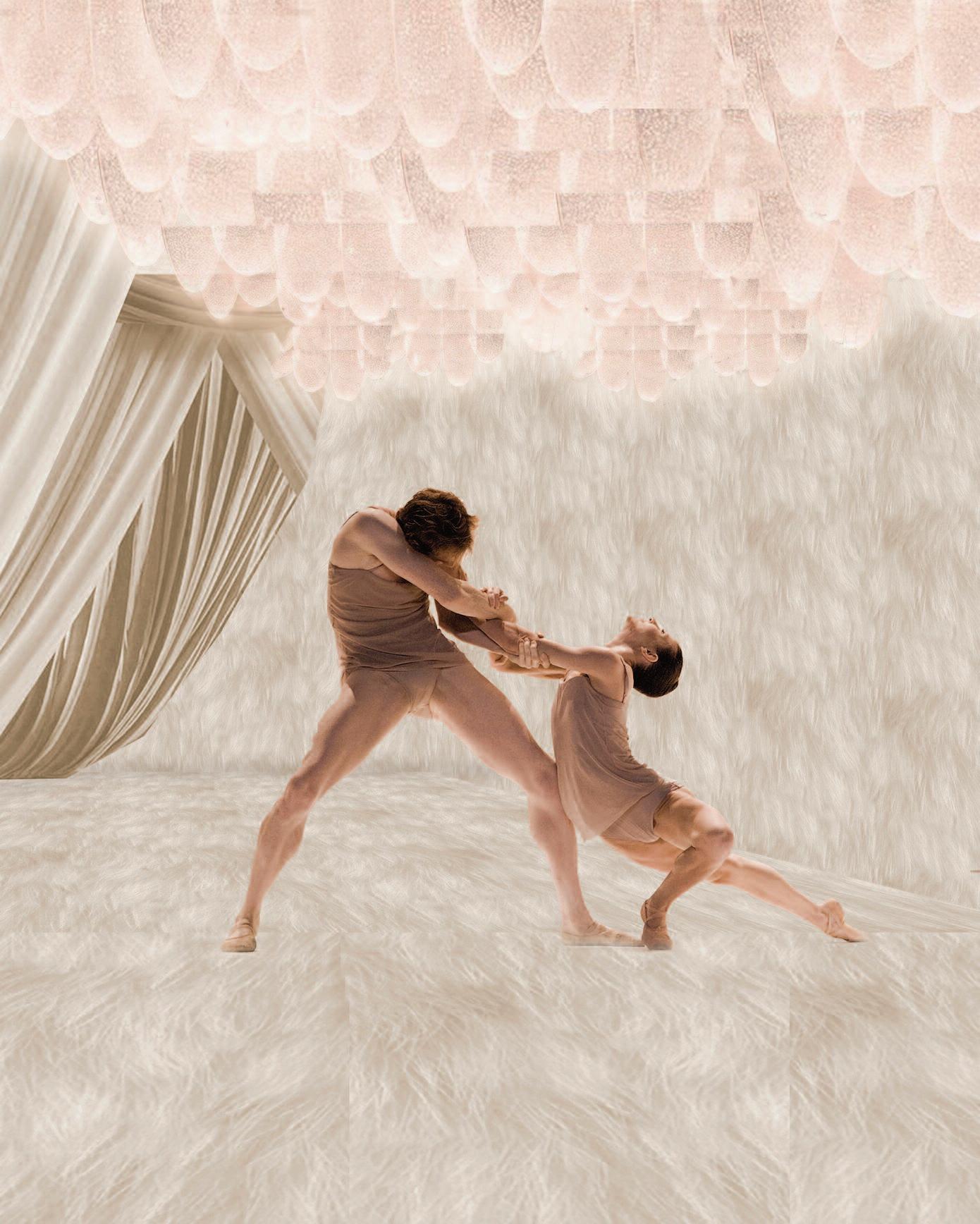
The immersi ve installation, a Wunderkammer at the Visionnaire Design Galler y, celebrated the senses as t ools of knowledge of the world.
L’impero dei sensi: a unique project , where the ar ts and design join f orces t o create a magical, engaging atmosphere creating a sensation of plunging int o a sof t , enveloping world where time stands still.
With tactile sur faces and colors reflecting the nuances of skin, the experience was accompanied b y dance per f ormances.
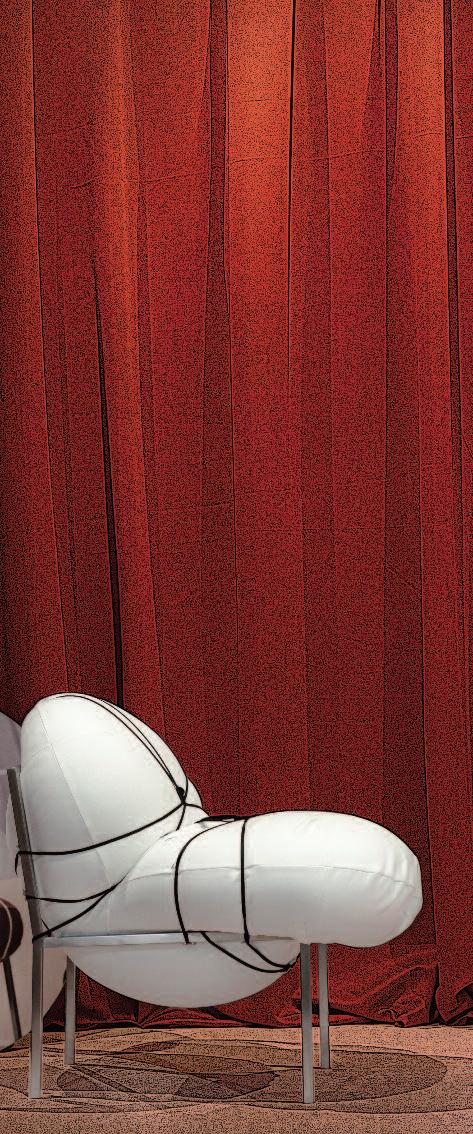
The synesthetic and sensiti ve narrati ve, based on a vision of Studiopepe, Arianna Lelli Mami and Chiara Di Pint o, described a collection of three pieces designed f or Visionnaire: the Shibari chair, the Parade lighting system and the Blanche set of t wo mirrors.
text: Sophie Sobol
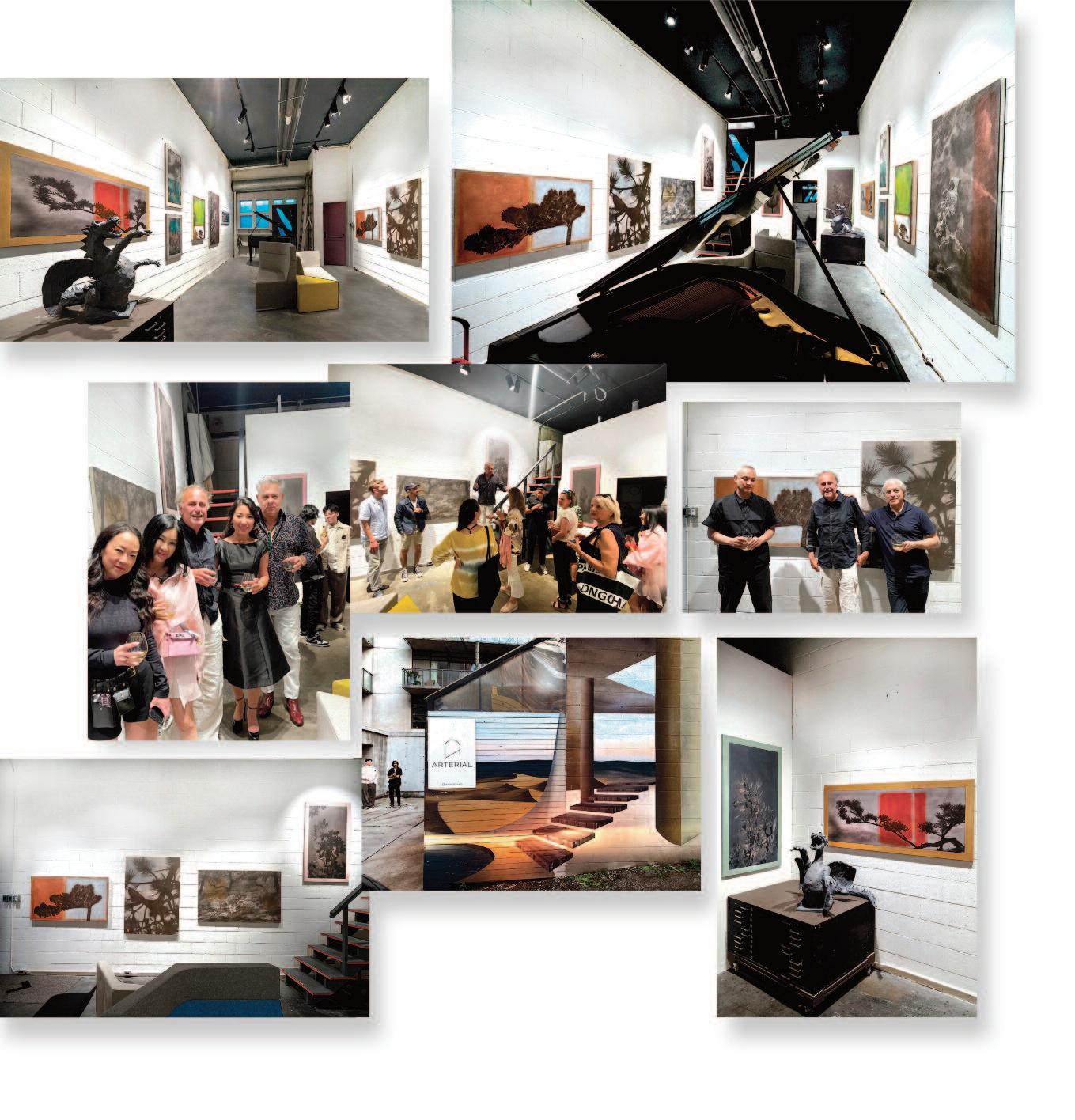
Arterialtoronto Gallery in Toronto celebrated the solo exhibition
‘Dutch Bonsai III’ by Hans Fonk The gallery initiated by Nathaniel Garcia assisted by Sheldon Rose has, in a short time, made a name for itself in the art world The venue is located at 451 Adelaide St W Toronto, ON, Canada
Amsterdam-based photographer and founder/art director of award-winning interior design magazine Objekt International Hans Fonk is drawn to drama An exhibited artist in Beijing, Hong Kong, France, Belgium, Netherlands and USA, his solo exhibition entitled Dutch Bonsai, series III, premiered at Arterial, Toronto, on June 29th, 2023. It showcased a series of large-scale photographs printed on canvas and coated with ancient Chinese pigments and tempera
“Most of the time photography is too flat I’m always trying to bring it out of the flatness ”
Fonk’s photography is acclaimed for its dynamism His use of shadow and contrast magnify the forms he photographs and create intimate, vibrant scenes A fashion photographer for decades before starting his own magazine with full creative control in 1991, his art style evolved in opposition to commercial photography
Long-time collaborator and North America’s honorary editorin-chief of OBJEKT International, Sasha Josipovicz of Toronto architecture and design company Studio Pyramid, shares his colleague’s European design sensibilities:
“In North America, especially the Canadian design community, [photography] tends to be very bland and it fits into magazines But for his magazine, you really had to be a design misfit to capture and to catch his attention so he could photograph you ”
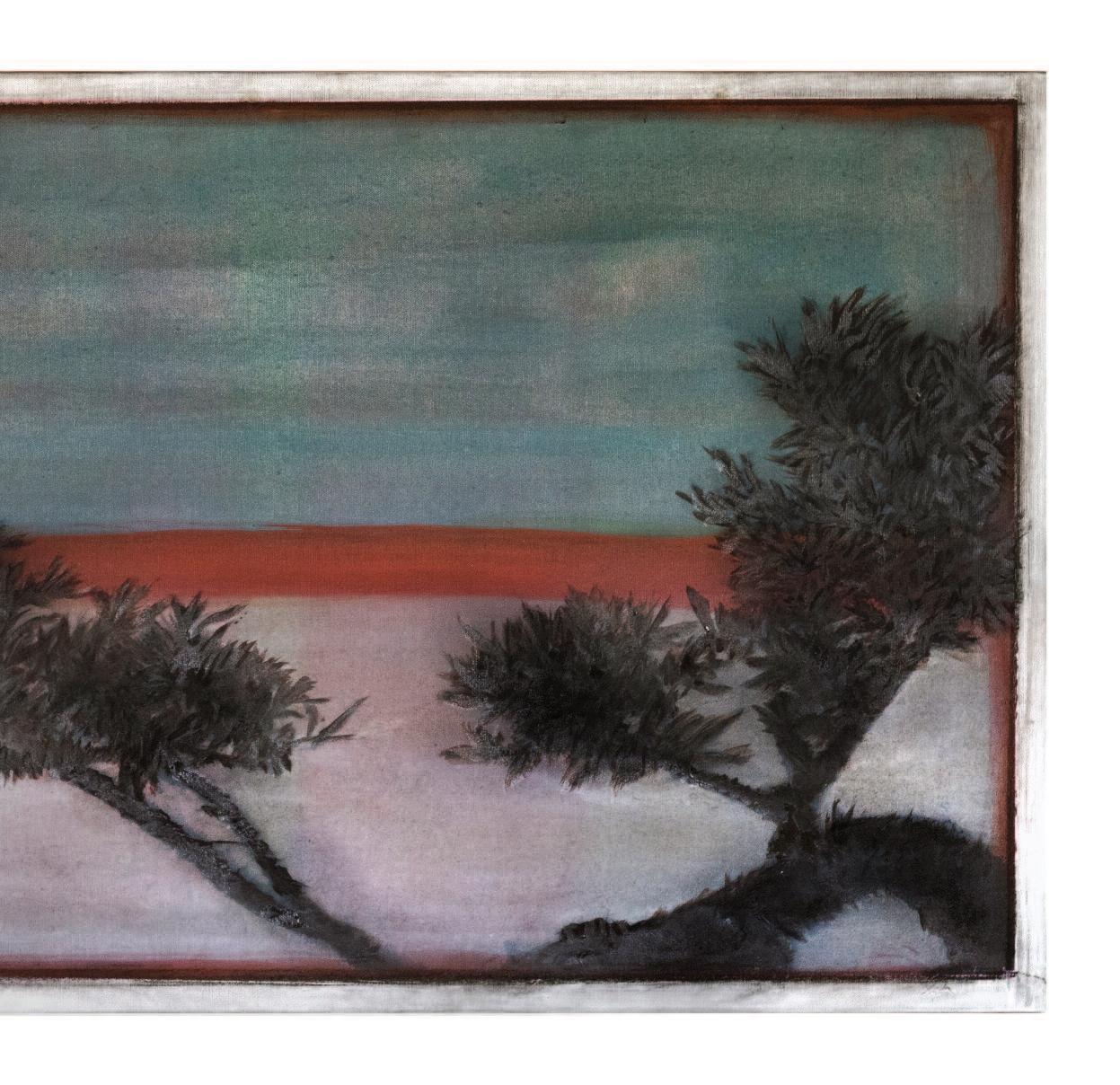
Fittingly, Fonk's solo art projects, like Dutch Bonsai, are just as obsessed with vibrant and formidable forms The inspiration for the series are the warped, sculptural trees along the Dutch coastline that, after years of tug of war with the wind, have come to resemble the perfectly curated and cultivated forms of the Japanese bonsai
“In Japan, people can look at one bonsai tree for half an hour, and for me, these trees have the same thing. They are so formed by nature It is beautiful in itself Nobody touches it And it has a strong force That's basically what I was fascinated by ”
Fonk takes great care in the preparation and process of his art-making, whether it is the complicated technical aspects of photography or the tricky process of layering tempera His work is intense and immersive The process must be perf ectly executed; “otherwise the end is nothing ”
“When I start photographing, I am very concentrated And when I'm finished I'm almost completely exhausted ” Fonk looks forward to furthering his Toronto connections through ongoing collaborations with Studio Pyramid as well as a growing relationship with Arterial.
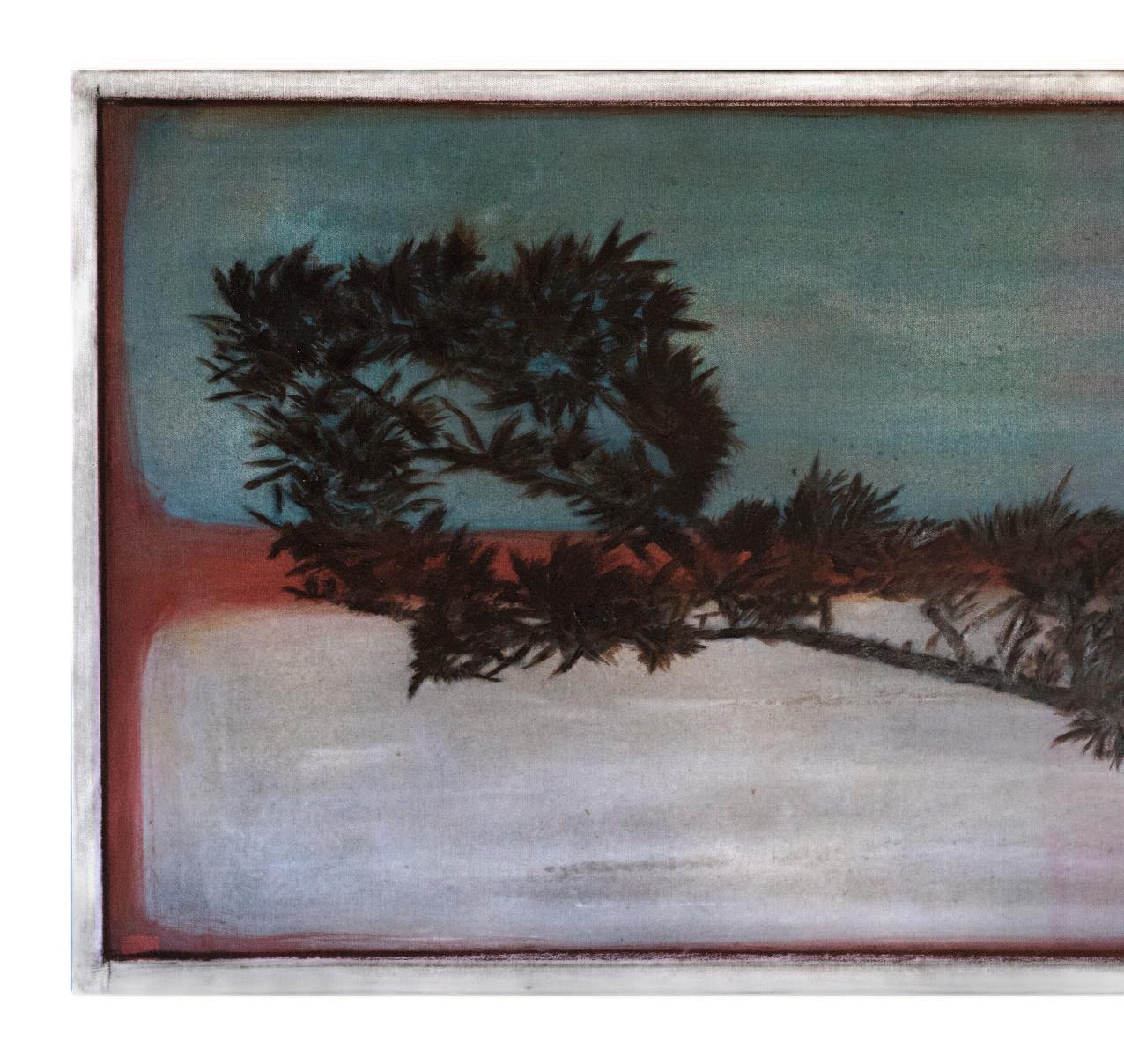 Dutch Bonsai by Hans Fonk photo on canvas painted with aancient and natural pagments 124 x 55 cm
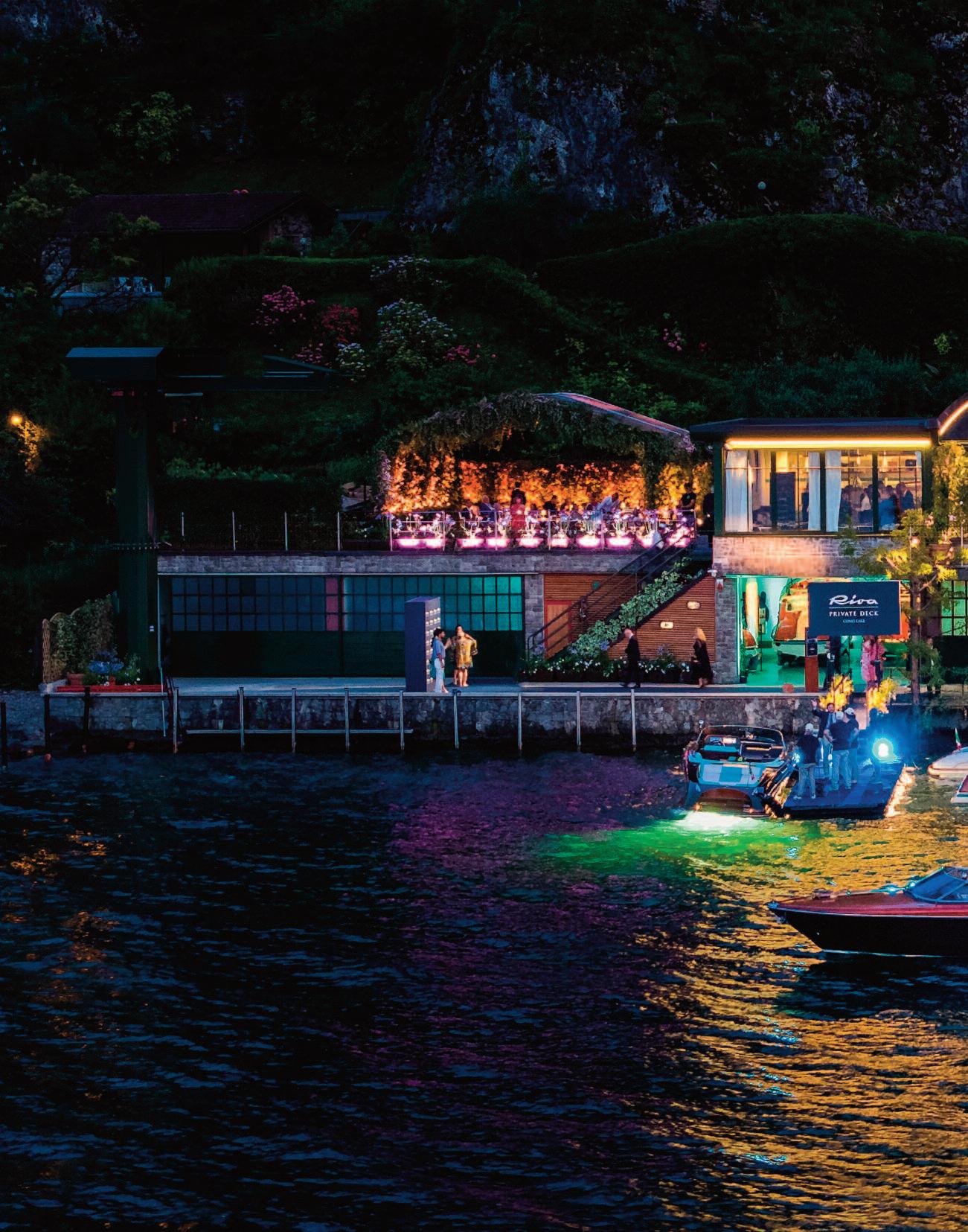
Entering a Riva Destination, the timeless appeal of the legendary brand is reflected in the decor by the wood featured for over 180 years on the world’s most famous boats: the Riva yachts.
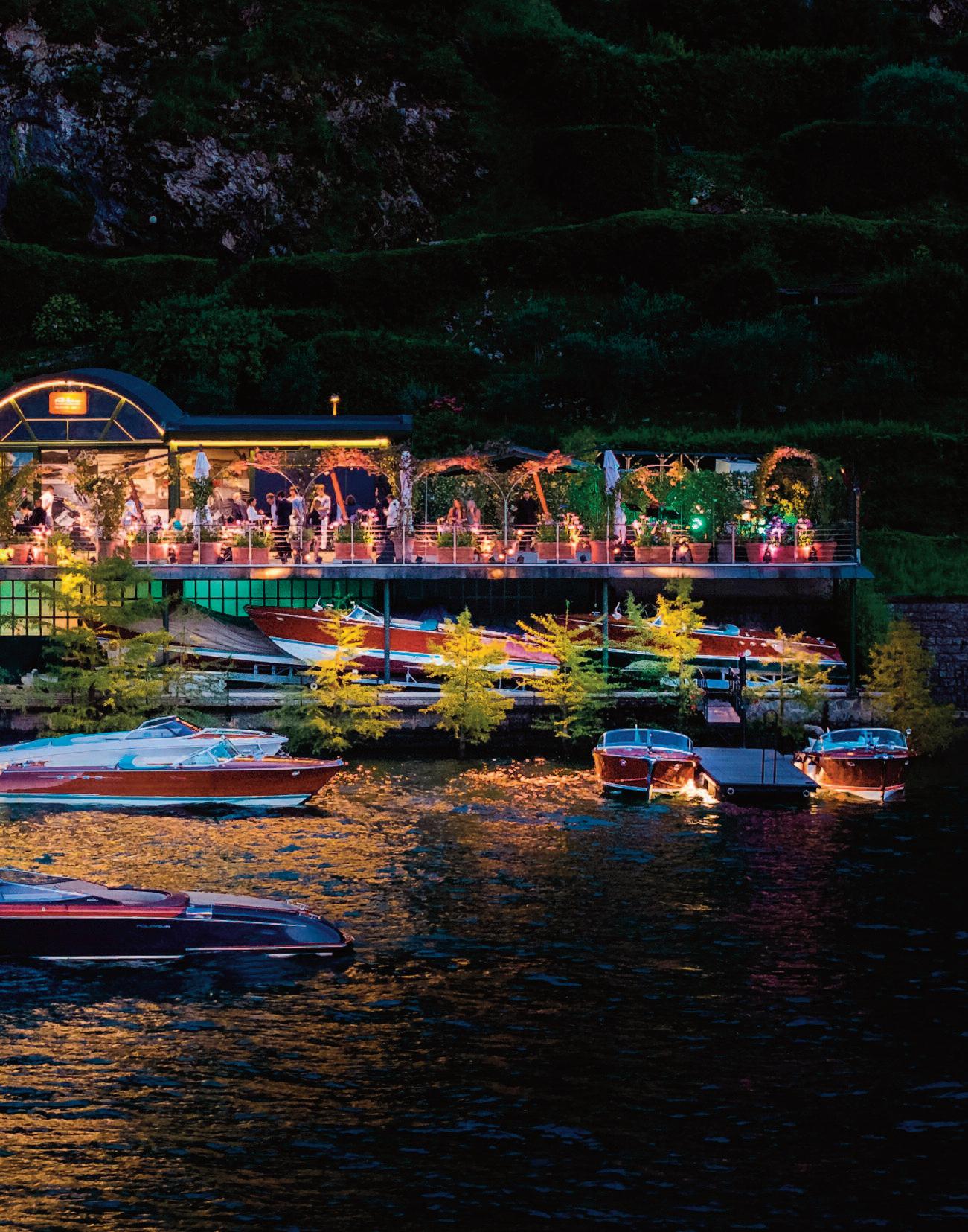
Situated in destinations such as Venice, Monte Carlo, Paris, Mykonos, Opatija and Palm Beach, Riva Destinations are joined in 2023 by an e new Riva Private Deck on Lake Como, a renowned destination of the international jet set.
The new Private Deck is located in Lèzzeno, just a few kilometers from Bellagio, inside the historic Yacht Club Eriolario. Set against the magnificent backdrop of the eastern bank of the lake’s Como branch, this is the first Private Deck launched by Riva in Italy and the second in the world, joining the Private Deck at Nammos Beach on the island of Mykonos.
The new Riva Private Deck on Lake Como will be a hub for owners, offering exclusive services: a place where they can relax and soak up the Riva atmosphere.
T h e N a t i o n a l G a l l e r y o f Vi c t o r i a , M e l b o u r n e , Australia in partnership with the Musée d’Orsay presented the major world-premiere exhibition ‘Pierre Bonnard: Designed by India Mahdavi’.
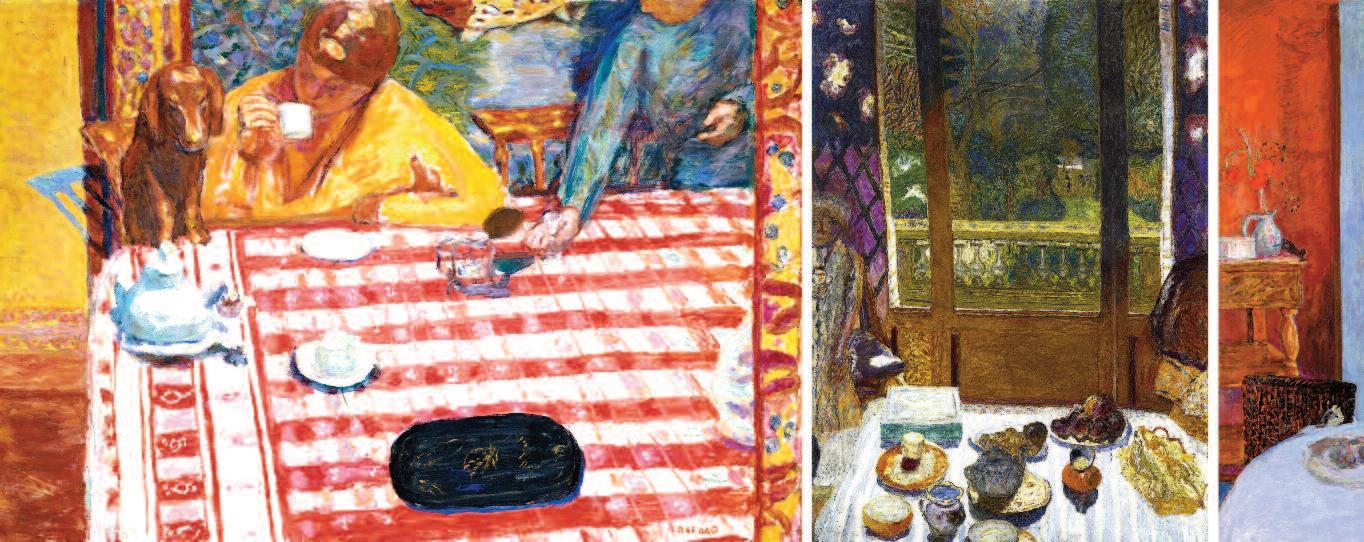
Above: some of the works by Bonard on display. L e f t : ‘ C o f f e e ’ 1 9 1 5 , o i l o n c a n v a s , 7 3 . 0 x 1 0 6 . 5 c m . Ta t e , L o n d o n . P r e s e n t e d b y S i r Michael Sadler through the NACF 1941 Photo © Tate. Beside that: ‘Dining room overlooking the garden, (The breakfast room) 1930–31, oil on canvas. 159.6 x 113.8 cm. The Museum of M o d e r n A r t , N e w Yo r k . G i v e n a n o n y m o u s l y, 1941. Digital image © 2023, The Museum of Modern Art, New York / Scala, Florence.
Next: ‘The dining room in the country’ 1913, oil on canvas. 164.5 × 205.7 cm. Minneapolis Institute of Arts The John R Van Derlip Fund
Photo: Minneapolis Institute of Art.
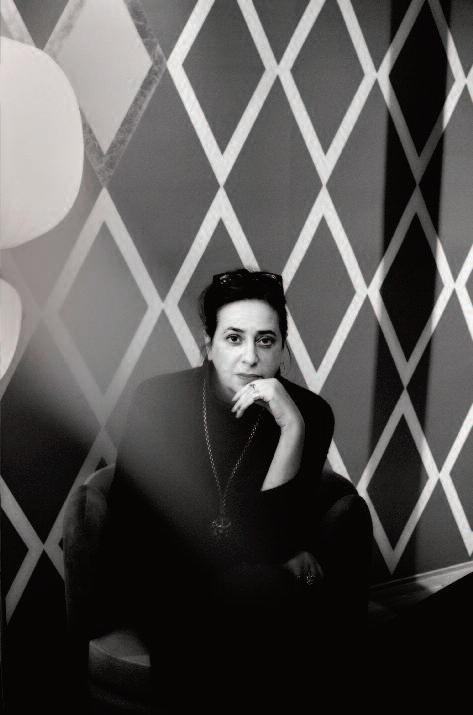
Top right: ‘The window’, 1925 oil on canvas 108.6 × 88.6 cm. Tate, London, presented by L o r d I v o r S p e n c e r C h u r c h i l l t h r o u g h t h e Contemporary Art Society, 1930. Photo © Tate. Courtesy of The National Gallery of Victoria. Right India Mahdavi. Photo: Antoine Doyen.
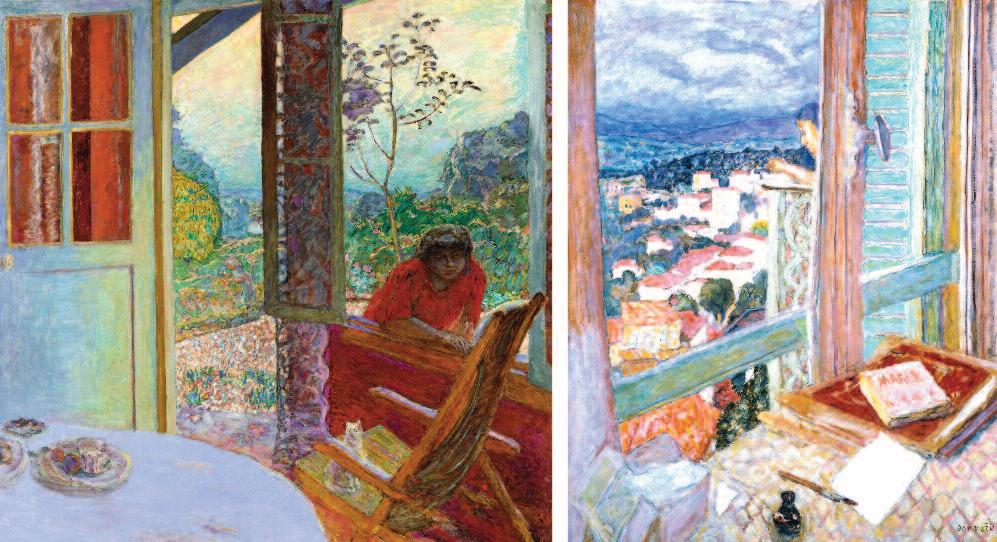
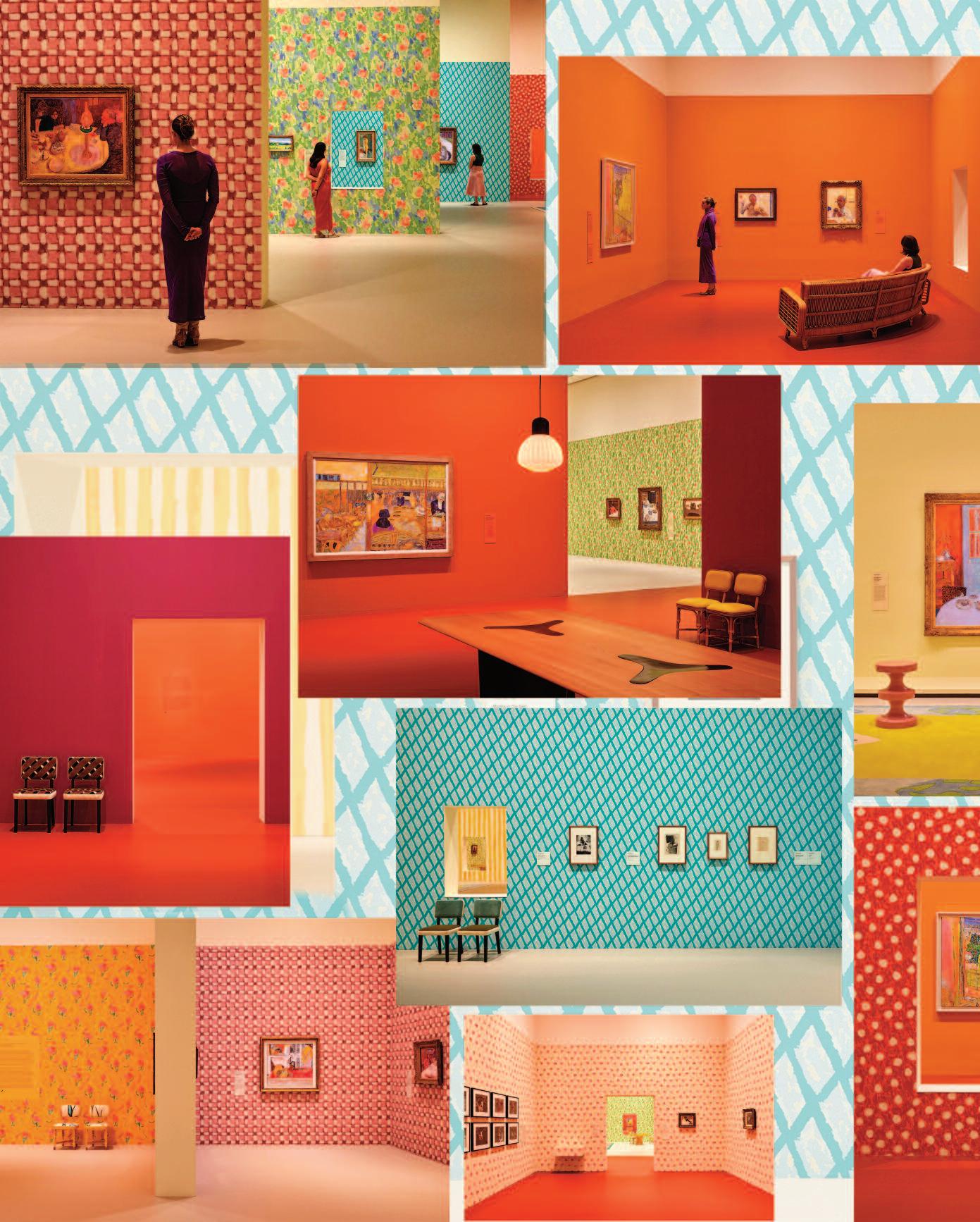
 Images of the ‘Pierre Bonnard: Designed by India Mahdavi’ exhibition for the 2023 Melbourne Winter Masterpieces® Exhibition.
Photo: Lillie Thompson
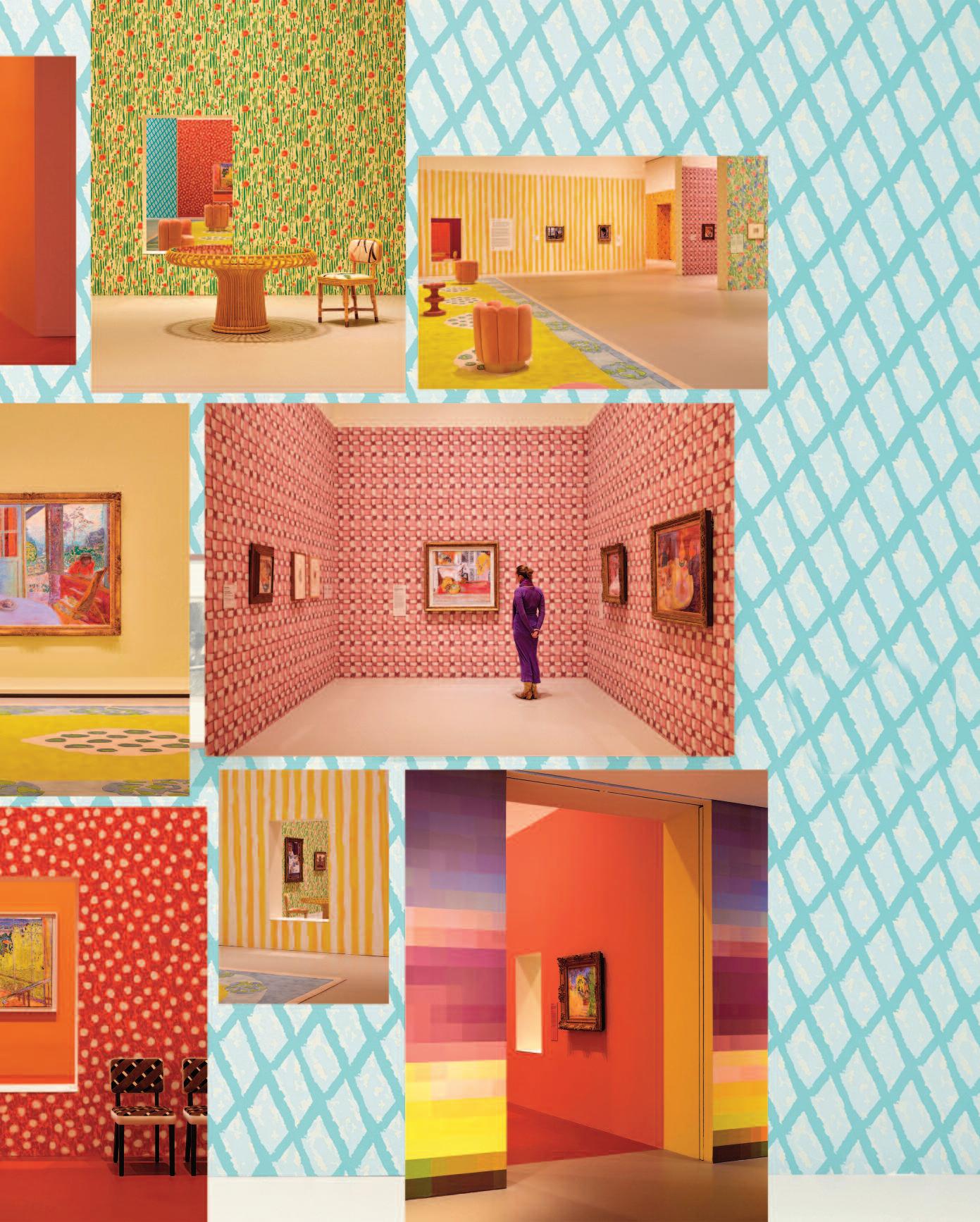
Images of the ‘Pierre Bonnard: Designed by India Mahdavi’ exhibition for the 2023 Melbourne Winter Masterpieces® Exhibition.
Photo: Lillie Thompson
Previous pages:
Paris-based India Mahdavi is considered a ‘virtuoso of color’ and ‘possessor of perfect chromatic pitch’. Mahdavi enveloped for ‘Pierre Bonnard: Designed by India Mahdavi’ for the 2023 Melbourne Winter Masterpieces® Exhibition, the artist’s works in an environment that complemented Bonnard’s distinct use of color and texture, and evoked the wistful domestic intimacy for which his paintings are renowned.
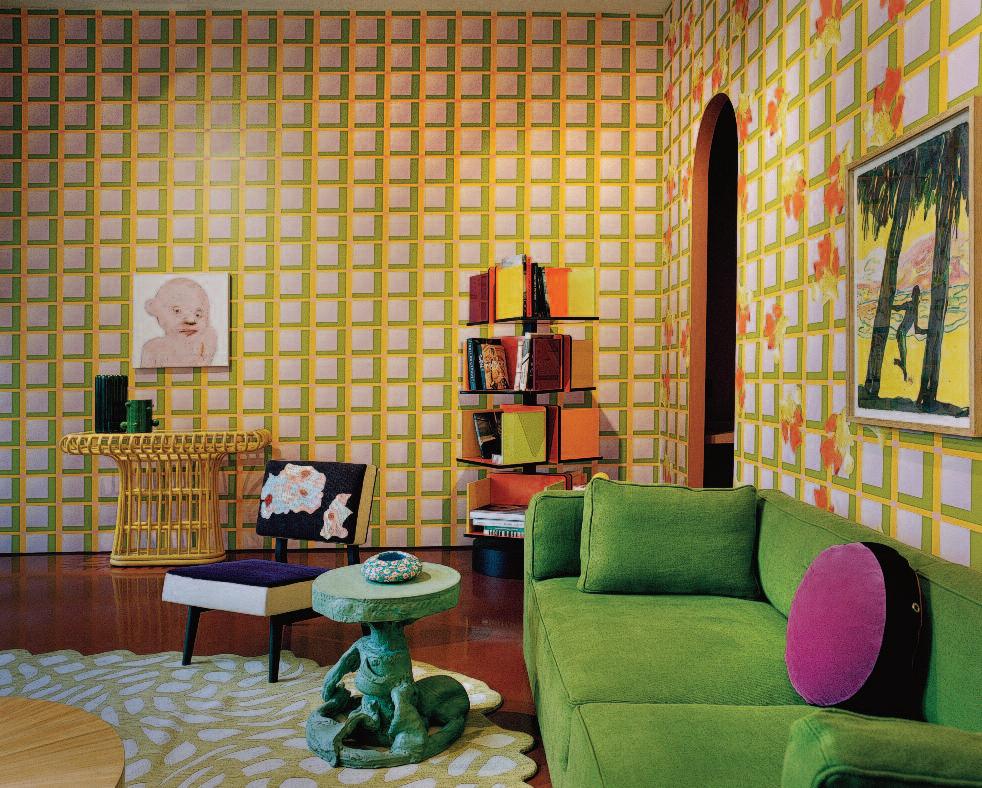
These pages: works by India Mahdavi reflecting the colors and style of the works by Pierre Bonnard.
Left: Project Room #3
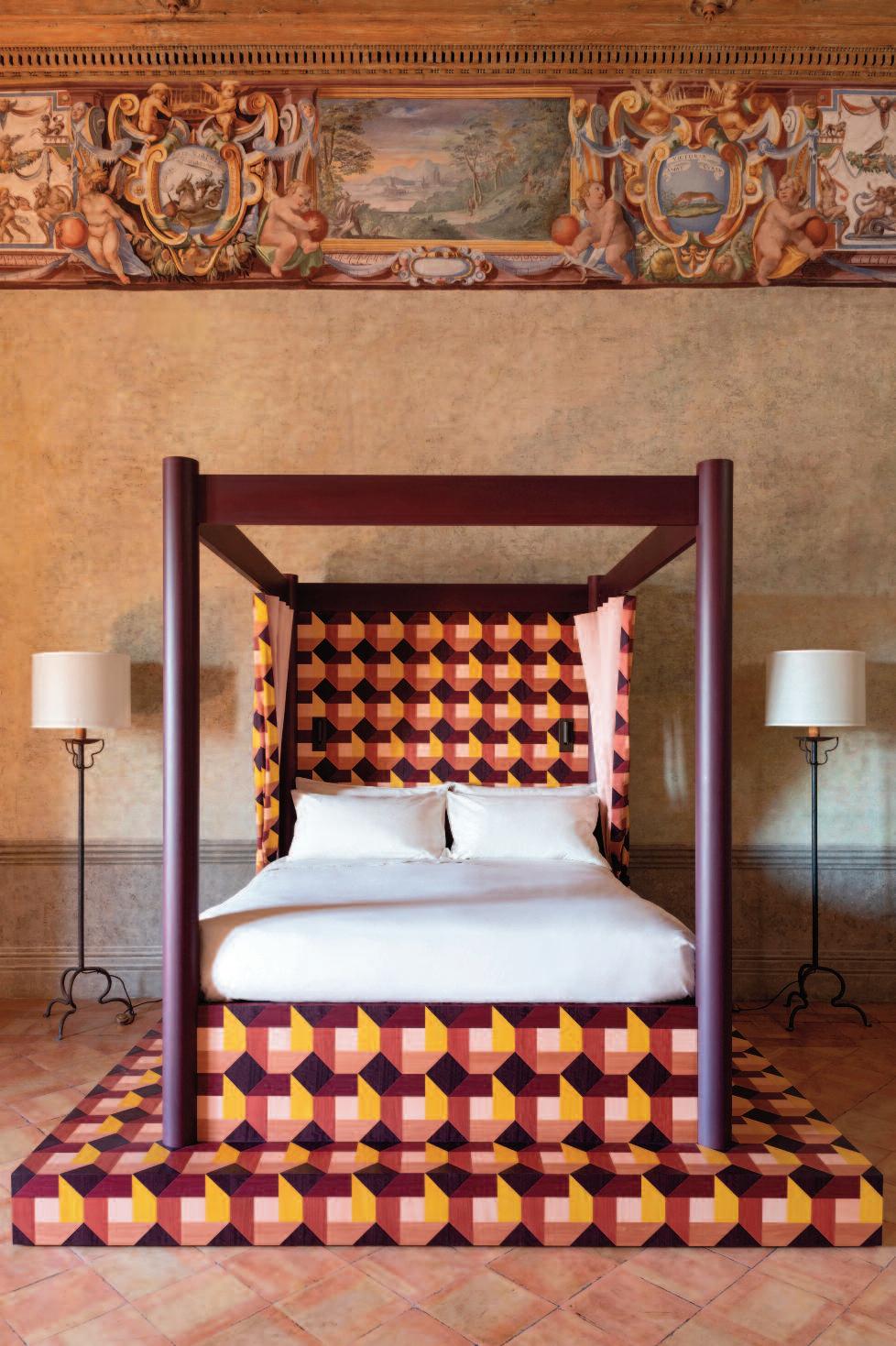
Right: Camere Storiche alla Villa Medici, by India Mahdavi, Rome 2023. Photos: François Halard.
The National Gallery of Victoria in partnership with the Musée d’Orsay organized the major worldpremiere exhibition Pierre Bonnard: Designed by India Mahdavi
From June 2023, the blockbuster Melbourne Winter Masterpieces® exhibition featured more than 100 works by Pierre Bonnard, a leading 20th century French painter famous for his iridescent palette The exhibition was presented within a contemporary scenography by award-winning architect and designer, India Mahdavi
The paintings of Pierre Bonnard (1867-1947) depict intimate domestic interiors, natural landscapes and urban scenes with subtlety, wit and a sensuous approach to color and light. He was renowned for his use of color to convey emotions.
Bonnard was declared by his close friend Henri Matisse as ‘ a great painter, for today and definitely also for the future’
Curated by Paris’s Musée d’Orsay in partnership with the NGV, the exhibition brought late 19th and early 20th century France to life through paintings, drawings, prints, photographs and decorative objects by Pierre Bonnard, shown alongside early cinema by the Lumière brothers, and artworks by Maurice Denis, Félix Vallotton and Édouard Vuillard, Bonnard’s early contemporaries.
To create the exhibition’s scenography, the NGV has commissioned Paris-based India Mahdavi Considered a ‘virtuoso of color’ and ‘ possessor of perfect chromatic pitch’, Mahdavi enveloped Pierre Bonnard’s works in an environment that complemented Bonnard’s distinct use of color and texture, and evoked the wistful domestic intimacy for which his paintings are renowned
Her approach to color, structure and texture has resulted in several acclaimed architectural projects, including collaborations with contemporary British artist David Shrigley and British-Nigerian artist Yinka Shonibare for The Gallery at sketch in London Mahdavi’s interest in the domestic interior has also resulted in ranges of furniture and design objects for the home
 In d ia M a hd a vi ’s ‘The Townhouse. Ph o t o: Franc ̧ ois Halard.
‘Monsieur Bonnard and I ‘Monsieur Bonnard and I share the same passion for share the same passion for color T he way he invit es color. The way he invites us in his home and intim acy u s in his home and intimac y is sublimat ed by his very is sublimated by his very ow n sense of color. own sense of color
For this exhibition, w e F or this exhibition, we d iv ed into Pierre Bonnard ’ s div ed into Pierre Bonnard ’ s paintings and extracte d paintings and extrac ted some of his patt erns and some of his patterns and c olors to rec reate bac k colors to re create backdrops to his paint ings, d rops to his paintings, offering an im mersiv e offering an immersiv e experience of a home to experience of a home to the v isitor. ’ the v isitor. ’
 India Mahd av i India Mahdav i
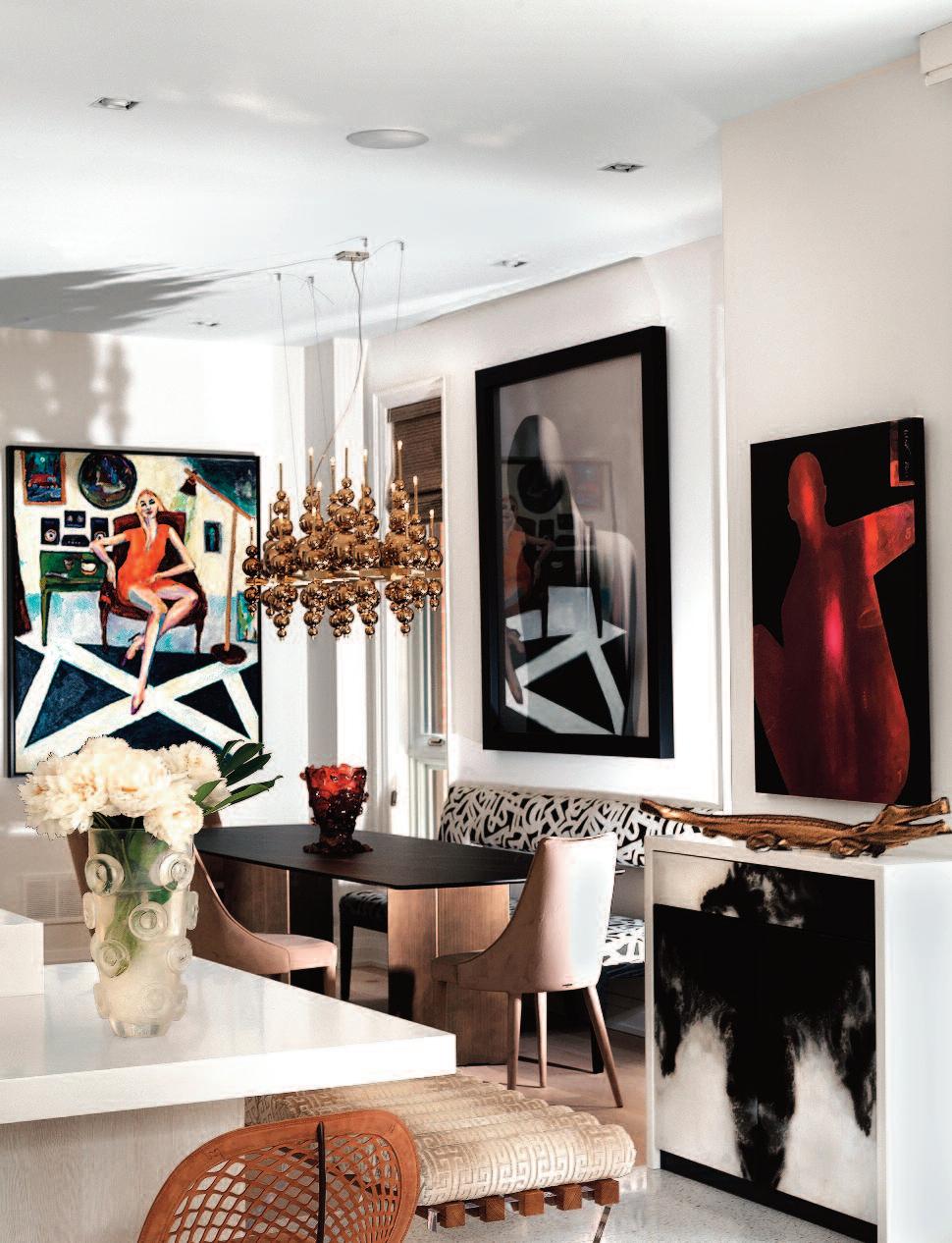 Above: dining area of the Summerhill home designed by Studio Pyramid, Toronto The Gold ‘Giagoli’ chandelier with its St Marco, Venice shaped cupolas is by Visotsi The Bradley Wood por trait ‘River’ was acquired from Jamie Angell and the Eden Bender ‘Light in the Dark’ from Muse Galler y The black and white photo is by Deana Nastic
The custom parchment commode and bench is by Ivana Cor tez.
text: Milosh Pavlovicz
photos: Hans Fonk
Above: dining area of the Summerhill home designed by Studio Pyramid, Toronto The Gold ‘Giagoli’ chandelier with its St Marco, Venice shaped cupolas is by Visotsi The Bradley Wood por trait ‘River’ was acquired from Jamie Angell and the Eden Bender ‘Light in the Dark’ from Muse Galler y The black and white photo is by Deana Nastic
The custom parchment commode and bench is by Ivana Cor tez.
text: Milosh Pavlovicz
photos: Hans Fonk
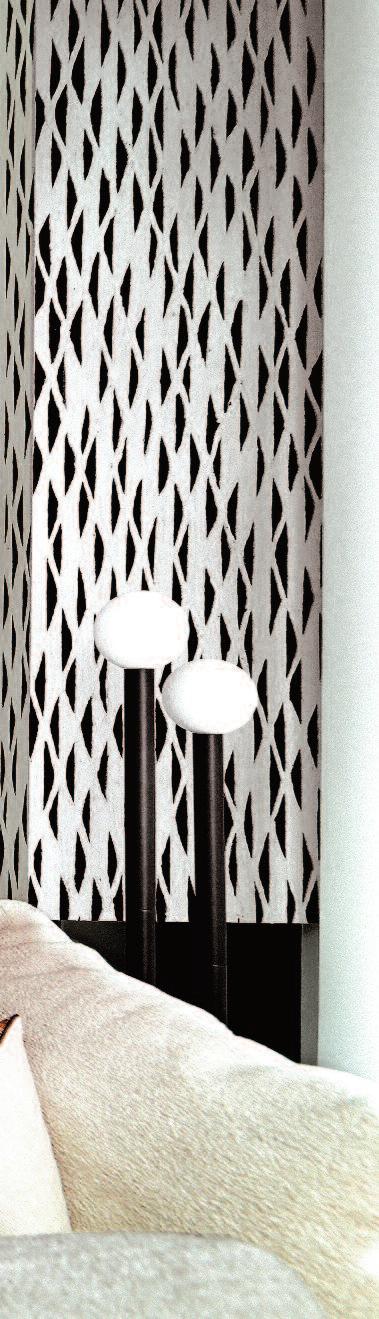
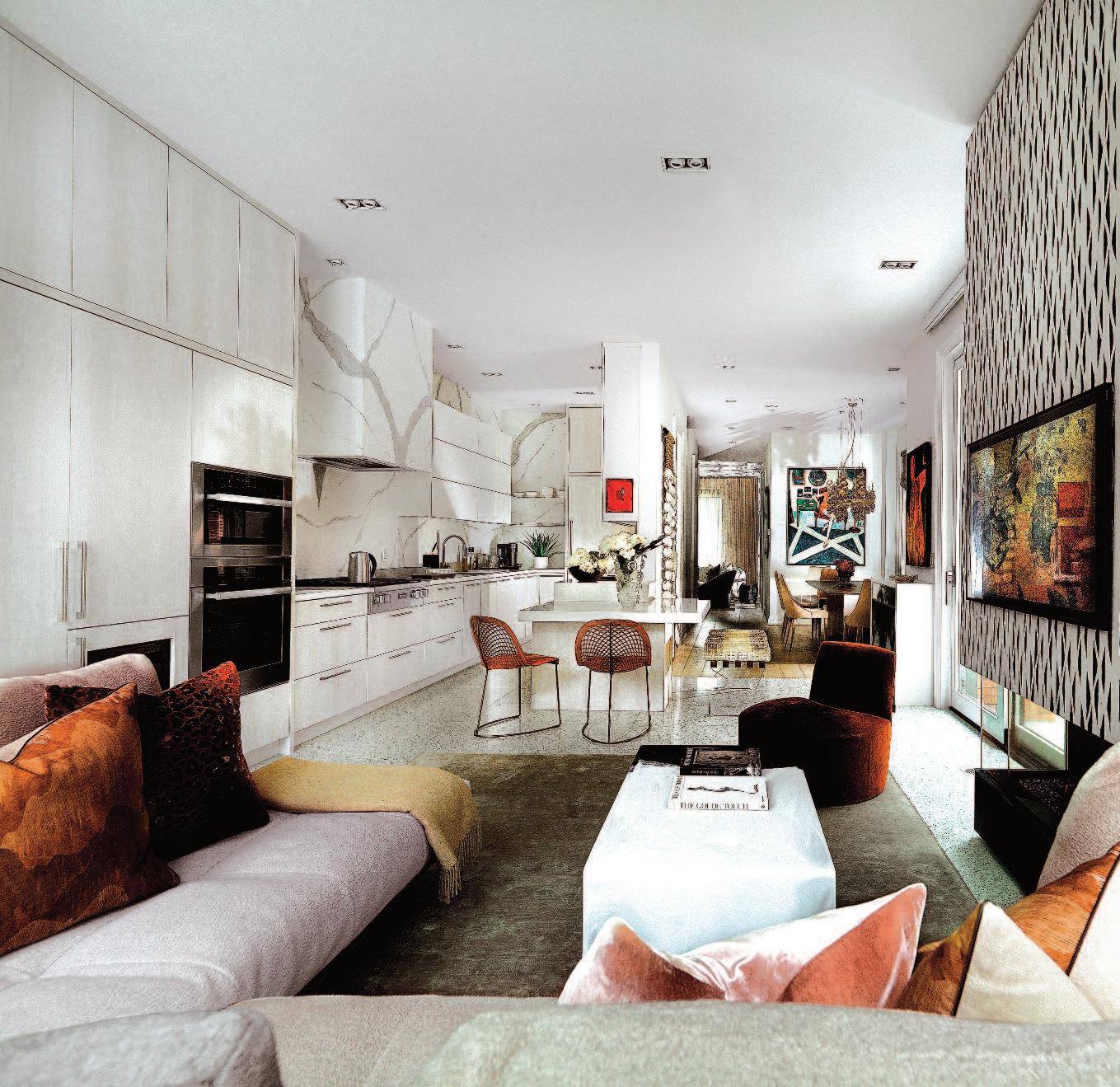 Below: the family room adjacent to the outdoor space, boasts free flowing fireplace cladded in Lori Weitzner wallpaper, while Kelly Werstler cpillows add the whimsy on Palazzetti sofa. Plain white kitchen built by Line-to-Line is installed on white marble terrazzo flooring by Ciot. Highlight is Red Tito Pionir ar t work by Sadko Hadzihasanovic
“This project had strong initial procedure locked down in terms of scale, proportion, texture and materials. Relate it all to client’s and our style, and here it is,”
Architect Milosh Pavlovicz of Pyramid Studio in Toronto, Canada.
The nearly 4,000 square foot house delightfully perched atop floating, immaculately executed, bewildering concrete planes and stairs, leading up to the front entrance below the roof ’s century old structure.
The project is located in the Summerhill neighborhood of Toronto, Canada.
The original Victorian styled houses was completely overworked and extended as far is it was allowed.
The new architectural design was done by Milosh Pavlovicz, while the interiors were designed by Sasha Josipovicz and Elaine Tan.
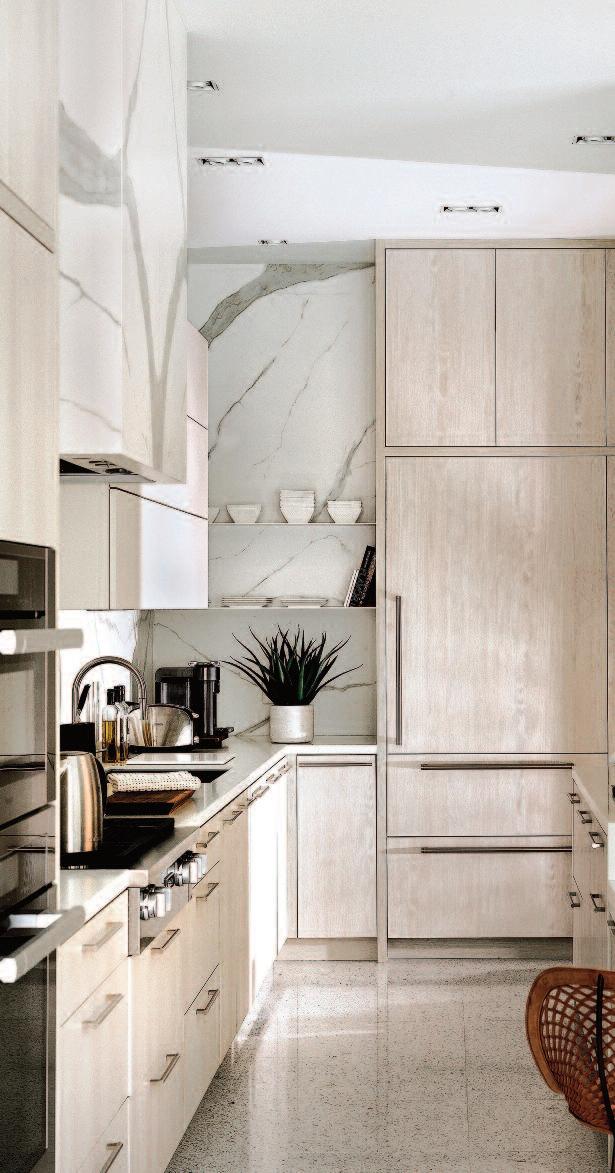
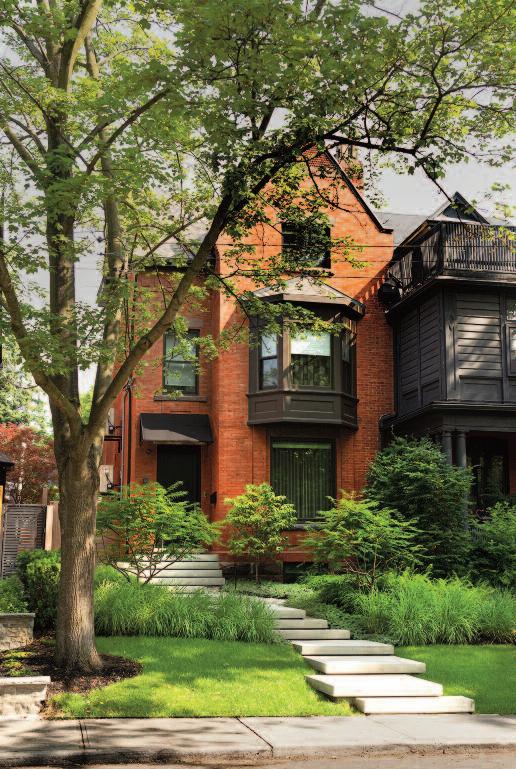
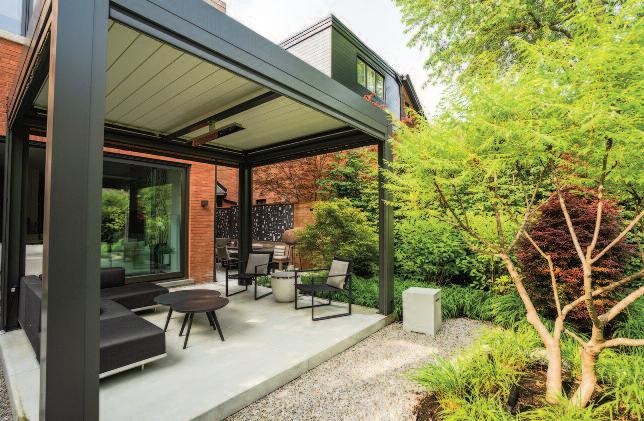
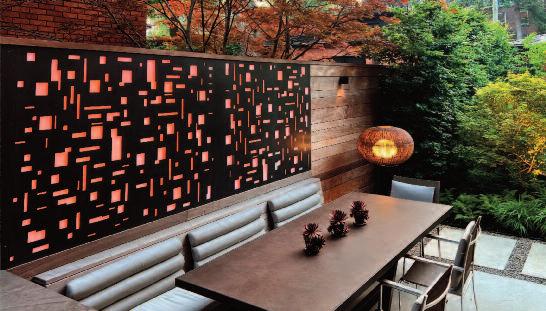
Studio Pyramid’s team was challenged was to tur n a maze of century old rooms into a white, moder n house and to bring in warmth through a new scale and texture. It also had to honor the newly created zones, interior vistas and newly laid out front and rear gardens, designed by Milos Buncic, with the independent cocktail pavilion
Colors and art played an important to role to enhance the new interior atmosphere Pyramid’s Sasha Josipovicz : “We always try to pitch art in our projects Just as every crown needs a gemstone, every room needs a focal point. That’s where art and special fur niture creations come in play ”
The ground floor family room received an architectural statement: the fireplace topped with texture and a play of geometric patter ns in special wallpaper. On either side of the fireplace two glazed surfaces, one a sliding door and one fixed window were created
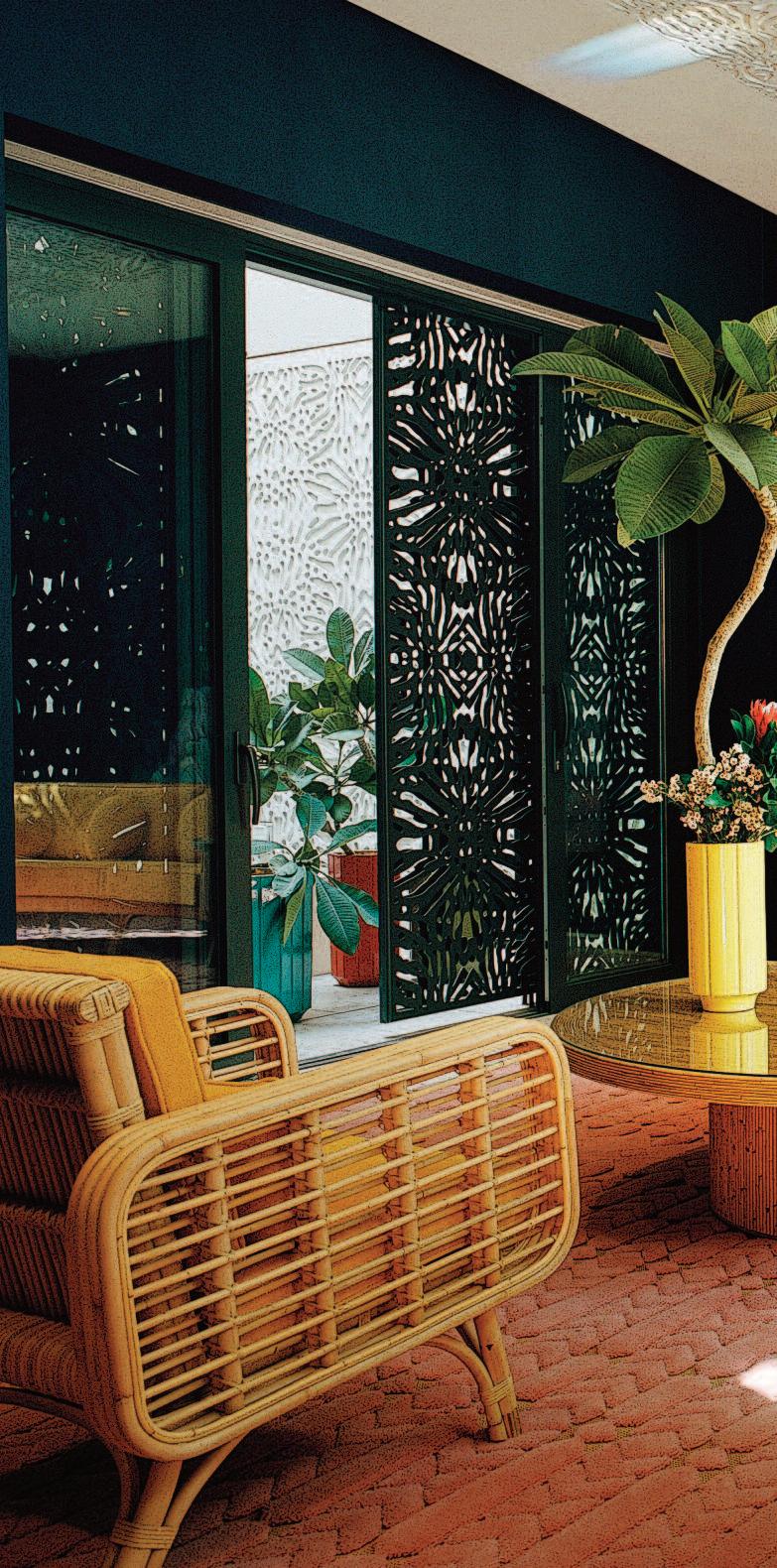
They provide connection with the outside casual dinning patio with its metal, back-lid wall. The play of geometric orange cutouts is helping to discretely illuminate the client’s summer parties
“It feels a bit old-school and moder nist to have a fireplace as a devider between outdoor and indoor spaces. But I prefer the house to have notable zones: one more casual and one more formal,” according to Milosh Pavlovicz
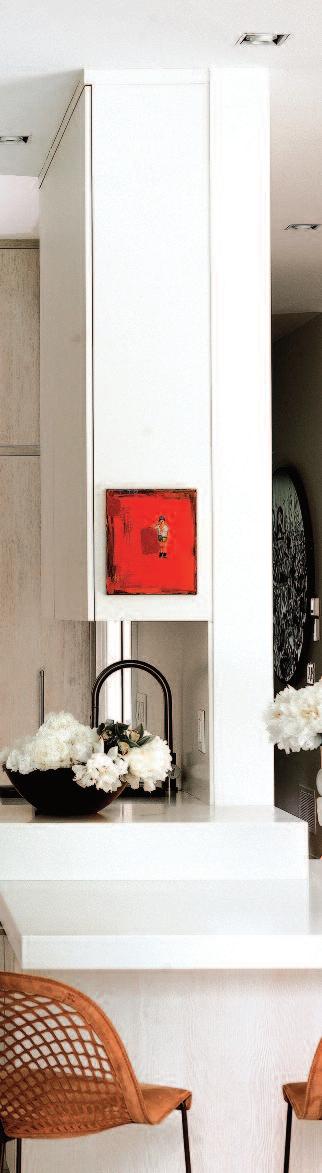
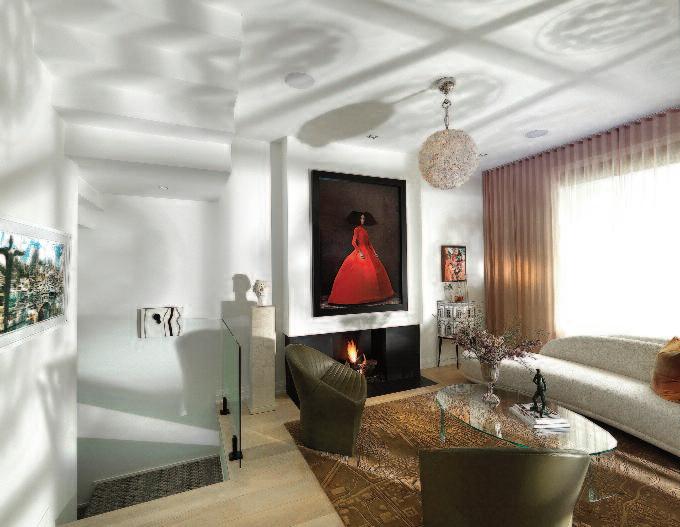
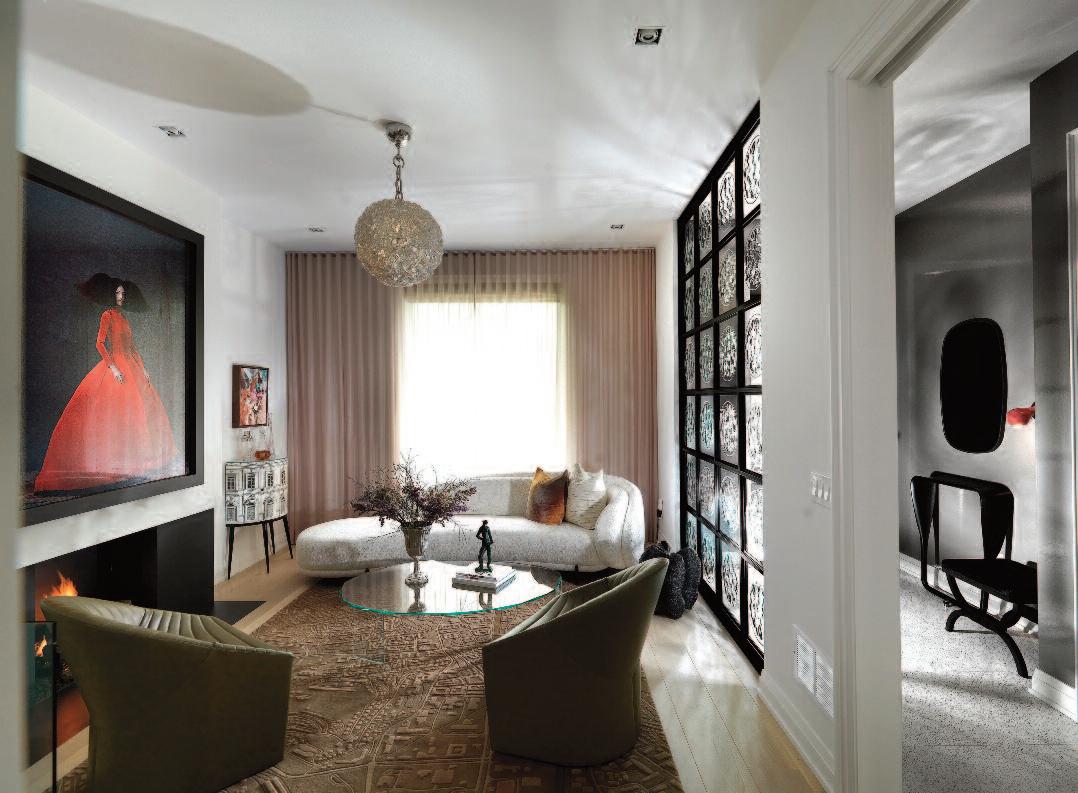
Sasha Josipovicz and Elaine Tan designed the interior spaces. The living room has a monochromatic custom rug, based on the city map of Toronto, that is the connection piece between the selected fur niture.
Upstairs, the clients wanted bedrooms with the master suite occupying the entire third floor. The first step was to keep rooms interesting and layered with character and at the same time keep them simple.
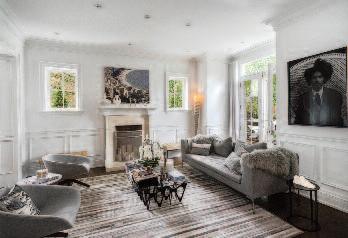
Right and right hand page: the stoic living room sets the tone for this art filled Victorian home. Above the contemporary fireplace is the Diva in Red photo by Dutchman Erwin Olaf from Izzy gallery. The Monaco Harbor photo is by Hans Fonk. The Chrystal Roche chandelier by Sterling and Sons. Coffee table is by Glass Italia from Founded by Garcia. The rug by Urban Fabric, curated by Funded by Garcia, is custom tufted olive green wool representing the topography of Sarajevo. Croissant sofa by Paolo Ferrari from South Hill Home is paired with olive green leather lounge chairs by Jorg Boner White sculpture is by Uruguay ' s Joaquin Torres Garcia and the bar is by Pierro Fornasetti
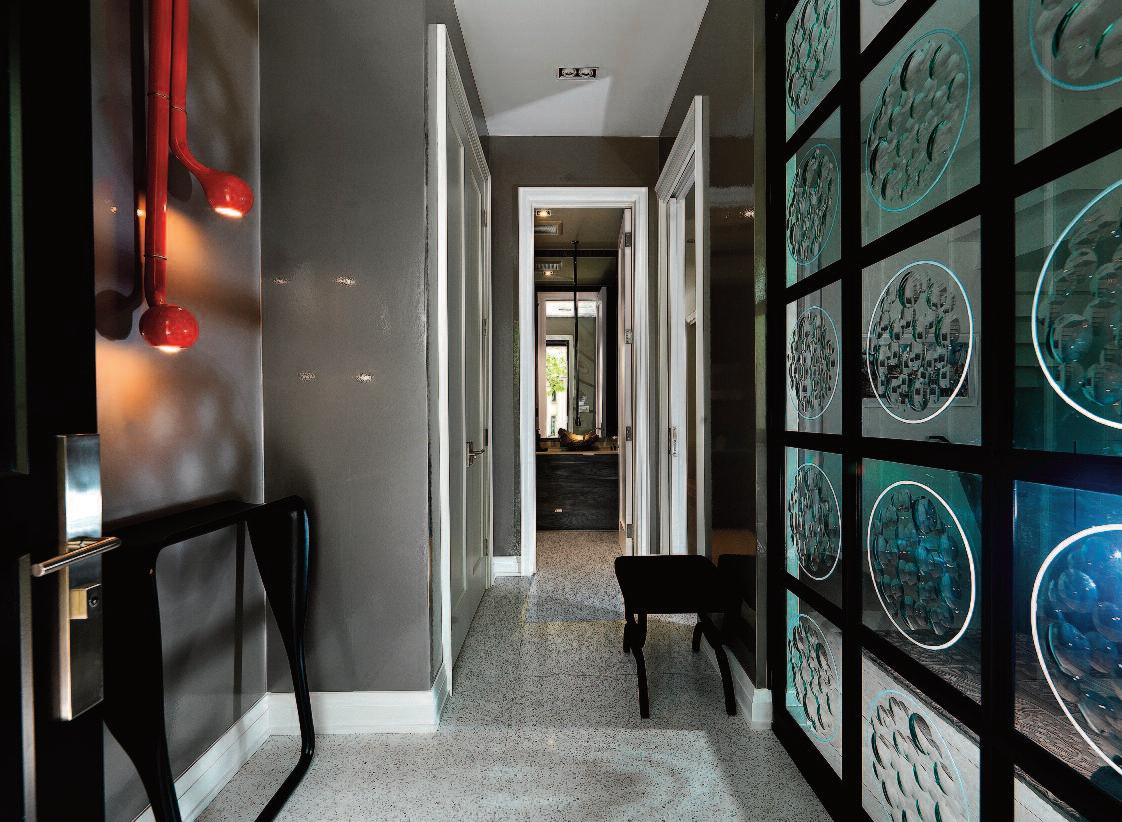
Below: entrance wrapped in Holly Hunt lacquered walls appearing like a liquid. The separation wall separating is a homage to Mexican ar tist Feliciano Bejar. Red Wall sconce is hand made by LA based Entler.
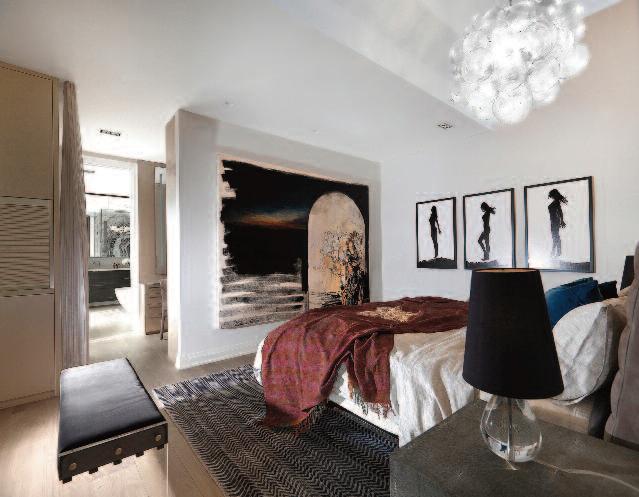
The master suite’s wall, behind the headboard is finished in clouds wallpaper as a metaphor how the clients wanted to live: In the Clouds
Since this was the fourth project Studio Pyramid accomplished with this client, they were familiar with his taste So they were able to introduce him to certain favorite art and design pieces.
It helped the designers to easily find the essence of the piece he was drawn to and to be able to introduce him to other work in the same scale As it tur ned out, it opened new possibilities for clients to collect art
Due to the scale of the residence that included indoor-outdoor living space, a true trump card for Toronto, guests can now enjoy the variety of experiences while visiting the house.
Below: the master bedroom is on the 3rd floor. The cathedral ceiling main space connects to outdoor terraces and bathroom/ closet area. The oversized art is by Katie Pretti and the black and white photographic tryptic is by Deana Nastic. The paisley shawl is by Etro.
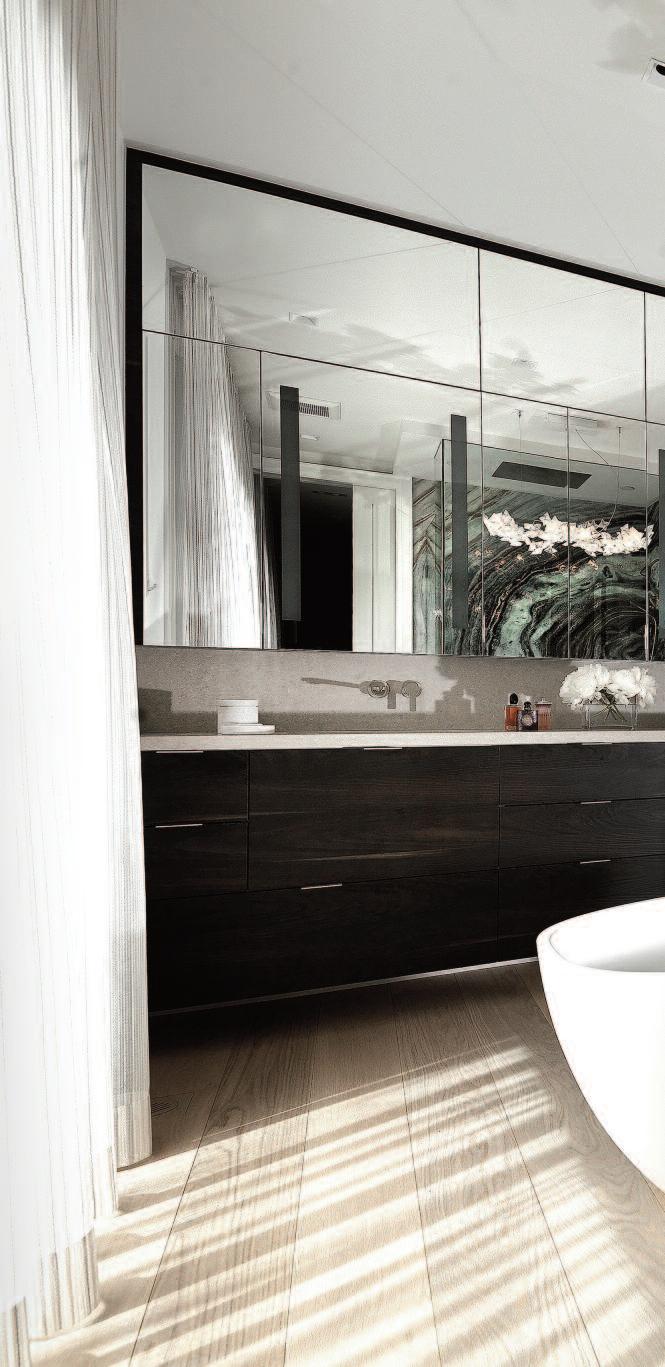
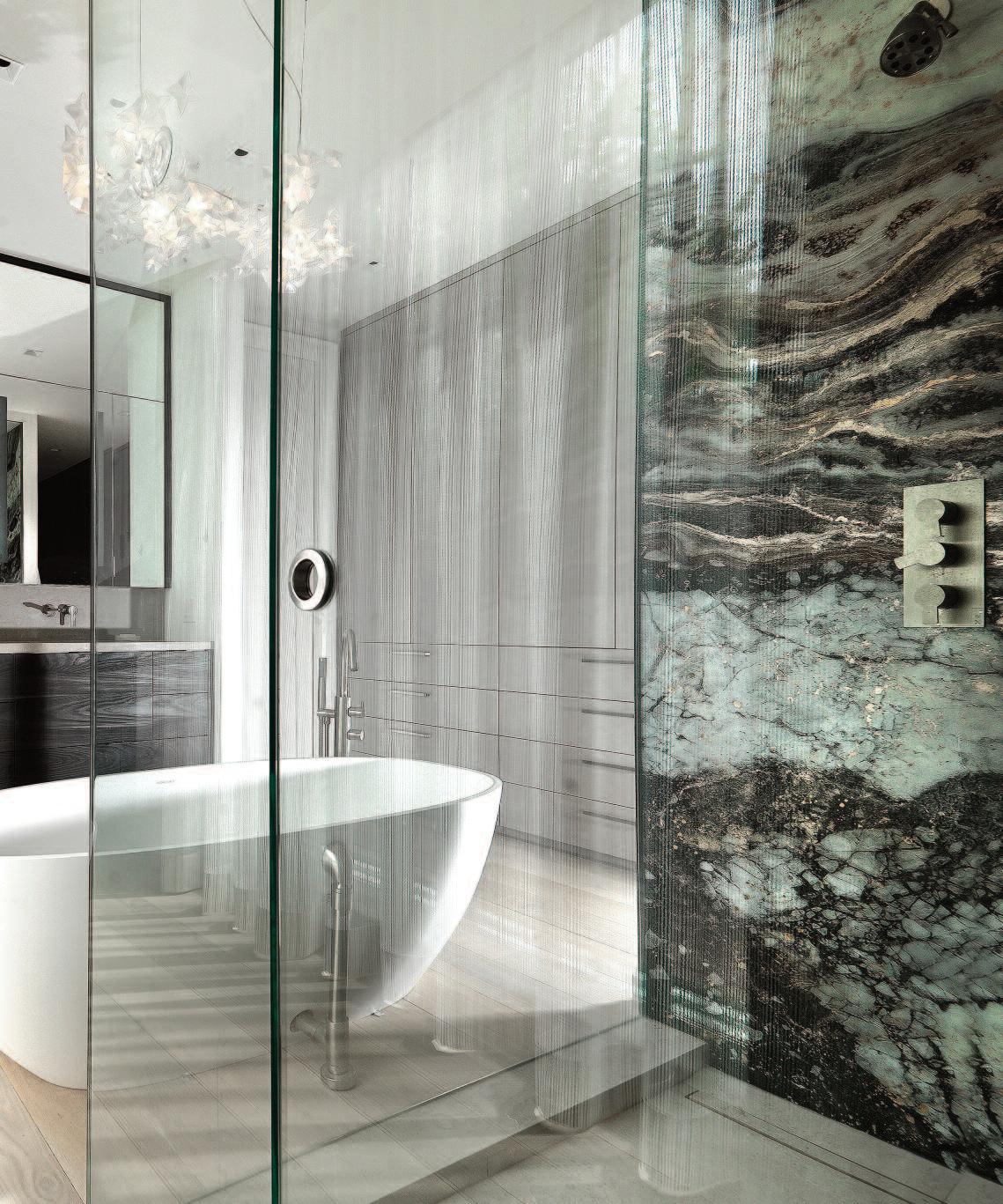
Right: the main bathroom overlooks the outdoor terraces with full western exposure for late afternoon relaxing bathing in the free standing Wet Style tub Custom ar twork applied on the rust proof aluminum is by Alex Turco from Miami, USA
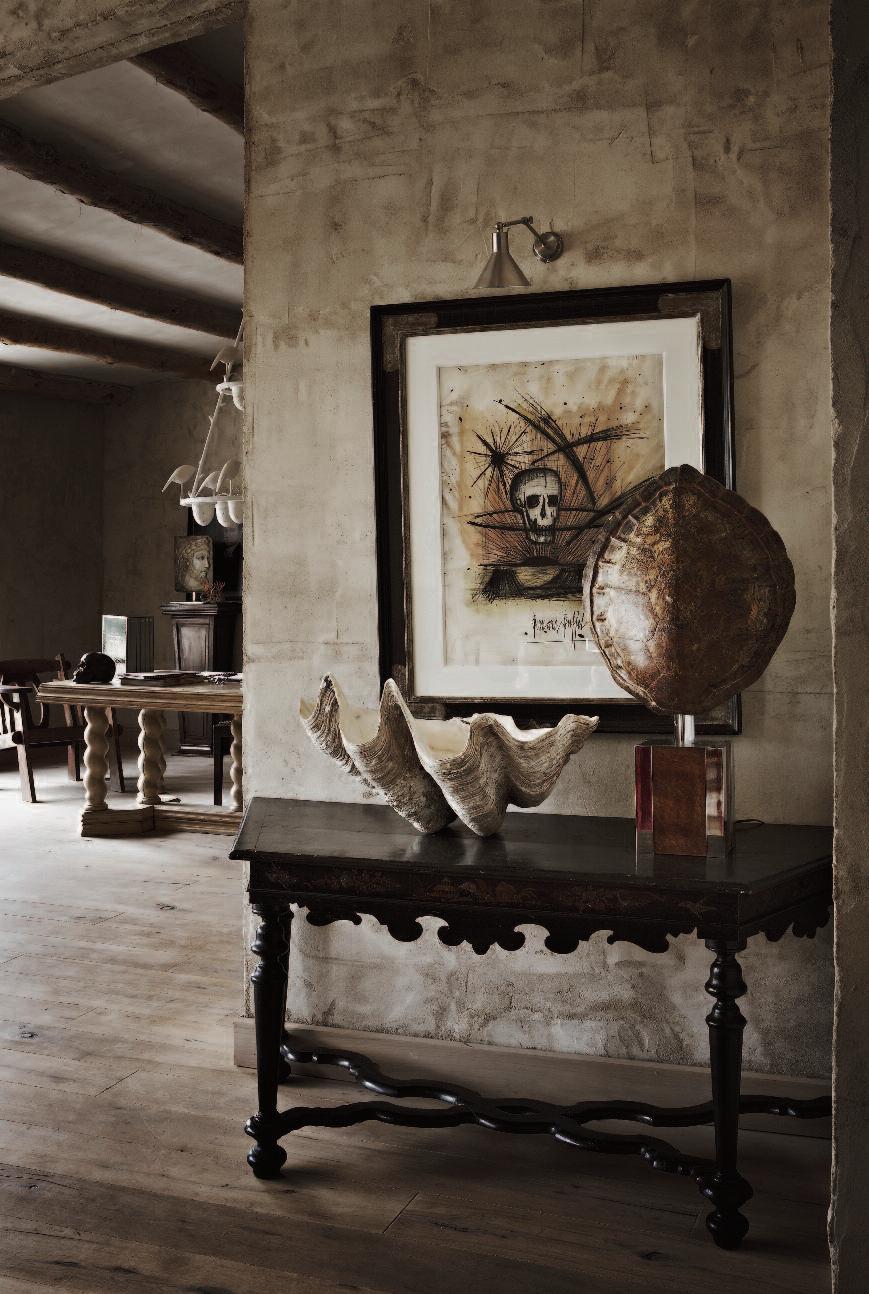
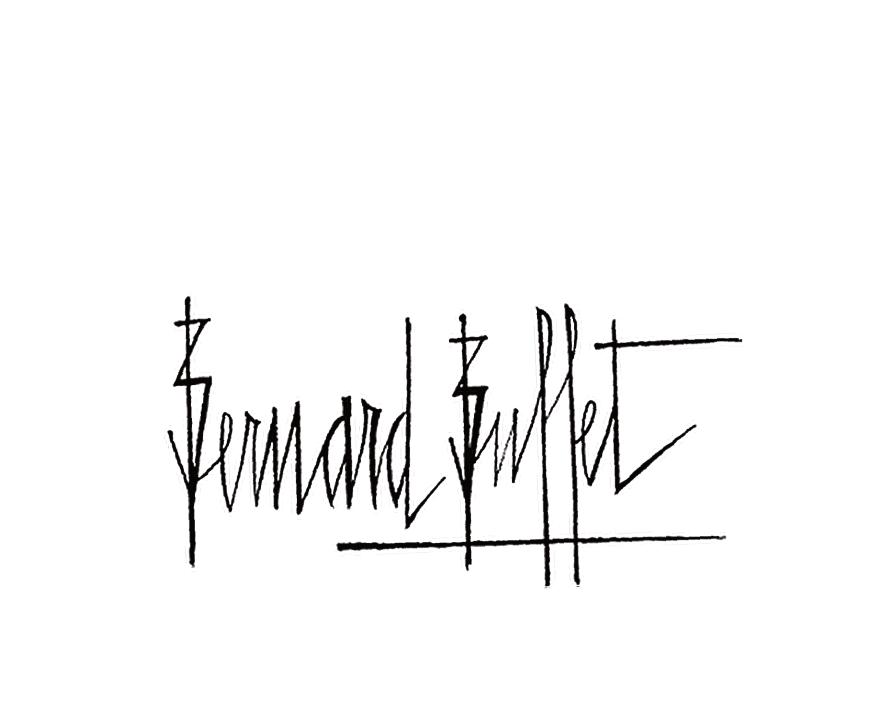
Bernard Buffet (1928 –1999) was a French painter, printmaker, and sculptor. He was an extremely prolific artist and produced a varied and extensive body of work. The artist was celebrated worldwide from the 1950s through the 1960s. His fame and talent were often compared to Pablo Picasso’s A 1958 New York Times article called Buffet one of the Fabulous Five cultural figures of post-war France along with Brigitte Bardot, François Sagan, Roger Vadim, and Yves Saint Laurent
Starting in the 1970s, the artist’s work began to face criticism Evolving artistic trends, perceived disconnect between his wealth and his art, and his remarkably prolific output were cited among factors that contributed to waning interest in his creations Yet, from the late 2000s onward, there has been a resurgence of interest in his oeuvre
His style was figurative and often classified as Expressionist or miserabilist His works can be seen in the collections of the world's leading museums, including the Musée d'Art Moderne de Paris, the Tate and the Museum of Modern Art In Japan the Bernard Buffet Museum opened in 1973 boasting the world’s largest collection of Buffet’s works
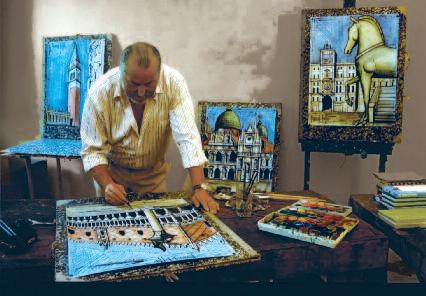
In a special tribute for OBJEKT International, his grandson Timothé Buffet, gave his personal view on what he regards as the essence of Buffet’s art: “ What sets Bernard Buffet apart in my eyes, is his ability to find his artistic voice at such a young age. By the time he was only 20 years old, he had already distinguished himself from other painters of his generation, crafting a highly distinguishable style characterized by bold brushstrokes, angular lines, and a masterful control of color to evoke specific atmospheres.
This exceptional talent and early success in establishing his artistic identity demonstrate his innate skill and unique vision, propelling him to the forefront of the art world.”
He continued: “Remarkably, Bernard Buffet remained committed to his art throughout his life, which is a potent reminder that the most successful artistic pursuits are fuelled by unwavering passion While many people admire his earlier works from the late 1940s to the early 1960s, I find his works from the late 1990s among my favorites
If you examine pieces from 1998 or 1999, you'll notice a subtle shift in his artistic style His once rigid lines have softened, and the brushstrokes seem more labored This change can be attributed to Bernard Buffet battling Parkinson's disease during that time These later works exemplify his relentless dedication to his craft The way he continued to create art even in the face of rapidly declining health is truly inspiring and moving ”
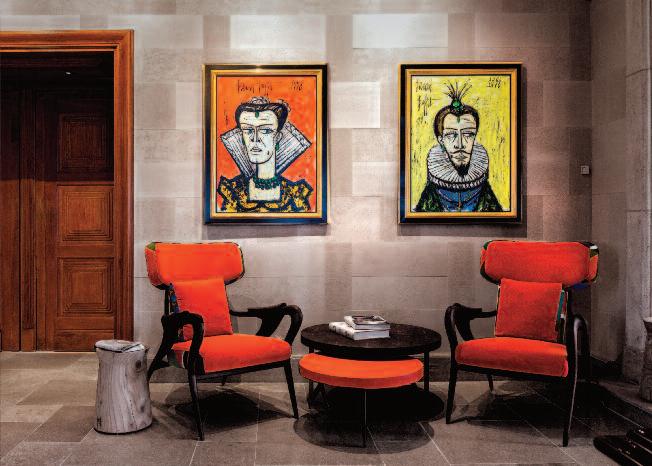
“Furthermore, Bernard Buffet's last theme on death is an incredibly powerful testament to his artistry Depicting skeletons in lavish period costumes, they defiantly remind us that no matter how powerful or wealthy, the same fate awaits
Pro ducti on: courtesy of Timo thé Buf fet.
Text: Timo thé Bu ffet, Sasha Josipovi cz
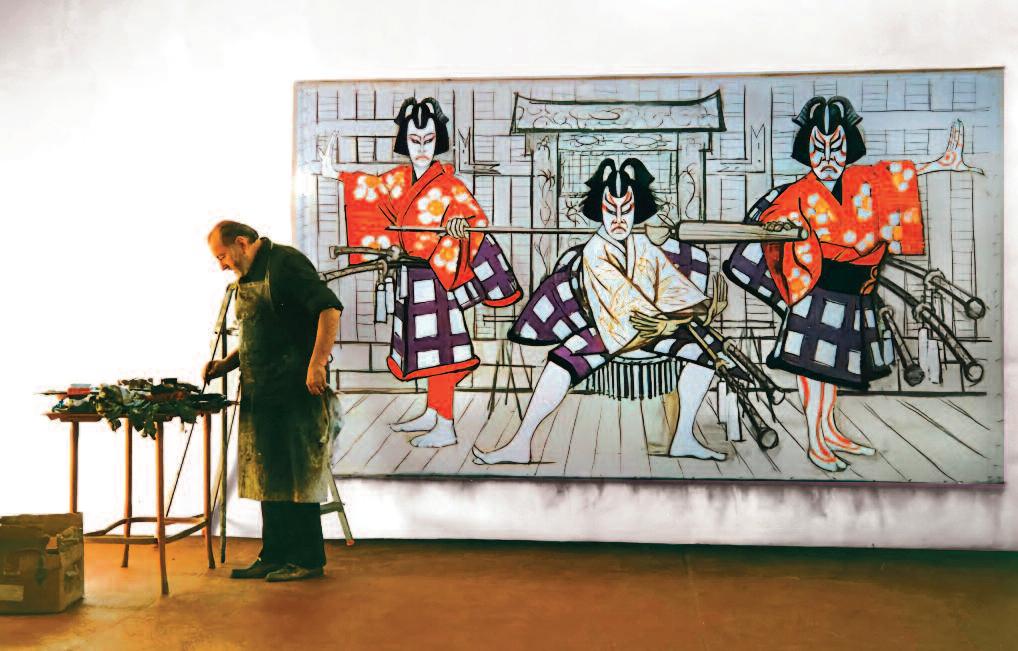
Above an d belo w righ t: Bernard Buff et in his studio in the 1 98 0s.
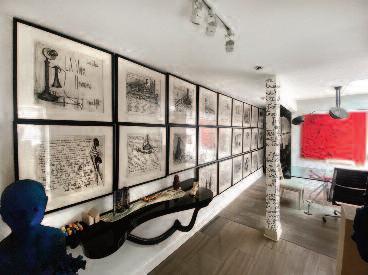
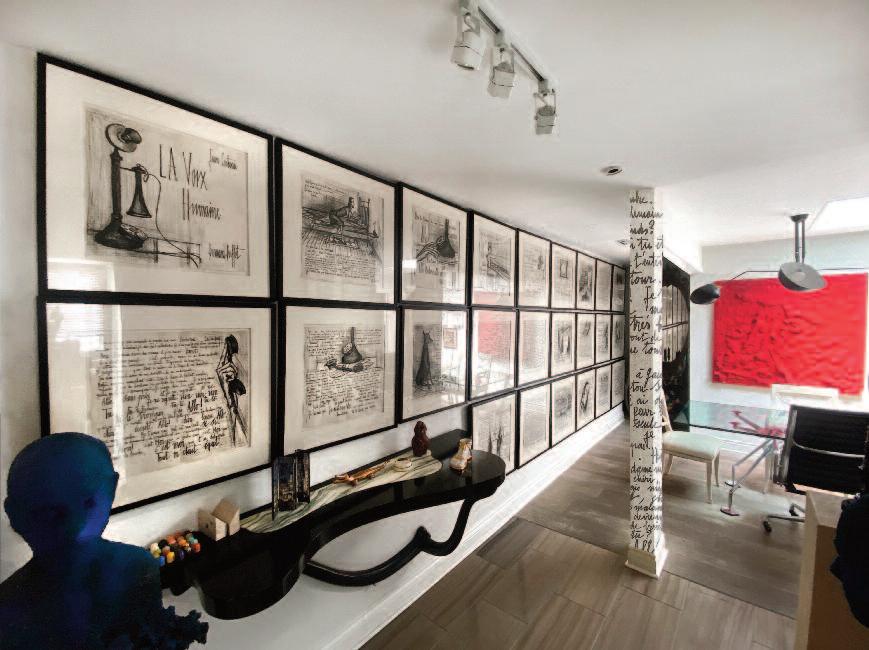
Photo ’s: Daniell e Buff et. Top right : Buf fet's masterpiece, 'La Voix Humai ne ' , which i s co mprized of 25 panel s at Stu dio Pyramid in Toronto , Canada.
Photo : Han s F onk.
us all. His choice to represent dignitaries from past eras is a masterful example of storytelling; indeed, establishing common ground with the audience is a necessary condition for eliciting strong emotions, and he achieves this with these works by playing up to our knowledge that all that remains of the princes or noblewomen we've seen depicted in grand portraits is now dust and bones In this way, he produced some very powerful works that grab us by the throat and force us to confront the inevitability of death ”
“Additionally, these works offer a sense of closure, as if he painted a full circle: they're like a nod to his profound understanding of art history and the numerous references he made to past artists in his works, engaging in a dialogue with them” according to his grandson
Honorary Editor in chief of OBJEKT International Alexander
Sasha Josipovicz ( Stydio Puramid Toronto) has his strong and personal comment regarding the works of Bernard Buffet: “I wasn't expecting to have an epiphany on that perfect summer day in 1979, but walking past the Barbara Diamond Gallery in Nice a sign beckoned me inside.
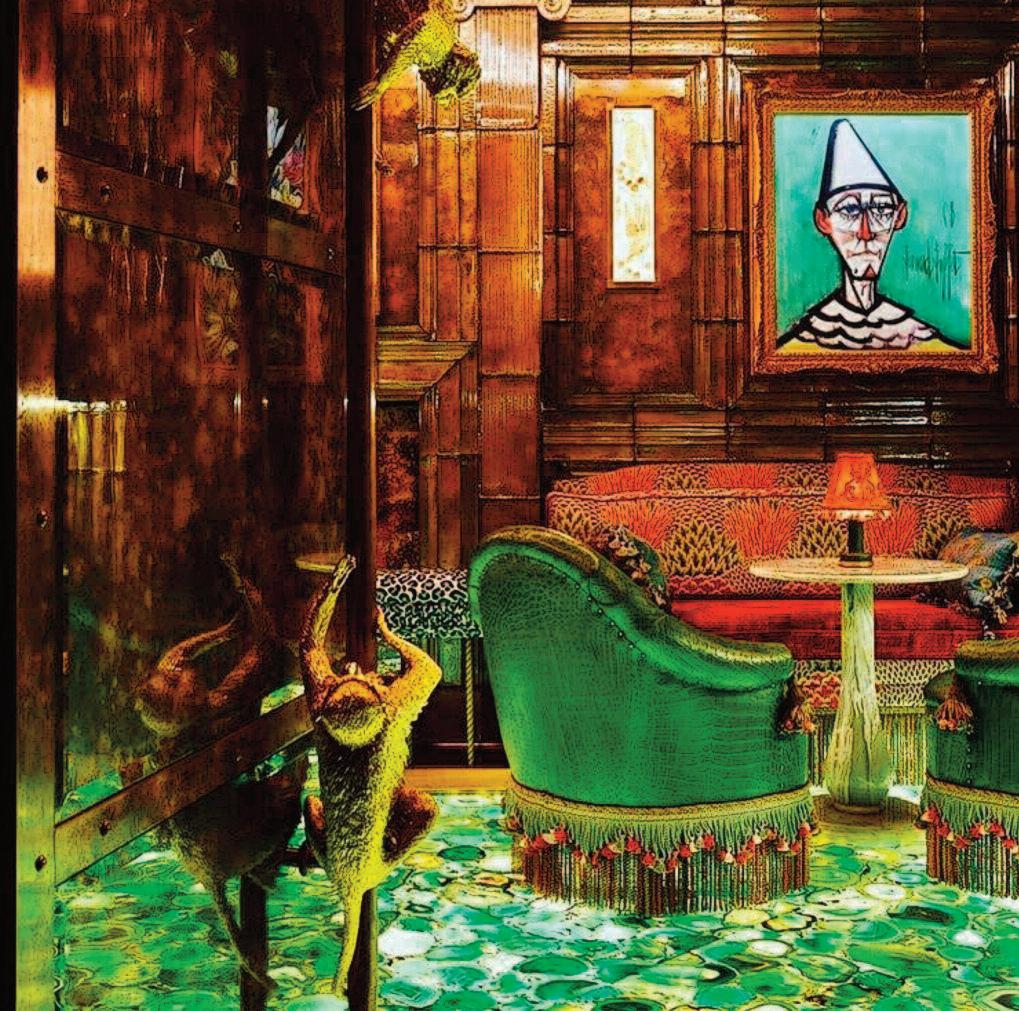
In flip flops and shorts, a wet towel rolled up in my tote bag, I boldly walked into the ‘Vernissage - Bernard Buffet,’ an exhibition of work by the French expressionist painter. Nothing prepared me for what I saw: an alternative reality of a creative genius. Here was commanding blackness, bold lines, visual thunder. Buffet's art spoke to me, and I truly believe that it influenced my aesthetic as a designer.
Josipovicz : “It's the same kind of feeling I had when I met Master Photographer Hans Fonk, publisher and owner of OBJEKT International. His style of photography profoundly changed my professional life Fonk's choice of angles, his playful grasp of light and shadow as well as his sense of blackness reminded me that of the elusive alternative reality I admired so much in Buffet's work In many ways, I look at Fonk as a mentor, who has photographed more than 20 of my design projects He also became one of my closest friends, part of the creative family of artists that we all long for”
He continued: “As for Buffet, I never had the opportunity to meet the great man in person (he died in 1999), but I saw his work again on a rainy New Year's Eve in Paris in 2001
Buffet's ‘Matador’ stared at me through the window of the Galerie Maurice Garnier, and I took it as a sign that I needed to own one of his pieces The result was Buffet's masterpiece, ‘La Voix Humaine’" which is comprised of 25 panels It is a puzzle and a story illustrated in dry-point black and white by Buffet and written by Jean Cocteau “
“The work is stunning and for the last 20 years has dominated my office in Toronto. I had never read Cocteau's story, but Pedro Almodovar's 2020 film, ‘La Voz Humana,’ managed to explain it all to me. Hysteria, delusions, deliberate detachments, all figure in our quest to understand existence. Buffet and Cocteau were on to something: a typical day in the life of any creative soul.
On 25th November 1973, the Bernard Buffet Museum in Shizuoka, Japan, was inaugurated to collect and exhibit the works by the French artist Founded by Kiichiro Okano (1917-1995), the museum boasts the world’s largest collection of Buffet’s works, with more than 2000 oil paintings, watercolors, drawings, engravings, books, posters etc The main building of the museum was designed by Kiyonori Kikutake, who led the architectural movement of the Metabolism Group in the 1960s
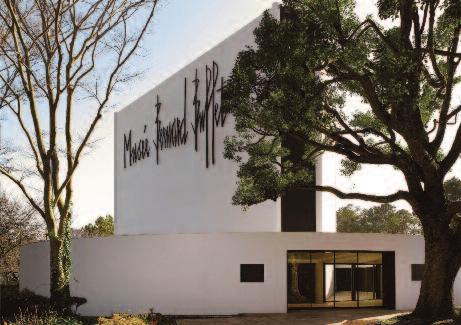
The dynamic form of the building is a combination of a cube, cylinder, and triangular column From outside, the building looks like a ship's sail, with Buffet's "Musée Bernard Buffet" on the white wall. Inside this building is the large central gallery which is a 12-meter-high atrium that creates a majestic atmosphere with natural light from the skylights. The main building is composed of this largest gallery and surrounding corridor galleries and a rectangular gallery beside them.
The Museum’s initiator Kiichiro Okano first encounter with Buffet’s work was in the first half of the 1950s, when the ravages of WWII were still quite visible.
Buffet’s representation of post-war vacuity and anxiety made a deep and lasting impression on him. He started collecting representative works of every period of Buffet’s career, and later, with a view to commemorating this unique painter as a witness of the 20th century, he decided to found a museum near his hometown, hoping that ‘"culture flourishes on this soil through the talent of this man of genius "
“I had just been demobilized and sent home from the war, and I remember standing still in front of his paintings, deeply moved and astonished, admiring the sharp and original shapes and lines, the gloomy colors and the dominant black, white and gray; the truculence, the keenness, the deep sorrow and the dry emptiness pervading his work
Rusty silence and poetry There I saw accusation of and provocation against the devastated post-war French society His paintings instilled a ray of hope in the void and stupor oppressing our generation after the defeat France, a country which repeatedly had been a battlefield, which suffered the Occupation, and where fellow citizens killed each other I was awed by the fact that a young genius with such sensibility and ability had been born in the apocalyptic context of World War II.
His art undoubtedly was a new dawn, which overcame the melancholy in my mind. Since then, I have been a captive of Buffet. His paintings showed me a light, and a new road, and his paintings only could do that as I had no religion. This is how my ardent admiration for Buffet started.”
Below: t he Bernard Buf fet Museum i n Japan init iated by Kiich iro Okan o and designed b y architect Kiyon ori Kiku take. Right : the m ain hall o f th e museum with Bu ffet ’s The Crucifixio n.
Photo s: Tadasu Yamamot o.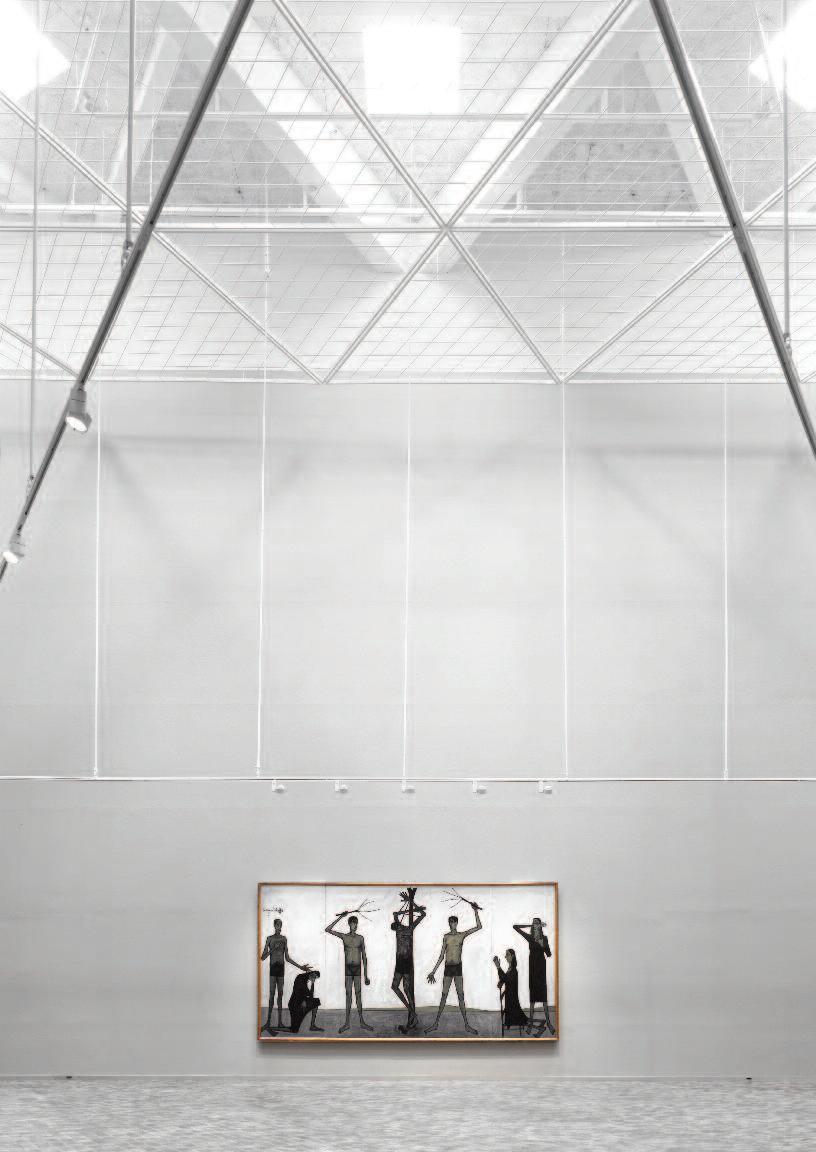
Tex t: Ran a Flroid a Ph otos: H ans Fonk
Left: part o f the staircase, the entrance and the living room dominated by Rashid Johnson’s Athletic Club from Hauser & Wirth, NYC The sofa is by B&B Italia and the Murano glass chandelier is by Multiforme. Foorlamp is by Foscarini.
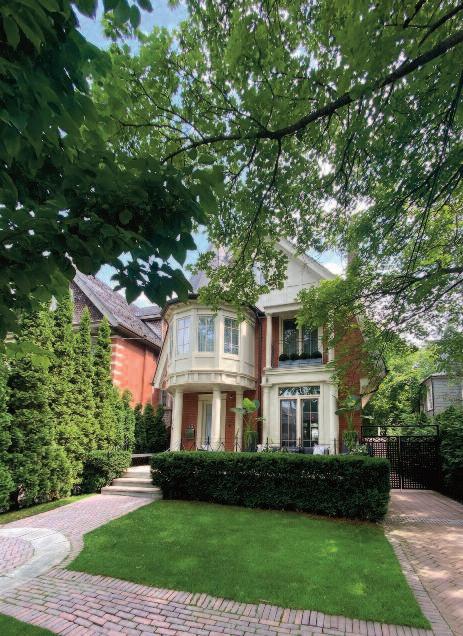
Right: the front of th e house after renovation by Studio Pyramid.
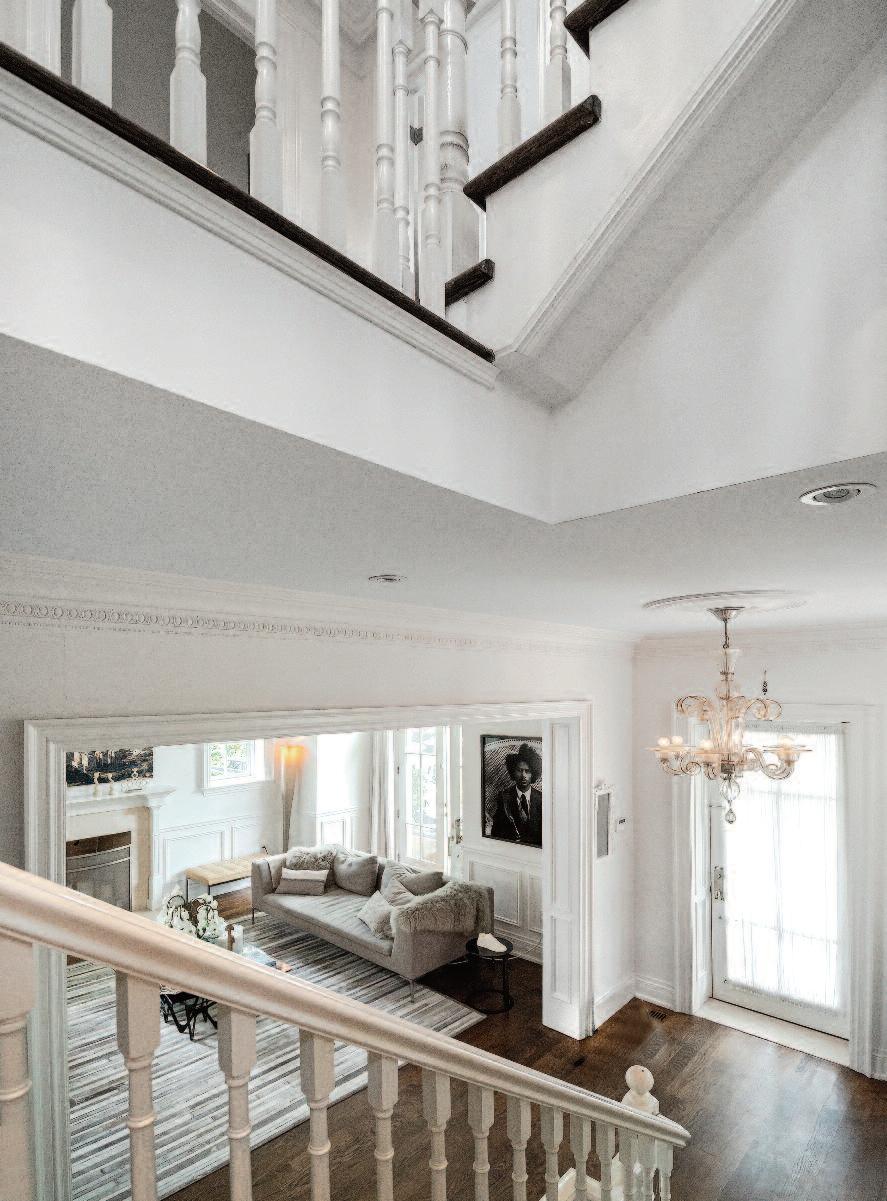
How do a nature lover and a dyed-in-thewool urbanite agree on a place to live?
They find a 5,000 square foot Cape Cod, shaded by majestic oak and maple trees, on a cul de sac in the hear t of America’s four th-largest city. Ensconced in a lush ravine filled with parks, hiking trails, lily pad-covered ponds, and water falls, Rosedale is one of Toronto’s most desirable neighborhoods.
In the living room a table by Zanotta, a rug by Kasthall, a side table and chairs by B&B Italia and a bench by Knoll. The artwork over the mantel is by William Betts, Rio De Janeiro. The artwork Snowman is by Scott McFarland and the turquoise creature is by the Haas Brother
In the dining room a marble table and dining chairs by B&B Italia. The Chandelier by Moooi is designed by Marcel Wanders. The Yoshitomo Nara girl is from Pace Prints in NYC The Hotel series is by Arnaud Maggs
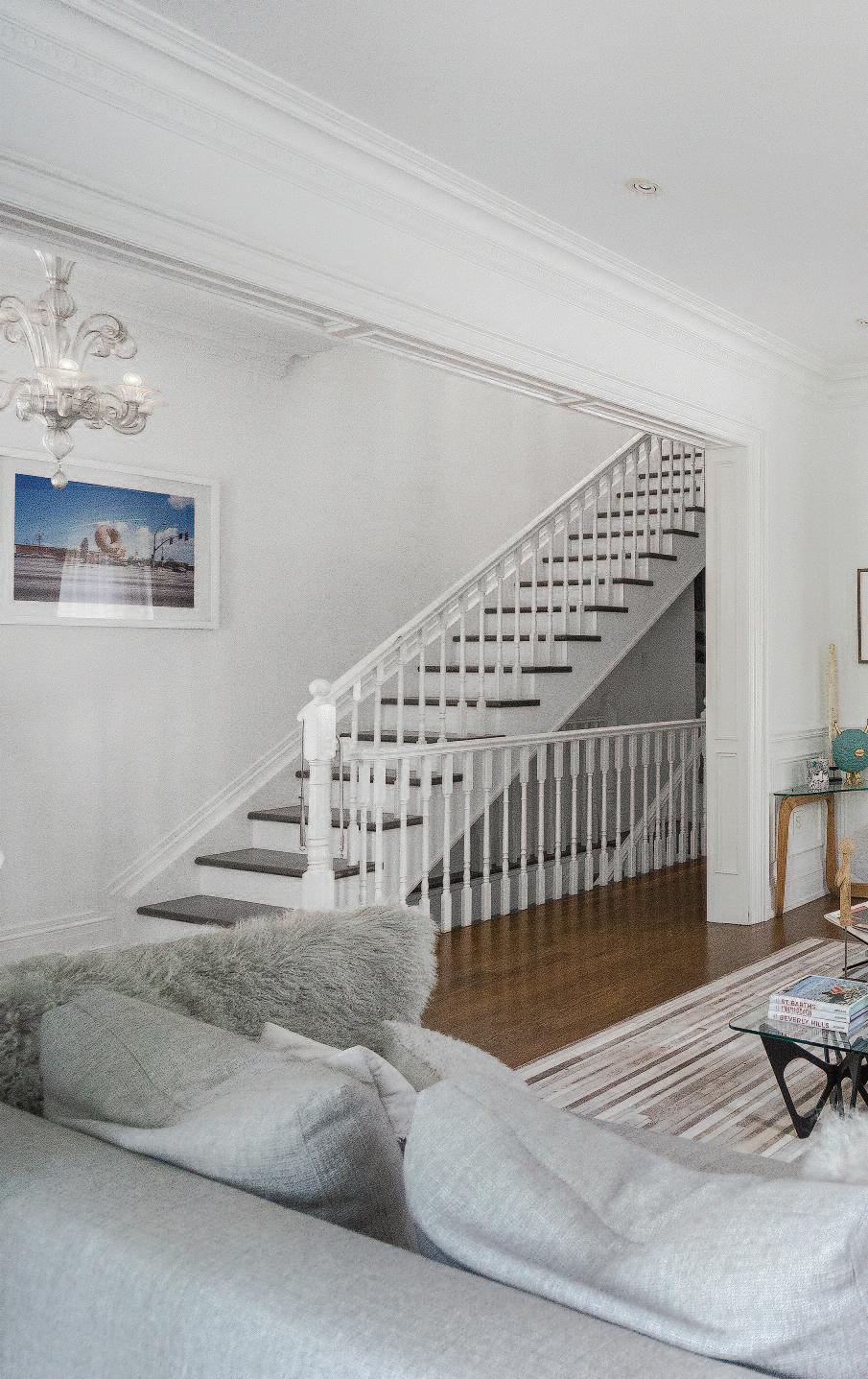
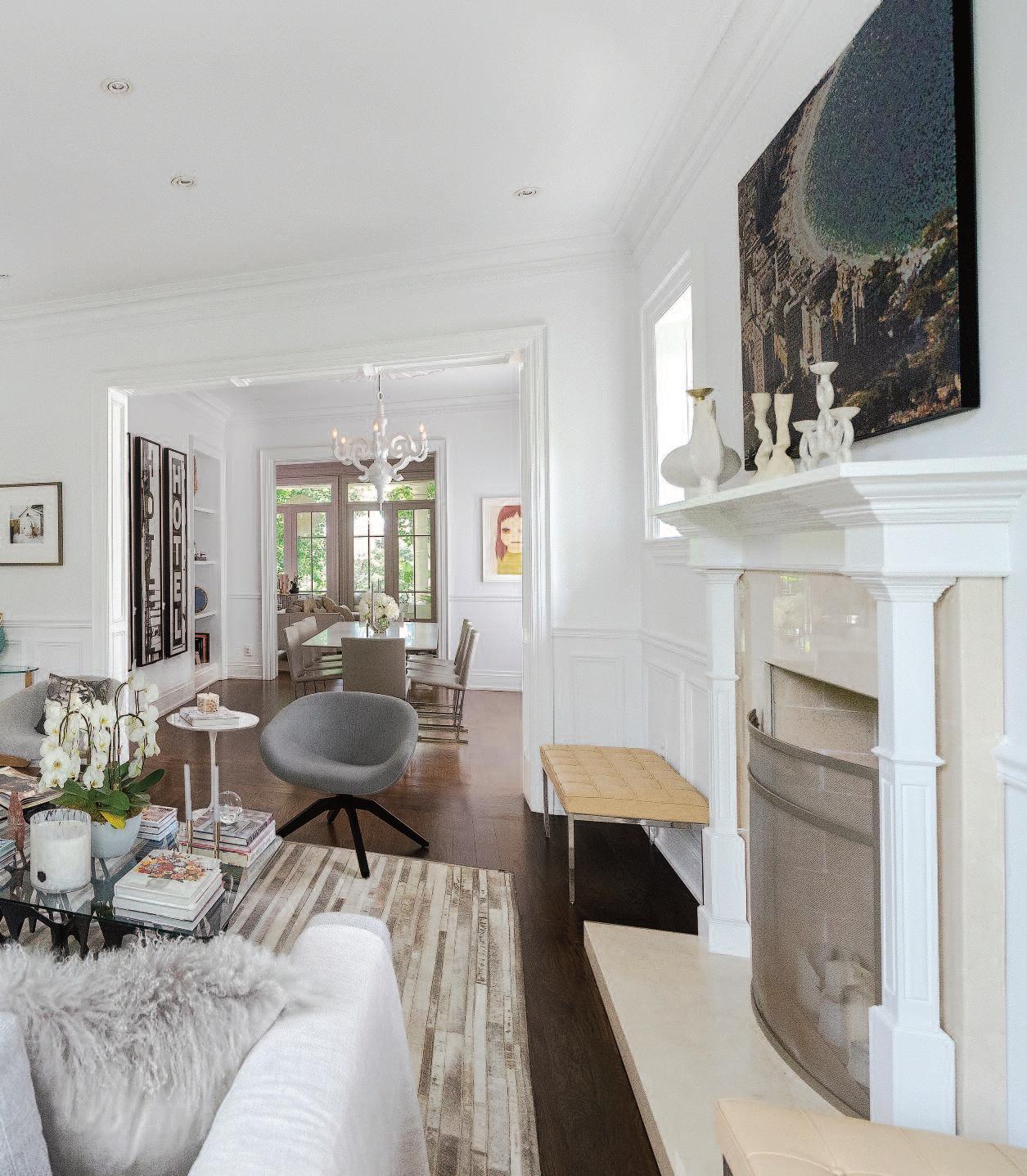
Built near a historic brick factor y, the 100year-old home was beautifully renovated by Toronto’s Studio Pyramid They gutted the house to the bare bones and resurrected to its current shape.
The present owners have taken it to another level by adding extensive landscaping including the infinity pool With its high ceilings, charming turret and elongated windows, it is filled with light and provides a per fect vantage to take in the landscape
Downstairs are a formal dining room with its original woodwork and a living room with a wood-burning fireplace and French doors that open onto the front porch.
The family room has a wall of windows overlooking the garden The porch came in handy during COVID; with room for eight, it was the per fect place to visit with passing neighbors.
There are six bedrooms upstairs and a seventh downstairs Overlooking the ravine and with a walk-out to a balcony, the master suite feels a bit like you’re sleeping
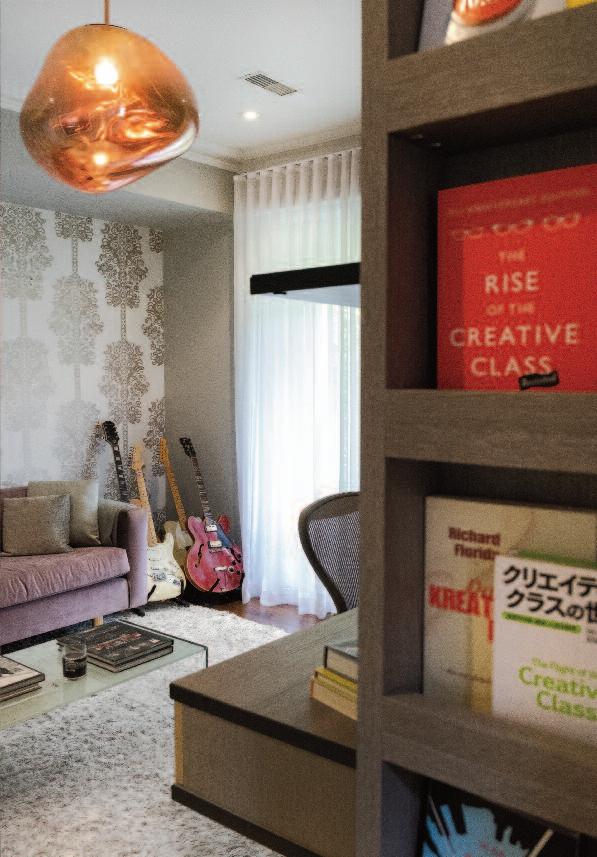
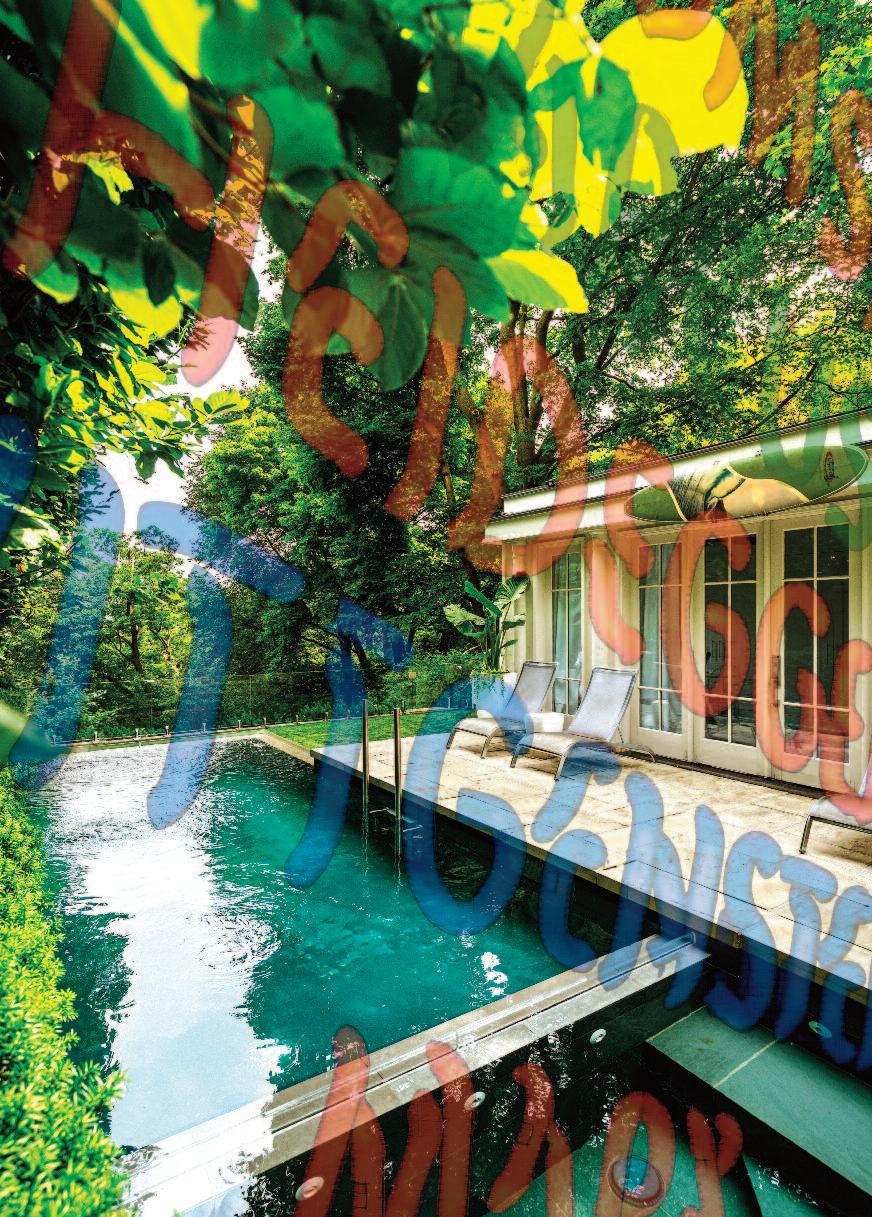

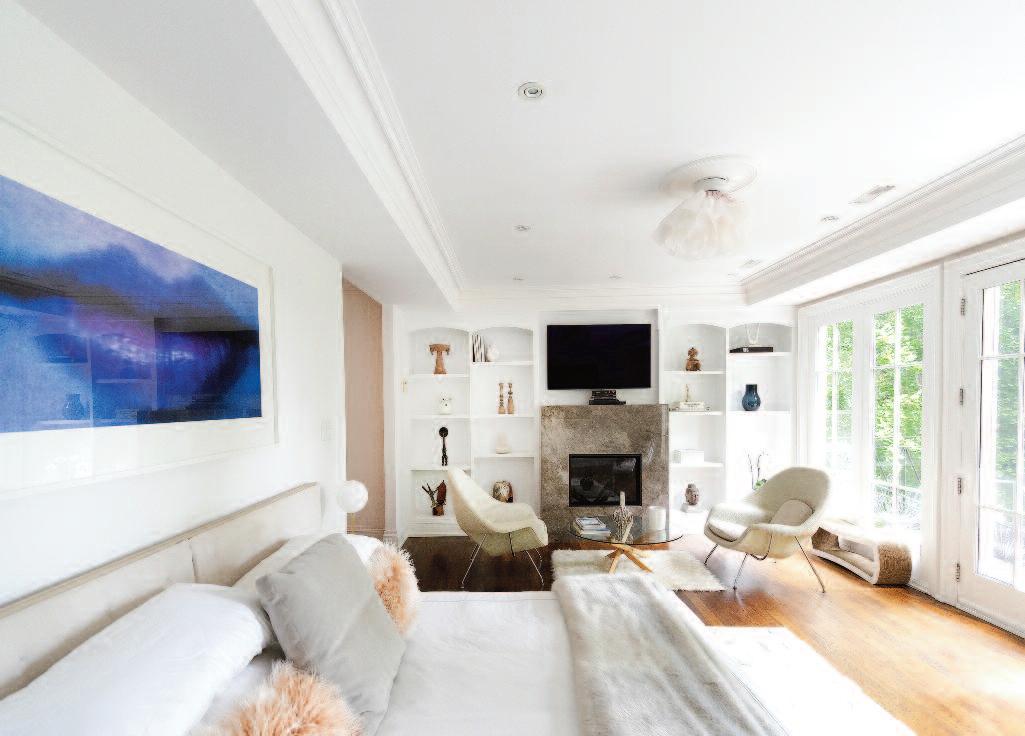
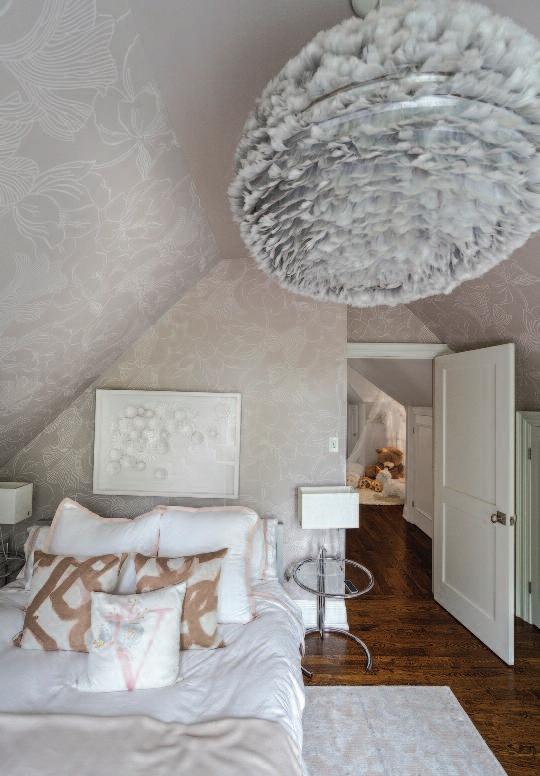
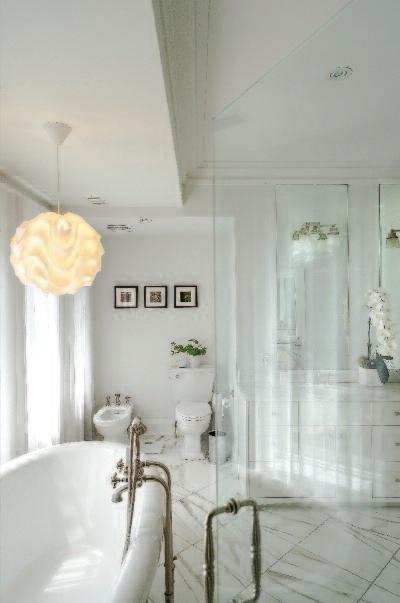
in a glorious treehouse except it is big enough to include a spacious walk-in closet and an en suite bathroom with Carrera marble floors and fixtures The garage was built to house a horse and carriage but has been transformed into a Beverly Hills-style pool cabana where neighborhood kids of ten gather to play
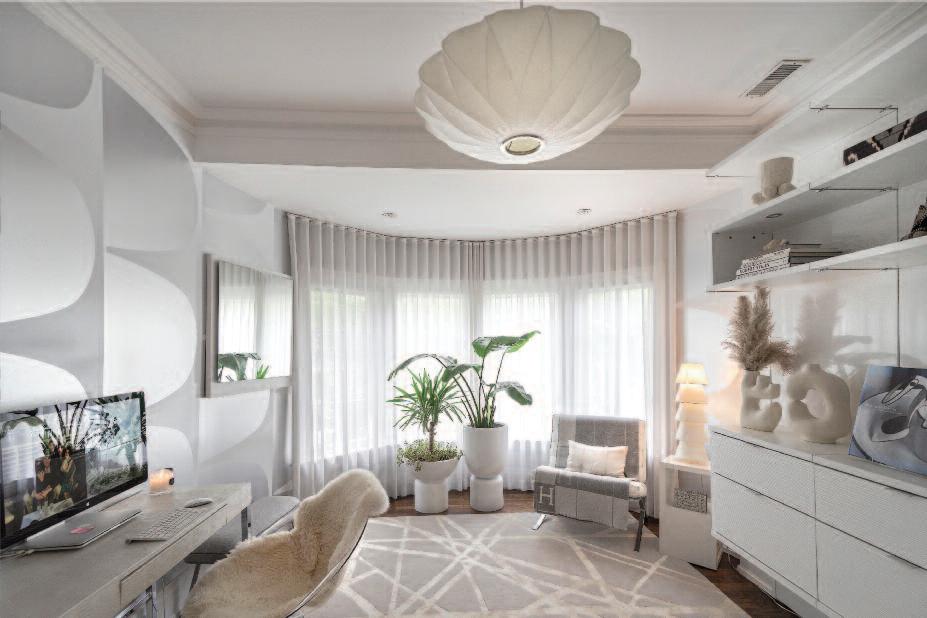
French doors open to the garden, designed by Mark Har tley Landscape Architects, which includes an infinity pool, a hot tub, and an al fresco dining area with strung lights and a table that can easily accommodate twelve.
Behind the pool, steep wooden stairs take you down to the natural sights and sounds of the ravine, a 450-foot stretch of which is par t of the proper ty Here you can spot coyotes, deer, hawks and other wild creatures
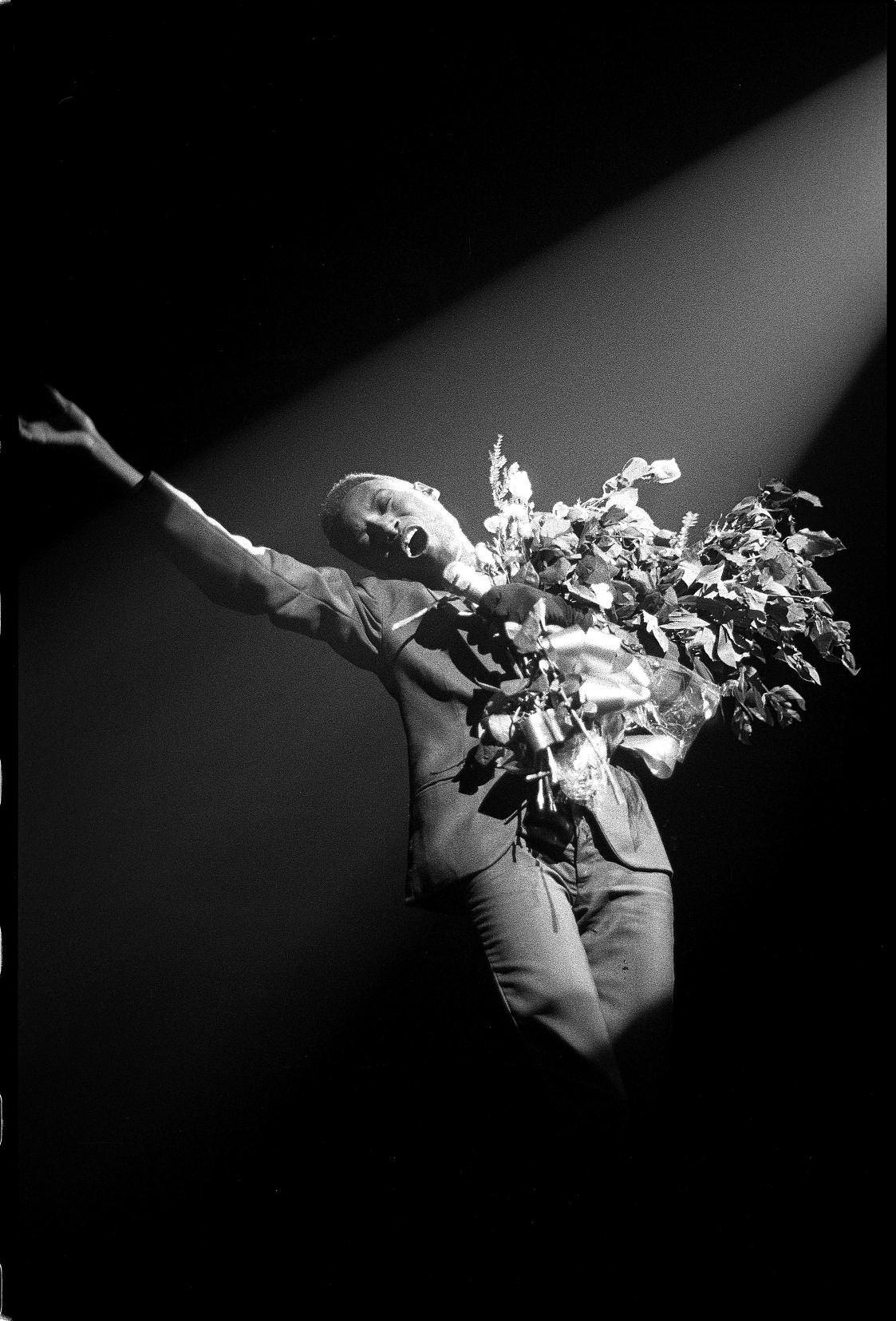


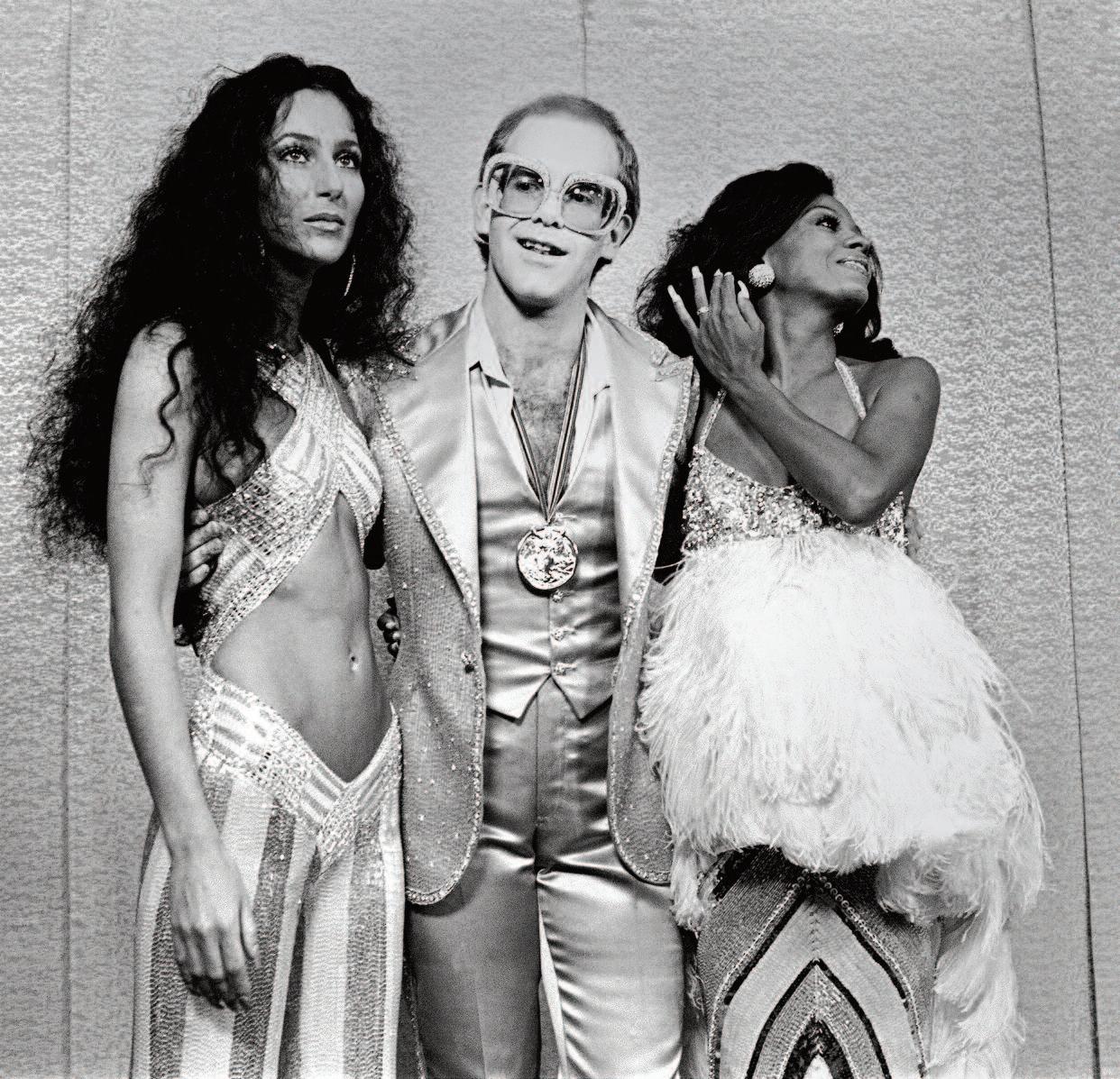
The Victoria and Alber t Museum, London, England, opened in June 2023 with the major exhibition, Diva, celebrating the extraordinar y power and creativity of iconic per former s who have made their voices heard from the 19th centur y to today.
Diva is a celebration of the power ful and per sonal stories of creativity, ambition, and resilience of some of the best-known divas, from opera goddesses and silent movie star s to sirens of the big screen and today’s global megastar s. From Maria Callas, Billie Holliday and Edith Piaf to Elton John, Tina Turner, Debbie Harr y and Rihanna : to name of few.
Diva demonstrates the phenomenal ability of the diva to transform, inspire and embrace the external and internal forces that contribute to defining, shaping, and wor shipping a diva
The exhibition illustrates how the Diva has inter sected with society and driven change through their platform and profile for social good and political change, including global civil rights and feminism.
Delving into the origins of the term ‘diva’ - meaning goddess in Italian - the exhibition shows how the meaning of the word has been subver ted and embraced over time, and how the label has been reclaimed by per former s, their fans and society.
The exhibition with over 250 objects drawn from the V&A collection and loans from across the world is spanning fashion, photography, design, costumes, music, and live per formance.
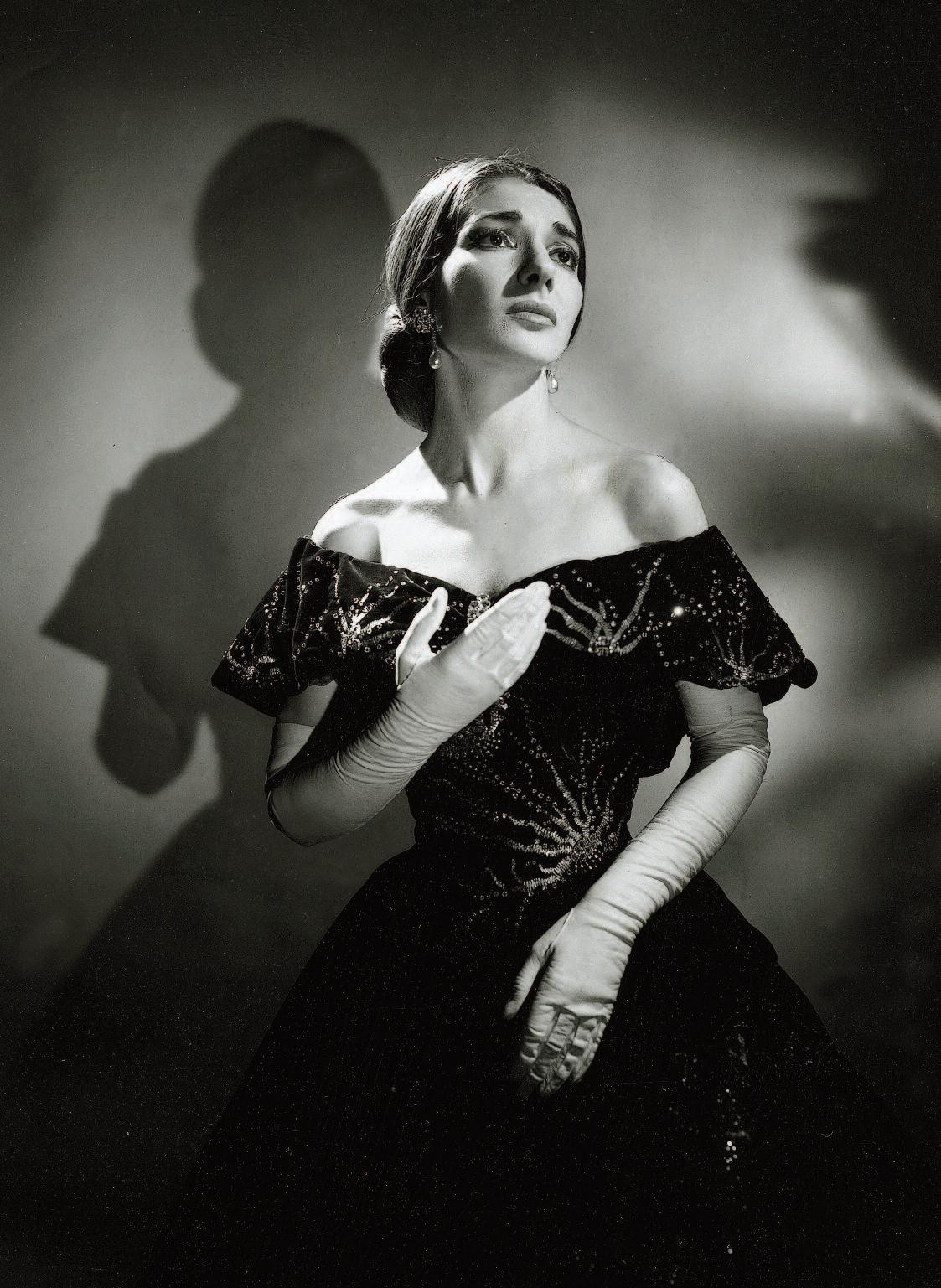
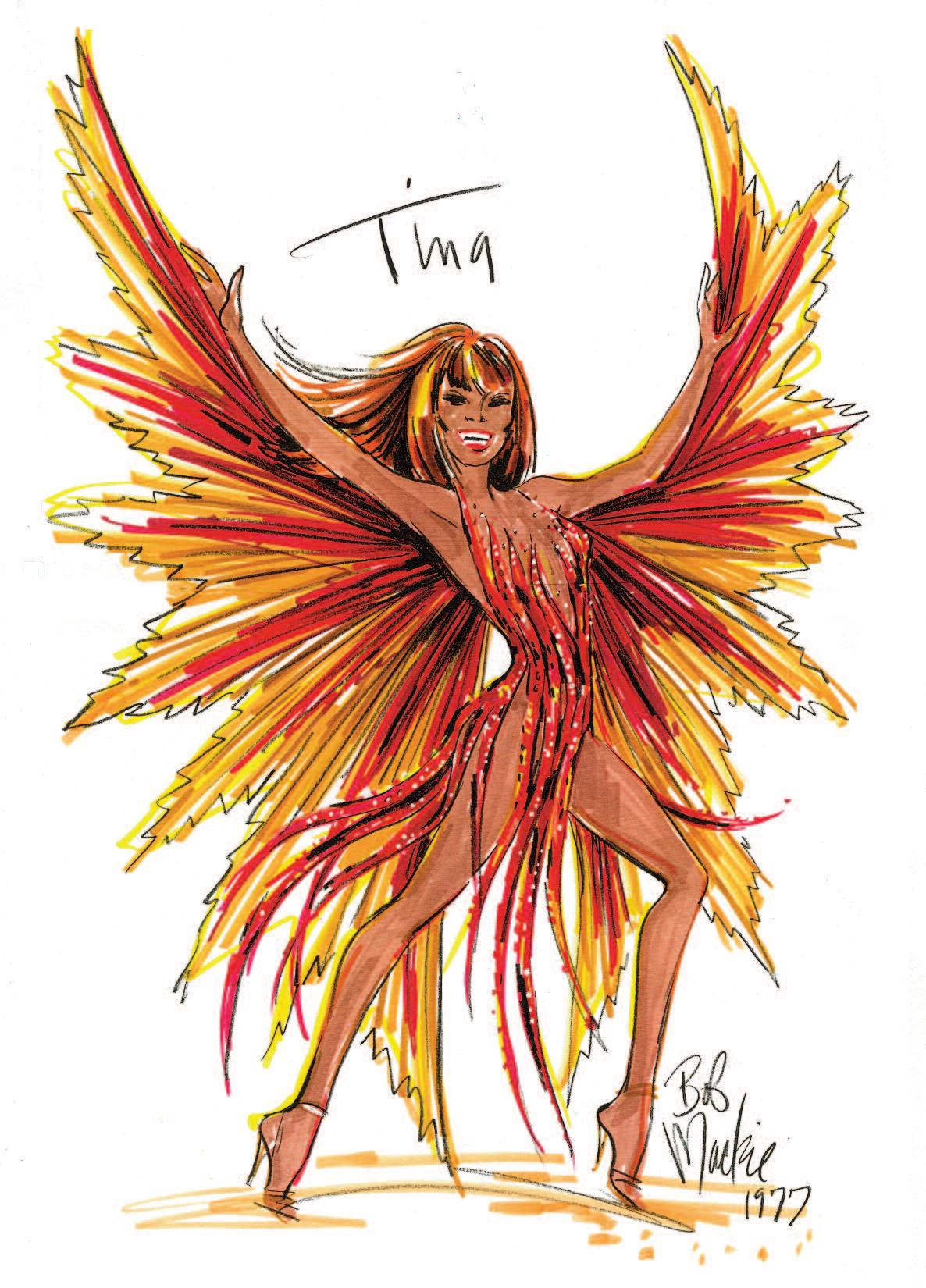
Many are for the fir st time on display, including a stage ensemble worn by Maria Callas as Norma in the Covent Garden Opera Company production of 'Norma' (1952}, the fringed black dress worn by Marilyn Monroe as Sugar "Kane" Kowalczyk in ‘Some Like it Hot’ (1959), costumes designed by fashion designer for the star s Bob Mackie, including looks worn by Tina Turner, P!nk and Cher.
Also on display are examples of ephemera for the diva-dom including poster s, song sheets and handwritten lyric sheets as well as per sonal objects and accessories owned by divas
DIVA also includes examples of diva branding, highlighting the entrepreneurial and enterprising spirit of these divas, as well key photographic works by
A b ove : W h i t n ey H o u s t o n p e r fo r m i n g a t We m bl ey
A re n a , L o n d o n 5 M ay 1 9 8 8 . P h o t o : D av i d C o r i o.
R i g h t : p o t og r ap h o f M a r i a C a l l a s t a ke n a s V i o l e t t e i n L a Tr av i a t a . P h o t o : H o u s t o n R oge r s © V i c t o r i a a n d A l b e r t M u s e u m , L o n d o n .

photographer s including Sheila Rock , David Corio and Nick Knight. A video wall celebrates the ar t of drag and its relationship to the diva
‘Act One’ provides historical context to the creation of the Diva and explores the goddesses of the stage and screen who have endured and shaped our popular culture today. This section celebrates how the fir st opera divas Adelina Patti and Jenny Lind created and per formed extraordinar y roles which brought them wealth and recognition at a time when most women were unable to pur sue an education or career s.
This section illustrates how actor s such as Ellen Terr y, Sarah Bernhardt and Marie Lloyd drove the fir st wave of feminism and how the power ful women of the 20th-centur y built on this struggle for equality, including silent-screen sirens Clara Bow and Mar y Pickford and Golden A ge of Hollywood star s Vivien Leigh, Mae West and Marilyn Monroe
Also in this section is the impact of cult status visualized, and the role of studios and the press in fueling public interest in the diva's per sonal lives.
‘Act Two’ celebrates the diva today and explores how per former s of all gender s have redefined and reclaimed the title ‘diva’ as an expression of their ar t, voice, and sense of self.
It interrogates divas navigating the historically male-dominated music and film businesses; those who have expanded their af fair s into the worlds of business, and the phenomenon of the diva brand through ar tists such as Rihanna, Dolly Par ton and Barbra Streisand
t shows how the modern per former continues to use their voice to enable social and political change, and how ar tists such as Billie Holliday, Nina Simone and Ella Fitzgerald endured backlash, criticism and danger to oppose the status quo, and how Aretha Franklin’s anthem ‘Respect’ (1967) became an anthem of women’s empowerment and the US Civil Rights Movement.
Kate Bailey, curator of Diva: “The V&A with its world class collections of ar t design and per formance and its mission to inspire creativity in all its forms is the perfect stage to celebrate the multifaceted Diva Today the word diva holds a myriad of meanings
At the hear t of this exhibition is a stor y of iconic per former s who with creativity, courage and ambition have challenged the status quo and used their voice and their ar t to redefine and reclaim the diva.”
A b ove : p h o t og r ap h i c n e g a t i ve , B i l l i e H o l i d ay a t h e r o n ly eve r L o n d o n ap p e a r a n c e a t t h e A l b e r t H a l l . J a c k Pa r n e l l b a n d b a c k i n g h e r, p h o t og r ap h e d by H a rr y H a m m o n d ,
E n g l a n d , 1 9 5 4 P h o t o : H a rr y H a m m o n d / © V i c t o r i a a n d
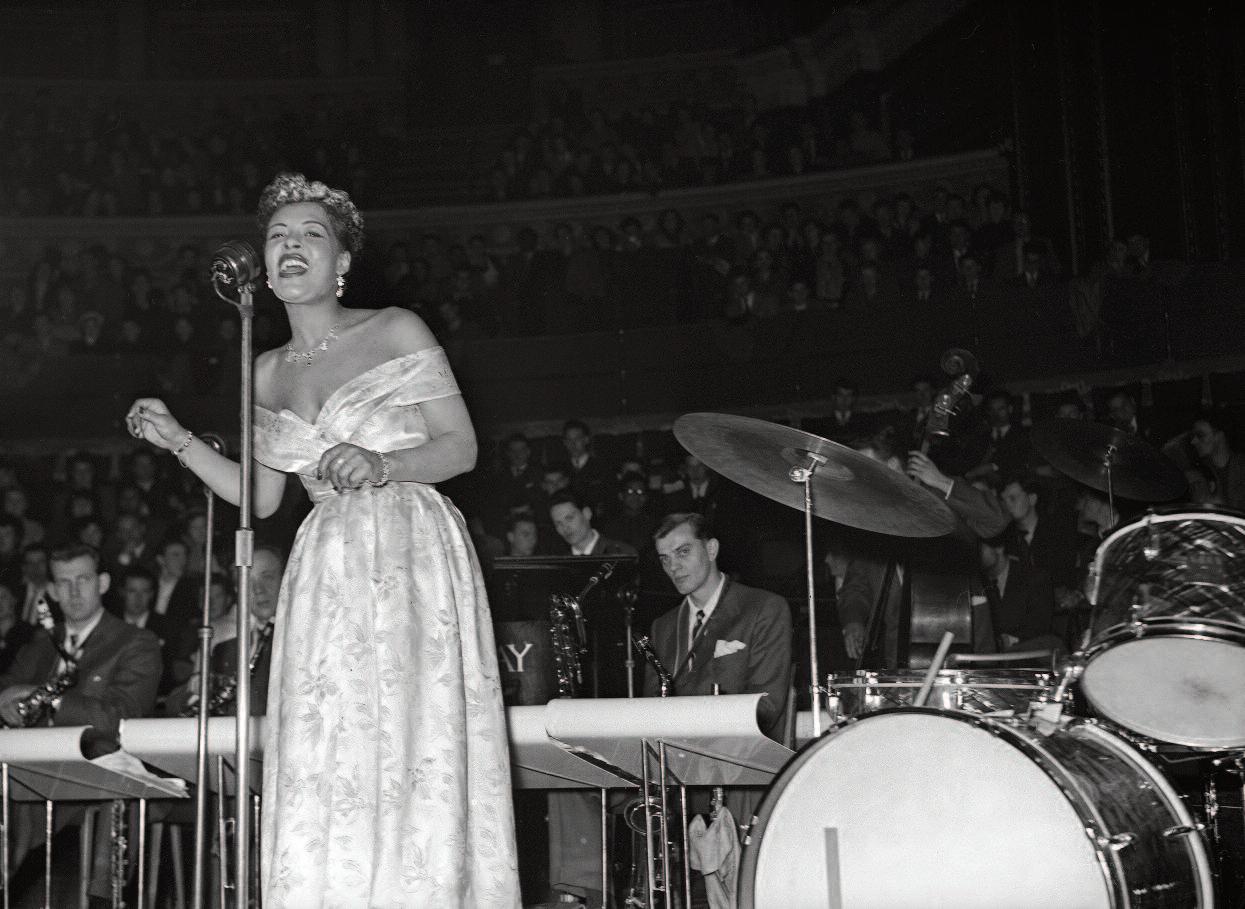
A l b e r t M u s e u m , L o n d o n .
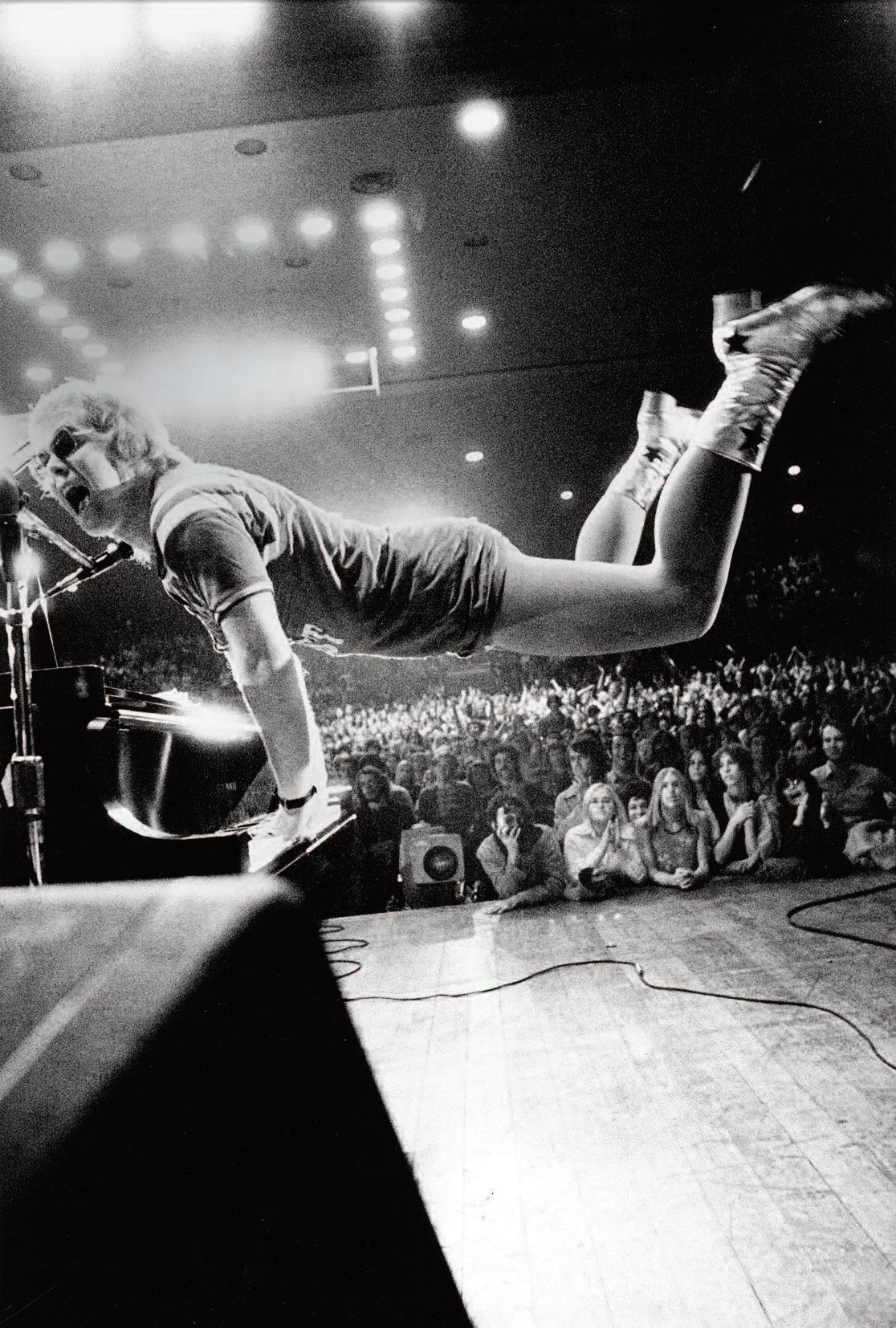
R I g h t : E l t o n Jo h n p h o t og r ap h e d by E d C a r a e f . V & A s h o p.
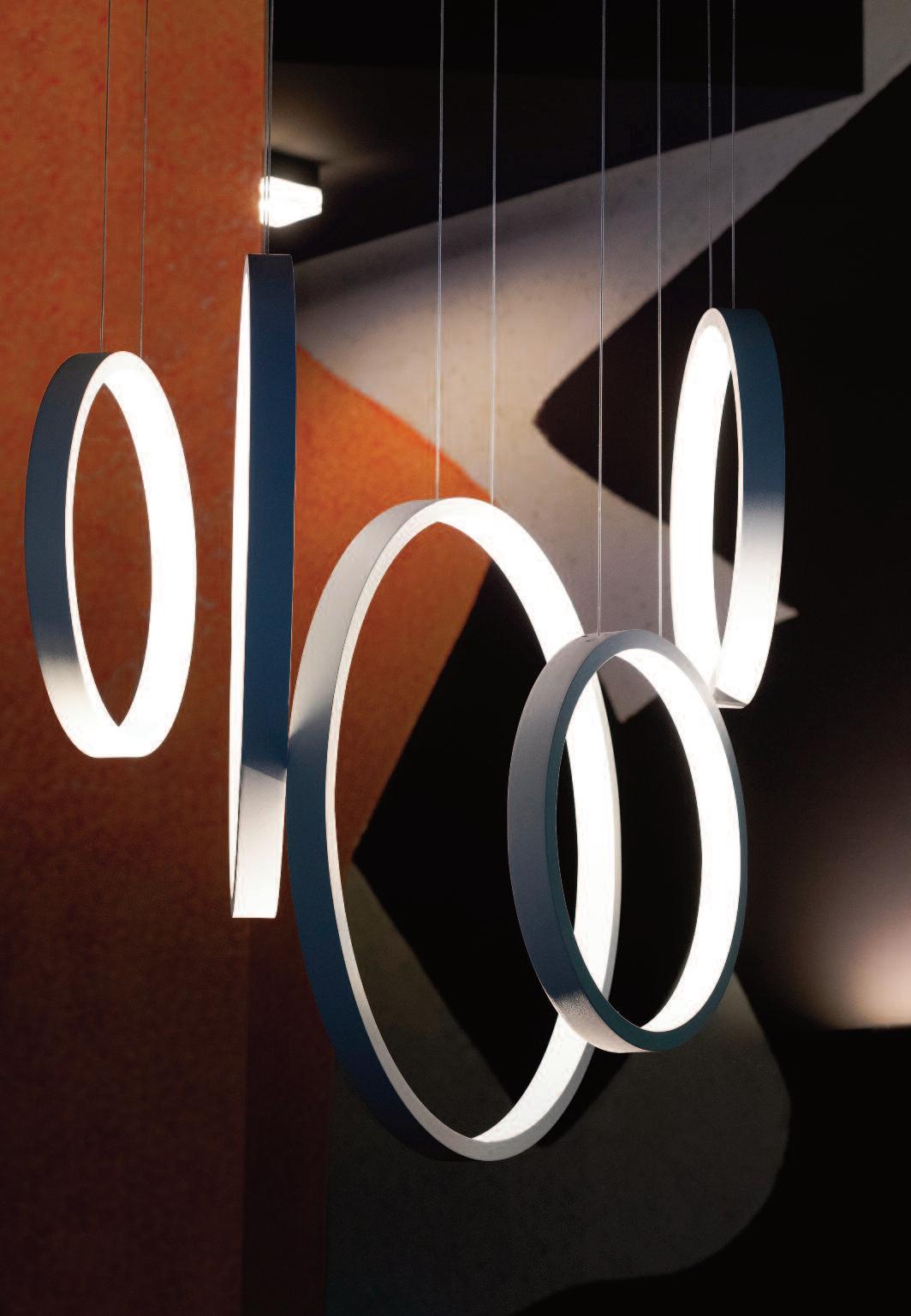
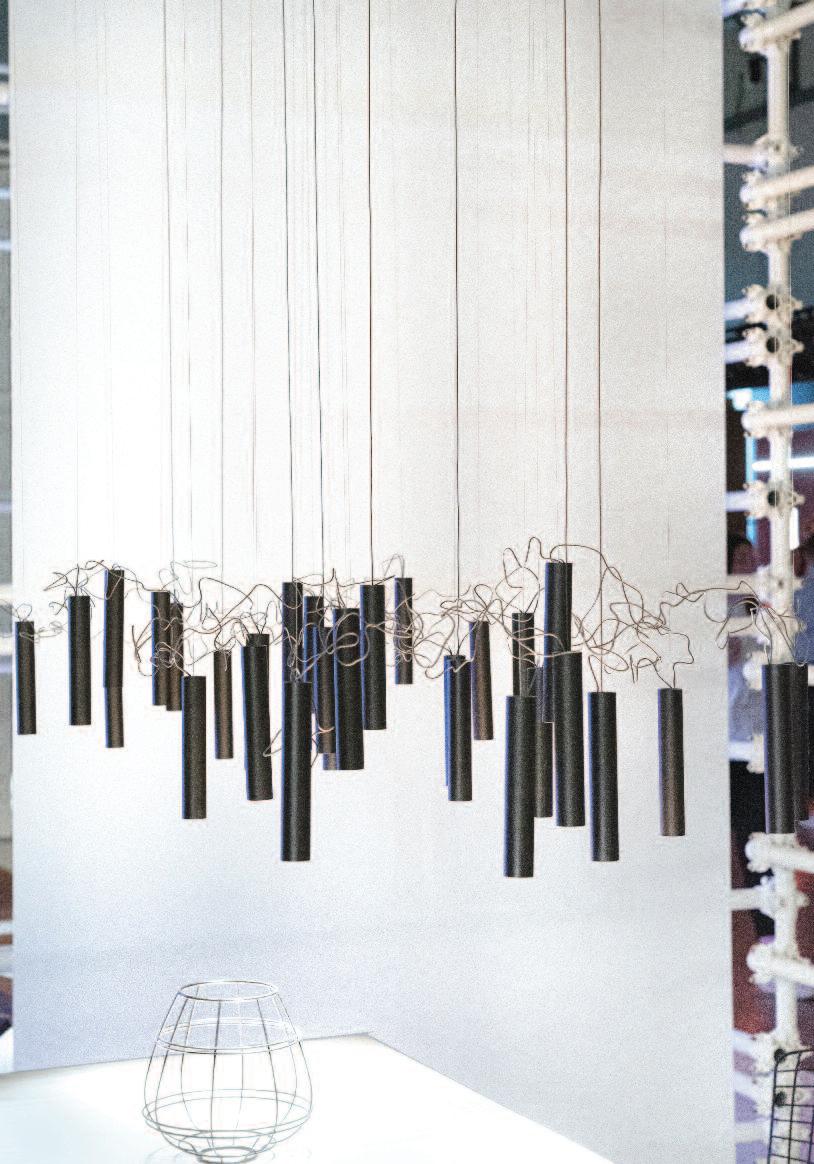
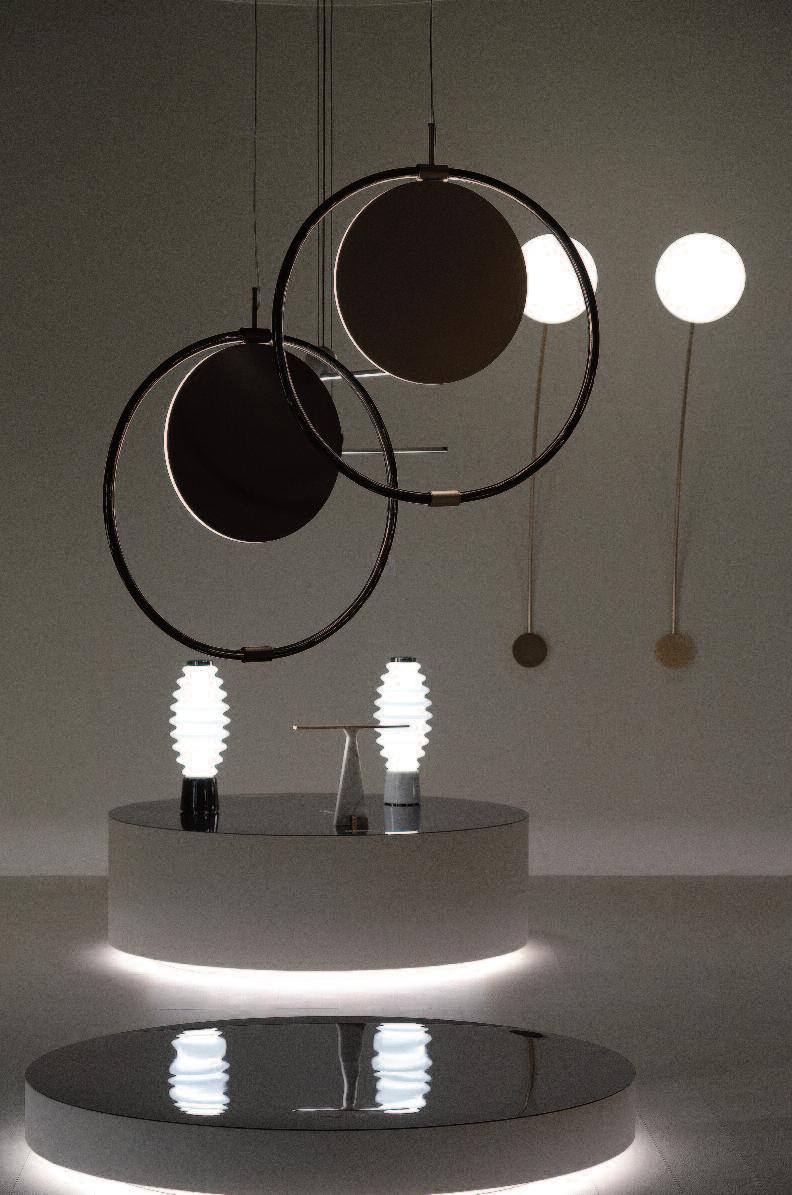
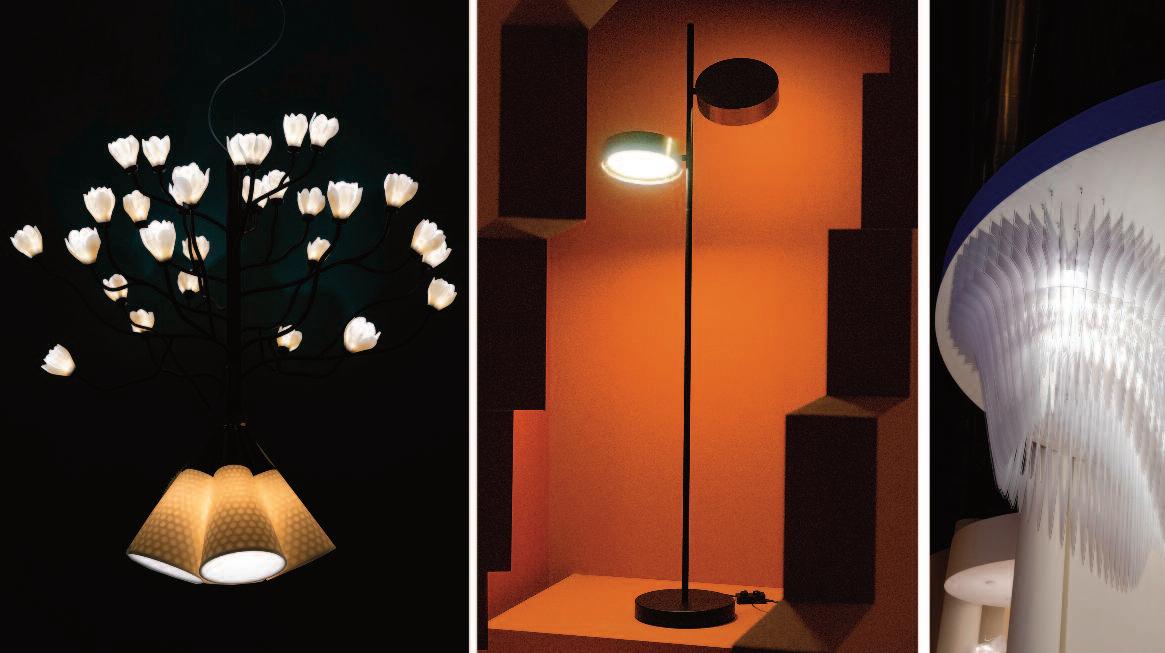
L e f t : F l o s C e n t e r : A r t e m i d e R i g h t : Q u a s a r
L e f t : F l o s C e n t e r : A r t e m i d e R i g h t : Q u a s a r
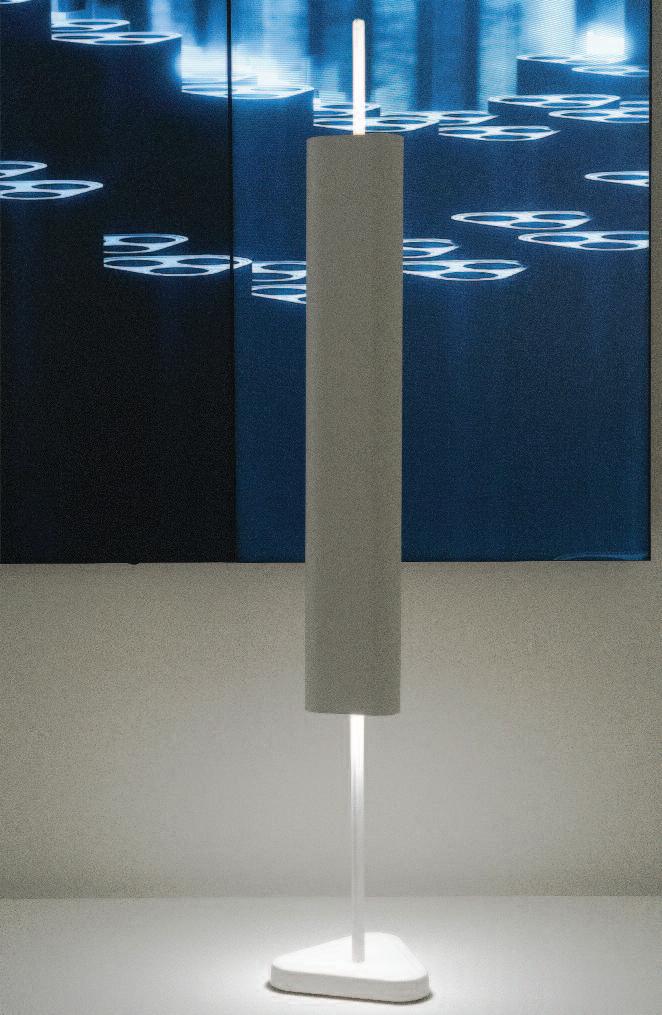

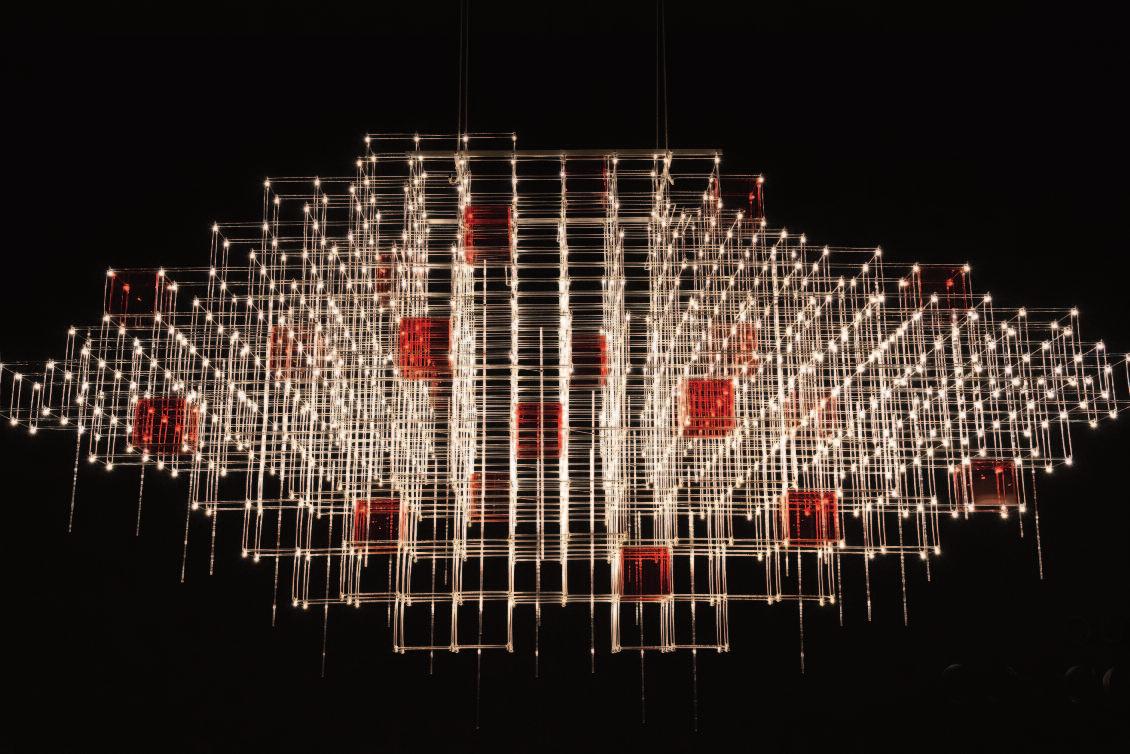
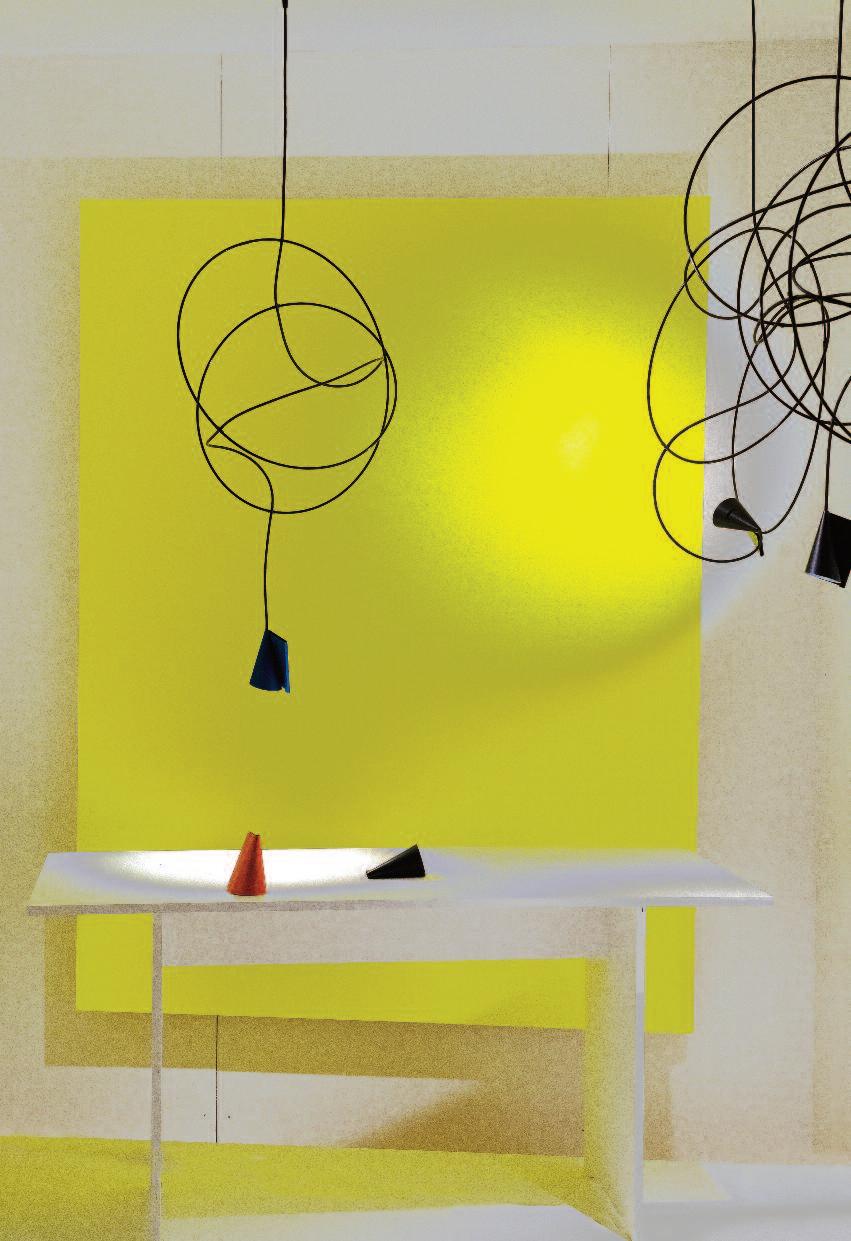
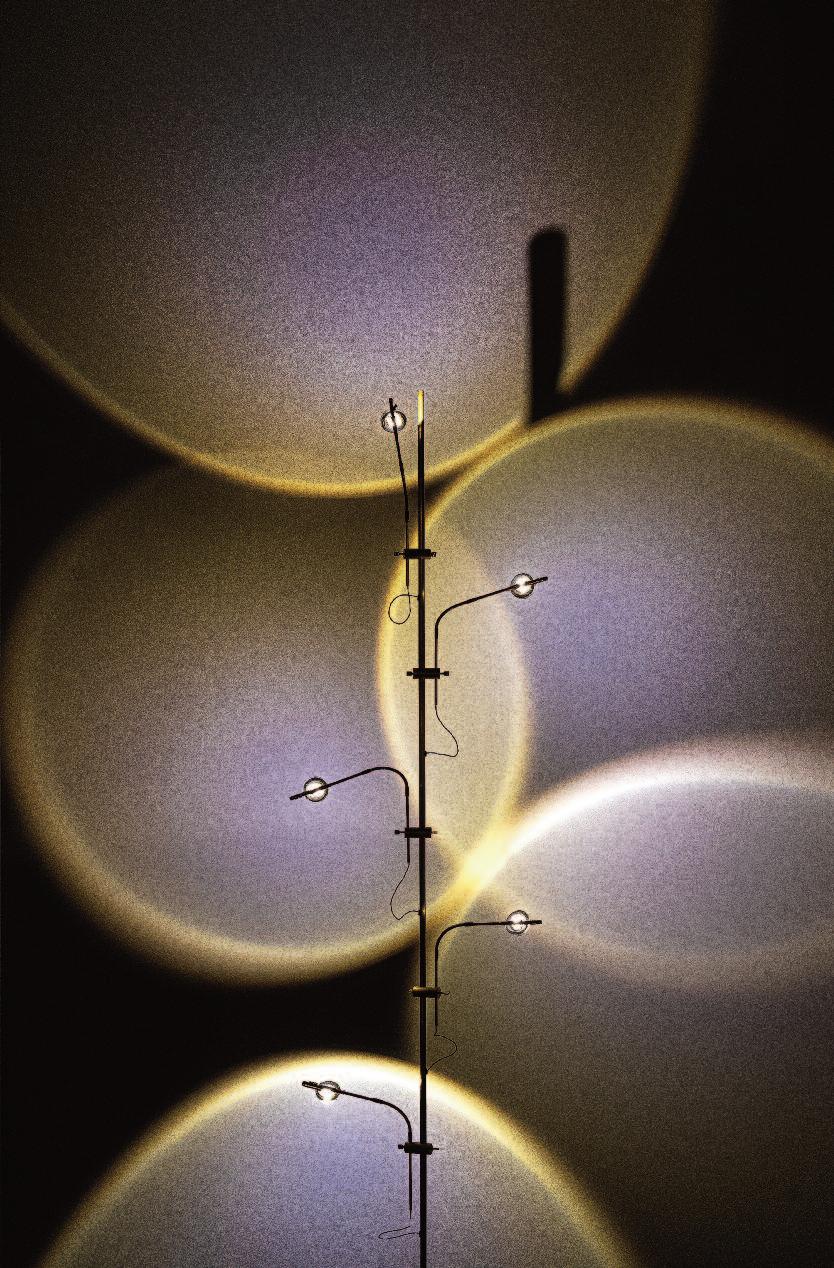
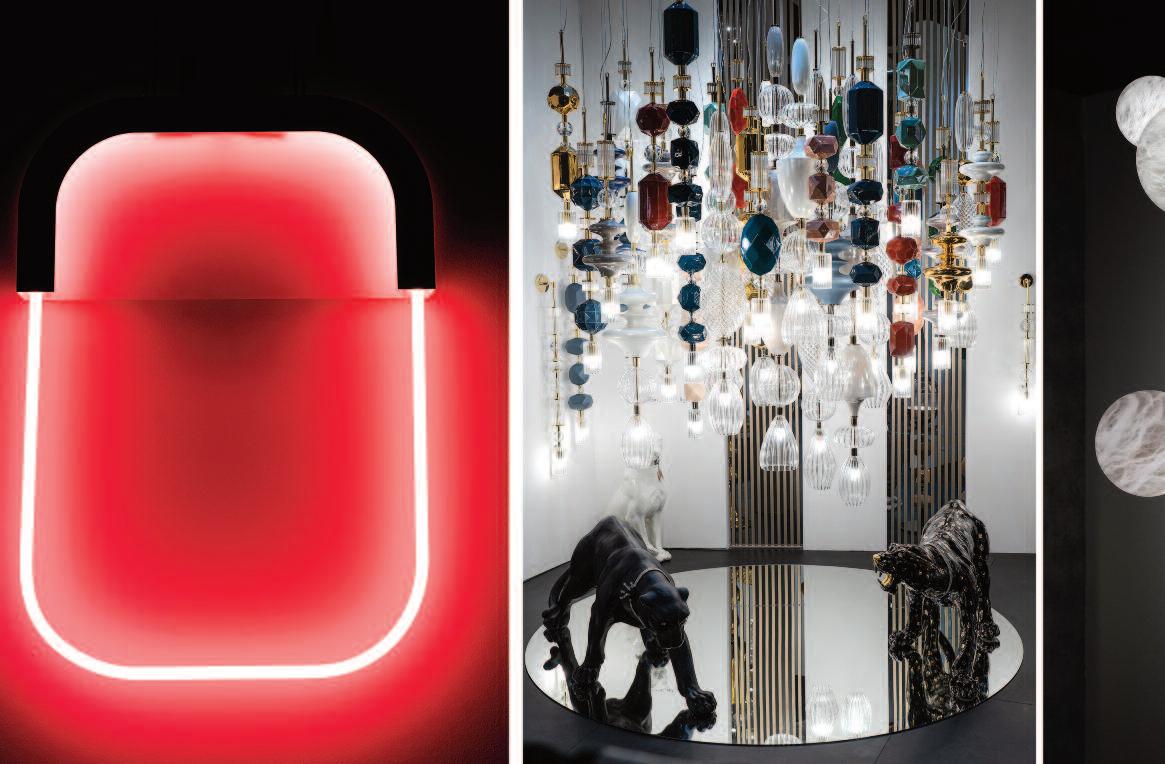
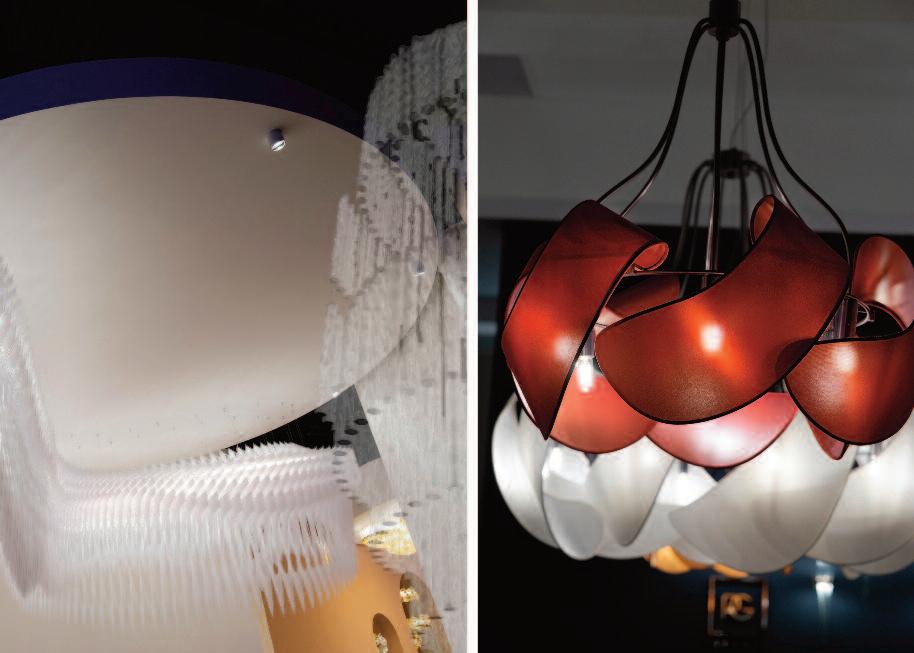
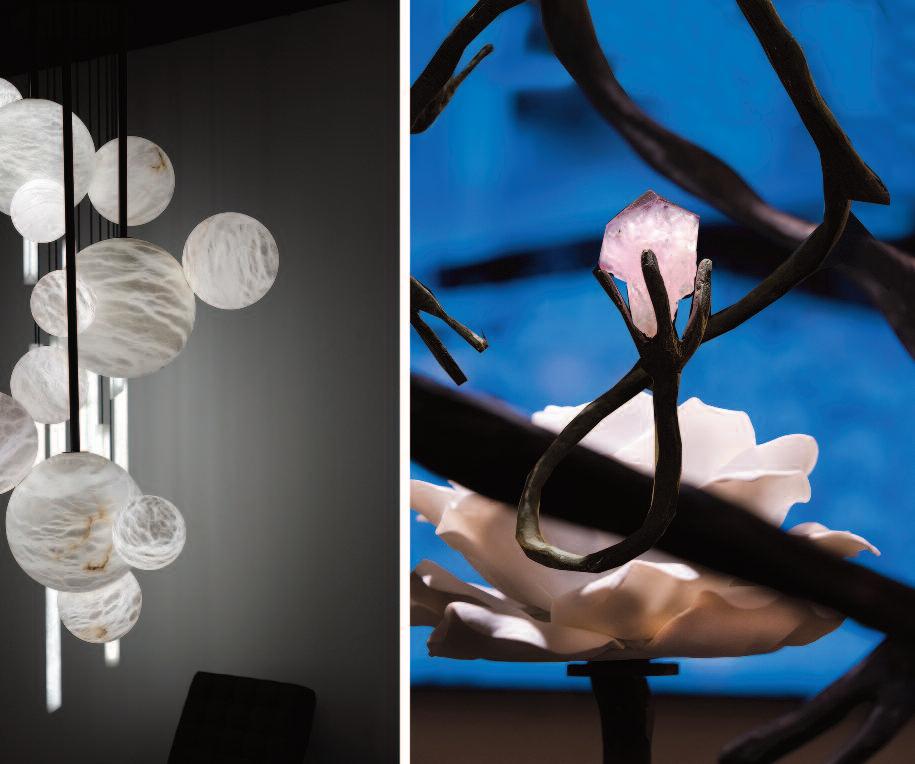
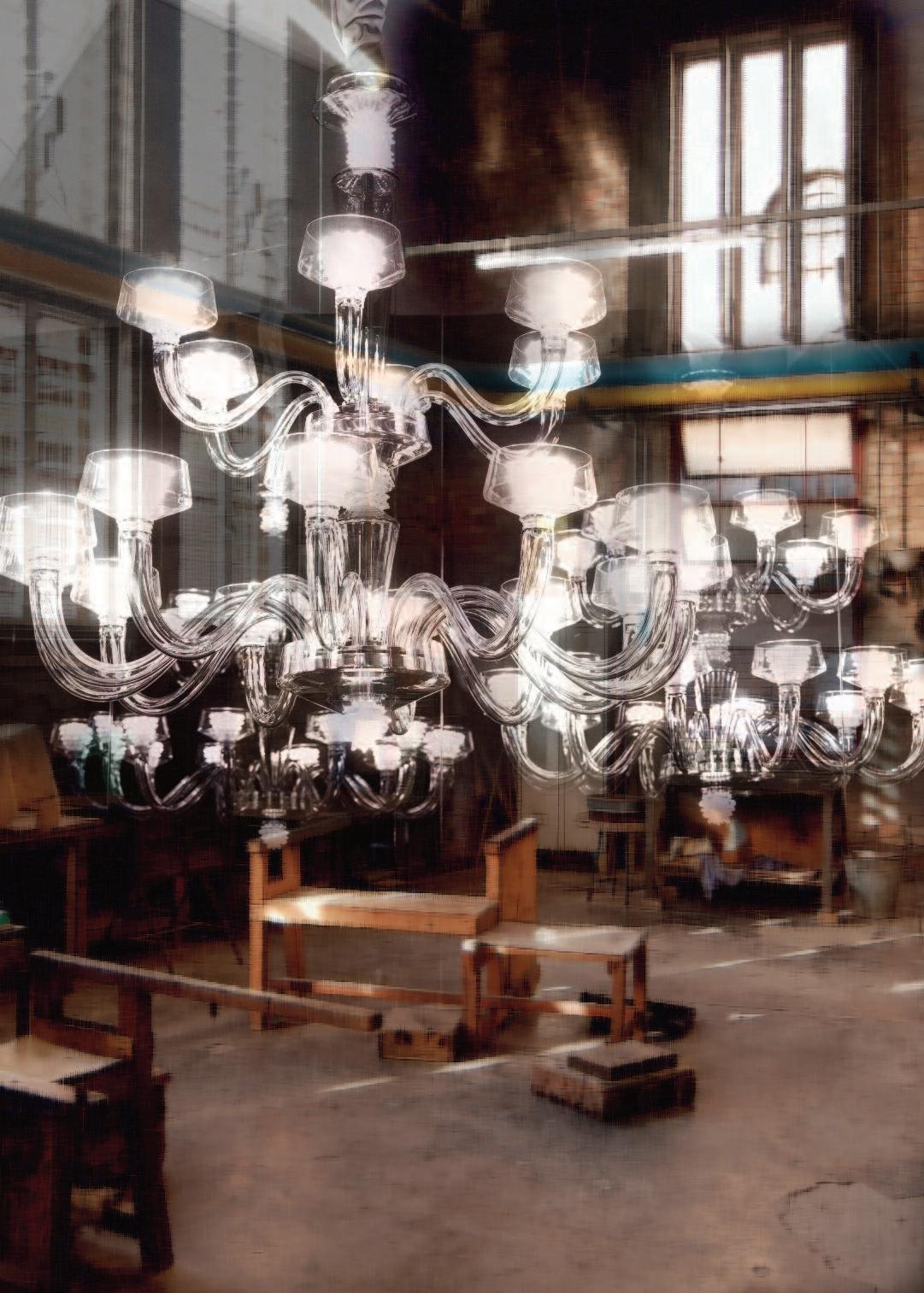
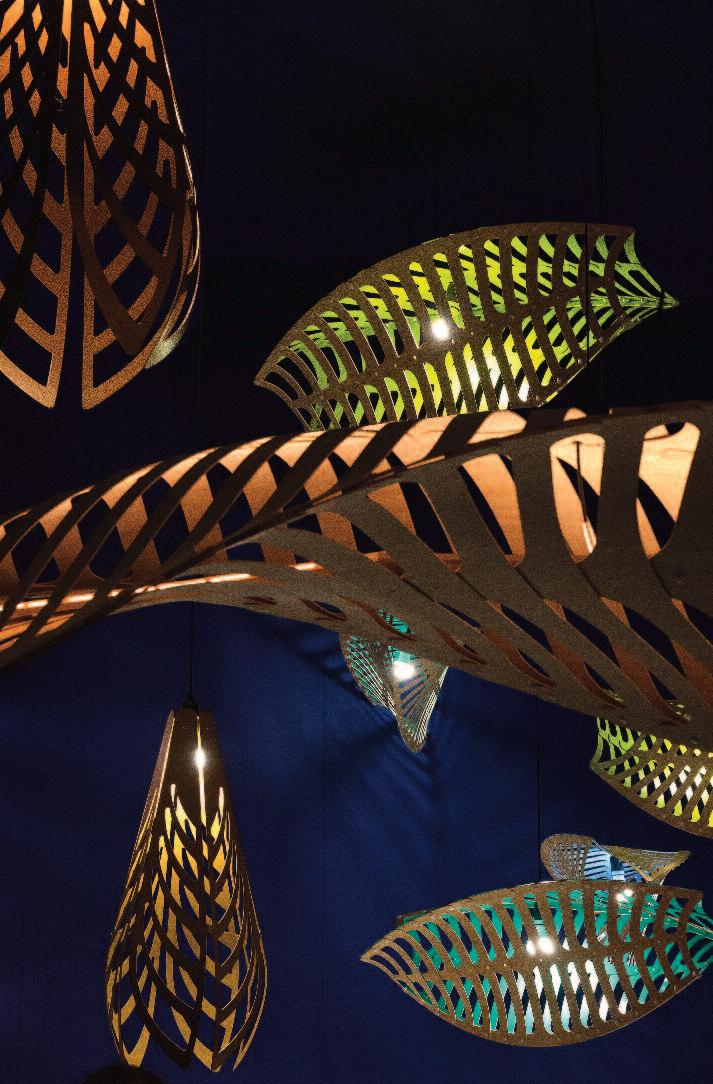
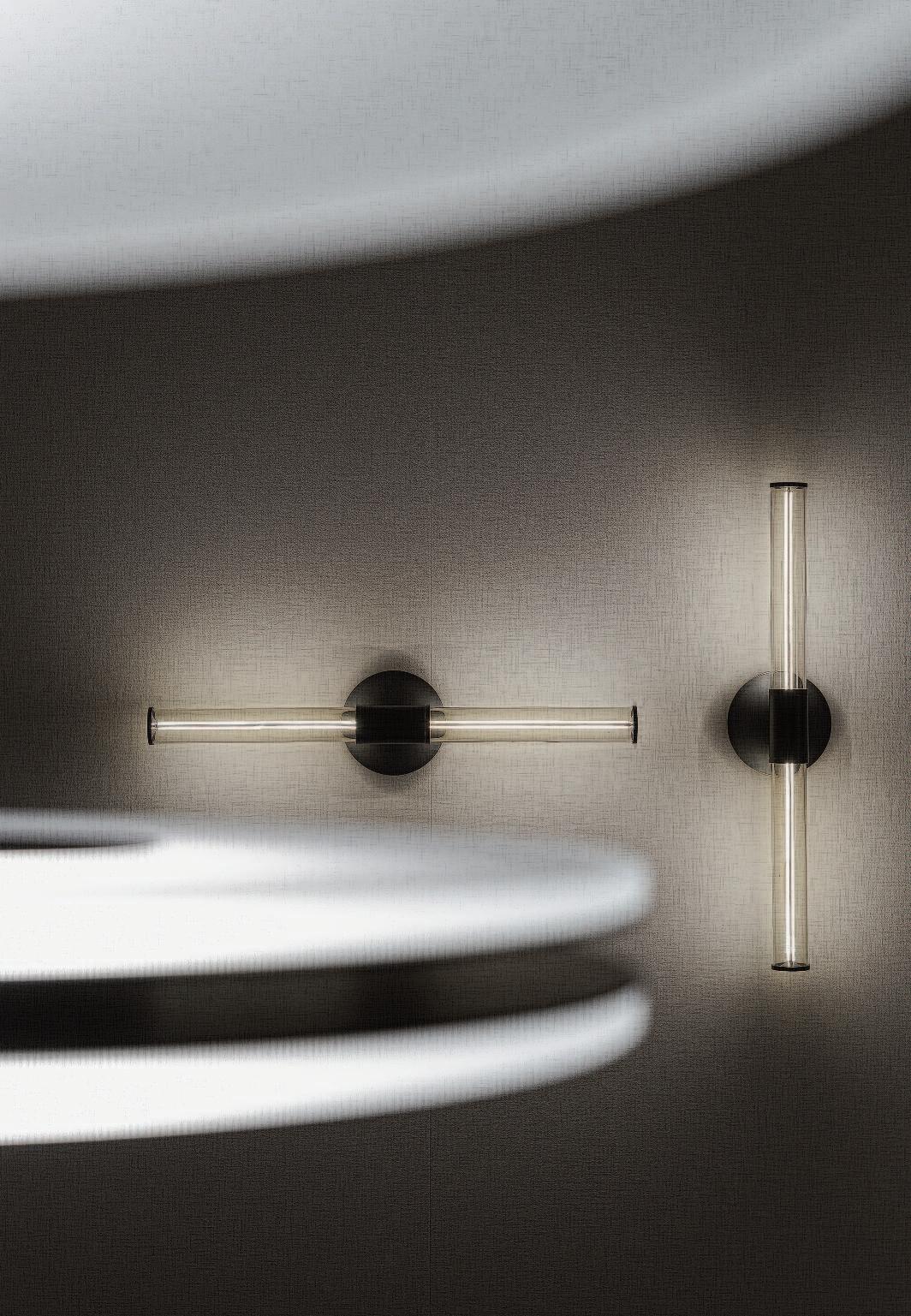
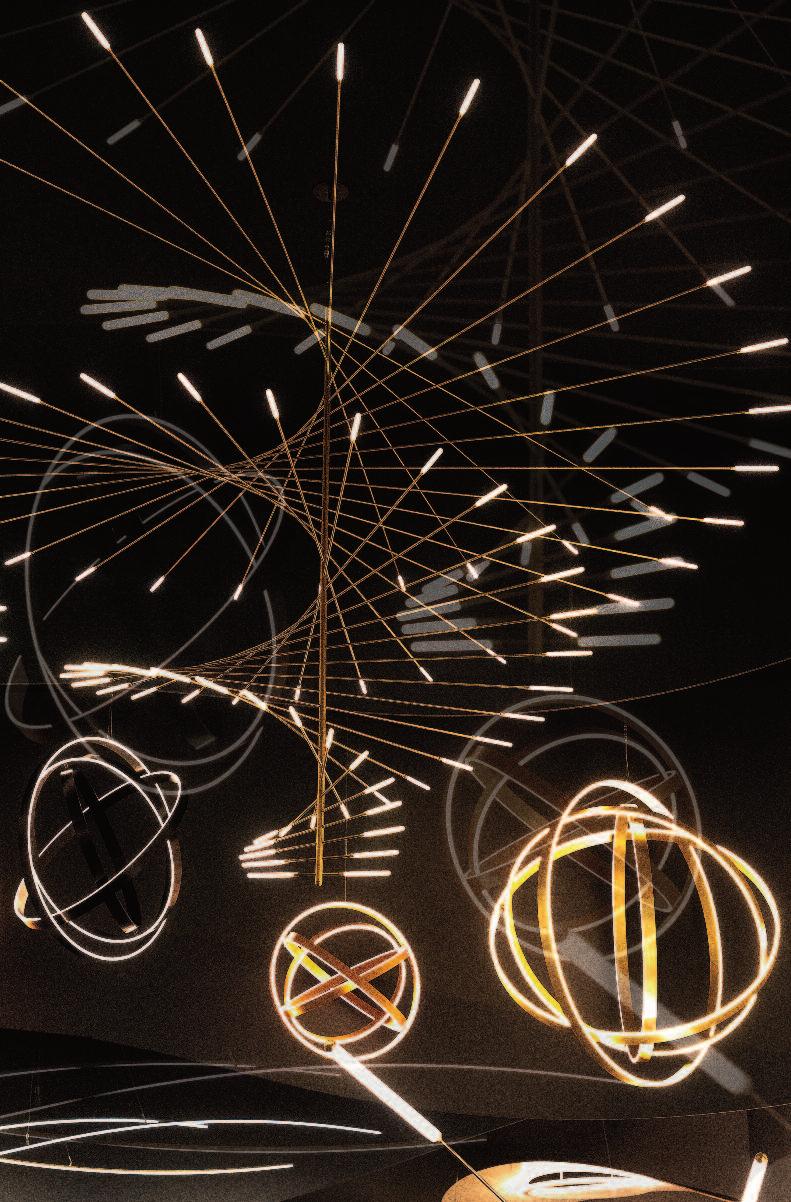
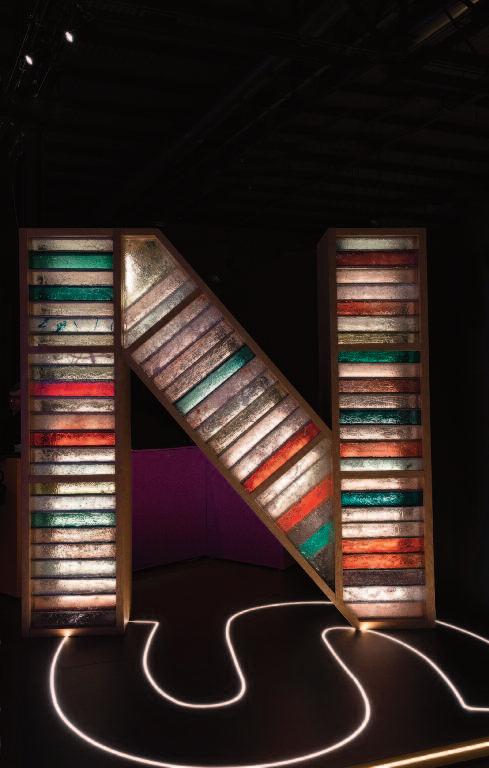
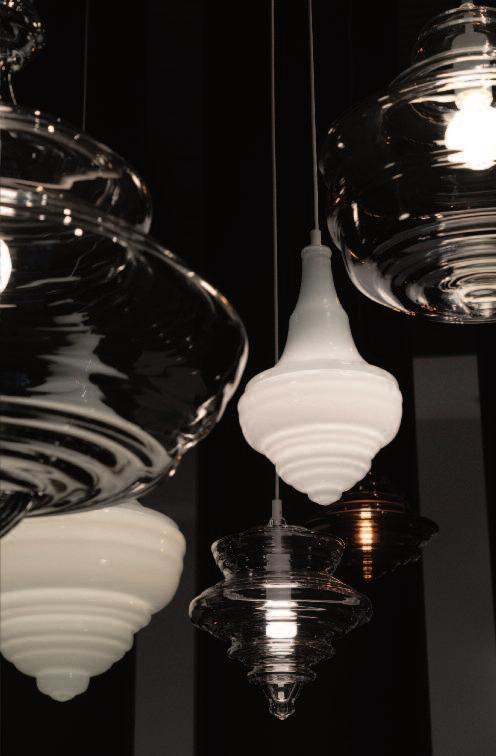
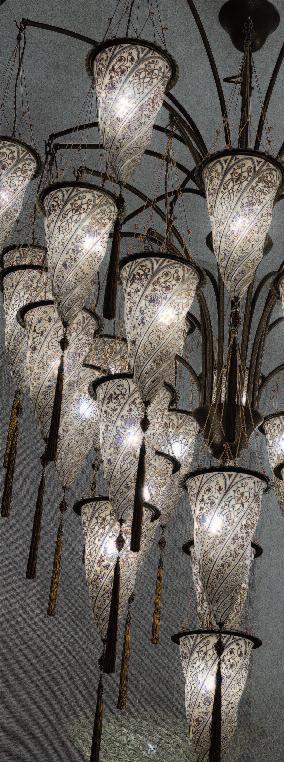
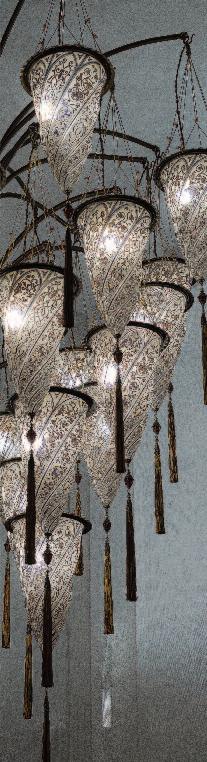
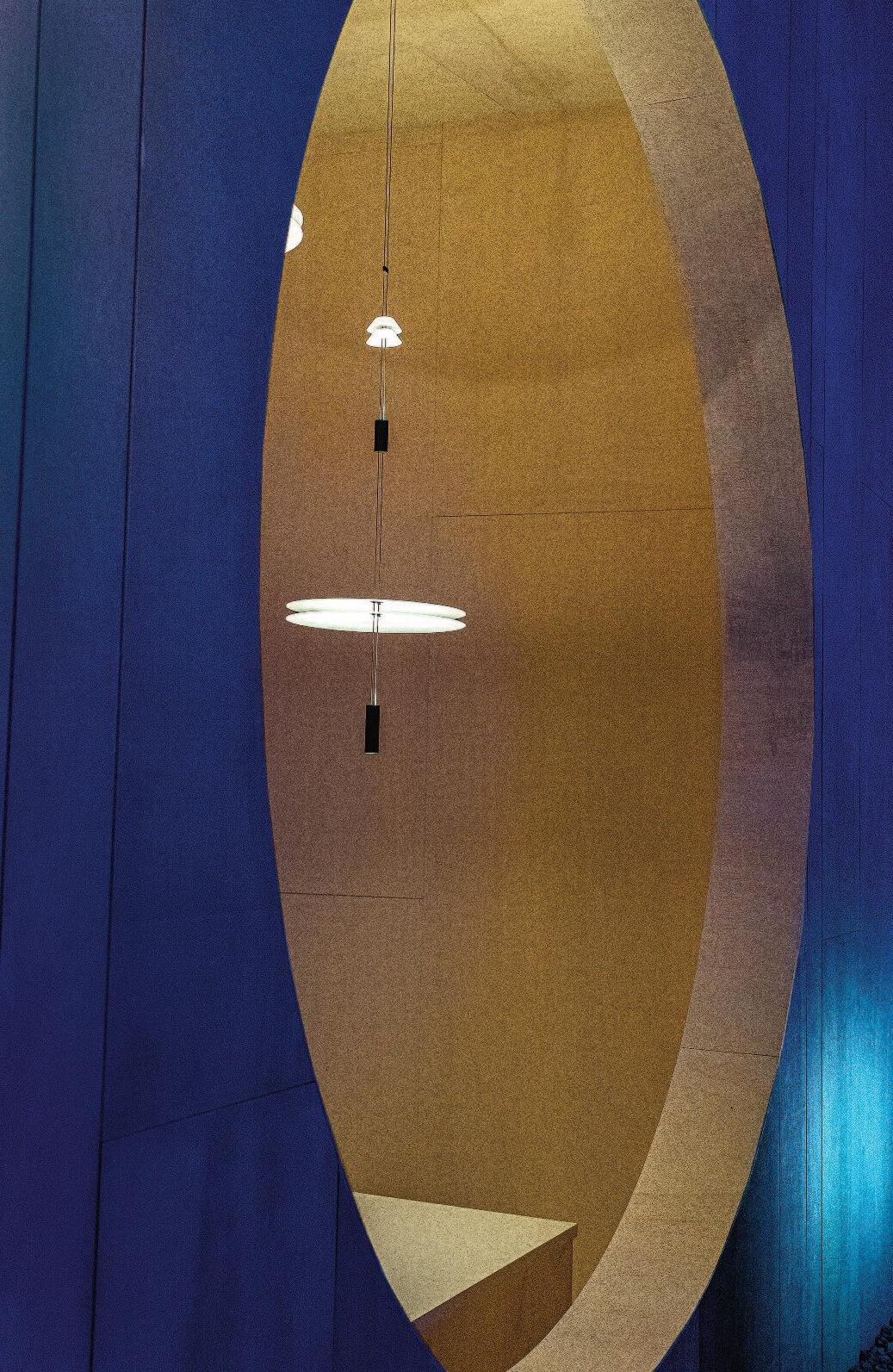
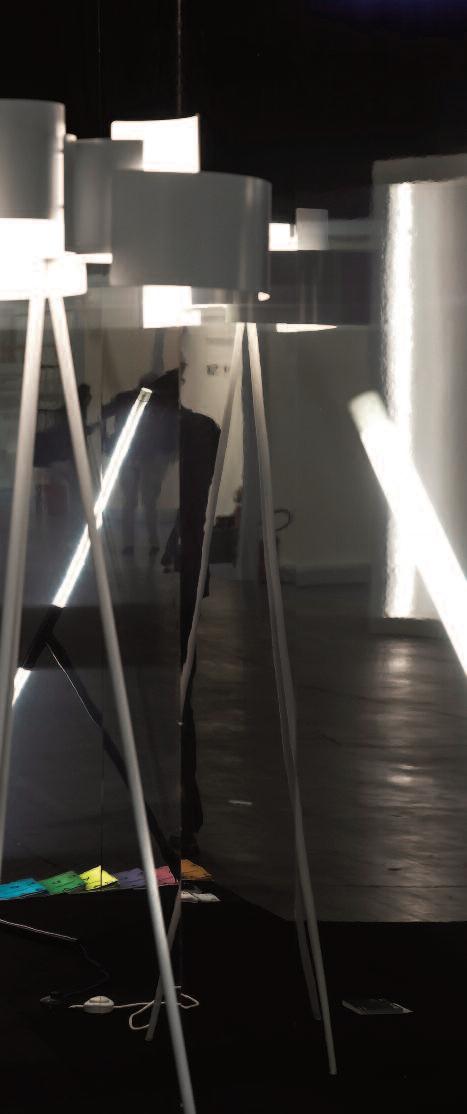
Straight , round and dotted: f orm enhances function and decorati ve values. Thanks t o a technical revolu tion ever y thing seems t o be possible in the world of light . Remarkable is that the classics of lighting design still hold f irm in this avalanche of new f orms.
For architects and interior designers alike, Euroluce is a mer-a-boire provide b y the creati ve escapades of the lighting companies.
All registers had been pulled ou t in 2023 t o combine light sources with materials ranging from Murano glass, t o precious st ones, steel, wood and all kind of manmade materials.
To make it easier f or the connoisseurs, Euroluce celebrated a new la you t , boasting a urban, loop-shaped paths created b y the Lombardini22 studio. This was complemented with a wide-ranging cultural component , consisting of multidisciplinar y presentations ranging from architecture t o phot ography and ar t , with exhibitions, talks, workshops and site-specif ic installations curated and organized b y curat ors of dif f ering generations, spheres and provenance.
The power of imagination and concrete vision was characterized b y the Constellations curated b y Beppe Finessi and brought t o lif e b y Formafantasma.
Massimo Curzi curated and installed Helene Binet and Mar tina Sanzarello curated and installed the exhibition Fiat Bulb: the Edison Syndrome, which pa ys homage t o the incandescent light bulb. Matteo Pirola curated ‘Dawns: The Lights of Tomorrow’, a displa y of ar tif icial stars and objects inspired b y luminous happenings. Michele Cazavara was the curat or of ‘Interior Night . Bright Ar tifacts;, a collection of architectural images of interiors in which ar tif icial light is the protagonist .
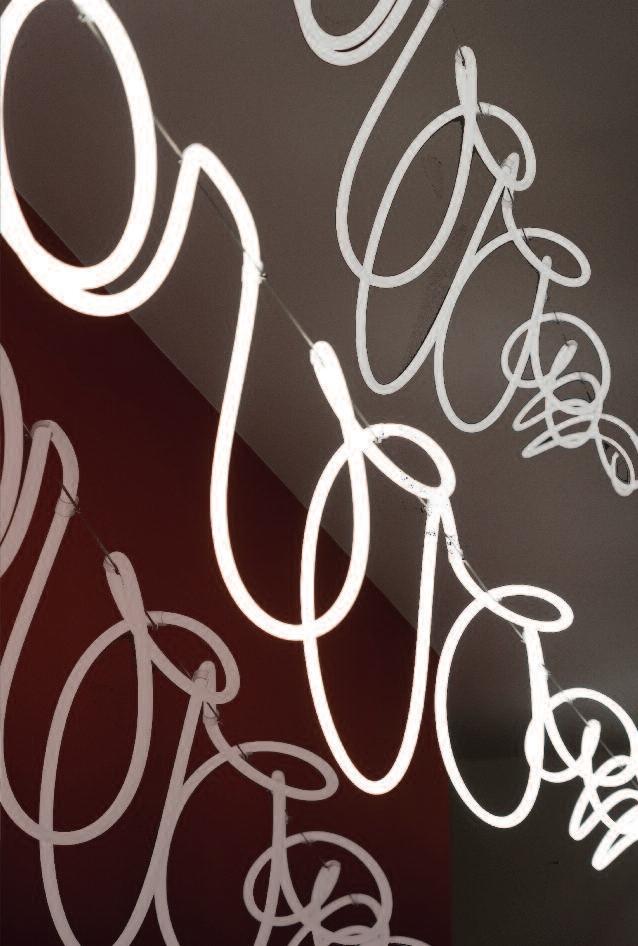
Ber fu Bengisu Goren visualized a hybrid experience, Mar ta Elisa Cecchi curated ‘Scintille. Lemmar y of Bright Words’, while Maurizio Nannucci, one of the most power ful interpreters of ar tif icial light in contemporar y ar t , had created a site-specif ic installation, a long luminous neon phrase: You Can Imagine the Opposite.
OBJEKT International has concentrated its coverage of Euroluce t o the par ticipants and that in itself was alread y an ocean of inspiration.
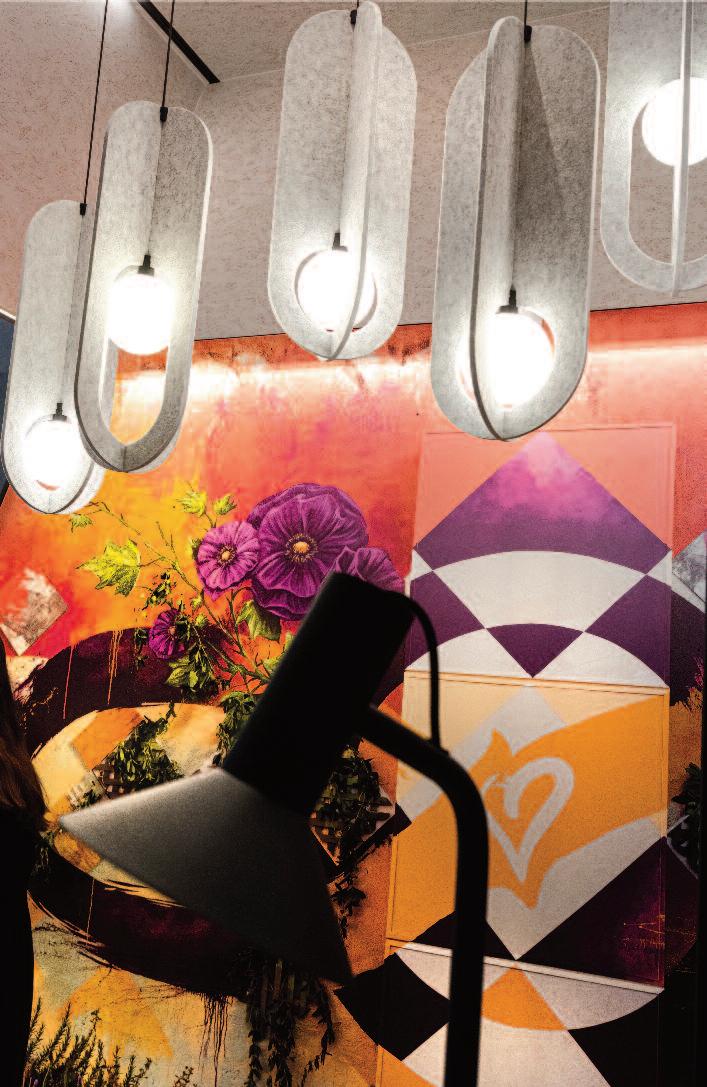
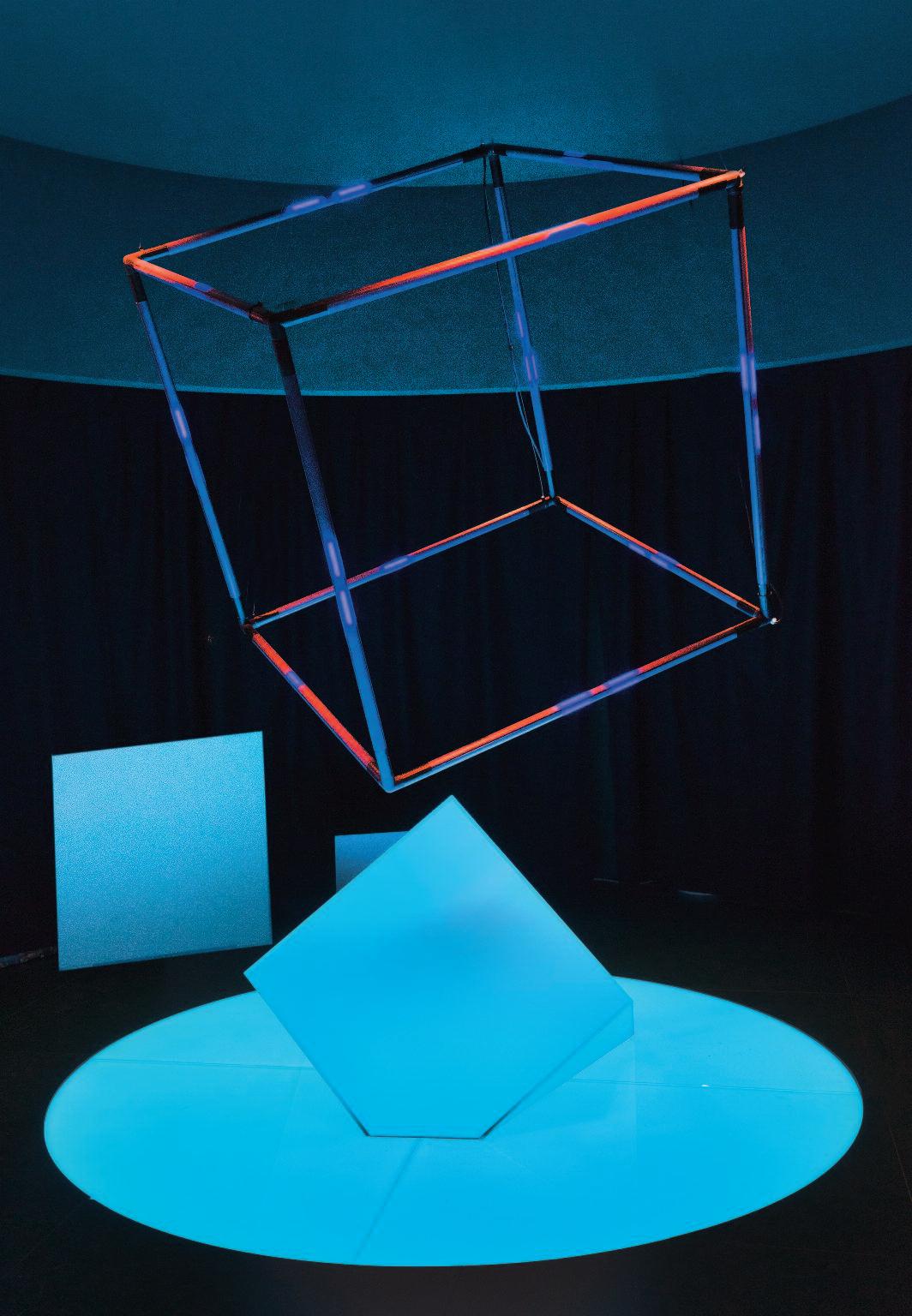
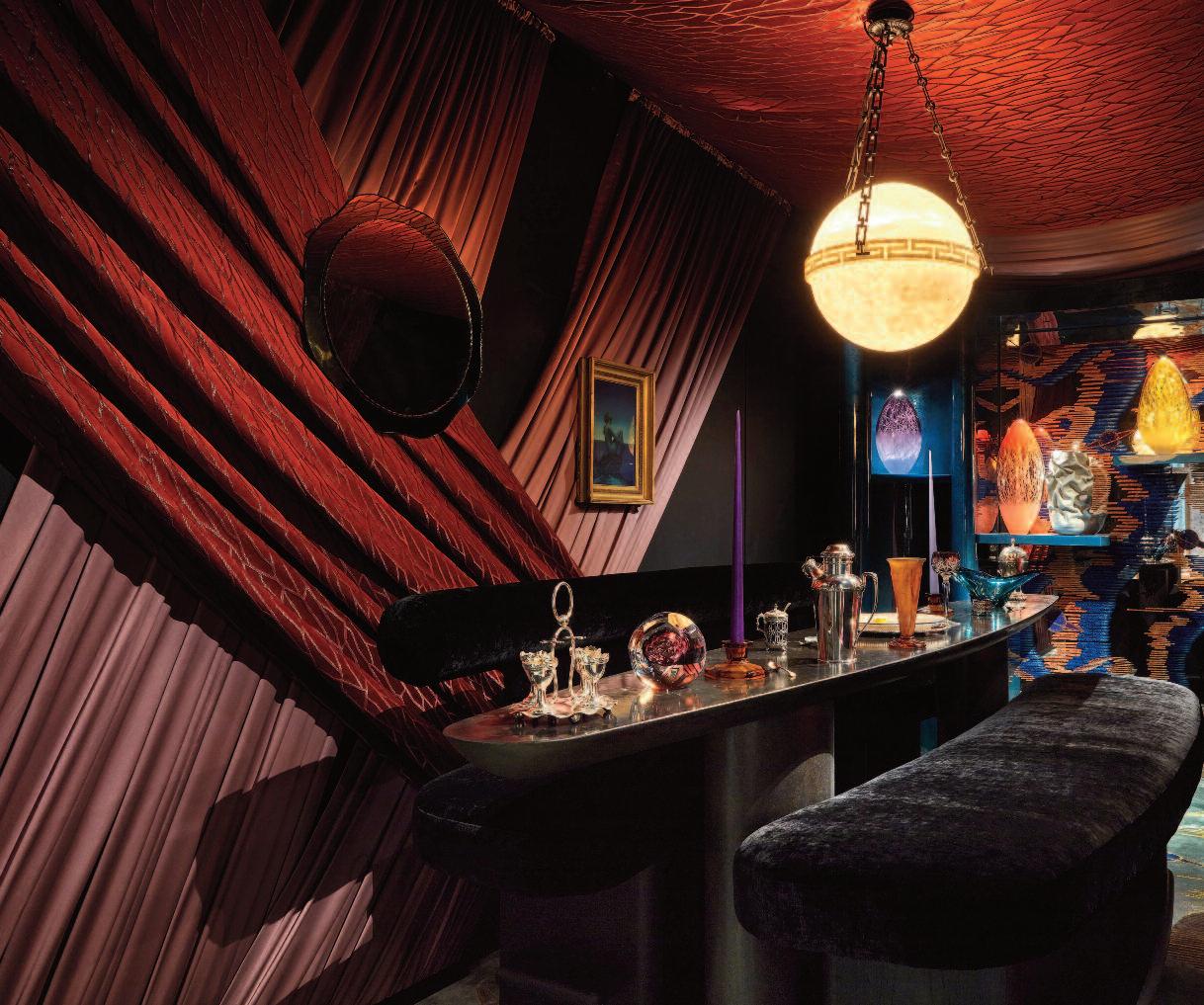
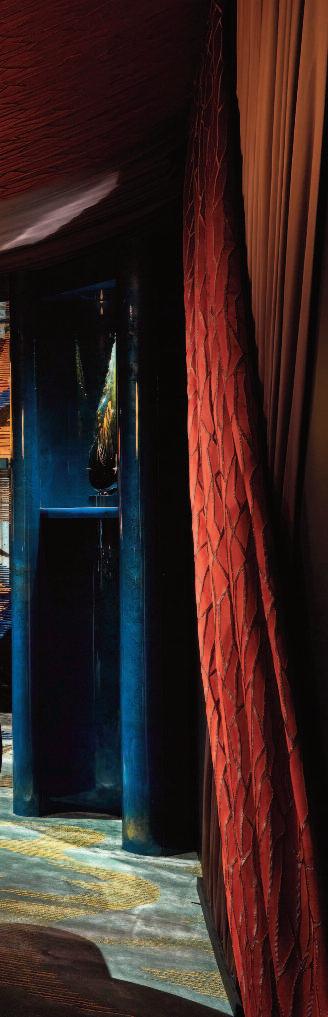
A b ove : t h e H o m e B a r by Ta l a F u s t o k S t u d i o a t t h e Wow ! H o u s e 2 0 2 3 a t C h e l s ey H a r b o u r, D e s i g n C e n t re .
“ We w a n t e d t o t r a n s p o r t v i s i t o r s t o a n o t h e r re a l m . O u r b a r c h a m p i o n s ex c ap i s m a t i t s
f i n e s t ” a c c o rd i n g t o Ta l a . “ A key o b j e c t i ve fo r o u r c re a t i o n w a s t o s h ow c a s e c o p i o u s U K - b a s e d c r a f t s m e n a n d a r t i s a n s . ”
P h o t o s : J a m e s M c D o n a l d
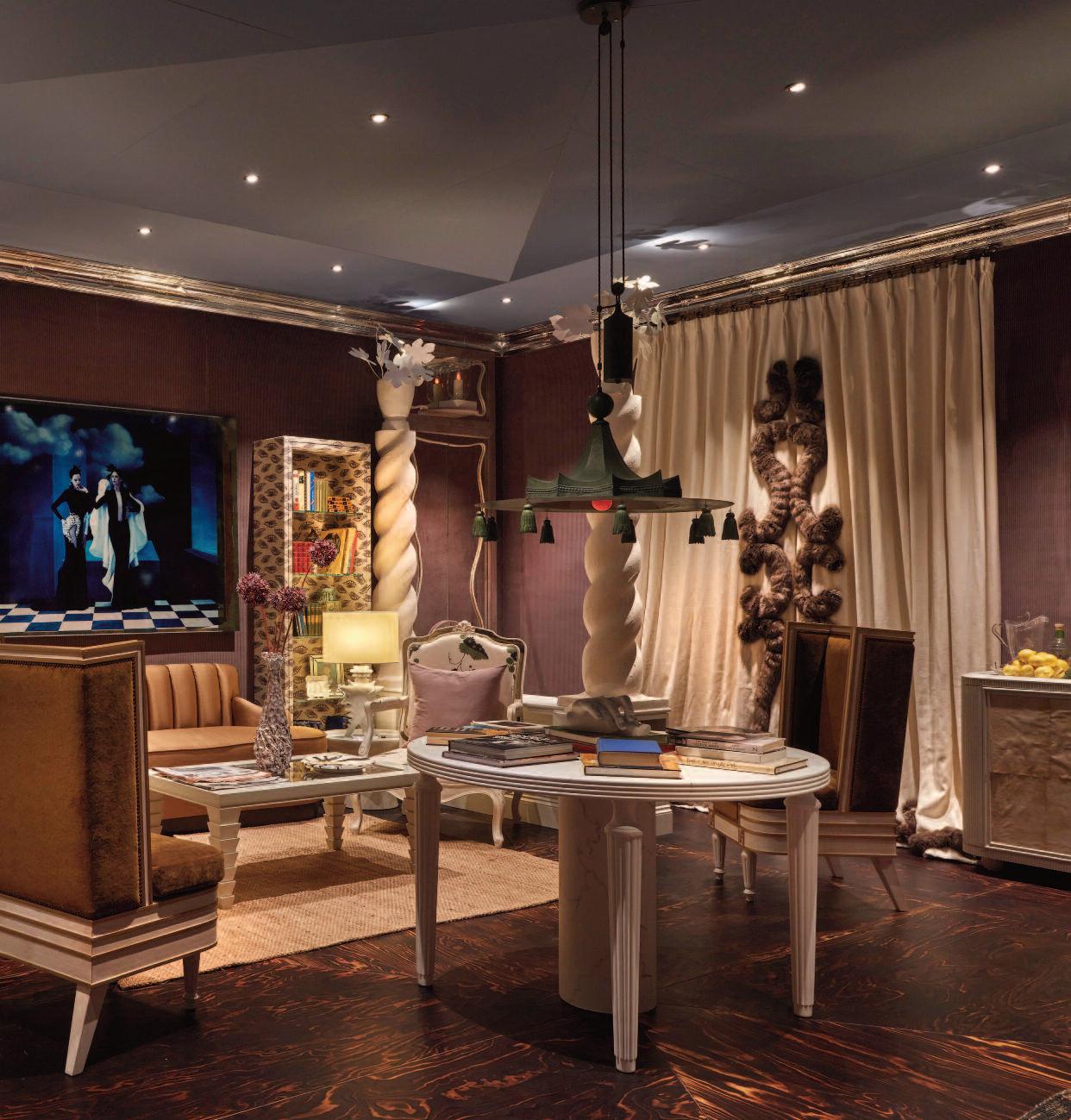
WOW!house, a yearly event within the Design Avenue at Design Centre, Chelsea Harbour, London, is a celebration of the ‘More is More’ principle by world class designers in collaboration with globally recognized design brands.
The 18-room house allows visitors to experience first-hand the work of masters in their field.
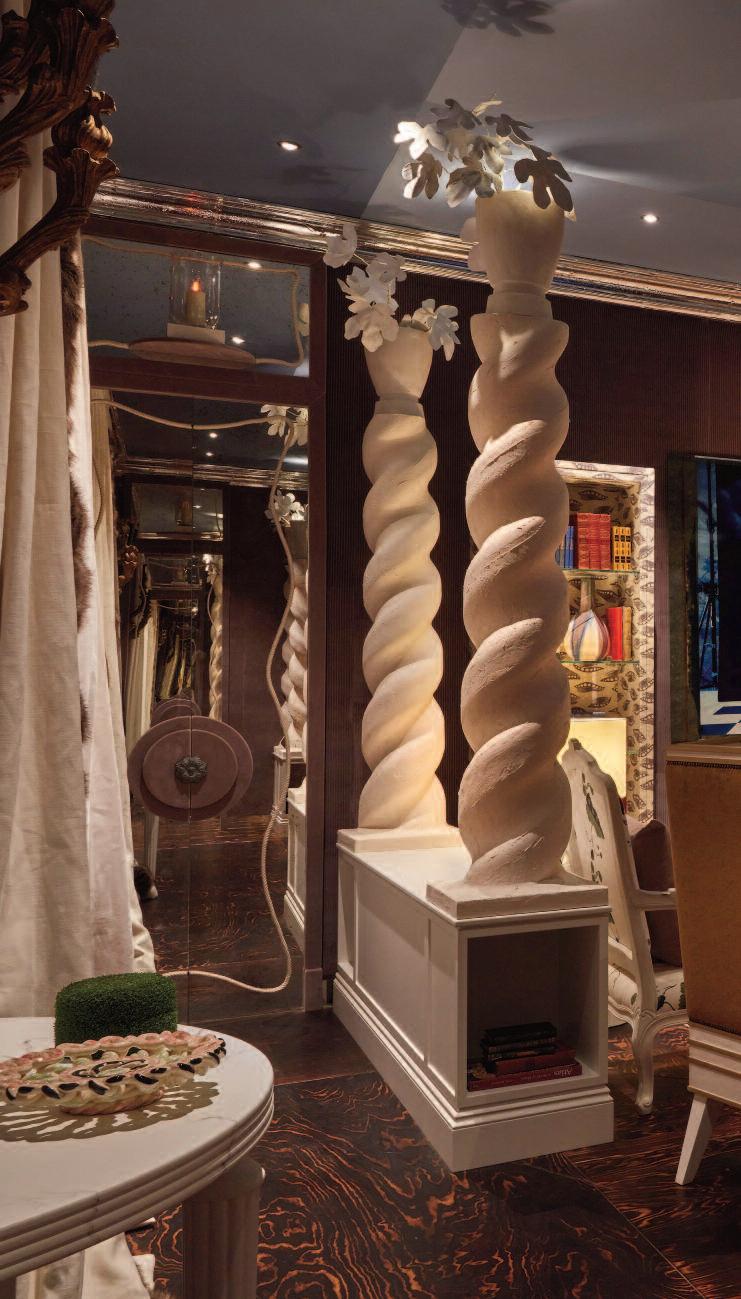
“Our goal is to pioneer a sense of wonder; to amaze and inspire by showing the world what extraordinary achievements can be made when our talented industry comes together in such an ambitious and exceptional way, ” says Claire German, CEO of Design Centre Chelsea Harbour.
OBJEKT International shows some of the highlights of the 2023 London event.
The WOW!house 2024 is planned from 3rd June to 4th July.
R i g h t : t h e L e ge n d R o o m by N i c k y H a s l a m & C o l e t t e Va n D e n T h i l l a r t . “ T h e a m b i a n c e o f t h e ro o m i s c re a t e d by t h e h a r m o ny o f a l l i t s e l e m e n t s : a n i n t a n g i bl e , i n d e f i n a bl e e s s e n c e t h a t c o nvey s h ap p i n e s s ” a c c o rd i n g t o N i c k y H a s l a m .
“ T h e re ’s a s e n s e o f p l ay w i t h s h ow h o u s e s : t h ey a re i n h e re n t ly e p h e m e r a l w i t h i m ag i n e d i n h a b i t a n t s , b u t t h ey h ave t h e p owe r t o l e ave a l a s t i n g i m p re s s i o n . ”
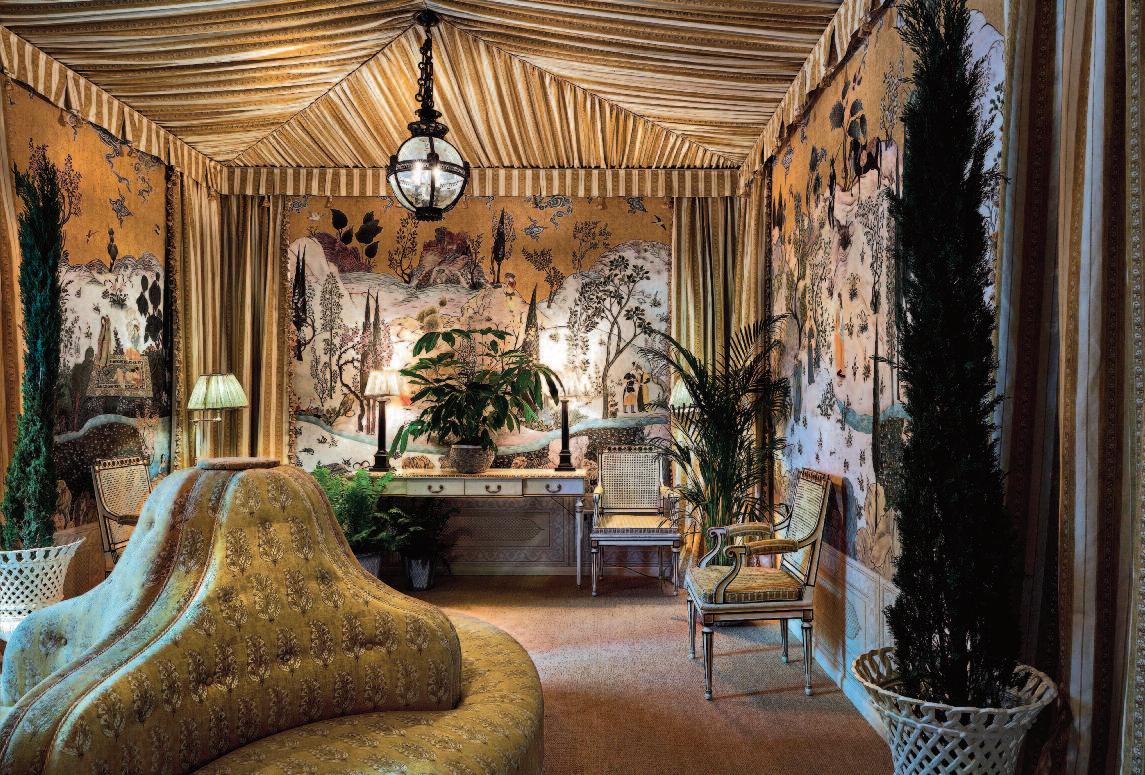
Top: Entrance Foyer of the Wow!House Chelsea Design Centre by Mark D. Sikes:
rooms in show houses need to feel not only dramatic and elegant, but also comfor table and inviting.”
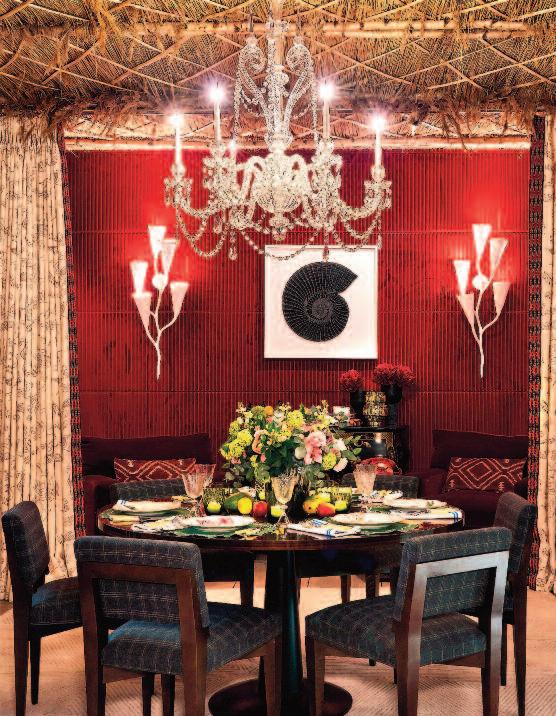
Bottom right: Dining Room
: “Ever y room should include people who are wonderful, who you want to spend time with and comfor table furniture , which will create an environment for people to linger.”
 “The
Right: Day Room by Alexander Lamont, Miles, and Lauren Hwang. Theme: Jazz Age meets New Age .
Below left: De Gournay Morning Room by Waldo Works
by Joy Moyler
“The
Right: Day Room by Alexander Lamont, Miles, and Lauren Hwang. Theme: Jazz Age meets New Age .
Below left: De Gournay Morning Room by Waldo Works
by Joy Moyler
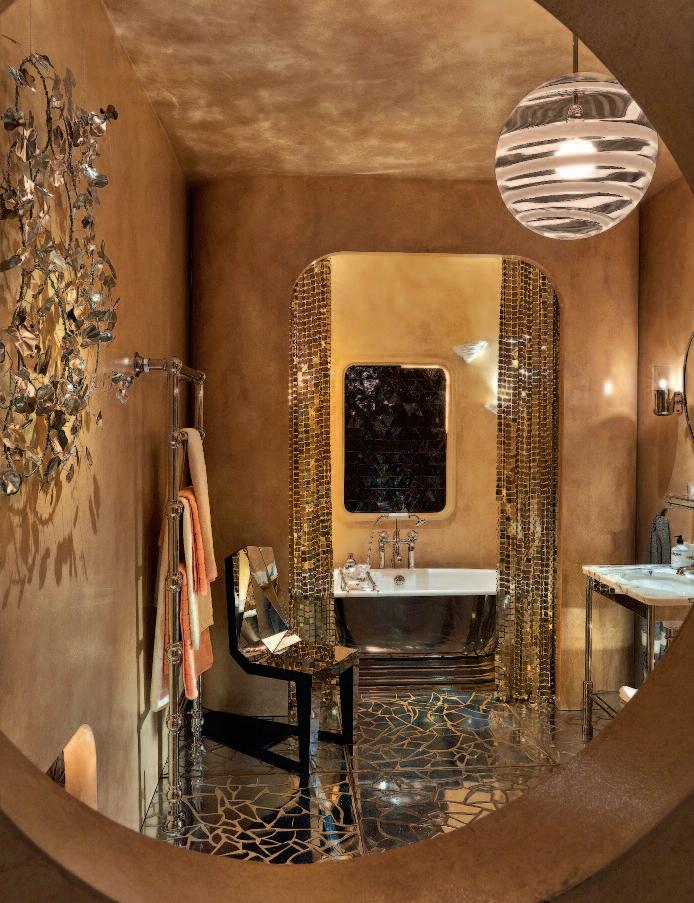
L e f t : P r i n c i p a l B a t h ro o m by L u c y
B a r l ow a n d Jo s h u a S e a r. T h e m e :
B a c k t o t h e f u t u re . “ E ve r y ro o m
s h o u l d b e n e f i t f ro m a b i t o f h u m o r ” a c c o rd i n g t o L u c y.
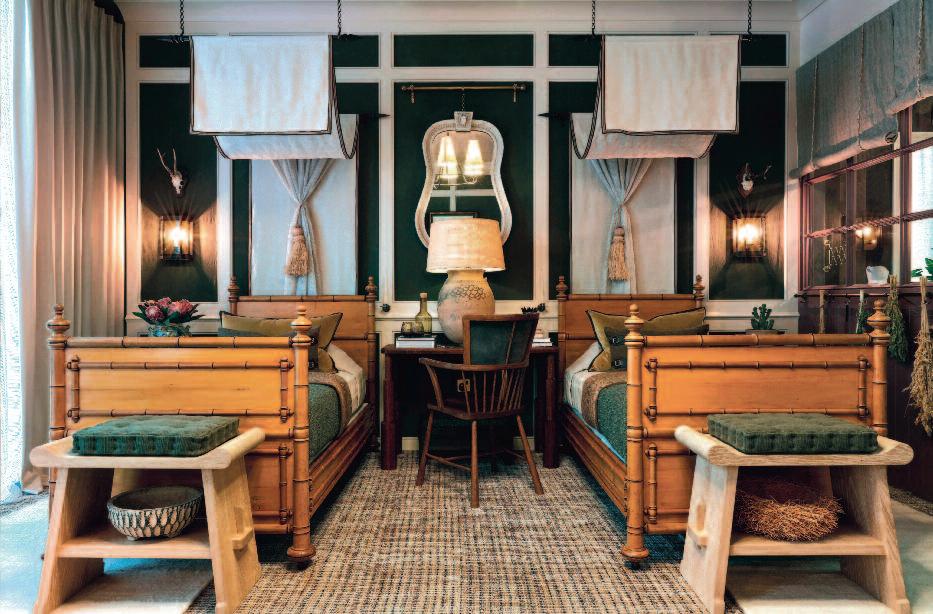
B e l ow : D e L e C u o n a b e d ro o m by
C h r i s t i a n B e n s e . “ I l ove t h i s ro o m
t o b e a n ex h a l e a n d a m o m e n t o f
c a l m . T h e b e d ro o m i s a d ve n t u ro u s , n a t u r a l a n d e l e g a n t . ”
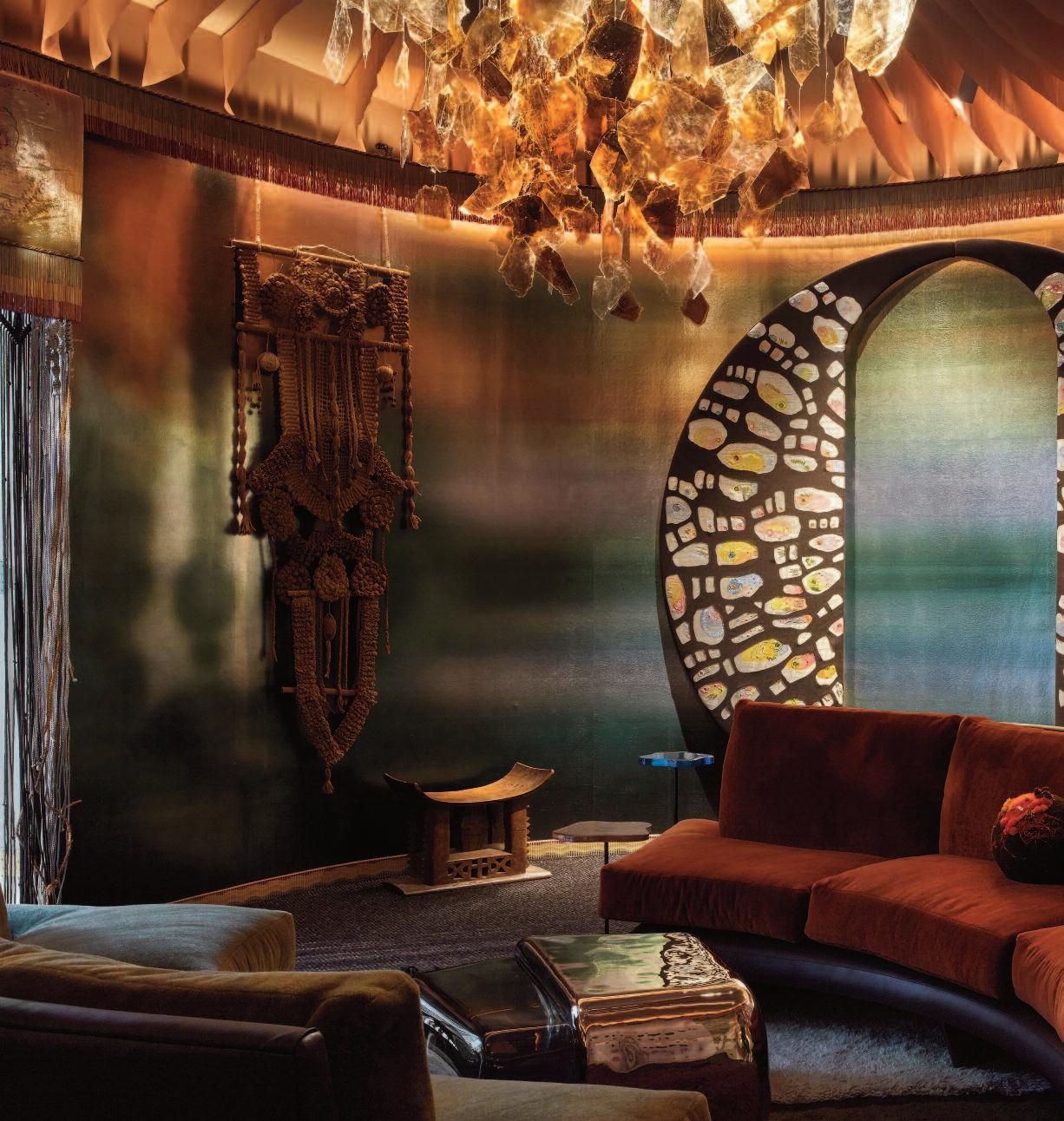
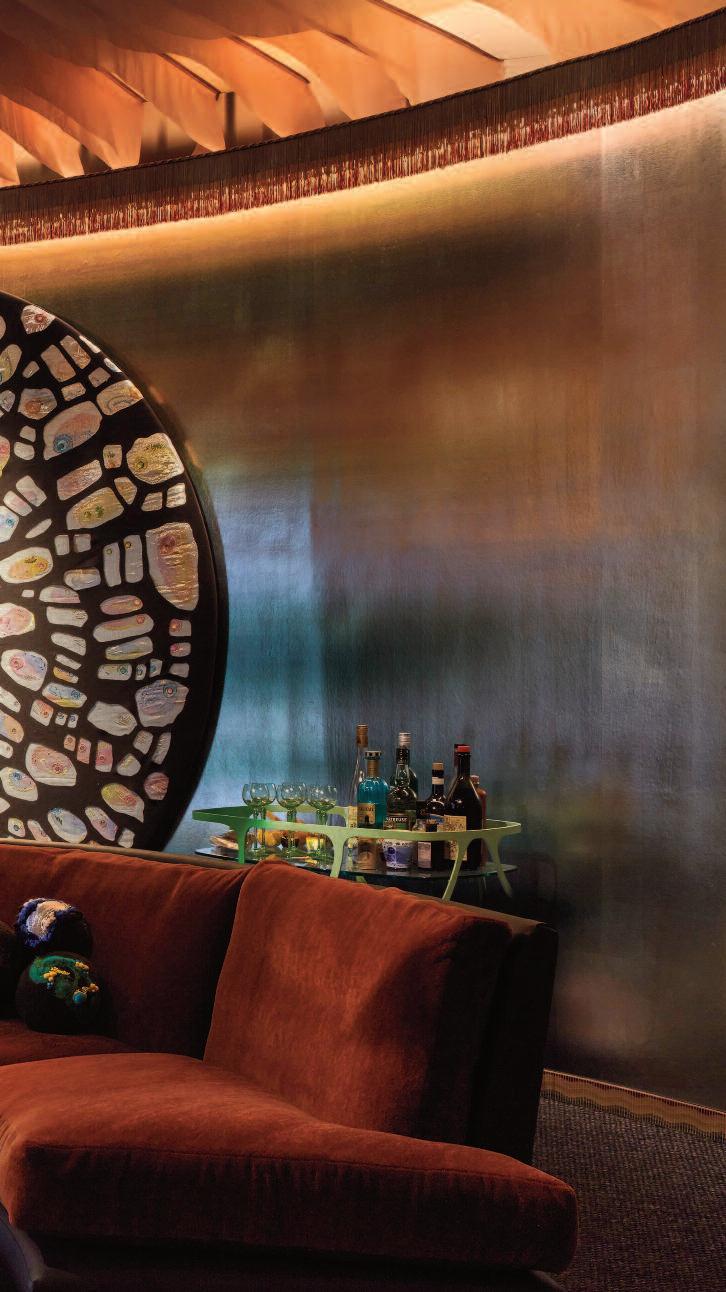
Fro m e n t a l C o u r t ya rd R o o m by M a dd u x C re a t i ve . “ T h i s a p l a c e o f wo nd e r, a p l a c e t o s t a r t o f e n d t h e d ay w i t h a s e n s e o f f re e d o m a n d p o s s i b i l i t y.”
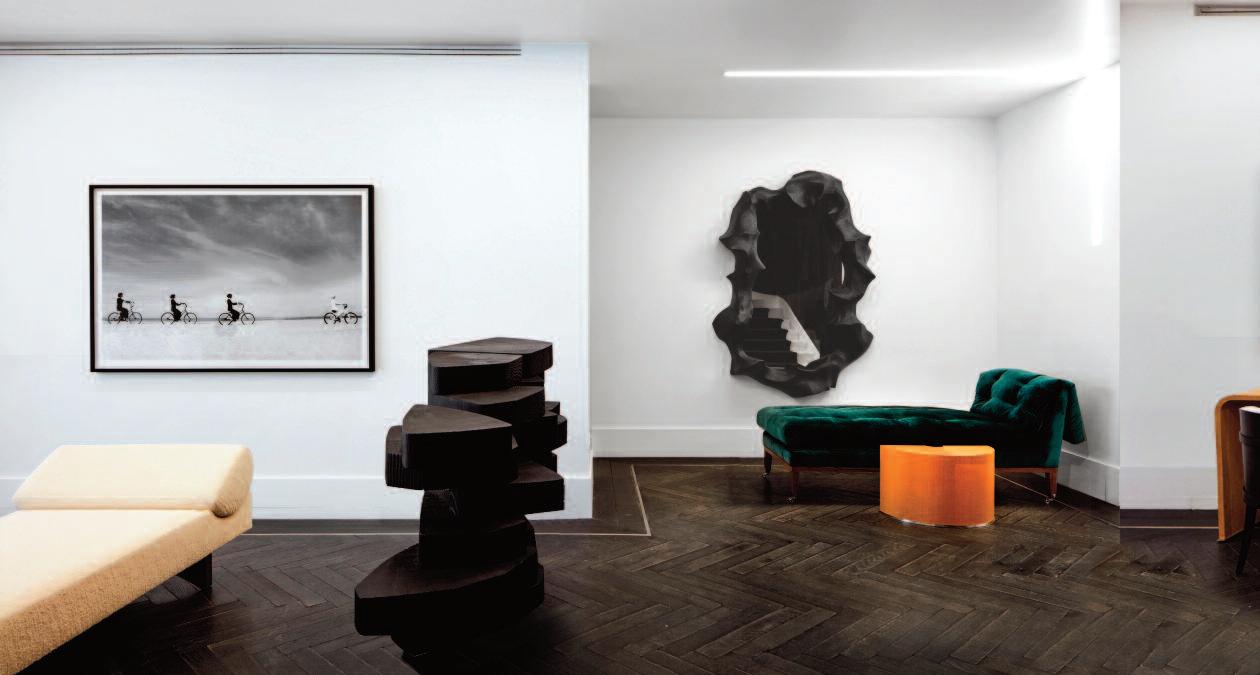
In a new retrospective, the famous design gallery Ralph Pucci honored the works by the doyenne of Parisian and global design, Andrée Putman, accompanied by Marjorie Salvaterra’s powerful photography opened at Ralph Pucci, London in June 2023
Through the years Pucci has been a beacon for top quality interior design working with iconic designers like Patrick Naggar, Paul Mathieu, Vladinir Kagan, India Mahdavi, Herve van der Straeten, Paul McCobb, John Wigmore, Philippe Anthonioz and Jérôme Abel Seguin.
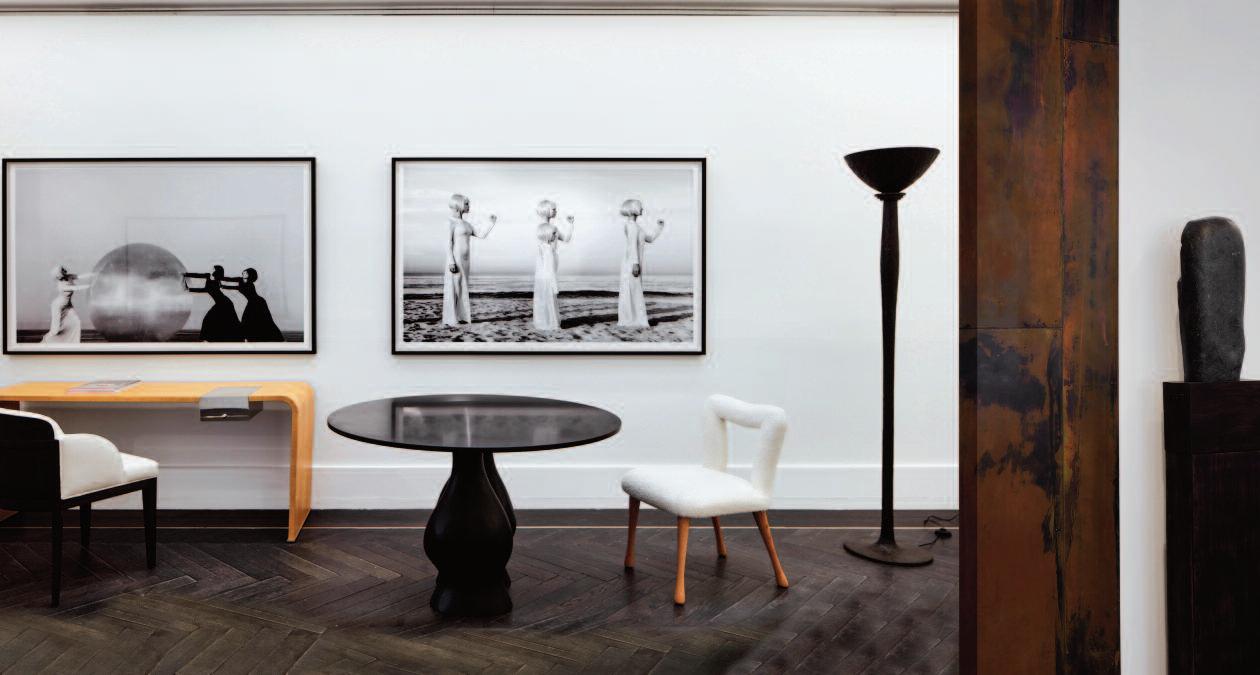
At Ralph Pucci, with galleries in New York City, Miami, Los Angeles and London England, artists and designers are celebrated as boundary-pushing visionaries while remaining artisans at heart.
“Though all differ in approach and aesthetic, each artist shares a passion for sourcing exceptional materials and handcrafting their works, often using time-honored techniques to yield innovative results. Quality and timelessness define their creations, necessary traits of collective design” according to Pucci.
Known for her free and atypical designs, revered French visionary Andrée Putman’s long friendship with Ralph Pucci began in the 1980’s where their work for Barney’s, NY, successfully created the legendary ‘Olympia Goddess’, ‘Husband’ and ‘Mistress’ mannequins
Putman’s passion for bridging the gaps and making connections between arts, fashion and design led to Ecart International, a catalogue of invaluable furniture designs that advanced the work of abandoned French designers such as Eileen Gray and René Herbst, which was exclusively represented by Ralph Pucci in the USA
Revolutionizing the reconciliation of ‘rich’ and ‘ poor ’ materials as well as transforming the application of light in design and interior architecture, Putman worked with Pucci throughout her long career, culminating in the creation of Six Easy Pieces produced under license in the Ralph Pucci (studio) in 2000. Until today Pucci continues its lasting relationship with Studio Putman.

Mr. Thierry W. Despont was a gentleman and a genius. He was not only one of the exclusive group of top interior designers/architects, but, with his art, he was also successful world wide. He had his studio and home in the heart of New York’s Tribeca district long before it was the place to be. For several years he had been living a stone’s throw from his art studio. Thierry was an architect, designer and artist who specialized in unique and high end designed residential projects, hotels and museums, and historical renovations. Born in Limoges, France, he graduated at the Ecole Nationale Superieure des Beaux Arts of Paris and had a degree of Master of City Planning in Urban Design from Harvard University. He was a Knight of the French Legion of Honor and a Knight of the Arts and Letters as well as a member of the Interior Design Hall of Fame. He was author of his series of books ‘Houses’ based on his projects and he is co-author of the book Restoring the Statue of Liberty. Despont: “I see myself as a dreamer of houses. I want to make beautiful houses and interiors, but certainly no fancy statements.”
He pushed the confines of his profession to include interior design, landscaping, plus the design of furniture, light fittings and other interior accessories. Had a hard time defining where architecture ended and interior design began, since the two were inseparable for him. His work revolved around light, volumes, and colors: areas in which he achieved the height of perfection.
Alaïa and Hans Fonk visited him regular, photographed many of his outstanding creations throughout the USA, the Bahamas and Europe, photographed the Edmond J. Safra Synagogue and contributed to his books.
OBJEKT International pays tribute to a great man featuring three of his projects: his studio in Tribeca, New York City, a house on the Bahamas and an estate in St. Moritz, Switzerland.
Coming to America, Thierry Despont made a name for himself as the Associate Architect for the Centennial Restoration of the Statue of Liberty
He commented: “It was a fascinating project because no-one knew in advance how to tackle it Perhaps my French origins were what qualified me for the job ”
He made the project a success and acquired the credentials that led to his break-through and so make his dreams come true ”
He continued: “I wanted to design houses, and America seemed the place to do it Here they still build real houses. You had a sense of freedom here; you could implement ideas and do what you liked People here weren't afraid to make mistakes. It' was a bit like 17th-century France Then, they were discovering and building new things, and they also made mistakes in architecture-but they learnt from their mistakes and didn't let it stop them ”
Thierry’s philosophy was that the nice thing about architecture is that you never stop learning “I know what I want to build and, with the benefit of experience, it's become easier to create attractive things It's important for me to have a client who knows what he wants. It's very satisfying to work with people like Bill Gates or Calvin Klein: the more forceful the client, the better I can work.”
“There's never been a 'great' house without a 'great' principal-a strong patron When someone like that has faith in you as an architect or designer, you can achieve splendid things There is an interaction, in which the one stimulates the other Yes, I find it fascinating to create homes for very different characters It generates diversity, attuned to the client's personality ”
Established in 1980, The Office of Thierry W Despont, Ltd acquired an outstanding reputation as a foremost residential, retail and hospitality design firm with an elite clientele in both North America and Europe. It also specialized in museum projects and historical restorations
With his firm, he completed the restoration of Clayton, the Frick family mansion in Pittsburgh and designed the Decorative Arts Galleries of the new J Paul Getty Museum and, in collaboration with Richard Meier, was responsible for the interior design of the museum ’ s sculpture and painting galleries
The office completed the flagship store on Bond Street, London for Ralph Lauren as well as stores for Harry Winston and Chopard In the USA, the firm designed the Edmond J Safra Synagogue on East 63rd
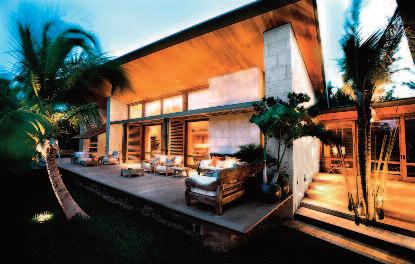
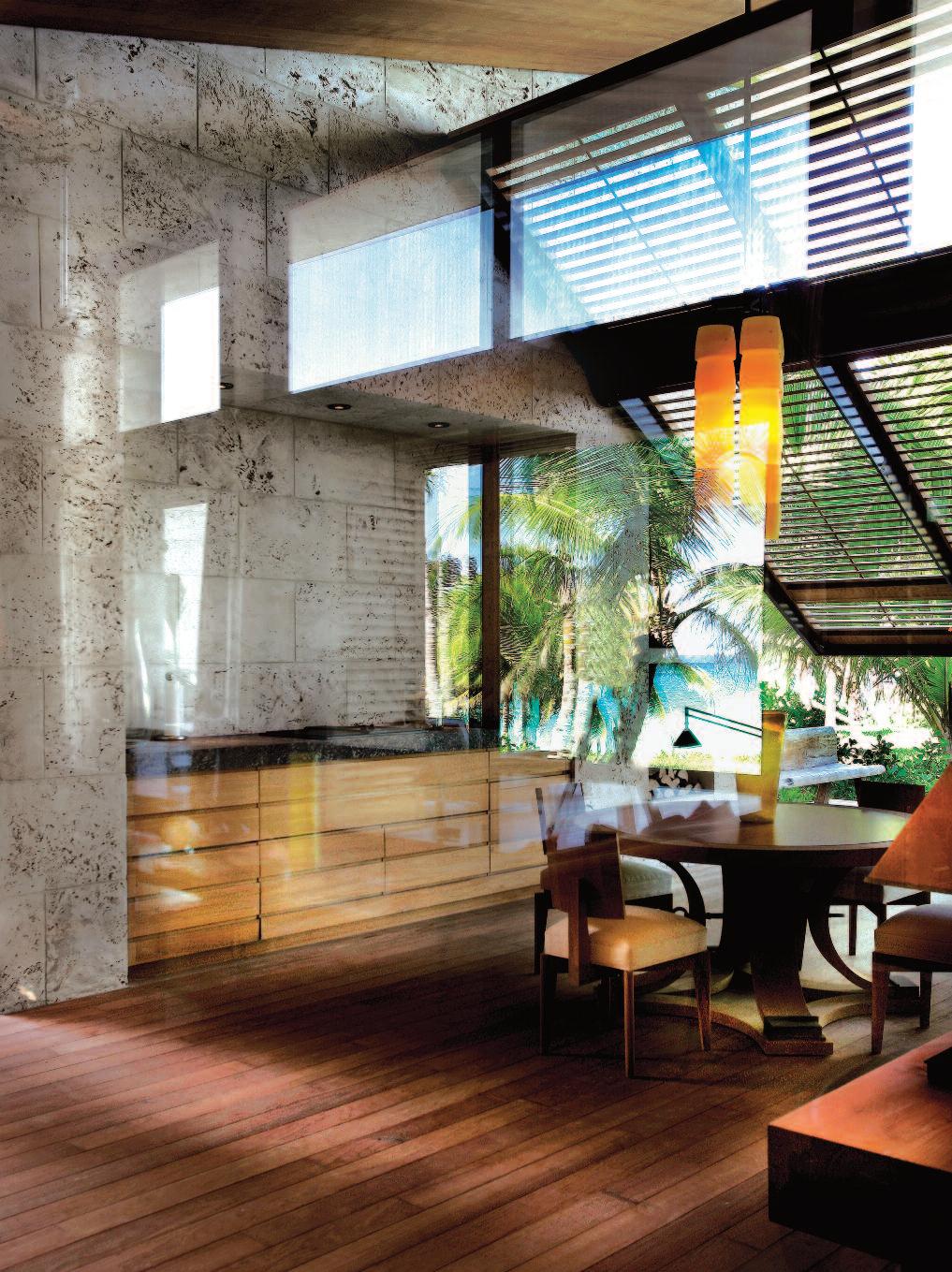
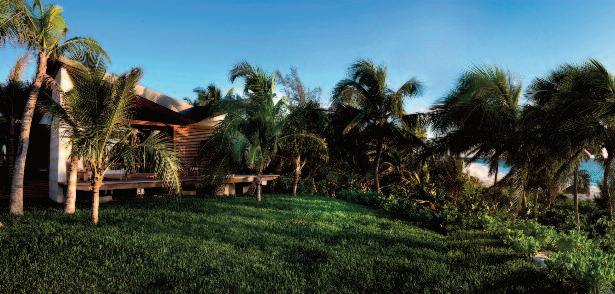
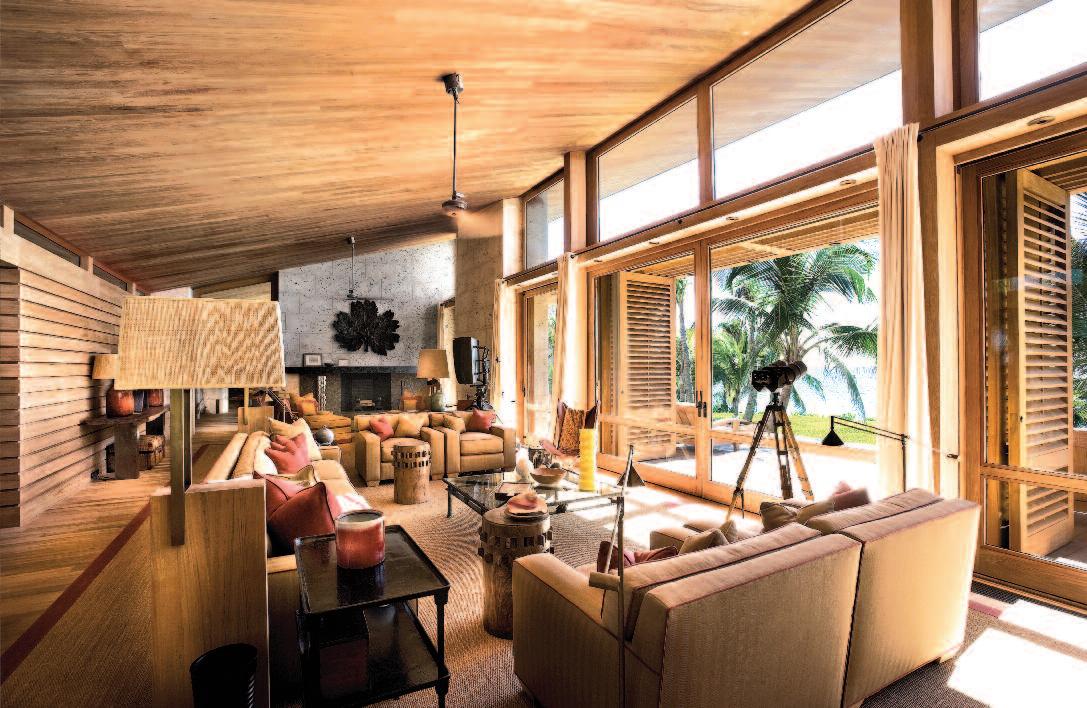
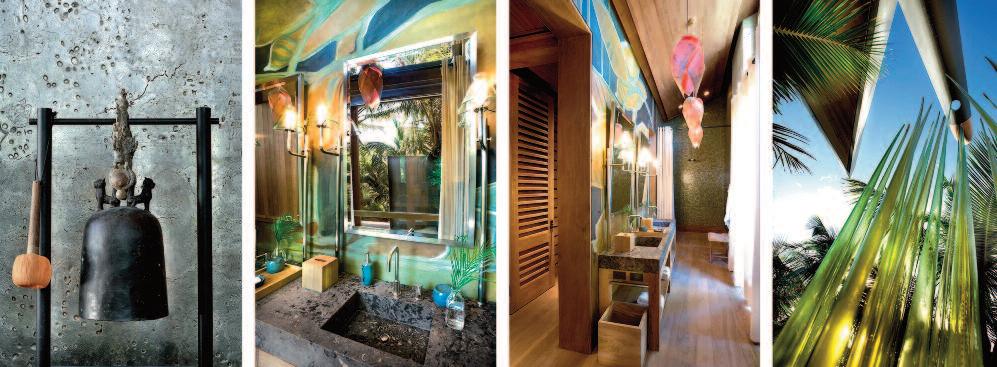
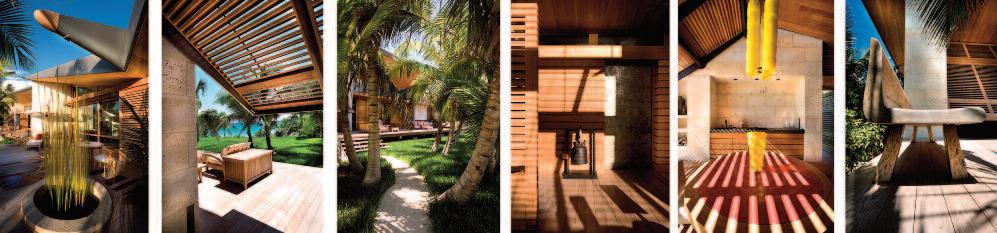
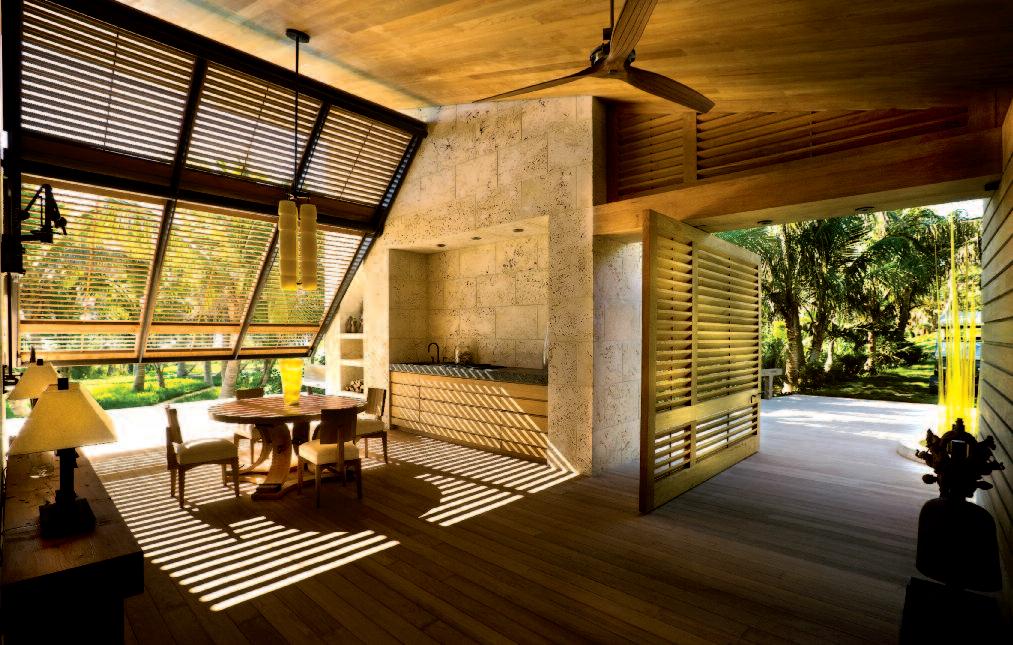
Previous, this pages and next pages: the house Thierr y W. Despont designed on Harbor Island, Bahamas, as par t of OBJEKT-Inter national’s tribute to this genius Built as a holiday residence, it merges extraordinarily well into the landscape of sand dunes, palm trees, and indigenous vegetation.
 Text: Alaïa Fonk
Photos: Hans Fonk
Text: Alaïa Fonk
Photos: Hans Fonk
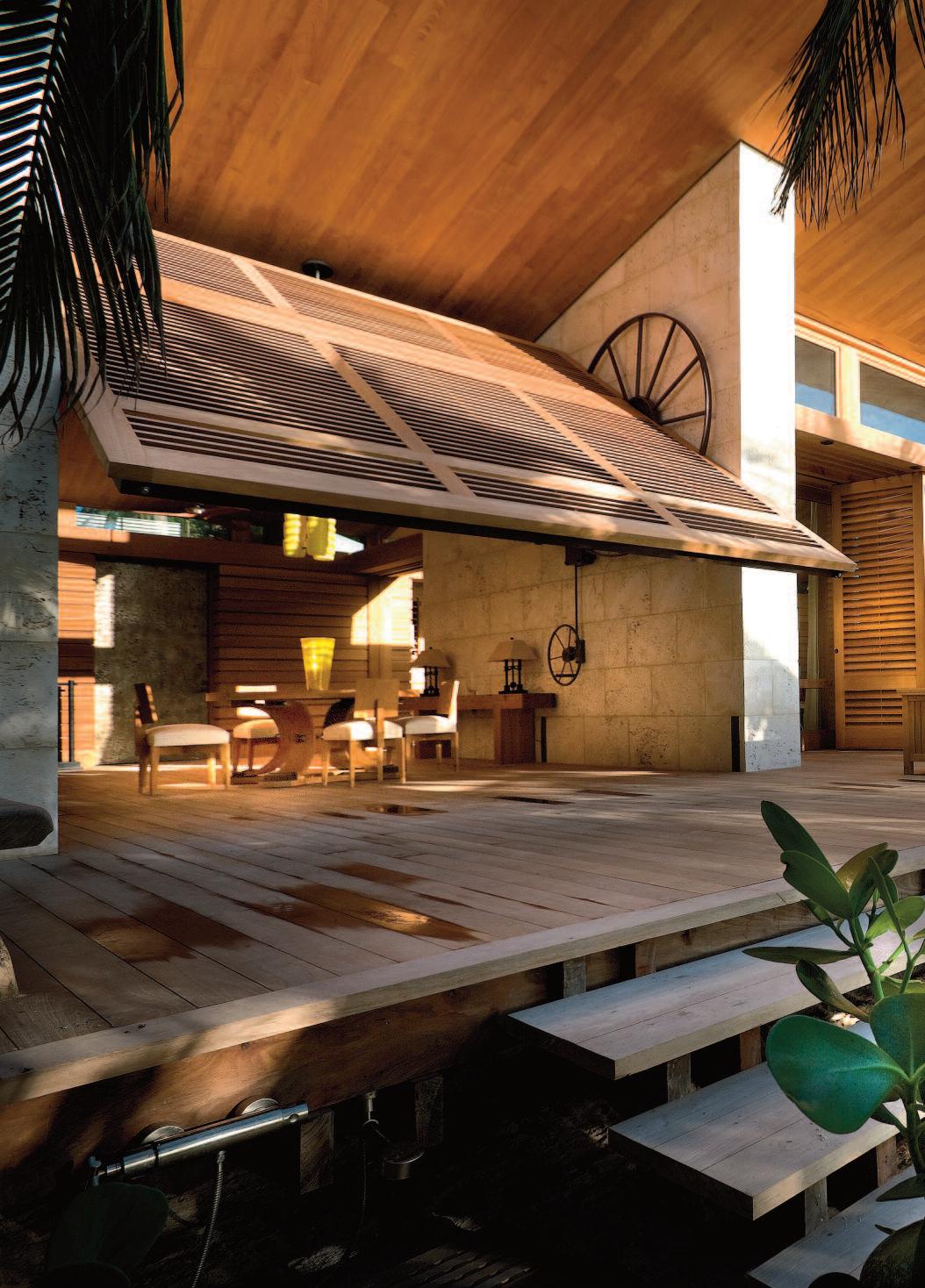
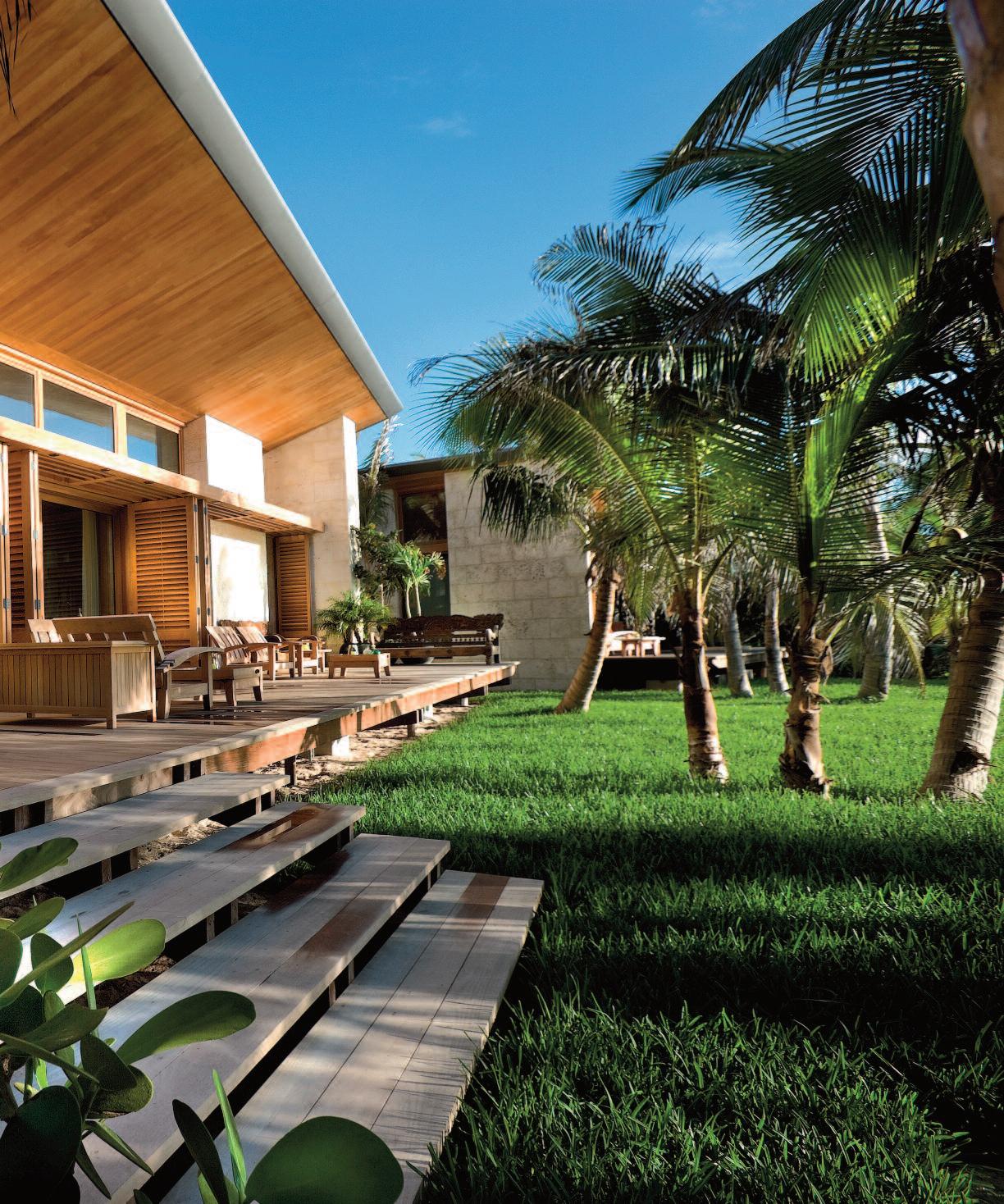
Right: the Harbor Island house comprises of two volumes beneath pitched roofs connected by a passageway. It is a symphony of wood and stone and nestles in the dunes leading to star tlingly white beaches. Large pivoting doors connect the outdoor with the interiors.
Street in New York and the flagship store for Harry Winston in Beverly Hills, California
Thierry and his office have completed several very highend hotel projects. Among them are the renovation of the Carlyle Hotel in New York, Claridge’s and The Dorchester in London, and Boca Raton Resort & Club in Florida The hotel portfolio includes the renovation of the Ritz, the Peninsula and the Crillon in Paris, the 45 Park Lane Hotel in London, The Chatwal in New York, and the Divan Hotel in Istanbul
His wide range of traditional architectural languages earned him a reputation as the designer and tastemaker for an immensely wealthy clientele searching for private residences steeped in history
He stated: “My practice is devoted to the design of houses, not shelters or ‘machines for living I have come to understand that the purpose of residential architecture should be the evocation of memories, individual memories of the patrons for whom houses are built and collective memories of our cultural past ”
His house clients included Conrad Black, Annette and Oscar de la Renta, Millard ‘Mickey’ Drexler, Bill and Melinda Gates, Calvin Klein, the Niarchos family, and Les Wexner
His creations are imbued with enduring, intrinsic beauty That qualification certainly applies to the Bahamas island house, the proportions of which are in perfect harmony with its natural surroundings. They bear witness to Thierry Despont's respect for the human scale.
The first project featured in this tribute took OBJEKTInternational east of the Florida coast to the Bahamas, a group of 700 islands and 2,000 keys, of which only around 40 are inhabited
On Harbor Island, Thierry W Despont was asked to build a holiday residence that proved to merge extraordinarily well into the landscape of sand dunes, palm trees, and indigenous vegetation
The house comprises of two volumes beneath pitched roofs connected by a passageway It is a symphony of wood and stone and nestles in the dunes leading to startlingly white beaches
It is not large, certainly not by Despont standards, but beautifully proportioned In fact, the rooms are spacious, partly thanks to the lofty ceilings and floor-to-ceiling windows The interior is a composition of timeless luxury and comfort in a deliberate mixture of furniture he designed himself plus local accessories
The rooms flow together logically: from the entrance with garden room and living room/kitchen, through a corridor to the wing with the master bedroom and children's rooms.
The appointments and color palette can to some extent be accounted for by his French-ness: both timeless and titillating, unexpected and responsive to the genius loci The house is a symphony of architecture and interior design as two inseparable things revolving around light, volumes, and colors
Thierry W. Despont was not only one of the exclusive group of top interior designers/architects, but, with his art, he was also successful world wide.
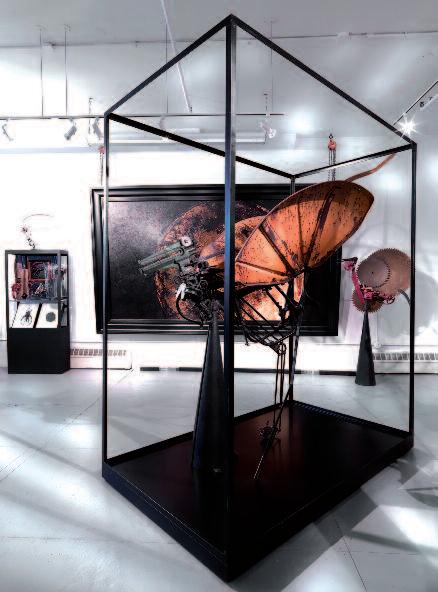
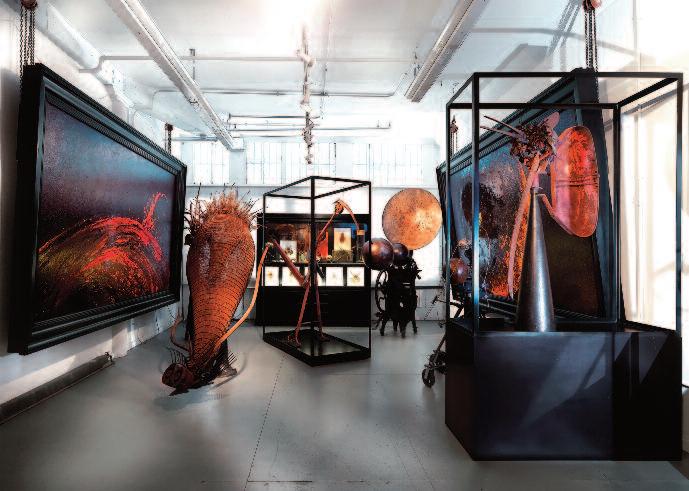
In his atelier in the heart of New York’s Tribeca district, he followed his dreams: he painted, sculpted and drew, making cosmic paintings and objects, and creating imaginary insects from old tools.
He explained: “I had a dream in which I was a man called Dr Gurnweith I don’t know, where the name came from It doesn’t mean anything Dr Gurnweith is an artist, collector and explorer His passion is to collect and display the objects from his dream world in cabinets filled with curiosities I see my studio as a Dr Gurnweith Cabinet where I pursue my dream, of a museum of natural history of this imaginary universe A place of wonderment, devoted entirely to the collection of specimens, objects, maps and inhabitants of that wondrous world ”
One of next dreams was of a ‘Silent Library’ with books you don’t open, but that fascinate you with their beauty. “I like books that you don’t have to open Books whose beauty means you can read them with your imagination ”
In his atelier he created his planets, watercolors, globes, masks, insects and other artistic objects Upon entering, the overwhelming magnificence of Thierry’s imaginary universe, made a big impression
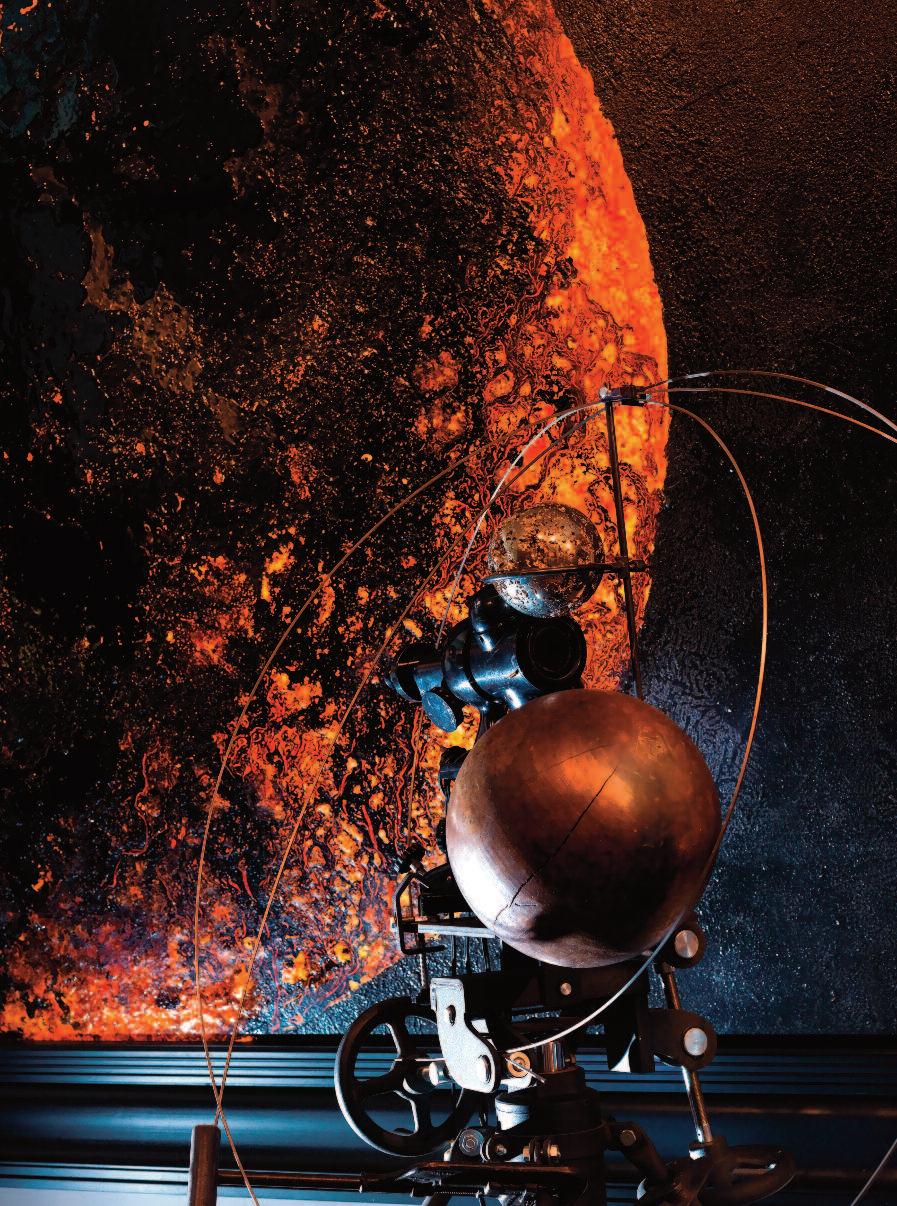
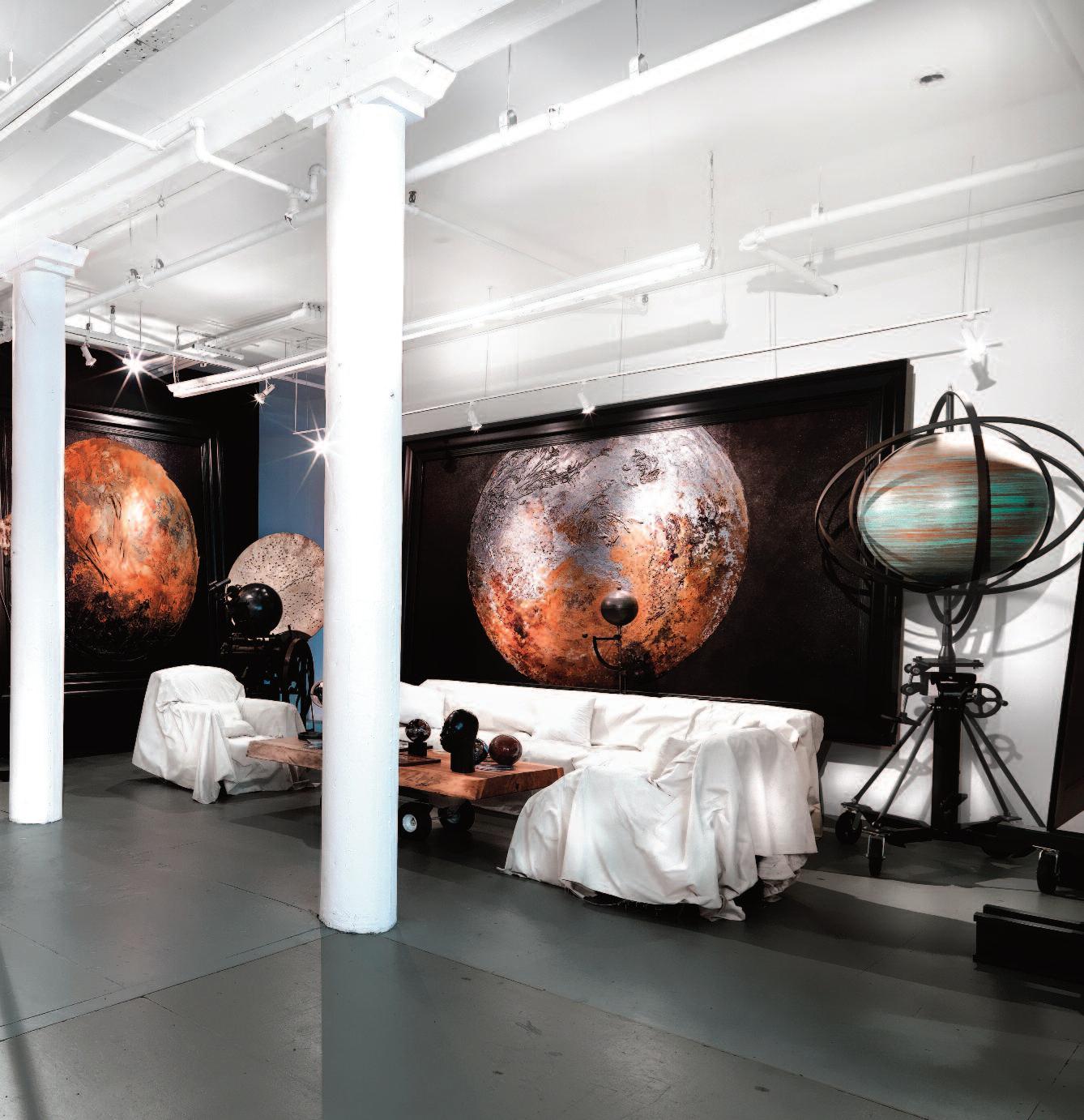
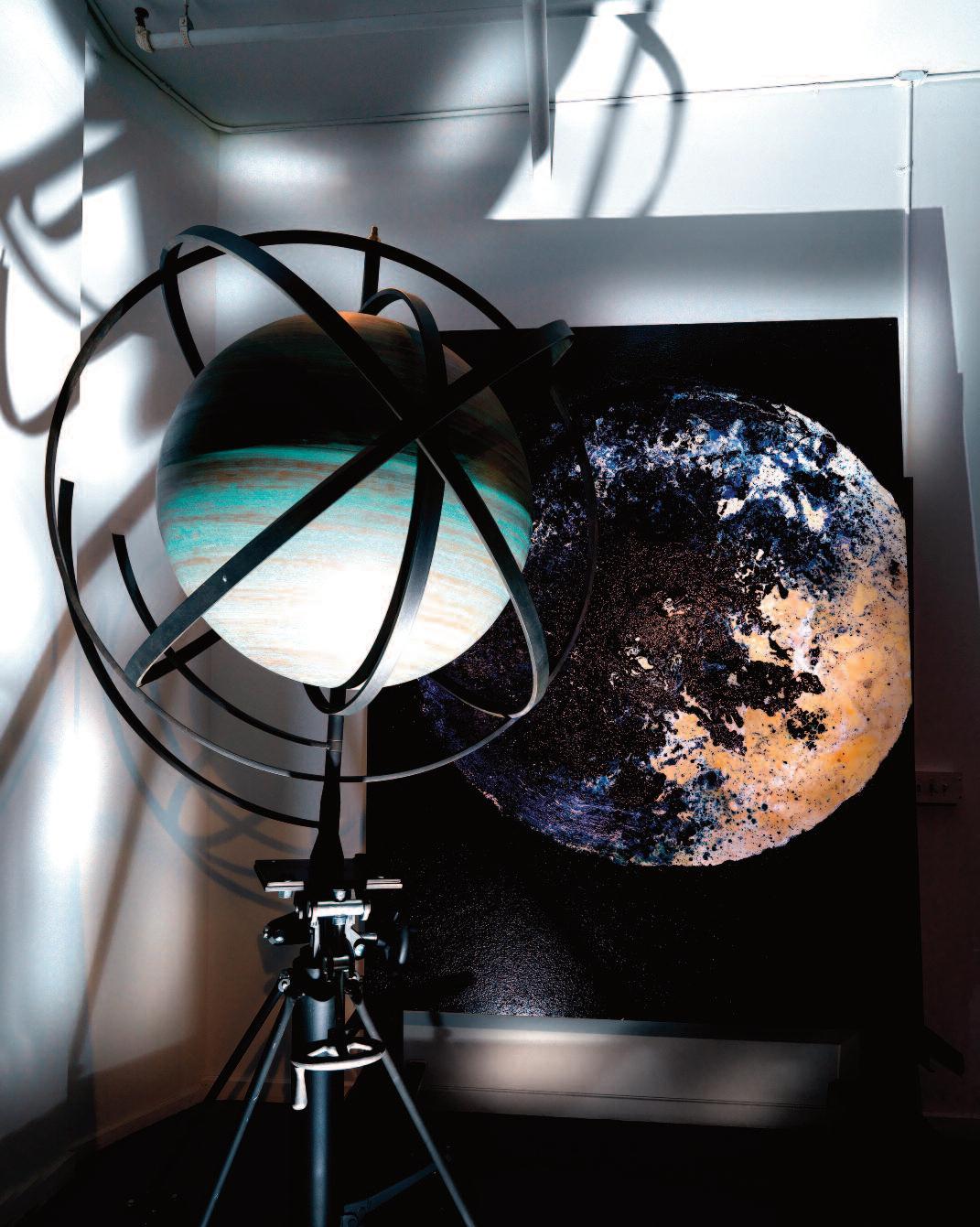
Large paintings of planets seem, with their very size and texture, to create an almost tangible cosmos. The large objects – some of which are related to his universe –add greatly to that feeling.
In the foreword to his book on his art works he wrote: “Initially I painted large and small planets, made globes and drew maps: fragments of an unknown world Then came the masks, objects and insects as inhabitants of that cosmos and made from obsolete tools that I have collected over the years They formed the fossils and discoveries of my Beagle journey round my
Above: objects and large paintings in Despont’s atelier in the hear t of New York’s Tribeca district Here he painted, sculpted and drew, making cosmic paintings and objects, and creating imaginar y insects from old tools.
Right: detail of an object and a painting from Thierr y’s universe.
Ri ght: l arge pa intings with hig hly st ruc tured sur fa ces , a nd g lob es displaying a rtifi cial constel lations se t t he m ood i n th e rec ep tion area of his studi o.
The pa intings re sult from hi s fasci nation for as tronomy That is the ba s is for T hie rr y De sp on t’s own universe
All the items he re have been designed a nd executed with great at tent ion to d eta i l – a s i s the ca se in hi s work a s a n in ter ior desig ner a nd architect
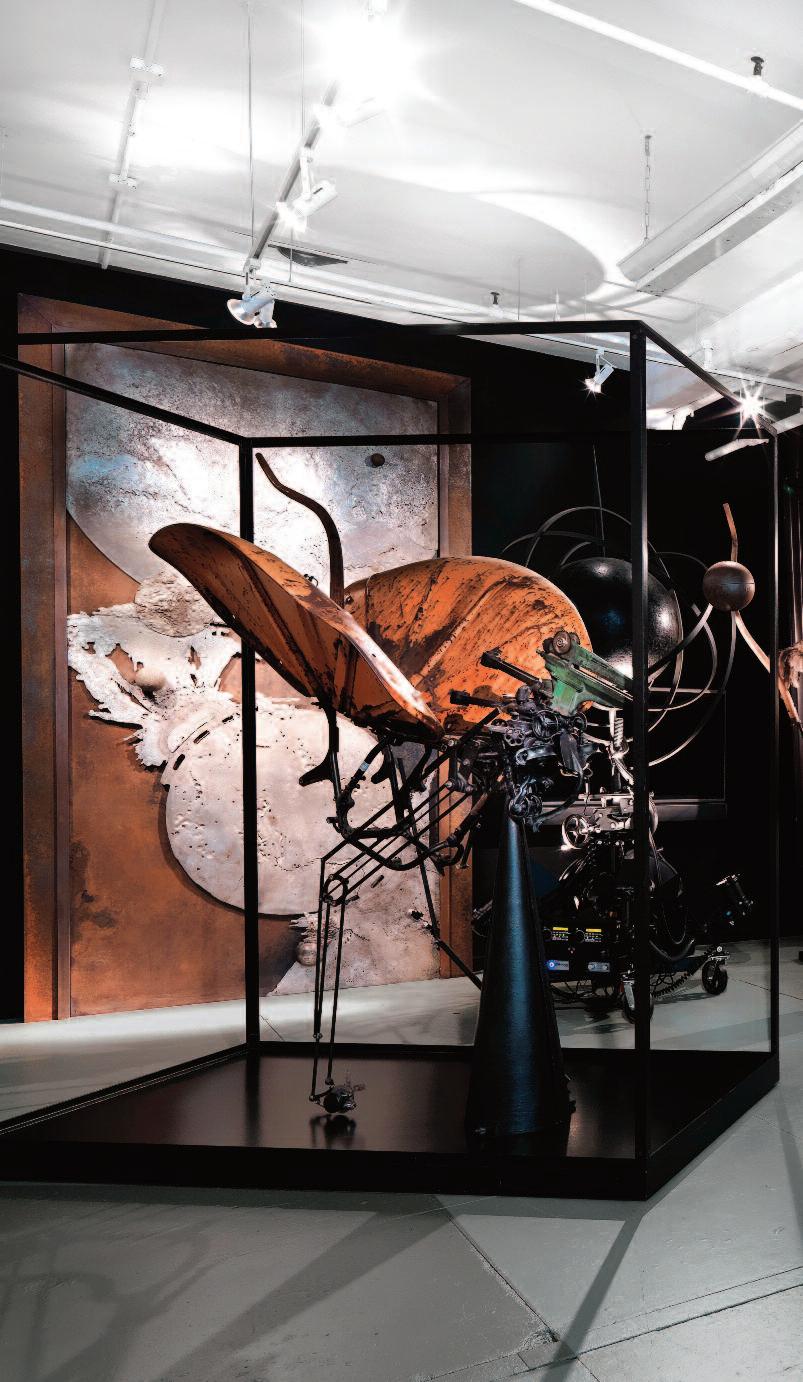
Left: on the ground floor of Thierry W. Despont’s studio large objects that he has created are positioned alongside large paintings of his version of an imaginar y outer space In the background a cabinet he designed for his insect objects which he makes from old tools and other fragments of old iron. Right: deep in Space with Thierr y Despont on his jour ney through the universe of his conceiving.
dream world They were in fact waiting for the moment that they would be assembled and kept in Dr Gurnweith’s Cabinet ”
And he continued: “Colors, textures, materials and forms come together in an unexpected coherence as proof of their existence ‘Le peu à peu du soudainement’ is my only guideline An artist’s dream is my only rule ”
When he was studying architecture at the École Nationale Supérieure des Beaux Arts in Paris, painting and drawing were an essential part of the curriculum
“Until some hundred years ago you were a poor architect if you couldn’t draw well. For me they’re all logically connected: architecture, interior design, drawing, painting and sculpture,” to quote the maestro.
It’s hard to imagine where he found the time for all these activities
“My work is my passion and I have top people in the architecture studio who shares that passion ”
He described his two activities as complementary and contradictory. Both are driven by creativity. But the architecture studio is geared to discipline and processes, whereas in his art studio he could shed that pressure.
“There are no deadlines in my atelier and that’s an excellent escape The only rules are ‘instant’ and ‘accident’ If I don’t want to see anyone here, I don’t have to Can forget the rest It’s like meditation I can spend one hour here and my mind is completely cleansed Then, when I go back to the architecture studio, I can focus fully on that work again ”
Thierry Despont was affiliated with the esteemed Marlborough Gallery. He exhibited his artwork in Marlborough galleries in New York, London and Monaco
He has also been the subject of a solo exhibition in Buenos Aires at the Centro Cultural Recoleta He has had several books published on his artwork, including Planets, Masks, Studio and Insects by Assouline Publishers, as well as an artist book on Rimbaud, “Le Bateau Ivre”
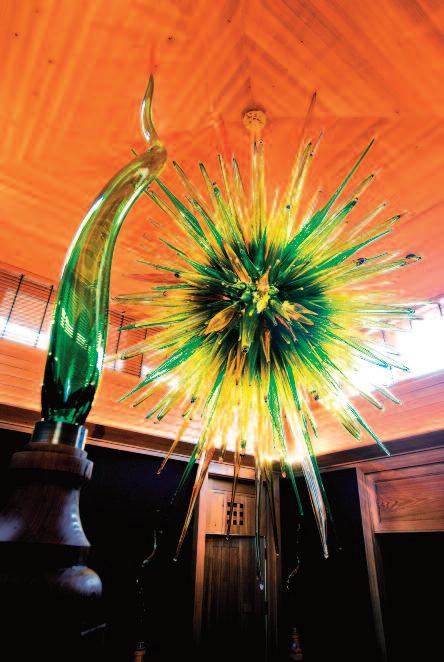
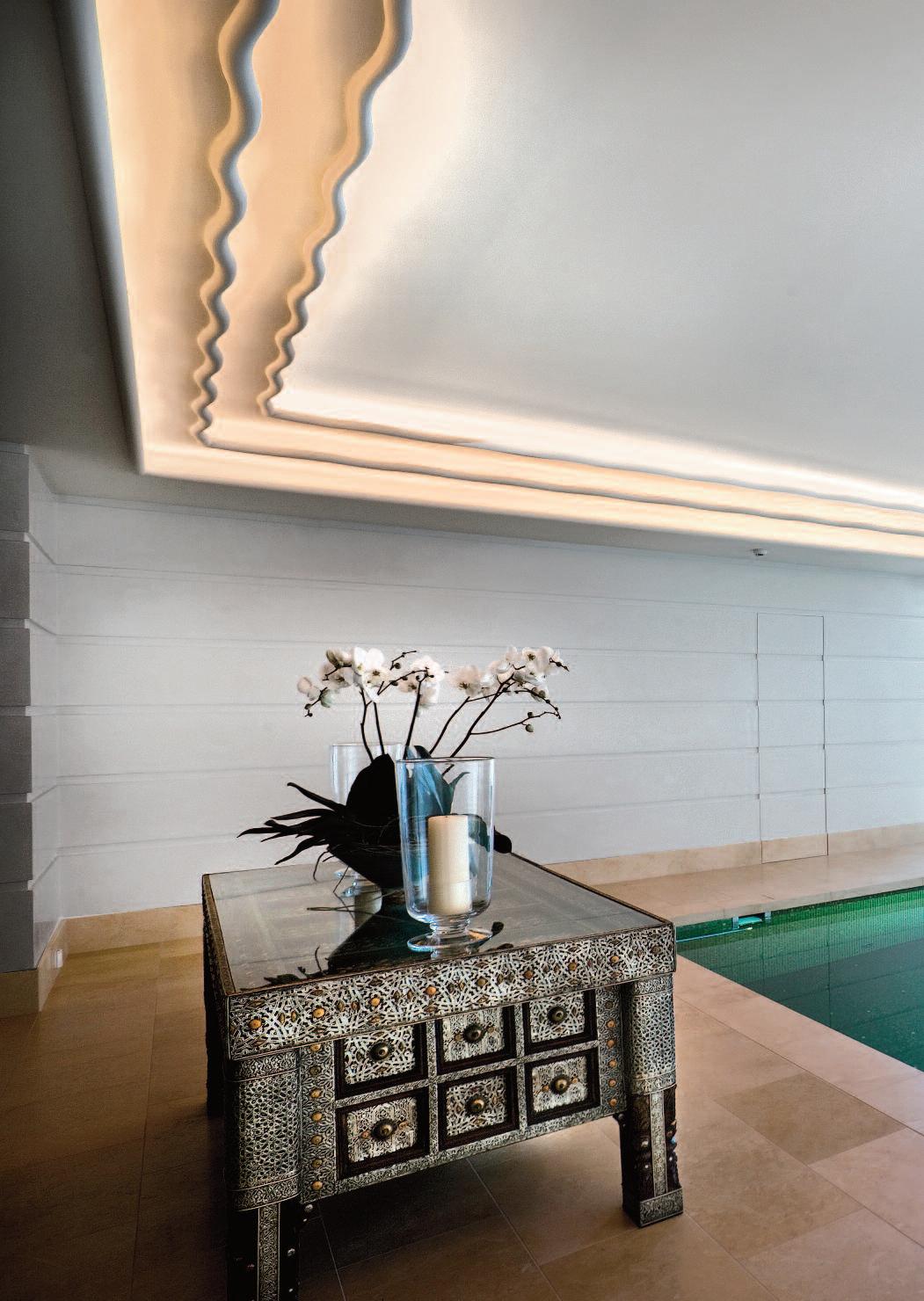
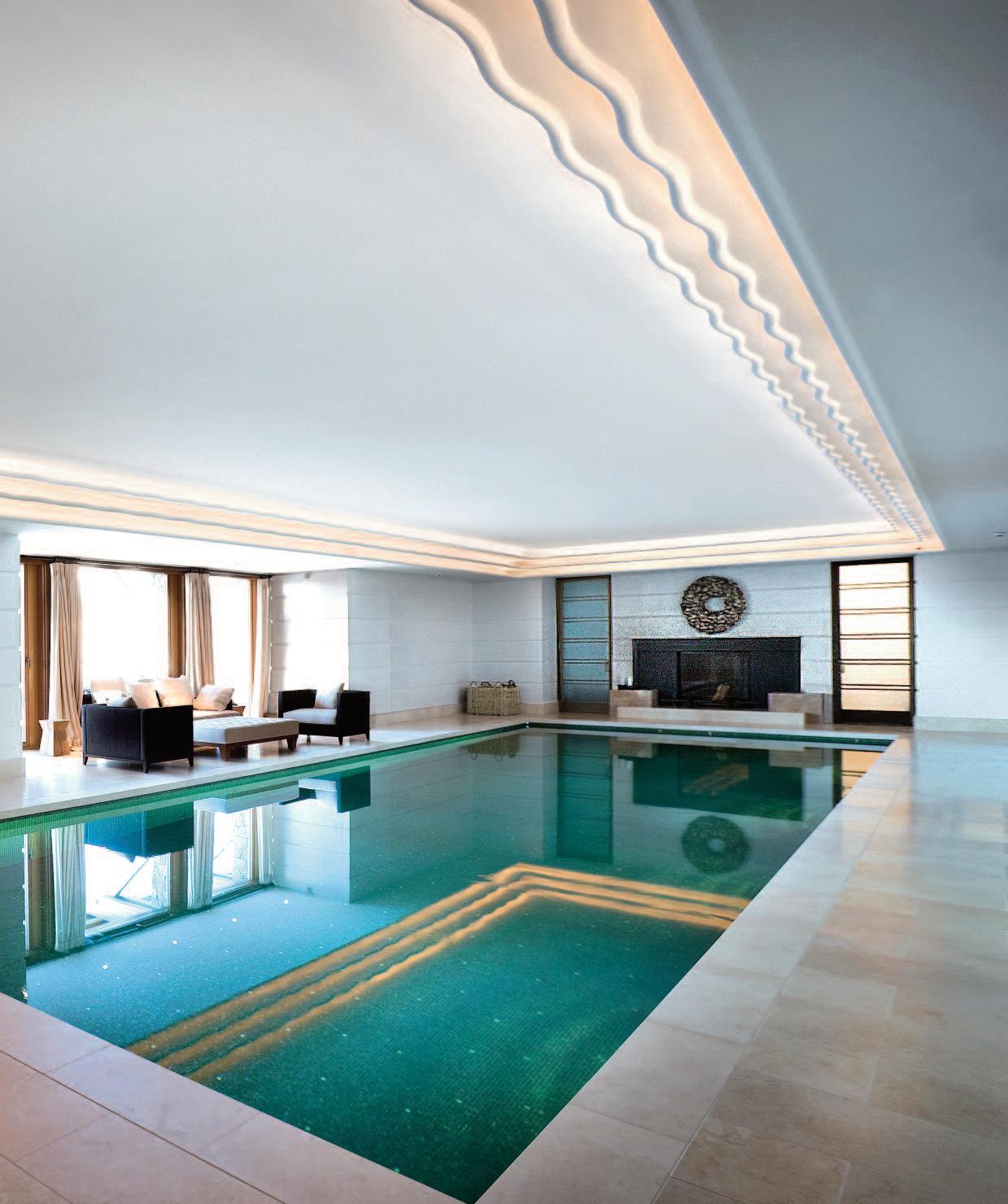
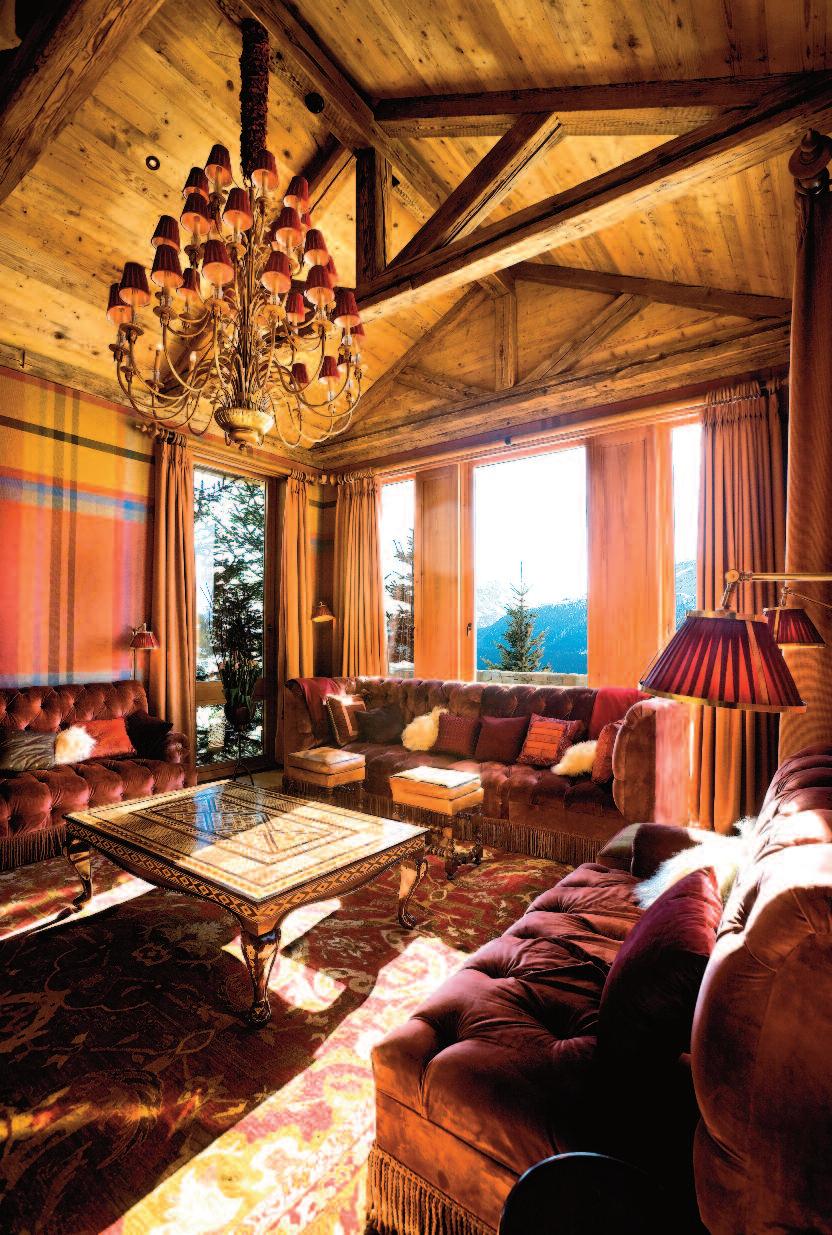 Above: the cottage room adjoining the living area with custom-made wall covering in a full-height patter n. Right: the villa seen from above and, beside that, the large glass lighting object designed by Thierr y Despont in the villa’s entrance. Over leaf: the large indoor pool in all its splendor ; on the far side, a fireplace and left, a sitting area with mountain view.
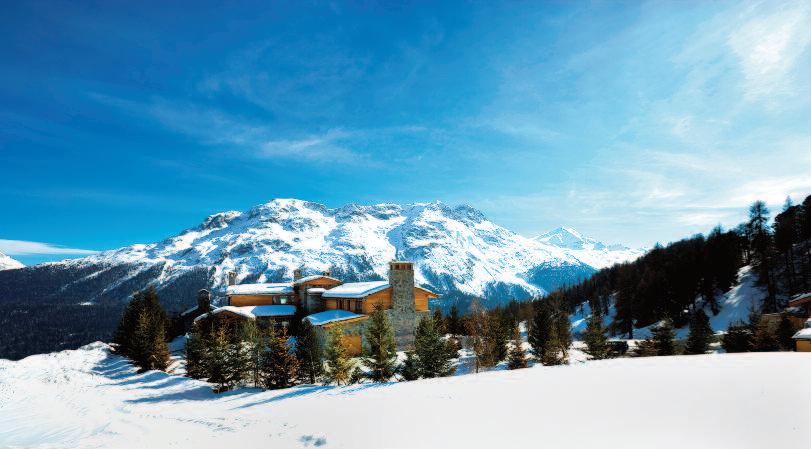
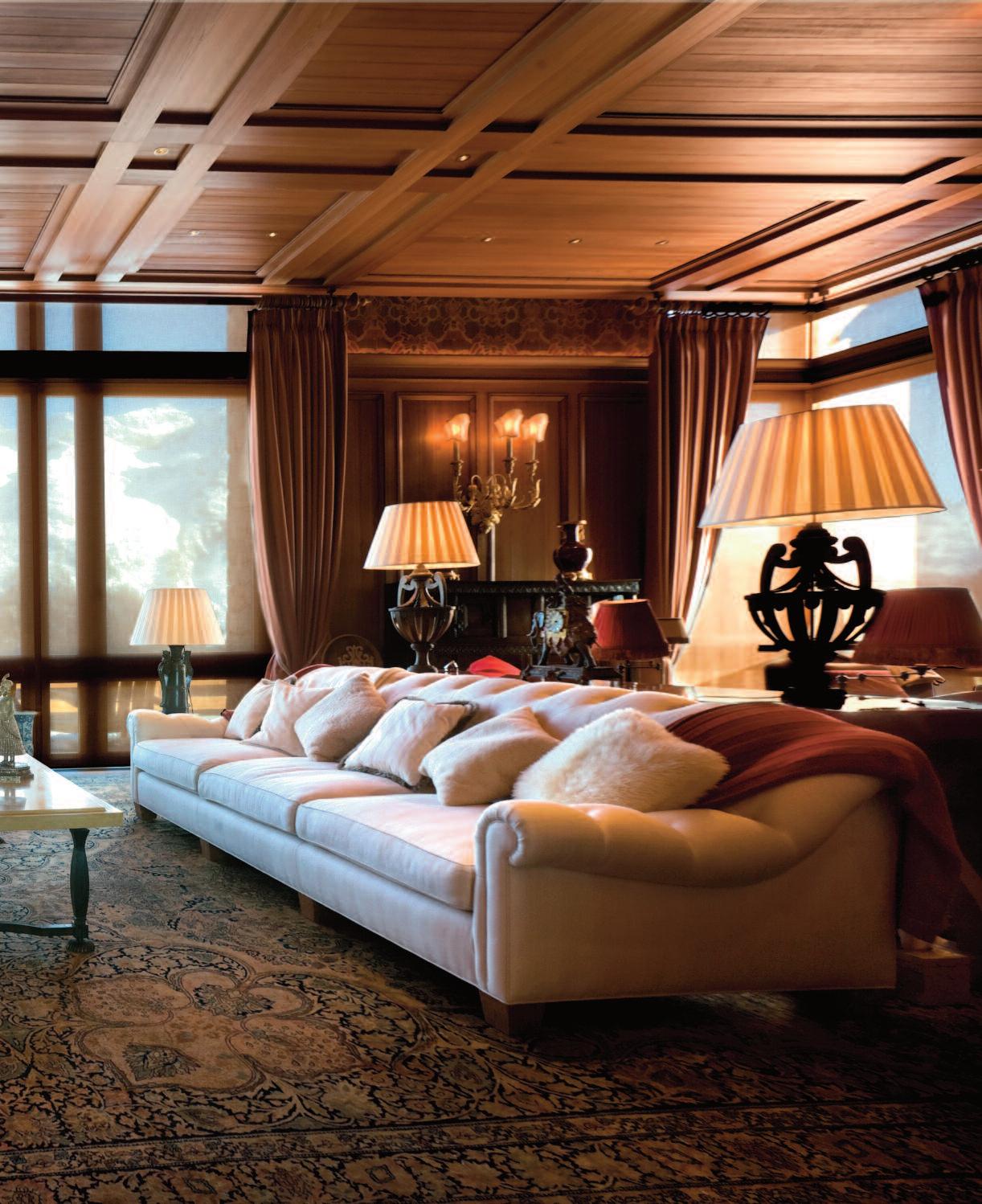
When an interior is designed, the architectural dimensions need not detract from the human scale — a fact that is convincingly demonstrated by the architect, interior designer and artist Thierry Despont in the smart winter sports resort of St. Moritz, high in the Swiss Alps. It is quite obvious that the clients have been keen sparring partners in the creative process, working together with the designer to produce this result: the height of luxury in a warm, timeless setting.
 the Maestro in St. Moritz
At the end of the Engadin valley, the surrounding mountains are covered in ubiquitous snow, the lakes are frozen and the sun is shining. In short, it is a picturepostcard view of one of the world’s leading winter sports resorts: St. Moritz.
This is Switzerland at its best. Here, high above St. Moritz, is the location of the villa Thierry Despont and his clients transformed into a warm family home Light, volumes and color are his foremost tools for realizing his timeless visions of luxury
The building work was preceded by a year of planning with Rolf Schmid of the Swiss architecture firm of Oberholzer + Brüschweiler That resulted in designs for the exterior structure and the internal planning, in which the unimpeded view of St. Moritz valley and the surrounding mountains was a major consideration
Then Thierry Despont and his team went to work on the interior Despite the actual size, the house has become a
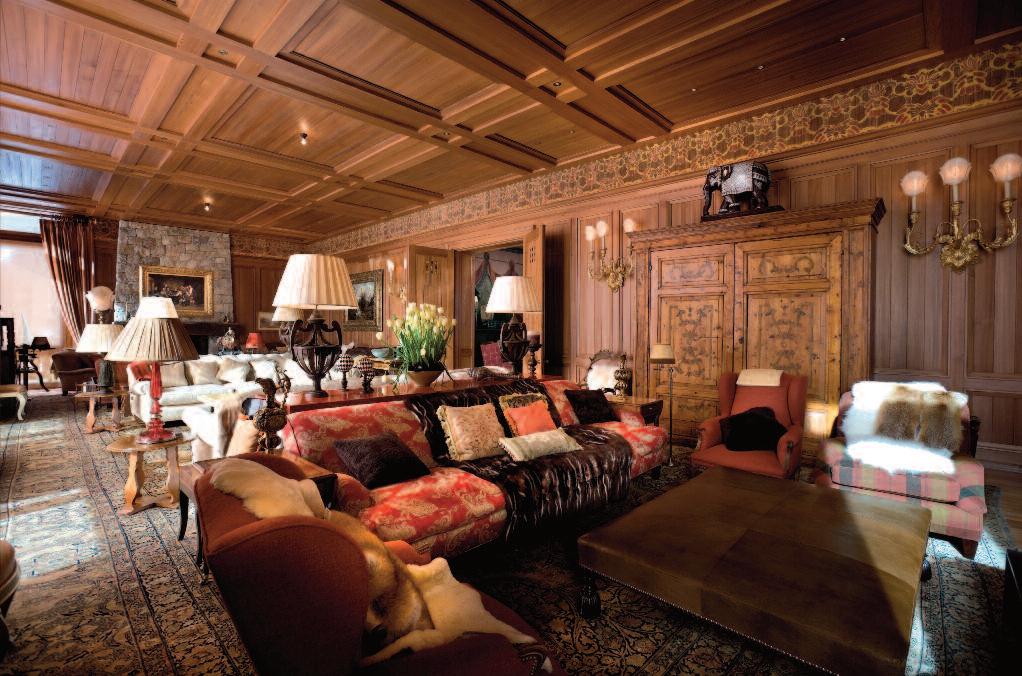
proper family home and the interior has been designed and executed with the greatest possible eye for detail Wall coverings and stair carpeting were custom-woven to the exact measurements of the rooms and stairs, antique furniture and objects were purchased and a gigantic glass chandelier, designed by Thierry Despont, was made in the Czech Re-public.
The enormous Oriental carpet in the living room is a real eye-catcher Bathrooms and bedrooms all have their own ambience, in keeping with the users ’ wishes, and further enhanced with art objects from the family collection that are placed throughout the house
The owners ’ appreciation of the creative achievement is obvious: this is not a décor featuring splendid items, but an interior that radiates the enjoyment of those who use it
This Swiss town of St Moritz is one of the best-known luxury holiday resorts in the world. Its name has such cachet that it was registered as a brand in 1987, something that at the time was so unusual that it
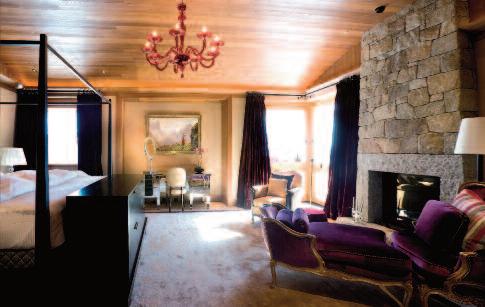
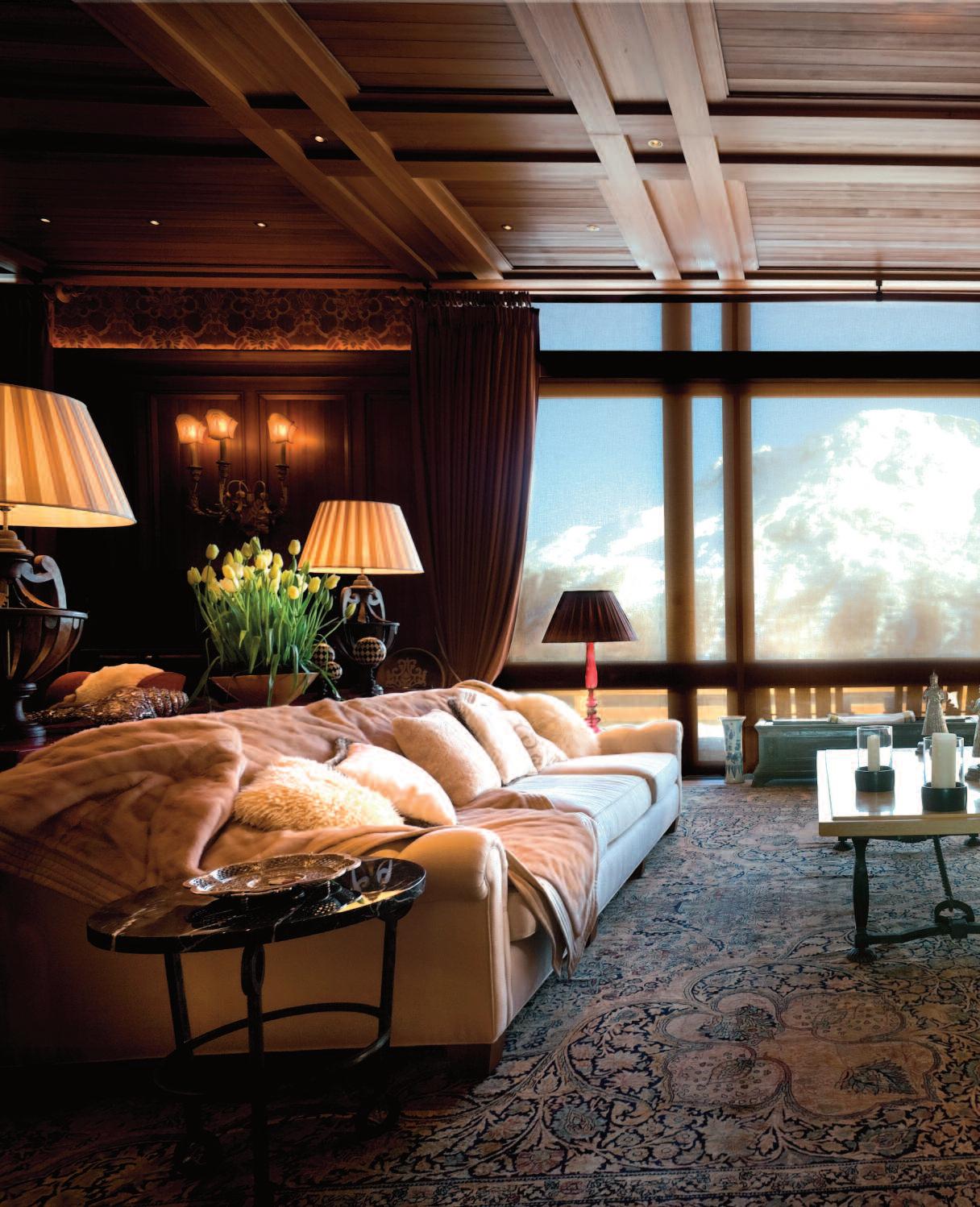
Top left: on either side of this space there are big fireplaces with stone surrounds The living space has been divided into three large seating areas with well-upholstered sofas, antique objects and ar tworks from the family collection. Right: the master bathroom with marble tub set on the marble floor, and a detail of the richly-decorated dressing table. Below that: one of the bedrooms with, each
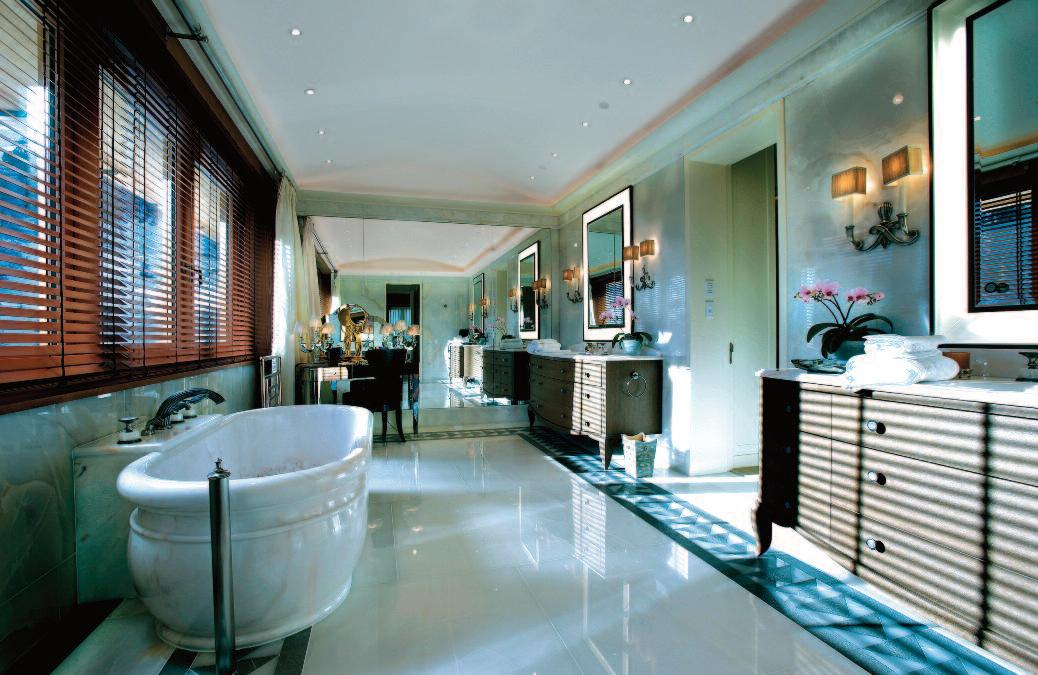
actually made the front page of the Wall Street Journal. The village is in fact the cradle of what today is known as winter sports.
Back in 1864 the hotel pioneer Johann Badrutt invited four British summer guests to spend the winter in his hotel. If they did not enjoy themselves, Badrutt would pay all their travel expenses
If they did, they could stay as long as they liked The guests accepted, spent Christmas in St Moritz, and stayed till Easter
They were the first winter tourists in the Alps and their enthusiasm paved the way for an entirely new holiday phenomenon: winter sports.
Although in many Alpine centers winter sports have degenerated into mass tourism, St Moritz has retained its style. It was the favorite ‘port of call’ for celebrities like Greta Garbo, the Kennedy clan, Alfred Hitchcock, Thomas Mann and many others. It is a life-style that still appeals to the rich and famous in the 21st century who can enjoy the delights of St Moritz in relative anonymity
with an individual style Below that: the bright midday sun enters the large dining-room with its authentic tiled stove The generous table can accommodate the entire family for dinner together.
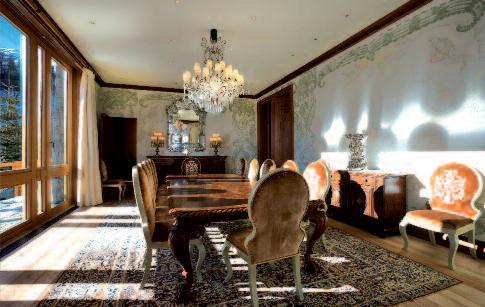
Over leaf: the large living area with its splendid view over the valley of St. Moritz and the mountains behind.
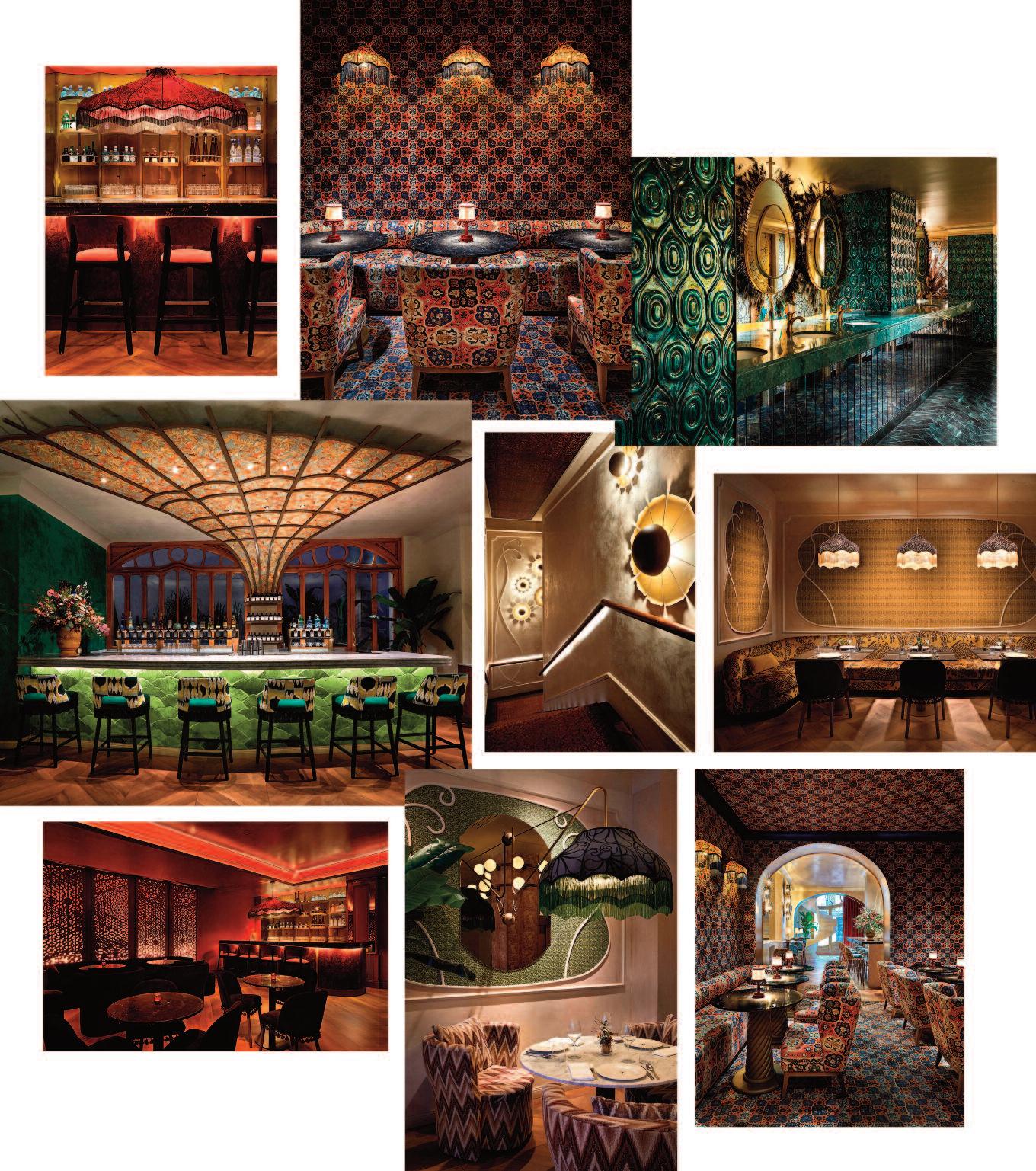
Jacqueline, the new maximalist restaurant in Barcelona, is inspired by Picasso’s portraits of his muse, and second wife Jacqueline Roque whilst paying homage to the artist’s beloved atelier
The three-story restaurant in the Eixample district of the city merges clean Art Nouveau details. a quintessential feature of the city of Barcelona, with the spontaneous and surreal forms of Picasso’s artworks to create an interior atmosphere that reflects the vibrancy of the Catalonian city It was designed by interdisciplinary architecture and design firm Rockwell Group
The project, led by Greg Keffer, Partner and Studio Leader at Rockwell Group New York and Eva Longoria, Principal and Studio Leader of Rockwell Group's Madrid office, took aspiration from Jacqueline’s portraits interpreting the artwork’s details and hues through the furniture and finishes
The ground floor reflects the colorful and sensual 1955 portrait ‘Woman velvet blue curtains open to the Entry Bar, adorned with bronze and antique mirrors and a stained-glass window
The Padded lounge is clad in Turkish tapestry The palm tree made of bronze metal and green, mirrored glass was inspired by the palm trees outside of Picasso’s original atelier.
The first-floor bar is entirely clad in rosy, floral motifs, to reference “Jacqueline with Flowers” (1954), a portrait of Jacqueline in a crouched, “Sphinx-like” position on a red sofa with flowers and greenery appearing in the background.
A contemporary portrait of Jacqueline, ‘Woman in a Mantilla Red Background’ (1959), was the source of inspiration for the Club area, situated in the lower-level floor The portrait depicts Jacqueline in a traditional black lace shawl over her head and shoulders against a bright red backdrop.
Inspired by these stark color contrasts, Rockwell Group cladded the club entirely in red, with a reflective red ceiling, red columns, and backlit laser cut metal screens along the walls that evoke the mantilla’s lace

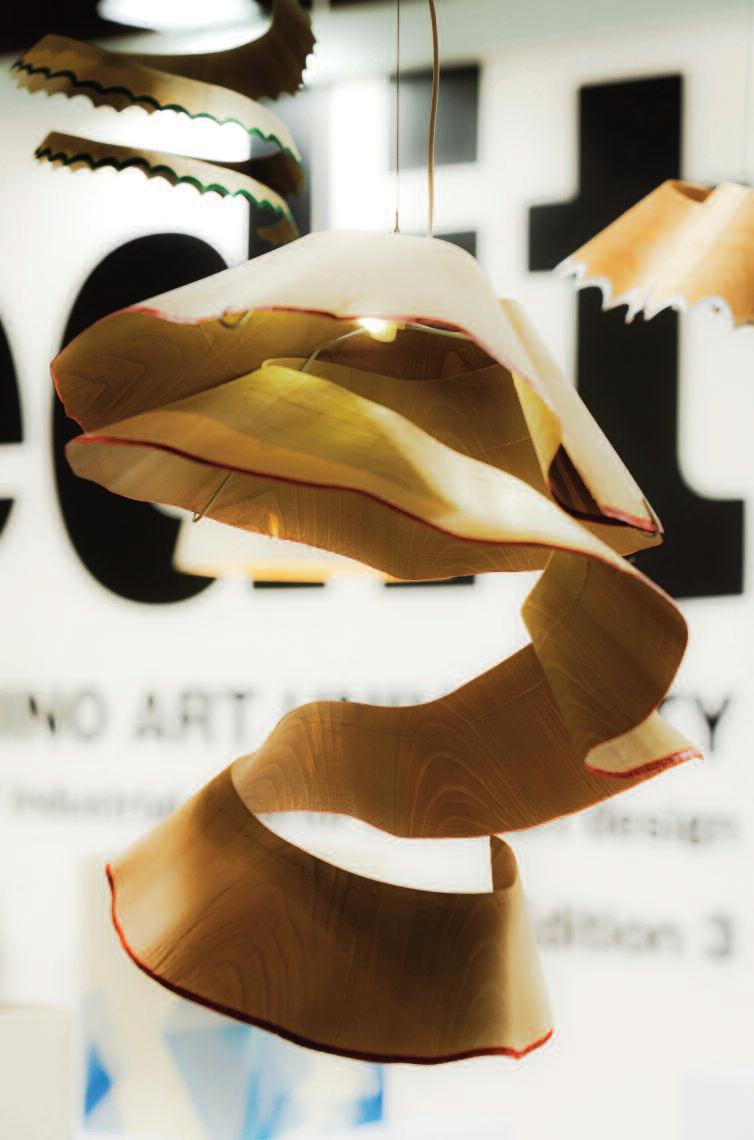
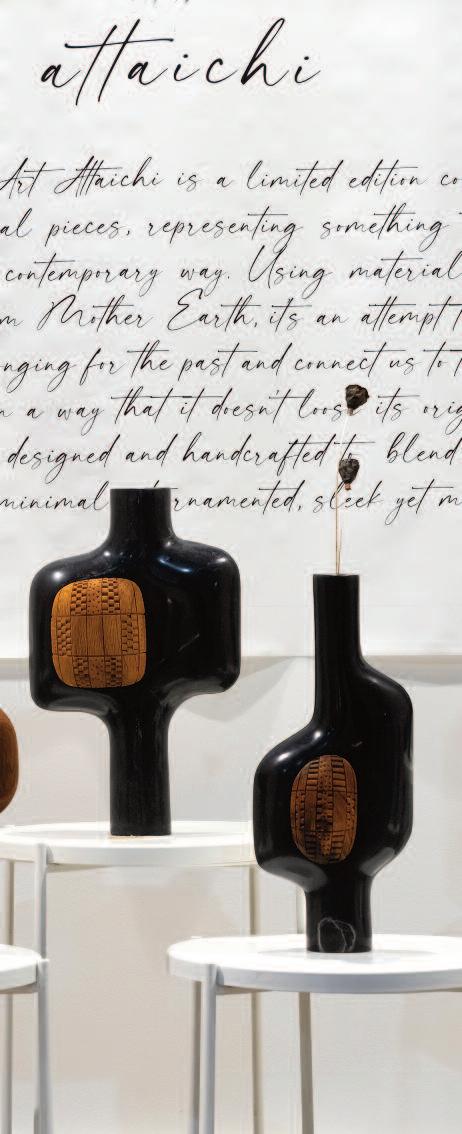
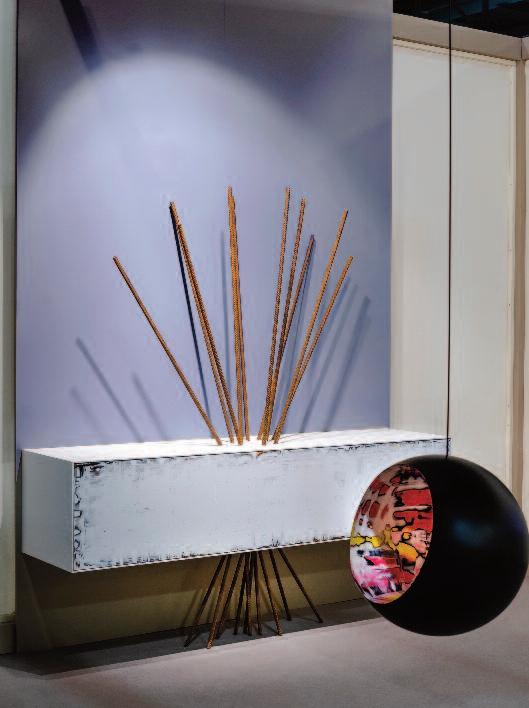
SaloneSatellite. Milano is the most prominent place in the world for young designers to introduce their works. Here two of the entries with on the left creations by Studionotte and on the right ‘What’s on/in your Head’ by students of the Art Academy of Latvia, a research on what goes on in peoples head

All photos: Hans Fonk
Within the context of the Salone del Mobile Milano 2023, the curtain went up for the 24th edition of SaloneSatellite, set up in 1998 and curated by Marva Griffin as a dedicated space for designers under 35
This new edition was focusing on design schools and universities, underscoring the lasting contribution they have made and still do make to the training of future designers and the development of design.
Marva Griffin, founder and curator Salone Satellite: “What academic training is needed alongside the fresh eye of youngsters embarking on design? What will the design world look like in the future? This year, the superlative Satellite event devoted to young creativity is taking an expansive look at the direction design is taking.”
In a commentary on the show, she writes that the founding and affirmation of new schools and courses devoted to the discipline of design gained traction precisely during the early years of SaloneSatellite.
To this end, the event has given them space and visibility, from its very first edition onwards. Testament to the fact that, each with their own particular formative direction, they have s uccessfully imprinted particular design approaches onto entire generations, allowing individual voices to emerge.
For this edition of edition of SaloneSateliite, the lead theme was ‘Design Schools – Universities / Building the (IM)Possible Process, Progress, Practice’
In particular, the design schools and universities were asked to respond to the question design where are you going? And also to illustrate this through the installation and the presentation of the work of the student graduates-to-be.

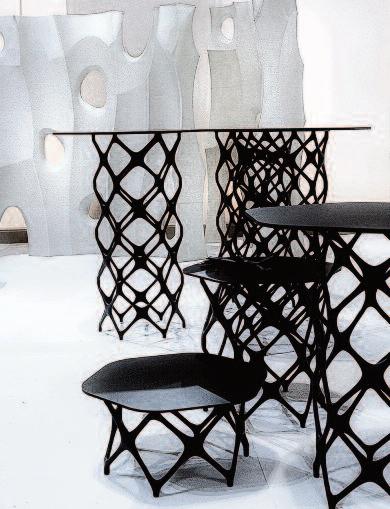
This
SaloneSatellite Award contest
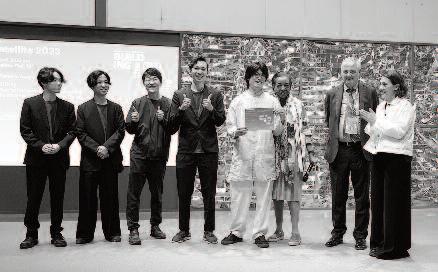
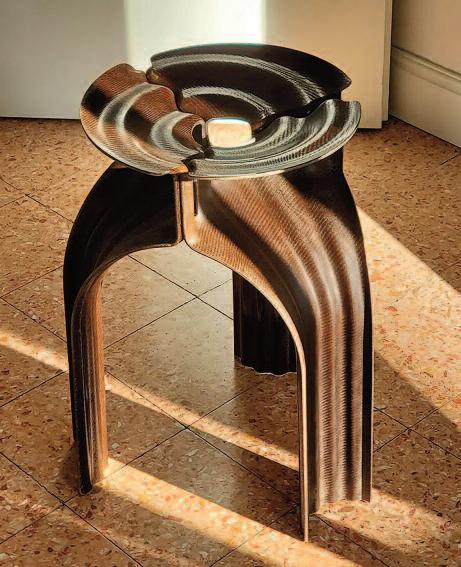
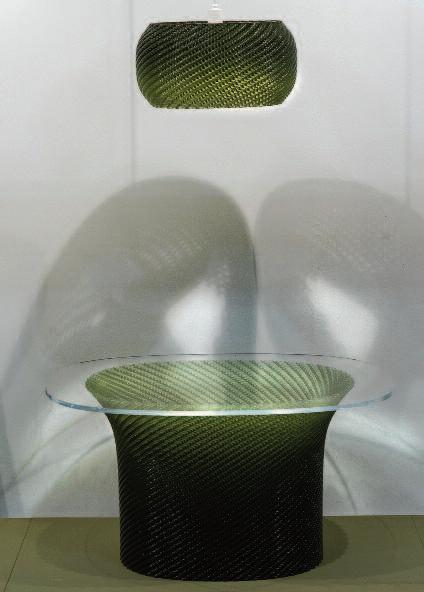
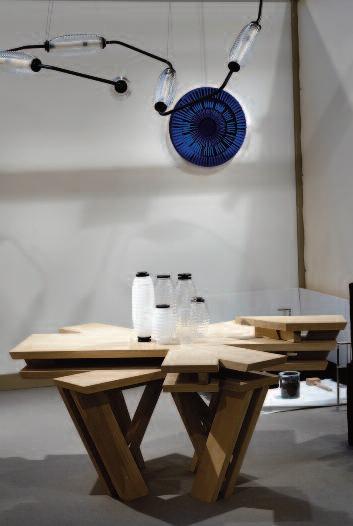
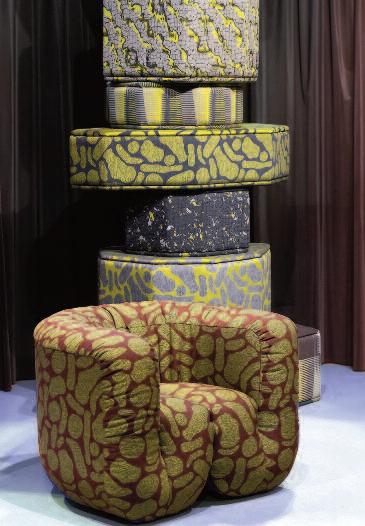
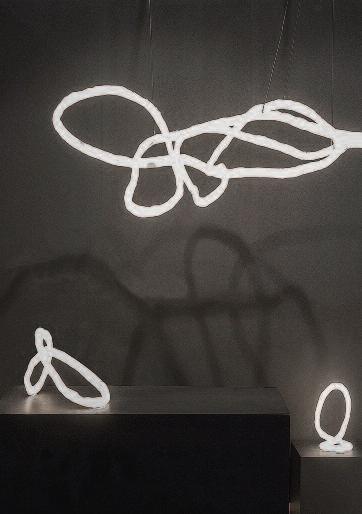
awarded to Japan’s Honoka for Tatami Refab, combining reclaimed tatami material and 3D printing. Beside that: the winners, Founder and Curator SaloneSatellite, Marco Sabetta, General Manager of the Salone del Mobile.Milano and on the right Paola Antonelli, Senior Curator Department of Architecture and Design and Director, Research and Development of the Museum of Modern Art, MoMA.
Below that: light sculptures by Andréina Raventos, creations by Andr Atelier, Polandand Re by Envisions/ Dutch Satelitte, a range of interior textiles made of up-cycled yarns made up of unsorted textile waste. Left: second prize winner the Hong Kong-based Studio Ryte with Triplex Stool, made of flax, a sustainable wood fiber
The individual contributions of each institution will help to draw up an ideal collective map of design visions that will signal the challenges we are likely to encounter next and how to tackle them from the point of view of design and its teaching In a period marked by huge shifts in environmental, economic and social balances, it will provide precious information that will help point students and emerging designers towards what innovation will mean in the future
To help visualize the close relationship between the training process and the design development of the designers, the stands of the 28 Design Schools and Universities from 18 different countries were arranged around an outer loop that encompasses the approximately 550 exhibitors from 31 different countries
The inspiration for the installation, curated as always by the architect Ricardo Bello Dias, came from Euroluce.
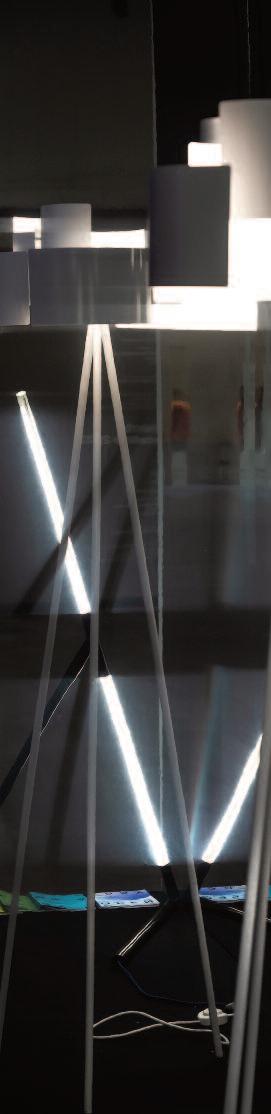
Thus, natural light, and what it represents, a metaphor for life and the learning processes, was the leitmotiv of the space dedicated to the under-35s
With every edition the SaloneSatellite Award is assigned to the three most deserving projects (and also provides for up to two Honorable Mentions).
All the contending prototypes were showcased in a dedicated exhibition and assessed by an international jury, led, from the first edition onwards, by Paola Antonelli, Senior Curator Department of Architecture and Design and Director, Research and Development of the Museum of Modern Art, MoMA
Marva Griffin: “The 2023 SaloneSatellite edition was very satisfying for me since all my expectations and goals have been satisfied and
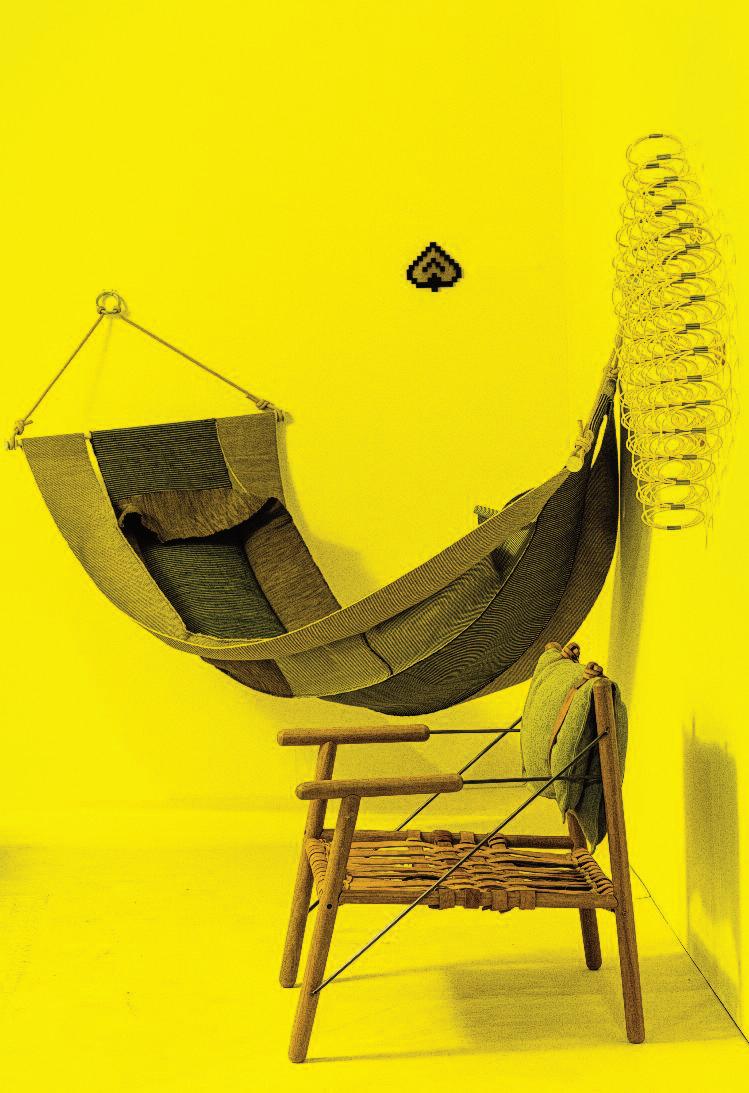
Right: creations by the students of Raffles Milano Instituto Moda e Design. Beside that: Kudoazò hammock, by Ahokpe + Chatalin/ Belgium is Design. This creation won third prize. The small sculpture on the back wall is by Arisaa, India, the chair is by Tavinho Camerino, Brazil and the sculpture behind it, is by Gus Yap, Malaysia.
reached. Let me tell this. Paola Antonelli and two other members of the Jury of the SaloneSatellite Award told me that this year I have put them ‘in troubles’! They found that the creativity of the exhibiting pieces was extremely high, the best ever, and they had difficulties in making the selection of the prototypes. A great compliment coming from Paola!”
The First Prize was awarded to Japan’s Honoka for his Tatami Refab, combining reclaimed tatami material and 3D printing.
Second Prize went to the Hong Kong-based Studio Ryte for its Triplex Stool, made using flax, a sustainable wood fibre.
Third Prize went to Ahokpe + Chatalin, appearing at SaloneSatellite as Belgium is Design, for their Kudoazo hammock, made from recycled fabric spun in Benin
This year, after its 2019 launch, the Rong Design Award promoted by the Rong Design Library from the Yuhang district of Hangzhou, China, assigned again a one-month residency to three designers The winners will be fully documented with traditional Chinese crafts and materials into their creative process during a one-month design residency in China
The mission is to introduce and promote Chinese traditional peculiarities to the global design world, while supporting the creativity and growth of young designers
The awards went to the Spanish Joaquin Ivan Sansone, currently living in Spain, for his cane Junki stool; to Korea’s Weonrhee, for the small Primitive Structure table, and Venezuelan-born Fragmentario, now living in the USA, for the Avocado Seed Brick project.
One of the highlights of SaloneSatellite was the talk dedicated to young designers ‘Understanding the Future’ by the master Gaetano Pesce – the Italian sculptor, designer and architect, who has been based in New York.

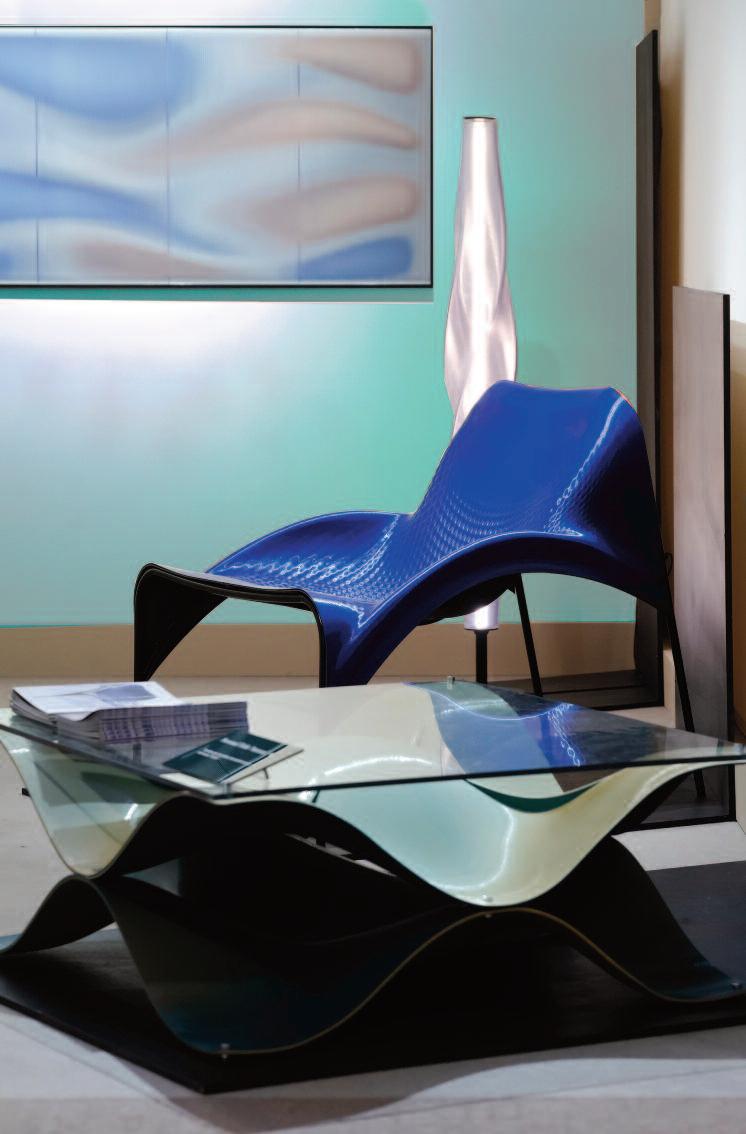
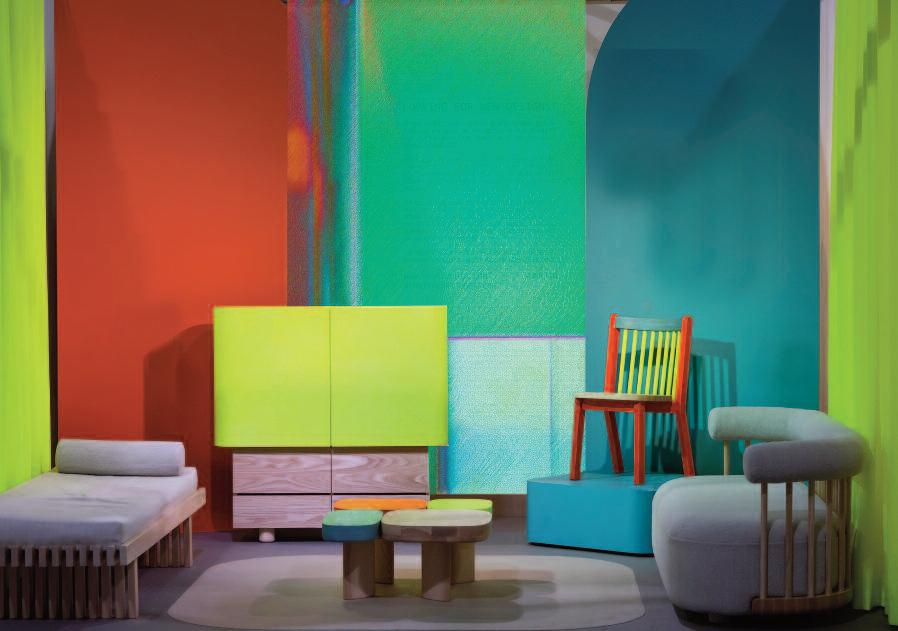
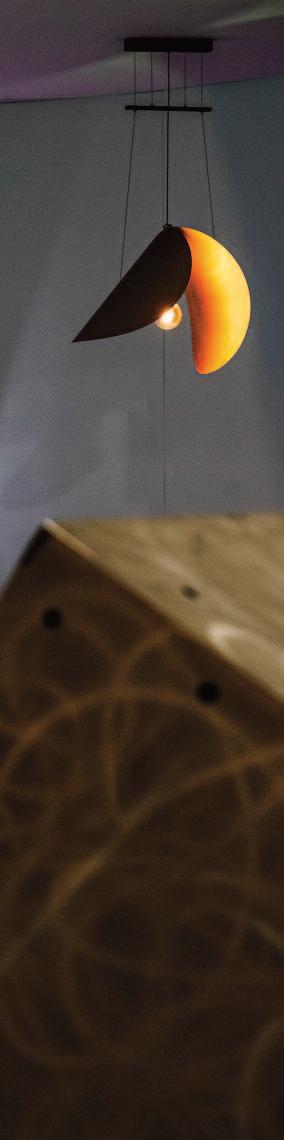
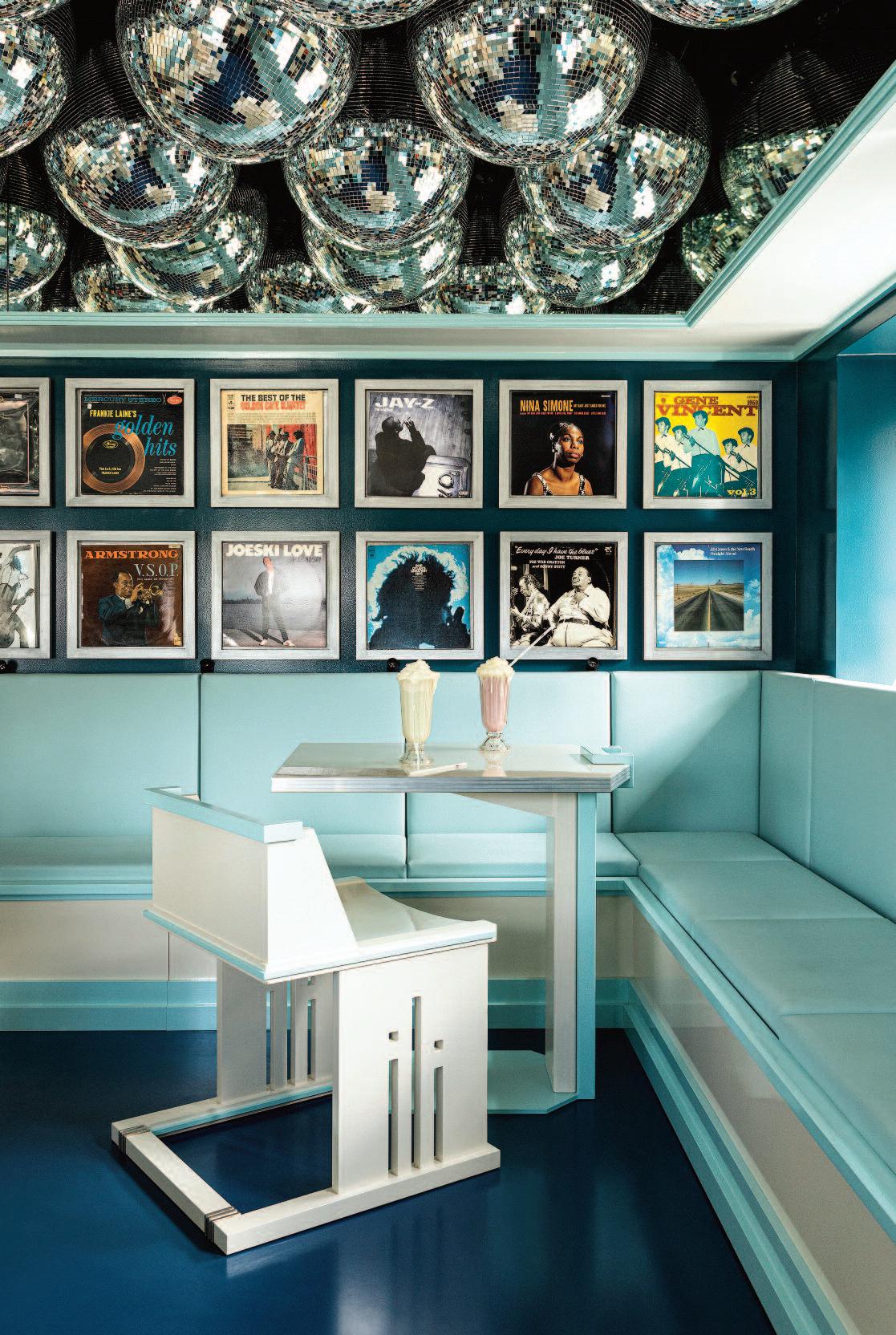
In Lille, France, the four-level PNY restaurant was designed by Rudy Guénaire thinking of an imaginary cruise ship.
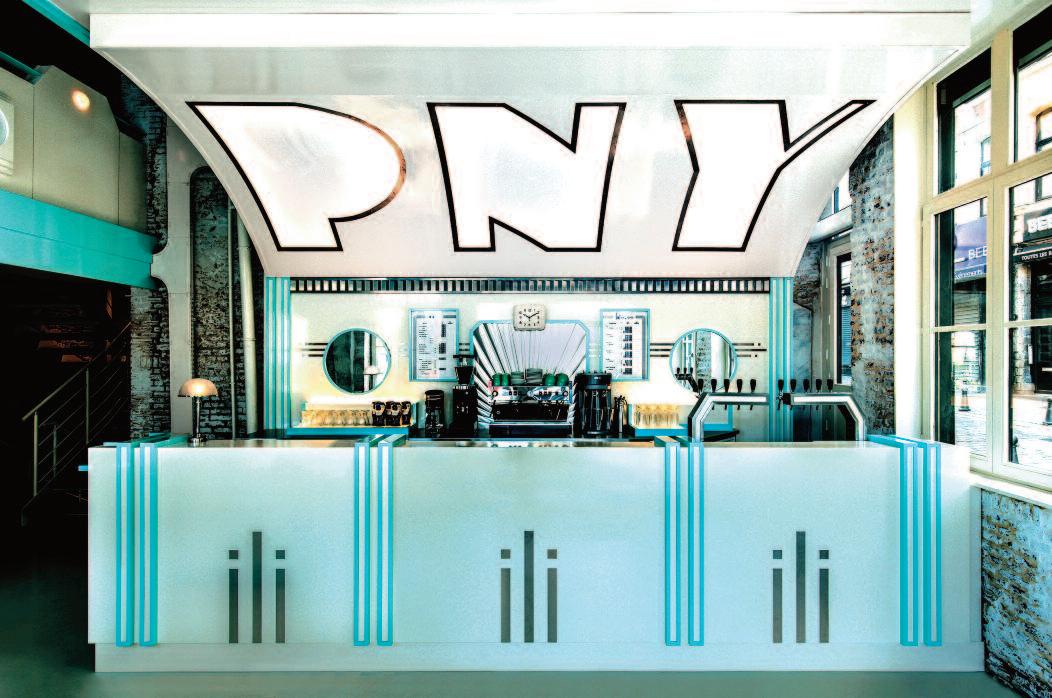
The walls were made of the local brique from the North of France. Him and his team decided to keep them and simply place the setting within the hundred years-old brique shell, as in a film studio On the ground floor, the bar is designed like a building from the Miami Beach Art District. It is nougat and blue lagoon colored. The wooden panels are brush-lacquered and incrusted with aluminum details. Everything is intentionally very symmetrical. A big PNY sign, back-lit, curves the shape of a half-arc
The superior floor if a dining-room maze with chairs, designed by Rudy, that hint at Schindler, student of the Frank Lloyd
Tables are voluntarily overhung with an aluminum top part held by a steel hand. The stationary tables are designed like small rooftops
The opaline ball lamp represents a perfect world. On the top deck, Rudy placed forty-two disco balls hanging on the ceiling On Giorgio Moroder’s soundtrack, Brian de Palma’s Scarface, it is like a starry night in broad daylight. Photos: Ludovic Balay.
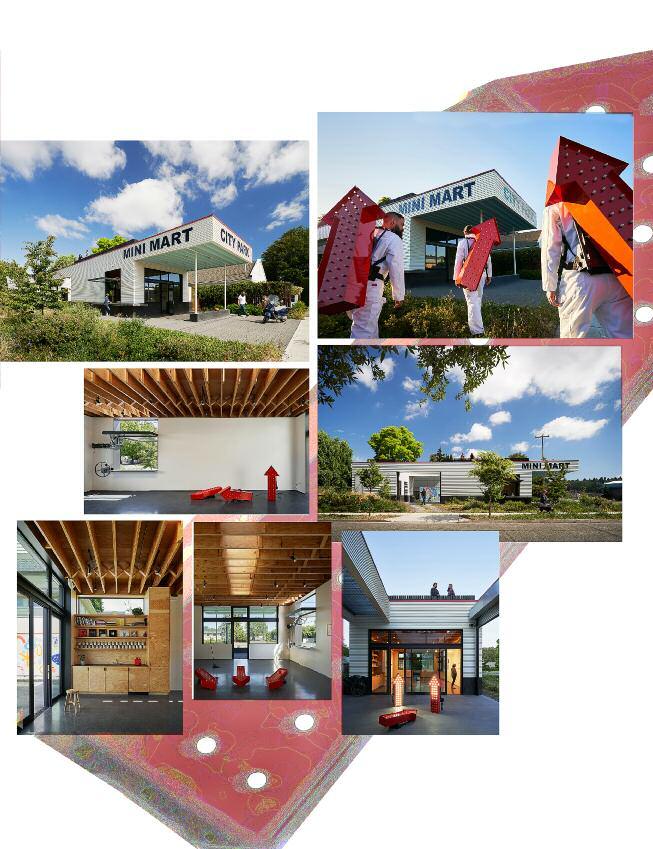
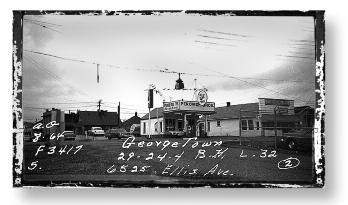
Mini Mart City Park is a former gas station site into a Seattle, USA, hub for art events and community gatherings It was designed by GO’C and founded by the artist collaborative SuttonBeresCuller.
The existing remnants of a 1930s-era, 450-square-foot filling station was the blue print for the project.
Although the structure was too compromised to save, the designers came up with a plan that resembled the charm of the past but provide spaces for a gallery/community center, a more public green space and a storage/utility box.

An open-air courtyard was created in the middle that serves as a multi-functional exterior space for large-scale art installations, movie and night gathering
W ith over 700 derelict gas stations in the Puget Sound region and over 200,000 across the USA, the project explored the potential of art and architecture as a way to heal an urban problem while simultaneously creating a shared, multi-use park and community space.
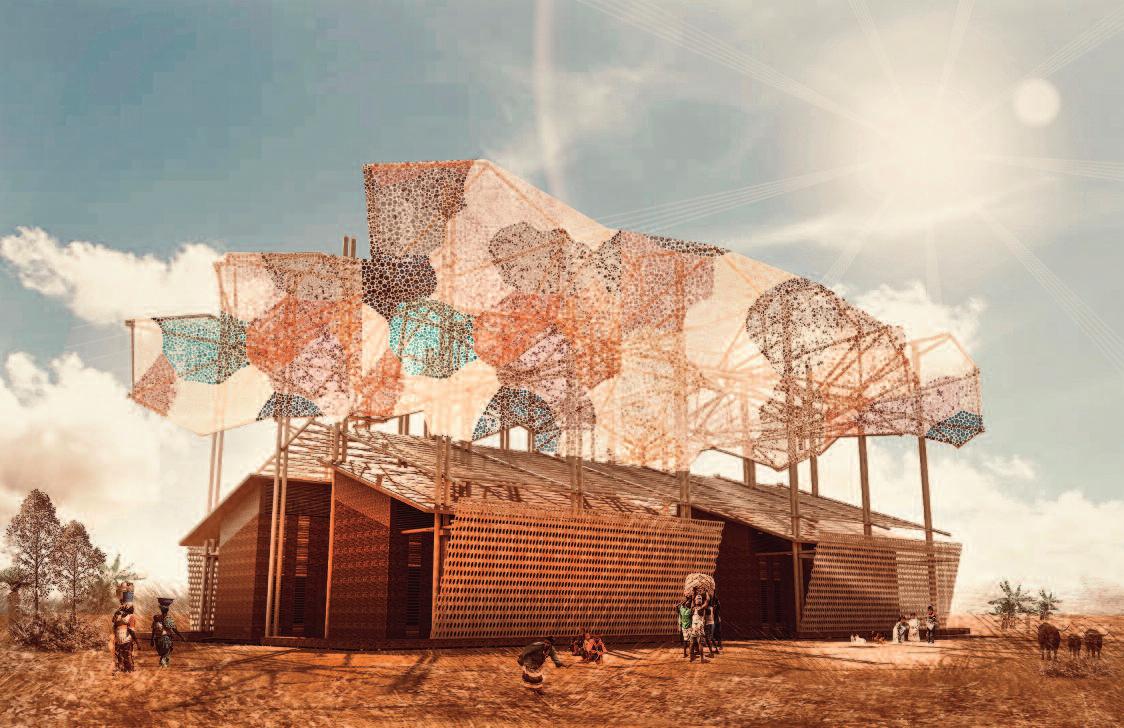
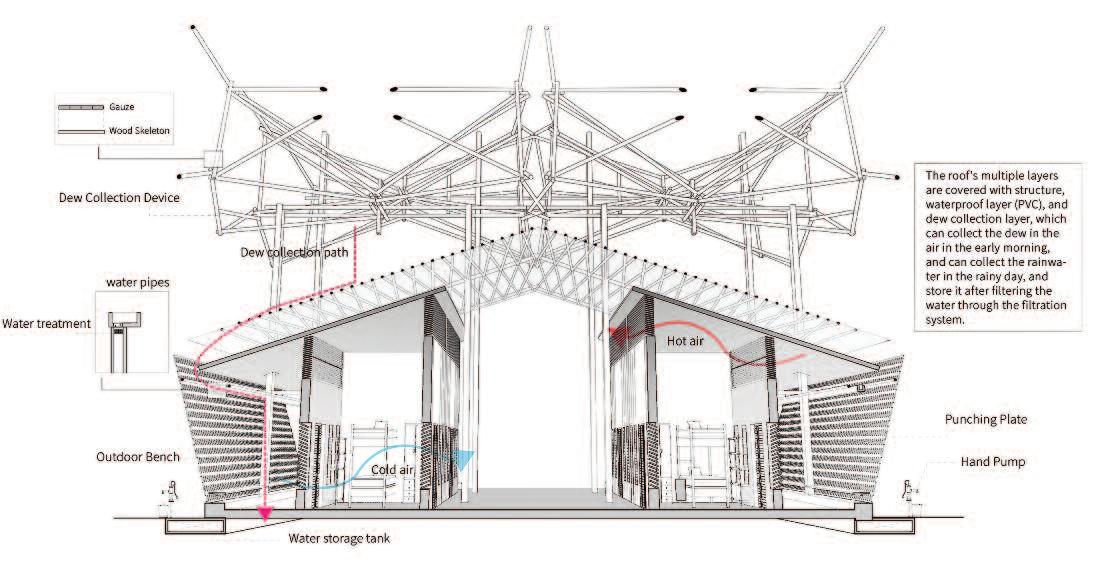
The water catchment house design f or Tanzania, Africa was introduced b y Hong-En, Lin from Taiwan, as a Pure Power/Dail y Combat Strategy f or water collection in Africa, where water resources are of ten pollu ted, and where long distances t o obtain water make the task dif f icult .
For many people in Africa, it can take up t o three hours t o get t o a water source, bu t even then, the water is of ten mudd y. Water pollu tion is a prevalent problem in Africa, and one of the primar y causes of death is the consumption of contaminated water over time that contains bacteria and parasites. Gi ven that poor environments prevent many people from accessing clean water, the designer's goal was t o assist the people in that endeavor.
The designer used the local weaving culture as the basic idea, combining building with local materials and collection dew t o create cleaner, more economical housing with a cleaner water source. For the of architecture, bricks and wood, which are easil y available locall y, were used.
The roof is a wooden structure combined with a woven structure t o collect dew. The cladding of the roof is covered with a waterproof and a dew collection la yer. The structure can extract moisture from the air in the earl y morning, and can also collect rainwater, both of which can be st ored af ter passing through a f iltration system.
As a result , the use of local weaving colors and simple construction methods can be leveraged and combined t o create useful and interesting roof systems.
o r t 1 3 7 Las Vegas Valley oasis
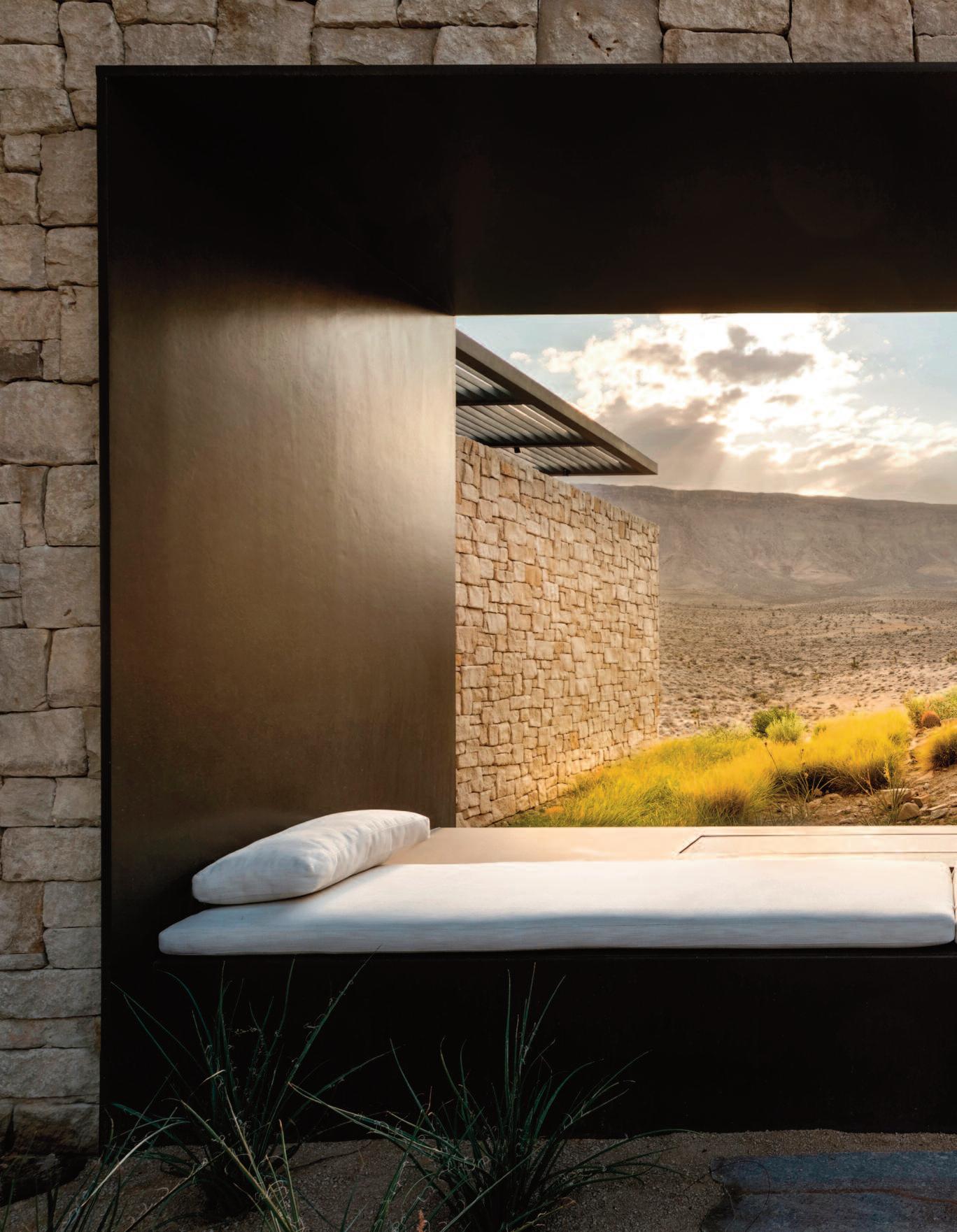
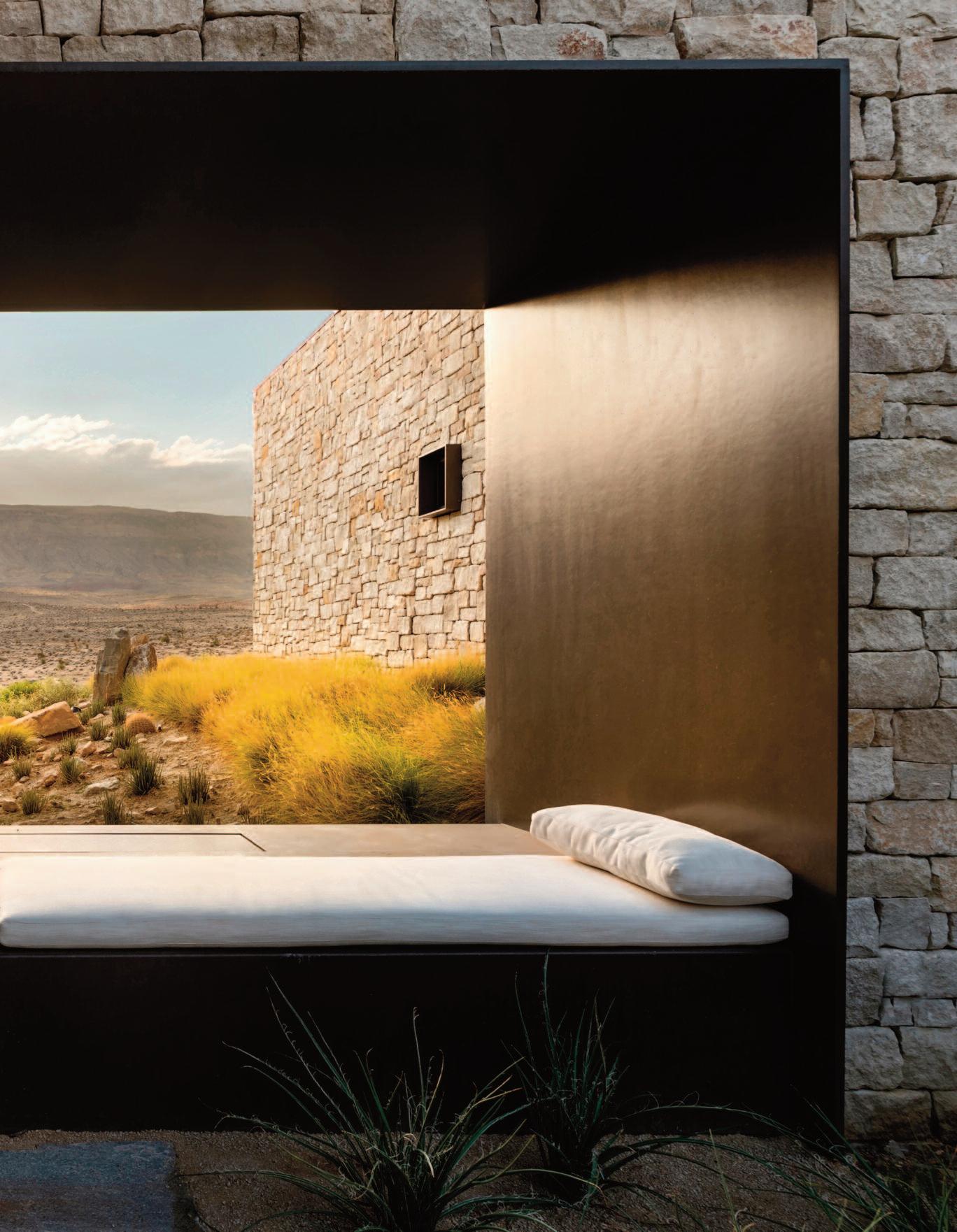
The desert oasis on the edge of the Las Vegas Valley offers panoramic views of the surrounding Red Rock Canyon and the bordering government protected land: Fort 137, designed by Daniel Joseph Chenin, Ltd , a multidisciplinary design studio fostering an integrated and cinematic approach to the architecture
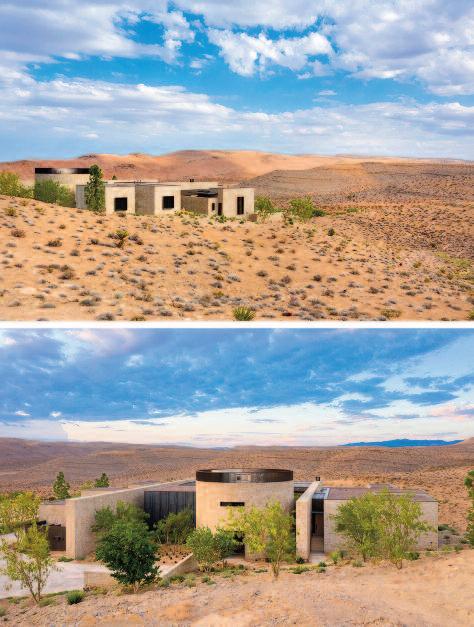
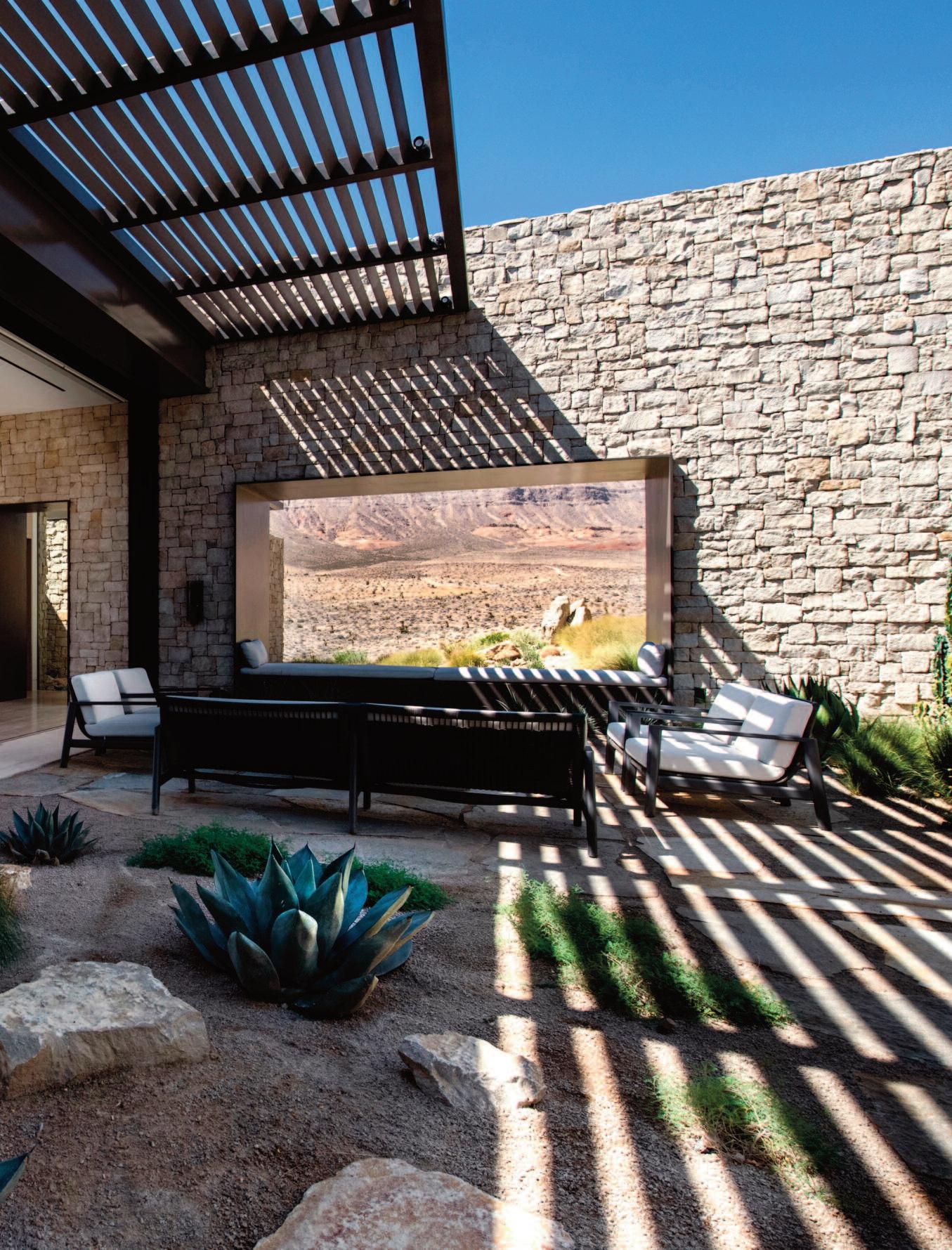
Commissioned for a family embracing an active lifestyle of immersive environmental experiences, the studio was tasked to create a home that would be contemporary and warm, yet seamlessly blended into the rugged beauty of its natural surroundings. In addition to the interior program that included a primary suite, a secondary suite, three additional bedrooms, and a large communal living and dining space, the 15-month build prioritized an external focus that includes an entry rotunda, a shaded courtyard, and a view frame overlooking the surrounding landscape
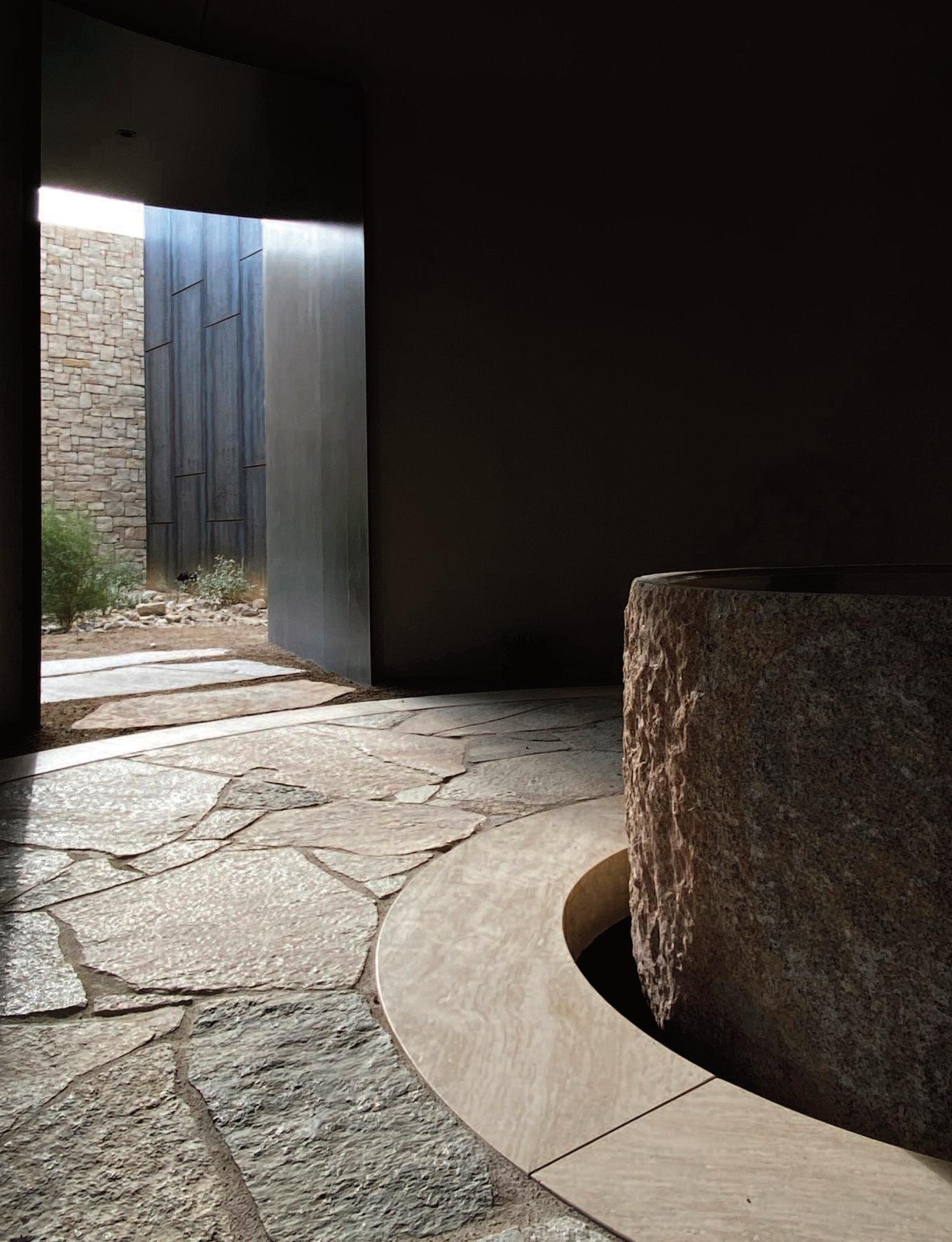
Fort 137’s entry rotunda characterizes the firm’s experiential approach, with a modern interpretation of the fort structures of early settlements that once dotted the desert landscape of the Las Vegas Valley The rotunda, rising 28 feet, serves as a transition between the external desert heat and the cooler interior.
The conical shape contrasts with the straight lines of the living spaces. Upon entering the rotunda, the sound of running water from the lower level’s stone fountain transitions the mindset from the arid desert heat to one of a cooling desert mirage. A winding staircase provides access to a rooftop lounge outfitted with a fire pit and expansive desert views
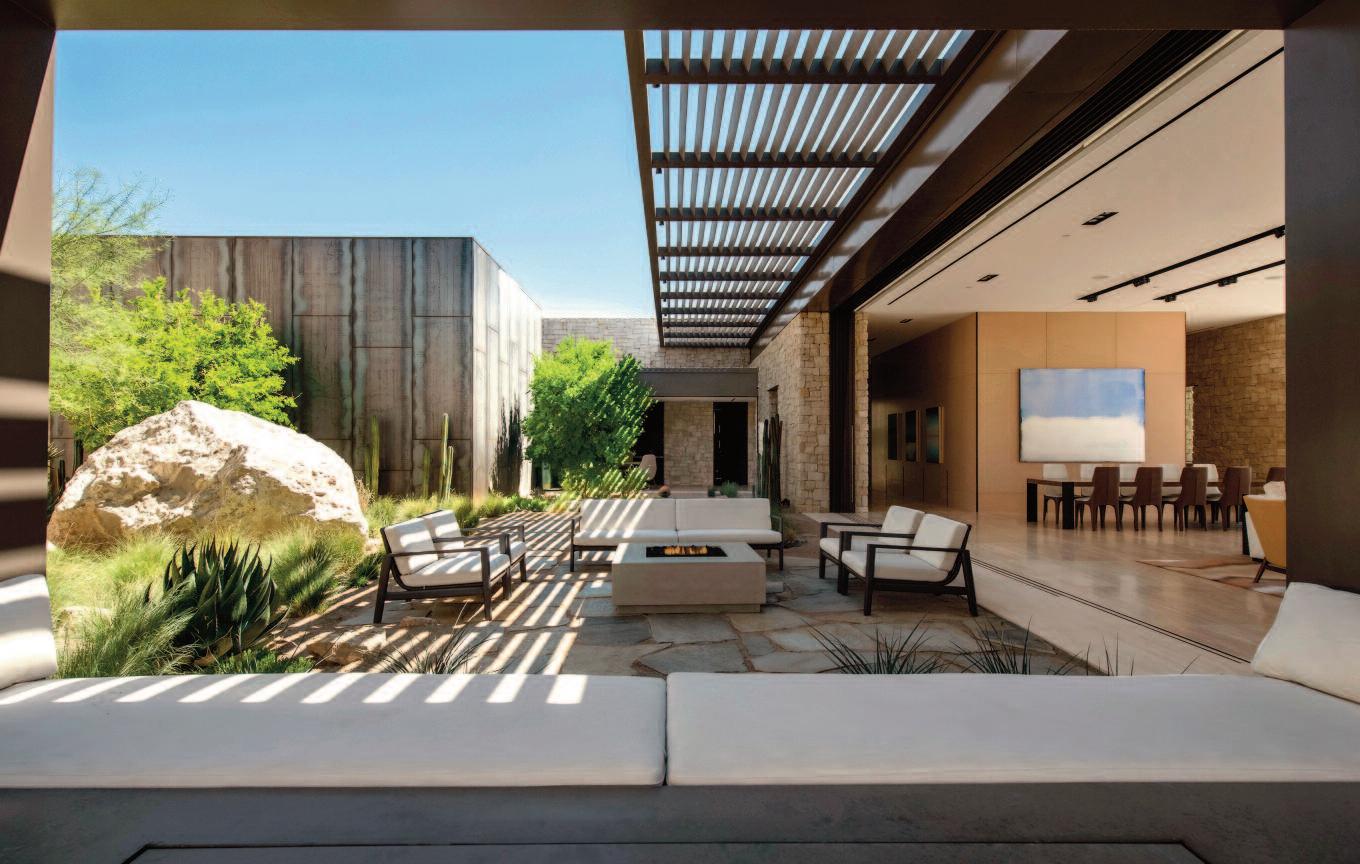
The transition from the external desert to the home’s interior begins with a fully enclosed, shaded courtyard area, set against a backdrop that includes a 75-ton boulder that was excavated from the site Inside the home, two dually purposed flanking walls run from north to south, providing protection against external elements, while also defining the boundaries of the layout.
Between the walls, gathering spaces include a large lounge area and dining room, a kitchen, an office, and a theater room, while more intimate spaces, including the bedrooms, are located on the outer sides of the walls
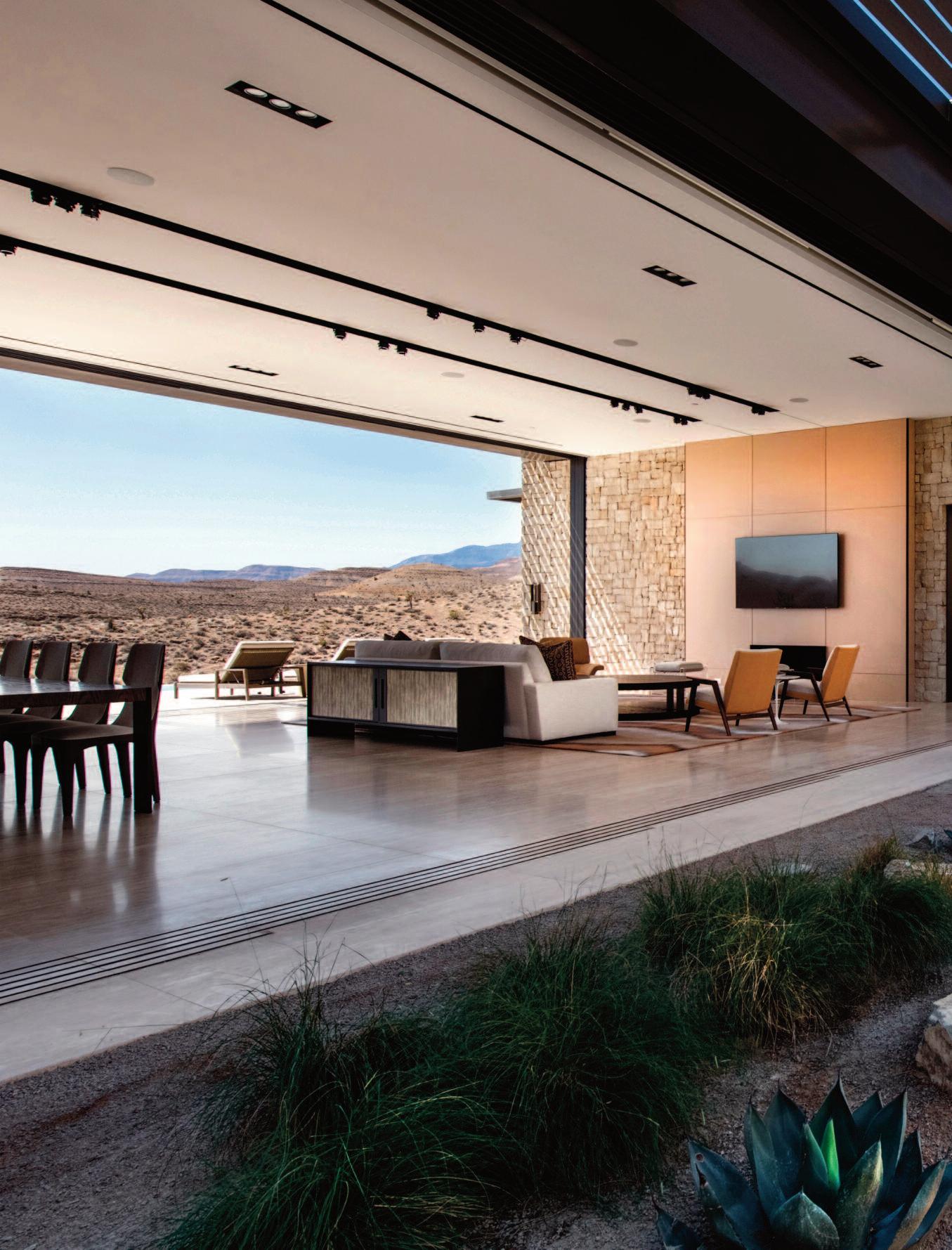
The living spaces of Fort 137 are laid out in three complementary volumes, each designed to maximize comfort, efficiency, and ambiance. Within a steel frame and the stone walls, sliding glass panels provide panoramic views from both the north and south facades. The glass walls also serve multiple purposes and are positioned to provide cross-ventilation and to draw abundant sunlight into an interior designed with angular precision to offer protection against the harshest occurrences of desert sun and wind
The central flow of the interior’s open living and dining area gives way to an adjoining subset of more intimate and private zones, including bedrooms and servicing areas. Each space, from its orientation to its comforts, is designed for tranquil moments alone, or for quiet moments spent with guests.
The modest luxury of the interior is framed by travertine floors, stucco ceiling, and reconstituted wood veneer panels, providing a warm embrace for the curated furnishings and art selections by Daniel Joseph Chenin Stone, wood, and brass details are abundant, including in the interior’s custom door handles and detailed cabinetry
To accomplish an integrated oasis of comfort and serenity in the desert valley, Fort 137 was built with limited environmental impacts. Daniel Joseph Chenin incorporated design strategies to offset the home’s carbon footprint and to reduce its dependence on the grid, including a photovoltaic panel infrastructure and ballast roofing that complemented other design elements along with passive cooling, thermal mass, and radiant heating
Other sustainable considerations included a reconstituted wood veneer derived from the bi-product and waste of a sawmill, locally-sourced materials, and constructively repurposed rocks and earth extracted from the building site Weathered steel, hot rolled steel, and travertine were used for their ability to age and patina with the desert sands of time, adding further color and textures to a built environment destined to integrate even deeper into its natural surroundings.
Left: For t 137’s entr y rotunda is a moder n interpretation of the old for t structures of ear ly settlements that once dotted the deser t landscape of the Las Vegas Valley The rotunda ser ves as a transition between the exter nal deser t heat and the cooler interior.
Below: For t 137 in the Las Vegas Valley designed by Daniel Joseph Chenin
Photos: Stephen Morgan
“ T h e c l i e n t i s f r o m o u t o f s t a t e ,
“ T h e c l i e n t i s f r o m o u t o f s t a t e , a n d w e w e r e s e l e c t e d f o r o u r a n d w e w e r e s e l e c t e d f o r o u r a b i l i t y t o p r o v i d e a c o m p l e t e a b i l i t y t o p r o v i d e a c o m p l e t e t u r n k e y p r o j e c t t u r n k e y p r o j e c t
W e p r o v i d e d t h e a r c h i t e c t u r e a n d
W e p r o v i d e d t h e a r c h i t e c t u r e a n d
i n t e r i o r d e s i g n , r i g h t d o w n t o t h e i n t e r i o r d e s i g n , r i g h t d o w n t o t h e
d e s i g n , s e l e c t i o n , d e s i g n , s e l e c t i o n , p r o c u r e m e n t , a n d i n s t a l l a t i o n o f p r o c u r e m e n t , a n d i n s t a l l a t i o n o f
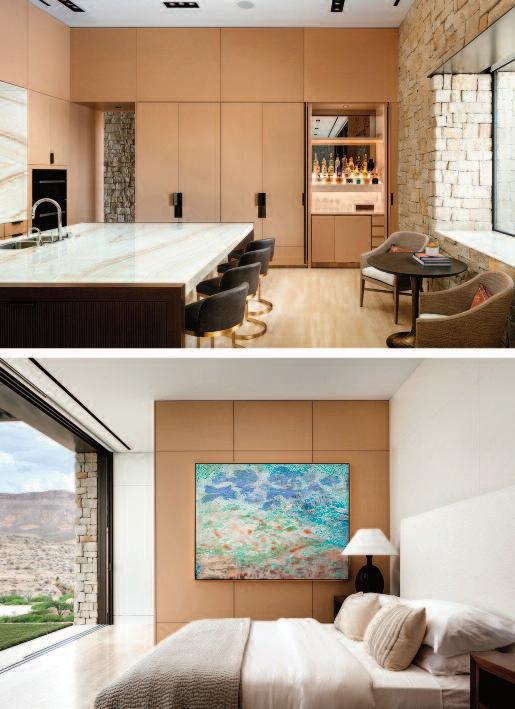
t h e f u r n i t u r e , f i x t u r e s , a n d a c t h e f u r n i t u r e , f i x t u r e s , a n d a c-
c e s s o r i e s . ” c e s s o r i e s ”
D a n i e l J o s e p h C h e n i n ,
D a n i e l J o s e p h C h e n i n , l e a d a r c h i t e c t a n d f o u n d e r l e a d a r c h i t e c t a n d f o u n d e r o f t h e f i r m o f t h e f i r m .
Commissioned for a family embracing an active lifestyle of immersive environmental experiences, the firm was tasked with creating a home that would be contemporar y and warm, yet seamlessly blended into the rugged beauty of its natural surroundings. In addition to an interior program that included a primar y suite, a secondar y suite, three additional bedrooms and a large communal living and dining space, the 15-month build prioritized an exter nal focus that includes an entr y rotunda, a shaded cour tyard, and a view frame over looking the surrounding landscape
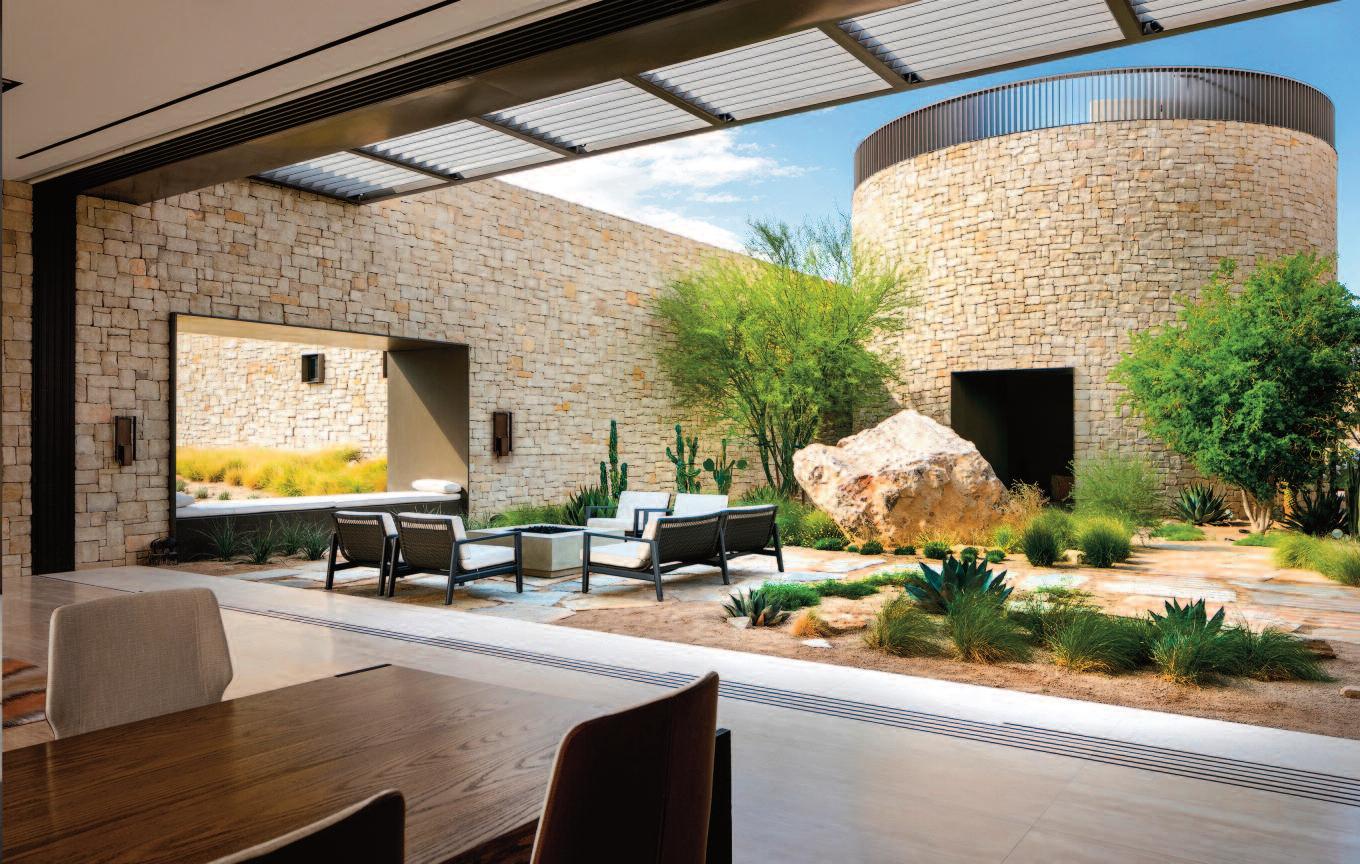
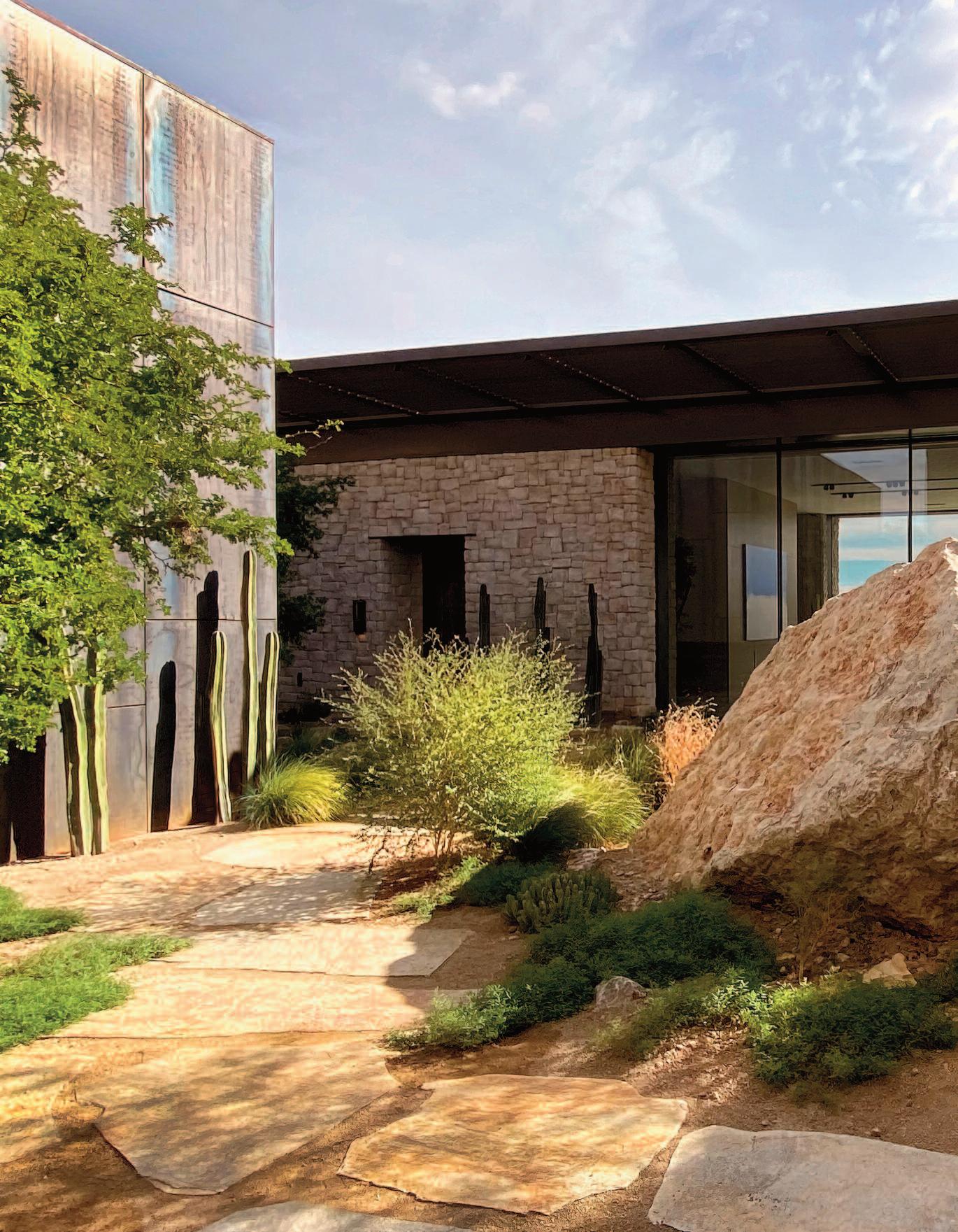
“ T h e p r o j e c t i s r o b u s t a n d “ T h e p r o j e c t i s r o b u s t a n d
r o u g h o n t h e r o u g h o n t h e
o u t s i d e , a n d r e f i n e d a n d o u t s i d e , a n d r e f i n e d a n d
d e t a i l e d o n t h e i n s i d e . B u t d e t a i l e d o n t h e i n s i d e B u t
t h e l i n e s a r e b l u r r e d b y t h e
t h e l i n e s a r e b l u r r e d b y t h e
s i n g u l a r v i s i o n o f e a c h s i n g u l a r v i s i o n o f e a c h
e l e m e n t , i n c l u d i n g t h e e l e m e n t , i n c l u d i n g h e
m i m i c k i n g o f c o l o r s a n d m i m i c k i n g o f c o l o r s a n d
t e x t u r e s t h a t r e f l e c t t h e
t e x t u r e s t h a t r e f l e c t t h e
c o n t e x t o f t h e R e d R o c k c o n t e x t o f t h e R e d R o c k
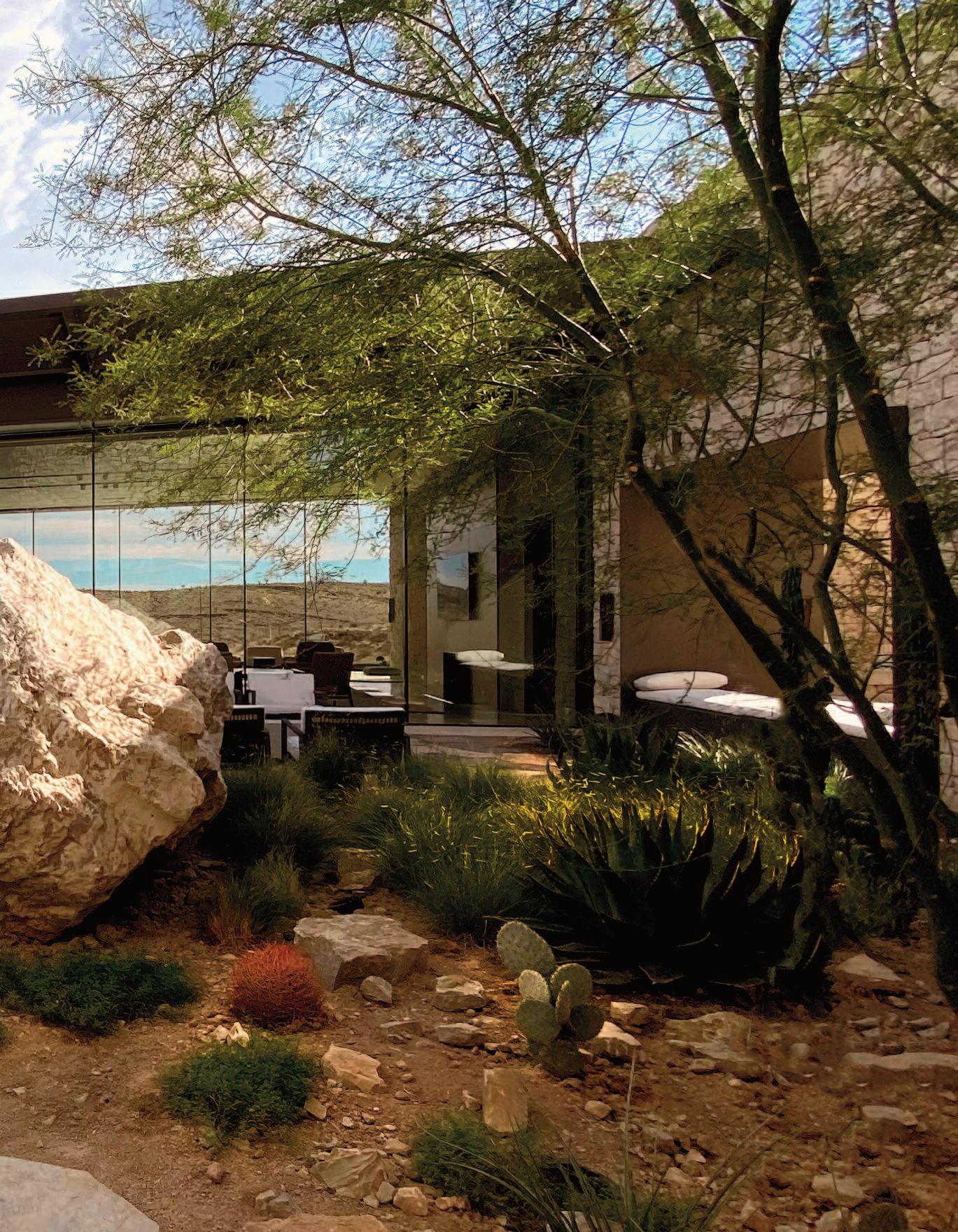
m o u n t a i n s . ” m o u n t a i n s ”
D a n i e l J o s e p h C h e n i n D a n i e l J o s e p h C h e n i n
R i g h t - h a n d p age : D e K a t p a i n t m i l l a t t h e c e n t e r o f t h re e m i l l s b e s i d e t h e D u t c h Z a a n r i ve r i n t h e wo r l dfamous village of Zaanse Schans, the Netherlands.
All photos: Hans Fonk
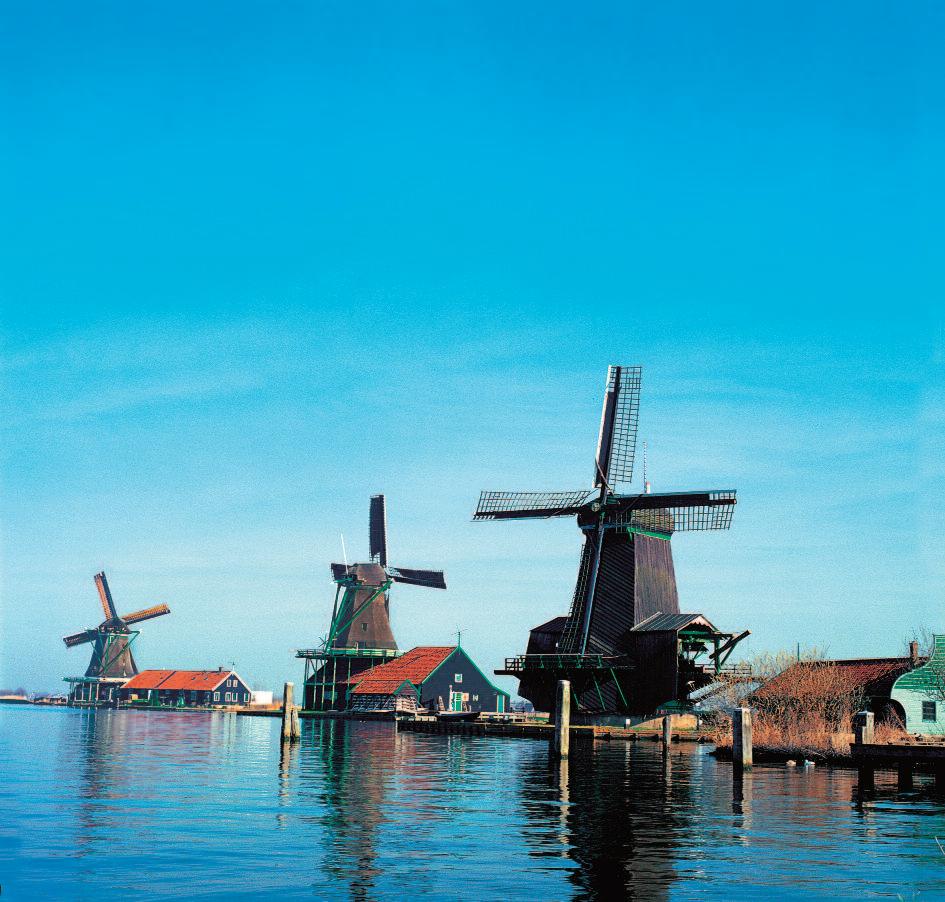
Windmill 'De Kat' is an octagonal upper porter with scaffolding originally built in 1781 in the Netherlands, and converted into a paint mill since the partial reconstruction in 1960.
The scenic significance of the mill, located between the windmills 'Dezoeker' and 'De Poelenburg', near the Zaanse Schans and on the river Zaan, is great.
Around 1646 a paint mill was established on this site This mill was later converted into an oil mill. In 1782, it was completely destroyed by fire, but was rebuilt
In 1904, the mill, which had been in the possession of the Honig family since 1772, was sold and demolished to rack height. The substructure and shed were sued as a storage and drying place for chalk.
In 1960, the upper octagon of the windmill 'De Duinjager' built in 1696 from elsewhere in Zaandam was placed on this substructure and shed Since then, the mill has been regularly put into operation again
Now, thumping blocks, turning wheels and a mysterious system of gears and shafts, which conveys the power of the mill’s rotating sails to the upward- and downward-moving crushers De Kat windmill is a business, a nostalgic factory and the world’s last paint mill
At De Kat, the miller Piet Kempenaar grinds the most exotic raw materials into pigments for dyes and paints. An ancient tradition which is still of great topical interest
The world of artists and textile-dyers, who used to made their own paints in days gone by was one of exotic materials. It took thousands of snails to produce a tiny amount of costly purple paint, shells supplied a clear white, sepia came from the octopus, cochineal was made from a dried scale insect, black was obtained from ivory or sheep’s bones.
Minerals such as lapis lazuli were used for the Prussian blue of ‘beyond the sea ’ (ultramarine) Many of those raw materials were ground into pigment powders in paint mills, of which there is only one left in operation in the Netherlands (in the entire world, even)
Holland treats its mills with care There were once countless mills, turning to keep the polders dry, to grind corn, saw wood or pulverize materials for the oil, paper and paint industries Now there are fewer than a thousand left They are carefully maintained and most still turn regularly, because a mill that doesn’t turn falls into disrepair.
crushers that pulverize the often rare raw materials into pigments.
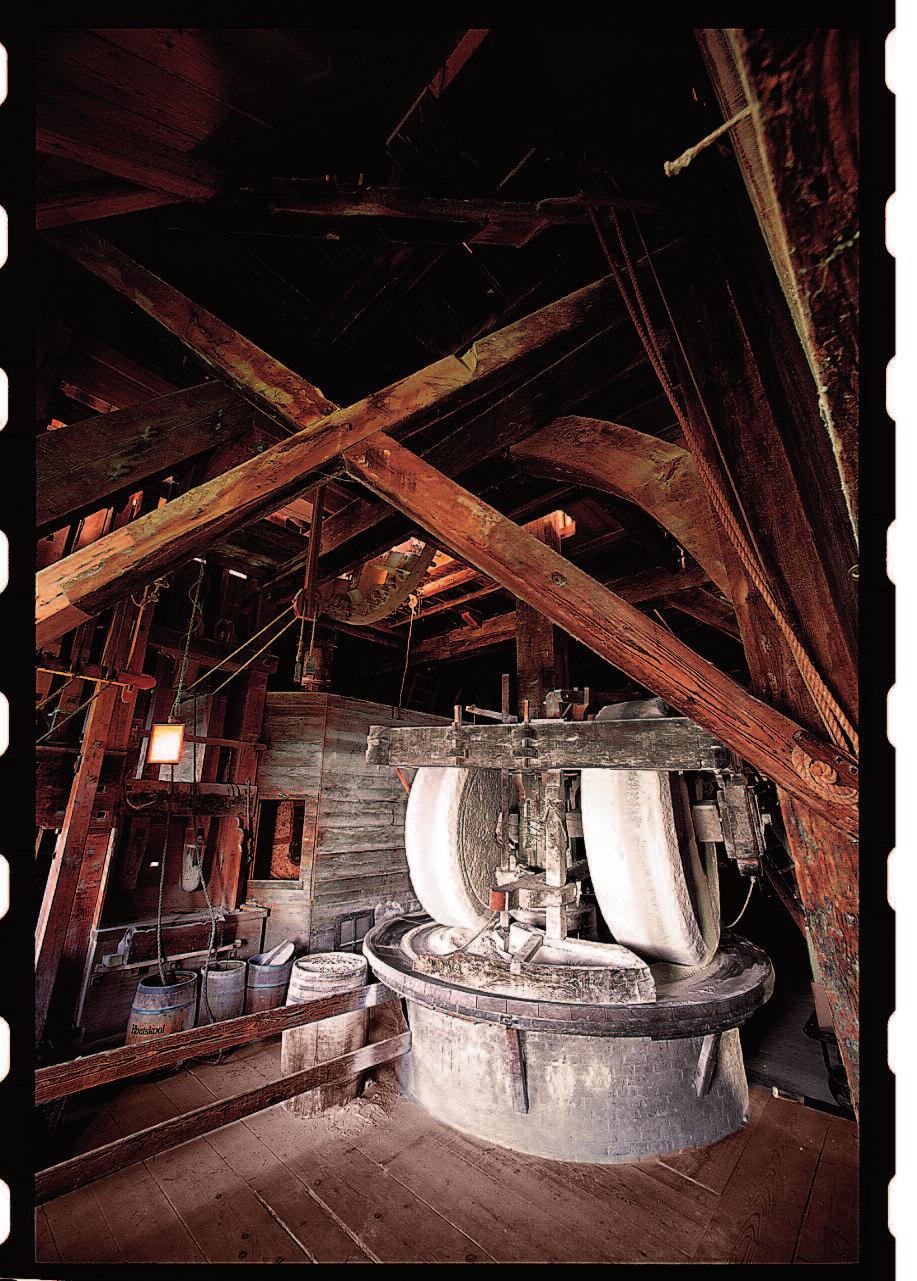
Piet Kempenaar was one of the many volunteers who kept a mill running In 1981 he took the plunge and, together with an associate, rented the big paint mill on the banks of the Zaan river
Their intention was to revive the old mill – and they succeeded. De Kat paint mill is situated in the Zaan district of the Netherlands, an area just north of Amsterdam. It is one of the oldest industrial region in Europe
A veritable forest of windmills used to turn day and night, grinding raw materials supplied to them from all over the world When, in the middle of the 19th century, steam-powered machines were introduced, the sails stopped turning
Mills were demolished, one after another, though the ones that remained were handled with care Some still stand at their original locations, others have been moved to ‘Zaanse Schans’
At this ‘living museum ’ a row of old industrial windmills have been erected beside a wide river, with a view of the traditional Zaan-region wooden houses opposite. One is De Kat.
For the revival of the mill, the interior was rearranged and adapted for visitors And they came in their hoards They wanted to see the mill at work, which entailed grinding raw materials into fine products And so they returned to its old function, the production of pigments.
De Kat is the last of the region’s 55 paint mills still in working order Each year more people from all over the world come to see it. Demand for the original pigments De Kat supplies is greater than ever
And so Piet Kempenaar ended up in this wondrous world of dyes and pigments He scoured the country for companies where the old equipment hadn’t been disposed of, but was lying, covered in dust, in lofts or sheds
He found house painters who had not only kept raw materials, grinding boards, pestles and ‘recipe’ books, but also had an awesome knowledge of methods used before the chemical industry put an end to experiments often resembling alchemy, and nostrums with a staggering range of stable colors.
He travelled the world over to places where pigments have originated since time immemorial: Spanish red from the soil of Malaga, ochre from the mines of South Africa or the Tuscan hills near Siena
He immersed himself in the problems that artists in the past had when using egg yolk or oil as a binder, or preventing colors from fading or producing an unknown chemical interaction
For example, modern research has shown that a snow-white
R i g h t - h a n d p age : a n evo c a t i ve view from De Kat paint mill with a depot for raw materials which are d e l i ve re d ove r t h e r i ve r a n d t h e De Kat mill in all its glor y. Ever ything has been painted with t h i c k c o a t s o f p a i n t i n t r a d i t i o n a l colors
T h e wo o d e n ge a r w h e e l s a n d transmission mechanisms for the movement of the crushers are located in the top par t of the mill. B o t t o m r i g h t : t h e m i l l e r ’s ro o m . The only place in the mill that has heating.
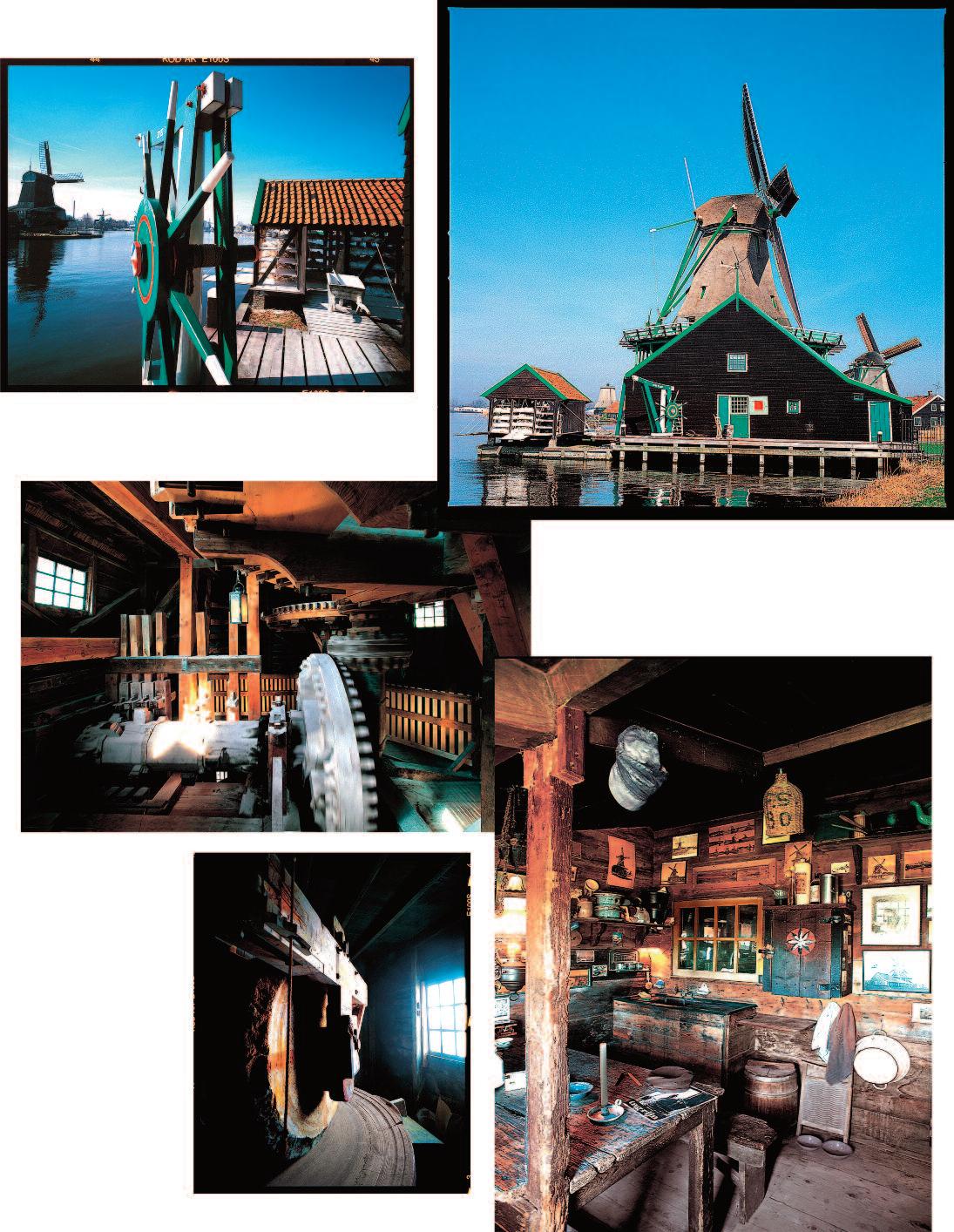
cloak worn by the Madonna may have started out bright red, and similarly, some of Van Gogh’s ‘white’ roses were once a brilliant shade of red
During restoration, dark frescoes and paintings prove to have originally been much lighter and when returned to their original colors sometimes occasion vehement protests from art lovers. The familiar faded colors have gone, replaced by a cacophony of garish hues.
The dyers of textiles were also always on the lookout for raw materials to enable them to adhere dyes to wool, linen and silk
When the United East India Company (VOC) imported chintzes from India with fast colors on a clear white background they became so popular that they were even taken up in Dutch regional costumes
The discovery of ‘Brazil wood’ in the South American country, which takes its name from that wood, resulted in prisoners being put to work with huge saws supplied by the West India Company to rasp the timber into powder from which red dye was obtained. Until windmills took over the laborious job.
De Kat mill’s first customers tended to be women who had turned back the clock and dedicated themselves to the quest for pure fabrics. With humming spinning-wheels and clacking looms in their homes they produced such fabrics, which then had to be dyed. De Kat supplied the pigments, and alum and potash were used as binders
For really bright colors they had to resort to chemical agents, which meant that the well-meaning weavers threw all manner of nasty substances down the drain
A more environmentally responsible attitude put an end to those practices Instead, a new market emerged, of artists and restorers who were tired of the entire range of synthetic dyes They wanted to return to the vividness produced by subtle color ways and the specific effects obtained with dyes made in the old way.
For instance, the great master Rembrandt actually only worked with some ten colors, including white lead, vermillion, umber and ochre yellow - the basis of his entire palette
Kempenaar scored a personal triumph when, after the Rembrandt House had been restored, he was invited to mix the paints in the reconstructed studio where once the Master had stood at his easel, himself or his pupil’s mixing his paints little by little De Kat paint mill supplied the pigments
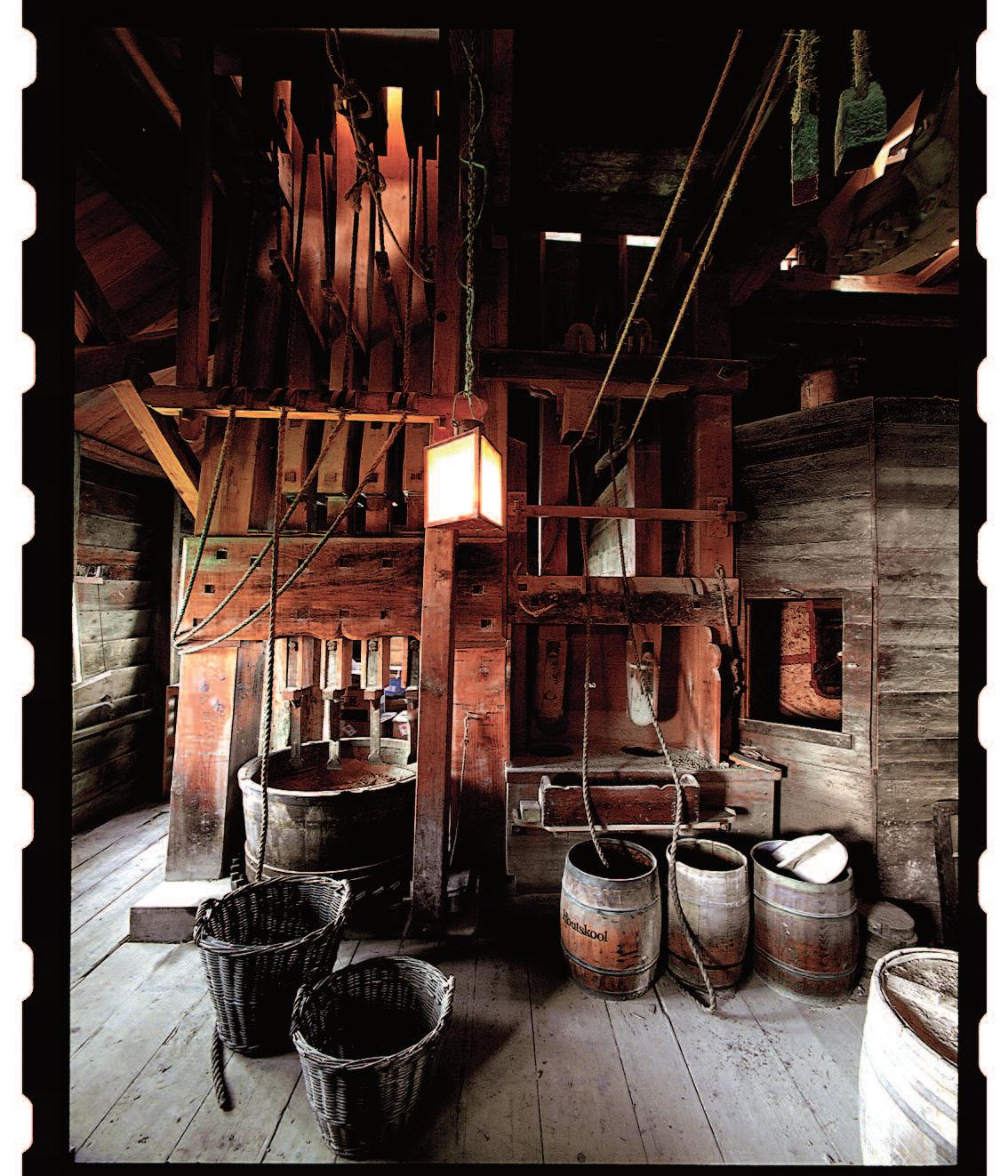
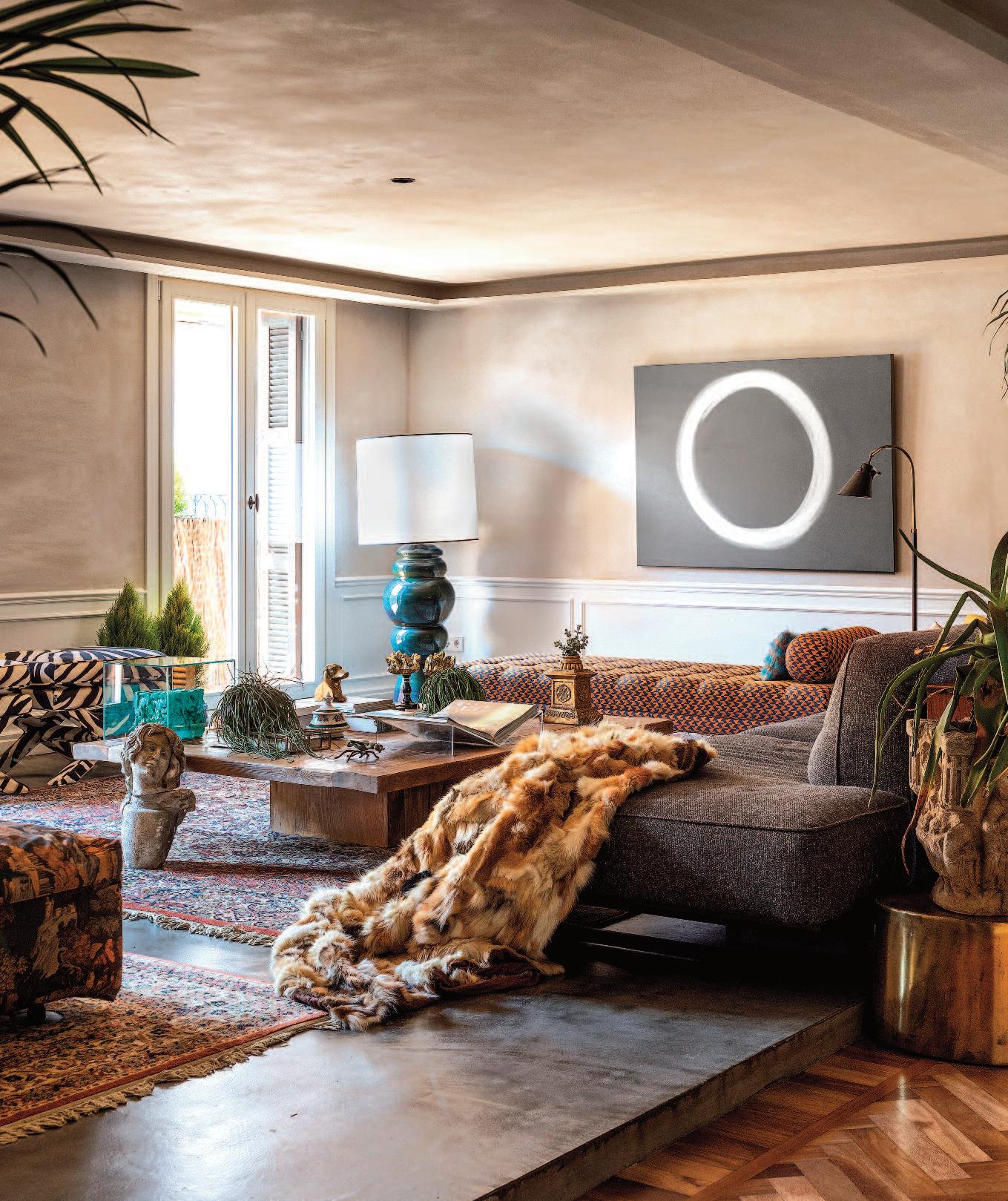
C a l l e M a y o r 1 2
restoration project in Basque land
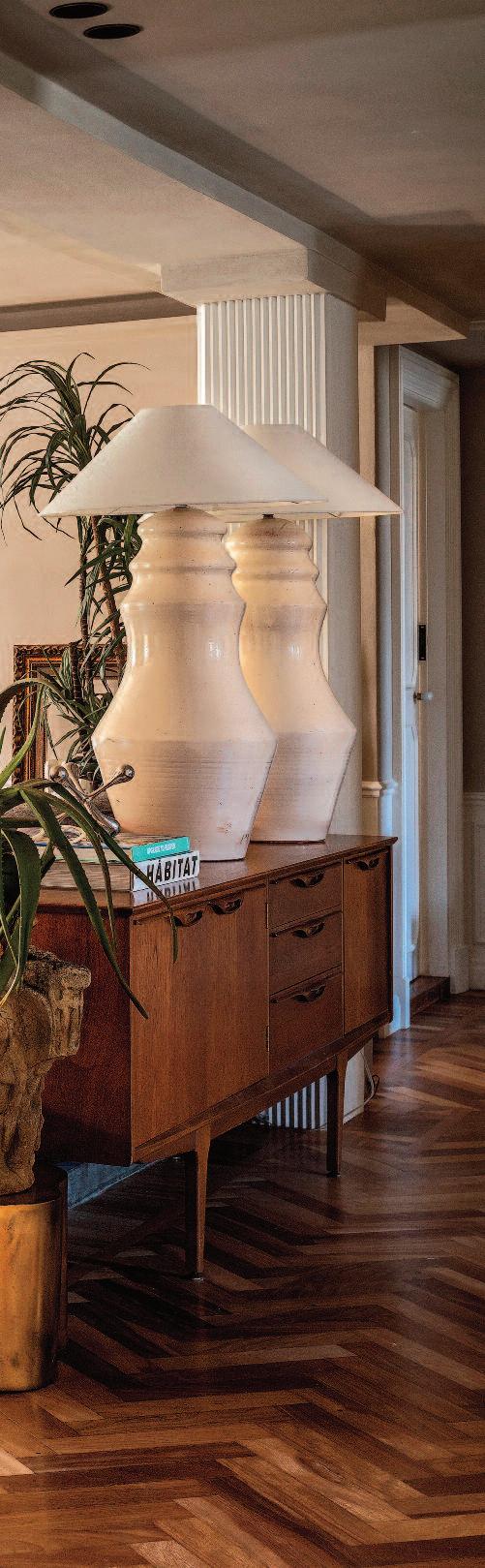
Mayor12 is a 130 m2 single-family house project located in the historic quarter of Donostia, Euskadi in Basque Country. The original house was built in 1900 A substantial movement in the structure however led to an accentuated unevenness between the different areas both on the floor and on the ceiling This asked for a thorough approach for a much needed renovation.
The main challenge for the designers of Iñigo Iriarte Interiorismo was to level the shifted parts, resulting in a reduction of the total of the interiors. The decoration of the project was done by Veluto.
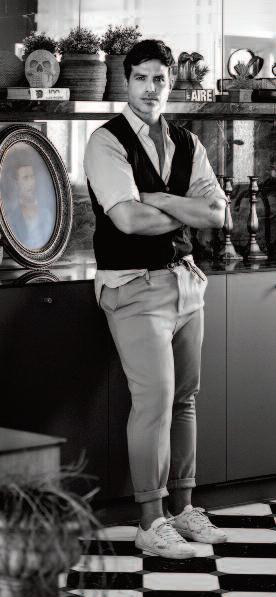
From the entrance of the house, the different spaces are visually gathered forming a large area, illuminated by daylight A large raised living room, a bright dining room, with two original sliding doors, and the kitchen form spaces are connected and free of physical barriers due to the coherence of materials and finishes
In the private part of the house, the designers panned two double bedrooms, one with en suite bathroom. The latter is one of the most characteristic spaces in the home with the resting area and the bathroom area fully integrated into a single, homogeneous room A large, open floor plan and the use of well-placed mirrors, helped to generate the sense of spaciousness and depth. With the same objective in mind, a ceiling light was designed to illuminate the interior with a subtle elegance The composite plinth, made with a set of molings, was set lower than usual to create the illusion of height
The house has plenty of natural light, accentuated by the studio through a lighting design to create atmospheres and scenes in each room This allowed textures to be enhanced, corners to be highlighted and sensations to be modified
To respect the elements of the original house, those were kept as much as possible The floor that formerly marked the corridor, has been restored and the wooden beams have also been left bare
Continuous cladding was applied in the larger spaces to give the decoration more prominence Micro-cement was used in the bedrooms and the living/dining room The walls were finished in a combination of molded skirting board with plastic paint and clay mortar was used on the upper part and on the ceilings, thus guaranteeing, thanks to the textured finish and the possibilities of application, better acoustics in open spaces
In the wet areas and the kitchen, ceramic finishes have been chosen to contrast with the rest of the house, in addition to seeking maximum functionality in these spaces
In Mayor12 the decoration has been highlighted to make it the main element of the home. Thus, low height pieces have been selected and designed so as not to drown any of the spaces.
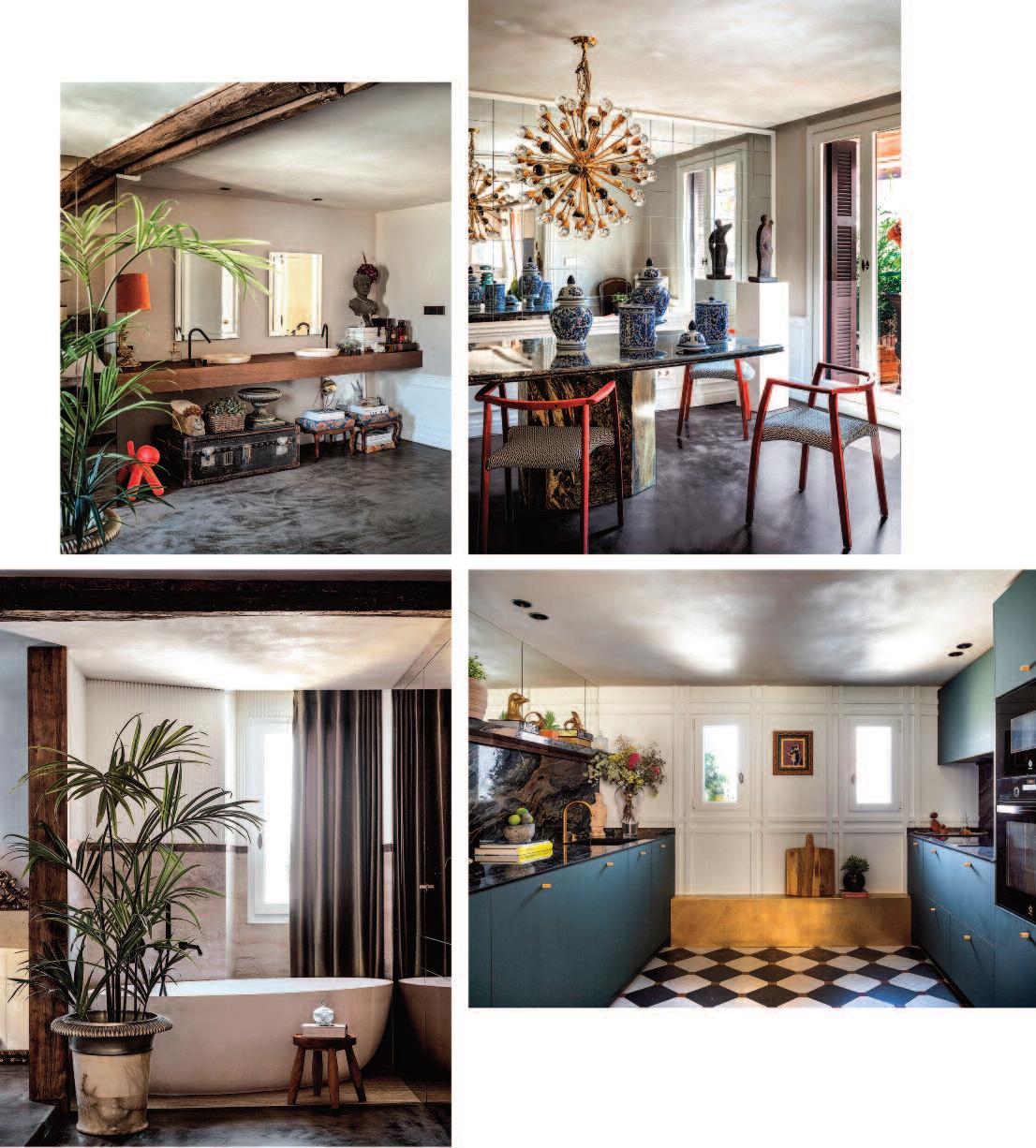
T h e l a r ge r a i s e d l i v i n g ro o m a t C a l l e M a j o r 1 2 , we re t h e b r i g h t d i n i n g ro o m , a n d t h e k i t c h e n we re c o n n e c t e d by t wo o r i g i n a l s l i d i n g d o o r s .
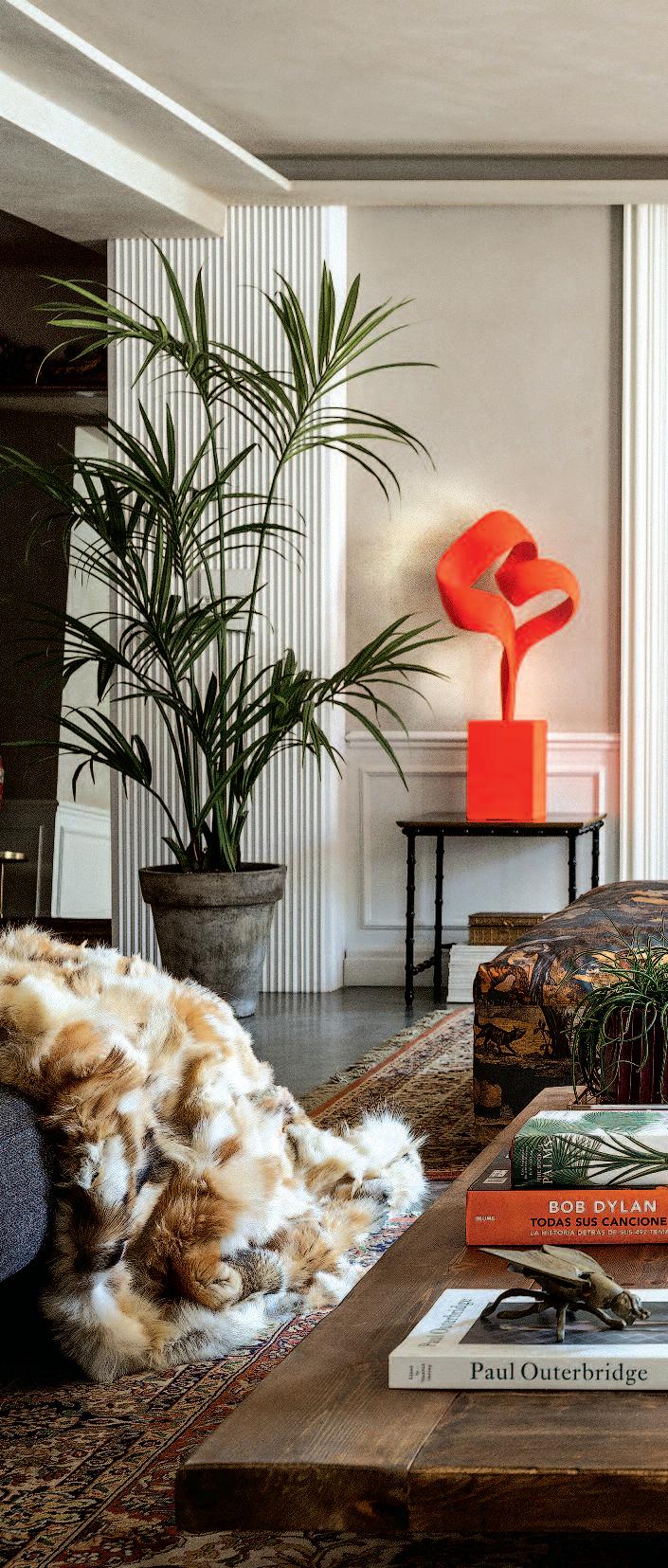
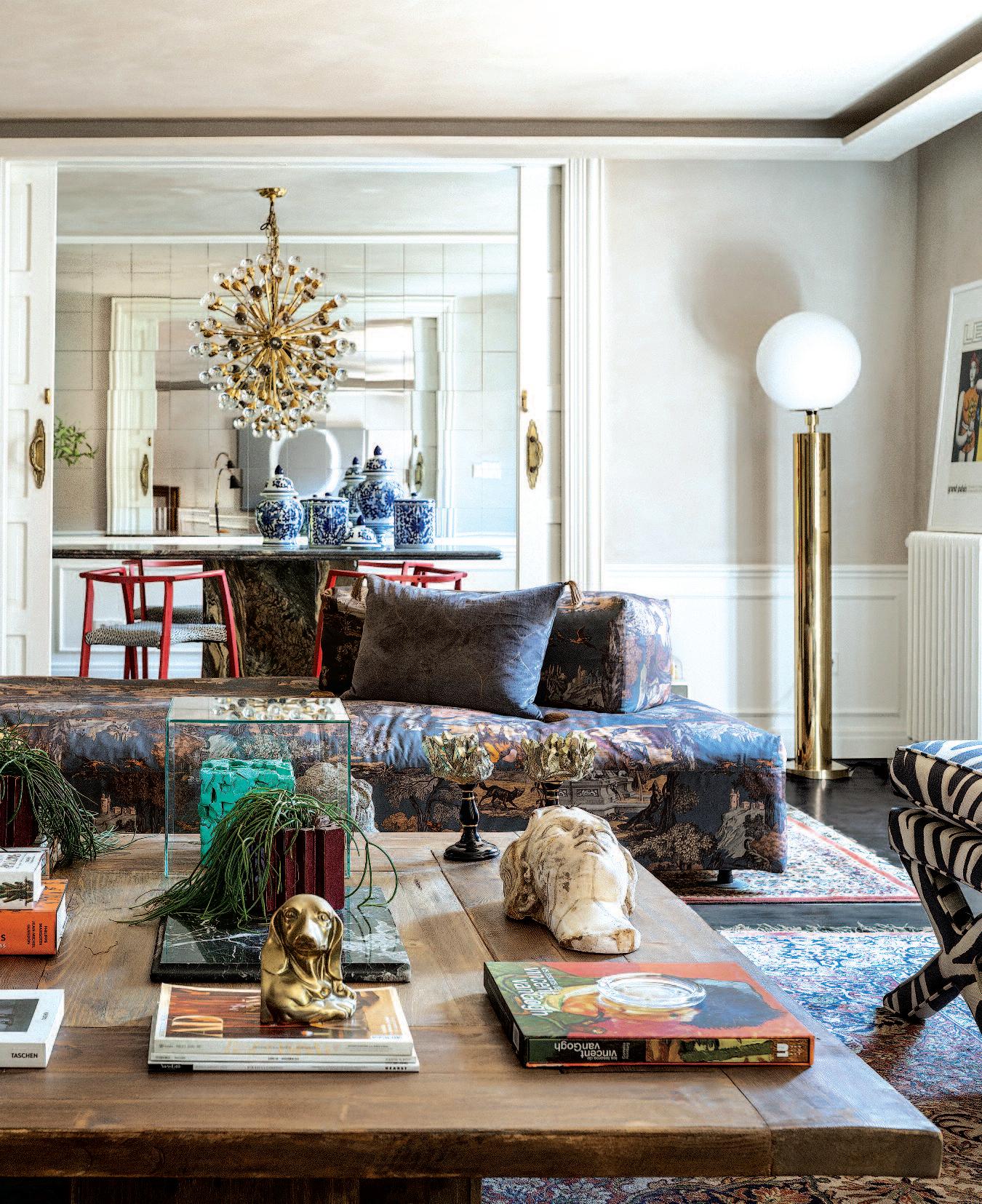
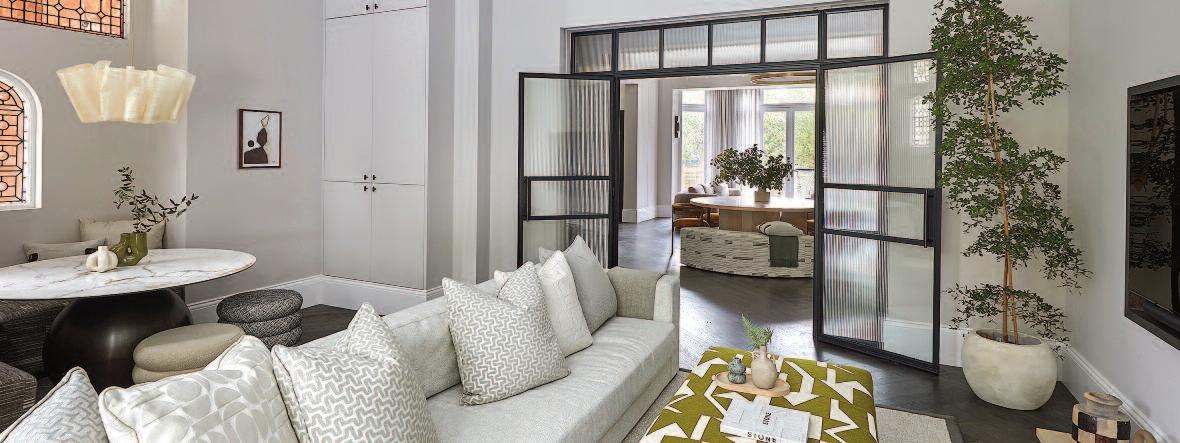
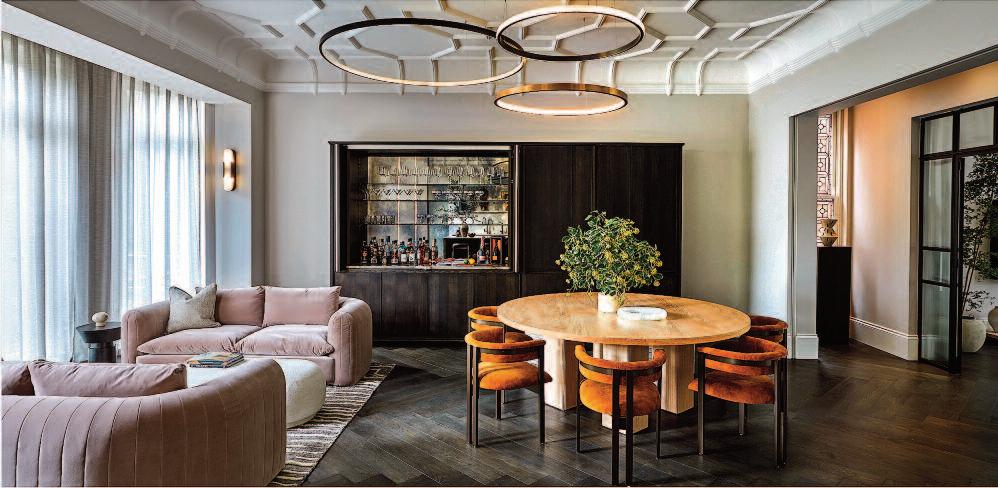
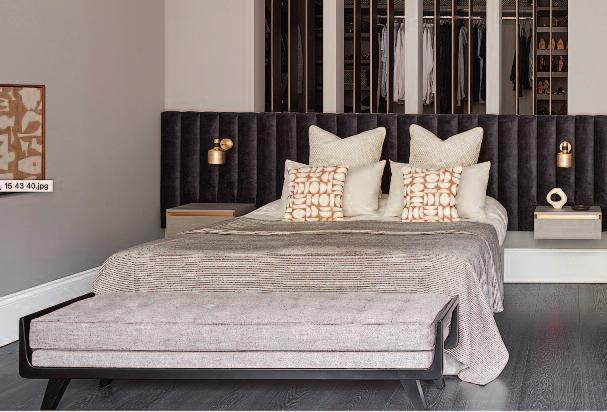
It was a internal reconfiguration and interior renovation of a Victorian Townhouse in Hampstead, London, England. The owners had previously combined two apartments to form this four bedroom home for them and their three young children. They were unhappy with the layout and function of the property following the initial refurbishment.
Cherie Lee Interiors was brought in to overhaul of the interiors and create a sophisticated style and optimal layout.
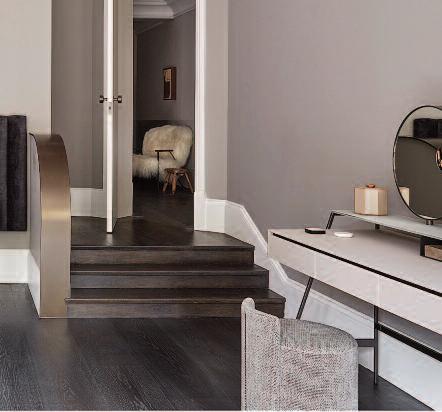

The owners, Christopher and Lynsey Bell originally combined two separate flats. The lower ground floor housed four bedrooms, four bathrooms, gym and laundry/utility room. The first floor consisted of a TV room, kitchen, dining room and bar, cloakroom and study
The initial combining of the properties occurred prior to CLI’s involvement. However, the homeowners were unhappy with the layout and function following the original renovation. They asked Cherie Lee Interiors to assist them with the reconfiguration and overhaul of the interiors.
One of the owner ’ s major issues was the kitchen, which was located in the current TV room. The space felt shut away from guests when entertaining and didn’t allow for the open plan and relaxed entertaining that they were keento provide. The number one priority was therefore to relocate the kitchen to a more prominent position and to develop a kitchen design that blended with the overall aesthetic for the ground floor
The staircase connecting the two, previously separate apartments, was also not to liking. It was originally positioned along the side wall of the now kitchen and didn’t feel like a formal staircase. It looked more of a basement staircase with no balustrade or grandeur and was also rectified as part of the reconfiguration
The owners were very open to ideas and s uggestions regarding the aesthetic for the property. They knew that comfort was key to them. They wanted to keep an organic feel to the materials, resulting in the use of natural stones, timbers and relaxed, natural fibers. The designers choose for a backdrop that would be a warm, neutral palette with dark timber accents. The end result was a social and hardworking layout that served the needs of the whole family.
The kitchen had to provide a high level of function, without feeling too utilitarian. The mix of natural materials was key to achieving something that felt calm and at home at what is essentially the central ground floor space The marble shelf that runs along the length of the kitchen allowed for decorative feature in a practical space and assists with integrating the kitchen with the largely open plan ground floor. The Taj Mahal Quartzite and sawn oak cabinetry evokes an organic and tranquil mood but is still high impact.
A designated yet relaxed dining area for entertaining was required The goal was to achieve a grown up dining/cocktail space for after dinner parties, but also a room that was equally as useable when the family was not entertaining. The large timber unit allowed for a generous but concealed bar. It also provided a hidden entrance to the cloakroom.
As the family’s main space to gather of an evening, the living room needed a maximum level of comfort. Cherie Lee Interiors wanted a calming palette with accents of green and natural textures to reflect the gardens visible across the dining space.
To maximize use and function they also created a multifunctional seating area underneath the stained glass windows It provided a place for the homeowners to sit with a coffee and magazine, play a board game with the children or for the children to do their homework. Soft curves on the banquette reflect the unstructured pendant light above and help to soften the area.
The master bedroom color palette was dark with earthy contrasts The designers wanted to create a headboard that stretched the entire wall and helped to frame the sleeping area. The oversized chaise seat sits at angle to allow views of the gardens without dancing away from the bedroom. Cherie Lee Interiors also designed the three bedrooms with each a distinctive atmosphere. The property has exclusive ownership of the gardens.
Previous pages: the living room with bespoke fur niture and Stark carpets.
The dining area has Farrow &Ball wall paint, ceiling lights by Cameron Design and wall lights by Kelly Wearstler
The fur niture is specially designed for the space. The master bedroom with bespoke headboard and lights by Ber t Frank.
These pages: the kitchen by Dot Bespoke with stools by Haymann Editions, Sheepskin armchairs by Dagmar Design and Ceiling light by Cameron design.
Beside that the living room with multifunctional seating area under neath the stained glass windows.
The oversized chaise seat allows views of the gardens
One of the children’s bedrooms has a cloud wallpaper ceiling, a Sweetpea and Willow bed, pendant lights by Flos and a cream soft chair by Soho Home a desk by Graham and Green and chairs by Liang and Eimil,
Photos: Ray Main
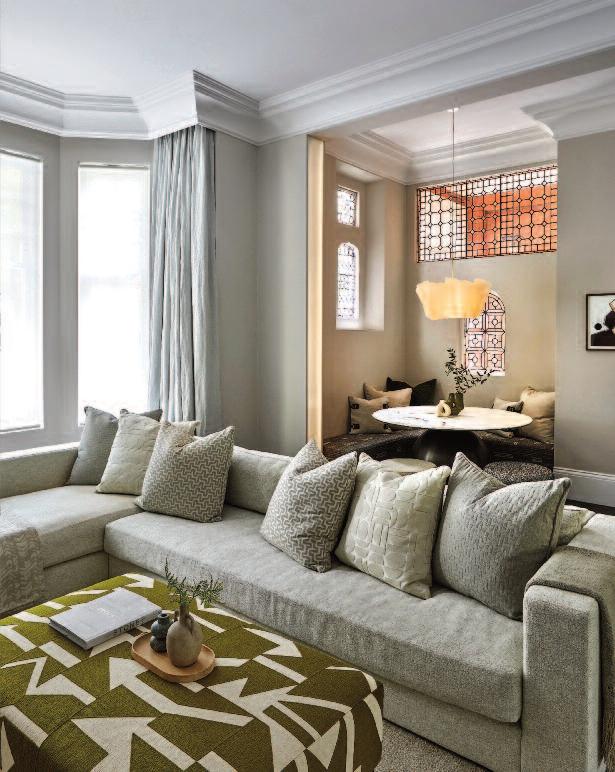
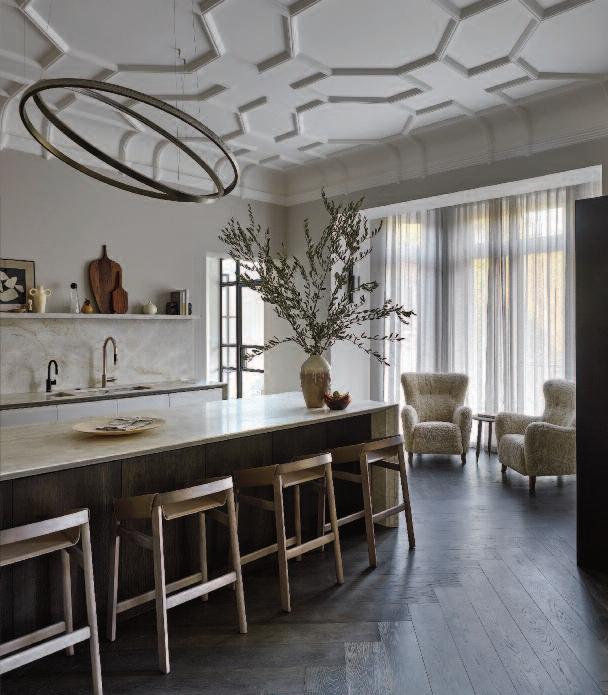
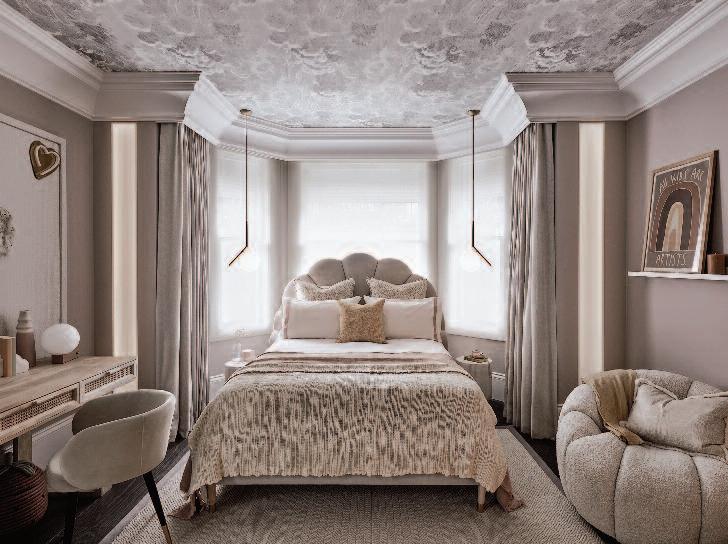
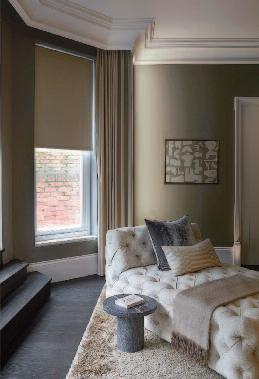
OBJEKT©International is the authoritative and bespoke title for the upscale urban modernist with a passion for interiors, art & antiques, modern design and outstanding architecture.
Thanks to the general concept, unexpected topics, the selection of designers, and quality of the photos,

OBJEKT©International has gained the highest authority in its field. The magazine was first published end of 1991.

Selected Retreats for Family & Friends
WWW.UNIQUE-EXPERIENCES.CH