IYENGAR YOGA NEWS
In the light of Yogacharya Sri B.K.S. Iyengar
www.iyengaryoga.org.uk
With brighter days comes renewed energy, and we can apply that as we take to our mats. If you don't know where to start, Debbie Wilkinson provides five quick and easy steps on how to begin a personal practice (page 32). For those with a bit more experience, try Geetaji's beginner-friendly sequence (page 54), illustrated by the wonderfully talented Svenja Karstens. And if you're going deeper, Lisa Wylde gets to grips with the guṇas in āsana practice (page 28).
The IY(UK) convention is just round the corner. This year, we are gathering in Glasgow and the event will be led by renowned international teacher Birjoo Mehta, who studied under BKS Iyengar from the 70s. Birjoo will invite us to "play and create" together - so make sure you snap up one of the last remaining tickets.
We want to express our gratitude to Poppy Pickles who has moved on from the position of co-editor of IYN after playing a major part in the magazine's current shape, look and content. Thanks so much for everything you have done, Poppy!
Hope you enjoy this issue. Please get in touch with your feedback and article ideas.
Editorial team: Minna Alanko-Falola, Mark Jolly and Sara Ledwith
Designer: Cathy Tincknell
Illustration: pp28-30 Cathy Tincknell, pp 54-55 Svenja Karstens
Proofreaders: Charlotte Everitt, Philippe Harari and Jane Howard
Suggest article ideas to: editor@iyengaryoga.org.uk
Next deadline: 31 August 2026
Please don't submit articles without prior discussion
Membership and Office Manager: Andy Tait 07510 326 997 office@iyengaryoga.org.uk
Support Manager: Bronwen Hopkins bronwen@iyengaryoga.org.uk
Finance & Bookings Administrator: Jess Wallwork jess@iyengaryoga.org.uk
Assessments Administrator: Kate Woodcock 07914 089 360 kate@iyengaryoga.org.uk
This magazine is printed on paper that is sourced under a scheme which ensures minimal environmental impact.
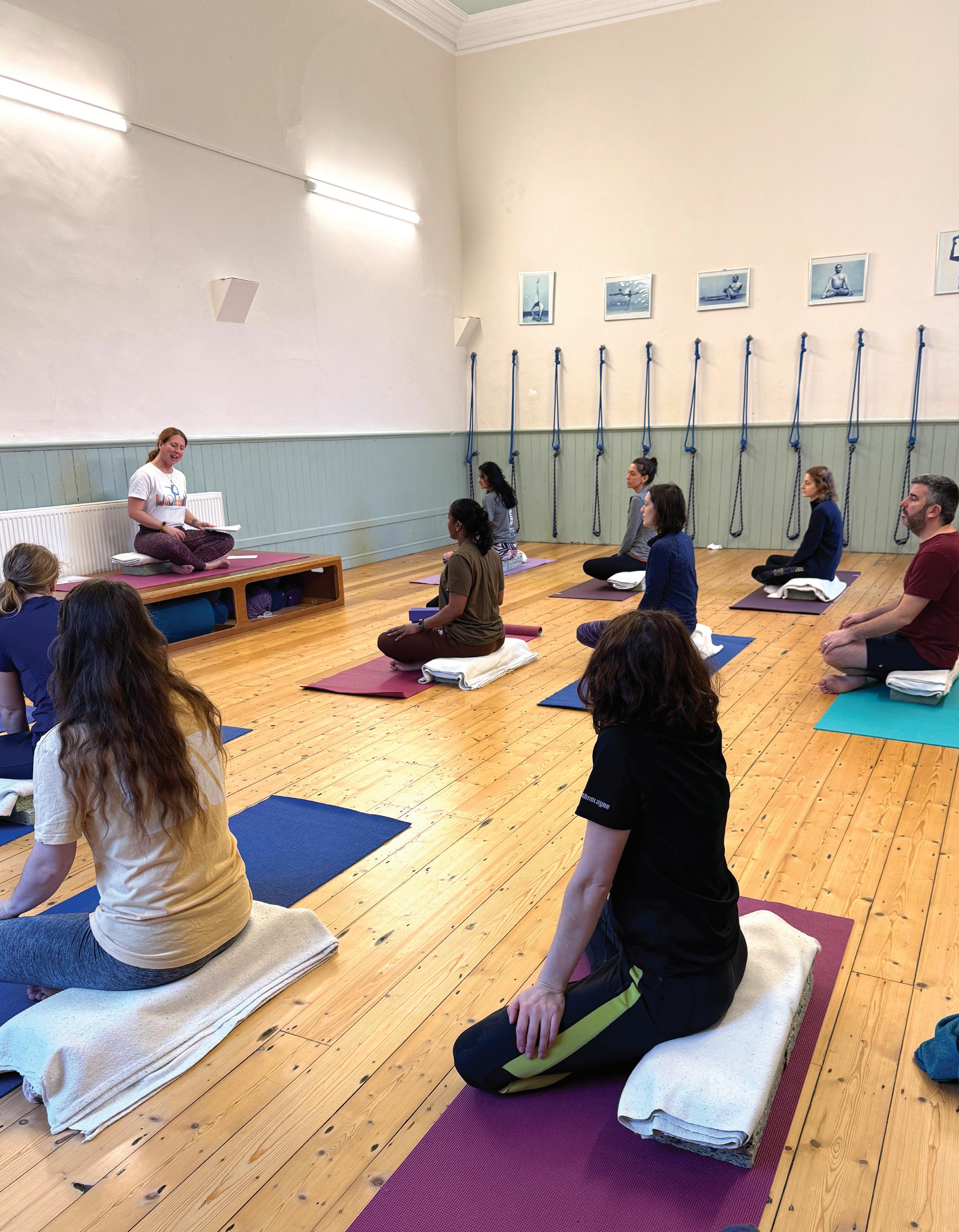
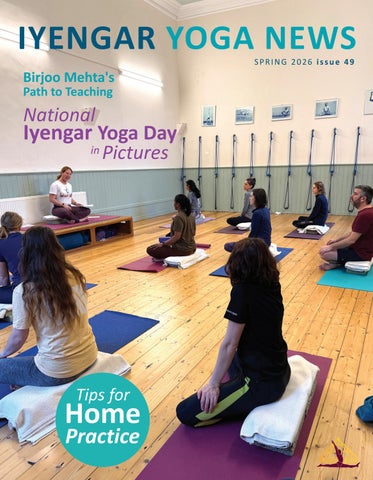
Cover image: Carolyn Usher teaching a taster class at Sheffield Iyengar Yoga
Welcoming Birjoo Mehta to Glasgow Minna Alanko-Falola
Go Beyond the Outline:
Birjoo Mehta Vincent Hufty
Returning to Pune: Practice, Community, and the Living Lineage
Rachel Lovegrove
National Iyengar Yoga Day
Kelly Brooks
Long Wittenham Yoga Centre
Evelyn Crosskey
The Dance of the Guṇas
Lisa Wylde
Take 5: Your Body, Your Mat
Debbie Wilkinson
Asana: a Spritual Sādhana
BKS Iyengar
Yoga and Radiotherapy
Diane Goldfrei
There’s only one Julie Hodges. Or is there? Mark Jolly
The Charlbury Yoga Studio
Matthew Greenfield
Convention 2026
Share Your Light on Yoga Stories
Obituary: Tracey Dixon Brenda Booth
Your Safeguarding Questions Answered
Marianne Gautier and Noelle Riggott
Beginners' Practice
Geeta S Iyengar/Svenja Karstens
IY(UK) Reports
Member
and Iyengar
Minna Alanko-Falola
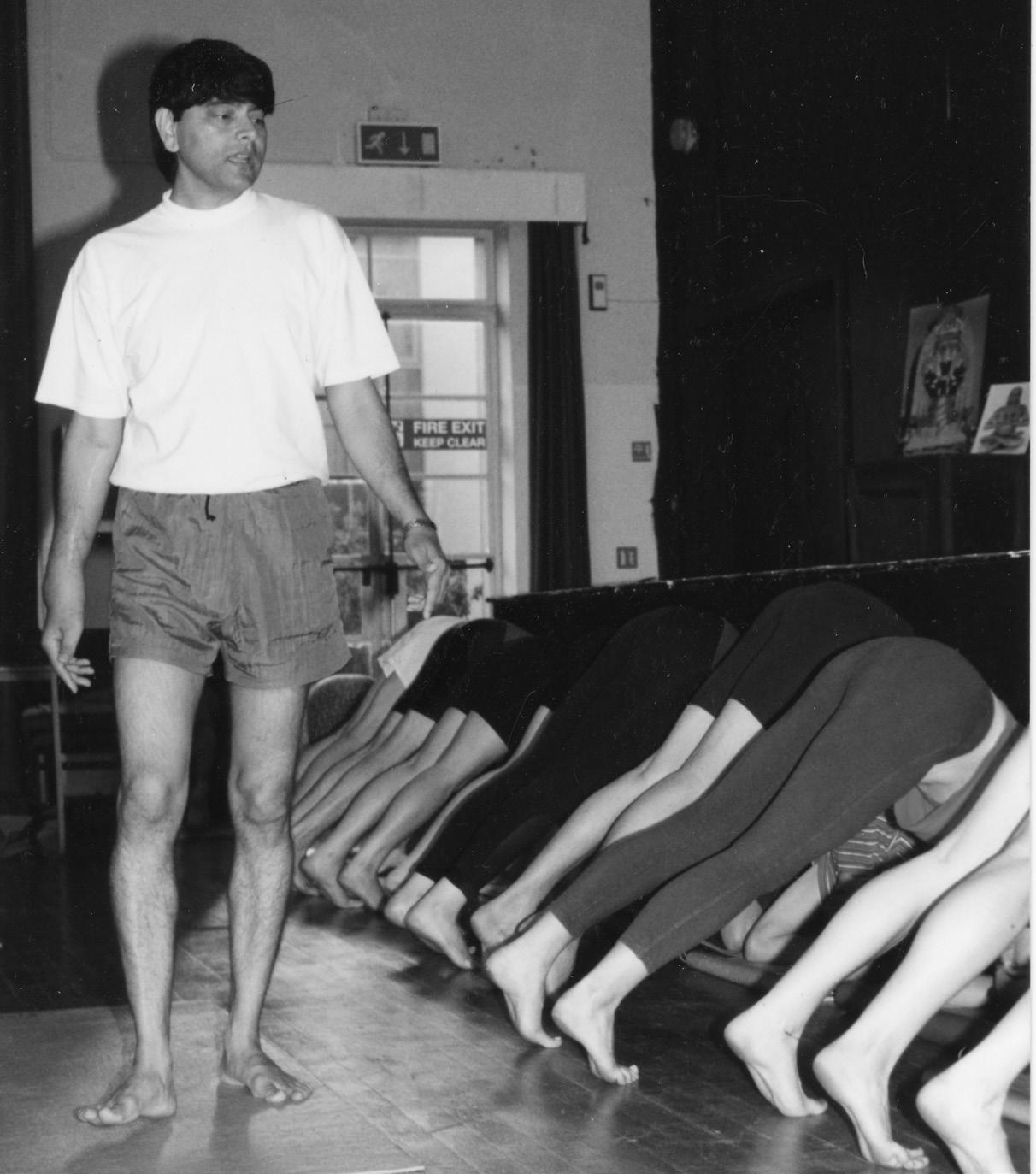
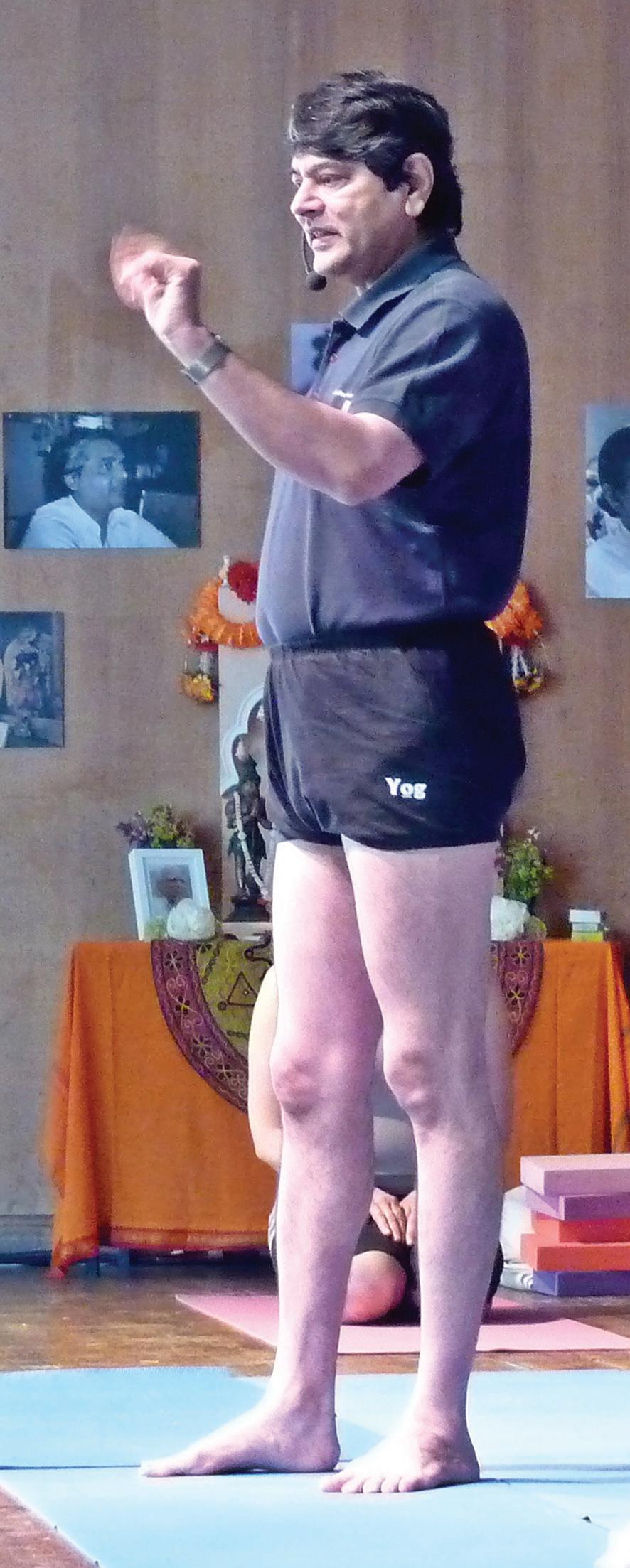
Birjoo Mehta became a student of BKS Iyengar in 1974, and is now a world-renowned teacher from Mumbai. He has led many international conventions, and IY(UK) is delighted to welcome him to this year’s event in Glasgow in May. He told Iyengar Yoga News he hopes this year to bring a fresh perspective to our practice: to guide practitioners to a sense of āsana that embraces the moments when all movement and effort has ended, and silence begins.
This will be your fifth time teaching a UK convention, but there will be people who have not experienced your teaching. What can we expect in Glasgow?
For this convention, I will work on different themes. I want to bring something that could inspire and, in a sense, change your practice. When you change your practice, your perspective changes. My idea is to help change the perspective of what you are doing.
I thought that I should talk to people in the language that is relevant to the culture. Many people in the UK and Western Europe understand music. In India, if you go and talk about Mozart, some people will know him but in Western countries it is general knowledge that he is a genius. There is a quote that has been attributed to Mozart: “Music is the silence between the notes.” Makes you think. If I am learning music, I learn about the notes, the sequencing of notes. I learn how to play the notes.
Right:2015 Convention image Ros Bell
Now, I try to create an analogy of that in āsana. What is āsana? Āsana is the silence between movements. As an objective student of music, I learn about notes, placement and sequences of the notes. When I’m teaching yoga, about āsana, everybody wants to learn about the notes. But essentially, yoga is the silence between the movement.
In the Yoga Sūtras, in the second chapter, there is a very clear definition of āsana.: “sthira sukham āsanam.” (Āsana is perfect firmness of body, steadiness of intelligence and benevolence of spirit.) Sthira means still, stable. If I was in Trikoṇāsana and I wanted to hold the pose, how long can I be in it, how do I hold? If you take the perspective that yoga is the silence between the movements, then you look for the completion of that movement. When that moment comes and movement transforms into silence, that’s when āsana begins. When all the movements, efforts have ended, the silence begins.
It naturally becomes effortless, and that is what the next sūtra talks about: "prayatna śaithilya ananta sāmapattibhyām." (Perfection in āsana is reached only when the effort to perform it becomes effortless and the infinite being within is reached.) All effort ceases and that leads you to a feeling of oneness, stillness. If music is the silence between the notes, āsana is not a posture but the silence which comes having done the movements in the posture. Then it is effortless because everything has ended.
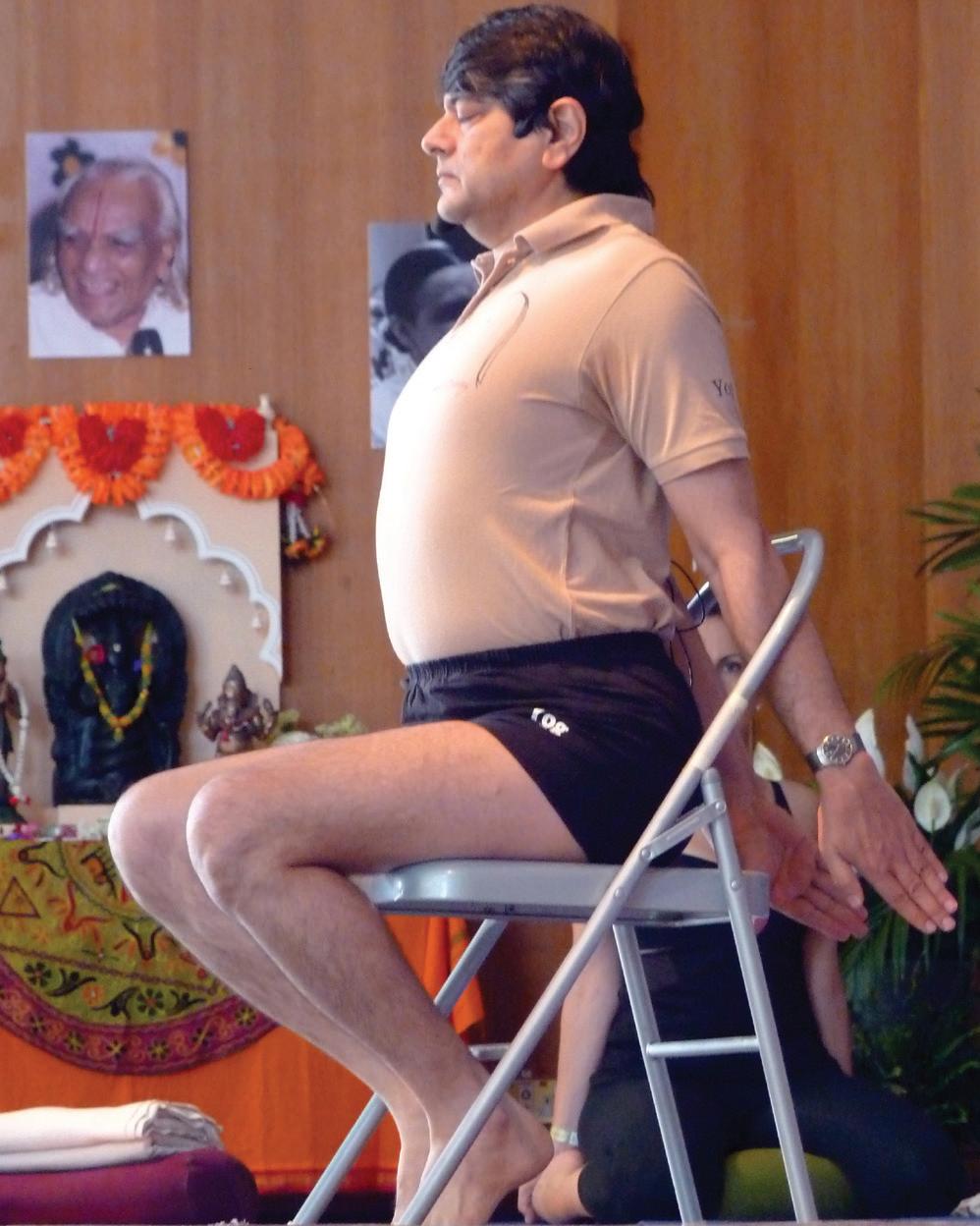
I find when I teach outside of India, a lot of people come and say they have a particular problem so are not able to take part, and ask to be excused. I am not a demanding teacher. My idea is to change your perspective. Don’t think you are not able to do it because you have a back problem, have hurt a knee, or are pregnant. The convention is not going to be regimented. I want people to feel like children in play, bubbling with excitement – I want that spirit. I don’t want people to get serious in the sense that they should not have fun. I want you to have that excitement of innocence.
Only in that excitement of innocence you will learn.
After the convention I want people to start to understand what effortless practice means. A lot of students choose not to come to conventions
because they think they can’t practise for that length of time. They think that they are going to be working hard for hours – but you are not working hard, you are playing and creating. It’s not a workout, it’s a joyful creation.
What would your advice be to someone who isn't a teacher and hasn't been to a convention before?
What happens is this: when the teacher starts the convention, everyone's mind is all over the place, people focus on different perspectives. Over the period of the convention days, everybody starts to
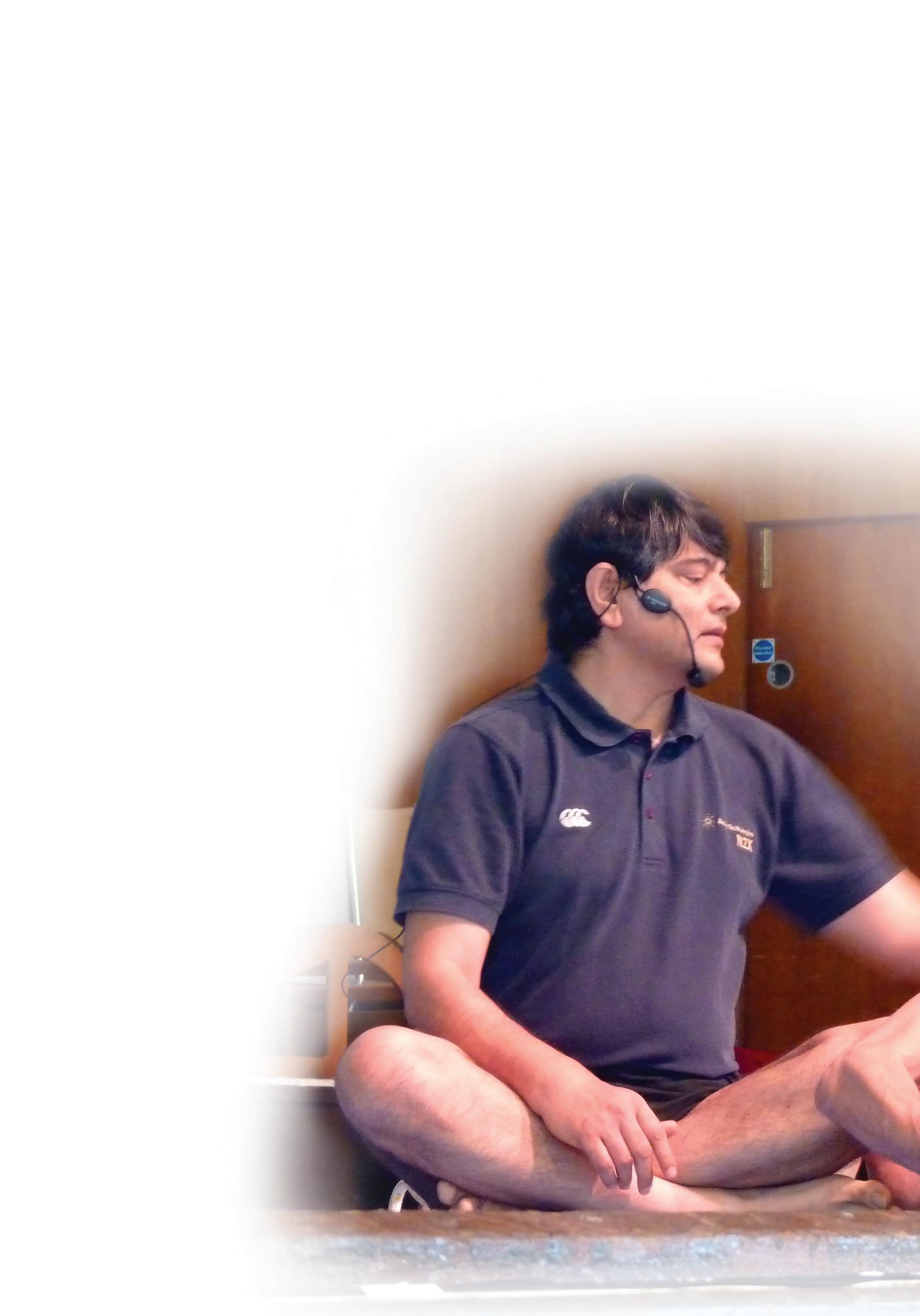
get aligned, and focus. When we start to get aligned, there is a certain joy. That joy at the end of the convention is something not to be missed. I’ve seen that in every convention.
By the time the final class ends, there is that silence, like an āsana, no duality.
That joy can be seen when people go for the group photographs. You see people in a very light-hearted state – they want to be a part of the photograph because they were a part of that learning, part of that moment. That is one thing which people can relate to, even after years of conventions.
Of course, there are more mundane reasons – people want to network and that is important. All of us are doing the same activity, have the same interest –there is a learning between each other, and you share your learning.
Then there is the inspiration. When you come into contact with people like Guruji, no doubt there will be inspiration which will drive you to continue. Then
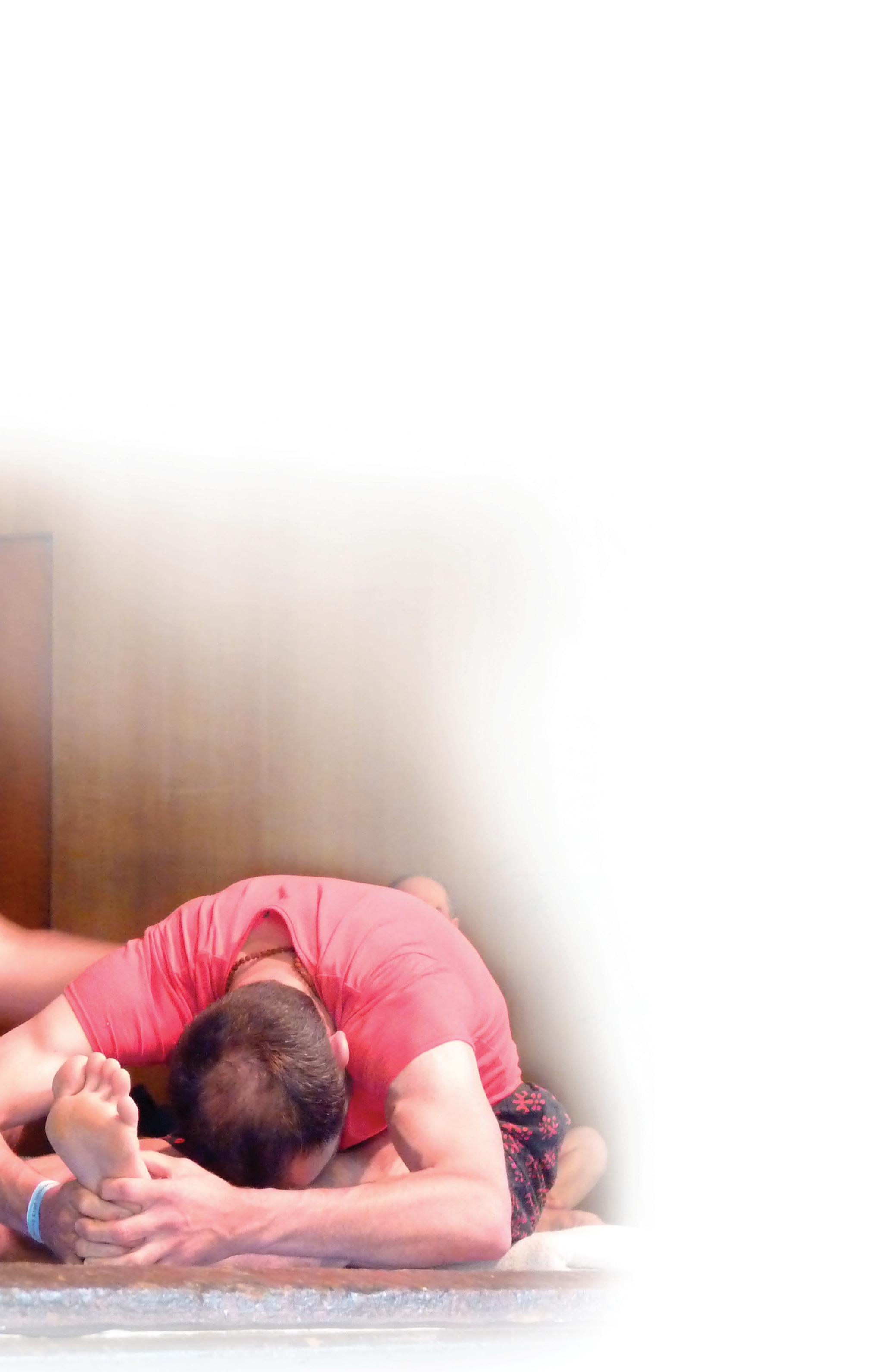
there is a feeling of community. We have this yoga community so that people who follow can get the benefit of what we are doing. It is a selfless task because yoga is about selfless, ego-less action.
Conventions teach you something which isn’t taught in class but is implicit, the ethical experience – yamas and niyamas driven by experience, the selfless task. For me, the magical moment in any of the conventions which Guruji and Geetaji have taught, the Yogānuśāsanam, comes any time the class has aligned, and every mind is one. That silence which comes in, the joy which erupts. That is magical.
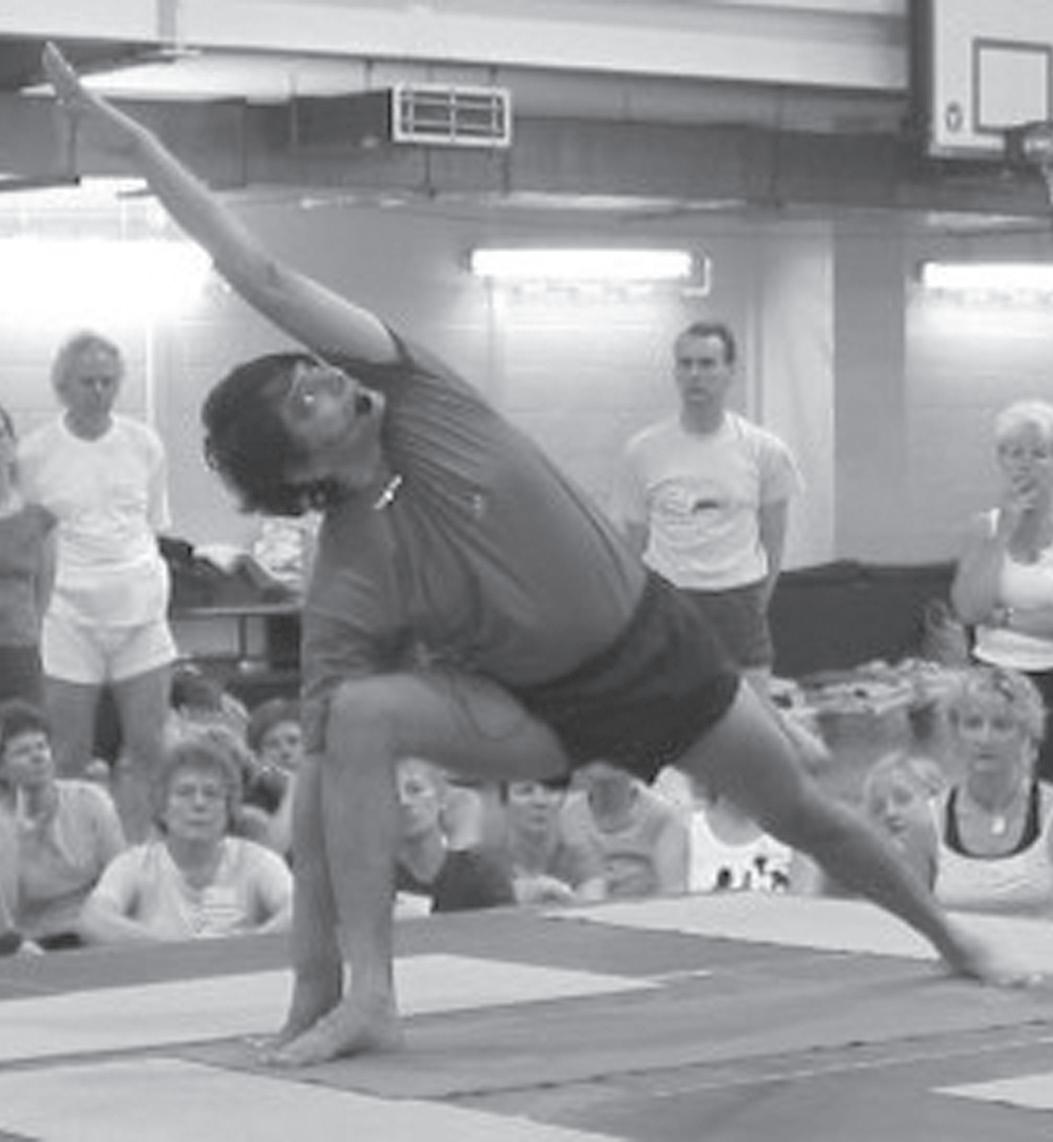

Vincent Hufty
eachers' secrets, flow in asana and iyengar yoga as a 'moving tree' are some of the insights in this abridged interview from November 2025, conducted after the BKS Iyengar Yoga Association Belgium convention, which Birjoo led.
My intention was never to teach, it was to study yoga. In 1984, Guruji asked me to accompany him for the first international Iyengar yoga convention in San Francisco. At that time, I was not a teacher.
At the end of the tour, he asked me to teach a class in London. I said, “Guruji, I am not a teacher, how can I go and teach a class?” He said, “Just do what I do, go and teach.” That’s how I took a short half an hour class.
I was working, first as an electronic engineer and then in telecommunications. I had a full professional corporate life, which was good for me because it ensured my monetary needs were met. The yoga was something I did out of love.
I tell you a secret. People think that teachers are doing a great duty towards their students by teaching them something. The secret is that when you teach, you have to understand what you have learnt and then try to make adjustments. As you make the adjustments, you learn better.
You become a better student if you are a teacher, not the other way round.
I see people following my instructions and some people are doing better than me. Why? I see that he has moved his body in this particular manner to give him a better twist; so I say, let me try this out. Can I get a better twist by doing what he is doing? Effectively, if you have 50 students in a class, each one is doing a different process within them, and you can learn all 50.
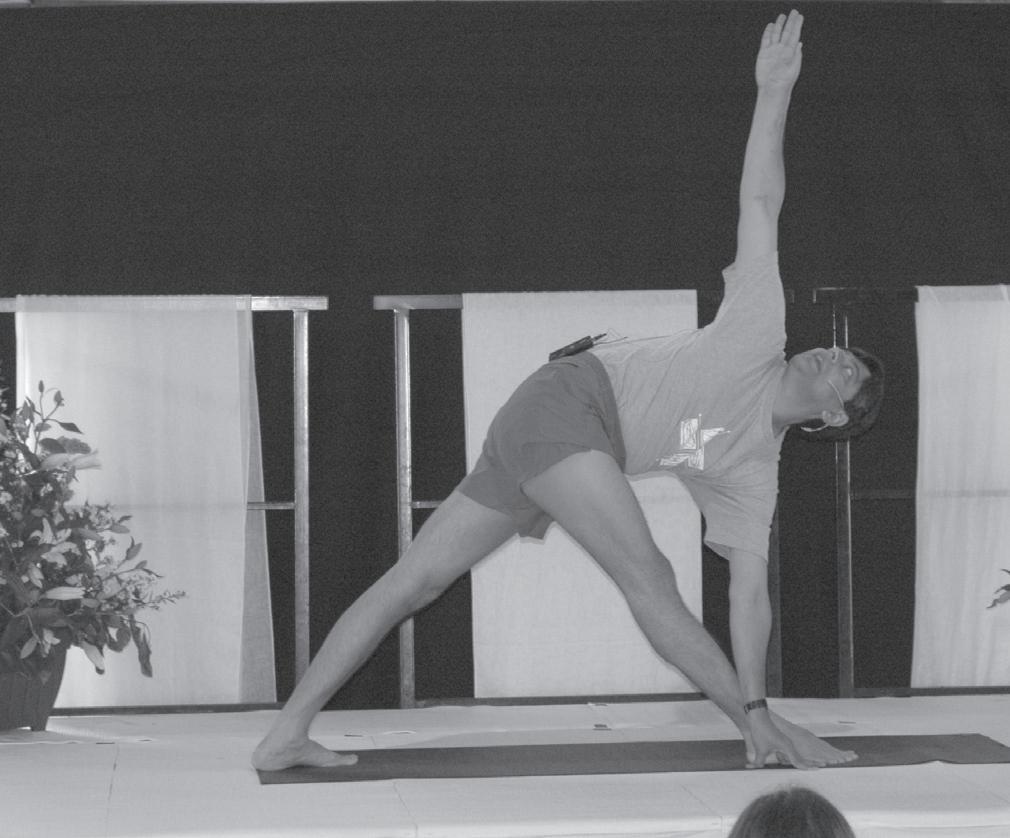
Basically, you are outsourcing your work to them: they are doing and you feel the benefit. Saying that teachers are doing a great service is a bit overrated. It’s actually teachers doing good service for their own practice and for their own knowledge!
Sharing sensation
Around 1996, questions started to arise for me, as a person with a technical background in engineering. How is it that people are able to express certain things objectively? If you want to talk about unit of length, you say one metre. Can I have some unit of my internal sensations? Is there a subjective feeling
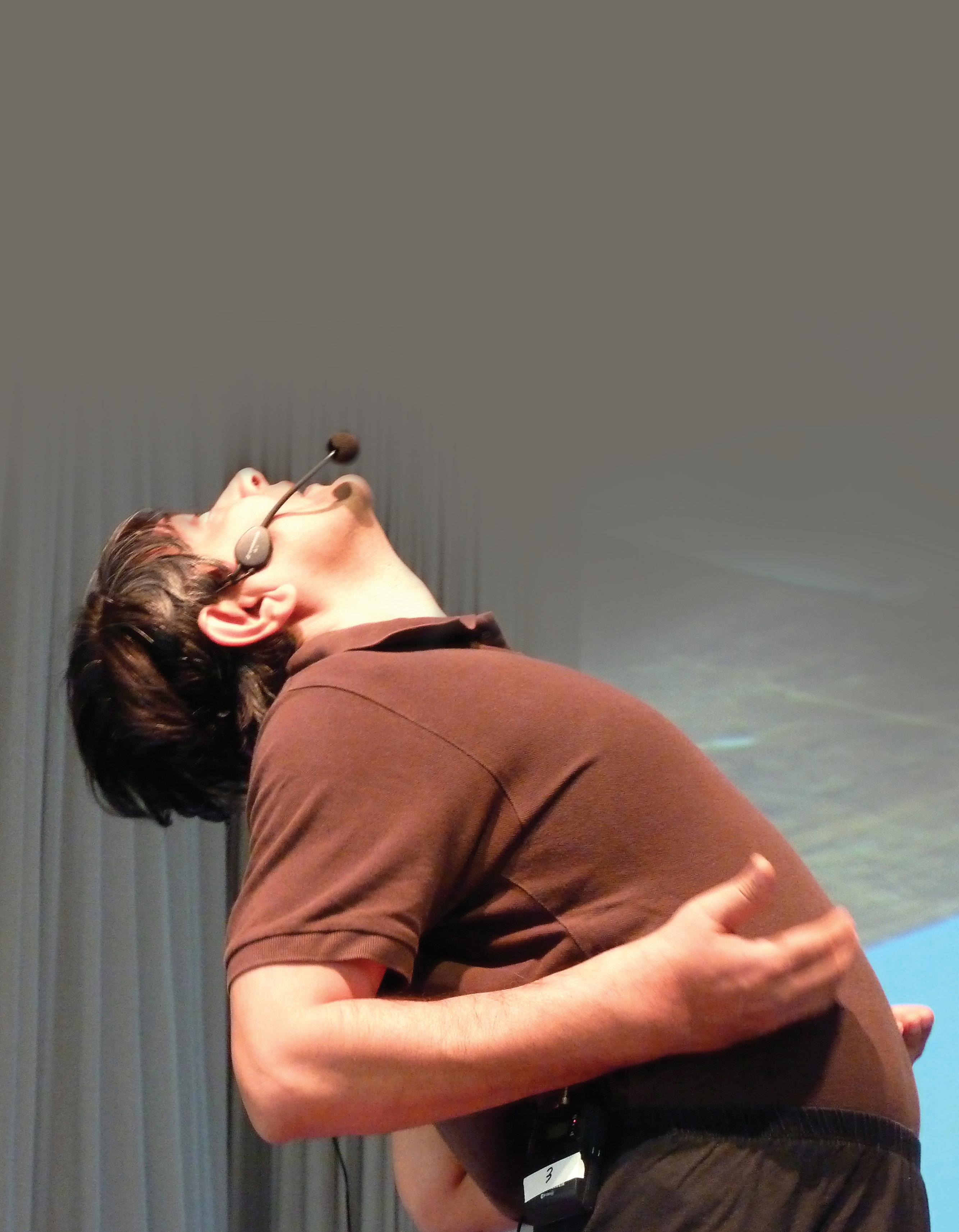
that I can express? Everybody understands pain, happiness, pride. Is there a way by which I can actually talk to them about what I’m feeling and check if they are feeling the same?
That started the process of understanding what you call teaching subjectively. Objective teaching is about the techniques of the pose without attending to what is actually material to students: what they are feeling.
From that point onwards, every time I felt something, there was a question: how can I express that and make somebody else know exactly what I did, so they can feel what I’m feeling? In this manner, whatever sensation I have, I project into somebody else.
That was the language I needed to develop. At that time, I realised that Guruji was doing that: he was feeling and then expressing with words, in order for us to feel. That was how the transmission took place.
People talk about Guruji’s demonstrations as an art form. Everybody thought he was wonderful. They did not see behind the presentation – what was in his mind, what he was doing
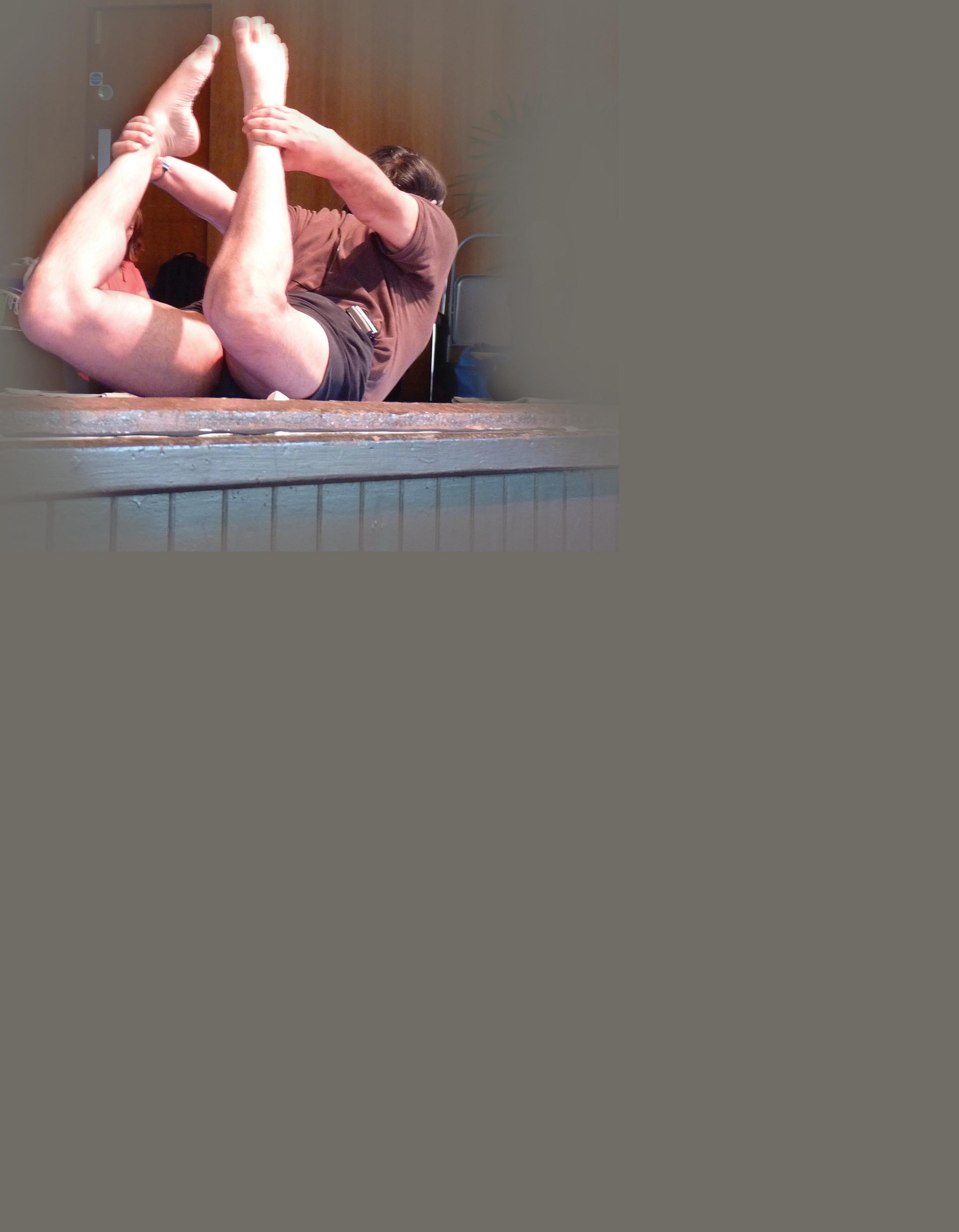
when he was doing the presentation. People saw the outline but they didn’t realise what it was for, and began to imitate him. When you imitate somebody you will imitate only what you have seen in the physical form.
If you could see what is happening in his experience, you'd get a different understanding.
Guruji said, “Don’t see me teaching as a teacher. You have to see me when I’m practising because in practising I’m actually a philosopher.” His philosophy was: if I am in this undisturbed state, I am in a happy state. Guruji was getting to a state where he wanted to just stay because that was sustaining him. He never wanted to do a posture for impressing people. It was the quietness within him which was reflected outside in his presentation.
People were enamoured by what they saw rather than understanding what he was feeling. You have to feel what I’m doing to be able to experience it.
In 1994 or 1995, Guruji was teaching at the international yoga festival in Rishikesh and I
accompanied him. I had never heard Guruji talk about chakras. I was demonstrating poses and Guruji was teaching, and he said “feel the Svādhiṣṭhana [sacral] Chakra.” I had no idea what the Svādhiṣṭhana Chakra was but my body moved. Then he said about the Anāhata Chakra – that’s the heart chakra – I didn’t understand where it was but I just did.
Then it occurred to me, how is it that he is able to talk to me without the involvement of my brain? He was addressing my body parts directly without the information coming in via my ears to be processed by the frontal brain. It was as if this part of my brain was completely eliminated and he was talking to my body.
That got me interested in this question: people talk about that you should be doing something without ego. How can anybody do an āsana without ego?
Because of the experience I had of Guruji talking directly to my body, I realised that if I do not involve my brain in doing this, but just follow the instructions of the body just as Guruji’s instructions talking to my body, if this instruction comes then āsana can be done without ego. All you need to have is the right process which keeps eliminating the ego.
Mihaly Csikszentmihalyi was an Austrian psychologist who studied people who had reached a particular stage in their professional life of sport or music. He tried to find out what they felt when they performed a perfect run or piece of music. He made up a term: "state of flow". Flow is the state of āsana. You lose the sense of time and space, you are just there and things are happening on their own, you are not doing anything. All the things that have been listed under the psychological concept state of flow, as defined by Csikszentmihalyi, are exactly there in āsana.
Āsana is that state a musician who is composing finds when he is delighted. Āsana is a human condition, not depending upon a particular culture or
faith. Āsana is that final state when everything is just happening on its own, but that requires continuous practice.
Only if you are able to have learnt well, this thing happens. The moment you get stuck, that means the state comes to back to ‘me’ and everything disappears. If the ‘I’ has come, the sthiti (stability) is lost.
My feet onto my head
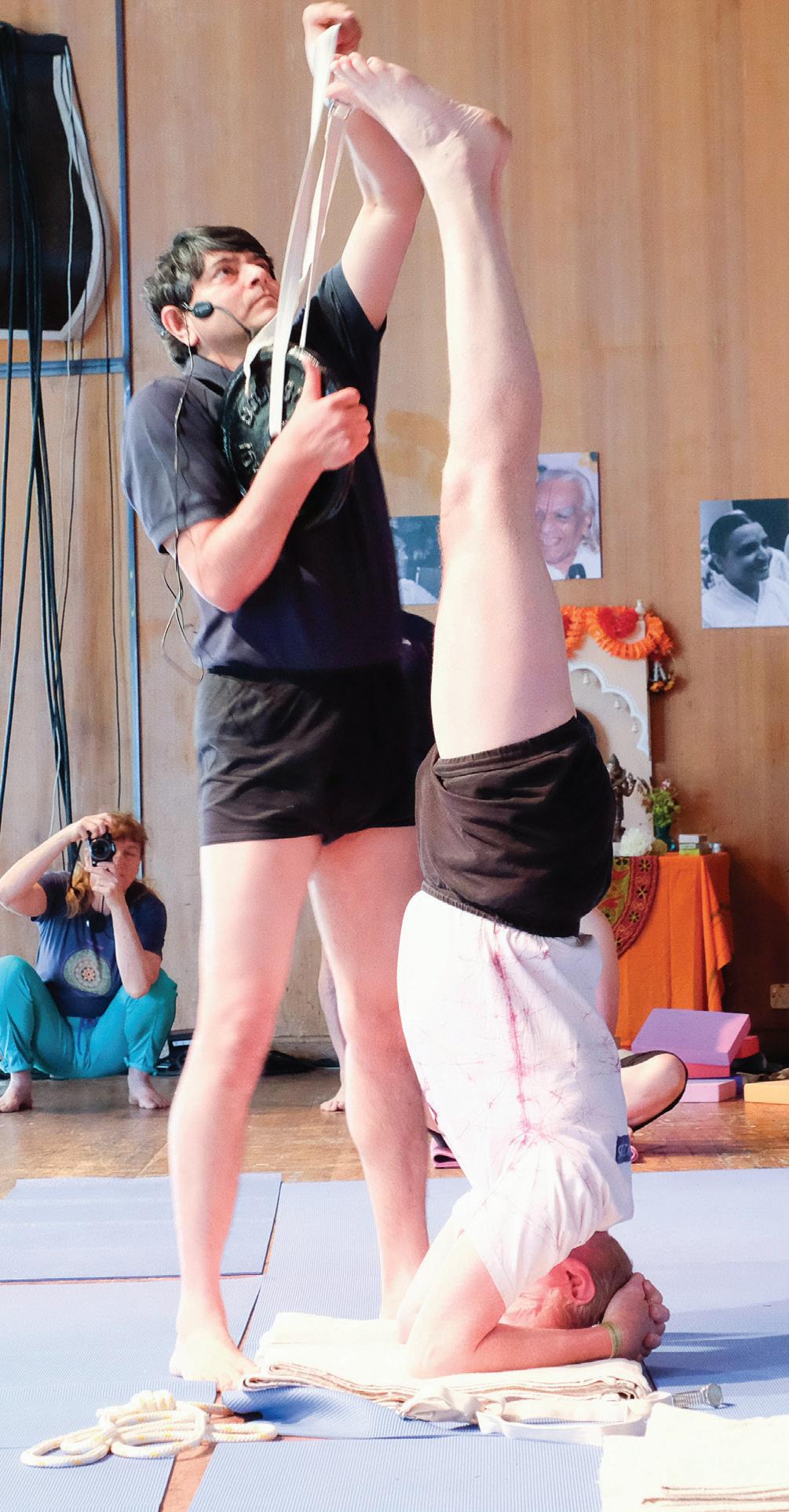
I have a very stiff body. When I was young, Vṛśchikāsana attracted me very much but I would never get it. In 1990, I was in San Diego for the convention with Guruji and we were staying in a house with quite a few teachers. Guruji had started his practice early and there were other students who had come. I was sleeping. When I got up and saw that everybody was doing āsana, I immediately rushed into the studio in the house. I was so unprepared. Guruji called me and said, “Birjoo, come here. Go for Pincha Mayūrāsana.” So I went into Pincha Mayūrāsana. He just held my legs and put my feet straight onto my head.
That’s the only time I did Vṛśchikāsana, ever. It was about understanding and not physical force. I could not have done Vṛśchikāsana, even with preparation, but I had just got up, I was still in the sleepy state and he just put me into it. I have an attachment to that pose because it gave the experience of just opening up of every pore in my body. I felt liberated. Every part of my body was there, in a state of flow.
If you are truly a practitioner of Iyengar yoga in the sense that Guruji was teaching and doing himself, you cannot be fanatical. Guruji was a vegetarian but he never told his students to stop eating meat. These things are immaterial
when you are connected with the yoga itself. Being connected to yoga is that that which keeps me living, that which keeps me excited, gives me joy, makes me happy and passionate.
Light of the banyan tree
Frankly, I am not worried about (the future of) Iyengar yoga. If it remains as a flame it will light up at any time because there is so much power in it. We just need to save the flame, the light.
I don’t think we should get ourselves bogged down thinking that we should do something to improve and to increase the number of people that are coming to yoga. What is important is to be truthful to the subject of yoga.
Just because it is drawing more people, doesn’t mean we have to modify the subject to meet their requirements.
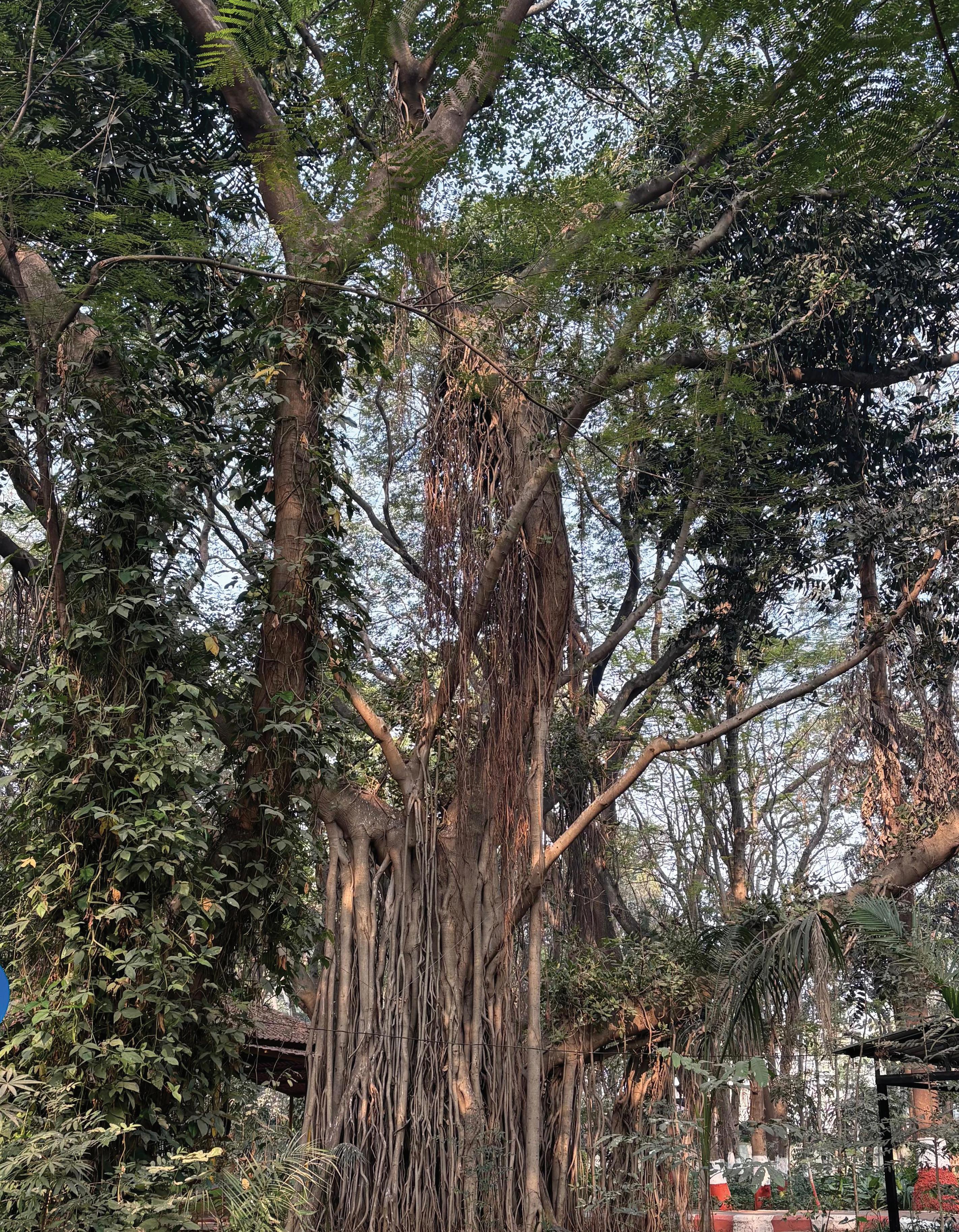
In India, you have the banyan tree where the roots start to develop from the branches and take root in the ground. It is also called the moving tree because of the way it grows. Most yoga systems have one tree with branches. Iyengar yoga is a banyan tree.
There was one tree, Guruji, and then Geetaji came. Geetaji is part of Iyengar yoga but she is also herself as a teacher with her own following. Then you have Prashantji, Sunitaji, Abhijata, ‘X’ teacher, ‘Y’ teacher, and so on.
It is a growing tree. It is not a tree which, when the trunk is gone, just collapses. Iyengar yoga keeps taking root in different places. If you are true to Iyengar yoga, you are part of that banyan tree.
You can watch the complete interview at www.youtube.com/watch?v=DfKfH2Y_Jp4
Rachel Lovegrove
The journey to Pune for the 2025 YogĀnuśĀsanam included delays, cancellations, and a long solo stretch between Delhi and Maharashtra before my travelling companions finally caught up. And yet, despite the dust, noise, traffic and relentless heat, Pune still carries a familiar pull. For many of us, returning here feels less like travel and more like coming home.
This year’s 7-day event was held at Deccan Gymkhana, a practical, well-organised venue just a short walk from my hotel. Under the guidance of Abhijata and Raya Uma Datta, and with a truly international group of practitioners and teachers, the week unfolded with the quiet efficiency and generosity that characterise teaching rooted in experience rather than display.
The course began on Geeta Iyengar’s birthday and concluded on the birthday (Jayanti) of her father, B.K.S. Iyengar. That framing alone gave the week a particular gravity. For those of us who studied with Geetaji, her absence is still keenly felt, but her presence — through teaching language, precision, and uncompromising honesty — remains unmistakable.
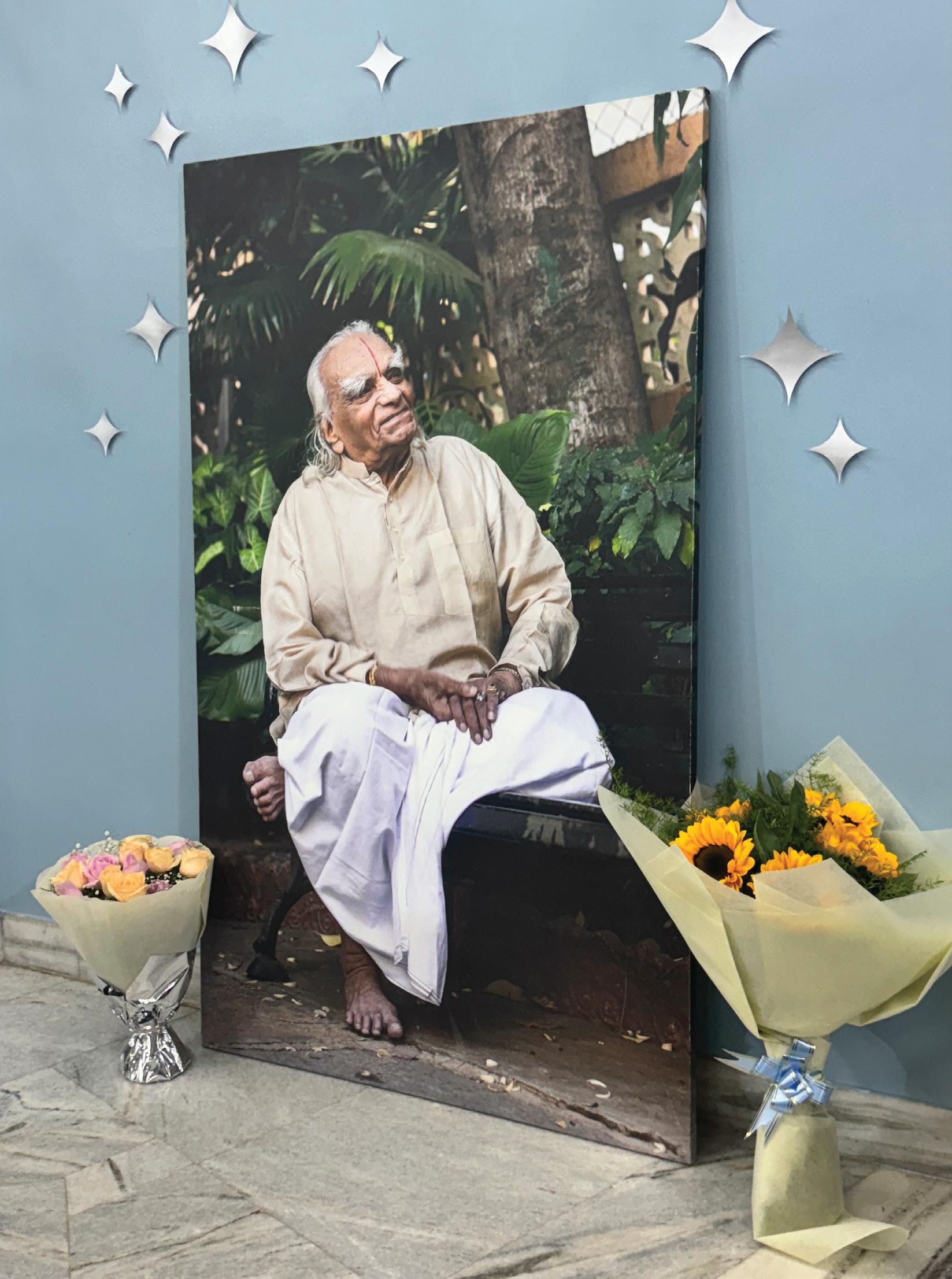
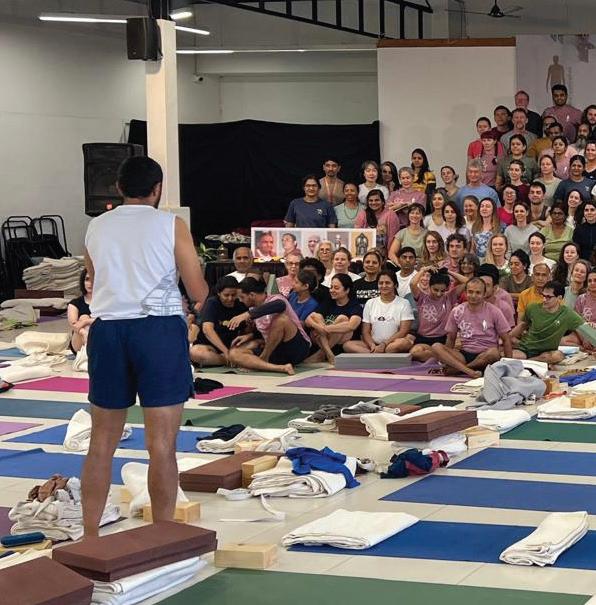
From the very first session, Abhijata emphasised a recurring theme: learning does not come from collecting information, but from embodied experience. Guruji, she reminded us, gave us instructions, but it is our responsibility to practise them until they are felt, understood, and lived. Reading, watching, or memorising is not enough. As she put it, the map shows the route, but you still have to walk the path.
This distinction between teaching and learning surfaced repeatedly. Abhijata spoke candidly about a growing problem in yoga today: what is taught is not always learned, and therefore not experienced. Precision without feeling becomes hollow. Language without embodiment loses meaning. She demonstrated how simple, direct instructions — “buttocks in” rather than anatomically elaborate phrasing — can land more clearly, particularly for
beginners. Guruji’s brilliance lay not only in what he discovered through his own body, but in the language he forged to transmit it.
The āsana work reflected this clarity. Standing poses were revisited again and again, each time informed by previous actions: abdominal turning felt in one pose was carried into the next; back-thigh awareness developed in inversions reappeared in forward bends. Sequences were demanding but logical, relentless yet intelligent. We were repeatedly invited to notice not just what we were doing, but what we were learning.
Equally important was context. One memorable morning focused on the so-called “rules” of Iyengar Yoga — around eating, drinking, menstruation, sequencing, and formality. Abhijata asked us not
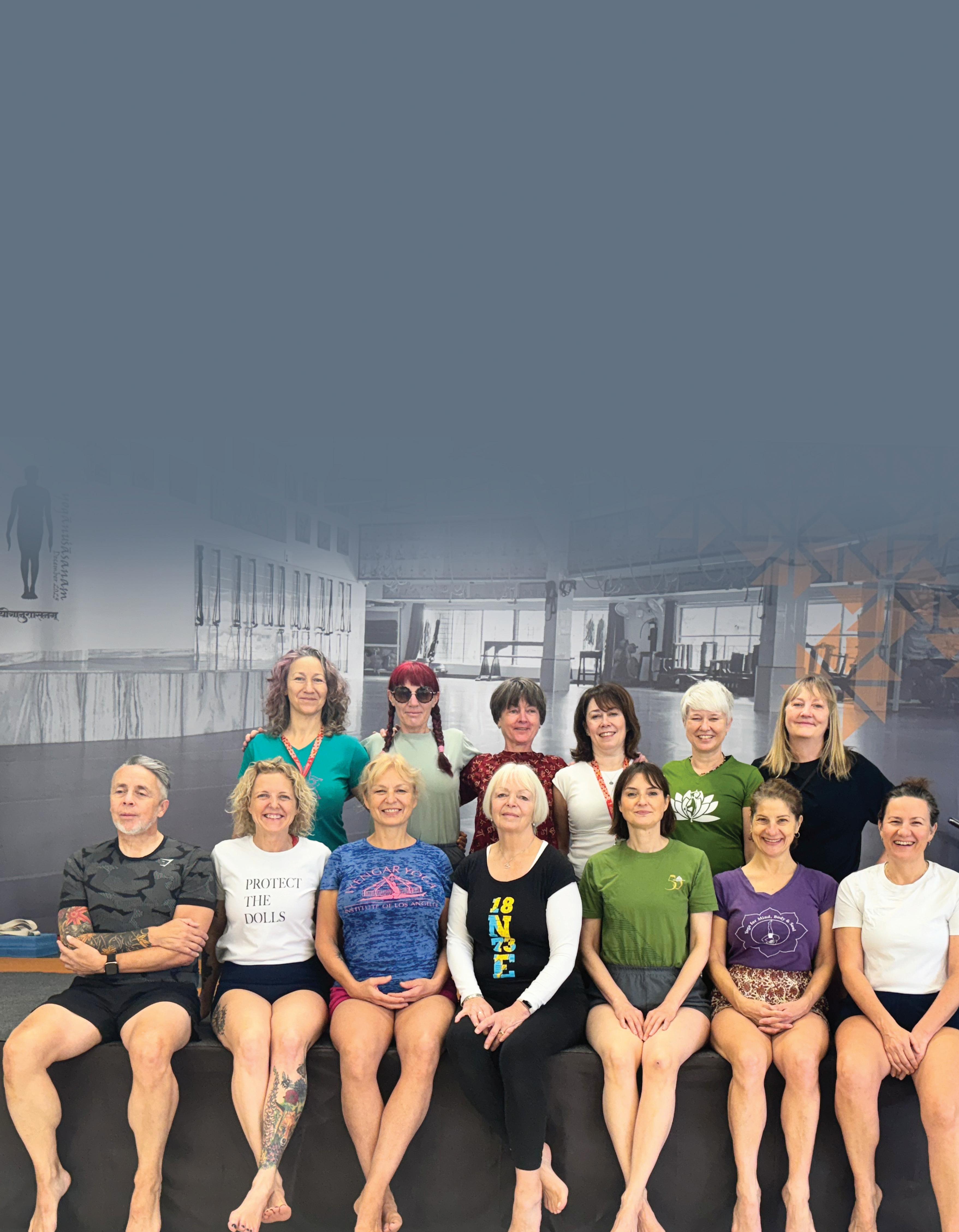
whether these guidelines exist, but whether we understand why they exist, and whether we explain that reasoning to students. Friendliness (maitrī), she reminded us, does not mean indulgence. Sometimes the kindest act is firmness — provided it is rooted in honesty rather than authority. Teaching without explanation breeds rigidity; teaching with clarity builds trust.
That theme of friendliness extended beyond words. Throughout the week, Abhijata seamlessly balanced leading a group of 175 practitioners while simultaneously overseeing therapy cases, responding to individuals, and holding the room as a whole. Modifications were offered without stigma. Long holds in Śīrṣāsana were balanced by humour — “I will give you a discount” — and genuine compassion. The practice felt collective, yet deeply personal.
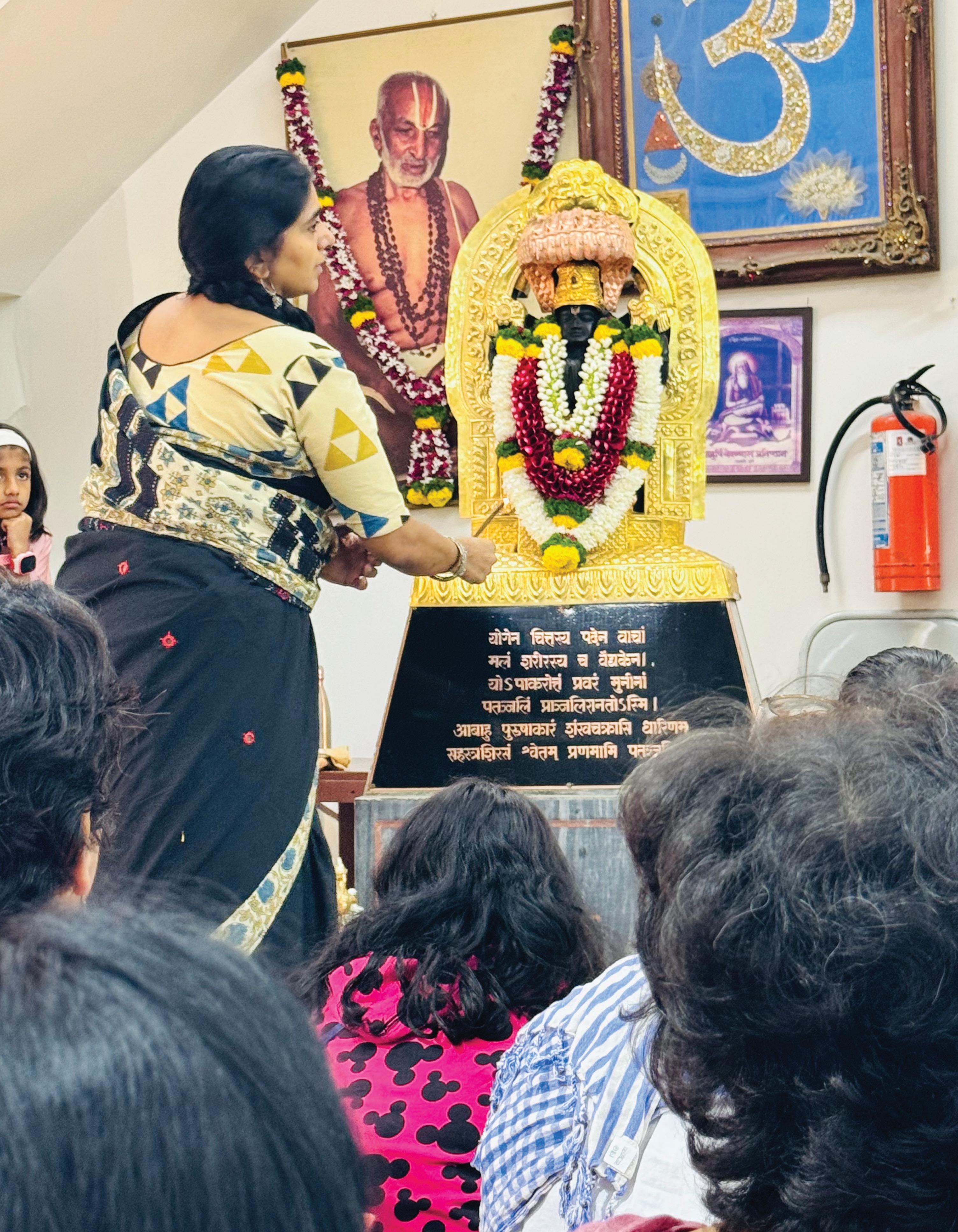
As the days progressed, attention turned increasingly inward. Śaucha — cleanliness — was explored not only as external hygiene but as inner clarity: food, hydration, behaviour, and how āsana purifies the system from within. Prāṇāyāma sessions were prepared with meticulous care, using āsana to sensitise the body and quieten the mind. We were repeatedly reminded that willpower, so essential in āsana, becomes counterproductive in prāṇāyāma. Here, subtlety and observation matter more than effort.
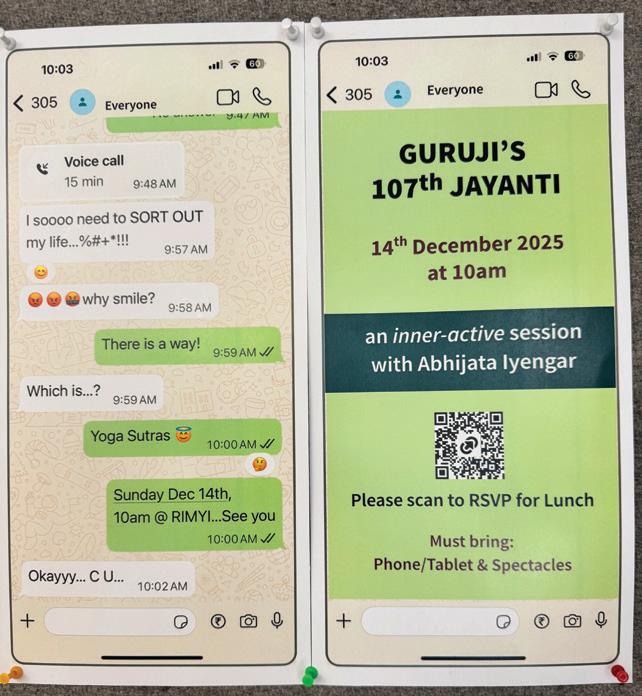
One particularly striking teaching concerned digital distraction. During Guruji’s Jayanti celebration at Ramamani Iyengar Memorial Yoga Institute, Abhijata spoke about the vṛttis of the mind through the lens of modern phone use. Scrolling, she suggested, is a contemporary expression of mental fluctuation. Each moment of restraint becomes abhyāsa (practice); clear seeing without judgement becomes vairāgya (detachment). The Yoga Sūtras, far from abstract philosophy, were presented as profoundly relevant to daily life.
That final day brought the community together in celebration at RIMYI: chanting, reflection, and shared food in the Institute grounds. Listening to Prashant Iyengar speak reminded us that practice is not limited to one lifetime; it is shaped by layers of learning accumulated over
vast spans of time. We are inheritors as much as we are practitioners.
Leaving Pune is never easy. There is always the familiar tug — the sense that something essential has been touched, clarified, and quietly integrated. What I carry home from this visit is not a list of sequences or techniques, but a renewed commitment to honesty in practice and teaching: to explain rather than enforce, to adapt rather than rigidify, and to remember that yoga is learned through doing, feeling, and reflecting.
Pune remains, for me, not a distant lineage but a living one — sustained by community, inquiry, and the willingness to practise with sincerity.
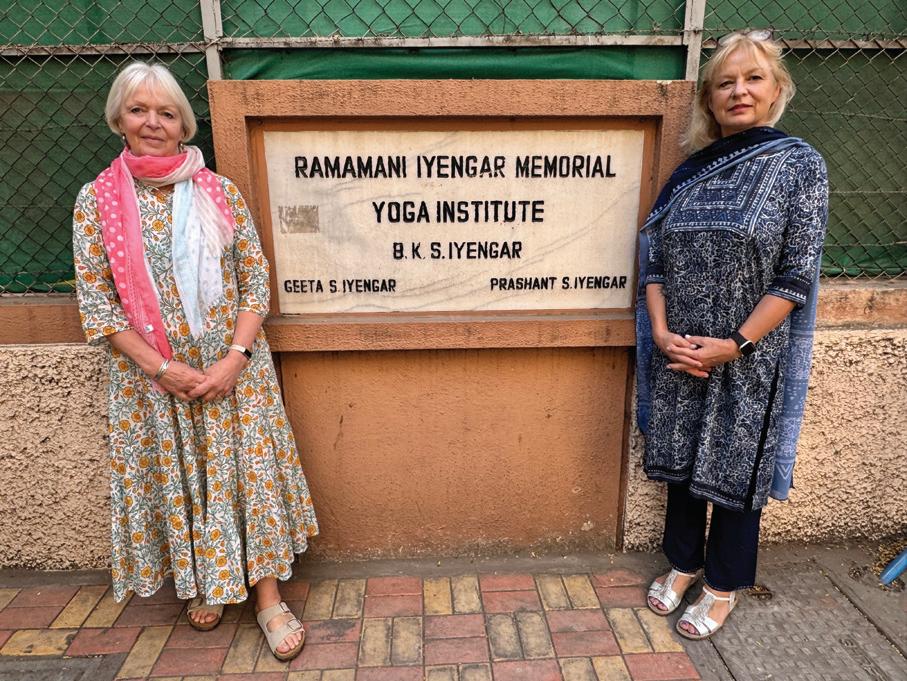
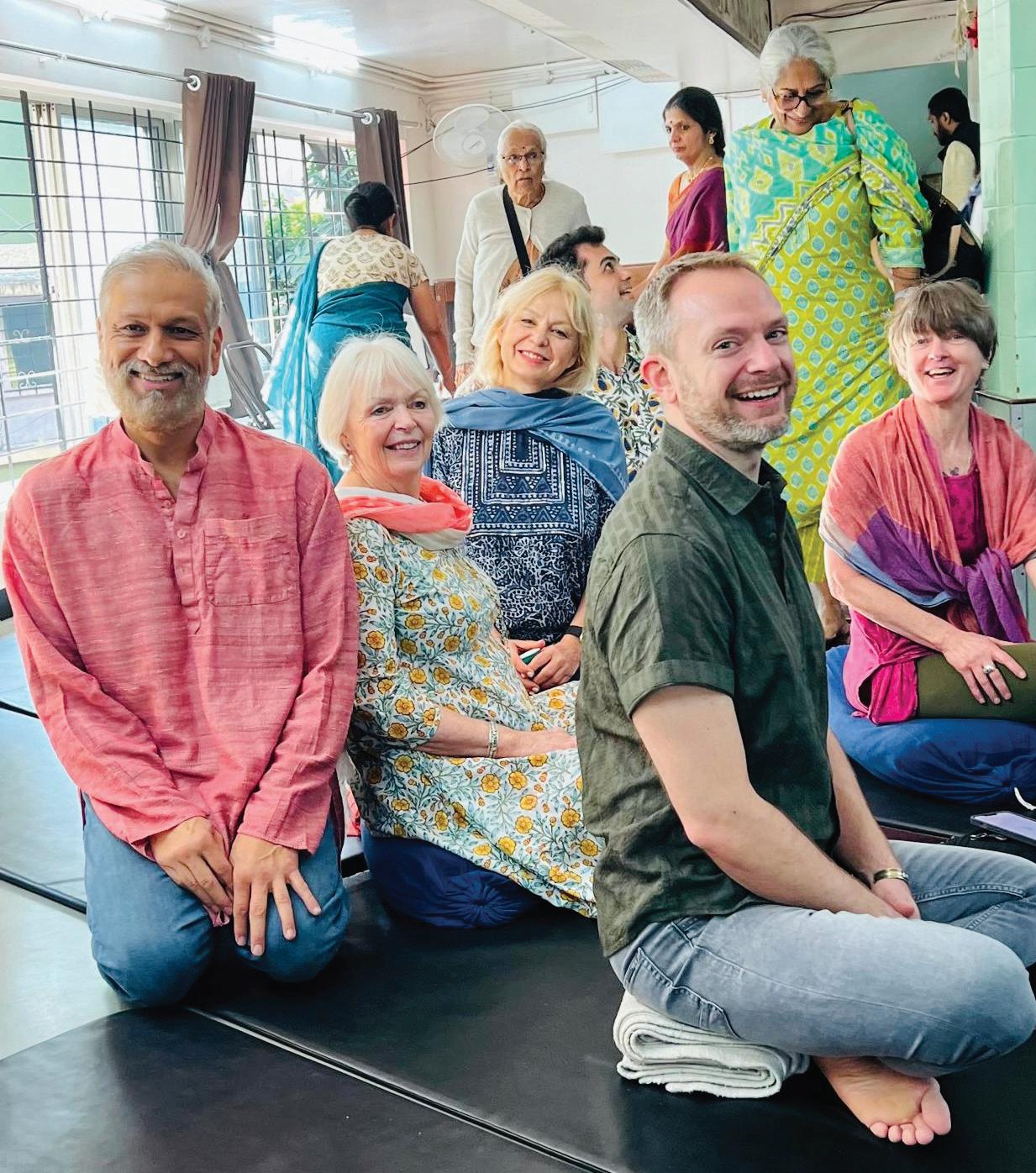
Rachel Lovegrove is a senior (Level 3) Iyengar yoga teacher, mentor and trainer. She is Chair of IY(UK) Therapy Committee and organises retreats internationally, as well as the annual IYOGA Festival in Hampshire. (A longer, diary-style account of this visit to Pune, with sequences and more insights, is available on Rachel’s Substackhttps://substack.com/@ rachellovegroveyoga).
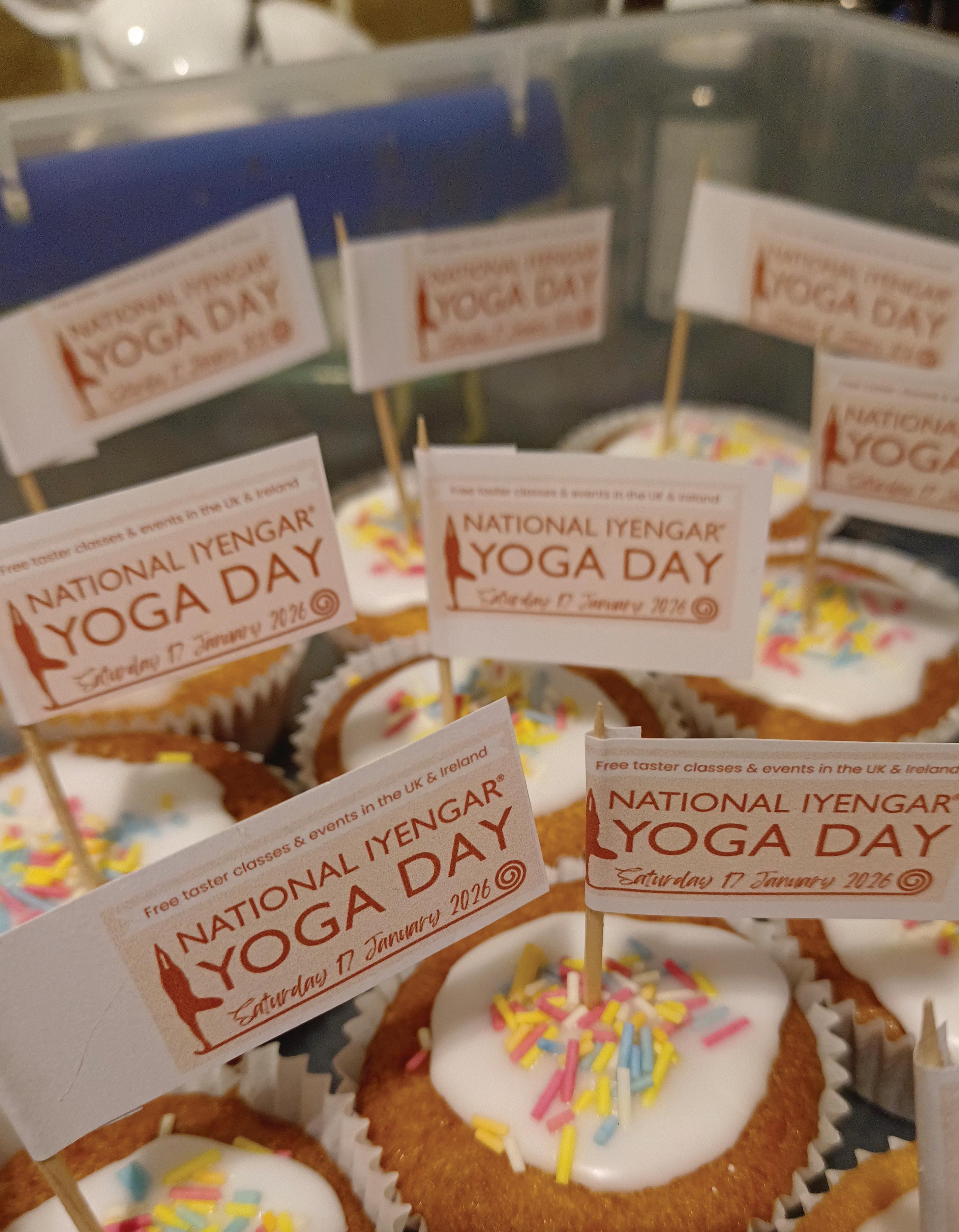
National Iyengar Yoga Day has quickly become a meaningful fixture in the Iyengar Yoga UK calendar and this year’s celebration demonstrated just how powerful our collective voice can be.
Across the country, Iyengar yoga teachers, centres and students came together to mark the day through classes, open sessions, workshops, talks and online offerings. We had branded cakes, breaks between classes for traditional dancing, and time for chitchat and tea after class. From long-established sites to smaller community venues, the shared intention was clear: to celebrate the depth, accessibility and integrity of the Iyengar method, and to make it visible to a wider public.
One of the strengths of National Iyengar Yoga Day lies in its decentralised nature. Rather than a single flagship event, the day unfolded through dozens of locally organised offerings, each rooted in its own community while aligned with a shared national message.
Teachers reported strong attendance, with many welcoming new students who were curious about Iyengar yoga. Introductory classes and open sessions proved particularly popular, offering newcomers an accessible entry point into the method, while longer-standing practitioners appreciated the sense of being part of something larger than their individual classes or centres.
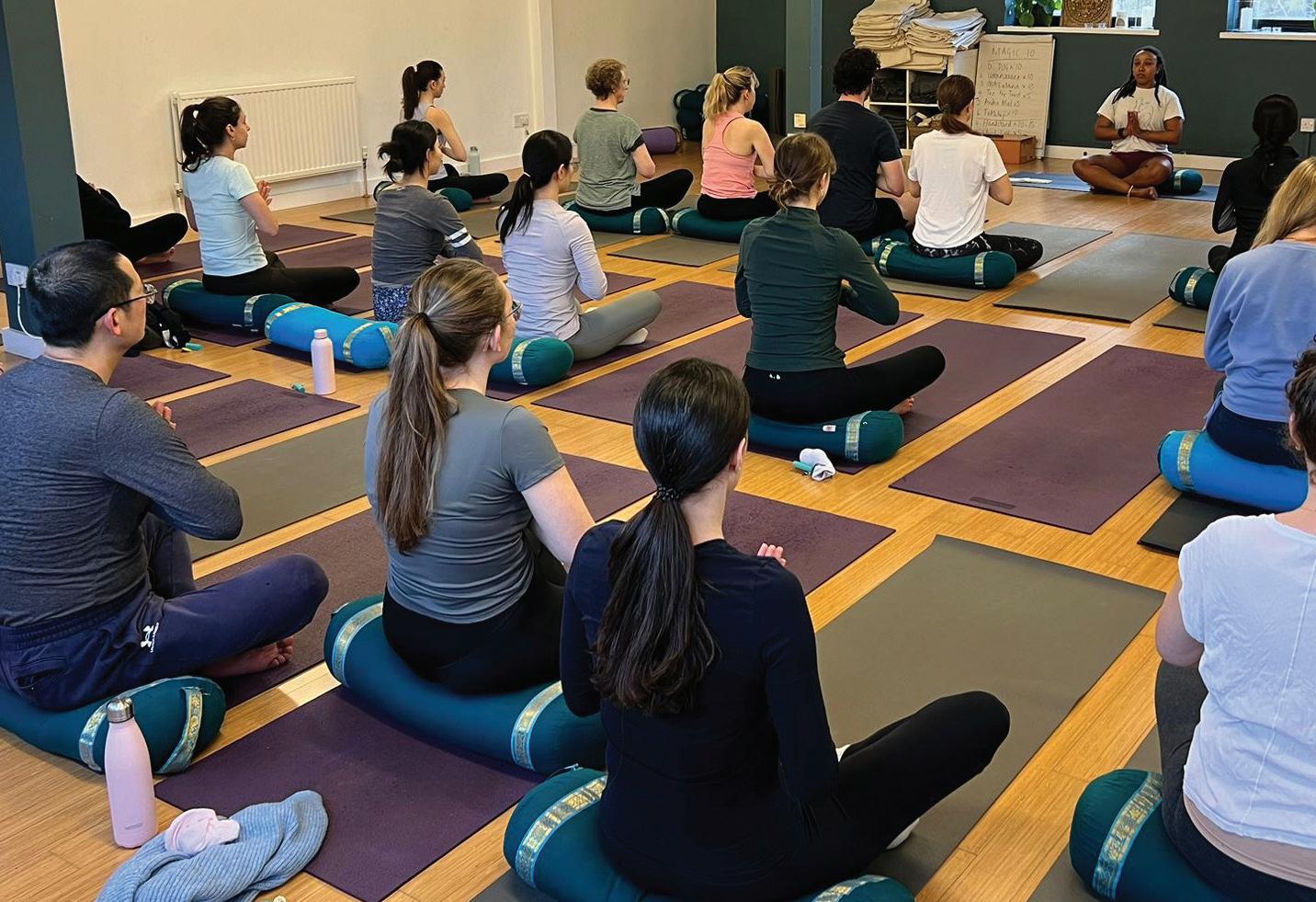
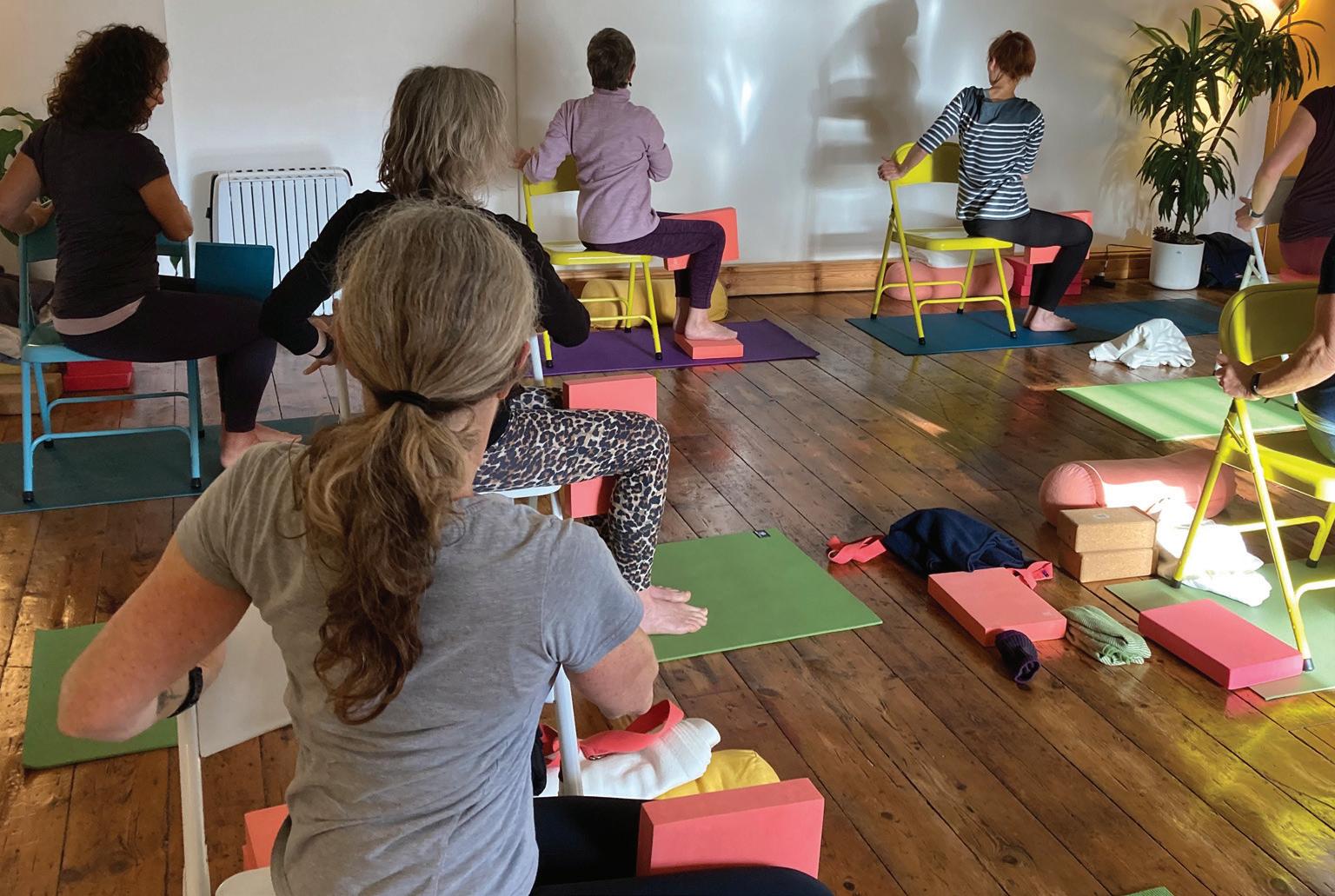
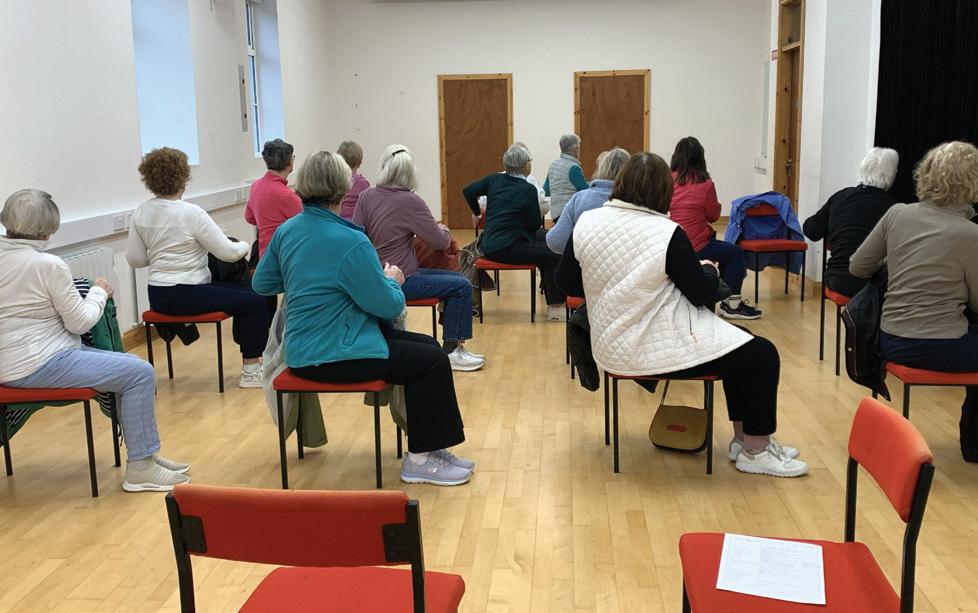
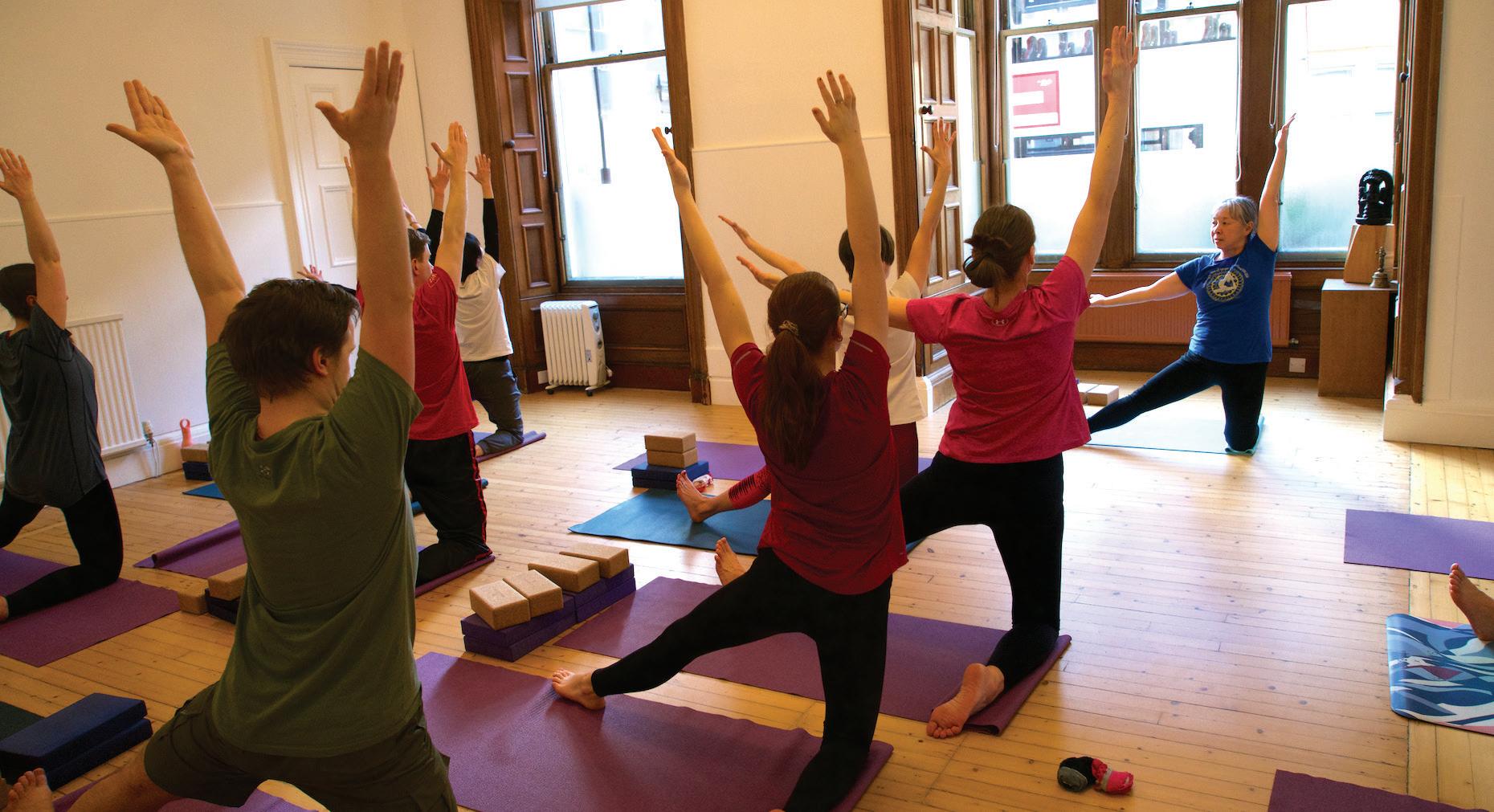
At its heart, National Iyengar Yoga Day is a celebration of practice. Events throughout the day reflected the breadth and depth of the method, from foundational standing poses to restorative work, from therapeutic applications to explorations of philosophy.
Teachers spoke of the pleasure of teaching with a renewed sense of purpose, supported by a national framework that honoured both tradition and contemporary relevance. Students, meanwhile, expressed appreciation for the opportunity to pause, reflect and reconnect with the essence of their practice.
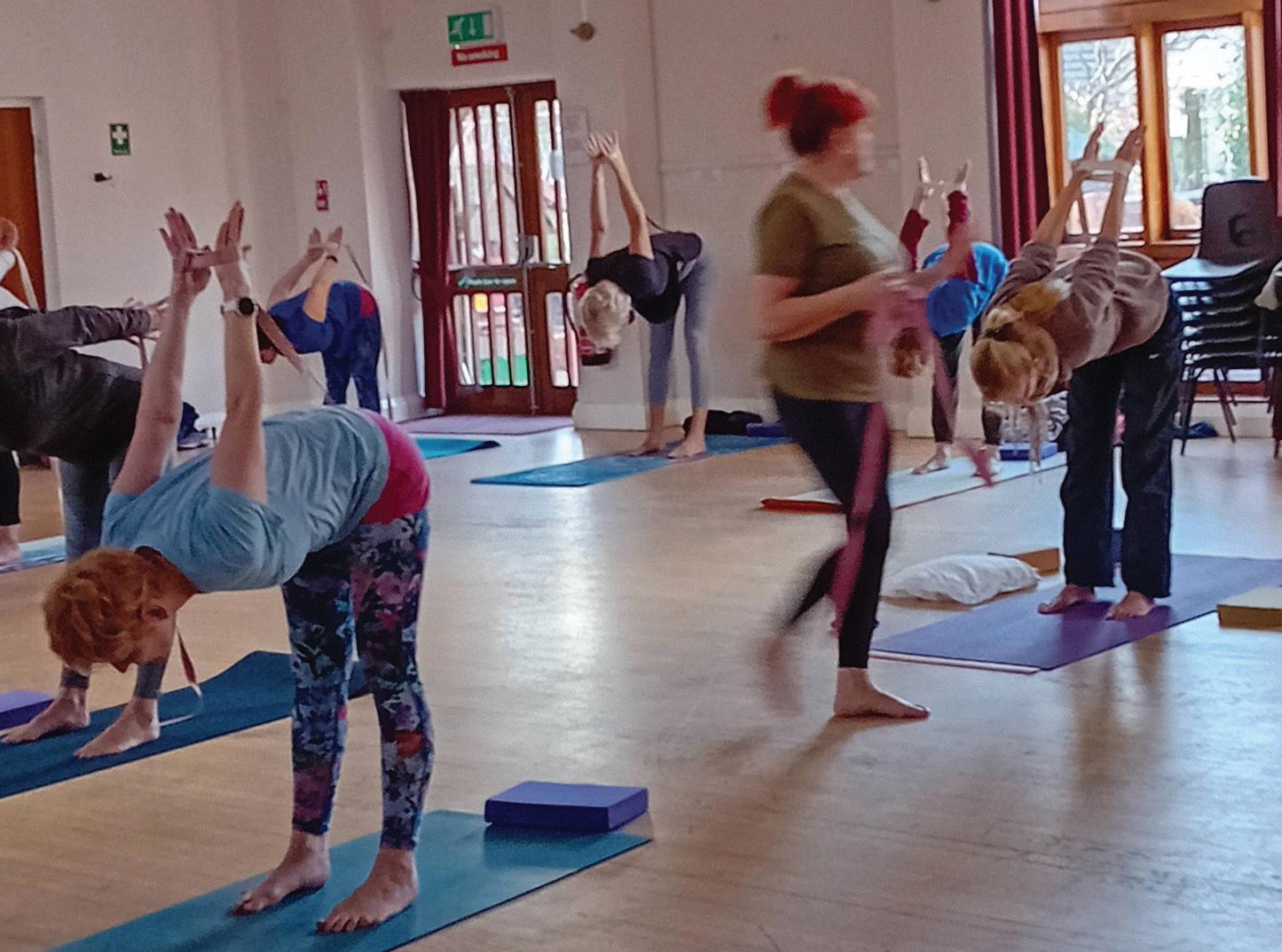
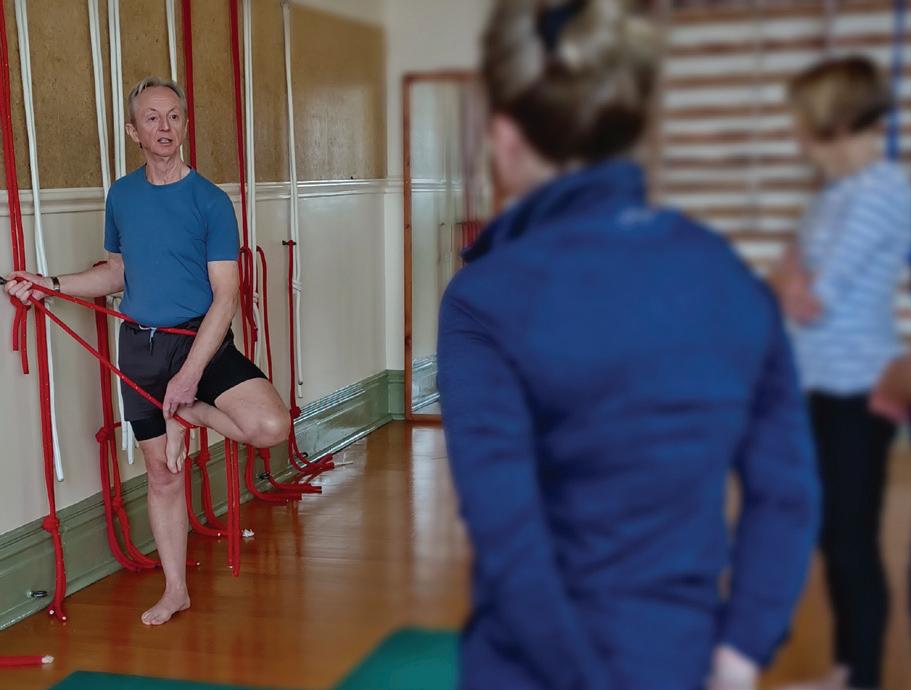
Left and below: DHIY hosted eight National Iyengar Yoga Day events in total. Tobias Hector said it is a wonderful way to introduce new people to the method and support local teachers.
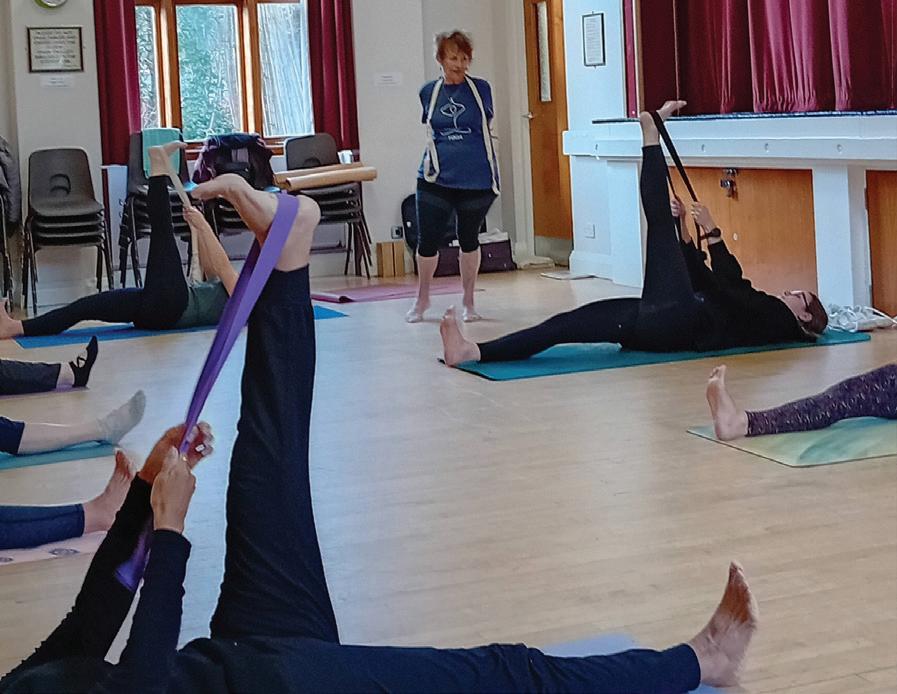

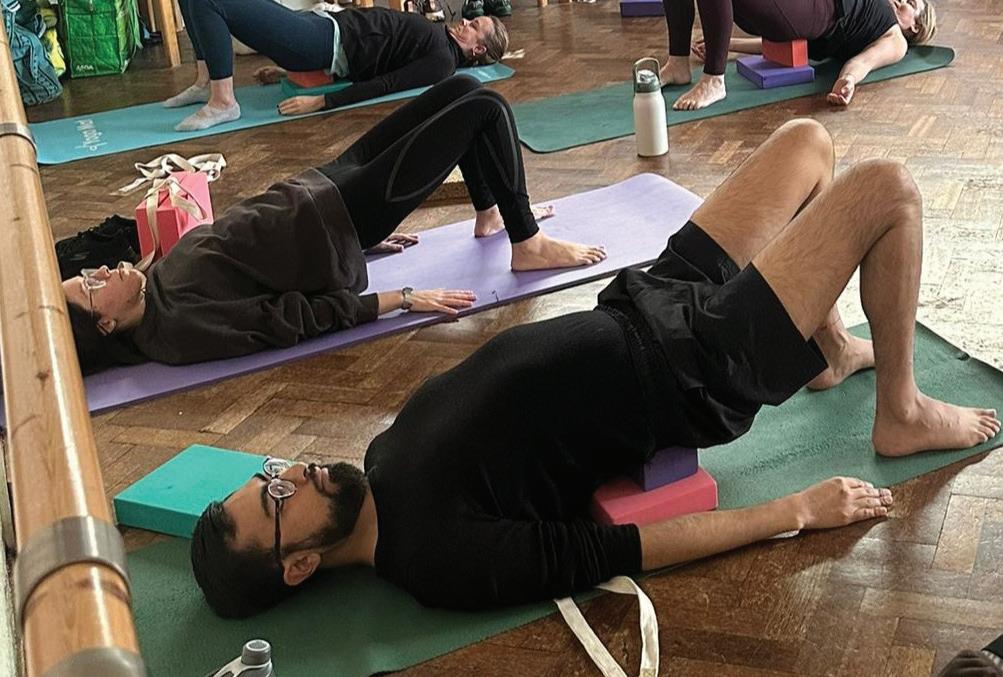
Left: Star Hobby teaching Setu Bandha Sarvangasana for Dorset and Hampshire Iyengar Yoga free taster sessions with 3 other fellow teachers
Below: A memorable, fun and active NIYD at The Bhavan with Suzanne Gribble and Elaine Morrision on Saturday. Starting with a free taster class and moving on to a full day workshop inspired by their recent visit to Pune.
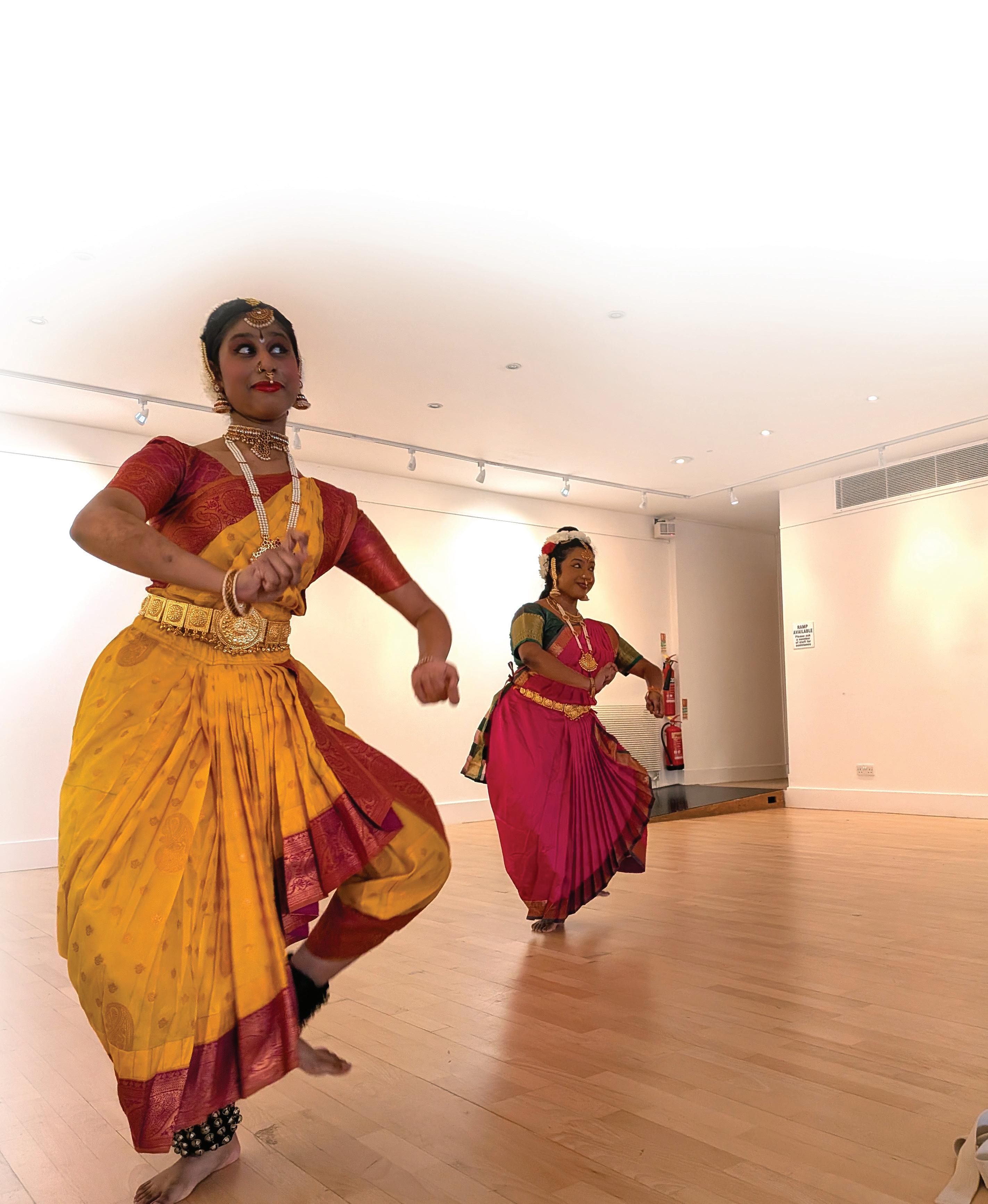
Left: Between Suzanne's class and the workshop, participants were treated to a beautiful performance of Bharatanatyam dance. The dancers practise yoga before each dance practice. That raised funds for the charity Action Village India
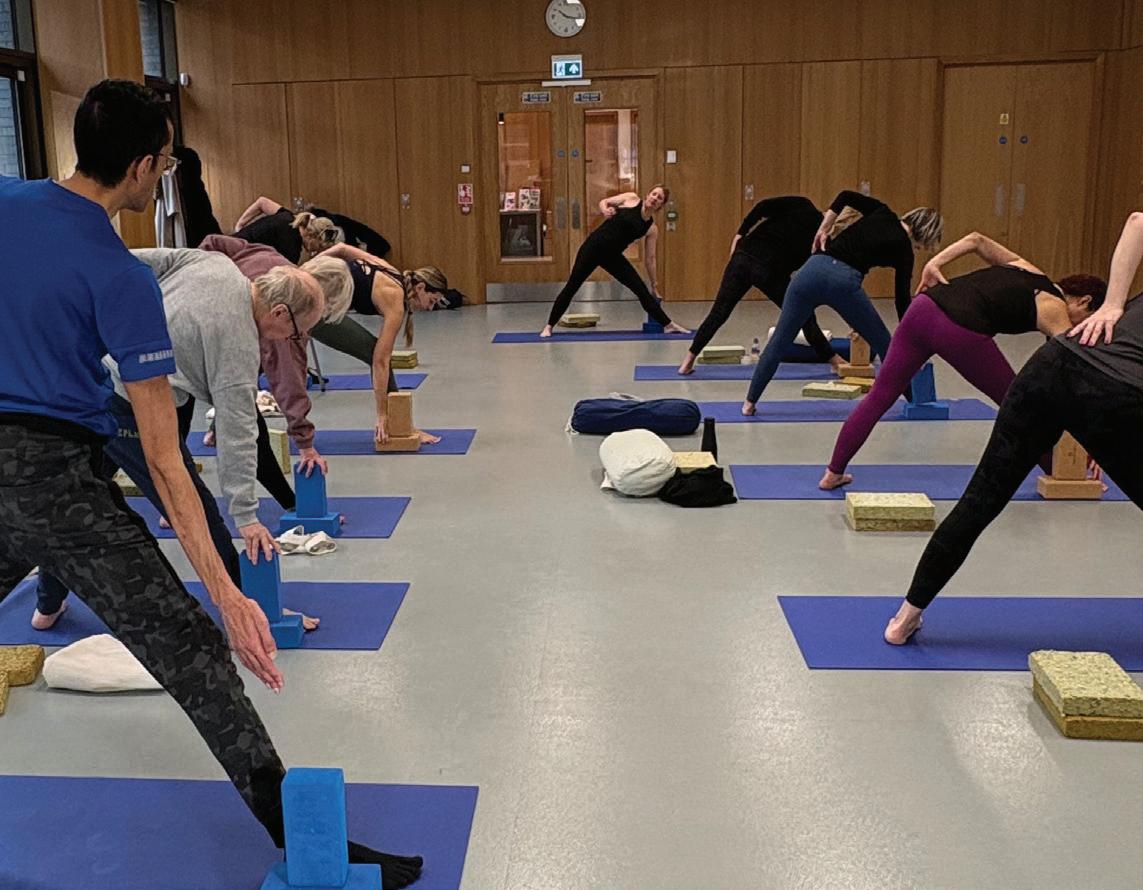
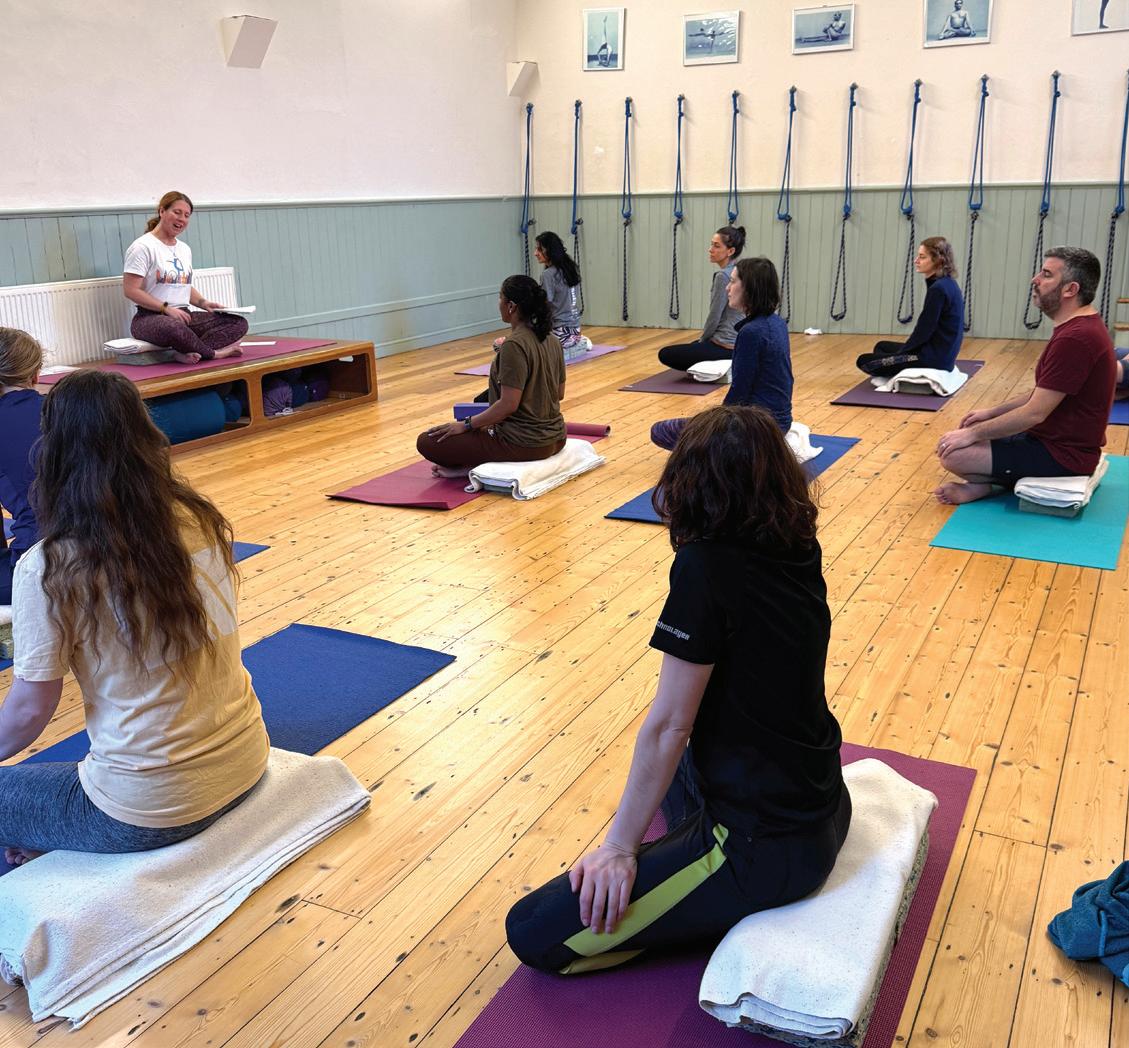
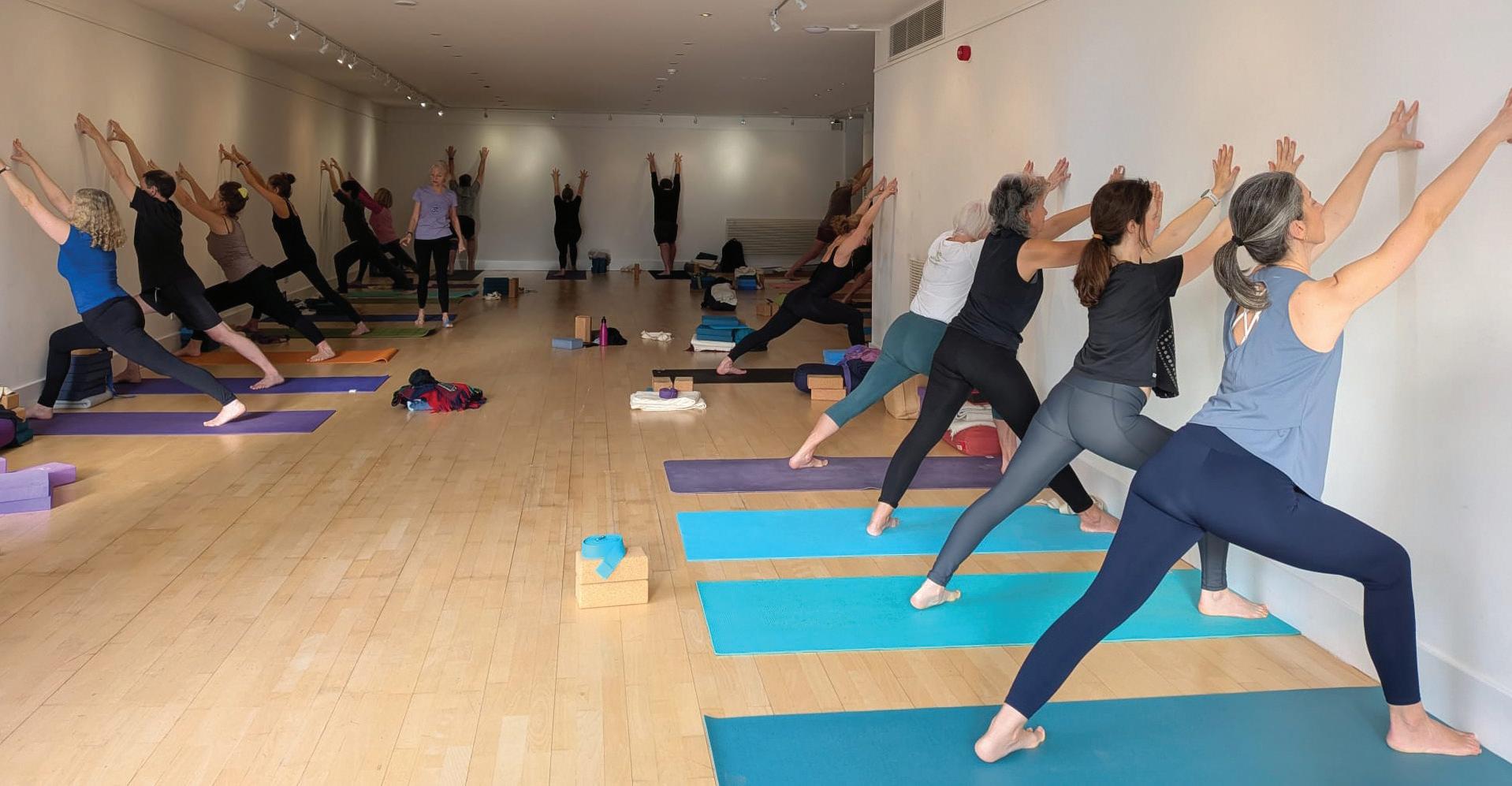
Above: Sheffield Iyengar Yoga did a free taster event for those who hadn't tried Iyengar Yoga before - it was open to anyone but particularly promoted to teachers and staff at local schools and nurseries as a 'thank you' for all they do for children and families in the area.
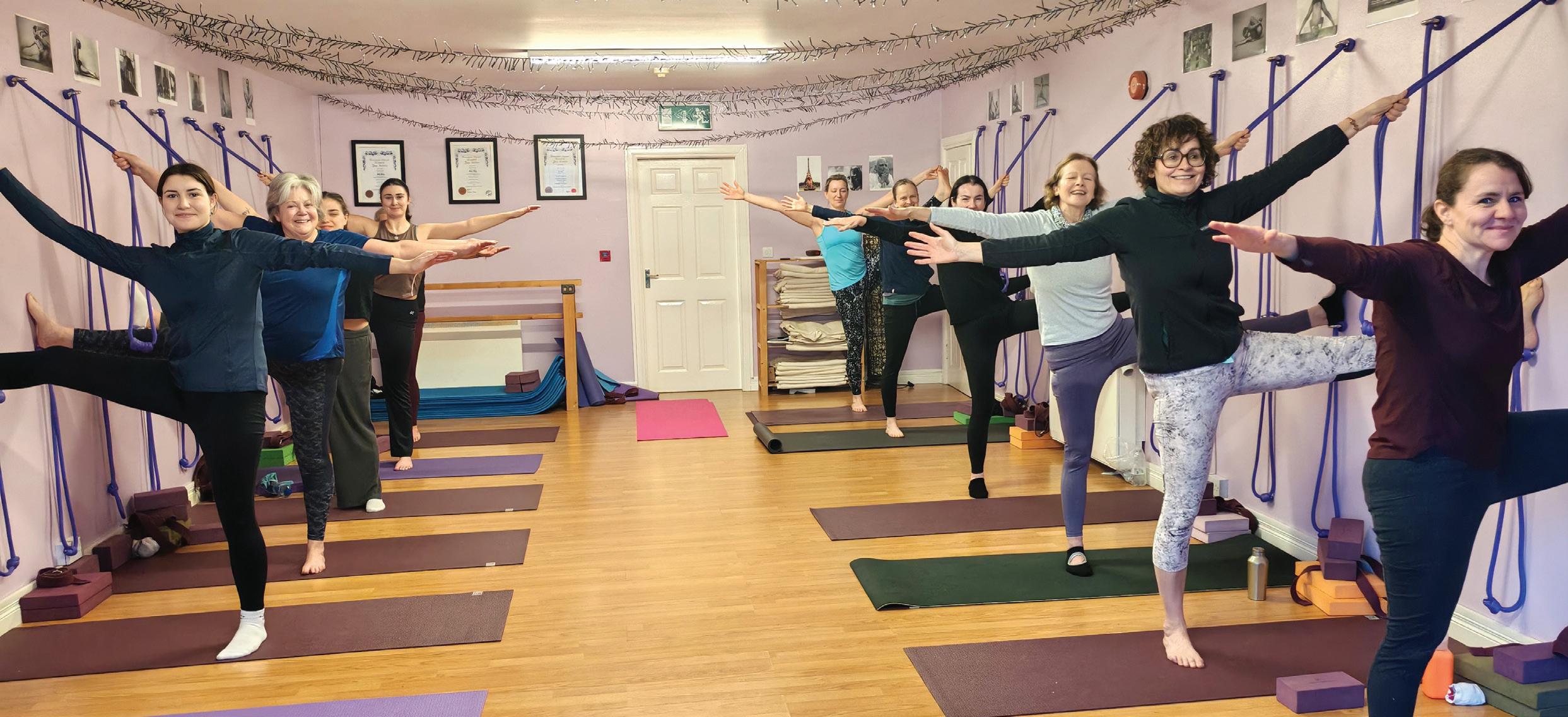
Rachel Overton taught for Maitri Studio for NIYD. The studio taught 5 special classes that week and new students have remained in all the classes since.
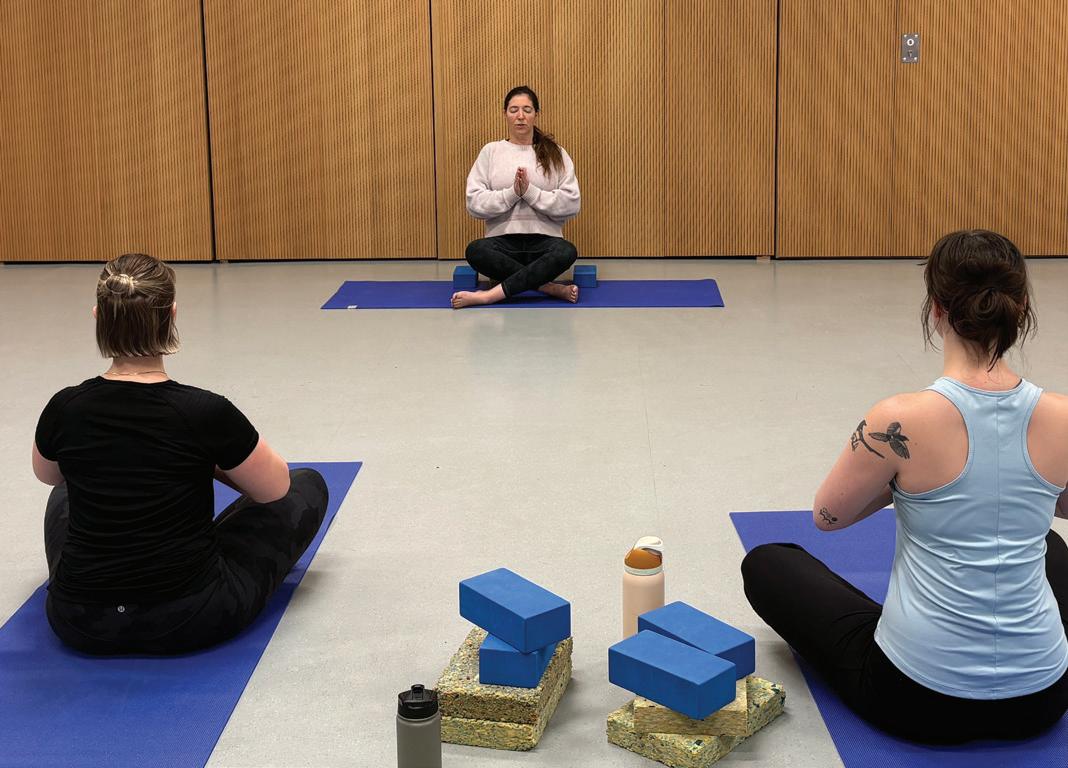
The success of National Iyengar Yoga Day belongs to everyone who took part: the teachers who organised events, the centres that opened their doors, the students who showed up with curiosity and commitment, and the volunteers who supported promotion and coordination behind the scenes. It also demonstrated what is possible when the Iyengar yoga community, acts together with clarity, generosity and shared intention. As Iyengar Yoga UK continues to develop this annual event, National Iyengar Yoga Day offers a strong foundation for future growth, outreach and connection.
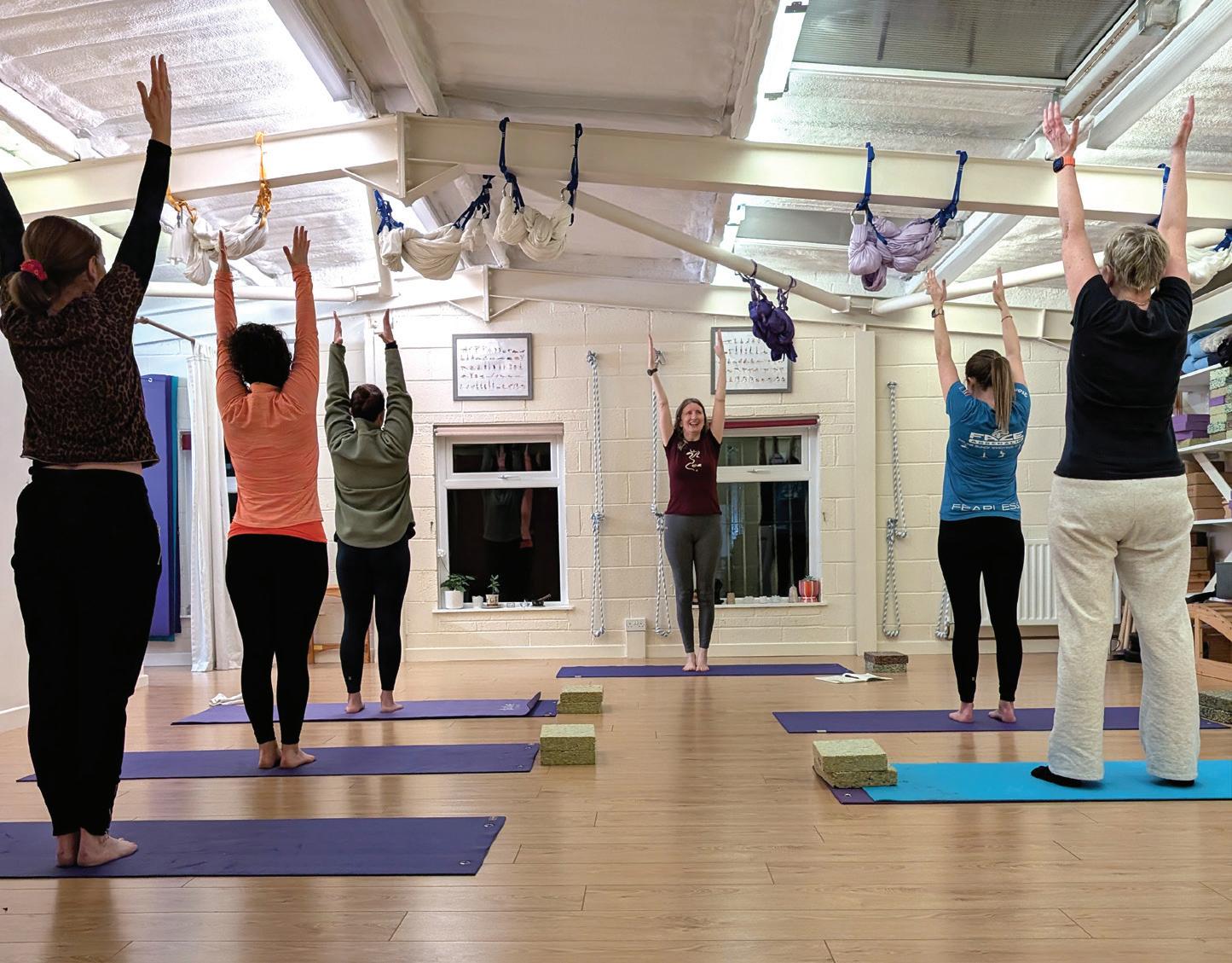
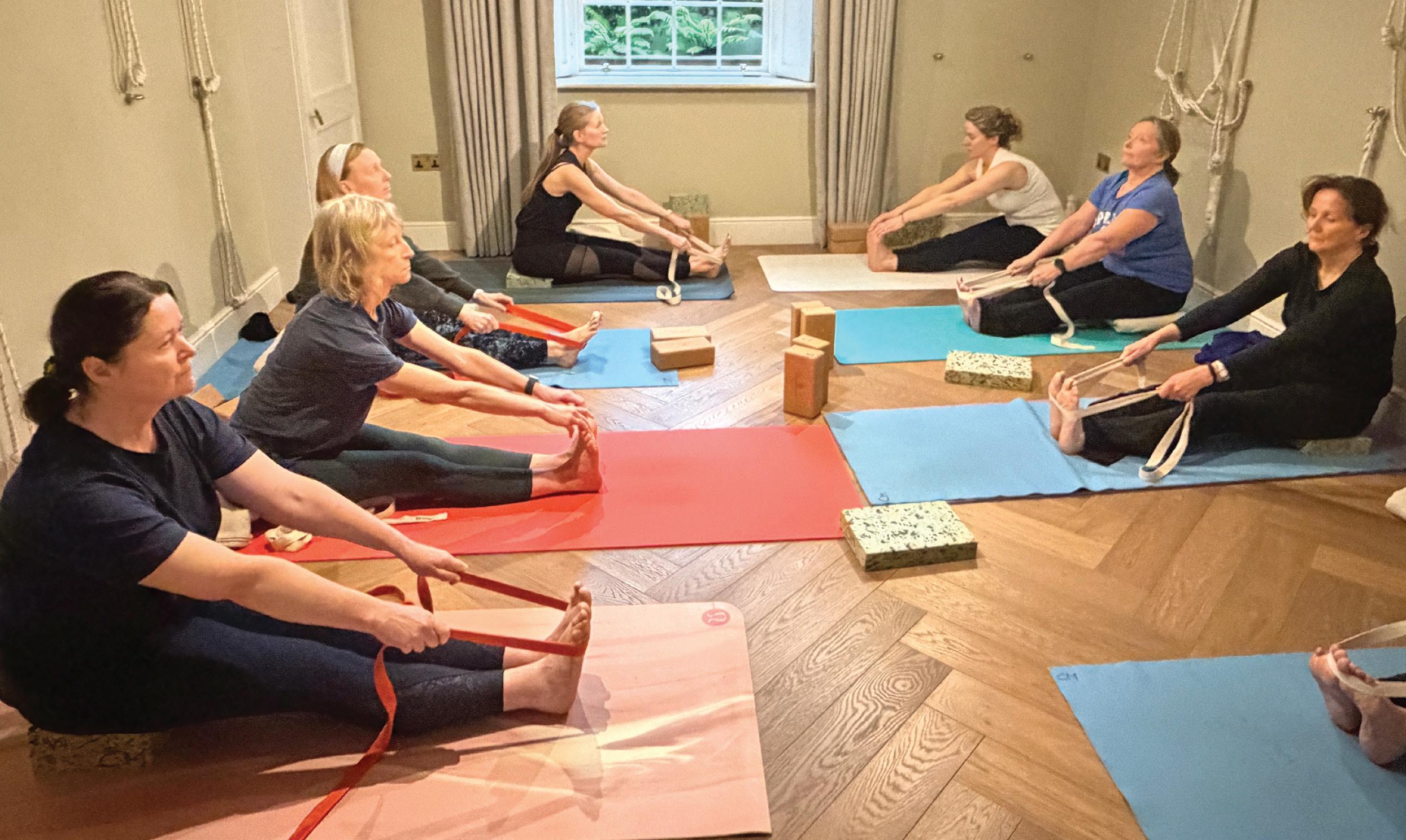
Above all, the day reminded us that Iyengar yoga is not only a method of practice, but a living, evolving community, one that is grounded in tradition, responsive to the present, and open to all.
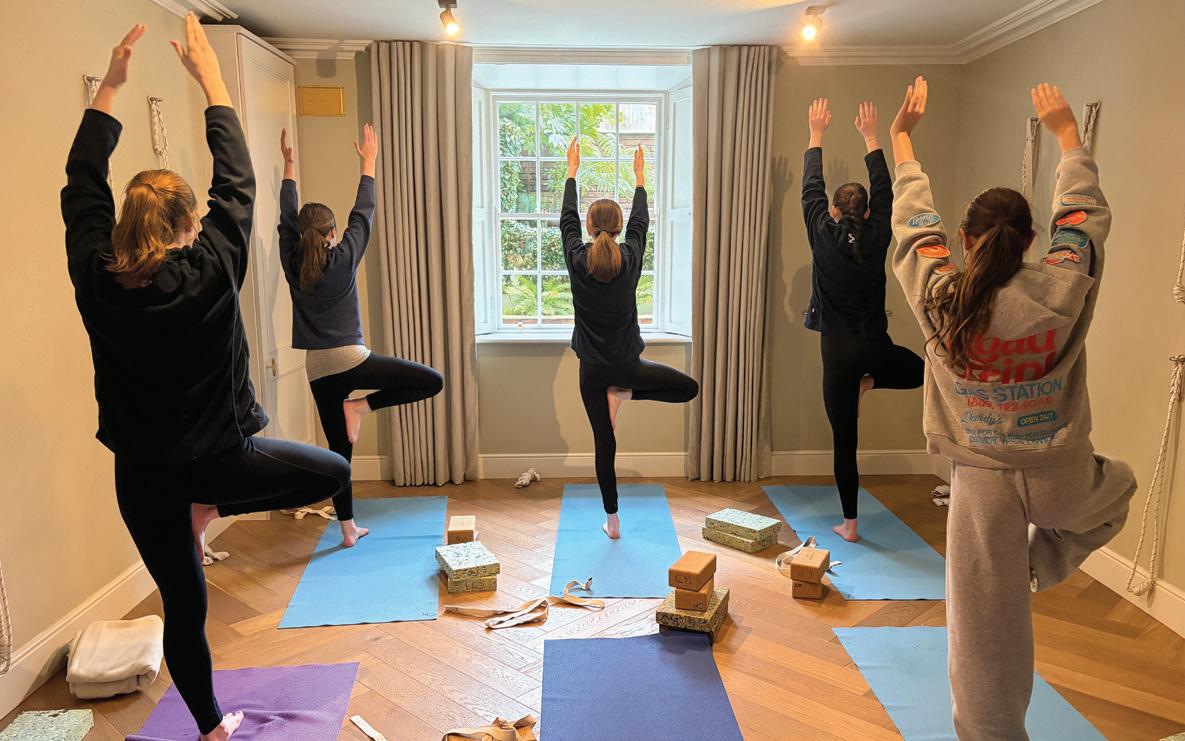
Above : Ciara Maguire ran two classes for NIYD in Monkstown, Ireland – a women's beginners and a teenage class.
Below: Annie Deery held a yoga class in her studio in Strabane, Co. Tyrone. She had 11 students and half of the class were beginners.
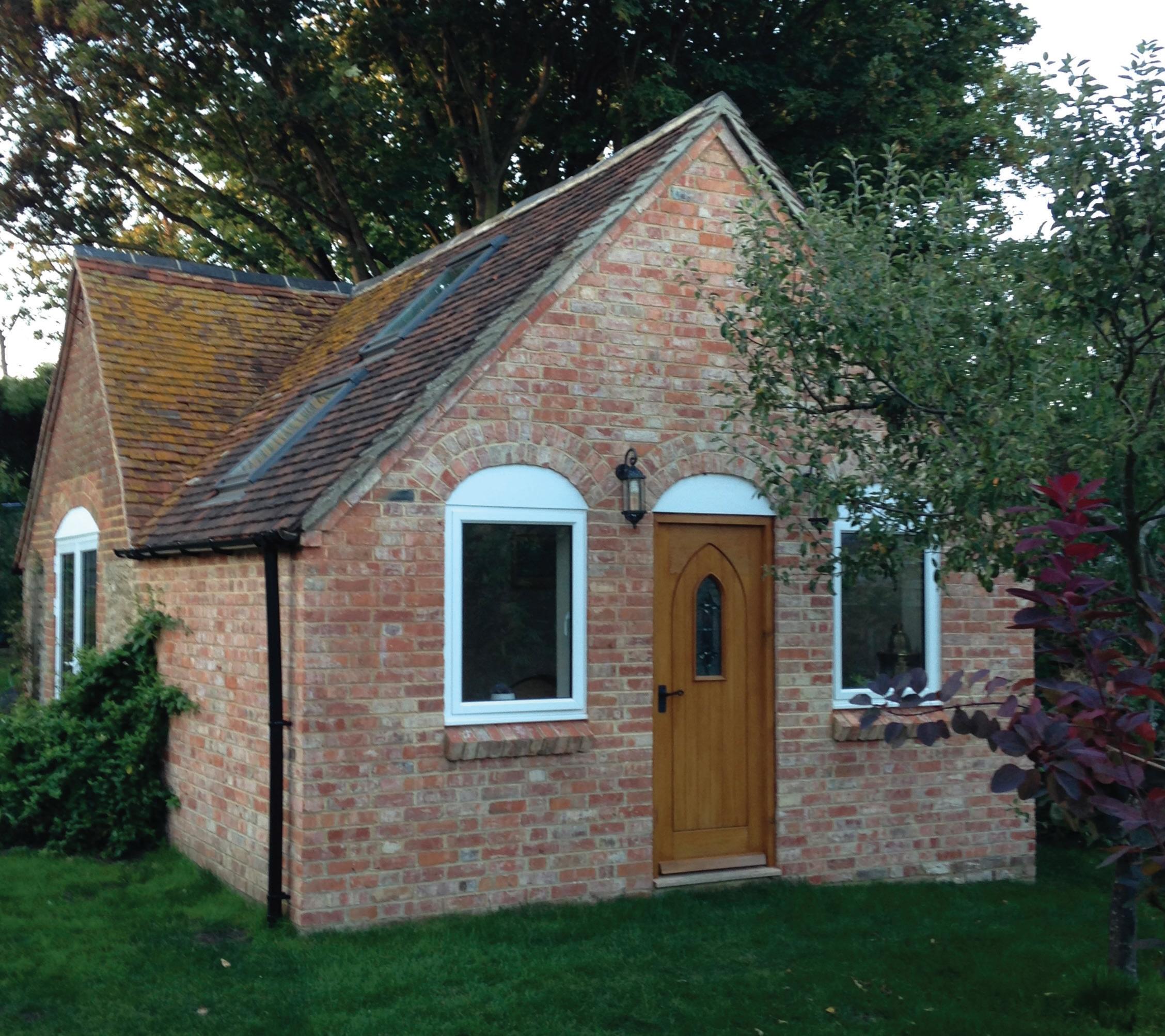
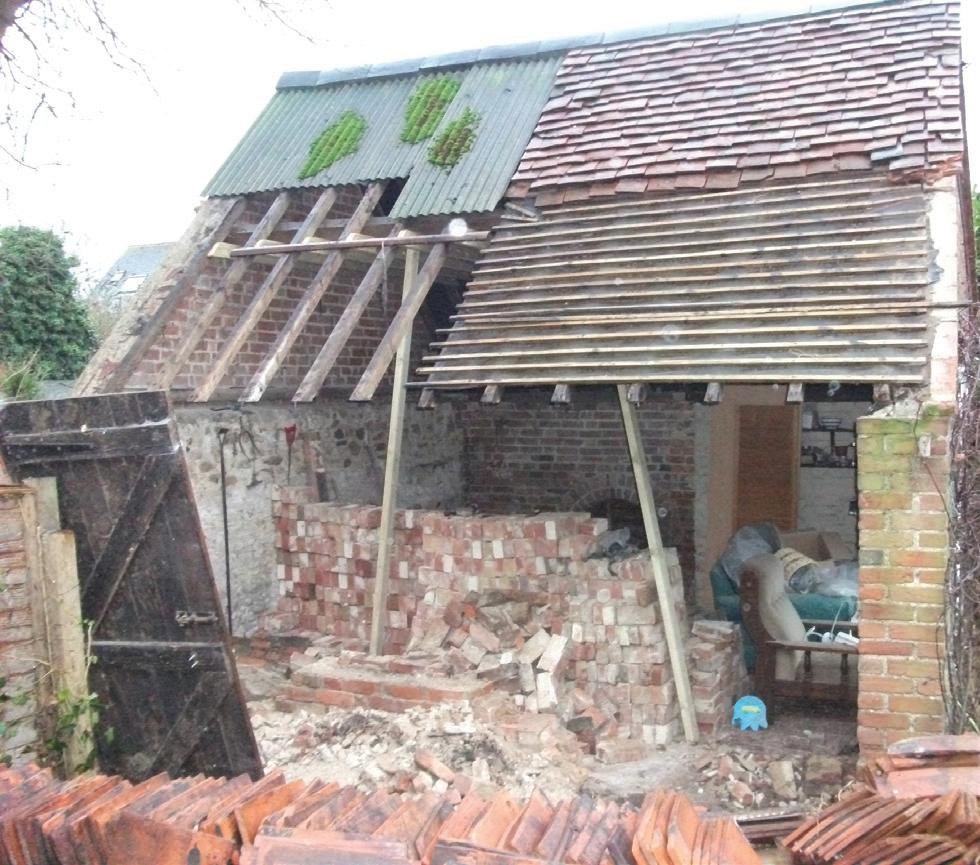
The building that has become the Long Wittenham Yoga Centre was built in 1874 on land owned by Oxford University to house livestock. When my husband Adam and I took ownership in 2000, it was an outbuilding which had been divided so that we owned half with our neighbour. At the time it had thick stone walls, a high ceiling (for storing straw) and bricks on the earth floor. We retiled it with reclaimed tiles and cut back the ivy and dug drainage ditches.

Very soon I started teacher training with Sheila Haswell in High Wycombe. She suggested I car-share with Emma Pinchin, the other Oxfordshire trainee. Our journeys were filled sharing our hopes for our future as yoga teachers.
After passing our teaching certificates we held classes at venues across the county. Mine were held in village halls with unpredictable heating and dirty floors, in mirrored-walled studios of noisy gyms, on concrete-floored school halls and even in a round cricket pavilion! I was now a mother and with Adam's unwavering support I managed to pass all Intermediate certificates and gained therapy teacher status.
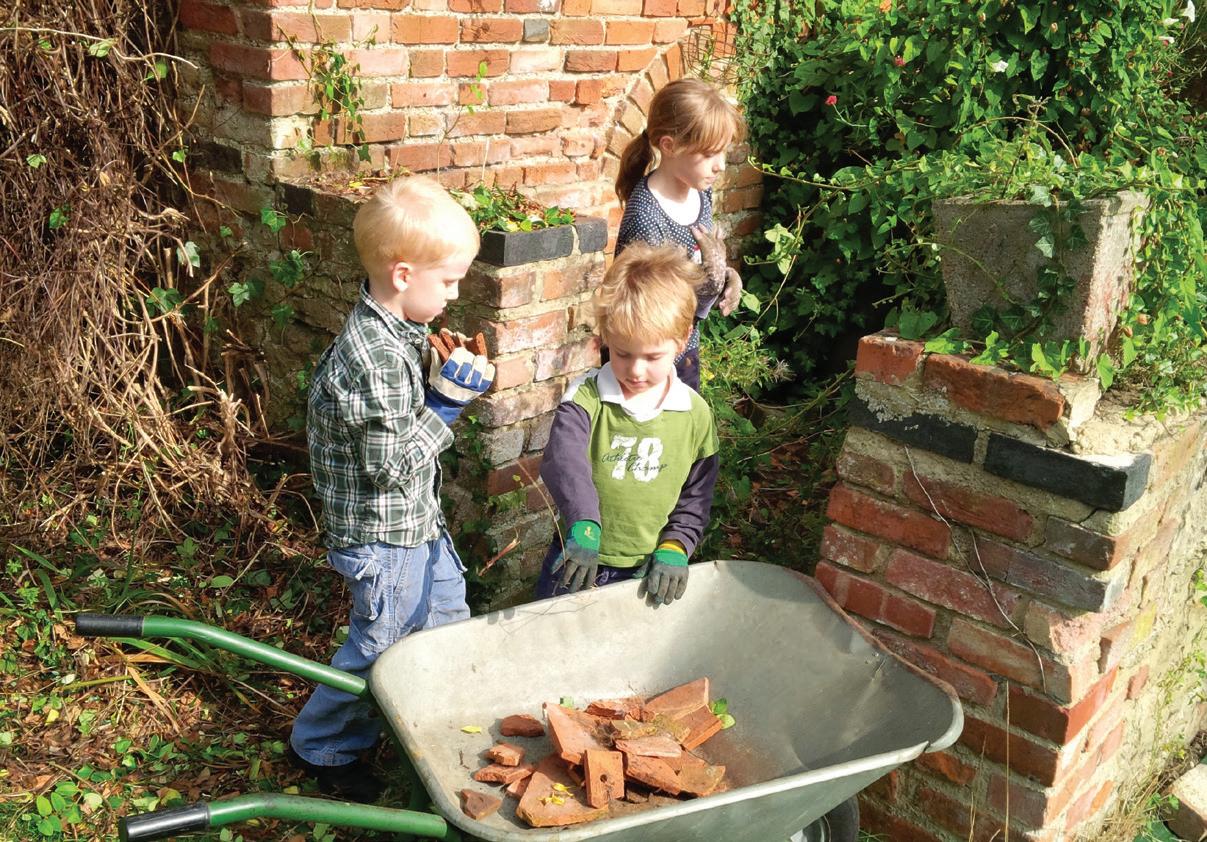
Bottom right: Clearing the site before the builders arrived. Our little helpers L to R: Edward, Robert and Anna
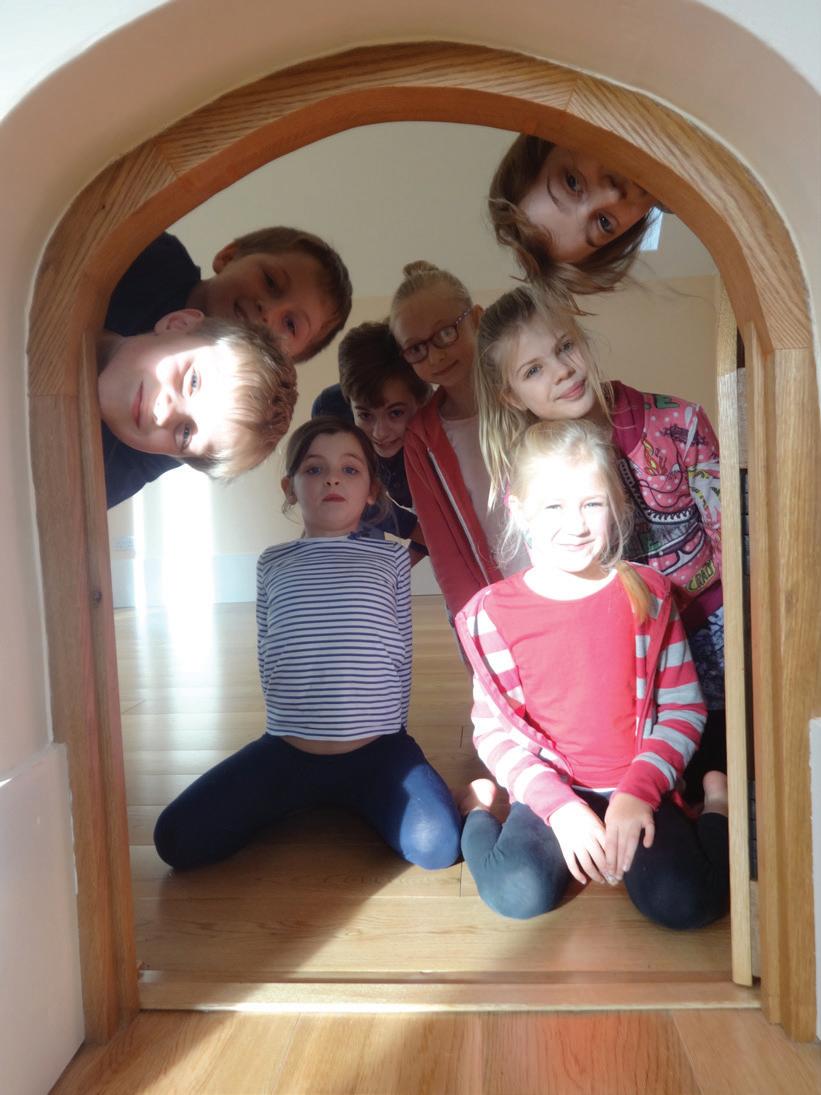
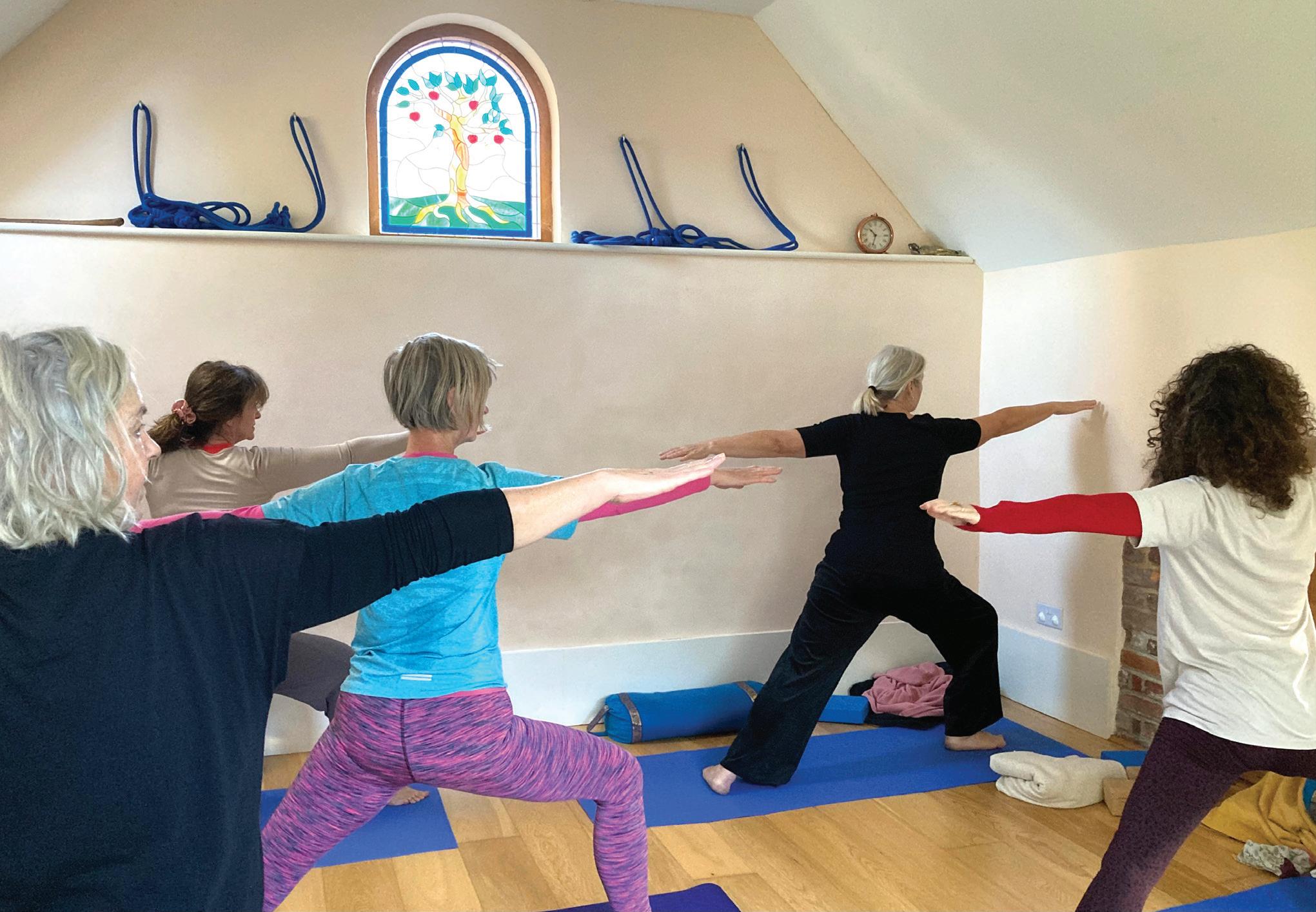
In 2012 we purchased the other half of the outbuilding and turned it into our studio. The yoga space is a modest 18 square metres, comfortable for eight adult students, however, the record is 13 who squeezed in for one memorable workshop. We chose an architect whose plans respected the Victorian building, included an extension for a lobby and preserved an old apple tree. Inside, we kept the archway livestock originally used. Its little wooden door, which Adam made, is a perfect portal for children to enter the
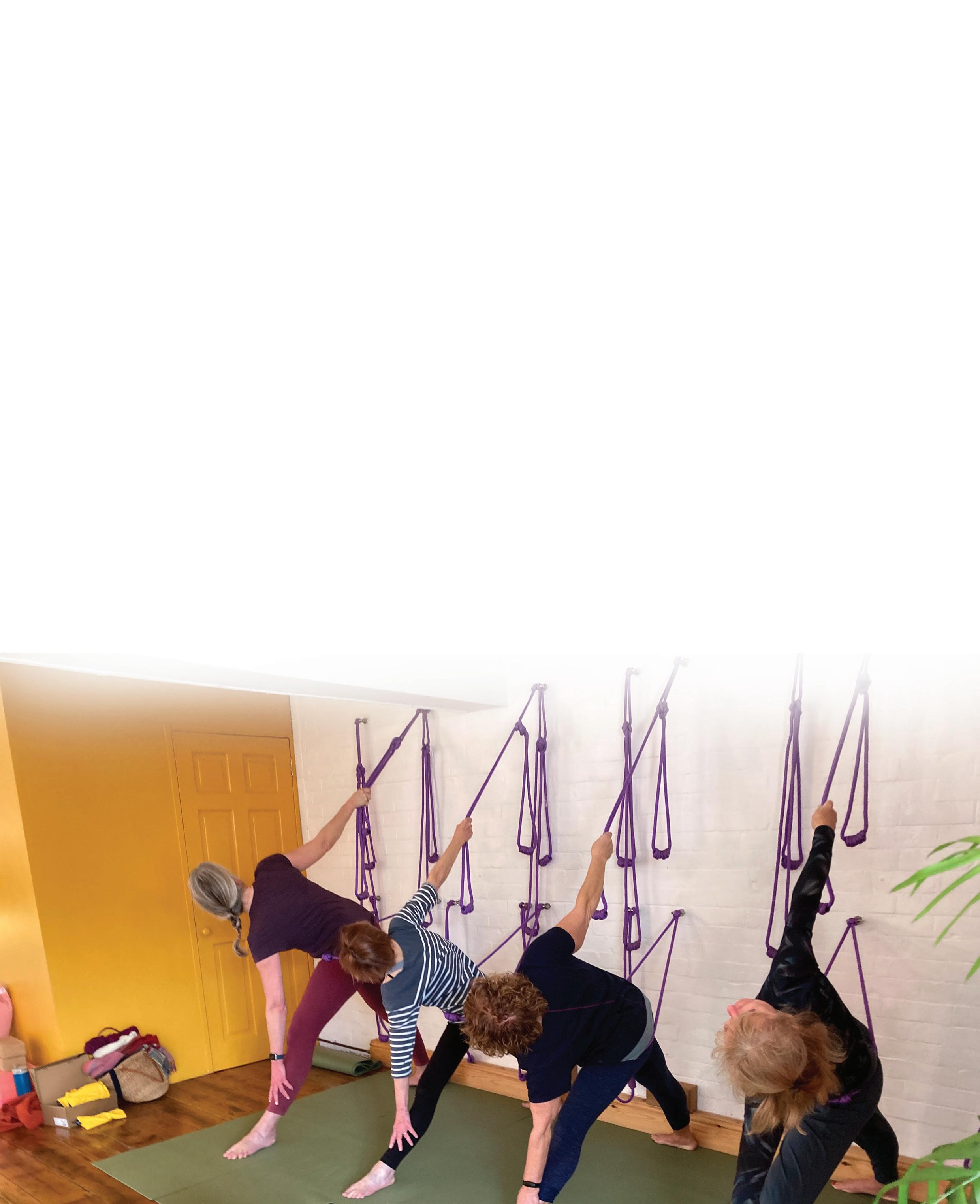
yoga space. Much to the builder's bemusement, we installed a rope wall and tall skirting boards, accommodating even the largest feet, for support in Supta Pādānguṣthāsana
It also has oak flooring with under-floor heating. I already owned lots of basic equipment, but with a dedicated space I could buy a Vīparita Daņḍāsana bench from my friend John Ferrabee. My daughter Anna suggested a rainbow selection of lavender eye pillows, a popular support for Śavāsana, particularly on sunny afternoons. Yoga philosophy teacher Gitte Bechsgaard taught us orange was Patanjali's colour, so of course, we chose orange blankets.
My fellow trainee Sarah Werrell visited RIMYI, very kindly taking my studio plans with her. Geetaji wrote a beautiful letter saying Guruji had seen pictures of my studio, calling it a "calm and peaceful place".
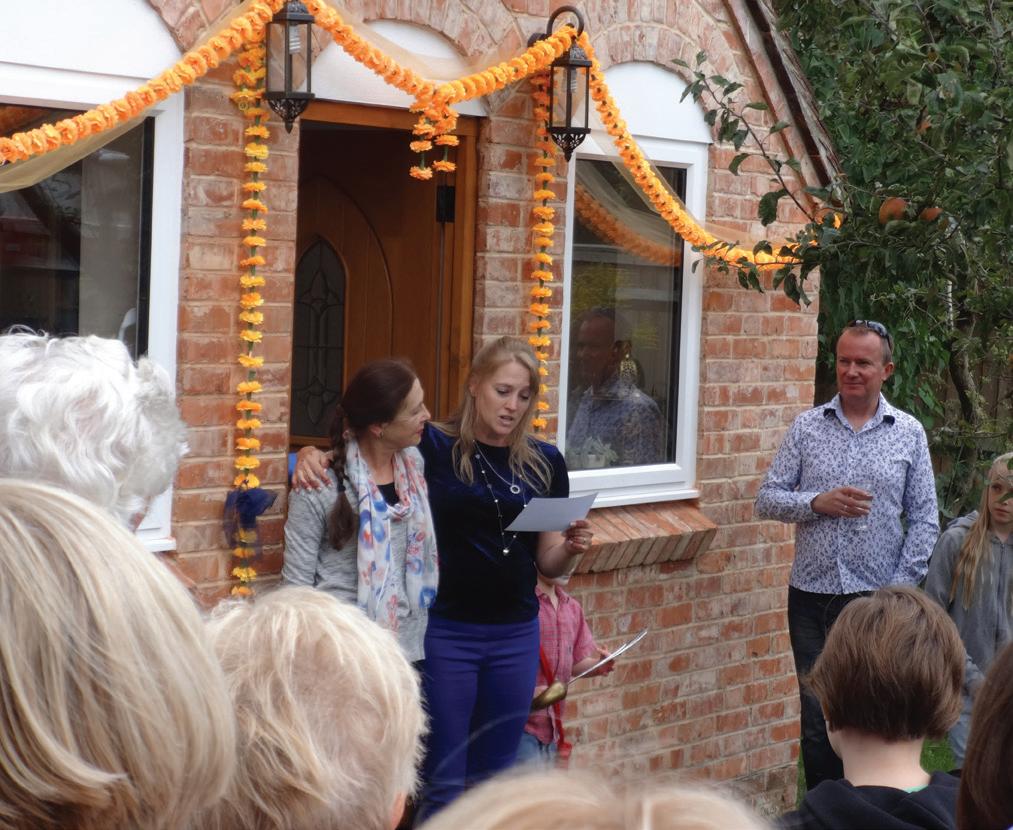
I was blessed that my teacher, Sheila, and her granddaughter Molly visited, giving me a beautiful 'Om' for the wall and a lucky charm for the entrance. It meant so much that she liked where I would be teaching. The centre was officially opened on 13 September 2015, by my first yoga teacher Anna Heavens cutting the ribbon. The whole exterior was festooned
Above right:The party to open the studio was a great opportunity to thank my teacher Anna Heavens for introducing me to yoga.
Below: The children's classes fill the studio with energy and giggles.
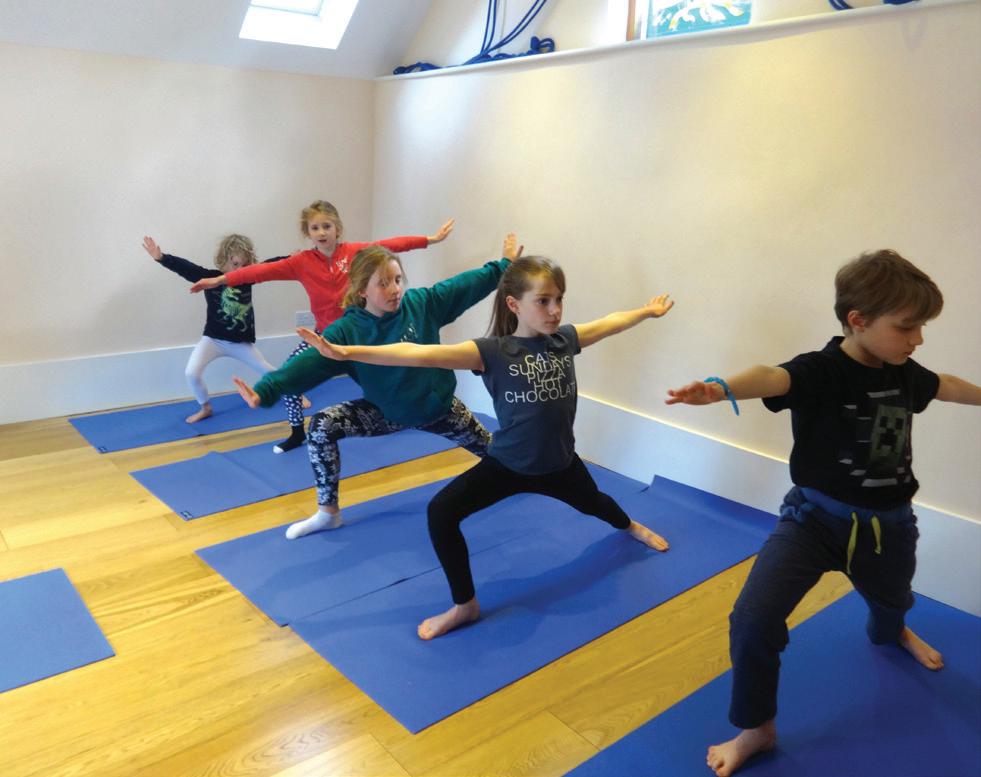
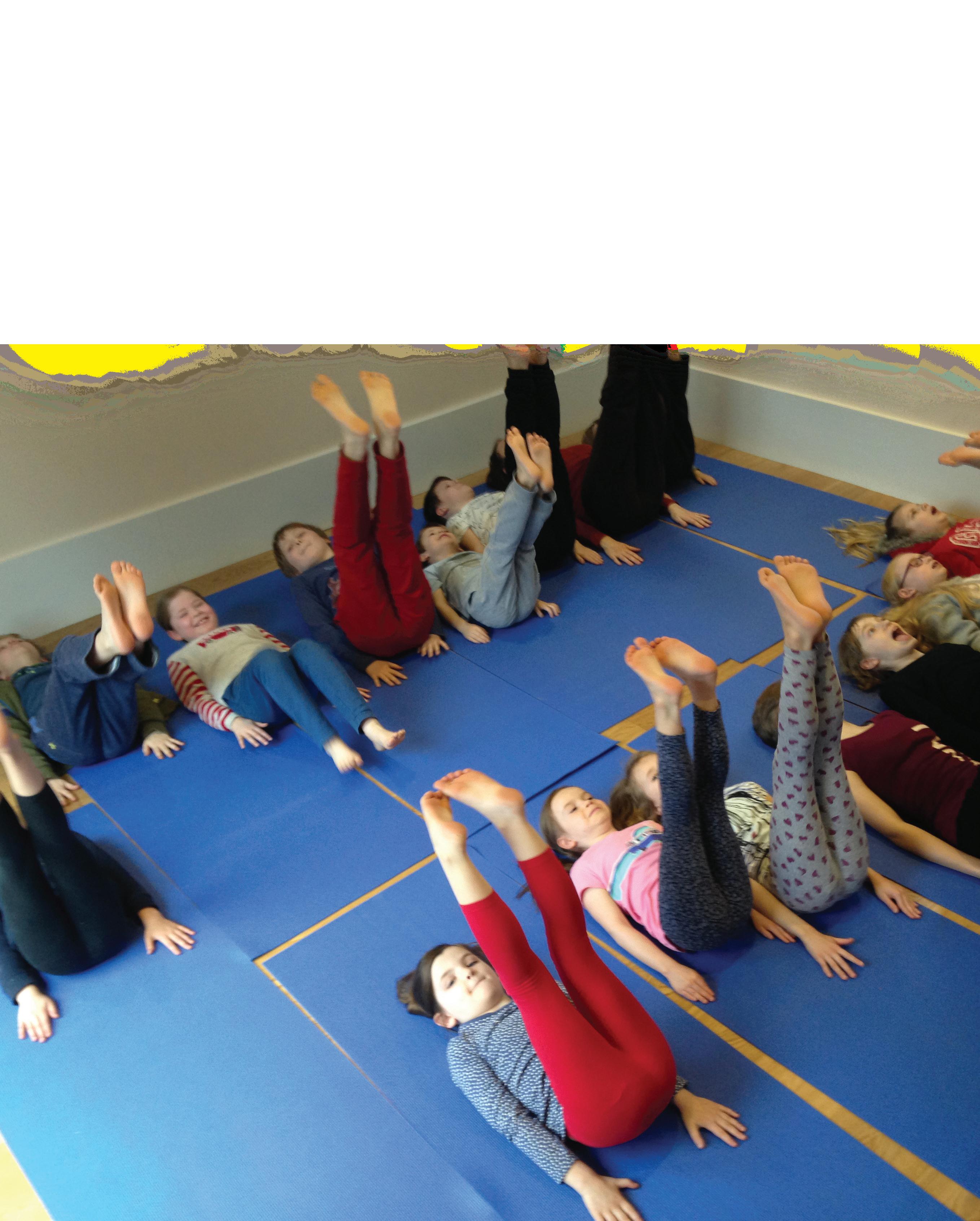
with garlands. It was a lovely day with lots of visitors. My daughter and dance teacher, Kally, gave a display of Indian dancing; guests had the chance to have a henna tattoo and eat vegetable samosas. After the excitement of the opening, I settled into the routine of teaching busy classes every day.
It is a wonderful place to work. I love opening the doors in the summer to allow the scent of honeysuckle and lavender from the garden to drift in on the breeze. There is always lots of wildlife including moles, much to Adam's dismay, who seem drawn to the space.
It is truly a nurturing space where one can re-centre. After gaining therapy teacher status, the wonderful Oxford and Region Iyengar Yoga committee gave me a Simhāsana box and a Vīparita Karaņii box.
Guriji said that students are a blessing and often I agree with him. It is an honour to be trusted with someone's rehabilitation or guiding them in managing incurable conditions. There is nothing more wonderful — although the back stretcher
Above: The mixed ability classes give me a chance to learn from my students.
becoming a time machine in the children's class is a close second!
I have welcomed students of all abilities and ages into the yoga space which we have created. The recent "Yoga-for-youand-baby-comestoo" sessions were wonderfully anarchic and I find the highenergy of the children's classes is often most enjoyed afterwards! The calm, chair-based sessions for more mature students are uplifting and I am grateful for the learning opportunity the mixed ability classes provide me.
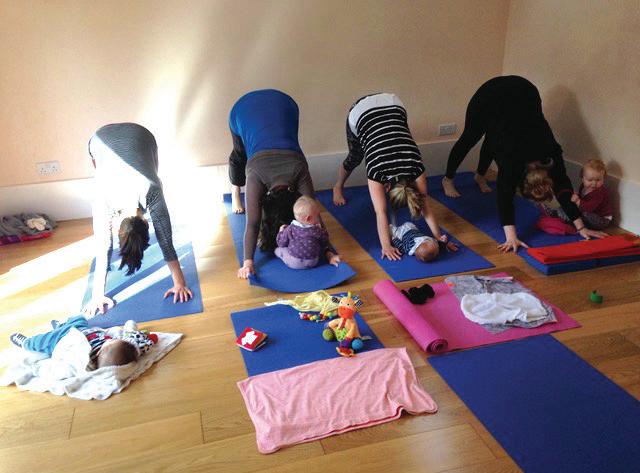
Currently, I have reduced my teaching due to my Postgraduate research with the Brain-Body Lab of Brighton and Sussex Medical School. The yoga space is still well-used as my friend Lorraine Moore runs popular weekly lessons and, of course, I am lucky enough to practise there every day.
Lisa Wylde
In yogic philosophy all of nature, including our bodies, minds and states of awareness are shaped by three fundamental qualities known as the guṇas: Rajas, Tamas and Sattva. They are dynamic forces, constantly interacting, constantly shifting, present in every moment and every posture we take. Yoga, rather than trying to eliminate the guṇas, teaches us to observe them, refine their balance, and ultimately rest in clarity.

What are the three guṇas?
• Tamas is inertia, heaviness, stability and resistance. It gives us grounding, structure and the capacity to soften or surrender – but when excessive, it becomes dullness, collapse or stagnation.
• Rajas is activity, movement, effort and stimulation. It is necessary for action, discipline and transformation - but when excessive, it manifests as agitation, strain or restlessness.
• Sattva is balance, clarity, luminosity and harmony. It arises when Rajas and Tamas are in the right proportion. Sattva allows perception without distortion and action without friction.
Crucially, Sattva is not something we do. It is something that emerges when effort and release are intelligently balanced.

Nature, its three qualities, Sattva, Rajas and Tamas, and its evolutes, the elements, mind, senses of perception and organs of action, exist eternally to serve the seer, for enjoyment or emancipation.
BKS Iyengar, Light on the Yoga Sūtras
Later, Patañjali describes how transformation itself is governed by the guṇas:
Yoga Sūtra IV.13
tevyaktasūkṣmāḥguṇātmānaḥ
The three phases of time intermingle rhythmically and interweave with the qualities of nature. They change the composition of nature’s properties into gross and subtle.
BKS Iyengar, Light on the Yoga Sūtras
And: Yoga Sūtra IV.14
The guṇas in Patañjali’s Yoga Sūtras
Patañjali does not present the guṇas as a standalone teaching, but they form the philosophical backbone of the Yoga Sūtras. The entire system rests on the relationship between prakṛti (nature) and purușa (pure awareness), with the guṇas as prakṛti’s active constituents.
One of the clearest sūtras is:
Yoga Sūtra II.18
prakāśakriyāsthitiśīlaṁ bhūtendriyātmakaṁ
bhogāpavargārthaṁdṛśyam
pariṇāmaekatvātvastutattvam Unity in the mutation of time caused by the abiding qualities of nature, Sattva, Rajas and Tamas, causes modifications in objects, but their unique essence, or reality, does not change.
BKS Iyengar, Light on the Yoga Sūtras
In other words: everything we experience is the guṇas in motion. Yoga is the practice of becoming intimate with that movement, rather than being unconsciously driven by it.
8 Tamo - Sattva
12 Kaivalya (emancipation)
11 Satvo - Sattva (Buddhi)
This philosophy becomes tangible the moment we step onto the mat.
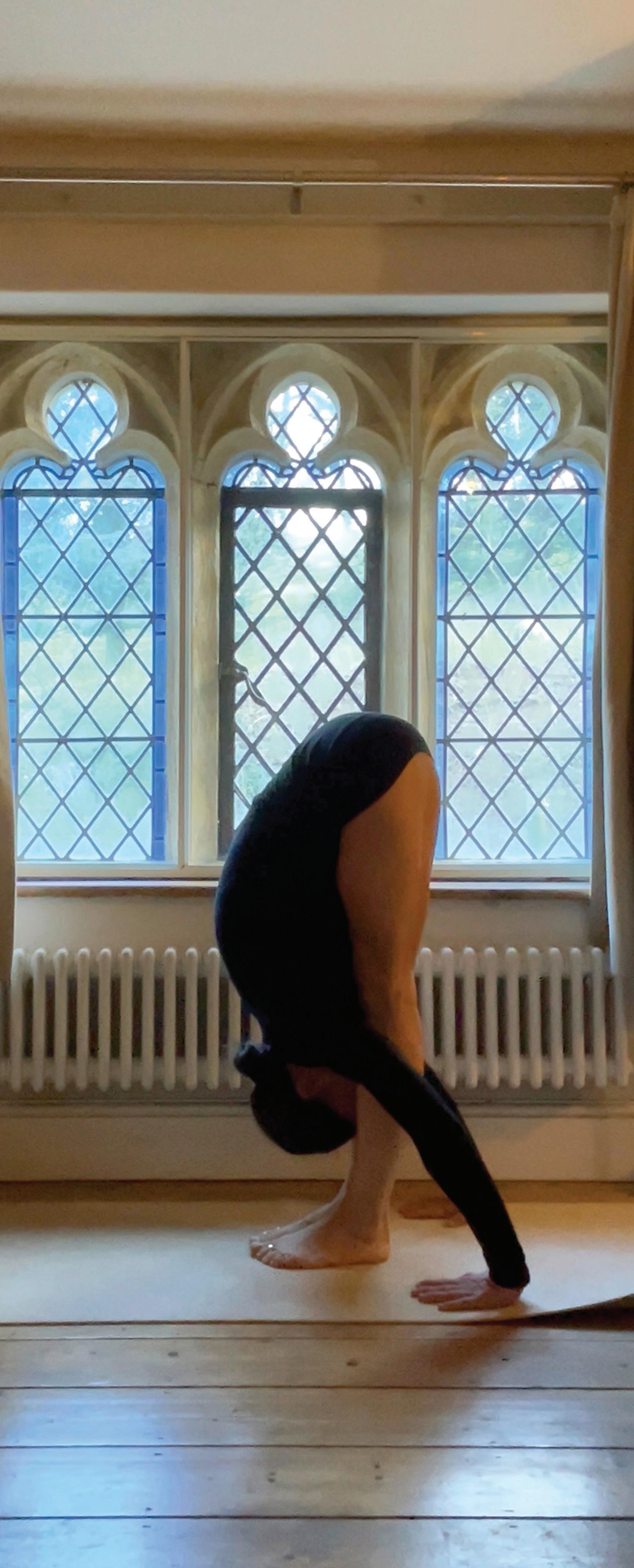
Take Uttanāsana as an example. For the posture to function intelligently:
• The legs must be active, awake, and engaged - a clear expression of Rajas.
• The torso, neck and inner organs must soften and descend, yielding to gravity - an expression of Tamas in its healthy form.
Sattva
Rajas
Tamas
If there is too much Rajas, the posture becomes rigid and strained. If there is too much Tamas, the structure collapses. But when effort and release are precisely balanced, something else appears: a sense of quiet integration, breath flowing freely, attention resting without struggle. This is Sattva Sattva is not added on top of the pose. It arises from the correct relationship between Rajas and Tamas
Sattva as a state, not a pose
This understanding is beautifully illustrated in the diagrams from Light on the Yoga Sūtras of Patañjali by BKS Iyengar, where pie charts depict different proportions of the guṇas corresponding to various mental and emotional states.
In practice, this means:
• Learning when to increase Rajas to overcome dullness or fear.
• Learning when to invite Tamas to counter excess effort or ambition.
• And most importantly, learning how to pay attention so the practice becomes responsive rather than habitual.
As practice matures, the mat becomes a laboratory for life. We begin to notice:
• Where we put in too much effort,
• Where we withdraw,
• Where balance is possible, but unfamiliar.
Patañjali reminds us that liberation is not achieved by rejecting nature, but by seeing it clearly. When Sattva predominates, perception becomes transparent and in that clarity, awareness recognises itself.
Yoga, then, is not about being endlessly calm or perpetually active.
It is about learning the art of proportion.
And each pose, each breath, each moment offers us another chance to refine that balance.
Lisa Wylde teaches in South Somerset and Dorset, www.lisawylde.yoga. She'll also teach at a new Iyengar Yoga studio in Castle Cary, www.lightonyogasomerset.co.uk.
Debbie Wilkinson
As a teacher and mentor
I'm frequently asked how to begin a personal practice. Here are a few poses to help you stop putting it off.
People often complain that they don't have time, but how many minutes a day are spent scrolling through images online? You may have more time than you think!
These five āsanas – performed with a mat, a floor, a wall and a few chunky books or yoga bricks– will get you started.
Together they could take around 15 minutes. Allow three minutes for each. Whether you spend that time moving in and out of a position a few times, or trying to hold a pose is up to you, and may change from day to day. Experiment a little.
If you’re considering teaching, your own practice is fundamental. While classes bring the joy of connection, personal practice can be a wonderful companion. This is where you can begin to develop a love for practising.
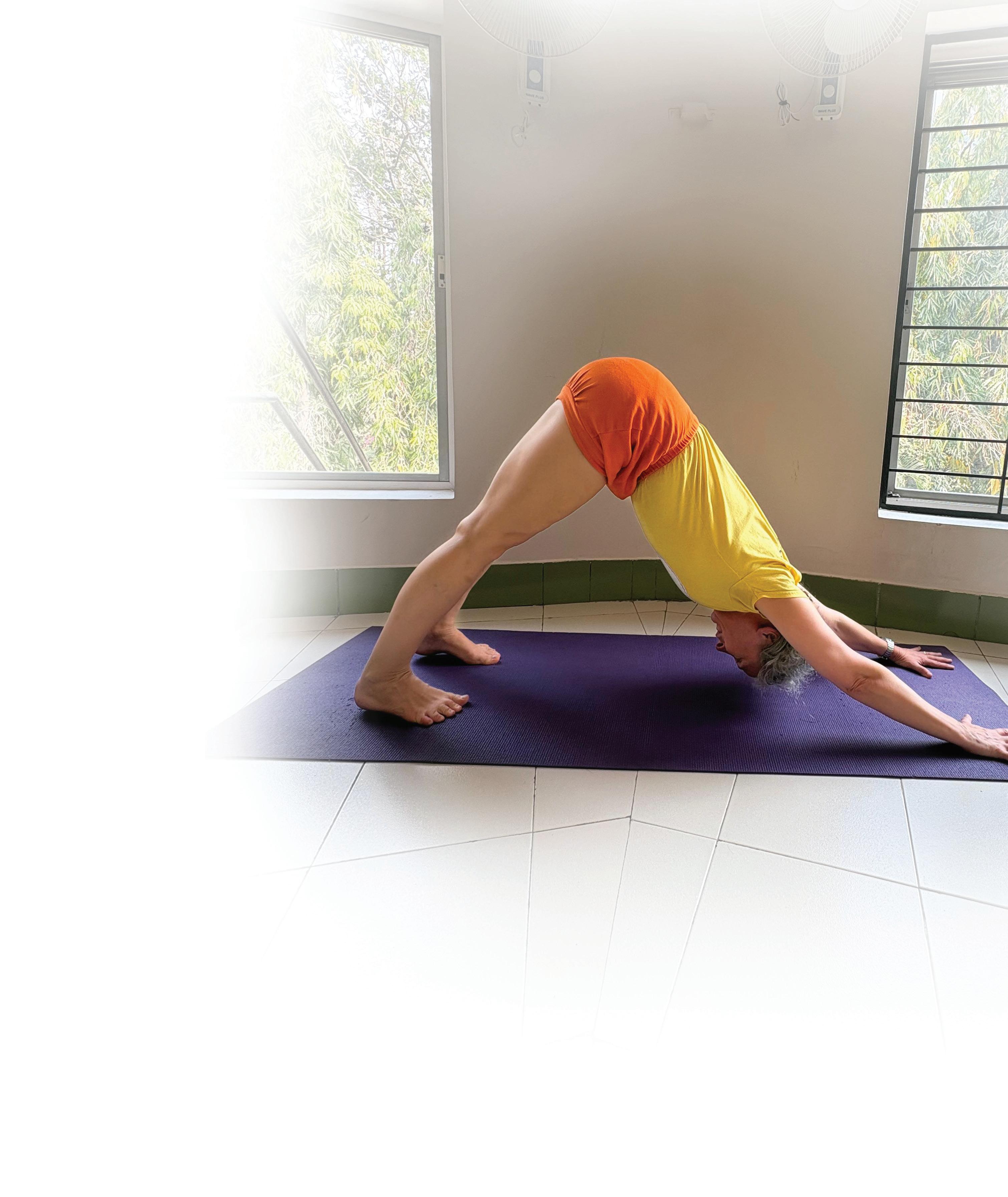
ADHO MUKHA SVANASANA (LOY image 75) 1
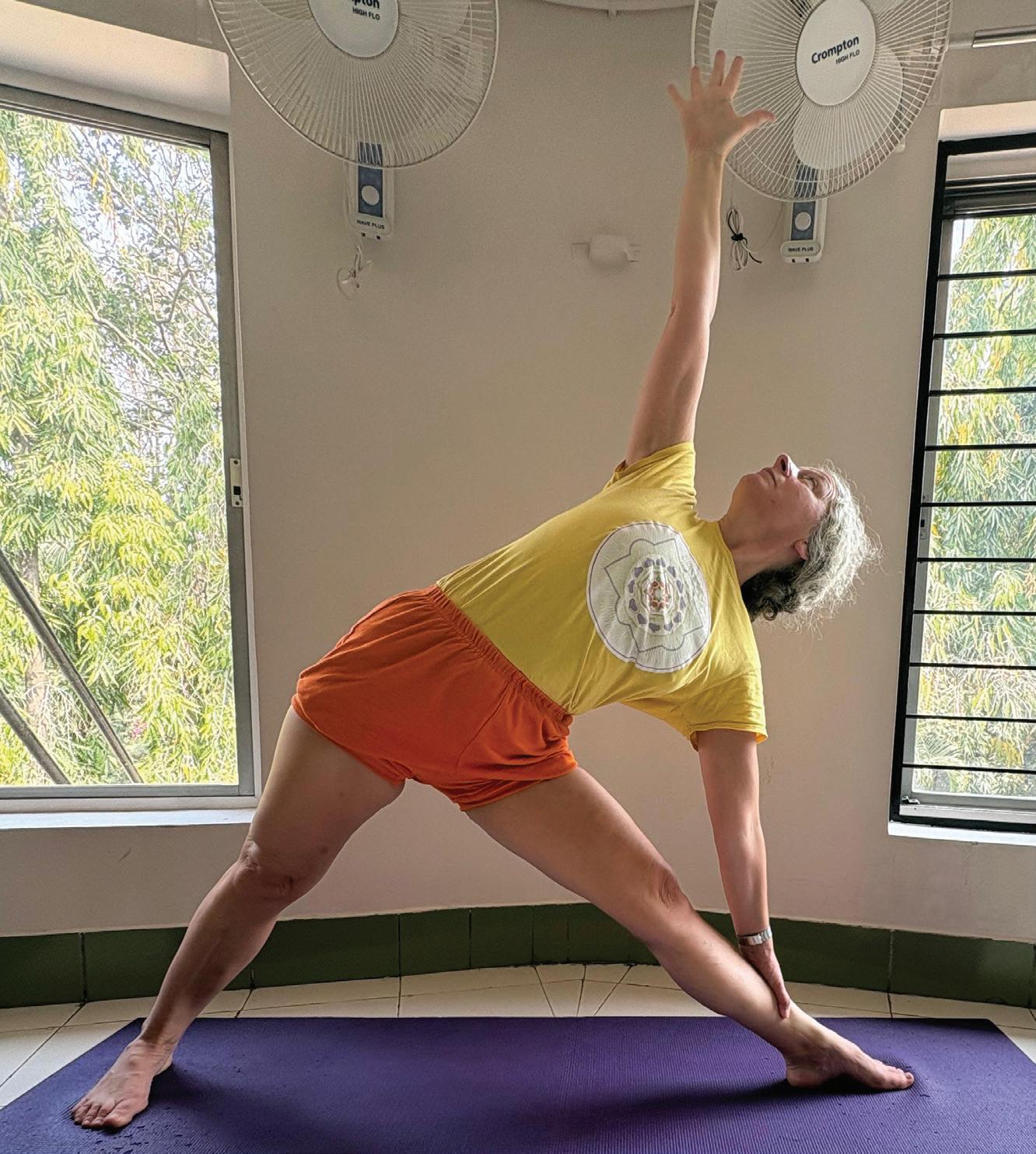
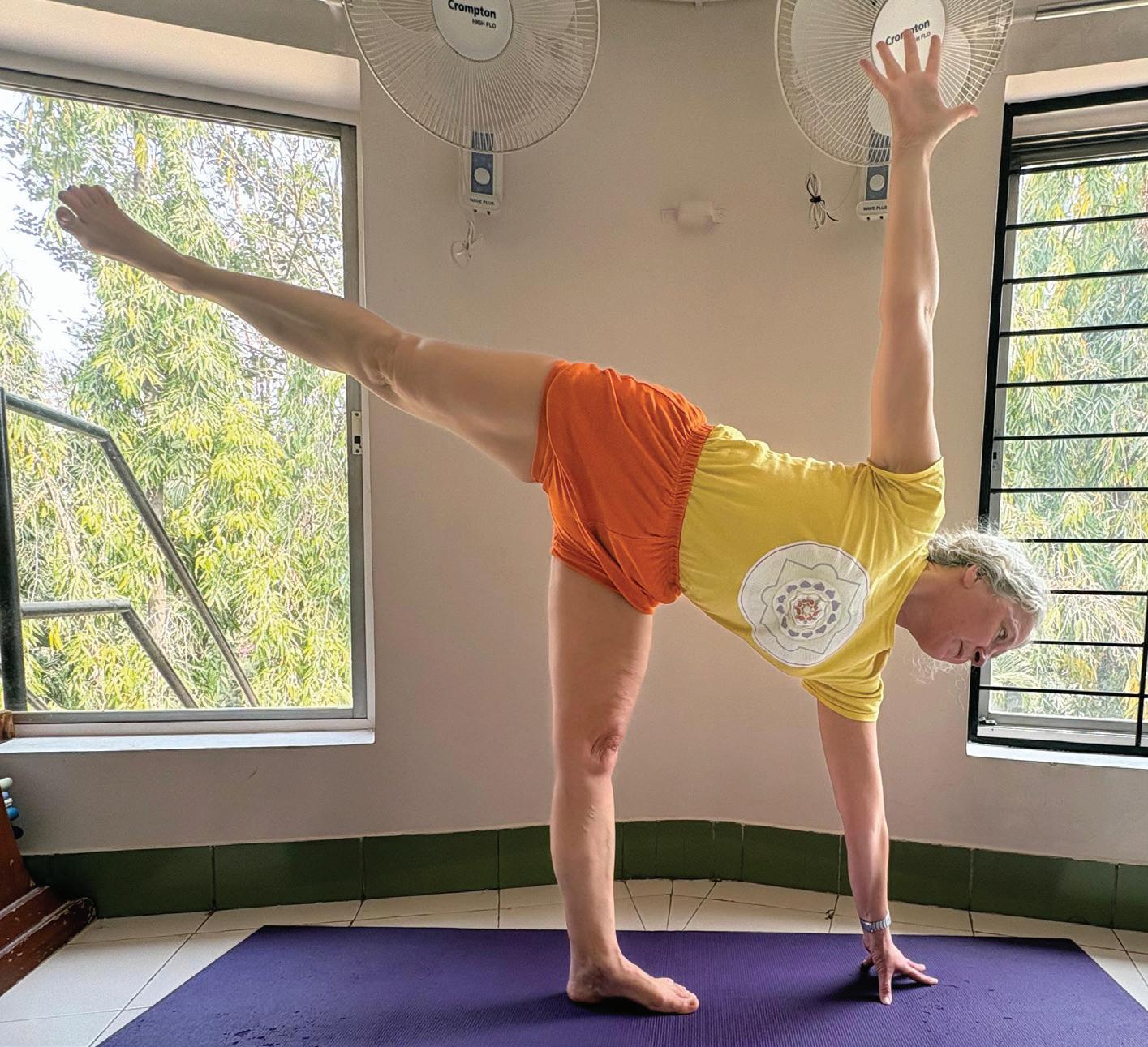
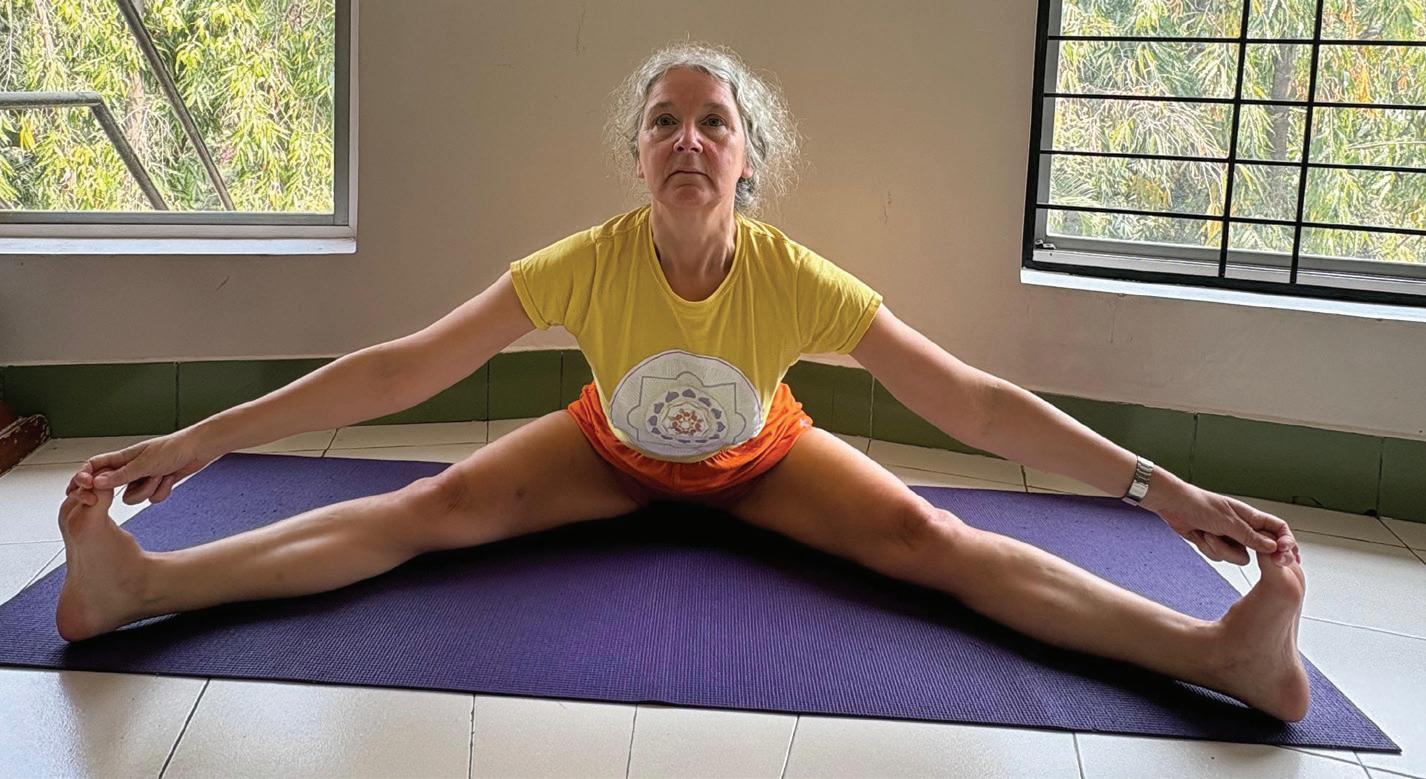
I suggest you start by paying attention to your legs: straightening them, turning from the hip, balancing, and finding stability in firm legs to let your body move.
Once you're in the habit of getting onto your mat, questions may arise for you to ask your teacher, or themes may develop for you.
That’s a good sign, but there’s no need to rush to a more complex or time-consuming sequence. You can focus on other details in the same āsanas. All of them will feed into the work you do in class.
If you get to the point where you want to buy props, you can save money by checking with your teacher what and where to buy.
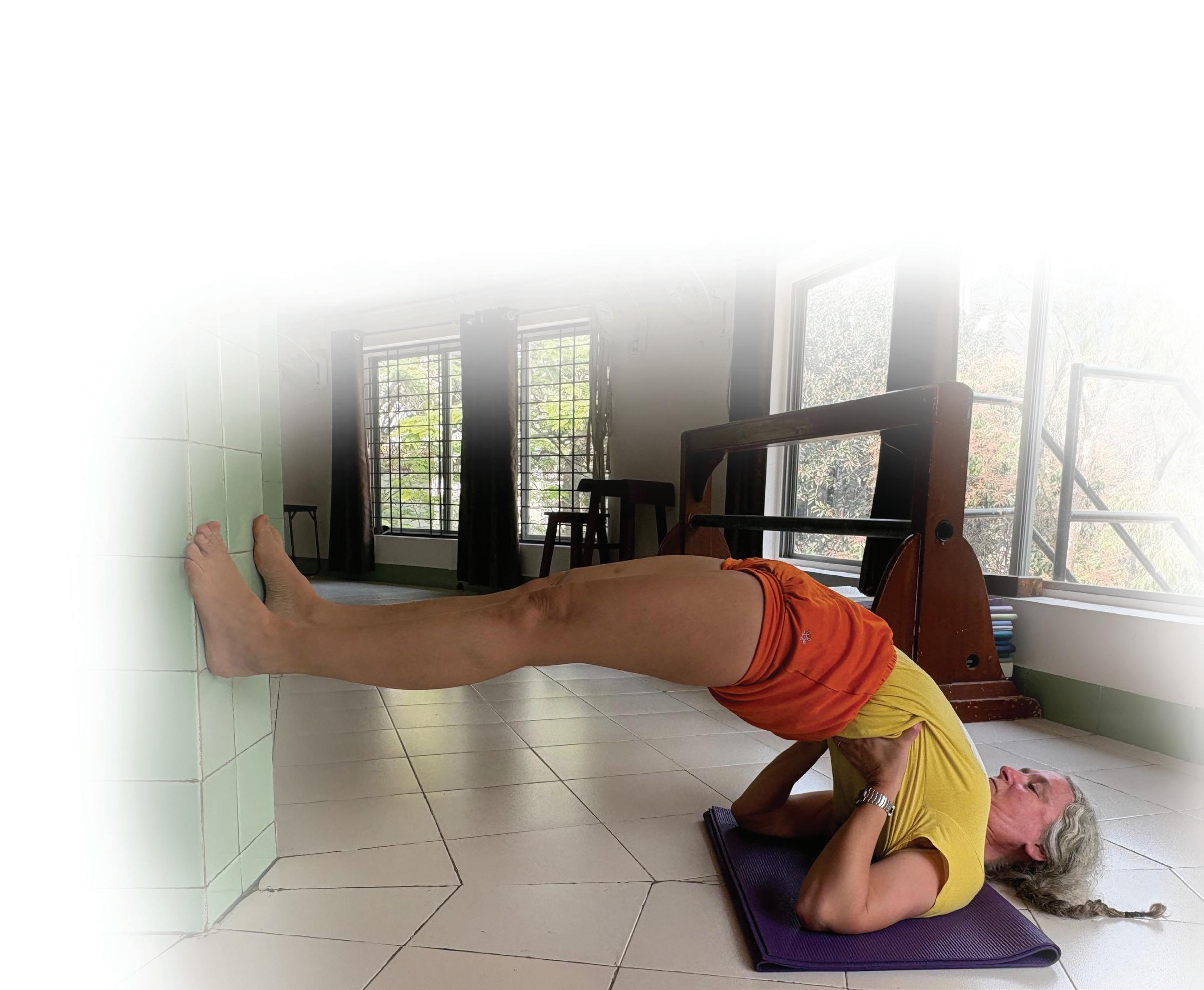
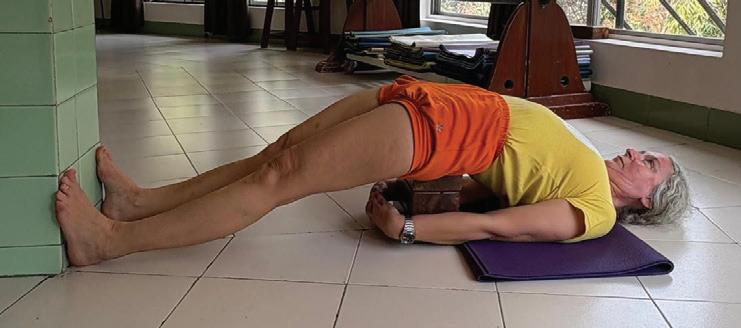
BKS Iyengar
From Yoga Rahasya Vol. 31 No. 4 (2025)
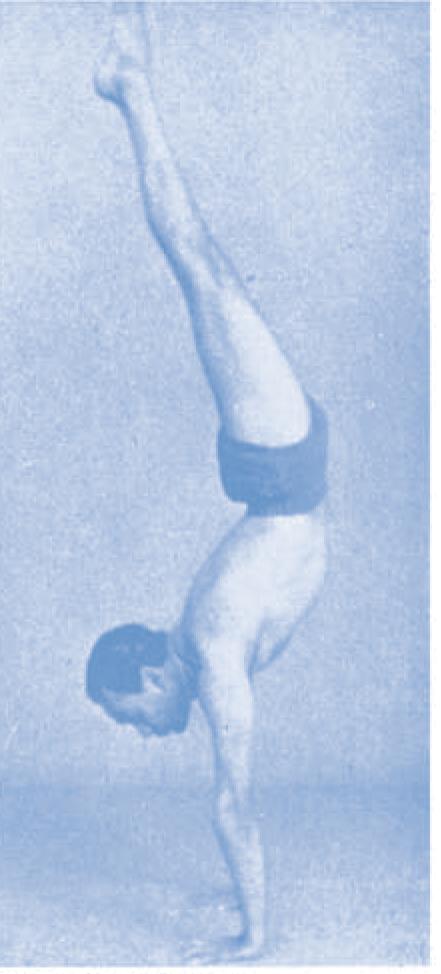
Left: Adho Mukha Vṛkṣasana (plate 359)
There was a lot of misconception among ‘observers’ of Āsana practice that āsana were a physical aspect of yoga [read: lower aspect] compared with the spiritual aspects of yoga. Guruji was asked in an interview whether Iyengar yoga taught only āsana and prāṇāyāma and therefore dealt with only the body? Here is his response.
In order to educate oneself, one learns the alphabet first. Later one may become the master of the chosen subject. So also, it is possible that by first undergoing the physical way of āsana practice, one in the course of time acquires the knowledge of the real.
It is only the onlookers who speak of me in that way. They only see the verbal expressions and carry wrong impressions of me and my yoga. For real practitioners (sādhaka), it is “learning”; whereas for onlookers it is “doing”. They cannot make out the difference between doing and learning. Hence the criticism.
Body is a part of the mind; mind is a part of the body. These are interconnected and interwoven. Similarly, all the eight yogic aspects are interconnected and interwoven. Whether you practice āsana or prāņāyāma, the other aspects are implicitly involved. If one has not studied the subtlety of these things, naturally one demarcates.
For example, take Adho Mukha Vṛkṣāsana, one stretches one arm fully and does not attend to the other arm, which is not stretched fully, yet one balances. Can one call it true yoga practice when there is imbalance?
Yoga is discipline. How does one bring discipline in that āsana? One has to watch the mounds of the palms, the knuckles of the palms, the back of the fingers of the right and of the left. Do we pay
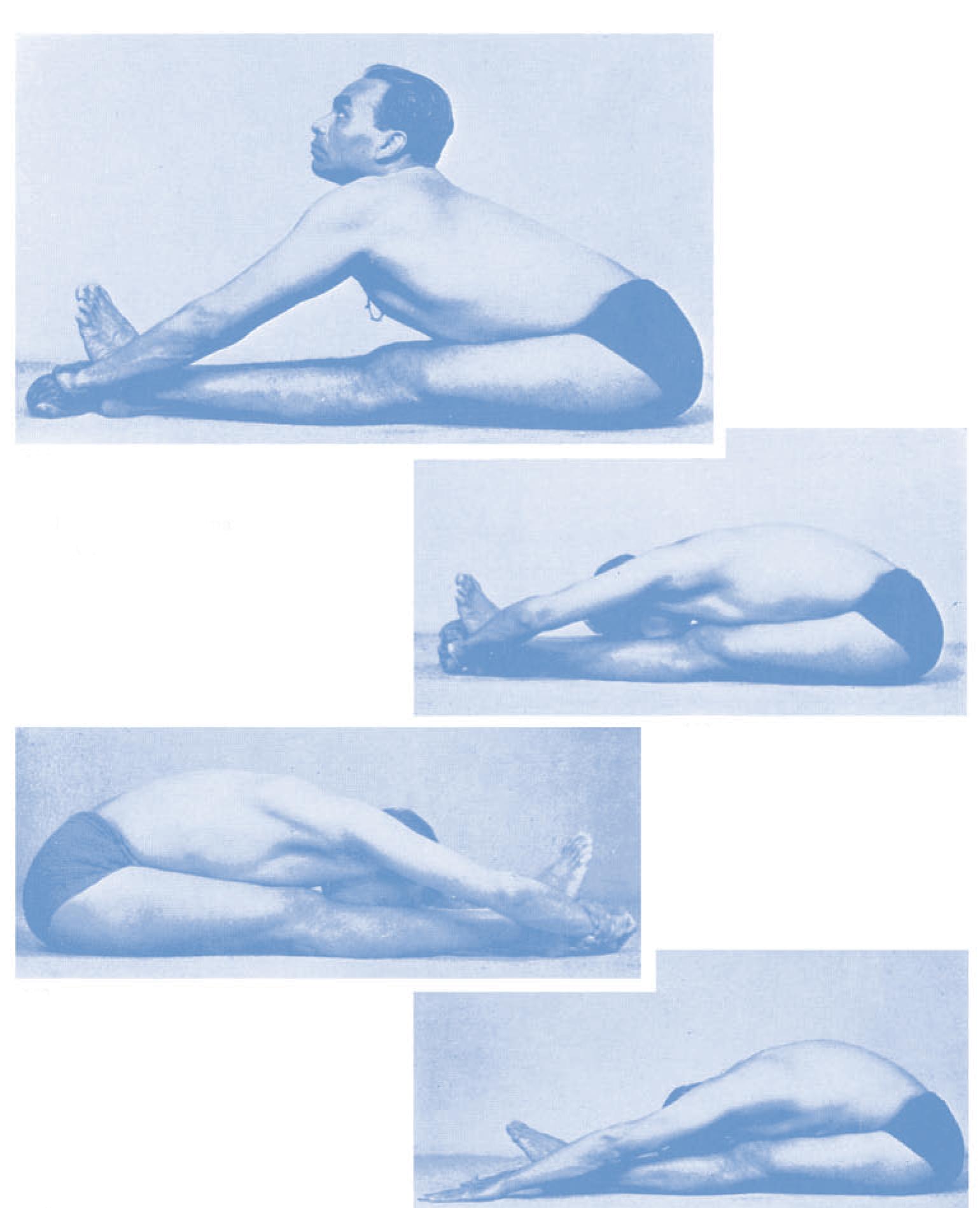
Right: Paschimottanasana plate 158
Right: plate 159
Right:, plate 160, and plate 161
attention to see and stretch equally? That means there is disparity. Disparity is not yoga. Yoga brings parity – samātvam. Then is it not “doing” for correction? People do not understand that yama and niyama are involved in each and every cell while doing an āsana or prāņāyāma.
How many people exactly place their fingers on the nostrils to do nāḍī śodhana prāņāyāma? They may block the right and open the left without proper rhythmic pressure to allow the breath to flow smoothly. Do they study how much the passages have to be kept open? Do they think how the skin of the finger should be, how the skin of the nostrils should be, where the passage has to be and how the passage should be to control it?
Skilful intelligence and action has to be developed
in order to know where to keep the fingers, how to keep the fingers. Then one has to watch where the breath is moving. Are these not the commandments of yama and niyama to be observed while doing āsana and prāņāyāma?
If the breath is passing on the inner portion of the nostril and you keep the finger anywhere on the outer part of the nose, is it not unethical practice? Just blocking without knowing where the breath is touching, is it yama or niyama? Blocking one side of the nose fully and keeping the other side fully open for inhalation, can you call it prāņāyāma? Secondly,
when you are closing the nostril, are you sure that you are exactly maintaining the closure without disturbing the septum? If you begin to study all these, then you know not only yama and niyama but also dhāraṇā and dhyāna
That is how people, without knowing, say it is just physical. When you do Paschimottānāsana, have you seen whether all the five toes are properly aligned and toes of the right and left feet are moving in the same direction? How many people observe the extension of the bottom of the feet? If you don’t pay attention to such things, where is the truth (satya)? Tell me! Is it satya just keeping your leg straight and banging the head down? When you take the head down, you do not know what happens to your arms, from which fingers you grip more and from which less, which foot you grip, which foot you do not grip, which part of the body moves and which part does not move. One shoulder blade may be active and the other dull. It is also called Ugrāsana Why did they call it by this name, one has to ponder on it. Does one observe all these?
They only advise one to do yoga softly and slowly. Is yoga is to be done with softness, then why does Patañjali use the word “code of conduct”, ānuśāsanam?
Has he said to do as you like according to your comfort? Tell me, is it Patañjali’s yoga? See the first two sūtras. Is there any respect for that word ānuśāsanam? A code of conduct has to be followed with full dynamism whether one is walking, sitting, standing. Ānuśāsanam is code of law, law of the human system. The body, the cells, the mind, the organs of action, the senses of perception, have to behave according to the code of yogic discipline.
For example, I was just reading Gheranda Samhita, translated by Śri Chandra Vasu. In the foreword, he says that samādhi can be obtained by the purification of the body through āsana, as certain āsana induce certain mental transformation. For this one has to observe the feelings that take place as well as the transformation taking place in the mind of each āsana
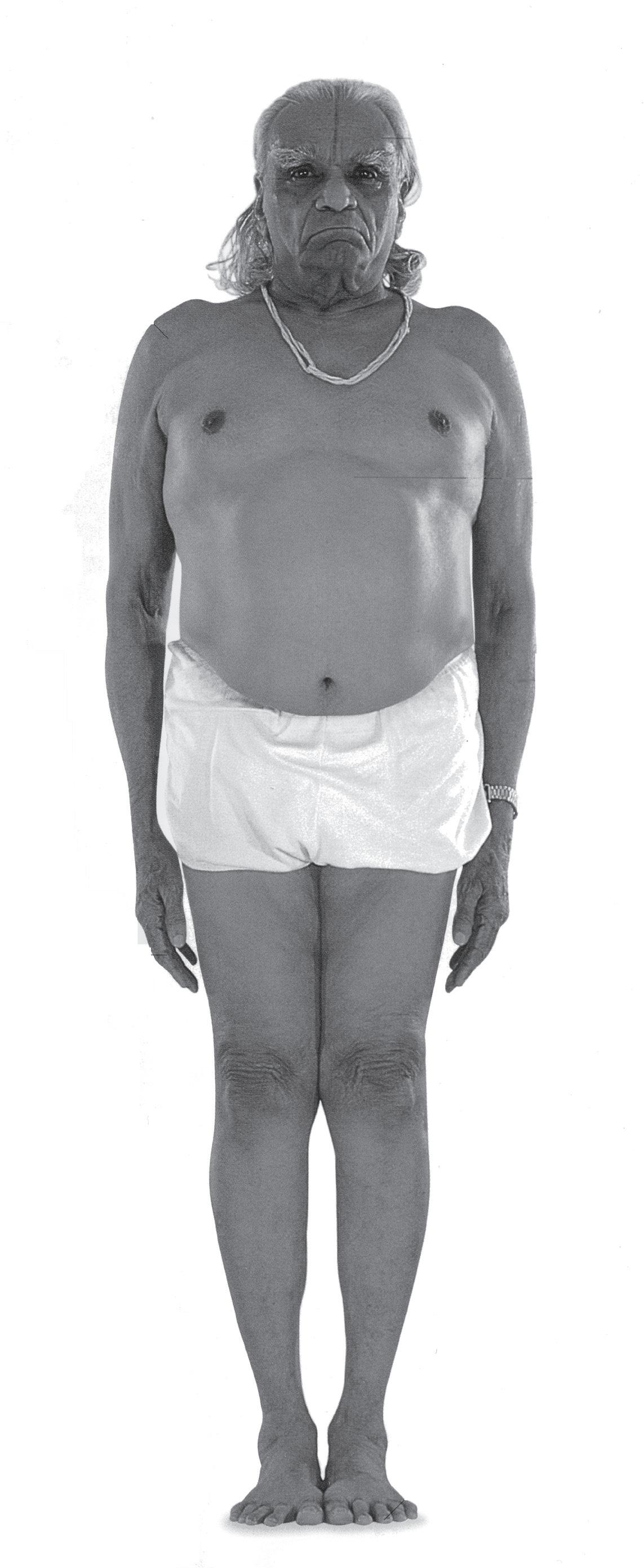
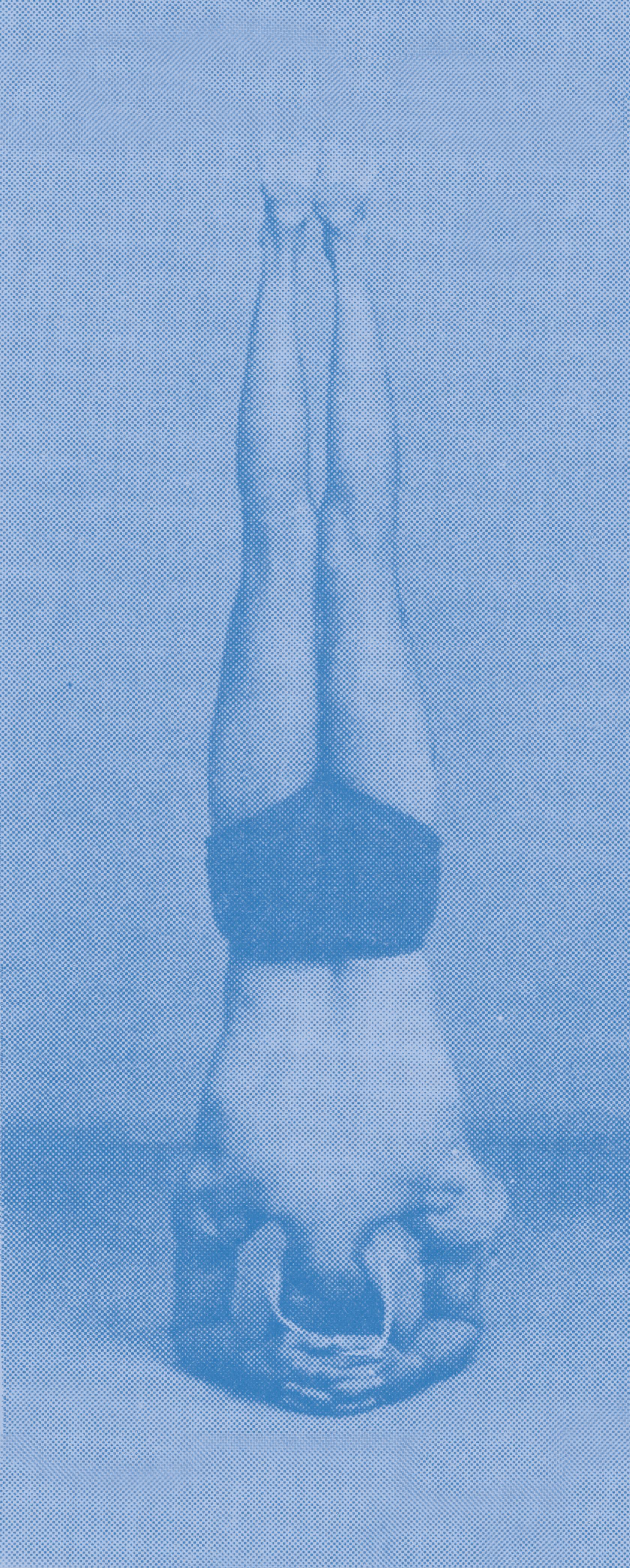
In one āsana, you can be more active, you can be more passive. Suppose I am standing in Tāḍāsana, I have to study my intelligence. When I do Śīrṣāsana, I study what type of stability in intelligence comes. With these experiences, I introduce the principles of yama and niyama in āsana and prāņāyāma.
Here, you are made to be within yourself, which is nothing but svādhyāya, the study of the self.
Is not the body part of the self? Is not the mind a part of the self? In deep sleep, does the mind function? If it is functioning, how can you say that you had a sound sleep? If the mind was there, then you should have known what was happening around you in sleep. So, there must be something superior to the mind and the mind is subordinate to that. When the body is subordinate to the self, the mind is also subordinate to the self.
What is the use of differentiating the body and mind when both are subordinates? How can one speak of mind control when there is no body control? For a yoga sādhaka, both have to go together.
Can you express anything without this body? So, this body, according to yoga, is to be used for fruitful means and self-knowledge. The practice of asana and pranayama makes the body and mind worthy, when practised the way I am saying.
It is not for my critics to decide what I teach. I am interested in those who come to me, how I convert each action, each thought from the physical and mental levels into spiritual action and thought.
Yoga Rahasya is a quarterly publication of the Ramamani Iyengar Memorial Yoga Institute (RIMYI) and the Light on Yoga Research Trust (LOYRT) in Mumbai. Yogvidya online store is the official supplier of Yoga Rahasya for IY(UK), now taking orders for the 2026 Volume (31). www.yogawithkirsten.co.uk/store
Right: Śīrṣāsana (plate 191)
Adouble cancer diagnosis meant weeks of surgery and debilitating radio- and chemotherapy for Diane Goldrei, but when she could join her weekly online yoga classes, the work eased her pain and returned her to a much-needed sense of optimism and gratitude.
Iwant to celebrate the comfort and joy I experienced returning to yoga classes after liver surgery and during the whole period of radiotherapy and chemo.
I was first diagnosed in May 2024 and in the year since have continued to practise, with breaks following surgery.
I remember doing stretches while in the surgical admissions ward, waiting to go into theatre. I can also remember doing arm stretches while waiting for one of my first radiotherapy treatments.
Yoga makes me feel calm and positive, I wrote to my yoga teacher, Sharon Klaff, shortly after beginning a five-week course of daily radiotherapy. The therapy followed an operation for a rare skin cancer, Merkel’s, which had presented as a tiny innocuousseeming cyst on my right buttock.
“it was almost miraculous to have an hour and a half when I felt like a whole person again, and the pain melted away. ” .
Plastic surgeons removed the margins around the site of the lesion, which had already been removed at my GP surgery, and also the lymph nodes in my right groin, where a scan showed evidence of spread. When I started radiotherapy I was also on chemo in tablet form, following another operation for liver cancer, which had been discovered during investigations into the Merkel’s.
The two operations, which both required stays in hospital, were close together. I had barely recovered from the plastic surgery when I was operated on to remove the cancerous part of my liver. The liver cancer was not connected to the Merkel’s, and I was fortunate that it was found at a stage when it was still treatable, as was the Merkel’s.
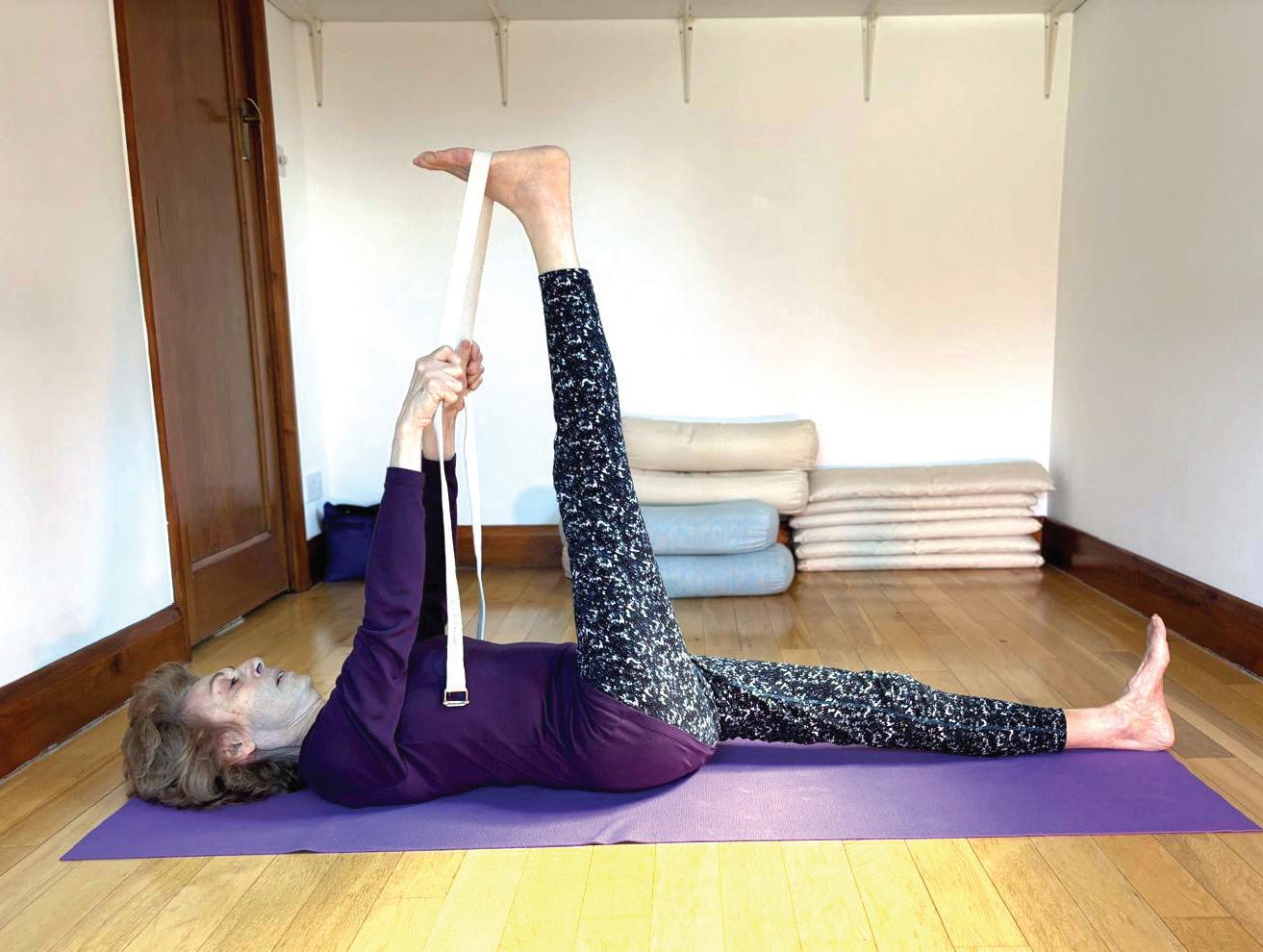
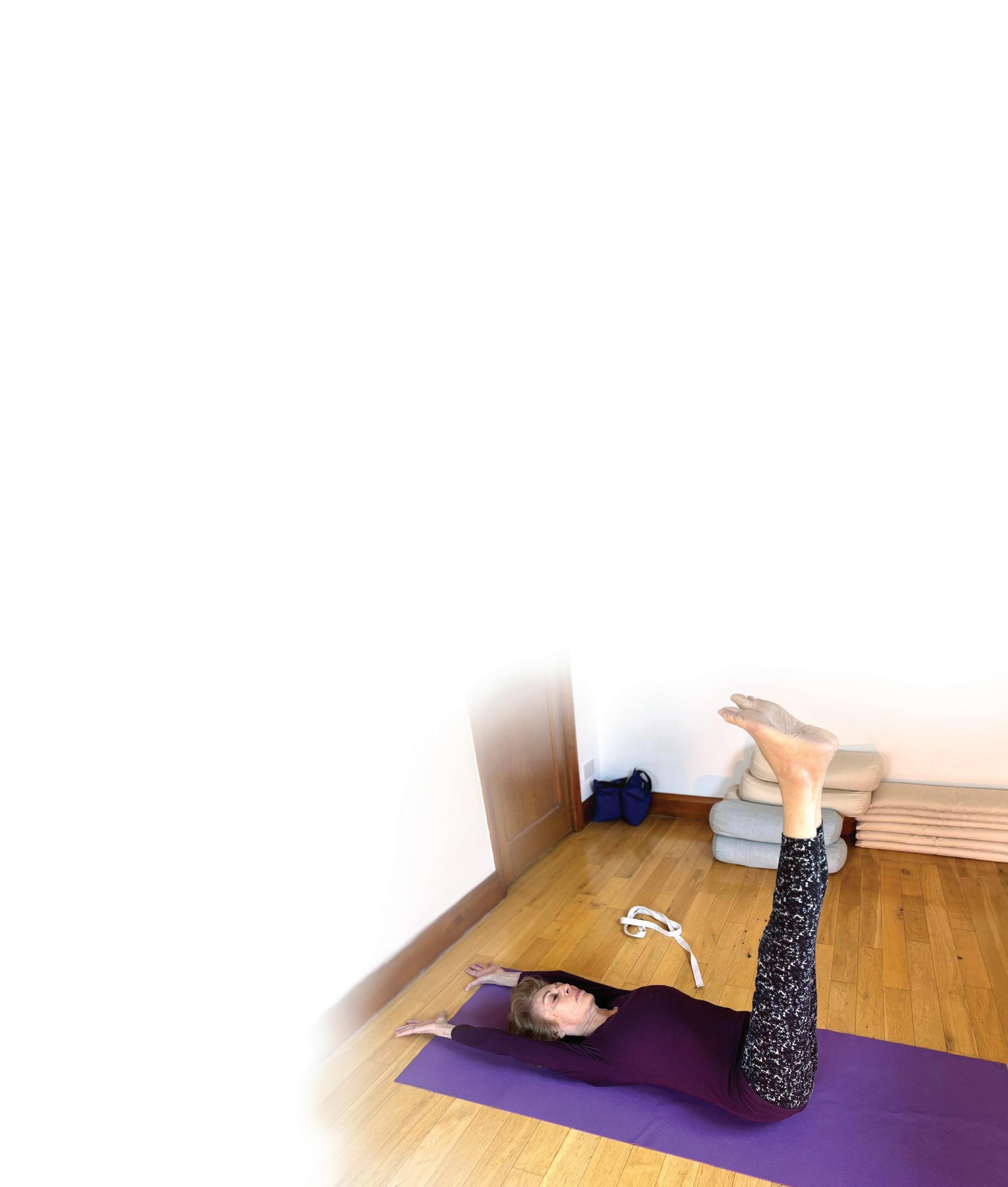
Above: Supta Pādānguṣthāsana 1 - a complete head to toe stretch, engaging arms and legs
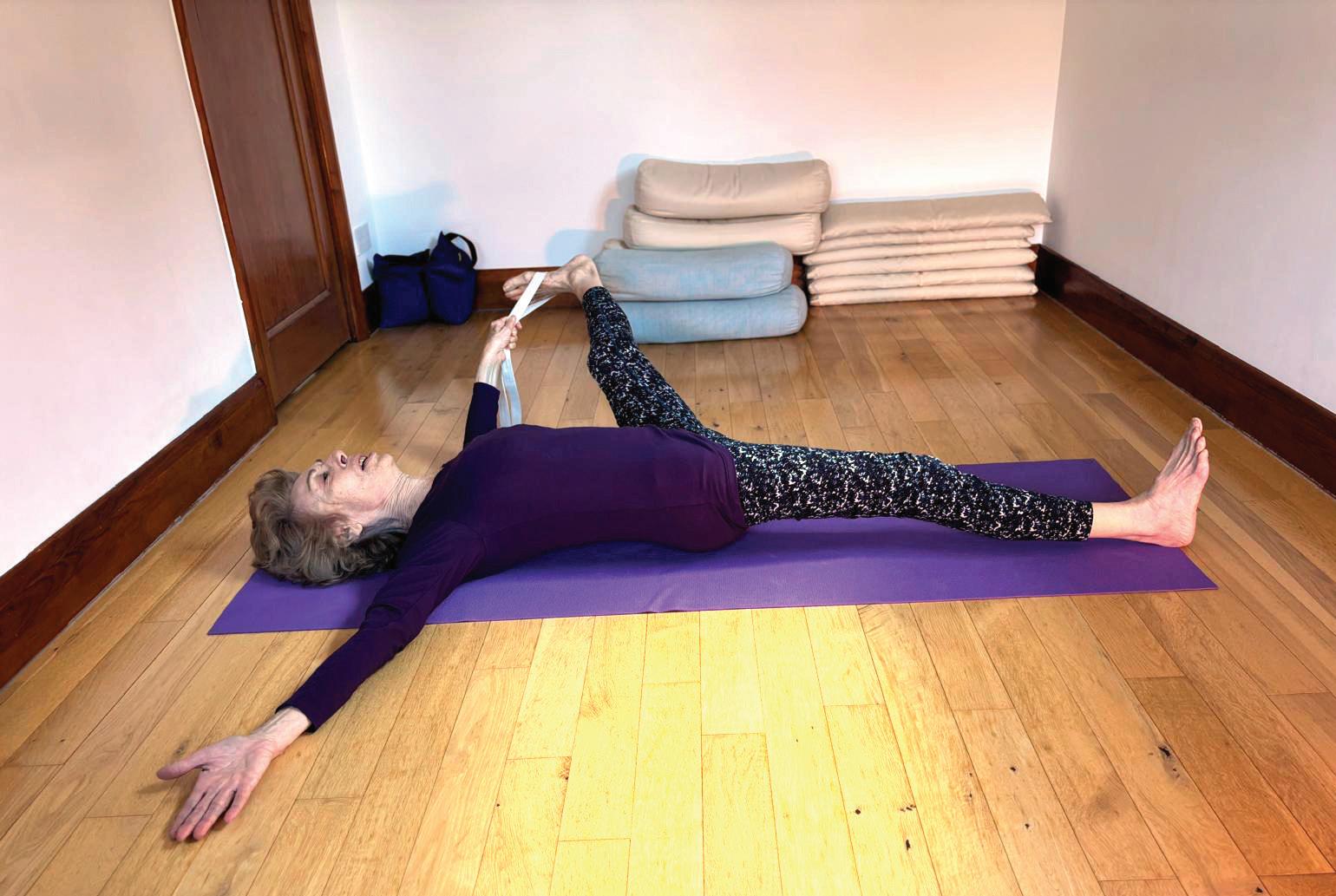
But for much of the time I was not in a position to practise. The most incapacitating and painful side effect of the radiotherapy, in my case, was severe burning of the skin in my groin and buttock, which set in towards the end of treatment and intensified in the weeks after the course. The other side effects were nausea, fatigue, stomach pain, and occasional diarrhoea.
At a time when I was in pain, and my normal life and activities were very restricted, it was almost miraculous to have an hour and a half when I felt like a whole person again, and the pain melted away. I was one of a small online class of regular students, and Sharon knew what I was going through, as she does about others' health issues. The class was pitched in such a way that I could manage most of it.
We always focus a lot on breathing, not just in prāṇāyāma but throughout class, so we move in
harmony with the breath and allow it to become integral to our work.
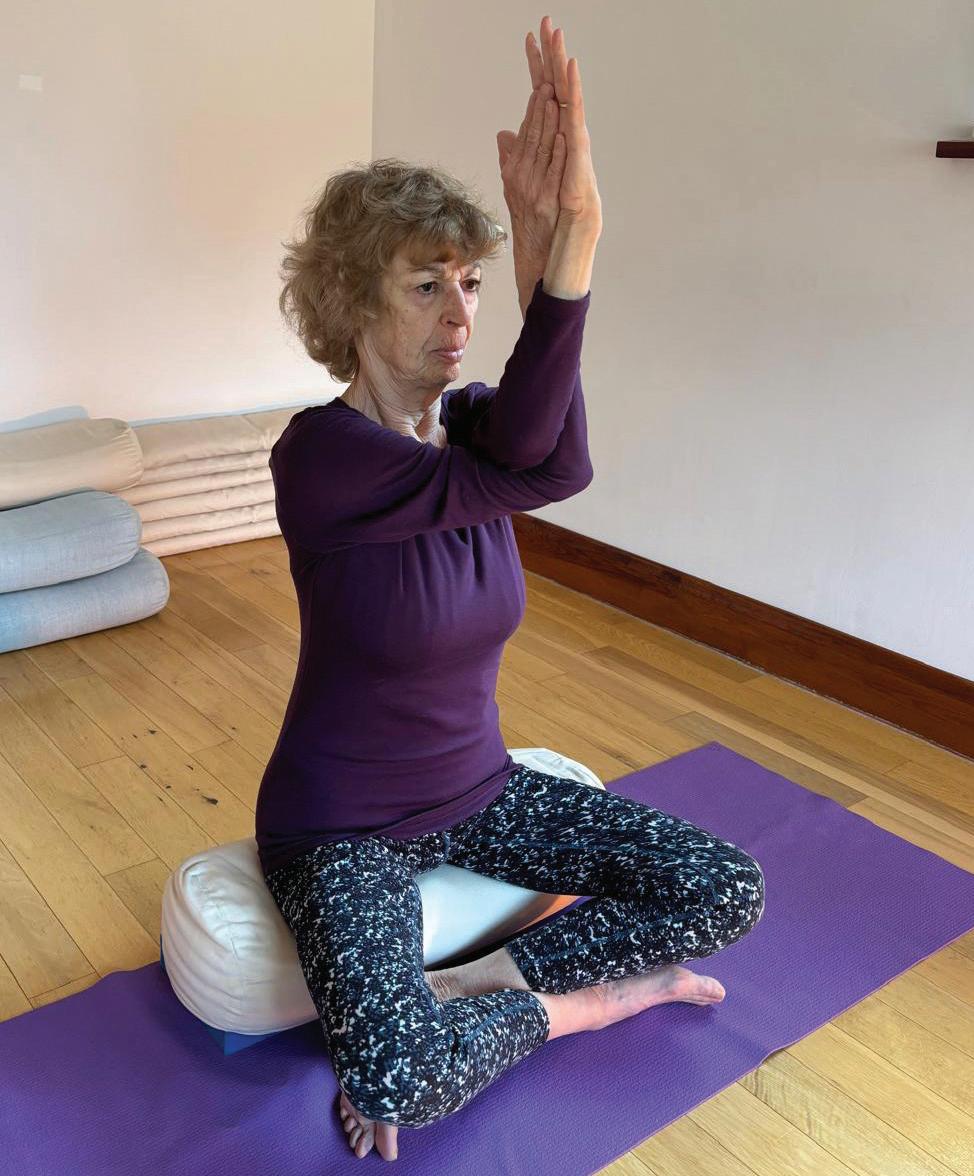
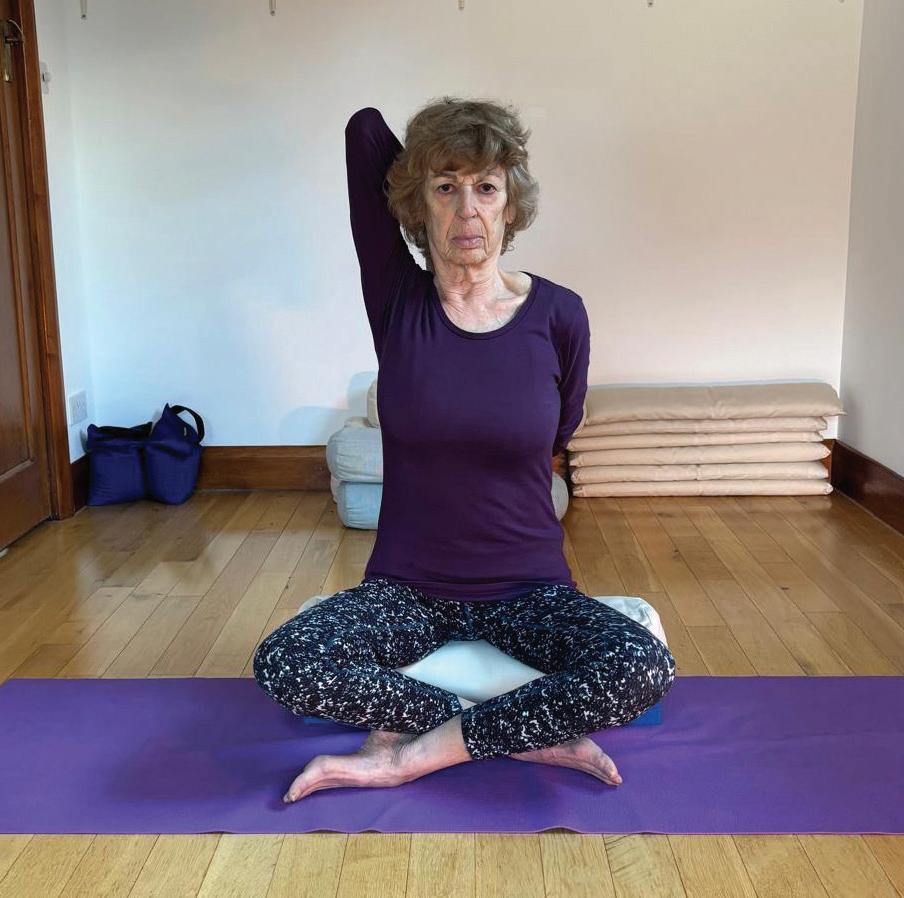
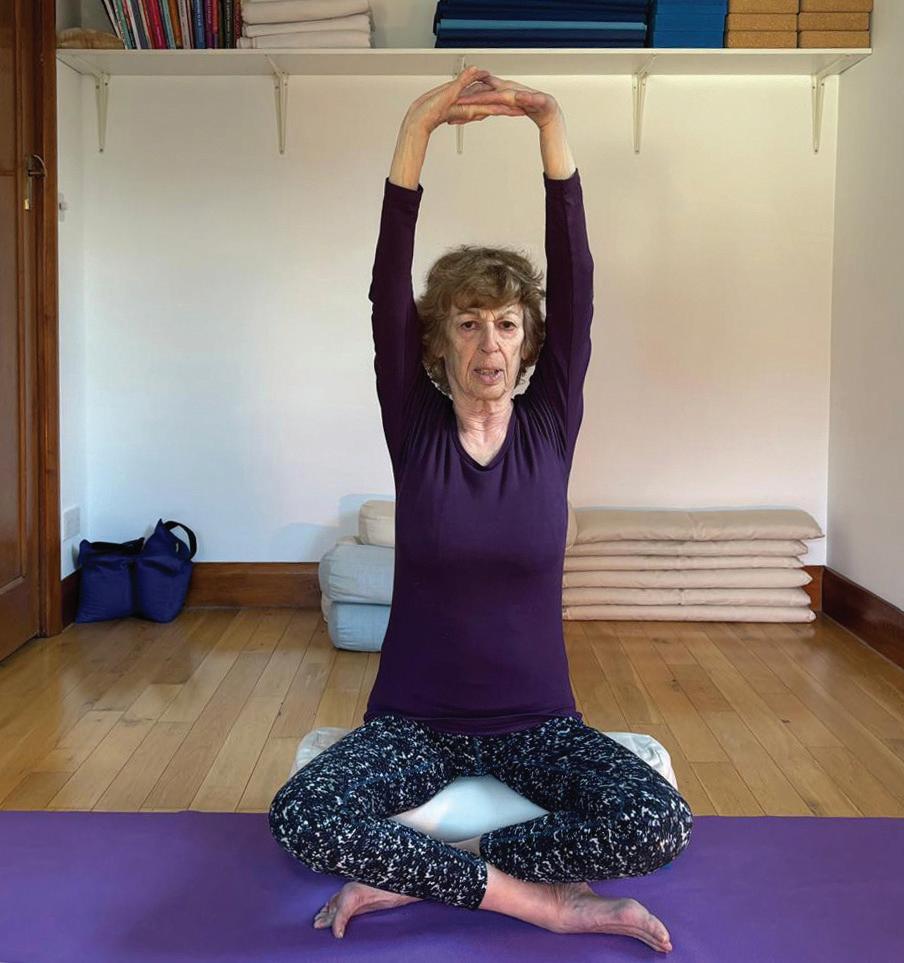
I have become particularly conscious of how big a part the breath can play when we do arm stretches, often at the beginning of a class, parvatāsana, gomukhāsana, garuḍāsana and namaskarāsana. I have found them very nourishing and uplifting as they not only engage the arms and shoulders, but also the base (legs, feet and pelvis), allowing us to stretch the abdomen, lift the spine and perhaps most importantly, open the chest. I feel I do them now with a deeper understanding.
Being able to join yoga classes has helped me to reconnect with other practitioners, with normal life - or perhaps, my normal self or the self I want to be again – a self which is still there regardless of months dominated by being a cancer patient.
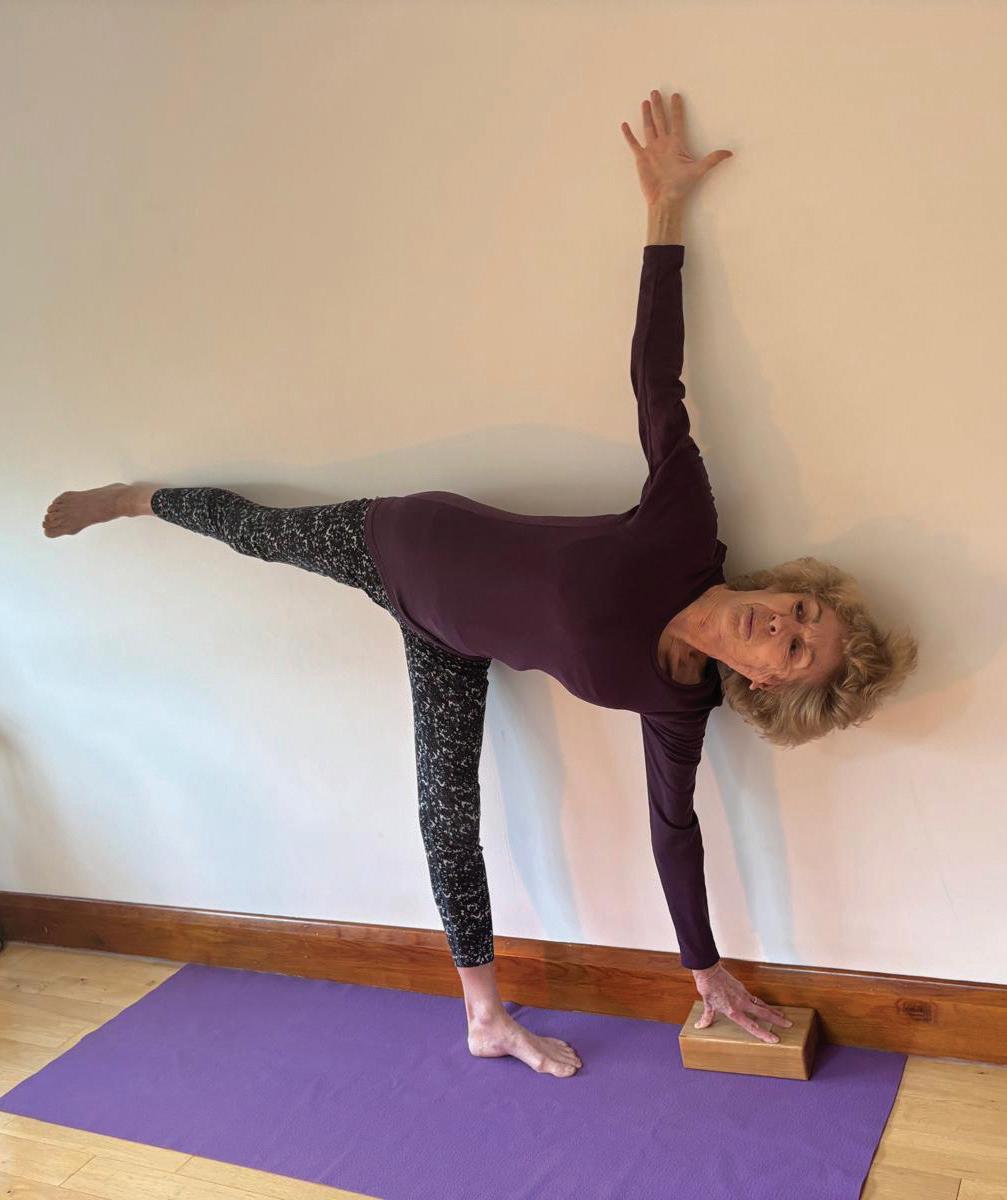
I won’t say yoga takes me out of myself. Rather it is a focus on which one can concentrate, and which rewards me with a sense of optimism and gratitude.
There have been times when I have not only been advised not to practise, but have not felt able to. But that does not mean yoga did not continue to be there for me, as a central part of my life, and one which happily I have been able to return to, once I was ready.
Diane Goldrei started practising yoga in her late twenties, inspired by seeing ballerina Lyn Marshall in one of the earliest yoga television series in the 1970s. Diane’s first teachers were British yoga pioneers Mary Lawton and Silvia Prescott, and she has also been a student of Ros Bellwith whom she did her teacher training - Patsy Sparksman, Tessa Bull and Uday Bhosale. Diane qualified as a Level 1 teacher in 2004, aged 61, and taught under her married name, Diane Maimaris.
and Śīrṣāsana
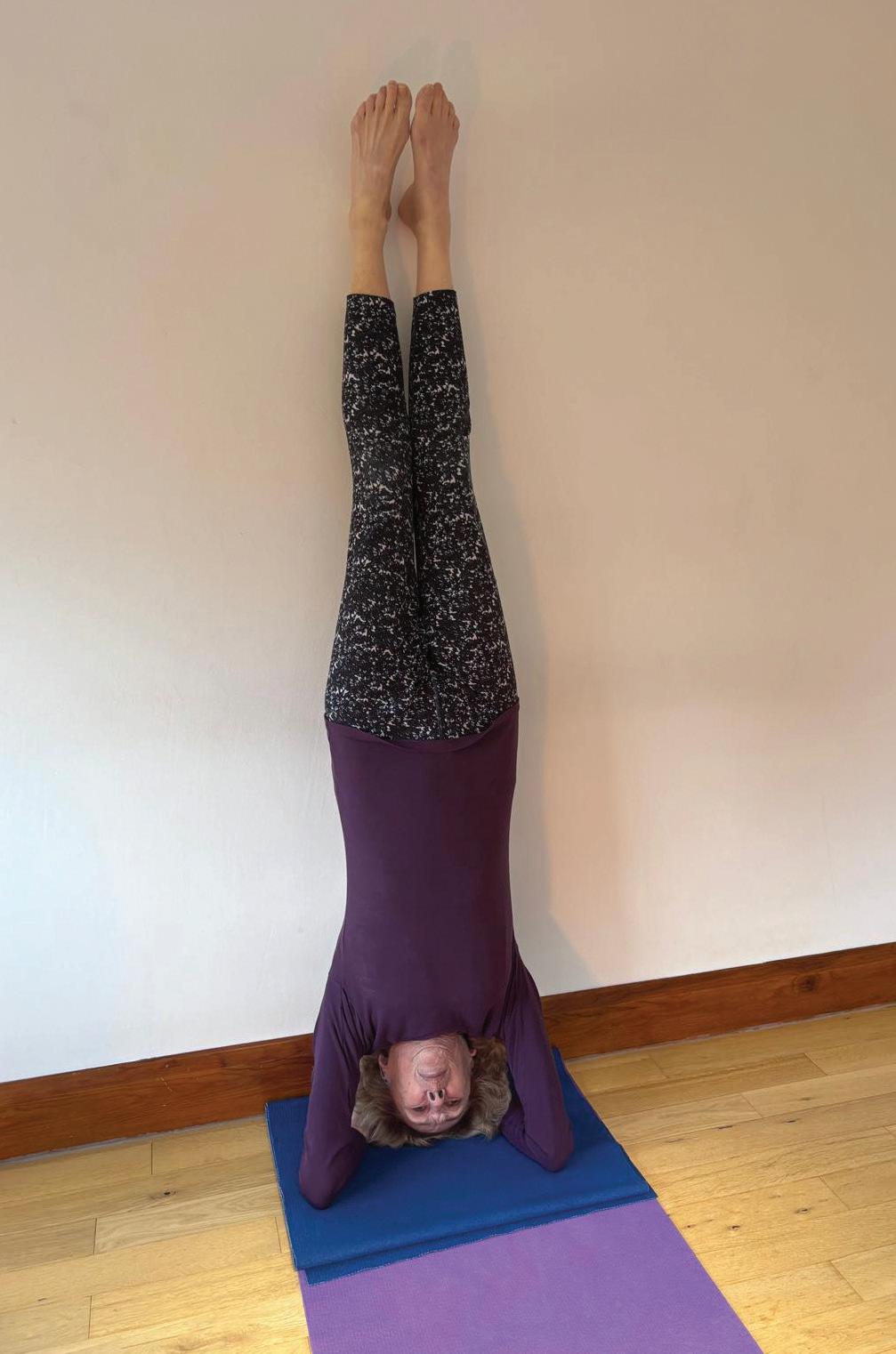
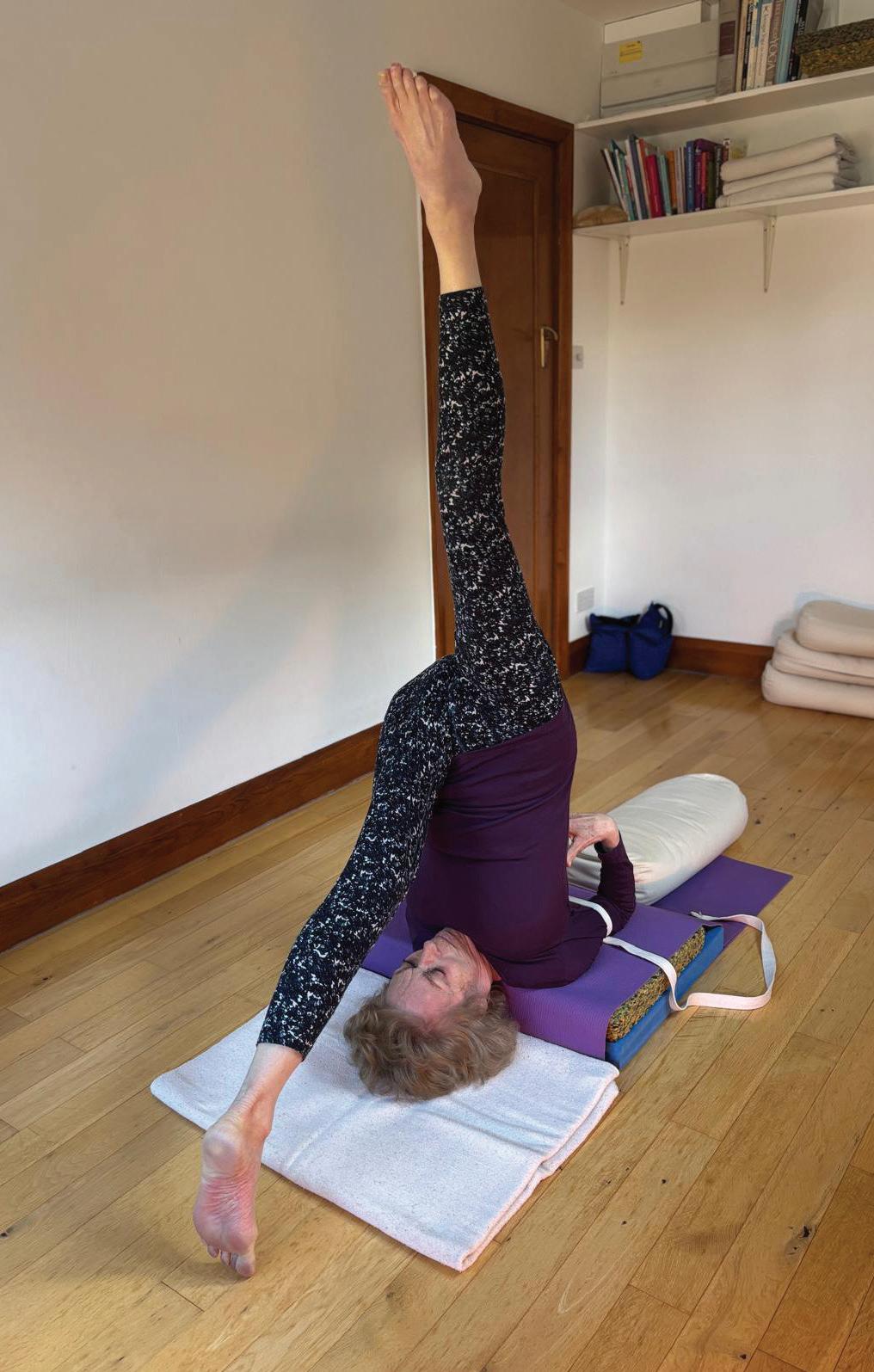
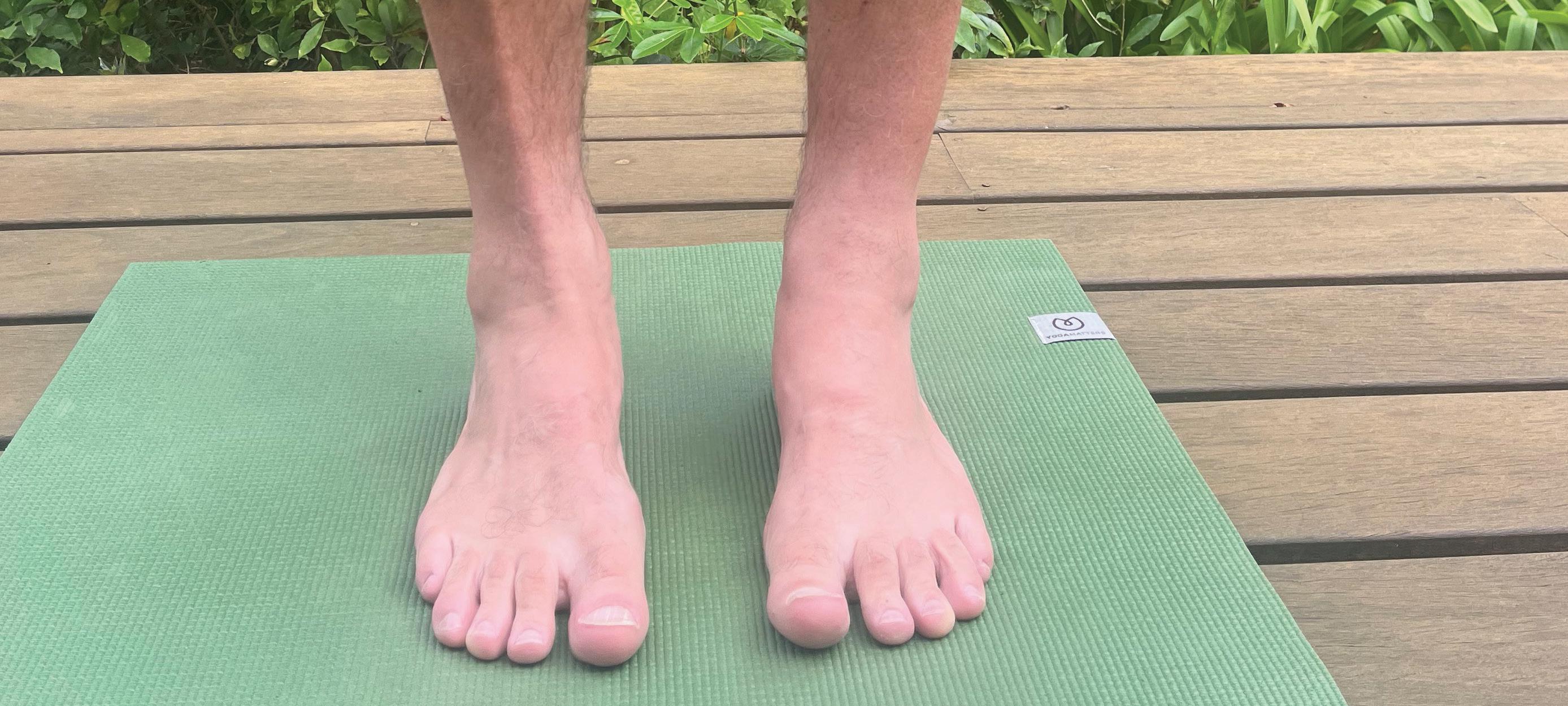
Whether he’s Down Under, or the right side up, Mark (right) is constantly told to lift his inner heels
There's only one
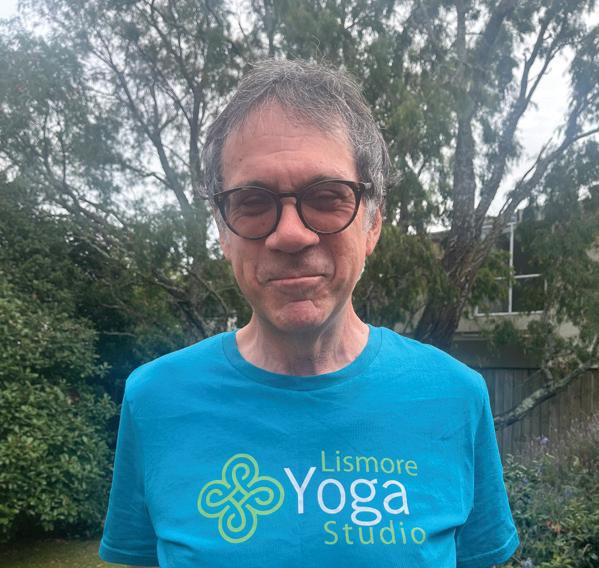
Mark Jolly
‘
Lift the instep,’ Julie said. It was not the first time I had heard this instruction, and was something she said to me in almost every class. I have a tendency to let the insteps drop.
Only thing was, this was not our Julie Hodges, the one who teaches at the Putney Iyengar Yoga Centre. This was Julie Hodges from Lismore in Australia, teaching at her own studio in the New South Wales town.
The coincidence does not end with the names. Both are Level Three teachers, and both have been
teaching for more than three decades. Both have inspired their own students to train as teachers and each has created a thriving Iyengar community in their local areas.
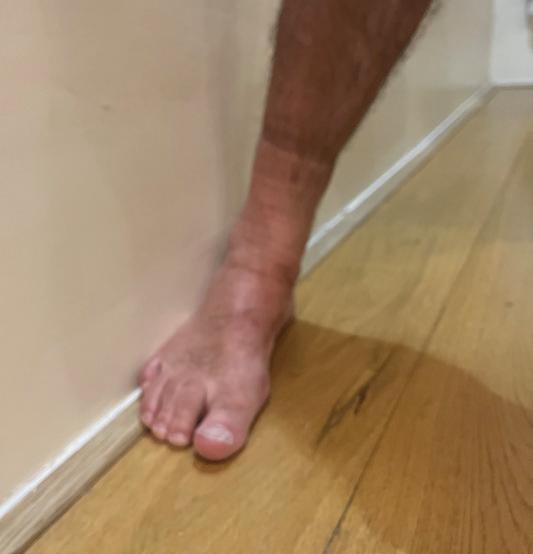
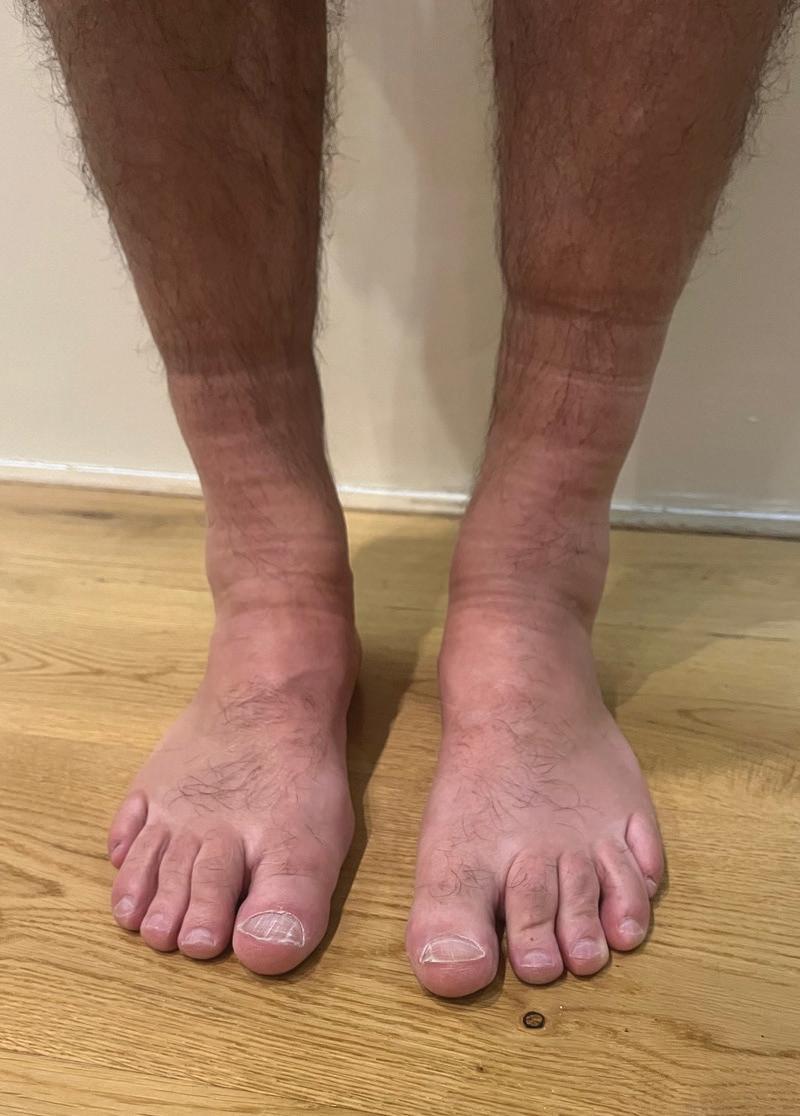
During a holiday Down Under, I could not resist the chance to become the only person in the world (as far as I know) to be taught by both. Australia’s Julie
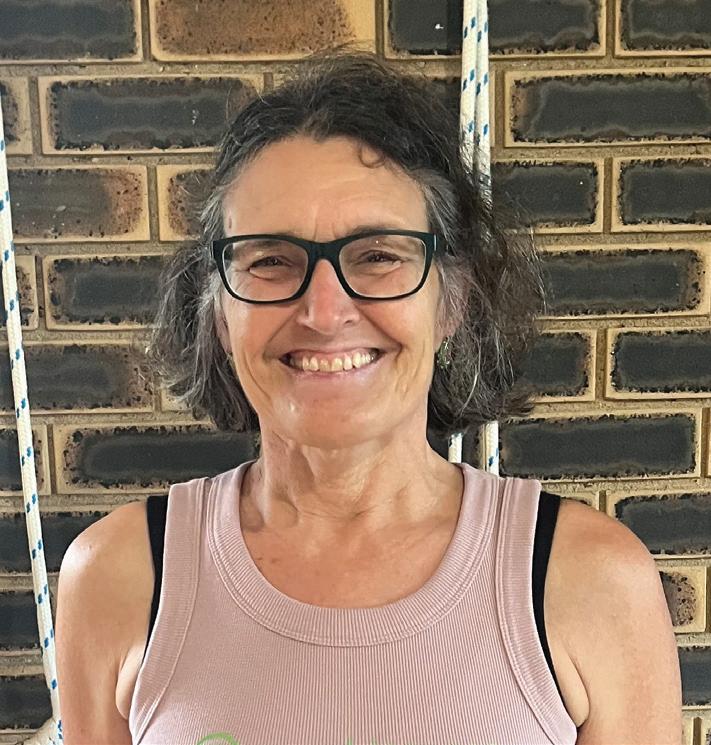
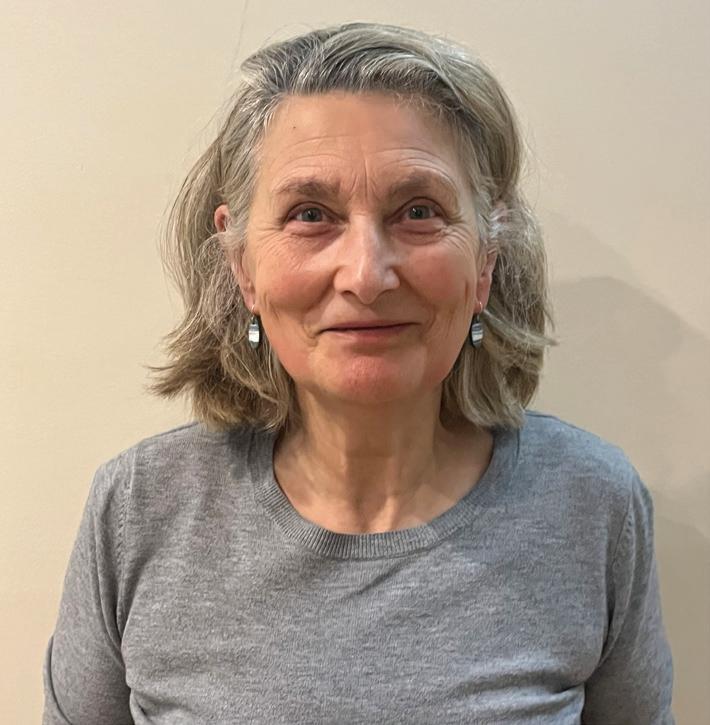
was not too far away from where I was staying, on the Gold Coast in Queensland, so I signed up for a class.
I knew what to expect because all Iyengar teachers go through the same rigorous training process wherever they are in the world and what they learn from their own senior teachers and in Pune meant that standards would be high, and uniform.
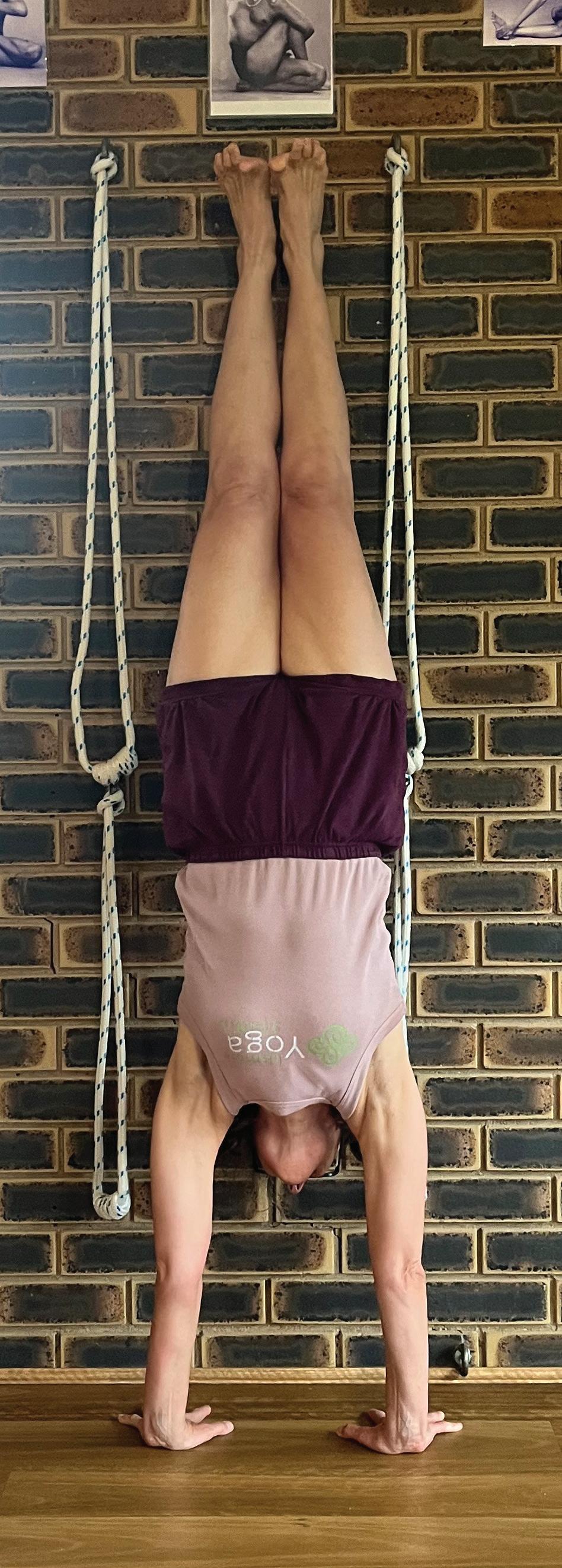
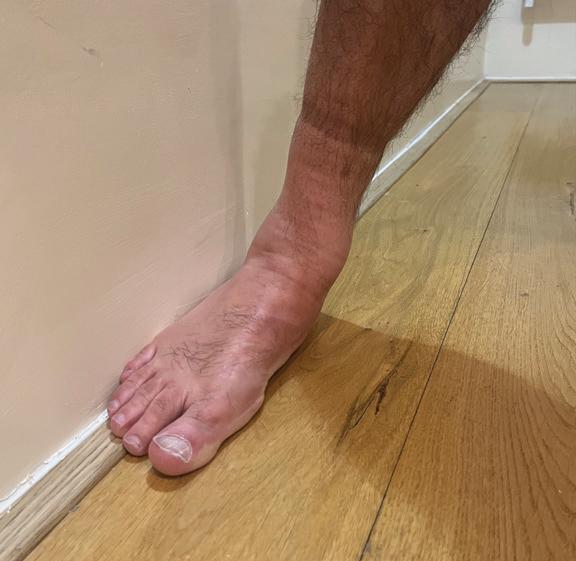
"Mark, lift the inner knee. Push the foot back into the wall and make sure you don’t allow that inner heel to drop."
A correction I had been given, almost word for word, many times by Julie in London.
Shame-faced, all I could say was that I wasn’t as bad as I used to be.
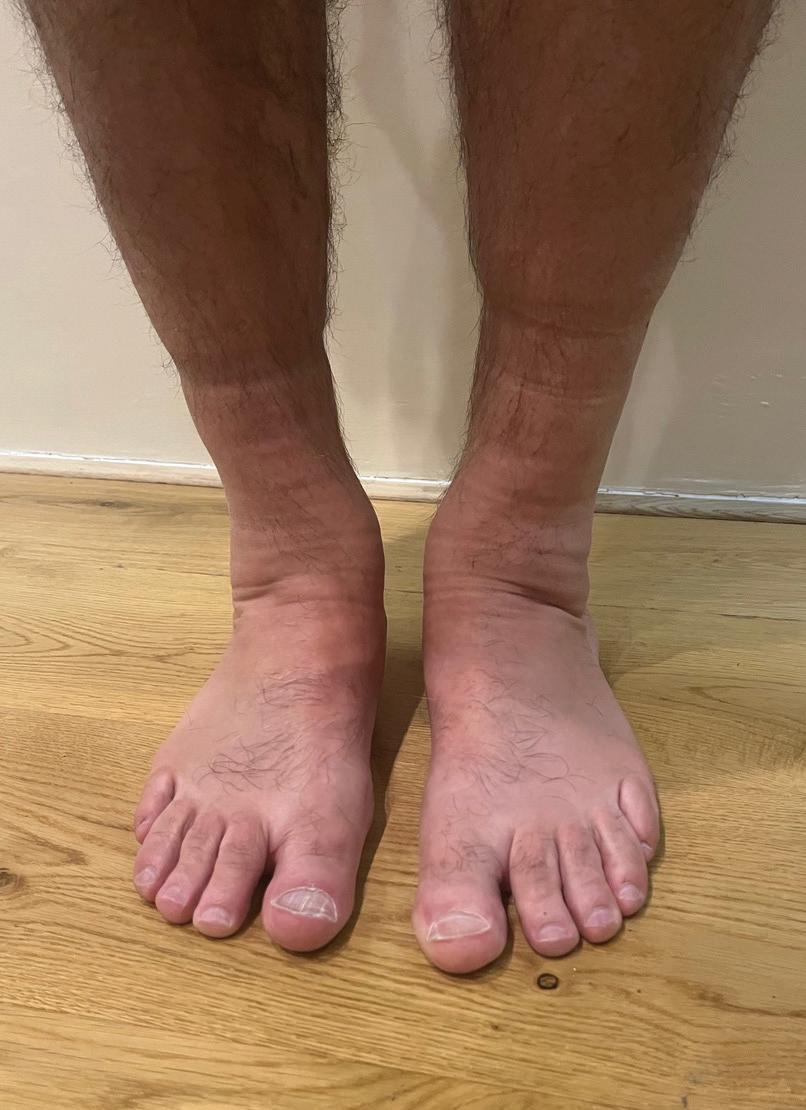
Both of the Julies knew of each other’s existence but had never been in direct contact.
The English Julie said: "The first I heard was when a student congratulated me on being awarded my PhD. That came as a surprise because I don’t have a PhD. I occasionally get emails for the other Julie and have to explain the teacher they are after is 10,000 miles away."
The Julie in Australia was originally from Kirkintilloch, Glasgow, and started her Iyengar practice in 1992, emigrating to Australia’s capital, Canberra, two years later. An academic, she was awarded her PhD, in yoga, specifically women in mid-life, in 2007.
She said: "It was a real privilege to interview women with whom the practice of Iyengar yoga was integral
to how they lived their lives. It really cemented for me how profound the effects of the practice of Iyengar yoga can be – physically, mentally, emotionally, spiritually."
She has trained under Pixie Lillas in Sydney since 1997 and is now an assessor and moderator for Iyengar Yoga Australia.
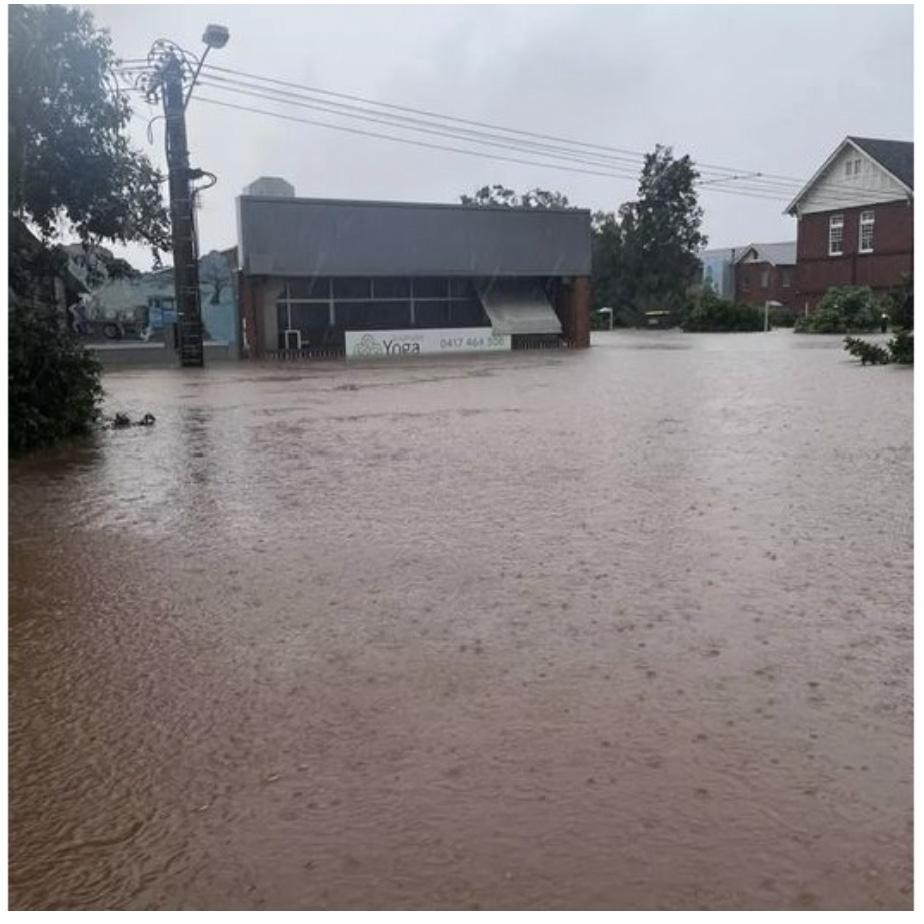
Lismore is a typical Australian town, away from the big cities, but unfortunately prone to flooding.
In 2022 the entire town was inundated to a record level, and that included Julie’s Lismore Yoga Centre. The studio is on the second floor above a Chinese restaurant and the water came up to one metre above the studio floor.
Julie said: "We were fortunate to have had lots of help with the cleaning up. The flood was
Below: How it looks again today
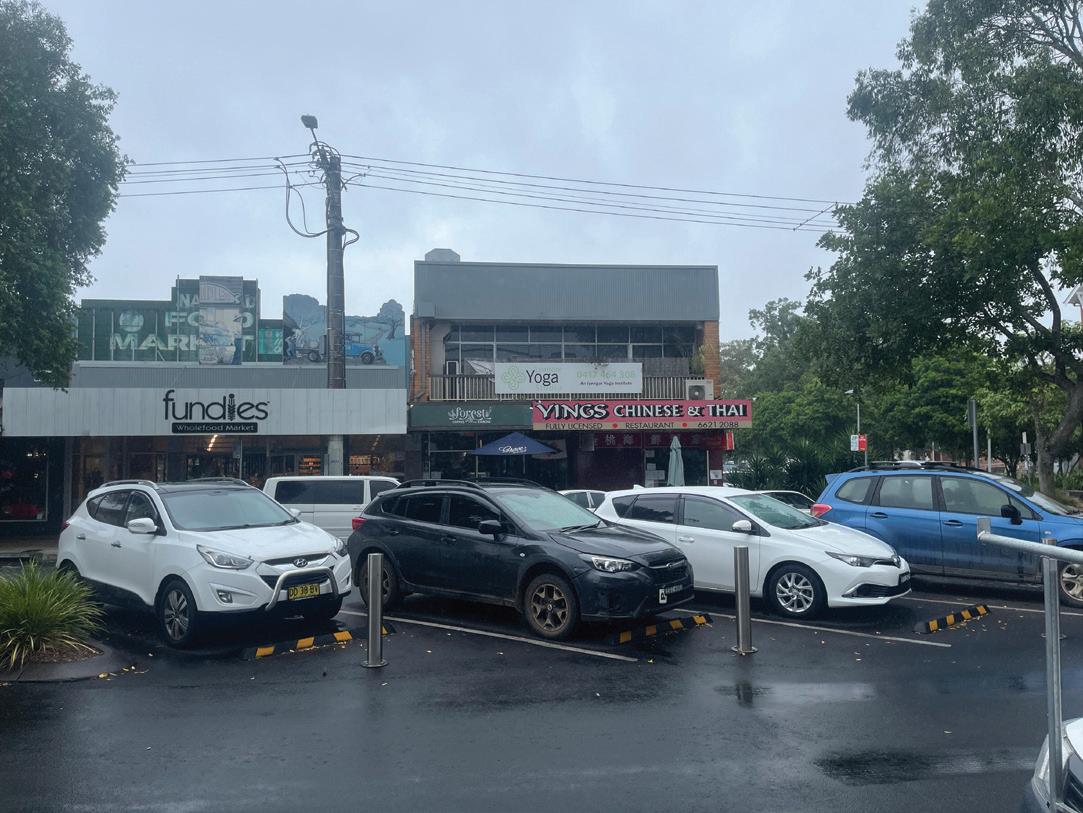
catastrophic for Lismore — a few people lost their lives and many had to be rescued by the emergency services. A GoFundMe page started by Marrickville Yoga Centre, an Iyengar school in Sydney, also raised A$2,000 (£1,000) for students who had lost their yoga equipment from the flood at home."
In the Australian class, we were doing Uttānāsana, and I heard another familiar correction. ‘Straighten the legs, Mark! Don’t bend those knees!’
Of course there were differences. For one, I had to laugh at myself for subconsciously thinking, as I walked in, that they would look the same.
But as always with Iyengar yoga, wherever you are in the world, and whatever the teacher’s name is, it’s always the same, and always a little different.
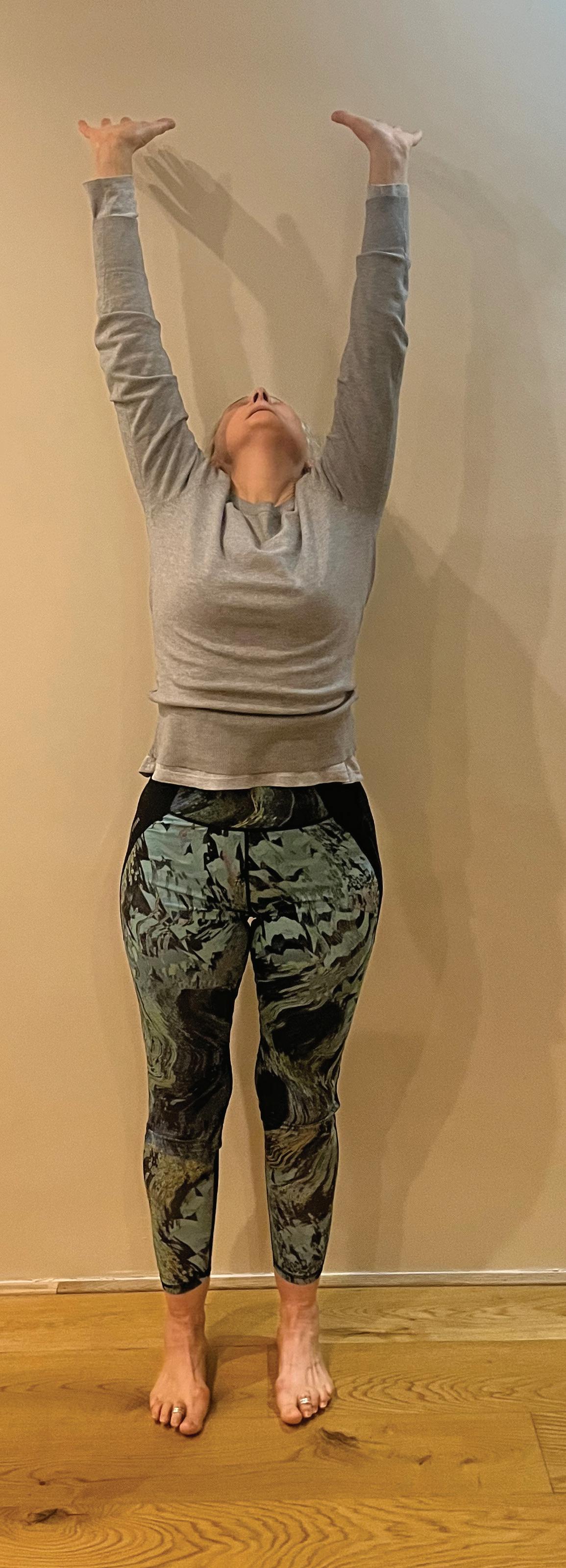
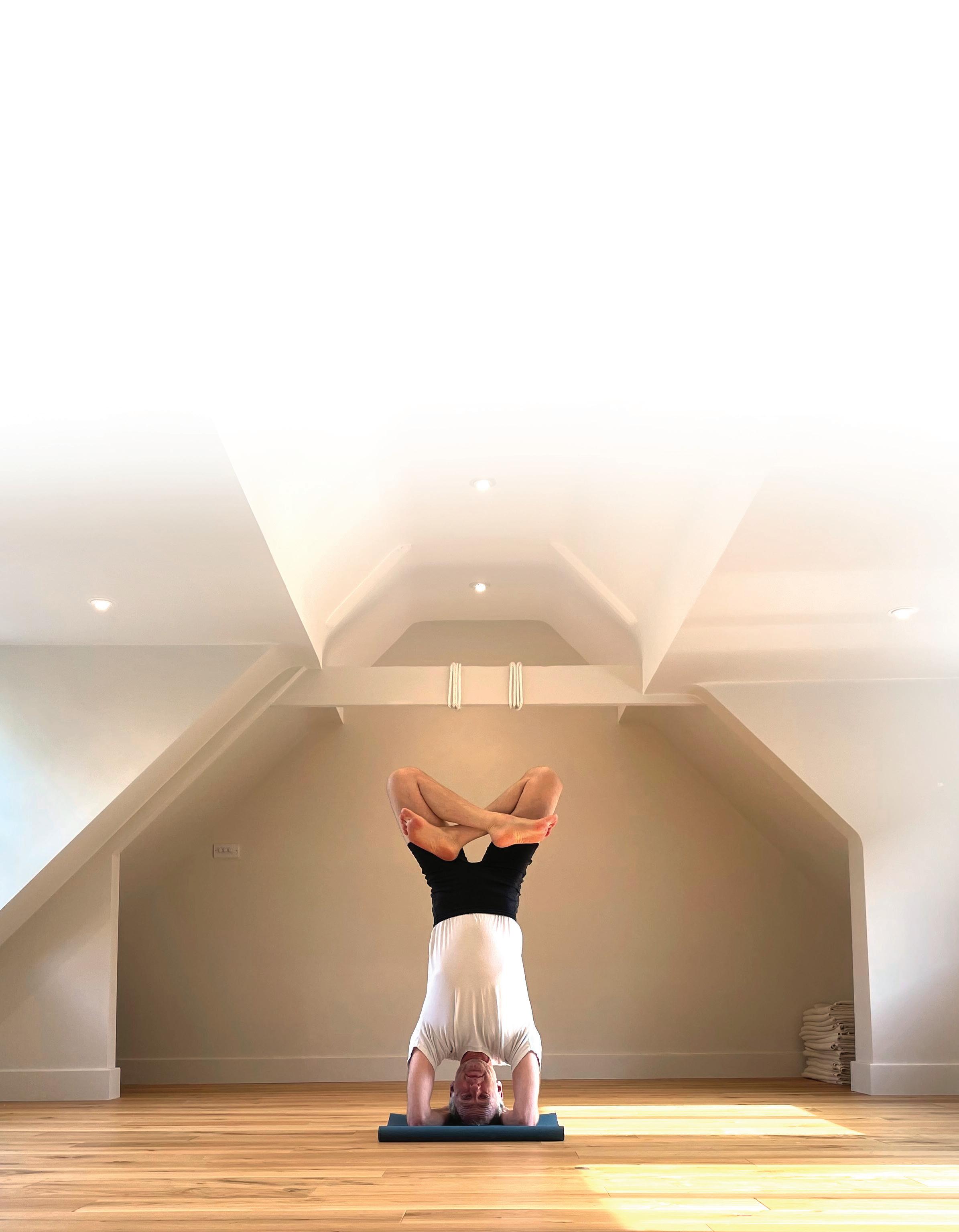
Matthew Greenfield
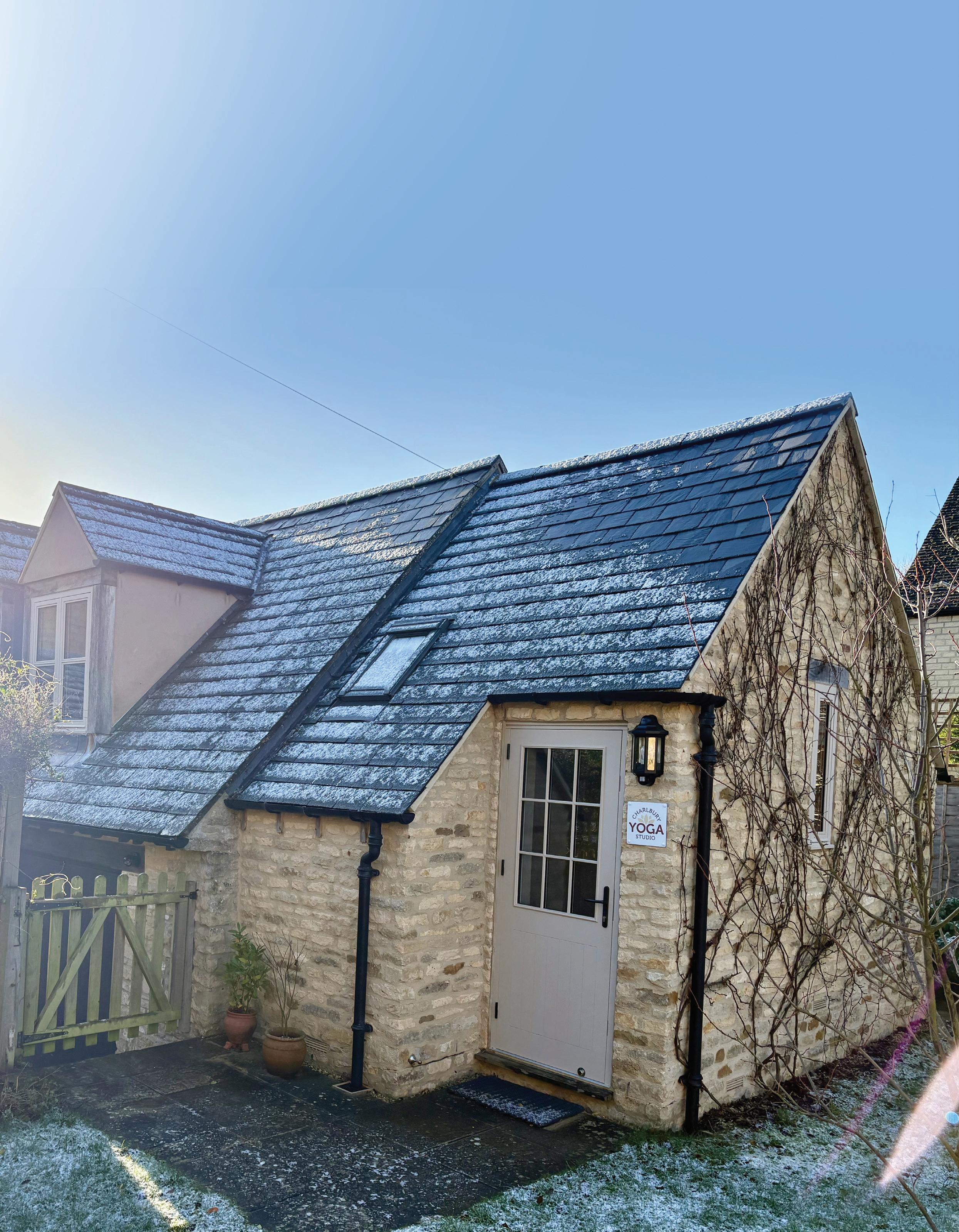
Iopened my yoga studio in 2010 in the small town of Charlbury, Oxfordshire, after teaching in church halls and an Oxford gym for several years. The room itself is above a garage and was not ideal, being relatively small with low and slanted ceilings, but I hoped I could make it work. I wanted somewhere warm, clean and with readily available yoga equipment. Being just across my garden, it would also be accessible to me at any time.
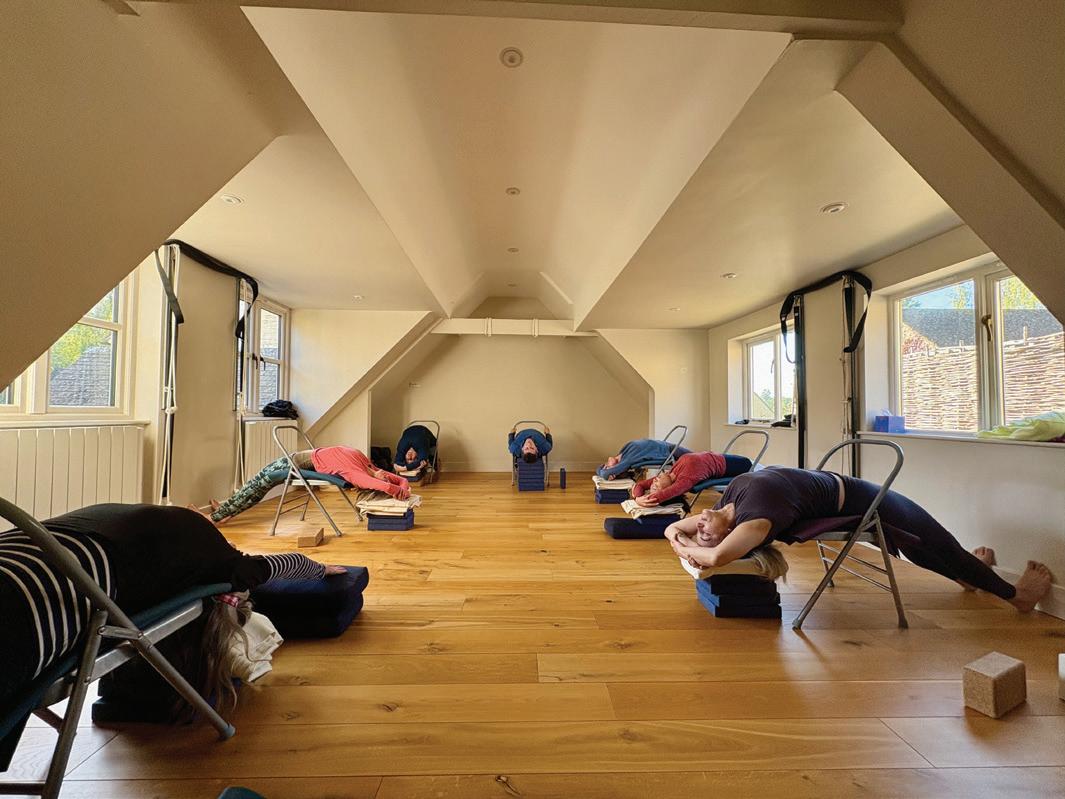
The studio had been used as an office for many years; initially I took out part of the ceiling to extend the height and laid a decent wooden floor. There was no changing area other than a small loo, or indeed anywhere separate to store shoes. The whole enterprise felt a bit of an experiment and I wasn't entirely sure it would succeed.
However, over the years I have managed to build up a good cohort of regular and loyal students (to whom I am very grateful!) and am now teaching eight classes per week at a variety of levels. I also do occasional longer workshops at weekends. For many of my students I was their first yoga teacher and it is very gratifying to see them make such good progress over the years. I have now also gone on to mentor a couple of my long-term students, which has been an interesting challenge and given me a new perspective on my own teaching.
During the Covid pandemic my numbers took an inevitable dive and I did the whole Zoom thing, which I enjoyed at first but found a struggle over time. Like most teachers, I much prefer teaching in real life rather than through a screen — you

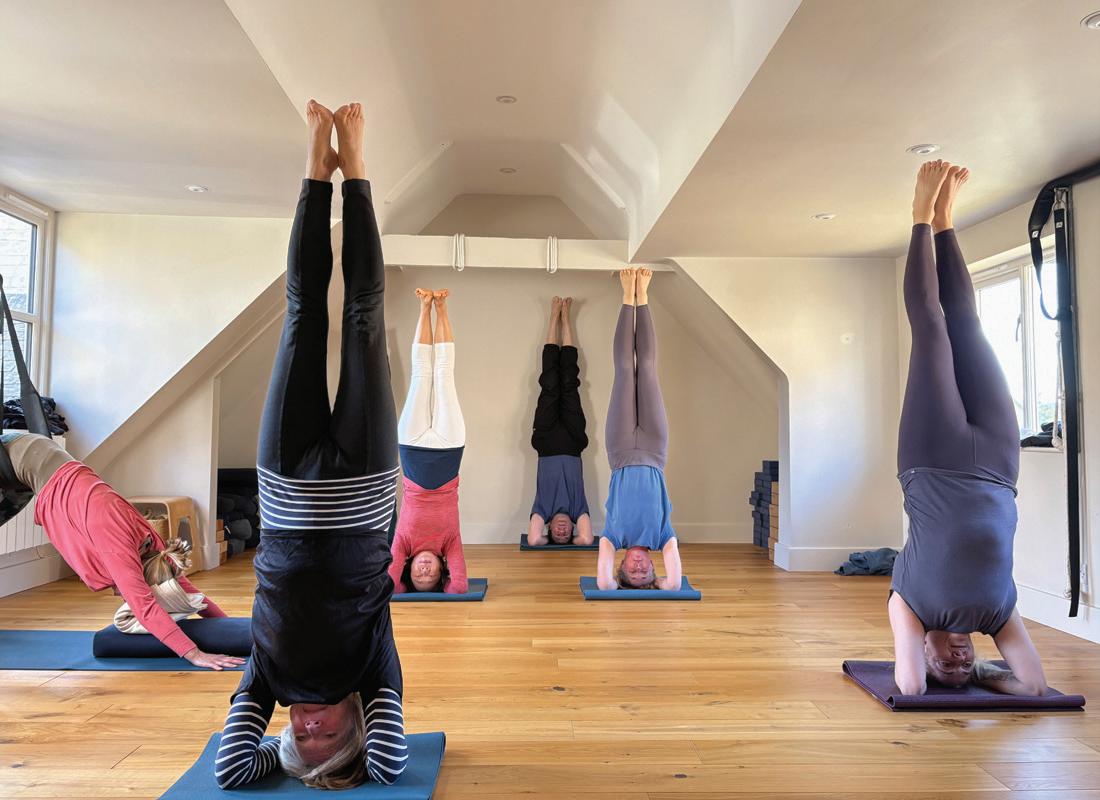
get better instant feedback and energy from a live class. However, I took the opportunity of lockdown to redesign and expand the space so there is now a dedicated cloakroom, a larger loo, more storage capacity for equipment and the room itself is slightly wider and longer. I can have up to 10 students in a class and it now feels like a proper yoga studio rather than a funny room above a garage!
So after the pandemic, Charlbury Yoga Studio came back refreshed, with better facilities. I also managed to pick up a few new students, some of whom took
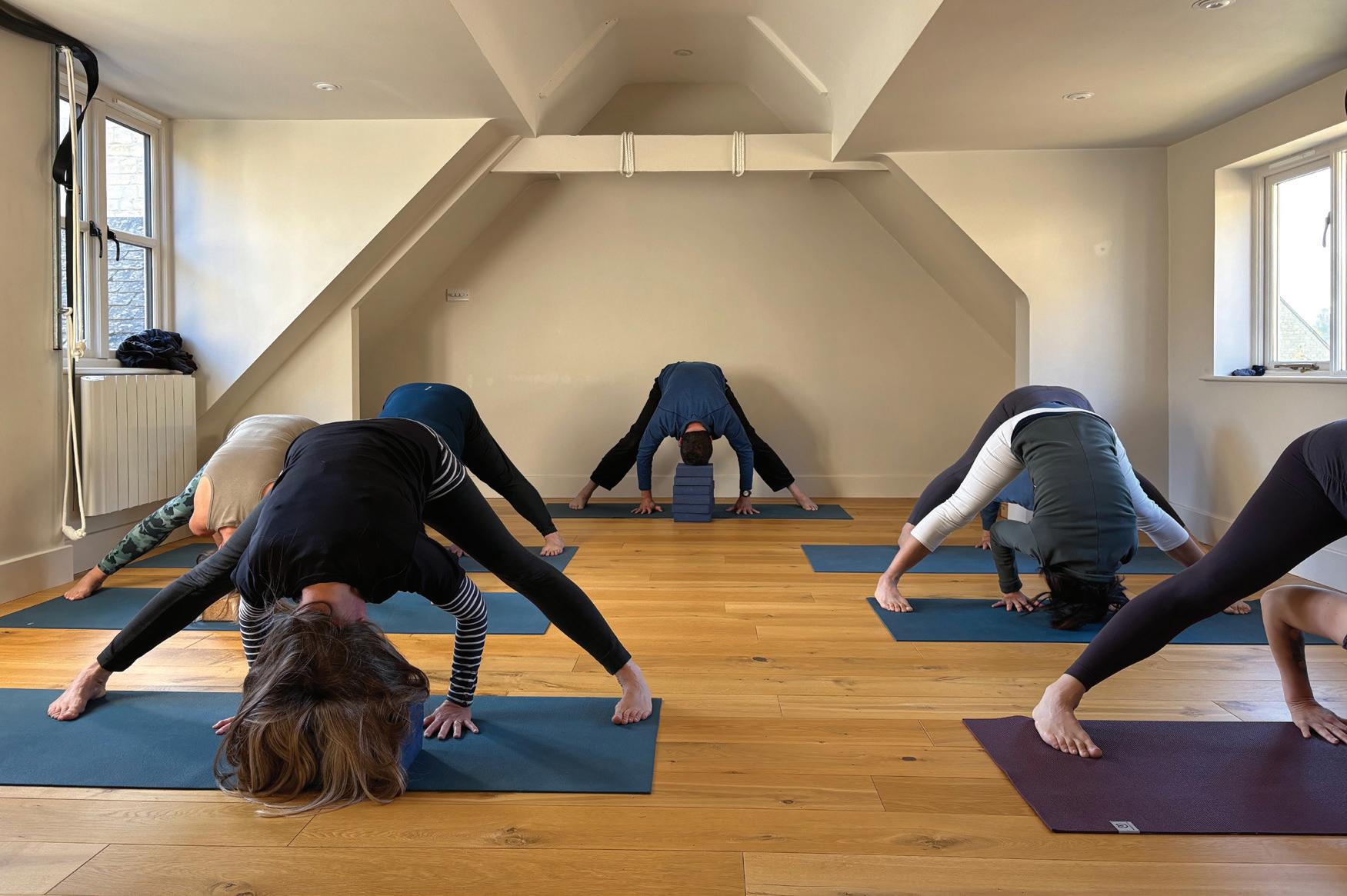
up yoga during the lockdowns. Numbers are back up to a good level with most classes full, which is gratifying.
Currently, I am the only one teaching at my studio — it does feel like an extension of my home — and keeping it fairly low-key is much more manageable with no other teachers to look after and not too much admin.
I must give a special mention to my long-time yoga teacher Judi Sweeting. She not only trained me from a not very confident Introductory teacher up to Senior Intermediate Level 2 under the old systemwhich currently makes me a Level 3 teacher - but from whom I also learned how to run an Iyengar yoga centre.
Like Judi, I encourage all my students to sign up for a term of classes, which works so much better on many levels. Not only does it mean you get good attendance throughout the year but it also means you can work with students over the long term, get to know their bodies, their strengths and
their limitations. Over time, the classes themselves start to develop a character of their own and a camaraderie develops.
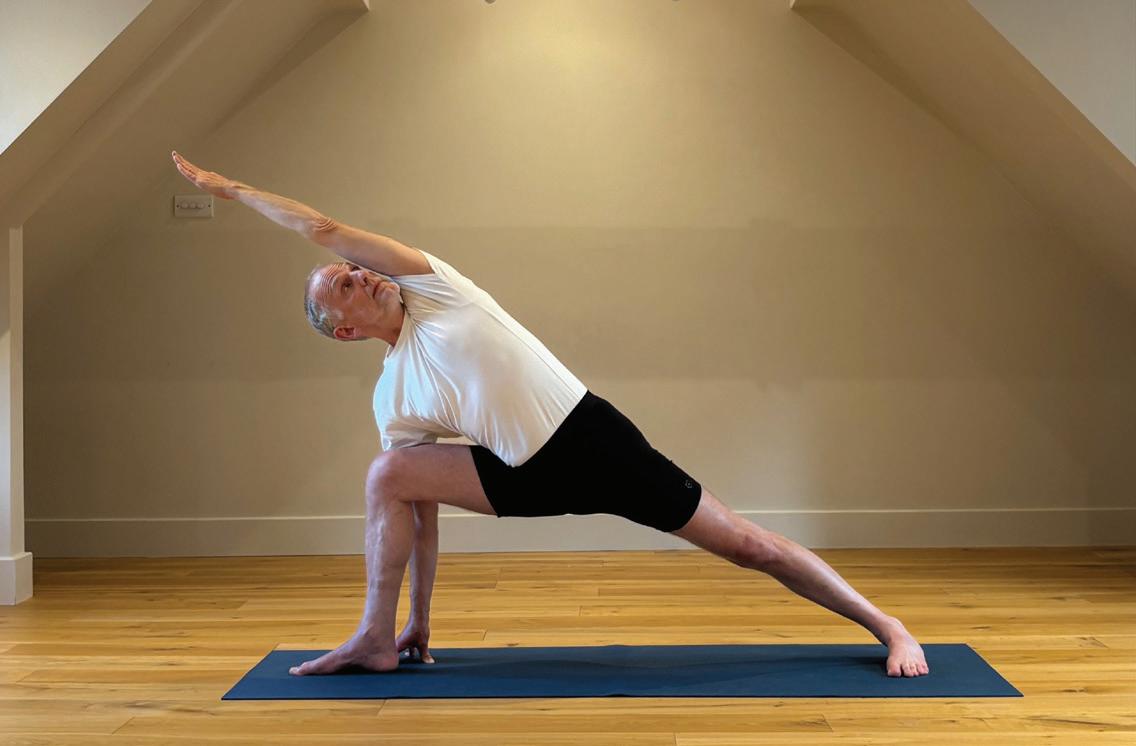
As those of you who have been to Pune know, there is a fine Iyengar tradition of making the most of the room that you have and adapting your classes for limited space. In other words, squeezing in as many students as possible! I learnt from Judi how to make the best use of the space and how to teach challenging poses like Ardha Chandrāsana or Vīrabhadrāsana 3 where you have to move without hitting the wall or indeed another student. Careful arrangement of the mats is the key.
I also want to give thanks to all the teachers who have helped me along the way: Richard Ward was my first teacher at Bristol University in the 1980s and early 90s; Silvia Prescott and Mira Mehta when I was living in London; Ros Bell, who was my first teacher trainer; Judi, of course, as well as Sheila Haswell and Jayne Orton.
I remember being told by a teacher that one of the ingredients a yogi needs in their development is time. As a young yogi, I was in a hurry to get to the final destination, whatever that may be, but have since discovered that haste can be counter-productive. It has been the same with running a studio: it can take time to build up a good number of students and allow a yoga centre (as well as one's own teaching) to evolve and mature. www.charlburyyogastudio.com info@matthewgreenfield.com
Below: Charlbury Yoga Studio on a frosty morning
Members of IYoga Glasgow and East of Scotland Iyengar Yoga are supporting IY(UK) with this year's Convention and are recruiting volunteers to help with various roles. If you would like to help please email news@iyogaglasgow.co.uk.
Convention attendees will be shown a warm welcome to Scotland, and greeted by a bagpiper from the St Francis Pipe Band as they register on Saturday
Website
Check our website for up-to-date information, including details of the venue and suggestions for places to eat and visit in Glasgow. iyengaryoga.org.uk/birjoo-mehtaconvention-2026/
Props
Please bring the props you require for practice. A suggested kit includes one mat, two belts, one blanket, two bricks, four blocks.
T-shirts
Specially designed convention T-shirts are available on mail order! These are printed on beautiful coloured organic cotton. Please choose from one of three designs, and order early to be sure it arrives before the event.
https://iyengar-yoga-uk.teemill.com/
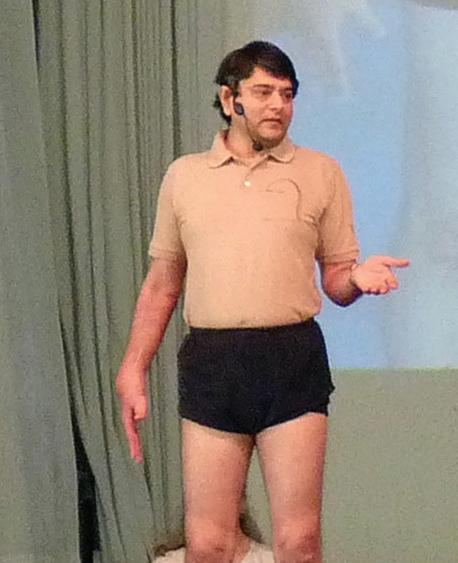
morning on 23 May. That evening, IYoga Glasgow and East of Scotland Iyengar Yoga have organised a Ceilidh at the Hilton from 8pm to 9.30pm to which all attendees are invited. A Ceilidh is a traditional Gaelic social event with music and dancing. A fantastic band called Dr Reelgood will be leading the Ceilidh and guiding attendees through some Scottish dancing. A fun and special evening is guaranteed for all!
This year’s convention is at the Glasgow Hilton. Classes are designed to include all students, and hours count towards professional development requirements for teachers. All are welcome to the AGM on Sunday afternoon, where you can meet members of the various committees and hear more about the work of IY(UK).
Saturday, 23 May
Registration 10am
Class 12-3pm
Class 5-6.30pm
Ceilidh 8-9.30pm
Sunday, 24 May
Class 9.30-12.30pm, AGM 2.30-3.30pm, Class 4-6pm
Monday, 25 May
Class 9.30-12.30pm
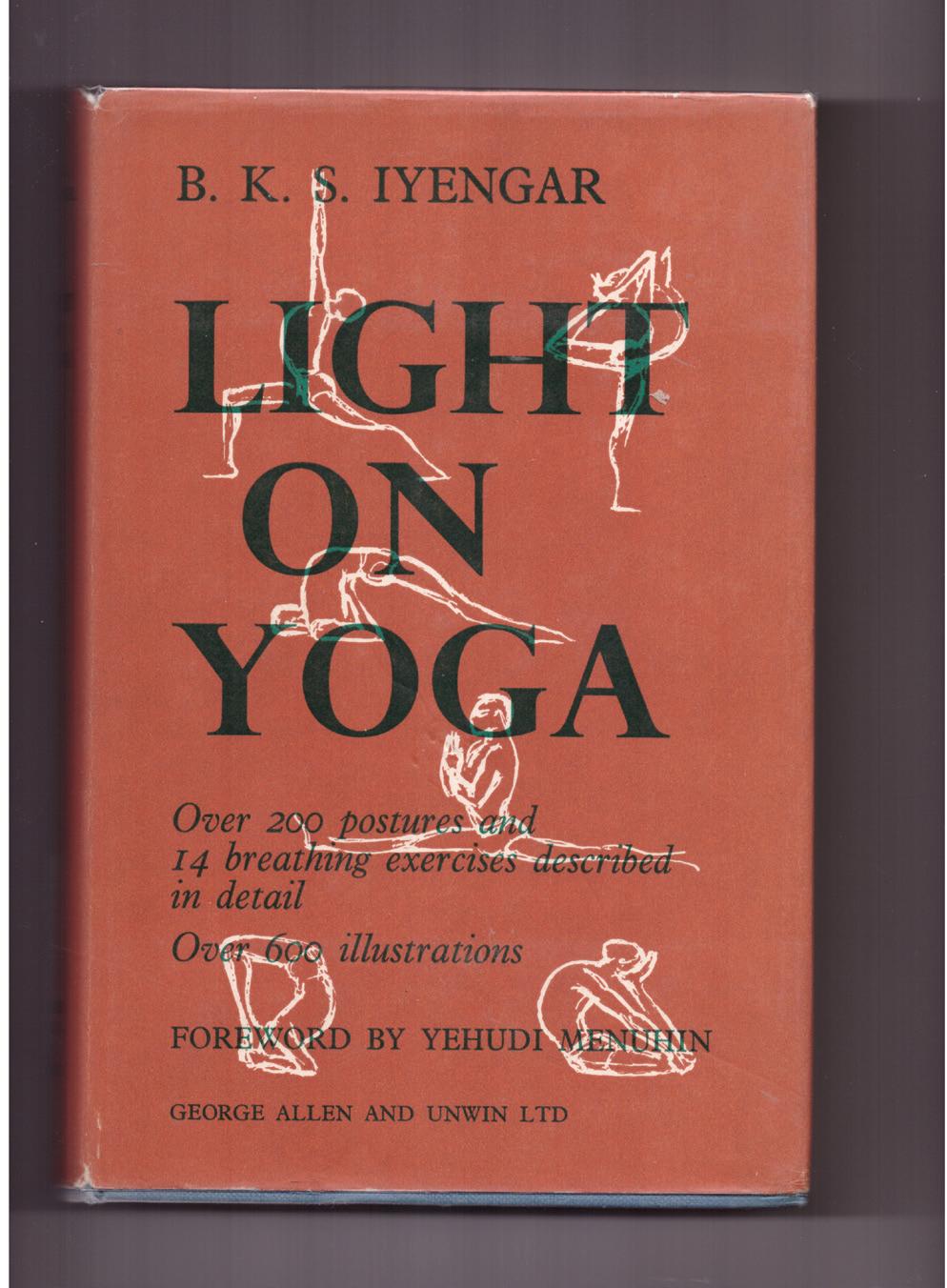
Calling members with a copy of Light on Yoga!
This year marks the 60th anniversary of the mass publication of the first edition of BKS Iyengar’s groundbreaking guide to Yogāsanas, Bandha, Kriyā and Prāņāyāma
“Friends discouraged me, admirers injected fear complexes and my guru rejected the project completely,”
Iyengar wrote in an edition published in 2015 about the experience of writing it.
We want to know about you and your copy!
Have you an interesting story to share of when, where and how you acquired it?
•Is it pristine, or have you scribbled on Post-It notes or marked it up?
•Do you use the Kindle edition, or are you a hard-copy affiliate?
•How do you use it in your practice? That could be something in depth, or as simple as the place you keep it as you work.
RIMYI teacher Raya Uma Datta, for instance, practised as a child with Iyengar in Pune. He has a signed copy given to him by the author that he told IYN he sees as “his letters to me.” He analyses it keenly — and encourages others to — to understand more deeply his own practice and Guruji’s teaching.
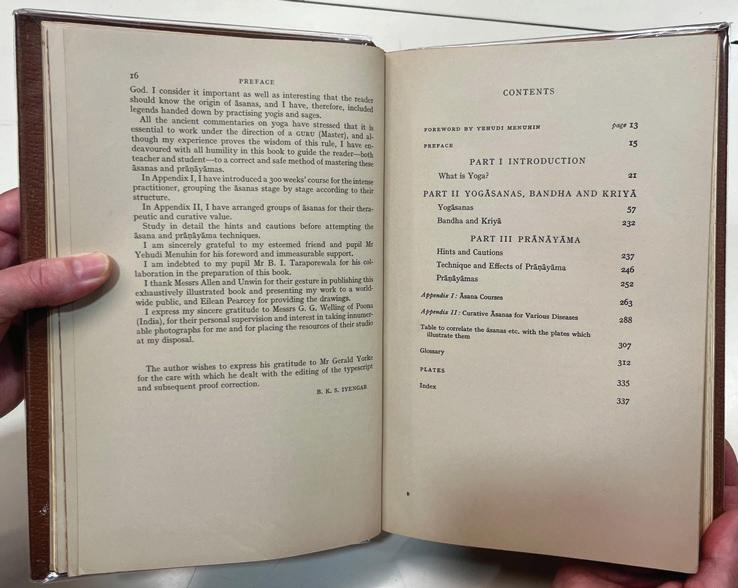
We’d love to share your best-quality photos — especially any that show the book in action. Do you use it alone or with friends? Are there passages you underlined that still resonate, and if so why?
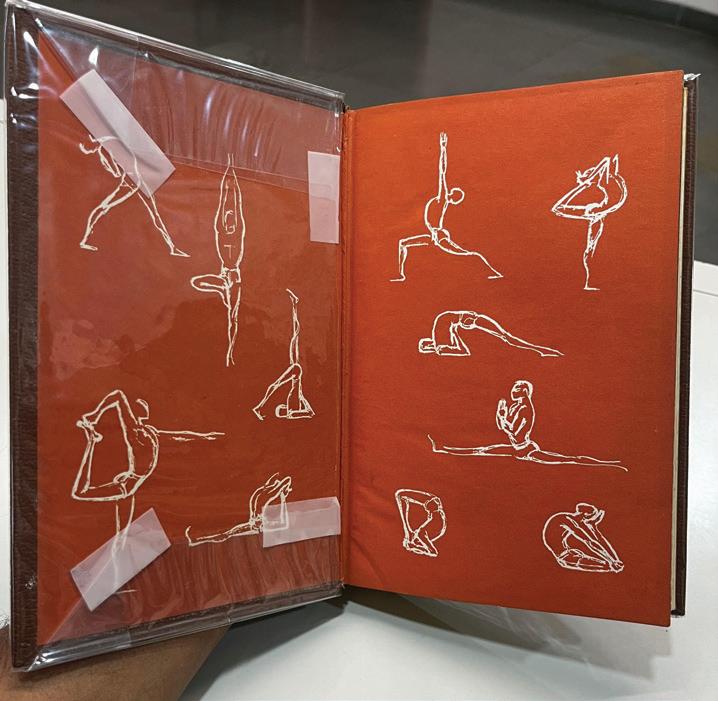
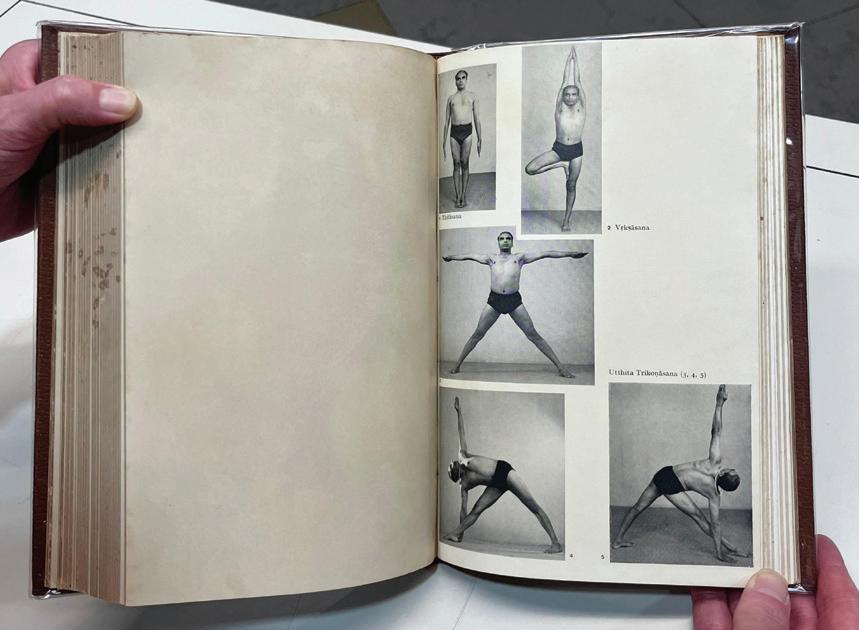
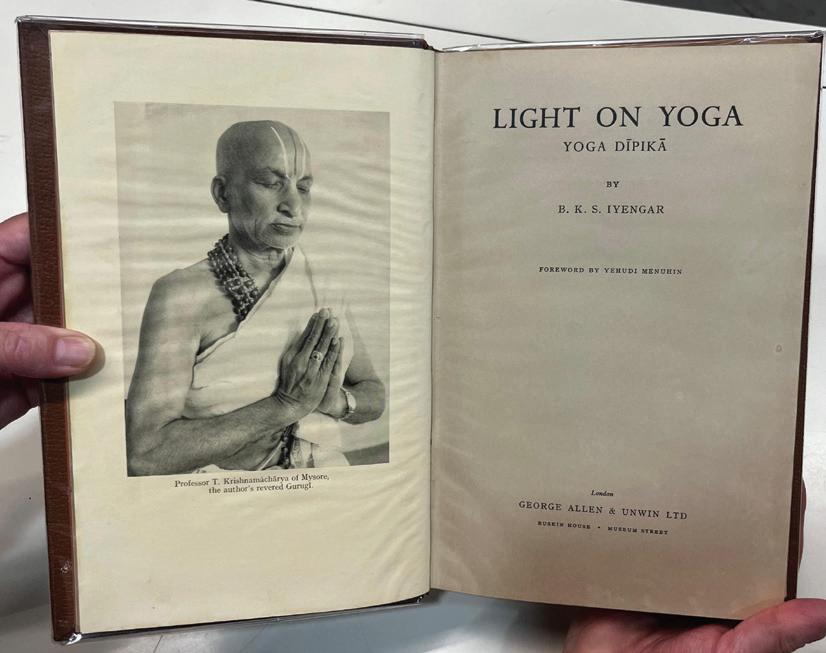
If there’s a particularly meaningful page for you, go ahead and show us what it means to you.
Please send contributions to editor@iyengaryoga.org.uk as soon as possible, but at the latest by 31 August, and we will be in touch.
9 October 1963 –11 February 2026
Tracey was a Level 2 teacher living in Tunbridge Wells, Kent. She was a committed Iyengar practitioner and teacher, travelling to Pune to study, to conventions and yoga holidays, and running weekly classes and committee work for Kent.
Tracey had a beautiful practice and her devotion to Iyengar yoga was a great support to her while
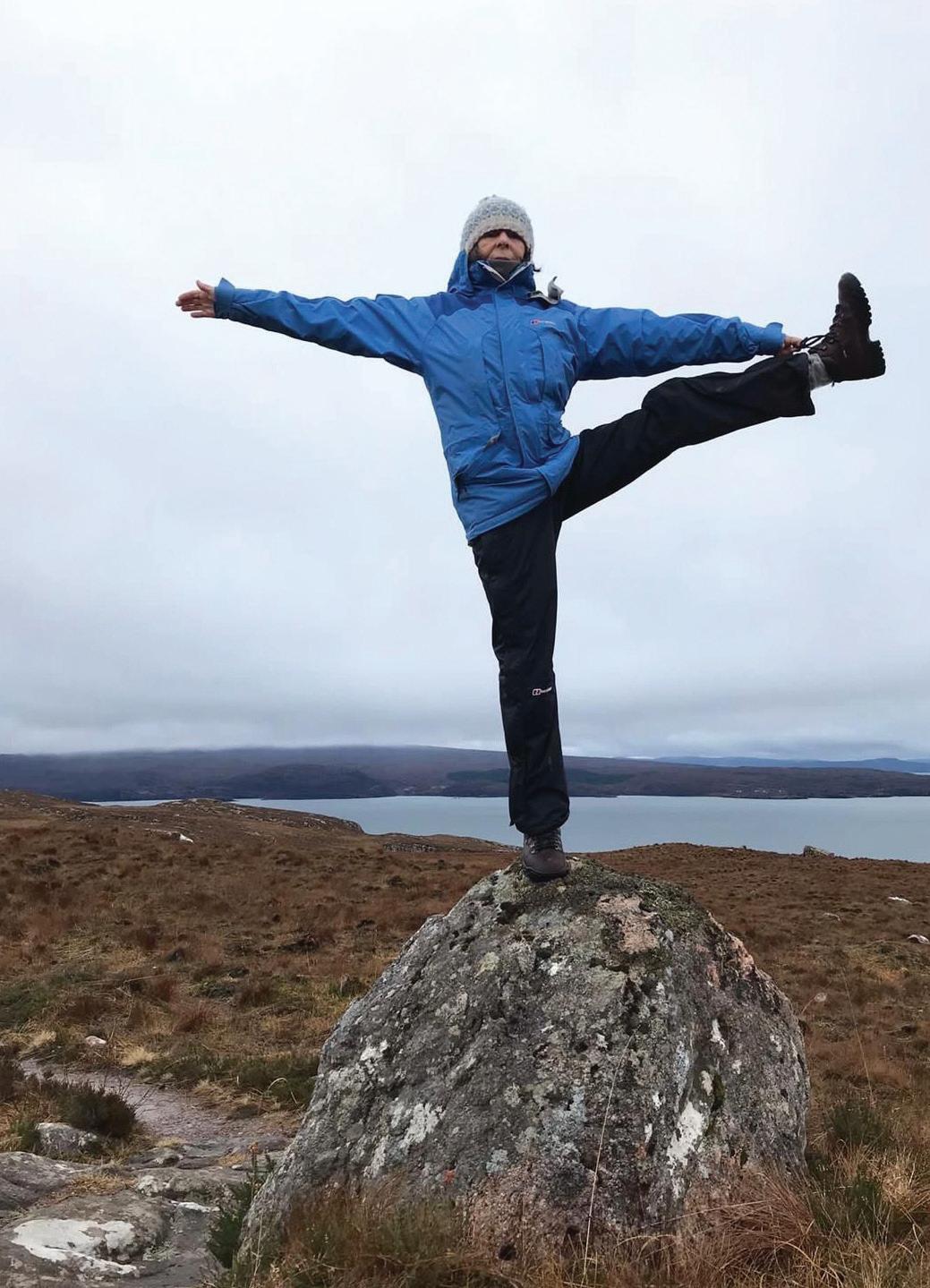
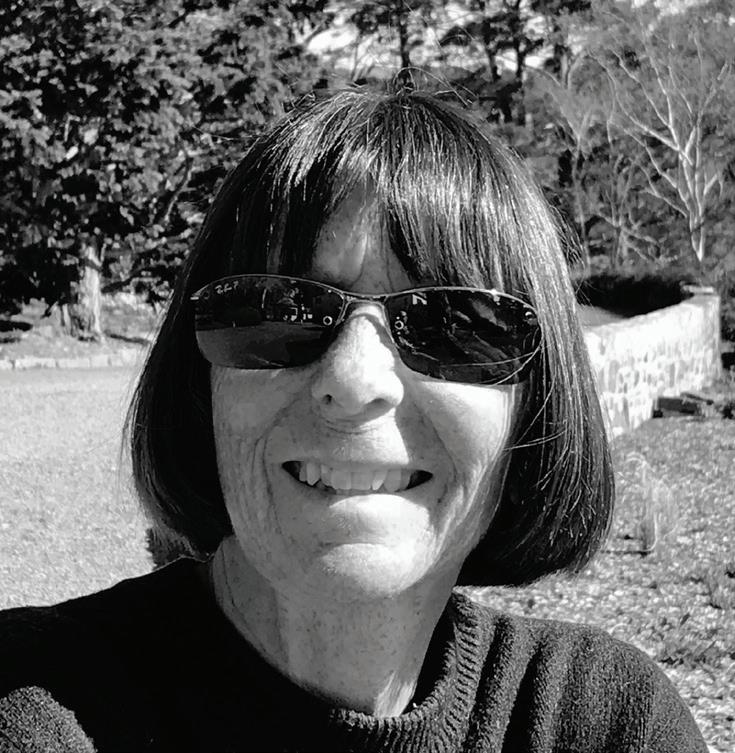
under treatment for cancer. She lived life to the full enjoying walking, climbing, skiing and yoga.
Our thoughts are with her husband and daughter at this sad time. Love and light.
Ashurst Kent students and Brenda Booth
Marianne Gautier and Noelle Riggott IY(UK) Safeguarding Leads
Q: I’m planning on teaching children this year. Should I do online Safeguarding training?
A: We love hearing about teachers making Iyengar yoga available to children and other groups who can benefit.
There are numerous online safeguarding courses. Most are usually just a couple of hours long, and some are free. Some have downloadable certificates on completion, which some organisations may request to see.
Training is often structured around specific frameworks to ensure comprehensive learning around the subject:
The 5 Rs: Recognise, Respond, Report, Record, Refer
The 3 Ps: Prevention (proactive), Protection (supportive), and Partnership (collaborative)
An online safeguarding course will help you develop an understanding of the nuances involved in teaching students who may require a safeguarding-informed approach. You should come away with an increased awareness of the proactive and reactive measures
you need to take to protect your students' health, wellbeing, and human rights, as well as fostering a safe and inclusive class culture.
Check that the course you sign up for will meet your own teaching situation. Some courses, like the NSPCC ones, focus on children; others, like the Ann Craft Trust, are about Adult Safeguarding.
Remember that you will also need to have the relevant Safeguarding checks completed before you teach children or run specific classes for adults at risk of abuse. The checking process will vary depending on whether you teach in England and Wales, Scotland, Northern Ireland or Republic of Ireland.
We’re always happy to respond to general queries like this, and of course, we encourage you to get in touch if you have any concerns, no matter how small, in your own teaching environment. Don’t let niggling worries stew. Stay safe!
Sometimes it's hard to tell whether something is a Safeguarding concern – we're always available to talk things through. Please approach us, that's what we’re here for.
Feel free to submit your queries, anonymously if you wish, although we reserve the right to edit questions featured in Iyengar Yoga News to respect confidentiality. For specific and urgent queries, please contact us directly. You can send your emails to us headed ‘IYN letters’ at safeguarding@iyengaryoga.org.uk.
Noelle Riggott Marianne Gautier
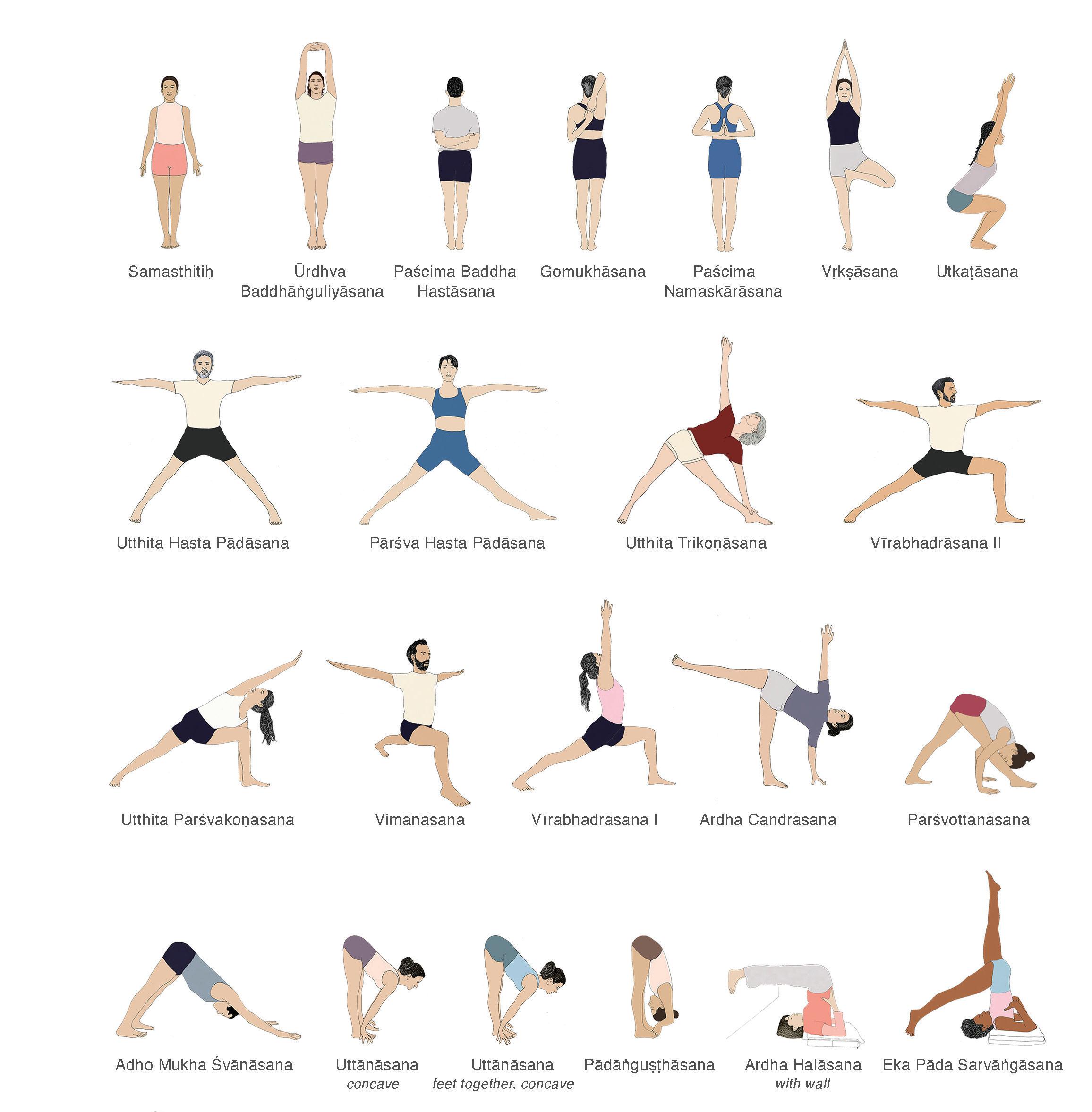
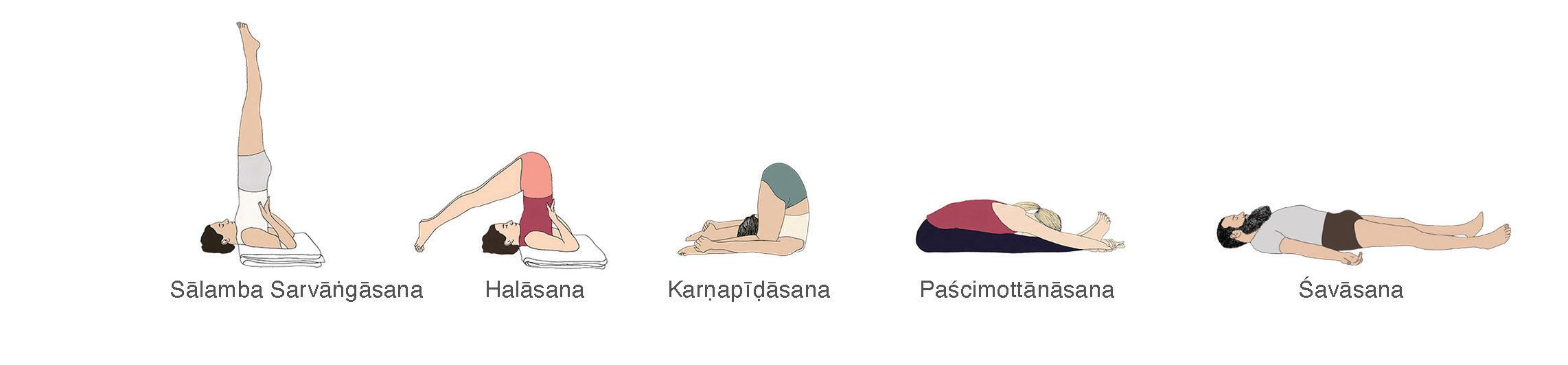
Sequence by Geeta S Iyengar
Yoga in Action Preliminary Course week 6
Illustration by Svenja Karstens
Svenja Karstens is a certified Iyengar Yoga teacher and the founder of SVEJAR, a space where she combines her love of yoga and drawing to share joy and inspiration through illustrated yoga sequences.
As a yoga student and trained illustrator, she began by noting down the sequences she practised and later translating them into drawings—an approach that continues to inform both her practice and her teaching.
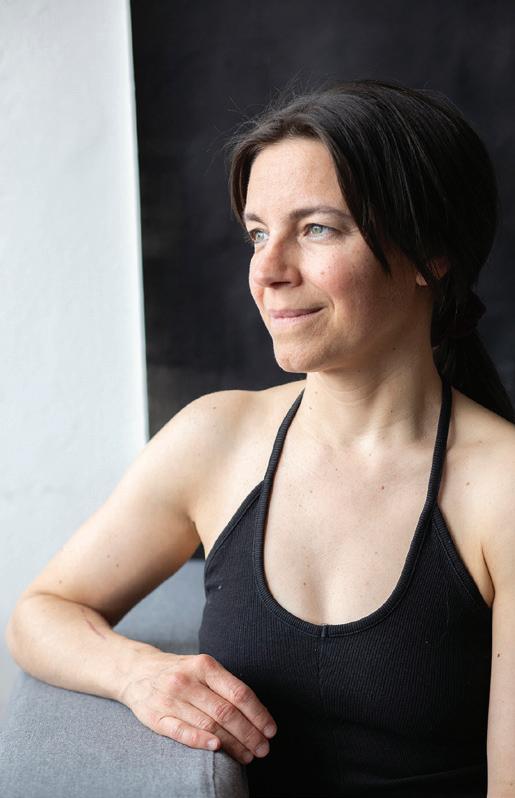
Svenja has taught independently since 2016.
Alongside her teaching, she has developed the SVEJAR Yoga
Sequencing App, a study and sequencing tool for practitioners and teachers.
It offers an illustrated āsana library and a growing collection of pre-built sequences, and allows users to create, organise and practise their own sequences.
More information about her work can be found at: https://svejar.com
In yoga, one quality consistently stands out as essential: courage. To speak up, ask questions, enter challenging poses, and guide ourselves through discomfort into growth. Geeta Iyengar often talked about the “fear complex” – deep, unconscious patterns of physical contraction, mental anxiety and defensiveness rooted in insecurity. She taught that through steady practice – especially actions that open the chest, stabilise the breath and build inner steadiness – yoga gradually dissolves fear and replaces it with clarity, courage, and quiet confidence.
The question we must ask ourselves is: are we doing enough to challenge this fear complex in ourselves?
Courage in yoga is not only physical. It is emotional and relational. When challenges arise – in our practice, teaching or communities – do we meet them with an open heart? Closing down creates barriers. An open-hearted response, even when uncomfortable, keeps dialogue alive and fosters growth. Yoga asks us not to harden around difficulty, but to stay receptive, steady and alert. It asks for courage.
Last year at Yogānuśāsanam, Abhijata Iyengar reminded teachers to stop presenting yoga as dangerous with phrases like, “If you do that pose this way, you might hurt yourself.” While safety is important, such warnings can plant fear rather than curiosity. Teachers have a responsibility to present yoga positively, trusting in the quality of Iyengar yoga training and practice. In doing so, we help students replace anxiety with inquiry, and hesitation with intelligent effort.
For teachers, taking classes in multipurpose spaces adds complexity – cold village halls with equipment
stored in the boot of a car, or bustling gyms where the environment is unpredictable. Yet these spaces allow us to reach people who might never otherwise encounter yoga. Courage here means adapting thoughtfully and maintaining the integrity of the method. It’s not the insurance policy, forms, or liability clauses that protect us – it’s our courage. Courage to fully embrace what we know, trust the quality and depth of our training, and carry that into all circumstances.
We are all changing. Through sustained practice, our saṁskāras — imprints from the past — inevitably surface. This can be uncomfortable. Old patterns of behaviour or self-doubt may appear. Perhaps this is also why we are so passionate: The practice does not let us remain superficial. It asks for honesty and the courage to transform.
Courage in yoga is not the absence of caution; it is the balance between safety and exploration, discipline and creativity, reassurance and challenge. It allows a student to kick up into Adho Mukha Vṛkṣāsana and a teacher to respond to the unexpected with clarity and steadiness. More, it allows us to remain open-hearted in the face of difficulty, trusting that meaningful growth often lies beyond the edge of our comfort zone.
As a community of practitioners, we are fortunate. Over time we develop experience, discernment and resilience. Let’s continue to cultivate courage together: in poses, conversations, relationships and our willingness to meet change with openness rather than retreat.
Iam writing this report as the Deputy Secretary to Rachel Overton who is on study leave preparing for her Level 2 assessment. Good luck, Rachel!
We have welcomed a number of new committee members. It is always appreciated when people step forward to help run IY(UK) business by joining as a representative on the Executive Committee or on our committees.
• Uday Bhosale, Individual Member Representative (EX position) and co-opted member of Therapy Committee
• Eileen Cameron as a second representative of Assessments and Training Committee (EX position) and as a co-opted member of Equity Committee
• Helen Clay, Sheffield Member Group rep (EX position) and member of the IYDF Committee
• Lucy Dalley as co-opted member of Equity Committee
• Toni Geyve, East of Scotland Member Group rep (EX position)
• Jill Johnson, Chair of Assessments and Training Committee (Board and EX position)
• Rachel Lovegrove, Chair of Therapy Committee (Board and EX position)
• Jo Lovell, elected member for Therapy Committee
• Catherine Wilkinson as the IY(UK) Governance and Support Manager
• Kate Peters as IY(UK) Events Manager
• Therapy Committee: Sheila Haswell, Elaine Martin
• Assessments and Training Committee: Kirsten Agar, Trish James, Rachel Lovegrove and Katie Rutherford
• Sue Cresswell as East of Scotland Member Group representative
We have a number of committee vacancies for which you as IY(UK) members are welcome to apply. With the exception of Assessments & Training, Ethics and Appeals and Therapy Committees, you don’t have to be a teacher to be able to join. What we do ask for is a commitment to the Iyengar yoga method, and that you have relevant experience in the focus and purpose of the committee for which you wish to apply.
The following committees have vacancies:
• Archives: committee members and volunteers to upload material onto the website
• Children, Young Adults & Families: committee members
• Events: committee members
• Equity: committee members
• Research: committee members
The financial statements for the year January 2025 to December 2025 will be presented to the IY(UK) Executive Committee and Board for formal approval in May 2026 in readiness to share and present to all members at the AGM.
It has been a challenging year financially. The organisation has generated a significant deficit in the year and we are currently working on actions to address and correct the deficit for the next financial year. We have incurred incremental costs in 2025 on some necessary but unexpected investigative costs and also some upgrade work to our website and marketing initiatives. The latter allows us to grow our
membership base (and subscription income) and ensures we have the right tools to efficiently manage the organisation in future years.
Although we had sufficient reserves at the end of the last financial year to cover the deficit generated this year we have a number of actions and initiatives in place to improve the financial stability in 2026 and beyond. The 2026 Budget approved by the Executive Committee and Board shows a small surplus for the year. A vital part of our 2026 initiatives is promoting and increasing our membership base in line with our organisation’s objectives as well as aligning and reducing our cost base.
The IY (UK) membership year is April to March, the fees for 2026/27 will be as follows:
All IY(UK) members can see information about Mentoring for Level 11 and how to register as a trainee teacher. See the IY(UK) website: Members’ Dashboard: Mentoring section.
Teachers and registered trainees can access the Mentoring Resources page2. This page is the key source of information about mentoring at all levels.
Here you will find up-to-date paperwork, including the RIMYI Certification & Assessment Guidelines, an electronic version of the Mentoring Manual, assessment application paperwork etc. Paper copies of the Manual may be purchased, if required (details on the Mentoring Resources page).
Chloe-Ann Bradman
Jill Elstob
Andrea Kerr
Mary Mackay-James
Moving towards Level 2 and Level 3 Teaching
Teachers are reminded that if they wish to start preparing for the next level of assessment, they should formalise a relationship with a suitably qualified mentor and register that intention with IY(UK), via the Registration as L2 or L3 Mentee3 form on the website, at least a year before they would hope to take assessment – see Section 3.3 of the Mentoring Manual
Link 1: Mentoring for Level 1
https://iyengaryoga.org.uk/mentoring-for-level-1/
Link 2: Mentoring Resources https://iyengaryoga.org.uk/members-dashboard/ mentoring-resources/
Anna Mollison
Deborah Swift
Helen Thomas
Philip Wilton
On this new page7, you will find information and booking links for workshops and training related to mentoring and assessment, including: MAT meeting: Friday 27 March, 4-5 pm, via Zoom Mentor and Assessor Training (MAT) meetings are arranged each year. Attendance is free and is a requirement for all mentors and assessors. Meetings are one-hour zoom sessions. The topic of the meeting
Link 3: Registration as L2 or L3 Mentee https://iyengaryoga.org.uk/registration-as-l2-or-l3mentee/
Renewals for the 2026 teacher membership should be well under way by the time this issue of the magazine reaches you.
Following the approach taken during the 2025 renewal process, Andy Tait, our Membership Manager, has contacted two specific groups of teachers: those who had previously expressed an interest in reinstating their membership, and those who did not renew during the most recent cycle. It is heartening to report that a good number of lapsed teachers have responded positively and are considering re-joining, an encouraging sign for the future health of our organisation.
As highlighted in the Treasurer’s report, Iyengar Yoga (UK) continues to experience significant financial pressures. Membership numbers declined during and after the Covid years and, while they are beginning to rise again, growth remains modest against a backdrop of steadily increasing costs. Most members choose to join Member Groups, and these are truly the lifeblood of the organisation; without them, IY(UK) simply could not exist. There is an opportunity to join IY(UK) as an individual member, however, joining your local Member Group connects you to the local Iyengar community and allows you to stay in touch with local events, gives you discounts on events and some member groups run occasional free classes for their members.
To our teacher members: there are now some excellent new resources available to help you communicate the benefits of IY(UK) membership to your students. These can be downloaded from
the Resource Hub at the bottom of the Teachers’ Dashboard on the website. We would love to see many more non-teaching practitioners join our community. If each teacher were able to encourage just three students to become members of their local Iyengar Member Group, our membership could double - a transformation that would make an enormous difference.
The income generated through membership enables IY(UK) to operate with a small number of paid staff supported by a dedicated team of volunteers. Membership funds our conventions, supports the production of this magazine, and creates opportunities for practitioners to deepen their knowledge, strengthen their practice, and feel connected within a supportive national community. Part of the membership income supports the Iyengar Yoga Development Fund, which allows classes to be run for refugees, asylum seekers, women’s refuges, prisons, helping in drug rehabilitation, and any other projects where Iyengar yoga can make a difference. People who could not normally access classes are given the opportunity through this fund, something which was dear to Mr Iyengar’s heart.
I am including an update from our Marketing and Communications Manager Kelly Brooks, outlining the work being done to strengthen connection and visibility across the organisation. As an organisation, we have invested in improving our marketing and communications to attract new students as well as to support our current community of teachers and students.
Over recent months, the focus of marketing and communications at Iyengar Yoga (UK) has been on strengthening connection – helping members, teachers and students feel more informed, more supported, and more clearly part of a national community.
A key priority has been developing our digital presence so that it better reflects and serves our community. Since July 2025, our Instagram following has grown from 18,000 to 25,000, with increased reach and engagement. This has allowed us to share Iyengar yoga more widely and consistently, while remaining rooted in the depth of the method.
Our communications have been shaped around monthly themes, with teachers contributing and engaging. Alongside this, we have promoted events and learning opportunities, and shared glimpses of practice that reflect the richness of Iyengar yoga, helping members and students feel part of a wider whole.
National Iyengar Yoga Day was celebrated across the UK and Ireland, with more than 40 classes taking place in a variety of communities. Teachers, centres and Member Groups shared classes, photos and reflections, reinforcing the value of coming together nationally and celebrating our shared lineage.
We have also been developing clearer, more accessible resources to support teachers and Member Groups, particularly around encouraging non-teaching membership. New marketing packs, posters featuring QR codes to access websites, and shareable digital assets have been created to make it easier to talk to students about membership and its benefits. Early feedback suggests that when teachers take a moment to explain what membership offers,
students respond positively and feel encouraged to engage more deeply with Iyengar yoga beyond their weekly class.
Looking ahead, planned work includes continued development of the IY(UK) website and membership journeys, more consistent promotion of events, and increased use of member stories –both in text and video - reflecting the diversity and richness of our community.
The longer-term vision is simple but vital: to ensure that IY(UK) communications clearly express who we are, what we stand for and why this community matters, supporting the sustainability and relevance of the organisation for future generations of teachers and students.
As teachers, you are at the heart of IY(UK). Your voice, your example and your connection with students play a vital role in sustaining and growing our community. We warmly encourage you to take a moment in your classes to speak about IY(UK) membership and what it offers, not only in practical terms, but also as a way of belonging to something larger than a single class or centre.
Please explore the resources available in the Teachers’ Dashboard and make use of the new posters, digital assets and membership information. A simple conversation can make a real difference. By inviting students to join their local Member Group, you are helping strengthen the foundations of Iyengar Yoga for the future, ensuring that the depth of the teaching, the support of the community and the integrity of the method continue to flourish for generations to come.
Group Teachers
Avon Iyengar Yoga (AIY) 60 (+1) 41 (+6)
Leeds Bradford Iyengar Yoga (LBIY) 25 36 (+4)
Cambridge Iyengar Yoga (CIY) 34 (+1) 22 (+1)
Dorset and Hampshire Iyengar Yoga (DHIY) 49 61 (+5)
East of Scotland
Iyengar Yoga (ESIY) 56 108 (+30)
Iyengar Yoga
Ireland (IYI) 84 82
Iyengar Yoga
Sussex (IYS) 33 (+1) 28 (+4)
iYoga Glasgow 35 69 (+31)
Kent Iyengar Yoga (KIY) 53 30 (+4)
and District Iyengar Yoga (MDIY)
Midland Counties Iyengar Yoga (MCIY) 23 (+1)
North East England Iyengar Yoga (NEEIY) 64 (+3) 95 (+25)
North East London Iyengar Yoga (NELIY) 61 42 (+5)
Oxford and Region Iyengar Yoga (ORIY) 46 (+1) 38 (+3)
Sheffield and District Iyengar Yoga (SADIY) 20 28 (+3)
South West Iyengar Yoga (SWIY) 29 (+2) 33 (-2)
South West London and Surrey Iyengar Yoga (SWLSIY) 52 (-1) 29 (+1)
Avon Iyengar Yoga (AIY)
Sarah Constantinides aiy@iyengaryoga.org.uk www.avoniyengar.org
Cambridge Iyengar Yoga (CIY)
Sasha Perryman sashaperryman@yahoo.co.uk www.cambridgeyoga.co.uk
Dorset & Hampshire Iyengar Yoga (DHIY)
Karen Legge admin@dhiy.org www.dhiy.org
East of Scotland Iyengar Yoga (ESIY)
Jo Mitchell esiyoga@outlook.com www.esiy.co.uk
Iyengar Yoga Ireland (IYI)
Mary Duane info@iyengaryogaireland.ie www.iyengaryogaireland.ie
Iyengar Yoga Sussex (IYS)
Randall Evans admin@iyengaryogasussex.org.uk www.iyengaryogasussex.org.uk
iYoga Glasgow
Michael Wright membership@iyogaglasgow.co.uk www.iyogaglasgow.co.uk
Kent Iyengar Yoga (KIY)
Jane Collins
admin@kentiyengaryoga.co.uk www.kentiyengaryoga.co.uk
Leeds Bradford Iyengar Yoga (LBIY)
Diane Laybourn membership@lbiyoga.uk www.lbiyoga.uk


Liverpool Iyengar Yoga (LIY)
Elaine Keating
liverpooliyengaryoga@gmail.com www.yoga-studio.co.uk
Manchester & District Iyengar Yoga (MDIY)
Jayne Wilson membership@mdiiy.org.uk. www.manchesteriyengaryoga.org.uk
Midland Counties Iyengar Yoga (MCIY)
Annie Beatty info@mciy.org.uk www.mciy.org.uk
North East England Iyengar Yoga (NEEIY)
Aimi Dunstan info@iyengaryoganortheast.com www.iyengaryoganortheast.com
North East London Iyengar Yoga (NELIY) membership@neliy.org.uk www.facebook.com/NELIYI
Oxford & Region Iyengar Yoga (ORIY) Julia Hardy maryfitzpatrick10@icloud.com www.oriy.org.uk
Sheffield & District Iyengar Yoga (SADIY) Lorraine Bonete lorraine.bonete@gmail.com www.yogasheffield.org
South West Iyengar Yoga (SWIY) Hannah Benham www.swiyengaryoga.org.uk
South West London & Surrey (SWLSIY)
Elaine Morrison swlsiyengaryoga@gmail.com www.swlsiy.org.uk
To advertise your Centre or Studio here, contact office@iyengaryoga.org.uk

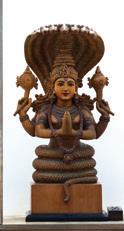
Charlbury Yoga Studio
Matthew Greenfield info@matthewgreenfield.com www.charlburyyogastudio.com
Edinburgh Iyengar Yoga Centre
Jane Walker edinburghiyengaryoga.cbs@gmail.com 0131 229 6000 www.yoga-edinburgh.com
Garway Iyengar Yoga Studio.
Sheila Green sheilagreenyoga@hotmail.co.uk www.herefordshireyoga.co.uk
Hanuman Iyengar Yoga Studio
Sarah Delfas sarah@hanumanyoga.co.uk 07901 833585 www.hanumanyogastudio.co.uk
Hereford Yoga Centre
Jenny-May While info@herefordyoga.co.uk 01432 353324 www.herefordyoga.co.uk
Iyengar Yoga Birmingham
Jayne Orton info@iyengaryoga.uk.com www.iyengaryoga.uk.com
Iyengar Yoga Centre for Essex
Susan Long info@iyce.com www iyce.com
Iyengar Yoga London Maida Vale iyengaryogalondon.co.uk 020 7624 3080 office@iyengaryogalondon.co.uk
Iyengar Yoga Shala - High Wycombe
Sheila Haswell sheilahaswell.yoga@gmail.com www.iyengar-yoga-shala.co.uk
Iyengar Yoga Studio East Finchley
Wendy Sykes, 020 8815 1918 www.theiyengaryogastudio.co.uk
Iyengar Yoga Studio West Bridgford
Isabel Jones Fielding & Geoffrey Fielding www.iyogawestbridgford.uk 0115 9749975





Just yoga
Melanie Palmer mel@justyoga.co.uk www.justyoga.co.uk
Long Wittenham Yoga Centre Evelyn Crosskey longwittenhamyogacentre@gmail.com www.longwittenhamyogacentre.com
Maidstone Yoga Centre Lin Craddock www.iyengar-yoga.co.uk 01622 685864
Putney Iyengar Yoga Centre Julie Hodges julieyogaputney@gmail.com https://putneyyogacentre.co.uk
Sheffield Iyengar Yoga Centre info@sheffieldyogacentre.co.uk 07944 169238 www.sheffieldyogacentre.co.uk
The Studio at Albert Mews Karen Hamer karenhameryoga@gmail.com www.karenhameryoga.com
Warwickshiure Iyengar Yoga CIC Lynee Myall iyengar.yoga@yahoo.co.uk warwickshireiyengaryoga.co.uk
Wye Valley Yoga Cori and Pete Norton www.wyevalleyyoga.com 01497 820021
Yogatree Edgar Stringer and Lydia Holmes www.yogatree.co.uk 01249 247071
YogaSouth Sussex
Randall Evans & Cathy Rogers Evans www.yogasouth.com 01903 762850 / 07774 318105
Zagyoga Iyengar Yoga Studio Monica Bejarano Cortes zagyogainfo@gmail.com zagyoga.com
Officers:
Chair Hannah Lovegrove chair@iyengaryoga.org.uk
Deputy Chair
Secretary
Deputy Secretary
Treasurer
Deputy Treasurer
Membership Sec.
Deputy Memb. Sec.
Constitution Officer
Chair of AT
Chair of EA
Caroline Earl caroline@iyengaryoga.org.uk
Rachel Overton rachel@iyengaryoga.org.uk
Minna Alanko-Falola minna@iyengaryoga.org.uk
Karen Sherpa karen@iyengaryoga.org.uk
Nick Johnson nick@iyengaryoga.org.uk
Tanya De Leernsyder info@kalyaproducts.co.uk
Elaine Morrison elainemorrison.yoga@gmail.com
Rebecca Baron rebecca@dower24.co.uk
Jill Johnson atc@iyengaryoga.org.uk
Toni Elliott ethics@iyengaryoga.org.uk
Chair of Equity VACANT
Chair of Therapy
ATC Representative
Member Group Reps:
Avon
Bradford & District
Cambridge
Dorset & Hampshire
East of Scotland
Glasgow
Ireland
Kent
Midland Counties
Rachel Lovegrove therapy@iyengaryoga.org.uk
Eileen Cameron atc@iyengaryoga.org.uk
Debbie Rivers-Moore riversmooredebbie@gmail.com
Jo Lovell info@jolovell.yoga
Kate Middleton ktmiddleton@yahoo.co.uk
Semra O'Reilly semra.dhiy@gmail.com
Toni Geyve tgeyve@gmail.com
Sarah Hunter sarahyoga64@gmail.com
Rachel Overton rachelovertonyoga@gmail.com
Angela Hulm angelahulm@hotmail.com
Nicky Scott nicolavesper@aol.com
Manchester & District VACANCY
Manchester & District
North East
North East London
Oxford
Sheffield & District
South West
South West London & Surrey
Sussex
Clare Tunstall clare@mdiiy.org.uk
Cuth Earl cuth_earl@yahoo.com
Karina Moskowitz ka.moskow@gmail.com
Tanya DeLeersnyder info@kalyaproducts.co.uk
Helen Clay hclay480@gmail.com
Karen Calder karencalder@hotmail.co.uk
Jane Howard janehoward111@hotmail.com
Bev Appleby bev.appleby.yoga@gmail.com
Individual Uday Bhosale uday@yogawithuday.com
Individual Vianney Faudemer howdowebeginagain@gmail.com
Individual Geoffrey Fielding geoffrey@movement4health.co.uk
Individual
Sandra Gallagher sandra.gallagher@icloud.com
Individual Helen Townsend helen.townsend@hotmail.com
Individual Harshini Wikramanayake harshini@saneepa.com
Board
Minna Alanko-Falola, Rebecca Baron, Tanya
De Leersnyder, Caroline Earl, Toni Elliott, Nick Johnson, Jill Johnson, Rachel Lovegrove, Hannah Lovegrove, Rachel Overton, Karen Sherpa
Assessment & Training Committee Members:
Eileen Cameron, Lin Craddock, Isabel Jones Fielding, Aisling Guirke, Sheila Haswell, Lydia
Holmes, Jill Johnson, Alicia Lester, Susan Long, Frances McKee, Shaili Shafai, Edgar Stringer
Assessments and Timetabling:
Jill Johnson, Frances McKee, Kate Woodcock
Professional Development:
Eileen Cameron, Lin Craddock, Jill Johnson, Isabel Jones Fielding, Edgar Stringer
Mentor and Assessor Support:
Alicia Lester, Susan Long, Edgar Stringer, Aisling Guirke, Shaili Shafai, Kate Woodcock
Archives
Sue Cresswell, Randall Evans, Vanita Mistry
Children, Young Adults & Families
Kerry Allsop, Annie Beatty, Korinna PilafidisWilliams, Kirsty Richardson Reps
Marketing and Communications Committee
Minna Alanko-Falola, Gerda Baylis, Sandra Gallagher, Angela Hulm, Mark Jolly, Sara Ledwith, Hannah Lovegrove, Rachel Overton, Cathy Tincknell
Equity
Eileen Cameron, Lucy Dalley, Cuth Earl, Isabel Jones Fielding, Harshini Wikramanayake
Ethics & Appeals
Helen Ayling, Toni Elliott, Gael Henry, Georgia Marnham, Norah Phipps
Events
Caroline Earl, Nicky Scott, Nivona Sewpal, Pegah
Sharghy, Clare Tunstall
Finance & Membership
Tanya De Leersnyder, Nick Johnson, Elaine Morrison, Kate Peters, Karen Sherpa, Andy Tait, Jess Wallwork, Catherine Wilkinson, Kate Woodcock
Iyengar Yoga Development Fund
Helen Clay, Jen Henwood, Helen White
Research
Julia Bennett, Sandra Gallagher, Sara Ledwith, Louise Robb
Therapy
Uday Bhosale, Tessa Bull, Lydia Holmes, Jo Lovell, Rachel Lovegrove, Korinna Pilafidis-Williams, Patsy Sparksman
Safeguarding Leads
Marianne Gautier, Noelle Riggott
Note: the Chair of each Committee is in bold
Yoga Rahasya - which means yoga mystery or secrets - is the offical magazine of RIMYI. It’s available to order from: https://www.yogawithkirsten.co.uk/store
It contains a wealth of articles by the Iyengars and practitioners from India and all over the world.
Recent issues have included articles on:
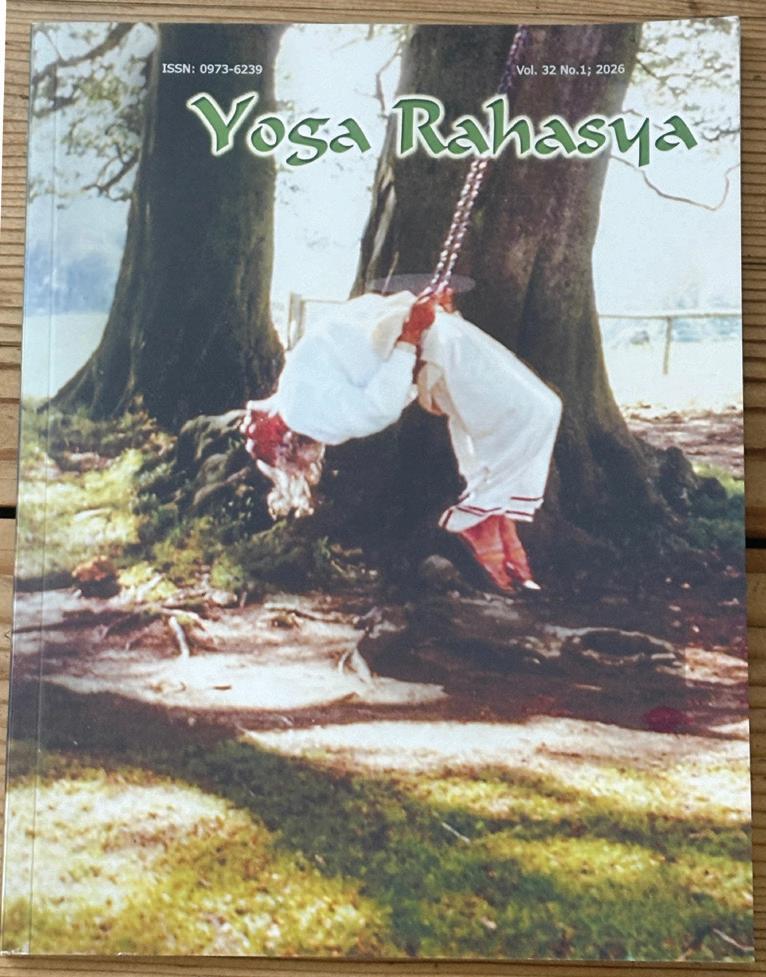
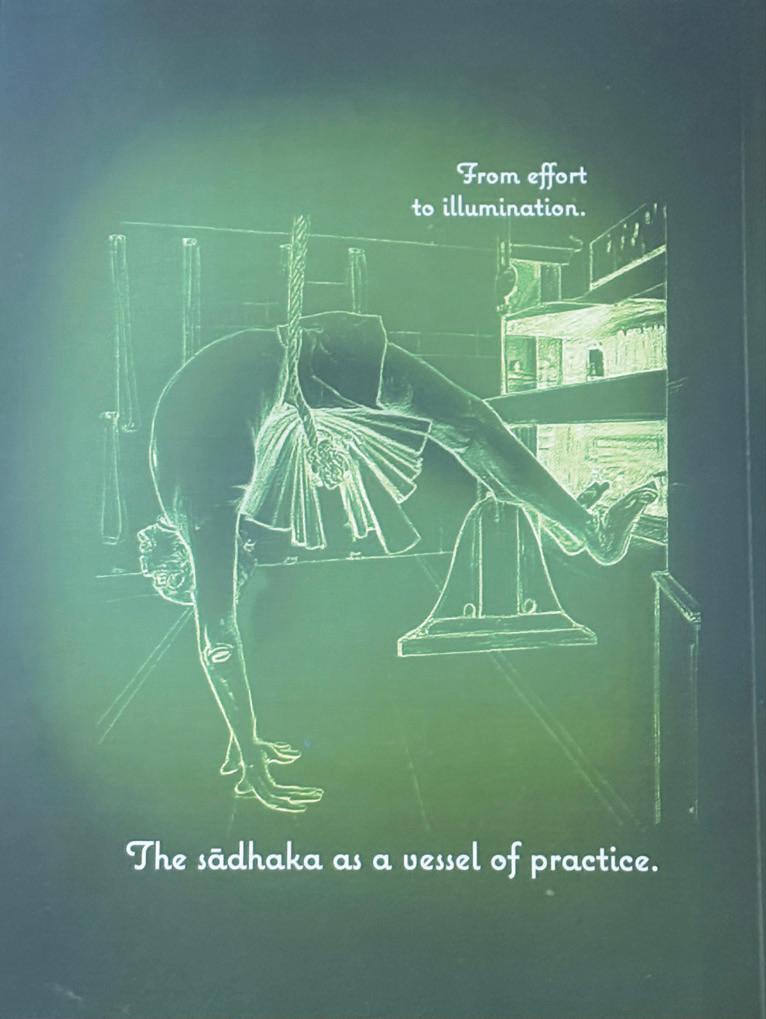
•Be a Sadhaka, Vinadanda and the Spine - BKS Iyengar
•Yoga Sadhana and Sangeet Sadhana - Prashant Iyengar
•Sangeet Sandhana and Dyana - Pandit Hari Prasad Chaurasia
•Sanskrit the Divine Language - Anagha Thattee
•Fundamentals of Ayurveda - Geeta S Iyengar
•Yoga and Medicine - Alan Goode
•Role of the skin - Pavitra Hareeth
•The Cell and the Self - the evolution of I-ness - Rajvi Mehta
•The Paradox of the Mind
•Evolution in Practice
•Yama & Niyama
•Priciples behind the Practice of Asana and Pranayama
The official distributor of Yoga Rahasya for IY(UK) is Kirsten Agar’s Yogvidya online store.
2026 volume available to purchase now (volume 32).
Four issues delivered four times per year.
Order from: https://www.yogawithkirsten. co.uk/store
Email: kirstenagarward@icloud. com for more information

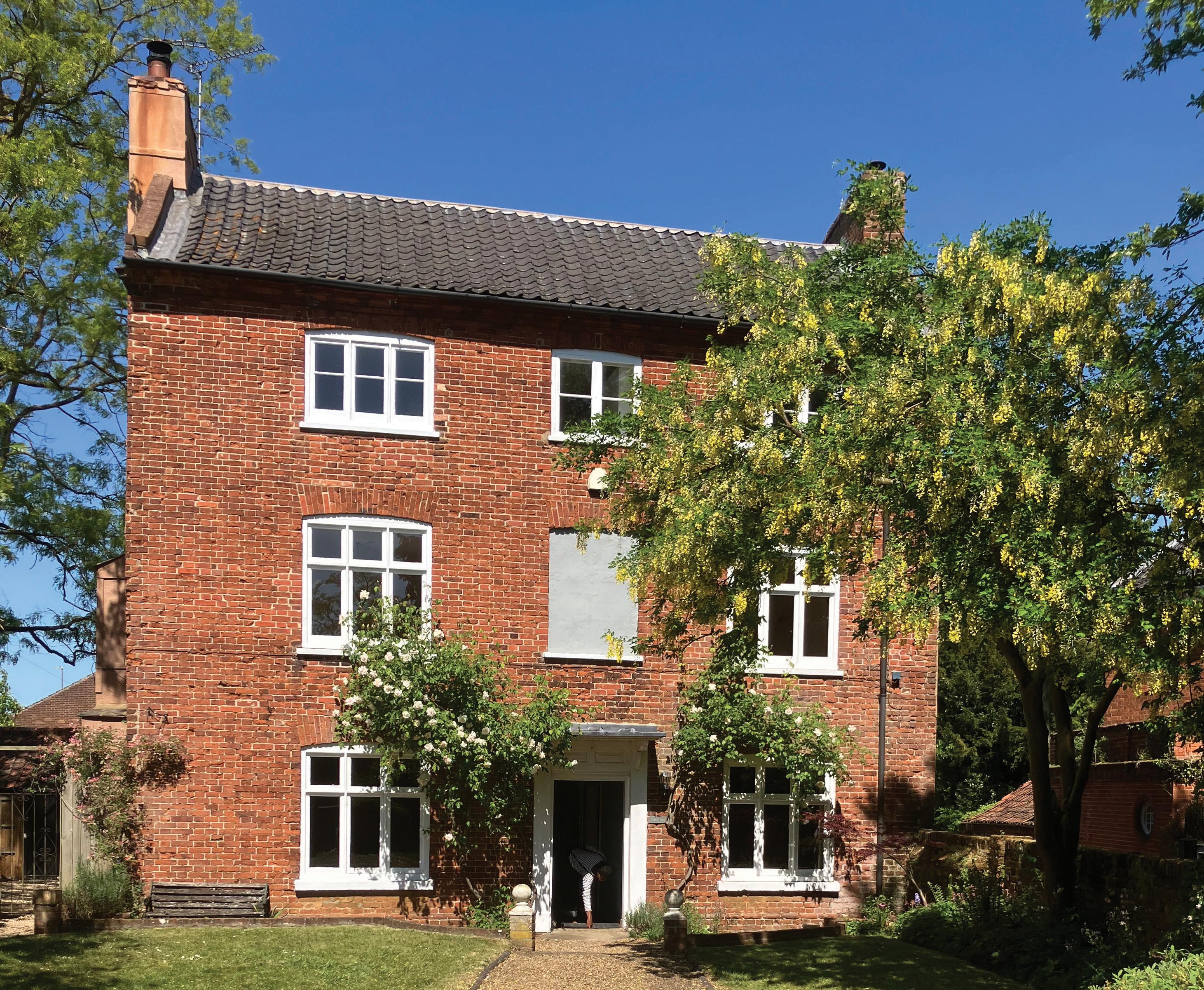
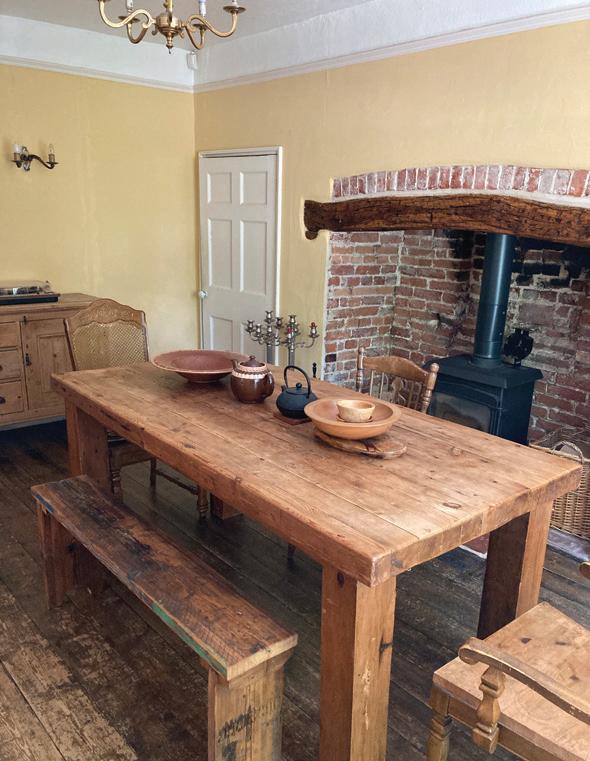
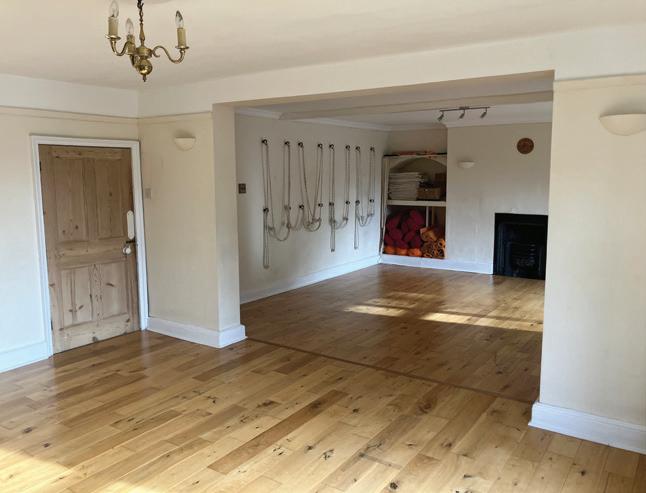
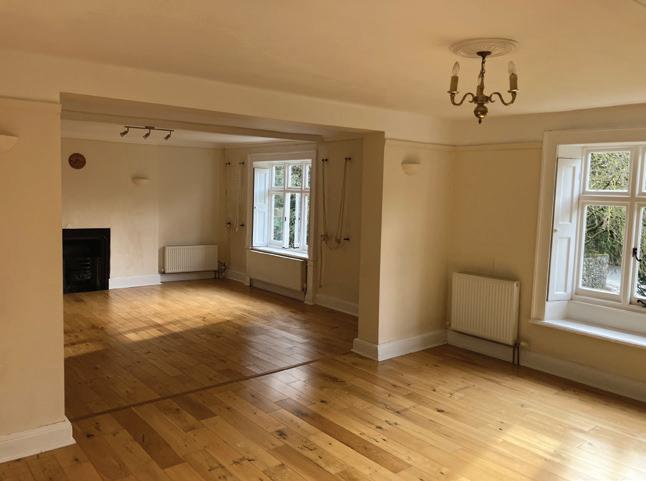
After 16 very happy years in the bustling market town of Swaffham, West Norfolk, we are selling our Grade II listed Georgian home. The house includes a fully equipped yoga studio and treatment room on the middle floor, offering an exceptional opportunity to live and teach under one roof. Swaffham is surrounded by beautiful forest walks and has a good selection of independent shops, cafés and amenities, including a Waitrose.
Conveniently located just 35 minutes from glorious Holkham Beach, Norwich is a halfhour drive and Cambridge is only an hour away. The house is a 20-minute drive from Downham Market train station, home to an award-winning bakery and direct trains to London King’s Cross, Ely and Cambridge.
This is a rare chance to create a balanced live–work lifestyle in a thriving market town, surrounded by the beauty of the Norfolk countryside.
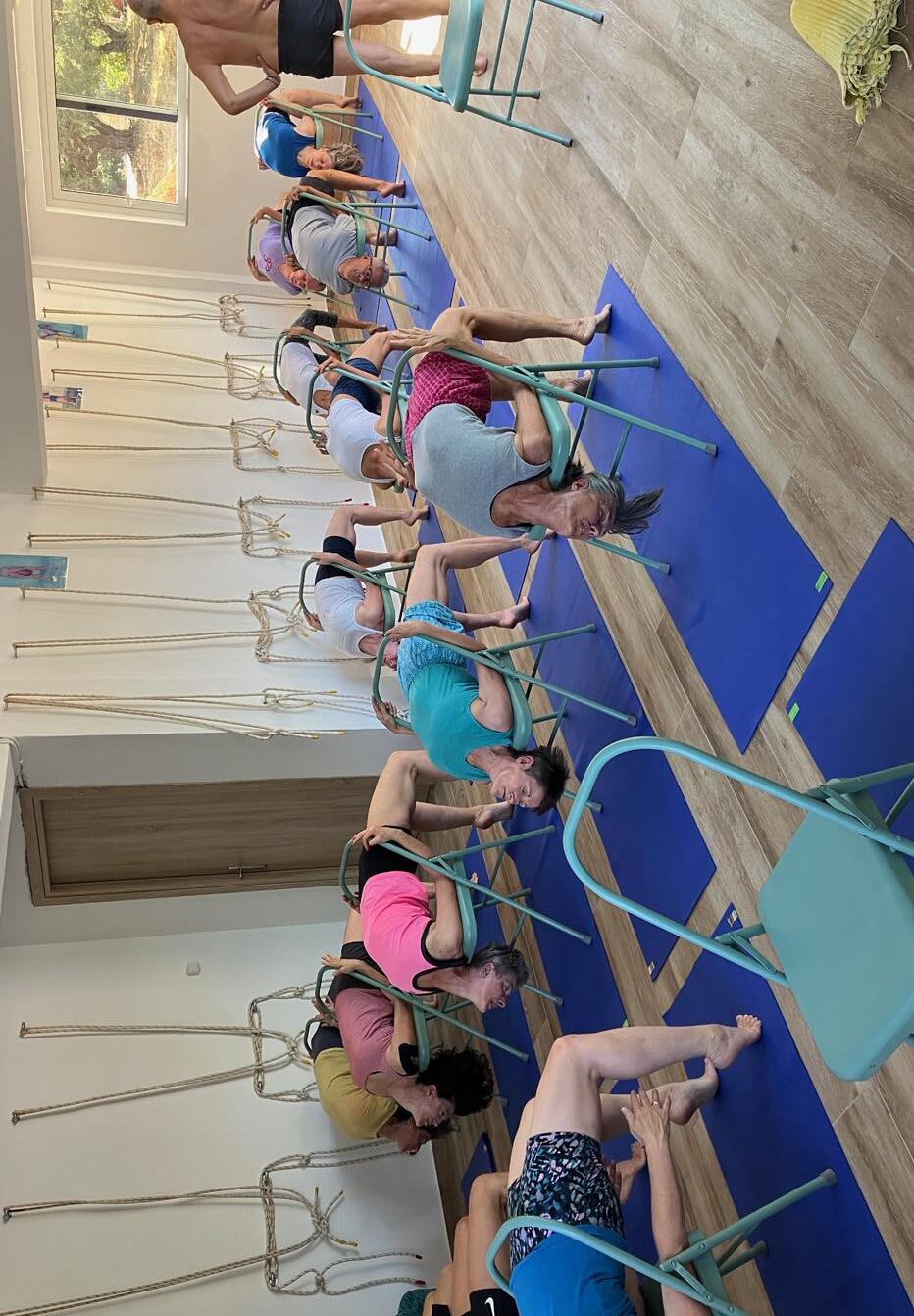
Marios has been teaching Iyengar yoga courses for over 20 years in this beautiful, quiet and unspoilt corner of Crete. We welcome students from all over the world, of all ages (16+) and we have weeks for all levels of experience. Marios will be teaching together with Anna Argiros for the beginner/general level weeks. Our accommodation is right on the beach, and everyone enjoys the balance of yoga classes and free time to relax by the sea. We have been using a new studio for the last couple of seasons, nestled among the olive trees a few minutes inland. It has ropes, ch airs, bolsters and all necessary equipment. Accommodation, taxi transfers from Chania and brunches after the classes are included.
Cost: From £ 730910 (not including flight) For further information about the holidays, prices and booking please visit www.mariosyoga.com