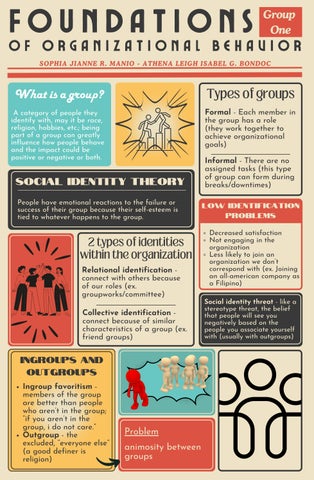
A category of people they identify with, may it be race, religion, hobbies, etc; being part of a group can greatly influence how people behave and the impact could be positive or negative or both.
Social identity theory
People have emotional reactions to the failure or success of their group because their self-esteem is tied to whatever happens to the group
2 types of identities within the organization
Relational identificationconnect with others because of our roles (ex. groupworks/committee)
Collective identificationconnect because of similar characteristics of a group (ex. friend groups)
Ingroups andIngroups and outgroups
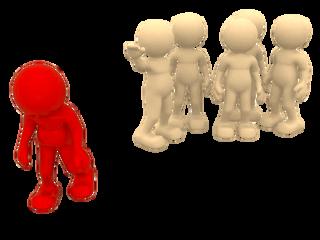
Ingroup favoritismmembers of the group are better than people who aren’t in the group; “if you aren’t in the group, i do not care ” Outgroup - the excluded, “ everyone else” (a good definer is religion)
Types of groups
Formal - Each member in the group has a role (they work together to achieve organizational goals)
Informal - There are no assigned tasks (this type of group can form during breaks/downtimes)
Low identification problems
Decreased satisfaction Not engaging in the organization Less likely to join an organization we don’t correspond with (ex Joining an all-american company as a Filipino)
Social identity threat - like a stereotype threat, the belief that people will see you negatively based on the people you associate yourself with (usually with outgroups)
Problem animosity between groups
Group property 1: roles
Role perception“watch and learn”
Role expectations - how others believe you should act in a given context. It can influence how people perform their work
Psychological contact - unspoken agreement with mutual expectations
Role conflict - when 2 or more role expectations are contradictory
Interrole conflict - expectations of different roles are in opposition
Role play and assimilation - how we accept our role perceptions and expectations almost immediately, even if we initially didn’t agree.
Group property 2: norms
What are norms? - acceptable standards of behavior shared by members about what to do and what not to do under certain circumstances
Norms and conformity - people desire to be accepted into a group, therefore we feel pressured to conform with group norms
What are reference groups? - person is aware of other members and defines themselves as a members of the group
Norms and behavior
Norms can cover any aspect of group behavior
Looks at the relationship between the physical environment and productivity
Positive norms and group outcomes - strong political correctness (PC) norms increase group creativity because it sets clear expectations
Negative norms and group outcomes
Deviant workplace behavior - voluntary behavior that violates significant organizational norms. This threatens the well-being of the organization or its members
Aka counterproductive work behavior (CWB)
Group property 3&4: status, size and dynamics
Status
What is status? - a socially defined position or rank given to groups or group members by others
What determines status?
according to Status characteristics theory the power a person wields over others
A persons ’ ability to contribute to a group ’ s goals
An individual's personal characteristics
Status and norms - High status individuals don't really conform to the group, especially when they have low identification
Status and group interaction - people have higher assertiveness when they want and seek higher status in a group
Status inequity - Status hierarchy should be equitable because perceived inequity creates disequilibrium.
Status and stigmatization - the status of who you surround yourself with can affect how other people view you. AKA “stigma by association”
Group status - “Us and them” mentality, AKA the Ingroups being the dominant culture
Group property 3&4: status, size and dynamics
Size and dynamics
Does the size of a group matter? It depends on the goal
Group dynamics
Social loafing - the tendency for individuals to do less effort collectively vs alone. It directly challenges the idea that productivity as a group is the sum of productivity of individuals
What causes it? - the belief that others don't care, so you don't care too (freeloader) and also the diffusion of responsibility, essentially, no one would know you didn’t do a task because it’s a group responsibility
How to prevent social loafing?
Set group goals
Increase intergroup competition
Engage in peer evaluations
Select members with high motivation
Base group rewards on individual contributions
Publicly posting individual performance ratings
Group property 5&6: cohesiveness and diversity
Cohesiveness - the shared bond driving group members to work together and to stay in the group. what to do to encourage group cohesiveness? make the group smaller encourage agreement increase time spent together increase group status stimulate competition give rewards physically isolate the group
Diversity what is diversity? - the degree to which members of the group are similar to or different from each other
Cons of diversity: increases group conflict - normally in early stages of group tenure; it often lowers group morale and raises drop-out rates gender diversity - can be a challenge but can be solved with inclusiveness types of group diversities surface level diversity - observable characteristics; may cue members to become open minded deep level diversity - not observable characteristics, innate Pros of diversity longer deliberations unique perspectives share more info make fewer factual errors
Over time, diversity may help to be more open-minded and creative and to perform better what are faultlines? - perceived divisions that split groups into two or more subgroups based on individual differences such as sex, race, age, work experience, and education
Group Decision Making
strengths groups generate more complete information and knowledge increased diversity of views increased acceptance of a solution
weaknesses
time-consuming to reach a decision conformity pressures discussion can be dominated by 1-2 members
“ambiguous responsibility” means responsibility In a group is diluted; blurry
Group Decision Making
effectiveness and efficiency
group decisions are generally more accurate individuals are faster groups are more creative groups are more inclined to the acceptance of achievable solutions group decision making takes more time
Groupdecision making techniques
interacting Groups
People have emotional reactions to the failure or success of their group because their self-esteem is tied to whatever happens to the group
Brainstorming
All ideas are recorded. It can generate ideas, but not efficiently
“Production blocking”
peer pressure as an influence tactic
Can be positive and destructive
Positive - Can be used as encouragement and to minimize negative behavior.
Destructive - Can lead to exclusion Should a leader use it? They will eventually need to use it to come to a consensus
Groupthink and groupshift
Groupthink - relates to norms and describes situations in which group pressures for conformity deter the group from critically appraising unusual, minority, or unpopular views. (we’d rather be a positive than a disruptive force)
What can managers do to minimize groupthink?
Monitor group size
Encourage group leaders to play an impartial role
Appoint one member to be a devil's advocate
Use exercises that stimulate active discussion of diverse alternatives
Groupshift - the way group members tend to exaggerate their initial positions when discussing a given set of alternatives to arrive at a solution
Aka group polarization
Ingroups and OutgroupsNominal group technique
Restricts discussion and interpersonal communication Steps:
Each member independently writes down ideas about the problem
Each member presents 1 idea to the group
Group discusses the ideas for clarity and evaluates
Silently and independently ranks ideas Evaluating group effectiveness chart
Are diverse work groups smarter and more innovative?
Double edged sword, diverse groups can foster more critical thinking and innovation, while on the other hand, it can also lead to discrimination and increased conflict.
Myth or science?
Gossip and exclusion are toxic for groups
Not necessarily true, but counterintuitive
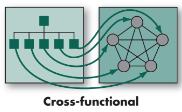
C. CROSS FUNCTIONAL TEAMS
are teams made up with the same hierarchical level from different areas- are an effective means of allowing people from diverse areas within or even between organizations to exchange information, develop new ideas, solve problems, and coordinate complex projects.
THEY ARE NOT SIMPLE TO FORM AND MANAGE DUE TO: it's unclear who should lead, different types of skills and expertise are needed to manage the situation effectively.
progress can be slow because team members need time to adjust to working with more diverse people and dealing with more complex tasks Takes time to build trust and teamwork, especially among people with different experiences and perspectives.
D. VIRTUAL TEAMS
10-3: CHARACTERISTICS OF EFFECTIVE TEAMS
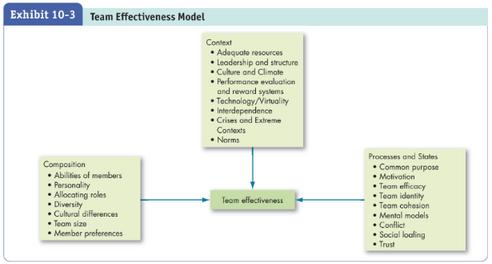
What makes a team effective? We can look at three different factors; namely, the contextual influence, team composition, and process and state variables. These factors can also be broken down into smaller factions as illustrated in exhibit 10-3.
THE CONTEXTUAL INFLUENCE
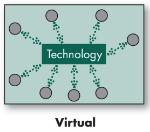
are social-networking groups of employees from different areas that collaborate in real time to identify new business opportunities and implement them from the bottom up.
FOR VIRTUAL TEAMS TO BE EFFECTIVE:
trust should be established progress is monitored closely
efforts and products of the team should be publicized (given recognition)
E. MULTITEAM TEAMS
is known as “team of teams” which is about a network of smaller teams that work together toward a shared goal. Instead of a strict hierarchy, teams collaborate, communicate, and make decisions more flexibly, helping the organization adapt and innovate quickly. may have higher performance when decentralized may also have problems with coordination since they are independent teams working together
These are factors that rely on the factors that are given to the team (factors that we have little to no control over) to sustain team effectiveness.
Adequate resources - resources that are provided that are needed for teams to function properly
Leadership and structure - Effective teams require clear roles, shared responsibility and strong leadership for motivation. Culture and climate - teams creating their own culture and climate can boost effectiveness.
Performance evaluation and rewards system - individual performance evaluations and incentives may interfere with the development of high performance teams. Crises and extreme contexts - can unlock untapped potential of members under great pressure, but can also lead to disasters or unraveling of a team
UNDERSTANDING WORK TEAMS
GROUP 2:
AOYONG, Aryann Tiffany L. ARCIAGA, Sophia Loreen T.
Reference books used:
Essentials of Organizational Behavior (15th EDITION)
Organizational Behavior (19th EDITION)
By Robbins and Judge
OVERVIEW:
10-1: Group vs. Team
10-2: Five types of team arrangements
10-3: Characteristics of effective teams
10-4: How organizations create effective work teams
10-5: When to use individuals and work teams
10-1: GROUP VS. TEAM
WORK GROUP WORK TEAM
a group that interacts primarily to share info and make decisions to help all members perform within their respective areas of responsibility. It is about the summarization of each individual contribution and a collection of individuals doing their work, but with some interaction and dependency.
a subset of a work group that is about generating positive synergy through coordination which includes “dynamic systems” ( teaming- “the processes or actions involved in engaging as a team rather than on the team itself.”)
BEHAVIORAL EXPECTATIONS OF WORK TEAMS
collective normalization efforts, active group dynamics = generate ideas
The extensive use of teams creates the potential for an organization to generate greater outputs with no increase in employee headcount
"Merely calling a group a team does not automatically improve its performance"
10-2: 5 TYPES OF TE ARRANGEMENT
A. PROBLEM SOLVING TEAMS
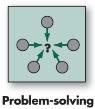
are permanent teams that generally meet at a regular time, sometimes weekly or daily, to address quality standards and any problems with the products made.
Known as quality control teams" found in healthcare ex: Vincero employs a fulltime quality-control team that hand- checks every manufactured watch limited to suggestions (they have no control over what gets implemented or not)
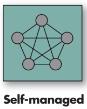
B. SELF-MANAGED TEAMS
are groups of employees (typically ten to fifteen in number) who perform highly related or interdependent jobs)
Handle “supervisory responsibilities” that include planning, scheduling work, assigning tasks, making operating decisions, acting on problems,and working with suppliers and customers. Usually select their own members who evaluate each other’s performance. Former supervisory positions become less important and are sometimes eliminated. However, with a lack of authority and accountability, teams may spend valuable time and resources aligning team member values and goals not “uniformly positive” and not always effective
Research also tells us "without proper supervision, ineffective leaders can take charge more easily, even if they aren't good at leading."
TEAM
COMPOSITION
These are factors that relate to how teams should be staffed or created.
Abilities of members - team performance is dependent on the abilities of the individuals within the team
Personality of membersConscientiousness, agreeableness, openness, stability, proactivity boost teams. Allocation of roles - members must be selected to ensure that all various roles are filled; assigning roles appropriately bases on their abilities
Diversity of teams - high demography within teams usually correlate to positive outcomes in the long run
Cultural differences - same with diversity, a culturally heterogeneous team usually correlates to positive outcomes in the long run
Team size - Large teams complicate communication, reduce accountability, and increase social loafing and try to optimize Optimal team size: 5-9 members.
Member preferences - Not all employees prefer teamwork; some may opt out if given the choice.
PROCESS AND STATE VARIABLES
These factors are predictors of team performance and attitudes.
Team processes - teams should create outputs together, not individually Common plan and purpose - gives direction and guidance to the team which usually accounts for better performance within the team
Mental models - Effective teams share organized mental representations of how work gets done. Shared models lead to better interactions, motivation, and performance. Teams with different mental models may struggle with methods, hurting performance.
Team conflict - conflict may actually help a team perform better
Social loafing - Effective teams prevent this by making members accountable for individual and collective responsibilities. Team states - collective attitudinal, emotional, and motivational states guide on how team members approach teamwork (positive emergent states equals better team performance)
Motivation - Teams perform better with specific, challenging goals. Align individual goals with team objectives for better outcomes.
Team efficacy - Confidence in the team's abilities boosts performance. Success builds further confidence, and training helps improve skills.
Team identity - Emotional connection to the team increases dedication. Positive team and organizational identity foster cooperation and better outcomes.
Team cohesion - Cohesive teams are emotionally bonded, leading to better performance. Cohesion can grow from success and foster lasting relationships.
Team trust - This involves positive expectations of reliability and mutual care. It improves performance and grows as members collaborate and monitor each other’s efforts. Trust can be broken but is also repairable.
10-4: HOW ORGANIZATIONS
CREATE EFFECTIVE TEAMS
1.
SELECTING: Hiring for Team Effectiveness
During the hiring process, managers should look for candidates who can potentially fill their team roles as well as technical requirements.
The manager must look for qualities in the candidate that best fit the roles that are needed by the team.
“Cluster hiring” is also a strategy used wherein the selection of an already existing team is assigned to work in a new role, which avoids the “growing pains” that come with starting a new team from scratch.
2. TRAINING: Creating Effective Teams
After a team has been constructed, it is crucial for the organization to train the team to work interdependently by conducting exercises that enable teams to perform more effectively by learning relevant team skills and practices.
Team training is key to an effective team, and is not a one-time thing. Teams must be continuously training with each other to achieve optimal performance.
Shared mental models must also be developed by the team in order to become effective.
3. REWARDING: Providing Incentives for Exceptional Teams
Rewarding or incentivizing a team builds a united bond and encourages the team to work together.
Traditional incentives (financial) must be reworked to encourage cooperative efforts rather than competitive ones. We must shift competitive motivations into cooperative motivations in order to increase productivity of the team.
Team-based rewards have been shown to positively influence team performance.
“Experience based rewards” have been more prevalent in recent years and include acquired traits like loyalty, camaraderie, and teamwork. The experience gained from working as a team are the rewards itself.
10-5: WHEN TO USE INDIVIDUALS AND WORK TEAMS
Some tasks can be done individually rather than in teams since teamwork requires more time and often more resources than individual work. Teams have; increased communication demands, conflicts to manage, and meetings to run. So, the benefits of using a team must outweigh the costs of running one, which is not always the case. The question now is:
How do you determine whether the work is better done in teams than individually? We use 3 factors to determine the answer to this question.
Can the work be done better by more than one person?
We have to determine the complexity of the task given. Does the task require multiple perspectives? Is the task given simple?
Simple task?
YES, then individual would do NO, then team is necessary
Does the work create a common purpose or set of goals for the people in the group that is more than one aggregate of individual goals?
We have to determine whether the task requires collective responsibility. Does the task have more than one goal? Does it affect multiple groups of people within different departments?
Do you need the work of another to proceed with the task?
YES, then team is necessary NO, then individual would do
Combination of individual goals?
YES, then team is necessary NO, then individual would do
Determine whether the members of the group are interdependent.
Using teams makes sense if the task requires a team to be interdependent. If the success of the whole depends on the success of each individual, and the success of each individual depends on the success of the whole, then they are interdependent with each other.