Makita 18V LXT and 40Vmax XGT power tools
Codewords: Building work that does not need a building consent Tips for running a business with your life partner
Identifying the best locations for holes and notches in timber framing
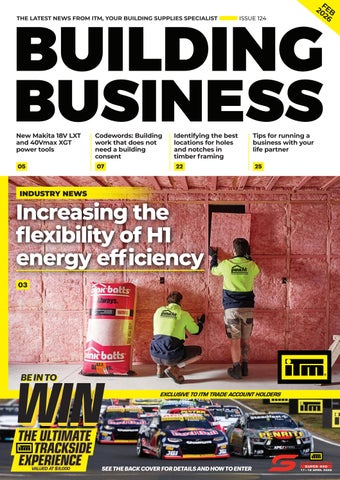
Makita 18V LXT and 40Vmax XGT power tools
Codewords: Building work that does not need a building consent Tips for running a business with your life partner
Identifying the best locations for holes and notches in timber framing

































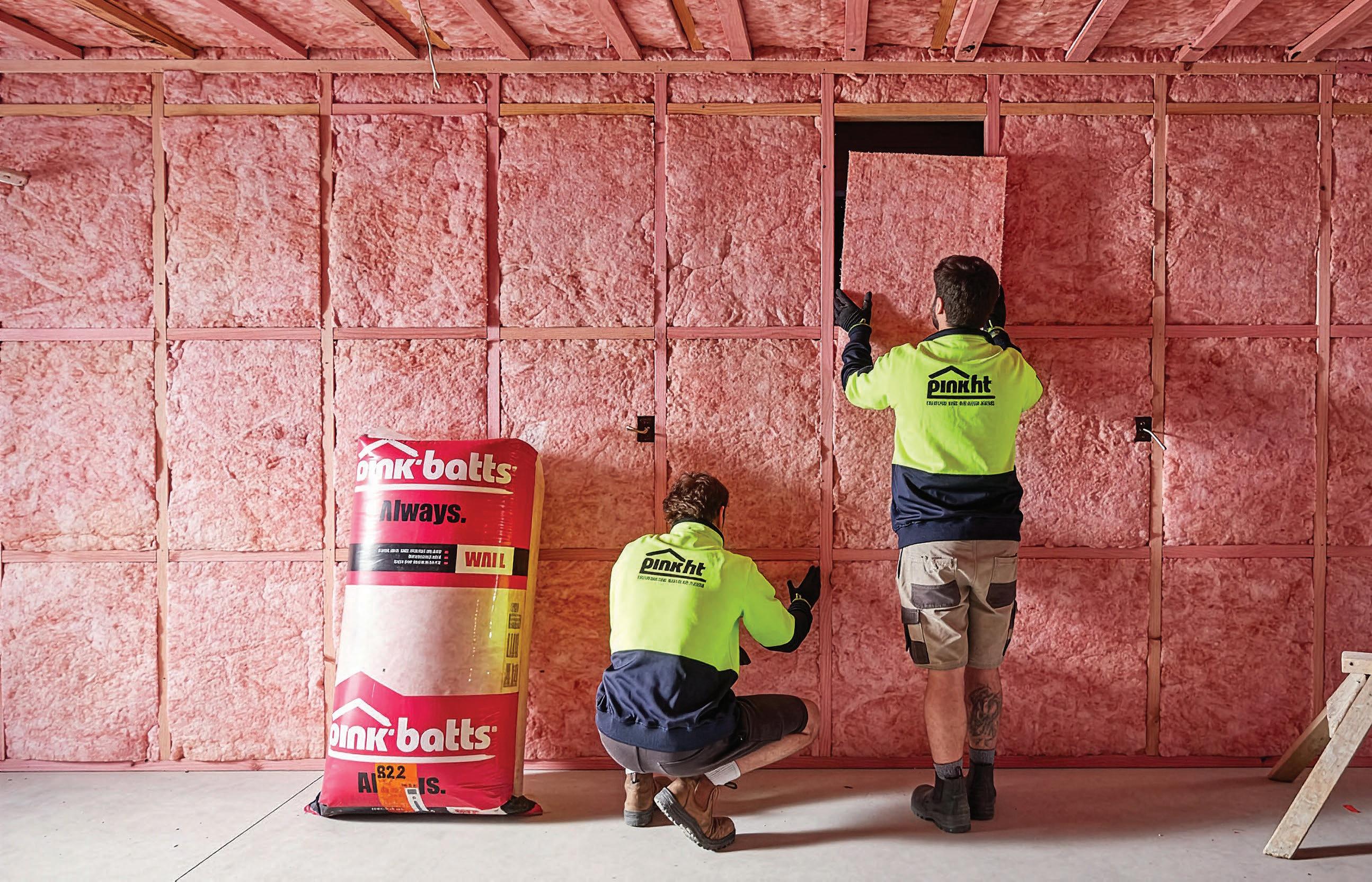
On November 27th, 2025 MBIE updated the settings for compliance with the energy-efficiency requirements of clause H1 of the Building Code.
MBIE has made targeted changes to the acceptable solutions and verification methods for H1 Energy Efficiency to improve clarity, flexibility and affordability for designers, builders and homeowners.
These changes follow a public consultation from December 2024 to February 2025 and build on the already announced decision to remove the Schedule Method as a ‘deemed to comply’ pathway, announced in July 2025. A review of the H1 settings in 2024 had identified opportunities to better balance upfront building costs and longer-term benefits.
The overall level of energy efficiency and insulation required remains unchanged and will continue to help create warm, dry and energy-efficient buildings across Aotearoa New Zealand.
The changes to H1 energy efficiency include:
▶ more flexibility in insulation requirements, with the Schedule Method being removed as a compliance pathway for insulation
▶ clearer measurement rules, with the roof, wall and floor areas being measured using overall internal dimensions to ensure more consistency
▶ improved modelling methods in H1/VM1 and H1/VM2 to better align with modern building practices
▶ new requirements to ensure thermal bridging from wall framing is more accurately accounted for
▶ enhanced tools and tables for windows and slab-on-ground floors to cover more common building scenarios.
The updated AS/VMs take effect immediately, and a 12-month transition period will run until November 26th, 2026. Designers have a 12-month transition period to fully adopt the changes by that date.
MBIE will work closely with the sector to ensure widespread understanding of the changes and how they should be implemented during the transition period.
What does this mean for builders and designers?
By November 27th 2026, all plans submitted for consent must demonstrate compliance with H1 through the Calculation Method.
The Calculation Method is based on the Schedule Method but allows trade-offs between the thermal performance of walls, windows, floors, and the roof, with some being higher and others lower. There is far more detail involved in the Calculation Method, but the potential to use lower-cost, highperformance products (such as insulation) in favour of expensive high-performance slab floors or glazing offers substantial savings.
For building companies and designers looking to save money on certain build typologies, there is a significant benefit in using the new rules immediately. To do so, the framing fraction must be known before consent is issued, and a thermal designer will need to be involved.
More information
Scan the QR code to read the updated H1 energy efficiency documents or go to www.building.govt.nz
The law, passed on January 15th 2026, means granny flats can now be built using the granny flats building consent exemption.
The granny flats exemption makes it easier for homeowners to build, through the removal of some of the regulatory barriers that may slow down or complicate the building process. The granny flats exemption is designed to support an increase in the supply of affordable homes, provide more housing choices, while the conditions ensure that granny flats are safe, healthy, and durable.
The granny flats building consent exemption allows certain new, single-storey, standalone dwellings up to 70 square metres to be built without a building consent if:
▶ it has a simple design and meets the Building Code
▶ homeowners notify their local council before they commence building and once it is completed
▶ the work is carried out or supervised by licensed building professionals
▶ all exemption conditions are met.
Homeowners must apply for and receive a Project Information Memorandum (PIM) from their council before they start building work.
After completing the build, they must provide councils with documentation such as final plans, Records of Work, and certificates of compliance.

MBIE have published comprehensive guidance and templates for homeowners, builders, councils and designers to understand their obligations.
These resources cover how the exemption works, the responsibilities involved and considerations for homeowners, including the importance of using licensed building professionals.
The granny flats building consent exemption operates alongside the Resource Management Act 1991.
The National Environmental Standards for Detached Minor Residential Units (NES-DMRU) became law on January 15th, 2026, and allows minor residential units to be built without a resource consent, provided certain permitted activity standards and criteria are met.
The NES-DMRU and the building consent exemption can operate independently.
For more information and to download the guide, visit www.building.govt.nz


#DTD201Z - skin, tool only
• Makita’s most powerful 18V LXT Impact Driver, with a maximum fastening torque of 210Nm
• Ideal for demanding tasks such as framing, metal fabrication and concrete form-work
• 4-stage power selector provides precise control over torque and RPM for different applications
$275

#HG001GZ - skin, tool only
• LCD screen display with control dial with temperature range of 10°C - 600°C
• Lock on trigger switch for easy handsfree operation
• Operate continuously for up to 14 minutes (with 4.0Ah Battery) at 600°C with 200L/ min airflow
• Comes standard with glass protection, wide slot, reflector and reduction nozzles
$250

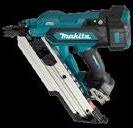
#BN001GZ - skin, tool only
• Air spring firing mechanism rapidly fires nails up to 90mm
• Sequential or bumpfire mode firing four nails per second
• Depth driving adjustment for ideal sinking depth
• Anti-slip nose resists slipping when driving nails at an angle
• Anti-dry fire lockout mechanism at 7-9 nails remaining prevents misfires

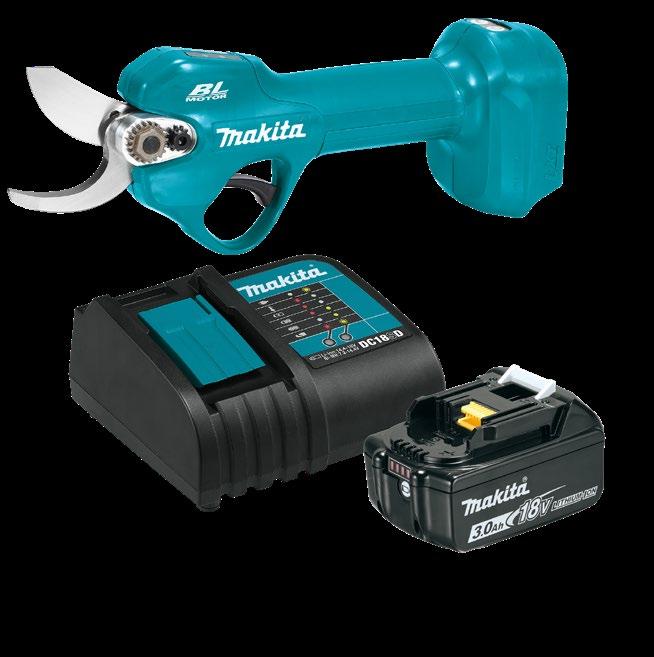
#DUP181SF
• Maximum branch diameter of Ø30mm for versatile pruning applications
• External oil port that allows the blades to be lubricated without disassembly
• Narrow 125mm grip circumference to reduce user fatigue
• Comes with 3.0Ah battery and charger
$355
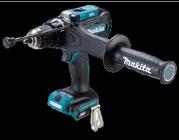
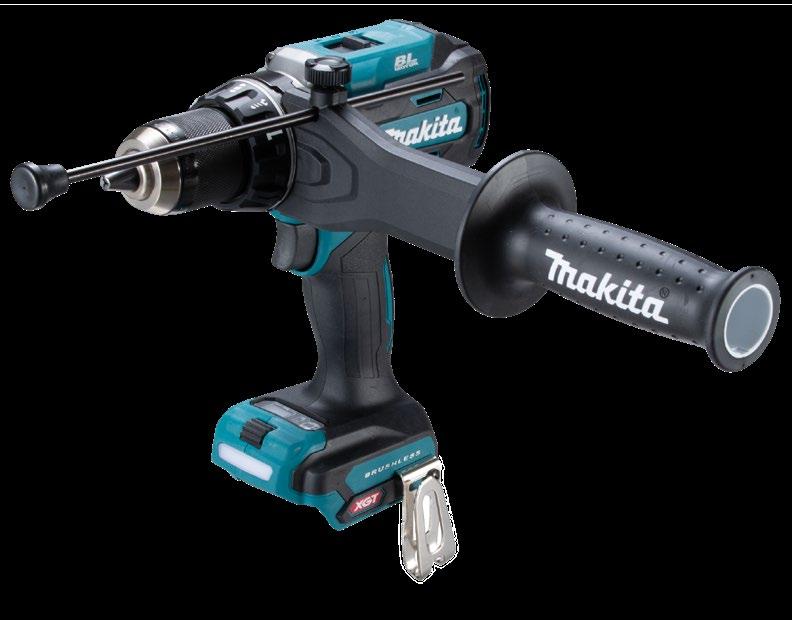
#HP003GZ - skin, tool only
• 3 speed settings with a mid-range setting, which balances torque and speed. Ideal for demanding tasks like driving long screws.
• Provides up to 180Nm of torque for demanding jobs
• 41 torque and clutch settings with a jog dial and digital display for precise adjustments
$415
#TR001GZ01 - skin, tool only

• More ties per reel and lower costs per tie, and up to 3x higher strength than the 18V equivalent
• Rapid tying speed maximises efficiency at 0.7 seconds per tie
• High efficiency with up to 240x ties per reel of wire



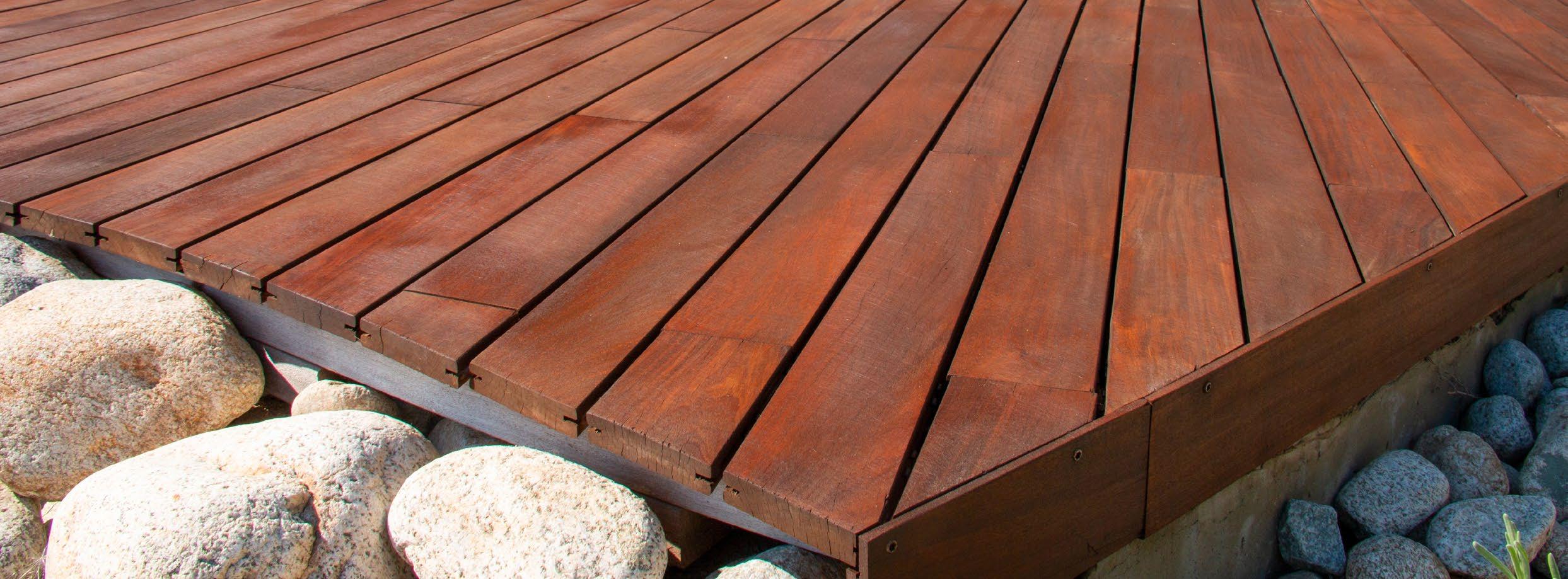
Exempted building work is low-risk construction that does not require a building consent because it is considered to have a minimal impact on a building’s structural integrity or safety. This includes general repairs, maintenance, and replacements with comparable materials. It also includes minor projects like small sheds, unroofed pergolas, and decks that are not high above the ground.
Section 14B of the Building Act makes the owner of the property responsible for obtaining consents, approvals, and certificates. Therefore, it is up to the owner to decide whether they will use a relevant exemption from needing a building consent under Schedule 1.
Because the owner often talks to an LBP first, the LBP must provide clear, accurate advice. This helps the owner make an informed decision about their building work.
Even if work does not need a consent, it must still meet the Building Code. To be exempt, the work must meet all parts of the exemption in Schedule 1.
For example, you can repair, maintain, or replace a building product or assembly under Schedule 1 if you use a similar product or assembly.
The exemption does not apply if:
▶ the work is on a specified system (anything on the building’s compliance schedule)
▶ the product or assembly affects the building’s structure or fire safety properties
▶ the repair or replacement is because the product failed to meet Building Code durability rules, such as external moisture requirements
▶ the work is sanitary plumbing or drainlaying under the Plumbers, Gasfitters, and Drainlayer Act 2006.
Therefore, replacing a roof with a similar product in the same position is exempted building work. But if the roof was installed less than 15 years ago and has failed to meet the Building Code, you will need a building consent.
The Ministry of Business, Innovation & Employment (MBIE) has published Determinations, and the Building Practitioners Board has received complaints about work done under Schedule. These are useful if you are researching exempt building work.
Scan the QR code to view previous determinations.
Schedule 1 now includes two new exemptions. One is for roof-mounted solar panel arrays. The other changes the setback rules for detached buildings like garden sheds, greenhouses, cabins, or sleepouts. The setback distances have been changed from ‘the measure of its own height away from boundaries or buildings to:
▶ Up to 10m2 - no setback; these buildings can be built up to the boundary.
▶ Between 10m2 and 30m2 - must be at least 1m from any residential building or a boundary.
To qualify for an exemption, you must meet extra requirements. These can include:
▶ the building’s overall height
▶ that it is only one storey
▶ whether there is an existing residential building on the property
▶ the materials used
▶ no sanitary facilities or potable water connection
▶ no cooking facilities
▶ whether it is prefabricated or built on site
▶ who can design and build it.
Check with your local council before starting work. Make sure your project does not breach planning rules, such as:
▶ maximum site coverage
▶ yard or setback requirements
▶ building recession planes
▶ permitted activities.
You may need a resource consent. If you do, get it before you start any work.
Water from the roofs of these buildings must be disposed of on-site or to an appropriate network utility system, if one exists. Do not direct stormwater or surface water onto a neighbour’s property.
If the building will be used as a sleepout:
▶ there must be an existing residential building on the property
▶ smoke alarms must be fitted
if the property uses an on-site wastewater system like a septic tank, check that it has the capacity to handle any extra people living there
Check for underground services before choosing a building location. You cannot build over these services.
Some building work may not need a consent. But you must consider all conditions of the Schedule 1 exemption before doing the work or giving advice to a client or potential client.
The LBP Code of Ethics covers this under the principle of ‘Taking responsibility for your actions’ by informing and educating your client and acting in your client’s interests.
1. What does Schedule 1 of the Building Act cover?
a) Whether a resource consent is necessary for certain building work
b) Whether you are allowed to build a residential dwelling on your property
c) Building work that does not require a building consent
2. When using an exemption under Schedule 1, how many of the conditions attached to that exemption must be met?
a) None - the owner just wants to get the job done
b) All of them – they are all important and relevant to that building work
c) Just half of them – 50% is a pass mark
3. Can I replace a 13-year-old leaking roof under a Schedule 1 exemption?
a) Yes, because it is leaking
b) Yes, because I am an LBP with a roofing licence
c) No, because the roof being replaced has failed to comply with the building code


ADD TO YOUR LBP ACTIVITY LOG This article is from Codewords Issue 128.
Log in to the LBP portal lbp.govt.nz (or scan the QR code) and update your Skills Maintenance activities.



54V XR FLEXVOLT 230MM ANGLE GRINDER DCG460N-XJ


54V XR FLEXVOLT 184MM CIRCULAR SAW DCS578N-XE

54V XR FLEXVOLT 190MM HIGH TORQUE CIRCULAR SAW DCS577N-XJ
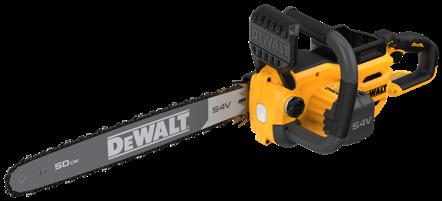
54V XR FLEXVOLT 45CM CHAINSAW DCMCS574N-XE

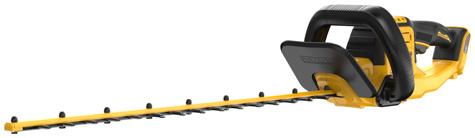
54V XR FLEXVOLT HEDGE TRIMMER 31MM GAP DCMHT573N-XE

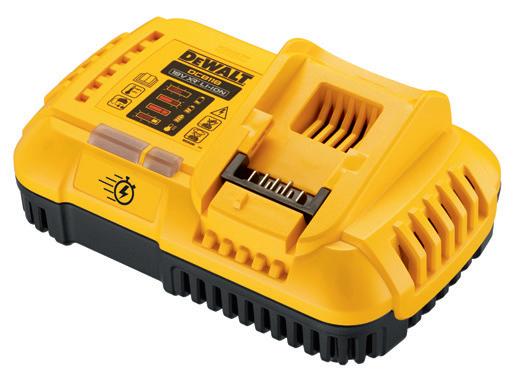
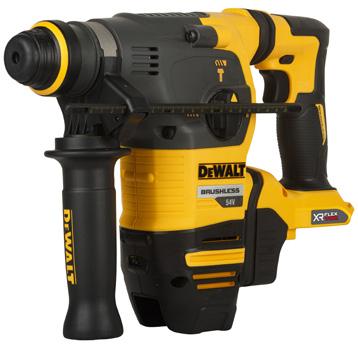
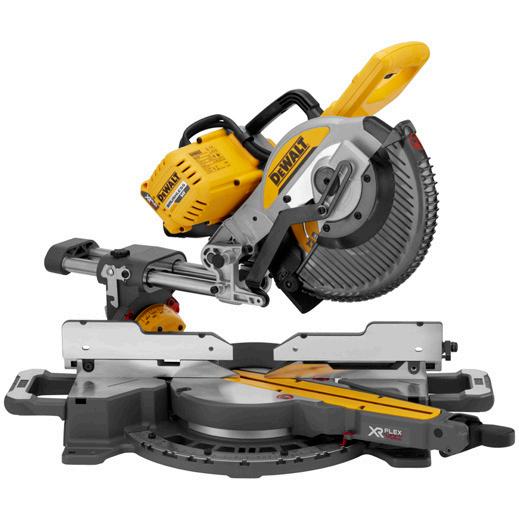
SAW DCS691N-XJ

54V XR FLEXVOLT 305MM MITRE SAW DCS781N-XE

54V XR FLEXVOLT AXIAL BLOWER DCMBL777N-XE
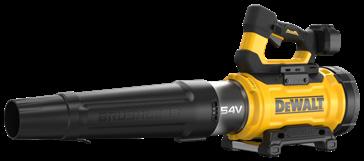
54V XR FLEXVOLT AXIAL BLOWER DCMBA572N-XE
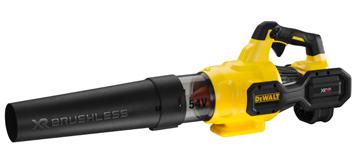
54V XR FLEXVOLT STRING TRIMMER (SPLIT SHAFT) DCM5713N-XE
54V XR FLEXVOLT SPLIT BOOM (POWER HEAD ONLY) DCMAS5713N-XE


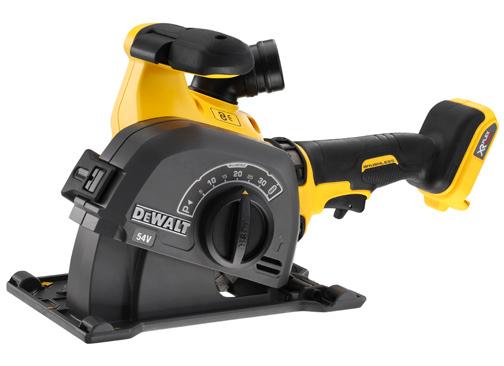
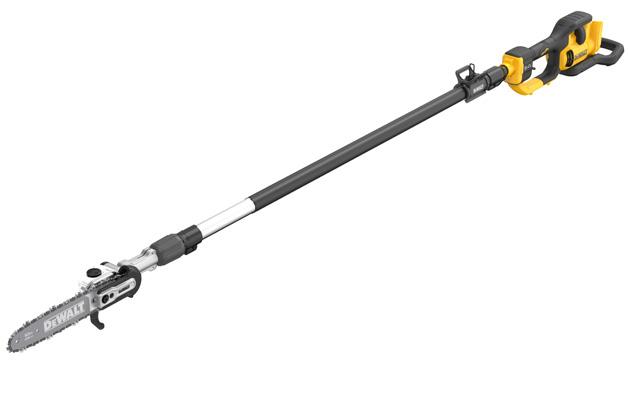
54V XR FLEXVOLT 3.5M TELESCOPIC POLE SAW DCMPS635N-XE






IF IT’S SELLEYS IT WORKS


Builders and tradies are holding up well despite a major downturn in the building industry over that last 18 months.
The 2025 Live Well Build Well (LWBW) Wellbeing Survey offers the clearest picture yet of how New Zealand’s residential construction workforce is coping with mental wellbeing. After three years of data, we now have a clear picture of how tradies are doing and where support is working. Here’s what the 2025 survey tells us.
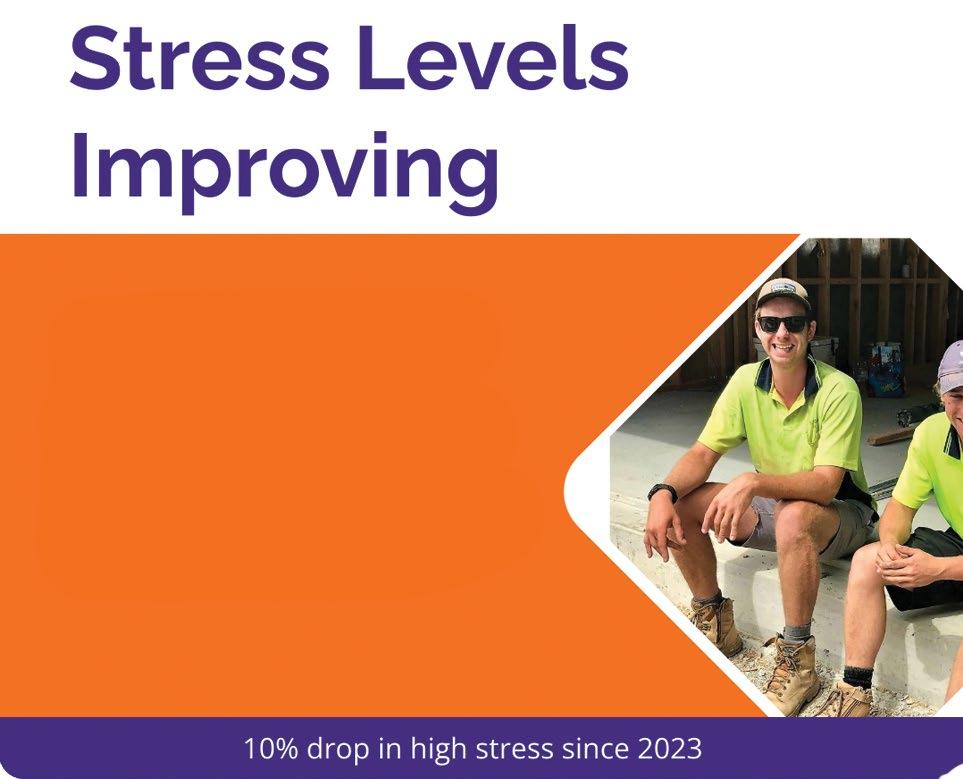
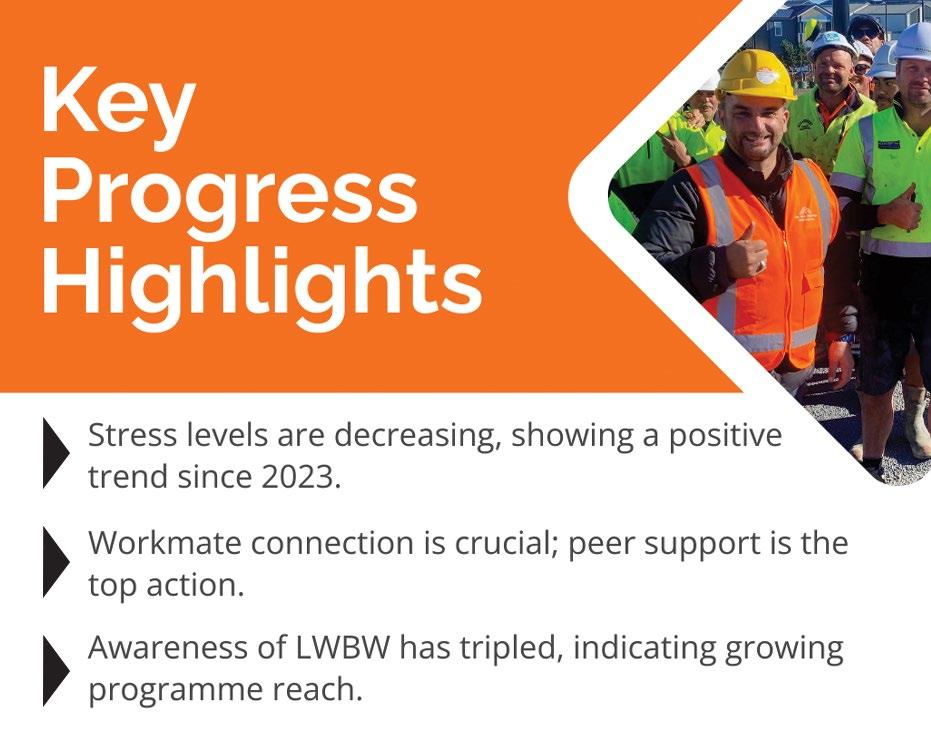
Good news! Stress is decreasing in residential construction. Fewer workers report feeling stressed out on the job. Things are looking up!

Tradies are reporting better emotional wellbeing and less loneliness. Still, overall scores haven’t quite caught up to the national average yet. Let’s keep going!
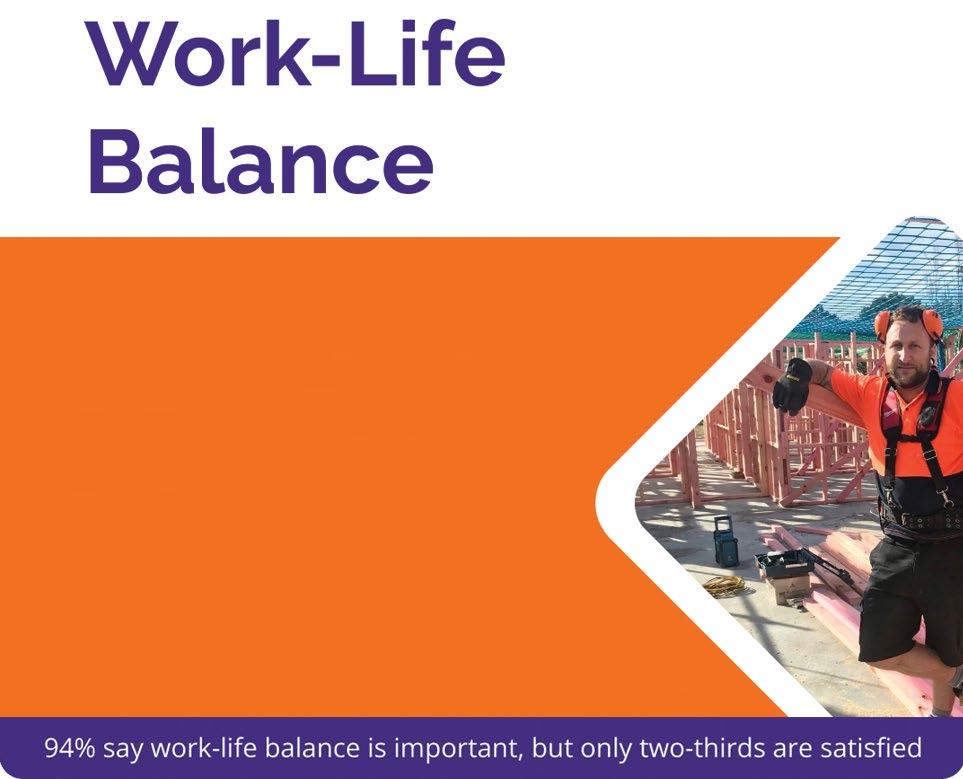
Work-life balance is super important, but many aren’t satisfied. This hasn’t improved much lately. Something’s gotta give!

The #1 action people take to support their wellbeing? Talking to workmates. Connection on site continues to be the strongest protective factor. Chat with your crew!

More workers are actively looking after their mental fitness. From chats to exercise to routines, people are taking initiative. Keep it up!
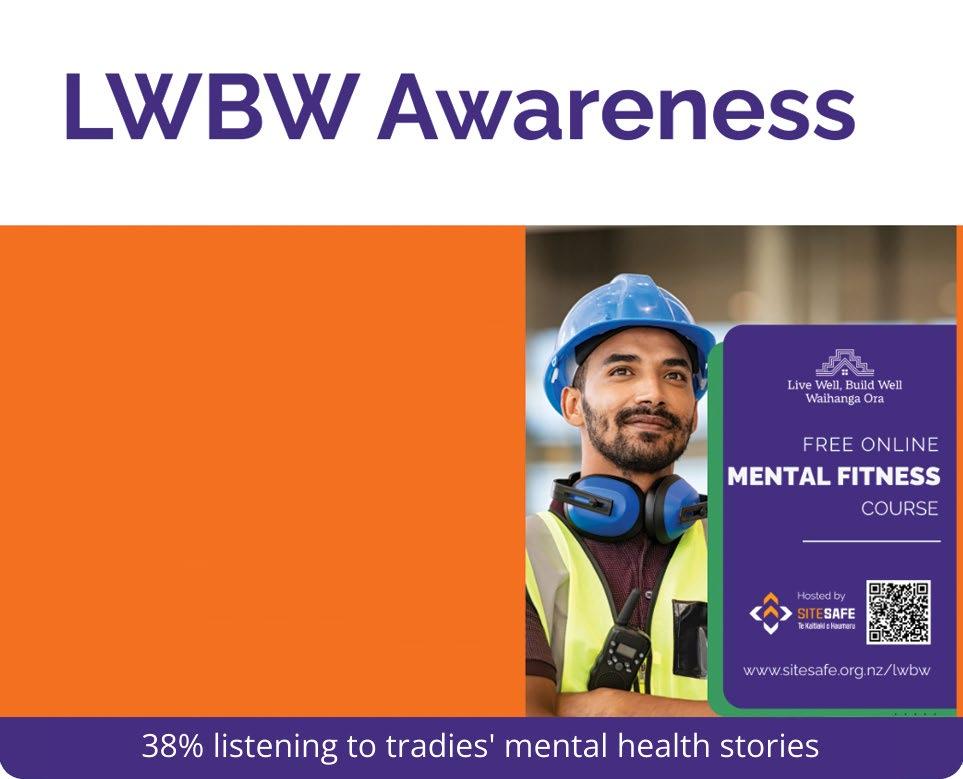
Awareness of LWBW is growing fast. More people are using tools to manage stress. Awareness has tripled since 2023!
Users say LWBW helps manage stress, improve habits, think clearly and start conversations. Simple tools, real impact!



One standout finding is the increased engagement with LWBW itself.
“Tradies aren’t just more open to talking about mental fitness, they’re acting on it,” says Rafael Caso, Programme Lead at LWBW.
“We’re seeing a shift from awareness to habit. It’s daily actions that build resilience, not once-a-year campaigns.
“What’s exciting is that we now have three years of independent data showing what works. This isn’t just good intentions. We’re starting to embed mental fitness as a norm in the trades, and that’s a big culture shift.”
The annual wellbeing survey plays a vital role in tracking progress, identifying new risks, and validating what works. The results are used to inform content development, champion training, Toolbox Talks, digital resources, and industry messaging.
The survey is a cornerstone of LWBW’s broader mission: to strengthen the culture of mental fitness across Aotearoa’s construction sector. Its strength lies not just in the data, but in how it reflects lived experience within the trades.

LWBW is a sector-led mental fitness initiative designed specifically for New Zealand’s residential construction workforce. It promotes practical tools, peer stories, and industry-wide support systems to help builders and tradies build resilience on and off-site.
This year’s wellbeing survey and report has been proudly supported by ITM, the first Industry Foundation Partner of the LWBW programme.
To learn more, visit livewellbuildwell.com and follow LWBW on social media @livewellbuildwell
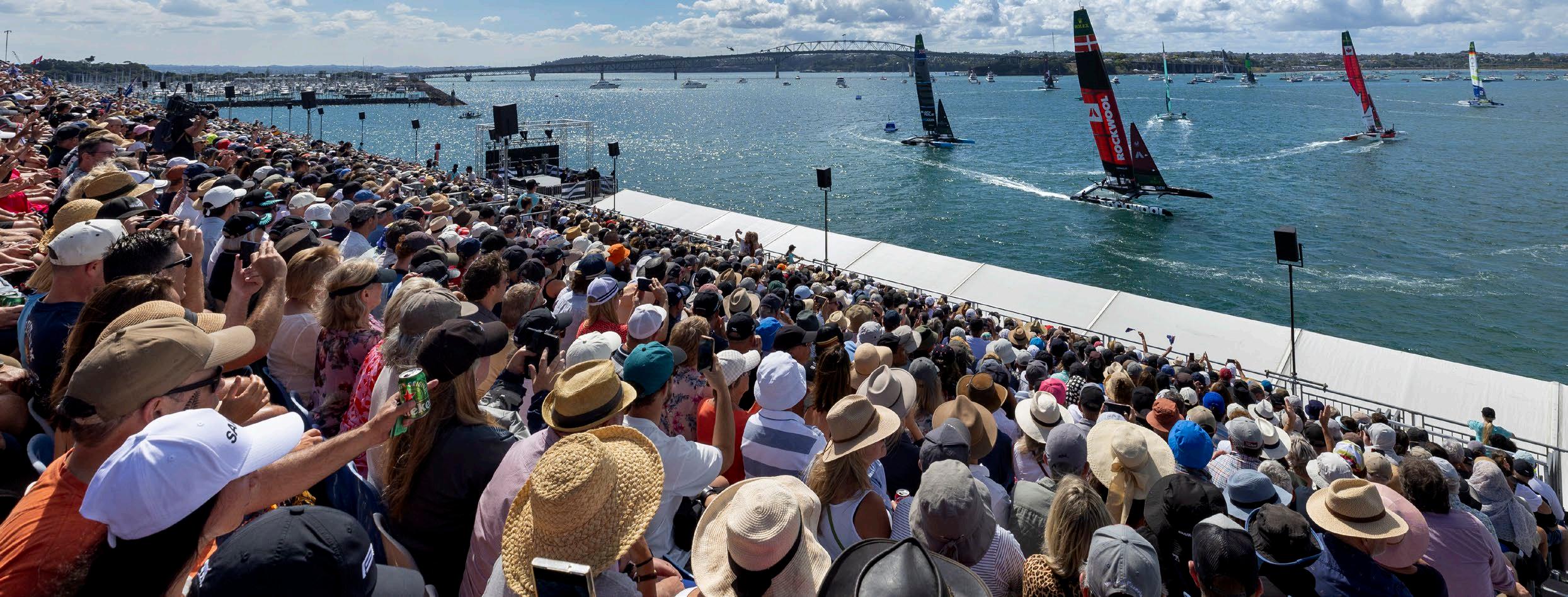
There’s a unique vibe when SailGP comes to New Zealand, and it’s why top international sailors treasure the experience so much.

Black Foils strategist
Liv Mackay says, “all the teams love this place because of the level of engagement of the fans, how much they’re into sailing, and the incredible enthusiasm they see all around them. After every event, they say the same thing. The atmosphere is just brilliant.”
More boats on the start line. The largest grandstand ever seen on the Waitemata Harbour waterfront.
The best F50 sailors in the world. And boats that are a big step-up in performance from what we saw at last year’s event in New Zealand.
“Changing to T-foils and new rudders has seen a huge increase in average boat speeds, and there’s been a lot of development work on the wing sails, plus a whole lot of systems updates which you don’t see externally.
“It’s made the boats much faster, more reliable, but most of all, it means we can sail the boat more creatively. That’s where teamwork really comes into it.
“There have been a lot of crew changes in other teams recently, and from our perspective, we find real strength that our team is staying in place. That’s something we’re really happy about and feel strongly that it’s going to benefit us.”
The roar of the crowd
Liv has vivid memories of last year’s event in Auckland.
“It wasn’t the result we wanted, but the experience was so surreal. Even with all the noise on the boat,
the wind and rush of the water on the foils, we could still easily hear the cheering coming from boats moored around the edge of the racecourse, and the huge roar from the grandstand on the finish line.
“It was really super special, and I’ve never experienced anything like that anywhere else in the world. I can’t wait to have that feeling again.”
Black Foils crew sail all around the world, competing at the highest level every month of the year in a different location. Sounds glamorous. We asked Liv for her thoughts.
“It’s challenging to develop a new way of living and create routine and structure while travelling constantly. You’ve got to balance your energy and time and then cope during race week when it’s really hectic.
“You have to gear your whole lifestyle so that you’re in peak form physically and mentally for each event. Plus, there are media and other offwater commitments, so once the racing is over, you’re exhausted. Then it starts again.
“With the northern American block of the circuit or the European block, it’s not practical to come home because of all the flying, changing times zones, etc. So I just move from one place to the next.
“But during the southern hemisphere part of the schedule, I get to come home, connect with friends and family who I constantly talk to on the phone, but there’s nothing like seeing them face to face”.
Stunning European-inspired tray roofing meets modern, innovative thinking to deliver a competitive, high-performing roofing system. Introducing Steel & Tube’s QBT450™ (quick batten tray).
Zealand’s love for tray roofing
Tray-style roofing and cladding have a long history in New Zealand, dating back to the 1900s. Favoured by many Kiwis for their deluxe appearance and weather-tightness.
Traditional tray roofing offers many benefits for homeowners, but until now, current solutions have required highly skilled installation to achieve the crisp-lined finish we all love.
The QBT450 system brings a modern approach to traditional tray-roofing, simplifying installation and providing a solution for New Zealand’s love of European-inspired design.
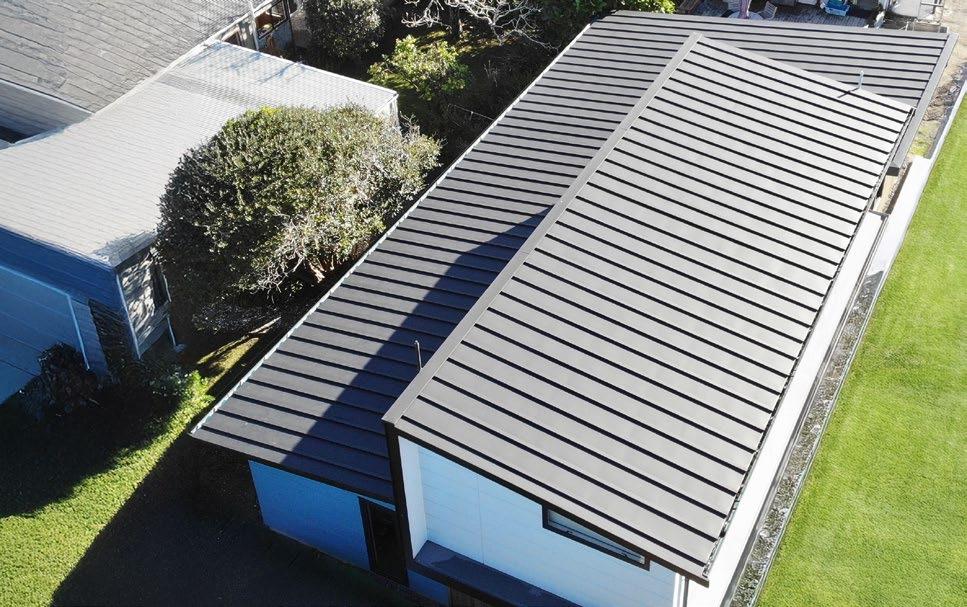
What is QBT450? Modern ingenuity meets European design.
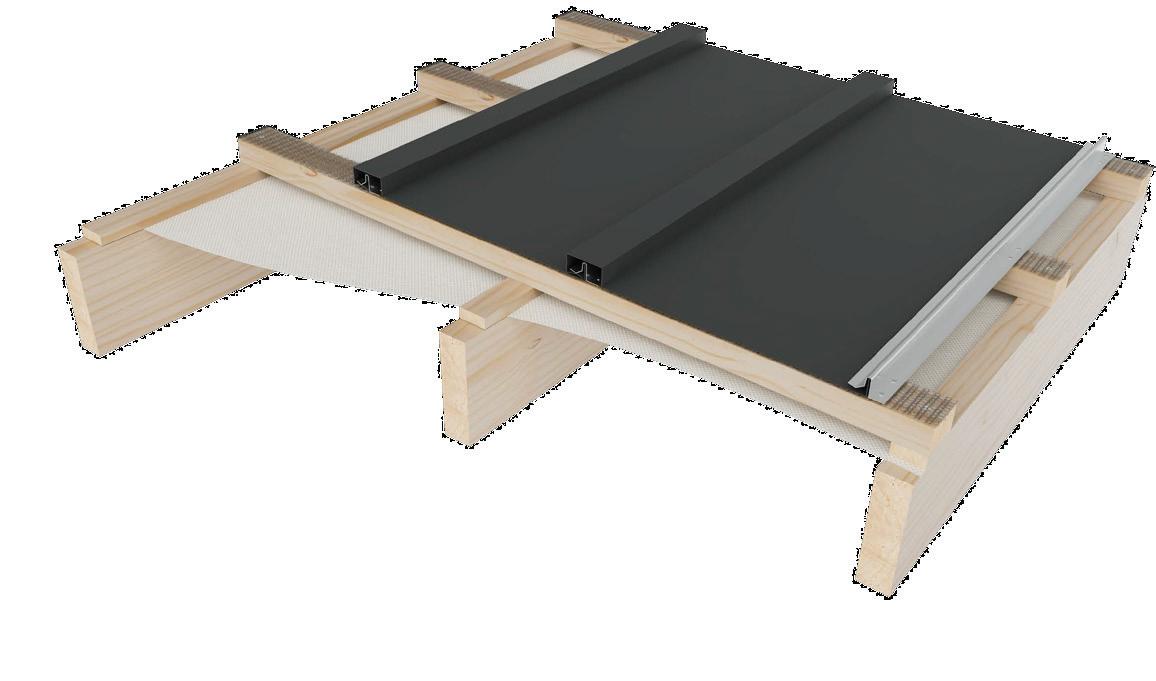
Using a single six-metre aluminium extrusion clip and a clever interlocking profile, QBT450 is mounted directly to purlins with no substrate required. This method simplifies the installation process and allows for thermal or seismic expansion between each sheet, ensuring the longevity and weathertightness of your roof.
The patented mounting system unlocks installation perks for roofers, too. With the extrusion fixing and a centre sheet, roofing can be laid out bi-directionally (with two roofers working from the centre out),
essentially halving the profile installation time. QBT450’s mounting system also allows a single damaged sheet to be replaced without the need to uplift other sections. A truly unique feature of QBT450.
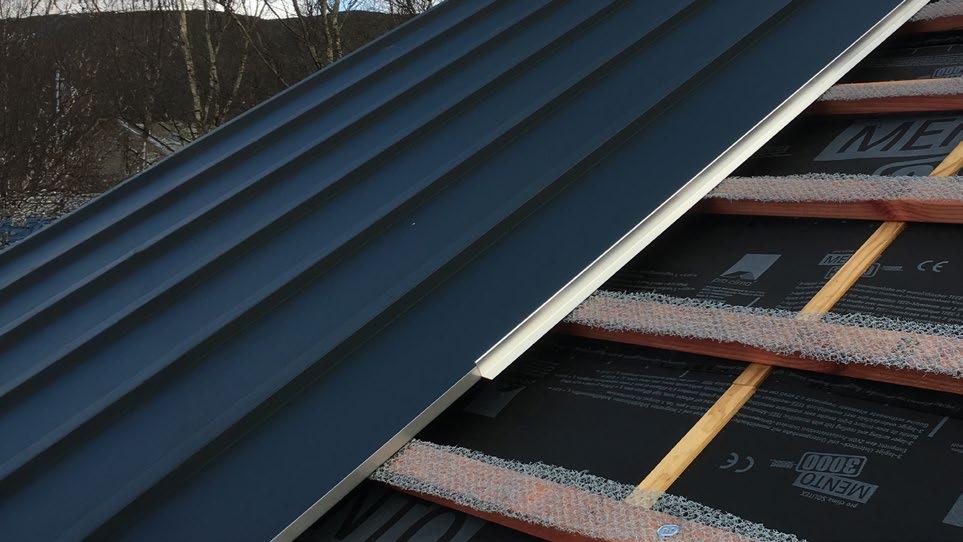
The opportunity to install QBT over a ventilated cavity not only saves on build cost by removing the need for a ply substrate, but also substantially increases air movement within the roof space. The 20mm cavity batten creates space for free-flowing air from eave to ridge. This air movement helps carry moisture from condensation out of the roof cavity, leading to a dryer roof cavity.
QBT450 is the only BRANZ appraised tray roofing system. The appraisal covers specification details and installation practices, independently checked to meet New Zealand building code standards.
▶ For BRANZ appraisal, design and specification, or installer information, visit www.qbt450.nz
▶ QBT450 is available to order through your local ITM store.
A profile that is beautiful to look at, offers a dryer and healthier home, and simplifies installation in comparison to traditional standing seam profiles. QBT is where great design meets performance.
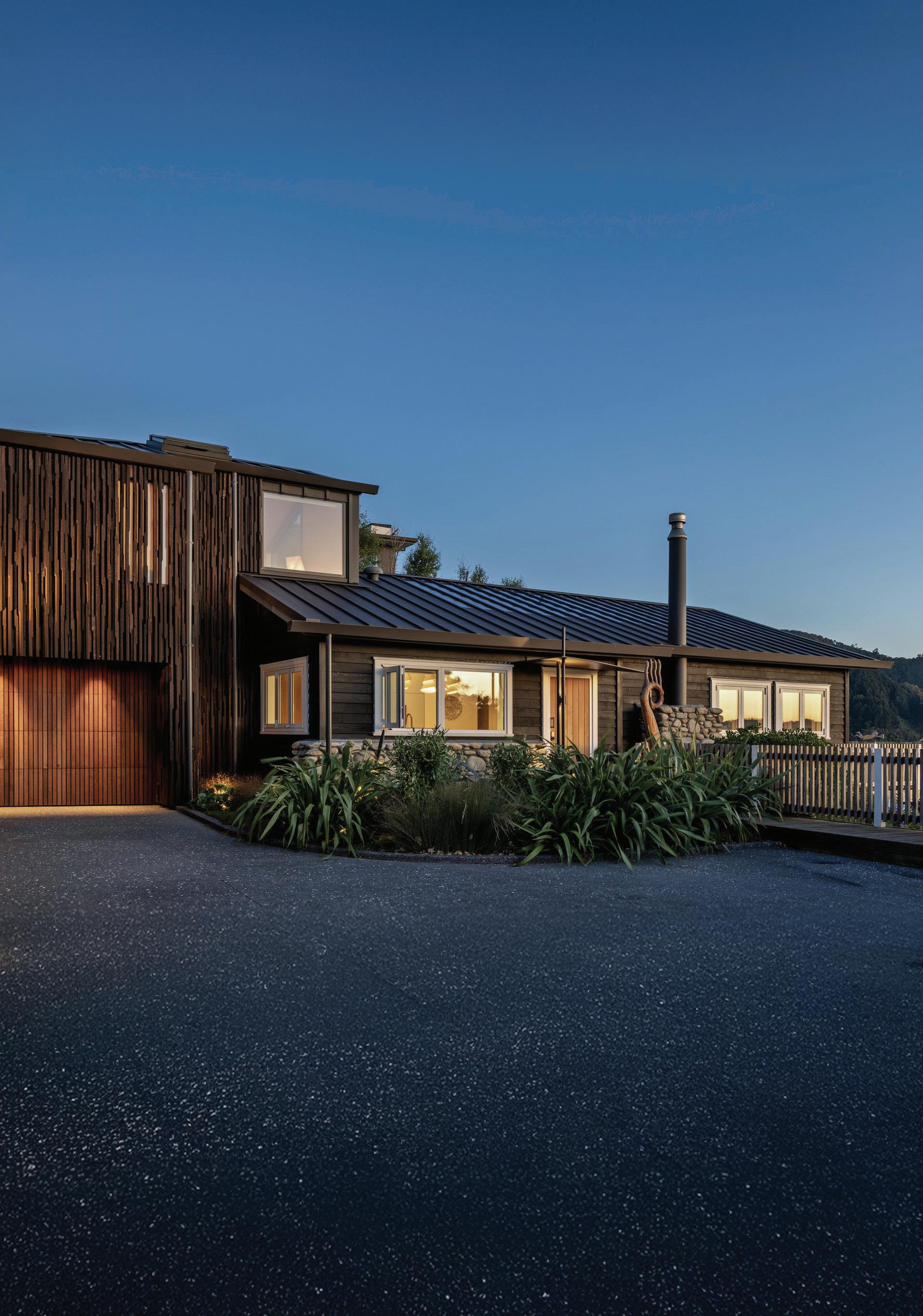
Full ventilation from eave to ridge. Self-supporting with no substrate required. The only BRANZ appraised tray roofing system in NZ.

Become a registered installer to receive free product training, best practice advice, and installation technique - complete the form at QBT450.nz
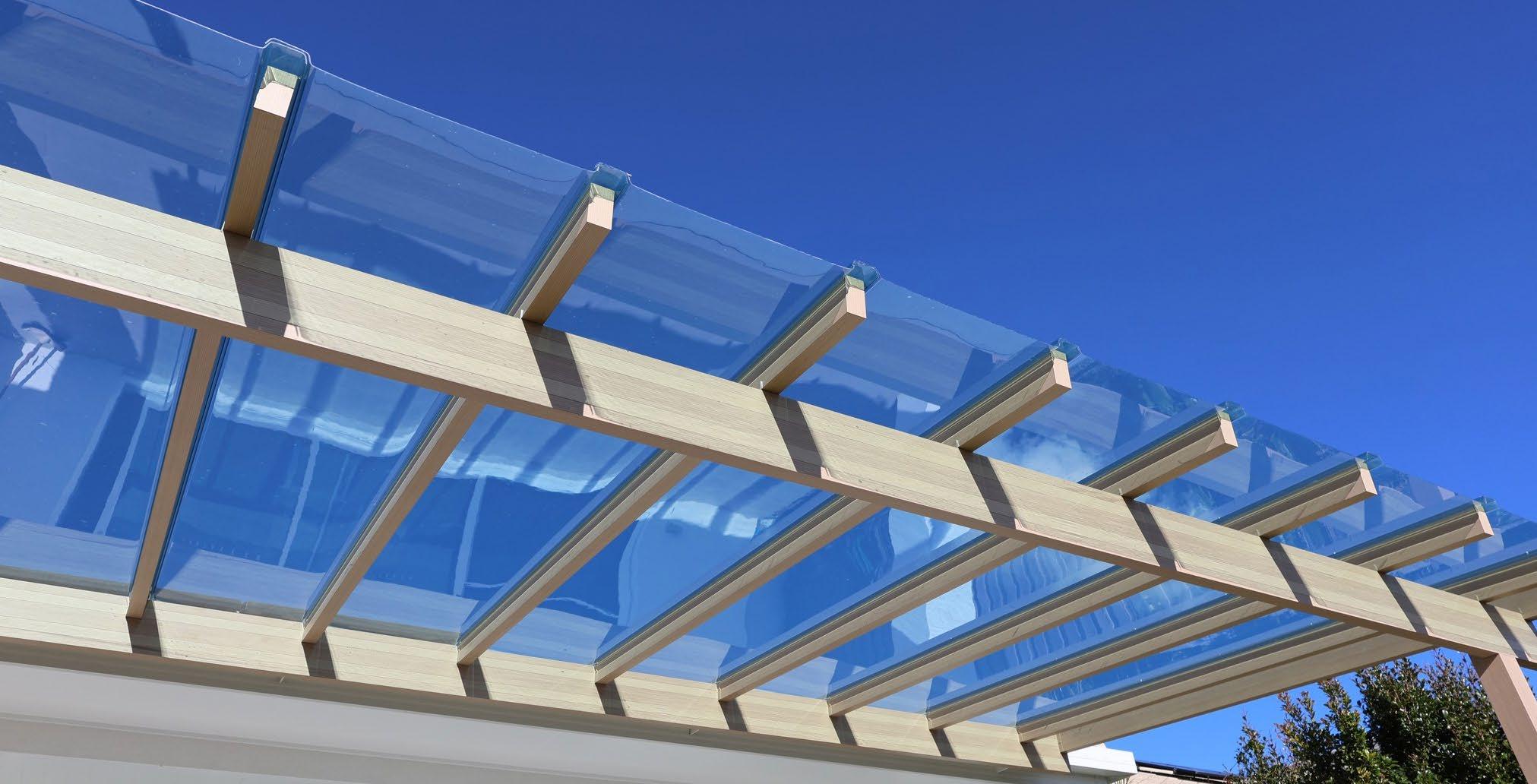
Imagine a flat roofing panel that overlaps together as easily as corrugated roofing - no glazing bars, no hassle. Introducing Suntuf EZ Glaze™.
Brought yo you by PSP limited, EZ Glaze™ is simple to quote, effortless to install, and practically maintenance-free.
With a sleek, flat-glass appearance, EZ Glaze offers a clean, modern aesthetic that’s easy to achieve. Just overlap the sides of the sheets and fasten—no need for bulky glazing bars.
Formed from 3 mm thick high-performance Polycarbonate, these panels are engineered to fit directly over rafters, making EZ Glaze the perfect roofing solution for:
▶ Porches
▶ Carports
▶ Walkways
▶ Pergolas
▶ Verandas
▶ Awnings
▶ Entrances

EZ Glaze isn’t just good-looking - it’s built to last. Its smart panel layout simplifies installation while delivering high load capacity and durability.
Suntuf EZ Glaze blocks 99.9% of harmful UV rays while allowing the beneficial spectrum that promotes plant growth to pass through. You get natural light and sun protection without compromising on comfort or performance.
maintenance,
Thanks to its flat profile and dirt-resistant surface, EZ Glaze keeps its glass-like clarity with minimal upkeep.
“A quick wash now and then is all that’s needed to keep it looking as good as new.”
If you’re looking for a cost-effective, stylish, and long-lasting roofing solution, Suntuf EZ Glaze is your roof’s new best friend.
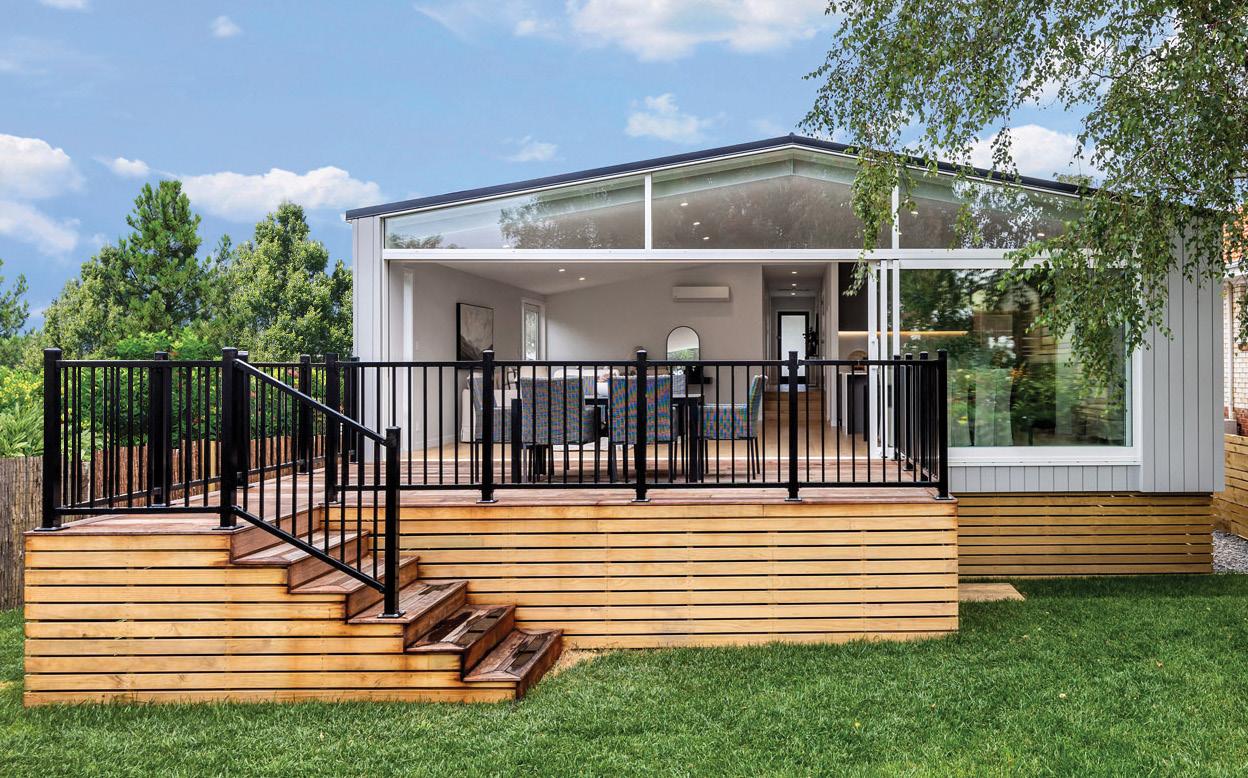
Fentec’s Delta Balustrade is a strong, aluminium system made for decks, balconies, stairs, retaining wall edges, and other elevated areas. It delivers a tidy, consistent finish with minimal on-site adjustment.
Key Features
• Fabricated from strong & durable aluminium providing a secure and long lasting balustrade
• Clean modern design that complements a wide range of architectural styles
• Simple and easy to install
• Complies with NZ Building Code when installed to our PS1 guidelines



Product Code
FADBP9511
FADBP1211
Panel Length
Panel Height 950mm 1200mm
Horizontal Rails 1110mm 40x40mm
Vertical Bars 19x19mm
Posts 65x65mm
Post centre 1175mm








Codewords article provided by the Ministry of Business, Innovation and Employment.

Learn how to reduce RFIs and speed up building consents with better documentation, searchable PDFs, and clear compliance details.
The building consent process is a critical part of delivering safe, durable, and compliant buildings. But for many designers, it can feel like a roadblock rather than a gateway. A recent research report, ‘Transforming Building Consenting Behaviour for Better Housing’, looked at how we can improve this system to make it faster, clearer, and more effective.
This article explains the key findings from the report and what they mean for you as a Design LBP. It also offers practical tips to help you reduce delays and improve your consent documentation.
Why change is needed
The Building Act 2004 sets out that buildings must meet performance requirements, but it doesn’t tell you exactly how to design or build them. That flexibility is good for innovation, but it also creates uncertainty.
Building Consent Authorities often request additional information through Requests for Information (RFIs) to ensure your design meets the Building Code.
The research found that RFIs are one of the biggest causes of delays. Many RFIs happen because documents are missing, unclear, or not in the right format. For designers, this means more time answering questions and less time designing.
Here are some important insights:
1. Documentation quality matters
Most RFIs were triggered by missing or incorrect documentation. For example, structural bracing calculations or roof bracing details were often incomplete. This shows how important it is to provide clear, complete, and accurate documents upfront.
2. Searchable PDFs are essential
Councils need to quickly find information in your plans and specifications. The report recommends using searchable PDFs for all consent documents. This simple step can save time and reduce RFIs.
3. Standardisation helps everyone
The report suggests using consistent document naming and layout. This makes it easier for BCAs to process your application and reduces confusion.
4. Focus on key code clauses
Many RFIs relate to structural requirements under B1 Structure and moisture control under E2 External Moisture. Make sure your design clearly shows compliance with these clauses.
5. Respond to RFIs promptly
To avoid delays in obtaining a consent for your client, attempt to respond to RFIs as promptly as possible. If in doubt about the RFI question, consider contacting the BCA for further clarification.
Here’s what you can do to improve your consent applications:
▶ Provide complete information
Double-check that all required documents are included. Use council checklists to make sure nothing is missing.
▶ Make it easy to read
Use clear titles, consistent formatting, and searchable PDFs. Avoid scanned images that can’t be searched.
▶ Show compliance clearly
Include calculations, details, and references to standards like NZS 3604:2011 for timber framing. For example, bracing and roof details should be easy to find.
▶ Think ahead
If your design uses alternative solutions, explain them clearly and provide supporting evidence. This reduces back-and-forth with the council.
Better documentation means fewer RFIs, faster consents, and happier clients. It also strengthens your reputation as a professional who delivers quality work.
By following these principles, you help transform the consenting system into one that supports good design and better housing outcomes.
This article is relevant to the Design class:
1. What is the main reason councils issue RFIs during the consent process?
a) To check the builder’s qualifications
b) Missing or unclear documentation
c) To delay the project
d) To change the design
2. Which Building Code clauses are most often linked to RFIs?
a) G4 Ventilation and H1 Energy Efficiency
b) B1 Structure and E2 External Moisture
c) F6 Lighting and G12 Water Supplies
d) C Protection from Fire
3. What is one simple step you can take to make your consent documents easier to process?
a) Use handwritten notes
b) Submit documents as scanned images
c) Provide searchable PDFs
d) Leave out bracing calculations
ADD TO YOUR LBP ACTIVITY LOG
This article is from Codewords Issue 128.
Log in to the LBP portal lbp.govt.nz (or scan the QR code) and update your Skills Maintenance activities.

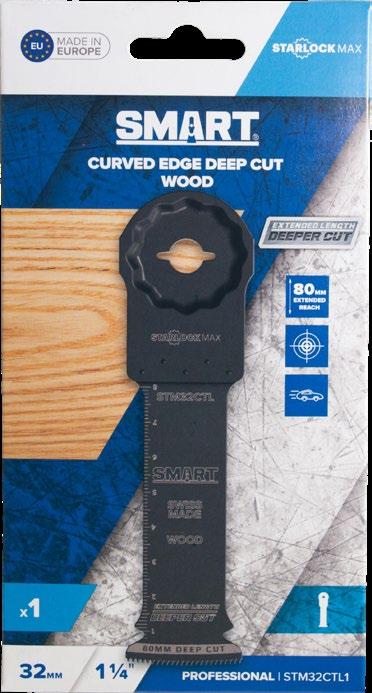
STARLOCK MAX Deep Cut Curved Tec Blade
#STM32CTL1
• 32mm curved edge blade
• Extra-long 80mm blade for precise and controlled cuts in wood
• Starlock Max fitment
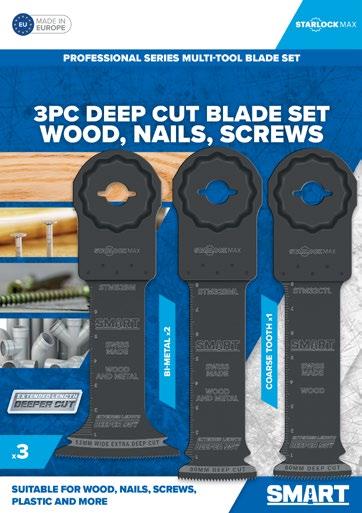
3-Piece STARLOCK MAX Kit
#STM3MAX
• 3 piece Starlock Max kit with 2x bi-metal blades
• 2x 32mm blades and 1x 52mm blade
• 2x extra-long 80mm blades
• Starlock Max fitment
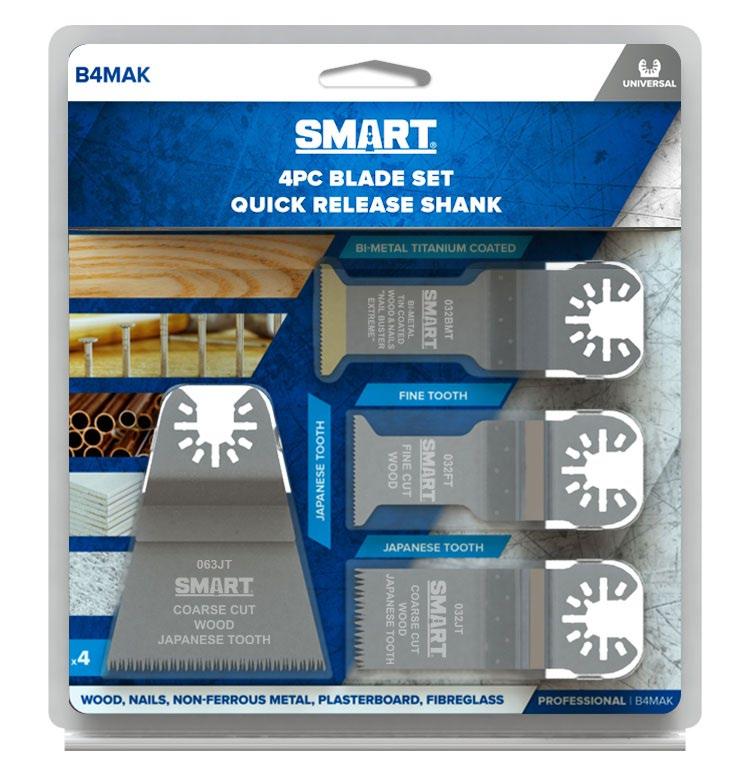
#B4MAK
• A blade for all trades
• 32mm, 44mm, and 63mm blades
• Universal Open-back (not Starlock)
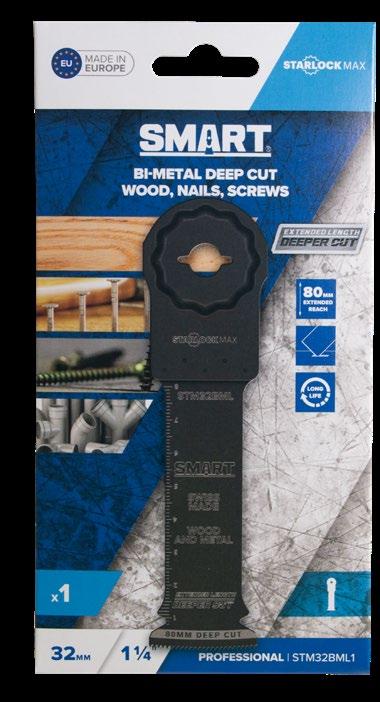
STARLOCK MAX Deep Cut Curved Tec Bi-Metal Blade
#STM32BML1
• 32mm long reach bi-metal blade
• Cuts wood, non-hardened nails, screws, and metals
• Starlock Max fitment
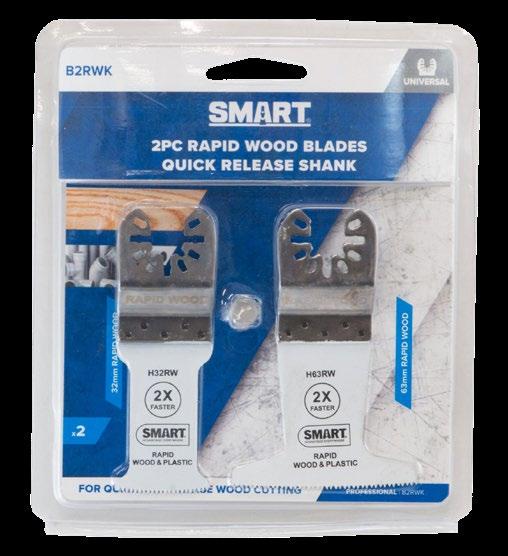
#B2RWK
• Includes a 32mm and 63mm rapid wood blade
• Dual toothed for extremely fast cutting in wood and plastic
• Universal Open-back (not Starlock)
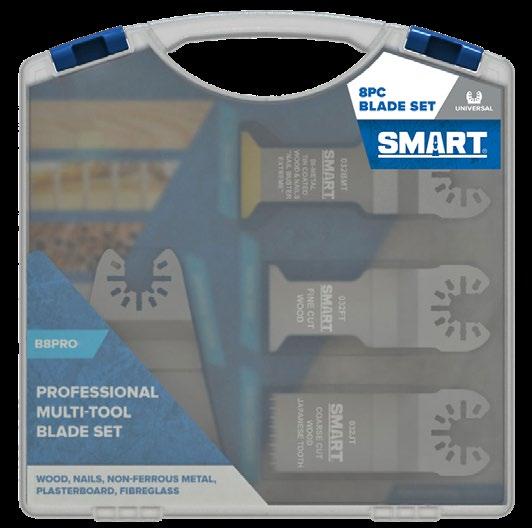
#B8PRO
• Super versatile kit
• Great range of blades to suit any trade
• Reusable carry case
• Universal Open-back (not Starlock)

Holes or notches are sometimes required in timber framing members, but they must be carefully located so they do not undermine structural integrity.
By Alide Elkink, Freelance Technical Writer, Wellington
NZS 3604:2011 Timber-framed buildings specifically identifies locations for holes and notches in joists, studs, and plates, but does not include rafters and ceiling joists. BRANZ suggests that the locations and restrictions for floor joists are also used for these members.
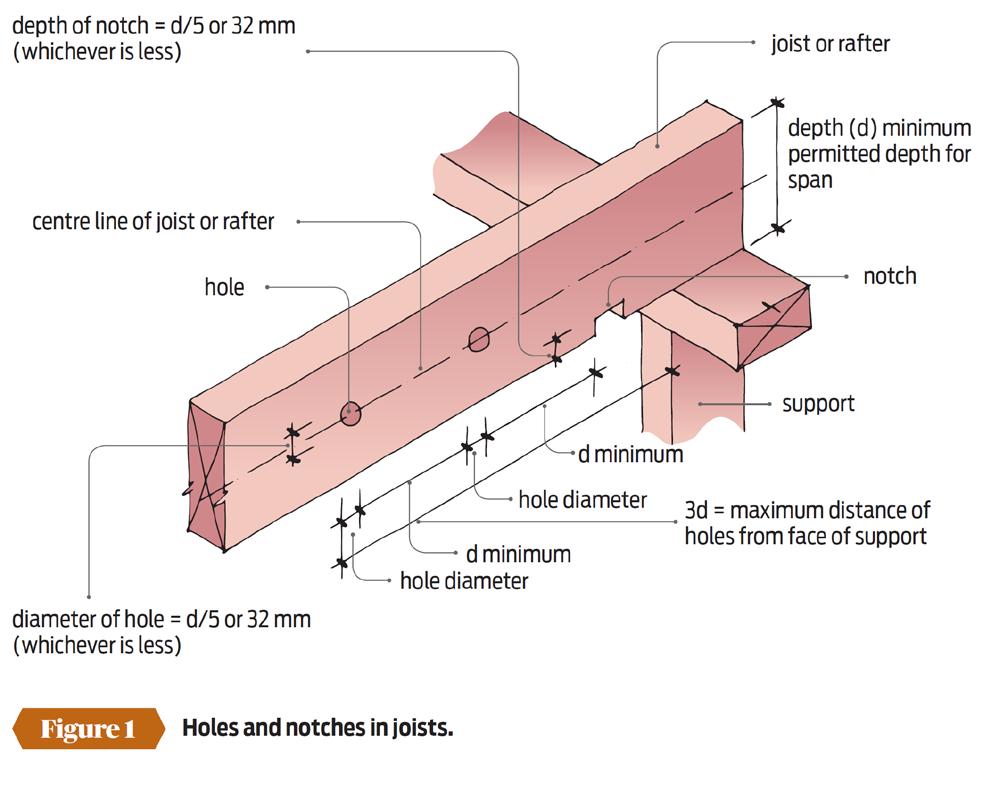
NZS 3604:2011 sets out restrictions for holes and notches in joists:
▶ The maximum allowable diameter of holes is one-fifth of the joist or rafter depth or 32 mm, whichever is the lesser (see Figure 1).
▶ The maximum allowable depth of notches is one-fifth of the joist or rafter depth or 32 mm, whichever is less.
▶ Holes may only be located within a length measured from the face of a support that is no more than three times the depth of the joist or rafter.
▶ Holes and notches may not be closer to one another than the depth of the joist or rafter.
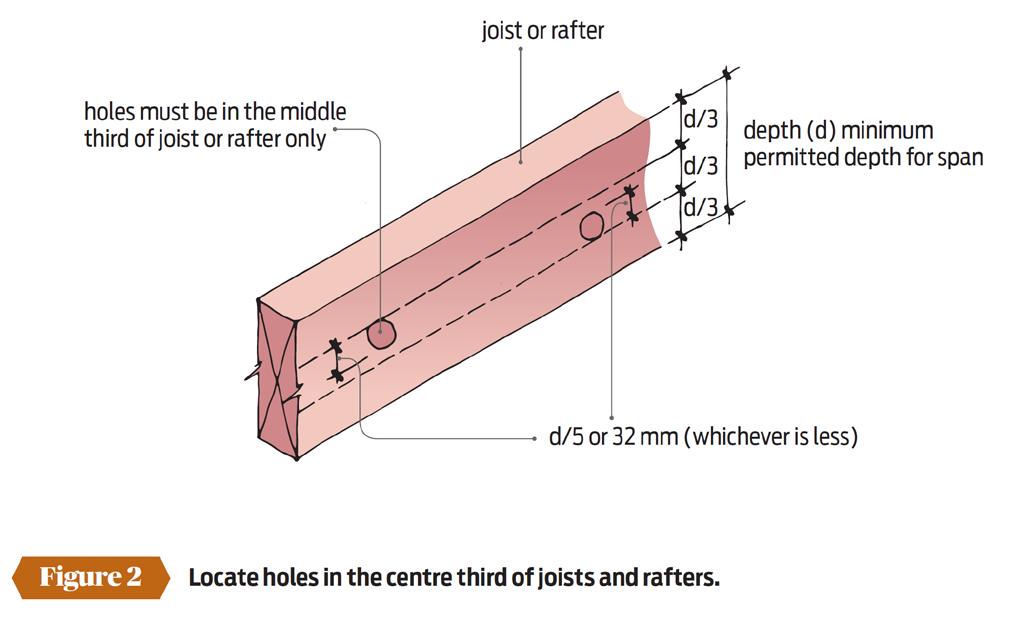
▶ Holes should be located in the middle third of the joist or rafter depth only (see Figure 2).
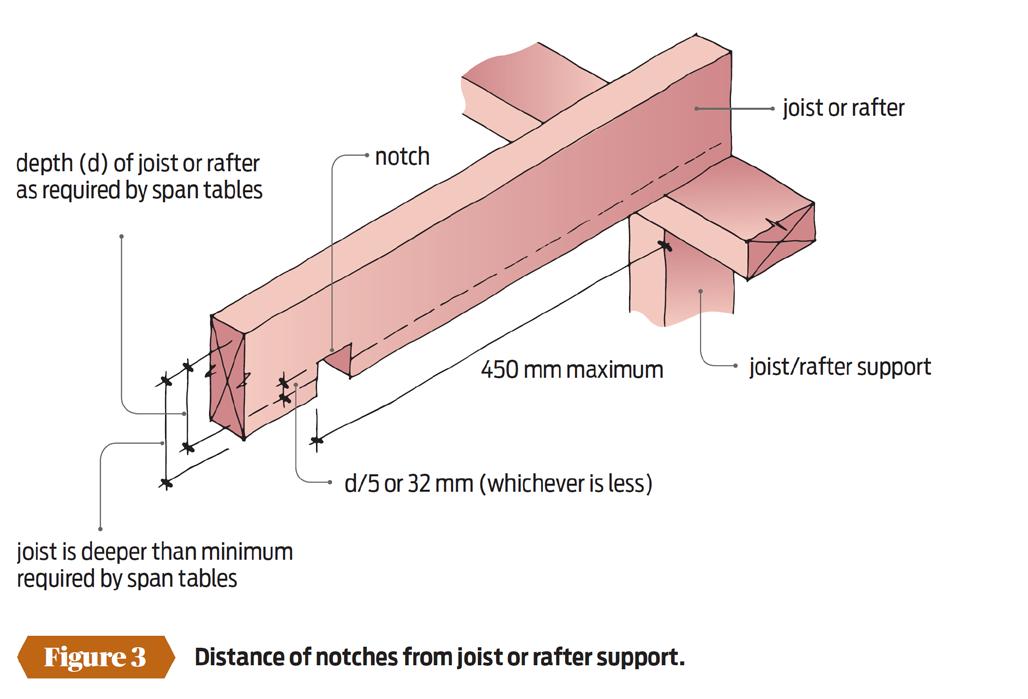
▶ Notches in joists and rafters may be located no more than 450 mm from the face of a support, unless the notch does not reduce the net depth of the joist to below that required by the span tables in NZS 3604:2011 (see Figure 3).
Holes or notches may be cut into cantilevered joists, provided:
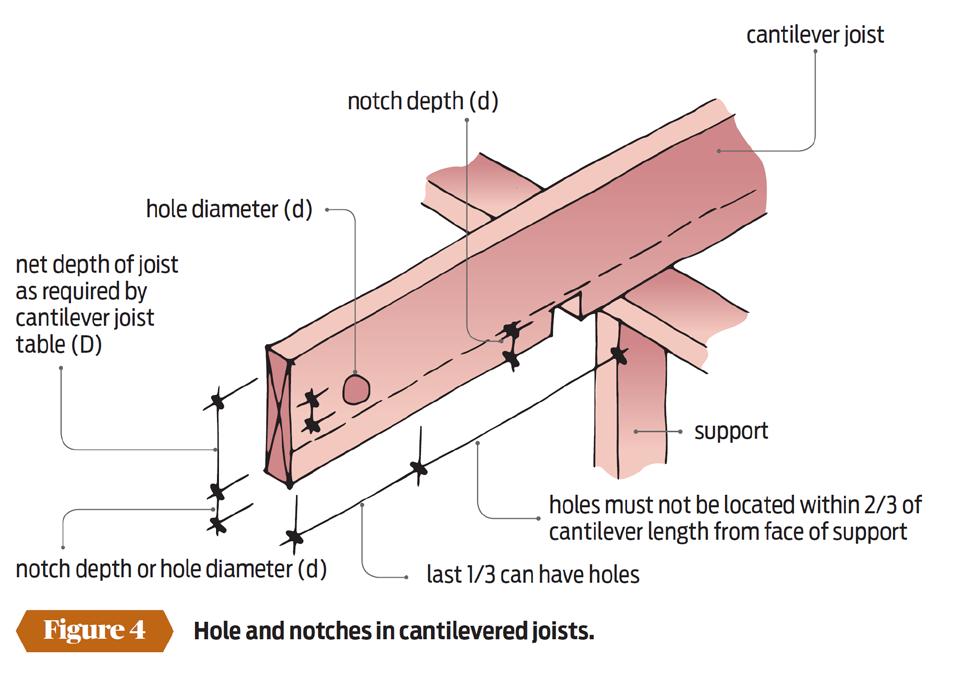
▶ the notch does not reduce the net depth of the joist to below that required by the span tables (see Figure 4), and
▶ holes are located in the outside third of the length of the cantilever, measured from the face of the support.
Studs may have holes or notches cut into them with the following limitations:
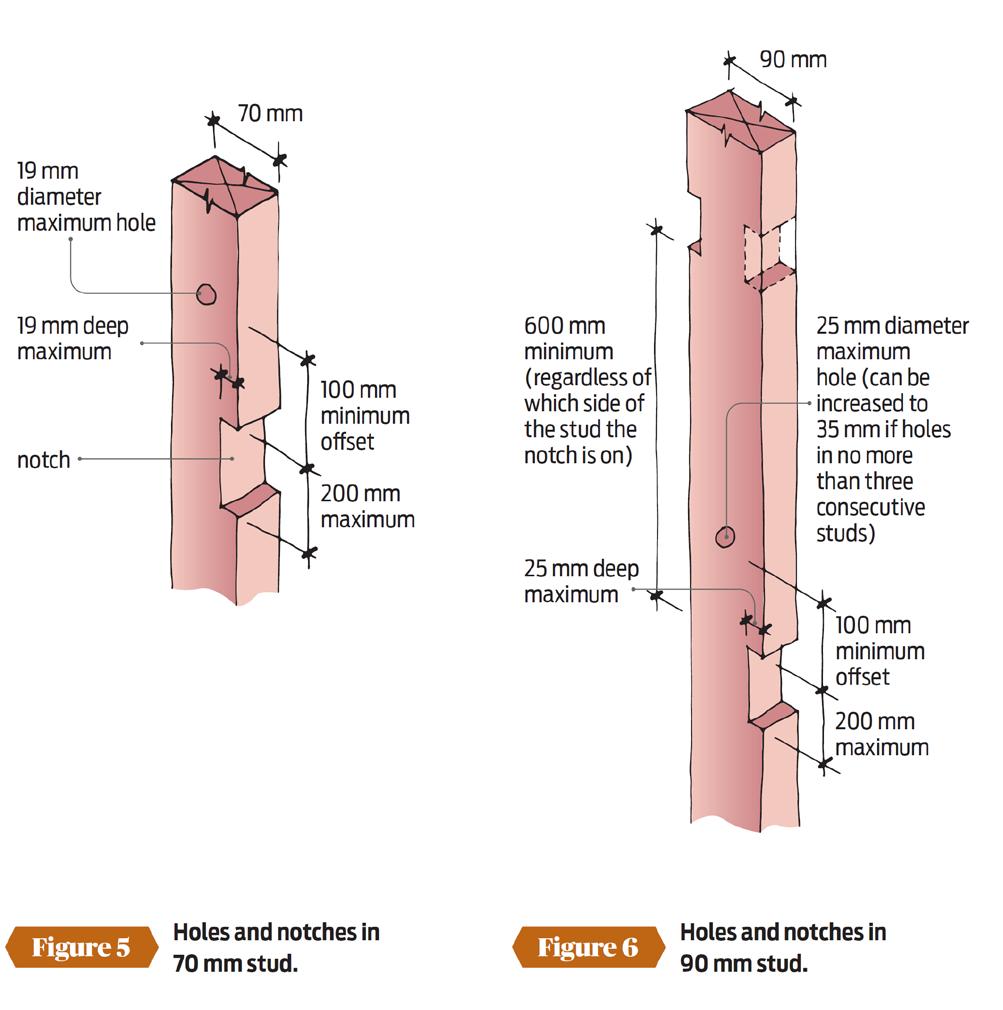
▶ In 70 mm deep studs, holes and notches should be no more than 19 mm in diameter or depth. The exception is that the depth of notches may be increased to 22 mm to fit diagonal metal bracing (see Figure 5).
▶ In 90 mm deep studs, holes and notches should be no more than 25 mm in diameter or depth, except that the dimension may be increased to 35 mm where no more than three consecutive studs are drilled or notched (see Figure 6).
▶ For 70 mm and 90 mm deep studs, notches may be no more than 200 mm deep and should be vertically separated by at least 600 mm regardless of which side of the stud is notched.
▶ Holes and notches must be separated from one another by at least 100 mm.
▶ Holes in studs supporting brick veneer must be no closer than 50 mm from the outside face of the stud to allow sufficient depth for fixing brick ties.
▶ Trimming studs may not have any holes, notches, checks, or cuts made in the middle third of the stud length, regardless of stud dimension.
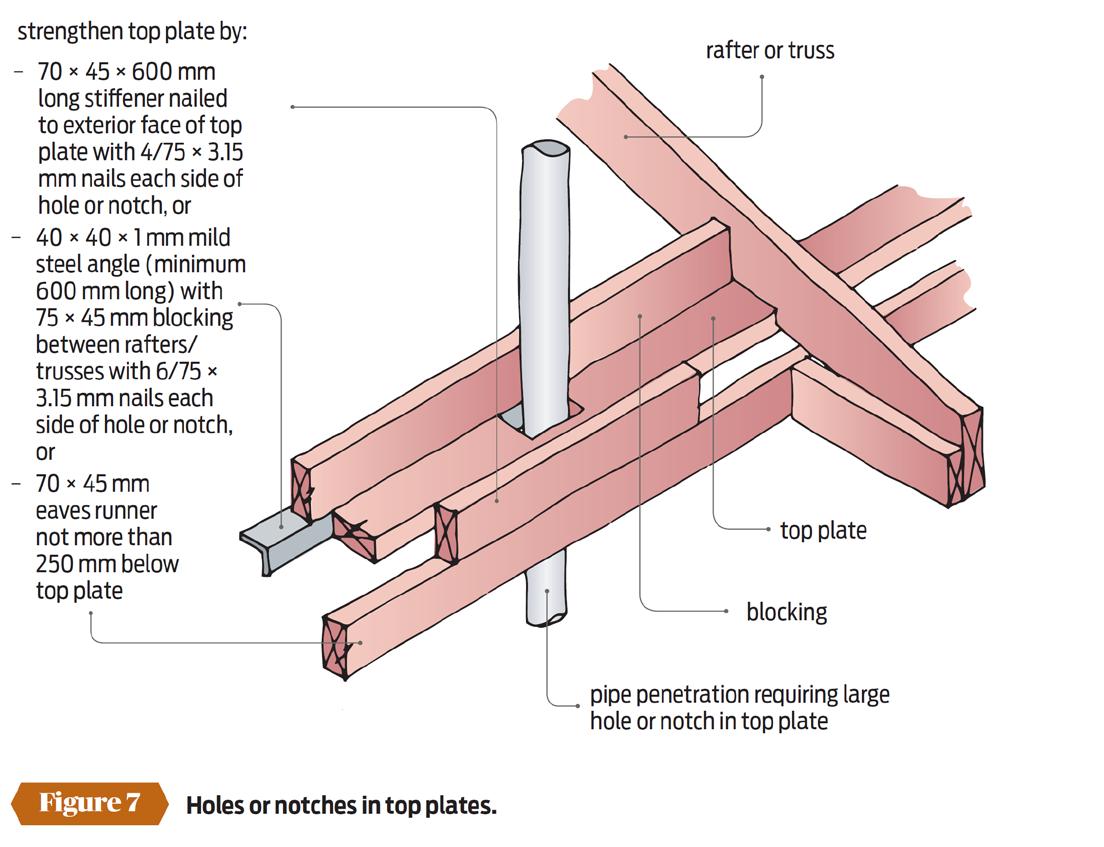
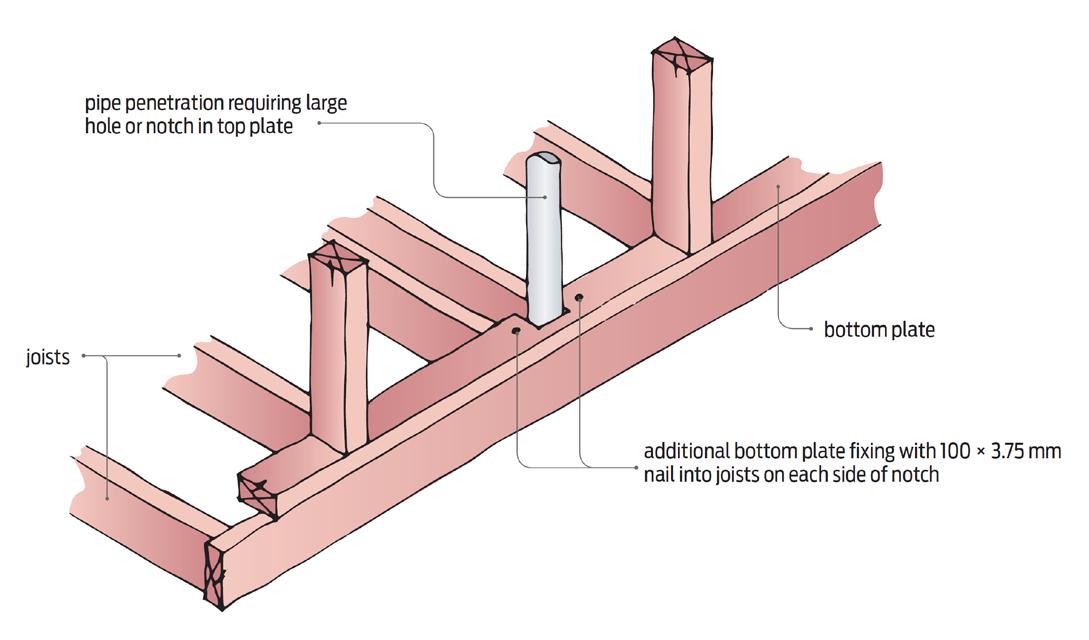
Top and bottom plates sometimes require holes or notches. They generally have similar restrictions as for studs:
▶ In 70 mm deep top plates, holes may be no more than 19 mm in diameter, and notches may be no more than 19 mm deep and 200 mm long.
▶ In 90 mm deep top plates, holes may be no more than 25 mm in diameter, and notches may be no more than 25 mm deep and 200 mm long.
If the hole or notch required is larger than these dimensions, the top plate must be strengthened with extra timber and/or steel angle (see Figure 7).
A hole or notch that is more than half of the width of the bottom plate must have additional 100 × 3.75 mm nail fixings on each side of the hole or notch (see Figure 8).



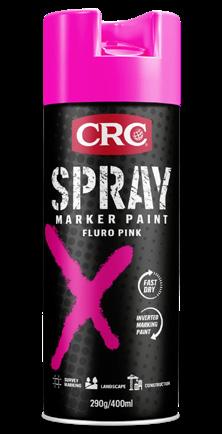
Made by Kiwis, for Kiwis. Created in the heart of Rotorua, New Zealand, GloKote is built for construction, civil, landscaping, and utilities worksites. From R&D to aerosol filling, Damar Industries puts decades of experience into every can, producing paints, coatings, and aerosols that help crews work faster, safer, and with confidence.






Owning and operating a business with your life partner is no easy task.
By Andy Burrows, The Trades Coach

On the bright side, there are upsides to working and living with your business partner. For one thing, you trust them. Another big plus for working together is that it will save your business money. Hiring your spouse for a role they are well equipped to do, i.e. they have the education, skills and training, is cheaper than hiring someone else. Not only will there be no recruiting fees, but your spouse, like you, may also accept a salary below market rate.
However, there’s no way to avoid disagreements that will arise from work and personal interaction. Many couples just don’t navigate the obstacles of working and living together very well, so if you are in business with your life partner, the following tips may help keep you out of the family court going through a divorce.
While working with your spouse offers lots of merits, there’s one great challenge you need to deal with. It’s separating your personal and business life. If your business office is also located in your home, it might blur the lines.
Keep a healthy balance between work and life by designating business hours. Ensure to commit to these hours and refrain from tackling business issues when a day’s work has ended. You need to agree on the rules around when to take the business hat off and put on the spouse/family hat.
Some couples find it hard to draw the line. Your relationship and well-being may suffer, so it’s best to talk openly about your strategies to make things work in your personal and business relationships. Couples tend to talk to each other about their day, and you can still do the same despite sharing the same day at work.
Discuss your feelings about job-related events and focus on the thought that you’re trying to talk generally about how you felt about your busy day.
Another thing to keep in mind is to make time for the entire family. No matter how busy your business can get, family time is vital. And as it should be with all couples, family is more important than work or any other area in your life.
Consider the pros and cons of starting a business with your spouse. Take the rose-tinted glasses off and run some scenarios in which you are without work for a period. Can the household finances withstand that, and what is Plan B? When you’re both aware of such an arrangement’s good and bad sides, you won’t have to blame each other or regret your decisions later on.
Ensure both of you are on the same page. Determine and anticipate how business activities can affect your personal life and build your business plan together.
When you set your goals together, you’ll focus on them and work together as a team.
You won’t have to worry much about money when your business is a success. However, before reaching this stage, you should expect financial challenges, especially in the beginning. There may also be instances when you’ll have to make investments and even borrow a large amount of money.
All these are normal in a construction business. But this doesn’t mean you should completely risk all your family finances. Before getting involved in a business together, you need to separate personal
and business money. You can protect your finances by having a budget contingency plan, a family trust, and a clear understanding of your budget and financial boundaries.
Also, it’s best to talk about what to do if the business fails. You and your spouse should set a limit on how long you should keep trying and investing to make the business work. Knowing when to stop flogging a dead horse is a difficult decision, but a necessary one.
Consult your family lawyer and accountant in these matters.

Defining your roles and responsibilities in advance would help. By dividing labour, your business will be organised and structured. Moreover, you’d both be on one page, thus preventing inconvenient situations from arising.
Roles can be decided based on both your strengths and skills. Whoever between you and your spouse is good at marketing and sales should be assigned to that role. Make sure to keep an open mind to what your spouse has to say, but respect each other regarding the job roles you have.
Goals and targets should be regularly checked and assessed. This would allow you to monitor your business progress. To do this, it’s best to schedule a regular business meeting together.

Every month, you should take the time to review your goals and accomplishments, discuss any issues and concerns with your team, and make any necessary adjustments. As you examine your business, try to remain professional and focus on topics related to your business. Keep personal comments out of the discussion.
To maintain a strong relationship, you need to communicate well. Avoiding the matter will only make matters worse. Stay honest with each other and be receptive to opinions, feedback, ideas, and suggestions. It’s also vital to acknowledge each other’s efforts.
Give praise when your spouse has done an excellent job, but be honest and open to speak out about criticisms, too. Business partnerships with spouses will be successful if mutual honesty is maintained. Remember that you’re always in the situation together.
If it doesn’t already exist, you’ll need to work on trusting each other. One way to do so effectively is to agree to the rules and assigned roles.
There may be times you’d both have different views, but it’s always best to practice trust, especially if the other person is doing their best to fulfil your joint goals.
Working with your life partner will reveal many opportunities to connect, share entrepreneurial ideas, and grow as partners.
Review and commit to the necessary steps outlined in this article to ensure your life-and-work partnership gets off on the right path, or gets back on the path if you have strayed. Plus, don’t shy away from seeking external professional assistance from a mediator or coach who works with couples who run their own businesses.
*Adapted from an article originally appearing on Businessblogshub.com – January 2023

Sometimes, it’s hard to step back from the pit face, look dispassionately at what you have been doing and make changes. If you need help, email me at andy@tradescoach.co.nz, and we can schedule a time to talk.













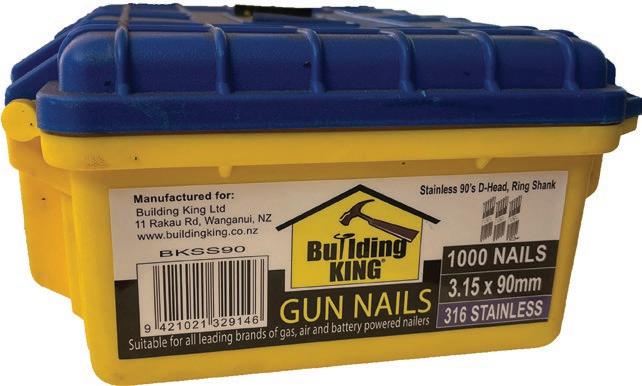
• Proven performance with SS316 gun nails
• Suitable for all leading brands of gas, air and battery powered nailers
• Supplied in TradeCASE to keep nails dry and organised
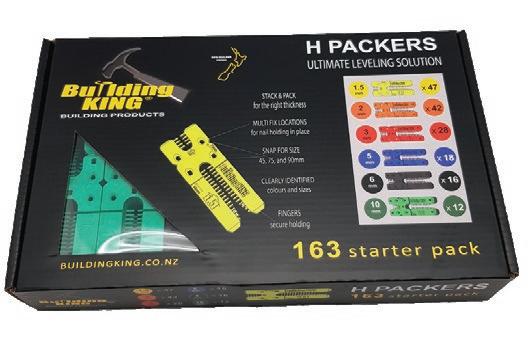
#BKHP163
• 100% stackable H Packers
• Tap in pins for stacking
• Break lines at 45 and 70mm
• Rebated holes for easy fixing
• 163 piece starter pack
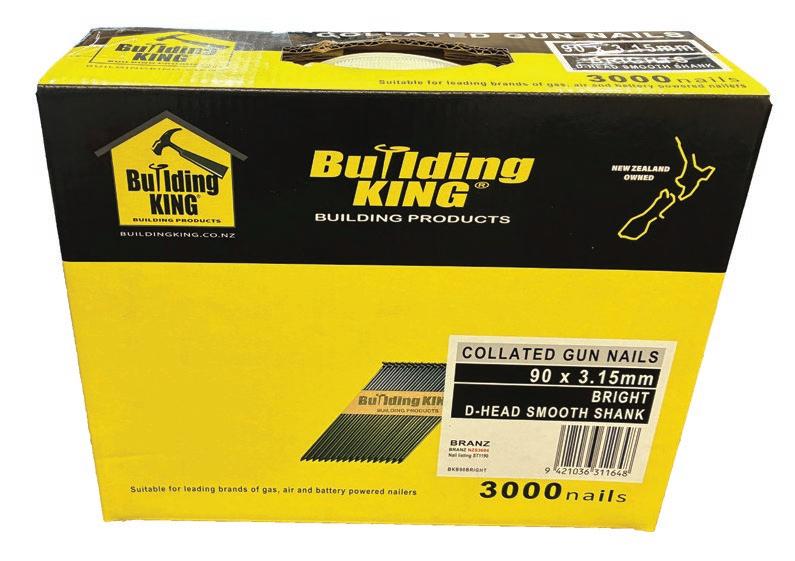
• Bright steel
x 3.15mm
• D-Head smooth shank
• Box includes carry handle
• BRANZ tested
• Suitable for all leading brands of gas, air and battery powered nailers





■ Bay of Islands ITM Kaikohe 09 407 7600
■ Bay of Islands ITM Paihia 09 402 7703
■ Bay of Islands ITM Waipapa 09 407 8002
■ Dargaville ITM 09 439 8730
■ Far North ITM Kaitaia 09 408 3927
■ Far North ITM Mangonui 09 406 0048
■ Mangawhai ITM 09 431 4963
■ Waipu ITM 09 432 0203
■ Whangarei ITM 09 437 9420
■ Albany ITM 09 415 6889
■ Barrier ITM Tryphena 09 429 0466
■ Dayle ITM Avondale 09 828 9791
■ Dayle ITM East Tamaki 09 274 4942
■ Dysart ITM Glen Innes 09 521 3609
■ Hillside ITM Glenfield 09 443 8101
■ MacClure's ITM Henderson 09 836 0088
■ Mahia ITM Takanini 09 267 0234
■ Matakana ITM 09 422 7525
■ Papakura ITM 09 294 9410
■ Tuakau ITM 09 236 8226
■ Waiuku ITM 09 235 7289
■ Warkworth ITM 09 425 1021
■ Weck’s ITM Patumahoe 09 236 3684
■ Weck’s ITM Pukekohe 09 238 3678
■ Western ITM Kumeu 09 412 8148
■ Western ITM Whenuapai 09 416 8164
■ Crighton ITM Greytown 06 304 7193
■ Crighton ITM Seaview 04 568 3896
■ Toa ITM Heretaunga 04 527 6800
■ Toa ITM Porirua 04 232 5999
■ Acorn ITM Hamilton 07 856 6789
■ Cambridge ITM 07 827 0953
■ Coromandel ITM 07 866 8848
■ Dayle ITM Kopu 07 868 9829
■ KKBS ITM Katikati 07 549 0689
■ Matamata Post & Rails ITM 07 888 8189
■ Mount ITM Mt Maunganui 07 575 3126
■ Omokoroa ITM 07 552 5770
■ Opotiki ITM 07 315 5984
■ Otorohanga ITM 07 873 4841
■ Pauanui ITM 07 864 8579
■ Rotorua ITM 07 347 9423
■ Taupo ITM 07 378 9899
■ Tauranga ITM 07 541 1232
■ Te Puke ITM 07 573 9993
■ Thomsons ITM Hamilton 07 849 3674
■ Thomsons ITM Whatawhata 07 829 8518
■ Timmo’s ITM Te Awamutu 07 871 7545
■ Tokoroa ITM 07 886 6611
■ Turangi ITM 07 386 5736
■ Whakatane ITM 07 307 0031
■ Napier ITM 06 842 0531
■ Central ITM Carterton 06 929 7598
■ Central ITM Feilding 06 323 3400
■ Central ITM Marton 06 327 5458
■ Crighton ITM Levin 06 368 4057
■ Hometown ITM Foxton 06 363 8049
■ Manawatu ITM 06 356 9490
■ New Plymouth ITM 06 758 8939
■ North Taranaki ITM Inglewood 06 756 7535
■ North Taranaki ITM Waitara 06 754 8822
■ North Taranaki ITM Waiwhakaiho 06 759 7435
■ Stratford ITM 06 765 7800
■ Blenheim ITM 03 578 3049
■ Havelock ITM 03 574 1018
■ Motueka ITM 03 528 7254
■ Nelson ITM 03 548 5487
■ Picton ITM 03 573 6888
■ Takaka ITM 03 525 0005
■ Ashburton ITM 03 307 0412
■ Basher’s ITM Amberley 03 314 8311
■ Darfield ITM 03 318 7474
■ Geraldine ITM 03 693 9397
■ Greymouth ITM 03 768 0441
■ Hamptons ITM Waltham 03 374 3333
■ Hillside ITM Hornby 03 349 9739
■ Kaiapoi ITM 03 327 8829
■ Kaikoura ITM 03 319 5447
■ McMullan ITM Hokitika 03 755 8519
■ McVicar ITM Harewood 0800 191 674
■ ProBuild ITM Rolleston 0800 445 520
■ Rangiora ITM 03 313 4862
■ Timaru ITM 03 688 8074
■ Waimate ITM 03 689 7427
■ Dunedin ITM 03 262 1008
■ E H Ball ITM Invercargill 03 218 3787
■ Fraser Hardware ITM Balclutha 03 418 0170