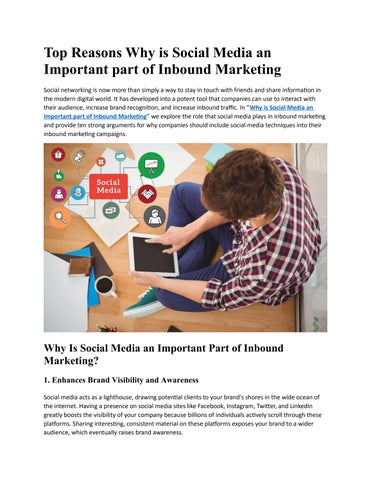
Top Reasons Why is Social Media an Important part of Inbound Marketing Social networking is now more than simply a way to stay in touch with friends and share information in the modern digital world. It has developed into a potent tool that companies can use to interact with their audience, increase brand recognition, and increase inbound traffic. In “Why is Social Media an Important part of Inbound Marketing” we explore the role that social media plays in inbound marketing and provide ten strong arguments for why companies should include social media techniques into their inbound marketing campaigns.
Why Is Social Media an Important Part of Inbound Marketing? 1. Enhances Brand Visibility and Awareness Social media acts as a lighthouse, drawing potential clients to your brand's shores in the wide ocean of the internet. Having a presence on social media sites like Facebook, Instagram, Twitter, and LinkedIn greatly boosts the visibility of your company because billions of individuals actively scroll through these platforms. Sharing interesting, consistent material on these platforms exposes your brand to a wider audience, which eventually raises brand awareness.
2. Facilitates Audience Engagement and Interaction Social media platforms provide a dynamic environment in which marketers can communicate with their target audience directly. Businesses may answer customer inquiries, have meaningful conversations, and get insightful feedback by using likes, comments, shares, and direct messaging. As a foundational element of successful inbound marketing, brands may develop relationships, trust, and brand loyalty by cultivating real connections with their followers.
3. Drives Targeted Traffic to Your Website Getting qualified leads to your website is one of the main objectives of inbound marketing. Social networking is an effective channel for driving relevant traffic to your website. Businesses can encourage social media followers to visit their website and further engage with their brand and offers by sharing blog articles, product updates, promotions, and other helpful material.
4. Amplifies Content Reach and Distribution Producing material of superior quality is just half the fight; the other half is making sure it reaches your intended audience. Social media distributes and broadens the audience for your content like a megaphone. Businesses may expand their organic reach, boost awareness, and get new followers by sharing information effectively on social media sites. These outcomes are crucial elements of a strong inbound marketing plan.
5. Cultivates Brand Authority and Thought Leadership It's critical to create authority and thought leadership in your sector in the cutthroat world of digital. Social media gives businesses a forum to share insightful content, demonstrate their expertise, and participate in pertinent conversations. Through the constant delivery of valuable content and active engagement with peers in the industry, businesses may establish themselves as authoritative voices in their specialty, thereby winning the audience's trust and respect.
6. Enables Targeted Advertising and Remarketing With social media advertising, businesses can precisely reach their targeted demographic thanks to its unmatched targeting capabilities. Businesses can design highly targeted ad campaigns based on demographics, interests, habits, and more with platforms like Facebook Ads and LinkedIn Ads. Furthermore, by re-engaging consumers who have previously connected with their website or expressed interest in their goods or services, businesses can increase conversion prospects through social media remarketing.
7. Provides Valuable Insights and Analytics Effective marketing strategy creation requires a thorough understanding of your target demographic. Strong analytics tools are available on social media sites, providing insightful data on audience
preferences, demographics, engagement metrics, and other topics. Through the analysis of these indicators, companies may enhance their marketing efforts and provide more customized experiences by gaining a greater understanding of the behavior, preferences, and pain points of their audience.
8. Fosters User-Generated Content and Advocacy User-generated content (UGC) boosts brand trust and offers real social proof, making it an invaluable tool for marketers. Social media encourages people to produce and distribute user-generated material, such as posts, testimonials, and reviews, that is relevant to your brand. Businesses can utilize usergenerated content (UGC) to spread their message and draw in new clients by creating a network of brand ambassadors and offering incentives for user participation.
9. Supports Influencer Marketing Initiatives Influencer marketing has become a powerful tool for brands looking to connect and interact with their target demographic in a genuine way. Influencer cooperation thrives on social media platforms, where marketers can collaborate with influencers who connect with their target audience. Businesses can increase the visibility of their brand, foster trust, and promote significant interaction with their target audience by utilizing the reputation and reach of influencers.
10. Enhances Customer Service and Support Social media is a primary avenue for customer care and support in the era of rapid communication. Through social media channels, businesses may promptly support clients by answering questions, fixing problems, or requesting feedback. Businesses may build brand champions out of happy consumers, increase customer happiness, and encourage loyalty by providing prompt, individualized help.
Conclusion In “Why is Social Media an Important part of Inbound Marketing” social media is essential to success in the digital era and goes beyond being an add-on to inbound marketing. Through the utilisation of social media platforms, companies may increase their online presence and achieve more success with inbound marketing by maximising brand awareness, driving targeted traffic, audience interaction, and brand advocacy.
Frequently Asked Questions (FAQs) How does social media contribute to inbound marketing? Social media is essential to inbound marketing because it increases brand awareness, directs relevant traffic to websites, engages audiences, and makes it easier to have deep conversations with clients.
What are some effective social media strategies for inbound marketing?
Developing engaging content, interacting with your audience, using targeted advertising, evaluating metrics to improve strategy, and encouraging user-generated content and advocacy are all examples of effective social media tactics for inbound marketing.
Can social media advertising support inbound marketing efforts? Indeed, social media advertising can help with inbound marketing initiatives by giving companies the ability to precisely target their audience, increase website traffic, and re-engage customers via remarketing campaigns.
How can businesses leverage social media for customer service? By swiftly answering questions and concerns, publicly resolving problems, asking for feedback, and offering clients individualized support through social media channels, businesses can use social media for customer service.
Why is audience engagement important in inbound marketing? Inbound marketing relies heavily on audience engagement because it creates deep connections with consumers, increases their trust and loyalty, promotes brand endorsement, and eventually leads to longterm economic success.