
Supporting Function, Improving Mental Well-Being: The Work of an Occupational Therapist
Occupational therapists, or OTs, help patients recover, regain and/or develop independence in their daily lives after illness, injury, or disability. The work of an OT goes beyond the physical needs of patients; they focus more on the traditional meaning of therapy. By improving cognitive and emotional skills, OTs help identify challenges, develop personalized goals, and come up with ways for patients to foster a sense of purpose.
“When I decided to pursue a career in rehabilitation services, I researched multiple professions and I was most drawn to Occupational Therapy. It is distinct from other rehabilitation fields in that it is a theory-guided practice, and the scope of practice is much broader, so we can practice in a range of specialty areas,” says Justine Stocum, Occupational Therapist at Arnot Health, a Member of Centralus Health.
“I typically work with the geriatric population, which happens to be my favorite population to work with. In this unit I work with acutely ill patients as well as patients who come for rehabilitation. I get to see a wide variety of diagnoses in this setting, ranging from general medical illnesses to orthopedic injures and neurological conditions,” says Emily Miller, Occupational Therapist at Cayuga Health, a Member of Centralus Health.
part of my job is when the patients themselves realize their own progress and reflect back on what they have achieved during their stay. For me, this really reinforces the impact that occupational therapy can have on someone’s quality of life and how meaningful this job is.”
Teaching patients how to use adaptive equipment, modify their environment, and providing them with therapy techniques empowers them by reducing frustration and improving confidence. Justine says helping patients overcome barriers is highly rewarding, restoring hope and motivating them to strive for further progress.

“Watching people improve is the most gratifying part of the job! I especially enjoy seeing the changes in my pelvic health patients. In such a short window of time people can overcome issues that have plagued their lives for years.”
Teamwork in occupational therapy is essential for providing holistic, patient-centered care, leading to better rehabilitation outcomes. It allows professionals to combine expertise, improve communication, and create comprehensive treatment plans that address complex patient needs.
People of all ages turn to occupational therapists for treatment. Children may need support to reach important developmental milestones, master basic life skills, and improve social skills. Adults typically seek care to overcome challenges in their daily lives.
“My patient population is broad—I specialize in both pelvic health and pediatrics, and I also treat adults with orthopedic conditions. I treat individuals across the lifespan from infants to geriatrics,” says Justine.
Occupational therapy can last anywhere from a few weeks to over a year. Days, weeks, or months of treatment offer therapists the opportunity to get a better understanding of their patient’s personal values.
“Rehab professionals have the gift of spending more time with their patients than other care providers do; some of them spend hours a week with us for months at a time. We really get to know people and play an important role in their care team because of it.”
As patients improve, therapy sessions will gradually go from multiple appointments a week to monthly check-ins. Emily says much of that time is spent celebrating minor milestones, like improved toileting functions, bettering fine motor deficits, and improving restrictive behavioral problems.
“There is no better feeling than being able to see my patients regain abilities and independence that may have been lost due to an illness or injury. The best
“I love the people that I work with. I learn so much from the other therapists and professionals. I believe it is extremely meaningful for everyone to come together as a team to provide the patients with the best care possible during their stay,” says Emily.
From creating interactive games to assisting patients with tasks and participating in engaging activities, Justine says the highly active nature of occupational therapy keeps the job interesting.
“I love that I’m not chained to a desk all day! I’m up and moving with my patients.”
OTs act as a bridge to independence, ensuring people can engage in the activities that matter most to them.
Cayuga Health System’s occupational, physical, and speech therapists practice in four Cayuga Health locations: Cayuga Wellness Center, 310 Taughannock Boulevard, Suite 1C, Ithaca; Cayuga Health’s East Campus, 10 Brentwood Drive, Ithaca; 10 N. Main Street, Cortland; and at Schuyler Hospital, 220 Steuben Street, Montour Falls. They also partner with Island Health & Fitness trainers as appropriate to make a seamless transition from therapy to appropriately challenging group or individual exercise programs.
Arnot Health’s physical therapy and rehabilitation is located at their main campus, Arnot Ogden Medical Center, 602 Ivy Street, Elmira; St. Joseph’s Hospital, 555 St. Joseph’s Boulevard, Elmira; 123 Conhocton Street, Corning; 100 John Roemmelt Drive, Horseheads; and 7571 State Road 54, Bath.
OTs at Schuyler Hospital offer therapy for fine motor skills, cognitive impairments, and pain management.
ews line
County Legislature Approves Legal Assistance Funding for Asteri Residents
By Mikayla Rovenolt
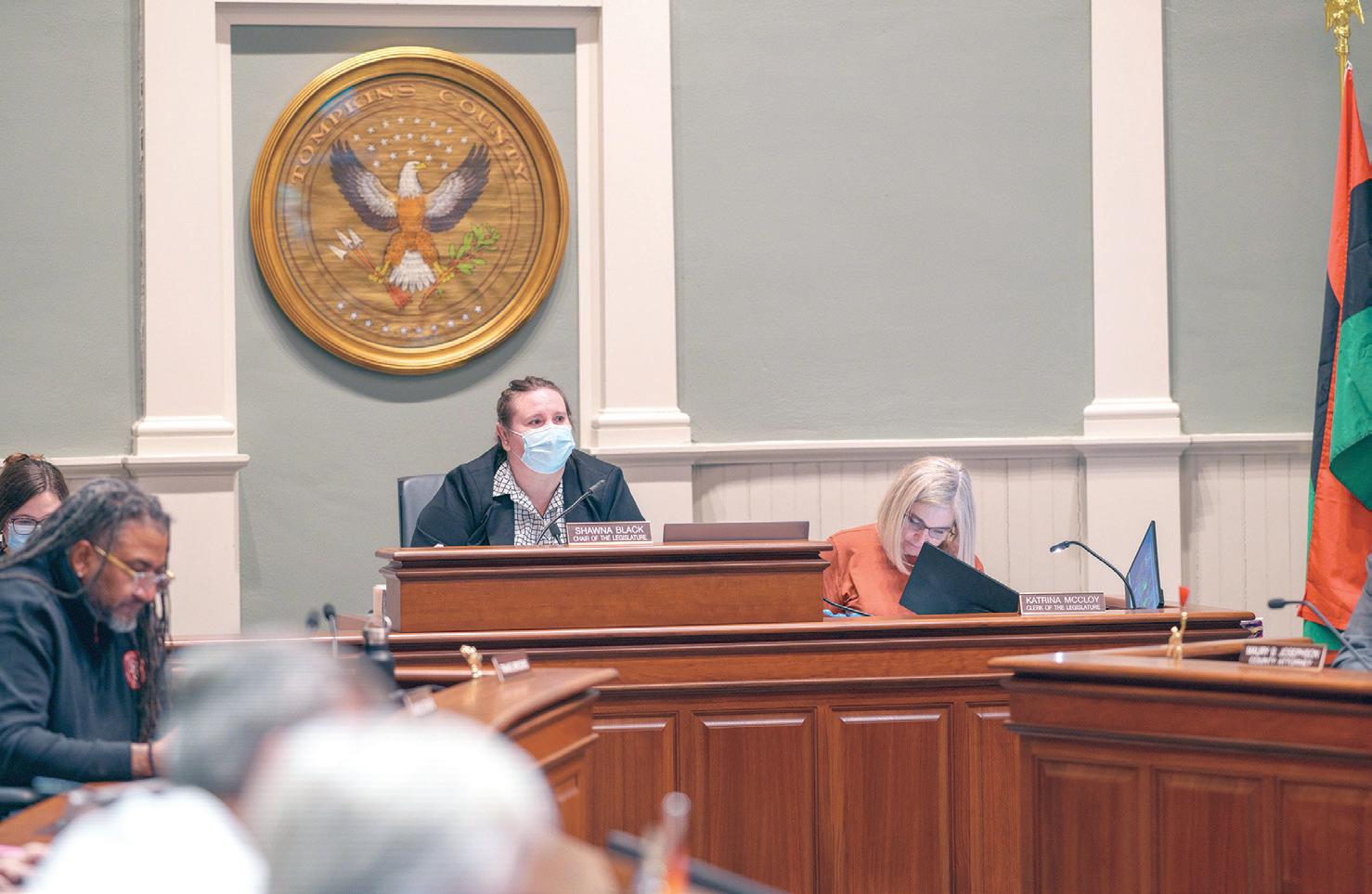
In response to the recent displacement of Asteri residents, the Tompkins County legislature has allocated $50,000 from the contingent fund to support legal assistance for housing needs. The resolution aims to help Asteri residents navigate housing instability and access legal resources.
On March 4, the city issued an official vacate order for floors four through 11 of the downtown high-rise apartment complex. This order was lifted on March 20, allowing a phased return of residents.
“Access to legal support at critical moments can make the difference between stability and displacement,” said Legislator Black in a statement. “And we must do more to ensure that residents are not navigating these situations alone.”
Legislators emphasized the importance of proactive support to prevent displacement and ensure equitable access to housing protections.
Legislator Black said that had there been appropriate maintenance, accountability, care management, and support for the residents in this building “the situation would have never become this severe and out of control.”
“What has happened with the situation at Asteri has been manufactured over a long period of time,” Black said in a statement to the Ithaca Times. “Within 6 months of the building opening, we were all seeing red flags. When those issues
were brought up to the operator they were ignored and unfortunately, there were never any consequences for poor property management and lack of security. The building and the residents were neglected, which led to an Order to Vacate at 4:30pm on a Wednesday afternoon.”
Black expressed thanks for Chief Moody from the Ithaca Fire Department who addressed the life safety issues and acted quickly.
“Over the past two years, we have put the residents, caregivers, support staff, and our emergency responders at risk,” Black said. “We have tolerated landlords with
T ake n ote
zero accountability for taking care of their properties, and more importantly, keeping their tenants safe.”
Currently, the resolution is written so that it provides education and legal support for Asteri residents. Over the next few weeks, Black said she assumes that many of the current residents will need and want to find another place to live. She said it is crucial that individuals feel supported by both non-profits and from a legal standpoint.
“One thing I wish I knew more of and
Continued on Page 19
X Two Brooklyn Men Arrested Following Seizure of 3 Pounds of Meth, Cocaine in Ithaca-Area Drug Bust
By Philip O’Dell
Two Brooklyn men are in custody without bail following an early morning traffic stop and residential search on March 20 that netted over three pounds of crystal methamphetamine and cocaine in Tompkins County.
According to the Ithaca Police Department, Adrian T. Golding and Joseph R. Robertson were arrested after the Ithaca-Tompkins Specialized Response Team stopped their vehicle around 12:51 a.m. near the Tompkins-Tioga county line.
IPD said the Ithaca-Tompkins Specialized Response Team executed a high-risk search
warrant on the vehicle along State Route 79.
According to IPD Lt. Thomas J. DuPay, Ithaca police and New York State troopers seized 1,410 grams of crystal methamphetamine and three ounces of cocaine after searching the vehicle and a home in the 100 block of Morris Avenue. Investigators also recovered digital scales, drug paraphernalia and cash during the search.
IPD said the New York State Department of Corrections and Community Supervision sought Golding as a parole absconder.
Golding and Robertson were arraigned in Tompkins County CAP Court and remanded
April Fools! This week’s Ithaca Times covers news that isn’t true, but is close enough to reality to make you think twice.
Design by Kaiden Chandler for the Ithaca Times.
to the Tompkins County Jail without bail. Both were charged with second-degree and thirddegree criminal possession of a controlled substance. The charges include a Class A-II felony and a Class B felony.
IPD said authorities expect more arrests and charges as they continue the investigation.
Police Dispatch: (607) 272-3245
Police Administration: (607) 272-9973
Police Tipline: (607) 330-0000
Anonymous Tip Submission: www.cityofithaca.org/ipdtips
ack R o V enolt , r EP ort E r mack @ ithacatimes com
J ake S exton , a d M inistrativ E c oordinator jake @ ithacatimes com
M a R k S y V e R t S
,
dv
rtising & M ark E ting lisa e @ ithacatimes com
f r EE lanc E rs : Barbara Adams, Charley Githler, Stephen Burke, Bill Chaisson, Ross Haarstad, Steve Lawrence, Marjorie Olds, Peter Rothbart, Austin Lamb, Clement Obropta, Jake Sexton, Kira Walter, Vasant Alex Laplam, and Ceili Ayoung THE ENTIRE CONTENTS OF THE ITHACA TIMES ARE COPYRIGHT © 2026 BY PATHWAYS TO EQUITY, LLC. All rights reserved. Events are listed free of charge in TimesTable. All copy must be received by Friday at noon. The Ithaca Times is available free of charge from various locations around Ithaca. Additional copies may be purchased from the Ithaca Times offices for $1. SUBSCRIPTIONS: $139 one year. Include check or money order and mail to the Ithaca Times, PO Box 27, Ithaca, NY 14851. ADVERTISING: Deadlines are Monday 5 p.m. for display, Tuesday at noon for classified. Advertisers should check their ad on publication. The Ithaca Times will not be liable for failure to publish an ad, for typographical error, or errors in publication except to the extent of the cost of the space in which the actual error appeared in the first insertion. The publisher reserves the right to refuse advertising for any reason and to alter advertising copy or graphics deemed unacceptable for publication. The Ithaca Times is published weekly Wednesday mornings. Offices are located at 109 N. Cayuga Street, Ithaca, NY 14850 607-277-7000, FAX 607277-1012, MAILING ADDRESS is PO Box
(1972–1978) and
Tompkins County Legislature Chair Shawna Black said Asteri residents that recently faced displacement should have access to legal education regarding their rights as tenants. (Photo: Mark Syvertson/Ithaca Times File)
By Mark Syvertson
QUESTION OF
THE
WEEK: “HOW WORRIED ARE YOU ABOUT AI?”
NOTE: If readers wish to participate in the Ithaca Times’ Inquiring Photographer column, contact Mark Syvertson at marksyvertsonphotography@gmail.com

“Pretty worried. I have major reservations about the speed at which it’s advancing, I’m unnerved by the lack of guardrails to prevent abuse and misuse, and I’m concerned my young kids will grow up in a world that resembles a techno-dystopian hellscape.”




Asteri Developer Risks Losing County Tax Abatements Over 40 Code Violations as Deadline Approaches
By Philip O’Dell
The Vecino Group, the developer of the Asteri Ithaca residential complex, faces a potential cancellation of its tax abatement agreement if it fails to resolve dozens of outstanding municipal and county code violations within 30 days of a March 6 notice of default, according to Deborah Dawson, chair of the Tompkins County Industrial Development Agency.
Dawson said the Vecino Group faces a 30-day deadline to remedy the defaults, stemming from the March 6 formal notice.
Dawson said Vecino remains out of compliance with its agreements, despite the city recently lifting a vacate order for the Asteri building. She noted the City of Ithaca has cited the project with over 40 code violations, extending beyond the stairwell issues that initially rendered the property unsafe for occupancy. Dawson added that the County Department of Whole Health has been working with the Vecino Group since 2025 to address separate state and county sanitary code violations.
While speaking only for herself as one of seven board members, Dawson maintained she would not consider the developer to be in compliance until every outstanding violation is corrected.
Dawson said if the deal is terminated, the IDA board will evaluate all available options regarding whether to revoke future abatements or claw back past savings. Dawson said the TCIDA board will consider tightening oversight on future projects considering recent events at Asteri.
“I think that's something the Board will be considering carefully,” Dawson said. “We clearly need more accountability from more complex projects like the Asteri residences.”
Dawson said Vecino’s Payment in Lieu of Taxes (PILOT) agreement for the Asteri project dates to June 30, 2021, but its tax schedule does not begin until the 2026 county and city tax year and the 2025–2026 school tax year. Up to this point, the developer has paid no property taxes on the site—a delay Dawson noted was intended to give the company time to construct the facilities and become operational.
Dawson said, Asteri Ithaca LLC has
avoided nearly $1 million in property tax payments through its PILOT agreement since its inception in 2022. The developer was exempt from approximately $104,497 in taxes annually in 2022 and 2023, followed by a $100,556 exemption in 2024, all based on a $3 million assessment. As the project progressed in 2025, the property's assessed value jumped to $20 million, resulting in a single-year tax exemption of approximately $670,373. In total, the project has received $979,923 in property tax breaks, in addition to roughly $2.6 million in sales tax exemptions and an $85,000 exemption on the state portion of the mortgage recording tax.
The documents that govern the PILOT incentive structure require Asteri to operate the Facility in conformity with “all applicable zoning, planning, building and environmental laws and regulations of the governmental authorities having jurisdiction over the Facility.” Under Section 5.6 of the leaseback agreement, the developer is required to promptly comply with all federal, state, and local laws, codes, and ordinances regulating the facility and its operations.

The City of Ithaca issued an emergency vacate order for floors four through 11 of the Asteri Ithaca development on March 4, after firefighters responding to an alarm discovered broken and missing glass in the stairwells and hallways. The damage compromised the 12-story downtown highrise’s smoke evacuation system, prompting officials to declare the building an immediate threat to life and safety. Police officers went door-to-door to notify residents across all 181 units of the affordable housing complex, which opened in 2024 and includes 40 units for formerly homeless individuals. The building’s owner, the Vecino Group, is required to replace the windows and resolve outstanding fire code violations.
The City of Ithaca lifted its emergency vacate order for the Asteri Ithaca residential development on March 20, clearing the way for a phased return of displaced residents following successful safety tests. City Public Information Officer Alan
Karasin and Fire Chief Michael Moody confirmed the building’s pressurization and life-safety systems functioned as designed during the testing. The property owner, the Vecino Group, is coordinating the return directly with tenants who had been temporarily housed in area hotels.
The Asteri Ithaca development has faced community concerns over safety and property management, culminating in an October 2025 lawsuit filed by the Downtown Ithaca Development Corporation and the Ithaca Asteri Condominium Board of Managers. The suit alleges breach of contract and mismanagement by the owners of the residential complex. According to the filing, tenants caused property damage to the adjoining conference center through fires, broken doors, damaged windows, and graffiti. The lawsuit also cites a cockroach infestation, an outbreak of canine parvovirus, and 37 instances of flooding from the residential
Mark
“AI is ********. It’s just another corporate power scheme to oppress people.”
Punk Mark
“While I maintain my enthusiasm for the potential advancements in medicine and the increased efficiency it offers to users, I confess that losing my job as a computer programmer does take a bit of the shine off my outlook.”
Nerd Mark
The point guard from the 76ers? I thought he retired. He must be in his 50s by now so I doubt his crossover will keep me up at night.”
Old Man Mark “Everything’s going to be fine. Just relax, enjoy this video I just generated and pass me the chips.”
Cyborg Mark
Asteri may owe millions of dollars in local taxes if their abatement is revoked by the Tompkins County Industrial Development Agency.
(Photo: Mark Syvertson/Ithaca Times File)
In the Town of Ithaca, Green New Deal Progress Faces Practical Limits
By Philip O’Dell
The Town of Ithaca has reached major milestones in green building codes and infrastructure, but fell short of its 2025 Green New Deal goals due to technological and nancial hurdles.
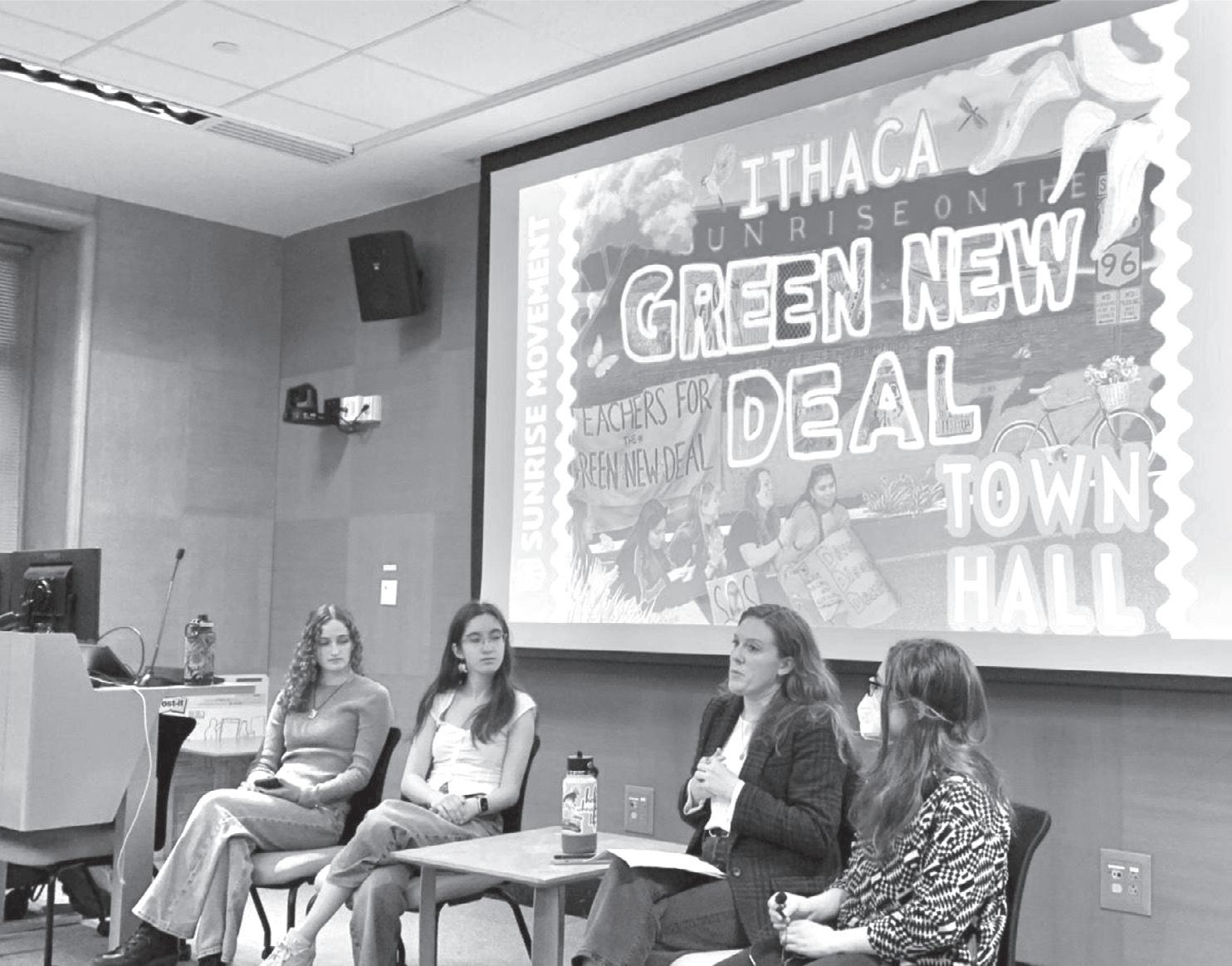
Student organizers with Sunrise Movement Cornell, a university chapter of the national climate justice movement, hosted a Green New Deal town hall with Town of Ithaca Sustainability Planner Hilary Swartwood. e event at Cornell University’s Mann Library to outline local progress and roadblocks to the town’s Green New Deal on March 24.
Swartwood said the Town’s Green New Deal that passed in 2020—one year a er the City’s version—includes framework prioritizing equity.
According to its website, the Town’s Green New Deal aims for an equitable transition to carbon neutrality by 2030. For its own operations, the Town set 2025 targets to reach 100% regionally sourced renewable electricity and to reduce vehicle eet emissions by 50%.
Swartwood stated the Town did not meet its Green New Deal goal to reduce eet emissions by 50% from 2010 levels. She noted that progress continues at a pace below original projections.
Swartwood pointed to a disconnect between state mandates and practical realities facing municipalities. She said current technology has not caught up to the legal requirements for vehicles. For example, Swartwood said existing battery technology is not yet light or powerful enough to operate heavy-duty dump trucks equipped with snowplows on Ithaca’s steep terrain.
Swartwood said converting those vehicles into electric ones is expensive and would not be an e ective use of tax dollars. She also said the absence of federal electric vehicle incentives makes a full transition to electric di cult.
Swartwood said the Town’s current strategy focuses on possibly reducing eet size and replacing older, high-use vehicles with electric models as they age out of service.
Despite the missed targets, Swartwood emphasized that progress is being measured through an annual Green New Deal Action Plan reported to a supportive Town Board. Swartwood said steady progress remains the priority.
“Even if it hasn’t met some of the targets,

Ups
The lineup is released and tickets are on sale now for the 34th Grassroots Festival of Music and Dance. The annual Trumansburg festival is taking place this year from July 16 to 19.

Downs
The Ithaca Hikers Facebook group noti ed the community of an eroded section of the Cayuga Trails at Varna Cli s above Fall Creek that has now been taped o . The missing section of the trail will require a short trail re-route and re-blazing to create a safe path.
HEARD SEEN&

Heard
The Ithaca Tompkins International Airport is hosting “Where Culture Takes Flight,” a free public art gala featuring local artists, live music, vendors, family activities and more. The event will take place on Saturday, April 11 and is sponsored by the airport, MIX Art Gallery and the Cornell University Sustainable Design group.

Seen
we are still making progress, and that sometimes is more important to me over the long term.”
Ithaca’s Green New Deal has faced implementation delays and funding gaps since its adoption in 2019, according to city records and local stakeholders. Although the resolution originally aimed to achieve citywide carbon neutrality by 2030—with goals to use renewable electricity and reduce municipal vehicle emissions by 50% by 2025—progress has stalled. Director of Sustainability Rebecca Evans noted that the initiative has lacked a dedicated line in the city budget since 2021, leaving the majority of projects dependent on external grants.
To increase transparency, Swartwood hopes to launch a dedicated Green New Deal dashboard on the Town’s sustainability webpage. Such a tool would provide the community with accessible data on the Town's goals, allowing the public to monitor progress and hold local o cials accountable to their climate commitments.
Swartwood said a major legislative milestone was reached in 2026 as the Town updated its energy code to align with New York state standards. Swartwood said the Town went a step further by adopting two net-zero appendices from
the International Code Council for both commercial and residential construction. She said 2026 is the rst year for these stringent requirements.
Beyond building codes, the Town has aggressively updated its infrastructure and zoning. In 2024, o cials amended zoning laws to include use for electric vehicle charging, simplifying the installation process for residents and developers. is was followed this year by a total transition to LED streetlights equipped with advanced dimming controls to save both energy and taxpayer funds.
Swartwood said the Town partnered with the City of Ithaca to launch the Tompkins Green Energy Network (TGEN), a community choice aggregation program, and the “Own Your Power” initiative, which allows residents to collaborate on local renewable energy projects.
Swartwood said students can get involved in climate activism in multiple ways. e Town’s sustainability o ce frequently o ers internships for those seeking hands-on experience in municipal policy. She encouraged students to join campus organizations like the Cornell Sustainability Group. She also encouraged
The City of Ithaca will begin construction on improvements to Cass Park in early April. The project includes reconstruction of the large pavilion, upgrades to the small pavilion, replacement of the pavilion and Union Fields restroom buildings, installation of new water fountains and transition to electric lighting for Union Field.
IF YOU CARE TO RESPOND to something in this column, or suggest your own praise or blame, write editor@ithacatimes. com, with a subject head “U&D.”
QUESTION OF THE WEEK
Should the Ithaca Common Council vote to accept a $75,000 grant from the Department of Homeland Security for city police?
I don’t care.
Have you seen a local concert in the last month?
At a Sunrise Movement Cornell town hall on March 24, Town of Ithaca Sustainability Planner Hilary Swartwood updated students on the Town’s Green New Deal. While citing breakthroughs in eco-friendly infrastructure, Swartwood noted that fiscal and technical obstacles still exist. The Mann Library event focused on navigating roadblocks to ensure local climate progress. (Photo: Philip O’Dell/Ithaca Times)
Why 3 Lansing School Board Members Abruptly Resigned
By Maddy Vogel
Three Lansing Board of Education members abruptly resigned at a March 23 board meeting, citing district mismanagement, board dysfunction and student transportation concerns, including recent state fines for faulty bus brakes.
Kate Cole, Ami Stallone and John Stevens announced their resignation from the Lansing Central School District Board of Education during the meeting. An ensuing heated exchange between board members cut the meeting short.
In emailed statements to the Times, Cole and Stallone explained why they resigned. Stevens did not respond to a request for comment.
Cole said board operations have shifted from what she believes is the board’s primary purpose — balancing the needs of students with the cost to taxpayers.
receiving the most serious defect ratings, and being placed out of service until repairs were made.
When asked if these fines or inspection failures were made public, Board President Aziza Benson said that while there was no announcement to the community, the incidents were discussed during public meetings.
“We talked about it in open meeting, it was not a secret,” Benson said.
“This board demonstrates a pattern of compulsory deference to the superintendent, blind trust, and using tactics of harassment and intimidation to silence and marginalize critical or dissenting views.”
— Ami Stallone, former Lansing BOE member
“Recent mismanagement regarding transportation issues, consultant fees, and fines has cost the district an additional $10,000,” Cole said in her statement to the Times. “There has been no accountability for these errors, which have damaged the district’s credibility and diverted funds away from our students.”
Records provided to the Times by an anonymous source show that in July 2025, nine of 20 buses failed routine fleet inspections, resulting in the state issuing the district two separate fines amounting to $10,000 in October. Since 2020, one bus, on average, failed inspection each year. Of 53 inspections in the 2024-25 school year, just one resulted in violations placing the vehicle out of service. In the same year, seven of 186 Ithaca City School District buses were placed out of service, while five of 62 buses at the Dryden Central School District were placed out of service. Records show several July inspections discovered faulty brake equipment, resulting in vehicles
Stallone said she was denied timely access to information which impaired her ability to act as an effective board member. Stallone did not say who specifically denied her access to information, and did not cite specific instances. Like Cole, Stallone said that she believes the board operates in a way that contradicts its purpose and the school’s core values.
“The extreme and irrational distrust that plagues this board has caused dysfunction and obstructionist behaviors that have presented overwhelming obstacles to effective oversight and honest governance,” Stallone said. She added that the board “demonstrates a pattern of compulsory deference to the superintendent, blind trust, and using tactics of harassment and intimidation to silence and marginalize critical or dissenting views.”
can't talk about employees or student matters in open session. If you can't abide by the operating procedures and you don't want to follow the agenda, and you don't want to follow the rules, I don't understand how you expect to be heard.”
In a special meeting on Friday, March 27, the board appointed three former members to fill the vacancies — Tony Lombardo, Brenda Zavaski and Aaron Thompson.
Chris Pettograsso said “recent events brought moments of discord and disruption to District processes and procedures.” Pettograsso did not respond to a request for comment from the Ithaca Times. Benson said the resignations were disruptive to district processes because board members referenced the performance of district employees and other board members in their resignation statements.
“If you can't abide by the operating procedures and you don't want to follow the agenda, and you don't want to follow the rules, I don't understand how you expect to be heard.”
When asked about the allegations of harassment and intimidation, Benson denied the claims. She said that board members must follow the proper procedures of the board, which include not naming specific district employees in open session. The Times was unable to find a Lansing policy forbidding members from naming specific personnel during public sessions.
“You have to abide by decorum and operating procedures,” Benson said. “You
— Aziza Benson, Lansing BOE president
“The appointed members bring a wealth of experience and a deep understanding of Lansing CSD, including the New York state public school budget process,” the district wrote in a March 24 release. “Their knowledge will support a seamless transition during this important time in the district’s budget development and planning.”
In the release, District Superintendent
“The three resignations were disruptive, and they were not following the quorum and the operating procedures of the board because in their statement to resign, they kept talking about the board employee [superintendent], and you can't talk about employee performance in a public forum,” Benson said.
Benson said the district decided to appoint former members instead of holding a special election because the board of education election and school budget vote are in May.
“It just makes the transition a little faster so we can continue board business,” Benson said.
Four seats will be on the ballot at the Lansing Central School District’s May 19 election.
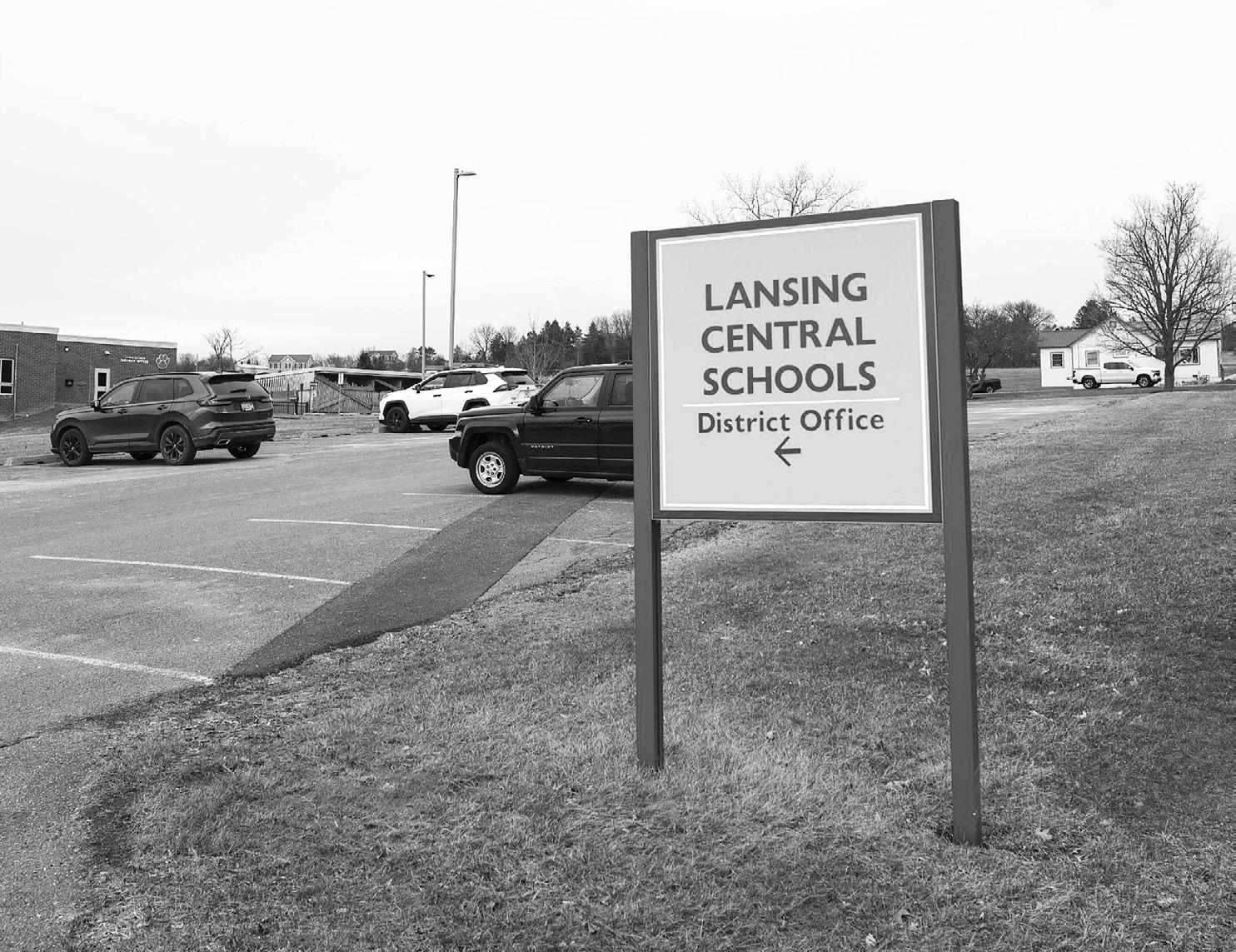
On March 23, three Lansing Board of Education members resigned. (Photo: Mark Syvertson/Ithaca Times)
Ithaca YMCA’s Healthy Kids Day Set for April 18, Aims to Promote Mental and Physical Wellness this Summer
By Philip O’Dell
The YMCA of Ithaca and Tompkins County is kicking o a season of wellness with its annual Healthy Kids Day from 1 to 3 p.m. April 18, o ering activities designed to inspire families to stay active now through summertime. e nonpro t is hosting the free public event at its 50 Graham Road West location in Ithaca.
e free event’s activities will include active play, book distributions, arts and cra s, and health screenings, according to the YMCA’s announcement. Over 20 local partners, including TST BOCES, Cornell University and Cayuga Health, are o ering the activities.
In a statement, the YMCA said its nationwide Healthy Kids Day celebrations are expanding this year to mark the organization’s 175th anniversary of building healthy, con dent children. Locally, the YMCA of Ithaca has served the Tompkins County community for over 150 years.
YMCA CEO Christie ornton said Healthy Kids Day aims to inspire Tompkins County families to prioritize health and safety year-round, with a special emphasis on staying active throughout the summer months.
“It is so important for kids to stay active over the summer, both physically and mentally,” ornton said. “At the Y, we believe in providing resources for families to create healthy habits, no matter the time of year. Healthy Kids Day is a fun, free community-wide event that encourages families to take advantage of
GREEN NEW DEAL PROGRESS
students to attend municipal meetings and use public comment sessions to advocate for climate justice.
During the event, Sunrise Cornell member Sam Poole said municipalities like Ithaca have taken the lead by adapting Green New Deal principles to t com-
all the great summer activities the Y has to o er.”
Experts say events like Healthy Kids Day help combat the “summer slide,” a developmental setback that occurs when students lose academic and physical momentum during the break between school years.
According to the American Educational Research Association, a 2020 study found 52% of students experienced learning losses in ve consecutive summers in English Language Arts. Students between grades one and six lost an average of 39 percent of their total school year gains during each summer.
e Centers for Disease Control and Prevention’s systematic review says school-age children experience accelerated weight gain during summer vacation compared to the structured school year. is trend disproportionately impacts children of color and those who are overweight. e CDC analyzed peer-reviewed data published since 1990. Researchers found that six out of the seven eligible studies reported faster summer weight gain for at least a portion of their study populations.
e CDC review noted that this seasonal increase was particularly pronounced among Black, Hispanic, and already overweight children and adolescents. To combat these widening health disparities, researchers recommend increasing public access to summer food programs, recreational facilities, and structured physical activity.
Building on the momentum of Healthy Kids Day, the YMCA of Ithaca & Tomp-
munity needs. Poole pointed to the City of Boston as a primary model for this localized action, highlighting its e orts to transition the public school system away from fossil fuels and retro t municipal buildings to run on clean energy. He noted the lack of a federal Green New Deal has led to municipalities creating their own frameworks.
Zach Schmidt, a climate organizer with Sunrise Ithaca, credited the 2019
kins County has unveiled a comprehensive lineup of summer day camps designed to keep local youth active and engaged. For the youngest adventurers, the Pre-K Summer Blast focuses on kindergarten readiness through themed creative play, while the agship Camp Adventure o ers children ages 5 to 12 a classic summer experience. is traditional camp emphasizes character development and outdoor exploration, featuring weekly excursions to iconic regional landmarks like Taughannock Falls and Robert H. Treman State Park.
Beyond full-day traditional tracks, the YMCA is introducing specialized HalfDay Activity Camps that allow children to dive deep into speci c interests such as STEAM experiments, outdoor arts, and court sports like pickleball. Older youth aren’t le out of the summer planning; the Counselor-in-Training (CIT) program provides teenagers ages 13 to 16 with a pathway to leadership. Participants in the CIT track gain hands-on experience in group management and lesson planning, while also earning volunteer hours and professional American Red Cross CPR certi cation.
e YMCA is also taking its mission on the road to ensure community-wide access through its "Pop Up and Play" initiative. is traveling program brings sta and resources directly to municipal hubs like Stewart Park and Conley Park throughout Ithaca and Tompkins County. ese mobile events feature free familyfriendly games and "goodie bags" packed with toys and activities, a strategic e ort by the organization to encourage
passage of the City’s Green New Deal to the persistent advocacy of student activists. Since its founding, the organization has utilized letter-writing campaigns, public rallies, and presence at government meetings to amplify youth voices and push for Justice50 policies that prioritize the basic needs of those most a ected by climate change.
Schmidt said Sunrise Ithaca is currently supporting the Workers’ Right to

consistent physical activity and play for children at home throughout the summer months.
e YMCA said the nationwide event is supported by Peanuts and Gatorade, with Wegmans serving as the local sponsor. e YMCA said residents seeking more information can visit the organization's website at ithacaymca.com/ healthykids or contact Johnathen Rockwell at jrockwell@ithacaymca.com.
Cooling campaign in response to rising summer temperatures. The initiative seeks to mandate expanded protections for local laborers, including guaranteed access to drinking water, cooling shelters, and longer breaks during extreme heat.
Schmidt urged local students to join chapters like Sunrise Cornell to maintain pressure on policymakers and continue climate justice advocacy.
The YMCA’s Healthy Kids Day on April 18 offers activities designed to inspire families to stay active now through summertime. (Photo: YMCA)
The Talk at
LETTERS TO THE EDITOR
By Ithaca Times Readers
RE: The Enduring Voice of Harvey Milk
“I was pleased to read your article about Harvey Milk, as well as his speech, which I’d never heard. At the time he gave it, I was a secretary in the City Attorney’s office in San Francisco's City Hall. I remember the day both he and Dan White arrived as new members of the S.F. Board of Supervisors (just down the hall from us). Dan brought red roses for all the secretaries in that office — but it was Harvey who said, “Hi” in the hallways, and joked with us in the elevators (as did George Moscone). Those contacts were the extent of me really knowing him, but I had many opportunities to observe him, and learn what an exceptional human being he was. When he was campaigning for office (an entirely new thing for the city, which had previously chosen Board of Supervisors differently), he came to a meeting of the city workers’ union. It included people who were sometimes the 2nd or
3rd generation who had secured what were regarded as highly sought-after jobs. They were often opinionated, judgmental, resistant to change, and a bit grumpy. They certainly didn’t want to hear from “some gay guy,” and it must have been daunting to face them. Harvey won them over, not by preaching at them, or pushing some agenda, but by connecting with them as people he respected. I was impressed when I realized that this seemed to be genuine, something that isn’t easy to manufacture if you don’t feel it. As time went on, I saw this ability (to connect with different sorts of people out of an interest in who they were) demonstrated again and again. He was funny and smart, with a keen sense of the larger context of issues — all of which came through as a kind of “political savvy” that he shared with Mayor Moscone. And as the tensions built that led to both their deaths, it was those things that made him a target for his murderer (who had none of them), as much as the fact of his being gay. Now, when I get off a plane in the S.F. Airport, and find myself in the Harvey Milk Pavilion, I feel awe and disbelief. I wonder what he would think of it all. I remember a man who was just a person — not some icon. He was a human being, who had all the same flaws and fears as the rest of us. He believed that change needed to take place, and we all can (and should) do what we can to help bring it about. Now, as then, is a good time to remember that.” — Kate Turner, Ithaca NY

RE: Honoring Wayne Stokes, a Standout of Cornell’s Golden Era
“Thanks to Steve Lawrence’s tribute (page 12, March 25) I learned that Wayne Stokes passed two weeks ago. What an extraordinary person Wayne was! Creative, tender and beautiful; with his heart ever on his sleeve. I’ve known him since before 1990, when his son Orin passed away tragically.
Wayne knew heartbreak and carried it with grace and dignity, dedicating himself to inspiring gratefulness and forgiveness in others. I was so glad to receive some of those two gifts: pillars of community building and personal richness.
I fell off the bus eventually, preoccupied with my own trauma, sadness, and illness. But I bluntly regret not staying close for the ride ‘til it reached his stop. I miss him deeply now: in some ways too late, in other ways just in time.” —
Jonathan Back, Ithaca NY
RE: Curbside Compost Collection
“Other readers must certainly remember the pilot curbside compost pickup that existed for a few years. It was in place on West Hill when we moved here in 2015, and ended a few years later (2017 or so?), to our great disappointment. We were told that it was just a pilot program, and there wasn’t any funding to continue or expand it.
Although we are a retired couple living on a fixed income, we would be happy to pay for the service. Lifting the container and driving the compost to a collection center has seemed silly, inconvenient, sometimes difficult, and must be simply impossible for many households. Selling tags or finding a way to use a small part of the fees we pay for water and sewage
are possible sources of funding for the program. How is it funded in NYC? The US population is finally starting to learn the true costs (to the environment and our pocketbooks) of doing the right thing. Europeans have been paying more for gasoline since at least the 1970s. Why is composting still a choice in Ithaca?” — Anne Auld, Ithaca.com
RE: Dryden Becomes First New York Town to Ban Data Centers
“The Dryden Town Board seems to have so little to do that it is addressing issues that have not yet arisen and are actually unlikely to arise. We are now passing bans on development that no one has proposed. Surely they should be spending their time on other things than non-existent development. For example, the Dryden Lake Dam is a constant threat to fail in very heavy storms. They know about it and do nothing. If the dam goes, millions in property damage could occur. Why has the Town Board lost sight of priorities to deal instead with mythical problems?” — Henry Kramer, Ithaca.com
Headline: RE: Flock Safety Set to Exit Ithaca Following Common Council Vote
“Outstanding work by CC, and outstanding reporting. The evidence is damning — Flock can’t be trusted to do the right thing. Even if we grant IPD our trust — not to say they’ve necessarily earned it — Flock has shown consistent willingness to bend and break the rules that are supposed to stand between the people and the state. Sure, Chief Kelly is

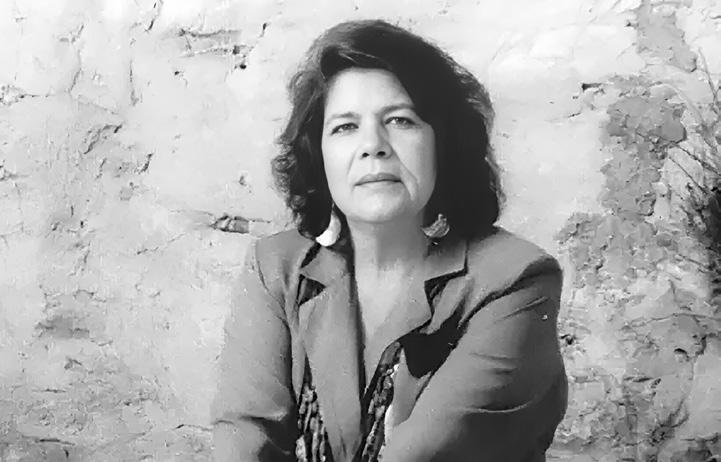
The Enduring Voice of Wilma Mankiller — 1993
Curated by Roy Allen: Director of Strategic Partnerships — Ithaca Times, Finger Lakes Community Newspapers, www.ithaca.com
Many voices have shaped the na tion we call America. This week we feature Wilma Mankiller — the first female Principal Chief of the Cherokee Nation, a Native American activist, community leader, and advocate for tribal sovereignty.
Rebuilding the Cherokee Nation — April 2, 1993 (Sweet Briar College) by Wilma
Mankiller
Tonight I wanted to talk to you about rebuilding the Cherokee Nation commu nity by community and person by person, or specifically rebuilding the Cherokee Nation, but I’ve also been asked by a num ber of people to talk about myself and my own sort of growth into a leadership posi tion, essentially from first being a rural Cherokee person, one of eleven children and then being relocated to an urban ghetto and spending time in an urban ghetto, and how I evolved as a woman into a leadership position, so I’ll try to weave some of that into my story of rebuilding the Cherokee Nation and the process we’ve been undergoing for the last two decades. I think first it’s important before I start talking about what we’re doing today in the 1990s and what we did through out the eighties or even the seventies in rebuilding our tribe; I think it’s really, really important to put our current work and our current issues in a historical con text. I can’t tell you how many everyday Americans that I’ve talked with who’ve visited a tribal community in Oklahoma or in other places, and they’ve looked around and they saw all the social indica tors of decline: high infant mortality, high unemployment, many, many other very serious problems among our people, and they always ask, “What happened to these people? Why do native people have all these problems?”, and I think that in order to understand the contem
porary issues we’re dealing with today and how we plan to dig our way out and how indeed we are digging our way out, you have to understand a little bit about history. Because there are a whole lot of historical factors that have played a part in our being where we are today, and I think that to even begin to understand our contemporary issues and contempo rary problems, you have to understand a little bit about that history. Normally I talk about the nation‑to‑nation relationship between tribes and the U.S. government, but Orin Lyons is going to cover that subject tomorrow and can do that much more ably than I can, but let me just say about our tribes so you have an understand ing of that. The Cherokee Nation has had a government for a long, long, long time. We had a government in this country long before there was a United States government. We had treaties with England even before we had treaties with the colonies, and then later with the United States. We have a long history of governance. We had a constitution. The constitution doesn’t look like the United States Constitution; our constitution was a wampum belt, and the color and the arrangements of the beads represented symbols of governance and principles by which we lived our lives, and so we have a long, long history of governance, and so that for people who find it odd that we today have a government‑to‑government relationship with the U.S. government should reflect on the fact that we’ve had that relationship for a long time. Continued on Page 19
Upstate New York Needs Albany To Pass Dignity Not Detention and New York For All
By Alexandra Dufresne and Noah Freedman
Immigration advocates expected the New York Legislature to bring several bills protecting immigrant children, families and communities to a vote this week. It did not, due to unexpected dif ficulties in negotiating with Governor Hochul. This is a shame, as these laws are essential to protect both immigrants and American citizens in upstate New York.
The Trump Administration’s current immigration policies have been sold as necessary for working class Americans, especially in areas that have been left behind by offshoring and rapidly increas ing educational and economic inequality between U.S. citizens in rural and rust belt towns and elites in the cities. The view, espoused in particular by J.D. Vance, is that there are only a certain number of jobs that exist and that immigrants take these jobs from Americans or depress the wages of Americans by their willingness to work for less pay. This argument has been used to justify a wholesale attack on the entire immigration system, from the firing of immigration judges to a radical escalation in unconstitutional enforcement tactics, to a massive increase in immigration deten tion, in which 42 people have died since January 2025, far outpacing deaths in previ ous years. Just four weeks ago, a nearly blind Rohingya refugee from Myanmar was found dead after being released from immigration custody at a closed dough nut shop miles from his home at night in below freezing temperatures.
While the Trump Administration’s argument has a certain rhetorical allure — who better to blame poor economic con ditions on than people who look or sound different and by definition cannot vote — it is contradicted by the facts. On balance, Trump’s immigration policies will harm working class American citizens in rural and upstate New York far more than they will help. Two state bills, The Dignity Not Detention Act and The New York For All Act are needed to prevent New York State from accelerating the Trump administra tion’s misguided policies. Here’s why.
First, upstate New York faces a “demo graphic winter.” We currently do not have enough young people left upstate to work in key areas of the service economy: farm work, child care, health care, elder care, and seasonal hospitality. Even if people upstate were suddenly willing and able to have many more babies, we would not have the workforce we need now to keep our population and economy from shrinking. In most cases, immigrants do not take jobs away from Ameri cans. Rather, they fill jobs that grow the economy that enable Americans to take higher paying jobs.
Second, immigrants — regardless of their status as authorized or unauthor ized — pay far more in taxes than they draw in public benefits. And in 2023 alone, undocumented New Yorkers paid about $3.1 billion in state and local taxes and $4 billion in federal taxes, despite being excluded from many programs such as Social Security, Medicare, and Unemployment Insurance.
Third, over 240,000 U.S. citizen children live in New York with parents who have no or precarious immigration status. When these children lose a parent to deportation, they are far more likely to experience psychosomatic symptoms (such as heightened anxiety, depression, and PTSD), drop out of school, have sui cidal thoughts, or suffer from alcoholism and substance abuse.
Fourth, much like during the Covid 19 pandemic, fear causes people to withdraw from public life. Parents become too scared to let their children go to school, and families stop attending church or medical appointments. This will have long term effects.
Fifth, crime increases when immi grants are afraid to report crimes to the authorities. This is particularly concern ing when it comes to domestic violence. The Dignity Not Detention Act (S316/ A4181) would ban state and local jails
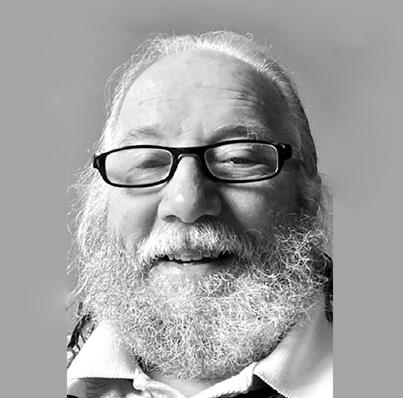
(Photo Source: National Native American Hall of Fame)
From Gatekeepers to Gardeners: The Transition to Community Publishing
By Roy Allen
“We the People” introduces the U.S. Constitution with bold confidence. It is not a polite suggestion but a direct claim: power originates with ordinary citizens, not distant rulers. Democracy, if it is to mean anything at all, must be lived as a daily practice of informed debate, collective placemaking. At its core lies a simple but non-negotiable requirement: people must have honest, unfiltered access to the realities that shape their lives and the systems that govern them. Historically, the monarchy were the decision makers. All others either did their bidding or served those who did. However, in America, we have the opportunity to serve each other — if we accept both the opportunity and the responsibility.
Here’s where the 1st Amendment to the Constitution can serve the dual role as chronicle of the past as well as the oracle of the future. But, even the press must transform itself; evolving from gatekeeper to gardener — from overseer to servant leaders — publishing with and from within the community rather than “to” the community. We the People — at the Ithaca Times, Trumansburg Free Press, Ovid Gazette, Interlaken Review, Tompkins Independent and News Chronicle welcome that opportunity.
In an era when algorithms curate our feeds and social platforms turn passive scrollers into vocal participants, the publishing industry stands at a crossroads. Traditional publishers have long served as gatekeepers—selecting, refining, and distributing stories that shape culture. Yet this model, rooted in scarcity and expertise, now contends with abundance: millions of aspiring writers, instantaneous reader feedback, and tools that democratize creation. The future lies in a profound shift—from traditional publisher to community publisher, where readers do not merely consume content but collaborate on it. This transition reimagines the publisher not as an arbiter of taste but as a facili-
tator of collective creativity, fostering deeper engagement, richer narratives, and sustainable business models in a fragmented media landscape.
The traditional publishing model achieved remarkable feats. It professionalized storytelling, elevated voices through rigorous editing, and built global distribution networks that turned unknown authors into household names. Gatekeeping ensured quality, curated diversity within market constraints, and provided the infrastructure for literary prizes, bookstore placements, and media campaigns. However, its limitations have become glaring. High barriers to entry sideline marginalized voices, as acquisition editors chase “comparable titles” and predictable sales. Production cycles span years, leaving stories stale amid real-time cultural shifts. Reader input arrives too late—via reviews or focus groups—after the book is fixed in print. Meanwhile, self-publishing and digital platforms have proven that audiences crave immediacy and agency. Declining print sales, rising author advances, and the dominance of direct-to-consumer channels like newsletters and serialized fiction signal that the old monopoly on curation is crumbling.
Community publishing flips the script. Here, readers become co-authors, beta testers, plot architects, and even editors. Content evolves iteratively through comments, votes, shared drafts, or crowdsourced contributions. The publisher's role evolves from selector to host: providing the platform, moderation tools, editorial guidance, and distribution while empowering the community to shape the final product. This is not anarchy; it is structured collaboration, akin to open-source software or Wikipedia's knowledge-building. Serialized fiction on platforms like Wattpad demonstrates the power: readers comment chapter by chapter, influencing character arcs or demanding sequels, turning
SURROUNDED
When Stunts Were Stunts
By Charley Githler
On a warm, overcast Tuesday midmorning, Charley “Iron Man” Young was handcuffed to the steering wheel of a 1927 Whippet sedan in front of Heggie’s Jewelry Store at 136 East State Street in Ithaca. It was April 3, 1928. (The Iron Man is not to be confused with Charles Van Patten Young, legendary titan of Cornell athletics. Same name, same era, different guys.) Charley had committed to drive the car nonstop through the streets of Ithaca for 101 hours, finishing where he started four days and five hours later, at 3:30 in the afternoon on Saturday.
It was a bold enterprise, containing elements of the harebrained. For one thing, that is a long time to be driving, and his only source of nutrition during the whole ordeal would be milk and ice cream. The plan included a ‘competent nurse’ being in the car for the last two days. There was a victrola in the back to ‘soothe his nerves’, and he’d stop every day at 12:30 at the office of H.B. Goodenough, M.C. (102 East State Street) for chiropractic treatments. I could not find the answer to the obvious question: what were the bathroom arrangements?
Young was part of an ancient tradition that was dying: travelling performers and entertainers. In 1928, in the USA, movies and radio were ascendant, their rise sudden and overwhelming. Vaudeville wasn’t dead yet, but it was coughing up blood. Had he not been shackled to his steering wheel that week, Charley could have caught two live acts at the Strand Theatre before the feature motion picture: a comedy duo called Jimmy Barr and Odey LaMarr, and Elynor Herbert Swain’s birds. Apparently, it was still possible to make a living with a bird act on the Keith Vaudeville Circuit. The other theaters in town were showing only movies. Stunts, though, like flag-pole sitting, barnstorming, and feats of endurance were decidedly part of the 1920s landscape, and Charley’s ride caught the local imagination.
The wheels of the small sedan jerked into motion at 10:30, as promised. In his first 24 hours, he reported drinking eight quarts of milk and eating a pint of ice cream, and he professed confidence in finishing the ride. I like to think that he drove by my house on West Buffalo Street that week, maybe several times.
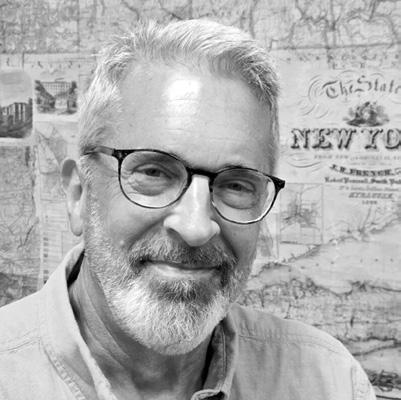
It’s a pretty well-traveled road, certainly quieter in 1928. There were still some unpaved streets and the occasional horsedrawn vehicle downtown, though the city already had eight traffic lights that spring.
On Thursday, there began to be some speculation about his ability to go the distance. He was halfway done, but it was a warm week for early April, with highs around 80, and these were the days before air conditioning. He told the Ithaca Journal that the cold ice cream kept him rejuvenated. Actually, he said it gave him ‘pep’.
It’s tempting to think it was a simpler time, but it wasn’t, necessarily. The organized Klan was collapsing in the wake of a series of scandals and lawsuits, but the impulses that gave rise to its resurrection were still there. The Thursday Journal listed Anaconda Copper at $66 a share, down from $128 a month earlier. It was a magical time to be a high-rolling market manipulator, but maybe not so good for the little guy. The share price would be $3 by 1933. And yet say what you will about Calvin Coolidge, he wouldn’t have showed up in the Epstein files. Or Teapot Dome, for that matter.
Friday was a rough day for the Man of Iron. The nurse was ministering to him in the car now. He had a pounding headache, and his head was swathed in a bandage which she soaked with ice water. His eyes were swollen almost shut. By this point, the car, festooned with advertisements, was a familiar sight in the city, and spectators were showing up for his chiropractic visits.
Saturday morning came, and Charley Young was waging a mighty struggle to stay awake. He was a physical wreck. There were two other people and the nurse in the car cheering him on, and they used smelling salts and camphor to snap his drooping head up. It wasn’t enough. At 3:20 that afternoon, ten minutes from the end, he slumped over at the corner of North Cayuga and Jay Streets, irretrievably sound asleep. They unlocked the handcuffs, drove him to Lang’s Garage on Green Street, and put him on a cot. The crowd that was waiting for him at Heggie’s migrated there to watch.
Our hero lingered in town a couple
Third 'No Kings' Rally Draws Thousands to Ithaca
by



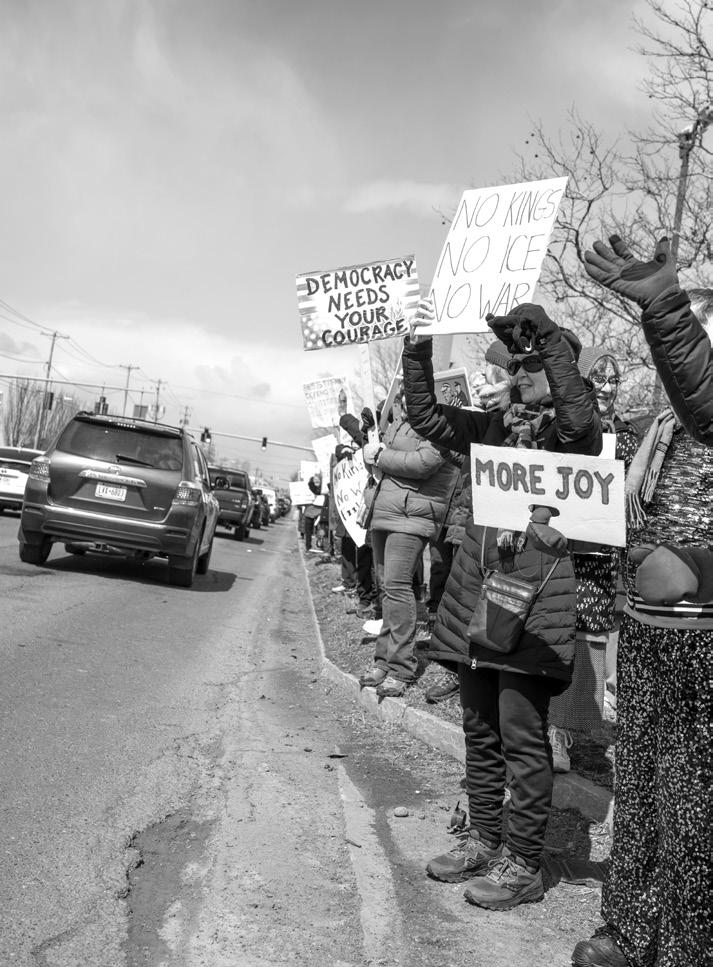




Photos
Mark Syvertson for the Ithaca Times
editor’s note:
This content is published as part of our April Fools’ issue and is satirical in nature. None of the information or quotes should be interpreted as factual.
Budding Initiative Aims to Fill City Potholes with Pot
Officials hope the plant-based approach will keep traffic rolling and take the edge off Ithaca’s roughest roads
By Mikayla Rovenolt
The City of Ithaca is pursuing a new green initiative in an attempt to fix the persistent pothole problem on city streets. Commuters may be relieved to hear there will be an end to city street closures for pothole filling–the new initiative opts to fill potholes with locally-grown marijuana instead.
This approach, city officials said, is much faster and more cost effective than growing the Department of Public Works’ to-do list. Instead of employing teams of people to run equipment, paying for the equipment maintenance, and dealing with road closures, the city will instead employ a handful of people to stuff potholes with “pot.”
“It is cheaper to buy an ounce or two to fill a hole than it is to keep up the equipment and pay multiple people per hour in one spot,” one city official said. “Plus we don’t need to close roads and cause disruption to people’s commutes.”
Under the new system, one city employee is assigned to a pothole for an hour, two if it’s a large hole. From there, the depth and width of the hole is measured to decide how many ounces of marijuana will be needed to fill it. With an average of one-eighth of an ounce per inch, the employee uses a mathematical formula to decide how much marijuana it will take to fill the hole.
City officials say all marijuana used is local to Tompkins County, lowering the cost of materials and supporting local growers. Locally-grown marijuana will also keep carbon emissions associated with import costs low, aligning with Ithaca’s Green New Deal initiatives.
The sponginess of the new material is also gentler on tires. When a vehicle goes


(Photo:
over a pot-filled pothole, their tires are less likely to “take a hit” and rattle the car. The vehicle glides over the earthy material with ease.
“I’d imagine the smaller potholes are easier to fill,” a local dispensary owner said.
“We sell an ounce, on average, for $150 and it shouldn’t take much more than that to fill a small hole. We also do wholesale pricing which could help the city save some money as well.”
However, this eco-friendly approach to filling potholes is not a long-term solution. Weather and extensive use of the roads will cause the marijuana to deteriorate at a faster rate than it normally might.
With this in mind, the city is considering using marijuana resin as a more stable long-term solution to concrete. Resin hardens and may last longer than a natural plant product. Testing is ongoing.
In the meantime, residents of the city have had mixed opinions on this new roadwork solution.
“I think it’s great,” said one downtown resident. “I get really tired of rerouting my drives due to one-off road closures. This new method seems quick, and the road doesn’t have to close for the employee to work.”
Another downtown resident did not share this sentiment.
“I don’t know why we have to be so concerned with our eco-friendly solutions lately,” said one disgruntled city resident.
“I don’t like the idea of weed being stuffed into the road to fix it. Don’t they think kids will just come and take it out of the road? That’s not good and it’ll make the weed all nasty from being in the ground. It’s dangerous for our children and too tempting.”
The city addressed these concerns by stating cameras are being placed near the
potholes to monitor them and discourage tampering. This news came with its own set of worries from residents.
Many residents, even those on board with the new pothole fixing methods, expressed concerns about having cameras potentially face their homes or driveways and fear the information caught on camera could be used for more than deterring “pothole-snatchers.”
“I don’t like the idea of being monitored, even unintentionally,” said a downtown Ithaca resident. “I wasn’t on board with Flock cameras and I’m certainly not on board with the city using their own cameras. Who knows what info that could collect or how they will use it.”
For those who wish to express concerns, or support, for this new initiative, the city will hold a public hearing at its next meeting on Wednesday, April 1.
The depth of each pothole determines how much material is required for a repair.
Mark Syvertson/Ithaca Times)
Ithaca’s latest method to tackling its pothole problem will fill cracks in the pavement and, officials hope, the city budget.
(Photo: Mark Syvertson/Ithaca Times)
Unable to Find Parking, Odysseus Abandons Return to Ithaca
By Mikayla Rovenolt
After fighting in the Trojan War, Odysseus planned on returning home to Ithaca to reunite with his wife and son, but according to Odysseus, Ithaca’s parking situation has made that return “nearly impossible.”
“There are nearly 35,000 people living here, more when college students are in town,” Odysseus said. “You would think there’s parking to accommodate such a large population, but alas I have yet to return to my home.”
Following the Trojan War, Odysseus traveled for ten years, not on his own accord. He faced many challenges, he told the Ithaca Times in an exclusive interview. From imprisonment to battles and conflicts with Poseidon, Odysseus was kept away from home intentionally.
He said he thought he would return to the Ithaca he knew, with free weekend parking and garages to utilize as needed. However, in his ten year lapse, the city has changed.
“I’m not sure how we got to $2.50 an hour for street parking, or $2.25 an hour in the garages, but it makes parking downtown so much more expensive,” Odysseus said. “Who can afford that, especially if you work
downtown? Do employers even validate?”
Previously, Odysseus said he often traveled by boat, but he was unable to find a ship and crew during his imprisonment on the island of Ogygia. When he was released and built a ship, it averaged around 120 feet and there is not a marina in Ithaca that is able to house watercraft of this size.
Odysseus said he looked into marina parking at the Ithaca Yacht Club and the Allan H. Treman State Park, but was unable to find enough space for his ship.
“There is a part of the Allan H. Treeman marina that has a space for boats over 46 feet, but mine is more than double that and it felt rude to try and fit into that space,” Odysseus said. “Besides, it’s hard to find enough people to man the vessel as it is, so I sold the boat…maybe that money could help me pay for parking.”
City of Ithaca Mayor Rob Cantelmo said that the parking increase helps lift some of the burdens of taxpayers in the city, of which Odysseus is ten years behind on paying.
“It is important to note that we effectively "subsidize" parking as a City,” Mayor Rob Cantelmo said in a previous statement to the Ithaca Times. “According to an internal
analysis, after inclusion of increased parking fees, the City budget projects a $2.2 million parking subsidy in 2026. Our adjustments shift the burden away from just city taxpayers toward all users.”
During his interview, Odysseus decided he did not want to be one of the “users” of city parking and, since he does not live in an area where he qualifies for a parking permit, he decided to abandon his return to Ithaca.
“I recognize that in comparison to other cities, our parking is not nearly as expensive, but those cities also have larger populations and more traffic concerns to worry about than our small city,” Odysseus concluded. “I just think the rollout of these changes could have been better communicated by the city.”
Odysseus continued that his father, Laertes, lives outside of Ithaca, which is where Odysseus will stay for the time being. He said that his father’s garage is free and, while it will need to be shoveled out in the winter, is better than paying the garage prices in the city.
When asked about his wife and son, Odysseus said they do not own a car and walk where they need to go or they take

Hikes to city parking rates leave Odysseus reconsidering whether the journey home was worth it. Design by Kaiden Chandler for the Ithaca Times.
the Tompkins Area Consolidated Transit (TCAT) for longer, out of the city errands. He added that he is not worried about his wife’s suitors as they also refuse to pay for parking downtown and have mostly abandoned their efforts to marry his wife for lack of better parking options. He made no comment about the free parking in residential areas for his trips downtown nor the possibility of leaving his car at his father’s and getting a monthly bus pass for only $45 like his wife and son do.
Slope Day Books AI Band MX+B
By Austin Lamb
Cornell’s 2026 Slope Day celebration will feature headliner and AI band MX+B, a first in the annual celebration’s 100-plus years.
In an Instagram statement, Slope Day Programming Board, a registered Cornell student organization, announced the selection for the May 6 celebration. The statement praised MX+B’s band’s “rich, innovative mix of sounds, which both look to the past and reimagine the future.”
“This is a band that defies genres and resists labels, creating a sound so unique that it makes words and thoughts useless
to describe,” the statement, written with the help of ChaptGPT, added. “MX+B fosters the kind of harmony and community we need in these divisive times.”
The selection was made in partnership with the Cornell AI Initiative, which seeks to “deepen opportunities in the development and application of AI within the field, and across AI-related and AI-influenced disciplines.”
Kotlikoff also praised MX+B’s stances on Israel, Hamas, and Palestine, which he called “brave, nuanced, and informed.” In a series of LinkedIn posts, MX+B has referred to the “situation in the Middle East”
as “multifaceted and multilayered,” adding that “change is needed — not just for both sides, but for humanity.”
“This is exactly the type of insightful, balanced, and educated leadership we hope to model for students of the Cornell University community,” Kotlikoff said.
In recent years, the rise of AI artists on streaming platforms has faced a wave of criticism from musicians and listeners alike, who say that it hurts the livelihood of working musicians and is an insult to music fans.

Cornell expects record turnout at this year’s Slope Day after announcing AI band MX+B will headline the annual event. (Photo: Cornell University)

Don’t Let Ithaca Lose Its Storytellers
Imagine the sharpest, most passionate young journalists you’ve ever met (the ones who stay late chasing a story because they believe in this town) slowly packing their bags. Not because they want to leave… but because local rents force them out.
That’s the quiet heartbreak happening right now. Our best new writers, the ones who grew up here or fell in love with Ithaca in college, are being pushed toward cheaper cities just to survive.
The Rising Star Fund rewrites their story into a happy ending by sponsoring a simple monthly housing stipend (a hand up, never a handout) so they can keep living here, keep writing here, keep falling deeper in love with Ithaca… and keep telling the stories that make this city our home.
When a young journalist can afford to stay in Ithaca, you get:
● Fresh, fearless voices loyal to your local paper
● Someone at every city council meeting who believes local news matters
● The next great Ithaca story written by someone who actually lives here
● Your $25, $50, or $100 a month doesn’t just pay their rent.
● It keeps storytellers in our community and stops local brain drain.
● When our younger generation thrives, Ithaca’s future stays bright.
Keep local talent in Ithaca by donating today to the Rising Star Fund (an initiative of Pathways to Equity, Inc a registered 501(c)(3) nonprofit organization)
For more info: roy@ithacatimes.com
Lovejoy’s Remarkable Return to the Plate
By Steve Lawrence
Ask any journalist, and they will likely tell you that sometimes puts in a lot of work, and only to nd a less-than-exciting story line, and sometimes that story line falls into one's lap. Like the old saying, “Sometimes even a blind squirrel nds a nut.”
On Sunday, I made the drive over to the Gutchess Lumber Sports Complex in Cortland to watch a local kid play in a so ball tournament. I wouldn’t have missed that tournament for a million dollars — and I will circle back to explain why — but it was not my intention to make the games I was attending a feature story.
e Gutchess complex is a beautiful venue, with top shelf lighting, facilities and turf on all four elds. It is a dream come true for players from this part of the country, who have missed many games over the years while waiting for their elds to dry up. e rough weather of late has made the elds at several colleges unplay-


able, so the Gutchess Complex has been well-utilized this spring.
Once there, I realized that TC3’ baseball team was playing, and there were two local athletes — Mason Braid and Cooper Oullette suiting up for the Panthers. Perhaps the story was there. I also saw that the Bombers of Ithaca College were there to play a double-header against Clarkson, and even more story lines were there for the harvesting. Isaiah Smith, Ben Ruth and Zack Sperger all play for the Bombers, and wearing that uniform is the dream for many local baseball players from the time they rst take a whack at a T-Ball. Also, the Bombers have been coached by a Valesente for nearly a half century, with George piloting the program for 41 years before his son, David, took the reins. So far, so good... ree elds, three possible story topics. Let me wander over to eld number four...
It was there that I saw something that had someone told me nine months ago that I would witness, I would have told them they were delusional. You see, last summer — Lansing star (class of 2025) Korbin Lovejoy — who is now a freshman catcher for the SUNY Canton ‘Roos — severed two ngers on his throwing hand in a power tool accident. I knew that, and I knew that Korbin had been putting in the work to get back onto the eld, but when
Nine months after a very serious injury, Korbin Lovejoy is having a very productive freshman season. (Photo: Provided)



unsung changemakers
Highlighting Those Who Solve Problems and Change the World for the Good of All
A NEW SERIES FROM THE ITHACA TIMES

Architect of Regional Resilience: Finger Lakes, New York
Architect of Regional Resilience: Finger Lakes, New York
By Roy Allen
By Roy Allen
In the rolling hills and lake-dotted landscape of New York's Finger Lakes region, where agriculture, tourism, and small-town life intersect with growing climate pressures, one quiet leader has spent over two decades quietly reshaping how communities prepare for an uncertain future. Gay Nicholson, founder, president, and driving force behind “Sustainable Finger Lakes” (formerly Sustainable Tompkins), embodies the essence of an unsung changemaker: persistent, collaborative, systems-oriented, and deeply rooted in place. She has never sought national acclaim or viral moments. Instead, she has built enduring infrastructure—social, economic, and ecological—that helps 15 counties from the Pennsylvania border to the shores of Lake Ontario move toward greater resilience, equity, and sustainability.
Gay’s journey into this work began long before the organization's formal launch. With a doctorate and early experience in sustainable agriculture, she transitioned into broader environmental advocacy. She served in environmental education and advocacy roles with Cornell University’s Program on Ethics and Public Life, and later as executive director of the Finger Lakes Land Trust, where she honed skills in land conservation, fundraising, and coalition-building. ese experiences revealed a gap: while land protection was vital, broader community transitions—to cleaner energy, fairer econo-
In the rolling hills and lake-dotted landscape of New York's Finger Lakes region, where agriculture, tourism, and small-town life intersect with growing climate pressures, one quiet leader has spent over two decades quietly reshaping how communities prepare for an uncertain future. Gay Nicholson, founder, president, and driving force behind “Sustainable Finger Lakes” (formerly Sustainable Tompkins), embodies the essence of an unsung changemaker: persistent, collaborative, systems-oriented, and deeply rooted in place. She has never sought national acclaim or viral moments. Instead, she has built enduring infrastructure—social, economic, and ecological—that helps 15 counties from the Pennsylvania border to the shores of Lake Ontario move toward greater resilience, equity, and sustainability.
Gay’s journey into this work began long before the organization's formal launch. With a doctorate and early experience in sustainable agriculture, she transitioned into broader environmental advocacy. She served in environmental education and advocacy roles with Cornell University’s Program on Ethics and Public Life, and later as executive director of the Finger Lakes Land Trust, where she honed skills in land conservation, fundraising, and coalition-building. These experiences revealed a gap: while land protection was vital, broader community transitions—to cleaner energy, fairer econ-
mies, and more equitable resource access—required a di erent kind of organizing.
omies, and more equitable resource access—required a different kind of organizing.
In 2004, Gay led a pivotal feasibility study to answer a simple but profound question: Did residents of Tompkins County want a coalition dedicated to sustainable community development? rough study circles, "sustainability salons," and wide-ranging conversations, the answer was a resounding yes. Participants, o en feeling isolated in their values, discovered they were part of a larger cultural force. From those early gatherings emerged Sustainable Tompkins, which Gay has led ever since as president and (at times) sole or primary sta , evolving it into Sustainable Finger Lakes to re ect its growing regional reach.
In 2004, Gay led a pivotal feasibility study to answer a simple but profound question: Did residents of Tompkins County want a coalition dedicated to sustainable community development? Through study circles, "sustainability salons," and wide-ranging conversations, the answer was a resounding yes. Participants, often feeling isolated in their values, discovered they were part of a larger cultural force. From those early gatherings emerged Sustainable Tompkins, which Gay has led ever since as president and (at times) sole or primary staff, evolving it into Sustainable Finger Lakes to reflect its growing regional reach.
e organization’s mission is ambitious yet grounded: to promote the long-term well-being of the region by integrating social equity, economic vitality, ecological stewardship, and shared responsibility. Gay emphasizes a systems approach—understanding that no single issue (energy, food, housing, justice) exists in isolation. She has built Sustainable Finger Lakes as a hub and spokes model: a central connector that links grassroots activists, farmers, landlords, tenants, businesses, utilities, policymakers, and everyday residents.
Among her signature achievements is the “Finger Lakes Climate Fund,” an innovative community-driven mechanism she helped pioneer. e fund
The organization’s mission is ambitious yet grounded: to promote the long-term well-being of the region by integrating social equity, economic vitality, ecological stewardship, and shared responsibility. Gay emphasizes a systems approach—understanding that no single issue (energy, food, housing, justice) exists in isolation. She has built Sustainable Finger Lakes as a hub and spokes model: a central connector that links grassroots activists, farmers, landlords, tenants, businesses, utilities, policymakers, and everyday residents.
Among her signature achievements is the “Finger Lakes Climate Fund,” an innovative community-driven mechanism she helped pioneer. The 14 The Ithaca Times / April 1 – April 8, 2026
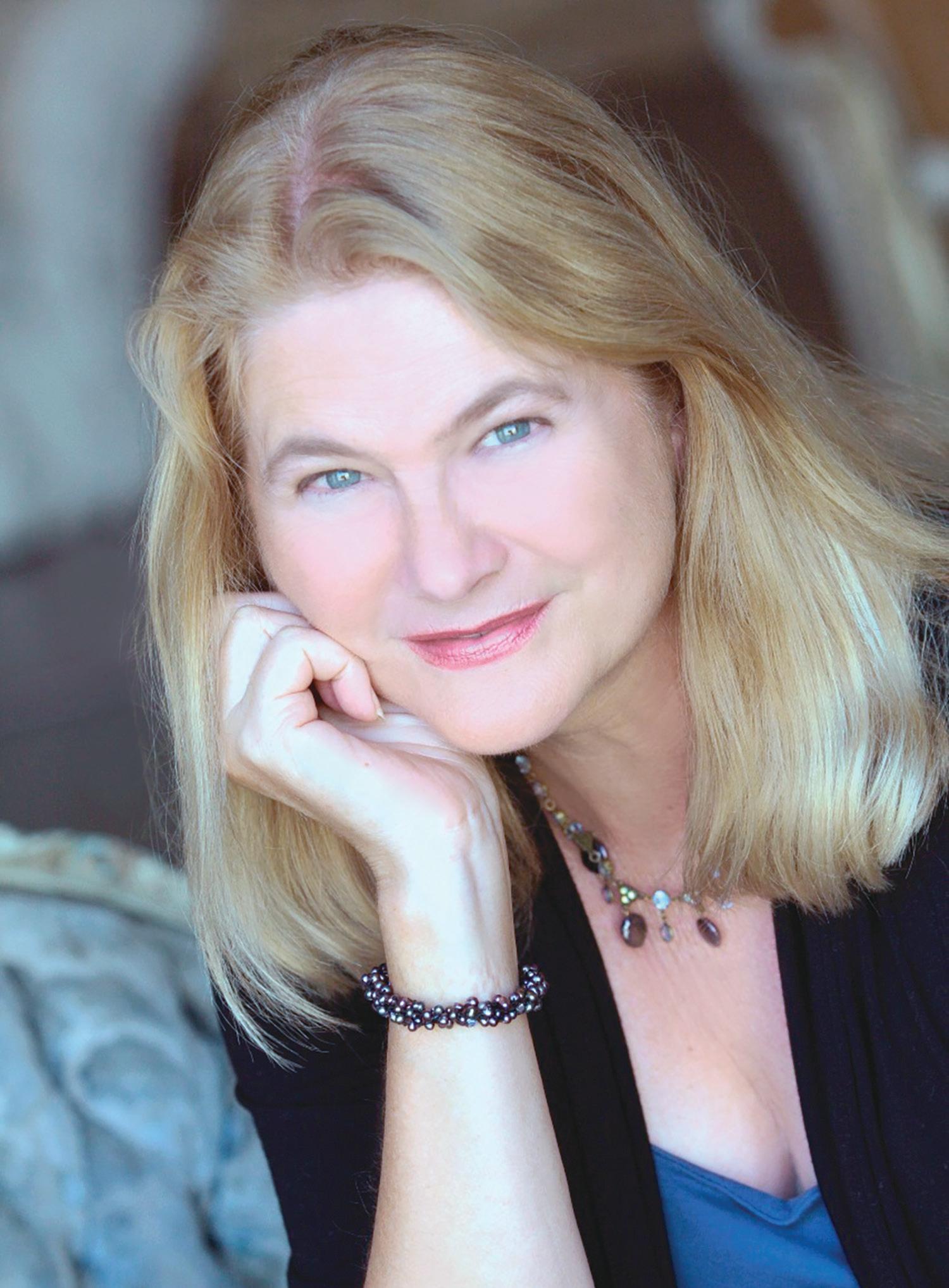
(Photo: Sustainable Finger Lakes)
(Photo: Sustainable Finger Lakes)



addresses the uneven burdens of climate change and energy transitions by channeling resources toward equitable clean energy projects. It provides minigrants to low- and moderate-income households for renewable energy installations, energy efficiency upgrades, and other resilience measures. In a region where many renters and modestincome families face high utility costs and limited access to incentives, this model helps close gaps that larger state or federal programs often miss. Gay has presented the fund's financial structure and impact at regional events, inspiring similar efforts elsewhere.
Another cornerstone is the “Neighborhood Mini-Grant Program,” which has distributed over $100,000 across hundreds of hyper-local, resident-led initiatives. These range from community gardens and food-waste composting projects to youth environmental education, bike infrastructure improvements, solar grazing pilots on farms, and neighborhood cleanups. The program's success lies in its trust-based design: small amounts of money invested in ideas that come directly from the people who live the challenges daily. This bottom-up approach has fostered ownership and multiplied impact far beyond the initial dollars.
Gay has also championed practical, cross-sector work on food waste reduction—partnering with farms, landfills, and residents to cut methane emissions while saving money, land, and resources—and on energy equity for renters in older housing stock, particularly in Ithaca and surrounding areas. Through collaborations with NYSERDA and local utilities, Sustainable Finger Lakes has explored barriers to electrifying rental units and proposed solutions that balance landlord economics with tenant benefits and emissions reductions.
Colleagues describe Gay as a masterful listener, synthesizer, and facilitator. She can convene a room of solar entrepreneurs, skeptical utility customers, environmental justice advocates, county legislators, and farm owners, then distill divergent views into shared, actionable steps. “She doesn't preach sustainability,” one longtime partner has said. “She weaves it into how people already live, work, and make decisions here.” That relational skill has sustained the organization through economic downturns, leadership transitions, and shifting political winds—22 years and counting, with influence now spanning multiple watersheds and counties.
In an era dominated by short-term campaigns and performative activism, Gay Nicholson’s path stands out for its durability. She prioritizes
evidence-based programs, inclusive processes, persistent relationshipbuilding, and measurable regional progress over fleeting headlines. Her work reflects a deep belief that true resilience emerges when people feel connected, capable, and part of something larger than themselves. As one early participant noted during the 2004 salons, discovering others shared their values was “a great relief”—a sentiment the organization continues to cultivate.
Today, the Finger Lakes region is more networked, more equitable in its clean energy access, and better positioned to weather climate disruptions because of Gay's unrelenting, behindthe-scenes leadership. She remains the steady architect of a future where social justice, ecological health, and economic strength reinforce rather than compete with one another.
In her own words, often shared in newsletters, presentations, and quiet conversations: “Let’s connect and catalyze for a more resilient and sustainable future.”
Gay Nicholson may never appear on national lists of climate influencers, but within her bioregion, her fingerprints are everywhere—in thriving community gardens, reduced food waste on local farms, solar panels on modest homes, and the countless
relationships that make collective action possible. She is, truly, an unsung changemaker whose quiet persistence has helped an entire region imagine— and begin to build—a better tomorrow.
Why Changemakers Matter
“The greatest threat to our planet is the belief that someone else will save it.”
— Robert Swan Changemakers like Gay Nicholson play a critical role in turning global challenges into local action. Since 2004, she has been instrumental in connecting neighbors, organizations, and policymakers to build practical, place-based responses. In an era defined by complex environmental and social challenges, such leadership is essential to effect and sustain positive change.
To learn more, visit: www.sustainablefingerlakes.org


“Angels in America” Echoes Across Decades in Theatre Incognita Production
By Barbara Adams
In 1985, AIDS activist Larry Kramer’s autobiographical play, “ e Normal Heart,” opened in New York — soon followed by “As Is,” the next play addressing the national health crisis occurring largely among gay men. at year also marked young Ryan White’s dismissal from school a er contracting AIDS from a blood transfusion and actor Rock Hudson’s death from the virus. And only that September, four years into the crisis, did President Ronald Reagan mention AIDS publicly for the rst time.
at year, which saw an alarmingly rapid rise in the number of HIV cases, is also the setting for act one of Tony Kushner’s groundbreaking 1991 two-part play, “Angels in America: A Gay Fantasia on National emes.” e work ambitiously weaves multiple storylines within a contemporary socio-political framework — an achievement recognized by the Tony Award, Pulitzer Prize, and Drama Desk Award.
If you’ve never had the opportunity to see either play in this fascinating work, now’s your chance: eatre Incognita o ers “Part One: Millenium Approaches,” as part of the


Kitchen eatre Company’s Kitchen Sink series. Ross Haarstad — the founder of eatre Incognita, which has been producing plays in Ithaca since 2009 — directs this show with an instinctive understanding of its essential themes.
In New York City, a gay couple is torn apart when one contracts the virus; a Mormon couple’s marriage is tottering; and the ruthless prosecutor Roy Cohn, terminally ill with AIDS, persists in denial. All their lives will interconnect, and for us, even 40 years later, there are endless echoes. We’ve recently lived through great loss from an unprecedented and poorly understood epidemic, and the opening scene of this play may well evoke that: a tired rabbi (Lindsey Cahoon) gives yet another eulogy for an elderly woman.
“Angels in America: Pt 1: Millennium Approaches,
by Tony Kushner. Directed by Ross Haarstad.
A Theatre Incognita production at the Kitchen Theatre, 417 W. State St, Ithaca.
Performances Wednesdays through Saturday April 4 at 7:00 p.m. and a 2:00 p.m. matinee on Sunday, April 5. Tickets at 607-272-0570 or kitchentheatre.org/tickets.
She turns out to be the neglected grandmother of Louis Ironson (Daniel S. Baruch), the gay law clerk whose partner, Prior Walter (Seth Koproski), has just fallen ill. Loving Prior but running from reality as fast as he can, Louis encounters Joe Pitt (Eric Michael Hambury), the young Mormon lawyer who has always played by the book. Joe’s rectitude, we learn, is his attempt to suppress his lifelong attraction toward men.
Meanwhile, his fragile wife Harper (Elizabeth Seldin) cloisters at home in Brooklyn, addicted to Valium and high on escapist fantasies. Her “adventures” are facilitated by a natty tour guide, Mr. Lies (G-Quan Booker). e play’s drug-induced illusions include not only her dazzling Antarctica but Prior’s visitations by two of his ancestors.
Prior’s rst “angel” is Belize (McDonald Morris), the gay former drag queen and nurse whose pragmatic wisdom, cynical humor, and quiet compassion provide calm amidst the chaos. In contrast, Joe’s “devil” is Roy Cohn (Erik Lucas), the unscrupulous lawyer tempting Joe to advance professionally by being unethical. Justice Department o cial Heller (Cortney “CJ” Johnson) is one of Roy’s yes-men; the only person standing up to him
Continued on Page 20
& Entertainment
Louis (Daniel Baruch) and Belize (McDonald Morris) converse. (Photo: Gary Hodges)
Page 17 bottom caption: Roy Cohn (Erik Lucas) and Joe Pitt (Eric Hambury) spend a late night in a bar. (Photo: Gary Hodges)
“Alpha”: A French Provocateur’s Messy AIDS Allegory
By Clement Obropta
Every year at Cannes, critics discover one golden turkey — a muchhyped film from a buzzy auteur that lands with all the grace of a sack of turnips. Last year, that film was “Alpha,” from acclaimed French filmmaker Julia Ducournau.
Ducournau, a child of the New French Extremity movement, made waves with her debut film, “Raw,” about a vegetarian in vet school who develops a taste for human flesh. Her follow-up, “Titane,” blew the doors off Cannes, where its story of a murderous woman with a sexual fetish for cars won the Palme d’Or, the festival’s top prize. Now playing in theaters across the U.S., her third film, “Alpha,” received a colder reception and is also much harder to tidily summarize. Set ambiguously in the past — likely the late 1980s and early ’90s — the film imagines a France riven by a new disease that turns people’s blood into sand and their skin into marble stone. Sort of like greyscale in “Game of Thrones.” French society shuns the infected, who disproportionately seem to be gay men and intravenous drug users. If they’re not slowly calcifying in a hospital ward, they’re drinking and smoking in gay bars across France, waiting until the day the marble disease consumes them altogether, turning them completely to stone like figures in Medusa’s garden.
In a town in coastal France, Alpha (Mélissa Boros) returns home one day with an amateur tattoo on her arm. Her mother (Golshifteh Farahani), a doctor at the local hospital, worries that the tattoo needle wasn’t properly sterilized and that her daughter might be sick already with the nameless plague. Alpha’s uncle (Tahar Rahim), a drug addict who has been living with the disease for years, shows up one day to stay with them: a constant warning of Alpha’s potential fate, but also a reminder of the real people suffering from the virus.
The film reminds me of David Cronenberg’s “Rabid,” in which a rabies outbreak turns Canada on its head, by way of “Red Moon Tide,” a Spanish art film in which the residents of a seaside town have, mysteriously, become frozen in time. But “Alpha” is bleaker and uglier than both and disappointingly uncertain of what it’s trying to say.
It should be no surprise to learn that Ducournau grew up amid the AIDS epidemic in 1980s France. “Alpha” is less about the disease itself and more about the ostracization, stigma, and trauma felt by the gay community as well as society’s ignorant, ugly fear of growing up in such an uncertain time.

Rated R
Directed by Julia Ducournau
E Green St., Ithaca
continued from page 14
he stepped to the plate against Oswego in a SUNYAC contest, I wondered to what extent he had recovered. When he launched a bomb into deep right-center that cleared the fence on one bounce and drove in a run, I knew what the story line would be. This squirrel had found the nut. Lovejoy's comeback story is a compelling one by any measure. As a local player, he has been well acquainted with Canton's
Drawing so heavily on its writerdirector’s experiences, “Alpha” stumbles right out of the gate. Choosing a 13-yearold girl as the protagonist immediately mutes the film’s sociological, political, and cultural arguments. Alpha exists at the fringes of the disease rather than at the epicenter. Using the AIDS allegory as a backdrop for its young heroine’s coming of age, “Alpha” feels both misguided and intellectually lazy.
Head Coach Ryan Stevens for many years. Stevens played at Dryden, then Cobleskill, then Frostburg State, then coached at several levels, including pro ball in Texas. He then took the head job at TC3, moved up to Wells College, and then the college closed its doors. When he landed at SUNY Canton, he took ten Wells players with him, and many were so pleased that Korbin would take his talents up north to play for Stevens. After that brutal mishap last summer, Korbin set his sights on making a full comeback, so he dedicated himself to
By creating a disease that turns the infected people to stone, Ducournau was trying to give the victims more dignified and graceful endings than real life could provide. The dying, in time, become their own memorials. But phenomenal special effects makeup and a handful of clever albeit obvious literary references — from “The Scarlet Letter” to “Masque of the Red Death” — cannot supersede the film’s refusal to commit to its own allegory. The specifics of the disease never make sense, the narrative deploys its sole gay character for a clumsy moment of solidarity, and the climax devolves into meaningless dream-logic, grasping for clarity that never arrives.
The boring, tedious two hours of “Alpha” completely fail to capture anything approaching the complex, fascinating characterizations of “Titane.” The script is full of cliché coming-of-age scenes, each more dull than the last. The two lead actors, Farahani and Boros, alternate between two modes: exasperated and existentially withered. It’s all shot with flat, overlit cinematography and polished off
rehab and regained the use of his throwing hand. He missed the fall semester and Fall Ball to stay at home and stay on track with his recovery, and he came to Canton in January. Thus far, Lovejoy is hitting, 344 over 16 games, and has earned his way into the lineup, both as a catcher and a DH. His is a tale of true perseverance, and given the trip to Gutchess was 30 minutes as opposed to 3 hours, he had quite the contingent of fans at the games. Great young man, great story. Circling back to my reason for being at Gutchess, I went to watch the last of
with some atrocious color grading. Rarely has France looked so unrelentingly gray, drab, and dirty.
Still, the filmmaker’s devotees might find, in the somnambulant family and addiction drama, something to savor here. Tahar Rahim is the film’s sole bright spot, compelling as the desperate heroin addict trying to reconnect with his niece. He commits fully to the role.
And while there’s no substantial body horror, fans of the abject might relish a scene where a man’s stony back caves in during a medical exam. Or the final scene of the film, when a red wind swirls around Alpha’s family. Or a scene of two children kissing, which for some reason has the wet, slappy sound design of a seal on parade. For everyone else, I cannot imagine a reason to recommend “Alpha,” unless you want to be miserable for two hours. There are undoubtedly plenty more worthwhile films screening at FLEFF.
Clement Obropta is a film columnist for the Ithaca Times.
my three daughters play for the last time. We stated with Daughter #1 in the Dessie Jacobs League (Ithaca Youth Bureau), and over the course of the past 25 consecutive seasons, I have watched youth softball, travel team ball, high school ball, college ball, and on Sunday, I watched Rhiana — a senior Education major — step into the pitcher’s circle for the SUNY Cortland Club Softball team. That in itself was an emotional experience, and I thought that no matter how it went against Syracuse, I’d feel fulfilled. She threw a complete-game shutout. Way to close it out, kid.
Alpha (Mélissa Boros) embraces her sick uncle (Tahar Rahim). (Photo: IMDb/NEON)
COUNTY
continued from page 3
the residents knew more of is what their legal rights were,” Legislator Black said during the meeting. “We all know Asteri has a lot of attorneys and a lot of money and there’s probably a situation where they’re taking advantage of some of our vulnerable population…The only thing I could think of that might aid some of
A NATION SPEAKS
continued from page 9
Some people will tell you today, when you hear people as you hear Orin tomor row talking about treaty rights and treaty issues, some people will tell you that those treaties aren’t valid anymore and they should be ignored simply because they’re old, and obviously if you listen to Leslie Silko and Scott Momaday today you can understand why that argument makes little sense. There are lots of world docu ments that are very old and just because they’re old and because of their age doesn’t mean that they’re any less valid. The United States Constitution is very old. There are many other similar documents that are very, very old.
If you ask me today about what our most important issue is as a people, most people who know me, my skill is develop ment, and we’re doing lots of building and lots of development and that sort of thing, and that’s always what I’ve done best. Other people would say “Well, you know the most important issue is building the clinic they’re building in this community or building that facility there or whatever,” but that’s not the most important issue I think we have as a people. I think the most important issue we have as a people is what we started, and that is to begin to
UPSTATE NEW YORK NEEDS
continued from page 9
from contracting their detention beds out to ICE and CBP for civil immigration violation purposes. Currently, seven New York counties maintain these contracts. The bill would also ban private actors from “owning or operating” immigration detention facilities in the state.
The New York For All Act (S2235/A3506) would prohibit formal and informal cooperation between NYS public agencies and ICE and CBP, with limited exceptions. More specifically, the bill would ban New
our residents right now is that as they move through that building and figure out where people need to go, there may be people who need the assistance and need an attorney or a paralegal to talk to just to be able to know their rights.”
As it currently stands, this resolution is to help the residents of Asteri. Black said that in addition to the resolution, the county is working with the Vecino Group to make sure a situation like this one does not happen again.
trust our own thinking again and believe in ourselves enough to think that we can articulate our own vision of the future and then work to make sure that that vision becomes a reality.
That’s a lot easier to say than it is to do. We’ve had a couple of hundred years of acculturation, probably the Cherokees more than anybody. We’ve been accultur ated to believe that our religion is pagan, and that our language is archaic and useless, and that our history doesn’t even exist, or it’s totally distorted when it’s told. Our children go to public school systems in Oklahoma, and they see teachers that don’t look like them, don’t reflect who they are as a people. We’ve always been acculturated to believe that the BIA or the Indian Health Service or somebody else had better ideas for us than we ourselves had, and so trusting our own thinking, tearing that away from them and getting it back I think is the single most impor tant task we have ahead of us, and we’ve started that. It’s gonna take a long time. We’ve started that on porches in eastern Oklahoma and in kitchens and in commu nity centers. We’ve started talking about why we should take our own lives back.
I was interested this morning in listen ing to Leslie Silko’s talk about education, because it’s taken me much longer than it took her to understand that the real prob
York counties from entering into 287(g) cooperation agreements, which deputize local law enforcement in New York to conduct civil immigration enforcement operations. The bill would also limit the immigration data that New York public entities can share with ICE and CBP. These bills alone will not solve the cruel irrationality of our nation’s immigration system. Only Congress and a new Presiden tial Administration can do that. These bills will, however, prevent New York State from making things worse. They will prevent New York State from using its resources to target immigrant parents, workers and communities. In doing so, New York State
OVER 40 CODE VIOLATIONS
continued from page 4
units into the conference center. Further more, the plaintiffs claim staff remove trash, animal and human waste, and drug paraphernalia from the premises daily.
The Ithaca Police Department previ ously cited the Asteri development as a drain on municipal resources, noting the complex accounted for about 6% of the
lem with why we have so much trouble with the educational system is that the real problem is the schools of education in this country. We would have to dismantle all that thinking before we could even begin to resolve our educational issues, and they not only produce non‑Indian teachers that teach incorrectly, they are now teaching our Indian teachers that come back and teach incorrectly. It’s taken me a long time to reach that conclusion, but all of that is a process of trying to reclaim our sense of self and understand ourselves, and respect who we are as a people.
Finally, and then I’ll take some ques tions — one of the things that I wanted to just note is that one of the other problems, besides trusting our own thinking, that I think is very important, is that there still continues today in 1993 to be just an incredible array of negative stereotypes about native people. And I’m not sure that all the wonderful people you have at this conference — and I’ve never seen an array of native people that I’ve been more impressed with than the group of people you have on campus here today — I don’t know whether you realize what an extraordinary group of people you have here on campus. We have in this country way too many negative stereotypes about black people, and about Latin people, and all kinds of people; it’s just an incredible
will help keep everyone, citizens and non citizens alike, safe, healthy and productive, particularly in upstate areas whose econo mies are suffering. It is time for Governor Hochul to protect upstate New York.
Alexandra Dufresne is the Director of the State Policy Advocacy Clinic at the Brooks School of Public Policy at Cornell University and a Co-Director of the Migration and Human Rights Program at Cornell Law School.
Noah Freedman is a senior in the State Policy Advocacy Clinic at the Brooks School of Public Policy at Cornell University.
department's total responses in 2025. Of ficers responded to 1,358 calls at the prop erty that year. Reported criminal activity and arrests at the site have included arson, assault, weapons and narcotics possession, and the assault of a police officer.
On March 27, the City of Ithaca Build ing Division declined to comment on the number and status of outstanding code violations at the Asteri building, direct ing the Ithaca Times to file a Freedom of Information Law (FOIL) request.
problem we deal with. Sometimes in Okla homa, it’s really discouraging to sit down with a group of people from different backgrounds and cultures and try to work on a common problem, whether it’s educa tion or economic development or whatever the problem is, because everybody’s sitting around this table, and they’re all looking at each other with stereotypes, and they can’t get past that. It’s like everybody’s sit ting there and they have some kind of veil over their face, and they look at each other through this veil that makes them see each other through some stereotypical kind of viewpoint. If we’re ever gonna collectively begin to grapple with the problems that we have collectively, we’re gonna have to move back the veil and deal with each other on a more human level, so I applaud you for trying to erase some of the nega tive stereotypes about native people that you have. Finally, I guess I’d like to say I hope my being here and spending a little time with you will help to erase any ste reotypes you might have had about what a Chief looks like. Thank you.
Next week, we will celebrate Geraldine Ferraro — the first female vicepresidential nominee of a major U.S. political party, running with Walter Mondale in 1984; and, former New York elected member of the US House of Representatives.
WHEN STUNTS WERE STUNTS
continued from page 10
days to catch up on sleep. I’d say his trail went cold after that, but I did find the following single sentence paragraph in the Cherry Valley Gazette, from August 31, 1928: “Charley Young, ‘the Iron Man’, who on Tuesday morning started out to drive a Pontiac about Oneonta for 101 hours without leaving the front seat of his car, without stopping and drinking only milk, collapsed Saturday having driven 100 hours and 33 minutes and lacking only 27 minutes of reaching his mark.”
LETTERS TO THE EDITOR
continued from page 8
a nice enough sort, but all it takes is one snake in the grass to surreptitiously turn over data to all the wrong people. Good riddance to Flock. What do you suppose the odds are they comply with the order and these things disappear on schedule? Not holding my breath, but I’d love to be surprised…” — Steve Danger, Ithaca.com
RE: ‘Free Gaza’ Mural Approval Sparks Tensions at Ithaca Common Council Meeting
“The CC should worry a lot less about what is written on the walls and more about getting a Director of Finance and a City Manager who knows what their job is and fixing the Asteri problem in CBD before the Commons is vacant store fronts.” — Jim Dennis, Ithaca.com
SLOPE DAY
BOOKS AI BAND MX+B
continued from page 13
“ANGELS IN AMERICA”
continued from page 17
is his physician, Henry (Andrew Hertzberg).
The many characters include Meg Elliot, as a caring nurse but also as the announcing angel, and Karen Veaner, first as Joe’s conservative mother arriving from Salt Lake City to rescue him; then as the wryly detached ghost of Ethel Rosenberg (for whom Roy had pushed the death penalty). At a time when Actors’ Equity requirements often practically limit the size of plays chosen for production, it’s refreshing to see a show that features not only a dozen actors but ones so skilled. All fully inhabit their roles — the cowardice of Baruch’s Louis; the grief and confusion of Koproski’s Prior; the painful depression of Seldin’s disturbingly unkempt Harper almost too much to bear; the anguish of Hambury’s Joe, torn between duty and feeling. And the
flailing, impassioned way these two couples argue is uncomfortably familiar.
You can’t fail to love Belize and his sanity; Morris elegantly conveys his simultaneous investment and detachment. And Lucas’s Roy Cohn is a blistering performance, an abusive avalanche of selfinterested deceit and manipulation.
Haarstad’s sensitive direction here evokes not only persuasive acting but excellent pacing throughout. Scene changes are swift, conducted by anonymous hospital attendants in green scrubs and masks. Oliver Canales Greenwood’s set design is simple but versatile: three flanking platforms present the gay couple’s bed at center (later Prior’s hospital bed), while on either side, two-person interactions occur, either in parallel or counterpoint. Greenwood also lights the show strikingly, from a colorful rear projection to numerous mood shifts — like the moment Joe stands turned away, conflicted, his face half-shadowed.
Sarah Marks Bechtel’s costumes successfully and subtly recall the ’80s, and the sound design, by Zeke A.B. Lawrence, effectively underscores the action with music, city street clamor, and ominous celestial proclamations. And when that annunciating angel finally arrives, like Prior, we’re stunned with sound and flashing light. The intersecting lives of these characters — propelled by love or lust or ambition or simply survival — are set against the approaching millenium. For those who remember, it was a time of potential catastrophic change, when the world we knew might transform beyond recognition. As it turns out, 2000 wasn’t the end of days; some would say that’s what our lives seem like now. This play’s resonance, I suspect, will remain strong in times to come.
Barbara Adams is a regional theatre and arts journalist and retired professor of writing, Ithaca College.
“Unless, of course, it’s another AI band,” he added.
Asked whether he thought that booking an AI artist such as MX+B for Slope Day takes away opportunities from real musi-
After some Cornell students expressed opposition to the selection on these grounds,, Kotlikoff said at a student assembly meeting last week “It’s too late to secure another performer.”
WE THE PEOPLE
passive consumption into active investment. The result? Stories that resonate more deeply because they reflect the lived experiences and desires of their audience.
Transitioning requires deliberate, phased steps rather than a sudden overhaul. A traditional publisher might begin with pilot programs: select manuscripts released as serialized "works in progress" on a branded digital platform. Readers subscribe for early access, offer structured feedback via polls or annotation tools, and even submit micro-contributions— alternate endings, world-building details, or research notes. Successful experiments scale to full community imprints. Revenue shifts from upfront advances and royalties to hybrid models: pre-order thresholds (as Inkshares pioneered, where reader pledges greenlight publication), membership tiers for exclusive input, or crowdfunding tied to collaborative perks. Technology accelerates this—AI-assisted moderation to surface promising ideas, blockchain for transparent IP tracking in joint creations, and analytics to highlight trending community themes.
The infrastructure already exists in fragments. Crowdsourced successes prove viability. Inkshares and Unbound operate on reader-driven publishing: manuscripts gain traction through pre-orders, with the community deciding viability before professional editing and distribution kick in. Wattpad has launched careers by turning readervoted stories into traditionally published bestsellers, while hitRECord's Tiny Book of Tiny Stories—a HarperCollins release—compiled user-submitted micro-tales and illustrations into a cohesive volume. In scholarly publishing, community-driven models retain editorial sovereignty among academics, bypassing commercial gatekeepers through consortial funding. Even traditional houses experiment: Macmillan's Swoon Reads invited YA readers to vote on submissions, publishing the crowd favorites. These examples show that collaboration does not dilute quality; it amplifies relevance.
Benefits abound. Engagement skyrockets when readers feel ownership—loyalty translates to word-of-mouth marketing, repeat purchases, and fan communities that sustain long-term series. Diversity flourishes as underrepresented voices
cians, Kotlikoff said he didn’t see a “correlation” between the two. “And if there is,” he added, “it’s only positive.”
Kotlikoff concluded his statement with high hopes for Slope Day turnout.
“We hope MX+B draws a large headcount of Cornellians,” he wrote. “Slope Day is not just a day of music — it’s a day of positivity, of productivity, and of musical prosperity. It’s a day of hope. I look forward to celebrating Slope Day with the full Cornell community. I hope to see you all there, on my Zoom livestream.”
bypass solitary gatekeepers; a community attuned to niche experiences surfaces authentic stories traditional scouts might miss. Iteration speeds production: real-time feedback refines plots before full commitment, reducing costly flops. Economically, it diversifies income— memberships, live events, merchandise co-designed by fans—while lowering acquisition risks. Publishers become community builders, owning direct relationships rather than renting audiences from retailers or algorithms.
Yet challenges loom, demanding thoughtful navigation. Quality control remains paramount; unchecked collaboration risks incoherence or lowest-common-denominator content. Publishers must invest in skilled moderators and editorial frameworks to guide, not dictate. Intellectual property thickets emerge—who owns a story shaped by hundreds of contributors? Clear licensing agreements, contribution tiers (e.g., idea vs. prose), and revenue-sharing models are essential. Scalability poses hurdles: managing thousands of voices requires robust platforms, not ad-hoc emails. Cultural resistance within legacy houses—fears of "amateur hour"—must yield to data
showing that community input often elevates, rather than erodes, standards. Legal and ethical guardrails, including inclusive moderation to prevent toxicity, will determine success.
The transition, ultimately, is not merely operational but philosophical. Publishers must shed the illusion of sole authorship in favor of shared stewardship. Stories have always been communal—passed around campfires, debated in salons, remixed in fan fiction. Digital tools simply make this explicit. In this new paradigm, the publisher tends the garden: planting seeds, pruning weeds, and celebrating the wild blooms that emerge from fertile soil.
As we stand in 2026, with AI accelerating creation and audiences demanding authenticity, the publishers who thrive will be those who embrace collaboration. They will not vanish but evolve—into vibrant ecosystems where every reader holds a pen. The book of the future will not be handed down from on high; it will be woven together, thread by thread, by a community that sees itself in the story. The gate has opened. The collective quill awaits each and everyone of our readers, advertising partners, vendors and neighbors.

Department of Performing and Media
Arts for Shakespeare’s Twelfth Night Auditions, on Tuesday, April 7, from 5:00 pm to 9:00 pm, and Tuesday, April 14, from 5:00 p.m. to 9:00 p.m., in the
Art
Easter Egg Painting @ Orozco Gallery | 4 p.m., 4/4 Saturday | Orozco Gallery, 115 S Cayuga St. | Paper mache easter egg painting at Orozco Gallery. Sliding scale. | Free CraftRiot: Tie Dye (Gallery) | 6 p.m., 4/6 Monday | Register here: center4art.org/craftriot/
Bars/Bands/Clubs
4/2 Thursday
Old Greeny Preview Show | 6 p.m., 4/2 Thursday | Liquid State Brewing Company, 620 W Green St. | Old Greeny Fringe Fest is bubbling up in Ithaca this April. Come see a sneak preview of the events to know what you’re in for!
Karaoke with Elephant Sound | 8 p.m., 4/2 Thursday | 23 North Restaurant and Bar, 23 Cinema Dr. | Show o your singing chops every Thursday night during “Karaoke Night” at 23 North in Ithaca! Great food, great drinks, great FUN! | Free
4/3 Friday
Busking for Justice/14Strings! | 5:30 p.m. | Café Dewitt, 215 N. Cayuga St. | Free
4/4 Saturday
WonderMonday wsg Wisebone | 7 p.m. | Nocturnal Cafe, 103 S Geneva St.
4/6 Monday
Kath Bloom at Angry Mom Records | 7 p.m. | Angry Mom Records, 115 E State St. | $10.00
4/7 Tuesday
Community Line Dance | 7 p.m., 4/7 Tuesday | Foundation of Light,
THIS WEEK Music
391 Turkey Hill Rd. | Community Line Dance lessons
Afro-Cuban Traditional & Folkloric Dance Class | 7:30 p.m., 4/7 Tuesday | Treehouse Studio, 119 S Cayuga St. | Taught by Adolfo Castillo and Lisbet Lopez, accomplished professional dancers from Guantanamo, Cuba. Class is for all levels. Live percussion accompaniment. | $20.00
Concerts/Recitals
4/2 Thursday
Senior Recital: Eliza Ferrara, horn at Hockett Family Recital Hall | 7 p.m.
4/3 Friday
Junior Recital: So e Santoro, vocal jazz at Hockett Family Recital Hall | 7 p.m.
4/4 Saturday
S enior Recital: Madilyn Connor, ute at Hockett Family Recital Hall | 12 p.m.
Elective Recital: Caroline Buell, soprano at Hockett Family Recital Hall | 3 p.m.
Junior Recital: Toag Wolf, clarinet at Ford Hall | 4 p.m.
Junior Recital: Andrew Neal, violin at Hockett Family Recital Hall | 5 p.m.
Senior Recital: Elijah Shenk, viola at Hockett Family Recital Hall | 7 p.m.
4/6 Monday
Elective Recital: Jack Patterson, bass at Hockett Family Recital Hall | 7 p.m.
Faculty Recital: Rachel Schutz, soprano at Hockett Family Recital Hall | 7 p.m.
Ithaca College: Symphony Orchestra | 8:15 p.m. | Ford Hall, Ithaca College
4/7 Tuesday
Junior Recital: Stephen Kim, ute at Hockett Family Recital Hall | 7 p.m.
Piano Series: New Student Music for the Johnson Museum | 3 p.m. | Johnson Museum of Art, 114 Central Avenue | Free
4/8 Wednesday
Senior Recital: Lily Lemery-Allen, violin at Hockett Family Recital Hall | 7 p.m.
Stage
ANGELS IN AMERICA. PT 1: MILLENNIUM APPROACHES by Tony Kushner | 7 p.m., 4/1 Wednesday | Kitchen Theatre Company, 417 W. State / W. MLK, Jr. Street | America in the mid-1980s. In the midst of the AIDS crisis and a conservative Reagan administration, six New Yorkers with interconnected lives grapple with life and death, love and sex, heaven and hell. | $15.00 - $30.00
Student Ensemble: African Drumming and Dance at Ford Hall | 7 p.m., 4/2 Thursday
Wanda & the 3 Potions Puppet Show | 10:30 a.m., 4/4 Saturday | The Cherry Arts, 102 Cherry St. | Wanda the Wizard has always been very helpful on the set of Aunt Irene’s variety show, but her new potions are making a magical mess. | $1.00 - $12.00
Dances of Universal Peace | 7:15 p.m., 4/4 Saturday | First Unitarian Society of Ithaca , 306 N Aurora St. | Please join the Ithaca Dances of Universal Peace community as we dance and sing our prayers for peace, and create a circle where we strengthen, uplift, inspire, and support each other.
Comedy Club | 8 p.m., 4/6 Monday | Mandeville Hall, Clemens Center, 207 Clemens Center Parkway | See three great stand-up comedians perform live on stage at the Clemens Center, with host Danny Liberto. | $40.00$60.00
Meet the Big Red Marching Band | 4:30 p.m., 4/7 Tuesday | Tompkins County Public Library, 101 East Green Street | The Big Red Marching Band and the Tompkins Public Library are teaming up to hold a musical workshop for kids, tweens and teens where participants will get the chance to hear members of the band Shakespeare’s Twelfth Night Auditions | 5 p.m., 4/7 Tuesday | Schwartz Center For The Performing Arts, 430 College Ave. | Join the
April Gallery Night with Stahl Caso | 5 p.m., 4/3 Friday | Grayhaven Motel Lounge Gallery, 657 Elmira Rd. | Join us Friday April 3rd from 5 to 8pm in the Grayhaven Lounge Gallery for the opening reception of: The Arcane Fray: Buildings growing from trees by Stahl Caso. | Free
Ithaca Gallery Night | 5 p.m., 4/3
Friday | Ithaca Gallery Night, 171 East State Street | Ithaca Gallery Night is a monthly event happening on the rst Friday of every month where galleries and art venues present new art exhibitions. Ithaca Gallery Night is free and open to the public and participating venues can be found on the website at www.ithacagallerynight.com. | Free Transformations | 5 p.m., 4/3 Friday | Community Arts Partnership, 11 N Tioga St | Transformations is an art exhibit featuring local trans experiences, trans challenges and trans joy | Free
Grand Gallery Opening Reception @ Orozco Gallery | 5 p.m., 4/3 Friday | Orozco Gallery, 115 S Cayuga St. | Pop up gallery for the month of April. Catering and N/A drinks available. | Free
Fibers with Wol e: Learn Drop
Spindle Spinning | 2 p.m., 4/4
Saturday | Tompkins County Public Library, 101 East Green Street | Have you ever thought about where yarn comes from? Humans have been twisting bers to make cords for thousands of years, and this is your chance to try it!
Work, Tea, Lo- @ Orozco Gallery | 3 p.m., 4/7 Tuesday, 115 South Cayuga Street | Come bring work and hangout! | Free
CLOTHING SWAP & CHILL @ Orozco Gallery | 5 p.m., 4/8 Wednesday | orozco gallery, 115 S C ayuga St., 14850 | GALLERY HOURS | 2-5PM
Classic Movie — The Lord of the Rings: The Fellowship of the Ring (2001) | 5:30 p.m., 4/3 Friday | State Theatre of Ithaca, 107 West State St.
Cinemapolis
The Super Mario Galaxy Movie | Having thwarted Bowser’s previous plot to marry Princess Peach, Mario and Luigi now face a fresh threat in Bowser Jr., who is determined to liberate his father from captivity and restore the family legacy. Alongside companions new and old, the brothers travel across the stars to stop the young heir’s crusade. | PG 95 mins
The Drama | A happily engaged couple is put to the test when an unexpected revelation sends their wedding week o the rails. | R 105mins Nuisance Bear | Finger Lakes Environmental Film Festival Screenings: A polar bear is forced to navigate a human world of tourists, wildlife o cers, and hunters as its ancient migration collides with modern life. When a sacred predator is branded a nuisance, it becomes unclear who truly belongs in this shared landscape.| NA 90 mins
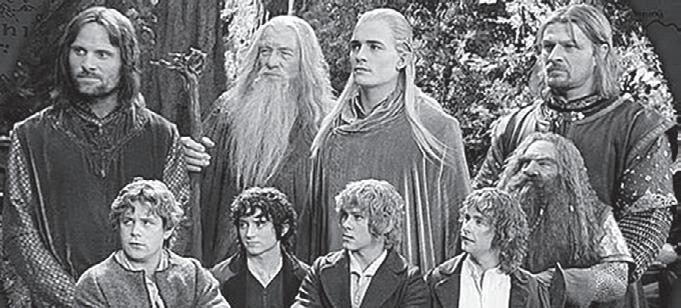


Ithaca College Women’s Lacrosse vs Bard College | 4 p.m., 4/3 Friday | Higgins Stadium, Ithaca College
Ithaca College Women’s Tennis vs RIT | 4 p.m., 4/3 Friday | Wheeler Tennis Courts, Ithaca College
Cornell Sailing vs Professor Team Race Championship | All day, 4/4 Saturday | Merill Family Sailing Center
Cornell Baseball Double-Header vs Dartmouth University | 11:30 a.m. & 2:30 p.m., 4/4 Saturday | Booth Field, Cornell University
Ithaca College Men’s Rowing vs RIT, Williams College, & Marietta College | 12 p.m., 4/4 Saturday | Cayuga Inlet, Ithaca NY
Ithaca College Women’s Rowing vs RIT, University of Rochester | 12 p.m., 4/4 Saturday | Cayuga Inlet, Ithaca NY
Ithaca College Men’s Baseball Double-Header vs RIT | 12 p.m. & 3 p.m., 4/4 Saturday | Freeman Field, Ithaca College
Cornell Softball Double-Header vs Harvard University | 12:30 p.m. & 2:30 p.m., 4/4 Saturday | NiemandRobinson Softball Field, Cornell University
Cornell Women’s Tennis vs Yale University | 1 p.m., 4/4 Saturday | Reis Tennis Center, Cornell University
Ithaca College Women’s Lacrosse vs Vassar College | 2 p.m., 4/4 Saturday | Higgins Stadium, Ithaca College
Cornell Baseball vs Dartmouth University | 12 p.m., 4/5 Sunday | Booth Field, Cornell University
Cornell Softball vs Harvard University | 12:30 p.m., 4/5 Sunday
| Niemand-Robinson Softball Field, Cornell University
Cornell Women’s Tennis vs Brown University | 1 p.m., 4/5 Sunday | Reis Tennis Center, Cornell University
Cornell Softball vs Colgate University | 2 p.m., 4/8 Wednesday
| Niemand-Robinson Softball Field, Cornell University
Ithaca College Women’s Softball Double-Header vs Nazareth University | 3 p.m. & 5 p.m, 4/8 Wednesday
Ithaca College Women’s Lacrosse vs No. 8 William Smith College | 4 p.m., 4/8 Wednesday | Higgins Stadium, Ithaca College
Ithaca College Men’s Lacrosse vs No. 7 RIT | 7 p.m., 4/8 Wednesday| Higgins Stadium, Ithaca College
Cornell Sailing vs Professer Team Race Championship | 4/4 Saturday | Merrill Family Sailing Center | Cornell Sailing vs Prosser Team Race Championship
Special Events
Downtown Ithaca Egg Hunt | 12 p.m., 4/1 Wednesday | Downtown Ithaca, 171 E MLK Jr. Street | Celebrate spring with a self-guided egg hunt across Downtown Ithaca businesses. | Free
Ithaca Spring Quest | 12 p.m., 4/1 Wednesday | Located Throughout Ithaca, 20 Nelson Rd | This spring, all of Ithaca is the playground | $45.00
Spring Fun Yoga Series | 5:15 p.m., 4/1 Wednesday | Tompkins County Public Library, 101 East Green Street | Children are welcome to join us as we

welcome spring in a yoga series that ows with the seasons!
PMA 1183 Guest Performer and Speaker: DJ Quinnette | 11:40 a.m., 4/8 Wednesday | Cornell University, 144 East Ave. | Join PMA for DJ Quinnette, Presented by PMA 1183 FWS: Hip-Hop’s Global Vibrations (NYC, LA, Southeast Asia). This event will take place on Zoom on Wednesday, April 8, from 11:40 am - 12:55 pm.
Books
YS Graphic Novel Book Club |
4 p.m., 4/7 Tuesday | Tompkins County Public Library, 101 East Green Street | Join us for YS Graphic Novel Book Club!
Spring Teen Creative Writing Workshop | 5:30 p.m., 4/7 Tuesday | Tompkins County Public Library, 101 East Green Street | Love to write your own stories? Have ideas for your own characters and worlds, or an interest in writing fan ction? Join Adrienne Raw for a Teen Creative Writing Workshop!
Comic Book Club of Ithaca | 6:30 p.m., 4/7 Tuesday | Tompkins County Public Library, 101 East Green Street | The Comic Book Club of Ithaca — the oldest continuously running comics | Free
FROM THE DUST by David Swinson, with Cole Louison | 5 p.m., 4/8 Wednesday | Bu alo Street Books, 215 North Cayuga Street | Please join us for the release of FROM THE DUST by David Swinson, in conversation with Cole Louison | Free
Kids
Children International Fundraiser | 10:30 a.m., 4/1 Wednesday | Ithaca Commons, 171 E State Street |
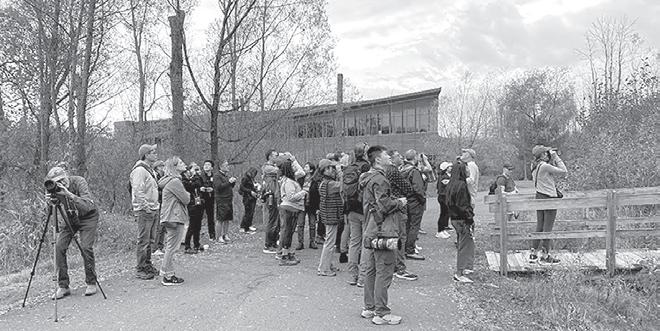
BIRD WALK
Kid and Tween Edition: Mario Kart Tournament | 2 p.m., 4/1 Wednesday | Tompkins County Public Library, 101 East Green Street | Start your engines! We’ll set up Mario Kart 8 Deluxe on our biggest projector and play together. Snacks will be provided! Read to Dogs | 3 p.m., 4/1 Wednesday | New eld Public Library, 198 Main St. | Children are invited to the New eld Library to practice their reading skills by reading to one of Cornell Companion’s volunteer therapy dogs! | Free
Spring Smash: Teen Edition | 4 p.m., 4/1 Wednesday | Tompkins County Public Library, 101 East Green Street | TCPL is hosting a Super Smash Bros. Ultimate Tournament for Teens (ages 12-18!) Register to claim your spot in the bracket.
Baby & Toddler Storytime | 10:30 a.m., 4/3 Friday | Tompkins County Public Library, 101 E Green St. | Caregivers and their children are invited to join Cassie for music, rhymes, movement and books. Storytime will be followed by a playtime from 11-12.
Preschool Projects Take & Make | 4/3 Friday | Cortland Free Library, 32 Church St. | Supplies available on a rst come rst serve basis on the First Friday of the month for ages 3-5 years old.
Math Fun with MathHappens! | 10 a.m., 4/4 Saturday | Sciencenter, 601 1st St. | Join us for playful, informal math learning with the MathHappens Foundation! Families and kids can explore hands-on activities that make math fun, creative, and connected to everyday life.
Easter Brunch | 9:30 a.m., 4/5 Sunday, 130 Statler Dr. | Celebrate Easter with an festive brunch at Taverna
Ban and The Statler Hotel. Enjoy beautifully crafted dishes, seasonal favorites, and house-made specialties prepared by our culinary team.
Chemsations: Polymer Party | 2 p.m., 4/5 Sunday | Sciencecenter, 601 1st Street | Explore chemistry during this hands-on program! We’ll have lots of messy fun as we explore super-absorbent materials and make slime to explore the properties of polymers!
Family Open Play | 9:30 a.m., 4/6 Monday | CCE-Tompkins Education Center, 615 Willow Ave | Free space for families to come with their children — ages 0 to 4 years old — to play and socialize with other families.
Sit! Stay! Read! | 3 p.m., 4/6 Monday | Tompkins County Public Library, 101 E Green St. | Children are invited to practice their reading skills by sharing a story with a truly non-judgmental listener — a dog! Reading sessions will be held Mondays from 3-4 p.m.
Notices
GO ITHACA Open Hours | 2 p.m., 4/2
Thursday | Tompkins County Public Library, 101 East Green Street | Our program makes sustainable commuting accessible and a ordable for everyone.
Free Bird Walks with Cayuga Bird Club | 8 a.m., 4/4 Saturday | Stewart Park Rd. | Join Cayuga Bird Club leaders for guided spring bird walks in Stewart Park, happening the 1st Saturday of the month in April, May and June.
Opening Day at the Pavillion! | 9 a.m., 4/4 Saturday, 545 3rd St. | Come one and all to the opening day of the Ithaca Farmers Market 2026 season.
Saturdays at the pavilion on Cayuga
Lake begin in April and run through December. Market hours are 9 a.m. –3 p.m.
Spring Chicken BBQ | 10:30 a.m., 4/4 Saturday | Lansing Community Center parking lot, 29 Auburn Road | Yummy Chicken BBQ Fundraiser for the Lansing Area Performance Hall. 10:30-1:00 East of the Lansing Library.
Helping Birds at Home- Gardens and Habitat | 11 a.m., 4/4 Saturday | Cornell Lab of Ornithology, 159 Sapsucker Woods Road | Explore the habitat needs of birds around you and how to transform your outdoor space with native plants! | Free Mind Over Body | 1:30 p.m., 4/7 Tuesday | Longview, 1 Bella Vista Drive | Come explore how to increase range of motion and strength through techniques that enhance neuromuscular connection with local Physical Therapist Mitch Raymond. | Free Citizen Pruner Training #1: Tree Selection and Care | 5:30 p.m., 4/7
Tuesday | CCE-Tompkins Education Center, 615 Willow Avenue | City Forester, Jeanne Grace will teach how to select the right tree for your space as well as how to plant and care for it in its early years. | $0.00 - $40.00
Community Data Activism: Art, Feminism, & Us | 6 p.m., 4/7 Tuesday | Tompkins County Public Library, 101 East Green Street | What do data, art, and activism have in common? What is data? How do we interact with it, and how does it impact us?
LGBTQ+ Youth Group | 4:30 p.m., 4/8 Wednesday | Tompkins County Public Library, 101 E Green St. | Join us at LGBTQ+ Youth Group to do crafts, play games, and socialize. Whether you’re lesbian, gay, bi, trans, questioning, or just trying to gure things out — we’re here for you!

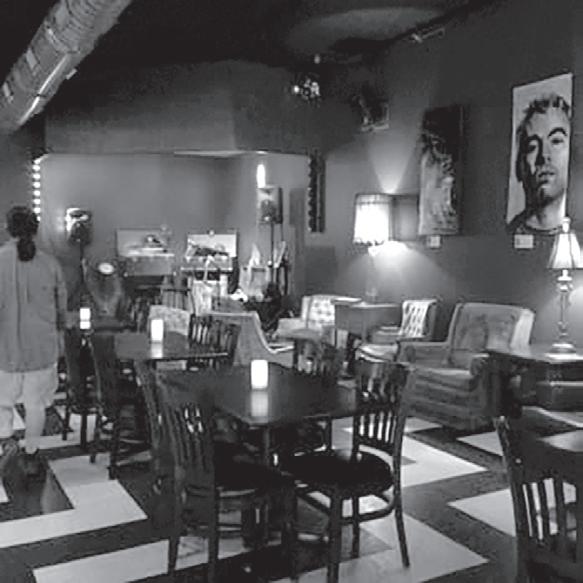
Classifieds
GET DISH SATELLITE TV + INTERNET!
Free Install, Free HD-DVR Upgrade, 80,000 On-Demand Movies, Plus Limited Time Up To $600 In Gift Cards. Call Today! 1-866-782-4069. (NYSCAN)
830/Home
AFFORDABLE TV & INTERNET
If you are overpaying for your service, call now for a free quote and see how much you can save!
1-833-323-0160. (NYSCAN)
250/Merchandise
PREPARE FOR POWER OUTAGES TODAY!
...with a Generac Home Standby Generator. Act now to receive a FREE 5-year warranty with qualifying purchase. Call 1-877-516-1160 today to schedule a free quote. It’s not just a generator. It’s a power move. (NYSCAN)
800/Services
ATTENTION OXYGEN THERAPY USERS!
Discover Oxygen Therapy That Moves with You with Inogen Portable Oxygen Concentrators. FREE information kit. Call 1-833-661-4172. (NYSCAN)
GET A BREAK ON YOUR TAXES
Donate your car, truck, or SUV to assist the blind and visually impaired. Arrange a swift, no-cost vehicle pickup and secure a generous tax credit for 2025. Call Heritage for the Blind Today at 1-855-484-3467. (NYSCAN)

DO YOU NEED A ROOF OR ENERGY EFFICIENT WINDOWS & HELP PAYING FOR IT?
YOU MAY QUALIFY THROUGH NEW RELIEF PROGRAMS (800) 944-9393 or visit NYProgramFunding.org to qualify. Approved applications will have the work completed by a repair crew provided by: HOMEOWNER FUNDING. Not affiliated with State or Gov Programs. (NYSCAN)
FREE WATER TESTING
Do you know what’s in your water?
Leaf Home Water Solutions offers FREE water testing and whole home water treatment systems that can be installed in as little as one day.
15% off your entire purchase. Plus 10% senior and military discounts.
Restrictions apply. Schedule your FREE test today.
Call 1-866-247-5728. (NYSCAN)
PEST CONTROL:
PROTECT YOUR HOME
from pests safely and affordably.
Roaches, Bed Bugs, Rodent, Termite, Spiders and other pests. Locally owned and affordable. Call for service or an inspection today! 1-833549-0598. Have zip code of property ready when calling! (NYSCAN)
PREPARE FOR POWER OUTAGES!
With Briggs & Stratton PowerProtect (TM) standby generators – the most powerful home standby generators available. Industry-leading comprehensive warranty – 7 years ($849 value). Proudly made in the USA! Call Briggs & Stratton 1-888-605-1496. (NYSCAN)
SAFE
STEP – NORTH AMERICA’S #1 WALK-IN TUB
Comprehensive lifetime warranty. Top-of-the-line installation and service. Now featuring our FREE shower package and $1600 OFF for a limited time! Call today!
Financing available. Call Safe Step 1-855-916-5473. (NYSCAN)



Who’s Your Neighbor?
A Local Directory of Faith Communities, Faith-Related Service and Interfaith Activities
Many Ithacans are seeking connections that might accurately be called faith. Some return to their roots while others seek roots they may never have experienced. We hope our directory will provide a resource residents, students and visitors find useful in their journey.
Agape Bible Church https//agapeithaca.org
Baha'i Community of Ithaca www.ithacabahais.org
Bread of Life Anglican Church breadoflifeithaca.org
Cedar Cabin Sangha (Buddhist, Plum Village practice) cedarcabinsangha.blogspot.com
Christ Chapel https://www.christchapelithaca.org
Christ the King Fellowship Presbyterian Church ctkspencer.org
Congregation Tikkun v'Or (ithaca Reform Temple) www.tikkunvor.org
Danby Community Church danbychurch.org
First Unitarian Soclety of Ithaca https://unitarian.ithaca.ny.us
518 Yoga Gathering suzannejanene@gmail.com
All Eyes and Ears on Racism AEER aeerforjustice@gmail.com
Catholic Charities Tompkins/Toga www.catholiccharitiestt.org
Finger Lakes Anam Ca
A Center for Spiritual Direction www.fingerlakesanamcara.com
Greater Lansing-Ithaca Interfaith Community LansingUnited.org/events
First United Methodist Church of Forest Home, Ithaca, N.Y Forest Home Chapel https://www.foresthomechapelumc.org
Hillside Alliance Church hillsideithaca.org
Ithaca Monthly Meeting Religious Soclety of Friends https://ithacamonthlymeeting.org
Lansing United Methodist Church LansingUnited.org
Living Hope Fellowship https://www.lhfithaca.org
New Life Presbyterian Church newlifeithaca.org
Sacral Transformations and Bralded Root Waters Healing Sanctuary https://sacraltransformations.com
St. James AME Zion Church https://www.facebook.com Stja mesamezionithaca
Forest Hermitage - Solo, Outdoor Retreats for Women https://staceysmithhypnosis.com
Integrative Mental Wellness
https://www.psychologytoday.com/ profle/1449445
Pure Essence Vibrations www.pureessencevibrations.com
Willow Glen Christian School www.willowglencs.org
Ithaca Kitchen Cupboard IthacaKitchenCupboard.org
Ithaca Sunday Squares Visitlthaca.com
St. Luke Lutheran Church and Lutheran Campus Ministry stlukeithaca.org
Temple Beth-El https://www.tbeithaca.org
Trinity Lutheran Church www.trinityithaca.org
Vineyard Church of Ithaca ithacavineyard.org
First Presbyterian Church of Ithaca www.firstpresithaca.org
The Twelve Tribes www.twelvetribes.org
Bethel Grove Bible Church bg.org
First Baptist Church in Ithaca www.firstbaptistithaca.org
St. Paul's United Methodist Church stpaulsithaca.org
Church of the Epiphany www.epiphanytrumansburg.org
Second Wind Cottages https://www.secondwindcottages.org
Wisdom’s Goldenrod Center for Philosophic Studies wisdomsgoldenrod.info
Namgyal Monastery Institute of Buddhist Studies Namgyal.org
Moonlight Epiphanies https://moonlightepiphanies.org/
Shared Journeys sharedjourneys.net
The Foundation of Light www.thefoundationoflight.org
For more information, visit www.whoisyourneighbor.org and www.madeofclay.org
April
















































Lentils
• Flours and Sugars

• Beans, Grains, Pasta, Rice

• Coffee
• Dried Fruits & Nuts
• Snacks
• Nut Butter Grinders


• Oil, Vinegar, Maple Syrup & Honey

• Sprouting Seeds
• Dried Peppers


• Teas, Medicinal Herbs
• Culinary Spices














From Compassion to Compliance—Starting a Nonprof it the Right Way
From Foster to Family: One Path to Adoption in New York State
Sponsored by the Law Firm of Hancock Estabrook
Sponsored by Hancock Estabrook, LLP
FCompassion Is Often Why Doing Good Happens
or a lot of adults thinking about growing their family, adopting a child from foster care is one of the most meaningful—and surprisingly doable—paths out there. In New York State, thousands of kids and teens are still in foster care, hoping for permanent, loving homes where they can finally feel safe, supported, and settled. The foster-to-adopt process is designed to walk caring people through each step with clear guidance, support, and plenty of resources along the way.
Why Education Matters— Especially for Small Groups
ter care and foster-to-adopt—both the challenges and the rewards. You’ll learn about trauma, emotional needs, and what day-tolife can look like, all in a low-pressure setting where you can ask questions and see if this path feels right.

Small nonprofits often run with only a few volunteers and a modest budget. That’s exactly why learning the basics can make such a big difference. A little knowledge early on can help organizations avoid common problems and stay focused on their goals.
Many people choose dual certification, meaning they’re approved as both foster and adoptive parents, which opens up more possibilities. Either way, you’ll have a team—social workers, case managers, and support staff—guiding you throughout the process.
Some key benefits include:
• A clear mission. Defining exactly what the organization is trying to do keeps efforts focused and prevents spreading resources too thin.
Application and Home Study
Who Can Adopt?
Many nonprofits begin the same way: someone notices a problem in their community and wants to help. Maybe it’s families struggling to put food on the table, students who need extra help in school, or neighbors who can’t get reliable transportation. That moment of concern—of simply wanting to do something—often sparks the creation of a nonprofit.
If you’re single, partnered, married, or part of a blended or nontraditional family, New York’s adoption system is open to you. If the idea of giving a child stability and a fresh start speaks to you, the state has built a system that helps you move forward with confidence.
But turning that feeling into a lasting organization takes more than good intentions. It requires some planning, structure, and an understanding of how nonprofits work. Learning the basics of governance, compliance, and management helps organizations of all sizes— whether they’re small neighborhood groups or large regional and national nonprofits.
The Power of Local Nonprofits
• Better use of resources. Basic budgeting and planning tools help stretch every dollar.
• A stronger foundation. Understanding governance and oversight helps build accountability from the beginning.
Building Good Governance
New York’s adoption laws are intentionally inclusive. Foster parents in New York must be over the age of 21 However, there are no requirements around being married, owning a home, making a certain income, or having fertility struggles. Single adults, unmarried couples, same-sex partners, and families of all shapes and sizes are welcome. . That said, prospective foster and adoptive parents do need to show they’re emotionally ready, financially stable, and able to provide a safe, nurturing home. This is confirmed through background checks, child abuse registry clearances, and medical evaluations. These steps are all about keeping kids safe and making sure families are prepared for what’s ahead.
Many nonprofits grow out of close connections to a community. Founders see problems firsthand in their neighborhoods, schools, or faith communities, and they respond quickly with practical solutions—food drives, tutoring programs, transportation help, and more.
Because they are so connected to the people they serve, local nonprofits often build strong relationships and create programs that truly fit local needs. Larger organizations may not always have that same on-the-ground perspective.
Getting Started
Most people start by attending an orientation session through their local Department of Social Services (DSS). These sessions give you a real, honest look at fos-
Still, being small doesn’t mean the basics can be overlooked. Understanding how nonprofits operate helps local groups make the most of limited resources and build programs that last.
Even a small group of volunteers benefits from some structure. Larger nonprofits usually have formal boards and policies in place, but small organizations sometimes start informally. Without clear roles, misunderstandings or poor decisions can happen.
Once you apply, the home study begins. A licensed social worker will meet with you several times, visit your home, talk with everyone in the household, check references, and have in-depth conversations about your background, values, and readiness to parent a child who may have experienced loss or trauma. It’s not about judging you—it’s about preparation, reflection, and setting everyone up for success. You’ll also complete required pre-service training (usually 10–12 sessions or more). Topics include trauma-informed parenting, attachment, child development, behavior management, cultural awareness, and how kids process grief and loss. Many families say this training is eye-opening and empowering, and it’s a great way to connect with others on the same journey.
Foster Placement
Creating a small governing board— even just a few trusted people—helps bring shared responsibility and better decision-making. Learning what board members should do also helps prevent common problems like too much control in one person’s hands or a lack of oversight.
Compliance Matters from the Start
All nonprofits, large or small, must follow certain legal and administrative rules. Larger organizations often have lawyers or advisors to guide them, but smaller ones may rely on founders or volunteers.
Important basics include proper incorporation, keeping good records, filing
Once you’re approved as a foster parent, you may be called upon to foster a child in need. It is important to remember that while the child is in foster care, the Department of Social Services has legal custody of the child, and the primary goal of foster care is reunification with the child’s biological family whenever possible. Therefore, there may be an extended period of fostering before a child is legally freed
required tax forms, and adopting policies such as conflict-of-interest rules. These steps help ensure the organization operates legally and responsibly.
Following these rules also builds trust with donors, partners, and the community. Ignoring them can lead to penalties, loss of nonprofit status, or damage to an organization’s reputation.
Financial Accountability Builds Trust
for adoption, and in some cases, the child may be removed from your home and returned to their biological family. A child is legally freed for adoption when the child’s biological parents voluntarily surrender their parental rights, or their parental rights are terminated by Court order. This process can take a year or longer. Depending on the length of time a child has been placed in your home, foster parents may have certain legal rights, including the ability to participate in court proceedings related to the child’s custody.
Adoptive Placement
Every nonprofit must handle money responsibly. National organizations may manage large, complex budgets, but small nonprofits often depend on donations from neighbors, community events, or local supporters.
legally your son or daughter, with a new birth certificate, new name, if desired, and full legal rights—a forever family.
Costs, Timelines, and Financial Support
management tools, and digital communication can help organizations reach new supporters and operate more efficiently. These tools allow even small groups to expand their networks and extend their mission further than they could in the past.
One big advantage of foster-to-adopt in New York is cost. Going through a public agency usually means no fees for applications, training, or home studies.
Turning Compassion into Lasting Impact
Even after finalization, support doesn’t stop—New York offers post-adoption counseling, support groups, respite care, and other services.
The principles are the same at any scale: plan carefully, keep accurate records, and report clearly on how funds are used. When donors see that their contributions are managed responsibly, they’re more likely to keep supporting the organization.
Local Nonprofits as Part of a Larger Network
Local nonprofits play an important role alongside larger organizations. They often respond quickly to specific community needs and build close relationships with residents.
There may be children, particularly older children, who are already freed for adoption and seeking permanent, forever homes. Your caseworker will share profiles of these children including details about their personalities, interests, needs, and whether they’re part of a sibling group. The goal is a good fit—matching the child’s needs with your strengths, lifestyle, and capacity. When a potential match looks promising, visits start slowly. You might begin with short, supervised meetings, then move to longer visits, overnights, and weekends. This gives everyone time to build trust and adjust. If things continue to feel right, the child moves into your home in a pre-adoptive placement. This supervision period usually lasts at least six months and includes regular check-ins and ongoing support.
Finalizing the Adoption
Tracking basic results—such as how many people are served or what outcomes programs achieve—can strengthen their work. It also helps show the value of their efforts and can open the door to partnerships with larger regional or national groups.
Using Technology to Expand Reach
Technology has made it easier than ever for small nonprofits to grow their impact. Online fundraising platforms, volunteer
After the child is free for adoption and the supervision period ends, it’s time to make things official. An adoption attorney helps file paperwork with Family Court or Surrogate’s Court. A judge reviews the case, confirms the adoption is in the child’s best interest, and issues the final Order of Adoption. From that day on, the child is
Many children also qualify for foster care and adoption per diem subsidies, the amount of which varies depending on the child’s unique circumstances, until the child is 18 or 21 years old. The placement may also qualify for Medicaid coverage, childcare help, and reimbursement for one-time adoption expenses, including legal fees up to $2,000. These supports can make a huge difference, especially when adopting children with special needs.
Life After Adoption
Compassion is often the spark that starts a nonprofit. But turning that spark into lasting change requires structure and knowledge. Understanding governance, compliance, financial responsibility, and program evaluation helps organizations grow in a healthy and sustainable way. Whether a nonprofit serves one neighborhood or works across the country, these principles remain the same. Small organizations may operate on a modest scale, but their impact can be powerful. When compassion is paired with thoughtful planning and responsible management, nonprofits can create meaningful and lasting change in the communities they serve.
Adopting from foster care can be challenging. Some children carry the effects of trauma and loss, and parenting them takes patience, flexibility, and heart. But the rewards are enormous—watching a child heal, grow, and feel secure, celebrating firsts and milestones, and building a family rooted in love and resilience. With New York’s strong support system, financial assistance, and experienced professionals, this journey is not only possible—it’s deeply supported.
EDITOR’S NOTE: This article is for informational purposes only and should not be construed as, and does not constitute, legal advice on any specific matter, nor does this message create an attorney-client relationship. These materials may be considered Attorney Advertising in some states. Estate planning involves complex legal and tax considerations that vary by state and individual circumstances. Always consult with qualified estate planning attorneys, financial advisors, and tax professionals to develop a plan appropriate for your specific situation. Prior results do not guarantee a similar outcome.
Footnote: This essay is sponsored by Hancock Estabrook, a local law firm with offices in Ithaca and Syracuse. Their support reflects a shared commitment to strengthening families and increasing awareness of foster care and adoption opportunities throughout New York State.
Footnote: This essay is sponsored by Hancock Estabrook, a local law firm with offices in Ithaca and Syracuse.
(Photo Ьу Julia М. Cameron)

LansingArea PerformanceHall