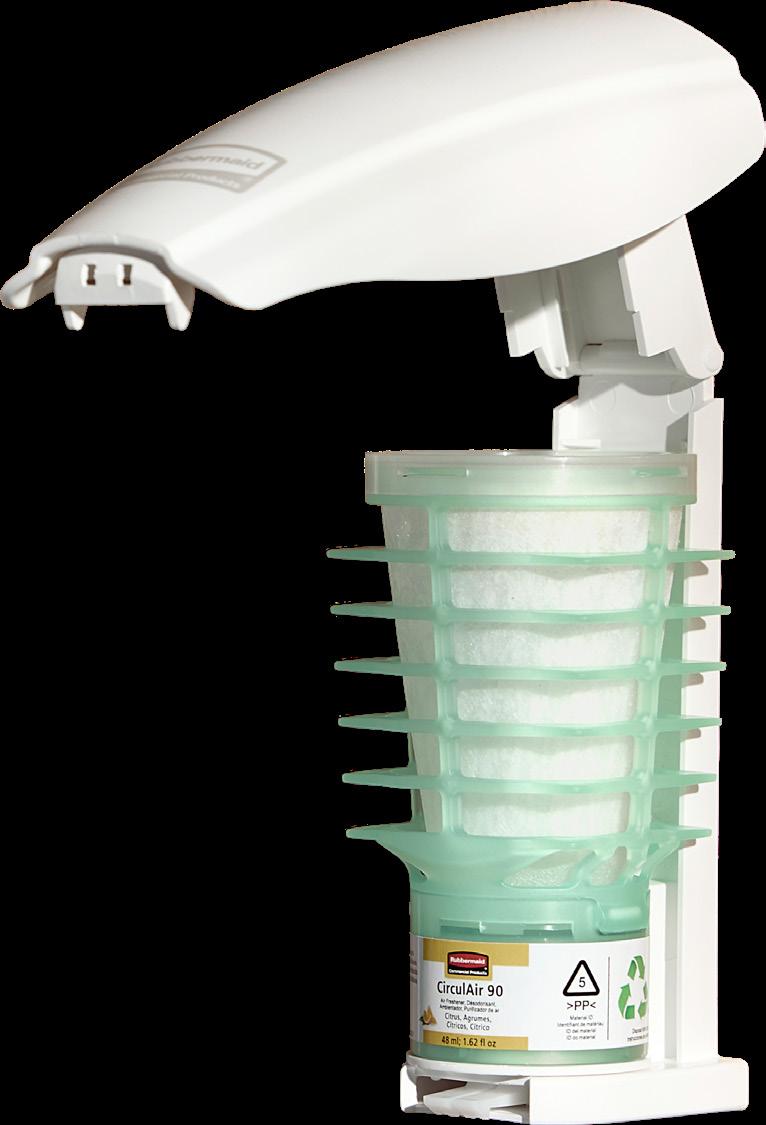
FRAGRANCE THAT LASTS. DESIGN THAT CARES.

DESIGNED FOR RECYCLABILITY. ONE MATERIAL. NO DISMANTLING. EASIER RECYCLING.
C90 refill is engineered from a single material and designed to align with global design-for-recycling standards. Recyclability independently assessed through APCO PREP in Australia and New Zealand.
BATTERY-FREE BY DESIGN
Both the refill and dispenser feature battery-free operation, ensuring uninterrupted performance with minimal maintenance.
RECYCLABILITY ASSESSED
90 DAYS
RCP’s Passive Air Care System
Dispensers and CirculAir 90 Refills provide an effective solution for commercial environments, delivering freshness without the need for batteries or electricity.
Reliable air care performance with zero maintenance for 90 days or more.*
With 7 unique fragrances — 5 existing and 2 new — there’s something for every space, and every taste.
Formulated without volatile organic compound (VOC) propellants, our passive air care refill delivers long-lasting fragrance without compromising indoor air quality.
INCLEAN is published by
Niche Media Pty Ltd
on behalf of ISSA-The Association for Cleaning & Facility Solutions
Ground Floor, 15 Paran Place, Glen Iris VIC 3146 Australia
MANAGING DIRECTOR, GROUP PUBLISHER
Paul Lidgerwood
EDITOR
Tim McDonald
editor@incleanmag.com.au
SUBEDITOR
Madeleine Swain
ACCOUNT MANAGER - OCEANIA & ASIA PACIFIC
Alicia Morgan sales@incleanmag.com.au
PRODUCTION MANAGER
Alvin Wu
EDITORIAL DESIGNER
Norsham Husaini
Print Post Approved Publication No. PP: 255003/09765
To subscribe, email info@incleanmag.com.au

AINCLEAN is powered by ISSA
ABN: 44 617 407 020 P: +61 2 9890 4951
A: Suite 1, Level 1, 52 O’Connell Street, Parramatta, NSW, 2150 W: www.issa.com
DISCLAIMER: This publication is published by Niche Media PTY LTD. Materials in this publication have been created by a variety of different entities and, to the extent permitted by law, the Publisher accepts no liability for materials created by others. All materials should be considered protected by Australian and international intellectual property laws. Unless you are authorised by law or the copyright owner to do so, you may not copy any of the materials. The mention of a product or service, person or company in this publication does not indicate Publisher endorsement. The views expressed in this publication do not necessarily represent the opinion of the Publisher, its agents, company officers or employees. Any use of the information contained in this publication is at the sole risk of the person using that information. The user should make independent enquiries as to the accuracy of the information before relying on that information. All express or implied terms, conditions, warranties, statements, assurances and representations in relation to the Publisher, its publications and its services are expressly excluded save for those conditions and warranties which must be implied under the laws of any State of Australia or the provisions of Division 2 of Part V of the Trade Practices Act 1974 and any statutory modification or re-enactment thereof. To the extent permitted by law, the Publisher will not be liable for any damages including special, exemplary, punitive or consequential damages (including but not limited to economic loss or loss of profit or revenue or loss of opportunity) or indirect loss or damage of any kind arising in contract, tort or otherwise, even if advised of the possibility of such loss of profits or damages. While we use our best endeavours to ensure accuracy of the materials we create, to the extent permitted by law, the Publisher excludes all liability for loss resulting from any inaccuracies or false or misleading statements that may appear in this publication. Copyright © 2025 - ISSA.
s the calendar turns and work boots return to site, this first edition of INCLEAN for 2026 feels like a moment to pause, reset and then move forward with intent. The cleaning and hygiene sector rarely enjoys the luxury of a slow start. Your work resumes where it always does, at the frontline of safety, health and trust, keeping workplaces functional and communities protected while the rest of the economy finds its feet.
This issue marks our seventh annual Industry Leaders Forum, merging voices from across the sector to contemplate where the industry stands and where it’s heading. These leaders represent diverse corners of cleaning, hygiene, manufacturing and services, yet their perspectives converge around shared challenges, emerging opportunities and the legislative shifts reshaping daily operations. Taken together, the profiles offer a macro view of the industry’s current mood, its defining trends and the challenges that will shape decision-making through the year ahead.
That calculated approach feeds into our cover story, 'Women rising from the frontline', which explores the growing presence of women moving from operational roles into senior leadership, bringing lived experience into boardrooms and reshaping how decisions are made. Their pathways reveal how credibility is built through time on the tools and how that grounding strengthens leadership at every level.
Our feature, 'Data before dollars', looks at procurement teams who now rely on usage insights and performance tracking to sharpen spend control while cutting waste. As margins tighten, evidenceled purchasing has become a practical lever for resilience rather than a theoretical exercise.
The cost case for going green examines sustainability through a commercial lens, unpacking how environmental initiatives deliver returns via efficiency, compliance and client confidence. It frames sustainability as a business discipline grounded in measurable outcomes.
As this new year gathers momentum, the responsibility carried by this industry remains constant and essential. Thank you for the work you do, the standards you uphold and the professionalism that keeps spaces safe long after headlines fade. Here’s to a focused, confident and forward-moving 2026.

Tim McDonald Editor editor@incleanmag.com.au
Niche Media takes its corporate and social responsibilities seriously and is committed to reducing its impact on the environment. We continuously strive to improve our environmental performance and to initiate additional CSR-based projects and activities. As part of our company policy we ensure that the products and services used in the manufacture of this magazine are sourced from environmentally responsible suppliers. This magazine has been printed on paper produced from sustainably sourced wood and pulp fibre and is accredited under PEFC chain of custody.
PEFC certified wood and paper products come from environmentally appropriate, socially beneficial and economically viable management of forests.

China Clean Expo
31 March – 3 April 2026
China’s leading cleaning show for hospitality and commercial spaces
Shanghai New International Expo Center Shanghai, China
ISSA Cleaning and Hygiene Expo
8-9 October 2026
Australasia’s premier event for cleaning and facility solutions
Melbourne Convention and Exhibition Centre (MCEC). Melbourne VIC
ISSA Show North America 16-19 November 2026
North America’s premier event for the commercial cleaning and maintenance industries
Mandalay Bay Convention Center Las Vegas, NV

Rise of the machines on Aussie floors
“We are seeing huge numbers of end users requesting robots and automation from their cleaning contractors,” - Tom Culver, founder of The Robot Factory. But he reminds us to maintain the human touch.
Do you know what’s in your cleaning products?
Most cleaners can’t name a single ingredient in the chemicals they use, and few have received essential training. Do you know what’s in your cleaning products?
On high alert with Nipah virus
There is a palpable sense of heightened
vigilance across healthcare and travel environments as authorities respond to confirmed Nipah virus cases in India. Here's what you need to know and why vigilance matters.
Decoding the hype in cleaning technology
The adoption of technology into the cleaning sector has been swift, extensive and transformative, and new tech is changing cleaning. Here’s what companies must get right.
LITMAS technical and managing director Claire Bird said 2025 was the year Australia realised it has to clean more than just surfaces.

12 Women rising from the frontline
A quiet transformation is underway, with women moving from operational roles into senior leadership positions.
18 Data before dollars
Procurement in the cleaning and hygiene sector has entered a new phase where intuition gives way to evidence.
21 The cost case for going green
When organisations rethink sustainability as a strategic engine rather than a reputational badge, the conversation shifts.
24 2026 Industry Leaders Forum
Insights from key industry position holders in the Oceania and Asia-Pacific region.
36 Touchpoints that shape perfection
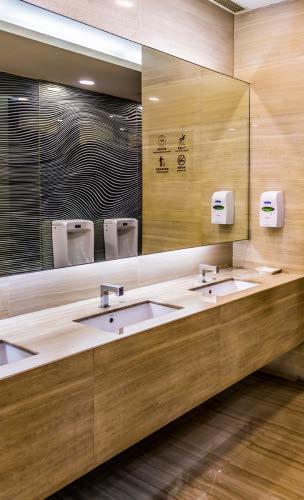
The restroom has quietly become one of the most revealing spaces a brand controls.
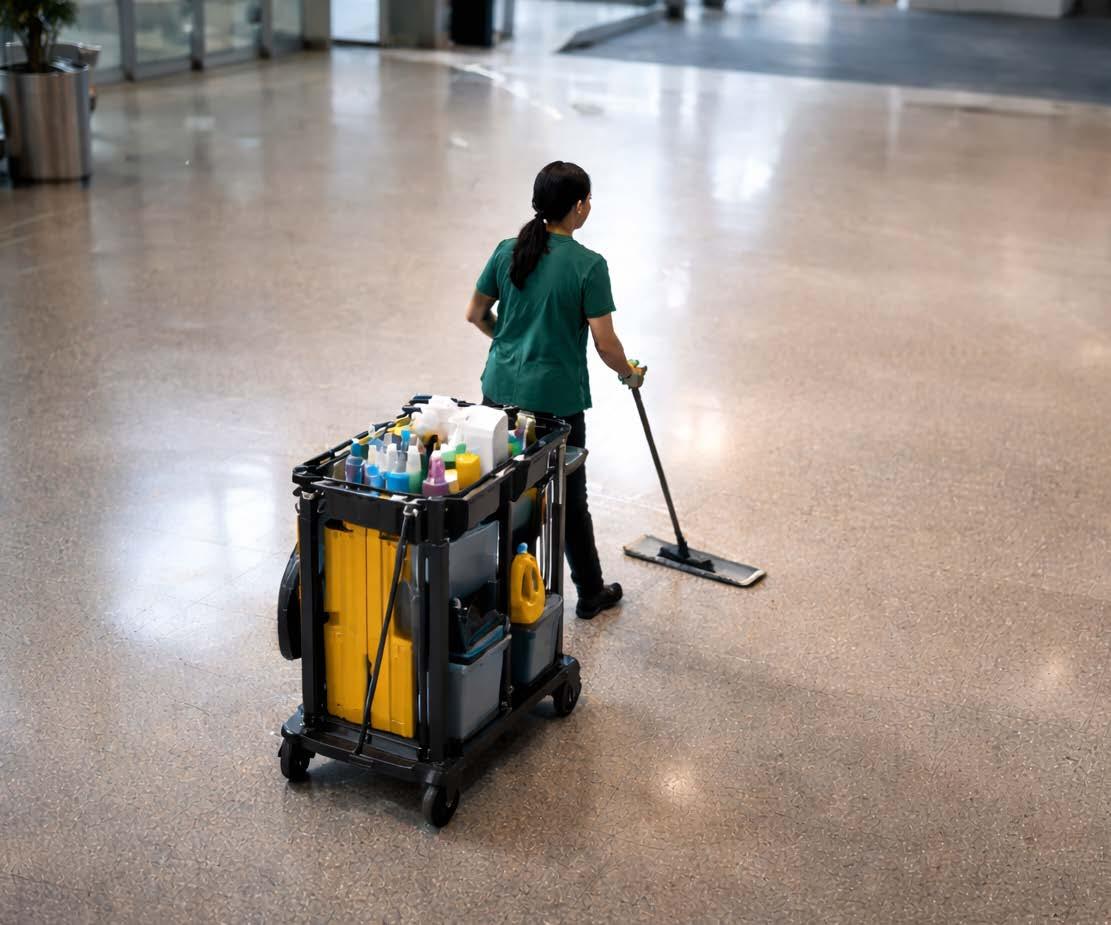

As the FIFA World Cup 2026 kicks off on 11 June, global attention will centre on the action unfolding across 16 stadiums in the US, Canada and Mexico, yet industry experts warn that environmental hygiene will play a decisive role behind the scenes.
The expanded tournament will feature 48 national teams, 104 matches and more than five million spectators, creating vast population movement through hotels, airports, transport hubs and training facilities in addition to match venues. According to Dr Gavin Macgregor Skinner, senior director at ISSA, every one of those environments carries public health significance.
“These are the best of the best coming to our country,” Macgregor Skinner says. “They depend on us having controlled environments that support their respiratory function, neurologic processing, hydration and recovery.”
Mass gatherings of this scale are associated with increased risk of
infectious disease outbreaks, with norovirus identified as one of the most persistent threats. The highly contagious gastrointestinal virus has a documented history at major international sporting events, including the postponement of a hockey match at the 2006 Winter Olympics and outbreaks linked to past FIFA tournaments.
Dr Rebecca Bascom, a physician with Penn State, says preparation must extend across the entire supply chain. Manufacturers, distributors, facility managers and cleaning professionals each hold responsibility for establishing best practice and responding rapidly to any outbreak. Coordinated planning, she says, strengthens the industry’s ability to restore safe environments quickly.
Macgregor Skinner cautions that visible cleaning offers little reassurance without verification. Measurement and training, he says, remain essential in the lead-up to June. For the cleaning sector, protecting athlete performance and public health begins well before the opening whistle. ■
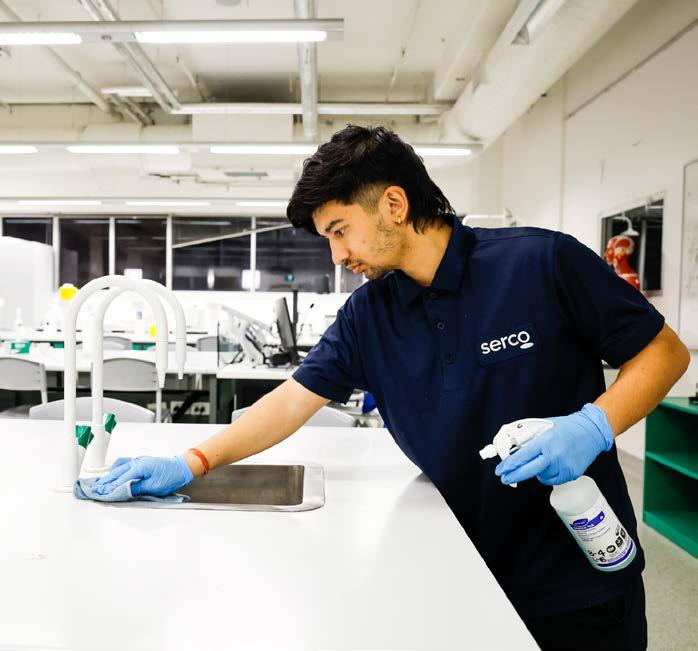
Serco has celebrated the renewal of its contract to provide cleaning services to schools, TAFEs and government facilities across northern Sydney, marking a continuation of work that began in 2018. The contract underscores Serco’s reputation for delivering consistent, high-quality cleaning operations that support safe and healthy learning spaces for students and staff.
General manager Dave Reynolds recognises the company’s workforce for achieving the successful rebid. “A big thanks goes out to the entire team for this great result. This successful renewal is a testament to our people. On average, our fantastic cleaners have been with us for seven years. This impressive tenure reflects their dedication and the positive, wellsupported working environment we continuously strive to deliver,” Reynolds says.
He adds that Serco’s cleaning staff are highly valued by the school communities they serve, noting that many enjoy flexible careers that allow them to thrive while making a tangible impact on students’ daily experiences. “We are proud that our cleaning team are highly valued and loved by their school communities, and enjoy careers characterised by flexibility and support that allow them to thrive,” Reynolds says.
The renewed contract allows Serco to continue its central role in maintaining the cleanliness, safety and overall quality of learning environments across NSW. The company thanked the NSW Government for its trust and for the opportunity to remain a partner in supporting education institutions. ■
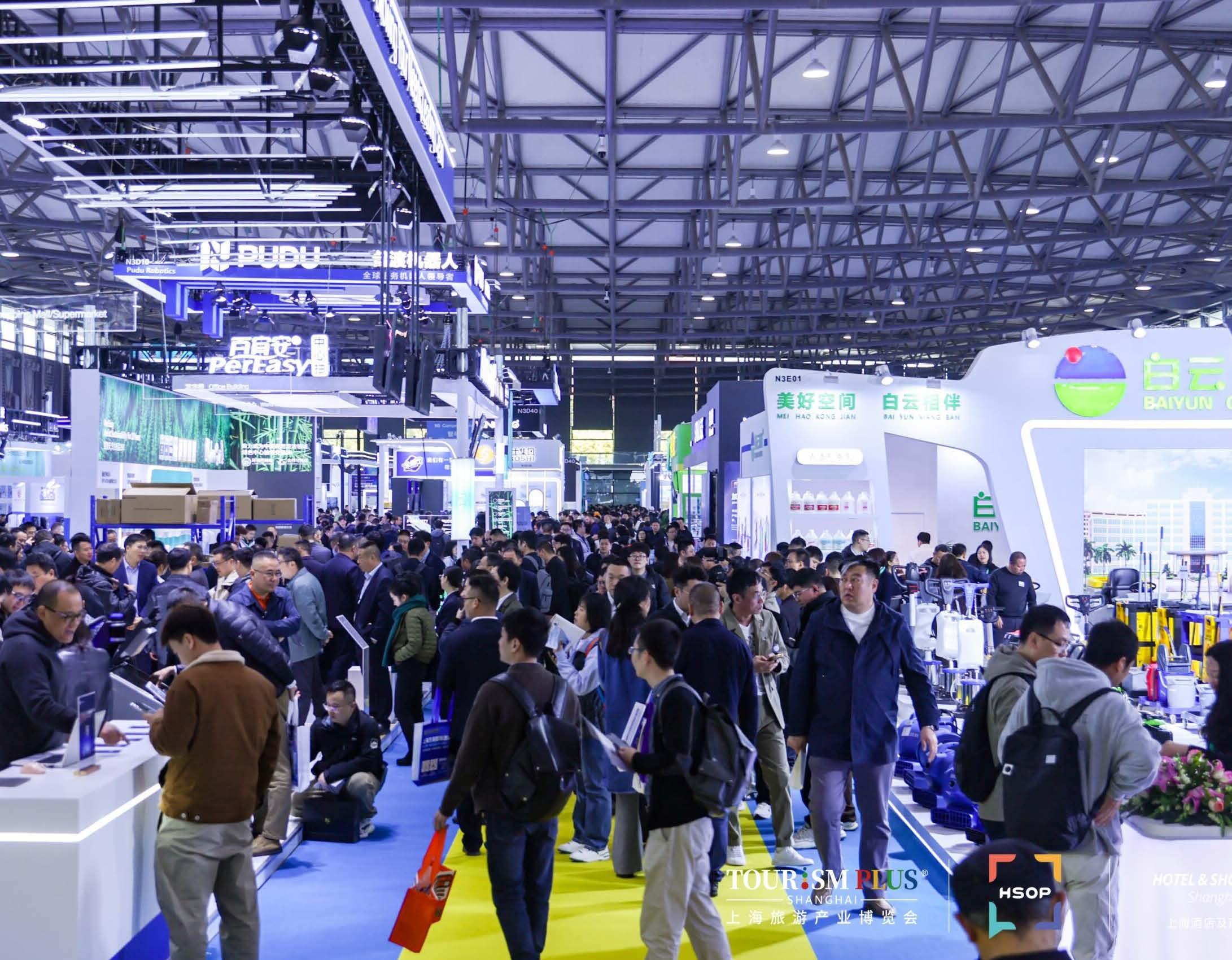
Global cleaning professionals will converge on Shanghai when the 27th China Clean Expo returns from 31 March to 3 April 2026, reinforcing its position as Asia’s leading event for commercial cleaning and facility management.
Organised by IM Sinoexpo and supported by ISSA, the exhibition will be held at the Shanghai New International Expo Centre and is expected to attract thousands of international visitors. Close to 500 exhibitors will fill Halls N1 to N4, spanning equipment, chemicals, restroom solutions, robotics and air purification technologies.
Global brands including Nilfisk, Rubbermaid, Lavor and ICE are set to
appear alongside a strong contingent of Chinese manufacturers, highlighting the country’s growing influence in smart systems and advanced equipment production.
Suppliers such as EVE Battery and Discover Battery will showcase lithium ion and smart battery technologies tailored to cleaning applications, reflecting increasing demand for longer run times and improved productivity across large facilities.
Dedicated zones will again feature Restroom Supplies, Smart Cleaning and Environmental Sanitation, joined in 2026 by new areas covering property management, high-pressure cleaning and laundry products. Beyond the exhibition floor, a program of industry forums and a
Nearly 500 exhibitors will span Halls N1 to N4, representing every major category shaping modern cleaning operations.
live cleaning skills competition will provide practical insight into regulation, technology adoption and workforce capability.
Pre-registration for CCE 2026 is now open, with organisers encouraging international visitors to secure entry ahead of March. ■
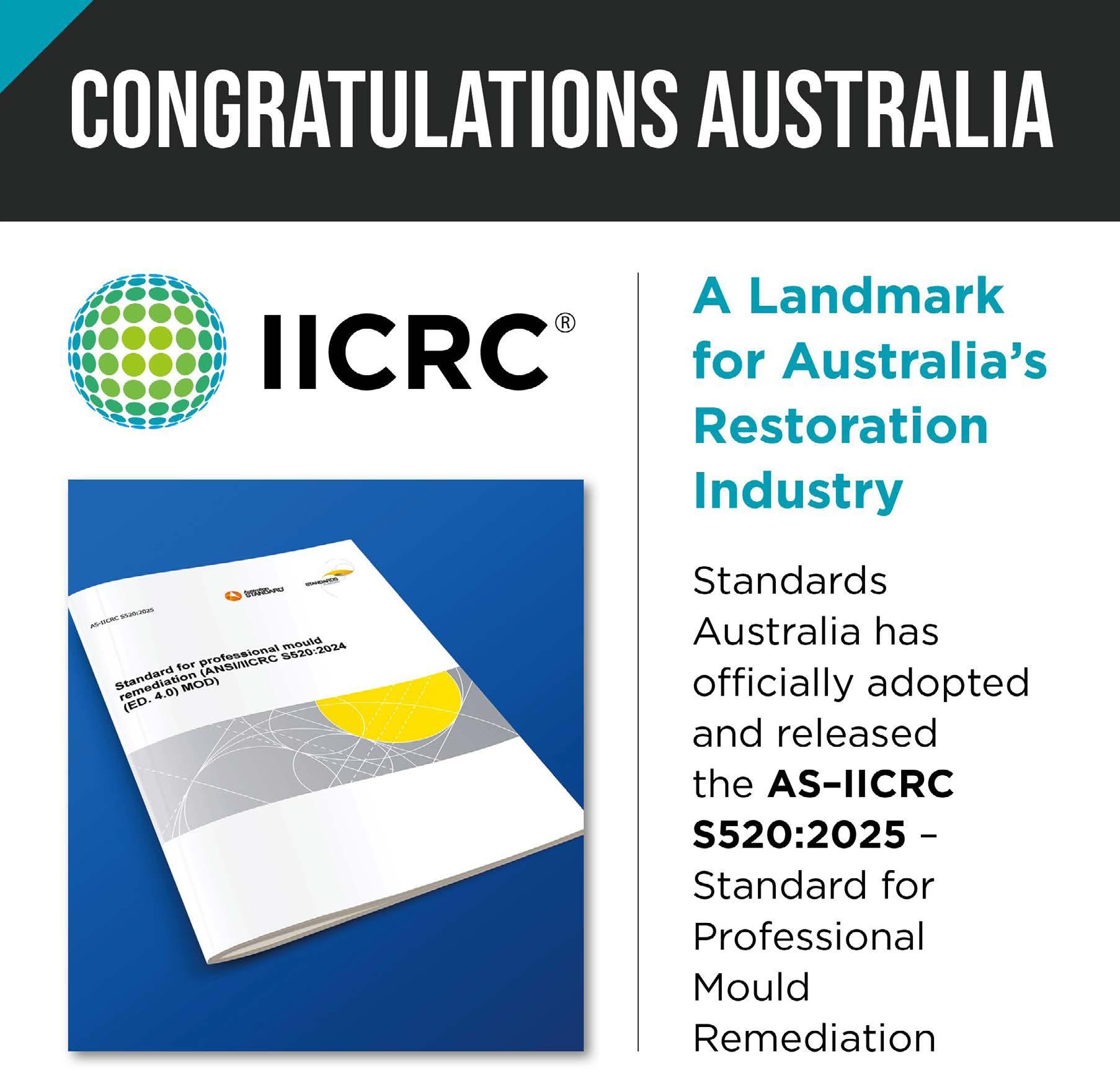
The formal adoption of AS-IICRC S520:2025 Standard for Professional Mould Remediation marks a significant step forward for Australia’s restoration and indoor environmental sectors, establishing a clear national benchmark for professional practice.
Announced by the Restoration Industry Association of Australasia, the new standard delivers an evidencebased framework for managing mould contamination caused by moisture intrusion, water damage and condensation. It outlines best practice for assessment,
mitigation and remediation across residential, commercial and institutional properties, while strengthening requirements around containment, engineering controls and worker safety.
RIA president Brodie West says the standard introduces long needed consistency to a complex service area with direct implications for health and property.
“It brings consistency, professionalism and science-based clarity to a complex service area that directly impacts health, property preservation and consumer confidence,” West says.
For restoration contractors, insurers and facility managers, the document
provides a shared reference point for quality assurance and accountability. For consumers, it offers reassurance that remediation work is undertaken using recognised protocols grounded in research.
RIA acknowledged the Institute of Inspection Cleaning and Restoration Certification for enabling the Australian adoption process, along with Standards Australia’s ME 094 committee for supporting greater standardisation across property restoration and remediation.
The publication of AS-IICRC S520:2025 strengthens the professional framework guiding mould remediation across Australia. ■
Sydney’s fungal outbreak highlights construction risks and the critical role of certified mould remediation standards.
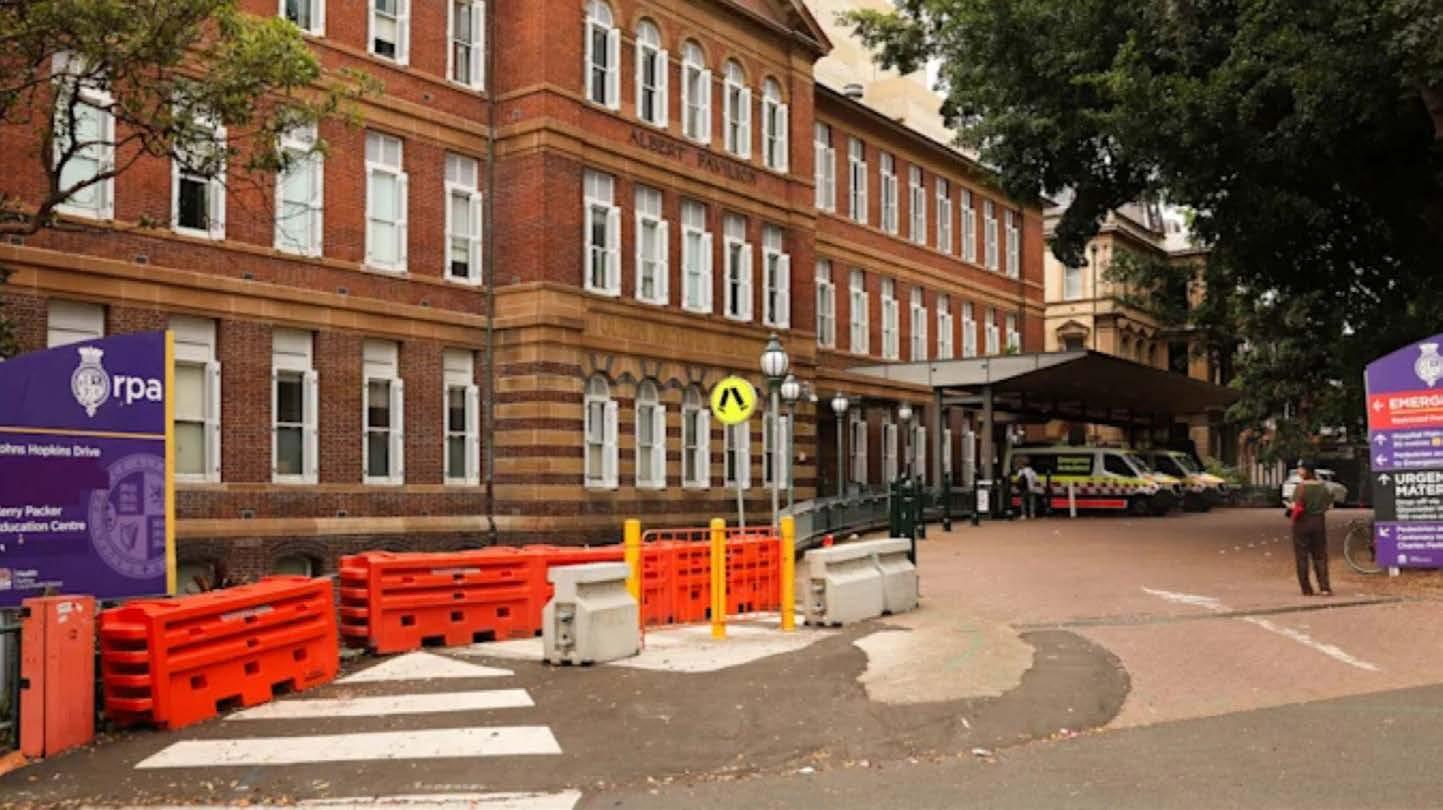
Adeadly cluster of Aspergillus infections at Sydney’s Royal Prince Alfred Hospital has unsettled health professionals and shines a spotlight on how easily an ordinary environmental mould can become a lethal hazard when clinical safeguards slip or are overwhelmed.
At least two transplant patients died and four others became seriously ill after contracting invasive Aspergillus while being treated in the transplant unit at the hospital late in 2025. An official investigation has linked the outbreak to spores stirred up during extensive redevelopment work near clinical spaces, an unsettling reminder that construction and healthcare operations must be synchronised with airtight infection control.
Aspergillus species are widespread in soil and dust, and most of us inhale their spores daily without consequence. But for patients with weakened immune systems, especially organ transplant recipients, these spores can invade lung tissue and
spread, causing aspergillosis that can rapidly become systemic without prompt antifungal therapy. Mortality rates in vulnerable groups are notoriously high, even with treatment.
Sydney’s response has included relocating patients, rigorous environmental cleaning, enhanced air filtration and exhaustive air quality testing before reopening the affected ward. Officials are also reviewing protocols for construction adjacent to sensitive clinical areas to prevent spore ingress.
Yet the Sydney cluster is far from the only instance where airborne mould has crossed from a structural reservoir into a clinical tragedy. In the US, Aspergillus contamination at Seattle Children’s Hospital persisted intermittently for nearly two decades, and was linked in lawsuits to illness and deaths among paediatric patients. Families allege the hospital knew about problematic mould in its air-handling systems from as early as 2005, but failed to take adequate corrective action, resulting in
repeated exposures. A jury awarded damages to families whose children were exposed in operating rooms, and hospital records acknowledged that more than a dozen patients had experienced infection over the years.
These high-profile cases remind facilities teams and infection prevention practitioners that mould hazards are not hypothetical. Vulnerable populations, from transplant and oncology patients to infants undergoing surgery, depend on environmental controls that keep building biology in check.
In Australia, the cleaning, restoration and remediation industry has taken steps to provide clear, consensus-based guidance that can support health environments and property managers in limiting such risks. Standards Australia has adopted two major standards from the globally recognised Institute of Inspection, Cleaning and Restoration Certification (IICRC) framework: the AS-IICRC S500 Standard for Professional Water Damage Restoration and the AS-IICRC S520 Standard for Professional Mould Remediation. The S500 framework outlines science-based procedures for assessing and repairing structures affected by water incursion, including moisture management, drying science and containment to reduce microbial amplification.
The S520 standard governs professional mould assessment and controlled remediation, establishing containment, verification and documentation practices that go well beyond simple surface cleaning. These standards are now recognised benchmarks for trained restoration practitioners in Australia, and professional associations represent technicians who are certified to apply them in high-risk scenarios. Engaging practitioners who understand and follow S500 and S520 methodologies can reduce the chances of hidden mould reservoirs persisting after water damage, improve air quality control and help protect immunocompromised people – whether in healthcare or at home.
The Sydney outbreak underscores that vigilance must be continuous. Mould is ubiquitous and familiar, but left unchecked it can become a silent threat. Adhering to industry standards and employing certified professionals for assessment, remediation and monitoring transforms cleaning from a reactive task into a proactive shield against airborne infection risks. ■
Words Tim McDonald
Across Australia’s cleaning and facilities management sector, a quiet transformation is underway, with women moving from operational roles into senior leadership positions, reshaping the way decisions are made and bringing frontline realities to boardrooms that have long been disconnected from the work on the ground.
The journey from mop to management is more than a career progression; it is a recalibration of leadership itself, anchored in the lived experience of performing physically demanding, detail-oriented and often undervalued work. From the cleaning of hospitals and offices to overseeing multimillion-dollar contracts, these women demonstrate that leadership grounded in operational expertise fosters credibility, trust and performance in ways textbooks and training alone cannot.
“I was raised by women who led by example, and I learned early that work is about standards, not shortcuts,” Cleanfocus COO Niki Trimboli says. “ My first and most defining influence was my yiayia [grandmother], a woman with high expectations of herself, still scrubbing the internals of her wheelie bins at 80. Those early observations shaped my respect for hands-on work and setting the standard without needing to say it. It’s a reminder that long before job titles, frontline experience can start on the homefront.”
Leadership in cleaning and facilities services is most effective when it is informed by the realities of frontline work, as Crest Clean general manager training, safety and wellbeing Liezl

Starting again on the frontline gave me real credibility. I wasn’t leading from assumptions. I was leading from reality.
- Katja Stravs
Foxcroft explains through her career trajectory from entry-level roles to executive leadership. Her hands-on experience, whether issuing uniforms, conducting waste audits or cleaning alongside staff, has allowed her to understand systemic inefficiencies and operational challenges that remain invisible from office desks. “Policies, procedures and strategies succeed when they reflect the realities of work as done, not aspirational visions of work as imagined,” she observes, emphasising that credibility is earned by engagement, not merely by title.
Katja Stravs, South Australia state manager at Central Cleaning Supplies, echoes this view, noting that frontline immersion provided the confidence and clarity for her to lead effectively: “Starting again on the frontline gave me real credibility. I wasn’t leading from assumptions. I was leading from reality.” The operational knowledge these women carry equips them to design systems that are practical, fair and sustainable, ensuring both client satisfaction and workforce wellbeing.
Tennant head of operations Lisa Atherton reinforces that performance is grounded in the intersection of operational capability and commercial reality, where understanding how work is executed on the ground enables leaders to set achievable goals, avoid unrealistic expectations and build trust with both clients and teams. This perspective reframes operational experience as more than a mere stepping stone to leadership and more as a strategic asset that strengthens decision-making at all levels of the organisation.
Penny Tralau, founder and managing director of Mould Rescue, adds that operational experience also shapes the standards leaders set: “When you’ve worked in confined spaces, worn PPE [personal protective equipment] for hours and dealt with real-world time pressures, you quickly learn the difference between what looks good on paper and what is actually achievable, safe and effective on-site,” she says. Through these individual perspectives, one clear principle emerges: operational credibility is the foundation upon which sustainable, high-performing leadership is built.
Beyond practical knowledge, frontline experience instils empathy, resilience and a nuanced understanding of team dynamics that women bring into leadership roles. Hannah Mills, owner of Luna Sage Professional Cleaning, observes that the physical and emotional rigour of operational work shapes leaders who prioritise
care, accountability and support: “Operations is where you learn compassion, humility and what hard work really looks like. Those lessons shape leaders who listen, understand their teams and value people over processes.”
Real Clean founder and director Cleide Oliveira highlights the formative role of early work while navigating language barriers and cultural adaptation. “Being in that position gave me deep empathy for others and showed me the importance of consistency, responsibility and leading by example,” she says. These experiences create leaders who can recognise and respond to subtle risks, anticipate staff needs, and maintain morale under pressure, qualities that are often overlooked in conventional leadership models, but are critical in human-intensive industries such as cleaning.
This combination of empathy and resilience allows women to model leadership that balances accountability with care, a theme business coach and mentor Kathryn Groening underscores through her observations of grounded leaders.
She says, “Successful cleaning and FM organisations are built on respect for operational expertise, clear and consistent standards and leadership that genuinely understands the daily pressures faced by site teams.”
By recognising the physical and psychological challenges inherent in service roles, women leaders can design processes and structures that reduce burnout, prevent workplace incidents and improve workforce retention, translating frontline experience into organisational stability.
The move from frontline roles to strategic leadership positions equips women to bridge the gap between operational realities and business outcomes, particularly in client-facing, compliance-heavy environments. Liezl Foxcroft’s approach to training franchisees at the Master Cleaners Training Institute demonstrates that operational knowledge informs not only internal standards but also client-facing excellence: programs are designed around realworld application, not abstract theory.
Similarly, Central Cleaning Supplies’ Katja Stravs describes how frontline experience reshapes decision-making around contracts, resourcing and efficiency: “True efficiency isn’t about underquoting to win a contract. It’s about delivering a service that is sustainable for both the client and the workforce.” In her view,
leaders with this perspective can justify operational requirements to clients while negotiating realistic scopes and implementing systems that balance cost, quality and safety.
Candice Cooke, head of marketing communications at Kärcher, extends this discussion into the sustainability and ESG domain, noting that operational insight enables businesses to align resource efficiency with staff wellbeing and financial performance. “A healthier, more reliable workforce is the ultimate competitive advantage,” she says. “It’s about moving the conversation with clients from ‘how much does it cost to clean’ to ‘how much value does a healthy building create’.”
The knowledge and lived experience of this cohort of dedicated women proves that leadership informed by frontline experience enables women to make strategic choices that consider human, financial and environmental dimensions simultaneously.
Atherton summarises: “Operational realities create the foundation for trust, both internally and externally by aligning customer expectations with what teams can realistically deliver. I empower people to perform confidently.”
A defining characteristic of women rising from frontline roles is their commitment to mentoring and supporting others to follow similar paths. Mould Rescue’s Tralau emphasises the importance of recognising and building confidence in women who may underestimate themselves despite technical skill and reliability, while Oliveira encourages persistence, self-belief and courage, noting, “Where you start does not define where you can go… doors do open, even when it doesn’t feel that way at the beginning.”
Mills adds that operational experience equips women to cultivate workplaces rooted in respect, empathy and human connection, fostering environments where people can thrive rather than simply survive.
Groening observes that these leadership qualities extend beyond internal teams to industry-wide impact, reinforcing standards, safety practices and culture through advisory work and association engagement. Women who rise through operational pathways bring not only practical insight but also a broader vision for how cleaning and FM organisations can drive positive social outcomes,
workforce stability and sustainable growth. This dual focus – on people and performance – illustrates the transformative potential of leaders whose authority is grounded in lived experience rather than title alone.
As these examples demonstrate, the rise of women from frontline cleaning roles into leadership positions is redefining what it means to lead in a service-intensive industry. Operational knowledge provides credibility, empathy nurtures human-centred decision-making, and experience-informed strategy ensures both commercial and workforce sustainability.
From airport contracts to boutique cleaning businesses, the stories of this strong female cohort reveal that leadership anchored in the realities of work on the ground drives results while cultivating trust, and enables organisations to perform at scale while remaining deeply connected to the people who make that performance possible.
In a sector where the stakes range from hygiene to safety, compliance to client reputation, the lesson is clear: the most effective leaders are those who have walked the floors, handled the tools, faced the fatigue and witnessed the challenges first-hand. By valuing operational experience as a core asset, the cleaning and facilities management industry can harness a wave of leaders who are resilient and empathetic, equipped to shape its future with authority, care and a clear vision of what’s to come. ■
Operations is where you learn compassion, humility and what hard work really looks like. Those lessons shape leaders who listen and value people over processes.

- Hannah Mills

Words Tim McDonald
Procurement in the cleaning and hygiene sector has entered a new phase where intuition gives way to evidence and purchasing decisions start with proof rather than price tags. Usage data now sits at the centre of conversations about cost control, waste reduction and performance as it reveals how products behave in the real world and how teams actually work.
As expectations rise around reporting, governance and financial discipline, procurement leaders now look beyond headline unit costs and focus on how products perform in use and over time. The shift feels subtle yet decisive, with data guiding spend decisions long before budgets are committed.
For many organisations the first breakthrough comes from visibility. Knowing what happens on-site, how often tasks occur and which products are used in practice changes the entire procurement equation.
iQCheckpoint manager strategic partnerships, Dan Graoroski, explains that usage data today is captured through digital workforce management platforms supported by inspection and audit systems that track time, location, task completion and quality verification, often backed by photos and scoring.
He says the real shift arrives when this operational data feeds procurement conversations.
"The metrics that have proven most useful include cost per task rather than cost per site, consumption trends aligned to frequency and scope, quality outcomes linked to product or equipment usage, and labour and consumable cost ratios that highlight inefficiencies," Graoroski says.
This approach reframes procurement around performance by replacing assumptions built on historic volumes with evidence grounded in actual usage and delivery. For procurement teams it means fewer surprises and far more control.
The same principle applies across distribution and supply chain operations at scale. Bunzl has built decades of SKU (stock-keeping unit) level sales history into its ERP (enterprise resource planning) systems and complementary platforms, giving procurement teams a deep well of insight across a number of factors.
"The data captured in our systems provides visibility across cost, risk, quality, delivery and reliability, as well as inventory holdings, demand patterns and sustainability objectives," Bunzl ANZ director of procurement Brendan Ahern says. "These KPIs need to align, so we can source high-quality products from reliable suppliers at competitive costs while meeting DIFOT (delivery in full, on time) expectations and avoiding excessive inventory."

Waste reduction often starts in unexpected places. Data consistently shows that inefficiency hides less in pricing and more in behaviour, contamination and overuse.
Graoroski says data has the greatest impact when it replaces assumption with insight. By tracking volume and contamination patterns it exposes unnecessary waste collections, excess labour and habits that quietly inflate costs.
"It also supports better waste segregation by identifying contamination patterns and enabling targeted education rather than increased spend," says Graoroski. "From an ESG and compliance perspective, data provides measurable evidence of waste reduction and responsible resource use."
For distributors, customer usage data becomes a powerful advisory tool. Bunzl collects detailed information on the volume of products customers purchase and uses that insight alongside sales expertise to explain cost in use and identify efficiencies.
"Analysis of current usage combined with knowledge of normal consumption or alternative products can reveal opportunities to achieve more efficient usage and lower costs," says Bunzl ANZ national supply chain manager Louise Pooley. "Our teams also work closely with industry to identify new technology or manufacturing improvements that lower cost and waste, which
From an ESG and compliance perspective, data provides measurable evidence of waste reduction and responsible resource use.
- Dan Graoroski
is especially important in sectors where many products are disposable."
This shift positions procurement as an enabler of smarter consumption rather than a gatekeeper of spend. It also strengthens relationships between suppliers and clients by grounding recommendations in evidence.
One of the most confronting outcomes of data-driven procurement is how often it overturns accepted wisdom. Higher spend and higher usage frequently fail to deliver better results.
Graoroski notes that data regularly shows increased chemical consumption does not correlate with improved quality outcomes. In other cases premium products perform no better than lower cost alternatives when used correctly by trained operators.
"Issues previously attributed to product quality were sometimes linked to process gaps, training or task sequencing," Graoroski adds. "These insights reinforce the importance of execution and accountability, not just product choice."
At a product development level, data also validates innovation that genuinely reduces material use. Ahern points to recent sustainability focused advances that change both environmental impact and cost structures.
"The move away from PPE-lined disposable coffee cups to aqueous-based coatings means these cups can now be composted or recycled," says Bunzl ANZ’s Ahern. "Similarly the introduction of low-gauge lightweight pallet wrap that maintains strength and safety means less plastic is required while lowering cost and waste. Data enables us to measure volume shifts and calculate real savings for customers."
These examples highlight a critical truth. Without data, many of these gains would remain anecdotal. With measurement, they become credible and repeatable.
As data platforms propagate, expectations across the sector are quickly changing. Transparency now extends beyond purchase orders to visibility of usage, outcomes and impacts.
Graoroski believes data-led procurement is redefining value by expanding how success is measured. Total cost now includes waste reduction, rework avoidance and compliance outcomes alongside price.
The ability to analyse and present meaningful insights will shape procurement credibility over the coming years.
- Louise Pooley
"Transparency will shift from purchase records to visibility of usage and outcomes,” says Graoroski, “and accountability will increasingly be measured through performance data rather than service delivery claims.”
Bunzl ANZ’s Pooley agrees that the ability to analyse and present meaningful insights will shape procurement credibility over the coming years. She points to rising expectations around ethical sourcing and proof across the supply chain.
"Many customers now require evidence of ethical sourcing and responsible practices from origin through the chain," says Pooley. "Collecting and analysing key data forces transparency and shapes behaviour, so end consumers have confidence in what they buy."
Data before dollars signals a deeper cultural shift. Procurement teams increasingly act as strategic partners who influence operations, sustainability outcomes and client confidence.
When usage data informs purchasing decisions, waste becomes visible, performance becomes measurable and spend becomes deliberate. In a sector where margins remain tight and expectations continue to rise, that clarity delivers its own kind of value.
As digital workforce tools, audit platforms and advanced ERP systems continue to mature, procurement decisions grounded in evidence will define the next era of cleaning and hygiene operations. The future belongs to those who see the work clearly before they sign the cheque.
The growing reliance on data marks a shift in how procurement teams position themselves inside organisations. Once viewed primarily as cost controllers, procurement leaders now operate closer to strategy, influencing operational design, workforce deployment and sustainability outcomes.
Usage data allows procurement to speak the language of operations by anchoring purchasing decisions in how sites actually function day-to-day. When this reality shapes buying choices, conversations move away from abstract price debates toward measurable performance and sustained efficiency. That alignment builds internal trust that eases friction between procurement teams and those delivering the work on the ground.
In cleaning environments where service delivery varies by site type, foot traffic and risk profile, this nuance matters. Data enables procurement to differentiate spend according to need, rather than applying blunt uniform solutions that often lead to overservicing or under resourcing.
Collecting data is futile unless it translates into action, which is why leading organisations invest time in interpreting insights and embedding them into procurement frameworks, supplier reviews and contract structures.
Graoroski notes that when data becomes a shared reference point between operators, suppliers and clients, discussions change tone. Decisions feel grounded and defensible, with accountability distributed across the value chain rather than procurement alone.
This approach also supports more productive supplier relationships. Rather than negotiating solely on unit price, procurement teams can collaborate with suppliers on training, process improvement and product optimisation that reduces waste while protecting performance outcomes.
Beyond cost and waste, data driven procurement supports resilience in an increasingly volatile market. Supply chain disruption, regulatory change and labour constraints all place pressure on procurement teams to anticipate risk.
Ahern highlights the importance of balancing availability with financial discipline. Inventory data, demand forecasting and supplier reliability metrics allow procurement teams to maintain service levels without carrying excess stock that ties up capital and increases waste risk.
This balance grows more critical as sustainability targets tighten and reporting requirements expand. Accurate data underpins credible ESG (environmental, social and governance) claims and protects organisations from reputational risk associated with unsupported sustainability claims or opaque supply chains. When data underpins reporting, procurement teams gain confidence that what is promised externally reflects what happens operationally, reducing exposure while strengthening credibility.
Procurement teams equipped with strong data capabilities also gain predictive power. Trend analysis supports forward planning and allows organisations to adapt product mixes, adjust service models and respond to emerging regulatory or client expectations with clarity rather than urgency.
Seen through a broader lens, data before dollars speaks to organisational discipline as much as technological capability. It asks leaders to interrogate habit, reassess inherited practices and trust evidence, even when it unsettles long-held assumptions.
Within the cleaning and hygiene sector, that discipline increasingly defines what leadership looks like in practice. Organisations investing in data literacy, transparent systems and evidence-led procurement frameworks gain clearer control over spend while strengthening credibility across operations and client relationships.
In an environment shaped by scrutiny and rising expectation, procurement decisions anchored in real world usage deliver certainty. Dollars still matter, but data now decides where they go. ■
Strategic sustainability drives operational efficiency, higher margins and regulatory compliance.
Words Tim McDonald
When organisations in the cleaning and facilities services sector begin to rethink sustainability as a strategic engine rather than a reputational badge, the conversation shifts from expense to efficiency, from feel-good branding to measurable value delivered across operations, financial performance and client engagement.
With investors and clients increasingly bending procurement decisions toward environmental, social and governance performance, the imperative for cleaning contractors to embed sustainability into every facet of their business is intensifying. The shift from voluntary reporting to mandatory assurance and climate-related financial disclosures under Australia’s evolving sustainability framework means firms that once
With the use of machines that feature energy-efficient modes, water, energy and chemical use can be cut drastically.
- Hamish Matheson
treated sustainability as a marketing layer now face structural expectations embedded in governance and risk management. As regulatory settings tighten through expanded climate disclosure requirements overseen by the Australian Accounting Standards Board and strengthened supply chain due diligence reforms expected to take effect from 2026, contractors across the value chain will feel the impact as data demands cascade from property owners and government clients. In this environment, sustainability carries weight because it shapes risk exposure, access to capital and eligibility for high-value contracts.
Although sustainability is often framed through the lens of brand equity, the clearest financial returns are emerging from resource decoupling and operational refinement, which directly strengthen margins. In an industry where labour can represent up to 80 percent of cost, incremental gains in productivity and workforce reliability reverberate across the balance sheet.
From his vantage point Kärcher region president Oceania division, Hamish Matheson sees the business case crystallising around consumption reduction and healthier buildings. “With the use of machines that feature energy-efficient modes like Kärcher does, water, energy and chemical use can be cut drastically,” he explains. “This consumption reduction not only assists in reaching sustainability targets, it supports reduction in consumable spending and in turn the bottom line.”
Within product supply and manufacturing, similar efficiencies are delivering measurable operational return, according to Accord senior manager Jen Semple, who observes that the strongest results consistently come from investments that cut resource use without sacrificing performance. “The strongest, most measurable returns can come from investments that cut resource use without sacrificing performance, especially concentrated and cold water chemicals, dosing and dilution control, water- and energy-efficient equipment, and redesigned packaging that lowers freight and waste costs,” she says. “These can show up as lower input costs, fewer site call outs and improved labour productivity for building service contractors and facility managers.” In this framing, sustainability becomes a disciplined exercise in removing friction from operations and tightening cost structures.
Stephen Ashkin, CEO and president of Ashkin Group, reinforces that sustainability delivers its greatest value when it sharpens operational performance rather than sitting apart from it. “Sustainability delivers the strongest business returns where it improves operational performance and cost control,” Ashkin explains, highlighting energy and water efficiency, smarter chemical use, equipment selection, route planning and workforce safety as levers that influence margin and service quality. When sustainability is embedded in daily decision-making, it functions as a productivity strategy anchored in risk reduction and consistency.
As ESG expectations become embedded in procurement frameworks across Australia and globally, the practical challenge facing contractors lies in measurement, verification and communication of performance. In a market where tenders increasingly request emissions data, workforce indicators and supply chain transparency, sustainability narratives must be supported by credible evidence.
For many contractors, data fragmentation remains the core obstacle, with information dispersed across fuel records, chemical purchases, workforce data and supplier invoices across multiple sites. “The challenge isn’t intent, it’s execution,” Ashkin notes, pointing to the difficulty of turning everyday operational data into clear, defensible information that procurement teams can understand and trust. Without integrated systems or industryspecific tools such as ISSA’s Sustainability Reporting Platform, firms risk falling short in competitive bids despite genuine operational improvements.
Matheson highlights Scope 3 emissions and indirect impacts as particularly complex areas, especially when contractors operate across decentralised sites with limited real-time monitoring. He argues that automated, IoT-enabled tracking is increasingly essential to generate audit-ready reports that align with client expectations. Technologies that log each cleaning session with map-based reporting and digital audit trails illustrate how operational transparency can be built into equipment rather than layered on afterwards.
Smaller operators who start tracking core metrics turn compliance into advantage.
- Stephen Ashkin
From a leadership perspective within manufacturing and supply, Semple says rising expectations have fundamentally changed how sustainability decisions are assessed. “Rising compliance expectations around worker safety, transport and storage of chemicals, environmental claims and reporting mean sustainability decisions now go through the same lens as any other risk-managed capital investment,” she explains. “At a leadership level, clear evidence of regulatory robustness, credible certifications, defensible claims, life cycle costings and the ability to generate verifiable data for customers’ own ESG and due diligence reporting should be priorities.” Sustainability, in this context, sits alongside financial prudence and regulatory risk as a core boardroom consideration.
As Australia phases in mandatory climate-related financial disclosures aligned with international standards, overseen by the Australian Accounting Standards Board, sustainability reporting is shifting from aspiration to obligation. Mediumsized enterprises will increasingly be drawn into disclosure frameworks from 2026, and even contractors not directly regulated will experience the downstream impact as clients seek data to satisfy their own reporting duties.
Alongside climate disclosure reform, proposed enhancements to supply chain transparency and modern slavery reporting will raise expectations around due diligence and substantiated claims, reinforcing the need for traceability across product sourcing, chemical composition and end-of-life management. These shifts place pressure on cleaning businesses to move beyond high-level sustainability statements and toward documented, auditable performance metrics that can withstand external scrutiny.
Within this tightening regulatory landscape, Semple emphasises that visible and proven performance now plays a decisive role in client trust and contract longevity. “Visible, well-substantiated sustainability performance is increasingly a factor in tenders and a differentiator in renewals,” she says. “Procurement organisations and customers expect evidence that products and systems are safer, lower impact and support their own ESG goals.” Suppliers and contractors that can transparently
demonstrate reductions in chemical use, packaging waste, incidents or emissions per site, she adds, tend to win greater trust, access to senior stakeholders and longer term partnership-style contracts.
Matheson sees opportunity in the same shift, arguing that smaller operators can leverage agility to pursue recognised certifications such as GECA or EcoVadis and adopt verified responsible products that provide documented efficiency, repairability and traceability. By pairing government incentives with digital reporting tools, nimble contractors can present a verified green service that aligns with Tier 1 building owner and government procurement expectations.
As sustainability becomes embedded in procurement and regulatory frameworks, forward-looking operators are reframing compliance as a catalyst for differentiation rather than an administrative burden. By systematically tracking energy, fuel, chemical usage and workforce indicators, contractors can strengthen bids, deepen client relationships and reduce operational risk.
Ashkin argues that those who begin measuring core metrics early will find themselves better positioned in a market where sustainability data increasingly influences renewal decisions. Contractors who treat sustainability pragmatically as an operational discipline rather than a marketing exercise are building resilience into their business models and signalling reliability to sophisticated clients.
When sustainability is woven into equipment selection, chemical management, packaging design and data systems, it shapes daily performance in ways that compound over time. Resource efficiency lowers input costs, safer products support workforce wellbeing, transparent reporting builds procurement confidence and regulatory alignment reduces exposure to future disruption. In this convergence of performance, compliance and client trust, the cost case for going green reveals itself as a disciplined strategy for profitable growth grounded in measurable outcomes and long-term market relevance. ■





LAUREN MICALLEF
ISSA Oceania Manager
Your career spans medical diagnostics, retail, wholesaling and trade association. What has that cross-sector journey taught you about leading teams through complexity and change?
Businesses today are navigating a range of complex pressures from geopolitical instability and inflation to supply chain disruption, skills shortages and the rapid pace of technological change. Many of these challenges are shared across industries, regardless of sector. In my experience, complexity often intensifies when external pressures intersect with internal challenges, particularly when organisational systems, processes or structures are not fully aligned. One consistent theme I have spoken about in recent industry thought leadership articles is the importance of organisational agility. The ability for leaders and teams to reassess, adapt and respond quickly has become a defining capability in today’s economic environment and will continue to be so.
Working across medical diagnostics, manufacturing, retail and trade associations has reinforced the value of both deep industry expertise and cross-sector leadership. The most effective organisations recognise that real strength lies in combining these capabilities. Teams that balance deep sector knowledge with broader cross-industry perspectives are often better positioned to strengthen decision-making, encourage innovation and remain responsive to change.
What’s something your team achieved in 2025 that made you proud?
One of the achievements that stands out in 2025 has been the continued development of practical resources and initiatives designed to support members in their day-to-day operations. A good example is the launch of the Cleaning Times Metric Edition, a comprehensive guide providing accurate tools, task benchmarks and workloading information to help businesses plan and manage cleaning operations more effectively.
Another highlight is the continued strength our industry platforms provide to pull the sector together. Investment in INCLEAN magazine through its weekly newsletter and quarterly publication continues to provide a trusted channel for industry insights, education and thought leadership. The annual ISSA Cleaning and Hygiene Expo also remains an important meeting point where businesses, professionals and suppliers can connect, share knowledge and showcase innovation.
Seeing the industry actively engage with these initiatives and use them to strengthen their businesses is something the team is incredibly proud of.
As Oceania Manager at ISSA, how do you balance global strategy with the very specific realities facing cleaning and hygiene professionals in this region?
Operating within a global association provides the advantage of a shared vision, collective expertise and access to insights from markets around the world. As outlined in ISSA’s mission, the association aims to leverage the strength of its global cleaning community to elevate the value of cleaning as an investment in human health, the environment and organisational performance.
The sector in Oceania operates within a distinct environment, shaped by regional regulatory frameworks, labour market pressures, geographic scale and location and industry structure. Balancing global strategy with regional realities means ensuring international priorities remain relevant and practical for professionals operating across the region.
This involves maintaining strong alignment with global objectives while remaining closely connected to the needs of local members and stakeholders.
How do you measure success beyond revenue?
While financial sustainability is important for any association, there are also additional meaningful measures of success. A stronger indicate the value delivered to members and the broader industry, including how effectively the association supports professional development, fosters collaboration and provides a trusted platform for knowledge sharing.
Member engagement is a key signal of this impact. At the end of the day, we are here to support our members. Participation in education programs, industry initiatives, publications and events demonstrates whether the association is delivering practical value. Success also lies in the strength of the industry community itself. Continued membership retention and growth across the region indicate that members see value in being part of the association. When professionals feel supported, connected and represented, it reflects an organisation that is not only financially sustainable but genuinely advancing the sector it serves.
The sector has gained significantly greater visibility as organisations place increasing emphasis on workplace health, sustainability and operational standards. As the industry continues to grow in scale and importance, leaders have an important role to play in elevating both the workforce and the broader perception of the profession.
A key priority is continued investment in people. Education, training and career development pathways will be essential to ensure professionals are equipped to operate increasingly sophisticated equipment, data-driven systems and new hygiene protocols.
We must also continue to advocate for the true value of cleaning. By promoting innovation, encouraging collaboration and strengthening professional standards, we can ensure the cleaning and hygiene sector continues to grow not only in scale, but also in influence, professionalism and recognition. ■
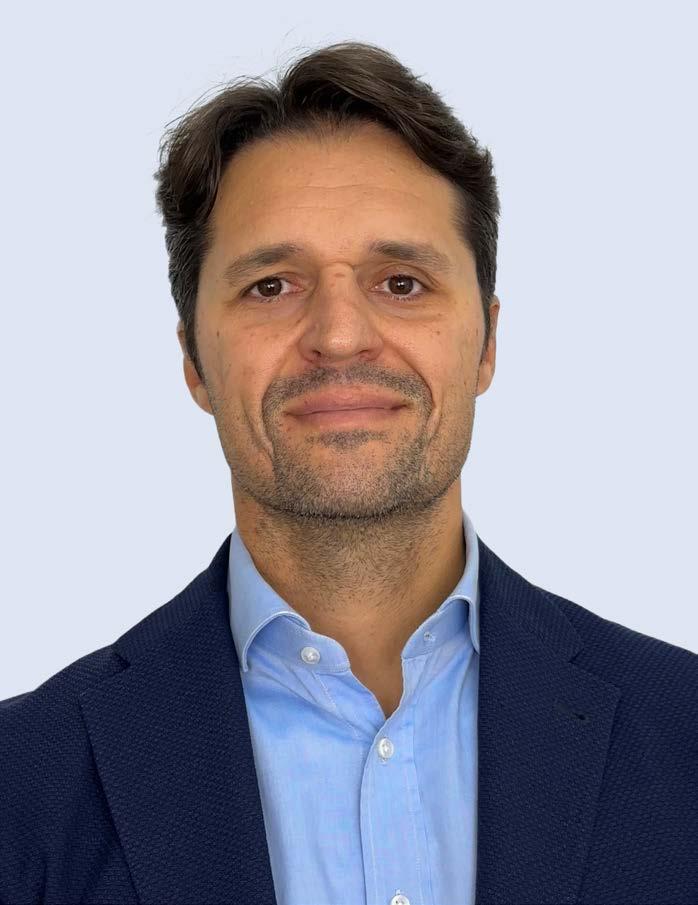
ANDREA GRASSINI
General Manager Professional AU/NZ, Freudenberg Home and Cleaning Solutions Pty Ltd (FHCS)
What’s something your team achieved in 2025 that made you proud?
The past year marked a significant milestone for our business unit in Australia. After an extensive assessment process, we successfully introduced our new market strategy – one that sharpens our customer-centric focus and enhances our ability to deliver value-led solutions that will help grow the overall professional cleaning market. I’m particularly proud of how the entire team embraced the strategy from day one, demonstrating strong commitment, accountability and alignment. The passion our organisation has shown, especially in engaging with our key external partners, has been truly energising.
What does good leadership look like to you?
My goal as a leader is to build a clear vision, mission and strategy while creating a trusted, committed team that enjoys the journey, supports one another and grows within the company. I believe in leading by example, with a strong growth mindset and a constant willingness to challenge ourselves. This approach helps us improve not only as professionals, but also as people and leaders.
What’s one sustainability initiative you’ve implemented that others could learn from?
Our company recently achieved the EcoVadis Bronze Medal for 2025, an important recognition of the hard work and longterm commitment our teams have demonstrated over the past decade. This certification reinforces the progress we’ve made in sustainability and responsible business practices.
What drove your Operational Excellence award win, and what should the rest of the sector learn from it?
This success is truly the result of the entire company working together as one team. Over past years we’ve learned how critical the logistics set-up is in Australia to ensure long-term success, and we strengthened our team accordingly to improve performances and reliability. By fostering open, transparent conversations, we’ve
been able to understand their pain points more deeply and turn those insights into meaningful improvements.
You’ve pushed hard to build a high-performing team at FHCS. What does that culture deliver for customers?
Building the right culture is the foundation of any successful team. We’ve focused on creating a positive environment where people feel supported, valued and able to bring the best version of themselves to work every day. This culture directly shapes how we engage with our customers. Because our team feels empowered, they are confident in providing the best possible support and building truly win-win partnerships. This mindset is what enables us to deliver meaningful value and long-term impact.
Which product or supply chain trends do you believe will reshape professional cleaning in
There is a lot of conversation in the market about robotics and, soon, even humanoids. But before focusing on advanced technologies, we need to ask ourselves: do we truly understand what our customers really need and why?
At FHCS Professional, our priority is to gain a deeper understanding of our customers’ real challenges across different environments. Our role is not only to provide solutions, but also to educate customers on how to clean effectively and sustainably.
My hope is that the cleaning industry elevates the conversation around critical topics such as protocols, certifications, sustainability and the essential role of cleaning in reputation, brand protection and customer attraction. Our goal is to raise awareness and strengthen the culture around professional cleaning so that, together, we can grow the value of the entire market.
There is still a long journey ahead but, by working together, we can truly make our environment, and our world, cleaner and better for everyone. ■
Building the right culture is the foundation of any successful team.
- Andrea Grassini

Managing Director, Agar Cleaning Systems
What’s something your team achieved in 2025 that made you proud?
In 2025, I was proud of the way the team worked together to deliver healthy growth and strong customer retention. We also saw greater acceptance of our compact concentrate formats, and that did not happen by chance. Our reps and technical team spent time with distributors and end users, explaining why compact concentrates can improve on-site efficiency, reduce freight and packaging and support better environmental outcomes when used correctly. It was a practical example of the business becoming more aligned and more capable across multiple areas at once.
How do you balance efficacy, safety and environmental responsibility in product development without compromising any one pillar?
For us, efficacy, safety and environmental responsibility are not separate objectives. They are interconnected. If a product does not perform properly, it often leads to overuse, repeat cleaning or misuse, which affects both safety and environmental outcomes. Our approach is built on experience, research, and a deep understanding of available ingredients and how to combine them effectively. Smarter formulations and higher concentrations can improve efficiency, but they must be supported by clear instructions and education to ensure safe and productive use. The balance comes from knowledge and long-term experience, not fads or gimmicks.
How are you approaching workforce development in 2026?
People are number one for us. Safety sits across everything we do, not just in manufacturing but in how we operate as a business. In 2026, we will continue to focus on training and strengthening our internal knowledge systems so that our team can give consistent, informed advice. We are a relatively small team compared to many service organisations, so capability and productivity matter. Technology will support that, but not for its own sake. Our business is built on meeting human needs, and the relationships our staff build remain central to how we work.
How important is education in lifting industry standards, and where do you see the biggest knowledge gaps today?
Education is critical because productive cleaning requires skill and understanding. From the problems we are asked to solve and the advice customers seek from us, it is clear that knowledge at the operational level needs continual reinforcement. As operational teams change over time, experience is not always being carried forward. Staff turnover and onboarding gaps can contribute to this. Suppliers can support workplaces through structured training platforms and clearer guidance, and we continue to invest in practical education to promote safer, more effective product use.
What’s one sustainability initiative you’ve implemented that others could learn from?
One simple initiative was removing plastic labels from our outer cartons to improve how easily they can be recycled. It is not a dramatic change, but small operational decisions applied consistently over time can have meaningful cumulative impact. We see sustainability as a series of practical improvements that can be implemented steadily across the business. When a change is straightforward, measurable and scalable, it makes sense to adopt it into our everyday operations.
What role is technology playing in your business right now?
Technology is giving us clearer insight into how the business is performing and where we need to focus. It provides better visibility of our strengths and the areas that require attention, which supports more informed decision-making. Across research, marketing and administration, it improves consistency, documentation and data accuracy. We adopt technology deliberately and for defined purposes, not for its own sake. It is there to support our people and enhance the relationships we have built with customers and distributors, not to replace them.
What strategic priorities will define Agar’s next phase of growth, and how will you ensure expansion strengthens your manufacturing capability here in Australia?
Growth remains important because it provides the extra revenue to fund further investment in plant, equipment and facilities. Our priority is to expand in a way that strengthens, not stretches, our manufacturing capability, while positioning the business for the evolving needs of modern workplaces. Protecting product quality and enhancing safety as capacity increases is central to that approach. After nearly six decades in operation, the brand has gained strong traction through good products and ethical business practices, and we intend to build on that foundation with discipline and intent. Long-term sustainability of Australian manufacturing is a core pillar of our strategy, and growth must reinforce that commitment. ■
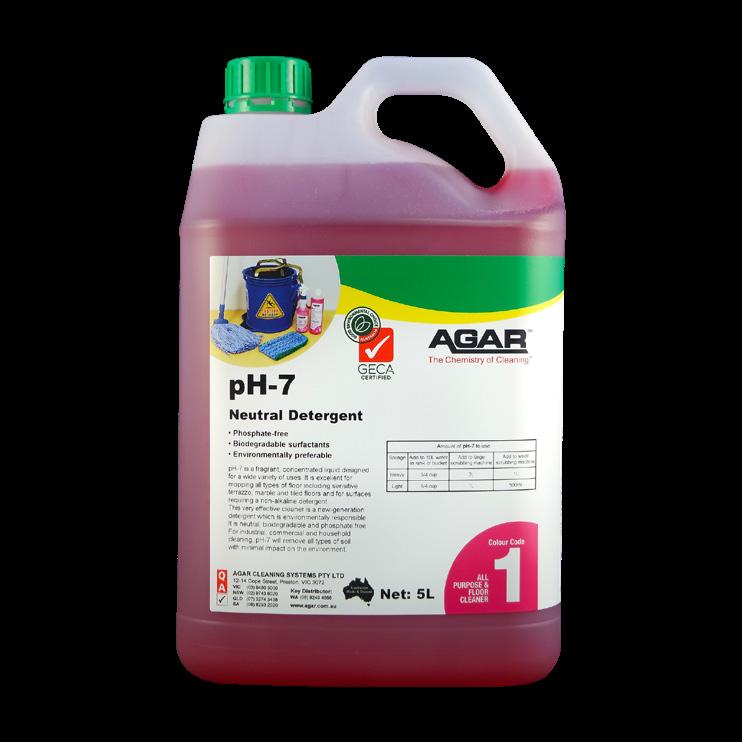
Concentrated, Cost Effective & Certified by GECA Agar’s range of GECA certified green cleaning chemicals are helping businesses across Australia achieve their environmental goals.
Agar is an Australian-family owned and operated business committed to a cleaner, healthier future.
Our green range offers environmentally preferable, non-toxic formulas that deliver exceptional cleaning power while catering to a wide range of industries.
No Greenwashing
Proven efficacy & certifications from GECA
No Compromise
Cleans as effectively as traditional cleaners
No Unnecessary Ingredients
Safer to use around people and on surfaces
No Wasteful Packaging
Concentrated formulas & reusable bottles
No More Headaches
We handle the implementation, training and support
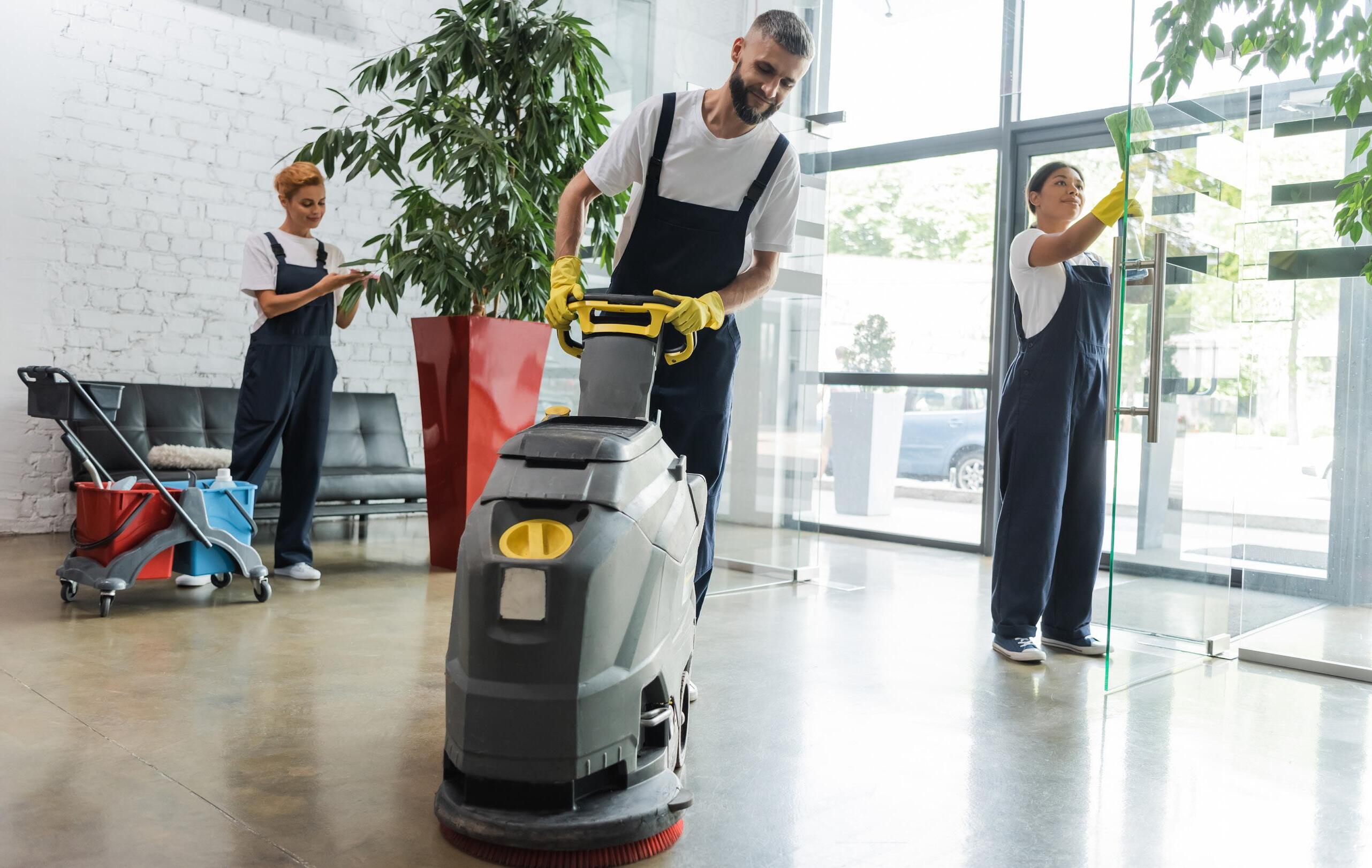

Support safer cleaning practices in occupied environments.
Gentle on surfaces, prolonging the life of your assets.

Reduce your environmental footprint with sustainable formulas and packaging.

For more information on how we can help your facility achieve your sustainable cleaning targets, contact Agar today on 1800 301 302.

DAMIAN MITSCH
Executive Director, Accord
What’s something your team achieved in 2025 that made you proud?
I pushed my team into new directions around systems – and they delivered. They also strengthened our marketing, taking on industry advocacy with real energy. The standout achievement came when they put the sector on the radar of the Productivity Commission’s report on red tape, spotlighting how regulatory misalignment and complexity add costs for members and hinder innovation, ensuring those concerns reach the highest levels of government.
You stepped into Accord at a milestone moment, with 50 years as an organisation and two decades as the combined industry voice. What responsibility comes with leading an association at this point in its evolution?
Accord is a great industry association that’s been well guided by Bronwyn Capanna over the last two decades. We need to hold on to the things that brought the industry together while recognising the coming two decades will look very different. We’re seeing the rise of AI, an uncertain trade and supply chain environment, a focus on ESG and the circular economy, increasing chemophobia, disinformation and fake experts on social media, business consolidation and an increased focus on efficacy and claims. The business and regulatory environment is getting more complex. That’s a lot for members to deal with and we are their industry body. That’s a responsibility!
How are you approaching workforce development in 2026?
Internally, we have a great team that I’d like to keep connected with members and market intelligence as much as possible. As for the wider industry, I’d like to see more of a focus on building basic knowledge and skills to get new people up to speed quickly and then giving them visible pathways to progress. There’s a lot to do on this front.
Your background spans health, advocacy and highly regulated environments. What lessons from that experience feel most urgent for the cleaning and hygiene industry right now?
The biggest lesson is that you’re better off being proactive in addressing safety and environmental concerns. That way, we can manage change in a sensible manner and at an appropriate pace. The alternative is that governments and policymakers or large supply chain purchasers will dictate change and expect we can move mountains to comply. This drives up cost, and undermines certainty and innovation in the long run. As uncomfortable as it can feel at times, the sector needs strong leadership to avoid increasingly costly and intrusive regulation and business constraints.
The sector continues to navigate regulatory pressure alongside rising expectations around sustainability and innovation. How do you see Accord balancing advocacy with progress in this environment?
The majority of advocacy is education for policymakers at all levels. Yes, there are rising expectations, but there’s also innovation and a willingness to invest more in developing sustainable products. It’s important for policymakers to learn about the innovations and the leadership being shown in the sector, so they engage and support rather than lurching into more regulation. Contrary to the alarmists, our sector has a genuine interest in cleaner greener products.
What role is technology playing in your business right now?
With a new AI-enabled CRM (customer relationship management) and a new website coming, it’s playing a larger role. We are working with various AI models to see how close they are to giving us a major productivity boost on regulatory issues, and for now I’d be scared to hear of companies turning to retail AI for regulatory functions. We know it misses critical information. While it’s not there yet, I expect we’ll lean into AI in the coming years to support some parts of our work, so the team can focus more on the complex issues and advocacy.
Cultural revitalisation has been a hallmark of your leadership. How do you build alignment and momentum across a diverse membership base with competing priorities?
Every member needs to see themselves reflected in Accord. While we have a multi-sector board and a diverse membership, we need to make sure we’re also an industry association for each of the key sectors we represent. It’s great that we can put people in a room from all parts of the membership, but if you make soaps and disinfectants, you want to talk soaps and disinfectants. I want to make sure people can be in the rooms that interest them and not overwhelmed by the stuff that doesn’t.
Leadership looks different everywhere, but we all know it when we see it. In this context, I think we’ll see leadership from all corners of the sector. We’ll know it when we see people willing to stand up and say or do what needs to be done for the good of the industry. People who take on risk to strive for a better industry, even when it may leave them open to criticism. People who are willing to stand up and be counted on the important issues. Most critically though, people who are able to make a difference with others by their side. ■
We Represent Institutional, ommercial & Industrial leaning uppliers

From local innovators to global suppliers,
Accord represents businesses providing formulated ygiene and cleaning solutions in regulated and ig -risk environments
“We see Accord as an essential partner, a tireless industry advocate that works to keep us in ormed and ahead o the issues impactin our sector ”
Dr Greg White ey, xe utive Chairman, White ey Cor oration Aged care & healthcare
Strengthen your compliance and credi ility with regulators and institutional lients.
Gain influence and insight on the poli ies shaping your operating environ ent.
Access regulatory expertise, te hni al training and sustaina ility guidan e.
Be part of a credi le, connected and impactful industry voice.



WAYNE HILL CEO, Rapid Group co-operative Ltd
What’s something your team achieved in 2025 that made you proud?
What stood out in 2025 was how the network continued to lift its capability while staying true to who we are. As RapidClean has grown, the challenge is always maintaining connection and consistency across the group.
Last year, our members worked more collaboratively than ever, our suppliers leaned in as true partners, and the support office stayed focused on enabling rather than directing. In a tough operating environment, that collective mindset made a real difference, and the numbers backed this up.
How are your customers’ expectations changing, and how are you adapting?
Customers are far more informed and expect more than just product availability. They want advice, reliability, speed and confidence that suppliers understand their industry and compliance obligations.
We’re responding by reinforcing what makes RapidClean different ‒ local experts backed by national scale. Our members are investing in knowledge and service capability, while the cooperative supports them with systems, supplier alignment and shared insight. It’s about being a trusted partner, not just a distributor.
What does good leadership look like to you?
Good leadership is about clarity and trust. People need to understand the direction, feel heard, and know that decisions are being made with the long-term in mind.
For me, it’s less about having all the answers and more about asking the right questions, listening carefully and creating the conditions for others to succeed. That’s especially important in a cooperative environment.
What leadership disciplines have mattered most in protecting RapidClean’s culture as scale and complexity have increased?
Communication and consistency have been critical. As the network grows, it becomes even more important to explain the
why behind decisions and to apply principles consistently across the group.
Staying close to members also matters. Regular engagement and honest conversations help ensure growth doesn’t come at the expense of culture. You can’t assume culture will scale — it needs constant attention. The real challenge here is how to connect with over 70 members and last year we got back to basics and increased our face-to-face connection.
You describe cooperation as a competitive advantage rather than a legacy model. Where does the cooperative structure deliver its sharpest edge for members on the ground?
The real advantage is shared strength without losing independence. Members benefit from collective buying power, national supplier relationships and brand support, while still running their own businesses and serving their local markets.
That balance allows RapidClean members to compete effectively with large corporates while staying agile and customer-focused.
Many RapidClean members and suppliers are family businesses with deep operational knowledge. How does that lived industry experience shape decision making differently from more centralised corporate models?
Decisions are grounded in real-world experience. Our members and suppliers understand the operational impact of pricing, service levels and supply decisions because they deal with customers every day.
That leads to more practical, sustainable outcomes. There’s a strong focus on long-term relationships and reputation rather than short-term wins, which ultimately benefits customers and the network.
You have been outspoken about the challenges cooperatives face in government tenders and procurement frameworks. What practical changes would make the biggest difference for Australian owned networks employing locally?
Procurement models often struggle to recognise cooperative networks as national businesses. Treating cooperatives as a unified entity rather than a collection of small operators would be a significant step forward.
Greater recognition of Australian ownership, local employment and reinvestment would also better reflect the value these networks bring to communities across the country.
With ambitions to reach 100 stores and a growing supplier ecosystem, how do you define “right growth”, and what signals tell you when expansion strengthens collaboration rather than diluting it?
Right growth is growth that strengthens the network, not just the numbers. It’s about bringing in members who share our values, customer focus and willingness to collaborate.
The real indicators are engagement and contribution. When new members participate, share knowledge and help lift the group, growth is reinforcing the culture rather than stretching it. ■

Yaama means Hello in the Gomilaroi language — a greeting that marks new beginnings, connection, and respect.
Designed for professional performance, Yaama delivers more than high-quality cleaning solutions. It creates a powerful catalyst for growth, opening doors to new markets while providing measurable long-term value supported by a strong ESG framework.
Developed in partnership with Chemrose, Yaama by RapidClean represents more than products. It is about sharing culture, giving back to Country, and strengthening communities — while meeting the demands of modern, professional cleaning environments.
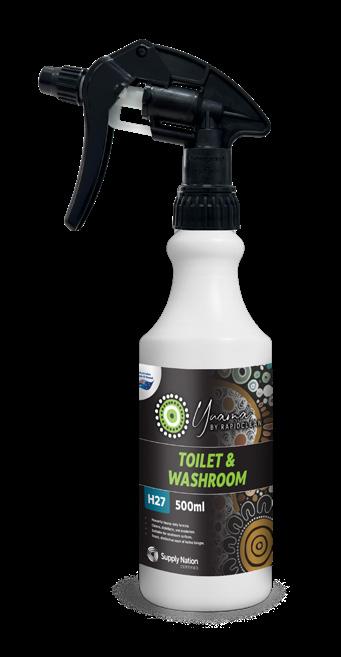
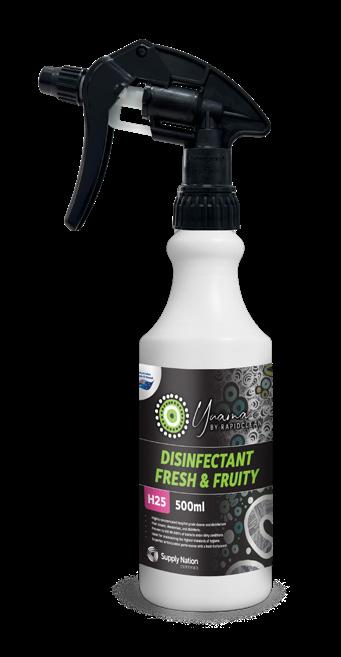

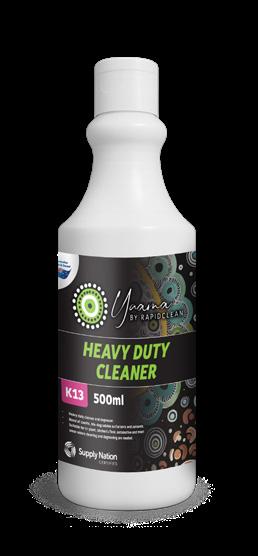
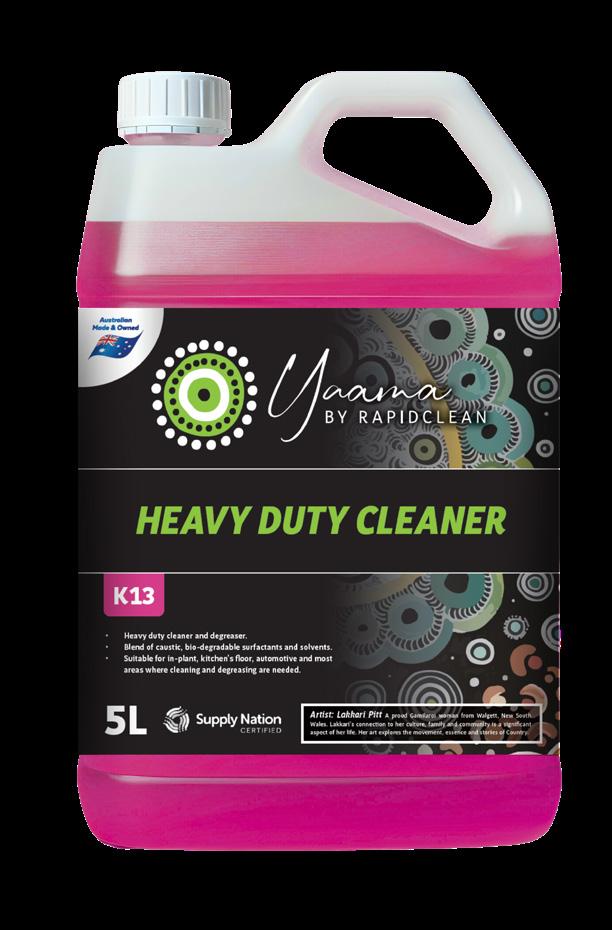

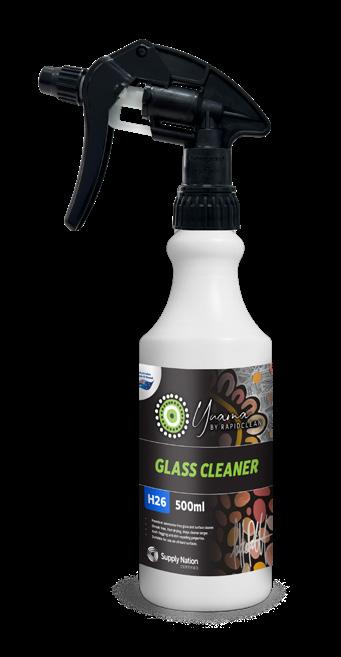
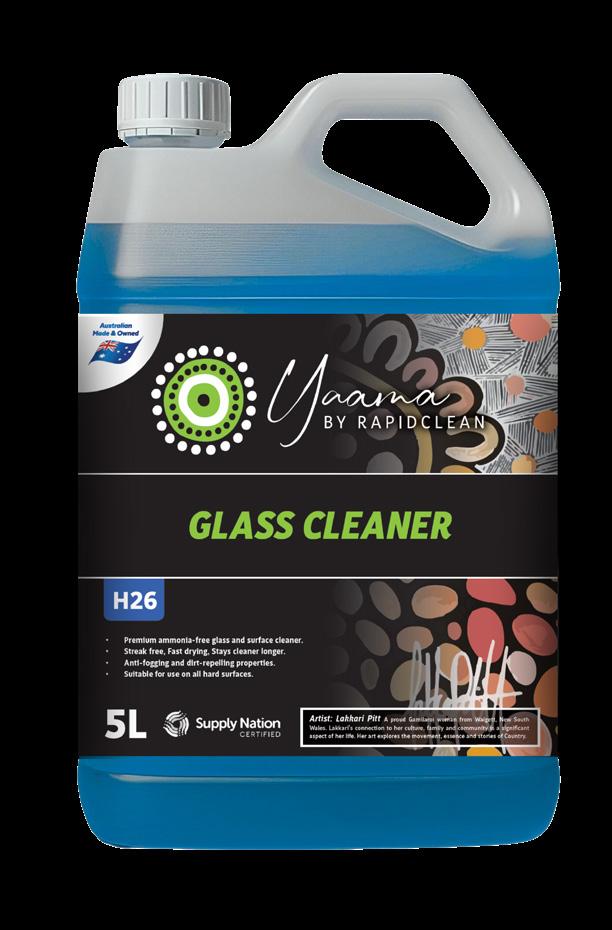


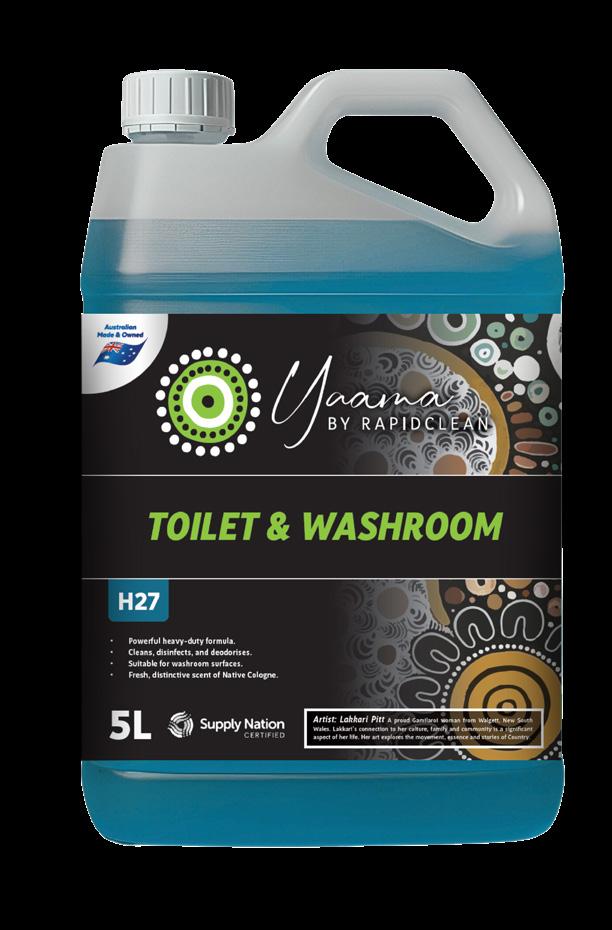

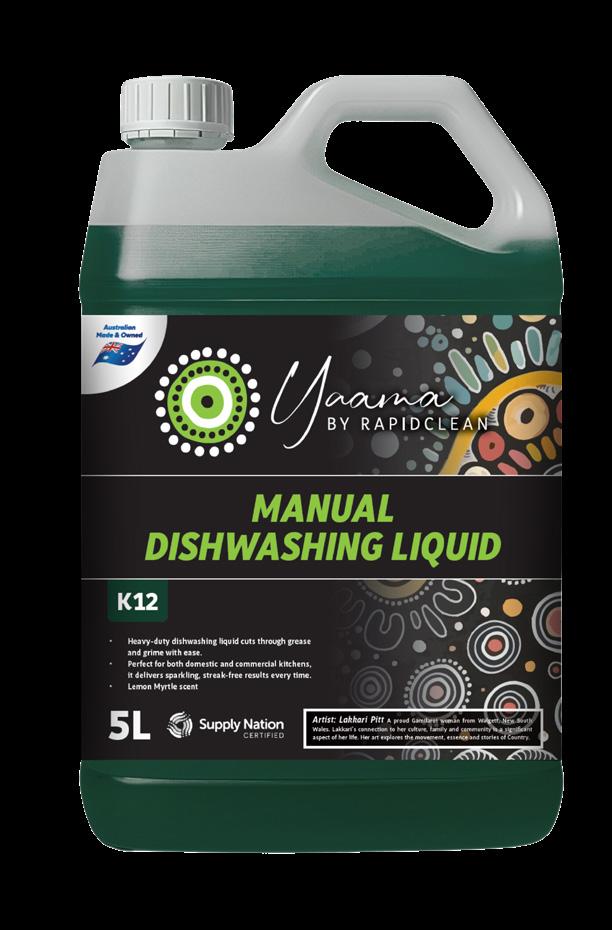
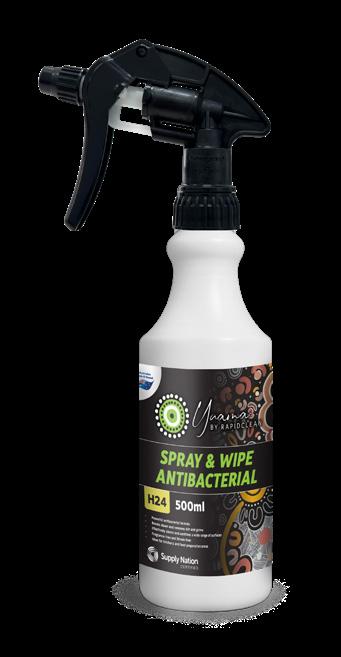
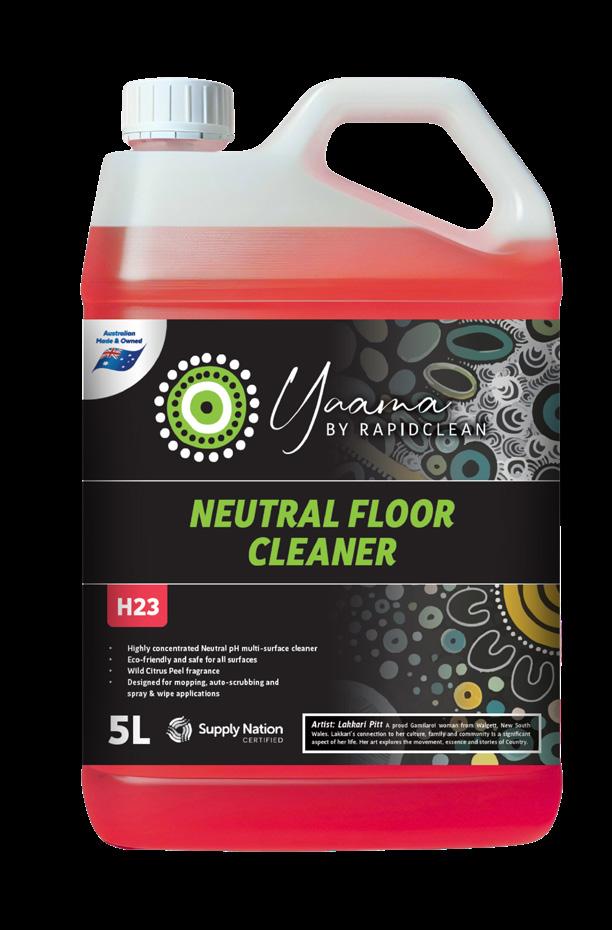
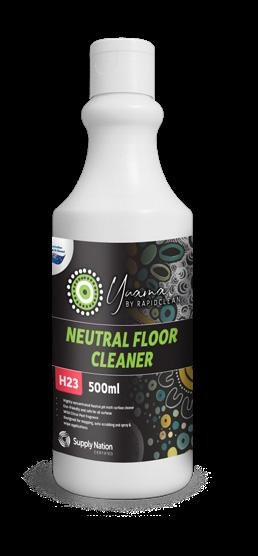




Facility management workplaces demand psychosocial safety built into their foundations, where pressure may drive performance yet harm must never take root.
Words Abby Kempe
It’s 8.15am in a huge commercial building and the buck stops with you – the facility manager. There’s a lift fault. Tenants panic. Security calls it in as lobby visitors livestream the fault – an online audience is growing. Contractors wait at the rear building gate (it ‘should have been’ unlocked). Your phone explodes with calls, texts and voicemails. Everything is urgent all at once – and it all feels personal. The unspoken rule in facility management is this: if it happens in the building, it’s your problem. Fix it now – and fast.
You take a few deep breaths in a quiet hallway, phone pinging, people arguing in the distance. You steel yourself and do what all proficient facility manager leaders do: triage – prioritise –stabilise – solve.
You make fast decisions on the fly with incomplete information (you’ll take the hits for any wrong calls). You’re the adaptive service chameleon, talking with tenants, soothing clients, directing contractors and reassuring executives – all without the luxury of
delay or self-doubt. You carry continuity. You remain composed. You get it done. It’s hard work but rewarding.
It’s 6.59pm and the day is done, your to-do list is just about complete and crisis management has come to an end (for now). Frazzled but accomplished, you crawl into an office chair and sip a warm drink thinking to yourself, ‘I did it’. Tomorrow will bring new challenges, but for now, the day is done and all cogs are turning.
The facility management remit is impressive and indispensable. It plays host to an array of invisible expectations of acute and compound psychosocial load management. It features routine, anticipated and cyclical pressure peaks. Exceptional time, strategy and stakeholder management skills are mandatory.
Facility managers generally require profound emotional regulation skills, top-tier interpersonal aptitude, and an ability to assert authority while maintaining collaboration. Not exactly a walk in the park. It’s accepted that pressure in FM is normal. It’s not accepted that harm is normal.
This is the point where we stop calling psychosocial safety ‘culture’ – and start referring to it as what it really is – a control.
High-responsibility and high-pressure roles require supportive infrastructure that’s been built and thought through before the crisis hits – before the burden of peak crisis, before the inevitable knock-on effects. Psychosocial infrastructure is the invisible toolbox that Australia is now making visible. It can protect against visible and fiscal penalties. It can preserve great facility management leaders, and develop alongside the maturation of each organisation.
Psychosocial safety laws are no longer an invisible metric; all around Australia we see the publication, discussion and promotion of them enacted. The invisible is now visible. The abstract is now a bread-and-butter standard. Psychosocial hazards are not ‘feelings’, not psycho-babble or Freudian postulations. They’re detectable, measurable patterns baked into systems and organisations. Metrics can include systems engineering on how work is allocated, the manner in which escalations are handled, the philosophy on how conflict is contained, how authority is distributed and the classifications of behaviours that are tolerated when stakes are high.
Facility management carries a jackpot of risk factors: high demands, frequent interruption, layered accountability spanning client and contractor scopes, reactive service models, regular conflict exposure plus after-hours needs that blur boundaries and tax sanity.
Now layer these factors into the male-dominated environment and pretend you’re a female manager. Unless consciously mitigated by the organisation at large, you’ll likely contend with ‘banter’ that is boundary eroding, undermining or psychologically expensive (that is, calculating the cost of speaking up when spoken down to).
Psychosocial safety is particularly important for women. A lot of people ask why there’s a gender conversation and upward mobility effort in Australia, in trades, in facility management and just in
general. The sceptics ask fair questions. Are Gender, Diversity and Inclusion (GDI) initiatives genuinely transformative, or just tick-box exercises that look good in an annual report? Others accept the case for broader equity access but struggle with the practical reality.
None of it’s wrong; these topics and perspectives are deserving of ongoing discourse and applications. No two equity efforts are perfectly alike – nuanced application is key. So, this is the point where we stop calling psychosocial safety ‘culture’ – and start referring to it as what it really is – a control. Controls are critical at work – particularly in male-dominated workplaces. Why? Because women inevitably ask themselves: what is the cost of staying here (day-to-day and long-term), and who is going to foot the bill?
Psychosocial safety encompasses protective, preemptive diagnostics and controls for the real job description (not the one advertised on the web). It looks like real Work Health and Safety (WHS) psychosocial policy integration for organisationwide protection, cost savings and sanity protection. It feels like backing when you’re in a corner and up against it. It sounds like conversations that air out rolling risks, creating preventative strategies for safeguarding.
When psychosocial safety practices are integrated into the facility management workspace, they further facility management practice, creating sophistication. When they're not, they carve out preventable fiscal drain, manager burnout, recruitment churn and brand losses.
The next era of facility management leadership won’t be defined by who can tolerate the most pressure. It will be defined by who can build environments where pressure exists – and anticipate cyclical strain and mitigate impact via constructive controls. ■
Abby
Kempe is the National Lead – Workforce Equity at Tradeswomen Australia
Words Tim McDonald
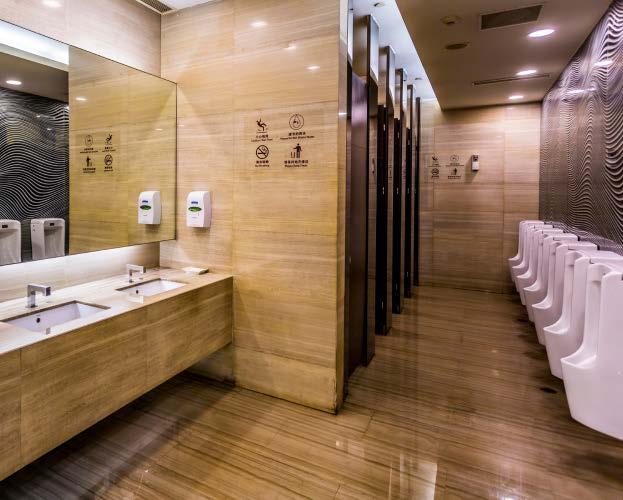
In commercial buildings, hospitals and campuses, the restroom has quietly become one of the most revealing spaces a brand controls, carrying weight far beyond hygiene and into trust, care and credibility. While lobbies are curated and reception desks rehearsed, the restroom remains the one environment every visitor encounters without mediation, and it is there that perception forms quickly and often permanently.
Research from Kimberly-Clark Professional shows that nearly nine in 10 Australians believe a clean and well-designed bathroom lifts their overall experience of a facility, a finding that reframes restrooms as a frontline brand touchpoint. In workplaces, healthcare settings and education precincts, the signals sent by restroom care speak directly to how seriously an organisation values the people who pass through its doors.
This effect becomes sharper in an era shaped by flexible work and heightened hygiene awareness. John Taylor of Nivernais Consulting notes that employers struggling to bring staff back into offices have begun to focus on experiential details that make the workplace feel cared for rather than compulsory. “Employees have
become so accustomed to working from home that employers are offering inducements such as concierge services where restrooms are frequently cleaned and replenished during the course of the working day,” Taylor says. The restroom, once invisible, now plays an active role in how welcoming a workplace feels.
The psychological leap people make between restroom condition and organisational competence is both swift and unforgiving. Studies cited in the Kimberly-Clark Professional report reveal that more than 70 percent of people would avoid returning to a business with neglected bathroom facilities. The logic is simple and deeply human. If an organisation fails at the basics of cleanliness in a shared space, confidence in everything else erodes.
Taylor sees this dynamic play out clearly in hospitality. “Studies have shown that the rating of a restaurant can be influenced by the cleanliness and fitout of its restrooms,” he says. “Comments from diners are often that ‘if they can’t clean their restrooms and
The signals sent by restroom care speak directly to how seriously an organisation values the people who pass through its doors.
- Kimberly-Clark Professional research
provide hand soap and sanitiser, imagine the cleanliness of the kitchen’.” That same reasoning carries into hospitals, universities and office towers, where the restroom becomes a lens through which professionalism and care are assessed.
This is why overpowering fragrances and cosmetic fixes often backfire. According to Taylor, strong deodorisers are increasingly perceived as an attempt to conceal underlying issues. “Clean doesn’t smell,” Taylor says. “Maybe a fresh subtle fragrance, but not an overpowering bombardment of sickly perfume.” In an age of heightened sensory awareness, restraint communicates confidence far more effectively than excess.
One of the simplest yet most powerful trust signals in public restrooms is evidence of care made visible. An up-to-date sign-off chart on the back of a cubicle door quietly reassures users that the space is actively maintained rather than sporadically addressed. Taylor points to this as a moment of transparency that still resonates. “How refreshing it is to see an up-to-date sign-off chart on the back of the shopping centre restroom door informing everyone that the restroom is being regularly serviced,” he says.
The Kimberly-Clark Professional research reinforces this connection between reliability and perception, with a strong majority of respondents linking dependable supplies and consistent servicing to professionalism. When toilet paper, hand soap and paper towels are always available, frustration disappears and confidence grows. Conversely, empty dispensers create disproportionate damage to trust, especially in healthcare and education environments where care and responsibility form the core of the institutional promise.
Technology now plays a subtle but growing role in maintaining that consistency. Sensor-enabled dispensers alert staff when supplies are running low, removing guesswork and reducing the likelihood of failure at peak times. For facility managers, these systems shift restroom care from reactive to predictive, aligning maintenance effort with actual usage patterns rather than fixed schedules.
In workplaces, restroom experience increasingly intersects with productivity and morale. The Kimberly-Clark Professional study found that more than 90 percent of respondents believe access to quality bathroom products improves satisfaction during
the workday, a statistic that highlights how small frustrations accumulate into broader disengagement. When facilities function smoothly, attention returns to work rather than inconvenience.
Taylor adds a layer of operational insight to this discussion, particularly around usage patterns. Sensors within cubicles can identify which spaces experience the heaviest traffic, allowing cleaners to focus effort where it matters most. “Studies have shown in a bank of five cubicles the first two closest to the door and the furthest are the most popular,” he says. This kind of data-led approach improves cleanliness while signalling competence, a quality that employees notice even if they never consciously articulate it.
The debate around hand drying technologies also continues to shape perception. During the pandemic, paper manufacturers promoted research suggesting paper towels reduce bacteria more effectively than air-powered dryers, a message that lingered in the public consciousness. Whether or not users remember the studies, the presence of paper towels still communicates caution and care, particularly in healthcare and education settings where risk sensitivity remains high.
Nowhere is the intersection of restroom care, perception and staffing more pronounced than in aged care. With demographic pressure mounting and labour shortages intensifying, operators are rethinking how cleaning is delivered without compromising dignity or safety.
Taylor notes that humanoid robots capable of cleaning bathrooms are expected to become viable within five years, a development already being seriously considered by aged care providers. “Aged care facilities, where staffing is a major issue particularly in the next 10 years as the baby boomers need beds, are seriously looking at any means to reduce staff in labour intensive areas such as cleaning,” he says.
While automation raises questions about human presence, it also underscores the importance of consistency. In care settings, a reliably clean restroom communicates respect, reassurance and organisational stability, qualities that matter deeply to residents, families and staff alike.
Across commercial buildings, hospitals and campuses, the restroom functions as a compressed brand experience where values are tested, not stated. The Kimberly-Clark report makes clear that people remember how a bathroom made them feel and allow that feeling to colour their judgement of the entire organisation. This proves that reliable and thoughtful design translates as a signal of care and respect.
As organisations compete for credibility and connection, restroom care shifts from a compliance exercise to a channel of quiet communication, by which brands can live or die. The smallest room can speak with surprising force, shaping perception in moments that feel private yet resonate far beyond the door. In that restrained space, a brand’s values surface with absolute clarity. ■
Words Denis Boulais
Sustainability is no longer a topic for just large organisations. It is becoming an important business issue in the cleaning industry, where sustainability reports are often requested from clients and during tenders. More questions are now being asked about greenhouse gas emissions, carbon neutrality, science-based targets and roadmaps leading to near and longterm emissions reductions. At the same time, cleaning companies are looking for practical ways to meet client expectations while reducing costs and cleaning more sustainably. This article explains Scope 1, 2 and 3 emissions in simple terms before touching on what steps can be taken to reduce Scope 3 emissions.
Scope 1 emissions are emissions that come directly from things your business owns or controls. For a cleaning company this often includes:
• fuel used in company owned vehicles (e.g. vans and cars)
• fuel used in any equipment you own (e.g. petrol-powered machines), and
• gas used in any facilities you own or control.
As a rule, if you burn the fuel then it's Scope 1. These emissions are often the easiest to identify because they result from things you can measure and see, like a fuel bill.
Scope 2 emissions come from electricity or the energy you purchase. For a cleaning company this may include:
• electricity used to charge equipment or batteries
• electricity used in your office, and
• electricity used in the warehouse/s you operate.
In short, if you pay a power bill, it's Scope 2.
Scope 3 emissions basically mean all other emissions linked to your business that you do not directly control. This is where things get more complex. For cleaning companies this may include:
• cleaning equipment and machinery
• waste generated from cleaning activities
• the chemicals and products you buy
• transport provided by suppliers, and
• employee commuting.
For most cleaning companies, Scope 3 emissions make up most of their total emissions and, in turn, their total carbon footprint. This is because:
• The cleaning industry is service based.
• Chemicals, equipment and consumables are regularly used.
• A lot of emissions come from products and suppliers.
Scope 1 and 2 emissions are easier to manage; however, if cleaning companies want to significantly reduce their emissions, Scope 3 must become a focus.
As such, Scope 3 will be discussed for the remainder of this article.
The most relevant Scope 3 categories for cleaning businesses are:
This is usually one of the largest Scope 3 sources. Emissions are created when:
• chemicals are manufactured
• raw materials are extracted
• products are transported, or
• products are packaged.
If you are purchasing eco-labelled or green products, emissions still exist, but they are usually less.
This can include vacuum cleaners, polishers and scrubbers, where emissions can occur during manufacturing, shipping, maintenance and end-of-life disposal. If the equipment is more durable or repairable it presents lower emissions over time.
Waste-related Scope 3 emissions can result from disposable wipes and cloths, singleuse gloves, packaging from chemicals and broken equipment.
This can include delivery of equipment and chemicals, supplier freight and courier services.
For most cleaning companies, Scope 3 emissions make up most of their total emissions and, in turn, their total carbon footprint.
This can be significant for larger workforces that include people driving to and from work and public transport use.
If you have subcontractors cleaning on your behalf, then their activities (fuel use, equipment, and their products) are usually counted as a Scope 3 emission.
Buy smarter:
• Buy concentrated chemicals to reduce packaging and transport.
• Select suppliers with local manufacturing where possible.
• Reduce the number of different products across contracts.
• Try to standardise products to reduce excess ordering. Because chemicals are so important in cleaning, small adjustments to purchasing habits can make a big difference.
• Suppliers can be integral partners in reducing Scope 3 emissions.
• Enquire about suppliers’ sustainability practices.
• Ask about recycled content in packaging.
• Consolidate deliveries to reduce transport emissions.
For example, a supplier may claim that they use a percentage of post-consumer recycled plastic (PCR) in the production of chemical containers. This means that
a percentage of plastic is recycled, and this reduces the use of virgin (brand new) plastic. Factored over thousands of containers, this makes a big impact. When writing a sustainability report, including such innovations is a great benefit in reflecting the company’s efforts in sustainability through the right choice of supplier etc.
If you want to reduce waste by not creating it in the first place, then consider the following:
• Use colour coded cloth systems to reduce misuse.
• Replace disposable wipes with washable microfibre cloths.
• Train cleaners in correct chemical dilution.
• Engage auto-dosing systems where possible.
• Track waste volumes and types. Less waste equates to fewer emissions.
The frequent purchase of equipment can increase Scope 3 emissions. Some better options may include:
• avoiding disposable cheap machinery
• choosing commercial grade durable eco-friendly equipment
• repairing equipment instead of replacing it, and
• not sharing cleaning equipment on-site.
During sustainability planning it’s wise to
carefully consider subcontractors. Some strategies may include:
• encouraging the use of eco-friendly products
• including environmental expectations in contracts, and
• sharing your outcomes and sustainability goals with them.
A good strategy here can reduce both labour costs and emissions. Some concepts here can include:
• grouping the locations of clients by area
• using local suppliers
• planning work to reduce travel between sites, and
• encouraging the use of public transport.
Training of cleaners in sustainable topics can result in big outcomes. Training should cover:
• understanding why sustainability matters
• correct waste separation
• correct use of chemicals
• avoiding the overuse of consumables, and
• reporting damaged equipment as soon as possible.
Tracking your progress is important for the development of any greenhouse gas reports and, of course, the completion of a high-quality sustainability report. The cleaning industry plays a big role in Australia’s sustainability journey where targeting Scope 3 emissions should have a favourable impact towards high-quality, safe and environmentally sustainable cleaning outcomes. ■

Words Brad Horan
Right now, most cleaning businesses are feeling squeezed. Costs are rising. Clients are cautious. The cost-of-living pressure is real, and many operators don’t believe they can increase prices without losing work. But tomorrow, it may be a supply chain disruption that causes delays in getting your supplies. Perhaps your supplier will suddenly close shop or raise prices. The reflex is predictable: cut input costs, source cheaper alternatives and protect margin wherever possible, an instinct that feels commercially prudent in the face of uncertainty.
The problem is that price is only one part of the decision. However, other hidden costs may actually cost the business a lot more and, when margins are tight, the cost of getting procurement wrong is higher than ever.
We’ve worked with cleaning and trade businesses that switched to cheaper products thinking they were protecting margin. What happened instead?
A lower-cost chemical required a longer dwell time, and labour costs quietly crept upward as crews spent more minutes on every surface. A substitute product altered the finish on commercial flooring just enough to trigger complaints, which led to rectification work and unplanned expenses. A new supplier delivered with patchy timing, leaves crews standing idle or forcing return visits to sites, a far greater cost than the initial saving.
At the same time, gaps in product documentation heightened the risk of noncompliance with strict client standards,
placing the entire contract in jeopardy. None of these situations ended in disaster, but they very well could have, and all of them cost much more than any savings on the product purchase price.
When profit is thin, even small mistakes hurt. The trap is focusing only on visible cost – the price on the invoice – and not the full cost to the job.
That’s easy to do.
War, piracy and freight disruptions are creating uncertainty and unpredictability that flows through to manufacturers, distributors and end users. At the same time, regulatory and compliance expectations continue to tighten across the supply chain, not just for manufacturers, but also for suppliers and cleaning businesses that use the product.
Clients are more cost-sensitive than they have been in years, and that shift is creating real tension across the sector. Businesses feel mounting pressure to buy cheaper to protect margins, often without a clear view of the true costs embedded in performance, labour and risk. At the same time, the margin for error has narrowed, leaving far less room to absorb the consequences of a decision that looks efficient on paper yet proves expensive in practice.
Five years ago, many of these decisions would have been made on price and availability alone. Today, they carry operational, compliance and reputational consequences that are harder to unwind. The decision hasn’t become more complicated; the environment has become less forgiving, which is why stronger businesses are refining how purchasing decisions are made.
When cost and/or supply pressure are high, emotions rise inside management teams.
One client we worked with was ready to switch to a lower-cost imported product across multiple sites. On paper, it looked like an easy saving, but before making the change, we walked them through a simple structured comparison, and the conversation changed. Not because the cheaper option was wrong, but because the trade-offs became visible.
That’s the shift.
Not ‘buy local’ or ‘buy the best’. But decide deliberately including hidden cost risk factors.
This is the simple process we use with clients when pressure is high. It’s not complex, but it is disciplined.
Every buying decision comes down to four core levers:
• cost
• speed
• quality, and
• service.
These are the same four levers clients use when judging your cleaning business, so it makes sense to use them when judging suppliers and products.
Before scoring anything, ask: ‘For this purchase, which of these matters most?’ – i.e. what are you servicing?
• a high-profile client
• a sensitive surface (stone, speciality flooring, coated finishes)
• a time-sensitive job, or
• a site where downtime is expensive?
If it’s any of the above, then speed, quality and service may carry more weight than cost. If it’s a low-risk consumable with easy substitution, cost may dominate. Most procurement mistakes happen because businesses don’t pause here, they jump straight to price.
Step 2: Score the options honestly (1 = weak, 5 = strong)
Before reading further, think about the last supplier change or product substitution you made. If you were forced to make that decision again today under pressure, how would you score it?
Scenario: Manufacturer disruption has caused lead time to blow out from two to eight weeks. This will also cause a price rise of at least 15 percent. Your current supply will not arrive, and you will run out in two to three weeks.
You have three options:
1. imported, lowest cost
2. local, higher cost, or 3. untested substitute
Rate each from 1 (weak) to 5 (strong) across the four levers.
Now add the totals (maximum score = 20):
• imported: 12
• local: 15
• substitute: 10
On invoice price, the imported option looks the strongest. On structured assessment, the local option reduces operational and reputational exposure. The substitute option appears reasonable on price – but weak in quality and service. That is often where hidden risk sits.
This scoring does not remove judgment. It removes blind spots. If you have never formally scored a procurement decision before, try it on your next purchase. The exercise takes five minutes. The clarity lasts much longer.
The environment has become less forgiving, which is why stronger businesses are refining how purchasing decisions are made.
Now ask two final questions:
1. What hidden costs could we be missing?
Not just in dollars.
• Does it increase labour time?
• Does it create rework?
• Does it risk client confidence?
• Does it expose us to complaints?
• Could it expose compliance risks?
• Does it create reputational pressure?
For example:
An untested substitute may save a few hundred dollars. But if it discolours flooring, reduces shine, reacts differently under certain conditions or requires extra passes to meet standard – the saving disappears quickly.
A cheaper imported product may perform well most of the time. But if delivery slips and crews are waiting, the labour cost alone can wipe out the difference.
Adjust the score accordingly.
2. Is there anything we can do to improve the score?
• Can we test the substitute before full rollout?
• Can we buy a smaller quantity of a proven product to reduce risk on critical jobs only?
The score provides structure. The commercial consequence test provides wisdom. When both align, the decision is strong.
The real shift
In unstable times, procurement discipline matters more than procurement price aggression.
The businesses handling cost pressure best understand full job cost – not just purchase price.
They:
• compare options consistently
• make trade-offs visible
• test downside exposure before committing, and
• decide with full awareness of the risk.
That discipline protects margin quietly. It also protects reputation – which is harder to rebuild than profit.
The broader impact
The same four-lever thinking – cost, speed, quality and service – applies everywhere:
• pricing decisions
• staffing changes
• contract acceptance, and
• supplier negotiations.
When decisions are structured, conversations improve. When conversations improve, performance follows.
Buying smarter doesn’t mean buying expensive. It means understanding what you’re truly paying for – before you place the order.
In unstable conditions, structure beats reaction. The businesses that apply it consistently are the ones that protect both margin and reputation over time. ■
Brad Horan works with cleaning businesses across Australia to strengthen pricing, procurement, and operational performance. His focus is simple: reducing hidden cost, limiting unnecessary risk and improving decision discipline so profit doesn’t quietly leak through poor commercial choices. To learn more, visit www.lucrature.com or email him at bhoran@lucrature.com.
Four finalists from our region prove cleaning excellence thrives on people, precision and pride.
When International Cleaning Week unfolds from 22 to 28 March 2026, the global spotlight will settle on the people who make our buildings breathe more easily. The ISSA Spotless Spaces International Competition forms the centrepiece of that celebration, recognising facilities and teams whose work defines contemporary standards in hygiene, sustainability and operational discipline.
This year, nine finalists were selected worldwide, with four representing Oceania and the Asia Pacific. That presence signals a region prepared to measure itself against the best with confidence in the outcome. From Mongolia to regional Australia and Malaysia, each finalist demonstrates that cleaning excellence grows from culture, structure and relentless attention to detail.
In Ulaanbaatar, the AIC Steppe Arena rises as Mongolia’s first indoor ice arena and a venue built for international sporting and cultural events. Operated by Urban Link LLC, the facility demands precision across every surface, from ice rink surrounds to grandstands and back of house corridors.
Urban Link LLC CEO Nomun Tsembel describes the recognition in deeply personal terms. “Becoming one of the finalists in the ISSA Spotless Spaces International Competition is an incredible honour for both me and the team, especially when it is our first time participating and getting recognised,” Tsembel says. “By getting involved in this prestigious competition, we were also able to evaluate our hard work, discipline and the high standards we uphold. Being selected as the finalist, it motivated us to push even further and continue setting higher benchmarks in our industry.”
That drive is rooted in people. “One thing that set us apart was our investment in continual staff training,” Tsembel explains. “Every team member understands not just how to clean, but why their work matters.
“As the service provider, our company is therefore committed to aligning our work with international best practices and quality benchmarks. Ever since our company was founded, we have worked hard to uphold that standard.”
On the other side of the region, Kildare Catholic College in Wagga Wagga demonstrates how cleaning excellence underpins education. Supported by Charles Sturt Campus Services, the campus balances infection control, daily maintenance and community trust within a busy school environment.
Charles Sturt Campus Services general manager Martin Dooner captures the emotion of being recognised. “Being named a finalist in the ISSA Spotless Spaces
International Competition is something we are genuinely proud of. As a relatively small regional organisation, to be recognised on an international stage is both humbling and incredibly rewarding.”
Southern Area manager Graham Biddle reflects on the human dimension. “Cleaning is often unseen work, yet our people show up every day with care, pride and professionalism. This recognition tells them their effort matters.”
Operations supervisor Andrew Goldstraw also recognises the benefits of the nomination. “It lifts morale, strengthens confidence and reinforces our commitment to delivering safe, high-quality environments for the communities we serve.”
Innovation at Kildare Catholic College centres on career development, promoting knowledge and opportunity at every turn. “What truly sets us apart is how we value our people,” the team explains. “Through our Cleaner Pathway Program, we’ve worked hard to turn cleaning into a respected and supported career, not just a job. When people feel heard and invested in, they take greater pride in their work and that shows in the results we achieve together.”
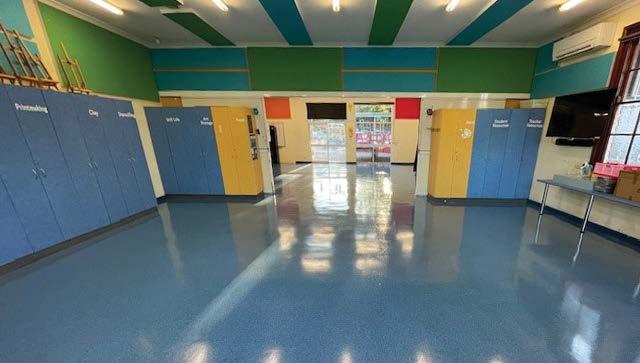
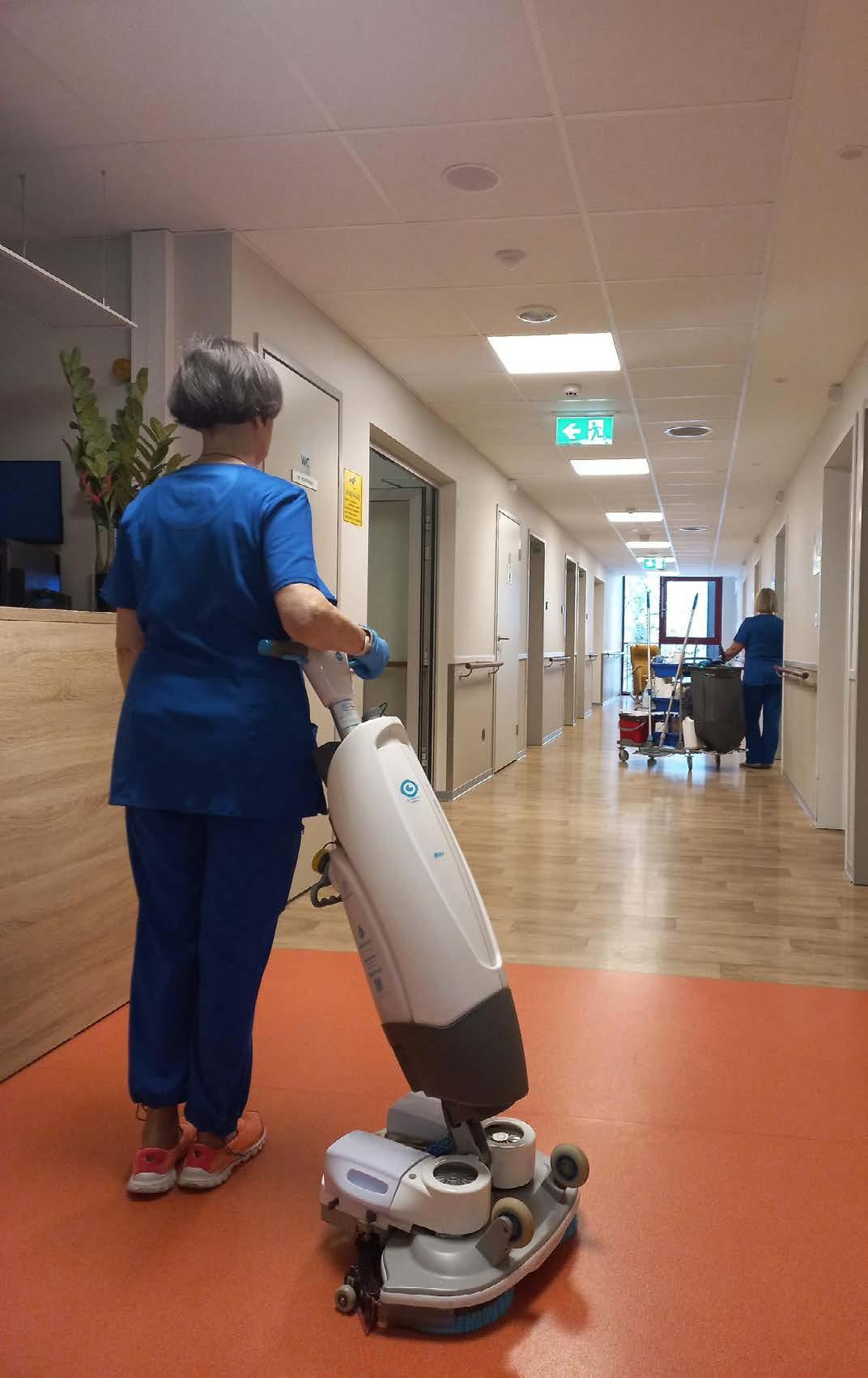
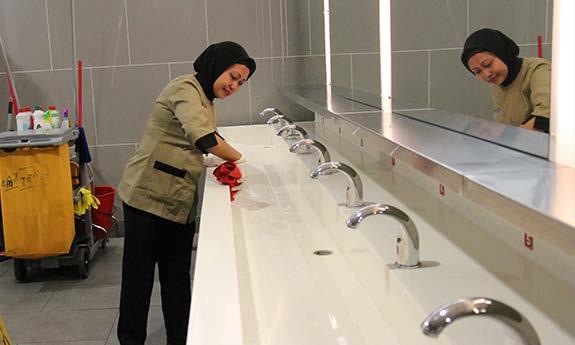

Across Western Australia, the PPP WA Schools portfolio managed by Downer Group brings complexity that tests systems and leadership alike.
Downer contract manager, WA Schools PPP and QEII Car Park Teneal Thompson describes the recognition as deeply meaningful. “It validates the pride we take in our work and acknowledges the often unseen effort that goes into delivering consistently high standards of cleanliness, safety and presentation every day.”
For teams that aren’t as visible as others, global acknowledgement delivers affirmation. “Many of our team members work behind the scenes, so having their efforts celebrated internationally is both motivating and affirming.”
A defining feature of the Downer submission is drone-assisted cleaning, introduced in partnership with Famaso Facility Services. “By introducing drone cleaning, we were able to fundamentally change the way these tasks are performed,” the contract manager explains. High façades and solar panels can now be cleaned with precision-controlled, low-pressure systems that reduce risk and water use. “Innovation in cleaning doesn’t always mean working harder; it means working smarter.”
Downer partnered with Kinnect to develop a Body Safe program tailored to real world cleaning tasks. “Rather than generic training, this program focuses on how our people really move,” Thompson says, ensuring lifting and repetitive work are approached with care. Annual team gatherings and recognition awards reinforce connection and pride across sites.
In Malaysia, Harta Maintenance Sdn Bhd earned finalist status for its work at Sentrax Global Academy. This year marks the company’s 46th year in operation, a legacy shaped by structured systems and disciplined execution.
Innovation in cleaning doesn't always mean working harder; it means working smarter.
- Teneal Thompson
Harta Maintenance deputy managing director Sheikh Imran Iskandar describes the honour with pride. “Being named a finalist in the ISSA Spotless Spaces International Competition is deeply meaningful for us, not just as a company, but as a Malaysian organisation representing our region on a global stage.
“For nearly five decades, we have steadily supported the cleaning and facilities management industry by introducing structured systems, best practices and innovation into the environments we manage,” Iskandar says. “This recognition affirms that long-term discipline matters. It validates the quiet consistency of doing things properly, investing in training, building systems and embedding measurable quality into daily operations.”
At Sentrax Global Academy, technology reinforces that discipline. Harta Maintenance senior general manager head of operations Shahabuddin Mohd Nordin explains, “At Harta, what set our entry apart was not a single tool, but the intentional evolution of our operating model.”
The integration of a QR-based monitoring and audit system enables real-time inspections and performance tracking. “Cleaning shifts from being a routine task to becoming a managed, datainformed discipline,” Nordin says.
Isaker also points out that sustainability and safety guide every layer of practice. “At Harta, sustainability and safety are not programs we run; they are principles that guide how we operate every day,” he says. Environmentally-certified solutions – including Malaysia’s MyHijau eco label, energy efficient equipment and structured risk assessments – form part of routine operations. “Ultimately, sustainability and safety reflect Harta’s broader philosophy of facilities management caring for people, place and process in a balanced and responsible way.”
The ISSA Spotless Spaces International Competition offers more than a trophy. It provides a platform for the cleaning profession to articulate its value in clear and confident terms. Across ice arenas, schools and academies, these organisations demonstrate that excellence grows from empowered people, structured systems and an unwavering respect for safety and sustainability. ■
This recognition affirms that long-term discipline matters. It validates the quiet consistency of doing things properly.
- Sheikh Imran Iskandar
Fresco is an all-in-one washroom cleaner designed for showers, toilets and ceramic tiles. Its thickened formula clings to vertical surfaces, helping dissolve bio-waste, soap scum, urine and fat deposits. Fresco contains biodegradable surfactants and is certified by GECA as environmentally preferable.
Key Benefits:
` thick formula for improved contact time ` dissolves soap scum and bio-waste, and ` is GECA-certified environmentally preferable.
Agar Cleaning Systems
1800 301 302 sales@agar.com.au agar.com.au/product/fresco
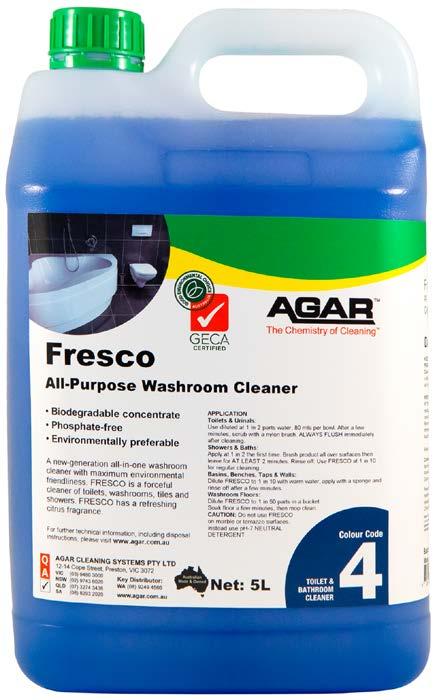
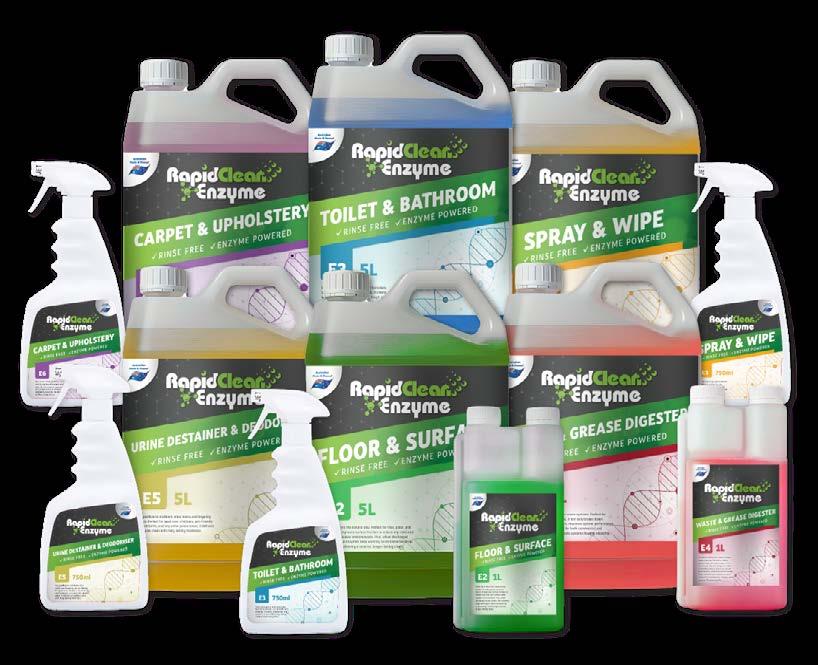
Discover the RapidClean Enzyme Range — rinse-free, enzyme-powered and designed to work smarter. Enzyme-powered cleaners break down grease, grime, and odours at the source, delivering a deeper clean that’s tough on mess but gentle on people and the planet.
From floors to drains, bathrooms to carpets, the RapidClean Enzyme Range harnesses multi-enzyme formulas that destroy organic waste rather than masking it. Enzyme Floor & Surface Cleaner lifts grease from grout and improves slip resistance, while Enzyme Spray & Wipe delivers a streak-free finish across almost any surface. For problem areas, specialised solutions like Enzyme Waste & Grease Digester, Urine Destainer & Deodoriser and Carpet & Upholstery Cleaner target odours, stains and buildup at their core.
Free from harsh chemicals and easy to use, the RapidClean Enzyme Range provides long-lasting results with minimal environmental impact, proving powerful cleaning can also be a cleaner choice. Visit the RapidClean website or your local RapidClean member to learn more about this range.
RapidClean
sales@rapidclean.com.au
rapidclean.com.au
Dermalux® Essential Primrose Hand Soap is a gentle, effective cleanser designed for frequent use. It actively removes dirt and everyday soils while enriched moisturisers help counteract dryness and rehydrate the skin after each wash. Lightly fragranced with a delicate floral scent, it leaves hands feeling soft, refreshed and clean – ideal for use in commercial and public washroom environments.
` Ultra-mild formulation
` pH balanced
` Delicate floral fragrance
Whiteley whiteley@whiteley.com.au 1800 833 566
whiteley.com.au
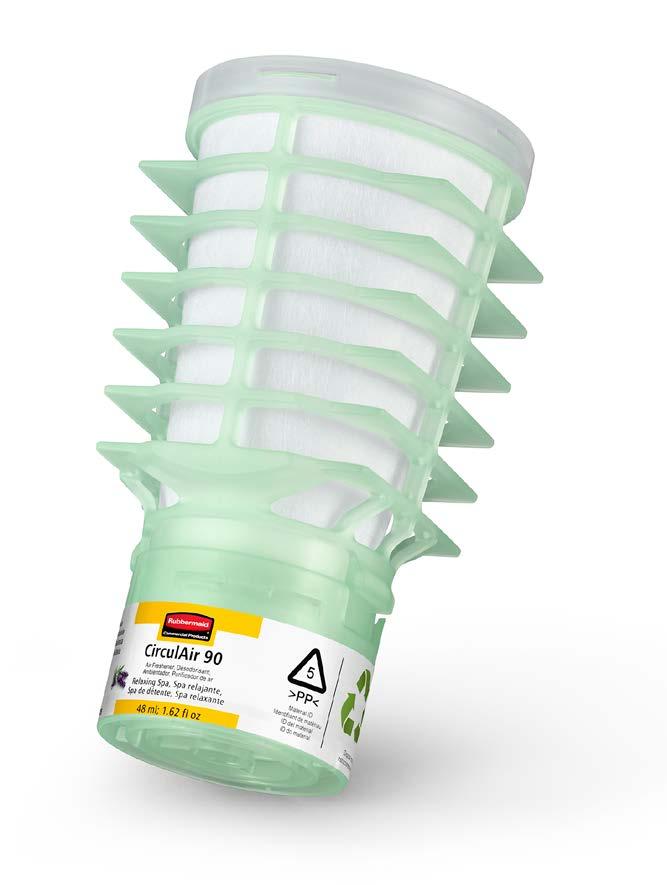
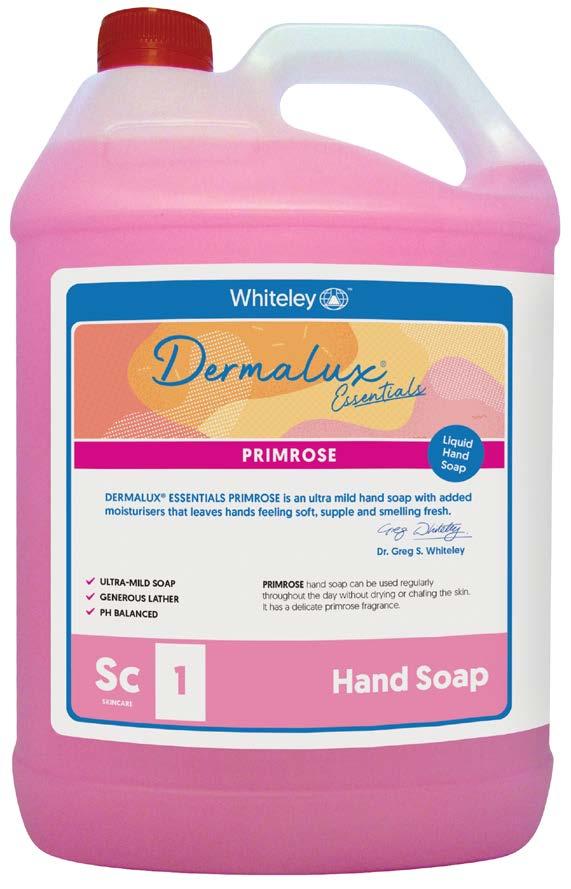
Next Generation Passive Air Solution from Rubbermaid Commercial Products.
Rubbermaid Commercial Products introduces CirculAir 90, a next generation passive aircare solution designed for consistent fragrance delivery and improved sustainability. Featuring a single material, recyclable refill assessed through the APCO Packaging Recyclability Evaluation Portal (PREP), CirculAir 90 delivers long lasting performance while supporting design for recycling principles
Rubbermaid Commercial rubbermaidcommercial.com.au/contact-us/
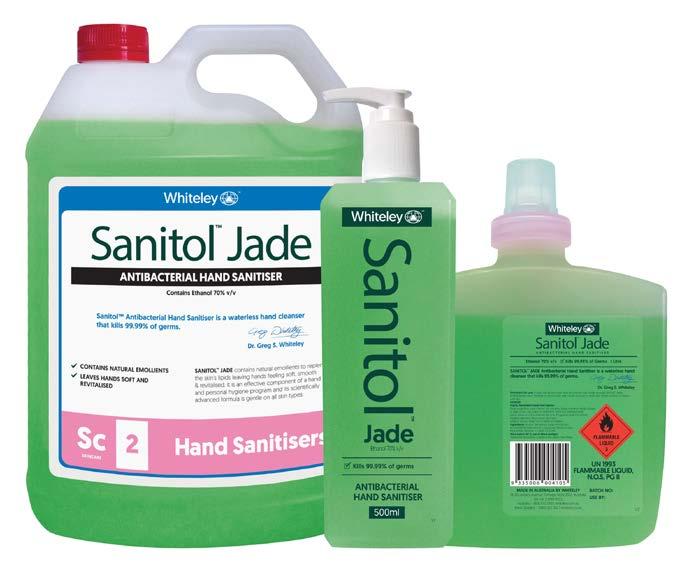
Sanitol™ Jade Antibacterial Hand Sanitiser kills 99.99% of germs, helping to protect you from a broad range of bacteria. Infused with a refreshing lemon and mango fragrance. Sanitol™ Jade not only leaves your hands clean but also smells fresh and tropical.
` Contains natural emollients to replenish the skin’s lipids.
` Includes natural skin conditioners for added softness.
` Kills germs effectively with the need for water.
Available in 5L, 1L pods & amp; 500mL
Whiteley
whiteley@whiteley.com.au
1800 833 566
whiteley.com.au

Fast-drying, streak-free glass cleaner that quickly removes greasy fingerprints and food-based grime. It does not leave dirt and dust attracting residues, helping surfaces stay cleaner for longer.
` Anti-static properties help minimise dust attraction.
` Dries to a smear-free film.
` Safe on tint film as the formula contains no ammonia.
` Ready to use – no mixing required.
` Approved for use in Export Registered Meat Establishments.
Oates
professional.oates.com.au
csvic@fhp-ww.com
1300 669 686

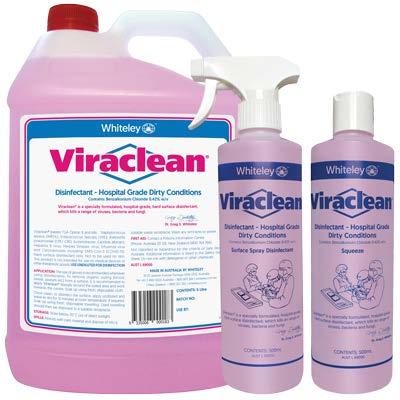
Powerful protection made simple – Viraclean® is a hospital grade disinfectant designed to kill a broad range of viruses and bacteria on a wide variety of surfaces. With its pleasant lemon fragrance and ready-to -use squeeze and spray bottles, Viraclean® combines powerful disinfection with ease of use –whether you're disinfecting in healthcare, workplace or home environments.
` Proven to kill coronaviruses (SARS/COVID-19), influenza and Hepatitis B virus.
` Ideal for high-touch surfaces like desks, door handles, and workstations.
` Ready-to-use formula with a fresh lemon fragrance in squeeze or spray bottles.
Whiteley
whiteley@whiteley.com.au
1800 833 566
whiteley.com.au