ARCHITECTURE PORTFOLIO
Ishita Anand 2020-2024
University of Illinois at Urbana Champaign
Ishita Anand 2020-2024
University of Illinois at Urbana Champaign
A botanic garden in Roosevelt Island NYC to compliment the current Smallpox hospital ruins.
2. ACSA 2024 Steel Competition
A Steel innovation Centre situated on the banks of the Mississippi river, St Louis.
3. Housing Complex in Barcelona
An apartment complex built using Cross Laminated Timber in Poblenou, Barcelona. A group project.
4. Library in Gracia, Barcelona
A small Library made from Rammed Earth. A partner project during the first semester of Junior Year.
6. Co- Curricular Work and Projects
Work completed thriughout my undergraduate career that supplement studio projects.
5. Artwork, Photography and others
Sketches, photography and other artwork that was was done during the period of my undergraduate studies
The project entails the creation of a public indoor garden and restaurant nestled within lush greenery. Drawing inspiration from the building’s rich heritage, our architectural design centers around the revival of its original elements, with stone reminiscent of its historic roots, but given a modern finish. Key features of the design include a circulatory ramp that gracefully traverses through the entirety of the building, providing accessibility and inviting visitors to explore every corner of the indoor garden. To add character and intrigue, we incorporate a lattice fill design, reminiscent of nature reclaiming the structure over time, infusing the space with a sense of organic beauty and continuity.
Render done with Photoshop and Enscape showing the building with relation to the context of Manhattan on it’s west.
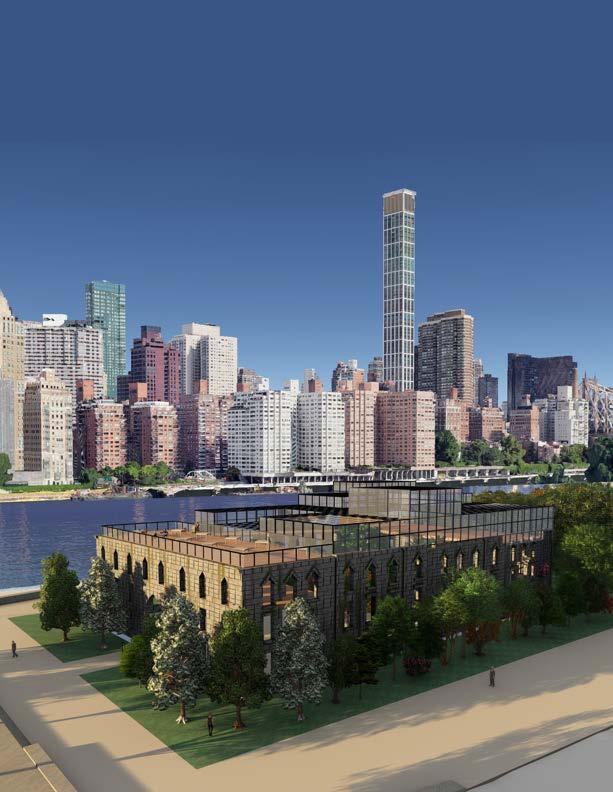
The tip of Roosevelt Island gets 2 million visitors on average per year who mainly come for the FDR Memorial at the bottom. The main methods of transportation to the island are by ferry, subway and cable car. Althoguh there is a bridge from queens, it connect at the top of the island.
Taking into account the green spaces in NYC, designing the building for public access and enjoyment was a key design factor. The interior programming lends itself to the surrounding environment to allow the public to explore both spaces without barriers.
Shows the programming of the botanic garden as well as the restaurant through the circulation method of ramps inside the building. captures how the building would sit within the Manhattan skyline.
Diagram depicting the types of circulation to occur within the building. The main facilities of restaurant and botanic garden are shown with the public and private circulation paths shown in arrows as well as modes of transport throughout the building.
public circulation
private circulation
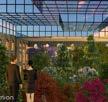
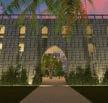
Focusing on some of the main details of the building - the connection between the glass and extisting stone through the steel intermediary. Secondly is the light moat surrounding the building illuminates the building from the outside as shown in the render at the bottom of the page
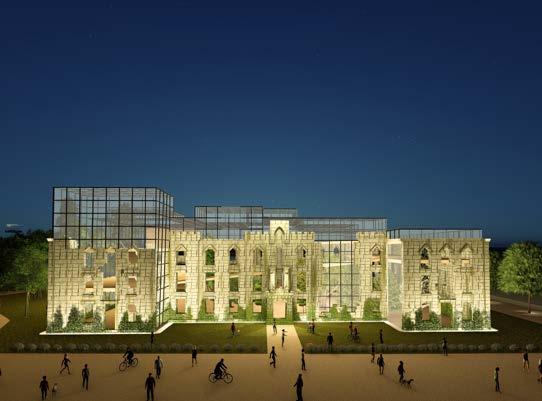
Render done with LUMION depicting the night view of the building from the West looking eastward.
Structural components of the building include the roofing which self supports using a vierendeel truss system. This is laid over triple pane low e glass which allows for ample sunlight yet reduced heat loss for the plants. The ramps and floor plates are supported by steel
STRUCTURAL STEEL MULIONS
LOW E GLASS
OUTDOOR AREA
INDOOR 3RD FLOOR
STEEL GRID
2ND FLOOR
MEZZANINE LOOKOUT
20x20 STEEL GRID
ORIGINAL SHEAR WALL
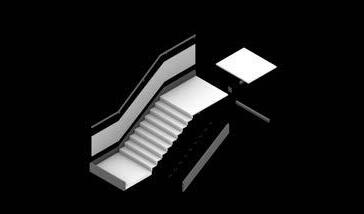
The Steel Innovation Centre and Interactive museum embodies a blend of functionality and aesthetic appeal, characterized by a sleek, industrialinspired facade. Visitors are guided through an immersive journey that unfolds the narrative of steel—from its historical significance to its modernday applications. A distinctive feature of the center is the open rooftop accessible by a ramp, offering a panoramic view of the river and taking them through workshops and fabrication spaces. By seamlessly integrating fabrication areas with an interactive museum and an accessible rooftop, this building aims to spark curiosity, inspire creativity, and pave the way for a future where steel continues to shape our world in remarkable ways. An individual project in my first semester of Senior Year under Wekeana Lassiter.
Inviting Public Space
Circulate on top of the building
Circulate through the building
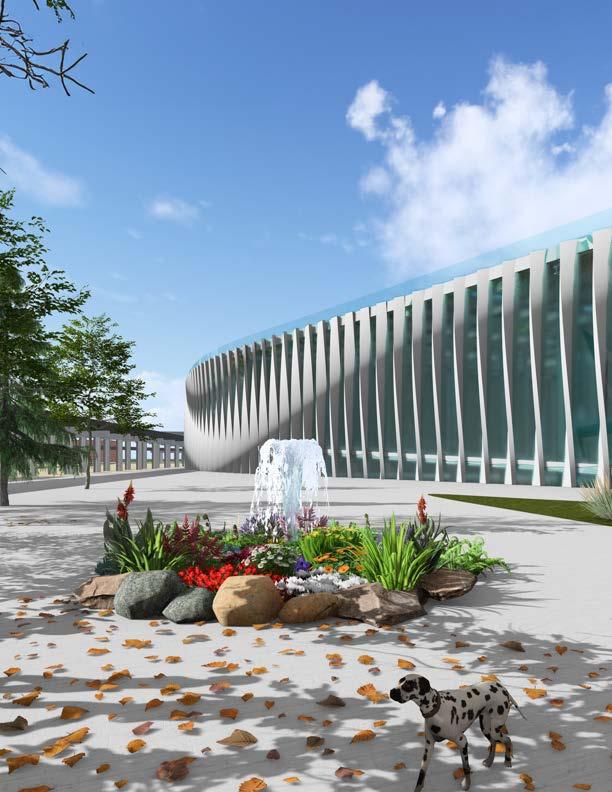
Render done with LUMION showing the public gathering area outside the innovation centre. The landscaping invites the public from surrounding areas into the site to explore the interactive museum.

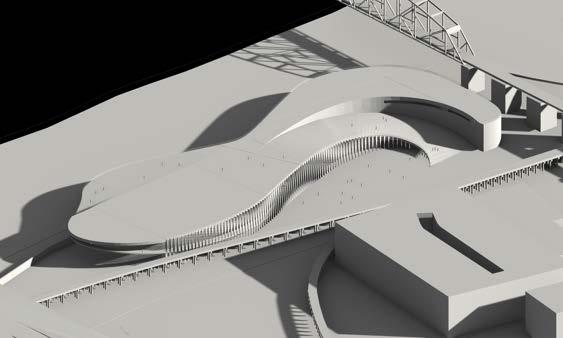
This ground plan shows the majority of the programming and follows the path of the ramp that goes through all of these major components. It shows the distinction between public and private spacesalthough all on this ground floor are relatively large and open.

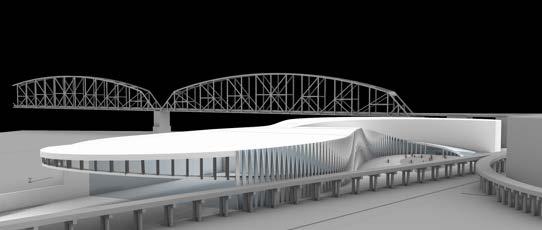
This Axonometric Diagram shows the various components of the building, categorised by its programming and subsequently containing different structures to account for room shape and size. Longspan steel trusses form the open bays and community areas while beams are placed within the smaller programming requirements such as workshops, classrooms and parking garages. The cross bracing on the riverside provides stability for the cantilevered edge of the building.
Shows majority of ground programming spaces in linearity. Specific emphasis is placed on the fabrication portions of the building. With ceiling heights of over 40’, there is enough space for many heavy duty vehicles to operate within. The exterior yard also allows for ample space for machinery.

This section shows us the nature of having a ramp that extends its way through and on top of the building. While the public explore the exterior circulation, they can make their way through it. Secluded in its own corner are the educational facilities such as classrooms, overlooking the Missipssippi.

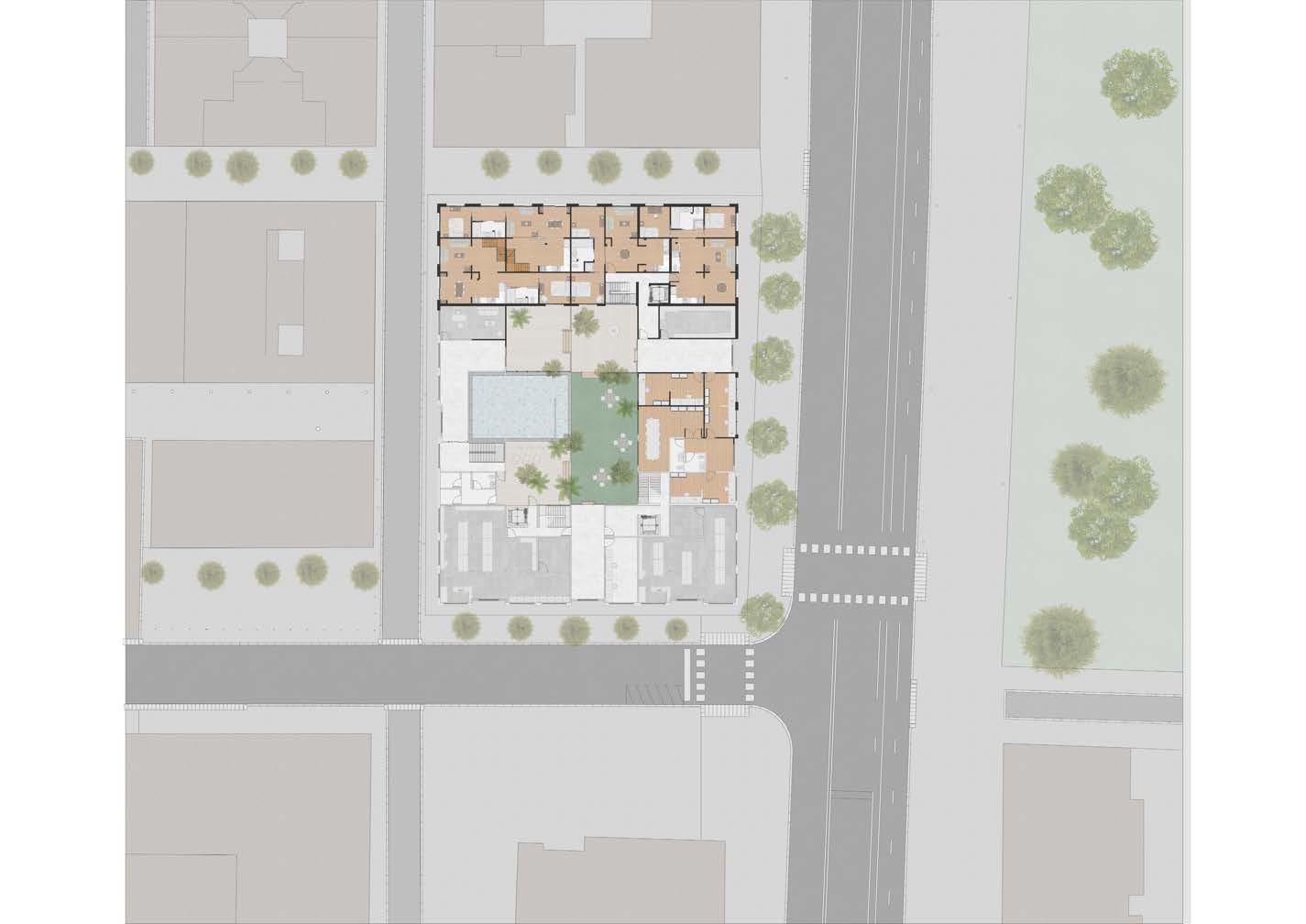
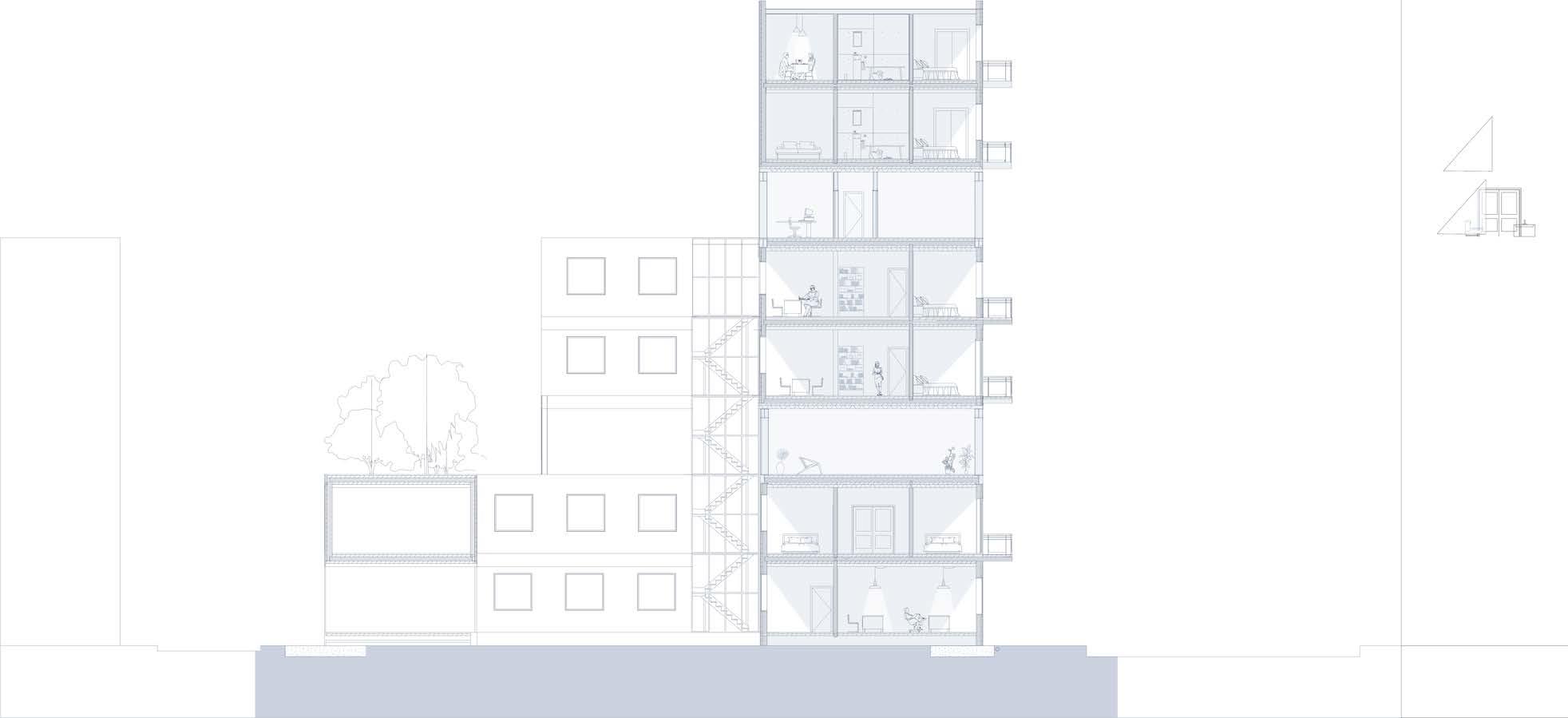
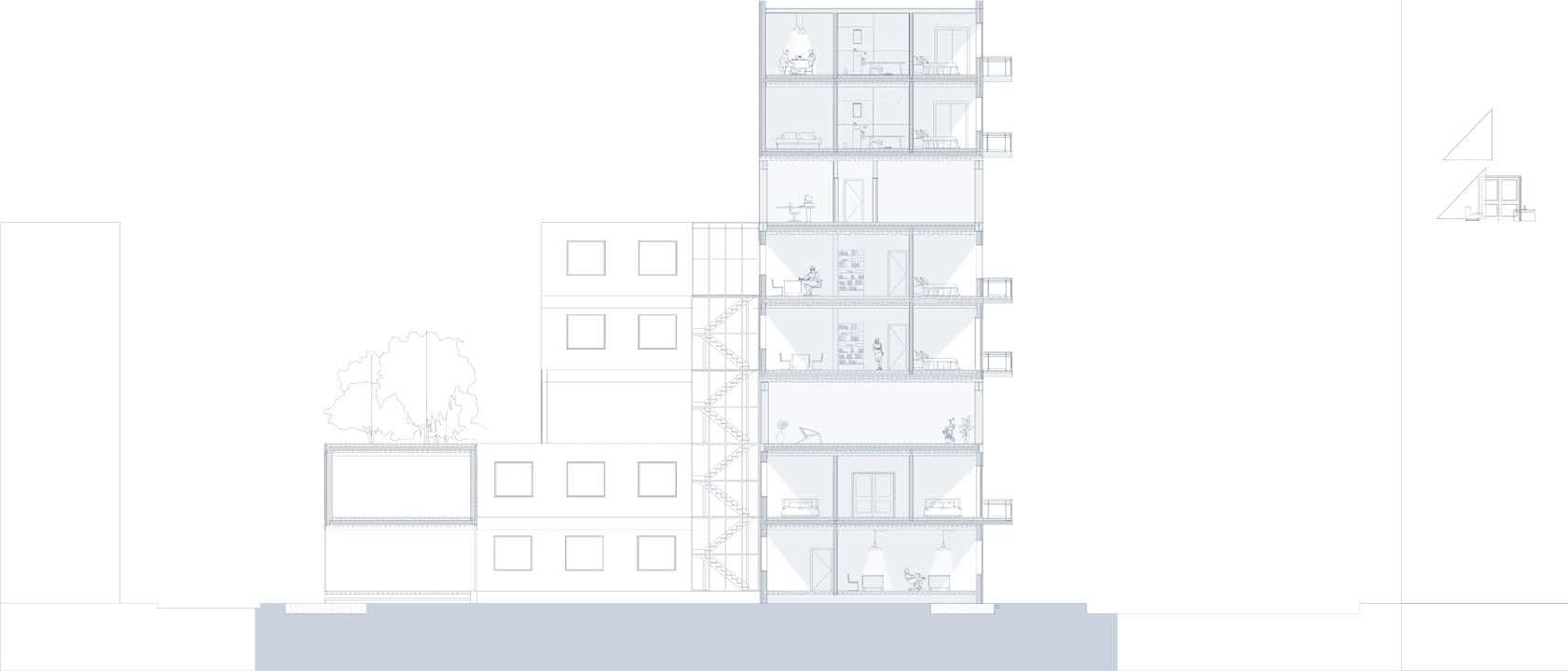
This group project explores the paradigm shift towards modern working culture. With increasing demand for offices at home, my scheme aims to give options to the many preferences of combining personal and professional lives. Situated in Poblenou, Barcelona, the scheme centres around a communal courtyard in true Spanish spirit and walk in accessible offices on the ground floor. Building upwards, there come variations in living typologies, from shared work and living spaces as well as detached residences. The diversity in choice aims to offer a range of comfortable environments in which one can choose to inhabit. The part of the building complex this is, is highlighted in the massing diagrams below
A project with Michael Nicholson and Gwynne McGrady under Professor Alejandro Lapunzina
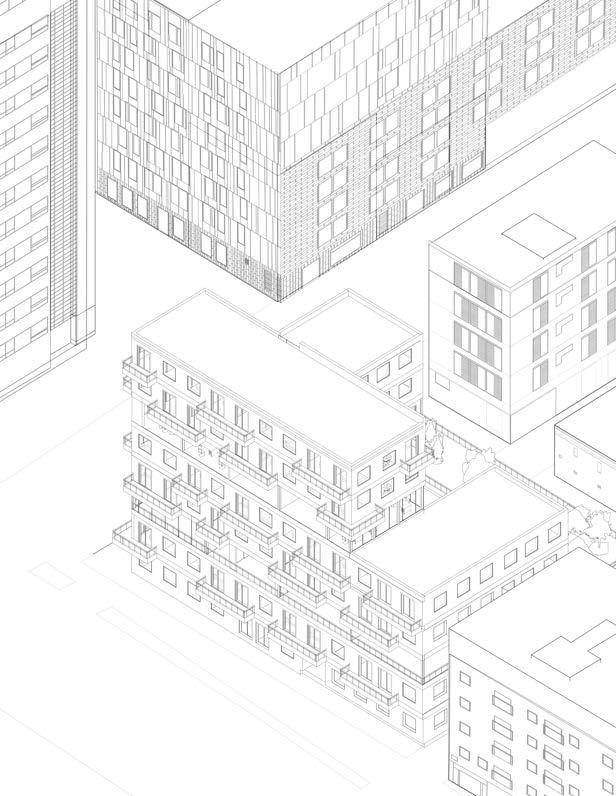
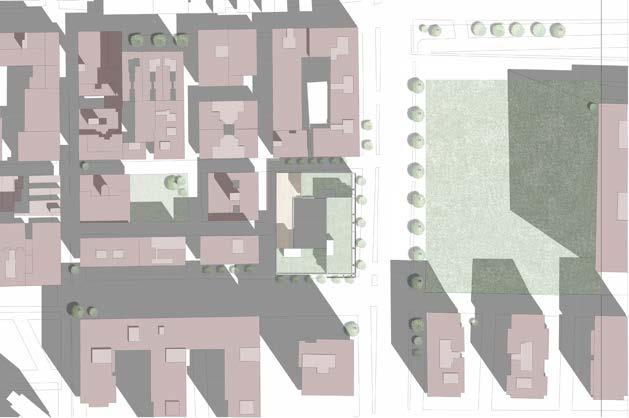
This project is situated in the neighbourhood of Poblenou, Barcelona. Located near the beach and in a predominantly residential area, this project aims to explore the different ways of living taking into account health and wellbeing.
Within the complex, sit three connected buildings, each with a separate circulation pattern. The side designed by me sits on the eastern side of the complex. The use of this building is for ‘Living and Working’. That consists of a mix between residential and office spaces.
3.3m x 3.3m we found was the ideal room dimension of our grid. All room types (Kitchen, Bedroom, Bathroom) fit within perfcectly. It also reflected barcelona’s grid as a cultural symbol.
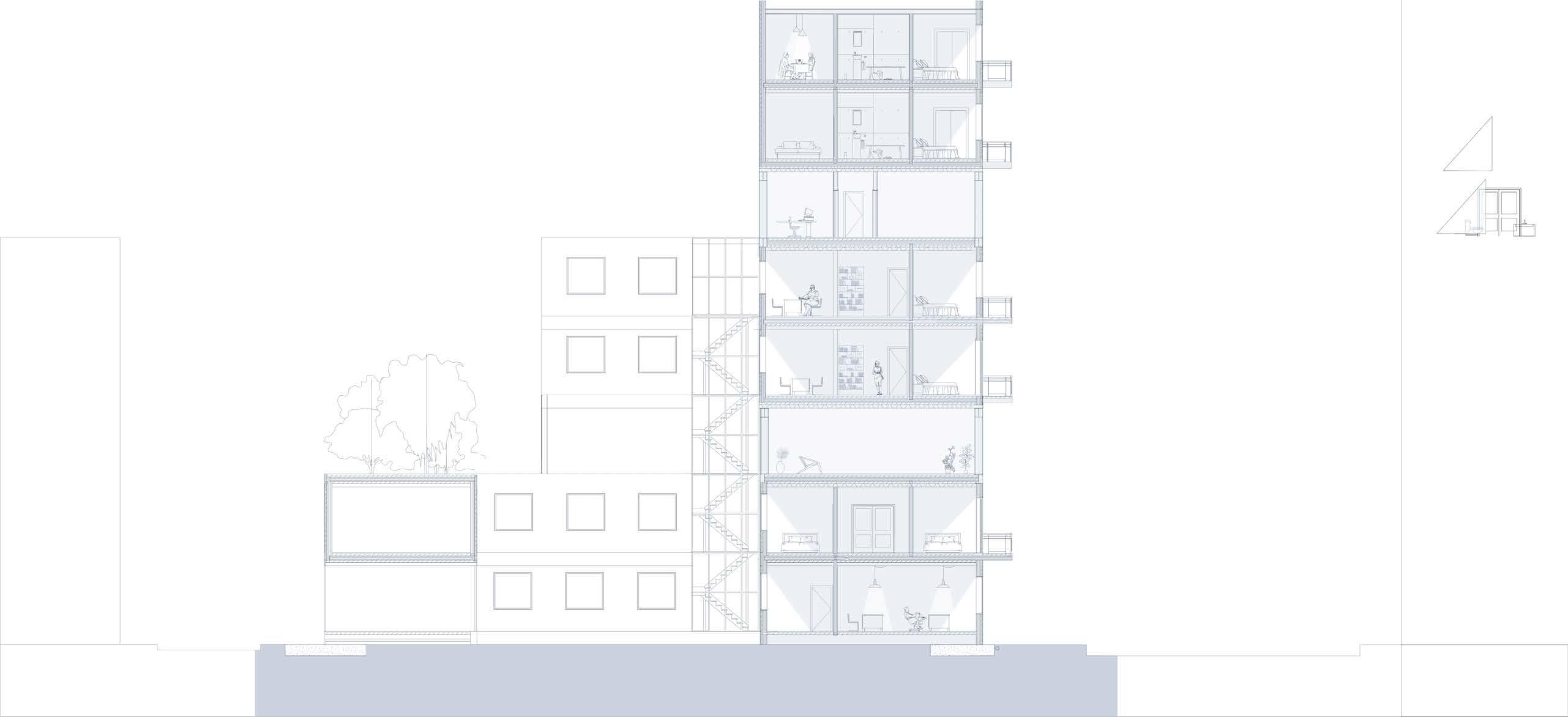
To accomodate for the multiple types of working preferences that have risen, there are multiple options for the living + working attachment arrangmenets.
Detached Living and Working. 66sqft - 99sqft apartments
FLOOR 7 & 8
6 office spaces corresponding to the six residences above it
FLOOR 6
FLOOR 5
Attached office and living space with separate circulations
FLOOR 4 & 5
Distinction between apartments on the eighth floor of the building
Circulation and Corridor
Provides access to the 3 apartments
Circulation and Corridor
Provides access to the 3 apartments
Apartment 1
4 bedrooms and 2 bathrooms
Apartment 1
4 bedrooms and 2 bathrooms
Apartment 2
2 bedrooms and 1 bathroom
Apartment 2
2 bedrooms and 1 bathroom
Apartment 3
Circulation and Corridor Provides access to the 3 apartments
Circulation and Corridor Provides access to the 3 apartments
Apartment 1
4 bedrooms and 2 bathrooms
4 bedrooms and 2 bathrooms
Apartment 2
2 bedrooms and 1 bathroom
2 bedrooms and 1 bathroom
Apartment 3
4 bedrooms and 2 bathrooms
4 bedrooms and 2 bathrooms
RESIDENTIAL (x6)
OFFICES (x6)
ATTACHED LIVING + WORKING (x6)
COMMUNITY SPACE
RESIDENTIAL (x3)
OFFICE (x3)
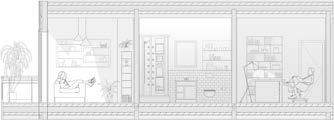
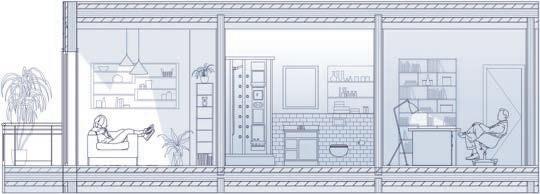
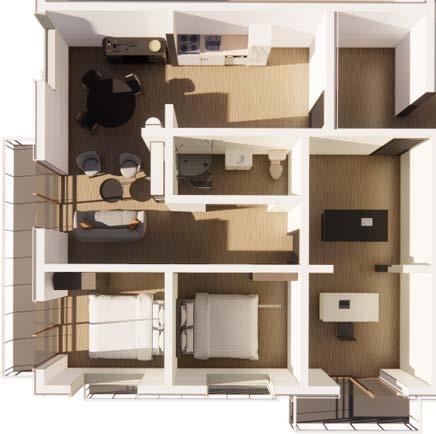
Below is a plan and section of one unit, showing the livability within and how the spaces defined by the 3.3m grid module work with the human scale. Cut across horizontally through the living, bathing and working spaces, showing distinct areas of livability.
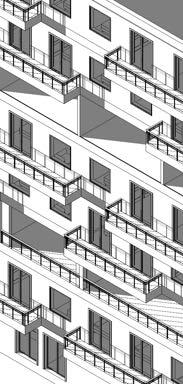
This detail shows the interior and exterior of the building using the primary material, Cross Laminated Timber (CLT). These use 5 layers of CLT for load bearing walls and the include insulation, air gaps and finishes. Between the open wrap around spaces for community and offices, there are steel columns to hold up the building whilst breaking the rigidity.
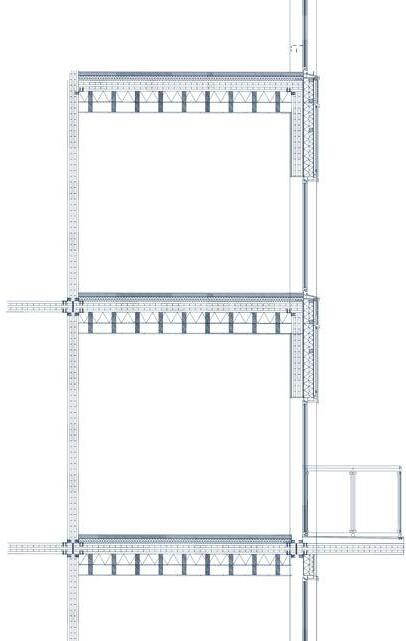
10mm Oak Parquet, Glued
30mm expanded polystyrene board(building services layer)
45mm cement screed separating layer 35mm impact-sound insulation
Wood compsoite floor system:
160mm CLT ceiling deck
160mm mineral-wool
thermal insulationbetween 60/160 timber: sarking membrane
21mm tongue-and-groove boarding
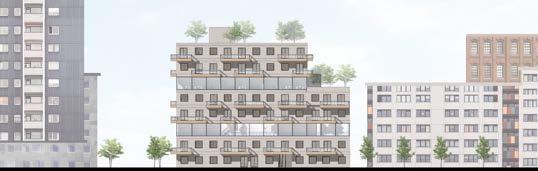
NORTH EAST FACADE
NORTH EAST FACADE
NORTH EAST FACADE
ELEVATIONS
ELEVATIONS
ELEVATIONS
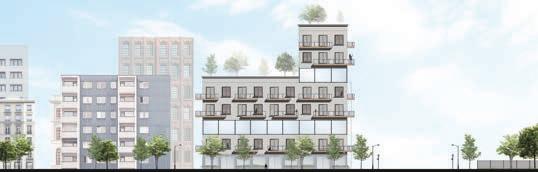
Scale 1:200 ELEVATIONS
Scale 1:200
Scale 1:200
Scale 1:200
Scale 1:200
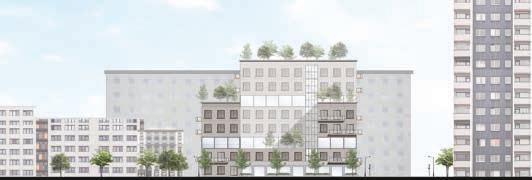
SOUTH EAST FACADE
SOUTH EAST FACADE
SOUTH EAST
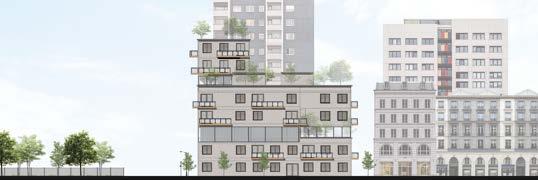
Rammed earth is one of the world’s oldest building techniques found in Spain. And recently, it has made a comeback, offering itself as a sustainable, inexpensive method of design and construction. Our library, located on Carrer de Mila i Fontanals, Gracia, Barcelona, is a five-story building made of rammed earth construction, using a grid system to create spaces, emphasizing the beauty of the ancient material while demonstrating its capabilities in the modern age.
A partner project done with Gwynne McGrady, under Professor Carles Marcos and Alejandro Lapunzina during my study abroad in Barcelona, Junior Year.
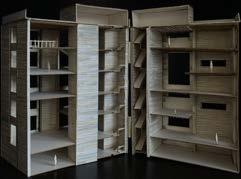
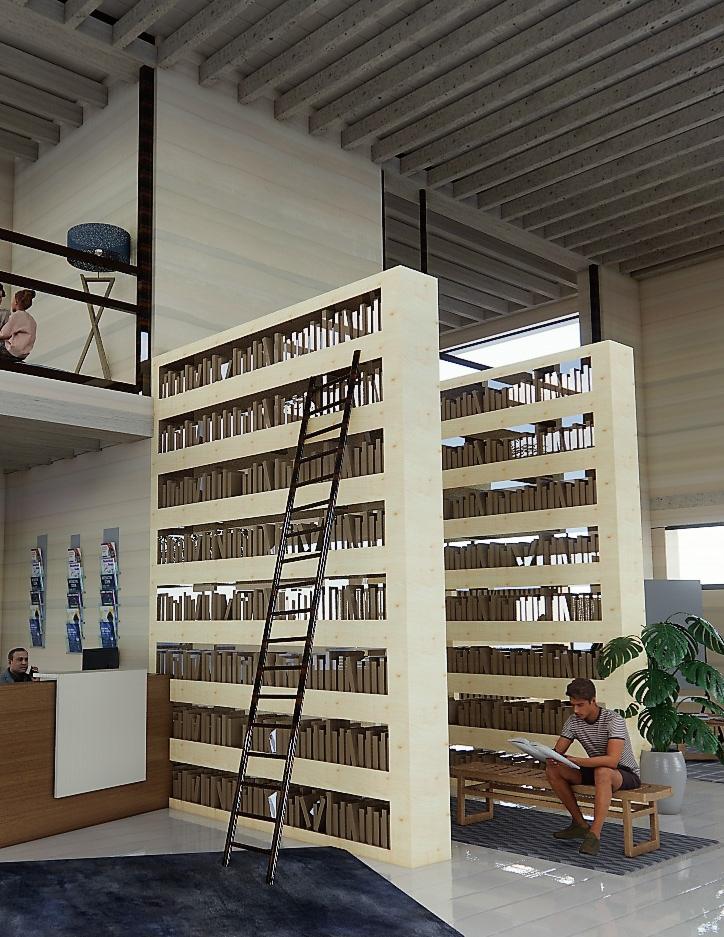
When designing for context in Spain, an architect must look intently at the history and precedents of the location to design uniquely for place. Rammed earth—one of the world’s oldest building techniques--can be seen as an outdated, impractical form of construction, but recently, rammed earth has made a comeback, offering itself as a sustainable, inexpensive method of design and construction. Our library, located on Carrer de Mila i Fontanals, is a five-story building made of rammed earth construction, using a grid system to create spaces, emphasizing the beauty of the ancient material while demonstrating its capabilities in the modern age.

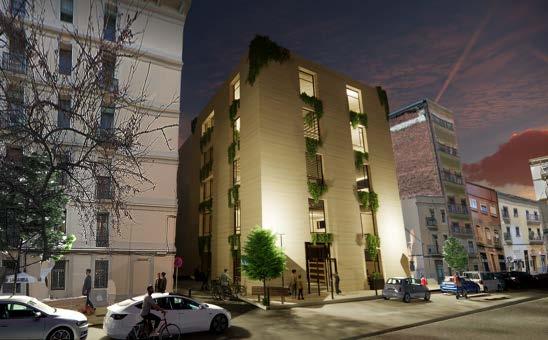
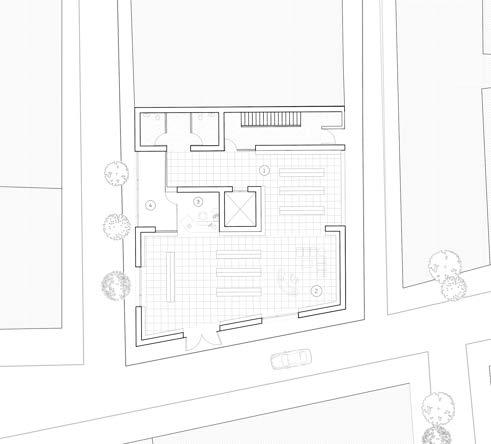
The main concepts of the building are shown here. The first being the materiality, reinforced rammed earth acts as load bearing walls, organised in a rigid, yet open format that creates a circulation throughout. The second concept is to vertically open the space with frequent double heights that make interacting with the building more interesting.
RAMMED EARTH CONCEPTUAL PROCESS
CREATE GRID
TRIM GRID TO FIT SITE
CREATE FUNCTIONAL LOADBEARING STRUCTURAL MEMBERS WITHIN GRID
CREATE BEAM SYSTEM TO SUPPORT LOAD BEARING GRID
CREATE PROGRAM SPACES ACCORDING TO GRID ALLOWED BY THE MATERIAL
PROGRAM DIAGRAM
EGRESS WC LOUDER QUIETERThe floor plans follow the structure and grid of the rammed earth structure that defines spaces for usage. Separating spaces in such a way allowed for a more diverse range of functional reading areas.
Wall, Floor and Roof plate section that includes the materiality of rammed earth, flooring and wooden beam support structures beneath floor plates. Windows can be opened from the top and bottom for continuous ventilation throughout the building.
SLIDING WINDOW ON LEFT SIDE OF PANE 3cm 5cm 7cm
FIXED WINDOW ON RIGHT SIDE OF PANE
PROJECT IN WINDOW
Incorporating double heights through the building makes the rammed earth less rigid and allows for a playfulness with the space, opening it to multiple programming possibilities
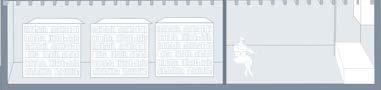
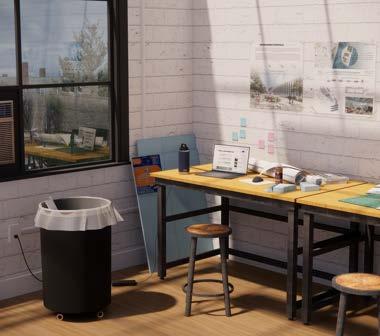
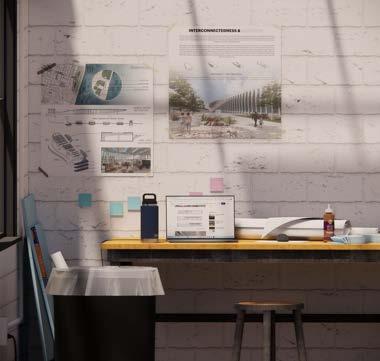
The first project (on right) was an investigation and development into representation using the rendering software Enscape to develop visualisations of physical work and my environments, telling a story of the studio experience I faced.
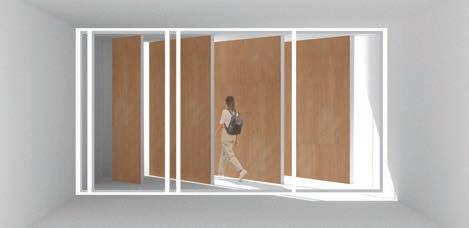
The next project was an investigation into the effects of the sun and protection in climates that require adequate shelter. Given a window of 6m in width and 3m in height, I was asked to design a method of solar protection in the south and west facades. Our design has two sets of louvres that are offset and staggered to overlap each other, providing complete protection from the sun. The movable panels also have a dual materiality, with one side reflective and the other of wood. Thus, it becomes possible to flexibly decide how the light should reflect into the room. I won the design competition for this 2-week long project.


In the summer, the overhang of the building envelope effectively blocks out all the daytime sun, thus reducing the Solar Heat Gain within the building. However, due to the reflective material and gaps, light is still diffued inside.
In the winter, depending on the position of the louvres as shown below, the sun can enter freely to allow for maximum heat gain. Not only is visible light maximised, but also radiation to warm the interiors, making it energy efficient.

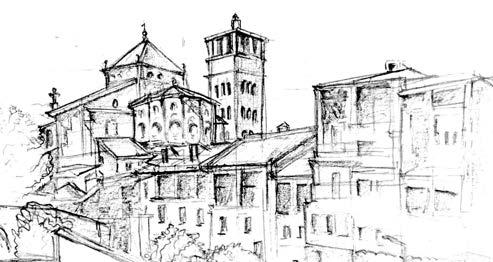
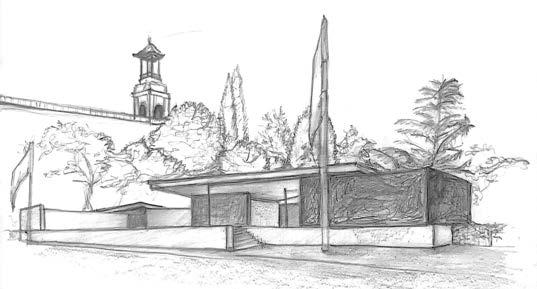
A collection of creative works including paintings, drawings, sketches and photography.
 Woman called Constance Oil on Canvas
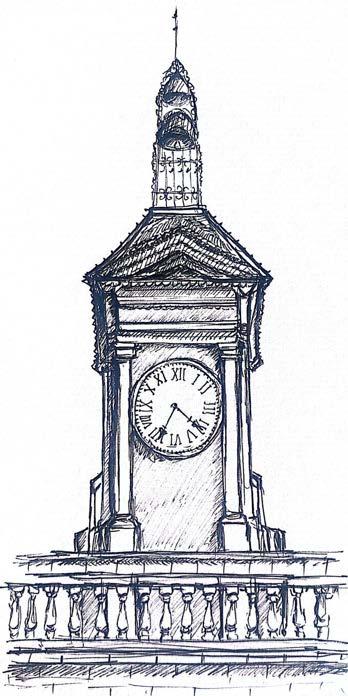 Girona Clock Tower, Catalonia
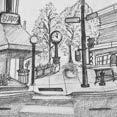
particular has incredicrossings, traffic sighuman oriented design, explored by walk-
Human Scale - The buildings on Main Street are no taller than six stories. At eye level, there is a lot of detail pertaining to the visual and touch senses.
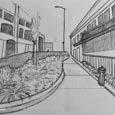
Greater Biodiversity - public garden spaces like these entertain the congregation of people and fosters a sense of community in the area. Vegetation also provides natural climate control and can be used as barriers between spaces.
Accessibility - There are ramps outside buildings to allow for everyone to be able to ude the facilities provided on the street. This also increases the number of people who come to the area.
Walkability - Main road in particular has incredible walkability. With road crossings, traffic signals, benches and other human oriented design, it allows for the streets to be explored by walking.
Diversity of Outdoor Spaces - parking lots amongst a bunch of restaurants and shops allows for people to use the facilities of the street by another mode of trasnportation. This increases interaction with public spaces too.
Human Scale - The buildings on Main Street are no taller than six stories. At eye level, there is a lot of detail pertaining to the visual and touch senses.
Distinction between paths and roads - being able to differentiate easily between where pedestrians and vehicles move is essential to the safety of the street.
Accessibility - There are ramps outside buildings to allow for everyone to be able to ude the facilities provided on the street. This also increases the number of people who come to the area.
Diversity of Outdoor amongst a bunch allows for people street by another increases interaction
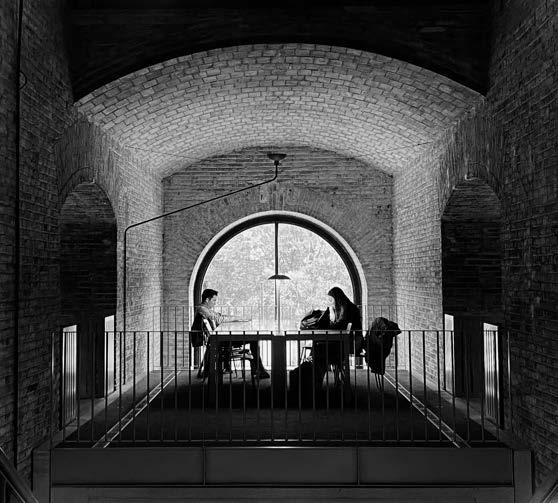
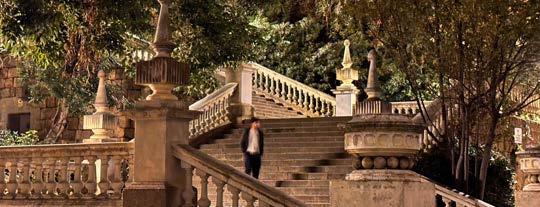 Placa Espanya, Barcelona
Les Aigues Library, Barcelona
Placa Espanya, Barcelona
Les Aigues Library, Barcelona

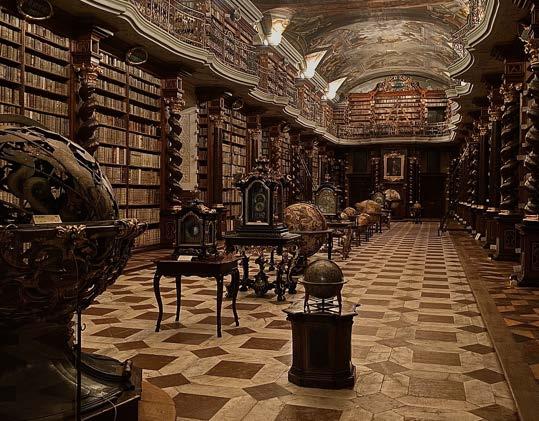
Astronomical Library, Prague
Pompeu Fabra, Barcelona+1 (773) 986-0626