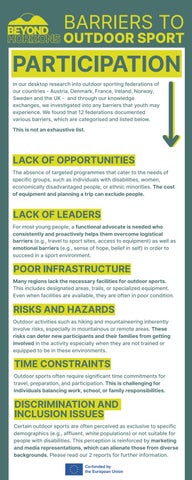

BARRIERS TO OUTDOORSPORT PARTICIPATION
Inourdesktopresearchintooutdoorsportingfederationsof ourcountries-Austria,Denmark,France,Ireland,Norway, SwedenandtheUK- andthroughourknowledge exchanges,weinvestigatedintoanybarriersthatyouthmay experience.Wefoundthat12federationsdocumented variousbarriers,whicharecategorisedandlistedbelow
Thisisnotanexhaustivelist.
LACKOFOPPORTUNITIES
Theabsenceoftargetedprogrammesthatcatertotheneedsof specificgroups,suchasindividualswithdisabilities,women, economicallydisadvantagedpeople,orethnicminorities. Thecost ofequipmentandplanningatripcanexcludepeople.
LACKOFLEADERS
Formostyoungpeople,a functionaladvocateisneededwho consistentlyandproactivelyhelpsthemovercomelogistical barriers (eg,traveltosportsites,accesstoequipment)aswellas emotionalbarriers(eg,senseofhope,beliefinself)inorderto succeedinasportenvironment
POORINFRASTRUCTURE
Manyregionslackthenecessaryfacilitiesforoutdoorsports. Thisincludesdesignatedareas,trails,orspecializedequipment. Evenwhenfacilitiesareavailable,theyareofteninpoorcondition.
RISKSANDHAZARDS
Outdooractivitiessuchashikingandmountaineeringinherently involverisks,especiallyinmountainousorremoteareas. These riskscandeternewparticipantsandtheirfamiliesfromgetting involved intheactivityespeciallywhentheyarenottrainedor equippedtobeintheseenvironments.
TIMECONSTRAINTS
Outdoorsportsoftenrequiresignificanttimecommitmentsfor travel,preparation,andparticipation. Thisischallengingfor individualsbalancingwork,school,orfamilyresponsibilities.
DISCRIMINATIONAND INCLUSIONISSUES
Certainoutdoorsportsareoftenperceivedasexclusivetospecific demographics(eg,affluent,whitepopulations)ornotsuitablefor peoplewithdisabilities Thisperceptionisreinforcedby marketing andmediarepresentations,whichcanalienatethosefromdiverse backgrounds Pleasereadour2reportsforfurtherinformation