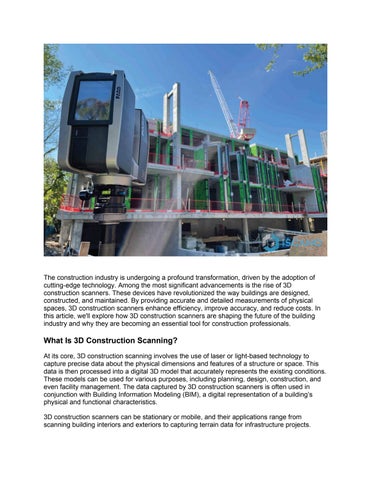
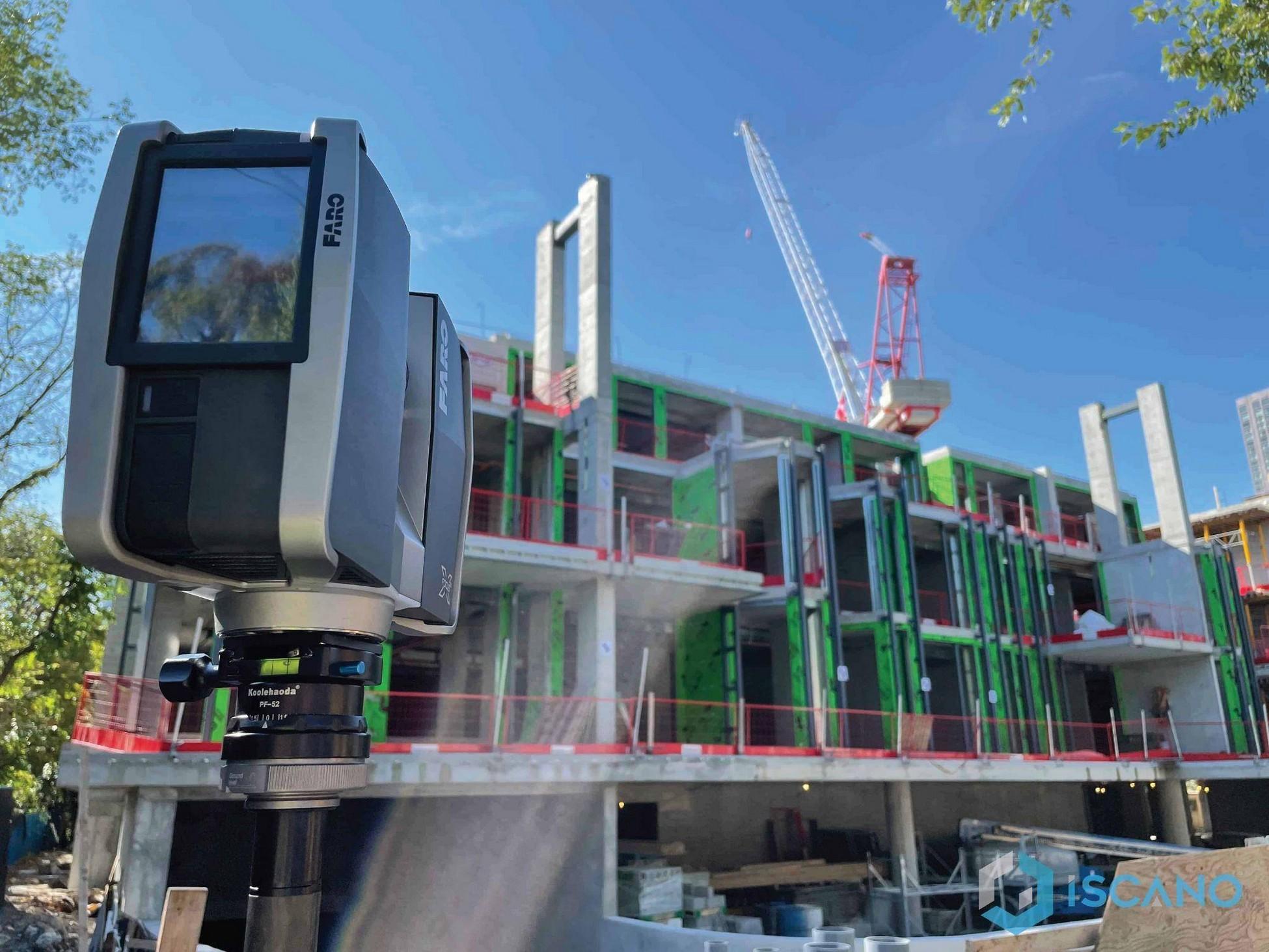
The Role of 3D Scanners in Construction
In the past, construction professionals relied heavily on traditional measurement tools like tape measures, levels, and total stations to gather data about a building site. While these methods provided basic measurements, they were prone to human error and often resulted in costly delays and revisions.
3D construction scanning eliminates many of the inefficiencies of traditional methods by offering a faster, more accurate way to capture measurements. These scanners use laser beams or photogrammetry to collect thousands of data points per second, creating a detailed, threedimensional representation of the scanned area. This high level of accuracy allows for more precise planning, reduces the risk of errors, and improves overall project outcomes.
Key Benefits of 3D Construction Scanning
1. Accuracy and Precision: The most obvious advantage of 3D construction scanning is the accuracy it provides. Traditional measurement methods are limited by the skill of the person using the tools, but 3D scanners capture millions of points of data to create an incredibly detailed representation of the environment. This precision reduces the margin for error during construction, leading to fewer mistakes and costly rework.
2. Time Savings: Traditional surveying and measurement methods can take days or even weeks to complete, particularly on large or complex projects. In contrast, 3D scanning can capture the necessary data in a fraction of the time. This enables faster project planning and execution, which can ultimately lead to shorter project timelines.
3. Cost Reduction: Errors in construction are expensive. When measurements are incorrect, it can lead to delays, additional labor, and wasted materials. By providing more accurate data from the outset, 3D scanning reduces the likelihood of errors and their associated costs. Additionally, the technology enables more efficient use of resources, as project teams can plan and execute work more effectively.
4. Improved Safety: Construction sites are often hazardous environments, and traditional surveying methods may require workers to be in potentially dangerous areas. 3D scanning minimizes the need for manual measurement in unsafe locations, as the scanners can capture data from a distance. This reduces the risk of accidents and ensures that workers can focus on other tasks.
5. Better Communication and Collaboration: One of the major challenges in construction projects is ensuring that all stakeholders, from architects and engineers to contractors and clients, have access to accurate, up-to-date information. 3D models generated by construction scanners can be shared digitally, making it easier for teams to collaborate, spot potential issues, and make informed decisions throughout the project lifecycle.
6. Enhanced BIM Integration: As Building Information Modeling (BIM) becomes increasingly integral to the construction process, 3D scanning plays a key role in providing the necessary data to create accurate and detailed BIM models. The integration of 3D scanning and BIM helps streamline project coordination, allowing for better visualization and management of the construction process from start to finish.
Applications of 3D Construction Scanners
The versatility of 3D construction scanning technology makes it suitable for a wide range of applications in the construction industry, including:
1. Site Surveys: Before any construction begins, a thorough survey of the site is required. 3D scanning allows for faster, more comprehensive site surveys, capturing the topography, existing structures, and utilities. This data is used to create digital terrain models and to inform project planning and design.
2. As-Built Documentation: Throughout the construction process, 3D scanners are used to capture the progress of the build, providing as-built documentation that accurately reflects the state of the project. This is particularly useful for comparing the completed structure to the original design plans and for making adjustments where necessary.
3. Renovations and Retrofits: In cases where a building is being renovated or retrofitted, 3D scanning provides an accurate representation of the existing structure. This is especially valuable in older buildings, where original plans may not be available or accurate. Scanners capture the layout, dimensions, and features of the building, enabling more precise planning for the renovation.
4. Quality Control: 3D scanning can be used to verify that construction work is being carried out to the correct specifications. By comparing the scanned data to the design model, project managers can ensure that the work is progressing as planned and that any deviations are quickly identified and addressed.
5. Facility Management: Once construction is complete, 3D scanning continues to provide value through facility management. The digital models generated by the scanners can be used for maintenance planning, space management, and future renovations. Having an accurate, up-to-date digital representation of the building simplifies ongoing maintenance and allows for more efficient use of resources.
The Future of 3D Construction Scanning
As the construction industry becomes more reliant on technology to improve efficiency, safety, and sustainability, 3D scanning is poised to play an even greater role. Advances in scanning technology, such as faster data processing and integration with artificial intelligence, will further enhance the capabilities of 3D scanners.
Moreover, the increased use of drones equipped with 3D scanning technology will allow for more comprehensive site surveys, particularly in hard-to-reach or hazardous areas. This will open up new possibilities for large-scale infrastructure projects, as well as for environmental monitoring and disaster response.
In the future, we can expect 3D construction scanning to become a standard tool on construction sites around the world. As more professionals recognize the benefits of this technology, its adoption will continue to grow, driving innovation and improving outcomes in the construction industry.
Conclusion
3D construction scanners are transforming the way the industry approaches design, planning, and execution. With their unparalleled accuracy, time-saving capabilities, and potential for cost reduction, these tools are quickly becoming indispensable in modern construction. From site surveys to quality control, 3D scanning technology offers a glimpse into the future of building, where precision, safety, and efficiency are prioritized. As the technology continues to evolve, it will undoubtedly play an even more prominent role in shaping the built environment.
Contact us:
iScano New York City
223 E 28th St Apartment 4RW, New York, NY 10016 917-383-3456
https://iscano.com/3d-laser-scanning-new-york-city/