This publication is available digitally at https://isass.org/category/news/ vertebral-columns/
From the ¹Department of Orthopaedic Surgery at Rush University Medical Center in Chicago, Illinois, and ²Drexel University College of Medicine in Philadelphia, Pennsylvania.
Barriers to Implementation for Endoscopic Spine Surgery
Endoscopic spine surgery (ESS) has emerged as a major advancement in modern spinal care, with uniportal and biportal approaches yielding successful outcomes. Compared to traditional minimally invasive (MIS) and open surgical approaches, ESS offers advantages including lower levels of postoperative pain, reduced blood loss, shorter hospital stays, and faster return to work.1-3 However, despite these benefits, the implementation of ESS remains limited, particularly in the United States.4
ESS presents barriers to adoption, including surgical technical learning curves, monetary investment for equipment, and the surgeon’s perspective. 5
Understanding these challenges with data-backed dialogue is essential as the spine field advances toward efficient, less invasive interventions. As global experience expands, many of these barriers are steadily being overcome, supporting the development of reproducible care models.
Technical and Training Barriers
The primary barrier to ESS implementation is the steep learning curve. The visual field differs from fundamental open or microscopic surgery. The monitor view can disorient surgeons accustomed to the direct dry field visualization. During
endoscopy, the surgeon looks through a magnifying scope displayed on a screen. The surgeon must orient their visual field to the 2-dimensional image on the screen and align their instruments accordingly. Hand-eye coordination is therefore heavily dependent on the monitor view rather than natural depth perception. 8
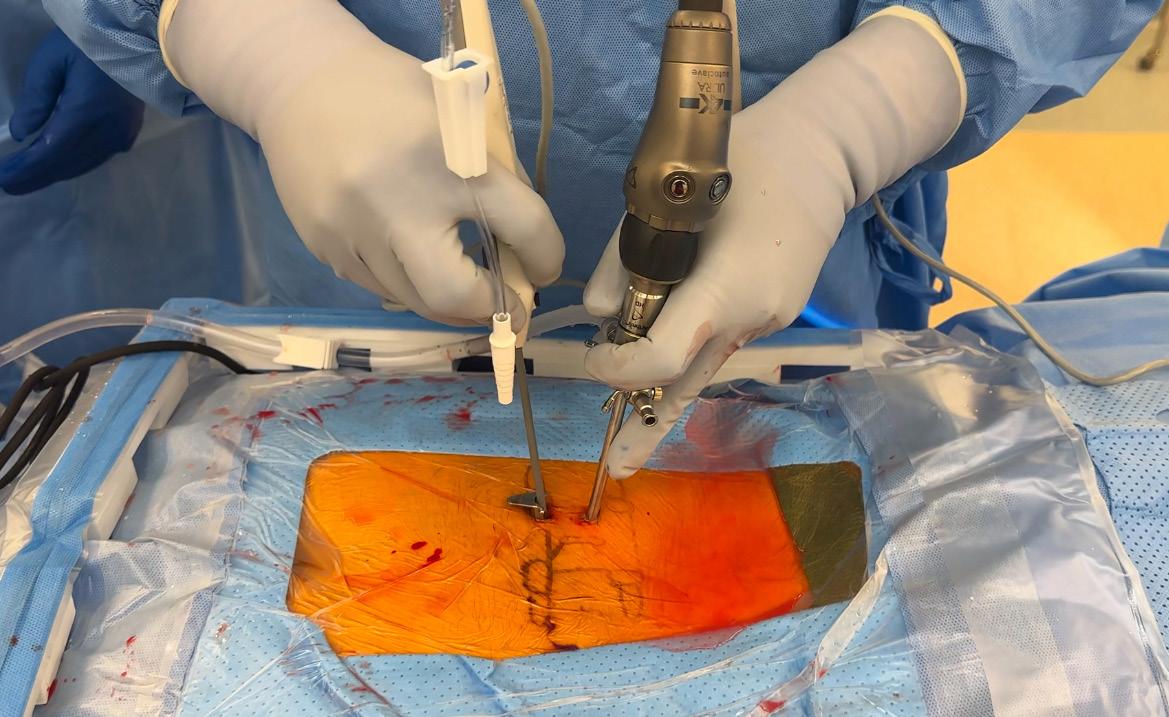
In uniportal endoscopy, both the visualization and surgical instruments pass through a single channel (the portal), so both share one working area. In contrast, biportal endoscopy uses two separate small incisions: one for the camera (endoscope) and one for the surgical instruments. The biportal setup allows for more instrument movement in complex cases but requires the surgeon to be skilled in spatial orientation to coordinate between the two portals.
To address this barrier through training opportunities, structured endoscopic fellowships and live workshops have become widely accessible through programs offered by organizations such as AO Spine and the North American Spine Society.
Institutional and Economic Challenges
Hospital and ambulatory surgery center (ASC) institutions must calculate
Aimen A. Khan, BS1
Noah A. Pogonitz, BS1
Sehajvir Singh, BS2
Aryan Patel, BS1
Puranjay Gupta, BS1
Kern Singh, MD¹
the upfront costs for full implementation of ESS machinery and systems, as well as consider the financial practicality. A typical endoscopic system includes an endoscopic camera, a light source, a high-definition video recording system with a monitor, a fluid management system, and an ablator. The cost of outright purchasing endoscopic equipment is approximately $350,000, resulting in a large upfront investment.7 However, there are methods to obtain ESS systems in institutions, such as a case-by-case fee or leasing-to-own. For centers that have a lower volume, purchasing on a per-case basis may be financially justifiable without blocking out the possibility of ESS implementation and surgeon familiarity.
The second challenge administrators face in implementing ESS involves poor
reimbursement structures. The Current Procedural Terminology (CPT) code for endoscopic lumbar discectomy is reimbursed at a nearly 20% lower rate than the traditional microdiscectomy code. Insurance often categorizes ESS procedures as “experimental” or “investigative” despite being a superior minimally invasive approach with higher technical skill requirements and greater implementation and maintenance value.4
Last, surgical staff must receive appropriate training to implement and manage machinery, irrigation, assembly, and unique ESS protocols. This learning period requires time and education to build team efficiency. Surgical teams would need to lean on the administration to support and advocate for this learning period and have confidence in the ESS system’s potential.
Clinical Evidence and Outcomes
The extensive literature on ESS supports its role as an effective, safe, and beneficial advancement in spinal care. Collectively, current evidence confirms that ESS achieves clinical results comparable to that of traditional MIS approaches with highly similar perioperative recovery profiles. 9 In their meta-analysis, Qin et al found 9 studies including 1,585 patients showed no statistically significant difference between visual analog scale (VAS) scores, Oswestry Disability Index (ODI), and complication rates between endoscopic lumbar discectomy and open microdiscectomy, both pre- and postoperatively. Additionally, shorter hospital stays and faster mobilization were found for the endoscopic group. 9,12
Multiple randomized controlled trials have shown that ESS achieves equivalent or superior efficacy compared to conventional open or MIS approaches. Park et al compared biportal endoscopic lumbar decompressive laminectomy with microscopic decompressive laminectomy in a randomized controlled trial. The authors found that patients in the endoscopic group had significantly lower postoperative pain scores, reduced fentanyl use, and shorter hospital stays.10-12
The North American Spine Society formally recognizes and includes the role of endoscopic decompression among recommended treatment choices for duly selected patients.13 Moreover, AO Spine has incorporated ESS with curriculum coverage, reflecting its global recognition as an advancement in spinal practice. 14 As professional global societies continue to recognize its efficacy,
the question of implementation slowly shifts from “should ESS be adopted?” to “how do we best integrate ESS?”
Biportal Versus Uniportal Consideration
Uniportal and biportal systems possess unique precedents and technical traits that influence adoption. Uniportal endoscopy allows for the instruments and visualization field to be through a single channel, decreasing soft-tissue disruption and the number of incisions.1 This approach is favorable for disc herniation cases and decompression, cohesive with an efficient workflow once spatially familiar.
Biportal endoscopy uses two separate incisions: one for instrumentation and the other for the visualization field.2,3 This allows for two manual controls, a broader scope of angles, and flexibility for multilevel or complex cases. 5 A systematic review of studies demonstrates that while UBE requires greater fluid coordination and spatial awareness, UBE provides greater maneuverability and may adhere faster to decompression.4-6
The decision between uniportal and biportal techniques relies on the surgeon’s experience, case complexity, and available resources. The two approaches allow for effective pathways to achieve minimally invasive decompression.
Future Directions
A meaningful catalyst for ESS adoption is education, standardized training, and collaboration. 5-7 Implementation of simulation-based training, mock case starts,
and formal benchmarks of competency can build the future generation of surgeons and reduce the learning curve.
At the same time, technology will continue to advance and transform surgical components such as instruments, fluid management systems, robotics, and expanded visualization, allowing for the possibility of broader ESS application for selected procedures. As centers globally continue to refine technical pearls, the United States will benefit from adopting these practices through standardized and reproducible implementation models.
References
1. Jang JW, Lee DG, Park CK. Rationale and advantages of endoscopic spine surgery. Int J Spine Surg. 2021;15(suppl 3):S11–S20.
2. Park SM, Song KS, Ham DW, et al. Safety profile of biportal endoscopic spine surgery compared to conventional microscopic approach: A pooled analysis of 2 randomized controlled trials. Neurospine . 2024;21(4):1190–1198.
3. Delat R, Prajapati, D, Rao N, Patel A, Shaikh S. Clinical comparison of the unilateral biportal endoscopic technique versus microendoscopic discectomy for single-level lumbar discectomy: a retrospective analysis. J Minim Invasive Spine Surg Tech. 2025;10(1):60-68 https://doi. org/10.21182/jmisst.2024.01529
4. Stone BK, Paradkar R, Anderson GM, et al. Development of an endoscopic spine surgery program: overview and basic considerations for implementation. JBJS Open Access 2023;8(3):e22.00152. https://doi. org/10.2106/JBJS.OA.22.00152
Conclusion
Endoscopic spine surgery has evolved from emerging technology to evidence-supported techniques for minimally invasive spine surgery. Despite the strong background of ESS, consistent implementation is challenged by the surgeon’s learning curve, financial considerations, and institutional support. Through administration backing, structured training, and refined technological tools, these barriers can be addressed. ESS is positioned to become an integral part of modern spinal care for patients, presenting faster recovery and data-supported outcomes. l
5. Alostaz M, Derman P, Lipson P, et al. (2025). Attitudes regarding barriers to entry and the learning curve associated with endoscopic decompression-only surgery: an international survey. Spine J. 2025;25(5):983–995.
6. Mobbs RJ, Phan K, Malham G, Seex K, Rao PJ. Lumbar interbody fusion: techniques, indications and comparison of interbody fusion options including PLIF, TLIF, MI-TLIF, OLIF/ATP, LLIF and ALIF. J Spine Surg (Hong Kong). 2015;1(1):2–18.
7. Hussain I, Yeung AT, Wang MY. Challenges in spinal endoscopy. World Neurosurg. 2022;160:132–137.
8. Morgenstern R, Morgenstern C, Yeung AT. The learning curve in foraminal endoscopic discectomy: experience needed to achieve a 90% success rate. SAS J. 2007;1(3):100–107.
9. Qin R, Liu B, Hao J, et al. Percutaneous endoscopic lumbar discectomy versus posterior open lumbar microdiscectomy for the treatment of symptomatic lumbar disc herniation: a systemic review and meta-analysis. World Neurosurg. 2018;120:352–362.
10. Gadjradj PS, Rubinstein SM, Peul WC, et al. Full endoscopic versus open discectomy for sciatica: randomised controlled non-inferiority trial. BMJ. 2022;376:e065846.
11. Park SM, Park J, Jang HS, et al. Biportal endoscopic versus microscopic lumbar decompressive laminectomy in patients with spinal stenosis: a randomized controlled trial. Spine J. 2020;20(2):156–165.
12. Park SM, Kim GU, Kim HJ, et al. Is the use of a unilateral biportal endoscopic approach associated with rapid recovery after lumbar decompressive laminectomy? A preliminary analysis of a prospective randomized controlled trial. World Neurosurg. 2019;128:e709–e718.
13. The North American Spine Society. Coverage recommendations. https://www.spine.org/coverage
14. AO Spine. Minimally invasive spine surgery (MISS). https://www.aofoundation.org/spine/education/competency-based-curriculum-courses/minimally-invasive-spine-surgery?utm_source
From the Department of Orthopaedic Surgery at Rush University Medical Center in Chicago, Illinois.
CERVICAL SPINE
Motion Preservation in Multilevel Cervical Disease
A Review of 3- and 4-Level CDR
First described by Smith, Robinson, and Cloward in the 1950s, anterior cervical discectomy and fusion (ACDF) remains the gold standard for the surgical management of cervical degenerative disc disease. Although it is supported by decades of clinical data demonstrating excellent fusion rates and patient outcomes, ACDF for 3- and 4-level disease presents a unique challenge. While the upper cervical spine can compensate somewhat for rotation, it cannot compensate for the loss of flexion-extension in the subaxial spine, forcing the patient to move their entire trunk to look up or down. By fusing multiple segments, a long, rigid lever arm is created, and there is a compensatory increase in stress at the adjacent mobile segments. Furthermore, the likelihood of fusion decreases.
In the early 2000s, cervical disc replacement (CDR) emerged as a motion-preserving alternative to fusion. The proposed advantage of CDR is the restoration of normal kinematics, which in turn normalizes the load transmission to adjacent segments, theoretically reducing the incidence of adjacent segment disease. In patients with multilevel disease, a 3-level or 4-level CDR (3-/4-CDR) offers the potential to preserve near-physiologic range of motion (ROM),
maintain global spinal balance, and protect the adjacent levels from the rapid degeneration seen after long-segment fusions.
Regulatory Landscape
Currently, the U.S. Food and Drug Administration (FDA) has approved CDR for use in 1 and 2 contiguous levels. The Mobi-C cervical disc was the first to receive approval for 2-level indications in August 2013, followed by the Prestige LP. To date, no device is FDA approved for 3- or 4-level use; thus, such use would be considered an “off-label” procedure. Although surgeons may use approved devices in selective, off-label manners if they believe it is in the best interest of the patient, there is a significant burden to justify the indication and navigate insurance reimbursement. The discrepancy in labeling is largely a function of the cost and complexity of running Investigational Device Exemption (IDE) trials for 3- and 4-level indications rather than a demonstrated lack of safety. The patient population for 4-level disease meeting strict IDE criteria is small, making recruitment for a randomized controlled trial prohibitively difficult. The field relies largely on retrospective cohorts (Level III or
Jonathan A. Gabor, MD
Arash J. Sayari, MD
CERVICAL SPINE
IV evidence) to guide practice. In contrast, these devices have been used for 3- and 4-level indications for more than a decade in Europe and China. Studies from these regions have reported on these cohorts with follow-up extending beyond 5 years, providing the safety signal that supports selective off-label use in the United States.
Segmental Motion Preservation
Studies have supported the notion that multilevel CDR preserves the global ROM of the cervical spine. Chang et al published 2 series on radiological and clinical outcomes following 3-/4-CDR. In their study on 50 patients who underwent 3-level CDR at C3-7, mean ROM significantly increased by 3.4° postoperatively.1 CDR not only successfully preserved but also slightly increased the mobility at the 3 index levels. Conversely, the 3-level ACDF group experienced a marked decrease in mobility from 22.8° to just 1.0°. In a later study on 20 patients who underwent 4-level CDR, there was no significant difference in pre- (mean 35°) vs postoperative (mean 37°) total ROM at C3C7, once again demonstrating successful motion preservation. 2 Reinas et al similarly reported favorable motion preservation in a smaller cohort of 11 patients undergoing 3-/4-level CDR, which resulted in a mean increase in global ROM of 7.2° and index ROM of 1.3°. 3
Adjacent Segment Biomechanics
A primary biomechanical rationale for multilevel CDA is the protection of adjacent levels by allowing motion at the operative
segments. In 3- and 4-level fusions, the adjacent discs experience a substantial increase in force transfer as a byproduct of being at the terminal ends of a long, rigid lever arm. A finite element analysis (FEA) on a 3-level ACDF model showed that the cranial and caudal adjacent levels experience a supraphysiological increase in ROM by over 90% and 70%, respectively, as a direct compensatory mechanism. 4
An FEA by Wong et al compared the effects of 3-CDR (C3-6) on adjacent segment stress versus 3-level ACDF, various hybrid configurations, and an intact control. 5 The 3-CDR group produced the lowest stress and strain energy at the C6-7 level, comparable to the control group. These results support the notion that CDR is protective against adjacent segment disease at the adjacent caudal level. Importantly, when analyzing the cranial C2-3 adjacent level, the CDR group resulted in slightly higher stress than the intact control group. However, it generated significantly less facet force than the fusion construct at this level, suggesting it may still be somewhat protective.
Patient Selection
The ideal candidate for 3-/4-CDR is a patient with soft disc herniations or mild spondylosis at multiple contiguous levels, preserved facet joints, and adequate bone quality. It is equally important to recognize the contraindications, which align closely with the FDA IDE exclusion criteria for the Mobi-C Cervical Disc. Preoperative instability (translational motion >3.5 mm or angular motion >11–20°) compromises
construct integrity, as the device cannot actively restrain this excessive movement. 2 Fixed kyphosis or a global cervical kyphosis (>10°) is also a relative contraindication, as CDR implants lack the intrinsic constraint to correct deformity under physiologic load. In patients with significantly arthritic facets and axial neck pain, motion preservation will perpetuate this pain. With regard to bone quality, a DEXA T-score of <-1.5 is often used as a cutoff to mitigate the risk of subsidence. 6 Lastly, a disc space with minimal preoperative motion due to ankylosis (<3°) or severe collapse (<50% of normal height) may be better treated with fusion, as the contacted soft tissues may not mobilize adequately.7
Technical and Implant Considerations
The instantaneous center of rotation (COR) of a normal subaxial cervical motion segment typically lies posterior to the midpoint of the inferior vertebral body. 8 In a 3-/4-level construct, a systematic deviation of the COR from its physiologic location can alter sagittal mechanics and load sharing. 9 Anterior displacement of the COR may reduce facet joint loading but can increase the demand on the posterior cervical musculature to maintain head posture. Conversely, posterior displacement of the COR increases facet joint loading, which has been associated with accelerated facet degeneration and persistent postoperative neck pain. Unlike ACDF, which can be rigidly fixed and plated into desired lordotic alignment, CDR generally conforms to the preoperative sagittal alignment. If the patient has a
“The ideal candidate for 3-/4-CDR is a patient with soft disc herniations or mild spondylosis at multiple contiguous levels, preserved facet joints, and adequate bone quality. However, it is equally important to recognize the contraindications.”
tendency toward kyphosis, disc prostheses may lack sufficient intrinsic stiffness or constraint to maintain lordosis against physiologic head and muscle loads.10 Finite element analysis demonstrated that CDR performed in kyphotic alignment is associated with increased implant and endplate stresses and an elevated risk of mechanical failure.11 Achieving and maintaining physiologic lordosis at the time of implantation is biomechanically critical, although technically challenging. Some techniques involve asymmetric burring of the endplates to create a lordotic shape. Using implants with built-in lordosis (eg, 6° cores) is also an option, but stacking four 6° implants can create hyperlordosis; the surgeon must mix and match implants to recreate the patient’s natural curve. With regard to sizing, the decompression must be wide enough to accommodate maximal endplate coverage to prevent subsidence. A common technical error is overdistraction of the facet joints, often from attempting to maximize neurofo -
CERVICAL SPINE
raminal height. Overdistracting a single level by 2 mm is often tolerated, but in a 4-CDR, this would result in a cumulative 8 mm increase in cervical column height, which would cause persistent axial pain, paraspinal muscle spasm, and decreased segmental range of motion.
Patient Outcomes
Gornet et al presented the largest dataset for 3-/4-CDR to date. The study followed 139 patients (116 three-level and 23 four-level) for 7 years. 12 The mean Neck Disability Index (NDI) score significantly improved from 57.9 preoperatively to 31.3 at 7 years,
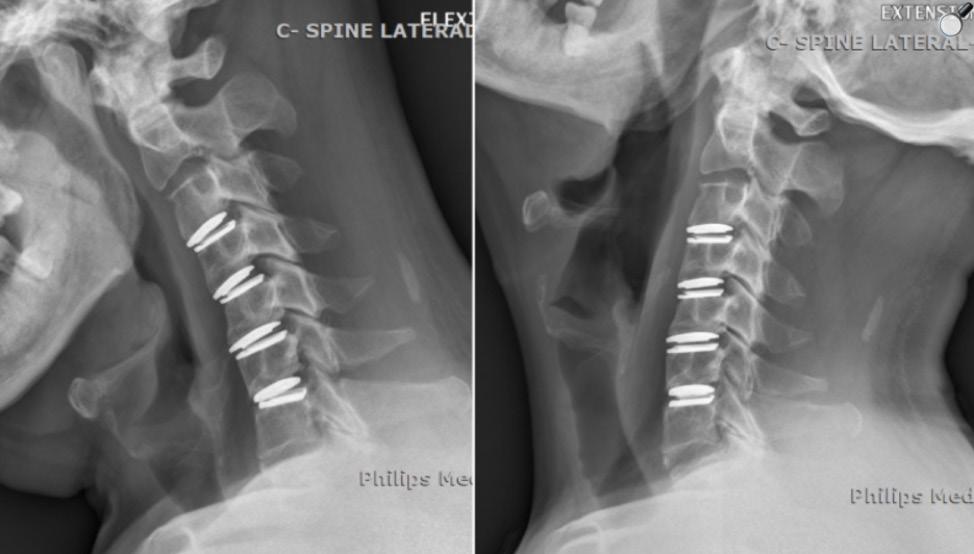
representing a 45.9% improvement and mirroring the success rates seen in 1- and 2-level trials. A 20-point visual analog scale (VAS) score for neck pain decreased by 49.4% (15.6 to 7.9) and for arm pain decreased by 54.1% (12.2 to 5.6). Improvements were noted as early as 6 weeks and were maintained through the 7-year follow-up. The rate of secondary surgery was remarkably low (3.6% for 3-level, 0% for 4-level), suggesting a favorable effect on adjacent segments. Long-term satisfaction was high (>88% at 7 years) (Figure).
In the previously mentioned series by Chang et al on 3-CDR vs ACDF, both pro -
Figure. Flexion and extension of lateral cervical radiographs obtained 2 years after multilevel cervical disc replacement showcasing preserved segmental motion and stability in implanted devices. Reproduced from Chang HK, Chang CC, Tu TH, et al. Four-level cervical disc arthroplasty. Int J Spine Surg. 2024;18(5):514520. Figure 2. doi:10.14444/8603.
cedures offered statistically significant and equivalent improvements in clinical symptoms (VAS, NDI, modified Japanese Orthopaedic Association scores), despite the drastic differences in ROM outcomes.1 Similarly, their later series on 4-CDR yielded significant improvements in all clinical metrics (NDI, VAS) without any reported reoperations. 2 The follow-up periods for these studies were approximately 34 months.
Conclusions
Three- and four-level CDR represents a paradigm shift in the management of multilevel cervical pathology. By eliminating the rigid lever arm created by ACDF, multi-level arthroplasty preserves segmental kinematics and normalizes
load transmission to adjacent levels, theoretically mitigating the risk of adjacent segment disease. The current body of evidence indicates that 3-/4-CDR provides clinical symptom relief equivalent to fusion while maintaining near-physiologic range of motion and demonstrating remarkably low long-term reoperation rates. However, the procedure remains technically demanding; success is strictly predicated on appropriate patient selection—specifically the exclusion of instability and kyphosis—and the avoidance of iatrogenic overdistraction. Although currently off-label in the United States, the growing volume of long-term safety data supports 3-/4-CDR as a safe and effective strategy for properly selected patients. l
References
1. Chang HK, Huang WC, Tu TH, et al. Radiological and clinical outcomes of 3-level cervical disc arthroplasty. J Neurosurg Spine . 2020;32(2):174-181.
2. Chang HK, Chang CC, Tu TH, et al. Four-level cervical disc arthroplasty. Int J Spine Surg. 2024;18(5):514-520.
4. Tan LA, Yoganandan N, Choi H, Purushothaman Y, Jebaseelan D, Bosco A. Biomechanical analysis of 3-level anterior cervical discectomy and fusion under physiologic loads using a finite element model. Neurospine . 2022;19(2):385-392.
5. Wong CE, Hu HT, Hsieh MP, Huang KY. Optimization of three-level cervical hybrid surgery to prevent adjacent segment disease: a finite element study. Front Bioeng Biotechnol. 2020;8:154.
6. Davis RJ, Kim KD, Hisey MS, et al. Cervical total disc replacement with the Mobi-C cervical artificial disc compared with anterior discectomy and fusion for treatment of 2-level symptomatic degenerative disc disease: a prospective, randomized, controlled multicenter clinical trial. J Neurosurg Spine . 2013;19(5):532-545.
7. Nunley P, Frank K, Stone M. Patient selection in cervical disc arthroplasty. Int J Spine Surg. 2020;14(suppl 2):S29-S35.
8. Patwardhan AG, Tzermiadianos MN, Tsitsopoulos PP, et al. Primary and coupled motions after cervical total disc replacement using a compressible six-degree-of-freedom prosthesis. Eur Spine J. 2012;21(suppl 5):S618-S629.
9. Patwardhan AG, Havey RM. Biomechanics of cervical disc arthroplasty—a review of concepts and current technology. Int J Spine Surg. 2020;14(s2):S14-S28.
10. Jin F, Li J, Liu Z, Liu B, Yang Z, Huang J. Biomechanical rational for development of cervical kyphosis deformity: a finite element analysis. BMC Musculoskelet Disord. 2025;26(1):1074.
11. Mumtaz M, Mendoza J, Tripathi S, et al. Total disc replacement alters the biomechanics of cervical spine based on sagittal cervical alignment: a finite element study. J Craniovertebr Junction Spine . 2022;13(3):278-287.
12. Gornet MF, Schranck FW, Sorensen KM, Copay AG. Multilevel cervical disc arthroplasty: long-term outcomes at 3 and 4 levels. Int J Spine Surg. 2020;14(s2):S41-S49.
13. Tu TH, Wang CY, Chen YC, Wu JC. Multilevel cervical disc arthroplasty: a review of optimal surgical management and future directions. J Neurosurg Spine . 2023;38(3):372-381.
From the Department of Orthopaedic Surgery at the University of California, Davis, in Sacramento, California.
Current Advancements in Personalized Implants for Interbody Fusion
In lumbar interbody fusion (LIF), fusion occurring with balanced alignment is critical for optimizing clinical outcomes. Alignment is affected by both the cage placement and design; however, interbody spaces are not symmetrical, and their morphology varies considerably across spinal levels and between patients. Standard implants do not address the wide variation in interbody space size and shape across patients. Patient-specific interbody cages (PSICs) are designed to fit the interbody space while simultaneously achieving the desired sagittal and coronal correction goals. Especially in cases of abnormal spinal anatomy, which may be congenital, traumatic, or of other pathologic origin, PSICs allow surgeons to tailor treatment to each patient’s unique anatomical and surgical needs.
Three-dimensional (3D) printing is a manufacturing method that sections 3D objects into two-dimensional (2D) layers that can be fused to create a 3D object. Materials such as metal, plastic, and ceramics are layered sequentially, and a variety of technologies can be used to shape or activate the material, forming the desired shape with precision.1 Printing can occur by processes ranging from filament extrusion through a nozzle to
light-curable resins created by selectively targeting layers of liquid material with light, allowing implant customization that is not possible with standard manufacturing.1 These technologies, combined with high-resolution medical images, such as computed tomography and magnetic resonance imaging, provide the tools for construction of an implant that is personalized to a patient’s anatomy, optimizing fit and stability to achieve fusion.
Despite the refinement of surgical techniques and minimally invasive procedures, patient outcomes after LIF are not always predictable. Innovation in spine surgery has shifted toward individualizing surgery by optimizing implants to match patient-specific anatomy, curvature, and biomechanical demands. This article discusses the current advancements in personalized implants for interbody fusion and provides insights into their impact on surgical management strategies.
Materials and Design Process
Like traditional interbody cages, PSICs are most commonly made from titanium or polyetheretherketone (PEEK). Titanium alloys have good biocompatibility and strong resistance to corrosion; however, their high elastic modulus may lead to
Audrey Zhao, BS
Hania Shahzad, MD
Safdar Khan, MD
Yashar Javidan, MD
Wyatt Vander Voort, MD
Hai Le, MD
endplate trauma and subsidence. The risk of subsidence is decreased with PEEK, but its hydrophobic surface can make osseointegration more challenging, ultimately leading titanium to remain the material of choice.2
Several properties of titanium are also customizable in 3D printing processes, including porosity and architecture, which critically contribute to this material’s success in fusion. Porosity is a key factor in osseointegration, the process by which bone cells adhere to and grow into the surface of the implant.1,3,4 Mimicking the porosity of natural bone provides an optimal scaffold for bony ingrowth and fusion. The architectural design of the titanium can also enhance bone growth and vascularization, including designs that maximize central space for packing bone grafts, but care must be taken to avoid creating stress points that can lead to mechanical failure.
The 3D printing manufacturing process begins with computer-aided design, which uses images of the patient’s anatomy to build a model that fits the exact specifications of the interbody space. When the cage file is ready for printing, printing occurs layer-by-layer via a laser or electron beam precisely melting and solidifying the titanium powder.1 Additional processes, including heat treatment, sandblasting, and sterilization, are then utilized to refine the desired properties of the implant.
Advantages of Personalized Interbody Implants
The potential benefits of a personalized interbody cage are considerable, as these devices address several key objectives of LIF. Beyond decompression and stabilization of the joint,
the success of LIF is dependent on timely fusion with a balanced alignment. One factor in fusion is surface area contact between the endplate and implant, which PSICs have been shown to increase by as much as 74% compared to commercially available cages.5 Greater contact area also decreases the stresses placed on the surrounding bone, decreasing the likelihood of subsidence. Additionally, micro-textures of the implant surface are designed to maximize mechanical interlocking with bone, providing better initial stability and creating scaffolding for cell attachment. These different textures also guide cellular spreading and promote organized tissue growth.1
Fusion and decompression are relatively straightforward targets for surgery, while alignment correction remains one of the most unpredictable outcomes. 6 Osteotomy and disc space realignment are the main factors involved in correcting spinal alignment, and evidence suggests that improved control of the disc space with custom cages, which provide precise angular and height correction, facilitates the achievement of goal segmental alignment.6–8 Studies have shown good alignment correction with custom cages, and Smith et al found that PSIC use significantly decreased the rate of pelvic incidence–to–lumbar lordosis mismatch greater than 15° from planned.6 PSICs have also been suggested to reduce intraoperative time, blood loss, and material waste in the operating room. Intraoperative time is reduced with endplate matching, a custom fit at the interface of implant and bone, as minimal time is spent burring and shaving down the bone before implantation. Similarly, pre-planned screw trajectories and screw
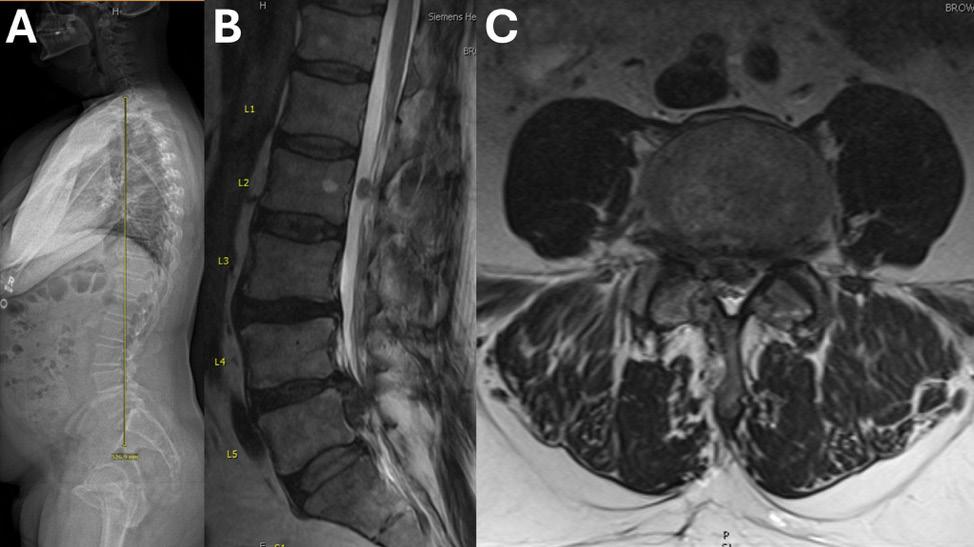
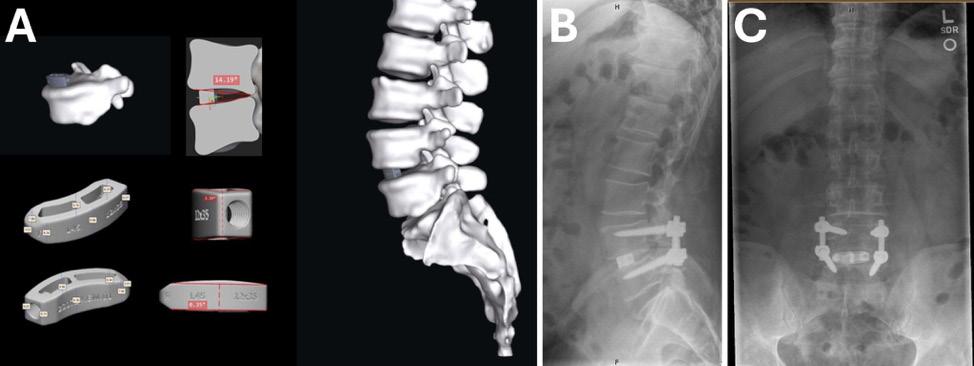
1. A 49-year-old man who had a prior L4-5 microdiscectomy by another provider had L4-5 spondylosis and recurrent disc herniation causing severe central and foraminal stenosis as seen on magnetic resonance images (B and C). Standing scoliosis radiograph (A) demonstrates collapse of the L4-5 disc space with loss of segmental lordosis.
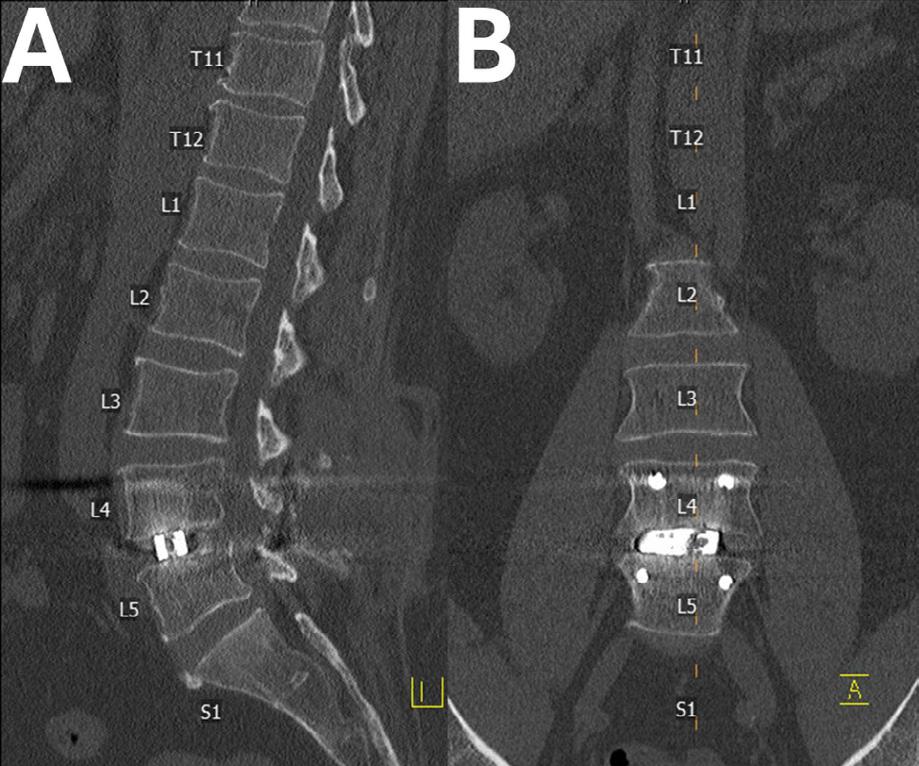
the personalized fit of PSICs can streamline the surgical process. Fewer trials of implant sizes and decreased surgical remodeling of anatomy lead to less time in the operating room and fewer instruments being used and needing sterilization.1 A patient case is highlighted in Figures 1, 2 , and 3
Outcomes
lengths reduce the time spent trialing different sizes and checking screw positioning while maintaining high rates of accuracy.9 Fluoroscopy time is also decreased as a result. When compared to meta-analysis of open transforaminal lumbar interbody fusion (TLIF) and minimally invasive surgery (MIS) techniques, Thayaparan et al showed that personalized kits used for MIS TLIF were associated with decreased operating time, as well as fewer complications and reoperations.9
While traditional systems require sterilization and preparation of multiple instrument trays to ensure all needed equipment is at hand,
Evidence has shown that PSICs can reliably achieve surgical goals with a good safety profile. In addition to planned screw trajectories, pedicle screw guides can also be printed to guide screw placement in patients with small or dysmorphic anatomy. Thayaparan et al found that intraoperative measurements matched pre-selected pedicle screw dimensions in 95.9% of cases, and other studies reported ease of use of preplanned screws in the operating room.10,11 Achievement of precise alignment, within 1.1° of planned lordosis on average at the cage level, has also been demonstrated.8 Numerous case series have shown significant improvement in patient-reported outcome
Figure 3. Postoperative sagittal (A) and coronal (B) computed tomography images confirm satisfactory cage placement consistent with preoperative planning.
Figure
Figure 2. (A) Design of a personalized interbody cage at L4-5 based on preoperative computed tomography imaging. (B and C) Postoperative radiographs demonstrating ideal cage placement.
measures (PROMs) with PSIC utilization. For example, a systematic review showed that the PSIC cohort, when compared with other interbody cage types, such as femoral ring allograft, BAK, and integral screw fixation cages, had significantly greater improvement in visual analog scale scores at 24 months.12 Quality of life index also significantly improved at 24-months follow-up.
Data regarding complication rates with PSIC use is limited due to the heterogeneity of reporting across studies. One systematic review reported 11 cases of subsidence >3 mm out of a total of 35 fusion levels, with one patient requiring cage removal; however, 10 of these cases were from 1- to 3-level en bloc resections of soft tissue sarcomas, thus limiting the generalizability of this finding.11 A cohort of 129 patients who underwent TLIF with PSIC included 4 patients who were readmitted for implant revision. This finding is comparable to revision rates reported in a meta-analysis of MIS and open TLIF technique, but further investigation is needed to characterize complications associated with PSIC.13
Limitations
Most limitations that PSICs pose are related to the novelty of this device technology. Custom interbody cages are significantly more expensive than off-the-shelf alternatives, in part because of the need for specialized personnel and manufacturing workflows.4 Currently, the cost of a custom interbody cage is 2 to 5 times greater than the cost of a commercially available implant. 3 CT and MRI images typically require processing with specialized software to develop a 3D model of
the patient’s anatomy and determine the exact dimensions of the implant. Several steps for quality control of implants at various stages also require additional personnel and time. These extensive preoperative planning needs currently preclude PSIC use in emergent and trauma cases. Additionally, high-quality data relating to this technology is still sparse, as most studies show evidence in small patient cohorts without comparative control groups. Lack of standardization across implant design allows for innovation and tailoring to specific patient goals but can also limit generalizability of data, as outcomes may vary depending on the specific features of each implant. Larger studies with long-term follow-up are required to substantiate the efficacy and impact of PSICs on clinical outcomes.
Future Directions
Current recommendations for PSIC use are cases with challenging patho-anatomy in which a standard implant is unlikely to achieve a good surgical outcome due to significant mismatch at the bone-implant interface.4,14 Personalized interbody cages have demonstrated promising outcomes across various indications for spinal fusion, including both complex deformity and degenerative etiologies, but broader implementation in larger, more heterogeneous cohorts is needed to define their clinical role. As adoption increases, manufacturing workflows and design optimization processes are expected to become more efficient, thus reducing barriers to widespread use. Nevertheless, additional research determining the extent to which these processes can be streamlined is criti-
cal for expanding indications and enabling scalable integration into routine practice.
Conclusion
PSICs are the latest development in spinal fusion advancements as surgical care becomes increasingly individualized to optimize patient outcomes. The integration of additive manufacturing with the favorable biomechanical properties of titanium has enabled the development of implants that can be tailored to the exact surgical goals of each patient. The potential advantages of PSICs span from an exact fit in the interbody space to reduced intraoperative time, with numerous potential downstream benefits. A more precise fit leads to further balanced stress distribution across the surface of bony contact, decreasing subsidence risk and improving osseointegration. Early outcomes in small series have demonstrated achievement of good alignment and improvement in PROMs, but increased implementation is needed to fully understand the limitations posed by large-scale custom device manufacturing. Currently, PSICs remain limited by extensive preoperative planning times and high production costs. However, long-term studies regarding PROMs, complications, and hardware complications are underway and will help refine indications for PSIC use. As surgical experience and manufacturing efficiencies develop, the utilization of personalized interbody cages will likely increase, expanding the possibilities of surgical treatment for patients and optimizing outcomes for each patient. l
References
1. Lewandrowski KU, Vira S, Elfar JC, Lorio MP. Advancements in custom 3D-printed titanium interbody spinal fusion cages and their relevance in personalized spine care. J Pers Med. 2024;14(8):809.
3. Lee JJ, Jacome FP, Hiltzik DM, Pagadala MS, Hsu WK. Evolution of titanium interbody cages and current uses of 3D printed titanium in spine fusion surgery. Curr Rev Musculoskelet Med. 2024;18(12):635644. doi:10.1007/s12178-024-09912-z
4. Burnard JL, Parr WCH, Choy WJ, Walsh WR, Mobbs RJ. 3D-printed spine surgery implants: a systematic review of the efficacy and clinical safety profile of patient-specific and off-the-shelf devices. Eur Spine J. 2020;29(6):12481260. doi:10.1007/s00586-019-06236-2
5. Laynes RA, Kleck CJ. Patient-specific implants and spinal alignment outcomes. North Am Spine Soc J. 2024;20:100559.
doi:10.1016/j.xnsj.2024.100559
6. Smith JS, Mundis GM, Osorio JA, et al. Analysis of personalized interbody implants in the surgical treatment of adult spinal deformity. Glob Spine J. 2025;15(2):930-939.
7. Siu TL, Rogers JM, Lin K, Thompson R, Owbridge M. Custom-made titanium 3-dimensional printed interbody cages for treatment of osteoporotic fracture-related spinal deformity. World Neurosurg. 2018;111:1-5.
8. Sadrameli SS, Blaskiewicz DJ, Asghar J, et al. Predictability in achieving target intervertebral lordosis using personalized interbody iImplants. Int J Spine Surg. 2024;18(S1):S16-S23.
9. Thayaparan GK, Owbridge MG, Linden M, Thompson RG, Lewis PM, D’Urso PS. Measuring the performance of patient-specific solutions for minimally invasive transforaminal lumbar interbody fusion surgery. J Clin Neurosci. 2020;71:43-50.
cific solutions using biomodelling and 3D-printing for revision lumbar spine surgery. Eur Spine J. 2019;28:18-24.
11. Wallace N, Schaffer NE, Aleem IS, Patel R. 3D-printed patient-specific spine implants: a systematic review. Clin Spine Surg. 2020;33(10):400.
12. Seex KA, Mobbs RJ, Coughlan M, et al. Clinical outcomes of 3D-printed titanium patient-specific implants in lumbar interbody fusion: a prospective clinical trial with a systematic review of conventional techniques. J Pers Med. 2025;15(7):320.
13. Phan K, Rao PJ, Kam AC, Mobbs RJ. Minimally invasive versus open transforaminal lumbar interbody fusion for treatment of degenerative lumbar disease: systematic review and meta-analysis. Eur Spine J. 2015;24(5):1017-1030.
14. Amin T, Parr WCH, Mobbs RJ. Opinion piece: patient-specific implants may be the next big thing in spinal surgery. J Pers Med. 2021;11(6):498.
From
Sagittal Alignment in Spinal Deformity
Current Concepts
Sagittal Malalignment: Implications on Clinical Outcomes and Mechanical Failure
Restoring sagittal alignment has emerged as critical for adult spinal deformity (ASD) surgery success, strongly influencing patient-reported outcomes and mechanical failure.1 Sagittal malalignment, especially elevated pelvic incidence–lumbar lordosis (PI-LL) mismatch, correlates with disability and poor quality of life.1,2 Failure to achieve appropriate sagittal realignment raises the risk of proximal junctional kyphosis (PJK) and proximal junctional failure (PJF), key complications following long-construct fusion surgery. 3,4
Mechanical failure in the sagittal plane, including PJK and PJF, is a significant challenge. PJK is defined as a proximal junctional angle ≥10° that is at least 10° greater than the preoperative measurement from the upper instrumented vertebra (UIV) to 2 levels above (UIV+2). 5 PJF represents a severe form of PJK with vertebral fracture at the UIV or UIV+1, posterior ligamentous disruption, spondylolisthesis exceeding 3 mm, hardware failure, or the need for revision surgery. 5 The relationship between sagittal correction and mechanical complications is multifactorial, involving both compensatory mechanisms and functional disability. Overcorrection rel-
ative to age-adjusted alignment targets paradoxically increases PJK risk. 3,6 Recent evidence suggests that overcorrection, particularly when applying uniform alignment targets without considering patient-specific factors and individual clinical circumstances, underscores the critical importance of patient-specific surgical planning that balances adequate deformity correction with the preservation of physiologic spinal mechanics to optimize both radiographic and patient-reported outcomes while minimizing catastrophic mechanical complications.
Historical Alignment Parameters
The evolution of sagittal alignment assessment (see Table 1 for a summary of sagittal alignment parameters) has transformed surgical planning and outcome prediction. Early recognition of the relationship between sagittal malalignment and quality of life established foundational parameters that remain clinically relevant today. Glassman et al demonstrated that the severity of symptoms increases linearly, with progressive sagittal imbalance correlated significantly with disability and pain.7
Luis M. Salazar, MD
Jonathan Gabor, MD
Nathan J. Lee, MD
This introduction established SVA as a critical global alignment parameter, with greater anterior displacement of the C7 plumb line relative to the posterosuperior corner of S1 associated with progressively worsening patient-reported outcomes.
The introduction of spinopelvic parameters represented a paradigm shift in understanding sagittal alignment. Pelvic incidence, an anatomic constant defined as the angle between a line perpendicular to the S1 endplate and a line connecting the midpoint of the S1 endplate to the femoral head centers,
Parameter
Traditional Spinopelvic Parameters
emerged as a fundamental determinant of lumbar lordosis requirements. 8 The concept of PI-LL mismatch, wherein the difference between PI and LL exceeds acceptable thresholds, became central to deformity classification and surgical planning. The SRS-Schwab classification, validated in 2012, formalized this concept by incorporating PI-LL mismatch as a key modifier, with values exceeding 9° associated with significant disability. 8 This classification system demonstrated that progressive deterioration in PI-LL mismatch correlated
PI Pelvic incidence; angle between a line perpendicular to the S1 endplate and a line connecting the S1 midpoint to the femoral head axis
SVA
TK
Sagittal vertical axis; horizontal distance from C7 plumb line to posterosuperior corner of S1
Thoracic kyphosis; Cobb angle measured from T4 superior endplate to T12 inferior endplate
PI-LL Pelvic incidence minus lumbar lordosis mismatch
PT Pelvic tilt; angle between a vertical line and the line connecting S1 midpoint to femoral head axis
T4-L1-Hip Axis Parameters
L1PA L1-pelvic angle; angle from L1 body center to femoral head midpoint to S1 endplate center
T4PA T4-pelvic angle; angle from T4 body center to femoral head midpoint to S1 endplate center
C2PA C2-pelvic angle; angle from C2 body center to femoral head midpoint to S1 endplate center
Age-Adjusted Alignment Targets (SAAS)
Age-adjusted PI-LL Ideal PI-LL mismatch target based on patient age
Age-adjusted PT Ideal pelvic tilt target based on patient age
Age-adjusted TPA Ideal T1-pelvic angle target based on patient age
Age-adjusted SVA Ideal sagittal vertical axis target based on patient age
with worsening Oswestry Disability Index scores and decreased health-related quality of life, establishing quantitative targets for surgical correction. 9
However, the universal threshold of 10° for PI-LL mismatch has proven inadequate across diverse patient populations. Studies have shown that optimal PI-LL values vary greatly with individual pelvic anatomy, with patients having higher PI values tolerating more mismatch than those with lower PI.10
Furthermore, the traditional PI-LL target does not consider age-related changes in sagittal alignment, as older patients naturally show increased pelvic tilt (PT) and need less lumbar lordosis.11 These limitations led to the development of age-adjusted alignment goals and personalized correction strategies that consider patient-specific factors beyond simple PI-LL calculations.
L1-Pelvic Angle, T4-Pelvic Angle, and C2-Pelvic Angle
Limitations of traditional alignment targets, including their reliance on postural measures that cannot be directly modifiable during surgery, prompted the development of vertebral-pelvic angle parameters. Hills et al described the T4-L1-hip axis in a multinational cohort of 320 asymptomatic, nondegenerated adults, establishing normative values derived from disease-free individuals rather than symptomatic populations.12 The L1-pelvic angle (L1PA) is measured as the angle subtended between the center of the L1 vertebral body and the center of the S1 superior endplate, with the vertex at the midpoint of the femoral heads12 (Figure 1). This
“The clinical utility of these parameters was validated in patients undergoing long-construct fusion from the upper thoracic spine to the sacrum. ...deviation from target L1PA or T4-L1PA mismatch in either direction significantly increased mechanical failure risk.”
parameter captures both the magnitude and distribution of lumbar lordosis, demonstrating a strong linear relationship with pelvic incidence, whereby normal L1PA can be calculated as PI × 0.5 − 21°.12 The T4-pelvic angle (T4PA) is measured analogously from the T4 vertebral body and should approximate the L1PA within 4° in normal spines, indicating harmonious thoracolumbar alignment.12
The clinical utility of these parameters was validated in patients undergoing long-construct fusion from the upper thoracic spine to the sacrum. Hills et al demonstrated that deviation from target L1PA or T4-L1PA mismatch in either direction significantly increased mechanical failure risk.13 Optimal alignment minimized failure when L1PA was within 2° of PI × 0.5 − 19°, and T4-L1PA mismatch remained between −3° and +1°.13
The C2-pelvic angle (C2PA) represents global sagittal alignment and is geometrically related to PT through the following equation: C2PA = PT + C2 tilt. 13,14 Changes in T4PA following deformity correction demonstrate near-perfect correlation with changes in
DEFORMITIES
C2PA (r ² = 0.96), confirming that thoracolumbar surgical alignment directly determines standing global balance. 13 Furthermore, higher postoperative C2PA independently correlates with greater disability, increased pain, and diminished self-image.13
Age-Adjusted Alignment Goals
Sagittal alignment varies with age, altering correction strategies. Lafage et al demonstrated that operative realignment targets
should account for age, with younger patients requiring more rigorous alignment objectives.11 Using data from the International Spine Study Group stratified by generational cohorts, researchers developed age-specific thresholds for PI-LL mismatch, PT, and SVA. The age-adjusted ideal PI-LL can be calculated using the formula PI-LL = (age − 55)/2 + 3°, reflecting the natural increase in acceptable mismatch that occurs with physiologic aging.11,15
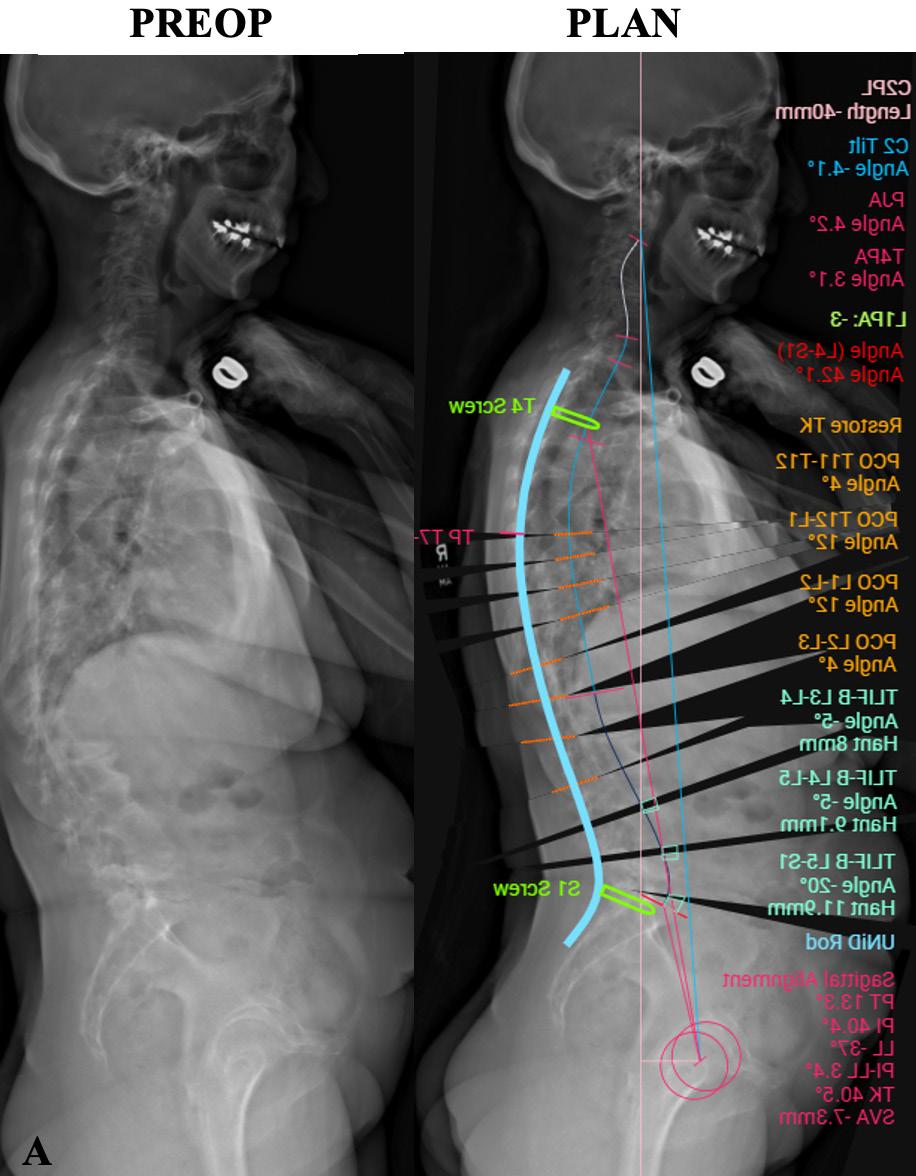
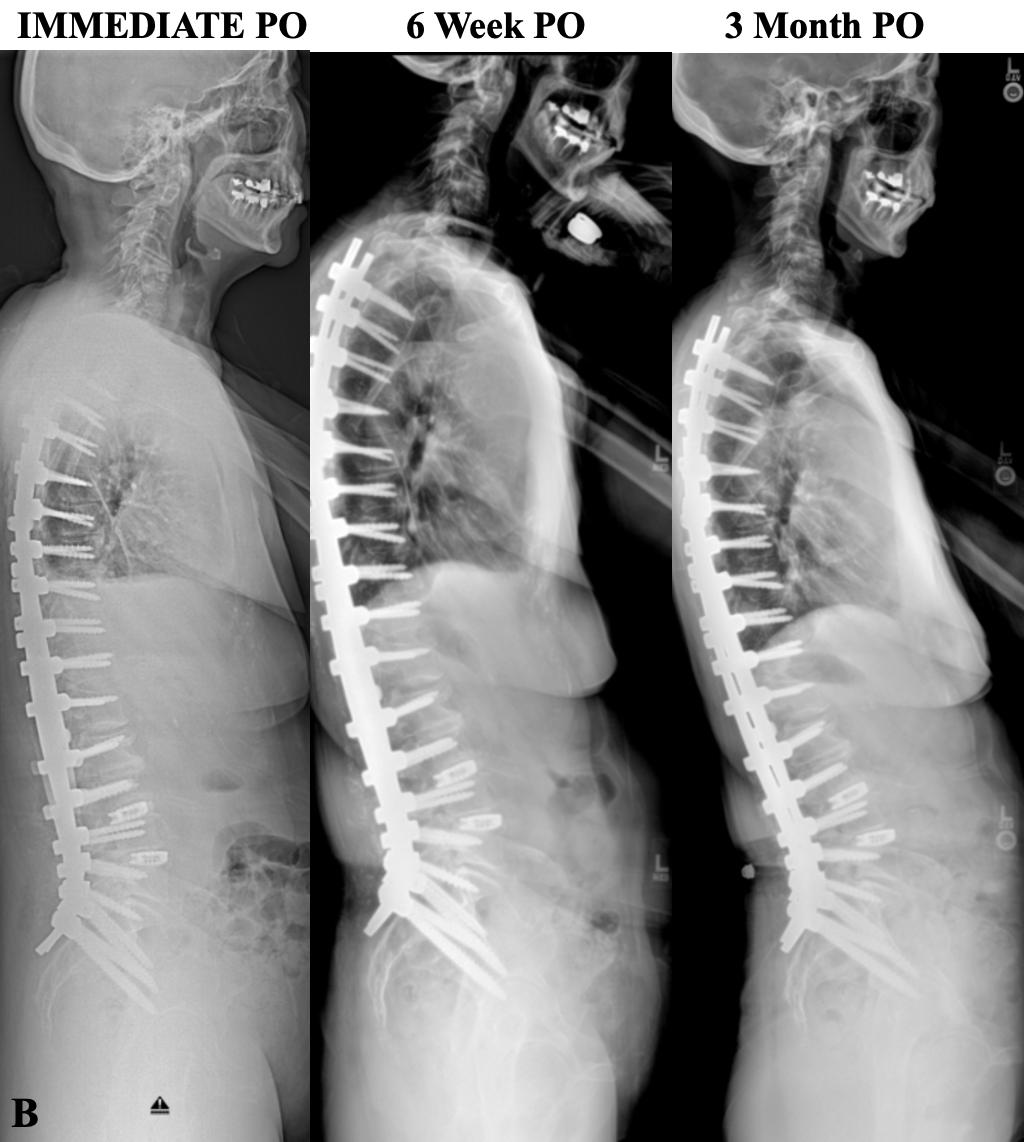
Figure 1. Preoperative and postoperative (PO) radiographic evaluation of adult spinal deformity with T4-L1-hip axis planning. (A) Standing anteroposterior and lateral scoliosis radiographs demonstrating preoperative and postoperative coronal alignment. The preoperative image reveals adult idiopathic scoliosis (Lenke 6) with a lumbar curve of 75° and main thoracic curve of 50°. The postoperative anteroposterior radiograph demonstrates correction following posterior spinal instrumented fusion from T4 to pelvis. (B) Lateral scoliosis radiographs of preoperative, planning, and postoperative radiographs with corresponding T4-L1-hip axis parameters. The patient’s pelvic incidence (PI) of 40° establishes a target L1-pelvic angle (L1PA) of −1° based on the equation L1PA = PI × 0.5 − 21°. Preoperatively, the patient demonstrated L1PA of 2°, T4PA of 19°, and C2PA of 24°, indicating marked thoracolumbar kyphosis. The surgical plan targeted restoration of L1PA to −3°, T4PA to 3°, and C2PA to 7°, maintaining T4-L1PA mismatch within the optimal range of −3° to +1°. Postoperative radiographs confirm achievement of planned alignment with L1PA of −3°, T4PA of 3.5°, and C2PA of 10.5°. The T4-L1PA mismatch of +17° was preoperatively reduced to +6.5° postoperatively.
Subsequent investigations demonstrated that age-adjusted alignment goals have the potential to reduce PJK. In a multicenter analysis of 679 ASD patients with fusion to the pelvis, patients who developed PJK had smaller postoperative PI-LL mismatches than those without PJK, and when assessed against age-specific norms, PJK patients in older subgroups were overcorrected compared to non-PJK patients.16 These findings challenged the traditional paradigm of achieving uniform alignment targets regardless of patient age.
The Sagittal Age-Adjusted Score, developed by Lafage et al, integrates age-adjusted targets for PI-LL, PT, and T1 pelvic angle (TPA) into a composite scoring system that stratifies patients as undercorrected, matched, or overcorrected relative to generational norms. 17 Validation studies have demonstrated that patients achieving matched correction show optimal clinical outcomes, while overcorrection significantly increases PJK and PJF risk. 3,6 Importantly, undercorrection of SVA relative to age-adjusted targets correlates with
“The age-adjusted ideal PI-LL can be calculated using the formula PI-LL = (age − 55)/2 + 3 degrees, reflecting the natural increase in acceptable mismatch that occurs with physiologic aging.”
poorer quality of life compared to matched patients but not increased mechanical failure risk associated with overcorrection.18
These findings underscore the importance of patient-specific surgical planning that integrates age as a fundamental variable rather than applying uniform correction targets across all populations.
Normative Sagittal Alignment
Defining normative sagittal alignment parameters clarifies spinal deformity and surgical correction targets. Roussouly’s classification system poses the idea that “normal” sagittal alignment encompasses a spectrum of shapes governed by PI, which dictates LL and overall sagittal posture. Recent large-scale investigations such as the Multiethnic Alignment Normative Study evaluated sagittal spinal and lower extremity alignment in 468 asymptomatic adults using full body stereoradiography.19 The most significant change observed in the aging asymptomatic spine is a progressive increase in thoracic kyphosis (TK). The
intrinsic stiffening and kyphotic change in the thoracic spine necessitate compensatory mechanisms—including pelvic retroversion, knee flexion, and cervical extension—to maintain global balance. On the other hand, L1-S1 LL, averaging 57.4°, did not significantly decrease across the age groups analyzed (18-80 years). Thus, it is the age-related increase in TK and resultant compensatory mechanisms that drive derangements in global sagittal alignment parameters (eg, SVA, TPA).
A recent systematic review and meta-analysis of more than 35,000 asymptomatic adults provided normative values for sagittal alignment parameters stratified by demographic factors, 20 thereby furthering efforts to establish accurate surgical goals. These findings support the age-related increase in regional (T4-T12) TK, PT, SVA, and TPA, primarily in those older than 60 years. Additionally, PI and PT are higher in women, and there are intrinsic differences across ethnic groups. These findings underscore the need to move toward individualized alignment goals that account for a patient’s age, gender, and ethnicity rather than simple, generalized alignment goals.
Value of Current Technology in Alignment Assessment and Planning
Advances in imaging and surgical planning technology have transformed the evaluation and treatment of sagittal deformity. Enabling simultaneous visualization of the spine, pelvis, and lower extremities under weight-bearing conditions allows low-dose biplanar stereoradiography systems such as
EOS to capture compensatory mechanisms that are not visualized on spine-only fulllength standing radiographs. Such imaging is particularly relevant given that lower-extremity compensation can mask the true severity of spinal malalignment when only spinal parameters are assessed.
Modern preoperative planning uses alignment-based rod contouring. Patient-specific rods (PSRs) better reproduce planned lumbar lordosis and thoracic kyphosis more accurately than intraoperative freehand bending. Several studies report that PSRs are associated with better achievement of planned spinopelvic parameters and improved radiographic fidelity to the preoperative plan. 21,22 Industry registry data also report lower rod breakage rates in PSRs than in historical cohorts. These technologies support contemporary alignment frameworks, such as age-adjusted targets and proportionality-based models, by allowing surgeons to translate alignment goals into intraoperative execution more reproducibly.
Conclusion
Contemporary understanding of sagittal alignment emphasizes global, dynamic balance rather than uniform spinal parameters. Historical parameters such as SVA and PI-LL mismatch established the critical link between alignment and disability. Emerging concepts, including vertebral–pelvic angle parameters (L1PA, T4PA, C2PA), link regional spinal shape to pelvic anatomy and global balance in a posture-independent manner. Normative data showed that aging is characterized by increasing thoracic kyphosis
DEFORMITIES
and recruitment of compensatory mechanisms at the pelvis and lower extremities, while lumbar lordosis remains relatively preserved. Modern concepts—including age-adjusted and proportional alignment parameters—combined with full-length weight-bearing imaging and contemporary preoperative planning tools, enable more accurate assessment and reproducible execution of patient-specific alignment goals. l
References
1. Park SJ, Park JS, Kang DH, Jung K, Kang M, Lee CS. Association of age-adjusted pelvic incidence minus lumbar lordosis correction with long-term radiographic and clinical outcomes in adult spinal deformity surgery. J Neurosurg Spine . 2025;43(4):396-404.
2. Schwab F, Patel A, Ungar B, Farcy JP, Lafage V. Adult spinal deformity-postoperative standing imbalance: how much can you tolerate? An overview of key parameters in assessing alignment and planning corrective surgery. Spine (Phila Pa 1976). 2010;35(25):2224-2231.
3. Park SJ, Lee CS, Kang BJ, et al. Validation of age-adjusted ideal sagittal alignment in terms of proximal junctional failure and clinical outcomes in adult spinal deformity. Spine (Phila Pa 1976). 2022;47(24):1737-1745.
4. Alshabab BS, Lafage R, Smith JS, et al. Evolution of proximal junctional kyphosis and proximal junctional failure rates over 10 years of rnrollment in a prospective multicenter adult spinal deformity database. Spine (Phila Pa 1976). 2022;47(13):922-930.
5. Kim HJ, Upfill-Brown A, Hirase T. The evaluation, prevention, and management of proximal junctional kyphosis and failure. J Am Acad Orthop Surg. 2025;33(24):e1477-e1488.
6. Park SJ, Park JS, Kang DH, et al. Validation of sagittal age-adjusted score in predicting proximal junctional kyphosis/ failure and clinical outcomes following adult spinal deformity surgery. Spine (Phila Pa 1976). 2025;50(14):948-955.
7. Glassman SD, Bridwell K, Dimar JR, Horton W, Berven S, Schwab F. The impact of positive sagittal balance in adult spinal deformity. Spine (Phila Pa 1976). 2005;30(18):2024-2029.
8. Schwab F, Ungar B, Blondel B, et al. Scoliosis Research Society-Schwab adult spinal deformity classification: a validation study. Spine (Phila Pa 1976 ). 2012;37(12):1077-1082.
9. Terran J, Schwab F, Shaffrey CI, et al. The SRS-Schwab adult spinal deformity classification: assessment and clinical correlations based on a prospective operative and nonoperative cohort. Neurosurgery. 2013;73(4):559-568.
10. Protopsaltis TS, Soroceanu A, Tishelman JC, et al. Should sagittal spinal alignment targets for adult spinal deformity correction depend on pelvic incidence and age? Spine (Phila Pa 1976). 2020;45(4):250-257.
11. Lafage R, Schwab F, Challier V, et al. Defining spino-pelvic alignment thresholds: should operative goals in adult spinal deformity surgery account for age? Spine (Phila Pa 1976). 2016;41(1):62-68.
12. Hills J, Lenke LG, Sardar ZM, et al. The T4-L1-hip axis: defining a normal sagittal spinal alignment. Spine (Phila Pa 1976). 2022;47(19):1399-1406.
13. Hills J, Mundis GM, Klineberg EO, et al. The T4-L1-hip axis: sagittal spinal realignment targets in long-construct adult spinal deformity surgery: early impact. J Bone Joint Surg Am. 2024;106(23):e48.
14. Joseph K, Bui T, Yahanda AT, et al. Validation and clinical application of the ΔC2 pelvic angle - ΔC2 tilt = Δpelvic tilt equation for predicting pelvic tilt in spinal deformity surgery. Neurosurg Focus . 2025;58(6):E6.
15. Passias PG, Jalai CM, Diebo BG, et al. Full-body radiographic analysis of postoperative deviations from age-adjusted alignment goals in adult spinal deformity correction and related compensatory recruitment. Int J Spine Surg. 2019;13(2):205-214.
16. Lafage R, Schwab F, Glassman S, et al. Age-adjusted alignment goals have the potential to reduce PJK. Spine (Phila Pa 1976). 2017;42(17):1275-1282.
17. Lafage R, Smith JS, Elysee J, et al. Sagittal age-adjusted score (SAAS) for adult spinal deformity (ASD) more effectively predicts surgical outcomes and proximal junctional kyphosis than previous classifications. Spine Deform. 2022;10(1):121-131.
18. Scheer JK, Lafage R, Schwab FJ, et al. Under correction of sagittal deformities based on age-adjusted alignment thresholds leads to worse health-related quality of life whereas over correction provides no additional benefit. Spine (Phila Pa 1976). 2018;43(6):388-393.
19. Sardar ZM, Cerpa M, Hassan F, et al. Ageand gender-based global sagittal spinal alignment in asymptomatic adult volunteers: results of the Multiethnic Alignment Normative Study (MEANS). Spine (Phila Pa 1976). 2022;47(19):1372-1381.
20. Dionne AC, Gorroochurn P, Miller R, et al. Normative thoracic, lumbar, pelvic, and global sagittal alignment parameters for asymptomatic adults: a systematic review and meta-analysis of >35,900 volunteers. Spine (Phila Pa 1976). 2025;50(17):1188-1200.
21. Picton B, Stone LE, Liang J, et al. Patient-specific rods in adult spinal deformity: a systematic review. Spine Deform. 2024;12(3):577-585.
22. Faulks CR, Biddau DT, Munday NR, McKenzie DP, Malham GM. Patient-specific spinal rods in adult spinal deformity surgery reduce proximal junctional failure: a review of patient outcomes and surgical technique in a prospective observational cohort. J Spine Surg. 2023;9(4):409-421.
From DISC Sports and Spine Centers in Newport Beach, California.
“What is recovery like?” Approaching
Education and Patient Expectations
Around
the Postoperative Course
“What is recovery like?” is a common question asked by spine surgeons worldwide. It is often arguably the most important question patients ask and can be challenging for surgeons to answer owing to its broad nature. Spine surgeons typically focus on optimizing surgical indications, techniques, and perioperative safety when defining a successful outcome. This contrasts with the typical patient’s perspective, where the success of a procedure is largely judged through the experience of recovery rather than the operative details. Given the widespread availability of digital content related to spine surgery, patients are exposed to a large volume of often variable quality information about recovery prior to ever setting foot in the spine surgeon’s office.
Importance of Aligning Patient Expectations for Recovery After Spine Surgery
The literature suggests a substantial discordance between patients’ and surgeons’ expectations regarding postoperative recovery after spine surgery. In lumbar spine surgery, Mancuso et al. found that 84% of patients had higher expectation scores than their surgeons, with only fair agreement between the 2 groups (ICC = 0.31).1 In this study, patients were more likely to expect complete improvement, whereas
surgeons more commonly expected partial improvement of varying degrees. Surgeons’ expectations were more strongly associated with patients reporting postoperative status than the patients’ own expectations. Similar patterns have been observed in cervical spine surgery, where nearly three-quarters of patients reported higher expectations than their surgeons, with only moderate agreement overall (ICC = 0.50). 2 Discrepancies were most pronounced in patients with more extensive disease and those undergoing more complex procedures. 2 Lattig et al also found poor agreement between patients and surgeons regarding expected improvement in pain and function after both cervical and lumbar surgery, with weighted kappa values ranging from 0.097 to 0.222. 3
This common discordance between surgeon and patient expectations is problematic. Fulfillment of patient expectations for the postoperative period has been shown, in multiple studies, to be the primary driver of patient satisfaction after spine surgery.4,5 In a large national registry study, Rampersaud et al demonstrated that patients who reported their expectations were fulfilled were 80 times more likely to be satisfied with their surgical result than those whose expectations were not met. This association was much stronger than the association with improvements in disability (OR [95% CI]: 2.52 [1.96-
Brandon P. Hirsch MD
3.25]) and pain (OR [95% CI]: 1.64 [1.25-2.15]). Furthermore, patients with high preoperative expectations were less likely to have those expectations met, despite having greater likelihood of improvement in pain and function. These findings suggest that patients with unrealistic expectations are likely to be dissatisfied with their surgical outcome despite technically successful surgery.
What Patients Want to Know About Recovery
When a patient asks, “What’s recovery like?”, they are typically not asking a single, concrete question. In reality, they are expressing uncertainty and looking for guidance on what they should be considering. Because the question is broad, surgeons may respond with a general timeline or a brief reassurance, which may be accurate but is incomplete. Most patients have never experienced spine surgery and may not know which parts of recovery are most impactful. They implicitly rely on the surgeon to organize the conversation and outline the relevant issues. Canizares et al demonstrated that patient expectations are inherently multidimensional.6 Using factor analysis, the authors identified 2 dominant expectation domains: pain relief and overall functional well-being. While pain relief was highly valued, expectations related to function and independence were nearly as prominent. Patients most prioritized improvement in
leg or arm pain and back or neck pain, but they also placed substantial importance on regaining general capacity, function, and independence in everyday activities.
Archer et al examined patients’ preoperative expectations using validated lumbar and cervical spine surgery expectation surveys.7 The outcomes most frequently endorsed as expecting complete improvement were not technical or radiographic measures but life-impact concerns: preventing further deterioration, eliminating the need for pain medications, regaining a sense of control over one’s life, and being able to fulfill job responsibilities. Expectations were influenced by both symptom severity and psychological factors, with higher pain levels associated with higher expectations and depression modifying expectations in some patient groups. These findings suggest that when patients ask
CLINICAL PRACTICE
about recovery, they want to understand whether surgery will meaningfully change their relationship with pain, restore personal agency, and allow them to function in work and family roles. Recovery, from the patient’s perspective, is closely tied to identity and independence rather than to isolated clinical endpoints.
The qualitative study by Brintz et al provided further insight into patients’ information needs prior to spine surgery. 5 Through interviews and focus groups, the authors developed a conceptual model showing that patients define recovery via a process that includes accepting limitations, adjusting expectations, and maintaining optimism. Patients decided to pursue surgery when chronic pain eroded their ability to participate in meaningful activities. Patients also did not view recovery as purely physical; they described it as an ongoing process of adapting to change and recalibrating expectations over time. This study suggested that when patients ask, “What’s recovery
References
1. Mancuso CA, Duculan R, Cammisa FP, et al. Concordance between patients’ and surgeons’ expectations of lumbar surgery. Spine (Phila Pa 1976). 2021;46:249–258.
2. Mancuso CA, Duculan R, Cammisa FP, et al. Concordance between patients’ and surgeons’ expectations of cervical spine surgery. Spine (Phila Pa 1976) Published online November 18, 2025. doi:10.1097/BRS.0000000000005569
3. Lattig F, Fülöp T, O’Riordan D, et al. A comparison of patient and surgeon preoperative expectations of spinal surgery. Spine (Phila Pa 1976). 2013;38:1040–1048.
like?”, they are seeking information about the psychological aspects of recovery in addition to information about expected pain and physical function.
Conclusion
Expectations of patients and spine surgeons are frequently misaligned and have the potential to affect patient satisfaction even in the setting of technically successful spine surgery. For surgeons, this represents both challenge and an opportunity. Surgeons should use broad patient questions to explore priorities, clarify expected recovery trajectories, and provide context on variability in the postoperative course. Aligning expectations does not require reduced optimism or the over-promising of results. Patient and surgeon expectations are best aligned via ongoing, individualized communication. Thoughtful discussion with patients pre- and postoperatively about what to expect during their recovery should be considered a core component of high-quality spine care. l
4. Soroceanu A, Ching A, Abdu W, McGuire K. Relationship between preoperative expectations, satisfaction, and functional outcomes in patients undergoing lumbar and cervical spine surgery: a multicenter study. Spine (Phila Pa 1976). 2012;37(2):E103-E108.
5. Brintz CE, Coronado RA, Schlundt DG, et al. A conceptual model for spine surgery recovery: a qualitative study of patients’ expectations, experiences, and satisfaction. Spine (Phila Pa 1976). 2023;48:E235–E244.
6. Canizares M, Gleenie RA, Perruccio AV, et al. Patients’ expectations of spine surgery for degenerative conditions: results from the Canadian Spine Outcomes and Research Network (CSORN). Spine J. 2020;20:399–408.
7. Archer KR, Bley JA, Hymel AM, et al. Preoperative expectations in patients undergoing lumbar and cervical spine surgery. Spine (Phila Pa 1976). 2026;51:60–68.
From the 1Department of Orthopaedics at the Hospital for Special Surgery in New York City, New York; 2 Department of Orthopedics at the University of Tsukuba Hospital in Tsukuba, Japan; and 3Weill Cornell Medical College in New York City, New York.
Opioid to Multimodal Pain Management in Spine Surgery
Opioid overuse remains a public health problem in the United States. Opioids are associated with substantial adverse effects, including respiratory depression, postoperative nausea and vomiting, delayed mobilization, prolonged hospital stays, opioid tolerance, hyperalgesia, and dependence.1–3
Spine pathologies are among the most common reasons opioid-naive patients are first prescribed opioid medications. 4,5 As such, opioid use and misuse affect this patient population very heavily. Studies have shown that preoperative opioid use ranges from 20% to more than 70% in spine surgery patients, with nearly 20% demonstrating opioid dependence. 5 Persistent postoperative opioid use affects a substantial proportion of these patients, with studies showing that 60% of preoperative opioid users and 9% of opioid-naive patients continue opioid therapy 3 months after surgery.6 As a result, there is an increasing need to explore safer, more effective pain management strategies for patients undergoing spine surgery.7–9
Multimodal analgesia (MMA; Table 1) represents a shift in perioperative pain management, combining analgesic agents that target different
pain signaling pathways to achieve synergistic effects while minimizing the side effects of individual drugs.10 Current literature demonstrates that triple-drug therapy—combining acetaminophen, NSAIDs, and an adjunct agent (eg, gabapentinoids, NMDA [N-methyl-D-aspartate] antagonists, local anesthesia)—provides the most effective pain control in the perioperative setting when compared to opioid-only regimens.1,8,9,11 Specifically, across multiple studies, multimodal regimens are associated with reduced opioid consumption, lower pain scores, fewer opioid-related adverse events, and improved early postoperative recovery. 3,9 MMA has been increasingly incorporated into enhanced recovery after surgery (ERAS) protocols and is now widely regarded as best practice in perioperative spine care. However, the most effective combinations remain debated in the literature and vary across institutions.1,8,12,13
This review aims to summarize the current evidence supporting MMA in spine surgery, highlighting specific pharmacological and regional anesthesia strategies that demonstrate opioid-sparing effects and improved postoperative outcomes. Additionally,
Sophie Kush, BS1
Nicholas J. Giattino, BA1
Anthony R. Lewis, BA1
Tomoyuki Asada, MD, PhD1,2
Sheeraz A. Qureshi, MD, MBA1,3
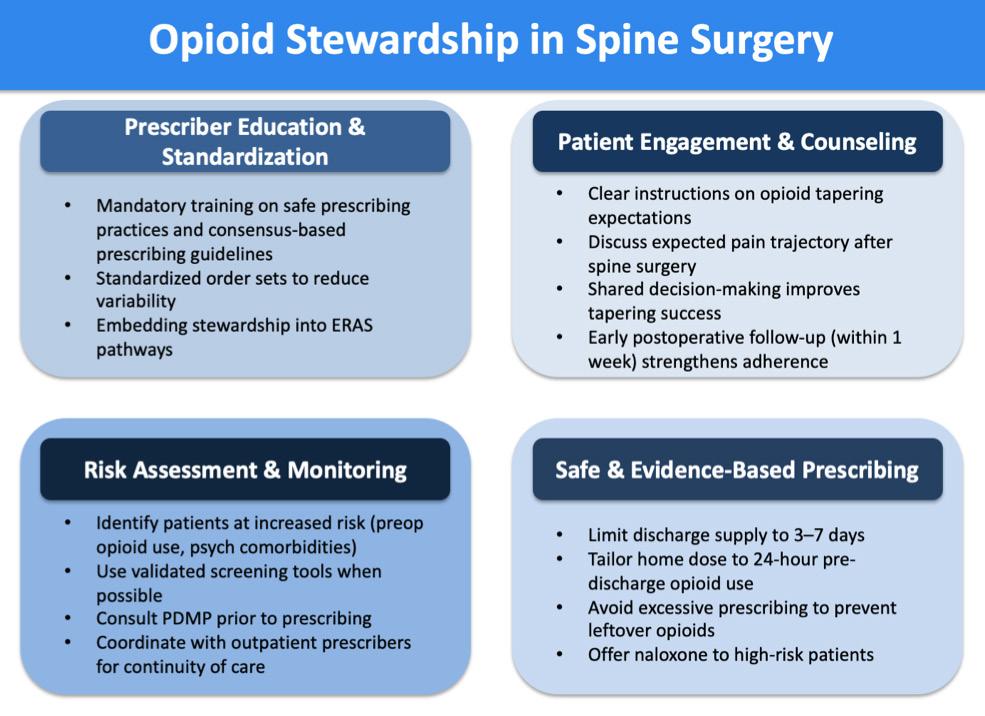
this review will examine emerging techniques, discuss long-term outcomes including chronic postsurgical pain and persistent opioid use, and identify critical research gaps that remain to be explored. Figure 1 provides an overview of opioid stewardship in spine surgery.
From Opioids to Multimodal Pain Management
The medical field has increasingly transitioned from opioid-centric pain management to MMA strategies to mitigate opioid-related risks while maintaining effective postoperative pain control. While this paradigm shift is evident across multiple surgical specialties,
it has been particularly well described in orthopedic literature.14 This transition has been further accelerated by the ongoing opioid crisis, with perioperative pain management being identified as a critical point of intervention.4,8,12,14
A substantial proportion of patients with persistent opioid use are first exposed through postoperative prescribing, frequently following orthopedic and spine procedures.4 Spine surgery presents a unique challenge in this context, as acute postoperative pain often coexists with preexisting chronic pain, complicating perioperative analgesic strategies.1,8,15 In addition, the adoption of enhanced
Figure 1. Opioid stewardship in spine surgery.
recovery after surgery (ERAS) and professional guidelines has further accelerated the transition toward MMA. 8,12 Although MMA is now widely regarded as a best-practice strategy, considerable variability remains in regimen composition and implementation across institutions.
Core MMA Components
Acetaminophen and NSAIDs
Acetaminophen and nonsteroidal anti-inflammatory drugs (NSAIDs) form the foun-
Drug Class Mechanism of Action
NSAIDs / COX-2 inhibitors
dation of most MMA regimens in spine surgery. Acetaminophen provides central analgesia with an excellent safety profile at recommended perioperative doses, while NSAIDs reduce prostaglandin-mediated nociception through peripheral and central cyclooxygenase inhibition.12,16–19
In spine surgery populations, both agents have consistently demonstrated opioid-sparing effects and improved pain scores when incorporated into multimodal pathways.2,12,15
Population-based studies and systematic re-
Evidence in Spine Surgery Key Safety Considerations
Acetaminophen
Gabapentinoids
Ketamine
α2 agonists
IV Lidocaine
Steroids
Regional Anesthesia Techniques
Tramadol
COX inhibition → reduced prostaglandin synthesis
Central prostaglandin inhibition; serotonergic modulation
Table 1. Nonopioid Analgesics Used in Multimodal Analgesia for Spine Surgery
views support their use across a range of spine procedures, including lumbar decompression and fusion.3,9,13,20,21 Despite historical concerns regarding increased risk of pseudarthrosis, nonunion, and postoperative bleeding associated with NSAID use, contemporary evidence suggests that short-term perioperative NSAID administration at standard doses does not result in clinically meaningful reductions in fusion rates. 2,9,15,21,22
Clinically, acetaminophen and short-course NSAIDs can be safely incorporated into MMA regimens for most spine surgery patients, with caution warranted in individuals with renal insufficiency, gastrointestinal bleeding risk, or liver dysfunction. 23
Gabapentinoids,
NMDA
Antagonists,
and α 2-Agonists
Agents targeting central sensitization play a vital role in enhancing MMA. Gabapentinoids reduce excitatory neurotransmitter release and have been associated with reductions in postoperative pain scores and opioid consumption in spine surgery patients. 2,12,15 These benefits must be balanced against dose-dependent adverse effects, including sedation, dizziness, and respiratory depression, especially when combined with opioids or in older, frail, or renally impaired patients.1,8,11
Population-level data demonstrate increased odds of naloxone administration when gabapentinoids are included in multimodal regimens, underscoring the need for cautious dosing and patient selection. 9
NMDA antagonists such as ketamine provide analgesia by reducing central sensitization and may be particularly useful in
opioid-tolerant patients or those at high risk for severe postoperative pain. 24 While some studies suggest that intraoperative or perioperative ketamine administration may reduce postoperative opioid requirements in select spine surgery populations, spine-specific data remain limited and conflicting.15 Adverse effects—including hallucinations, dysphoria, and sedation—further limit widespread adoption and favor selective administration in carefully chosen patients within monitored settings.15 As a result, ketamine is best viewed as a targeted adjunct rather than a core component of MMA regimens in spine surgery, with individualized use based on opioid tolerance, surgical complexity, and institutional expertise.11,15
α₂-adrenergic agonists, including clonidine and dexmedetomidine, reduce sympathetic outflow and modulate nociceptive transmission within the central nervous system.13,25 Evidence suggests that α ₂-agonists may improve early postoperative pain control and reduce opioid requirements when used as part of a multimodal regimen; however, recent spine-specific meta-analyses and randomized trials show mixed results, with reductions in intraoperative opioid use but inconsistent effects on postoperative pain scores and opioid consumption.13,25–27 Their clinical utility is further limited by predictable cardiovascular adverse effects, including hypotension and bradycardia, necessitating careful patient selection and hemodynamic monitoring.25–27
Additional Adjuncts
Intravenous lidocaine and intrathecal morphine have demonstrated opioid-sparing
effects and improved early postoperative pain control when used as adjuncts within MMA for spine surgery. 28–30 Perioperative intravenous lidocaine has been associated with reduced opioid consumption, lower pain scores, and shorter hospital length of stay, with a favorable safety profile when used at standard doses, though optimal dosing remains variable. 28,29 Intrathecal morphine provides potent analgesia for up to 24 hours postoperatively and significantly reduces early opioid requirements, but it is associated with increased pruritus and rare respiratory depression, necessitating appropriate dosing and monitoring. 30 In contrast, evidence supporting routine use of muscle relaxants after spine surgery is limited, and their use is tempered by safety concerns including sedation and increased risk of postoperative delirium, particularly in older patients.15
Across spine surgery populations, the most consistent opioid-sparing benefit is achieved with triple-drug therapy combining acetaminophen, an NSAID, and a centrally acting adjunct when appropriately tailored to patient-specific risk factors.
ERAS Integration and Regional Blocks
ERAS pathways aim to reduce perioperative stress, shorten hospital length of stay, and promote early mobilization following spine surgery. MMA represents a core component of ERAS as effective, opioid-sparing pain control directly supports early ambulation, reduced complications, and timely discharge. Successful implementation of MMA within ERAS frameworks depends
on interdisciplinary coordination among surgeons, anesthesiologists, nursing staff, pharmacists, physical therapists, and other perioperative team members to ensure consistent protocol adherence across the continuum of care.
Regional anesthetic techniques have emerged as valuable adjuncts within MMA strategies by providing targeted postoperative analgesia. Commonly utilized regional blocks include the erector spinae plane block (ESPB), thoracolumbar interfascial plane block (TLIP), and paravertebral block (PVB). ESPB is an ultrasound-guided fascial plane block in which local anesthetic is injected deep into the erector spinae musculature. Multiple studies demonstrates that ESPB significantly reduces early postoperative pain scores, opioid consumption, and hospital length of stay following spine surgery. 31,32
TLIP is most often utilized for midline posterior lumbar procedures, with anesthetic deposited within the paraspinal muscle planes, typically at the L3 level. TLIP has been shown to reduce postoperative pain and opioid requirements, though comparative studies suggest slightly less short-term analgesic efficacy than ESPB. 33,34 Paravertebral blocks deliver local anesthetic adjacent to the exiting spinal nerve roots and provide dense segmental analgesia but carry higher procedural risk, limiting their use in spine surgery despite demonstrated effectiveness in thoracic ERAS pathways. 35
Clinical Outcomes, Long Term Considerations, and Risk Management
Despite consistent short-term benefits in
reducing postoperative opioid consumption and improving early recovery, the impact of MMA on long-term outcomes following spine surgery remains less clearly defined. 9
Persistent opioid use following spine surgery has been reported in up to 20%–40% of patients, and preoperative opioid users are at an increased risk for prolonged postoperative opioid use.6,36–38 Identified risk factors include preoperative opioid exposure, high baseline pain, anxiety, pain catastrophizing, open surgical approaches, and functional disability. 39,40
These findings highlight the importance of risk-stratified and individualized MMA protocols. Tools such as the O-NET+ classification system stratify patients based on opioid exposure, psychiatric comorbidities, and procedure type.41 While standard MMA regimens typically include acetaminophen, NSAIDs, regional anesthesia, and opioids as rescue therapy, higher-risk patients may benefit from enhanced pharmacologic and regional approaches. Further prospective studies are needed to clarify how personalized MMA strategies can optimize both short- and long-term outcomes in spine surgery.
Opioid Stewardship and Safe Prescribing Practices
Given the high incidence of opioid use within the spine surgery population, it is essential not only to identify patients at risk for persistent opioid use but also mitigate this risk through safe prescribing practices and adherence to evidence-based protocols. This approach is broadly referred to as opioid stewardship. Stewardship programs em -
phasize institution-level standardization of prescribing behaviors through prescriber education, protocol-driven analgesic pathways, patient counseling, and integrated monitoring systems. 42–44 The aim of these protocols is to reduce overprescribing and mitigate opioid-related adverse effects while still maintaining adequate pain control for this patient population.
Multiple institutional studies demonstrate that stewardship implementation meaningfully reduces overprescribing without compromising pain control. For example, Lovecchio et al reported that implementing mandatory prescriber education and consensus-based prescribing guidelines reduced the mean number of tablets dispensed at discharge from 81 to 66, with no increase in refill rates or pain-related patient calls. 20 Similarly, in a pre- and postimplementation analysis, Reisener et al found that a comprehensive stewardship program significantly decreased both inpatient and discharge opioid use—including a reduction in median discharge morphine equivalents from 90 mg to 60 mg—while preserving pain scores and length of stay.42 Patient-specific strategies also appear effective, such as using 24-hour predischarge opioid consumption to guide the quantity prescribed at discharge reduced unnecessary exposure without increasing refills. 45
Effective stewardship also relies on risk stratification, patient-centered education, and early postoperative follow-up.41,46–48 In a randomized controlled trial, Uhrbrand et al demonstrated that structured tapering plans
combined with early postoperative follow-up markedly improved tapering success, with 71% of patients opioid-free at 3 months compared with 43% under standard care.48 Safe prescribing practices further include limiting discharge prescriptions to the expected duration of severe pain (typically 3 to 7 days), consulting prescription drug monitoring programs prior to prescribing, and offering naloxone to high-risk patients.49–51
Overall, opioid stewardship programs have been shown to reduce unnecessary opioid exposure while maintaining effective postoperative pain control in spine surgery patients.
Future Directions
Despite the growing body of evidence supporting the use of MMA in the perioperative setting for spine surgeries, there are areas that remain understudied, thus necessitating future research. Specifically, procedure-specific multimodal protocols remain widely debated and insufficiently defined. 8,11,12 Due to the varied scope of different spine operations—from minimally invasive decompressions and single-level fusions to complex deformity corrections and revision operations—there is a lack of high-quality comparative effectiveness trials across different surgical techniques. 8,12 Moreover, evidence regarding optimal drug combinations, dosing strategies, and duration of therapy among different patient subgroups (pediatric, elderly, opioid-tolerant) and underlying pathologies remain limited.12,15
Additionally, optimization and standardization of regional anesthesia techniques
remain understudied. Techniques such as erector spinae plane blocks, interfascial plane blocks, and intrathecal morphine have demonstrated promising opioid-sparing effects,1,8,11 but key questions remain regarding optimal dosing, procedural timing, patient selection criteria, and the relative efficacy of single-injection versus continuous catheter-based strategies.11 Long-term safety data, cost-effectiveness analyses, and comparative trials assessing these regional interventions against established multimodal protocols are also lacking.12
Furthermore, there is a need for more research surrounding development and validation of predictive models for chronic postsurgical pain and persistent opioid use following spine surgery. While general risk factors and screening tools have been described, spine-specific predictive models that integrate biopsychosocial variables remain limited. 8,15 Future studies should focus on the external validation of these models across different patient populations and surgical procedures. Additionally, there is a need to investigate how emerging tools such as artificial intelligence and machine learning can enhance individualized care. Such algorithms could help clinicians not only identify patients at elevated risk for prolonged opioid use 52–54 but also predict individualized opioid requirements and help determine the optimal MMA protocols for each patient.
Conclusion
MMA has emerged as the gold standard of postoperative pain management in spine
PAIN MANAGEMENT
surgery, consistently outperforming opioid-only strategies in reducing opioid use, improving pain control, and enhancing recovery. Standardized protocols incorporating acetaminophen, NSAIDs, and adjunct agents are strongly supported by existing evidence and help minimize opioid-related complications. Despite these advances,
References
1. Rajan S, Devarajan J, Krishnaney A, et al. Opioid alternatives in spine surgery: a narrative review. J Neurosurg Anesthesiol. 2022;34:3–13.
2. Kurd MF, Kreitz T, Schroeder G, et al. The role of multimodal analgesia in spine surgery. J Am Acad Orthop Surg. 2017;25:260–268.
3. Walker CT, Gullotti DM, Prendergast V, et al. Implementation of a standardized multimodal postoperative analgesia protocol improves pain control, reduces opioid consumption, and shortens length of hospital stay after posterior lumbar spinal fusion. Neurosurgery. 2020;87:130–136.
4. Schoenfeld AJ, Jiang W, Chaudhary MA, et al. Sustained prescription opioid use among previously opioid-naive patients insured through TRICARE (20062014). JAMA Surg. 2017;152:1175.
5. Yerneni K, Nichols N, Abecassis ZA, et al. Preoperative opioid use and clinical outcomes in spine surgery: a systematic review. Neurosurgery. 2020;86:E490–E507.
6. Uhrbrand P, Helmig P, Haroutounian S, et al. Persistent opioid use after spine surgery. Spine (Phila Pa 1976). 2021;46:1428–1435.
7. Luo M, Shi F, Wang H, et al. The impact of perioperative opioid use on postoperative outcomes following spinal surgery: a meta-analysis of 60 cohort studies with 13 million participants. Spine J. 2024;24:278–296.
8. Rajan S, Rishi G, Ibrahim M. Opioid alternatives in spine surgeries. Curr Opin Anaesthesiol 2024;37:470–477.
9. Cozowicz C, Bekeris J, Poeran J, et al. Multimodal pain management and postoperative outcomes in lumbar spine fusion surgery. Spine (Phila Pa 1976). 2020;45:580–589.
10. George S, Johns M. Review of nonopioid multimodal analgesia for surgical and trauma patients. Am J Health
Syst Pharm. 2020;77:2052–2063.
11. Koh WS, Leslie K. Postoperative analgesia for complex spinal surgery. Curr Opin Anaesthesiol. 2022;35:543–548.
12. Ntalouka MP, Brotis AG, Bareka MV, et al. Multimodal analgesia in spine surgery: an umbrella review. World Neurosurg. 2021;149:129–139.
13. Bae S, Alboog A, Esquivel KS, et al. Efficacy of perioperative pharmacological and regional pain interventions in adult spine surgery: a network meta-analysis and systematic review of randomised controlled trials. Br J Anaesth. 2022;128:98–117.
14. Trasolini NA, McKnight BM, Dorr LD. The opioid crisis and the orthopedic surgeon. J Arthroplasty. 2018;33:3379-3382.e1.
15. Devin CJ, McGirt MJ. Best evidence in multimodal pain management in spine surgery and means of assessing postoperative pain and functional outcomes. J Clin Neurosci. 2015;22:930–938.
17. Martinez V, Beloeil H, Marret E, et al. Non-opioid analgesics in adults after major surgery: systematic review with network meta-analysis of randomized trials. Br J Anaesth. 2017;118:22–31.
18. Ong CKS, Seymour RA, Lirk P, et al. Combining paracetamol (acetaminophen) with nonsteroidal antiinflammatory drugs: a qualitative systematic review of analgesic efficacy for acute postoperative pain. Anesth Analg. 2010;110:1170–1179.
19. Hyllested M, Jones S, Pedersen JL, et al. Comparative effect of paracetamol, NSAIDs or their combination in postoperative pain management: a qualitative review. Br J Anaesth. 2002;88:199–214.
20. Lovecchio F, Stepan JG, Premkumar A, et al. An institutional intervention to modify opioid prescribing practices after lumbar spine surgery. J Neurosurg Spine . 2019;30:483–90.
21. Dodwell ER, Latorre JG, Parisini E, et al. NSAID exposure and risk of nonunion: a meta-analysis of case-control and cohort studies. Calcif Tissue Int . 2010;87:193–202.
22. Li Q, Zhang Z, Cai Z. High-dose ketorolac affects adult spinal fusion. Spine (Phila Pa 1976). 2011;36:E461–E468.
23. Sinatra RS, Torres J, Bustos AM. Pain management after major orthopaedic surgery: current strategies and new concepts. J Am Acad Orthop Surg. 2002;10:117–129.
24. Loftus RW, Yeager MP, Clark JA, et al. Intraoperative ketamine reduces perioperative opiate consumption in opiate-dependent patients with chronic back pain undergoing back surgery. Anesthesiology. 2010;113:639–646.
25. Blaudszun G, Lysakowski C, Elia N, et al. Effect of perioperative systemic α2 agonists on postoperative morphine consumption and pain intensity. Anesthesiology. 2012;116:1312–1322.
26. Tsaousi GG, Pourzitaki C, Aloisio S, et al. Dexmedetomidine as a sedative and analgesic adjuvant in spine surgery: a systematic review and meta-analysis of randomized controlled trials. Eur J Clin Pharmacol. 2018;74:1377–1389.
27. Naik BI, Nemergut EC, Kazemi A, et al. The effect of dexmedetomidine on postoperative opioid consumption and pain after major spine surgery. Anesth Analg. 2016;122:1646–1653.
28. Farag E, Ghobrial M, Sessler DI, et al. Effect of perioperative intravenous lidocaine administration on pain, opioid consumption, and quality of life after complex spine surgery. Anesthesiology. 2013;119:932–940.
29. Licina A, Silvers A. Perioperative intravenous lidocaine infusion for postoperative analgesia in patients undergoing surgery of the spine: systematic review and meta-analysis. Pain Med. 2022;23:45–56.
PAIN MANAGEMENT
future research should focus on tailoring regimens to specific procedures, validating emerging regional techniques, and leveraging predictive models to personalize care.
Continued investigation into these areas can improve long-term outcomes and reduce the burden of opioid dependence in this patient population. l
30. Pendi A, Acosta FL, Tuchman A, et al. Intrathecal morphine in spine surgery. Spine (Phila Pa 1976). 2017;42:E740–E747.
31. Liu H, Zhu J, Wen J, et al. Ultrasound-guided erector spinae plane block for postoperative short-term outcomes in lumbar spine surgery: a meta-analysis and systematic review. Medicine . 2023;102:e32981.
32. Dilsiz P, Sari S, Tan KB, et al. A comparison of the effects of thoracolumbar interfascial plane (TLIP) block and erector spinae plane (ESP) block in postoperative acute pain in spinal surgery. Eur Spine J. 2024;33:1129–1136.
33. Abdildin YG, Salamat A, Omarov T, et al. Thoracolumbar interfascial plane block in spinal surgery: a systematic review with meta-analysis. World Neurosurg. 2023;174:52–61.
34. Peng Q, Meng B, Yang S, et al. Efficacy and safety of erector spinae plane block versus thoracolumbar interfascial plane block in patients undergoing spine surgery: a systematic review and meta-analysis. Clin J Pain. 2024;40:114–123.
35. Oostvogels L, Weibel S, Meißner M, et al. Erector spinae plane block for postoperative pain. Cochrane Database Syst Rev. 2024;2:CD013763.
36. Vraa ML, Myers CA, Young JL, et al. More than 1 in 3 patients with chronic low back pain continue to use opioids long-term after spinal fusion. Clin J Pain. 2022;38:222–230.
37. Lo YT, Lim-Watson M, Seo Y, et al. Long-term opioid prescriptions after spine surgery: a meta-analysis of prevalence and risk factors. World Neurosurg. 2020;141:e894–e920.
38. Kuo CC, Soliman MAR, Iskander J, et al. Prolonged opioid use after lumbar fusion surgery: a meta-analysis of prevalence and risk factors. World Neurosurg. 2022;168:e132–e149.
39. Rhon DI, Greenlee TA, Carreño PK, et al. Pain catastrophizing predicts opioid and health-care utilization after orthopaedic surgery: a secondary analysis of trial participants with spine and lower-extremity disorders. J Bone Joint Surg Am. 2022;104:1447–1454.
40. van Boekel RLM, Bronkhorst EM, Vloet L, et al. Identification of preoperative predictors for acute postsurgical pain and for pain at three months after surgery: a prospective observational study. Sci Rep. 2021;11:16459.
41. Edwards DA, Hedrick TL, Jayaram J, et al. American Society for Enhanced Recovery and Perioperative Quality Initiative joint consensus statement on perioperative management of patients on preoperative opioid therapy. Anesth Analg. 2019;129:553–566.
42. Reisener M-J, Hughes AP, Okano I, et al. Effects of an opioid stewardship program on opioid consumption and related outcomes after multilevel lumbar spine fusion: a pre- and postimplementation analysis of 268 patients. J Neurosurg Spine. 2022;36:713–721.
43. Macintyre PE, Quinlan J, Levy N, et al. Current issues in the use of opioids for the management of postoperative pain. JAMA Surg. 2022;157:158.
44. Assefa DZ, Xia T, Tefera YG, et al. Impacts of opioid stewardship in surgical settings: a scoping review. Pain. 2025;166:2249–2260.
45. Chen EY, Betancourt L, Li L, et al. Standardized, patient-specific, postoperative opioid prescribing after inpatient orthopaedic surgery. J Am Acad Orthop Surg. 2020;28:e304–e318.
46. Syed UAM, Aleem AW, Wowkanech C, et al. Neer Award 2018: the effect of preoperative education on opioid consumption in patients undergoing arthroscopic rotator cuff repair: a prospective, randomized clinical trial. J Shoulder Elbow Surg. 2018;27:962–967.
47. Bernard A, Oyler D, Anglen J. ACS Trauma Quality Programs: Best Practices for Acute Pain Management in Trauma Patients . American College of Surgeons. Available at https://www. facs.org/media/exob3dwk/acute_pain_ guidelines.pdf. Published November 2020. Accessed December 4, 2025.
48. Uhrbrand P, Rasmussen MM, Haroutounian S, et al. Shared decision-making approach to taper postoperative opioids in spine surgery patients with preoperative opioid use: a randomized controlled trial. Pain. 2022;163:e634–e641.
49. Tudor T, Agarwal AK, Delgado MK, et al. Opioid prescribing guidelines for spine surgery patients: a multisite analysis of guideline implementation and monitoring with an automated text messaging platform. J Neurosurg Spine . 2025;42:366–373.
50. Wang MC, Harrop JS, Bisson EF, et al. Congress of neurological surgeons systematic review and evidence-based guidelines for perioperative spine: preoperative opioid evaluation. Neurosurgery. 2021;89:S1–S8.
51. Dowell D, Ragan KR, Jones CM, et al. CDC clinical practice guideline for prescribing opioids for pain - United States, 2022. MMWR Recomm Rep. 2022;71:1–95.
52. Simpson S, Zhong W, Mehdipour S, et al. Classifying high-risk patients for persistent opioid use after major spine surgery: a machine-learning approach. Anesth Analg. 2024;139:690–699.
53. Zhang Y, Fatemi P, Medress Z, et al. A predictive-modeling based screening tool for prolonged opioid use after surgical management of low back and lower extremity pain. Spine J. 2020;20:1184–1195.
54. Karhade AV, Ogink PT, Thio QCBS, et al. Machine learning for prediction of sustained opioid prescription after anterior cervical discectomy and fusion. Spine J. 2019;19:976–83.
From the Department of Orthopaedic Surgery at the University of California, Irvine, School of Medicine in Costa Mesa, California.
GLP-1 Agonists and Spine Surgery
Glucagon-like peptide-1 (GLP-1) agonists are a class of medications used to treat type 2 diabetes mellitus (T2DM) and obesity.1-3 GLP-1 agonists work by lowering serum glucose levels. Metformin has been the preferred medication to treat T2DM. However, there are many instances where metformin is insufficient for glycemic control in treating T2DM. In these cases, GLP-1 agonists may have a role in treating T2DM and obesity. Common GLP-1 agonists include semaglutide (Ozempic, Rybelsus, and Wegovy), exenatide (Byetta and Bydureon), liraglutide (Victoza for diabetes and Saxenda for weight loss), and dulaglutide (Trulicity).1-3 Glucagon-like peptide-1 (GLP-1) is a gut hormone that is secreted from the intestine.1-3 The secretion of this hormone is stimulated whenever food is ingested. GLP1 agonists function by stimulating insulin secretion, inhibiting glucagon secretion, and delaying gastric emptying.1-3 The net effect is reduced blood glucose levels after eating. This results in better glucose blood level control in patients with T2DM and weight loss.
Studies have shown that GLP-1 agonists are effective in weight loss. GLP-1 is a 30 or 31 amino-acid-long peptide hormone that is secreted by the intestinal tract. This hormone stimulates insulin release and reduces glucagon’s concentration.4-5 GLP-1 also has been shown to inhibit gastric emptying and reduce gastric acid secretion, inhibit gastric and duodenal peristalsis by inhibiting the vagus nerve, and increase the pressure on the pylorus, thus
reducing appetite and leading to weight loss.4-5 Wang et al evaluated the efficacy of beinaglutide in reducing weight when it was administered over 3 months in 36 patients with T2DM.6 The authors found that beinaglutide treatment resulted in statistically significant weight loss, plasma glucose control, and anti-inflammatory effects in patients with T2DM and obesity. In another study by Rosenstock et al, the authors performed a randomized, double-blind study on 1864 adults with T2DM uncontrolled with metformin with or without sulfonylurea.7 The authors found that among adults with T2DM uncontrolled with metformin with or without sulfonylurea, oral semaglutide resulted in significantly greater reductions in HbA1C over 26 weeks. Hence, studies have shown GLP-1 agonists can be effective in weight loss in obese patients and reducing blood glucose levels in patients with T2DM, even those not responding to metformin. The effects of reducing obesity and improving glycemic control has positive effects on infection rates, pseudarthrosis rates (Figure 1), and overall complications.8-10
Initial clinical studies in patients using GLP-1 agonists prior to spine surgery have been promising. In a study by Tummala et al, the authors performed a retrospective cohort analysis of 5722 patients undergoing elective lumbar spine surgery.11 The authors noted that preoperative GLP-1 receptor agonist use was not associated with increased short- or intermediate-term medical complications. The authors also found that GLP-1 receptor agonist use resulted in reduced rates of pseu-
Yu-Po Lee, MD
darthrosis at 1-year (6.54% vs 8.53% in the control group) and 3-year (8.88% vs 10.77% in the control group) follow-ups. In another study by Kishan et al, the authors performed a retrospective database study on 291,677 patients who had thoracic and lumbar fusion. In this study, 19,232 GLP-1 receptor agonist users were matched to 76,778 controls. Groups were stratified into body mass index (BMI) groups. The authors found that 90-day medical complications such as infection, pneumonia, thromboembolism, sepsis, stroke, and UTI-were significantly reduced in GLP-1 RA users across BMI categories ≥25. At 10 years, GLP-1 R agonist use was associated with significantly reduced risk of revision in the 25.0-29.9 BMI group. Revision due to pseudar-
References
1. Cornell S. A review of GLP-1 receptor agonists in type 2 diabetes: a focus on the mechanism of action of once-weekly agents. J Clin Pharm Ther. 2020;45(suppl 1):17-27.
2. Górriz JL, Romera I, Cobo A, O'Brien PD, Merino-Torres JF. Glucagon-like peptide-1 receptor agonist use in people living with type 2 diabetes mellitus and chronic kidney disease: a narrative review of the key evidence with practical considerations. Diabetes Ther. 2022;13(3):389-421.
3. Ding B, Zhu Z, Guo C, Li J, Gan Y, Yu M. Oral peptide therapeutics for diabetes treatment: state-of-the-art and future perspectives. Acta Pharm Sin B. 2024;14(5):2006-2025.
4. Gutniak M, Ørkov C, Holst JJ, Ahrén B, Efendić S. Antidiabetogenic effect of glucagon-like peptide-1 (7–36)amide in normal subjects and patients with diabetes mellitus. N Engl J Med. 1992;326:1316–22.
5. Nauck MA. Glucagon-like peptide 1 (GLP-1): a potent gut hormone with a possible therapeutic perspective. Acta Diabetol. 1998;35:117–29.
throsis was reduced in the BMI 35.0-39.9 and ≥40.0 groups, while revision for mechanical failure was lower in the BMI 35.039.9 and ≥40.0 groups. This risk reduction may be attributed to weight loss. However, there are some theories that the improved outcomes may also be related to the systemic metabolic, inflammatory, and vascular benefits of these medications.13-14 Additional studies are necessary to determine the underlying cause of the improved outcomes in patients who are taking GLP-1 receptor agonists. l
6. Wang G, Wu P, Qiu Y, et al. Effect of beinaglutide treatment on weight loss in Chinese patients with type 2 diabetes mellitus and overweight/obesity. Arch Endocrinol Metab. 2021;65:421–7.
7. Rosenstock J, Allison D, Birkenfeld AL, et al; PIONEER 3 Investigators. Effect of additional oral semaglutide vs sitagliptin on glycated hemoglobin in adults with type 2 diabetes uncontrolled with metformin alone or with sulfonylurea: the PIONEER 3 randomized clinical trial. JAMA . 2019;321(15):1466-1480.
8. Onyekwelu I, Glassman SD, Asher AL, Shaffrey CI, Mummaneni PV, Carreon LY. Impact of obesity on complications and outcomes: a comparison of fusion and nonfusion lumbar spine surgery. J Neurosurg Spine . 2017;26(2):158-162.
9. De la Garza-Ramos R, Bydon M, Abt NB, et al. The impact of obesity on short- and long-term outcomes after lumbar fusion. Spine (Phila Pa 1976). 2015;40(1):56-61.
10. Giannadakis C, Nerland US, Solheim O, et al. Does obesity affect outcomes after decompressive surgery for lumbar spinal stenosis? a multicenter, obser-
1. Image showing haloing of screws signifying pseudarthrosis.
vational, registry-based study. World Neurosurg. 2015;84(5):1227-1234.
11. Tummala S, Gibbs DC, Chavarria J, Alder J, Avramis I, Rizkalla JM. GLP1 receptor agonist use in elective lumbar spine surgery: reduced pseudarthrosis rates and favorable safety profile. J Orthop. 2025;65:227-232.
12. Kishan A, Khela HS, Carayannopoulos NL, et al. Association of glucagon-like peptide-1 receptor agonist use with complications following thoracic and/ or lumbar spinal fusion for degenerative spine disease: a BMI-stratified retrospective study. Spine (Phila Pa 1976). Published online September 4, 2025.
13. Alenezi BT, Elfezzani N, Uddin R, et al. Beyond glycemic control: GLP-1 receptor agonists and their impact on calcium homeostasis in real-world patients. J Clin Med. 2024;13(16):4896.
14. Nauck MA, Meier JJ, Cavender MA, Abd El Aziz M, Drucker DJ. Cardiovascular actions and clinical outcomes with glucagon-like peptide-1 receptor agonists and dipeptidyl peptidase-4 inhibitors. Circulation. 2017;136(9):849-870.
Figure
From the 1Department of Spine Surgery at the Hospital for Special Surgery; 2Weill Cornell Medical College; 3Vagelos College of Physicians and Surgeons at Columbia University; and 4 Kim Barrett Memorial Library, HSS Education Institute, at the Hospital for Special Surgery, all in New York, New York.
Regenerative Medicine in Spine Disorders
Abstract
Background: Low back pain (LBP) imposes a substantial economic burden and is strongly associated with degenerative changes in the spine. Various treatment modalities have been explored for managing LBP, with platelet-rich plasma (PRP) emerging as a novel intervention.
Objectives: The primary objective was to assess and compare patient-reported outcomes (PROMs), including pain and Oswestry Disability Index (ODI) scores, between intradiscal PRP injections and traditional treatment options. Secondary outcomes included evaluating the inci -
dence of adverse events associated with each treatment approach.
Methods: A systematic review was conducted following the PRISMA guidelines. We performed an inverse variance pooling meta-analysis on pain and ODI scores, standardizing outcomes to percentages relative to baseline.
Results: The search yielded 303 articles, of which 7 RCTs with 383 patients (225 PRP, 158 control) met inclusion criteria. The pooled mean difference in pain score percentages compared to baseline for PRP versus control was -0.30% (95% CI: [-23.85%, 23.35%]) at 1 month, 5.33% (95% CI: [-23.85%, 23.35%])
at 3 months, and 7.64% (95% CI: [-12.01%, 22.68%]) at 6 months postoperative. For ODI, pooled mean differences were 3.80% (95% CI: [-1.40%, 9.00%]) at 1 month, -3.81% (95% CI: [-29.24%, 21.63%]) at 3 months, and -6.94% (95% CI: [-33.02%, 19.13%]) at 6 months. No studies reported any permanent adverse outcome in either PRP or control groups.
Conclusion: This meta-analysis reveals that PRP is not superior to traditional treatments for reducing pain in LBP.
Autologous cell therapies known as orthobiologics, such as platelet-rich plasma (PRP), have evolved in spine surgery practice aiming for tissue regeneration and repair
via anti-inflammatory process.1 PRP has been studied extensively in the treatment of various orthopedic conditions and has been gradually adopted in spine care. 2 In spine practice, PRP can be administered by various routes, including epidural, intradiscal, or intra-articular, to target a wide variety of pathologies. 3
Low back pain (LBP) is a debilitating health problem that affects up to 23% of the global population and has a significant economic impact. 4-6 Intervertebral disc degeneration is the most common cause of chronic LBP, and its pathomechanism involves an enhanced inflammatory cascade leading to the generation of nociceptive pain.1,2 Although numerous conservative treatment options have been suggested in the literature and guidelines, their efficacy on chronic LBP remains limited.7
To the best of our knowledge, no prior meta-analysis of randomized controlled trials (RCTs) has specifically focused on evaluating the efficacy of intradiscal PRP injections for alleviating chronic LBP. The primary objective was to assess and compare patient-reported outcome measures (PROMs) between intradiscal PRP injections and conventional treatment options. Secondary outcomes included evaluating the incidence of adverse events associated with each treatment approach.
Methods
Eligibility Criteria
RCTs involving adult patients with LBP caused by degenerative disc disease lasting for at least 3 months and who received intradiscal PRP as part of treatment were deemed eligible for inclusion. Studies with other designs were excluded.
Database Search, Screening, and Data Extraction
The search for articles was conducted using 5 databases including PubMed, Embase, Cochrane, CINAHL, and Scopus. Covidence systematic review software (Veritas Health Innovation) was used to remove duplicate studies, to screen title/ abstracts and full text, and for data extraction. The entire review from screening to final inclusion was conducted by two independent reviewers. Discrepancies were solved by a third senior reviewer. The authors consulted with each other on the methodology, search terms, and inclusion and exclusion criteria.
Quality Assessment and Risk of Bias
The quality of RCTs was evaluated using the revised Cochrane risk-of-bias tool for randomized trials, as described in the Cochrane Handbook for Systematic Reviews of Interventions . 8 All items were assessed by 2 authors independently. Each outcome within a study across domains and each outcome across the studies was rated as having “low risk,” “some concerns,” or “high risk” of bias.
Outcome Measures
The primary outcomes evaluated were clinical pain scores, including the visual analog scale (VAS) or numerical rating scale (NRS), and functional outcomes such as the Oswestry Disability Index (ODI). Secondary outcomes were any adverse events such as discitis, back or leg pain, pruritus at injection site, and weakness.
Statistical Analysis
All statistical analyses were performed using R statistical software (v4.1.2; R Core Team 2021). A comparative meta-analysis was performed for outcomes with sufficient data for clinical pain scores and ODI. Clinical pain scores (VAS or NRS) and ODI scores were compared at the 1-, 3-, and 6-month postinjection time point, standardizing scores as percentages compared to baseline to make it more intuitive to compare studies using different scoring systems. For outcomes, pooled effects sizes were calculated through the weighted mean difference of pooled means and expressed with 95% confidence intervals through inverse variance pooling.
I 2 statistics was used to assess heterogeneity. When I 2 ≤ 50%, a fixed effects model was utilized, whereas when I 2 ≥ 50%, a random effects model was utilized. Positive mean difference values in ODI and pain scores indicated outcomes favored PRP while negative values favored the control. Statistical significance was set as p < 0.05.
Results
Characteristics of Included Studies
The search returned 479 articles, which were imported into Covidence, which automatically removed 176 duplicates, leaving 303 studies for screening against title and abstract. At this stage, 291 studies were excluded, and further full-text review was conducted for 12 studies. Five studies were excluded due to misaligned intervention approach (n = 1) and misaligned study design (n = 4), leaving 7 articles for inclusion in the analysis. The 7 included studies were published between 2016 and 2024. Across all studies, a total of 383 patients were included, with 225 patients receiving intradiscal PRP and 158 patients receiving a control treatment. All 7 studies used different controls for the trial. These controls included trigger point needling, intradiscal steroid injections, percutaneous intradiscal radiofrequency ablation, a placebo of saline, a placebo of saline and Kefzol, platelet-rich fibrin injections, and a placebo contrast agent. Follow-up times ranged between 2 and 18 months.
Risk of Bias
The areas of some concerns or high risks of bias were variable across the multiple RCTs
“Intradiscal PRP injections demonstrate comparable clinical effectiveness to traditional intradiscal therapies for discogenic low back pain, without clear evidence of superiority.”
and ranged across all 5 domains of bias evaluation. Eldin et al 9 had a high risk of bias regarding deviations from the intended intervention, with improper allocation of patient grouping. The study reported 132 patients, 88 receiving platelet-rich fibrin and 44 receiving PRP. However, it later noted the presence of 20 control patients being included to ensure the study achieved sufficient statistical power, though their allocation was not specified. Tuakli-Worsonu et al 10 had a high risk of bias in the randomization process due to significant differences in gender proportion (female: intervention group, 84% vs control, 53%, p = 0.031) between study groups.
Regarding missing outcomes data, patients in the study by Goyal et al 11 had the choice to cross over from PRP to bone marrow concentrate (BMC) and from placebo to either the PRP or BMC groups. This process raises some concerns regarding the replicability of the reported results.
Zielinkski et al 12 raised some concerns regarding missing outcome data due to percentage differences in PROMs. The study by Tuakli-Wosornu et al 10 had some concerns about possible bias regarding the measurement of the outcomes, specifically the assessor's knowledge, which was not disclosed.
Clinical Pain Score Outcomes
In our review, 4 studies measured pain scores using VAS 2,10,11,13 while 3 studies used NRS. 9,12,14 A meta-analysis was performed on studies that contained sufficient data, including 3 studies at 1 month postinjec -
tion, 2,10,14 5 studies at 3 months, 2, 9-11,14 and 3 studies at 6 months. 9,11,14 At 1 month postinjection, the pooled mean difference in pain score percentages compared to baseline was -0.30% (95% CI: [-23.85%, 23.35%], p = 0.98); at 3 months, the difference was 5.33% (95% CI: [-12.01%, 22.68%], p = 0.55), and at 6 months, the difference was 7.64% (95% CI: [-11.96%, 27.25%], p = 0.44). All pooled mean differences were not considered statistically significant (Figure 1).
Functional Outcomes
In our review, three studies measured functional outcomes with ODI. 2,11,14 A
values
Figure 1. Meta-analysis of pain scores (measured in percentages compared to baseline) for 1, 3, and 6 months after injection. Positive mean difference
indicated outcomes favored platelet rich plasma while negative values favored the control.
meta-analysis was performed on studies that contained sufficient data, including 2 studies at 1 month postinjection, 2,14 3 studies at 3 months, 2,11,14 and 2 studies at 6 months. 11,14 At 1 month postinjection, the pooled mean difference in ODI score percentages compared to baseline was 3.80% (95% CI: [-1.40%, 9.00%], p = 0.15); at 3 months, the difference was -3.81% (95% CI: [-29.24%, 21.63%], p = 0.77), and at 6 months, the difference was -6.94% (95% CI: [-33.02%, 19.13%], p = 0.60). All pooled mean differences were not considered to be statistically significant (Figure 2).
Adverse Events
No studies reported any permanent adverse outcome in either PRP or control group. In one study,14 a patient developed leg pain and muscle weakness, but these symptoms spontaneously recovered during the observation period.
Discussion
This is the first meta-analysis to include only RCTs comparing intradiscal PRP injections to control groups for the treatment of discogenic LBP. While our analysis found that intradiscal PRP injections appear to
2. Meta-analysis of Oswestry Disability Index scores (measured in percentages compared to baseline) for 1, 3, and 6 months after injection. Positive mean difference values indicated outcomes favored platelet rich plasma while negative values favored the control.
Figure
“Current evidence suggests that intradiscal PRP may provide meaningful pain relief in discogenic low back pain; however, heterogeneity in PRP preparation and limited long-term follow-up preclude definitive conclusions.”
improve pain and functionality compared to baseline, no significant differences were observed between PRP and control groups at any follow-up period.
A previous meta-analysis of 3 RCTs (2 versus corticosteroid in facet joint injection; 1 versus contrast agent in disc space) showed that the PRP group had significantly improved pain and satisfaction compared to control.15 Conversely, a meta-analysis of 4 RCTs investigating PRP injections for LBP (1 versus lidocaine on ligament; 1 versus corticosteroid in transforaminal injection; 2 versus corticosteroid with intradiscal radiofrequency ablation [RFA] at disc space) found that corticosteroid was superior in terms of pain and functionality at 1 month, while RFA was superior at 3 and 6 months.16 These results should be interpreted with caution, as the therapy application sites differed between groups. Furthermore, the control groups varied across the analyzed studies, adding complexity to data interpretation. A major strength of our
meta-analysis is the inclusion of only RCTs focused on intradiscal PRP injections for discogenic LBP. However, the use of different control groups across the included RCTs warrants continued caution in interpreting our findings.
The efficacy of PRP across different spinal anatomical targets remains a topic of debate in the current literature. An RCT by Singh et al reported that epidural PRP injections were superior to corticosteroids at 6 months in patients with disc prolapse.17 Similarly, a double-blind RCT by Saraf et al comparing transforaminal PRP to corticosteroid injections found that both groups improved relative to baseline at 1 and 3 months; however, only the PRP group sustained improvements at the 6-month follow-up.18 In contrast, Gupta et al observed no differences between transforaminal PRP and corticosteroid groups by the 1-year follow-up.19 While these studies suggest comparable efficacy in achieving pain relief, PRP may offer the advantage of
longer-lasting relief. Longer-term follow-up RCTs focusing on epidural PRP are needed to better establish its efficacy.
Facet joint intra-articular injection represents another therapeutic option. An RCT comparing PRP to corticosteroid intra-articular injections, both combined with RFA, found that the PRP group demonstrated greater improvement in patient disability at 6 months. 20 Similarly, Wu et al reported that, although both groups showed improvement compared to baseline, the PRP group had higher patient satisfaction at 6 months. 21 These findings suggest that PRP may offer relatively superior efficacy for facet joint injections.
The observed differences in efficacy may stem from anatomical variations between the disc space, perineural space, and facet joints. The concentration of platelets in PRP is responsible for releasing various growth factors, including platelet-derived growth factor, insulin-like growth factor, transforming growth factor- β , fibroblast growth factor, vascular endothelial growth factor, epidermal growth factor, and endothelial cell growth factor. 22,23 These factors can influence angiogenesis, local blood flow, collagen production, and tissue regeneration. In vitro studies have also suggested that PRP may exert anti-inflammatory and anti-apoptotic effects on local tissue. 24-26 Furthermore, recent animal model studies have highlighted the potential protective effects of PRP on chondrocytes in the context of disc degeneration. 27-30 These joint-protective effects, combined with the enclosed anatomy of the disc, may create
an environment conducive to the activity of various growth factors, supporting the potential efficacy of PRP in the disc space surrounded by the annulus fibrosus. Further research is necessary to clarify the relationship between the injection site and the therapeutic impact of PRP.
PRP injections have been initially utilized for other musculoskeletal pathologies, such as knee osteoarthritis (KOA), plantar fasciitis, and tendinopathies, with varying reported efficacies across studies. 31,32,33 In the case of KOA, a 2017 meta-analysis of 10 RCTs found that PRP resulted in superior pain scores and functional improvement compared to hyaluronic acid or saline injections at 12 months. 34 A 2021 meta-analysis also demonstrated that the PRP cohort outperformed hyaluronic acid or intra-articular corticosteroids at 12 months. 35 However, multiple control treatment modalities were included in this analysis, and the authors acknowledged the low quality of the evidence. For plantar fasciitis, a 2020 meta-analysis of 9 RCTs comparing PRP to steroid injections showed that PRP resulted in superior pain scores and functionality at 6 and 12 months. 36 In contrast, the efficacy of PRP injections in tendinopathies has been more inconsistent. A double-blind RCT on Achilles tendinopathy found that PRP resulted in similar improvements to saline injections at 24 weeks. 37 Similarly, a meta-analysis on chronic Achilles tendinopathy showed no clear additional benefit of PRP injections. 38 For patellar tendinopathy, a double-blind RCT comparing PRP and eccentric exercise to dry needling and ex-
ercise showed greater initial improvements in the PRP group, but the dry-needling cohort demonstrated superior function after 26 weeks. 39 These findings were further supported by a meta-analysis by Lin et al, which indicated that while all treatment arms showed improvements compared to baseline, dry needling outperformed PRP in long-term follow-up. 40
Ultimately, when analyzing these data, it is important to consider that different anatomical locations have been investigated in previous meta-analyses (eg, intra-articular knee joint, plantar fascia, Achilles tendon). These locations likely differ significantly in terms of blood flow, physical forces, and inflammatory regulation systems, all of which may influence treatment efficacy. Therefore, additional research is
References
1. Akeda K, Ohishi K, Masuda K, et al. Intradiscal injection of autologous platelet-rich plasma releasate to treat discogenic low back pain: a preliminary clinical trial. Asian Spine J. 2017:11(3);380–389.
2. Navani A, Ambach M, Calodney A, et al. The safety and effectiveness of orthobiologic injections for discogenic chronic low back pain: a multicenter prospective, crossover, randomized controlled trial with 12 months follow-up.
Pain Physician. 2024;27(1):E65–E77.
3. Kataria S, Wijaya JH, Patel U, et al. The role of platelet rich plasma in vertebrogenic and discogenic pain: a systematic review and meta-analysis. Curr Pain Headache Rep. 2024;28(8):825–833.
4. Balagué F, Mannion AF, Pellisé F, Cedraschi C. Non-specific low back pain. Lancet . 2011;379(9814):482–491.
5. Katz JN. Lumbar disc disorders and low-back pain: socioeconomic factors and consequences. J Bone Joint Surg. 2006;88(suppl 2):21–24.
6. Chen L, Sun Q, Chou R, et al. Low back pain-driven inpatient stays in the United States: a nationwide repeated cross-sectional analysis. Int J Surg. 2023;110(3):1411–1419.
7. Cheng J, Santiago KA, Nguyen JT, Solomon JL, Lutz GE. Treatment of symptomatic degenerative intervertebral discs with autologous platelet-rich plasma: follow-up at 5–9 years. Regen Med. 2019;14(9):831–840.
8. Higgins JPT, Thomas J, Chandler J, et al, eds. Cochrane Handbook for Systematic Reviews of Interventions. Version 6.5. Cochrane; 2024. https:// www.training.cochrane.org/handbook
9. Eldin MM, Eldin AS, Baraka M, Khorshied M. Intradiscal injection of autologous platelet-rich fibrin versus platelet-rich plasma in discogenic lumbar pain: an applied comparative study. J Orthop Trauma Surg Related Res. 2020;15(1):18–24.
10. Tuakli-Wosornu YA, Terry A, Boachie-Adjei K, et al. Lumbar intradiskal platelet-rich plasma (PRP) injections: a prospective, double-blind, randomized controlled study. PM & R . 2016;8(1):1–10.
11. Goyal T, Paswan AK, Jain D, Verma N, Dubey RK. Comparative evaluation of efficacy of percutaneous intradiscal radiofrequency ablation and platelet-rich plasma injection for discogenic low back pain: a prospective randomized trial. J Musculoskel Res . 2022;25(3):2250009.
12. Zielinski MA, Evans NE, Bae H, et al. Safety and efficacy of platelet-rich plasma for treatment of lumbar discogenic pain: a prospective, multicenter, randomized, double-blind study. Pain Physician. 2022;25(1):29–34.
13. Schepers MO, Groot D, Kleinjan EM, et al. Effectiveness of intradiscal platelet rich plasma for discogenic low back pain without Modic changes: a randomized controlled trial. Interv Pain Med. 2022;1(1):100011.
14. Akeda K, Ohishi K, Takegami N, et al. Platelet-rich plasma releasate versus cor-
ticosteroid for the treatment of discogenic low back pain: a double-blind randomized controlled trial. J Clin Med. 2022;11(2):304.
15. Xuan Z, Yu W, Dou Y, Wang T. Efficacy of platelet-rich plasma for low back pain: a systematic review and meta-analysis. J Neurol Surg A Cent Eur Neurosurg. 2020;81(06):529–534.
16. Zhang X, Zhang A, Guan H, et al. The clinical efficacy of platelet-rich plasma injection therapy versus different control groups for chronic low back pain: a network meta-analysis of randomized controlled trials. J Pain Res . 2024;17:1077–1089.
17. Singh G, Talawar P, Kumar A, et al. Effect of autologous platelet-rich plasma (PRP) on low back pain in patients with prolapsed intervertebral disc: a randomised controlled trial. Indian J Anaesth. 2023;67(3):277–282.
18. Saraf A, Hussain A, Sandhu AS, Bishnoi S, Arora V. Transforaminal injections of platelet-rich plasma compared with steroid in lumbar radiculopathy: a prospective, double-blind randomized study. Indian J Orthop. 2023;57(7):1126–1133.
19. Gupta A, Chhabra HS, Singh V, Nagarjuna D. Lumbar transforaminal injection of steroids versus platelet-rich plasma for prolapse lumbar intervertebral disc with radiculopathy: a randomized double-blind controlled pilot study. Asian Spine J. 2024;18(1):58–65.
necessary before definitive conclusions can be drawn regarding the efficacy of PRP therapy, even within the broader musculoskeletal system beyond the spine.
Conclusion
Intradiscal PRP injections show potential benefits in treating discogenic LBP; however, current evidence does not suggest that they
ticular lumbar facet joint injection of platelet-rich plasma and steroid in the treatment of chronic low back pain: a prospective study. J Orthop Trauma Rehab. 2023;30(2):180–187
21. Wu J, Zhou J, Liu C, et al. A prospective study comparing platelet‐rich plasma and local anesthetic (LA)/corticosteroid in intra‐articular injection for the treatment of lumbar facet joint syndrome. Pain Practice . 2016;17(7):914–924.
22. Foster TE, Puskas BL, Mandelbaum BR, Gerhardt MB, Rodeo SA. Platelet-rich plasma. Am J Sports Med. 2009;37(11):2259–2272.
23. Cole BJ, Seroyer ST, Filardo G, Bajaj S, Fortier LA. Platelet-rich plasma: where are we now and where are we going? Sports Health. 2010;2(3):203–210.
24. Kim H, Yeom JS, Koh Y, et al. Anti‐inflammatory effect of platelet‐rich plasma on nucleus pulposus cells with response of TNF‐α and IL‐1. J Orthop Res. 2013;32(4):551–556.
25. Obata S, Akeda K, Imanishi T, et al. Effect of autologous platelet-rich plasma-releasate on intervertebral disc degeneration in the rabbit anular puncture model: a preclinical study. Arthritis Res Ther. 2012;14(6):R241.
26. Chen W, Lo W, Lee J, et al. Tissue‐engineered intervertebral disc and chondrogenesis using human nucleus pulposus regulated through TGF‐β1 in platelet‐rich plasma. J Cell Physiol. 2006;209(3):744–754.
27. Patel S, Mishra NP, Chouhan DK, Nahar U, Dhillon MS. Chondroprotective effects
are superior to other conventional treatment options. Future randomized controlled trials should incorporate longer follow-up periods to better compare the effectiveness of each intervention and determine whether one demonstrates clear superiority. Additionally, further studies are needed to explore the underlying mechanisms and pharmacokinetics of PRP within spine anatomy. l
of multiple PRP injections in osteoarthritis by apoptosis regulation and increased aggrecan synthesis- immunohistochemistry based Guinea pig study. J Clin Orthop Trauma. 2022;25:101762.
28. Chouhan DK, Patel S, Thami T, Mishra NP, Nahar U, Dhillon MS. Chondroprotective effects of a single PRP injection in a spontaneous osteoarthritis model of Dunkin Hartley guinea pig: an immunohistochemical analysis. Indian J Orthop. 2024;58(7):887–893.
29. Li P, Zhang R, Zhou Q. Efficacy of platelet-rich plasma in retarding intervertebral disc degeneration: a meta-analysis of animal studies. BioMed Res Int . 2017;2017:7919201.
30. Zhang B, Dong B, Wang L, et al. Comparison of the efficacy of autologous Lp-PRP and Lr-PRP for treating intervertebral disc degeneration: in vitro and in vivo study. J Orthop Surg Res . 2024;19(1):731.
31. Bennell KL, Paterson KL, Metcalf BR, et al. Effect of intra-articular platelet-rich plasma vs placebo injection on pain and medial tibial cartilage volume in patients with knee osteoarthritis: the RESTORE randomized clinical trial. JAMA , 2021;326(20):2021–2030.
32. Sharma R, Chaudhary NK, Karki M, et al. Effect of platelet-rich plasma versus steroid injection in plantar fasciitis: a randomized clinical trial. BMC Musculoskelet Disord. 2023;24(1):172.
33. Masiello F, Pati I, Veropalumbo E, Pupella S, Cruciani M, De Angelis V. Ultrasound-guided injection of platelet-rich plasma for tendinopathies: a
systematic review and meta-analysis. Blood Transfus . 2023;21(2):119–136.
34. Dai W, Zhou A, Zhang H, Zhang J. Efficacy of platelet-rich plasma in the treatment of knee osteoarthritis: a meta-analysis of randomized controlled trials. Arthroscopy. 2016;33(3):659-670.e1.
35. Filardo G, Previtali D, Napoli F, et al. PRP injections for the treatment of knee osteoarthritis: a meta-analysis of randomized controlled trials. Cartilage . 2020;13(1 suppl):364S-375S.
36. Hurley ET, Shimozono Y, Hannon CP, et al. Platelet-rich plasma versus corticosteroids for plantar fasciitis: a systematic review of randomized controlled trials. Orthop J Sports Med. 2020;8(4).
37. De Vos RJ, Weir A, Van Schie HTM, et al. Platelet-rich plasma injection for chronic Achilles tendinopathy. JAMA . 2010;303(2):144.
38. Nauwelaers A, Van Oost L, Peers K. Evidence for the use of PRP in chronic midsubstance Achilles tendinopathy: a systematic review with meta-analysis. Foot Ankle Surg. 2020;27(5):486–495.
39. Dragoo JL, Wasterlain AS, Braun HJ, Nead KT. Platelet-rich plasma as a treatment for patellar tendinopathy. Am J Sports Med. 2014;42(3):610–618.
40. Lin M, Wei K, Wu C. Effectiveness of platelet-rich plasma injection in rotator cuff tendinopathy: a systematic review and meta-analysis of randomized controlled trials. Diagnostics . 2020;10(4):189. https:// doi.org/10.3390/diagnostics10040189