

Skip Kincaid, Southern Chapter Executive Director
If you ever wonder about whether things change (for better or worse!), just take a step outside. The weather this spring has been a potpourri of temperatures and precipitation. If you don’t like the weather this morning, just wait till this afternoon! I love the changes, but many of my plants don’t. Redbuds got hit hard, and I’m still not sure about several of the oaks in my region. Too soon to tell. But, right on cue, the turkeys are gobbling. All is good!
I hope your world is good as well. No doubt, we’ve all been very busy dealing with the weather impacts on trees and dealing with scheduling crews to complete work orders. Don’t forget that you need to take time to keep your skill set current and up-to-date. Many of you did just that at our recent annual conference in Myrtle Beach, South Carolina, in late February. Great crowd, and we had a full trade show floor. It made me smile to hear that some of our vendors sold equipment and rolled stock right off the floor!
We also fed your thirst for knowledge (and CEUs) at a workshop held with the good folks of Charlotte Arborist Association, North Carolina Urban Forest Council, and North Carolina Extension. A good crowd gathered for a day of “Trees and the Law.” Can’t think of another tree topic that generates more questions and energy. I’m always encouraged to see arborists move from a state of fear to one of understanding and action.
More TRAQ courses are in the works as well. All four classes we set up so far for 2026 have sold out. And we increased attendance at them to 40 attendees! Keep your eye on the Chapter website for new dates that we’ll set up for this summer. Nothing final yet, but we’re looking at Fairhope, AL, and Baton Rouge, LA. We sold out an August course in Charlotte in about a week, so we will likely arrange another one in that area to accommodate demand. Remember to requalify your current TRAQ credential before it expires. You can requalify by attending a 2½ day class and taking the exams. One day requalification and virtual option are no longer available.
An update to the Chapter’s search for a new Executive Director …. A large number of applications have been received. Applications were due April 15, and the board of directors is planning to conduct interviews in early
June in hopes of having the new person in place prior to the ISA Conference in Detroit. While I have loved every minute of serving our membership and credential holders, I’d be lying if I said I’d rather continue! An Ozark stream is calling my name. In fact, several are!
Speaking of new faces, we have a new team in place to handle the 44th Annual Southern Chapter Tree Climbing Championships. This year’s event will be held in Nashville, June 19-21. Keenan Baird will lead the team and is looking for volunteers to keep the event running smoothly. Check out details about the event on our website
As a reminder, don’t forget about another big event taking place in the Southern Chapter region this year. The TREE Fund’s Tour des Trees is the largest fundraising event for the TREE Fund and supports arboriculture research. The ride will take place September 12-18, starting in Greenville, SC, and ending in Asheville, NC. Truly a Blue Ridge Mountain experience. Registration for the Tour des Trees is now open and accepting riders. Southern Chapter is an annual supporter of the TREE Fund and has increased its annual support to $10,000 this year as an incentive to bike riders in the Chapter who may want to take part. The funds provide financial assistance to riders as they also solicit their own sponsors to support the ride and research efforts. Wanna ride? Register today and start training!
And lastly, I’d like to remind you about changes to the way ISA processes CEUs for educational events. Each Chapter in the ISA system assists ISA with processing events and approving them for CEU credits. If you host educational opportunities and want preapproved CEUs for that event, a description of the new process can be found on our website
The new process involves more work by Chapter staff and perhaps a bit more work on your part as an event host. But the new process means that CEU credits get posted immediately after we receive the attendance records and they get uploaded to ISA. The new system has been in place for a few months now and, while there are a few glitches and new things to learn, it seems to be coming along just fine. We have hired a new staff person to handle CEUs here at the Chapter, so processing on our end should be faster as well.
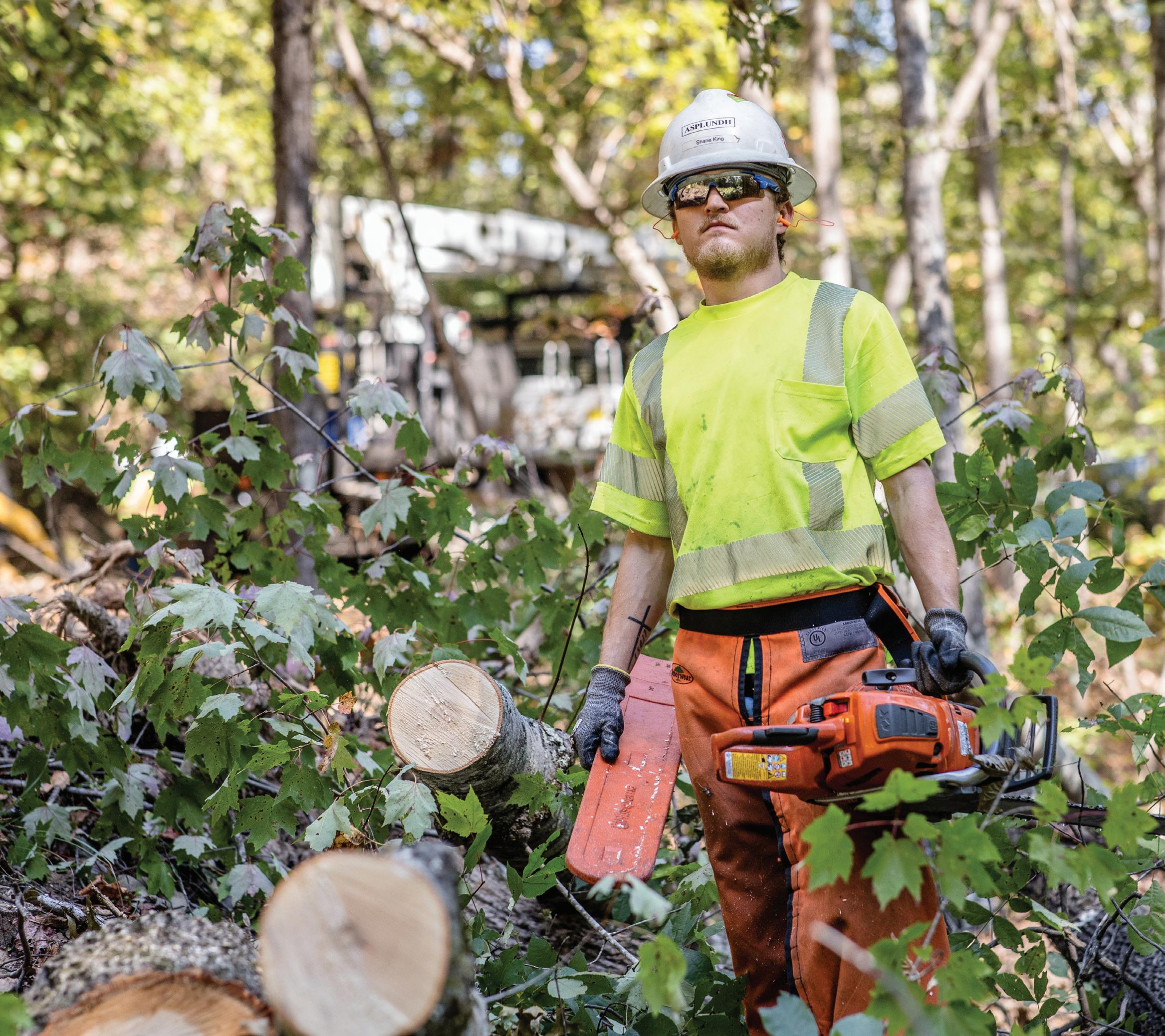
One storm can threaten years of urban forestry stewardship. With our One Asplundh approach, a single point of contact provides municipalities with direct access to a fully integrated team of utility vegetation, infrastructure, engineering and digital solutions professionals ready to respond fast. One call connects you to the right people, equipment and expertise to clear trees, restore roadway access and safeguard essential services. One trusted partner to keep your city and its trees safe and resilient for generations to come.

Brian Watkins, Southern Chapter President
My name is Brian Watkins, and I’m your new president of the Southern Chapter's board of directors. I have worked in several aspects of local, state, and federal government. Currently, I am an Assistant Director for the Recreation and Parks Commission for the Parish of East Baton Rouge (BREC), and Adjunct Professor in Urban Forestry at Southern University and A&M College.
As we head into this year, there are many challenges and transitions that we face as a Chapter. I want you to know that I have never been one to run away from a challenge; I look at challenges as an opportunity for us to grow as a Chapter. The Board of Directors has been working extremely hard since the conference in Myrtle Beach. We have a lot to accomplish, and it will require work on our part.
My goal as President is to be accessible and present in the states and territories that the Chapter covers. I would like all members to get to know their state directors and be vocal about how ISA Southern Chapter can help with educational opportunities. I would like to provide TRAQ courses, PPQ, Certified Arborist prep and exams, and any other training/courses that would be beneficial to our members. You will see me at various ISA Southern Chapter events so you can get to know me and so I can see how the Chapter can better assist our members.
I would like to thank our Tree Climbing Committee for bringing the tree climbing competition back in 2026. The event will be held in Nashville at the Ellington Agricultural Center, June 19-21. Find the details on our website
Lastly, you all may have heard that Skip Kincaid is retiring from his position as Executive Director. Well, that information is true, and the board has started the process of hiring a new Executive Director. I know this was not an easy decision for Skip, but we understand that no one wants to work forever.
I will continue to use my portion of the newsletter to give updates on the status of the Chapter and let you all know what is going on. We will communicate information about Southern Chapter’s 2027 conference soon. We are ironing out details and will get that information to you as soon as it is available.
If you have any feedback, questions, or concerns, please contact me (or email Skip Kincaid, because I want to make sure he stays busy until his retirement date, lol).
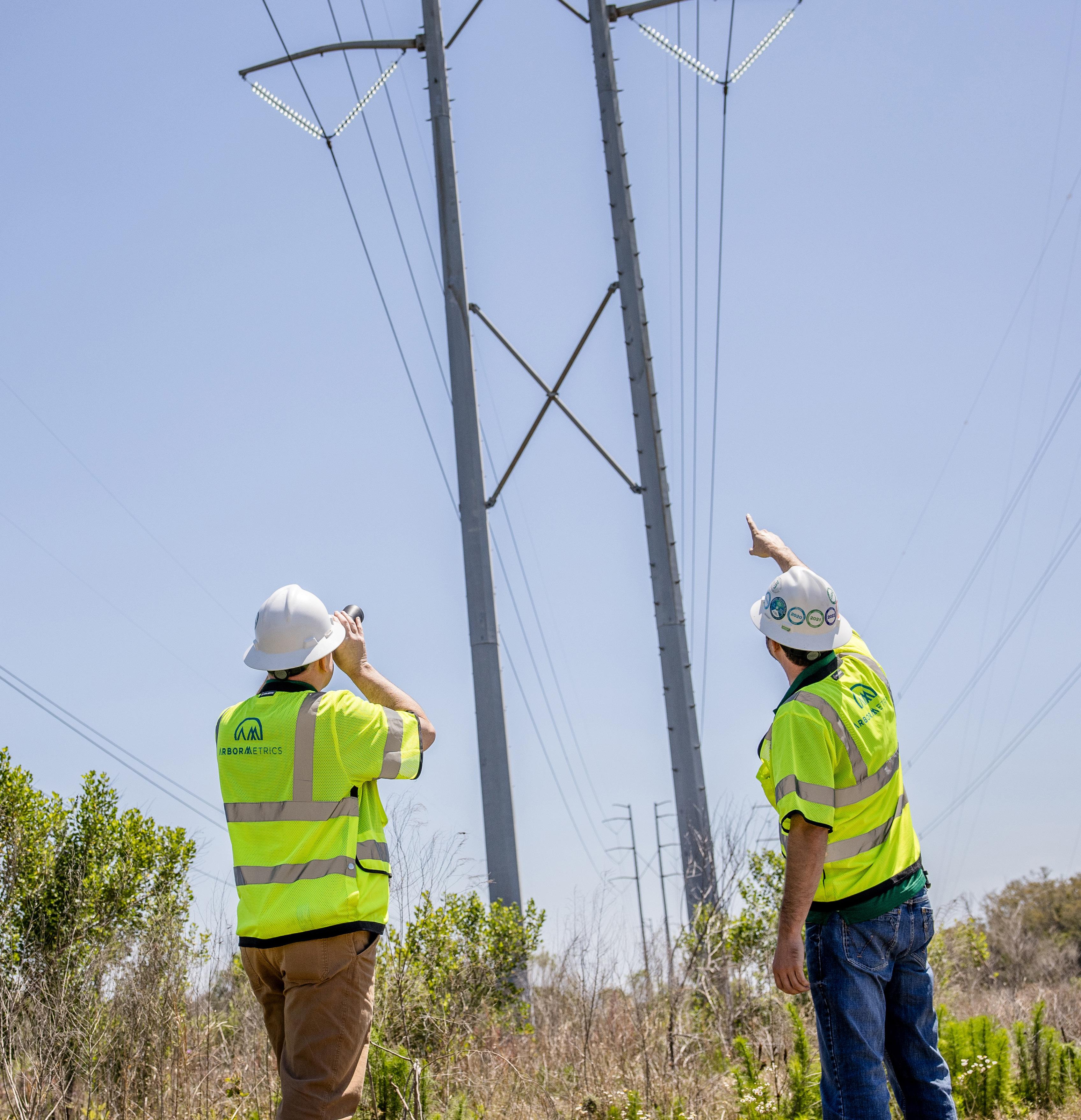
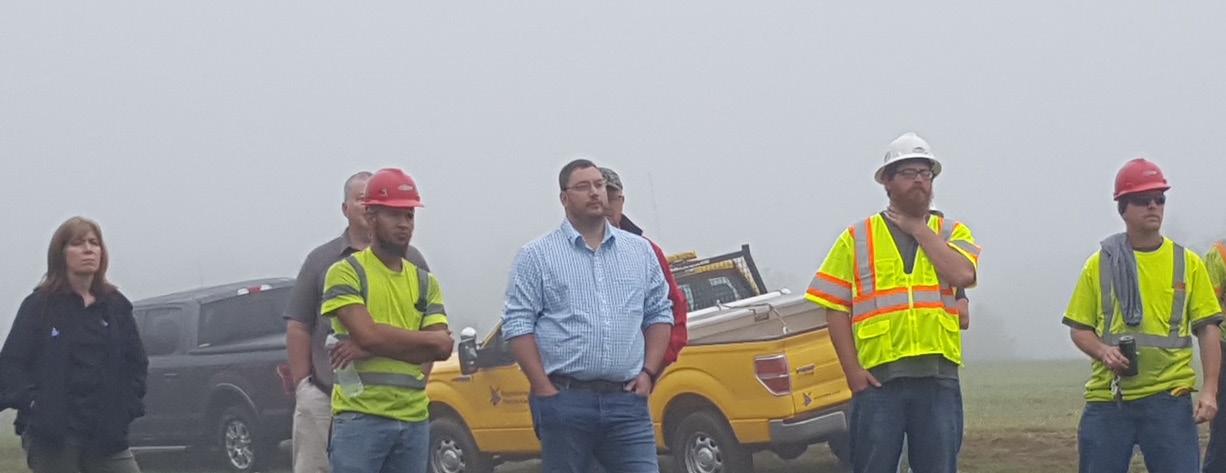
Last May, more than a hundred arborists, utility foresters, contract foresters, safety professionals, management staff, and other industry professionals gathered in a park in Virginia for Rappahannock Electric Cooperative’s Vegetation Management Day of Safety. Attendees spent the day teaching, discussing, questioning, networking, eating, and—most importantly—learning. This annual event brings Rappahannock Electric Cooperative (REC) and its vegetation management contractors together to concentrate on safety in a collaborative environment. It is a simple premise that is yielding fantastic results.
Cindy Musick ::
Our vegetation management workers are the tip of the spear when it comes to outage restoration; They go first. Our annual Vegetation Management Day of Safety demonstrates our commitment to training, excellence, and learning from each other. It’s one of our favorite days of the year.
This year, hundreds (maybe thousands) of years of experience from five unique companies will gather. Everyone will work together to invest in our most important shared resource: the teams performing the work in the field. Some training topics will be presented to the entire group. For other topics, we will utilize breakout groups. Each vegetation vendor will provide the training and trainers for a specific topic. Groups visit each training station, ensuring each trainer delivers the message to the entire REC vegetation management team. On this day, the “color of their shirt” doesn’t matter. All vendors have the opportunity to participate in all three stages of building the event, which ensures the subjects are
relevant and well presented to all attendees. The presenters encourage questions, ideas, and feedback from each group. Informative and interactive sessions on driver safety, hands-on chainsaw safety, and a live-wire demo are typically popular and engaging sessions on our agenda.
The desire to keep great people going home safely to their friends and family every day is the “why” behind the passion. That why is the fuel that drives REC to pay the field teams to come together and learn. The why energizes each company to plan and execute the event. The why invigorates the fantastic trainers to teach at each station. There is a special camaraderie vibrating across the group all day. You can hear it in the questions asked. You can see it with the open cross-company conversations.
Paul Mitchell ::
Before I moved into my current position, I spent seven remarkable years as a safety supervisor in vegetation management. I met thousands of people like me, working to provide for their families. Like them, I wanted to get home to my family safe and sound. Like them, I wanted my teammates to go home to their families safe and sound. This is where my why started to take shape. It hit another gear seven years ago, when I was asked whether I would let my son work in vegetation management. I had to pause before answering that question. Let me say that again: I had to pause before answering. That’s when I knew I needed to do more.
Events like REC’s Day of Safety are opportunities for me to do more. Our industry has come a long way since my first day on the job in July of 1992, and I know we still have further to go. My son is starting his
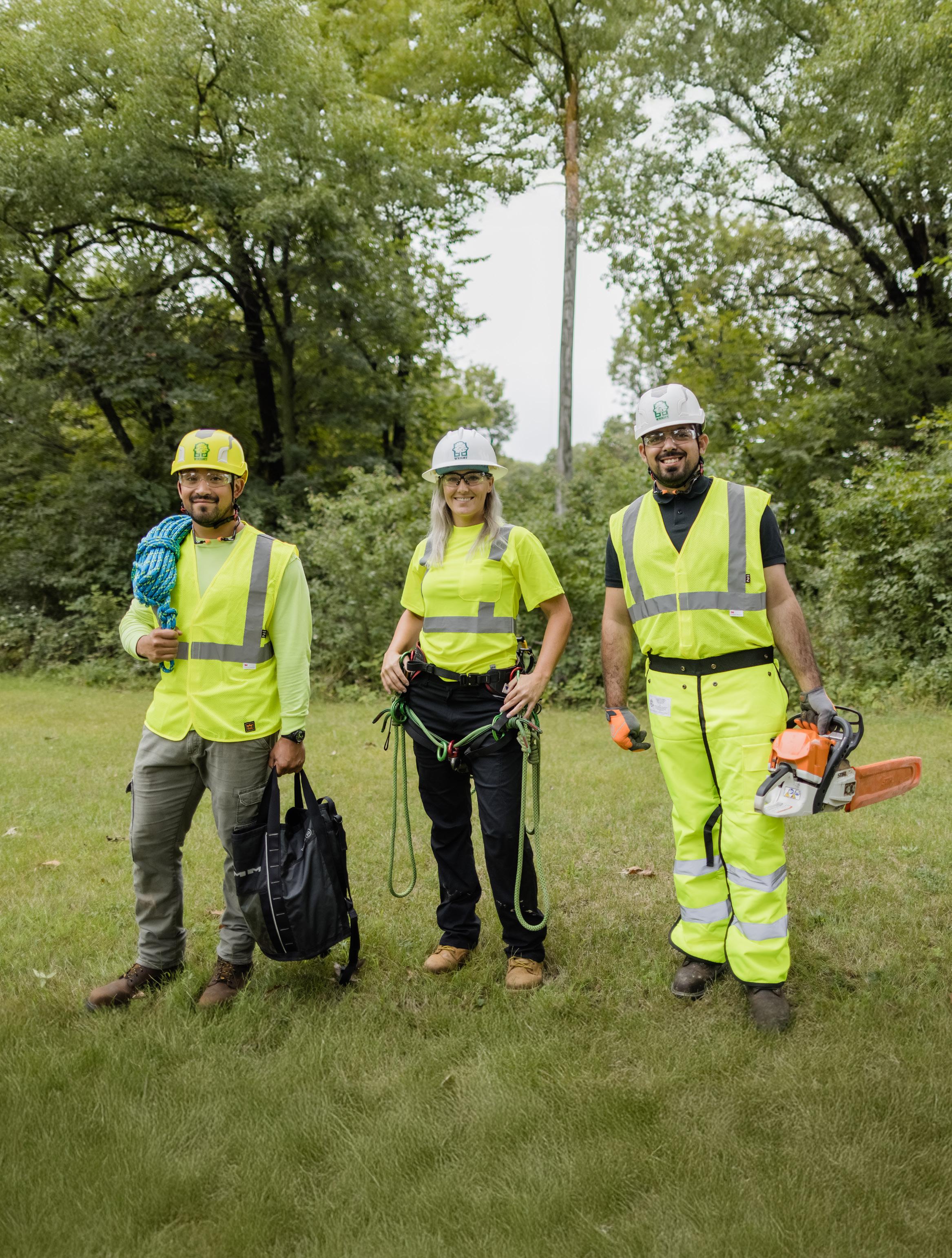
third safe year with Wright Tree Service. This event requires substantial work in organization, planning, and execution, so the returns must go beyond that investment. How do we know if our passion and collaboration have been successful? Here are some of the key returns we are proud to tie back to this initiative:
n Low Incident Rates
Wright Tree Service is entering its third year working on REC property with only one OSHA recordable.
n Employee Retention
Many event attendees have worked on REC property for 10+ years. Nearly 10% of Wright Tree Service’s current employees on REC property fall into this category.
n Empowerment
Although this can’t be quantified, it is the energy we feel all day.
n Stronger Culture
We all talk about the importance of a culture of safety. This day helps create and/or advance safety culture for all teams. With the free exchange of thoughts, ideas, experiences, and questions, all attendees will leave knowing that safety isn’t just a value written on a website. On this day, we demonstrate to one another that safety is a shared priority and a value we should all respect and seek.
Safety is a core value for Rappahannock Electric Cooperative—as it is for so many in our industry, including Wright Tree Service. The REC Day of Safety is a way to immerse the utility and its contractor partners with experts. For one day, safety is the sole focus. Whether it’s pouring down rain or the sun is shining, it’s a great, great day

by Stephen Dicke, Mississippi Director
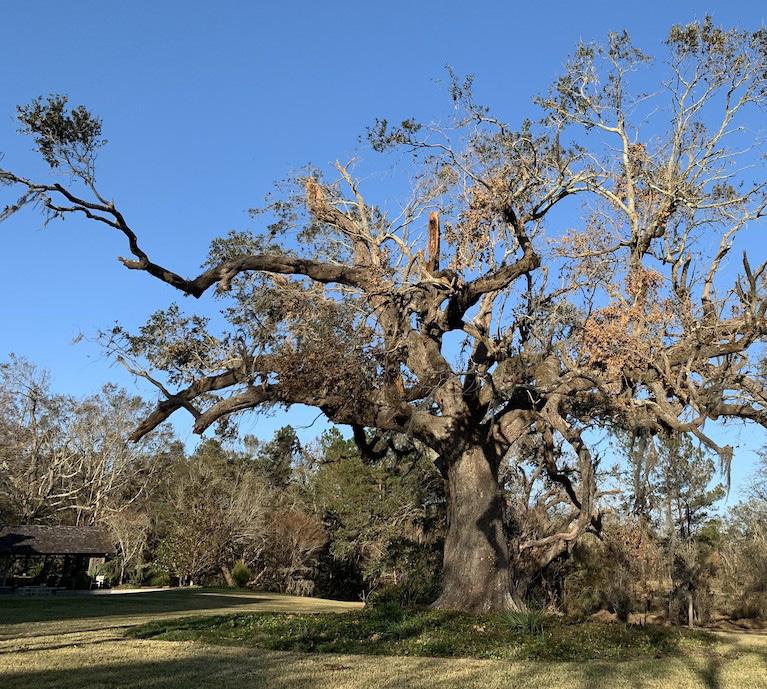
This is an example of a miraculous tree recovery from hurricane damage. I believe the same recovery principles can apply to ice storm damage.
Loftus Tree Care was able to save this 84-inch-diameter live oak in Pass Christian, MS. Their work began in November 2020 after Hurricane Zeta knocked out 95% of the tree’s foliage and cracked or broke every branch. This tree needed help from Loftus in three areas to successfully recover:
Tree needed to form walls of defense to limit insect and fungi attacks on damaged branches.
Smooth cuts were made where branch ends were jagged. A bifenthrin insecticide was sprayed on the branches and stem to protect them from wood borers. Fertilizers were avoided to encourage strong interior wall formations.
Tree needed to reestablish a water delivery system from roots to damaged branches.
Soaker hoses were placed around the tree and under a layer of whole-tree mulch to increase water availability during dry spells. Decaying mulch and added compost tea improved root function.
Tree had to activate dormant buds under the bark to grow epicormic sprouts.
Sprouts feed the tree but are not very pretty. Improving the distribution and structure of sprouts allowed them to replace lost branches.
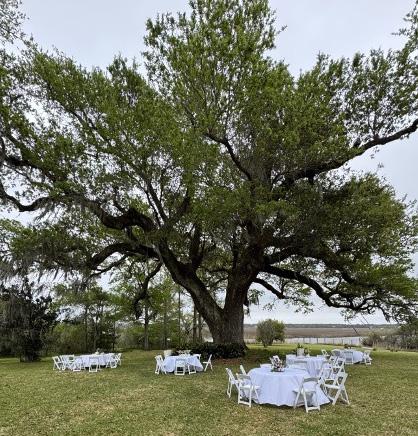
After five years, Loftus Tree Care is proud to show off its recovered patient. Both William and Joseph Loftus are ISA Certified Arborists.
by Chris Diffley, Southern Chapter Past-President
The Charlotte Arborist’s Association hosted another day of learning with a focus on how the business of tree stuff intersects with all the legal stuff.
Our own Skip Kincaid discussed mystery terms such as “duty of care” and “negligence,” while attorney Shawn Garrett discussed critical items a contract ought to include to avoid problems down the road. It’s really an art form to make compelling topics out of words like “professional liability insurance” and the nuance between whether your contract climber is actually a contractor or just an employee in disguise.
I provided an overview of our current ordinances from the perspective of someone who has to work with them, and added a few critiques of some of the current guidance. Mainly, though, I wanted to point out that it’s much easier to work with the City Urban Foresters rather than in an adversarial relationship where they are an enemy to outsmart. Waaay easier to make friends and ask hypothetical questions of whether something is a violation and what the consequences might be, rather than finding out after the fact via mitigation fees.
We wrapped up with a fun panel discussion during which Skip worried he wouldn’t get the chance to talk (spoiler: he talked plenty), and I presented a couple quick case studies before everyone totally disengaged from too much hot litigation talk.
Appreciated everyone who showed up to learn and all our

sponsors in my best NASCAR voice: ISA Southern, Rainbow Ecoscience, Arborguard, NCUFC, and the North Carolina Cooperative Extension.
Shoutout to Andrew Allen of Rainbow Ecoscience for putting the Judas Priest earworm in my head for the entire workshop.
By Fred Fellner, Louisiana Director
Homeowners Associations (HOAs) have a tricky reputation for contentious relationships and strong, opposing opinions among neighbors. If an arborist gets a call from an HOA president or person in charge of the landscape, that arborist might pause and feel reluctant to get involved ... and then, of course, a dollar sign pops up in your mind as you see work!
Now, I have gone through the same thoughts and feelings, and I have to tell you that in the past year I have had the pleasure (seriously) of working with two HOAs concerning tree selection, pruning, fertilizing, mulching, and replacement, and in both instances it has gone well.
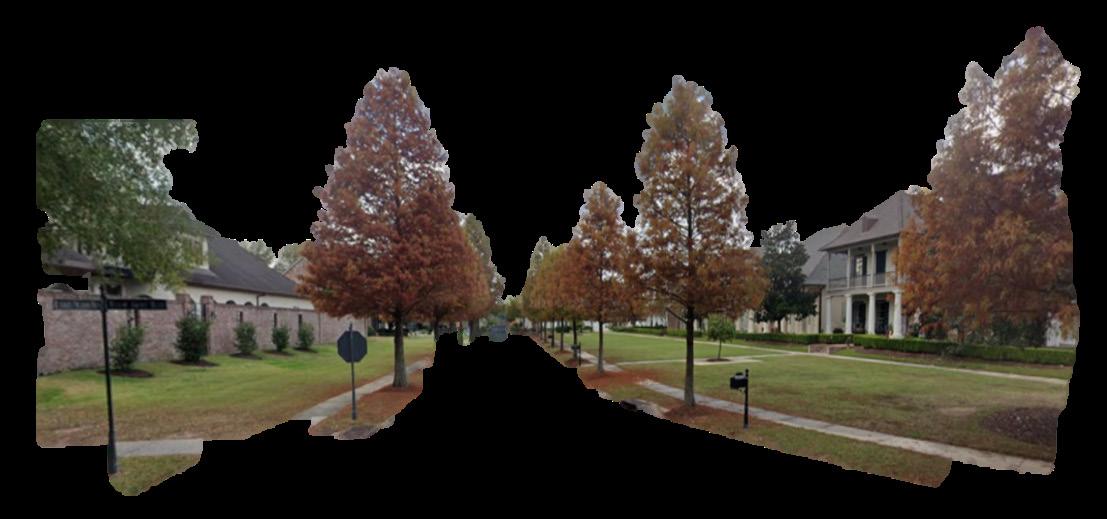
developer planted many baldcypress (Taxodium distichum), which were now 15 years old and perfect in height, color, structure, and form. A wonderful selection for this environment. Nice fall color. The State Tree of Louisiana. You’ll find an example of the site in the top picture.
At some point along the way, some folks decided they did not like this species in this setting and wanted to remove them. In fact, some trees were removed outside of the scope of the HOA, which caused no little concern and resulted in my being called to opine.
You must be patient, let people talk, and then do your best to stay on topic and answer the questions you are asked without ranging out on subjects that have not been a concern for them.
You must also control your tongue and avoid disrespecting the landscape architect or builder/developer, as you never know who might be a brother, sister, uncle, or other relation! You might be surprised at the behind-thescenes connections and pitfalls you could fall into.
Speak as softly and slowly as necessary, and don’t venture too far into science.
Stick with moisture, soils, mulches, and fertilizers that are straightforward and can be handled by their grounds workers. You can always introduce discussion of a higher level of care (soil fracturing, cabling and bracing, lightning protection, sophisticated mulching such as vertical and radial types, proper irrigation installation, and watering times) at a later date. This level will present itself as time passes and the HOA builds trust in you. Initially, the acronym KISS, Keep It Simple Stupid, is the wisest counsel I can give. And you know who the Stupid refers to: you and me!
I did my best to convince the team that baldcypress are a perfect fit for this environment ... and are used throughout the South as street trees ... and should remain ... and that the same species should be replanted where removed.
It was decided, however, to move to another type of tree that was also present on the original landscape palette. I had to convince myself to relax and let nature take its course.
I was requested to inspect the new trees as well as approve the planting sites, soil, and irrigation, so there was good work to do for the HOA, even if they did not do what I really would have liked.
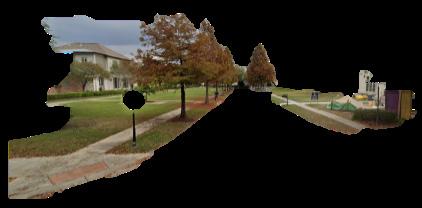
But seriously, who am I anyway? Many species were suitable for the site. It is difficult to see an allée broken up, though, and that was my focus as the site had considerable formality and limited growing space.
Here is a picture (bottom image) of baldcypress that were removed capriciously from the opposite side of the street. Where once an allée existed, now this is the result.
My advice to the average tree guy in a consulting role is this: simply consider the complexities of the HOA relationships, be kind and sensitive with all, and keep your eye on the best outcome (which in many cases is no more than peace, if possible, among neighbors).
So, I was called into a high-end development last year. The
I think this undergirds our work in a way that we may not have considered. You have more skills than you realize, and others are willing to pay you to share them. Being a tree guy opens that door.
I am thrilled to serve as the new Alabama Director for the ISA Southern Chapter, and look forward to contributing to the advancement of its vision and mission.
A bit about my background: I am a native Alabamian and was raised in the small town of Oakman. I earned both my bachelor’s and master’s degrees in horticulture from Auburn University. Following my master’s, I served as an academic advisor in Auburn’s Department of Horticulture while completing my doctorate, which I successfully defended in 2018.
I left Auburn for an opportunity to work at AmericanHort until 2021, and now serve as an Alabama Extension agent on the Home Horticulture team in the northwest part of the state. Extension work has long appealed to me, particularly the opportunity to connect directly with people and share knowledge.
I am a true people-person, and I find great fulfillment in helping others. Working with Beau Brodbeck, I earned my ISA Certification, an accomplishment that has proven to be one of the most valuable steps in my career.
by Brian Brown, Alabama Director
As your Alabama representative, one of my primary goals is to promote ISA certification and continuing education opportunities to arborists throughout the state. Alabama Extension offers numerous programs designed to expand your knowledge and skills in arboriculture while providing valuable CEUs for Certified Arborists.
Here's a list of upcoming GreenUp Alabama educational opportunities. Be sure to check your local Extension office for more events in your area. Many of these events are free!
Tree Care and Maintenance: May 12 in Tallapoosa, May 29 in Prattville, June 16 in Dale County, and June 23 in Etowah County Chainsaw Safety: Sept 1-2 in Washington County and Dec 1-2 in Brewton Groundworker and Rigging: May 5 in Athens
Trees, Trucks, and Powerlines: May 20 in Clarke County and Sept 10 in Brewton
Find more information on the GreenUp Alabama initiative here
Storm Ready Extension Program: May 16 in Gulf Shores. Hurricane and Storm Preparedness and Recovery is a full-day educational workshop designed to help Alabama Coast residents prepare for hurricanes and recover after storm events. The program covers practical, real-world strategies for pre- and post-storm readiness.
TREE Fund Webinar series: Check out upcoming webinars and past webinars.
Alabama Urban Forestry Education Week and Annual Conference: October 13-16, 2026, in Orange Beach.
by Dana Russell, Tennessee Director
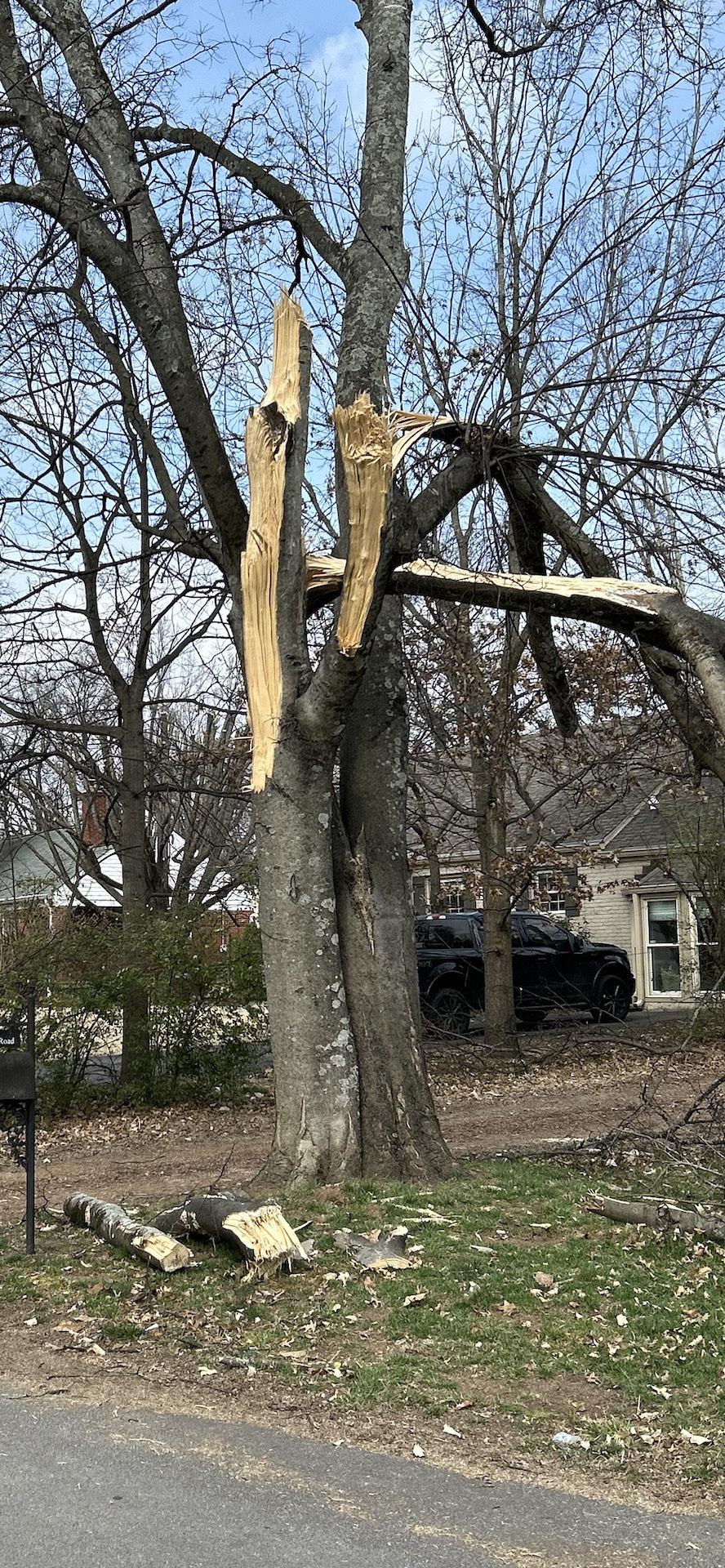
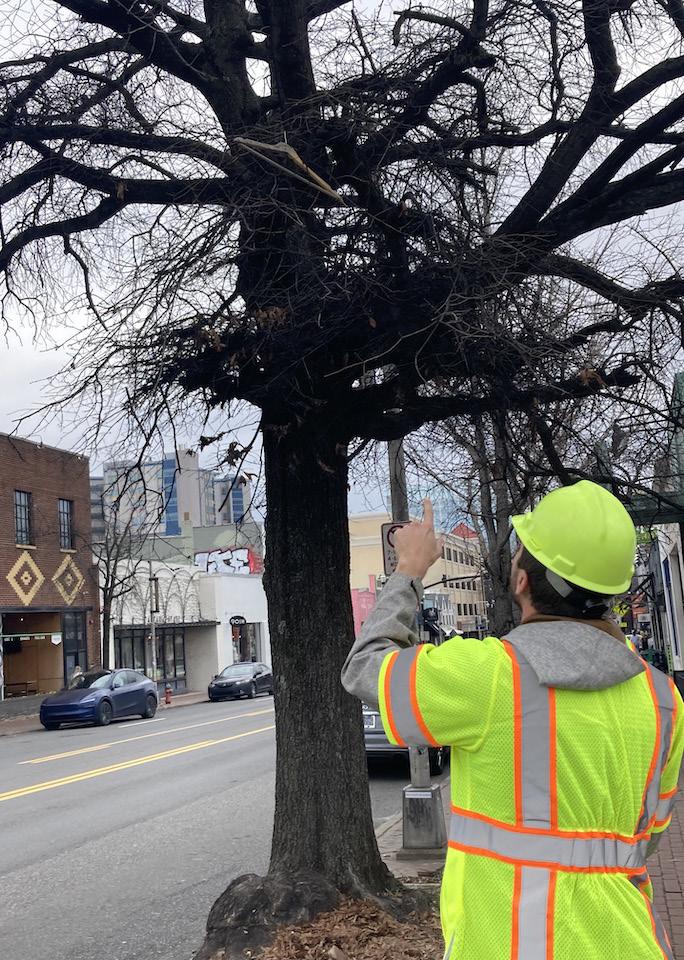
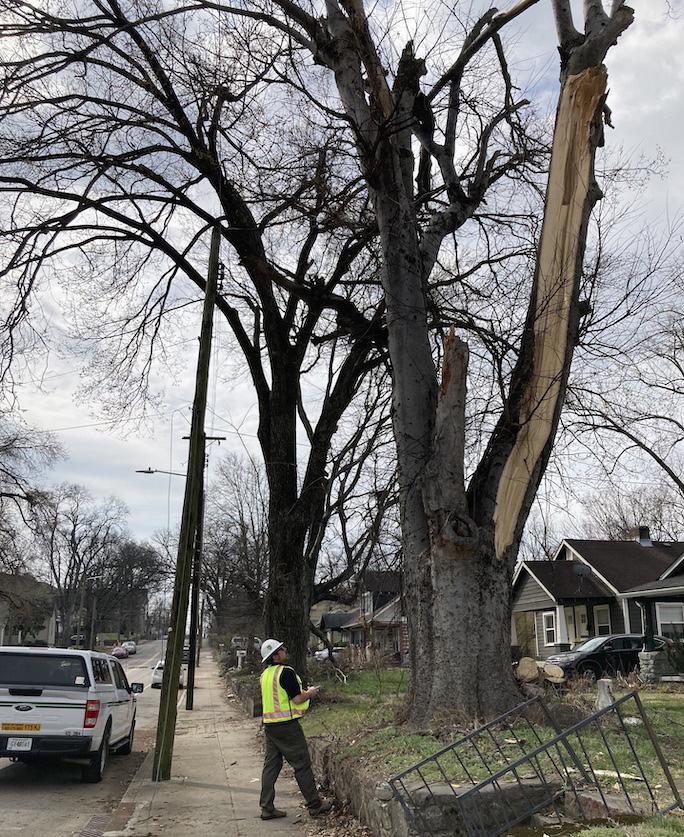
Since the winter ice storm, driving through Davidson County has been a stressful experience as an arborist. Mangled hackberries, zelkova elms split down the middle, and maples with dangling hanger limbs lining neighborhood streets and right-of-ways have been common sights. As of March 27, 2026, Metro Nashville reported that it had collected 1.6 million cubic yards of stormrelated vegetation debris.
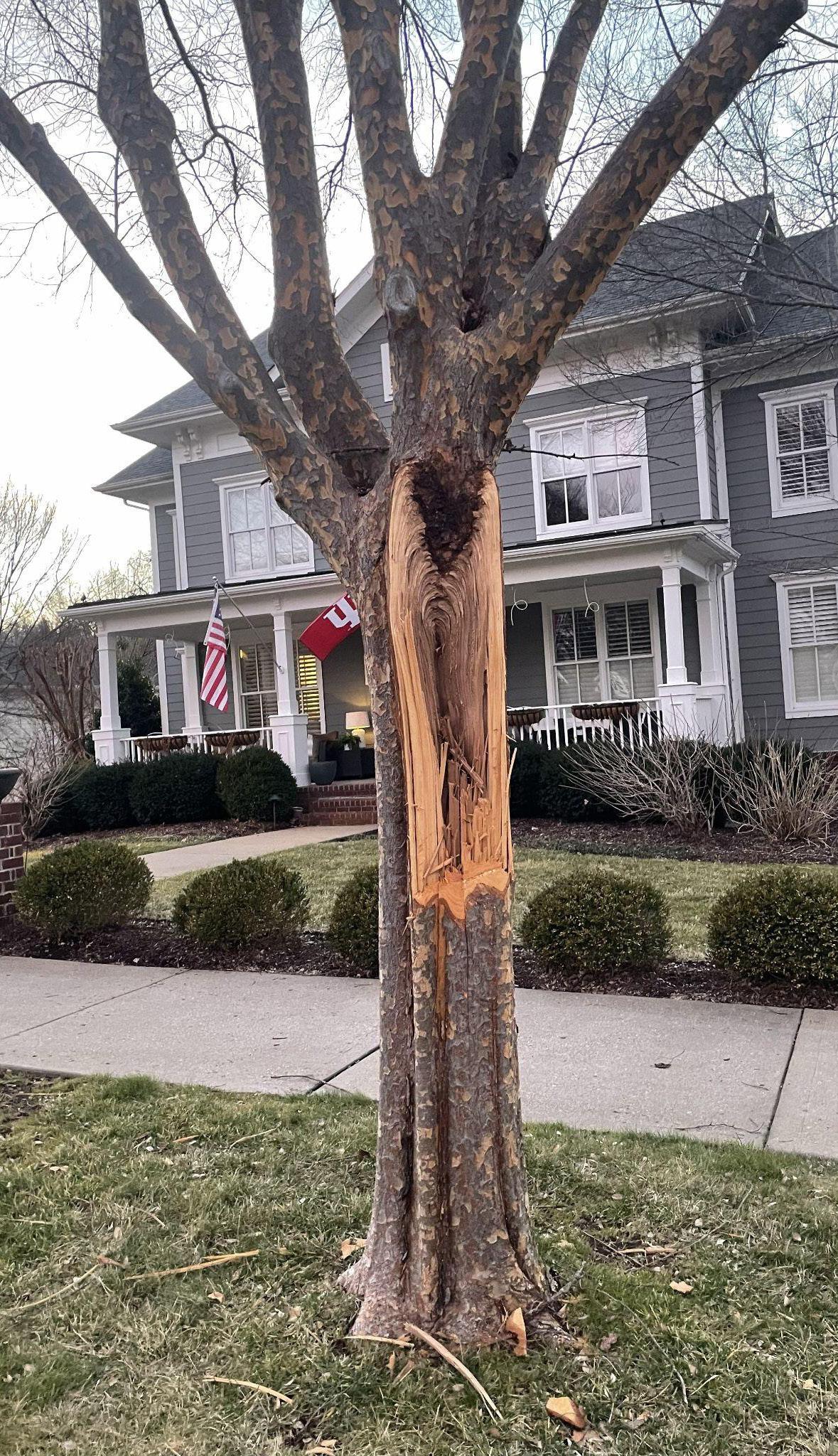
In an effort to better understand the impact of the city’s canopy loss, the state has initiated data collection. The TDA Division of Forestry conducted an assessment to determine the public risk from canopy damage endured. A strike team, which included the Southern Group of State Foresters from neighboring states, led this data collection effort.
A former colleague and friend, Dave Long, was among those hard at work. Dave is a State Forester with the Georgia Department of Forestry. I spoke with him following the assessment, and this is a snapshot of what he observed: “While trees across the metro area sustained heavy damage, we found most of it concentrated in downtown and the Hillsboro/ Belmont area. I theorize that the colder, more humid air along the Cumberland River may have caused greater ice accumulation in these areas. Hackberry trees sustained the most severe damage by far, and many across the city are slated for removal.”
According to the executive summary, the Urban Forestry Strike Team concluded that, within targeted right-of-ways around Nashville, 1,821 trees were deemed a public risk and recommended for pruning or removal. Of those, 772 were slated for removal, while 996 were recommended for pruning to mitigate risk.
Despite some of the grim consequences our urban trees suffered, many local non-profits and government entities are continuing to plant trees around the city and, now more than ever, offset the tree loss we’ve endured. The Nashville Tree Foundation, Cumberland River Compact, Nashville Conservation Corps, and Metro Nashville are among the groups working diligently to plant, both independently and in collaboration with Root Nashville. The Root Nashville campaign aims to plant 500,000 trees in Davidson County by 2050. These efforts represent one piece of a broader path toward restoring a healthy, thriving urban canopy.
Now, as spring unfolds, the effects of the storm will continue to test tree resilience. Mulching, watering, and monitoring for pests and disease will be especially important across middle Tennessee this year. Let’s hope for plenty of rainfall in 2026!
Check out all the new CEU opportunities listed in the next few pages of this publication. This list is kept current on the Southern Chapter website as well. Save the site to your “favorites” as an easy access portal for events and registration information. If you know of opportunities we haven’t listed, please share! Email skincaid@isasouthern.org and we’ll get it posted.
We have worked hard to partner with organizations to be sure you get a wide range of opportunities to stay sharp. This list contains upcoming events that we are aware of. All the courses and conferences listed provide opportunities to earn ISA CEUs that help you maintain your ISA certifications. ISA is also offering no-cost quizzes for articles to give you more opportunities to earn CEUs.
TREE Fund
Urban Forestry Today
Forestry Webinars
Urban Forest Connections USDA Forest Service
Utility Arborist Association
North Carolina Urban Forest Council
Arborjet Webinars
Professional Arborists Association of MS (PAAM)
Alabama Extension
Rainbow Treecare Scientific Advancements Webinars

Educational Events Most events are approved for ISA CEUs. Check each registration site for details.
April 29, 2026
Reading the Leaves: Common Hardwood Tree Diseases with Foliar Symptoms
Join Clemson Extension for a one-hour webinar. Dr. Ellen Crocker will discuss the biology, symptoms, impacts, and management strategies for several common hardwood tree diseases with foliar symptoms. More information HERE
May 2-3, 2026
2026 Natural State Tree Climbing Championship Lowell, AR
Competition begins May 2, with Master’s Challenge on May 3. Setup, training, judges meeting, event walk-through, and gear check take place April 30-May 1. More information HERE
May 6, 2026
ISA CERTIFIED ARBORIST, UTILITY SPECIALIST, MUNICIPAL SPECIALIST EXAM Kingshill, Virgin Islands
ISA Certified Arborist, Utility Arborist, and Municipal Specialist written exams are scheduled for Wednesday, May 6, 2026. Applicants for each exam must register by April 14, 2026, at the ISA website. If you’re new to ISA, you’ll need to create an ISA profile at creating or logging in to your ISA account
Registering for an exam includes 2 steps. First, you must complete an application for your selected credential. On your ISA profile, find the link “Apply for an ISA Certification” Complete the application for your selected credential. Second, once the application is submitted and approved by ISA, then you can register for an exam. Be sure to submit your application well in advance of registering for an exam as it can take several weeks to get a submitted application approved.
May 6, 2026
Webinar: Pest Monitoring Tools, Resources, and Safety - Insect Focus Dean Bennett with Hort Life is hosting a Zoom workshop on six different dates (3/3, 3/31, 5/6, 6/3, 6/23, and 6/25). More information HERE
May 13, 2026, Goldsboro, NC
May 14, 2026, Stanley, NC
Urban Forestry Credential Exam Preparation Training Courses
The N.C. Forest Service Urban and Community Forestry Program (U&CF) and Insightful Nature, LLC, are pleased to offer two free, one-day intensive urban forestry credential preparation training courses designed to prepare professionals to successfully pass the ISA Certified Urban Forest Professional and/or the SAF Certified Urban and Community Forester exams. Call Community Forestry Coordinator Sarah Hollis at 919-857-4841 with questions. Apply HERE
May 15, 2026
2026 Grounds Management Short Course (Day 2)
Join the TN Cooperative Extension Service for Day 2 of their event. More information HERE
May 30, 2026
Canopy Class: Mobility in Your Body - Chainsaw Deep DiveGround Rigging Morganton, NC
To survive a career in the canopy, you need more than just skill— you need a system. This course breaks down the three essential components of a high-performance arborist. More information HERE.
June 3, 2026
Webinar: Pest Monitoring Tools, Resources, and Safety - Insect Focus Dean Bennett with Hort Life is hosting a Zoom workshop on six dates (3/3, 3/31, 5/6, 6/3, 6/23, and 6/25). More infomation HERE
June 19-21, 2026
Southern Chapter Tree Climbing Championship Ellington Agricultural Center — Nashville, TN Save the date for the Southern Chapter’s 2026 TCC. More information coming soon!
June 23, 2026
Webinar: Pest Monitoring Tools, Resources, and Safety - Insect Focus Dean Bennett with Hort Life is hosting a Zoom workshop on six different dates (3/3, 3/31, 5/6, 6/3, 6/23, and 6/25). More information HERE.
June 25, 2026
Webinar: Pest Monitoring Tools, Resources, and Safety - Insect Focus Dean Bennett with Hort Life is hosting a Zoom workshop on six different dates (3/3, 3/31, 5/6, 6/3, 6/23, and 6/25). More information HERE.
June 26, 2026
ISA CERTIFIED ARBORIST, UTILITY SPECIALIST, MUNICIPAL SPECIALIST EXAM
Fayetteville, NC
ISA Certified Arborist, Utility Arborist, and Municipal Specialist
written exams are scheduled for Friday, June 26, 2026. Applicants for each exam must register by June 4, 2026, at the ISA website. If you’re new to ISA, you’ll need to create an ISA profile HERE.
Registering for an exam includes 2 steps. 1: On your ISA profile, find the link “Apply for an ISA Certification” Complete the application for your selected credential. 2: Once the application is submitted and approved by ISA, then you can register for an exam. Be sure to submit your application well in advance of registering for an exam as it can take several weeks to get a submitted application approved.
August 4-6, 2026
TRAQ 3-DAY COURSE REGISTRATION IS CLOSED
Charlotte NC
August 22, 2026
Canopy Class: Pruning - Limbwalking - Delegation
Morganton, NC
Ethical arboriculture, body mechanics of limbwalking, and learn the “Divide and Conquer” strategy. More information HERE
August 22, 2026
Canopy Class: Business Management - Gear Talk - Making Decisions Under Stress
Morganton, NC
Are you ready for the next level? Whether you’re starting your own outfit or leading a crew, this class gives you the tools to succeed when the pressure is on. More information HERE.
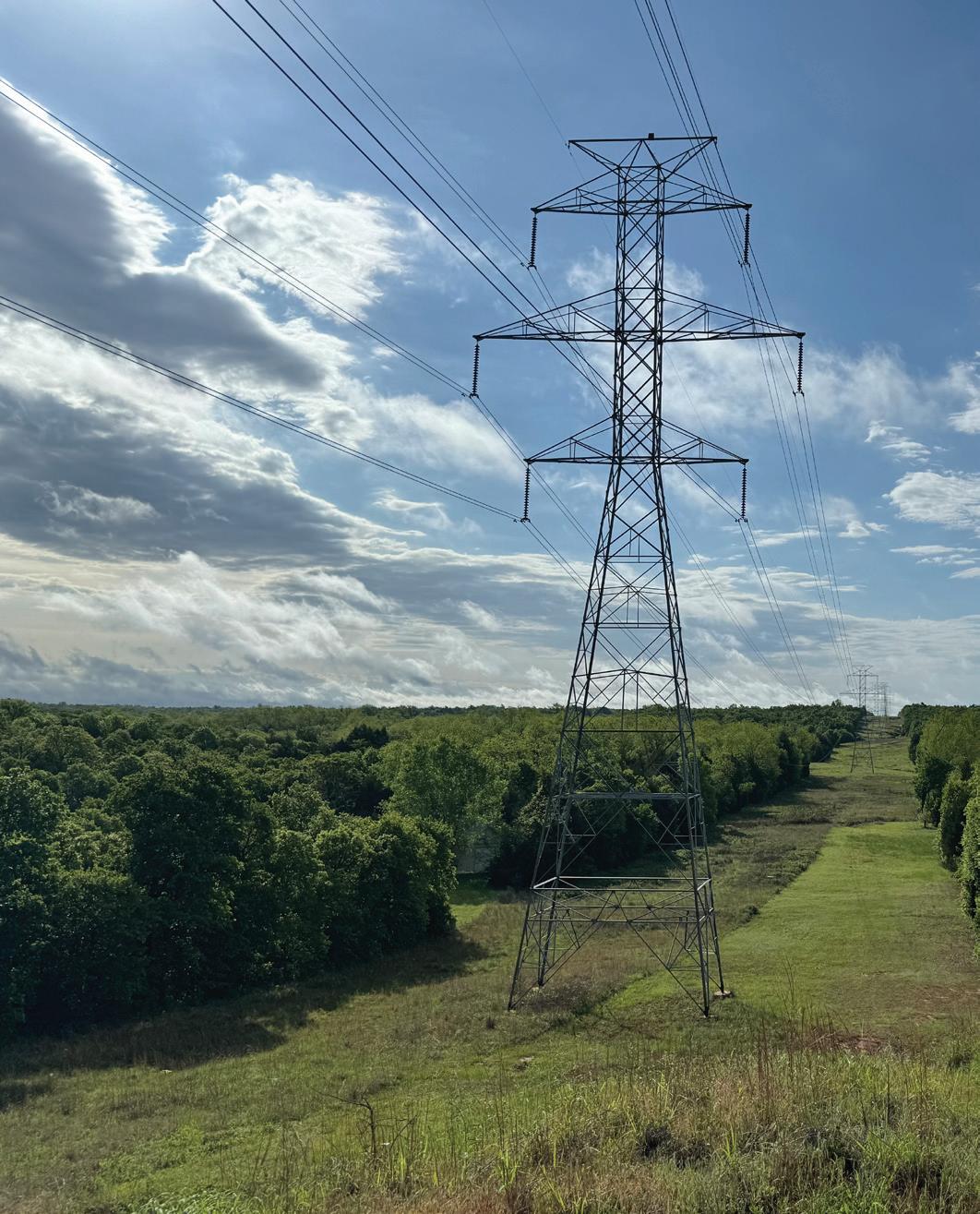
Utility companies keep their customers connected. Davey keeps them running at peak performance.
With solutions that maximize budgets, ensure compliance and improve reliability, we help utilities operate efficiently while enhancing customer satisfaction. Backed by over a century of vegetation management expertise, we bring hands-on solutions, deep industry knowledge and forward-thinking strategies to every challenge. Consider us an extension of your team—ready to clear the way, protect infrastructure and power the future of your company and the communities you serve.
Explore our solutions through our video series.

by Tom Pope, Member At-Large Director
I’m an ISA Board Certified Master Arborist, TRAQcredentialed, and ASCA Registered Consulting Arborist based in Raleigh, NC. I work as a principal consultant at Horticultural Asset Management LLC (HMI), a firm that specializes in arboricultural and horticultural consulting across the country for the property insurance sector, along with other types of clientele.
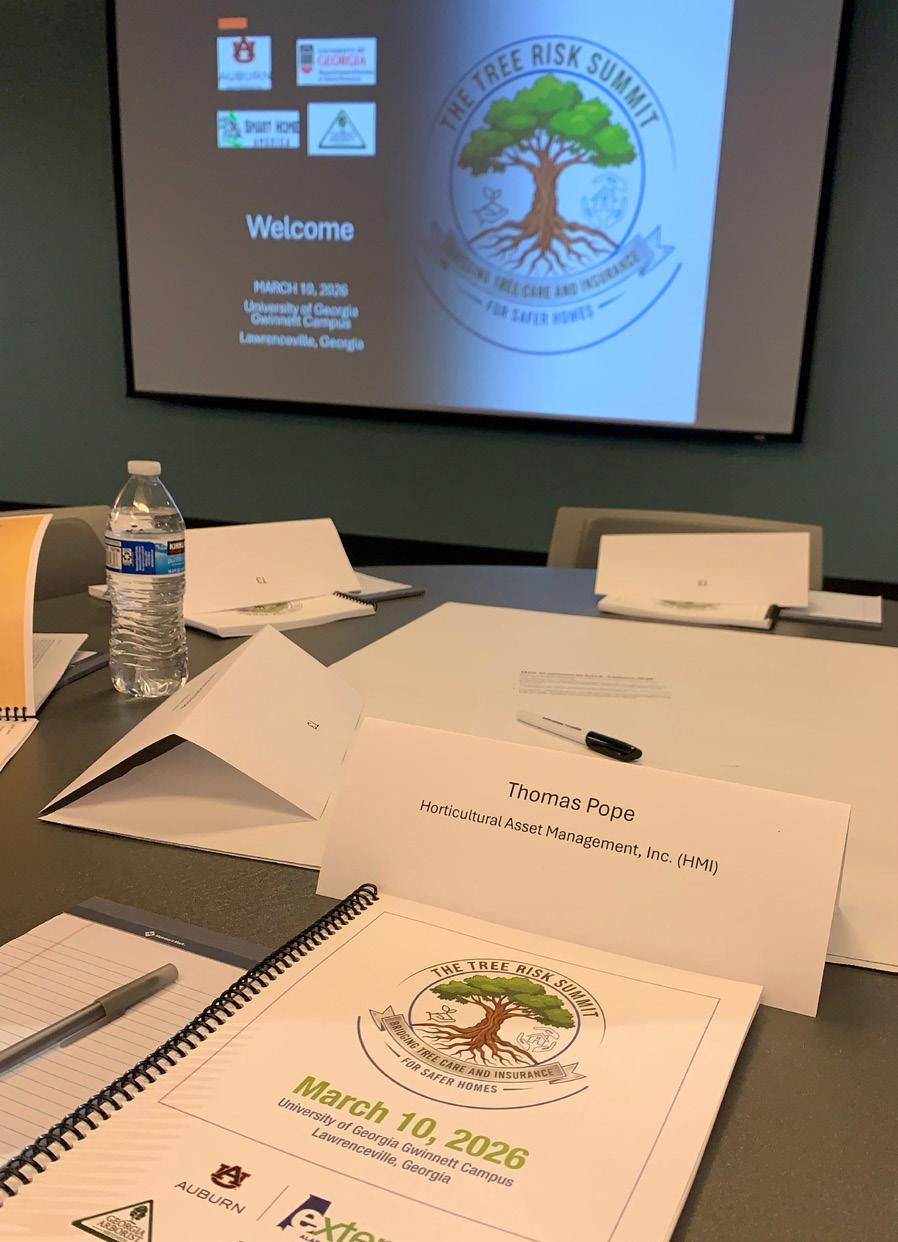
I had the privilege of being part of a symposium called the “Tree Risk Summit: Bridging Tree Care and Insurance for Safer Homes.” This event was organized by former Southern Chapter board presidents, Dr. Beau Brodbeck of Auburn University and Dr. Jason Gordon of UGA's Warnell School of Forestry and Natural Resources, and co-hosted by the Georgia Arborist Association.
The Summit brought together an ad-hoc assemblage of a couple dozen arborists, insurance professionals, academic researchers, municipal foresters, and nonprofit leaders to discuss and examine the increasingly fraught intersection of residential tree management and homeowners' insurance underwriting.
disconnect: 81% of arborists surveyed indicated “never” or “seldom” agreeing with insurance-dictated recommendations regarding trees, and 56% reported "never" or "seldom" successful communications with insurance companies regarding these matters. What made this event especially valuable was the attendees. It was not a room full of “tree people talking to tree people.”
A handful of professionals employed by major national home insurance carriers were present and participating throughout the event. These professionals from the other side of the aisle were actively engaged, raising sometimes difficult questions and offering perspectives that challenged those of many of us on the green industry side. One insurance participant noted, "Both [insurers and arborists] are correct, but they're different."
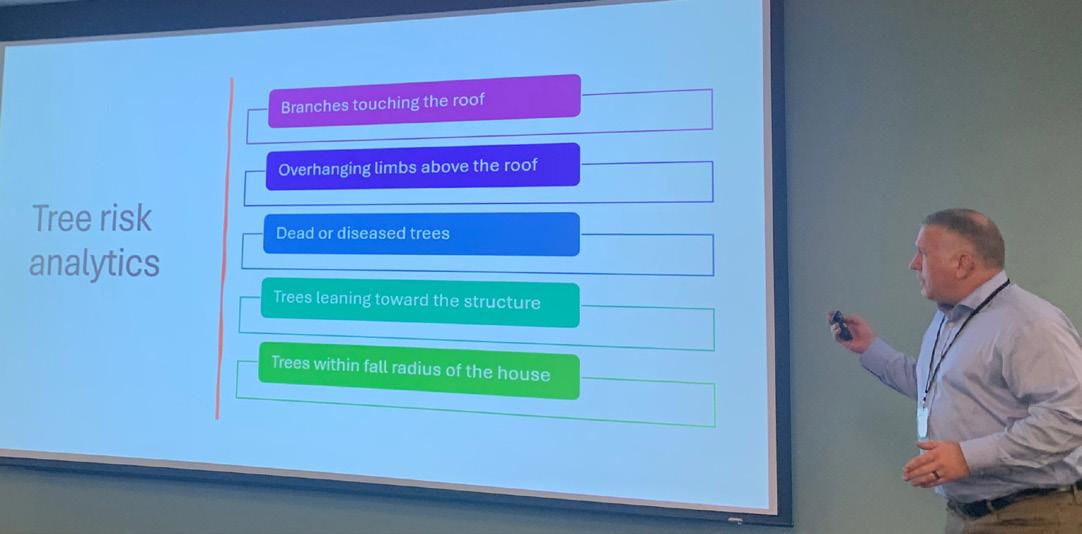
The Summit's central finding will resonate with anyone who has ever fielded an inquiry from a property owner clutching a vaguely worded letter from their insurance carrier demanding that a tree on their property be pruned or removed or else face serious insurance consequences, up to and including being dropped from their coverage altogether. In these scenarios, arborists and insurance professionals often end up looking at the same tree, but reach fundamentally different conclusions about risk vs. benefit to the property and community.
We arborist tend to conceptualize and assess risk in terms of biology, physiology, and biomechanics. We evaluate a tree’s structure, species, health, and other factors to then inform the interplay of its estimated likelihood and consequences of failure.
Insurers, on the other hand, tend to view risk financially. They consider modeling probability and severity of losses across large, broad portfolios. This viewpoint relies on more readily scalable proxies, such as location of trees and structures and historical claims data. Both approaches are completely valid within their own domains, but without a shared and agreed-upon framework between them, the results can yield conflicting, ambiguous, or counterproductive recommendations and requirements.
Research presented at the Summit quantifies that stark
Sitting with the discomfort of that difference, rather than retreating to our respective corners, was one of the key benefits of this Summit in the first place.
A theme of the day that I found especially compelling, if a tad overwhelming at times, was the prominent and rapidly advancing role of technology alongside a discussion of its limitations. Insurers increasingly rely on some combination of satellite imagery, aerial photography, and AI-driven analytics to evaluate many kinds of risks at scale. These marvelous tools offer obvious efficiencies, but cannot (at least for now) assess internal decay, root stability, species characteristics, maintenance history, etc., so they cannot (at least for now) replicate what a qualified arborist does when standing at the base of a tree.
This tension between scalability and accuracy plays out across many industries, and carries particular weight for a profession rooted (pardon the pun) in the assessment and care of living organisms in complex physical environments. Trees may not neatly lend themselves to such rigidly algorithmic answers, so roles for human, non-AI arborists and Tree Risk Assessors remain salient, significant, nuanced, and necessarily evolving.
Educational sessions like The Summit are a beginning, not a conclusion. I left the event energized, convinced that these conversations not only should continue and continue to grow, but that doing so may hopefully prove more feasible than I had realized. Doing so effectively, though, will need more input from more voices, including voices from within our own Chapter.
If these topics interest you, I'd welcome hearing from you. This is a conversation with a long, complicated, but productive road ahead. Connect with me at t.o.pope@gmail.com






The Tree Climbing Championship (TCC) has long stood as a cornerstone event serving climbing communities across the world. As the second-largest chapter, ISA Southern Chapter carries significant responsibility in supporting the dedicated men and women who compete each year, many striving for the opportunity to advance to the International Tree Climbing Championship (ITCC).
For more than a decade, we were fortunate to have one individual whose dedication helped guide the vision, execution, and long-term success of TCC within the Southern Chapter, Scott Winningham. Scott’s leadership and commitment built a legacy of well-run, meaningful competitions. His efforts sustained the event, strengthened its reputation, and created opportunities for climbers that may not have existed otherwise. As Scott officially steps back from his advisory role, we extend our deepest gratitude for his years of service and lasting impact on the ISA Southern Chapter and its members.
How do we move forward now? The answer became clear: by building a strong, diverse committee that represents many states, perspectives, and experiences. With great enthusiasm and sincere appreciation for everyone who stepped forward, we are proud to introduce the ISASC Tree Climbing Committee.

Keenan Alex Baird
TCC Advisor
Owner | GreenRoots Tree & Lawn Care
I’m Keenan Baird, an ISA Board Certified Master Arborist and owner of GreenRoots LLC in middle Tennessee. I’ve been a tree guy through and through, from climbing and PHC work to running crews in the field. I competed in my first tree climbing competition in 2019, so I know the nerves and the excitement that come with it. I'm thrilled to be advising this year’s competition, and I'm here as a resource for every climber, whether it's your first comp or your tenth.

Chris Diffley
TCC committee member |
ISASC Past President
Director | Arbor Ki
In every sense, most of what an ISA chapter does is about words and thoughts. The climbing competition is about putting practical skills to action and displaying how the industry is advancing in a tangible way. I am glad to be part of a team that supports this.

Lane Anderson
TCC committee member
Owner | Anderson Arborworks
I have spent four years competing, am the current Alabama tree climbing champion, and I am proud to serve on the committee for this year’s Southern TCC. I care about keeping our standards high and our community tight. Looking forward to working with all of you who make this event excellent from the first bell to the last.

Hannah Imagine Shaw
TCC Chairman | ISASC Vice President Horticulture and Arboriculture Advisor, Rainbow Ecoscience
Hi! I’m the article writer and a former tree climber myself. I had the privilege of serving as the Tennessee State Director for two years, and this year I am honored to be elected as Vice President and TCC Chairman for the Southern Chapter.
I am incredibly grateful to Keenan and to the volunteers you see listed here, all of whom have generously shared their time and expertise to help make this event possible. The Board is here to serve you, and to do that well, we need a clear understanding of your needs, goals, and expectations.
That’s why I am so thankful to have this group of dedicated individuals coming together to advise, develop, implement, and innovate the TCC for many years to come. Your continued support means everything to us, and we are excited to build the next chapter of this competition together.
Thank you for sticking with us.
Fletcher Harper
TCC committee member
Owner | Harper’s Tree Service LLC
I’m stoked as well as humbled to have the opportunity to work with the Southern Chapter to serve others with an awesome event and good vibes. I am highly motivated to help make this TCC all it can be! With more than 10 years in the field working as a climbing arborist, and years competing throughout North America and Europe, I hope to bring any and all of that experience to help further our industry through being on the ISASC TCC committee.

Brian Pope
TCC committee member |
ISASC Arkansas state director
Owner | Expert Tree Academy
I am a 31-year industry veteran and co-founder of Expert Tree Academy. I’m honored and grateful to serve as part of the TCC Committee. As both a climber and educator, being involved in this community at this level is truly a privilege. I’ve had the opportunity to participate in tree climbing competitions across the U.S. and internationally, and I’m passionate about supporting the continued growth, safety, and professionalism of our industry.

Chad Bryant
Owner | Treegorilla Tree Care Experts
Joey Douglas
Owner | Douglas Tree Service LLC

President: Brian Watkins, Recreation and Park Commission for the Parish of East Baton Rouge
President Elect / Treasurer: Dena Whitesides, Arbor Insight LLC
Vice President: Hannah Imagine Shaw, Rainbow Ecoscience
Component Council Rep: David Vandergriff, Griff Arbor|Hort
TREE Fund Liaison: Matt Searels, Eocene Environmental Group
Past President: Chris Diffley, Arbor Ki Tree Solutions
Media Director and Editor: Sarah Mitchell
Conference Planner: Connie Hilson
Executive Director: Skip Kincaid
Have you been waiting for an invitation?
Here it is:

Please join the Southern Chapter online.
Facebook Enjoy daily posts of things to make you think and things to make you laugh.
LinkedIn Find news, articles, and educational information. This is where green-industry professionals gather.
Instagram Just the jokes, please.
Please share, like, and subscribe to our many social media accounts: Facebook, Instagram, and LinkedIn.



Share the word about our scholarship program (application here). Here’s a chance to assist the next generation of green-industry professionals.
Look for educational opportunities on the Southern Chapter website If you know of opportunities not listed, email us and we’ll post it.
What’s happening in your part of the Southern Chapter?
Send in an article for our quarterly newsletter.
Alabama: Brian Brown Alabama Cooperative Extension
Arkansas: Brian Pope Expert Tree Academy
Louisiana: Fred Fellner
Mississippi: Steve Dicke Shady Arbor PLLC
North Carolina: Leslie Moorman Town of Cary
Puerto Rico and U.S. Virgin Islands: Christian W. Torres Santana Coccoloba AgroEnvironnemental Consulting and Coccoloba Nursery
South Carolina: Paul Mitchell Wright Tree Service
Tennessee: Dana Russell Arbor Ki Tree Solutions
At-Large: Tom Pope Horticultural Asset Management LLC
Southern Chapter ISA Website: www.isasouthern.org Phone: (314) 215-8010 Email: isasouthern@isasouthern.org
Skip Kincaid, Exec. Director 1609 Missouri Avenue St Louis, MO 63104
To contact your State Director, a member of the Executive Board, or Skip Kincaid at the Southern Chapter office, please email isasouthern@isasouthern.org.