
International Research Journal of Engineering and Technology (IRJET) e-ISSN: 2395-0056
Volume: 13 Issue: 03 | Mar 2026 www.irjet.net p-ISSN: 2395-0072
International Research Journal of Engineering and Technology (IRJET) e-ISSN: 2395-0056
Volume: 13 Issue: 03 | Mar 2026 www.irjet.net p-ISSN: 2395-0072
Abhishek Dube1, Abhinav Verma2, Anurag Panday3, Er. Monika Singh4 , Computer Science and Engineering Shri Ramswaroop Memorial College of Engineering and Management Lucknow, India
ABSTRACT - This paper proposes a secure web-based online votingsystem integrating blockchain technology with multi-factor authentication to address limitations of centralized e-voting platforms. Unlike conventional systems that rely on centralized databases vulnerable to tampering, the proposed framework records each vote as a blockchain transaction, ensuring tamper-evident storage and verifiable record integrity. Biometric verification combined with OneTime Password (OTP) authentication prevents impersonation and duplicate voting. The system is implemented using HTML, CSS, JavaScript, and Django (Python). Experimentalevaluationdemonstratesanaverage vote confirmation time of 4 seconds and successful preventionofunauthorizedaccessduringtesting.Theresults indicate that integrating blockchain with multi-factor authenticationsignificantlyenhancestransparency,security, andtrustinelectronicvotingsystems.
Keywords Blockchain, E-Voting, Web Security, MultiFactor Authentication, Biometric Verification, Django(Python).
The credibility of an election depends on the security, transparency, and reliability of its voting mechanism. Conventional voting procedures rely on physical polling stations, manual supervision, and paper ballots. Although such systems are widely used, they involve significant administrative effort, long counting time, and limited accessibility for voters who are geographically distant or physicallyunabletovisitpollinglocations.
Online voting platforms have been explored as an alternative to increase participation and simplify election management. However, many existing web-based systems use centralized servers for storing voter records and ballots. A compromise of the central database can lead to deletion or modification of votes and reduces public confidence in the election outcome. In addition, voters generally cannot independently verify whether their vote hasbeencorrectlyrecorded.
Blockchaintechnologyprovidesadistributedledgerwhere transactions are grouped into blocks and secured using cryptographic hashing techniques. Each block is linked to itspredecessor,formingan orderedandverifiablechainof records. In distributed blockchain systems, copies of the ledger are maintained across multiple nodes, making unauthorized alteration of stored data extremely difficult.
This characteristic makes blockchain suitable for applications requiring transparency and auditability, includingelectronicvoting.
Another important requirement of online elections is reliable voter authentication. Password-only authentication methods are vulnerable to credential theft and account sharing. To address this limitation, multifactor authentication techniques combining biometric verification and One-Time Password (OTP) validation can be employed to confirm voter identity and prevent impersonation.
This work presents a web-based voting platform that integrates blockchain-based vote storage with multi-factor authentication.Thesystemenablesremotevoting,ensures tamper-evident record keeping, and allows transparent resultgenerationwhilepreservingvoteranonymity.
Thekeycontributionsofthisresearchare:
1. Integration of blockchain-based vote storage with biometricandOTPauthentication.
2. Separation of voter identity from vote data to preserveanonymity.
3. Implementation of automated vote tallying using smartcontracts.
4. Experimental performance evaluation of system responsetime.
Early electronic voting applications mainly focused on improving accessibility through web interfaces. These systems stored ballots in centralized databases protected by encryption and secure communication protocols [1]. Although convenient, centralized storage remained vulnerabletoinsidermanipulationanddatabaseattacks.
Toimproveauthentication,researchersintroducedidentity verification techniques such as password and OTP-based login systems [2], [3]. Multi-factor authentication further enhanced reliability by requiring users to provide more thanoneverification factor beforeaccessingtheballot[4]. Biometric methods, including facial recognition and fingerprint identification, have also been implemented to uniquelyidentifyvotersandreduceimpersonation[5],[6].
International Research Journal of Engineering and Technology (IRJET) e-ISSN: 2395-0056
Volume: 13 Issue: 03 | Mar 2026 www.irjet.net p-ISSN: 2395-0072
However, authentication mechanisms alone cannot guarantee the integrity of stored votes. Even when voters are correctly verified, centralized databases can still be altered after vote submission. To address this issue, blockchain-based voting frameworks were proposed. In such models, each vote is recorded as a transaction and linked to previous transactions using cryptographic hashing, ensuring that any modification becomes detectable[7].
Comparative analyses of blockchain voting systems indicate higher transparency and improved resistance to tamperingwhencomparedwithconventionaldigitalvoting platforms [8], [9]. Decentralized consensus protocols enable independent verification of election outcomes, while smart contracts allow automated vote counting and resultpublication[10].
Despite these advancements, many existing approaches emphasize either strong authentication or secure storage, but not both simultaneously. The proposed system combines biometric and OTP-based verification with blockchain-based vote recording to provide both reliable voteridentificationandsecureballotpreservation.
Althoughpreviousstudieshaveexploredblockchain-based voting or biometric authentication individually, limited research integrates both strong identity verification and tamper-resistant storage within a single scalable web framework. Furthermore, few implementations provide practicalperformanceevaluationmetricssuchasresponse time and confirmation latency. This research addresses these limitations bycombining multi-factor authentication with blockchain-based vote storage and experimentally analysingsystemperformance.
Table I COMPARISONOFEXISTINGONLINEVOTING APPROACHES
Approac h
on
Password -based voting Username & Password Centraliz ed Database Low Vulnerable to impersonati on
OTPbased voting OTP Verification Centraliz ed Database Mediu m Database tampering possible
Biometric voting Biometric only Centraliz ed Database Mediu m No auditability
Blockchai n-only Minimal authenticatio Blockchai High Weak identity
Approac h Authenticati on Storage Type Securit yLevel Limitation
voting n n verification
Proposed System Biometric + OTP Blockchai nLedger Very High Requires internet connectivity
An effective online voting platform must satisfy three essential requirements: accurate voter identification, protection of stored votes, and transparency in result computation.Manycurrent digital voting solutions rely on centralized servers, which create a single point of failure. Unauthorizedaccesstotheservercanleadtomanipulation ordeletionofstoredballotswithoutimmediatedetection.
Password-basedauthenticationisalsoinsufficientbecause user credentials can be stolen or shared. Even when authentication is secure, votes stored in a traditional database remain vulnerable to insider attacks and unauthorizedmodification.
Therefore, a voting system is required that verifies voter identity reliably while ensuring that once a vote is submitted, it cannot be altered. The proposed system addresses these challenges by combining multi-factor authentication for voter verification with blockchain technologyfortamper-resistantvotestorage.
The proposed architecture consists of five primary components: the voter interface, authentication module, applicationserver,database,andblockchainnetwork.
The voter interacts with the system through a web-based interface developed using HTML, CSS, and JavaScript. The backend is implemented using Django (Python), which handles API requests, session management, and communicationbetweensystemmodules.SQLiteisusedto store voter registration details and session-related information. Importantly, cast votes are not stored in the centralized database to eliminate risks associated with databasetampering.
During the authentication phase, multi-factor verification is performed. Biometric authentication (face recognition) is first used to validate the voter's identity, followed by One-Time Password (OTP) verification sent to the registeredmobilenumber.Onlyaftersuccessfulcompletion of both steps is the voter granted access to the ballot interface.
International Research Journal of Engineering and Technology (IRJET) e-ISSN: 2395-0056
Volume: 13 Issue: 03 | Mar 2026 www.irjet.net p-ISSN: 2395-0072
Once a vote is cast, the selected candidate information is encrypted using a cryptographic hashing algorithm (SHA256) and converted into a transaction record. This transaction is appended to a simulated private blockchain ledgerimplementedwithintheDjangobackend.Eachblock contains:
Theencryptedvotehash
Timestampofvotesubmission
Previousblockhash
Blockindex
Blocks are linked through cryptographic hash pointers, forminganimmutablechainstructure.Anyattempttoalter previously stored vote data changes the block hash, thereby invalidating subsequent blocks and making tamperingimmediatelydetectable.
The blockchain ledger is logically separated from voter identityrecordstoensureanonymity.Whileauthentication data is stored in the centralized database for identity verification, vote transactions are stored only in the blockchain structure. This separation preserves voter privacywhileenablingindependentverificationofelection results.
The simulated private blockchain implementation was developed to demonstrate tamper-evident storage functionality without relying on external blockchain platforms. Although it does not utilize a decentralized consensus mechanism, it effectively models the core principles of immutability, hash linking, and verifiability requiredinblockchain-basedvotingsystems.
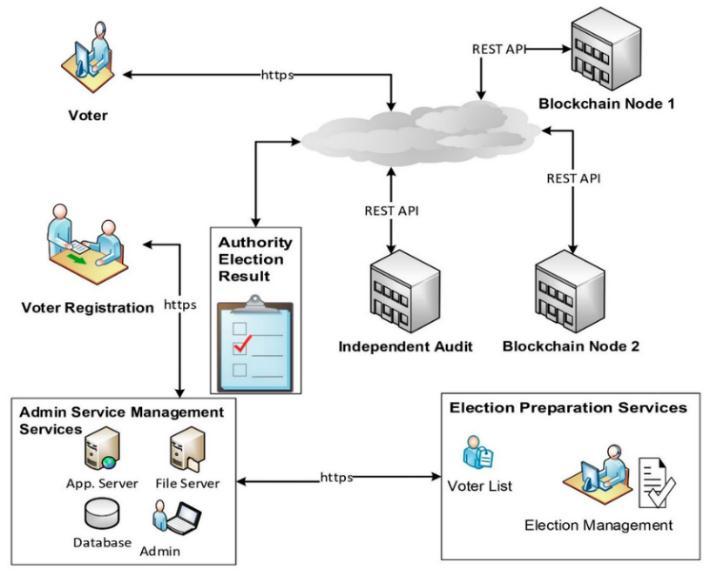
Fig. 1 Overallarchitectureoftheblockchain-enabledwebbasedonlinevotingsystem.
Technology Components
TableII TECHNOLOGYCOMPONENTSOFTHEPROPOSED SYSTEM
Layer Technology Used Purpose
Frontend HTML, CSS, JavaScript Userinterface
Backend Django(Python) APIhandling
Database SQLite Voter/sessionstorage
Authentication Biometric+OTP Identityverification
Blockchain Simulated Private Ledger Tamper-evident vote storage
Security HTTPS+Hashing Secure communication
A.Voter Authentication
The voter registers using personal identification details andbiometricdata.Afterbiometricverification,thesystem sends a One-Time Password to the registered mobile number. Access to the voting portal is granted only after successfulcompletionofbothverificationsteps.
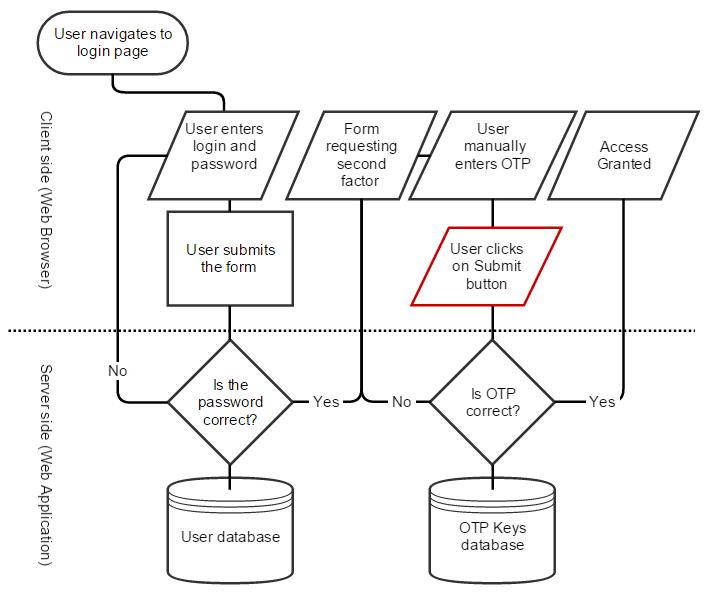
Fig. 2 Multi-factorvoterauthenticationprocessusing biometricverificationandOTPvalidation.
International Research Journal of Engineering and Technology (IRJET) e-ISSN: 2395-0056
Volume: 13 Issue: 03 | Mar 2026 www.irjet.net p-ISSN: 2395-0072
B.VoteCasting
Onceauthenticated,thevoterselectsapreferredcandidate. Theselectedvoteisencryptedandprocessedbythe blockchainledgermodule.Thetransactionistime-stamped andvalidatedbythenetworkbeforebeingaddedtothe ledger.
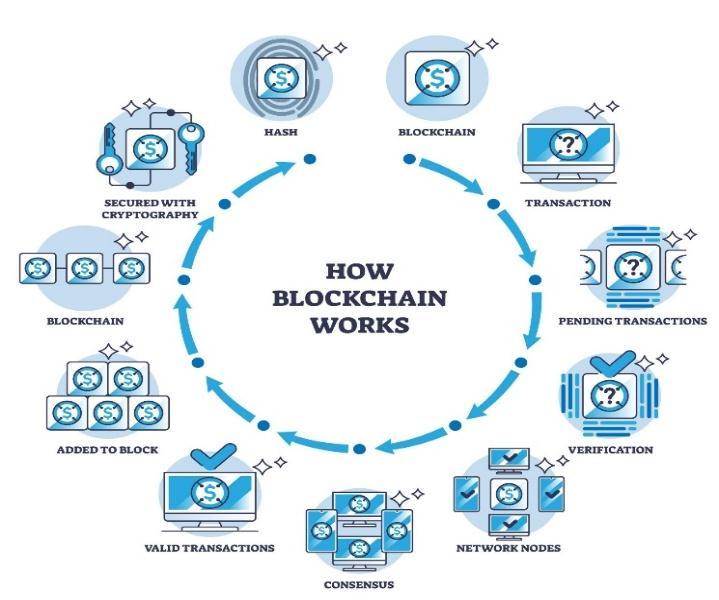
Fig.3Blockchainvotetransactionrecordingandblock verificationprocess.
C.ResultComputation
Votesareretrieveddirectlyfromtheblockchainledger. Becauseeachvoteisstoredasaverifiedtransaction, countingcanbeperformedautomaticallywithoutmanual intervention.Thisprocesseliminatescountingerrorsand ensurestransparencyinresultpublication.
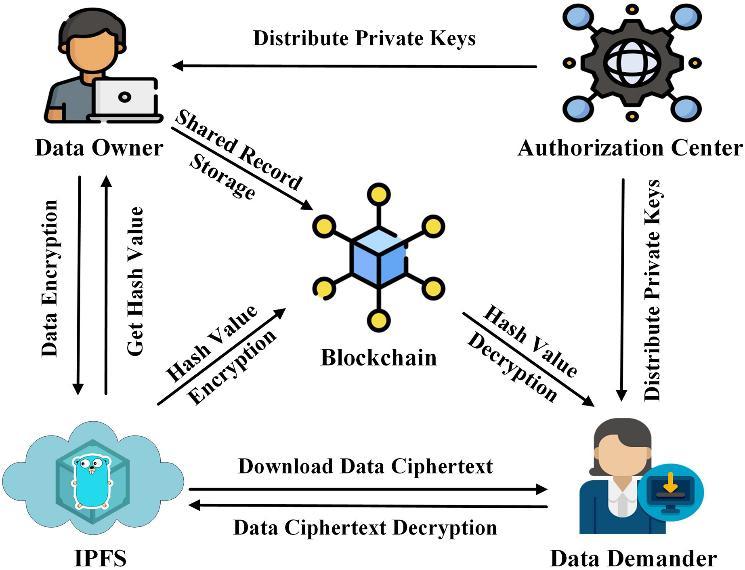
Fig.4Securevotetallyingandresultpublicationfrom blockchainledger.
VI. RESULTS AND DISCUSSION
Testing ofthesystemshowedthateachvote wasrecorded on the blockchain immediately after submission. The simulated multi-node environment demonstrated logical
ledger replication for testing purposes. Although the implementation does not employ a fully decentralized consensus mechanism, it successfully models blockchain immutabilityandtamperdetectionfeatures.
The multi-factor authentication mechanism successfully prevented unauthorized access, and each registered voter was able to cast only one vote. Automated counting significantly reduced the time required for result declarationcomparedwithtraditionalvotingmethods.
The proposed approach improves transparency because stored transactions can be independently verified. By separating authentication data from vote storage, voter privacy is preserved while maintaining auditability of the electionprocess.
Although the proposed system demonstrates improved security and transparency, scalability may become a concern in national-level elections due to increased transaction load. Additionally, biometric authentication accuracy depends on environmental conditions and cameraquality.Futureresearchshouldfocusonoptimizing consensus mechanisms and reducing computational overhead.
TableIII PERFORMANCECOMPARISONBETWEEN TRADITIONALANDPROPOSEDSYSTEM
Parameter
Accessibility
Traditional Voting Proposed System
Polling booth required Remoteaccess
ResultTime Hours/Days Minutes
Transparency
TamperingRisk
Manual verification Publicly verifiable
Possible with centralized access Cryptographicall ydetectable
TableIV SECURITYMECHANISMSIMPLEMENTED
SecurityFeature Function
OTPVerification Preventsunauthorizedlogin
BiometricVerification Confirmsvoteridentity
International Research Journal of Engineering and Technology (IRJET) e-ISSN: 2395-0056
Volume: 13 Issue: 03 | Mar 2026 www.irjet.net p-ISSN: 2395-0072
SecurityFeature Function
Cryptographic Hashing Protectsvoteintegrity
BlockchainLedger Preventsmodification
Time-Stamping
Maintains chronological order
TableV AVERAGESYSTEMRESPONSETIME
Experimental Setup
The system was tested on a machine with Intel i5 processor, 8GB RAM, running Windows 11. A private blockchain network consisting of 3 nodes was simulated. Testing involved 50 registered users casting votes simultaneously to evaluate system performance and reliability.
TableVI PERFORMANCEMETRICSTABLE
Metric
The experimental results indicate that the system maintains stable performance under moderate load
conditions. No authentication bypass or duplicate voting attemptwassuccessfulduringtesting.
These findings validate the effectiveness of integrating multi-factor authentication with blockchain-inspired ledger mechanisms for enhancing vote integrity and systemrobustness.
SecurityTesting
Attemptsweremadetomodifystoredvoterecordsdirectly in the database; however, since votes were stored on the blockchain ledger and linked through cryptographic hashing, any modification attempt resulted in hash mismatchdetection,demonstratingtamperresistance.
Thisresearchpresentedasecureweb-basedvotingsystem integrating multi-factor authentication with a blockchaininspired tamper-evident ledger. By separating voter identity verification from vote storage, the system enhances privacy while maintaining data integrity. Experimental evaluation under controlled conditions demonstrated reliable authentication, prevention of duplicate voting, and efficient vote confirmation within an averageof4seconds.Althoughthecurrentimplementation utilizes a simulated private blockchain, the architecture provides a scalable foundation for future integration with fully decentralized blockchain platforms. The proposed framework contributes toward improving transparency, trust, and security in electronic voting systems. Future work will involve large-scale deployment, performance optimization, and integration with official identity verification systems to support real-world election scenarios.
[1] A.Nadaph,R.Bondre,A.Katiyar,D.Goswami,andT. Naidu, “Implementation of Secure Online Voting System,”2021.
[2] L. Vetrivendan, R. Viswanathan, and J. A. Blessy, “Smart Voting System Support through Face Recognition,”2023.
[3] S. Meher, P. Muley, S. Pawar, and A. Solanke, “Smart Online Voting System Using OTP Authentication,”2023.
[4] A. Shaikh, B. Oswal, D. Parekh, and B. Y. Jani, “E-Voting Using One Time Password and Face Detection and Recognition,” International Journal ofEngineeringResearch&Technology(IJERT),vol. 3,no.2,2014.
[5] S. Gunthe, A. Pimpude, K. Rathod, and P. Zaware, “OnlineVotingSystemUsingFaceRecognitionand OTP,”InternationalJournalforResearchinApplied
International Research Journal of Engineering and Technology (IRJET) e-ISSN: 2395-0056
Science & Engineering Technology (IJRASET), 2023.
[6] R. T. H. Hasan and A. B. Sallow, “Face Detection and Recognition Using OpenCV,” 2021.
[7] A.Rosebrock, “Face Detection with Dlib, HOG, and CNN,”PyImageSearch,2021.
[8] V.S.C.Shree,A.M.S.,N.Nithyashree,S.H.N.,andS. H.V.,“Blockchain Technology Based E-Voting System,” International Journal of Advanced Research in Computer and Communication Engineering(IJARCCE),2024.
[9] S. A.-B. Salman, S. Al-Janabi, and A. M. Sagheer, “A Review on E-Voting Based on Blockchain Models,”IraqiJournalofScience,2022.
[10] M.Pathak,A.Suradkar,A.Kadam,A.Ghodeswar,and P.Parde,“A Review on Blockchain Based E-Voting System,” International Journal of Scientific Research in Science and Technology (IJSRST), 2024.
[11] G. C. Onur and A. Yurdakul, “ElectAnon: A Blockchain-Based, Anonymous, Robust and Scalable Ranked-Choice Voting Protocol,”arXivpreprint,2022.
[12] A. Spanos and I. Kantzavelou, “EtherVote: A Blockchain-Based Electronic Voting System,”arXivpreprint,2023.
[13] Y. Tahboub, A. Revilla, J. Lynch, and G. Floyd, “Blockchain-Based Secure Online Voting Platform Ensuring Voter Anonymity, Integrity, and End-toEndVerifiability,”arXivpreprint,2025.
[14] H. B. Y., N. Meghana, R. A. M. S., R. K. S., and V. J., “E-Voting System Based on Blockchain and Face Recognition System,” International Journal of Scientific&EngineeringResearch,2025.
[15] S. Kale, A. Deshmukh, A. Kale, M. Korade, and A. Pawale,“Blockchain Enhanced Secure Electronic Voting System Using Real-Time Face Recognition andOTPAuthentication,”IJRASET,2025.
[16] C.KawaleandH.D.Patil,“Online Voting System Using FaceandFingerprintRecognition,”IARJSET,2025.
[17] A.YaduandO.Chandrakar,“A Smart Voting System Combining Fingerprint and Facial Recognition for EnhancedSecurity,”ShodhKoshJournal,2024.
[18] A.Benny, “Detecting QR Code and Barcode Using OpenCVandPyzbar,”2022.
[19] T.H.Apurbo,M.H.N.Asif,F.J.Alam,F.T.Tafree,E. H. Shihab, S. S. Alam, and F. Fatima, “A Biometric Voting Solution: Integrating Face Recognition with Embedded Systems for Secure OfflineElections,”JournalofEngineeringResearch andReports,2025.
[20] D. Xu, W. Shi, W. Zhaiand Z. Tian, “Multi-Candidate Voting Model Based on Blockchain,” IEEE/CAA Journal of Automatica Sinica, vol. 8, no. 12, pp. 1891–1900, Dec. 2021, doi: 10.1109/JAS.2021.1004207.
Volume: 13 Issue: 03 | Mar 2026 www.irjet.net p-ISSN: 2395-0072 © 2026, IRJET | Impact Factor value: 8.315 | ISO 9001:2008 Certified
| Page119