
International Research Journal of Engineering and Technology (IRJET) e-ISSN: 2395-0056
Volume: 12 Issue: 05 | May 2025 www.irjet.net p-ISSN: 2395-0072
International Research Journal of Engineering and Technology (IRJET) e-ISSN: 2395-0056
Volume: 12 Issue: 05 | May 2025 www.irjet.net p-ISSN: 2395-0072
Khushi Patel1 , Kartik Iyer2
1PG student, Dept.of Environmental science and technology, UPL University, Gujarat, India
2 Assistant professor, Dept.of Environmental science and technology, UPL University, Gujarat, India
Abstract- Conventional sanitary pads available in the marketarenon-biodegradableandcontributesignificantlyto environmental pollution due to their synthetic components. This study explores the use of banana pseudostem waste, which is often discarded or burned by farmers, leading to environmental degradation. By adopting a sustainable processing method, banana pseudostem fibers are transformed into an absorbent core for biodegradable sanitary pads. This approach not only reduces the environmental impact of menstrual waste but also provides farmers, particularly in flood-prone regions where banana crops are frequently damaged, with an alternative source of income
Key Words: Bananafiber,fiberprocessing,absorbentcore, biodegradable sanitary pads, alkaline treatment, enzyme treatment,sustainablemenstrualhygiene,agriculturalwaste valorization
1.INTRODUCTION
Traditional sanitary pads are a significant contributor to landfillwasteandenvironmentaldegradationduetotheir non-biodegradable constituents. Concurrently, banana pseudostems,whichareagriculturalbyproductsgenerated post-harvest, are frequently discarded by farmers using unsustainable practices, resulting in air pollution and detrimental emissions. This research investigates the viability of utilizing banana fiber extracted from pseudostems as a sustainable raw material for the formulationofanabsorbentcoreinbiodegradablesanitary pads, thereby addressing the dual issues of agricultural waste management and the reduction of plastic-based menstrual waste.Two distinct methodologies for fiber processing were scrutinized to augment the properties of fibersforapplicationsinabsorbentcores:alkalinetreatment employing sodium hydroxide (NaOH) and enzymatic treatment. The alkaline procedure instigates a chemical modificationofthefiberstructurethatenhancesabsorption capabilities, whereas the enzyme-based approach offers a more ecologically sustainable modification process. A sustainable methodology was implemented to ensure a minimal application of chemicals, thereby rendering the processedfibermoresuitableforsanitarypadapplications
while maintaining its biodegradability.By converting bananapseudostemsintobiodegradablesanitarypads,this investigationnotonlyfurnishesanenvironmentallyfriendly solution for menstrual hygiene but also provides farmers with a novel revenue stream, particularly in flood-prone regions where banana crops are often adversely affected. This research delivers a comparative analysis of the two fiberprocessingtechniques,assessingtheirefficiency,costeffectiveness,andenvironmentalramifications.Theresults contribute to the advancement of sustainable menstrual hygieneproducts,advocatingforeco-friendlyalternativesto conventionalsanitarypads.
Sanitary napkins traditionally consist of three separate layers:asuperiorlayer,aninferiorlayer,andanabsorbent core.Inthepresentinvestigation,thesuperiorandinferior layers are constructed from polylactic acid (PLA)-based biodegradable materials, whereas the absorbent core is comprisedofacompositeformulationoforganiccottonand bananafiber.
A.Extractionoffibers:
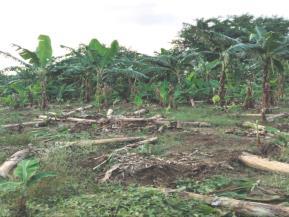
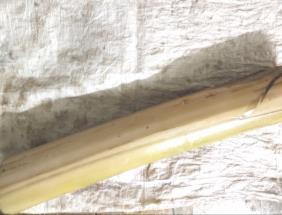
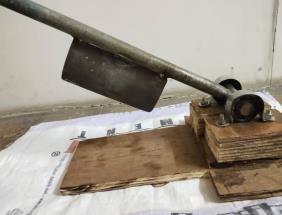
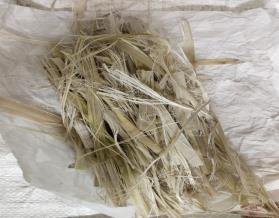
BananastemswerecollectedfromGovalivillageinBharuch, andthefibersweremanuallyextractedusingahandscraper.
International Research Journal of Engineering and Technology (IRJET) e-ISSN: 2395-0056
Volume: 12 Issue: 05 | May 2025 www.irjet.net p-ISSN: 2395-0072
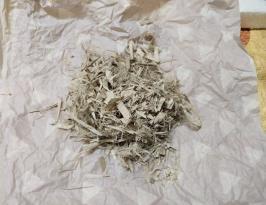
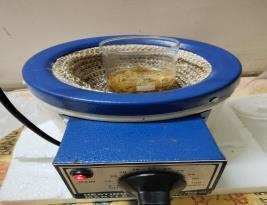
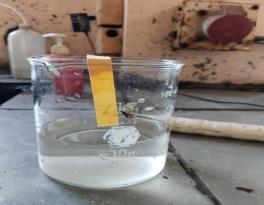
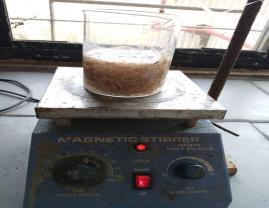
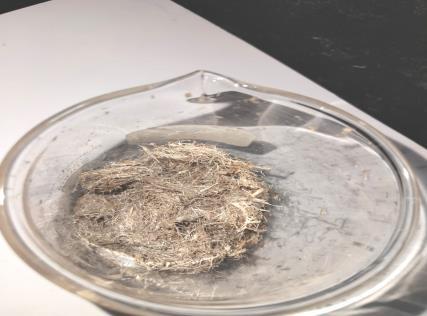
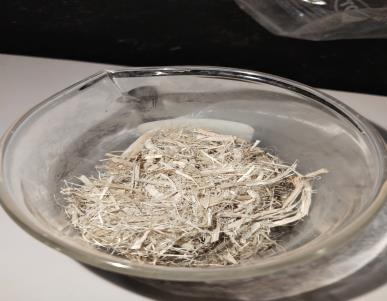
After extraction, the fibers were cut into small pieces for furtherprocessing.Todetermineasustainablemethodfor developing the absorbent core, two different treatments wereapplied:alkalitreatmentandenzymatictreatment.For thealkalitreatment,thefibersweresoakedina5%NaOH solutionforonehouratatemperatureof60-70°C.Afterthe treatment, they were thoroughly washed to remove any residualalkaliandthendriedovernightinahotairovenat 60°C.In the enzymatic treatment, a 0.3% neutral cellulose enzymesolutionwasprepared,andthefibersweresoaked initforonehourat55°C.Similartothealkalitreatment,the fiberswerethenwashedanddried.
C.PostTreatmentAnalysis:
Weight loss analysis is conducted for both the treatments usingthebeforeandafterweightofthefiber.Weightlossin alkalitreatmentwasfoundtobe55.6%andweightlossin enzymatictreatmentwasfoundtobe17.5%.Higherweight lossinalkalitreatmentsuggestsitisefficientforremoving noncellulosicimpuritieslikeligninandhemicellulosebutit may also cause some degree of fiber degradation and weaken the fiber structure while enzymatic treatment resulted in lower weight loss which means enzymatic treatmentspecificallytargetscellulosecomponentsandmay causeapartialbreakdownorhydrolysisofcellulosewithout moredegradationofthefiber.EnzymaticTreatmentbreaks thecompactstructureofcellulose,creatingmicro-poresand capillarieswithinthefiber.Whichincreaseswater-holding capacitybyallowingliquidtospreadmoreefficientlywhile maintaining the structural integrity of the fiber and its strength.NaOHdisruptsmultiplefibercomponentsandalso itleadstoexcessiveswellingandfiberweakeningalongwith fiber degradation. While enzymatic treatment increases absorbency, softness and retain fiber strength making bananafiberidealforsanitarypadabsorbentlayers.Apart fromthatenzymatictreatmentisenvironmentallyfriendly,
while NaOH generates alkaline wastewater that requires treatment,increasingtheenvironmentalburden.Soforthe developmentofabsorbentcoreenzymatictreatmentisused as it is more sustainable and less damaging to the environment.
2. Preparation Of Absorbent core:
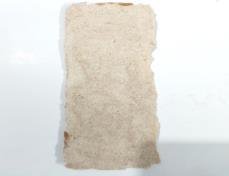
Todeveloptheabsorbentcore,enzyme-treatedbananafiber andorganiccottonwereblendedina50:50ratio,withthe totalweightofthecoremaintainedat12grams.
Table -1: DimensionsOfAbsorbentcore
Length 200mm
Width 60mm
Thickness 2mm
International Research Journal of Engineering and Technology (IRJET) e-ISSN: 2395-0056
Volume: 12 Issue: 05 | May 2025 www.irjet.net p-ISSN: 2395-0072
Todevelopafullybiodegradablesanitarypad,a 30 GSM top sheet made from PLA and corn starchbasednonwovenfabricwasused,whilethebacksheet consistedofPLAandcornstarch-basedbiodegradable plastic with the total weight of pad maintained was around13gm.
Length 280mm
Width 120mm
Thickness 2mm
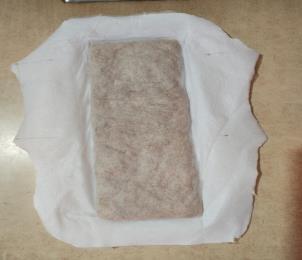
Pad
4. Result and discussion:
A.AbsorbencyandRetentionCapacity:
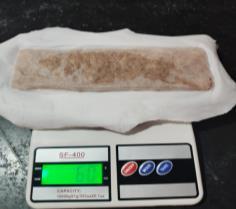
The absorbency capacity is tested according to the EAS 96:2008-AnnexCstandard.Thesample firstweighedindry condition and then Water is added until saturation is attained. When the pad reach Saturation a certain kg of weight is placed over it and the excess liquid is cleaned usingfilterpaperandthenthepadisweighedagain.
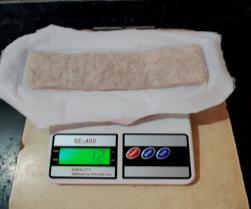
ResultData:
Initialweight(X)=12g
Finalweightbeforeplacingweight(W)=60g
AbsorptionCapacity(g/g)
= w-x/x
= 60-12/12 = 4 g/g
This means the pad can absorb 4 times its dry weight.
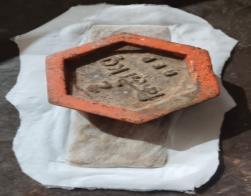
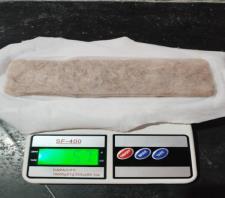
RetentionCapacity=Y-X/X =57-12/12 =3.75g/g
This means the pad can retain 3.75 times its dry weight afterapplyingpressure.
B.WickingAbilityTest:
Wicking measures how rapidly and uniformly the liquid spreads across the surface of the absorbent core. This is crucial for understanding how well the Liquid will travel across the pad without pooling .The wicking test was conducted to analyze the ability of the absorbent core to distributefluidevenlyacrossitssurface.Inthistest,40mlof liquid(Water)wasgraduallypouredontothecenterofthe sanitary pad’s absorbent core. The fluid was absorbed efficientlyandbegantospreadlaterallyandlongitudinally, indicatingeffectivecapillaryactionwithinthefibermatrix.
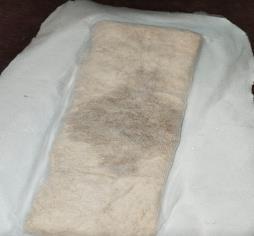
: WickingAbility test
C.Wearstudy(Real-useFeedback):
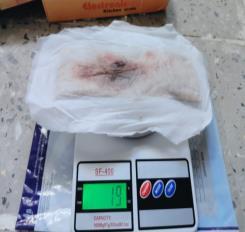
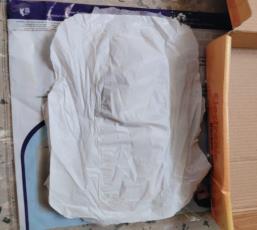
To evaluate the practical performance of the developed biodegradable sanitary pad, a wear study was conducted underreal-timeusageconditions.Theaimofthisstudyisto observe the pad’s comfort, absorption, leakage resistance, andoverallfunctionalitythroughoutatypicalwearduration. Thepadwaswornforapproximately7hours,from9:00AM to4:00PM,simulatinganormaldayofactivity.Beforeuse, thedryweightofthepadwasrecordedas12grams.After removal, the post-use weight was measured at 19 grams, indicating that the pad had absorbed 7 grams of fluid withoutreachingsaturation.Also,thebacksheetremained dry, and there was no visible leakage, confirming the
International Research Journal of Engineering and Technology (IRJET) e-ISSN: 2395-0056
Volume: 12 Issue: 05 | May 2025 www.irjet.net p-ISSN: 2395-0072
effectivenessofthePLAandcornstarch-basedbacklayerin preventingreverseflow.
D.TopsheetpH:
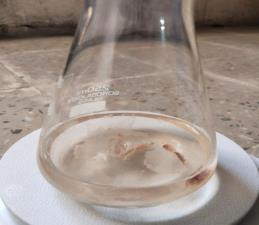
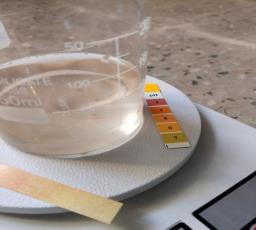
ApHtestwasconductedtoensurethatthetopsheetofthe developedsanitarypadwassafeforprolongedskincontact. Thistestaimedtoassesswhetherthetoplayermaintainsa skin-friendlypHlevelevenafterusage,asexposuretohigh or low pH levels can cause skin irritation or discomfort during menstruation. After the pad was worn for approximately7hours,smallpiecesfromthetopsheet(PLA andcornstarch-basednonwovenfabric)werecarefullycut andtestedforpH.Thetestingwasdonebyimmersingthe piecesindistilledwaterandallowingthemtositforafixed durationtoextractsurfaceresidue.ThepHofthesolution wasthenmeasuredusingpHstrips.Theresultsshoweda neutralpHlevelofapproximately7,indicatingthatthetop layer did not become acidic or alkaline after use. This confirms that the materials used in the top sheet are not reactive and remain stable during wear, posing no risk of irritationorskinimbalance.
E compostabilitytest:
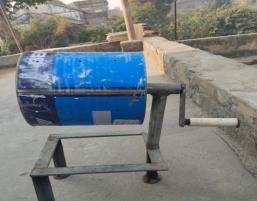
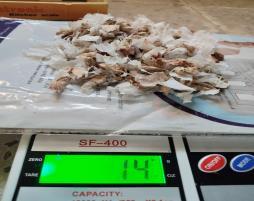
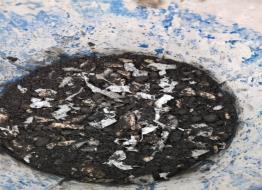
The exposed sample of sanitary pad was subjected to a compostability test conducted under home composting conditions. The aim was to observe the decomposition behavior of the pad components over time in a natural, microbe-richenvironment.Theusedpadwascutintosmall pieces and mixed thoroughly with organic composting materialssuchaspressmud,cowdung,cowurine,kitchen waste,dryleaves,andgardensoil.Thismixturewasplaced in a rotating compost bin with ventilation holes to allow proper aeration and moisture control, simulating a home compostingsetup.Theinitialweightoftheexposedsanitary padpieceswasrecordedas14grams.Afteronemonth,the weightofthepadpieceshadreducedto5grams,showinga
significant reduction. There was visible breakdown of the absorbentcoremadeofbananaandcottonfibers,whilethe PLA-based top and back sheets began to show signs of surfacesofteningandfragmentation.Bythesecondmonth, theweighthadfurtherdecreasedto4.5grams,withmore evidentdisintegrationofthelayers.Theweightcontinuedto decrease over time, and the pad completely decomposed withinasix-monthperiod.
In the present study, we successfully demonstrated the developmentofaneco-friendly,biodegradablesanitarypad using banana pseudostem fiber and organic cotton as the absorbentcore,andPLA+cornstarch-basedmaterialsfor the top and back sheets. The initiative not only addresses menstrualhygieneinasustainablemannerbutalsoprovides avaluableuseforagriculturalwastethatwouldotherwise contribute to environmental degradation. Two fiber treatment methods alkaline treatment with NaOH and enzymatic treatment using cellulose enzymes were compared.Theenzymaticmethodwasidentifiedasthemore sustainable and effective approach, offering better absorbencywhilepreservingfiberintegrityandminimizing environmentalimpact.Theabsorbentcore,formedusinga 50:50blendofbananaandcottonfibers,showedpromising performance. It exhibited a retention capacity of 3.75 g/g andanabsorptioncapacityof4g/g,meetingthefunctional requirementsofasanitarypad.Thewickingtestconfirmed that the fluid was evenly distributed across the pad, improvingcomfortandminimizingleakagerisk. Thewear studyvalidatedusercomfort,durability,andperformance over extended hours of use, with no leakage or backsheet wetting.Additionally,thetopsheetpHtestshowedthatthe pH remained neutral after use, making it safe for skin contact.Thecompostabilitytestrevealedthatnaturalfiber componentsdegradedsignificantlywithinthefirstmonth. While PLA components require up to 180 days to fully degrade,thepadasawholequalifiesascompostable,making it a viable alternative to conventional, non-degradable sanitary products.Overall, the study concludes that the developed sanitary pad is environmentally sustainable,
International Research Journal of Engineering and Technology (IRJET) e-ISSN: 2395-0056
Volume: 12 Issue: 05 | May 2025 www.irjet.net p-ISSN: 2395-0072
functionally reliable, and socially impactful, especially for ruralandflood-proneregionswherebothmenstrualhealth awarenessandagriculturalwastereuseareimportant.This project opens avenues for scalable production and valueaddedwasteutilization,promotinga shifttowardgreener menstrualhygienesolutions.
[1] Pawar, Suman, et al. “Affordable, Biodegradable, and Environmentally Friendly Sanitary Napkins for Rural Women,withaFocusonDegradationStudy.”Resultsin Engineering, vol. 24, Dec. 2024, p. 102988. ScienceDirect, https://doi.org/10.1016/j.rineng.2024.102988
[2] Barman, A., Katkar, P.M. and Asagekar, S.D. (2017) Natural and Sustainable Raw Materials for Sanitary Napkin. Journal of Textile Science & Engineering. https://doi.org/10.4172/2165-8064.1000308
[3] Tewari, Shailshree. “Sanitary Napkins: Why BiodegradableIsNottheSameasCompostable.”Down ToEarth,13.https://www.downtoearth.org.in/environm ent/sanitary-napkins-why-biodegradable-is-not-thesame-as-compostable-80657.
https://doi.org/10.1016/j.rineng.2024.102988.
[4] Kumar,C.K.Ashok,etal.“AComprehensiveReviewon Biodegradable Sanitary Napkins for Sustainable MenstrualHealthandEnvironmentalHygiene.”Advance PharmaceuticalJournal,vol.8,no.5,2023,pp.119–27. https://doi.org/10.31024/apj.2023.8.5.3.
[5] Foster, Jasmin, and Paul Montgomery. “A Study of EnvironmentallyFriendlyMenstrualAbsorbentsinthe Context of Social Change for Adolescent Girls in LowandMiddle-IncomeCountries.”InternationalJournalof EnvironmentalResearchandPublicHealth,vol.18,no. 18, Sept. 2021, p. 9766. PubMed Central, https://doi.org/10.3390/ijerph18189766.
[6] K,Mounika,etal.“BiodegradableSanitaryNapkinsAn InnovativeApproachTowardsMenstrualHygieneUsing BambooFiberAndLemonGrass.”InternationalJournal of Pharmaceutical Sciences, July 2023. World, www.ijpsjournal.com, https://doi.org/10.5281/zenodo.10078084.
[7] Jeyakanthan, Desh Maruthi, et al. “Development of EcologicalAbsorbentCoreSanitaryPadsinCombination of Kenaf and Chitosan Fibers.” Materials Sciences and Applications, vol. 14, no. 7, July 2023, pp. 363–81. www.scirp.org, https://doi.org/10.4236/msa.2023.147023.


Ms.KhushiPatel
PGStudent
Deptofenvironmentalscienceand technology
UPLUniversity
Dr.Kartikiyer
AssistantProfessor
Deptofenvironmentalscienceand technology
UPLUniversity
2025, IRJET | Impact Factor value: 8.226 |