
International Research Journal of Engineering and Technology (IRJET) e-ISSN: 2395-0056
Volume: 12 Issue: 6 | Jun 2025 www.irjet.net
p-ISSN: 2395-0072
International Research Journal of Engineering and Technology (IRJET) e-ISSN: 2395-0056
Volume: 12 Issue: 6 | Jun 2025 www.irjet.net
p-ISSN: 2395-0072
Dhanashree Paste1 , Shruti Shah2
1,2PG
Students, Dept. of Computer Applications, DES NMITD Dadar, Maharashtra, India
Abstract - As technology is continuously evolving at an unprecedentedpace,thejobmarketisbecomingincreasingly competitive. However, it is not possible for all candidates to consistently acquire new skills, which lengthens the hiring process and difficulties of HR professionals in searching for "perfect"candidates.Inthepast,companiesinvestedinhiring individuals with potential and provided them with training, allowing those with strong learning abilities to become industryleaders.Buttoday,companiesfocusonhiringresumes scanned with Application tracking system (ATS), not people. Instead of expending excessive resources to find the ideal candidate,companiescanbenefitfromreinvestingintraining programs to promote a more adaptable and sustainable workforce. During technological advancements, companies canfosterloyaltyandenhanceretentionbyupskillingexisting employees instead of resorting to layoffs, ensuring a more committed andlong-term workforce.
This research explores emerging trends, challenges, and the future of hiring practices that prioritize potential, and adaptability over degrees and job titles. And how organizationscanbalanceefficiencywithtalentdevelopment inthemodernemploymentlandscape.Andthefutureresearch involves focusing on a candidate's learning ability, adaptability, and the provision of targeted skill development resources is essential for aligning talent acquisition with dynamic industry demands.
Key Words: talent-based hiring, workforce adaptability, future of recruitment, employment and AI, industryacademia collaboration.
India’s demographic dividend, with 10–12 million young professionalsenteringtheworkforceannually,highlightsthe needformodernizedhiringpractices.Youthunemployment remainsaconcern,withratesaround11%,emphasizingthe importance of targeted skill development programs. Additionally,therapidadvancementoftechnologiessuchas AI, automation, and digitalization is reshaping industries worldwide.Projectionsindicatethatnearly25%ofalljobs willundergosignificantchangeswithinthenextfiveyears, necessitatingaworkforceequippedwithadaptable,futurereadyskills.Alongsidetechnicalproficiency,softskillssuch as communication, teamwork, problem-solving, and adaptability are becoming the needs of the corporate industry. The recruitment landscape is undergoing a paradigmshiftwiththeadventofArtificialIntelligence(AI),
which automates and enhances various facets of talent acquisition.AI'spredictiveanalyticsandmachinelearning capabilities enable organizations to streamline candidate sourcing, assessment, and selection processes. But it still lackstheemotionalintelligence.
ThispaperexplorestheextentofAIadoptioninrecruitment, evaluates its impact on organizational efficiency, and discusses the challenges and ethical considerations that accompanyAI-drivenhiringpractices.Theseeffortsholdthe key to unlocking new opportunities, increasing global competitiveness, promoting innovation, and powering sustainablegrowth.
TheadoptionofArtificialIntelligence(AI)inrecruitmentand selectionistransformingtraditionalhiringpractices,making them more efficient and data-driven. AI accelerates and refinesthesearchprocessbycreatingtalentpoolsforfuture sourcing, significantly reducing the time spent by HR recruiters. Automationsimplifiesoperations,reducingthe workload for hiring managers andenablingthem toconcentrateonstrategicrecruitmentprocesses.AIdriven chatbots maximize candidate engagement by providing frictionlessinteractionswithrecruitingteams.Additionally, AI helps mitigate conscious and unconscious biases, fostering a fairer hiring process. By leveraging AI, organizationscanaccessabroadertalentpool,identifythe best candidates, and enhance the overall candidate experience,pavingthewayforamoreeffectiveandinclusive recruitmentlandscape.
Severalmultinationalcorporations(MNCs)havesuccessfully integrated AI into their recruitment processes. These companiesinclude:
2.1 Unilever - Unilever leverages AI and NLP to enhance recruitment and performance appraisal processes. Frequently asked questions from new employees are analyzedtorefinejobpostings,improvingtalentattraction. In performance evaluation, AI deciphers key traits of successfulleadersthroughmachinelearning,utilizingtext data from appraisals. These insights are integrated into selection algorithms, allowing AI-driven gamification assessmentsandvideointerviewstoidentifytopcandidates efficiently.[4]
International Research Journal of Engineering and Technology (IRJET) e-ISSN: 2395-0056
Volume: 12 Issue: 6 | Jun 2025 www.irjet.net p-ISSN: 2395-0072
2.2 IBM -IBMusesWatsonRecruitment,itsownAItool,to match candidates to jobs based on their resumes, past experiences, and predicted future performance. AI-driven predictive analytics assess how well a candidate will fit a role by comparing them with previous successful hires. Watson also helps reduce bias by detecting potentially discriminatorylanguageinjobpostingsandsuggestingfairer alternatives.[4]
2.3 Hilton Hotels -Hilton,aglobalhospitalityleader,uses AItohandlehigh-volumehiringmoreefficiently.AI-driven video interviews assess candidates' language proficiency, communication skills, and suitability for customer-facing roles.Chatbotsassistcandidatesbyansweringquestionsand guidingthemthroughtheapplicationprocess.[4]
2.4 Siemens - Siemens relies on AllyO, an AI-powered recruitmentplatform,tohandletechnicalandengineering roles. AI scans resume, ranking candidates based on experience,skills,andqualifications.Chatbotsengagewith applicants,answeringqueriesandguidingthemthroughthe hiringprocess[4]
2.5 Google – Google is famous for its data-driven hiring process.AIhelpsmatchcandidatestoroles,assessingboth technicalandsoftskills.Google’sAItoolsanalyzepasthiring datatopredicthowwellnewapplicantswillperformintheir roles. AI also scans resumes for key skills and ensures diversecandidatesgetfairopportunitiesbyreducingbiasin hiring.[4]
Despite the growing reliance on AI in recruitment, the recruitmentindustryfacingsomechallengesinadoptingthe AIinselectionprocess.Someofthechallengesare
3.1 Resume-Based Hiring - Many AI-driven recruitment systemsrelyon(ATS)keywordmatching,leadingtohiring decisionsbasedonresumecontentratherthancandidates' functionalornon-functionalskills.
3.2 Bias and Fairness Issues - AI models trained on historical hiring data may inadvertently reinforce biases, leadingtodiscriminatoryhiringpractices.
3.3 Lack of Human Judgment - While AI can assess technical competencies, it struggles to evaluate emotional intelligence,creativity,adaptabilityandculturalfit.
3.4 High Implementation Costs -Thecostofdeveloping, training, and maintaining AI-driven hiring systems can be prohibitiveforsmallandmedium-sizedenterprises.
3.5 Privacy and Ethical Concerns -TheuseofAIinhiring raisesquestionsaboutdatasecurity,candidateconsent,and transparencyindecision-making.
3.6 Poor Candidate Experience –Delayedresponses,lack of feedback, and impersonal AI interactions lead to dissatisfactionamongjobseekers.
4.1 Accordingtothe India Skills Report 2025,Cognitive abilities,managementskills,teamwork,andadaptability whicharecrucialintoday’srapidlyevolvingtechnology industryholdgreatersignificancethantechnicalskills. Becausetechnicalskillscanbeeasilytaughtandadapted through practical use. The survey also says that there willbeshortfallof83millionworkers.Andclosingthis gapwillresultin$11.5trillion.
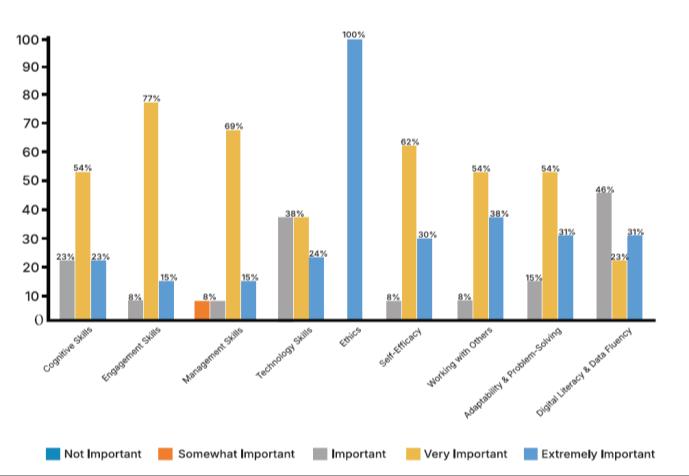
Fig-1:ImagereferredfromIndiaSkillsReport202512th edition
4.2 HR Survey Insights (24 Respondents) – TheSurvey shows that, the current recruitment process is still resume- based and does not assess other significant skills properly. The HR professionals are willing to supporttheyoungprofessionalsinskilldevelopment.
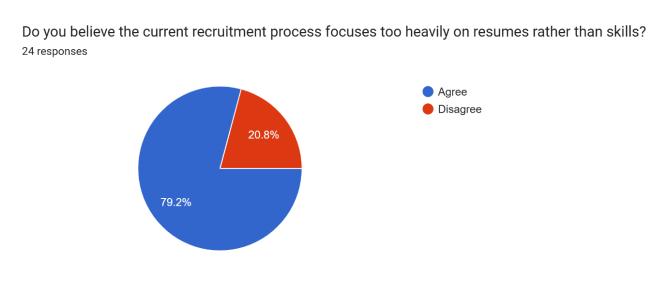
Chart-1:SurveyInsights
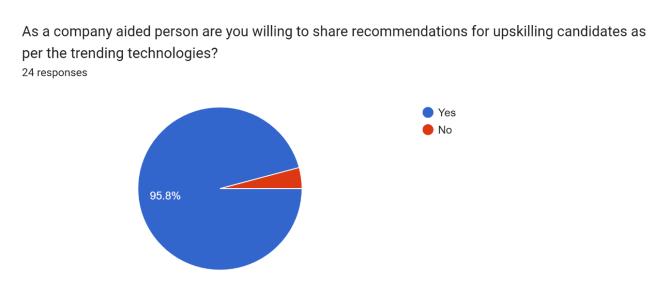
Chart-2:SurveyInsights
International Research Journal of Engineering and Technology (IRJET) e-ISSN: 2395-0056
Volume: 12 Issue: 6 | Jun 2025 www.irjet.net p-ISSN: 2395-0072
4.3 Candidate Survey
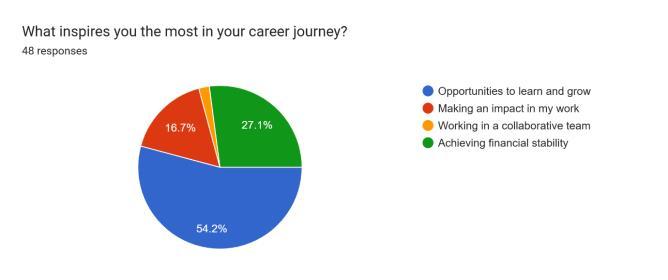
(48 Respondents) –Employees are expecting learning and growth opportunitiesinwork,whichwilldriveloyaltyandlongtermcareercontinuityinthecompany.
AI has certainly streamlined recruitment processes, but it alsopresentssignificantlimitations.Thehiringprocesshas become extensively lengthy, involving multiple rounds of resume screenings, assessments, and interviews. Many candidatesapplyformultiplerolessimultaneouslyand,due to prolonged recruitment timelines, often settle for imperfect jobs. This contributes to frequent job-hopping, drivenbyjobinsecurity,lackofgrowthopportunities,and mismatchedexpectations.Additionally,ApplicantTracking Systems (ATS) vary across platforms, lacking a universal format,whichresultsininconsistentscoringandrejectionof qualified candidates due to minor resume imperfections ratherthanactualskills.Asaresult,manycandidatesfocus on perfecting their resumes rather than developing real competencies. Due to which they get shortlisted by Application tracking system (ATS) but fail to clear the interviews.Thisincreasesthecostofhiring.AIalsostruggles toassesscrucialhumanattributessuchasadaptability,longterm potential, and emotional intelligence, leading to inefficienciesinthehiringprocesswhereneithercompanies norcandidatesfindtherightmatch.
Indiawitnessesanannualinfluxof10–12millionyouthinto the workforce, with BE, B-Tech, MCA, and MBA graduates comprising a significant portion of employable talent. However,thewideninggapbetweenacademiaandindustry resultsinskillshortagesandrisingunemployability.[8]The education system continues to emphasize theoretical learning over practical, hands-on experience, leaving graduatesunpreparedformodernjobdemands.Curriculums oftenfail to keeppace with industry advancements,while traditional rotelearningmethodshinderproblem-solving, creativity, and innovation. Limited industry-academia collaboration exacerbates the skills gap, while socioeconomicbarriersrestrictaccesstoqualityeducation and skill-building opportunities. Moreover, misleading trainingandinternshipprogramsfailtoequipjobseekers withreal-worldreadiness.Theeducationsystemalsolacks adaptabilitytodiverselearningstyles,preventingstudents fromreachingtheirfullpotential.Essentialsoftskillssuchas communication, leadership, teamwork, and adaptability
remainunderemphasized,furtherimpactingemployability. Additionally,thehighcostofhighereducationmakescareer advancementunattainableformany.WhileAI,datascience, automation and emerging technologies evolve rapidly, educational institutionsstruggletokeepup, resulting in a workforceill-equippedforthedemandsofthedigitalage.
CurrentAIapplicationsinrecruitmentarelimitedbyfactors suchasdataquality,algorithmicbias,andthecomplexityof humanattributesthatarechallengingtoquantify.CurrentAI modelslacktheabilitytoassessacandidate’sadaptability and long-term potential. Future research should focus on developingmethodologiestoreducethelengthinessofhiring process.Itshouldconnectthecollegeswiththecompanies forbetterlearningimplementations.Anditshouldinclude belowthings:
6.1 Evaluating Soft Skills and Learning Potential:Develop AI-drivenassessmenttoolscapableofaccuratelymeasuring candidates' soft skills and adaptability. Memory, time management,focusmappingtellusthathowwellsomeone canholdinformation,howquicklygraspnewconcepts.
6.2 Trending Technology Information Platform: Develop a dynamic knowledge hub where industry experts, experiencedprofessionals,andcompaniesshareinsightson indemand-skillsandemergingtechnologies.Companiescan activelycontributebycollaboratingonupskillinginitiatives, helpingtodevelopawell-preparedtalentpool.Leveraging AI-driven recommendations, the platform creates personalized learning paths, guiding candidates toward acquiring the most relevant skills for evolving industry demands.
6.3 Enhancing College-Industry Collaboration:UtilizeAI to bridge the gap between academic institutions and industryrequirementsbyaligningcurriculumwithreal-time jobmarketdemands.Thisalignmentensuresthatgraduates possessrelevantskills,facilitatingasmoothertransitioninto theworkforce.
6.4 Providing Targeted Skill Development:LeverageAIto identify essential skills and certifications required for specificroles.Byofferingtrainingandmentorshipprograms, candidatescanbecomeindustry-readywitha clearcareer vision,reducingconfusionandenhancingjobreadiness.
Thisresearchcanbeinterpretedasanapplicationorwebsite byusingbelowUMLdiagrams:
International Research Journal of Engineering and Technology (IRJET) e-ISSN: 2395-0056
Volume: 12 Issue: 6 | Jun 2025 www.irjet.net p-ISSN: 2395-0072
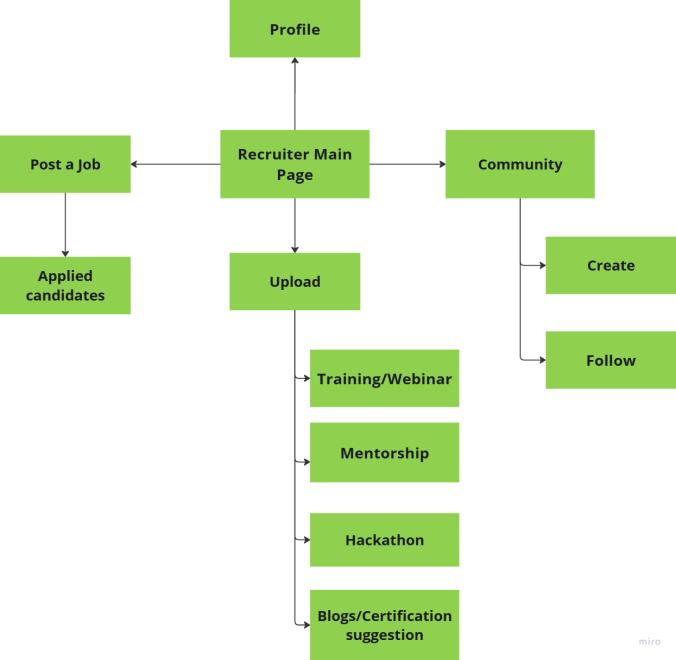
Chart-4:RecruiterPage
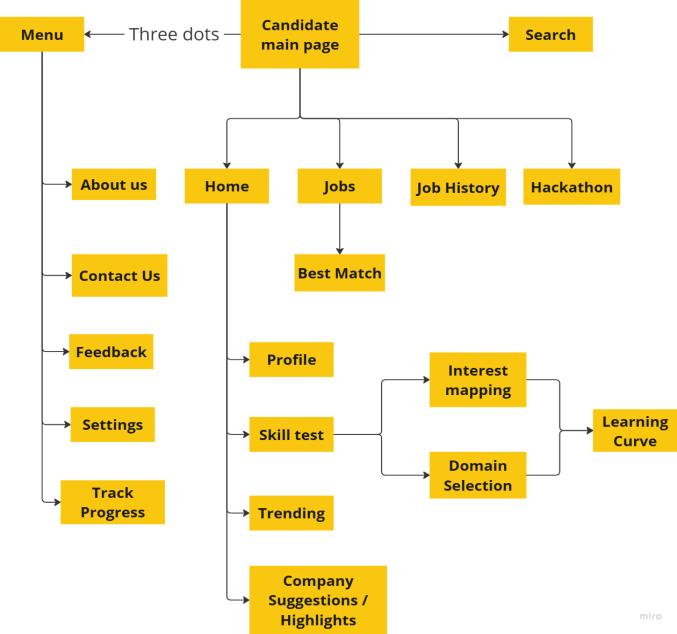
Chart-5:CandidatePage
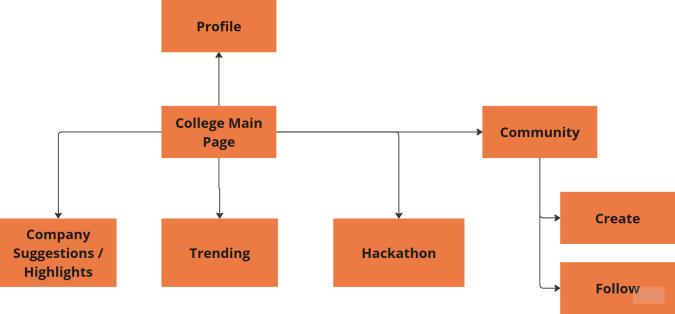
Chart-6:TPOPage
AI has transformed the recruitment market by enhancing efficiency,makinghiringmorestreamlined,andimproving candidate experience. Its ability to automate resume screening,conductAI-drivenassessments,andpredictjob compatibility has enabled organizations to access a wider talent pool while reducing recruitment time. However, AI aloneisnotaperfectsolution.TherelianceonATSdriven hiring has led to talent loss, as candidates are filtered out duetoresumeimperfectionsratherthantheiractualskills. Additionally,AIstrugglestoassesscriticalhumanattributes suchasadaptability,creativity,andemotional intelligence qualities essential for long term success in dynamic work environments.
Similarly, the existing education system continues to emphasize theoretical learning over practical, industryrelevant skills. The gap between academia and industry resultsinskillshortagesandrisingunemployability,leaving graduates underprepared for the modern workforce. Without strong industry-academic collaboration, the workforce will continue to face challenges in securing meaningful employment. To build a more effective and inclusivehiringsystem,organizationsmustadoptabalanced approach by integrating AI-driven efficiency with human oversight. Instead of solely relying on AI-based selection, companiesshouldprioritizeupskilling,training,andcareer development programs to create a more adaptable and sustainableworkforce.Reforminghiringpracticestofocus on skills rather than resumes will ensure that businesses find the right talent while giving candidates equal opportunities to grow. Furthermore, fostering industryacademic partnerships can help bridge the skill gap by aligningeducationalcurriculumswithreal-worldjobmarket demands. By leveraging AI responsibly and investing in continuous learning, businesses can create a future-ready workforce,minimizeskillgaps,anddriveinnovation.While AI will continue to play a crucial role in recruitment, its success will ultimately depend on how ethically and effectively it is integrated with human judgment, talent development,andinclusivehiringstrategies.
By integrating technical education, industry insights, and careeropportunities,newplatformshouldbridgetheskill gap,toenhanceemployability,andfostersinnovationinthe evolvingjobmarket.
[1] Jayaraj, A. M., Gowrishankkar, V., & Sarasu, A. (2023). Newtrendsinhrrecruitmentprocessandit’simpactonjob seekers. E3S Web of Conferences, 449, 03013. https://doi.org/10.1051/e3sconf/202344903013
[2]Alex,A.(2021).Acomprehensivestudyonnewertrends inrecruitmentpracticeswithreferencetoretailindustry.In Dr.D.Y.PatilVidyapeeth’sGlobalBusinessSchool&Research
International Research Journal of Engineering and Technology (IRJET) e-ISSN: 2395-0056
Volume: 12 Issue: 6 | Jun 2025 www.irjet.net p-ISSN: 2395-0072
Centre, Dr. D.Y. Patil Vidyapeeth’s Global Business School & Research Centre [Journal-article].
[3]LinkedIn.(n.d.). ThebusinesscaseforSkills-Basedhiring U.S.ChamberofCommerceFoundation.(n.d.). SKILLS-BASED HIRING AND ADVANCEMENT BRIEF
[4] Koduri, G., Kunkatla, P. L. T., Namburi, J. S. H., & Departmentofmanagementstudies,SriVasaviEngineering College, Tadepalligudem, West Godavari, Andhra Pradesh, India. (2023). A study on recent trends in recruitment. In InternationalJournalofCommerceandManagementResearch (pp.110–112) [Journal-article]. https://www.managejournal.com
[5]Horodyski,P.(2023).Applicants’perceptionofartificial intelligenceintherecruitmentprocess. ComputersinHuman Behavior Reports, 11, 100303. https://doi.org/10.1016/j.chbr.2023.100303
[6] Wardlaw,M.K.& WaldenUniversity. (2019).Effective human resources recruiting and hiring practices for improving organizational performance. In Walden Dissertations and Doctoral Studies. https://scholarworks.waldenu.edu/dissertations
[7]Bholane,K.P.(2023).Recenttrendsinrecruitmentand selection. ORGANIZATIONAL MANAGEMENT
[8]Biradar,A.,Ainapur,J.,K,K.,Aishwarya,A.,Sudharani,S., Shivaleela,S.,&Monika,M.(2024).“TheImpactofArtificial Intelligence on Modern Recruitment Practices: A MultiCompany Case Study Analysis.” International Journal of Business and Management Invention., 13(9), 143–150. https://doi.org/10.35629/8028-1309143150

Miss.DhanashreePaste pastedhanashree9@gmail.com
https://www.linkedin.com/in/pastedhanashree/

Founder of Grind up
Miss.ShrutiShah shrutishah523@gmail.com
https://www.linkedin.com/in/shruti-shah247927258/