
International Research Journal of Engineering and Technology (IRJET) e-ISSN: 2395-0056
Volume: 13 Issue: 03 | Mar 2026 www.irjet.net p-ISSN: 2395-0072
International Research Journal of Engineering and Technology (IRJET) e-ISSN: 2395-0056
Volume: 13 Issue: 03 | Mar 2026 www.irjet.net p-ISSN: 2395-0072
JAYANT JANARDHAN
Lecturer in Civil Engineering Department, Government Polytechnic, Bramhapuri, Chandrapur, Maharashtra, India
Abstract: - Earthquake engineering primarily aims to analyse, design, and construct structures in a manner that minimizes damage to both the structure and its components during seismic events. Numerous studies have investigated the impact of structural irregularities on seismic performance. Inspired by previous research on the behaviour of irregularly shaped buildings under earthquake loading, the present study examines the influence of plan and shape configurations on structural response. Structures with irregular geometries exhibit significantly different behaviour compared to regular ones when subjected to seismic forces. Among various factors, plan geometry plays a crucial role in determining structural performance under such dynamic loading conditions. This study focuses on evaluating the effects of plan and shape irregularities on buildings under seismic action. To assess structural performance, both equivalent static analysis and response spectrum analysis were carried out using ETABS 19 software. Key response parameters, including lateral displacement, storey drift, and base shear, were analysed and compared across different structural models. The results are presented through graphs and bar charts for better interpretation. The findings indicate that structures with simple and regular plan configurations perform better under seismic loading. Therefore, adopting regular geometries at the planning and design stage is essential for minimizing earthquake-induced damage.
Keywords: Equivalent static analysis, Response spectrum analysis, ETABS, Irregular shape.
In the present scenario, many buildings are constructed with irregular configurations in both plan and elevation, which may be highly vulnerable to severe earthquakes in the future. Since such irregularities are often unavoidable in modern construction, it becomes essential to evaluate the performance of these structures under seismic conditions. Understandingtheirbehaviourduringearthquakesiscrucialsothatappropriatedesignprecautionscanbeimplemented. Adetailedstudyofthestructuralresponseofirregularbuildingsisnecessarytoensuresafetyandreliability.Whileseveral studies have focused on the seismic performance of regular structures, there remains a limited understanding of how irregularstructuresrespondtoearthquakeforces.Therefore,acomprehensiveassessmentofbothverticalandhorizontal irregularities and their impact on seismic demand is required. A significant portion of India lies in seismic-prone zones, makingitimperativetoconsiderearthquakeloadsduringstructuraldesign.Earthquake-inducedlateralforcesareamajor concern, as they can generate critical stresses, cause excessive vibrations, and lead to significant lateral displacement or drift.Storeydrift,definedastherelativelateraldisplacementbetweenthetopandbaseofabuilding,mustbecontrolled to prevent structural and non-structural damage. Ideally, structures should be capable of withstanding moderate earthquakes without structural failure, although minor damage may occur. Recent earthquakes have demonstrated considerable damage to reinforced concrete structures, highlighting the importance of evaluating seismic behaviour accurately.Ensuringanadequatelevelofsafetyinstructuraldesignisthereforeessential.Thisstudyfocusesonassessing the seismic performance of reinforced concrete (RC) frame buildings using both static and dynamic analysis methods in accordance with IS codes. A multi-storey residential building model is analysed, and key response parameters such as storey displacement, base shear, and storey drift are compared using the response spectrum method. ETABS, one of the most widely used structural analysis and design software tools in the industry, is utilized in this study. The research primarily involves a comparative analysis of results obtained from the seismic evaluation of multi-storey building structuresmodelledandanalysedusingETABS.
SUMMARY:- Past earthquake events have shown that buildings with structural irregularities are more susceptible to damage.Thechoiceofbuildingshapeandconfigurationplaysacrucialroleindeterminingitsperformanceduringstrong seismic activity. For this reason, symmetry and regularity are generally recommended in the design of earthquakeresistant structures. Considering the influence of plan and shape configurations, the present study aims to evaluate the seismic performance of different structural layouts. The objective is to identify which configurations perform more effectivelyunderearthquakeloadingandshouldthereforebepreferredindesignpractice.
International Research Journal of Engineering and Technology (IRJET) e-ISSN: 2395-0056
Volume: 13 Issue: 03 | Mar 2026 www.irjet.net p-ISSN: 2395-0072
The actual behaviour of structures observed in the physical world cannot be replicated with complete accuracy in analytical models. Therefore, it is necessary to develop a systematic approach that bridges the gap between real-world behaviour and simulated analysis. In engineering practice, certain assumptions are inevitably made to simplify complex physical problems, which leads to approximate solutions. In this context, six structural models were developed and analysedusingETABS19softwaretostudythebehaviourofirregularstructuresunderseismicconditions.
Specificationforallabovementionedstructuralmodelsaresameandaregivenasfollows.
Table 1 Load Data
LiveLoad 3kN/m2asperIS875
FloorFinishLoad
kN/m2asperIS875
Table 2 Seismic Definition Specifications
DensityofRCCconsidered
Table 3 Geometric Data
Density
International Research Journal of Engineering and Technology (IRJET) e-ISSN: 2395-0056
Volume: 13 Issue: 03 | Mar 2026 www.irjet.net p-ISSN: 2395-0072
Poison’sRatio 0.2
Conc.CubeComp.Strength,fck
BendingReinforcementyieldstrength,fy
ShearReinforcementyieldstrength,fys
BeamRebarCover 35mm
ColumnBarSize 16ɸ
N/mm2
N/mm2
N/mm2
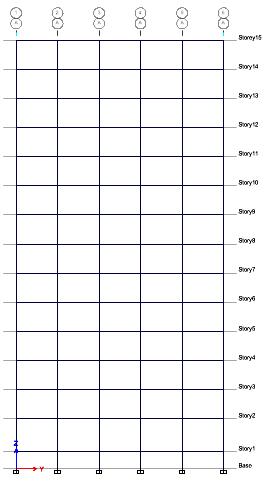
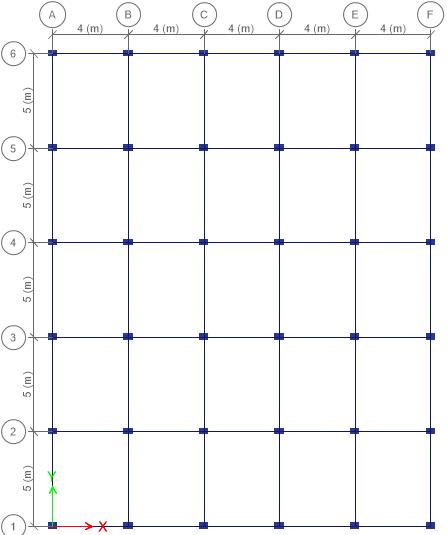
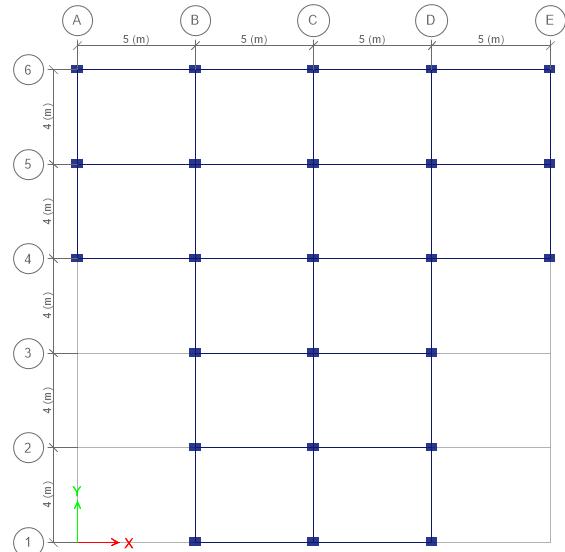
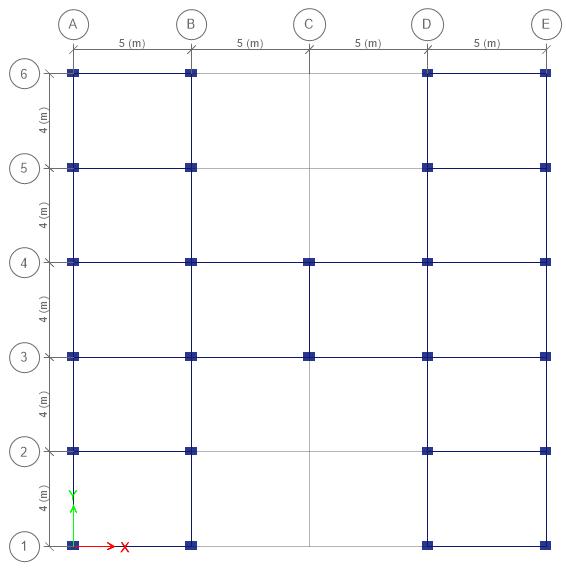
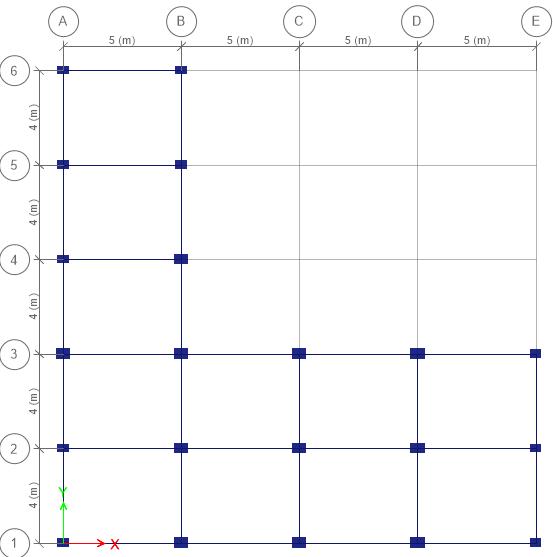
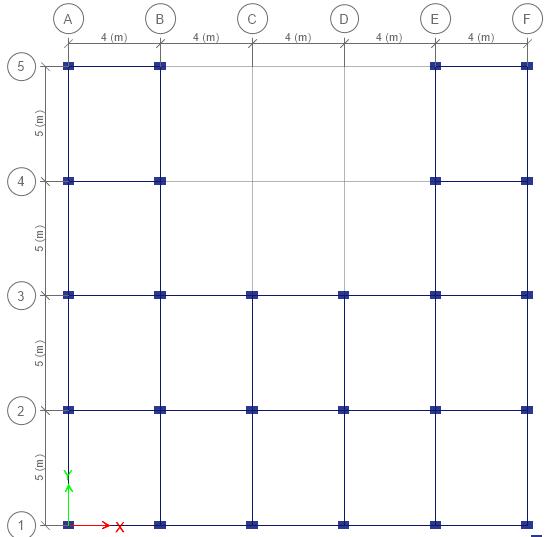
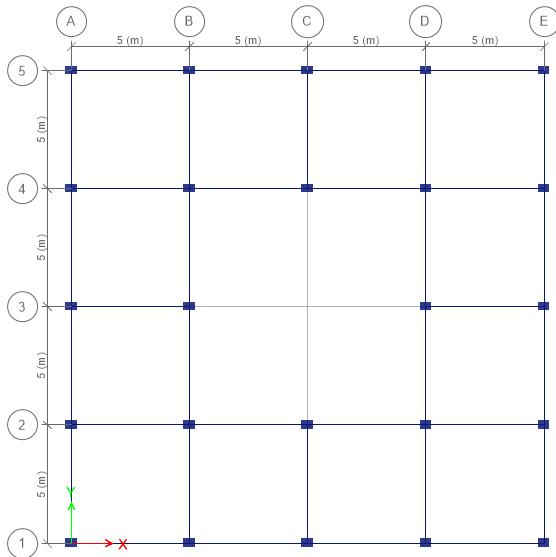
These 6 models are shaped by considering Plan irregularities i.e. the plan area for each structure is same only there is differenceofgeometryi.e.horizontal(planandshape).Foralltypesofstructuretotalnumberofstoreyare15.
International Research Journal of Engineering and Technology (IRJET) e-ISSN: 2395-0056
Volume: 13 Issue: 03 | Mar 2026 www.irjet.net p-ISSN: 2395-0072
Planofeachbuildingmodelsconsiderareshownbelow:-
International Research Journal of Engineering and Technology (IRJET) e-ISSN: 2395-0056
Volume: 13 Issue: 03 | Mar 2026 www.irjet.net p-ISSN: 2395-0072
Several factors influence the behaviour of a building under seismic loading; among these, storey drift and lateral displacement are considered in this study. For the analysis, a building model located in Seismic Zone III is taken into account. Both Equivalent Static Analysis and Response Spectrum Analysis are performed on the model using ETABS software. The analysis results are presented in the form of tables and charts. Key response parameters such as lateral displacementandstoreydriftarecarefullyevaluatedaftertheanalysis.ThesevaluesmustcomplywiththeprovisionsofIS 1893 (2016), which specify that the storey drift in any storey should not exceed 0.004 times the storey height. If the calculated drift exceeds the permissible limits, appropriate design modifications, such as increasing the column section size,areimplementedtocontrolexcessivedriftandensurestructuralsafety.
Fig.8 Displacement Graph X-Direction
Fig.9 Displacement Graph Y-Direction
International Research Journal of Engineering and Technology (IRJET) e-ISSN: 2395-0056
Volume: 13 Issue: 03 | Mar 2026 www.irjet.net p-ISSN: 2395-0072
REGULAR SQUARE SHAPE
REGULAR SQUARE SHAPE
International Research Journal of Engineering and Technology (IRJET) e-ISSN: 2395-0056
Volume: 13 Issue: 03 | Mar 2026 www.irjet.net p-ISSN: 2395-0072 © 2026, IRJET | Impact Factor
Fig.12 Displacement Graph X-Direction Fig.13 Displacement Graph Y-Direction
Fig.14 Storey Drift X-Direction
H SHAPE
Fig.15 Storey Drift Y-Direction
Fig.16 Displacement Graph X-Direction Fig.17 Displacement Graph Y-Direction
International Research Journal of Engineering and Technology (IRJET) e-ISSN: 2395-0056
Volume: 13 Issue: 03 | Mar 2026 www.irjet.net
International Research Journal of Engineering and Technology (IRJET) e-ISSN: 2395-0056
Volume: 13 Issue: 03 | Mar 2026 www.irjet.net p-ISSN: 2395-0072
Storey Drift X-Direction
Fig.23 Storey Drift Y-Direction
Fig.24 Displacement Graph X-Direction Fig.25 Displacement Graph Y-Direction
International Research Journal of Engineering and Technology (IRJET) e-ISSN: 2395-0056
Volume: 13 Issue: 03 | Mar 2026 www.irjet.net
Storey Drift X-Direction
Storey Drift Y-Direction
Graph
International Research Journal of Engineering and Technology (IRJET) e-ISSN: 2395-0056
Volume: 13 Issue: 03 | Mar 2026 www.irjet.net p-ISSN: 2395-0072
We have plotted graphs of individual structure for storey drift and lateral displacement. These graphs are specifically defined in this chapter. The response of structure against seismic forces changes with plan irregularity. Consideringtheeffectoflateraldisplacementondifferentshapesofthebuildingofthestructure,ithasbeenobservedthat static analysis shows more displacement as compared to dynamic analysis method. Limiting value of drift for the given structureasperIS:1893-2016is20.64cm,whichisnotexceededinanyofthestructure.
4.
1) ConsideringtheeffectoflateraldisplacementinXdirectiononregularshape,Tshape,H-shape,L-shape,C-shape, square shape with core of the building of structure it has been observed that static displacement gives more displacementincomparisontodynamicdisplacement.
2) ConsideringtheeffectoflateraldisplacementinYdirectiononregularshape,Tshape,H-shape,L-shape,C-shape, square shape with core of the building of structure it has been observed that static displacement gives more displacementincomparisontodynamicdisplacement.
3) Thelimitingvalueofstoreydriftsasperclause7.11.1ofIS1893:2016is20.64cmwhichismoreascomparedto thevalueobtainedfromstaticanddynamicanalysisforregularshape,Tshape,H-shape,L-shape,C-shape,square shapewithcoreofthebuildingofstructurein Xdirection.
4) Thelimitingvalueofstoreydriftsasperclause7.11.1ofIS1893:2016is20.64cmwhichismoreascomparedto thevalueobtainedfromstaticanddynamicanalysisforregularshape,Tshape,H-shape,L-shape,C-shape,square shapewithcoreofthebuildingofstructurein Ydirection.
5) REFERENCES
1. JayantJanardhanSahareandDr.MilindV.Mohod(2021)-“SeismicResponseOfIrregularStructures”MEStudent, Civil Engineering Department, Prof. Ram Meghe Institute of Technology & Research, Badnera (PRMIT & R), SGBAU, Amravati, Maharashtra, India, Assitant Professor, Civil Engineering Department, Prof. Ram Meghe Institute Of Technology & Research, Badnera (PRMIT & R), SGBAU, Amravati, Maharashtra, India. International JournalofAdvanceResearch,IdeasandInnovationsinTechnology(IJARIIT) ISSN:2454-132X(Volume7,Issue3V7I3-1765)
2. Mohd Abdul Aqib Farhan and Jagadeesh Bommosetty (2019) – “Seismic Analysis of Multistoried RCC Buildings RegularandIrregularinPlan”M.Techstudent,Departmentofcivilengineering,AssistantProfessor,Department ofcivilengineering.InternationalJournalofEngineeringResearchandTechnology(IJERT)ISSN:2278-0181Vol.8 Issue11,November-2019
3. A.Titiksh (2017) – “Effects of Irregularities on the Seismic Response of A Medium Rise StructureDepartment of CivilEngineering.AsianJournalofCivilEngineering(BHRC)VOL.18,No.8(2017),Pages1307-1314
International Research Journal of Engineering and Technology (IRJET) e-ISSN: 2395-0056
Volume: 13 Issue: 03 | Mar 2026 www.irjet.net p-ISSN: 2395-0072
4. V. Rajendra Kumar and Ranga Rao.V (2017) – “Comparative Study of Regular and Irregular Structures Using EquivalentStaticandResponseSpectrumMethods”PGStudent,DepartmentofCivil Engineering,Professor,Civil Engineering Department. International Journal of Civil Engineering and Technology (IJCET) VOL.8, Issue 1, January2017,pp.615-622ArticleID:IJCET_08_01_071
5. Puneet Mittal; Nishant Kad and Sonia Chutani; Amanpreet Tangri (2016) – “A comparison of the analysis and designresultsof4storyusingSTAADProandETABSsoftware”AssistantProfessor,CEDept,AssistantProfessor, CE Dept. International Journal of Research (IJR)be-ISSN: 2348-6848, p-ISSN: 2348-795X VOL.3, Issue 05, March 2016
6. Pardeshi SameerandN.G. Gore (2016) - “Study of SeismicAnalysisandDesignof MultiStorey Symmetrical and Asymmetrical Building” M.E. student, Civil Engineering Department, Assistant Professor, Civil Engineering Department. International Research Journal of Engineering and Technology (IRJET) VOL.3, Issues 1 PAGES 732737
7. SMonishandSKaruna(2015)-“AStudyofSeismicPerformanceofHighRiseIrregularRCFramedBuildings”Post Graduate Student Department of civil engineering and Assistant Professor Department of civil engineering. InternationalJournalofResearchinEngineeringandTechnologyeISSN:2319-1163pISSN:2321-7308Volume:04 Issue:05May2015
8. MaheshN.PatilandYogeshN.Sonawane(2015)–“SeismicAnalysisofMultistoriedBuilding”AssistantProfessor SVNITSuratandAssistantProfessorSVNITSurat.InternationalJournalofEngineeringandInnovativeTechnology (IJEIT)Volume4,Issue9March2015
9. MohammedRizwanSultanandD.GousePeera(2015) –“DynamicAnalysisofMultistoriedBuildingForDifferent Shapes” P. G. Student Department of civil engineering and Associate Professor Department of civil engineering. InternationalJournalofInnovativeResearchinAdvancedEngineering(IJIRAE)ISSN:2349-2163Issue8,Volume 2(August2015)
10. B.Rajesh,Mr.SadatAliKhan,Mr.ManiKandan,Dr.S.SureshBabu(2015)“ComparisonofbothLinearStaticand Dynamic Analysis of Multistoried Buildings with Plan Irregularities” M.E. student, Civil Engineering Department, Assistant Professor, Civil Engineering Department, Assistant Professor, Civil Engineering Department, HOD, Department of Civil Engineering. International Journal of Scientific Engineering and Applied Science (IJSEA) –VOL.1,Issue–7October2015
11. A.Neha P. Modakwar, Sangita S. Meshram and Dinesh W. Gawatre (2014) - “Seismic Analysis of Structures with Irregularities” Civil Engineering Department. IOSR Journal of Mechanical and Civil Engineering (IOSR-JMCE) eISSN:2278-1684,p-ISSN:2320-334X.InternationalConferenceonAdvancesinEngineeringandTechnology-2014 (ICAET-2014)PP63-66
12. Mr.S.MaheshandMr.Dr.B.PandurangaRao(2014)–“Comparisonofanalysisanddesignofregularandirregular configurationofmultistoreybuildinginvariousseismiczonesandvarioustypesofsoilsusingETABSandSTAAD” Department of Civil Engineering. IOSR Journal of Mechanical and Civil Engineering (IOSR-JMCE) e-ISSN: 22781684,p-ISSN:2320-334X,Volume11,Issue6ver.1(Nov-Dec.2014).PP45-52
13. RavikumarCM,BabuNarayanKS,SujithBY,andVenkatReddyD(2012) –“EffectofIrregularConfigurationson Seismic VulnerabilityofRC Buildings”Departmentof Civil Engineering. ArchitectureResearch2012, 2(3):20-26 DOI:10.5923/j.arch.20120203.01
14. Prashanth. P, Anshuman. S, Pandey. R. K, and Arpan Herbert (2012) – “Comparison of Design Results of A StructureDesignedUsingSTAADAndETABSSoftware”HigherDegreeStudent,CivilEngineeringGroup,Assistant Professor, Civil Engineering Group, Professor and Associate Head, Department of Civil Engineering, Assistant Professor,DepartmentofCivilEngineering.InternationalJournalofCivilandStructuralEngineeringVOL.2,No.3, 2012ResearchArticleISSN0976-4399
15. IS 1893 (Part 1): 2016 Criteria for Earthquake Resistant Design of Structures Part 1 General Provisions and Buildings(SixthRevision)