
International Research Journal of Engineering and Technology (IRJET) e-ISSN: 2395-0056
Volume: 13 Issue: 03 | Mar 2026 www.irjet.net p-ISSN: 2395-0072
International Research Journal of Engineering and Technology (IRJET) e-ISSN: 2395-0056
Volume: 13 Issue: 03 | Mar 2026 www.irjet.net p-ISSN: 2395-0072
Mr. Shreenivas Hanmant Tamann, Mr. Kiran Dhondappa Jamadar, Mr. Shahid Salim Shaikh, Mr. Abulhasan Liyakat Ali Inamdar
Lecturer, Dept. of Mechanical Engineering, Maulana Azad Polytechnic, Hotgi, Solapur, Maharashtra, India. Lecturer, Dept. of Mechanical Engineering, Maulana Azad Polytechnic, Hotgi, Solapur, Maharashtra, India. H.O.D., Dept. of Mechanical Engineering, Maulana Azad Polytechnic, Hotgi, Solapur, Maharashtra, India. Lecturer, Dept. of Mechanical Engineering, Maulana Azad Polytechnic, Hotgi, Solapur, Maharashtra, India. ***
Abstract - Brazing is a joining process used extensively in manufacturingindustriestojoinmetalswiththehelpofafiller metal,typicallyanon-ferrousalloy,whichmeltsabove450°C but below the melting point of the base metals being joined. Thispaperexploresthefundamentalsofbrazing,includingits principles, materials involved, process parameters, applications, advantages, and challenges. The research emphasizes the significance of brazing in modern manufacturing, detailing its various techniques and advancements.
Brazingisaversatilejoiningprocessthatfindsapplication acrossindustriessuchasautomotive,aerospace,electronics, andplumbingduetoitsabilitytocreatestrong,durable,and leak-tightjoints.Unlikewelding,brazingdoesnotmeltthe basemetals,whichallowsjoiningofdissimilarmetalsand materialswithdifferingmeltingpoints.Thispaperaimsto provideacomprehensiveoverviewofbrazing,detailingits process,materials,andindustrialapplications.
Thefundamentalsofbrazingencompassseveralkey aspectsthatareessentialtounderstandandmasterfor successfuljoiningofmetalsusingbrazingtechnique. Followingarethefundamentalsonwhichbrazingdepends on:
Thebasicprincipleinvolvesheatingthebasemetalsand applying a filler metal (often in the form of a wire or preform) which flows into the joint by capillary action, creatingametallurgicalbonduponcooling.
Theprincipleofbrazingrevolvesaroundjoiningtwoormore materials using a filler metal that melts at a temperature lowerthanthe basemetalsbeingjoined.Herearethekey principlesofbrazing:
2.1.1
In brazing, only the filler metal is melted, not the base metals, which distinguishes it from welding, where
both the base and filler metals may melt and fuse together.
The filler metal chosen always melts at a substantially lower temperature than the base materials; typical brazingtemperaturesareabove450°Cbutwellbelow themeltingpointofthebasemetals.
This ensures the integrity and shape of the base componentsremainunaffectedbythejoiningprocess.
The capillary action iscriticalinbrazing,asthemolten fillermetalisdrawnintothenarrowjointgapdueto surfacetensionandwettingforces.
Factorsaffectingcapillaryflowinclude:
Joint clearance:Toowideortoonarrowagapcan impede flow; optimal clearance promotes strong, uniformjoints.
Surface roughness: Smoother surfaces promote betterwettingandflow,whileroughsurfacescan hinderfillermovement.
Filler metal composition: The alloys used must have low viscosity and high wetting ability for effectivepenetrationintothejoint.
Brazingformsa metallurgicalbond atthejointinterface, where the filler metal dissolves and diffuses slightly into the base metals, sometimes forming localized alloysorintermetalliccompounds.
Jointstrengthisinfluencedby:
The extent and nature of any intermetallic layer formed (which should be minimal for best strength).
The diffusion between filler and base metals (sufficientdiffusionensuresstrongadhesion).
International Research Journal of Engineering and Technology (IRJET) e-ISSN: 2395-0056
Volume: 13 Issue: 03 | Mar 2026 www.irjet.net p-ISSN: 2395-0072
Solidification characteristics of the filler, where controlledcoolinghelpspreventvoidsandensures ahomogenousjoint.
2.1.4 Flux and Surface Preparation:
Flux isessentialinbrazingforthefollowingreasons:
Itremovesoxidesandimpuritiesfrombasemetal surfacesbeforeandduringheating.
It protects the joint area from further oxidation throughouttheprocess,preservingthesurfacesfor metallurgicalbonding.
Itimprovesthe wetting andflowcharacteristicsof themoltenfiller,ensuringevenjointfilling.
Proper surface preparation (cleaning, degreasing, sometimes mechanical abrasion) iscrucial to ensure reliablecapillaryactionandbonding.
2.1.5 Temperature Control:
Accurate temperature control is vital to prevent excessive heating, which may damage or distort the basemetals,aswellastoensurethefillerflowsbutthe basesdonotmelt.
Uniformheatingacrossthejointareaensuresconsistent capillaryactionandjointintegrity.
Industrialprocessesutilizetemperaturemonitoringtools such as thermocouples, pyrometers, or infrared sensorstotrackandregulatejointtemperatures.
Equipment like furnaces, induction heaters, or torches are chosen for the uniformity and control opportunitiestheyoffer.
Each of these principles temperature difference, capillary action, metallurgical bonding, use of flux, and precisetemperaturecontrol iscriticaltoachievingstrong, consistent,andreliablebrazedjointsinindustrialpractice.
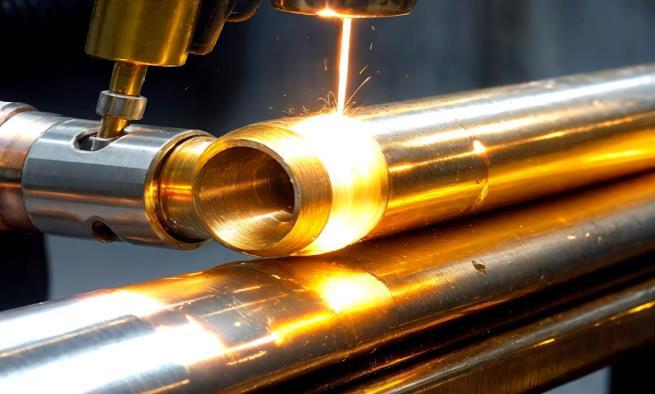
Common filler metals include silver, copper, nickel, and aluminumalloys,chosenbasedonthepropertiesrequiredfor the joint and the materials being joined. The filler metal (brazingalloy)musthaveameltingpointlowerthanthatof the base metals but high enough to provide a strong joint. Common filler metals include brass, bronze, silver-based alloys,andvariouscombinationsofmetalslikecopper,nickel, andzinc.
Fillermetalsplayacrucialroleinbrazing,wheretheyneedto becarefullyselectedbasedonthematerialsbeingjoinedand the properties desired in the joint. Here is some common fillermetalsusedinbrazing:
2.2.1
These are among the most widely used filler metals in brazingduetotheirexcellentwettability(abilitytospread and adhere to the base metals) and high strength joints. Silver-basedalloyscanvaryincomposition,oftencontaining elementslikecopper,zinc,andsometimescadmiumortinto adjustmeltingpointsandfluidity.
2.2.2 Copper-Based Alloys:
Brass and bronze are common copper-based filler metals used in brazing. Brass typically contains copper and zinc, while bronze contains copper with tin or other elements. Thesealloysarechosenfortheircompatibilitywithcopper andcopperalloys,providinggoodmechanicalpropertiesand corrosionresistance.
2.2.3 Nickel-Based Alloys:
Nickel-based filler metals are used for brazing stainless steels,nickelalloys,andotherhigh-temperatureapplications. Nickel-basedbrazingalloysoftencontainchromium,silicon, boron, or other elements to improve wetting and joint strength.
2.2.4 Aluminum Alloys:
Thesealloysareusedforbrazingaluminumandaluminum alloys. They are typically composed of aluminum with elementslikesilicon,magnesium,orzinctolowerthemelting pointandimproveflowcharacteristics.
2.2.5 Copper-Nickel-Zinc Alloys:
Knownas"whitemetal"brazingalloys,thesecombinations offergoodstrengthandcorrosionresistance.Theyareused for brazingcarbide tools,stainlesssteel,and other ferrous andnon-ferrousmetals.
International Research Journal of Engineering and Technology (IRJET) e-ISSN: 2395-0056
Volume: 13 Issue: 03 | Mar 2026 www.irjet.net p-ISSN: 2395-0072
Brazing is suitable for joining most metals and alloys, includingferrousandnon-ferrousmetals,ceramics,andeven some plastics. Brazing can join different metals or similar metals.It'scrucialtoensurethatthebasemetalsbeingjoined arecompatibleintermsoftheirmetallurgicalpropertiesand thermalexpansioncoefficients.
2.3.1 Criteria for Selection of Base Metals
Selecting appropriate base metals for brazing involves considering several key criteria to ensure successful joint formationanddesiredproperties.Herearethemainfactors toconsiderforselectionofbasemetals:
2.3.1.1 Melting Point:
Selecting base metals with melting points higher than the brazingtemperaturebutlowerthanthefillermetalmelting point to avoid melting the base metals during the brazing process.
2.3.1.2 Metallurgical Compatibility:
Basemetalsthatarecompatiblewiththechosenfillermetal to ensure proper wetting and alloy formation at the joint interface. Factors such as atomic structure, chemical composition, and thermal expansion coefficients affecting compatibility.
2 3.1 3 Mechanical Properties:
The mechanical properties required for the application of brazingprocess,suchasstrength,ductility,andtoughness. Discuss how the base metal properties influence joint strengthanddurability.
2.3.1.4 Corrosion Resistance:
Selecting base metals with adequate corrosion resistance propertiessuitablefortheintendedenvironmentandservice conditionspost-brazing.
2.3.2 Types of Base
Used in Brazing
2.3.2.1 Ferrous Metals:
Ferrousmetals,includingcarbonsteels,stainlesssteels,and toolsteels,arecommonlyusedinbrazingapplicationsdueto their specific properties and applications requirements. Here's a breakdown of each type and their relevance in brazing:
1. Carbon Steels
Properties:
Carbon steels are primarily composed of iron and carbon, typicallycontaininguptoabout2%carbon.Theyareknown
for their strength, toughness, and hardness, making them versatileforawiderangeofapplications.
Applications:
Carbonsteelsareusedinstructuralapplications,automotive components, and machinery parts where strength and durabilityarecrucial.
Challenges in Brazing:
Carbon steels can be prone to oxidation during brazing, which can weaken the joint if not properly managed. Precleaningandfluxselectionarecriticaltopreventoxidation andensureastrongbrazedjoint.
2. Stainless Steels
Properties:
Stainless steels contain chromium (typically 10-20%) and oftennickelandotheralloyingelements.Theyarecorrosionresistant,havegoodstrength,andofferexcellentmechanical propertiesoverawidetemperaturerange.
Applications:
Stainless steels are widely used in food processing equipment, chemical plants, medical instruments, and architectural applications. They are chosen for their corrosionresistanceandaestheticappeal.
Challenges in Brazing:
Stainlesssteelscanformoxidelayers(chromiumoxides)at elevated temperatures, which interfere with brazing. Specialized brazing techniques and fluxes are required to ensureacleanjointandproperwettingofthefillermetal.
3. Tool Steels
Properties:
Toolsteelsaredesignedforuseincuttingtools,molds,and dieswherehighhardness,wearresistance,andtoughnessare required. They often contain tungsten, molybdenum, and vanadiuminadditiontocarbon.
Applications:
Tool steelsare critical in manufacturing processessuchas stamping,forming,andmachiningwherewearresistanceand durabilityareessential.
Challenges in Brazing:
Toolsteelsaretypicallyhardenedandcanhavehighcarbon content,makingthemsusceptibletocrackingifnotheated andcooledproperlyduringbrazing.Controlledheatingand cooling rates, as well as proper joint design, are crucial to
International Research Journal of Engineering and Technology (IRJET) e-ISSN: 2395-0056
Volume: 13 Issue: 03 | Mar 2026 www.irjet.net p-ISSN: 2395-0072
avoidthermalstressesandmaintaintheintegrityofthetool steel.
2.3.2.2
1. Oxidation:
Ferrous alloys tend to oxidize readily at brazing temperatures,formingoxidesthatcanpreventwettingofthe fillermetalandweakenthejoint.
2. Surface Preparation:
Propercleaningofthesurfacestobebrazedandselectionof suitable fluxes are essential to remove oxides and ensure goodmetallurgicalbonding.
3. Thermal Expansion:
Differentialratesofexpansionandcontractionbetweenthe basemetalandfillermetalcanleadtoresidualstressesand potentialjointfailureifnotcarefullymanaged.
4. Post-Braze Treatment:
Someferrousalloysmayrequirepost-brazeheattreatmentto relievestressesandoptimizemechanicalproperties,which addscomplexitytothebrazingprocess.
In conclusion, while ferrous metals like carbon steels, stainless steels, and tool steels offer excellent mechanical propertiesandaresuitableforvariousapplications,brazing them requires careful consideration of their specific propertiesandchallenges.Propersurfacepreparation,flux selection, and brazing technique are critical to achieving strong,durablejointsinthesematerials.
2.3.2.3 Non-Ferrous Metals:
Non-ferrousmetalssuchasaluminum,copper,brass,bronze, andtitaniumalloysarewidelyusedinbrazingapplications due to their specific properties and applications requirements.Here'sanoverviewofeachmetal,highlighting theiruse,advantages,andchallengesinbrazingprocesses:
1. Aluminum
Applications:
Automotive Industry: Usedinheatexchangers,radiators, andairconditioningsystems.
Aerospace: Components requiring lightweight, corrosionresistantproperties.
Electronics: Heatsinksandelectricalconnectors.
Advantages:
High Thermal Conductivity: Facilitates efficient heat transfer.
Lightweight: Idealforapplicationswhereweightiscritical.
Corrosion Resistance: Formsa naturallyprotectiveoxide layer.
Challenges:
Oxidation: Aluminumreadilyformsoxides,necessitatingthe useofappropriatefluxesandcontrolledatmosphere.
Joint Strength: Achievingstrong joints can be challenging duetooxideformationanddifferencesinthermalexpansion coefficients.
2. Copper
Applications:
Plumbing and HVAC: Fittings,pipes,andheatexchangers.
Electrical: Conductors, connectors, and electrical components.
Industrial Equipment: Heat sinks, transformers, and switchgear.
Advantages:
Excellent Thermal and Electrical Conductivity: Ensures efficientheattransferandelectricalperformance.
Ease of Brazing: Formsstrongjointswithavarietyoffiller metals.
Corrosion Resistance: Canbeenhancedwithappropriate alloying.
Challenges:
SurfaceCleanliness: Requiresthoroughcleaningtoremove oxidesbeforebrazing.
Cost: Higher cost compared to some other non-ferrous metals.
3. Brass
Applications:
Decorative Hardware: Door handles, hinges, and architecturalfittings.
Plumbing and Marine: Valves, fittings, and marine hardware.
International Research Journal of Engineering and Technology (IRJET) e-ISSN: 2395-0056
MusicalInstruments:Trumpets,trombones,andotherbrass instruments.
Advantages:
Malleability: Easytoformandmachine.
Corrosion Resistance: Suitable for outdoor and marine environments.
Aesthetic Appeal: Attractive appearance for decorative applications.
Challenges:
ZincEvaporation:Duringbrazing,zincinbrasscanvaporize, affectingjointstrengthandappearance.
Joint Integrity: Carefulcontrolofbrazingtemperatureand filler metal selection is crucial to prevent issues with joint strength.
4. Bronze
Applications:
Bearings: Bearingsandbushingsinmachinery.
Art and Sculpture: Castbronzeartandsculptures.
Marine: Propellersandothermarinehardware.
Advantages:
High Strength and WearResistance: Suitableforhigh-load andwearapplications.
Corrosion Resistance: Good resistance to seawater and atmosphericcorrosion.
Casting Capability: Canbecastintocomplexshapes.
Challenges:
Brazing Technique: Requires expertise in controlling heatingandcoolingratestoavoidcracking.
SurfacePreparation:Requiresthoroughcleaningtoremove oxidesandcontaminants.
5. Titanium Alloys
Applications:
Aerospace:Aircraftcomponents,engineparts,andstructural components.
Medical: Surgicalimplantsandmedicalinstruments.
Military: Armorplatingandmissilecomponents.
Advantages:
High Strength-to-Weight Ratio: Strongerthansteelatthe sameweight.
Corrosion Resistance: Excellentresistancetocorrosionin variousenvironments.
Biocompatibility: Suitableformedicalimplants.
Challenges:
Reactivity: Titaniumishighlyreactiveathightemperatures, requiringinertatmospheresorvacuumbrazing.
Joint Strength: Achieving strong, defect-free joints can be challenging due to titanium's reactivity and high melting point.
2.3.2.4 Dissimilar
Brazingdissimilarmetalsinvolvesjoiningtwodifferenttypes ofmetals,suchasstainlesssteeltocopperoraluminumto titanium. This process requires careful consideration of severalfactorstoensureastrong,reliablejoint.Herearethe techniques,considerations,andchallengesassociatedwith dissimilarmetalbrazing:
2.3.2.4.1 Techniques for Brazing Dissimilar Metals:
1. Filler Metal Selection:
Chooseafillermetalthathasameltingtemperaturelower thanthebasemetalsbeingjoined,yetwithgoodwettingand bondingcharacteristics.
Fillermetalscanbechosenbasedontheiralloycomposition topromotecompatibilitywithbothbasemetals.
2. Flux Selection:
Useasuitablefluxthatcaneffectivelyremoveoxidesfrom both base metals and the filler metal during the brazing process.
Thefluxshouldmatchthebrazingtemperaturerangeandbe compatible with the base metals to prevent oxidation and ensuregoodwetting.
3. Brazing Atmosphere:
Controltheatmosphereduringbrazingtopreventoxidation, especially for metals like aluminum and titanium that are sensitivetooxygen.
Vacuumbrazingorusinginertgasatmospheres(e.g.,argon) can help maintain a clean environment and prevent oxidation.
Volume: 13 Issue: 03 | Mar 2026 www.irjet.net p-ISSN: 2395-0072 © 2026, IRJET | Impact Factor value: 8.315 | ISO 9001:2008 Certified Journal | Page 765
International Research Journal of Engineering and Technology (IRJET) e-ISSN: 2395-0056
Volume: 13 Issue: 03 | Mar 2026 www.irjet.net p-ISSN: 2395-0072
4. Joint Design:
Design the joint to accommodate differences in thermal expansioncoefficientsbetweendissimilarmetals.
Incorporate mechanical features such as grooves or corrugationstoallowforstressreliefandminimizepotential crackingduetothermalexpansionmismatches.
ConsiderationsandChallenges:
5. Thermal Expansion Coefficients:
Dissimilar metals have different coefficients of thermal expansion,whichcanleadtoresidualstressesandpotential jointfailureduringheatingandcooling.
Design joints that allow for differential expansion and contractiontominimizestressconcentrations.
6. Metallurgical Compatibility:
Ensurethatthefillermetalchoseniscompatiblewithboth basemetalstoformastrongmetallurgicalbond.
Consideranypotentialinteractionsorreactionsbetweenthe fillermetalandbasemetalsthatcouldaffectjointintegrityor properties.
7. Surface Preparation:
Properlycleanandpreparethesurfacesofbothbasemetals beforebrazingtoremoveoxides,oils,andcontaminants.
Surface roughening or activation techniques may be necessarytoenhancewettingandadhesionofthefillermetal.
8. Joint Strength and Integrity:
Achievingastronganddurablejointcanbechallengingdue to the differences in properties and characteristics of dissimilarmetals.
Optimize brazing parameters (temperature, time, heating/cooling rates) to ensure complete melting and bondingofthefillermetal withoutcompromisingthebase metals.
9. Post-Braze Treatment:
Consideranypost-brazetreatmentssuchasheattreatments or stress relief processes to improve joint strength and stability.
These treatments can help mitigate residual stresses and enhancethemechanicalpropertiesofthebrazedjoint.
Fluxesareusedtocleanandprotectthejointsurfacesfrom oxidationduringbrazing,ensuringastrongbond.Fluxisused topreventoxidationofthebasemetalsandfillermetalduring heating.Itcleansthesurfaces,promoteswetting,andhelps thefillermetalflowintothejointbyreducingsurfacetension. Fluxselectiondependsonthematerialsbeingbrazedandthe temperaturerangeofthebrazingprocess.
Fluxesplayacriticalroleinbrazingprocessesbyfacilitating the wetting and bonding of filler metals with base metals, whilealsopreventingoxidationandpromotingtheflowof thefillermetalintothejoint.Herearekeyaspectstoconsider when discussing fluxes in a research paper focused on brazingofmetals:
1. Oxide Removal:
Fluxesaredesignedtochemicallyreactwithoxidesonmetal surfaces,facilitatingtheirremovalduringheating.
This oxide removal is essential to achieve clean metal surfacescapableofformingstrongmetallurgicalbondswith thefillermetal.
2. Wetting and Flow:
Fluxes lower the surface tension of molten filler metal, enhancingitsabilitytowetandspreadoverthebasemetal surfaces.
Thispromotescapillaryaction,ensuringthefillermetalflows intothejointandformsastrongbonduponsolidification.
3. Prevention of Oxidation:
Fluxescreateaprotectivebarrieronmetalsurfaces,shielding themfromatmosphericoxygenduringheating.
Bypreventingoxidation,fluxeshelpmaintaintheintegrityof thebasemetalsurfacesandensurecleanjointssuitablefor brazing.
1. Active Fluxes:
Active fluxes contain chemical agents such as fluorides, chlorides, and borates that actively dissolve and remove oxidesfrommetalsurfaces.
Theyaretypicallyusedforbrazingmetalsthatareproneto oxideformation,suchasaluminum,titanium,andstainless steel.
International Research Journal of Engineering and Technology (IRJET) e-ISSN: 2395-0056
Volume: 13 Issue: 03 | Mar 2026 www.irjet.net p-ISSN: 2395-0072
Inertfluxes(orprotectivefluxes)createabarrieronmetal surfaces,preventingoxidationduringheating.
Theyarecommonlyusedformetalslikecopperandbrass, whereoxidationislessofaconcernbutcleansurfacesare stillnecessaryforgoodbrazing.
2.4.3 Application-Specific Fluxes:
Somefluxformulationsaretailoredforspecificapplications or base metal combinations, optimizing wetting, oxide removal,andjointintegrity.
Fluxesmayvaryincompositionandviscositydependingon the brazing method (e.g., torch brazing, furnace brazing, vacuumbrazing).
3.1 Preparation
Surface preparation is crucial to ensure clean, oxide-free surfaces for effective brazing. Proper joint preparation is criticalforsuccessfulbrazing.Thisincludesensuringtightfits betweenmatingsurfaces(usuallywithagapof0.05to0.25 mm), clean surfaces free of oxides and contaminants, and sometimes roughening or scoring surfaces to enhance capillaryaction.
3.2
Brazingistypicallyperformedinacontrolledatmosphereor vacuum furnace, or with torches, induction heating, or resistanceheatingmethods.Brazingistypicallyperformed usingatorch,inductionheating,resistanceheating,orina furnace.Theheatingmethodshouldbechosenbasedonthe sizeandnatureoftheparts beingjoinedandtherequired heatingprecision.
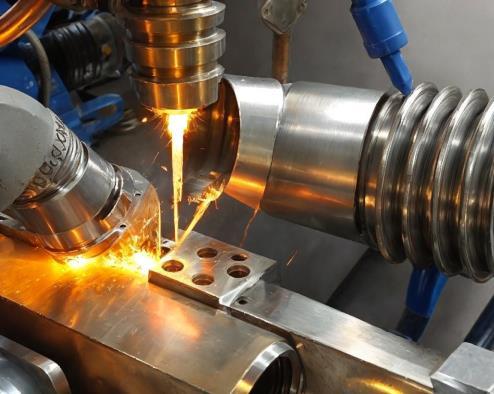
Controlling the brazing temperature is crucial. The temperaturemustbesufficienttomeltthefillermetalbut shouldnotexceedthemeltingpointsofthebasemetalsto avoiddamageordistortion.
Thefillermetalflowsintothejointthroughcapillaryaction. Thisisfacilitatedbythecleansurfaces,properfit-up,andthe use of flux to promote wetting. Capillary action ensures a stronganduniformbondthroughoutthejoint.
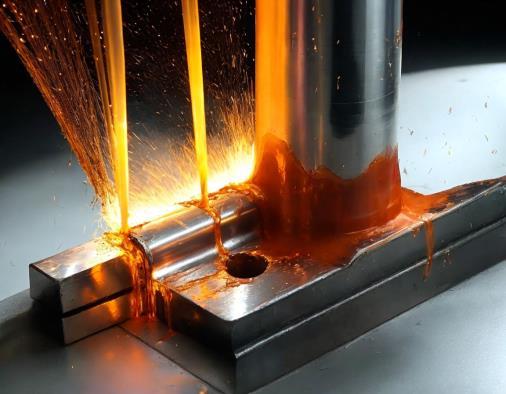
After brazing, the assembly is allowed to cool slowly to prevent thermal stresses, followed by cleaning to remove residualflux.Afterheating,thejointmustbeallowedtocool naturally or with controlled cooling to solidify the filler metal and ensure the formation of a strong metallurgical bondbetweenthebasemetalsandfillermetal.
Theassemblyaspectsofthebrazingprocess,it'sessentialto focus on the techniques, considerations, challenges, and advancements related to preparing components for successfulbrazing.Inthebrazingprocess,assemblyrefersto thepreparationandalignmentofpartstobejoined,withthe filler metal positioned at the joint interface. This step is crucialasitdirectlyinfluencesthequalityandstrengthofthe brazedjoint.Here’sadetailedexplanationoftheassembly processinbrazing:
Fit-up: Components to be brazed must be accurately fit together. This involves ensuring that mating surfaces are clean,freefromcontaminants,andproperlyaligned.Proper
International Research Journal of Engineering and Technology (IRJET) e-ISSN: 2395-0056
Volume: 13 Issue: 03 | Mar 2026 www.irjet.net p-ISSN: 2395-0072
fit-upensuresthatthejointgapisuniformandsuitablefor capillaryactionofthefillermetal.
Alignment: Components should be aligned precisely to ensurethatthejointremainsinthedesiredpositionduring the brazing process. Misalignment can lead to uneven distributionoffillermetalandcompromisedjointstrength.
3.6.2 Fixture Design and Fixturing:
Fixture Design: Fixtures and jigs are used to hold components in place during brazing. These fixtures are designed to apply controlled pressure and maintain alignmentthroughouttheheatingandcoolingcycles.
Fixturing: Componentsaresecurelyheldinfixturesorjigs topreventmovementandmaintainthedesiredorientation during brazing. This is crucial for complex assemblies or whenbrazingmultiplejointssimultaneously.
3.6.3 Preparation of Joint Interface:
Cleaning: Surfacestobebrazedmustbethoroughlycleaned to remove oxides, oils, and other contaminants. This is typicallydoneusingmechanicalcleaningmethodssuchas grinding,sanding,orchemicalcleaningprocesses.
Surface Activation: Dependingonthebasemetalsandfiller metals used, surface activation techniques such as flux application or mechanical abrasion may be employed to promotewettingandadhesionofthefillermetal.
3.6.4 Positioning of Filler Metal:
Fitting the Filler Metal: Thefillermetalisplacedatthejoint interfacewhereitwillmeltandflowintothejointduringthe brazingprocess.Itshouldbepositioneduniformlytoensure completecoverageofthejointsurfaces.
Fillet Formation: Proper positioning of the filler metal ensures the formation of a uniform fillet around the joint perimeter. This fillet provides mechanical strength and improvestheaestheticsofthebrazedjoint.
3.6.5 Assembly Techniques for Different Joint Designs:
Lap Joints: Commonly used in brazing, lap joints involve overlapping two components to create a joint. Careful assembly ensures proper overlap and alignment of the matingsurfaces.
Butt Joints: Components are aligned end-to-end with minimaloverlap.Fixturingandprecisealignmentarecritical to maintain joint integrity and ensure filler metal penetration.
T-Joints and Corner Joints: These joints require careful assemblytoensureproperfit-upandalignmentofmultiple
surfaces.Fixturingmayinvolvecomplexdesignstosupport thejointduringbrazing.
3.6.6
Temperature Control: During brazing, heat is applied to meltthefillermetalwithoutmeltingthebasemetals.Proper control of heating rates, dwell times, and cooling rates is essential to prevent overheating or thermal distortion of assembledcomponents.
3.6.7
Cooling and Handling: After brazing, components are allowedtocoolgraduallytoavoidthermalstresses.Proper handling techniques ensure that the brazed joint remains intactandundisturbed.
Inspection and Quality Control: Brazed assemblies undergo inspection to verify joint quality, dimensional accuracy,andadherencetospecifications.Non-destructive testingmethodsmaybeemployedtodetectinternaldefects orinconsistencies.
3.7.1
Joining dissimilar metals in brazing presents challenges such as differing melting points, thermal expansion coefficients,metallurgicalincompatibilities,andtheriskof galvaniccorrosion.Thesefactorscanleadtojointfailuredue tothermalstress,mechanicalmismatch,ortheformationof brittleintermetallic.
Filler metal selection iscritical:
Choosealloysthatmeltwellbelowthebasemetals’ meltingpointstoavoiddistortion.
Forcoppertostainlesssteelorbrasstosteel,silverbasedornickel-basedfillersarecommon.
Trifoilfillers(multi-layer,includingcoppercoreand ductile outer layers) help absorb mismatched mechanicalstresses.
Flux selection should match the base and filler materials, preventoxidationandpromotewetting,especiallyinopenatmospherebrazing.
Controlling heat input preventsthermaldistortionand ensuresjointquality:
Employcontrolledheatingprofilessobothjoint materialsreachbrazingtemperatureuniformly, avoidingthermalshock.
International Research Journal of Engineering and Technology (IRJET) e-ISSN: 2395-0056
Volume: 13 Issue: 03 | Mar 2026 www.irjet.net p-ISSN: 2395-0072
Use multiple thermocouples to monitor temperaturesatseveralpoints,particularlyonthin andthicksectionsofcomponents.
Implement “controlled heat-down” rather than rapid cooling to avoid residual stresses and distortion.
Heat sinks and thermal barriers may be used to shieldsensitivecomponentsortocontrolheatflow duringbrazing.
3.7.3 Assembly in Complex Structures:
Brazing complex geometries involves challenges such as inaccessible joint sites, uneven heating, and risk of incompletefillerflow:
Usepre-formedfillermaterials(rings,foils,pastes) that match joint geometry for consistent fillet formation.
Employfixturedesignsandgravity-aidedpositions toensurepropercapillaryactionandfillerflow.
Successful case studies include HVAC heat exchangers(wherecoppertubesarebrazedtosteel manifoldsusinginductionheating)andaerospace components assembled using customized fixtures formulti-jointassemblies.
3.8 Advancements and Innovations
3.8.1 Automation and Robotics:
Modern automated brazing systems utilize robotics and machinevisiontopreciselycontrolfillerdeposition,heating cycles,andcomponentpositioning:
Automation ensures consistent joint quality, reducesoperatorerror,increasesthroughput,and enablescomplexmulti-jointworkflows.
Robotic arms equipped with induction or laser brazing heads are now widely used in the automotiveanddevicemanufacturingsectors.
3.8.2 Simulation and Modeling:
Computational modeling provides insights into thermal distribution, joint clearance evolution, and phase transformationduringbrazing:
Finite element analysis (FEA) is used to simulate heat flow, predict joint strength, and optimize fixturedesign.
Modeling helps to preemptively identify areas at risk for thermal distortion or weak metallurgical
3.8.3
bonding, which assists in refining process parametersbeforeproductionscale-up.
Areasforfurtherresearchinclude:
Development of new filler alloys with broader compatibilityandreducedjointbrittleness.
Greater use of real-time process monitoring (thermography,spectrometry)andadaptiverobotic systems.
IntegrationofAI-drivenmodellinganddigitaltwins forpredictiveprocesscontrolandintelligentfixture design.
Emerging trends such as in-situ process monitoring, improved simulation tools, and advanced automation are poised to raise assembly efficiency and joint performance standardsinthecomingyears.
3.9
Inspection and testing of brazed joints are important to ensure quality and reliability. This may include visual inspection for defects, non-destructive testing (e.g., dye penetrant testing), and mechanical testing to verify joint strength and integrity. Mastering the fundamentals of brazing involves understanding these principles and applying them effectively to create strong, durable, and reliablejointssuitableforvariousindustrialandcommercial applications.
Brazing is widely used in industries such as automotive, aerospace, plumbing, electronics, and jewelry making. Considerationssuchasjointdesign,materialcompatibility, andenvironmentalfactors(suchasfluxresidue)shouldbe takenintoaccountforspecificapplications.
Usedformanufacturingheatexchangers,exhaustsystems, andothercriticalcomponents.
Brazingisessentialforfabricatingcomplexassembliessuch asturbineblades,fuelnozzles,andstructuralcomponents.
4.3
Utilizedinmanufacturingelectroniccomponents,including heatsinksandelectricalconnectors.
International Research Journal of Engineering and Technology (IRJET) e-ISSN: 2395-0056
Volume: 13 Issue: 03 | Mar 2026 www.irjet.net p-ISSN: 2395-0072
Brazing is employed for joining biocompatible metals in medicalimplantsandsurgicalinstruments.
5.1 Advantages
Brazing creates strong, hermetic joints without compromising the base metals' properties. It allows for joiningdissimilarmetalsandissuitableformassproduction.
5.2 Challenges
Controlling joint quality, managing thermal stresses, and selectingappropriatefillermetalsarecriticalchallengesin brazing.
6. CONCLUSIONS
Brazing remains a crucial joining technique in modern manufacturingduetoitsversatility,strength,andabilityto joindissimilarmaterialseffectively.Asindustriescontinueto demand lightweight and durable materials, brazing will likely see further advancements and innovations to meet theseevolvingneeds.
[1] ByungminAhn,“RecentAdvancesinBrazingFillersfor JoiningofDissimilarMaterials”Ahn,B.RecentAdvances in Brazing Fillers for Joining of Dissimilar Materials. Metals 2021, 11, 1037. https://doi.org/10.3390/ met11071037.
[2] MatthewWay,JackWillingham&RussellGoodall, “Brazingfillermetals”MatthewWay,JackWillingham& Russell Goodall (2019): Brazing filler metals, International Materials Reviews, DOI: 10.1080/09506608.2019.1613311.
[3] OerlikonMetco,AnIntroductiontoBrazing–Issue4.
[4] B.McGURRANandM.GNICHOLASarewiththeAtomic EnergyResearchEstablishment,Harwell,Oxfordshire, England,“Paperpresentedatthe15thInternationalA WS-WRC Brazing and Soldering Conference held in Dallas,Texas,duringApril10-12,1984.
[5] Yong Kim and Kiyoung Park Institute for Advanced Engineering, Robot Center, Yongin, Rep. of Korea, Sungbok Kwak Duckyang Ind. Co., Ltd., R&D Center, Suwon,Rep.ofKorea,“AReviewofArcBrazingProcess andItsApplicationinAutomotive”©2016Int.J.Mech. Eng.Rob.Res.246doi:10.18178/ijmerr.5.4.




Mr. Shreenivas Hanmant Tamann, pursuing Masters of Engineering in Robotics & Automation,completedBachelors of Engineering in Mechanical Engineering WorkingasaLecturer in Department of Mechanical Engineering, Maulana Azad Polytechnic, Hotgi, Solapur, Maharashtra,India.
Mr. Kiran Dhondappa Jamadar, completed Bachelors of Engineering in Mechanical Engineering.WorkingasaLecturer in Department of Mechanical Engineering, Maulana Azad Polytechnic, Hotgi, Solapur, Maharashtra,India.
Mr. Shahid Salim Shaikh, completed Bachelors of Engineering in Mechanical Engineering. WorkingasaH.O.D. in Department of Mechanical Engineering, Maulana Azad Polytechnic, Hotgi, Solapur, Maharashtra,India.
Mr. Abulhasan Liyakat Ali Inamdar, (M.E. Design Engineering*), completed Bachelors of Engineering in Mechanical Engineering. Working as a Lecturer in Department of Mechanical Engineering, Maulana Azad Polytechnic, Hotgi, Solapur, Maharashtra,India.