
International Research Journal of Engineering and Technology (IRJET) e-ISSN: 2395-0056
Volume: 12 Issue: 06 | Jun 2025 www.irjet.net p-ISSN: 2395-0072
International Research Journal of Engineering and Technology (IRJET) e-ISSN: 2395-0056
Volume: 12 Issue: 06 | Jun 2025 www.irjet.net p-ISSN: 2395-0072
Savitha M
Assistant Professor, Dept. of Computer Science and Engineering, VCET, Puttur, Karnataka, India
Abstract - Modern travel platformsoftenfailtoadaptto individual user preferences, offering generalized suggestions that do not account for personal interests or behavior. This work addresses that gap by developing an AI-based tourist advisor system that delivers personalized destination suggestions using machine learning. Data is collected from user interactions and destinationattributesstoredinaMySQL database. The system employs collaborative filtering with SVD, content-based filtering using TF- IDF and cosine similarity, and a popularity-based approach based on click frequency. Enrichment is achieved through integration with Gemini AI for content generation and Google Custom Search for real- time imagery. This project demonstrates a complete, adaptive travel recommendation platform that enhances planning efficiency and user engagement.
Key Words: Travel Recommendation, Machine Learning, Collaborative Filtering, TF-IDF, Gemini API
Travelisanintegralpartofmodernlife,offeringindividuals opportunities for exploration, relaxation, and cultural enrichment. However, with the increasing availability of travel optionsandvastamountsofinformation,travellers oftenstruggletomakeinformeddecisionstailoredtotheir personalpreferences.Traditionaltravelplatformstypically presentstaticsuggestionsbasedonpopularityorlocation, withoutadaptingtoindividualneeds,interests,orcontextual factorslikeweatherandbudget.Thislackofpersonalization leadstogenericrecommendationsthatmaynotalignwith user expectations, resulting in inefficient planning and reducedsatisfaction.
In today’s AI-driven digital landscape, personalized recommendation systems have proven effective across domainssuchase-commerceandentertainment,yettheir application in travel planning remains underdeveloped. Travel data presents unique challenges, combining user behavior,locationattributes,seasonaltrends,anddynamic pricingallofwhichmusbeaccuratelyinterpretedto deliver relevant suggestions. Furthermore, effective recommendations must go beyond destination names, offeringenrichedcontentandvisualinsightstoassistinrealworlddecision-making.
This project addresses these gaps by developing a smart travel recommendation system that leverages user
interactiondataanddestinationfeaturestodelivertailored suggestions. Incorporating collaborative filtering, contentbasedfiltering,andpopularity-basedtechniques,thesystem adapts to both new and returning users. AI-generated descriptions and real-time imagery enhance the recommendations,providingtravellerswithcomprehensive andvisuallyengaginginformation.Theresultisadynamic, user-centric platform that transforms the travel planning experience through intelligent automation and contextual awareness.
S. Sankar et.al [1] propose an intelligent travel planning systemthatenhancesuserexperiencebyintegratingGoogle Street View with AI-driven attraction scoring. Machine learningalgorithmsevaluatelocaldestinationsandoverlay insightsontoreal-timevirtualenvironments,enablingusers topreviewlocationsbeforefinalizingtheiritineraries.This significantly reduces last-minute changes and boosts planning confidence. The study also explores how visual previews influence decision-making, highlighting the potentialofimmersivevirtualtoolsinmoderntourism.
R. Semwal et.al [2] explore real-time personalization in Tourism3.0usingAIandmachinelearning.Theirframework analysesuserinteractions suchasprolongedengagement with lodging or event pages using natural language processingandbehaviouralmodelling.The systemadapts travelsuggestionsdynamicallybasedonevolvinginterests, leading to improved user engagement with lesser-known destinations. The authors emphasize transparency and recommend incorporating explainable AI techniques for ethicalimplementation.
R. R. Manthena et.al [3] introduce Route Chat Connect, a collaborativetravel platformbuiltwithPython’sStreamlit andtheTrueWayDirectionsAPI.Thissystemallowsusers toplantripsinteractivelybymergingchatfunctionality with route mapping, enabling real-time discussions on accommodations and activities. By consolidating communication and itinerary management, it streamlines groupdecision-making.However,themodellackspredictive tools for price fluctuations and does not support live congestionmonitoring.
B.S.S.Miryalkaret.al[4]presentJourneyCraft,achatbotbased travel planner thatpersonalizesitineraries through
International Research Journal of Engineering and Technology (IRJET) e-ISSN: 2395-0056
Volume: 12 Issue: 06 | Jun 2025 www.irjet.net p-ISSN: 2395-0072
user interaction. The system captures preferences via conversational prompts and uses a neural network that refinesrecommendationsbasedonreal-timefeedbacksuch as“likes”and“dislikes.”Thisallowsthemodeltoadjustto user sentiment over time, offering culturally relevant suggestions. Early testing shows improved confidence in choicesrelatedtocuisine,localevents,andattractions.
M. Gupta et.al [5] propose Travel with Generator AI, an itinerary-buildingplatformthatutilizesFlask,OpenAI,and ClaudeAPIstogenerateadaptivetravelplans.Thesystem accommodates spontaneous user changes like additional destinationsorshiftinginterests.Whileitperformswellin personalization,limitationsincludeAPIraterestrictionsand lower accuracy for rural regions. The authors suggest caching frequently requested data and collaborating with localproviderstoimprovereachandreliability.
M.Lin et.al [6]detail ZeLinAI,anAItravel agentthat uses sentiment analysis and user profiling to deliver tailored destinationrecommendations.Thesystemanalysescontent from social media and geolocation data to suggest experiences that align with user mood, such as calm environmentsorpartyhubs.Itreducesmanualplanningbut presents challenges related to prompt tuning and privacy concerns. Cultural awareness and verified feedback mechanismsareproposedtoimproveaccuracyandtrust.
G. K. M. and M. Haseeb et.al [7] introduce a planner that optimizestravelbasedoncostandtimeusingcollaborative filteringenhancedbycorrelation-basedscoring.Thesystem effectively balances user budgets with experience ratings, improving planning efficiency. Though successful at the regional level, it currently lacks global scalability, live transport data, and hotel pricing integration. The authors recommend using real-time data streams to improve accuracyanditinerarypersonalization.
Theproposedsystemisstructuredintothreecoremodules: the Data Collection Layer, the Hybrid Recommendation Engine, and the Output Generation Interface. The Data Collection Layer gathers user interactions such as destination clicks and browsing behavior, while also integrating metadata from various APIs that include destination names, weather types, travel costs, and attractions.Thismodulealsoutilizesthird-partysourcesfor real-timedataonpricesandtravelroutes,ensuringthatthe system remains up to date and contextually relevant for eachusersession.
The Hybrid Recommendation Engine consists of collaborative filtering, content-based filtering, and popularity-based models to generate personalized suggestions. Collaborative filtering uses Singular Value Decomposition (SVD) to identify behavioral similarities betweenusersbasedondestinationinteractionpatterns.By
computinglatentuseranditemvectors,thesystempredicts potential interests by examining similar users and their historicalchoices,enablingadeeperlevelof personalization.
Thecontent-basedfilteringcomponentanalysesdestination metadatausingTF-IDFvectorizationtoconverttextfeatures like destination names and weather types into weighted numericalvectors.Cosinesimilarityisthenusedtomeasure closenessbetweentheuser’spreferreddestinationsandnew suggestions.Thisensuresthatrecommendedplacesarenot onlyalignedwithuserhistorybutalsothematicallysimilar, therebyenhancingthequalityofsuggestionswithoutrelying oncommunitypatterns alone.
To ensure broader appeal, the system incorporates a popularity-based model that ranks destinations by the numberofclicksorinteractionsacrosstheuserbase.This modelhelpsidentifytrendingorfrequentlyvisitedlocations and pushes them into recommendation results. By combiningpopularitywithpersonalizedfilters,thesystem balancesnoveltyandreliability,therebyenrichingtheuser experiencewithbothuniqueandwidelyappreciatedtravel spots.
The implementation of the AI-based tourist advisor was executed through a structured pipeline integrating data preprocessing, model development, API integration, and web-based user interaction. The system was designed to provide personalized travel suggestions by combining multiplerecommendationalgorithmswithdynamiccontent generationandvisualization.
Theinitialdatapreparationphaseinvolvedcollectinguser interactiondataspecificallyclicksontravel destinationsand compilingdestinationmetadata,includingattributessuchas name,weathertype,budget,andkeyattractions.Toensure sufficientcontextualdiversity,syntheticdatawasgenerated andnormalized.Textfeaturessuchasdestinationnamesand weathertypeswere vectoredusingTF-IDF,andnumerical fieldswerestandardized.Additionalreal-timedatasuchas route costs and availability were retrieved through thirdpartytravelAPIsand mergedwithstaticmetadataformore accuraterecommendations.
Thecorerecommendationenginewasconstructed usinga hybrid approach that integrated collaborative filtering, content-based filtering, and popularity-based techniques. Collaborative filtering was implemented using Singular Value Decomposition (SVD) to uncover latent user destination preferences from the click matrix. ContentbasedfilteringemployedCosineSimilarityonTF-IDFvectors to identify destinations with similar metadata. Simultaneously, a popularity-based model ranked destinationsbasedonclickfrequencytoensurewell-known places were highlighted. These three strategies were
International Research Journal of Engineering and Technology (IRJET) e-ISSN: 2395-0056
Volume: 12 Issue: 06 | Jun 2025 www.irjet.net p-ISSN: 2395-0072
mergedusingaweightedensembletogeneratethefinallist ofpersonalizedsuggestions.
To enhance destination context, the Gemini AI model was integrated via API to dynamically generate structured descriptionsthatincludeaccommodations,attractions,and activities. This content enrichment ensured the user received not only accurate recommendations but also detailed destination previews. The Google Custom Search APIwasadditionallyemployedtofetchreal-timeimages for each recommended location. These images, alongside AIgenerateddescriptions,werepresentedthroughavisually engagingfront-endinterface.
Theuserinterfacewasdevelopedasawebapplicationusing modernJavaScriptframeworksandwasdesignedtoaccept basicinputparameterssuchasbudget,and preferredcity. Upon submission, the backend triggered the hybrid recommendationmodelandfetchedthecorrespondingdata fromAPIsandAIservices.Theresultswerepresentedwith minimallatency,providingtheuserwithanoptimizedand responsiveexperience.
To ensure quality and efficiency, confidence scores were calculatedforeachrecommendation,andfilteringlogicwas applied to exclude low-confidence suggestions. The applicationwasoptimizedtooperatesmoothlyonstandard web infrastructure and completed end-to-end processing includingmodelcomputation,AIcontentgeneration,andAPI callswithinapproximatelyfive secondsofuserinput.
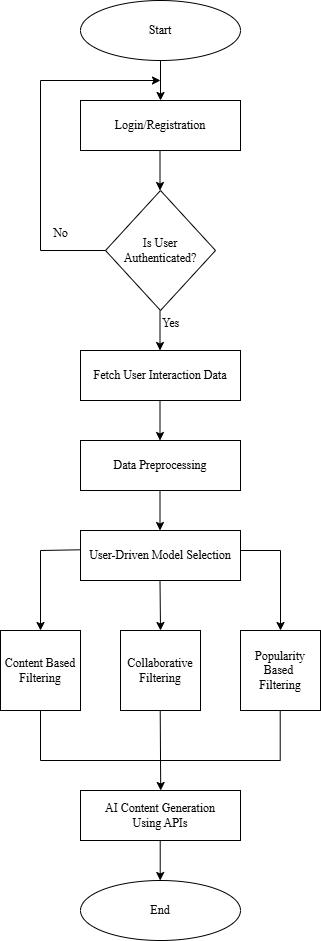
The flowchart outlines the step-by-step process followed during the development of the AI-based tourist advisor system.Theworkflowbeginswithuseraccess,whereusers initiatethesystemthroughaloginorregistration interface. Upon successful authentication, the system fetches historical interactiondata,primarilybased onuserclicks, previousvisits,anddestinationpreferences.Thisdataisthen subjectedtopreprocessing, which includesnormalization, vectorization of textual features, and merging with additionalcontextualdatasuchaslocationtype,andweather conditions.Followingpreprocessing,thesystemdynamically selectstheappropriate recommendationmodeldepending onuserbehavior. Threeparallelfilteringmechanismsare thentriggeredcontent-basedfilteringidentifiesdestinations similar to past user interests using metadata similarity; collaborative filtering derives patterns from user-item matrices to suggest unexplored but relevant places and popularity-basedfilteringhighlightstrendingorfrequently chosendestinationsacrosstheuserbase.Theoutputsfrom these filters are combined to form a comprehensive recommendation set. Finally, AI content generation is performedusingexternal APIssuchasGeminiandGoogle Search to enrich with dynamic descriptions and real-time imagesforpersonalizedrecommendations.
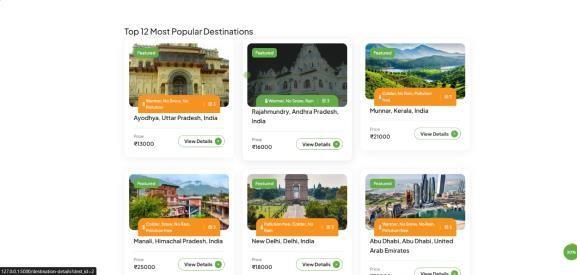
Figure 2 presents the popular destination page, which is recommendedtousers.
The below Figure 3 shows an overview of a place which includesnearbyplacesandroutingguide.
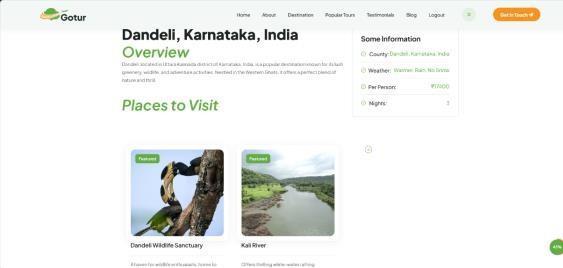
-3:
International Research Journal of Engineering and Technology (IRJET) e-ISSN: 2395-0056
ThebelowFigure4showsthedetailedroutingguidetothe user.
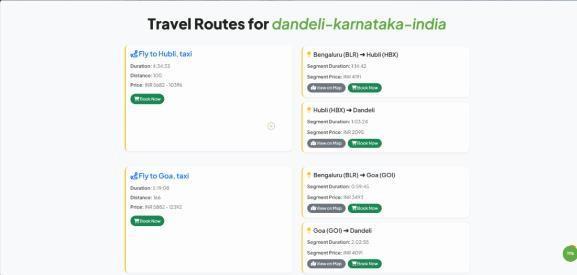
Fig -4: RoutingGuidePage
Thispaperpresentsthedesignandimplementationof anAIbased tourist advisor system that generates personalized travelrecommendationsbasedonuserinteractiondataand contextualparameters.Theproposedsystemallowsusersto log in and receive intelligent suggestions through a streamlined interface that integrates filtering models and dynamiccontentgeneration.Uponuserauthentication,the systemretrievesrelevantbehavioraldataandprocessesitto identify suitable destinations using content-based, collaborative,orpopularity-basedfilteringapproaches.Final recommendations are enriched using external APIs to provide informative descriptions and visual content, ensuringatailoredtravelplanningexperience.Bycombining machinelearningtechniques withreal-timeAPIintegration, this work offers a practical and scalable solution for enhancing travel personalization, contributing to smarter andmoreuser-centrictourismapplications.
[1]S.Sankar,N.Kumar,S.M.Dinesh,S.Abhishek,andA.T,” Intelligent Trip Planning with Integrated Street View: A SeamlessAIdrivenApproach,”in2023IEEEXplore.[Online]. Available:https://ieeexplore.ieee.org/document/10434354.
[2]R.Semwal,A.Chauhan,N.Tripathi,V.Bhutani,A.Rana, and K. Gupta, "Conceptual Integration of AI for Enhanced TravelExperience,"inIEEEXplore, 2023. [Online].Available:https://ieeexplore.ieee.org/document/ 10434463.
[3]R.R.Manthena,S.K.Pavuluri,andS.Annamalai,”Route Chat Connect: Empowering Collaborative Travel Planning and Social Connection,” in 2024 IEEE Xplore.[Online]. Available:https://ieeexplore.ieee.org/document/10537282.
[4]B.S.S.Miryalkar,H.Kalidindi,V.S.Mashetty,A.Moturi, andS.Sanapala,”JourneyCraft:CraftingaSmartTraveling Experience,” in 2024 IEEE Xplore. [Online]. Available:https://ieeexplore.ieee.org/document/10673012.
Volume: 12 Issue: 06 | Jun 2025 www.irjet.net p-ISSN: 2395-0072 © 2025, IRJET | Impact Factor value: 8.315 | ISO 9001:2008
[5] M. Gupta, R. R. Dhamija, R. Dias, R. V. Bidwe, G. Deshmukh,N.Jain,andS.Mishra,”TravelwithGeneratorAI: A Novel Approach to Itinerary Creation,” in 2024 IEEE Xplore.[Online].Available:https://ieeexplore.ieee.org/docum ent/10775161.
[6] M.Lin,”ResearchonDevelopmentandApplicationofAI Agent for Travel Recommendation (LLM),” in 2024 IEEE Xplore.[Online].Available:https://ieeexplore.ieee.org/docum ent/10545805.
[7]G.K.M,M.Haseeb,M.S.B,P.A.M.Zameel,andS.V.Raj, ”Budget and Experience Based Travel Planner Using Collaborative Filtering,” in 2021 IEEE Xplore. [Online].Available:https://ieeexplore.ieee.org/document/94 28978.