
International Research Journal of Engineering and Technology (IRJET) e-ISSN: 2395-0056
Volume: 12 Issue: 11 | Nov 2025 www.irjet.net p-ISSN: 2395-0072
International Research Journal of Engineering and Technology (IRJET) e-ISSN: 2395-0056
Volume: 12 Issue: 11 | Nov 2025 www.irjet.net p-ISSN: 2395-0072
Rayan Dalaki¹
1. *College of Computing, Fahad Bin Sultan University, Saudi Arabia
*(Corresponding Author)
Abstract – NEOM is considered one of the most promising smart cities all over the world. Addressing security and privacy issues in such smart cites is critical as it leads to make future cities not only smarter but also more secure. Agent based system as well as location based systems form an integral part of smart cities. This work explores both the security and privacy issues in smart cities, where different approaches were reviewed in terms of protection against attacks and sensitive data protection. This work concludes that ensuring both security and privacy is essential for trust of users. Challenges and future trends are also presented to enable researchers to direct their works towards more secure and smart cities, which leads to more sustainability.
Key Words: NEOM, Security, Privacy, Agents, Big Data, Medical Systems.
1. INTRODUCTION
A smart city is an urban area that leverages digital technologies,dataanalytics,andinterconnectedsystemsto enhance infrastructure, improve public services, and optimize resource management. The goal is to increase efficiency,sustainability,andqualityoflifeforcitizens[1].
Internet of Things (IoT) referstoanetworkofphysical devices (sensors, actuators, cameras) embedded with connectivityfeaturesthatenablethemtocollect,andprocess data over the internet. These devices facilitate real-time monitoringandautomationinvariousapplications[2].
Cloud computing isthedeliveryofcomputingservices (storage, processing, networking, analytics, etc.) over the internet ("the cloud"). It provides scalable, on-demand resources without requiring direct physical infrastructure management[3]
1.1 Relationship Among Smart Cities, IoT, and Cloud Computing
Inthecontextofsmartcities,IoTandcloudcomputing are interdependent technologies that enable intelligent urbanmanagement:
1. IoT as the Data Source:
IoT devices (e.g., traffic sensors, smart meters, surveillance cameras) collect real-time data fromthecityenvironment.
Example:Smarttrafficlightsadjustsignalsbased onreal-timevehicleflowdata.
2. Cloud Computing as the Processing Hub:
The massive volume of data generated by IoT devicesisstored,processed,andanalysedinthe cloud.
Cloud platforms provide scalability, AI/ML analytics,andcentralizedmanagementforsmart cityapplications.
Example: Cloud-based AI analyzes traffic patterns to optimize city-wide transportation routes.
3. Smart City as the Application Layer:
TheintegrationofIoT+Cloudenablessmartcity solutionslike:
o SmartEnergyManagement(IoTsensors+ cloud-baseddemandforecasting).
o Waste Management (IoT-enabled bins + cloud analytics for optimized collection routes).
o Public Safety (Surveillance cameras + cloud-basedfacialrecognition).
NEOMisafuturistic,$500billionmega-projectinSaudi Arabia, designed to be a model smart city powered by cutting-edgetechnologieslikeIoT,AI,cloudcomputing,and renewable energy. It aims to be a zero-carbon, hyperconnected,andAI-drivenurbanecosystem[4]
Smart City Features of NEOM
1. AI & IoT-Driven Infrastructure
Smart Sensors & Automation: IoT-enabled devicesmonitorenergyuse, traffic,airquality, and waste management in real time. Example: Autonomous drones for logistics and AIpoweredsurveillanceforsecurity.
Smart Mobility: Autonomous vehicles (EVs, flying taxis) connected via 5G/6G and IoT networks.Predictivetrafficmanagementusing AI+cloudanalytics.
International Research Journal of Engineering and Technology (IRJET) e-ISSN: 2395-0056
Volume: 12 Issue: 11 | Nov 2025 www.irjet.net p-ISSN: 2395-0072
2. Cloud & Edge Computing Backbone
CentralizedCloudAI: NEOM’soperationsrelyon cloud-based AI for decision-making (e.g., optimizingenergygrids,waterusage).
Edge Computing for Low Latency: Critical systems(e.g.,autonomoustransport)useedge computingforreal-timeresponses.
3. 100% Renewable Energy and Sustainability
Powered by wind, solar, and green hydrogen. IoT-enabledsmartgridsbalanceenergydemand dynamically.
4. Hyper-Connectivity (5G/6G & Free Wi-Fi)
Ultra-fastinternetenablesseamlessIoT,AR/VR, andsmartservices.
Table 1 summarizes how IoT, Cloud, and AI work togetherinNEOM.
Table -1:IoT,Cloud,andAIinNEOM
Technology
Role in NEOM
IoT Datacollectionfromsensors(traffic, energy,environment)
Cloud Computing Stores&processesmassivedata;runsAI models
AI\ML Analyzesdataforautomation& predictions
5G\6G Enablesreal-timeIoTcommunication
Smart cities like NEOM rely on IoT, AI, and cloud computing to optimize urban life, but this raises critical concernsaboutsecurity(protectingsystemsfromattacks) andprivacy(protectingcitizens'personaldata).
Intermsofdefinitions,securityisprotectingsystems, data,andinfrastructurefromcyberthreats, breaches,and attacks,whileprivacyisensuringindividuals'personaldata is collected, stored, and used ethically and with consent. Table2summarizesthekeydifferencesbetweenprivacyand security.
Table -2:IoT,Cloud,andAIinNEOM
Aspect Security Privacy
Focus Preventunauthorized access,attacks,and systemfailures.
Protectpersonal datafrom misuseor exploitation.
Threats Systemintegrity, resilience,andthreat prevention. Dataleaks, surveillance overreach, profiling.
Technologies Used Hackers,malware, DDoSattacks,insider threats.
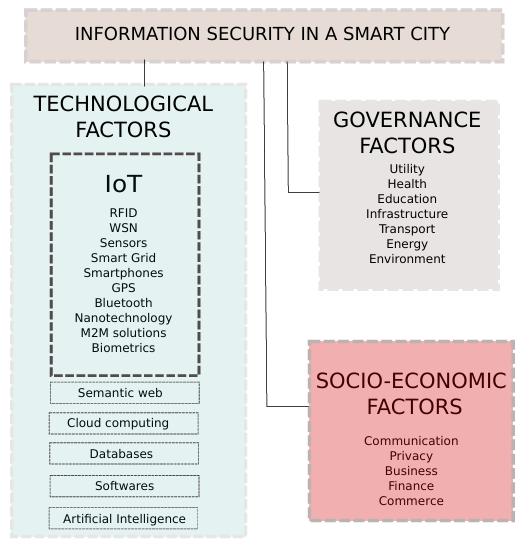
Agent’s software technology is used to create smart agents to perform specific tasks, such as collecting data aboutpricesofairtrips,ormonitoringmaliciousmovements and then issuing alarms to take corresponding actions. Authors of [5] present a comprehensive survey about securityofagentsandtheirrelatedissues.Anotherwork[6] presentedarobustsecurityapproachesbasedondummies to protect agents, where the key idea is to select the task based on the probabilities with an aim to confuse host machine(attacker) from determining the real task among dummies.Thiswayensuressecurityoftasksperformedby movingagentsagainstmaliciousservers.Aself-protection mechanismisproposedinwork[7].Thekeyideaistoselect aseedthatisuncoveredbyattackerstobeusedasaprimary keyforgeneratingencryptionkeytobeusedforprotecting exchangedmessages.Intermsofwebsecurity,thework[8] aimsatenhancingwebapplicationsecuritythroughcrossteamcollaboration.Inotherwords,tomitigaterisksinweb applications,organizationsmustfostercollaborationamong diverseITteams,eachbringinguniquesecurityperspectives. Tosumup,thesecurityrequirementsinsmartcitieswhen employing agent based software technology, Figure 1 illustratesthem.
Anonymization, GDPR-like policies,user consenttools.
Themostcommonapplicationsusedinsmartcitiesis locationbasedservices.Location-BasedServices(LBS):are digitalservicesthatusereal-timegeographicdata(e.g.,GPS, Wi-Fi, IoT sensors) to provide personalized information,
International Research Journal of Engineering and Technology (IRJET) e-ISSN: 2395-0056
navigation, or functionality based on a user’s or device’s location.ThekeytechnologiesenablingLBSare:
1- GPS&GNSS(GlobalNavigationSatelliteSystems)
2- IoT&SmartSensors(e.g.,beacons,RFIDtags)
3- Cellular/Wi-FiTriangulation
4- Geofencing&GIS(GeographicInformationSystems)
Importance of LBS in smart cities can be listed as follows:
1. Efficient Urban Mobility
Real-Time Navigation: Apps like Google Maps optimizeroutesusingtrafficdata.
AutonomousVehicles:Self-drivingcarsrelyon LBSforpathfindingandcollisionavoidance.
2. Public Safety & Emergency Response
Faster Dispatch: Precise location tracking reducesemergencyresponsetimes.
Disaster Management: Evacuation routes are dynamically updated based on real-time hazards.
Smart Resource Management
Waste Collection: Sensors detect fill levels in trashbins,optimizingpickuproutes.
Energy Efficiency: Streetlights dim when no pedestriansaredetected(viageofencing).
3. Personalized Citizen Services
Retail & Tourism: Push notifications for discounts when near a store (beacon technology).
PublicTransport:Appsshowbus/trainarrivals basedontheuser’sneareststop.
4. Data-Driven Urban Planning
Heatmaps:Analyzefoottraffictodesignbetter pedestrianzones.
Crowd Control: Monitor dense areas (e.g., stadiums)topreventaccidents.
Therearevariousapproachesproposedpreviouslyto protectprivacyinsmartcities.Asdescribedbelow.
Authorsofwork[10]proposedanAESroutmodelfor privacyprotectionforroadnetwork.Thekeyideaistoissue multipledummiesstoredintheaccesspointtobeusedasa third party between clients and servers. This approach protectsprivacyagainstmaninthemiddleattacks.Authors of[11] provided a comprehensiveliterature reviewabout privacy protection methods used in LBS. The taxonomy providedintheworkdeterminestheprotectiongoalsand thecorrespondingmethodsusedforprivacyprotection.In
addition,awidespectrumofattacks,suchasmapmatching attack,semanticlocationattack,andheterogeneousattacks are explained in details. Authors of work [12] provided a leaderapproachforprivacyprotection,wherethekeyideais to change the ID of the LBS user when moving from one region to another as well as changing both paths and real names.Authorsofwork[13]provideddeeplearningbased approachtoensureprivacyprotection,wherethetracksof theusersarecapturesinimageformats,andconvolutional neuralnetworkisemployedtoprotectprivacyprotection.In addition,toprotectprivacyofmovingobjectsbasedonKnn queries,thework[14]providedeffectivewayforensuring privacy using dummies integrated with fragmentation technique.Oneimportantaspectofthis work isrelated to dealwithbigdatatoensureretrievingaccuratelocationsof pointsofinterests[15]. Someworksrelatedtoaddressing powerconsumptiononIoTdeviceswithachievingbalancing ofhighprivacyprotectionwereproposed,suchas[16].
In medical sector, privacy of patients is critical for people located in smart cities. In this aspect, many approacheswereproposed.Authorsofwork[17]proposeda diagnostic system used to detect breast cancer using convolutionalneuralnetwork.Thesystemissupportedby an augmentation technique based on rotation method to enable extraction effective features. Privacy of medical images are ensured by removing sensitive data from the medicalfiles. Basedonfusionoffeatures,authorsofwork [18]proposedanintelligentmedicalsystemtodetectlung cancer.Theaspectofensuringprivacyofpatientsisachieved byusingk-anonymitybasedtechnique.TodetectCOVID-19 viruses,authorsofwork[19]proposedanaugmenteddeep learningsystem,whereinregardstoprivacyprotectionof CT-scanimagesisensuredbymaskingpersonalinformation basedongeneralizationmethod.Particularly,theage,name andIDofpatientsaremaskedwithinarangeofvalues. To highlight the importance of privacy protection during COVID-19epidemic,authorsofwork[20]mentionedtothe importance of privacy protection when employing deep learningbasedsystemtodevelopdiagnosticsystems.
SmartcitiesleverageIoT,AI,andbigdata to enhance urbanliving,buttheyalsointroducesignificantprivacyand security risks. Below is an analysis of key challenges and emergingtrendstoaddressthem.
Mass Surveillance: AI-powered cameras, facial recognition,andlocationtrackingraiseconcerns about government overreach and loss of anonymity.
Data Misuse: Personal data collected by IoT devices (e.g., smart meters, wearables) can be soldtothirdpartieswithoutconsent.
Volume: 12 Issue: 11 | Nov 2025 www.irjet.net p-ISSN: 2395-0072 © 2025, IRJET | Impact Factor value: 8.315 | ISO 9001:2008
International Research Journal of Engineering and Technology (IRJET) e-ISSN: 2395-0056
Volume: 12 Issue: 11 | Nov 2025 www.irjet.net p-ISSN: 2395-0072
LackofTransparency:Citizensoftendon’tknow howtheirdataisstored,processed,orshared.
Agentbasedsystemsmaybeattackedbyvarious attacks, where converting the host machine of the mobile agent into an attacker is the most importantaspectasitleadstohigherdangerous level.
IoT Vulnerabilities: Many smart devices have weakencryptionanddefaultpasswords,making themeasytargetsforhackers.
Ransomware Attacks: Hackers can shut down criticalinfrastructure(e.g.,trafficlights,power grids).
AI-Powered Cyberattacks: Attackers use machinelearningtobypasssecuritysystems.
Inconsistent Regulations: Different countries havevaryingdataprotectionlaws(e.g.,GDPRvs. weakerpoliciesinsomeregions).
AlgorithmicBias:AI-drivenpolicingorresource allocation may discriminate against certain groups.
1. FederatedLearning:AItrainsondecentralized data without central storage. Homomorphic Encryption: Allows data processingwithoutdecryptingit.
2. DifferentialPrivacy: Adds"noise"todatasets topreventre-identification.
3. Smart City-Specific GDPR Laws: Stricter regulations for IoT and AI data usage. Citizen-CentricDataOwnership–Userscontrol who accesses their data via self-sovereign identity(SSI).
4. Ethical AI Audits: Independent reviews to detectbiasinautomateddecision-making.
5. Post-QuantumCryptography:Protectsagainst quantumcomputingattacks.
6. DigitalTwinswithSecurityLayers:Simulates cyberthreatsbeforetheyhappen.
7. Decentralized Identity Systems: Blockchainbased IDs reduce reliance on centralized databases.
Smart cities represent the future of urban living, leveraging IoT, AI, and big data to enhance efficiency,
sustainability, and quality of life. However, this rapid digitization introduces significant privacy and security challenges,frommasssurveillanceriskstocyberattackson critical infrastructure. To build trustworthy and resilient smartcities,amulti-layeredapproachisessential:
Technologically, through privacy-preserving AI, zero-trust security, and blockchain for transparency.
Legally,viastrongerregulations(likeGDPRfor smartcities)andethicalAIgovernance.
Socially, by empowering citizens with data ownershipandconsentmechanisms.
Thefutureofsmartcitiesdependsonstrikingtheright balance harnessing innovation while safeguarding fundamental rights. By adopting decentralized systems, quantum-resistant encryption, and human-centric design, citiescanbecomenotjustsmarter,butsaferandfairerfor all.
[1] Hämäläinen, Mervi. "A framework for a smart city design: digital transformation in the Helsinki smart city."Entrepreneurship and the community: a multidisciplinary perspective on creativity, social challenges,andbusiness.Cham:SpringerInternational Publishing,2019.63-86.
[2] Schoder, Detlef. "Introduction to the Internet of Things."Internet of things A to Z: technologies and applications(2025):1-40.
[3] Kaur,Tajinder."Cloudcomputing:Astudyofthecloud computingservices."internationalJournalforResearch in Applied Science & Engineering Technology (IJRASET)7.VI(2019):1933-1938.
[4] Touri, Mahboubeh.Crafting the Future: Pioneering UrbanBrandingandDevelopmentinNeom'sVisionary Line City Project, Saudi Arabia. Diss. Politecnico di Torino,2024.
[5] Bandar Alluhaybi, Mohamad Shady Alrahhal, Ahmed Alzhrani and Vijey Thayananthan. “A Survey: Agentbased Software Technology Under the Eyes of Cyber Security, Security Controls, Attacks and Challenges”. InternationalJournalofAdvancedComputerScienceand Applications (IJACSA) 10.8 (2019). http://dx.doi.org/10.14569/IJACSA.2019.0100828
[6] Alluhaybi, Bandar, et al. "Dummy-based approach for protectingmobileagentsagainstmaliciousdestination machines."IEEEAccess8(2020):129320-129337.
[7] Alluhaybi,Bandar,etal."Achievingself-protectionand self-communicationfeaturesforsecurityofagentbased systems."(2020).
[8] Albarrk,MajedAbdullah,andMohamadShadyAlrahhal. "Web Applications Security: More Collaboration." (2020).
International Research Journal of Engineering and Technology (IRJET) e-ISSN: 2395-0056
Volume: 12 Issue: 11 | Nov 2025 www.irjet.net p-ISSN: 2395-0072
[9] Ijaz, Sidra, et al. "Smart cities: A survey on security concerns."InternationalJournalofAdvancedComputer ScienceandApplications7.2(2016).
[10] Mohamad Shady Alrahhal,Muhammad Usman Ashraf, AdnanAbesenandSabahArif.“AES-RouteServerModel for Location based Services in Road Networks”. InternationalJournalofAdvancedComputerScienceand Applications (IJACSA) 8.8 (2017). http://dx.doi.org/10.14569/IJACSA.2017.080847
[11] Alrahhal, Mohamad Shady, Maher Khemakhem, and Kamal Jambi. "ASURVEY ON PRIVACYOFLOCATIONBASED SERVICES: CLASSIFICATION, INFERENCE ATTACKS,ANDCHALLENGES."JournalofTheoretical& AppliedInformationTechnology95.24(2017).
[12] Alrahhal,Hosam,etal."Asymbioticrelationshipbased leaderapproachforprivacyprotectioninlocationbased services."ISPRS International Journal of GeoInformation9.6(2020):408.
[13] Abdullah S. Alyousef, Karthik Srinivasan, Mohamad Shady Alrahhal, Majdah Alshammari and Mousa AlAkhras.“PreservingLocationPrivacyintheIoTagainst AdvancedAttacksusingDeepLearning”.International JournalofAdvancedComputerScienceandApplications (IJACSA)13.1(2022). http://dx.doi.org/10.14569/IJACSA.2022.0130152
[14] Mohamad Shady Alrahhal, Maher Khemakhem and Kamal Jambi. “Agent-Based System for Efficient kNN Query Processing with Comprehensive Privacy Protection”. International Journal of Advanced ComputerScienceandApplications(IJACSA)9.1(2018). http://dx.doi.org/10.14569/IJACSA.2018.090108
[15] Alrahhal, Mohamad Shady, and Adnan Abi Sen. "Data mining,bigdata,andartificialintelligence:Anoverview, challenges,andresearchquestions."(2018).
[16] Alrahhal, Mohamad Shady, Maher Khemekhem, and KamalJambi."Achievingloadbalancingbetweenprivacy protection level and power consumption in location based services."International Research Journal of EngineeringandTechnology5.3(2018):619-625.
[17] MonaAlfifi,MohamadShadyAlrahhal,SamirBataineh and Mohammad Mezher. “Enhanced Artificial Intelligence System for Diagnosing and Predicting Breast Cancer using Deep Learning”. International JournalofAdvancedComputerScienceandApplications (IJACSA)11.7(2020).http://dx.doi.org/10.14569/IJACS A.2020.0110763
[18] Alrahhal,MohamadShady,andEftkharAlqhtani."Deep learning-basedsystemfordetectionoflungcancerusing fusion of features."International Journal of Computer Science&MobileComputing10.2(2021):57-67.
[19] Mohamad Shady Alrahhal, Mohammad A. Mezher, OsamahA.M.Ghaleb,MohammadAl-Hjouj,RaghadSehly and Samir Bataineh. “An Augmentation-Based System for Diagnosing COVID-19 Using Deep Learning”. InternationalJournalofAdvancedComputerScienceand
Applications(IJACSA)16.8 (2025).http://dx.doi.org/10.14569/IJACSA.2025.01608 19
[20] Alrahhal,MohamadShady,andMajedAbdullahAlbarrk. "ASurveyoftheCOVID-19EpidemicThroughtheEyes ofArtificialIntelligenceandDeepLearning:Challenges andResearchQuestions."(2020).

I am a student at FBSU, Cybersecurityspecialization