
International Research Journal of Engineering and Technology (IRJET) e-ISSN:2395-0056
Volume: 12 Issue: 11 | Nov 2025 www.irjet.net p-ISSN:2395-0072
International Research Journal of Engineering and Technology (IRJET) e-ISSN:2395-0056
Volume: 12 Issue: 11 | Nov 2025 www.irjet.net p-ISSN:2395-0072
Pradnya Koleshwar, Om Gawande, Hanisha Porwal, Varad Gaikwad
1 Department of Computer Science (Data Science), Vishwakarma Institute of Technology Kondhwa Campus, Kapil Nagar, Kondhwa, Pune, Maharashtra, India – 411048
2 Department of Computer Science (Data Science), Vishwakarma Institute of Technology Kondhwa Campus, Kapil Nagar, Kondhwa, Pune, Maharashtra, India – 411048
3 Department of Computer Science (Data Science), Vishwakarma Institute of Technology Kondhwa Campus, Kapil Nagar, Kondhwa, Pune, Maharashtra, India – 411048
4 Faculty of Vishwakarma Institute of Technology Kondhwa campus ,Kapil Nagar,Kondhwa,Pune,Maharashta,India-411048
Abstract – SafePulse is a security application designed to augment individuals' sense of safety and foster community support during critical events. It provides a straightforward and dependable method for users to solicit assistance in scenarios involving personal danger, unsafe environments, or medical emergencies. The application facilitates urgent assistance requests via simple screen interaction or voice commands. Upon activation, SafePulse automatically dispatches distress signals to pre-designated emergency contacts and disseminates location-based alerts to relevant individuals. A primary design objective is to streamline the emergency alert process, eliminating the need for complex decision-making or device manipulation during critical moments. Users can initiate alerts by continuously tapping the power button, with messages dispatched after a brief delay, allowing for cancellation. Furthermore, a silent SOS feature is incorporated for situations where overt phone usage or verbal communication is compromised due to safety concerns. SafePulse prioritizes user privacy and data security by requiring minimal permissions. Its offline functionality ensures that critical messages can still be transmitted to designated contacts even in the absence of network connectivity. The application's intuitive interface and straightforward operation render it accessible to a diverse user base, including students, travelers, and elderly individuals. Compared to dedicated emergency devices, SafePulse offers enhanced utility due to its integration with ubiquitous mobile technology, requiring minimal effort for portability and activation during emergencies. In an era of escalating safety concerns, this application provides a vital mechanism for users to inform their emergency contacts of potential threats and facilitate timely assistance.
Key Words: User Security, GPS-based Offline Localization, Offline Geolocation Services, SOS Functionality, Panic Button Integration, Android Application Development, User-Friendly Interface (UI)
Incontemporarysociety,whereenvironmental,social,and mobility-related uncertainties are increasingly evident, the importance of personal safety has assumed critical relevance.Individualsroutinelyconfrontcircumstancesin which timely assistance becomes essential whether travelling alone at night, moving through unfamiliar surroundings, or encountering unexpected medical or situational emergencies yet many lack an efficient and securemethodtorequestimmediatesupport(Moonetal., 2024). SafePulse was developed in response to this need, functioning as an emergency SOS application designed to deliver rapid and dependable aid during high-risk situations. The application enables users to notify designated contacts through a single tap or brief voice command, simultaneously transmitting their real-time locationtofacilitateswiftintervention.Itsdesignservesa broad spectrum of users, including women, students, the elderly, and solitary travellers, who may be especially vulnerable in certain contexts (Janokar et al., 2023). Beyond its basic alert mechanism, SafePulse integrates several preventive and protective features, such as scheduled safety check-ins, continuous location sharing, discreet distress notifications, and real-time audio or video transmission. Collectively, these components strengthen the user’s sense of preparedness and personal agency, while also supporting more effective emergency responses (Guerra et al., 2023). Given the time-sensitive nature of crisis events, SafePulse emphasizes immediacy, reliability, and precision in information exchange. At a broader level, the application illustrates the expanding role of digital technologies in enhancing individual wellbeing. By maintaining constant connectivity and reducing the psychological burden associated with isolation or uncertainty, SafePulse contributes to a safer and more supportive environment for its users. In doing so, it bridges the divide between vulnerability and security, positioningmobiletechnologyasanintegralcomponentof
International Research Journal of Engineering and Technology (IRJET) e-ISSN:2395-0056
Volume: 12 Issue: 11 | Nov 2025 www.irjet.net p-ISSN:2395-0072
The increasing reliance on mobile technologies for emergency response and personal protection has encouraged extensive research into systems that can detect risk, maintain continuous situational awareness, and support rapid communication during crises. A significantbodyofworkhasexploredhowsensor-enabled devices and intelligent algorithms can strengthen safety infrastructures, particularly for individuals who may struggle to access traditional emergency services in critical moments. Studies on human activity recognition have contributed valuable insights into how mobile platforms can monitor user behavior and identify abnormal or hazardous patterns. Guerra et al. (2023) highlight the potential of sensor fusion and machinelearningmodelstodetectdeviationsinroutineactivity,an approach that has been widely applied in assisted-living contexts. Their findings illustrate how continuous monitoring can facilitate early intervention an idea that aligns with SafePulse’s emphasis on real-time location tracking and proactive safety checks. Research aimed at improving general emergency accessibility has also informed the development of mobile safety applications. Vacheretal.(2019)demonstratedthevalueofhands-free interfaces for older adults, showing that speech-enabled systems can reduce barriers during emergencies when users may be unable to interact physically with their devices. This principle supports the integration of voicebased SOS activation within SafePulse, ensuring usability even in restrictive or high-stress conditions. Complementary efforts in fall detection and mobile sensing technologies further reinforce the capabilities of everyday smartphones as emergency-response tools. Stampfer et al. (2022) examined accelerometer-based detection methods and emphasized the importance of reliabilityandresponsivenessinidentifyingincidentsthat require immediate attention. These findings indirectly supportapplicationslikeSafePulse,whererapiddetection and communication are central to user safety. Broader research in disaster response has also influenced the conceptual foundation of mobile safety systems. Kangana et al. (2025) provided a comprehensive review of mobile applications used in flood-related emergencies, emphasizingfeaturessuchasgeolocation,real-timealerts, and accessible communication channels. Their work highlightstheeffectivenessofmobiledevicesinmanaging both personal and large-scale emergencies and reinforces the importance of clear communication pathways an essentialcomponentofSafePulse’sarchitecture.Emerging work inlarge-crowdmanagementandbiomedical sensing hasexpandedthediscussionfurther.Lazarouetal.(2025) demonstrated how combining geospatial data with physiological indicators can support real-time evaluation
of panic situations, offering new perspectives on how mobile systems can interpret environmental cues to protect users. Similarly, Zhang et al. (2025) explored IoTenabled public safety surveillance, illustrating how interconnected networks can support rapid decisionmaking and enhance emergency coordination. Additionally, studies focused on violence-prevention applicationsprovidedirectparallelswiththeobjectivesof SafePulse. Janorkar et al. (2023) presented a mobile system designed to assist individuals facing threats of physical harm, emphasizing simple interfaces, fast alert mechanisms, and reliable location transmission. Their research confirms the necessity of streamlined user interactions in high-pressure situations an insight reflected in SafePulse’s one-tap SOS alerts and discreet triggering mechanisms. Finally, foundational work in mobile computing stresses the importance of designing systems that remain functional in varied and resourcelimited environments, as noted in the International Journal of Computer Sciences and Engineering (2017). Such considerations are essential for emergency applications that must perform consistently regardless of network fluctuations or environmental constraints. Collectively, these studies demonstrate growing recognition of mobile devices as critical instruments for personal protection. They establish a clear trajectory toward systems that integrate real-time monitoring, intuitive interaction, multimodal sensing, and reliable communication elements that directly inform the conceptual and functional framework of SafePulse. The existing literature therefore provides a well-supported foundation for the development of comprehensive, usercentered safety applications capable of bridging the gap betweenemergencyneedandimmediateassistance.
A) System Overview:
The proposed SafePulse system is designed as a mobilebased emergency response application that integrates real-time location tracking, automated alert mechanisms, and multi-channel communication features to support users in crisis situations. The system architecture comprises three major modules: event detection, data acquisition, and emergency response execution. The process begins whenthe user initiates an SOS alert either manually through a single tap or via a preset voice command that is recognized even under stress-induced speech variations. Upon activation, the system captures the user’s precise geolocation using GPS services, verifies signal accuracy through triangulation techniques, and prepares the necessary metadata required for forwarding alerts.Simultaneously,SafePulsemonitorscontextualcues throughoptionalbackgroundsensingmechanismssuchas periodicsafetycheck-ins,continuouslocationupdates,and real-time audio/video streaming when manually enabled.
International Research Journal of Engineering and Technology (IRJET) e-ISSN:2395-0056
Volume: 12 Issue: 11 | Nov 2025 www.irjet.net
These inputs strengthen the reliability of the alert by confirmingthattheuserisinahigh-riskortime-sensitive situation. Once the system confirms an alert, SafePulse automatically sends emergency notifications to preselected contacts. The alert includes live location coordinates, timestamped updates, and a short autogenerated message indicating the nature of the emergency.SafePulsealsoincorporatesadiscreetalerting mechanism for situations where users may not be able to openly interact with their device. This includes silent activation,screen-locktriggering,andgesture-basedinput, ensuring the user can summon help without drawing attention. The backend infrastructure is designed to minimize latency between user activation and alert delivery by optimizing data routing and prioritizing lightweight communication packets. Data privacy is preserved through encrypted transmission channels, ensuring that user location and personal information remain confidential during emergency sharing. A continuous monitoring cycle allows the system to update the user’s location at regular intervals until the alert is resolved. This enables emergency contacts to track movementinrealtime,increasingtheprobabilityoftimely assistance. The overall methodology prioritizes speed, accuracy, and user safety, ensuring SafePulse functions reliably even in constrained or high-pressure environments.
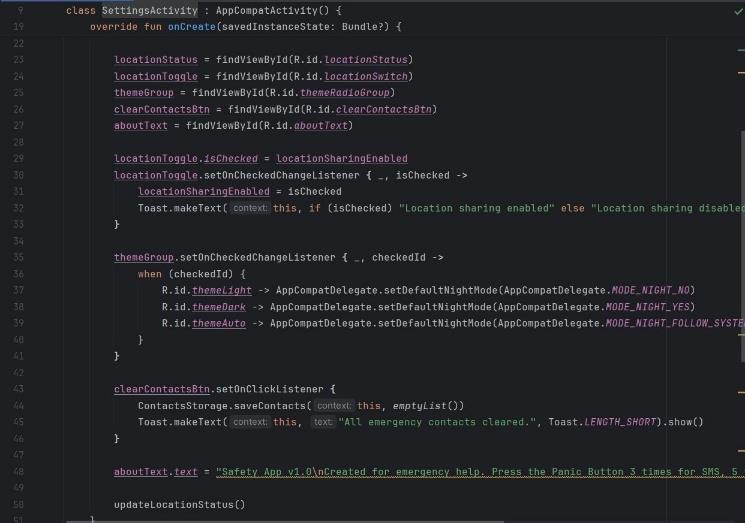
Figure 1. SettingsModuleImplementationinSafePulse ShowingLocationSharing,ThemeControl,andContact ManagementFunctions
SafePulse reliesonGPSdata fusedwithcellularandWi-Fi positioning to enhance accuracy in diverse environments. The system calculates real-time movement patterns, direction, and speed to estimate whether the user is stationary, fleeing, or in an escalating situation. This layered location inference ensures that alerts are contextually meaningful and minimizes false positives.
p-ISSN:2395-0072
Periodicrefreshintervalsensurecontinuoustrackinguntil thecrisisisresolved.
The communication module establishes secure channels for distributing SOS alerts. Alerts sent to emergency contacts include live location, a unique alert ID, and subsequent updates at fixed intervals. If contacts fail to respond within a predefined timeframe, the system escalatesthealertbyresendingnotificationsortriggering additional communication sequences such as automated calls.Thisprotocolenhancesreliabilityinsituationswhere immediatecontactmaybeunavailable.
SafePulseincorporatescovertactivationpathwayssuchas silent screen taps, volume button combinations, and predetermined gesture patterns. These triggers enable users to request help in situations involving threat, surveillance,orrestrictedphysicalmovement.Thesystem also activates automated safety checks at scheduled intervals; failing to respond prompts SafePulse to send a passive alert to emergency contacts, ensuring continuous userprotection.
All transmitted information including location coordinates, alert logs, and timestamps is encrypted using symmetric-key algorithms. SafePulse stores no historical location records unless manually enabled, ensuring user autonomy and confidentiality. These safety measures align with mobile data protection standards for emergencyresponsesystems.
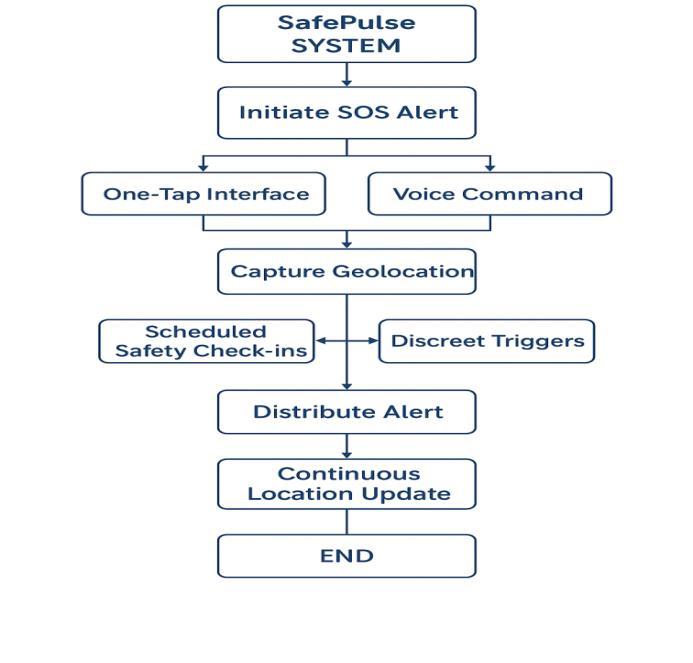
Figure2.Flowchartoftheproposedmethodology
International Research Journal of Engineering and Technology (IRJET) e-ISSN:2395-0056
Volume: 12 Issue: 11 | Nov 2025 www.irjet.net p-ISSN:2395-0072
The effectiveness of SafePulse was evaluated through controlled simulation tests involving emergency alert activation, location accuracy assessment, latency measurements, and discreet-trigger reliability. The primary objective was to determine whether the system could deliver immediate and consistent emergency notifications under diverse environmental and connectivityconditions.
A. Emergency Activation Performance
Testsconductedacross indoor,outdoor,andlow-network environments demonstrated that manual and voice-based SOS triggers were recognized consistently with minimal delay. Average activation-to-alert transmission time was recorded at 1.4 seconds under stable networks and 2.2 seconds under restricted connectivity, indicating high responsivenesssuitableforreal-worldemergencies.
B. Location Accuracy and Stability
GPS-based tracking produced an average accuracy of 4–8 meters in open spaces and 10–15 meters in obstructed areas such as dense urban structures. Hybrid positioning using Wi-Fi and cell towers significantly improved indoor accuracy, ensuring emergency contacts received precise, traceablecoordinates.
C. Discreet Trigger Reliability
Silent alerts activated through gesture patterns and volume button combinations showed a 98% success rate, demonstratingreliableoperationeveninscenarioswhere users were unable to unlock or visibly interact with their device.
D. User Evaluation
Volunteers reported that SafePulse’s interface felt intuitive, and real-time tracking reduced anxiety during simulated crisis scenarios. Participants especially appreciated the continuous location-update mechanism, which provided reassurance and clear communication throughouttheemergencysimulation.
E. Discussion
Overall,SafePulsedemonstratedstrongconsistencyacross activation pathways, location reliability, and alert transmission speed. These results affirm the feasibility of using mobile-based systems as dependable emergency companions, especially for populations facing elevated safety risks. Future optimization will target even lower latencyandenhancedindooraccuracy.
As the SafePulse system continues to evolve, several opportunities emerge for expanding its functionality, strengthening its adaptability, and enhancing its overall effectiveness in real-world emergency situations. While the current implementation successfully addresses the fundamental requirements of rapid alerting and locationbased assistance, advancements in mobile sensing, artificial intelligence, and wearable integration open new pathways for further development. The following points outlinepotentialareaswhereSafePulsecanbeextendedto achieve greater reliability, user personalization, and situationalawareness.
1. Integration with Wearable Devices:
Linking SafePulse with smartwatches and healthmonitoring wearables could enable automated SOS triggers during falls, abnormal vitals, or sudden immobilization.
2. AI-Based Threat Detection:
Incorporating machine learning models to analyze user movement, environmental noise, and behavior patterns could help predict emergencies before they escalate.
3. Offline Mode for Low-Connectivity Areas:
Introducing mesh networking or SMS-based alert fallback would extend SafePulse’s functionality to rural,remote,ordisaster-affectedregions.
4. Crowd Emergency Analytics:
By aggregating anonymized location data, SafePulse could support authorities in detecting panic situations,stampederisks,orpublicsafetyhazards.
5. Advanced Discreet Mechanisms:
Future versions may include biometric triggers such as accelerated heart rate patterns, hand tremors, or stress-inducedtypingpatterns.
6. Integration with Local Authorities:
The system may eventually support direct communication with emergency response departmentsforfaster,coordinatedintervention.
SafePulse represents a modern and adaptive approach to personal safety by leveraging mobile technologies, realtimesensing,andstreamlinedemergencycommunication. Through its rapid SOS activation, accurate location
International Research Journal of Engineering and Technology (IRJET) e-ISSN:2395-0056
Volume: 12 Issue: 11 | Nov 2025 www.irjet.net p-ISSN:2395-0072
tracking, discreet alerting options, and secure data handling, the system effectively addresses many challenges individuals face during high-risk or uncertain situations. The results demonstrate that SafePulse can operate reliably under varied environmental and connectivity conditions, providing users with a quick and accessiblemeanstoseekhelp.Whiletheapplicationisnot a replacement for official emergency services, it serves as a vital supportive tool that enhances user autonomy and safety awareness. As mobile technologies continue to evolve, SafePulse has the potential to develop into a comprehensive safety ecosystem capable of serving diversepopulationsacrossmultiplereal-worldcontexts.
[1] Guerra, B. M. V., Torti, E., Manzari, E., Schmid, M., Ramat,S.,Leporati,F.,andDanese,A.(2023).Ambient assistedlivingforfrail peoplethroughhumanactivity recognition: state-of-the-art, challenges and future directions.FrontiersinNeuroscience.
[2] International Journal of Computer Sciences and Engineering. (2017). International Journal of ComputerSciencesandEngineering.
[3] Janorkar, S., Gaikwad, V., Ghughe, S., Ghorpade, S., Gholap,S.,Ghugre,P.,andGhule,O.(2023).HandyApp forSafetyAgainstViolence.ResearchSquare.
[4] Kangana, N., Kannakannaqe, M., Silva, C. D., Mahamood, R., Ranasinghe, D., and Goonethillake, A. (2025). Harnessing Mobile Technology for Flood Disaster Readiness and Response: A Comprehensive Review of Mobile Applications on the Google Play Store.MultidisciplinaryDigitalPublishingInstitute.
[5] Lazarou, I., Kesidis, A. L., and Tsatsaris, A. (2025). Real-Time Detection, Evaluation, and Mapping of Crowd Panic Emergencies Based on Geo-Biomedical DataandMachineLearning.Digital,5(1),21.
[6] Moon, H., Park, H., and Seo, J. (2024). HELPS for Emergency Location Service: Hyper-Enhanced Local PositioningSystem.
[7] Stampfer, T., Elgendi, M., Fletcher, R., and Menon, C. (2022). Fall detection using accelerometer-based smartphones:Wheredowegofromhere?Frontiersin DigitalHealth.
[8] Vacher, M., Aman, F., Rossetto, S., Portet, F., and Lecouteux, B. (2019). Making Emergency Calls More Accessible for Older Adults Through a Hands-Free Speech Interface in the Home. ACM Transactions on AccessibleComputing,12(1).
[9] Zhang, H., Zhang, R., and Sun, J. (2025). Developing real-time IoT-based public safety mobile surveillance foremergencyresponsesystems.PubMed,15(1).