
International Research Journal of Engineering and Technology (IRJET) e-ISSN: 2395-0056
Volume: 12 Issue: 11 | Nov 2025 www.irjet.net p-ISSN: 2395-0072
International Research Journal of Engineering and Technology (IRJET) e-ISSN: 2395-0056
Volume: 12 Issue: 11 | Nov 2025 www.irjet.net p-ISSN: 2395-0072
1st
Akshay Balasaheb Abhang , 2nd Dr.Anjali J. Joshi, 3rd Dr. Bhuvaneshwar D. Patil, 4th Mayuresh Balasaheb Shinde
Robotics & Automation Engg. Mechanic MMIT, Lohegoa Pune, India
Mechanical MMIT, Lohegoa Pune, India
Mechanical MMIT, Lohegoa Pune, India
Robotics & Automation Engg MMIT, Lohegoan Pune, India
Abstract - The Smart Toll Gate System represents a significant advancement in the global shift towards automation. It minimizes theneedforhumaninvolvementand reduces human errors. The primary benefit of integrating automation intosociety is the increasedreliance onmachines andhardwarewhiledecreasingrelianceonhumans.Thisleads totheconclusionthatincorporatingautomationintoeveryday life will simplify andease lifestyles. Currently, most toll plazas on highways are manually operated, where an attendant collects cash from the driver and issues a receipt. This process can be slow, often resulting in traffic congestion at toll plazas on busy roads. Automated toll collection can save costs, conserve energy, and reduce the need for manpower. In this project, we propose a cost-effective and efficient method knownas ElectronicTollCollection. ItutilizesRFIDmodulesto automatically gather toll fees from vehicles as they pass through the toll plaza. This initiative aims to tackle the challenges faced at toll plazas and also presents an identification device for vehicles
Key Words: Unique Identification, Image Processing, OCR, RFID, IoT, API, Database Verification.
Transportisuniversallyrecognizedasacrucialelementfor the economy of any nation. Enhancing transportation networks fosters an improved environment, allowing individualsgreaterfreedomtotravel,facilitatingsignificant trade in goods and services, boosting employment opportunities,andpromotingsocialmobility.Moreover,the economic health of a country is closely associated with efficienttransportationmethods.Arisingnumberofvehicles on the road can lead to various issues such as traffic congestion, accidents, and environmental degradation. Different sectors of the economy employ various transportationmodesfordistinctpurposes.Therefore,the escalating demand for immediate transportation significantly impacts the global landscape and environmentalsustainability.Thesefactorscontributetothe economic competitiveness by minimizing transportation expenses at production sites and ensuring the timely delivery of products to consumers. The smart toll gate
systemrepresentsatechnologicaladvancementcapableof verifying the authorization status of vehicles and subsequentlyalertingtherelevantauthorities.Thecontrol unitoftheviolationnotice,debits,andassociatedaccounts. The primary benefit of this smart toll gate system is its capability to reduce congestion at toll booths, especially during peak travel seasons when traffic tends to increase beyondusuallevels.
The conducted survey focuses on [1] the susceptibility to highwaytollsandthemaintenanceofdataneededto assess threats to road infrastructure, which relies solely on simulationsutilizingawell-establishedtrafficmodel.
[2] It provides the quickest route to a destination and recalibrates the path in case of traffic, delivering precise route information to users while minimizing both travel timeandexpenses.[3]Thisprocessincorporateselectronic paymentfortollsviaprepaidcardsandalsoincludescard rechargingstations.Feedbackfrompassengersiscollected andanalyzedwiththehelpofgatheredstatisticsusingthe Mann Whitney test for improvements. [4] A study is conducted concerning toll payments made using RFID technology and potential enhancements. This study also retainsinformationaboutboththevehicleanditsuser.[5] Thesharingeconomysimplifiestheprocessbyconnecting vehiclestoaregistryonline.Vehiclesdocumenttheirtravel by regularly sending data to the controller, focusing on collectingreal-timetrafficupdatestoensuresmoothdriving conditions.
Ittrackspassengertravelbycomparingavehicle'slocation withthatofthetollplazausingGPSandchargesthevehicle owner accordingly. [7] RFID sensors installed at the toll capture information from passing vehicles, facilitating seamlessdigitaltransactionsbasedonuniquepatterns.[8] Thiseliminatestheneedformanuallabor,therebyenabling muchfasterautomotivetravelthantraditionaltollsystems, with RFID data stored in the cloud to ease payment processes. [9] The toll system is designed to enhance efficiencythroughcontactlessfarecollectionandadvanced management. In this setup, a variable resistance testing
International Research Journal of Engineering and Technology (IRJET) e-ISSN: 2395-0056
Volume: 12 Issue: 11 | Nov 2025 www.irjet.net p-ISSN: 2395-0072
section is utilized to assess a vehicle’s capacity, allowing recovery of charges on a per-vehicle basis. [10] It automaticallyregistersvehiclescomingonoroffhighways ortrams,reducingwaittimesfortollpaymentssignificantly. Comprehensivemonthlystatementsaredispatchedtothe recipient at month’s end, providing user specific details about the vehicle, including reference number, vehicle number,andbillingaddressforthedriver.[11]Itsuggests mobilepaymentoptionsfor tolls.The applicationaims to reduce the time spent in queues for payments and to alleviatecongestion.Thissystemisdesignedtoidentifythe position of the vehicle and the toll using sensing devices, allowingforautomaticassessmentandpaymentthrougha mobileapplication.Toevaluatetheprocedureattollplazas, it includes a range of actions such as prohibiting certain vehicles, increasing toll rates, and managing unique payment methods for users. It implements security protocolstoreducetoll-relatedcrimes.UsingaGSMmodule, itcanblockspecifictypesofvehicles.Asimplecodemessage issenttothesystem,andthebarrier remainsclosedforthe vehicle even if payment has been completed. A proposed solutionforelectronicpaymentatexpresswaytollsutilizes RFID tags, while also using image processing and cloud technology to keep track of vehicle records. This system includes a method to compute the travel distance of a vehicle so that the toll is charged based on this distance, therebyavoidingextracharges. [6]
In the current method, there is an automatic unit for collecting payments, but it lacks the efficiency of the proposed system, and there is no automatic barrier that opensatthattime.Thereisnotechnologyintollcollection designed to detect vehicle fraud or recognize vehicles. However, the existing system includes technology that provides the shortest route to minimize journey time. It operates using a prepaid card system for toll payments. Additionally, the system incorporates a sharing economy featurethatsimplifiestheprocessbyconnectingvehiclesto a registry over the internet. It also utilizes RFID sensors installed at the toll booths. A mobile application for toll transactionsisalsopartofthesystem.Thesetollcollection methods are rather time-consuming. There are opportunities for vehicles to evade toll payments, which results in long queues for following vehicles. Taking into account the average wait time per vehicle, every year, around72,000vehiclesareidlingfor5hours,contributing to pollution and fuel wastage. When considering 50 toll plazas, this leads to a significant loss of fuel and money, resulting in heavy traffic. In addition to government vehicles, there are also vehicles with number plates in Tamil.Thereiscurrentlynospecificmethodforrecognizing vehiclenumberplatesinTamil.Despitetheautomatictoll collection system, it relies solely on template matching, whichisoutdatedtechnology.Thissystememploysimage processingtechniquestomaintainvehiclerecordsbutdoes
not effectively identify stolen Do not use the word “essentially”tomean“approximately”or“effectively”.
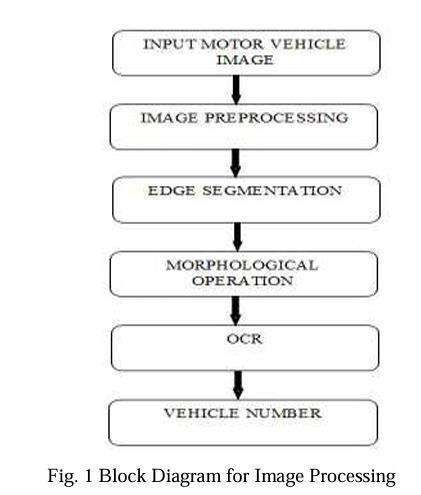
Intheproposedsystem,imageprocessingisutilizedtokeep trackofeachvehicle.Stolenvehiclescanbeeasilydetected usingpressuresensorscombinedwithimageprocessing.A cloud-basedvehicledatabaseismaintainedthroughanIoT module. Payments are processed automatically, and breaches of vehicle number plates are also detected with pressure sensors. The primary focus is on the front-end elements,namelytheRFIDtags,RFID scanner,andpressure sensor. The RFID tags carry a unique ID that is used to identifyauthorizedusers,andtheseusersarerecognizedby the receiver. Upon successful authorization, control is transferred to the motor via the Arduino IDE. This IDE incorporatesembeddedCprogramming,whichmanagesthe selectionandtimingofcomponentstobeused.Thissystem employs Optical Character Recognition as opposed to template matching, enhancing overall efficiency. The numbers and characters found on the number plates are identified using a method called edge segmentation. Additionally, it is capable of recognizing vehicle number plates written in Tamil, utilizing trained datasets for this purpose. By employing image processing techniques, the systemcanverifythedriveragainstthedetailsoftheRFID useraccount.Ifthereisadiscrepancy,thevehicleisflagged for further verification. This application serves as an automaticalternativetotraditionalmanualsystems.Italso includesadisplaypanelthatshowstheuser'sinformation and indicates if the user is unauthorized. In cases of unauthorizedaccess,controlistransferredtoabuzzerthat sounds an alarm, enhancing security measures. This approach helps to minimize waiting time, conserve fuel, andalleviate traffic congestion.
International Research Journal of Engineering and Technology (IRJET) e-ISSN: 2395-0056
Volume: 12 Issue: 11 | Nov 2025 www.irjet.net p-ISSN: 2395-0072
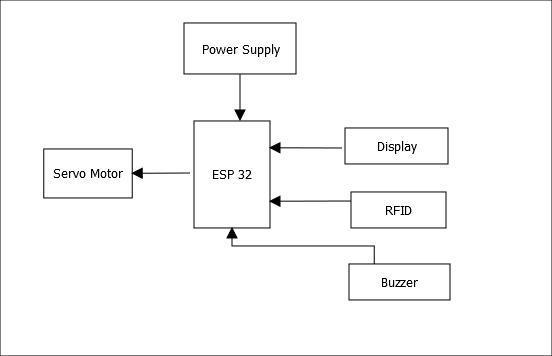
Inthissetup,whichservesasthesystem'scentralcontrol, we utilize the ARDUINO UNO (ATmegA328P) microcontrollerasithousesalltheprograminstructionsfor the entire system. The image processing component is employedtorecognizethevehiclenumberbyreadingthe number plate through OCR, while the pressure sensor is utilizedtodeterminetheweightofeachvehicleandclassify themaccordingly.
Thecollectionoffeesisdeterminedbythetypeofvehicle. An RFID card monitors the funds in the vehicle owner's accountandthecorrespondingvehicledatabase.Incasesof stolenvehicles,thebarricadewillnotopenasitiscontrolled byaSERVOmotor.Stolenandotherviolatingvehiclesare identified by comparing their registration numbers with those listed in police notifications. Additionally, stolen vehiclesaredetectedthroughapressuresensorthatchecks thevehicle'sweightforclassificationpurposes.Ifavehicle lackstheappropriatelicenseplateaccordingtoitscategory, lawenforcementwillbenotified.Thetollpaymentdetails andprocessareshownonanLCDscreen.
a) Vehicle categorizing using pressure sensor
When the vehicle is passed to the toll gate the pressure sensor in the gate detects the weight of the vehicle. By detectingtheweight,thevehicleiscategorized.
b) Vehicle number recognition
The vehicle number is recognized using optical character recognition.TheOCRalgorithmsegmentsthenumberand textsusingedgesegmentation.Itcomparesthesegmented numbersandtextwiththedatabaseandwhenbothmatches it retrieves the data. It also recognizes the characters in Tamilbyusingtraineddatasets.
c) Arduino interfacing with RFID reader
WhentheRFIDcardisscannedinRFIDscanner,theantenna ofthetagreceivessignalsfromanRFIDreaderorscanner anditreturnsthesignal,usuallywithafewadditionaldata. ItcomparestheRFIDcardnumberwithuserdetailsinthe database and then the payment is done. If the number doesn’tmatchwiththedatabase,thentheillegalvehiclecan be identified. And if the user does not have sufficient balance,analertwillbenotified.
d) Theft detection and vehicle processing
Whenthevehicleispassedthroughthetoll,thetheftvehicle isdetectedusingpressuresensorandnumberrecognitionby comparingthenumberwiththevehiclethatiscategorised. Basedonthevehiclecategory,the payment isdone.If the
comparisonismismatched,thetheftvehicleisdetectedand thebarricadedoesnotopen.
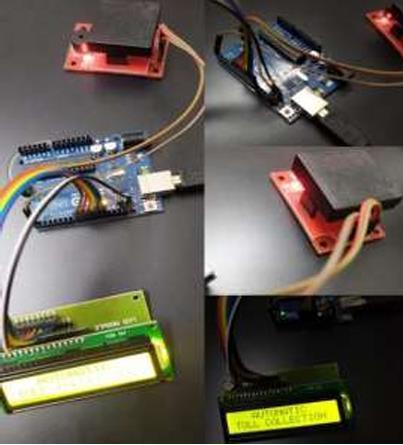
The tags currently registered in the Arduino IDE can be authorized and granted access through the system, while vehicles that are not registered will be denied entry, triggeringanalarmandnotifyingtheauthoritiesaboutthe unauthorizeduser.ItalsochecksforlicenseplatesinTamil, as many vehicles in Tamil Nadu have number plates featuringTamilcharacters.Theimplementationofelectronic tolls enhances user convenience and reduces traffic congestion. With this system, safety at toll booths is improved,anditenablestheidentificationofstolenvehicles. Usersarerequiredtomaintainaprepaidaccountspecifically forthispurpose.
Thesystemaidsinminimizingthewaittimeattollplazasby utilizing technologies such as RFID and optical character recognition. Additionally, it can easily identify stolen
International Research Journal of Engineering and Technology (IRJET) e-ISSN: 2395-0056
Volume: 12 Issue: 11 | Nov 2025 www.irjet.net p-ISSN: 2395-0072
vehicles and those involved in hit-and-run incidents by cross-referencingvehiclenumberswithdatastoredinthe cloud database. As the wait time decreases, it also contributes to better management of heavy traffic. Moreover, it is capable of recognizing vehicle numbers displayedinTamil.Therefore,theSmartTollGatesystem canberegardedassuperiortothe traditionalmanualtoll gatesystem.Althoughthissystemhasbeensuccessfullyput into operation, there are still opportunities for improvement.Plannedenhancementsincludetheabilityto send transaction details via SMS to users' mobile phones. Furthermore,insteadofemployingedgesegmentationfor OCR,theGoogleCloudVisionAPIcanbeintegrated,which canrecognizebothusers'facesandcharactersandnumbers. ThisAPIfromGoogleoffershigh-levelsecurityandincludes freebuilt-infunctions.InTamilNadu,manyvehiclesfeature number plates in Tamil characters. The introduction of digitaltollsimprovesuserconvenienceandalleviatestraffic congestion.Withthissysteminplace,securityattollbooths will increase, making it easier to identify stolen vehicles. Users are required to maintain a prepaid account specificallyforthisservice.
[1] Vulnerability Analysis of Highway Traffic Networks UsingOrigin-destinationTollgateData,ShiFang,KaiguiBian, 2016,IEEE.
[2] The shortest Path or Not? Analysing the Ambiguity of PathSelectioninChina’sTollHighwayNetworks,ShiFang, KaiguiBian,2016,IEEE.
[3]Analysis of E-toll card usage at pondok ranji tollgate AndryAndrew,2018.M.Panjaitan,Jonathan
[4] A Survey on RFID based automatic toll gate management,K.Gowrisubadra,Jeevitha,IEEE,2017.
[5] Transport Improved Intelligent System for Reliable TrafficControlManagementbyAdaptingInternetofThings, RamkumarEswaraprasad,LineshRaja,IEEE,2017.
[6]Automated toll collection system using GPS and GPRS, SudheerKumarNagothu,IEEE,2016.
[7] A Unique Identity based Automated Toll Collection System using RFID and Image Processing, Prakshaal Jain, PrashantDhillon,AnandVardhanSingh,IEEE,2018.
[8] Automated Toll Tax Collection System using CloudDatabase, DipeshGarg; Rajeev Tiwari; ShuchiUpadhyay,IEEE,2018.
[9]Designandimplementationoflow-costelectronictoll collectionsystemSubhankarChattoraj,SaptarshiBhowmik, KaranVishwakarma,ParamiRoy,IEEE,2017.
[10] Radio Frequency Identification (RFID) Based Toll CollectionSystem,AtifAliKhan;AdnanI.ElberjaouiYakzan; MarufAli,IEEE,2011.
[11] Automated toll collection with security system, P Kamala Kannan; M Balaji; A Avinash; S Keerthana; R. Mangayarkarasi,IEEE,2010.
[12] A survey on automatic toll gate collection and management,S.Aarthi;M.Indu;V.Sadhana,IEEE,2017.
[13] An Advanced Security system integrated with RFID based automated toll system, Rafiya Hossain; Moonmoon Ahmed;Md.MozaddedAlfasani;HasanU.Zaman,IEEE,2017.
[14] Design of Electronic Toll Collection System in Expressway Based on RFID, Ren Zhengang; Gao Yingbo, IEEE,2017.
[15] Automated toll booth and theft detection, P Arokianathan; V Dinesh; B Elamaran; M Veluchamy; S Sivakumar,IEEE,2017.
[16] F. Fajas, F. Yousuf, P. R. Remya, A. P. Pavanan, S. Ambadiyil and V. Swaminathan,"AutomaticNumber Plate Recognition for indian standard number plates," 2012 IV International Congress on Ultra Modern Telecommunications and Control Systems, St. Petersburg, 2012,pp.1026-1028,2012.
[17] R.Hossain,M.Ahmed,M.M.AlfasaniandH.U.Zaman, "AnadvancedsecuritysystemintegratedwithRFIDbased automated toll collection system," 2017 Third Asian ConferenceonDefenceTechnology(ACDT),Phuket,2017, pp.59-64.
[18] A.A.Khan,A.I.E.YakzanandM.Ali,"RadioFrequency Identification (RFID) Based Toll Collection System," 2011 ThirdInternationalConferenceonComputationalFig.7.The result of OCR on a typical number plate. Intelligence, CommunicationSystemsandNetworks,Bali,2011,pp.103107.
[19] Huiping Huang, Shide Xiao and XiangyinMeng, "Application of RFID and SNMP technology in highway electronic toll collection system," 2010 3rd International Conference on Computer Science and Information Technology,Chengdu,2010,pp.383-385.
[20] T.Mantoro,A.M.SobriandW.Usino,"OpticalCharacter Recognition (OCR) Performance in Server-Based Mobile Environment,"2013InternationalConferenceonAdvanced ComputerScienceApplicationsandTechnologies,Kuching, 2013,pp.423-428.
[21]https://www.pcb.its.dot.gov/eprimer/images/ep8fig0 6.jpg