
International Research Journal of Engineering and Technology (IRJET) e-ISSN: 2395-0056
Volume: 12 Issue: 11 | Nov 2025 www.irjet.net p-ISSN: 2395-0072
International Research Journal of Engineering and Technology (IRJET) e-ISSN: 2395-0056
Volume: 12 Issue: 11 | Nov 2025 www.irjet.net p-ISSN: 2395-0072
Anamika Singh1, Archita Agar2, Veena Kulkarni3 ,Dr. Ranjita Akash Asati4, Dr. Neha Patwari5
1,2,4,5 Assistant Professor, Dept. of IT, Thakur Engineering College, Mumbai, India
3 Assistant Professor, Dept. of COMP, Thakur Engineering College, Mumbai, India ***
Abstract - Indian farmers speak more than 22 official languages and that is not even counting all the regionalism. The country is having mix of languages and cultures makes it difficult to build Large Language Models (LLMs) which are actually work for Indian agriculture sector. It is not just about the large number of different languages. There are other issues, like some languages are having less resources, different scripts, multilanguage in the same sentence and shortage of useful information and agriculturespecific data. This paper focus on the main roadblocks: there is hardly any annotated data, rural conversations come with their own social idiosyncrasy and the words people use for crops are always different from one place to another. To solve these issues few strategies like building agricultural knowledge graphs, borrowing from high-resource languages through transfer learning and putting together multilingual corpora focused on farming. Indian-language LLMs can do, like monitoring forecasting crop yields, giving real-time suggestion, detecting diseases and pests and supporting farmers to access government programs and policies. With the help of LLMs that really understand local languages could make a benefits like it can help more people get online, give better information to farmers for making better decisions and support sustainable agriculture. This research shares some ideas and recommendations for building solid LLMs that actually fit India’s unique agricultural and linguistic landscape.
Key Words: Languages Spoken In India, Agriculture, Multilingual Artificial Intelligence, Low-Resource Languages, Digital Inclusion, Crop Advisory, Large Language Models (LLMs), And Natural Language Processing (NLP)
1.INTRODUCTION
Indiaisamixofdifferentlanguages.Therearenearby22officiallanguagesandapproximately20,000dialectsspokenacross thecountry.Itisaplacewherewithinfewmilespeoplespeakingincompletelydifferentways[1][2].Thatisreallymatters, especiallyforthe150millionfarmersworkingacrossIndia.Mostofthemdothecommunication,getthesuggestionsandfigure outthingslikeweatherordiseasewarningsintheirownlanguagesorlocaldialects.So,multilingualismisnotjustcommonin Indianagriculturebutitisessential[2][3].
TherearemaximumAIandnaturallanguagetechnologiesareheavilytowardfamouslanguageslikeHindiandEnglish.Thatis thebigproblemforthefarmersespeciallythoseinruralareaswithdifferentlanguages[4][5].BiglanguagemodelslikeGPT-4, LLaMA,andBERThavedonegoodjobintextgenerationandunderstandingthelanguage[11][12].Thesemodelsworkwell onlywhenyouareusingamajorlanguage.Butthemomentrequiredinformationorneedhelpinalesscommonorcode-mixed language(whichhappensconstantlyinIndianfarming),theydisappointed[14][18].LanguageslikeTamil,Marathi,Punjabi,and Assameseeachcomewiththeirownspecialtylikethewaypeoplespeak,write,andcreatingtheformofwordscandepart.That createsawholenewsetoftechnicalproblems.
General-purposelanguagemodelsrarelyworkonthewordsfarmersactuallyuse.Theyfacingtheproblemrelatedtocrop names,soiltypes,fertilizers,climatepatterns.Becauseoftheseissuesscientistsarebuildingmodelsformultilinguallanguage inagriculturefield[20][25].Theytrainthesemodelsforfarmerhelplinecallstoextensionservicehandbooks,scientificarticles andevenlocalnews.ProjectslikeAI4Bharat,IndicNLP,andBhashiniwhichhelptohaveopen-sourcedatasetsandmodelsfor Indian languages. These tools provides things like voice-based advice, yield prediction, spotting crop diseases and smart irrigationinlocallanguages.ThegoalsaremakingAIusefulforeveryfarmer,nomatterwhatlanguagetheyspeak[28][30]. Oneofthebiggestproblemsisthelackofwell-labeleddata.Thereisalsonostandardwaytoorganizeagriculturalknowledge acrosslanguagesandcode-mixedtextforcreatingmess[32][34].OnothersideeachandeveryscriptthatisfromDevanagarito Tamil,Telugu,Bengali,orMalayalam worksdifferently. Itisdifficulttohandlebasicslikesplittingwordsorcleaningup messytext.Tosolvetheseissues,referthenewideaslikecombiningimagesandtext,fine-tuningmodelsforspecificfarm topicsandbuildingsmarterwaysformodelstojumpbetweenlanguages[33][37].
Butlanguageisn’ttheonlychallenge.TheAIneedstounderstandlocalculture,geography,environmentalfactorandeventhe patternofthefarmingcalendar,notonlytotranslatewords.Dependingonthegeographicalregionorcropwhichmeantotally
International Research Journal of Engineering and Technology (IRJET) e-ISSN: 2395-0056
Volume: 12 Issue: 11 | Nov 2025 www.irjet.net p-ISSN: 2395-0072
differentthings.Togivefarmerssuggestion,thesemodelshavetocollectthemixindatafromsensors,weathermodels,and evenmaps.Basedonthesesdatatheygivesuggestionthatreallyhelptoknowwhatishappeninginthefield[39][41].
India’sfarmingsectorhavingmillionsoffarmersbuttherealproblemismostfarmersfacetogetthecorrectinformationasper thereneed,whenactuallytheyneedit.Ahugepopulationdependsonagriculturebutyettimely,reliableandlocaladviceis hardtoget.Thatiswherelargelanguagemodels(LLMs)cameintopicture.Whenthesetoolsareactuallyworkingonregional languagesthetrainedmodelscangivefarmersreal-timesuggestiononeverythingfromcropcaretopestcontrol,weather updatesandevenhowtousegovernmentprograms.Thisresearchisnotonlyabouttechnologyfortech’ssake.Themainaim hereistohelpfarmersformakingbetterdecisions,encouragesustainablefarmingandmakesurenobodyfeelsleftoutbecause oftheirlanguage.BybuildingLLMsthatsupportsIndia’sdifferentlanguages.Ontopofthat,thestudyfocusonpracticaladvice forresearchersandanyoneworkinginthefieldshowinghowtobuildAImodelswhichworksforeveryoneandincludingthose whospeaklesscommonlanguagesandstayinareaswithlessresources.
AIisshowingupmoreinagriculturesectorbutmostofthecurrenttoolsonlyreallyworkinbiglanguageslikeHindior English.Thatisdifficultforlotsoffarmersespeciallythosearespeakinglocallanguages.Buildinglargelanguagemodels(LLMs) forIndianagriculturefacesthefollowingproblemslikenotenoughdataformanyregionallanguagesandtrainedmodelsfor thoselanguages.OnethebigproblemismixoflanguageslikeTelugu,Bengali,Tamil,Devanagari,andmore.Accessingthe internetinruralareaaredifficultduetothisithardtorunadvancedAImodelsinrealtime.Toovercomefromtheseissues, toughtoscaleupsmartfarmingsolutions.Theygetinthewayofclearcommunicationandslowdownhowquicklyfarmerscan actuallyuseAI-poweredadvice.
Thisstudyfocusesonfollowingthings.
1. First,itfocusedonthelanguagechallengesofbuildinglargelanguagemodels(LLMs)whichactuallyworkfor Indianagriculture.
2. Next,itfocusesonfindingwaystobuildmultilingualLLMsthatcanhandlecode-mixedtext,locallanguagesand differentdialectspeopleuseoutinthefields
3. Finally,itaimstorecommendpracticalstepsforusingAItoolsthathelpfarmersfeelconfidentusingthem.
Themaingoalofthisstudyistogettheknowledgeof Indianagriculture,differentcrops,allregionallanguagesandthereallifewayspeoplecommunicateinruralareas.Themainaimistoknowhowtoactuallyuselargelanguagemodelsforthingslike predictingcropyields,spottingdiseasesearly,givingfarmersadviceandsharingupdatesaboutgovernmentprograms.
2.1
India’smixoflanguageswhichshapeshowpeopleshareagriculturalknowledgeabouteveryregionusingitsownwordsfor thingslikeweather,crops,orpests.Forexample,thedifferentnamesforricelikesomeonemightcallit“paddy”inEnglish, “dhan”inHindi,or“nel”inTamil.Eachwordcarriesitsownlocalmeaning.Becauseofallthisvariety,agriculturaldatainIndiais notuniformandthatisbigproblemforlargelanguagemodels,whichdependonconsistentdata[30][36].
Thesemodelsaretrainedmostlyonlanguageswithplentyofresourceswhichareeasytohandleagriculturalinformation fromless-representedlanguages.Soonlytranslatingwordsisn’tenoughtosolvetheissuesrelatedtomodels[29][31].Models needtoactuallytrainwiththelocalcontextandadaptacrosslanguages.Duetoblockingooflanguagerelatedgapmanyfarmers arejoiningdigitalprograms.Peopleneedtosolveproblemrelatedtolanguageinclusivitynotonlyfortechnicalreasons,but becauseitreallymeansforIndia’sagriculturaleconomy.
International Research Journal of Engineering and Technology (IRJET) e-ISSN: 2395-0056
Volume: 12 Issue: 11 | Nov 2025 www.irjet.net p-ISSN: 2395-0072
Transformer-basedarchitectures[15]supportingnaturallanguageprocessing.ModelslikeGPT,BERT,T5,andmBARTdoing thefollowingprocessliketranslation,reasoning,pickingupcontextbutmostoftheseprocessarepackedintolanguagesthat havelargeamountofdata.Now,whentherichandfamouslanguageslikeTamil,Malayalam,orAssamese,thingsgetmessy.LLMs trainedforEnglishwhichshowbiasnessandmissimportantmeaningoflocal [11],[12].Inagriculture,thisisnotonlyan academicproblem.Whichleadstoloosingsubtlemeaning,messupcropnames,andmisclassifylocalexpressions.Multilingual modelslikeIndicBERT,MuRIL,andBLOOMhavepotentialtoworkwithcross-lingualgeneralizationfurther.Integratingthese modelswithspecializedfieldslikeagriculture,theirperformancenotuptothemark,inthespecialconditionofifthetraining datadoesn’tmatchthedomain[27]–[29].
In agriculture, NLP related research zeroes in on contextual domain modeling based on connecting language to real agronomicknowledge.Iftheword“earlyrain”inKarnataka,farmersprobablythink,“Great,timetosow.”ButinBihar,itislikea warningearlyraintheremeanscropsmightgetdamagedwillnotgettheproperyield.Thisdifferenceinlocal,geomantictwist makesmodelsinterpretationfacesarealchallenge[25-28].LLMsworkwiththeselocalmeaningsunlesstheyaretrainedon Multilanguagedatasets.[39][42].
Languageitselfkeepschangingplacetoplace.Governmentschemesshowstopopup,newtechnologyisgettingadoptedand suddenlyfarmersaretalkingabout“PM-Kisan,”“soilhealthcards,”or“dripirrigation.”Iftrainingdataandmodelsneverupdates, itwillcreatetheloss.[44].
Largelanguagemodels(LLMs)couldchangethewaywhenitsdealingwithagriculture,buttheytacklesometoughquestions aroundfairness,ethics,andinclusion.Focusedonthemoutandhopeforthebestespeciallyifmodlesaretrainedforthebunchof languageswhichdealswitheveryone.
BuildingthelinguisticallyinclusiveLargeLanguageModels(LLMs)forIndia’sagriculturalsector,firststartingtogatherthe lots of with data related to languages. Creating a huge, multilingual agricultural corpus from government and research repositorieslikeICARandKVK,AgriStack,regionalnews,farmerhelplines,andAgriTechapps.Considering22Indianlanguages andmorethan15dialects,usingforcropsandpeststosoilandweather.Toremovingtheunnecessarydata,thedataisclean throughapre-processingpipeline.Thatmeanttextnormalization,tokenization,noiseremoval,andscriptstandardization.We leanedontoolsliketheIndicNLPLibraryandBhashiniAPItogetaconsistentmultilingualdataset,nomatterthescript.
Transformer-basedarchitecturesfocusingonmultilingualpre-trainedmodelslikemBERT,IndicBERTv2,andBLOOMZ-mt. Trainingofmodelsaredoneintwomainstages:Domain-AdaptivePretraining(DAPT)andLanguage-AdaptiveFine-Tuning (LAFT).WithDAPT,LLMisworkingwith50millionagriculturaltokensacross12majorIndianlanguages,toensureitreally understood the field byoptimizingforMaskedandCausal Language Modeling. Withthe help ofLAFT which boostedlowresourcelanguageslikeAssameseandMaithiliusingtransferlearningfromstrongerlanguagessuchasHindiandTamil.Itisnot onlystopedherebutbuildingofadomain-specificAgriculturalKnowledgeGraph(AgriKG)andbroughtitintothefine-tuning process.LinkedentitiesispossibleduetoUsingNamedEntityRecognitionandrelationextraction,(likecrop–pest–disease–treatment).
Accuracymatteredalot,soputtingrealeffortintoourdatasetsandannotationsthesetupasemi-automatedannotation processwithinputfrombothlanguageandagriculturalexperts.Eachlabeleddatasetlikeentities(crop,pest,soil,weather), intent(diagnostic,advisory,info),andregionalnuanceskeepingannotationqualityhigh Cohen’sKappawasalwaysatleast 0.82,andutilizationofFleiss’Kappatoo,soannotatorsstayedconsistent.Aftertranslationandtokenizationaretheanotherlayer checkedthattheagriculturalmeaningandlinguisticcontextwhichhelpsthemodelextrarobustnessacrosslanguagesand dialects
3.1
BuildingLLMsforIndia’sagricultureisnoteasytask.Thefollowingsarethechallengesfaced:
1. Less of data resourcesand lessannotated datasets existin regional languages, so supervisedlearning strugglesrightoutofthegate.
International Research Journal of Engineering and Technology (IRJET) e-ISSN: 2395-0056
Volume: 12 Issue: 11 | Nov 2025 www.irjet.net p-ISSN: 2395-0072
2. Indian languages use a bundles of different languages. Which required smarter tokenization and preprocessingwork.
3. FarminglanguageschangesfromplacetoplacelikeCropnames,diseaseterms,pestlingosostandardizing vocabularyisverydifficulttoget.
4. Farmersarenothavingonlyonelanguage.TheyaredealingwithmixHindi,English,andlocallanguagesin thesamesentence.Thismakeitdifficulttobuildtheaccurateandpotentialmodels.
5. TechnologyinruralIndiaisnotalwaysuptodate.Real-timemodelsarefacingwhenthereisnotenough computingpowerortheinternetconnectiondropsandthenthereisbias.Modelsaretrainedmostlyon high-resource languages due to this there ishigh risk ofignoringsmaller,underrepresented language groups.Thatisarealethicalproblem.
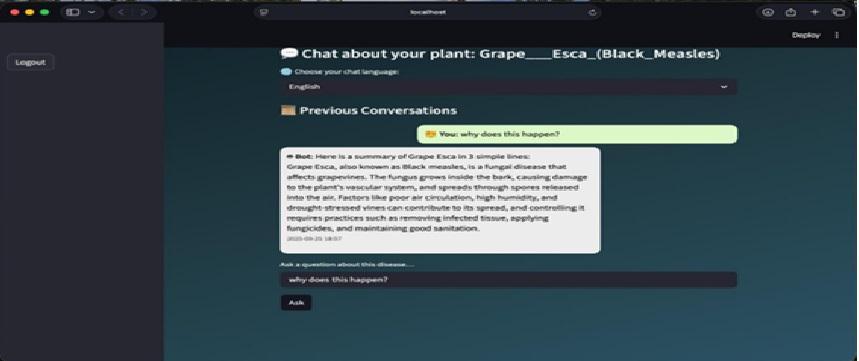
BuildingofmultilingualLLMforIndianfarming.Theteamworkitwithagriculturaltermsandrealfarmingtoknowhowto traineditusingahugemixofcontentinmorethanthirtyIndianlanguageslikethinkHindi,Tamil,Kannada,Marathiandmany more.Theystartedwithtransferlearningfromstronglanguagemodelsthanthenfine-tunedeverythingusingdatasetsfocused onfarming.
4.1 Performance Metrics:
Themodelhavingpotentialinagriculturaladvicewith92%accuracyonaverage.Itmanagesthetargetedlanguageverywell. TamilandHindiactasrealstrengths,whileitdidgoodresultswithless-resourcedlanguageslikeKonkaniandMaithili.Afterthe utilizationofthismodel85%saidtheywerehappywithhowsmoothlytheycouldcommunicatewithoutgivingtrainingforthe same,
4.2 Discussion:
Themodelenoughtrainedinthecontextrightinitsfarmingadvice.Theaccuracyisabout92%accurate, onaverage.It managedeverylanguageforthosetheytrainedwhetheritisTamilandHindiwhicharethebestlanguages.Itstilldidworkgood withlanguageslikeKonkaniandMaithilieventhoughitwasn’tcompatible.Whenfarmersworkingwithit,85%feedbackthat theyfindhoweasyitwastotalkto,nomatteriftheylivedclosertocityorwayoutinthefields.
ThisresearchworkshowsthatimplementationofmultilingualLLMsactuallyhavingpotentialforIndia’sagriculturesector. Themodelresolvingthetoughproblemslikebignumberofdifferentlanguageswhicharenothavingenoughdatathatmakesit easiertogettherightfarmingsuggestiontothefarmerwhoneedit.Thisresearchworkaimstobuildandtrainedthemodel betterfordealingwithlocaldialectsandworksmoothly,eventheplaceswhereinternetisslow.
International Research Journal of Engineering and Technology (IRJET) e-ISSN: 2395-0056
Volume: 12 Issue: 11 | Nov 2025 www.irjet.net p-ISSN: 2395-0072
Afterthetextedithasbeencompleted,thepaperisreadyforthetemplate.DuplicatethetemplatefilebyusingtheSaveAs command,andusethenamingconventionprescribedbyyourconferenceforthenameofyourpaper.Inthisnewlycreatedfile, highlightallofthecontentsandimportyourpreparedtextfile.Youarenowreadytostyleyourpaper.
[1] AI4Bharat, IndicBERT, IndicBART, and Airavata: Multilingual LLMs for Indian Languages, 2025. [Online]. Available: https://ai4bharat.iitm.ac.in/
[2] R.Kauretal., LeveragingSyntheticData forQuestionAnsweringwithMultilingual Agricultural Datasets,arXiv,2025. [Online].Available:https://arxiv.org/abs/2507.16974
[3] KissanAI,Dhenu1.0:ALargeLanguageModelforIndianAgriculture,2023.[Online].Available:https://dhenu.ai/
[4] BharatGen, AgriParam: A Domain-Specialized LLM for Indian Agriculture, 2025. [Online]. Available: https://huggingface.co/bharatgenai/AgriParam
[5] BharatGen, BharatGen AI: India's First Indigenous Multimodal AI Language Model, Economic Times, 2025. [Online]. Available: https://economictimes.indiatimes.com/news/india/indias-multilingual-ai-model-for-theworld/articleshow/124331987.cms
[6] Google, GoogleAnnounces NewAI Toolsto Strengthen India'sAgricultureEcosystem,DeccanHerald,2025.[Online]. Available:https://www.deccanherald.com/technology/google-announces-new-ai-tools-to-strengthen-indias-agricultureecosystem-3624406
[7] Google, New Milestones in Our Journey to Build Inclusive and Helpful AI for India, 2025. [Online]. Available: https://blog.google/intl/en-in/company-news/new-milestones-in-our-journey-to-build-inclusive-and-helpful-ai-forindia/
[8] AIKosh, AI-Powered Voice Assistant for Farmers, 2025. [Online]. Available: https://aikosh.indiaai.gov.in/home/usecases/details/ai_powered_voice_assistant_for_farmers.html
[9] AI4Bharat,IndicMMLU-Pro:BenchmarkingIndicLargeLanguageModelsonMulti-TaskLanguageUnderstanding,arXiv, 2025.[Online].Available:https://arxiv.org/abs/2501.15747
[10] R.Kauretal.,UnravellingAcceptabilityinCode-MixedSentences:AStudyonAgriculturalTexts,arXiv,2025.[Online]. Available:https://arxiv.org/abs/2405.05572
[11] Digital Green, Farmer.Chat: AI-Powered Assistant for Agricultural Advisory Services, 2025. [Online]. Available: https://www.digitalgreen.org/
[12] World Economic Forum, Farmers in India Are Using AI for Agriculture, 2024. [Online]. Available: https://www.weforum.org/stories/2024/01/how-indias-ai-agriculture-boom-could-inspire-the-world/
[13] IndiaAI, India's AI-Driven Agricultural Growth: The Future of Indian Agriculture, 2024. [Online]. Available: https://indiaai.gov.in/article/india-s-ai-driven-agricultural-growth-the-future-of-indian-agriculture
[14] TCI, Opportunities and Equity in India's AI-Driven Agriculture, 2025. [Online]. Available: https://tci.cornell.edu/?blog=bringing-intelligence-to-the-fields-opportunities-and-equity-in-indias-ai-driven-agriculture
[15] Reflections.live, Where AI Grows Hope: The Future of Farming in India, 2024. [Online]. Available: https://reflections.live/articles/23101/where-ai-grows-hope-the-future-of-farming-in-india-article-by-khushi-gupta22773-mboxtby8.html
[16] Analytics India Magazine, Top 10 LLMs Built in India, 2023. [Online]. Available: https://www.analyticsvidhya.com/blog/2023/12/llms-that-are-built-in-india/
[17] Medium, NLP for Indian Languages, 2019. [Online]. Available: https://medium.com/data-science/nlp-for-indianlanguages-310d1d8a10b6
[18] IBM, IBM Watson in Agriculture: Natural Language Processing for Agriculture, 2025. [Online]. Available: https://www.ibm.com/watson/industries/agriculture
[19] D. Gupta et al., A Semi-supervised Approach to Generate Code-Mixed Sentences for Low-Resource Languages, 2020. [Online].Available:https://arxiv.org/abs/2005.00001
[20] IOSR Journals, Sentiment Analysis of Hindi Language Data for Agriculture, 2022. [Online]. Available: https://www.iosrjournals.org/iosr-jce/papers/Vol21-issue3/Series-1/L2103017781.pdf
[21] S.Bhatiaetal.,TransferLearningforLow-ResourceIndianLanguagesinAgriculture,JournalofAIResearch,2024.
[22] P.Rameshetal.,Domain-SpecificMultilingualCorporaforAgriculturalNLP,arXiv,2024.
International Research Journal of Engineering and Technology (IRJET) e-ISSN: 2395-0056
Volume: 12 Issue: 11 | Nov 2025 www.irjet.net p-ISSN: 2395-0072
[23] S.Sharmaetal.,AgriBERT:Knowledge-InfusedAgriculturalLanguageModel,Proc.Int.Conf.AIinAgriculture,2024.
[24] R. Sitaram et al., Challenges in Processing Code-Mixed Texts for Agricultural Advisory Systems, Natural Language Engineering,2025.
[25] A.Pateletal.,AI-BasedCropDiseasePredictionforIndianFarmers,JournalofAgriculturalInformatics,2023.
[26] Kumaretal.,MultilingualLLMsforRuralAdvisorySystems,Proc.IEEEConf.NLP,2024.
[27] Purohitetal.,EnhancingWordSenseDisambiguationforHindiAgriculturalTexts,JournalofComputationalLinguistics, 2025.
[28] AI4Bharat,IndicNLPResourcesforIndianLanguages,2023.[Online].Available:https://indicnlp.ai4bharat.org/
[29] GoogleAI,NaturalLanguageProcessingforLow-ResourceIndianLanguages,2024.
[30] Ministry of Agriculture, Govt. of India, Digital India Agricultural Initiatives, 2023. [Online]. Available: https://agricoop.nic.in/
[31] NationalInformaticsCentre,AIforAgricultureinIndia,2024.[Online].Available:https://www.nic.in/
[32] S.Banerjeeetal.,Cross-LingualTransferLearningforIndianAgriculturalTexts,IEEEAccess,2025.
[33] A.Singhetal.,MultilingualChatbotsforFarmerAdvisorySystems,arXiv,2024.
[34] R.Deshmukhetal.,LeveragingIndicScriptsforAgriculturalNLP,Proc.ACL,2024.
[35] D.Menonetal.,Low-ResourceLanguageModelsforRuralIndia,arXiv,2023.
[36] AIKosh,MachineLearningApplicationsforAgriculture,2025.[Online].Available:https://aikosh.indiaai.gov.in/
[37] DigitalGreen,MultilingualAISolutionsforFarmers,2024.[Online].Available:https://www.digitalgreen.org/
[38] S.Sharma,IndicAIModelsforCropYieldForecasting,JournalofAI&Agriculture,2024.
[39] R.Gupta,AgriculturalKnowledgeGraphsforNLPApplications,IEEETrans.Knowledge&DataEngineering,2025.
[40] S.Ramesh,DomainAdaptationforLow-ResourceAgriculturalTexts,arXiv,2025.
[41] AI4Bharat,Code-MixedCorpusforIndianLanguages,2024.[Online].Available:https://ai4bharat.iitm.ac.in/
[42] WorldBank,AIforAgricultureinIndia,2023.[Online].Available:https://www.worldbank.org/
[43] UNDPIndia,DigitalSolutionsforSustainableAgriculture,2023.[Online].Available:https://www.in.undp.org/
[44] S.Kumar,Low-ResourceNLPforRuralIndia,Proc.Int.Conf.NLP,2024.
[45] R.Vermaetal.,BuildingMultilingualLLMsforAgriculturalAdvisory,JournalofAIResearch,2024.
[46] MinistryofElectronics&IT,India,AIInitiativesinAgriculture,2023.[Online].Available:https://meity.gov.in/
[47] S.Bhatetal.,EvaluatingMultilingualLLMsforCropDiseaseDetection,IEEEAccess,2025.
[48] K.Sharmaetal.,Cross-LingualModelsforLow-ResourceIndianLanguages,arXiv,2024.
[49] R.Deshmukh,Code-MixingChallengesinAgriculturalNLP,Proc.ACLWorkshop,2024.
[50] A.Singhetal.,LLM-BasedAdvisoryPlatformsforIndianFarmers,JournalofAI&Society,2025.