
International Research Journal of Engineering and Technology (IRJET) e-ISSN:2395-0056
Volume: 12 Issue: 11 | Nov 2025 www.irjet.net p-ISSN:2395-0072
International Research Journal of Engineering and Technology (IRJET) e-ISSN:2395-0056
Volume: 12 Issue: 11 | Nov 2025 www.irjet.net p-ISSN:2395-0072
Haran S S1, Harish S S2, Shanthi Chinnasamy3
1Student, Department of Artificial Intelligence and Data Science, RVS College of Engineering and Technology, Coimbatore, Tamil Nadu, India
2Former Student, Department of Physics, Bharathiar University, Coimbatore, Tamil Nadu, India
3Independent Author, Coimbatore, Tamil Nadu, India
ABSTRACT
Nonlinear oscillations are intrinsic to a wide range of mechanical systems. Modelling the system behaviour is crucial for stability, error identification and optimization of the system parameters. Applying traditional analytical and mathematical expressions to the system often finds difficult due to the nonlinear oscillations. Thus, the advancement of Artificial Intelligence in mechanical systems have transformed this traditional approach into neural network architectures including feedforward, recurrent, convolutional, and physics-informed networks in capturing nonlinear behaviours in mechanical oscillators. It discusses the IoT embedded systems and data acquisition for real-time monitoring of nonlinear oscillations. It also highlights the data processing and feature extraction methods to improve the system’s performance. Furthermore, Evaluation and validation of errors in a model is also discussed by statistical approaches. Finally, this review explores emerging trends in neural networks such as hybrid AI-physics model and their integration within the industry and smart manufacturing ecosystem.
Key Words: Artificial Neural Network, Nonlinear Oscillations, Mechanical Systems, IoT systems, Data Processing, Engineering Models, Model Validation
1. INTRODUCTION
Nonlinear oscillations are fundamental phenomena that creates the foundation of many fields in technical sciences from micro-scale resonators and vibration absorbers to large-scale applications. The main goal is to investigate the level of vibration in the mechanical systems. Unlike linear system, nonlinear systems exhibit complex behaviour such as amplitude-dependent frequencies, bifurcations, chaos, and energy transfer between modes. Traditional methods like analytical and mathematical methods like Perturbation, phase-plane, bifurcation, averaging, runge-kutta methods often facelimitationswhiledealingwithnonlineardynamics.Thisissuecanbetackledbymodellinganonlinearresponsethatis crucialforthesystem’sstabilityandbehaviour. Thisreviewpaperprovidesacomprehensiveoverviewofrecenttrends in applying neural networks for a nonlinear oscillation in mechanical system. Advanced architectures like Recurrent Neural Networks (RNNs),LongShort-Term Memory (LSTM) networks,andPhysics-InformedNeural Networks(PINNs) areused to optimize the system behaviour. By bridging a gap between Nonlinear dynamics and Artificial Intelligence, this paper aims to provide insights into how neural networks can predict and control the nonlinear oscillations in mechanical systems.
Oscillationsaretheperiodicvariationofsomemeasurearoundanequilibriumpointbetweentwoormoredifferentstates. In linear oscillations, the restoring force is proportional to displacement. Hence, the behaviour of the system is clearly expressedbylineardifferentialequations
But in actual occurrences, the mechanical system doesn’t stick to such linearity The oscillatory motion is said to be nonlinearwhentherestoringforceisnotdirectlyproportionaltothedisplacement Nonlinearoscillationsareessentialto study the dynamics of mechanical systems as their behaviour is much complex than the linear ones. This nonlinearity arises due to nonlinear damping, large amplitude motions or complex part interactions. It means that system’s output is not directly proportional to its input. Using the nonlinear differential equations, can predict the multiple stable states,
International Research Journal of Engineering and Technology (IRJET) e-ISSN:2395-0056
Volume: 12 Issue: 11 | Nov 2025 www.irjet.net p-ISSN:2395-0072
amplitude-dependentfrequenciesandparameterdeviationsinthesystem’sbehaviour.However,itisdifficulttosolvesuch problemsasitrequirespossibleapproach[1].Anexampleofnonlineardifferentialequationforasimplependulum:
����+���������� =0
There are numerous methods to analyse nonlinear oscillations in a mechanical system. Using Classical approaches like Perturbation, Phase-plane, bifurcation, averaging, runge-kutta, it is difficult to apply on complex mechanical system as it often need simplifications. To overcome these problems, Modern AI tools like Neural Network is used to analyse the nonlinearoscillationinthemechanicalsystem.Notably,Physics-InformedNeuralNetwork(PINNs)andDataDrivenNeural Network (DNNs) is used when the system’s behaviour is highly nonlinear. It also uses big data inputs like measure of vibrationsandoscillations,systemparametersandotherdatatomodel,predictoranalysethedynamicsofthemechanical system.
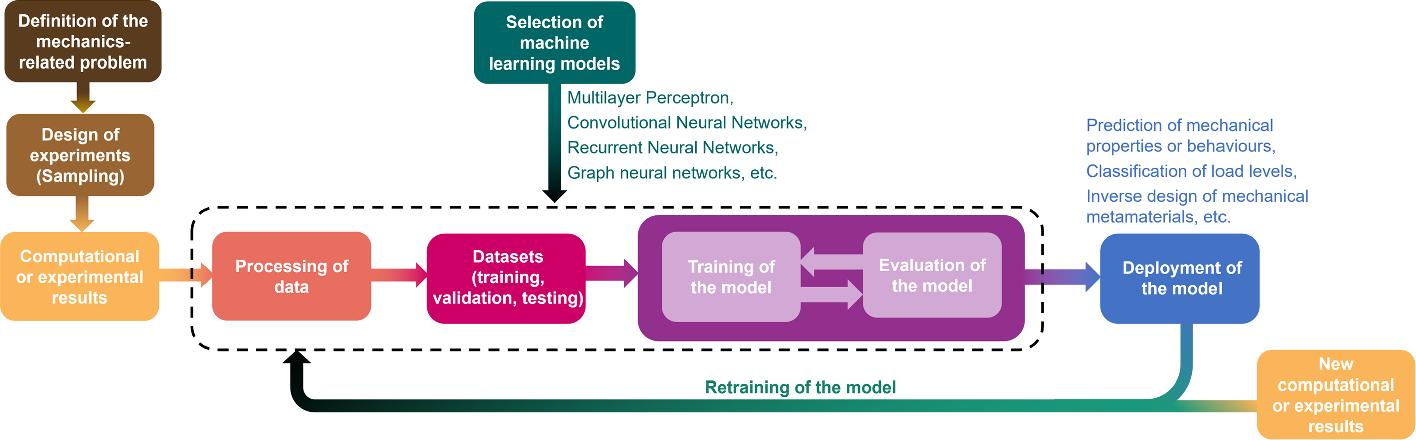
3.1 Types of Neural Networks used in Dynamic system modelling.
In the modelling of neural network, few models are used to validate the nonlinear oscillations in the dynamic system FeedforwardNeuralNetworks(FNNs)arefoundationalmodelsusedforimmovablenonlinearmappings.RecurrentNeural Networks(RNNs)includingLSTM(LongShort-TermMemory)andGRU(GatedRecurrentUnit)alternatives,aredesigned tocontroltime-seriesdata,makingthemidealforcreatingdynamicsystemswithmemoryeffects.
Convolutional Neural Networks (CNNs) though traditionally used in image processing, have been fitting to extract dimensional-temporal features from vibration and sensor data in mechanical systems. In Nonlinear oscillatory system, a trained FNN was successfully used to predict the nature of a five-degree-of-freedom Duffing oscillator, professed the powerofdata-drivenfittingincapturingnonlineardynamics[2].
3.2 Key Studies on Neural Networks in Mechanical System
In error identification and rectification in mechanical systems has been improved during the past decades. Error identification in a system begins with collection of data which are related to error. This error identification can be by statisticalanalysisandbymodel-basedpredictions[3,4] Byusingtheneuralnetworks,theusercanidentifythesystem’s behaviour,comparestheconstantconditions,examinessignallingandtomeasurethesystemparameterswithouttheprior knowledgeortrainingandevaluatingthemethodologyofcompleteArtificialNeuralNetwork(ANN)[5]
Theself-learningabilityofANN,mappingofnonlinearoscillationsinsystem,parallelcomputinganddeviationoferrorare used to construct an advanced error identification system. The complexity of system’s behaviour is due to static and dynamicpropertiesthatareconsideredastheoptimizationparameterwhichisintegratedinthemechanicalsystem.Using mathematical model is insufficient to overcome these problems in optimization. Henceforth, to calculate and adjust the parameters for optimization process, ANN is used as a methodology to tackle problems such as 2D and 3D structures, compositestructuresandvibratingsystems[6].
International Research Journal of Engineering and Technology (IRJET) e-ISSN:2395-0056
Volume: 12 Issue: 11 | Nov 2025 www.irjet.net p-ISSN:2395-0072
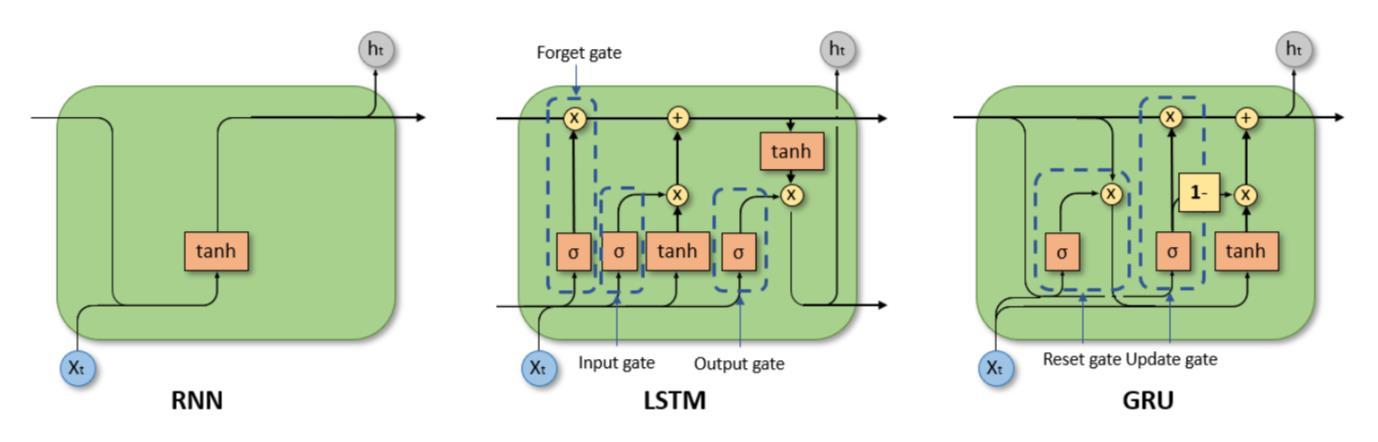
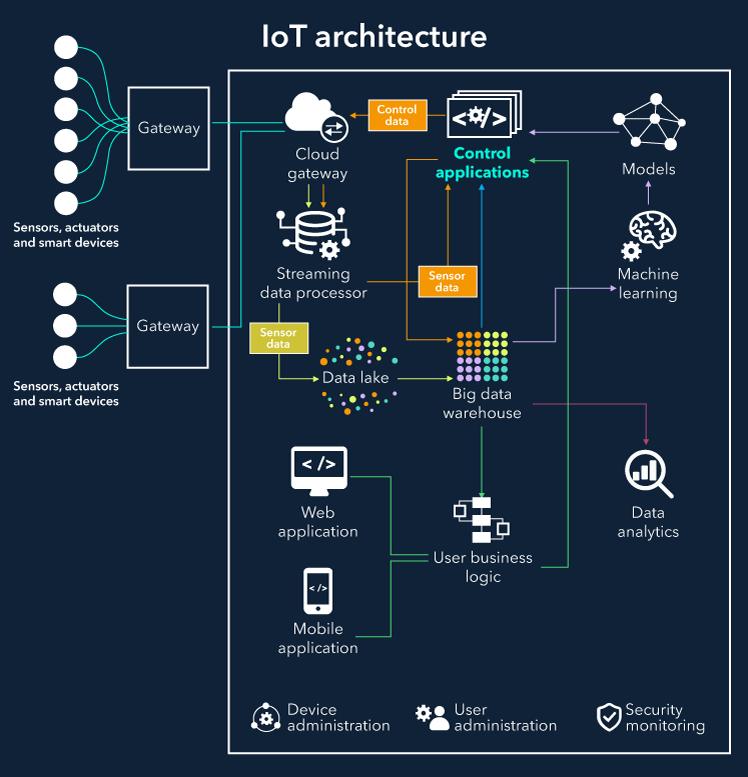
ANNsplayavitalroleinIoT-basedmechanicalsystemtoanalysevibrationandoscillationdatathroughpatternrecognition andanomalydetection.Thesensorsdetectvibrationsandoscillationinthemechanicalsystem andtransmitsthedatavia IoT network for data processing. ANNs analyse these data to identify the errors or deviations found in the mechanical system.Forinstance,ConvolutionalNeuralNetworks(CNNs)representstheacousticdatathatenableshighaccuracyerror identification without the need of any traditional analytical methods. The progression of mechanical wear and failure is predicted by obtaining temporal dependencies within the sequential sensor data by using Recurrent Neural Networks (RNNs)andLongShort-TermMemory(LTSM)networks[7].
SensortechnologiesandedgecomputingareremodelIoT-baseddataacquisitionbypermissivefaster,smarter,andwellplanned systems. Like MEMS (Micro-Electro-Mechanical Systems), optical, and piezoelectric sensors overture high sensitivity and miniaturization. These are contemporary sensor technologies making them ideal for embedded IoT systems. Edge computing processes this data narrowly-at or adjoining the sensor that shrinking latency and bandwidth usagecorrelated tocloud-onlyarchitectures.Energy-efficient microcontrollersand AIacceleratorsatthefringe allowfor lightweight machine learning assumption directly on sensor nodes. By integrating AI with edge computing enhances responsivenessandreducesclouddependencyinsmartmanufacturingsystems[8].
International Research Journal of Engineering and Technology (IRJET) e-ISSN:2395-0056
Volume: 12 Issue: 11 | Nov 2025 www.irjet.net p-ISSN:2395-0072
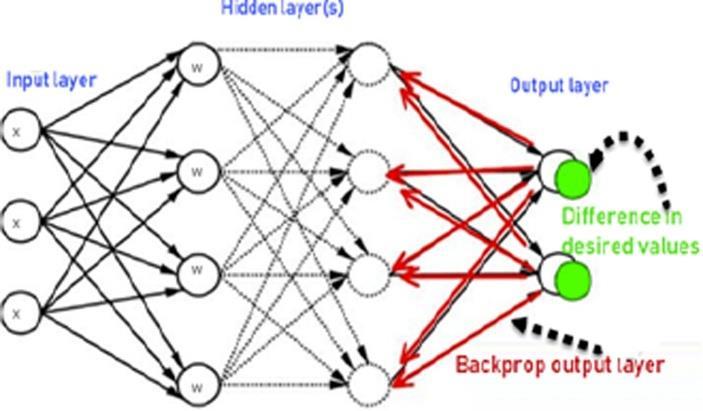
ThroughPatternrecognition,ANNscanbeabletosolveNonlineartimeseriesthoughtheyarenotefficientliketraditional linearmodels.Hence,toforecastthenonlineartimeseries,newmodelsaredeveloped.Hybridmodelsarethecombination of ANNs with a linear model ARIMA (Auto-Regressive Integrated Moving Average) such as bilinear model like AutoRegressive Conditional Heteroskedasticity (ARCH), Smooth Transition Auto-Regressive (STAR) and Nonlinear AutoRegressive (NAR) models [9] To analyse or predict a nonlinear oscillation, the NAR model is found efficient with ANNs. NAR is a discrete model holds an input layer, input delay, hidden layer, output layer and output delay [8]. It is mathematicallyexpressedas ��(��) =[��(��),��(�� 1),��(�� 2) ��(�� ��),��(�� 1),��(�� 2)
Here, x is the input vector of the P dimension and y is the output vector of the Q dimension. O is thehidden layer nodevector of N dimension, t is delay order and p is output delay order,����1 is a threshold of the input layer, ����2 is a thresholdofthehiddenlayer.Wheretasaninputdelaystep,thenumberofresultantdelaystepispthentheoutputofjth hidden nodes. Connection weight between hidden and delay layer is symbolized by����1, the transfer function for the hiddennodesis����1 anactivationfunctionforoutputnodesis����1
Signal processing approach like FFT (Fast Fourier Transform) and filtering are crucial for transforming raw sensor data intopurposefulfeaturesformachinelearningandengineeringanalysis. Filteringtechniqueslikelow-pass,high-pass,and band-pass filters that helps to withdraw noise and segregate relevant signal bands, improving signal clarity. Smoothing filters help to sustain signal trends while condensing high-frequency noise. Feature eradication from filtered signals consistsofmetricslikeRMS(RootMeanSquare),peakamplitude,spectralentropy,andkurtosisareusedinfaultdetection andclassification.
ANN models are used to predictthe nonlinear oscillationsin system’s behaviour duetotheir ability tosolve thecomplex problems. The ability of ANN models should be validated to ensure the proper functioning of algorithm Hence, it is validated by using statistical error metrics such as Mean Squared Error (MSE), Root Mean Squared Error (RMSE), Mean Absolute Error (MAE) and Coefficient of Determination (R²). These statistical approaches help us to quantify the oscillatoryresponsesandcomparewiththeexperimentaldata.
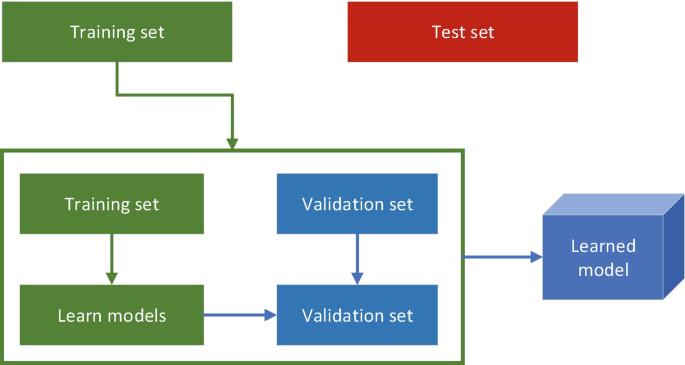
To evaluate the frequency and phase synchronization of oscillations in a dynamic system, statistical methods like correlationcoefficients,spectralerrormeasuresandphaseerroranalysisareemployed Usingcoefficientofdetermination (R²)inanonlinearsystemisnotsoeffectiveduetoinaccuracyandmisleadingassessmentofANNmodels[10].Todevelop andassesstheaccuracyofANNs,CrossValidation(CV)isperformedbyprovidinganinputofoscillatorydata.TheCVerror isdefinedas
International
Volume: 12 Issue: 11 | Nov 2025 www.irjet.net p-ISSN:2395-0072
where MSE(k) istheMeanSquareErrorforthe kth-folddatasetandthesmallestCVerrorsuggeststheoptimalsettingofthe hyperparameters.Whenthedatapointsareselectedrandomly,itcausesseriousissuesintime-seriesdataasitviolatesthe pattern recognition to proceed further studies. To tackle this issue, Block cross validation is introduced. It involves fours strategiesthatincludesthefivefoldCV,leave-one-outCV,h-blockfivefoldCV,andout-of-sampleevaluation[11]
Repeating the cross validation with test groups, the errors can be minimized It is ideal to evaluate each analytical approach equally when benchmarking performance. This might include applying the same data collection and accuracy measurement method. Therefore, using CV to assess the accuracy of both the ANN and linear regression may seem reasonable[12]
Cloudcomputingevenupaccesstohigh-performanceGPUs(GraphicsProcessingUnit)andTPUs(TensorProcessingUnit), enabling researchers and engineers to train deep models beyond possessing expensive hardware. Unified ML tools like TensorFlow on Google Cloud or SageMaker on AWS simplify pipeline creation and monitoring. Distributed computing splits model training across various nodes, indulgent parallel processing of large datasets and deep architectures. The distributed CNN (Convolutional Neural Network) training significantly accelerates convergence on large datasets [13]. Physics-Informed Neural Networks (PINNs) incorporate physical laws directly into the training process, improving accuracy and generalization for complex mechanical systems. Neural networks embedded in edge devices analyse vibrationsignalsinrealtime.Neuralnetworkscanmodelchaotic attractors,andwhichhasbifurcationbehaviourwithout explicit equations which mainly enhances the Data-Driven approaches for chaotic and Multi-Degree-of-Freedom Oscillations. Hybrid models blend machine learning with physics-based equations to seizure complex system practice moreaccuratelythaneithermethodalone.TheHybridModellingthatasthenextfrontierinscientificcomputing,blending Newtonian and Keplerian paradigms [14]. Explainable AI aims to make black-box models like deep neural networks intelligible to engineersand domain experts.Physicsthathelpsin explaining neural networksforconstitutive modelling, improving interpretability in material mechanics [15]. Smart factories leverage cyber-physical systems and IoT to integrate AI for autonomous decision-making and embellished productivity. Machine learning algorithms revise to dynamicproductionenvironments,developingqualityandreducingwaste.
Neuralnetworkoffersapowerfulalternativetotraditionalmethodsformodellingandcontrollingnonlinearoscillationsin mechanical systems. They enable more accurate predictions and enhanced system stability when AI is integrated with nonlineardynamics.Nonlinearoscillationsinmechanicalsystemsprovidescomplex behavioursthatchallengetraditional analytical methods. Artificial Neural Networks (ANNs) have proven that it is effective in modelling nonlinear oscillations
International Research Journal of Engineering and Technology (IRJET) e-ISSN:2395-0056
Volume: 12 Issue: 11 | Nov 2025 www.irjet.net p-ISSN:2395-0072
and optimizing mechanical systems. Integration with IoT and edge computing enhances real-time data acquisition and processing. Hybrid models which help to improve forecasting accuracy for nonlinear time series. Emerging trends that mainly focus on AI-driven mechanical systems emphasize hybrid modelling and real-time edge analytics. The Synergy between nonlinear dynamics and AI is poised to revolutionize intelligent system design and predictive maintenance in modernengineering.
[1].Nekorkin,V.I.(2015). Introduction to nonlinear oscillations
[2]. L. Zhang, Y. Sun, A. Wang, and J. Zhang, “Neural network modeling and dynamic behavior prediction of nonlinear dynamicsystems,” Nonlinear Dynamics,vol.111,no.12,pp.11335–11356,Mar.2023.
[3]. M. Szczepanik and T. Burczynski, “Swarm optimization of stiffeners locations in 2-D structures,” Bulletin of the Polish Academy of Sciences Technical Sciences,vol.60,no.2,pp.241–246,Oct.2012,
[4].J.A.LandayandB.A.Myers,“Sketchinginterfaces:towardmorehumaninterfacedesign,” Computer,vol.34,no.3,pp. 56–64,Mar.2001.
[5]. P. Meesad and G. G. Yen, “Pattern classification by a neurofuzzy network: application to vibration monitoring,” ISA Transactions,vol.39,no.3,pp.293–308,Jul.2000
[6]. H. A. Khayyat, “ANN based Intelligent Mechanical Engineering Design: A Review,” Indian Journal of Science and Technology,vol.11,no.27,pp.1–7,Jul.2018.
[7]. Nasir, Waseem and Banaras, Faizan, “Real-Time IoT-Based Monitoring of Mechanical Systems Using Acoustic and VibrationData,” Research Gate, Feb.2025.
[8].I. Ficili,M. Giacobbe, G. Tricomi,andA. Puliafito, “FromSensors to Data Intelligence:LeveragingIoT,Cloud, andEdge ComputingwithAI,” Sensors,vol.25,no.6,p.1763,Mar.2025.
[9]. A. Tealab, H. Hefny, and A. Badr, “Forecasting of nonlinear time series using ANN,” Future Computing and Informatics Journal,vol.2,no.1,pp.39–47,Jun.2017.
[10]. H. Khoshvaght, R. R. Permala, A. Razmjou, and M. Khiadani, “A critical review on selecting performance evaluation metrics for supervised machine learning models in wastewater quality prediction,” Journal of Environmental Chemical Engineering,vol.13,no.6,p.119675,Oct.2025.
[11].C.-Y.Guo,T.-W.Liu,and Y.-H.Chen,“Anovelcross-validationstrategyforartificialneuralnetworksusingdistributedlagenvironmentalfactors,” PLoS ONE,vol.16,no.1,p.e0244094,Jan.2021.
[12].Z.Zakeri,N.Mansfield, C.Sunderland,andA. Omurtag,“Cross-validatingmodelsofcontinuousdata fromsimulation and experiment by using linear regression and artificial neural networks,” Informatics in Medicine Unlocked, vol. 21, p. 100457,Jan.2020.
[13].P.Chaudhary,S.Vats,andV.Sharma,“Performanceinsightsofconvolutionalneuralnetworksoperatingondistributed computingplatforms,” SN Computer Science,vol.6,no.4,Apr.2025.
[14].S.Kurz et al.,“Hybridmodeling:towardsthenextlevelofscientificcomputinginengineering,” Journal of Mathematics in Industry,vol.12,no.1,Mar.2022.
[15] A. Koeppe, F. Bamer, M. Selzer, B. Nestler, and B. Markert, “Explainable artificial intelligence for mechanics: PhysicsExplainingneuralnetworksforconstitutivemodels,” Frontiers in Materials,vol.8,Feb.2022.