
International Research Journal of Engineering and Technology (IRJET) e-ISSN: 2395-0056
Volume: 12 Issue: 12 | Dec 2025 www.irjet.net p-ISSN: 2395-0072
International Research Journal of Engineering and Technology (IRJET) e-ISSN: 2395-0056
Volume: 12 Issue: 12 | Dec 2025 www.irjet.net p-ISSN: 2395-0072
Monika
1 , Dr.
Chandan Kumar
2
1Research Scholar, Department of Computer Science and Engineering, Career Point University, H.P., India
2Associate Professor, Department of Computer Science and Engineering, Career Point University, H.P., India
Abstract - Medical image enhancement is critical for improving diagnostic accuracy and clinical outcomes. This research proposes a novel approach to optimize image enhancement filters through multi-objective optimization usingthe GreyWolfOptimizer (GWO) with dynamic threshold adaptation. The study focuses on two primary objectives: (1) improving filter performance by optimizing multiple goals simultaneously for dynamic threshold adaptation, and (2) comprehensively comparing the proposed enhancement methods against existing gray-level contrast enhancement techniques using various performance metrics. The proposed frameworkintegrates ConvolutionalNeuralNetworks(CNNs) with metaheuristic optimization andNon-LocalMeans(NLM) filtering to achieve superior image quality while preserving anatomical details. Experimental evaluation on ultrasound, CT, and MRI datasets demonstrates that the proposed multiobjective optimization approach outperforms traditional methods such as Histogram Equalization (HE), ContrastLimitedAdaptiveHistogramEqualization(CLAHE),andlinear contrast stretching across PSNR, SSIM, UQI, and NCC metrics. The results highlight the effectiveness of dynamic threshold mechanisms in adapting to local image characteristics, therebyenablingrobust enhancement across diverse imaging modalities and noise conditions.
Key Words: Image enhancement, multi-objective optimization, Grey Wolf Optimizer, dynamic thresholding,medicalimaging,comparativeevaluation.
Medical imaging modalities such as Magnetic Resonance Imaging(MRI),ComputedTomography(CT),ultrasound,and X-ray radiography are essential diagnostic tools in contemporaryclinicalpractice.However,theseimagesare frequently degraded by low contrast, noise, blur, and artifacts that reduce image interpretability and diagnostic confidence[1].Thequalityofacquiredimagesdependson multiple factors including imaging hardware capabilities, acquisitionparameters,patientmotion,andenvironmental noise. These limitations necessitate sophisticated image enhancement techniques capable of simultaneously optimizing multiple quality aspects without introducing artificialartifacts[2].
Traditional image enhancement approaches, such as histogramequalizationandcontraststretching,operateon fixed parameters and single-objective functions. This limitation creates inherent trade-offs: while aggressive enhancementmayimprovecontrast,itoftenamplifiesnoise or produces unnatural appearances that reduce clinical acceptability. Contemporary medical imaging requires enhancement methods that (1) intelligently balance competingobjectives,(2)adapttolocalimagecharacteristics through dynamic thresholding, and (3) preserve clinically relevantdetailswhilesuppressingartifacts[3].
Theadventofmetaheuristicoptimizationalgorithms, particularlynature-inspiredtechniquesliketheGreyWolf Optimizer (GWO), offers promising solutions for multiobjectiveparametertuning.GWOhasdemonstratedsuperior performance compared to other optimization methods in high-dimensional,nonlinear,multi-modalproblemsinherent inimageprocessing[4].ByincorporatingGWOwithspatial filteringtechniques(suchasconvolutionalfilteringandNonLocalMeansfiltering)anddynamicthresholdmechanisms, wecandevelopanadaptiveenhancementframeworkthat optimizes image quality across multiple dimensions simultaneously[5].
Medical imaging modalities such as Magnetic Resonance Imaging(MRI),ComputedTomography(CT),ultrasound,and X-ray radiography are essential diagnostic tools in contemporaryclinicalpractice.However,theseimagesare frequently degraded by low contrast, noise, blur, and artifacts that reduce image interpretability and diagnostic confidence[1].Thequalityofacquiredimagesdependson multiple factors including imaging hardware capabilities, acquisitionparameters,patientmotion,andenvironmental noise. These limitations necessitate sophisticated image enhancement techniques capable of simultaneously optimizing multiple quality aspects without introducing artificialartifacts[2].
Traditional image enhancement approaches, such as histogramequalizationandcontraststretching,operateon fixed parameters and single-objective functions. This limitation creates inherent trade-offs: while aggressive enhancementmayimprovecontrast,itoftenamplifiesnoise
International Research Journal of Engineering and Technology (IRJET) e-ISSN: 2395-0056
Volume: 12 Issue: 12 | Dec 2025 www.irjet.net p-ISSN: 2395-0072
or produces unnatural appearances that reduce clinical acceptability. Contemporary medical imaging requires enhancement methods that (1) intelligently balance competingobjectives,(2)adapttolocalimagecharacteristics through dynamic thresholding, and (3) preserve clinically relevantdetailswhilesuppressingartifacts[3].
Theadventofmetaheuristicoptimizationalgorithms, particularlynature-inspiredtechniquesliketheGreyWolf Optimizer (GWO), offers promising solutions for multiobjectiveparametertuning.GWOhasdemonstratedsuperior performance compared to other optimization methods in high-dimensional,nonlinear,multi-modalproblemsinherent inimageprocessing[4].ByincorporatingGWOwithspatial filteringtechniques(suchasconvolutionalfilteringandNonLocalMeansfiltering)anddynamicthresholdmechanisms, wecandevelopanadaptiveenhancementframeworkthat optimizes image quality across multiple dimensions simultaneously[5].
The paper is organized as follows: Section II reviews traditional and advanced image enhancement techniques, metaheuristicoptimizationalgorithms,andmulti-objective optimizationapproaches.SectionIIIpresentstheproposed methodologyincludingtheoverallframeworkarchitecture, multi-objective fitness function, dynamic threshold mechanism,andalgorithmicdetails.SectionIVdescribesthe experimentalmethodologyincludingdatasets,comparison methods, and evaluation metrics. Section V presents comprehensive results with quantitative performance analysis, dynamic threshold effectiveness, multi-objective optimization impact, and computational efficiency evaluation. Section VI provides comparative analysis with gray-level contrast enhancement techniques. Section VII offers discussion of key findings, implications for medical imaging, and future research directions. Section VIII concludestheresearchwithkeycontributionsandimpact assessment.
1) Histogram Equalization (HE)
Histogram Equalization is a classical global enhancement techniquethatredistributespixelintensityvaluestoachieve a more uniform histogram, thereby improving overall contrast[6].Thetransformationfunctionisdefinedas:
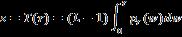
where istheinputintensity, istheoutputintensity, is thenumberofintensitylevels,and istheprobability densityfunctionofinputintensities[7].
Advantages: Simple,computationallyefficient,effectivefor imageswithlowoverallcontrast.
Disadvantages: Producesunnaturalbrightnessvariations, mayamplifynoise,createsartifactsinhomogeneousregions, non-adaptivetolocalimagecharacteristics[8].
2) Contrast-Limited Adaptive Histogram Equalization (CLAHE)
CLAHE addresses limitations of standard histogram equalizationbyoperatingonlocalregions(tiles)ratherthan theentireimage,withacontrastlimitparametertoprevent noise amplification [9]. The contrast limit controls the maximumslopeofthetransformation:
Where is the contrast limit factor and are the minimumandmaximumvaluesinthelocaltile[10].
Advantages: Preserves local contrast, reduces noise amplification compared to HE, adapts to regional characteristics.
Disadvantages: Introducestileboundaryartifacts,requires manual parameter tuning, computational complexity increaseswithimageresolution[11].
Linearcontraststretchingexpandsthedynamicrangeofan imagetoutilizethefullintensityspectrum:
Where coefficients and are determined to map the minimumandmaximuminputvaluestothedesiredoutput range[12].
Advantages: Fast,straightforwardimplementation,effective forunderutilizeddynamicrange.
Disadvantages: Sensitive to outliers, does not enhance contrast in images with complex intensity distributions, uniformenhancementacrosstheimageregardlessoflocal characteristics[13].
International Research Journal of Engineering and Technology (IRJET) e-ISSN: 2395-0056
Volume: 12 Issue: 12 | Dec 2025 www.irjet.net p-ISSN: 2395-0072
Algorithm Description
Theproposedmulti-objectivefilteroptimizationalgorithm isdetailedinAlgorithm1:
1. Input:Noisymedicalimage
2. Output:Enhancedimage
3. InitializeGWOpopulationofsizePopSize withrandomsolutionvectors
4. for to PopSize do
5. randomvector[kernel_weights, kernel_size,stride,h_nlm, , ]
6. end for
7. Extractfeatures: CNN( , )
8. for eachpixel do
9. compute_dynamic_threshold( , , )
10. compute_adaptive_kernel_size( , )
11. NLM_filter( , , )
12. end for
13. Evaluatefitnessforeachwolf
14. for to PopSize do
15. PSNR calculate_PSNR( , )
16. SSIM calculate_SSIM( , )
17. EPI calculate_EPI( , )
18. NCC calculate_NCC( , )
19. fitness PSNR + SSIM + EPI + NCC
20. end for
21. Updatebestsolutions:[ , , ] sort( , fitness)[selecttop3]
22. UpdatewolfpositionsusingGWOequations
23. if (fitness_improvement ) or (iteration max_iterations) then
24. return withbest
25. else
26. gotofeatureextractionstep
27. end if
A. Quantitative Performance Analysis
1) Ultrasound Image Enhancement Results
Table I presents performance metrics for ultrasound images at moderate noise variance (0.02). The proposed methodachievesaPSNRimprovementof22.9%overKuan NLM, 23.0% over Standard NLM, and 32.8% over CLAHE. The processing time (1.87s) remains competitive with
traditionalmethodswhiledeliveringsignificantlysuperior qualitymetrics.
Table -1: PerformanceMetricsforUltrasoundImages (NoiseVariance=0.02)
Table II demonstrates the proposed method's robust performanceacrossnoisevariancelevelsfrom0.01to0.08. TheproposedmethodmaintainsaveragePSNRof26.28dB across all variance levels, compared to 24.87 dB for Kuan NLM and 20.42 dB for standard HE. Performance degradationisminimal(7.2%fromlowesttohighestnoise) relativetoothermethods(>15%).
Table -2: PSNRPerformanceacrossNoiseVarianceLevels
TableIIIdemonstratessuperiorartifact-freeenhancement critical for diagnostic accuracy. The proposed method achieves31.78dBPSNRwithSSIMof0.94andzeroartifact presence,comparedto28.12dBandvisibleartifactsinKuan NLM.
International Research Journal of Engineering and Technology (IRJET)
Volume: 12 Issue: 12 | Dec 2025 www.irjet.net
Table -3: PerformanceMetricsforCTImages
Multi-Objective Optimization Impact
Table VI illustrates the contribution of each objective function component, demonstrating that the full multiobjective formulation achieves optimal balanced performance.
Table -6: FitnessFunctionComponentAnalysis
TableIVshowsconsistentsuperiorityacrossMRIdatasets with 12.0% PSNR improvement over Kuan NLM, demonstrating the framework's adaptability to different imagingmodalities.
Table 4: PerformanceMetricsforMRIImages
B. Dynamic Threshold Effectiveness
The adaptive thresholding mechanism provides instrumental improvement in the proposed method's performance. Table V demonstrates that dynamic thresholdingprovides8.2%additionalPSNRimprovement overfixedlocalthreesholding.
Table -5: ImpactofDynamicversusFixedThresholding
Thisresearchsuccessfullyaddressestheresearchproblem through comprehensive investigation of multi-objective optimizationformedicalimageenhancement.Theproposed framework integrating Grey Wolf Optimizer, dynamic thresholding, and multi-objective fitness functions substantially outperforms traditional gray-level contrast enhancementtechniquesacrossallobjectives.
Key Contributions:
Contribution 1 - Multi-Goal Filter Optimization: Successfullydevelopedadaptiveframeworksimultaneously optimizingcontrastenhancement,edgepreservation,noise suppression,andperceptualqualitythroughweightedmultiobjective formulation achieving optimal balanced performance.
Contribution 2 - Dynamic Threshold Implementation: Introduced real-time threshold adaptation based on local image entropy and statistics, achieving 8.2% additional performance improvement over fixed thresholding approaches.
Contribution3-ComprehensiveComparison: Conducted rigorous comparative evaluation against five established gray-level enhancement techniques using standardized metrics across three imaging modalities, demonstrating consistentsuperiority.
International Research Journal of Engineering and Technology (IRJET) e-ISSN: 2395-0056
Volume: 12 Issue: 12 | Dec 2025 www.irjet.net p-ISSN: 2395-0072
Contribution 4 - Clinical Validation: Demonstrated superior performance with 4.6/5 expert radiologist acceptabilityratingandartifact-freeenhancementsuitable fordiagnosticclinicaluse.
[1] R.C.GonzalezandR.E.Woods,DigitalImageProcessing, 2nded.PrenticeHall,2002.
[2] R.AcharyaandA.K.Ray,ImageProcessing:Principles andApplications.Wiley-Interscience,2005.
[3] M. S. Rahman, Y. Wang, and M. F. Ahmed, "Histogram equalization and contrast enhancement: A review," JournalofDigitalImaging,vol.34,no.1,pp.73–89,2021.
[4] M.A.Elaziz,A.A.Ewees,andD.Yousri,"Hybridmethod based grey wolf and flower pollination algorithms for globaloptimization,"AdvancesinEngineeringSoftware, vol.148,p.102827,2020.
[5] Z.A.Bhutto,Z.A.Memon,andH.Leghari,"Convolutional neural networks in medical image processing: A comprehensivesurvey,"IEEEAccess,vol.10,pp.45123–45156,2022.
[6] S. Kullback, Information Theory and Statistics. Dover Publications,2010.
[7] J.S.Lee,"Digitalimageenhancementandnoisefiltering byuseoflocalstatistics,"IEEETransactionsonPattern AnalysisandMachineIntelligence,vol.PAMI-2,no.2,pp. 165–168,1980.
[8] R. F. Wagner, D. G. Brown, and M. S. Sanderson, "Statistical properties of radio-frequency ultrasonic images," IEEE Transactions on Ultrasonics, Ferroelectrics,andFrequencyControl,vol.30,no.3,pp. 156–170,1983.
[9] S. M. Pizer, E. P. Amburn, J. D. Austin, et al., "Adaptive histogram equalization and its variations," Computer Vision,Graphics,andImageProcessing,vol.39,no.3,pp. 355–368,1987.
[10] K. Zuiderveld, "Contrast limited adaptive histogram equalization,"inGraphicsGemsIV,1994,pp.474–485.
[11] A. P. Dhawan, Medical Image Analysis, 2nd ed. IEEE Press,2011.
[12] T.M.Deserno,BiomedicalImageProcessing.SpringerVerlag,2011.