
International Research Journal of Engineering and Technology (IRJET) e-ISSN: 2395-0056
Volume: 12 Issue: 05 | May 2025 www.irjet.net p-ISSN: 2395-0072
International Research Journal of Engineering and Technology (IRJET) e-ISSN: 2395-0056
Volume: 12 Issue: 05 | May 2025 www.irjet.net p-ISSN: 2395-0072
Wasil Abbas1 , Rahul Shukla2
1M.Tech. (ME) Scholar, Department of Mechanical Engineering, Goel Institute of Technology and Management Lucknow, Uttar Pradesh, India
2Assistant Professor, Department of Mechanical Engineering, Goel Institute of Technology and Management Lucknow, Uttar Pradesh, India ***
Abstract- This research focuses on developing lightweight, high-strength aluminum (Al) 7050-based hybrid composites reinforced with TiO₂ and hexagonal boron nitride (h-BN) using stir casting. The study investigatestheeffectsofdifferentweightfractionsand particle sizes (20 and 40 µm) of the reinforcements on thecomposites’microstructure, mechanical properties, and wear behavior. Nine samples were analyzed using XRD,SEM,andEDS,confirminguniformdispersionand the presence of only Al, TiO₂, and h-BN phases. Results showed significant improvements in hardness, tensile strength, and wear resistance especially in composites with smaller reinforcement sizes, which achieved the highest mechanical performance. Sample C9 (5% TiO₂, 6% h-BN, 40 µm) demonstrated the best wearresistanceandlowestcoefficientoffriction,while smallerparticlecompositesyieldedhigherstrengthand toughness. Taguchi optimization confirmed these findings, highlighting the potential of Al7050/TiO₂/hBN composites for aerospace, automotive, and marine applications due to their enhanced strength-to-weight ratioanddurability.
Key Words: PulseAutogenousTungstenInertGas(TIG), mechanical properties, tensile strength, hardness, and fatigueresistanceetc
1.
Composite is a combination of two chemically dislike materials that are variedbyaninterface.Compositesare thematerialsthathavepropertiescombinationofmetal, polymers, and ceramics. More than one material is combinedtoformacompositethathasbetterproperties ofbothmaterials likestiffness,toughnessetc.Woodand boneareexamplesofnaturalcompositematerials.Mostof composite materials have two phases.They are matrix and dispersed phases. Matrix material is a continuous phase in the composite material that surrounds the dispersedfiberphase[1].Usually,thebulk propertiesof composite materials totally depend on the material properties of individual phases constituted with. Furthermore, the performance of the composites also depends on the constituting phases and their concentration,size,shape,distribution,orientation[2].
HybridMMCsareaclassofcompositematerialsinwhich two or more than two reinforcing materials are incorporated into the matrix. Aluminum-based hybrid metal matrixcomposites(MMC)combinethe benefitsof multireinforcingphasesintothesamealuminummatrix to enhance the bulk properties. Compared with single phase composites, hybrid composites offer several benefits due to the contribution form the diversified reinforcingphases.
Mechanical Properties are the first group of properties significantly influenced by the presence of multi-phases in the matrix. Hybrid composites exhibit increased strength, stiffness, toughness at the optimized combination of the dispersed phases. By selectively producing the hybrid composites with the combination of specific reinforcements, tailored properties such as hardness, wearresistanceandthermalpropertiescanbe achieved in the hybrid composites. Hybrid composites also offer the advantage of weight reduction. Without losing the strength of the structure, light weight components can be produced by using hybrid composites particularly for automotive, aerospace, marine and military applications. On the other hand, thermal stability of the hybrid composites can be increased by selecting appropriate reinforcements. The durability and reliability of hybrid composites are higher compared with the single- phase reinforced composites. Decreased cost and wide versatility are the otherbenefitsofthehybridcomposites.Eventhoughthe complexity in manufacturing hybrid composites is slightlyhighercomparedwiththesinglephasedispersed composites,theacquiredbenefitsaredominated.
In the present thesis work, Al7050 alloy has been selected as the matrix material and two different reinforcing phases (TiO2 and hBN) were selected to develop the hybrid composites by stir casting route. Different weight fractions of the reinforcementwith two different sizes were selected and the composites were fabricated.Theroleofthecombinationofthereinforcing phases and the size difference within the micrometer level on the mechanical and wear performance of the producedcompositeshavebeeninvestigated.
International Research Journal of Engineering and Technology (IRJET) e-ISSN: 2395-0056
Volume: 12 Issue: 05 | May 2025 www.irjet.net p-ISSN: 2395-0072
Ravindranetal.alsodevelopedhybridcompositesofSiC with varying content of Graphene up to a maximum fraction of 10%. From the mechanical properties evaluation; it was observed that increased strength and alsobettertribological properties wererecordedforthe composite with 10% Graphene. Similarly, other works alsoreportedthepresenceofBNinthehybridcomposite to decrease the wear rate of the hybrid composites. It wasalsoreportedbyRajmohanetal.thatthepresenceof MicaalongwithSiCenhancesthehardness andstrength of produced composites by forming a stable mechanicallymixedlayer.
Moorthy et al. developed hybrid composites of Al/fly ash/Grapheneandwearstudieshavebeenperformedby adopting Taguchi optimization method. As observed fromthe obtained data,loadis foundto beimportant to control the wear rate followed by the sliding speed and the content of the fly ash powder. It was also reported that an interfacial phase known as Al4C3 is also developed when SiC and fly ash powders were used in the stir casting process because of the process of chemicalreactionsattheinterfaceofthe matrixandthe incorporated reinforcements. It was also reported that otherphasessuchasMgAl2O4alsoformedwhenflyash is added in addition to SiC into Al matrix to develop hybridcomposites.
Another combination of reinforcements used to develop hybrid composites is using agro-waste products. These products are relatively cheap and widely availableto produce hybrid composites and hence, several studies were also carried out in developing different combination of hybrid composites. Ash produced from rice husk,bamboo leafs, palm kernel shell, corn cob and maizestalkareafewexamplesusedtodevelopAlbased hybridcompositesintheliterature.
Prasadetal.producedAlhybridcompositesbyselecting rice husk ash and SiC as the reinforcing phases. From the mechanical properties evaluation, increased yield strength and tensile strength have been reported at the cost of losing ductility and fracture toughness. This is similar to what reported by Alaneme and Adewale in developing hybrid composites of Al6063-SiC-rice husk ash.Improvedstrengthandstiffnesswereobservedwith the increased content of rice husk ash. On the other hand, ductility was clearly observed as decreased with theincreasedamountofricehuskash.
From the works of Alaneme and Adewuyi , it was observed that the addition of Bamboo leaf ash into AlMg-SialloyinadditiontoAl2O3hasasignificanteffecton the mechanical performance of the developed composites.Oncontrarytoseveralreportsinusingagrowasteasthereinforcingphase,useofbambooleafashas
thereinforcingphasecouldnotresultedinimprovement in the mechanical performance. Interestingly, the ductilitywasincreasedwiththe10%ofthebamboo leaf ashatthecostoflosingsomestrength.Othercomposites produced by using agro-waste as one of the reinforcing phaseshavealsoexhibitedbetterductilitywithoutlosing thestrengthofthecomposites.
LiyunWureporteddevelopmentofAl7050compositeby incorporatingGraphene(0.5%byweight)selectivelaser sinteringprocess.Fromthewearstudies,itwasobserved that the addition of Graphene is advantageous to improve the tribological properties of the composites. Similarly, Venkatesan et al. also used different manufacturing methods including stir casting and squeezecastingtodevelopAl7050-Graphenecomposites. The Graphene size of 50-100 nm has been used with different fraction of 0.3, 0.5 and 0.7% successfully in all the processing routes. Furthermore, the optimization studies were carried out to evaluate the best fraction of the reinforcement by ANOVA method and found that 0.3% with squeeze casting is better in achieving improved mechanical properties among all the combinations. The composites were also observed with soundqualitywithoutsignificantpores ordefects.Form the wear properties evaluation for different sliding distances, lower coefficient of friction and wear rate values were recorded and the 0.3% compositeshas shown relatively better performance among all the combinations.
SiC is the next reinforcement widely used to develop Al7050 composites by stir casting route as observed in the literature. Sathish and Karthick studied the tribological performance of Al7050 composites reinforced with SiC particles. Different weight fractions (0, 4 and 6%) were considered to develop the composites. From the study, the authors demonstrated the promising role of 6% reinforcement on the material properties among all of the combinations. From the microstructural studies, the reinforcements were observedasuniformlydispersedinthematrix.However, someporositywasobservedduetothepoorstircasting conditioninsomesamples.Threeprocessparameters(1, 2 and 3%) and three sliding distances (1000, 1400 and 1800m)wereselectedtoconductthewearexperiments and the optimization set of parameters were obtained by carrying Taguchi analysis. From the obtained results, it was noticed that the sliding velocity is the most prominentfactorthataffectthewearperformance.
The objectives of the present thesis work are defined below.
To develop hybrid composites of Al7050 by dispersing different weight fractions of TiO2 and h-
International Research Journal of Engineering and Technology (IRJET) e-ISSN: 2395-0056
Volume: 12 Issue: 05 | May 2025 www.irjet.net p-ISSN: 2395-0072
BN as reinforcements with two different sizes (20 and40µm)bystircastingroute.
To investigate the role of added reinforcements on the microhardness, impact strength and tensile propertiesofthecomposites
To study the effect of these reinforcements in different weight fractions on the wear behavior of theAl7050/TiO2/hBNhybridcomposites.
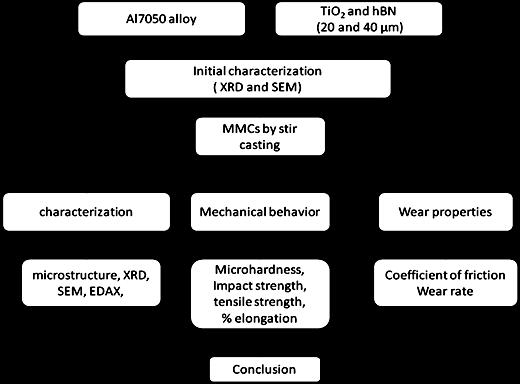
3.1. METHODOLOGY
The methodology adopted to complete the defined workplanasshowninFig3.1isexplainedbelow.
4. EXPERIMENTAL DETAILS
The study materials, experimental procedures, equipment specifics, data collecting, and analysis are all covered in detail in this chapter. Every consumable and raw material used in this research project was purchased from a commercial supplier. Standard operating protocols were used for sample testing, data collection,andanalysis.
4.1. DEVELOPMENT OF Al7050 HYBRID COMPOSITES
We bought billets of Al 7050 aluminium alloy from MallinathMetalsinMumbai,India. Theprimaryalloying ingredient in this alloy is zinc, and heat treatment can changeitscharacteristics.
To ensure effective mixing of the molten material, a stainless steel stirrer running at 230-240 V, 50-60 Hz, and 850 watts is utilised. The molten alloy was then mixed with the warmed reinforcement particles (TiO2 and h-BN). To achieve a uniform dispersion of the reinforcing particles in the molten metal, the reinforcement particles were added one at a time and themoltenmixwasstirredforanadditionaltwominutes ata speed of 250–300 rpm. The stirred molten mixture wasthenpouredintoa100mmx100mmx10mmsteel die. The temperature reached 780 °C as the molten mixture was being poured into the die, allowing it to flow freely within the mould. Fig 4.1 presents the stir castingfurnaceusedtoproducethehybridcomposites.
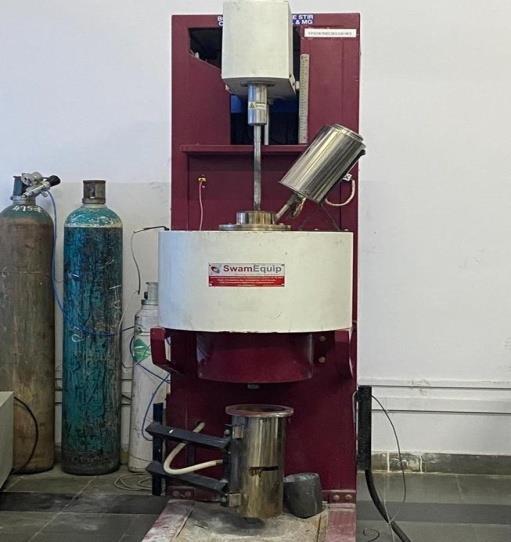
Fig4.1Stircastingequipment
Inordertounderstandtheroleoftheweightfractionsof the reinforcements and the size of the reinforcing particles on the composites, mechanical and wear behavior, two different sized particles of 1:2 size ratio (20 and 40 µm) were selected. By selecting different weight fractions, Al7050 hybrid composites were fabricated by adding 1, 3 and 5% by wt., TiO2 and 2, 4 and 6 % by wt., h-BN by stir casting route. The composition of the hybrid composites (% of both the reinforcements)hasbeenselectedbasedontheavailable literature(Imranetal.,2013).Theweightfractionsofthe reinforcements added to the base alloy to develop the hybrid composites are presented in Table 4.1. Two different sizes i.e. 20 µm (S) and 40 µm (C) of reinforcementswereusedtoproducethecomposites.
International Research Journal of Engineering and Technology (IRJET) e-ISSN: 2395-0056
Volume: 12 Issue: 05 | May 2025 www.irjet.net p-ISSN: 2395-0072
Table4.1Compositeswithdifferentreinforcementsizes andtheircomposition
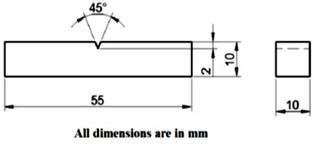
Fig4.3Dimensionsofimpactstrengthtestsample
S4
S5 20
S6 20
4.2. SAMPLE PREPARATION
For the material to be tested and characterised in accordance with the standard process, the specimen sizesshouldbeappropriatelychoseninaccordancewith the ASTM standard sizes. Additionally, the specimen should ideally be the right size to handle comfortably and conveniently during testing. All the specimens for the current work were prepared by wire electric discharge machining (EDM). A total of 3 samples (n=3) were used for every test to investigate the material properties.Fig4.2showsthewireEDMequipment.
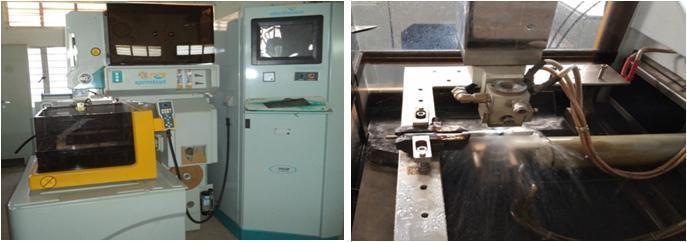
Fig4.2Computernumericalcontrolledwireelectric dischargemachiningandthemachiningchamber.
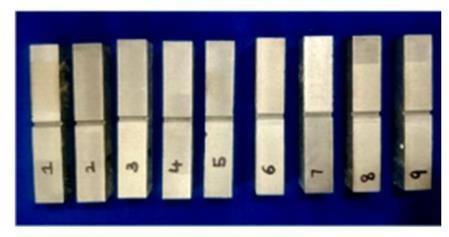
Fig4.4Impacttestspecimens
Aspecimensizeforeasyandcomfortablepolishingis10 to 25 cm across the polished surface, either round or square, and approximately with 10 to 20 mm length. Hence, in the present work, samples of size 20 mmx20 mmx10mmwerecutfromtheproducedcompositesand fromthebasealloy
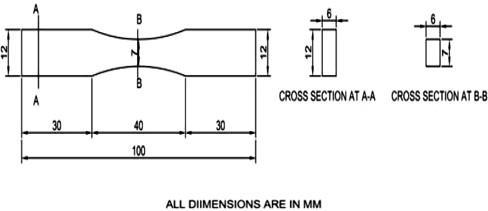
Fig4.5ASTME8M04tensilestandard
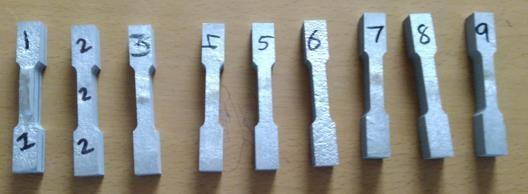
Fig4.6Tensiletestspecimens.
Specimensforimpactstrengthwerepreparedasperthe standard dimensions for the Izod impact test. Fig 4.3 shows the impact sample standard dimensions and Fig 4.4 shows the impact test samples. Tensile specimens were prepared as per ASTM E8M04 standard. The
International Research Journal of Engineering and Technology (IRJET) e-ISSN: 2395-0056
Volume: 12 Issue: 05 | May 2025 www.irjet.net p-ISSN: 2395-0072
dimensionsofthetensiletestspecimenarepresentedin Fig 4.5 and Tensile test samples are shown in Fig. 4.6. The specimens were subjected to fine polishing to remove the oxide layers at the surface and also to bring toaccuratecross-sectionalarea.
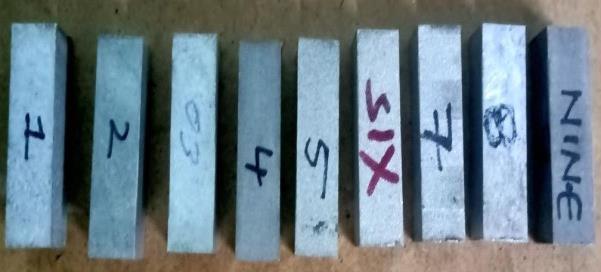
For wear studies, square pins of 10 mm x 10 mm cross section and a height of 30 mm were machined from the produced composites and used as the test specimens as shown in Fig 4.7 Wear tests were carried out by pin on discmethodinwhich,EN31hardenedsteeldiscwasused thatconsistsof100mmdiameter,8mmthicknessanda hardnessof60HRCwithasurfaceroughness(Ra)of1.6 µm
4.3.
Density of the composite materials was measured from the theoretical and experimental routes. Microhardness measurements were done by conducting Vicker’s indentation method. Izod impact test was carried out as per the standard procedure to investigate the impact strength of the samples. Uni-axial tensile tests were conductedforallthecompositematerialsandcompared. Wear tests were carried out by using a pin on disc equipment to assess the wear characteristic of the compositeindryconditions.Allthetestswerecarriedon calibrated equipment’s and measurements wherever recordedbyusingprecisiondevices.
This chapter presents the results of the research work and detailed discussion of the obtained results. The significance of the added TiO2 and h-BN reinforcements with different weight fractions at different particle sizes (~ 20and~ 40µm)inAl7050alloyhybridcomposites on mechanical and wear behavior of the developed compositesisdiscussed.
5.1.
Thedensityvaluesofthecompositesmeasuredformthe theoretical procedure by adopting rule of mixture and also experimental method by adopting Archimedes principle are compared in Fig 5.1. The calculated porosity values are presented in Table 5.1. It is clearly
observedthatthereisamarginaldifferencebetweenthe density values of the composites obtained from the theoreticalandexperimentalprocedures.
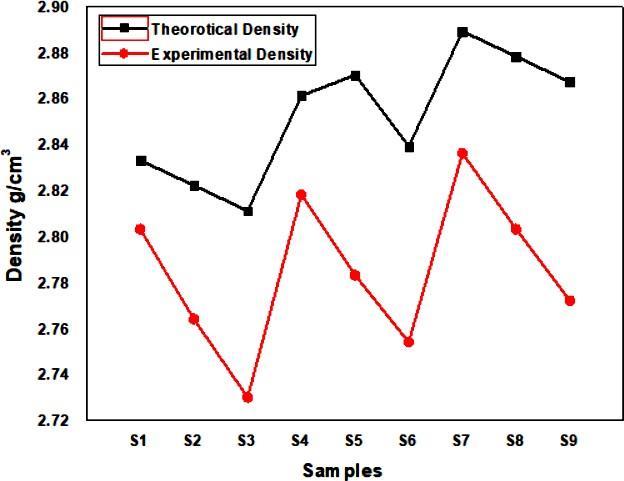
Fig5.1Comparisonofdensityvaluesofthedeveloped composites
It can be observed that with the addition of reinforcements, the density of the composites has been gradually increased. This can be understood by considering the role of the density of the reinforced particles in the composite which is relatively higher comparedwiththedensityofthematrix.
Table5.1Comparisonofthedensityvaluesandporosity valuesofthecomposites
Theincreaseinthedistribution ofparticlesintheliquid metal may cause a minor surge in porosity owing to interspaces among matrix and reinforcement material. The effect of increase in addition of reinforcement particles exhibits pore nucleation at the surface of reinforcementparticleswhichfurtherincreasesporosity of composites. The porosity percentage of the synthesized hybrid composites is observed to be less than4%whichisanacceptablelimitofaluminiummetal matrixcomposites.
International Research Journal of Engineering and Technology (IRJET) e-ISSN: 2395-0056
Volume: 12 Issue: 05 | May 2025 www.irjet.net p-ISSN: 2395-0072
ThehardnessdataofthesamplesiscomparedinFig5.2. The base alloy hardnesswas measured as 75 ± 3.1 HV. Compared with the base alloy, increased hardness was noticed for the hybrid composites (Table 5.2). Composites having 40 µm sized reinforcement recorded increasing trend in the hardness values with the increased reinforcement fraction. When the reinforcement was decreased to 20 µm size, further increased hardness was noticed in the composites. Compared with the large particle reinforcements, the increment in the hardness was higher in the case of smallerparticles size for both the reinforcements (TiO2 and h-BN) and adding h-BN was observed with higher levelofeffectonincreasingthehardness.
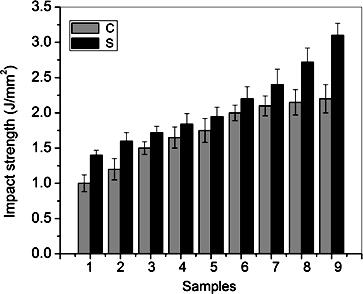
Fig5.2Comparisonofthemicrohardnessofthe composites
Table5.2Microhardnessmeanvalueswithstandard deviationofsampleswith40µmsizereinforcementand 20µmsizereinforcement. Sample
reinforcementsin both samplesis the same, at5% TiO2 and 2% h-BN. All of the combinations have shown a similarpattern.
The impact strength of the produced composites is clearlyinfluencedbythesizeofthereinforcing particles. Remarkably, composites with reinforcements of varying sizes have demonstrated varying impact strengths with the same weight fraction of reinforcements (Fig. 5.3). According to the results, the impact strength of the composites was found to be greatly increased by increasingtheamountofreinforcingphase(40µmsize) (Table 5.3). Additionally, the impact strength values of the composites with 20 µm reinforcements were higher thanthoseofthecompositeswith40µmreinforcements. When compared to composites with weight percentages of TiO2 (1%, 3%, and 5%), those containing 6% h-BN havedemonstratedgreaterimpactstrengthvalues. .
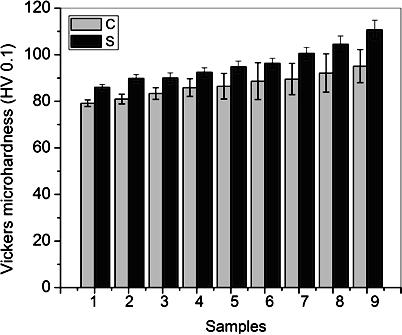
Fig5.3Comparisonoftheimpactstrengthofthe composites
Table 5.3 Impact strength mean values with standard deviation of samples with40µmsizeand20µmsize reinforcement
In addition, there were more variances in the hardness values between the composites with 40 µm reinforcements and those with 20 µm reinforcements. For example, the C3 sample's hardness values were lower than those of the S3 sample. The percentage of
International Research Journal of Engineering and Technology (IRJET) e-ISSN: 2395-0056
Volume: 12 Issue: 05 | May 2025 www.irjet.net p-ISSN: 2395-0072
Abilitytowithstandagainstasuddenloadisessentiallya required property in the load bearing applications of automobile and other transportation applications. Presence of reinforcing particles helps to absorb more energywhenthestructureissubjectedtoasuddenload.
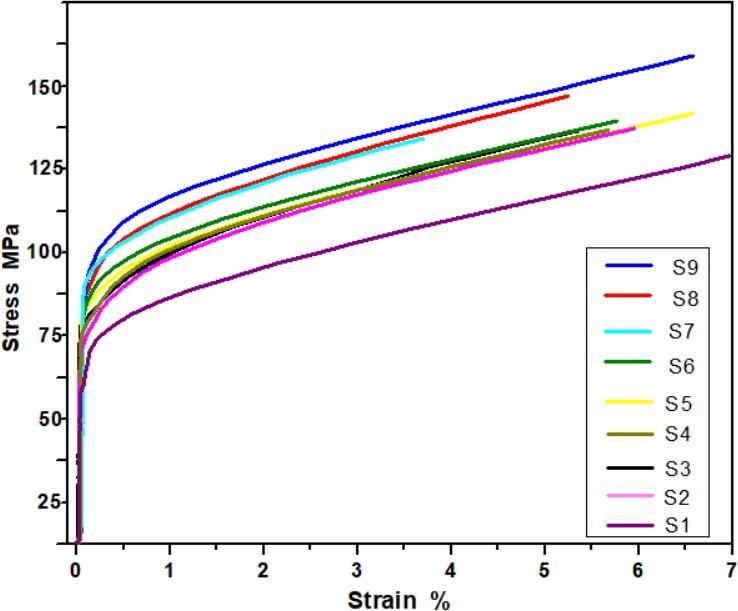
Fromtensilesamples beforeand afterthe tensiletest. It isobservedthatthefracturewashappenedinthegauge length ofthetestspecimens forall thecomposites.From the obtained data, the stress strain curves were developed and shown in Fig 5.5. From the curves, ultimate tensile strength and % of elongation values wereobtainedandcompared.
The composites' stress-strain curves are shown in Fig. 5.5.Thedataclearlyshowsthatthecomposites'strength has grown dramatically with the addition of reinforcements. Forbothparticlesizes,sampleS9yields thehighestultimatestrength. Bypreventingdislocation movement and exhibiting resistance, the hard ceramic reinforcement TiO2 is used to increase the ultimate strength of Al 7050/TiO2/h-BN composites through orowanstrengthening.
5.5. WEAR STUDIES
From the wear studies carried out by using three samples for each type (n=3), theresults are compared in this section. The wear rate and the coefficient of frictionofthesamplesarecomparedinFig5.6.
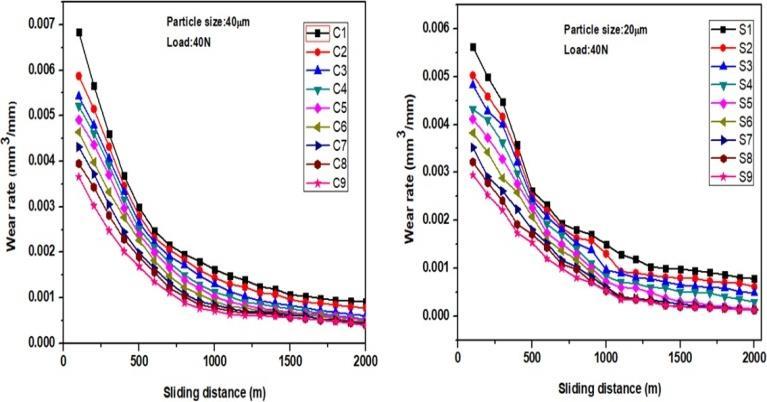
Fig5.6Comparisonofwearrateversesslidingdistance forthecompositesobtainedat40Nloadhavingtwo particlesizes40µmand20µm.
The composites with smaller reinforcing particles showedatendencyofreducedwearratewithincreasing sliding distance under the same set of loading circumstances. For example, sample C1 (Al7050T1B2 with 40 µm reinforcement size) was reported to have a wear rate of 0.000919 mm3/m at 2000 m of sliding distance, while sample S1 (Al7050T1B2 with 40 µm reinforcement size) had a wear rate of 0.000785 mm3/m.
5.6. VALIDATING THE WEAR CHARACTERISTICS OF THECOMPOSITES BY
5.6.1. Regression analysis
Regression analysis was utilized in numerous investigations to determine the relationship between experimental results and control parameters as stated by Sarikaya et al. The relationship between the change in%ofcomposition(Al7050&TiO2)ofthesamples7,8 &9,impactofappliedloadandslidingdistanceon wear rate and coefficient of friction for 20 μm and 40 μm particle sizes were established using a first-degree mathematical model created using multi-variable linear regression analysis. As a result, control factors such as load (N), sliding distance (m) and change in % of composition (Al 7050 & TiO2) of the samples 7, 8 & 9 werecalculated.
Table5.4Experimentalresultsvalidation
μm (Coefficientof Friction)
(Optimum)
(Random)
L1-SD1-S7 (Optimum)
International Research Journal of Engineering and Technology (IRJET) e-ISSN: 2395-0056
Volume: 12 Issue: 05 | May 2025 www.irjet.net p-ISSN: 2395-0072
This study focuses on minimizing the damage resulting from wear rate and coefficientof friction with Taguchi Design. ANOVA was utilized to determine the best process parameter levels for reducing wear rate. Furthermore, utilizing the regression analysis approach, thetrialswitheachparameterresultedinthecreationof first-order mathematical models. The load has the maximum influence on the wear rate and coefficient offrictionofthecompositespecimen,followedbysliding distance and finally the impact of change in samples (change in wt % proportion of Al7050-TiO2- hBN reinforcement) has the least influence. ANOVA findings also show that load is the most influencing factor on wear rate and coefficient of friction. Studies indicated that a combination of minimum load, minimum sliding distance,higherwt%ofAl7050andlowerwt%ofTiO2 should be utilized to minimize wear rate and coefficient of friction. The optimal parameters have been determined for all the testsat a lower load (20N) and with a lower sliding distance (1000 m). Regression models have shown that the experimental results are extremely reliable with statistical outcomes. Following validation trials, the evaluated value was calculated in 95percentconfidenceintervals.
This chapter presents the conclusions which are drawn from the currentthesis work andalso propose potential research scope for the future to explore the developed hybridcompositeforwiderangeofapplications.
Thecurrent research work usesa stircastingmethodto create hybrid composites of Al7050/TiO2/h-BN with varying weight fractions of TiO2 and h-BN particles. It has been studied how the kind of reinforcing particles and their proportions affect wear resistance and mechanical performance. Additionally, by choosing two distinct reinforcing particle sizes (20 and 40 µm), the role of the size of the reinforcing particles with varied quantities in the created hybrid composites has been investigated. Wear behaviour and mechanical characteristics were examined. The experimental findingsledtothefollowingdeductions.
The composites' tensile strength was raised via reduced grain size, matrix material recrystallisation, and an orowan strengthening mechanism.
The density of the composites was measured as increased from 2.833 g/cc to 2.867 g/cc (theoretically) and observed as decreased from 2.803 g/cc to 2.772 g/cc (Experimentally) due to the presence of porosity resulted during the compositepreparation.
The 40μm-sized sample S9 (7050T5B6) has a greater hardness of 95.08 VHN and is 26.8% better than the matrix material. Hard TiO2 particlesandahigherdislocationdensityarethe causes of the Al7050/TiO2/h-BN composites' improvedhardness.
Al 7050/TiO2/h-BN composites have a 65% higherultimatetensilestrengththantheoriginal Al7050alloy,andsampleS9(7050T5B6),which is 40μm in size, achieved a maximum tensile strengthof156.88MPa.
Because of its anti-wear qualities and high thermalconductanceofh-BNparticles,sample9 shows a lower wear rate and coefficient of friction than other samples. This is because the wearrateofallthecompositesdecreasedasthe sliding distance increased due to the depletion of abrasive reaction between mating surfaces. Delamination and abrasion are the main wear mechanisms in hybrid composites, according to wornmorphology.
The size of the dispersed particles played a significant influence in Al7050 hybrid composites dispersed with various fractions of TiO2andh-BN particleswithsizesof40and20 µm.
The composites showed increased impact strengthandhardness,andtheeffectwasfound to be considerable when the reinforcing phases weresmallerinsize.
Thetensiletestsshowedthatthehigheramount ofTiO2andh-BNparticlesresultedinincreased strength and lower ductility behaviour. The composite with 20 µm reinforcement, 5% TiO2, and6%h-BNparticlesshowedahigherstrength of183.77-8.1.
Accordingtowearstudies,higherreinforcement content resulted in reduced coefficient of friction values and a decreased wear rate. The wearrateandcoefficientof frictionvalueswere alsoshowntodecreasewithdecreasingparticle size.
Optimisation tests showed that the load has the biggest impact on the composite specimen's wearrateandcoefficientoffriction,followedby sliding distance and sample composition (change in weight percentage of TiO2 reinforcement). The experimental results were showntobeveryreliablewithstatisticalresults basedontheregressionmodels.
Therefore, based on the findings, it is possible to successfully create high-performing hybrid composites
International Research Journal of Engineering and Technology (IRJET) e-ISSN: 2395-0056
Volume: 12 Issue: 05 | May 2025 www.irjet.net p-ISSN: 2395-0072
of Al7050-TiO2-h-BN with enhanced wear properties. Enhancingthecharacteristicsofthesehybridcomposites is significantly influenced by the size of the reinforcing particles. For the development of low-weight, highstrength structures and components for automotive, aeronautical, and marine applications, smaller reinforcement sizes are preferred in order to obtain superiorcharacteristicsinhybridcomposites.
To increase the utility of these hybrid composites in engineering applications, more research can be done in thefollowingareas.
Usually,machiningofcompositematerialsischallenging due to the presence of multi phases of different mechanical properties. Machining of hybrid composites is further more complex. Hence, studying the machining characteristicsofthesehybridcompositescanbecarried outasfutureresearchwork.
Electrochemicaleventsarealsohighlyinfluencedbythe chemical composition of the materials. Hence, the corrosion performance of these hybrid composites can be assessed to understand their performance in marine applications.
The response of the structures made of these hybrid composites towards the vibration absorption is not known yet. Studies on evaluating the damping characteristics of these composites can be one of the futureobjectives.
[1] Nikhilesh C, Krishan KC (2013) Metal matrix composites.2nd edn.Springer,NewYork.
[2] Paulo Davim J (2012) Machining of Metal Matrix Composites, Springer,NewYork
[3] Kainer KU (2006) Metal Matrix Composites. Custom-made Materials for Automotive and Aerospace Engineering. WILEY-VCH Verlag GmbH&Co.
[4] Weinheim Joseph R. Davis, ASM Specialty Handbook: Aluminum and Aluminum Alloys, ASMInternational,USA,1993
[5] Mordike BL, Ebert T. Magnesium: properties applications potential. Materials Science and Engineering:A.2001Apr15;302(1):37-45.
[6] Panwar N, Chauhan A. Fabrication methods of particulate reinforced Aluminium metal matrix composite-A review. Materials Today: Proceedings.2018Jan1;5(2):5933-9.
[7] Dasgupta R. Aluminium alloy-based metal matrixcomposites:apotentialmaterialforwear resistant applications. International Scholarly ResearchNotices.2012;2012.
[8] NM SK, Shashank TN. Different ceramic reinforcements in aluminium metal matrix composites. ECS Journal of Solid-State Science andTechnology.2021May25;10(5):053003.
[9] Singla M, Dwivedi DD, Singh L, Chawla V. Development of aluminium based silicon carbide particulate metal matrix composite. Journal of Minerals and Materials Characterization and Engineering. 2009 Jun 20;8(06):455.
[10] Surappa MK. Aluminium matrix composites: Challenges and opportunities. Sadhana. 2003 Feb;28:319-34.
[11] Macke A, Schultz BF, Rohatgi P. Metal matrix composites. Adv. Mater. Processes. 2012 Mar;170(3):19-23.
[12] Xu Y, Zhu J, Wu Z, Cao Y, Zhao Y, Zhang W. A review on the design of laminated composite structures: constant and variable stiffness design and topology optimization. Advanced Composites and Hybrid Materials. 2018 Sep; 1:460-77.
[13] Trzepieciński T, Najm SM, Sbayti M, Belhadjsalah H, Szpunar M, Lemu HG. New Nikhilesh C, Krishan KC (2013) Metal matrix composites.2nd edn.Springer,NewYork.
[14] Paulo Davim J (2012) Machining of Metal Matrix Composites, Springer,NewYork
[15] Kainer KU (2006) Metal Matrix Composites. Custom-made Materials for Automotive and Aerospace Engineering. WILEY-VCH Verlag GmbH&Co.
[16] Weinheim Joseph R. Davis, ASM Specialty Handbook: Aluminum and Aluminum Alloys, ASMInternational,USA,1993
[17] Mordike BL, Ebert T. Magnesium: properties applications potential. Materials Science and Engineering:A.2001Apr15;302(1):37-45.
[18] Panwar N, Chauhan A. Fabrication methods of particulate reinforced Aluminium metal matrix composite-A review. Materials Today: Proceedings.2018Jan1;5(2):5933-9.
[19] Dasgupta R. Aluminium alloy-based metal matrix composites: a potential material for
2025, IRJET | Impact Factor value: 8.315 | ISO 9001:2008
International Research Journal of Engineering and Technology (IRJET) e-ISSN: 2395-0056
Volume: 12 Issue: 05 | May 2025 www.irjet.net p-ISSN: 2395-0072
wear resistant applications. International ScholarlyResearchNotices.2012;2012.
[20] NM SK, Shashank TN. Different ceramic reinforcements in aluminium metal matrix composites. ECS Journal of Solid-State Science andTechnology.2021May25;10(5):053003.
© 2025, IRJET | Impact Factor value: 8.315 | ISO 9001:2008 Certified Journal | Page16