International Research Journal of Engineering and Technology (IRJET) e-ISSN: 2395-0056

Volume: 09 Issue: 09 | Sep 2022 www.irjet.net p-ISSN: 2395-0072
International Research Journal of Engineering and Technology (IRJET) e-ISSN: 2395-0056
Volume: 09 Issue: 09 | Sep 2022 www.irjet.net p-ISSN: 2395-0072
Swetha A1 , Sumana Achar2
1Assistant Professor, APSCE, Bengaluru, Karnataka, India
2Research Scholar-VTU, JSSATE, Bengaluru, Karnataka, India ***
Abstract - Routing and the network topology are very importanttotransmitdatapacketsfromsourcetodestination. A set of operations are performed by network layer that regulates the flow of traffic for effective and efficient communication. One of the functionalities of router is to deliver packets to destination with best effort. Hence routing algorithm gives best and least-cost path. In this paper, Performance of Distance Vector Protocol over Linked State RoutingProtocolisanalysedusingsimulationenvironmentNS
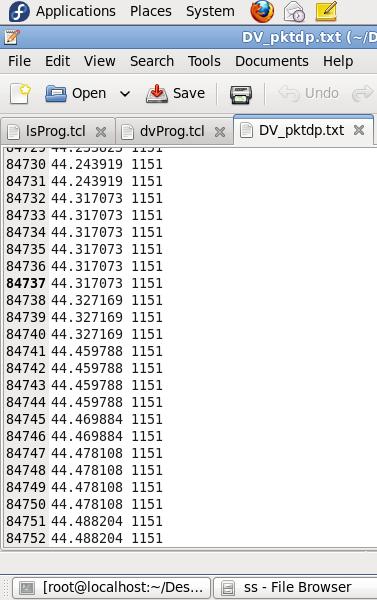
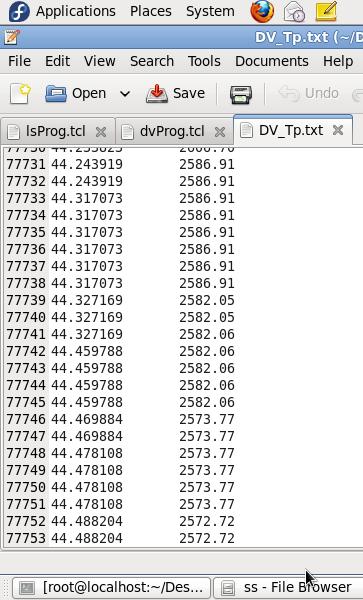
2.3.5. Receiving throughput and the number of dropped packets is estimated using NS 2.3.5
Keywords: Routing, Linked State (LS) Routing Protocol, Distance Vector (DV) Routing Protocol, NS 2.3.5
Routersevaluatethebestroutefromasendertoareceiver. Routers are the mixture of hardware and software. The hardwareisaphysicalinterfacetothenetworkandsoftware consists of routing protocol and operating system that handlestheroutingprocess.
Routersgenerallymonitorthenetworkconditionstoadapt tothedynamicchangesinthenetworkconditions.
Routing algorithms decides the path to take for incoming packets.Itdeterminesdestinationreachablebyeachnode andstoreslocal
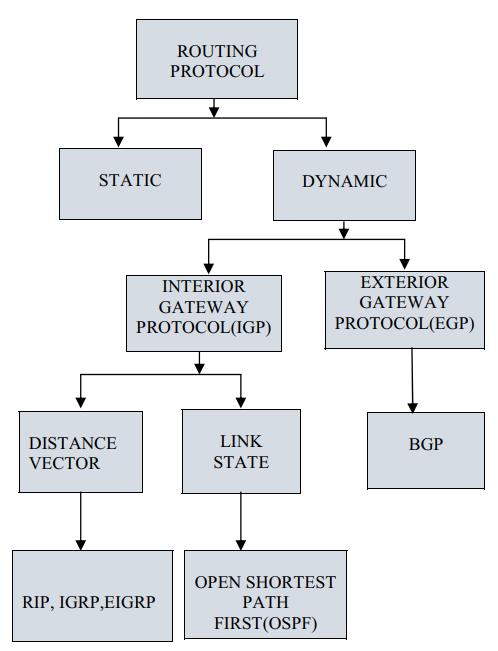
Information on each node and computes the best path by interactingwiththeneighbouringnodes.Routingprotocols arebroadlyclassifiedasstaticanddynamic.Thesearethe twomethodstoconstructtheroutingtableofthenetwork.
Modern Routing protocols use two main distributed algorithms: Distance Vector (DV) and Linked State (LS) routingprotocol
Routingprotocoldetermineshowrouterspropagatethedata thatempowersthemtochooseroutesamonganytwonodes on a computer network. It helps to indicate best route possiblewhereasrouter’sinternalknowledgeofnetworks connectthenodesdirectly[1]
DistanceVectorRoutingisagroupingoftwowordsDistance andVector.Distancedealswiththelocationoftheendnode inthenetworkwhileVectorreferstoroute.Target/endpath isselectedonbasisofthebestpathfirst.Italsolooksaftera metricperformancelikehopcountandpacketloss.Vector
International Research Journal of Engineering and Technology (IRJET) e-ISSN: 2395-0056
Volume: 09 Issue: 09 | Sep 2022 www.irjet.net p-ISSN: 2395-0072
guides the packet to reach the end through specific flow. Hereentireroutingdataissharedwiththeadjacentnode.[2]
In a distance vector routing protocol, the router has the awareness of only the direction and the subsequent interface/next hop address where the packet will be forwardedbutitdoesnothaveanythoughtofthecomplete pathinanetwork.ThreethingsareenclosedintheDistance vectorwhicharetargetaddress,shortestdistanceandnext hopaddress.
Link State Routing Protocol is a routing protocol which is basedontheideaofshortestpathfirst.Inlinkstaterouting protocol,dataabouteachlinkwhichisgoingtotakepartin routing is asked to remember. The collected data is then scatteredintothreedissimilarroutingtables.Thefirsttable contains data about adjacent nodes only, the second node contains data about all nodes present in topology and the thirdnodeholdsrealdatai.e.dataaboutroutingpathfrom starting to end. Load balancing can be simply achieved in suchtypeofrouting[2]
Theshortestpathselectedamongthestartingnetworkand the end network is preferred as the best path which is calculated by the shortest path routing protocol, also identifiedaslinkstateroutingprotocol.Everyrouterinthe domain keeps the link state data that holds the list of the routersinthenetwork.Eachandeveryrouterinthenetwork hasthesimilardatabase.Routingdataisexchangedbetween the routers in the network which is prepared by the Link State Advertisement (LSA). Every time when the LSA is received,theroutergetstheroutingdatafromitsneighbour router.TheroutingusesthefloodingmethodtosendtheLSA [3]. DV-based routing algorithms are not considered for sourcerouting;henceitisinappropriateforopportunistic data forwarding. The reason is that every node in these protocolsonlyknowsthenexthoptogettoagiventarget node but not the entire path whereas LS-based routing protocols could bear source routing but their overhead is stillreasonablyhigh[4].
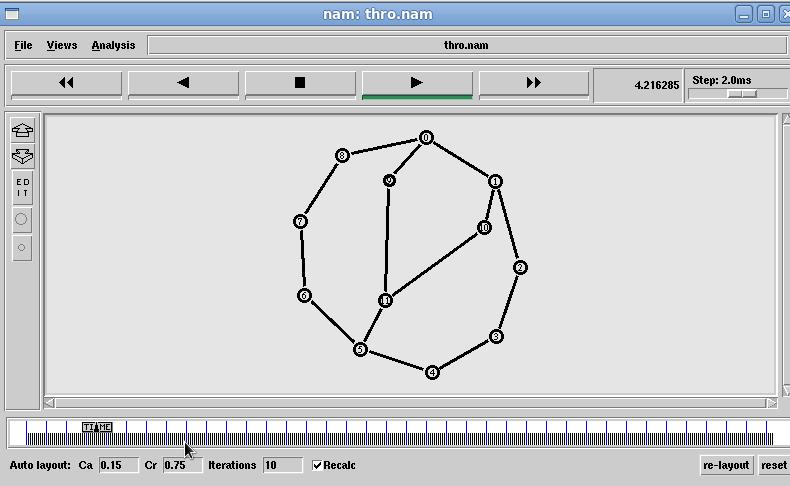
Eachnodebuilds’amapoftheconnectivitytothenetwork, whichisintheformofagraph,screeningwhichnodesare linked to which former nodes. All nodes then separately computethe nextfinestlogical pathfromittoall possible destinationsinthenetwork.
Insteadoftransferringitsroutingtable,aroutersendsthe data about its adjacent node only. A router screens its identities and cost of the straight attached links to other routers.Linkedstateprotocolhastwophases:Initialstate andFinalstate.
InInitialStateeachnodeknowsthecostofitsneighbourand in final state each node knows the entire graph from one sourcetoconsideringallothernodesasdestination.
Initialization:
N’={u}:uistherootnode forallthenodesv ifvisaneighbourofu thenD(v)=c(u,v) else d(v)=∞
Loop:
FindwnotinN’suchthatD(w)isaminimum AddwtoN’ UpdateD(v)foreachneighbourvofwandnotin N D(v)=min(D(v),D(w)+c(w,v)) UntilN’=N HereD(v)istheoftheleast-costpathfromthestartingnode utotargetv.AsthealgorithmexecutesN’isthewillactas subsetofnodesN;vwillenterN’iftheleast-costpathfrom thestartingnodeutovisknownasimmediateneighbourof u.(i,j)istheLinkcostfromnodeitonodej.Ifiandjnodes arenotdirectlylinked,thenc(i,j)=∞.Numberoftimesthe loop is executed is equal to the number of nodes in the network.
TheDistancevectoralgorithmisiterative,asynchronousand distributedalgorithm.Eachnodemaintainsitsownrouting table which contains information from all the nearest neighbournodes.Whentheneighbouringnodesdetectany changesintheleastcostpath,theybroadcastthechangesto allthenodes.themomentthebroadcastdataisreceivedthe routingtablewillbeupdated.Thisfollowseverytimeifany changeswithpathisdetectedinthenetwork.
Ateachnodex
Initialization:
ForalldestinationsyinN: Dx(y)=c(x,y)
Foreachneighbourw Dw(y)=unknown
Foreachneighbourw SenddistancevectorDx={dx(y):yinN}tow
Loop:
Waituntilachangeinlinkcost
ForeachyinN: Dx(y)=minv{c(x,v)+dv(y)}
Ifdx(y)changedforanydestinationy Senddistancevector Dx={dx(y):yinN}toallneighboursforever
HereD(v)istheoftheleast-costpathfromthestarting nodeutotargetv.AsthealgorithmexecutesN’isthewill
International Research Journal of Engineering and Technology (IRJET) e-ISSN: 2395-0056
Volume: 09 Issue: 09 | Sep 2022 www.irjet.net p-ISSN: 2395-0072
actassubsetofnodesN;vwillenterN’iftheleast-cost pathfromthestartingnodeutovisknownasimmediate neighbourofu.(i,j)istheLinkcostfromnodeitonodej.
Ifiandjnodesarenotdirectlylinked,thenc(i,j)=∞. Numberoftimestheloopisexecutedisequaltothe numberofnodesinthenetwork
International Research Journal of Engineering and Technology (IRJET) e-ISSN: 2395-0056
Volume: 09 Issue: 09 | Sep 2022 www.irjet.net p-ISSN: 2395-0072
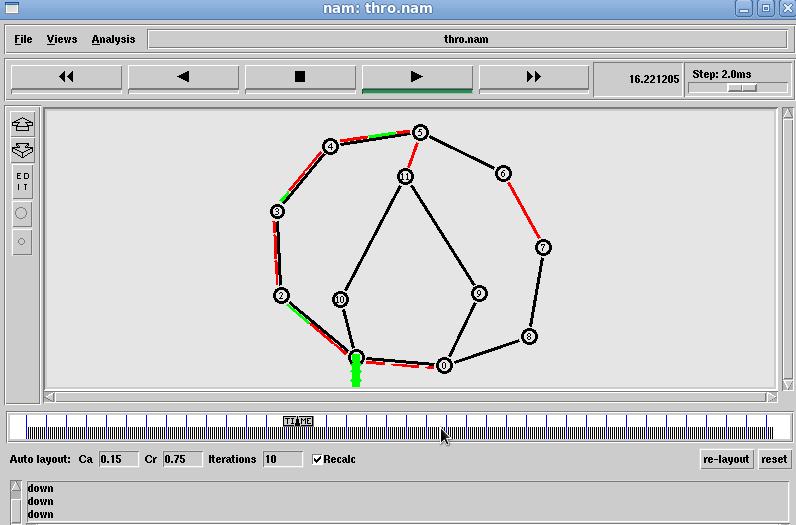
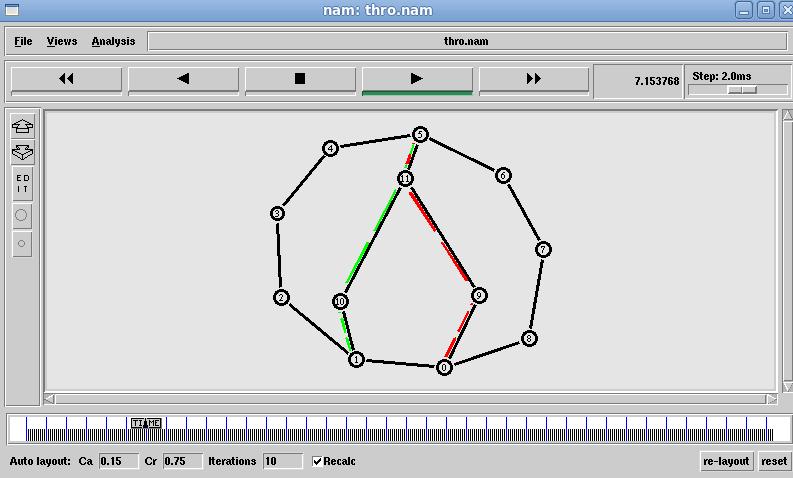
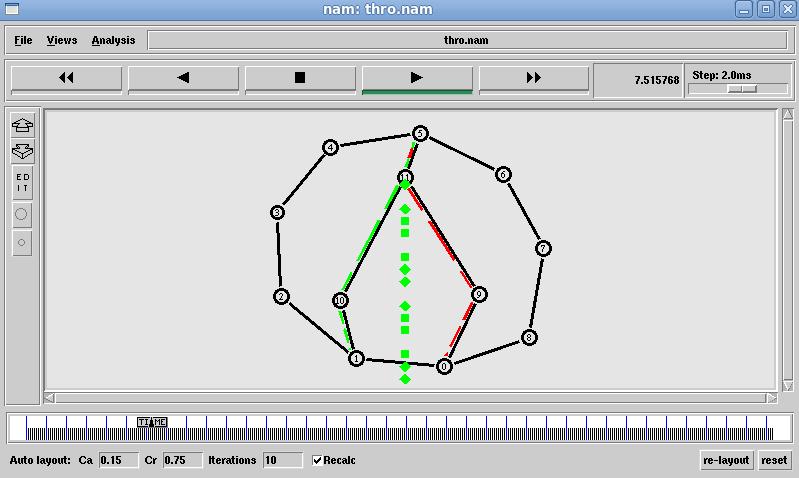
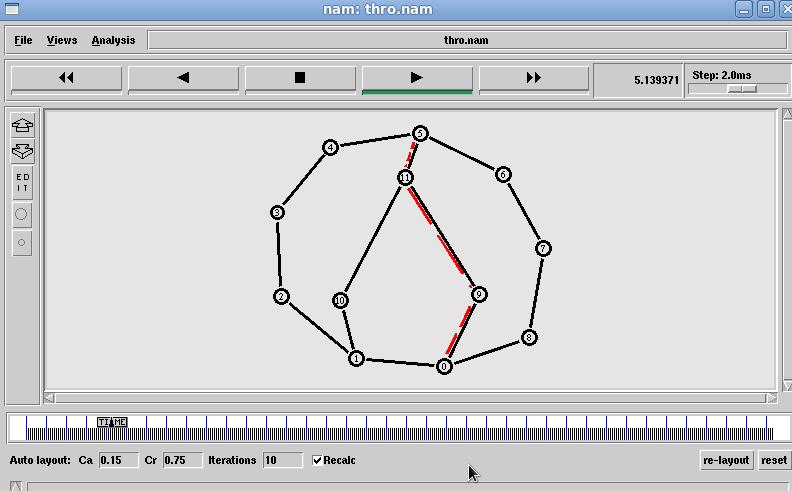
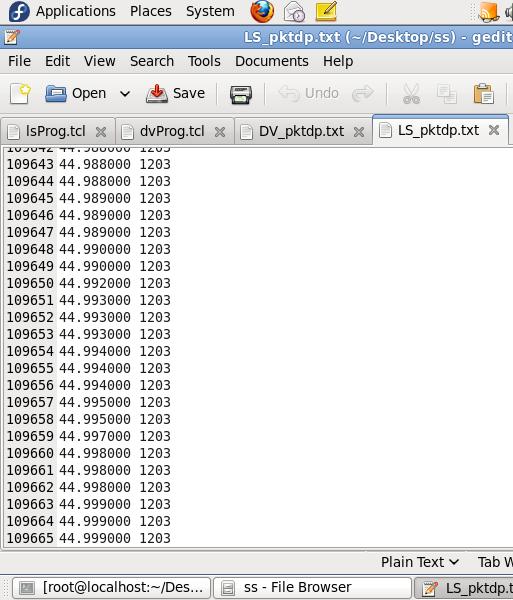
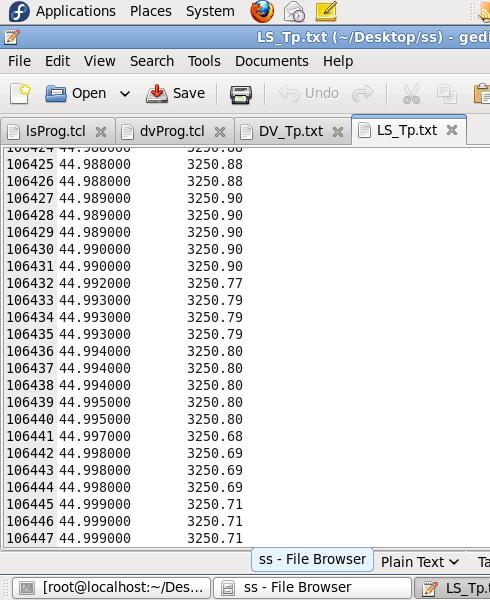
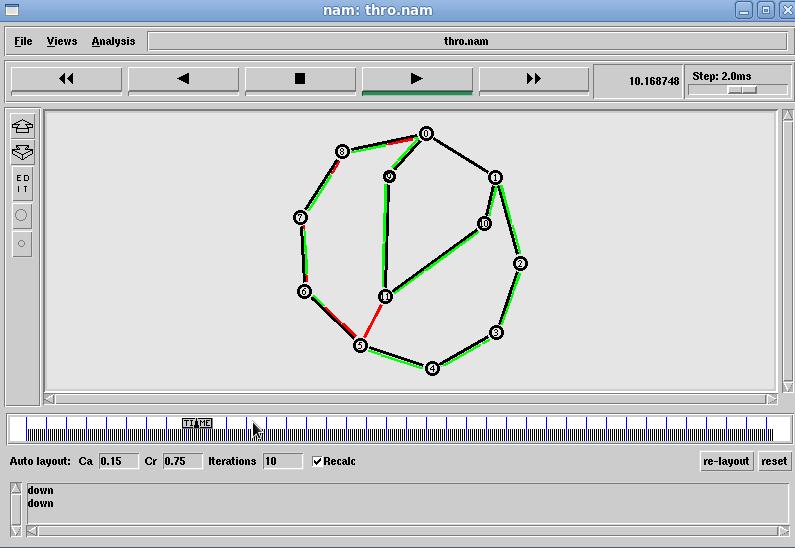
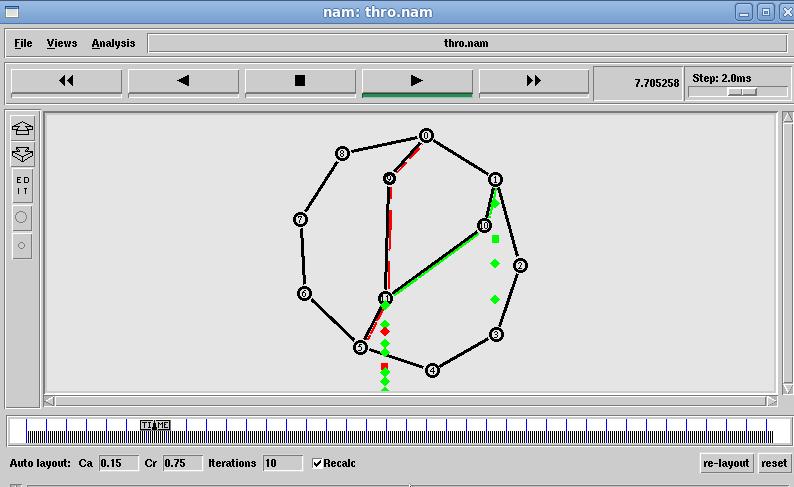
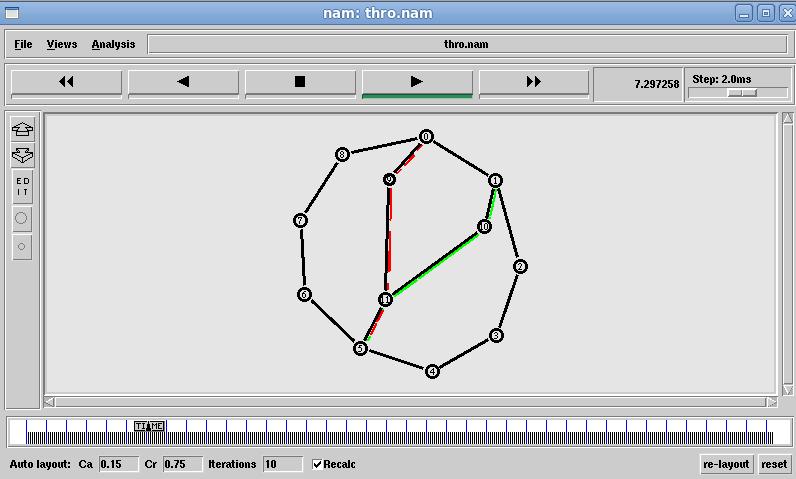
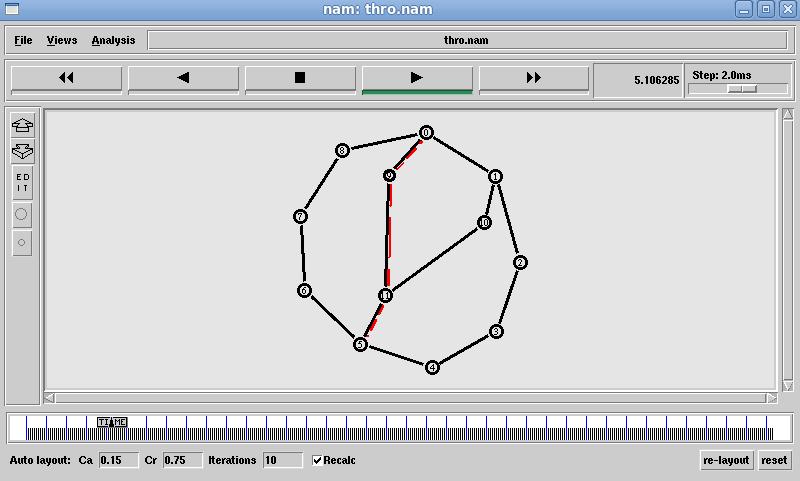
Fig. 4 Linked State Throughput results
Fig.5 Linked State Packet dropped Data
2022, IRJET | Impact Factor value: 7.529 | ISO 9001:2008 Certified Journal |
International Research Journal of Engineering and Technology (IRJET) e-ISSN: 2395-0056
Volume: 09 Issue: 09 | Sep 2022 www.irjet.net p-ISSN: 2395-0072
International Research Journal of Engineering and Technology (IRJET) e-ISSN: 2395-0056
Volume: 09 Issue: 09 | Sep 2022 www.irjet.net p-ISSN: 2395-0072
International Research Journal of Engineering and Technology (IRJET) e-ISSN: 2395-0056
Volume: 09 Issue: 09 | Sep 2022 www.irjet.net p-ISSN: 2395-0072
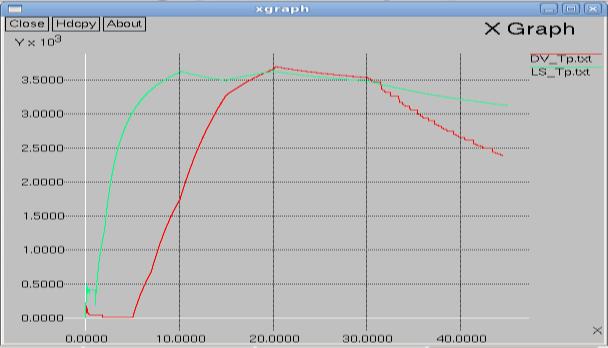
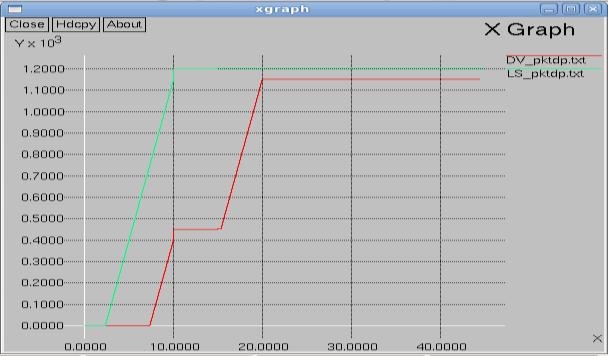
The Fig 9 Xgraph clearly shows that Distance vector throughputgraduallydropsastrafficincreaseswhereaslink stateshowsconstantmaintenanceinthroughput.TheFig10 XGraph clearly shows that packets dropped at Distance vectorarelesscomparetolinkstatealgorithm

DVandLSalgorithmsarecomplementarytoeachother. We conclude that as network density increases throughput of LinkedState(LS)RoutingProtocolseemstobebetterthan Distance Vector (DV) Routing Protocol. Packet drop of DV Routing Protocol is less than LS Routing Protocol because numberofbroadcastmessagesincaseofDVislessthanLS. SowecansayDVprovestobeabetterprotocolincasesof lesspacketdrop.
Fig 10: Xgraph depicting throughput in LS vs DV
[1] Meenakshi Yadav et.al/Survey on “MANET”, Sunil TanejaandAshwaniKush,“ASurveyofRoutingProtocols in Mobile Ad-hocNetwork”, International Journal of Innovation, Management and Technology, vol. 1, No. 3, August2010,ISSN:2010-0248
[2] S. R. Dhappadhule and R. A. Patil, "Impact of FailurewithinaNetworkonAdaptiveRoutinAlgorithmin Torus Topology," 2018 4th International Conference for Convergence in Technology (I2CT), 2018, pp. 1-5, doi: 10.1109/I2CT42659.2018.9057871.
[3]C.K.Jha,P.Kumar,P.D.PariharandL.Garg,"Realisation ofLinkStateRoutingProtocolandAdvanceDistanceVector in Different IP Schema," 2014 International Conference on Computational Intelligence and Communication Networks, 2014,pp.486-491,doi:10.1109/CICN.2014.113.
[4]Z.Wang,Y.ChenandC.Li,"PSR:ALightweightProactive Source Routing Protocol For Mobile Ad Hoc Networks," in IEEE Transactions on Vehicular Technology,vol.63,no.2, pp.859-868,Feb.2014,doi:10.1109/TVT.2013.2279111.
[5] Yefa Mai1 ,Yuxia Bai1 and Nan Wang2, Performance Comparison and Evaluation of the Routing Protocols for MANETs Using NS3 , ”Journal of Electrical Enneering” (2017) 187-195 doi: 10.17265/2328-
2022, IRJET | Impact Factor value: 7.529 | ISO 9001:2008 Certified Journal | Page625