International Research Journal of Engineering and Technology (IRJET) e-ISSN: 2395-0056

International Research Journal of Engineering and Technology (IRJET) e-ISSN: 2395-0056
1P.Thenmozhi, 2P.S.Prakash, 3R.Dhamodharan,4N.Manigandan
1PG Scholar, 2 Associate Professor,3 AssistantProfessor,4Assistantprofessor
1Computer Science Engineering, 2 Computer Science Engineering, 3 Computer Science Engineering, 4Mechanical Engineering
1Vivekanandha college of Engineering for women, 2Vivekanandha college of Engineering for women, 3Vivekanandha college of Engineering for women, 4Paavai Engineering College, Namakkal, Tamilnadu, India ***
Abstract: The project based on face counting using Haar cascade algorithm. The proposed system involves face detection and counting, Features extraction. The face detection is to detect faces based on haar cascade algorithm using python toolbox. In feature extraction stage, the GLCM is used for different object texture and edge contour feature extraction process. A DWT organize the edge response marks in all eight routes at every pixel position and creates a code from the magnitude strength. The presumed features retain the different information of image patterns. These features are useful to differentiate the more number of tests accurately and it is matched with already stored image samples for person identification. The fake results will be shown that used policies have good discriminatory power and recognition accuracy compared with prior avenues. Face counting is a type of bio metric software application that can identify a specific individual in a digital image by analyzing and comparing patterns. Facial counting systems are commonly used for security purposes but are increasingly being used in a variety of other applications.
Key Word Haar cascade, Edge contour feature extraction, Discriminatory Power, Biometric Software.
The main objective of this paper is to detect the person facecountingcorrectlybyusinghaarcascadealgorithm.
Themaincontributionsofthisprojectthereforeare
DataAnalysis
Dataprocessing
The main objective of this paper is to detect the person facecountingcorrectlybyusinghaarcascadealgorithm. The identification of objects in an image probably start withimageprocessingtechniquessuchasnoiseremoval, followed by (low level) fee extraction to locate lines, regions and possibly areas with certain textures. The fresh bit is to interpret assortments of these shapes as oneobject,e.g.vansonaroad,binsonaconveyorbeltor tumors cells on a microscope slide. A major defect in AI
problem is that an object can show very different when viewed from varied angles or under varied lighting. Anotherdefectis deciding whatfeaturesuitabletowhat object and which are back or shadows etc. The human visual system accomplish these tasks most unconsciously but a computer needs skilful programming and lots of processing power to approach human act. An image is normally interpreted as a two dimensional array of bright values, and is more familiarly reported by such patterns as those of a photographicprint,slide,television ormoviescreen.An imagecanbedoneopticallyordigitallywithacomputer.
Discriminative strong native binary pattern:
Volume: 09 Issue: 07 | July 2022 www.irjet.net p-ISSN: 2395-0072 © 2022, IRJET | Impact Factor value: 7.529 | ISO 9001:2008 Certified Journal | Page2843
Local Binary Patterns (LBP) is one altogether the fore mostusedwaysthatinfacerecognition.toreinforcethe recognition rate and strength, some ways victimization LBP, area unit planned. Improved native Binary Pattern (ILBP)isassociateimprovementofLBPthatcompareall the pixels (including the center pixel) with the mean of all the pixels inside the kernel to reinforce the strength againsttheilluminationvariation.Fortheaimofholding the abstraction and gradient information, associate extended version of native Binary Patterns (ELBP) that
e-ISSN: 2395-0056
Volume: 09 Issue: 07 | July 2022 www.irjet.net p-ISSN: 2395-0072
encodes the gradient magnitude image to boot to the initial image was propose to represent the speed of native variation. The LBP operator was first introduced as a complementary live for native image distinction by Ojala etal (1996). the first incarnation of the operator worked with the eight neighbors ofa part, victimization the value of the center component as a threshold. Associate LBP code for a neighborhood was created by multiplying the brink values with weights given to the correspondingpixels,andsummationtheresult.
Drawbacks:
• In semblance based methods, minimal accurate of features discourse on because of entire image consideration
• Ingeometricbasedmodels,thegeometricfeatureslike farbetweeneyes,facelengthand width,etc.,areviewed whichnotprovidesoptimalresults
Planned system: Featureextraction HAARcascadealgorithm Benefits
• Countingisattainedcorrectly
• Lesstimespan
Requirement Specifications Hardware Requirements
• System
• 4GBofRAM
• 500GBofHarddisk
Software requirements:
Pythonallversion
Python is an inferred prominent level programming languageforprogrammingPythonextendsmanyoptions for generating GUI (Graphical User Interface). In all the GUImethods,tkinterismostcommonlyusedtechnique It is a pendent Python interface to the Tk GUI tool kit equipped with Python. Python with tk inter outputs the quickest and easiest way to generate the GUI applications.Generating aGUIusingtkinterisansimple task.
Python is a common purpose programming language initiated by Guidovan Rossum, which became most popular in minimum time mainly because of its homogeneity and code readability. It accesses the programmertodeliverhis ideasinsimplerlines ofcode without minimizing any readability. Analogized to other languageslikeC/C++,Pythonisless.Butotherimportant feature of Python is that it can be simply extended with C/C++. This feature support us to write computationally explosive codes in C/C++ and generate a Python wrapper for it so that we can utilize these wrappers as Python modules.Thisprovide ustwoadvantages:first,ourcode isasquickasoriginalC/C++code(sinceitistherealC++ codeplayedinbackground)andsecond,itisveryeasyto codeinPython.Thisishow OpenCV Pythonworks,itis aPython wrapperalongoriginalC++expeditionandthe helpofNumpymakesthetaskmoresimpler Numpyisa moreoptimizedlibraryfornumericalmethods
Arrayscalarshaveaccuratelythesamemodelsasarrays. The base behavior of these models is to internally changed the scalar to an associate 0 dimensional array and to call the responding array models. In increasing, math operations on array scalars are explained so that the same hardware flags are set and used to interpret theoutputasforufunc,sothatthemistakestateusedfor ufuncsalsogoesovertothemathonarrayscalars.
Anaconda Navigator is a base graphical user interface (GUI) attached in Anaconda distribution that allows you to operate applications and simply manage conda packages, environments and channels without usingcommand linecommands.Navigator canquestfor packages on Anaconda Cloud or in a local Anaconda Repository. ItisavailforWindows,macOSandLinux.
e-ISSN: 2395-0056
Volume: 09 Issue: 07 | July 2022 www.irjet.net p-ISSN: 2395-0072
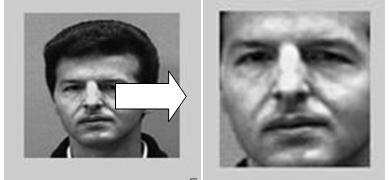
Facedetectionisaprocesstogetfaceregionsfrombase image which has familiarized intensity and standard in size. The appearance features are get detected face part which adaptable changes of face such as furrows and shrinks (skin texture).In this system method, the face detection procedures is based on haar like modules alongwithrequiredboostingmethod.
Image enhancement is one of the best and greatest appealing regions of digital image organizing. Generally, theconceptinthebesidestheenhancementstrategiesis to perform brief that is obscured, or clearly to spotlight certain features of real picture. A general instance of enhancement is at the obtained time as we growth the period of a photograph due to the fact “it appears greater.” It is required to remember the fact that enhancement is a entirely subjective region of photo processing.
Image recuperation is a region that also deals with enhancing the presence of an image. However, not like enhancement,that isprimary,photographrecuperation isaim,intheexperiencethatrestorationmethodswillbe predisposed to be based on mathematical or probabilisticmergeofpicturedegradation.
Module1: Pre processing
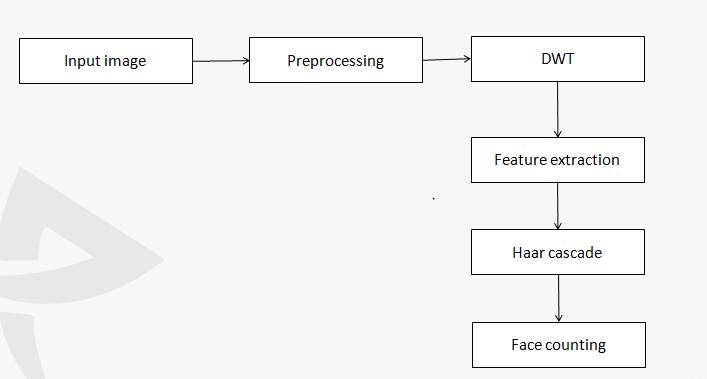
Imagerestorationisthemissionoftaking a corrupted/sound image and calculating the clean original image. Corruption might come in most of the formssuchasmotionblur,sound,andcameramisfocus. Imagerestorationisanotherformofimageenhancement inthatthelatteriscreated toemphasizefeaturesofthe image that make the image more gratifying to the listener, but not necessarily tocreate realistic data from a scientific point of view. Image enhancement methods (like different stretching or de blurring by a nearest neighborprocedure)givenby"Imagingpackages"useno a before model of the process that produced the image. With image enhancement sound can be effectively be erased by sacrificing some resolution, but this is not acceptable in most applications. In a Fluorescence Microscoperesolutioninthez directionisnotgoodasit is.
Image Acquisition is to gather a digital photograph. To gather this requires a picture sensor and the working function to digitize the sign created through the sensor. The sensor may be monochrome or coloration TV camerathatcreatesanentirephotoofthefaultareaeach 1/30 sec. The photograph sensor might also be line test virtualdigitalcamthatcreatesaonlyonephotolineata time. In this place, the gadgets movement besides the road.
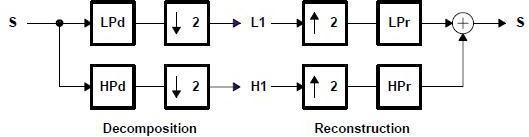
The discrete wavelet remodel (DWT) became leader to use the wavelet redo to the digital international. Filter banks are used to temporary behavior of the non prevent wavelet remethod. The sign is decayed with a immoderate skipsimpleoutandalow bypassclearout.
Facedetectionmodel
e-ISSN: 2395-0056
Volume: 09 Issue: 07 | July 2022 www.irjet.net p-ISSN: 2395-0072
The coefficients of these filters are executed using mathematical evaluationanddone to be hadtoyou. See AppendixBformanyresultsaboutthosecomputations.
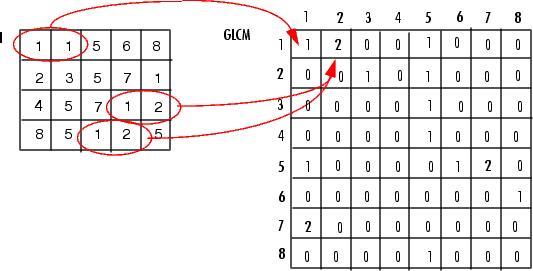
The gray level co appearance matrix can reveal certain thingsaboutthespatialdistributionofthegraylevelsin thetextureimage.Forexample,ifmany oftheentriesin the GLCM are focused along the diagonal, the texture is coarsewithrespecttotherequiredoffset.Toexplain,the following diagram shows how gray co matrix estimates the first 3 values in a GLCM. In the output of GLCM, element (1,1) has the value 1 because there is one instance in the input image where 2 horizontally adjacentpixelshavethevalues1and1,accordingly.
Where,
GLCM(1,2) have the value 2 because there are two instances where two horizontally adjacent pixels have the values 1 and 2.Element (1,3) in the GLCM has the value 0 because there are no required instances of two horizontally adjacentpixels withthevalues1and 3. Gray co matrix continues its processing the input value, printing the image for other pixel pairs (i,j) and recording the sums in the required elements of the GLCM.
LP
Module3: GLCM
ToproduceaGLCM,usethegraycomatrixbenefits.The gray co matrix benefits produces a gray level co occurrence matrix (GLCM)by estimatinng how often a pixel with the intensity (gray level) value I reached in a required spatial relationship to a pixel with the value j By standard, the spatial relationship is explained as the pixel of interest and the pixel to its sudden right (horizontally adjacent),but you can identify others partial relationships between the two pixels. Each element(i,j)intheoutputGLCMiseasilytheadditionof thenumberoftimesthatthepixelwithvalue I appeared intherequiredspatialrelationshiptoapixelwithletter j in the input value Because the arranging required to estimateaGLCMforthealldynamicrangeofanimageis prohibitive, gray co matrix scales the input image. By standard, gray co matrix uses scaling to down the numberofintensityvaluesingrayscaleimagefrom256 toeight.Thenumberofgraylevelsspecificthesizeofthe GLCM. To organize the number of gray levels in the GLCM and the scaling of intensity grades, using the NumberLevelsand theGray Limits requirements of the gray co matrix function. See the gray co matrix base pageformoreideas
To Produce many GLCMs, required an array of offsets to the gray co matrix function. These offsets define pixel relationships of different direction and distance.Forexample,youcanexplainanarrayofoffsets that four directions(horizontal, vertical, and two diagonals) and four distances. In this case, the input values is represented by 16 GLCMs. When you estimate statisticsfromtheseGLCMs,youcantakethemean
You identify these offsets as ap by 2 array of integers. Every row in the array is a two element vector, [row offset, col offset], that requires one offset. Row offset is thenumberofrowsbetweenthepixelofinterestandits neighbor. Col offset is the different number of columns among the pixel of possession and its neighbor. This examplegenerates anoffsetthatrequires ourdirections and4distancesforeachdirection.Afteryouproducethe GLCMs, you can solve several statistics from them using thegraycopropsmission.Thesestatisticsprovideideas about the texture of an image value. Statistic such a as
e-ISSN: 2395-0056
Volume: 09 Issue: 07 | July 2022 www.irjet.net p-ISSN: 2395-0072
Contras, Correlation, power, Homogeneity gives idea aboutimage.
Haar Cascade algorithm is one of the more powerful algorithms for the detection of objects particularly face detectioninOpenCVplannedbyMichaelJonesandPaul Viola in their research ideas called “Rapid Object DetectionusingaBoostedCascadeofEasyFeatures”and thisalgorithmwasplannedintheyear2001whichusesa mission called cascade works for the detection of objects in the image values and a many of negative imagesand positive images areused to rail thiscascade functionandthiscascadefunctionreturnbacktheimage withrectanglesdrawnnearthefacesintheimageasthe result.
To this objective count the face of the human by using haar cascade algorithm solution here we get input images, finding and classifying the result. we comprehensively examine the wavelet transform and GLCMfeatureextractionmethodstotypestheoutput.By using these models we got a high accuracy, specificity, andtheperformancealsobegained
Infuturewegainedtheperformanceofthisprocessand abletogethighaccuracy.
[1] Ahonen.T,Hadid.AandPietikäinen.M,(2004)‘Facedescr iptionwithlocalbinarypatterns’,inProc.Eur.Conf.Comp ut.Vis.
[2] AnbangYaoandShanYu,(2013)‘RobustFaceRepresent ationUsingHybridSpatialFeatureInterdependenceMat rix’.
[3] Daubechies.I,(1990)‘Thewavelettransformtime frequencylocalizationandsignalanalysis’,IEEETrans.In formationTheory.
[4] Jain.A.K,(1989)‘Fundamentalsofdigitalimageprocessi ng’,PrenticeHall.
[5] JulienMeynet,(16thJuly2003)‘FastFaceDetectionUsin gAdaBoost’
© 2022, IRJET | Impact Factor value: 7.529 | ISO 9001:2008 Certified Journal