International Research Journal of Engineering and Technology (IRJET) e ISSN: 2395 0056
Volume: 09 Issue: 06 | Jun 2022 www.irjet.net p ISSN: 2395 0072

International Research Journal of Engineering and Technology (IRJET) e ISSN: 2395 0056
Volume: 09 Issue: 06 | Jun 2022 www.irjet.net p ISSN: 2395 0072
1,2,3,4,5Students, Department of Computer Science & Engineering, Sanjeevan Engineering and Technology Institute Panhala (Maharashtra, India).
6Assistant Professor, Department of Computer Science & Engineering, Sanjeevan Engineering and Technology Institute Panhala (Maharashtra, India). ***
Abstract - MODI is an old Indian script from Maharashtra. This script was popular for drafting official papers during the reign of Chhatrapati Shivaji Maharaj. Character recognition MODI is difficult due to its structural features and the lack of an image database. In this research, we created a CNN model for character recognition and used data augmentation techniques to expand the MODI script's dataset. Because the MODI script includes a limited image dataset of 4140 images, we applied data augmentation to the dataset and trained the CNN model on a produced dataset. The trained model recognizes Handwritten MODI characters with an accuracy of about 91.62%.
Key Words: Convolutional Neural Network, Data Augmentation, Deep Learning, Image Processing, Character Recognition.
MODIisaBrahmi basedscriptthatismostlyused forwritingMarathi.MODIScriptwascommonlyuseduntil 1950wheneveryoneswitchedtotheDevanagariscript.The MODIscriptwasusedtowriteofficialdocuments,cultural literature,andreligiousbooks.Asaresult,mostoldwritings fromthe12thcenturytothe19thcenturyinMaharashtra State, India, are written in MODI Script. However, most individualsareunawareofthescript.Thestudyinthispaper focused on handwritten character identification and transliterationtoMarathiscript.
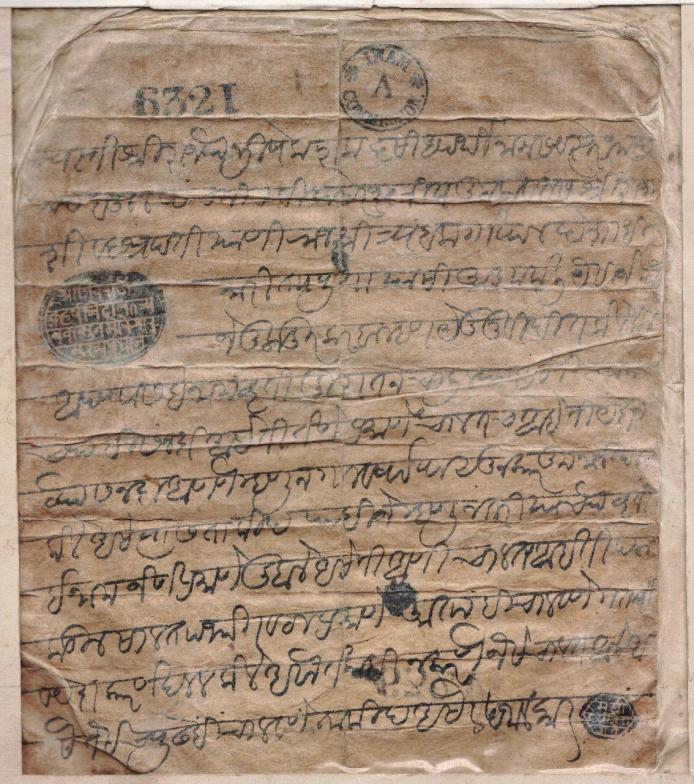
TheMODIscriptdatesbacktothe12thcenturyand wasuseduntilthe20thcentury.ShivkalinandthePeshava KalinKingdomhavebothusedMODIScript.Figure1depicts aletterwritteninMODIScriptbyChh.ShivajiMaharaj.
Astimepassed,variouschangesweremadetothe formsofwritingofMODI.Inthe12thcentury,MODIScript wascalled"Adyakalin",andinthe13thcentury,itevolvedas anewscriptknownas"Yadavkalin". The"Bahamanikalin" ofthe14th 16thcenturiesisthenextphaseofdevelopment, followed by the "Shivakalin" of the 17th century. MODI's ultimate stage is related to English rule and is known as "Anglakalin".From1818to1952,thisstyleofwritingwasin
use. MODI was also used in elementary school textbooks published in the nineteenth and twentieth century. Then Devanagari Script began to replace MODI Script in the twentiethcentury.TheBombayPresidencydecidedonJuly 25,1917,toreplacetheMODIscriptwiththeBalbodhstyle ofDevanagariastheprimaryadministrationscriptforease andconsistencywiththeotherareasofthepresidency[1].
ThousandsofModidocumentshavebeensavedinSouth AsiaandEurope.DuetothepresenceoftheseEuropeansin Tanjore, Pondicherry, and other South Asian places throughoutthenineteenthcentury,themajorityoftheseare stored in various archives in Maharashtra, although lesser collections are kept in Denmark and other nations. The earliest surviving Modi document is from the early 17th
2022, IRJET | Impact Factor value: 7.529 | ISO 9001:2008 Certified Journal

International Research Journal of Engineering and Technology (IRJET) e ISSN: 2395 0056

Volume: 09 Issue: 06 | Jun 2022 www.irjet.net p ISSN: 2395 0072
century.WhilethemajorityofModipapersareofficialletters, landregistry,andotheradministrativedocuments,beforethe 1950s,thescriptwasalsoappliedinschool,journalism,and otherordinaryactivities.PrintinginModibeganintheearly nineteenthcenturyafterCharlesWilkinscutthefirstmetal scriptfontsinCalcutta[2].
MODIScriptusersarecurrentlypublishing books and publications in the script on a regular basis. Several organizationscurrentlyprovideModitutorials,rangingfrom weekend workshops held by the Maharashtra State DepartmentofArchivestoofficialcoursesofferedbyBharat Itihas Samshodhak Mandal (BISM) in Pune. Some colleges alsoprovideModicertificationsthatarerecognizedbythe Maharashtragovernment.TherebirthofModicoincideswith an increasing demand for Modi experts to categorize and handlethemassivearchivesofModidocumentationatBISM and other locations. The Indian government has set aside cash for the indexing of these archives, which is being carriedoutbyteamsfreshlytrainedasModiexperts[2].
Modiusershavecreatedcomputerassistanceforthe script, particularly in the form of digitized typefaces. However, due to the absence of a character encoding standardforthescript,usersrelyonoutdatedencodingsor arelinkedtoUnicodeblockssuchasDevanagari[2].
The MODI script was written with a bamboo pen that had to be lifted and dipped in an inkpot every few seconds.TheMODIscriptcontains46distinctletters,36of whichareconsonants&10ofwhicharevowels.Devanagari, on the other hand, has 48 distinct letters, 12 of which are vowels&36ofwhichareconsonants[3].
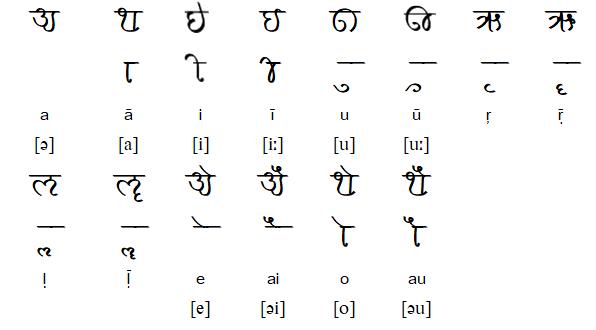
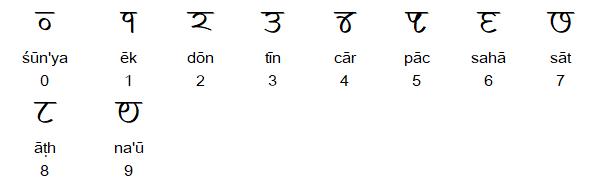
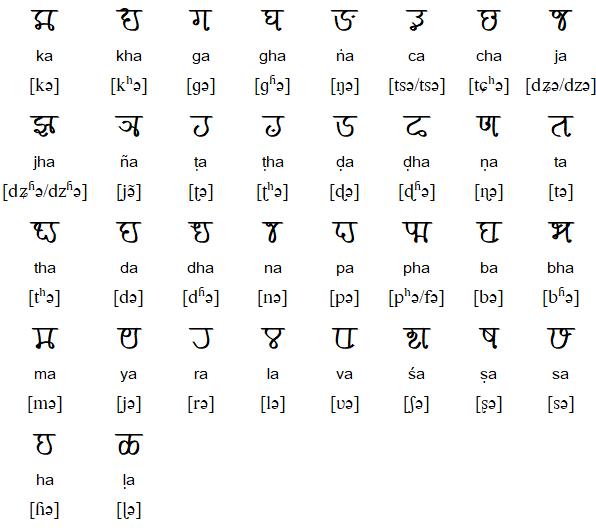
When we write in MODI, we start by drawing a horizontallinefromtheleftmargintotherightmarginofthe page.Andbecauseofthecurvesinletters,wedon'thaveto raiseapentowritethefollowingletter.Figures2 4depict thevowels,consonants,numbers,andpunctuationinMODI Script.
Fig 3: ConsonantsinMODIScript
Fig 2: VowelsandDiacriticsinMODIScript
Fig 4: NumbersandPunctuationinMODIScript
Data gathered frommultiplesources includes nearly4140 photosthatareinefficientforaccuracy.Asaresult,weused severaldataaugmentationtechniquestoexpandthedataas neededfortraining.Then,usingthe80 20rule,weseparated ourcollecteddatasetintotrainingandtestingsets.
When given a large amount of data, a machine learningmodelalwaysperformswell.Ingeneral,morethe data we have, the higher the model's performance. Image augmentation is typically necessary to increase the performance of the machine models when building an effectiveimageclassifier withverylittle training data. We usedimageaugmentationtechniques[4].
Image augmentation builds training images artificiallybyusingvariousprocessingmethodsoramixof numerousprocessingmethods,suchasrandomizedrotation, shifting,shearingandflipping,andsoon.Fig 5showssome
2022, IRJET | Impact Factor value: 7.529 | ISO 9001:2008 Certified Journal
International Research Journal of Engineering and Technology (IRJET) e ISSN: 2395 0056
Volume: 09 Issue: 06 | Jun 2022 www.irjet.net p ISSN: 2395 0072
augmentedimagesfromcreateddataset.Theimageonthe left is the original, while the others were created using augmentation techniques. We don't have to acquire these photographs manually because they are created from trainingdata.Ifthetrainingdataisinsufficient,thisstrategy increasesit.
When we collect data from multiple sources, it is not requiredforalloftheimagestobeofthesamequality.Some photographsmaybeofextremelyhighquality,whileothers maybeofverylowquality.Inthiscase,wecandistortthe originalphotos,whichmakesourmodelmoreresistantto changes in image quality [4]. Fig 9 Depicts the blurring of images.
Fig 5: Someimagesfromthedataset.
Thefollowingaresomeimageaugmentationtechniques:
Rotation is the most widely utilized method for image augmentation.Rotatingtheimageshasnoeffectonthedata containedinthem.Asaresult,wecouldusethisstrategyto expandourdataset.Figure6depictstherotationapproach appliedtoacharacterimage[4].
Fig 6: Generatednewimageusingrotation

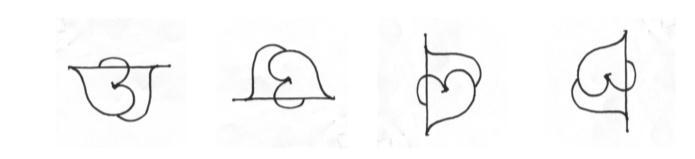
Thisapproachallowsustoflipphotosinanyorientationwe desire, including left to right and up to down. Figure 7 depictsimageflipping.
Fig-7: Generatednewimagesusingflipping
Weaddfakenoisetothephotosviathistechnique.Usingthis method, we can teach our model to distinguish between noiseandpicturedata.Thistechniquemightalsomakeyour modelmoreresistanttoalterationsintheimage[4].Fig 8 showsthenoisingoftheimage.
Fig-8: Noisingofimage

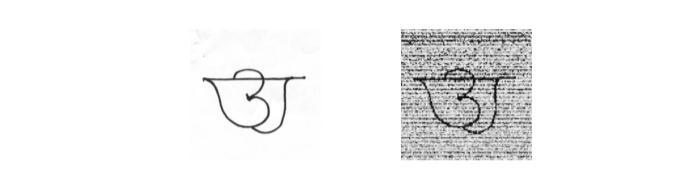

InFig 9leftimageistheoriginalimageandtherightimageis theblurredimagegeneratedfromtheoriginalimage.
We have used the convolutional neural network for the recognitionofMODIScriptHandwrittencharacters.Inrecent years CNN has evolved very much in the character recognitionfield.
Itisadeeplearningsystemthattakesanimageas input,assignsprioritytodistinctitemsintheimage,andcan distinguish betweenthem.Incontrasttootheralgorithms thatrequirepre processedpicturesforfurtherprocessing, CNNaccomplishesthemajorityofthepre processingitself.
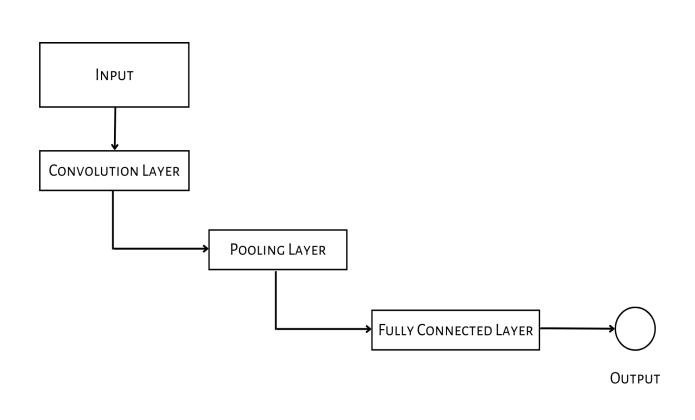
CNN'sdesignisinspiredbytheorganizationofthe visualcortexandisidenticaltotheconnectivitypatternof nervecellsinthebrain.Fig 10showsthearchitectureofthe convolutionalneuralnetwork.
Fig 10: ArchitectureofConvolutionalNeuralNetwork.
International Research Journal of Engineering and Technology (IRJET) e ISSN: 2395 0056
Volume: 09 Issue: 06 | Jun 2022 www.irjet.net p ISSN: 2395 0072
TraditionalConvolutionalNeuralNetworksserveas thefoundationforthesuggestedmodel.BecausetheMODI Script dataset is too small for training any network, we applieddataaugmentation/imageaugmentationtechniques like rotation, flipping, noising, and blurring to enlarge the MODI Script dataset. The dataset was then divided into 80:20 training and test sets. We used the ReLU activation functiontoimmediatelyoutputa1iftrue,otherwiseazero.
WhenanimageissubmittedtoCNN,itundergoesa varietyofmodifications.First,aconvolutionlayerisapplied to the image array, followed by a pooling layer, and these twolayersareappliedeverytwotimes.Itisthenforwarded tothefullyconnectedlayer.
ThesuggestedCNNmodelwasthentrainedonthe original MODI dataset, and the MODI dataset was constructed via image augmentation. This training took nearly 1 hour and 8 minutes to complete. The model's performance is evaluated using accuracy rate as the effectivenessmetric.Hyperparameteradjustmentisusedto getoptimalperformance.Followingtrainingonthedataset, themodelwastestedontheoriginaldata.Thenitwastested withourownhandwrittenMODIcharacters,anditcorrectly predictedorclassifiedwith99%confidence.
Fig 11showsthemodelfortrainingusingtheMODI trainingdataset,fig 12showsthemodeltestingusingMODI testingdatasetandFig 13showsthePredictinghandwritten characterusingthetrainedmodelonthetrainingdataset.
Fig-13: PredictingHandwrittencharacter.
Thesuggestedmodel'sperformancehasbeentested for detection of all letters in MODI Script, which totals 46 characters.Thesuggestedmodel'sperformanceismeasured using classification accuracy. We optimized the CNN hyperparameterssuchaslearningrate,batchsize,epochs, optimizer,andtheactivationfunctiontoimprovetheresults. The suggested model has a batch size of 50 and uses the ReLU activation function. The model's optimizer is called 'adam'. ThemodelwastrainedontheoriginalMODIscript dataset before being trained on the produced dataset via image augmentation. The suggested model took nearly 1 hourand8minutestofinishthetrainingprocedure.
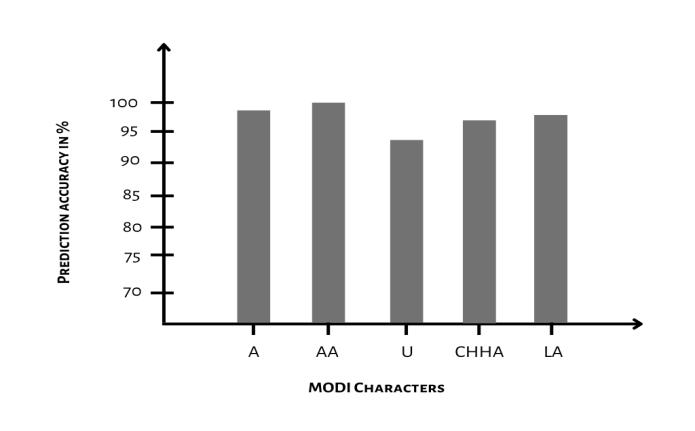
The model's performance in comparison to the currentstudy,thatistheworkpresentedin[3]usedZernike moments for MODI character identification and achieved 76.74percentaccuracy.ThenitwasrenovatedwithZoning andreceived82.61percent.Inaddition,thestudyindicated in [6] employed GoogleNet and AlexNet pre trained networks for recognition and achieved an accuracy of 95.86%. We achieved about 91.62% accuracy for MODI character identification using a simple conv2d method, a standard CNN algorithm, and some data augmentation techniques in the proposed study. Fig 14 shows the predictionaccuracyofsomeMODIcharactersinpercentage.
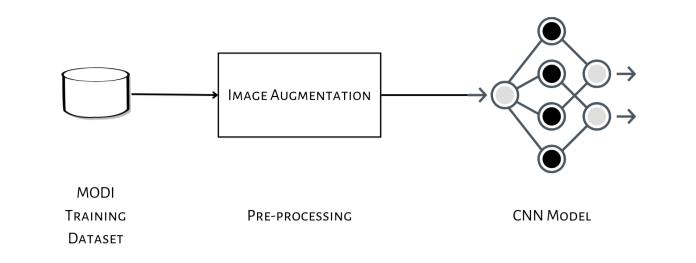
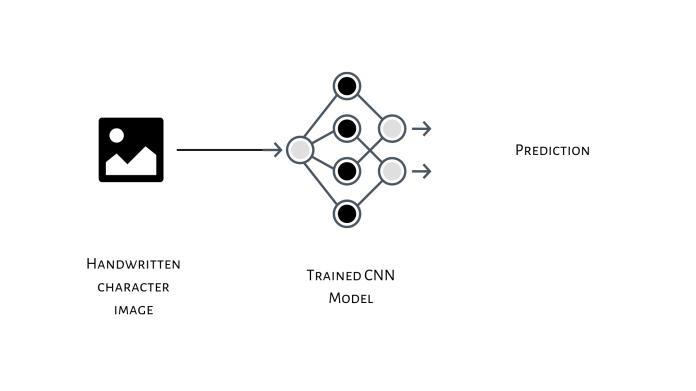
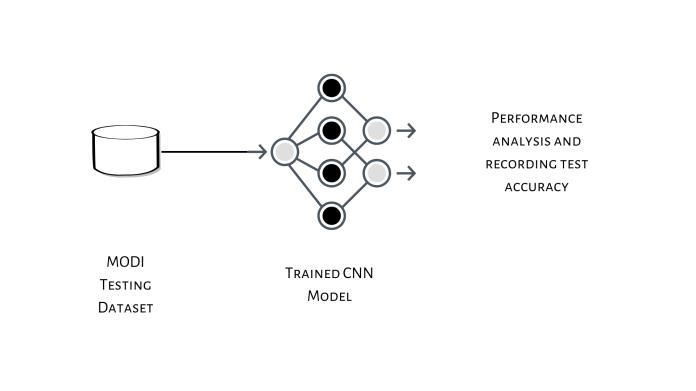
Fig 14: PredictionaccuracygraphofhandwrittenMODI characterrecognition.
International Research Journal of Engineering and Technology (IRJET) e ISSN: 2395 0056
Volume: 09 Issue: 06 | Jun 2022 www.irjet.net p ISSN: 2395 0072
ThemodelinthisresearchisaconventionalConvolutional Neural Network for Handwritten MODI character recognition.UsingthestandardCNNtechnique,thehighest accuracy achieved is 91.62 percent. The algorithm is also analyzedforvariouspicturemodifications.Thisworkcanbe expandedinthefuturetodistinguishverynoisyandunclear imagesfromcopperplates,stones,oroldpapers.
[1] MODIScripthttps://en.wikipedia.org/wiki/Modi_script ,wikipedia
[2] AnshumanPandey“ProposaltoEncodetheModiScript inISO/IEC10646”.
[3] Sadanand A. Kulkarni, Prashant L. Borde, Ramesh R. Manza,PravinL.Yannawar“OfflineHandwrittenMODI CharacterRecognitionUsingHU,ZernikeMomentsand Zoning”,Researchgate,2014.
[4] Shipra Saxena “Image Augmentation Techniques for TrainingDeepLearningModels”,AnalyticsVidya,2021.
[5] “Convolutionalneuralnetwork”,Wikipedia
[6] Savitri Chandure, India Vandana Inamdar “Offline Handwritten MODI Character Recognition Using GoogLeNet and AlexNet”, ICCMS ‘21: 2021 The 13th International Conference on Computer Modeling and Simulation.
[7] Agnieszka Mikołajczyk, Michał Grochowski “Data augmentation for improving deep learning in image classificationproblem”,Researchgate,2018
[8] Savitri Chandure & Vandana Inamdar “Handwritten MODI Character Recognition Using Transfer Learning with Discriminant Feature Analysis”, IETE Journal of Research,2021
[9] KulkarniSadanandA.,BordePrashantL.,ManzaRamesh R.,YannawarPravinL.“ReviewonRecentAdvancesin Automatic Handwritten MODI Script Recognition”, InternationalJournalofComputerApplications(0975 8887)Volume115 No.19,April2015.
[10] Anjali S. Bhalake, R. S. Hegadi “Feature Extraction for RecognizingMODICharacters”,InternationalJournalof ScienceandResearch(IJSR),2015
[11] Mingyuan Xin & Yong Wang “Research on image classificationmodelbasedondeepconvolutionneural network”,Springerarticlenumber:40,2019.
[12] NehaSharma,VibhorJain,AnjuMishra“AnAnalysisOf Convolutional Neural Networks For Image
Classification.”, ScienceDirect, Procedia Computer Science,Volume132, 2018
[13] MohdAzlanAbu,NurulHazirahIndra,AbdulHalimAbd Rahman,NorAmaliaSapieeandIzanoordinaAhmad“A studyonImageClassificationbasedonDeepLearning andTensorFlow”,InternationalJournalofEngineering ResearchandTechnology.Volume12,2019
[14] M Manoj Krishna, M Neelima, Harshali Mane, Venu Gopala Rao Matcha “Image classification using Deep learning”, ResearchGate, International journal of Engineering&Technology,2018
© 2022, IRJET | Impact Factor value: 7.529 | ISO 9001:2008 Certified Journal |