International Research Journal of Engineering and Technology (IRJET) e-ISSN:2395-0056

Volume: 09 Issue: 12 | Dec 2022 www.irjet.net p-ISSN:2395-0072
International Research Journal of Engineering and Technology (IRJET) e-ISSN:2395-0056
Volume: 09 Issue: 12 | Dec 2022 www.irjet.net p-ISSN:2395-0072
1M.Tech (Structural Engineering)
2Assistant Professor (Civil Engineering Department) Chalapathi Institute of Technology, Andhra Pradesh, India
ABSTRACT:“Cement consumption is directly related to thestructuresectorofthecountryandthusitsgrowthisof consummate significance in determining the country's development. With a current product capacity of around 366 million tons( MT), India is the second largest cement patronintheworld.Environmentalcementhasanegative impact as it emits about a ton of hothouse gas( CO2 into the atmosphere for every ton of cement produced. Portlandcementproductnotonlyreleases7oftheworld's carbon dioxide, but also uses a large quantum of natural coffers, similar as limestone, complexion, petroleum, coal and other substances, to conserve natural coffers and reduce pollution due to cement product by limiting the cement content of concrete without compromising its strength. sweats have been made to incompletely replace cement in concrete with newcompositesand artificial byproducts. The ideal of the present experimental disquisition is to determine the influence of the combined operation of Nano- Silica( NS) and Fly Ash( FA) on the strength parcels of the concrete. Fly Ash and Nano- Silica are used as a partial relief for cement. In the present experimentaldisquisition,cementisincompletelyreplaced by 20 and 30 by Fly Ash and Nano- Silica1.5, 3 and4.5 by weight. The effect of the combined operation of Fly Ash and Nano- Silica on the compressive strength, tensile strength, flexural strength and pliantness modulus of the concrete grade M20 is delved . The test results of the concrete prepared using the combination of the different proportionsofFlyAshandNano-Silicaarecomparedwith theresultsofthecontrolledconcrete.Variationofdifferent test results of concrete set with different proportions of Fly Ash and Nano- Silica indicates the same trend. Grounded on the test results, it can be observed that 20percent Fly Ash and 3- percent Nano- Silica- combined concrete has bettered strength parcels compared to the controlled concrete. The increase in the different strength characteristicsoftheconcretepreparedusingFlyAshand Nano- Silica can be attributed to the effective flyspeck quiltingandthevacuityoffreshbindersinthepresenceof Fly-AshandNano-Silica”.
Keywords: Fly-Ash, Nano-Silica, Partial Replacement, ParticlePackingandConcreteStrength.
“Concrete can be considered to be the most widely used product in the construction industry. Concrete has been commonly used in buildings such as schools, highway bridges and airport terminals. In modern construction experience, the mechanical and durability properties of concrete have a similar meaning. Cement is the most commonly found concrete product. As a result, cement consumption is increasing. This absorbs a significant amount of energy in the manufacture of cement, which produces carbon dioxide and emits emissions into the atmosphere. The solution to this problem is therefore to reduce the use of cement and to use Pozzolanic products for the preparation of concrete. Previous studies have shown that the use of Fly-Ash (FA), Micro Silica (MS) and GroundGranulatedBlastFurnaceSlag(GGBS)asapartial replacement of cement that reduces cement consumption andalsoincreasesthestrengthanddurabilityofconcrete. Nano materials are currently used as additional materials for further improvement of concrete properties. Recent advances in nanotechnology and the use of Nano silica have allowed concrete materials to be used. Any type of mineral mixture in concrete can be used with a combinationofNanosilica”.
MATERIALS USED:- The materials used for the design of the M20 grade concrete mix are Cement , Sand, Coarse Aggregate,Water,SuperPlasticizerandNanoSilica.
Cement:- Cement used in this study is 53 grade ordinary PortlandcementinaccordancewithIS12269:1987.
International Research Journal of Engineering and Technology (IRJET) e-ISSN:2395-005
Volume: 09 Issue: 12 | Dec 2022 www.irjet.net p-ISSN:2395-0072
PROPERTIES TEST VALUE
Specificgravity 3.14
InitialSettingtime 45mins
FinalSettingtime 230mins
Consistency 30%
Finenessmodulus 6.5%
Table 2:
PROPERTIES TEST VALUE(%)
Silicondioxide 21.1
Calciumoxide 62.4
Ferricoxide 2.49 Aluminumoxide 4.50
Lossonignition 2.40
Aggregates:- “Aggregatesareoneofthemaincomponents ofconcreteandaregenerallyclassifiedintotwocategories, the fine aggregate and the gross aggregate. They make up 70-75 per cent of the aggregate volume, give concrete a rigid skeleton structure, and act as efficient space fillers. They added both the weight and the strength of the solid. Sand as fine aggregates is collected from the locally available river and an analysis of the samples is carried out.Thesandcollected wasfoundtocomplywithIS:3832016. For the gross aggregate, the parent rock is crushed by a mini jaw crusher. During the crushing process, we tried to maintain the maximum aggregate size. Aggregate with grain sizes above 4.75 mm is referred to as a gross aggregate and less than 4.75 mm is referred to as a fine aggregate. The physical properties of the fine aggregate and the gross aggregate are assessed in accordance with IS:2386(PartIII)-1963”.
Table
PROPERTIES
TEST VALUE
Specificgravity 2.61
Waterabsorption 0.43%
Finenessmodulus 2.72
Sizeoffineaggregate Passingthrough4.75mm
Specificgravity 2.69
Waterabsorption 1%
MaxSizeofaggregate 12.5mm
Water:- “Wateristhekeyingredientintheproductionofa concrete mixture of cement. The amount of water in the concrete controls many of the fresh and hardened properties of the concrete, including workability , compressive strength, permeability and water tightness, durability and weathering resistance, drying shrinkage and cracking potential. For these reasons, limiting and controlling the quantity of water in concrete is important for both construction and useful life. Reducing water Increasescompressivestrengthtightness”.
Mineral Admixtures:- They are added to concrete either as a filler or to enhance positively certain desired properties,suchassolidity.
Fly Ash:- “Fly ash, a waste material of fine particulate matter and a product of a pulverized coal-fired thermal power station, is an environmental pollutant and has the potential to be a resource material. In this project, class F fly ash was used to replace cement in concrete and is acquiredfromathermalpowerstationnearVijayawada”.
Table 5: Chemical Composition of Fly Ash
Table 6 : Properties of Fly Ash
PROPERTY
© 2022, IRJET | Impact Factor value: 7.529 | ISO 9001:2008 Certified Journal | Page1224
International Research Journal of Engineering and Technology (IRJET) e-ISSN:2395-0056
Volume: 09 Issue: 12 | Dec 2022 www.irjet.net p-ISSN:2395-0072
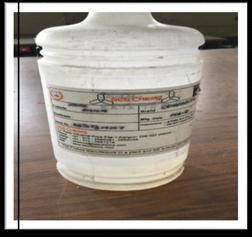
Nano Silica:- The Nano Silica Use the investigation of the colloidalform.Acquiredfrombeechmspvt.ltd,Kanpur.
Physicalstate Micronizedpowder
Appearance Whitecolourpowder Colour White AppearanceForm powder pHat5%solution 5 Specificgravity 1.40 Particlesize 40nm Purity 99.5%
performance is required. Glenium SKY 8233 does not containchlorideandlowalkali.It'swellsuitedforalltypes ofcement”.
Table 8 : Properties of Super Plasticizer
PHYSICALPROPERTIES RESULT
Specificgravity 1.08 pH >6 RelativeDensity +0.02@25oC Chlorideioncontent <0.2%
Colour Reddishbrownliquid
METHODOLOGY :-The material selection, the work plan andthetestprocedurefollowedforthisstudy.Itdiscusses the testing of materials, trail mixtures, the replacement quantity of cement and its proportions for various mixtures, the mixing of concrete, the casting of specimens and the curing of specimens. The mechanical and durability properties of the concrete specimens are consideredforthisstudy.
Table 9 Stipulations for Proportioning of M20 grade Concrete
TypeofCement OPC43Grade
MaximumNominalsizeof Aggregate 20mm
Chemical Admixtures:-“Admixtures are used to change the properties of new and hardened cement. Synthetic compounds are used as part of the development industry to build hard, strong and waterproof structures. A few chemicals are blended with solid components and spread throughout the cement assembly, adjusting the enhancementandsettingpropertiesofthesolidmixture.A fewchemicalsareattachedtothesurfaceofthecementto secure it in or out of the middle of the cement. A few chemicalsareattachedtothesurfaceofthemouldsusedto frame the cement to impact the simple form of discharge operation. A few chemicals are attached to the bond or repairofbrokenorchippedconcrete”.
Super Plasticizer:- “Glenium SKY 8233 is a new generation polycarboxylic ether blend. The product has been developed primarily for high-performance concrete applications, whereas maximum durability and
MinimumcontentofCement 300kg/m3
MaximumWaterCementratio 0.55
SpecificGravityofCement 3.15
SpecificGravityofFine aggregate 2.66
SpecificGravityofCoarse aggregate 2.71
Compressive Strength:
The results of the M20 grade concrete compressive strengthtestwithvaryingproportionsofflyashandnanosilica are shown in Table 10. The cube compressive strength is the average of three test results. It can be
© 2022, IRJET | Impact Factor value: 7.529 | ISO 9001:2008 Certified Journal | Page1225
International Research Journal of Engineering and Technology (IRJET) e-ISSN:2395-0056
Volume: 09 Issue: 12 | Dec 2022 www.irjet.net p-ISSN:2395-0072
observed that the compressive strength of concrete prepared using fly ash and nano-silica exhibits more strength than the control concrete up to 3 per cent of nano-silica if the percentage of fly ash is 20 per cent and the compressive strength decreases further with nanosilica. But if the percentage of fly ash is increased to 30% regardless of the nano-silic content, the compressive strengthislowerthanthecontrolconcrete.
Table.10 Cube Compressive Strengths of M20 and M30 Grade Concrete
Concrete Mix
Fly Ash (%)
Colloidal Nano Silica (%)
Compressive Strength (MPa) 3 Days 7 Days 28 Days 56 Days
Control Concrete 0 0 1876 2096 2783 2872
FA20%+ NS0% 20 0 15.92 17.55 23.67 25.14
FA20%+ NS1.5% 20 1.5 16.46 18.97 25.46 26.18
FA20%+ NS3% 20 3 1943 2268 2981 3057
FA20%+ NS4.5% 20 45 1754 1945 2660 2720
FA30%+NS 0% 30 0 1451 1665 2203 2347
FA30%+ NS1.5%
30 1.5 15.58 17.67 24.44 24.97
FA30%+ NS3% 30 3 1697 1940 2606 2754
FA30%+ NS4.5% 30 4.5 16.29 18.44 24.71 25.88
3
FA20%+NS 1.5% 25.46 20.40 0.88
4 FA20%+NS3% 2981 2712 091
5 FA20%+NS4.5 % 26.60 23.67 0.89
6 FA30%+NS0% 22.03 18.97 0.86
7 FA30%+NS 15% 24.44 21.26 0.87
8 FA30%+NS3% 26.06 22.67 0.89
9 FA30%+NS 45% 24.71 21.74 0.88
Variation of 7 days and 28 days of cube compressive strength:- The variation of the 7-day and 28-day cube compressive strength of the M20 grade of concrete with different nano-silic and fly ash proportions is shown in Fig 6.2. The compressive strength of concrete initially increases to 3 per cent of nano-silica and then the strength decreases with a further increase in nano-silica by 20 per cent and 30 per cent of the ash content. The 7-day and 28-day cube compressive strength of the control concrete is 22.37 MPa and 32.12 MPa respectively . The increase in the 7-day and 28-day cube compressive strength of the 3-percent nanosilicaand20-percentflyashcombinationis4.6percentand 6.1percentrespectively.
SPLIT TENSILE STRENGTH:
Table No 12 Split Tensile Strengths of M20 Grade of Concrete
ConcreteMix SplitTensileStrength(MPa) for28Days
ControlConcrete 3.30
FA20%+NS0% 2.84
FA20%+NS1.5% 3.05
FA20%+NS3% 3.57
FA20%+NS4.5% 3.19
FA30%+NS0% 2.64
FA30%+NS1.5% 2.93
FA30%+NS3% 3.12 FA30%+NS4.5% 2.96
© 2022, IRJET | Impact Factor value: 7.529 | ISO 9001:2008 Certified Journal | Page1226
International Research Journal of Engineering and Technology (IRJET) e-ISSN:2395-0056
Volume: 09 Issue: 12 | Dec 2022 www.irjet.net p-ISSN:2395-0072
The disconnected tensile strength of the control concrete is 3.30 MPa. The split tensile strength of concrete initially increased by up to 3% of nano-silicate for a given percentage of fly ash and beyond which the split tensile strengthdecreasedwithanincreaseinnano-silicate.Itcan also be observed that a combination of 3 per cent nanosilica and 20 per cent fly ash combined maximum tensile strength can be obtained. The increase in the split tensile strength of 3 per cent of nano-silica and 20 per cent of fly ashis3percent.
Flexural Strength: The Flexural Strength of the control concrete is 4.45 MPa. Initially, the variation in Flexural Strengthofconcreteincreasesbyupto3percentofnanosilica for different percentages of fly ash and then, with a further increase in nano-silica, the Flexural Strength decreases.
ConcreteMix FlexuralStrength(MPa) for28Days
ControlConcrete 445
FA20%+NS0% 378
FA20%+NS15% 407
FA20%+NS3% 476
FA20%+NS45% 425
FA30%+NS0% 352
FA30%+NS15% 391
FA30%+NS3% 416
FA30%+NS4.5% 3.95
Modulus of Elasticity: It can be observed that the modulusofelasticityofconcreteincreaseswithnano-silica for a given content of fly ash. The maximum value is 3 percent nano-silica for the content of a fly ash. The M20 grade control concrete has a 21,42 GPa elasticity module. The presence of 20 percent fly ash the modulus of elasticity is reduced to 19.64 GPa and with 30 percent fly ashthevalueisfurtherreducedto18.94GPa.Themodulus of elasticity of fly ash concrete increases the presence of nano-silica.TheM20gradeconcretemodulusofelasticity achieves a maximum value in a combination of 3 per cent nano-silic and 20 per cent ash by weight of cement. The increaseinthemodulusofelasticityof3percentofnanosilicateand20percentofashfliesis3.2percent.
CONCLUSIONS:- The results of the experimental investigation indicate that the combination of fly ash and nano-silica can be used as an ordinary replacement of Portlandcementforconcretepreparation.
1. Using the test results, it can be concluded that with an increase in the percentage of nano-silica for different percentages of fly ash, the different strength properties of concrete are increased by up to 3% of nano-silica and the properties of concretearefurtherreducedbynano-silica
2. It is very interesting to note that the variation of the compressive strength, the split tensile strength, the flexural strength and the elasticity modulus of the M20 grade fly ash concrete with different percentages of nano-silica indicates a similartrend.
3. Asaresultoftheavailabilityofadditionalbinders in the presence of nano-silica, the increase in the various strength properties of fly ash-containing concrete with an increase in nano-silica content maybepossible.Nanosilicaandflyashreact with calcium hydroxide to form additional binder material. The availability of additional binders leads to an increase in the paste-aggregate bond, resultinginimprovedstrengthpropertiesofnanosilic-preparedconcreteandaflyashcombination.
4. The decrease in the strength characteristics of concrete with an increase in nano-silic content of more than 3% is due to the poor quality of the binder formed in the presence of high nano- silic andflyashcontent.
Ganesh, P., Ramachandra Murthy, A., Sundar Kumar, S., Mohammed Saffiq Reheman, (2016). Effect of nano silica on durability and mechanical properties of highstrength concrete. Magazine of Concrete Research, 68(5),229-236.
Heikal, M., Abd El Aleem, S., & Morsi, W. M. (2013). Characteristics of blended cements containing nanosilica.HBRCJournal,9(3),243-255.
Behzadian, R., Shahrajabian, H. Experimental Study of theEffectofNano-silicaontheMechanicalPropertiesof Concrete/PET Composites. KSCE J Civ Eng 23, 3660–3668(2019).
International Research Journal of Engineering and Technology (IRJET) e-ISSN:2395-0056
Volume: 09 Issue: 12 | Dec 2022 www.irjet.net p-ISSN:2395-0072
Eswaramoorthi, P., P. Sachin Prabhu, V. Senthil Kumar, P. Prabu, and S. Lavanya. "Influence of nano size silica and lime particles on the behaviour of soil." nt. J. Civil Eng.Techno8(2017):353-360.
Bastami, Morteza, Mazyar Baghbadrani, and Farhad Aslani. "Performance of nano-Silica modified high strength concrete at elevated temperatures." Construction and Building Materials 68 (2014): 402408.
L.Ranjith Kumar, M.V.Vijayaprakash , E.Thalapathi , Effects of Nano-Silica on Permeability of Concrete, international journal of advance technology n engineeringandscience,Vol5,ssue3,2017.PP.1-4.
Anil Kumar Nanda, Prem Pal Bansal & Maneek Kumar, mprovement of Strength Properties of High Performance Concrete ncorporating Nano Silica and Silica Fume, nternational Journal of Latest Trends n EngineeringandTechnology,Vol.(8)ssue(4-1),pp.192196.