International Research Journal of Engineering and Technology (IRJET) e-ISSN: 2395-0056 Volume: 09 Issue: 01 | Jan 2022 www.irjet.net p-ISSN: 2395-0072 © 2022, IRJET | Impact Factor value: 7.529 | ISO 9001:2008 Certified Journal | Page868 Traffic Sign Recognition using CNNs Pritesh Gurjar1, Neev Shirke2, Navin Bubna3 , Malay Khakhar4, Noshir Tarapore5 1LY B.Tech Computer Engineering, Science & Technology, Vishwakarma University, Pune, India 411048 2LY B.Tech Computer Engineering, Science & Technology, Vishwakarma University, Pune, India 411048 3LY B.Tech Computer Engineering, Science & Technology, Vishwakarma University, Pune, India 411048 4LY B.Tech Computer Engineering, Science & Technology, Vishwakarma University, Pune, India 411048 5Assistant Professor, Dept. of Computer Engineering, Vishwakarma University, Pune, India 411048 -----------------------------------------------------------------------*** ----------------------------------------------------------------------Abstract This paper aims to summarize the usage of Traffic sign detection and identification and how it could play a massive role in increasing the safety of people while driving. Through this paper, we shall see how a Traffic Sign Recognition system can be implemented using advanced Machine Learning and Convolutional Neural Networks. We believe that implementing such systems could prove beneficial for the evolution of the current safety standards while driving.
● Utilisingsuitabledatasets
2. RELATED WORK
● Comparing with local signs and modifying datasetsifrequired ● Making use of a two tier CNN along with YOLO Networks4 ● Getting accurate results with ample time to alert thedriver.
Sincedetection.around 2007, traffic sign identification and recognition techniques have relied on color segmentation, shape, and texture data in combination with support vector machine (SVM) classifiers. Later illumination conditions were investigated using a shape based detector[3]. Slightly later, shapes were utilized to detect
Zhang et al. [1] proposed a cascaded R CNN to obtain the multiscalefeaturesin pyramidsanda multiscaleattention method to obtain the weighted multiscale features by dot product and softmax to highlight the traffic sign features andimprovetheaccuracyofthetrafficsigndetection.
Theaims,scopeandobjectivesoftheSystemareasfollows
KEYWORDS TSR (Traffic Sign Recognition), Traffic Sign detection, CNN (Convolutional Neural Network), SSD (Single Shot multibox Detector) , YOLO net (Object detection system).
Cao et al. [2] proposed an improved algorithm based on faster region based CNN for small object detection. An improved loss function based on intersection over union, the multiscale convolutional feature fusion, and the improved non maximum suppression algorithm is introduced to enhance the performance for small object
Automobiles are the most efficient way of getting around inthisdayandage.Formanyyears,thewaywetransport things has been evolving with improvements at every iteration.Fromsteamandelectricvehiclesinthe1700sto alternative fuel automobiles and self driving cars in the 2000s, automobiles have experienced several developments. As humans advance further, so should our work and everything surrounding us. To better the safety standards of the passengers in a vehicle, we designed and proposed a system that uses algorithms like Machine Learning and Convolutional Neural Networks to identify Traffic signs quickly and accurately. We believe our implementation could help in the future of self driving cars,makingtheexperiencesaferandmorepeacefulforall the Wepassengers.chosetocreate such a system to ensure a safe driving experience for everyone. This could even be progressed further and used in self driving automobiles in the future. Byimplementinga trafficsignrecognitionsystem,weaim to reduce the percentage of on road accidents by a large percentage. Statistics show that reckless driving and distracted driving cause a large number of accidents and deathsbyaccidents.Implementingasystemthatidentifies a sign from afar and notifies the driver of the upcoming event would improve the safety standards and reduce the numberofaccidents.
1. INTRODUCTION
Regularoccurrencesofterribleaccidentsresultintheloss of life and other valuables. There might be a variety of causesfortheseaccidents,suchasbadstreetmaintenance, careless driving, the driver's psychological state, and pedestrians' careless attitude. Another important factor for this might be improper law enforcement and poor conditions of street traffic signs. Signs that are blocked or decaying may confuse the driver. So there are many existingmethodsforTrafficsignsandsignclassification.

4. HIGH LEVEL DESIGN DETAILS
Anotherrecognition.method suggests the design and study of the “GermanTrafficSignRecognitionBenchmark”datasetand competition.Thecompetitionresultsindicatethatmachine learning algorithms perform well in the difficult task of trafficsignidentification.Theparticipantsobtaineda very high performance of up to 98.98 percent accurate identification rate on this dataset, which is comparable to human
3. CURRENT IMPLEMENTATION
RelevantmathematicalmodelassociatedwiththeProject:
3. Each frame will be processed through convolution neural networks to identify the type and information of trafficsigns.
1. The model is based on the simulation of traffic signs using recorded videos with various factors affecting qualitytomakethesystemoptimal.
Attached below are various diagrams which explain the various steps, methods, functions and libraries implementedinourcurrentworkingmodel.
Anotherperformance[7].methodinvolves the use of a new system for the automated detection and identification of traffic signs. Candidate regions are identified as maximally stable extremal regions (MSERs), which provide resistance to variations in lighting conditions. A cascade of SVM classifierstrainedonHOG featuresisusedforrecognition. This system is accurate at high vehicle speeds, works in a variety of weather situations, and runs at a pace of 20 framespersecondonaverage[8].
While current systems are capable of identifying traffic signs with high accuracy, our system aims to better these results and achieve high accuracy results even in poor weather conditions like severe rain, dust, etc. This system could be useful for the future of self driving vehicles and may help in improving the current systems used by various organizations/ companies. The system architecture is a two tier architecture, where the first tier comprises a Convolutional Neural Network. The second tier consists ofimage processingusing varioustechniques to increase the accuracy of sign identification, even in varying atmospheric conditions. The current system has been created solely by using python, and it’s multiple libraries such as numpy, tensorflow, jupyter, YOLOnet4, and cv2 for the neural network and calculations. We have also used libraries such as pygame and tkinter to create a simpleuserinterface.
International Research Journal of Engineering and Technology (IRJET) e-ISSN: 2395-0056 Volume: 09 Issue: 01 | Jan 2022 www.irjet.net p-ISSN: 2395-0072 © 2022, IRJET | Impact Factor value: 7.529 | ISO 9001:2008 Certified Journal | Page869 arrow traffic lights[4]. More recently Color segmentation has been utilized. Ji et al. [5] introduced a color based visual selective attention model to build salience maps, which are subsequently identified using an SVM classifier usinghistogramoforientedgradient(HOG)features.Some prior art used digital maps and GPS data to enhance detection efficiency and accuracy [6]. However, prior knowledge is not always available and is not always required. Because of the widespread use of convolutional neural networks (CNNs), they have been used for traffic sign
The hardware components of our current system consist ofacameraandasimplegraphicsprocessingunit Fig 3.1: Blockdiagramofcurrentworking
2. The video is then processed to extract the frames with somedelay.
4.Accordingtothe43typesoftrafficsignsthesystemwill generateappropriatealertsbasedonpictureclassification.
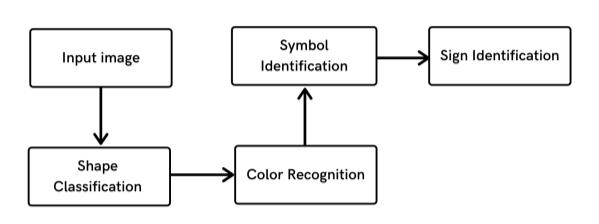
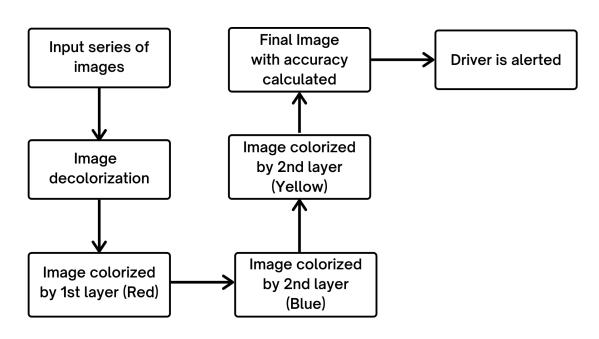
● Finally, the now colorized sign is further passed through the dataset to identify any symbols (if present)inthesignitself.
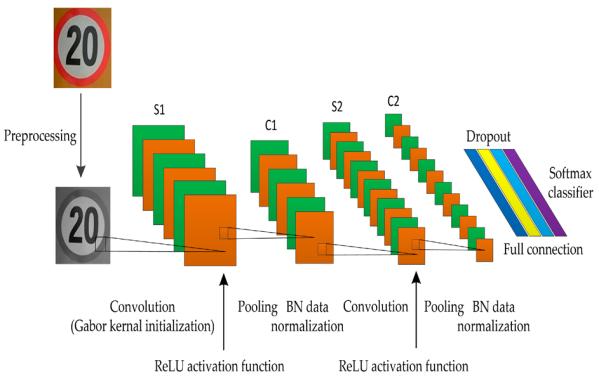
Using a fully connected neural network to make an image classification requires numerous layers and neurons present in a network, which increases the number of parameters leading the network to over fitting (memorizingthetrainingdataonly).Theinputimagemay alsoloseitspixelscorrelationpropertiessinceallneurons (carrying pixels values) are connected [9]. Convolutional neural networks have emerged to solve these problems through their kernel filters to extract the main features of theinputimageandtheninjectthemintoafullyconnected networktodefinetheclass[9].Thechosenarchitecturein ourapplicationisa two tier convolutional neural network (Fig. 5.1) firstly used for handwritten digits recognition [10]. It contains 9 layers: 5 layers of convolution and simplification functions made by 22 5x5 kernel filters and amax poolingfilterof2x2toreduceatlasttheinputimage of32x32into16mapsof5x5.Thefeatureimagescarrythe most significant features to define a specified traffic signs class by processing them into a 4 layers fully connected network.
Fig. 5.1:CNNarchitecture
● Once the sign is identified, the system alerts the driverofoneof5alerts.
● Next, the colors are restored one layer at a time (Red, Blue, Yellow) to further identify the type of signbasedonitspreviousresult.
V. NEURAL NETWORK ARCHITECTURE
Theaboveflowchartexplainshowourmodelworksinthe simplestform.Theimage/seriesofimagesreceivedfrom theinput are passedon for identification. Thishappens in 3steps.
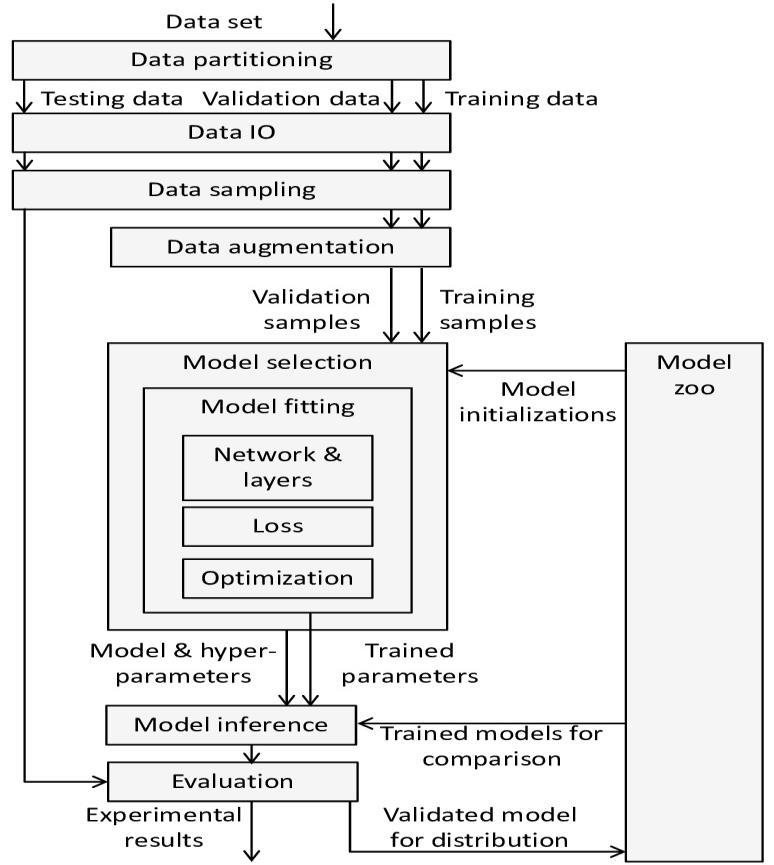
Fig 4.1: Dataflowdiagram
The above diagram shows the flow of data in the current implementation.Thetestingandtrainingdatasetsareused toidentifythecorrectsignwiththehighestprobability.
Fig 4.2: Simpleflowchartofworkingofimagerecognition
● The original image is decolorized to a grayscale version, so that the appropriate sign may be identifiedonthebasisoftheshapeofthesign.
International Research Journal of Engineering and Technology (IRJET) e-ISSN: 2395-0056 Volume: 09 Issue: 01 | Jan 2022 www.irjet.net p-ISSN: 2395-0072 © 2022, IRJET | Impact Factor value: 7.529 | ISO 9001:2008 Certified Journal | Page870
the form of multiple images. To
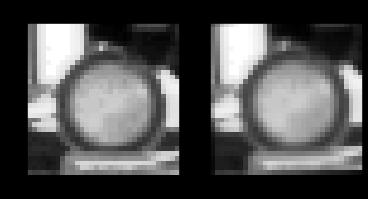
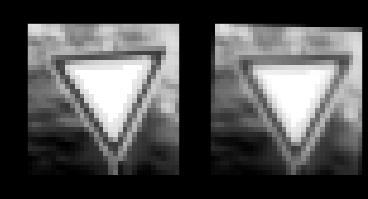
Thispicture then undergoes multiple transformationslike scaling,rotationandtranslations.
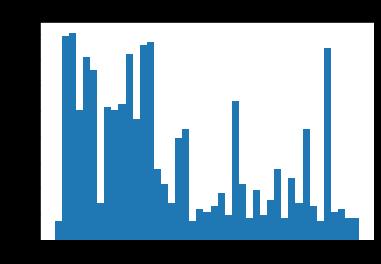
The distribution of some in ensure that the performs some of these undergoadataaugmentationbyapplyingsomegeometric transformations and onmany
classes over others during the training phase because they are better shown
Fig 6.2: Comparisonofimages
International Research Journal of Engineering and Technology (IRJET) e-ISSN: 2395-0056 Volume: 09 Issue: 01 | Jan 2022 www.irjet.net p-ISSN: 2395-0072 © 2022, IRJET | Impact Factor value: 7.529 | ISO 9001:2008 Certified Journal | Page871 6. IMPLEMENTATION AND ANALYSIS OF THE CURRENT STRUCTURE This section contains a descriptive overview of our two tier CNN architecture and is subdivided into 3 main categories. ● TrainingData ● TargetDetection/ObjectDetection ● Finalresultsoftheimplementation 6.1 Training Data
shearmapping)
(rotation,translation,
classes
efficiently,
network
Fig 6.3: Comparisonofimages
unbalanced
suchimages.
Fig 6.1: DistributionofDataset
images in the German Traffic Sign Benchmark privileges
The algorithm takes only classes with less than 1000 images to randomly pick images and makes one of the transformation operations . The resulting images are added to the same class until the number of its elements reachesthebiasi.e1000images.


Our implementation employs YOLO networks to aid the Traffic sign assisted by a series of pre trained cascaded images, which will provide real time object detection. Object detection consists of various approaches such as fastR CNN,Retina Net,and Single ShotMultiBoxDetector (SSD). Although these approaches have solved the challenges of data limitation and modeling in object detection, they cannot detect objects in a single algorithm run.
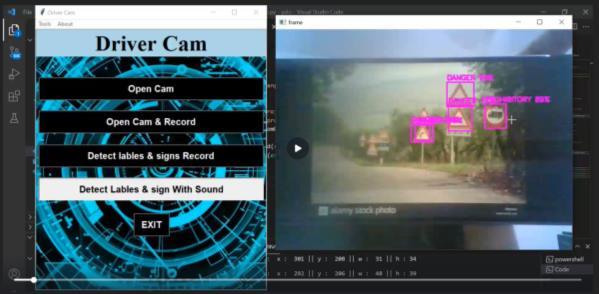
Fig 6.6: TrafficSigndetectionsystem
International Research Journal of Engineering and Technology (IRJET) e-ISSN: 2395-0056 Volume: 09 Issue: 01 | Jan 2022 www.irjet.net p-ISSN: 2395-0072 © 2022, IRJET | Impact Factor value: 7.529 | ISO 9001:2008 Certified Journal | Page872 6.2. Target Detection
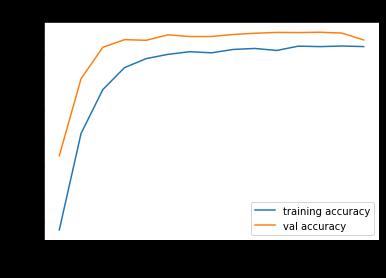
To build and train the network, the TensorFlow deep learning library is used. Training and testing were implementedusingthedatasetandthedevelopedmethod succeeds in classifying the 43 traffic signs classes. The implementation results of the two tier CNN and its improvementoperationsshowtheimpactofeachchanged element. The enrichment of the first layer of CNN fully connected network made the validation accuracy 95.2% after 100 iterations of the learning algorithm. The new givenarchitecturecannowcombinemanymorefactorsto classifytrafficsigns.Afterapplyingdataaugmentation,an accuracyof95.6%atthe100thiterationisnoticed,making the network performances even better than the last ones. Itisalsoduetothenewbalancedpropertyof the training dataindifferentclasses.
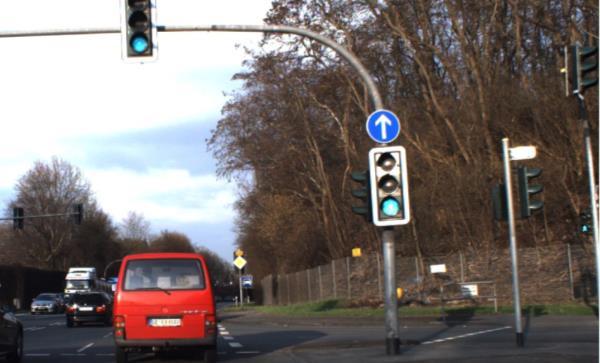
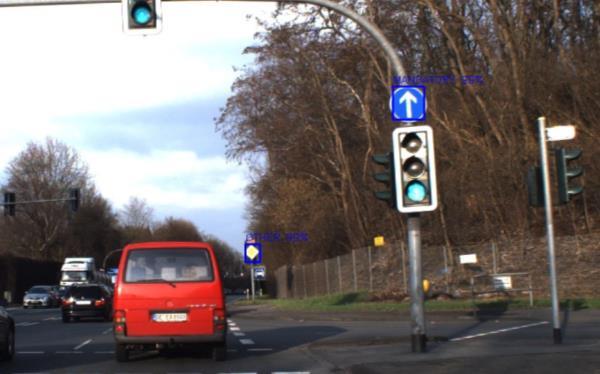
Fig 6.5: Imageaftertrafficsignhasbeendetected
6.3 Implementation Results
Fig 6.4: NormalImagewithoutobjectdetection
Fig 6.7: Accuracyvariationovertrainingtime
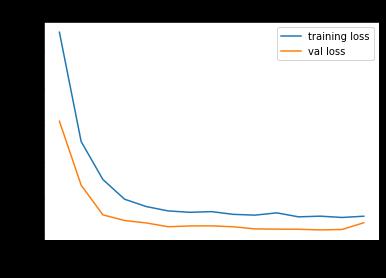
Fig 6.8: Dataloss/accuracydecreaseovertimetakenfor training
As seen above, with regular training and testing and constantly learning from our previous iterations, we have comeupwiththefollowingresults,withanincreasingrate of accuracy over time. Our implementation had a few minor setbacks and a few improvements, with the above graphshowcasingCNN'saccuracyoveriterations.
[9] L. Abdi, “Deep learning traffic sign detection, recognition and augmentation,” Proceedings of the Symposium on Applied Computing, Maroc, 2017, p. 131 [10]136 Y. Le Cun, L. Bottou, Y. Bengio and P.Haffner, “Gradient Based learning applied to document recognition,” Proceedings of IEEE, Vol. 86, N°11, p. 2278 2324,1998.
[6] Fairfield, N.; Urmson, C. Traffic light mapping and detection. In: Proceedings of the IEEE International Conference on Robotics and Automation, 5421 5426, 2011.[PDF]Trafficlightmappinganddetection
REFERENCE LINKS
[1]J.Zhang,Z.Xie, J.Sun,X. Zou,andJ. Wang,“Acascaded RCNN with multiscale attention and imbalanced samples fortrafficsigndetection,”IEEEAccess,vol.8,2020. FastTrafficSignDetectionApproachBasedonLightweight NetworkandMultilayerProposalNetwork.
[2]C.Cao,B.Wang,W.Zhangetal.,“AnimprovedfasterR CNN for small object detection,” IEEE Access, vol. 7, 2019. (PDF) An Improved Faster R CNN for Small Object [3]DetectionDeCharette, R.; Nashashibi, F. Real time visual traffic lights recognition based on spot light detection and adaptive traffic lights templates. In: Proceedings of the IEEE Intelligent Vehicles Symposium, 358 363, 2009 (PDF)RealTimeVisualTrafficLightsRecognitionBasedon SpotLightDetectionandAdaptiveTrafficLightsTemplates
International Research Journal of Engineering and Technology (IRJET) e-ISSN: 2395-0056 Volume: 09 Issue: 01 | Jan 2022 www.irjet.net p-ISSN: 2395-0072 © 2022, IRJET | Impact Factor value: 7.529 | ISO 9001:2008 Certified Journal | Page873 Over time, we learned from our mistakes, and minimized errors as much as we could. The above graph is a representationofthelowsanderrorpointswefacedwhile wewereconstructingNeuralnetworks. 7. CONCLUSION Our final results have proved to be very useful with a minimum accuracy of 95.1% which we have extended to 96%.ThetwotierCNNimplementationsalongwiththe additionofYOLONetworkshaveresultedinmoreaccurate resultsevenunderversatileweatherconditions.Whilethe current implementation has proved to be a bit system heavy, it has also proved that it functions exceptionally wellunderadverseconditionswithhigheraccuracies.
[4] Cai, Z.; Gu, M.; Li, Y. Real time arrow traffic light recognitionsystemforintelligentvehicles.In:Proceedings of the International Conference on Image Processing, Computer Vision, and Pattern Recognition, 1, 2012. [PDF] Real time Arrow Traffic Light Recognition System for IntelligentVehicle [5] Ji, Y.; Yang, M.; Lu, Z.; Wang, C. Integrating visual selective attention model with HOG features for traffic lightdetectionandrecognition.In:ProceedingsoftheIEEE IntelligentVehiclesSymposium(IV),280 285,2015.(PDF) Integrating visual selective attention model with HOG featuresfortrafficlightdetectionandrecognition
[7] J. Stallkamp, M. Schlipsing, J. Salmen, and C. Igel, “The German traffic sign recognition benchmark: a multi class classification competition,” in Proc. IEEE IJCNN, 2011, pp. 1453 1460. [PDF] The German Traffic Sign Recognition Benchmark:Amulti classclassificationcompetition
[8] “Real Time Detection and Recognition of Road Traffic Signs” by Jack Greenhalgh and Majid Mirmehdi, Senior Member,2012,IEEE.Real TimeDetectionandRecognition ofRoadTrafficSigns